
词汇表

英语词汇词典 | 单词含义、定义和示例

labile definition card — visual illustration of the meaning
adjective C2
/ˈleɪ.baɪl/ or /ˈlæb.aɪl/
不稳定的 (bù wěndìng de)

easily altered or unstable; prone to change

"Her mood was so labile that it changed several times in an hour."
"她的情绪如此不稳定,在一小时内改变了几次。" (Tā de qíngxù rú cǐ bù wěndìng, zài yī xiǎoshí nèi gǎibiànle jǐ cì.)
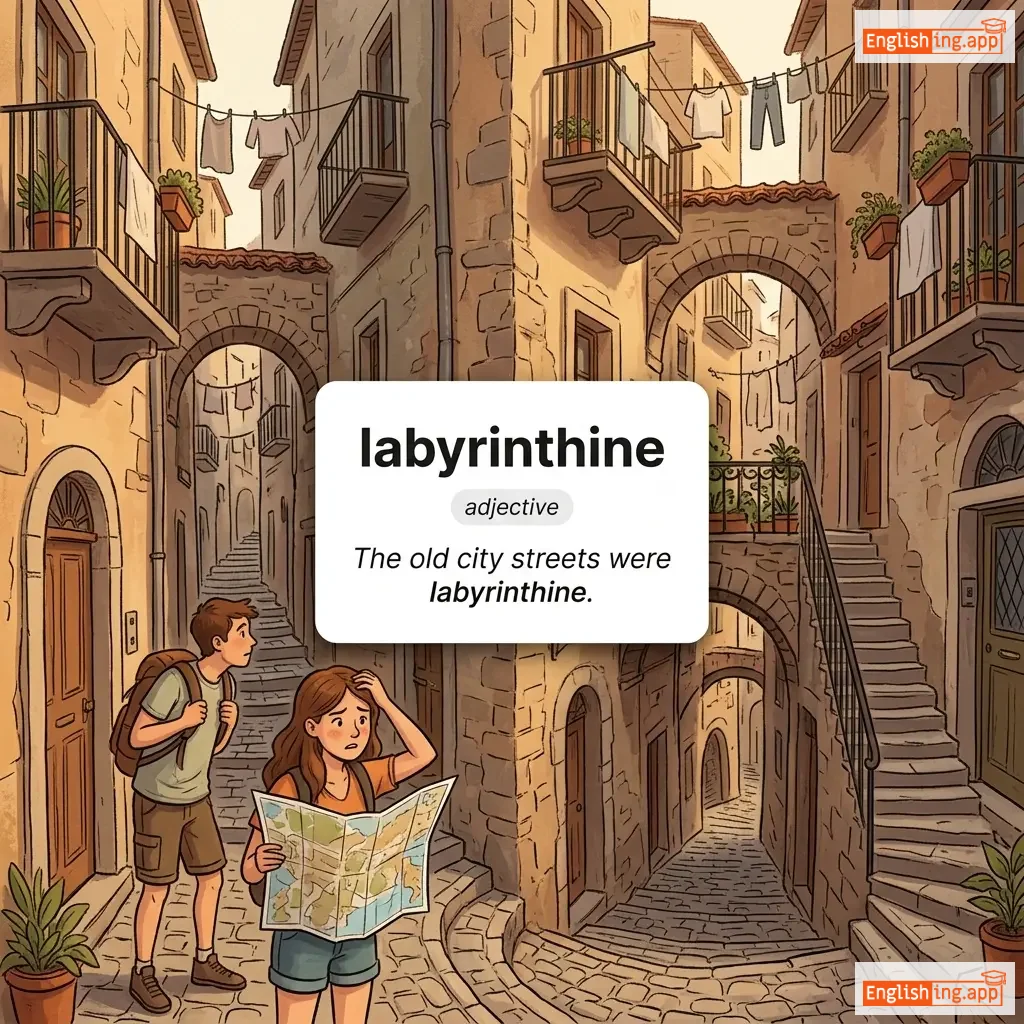
labyrinthine definition card — visual illustration of the meaning
adjective C2
ˌlæb.əˈrɪn.θaɪn
迷宫似的 (mígōng shì de)

Like a labyrinth; complicated and confusing; having many interconnected paths or passages.

"The old city streets were labyrinthine."

"老城区的街道像迷宫一样。" (Lǎo chéngqū de jiēdào xiàng mígōng yīyàng.)
verb C2
/ˈlæs.ə.reɪt/
割裂,撕裂 (gē liè, sī liè)

to tear or cut deeply in the skin or flesh

"The broken glass lacerated his hand."

"破碎的玻璃割伤了他的手。" (Pò suì de bō lí gē shāng le tā de shǒu.)
noun C2
/ˌlæs.əˈreɪ.ʃən/
深切伤口 (shen qie shang kou)

a deep cut or tear in skin or flesh

"He needed stitches for a laceration on his leg."

"他需要为腿部的深切伤口缝针。" (Ta xuyao wei tui bu de shen qie shang kou feng zhen.)
adjective C2
/ˈlæk.rɪ.moʊs/
流泪的,悲伤的 (liú lèi de, bēi shāng de)

tearful or given to weeping; sad and mournful

"The movie's lachrymose ending left the audience in tears."

"电影的悲伤结局让观众泪流满面。" (Diànyǐng de bēi shāng jiéjú ràng guānzhòng lèi liú mǎn miàn.)
adjective C2
/ˌlækəˈdeɪzɪkəl/
懒散或懒惰 (lǎnsàn huò lǎnduò)

lacking enthusiasm, energy, or determination; careless or lazy

"His lackadaisical attitude toward work annoyed his boss."

"他对工作的懒散态度让他的老板很烦恼。" (Tā duì gōngzuò de lǎnsàn tàidù ràng tā de lǎobǎn hěn fánnǎo.)
noun C2
/ˈlæki/
侍从 (shì cóng)

a person who is overly willing to serve or obey someone else

"He treated his assistant like a mere lackey."

"他把助手当作一个普通的侍从对待。" (Tā bǎ zhùshǒu dàngzuò yīgè pǔtōng de shì cóng duìdài.)
laconic definition card — visual illustration of the meaning
adjective C2
/ləˈkɒnɪk/
简洁的 (jianjie de)

using very few words; concise to the point of seeming rude or mysterious

"His laconic reply ended the conversation quickly."

"他简洁的回答迅速结束了谈话。" (Ta jianjie de huida xunsu jieshu le tanhua.)
noun C2
/lækˈteɪʃən/
乳汁分泌 (rǔ zhī fēn mì)

the secretion of milk by the mammary glands of female mammals

"The doctor explained that lactation is a natural process after childbirth."

"医生解释说,哺乳是分娩后的一种自然过程。" (Yīshēng jiěshì shuō, bǔrǔ shì fēnmiǎn hòu de yī zhǒng zìrán guòchéng.)
adjective C2
/ˈlæk.ti.əl/
与牛奶相关或类似牛奶的 (yǔ niúnǎi xiāngguān huò lèisì niúnǎi de)

Relating to or resembling milk; conveying chyle or milky fluid.

"The lacteal vessels in the small intestine absorb dietary fats."
"小肠中的乳汁管吸收膳食脂肪。" (xiǎo cháng zhōng de rǔzhī guǎn xīshōu shànshí zhīfáng.)
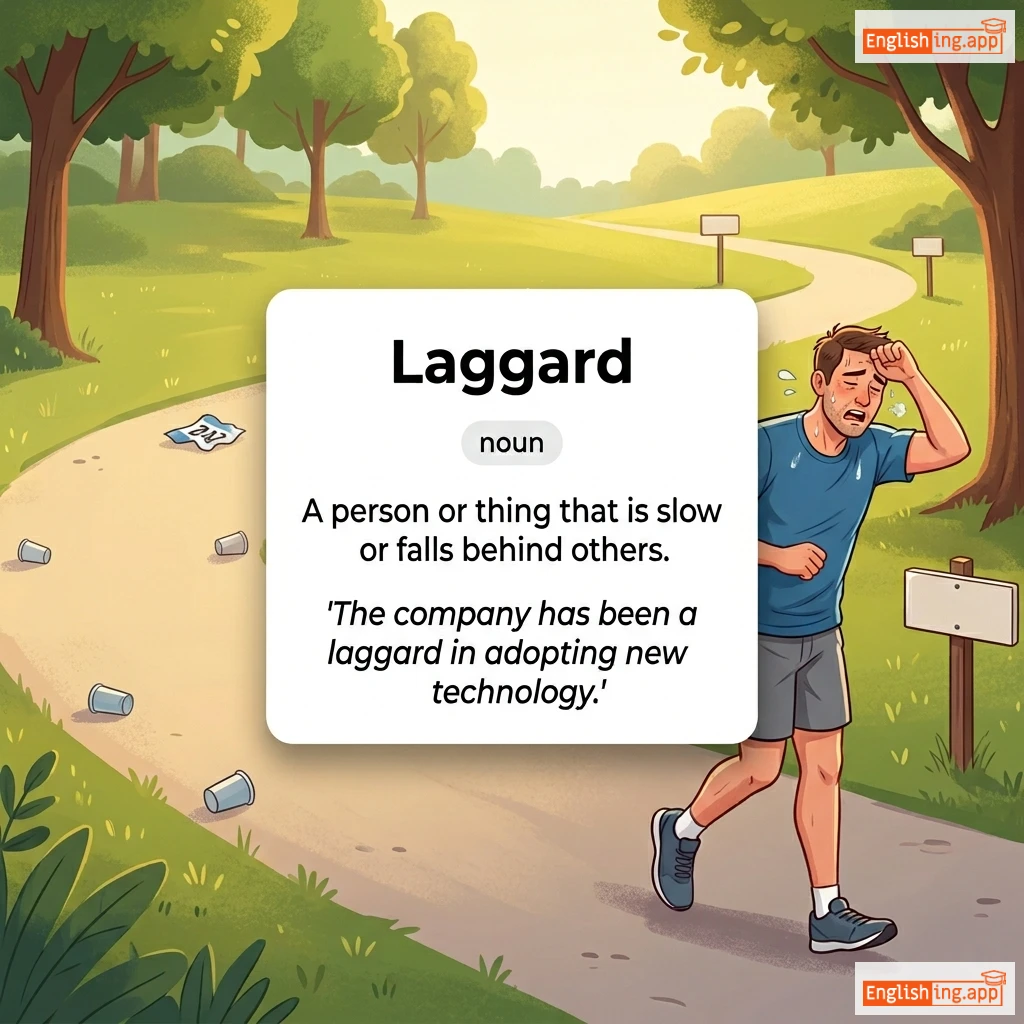
Laggard definition card — visual illustration of the meaning
noun C2
/ˈlæɡərd/
落后者 (luòhòu zhě)

A person or thing that is slow or falls behind others.

"The company has been a laggard in adopting new technology."

"该公司在采用新技术方面落后。" (gāi gōngsī zài cǎiyòng xīn jìshù fāngmiàn luòhòu.)
noun C2
/ˈlænjæp/
额外礼物 (éwài lǐwù)

A small gift or bonus given by a seller to a customer.

"The shopkeeper offered a piece of candy as a lagniappe."

"店主作为额外礼物提供了一颗糖果。" (Diànzhǔ zuòwéi éwài lǐwù tígōngle yī kē tángguǒ.)
noun C2
/ˈleɪ.ɪ.ti/
俗人 (sú rén)

Ordinary members of a religious community who are not clergy.

"The church welcomed the laity to participate in the event."

"教堂欢迎俗人参加活动。" (Jiàotáng huānyíng sú rén cānjiā huódòng.)
verb C2
/læmˈbæst/
严厉批评 (yanli piping)

To criticize harshly or to beat severely.

"The coach lambasted the team for their poor performance."
"教练因团队表现差而严厉批评了他们。" (Jiaolian yin tuandui biaoxian cha er yanli piping le tamen.)
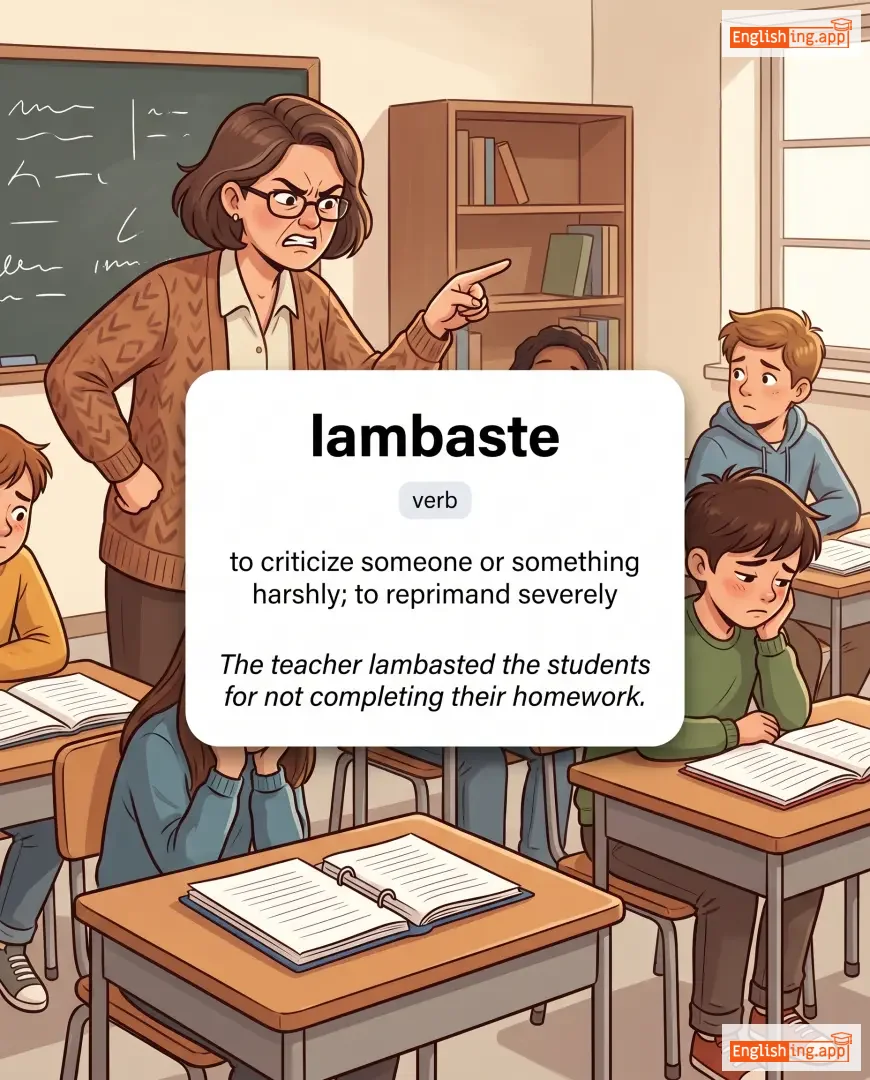
lambaste definition card — visual illustration of the meaning
verb C2
/læmˈbeɪst/
严厉批评 (yánlì pīpíng)

to criticize someone or something harshly; to reprimand severely

"The teacher lambasted the students for not completing their homework."

"老师因学生未完成作业而严厉批评了他们。" (Lǎoshī yīn xuéshēng wèi wánchéng zuòyè ér yánlì pīpíngle tāmen.)
adjective C2
/ˈlæmbənt/
柔和的发光 (róu hé de fā guāng)

glowing or flickering softly; having a gentle radiance

"The lambent light of the candle filled the room with warmth."

"蜡烛的柔和光线充满了房间的温暖。" (Làzhú de róu hé guāngxiàn chōng mǎn le fángjiān de wēnnuǎn.)
adjective C2
/ˈlæm.ən.tə.bəl/
可悲的 (kě bēi de)

deserving to be criticized or regretted; unfortunate

"The team’s lamentable performance disappointed their fans."

"球队的可悲表现让他们的粉丝失望。" (Qiúduì de kě bēi biǎoxiàn ràng tāmen de fěnsī shīwàng.)
verb C2
/læmˈpuːn/
讽刺 (fengci)

to publicly criticize or ridicule someone or something with humor, irony, or sarcasm

"The cartoonist lampooned the politician for his contradictory statements."

"漫画家因政治家的矛盾言论而讽刺他。" (Manhua jia yin zhengzhijia de maodun yanlun er fengci ta.)
noun C2
/ˈlæn.sɪt/
外科小刀 (waike xiaodao)

a small, sharp, two-edged surgical knife used for making small incisions

"The doctor used a lancet to prick the patient’s finger for a blood test."

"医生用兰塞特刺破病人的手指进行血液检测。" (Yisheng yong lanset cipo bingren de shouzhi jinxing xueye jiancha.)
noun C2
/ˈlændˌhoʊl.dər/
土地所有者 (tǔdì suǒyǒu zhě)

a person who owns land, especially in large amounts

"The landholder leased part of his property to local farmers."
"土地所有者将部分财产租给了当地的农民。" (Tǔdì suǒyǒu zhě jiāng bùfen cáichǎn zū gěi le dāngdì de nóngmín.)
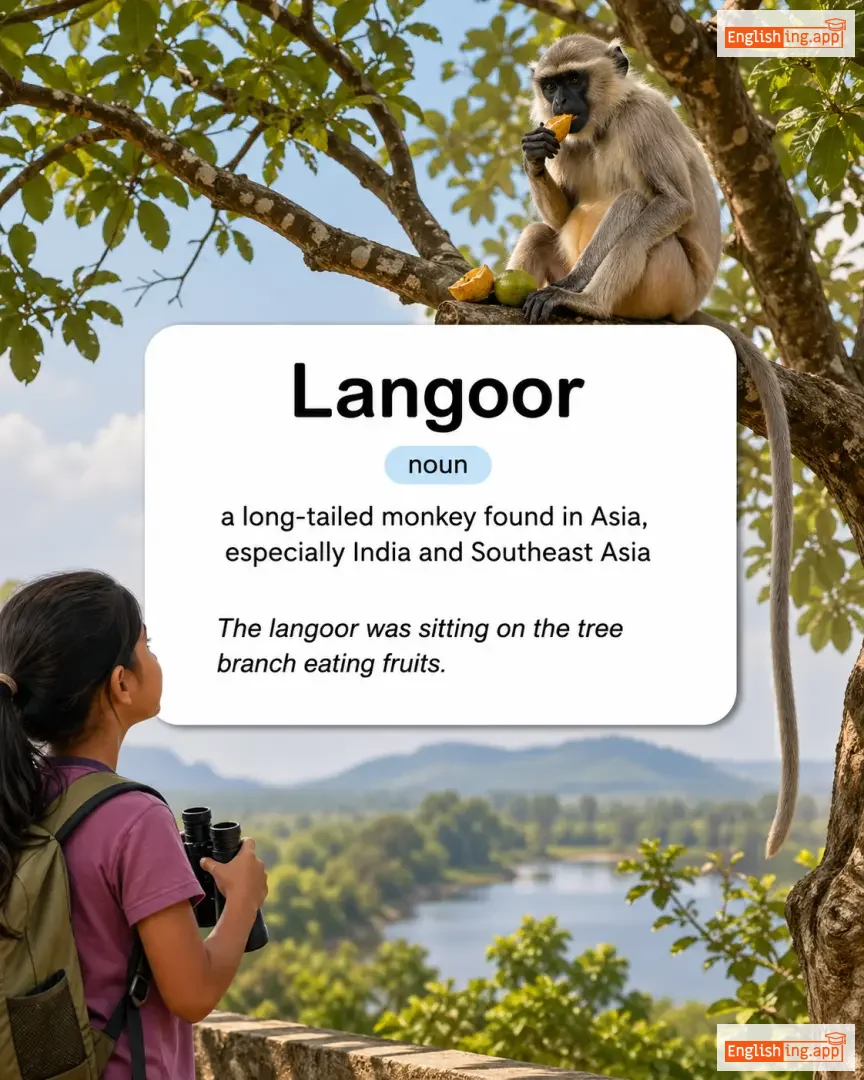
Langoor definition card — visual illustration of the meaning
noun C2
/læŋ'ɡʊər/
长尾猴 (chang wei hou)

a long-tailed monkey found in Asia, especially India and Southeast Asia

"The langoor was sitting on the tree branch eating fruits."

"那只长尾猴正坐在树枝上吃水果。" (na zhi chang wei hou zheng zuo zai shu zhi shang chi shui guo)
adjective C2
/ˈlæŋɡwɪd/
无力 (wúlì)

Displaying or having a disinclination for physical exertion; weak or faint.

"He gave a languid wave before leaving the room."

"他在离开房间前做了一个无力的挥手。" (Tā zài líkāi fángjiān qián zuòle yīgè wúlì de huī shǒu.)
noun C2
/ˈlæŋɡər/
倦怠 (juandai)

A state of tiredness, inertia, or dreamy relaxation.

"The hot afternoon filled her with languor."

"炎热的下午让她感到疲倦。" (Yánrè de xiàwǔ ràng tā gǎndào píláo.)
adjective C2
/læŋk/
高而瘦 (gao er shou)

Tall, thin, and often awkward in appearance.

"The lank teenager towered over his classmates."
"那个高而瘦的少年比他的同班同学高。" (Na ge gao er shou de shaonian bi tade tongban tongxue gao.)
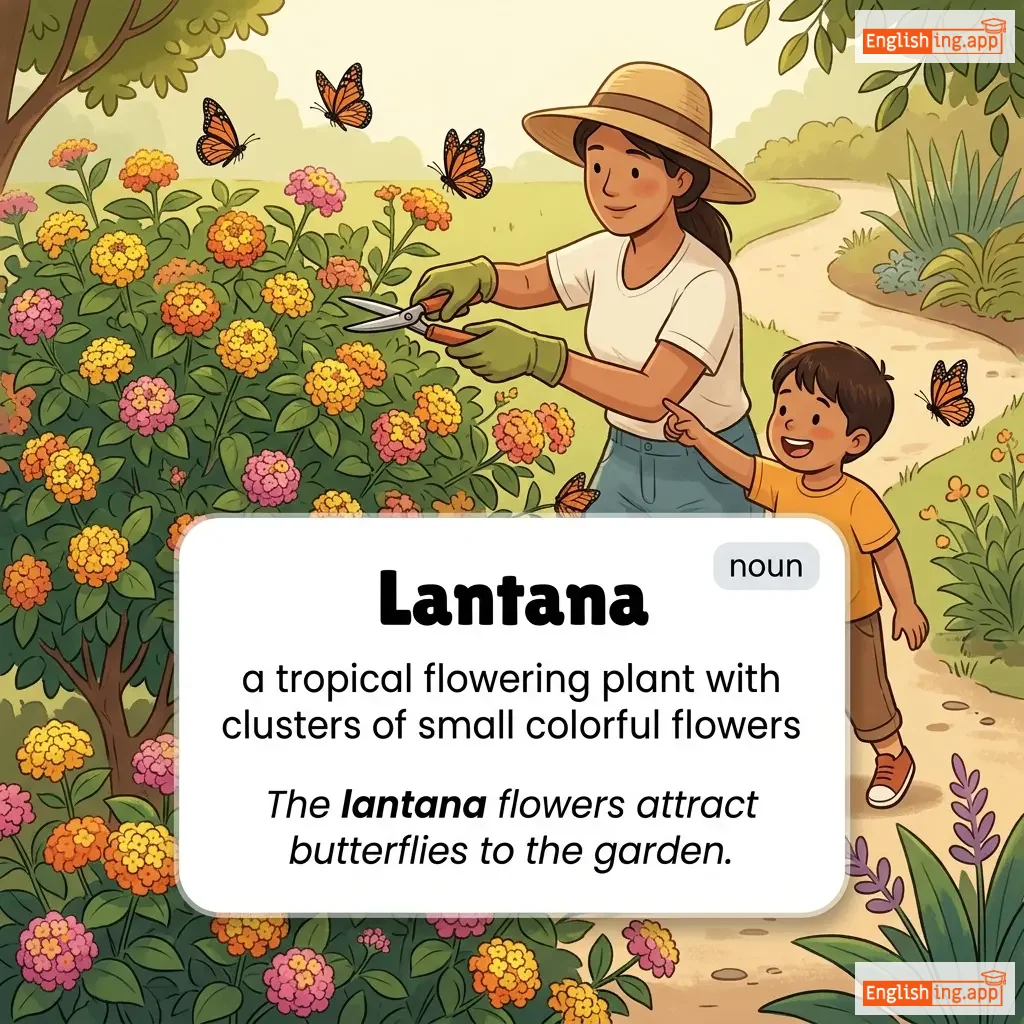
Lantana definition card — visual illustration of the meaning
noun C2
/lænˈtɑː.nə/
兰塔纳 (lantana)

a tropical flowering plant with clusters of small colorful flowers

"The lantana flowers attract butterflies to the garden."

"兰塔纳的花朵吸引蝴蝶到花园。" (Lántǎnà de huāduǒ xīyǐn húdié dào huāyuán.)
noun/adjective C2
/ˈlæpɪˌdɛri/
宝石雕刻师 (baoshi diaoke shi)

As noun: a person who cuts, polishes, or engraves precious stones; As adjective: relating to such work.

"The museum displayed lapidary tools used in ancient times."

"博物馆展示了古代使用的宝石雕刻工具。" (Bowuguan zhanshi le gudai shiyong de baoshi diaoke gongju.)
noun C2
/ˈlɑːrsəni/
盗窃 (dàoqiè)

The unlawful taking of personal property with intent to deprive the rightful owner of it.

"He was arrested for committing larceny at the store."

"他因在商店犯盗窃罪被逮捕。" (Tā yīn zài shāngdiàn fàn dàoqiè zuì bèi dàibǔ.)
noun C2
/ˈlɑːrdər/
储藏室 (chǔcángshì)

A place, such as a pantry, where food is stored.

"The larder was full of fresh bread and cheese."

"储藏室里满是新鲜的面包和奶酪。" (Chǔcángshì lǐ mǎn shì xīnxiān de miànbāo hé nǎilào.)
noun C2
/lɑːrˈʒes/
慷慨 (kangkai)

Generosity in giving gifts or money.

"The foundation survived thanks to the largess of wealthy donors."
"这个基金会得以生存,多亏了富有捐赠者的慷慨。" (Zhège jījīn huì dé yǐ shēngcún, duō kuīle fùyǒu juānzèng zhě de kāngkǎi.)
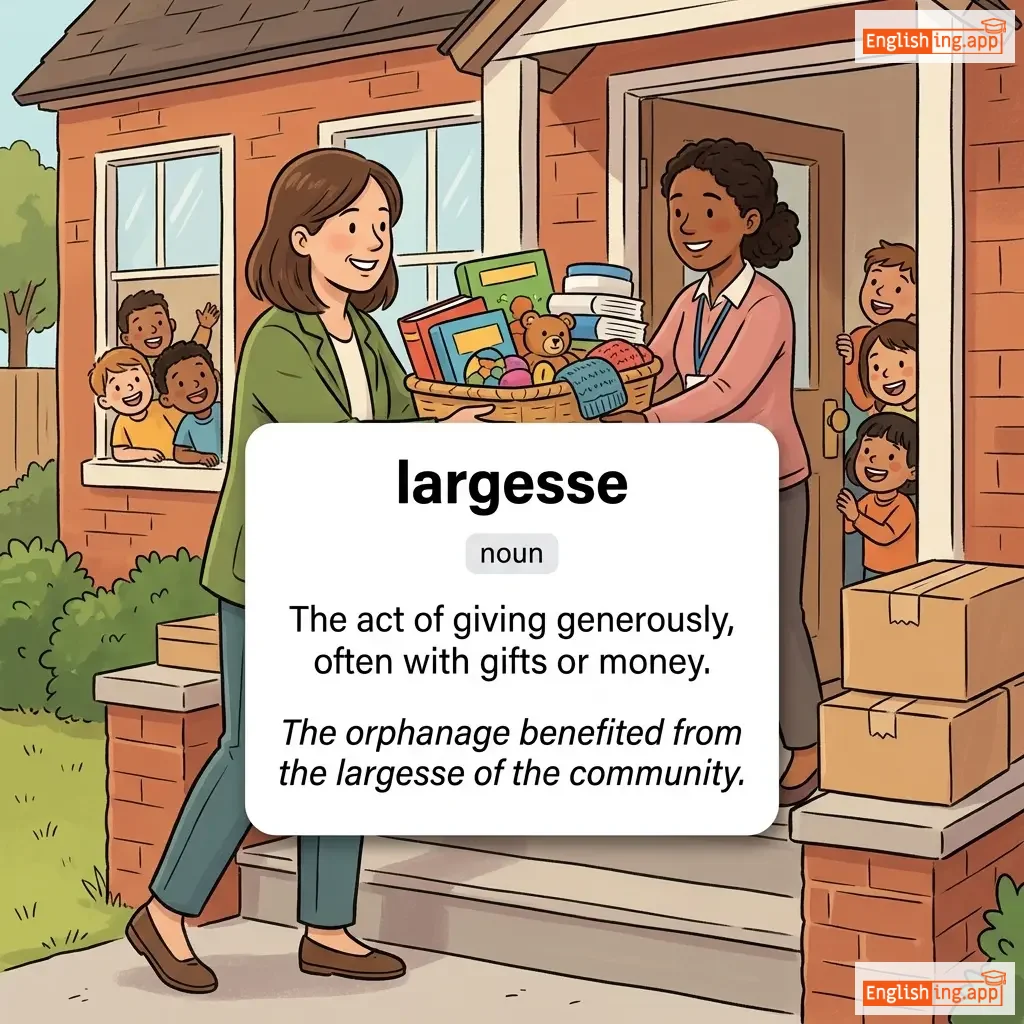
largesse definition card — visual illustration of the meaning
noun C2
/lɑːrˈʒɛs/
慷慨 (kāngkǎi)

The act of giving generously, often with gifts or money.

"The orphanage benefited from the largesse of the community."

"孤儿院从社区的慷慨中受益。" (Gū'ér yuàn cóng shèqū de kāngkǎi zhōng shòuyì.)
noun C2
/ˈlæriət/
套索 (taosuo)

A long rope with a noose at one end used to catch animals such as cattle or horses.

"The cowboy threw his lariat to catch the stray horse."
"牛仔投掷了他的套索,捕捉到了迷路的马。" (Niuzai touzhile tade taosuo, buchu daole milu de ma.)
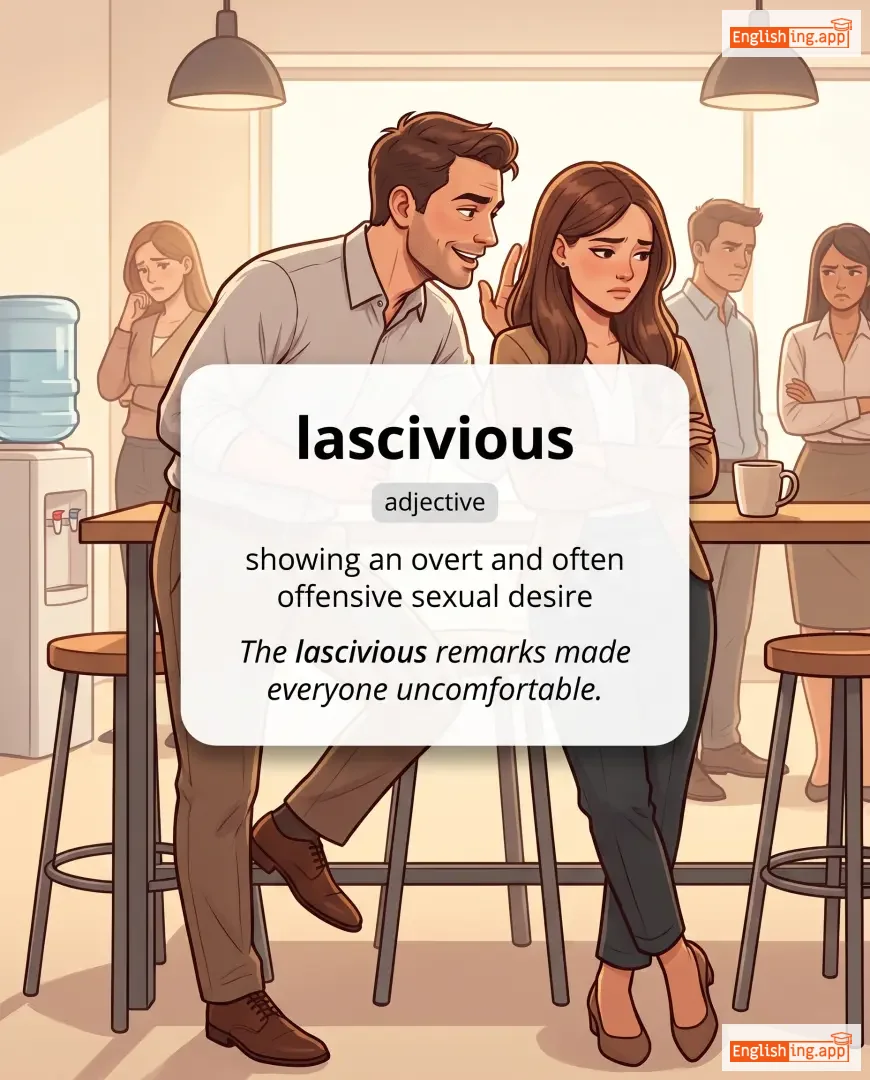
lascivious definition card — visual illustration of the meaning
adjective C2
/ləˈsɪviəs/
淫荡 (yín dàng)

showing an overt and often offensive sexual desire

"The lascivious remarks made everyone uncomfortable."

"那些淫荡的评论让每个人都感到不舒服。" (Nàxiē yíndàng de pínglùn ràng měi gèrén dōu gǎndào bù shūfú.)
noun C2
/ˈlæsi/
小女孩 (xiao nǚhái)

a young girl (informal, mainly Scottish)

"The old man greeted the little lassie warmly."
"老人热情地迎接了小女孩。" (lǎorén rèqíng de yíngjiēle xiǎo nǚhái.)
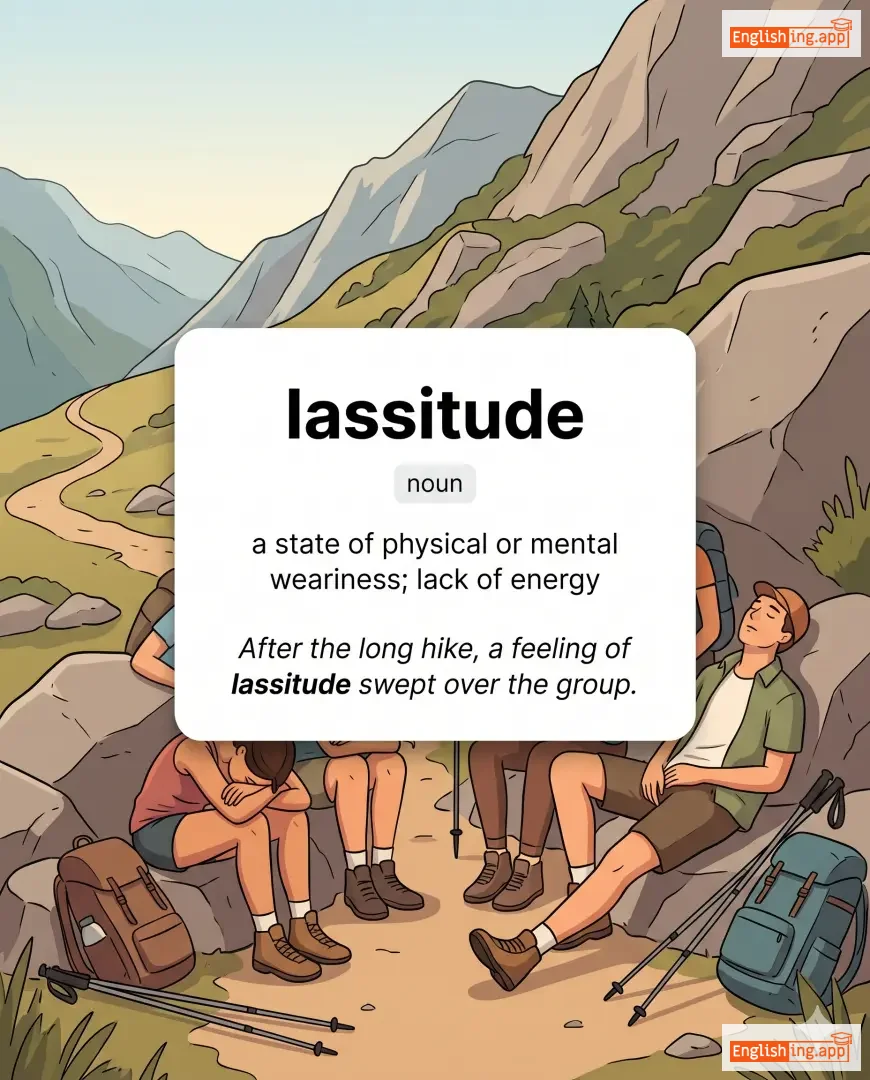
lassitude definition card — visual illustration of the meaning
noun C2
/ˈlæsɪtjuːd/
疲劳 (píláo)

a state of physical or mental weariness; lack of energy

"After the long hike, a feeling of lassitude swept over the group."

"长时间徒步后,疲劳感笼罩了整个团队。" (Cháng shíjiān túbù hòu, píláo gǎn lǒngzhào le zhěnggè tuánduì.)
noun/verb C2
/læˈsuː/
套索 (taosuo)

a rope with a loop used to catch animals; to catch with such a rope

"The cowboy lassoed the horse quickly."

"牛仔快速用拉索抓住了马。" (Niúzǎi kuàisù yòng lāsuǒ zhuāzhù le mǎ.)
noun C2
/leɪð/
车床 (chēchuáng)

A machine for shaping wood, metal, or other material by rotating it against a cutting tool.

"The carpenter used a lathe to shape the wooden bowl."

"木匠使用车床来塑形木碗。" (Mùjiàng shǐyòng chēchuáng lái sùxíng mùwǎn.)
adjective C2
/ˈleɪ.tɪʃ/
稍微晚一点 (shaowei wan yidian)

Somewhat late; occurring or arriving later than usual but not very late.

"We arrived latish to the party but still caught most of the fun."

"我们稍微晚一点到达了聚会,但仍然赶上了大部分的乐趣。" (Women shaowei wan yidian daodale juhui, dan rengran ganchang le dabufen de lequ.)
noun C2
/ˈlætɪs/
格子结构 (gé zi jié gòu)

A structure of crossed strips arranged in a grid or crisscross pattern.

"The garden was decorated with a wooden lattice covered in vines."

"花园里装饰着一座覆盖着藤蔓的木质格子结构。" (Huāyuán lǐ zhuāngshì zhe yīzuò fùgài zhe téngmàn de mùzhì gézi jiégòu.)
laud definition card — visual illustration of the meaning
👏

laud

verb C2
/lɔːd/

To praise someone or something highly, especially in public.

"The critic lauded the actor's performance as a masterpiece."

noun C2
/lɔːˈdeɪʃən/
赞扬 (zanyáng)

The act of praising or expressing approval.

"The poet received much laudation for his moving verses."

"这位诗人因其感人的诗句而获得了许多赞扬。" (Zhè wèi shīrén yīn qí gǎnrén de shījù ér huòdé le xǔduō zànyáng.)
adjective C2
/ˈlɔːdəˌtɔːri/
赞扬的 (zànyáng de)

Expressing praise or admiration.

"She wrote a laudatory review of the new book."

"她写了本书的赞扬评论。" (Tā xiěle běn shū de zànyáng pínglùn.)
noun C2
/ˈlɔːndrəs/
洗衣女工 (xiyi nǚgōng)

A woman whose job is washing clothes and linens.

"The laundress delivered the freshly cleaned clothes to the household."

"洗衣女工将新洗净的衣物送到家里。" (Xǐyī nǚgōng jiāng xīn xǐ jìng de yīwù sòng dào jiālǐ)
verb C2
/leɪv/
(xi)

To wash or bathe.

"She laved her face with cool water."

"她用冷水洗了脸。" (Tā yòng lěng shuǐ xǐ le liǎn.)
noun C2
/ˈlɔːˌɡɪvər/
立法者 (lifazhe)

A person who creates or enforces laws; a legislator.

"Moses is often regarded as a great lawgiver in history."

"摩西常被认为是历史上伟大的法律制定者。" (Móxī cháng bèi rènwéi shì lìshǐ shàng wěidà de fǎlǜ zhìdìng zhě.)
noun C2
/liː/
草地 (caodi)

An open area of grassy or arable land; a meadow.

"The cottage was surrounded by a quiet lea."

"小屋被一片宁静的草地包围着。" (xiaowu bei yi pian ningjing de caodi baoweizhe.)
noun/verb C2
/ˈlɛv.ən/
酵母 (jiaomǔ)

a substance, typically yeast, that causes dough to rise; to permeate and modify

"A little yeast will leaven the bread dough."
"一点酵母会让面团发酵。" (Yi dian jiaomǔ huì ràng miantuan fāxiào.)
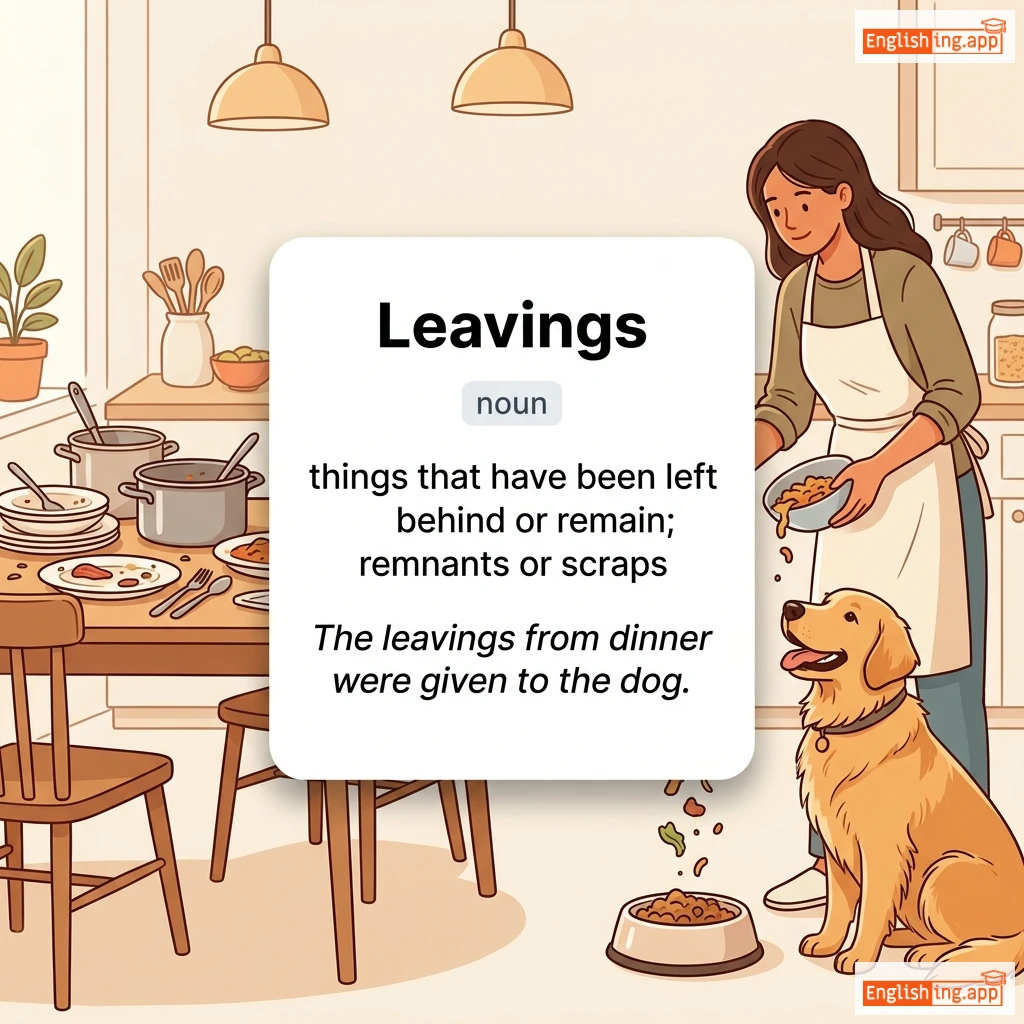
Leavings definition card — visual illustration of the meaning
noun C2
/ˈliː.vɪŋz/
剩余物; 残留物 (livings)

things that have been left behind or remain; remnants or scraps

"The leavings from dinner were given to the dog."

"晚餐的剩余物被给了狗。" (Wǎncān de shèngyú wù bèi gěile gǒu.)
Lecher definition card — visual illustration of the meaning
noun C2
/ˈleʧ.ər/
好色之徒 (haose zhitu)

a man who behaves in a sexually inappropriate way towards women

"The company fired him for being a lecher."

"公司因为他是个好色之徒而解雇了他。" (gongsi yinwei ta shige haose zhitu er jiegule ta)
adjective C2
/ˈlɛtʃ.ər.əs/
好色 (hàosè)

having or showing excessive or offensive sexual desire

"The character was portrayed as a lecherous old man."

"这个角色被描绘成一个好色的老男人。" (Zhège juésè bèi miáohuì chéng yīgè hàosè de lǎo nánrén.)
noun C2
/ˈlɛtʃ.əri/
色欲 (sèyù)

excessive or offensive sexual desire; lustfulness

"The novel depicted the lechery of corrupt nobles."

"这本小说描述了腐化贵族的色欲。" (Zhè běn xiǎoshuō miáoshùle fǔhuà guìzú de sèyù.)