词汇表

英语词汇词典 | 单词含义、定义和示例

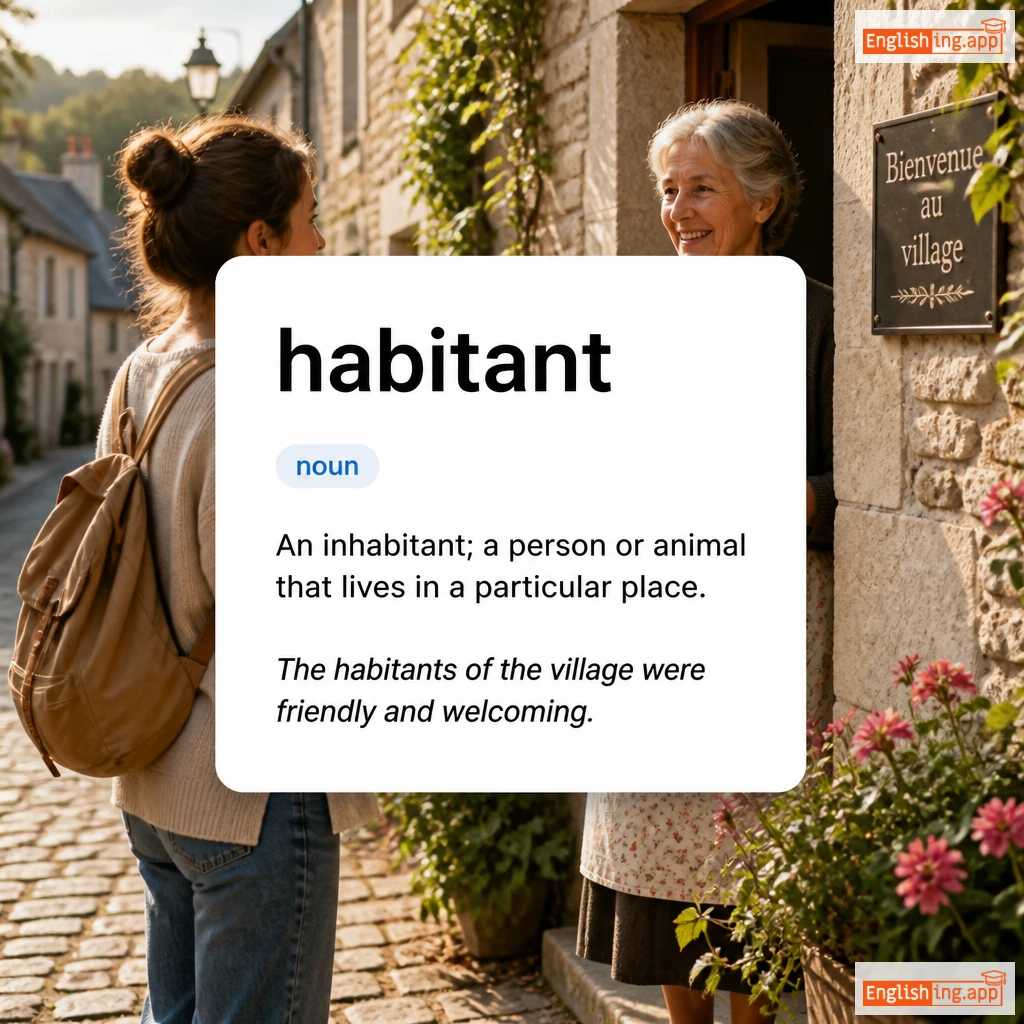
habitant definition card — visual illustration of the meaning
👨‍👩‍👧‍👦

habitant (hàbìtènt)

noun C2
/ˈhæbɪtənt/
居民 (jūmín)

An inhabitant; a person or animal that lives in a particular place.

"The habitants of the village were friendly and welcoming."
"村庄的居民友好而热情。" (Cūnzhuāng de jūmín yǒuhǎo ér rèqíng.)
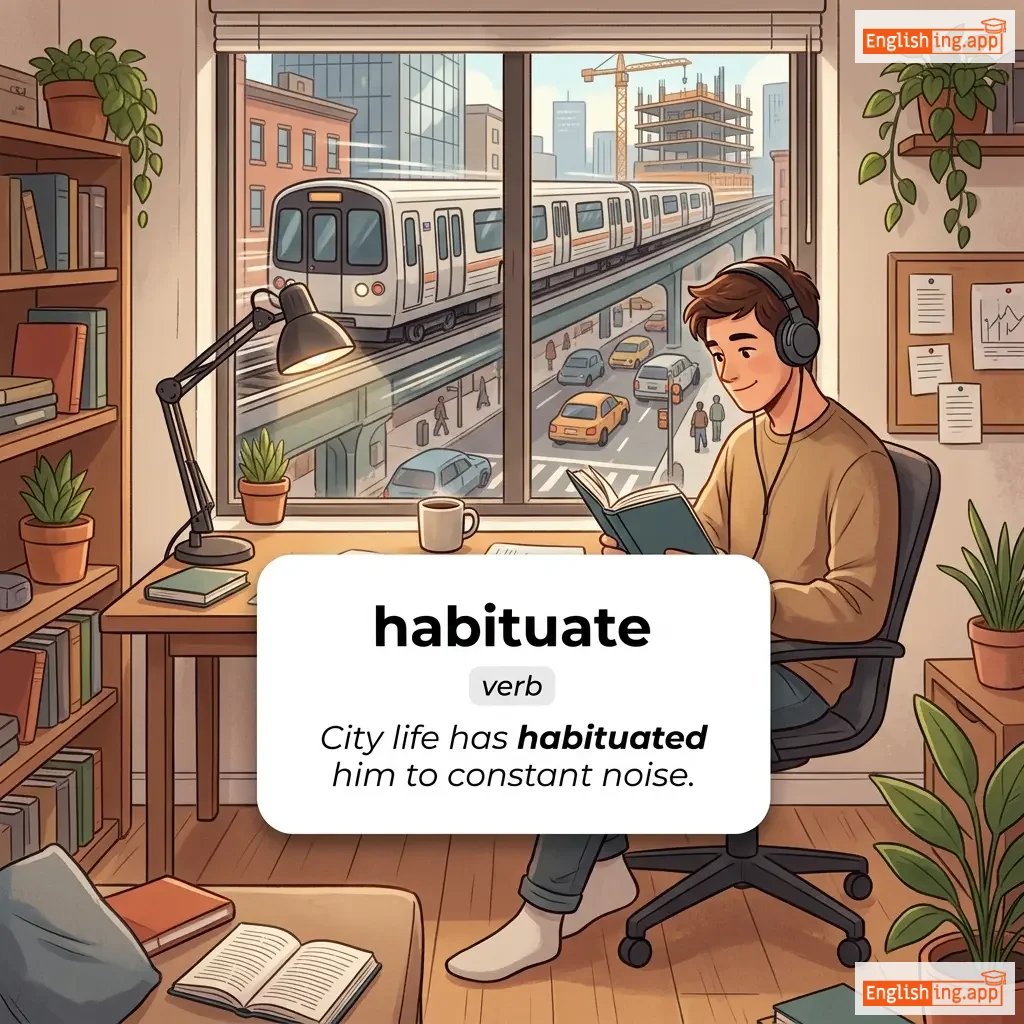
habituate definition card — visual illustration of the meaning
verb C2
/həˈbɪtʃueɪt/
使习惯 (shi xiguan)

to accustom someone or oneself to something through frequent exposure or experience

"City life has habituated him to constant noise."

"城市生活使他习惯了持续的噪音。" (Chengshi shenghuo shi ta xiguanle chixu de zaoyin.)
noun C2
/ˈhæbɪtjuːd/
习惯,风俗 (xíguàn, fēngsú)

a customary condition or mode of life; habitual practice

"He lived in a quiet habitude, avoiding the noise of the city."

"他生活在一种安静的习惯中,避开城市的喧嚣。" (Tā shēnghuó zài yī zhǒng ānjìng de xíguàn zhōng, bìkāi chéngshì de xuānxiāo.)
noun C2
/ˈhækəlz/

the hairs on the back of an animal’s neck that rise when it is angry or alarmed; figuratively, feelings of anger or resentment

"His rude comment raised my hackles."

noun C2
/ˈhæknɪ/
出租马, 陈腐 (chuzu ma, chenfu)

a horse kept for ordinary riding or hire; also used for something overused or trite

"The old hackney was still pulling the carriage."
"那匹旧出租马仍然拉着马车。" (Na pi jiu chuzu ma rengran la zhe mache.)
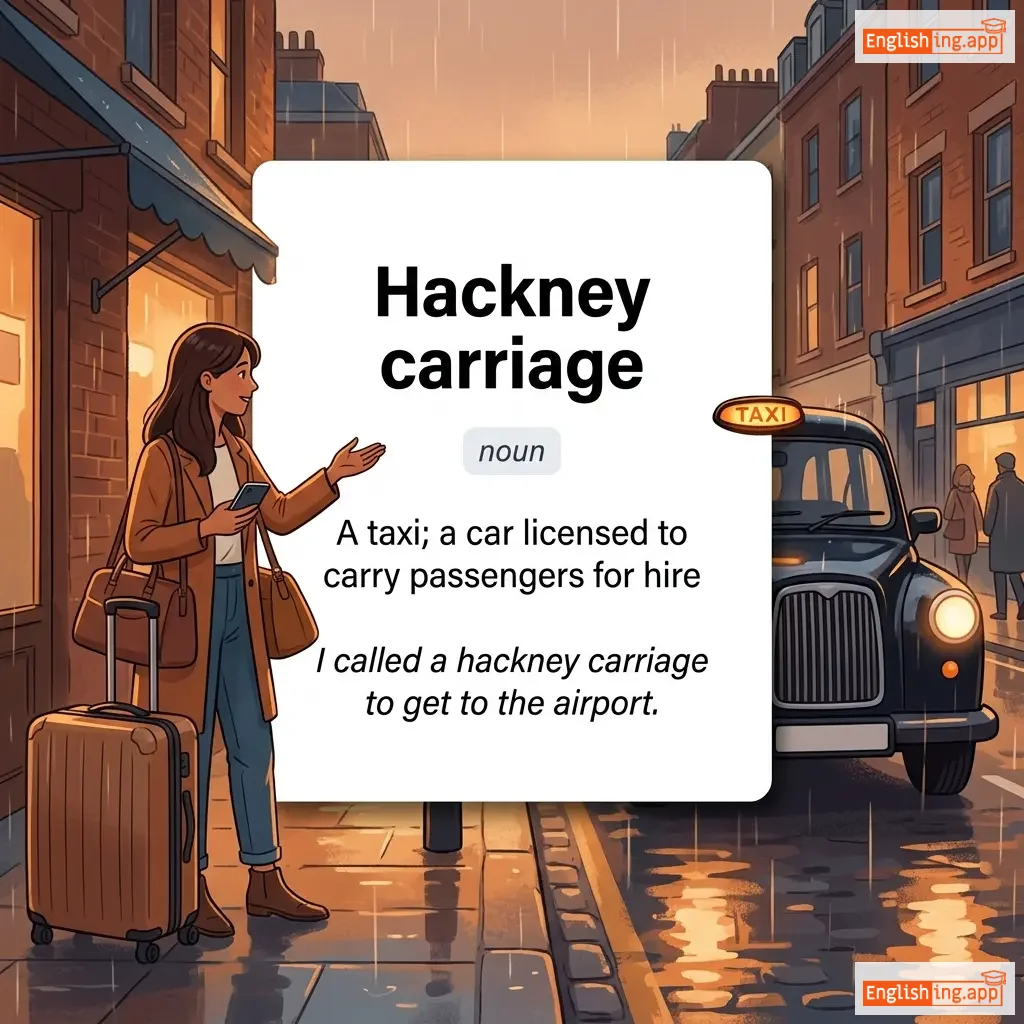
Hackney carriage definition card — visual illustration of the meaning
noun C2
/ˈhæk.ni ˈkær.ɪdʒ/
出租车 (chūzūchē)

A taxi; a car licensed to carry passengers for hire

"I called a hackney carriage to get to the airport."

"我叫了一辆出租车去机场。" (Wǒ jiào le yī liàng chūzūchē qù jīchǎng.)
🧙‍♀️

Hag (hāgé)

noun C2
/hæɡ/
巫婆 (wūpó)

an ugly old woman, especially a vicious or malicious one; a witch

"In the fairy tale, the wicked hag lived alone in a cottage deep in the forest."

"在这个童话故事中,邪恶的巫婆独自生活在森林深处的小屋里。" (Zài zhège tónghuà gùshì zhōng, xié'è de wūpó dúzì shēnghuó zài sēnlín shēnchù de xiǎowū lǐ.)
adjective C2
/ˌhæɡ.i.əˈɡræf.ɪk/
过度恭维的 (guòdù gōngwéi de)

Excessively flattering or idealized, often in a biography or portrayal of someone.

"The documentary was criticized for its hagiographic portrayal of the leader."

"这部纪录片因其对领导者的过度恭维描写而受到批评。" (Zhè bù jìlùpiàn yīn qí duì lǐngdǎo zhě de guòdù gōngwéi miáoxiě ér shòudào pīpíng.)
halcyon definition card — visual illustration of the meaning
adjective C2
/ˈhæl.si.ən/
宁静的 (níngjìng de)

calm, peaceful, and happy; denoting a period of time in the past that was idyllically happy and peaceful

"She often reminisces about the halcyon days of her childhood."

"她经常回忆起她童年时宁静的日子。" (Tā jīngcháng huíyì qǐ tā tóngnián shí níngjìng de rìzi.)
adjective C2
/heɪl/
健康 (jiànkāng)

strong and healthy, especially of an elderly person

"Despite his age, the man remained hale and active."

"尽管他的年龄,他依然保持健康和活跃。" (Jǐnguǎn tā de niánlíng, tā yīrán bǎochí jiànkāng hé huóyuè.)
adjective C2
/ˌhæfˈbeɪkt/
半生不熟 (ban sheng bu shu)

poorly thought out or badly planned

"The manager quickly rejected his half-baked proposal."

"经理迅速拒绝了他半生不熟的提案。" (Jingli xunsu jujue le ta ban sheng bu shu de ti'an.)
adjective C2
/ˌhæfˈhɑːr.tɪd/
半心半意 (banxinbanyi)

lacking enthusiasm or determination; unenthusiastic

"His halfhearted attempt to study did not bring good results."

"他半心半意的学习尝试没有带来好结果。" (Ta banxinbanyi de xuexi changshi meiyou dalai hao jieguo.)
verb C2
/ˈhæloʊ/
神圣化 (shenshenghua)

to honor as holy; to make sacred or greatly respected

"The ancient temple was hallowed by centuries of worship."

"古老的寺庙因几百年的崇拜而被神圣化。" (Gulao de simiao yin jiban nian de chongbai er bei shenshenghua.)
adjective C2
/ˈhæm ˌhændɪd/
笨拙 (bènzhuō)

clumsy or inept in handling things or situations

"His ham-handed attempt to fix the computer made it worse."

"他笨拙的修理电脑的尝试反而使情况更糟。" (Tā bènzhuō de xiūlǐ diànnǎo de chángshì fǎn'ér shǐ qíngkuàng gèng zāo.)
noun, verb C2
/ˈhæmstrɪŋ/
大腿后部的肌腱; 作为动词,限制或严重削弱某人或某物的效能 (dàtuǐ hòubù de jījiàn; zuòwéi dòngcí, xiànzhì huò yánzhòng xuēruò mǒurén huò mǒuwù de xiàonéng)

a tendon at the back of the thigh; as a verb, to cripple or severely restrict the effectiveness of someone or something.

"Budget cuts hamstrung the organization’s plans."

"预算削减削弱了该组织的计划。" (yùsuàn xuējiǎn xuēruòle gāi zǔzhī de jìhuà.)
verb (past tense, past participle), adjective C2
/ˈhæmstrʌŋ/
瘫痪或受限 (tānhuàn huò shòuxiàn)

crippled or severely restricted in movement or progress.

"The team was hamstrung by lack of resources."

"由于资源匮乏,团队陷入困境。" (Yóuyú zīyuán kuìfá, tuánduì xiànrù kùnjìng.)
noun C2
/ˈhænd ˌrɪŋɪŋ/
过度担忧 (guòdù dānyōu)

excessive worry or concern expressed in a visible or dramatic way.

"There was much hand-wringing over the political crisis."

"关于政治危机有很多戏剧性的担忧。" (Guānyú zhèngzhì wēijī yǒu hěn duō xìjùxìng de dānyōu.)
adjective C2
/ˈhæŋ.dɔːɡ/
尴尬 (gāngà)

looking or feeling ashamed, guilty, or defeated.

"He gave me a hangdog look after being caught lying."

"他在被抓到撒谎后,给了我一个尴尬的表情。" (Tā zài bèi zhuā dào sāhuǎng hòu, gěile wǒ yīgè gāngà de biǎoqíng.)
noun C2
/ˌhæŋ.ər ˈɒn/
跟班 (genban)

a person who spends time with a powerful or famous person to gain benefits.

"The celebrity was always surrounded by hangers-on."

"这位名人总是被跟班围绕着。" (zhè wèi míngrén zǒng shì bèi gēnbān wéirào zhe.)
noun C2
/ˈhæŋ.kər/
渴望, 欲望 (kewang, yuwang)

a feeling of yearning or craving; a strong desire for something

"After years abroad, she developed a deep hanker for her homeland's traditional cuisine."

"在国外多年后,她产生了对家乡传统美食的深深渴望。" (Zai guowai duonian hou, ta chansheng le dui jiaxiang chuantong meishi de shenshen kewang.)
noun C2
/ˈhæŋ.kər.ɪŋ/
渴望 (kewang)

a strong desire or craving for something.

"She had a hankering for chocolate late at night."

"她深夜时对巧克力有了强烈的渴望。" (Tā shēn yè shí duì qiǎokèlì yǒule qiángliè de kewàng.)
noun C2
/ˌhæŋ.ki ˈpæŋ.ki/
欺诈; 可疑活动; 不道德行为; 欺骗 (qizha; keyi huodong; budaode xingwei; qipian)

dishonest or suspicious activity; unethical behavior; trickery or deception

"The audit revealed some hanky-panky in the company's financial records."
"审计揭示了公司财务记录中的一些欺诈行为。" (shenji jieshi le gongsi caiwu jilu zhong de yixie qizha xingwei.)
noun C2
/hæp/
运气,幸运,偶然 (yunqi, xingyun, ouran)

luck, fortune, or chance occurrence

"By sheer hap, he discovered the old letter hidden in the drawer."

"凭借运气,他发现了藏在抽屉里的旧信。" (Pingjie yunqi, ta faxianle cang zai chouzi li de jiu xin.)
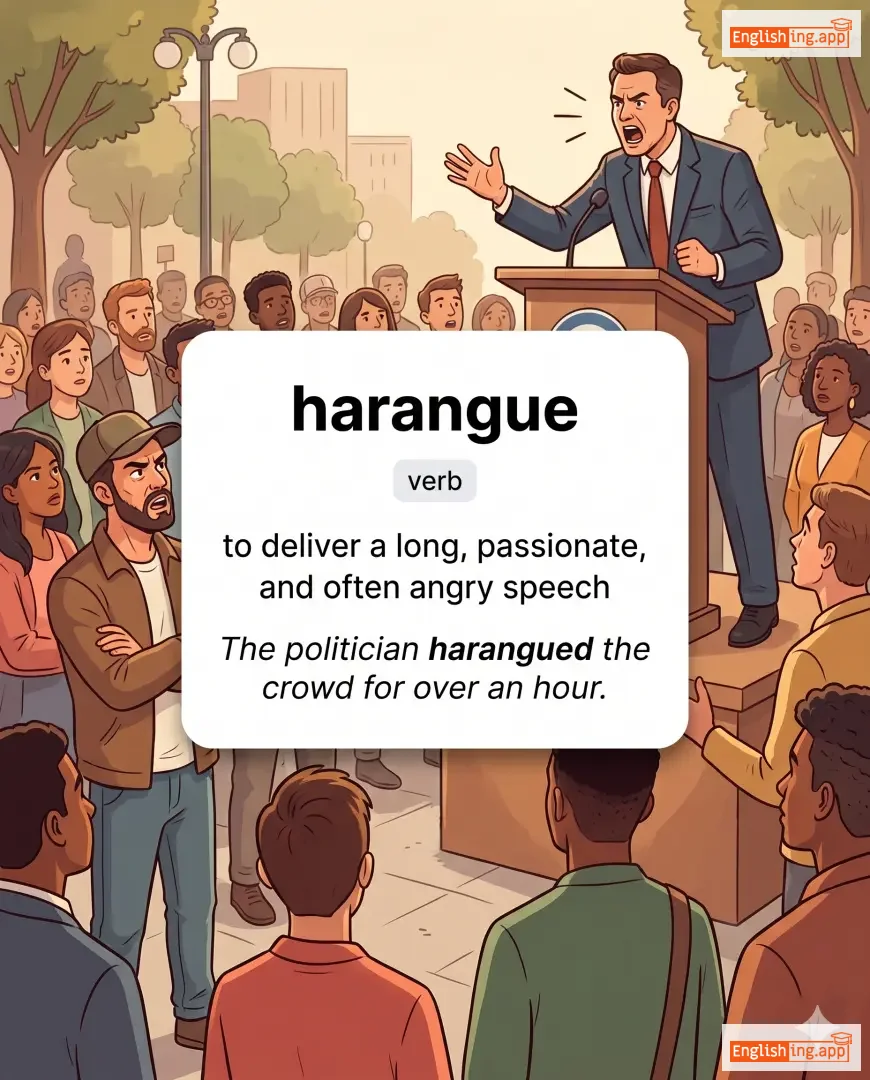
harangue definition card — visual illustration of the meaning
verb C2
/həˈræŋ/
进行冗长而愤怒的演讲 (jìnxíng rǒngcháng ér fènnù de yǎnjiǎng)

to deliver a long, passionate, and often angry speech

"The politician harangued the crowd for over an hour."

"政治家对人群进行了超过一小时的演讲。" (Zhèngzhìjiā duì rénqún jìnxíngle chāoguò yī gè xiǎoshí de yǎnjiǎng.)
noun C2
/ˈhɑːrbɪndʒər/
先兆 (xiānzhào)

a person or thing that announces or signals the approach of another

"The sudden drop in temperature was a harbinger of winter."
"温度的突然下降是冬天的先兆。" (Wēndù de túrán xiàjiàng shì dōngtiān de xiānzhào.)
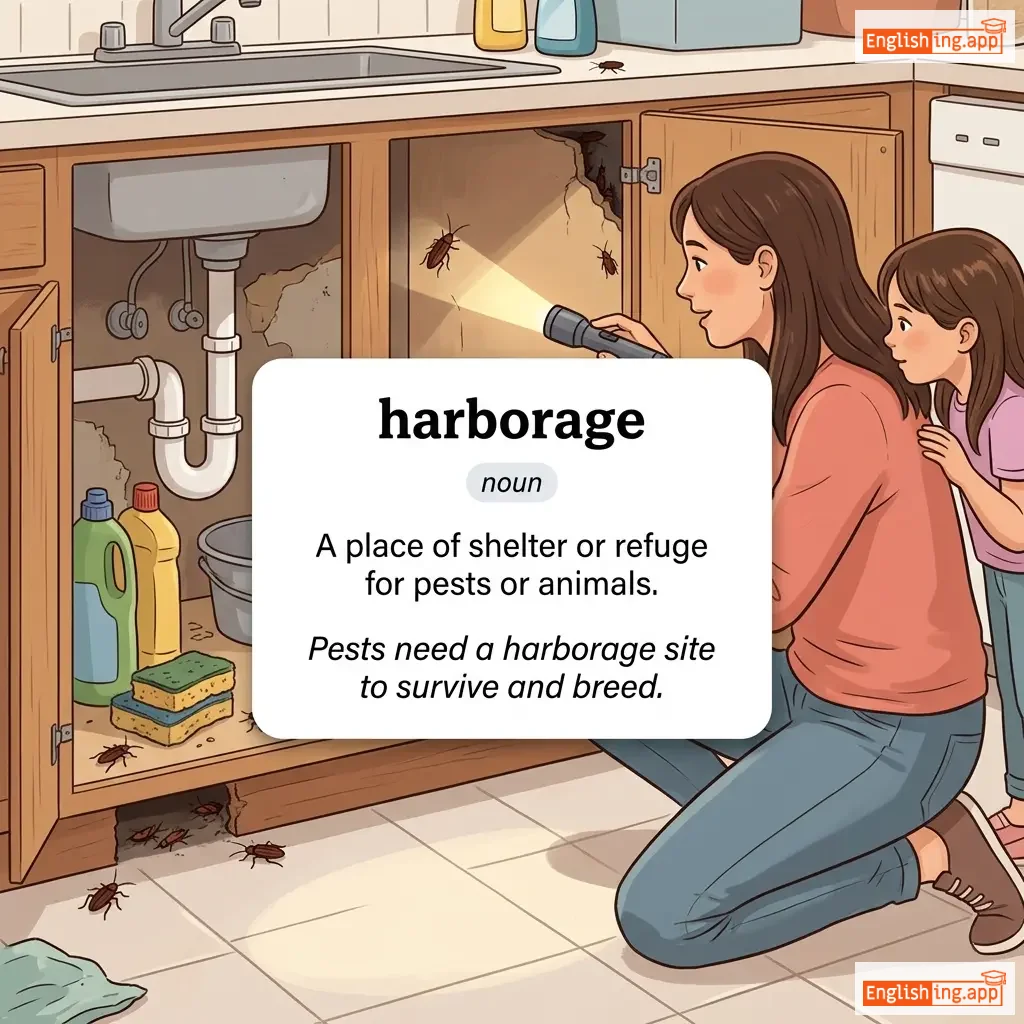
harborage definition card — visual illustration of the meaning
noun C2
ˈhɑːrbərɪdʒ
藏身处 (cángshēn chù)

A place of shelter or refuge for pests or animals.

"Pests need a harborage site to survive and breed."

"害虫需要一个藏身处来生存和繁殖。" (hàichóng xūyào yīgè cángshēn chù lái shēngcún hé fánzhí.)
adjective C2
/ˌhɑːrdˈbɪtn̩/
坚韧且经验丰富 (jiān rèn qiě jīng yàn fēng fù)

tough and experienced, not easily affected by emotions or hardship

"The hard-bitten detective showed no sign of surprise at the crime scene."

"那个经验丰富的侦探在犯罪现场毫无惊讶之情。" (Na ge jing yan feng fu de zhen tan zai fan zui xian chang hao wu jing ya zhi qing.)
noun C2
/ˈhɑːdɪhʊd/
勇气,胆量 (yǒngqì, dǎnliàng)

Courage, boldness, or daring behavior; also physical robustness.

"The mountaineer's hardihood impressed the entire team."
"登山者的硬气打动了整个团队。" (Dēngshān zhě de yìngqì dǎdòngle zhěnggè tuánduì.)
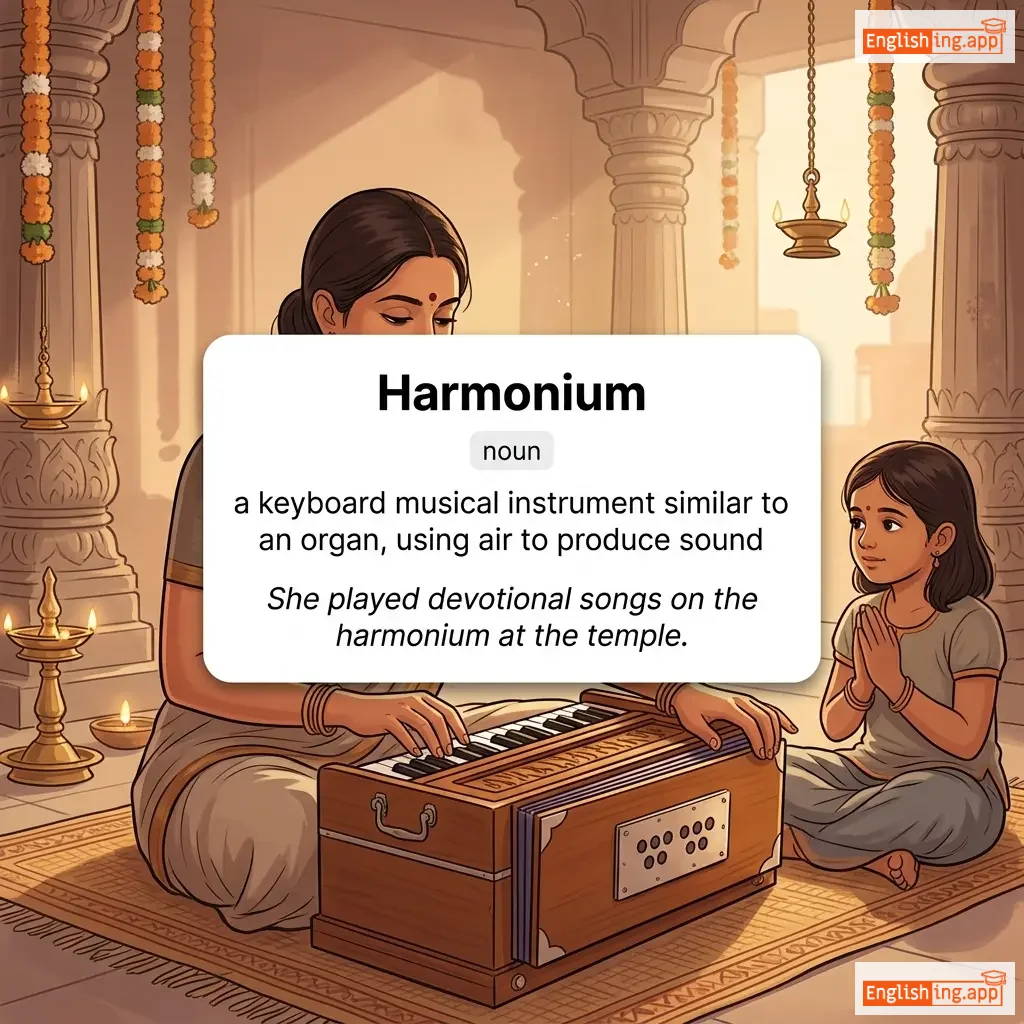
Harmonium definition card — visual illustration of the meaning
noun C2
/hɑrˈmoʊniəm/
风琴 (harmonium)

a keyboard musical instrument similar to an organ, using air to produce sound

"She played devotional songs on the harmonium at the temple."

"她在寺庙用风琴演奏虔诚的颂歌。" (ta zai si miao yong fengqin yan zou qian cheng de song ge)
verb C2
/ˈhɑːrpɪŋ/
不断抱怨 (bùduàn bàoyuàn)

continuously talking or complaining about something in a tiresome way

"She kept harping on about the mistakes I made."

"她不断抱怨我做的错事。" (Tā bùduàn bàoyuàn wǒ zuò de cuòshì.)
adjective C2
/ˈhæriːd/
感到压力或忙碌 (gǎndào yālì huò mánglù)

feeling strained or stressed due to being overworked or constantly bothered

"The harried teacher struggled to calm the noisy classroom."

"感到压力的老师努力让嘈杂的教室安静下来。" (Gǎndào yālì de lǎoshī nǔlì ràng cáozá de jiàoshì ānjìng xiàlái.)
verb C2
/ˈhæroʊ/
折磨 / 耙 (zhemo / ba)

to cause distress or torment; also to break up and smooth soil with a farm tool

"The tragic news harrowed the entire family."

"悲惨的消息让全家人都痛苦不堪。" (Beican de xiaoxi rang quanjia ren dou tongku bikan.)
verb C2
/ˈhæri/
骚扰, 追扰 (saorao, zhuirao)

to constantly attack, harass, or annoy

"The army harried the enemy with sudden raids."

"军队通过突袭不断攻击敌人。" (Jundui tongguo tuxi buduan gongji diren.)
noun C2
/hæˈʃiːʃ/
哈希什 (haxishi)

a drug made from the resin of the cannabis plant

"The police arrested him for possessing hashish."

"警方因持有哈希什逮捕了他。" (Jǐngfāng yīn chíyǒu hāxīshí dàibǔle tā.)
noun C2
/ˈhɔːtɪnəs/
傲慢 (aoman)

The appearance or quality of being arrogantly superior and disdainful.

"His haughtiness made him unpopular among his peers."

"他的傲慢使他在同事中不受欢迎。" (Tā de àomàn shǐ tā zài tóngshì zhōng bù shòu huānyíng.)
noun C2
/oʊˈtɜːr/
傲慢 (àomàn)

disdainful pride; arrogance

"His hauteur made it difficult for others to approach him."

"他的傲慢使别人很难接近他。" (Tā de àomàn shǐ biérén hěn nán jiējìn tā.)
noun C2
/ˈhɔːzər/
用于系船或拖船的粗绳 (yòng yú xì chuán huò tuō chuán de cū shéng)

A thick rope or cable used in mooring or towing a ship.

"The sailors secured the ship to the dock with a heavy hawser."

"水手们用一根重的豪泽把船固定在码头。" (Shuǐshǒu men yòng yī gēn zhòng de háo zé bǎ chuán gùdìng zài mǎtóu.)
noun C2
/ˈhɔːθɔːrn/
有刺灌木 (yǒu cì guànmù)

A thorny shrub or small tree with white or pink flowers, often used for hedges.

"The garden was lined with blooming hawthorn bushes."

"花园里种满了盛开的山楂灌木。" (Huāyuán lǐ zhòng mǎnle shèngkāi de shānzhā guànmù.)
adjective C2
/ˈhɛdi/
陶醉的 (táozuì de)

Exciting or intoxicating; having a strong or exhilarating effect.

"The heady aroma of the flowers filled the room."

"花朵的迷人香气充满了整个房间。" (Huāduǒ de mírén xiāngqì chōngmǎnle zhěnggè fángjiān.)
verb C2
/ˈhɑːrkən/
专心听 (zhuānxīn tīng)

To listen attentively; to give heed.

"He would hearken to his mentor’s advice before making decisions."

"他在做决定之前,会专心听导师的建议。" (Tā zài zuò juédìng zhīqián, huì zhuānxīn tīng dǎoshī de jiànyì.)
noun C2
/hɜːrs/
灵车; (língchē)

a vehicle for conveying the coffin at a funeral; a funeral car

"The black hearse slowly made its way to the cemetery, followed by a procession of mourners."

"黑色的灵车缓缓驶向墓地,后面跟着一队哀悼的人。" (Hēisè de língchē huǎn huǎn shǐ xiàng mùdì, hòumiàn gēnzhe yī duì āidào de rén.)
verb C2
/ˈhɑːrtən/
鼓舞 (gǔwǔ)

To give courage, confidence, or hope.

"The teacher’s encouragement heartened the students."

"老师的鼓励给学生们带来了勇气。" (Lǎoshī de gǔlì gěi xuéshēngmen dàilái le yǒngqì.)
adjective C2
/ˈhiːðənɪʃ/
野蛮 (yěmán)

Lacking culture or religion; barbaric or uncivilized.

"They considered the ancient tribe’s rituals heathenish."

"他们认为古老部落的仪式是野蛮的。" (Tāmen rènwéi gǔlǎo bùluò de yíshì shì yěmán de.)
noun C2
/ˈhɛklər/
打扰者 (dǎrǎo zhě)

A person who interrupts a speaker with rude or aggressive comments.

"The politician remained calm despite the heckler shouting from the crowd."

"尽管人群中有打扰者大声叫喊,政治家仍然保持冷静。" (Jǐnguǎn rénqún zhōng yǒu dǎrǎo zhě dàshēng jiàohǎn, zhèngzhìjiā réngrán bǎochí lěngjìng.)
verb C2
/ˈhɛktər/
以威胁的方式说话 (yǐ wēixié de fāngshì shuōhuà)

To talk to someone in a bullying or intimidating way.

"The manager hectored the staff into working overtime."

"经理威胁员工加班。" (Jīnglǐ wēixié yuángōng jiābān.)
noun C2
/hɪˈdʒɛməni/ or /ˈhɛdʒəmoʊni/
霸权 (bàquán)

leadership or dominance, especially by one state or group over others

"The empire maintained its hegemony over neighboring states."

"帝国保持了对邻国的霸权。" (Dìguó bǎochí le duì lín guó de bàquán.)
🚶‍♂️

hegira (海吉拉)

noun C2
/ˈhɛdʒɪrə/ or /hɪˈdʒaɪrə/
迁徙, 流亡 (qianxi, liuwang)

a journey, especially when undertaken to escape from a dangerous or undesirable situation

"The refugees began their hegira across the desert."

"难民们开始了穿越沙漠的迁徙。" (Nanminmen kaishi le chuanjue shamo de qianxi.)
noun C2
/ˈhɛfər/
小母牛 (xiǎo mǔ niú)

a young cow that has not borne a calf

"The farmer raised a heifer for dairy production."

"农民为乳制品生产养了一头小母牛。" (Nóngmín wèi rǔzhìpǐn shēngchǎn yǎngle yī tóu xiǎo mǔ niú.)
noun C2
/ˈhelmz.mən/
舵手; 船长 (duò shǒu; chuán zhǎng)

a person who steers a ship or boat; the person at the helm of a vessel

"The experienced helmsman skillfully guided the yacht through the narrow channel during the storm."

"经验丰富的舵手在暴风雨中熟练地引导游艇通过狭窄的航道。" (Jīngyàn fēngfù de duò shǒu zài bàofēngyǔ zhōng shúliàn de yǐndǎo yóutǐng tōngguò xiázhǎi de hángdào.)
hemophilia definition card — visual illustration of the meaning
noun C2
ˌhiː.məˈfɪl.i.ə
血友病 (xuè yǒu bìng)

A medical condition in which the ability of the blood to clot is severely reduced, causing the sufferer to bleed severely from even a slight injury.

"Hemophilia treatment benefits from genetic editing."

"血友病治疗受益于基因编辑。" (Xuèyǒubìng zhìliáo shòuyì yú jīyīn biānjí.)