词汇表

英语词汇词典 | 单词含义、定义和示例

evanescent definition card — visual illustration of the meaning
adjective C2
/ˌɛvəˈnɛsənt/
短暂的 (duǎnzàn de)

Quickly fading or disappearing; lasting for only a very short time.

"The beauty of the sunset was evanescent, fading within minutes."
"夕阳的美丽是短暂的,在几分钟内消失了。" (Xīyáng de měilì shì duǎnzàn de, zài jǐ fēnzhōng nèi xiāoshī le.)
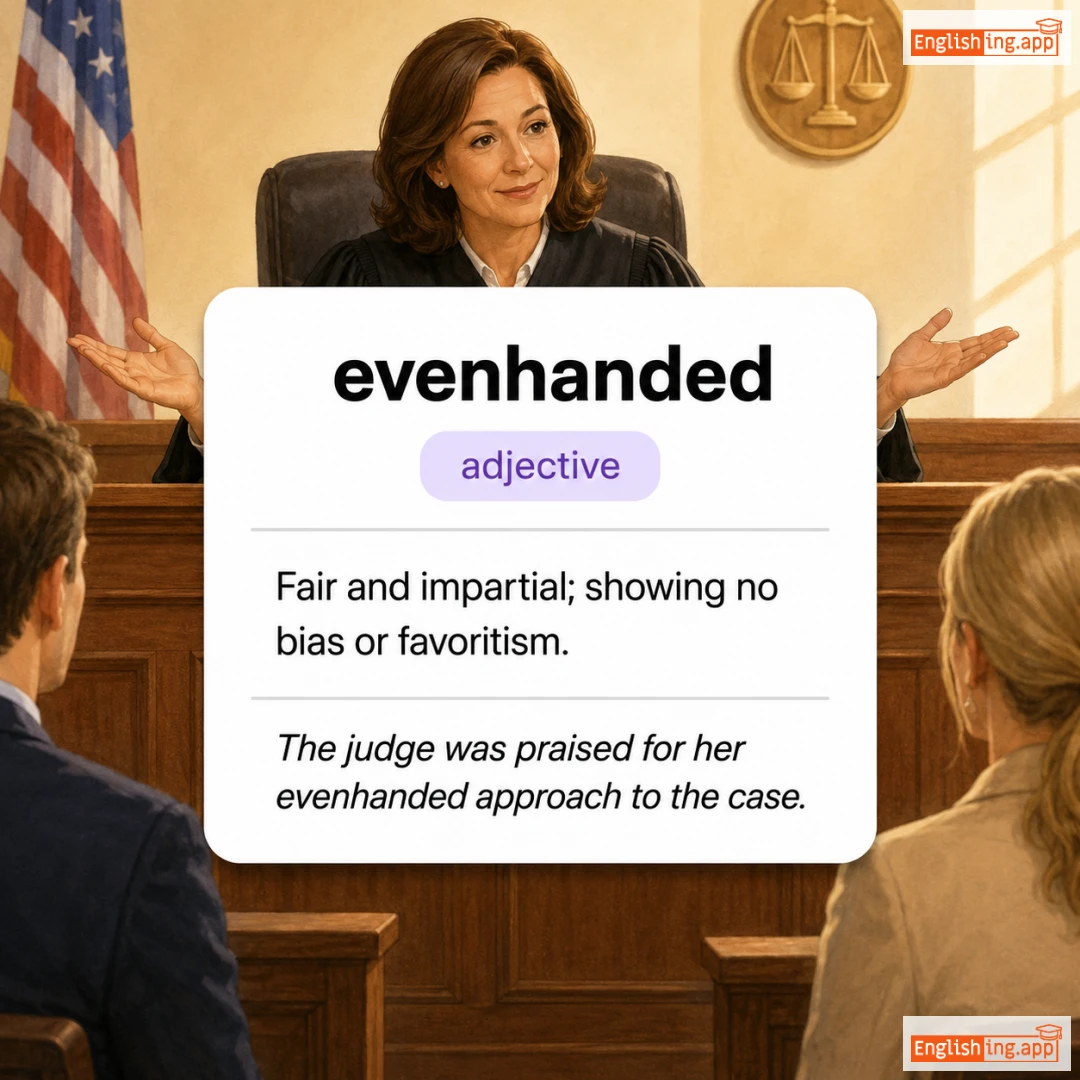
evenhanded definition card — visual illustration of the meaning
adjective C2
/ˌiːvənˈhændɪd/
公正无私 (gongzheng wusi)

Fair and impartial; showing no bias or favoritism.

"The judge was praised for her evenhanded approach to the case."

"法官因其公正无私的案件处理方式而受到赞扬。" (Faguanzhen yinqi gongzheng wusi de anjian chuli fangshi er shoudao zanyang.)
verb C2
/ɪˈvɜːrt/
翻转向外 (fānzhuǎn xiàng wài)

To turn inside out or outward.

"The surgeon had to evert the eyelid during the procedure."

"外科医生在手术过程中必须翻转眼睑。" (Wàikē yīshēng zài shǒushù guòchéng zhōng bìxū fānzhuǎn yǎnjiǎn.)
adjective C2
/ˌɛvɪˈdɛnʃəl/
证据的 (zhèngjù de)

relating to or providing evidence

"The lawyer presented evidential support for her claims."

"律师为她的诉求提供了证据支持。" (Lǜshī wèi tā de sùqiú tígōngle zhèngjù zhīchí.)
evince definition card — visual illustration of the meaning
verb C2
/ɪˈvɪns/
展示 (zhanshi)

to show or demonstrate clearly

"She evinced her interest in the project through active participation."

"她通过积极参与展示了对该项目的兴趣。" (Ta tongguo jiji canyu zhanshi le dui gai xiangmu de xingqu.)
verb C2
/ɪˈvɪsəˌreɪt/
取出内脏,摧毁 (qǔchū nèizàng, cuīhuǐ)

to remove the internal organs of; to deprive of essential content

"The critics eviscerated the movie for its weak storyline."
"评论家因为电影的弱剧情而摧毁了电影。" (Pínglùn jiā yīnwèi diànyǐng de ruò jùqíng ér cuīhuǐ le diànyǐng.)
Ewe definition card — visual illustration of the meaning
noun C2
/juː/
母羊 (mu yang)

a female sheep

"The ewe gave birth to two lambs in the spring."

"母羊在春天生下了两只小羊。" (Mu yang zai chun tian sheng xia le liang zhi xiao yang.)
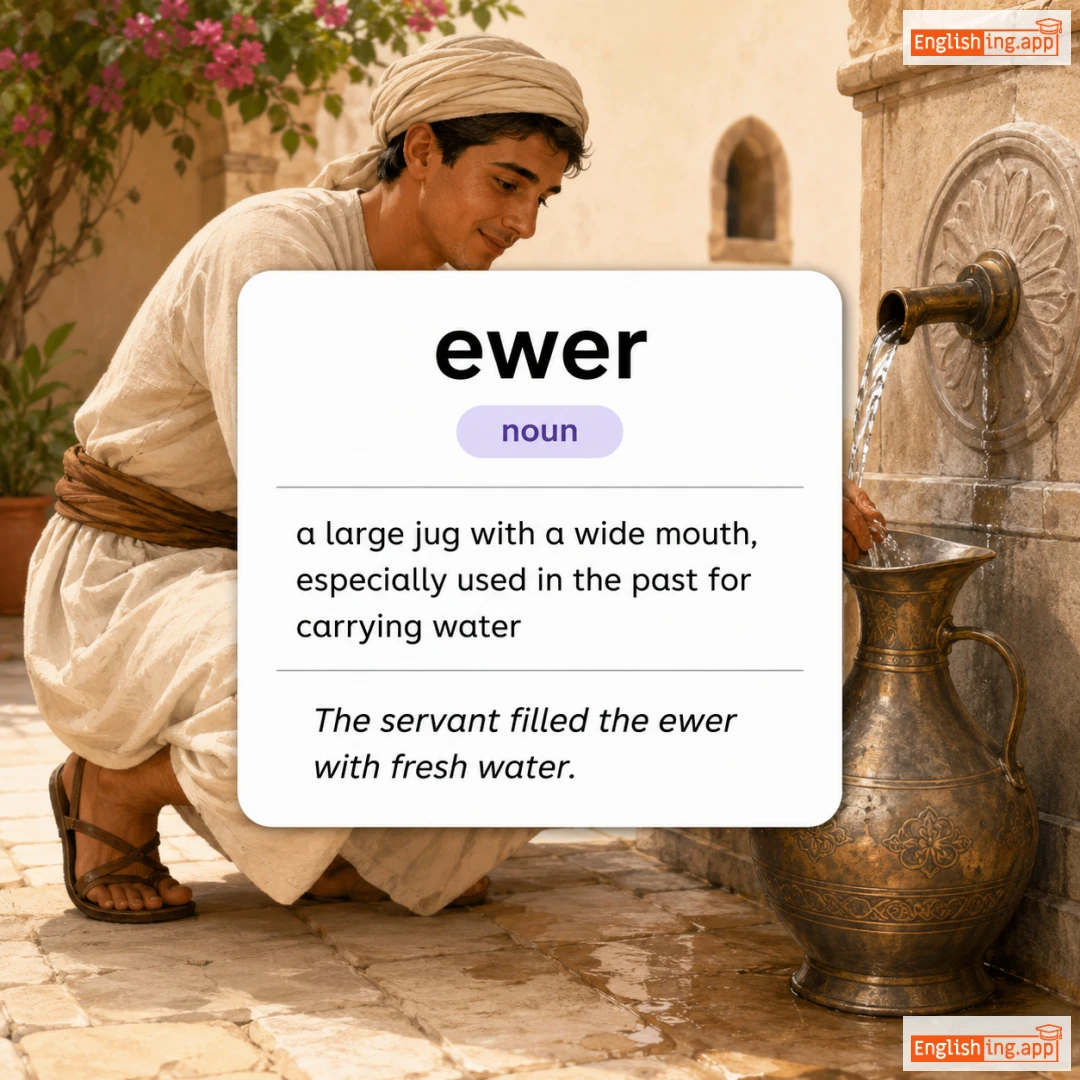
ewer definition card — visual illustration of the meaning
noun C2
/ˈjuːər/
水罐 (shuǐguàn)

a large jug with a wide mouth, especially used in the past for carrying water

"The servant filled the ewer with fresh water."
"仆人把水罐装满了新鲜的水。" (Púrén bǎ shuǐguàn zhuāng mǎnle xīnxiān de shuǐ.)
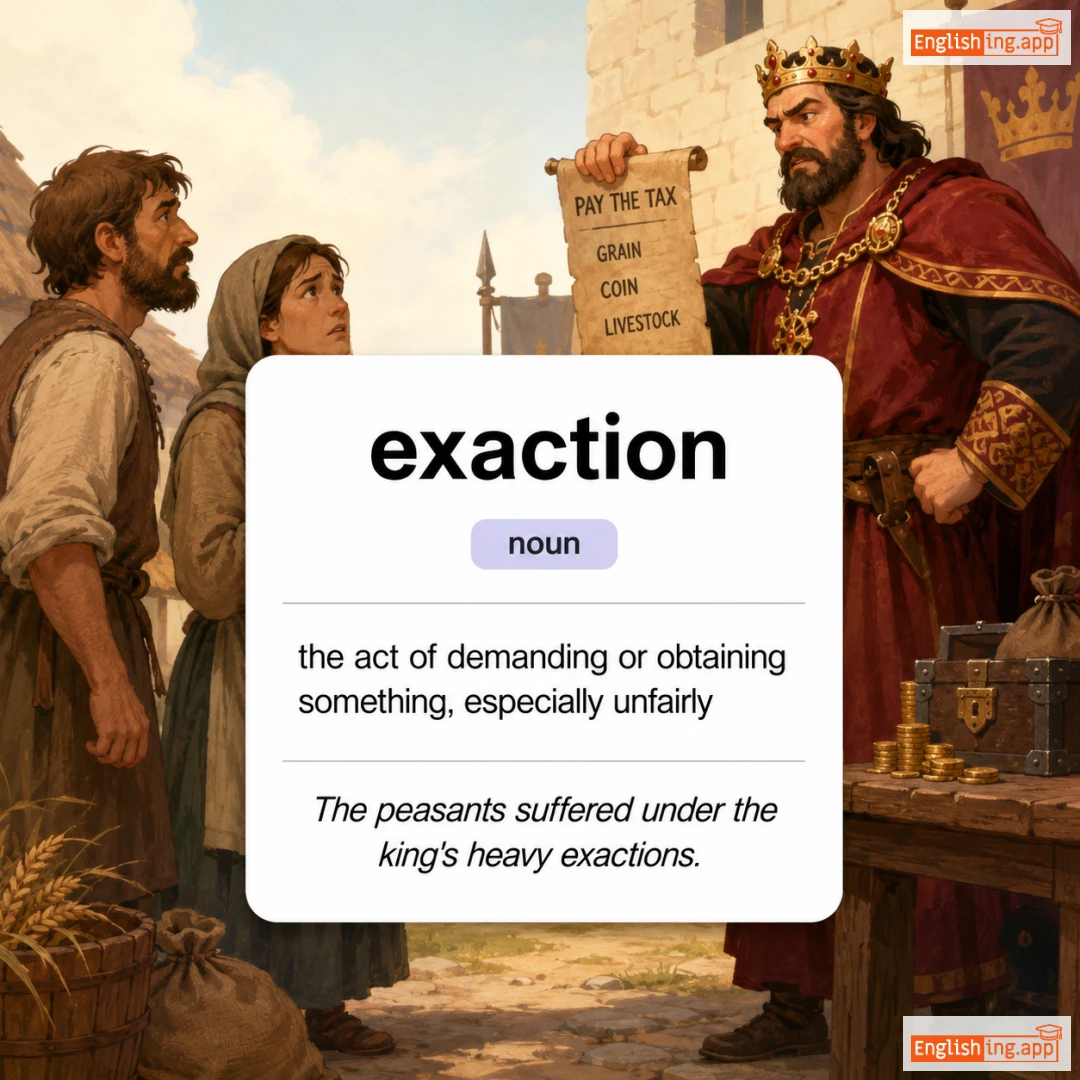
exaction definition card — visual illustration of the meaning
noun C2
/ɪɡˈzækʃən/
敲诈 (qiaozha)

the act of demanding or obtaining something, especially unfairly

"The peasants suffered under the king's heavy exactions."

"农民在国王的沉重敲诈下受苦。" (Nongmin zai guowang de chenzhong qiaozha xia shouku.)
adjective C2
/ɪkˈsɛpʃənəbl/
不可接受的 (bù kě jiē shòu de)

Open to objection; causing disapproval.

"His rude remarks were considered exceptionable by everyone present."

"他的粗鲁评论被在场的每个人视为不可接受。" (Tā de cūlǔ pínglùn bèi zài chǎng de měi gè rén shì wéi bù kě jiē shòu de.)
noun C2
/ɪksˈtʃɛkər/
国库 (guó kù)

The treasury of a state or country.

"The government announced new measures to improve the exchequer."

"政府宣布了新的措施,以改善国库。" (zhèngfǔ xuānbùle xīn de cuòshī, yǐ gǎishàn guó kù.)
noun C2
/ɪkˈsɪʒən/
切除 (qiechu)

the act of cutting something out, especially by surgical removal

"The excision of the infected tissue prevented further complications."

"切除感染的组织防止了进一步的并发症。" (Qiechu ganran de zizhi fangzhi le jinyibu de bingfazheng.)
noun C2
/ˌɛksaɪˈteɪʃən/
兴奋 (xīngfèn)

a state of great excitement or the process of stimulating activity

"The news created great excitation among the fans."

"这条新闻在球迷中引起了极大的兴奋。" (Zhè tiáo xīnwén zài qiúmí zhōng yǐnqǐle jí dà de xīngfèn.)
verb C2
/ɛkˈskɔːrieɪt/
严厉批评 (yanli piping)

To strongly criticize someone; to denounce severely.

"The critic excoriated the film for its poor script."

"评论家因影片的糟糕剧本而严厉批评了该片。" (Pinglun jia yin yingpian de zaogao juben er yanli piping le gai pian.)
noun C2
/ɪkˈskrɛsəns/
异常生长 (yìcháng shēngzhǎng)

An abnormal outgrowth or lump, often considered unattractive.

"The building was considered an excrescence on the landscape."

"这座建筑被认为是景观中的一种异常生长。" (Zhè zuò jiànzhú bèi rènwéi shì jǐngguān zhōng de yī zhǒng yìcháng shēngzhǎng.)
verb C2
/ɪkˈskruːʃieɪt/
折磨 (zhe mo)

to cause intense pain or suffering

"The injury excruciated him with unbearable pain."

"伤害让他经历了无法忍受的疼痛。" (Shanghai rang ta jingli le wufa renshou de tengtong.)
exculpate definition card — visual illustration of the meaning
verb C2
/ˈɛkskʌlpeɪt/
辩解 (biànjiě)

to show or declare that someone is not guilty of wrongdoing

"The lawyer worked hard to exculpate his client."

"律师努力工作,为他的客户辩解。" (Lǚshī nǔlì gōngzuò, wèi tā de kèhù biànjiě.)
adjective C2
/ɪkˈskɜːsɪv/
偏离主题的 (pianli zhutime de)

Tending to digress or wander; moving away from the main subject.

"His excursive lecture left the students confused about the main topic."

"他的偏离主题的讲座让学生们对主要话题感到困惑。" (Tā de piānlí zhǔtí de jiǎngzuò ràng xuéshēngmen duì zhǔyào huàtí gǎndào kùnhuò.)
execrable definition card — visual illustration of the meaning
adjective C2
/ˈeksɪkrəbl/
可憎的 (kě zēng de)

Extremely bad or unpleasant.

"The movie was so execrable that many people left the theater early."

"这部电影糟糕透顶,以至于许多人早早就离开了影院。" (Zhè bù diànyǐng zāogāo tòudǐng, yǐ zhì yú xǔduō rén zǎo zǎo jiù líkāi le yǐngyuàn.)
verb C2
/ˈeksɪkreɪt/
痛恨 (tòng hèn)

To feel or express great loathing or hatred for something.

"The community execrated the corrupt politician."

"社区谴责了腐败的政治家。" (Shèqū qiǎnzé le fǔbài de zhèngzhìjiā.)
noun C2
/ˌɛksɪˈkreɪʃən/
诅咒 (zǔzhòu)

An act of cursing or denouncing someone or something with hatred.

"The dictator’s name was spoken with execration after his fall."

"独裁者的名字在他倒台后带着诅咒被提起。" (Dúcáizhě de míngzì zài tā dǎotái hòu dàizhe zǔzhòu bèi tíqǐ.)
noun C2
/ˌɛksəˈdʒiːsɪs/
注释 (zhushi)

A critical explanation or interpretation of a text, especially a religious scripture.

"The professor gave a detailed exegesis of the biblical passage."

"教授对圣经章节进行了详细的注释。" (Jiàoshòu duì shèngjīng zhāngjié jìnxíngle xiángxì de zhùshì.)
noun C2
/ɪɡˈzɛmplɑːr/
典范 (dianfan)

A model or pattern to be copied or imitated.

"She is an exemplar of kindness and generosity."

"她是善良和慷慨的典范。" (Ta shi shanliang he kangkai de dianfan.)
adjective C2
/ɪɡˈzɔːstɪbəl/
可消耗 (kě xiāo hào)

able to be used up completely; not infinite

"Coal and oil are exhaustible resources."

"煤炭和石油是可消耗的资源。" (Méitàn hé shíyóu shì kě xiāo hào de zīyuán.)
verb C2
/ɪɡˈzɪləreɪt/
激动 (jīdòng)

To make someone feel very happy, animated, or excited.

"The mountain view exhilarated the travelers."

"山脉的景色让旅行者兴奋。" (Shānmài de jǐngsè ràng lǚxíng zhě xīngfèn.)
exhort definition card — visual illustration of the meaning
verb C2
/ɪɡˈzɔːrt/
督促 (dū cù)

To strongly encourage or urge someone to do something.

"The teacher exhorted the students to study harder."

"老师督促学生们更努力地学习。" (Lǎoshī dū cù xuéshēngmen gèng nǔlì de xuéxí.)
verb C2
/ɛksˈhjuːm/
掘出 (juéchū)

to dig out something buried, especially a body from the ground

"The archaeologists decided to exhume the ancient remains."
"考古学家决定挖掘古老的遗骸。" (Kǎo gǔ xué jiā juédìng wā jué gǔ lǎo de yí hái.)
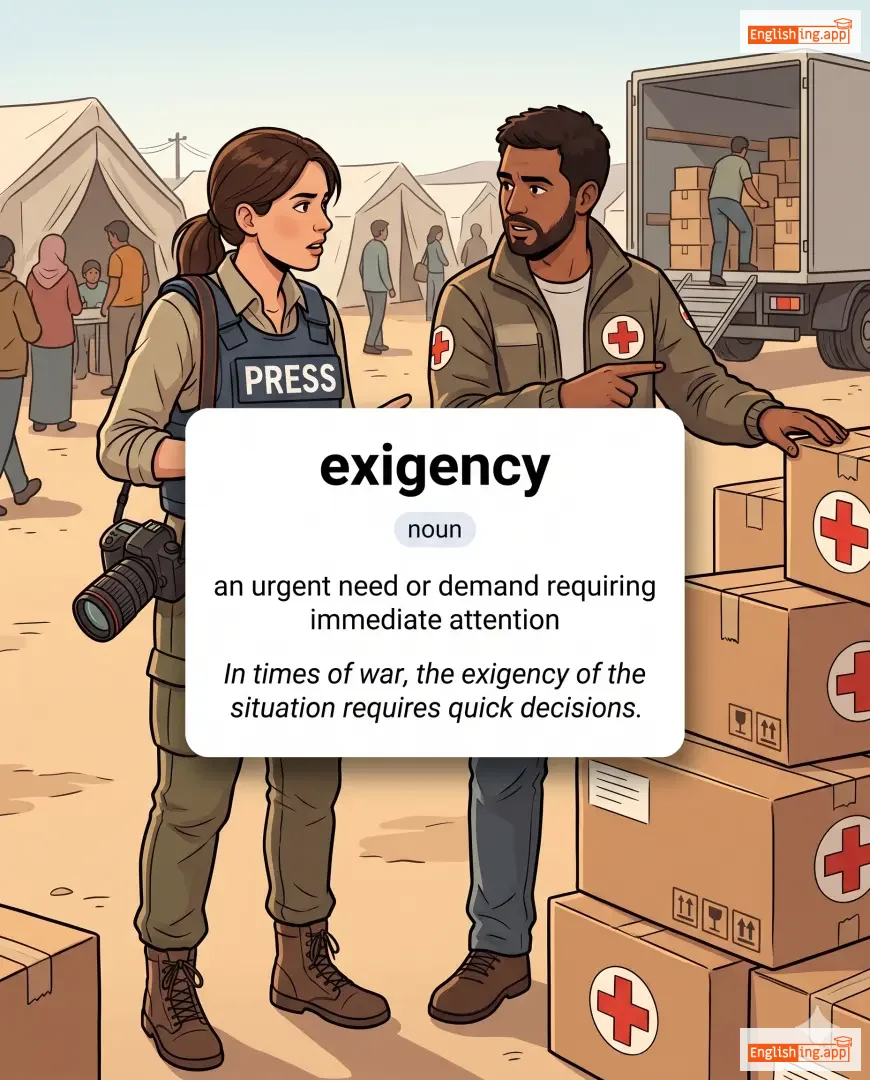
exigency definition card — visual illustration of the meaning
noun C2
/ˈɛksɪdʒənsi/
紧急需求 (jinji xuqiu)

an urgent need or demand requiring immediate attention

"In times of war, the exigency of the situation requires quick decisions."

"在战争时期,局势的紧急需求需要迅速的决策。" (Zài zhànzhēng shíqī, júshì de jǐnjí xūqiú xūyào xùnsù de juécè.)
adjective C2
/ˈɛksɪdʒənt/
紧急 (jinji)

demanding immediate action or attention; urgent

"The patient’s exigent condition required immediate surgery."

"病人的紧急情况需要立即进行手术。" (Bingren de jinji qingkuang xuyao lijishi jinxing shoushu.)
noun C2
/ˌɛksɪˈɡjuːɪti/
匮乏 (kuì fá)

the quality of being scanty or meager in amount

"The exiguity of resources made the project difficult to complete."

"资源的匮乏使得项目完成变得困难。" (Zīyuán de kuì fá shǐdé xiàngmù wánchéng biàn dé kùnnán.)
adjective C2
/ɛɡˈzɪɡjuəs/
稀缺 (xique)

small in amount; scanty or inadequate

"They survived on exiguous rations during the journey."

"他们在旅途中依靠稀缺的口粮生存。" (Tāmen zài lǚtú zhōng yīkào xīquē de kǒu liáng shēngcún.)
noun C2
/ɪɡˈzɔːrbɪtəns/
过度 (guòdù)

The quality of being excessive, unreasonable, or going beyond proper limits.

"The exorbitance of the hotel's prices shocked the tourists."
"酒店价格的过度让游客们震惊。" (Jiǔdiàn jiàgé de guòdù ràng yóukèmen zhènjīng.)
exorcise definition card — visual illustration of the meaning
verb C2
/ˈeksɔːrsaɪz/

To drive out an evil spirit or bad influence through rituals or prayers.

"The priest was called to exorcise the spirit from the house."

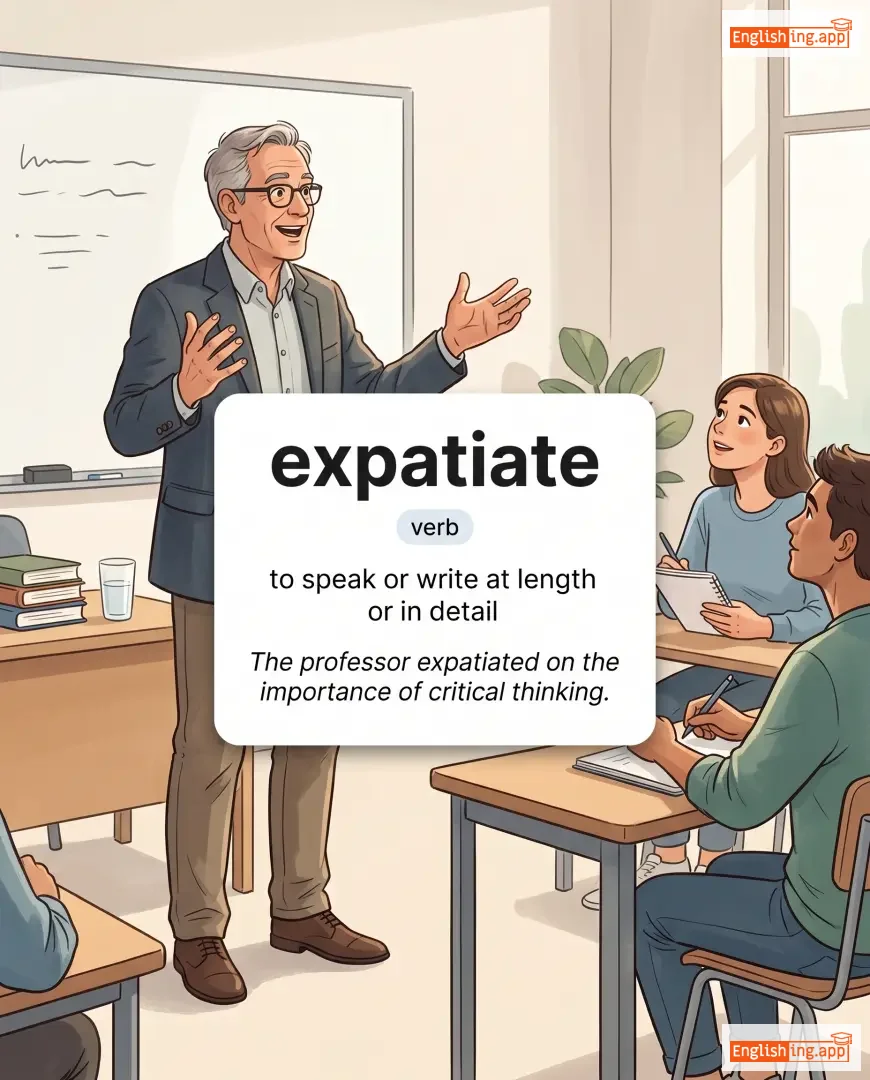
expatiate definition card — visual illustration of the meaning
verb C2
/ɪkˈspeɪʃiˌeɪt/
详细讨论或写作 (xiángxì tǎlùn huò xiězuò)

to speak or write at length or in detail

"The professor expatiated on the importance of critical thinking."

"教授详细阐述了批判性思维的重要性。" (Jiàoshòu xiángxì chǎnshù le pīpànxìng sīwéi de zhòngyàoxìng.)
verb C2
/ɪkˈspɛktəreɪt/
吐痰 (tǔtán)

to cough up and spit out mucus from the throat or lungs

"The patient began to expectorate thick mucus."

"患者开始吐出厚重的粘液。" (Huànzhě kāishǐ tǔchū hòu zhòng de zhān yè.)
noun C2
/ɪkˈspiːdiənsi/
机会主义 (jīhuì zhǔyì)

the quality of being convenient and practical despite possibly being improper or immoral

"He acted out of political expediency rather than principle."
"他是出于政治机会主义而非原则行事。" (Tā shì chūyú zhèngzhì jīhuì zhǔyì ér fēi yuánzé xíngshì.)
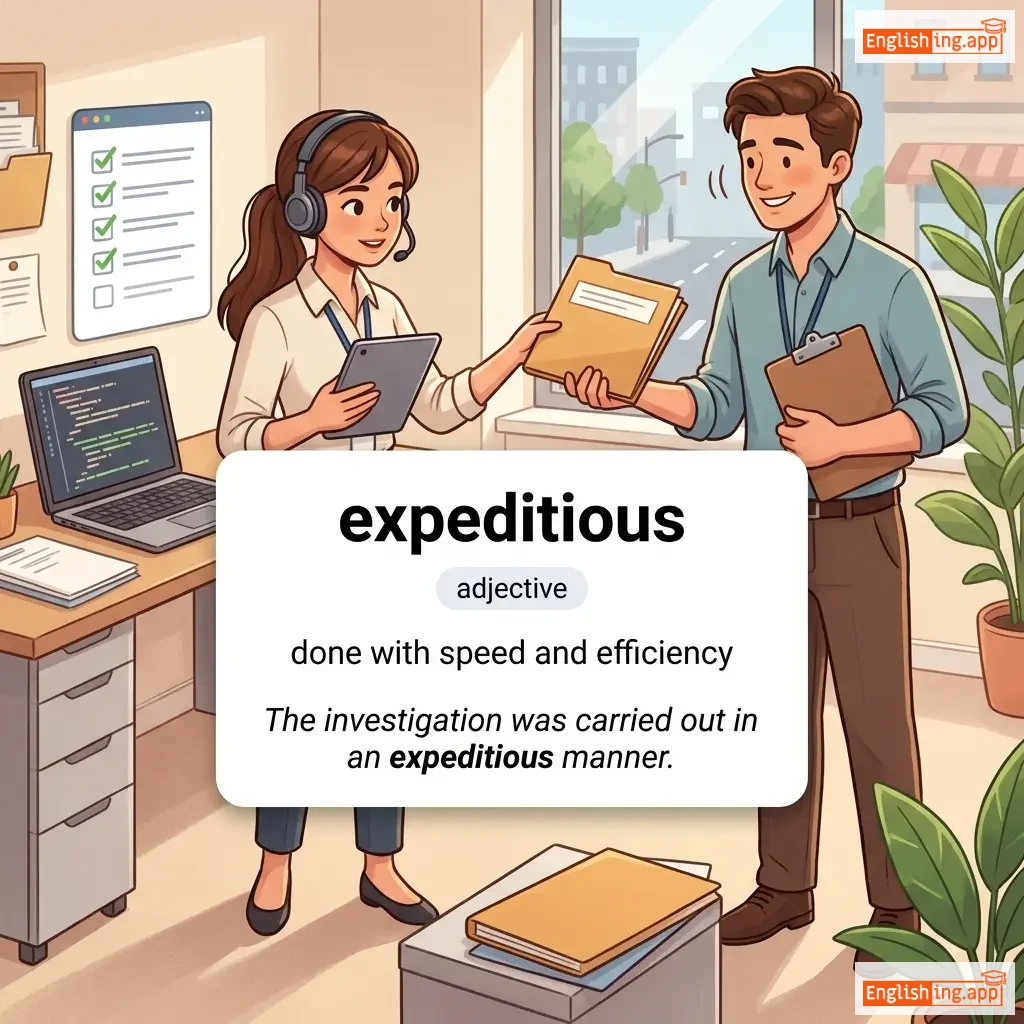
expeditious definition card — visual illustration of the meaning
adjective C2
/ˌɛkspəˈdɪʃəs/
快速且高效 (kuai su qie gao xiao)

done with speed and efficiency

"The investigation was carried out in an expeditious manner."

"调查以快速且高效的方式进行。" (Diaocha yi kuaisu qie gaoxiao de fangshi jinxing.)
adverb C2
/ˌɛkspəˈdɪʃəsli/
迅速而高效地 (xùn sù ér gāo xiào de)

in a quick and efficient manner

"The application was processed expeditiously."

"申请被迅速而高效地处理了。" (Shēnqǐng bèi xùn sù ér gāo xiào de chǔ lǐ le.)
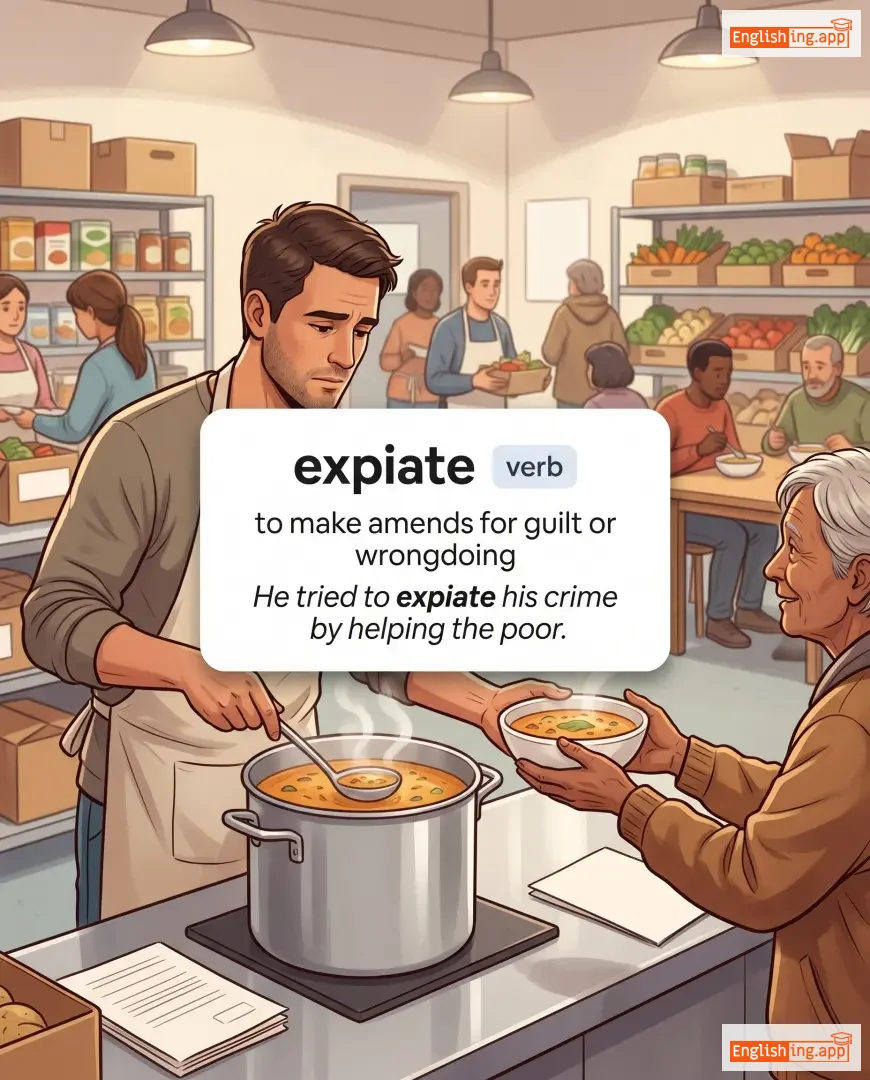
expiate definition card — visual illustration of the meaning
verb C2
/ˈɛkspieɪt/

to make amends for guilt or wrongdoing

"He tried to expiate his crime by helping the poor."

noun C2
/ˈɛksplətɪv/
脏话 (zānghuà)

a word or phrase used as an exclamation, often offensive or profane

"He shouted an expletive when he dropped the hammer on his foot."

"当他把锤子掉到脚上时,他喊出了一个脏话。" (Dāng tā bǎ chuízi diào dào jiǎo shàng shí, tā hǎn chūle yīgè zānghuà.)
adjective C2
/ˈɛksplɪkəbəl/
可解释的 (kě jiěshì de)

able to be explained or understood

"His sudden anger was explicable given the stressful situation."
"他的突然愤怒是可以解释的,考虑到紧张的情况。" (Tā de tūrán fènnù shì kě jiěshì de, kǎolǜ dào jǐnzhāng de qíngkuàng.)
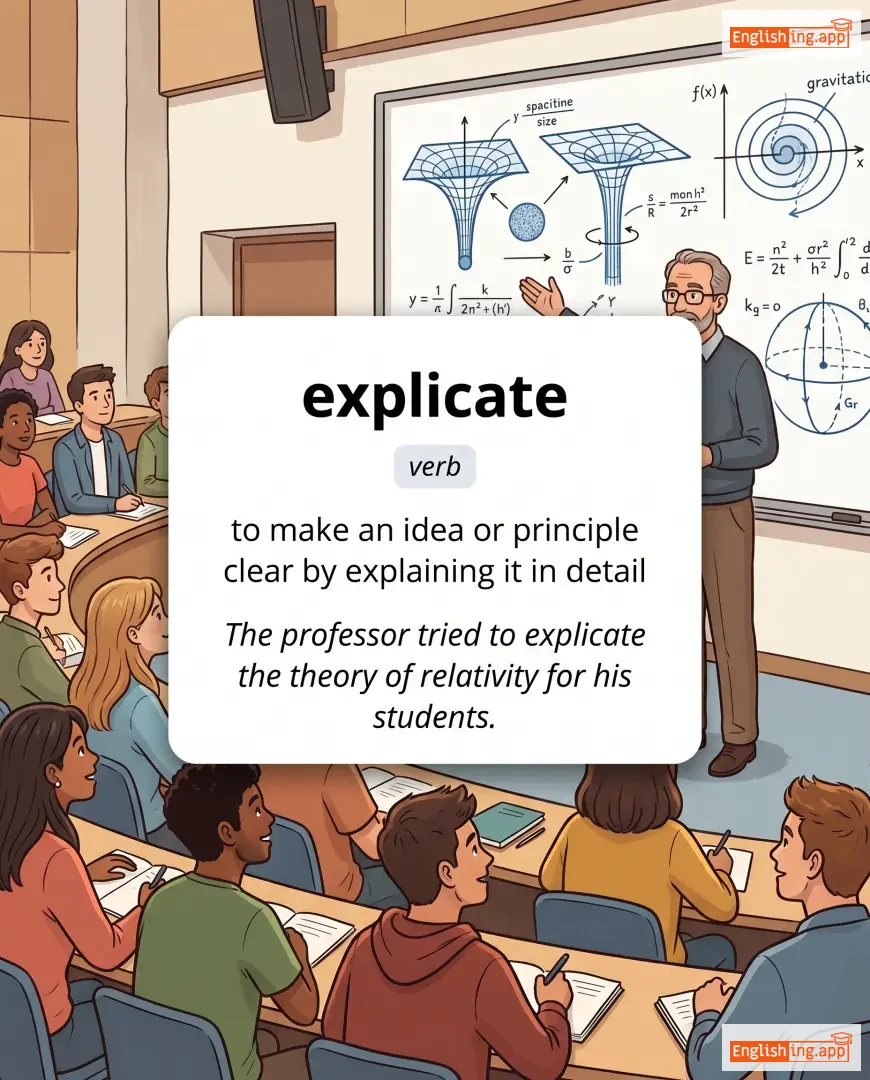
explicate definition card — visual illustration of the meaning
verb C2
/ˈɛksplɪkeɪt/
解释 (jiěshì)

to make an idea or principle clear by explaining it in detail

"The professor tried to explicate the theory of relativity for his students."

"教授试图为他的学生解释相对论的理论。" (Jiàoshòu shìtú wèi tā de xuéshēng jiěshì xiāngduìlùn de lǐlùn.)
noun C2
/ˈɛksplɪkeɪtər/
阐释者 (chǎnshì zhě)

a person who explains or interprets something in detail

"The critic served as an explicator of the poet’s complex works."
"评论家担任了诗人复杂作品的阐释者。" (Pínglùn jiā dānrènle shīrén fùzá zuòpǐn de chǎnshì zhě.)
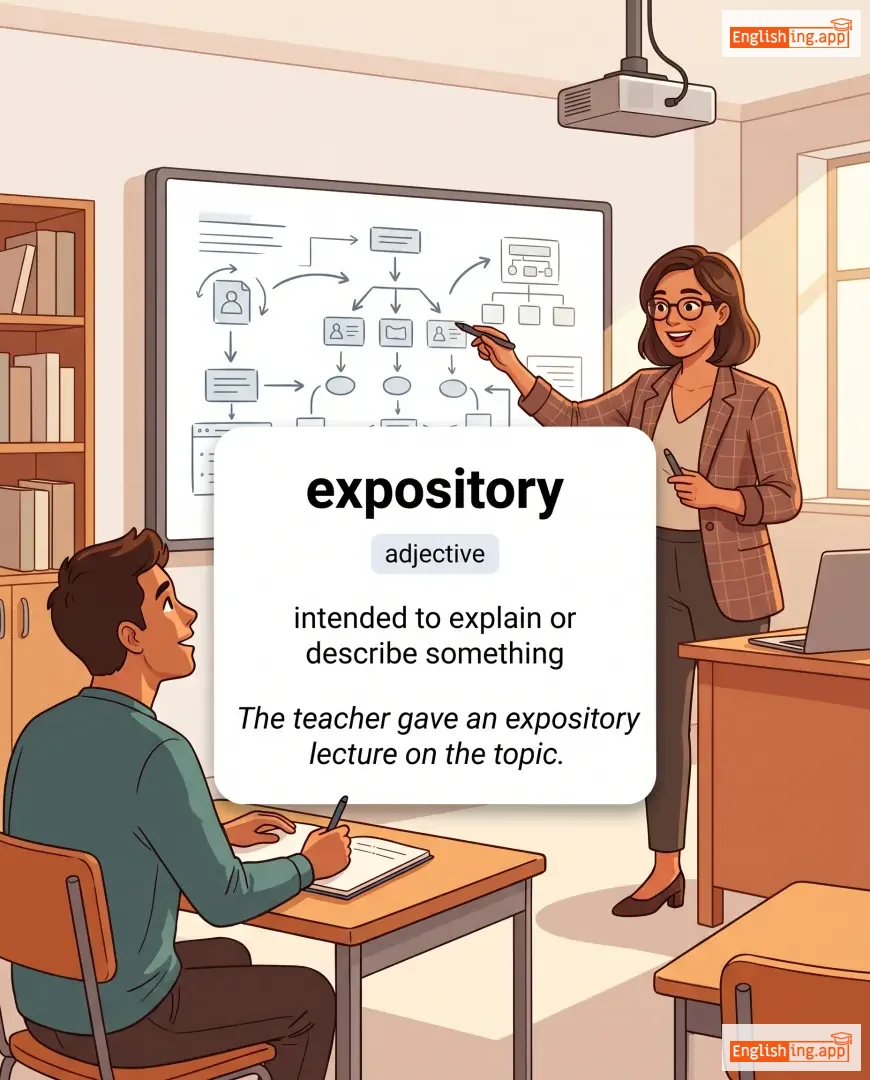
expository definition card — visual illustration of the meaning
adjective C2
/ɪkˈspɒzɪtəri/
说明的 (shuōmíng de)

intended to explain or describe something

"The teacher gave an expository lecture on the topic."

"老师就这个话题进行了说明性的讲座。" (Lǎoshī jiù zhège huàtí jìnxíngle shuōmíng xìng de jiǎngzuò.)
verb C2
/ɪkˈspɒstjʊleɪt/
表示不同意见 (biǎoshì bùtóng yìjiàn)

to express strong disapproval or disagreement

"She expostulated with her friend about the risky decision."

"她对她朋友关于冒险决定的看法表达了不同意见。" (Tā duì tā péngyǒu guānyú màoxiǎn juédìng de kànfǎ biǎodále bùtóng yìjiàn.)
noun C2
/ɪkˌspɒstjʊˈleɪʃən/
抗议 (kàngyì)

the act of expressing protest or disagreement

"His expostulation against the unfair rules was ignored."
"他对不公平规则的抗议被忽视了。" (Tā duì bù gōngpíng guīzé de kàngyì bèi hūshìle.)
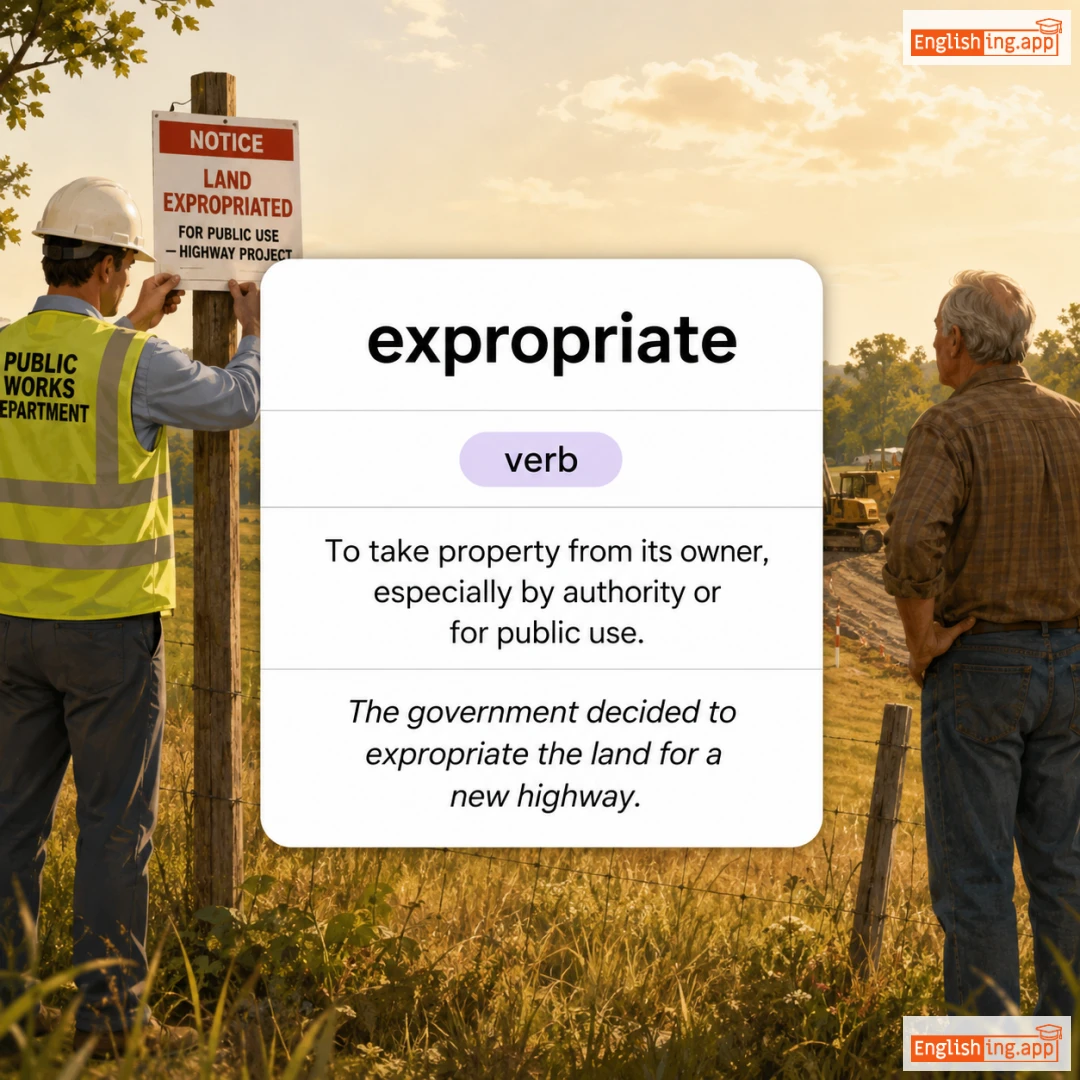
expropriate definition card — visual illustration of the meaning
verb C2
/ɛksˈproʊprieɪt/
征用 (zhēng yòng)

To take property from its owner, especially by authority or for public use.

"The government decided to expropriate the land for a new highway."
"政府决定征用这块土地来修建一条新高速公路。" (Zhèngfǔ juédìng zhēngyòng zhè kuài tǔdì lái xiūjiàn yītiáo xīn gāosù gōnglù.)
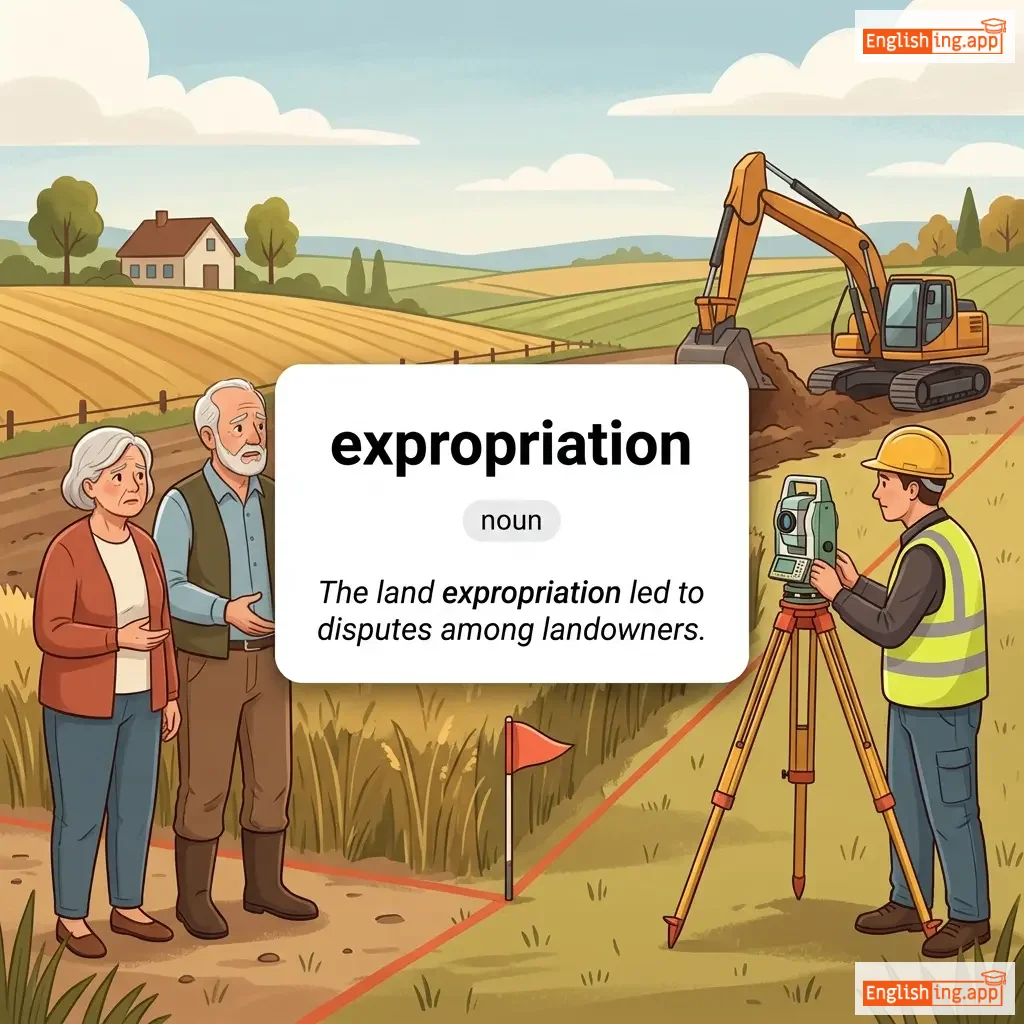
expropriation definition card — visual illustration of the meaning
noun C2
/ɪkˌsprəʊ.priˈeɪ.ʃən/
征用 (zhēngyòng)

The act of government taking private property, also known as confiscation, nationalization, or seizure.

"The land expropriation led to disputes among landowners."

"土地征用导致了土地所有者之间的争议。" (Tǔdì zhēngyòng dǎozhìle tǔdì suǒyǒu zhě zhī jiān de zhēngyì.)
verb C2
/ɪkˈspʌndʒ/
擦除 (cāchú)

To erase or remove completely, often something unwanted.

"He managed to expunge the embarrassing memory from his mind."

"他设法把尴尬的记忆从脑海中抹去。" (Tā shèfǎ bǎ gāngà de jìyì cóng nǎohǎi zhōng mǒqù.)
verb C2
/ˈekspərˌɡeɪt/
删改 (shangai)

To remove offensive or objectionable parts from a text or speech.

"The publisher decided to expurgate the novel before reprinting it."

"出版社决定在再版前删改这部小说。" (chubanshe jueding zai zaiban qian shangai zhe bu xiaoshuo)