词汇表

英语词汇词典 | 单词含义、定义和示例

adjective C1
/ˈlɒf.ti/
(gao)

Of great height; elevated in character or style; noble.

"He set himself the lofty goal of ending poverty."

"他设定了一个lofty的目标,要消除贫困。" (Ta she ding le yi ge lofty de mubiao, yao xiaochu pinkun.)
noun C1
/lɔnˈdʒɛvəti/
长寿 (changshou)

Long life or long existence of something.

"Good habits contribute to health and longevity."

"良好的习惯有助于健康和长寿。" (Liánghǎo de xíguàn yǒuzhù yú jiànkāng hé chángshòu.)
noun C1
/ˈlʊkaʊt/
瞭望, 哨位 (liàowàng, shàowèi)

A place for watching; a person keeping watch.

"The guard kept a lookout for suspicious activity."

"卫兵警惕地监视着可疑活动。" (Wèibīng jǐngtì de jiānshìzhe kěyí huódòng.)
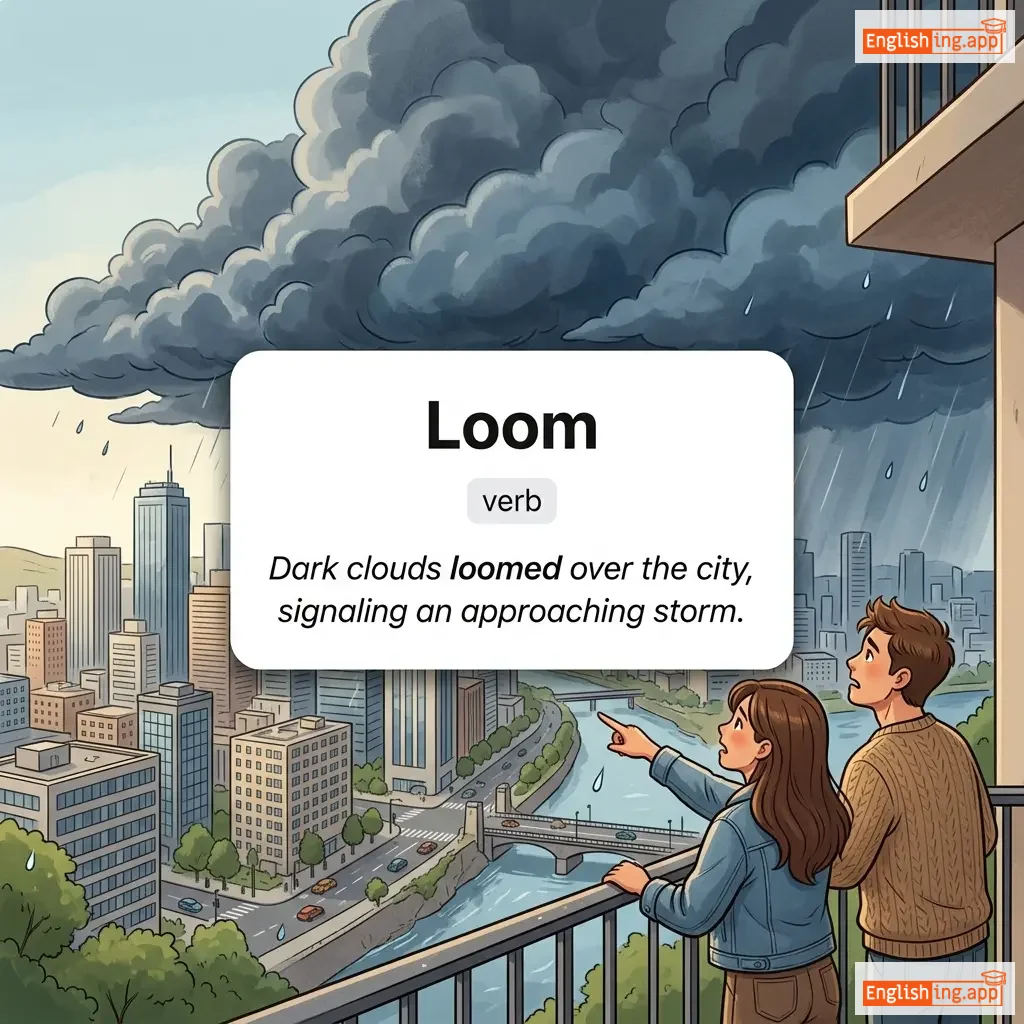
Loom definition card — visual illustration of the meaning
🌩️

Loom

verb C1
/luːm/

to appear as a large, often frightening or unclear shape, usually something threatening or about to happen

"Dark clouds loomed over the city, signaling an approaching storm."

verb C1
/luːt/
掠夺 (lüèduó)

to steal goods, typically during war, riot, or chaos

"The rioters looted several shops during the protest."

"抗议者在抗议期间掠夺了几家商店。" (Kàngyì zhě zài kàngyì qījiān lüèduó le jǐ jiā shāngdiàn.)
adjective C1
/ˈlɑːpˌsaɪdɪd/
倾斜的,不平衡的 (qīngxié de, bù pínghéng de)

with one side lower, larger, or different from the other; uneven or imbalanced

"The cake looked lopsided after being decorated in a hurry."

"蛋糕看起来不平衡,因为急忙装饰。" (Dàn gāo kàn qǐlái bù pínghéng, yīnwèi jí máng zhuāngshì.)
adjective C1
/ˈlaʊzi/
糟糕 (zao gao)

of very poor quality; bad or unpleasant

"He felt lousy after catching the flu."

"他在得了流感后感觉很糟糕。" (Tā zài déle liúgǎn hòu gǎnjué hěn zāo gāo.)
adjective C1
/ˌloʊ ˈspɪrɪtɪd/
沮丧 (jǔsàng)

feeling sad, depressed, or lacking enthusiasm

"He felt low-spirited after hearing the bad news."

"他在听到坏消息后感到沮丧。" (Tā zài tīngdào huài xiāoxi hòu gǎndào jǔsàng.)
adjective C1
/ˈloʊli/
谦逊 (qianxun)

humble in status, position, or manner

"She rose from a lowly position to become the company's CEO."

"她从一个低位上升成为了公司的首席执行官。" (Tā cóng yīgè dī wèi shēng chéngwéile gōngsī de shǒuxí zhíxíngguān.)
verb C1
/ˈluːbrɪkeɪt/
润滑 (rùnhuá)

to apply oil or grease to reduce friction between surfaces

"The mechanic lubricated the car engine parts."

"机械师为汽车发动机部件上了润滑油。" (Jīxiè shī wèi qìchē fādòngjī bùjiàn shàng le rùnhuá yóu.)
lubrication definition card — visual illustration of the meaning
noun C1
ˌluː.brɪˈkeɪ.ʃən
润滑 (lubrication)

The application of a substance such as oil or grease to reduce friction between moving parts.

"Lubrication reduces wear and tear in machines."
"润滑可以减少机器的磨损。" (runhuakeyijianshaojiqidemosun)
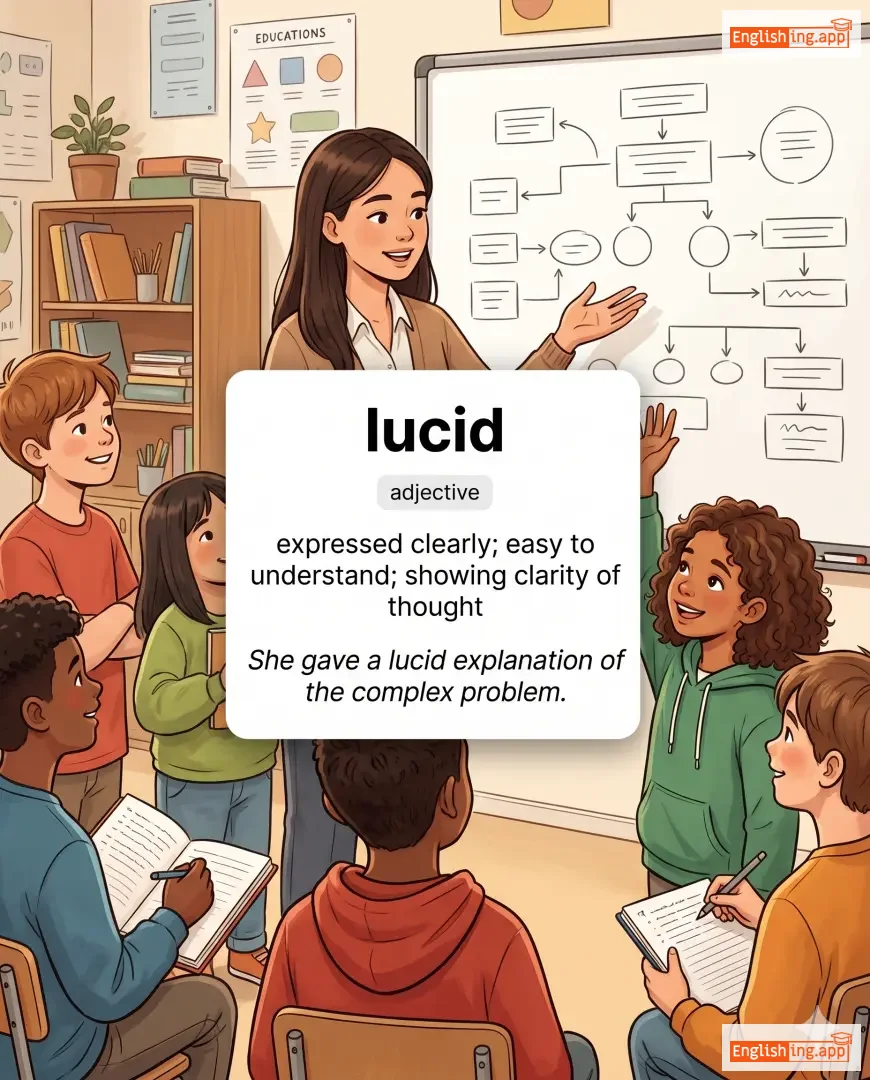
lucid definition card — visual illustration of the meaning
adjective C1
/ˈluːsɪd/
清晰 (qingxi)

expressed clearly; easy to understand; showing clarity of thought

"She gave a lucid explanation of the complex problem."

"她对复杂问题做了清晰的解释。" (Tā duì fùzá wèntí zuòle qīngxī de jiěshì.)
lucrative definition card — visual illustration of the meaning
adjective C1
/ˈluːkrətɪv/
有利可图 (yǒulì kětú)

producing a great deal of profit

"He left his job for a more lucrative business opportunity."

"他为了一个更有利可图的商业机会离开了工作。" (Tā wèile yīgè gèng yǒulì kětú de shāngyè jīhuì líkāi le gōngzuò.)
adjective C1
/ˈluːdɪkrəs/
荒谬的 (huangmiu de)

so foolish, unreasonable, or out of place as to be amusing

"It is ludicrous to think the Earth is flat."

"认为地球是平的,这是荒谬的。" (Renwei diqiu shi ping de, zhe shi huangmiu de.)
Luggage van definition card — visual illustration of the meaning
noun C1
/ˈlʌɡ.ɪdʒ væn/
行李车 (xingli che)

a vehicle designed for carrying luggage and cargo

"The luggage van carried all the passengers' suitcases."

"行李车载着所有乘客的行李箱。" (Xingli che zaizhe suoyou chengke de xinglixiang)
lull definition card — visual illustration of the meaning
😴

lull

verb C1
/lʌl/

to calm or send to sleep, typically with soothing sounds or movements

"The mother lulled the baby to sleep with a gentle song."

noun C1
/ˈlʌləˌbaɪ/
摇篮曲 (yaolanqu)

a soothing song sung to help a child fall asleep

"She sang a lullaby to her baby every night."

"她每晚都会唱摇篮曲给她的宝宝听。" (Ta mei wan dou hui chang yaolanqu gei ta de baobao ting)
verb C1
/ˈlʌmbər/
笨重行走 (bèn zhòng xíng zǒu)

to move in a slow, heavy, awkward way

"The bear lumbered through the forest in search of food."

"那只熊在森林中沉重地走着寻找食物。" (Nà zhī xióng zài sēn lín zhōng chén zhòng de zǒu zhe xún zhǎo shí wù.)
noun C1
/ˌluː.mɪˈnɒs.ɪ.ti/
光度 (guangdu)

The intrinsic brightness of a celestial object; the quality of emitting light.

"The luminosity of the star was measured with advanced instruments."

"星星的光度通过先进的仪器进行了测量。" (Xīngxīng de guāngdù tōngguò xiānjìn de yíqì jìnxíngle cèliàng.)
Luminous definition card — visual illustration of the meaning
adjective C1
/ˈluː.mɪ.nəs/
光辉的 (guāng huī de)

Emitting or reflecting light, especially in the dark; shining brightly.

"The luminous stars lit up the night sky."

"光辉的星星照亮了夜空。" (Guāng huī de xīng xīng zhàoliàng le yè kōng.)
Lump definition card — visual illustration of the meaning
noun C1
/lʌmp/
块; 团; 块状物 (kuai; tuan; kuai zhuang wu)

a compact mass of a substance, especially one without a definite or regular shape

"She found a lump of sugar in the bowl."

"她在碗里发现了一块糖。" (Ta zai wan li faxian le yi kuai tang.)
noun/adjective C1
/ˈluː.nə.tɪk/
疯子 (fēngzi)

A person who is insane or acting in a foolish or reckless way; also used as an adjective meaning insane.

"The driver was driving like a lunatic on the highway."

"司机在高速公路上像疯子一样开车。" (Sījī zài gāosù gōnglù shàng xiàng fēngzi yīyàng kāichē.)
🤢

lurch

verb, noun C1
/lɜːrtʃ/

to make an abrupt, unsteady, or uncontrolled movement; a sudden movement or stagger

"The bus lurched forward as the driver hit the brakes."

verb C1
/lʊər/
诱惑 (yòuhuò)

to attract or tempt someone, often by offering something appealing

"The advertisement lured customers with promises of discounts."

"广告通过承诺折扣诱使顾客。" (Guǎnggào tōngguò chéngnuò zhékòu yòushǐ gùkè.)
adjective C1
/ˈljʊərɪd/
令人震惊且生动的轰动性 (lìng rén zhèn jīng qiě shēng dòng de hōng dòng xìng)

shocking or sensational in a vivid way, often involving crime or violence

"The newspaper published a lurid account of the crime."

"报纸发布了一篇令人震惊的犯罪报道。" (Bàozhǐ fābùle yī piān lìng rén zhènjīng de fànzuì bàodào.)
verb C1
/lɜːrk/
潜伏 (qianfu)

to remain hidden so as to wait for an opportunity to attack or observe

"A stranger lurked in the shadows."

"一个陌生人潜伏在阴影中。" (Yi ge moshengren qianfu zai yinying zhong.)
adjective C1
/ˈlʌʃəs/
美味的 (meiwei de)

deliciously sweet or rich; highly appealing to the senses

"She served a luscious chocolate cake."

"她端上了一块美味的巧克力蛋糕。" (Ta duan shang le yi kuai meiwei de qiaokeli dangao.)
adjective C1
/lʌʃ/
富饶,丰盈且奢华,尤其是指植物 (fùráo, fēngyíng qiě shēhuá, yóuqí shì zhǐ zhíwù)

rich, abundant, and luxurious, especially referring to vegetation

"The valley was filled with lush green fields."

"山谷里充满了绿油油的田野。" (shāngǔ lǐ chōngmǎnle lǜ yóu yóu de tiányě.)
Lust definition card — visual illustration of the meaning
noun C1
/lʌst/
欲望 (yùwàng)

a very strong sexual desire or an intense craving for something

"His mind was clouded by lust for power."

"他的思想被权力的欲望所笼罩。" (tā de sīxiǎng bèi quánlì de yùwàng suǒ lóngzhào.)
noun C1
/ˈlʌstər/
光泽 (guangze)

a gentle sheen or soft glow, especially from a polished surface

"The diamond had a brilliant luster."

"钻石有着耀眼的光泽。" (zuanshi youzhe yaoyan de guangze.)
lyric definition card — visual illustration of the meaning
noun C1
/ˈlɪrɪk/
歌词 (gēcí)

the words of a song or a short poem that expresses personal feelings

"She memorized every lyric of her favorite song."

"她记住了她最喜欢的歌曲的每一首歌词。" (Tā jì zhùle tā zuì xǐhuān de gēqǔ de měi yī shǒu gēcí.)
adjective C1
/məˈkɑːbrə/
恐怖 (kǒngbù)

disturbing and horrifying because of involvement with or depiction of death and injury

"The horror movie had a macabre ending."

"这部恐怖片有一个恐怖的结局。" (Zhè bù kǒngbù piàn yǒu yīgè kǒngbù de jiéjú.)
Mackerel definition card — visual illustration of the meaning
noun C1
/ˈmæk.ər.əl/
鲭鱼 (qing yu)

a streamlined marine fish with a forked tail and wavy stripes

"Mackerel is rich in omega-3 fatty acids."

"鲭鱼富含欧米伽-3脂肪酸。" (qing yu fuhan oumi jia san zhifang suan)
macroeconomic definition card — visual illustration of the meaning
adjective C1
/ˌmæk.rəʊ.iː.kəˈnɒm.ɪk/
宏观经济的 (hóngguān jīngjì de)

Relating to macroeconomics or the large-scale or general economic factors, such as interest rates and national productivity.

"Macroeconomic policies influence inflation and employment rates."

"宏观经济政策影响通货膨胀和就业率。" (Hóngguān jīngjì zhèngcè yǐngxiǎng tōnghuò péngzhàng hé jiùyè lǜ.)
macronutrients definition card — visual illustration of the meaning
noun C1
/ˈmæk.rəʊˌnjuː.tri.ənts/
大营养素 (da yingyang su)

Nutrients that are needed in large amounts to provide energy and building materials for the body, including carbohydrates, proteins, and fats.

"Proteins, fats, and carbohydrates are vital macronutrients."

"蛋白质、脂肪和碳水化合物是重要的大营养素。" (Danbaizhi, zhifang he tanshuizhihuabu shi zhongyao de da yingyang su.)
verb C1
/ˈmæd.ən/
使发狂 (shǐ fā kuáng)

To make someone very angry or extremely annoyed.

"The constant noise maddened him."

"持续的噪音让他发狂。" (Chíxù de zàoyīn ràng tā fā kuáng.)
adjective C1
/məˈdʒen.tə/
品红色 (pǐnhóng sè)

a bright purplish-red color

"She wore a beautiful magenta dress to the party."
"她穿了一件漂亮的品红色裙子去派对。" (Tā chuānle yī jiàn piàoliang de pǐnhóng sè qúnzi qù pàiduì.)
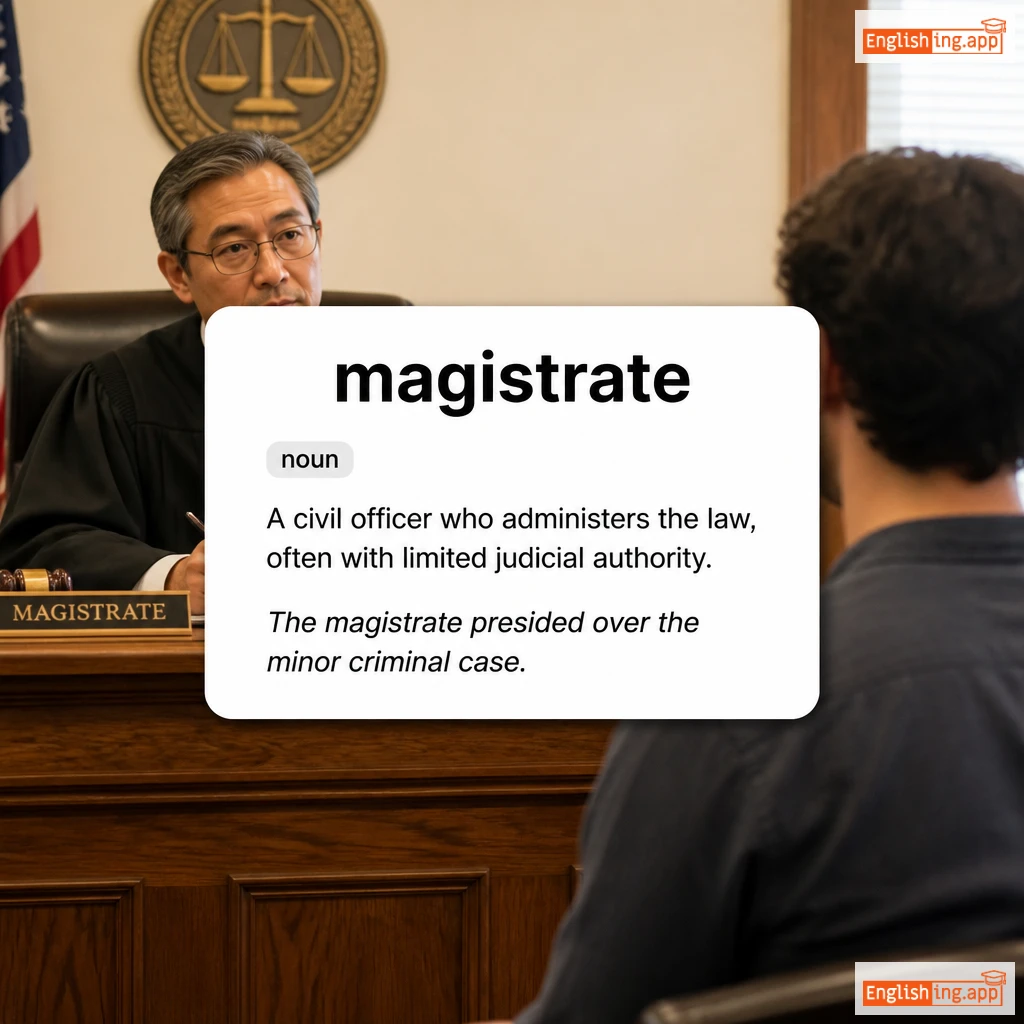
magistrate definition card — visual illustration of the meaning
noun C1
/ˈmædʒɪstreɪt/
法官 (fǎguān)

A civil officer who administers the law, often with limited judicial authority.

"The magistrate presided over the minor criminal case."

"法官主持了轻微刑事案件。" (Fǎguān zhǔchíle qīngwēi xíngshì ànjiàn.)
Magnate definition card — visual illustration of the meaning
noun C1
/ˈmæɡneɪt/
富豪 (fùháo)

A wealthy and influential person, especially in business or industry.

"The oil magnate donated millions to charity."

"石油富豪捐赠了数百万美元给慈善事业。" (Shíyóu fùháo juānzèngle shù bǎi wàn měiyuán gěi císhàn shìyè.)
noun C1
/mæɡˈnɪfɪsəns/
壮丽 (zhuànglì)

splendor, grandeur, or impressive beauty

"The magnificence of the palace left everyone speechless."

"宫殿的壮丽让所有人都哑口无言。" (Gōngdiàn de zhuànglì ràng suǒyǒu rén dōu yǎkǒu wúyán.)
verb C1
/ˈmæɡnɪfaɪ/
放大 (fangda)

to make something appear larger or more important than it really is

"The microscope can magnify tiny cells."
"显微镜可以放大微小的细胞。" (Xianwei jing keyi fangda weixiao de xibao.)
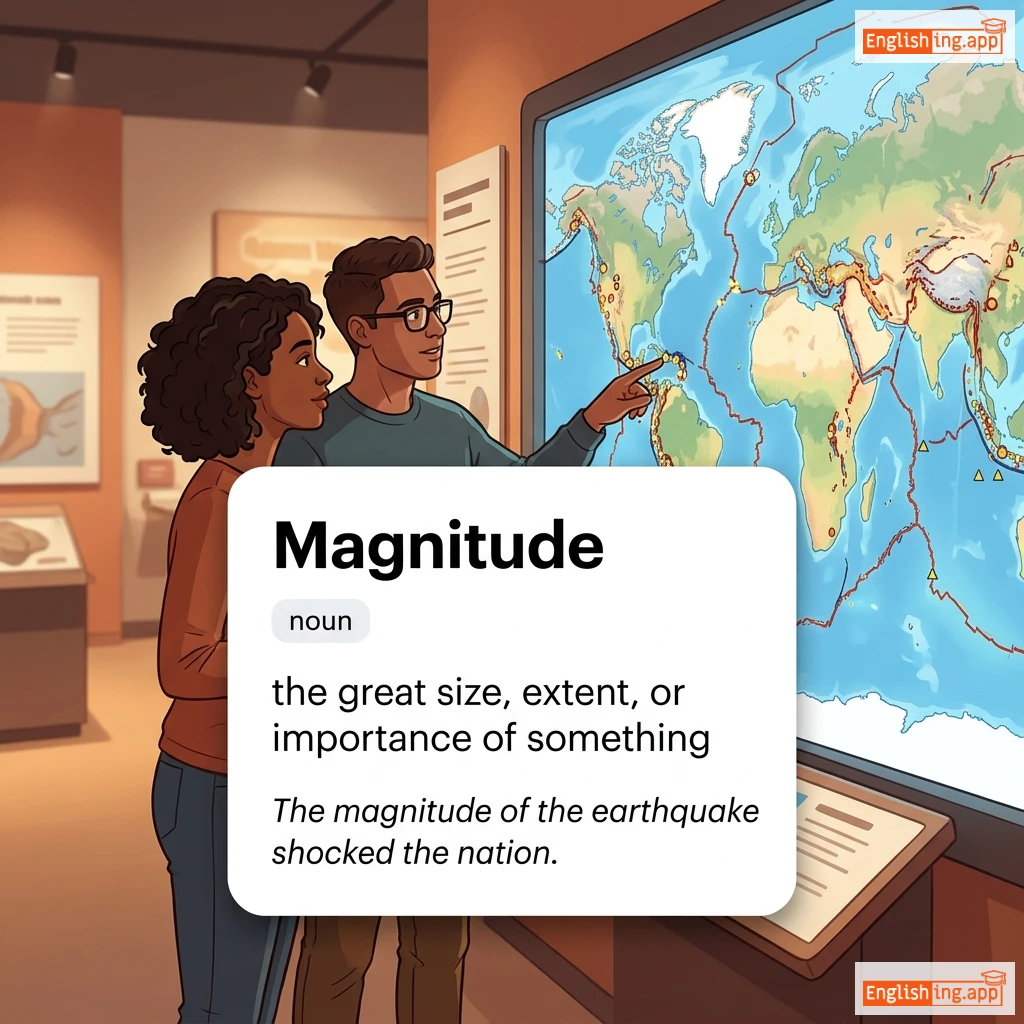
Magnitude definition card — visual illustration of the meaning
noun C1
/ˈmæɡnɪtuːd/
震级 (zhènjí)

the great size, extent, or importance of something

"The magnitude of the earthquake shocked the nation."

"地震的震级震惊了整个国家。" (Dìzhèn de zhènjí zhènjīngle zhěnggè guójiā.)
Mail train definition card — visual illustration of the meaning
noun C1
/meɪl treɪn/
邮政列车 (yóuzhèng lièchē)

a train that carries mail and postal packages

"The mail train departs every evening to deliver letters across the country."

"邮件列车每天晚上发车,跨越全国递送信件。" (Yóujiàn lièchē měitiān wǎnshàng fāchē, kuàyuè quánguó dìsòng xìnjiàn.)
Majestic definition card — visual illustration of the meaning
adjective C1
məˈdʒes.tɪk
雄伟的 (xióng wěi de)

Having impressive beauty, dignity, or grandeur; regal and stately in appearance.

"The majestic Himalayas stand tall against the sky."

"雄伟的喜马拉雅山高耸在天空中。" (Xióng wěi de xǐ mǎ lā yǎ shān gāo sǒng zài tiānkōng zhōng.)
adjective C1
/ˈmeɪkˌʃɪft/
临时 (línshí)

used as a temporary substitute; improvised

"They used boxes as a makeshift table."

"他们用箱子作为临时桌子。" (Tāmen yòng xiāngzi zuòwéi línshí zhuōzi.)
Malady definition card — visual illustration of the meaning
noun C1
/ˈmælədi/
(bing)

a disease or disorder of the body or mind; a serious problem

"The doctor treated the malady with great care."

"医生非常小心地治疗了这场病。" (Yi sheng fei chang xiao xin de zhi liao le zhe chang bing.)
noun C1
/məˈleɪz/
不适 (bushi)

a general feeling of discomfort, illness, or unease whose exact cause is difficult to identify

"After the long journey, she felt a general malaise."

"长时间旅行后,她感到一种普遍的不适。" (Chang shi jian lv you hou, ta gan dao yi zhong pu bian de bu shi.)
adjective C1
/məˈlɛvələnt/
恶意的 (èyì de)

Having or showing a wish to do evil or harm to others.

"The malevolent glare in his eyes frightened the children."

"他眼中的恶意目光吓到了孩子们。" (Tā yǎnzhōng de èyì mùguāng xià dào le háizimen.)
malfunction definition card — visual illustration of the meaning
noun/verb C1
mælˈfʌŋk.ʃən
故障 (gùzhàng)

A failure to function normally or satisfactorily; a defect or breakdown.

"The engine malfunctioned due to overheating."

"发动机因过热而发生故障。" (Fādòngjī yīn guòrè ér fāshēng gùzhàng.)