词汇表

英语词汇词典 | 单词含义、定义和示例

adjective C1
/juːˈbɪkwɪtəs/
无处不在 (wuchubuzai)

Existing or being everywhere at the same time.

"Social media has become ubiquitous among young people."

"社交媒体在年轻人中变得无处不在。" (Shejiao meiti zai nianqingren zhong biande wuchubuzai.)
🤕

ulcer

noun C1
/ˈʌlsər/

a sore on the skin or a mucous membrane that does not heal easily

"The doctor prescribed medicine to treat the stomach ulcer."

adjective C1
/ʌlˈtɪəriər/
隐藏的动机 (yǐn cáng de dòng jī)

hidden or secret, often with a selfish motive

"He invited her with an ulterior motive."
"他带着隐藏的动机邀请了她。" (Tā dàizhe yǐn cáng de dòng jī yāo qǐng le tā.)
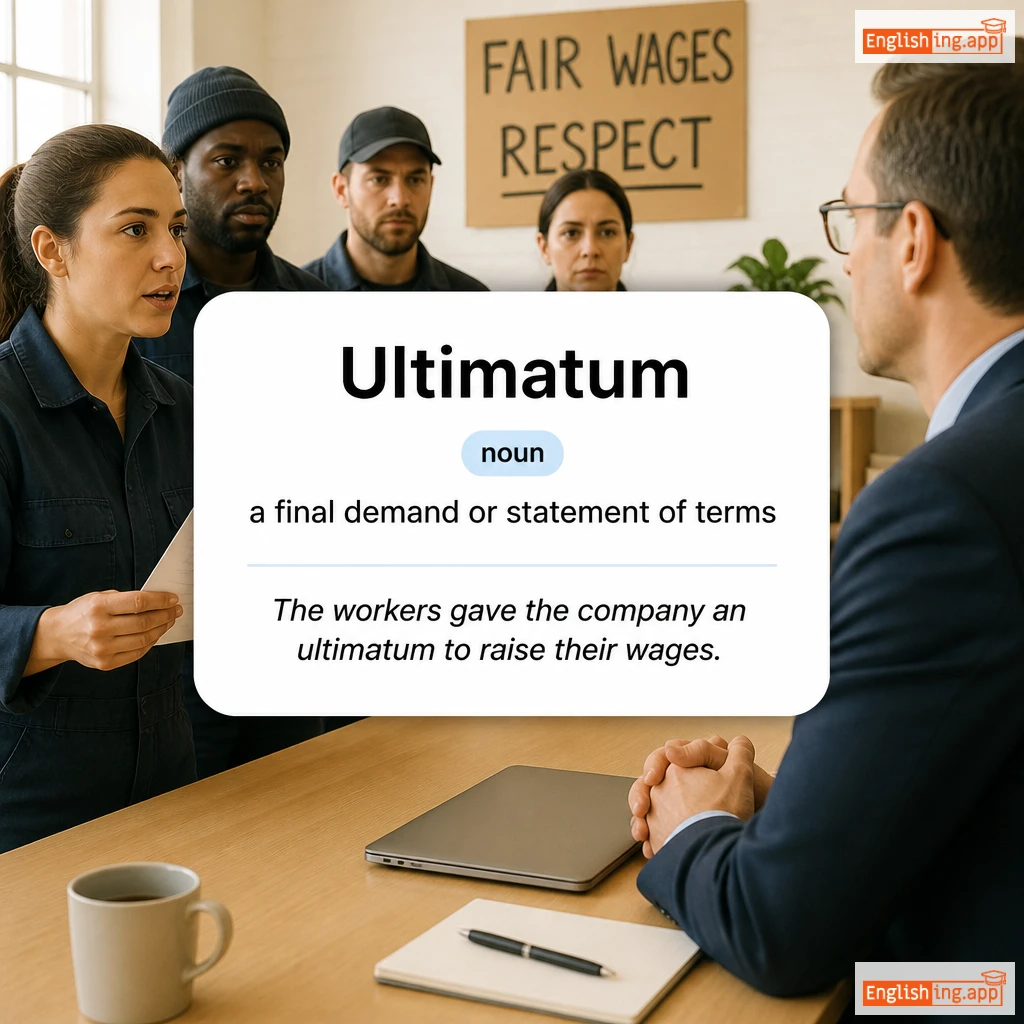
Ultimatum definition card — visual illustration of the meaning
noun C1
/ˌʌltɪˈmeɪtəm/
最后通牒 (zuìhòu tōngdié)

a final demand or statement of terms

"The workers gave the company an ultimatum to raise their wages."

"工人们向公司提出了一个要求,要求提高工资。" (Gōngrénmen xiàng gōngsī tíchūle yīgè yāoqiú, yāoqiú tígāo gōngzī.)
adjective C1
/ˌʌnəˈkaʊntəbl/
无法解释 (wufaxiexplian)

Not able to be explained or justified.

"She felt an unaccountable fear as she entered the dark room."
"她进入黑暗的房间时感到无法解释的恐惧。" (tā jìnrù hēi'àn de fángjiān shí gǎndào wúfǎ jiěshì de kǒngjù.)
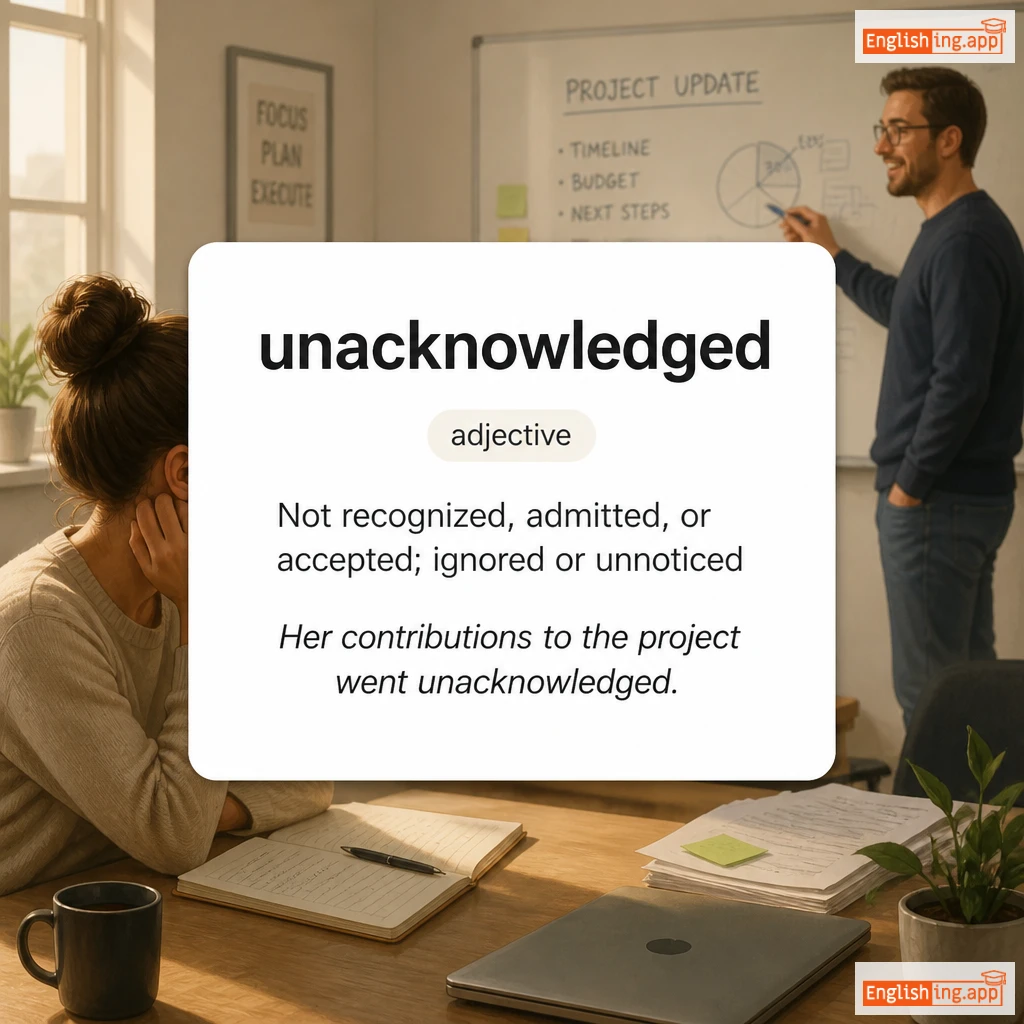
unacknowledged definition card — visual illustration of the meaning
adjective C1
/ˌʌnəkˈnɒlɪdʒd/
未承认的 (wei chengren de)

Not recognized, admitted, or accepted; ignored or unnoticed

"Her contributions to the project went unacknowledged."

"她对项目的贡献未被承认。" (Ta dui xiangmu de gongxian wei bei chengren.)
adjective C1
/ˌʌnəˈdɔːrnd/
简单的,未装饰的 (jiandan de, wei zhuangshi de)

Plain and simple; not decorated.

"The room was unadorned, with only a table and a chair."

"房间简单,只有一张桌子和一把椅子。" (Fangjian jiandan, zhiyou yizhang zhuozi he yiba yizi.)
adjective C1
/ˌʌn.əˈdʌl.tə.reɪ.tɪd/
纯净的 (chun jing de)

not mixed or diluted with any different or extra elements; pure

"She felt unadulterated joy when she heard the news."
"当她听到这个消息时,她感到纯净的快乐。" (Dang ta tingdao zhe ge xiaoxi shi, ta gandao chunjing de kuaile.)
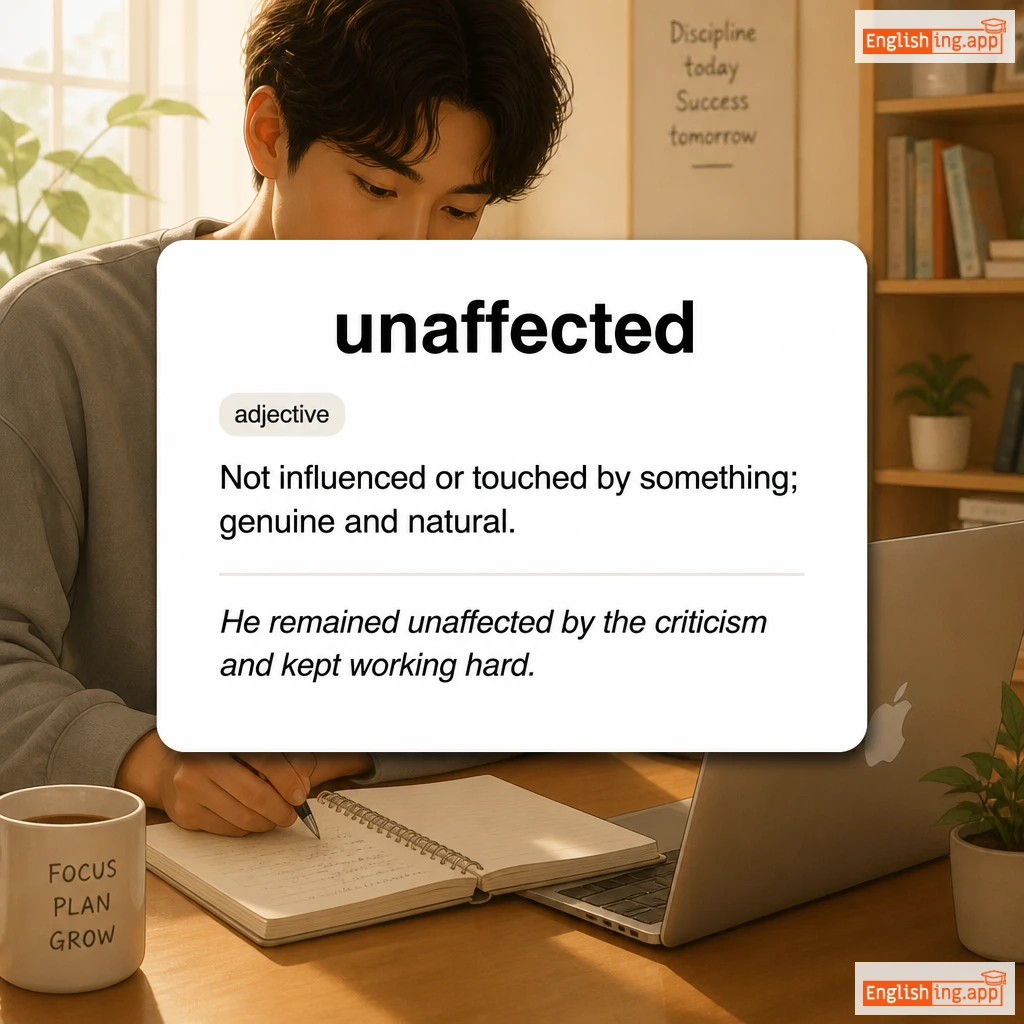
unaffected definition card — visual illustration of the meaning
adjective C1
/ˌʌnəˈfɛktɪd/
不受影响的, 自然的 (bù shòu yǐngxiǎng de, zìrán de)

Not influenced or touched by something; genuine and natural.

"He remained unaffected by the criticism and kept working hard."

"他对批评毫不受影响,继续努力工作。" (Tā duì pīpíng háo bù shòu yǐngxiǎng, jìxù nǔlì gōngzuò.)
Unanimity definition card — visual illustration of the meaning
noun C1
/ˌjuːnəˈnɪməti/
一致通过 (yizhi tongguo)

Complete agreement by everyone in a group.

"The proposal was accepted with complete unanimity."

"提议得到了完全的一致通过。" (Tíyì dédàole wánquán de yīzhì tōngguò.)
adjective C1
/ˌʌnəˈsjuːmɪŋ/
谦虚 (qianxu)

Not pretentious or arrogant; modest.

"Despite his success, he remained unassuming and humble."
"尽管他取得了成功,他仍然谦虚和谦逊。" (Jǐnguǎn tā qǔdéle chénggōng, tā réngrán qiānxū hé qiānxùn.)
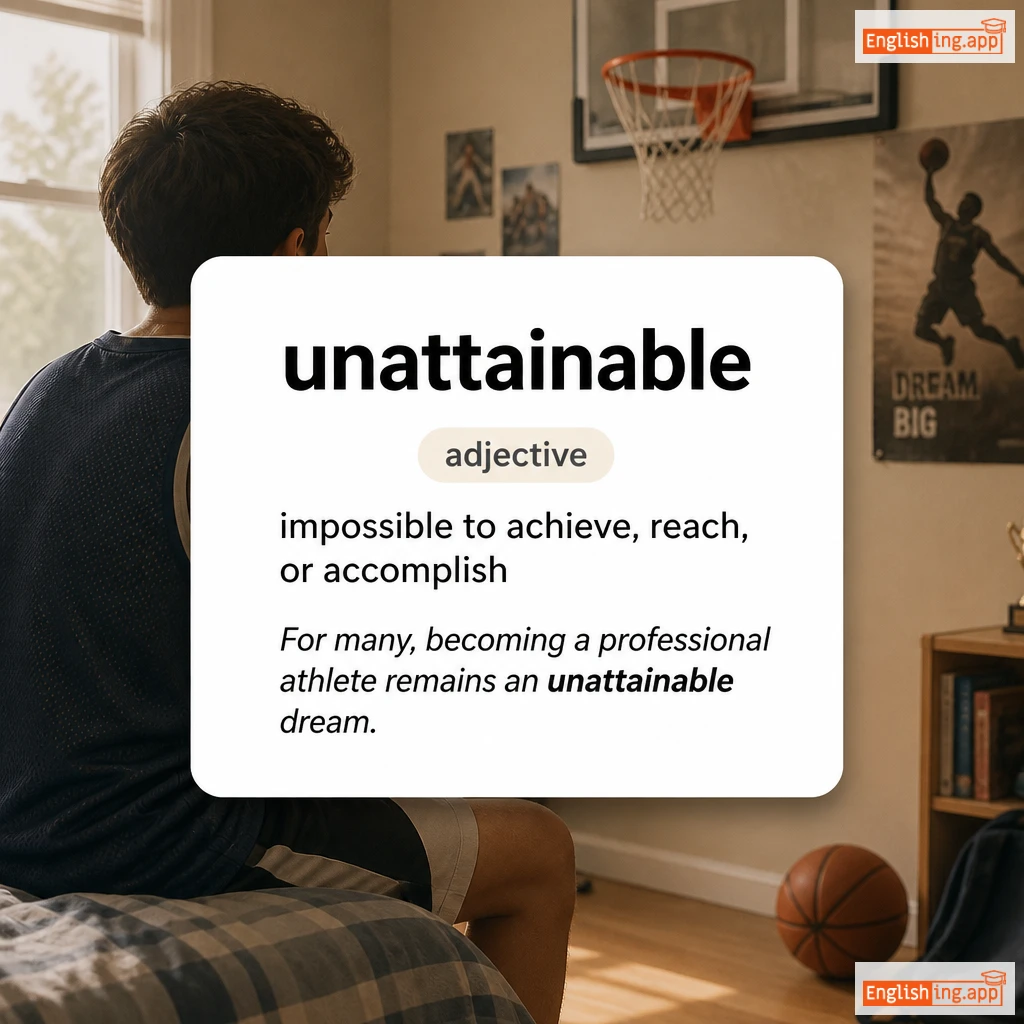
unattainable definition card — visual illustration of the meaning
adjective C1
/ˌʌnəˈteɪnəbl/
无法实现的 (wufa shixian de)

impossible to achieve, reach, or accomplish

"For many, becoming a professional athlete remains an unattainable dream."

"对许多人来说,成为职业运动员仍然是一个无法实现的梦想。" (Dui xuduo ren laishuo, chengwei zhiye yundongyuan rengran shi yige wufa shixian de mengxiang.)
adjective C1
/ˌʌnbɪˈkʌmɪŋ/
不合适的 (bu he shi de)

Not proper or appropriate for a person; unsuitable.

"His rude behavior was unbecoming of a leader."
"他的粗鲁行为对于一个领导者来说是不合适的。" (Ta de cu lu xing wei dui yu yi ge ling dao zhe lai shuo shi bu he shi de.)
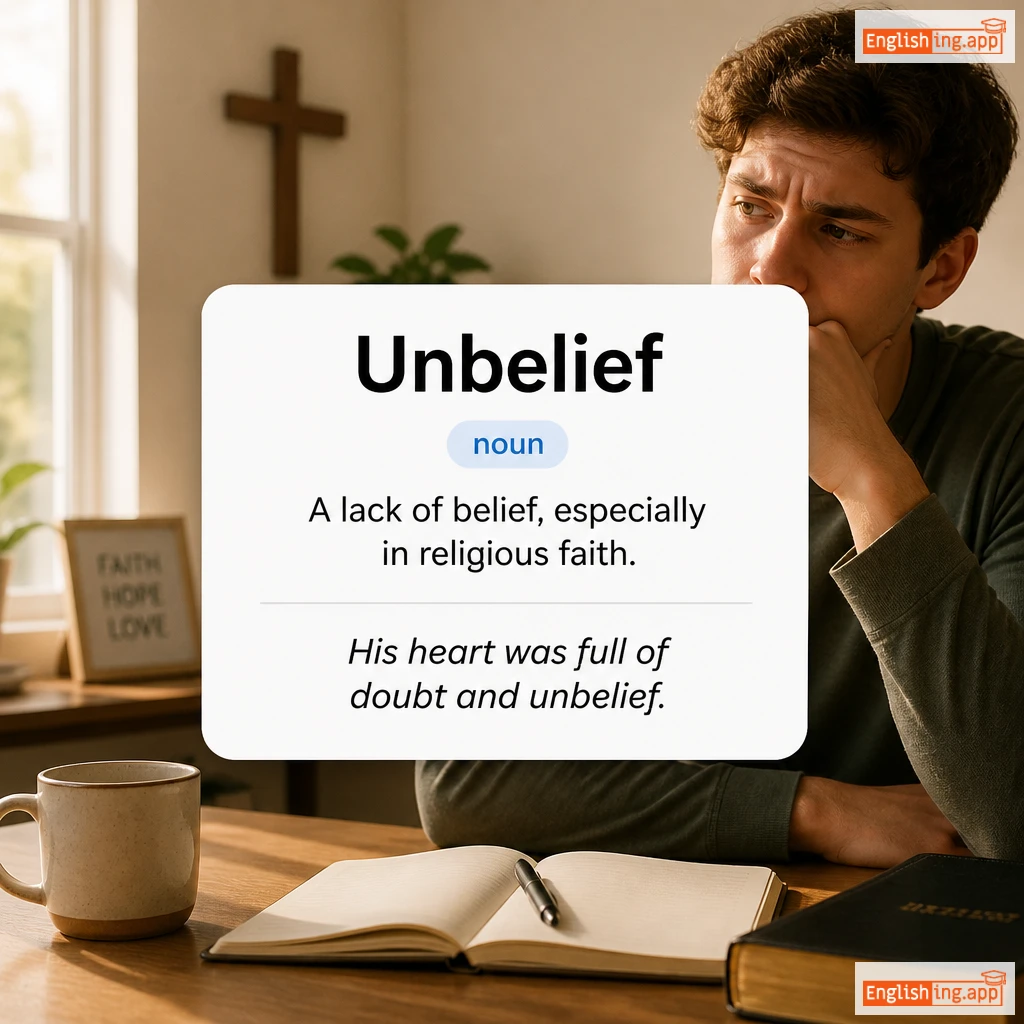
Unbelief definition card — visual illustration of the meaning
noun C1
/ˌʌnbɪˈliːf/
不信 (buxin)

A lack of belief, especially in religious faith.

"His heart was full of doubt and unbelief."
"他的心充满了怀疑和不信。" (Ta de xin chongmanle huaiji he buxin.)
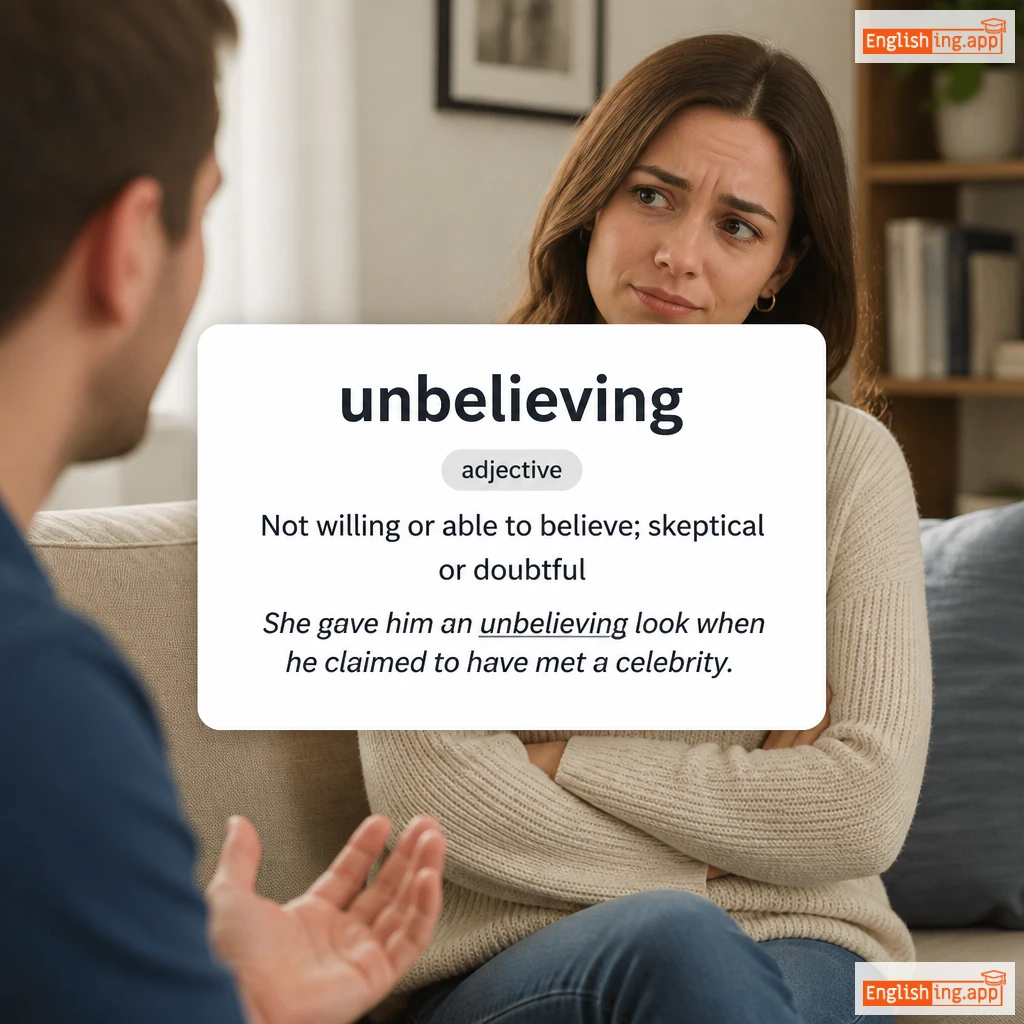
unbelieving definition card — visual illustration of the meaning
adjective C1
/ˌʌnbɪˈliːvɪŋ/
不相信的 (bu xiangxin de)

Not willing or able to believe; skeptical or doubtful

"She gave him an unbelieving look when he claimed to have met a celebrity."

"当他声称见过一位名人时,她给了他一个不相信的眼神。" (Dang ta shengcheng jian guo yi wei mingren shi, ta gei le ta yi ge bu xiangxin de yanshen.)
adjective C1
/ʌnˈbraɪdld/
无法控制的 (wúfǎ kòngzhì de)

Uncontrolled and unrestrained.

"The protesters showed unbridled enthusiasm for change."
"抗议者展示了对改变的无法抑制的热情。" (Kangyizhe zhanshile dui gaibian de wufa yizhi de reqing.)
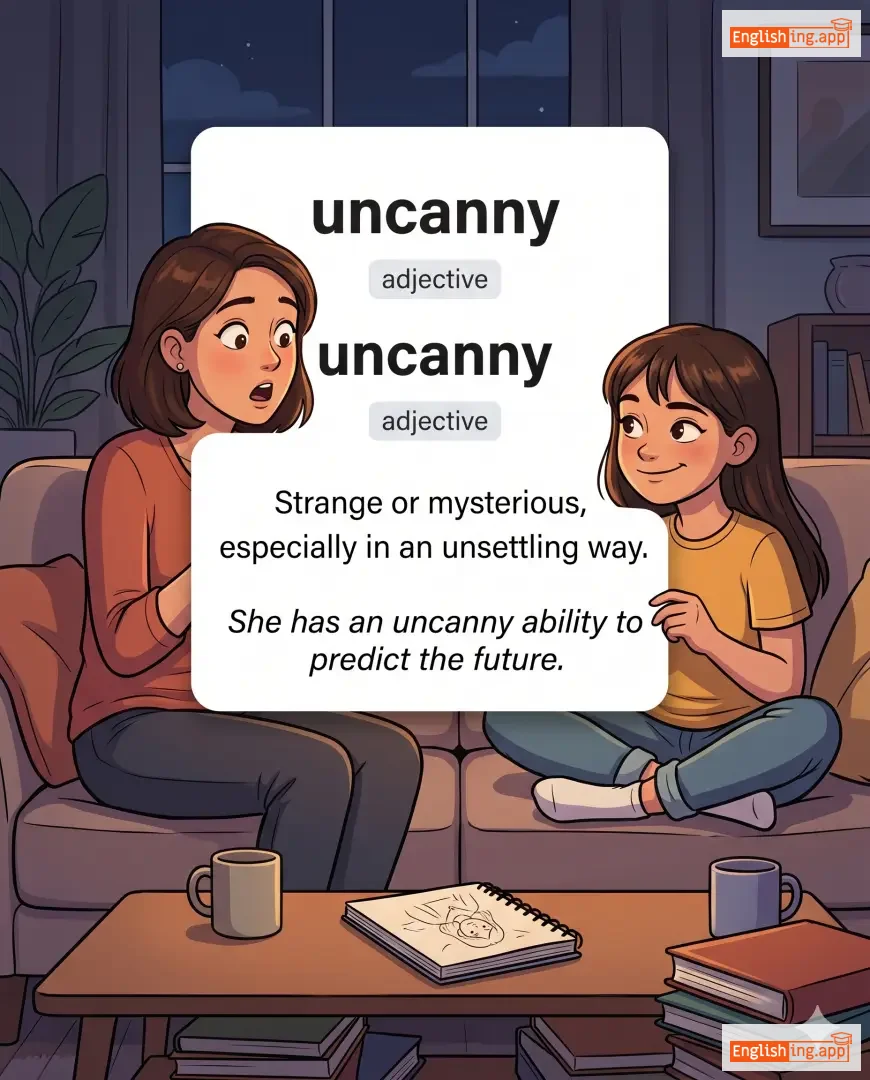
uncanny definition card — visual illustration of the meaning
adjective C1
/ʌnˈkæni/
不可思议 (bù kě sī yì)

Strange or mysterious, especially in an unsettling way.

"She has an uncanny ability to predict the future."

"她有一种不可思议的能力来预测未来。" (tā yǒu yī zhǒng bù kě sī yì de néng lì lái yù cè wèi lái.)
adjective C1
/ʌnˈtʃælɪndʒd/
无可争议的; 被接受的没有反对; 没有对手 (wú kě zhēngyì de; bèi jiēshòu de méiyǒu fǎnduì; méiyǒu duìshǒu)

not disputed or questioned; accepted without opposition; having no rival

"He remained the unchallenged champion for five years."
"他五年保持不败的冠军。" (Tā wǔ nián bǎochí bùbài de guànjūn.)
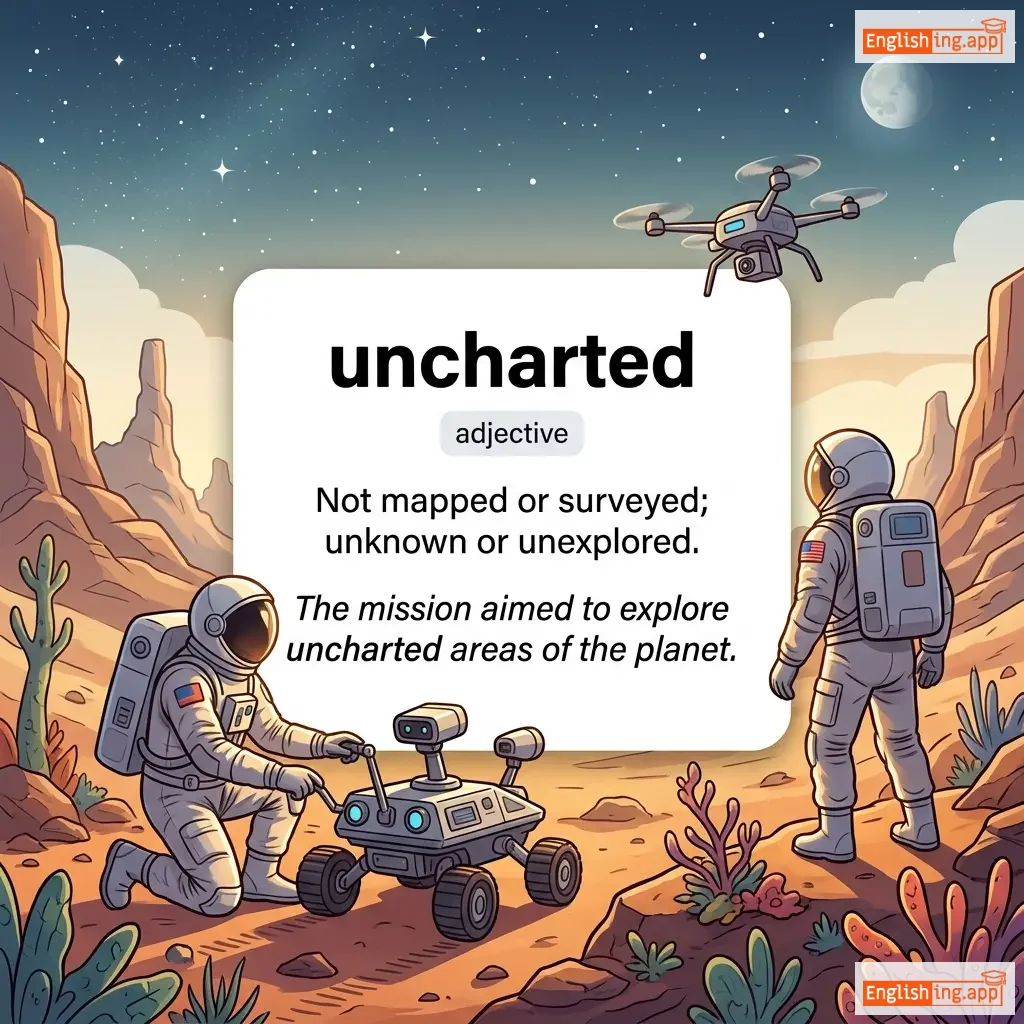
uncharted definition card — visual illustration of the meaning
adjective C1
ʌnˈtʃɑːtɪd
未标记 (wèi biāo jì)

Not mapped or surveyed; unknown or unexplored.

"The mission aimed to explore uncharted areas of the planet."

"该任务旨在探索星球上未标记的区域。" (Gāi rènwu zhǐ zài tàn suǒ xīng qiú shàng wèi biāo jì de qū yù.)
adjective C1
/ʌnˈsɪvəl/
不文明的; 粗鲁的; (bù wénmíng de; cū lǔ de)

not polite or courteous; rude and discourteous in behavior

"His uncivil remarks during the meeting offended everyone present."

"他在会议上的不文明言论冒犯了在场的每一个人。" (Tā zài huìyì shàng de bù wénmíng yánlùn màofàn le zài chǎng de měi yīgè rén.)
adjective C1
/ʌnˈsɪvəlaɪzd/
未开化的; 野蛮的; (wèikāihuà de; yěmán de;)

not developed in terms of civilization; lacking social organization and culture; barbarous

"The explorers encountered an uncivilized tribe deep in the Amazon rainforest."

"探险者在亚马逊雨林深处遇到一个未开化的部落。" (Tànxiǎn zhě zài Yàmǎxùn yǔlín shēnchù yùdào yīgè wèikāihuà de bùluò.)
adjective C1
/ʌnˈkleɪmd/
未认领的; 未要求的; 被遗弃或无主的 (wei renling de; wei yaoqiu de; bei yiqu de huo wu zhu de)

not claimed by anyone; not demanded or requested; abandoned or ownerless

"The unclaimed luggage was stored in the airport's lost property department."

"未认领的行李被存放在机场的失物招领处。" (Wei renling de xingli bei cunfang zai jichang de shiwu zhaoling chu.)
adjective C1
/ʌnˈkɒmprəmaɪzɪŋ/
坚定 (jianding)

not willing to make concessions; firm and resolute

"She remained uncompromising in her principles."
"她在原则上坚持不懈。" (Ta zai yuanze shang jianchi buxie.)
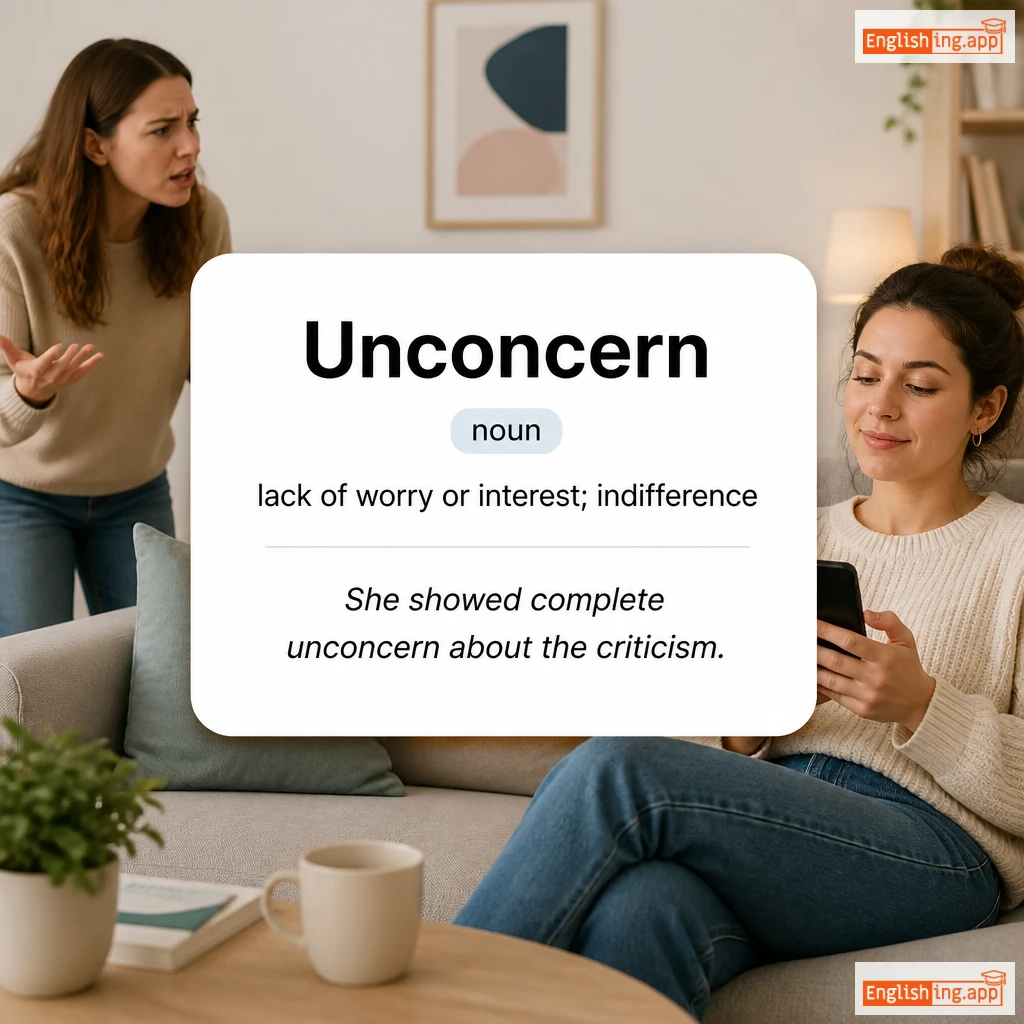
Unconcern definition card — visual illustration of the meaning
noun C1
/ʌnkənˈsɜːrn/
漠不关心 (mò bù guān xīn)

lack of worry or interest; indifference

"She showed complete unconcern about the criticism."
"她对批评表现出了完全的漠不关心。" (Tā duì pīpíng biǎoxiàn chūle wánquán de mò bù guān xīn.)
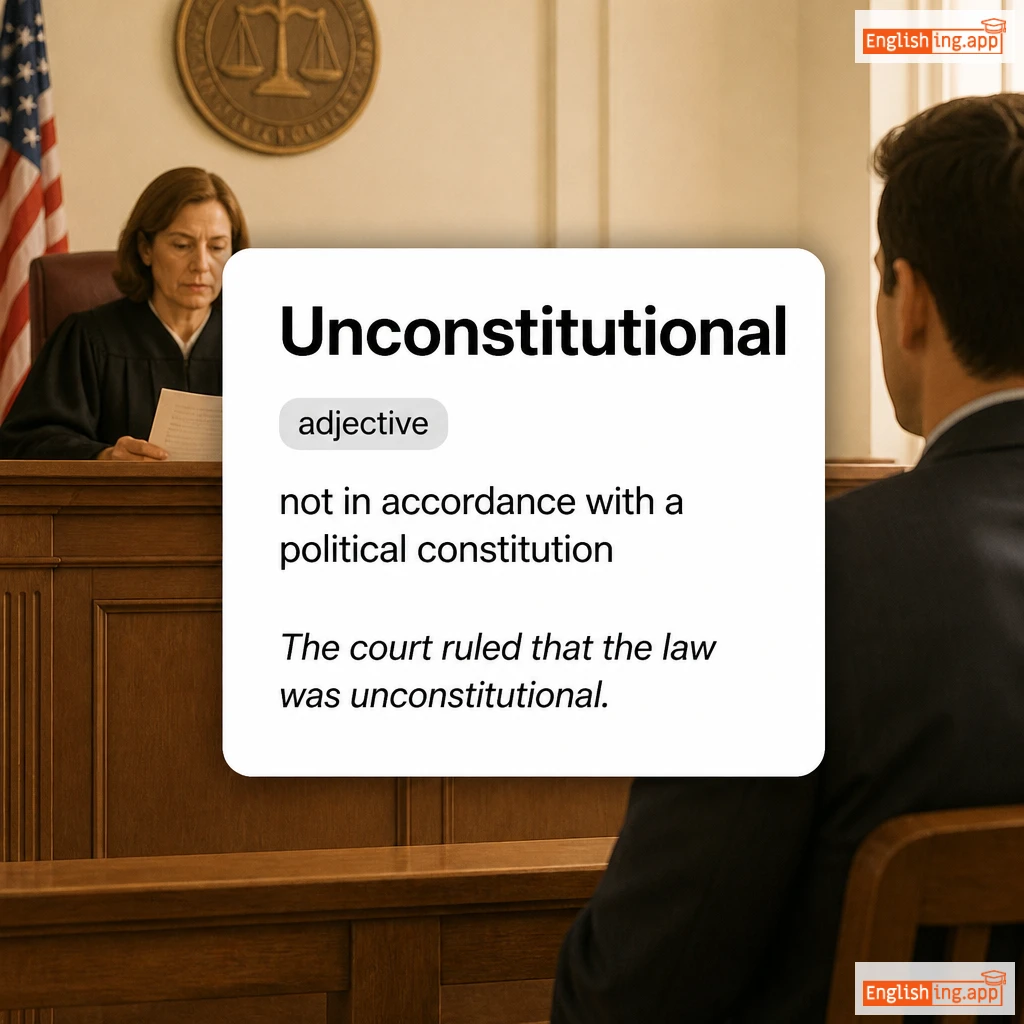
Unconstitutional definition card — visual illustration of the meaning
adjective C1
/ˌʌnkənˈstɪtjuːʃənl/
违宪的 (wéixiàn de)

not in accordance with a political constitution

"The court ruled that the law was unconstitutional."
"法院裁定该法律违宪。" (Fǎyuàn cáidìng gāi fǎlǜ wéixiàn.)
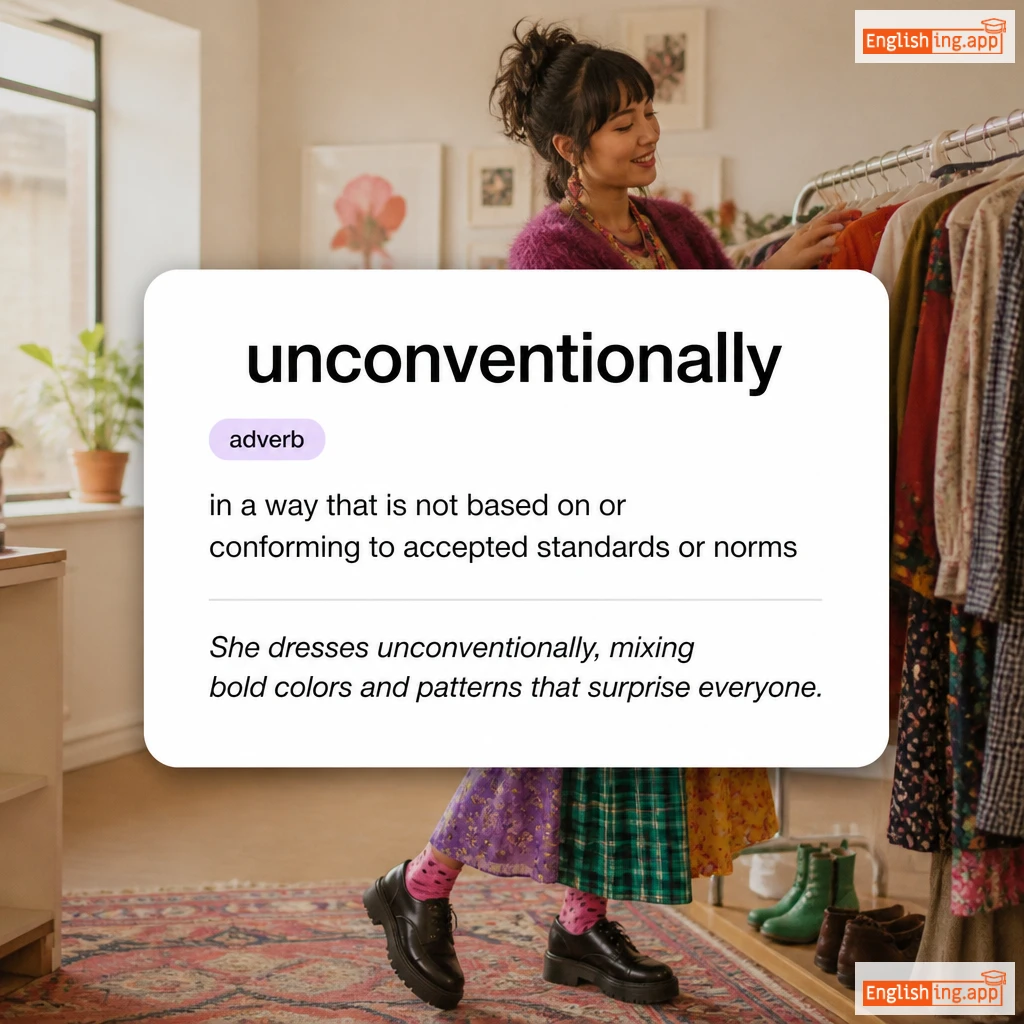
unconventionally definition card — visual illustration of the meaning
adverb C1
/ˌʌnkənˈvɛnʃənəli/
非传统地 (fei chuantong de)

in a way that is not based on or conforming to accepted standards or norms

"She dresses unconventionally, mixing bold colors and patterns that surprise everyone."
"她穿着非传统地,混搭大胆的颜色和图案,让每个人都感到惊讶。" (Ta chuanzhe fei chuantong de, hunda da dan de yanse he tuan, rang mei geren dou gandao jingya.)
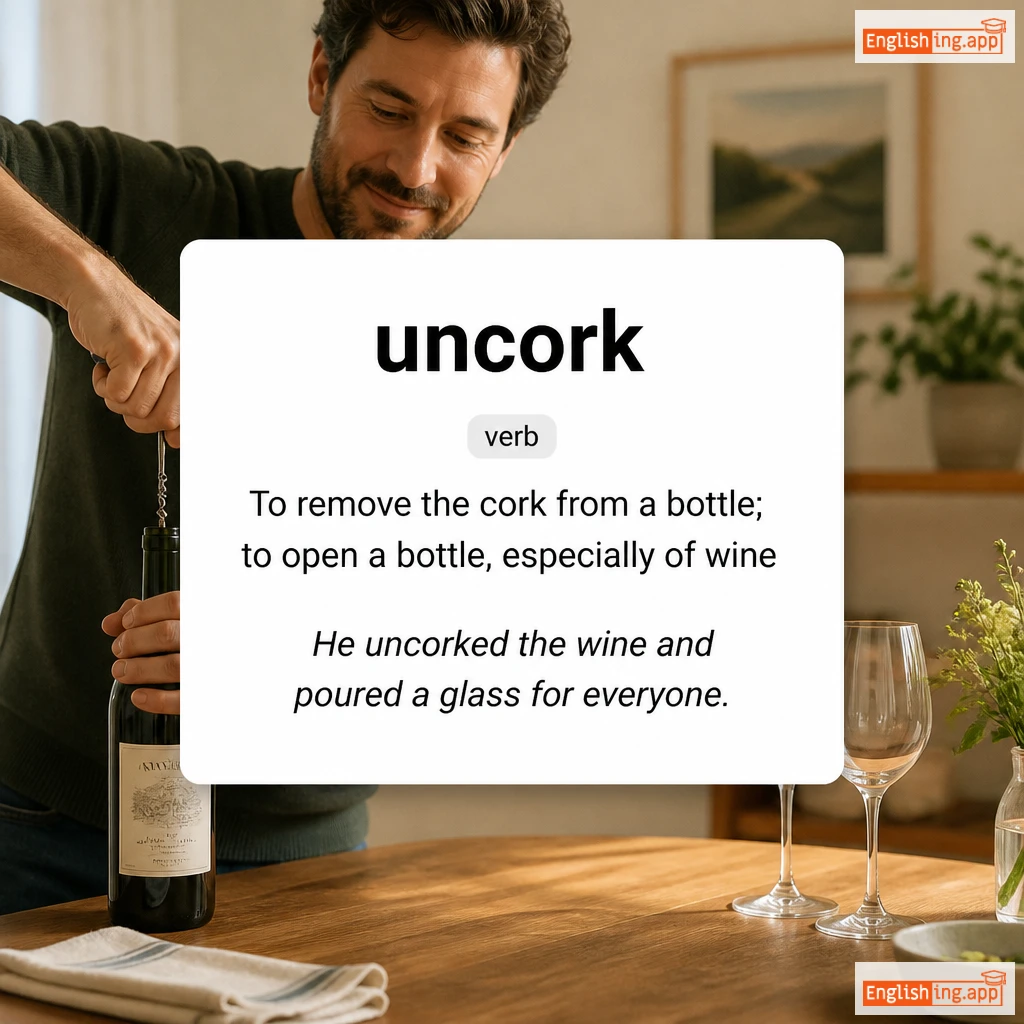
uncork definition card — visual illustration of the meaning
verb C1
/ʌnˈkɔrk/
开瓶 (kaiping)

To remove the cork from a bottle; to open a bottle, especially of wine

"He uncorked the wine and poured a glass for everyone."

"他开了葡萄酒,并为每个人倒了一杯。" (Ta kai le putaojiu, bing wei mei ge ren dao le yi bei.)
adjective C1
/ʌnˈkuːθ/
粗鲁 (culu)

Lacking good manners, refinement, or grace; awkward or rough.

"His uncouth behavior shocked the guests at the party."

"他粗鲁的行为让聚会上的客人感到震惊。" (Ta culu de xingwei rang juhui shang de keren gandao zhenjing.)
adjective C1
/ʌnˈkʌltʃəd/
不文明的; 无文化的 (bù wénmíng de; wú wénhuà de)

lacking good manners, refinement, or education; uncivilized

"His uncultured behavior embarrassed everyone at the dinner party."

"他在晚宴上的不文明行为让所有人感到尴尬。" (Tā zài wǎnyàn shàng de bù wénmíng xíngwéi ràng suǒyǒu rén gǎndào gāngà.)
adjective C1
/ʌnˈdɔːntɪd/
无畏的; 勇敢的; 不屈的; (wuwei de)

not intimidated or discouraged by difficulty, danger, or disappointment

"Despite the setbacks, she remained undaunted in pursuing her goals."

"尽管遇到挫折,她在追求目标时依然无畏。" (Jingguan yudao cuozhe, ta zai zhuixiu mubiao shi yiran wuwei.)
verb C1
/ˌʌn.dəˈtʃɑːrdʒ/
收取较少费用 (shōuqǔ jiàoshǎo fèiyòng)

To charge less than the correct or fair amount.

"The shopkeeper accidentally undercharged me for the groceries."

"店主不小心少收了我购买食品的钱。" (Diànzhǔ bù xiǎoxīn shǎo shōule wǒ gòumǎi shípǐn de qián.)
✂️

undercut

verb C1
/ˈʌndərkʌt/

to sell at a lower price than a competitor; to weaken or undermine something

"The company tried to undercut its rivals by offering lower prices."

noun C1
/ˈʌndərdɒɡ/
逆袭者 (nì xí zhě)

a competitor thought to have little chance of winning; a weaker party in a contest

"The underdog team surprised everyone by winning the championship."

"逆袭者队伍通过赢得锦标赛让所有人都惊讶。" (Nì xí zhě duì wǔ tōngguò yíng dé jǐn biāo sài ràng suǒ yǒu rén dōu jīng yà.)
adjective C1
/ˌʌndərɪkˈspoʊzd/
曝光不足,忽视的 (pùguāng bùzú, hūshì de)

insufficiently exposed to light (in photography) or not given enough attention

"The photo was underexposed and looked too dark."

"照片曝光不足,看起来太暗了。" (Zhàopiàn pùguāng bùzú, kàn qǐlái tài ànle.)
noun C1
/ˈʌndərˌɡɑːrmənt/
内衣 (neiyi)

a piece of clothing worn under outer clothes, usually next to the skin

"He bought new undergarments for the wedding."

"他为婚礼买了新的内衣。" (Tā wèi hūnlǐ mǎile xīn de nèiyī.)
adjective C1
/ˈʌndərhænd/
阴险 (yīnxiǎn)

done secretly and dishonestly; deceitful

"The politician was accused of using underhand tactics to win the election."

"那位政治家被指控使用阴险的手段赢得选举。" (Nà wèi zhèngzhìjiā bèi zhǐkòng shǐyòng yīnxiǎn de shǒuduàn yíngdé xuǎnjǔ.)
adjective C1
/ˌʌndərˈhændɪd/
阴险 (yīnxiǎn)

acting or done in a dishonest or secret way

"They exposed the company's underhanded dealings with its suppliers."

"他们揭露了公司与供应商之间的隐秘交易。" (Tāmen jiēlùle gōngsī yǔ gōngyìngshāng zhī jiān de yǐnmì jiāoyì.)
verb C1
/ˌʌndərˈlaɪ/
位于...之下 (weiyu...zhixia)

to be the hidden cause or basis of something

"Strong cultural traditions underlie the community's practices."
"强大的文化传统是社区实践的基础。" (Qiángdà de wénhuà chuántǒng shì shèqū shíjiàn de jīchǔ.)
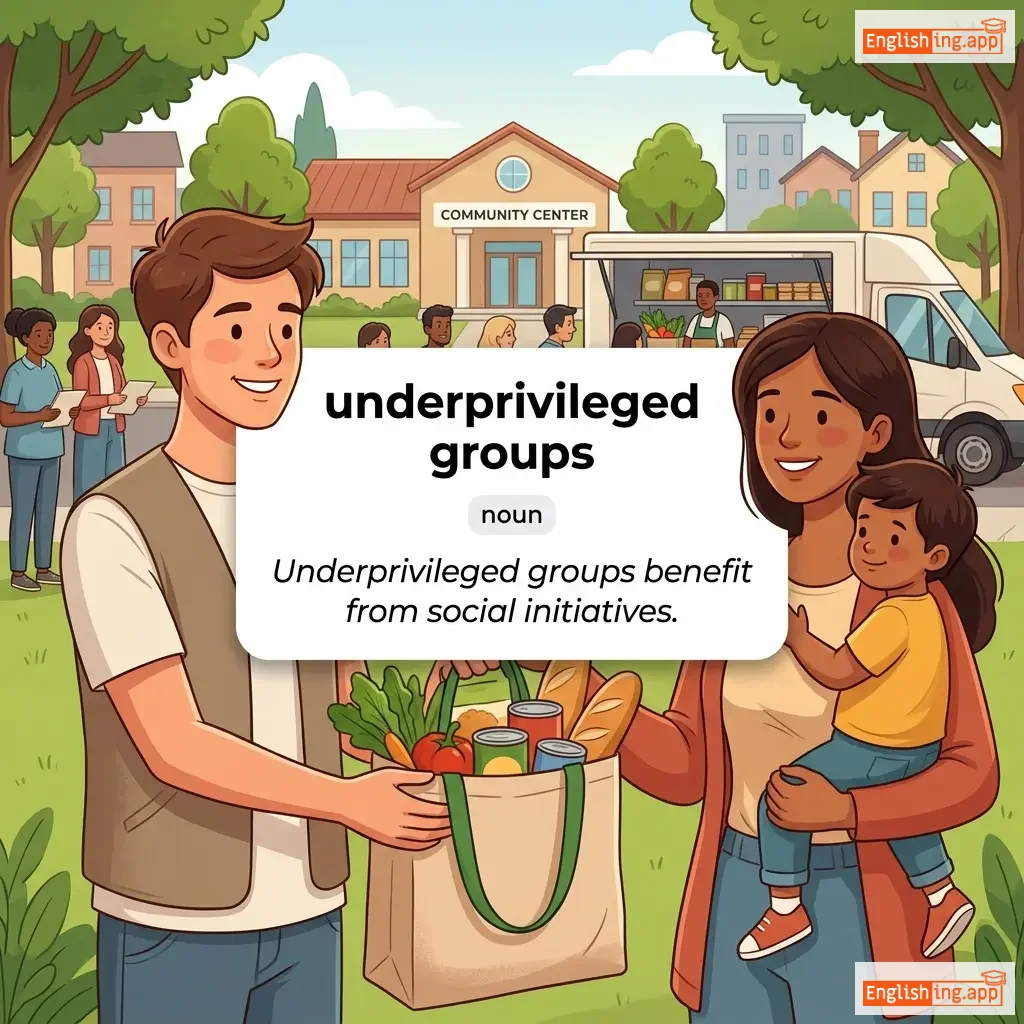
underprivileged groups definition card — visual illustration of the meaning
noun C1
ˌʌndərˈprɪvəlɪdʒd ɡruːps
贫困群体 (pínkùn qúntǐ)

Groups of people who lack basic necessities or advantages that are available to other members of society.

"Underprivileged groups benefit from social initiatives."

"贫困群体从社会倡议中受益。" (Pínkùn qúntǐ cóng shèhuì chàngyì zhōng shòuyì.)
verb C1
/ˌʌndəˈreɪt/
低估 (dī gū)

to fail to recognize the full value or importance of something or someone

"Many people underrate the benefits of regular exercise."

"许多人低估了规律锻炼的好处。" (Xǔduō rén dīgūle guīlǜ duànliàn de hǎochù.)
verb C1
/ˌʌndərˈsɛl/

to sell something at a lower price than competitors or to downplay the value of something

"The shop undersold its rivals by offering huge discounts."

adjective C1
/ˌʌndərˈsaɪzd/
尺寸过小 (chicun guo xiao)

Smaller than the usual or expected size.

"The undersized puppy struggled to keep up with its siblings."

"这只尺寸过小的小狗很难跟上它的兄弟姐妹。" (Zhe zhi chicun guo xiao de xiao gou hen nan gen shang ta de xiongdi jiemei.)
verb C1
/ˌʌndərˈsteɪt/
低估 (dīgu)

To describe something as being less important or serious than it really is.

"He tends to understate his achievements."

"他倾向于低估自己的成就。" (Tā qīngxiàng yú dīgū zìjǐ de chéngjiù.)
adjective C1
/ˌʌndərˈsteɪtɪd/
低调的 (dī diào de)

Presented in a subtle and restrained way.

"She wore an elegant but understated dress."

"她穿了一件优雅但低调的裙子。" (Tā chuānle yī jiàn yōu yǎ dàn dī diào de qún zi.)
noun C1
/ˈʌndərˌstʌdi/
替身演员 (tìshēn yǎnyuán)

An actor who learns another's role to act as a replacement if needed.

"The understudy performed when the lead actor fell ill."

"当主角生病时,替身演员上场表演。" (Dāng zhǔjiǎo shēngbìng shí, tìshēn yǎnyuán shàngchǎng biǎoyǎn.)
noun C1
/ˈʌndərˌteɪkər/
殡葬员 (bìnzàng yuán)

A person whose job is to prepare the dead for burial and arrange funerals.

"The undertaker prepared the body for the funeral service."

"殡葬员为葬礼服务准备了尸体。" (Bìnzàng yuán wèi zànglǐ fúwù zhǔnbèi le shītǐ.)
verb C1
/ˌʌndərˈvæljuː/
低估 (dīgu)

To assign too low a value or importance to something or someone.

"She felt that her boss consistently undervalued her contributions."

"她感觉到她的老板总是低估她的贡献。" (Tā gǎnjué dào tā de lǎobǎn zǒng shì dīgū tā de gòngxiàn.)
noun C1
/ˈʌndərˌwɜːrld/
地下世界 (dixiashijie)

The criminal world of organized crime or the mythical world of the dead.

"The detective spent years studying the secrets of the underworld."

"侦探花了很多年研究地下世界的秘密。" (Zhentan hua le henduo nian yanjiu dixia shijie de mimi.)
adjective C1
/ʌnˈdjuː/
过度的 (guòdù de)

More than is reasonable, excessive, or inappropriate.

"He placed undue pressure on his employees to meet the deadline."

"他对员工施加了过大的压力,以赶上最后期限。" (Tā duì yuángōng shījiāle guòdà de yālì, yǐ gǎnshàng zuìhòu qīxiàn.)
verb C1
/ʌnˈɜːθ/
发掘 (fājué)

To dig up from the ground or to discover something hidden.

"Archaeologists unearthed ancient artifacts at the site."

"考古学家在遗址发掘了古代文物。" (Kǎogǔ xuéjiā zài yízhǐ fājuéle gǔdài wénwù.)