词汇表

英语词汇词典 | 单词含义、定义和示例

noun C1
/ˈspɔɪlˌspɔːrt/
扫兴的人 (sǎo xìng de rén)

A person who ruins other people's enjoyment or fun.

"Don't be a spoilsport and let us enjoy the party."

"不要做扫兴的人,放我们享受派对吧。" (Bù yào zuò sǎo xìng de rén, fàng wǒmen xiǎngshòu pàiduì ba.)
adjective C1
/ˈspʌndʒi/
海绵状 (hǎimián zhuàng)

soft and full of holes like a sponge; porous

"The cake had a light and spongy texture."
"蛋糕有轻盈而海绵状的质地。" (Dàn gāo yǒu qīng yíng ér hǎimián zhuàng de zhìdì.)
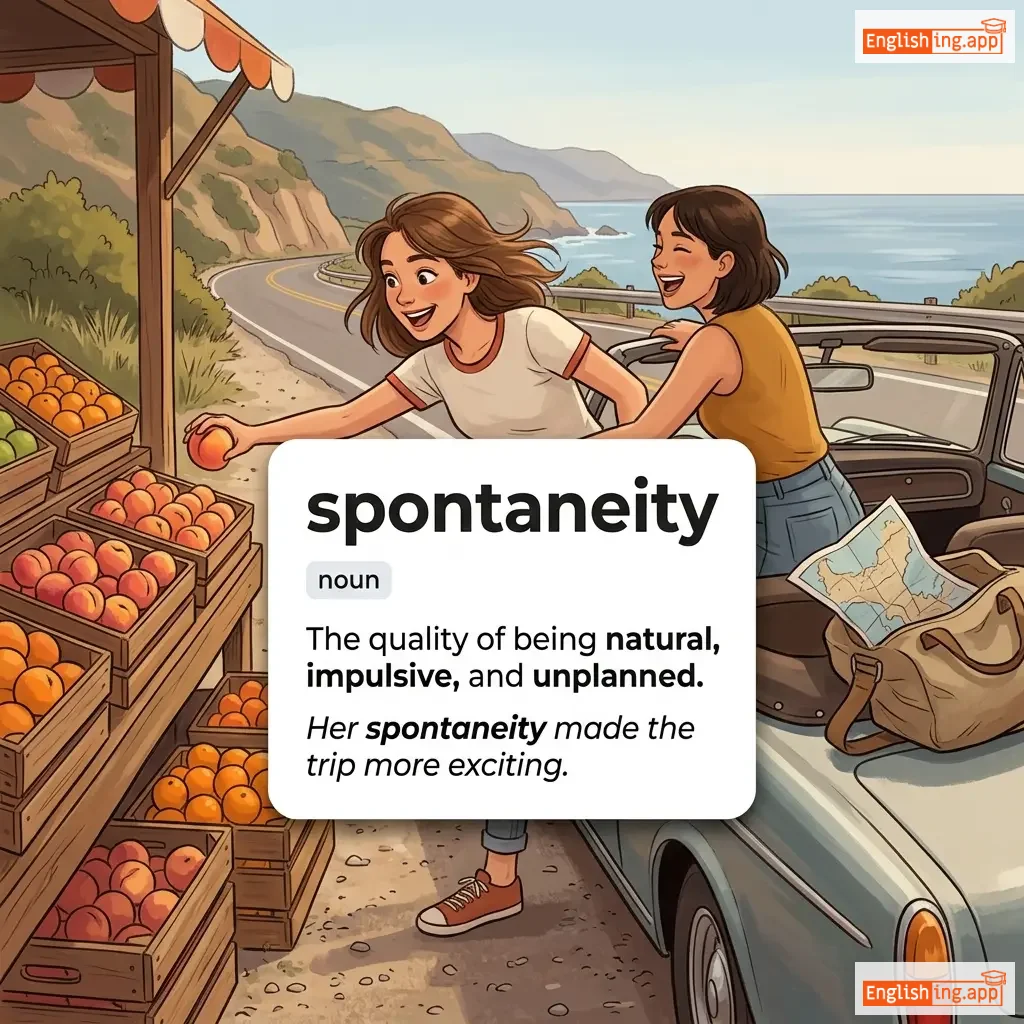
spontaneity definition card — visual illustration of the meaning
noun C1
/ˌspɑːntəˈneɪəti/
自发性 (zifaxing)

The quality of being natural, impulsive, and unplanned.

"Her spontaneity made the trip more exciting."
"她的自发性让旅行变得更加刺激。" (ta de zifaxing rang lvxing biande gengjia ciji.)
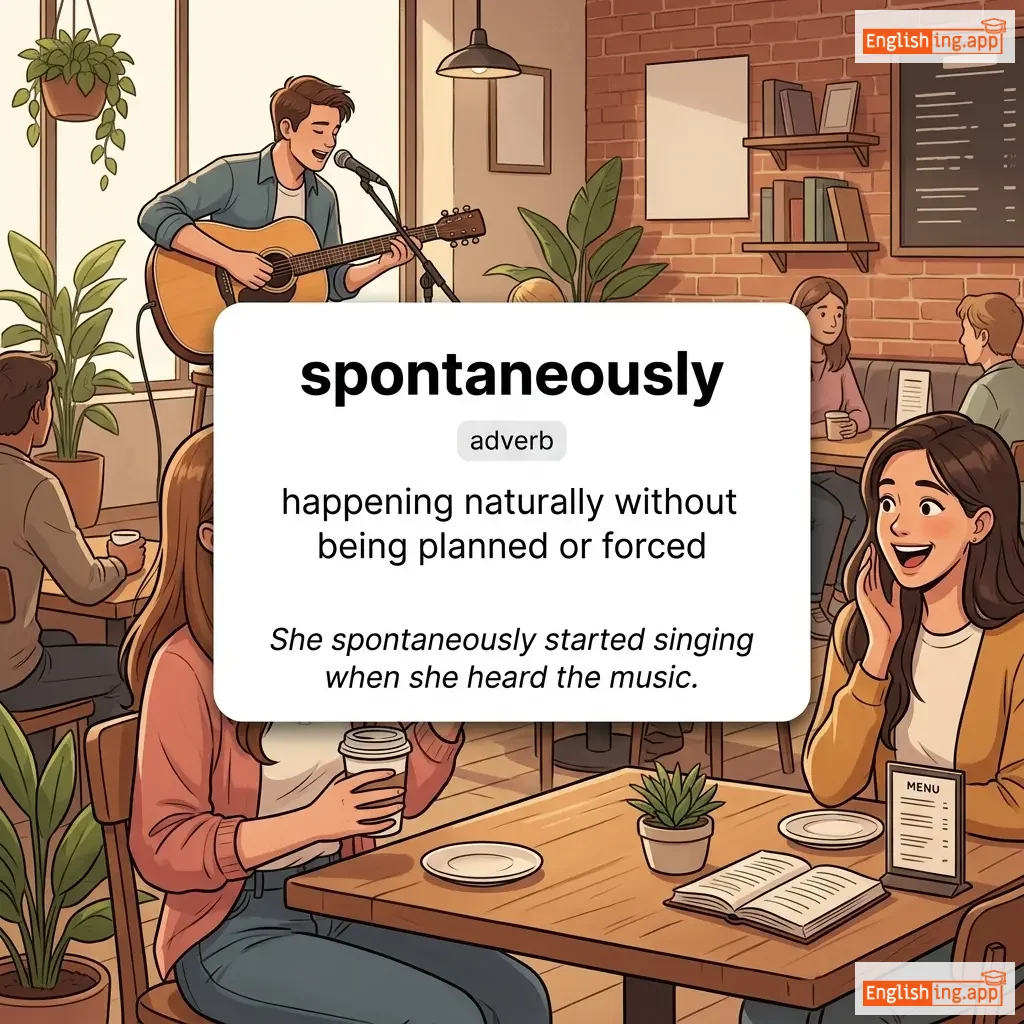
spontaneously definition card — visual illustration of the meaning
adverb C1
/spɒnˈteɪ.ni.əs.li/
自发地 (zì fā de)

happening naturally without being planned or forced

"She spontaneously started singing when she heard the music."

"当她听到音乐时,她自发地开始唱歌。" (dāng tā tīngdào yīnyuè shí, tā zì fā de kāishǐ chàng gē.)
noun/verb C1
/spuːf/
幽默模仿 (yōu mò mó fǎng)

A humorous imitation of something, or to trick or parody someone or something.

"The comedian spoofed the politician’s speech to entertain the audience."
"喜剧演员模仿政治家的演讲来娱乐观众。" (xǐ jù yǎn yuán mó fǎng zhèng zhì jiā de yǎn jiǎng lái yú lè guān zhòng.)
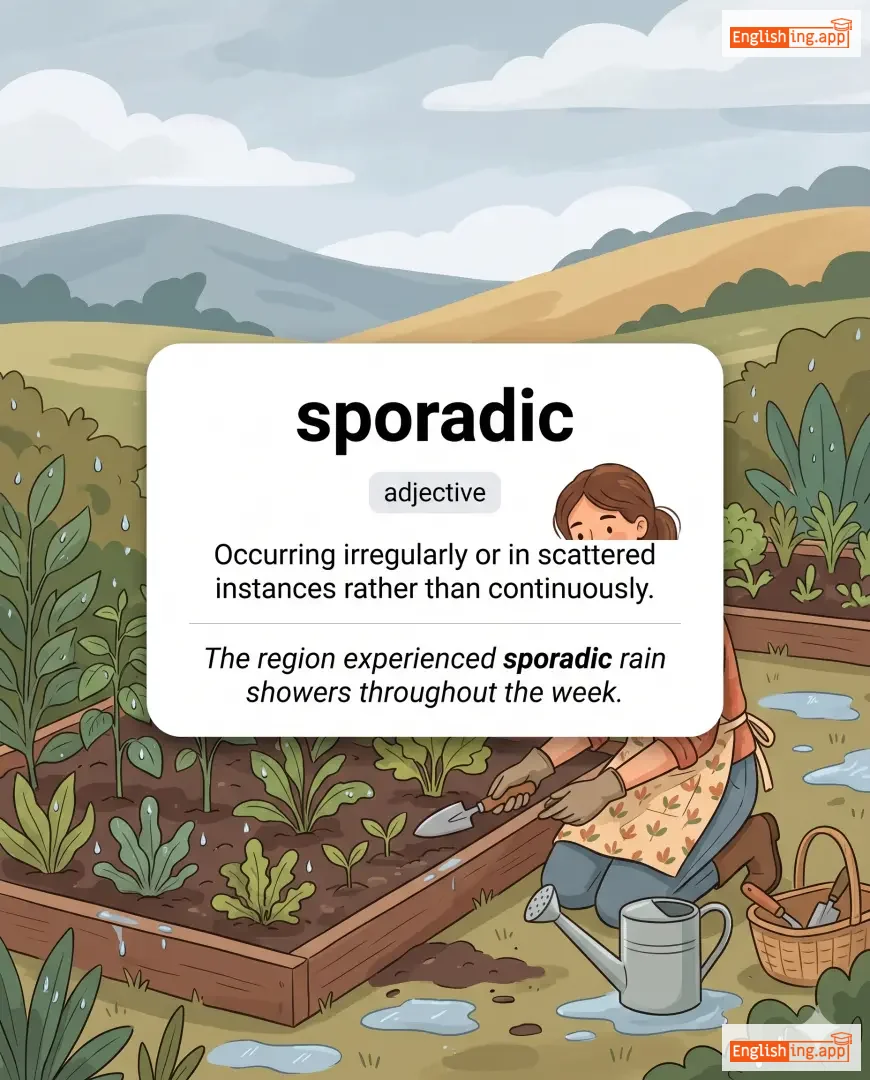
sporadic definition card — visual illustration of the meaning
adjective C1
/spəˈrædɪk/
零星 (língxīng)

Occurring irregularly or in scattered instances rather than continuously.

"The region experienced sporadic rain showers throughout the week."

"该地区经历了整整一周的零星降雨。" (Gāi dìqū jīnglìle zhěngzhěng yī zhōu de língxīng jiàngyǔ.)
noun, verb C1
/spreɪn/
扭伤 (niǔ shāng)

an injury to a joint in which the ligaments are stretched or torn

"She sprained her ankle while running in the park."

"她在公园跑步时扭伤了脚踝。" (Tā zài gōngyuán pǎobù shí niǔ shāng le jiǎohuái.)
adjective C1
/ˈspraɪtli/
活泼 (huó pō)

full of energy and life; lively

"The sprightly old man danced with joy at the wedding."

"那位活泼的老人高兴地在婚礼上跳舞。" (Nà wèi huó pō de lǎo rén gāo xìng de zài hūn lǐ shàng tiào wǔ.)
verb, noun C1
/spraʊt/
发芽 (fā yá)

to begin to grow; to produce new leaves or shoots

"The seeds began to sprout after a few days of rain."

"种子在几天的雨后开始发芽。" (Zhǒngzǐ zài jǐ tiān de yǔ hòu kāishǐ fā yá.)
verb, adjective, noun C1
/spruːs/
整理 / 一种树 (zhěnglǐ / yī zhǒng shù)

to make neat or tidy in appearance; also refers to an evergreen tree

"He spruced up his room before the guests arrived."

"他在客人到达之前整理了他的房间。" (Tā zài kèrén dào dá zhīqián zhěnglǐle tā de fángjiān.)
verb C1
/spɜːr/
激励 / 鼓励 (jili / guli)

To encourage or motivate someone to take action.

"The teacher's praise spurred him to study harder."

"教师的表扬激励他更加努力学习。" (Jiàoshī de biǎoyáng jīlì tā gèngjiā nǔlì xuéxí.)
adjective C1
/ˈspjʊəriəs/
虚假的 / 假冒的 (xūjiǎ de / jiǎmào de)

Not genuine, authentic, or true; false or fake.

"The report was based on spurious claims."

"报告基于虚假的声明。" (Bàogào jīyú xūjiǎ de shēngmíng.)
verb C1
/spɜːrn/
蔑视地拒绝 (mièshì de jùjué)

To reject something or someone with disdain or contempt.

"She spurned his offer of help."

"她以蔑视的态度拒绝了他的帮助提议。" (Tā yǐ mièshì de tàidu jùjuéle tā de bāngzhù tíyì.)
verb C1
/ˈskwɒbəl/
为琐事争吵 (wèi suǒ shì zhēngchǎo)

To argue noisily over something small or unimportant.

"The children squabbled over the last piece of cake."

"孩子们争论最后一块蛋糕。" (Háizimen zhēnglùn zuìhòu yī kuài dàngāo.)
adjective C1
/ˈskwɒlɪd/
极其脏乱 (jíqí zāngluàn)

extremely dirty and unpleasant, often due to poverty or neglect

"He lived in a squalid room with broken furniture."

"他住在一个脏乱的房间里,里面有坏掉的家具。" (Tā zhù zài yīgè zāngluàn de fángjiān lǐ, lǐmiàn yǒu huài diào de jiājù.)
noun C1
/skwɔːl/
暴风骤雨 (baofeng zhouyu)

a sudden violent gust of wind, often accompanied by rain, snow, or sleet

"A sudden squall caught the sailors off guard."
"一阵突如其来的暴风骤雨让水手们措手不及。" (Yi zhen tu ru qi lai de baofeng zhouyu rang shuishou men cuoshou buji.)
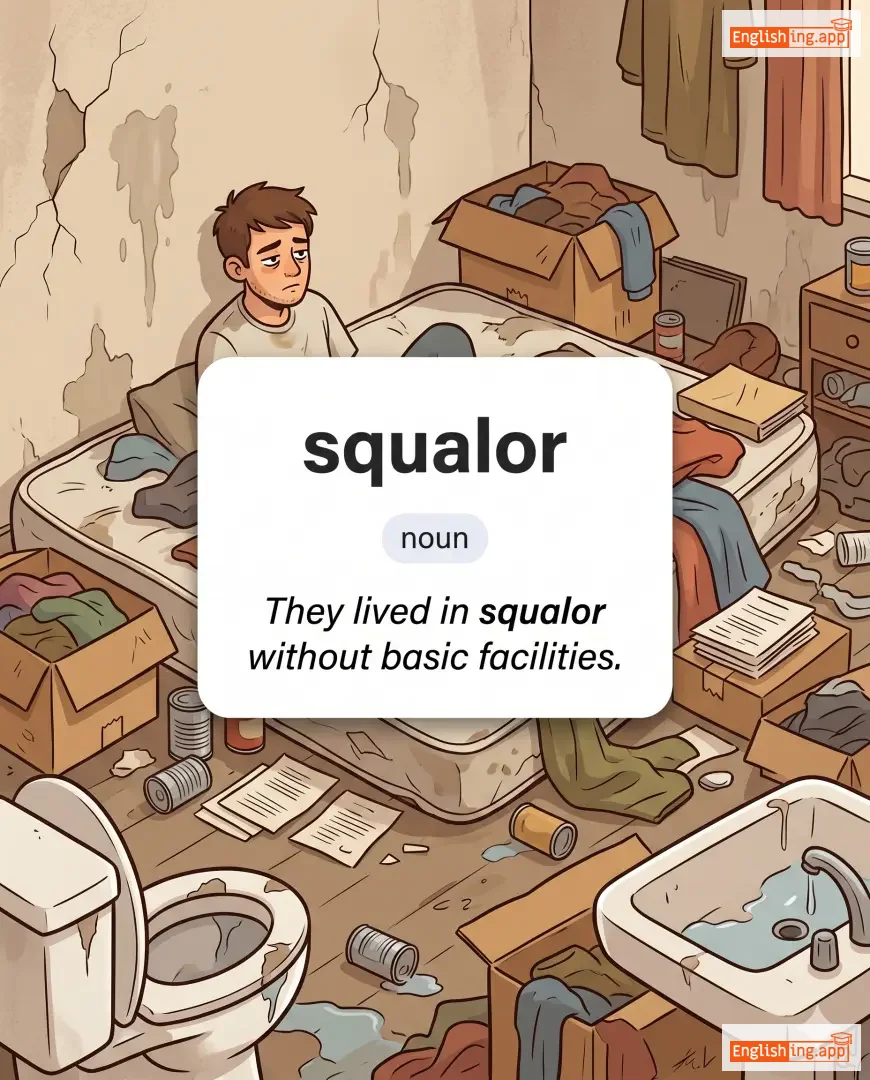
squalor definition card — visual illustration of the meaning
noun C1
/ˈskwɒlər/
贫困 (pínkùn)

the state of being extremely dirty and unpleasant, especially due to poverty or neglect

"They lived in squalor without basic facilities."

"他们在没有基本设施的贫困中生活。" (Tāmen zài méiyǒu jīběn shèshī de pínkùn zhōng shēnghuó.)
squander definition card — visual illustration of the meaning
verb C1
/ˈskwɒndər/
浪费 (làng fèi)

to waste something, especially money or time, in a reckless or foolish manner

"He squandered all his savings on gambling."

"他把所有的积蓄都浪费在了赌博上。" (Tā bǎ suǒyǒu de jīxù dōu làng fèi zài le dǔbó shàng.)
/skwɒt/
蹲下 (dun xia)

to crouch or sit with knees bent and body close to the ground

"He squatted down to tie his shoes."

"他蹲下来系鞋带。" (Ta dun xia lai xi xie dai.)
noun C1
/ˈskwɒtər/
非法占领者 (fēi fǎ zhàn lǐng zhě)

a person who unlawfully occupies an uninhabited building or unused land

"The police removed the squatters from the abandoned house."
"警方将非法占领者从废弃的房屋中驱逐了出去。" (jǐngfāng jiāng fēifǎ zhànlǐng zhě cóng fèiqì de fángwū zhōng qūzhú le chūqù.)
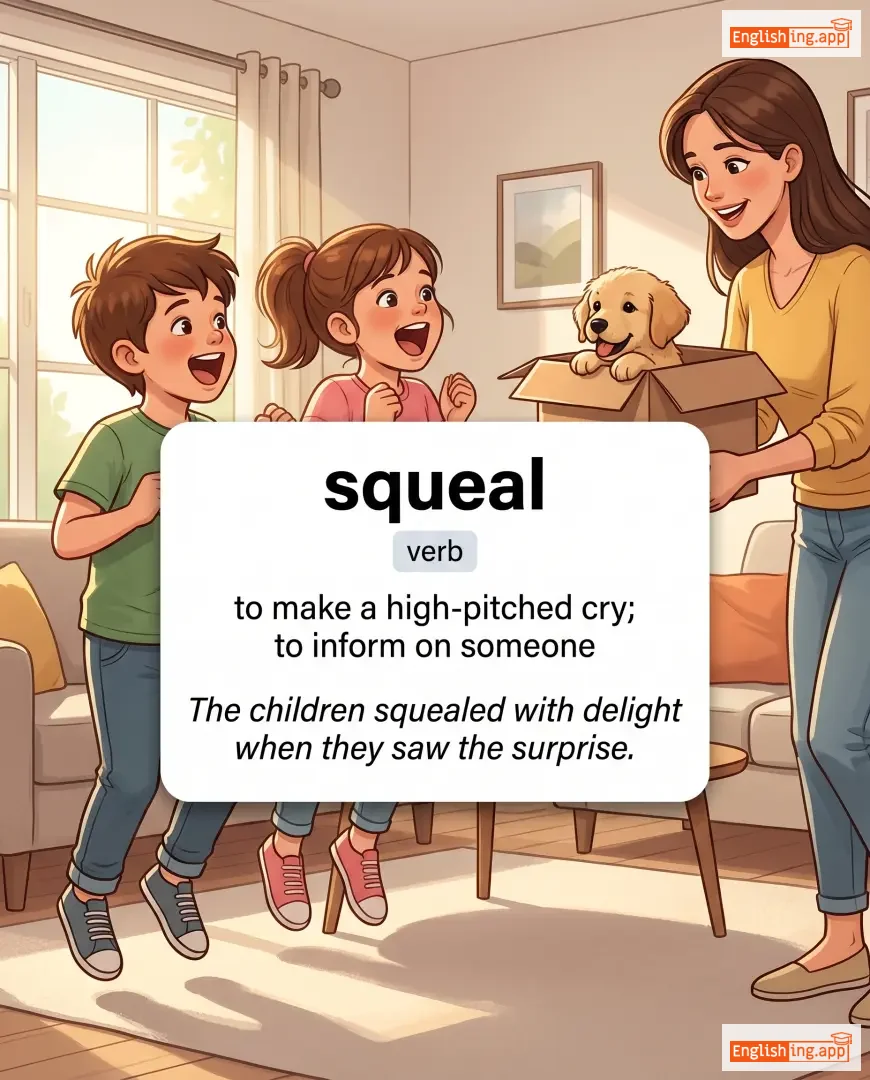
squeal definition card — visual illustration of the meaning
verb C1
/skwiːl/
尖叫 (jiān jiào)

to make a high-pitched cry; to inform on someone

"The children squealed with delight when they saw the surprise."

"孩子们看到惊喜时高兴地尖叫。" (Háizimen kàn dào jīngxǐ shí gāoxìng de jiānjiào.)
adjective C1
/ˈskwiːmɪʃ/
容易感到恶心、头晕或反感 (róngyì gǎndào ěxīn, tóuyūn huò fǎngǎn)

easily made to feel sick, faint, or disgusted

"She felt squeamish at the sight of blood."

"她看到血时感到恶心。" (Tā kàn dào xuè shí gǎndào ěxīn.)
verb C1
/skwɪnt/
眯眼看 (mī yǎn kàn)

to look with partly closed eyes

"She squinted at the bright sunlight."
"她因强烈的阳光而眯着眼睛。" (Tā yīn qiángliè de yángguāng ér mīzhe yǎnjīng.)
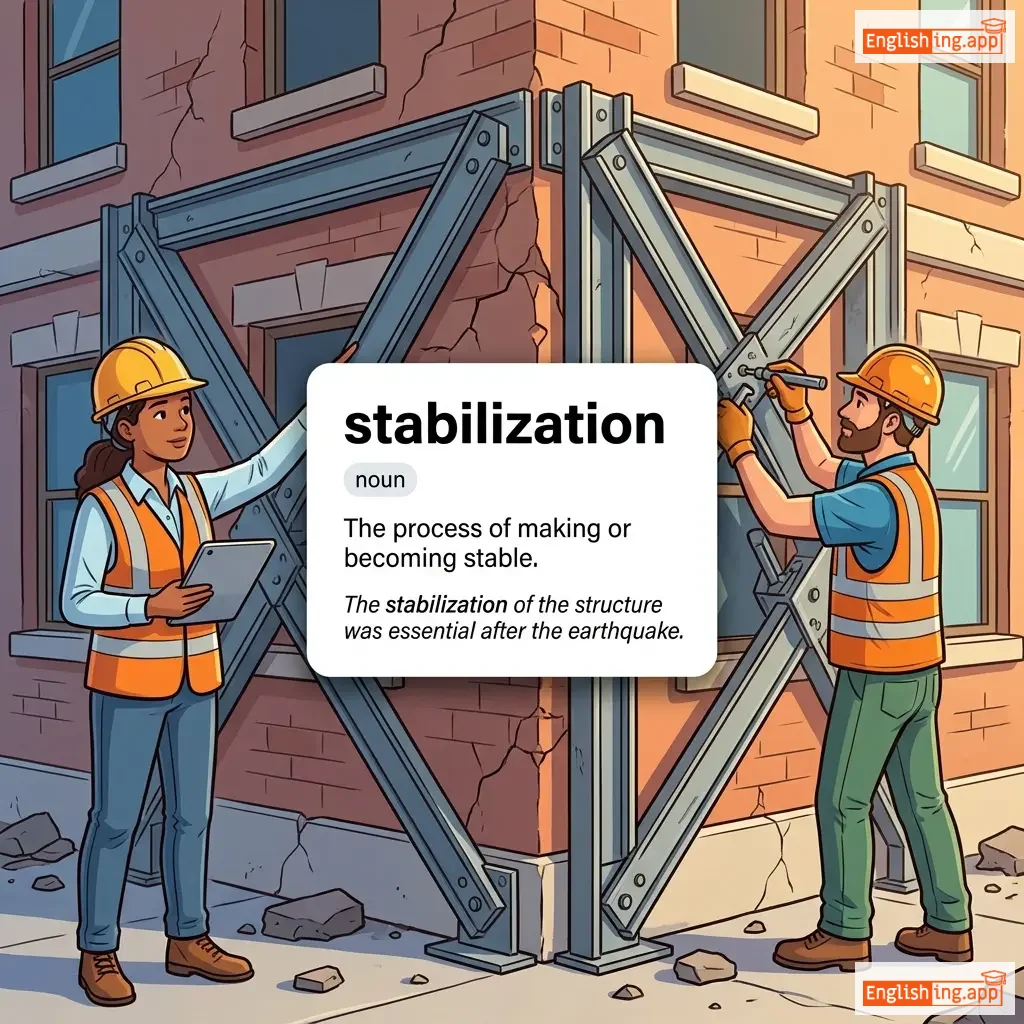
stabilization definition card — visual illustration of the meaning
noun C1
ˌsteɪbəlaɪˈzeɪʃən
稳定化 (wendinghua)

The process of making or becoming stable.

"The stabilization of the structure was essential after the earthquake."

"地震后,结构的稳定化至关重要。" (Dizhen hou, jiegou de wendinghua zhiguang zhongyao.)
adjective C1
/ˈstæɡ.nənt/
停滯 (tíngzhì)

not moving, changing, or developing; inactive

"The company’s growth remained stagnant for several years."

"公司增長多年來停滯不前。" (Gōngsī zēngzhǎng duō nián lái tíngzhì bù qián.)
verb C1
/ˈstæɡ.neɪt/
停滞 (tíngzhì)

to stop developing, progressing, or moving

"Without innovation, the business will stagnate."
"没有创新,生意将会停滞不前。" (méiyǒu chuàngxīn, shēngyì jiāng huì tíngzhì bùqián.)
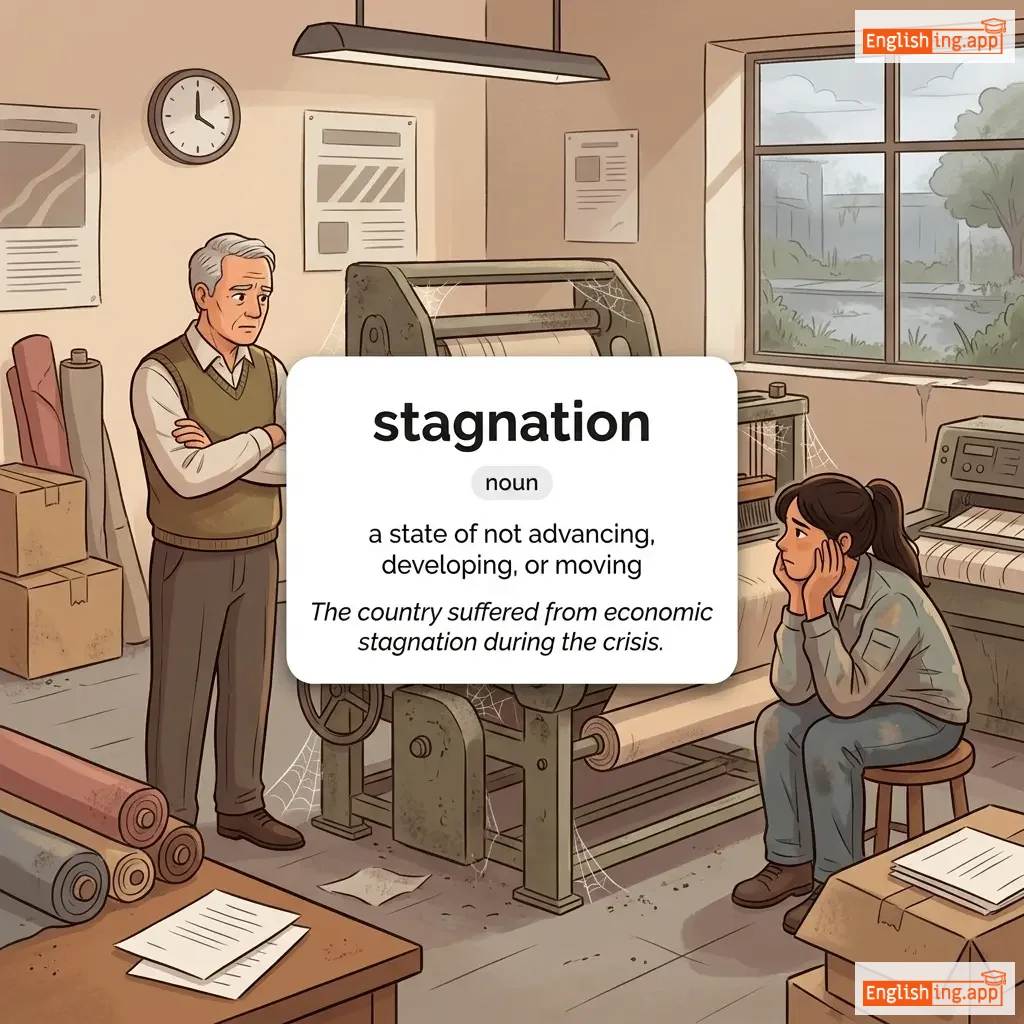
stagnation definition card — visual illustration of the meaning
noun C1
/stæɡˈneɪ.ʃən/
停滯 (tingzhi)

a state of not advancing, developing, or moving

"The country suffered from economic stagnation during the crisis."

"该国在危机期间遭受了经济停滯。" (Gai guo zai weiji qi jian zao shou le jingji tingzhi.)
adjective C1
/steɪd/
严肃,受尊敬的 (yánsù, shòu zūnjìng de)

Serious, respectable, and unadventurous.

"He came from a staid family background."

"他来自一个严肃的家庭。" (Tā láizì yīgè yánsù de jiātíng.)
noun C1
/ˈsteɪl.meɪt/
僵局 (jiangju)

A situation in which no progress can be made or no party can win.

"Negotiations ended in a stalemate."

"谈判陷入了僵局。" (Tanpan xianru le jiangju.)
noun C1
/ˈstæl.i.ən/
用于繁殖的种马 (yòng yú fánzhí de zhǒngmǎ)

An adult male horse that is not castrated, often used for breeding.

"The farm owns a powerful stallion for breeding purposes."

"农场拥有一匹强壮的种马用于繁殖。" (Nóngchǎng yǒng yī pǐ qiángzhuàng de zhǒngmǎ yòng yú fánzhí.)
adjective C1
/ˈstɔːlwərt/
坚定, 忠诚 (jianding, zhongcheng)

Loyal, reliable, and hardworking; strongly built or sturdy.

"She has always been a stalwart supporter of the community."

"她一直是社区的坚定支持者。" (Ta yizhi shi shequ de jianding zhichi zhe.)
verb C1
/ˈstæmər/
结巴 (jieba)

To speak with sudden involuntary pauses and a tendency to repeat the initial letters of words.

"The nervous student began to stammer during his speech."

"紧张的学生在演讲中开始结巴。" (Jǐnzhāng de xuéshēng zài yǎnjiǎng zhōng kāishǐ jiēbā.)
noun/verb C1
/stæmˈpiːd/
混乱的人群 (hunluan de renqun)

A sudden, uncontrolled rush of people or animals; to cause a mass movement.

"The loud noise caused a stampede of the crowd."

"嘈杂的声音引起了人群中的一阵奔跑。" (Caoza de shengyin yinqile renqun zhong de yizhen benpao.)
noun C1
/ˈstændˌstɪl/
停滞 (tingzhi)

a situation in which all movement or activity stops

"The traffic came to a standstill after the accident."

"事故发生后,交通陷入了停滞。" (Shigu fasheng hou, jiaotong xianru le tingzhi.)
noun C1
/ˈstænzə/
诗节 (shijie)

a group of lines forming a unit in a poem or song

"The poem begins with a stanza describing nature."
"这首诗以一节描述自然的诗句开始。" (Zhe shou shi yi yi jie miaoshu ziran de shiju kaishi.)
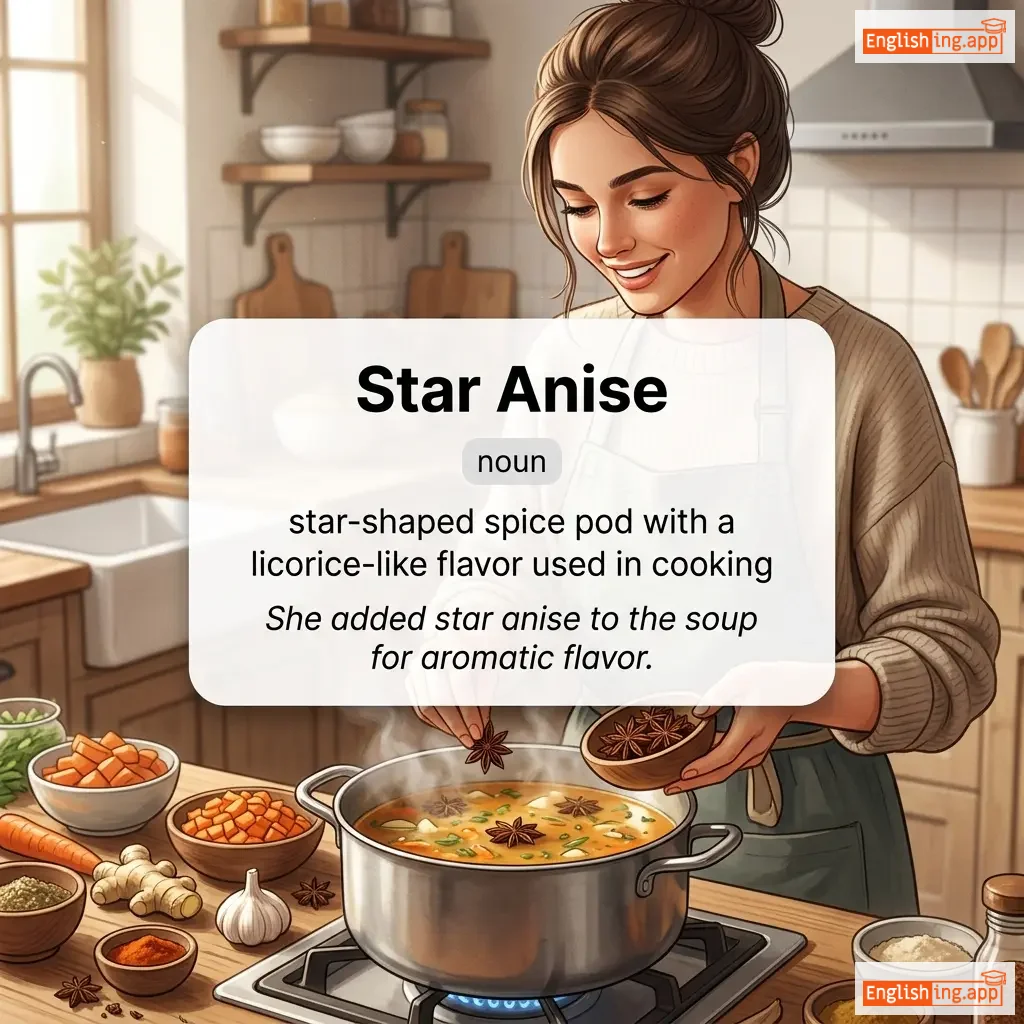
Star Anise definition card — visual illustration of the meaning
noun C1
/stɑːr ˈæn.ɪs/
八角星 (bājiǎo xīng)

star-shaped spice pod with a licorice-like flavor used in cooking

"She added star anise to the soup for aromatic flavor."
"她在汤里加入了八角星,增添了香气。" (Tā zài tāng lǐ jiārù le bājiǎo xīng, zēngtiān le xiāngqì.)
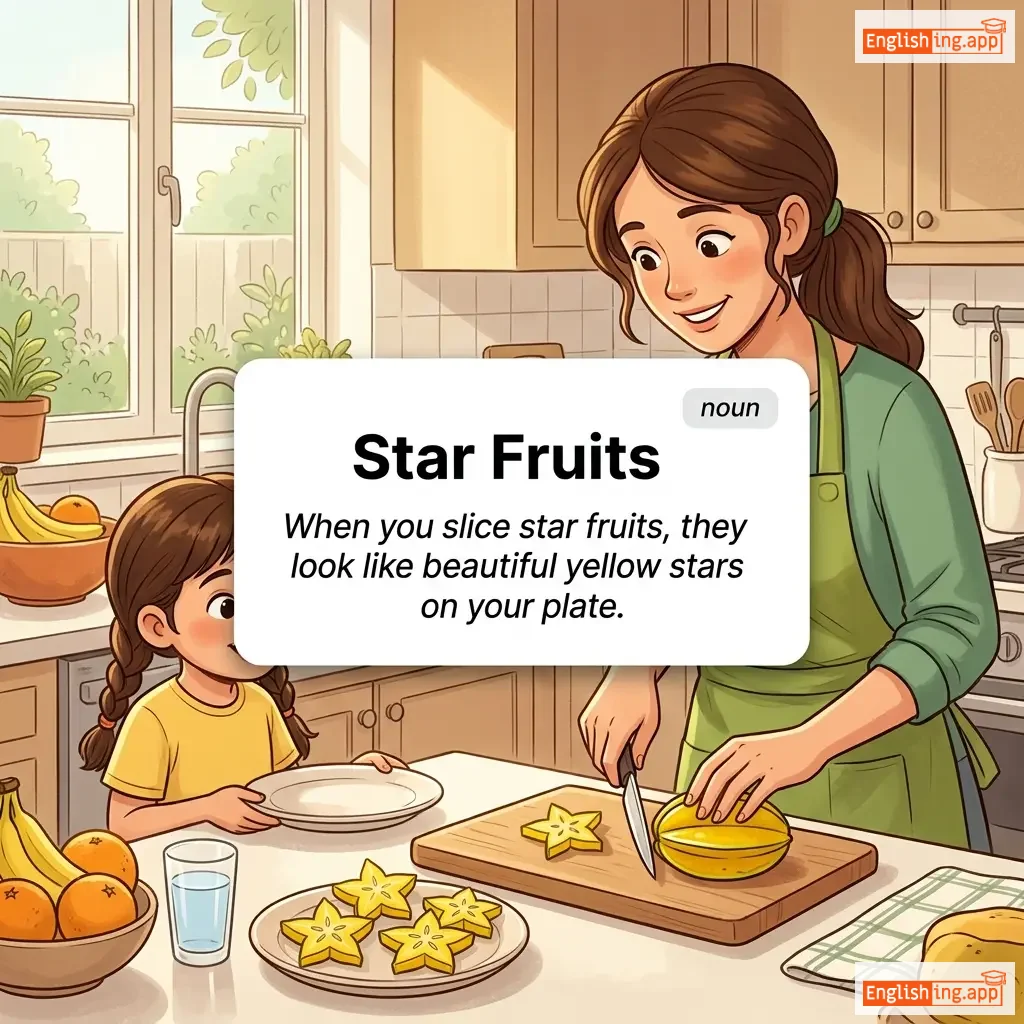
Star Fruits definition card — visual illustration of the meaning
noun C1
/stɑːr fruːts/
星形水果 (xingxing shuiguo)

yellow tropical fruits that form a star shape when sliced crosswise; tangy and crisp taste

"When you slice star fruits, they look like beautiful yellow stars on your plate."

"当你切开星形水果时,它们看起来就像盘子上的美丽黄色星星。" (dāng nǐ qiē kāi xīng xíng shuǐguǒ shí, tāmen kàn qǐlái jiù xiàng pánzi shàng de měilì huángsè xīngxīng.)
adjective C1
/ˈsteɪtli/
庄严和宏伟 (zhuangyan he hongwei)

Having a dignified, majestic, and impressive appearance or manner.

"The stately mansion stood at the end of the long driveway."
"那座庄严的豪宅位于长长的车道尽头。" (Na zuo zhuangyan de haozhai weiyu changchang de chedao jintou.)
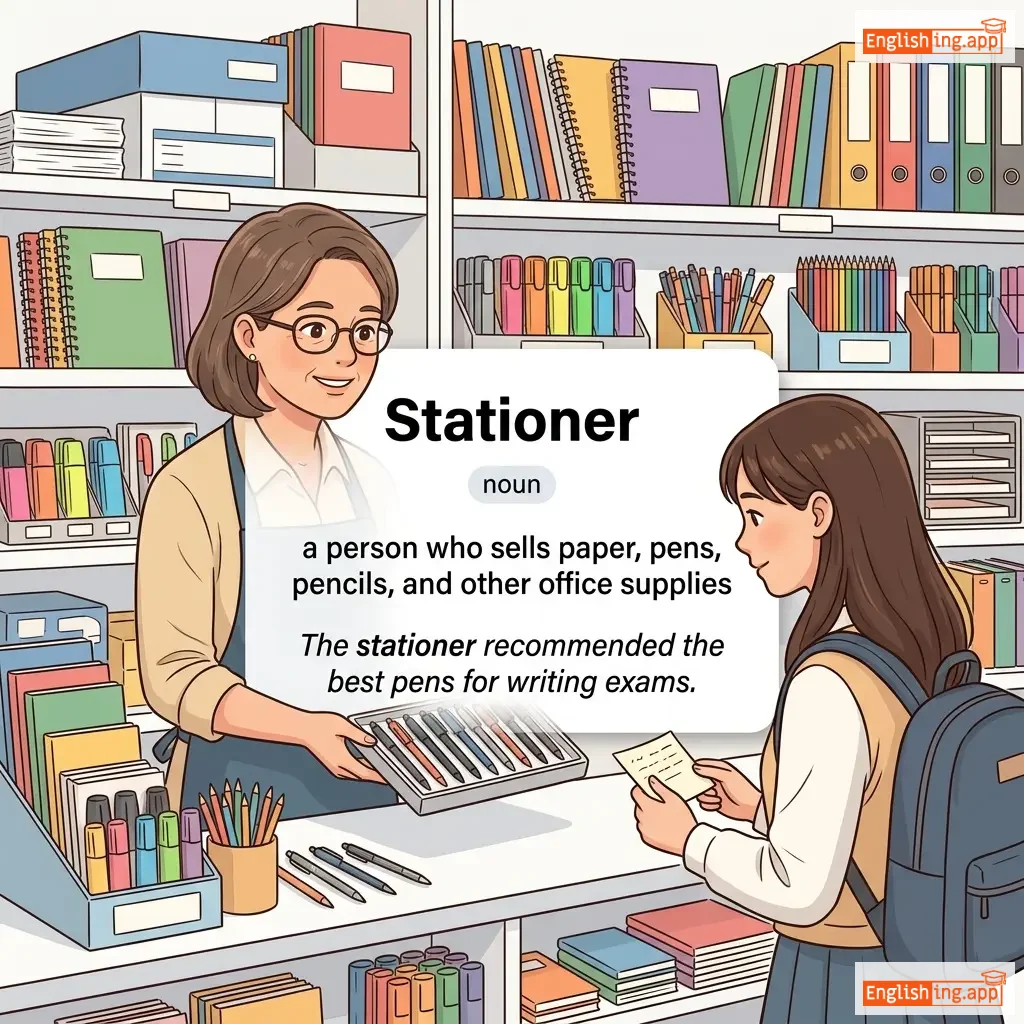
Stationer definition card — visual illustration of the meaning
noun C1
/ˈsteɪ.ʃən.ər/
文具商 (wenjushang)

a person who sells paper, pens, pencils, and other office supplies

"The stationer recommended the best pens for writing exams."

"文具商推荐了最适合考试的钢笔。" (Wénjù shāng tuījiànle zuì shìhé kǎoshì de gāngbǐ.)
noun C1
/ˌstætɪˈstɪʃən/
统计学家 (tǒng jì xué jiā)

A person who specializes in collecting, analyzing, and interpreting numerical data.

"The statistician presented the survey results with great clarity."

"统计学家以极大的清晰度展示了调查结果。" (Tǒng jì xué jiā yǐ jí dà de qīng xī dù zhǎn shì le diào chá jié guǒ.)
noun C1
/ˌstætʃuˈɛt/
小雕像 (xiao diaoxiang)

A small statue, usually decorative or artistic.

"The artist won a gold statuette for his work."

"艺术家因其作品获得了一座金色小雕像。" (Yishujia yin qi zuopin huodele yi zuo jinse xiao diaoxiang.)
noun C1
/ˈstætʃər/
声望,身材 (shengwang, shencai)

A person's natural height or their reputation and importance.

"Her intellectual stature made her a respected figure in academia."

"她的智力声望使她在学术界成为了受人尊敬的人物。" (tade zhili shengwang shi ta zai xueshujie chengweile shouren zun jing de renwu.)
noun C1
/ˈsteɪtəs kwoʊ/
现状 (xiàn zhuàng)

The existing state of affairs, especially regarding social or political issues.

"The government decided to maintain the status quo until further review."
"政府决定在进一步审查之前保持现状。" (zhèngfǔ juédìng zài jìnyībù shěnchá zhīqián bǎochí xiànzhuàng.)
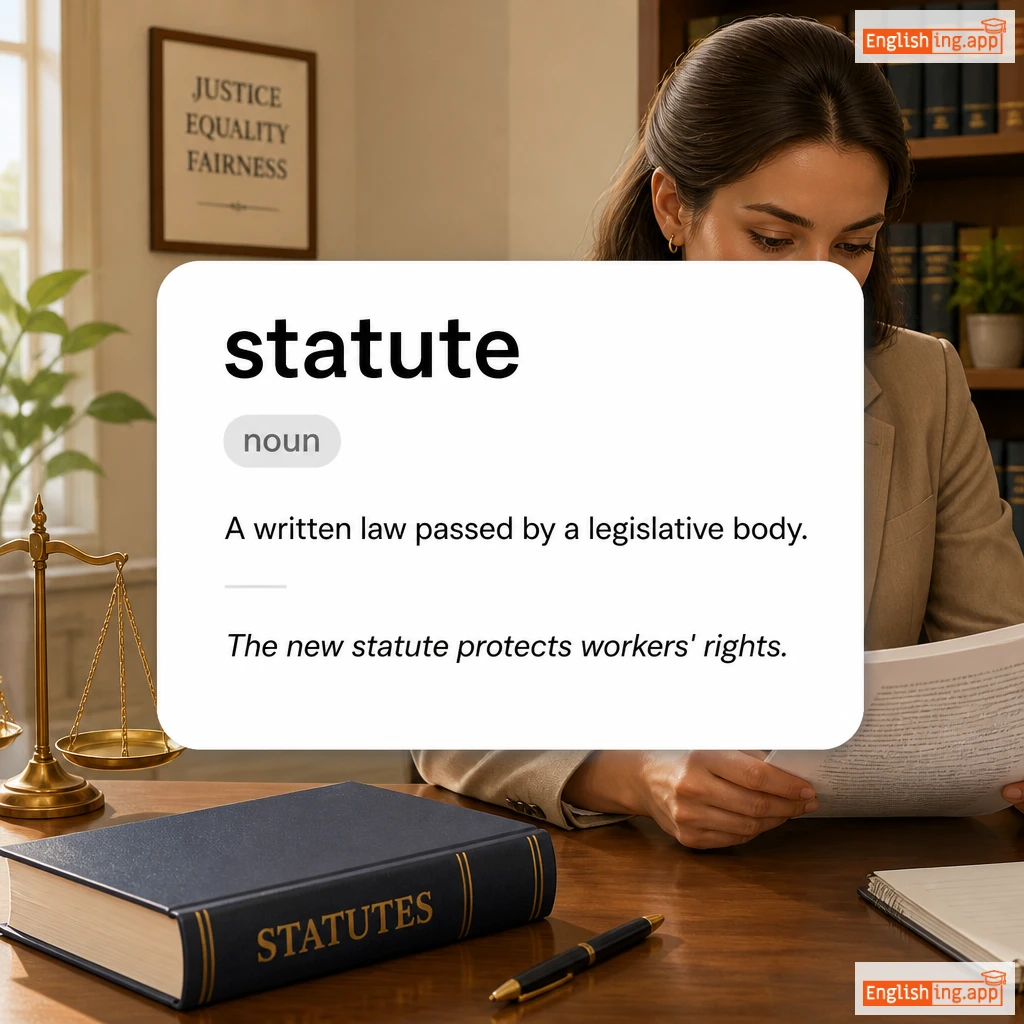
statute definition card — visual illustration of the meaning
noun C1
/ˈstætʃuːt/
法律 (fǎlǜ)

A written law passed by a legislative body.

"The new statute protects workers' rights."

"新法律保护工人的权利。" (Xīn fǎlǜ bǎohù gōngrén de quánlì.)
adjective C1
/ˈstætʃətɔːri/
法定的 (fǎ dìng de)

Required, permitted, or enacted by law.

"The company must comply with all statutory regulations."

"公司必须遵守所有法定规定。" (Gōngsī bìxū zūnshǒu suǒyǒu fǎ dìng guīdìng.)
adjective C1
/stɔːntʃ/
坚定的, 忠诚的 (jiān dìng de, zhōng chéng de)

Loyal, committed, and firm in support.

"She is a staunch supporter of environmental protection."

"她是环境保护的坚定支持者。" (Tā shì huánjìng bǎohù de jiāndìng zhīchí zhě.)
adjective C1
/ˈstɛdfæst/
坚定的, 忠诚的 (jianding de, zhongcheng de)

Firm, loyal, and unwavering in purpose or support.

"He remained steadfast in his determination to succeed."

"他在成功的决心中保持坚定。" (Ta zai chenggong de juexin zhong baochi jianding.)
noun C1
/stɛlθ/
隐秘, 安静地移动 (yǐnmì, ānjìng de yídòng)

The act of moving, doing, or achieving something quietly and secretly.

"The cat moved with stealth towards its prey."

"猫悄悄地向它的猎物走去。" (Māo qiāoqiāo de xiàng tā de lièwù zǒu qù.)
adjective C1
/stiːpt/
浸透 (jinto)

Completely surrounded by or filled with a particular quality, influence, or experience.

"The town is steeped in history and tradition."

"这座城市充满了历史和传统。" (Zhè zuò chéngshì chōngmǎnle lìshǐ hé chuántǒng.)
adjective C1
/ˈstɛlər/
卓越 (zhuoyue)

Relating to stars; outstanding or excellent.

"She gave a stellar performance in the play."

"她在话剧中的表现非常卓越。" (Ta zai huajv zhong de biaoxian feichang zhuoyue.)