词汇表

英语词汇词典 | 单词含义、定义和示例

adjective C1
/ˈpaɪəs/
piadoso (piadoso)

devoutly religious or showing strong moral and spiritual devotion

"He led a pious life, always helping those in need."

"Él llevó una vida piadosa, siempre ayudando a los necesitados." (Él llevó una vida piadosa, siempre ayudando a los necesitados.)
adjective C1
/ˈpiːkənt/
picante (picante)

having a pleasantly sharp or spicy taste; interestingly provocative

"The chef added a piquant sauce to the dish to enhance its flavor."

"El chef añadió una salsa picante al plato para realzar su sabor." (El chef añadió una salsa picante al plato para realzar su sabor.)
verb C1
/piːk/
despertar (despertar)

to stimulate interest or curiosity; to arouse resentment or anger

"Her remarks piqued his curiosity about the secret project."
"Sus comentarios despertaron su curiosidad sobre el proyecto secreto." (Sus comentarios despertaron su curiosidad sobre el proyecto secreto.)
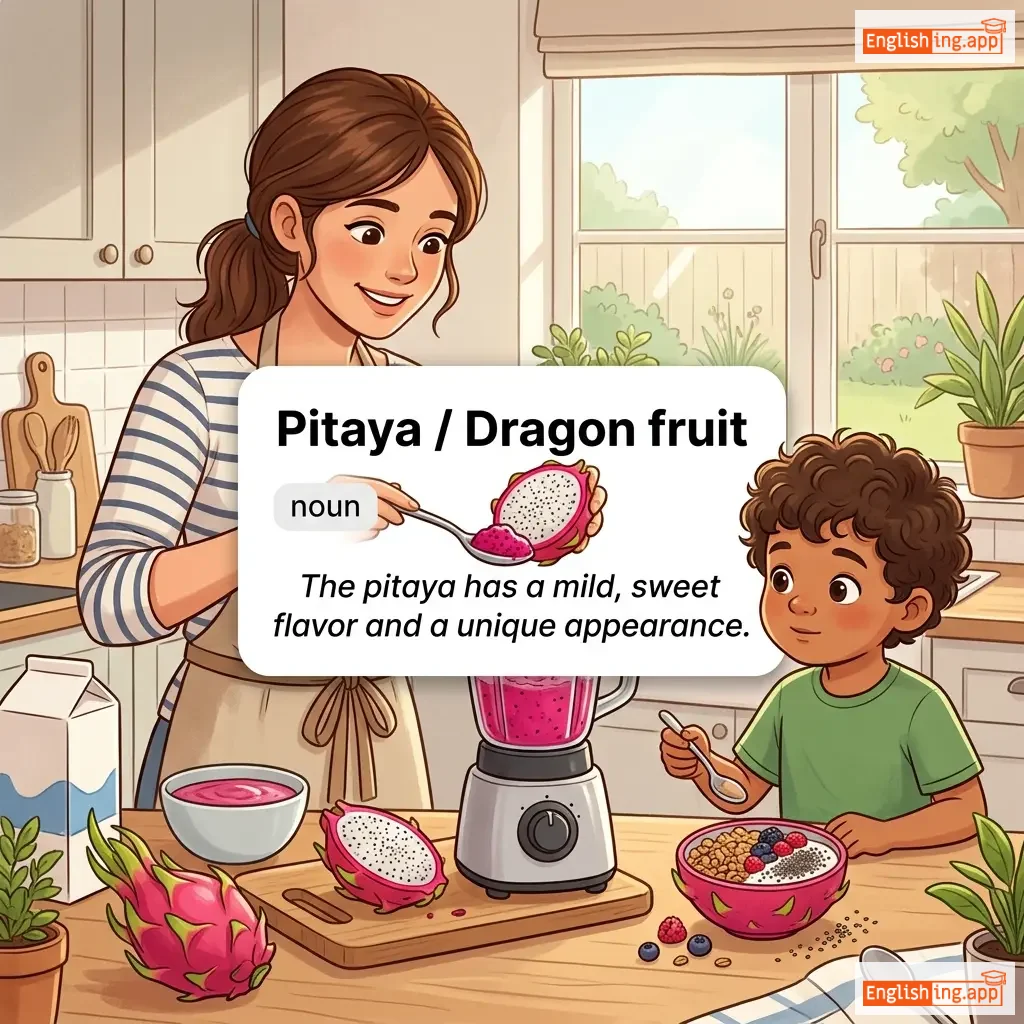
Pitaya / Dragon fruit definition card — visual illustration of the meaning
noun C1
/pɪˈtaɪə/
fruta del dragón (fruta del dragon)

a tropical fruit with bright pink or red skin and white flesh speckled with black seeds

"The pitaya has a mild, sweet flavor and a unique appearance."

"La pitaya tiene un sabor suave y dulce y una apariencia única." (La pitaya tiene un sabor suave y dulce y una apariencia unica.)
adjective C1
/ˈpɪtiəs/
lastimoso, que da pena (lastimoso, que da pena)

deserving or arousing pity; sad and pathetic

"The stray dog looked up with a piteous expression."

"El perro callejero miró hacia arriba con una expresión lastimosa." (El perro callejero miro hacia arriba con una expresion lastimosa.)
noun C1
/ˈpɪt.fɔːl/
trampa, dificultad (trampa, dificultad)

a hidden or unexpected danger or difficulty

"Investors must be aware of the pitfalls of the market."

"Los inversionistas deben estar al tanto de las trampas del mercado." (Los inversionistas deben estar al tanto de las trampas del mercado.)
adjective C1
/ˈpɪθ.i/
conciso y significativo (conciso y significativo)

concise and meaningful; full of substance

"She gave a pithy comment that summarized the issue perfectly."

"Ella dio un comentario conciso que resumió perfectamente el asunto." (Ella dio un comentario conciso que resumió perfectamente el asunto.)
adjective C1
/ˈpɪt.i.ə.bəl/
lastimoso (lastimoso)

deserving sympathy or compassion

"The stray dog looked pitiable in the rain."

"El perro callejero parecía lastimoso bajo la lluvia." (El perro callejero parecia lastimoso bajo la lluvia.)
adjective C1
/ˈpɪt.i.ləs/
despiadado (despiadado)

showing no pity or compassion; cruel

"The pitiless ruler ignored the suffering of his people."

"El gobernante despiadado ignoró el sufrimiento de su pueblo." (El gobernante despiadado ignoró el sufrimiento de su pueblo.)
noun C1
/ˈpɪt.əns/
miseria (miseria)

a very small or inadequate amount of money

"She worked long hours for a mere pittance."

"Ella trabajó muchas horas por una miseria." (Ella trabajó muchas horas por una miseria.)
pivot definition card — visual illustration of the meaning
noun/verb C1
ˈpɪv.ət
cambio estratégico, eje, cambio de proceso (cambio estrategico, eje, cambio de proceso)

A significant change in business strategy or direction.

"The company decided to pivot its business strategy."

"La compañía decidió cambiar su estrategia empresarial." (La compañia decidio cambiar su estrategia empresarial.)
pivotal definition card — visual illustration of the meaning
adjective C1
/ˈpɪv.ə.tl/
crucial o de gran importancia (crucial o de gran importancia)

of crucial importance in relation to the development or success of something else

"Her role was pivotal in the success of the project."
"Su papel fue crucial en el éxito del proyecto." (Su papel fue crucial en el exito del proyecto.)
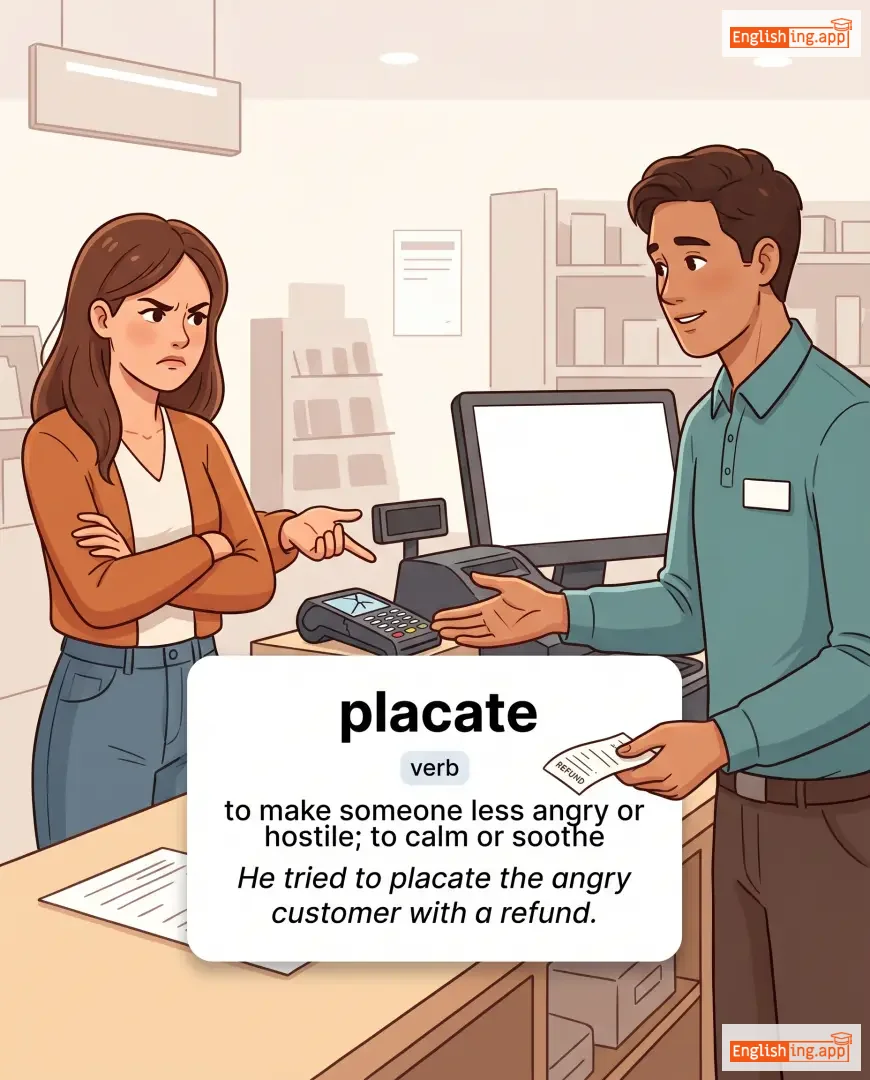
placate definition card — visual illustration of the meaning
verb C1
/pləˈkeɪt/
calmar (calmar)

to make someone less angry or hostile; to calm or soothe

"He tried to placate the angry customer with a refund."

"Intentó calmar al cliente enojado con un reembolso." (Intentó calmar al cliente enojado con un reembolso.)
noun C1
/pləˈsiːboʊ/
placebo (placebo)

a substance with no therapeutic effect, used as a control in testing new drugs

"The patient was given a placebo to compare the effect of the real drug."

"Al paciente se le dio un placebo para comparar el efecto del medicamento real." (Al paciente se le dio un placebo para comparar el efecto del medicamento real.)
adjective C1
/ˈplæsɪd/
sereno, tranquilo (sereno, tranquilo)

calm and peaceful, not easily disturbed

"She had a placid expression despite the chaos around her."

"Ella tenía una expresión serena a pesar del caos a su alrededor." (Ella tenía una expresión serena a pesar del caos a su alrededor.)
noun C1
/ˈpleɪdʒərɪzəm/
plagio (plagio)

the practice of taking someone else's work or ideas and passing them off as one's own

"The student was expelled for committing plagiarism in his essay."

"El estudiante fue expulsado por cometer plagio en su ensayo." (El estudiante fue expulsado por cometer plagio en su ensayo.)
verb C1
/ˈpleɪdʒəraɪz/
plagiar (plagiar)

to take someone else's work or ideas and present them as your own

"He was warned not to plagiarize his friend's essay."
"Se le advirtió que no plagiara el ensayo de su amigo." (Se le advirtió que no plagiara el ensayo de su amigo.)
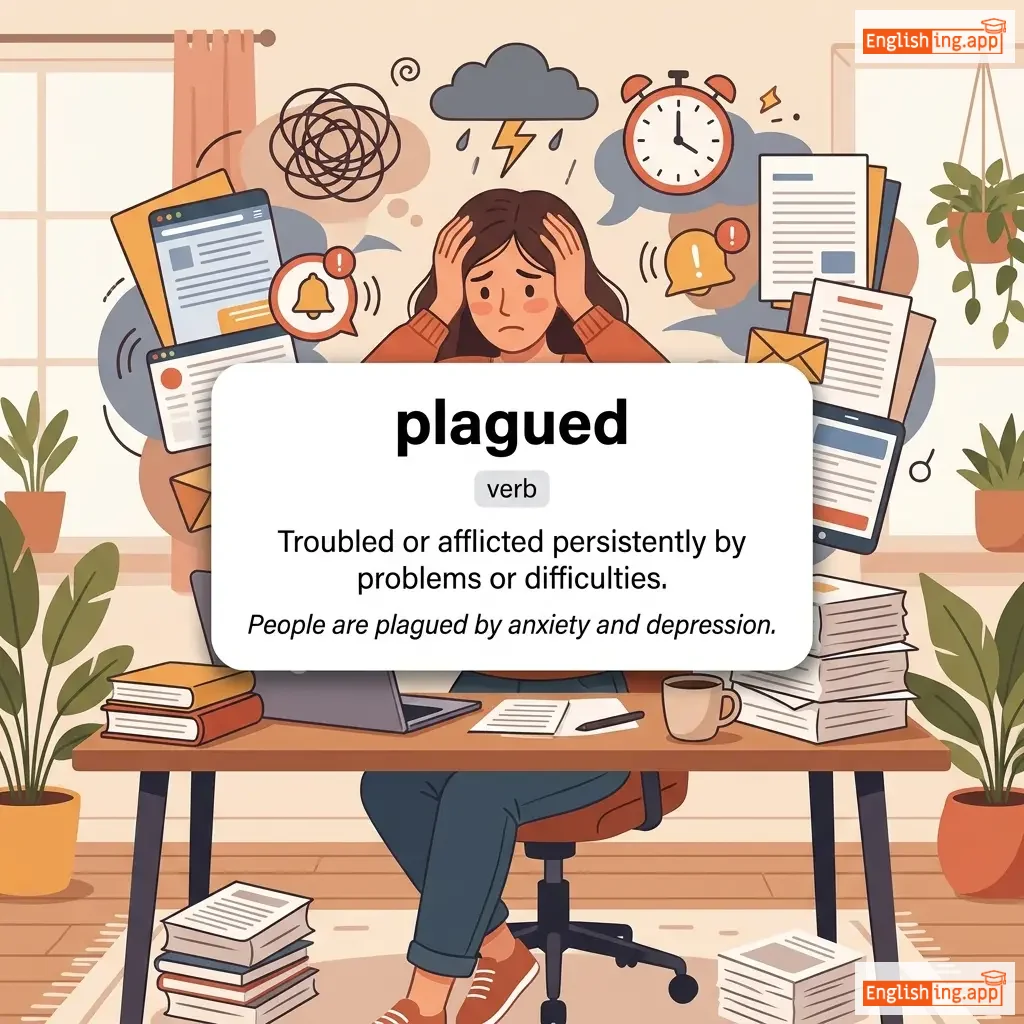
plagued definition card — visual illustration of the meaning
verb C1
pleɪɡd
afligido (afligido)

Troubled or afflicted persistently by problems or difficulties.

"People are plagued by anxiety and depression."
"Las personas están afligidas por la ansiedad y la depresión." (Las personas están afligidas por la ansiedad y la depresión.)
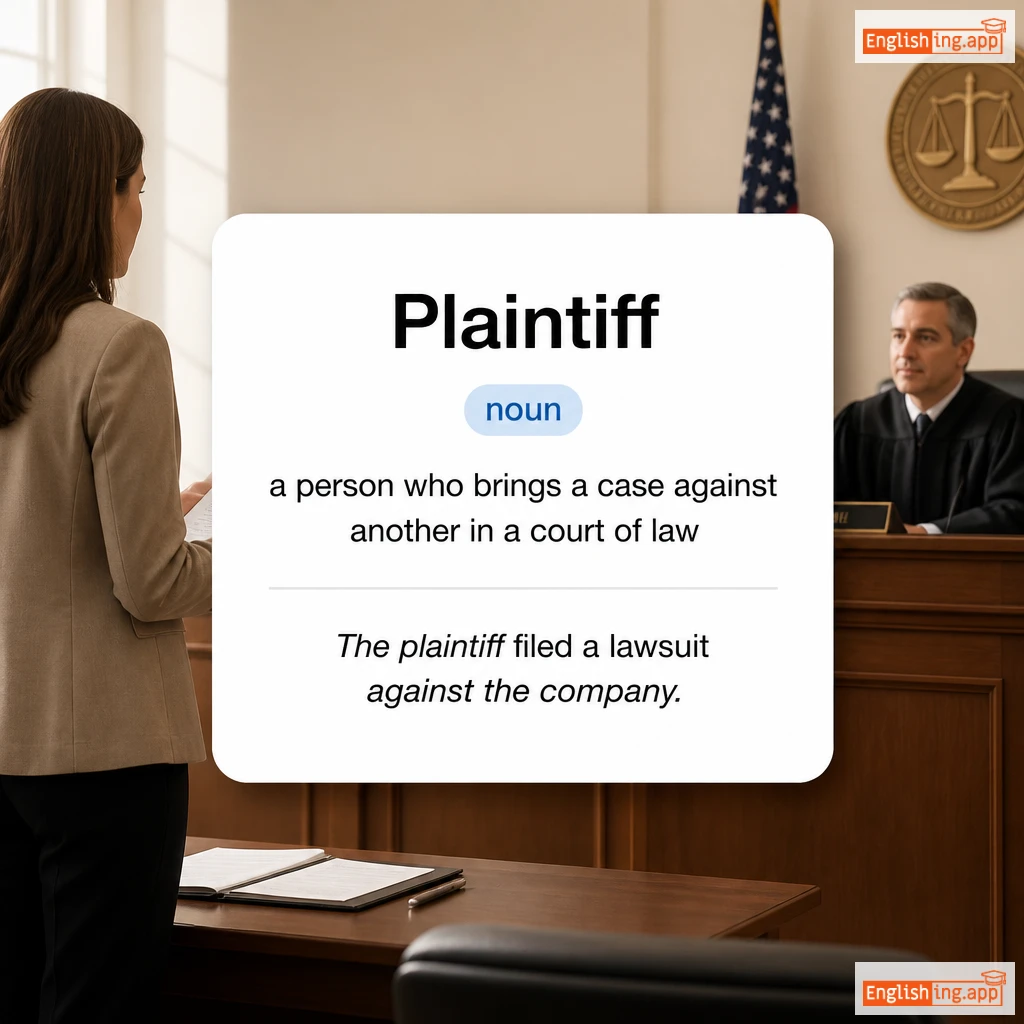
Plaintiff definition card — visual illustration of the meaning
noun C1
/ˈpleɪntɪf/
demandante (demandante)

a person who brings a case against another in a court of law

"The plaintiff filed a lawsuit against the company."

"El demandante presentó una demanda contra la empresa." (El demandante presentó una demanda contra la empresa.)
adjective C1
/ˈpleɪntɪv/
triste, lamentoso (triste, lamentoso)

expressing sadness or sorrow

"He raised a plaintive cry for help."

"Él levantó un grito lamentoso pidiendo ayuda." (El levanto un grito lamentoso pidiendo ayuda.)
noun,verb C1
/pleɪt/
trenza (trenza)

a braid of hair or straw; to braid

"She decided to plait her hair before the party."
"Ella decidió trenzarse el cabello antes de la fiesta." (Ella decidió trenzarse el cabello antes de la fiesta.)
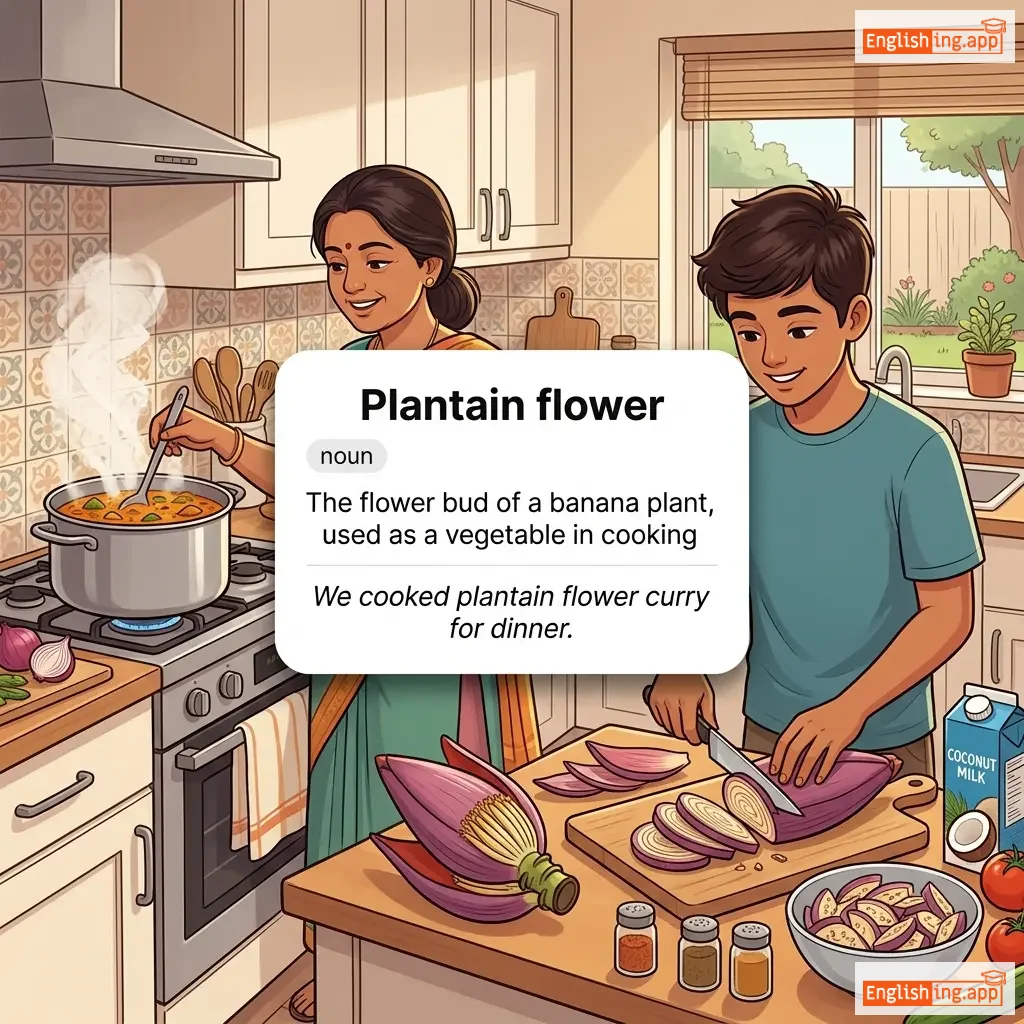
Plantain flower definition card — visual illustration of the meaning
noun C1
/ˈplæn.teɪn ˈflaʊ.ər/
flor de plátano (flor de platano)

The flower bud of a banana plant, used as a vegetable in cooking

"We cooked plantain flower curry for dinner."

"Cocinamos curry de flor de plátano para la cena." (Cocinamos curry de flor de platano para la cena.)
noun C1
/ˈplæz.mə/
parte líquida de la sangre; gas ionizado; suero sanguíneo sin proteínas de coagulación (plasma)

the liquid part of blood; ionized gas; blood serum without clotting proteins

"Blood plasma contains various proteins and nutrients."

"El plasma sanguíneo contiene varias proteínas y nutrientes." (El plasma sanguineo contiene varias proteinas y nutrientes.)
plasticity definition card — visual illustration of the meaning
noun C1
/plæsˈtɪsəti/
plasticidad, capacidad de adaptarse (plasticidad, capacidad de adaptarse)

the quality of being easily shaped or molded; adaptability

"The brain's plasticity allows it to adapt after injury."

"La plasticidad del cerebro le permite adaptarse después de una lesión." (La plasticidad del cerebro le permite adaptarse despues de una lesion.)
adjective C1
/pləˈtɒnɪk/
platónico (platonico)

relating to a close relationship that is not romantic or sexual

"They have a platonic friendship that has lasted for years."
"Tienen una amistad platónica que ha durado años." (Tienen una amistad platonica que ha durado años.)
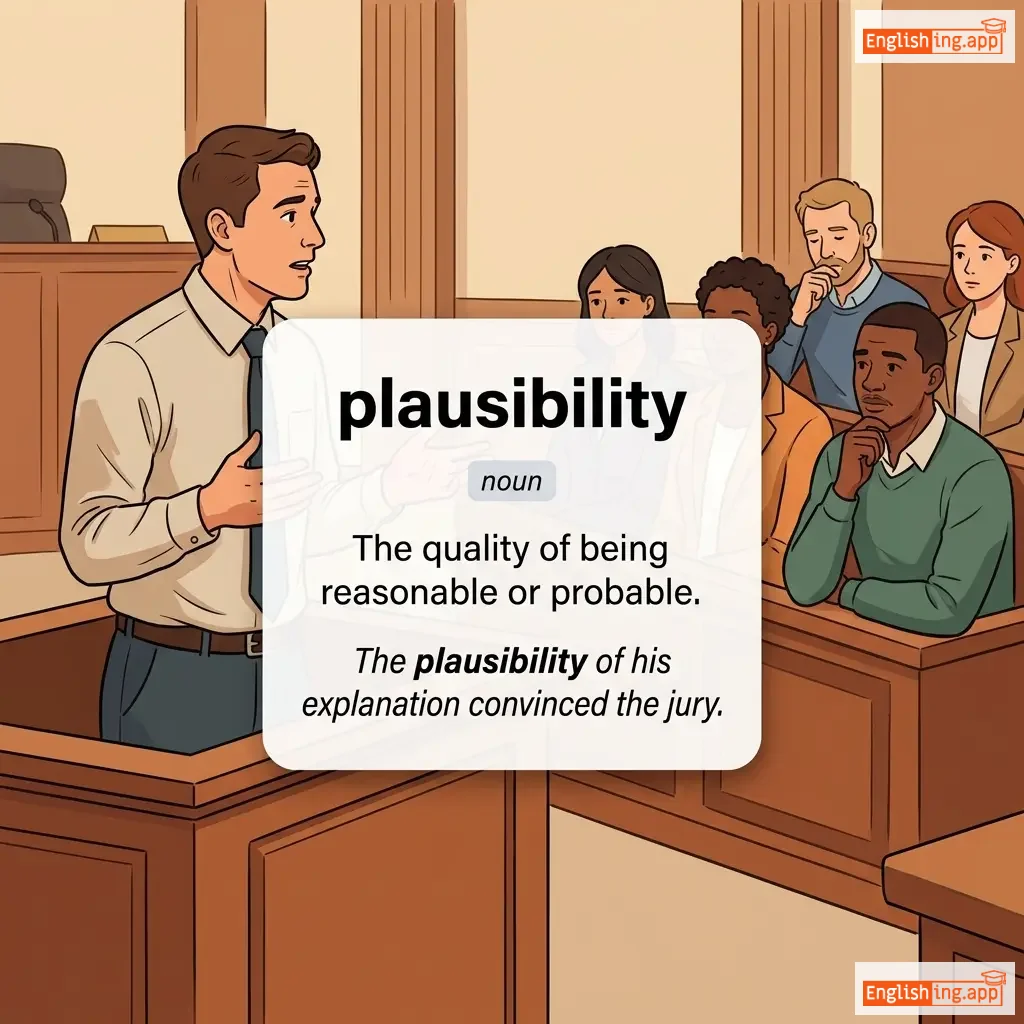
plausibility definition card — visual illustration of the meaning
noun C1
/ˌplɔː.zəˈbɪl.ə.ti/
probabilidad (probabilidad)

The quality of being reasonable or probable.

"The plausibility of his explanation convinced the jury."

"La plausibilidad de su explicación convenció al jurado." (La plausibilidad de su explicación convenció al jurado.)
noun C1
/ˈpleɪˌraɪt/
dramaturgo (dramaturgo)

a person who writes plays

"Shakespeare is considered the greatest playwright of all time."
"Shakespeare es considerado el mejor dramaturgo de todos los tiempos." (Shakespeare es considerado el mejor dramaturgo de todos los tiempos.)
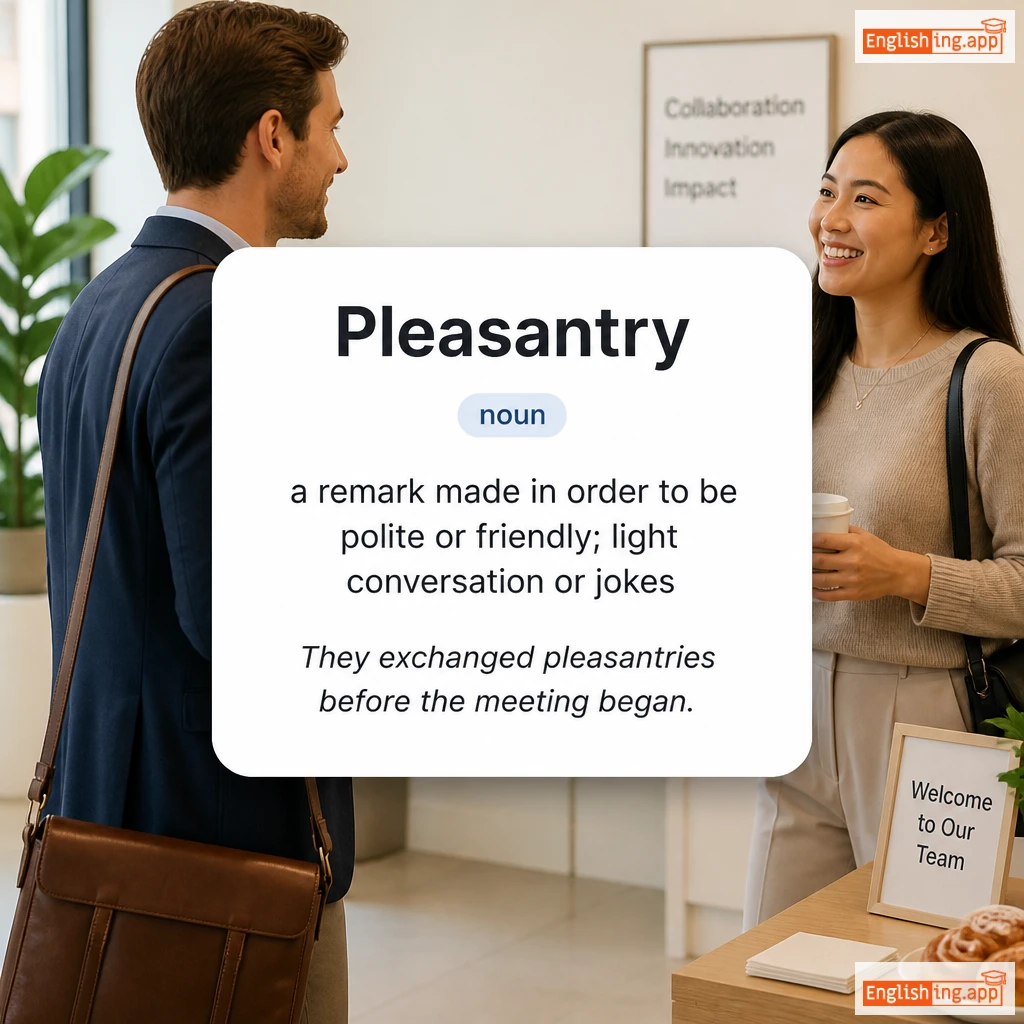
Pleasantry definition card — visual illustration of the meaning
noun C1
/ˈplez.ən.tri/
cortesía (cortesía)

a remark made in order to be polite or friendly; light conversation or jokes

"They exchanged pleasantries before the meeting began."

"Intercambiaron cortesías antes de que comenzara la reunión." (Intercambiaron cortesías antes de que comenzara la reunión.)
noun, verb C1
/pliːt/
pliegue (pliege)

a fold in fabric made by doubling the material back upon itself

"She added a pleat to the skirt for extra volume."
"Ella agregó un pliegue a la falda para más volumen." (Ella agrego un pliegue a la falda para mas volumen.)
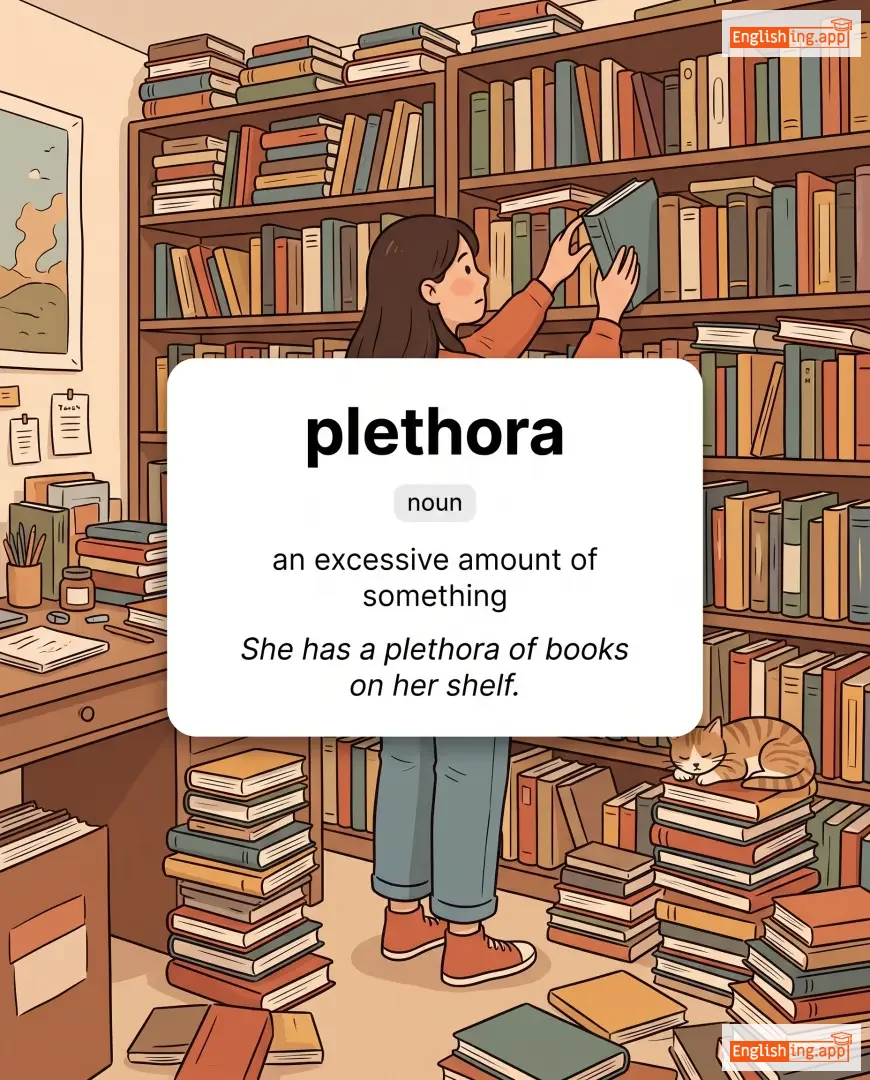
plethora definition card — visual illustration of the meaning
noun C1
/ˈplɛθərə/
una abundancia excesiva (una abundancia excesiva)

an excessive amount of something

"She has a plethora of books on her shelf."

"Ella tiene una abundancia excesiva de libros en su estante." (Ella tiene una abundancia excesiva de libros en su estante.)
adjective C1
/ˈplaɪəbəl/
flexible (flexible)

easily bent or flexible; adaptable

"The metal is pliable enough to be shaped into jewelry."

"El metal es lo suficientemente flexible como para ser moldeado en joyas." (El metal es lo suficientemente flexible como para ser moldeado en joyas.)
adjective C1
/ˈplaɪənt/
flexible, fácilmente influenciable o adaptable (flexible, facilmente influenciable o adaptable)

flexible; easily influenced or adaptable

"She has a pliant personality that adapts well to new situations."
"Ella tiene una personalidad flexible que se adapta bien a nuevas situaciones." (Ella tiene una personalidad flexible que se adapta bien a nuevas situaciones.)
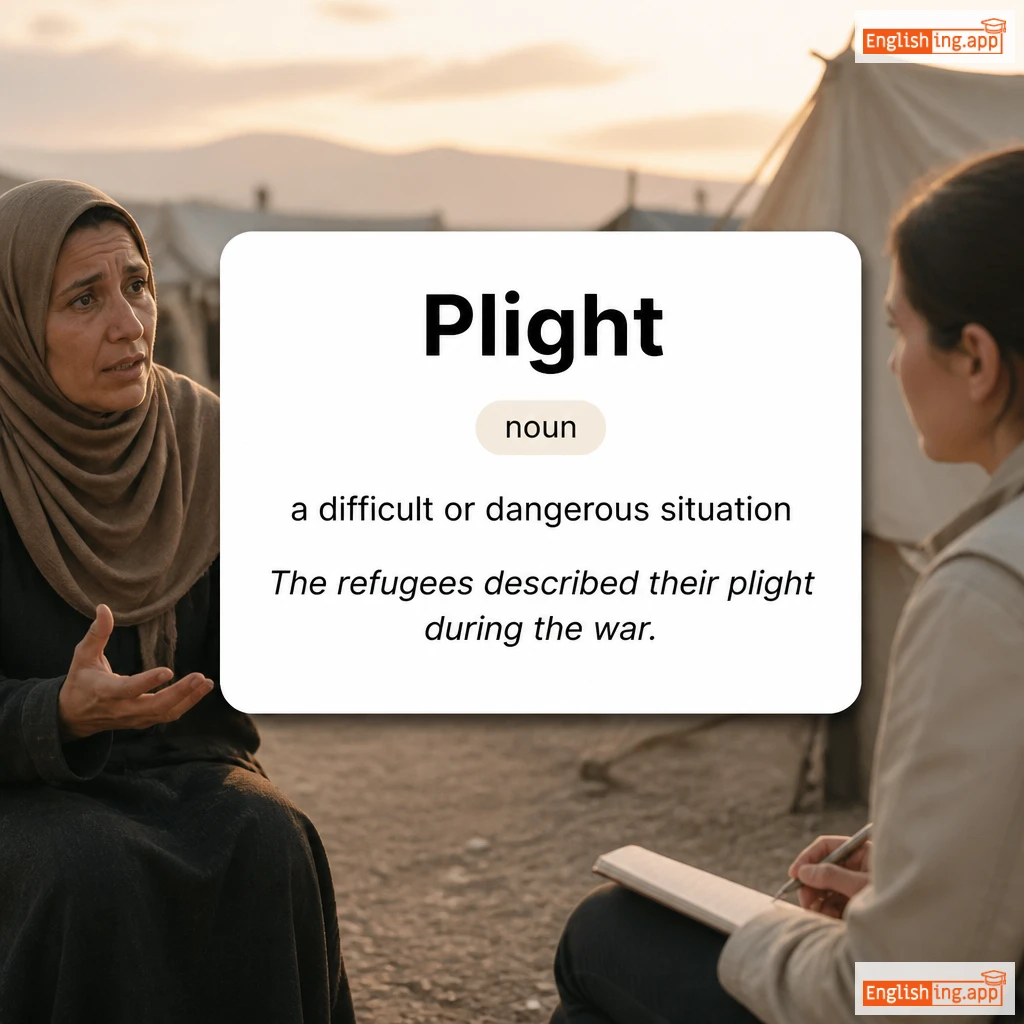
Plight definition card — visual illustration of the meaning
noun C1
/plaɪt/
dificultad, situación peligrosa (dificultad, situacion peligrosa)

a difficult or dangerous situation

"The refugees described their plight during the war."

"Los refugiados describieron su difícil situación durante la guerra." (Los refugiados describieron su dificil situacion durante la guerra.)
verb C1
/plɒd/
trabajar lentamente y con esfuerzo (trabajar lentamente y con esfuerzo)

to work slowly and steadily, often with effort or difficulty

"He plodded through his homework despite feeling tired."

"Él hizo su tarea lentamente aunque se sentía cansado." (El hizo su tarea lentamente aunque se sentía cansado.)
adjective C1
/ˈplɒd.ɪŋ/
lento y aburrido (lento y aburrido)

slow-moving and unexciting; showing steady effort

"The movie was entertaining but a bit plodding in the middle."

"La película fue entretenida, pero un poco lenta y aburrida en el medio." (La pelicula fue entretenida, pero un poco lenta y aburrida en el medio.)
noun C1
/plɔɪ/
estratagema astuta (estrategema astuta)

a clever plan or action designed to gain an advantage

"She used a clever ploy to win the debate."

"Ella usó una táctica astuta para ganar el debate." (Ella uso una tactica astuta para ganar el debate.)
adjective C1
/ˈplʌk.i/
valiente (valiente)

having or showing courage and determination

"The plucky child rescued the kitten from the tree."

"El niño valiente rescató al gatito del árbol." (El nino valiente rescató al gatito del arbol.)
noun C1
/ˈpluː.mɪdʒ/
plumaje (plumaje)

the feathers covering a bird's body

"The peacock's plumage was vibrant and eye-catching."

"El plumaje del pavo real era vibrante y llamativo." (El plumaje del pavo real era vibrante y llamativo.)
verb C1
/plʌm/
medir la profundidad o examinar de cerca (medir la profundidad o examinar de cerca)

to measure the depth of water or examine closely

"They used a line to plumb the depth of the lake."

"Ellos usaron una línea para medir la profundidad del lago." (Ellos usaron una línea para medir la profundidad del lago.)
noun C1
/pluːm/
una gran pluma suave o algo que se asemeje a una pluma (una gran pluma suave o algo que se asemeje a una pluma)

a large, soft feather or something resembling a feather

"The soldier wore a red plume on his helmet."

"El soldado llevaba una pluma roja en su casco." (El soldado llevaba una pluma roja en su casco.)
plummet definition card — visual illustration of the meaning
verb C1
/ˈplʌm.ɪt/
caer verticalmente a alta velocidad (caer verticalmente a alta velocidad)

to fall straight down at high speed

"Stock prices plummeted after the sudden market crash."
"Los precios de las acciones cayeron repentinamente después del colapso del mercado." (Los precios de las acciones cayeron repentinamente después del colapso del mercado.)
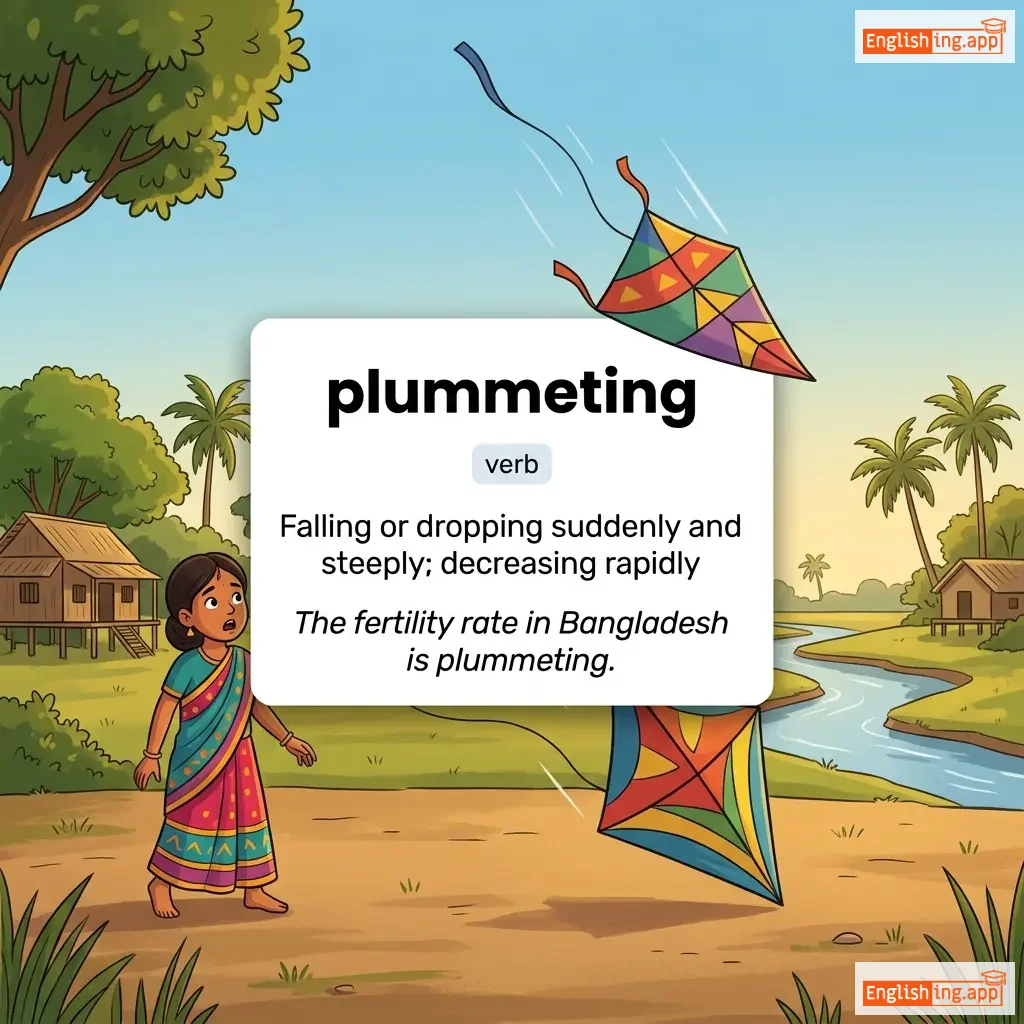
plummeting definition card — visual illustration of the meaning
verb C1
ˈplʌmɪtɪŋ
caída repentina (caida repentina)

Falling or dropping suddenly and steeply; decreasing rapidly

"The fertility rate in Bangladesh is plummeting."
"La tasa de fertilidad en Bangladesh está cayendo rápidamente." (La tasa de fertilidad en Bangladesh esta cayendo rapidamente.)
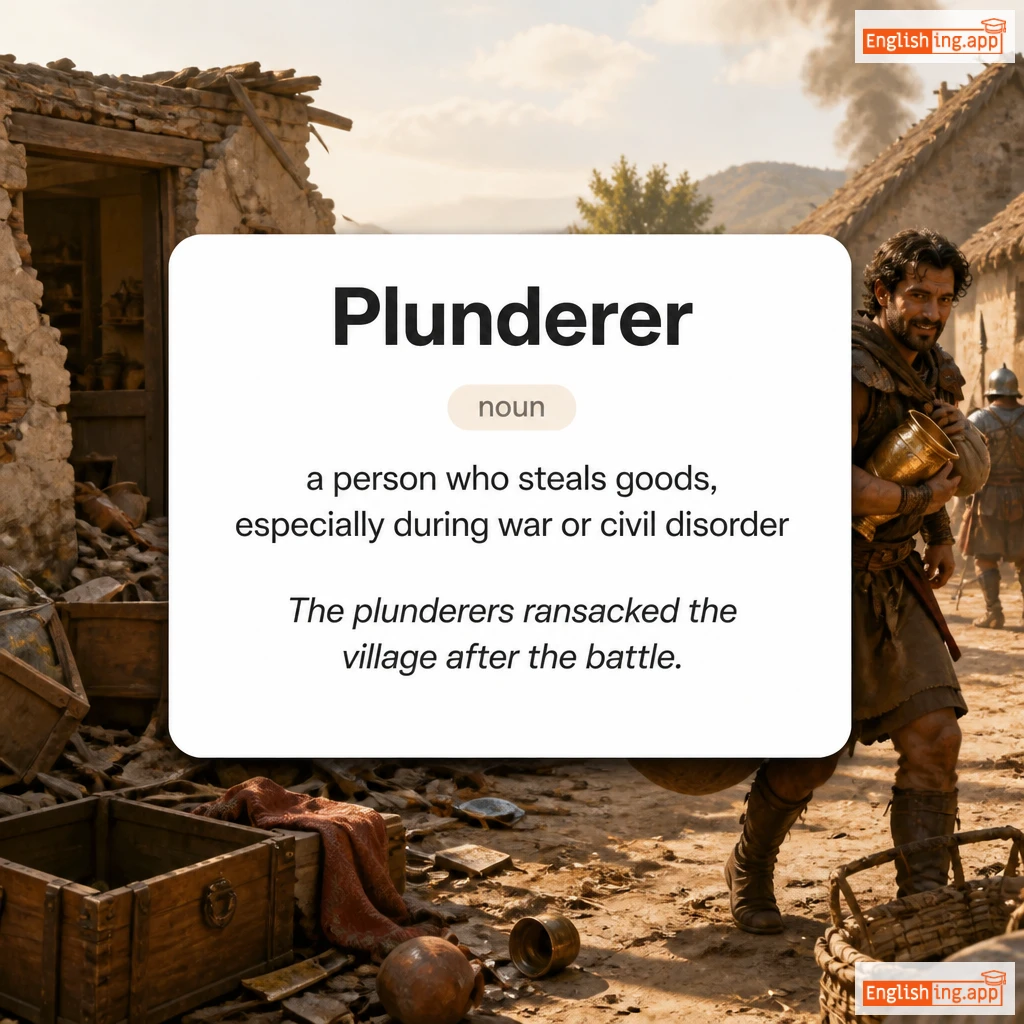
Plunderer definition card — visual illustration of the meaning
noun C1
/ˈplʌn.dər.ər/
saqueador (saqueador)

a person who steals goods, especially during war or civil disorder

"The plunderers ransacked the village after the battle."

"Los saqueadores saquearon el pueblo después de la batalla." (Los saqueadores saquearon el pueblo después de la batalla.)
noun C1
/plʊəˈrælɪti/
pluralidad o mayoría (pluralidad o mayoria)

the state of being multiple; the greater part or majority

"In the election, she won by a plurality of votes."

"En la elección, ella ganó por una pluralidad de votos." (En la eleccion, ella gano por una pluralidad de votos.)
noun C1
/ˈpoʊdiətrɪst/
podólogo (podologo)

a doctor specializing in foot care

"I have an appointment with the podiatrist for my ankle pain."

"Tengo una cita con el podólogo para el dolor de tobillo." (Tengo una cita con el podologo para el dolor de tobillo.)
noun C1
/poʊˈɛt.ɪks/
poética, teoría de la poesía (poetica, teoria de la poesia)

the study or theory of poetry and its principles

"He wrote a book on poetics explaining the art of verse."

"Escribió un libro sobre poética explicando el arte del verso." (Escribió un libro sobre poetica explicando el arte del verso.)
noun C1
/ˈpɔɪ.nən.si/
tristeza, congoja (tristeza, congoja)

the quality of evoking a keen sense of sadness or regret; emotionally touching

"The poignancy of the farewell brought tears to everyone's eyes."

"La tristeza de la despedida trajo lágrimas a los ojos de todos." (La tristeza de la despedida trajo lágrimas a los ojos de todos.)
adjective C1
/ˈpɔɪ.njənt/
conmovedor, profundo (conmovedor, profundo)

evoking a keen sense of sadness or regret; deeply touching

"The movie's ending was so poignant that many in the audience were moved to tears."

"El final de la película fue tan conmovedor que muchos en la audiencia se conmovieron hasta las lágrimas." (El final de la pelicula fue tan conmovedor que muchos en la audiencia se conmovieron hasta las lagrimas.)
poise definition card — visual illustration of the meaning
noun C1
/pɔɪz/
gracia, compostura, calma (gracia, compostura, calma)

graceful and elegant bearing in a person; composure under stress

"She maintained her poise even under intense questioning."

"Ella mantuvo su compostura incluso bajo un intenso interrogatorio." (Ella mantuvo su compostura incluso bajo un intenso interrogatorio.)
noun C1
/poʊˈlær.ɪ.ti/
polaridad (polaridad)

the state of having two opposite or contradictory tendencies, opinions, or aspects

"The polarity between the two political parties is growing stronger."

"La polaridad entre los dos partidos políticos está creciendo." (La polaridad entre los dos partidos políticos está creciendo.)