
词汇表

英语词汇词典 | 单词含义、定义和示例

extradition definition card — visual illustration of the meaning
noun C1
/ˌɛkstrəˈdɪʃən/
引渡し (hikiwatashi)

the official process of sending someone accused of a crime to another country or state

"The extradition of the suspect was delayed due to legal issues."
"容疑者の引渡しは法的問題のため遅れました。" (Yōgisha no hikiwatashi wa hōteki mondai no tame okuremashita.)
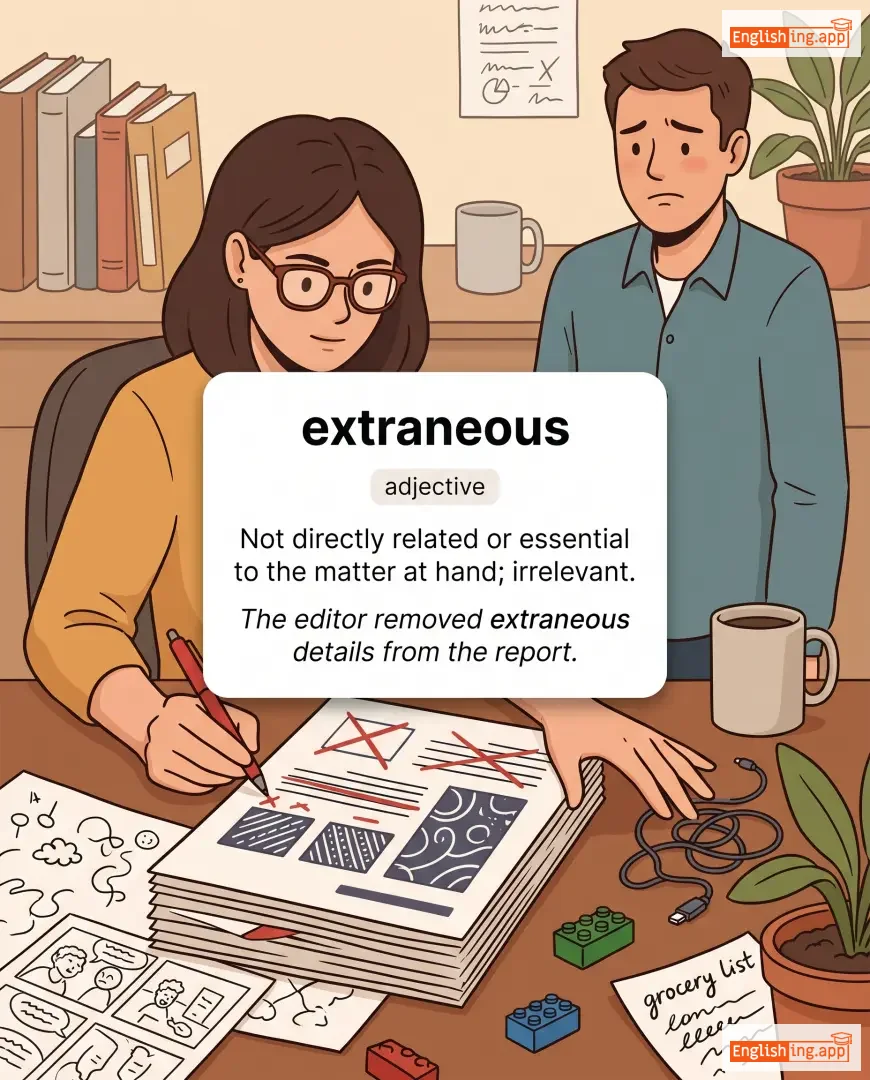
extraneous definition card — visual illustration of the meaning
adjective C1
/ɪkˈstreɪ.ni.əs/
無関係 (mukankei)

Not directly related or essential to the matter at hand; irrelevant.

"The editor removed extraneous details from the report."
"編集者は報告書から無関係な詳細を削除しました。" (Henshū-sha wa hōkokusho kara mukankei na shōsai o sakujo shimashita.)
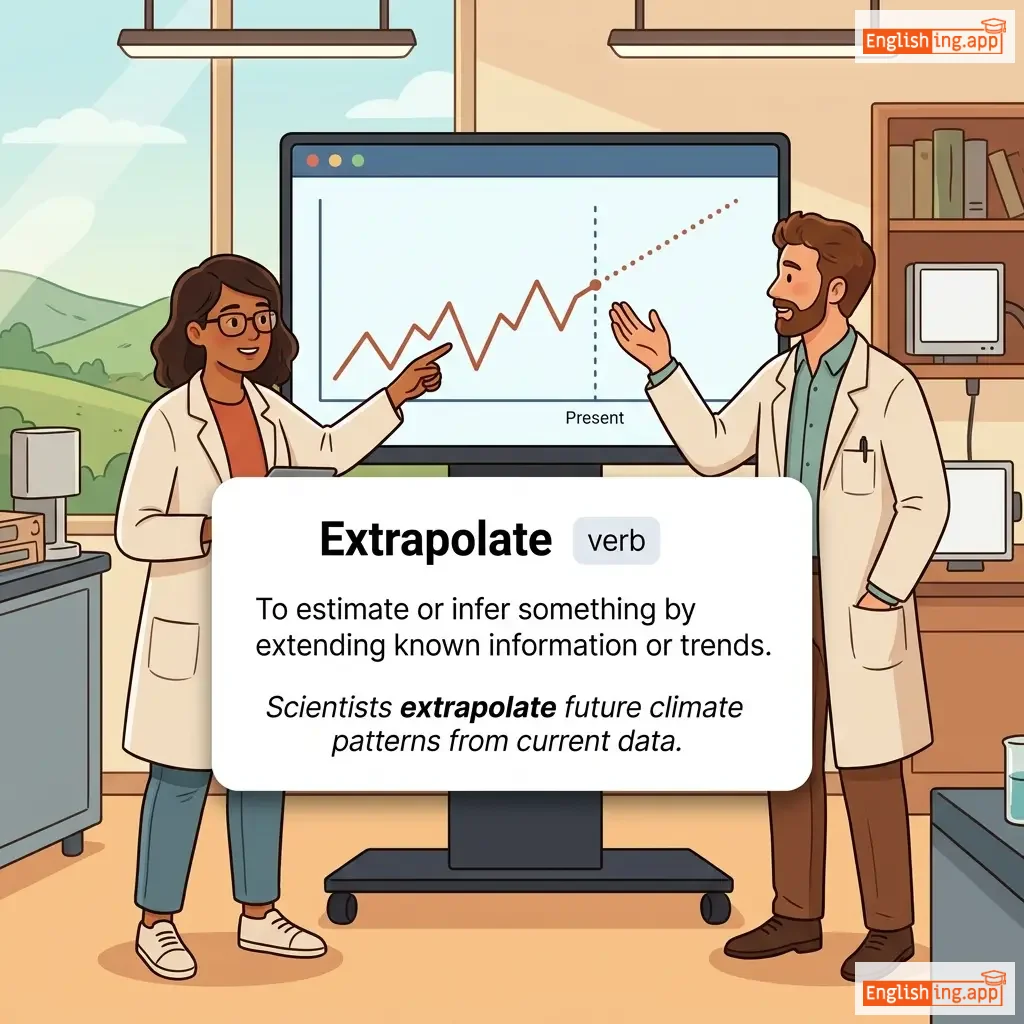
Extrapolate definition card — visual illustration of the meaning
verb C1
/ɪkˈstræp.əˌleɪt/
外挿する (gaisō suru)

To estimate or infer something by extending known information or trends.

"Scientists extrapolate future climate patterns from current data."
"科学者たちは現在のデータから将来の気候パターンを外挿します。" (Kagakusha-tachi wa genzai no dēta kara shōrai no kikō patān o gaisō shimasu.)
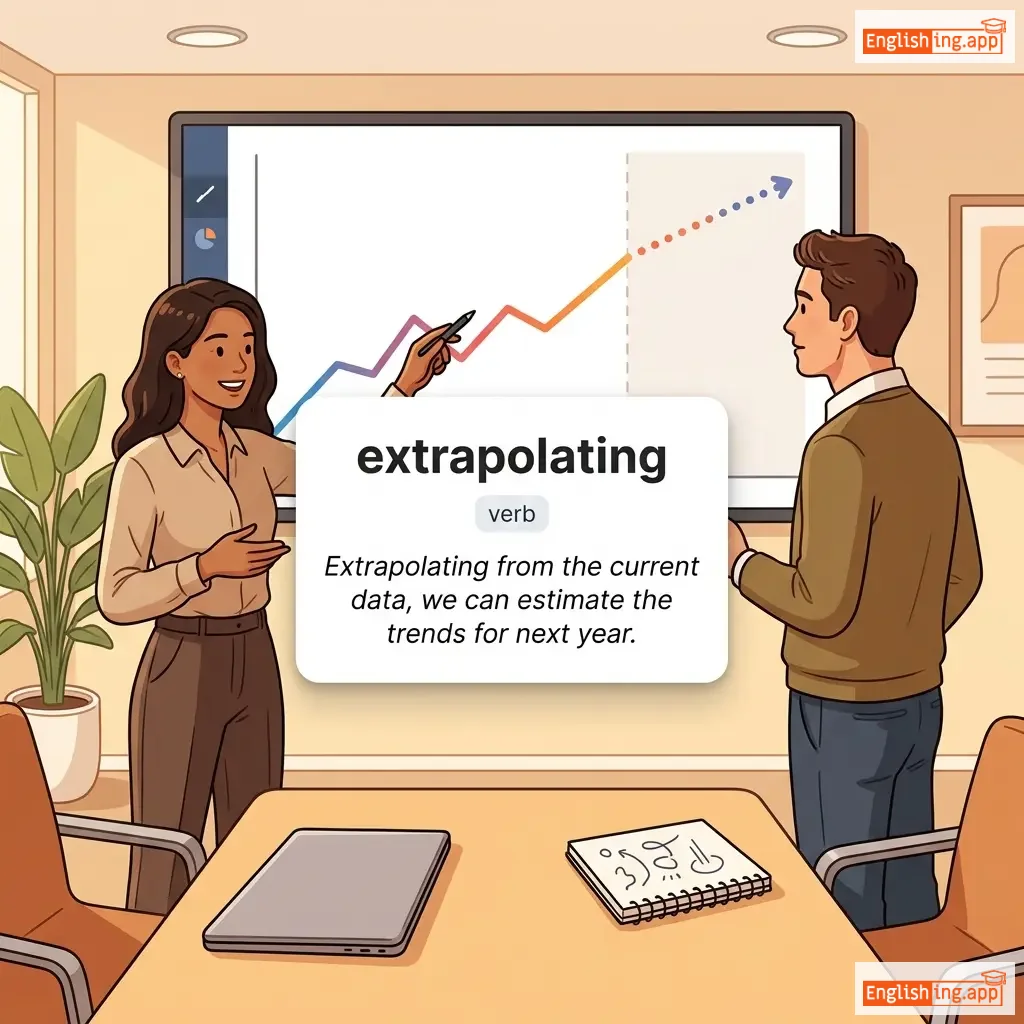
extrapolating definition card — visual illustration of the meaning
verb C1
/ɪkˈstræpəleɪtɪŋ/
外挿 (gaisō)

Extend the application of (a method or conclusion) to an unknown situation by assuming that existing trends will continue.

"Extrapolating from the current data, we can estimate the trends for next year."

"現在のデータから外挿して、来年の傾向を予測できます。" (Genzai no dēta kara gaisō shite, rainen no keikō o yosoku dekimasu.)
extrapolation definition card — visual illustration of the meaning
noun C1
/ɪkˌstræp.əˈleɪ.ʃən/
外挿 (gaizō)

The process of estimating or predicting something based on extending known information.

"The company's financial extrapolation suggests steady growth."
"その会社の財務的外挿は、安定した成長を示唆しています。" (sono kaisha no zaimutekī gaizō wa, antei shita seichō o shisa shiteimasu.)
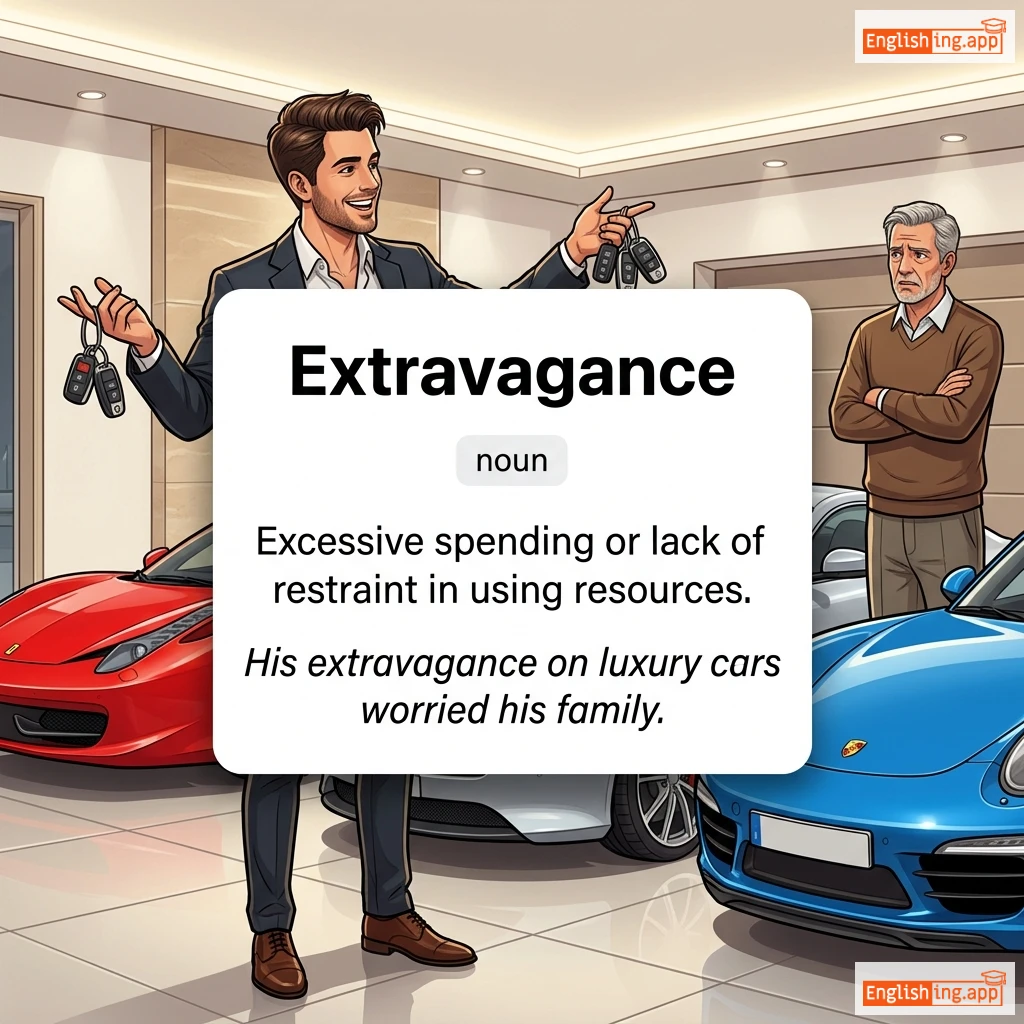
Extravagance definition card — visual illustration of the meaning
noun C1
/ɪkˈstræv.ə.ɡəns/
贅沢 (zeitaku)

Excessive spending or lack of restraint in using resources.

"His extravagance on luxury cars worried his family."

"高級車に対する彼の贅沢な支出は家族を心配させた。" (Kōkyūsha ni taisuru kare no zeitaku na shishutsu wa kazoku o shinpai saseta.)
Extremist definition card — visual illustration of the meaning
noun C1
/ɪkˈstriːmɪst/
過激派 (kagekiha)

A person who holds extreme political or religious views and may act on them.

"The group was led by an extremist with radical ideas."
"そのグループは過激な考えを持つ過激派によって導かれていた。" (Sono gurūpu wa kageki na kangae o motsu kagekiha ni yotte michibikarete ita.)
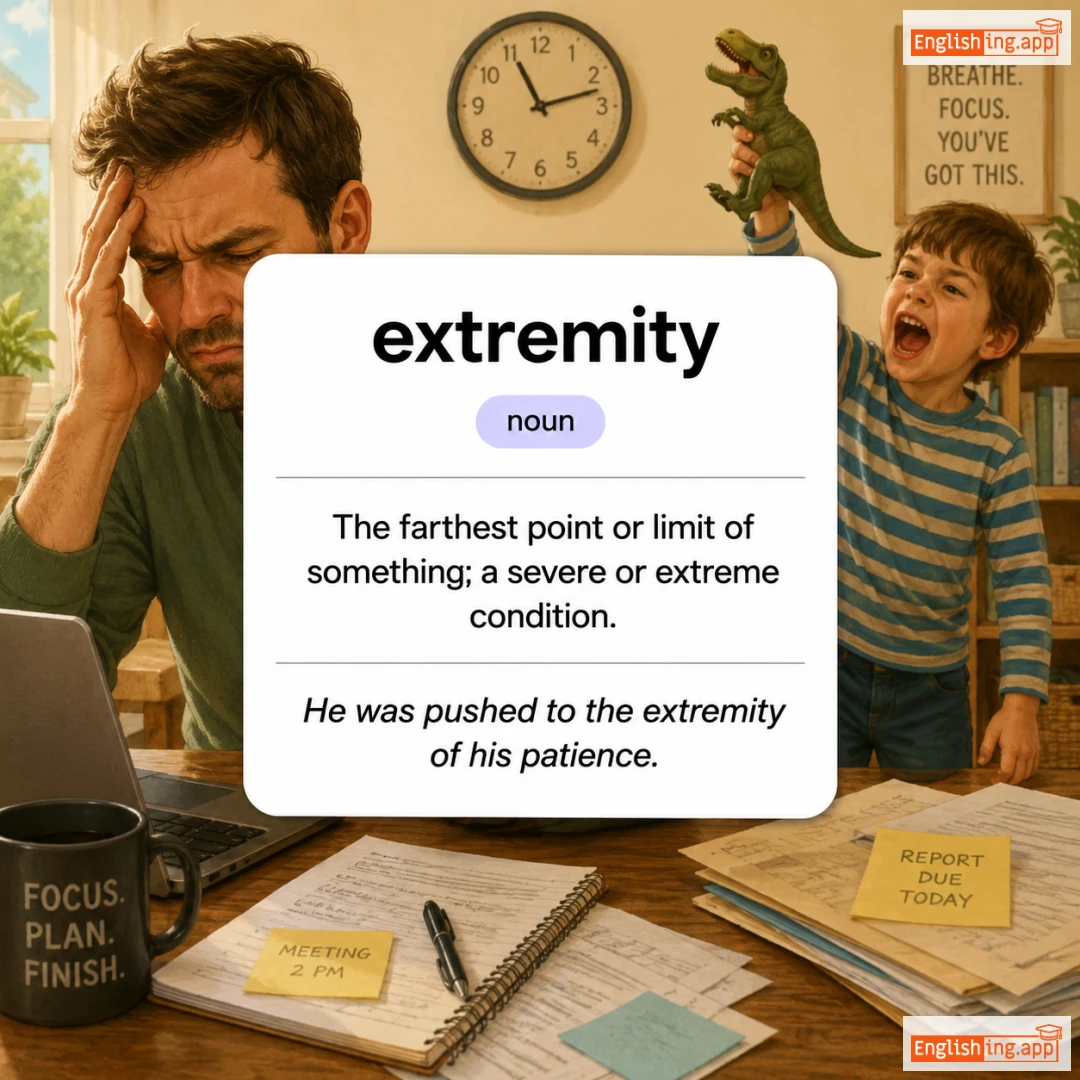
extremity definition card — visual illustration of the meaning
noun C1
/ɪkˈstrɛmɪti/
極限 (kyokugen)

The farthest point or limit of something; a severe or extreme condition.

"He was pushed to the extremity of his patience."

"彼は忍耐の極限まで追いやられた。" (Kare wa nintai no kyokugen made oiyarareta.)
verb C1
/ˈɛkstrɪkeɪt/
救出する (kyūshutsu suru)

To free someone or something from a constraint or difficulty.

"The firefighters extricated the passengers from the wrecked car."

"消防士たちは事故車から乗客を救出しました。" (Shōbōshi-tachi wa jiko-sha kara jōkyaku o kyūshutsu shimashita.)
noun C1
/ˈɛkstrəˌvɜːrt/
外向的な人 (gaikōteki na hito)

a person who is outgoing, sociable, and energized by being around other people

"As an extrovert, she enjoys meeting new people at social events."

"外向的な人として、彼女は社交的なイベントで新しい人々と出会うのが好きです。" (Gaikōteki na hito to shite, kanojo wa shakōteki na ibento de atarashī hitobito to deau no ga suki desu.)
noun C1
/ɪɡˈzuːbərəns/
活力 (katsuryoku)

the quality of being full of energy, excitement, and cheerfulness

"Her exuberance made the whole team feel motivated."

"彼女の活力はチーム全体をやる気にさせた。" (Kanojo no katsuryoku wa chīmu zentai o yaruki ni saseta.)
adjective C1
/ɪɡˈzuːbərənt/
興奮した (kōfun shita)

full of energy, excitement, and cheerfulness

"The children were exuberant after winning the game."
"子供たちはゲームに勝った後、興奮していました。" (Kodomotachi wa gēmu ni katta ato, kōfun shite imashita.)
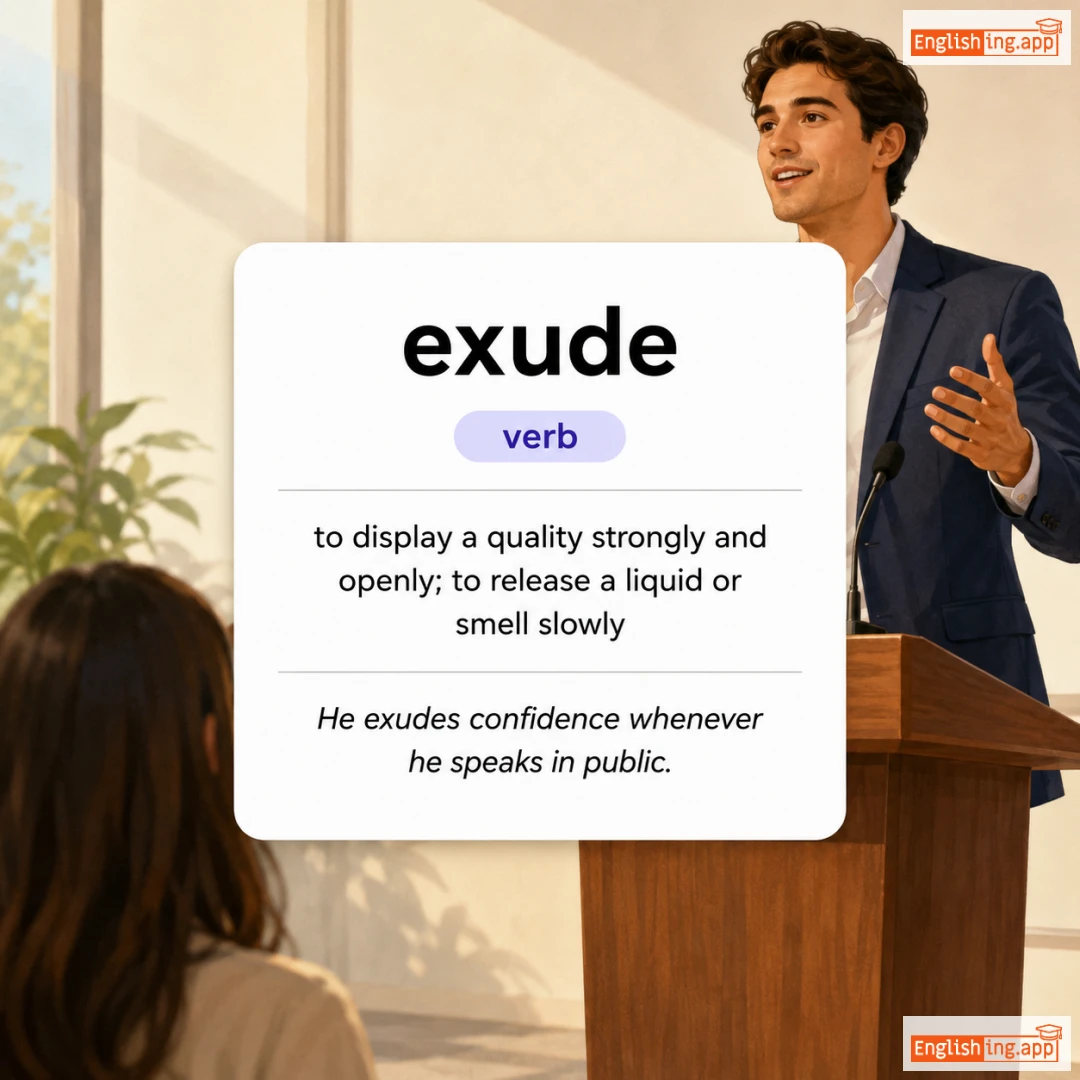
exude definition card — visual illustration of the meaning
verb C1
/ɪɡˈzuːd/
放つ (hanatsu)

to display a quality strongly and openly; to release a liquid or smell slowly

"He exudes confidence whenever he speaks in public."
"彼は公共の場で話すとき、自信を放っています。" (Kare wa kōkyō no ba de hanasu toki, jishin o hanatte imasu.)
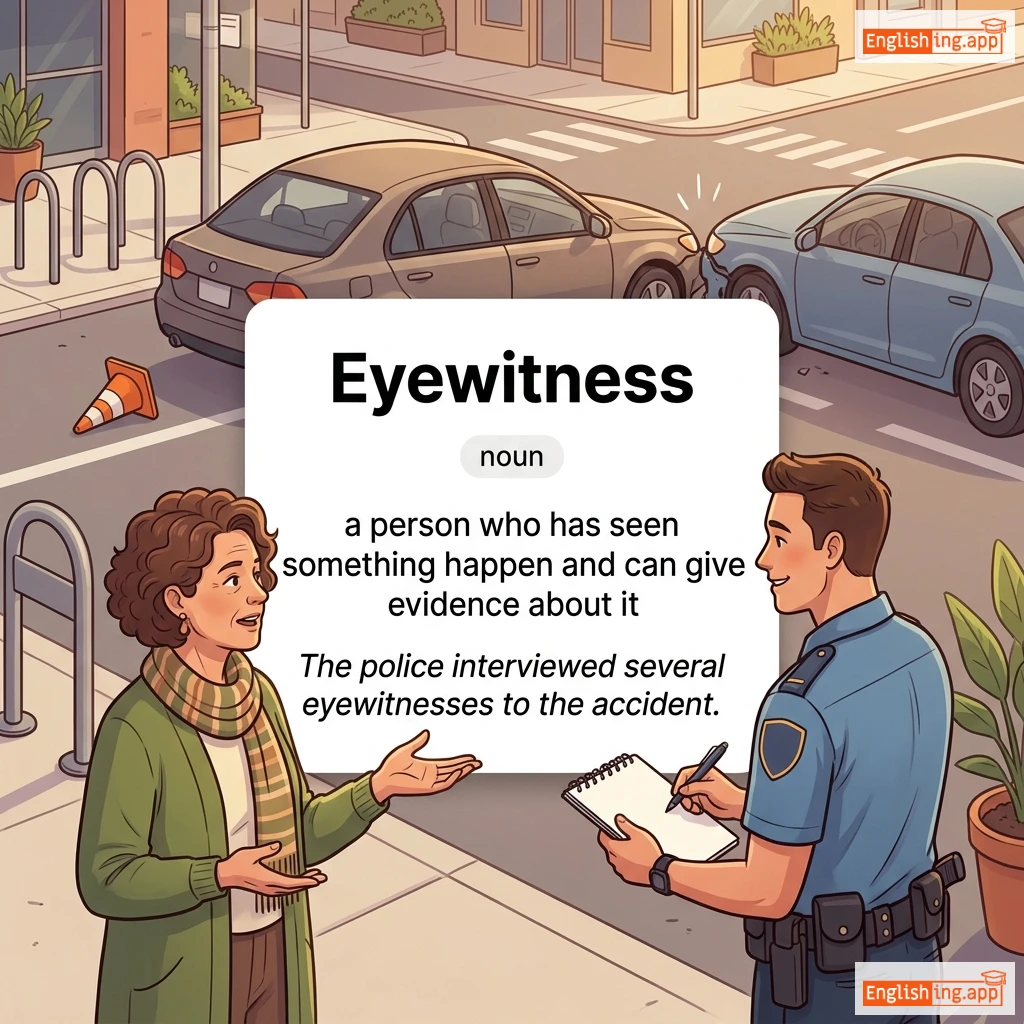
Eyewitness definition card — visual illustration of the meaning
noun C1
/ˈaɪ.wɪt.nəs/
目撃者 (mokugekisha)

a person who has seen something happen and can give evidence about it

"The police interviewed several eyewitnesses to the accident."

"警察は事故の目撃者にインタビューを行いました。" (Keisatsu wa jiko no mokugekisha ni intabyū wo okonaimashita.)