City Canvas Parade
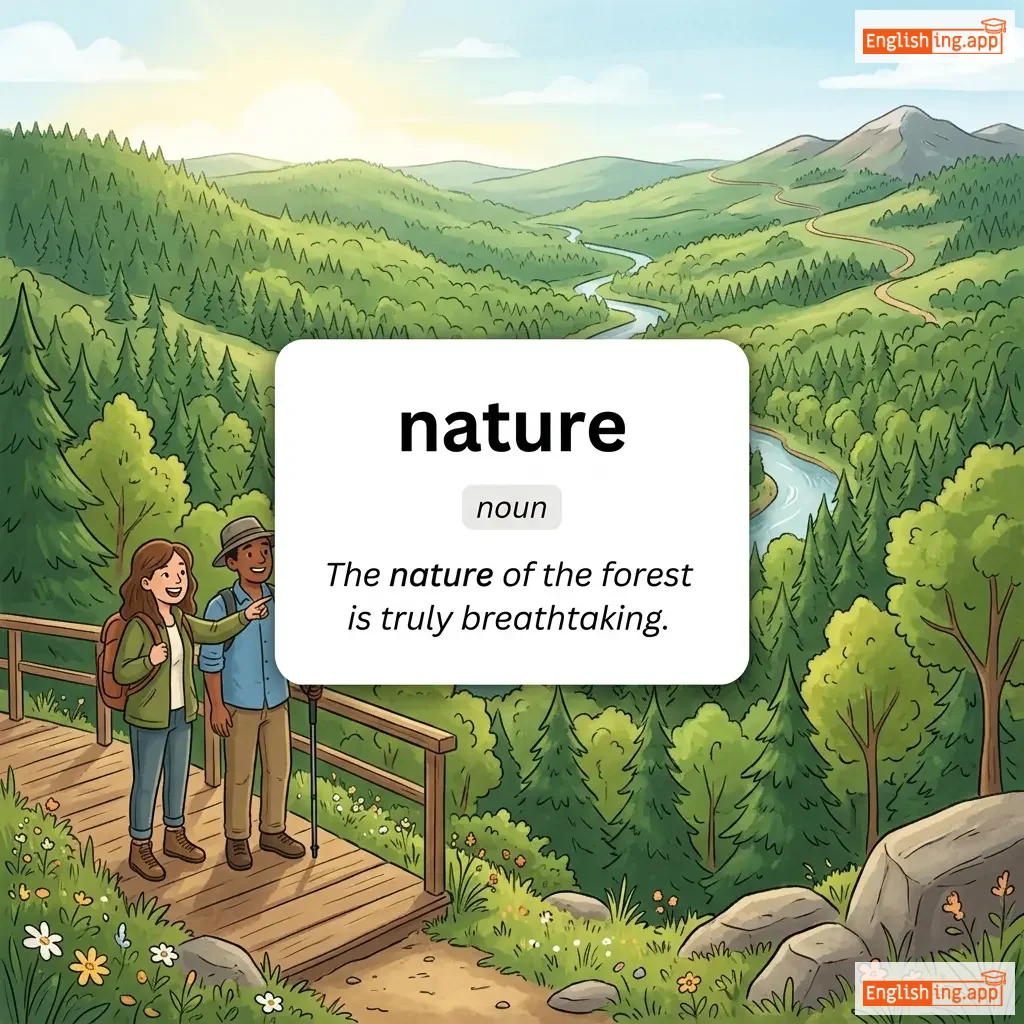
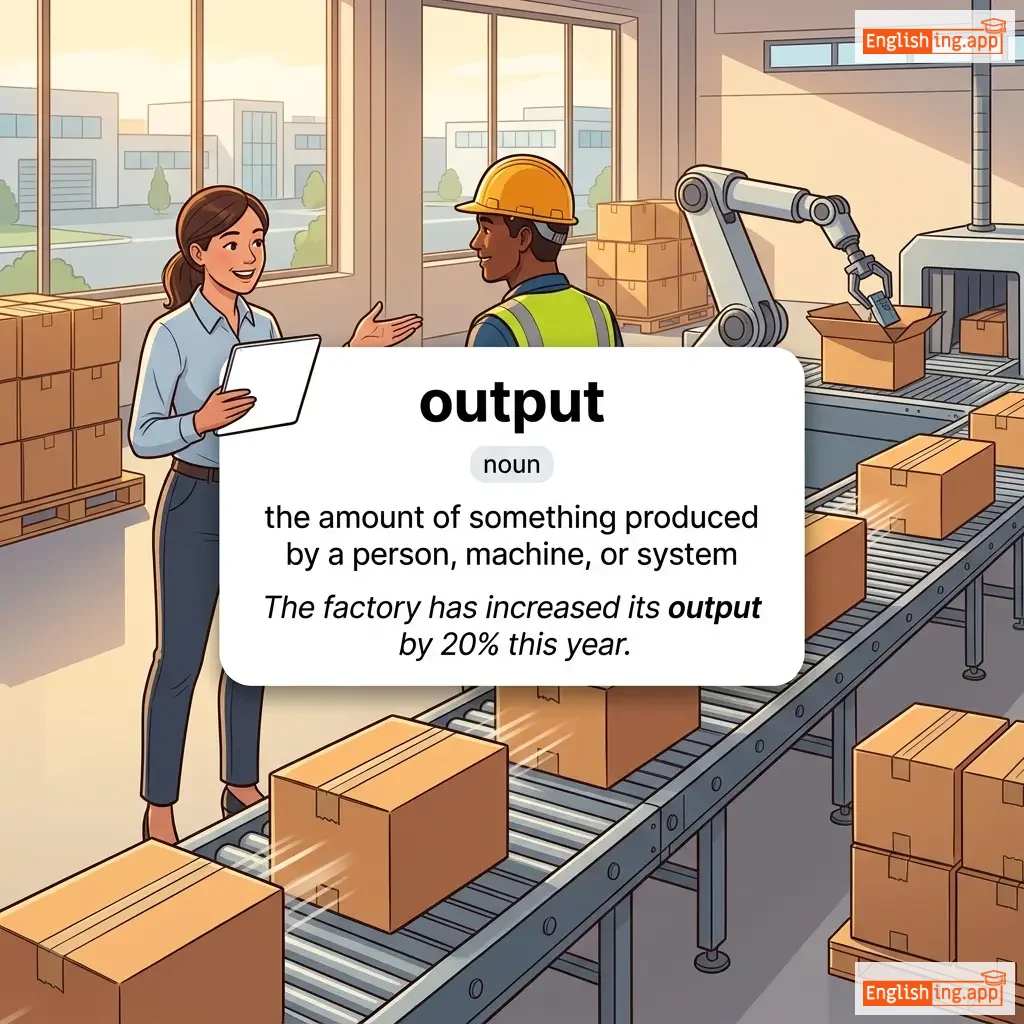
今天,达卡的社区中心 office 非常热闹。年轻的组织者正在准备一个新的 online 展览。每个小组收到三个 options 来展示他们的故事。Riya 说,如果他们谈论艺术的 origin,人们会更加关注。 他们回顾了每个艺术家的视频 output。 Rubel 为游客准备了一个 packet。Muna 拿着她最喜欢的 pencil 来画草图。 到傍晚,数百名 people 进入了中心。 他们保持了一个小时的 period,等待策展人的讲话。 委员会宣读了更新的健康 policy,以确保每个人都遵守规则。 当地的 police 团队也来帮忙了。 门口挂着一个大 poster,上面有一个 QR 代码供程序使用。 Riya 指示志愿者 notify 客人。 一旦展会开始,每个人都进入了一个 normal 节奏。 画廊的小路有点 narrow,所以志愿者要求人们排队走。 隔壁为孩子们安排了一个小 museum 游览。 在外面的花园里,展出了一个展示城市根源的 nature 摄影展。 晚上八点,一个辉煌的艺术 parade 开始了。 志愿者在场地上进行 patrol 以确保安全。 最后,当地的 player 团体用塔布拉鼓点结束了这晚。
|
表情符号
|
单词 | Images | 翻译 | 过去时 | 过去分词 | 第三人称单数 | 动名词 | 含义 | 例句 | 例句翻译 | 示例表达 | 示例表达含义 | 示例表达翻译 | 同义词 | 反义词 | 搭配词 | 助记符 |
|---|---|---|---|---|---|---|---|---|---|---|---|---|---|---|---|---|---|
|
🏛️
••••••
|
/mjuˈziːəm/
noun
(mjuˈziəm)
••••••
|
- •••••• |
博物馆
bówùguǎn
••••••
|
- •••••• | - •••••• | - •••••• | - •••••• |
a building in which objects of historical, scientific, artistic, or cultural interest are stored and exhibited
••••••
|
We visited the art museum to see the new exhibition.
我们参观了艺术博物馆,欣赏了新的展览。
••••••
|
我们参观了艺术博物馆,欣赏了新的展览。
Wǒmen cānguānle yìshù bówùguǎn, xīnshǎngle xīn de zhǎnlǎn.
••••••
|
- •••••• | - •••••• | - •••••• |
gallery, exhibition hall, archive, collection
••••••
|
market, store
••••••
|
art museum, history museum, science museum, visit museum
••••••
|
博物馆是人类历史和艺术的宝库。
••••••
|
|
↔️
••••••
|
/ˈnær.oʊ/
adjective
(奈罗)
••••••
|
- •••••• |
狭窄的; 限制的; 受限的
xiázhǎi de; xiànzhì de; shòuxiàn de
••••••
|
- •••••• | - •••••• | - •••••• | - •••••• |
having a small width; thin; limited in scope; restricted
••••••
|
The narrow street was barely wide enough for two cars. |
这条狭窄的街道几乎不足以容纳两辆车。
Zhè tiáo xiázhǎi de jiēdào jīhū bùzú yǐ róngnà liǎng liàng chē.
••••••
|
- •••••• | - •••••• | - •••••• |
thin, slim, tight, confined
••••••
|
wide, broad, spacious, expansive
••••••
|
narrow street, narrow margin, narrow escape, narrow minded
••••••
|
狭窄的街道上两辆车的通过空间非常有限。
••••••
|
|
🌳
••••••
|
/ˈneɪ.tʃər/
noun
(自然)
••••••
|
|
自然界; 自然世界; 某物的特性或基本品质
ziranjie; ziran shijie; mou wu de texing huo jiben pinzhi
••••••
|
- •••••• | - •••••• | - •••••• | - •••••• |
the natural world; the character or basic qualities of something
••••••
|
Children should spend more time in nature. |
孩子们应该在大自然中度过更多时间。
Haizimen yinggai zai da ziran zhong duoguo geng duo shijian.
••••••
|
- •••••• | - •••••• | - •••••• |
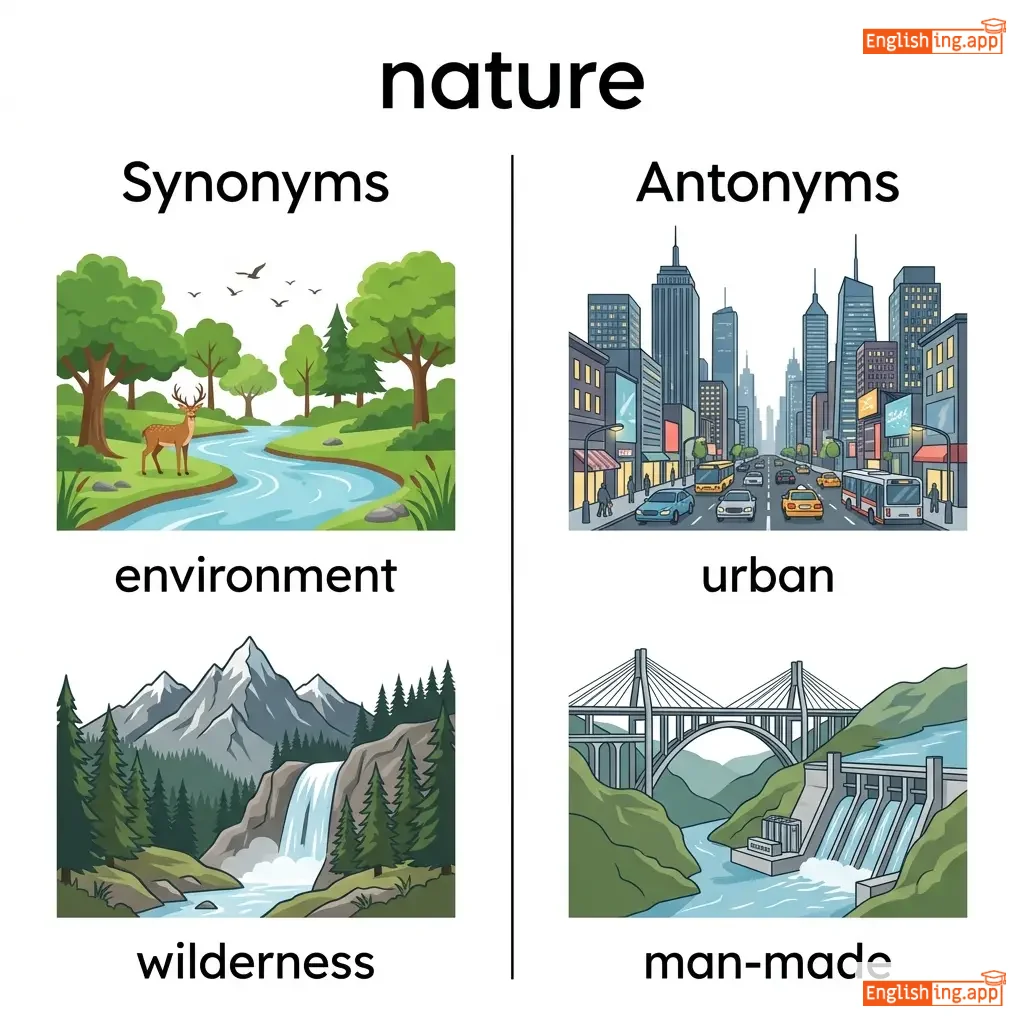
environment, wilderness, outdoors, character
••••••
|
artificiality, civilization, indoors
••••••
|
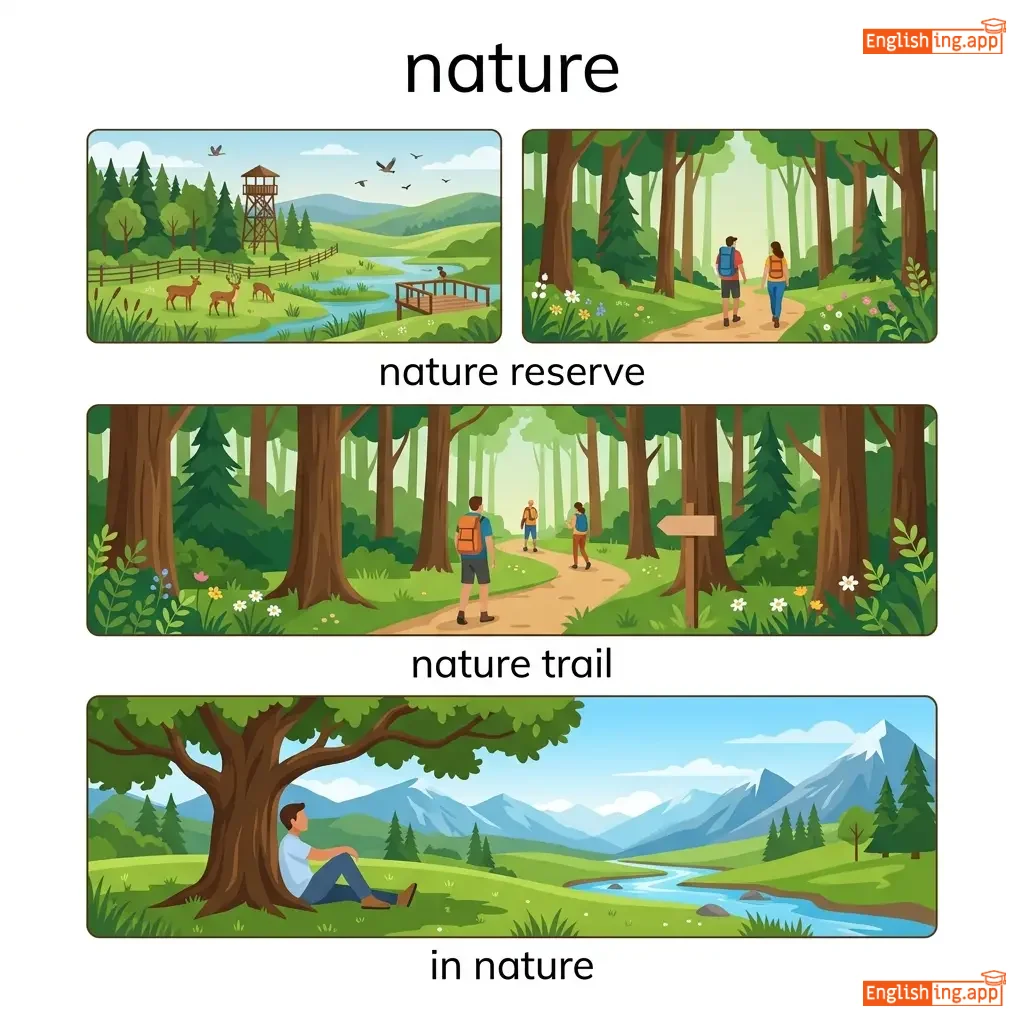
human nature, mother nature, laws of nature
••••••
|
大自然中的宁静能让人感到放松和清新。
••••••
|
|
📏
••••••
|
/ˈnɔː.məl/
adjective
(nɔːr.məl)
••••••
|
- •••••• |
正常
zhèngcháng
••••••
|
- •••••• | - •••••• | - •••••• | - •••••• |
conforming to a standard; usual, typical, or expected
••••••
|
It is normal to feel nervous before an interview. |
在面试前感到紧张是正常的。
Zài miànshì qián gǎndào jǐnzhāng shì zhèngcháng de.
••••••
|
back to normal |
returning to a usual or typical state
••••••
|
恢复正常
huīfù zhèngcháng
••••••
|
usual, ordinary, typical, standard, regular
••••••
|
abnormal, unusual, strange
••••••
|
normal life, normal situation, normal condition, back to normal
••••••
|
Normal = 正常, 一切正常 📏
••••••
|
|
📢
••••••
|
/ˈnoʊtɪfaɪ/
verb
(诺蒂法)
••••••
|
- •••••• |
通知
tongzhi
••••••
|
notified
诺蒂法德
••••••
|
notified
诺蒂法德
••••••
|
notifies
诺蒂法兹
••••••
|
notifying
诺蒂法英
••••••
|
to inform someone officially about something
••••••
|
The manager will notify the staff about the schedule change.
经理将通知员工关于时间表的变化。
••••••
|
经理将通知员工关于时间表的变化。
Jīnglǐ jiāng tōngzhī yuángōng guānyú shíjiān biǎo de biànhuà.
••••••
|
notify of
通知
••••••
|
to inform about something specific
••••••
|
通知
tongzhi
••••••
|
inform, alert, announce, communicate
••••••
|
hide, conceal
••••••
|
notify immediately, notify customers, notify authorities, notify in writing
••••••
|
Notify 是通知的意思 — 就像我们会收到通知一样。
••••••
|
|
🏢
••••••
|
/ˈɒf.ɪs/
noun
(办公室)
••••••
|
- •••••• |
办公室
bàngōngshì
••••••
|
- •••••• | - •••••• | - •••••• | - •••••• |
a room or building where people work, usually at desks
••••••
|
She left the office early to attend a family event.
她提前离开办公室去参加家庭活动。
••••••
|
她提前离开办公室去参加家庭活动。
Tā tíqián líkāi bàngōngshì qù cānjiā jiātíng huódòng.
••••••
|
hold office
担任职务
••••••
|
to be in a position of authority or responsibility
••••••
|
担任职务
dānrèn zhíwù
••••••
|
workplace, bureau, department, agency, company
••••••
|
home, outdoors
••••••
|
office building, office hours, office desk, office staff
••••••
|
办公室是工作场所;在办公室里人们总是工作。
••••••
|
|
💻
••••••
|
/ˈɒnˌlaɪn/
adjective/adverb
(在线)
••••••
|
- •••••• |
在线
zaixian
••••••
|
- •••••• | - •••••• | - •••••• | - •••••• |
connected to or available through the internet
••••••
|
I prefer shopping online rather than going to stores.
我更喜欢网上购物,而不是去商店。
••••••
|
我更喜欢网上购物,而不是去商店。
Wo geng xihuan wangshang gouwu, er bushi qu shangdian.
••••••
|
- •••••• | - •••••• | - •••••• |
internet-based, digital, connected, virtual
••••••
|
offline, disconnected
••••••
|
online shopping, online services, online education, online access
••••••
|
Zai xian = online, like 'on line' in Chinese!
••••••
|
|
⚖️
••••••
|
/ˈɒpʃən/
noun
(àopù)
••••••
|
- •••••• |
选择
xuǎnzé
••••••
|
- •••••• | - •••••• | - •••••• | - •••••• |
A choice or possibility available among alternatives.
••••••
|
You have the option to pay by card or cash. |
你可以选择用卡或现金付款。
Nǐ kěyǐ xuǎnzé yòng kǎ huò xiànjīn fùkuǎn.
••••••
|
keep your options open |
Avoid committing to one choice too early.
••••••
|
保持你的选择开放
Bǎochí nǐ de xuǎnzé kāifàng
••••••
|
choice, alternative, possibility, selection, preference
••••••
|
obligation, compulsion, necessity
••••••
|
have option, choose option, better option
••••••
|
选择就像是从多个选项中选择一个。
••••••
|
|
🌄
••••••
|
/ˈɒr.ɪ.dʒɪn/
noun
(奥里金)
••••••
|
- •••••• |
起源
qiyuan
••••••
|
- •••••• | - •••••• | - •••••• | - •••••• |
the point or place where something begins or is created
••••••
|
The river has its origin in the mountains.
这条河流起源于山脉。
••••••
|
这条河流起源于山脉。
Zhe tiao heliu qiyuan yu shanmai.
••••••
|
point of origin
起源点
••••••
|
the place where something starts
••••••
|
起源点
qiyuandian
••••••
|
beginning, source, root, start, genesis
••••••
|
end, conclusion
••••••
|
country of origin, place of origin, origin story, unknown origin
••••••
|
Origin 意味着起源 🌄 — 记住河流的起源,它会帮助你记住这个词。
••••••
|
|
🏭
••••••
|
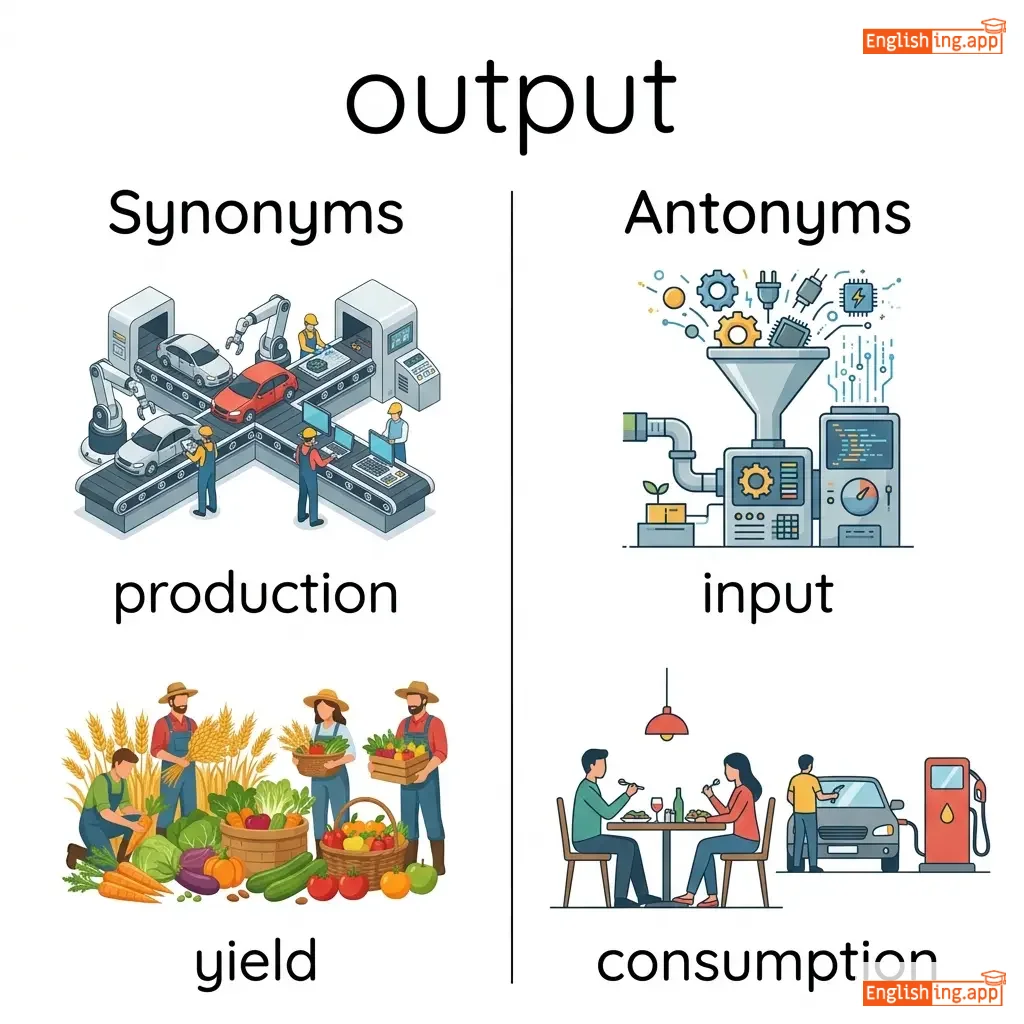
/ˈaʊtpʊt/
noun
(aʊtpʊt)
••••••
|
|
产出
chanchu
••••••
|
- •••••• | - •••••• | - •••••• | - •••••• |
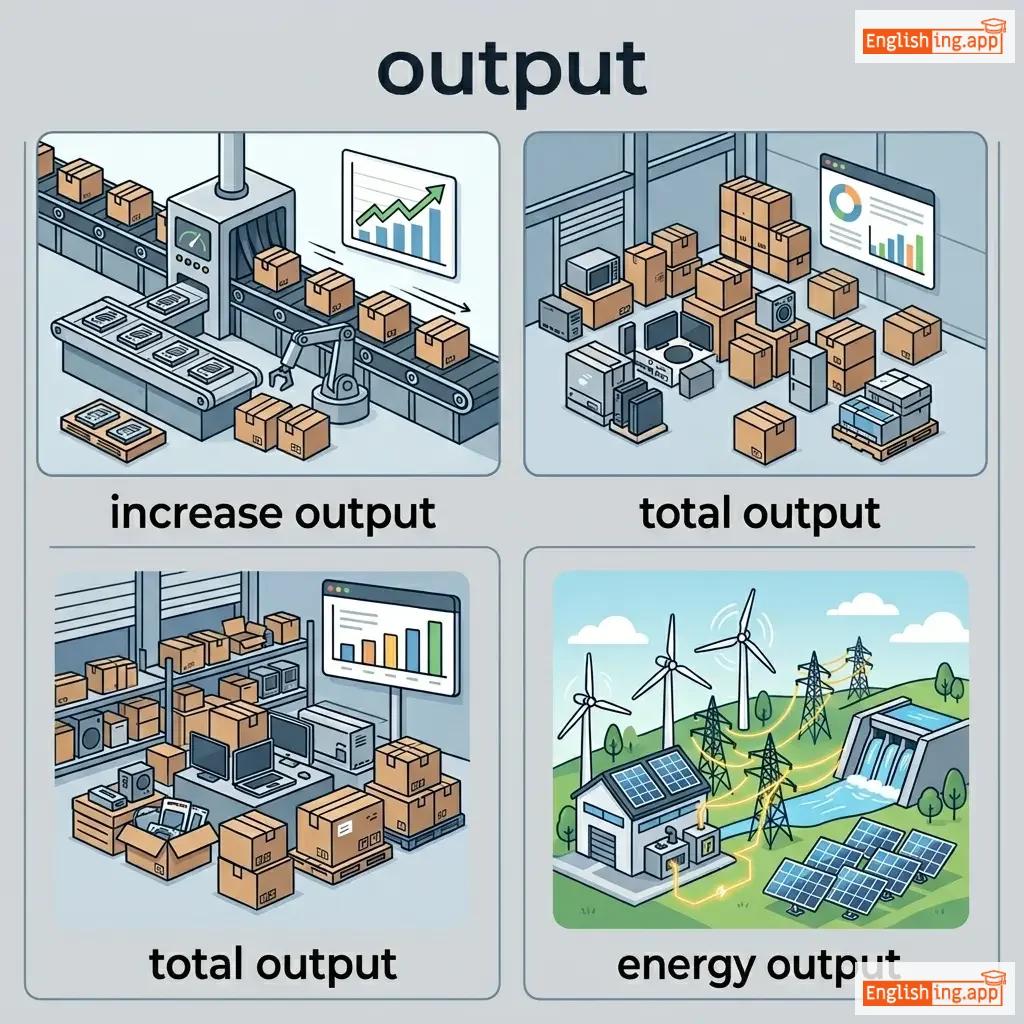
the amount of something produced by a person, machine, or system
••••••
|
The factory has increased its output by 20% this year. |
工厂今年增加了20%的产出。
Gongchang jinian zengjia le 20% de chanchu.
••••••
|
high output |
producing a large amount or quantity
••••••
|
高产出
gao chanchu
••••••
|
production, yield, product, result, performance
••••••
|
input, consumption
••••••
|
increase output, total output, energy output, data output
••••••
|
Out + Put 就是‘生产’的意思 — 产出!
••••••
|
|
📦
••••••
|
/ˈpæk.ɪt/
noun
(pà-kèt)
••••••
|
- •••••• |
包裹
baoguo
••••••
|
- •••••• | - •••••• | - •••••• | - •••••• |
a small package or container holding items or information
••••••
|
He bought a packet of biscuits from the shop. |
他从商店买了一个饼干包裹。
Ta cong shangdian mai le yi ge binggan baoguo.
••••••
|
- •••••• | - •••••• | - •••••• |
package, parcel, bundle, sachet, pouch
••••••
|
bulk, load
••••••
|
packet of chips, packet of biscuits, packet of seeds, small packet
••••••
|
包裹和‘packet’发音相似 — 就像大家都认得饼干包裹。
••••••
|
|
🎖️
••••••
|
/pəˈreɪd/
verb
(阅兵)
••••••
|
|
阅兵, 展示
yuebing, zhanshi
••••••
|
paraded
阅兵过
••••••
|
paraded
阅兵过
••••••
|
parades
阅兵
••••••
|
parading
阅兵进行
••••••
|
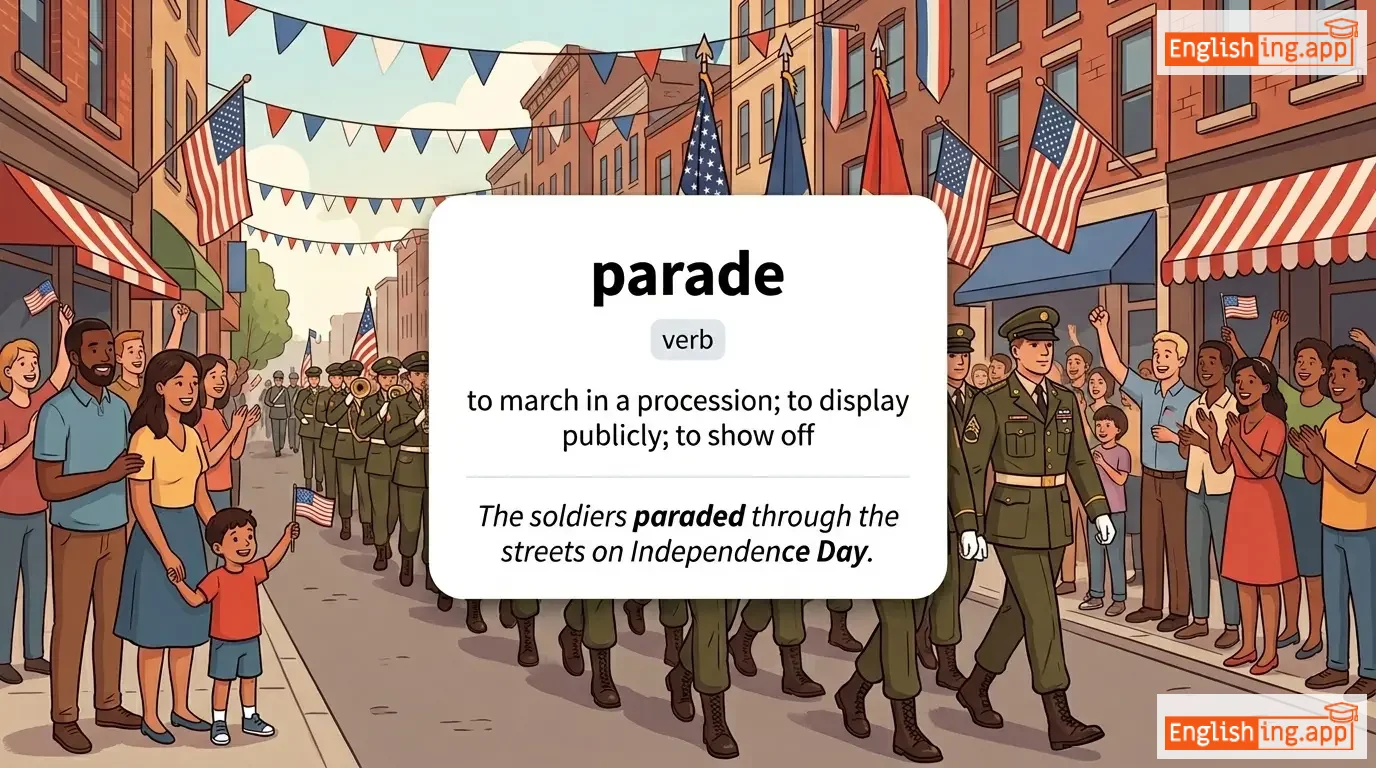
to march in a procession; to display publicly; to show off
••••••
|
The soldiers paraded through the streets on Independence Day.
士兵们在独立日游行中阅兵。
••••••
|
士兵们在独立日游行中阅兵。
Shibing men zai duliri youxing zhong yuebing.
••••••
|
- •••••• | - •••••• | - •••••• |
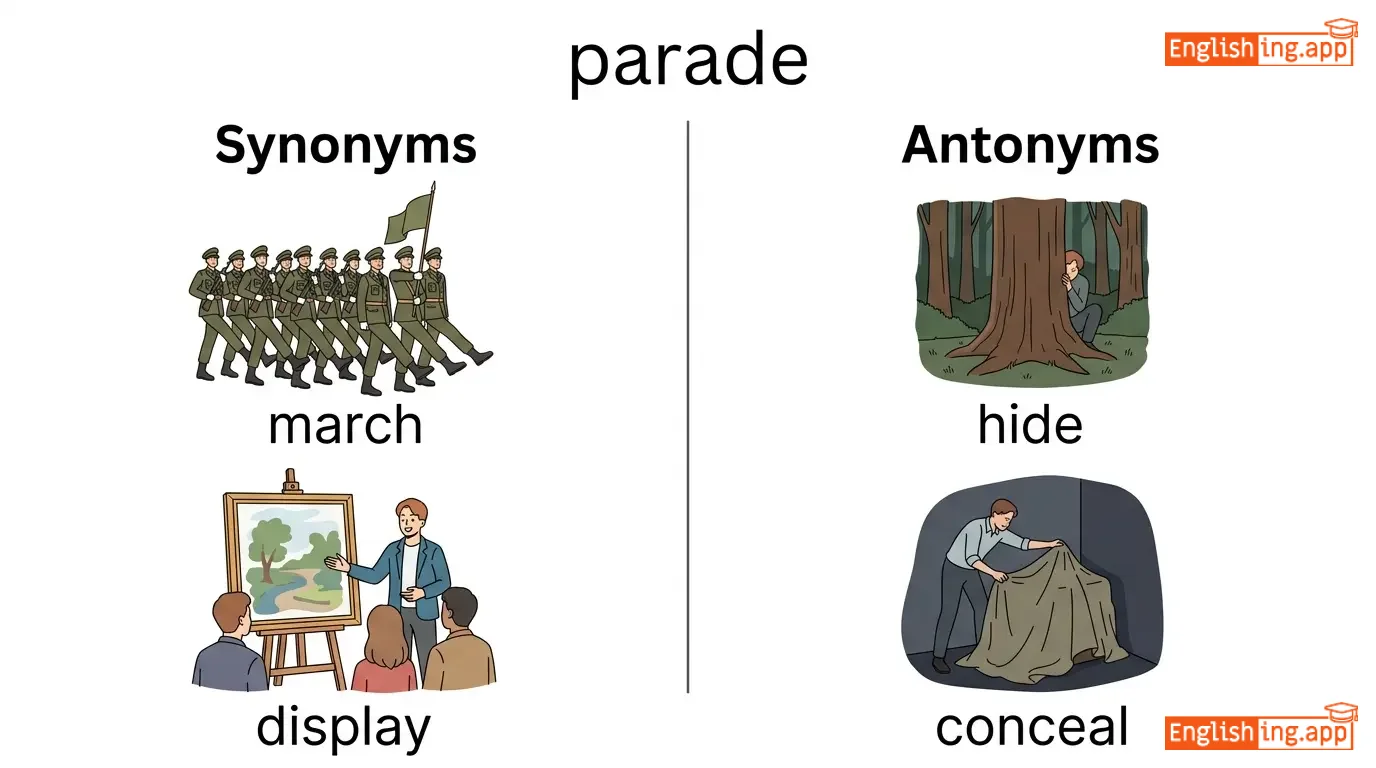
march, display, show, demonstrate
••••••
|
hide, conceal, withdraw, retreat
••••••
|
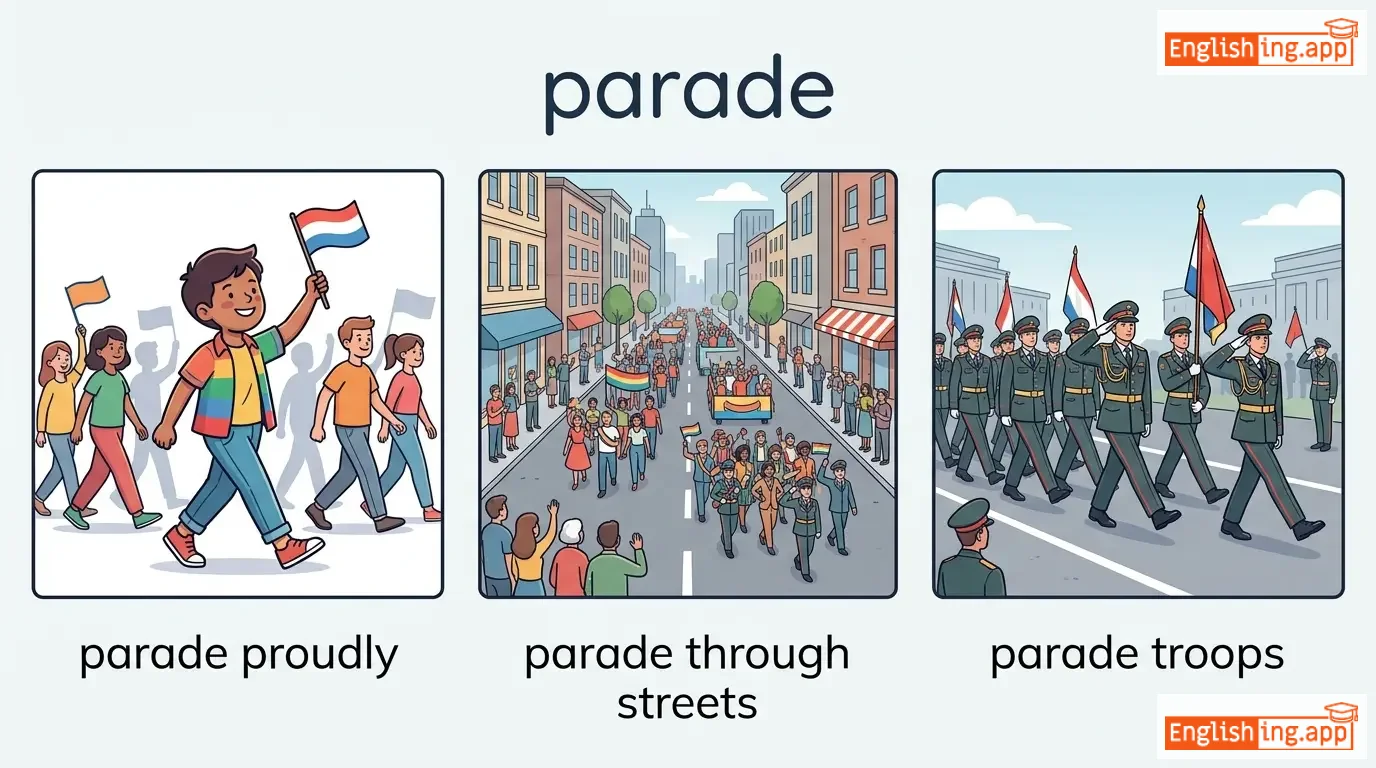
parade proudly, parade through streets, parade troops, parade around, parade success
••••••
|
阅兵展示军力,壮丽的游行庆祝节日。
••••••
|
|
🚓
••••••
|
/pəˈtroʊl/
verb
(巡逻)
••••••
|
- •••••• |
巡逻
xúnluó
••••••
|
patrolled
巡逻过
••••••
|
patrolled
巡逻过
••••••
|
patrols
巡逻
••••••
|
patrolling
巡逻中
••••••
|
to move around an area to watch or guard it
••••••
|
The police patrol the streets at night to ensure safety.
警察晚上巡逻街道以确保安全。
••••••
|
警察晚上巡逻街道以确保安全。
Jǐngchá wǎnshàng xúnluó jiēdào yǐ quèbǎo ānquán.
••••••
|
on patrol
在巡逻
••••••
|
engaged in patrolling duties
••••••
|
在巡逻
zài xúnluó
••••••
|
guard, watch, monitor, inspect, survey
••••••
|
ignore, neglect, overlook
••••••
|
police patrol, border patrol, night patrol, patrol car
••••••
|
Patrol 意味着巡逻 — **巡逻** 街道 🚓
••••••
|
|
✏️
••••••
|
/ˈpɛnsəl/
noun
••••••
|
- •••••• | - •••••• | - •••••• | - •••••• | - •••••• | - •••••• |
an instrument for writing or drawing, typically made of wood with a graphite core
••••••
|
He drew a picture with a pencil. |
- •••••• |
pencil in |
to make a tentative plan or appointment
••••••
|
- •••••• |
writing tool, crayon, stylus, marker
••••••
|
pen, ink, marker pen
••••••
|
sharpen a pencil, pencil drawing, pencil sketch, pencil case
••••••
|
No •••••• |
|
👥
••••••
|
/ˈpiːpl/
noun
(pīpǔ)
••••••
|
- •••••• |
人们
renmen
••••••
|
- •••••• | - •••••• | - •••••• | - •••••• |
a group of human beings collectively
••••••
|
The people in the town gathered for the festival.
城里的人民聚集在一起为节日庆祝。
••••••
|
城里的人们为节日聚集。
Cheng li de renmen wei jieri juzhi.
••••••
|
- •••••• | - •••••• | - •••••• |
humans, individuals, persons, citizens
••••••
|
animals, non-humans
••••••
|
people's choice, common people, local people, young people
••••••
|
People in a PEE (人们) group gather together
••••••
|
|
⏳
••••••
|
/ˈpɪərɪəd/
noun
(时间段)
••••••
|
- •••••• |
时期
shíqī
••••••
|
- •••••• | - •••••• | - •••••• | - •••••• |
a length or portion of time
••••••
|
The meeting will last for a period of two hours. |
会议将持续两个小时的时间段。
Huìyì jiāng chíxù liǎng gè xiǎoshí de shíjiān duàn.
••••••
|
- •••••• | - •••••• | - •••••• |
duration, span, interval, stretch
••••••
|
moment, instant
••••••
|
long period, short period, indefinite period
••••••
|
Period = 时 (时间) 段或长度
••••••
|
|
🏅
••••••
|
/ˈpleɪər/
noun
(pleɪər)
••••••
|
- •••••• |
球员
qiúyuán
••••••
|
- •••••• | - •••••• | - •••••• | - •••••• |
a person who participates in a game or sport
••••••
|
The player scored the winning goal. |
球员打入了制胜球。
Qiúyuán dǎ rù le zhìshèng qiú.
••••••
|
- •••••• | - •••••• | - •••••• |
athlete, competitor, participant, sportsperson
••••••
|
non-player, spectator
••••••
|
professional player, skilled player, football player, basketball player
••••••
|
Player = 球 (ball) + 员 (member), 球员是球场上的成员
••••••
|
|
👮
••••••
|
/pəˈliːs/
noun
(警察)
••••••
|
- •••••• |
警察
jingcha
••••••
|
- •••••• | - •••••• | - •••••• | - •••••• |
a body of officers representing the civil authority of government
••••••
|
The police arrived quickly to investigate the scene.
警察很快赶到现场进行调查。
••••••
|
警察很快赶到现场进行调查。
Jǐngchá hěn kuài gǎndào xiànchǎng jìnxíng diàochá.
••••••
|
- •••••• | - •••••• | - •••••• |
law enforcement, constabulary, cops, authorities
••••••
|
criminals, offenders
••••••
|
police officer, police station, police force
••••••
|
记住'警察',他们是你社区的守护者!
••••••
|
|
📋
••••••
|
/ˈpɒl.ə.si/
noun
(政策)
••••••
|

|
政策
zhèngcè
••••••
|
- •••••• | - •••••• | - •••••• | - •••••• |
a course of action adopted by a government, organization, or individual
••••••
|
The company has a strict policy against smoking. |
公司有一项严格的反吸烟政策。
Gōngsī yǒu yī xiàng yángé de fǎn xīyān zhèngcè.
••••••
|
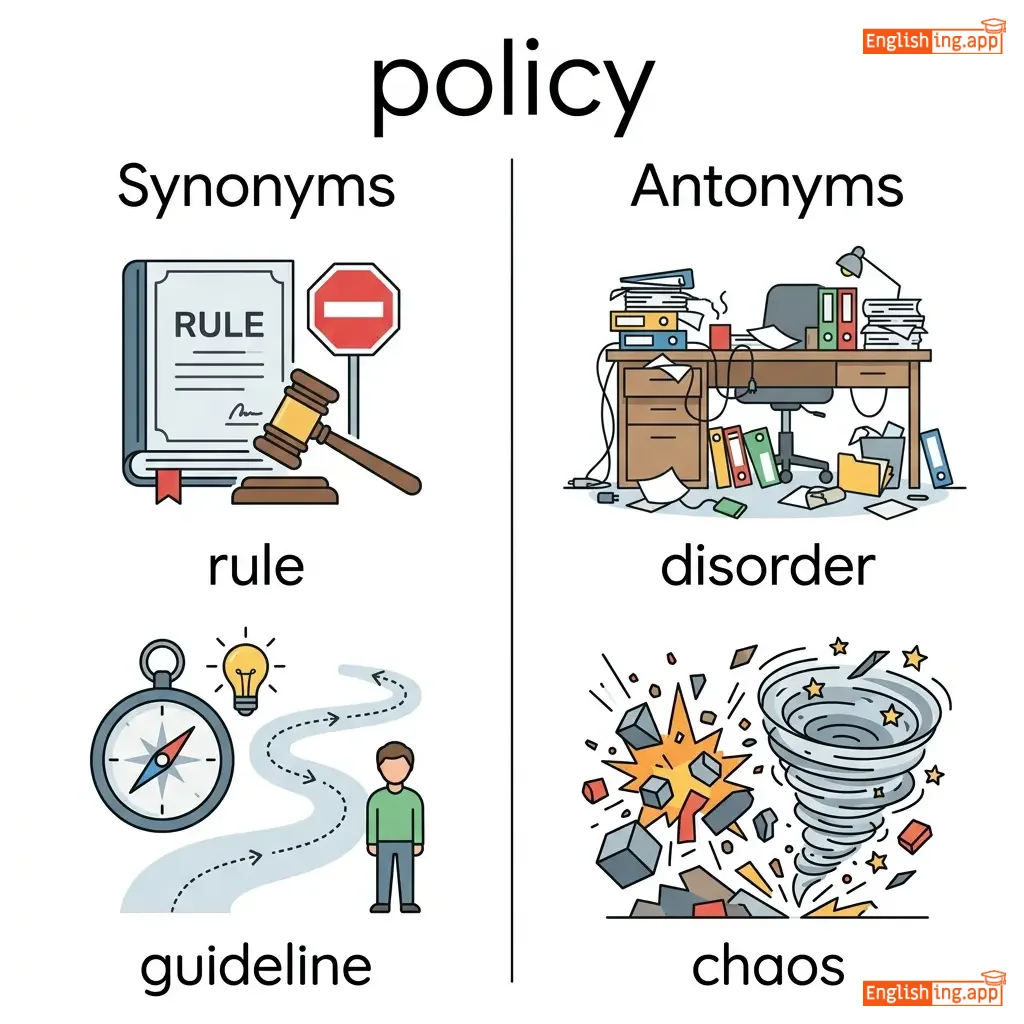
- •••••• | - •••••• | - •••••• |
strategy, plan, procedure, guidelines
••••••
|
chaos, disorder, improvisation
••••••
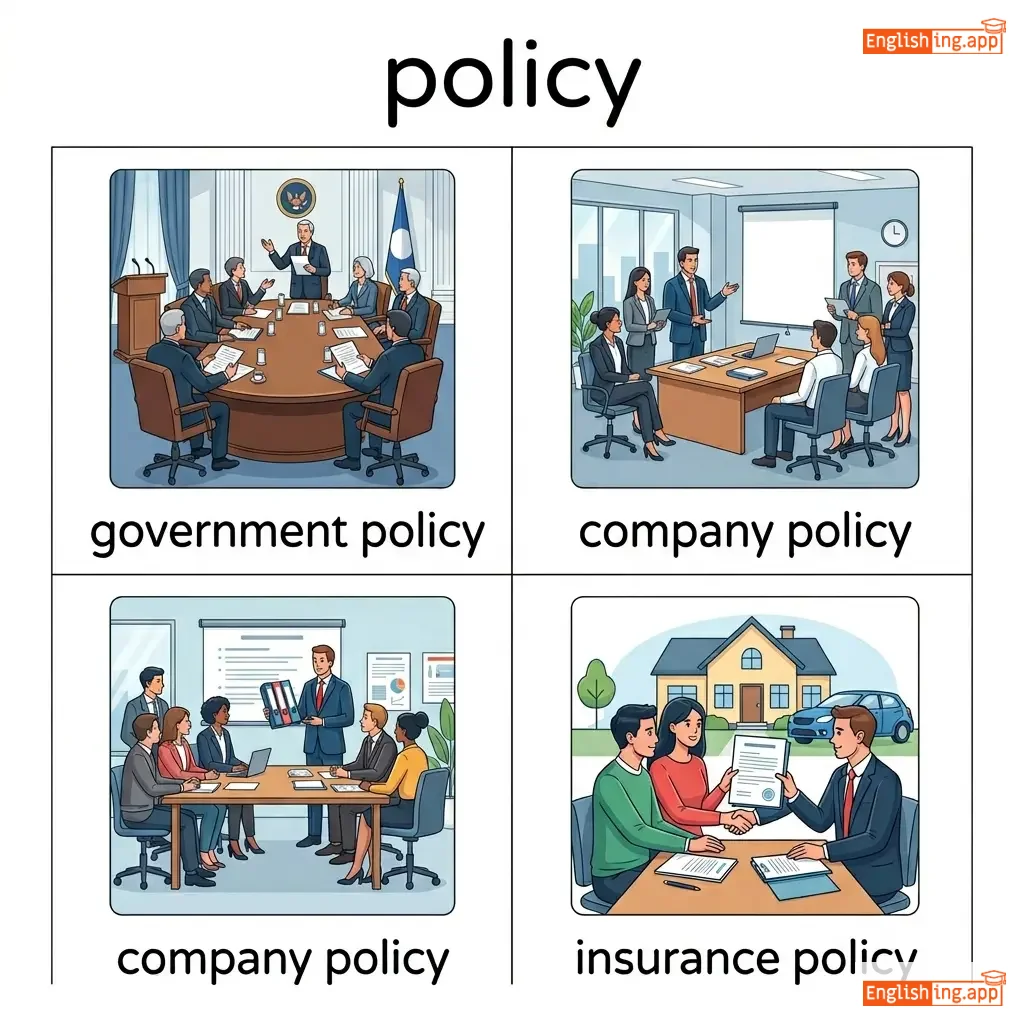
|
foreign policy, company policy, insurance policy
••••••
|
政策 (zhèngcè) - A policy is a government’s action plan, just like a business policy.
••••••
|
|
🪧
••••••
|
/ˈpoʊstər/
noun
(海皮尼斯)
••••••
|
- •••••• |
海报
haibao
••••••
|
- •••••• | - •••••• | - •••••• | - •••••• |
a large printed picture or notice that is put on a wall for decoration or to advertise something
••••••
|
They put up a movie poster outside the theater.
他们在电影院外面挂了一张电影海报。
••••••
|
他们在电影院外面挂了一张电影海报。
Tāmen zài diànyǐngyuàn wàimiàn guàle yī zhāng diànyǐng hǎibào.
••••••
|
- •••••• | - •••••• | - •••••• |
placard, sign, banner, notice, print
••••••
|
booklet, pamphlet
••••••
|
movie poster, wall poster, advertising poster, campaign poster
••••••
|
海报就像是墙上的广告或装饰,帮你记住电影或者事件!
••••••
|

