The Writer's Routine
米娜是一位作家,她every day都写作。她的daily日常很简单但很严格——early早晨起床,煮咖啡,然后坐在empty的纸前。
“Every writer needs daily discipline,”她在diary中写道,“没有它,你无法fully发展你的写作能力。”
她正在写一篇关于现代生活的essay。First draft糟透了。“这太crazy了,”她想着,一边crossing整段文字。“这是我的fault——我没有exactly计划好我要说什么。”
但米娜有faith。她知道好作品需要extra努力。“First draft永远不是final,”她提醒自己。“我guess我需要force自己继续。”
Every morning,相同的日常。Early起床,坐在empty的纸前,写下first个想法。有时富有成效,有时令人沮丧。但daily练习是关键。
有一天,她的编辑打来电话:“你的essay必须exact——不要模糊,不要太crazy。Final deadline是星期五。”
米娜慌了。“Every句子都需要修改,”她想着,看着她的draft。“我需要extra时间!”
出版界没有favors。截止日期是final。她必须fully投入。所以那一周every day她都在工作。从early早晨到深夜。Crossing掉坏的部分,精炼every想法exactly。
那周的diary很funny。“我快crazy了,”她写道。“Forcing自己daily工作,即使脑袋empty。但我有faith——every draft都会变好。”
星期五早晨,Final审查。米娜读她的essay——every个词,every个句子。虽然不完美,但诚实、exact、fully思考过。
编辑喜欢极了。“这就是我们要的,exactly!”他说。“Every段都很好。你的daily纪律感展现出来了。”
多年后,米娜对学生说:“写作是daily的工作。Every作家都面对empty的页面、crazy的想法和糟糕的first drafts。这不是你的fault——这就是写作的方式。关键是faith——faith相信every draft会进步,daily练习很重要,forcing自己early every天早起去写作。不要guess,要知道这需要extra努力。你的first尝试不会是final。你会cross掉句子,重新写fully,直到exactly正确。某些days你会觉得crazy,觉得every个词都错。但要保持faith。Daily习惯,没有favors,没有捷径——只要every day坐在empty页面前,forcing自己写下first个想法,然后改进。我的diary那些early days很funny——充满怀疑、crossing、无数drafts。但every次挣扎都教会了我东西。所以如果你写作,就要daily去做。Early开始,即使脑袋empty。写下first draft不评判——让它crazy、有faults。然后every day改进,exactly、fully直到final版本出现。没有favors,不需要extra天赋——只需要faith、daily习惯的force,以及cross掉坏句子的勇气。那就是exact的日常。Every成功的作家都遵循它。不funny,不crazy——只是daily、fully投入的工作。而且every day你都在进步。”
|
表情符号
|
单词 | Images | 翻译 | 过去时 | 过去分词 | 第三人称单数 | 动名词 | 含义 | 例句 | 例句翻译 | 示例表达 | 示例表达含义 | 示例表达翻译 | 同义词 | 反义词 | 搭配词 | 助记符 |
|---|---|---|---|---|---|---|---|---|---|---|---|---|---|---|---|---|---|
|
🤪
••••••
|
/ˈkreɪzi/
adjective
(kùlèi zī)
••••••
|
- •••••• |
疯狂
fēngkuáng
••••••
|
- •••••• | - •••••• | - •••••• | - •••••• |
mentally unsound; extremely foolish or enthusiastic
••••••
|
He had a crazy idea that actually worked. |
他有一个疯狂的想法,实际上奏效了。
Tā yǒu yīgè fēngkuáng de xiǎngfǎ, shíjì shang zòuxiào le.
••••••
|
drive someone crazy |
to annoy or make someone feel overwhelmed
••••••
|
让某人疯狂
ràng mǒu rén fēngkuáng
••••••
|
insane, mad, foolish, irrational, wild
••••••
|
sane, rational, normal
••••••
|
crazy idea, crazy behavior, go crazy, crazy about
••••••
|
Crazy等于疯狂,像把一个人逼疯的想法。
••••••
|
|
➕
••••••
|
/krɒs/
verb
(kuò sī)
••••••
|
- •••••• |
穿越
chuānyuè
••••••
|
crossed
kuò sī
••••••
|
crossed
kuò sī
••••••
|
crosses
kuò sī
••••••
|
crossing
kuò sīng
••••••
|
to go from one side to another, or to pass through
••••••
|
We crossed the river using a wooden bridge.
我们通过一座木桥过了河。
••••••
|
我们通过一座木桥过了河。
Wǒmen tōngguò yī zuò mù qiáo guò le hé.
••••••
|
cross the line
越过界限
••••••
|
to go beyond what is acceptable or allowed
••••••
|
越过界限
yuèguò jièxiàn
••••••
|
pass, traverse, intersect, span
••••••
|
stay, remain, halt
••••••
|
cross the street, cross the border, cross over, cross path
••••••
|
Cross意味着穿越 – 穿越马路或越过界限
••••••
|
|
📅
••••••
|
/ˈdeɪli/
adjective/adverb
(deɪli)
••••••
|
- •••••• |
每日的
meiri de
••••••
|
- •••••• | - •••••• | - •••••• | - •••••• |
happening every day
••••••
|
She reads the newspaper daily. |
她每天读报纸。
Ta meitian du baozhi.
••••••
|
daily grind |
the monotonous routine of everyday work and life
••••••
|
每日的单调工作
meiri de dandiao gongzuo
••••••
|
everyday, regular, routine, habitual
••••••
|
occasional, rare
••••••
|
daily basis, daily routine, daily life, daily tasks
••••••
|
每日的就是每天,做事情每天重复最终能成功。
••••••
|
|
📔
••••••
|
/ˈdaɪəri/
noun
(日记)
••••••
|
- •••••• |
日记
rìjì
••••••
|
- •••••• | - •••••• | - •••••• | - •••••• |
a book in which one keeps a daily record of events and experiences
••••••
|
She wrote about her day in her diary before going to bed. |
她在睡觉前在日记中写下了她的一天。
Tā zài shuìjiào qián zài rìjì zhōng xiě xià le tā de yītiān.
••••••
|
- •••••• | - •••••• | - •••••• |
journal, log, notebook, memoir
••••••
|
public record, announcement
••••••
|
keep a diary, personal diary, secret diary, daily diary
••••••
|
日记记录每一天 — 用'日记'来记住!
••••••
|
|
📝
••••••
|
/dræft/
noun/verb
(草稿)
••••••
|
- •••••• |
草稿
caogao
••••••
|
drafted
草稿的
••••••
|
drafted
草稿的
••••••
|
drafts
草稿
••••••
|
drafting
草拟
••••••
|
A preliminary version of a piece of writing; to prepare a preliminary version of a document.
••••••
|
She finished the first draft of her novel.
她完成了小说的第一份草稿。
••••••
|
她完成了小说的第一份草稿。
Ta wanchengle xiaoshuo de diyi fen caogao.
••••••
|
rough draft
初稿
••••••
|
An early, unfinished version of a piece of writing.
••••••
|
初稿
chugao
••••••
|
outline, sketch, plan, blueprint, design
••••••
|
final, complete
••••••
|
draft proposal, draft agreement, first draft, draft law
••••••
|
草稿 = Draft, 就像初步草拟的文档。
••••••
|
|
🐦
••••••
|
/ˈɜːrli/
adjective/adverb
(ˈɜːrli)
••••••
|
- •••••• |
早
zao
••••••
|
- •••••• | - •••••• | - •••••• | - •••••• |
before the usual or expected time
••••••
|
She arrived early to the meeting.
她早早到达了会议。
••••••
|
她早早到达了会议。
Ta zaobao daole huiyi.
••••••
|
early bird
早起的鸟
••••••
|
someone who wakes up or arrives early
••••••
|
早起的人
zao qi de ren
••••••
|
premature, initial, prompt, ahead
••••••
|
late, delayed
••••••
|
early morning, early stage, early development, arrive early
••••••
|
Early bird 🐦 早起— Early意味着早。
••••••
|
|
📦
••••••
|
/ˈɛmpti/
adjective
(empti)
••••••
|
- •••••• |
空的
kong de
••••••
|
- •••••• | - •••••• | - •••••• | - •••••• |
containing nothing; not filled
••••••
|
The box was completely empty. |
盒子完全是空的。
Hezi wanquan shi kong de.
••••••
|
empty promises |
words or promises without real value or meaning
••••••
|
空洞的承诺
kongdong de chengnuo
••••••
|
vacant, hollow, void, blank
••••••
|
full, filled
••••••
|
empty box, empty room, empty bottle, empty words
••••••
|
Empty 📦 意味着空的,在中文里 '空的' 意味着没有东西。
••••••
|
|
📝
••••••
|
/ˈɛseɪ/
noun
(é sài)
••••••
|
|
论文
lunwen
••••••
|
- •••••• | - •••••• | - •••••• | - •••••• |
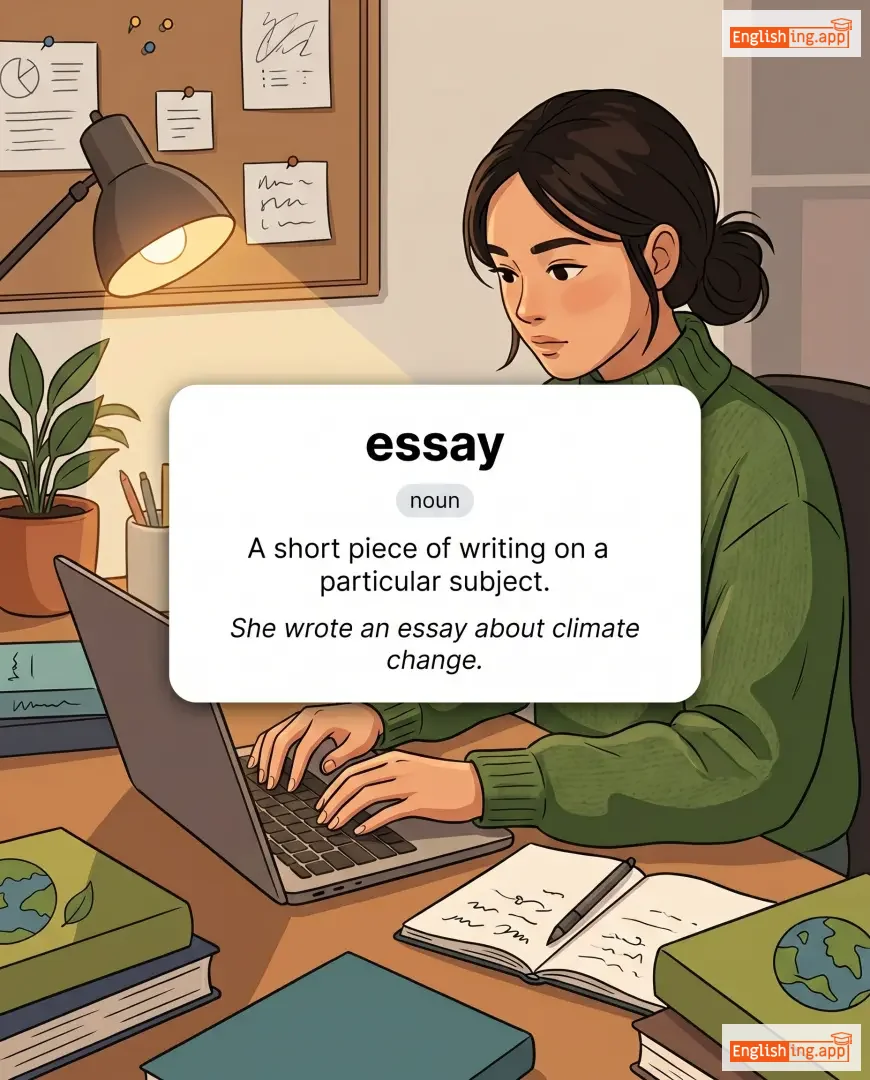
A short piece of writing on a particular subject.
••••••
|
She wrote an essay about climate change. |
她写了一篇关于气候变化的论文。
Tā xiěle yī piān guānyú qìhòu biànhuà de lùnwén.
••••••
|
- •••••• | - •••••• | - •••••• |
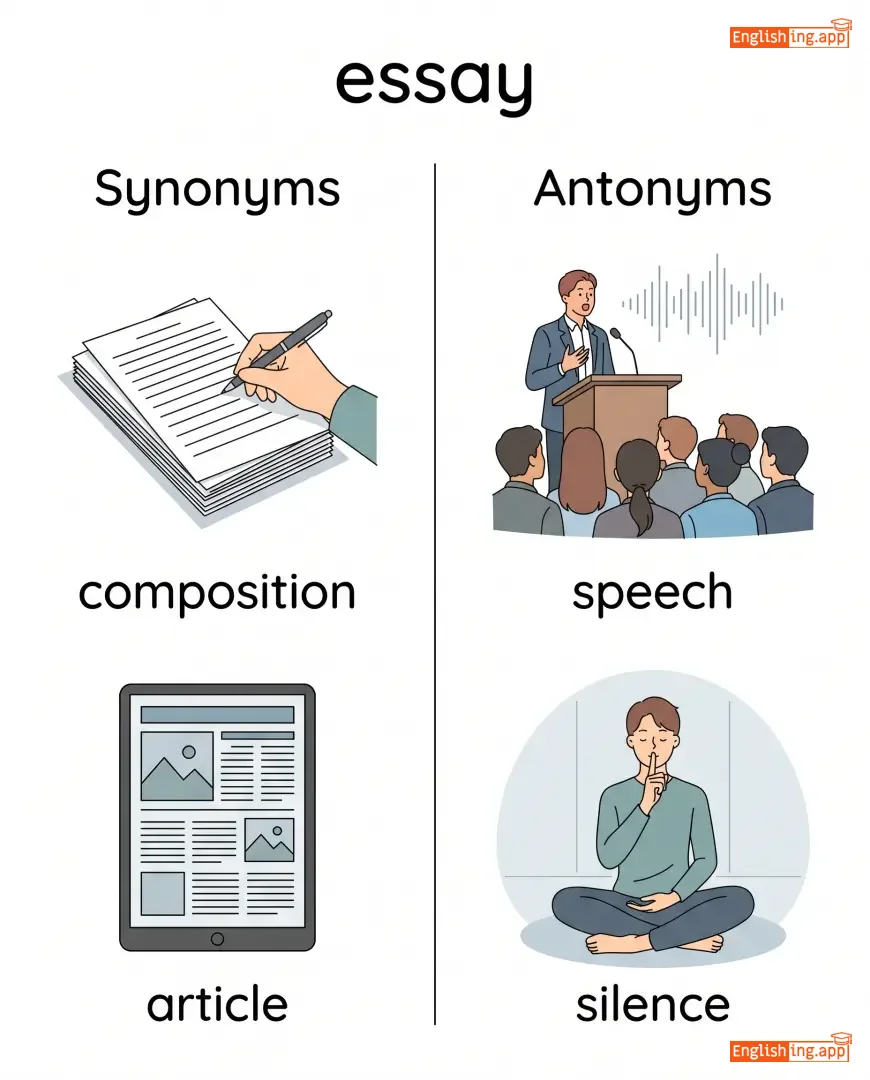
composition, article, paper, text, prose
••••••
|
speech, silence
••••••
|
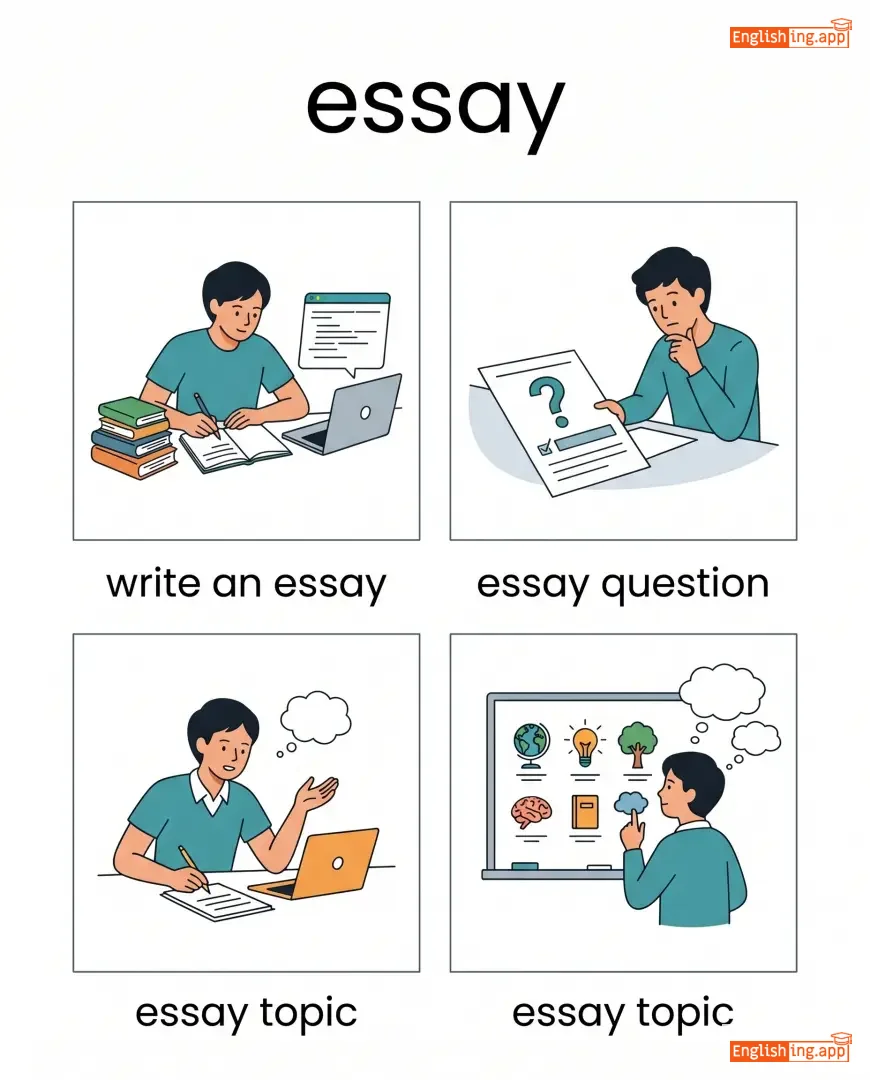
write an essay, essay question, essay topic, essay competition
••••••
|
Essay意味着论文 – 在学校,写essay就是写论文。
••••••
|
|
📚
••••••
|
/ˈɛvri/
determiner
(èvrī)
••••••
|
- •••••• |
每个
měi gè
••••••
|
- •••••• | - •••••• | - •••••• | - •••••• |
used to refer to all members of a group without exception
••••••
|
She reads every book she can find. |
她读了她能找到的每一本书。
Tā dúle tā néng zhǎodào de měi yī běn shū.
••••••
|
every now and then |
occasionally, from time to time
••••••
|
偶尔
ǒu ěr
••••••
|
each, all, any, entire, whole
••••••
|
none, some
••••••
|
every day, every year, every chance, every effort
••••••
|
每个是Every - 每本书都读每本。
••••••
|
|
🎯
••••••
|
/ɪɡˈzækt/
adjective, verb
(埃克萨克特)
••••••
|
|
精确的
jingque de
••••••
|
exacted
埃克萨克特得
••••••
|
exacted
埃克萨克特得
••••••
|
exacts
埃克萨克特斯
••••••
|
exacting
埃克萨克特英
••••••
|
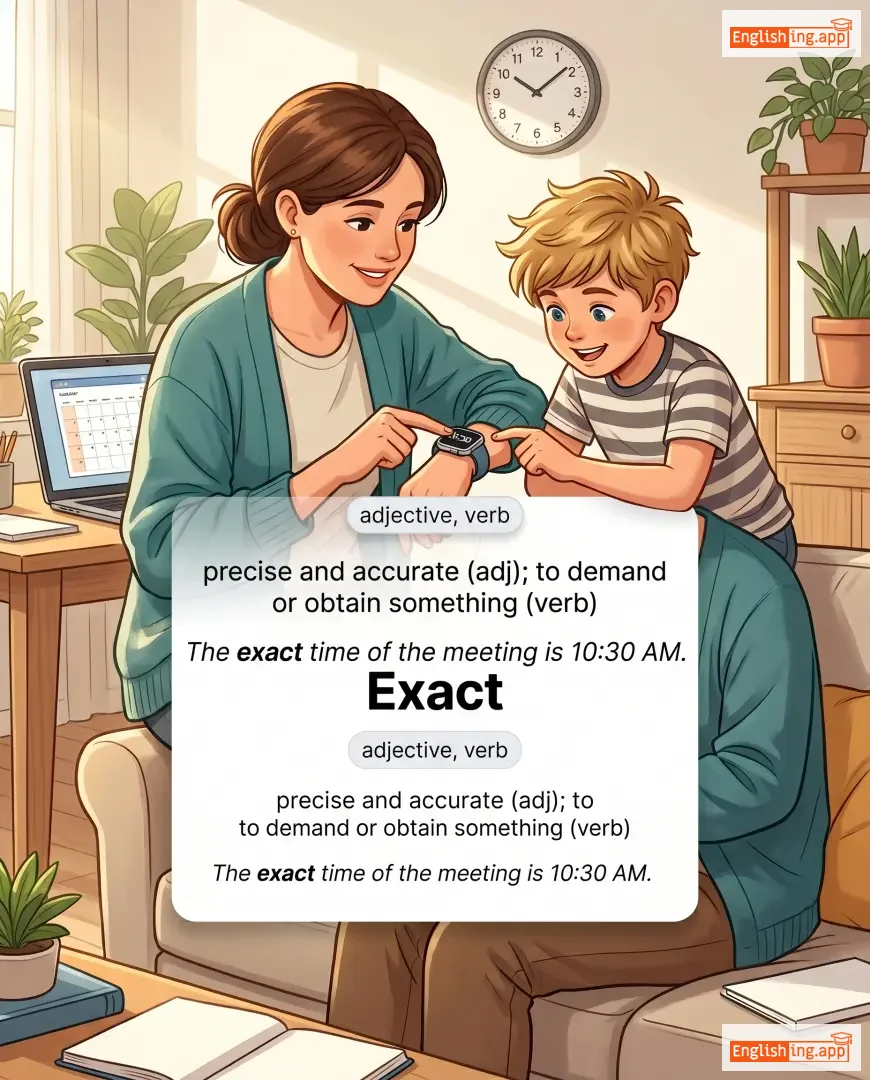
precise and accurate (adj); to demand or obtain something (verb)
••••••
|
The exact time of the meeting is 10:30 AM.
会议的确切时间是10:30 AM。
••••••
|
会议的确切时间是10:30 AM。
Huiyi de jueque shijian shi 10:30 AM.
••••••
|
to exact revenge
复仇
••••••
|
to inflict punishment or harm in return for an injury or wrong
••••••
|
复仇
fuchou
••••••
|
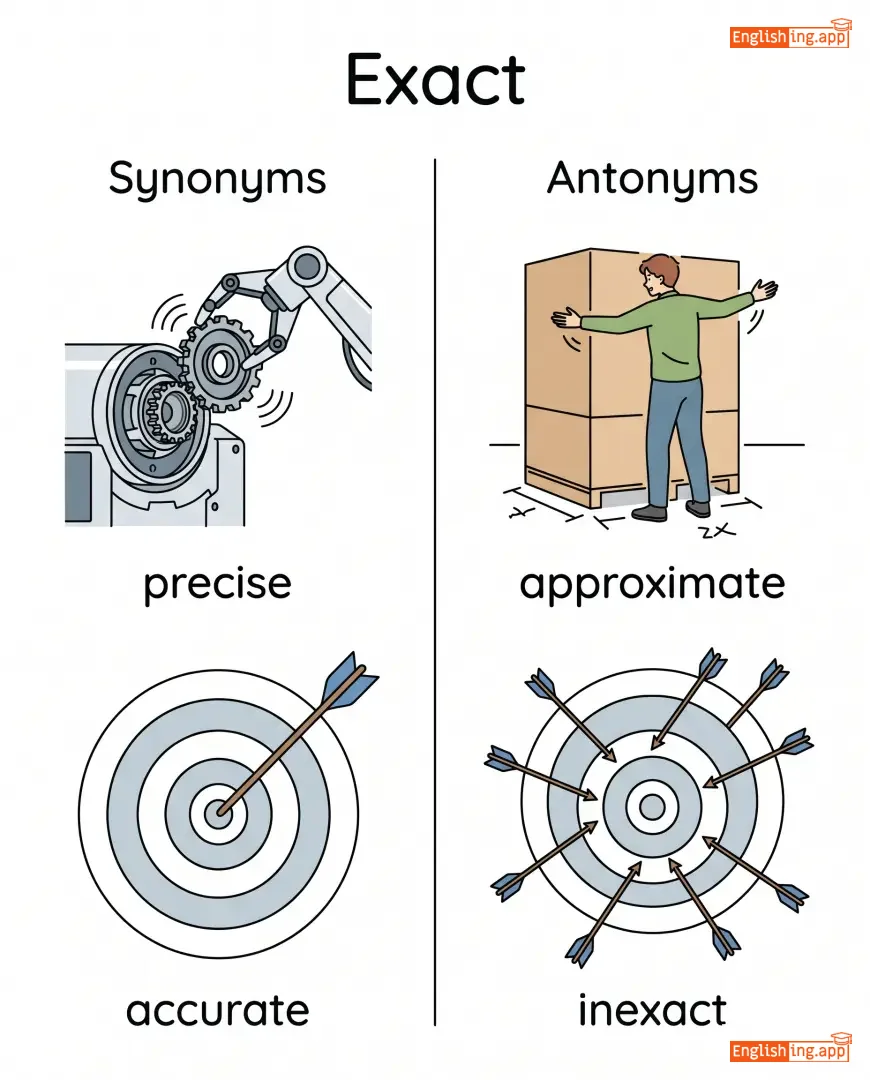
precise, accurate, demand, require, strict
••••••
|
approximate, inexact, lenient
••••••
|
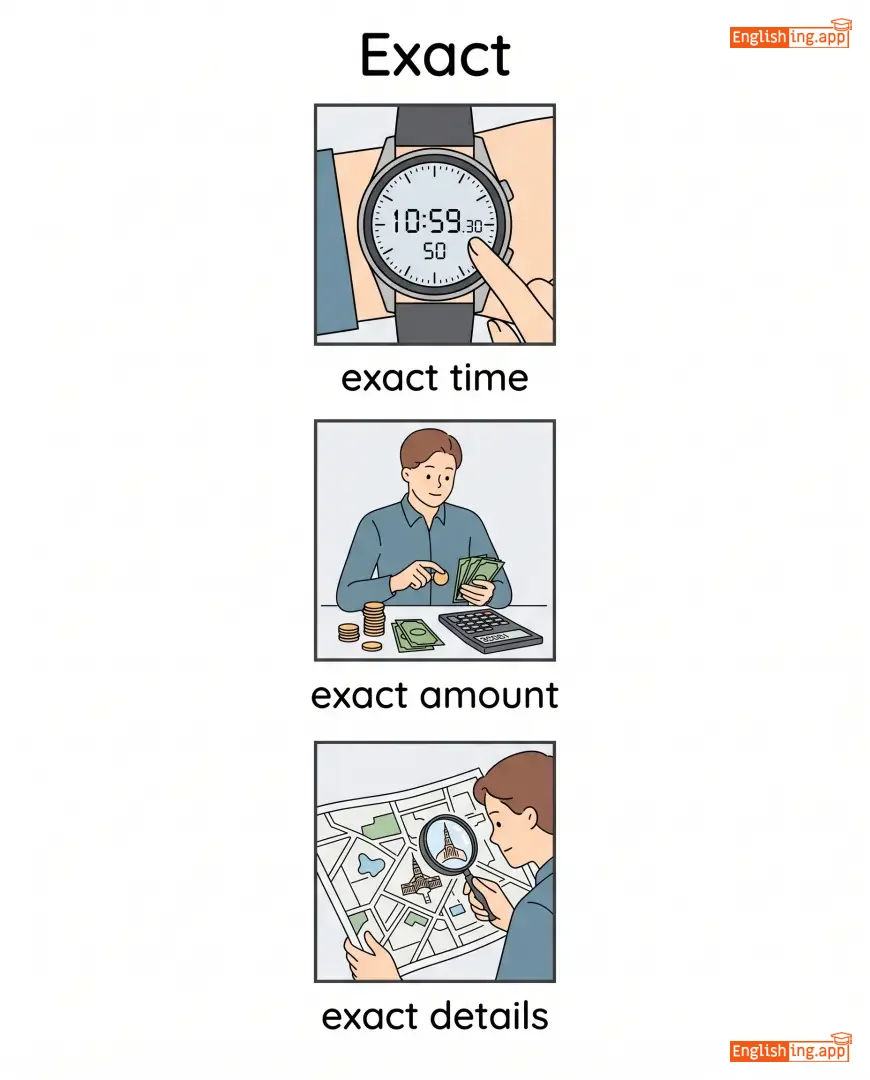
exact time, exact amount, exact details, exact revenge
••••••
|
Exact意思是精确的,否则复仇来了!
••••••
|
|
➕
••••••
|
/ˈɛkstrə/
adjective
(额外)
••••••
|
- •••••• |
额外的
éwài de
••••••
|
- •••••• | - •••••• | - •••••• | - •••••• |
More than what is usual, expected, or necessary
••••••
|
She brought some extra food for the picnic. |
她为野餐带来了额外的食物。
Tā wèi yěcān dài lái le éwài de shíwù.
••••••
|
go the extra mile |
to make a special effort to achieve something
••••••
|
走得更远
zǒu dé gèng yuǎn
••••••
|
additional, surplus, excess, supplementary, spare
••••••
|
lacking, insufficient, scarce
••••••
|
extra effort, extra cost, extra time, extra charge
••••••
|
Extra = 额外 = 多
••••••
|
|
🙏
••••••
|
/feɪθ/
noun
(fèiθ)
••••••
|
- •••••• |
信仰
xìnyǎng
••••••
|
- •••••• | - •••••• | - •••••• | - •••••• |
Strong belief or trust in someone or something, often without proof.
••••••
|
She has great faith in her team’s abilities. |
她对她团队的能力充满信心。
Tā duì tā tuánduì de nénglì chōngmǎn xìnxīn.
••••••
|
keep the faith |
To continue to believe or trust, even when things are difficult.
••••••
|
保持信念
bǎochí xìnniàn
••••••
|
belief, trust, confidence, conviction, reliance
••••••
|
doubt, disbelief, distrust
••••••
|
strong faith, religious faith, faith in, keep faith
••••••
|
信仰意味着信任,永远不要失去信仰。
••••••
|
|
⚡
••••••
|
/fɔːlt/
noun
(fɔːlt)
••••••
|
- •••••• |
错误
cuòwù
••••••
|
- •••••• | - •••••• | - •••••• | - •••••• |
A mistake, error, or responsibility for a problem.
••••••
|
It was not her fault that the train was late. |
火车晚点不是她的错。
Huǒchē wǎndiǎn bùshì tā de cuò.
••••••
|
at fault |
Responsible for a mistake or wrongdoing.
••••••
|
有错
yǒu cuò
••••••
|
mistake, flaw, defect, error, responsibility
••••••
|
perfection, merit
••••••
|
take the fault, find fault, fault line, at fault
••••••
|
Fault对应的是错误,责任让我们改正。
••••••
|
|
🙏
••••••
|
/ˈfeɪvər/
noun
(feɪvər)
••••••
|
- •••••• |
帮助
bangzhu
••••••
|
- •••••• | - •••••• | - •••••• | - •••••• |
An act of kindness or approval.
••••••
|
She asked him for a small favor.
她请求了一个小忙。
••••••
|
她请求了一个小忙。
Ta qingqiu le yi ge xiao mang.
••••••
|
do someone a favor
为某人做个忙
••••••
|
To do something to help someone.
••••••
|
为某人做个忙
Wei mou ren zuo ge mang
••••••
|
kindness, support, approval, help
••••••
|
disfavor, rejection
••••••
|
ask a favor, return a favor, in favor of, do a favor
••••••
|
帮助意味着帮助——给朋友一个帮助会让他高兴。
••••••
|
|
🏁
••••••
|
/ˈfaɪnəl/
adjective/noun
(fainal)
••••••
|
- •••••• |
最终
zuihou
••••••
|
- •••••• | - •••••• | - •••••• | - •••••• |
coming at the end; the last part of something
••••••
|
The final exam will be held next week. |
期末考试将在下周进行。
Qimo kaoshi jiang zai xia zhou jinxing.
••••••
|
final decision |
a conclusive and irreversible choice
••••••
|
最终决定
zuihou jueding
••••••
|
last, ultimate, concluding, terminal, decisive
••••••
|
initial, first, beginning
••••••
|
final exam, final round, final result, final decision
••••••
|
Final = 最终 – 最终考试总是最后一个
••••••
|
|
🥇
••••••
|
/fɜːrst/
adjective
(fɜːrst)
••••••
|
- •••••• |
第一
di yi
••••••
|
- •••••• | - •••••• | - •••••• | - •••••• |
coming before all others in time, order, or importance
••••••
|
She was the first to arrive at the meeting. |
她是第一个到达会议的人。
Ta shi di yi ge daoda huiyi de ren.
••••••
|
first come, first served |
those who arrive earliest are served before others
••••••
|
先到先得
xian dao xian de
••••••
|
foremost, primary, leading, earliest
••••••
|
last, subsequent
••••••
|
first place, first priority, first impression, first attempt
••••••
|
做第一总是最好 - Always be the first, it's the best.
••••••
|
|
💪
••••••
|
/fɔːrs/
noun/verb
(fórs)
••••••
|
|
力量 / 强度
lìliàng / qiángdù
••••••
|
forced
fórsed
••••••
|
forced
fórsed
••••••
|
forces
fórses
••••••
|
forcing
fórsing
••••••
|
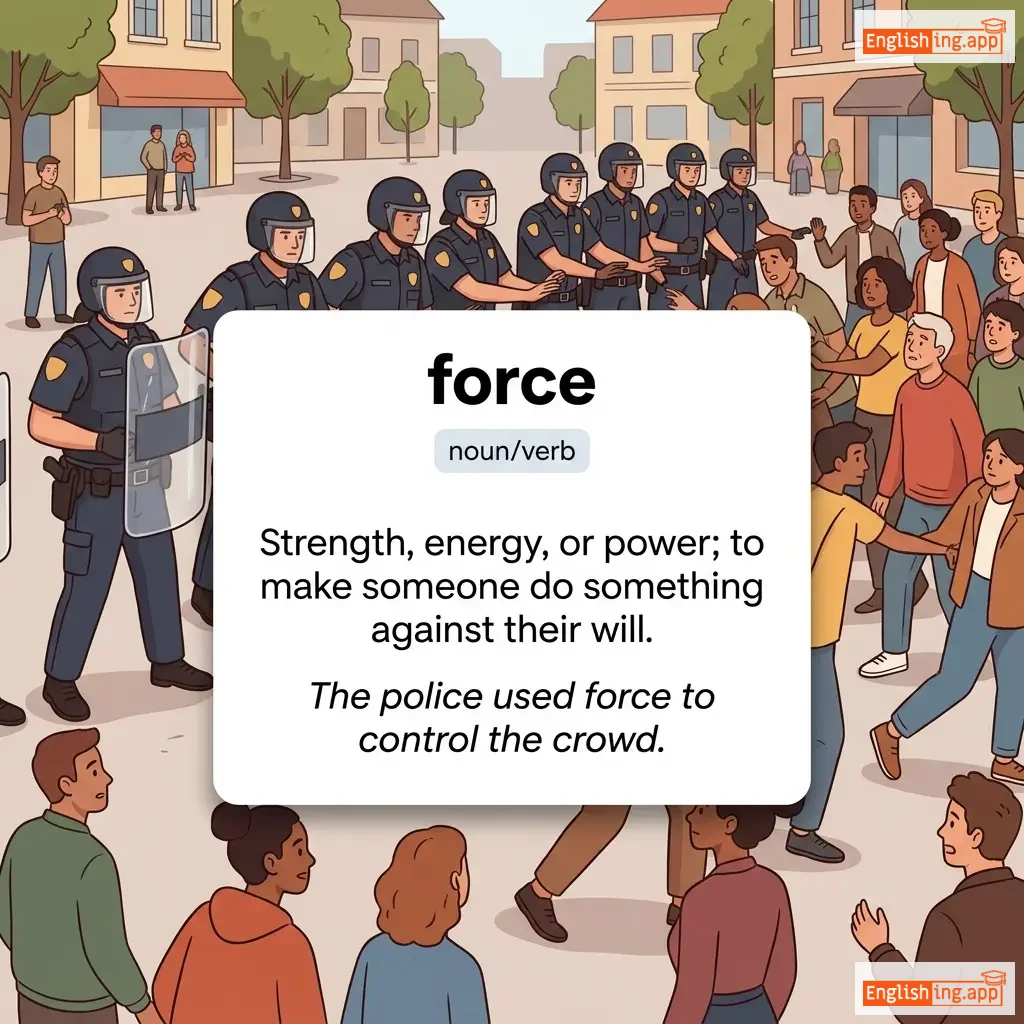
Strength, energy, or power; to make someone do something against their will.
••••••
|
The police used force to control the crowd.
警察使用了暴力来控制人群。
••••••
|
警察使用了暴力来控制人群。
Jǐngchá shǐyòngle bàolì lái kòngzhì rénqún.
••••••
|
brute force
暴力
••••••
|
using physical power rather than skill or intelligence
••••••
|
暴力
bàolì
••••••
|
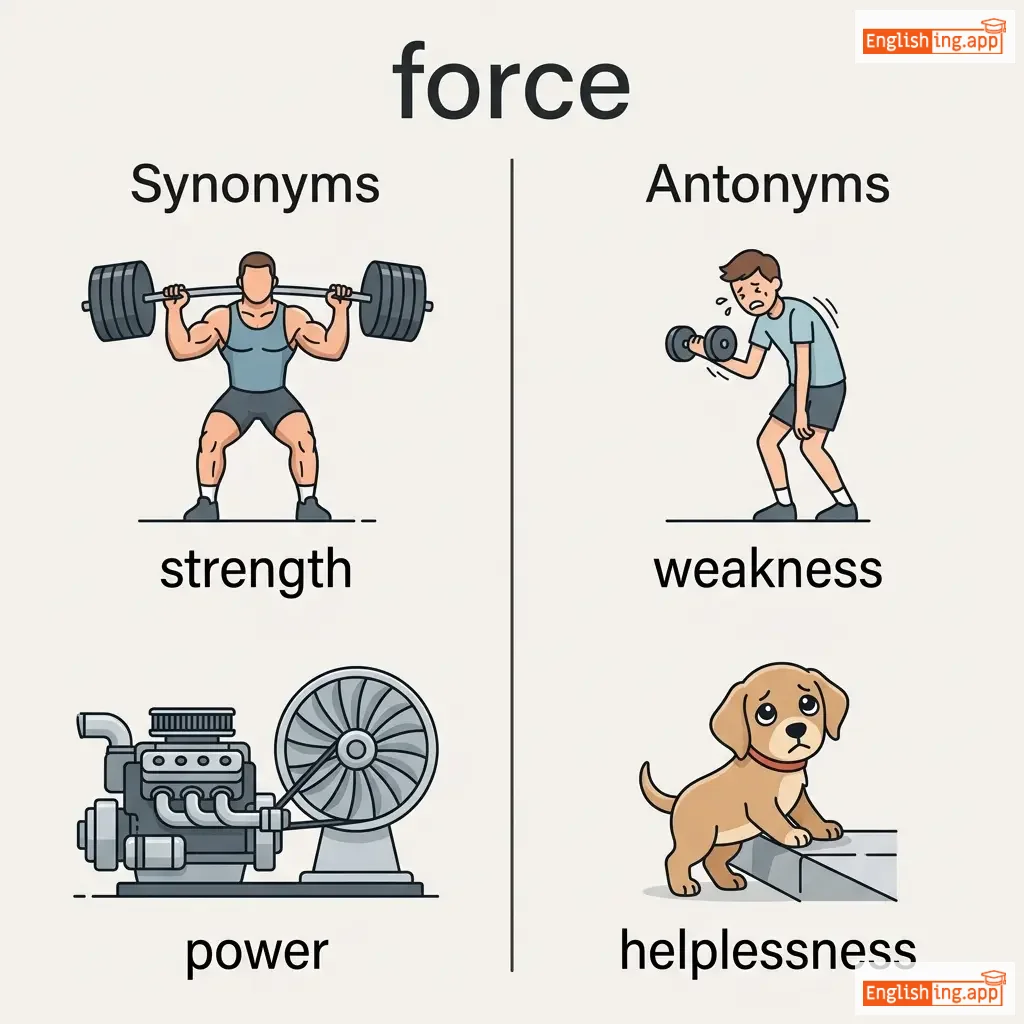
strength, power, energy, pressure, compulsion
••••••
|
weakness, helplessness, inaction
••••••
|
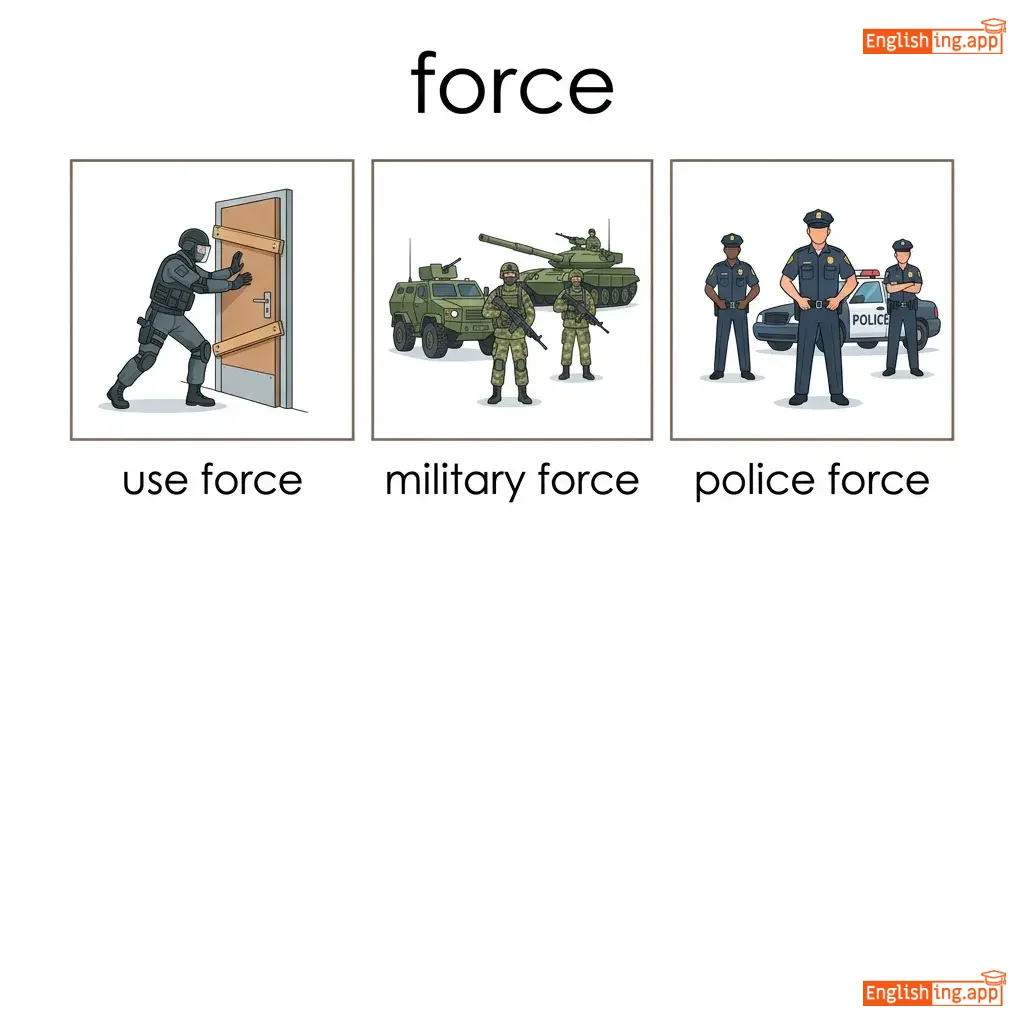
use force, military force, police force, force someone
••••••
|
FORCE 就是通过暴力获得你想要的东西。
••••••
|
|
✅
••••••
|
/ˈfʊli/
adverb
(fūlì)
••••••
|
- •••••• |
完全
wanquan
••••••
|
- •••••• | - •••••• | - •••••• | - •••••• |
completely or entirely; to the fullest extent
••••••
|
She is fully aware of the risks. |
她完全意识到这些风险。
Ta wanquan yishi dao zhexie fengxian.
••••••
|
fully booked |
completely reserved with no space left
••••••
|
完全预定
wanquan yuding
••••••
|
completely, entirely, totally, wholly, absolutely
••••••
|
partially, incompletely
••••••
|
fully aware, fully understand, fully booked, fully equipped
••••••
|
Fully 意味着完全,想象 'fuli' (充满),完全充满。
••••••
|
|
😂
••••••
|
/ˈfʌni/
adjective
(法尼)
••••••
|
- •••••• |
有趣
youqu
••••••
|
- •••••• | - •••••• | - •••••• | - •••••• |
Causing laughter or amusement; humorous.
••••••
|
The comedian told a very funny joke.
喜剧演员讲了一个非常有趣的笑话。
••••••
|
喜剧演员讲了一个非常有趣的笑话。
Xiju yan yuan jiang le yi ge feichang youqu de xiaohua.
••••••
|
funny bone
有趣的骨头
••••••
|
the part of the elbow that causes a tingling feeling when hit
••••••
|
有趣的骨头
youqu de gutou
••••••
|
humorous, amusing, comic, hilarious, entertaining
••••••
|
serious, sad, boring
••••••
|
funny story, funny joke, very funny, funny moment
••••••
|
Funny表示有趣,当你看到有趣的事物时,你无法停止笑。
••••••
|
|
🤔
••••••
|
/ɡɛs/
verb
(盖斯)
••••••
|
|
猜测
cāicè
••••••
|
guessed
盖斯特
••••••
|
guessed
盖斯特
••••••
|
guesses
盖塞斯
••••••
|
guessing
盖辛
••••••
|
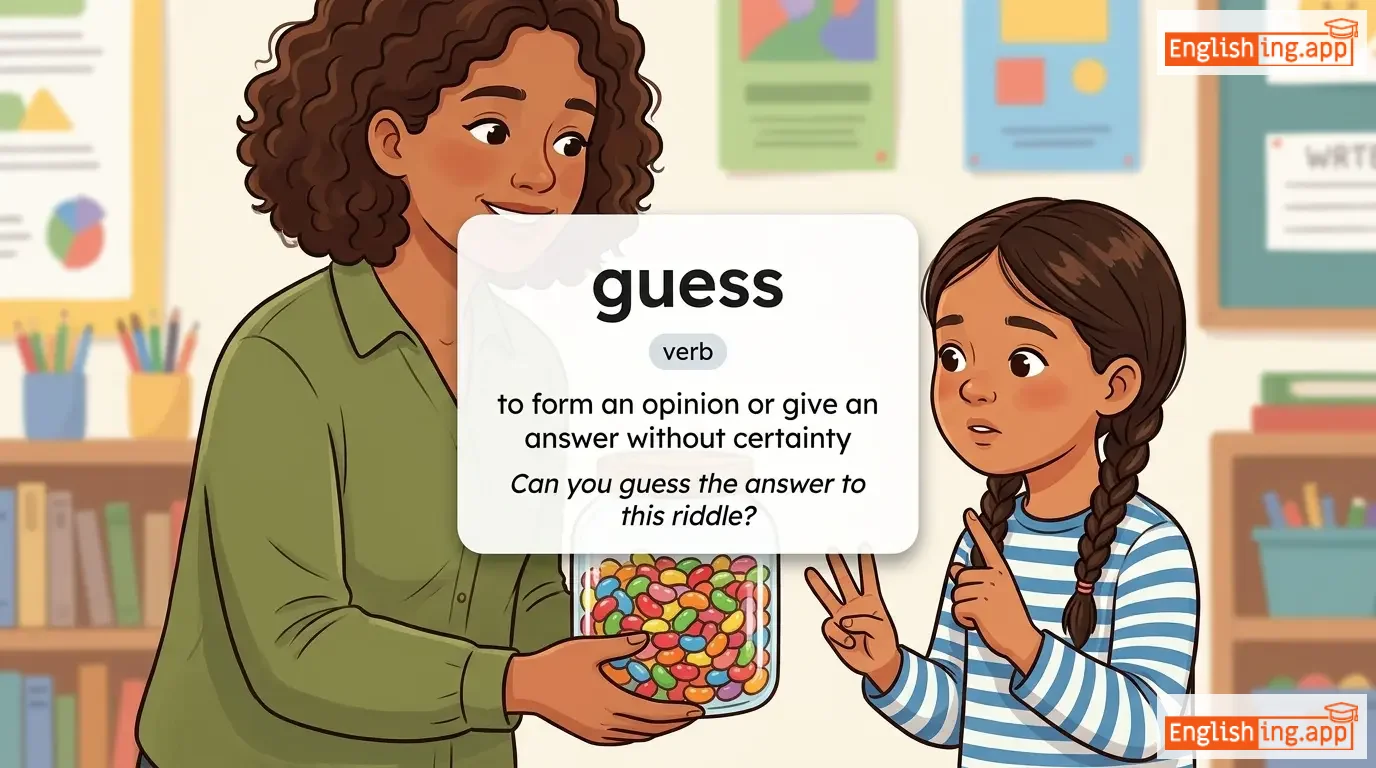
to form an opinion or give an answer without certainty
••••••
|
Can you guess the answer to this riddle?
你能猜出这个谜语的答案吗?
••••••
|
你能猜出这个谜语的答案吗?
Nǐ néng cāi chū zhège míyǔ de dá'àn ma?
••••••
|
take a guess
猜猜看
••••••
|
to attempt an answer without being sure
••••••
|
猜猜看
Cāi cāi kàn
••••••
|
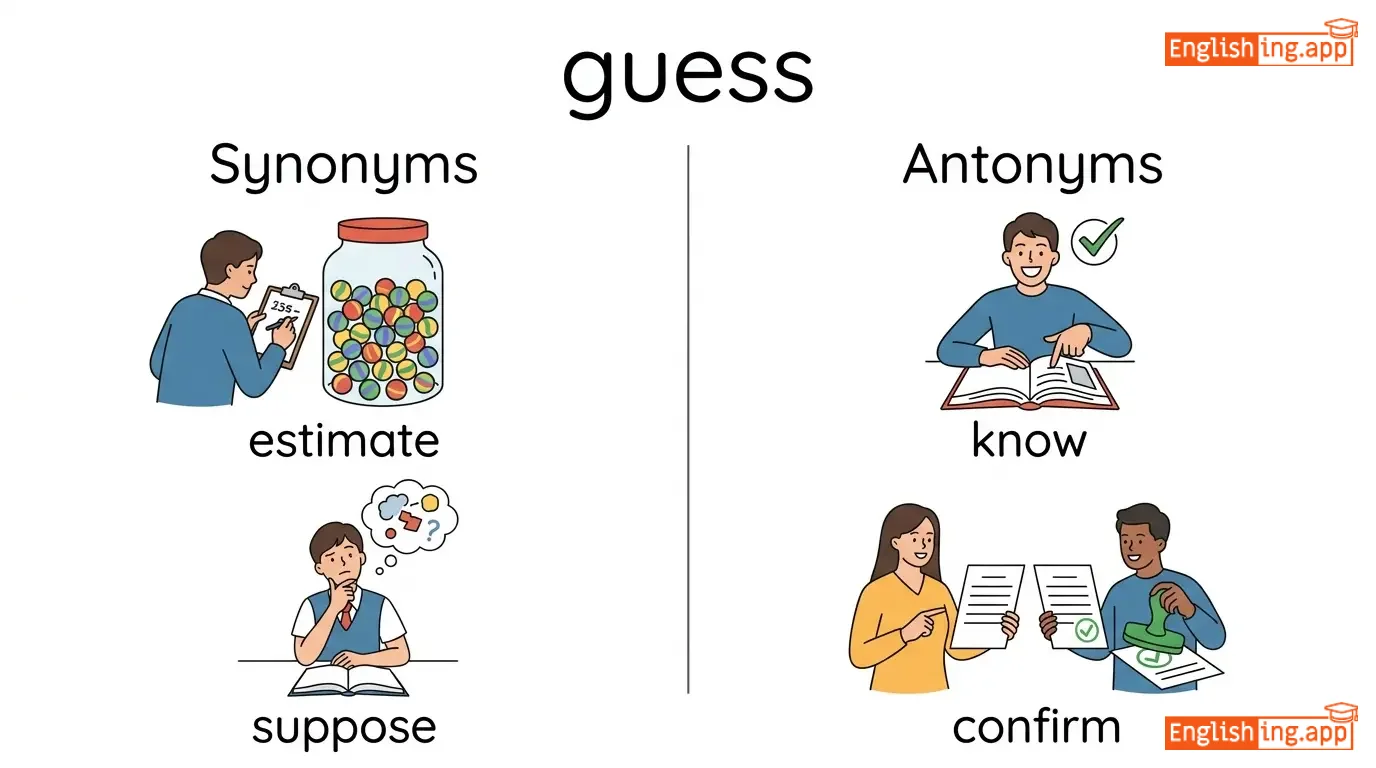
estimate, suppose, conjecture, assume, predict
••••••
|
know, confirm, determine
••••••
|
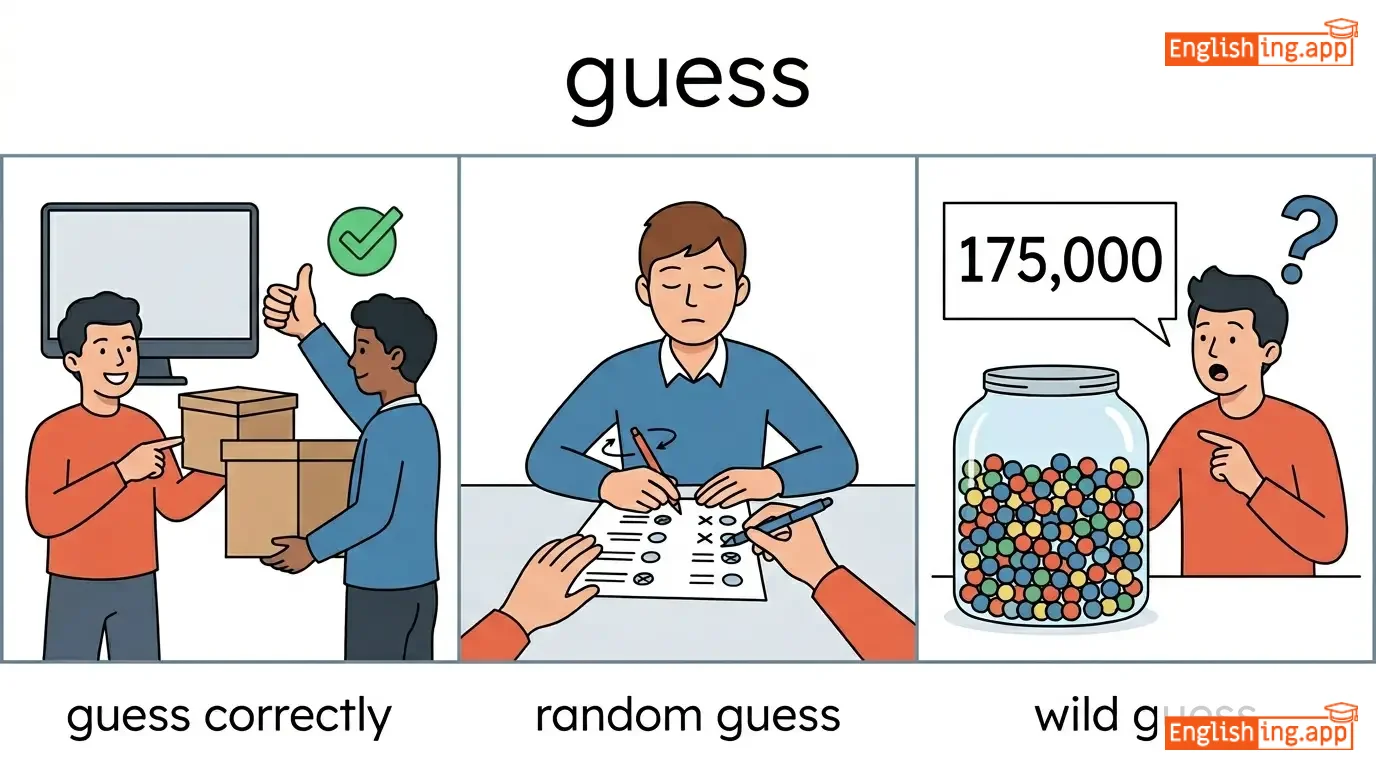
guess correctly, random guess, wild guess, guess the answer
••••••
|
Guess,像‘盖斯’,猜测答案,简单明了!
••••••
|

