|
表情符号
|
单词 | Images | 翻译 | 过去时 | 过去分词 | 第三人称单数 | 动名词 | 含义 | 例句 | 例句翻译 | 示例表达 | 示例表达含义 | 示例表达翻译 | 同义词 | 反义词 | 搭配词 | 助记符 |
|---|---|---|---|---|---|---|---|---|---|---|---|---|---|---|---|---|---|
|
😏
••••••
|
/ɪˈfrʌntəri/
noun
(埃夫朗特里)
••••••
|
|
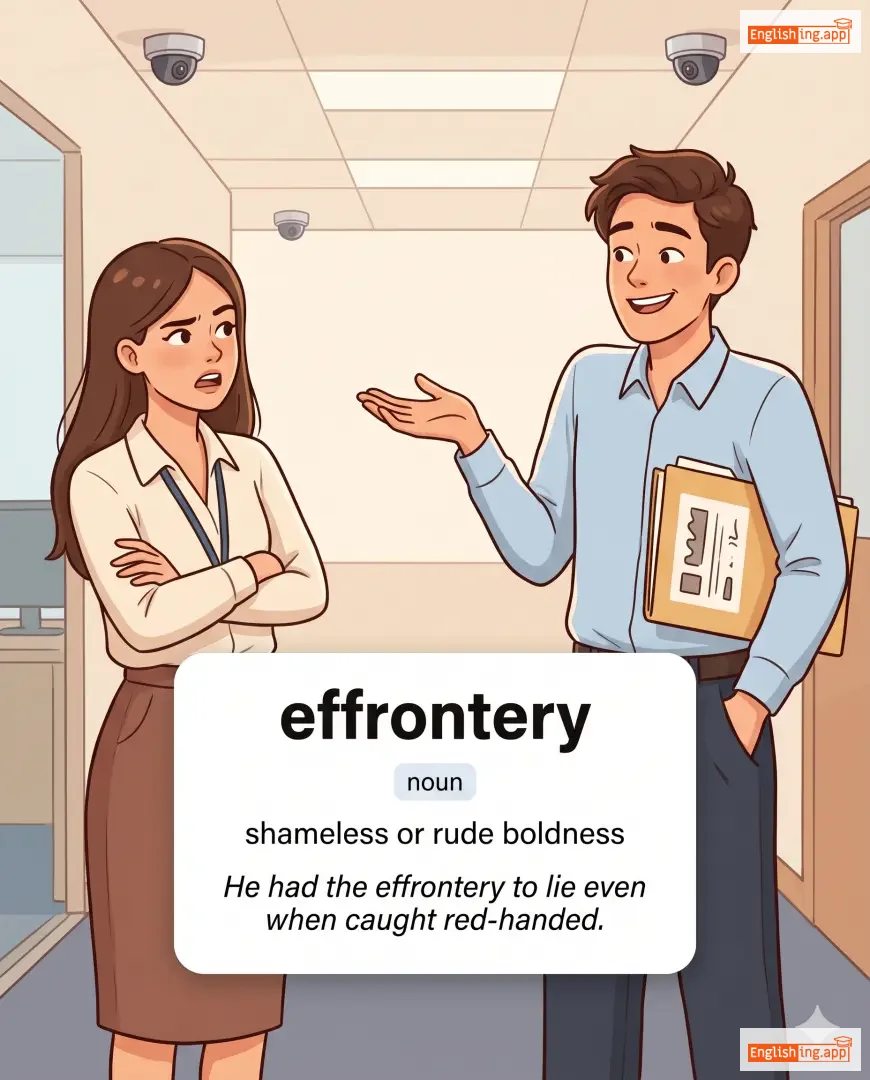
厚颜无耻或鲁莽的胆量
hòu yán wú chǐ huò lǔ mǎng de dǎn liàng
••••••
|
- •••••• | - •••••• | - •••••• | - •••••• |
shameless or rude boldness
••••••
|
He had the effrontery to lie even when caught red-handed. |
即使被当场抓住,他也厚颜无耻地撒谎。
Jí shǐ bèi dāngchǎng zhuā zhù, tā yě hòu yán wú chǐ de sā huǎng.
••••••
|
- •••••• | - •••••• | - •••••• |
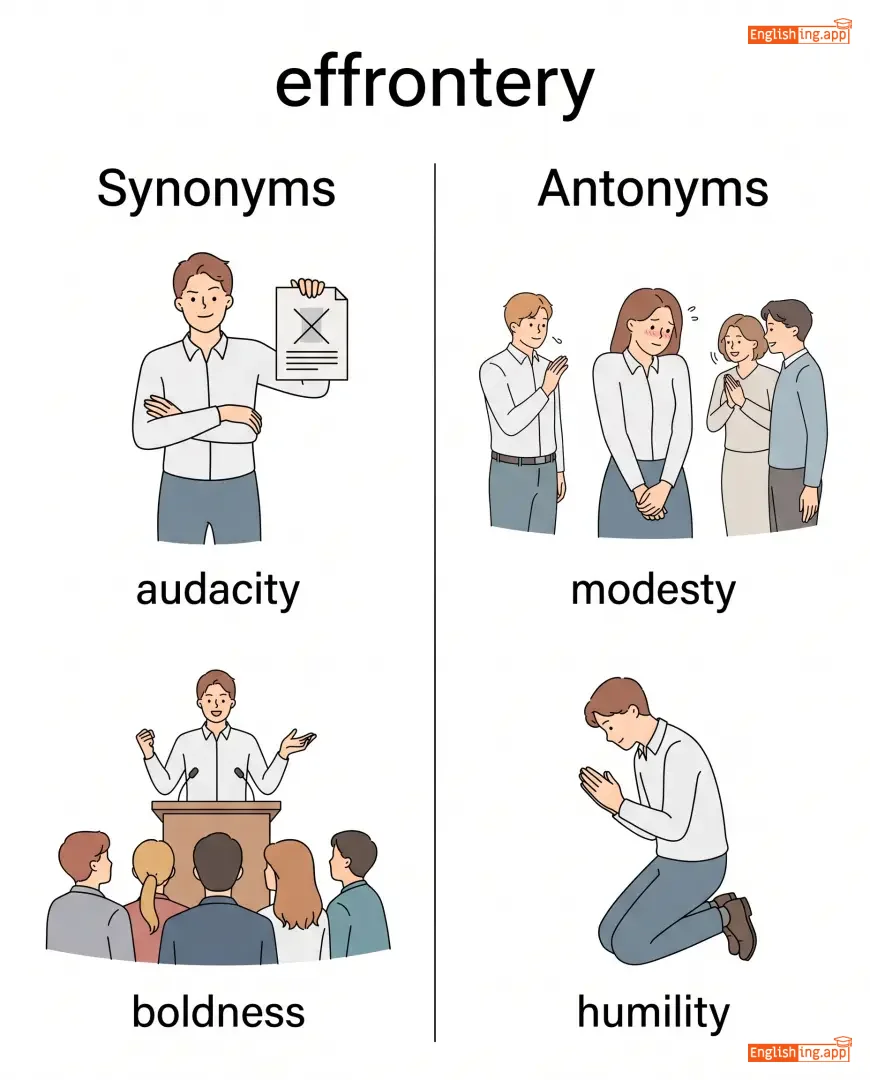
audacity, boldness, impudence, nerve, insolence
••••••
|
modesty, humility, shyness
••••••
|
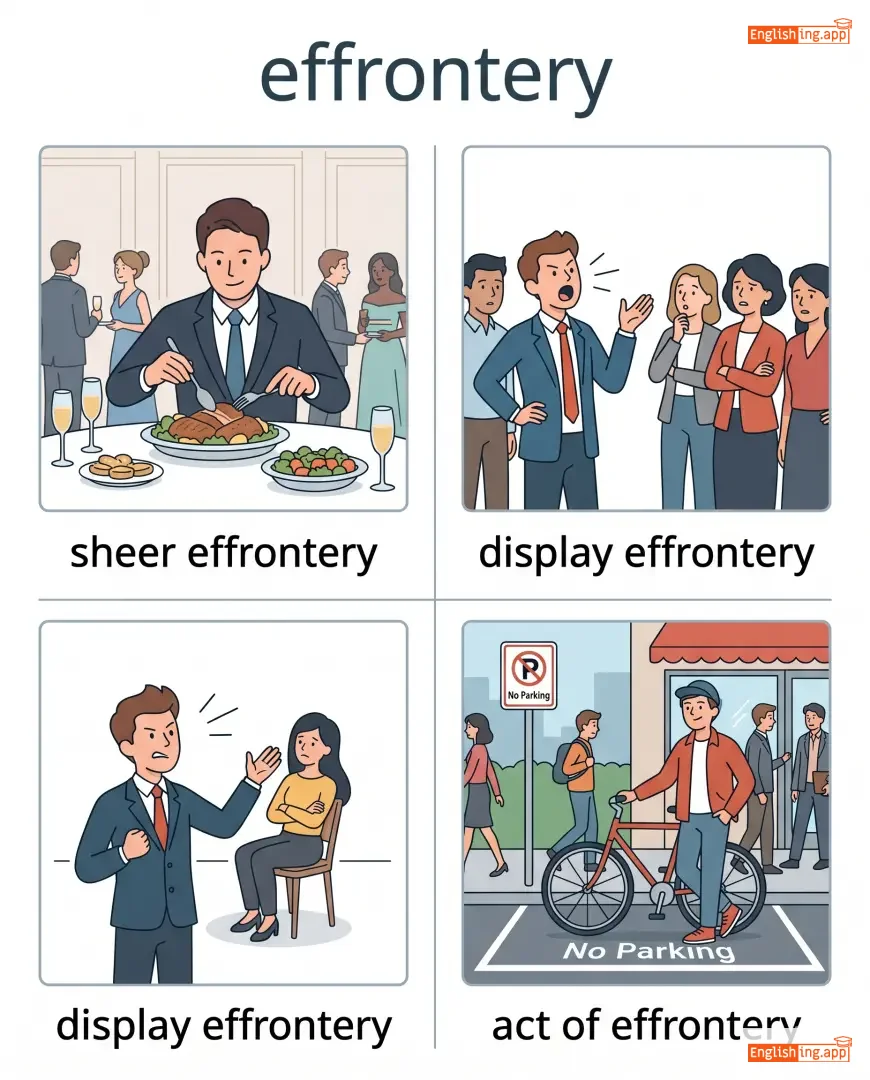
sheer effrontery, display effrontery, act of effrontery
••••••
|
Effrontery 意味着厚颜无耻的胆量 —— 前面 (front) 有粗鲁的行为。
••••••
|
|
🙇♂️
••••••
|
/ˈiːɡoʊˌɪzəm/
noun
(埃戈伊主义)
••••••
|
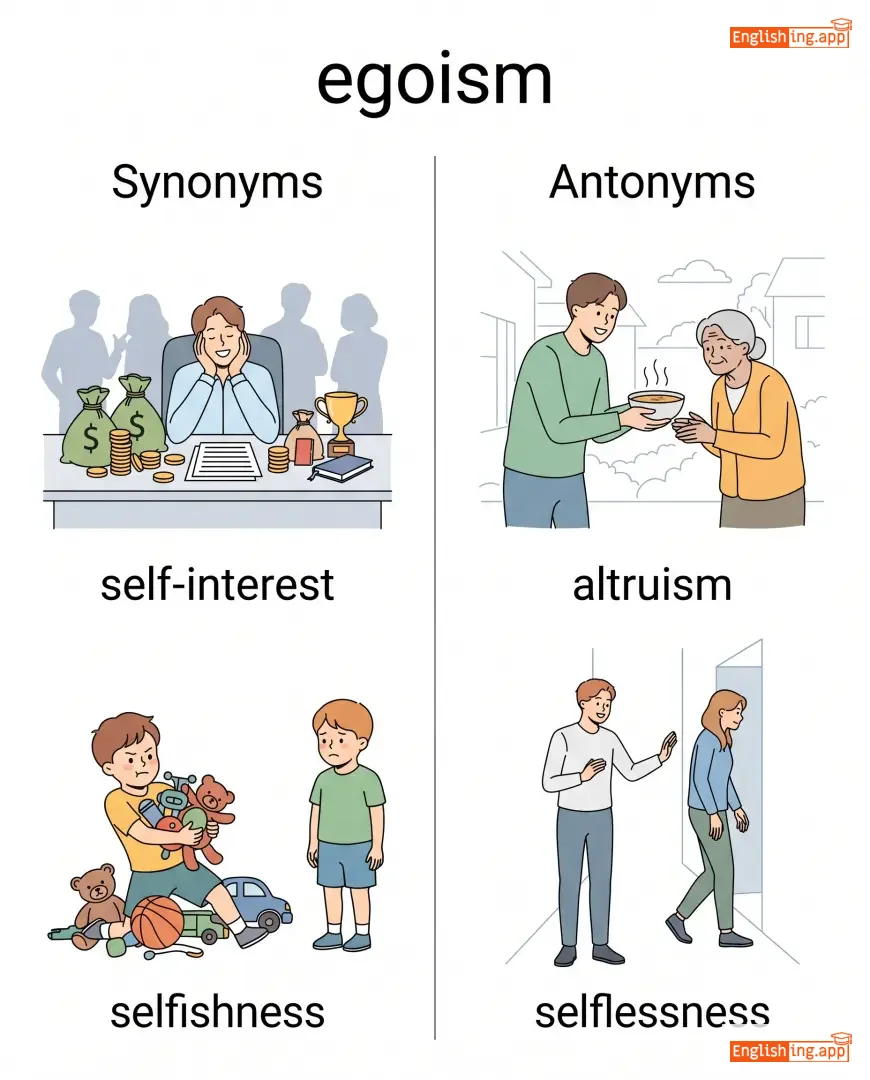
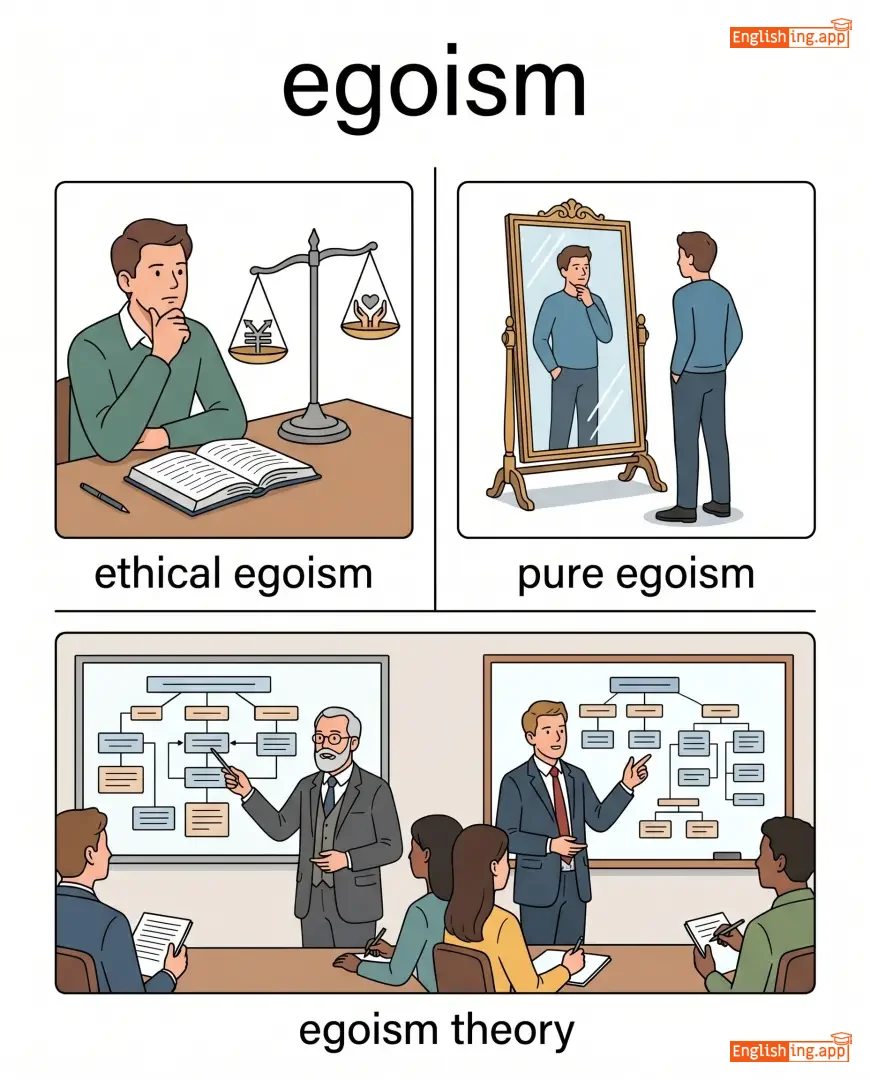
|
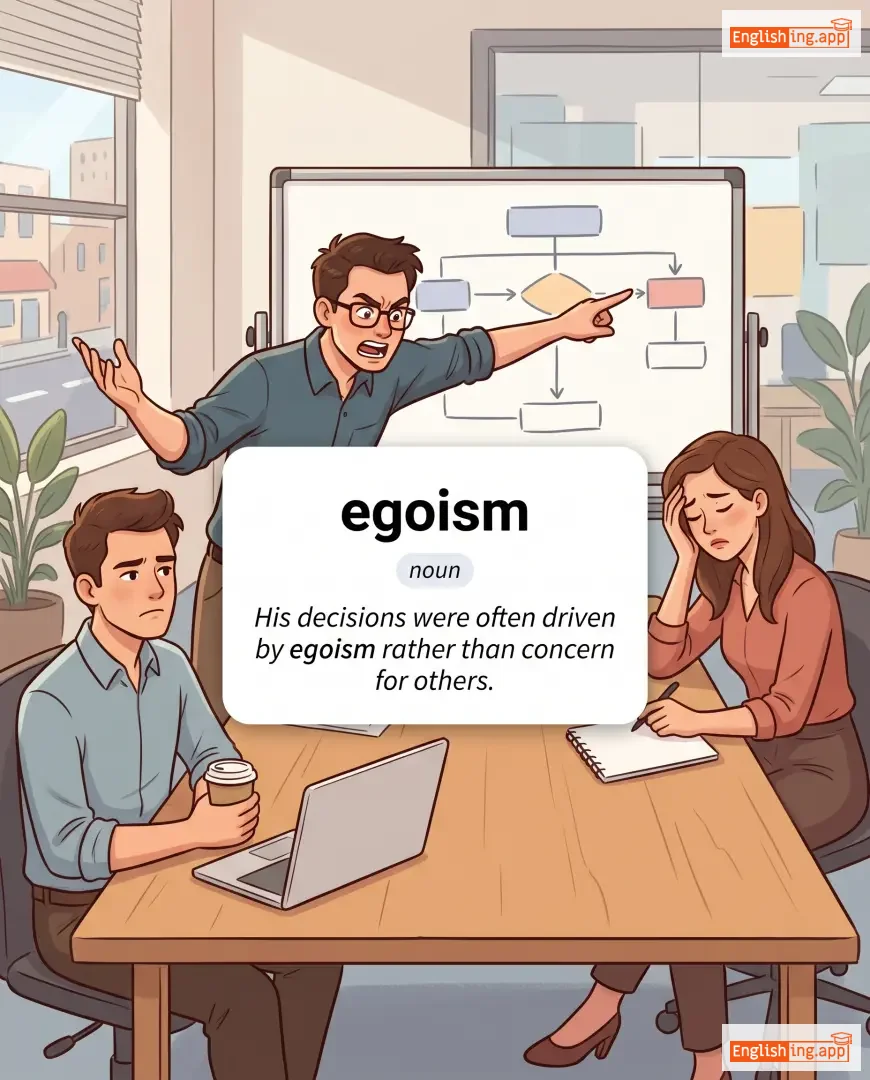
自我主义
zì wǒ zhǔ yì
••••••
|
- •••••• | - •••••• | - •••••• | - •••••• |
An ethical theory that treats self-interest as the foundation of morality; also, excessive preoccupation with oneself.
••••••
|
His decisions were often driven by egoism rather than concern for others. |
他的决定常常受到自我主义的驱使,而不是关心他人。
Tā de juédìng chángcháng shòu dào zì wǒ zhǔ yì de qū shǐ, ér bù shì guān xīn tārén.
••••••
|
- •••••• | - •••••• | - •••••• |
self-interest, selfishness, egocentrism, self-centeredness
••••••
|
altruism, selflessness
••••••
|
ethical egoism, pure egoism, egoism theory, act of egoism
••••••
|
自我主义 = 自我 + 主义,哲学把自己放在第一位。
••••••
|
|
🙄
••••••
|
/ˌiːɡəˈtɪstɪkəl/
adjective
(yīgè tí sī tīkā ěr)
••••••
|
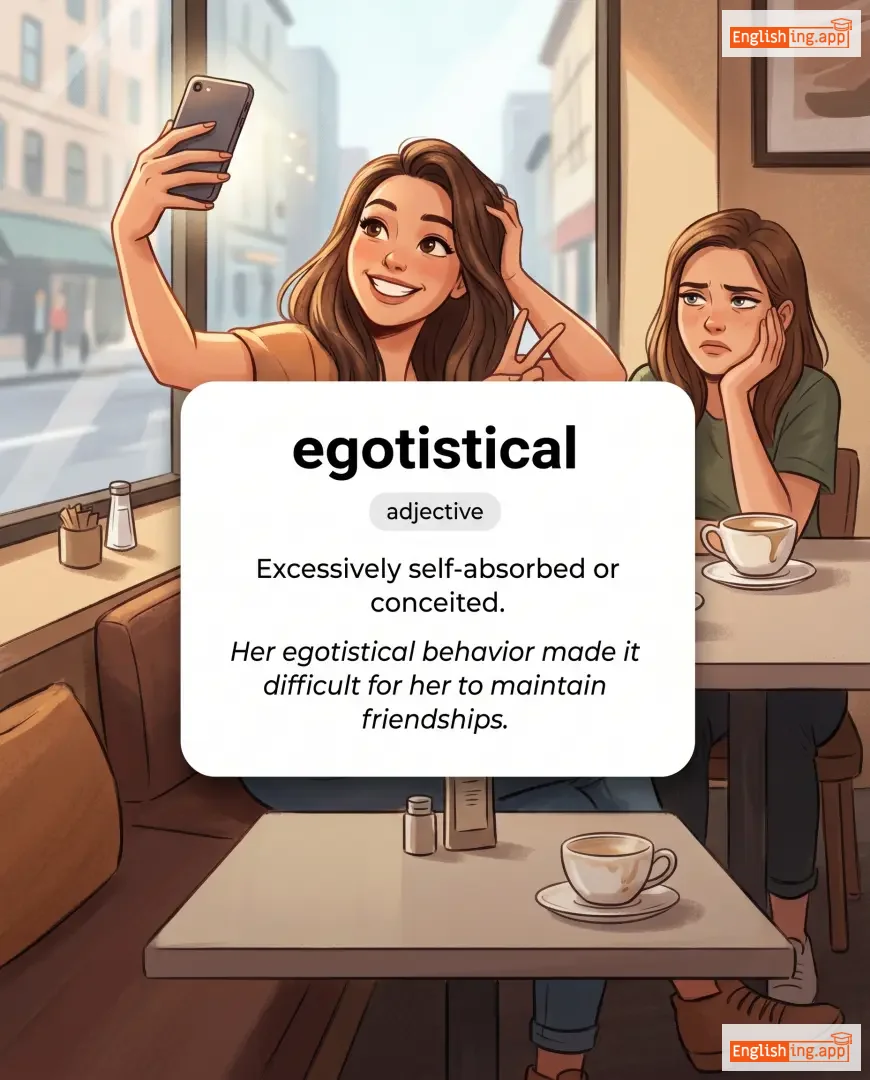
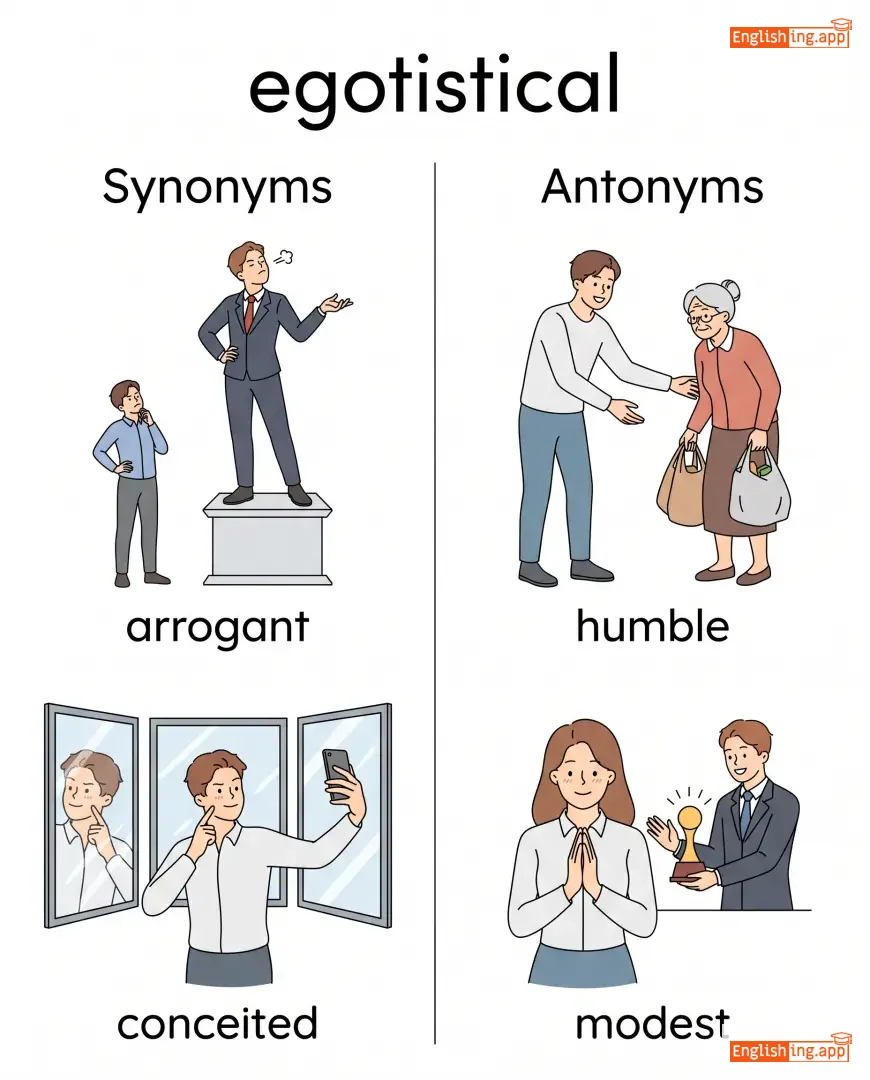
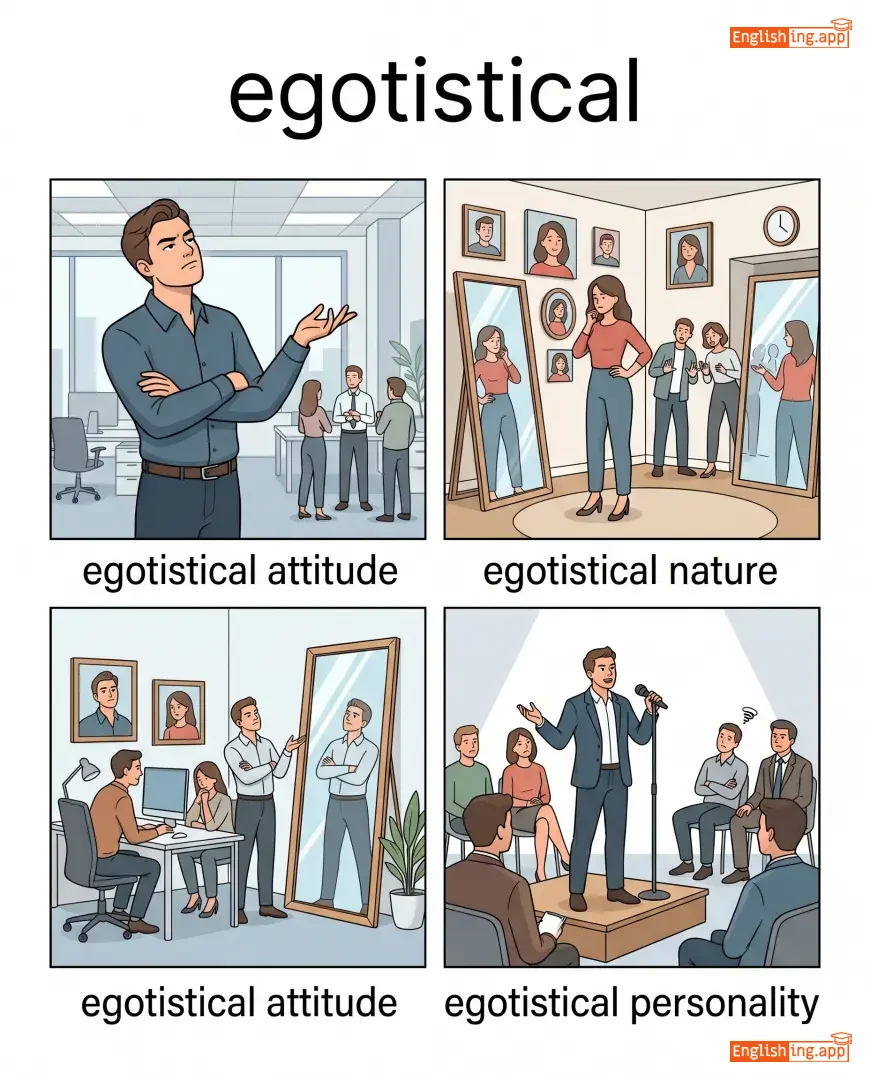
|
自私的
zìsī de
••••••
|
- •••••• | - •••••• | - •••••• | - •••••• |
Excessively self-absorbed or conceited.
••••••
|
Her egotistical behavior made it difficult for her to maintain friendships. |
她自私的行为使得她很难维持友谊。
Tā zìsī de xíngwéi shǐdé tā hěn nán wéichí yǒuyì.
••••••
|
- •••••• | - •••••• | - •••••• |
arrogant, conceited, narcissistic, vain, self-centered
••••••
|
humble, modest, selfless
••••••
|
egotistical attitude, egotistical nature, egotistical personality
••••••
|
Ego+tistical → 拥有太多的自我意味着自私的。
••••••
|
|
🪦
••••••
|
/ˈɛlɪdʒi/
noun
(艾乐基)
••••••
|
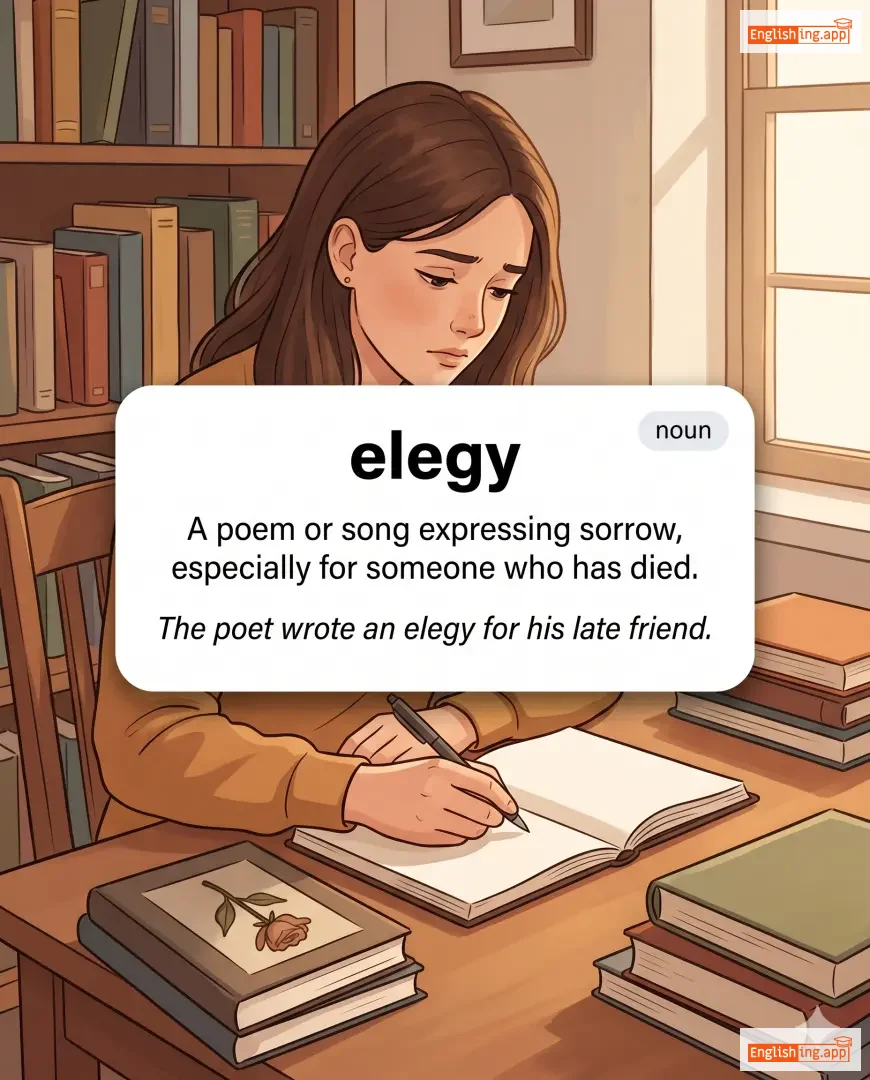
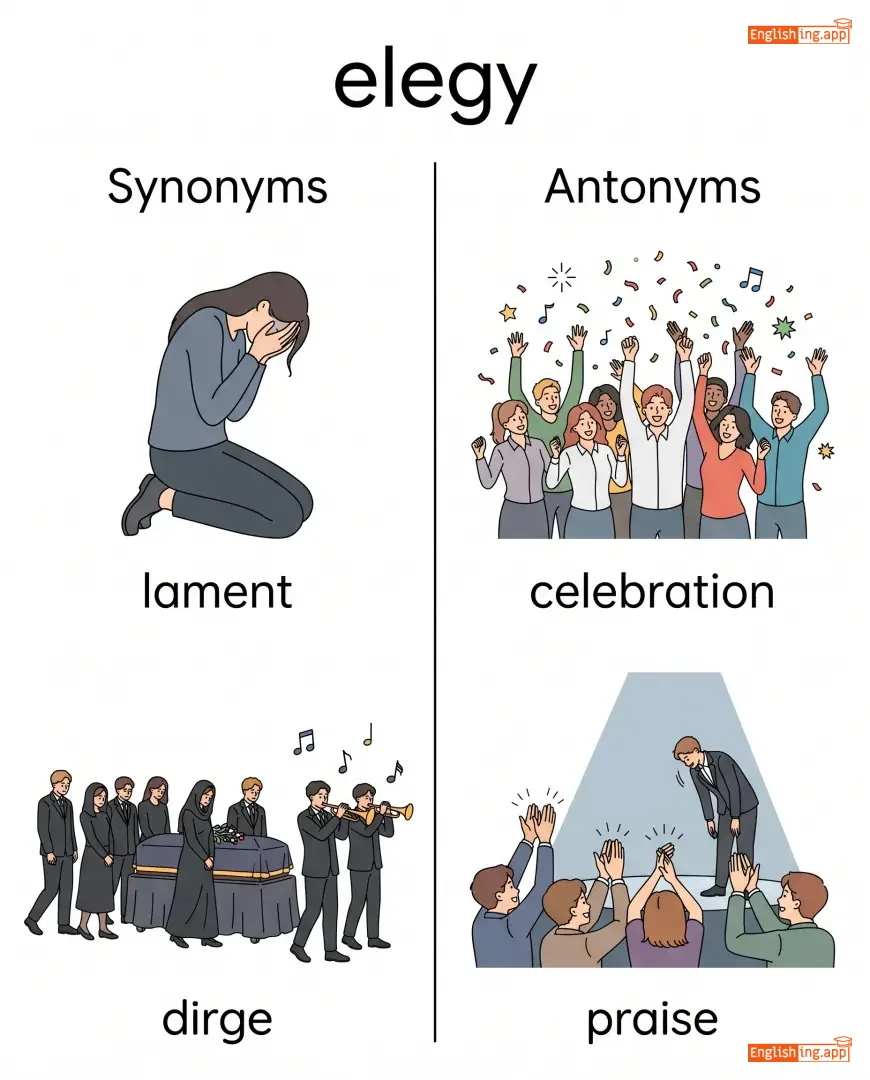
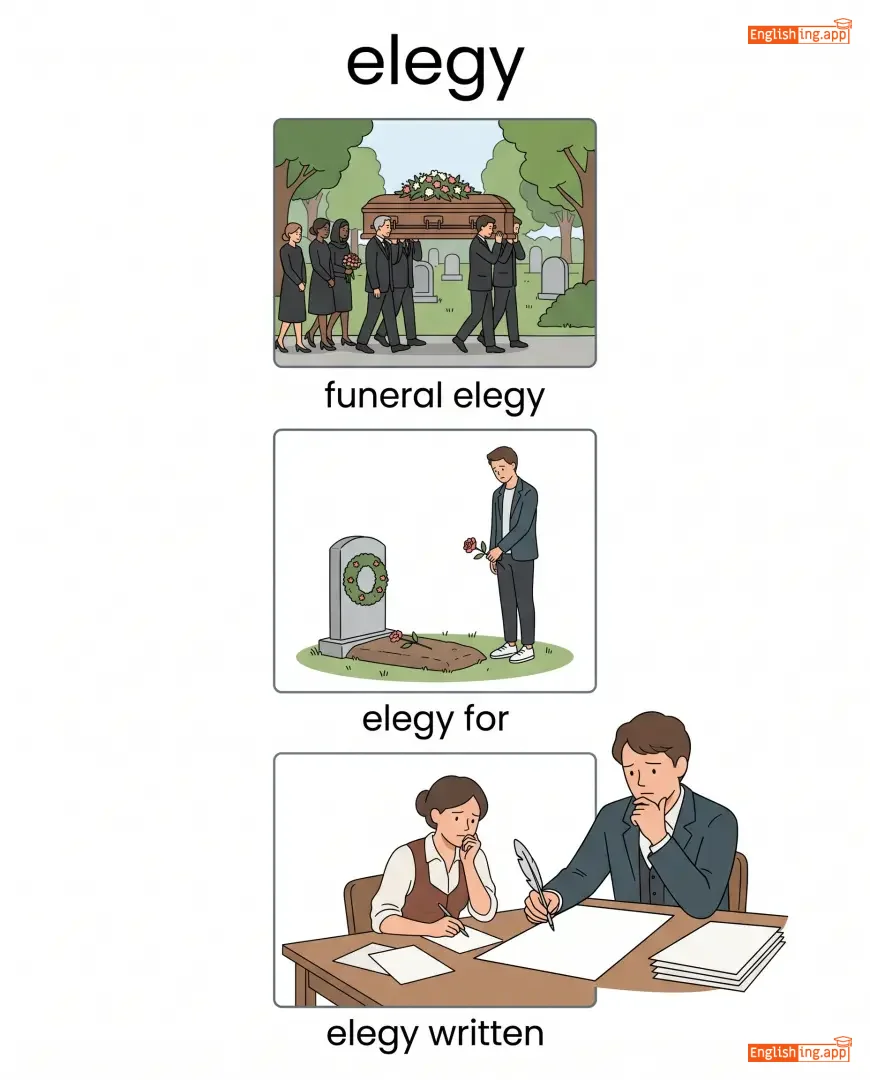
|
挽歌
wǎn gē
••••••
|
- •••••• | - •••••• | - •••••• | - •••••• |
A poem or song expressing sorrow, especially for someone who has died.
••••••
|
The poet wrote an elegy for his late friend. |
诗人为他已故的朋友写了一首挽歌。
Shīrén wèi tā yǐ gù de péngyǒu xiěle yī shǒu wǎn gē.
••••••
|
- •••••• | - •••••• | - •••••• |
lament, dirge, requiem, threnody, ode
••••••
|
celebration, praise
••••••
|
funeral elegy, elegy for, elegy written, mournful elegy
••••••
|
挽歌像是为离去的人唱的一首悲伤歌曲。
••••••
|
|
💬
••••••
|
/ɪˈlɪsɪt/
verb
(伊莉西特)
••••••
|
|
引出
yǐn chū
••••••
|
elicited
伊莉西特得
••••••
|
elicited
伊莉西特得
••••••
|
elicits
伊莉西特
••••••
|
eliciting
伊莉西特ing
••••••
|
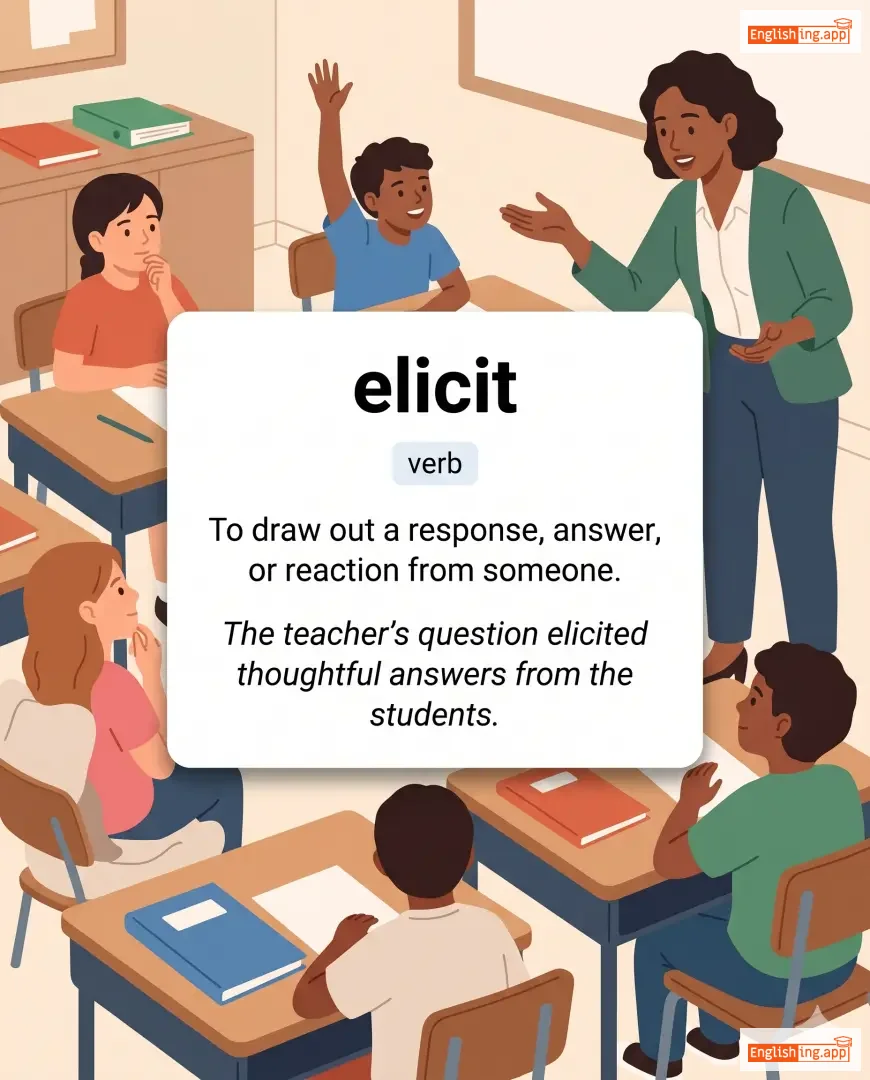
To draw out a response, answer, or reaction from someone.
••••••
|
The teacher’s question elicited thoughtful answers from the students.
老師的問題引發了學生們深思熟慮的回答。
••••••
|
老師的問題引發了學生的深思熟慮的回答。
Lǎoshī de wèntí yǐn fāle xuéshēng men de shēnsī shúlüè de huídá.
••••••
|
elicit a response
激發回應
••••••
|
to cause someone to reply or react
••••••
|
引發回應
yǐn fā huíyìng
••••••
|
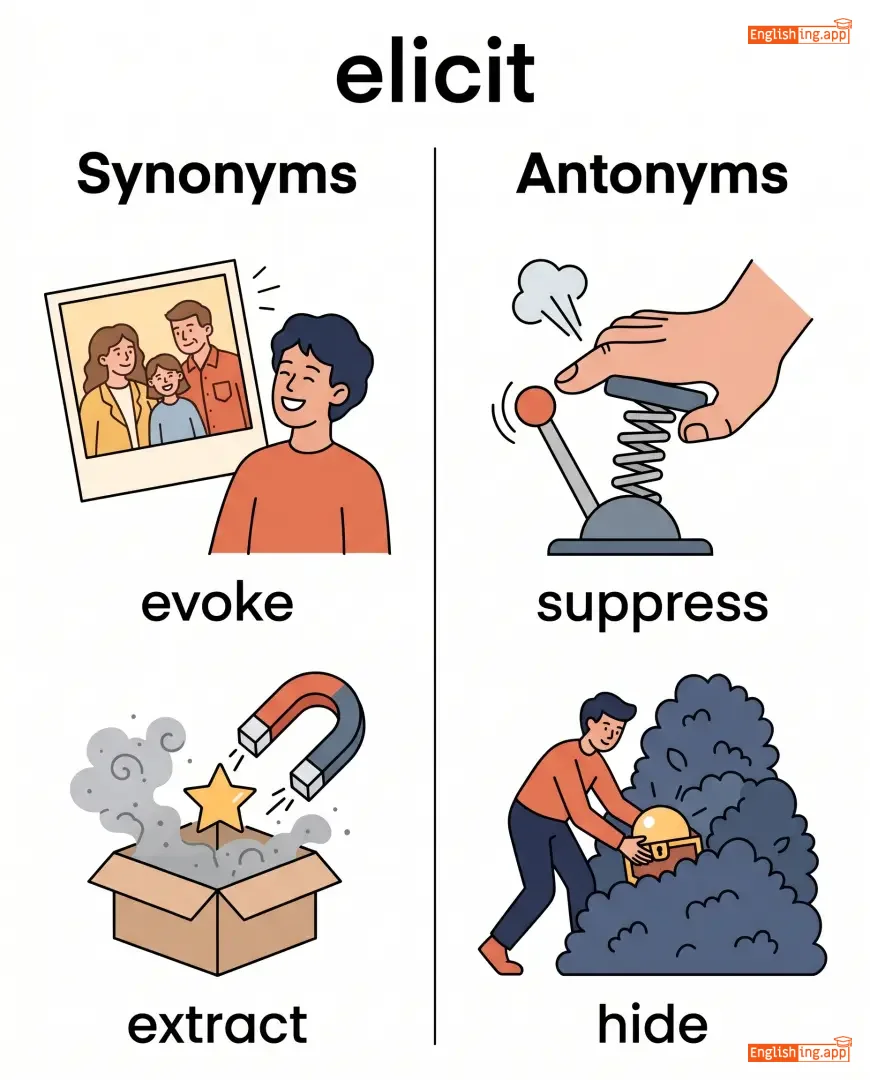
evoke, extract, provoke, obtain, bring out
••••••
|
suppress, hide, silence
••••••
|
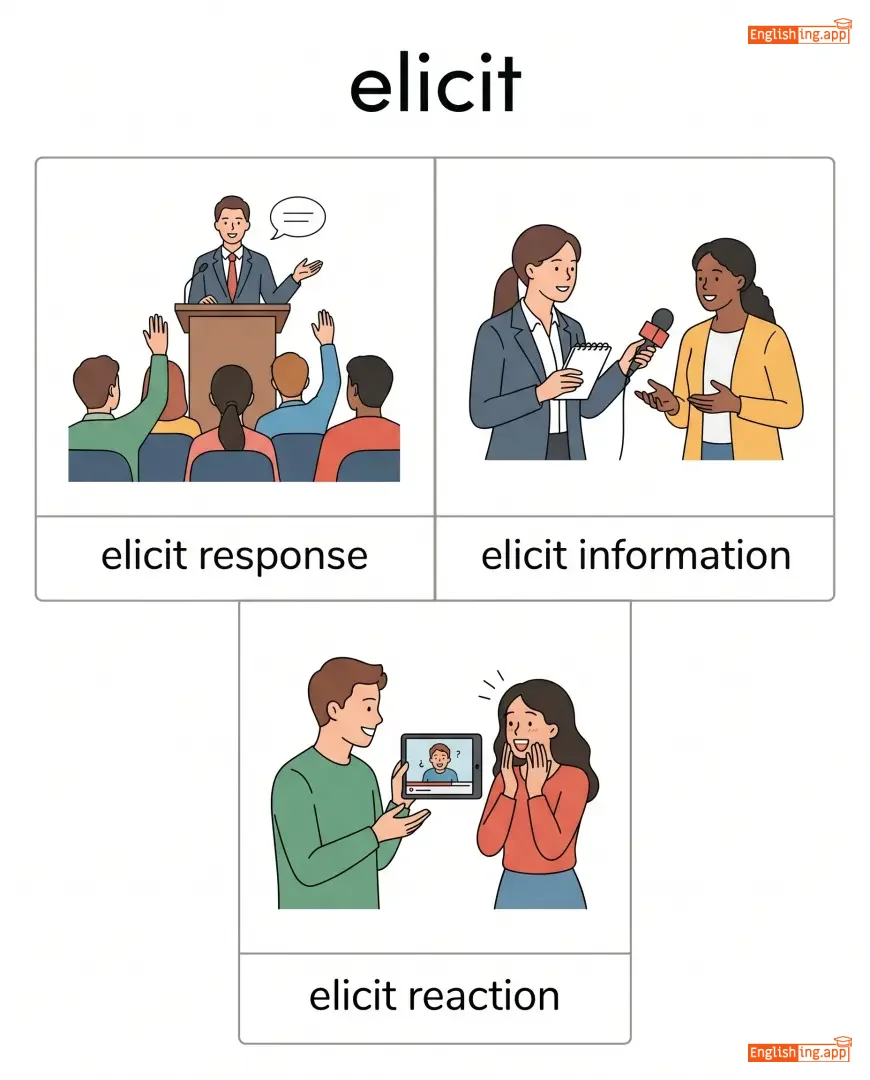
elicit response, elicit information, elicit reaction, elicit support
••••••
|
例如 = 根據聯繫處引發反應
••••••
|
|
🧪
••••••
|
/ɪˈlɪksər/
noun
(艾利克西尔)
••••••
|
|
灵药
líng yào
••••••
|
- •••••• | - •••••• | - •••••• | - •••••• |
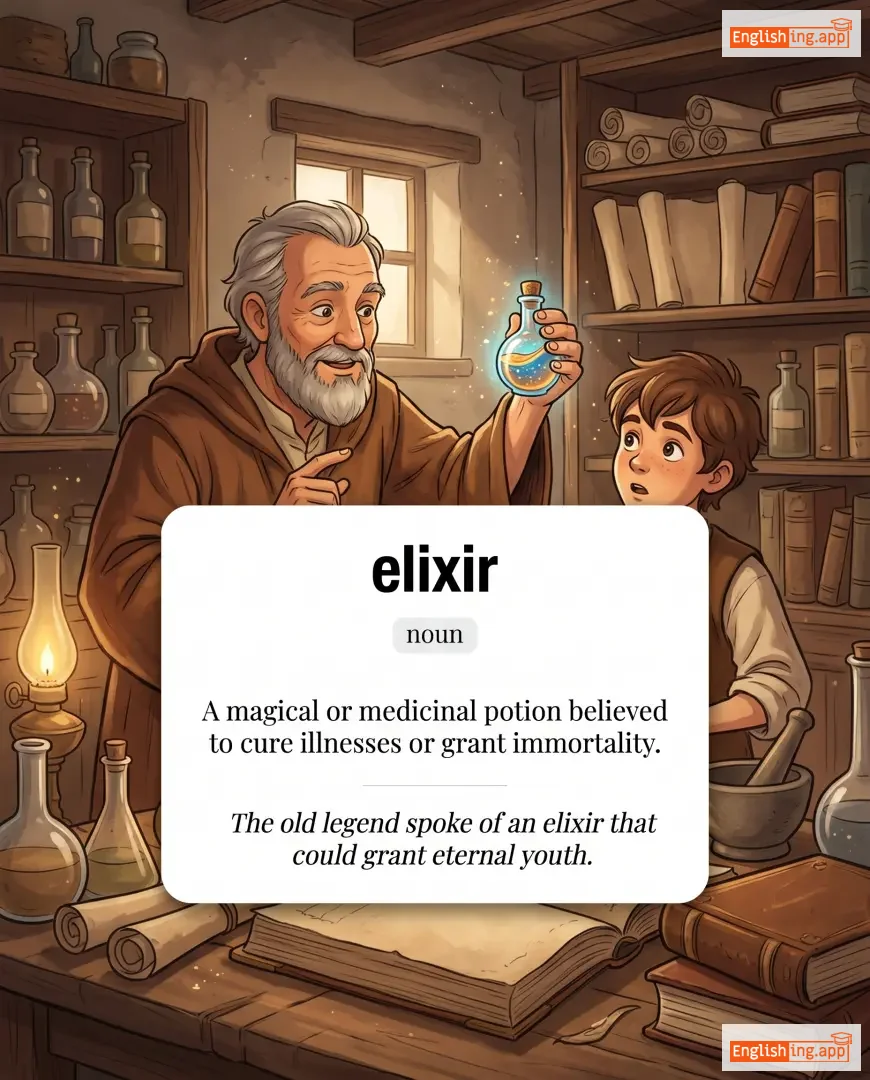
A magical or medicinal potion believed to cure illnesses or grant immortality.
••••••
|
The old legend spoke of an elixir that could grant eternal youth. |
古老的传说中提到了一个可以赋予永恒青春的灵药。
Gǔlǎo de chuánshuō zhōng tí dào le yīgè kěyǐ fùyǔ yǒnghéng qīngchūn de líng yào.
••••••
|
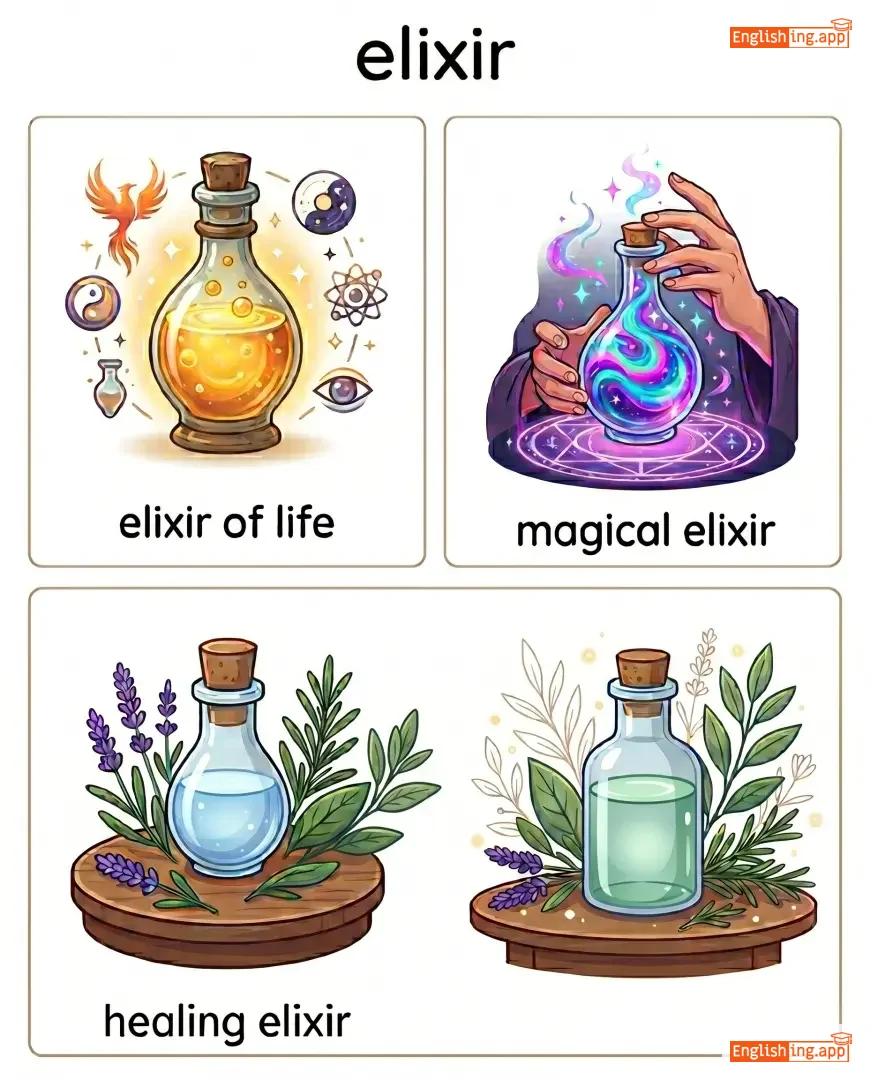
elixir of life |
A mythical potion that grants immortality or eternal youth.
••••••
|
生命灵药
shēngmìng líng yào
••••••
|
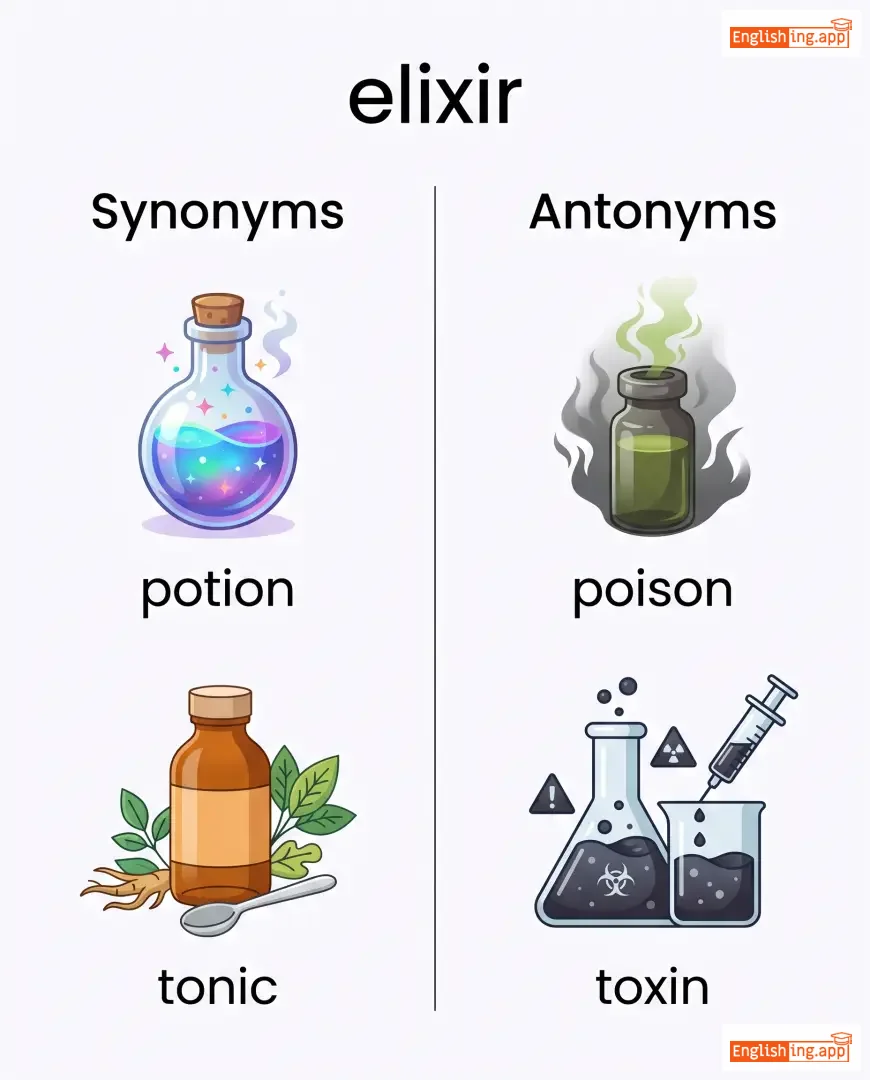
potion, tonic, remedy, cure, panacea
••••••
|
poison, toxin, disease
••••••
|
elixir of life, magical elixir, healing elixir, secret elixir
••••••
|
Elixir 就像魔法药水,能治愈一切,解决所有问题!
••••••
|
|
🌸
••••••
|
/ɪˈlɪʒən/
adjective
(伊利西安)
••••••
|
|
天堂的
tiāntáng de
••••••
|
- •••••• | - •••••• | - •••••• | - •••••• |
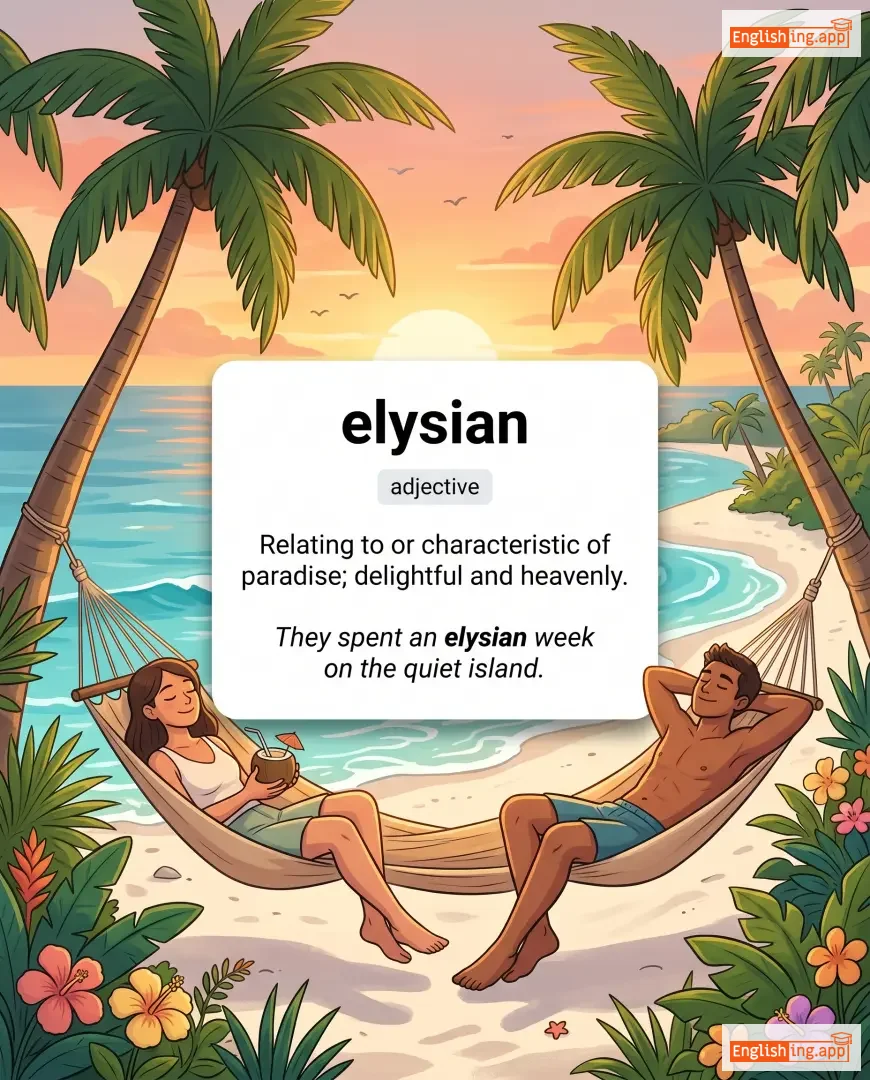
Relating to or characteristic of paradise; delightful and heavenly.
••••••
|
They spent an elysian week on the quiet island. |
他们在宁静的岛屿上度过了一个天堂般的星期。
Tāmen zài níngjìng de dǎoyǔ shàng dùguòle yīgè tiāntáng bān de xīngqī.
••••••
|
- •••••• | - •••••• | - •••••• |
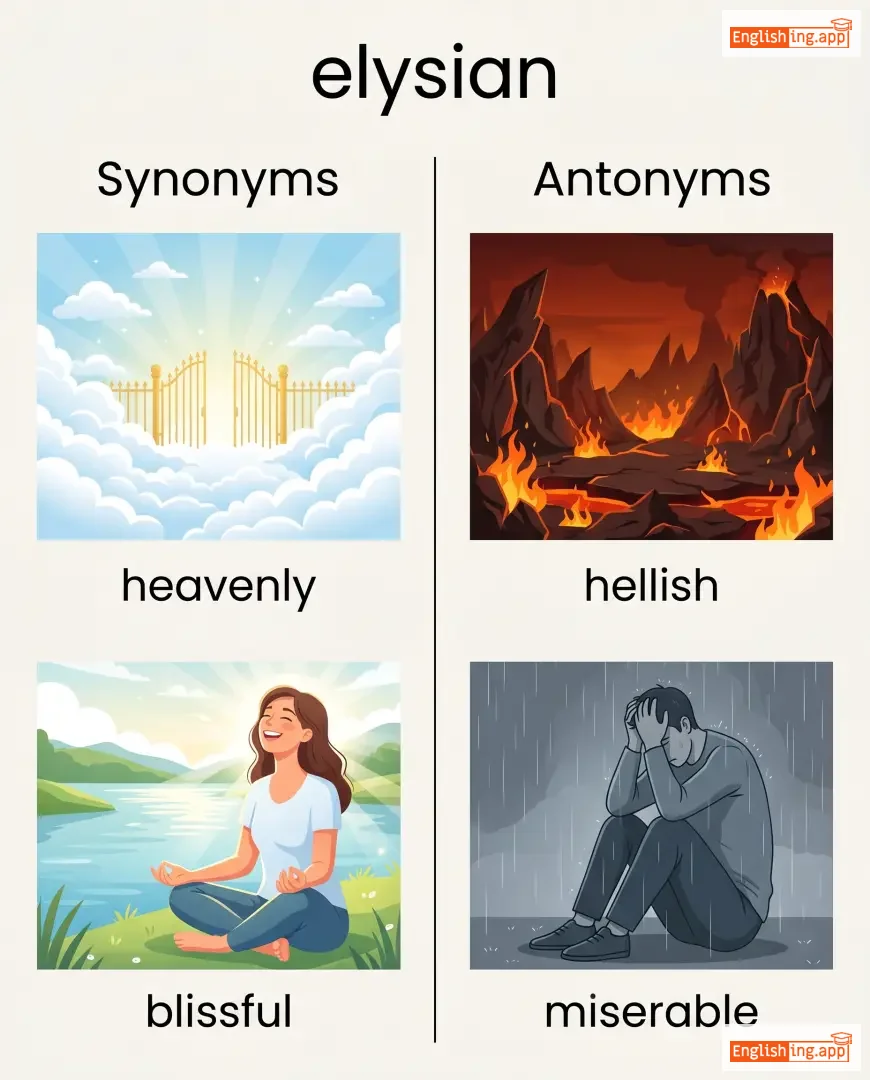
heavenly, blissful, idyllic, divine, paradisiacal
••••••
|
hellish, miserable, unpleasant
••••••
|
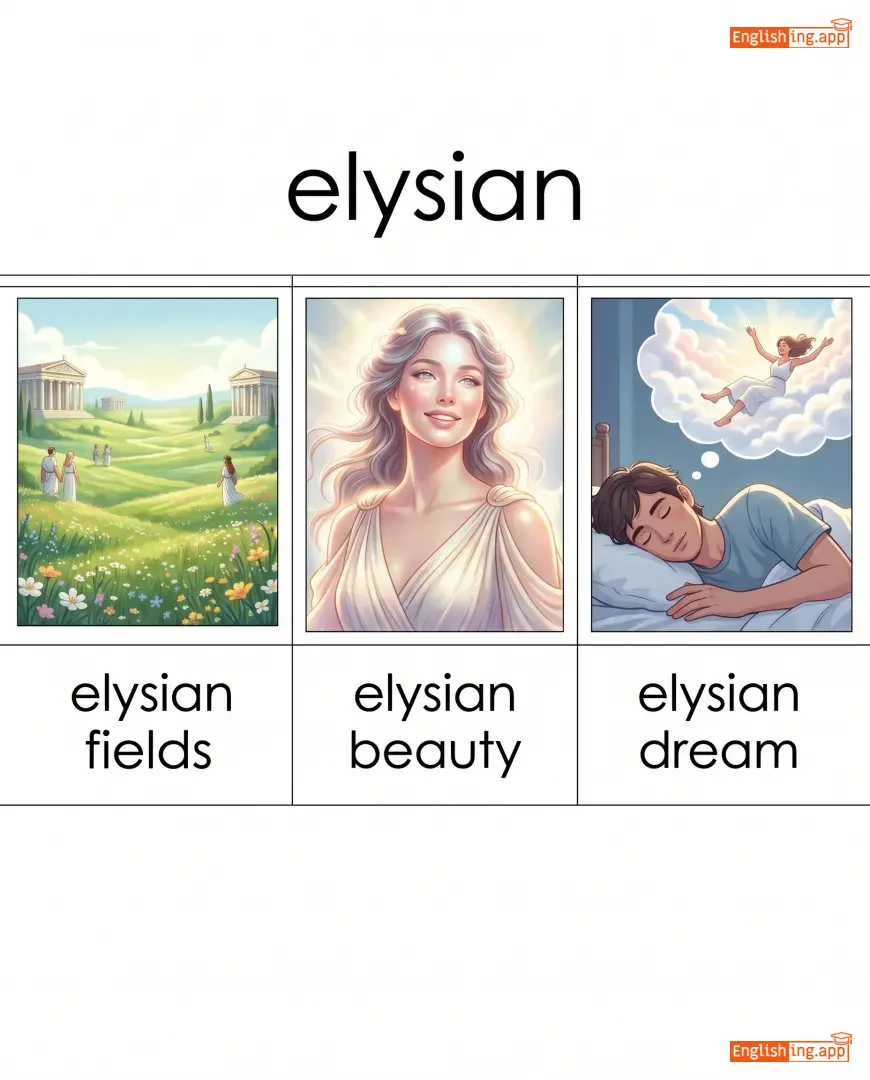
elysian fields, elysian beauty, elysian dream, elysian experience
••••••
|
Elysian 是天堂般的,就像在宁静岛屿上的完美一周。
••••••
|
|
🦴
••••••
|
/ɪˈmeɪʃieɪtɪd/
adjective
(yīmǎxíéitèd)
••••••
|
|
消瘦
xiāo shòu
••••••
|
- •••••• | - •••••• | - •••••• | - •••••• |
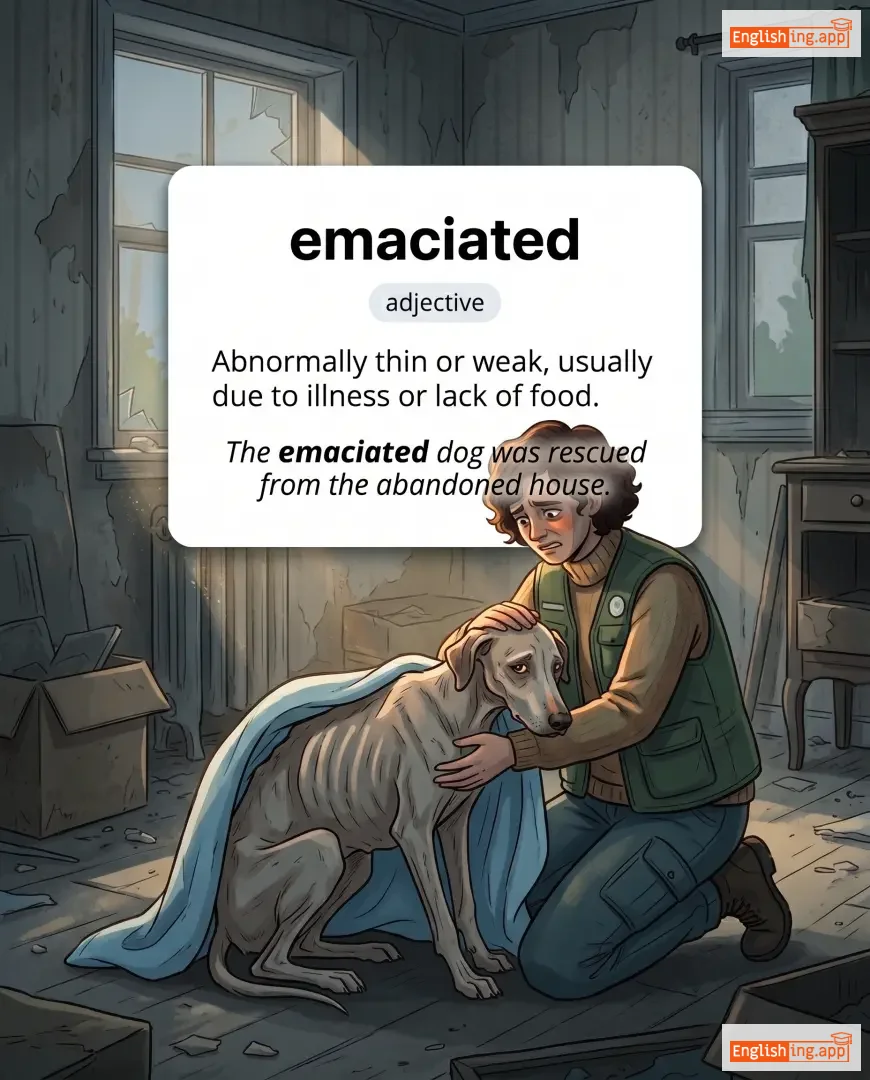
Abnormally thin or weak, usually due to illness or lack of food.
••••••
|
The emaciated dog was rescued from the abandoned house.
那只瘦弱的狗从废弃的房子里被救出来。
••••••
|
那只消瘦的狗从废弃的房子里被救出来。
Nà zhī xiāo shòu de gǒu cóng fèiqì de fángzi lǐ bèi jiù chūlái.
••••••
|
- •••••• | - •••••• | - •••••• |
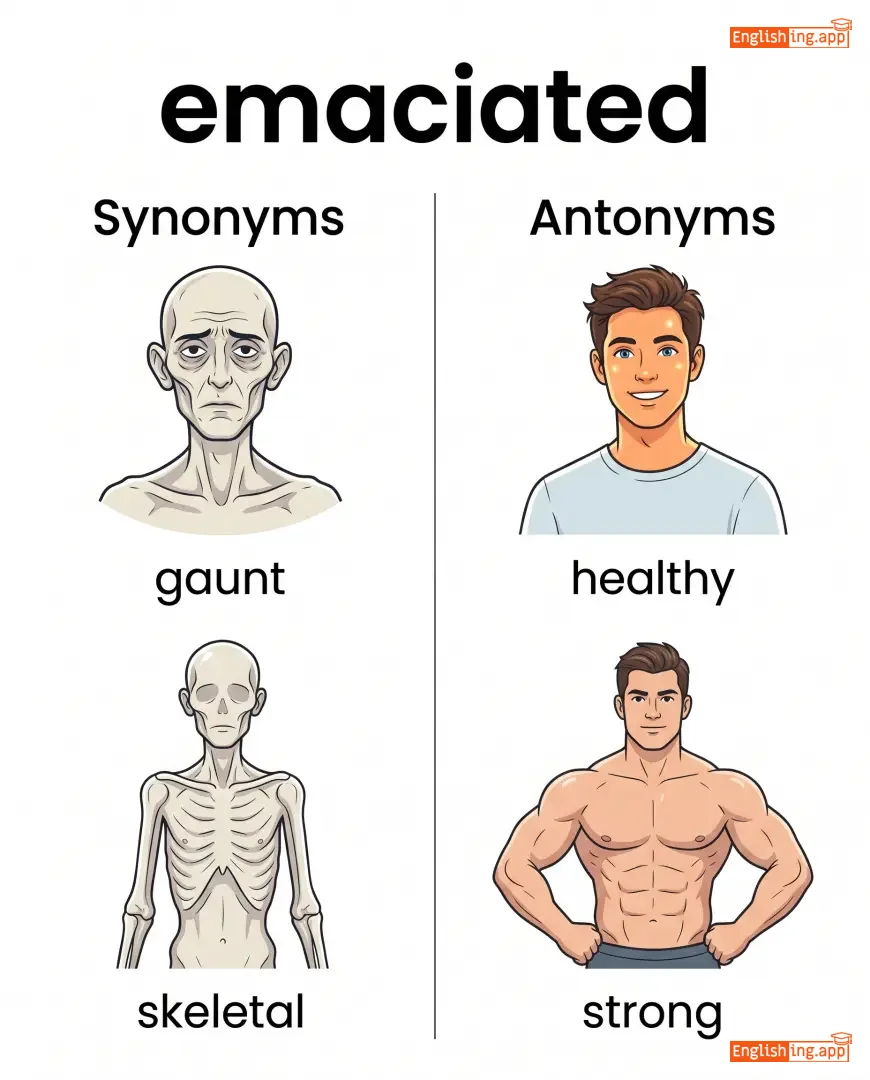
gaunt, skeletal, thin, wasted, haggard
••••••
|
healthy, strong, robust
••••••
|
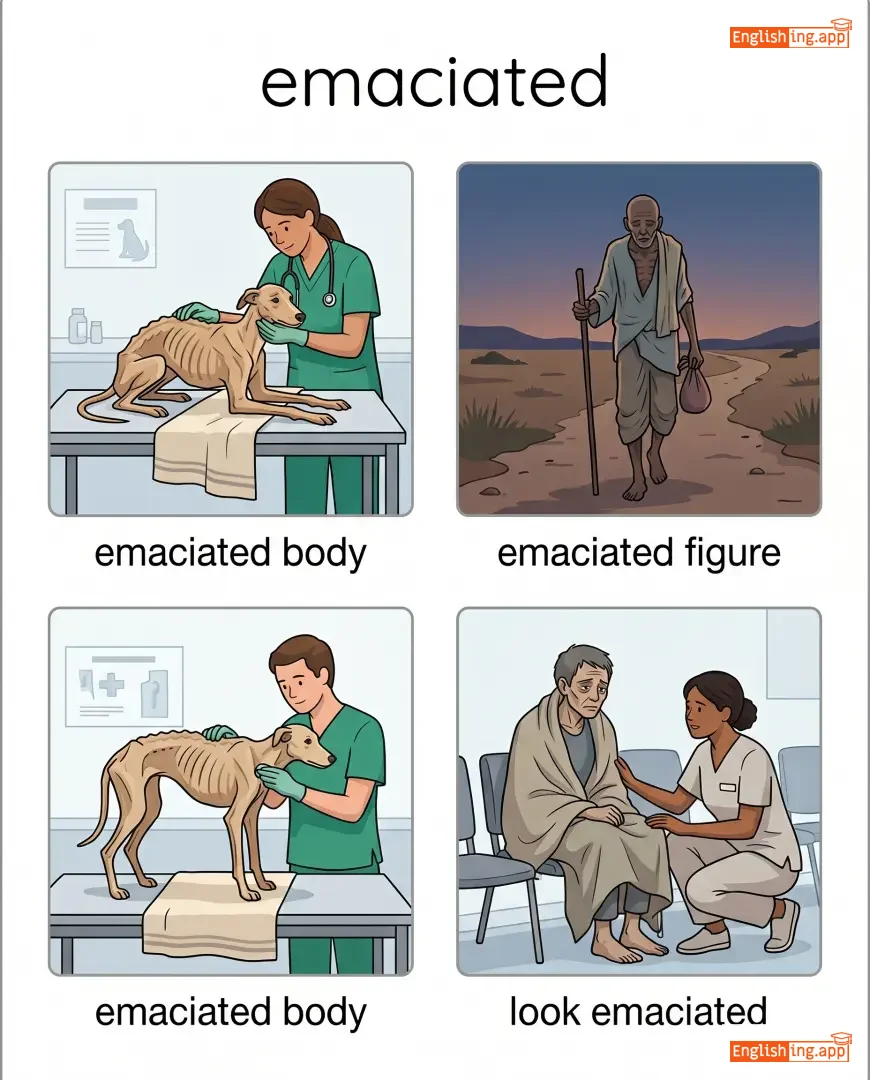
emaciated body, emaciated figure, look emaciated
••••••
|
记住,消瘦和变瘦的狗从废弃的地方得救了!
••••••
|
|
✨
••••••
|
/ɪmˈbɛlɪʃ/
verb
(恩贝利什)
••••••
|

|
装饰
zhuangshi
••••••
|
embellished
恩贝利什德
••••••
|
embellished
恩贝利什德
••••••
|
embellishes
恩贝利什斯
••••••
|
embellishing
恩贝利什英
••••••
|
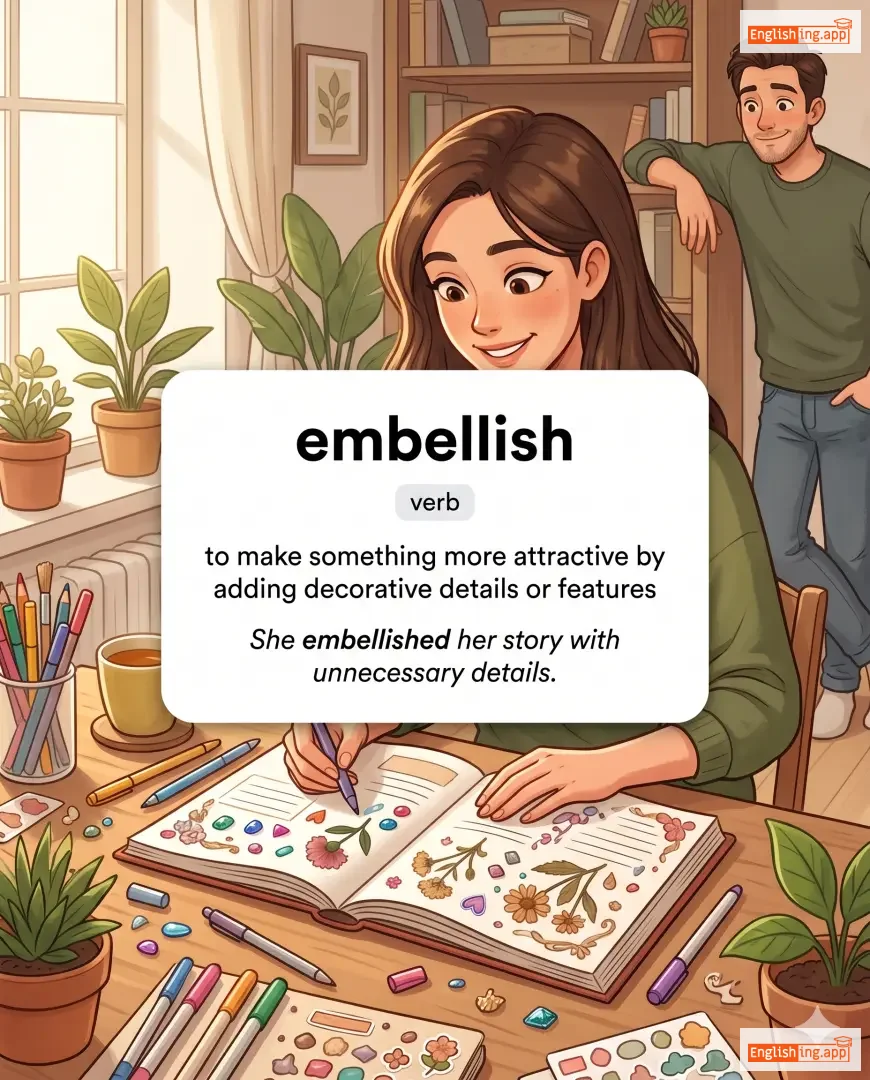
to make something more attractive by adding decorative details or features
••••••
|
She embellished her story with unnecessary details.
她用不必要的细节装饰了她的故事。
••••••
|
她用不必要的细节装饰了她的故事。
Ta yong bu bianyao de xijie zhuangshi le ta de gushi.
••••••
|
embellish the truth
美化事实
••••••
|
to exaggerate or add extra details to something
••••••
|
美化事实
Meihua shishi
••••••
|
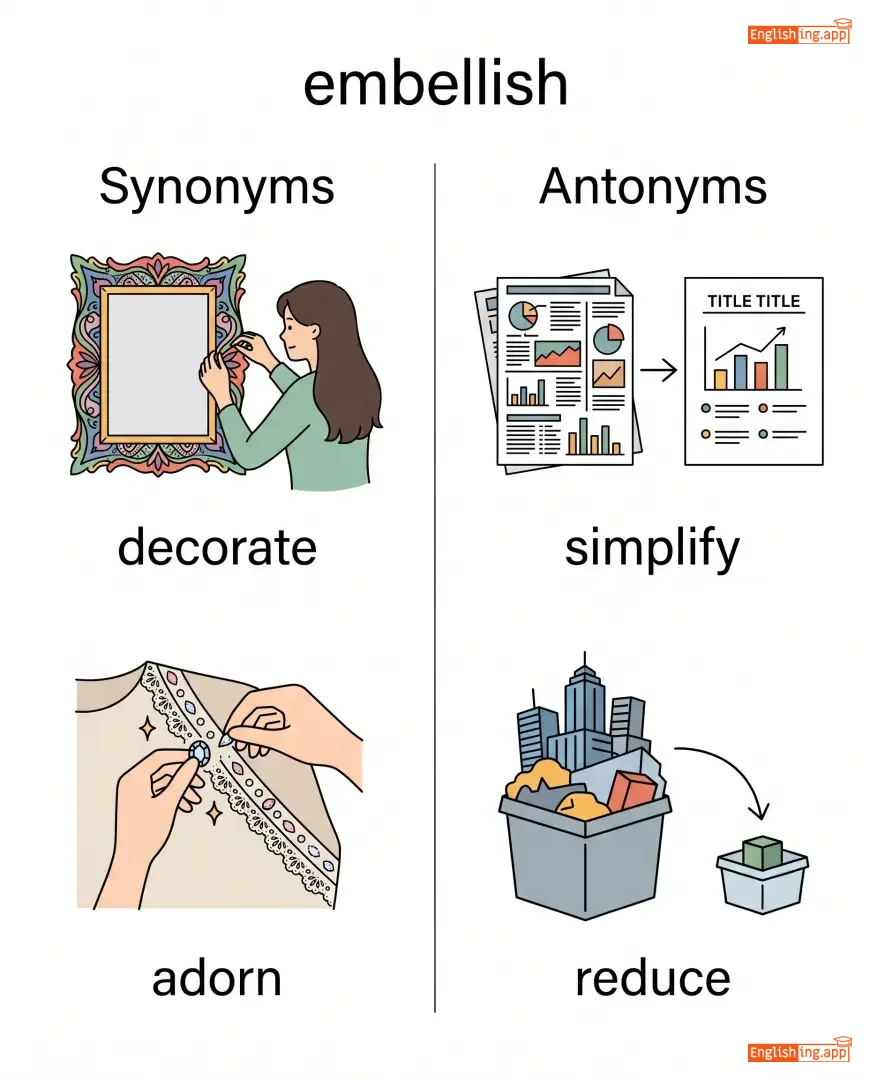
decorate, adorn, beautify, enhance, exaggerate
••••••
|
simplify, reduce, deface
••••••
|
embellish a story, embellish with, embellish details
••••••
|
Zhuangshi shi meihua (zhuangshi)
••••••
|
|
🧴
••••••
|
/ɪˈmɒliənt/
noun/adjective
(伊摩利安特)
••••••
|
|
软化皮肤的物质
ruǎnhuà pífū de wùzhí
••••••
|
- •••••• | - •••••• | - •••••• | - •••••• |
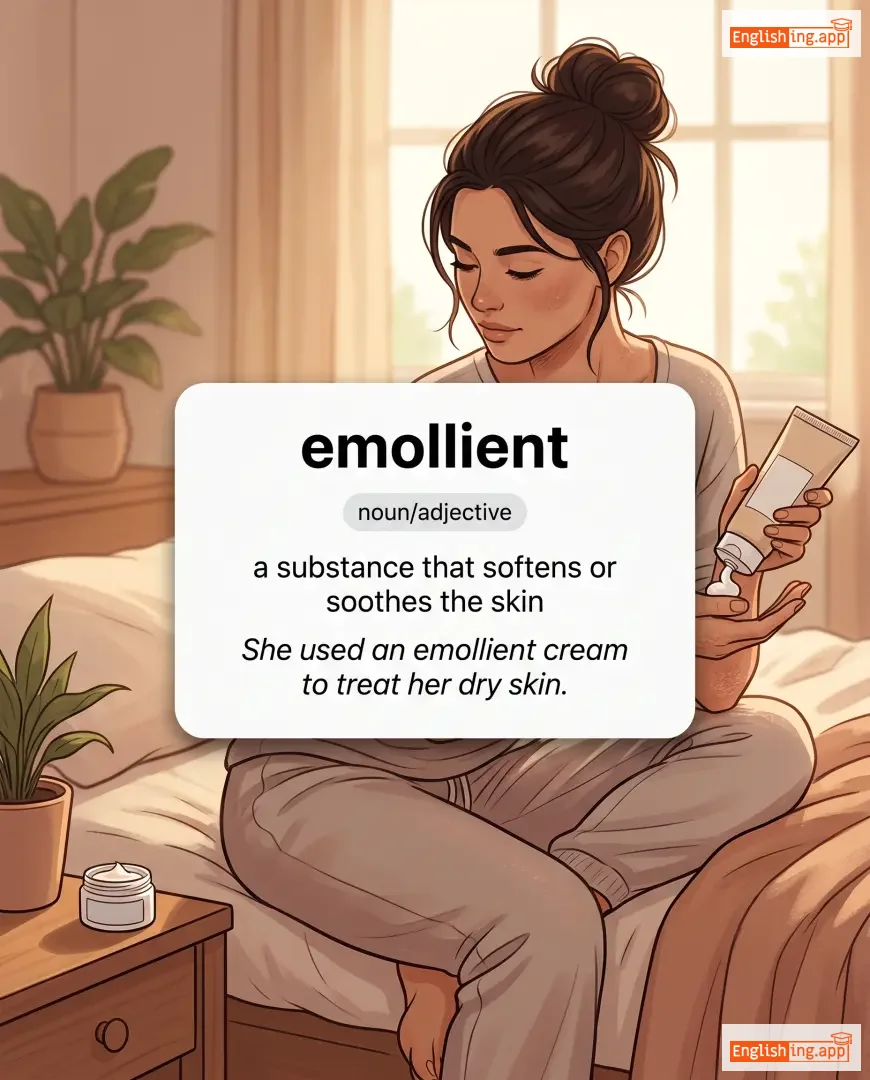
a substance that softens or soothes the skin
••••••
|
She used an emollient cream to treat her dry skin.
她用了一种伊摩利安特面霜来治疗她的干燥皮肤。
••••••
|
她用了一种伊摩利安特面霜来治疗她的干燥皮肤。
Tā yòngle yī zhǒng yī mó lì ān tè miànshuāng lái zhìliáo tā de gānzào pífū.
••••••
|
- •••••• | - •••••• | - •••••• |
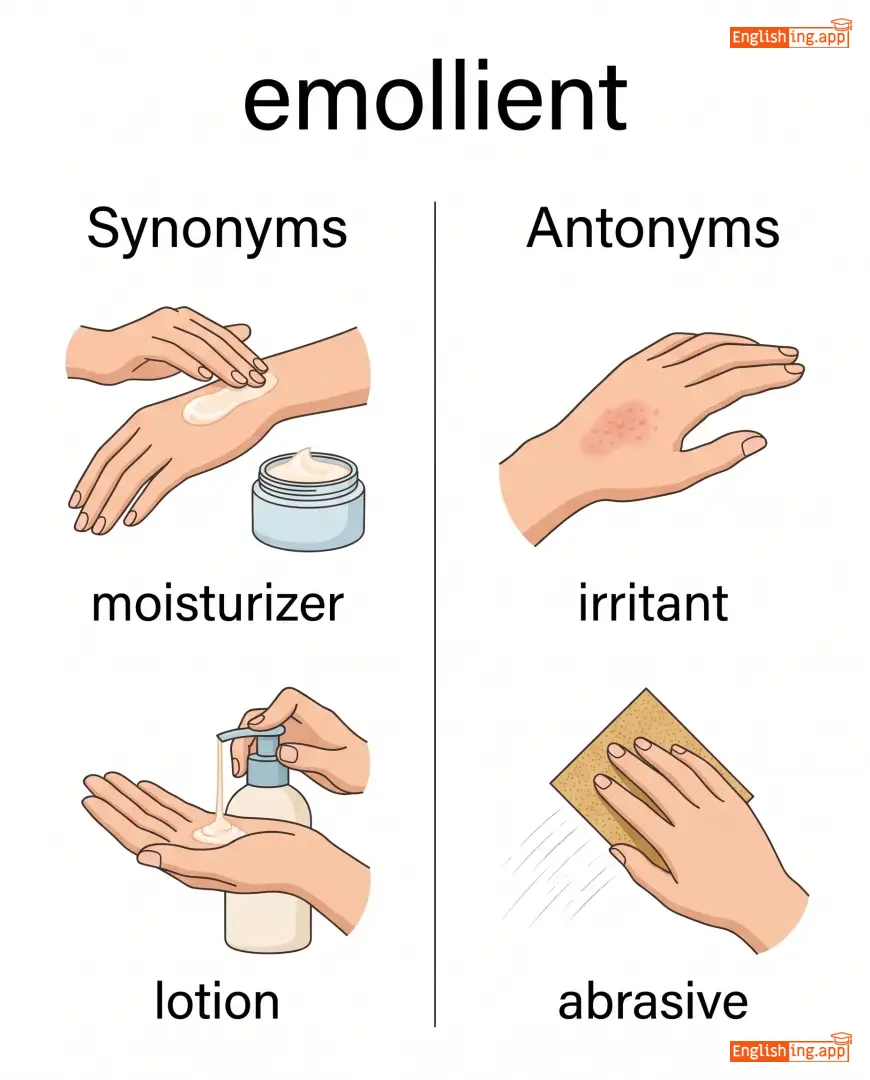
moisturizer, lotion, balm, ointment
••••••
|
irritant, abrasive
••••••
|
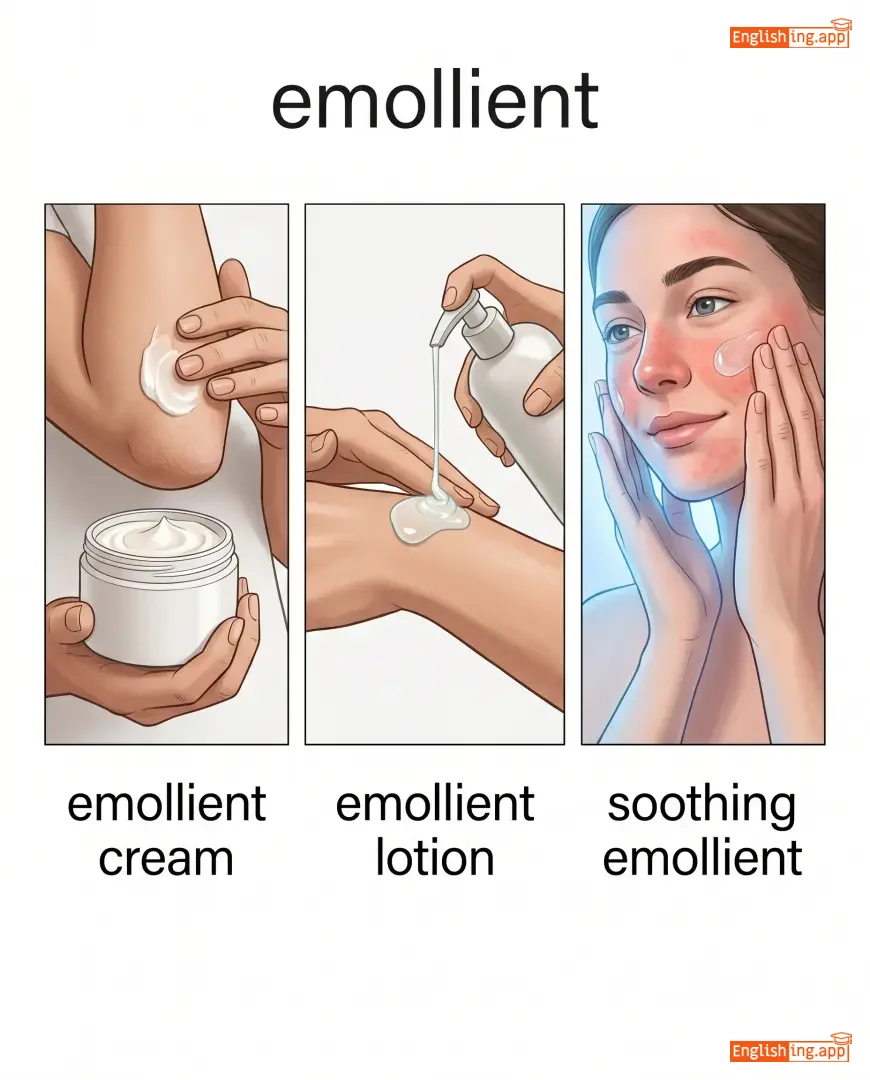
emollient cream, emollient lotion, soothing emollient
••••••
|
伊摩利安特:如同乳液般让皮肤变软的神奇物质
••••••
|
|
🔬
••••••
|
/ɛmˈpɪrɪkəl/
adjective
(恩皮里科)
••••••
|
|
经验的
jingyan de
••••••
|
- •••••• | - •••••• | - •••••• | - •••••• |
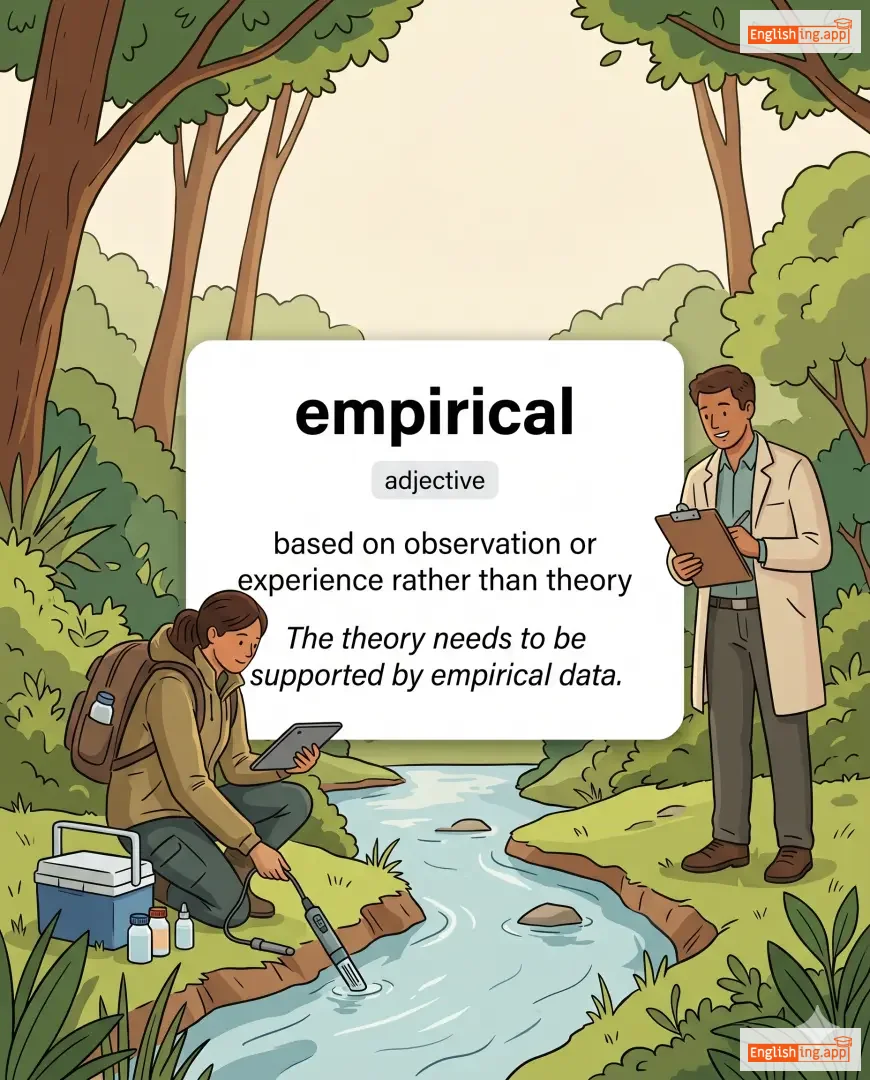
based on observation or experience rather than theory
••••••
|
The theory needs to be supported by empirical data. |
理论需要通过经验数据来支持。
Lilun xuyao tongguo jingyan shuju lai zhichi.
••••••
|
empirical evidence |
information gained through observation or experiment
••••••
|
经验证据
jingyan zhengju
••••••
|
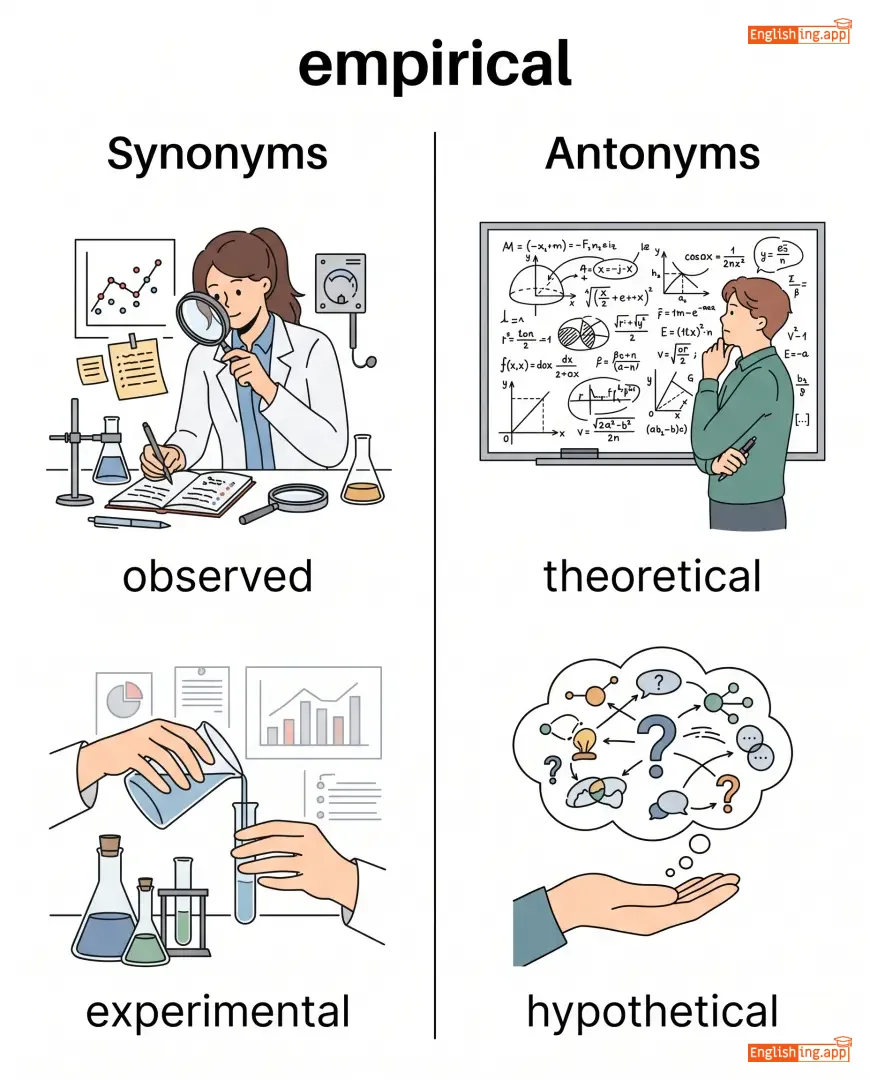
observed, experimental, factual, practical, real
••••••
|
theoretical, hypothetical
••••••
|
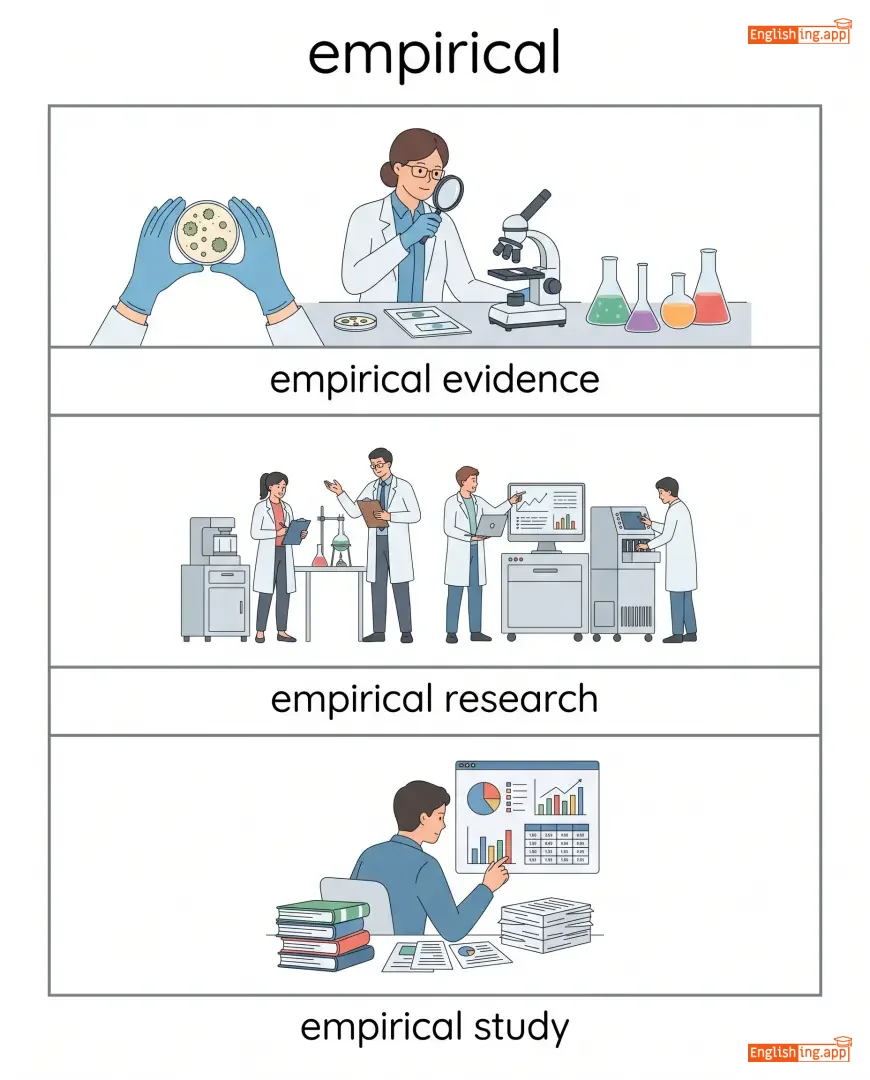
empirical evidence, empirical research, empirical study, empirical data
••••••
|
Empirical 意味着基于经验, 就像经验的 (jingyan de)
••••••
|
|
📋
••••••
|
/ˈɛm.jʊˌleɪt/
verb
(模仿)
••••••
|
|
模仿
mófǎng
••••••
|
emulated
模仿了
••••••
|
emulated
模仿了
••••••
|
emulates
模仿
••••••
|
emulating
模仿中
••••••
|
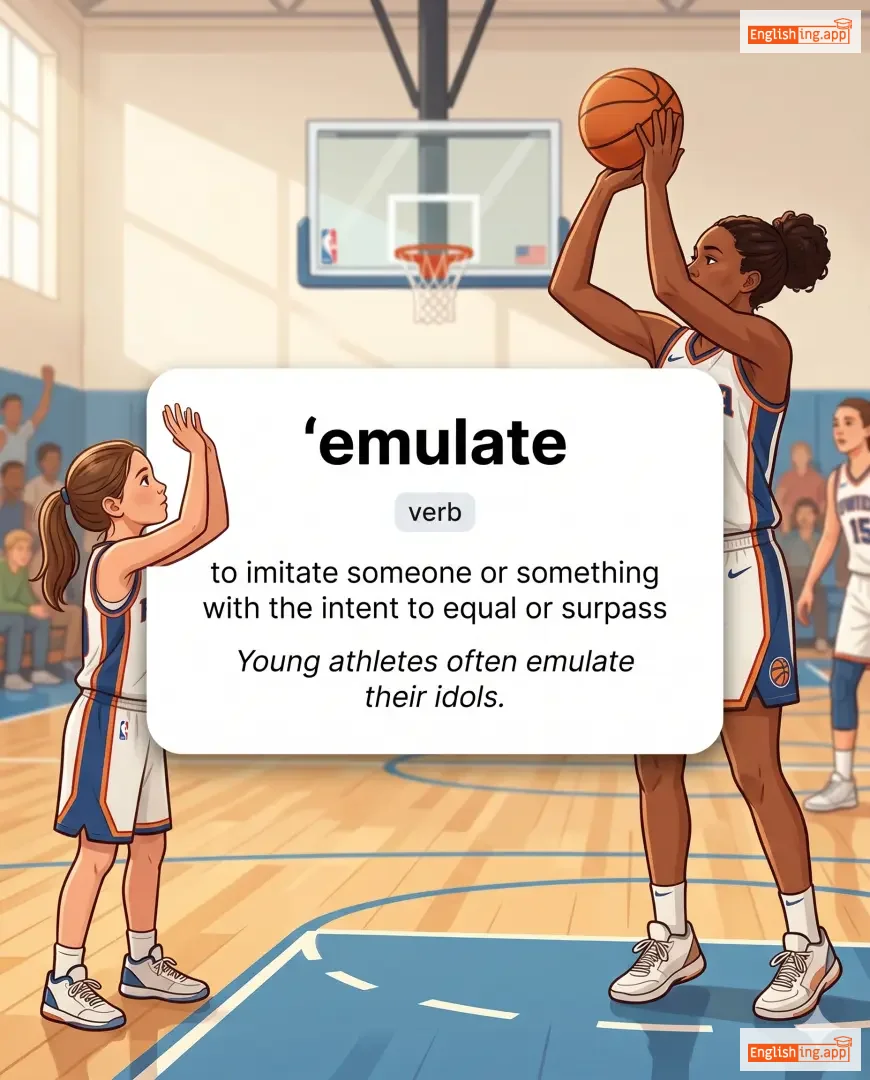
to imitate someone or something with the intent to equal or surpass
••••••
|
Young athletes often emulate their idols.
年轻运动员常常模仿他们的偶像。
••••••
|
年轻运动员常常模仿他们的偶像。
Niánqīng yùndòngyuán chángcháng mófǎng tāmen de ǒuxiàng.
••••••
|
emulate success
模仿成功
••••••
|
to imitate the actions or qualities that lead to success
••••••
|
模仿成功
mófǎng chénggōng
••••••
|
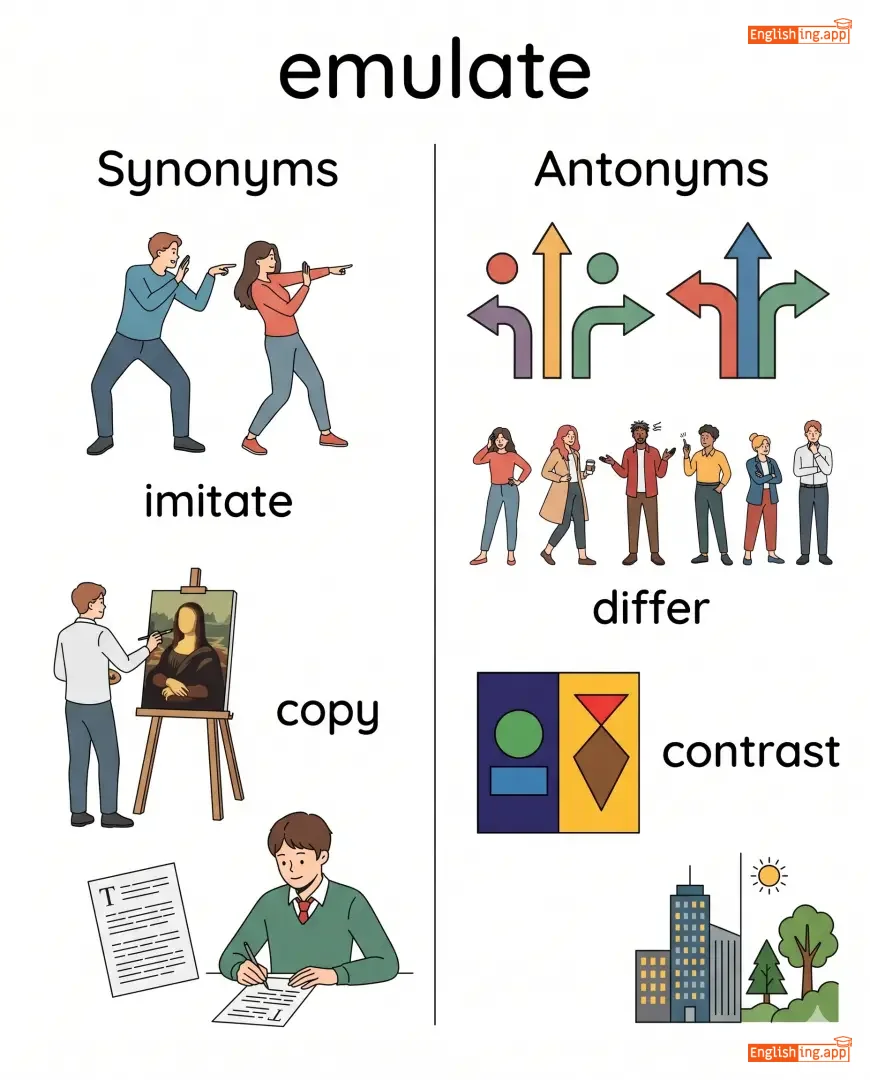
imitate, copy, mirror, follow, mimic
••••••
|
differ, contrast, oppose
••••••
|
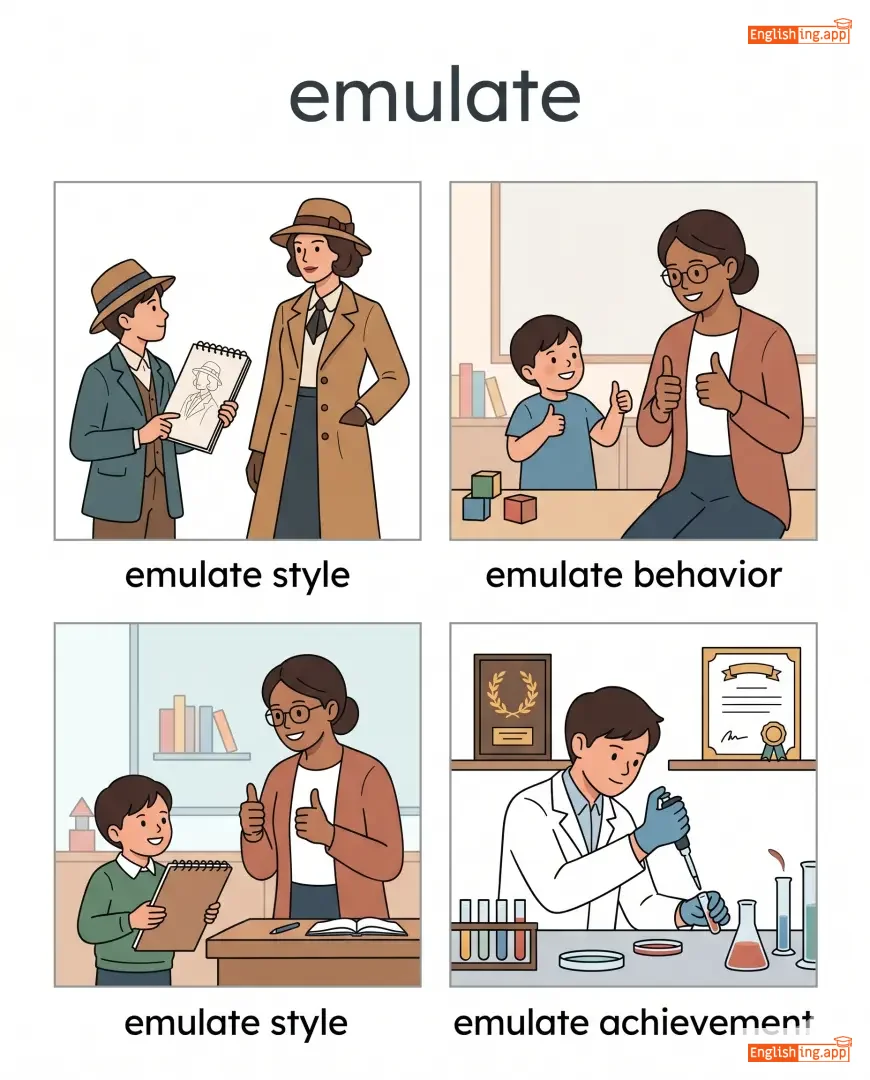
emulate style, emulate behavior, emulate achievement, emulate model
••••••
|
Emulate表示模仿 - '模仿'听起来像'模法', 意思是模仿他人以获得成功。
••••••
|
|
🌟
••••••
|
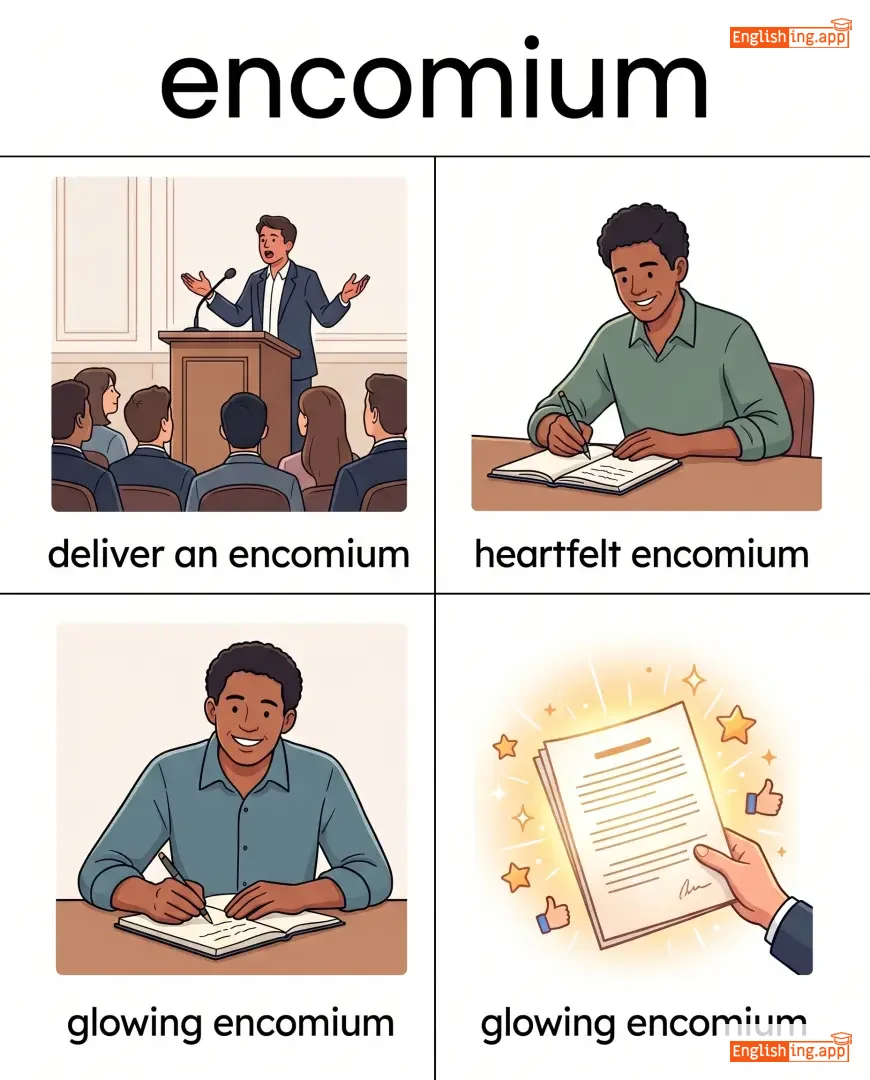
/ɛnˈkoʊmiəm/
noun
(ènkòumíyǎ)
••••••
|

|
赞扬
zànyáng
••••••
|
- •••••• | - •••••• | - •••••• | - •••••• |
A speech or piece of writing that praises someone or something highly.
••••••
|
He delivered an encomium to his retiring teacher.
他为即将退休的老师送上了赞扬的演讲。
••••••
|
他为即将退休的老师送上了赞扬的演讲。
Tā wèi jíjiāng tuìxiū de lǎoshī sòng shàngle zànyáng de yǎnjiǎng.
••••••
|
- •••••• | - •••••• | - •••••• |
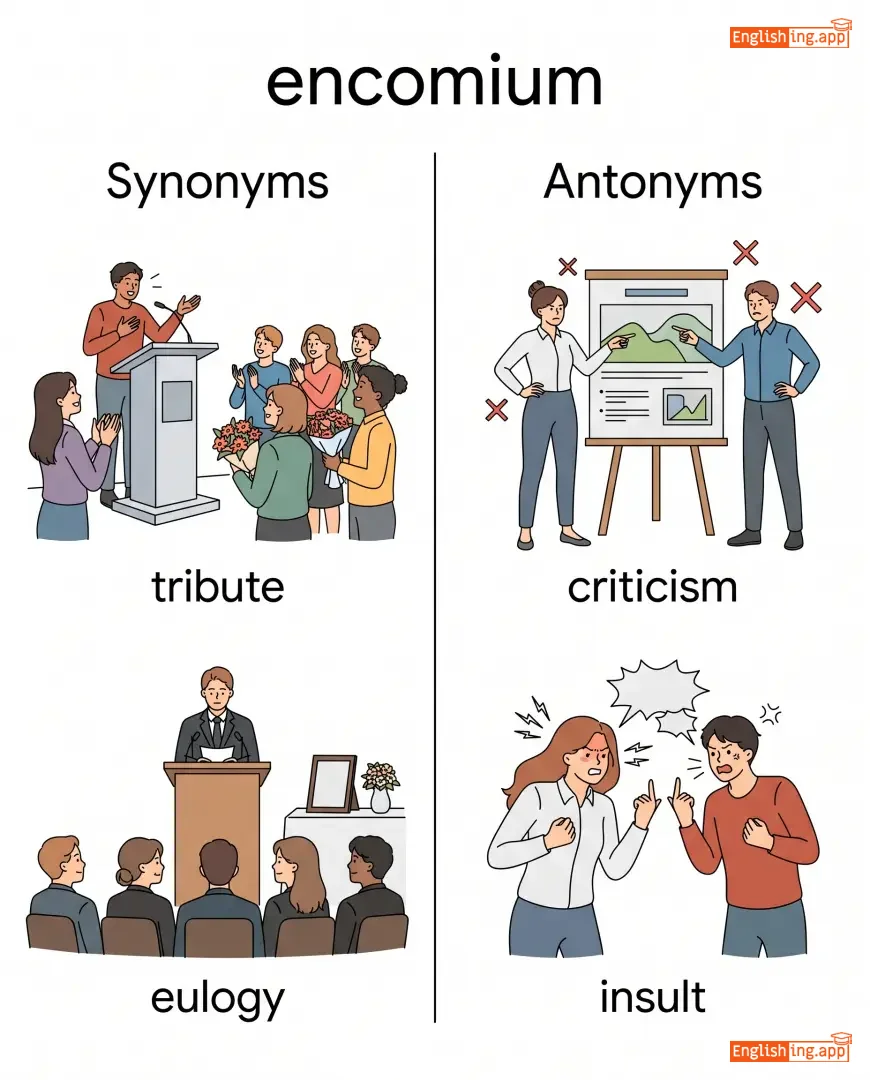
tribute, eulogy, praise, panegyric, commendation
••••••
|
criticism, insult, blame
••••••
|
deliver an encomium, heartfelt encomium, glowing encomium
••••••
|
Encomium = ENter COMpliment speech - 赞扬
••••••
|
|
🌍
••••••
|
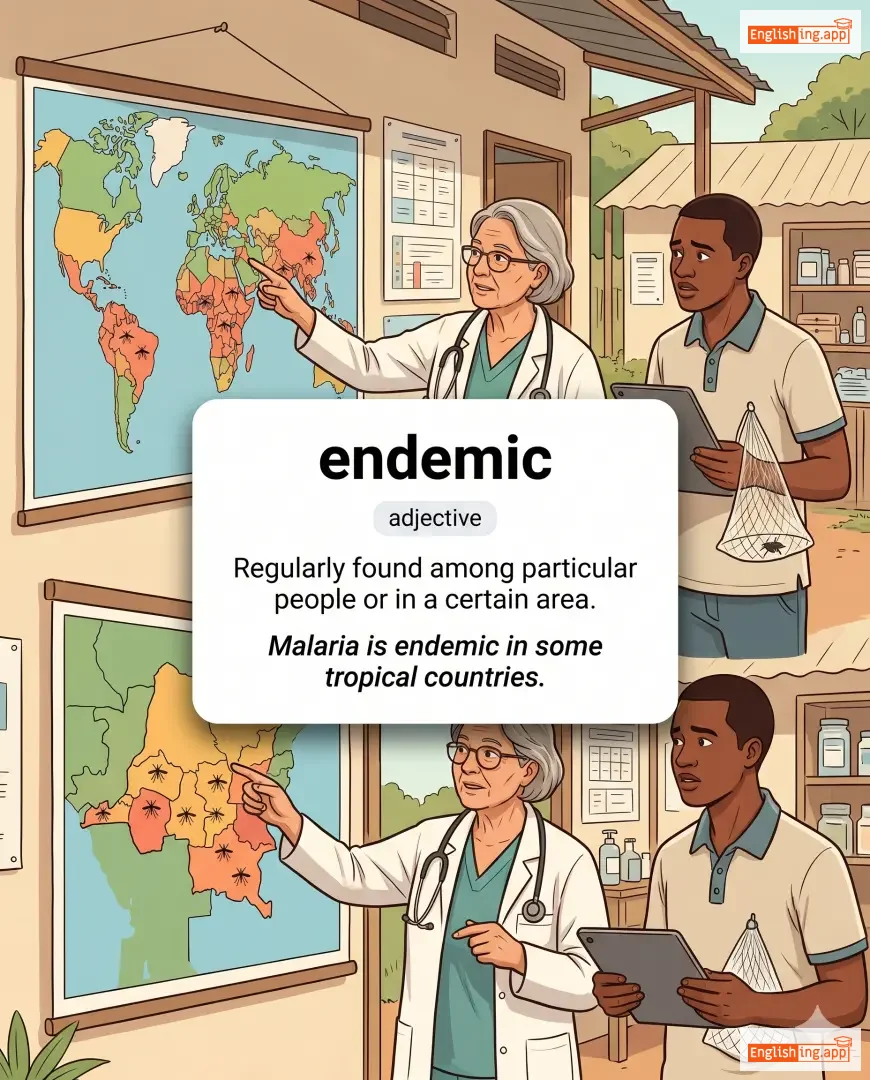
/ɛnˈdɛmɪk/
adjective
(恩德米克)
••••••
|
|
地方性
dìfāngxìng
••••••
|
- •••••• | - •••••• | - •••••• | - •••••• |
Regularly found among particular people or in a certain area.
••••••
|
Malaria is endemic in some tropical countries. |
疟疾在一些热带国家是地方性的。
Nüèjí zài yīxiē rèdài guójiā shì dìfāngxìng de.
••••••
|
- •••••• | - •••••• | - •••••• |
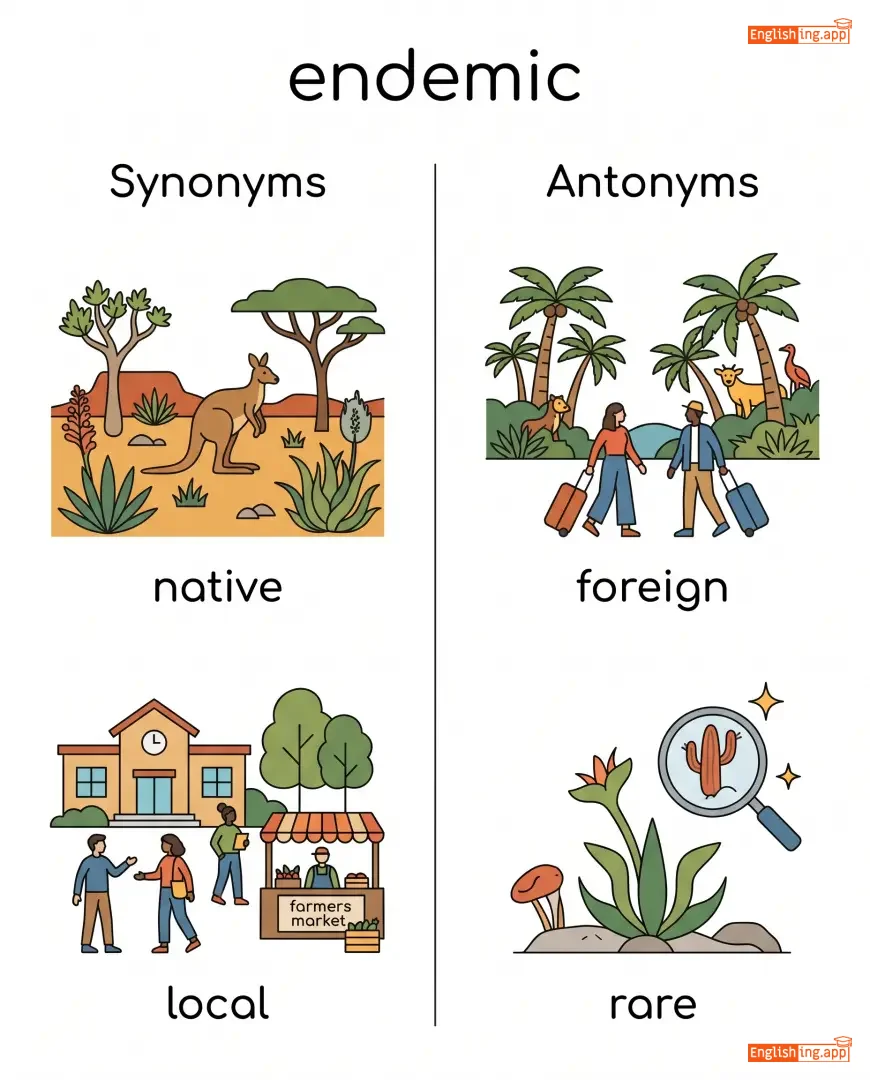
native, local, regional, widespread
••••••
|
foreign, rare
••••••
|
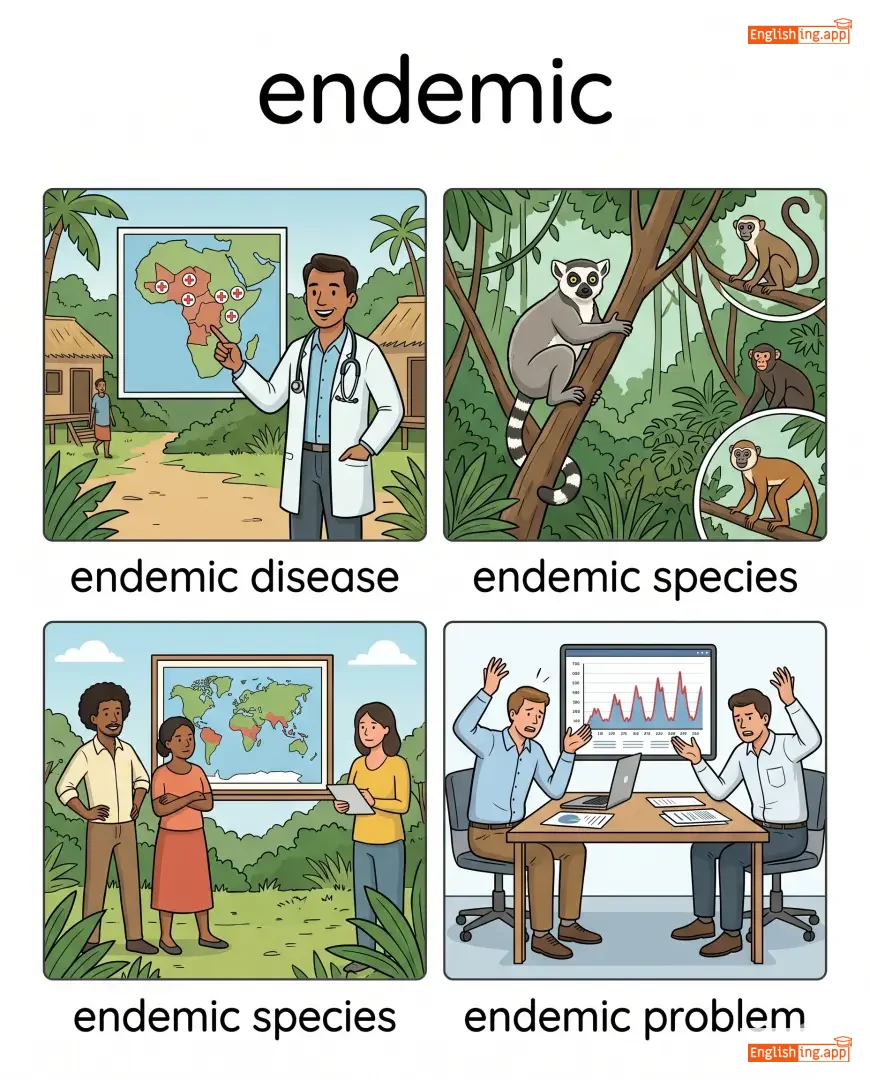
endemic disease, endemic species, endemic problem
••••••
|
恩德米克提醒我们‘地方性’是特定区域常见的疾病。
••••••
|
|
😩
••••••
|
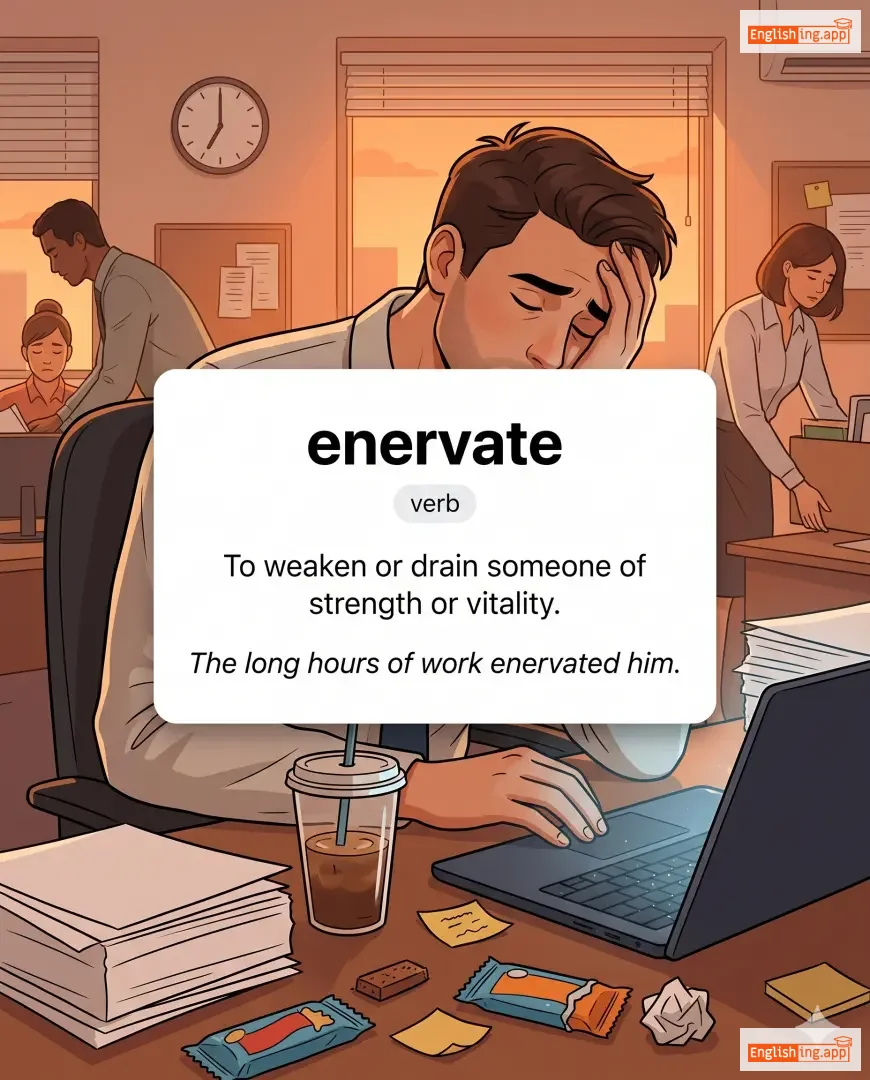
/ˈɛnərˌveɪt/
verb
(以能量消耗使虚弱)
••••••
|
|
使虚弱
shǐ xūruò
••••••
|
enervated
使虚弱
••••••
|
enervated
使虚弱
••••••
|
enervates
使虚弱
••••••
|
enervating
使虚弱
••••••
|
To weaken or drain someone of strength or vitality.
••••••
|
The long hours of work enervated him.
长期的工作使他感到虚弱。
••••••
|
长期的工作使他感到虚弱。
chángqī de gōngzuò shǐ tā gǎndào xūruò.
••••••
|
mentally enervated
心理虚弱
••••••
|
exhausted or weakened in mental capacity
••••••
|
心理虚弱
xīnlǐ xūruò
••••••
|
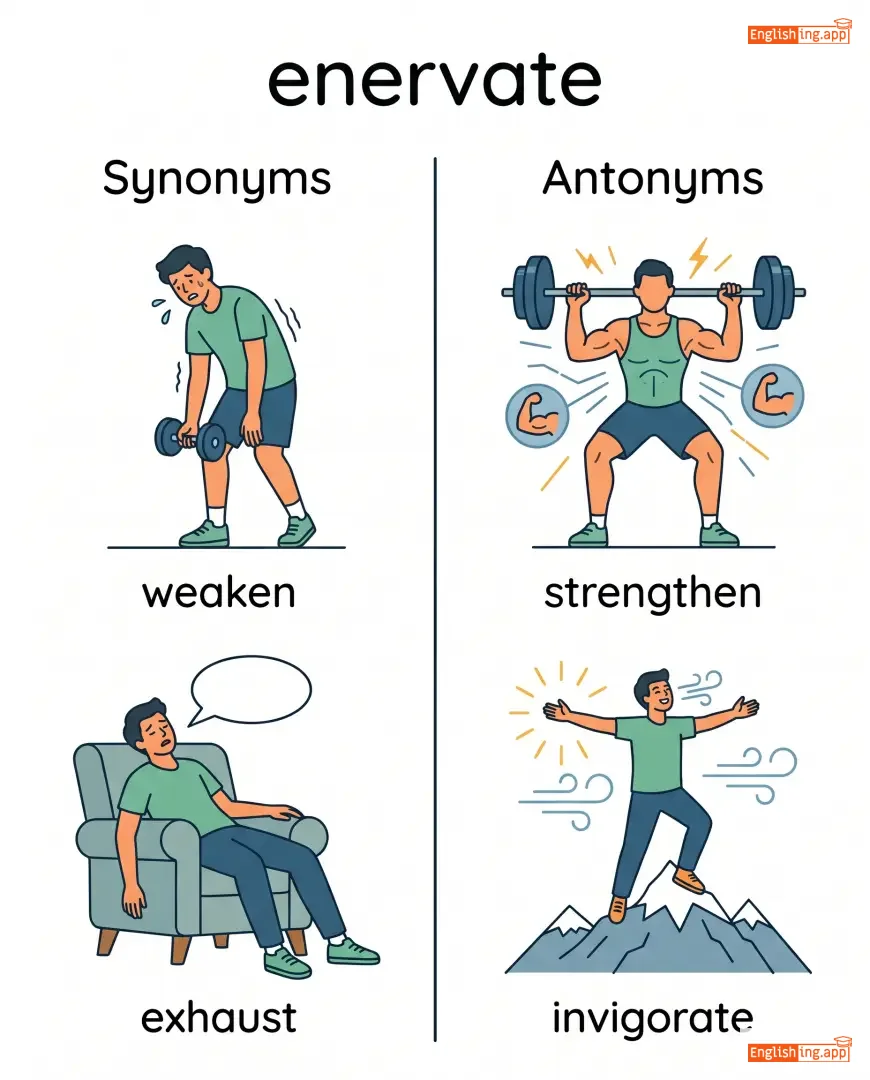
weaken, exhaust, debilitate, drain
••••••
|
strengthen, invigorate
••••••
|
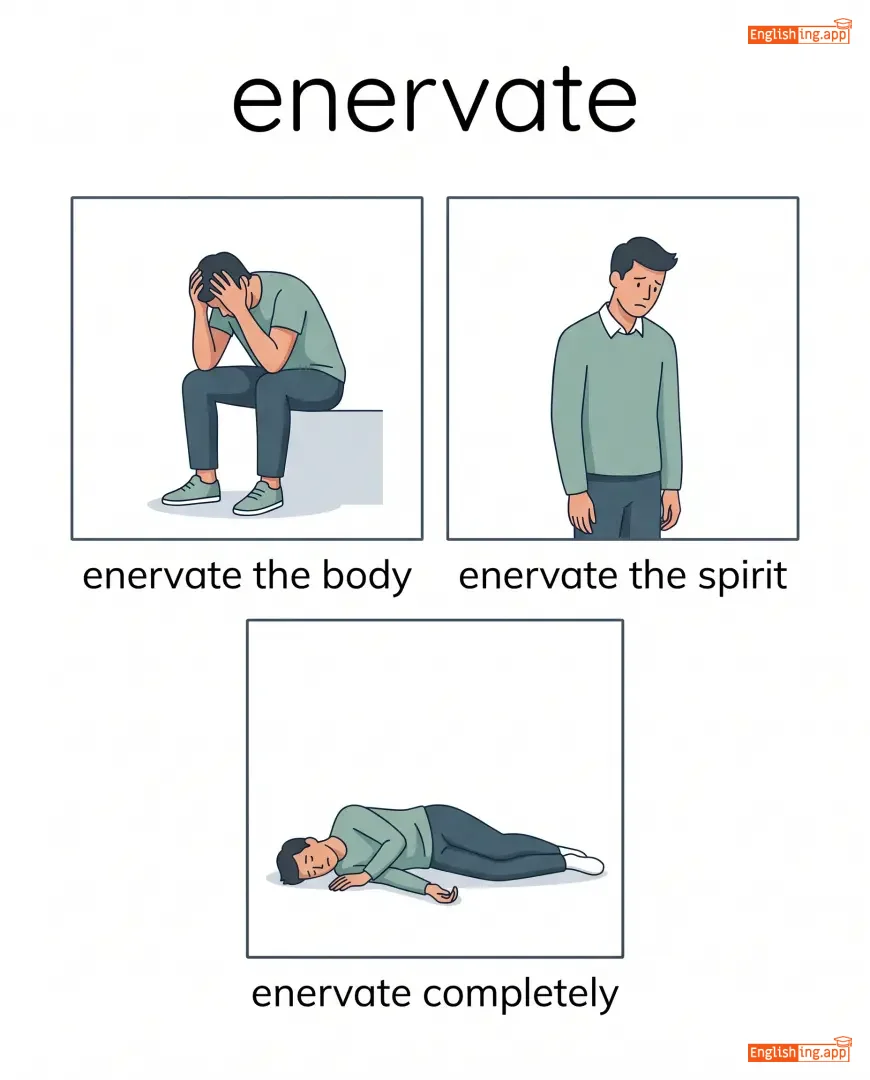
enervate the body, enervate the spirit, enervate completely
••••••
|
Enervate意味着通过消耗能量使虚弱 → 减少力量
••••••
|
|
🌱
••••••
|
/ɪnˈdʒɛndər/
verb
(ēnɡɛndə)
••••••
|
|
引发
yǐnfā
••••••
|
engendered
ēnɡɛndəd
••••••
|
engendered
ēnɡɛndəd
••••••
|
engenders
ēnɡɛndəs
••••••
|
engendering
ēnɡɛndɪŋ
••••••
|
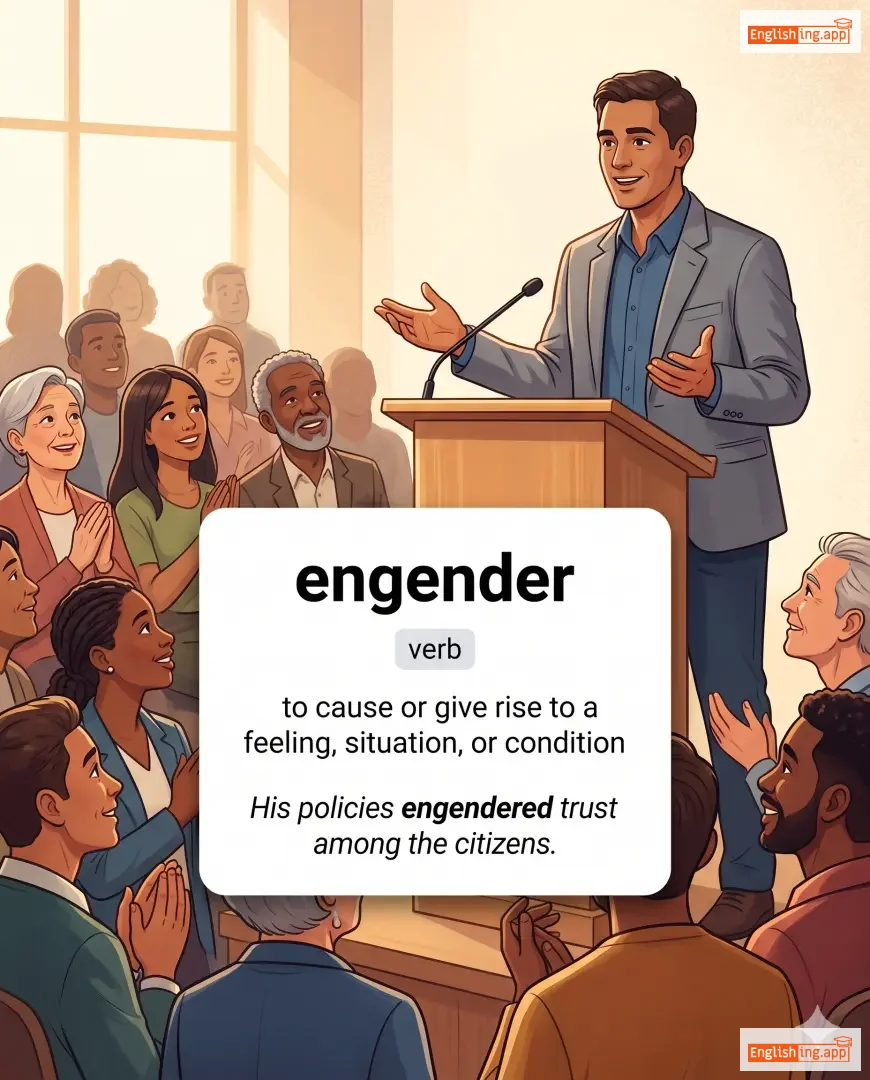
to cause or give rise to a feeling, situation, or condition
••••••
|
His policies engendered trust among the citizens.
hɪz pəˈlɪsɪz ēnɡɛndəd trʌst əˈmʌŋ ðə sɪtɪzənz.
••••••
|
他的政策在市民中引发了信任。
tā de zhèngcè zài shìmín zhōng yǐnfā le xìnrèn.
••••••
|
- •••••• | - •••••• | - •••••• |
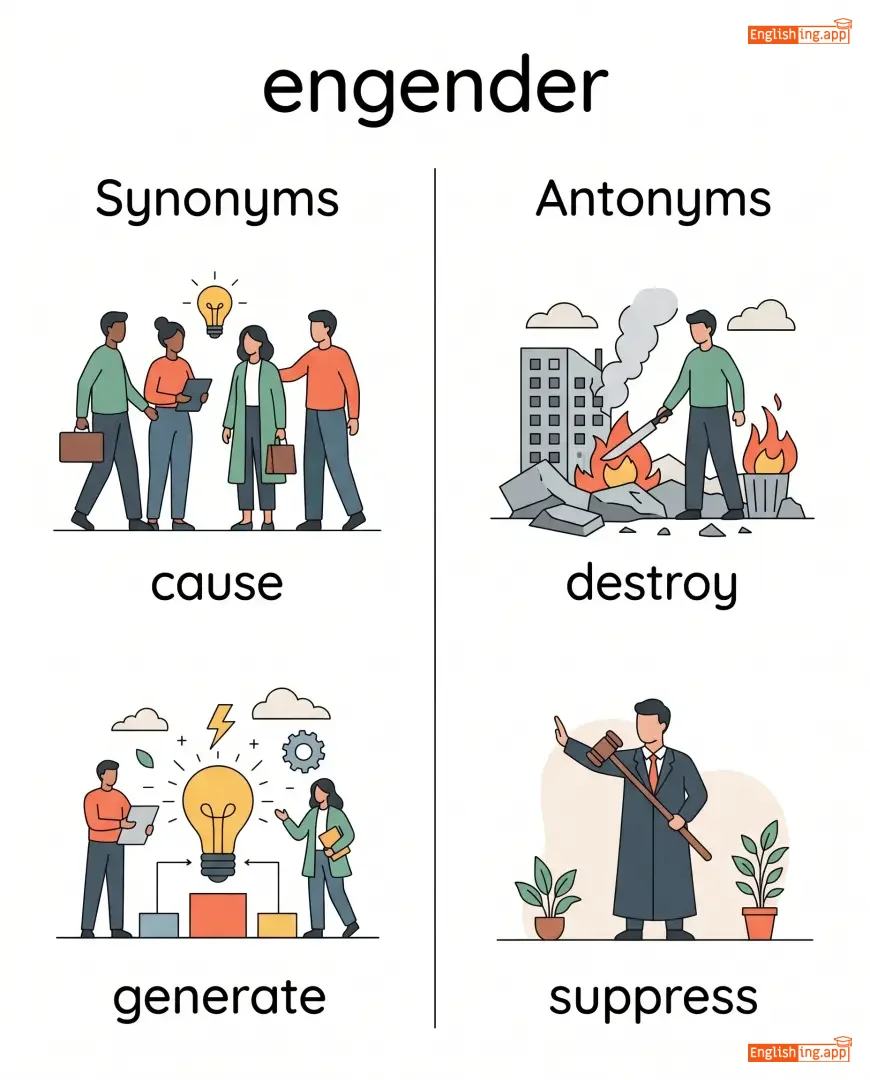
cause, generate, produce, provoke, trigger
••••••
|
destroy, suppress, extinguish
••••••
|
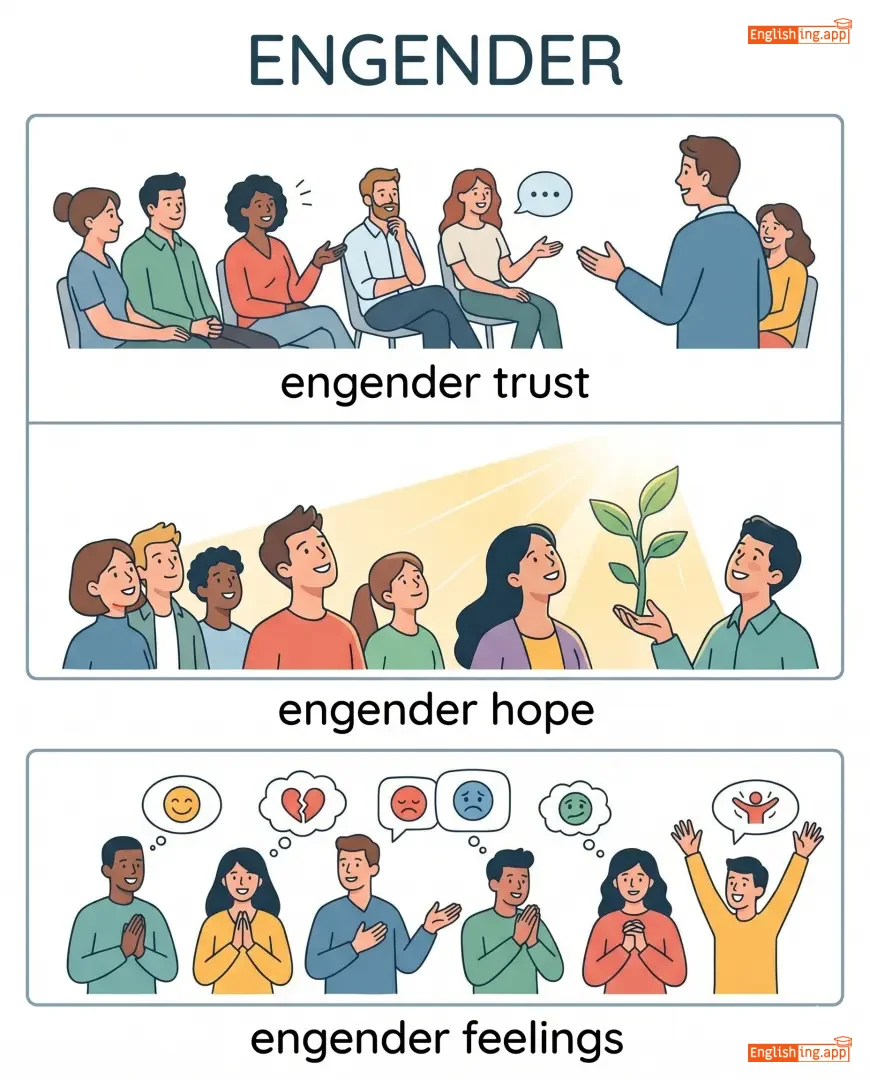
engender trust, engender hope, engender feelings, engender debate
••••••
|
Engender: 就像能量引发某些东西
••••••
|
|
✨
••••••
|
/ɪnˈhæns/
verb
(enhans)
••••••
|

|
提升
tisheng
••••••
|
enhanced
enhansd
••••••
|
enhanced
enhansd
••••••
|
enhances
enhanses
••••••
|
enhancing
enhansing
••••••
|
to improve the quality, value, or extent of something
••••••
|
The new features will enhance the user experience.
新的功能将提升用户体验。
••••••
|
新的功能将提升用户体验。
Xin de gongneng jiang tisheng yonghu tiaoyan.
••••••
|
enhance beauty
提升美丽
••••••
|
to make someone or something look more beautiful
••••••
|
提升美丽
tisheng meili
••••••
|
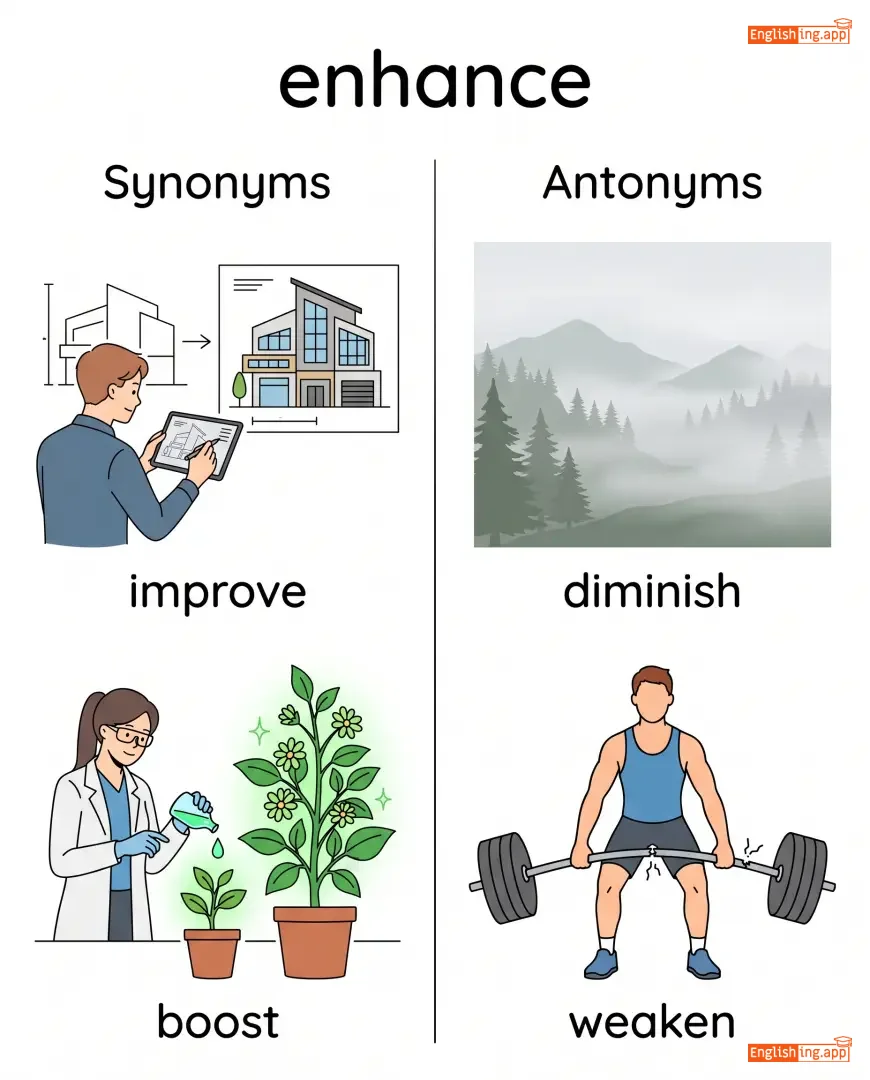
improve, boost, enrich, heighten, strengthen
••••••
|
diminish, weaken, reduce
••••••
|
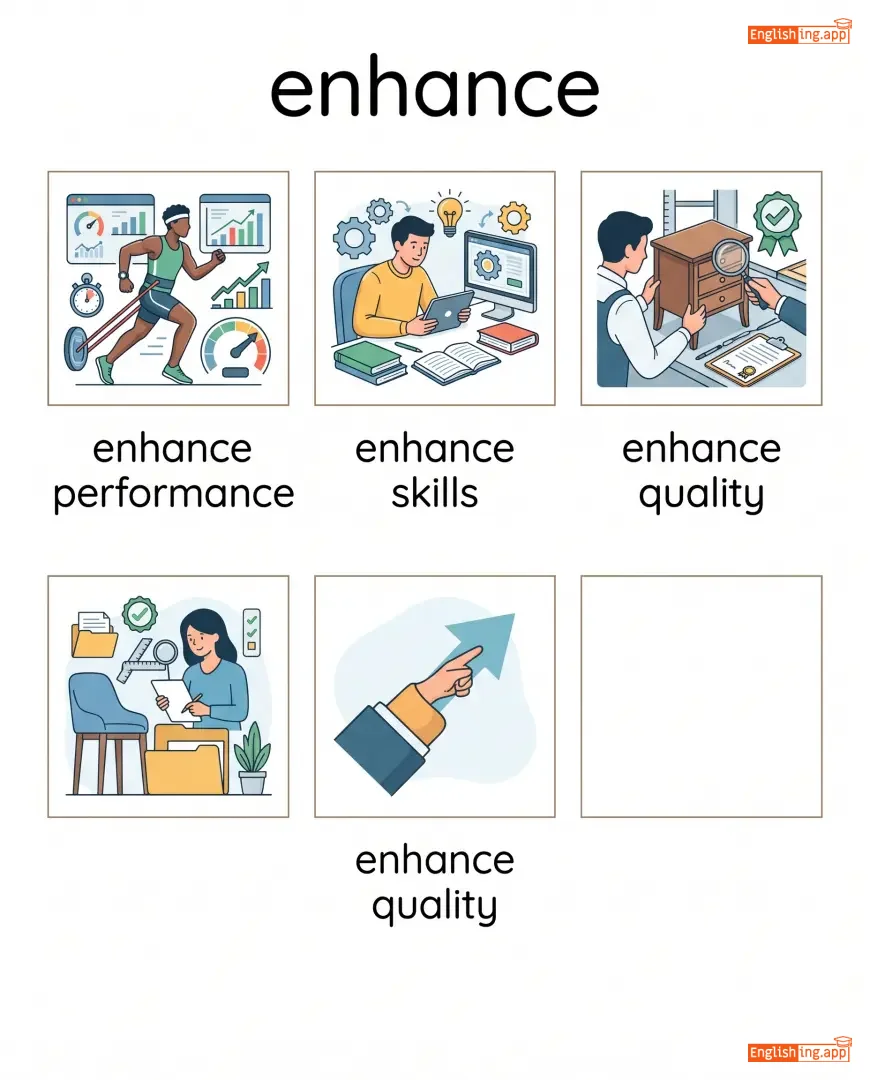
enhance performance, enhance skills, enhance quality, enhance experience
••••••
|
Enhance 是指提升,例如通过使用滤镜来提升照片。
••••••
|
|
🐜
••••••
|
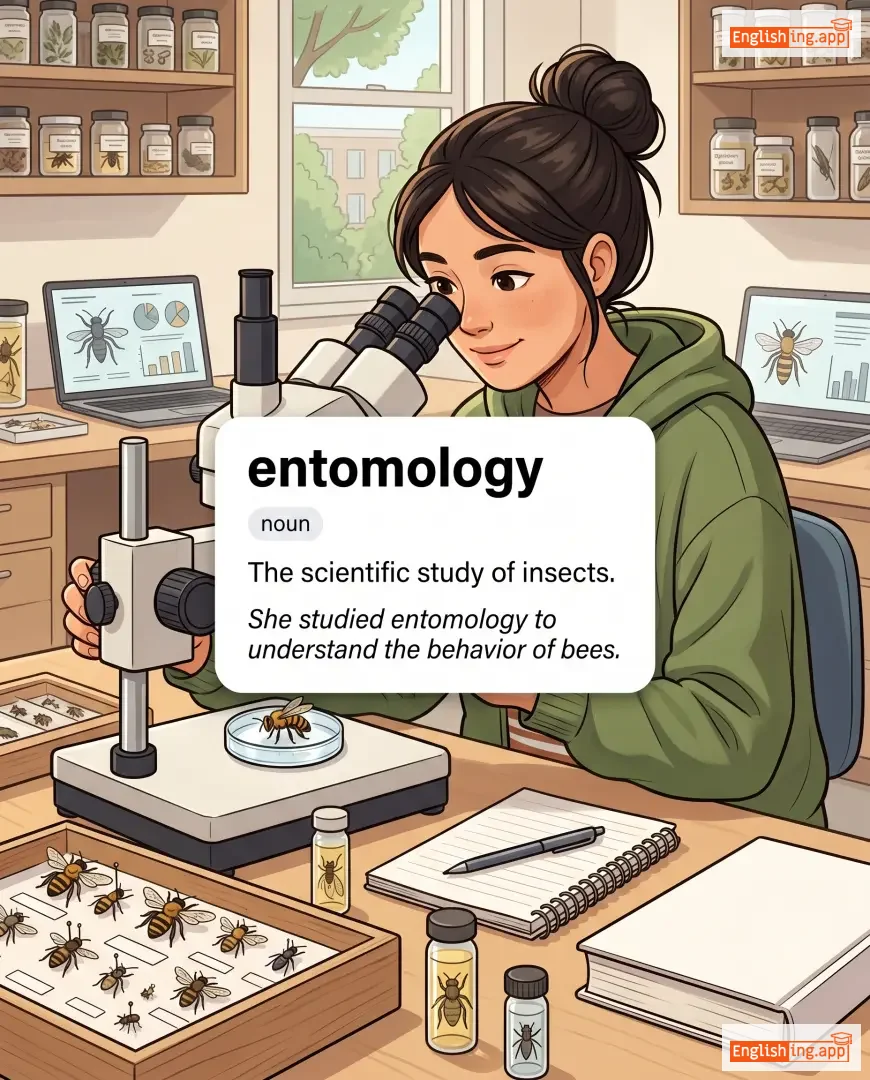
/ˌɛntəˈmɒlədʒi/
noun
(昆虫学)
••••••
|

|
昆虫学
kunchongxue
••••••
|
- •••••• | - •••••• | - •••••• | - •••••• |
The scientific study of insects.
••••••
|
She studied entomology to understand the behavior of bees. |
她学习昆虫学以了解蜜蜂的行为。
Ta xuexi kunchongxue yi liaojie mifeng de xingwei.
••••••
|
- •••••• | - •••••• | - •••••• |
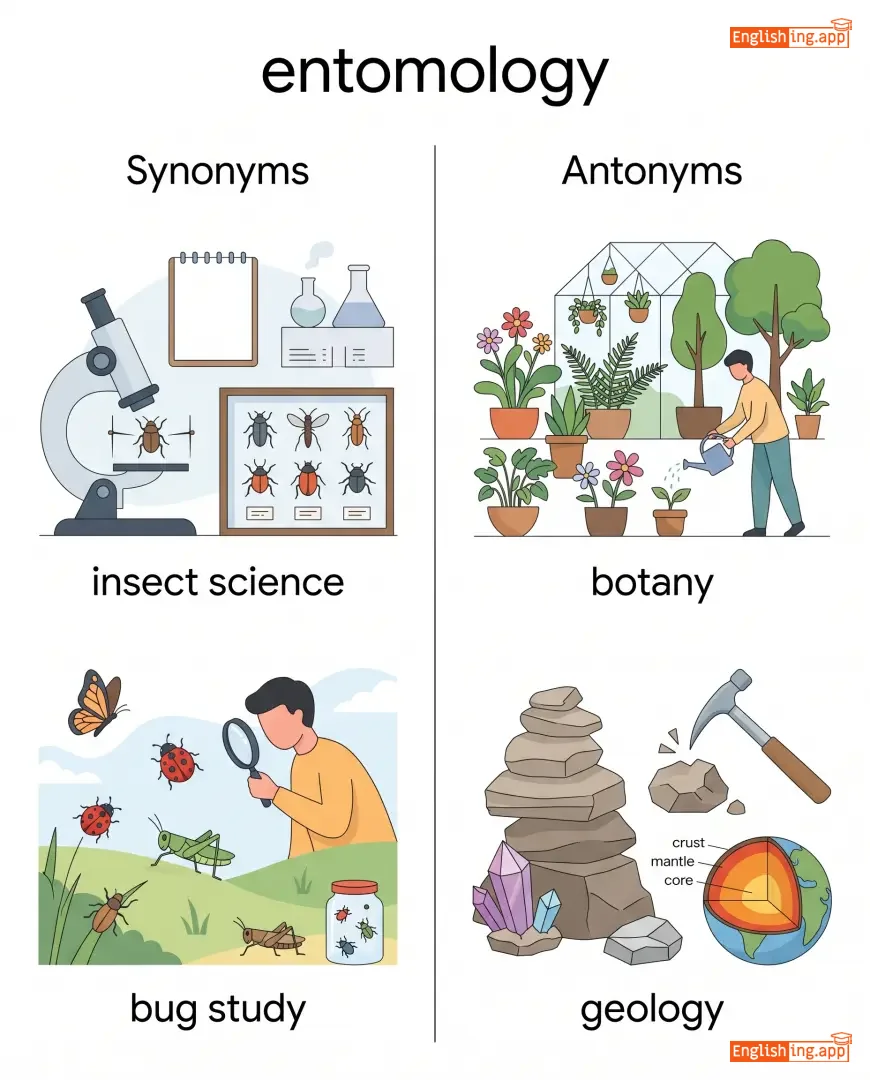
insect science, bug study, zoology, biology, taxonomy
••••••
|
botany, geology, astronomy
••••••
|
entomology research, entomology department, entomology studies, professor of entomology
••••••
|
Ant (蚂蚁) 和 Moleg (鼹鼠) = 昆虫学,研究昆虫
••••••
|
|
🗣️
••••••
|
/ɪˈnʌnsieɪt/
verb
(诶努斯艾特)
••••••
|
|
清晰地发音
qīngxī de fāyīn
••••••
|
enunciated
诶努斯艾特德
••••••
|
enunciated
诶努斯艾特德
••••••
|
enunciates
诶努斯艾特斯
••••••
|
enunciating
诶努斯艾特英
••••••
|
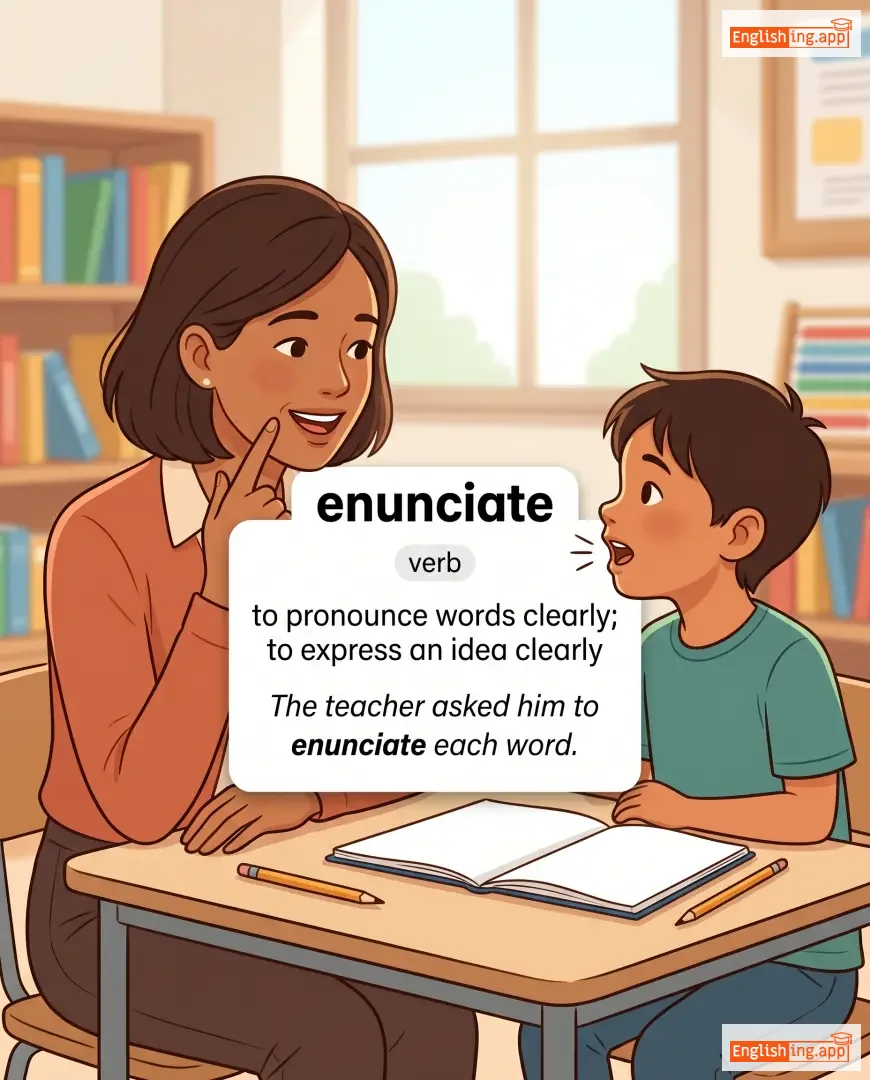
to pronounce words clearly; to express an idea clearly
••••••
|
The teacher asked him to enunciate each word.
老师让他清晰地发音每个单词。
••••••
|
老师让他清晰地发音每个单词。
Lǎoshī ràng tā qīngxī de fāyīn měi gè dāncí.
••••••
|
- •••••• | - •••••• | - •••••• |
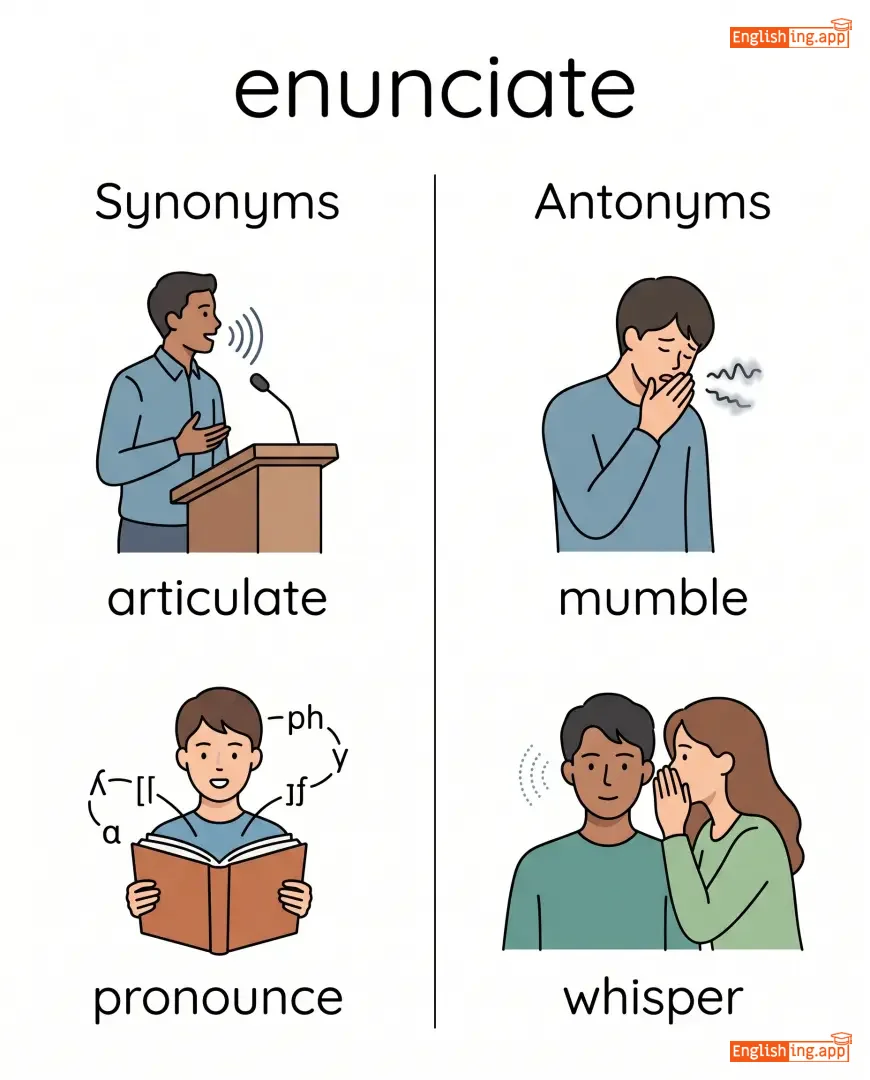
articulate, pronounce, express, vocalize, state
••••••
|
mumble, whisper, slur
••••••
|
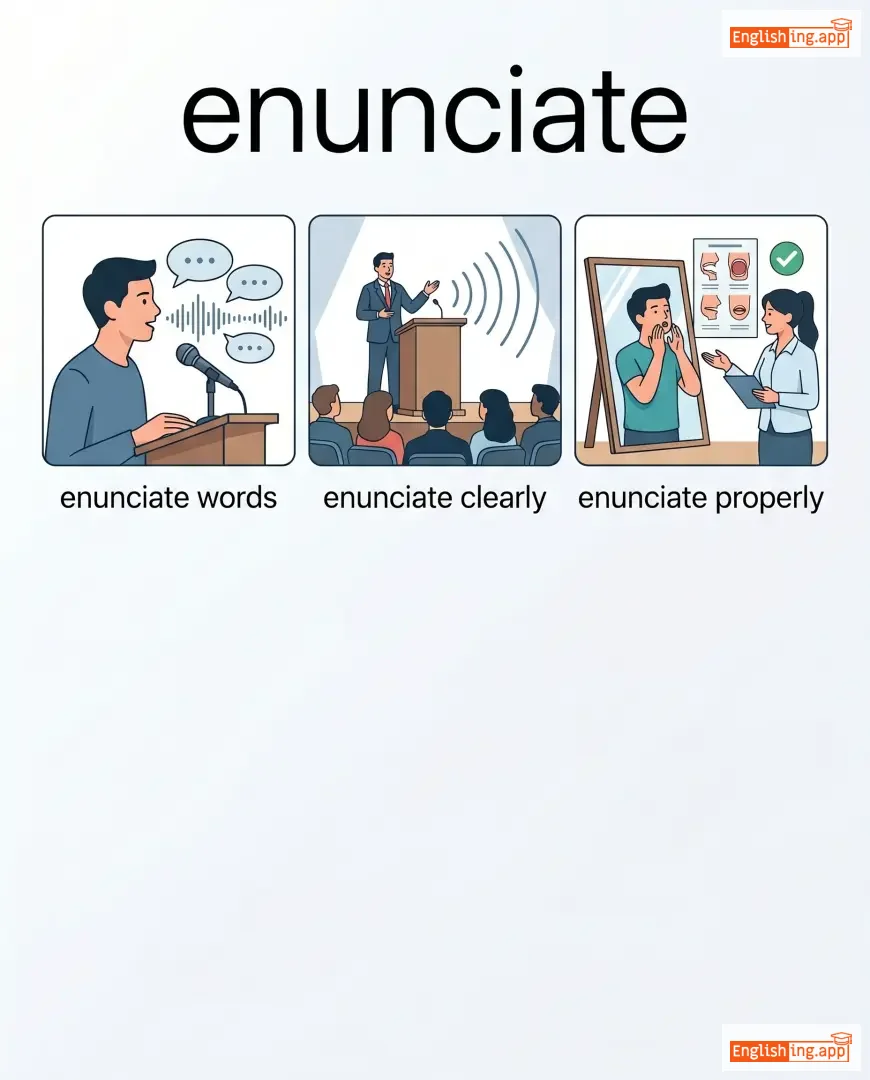
enunciate words, enunciate clearly, enunciate properly, enunciate idea
••••••
|
Enunciate sounds similar to 清晰地发音 in Chinese.
••••••
|
|
🌅
••••••
|
/ɪˈfɛmərəl/
adjective
(艾菲梅拉尔)
••••••
|
|
短暂
duǎnzàn
••••••
|
- •••••• | - •••••• | - •••••• | - •••••• |
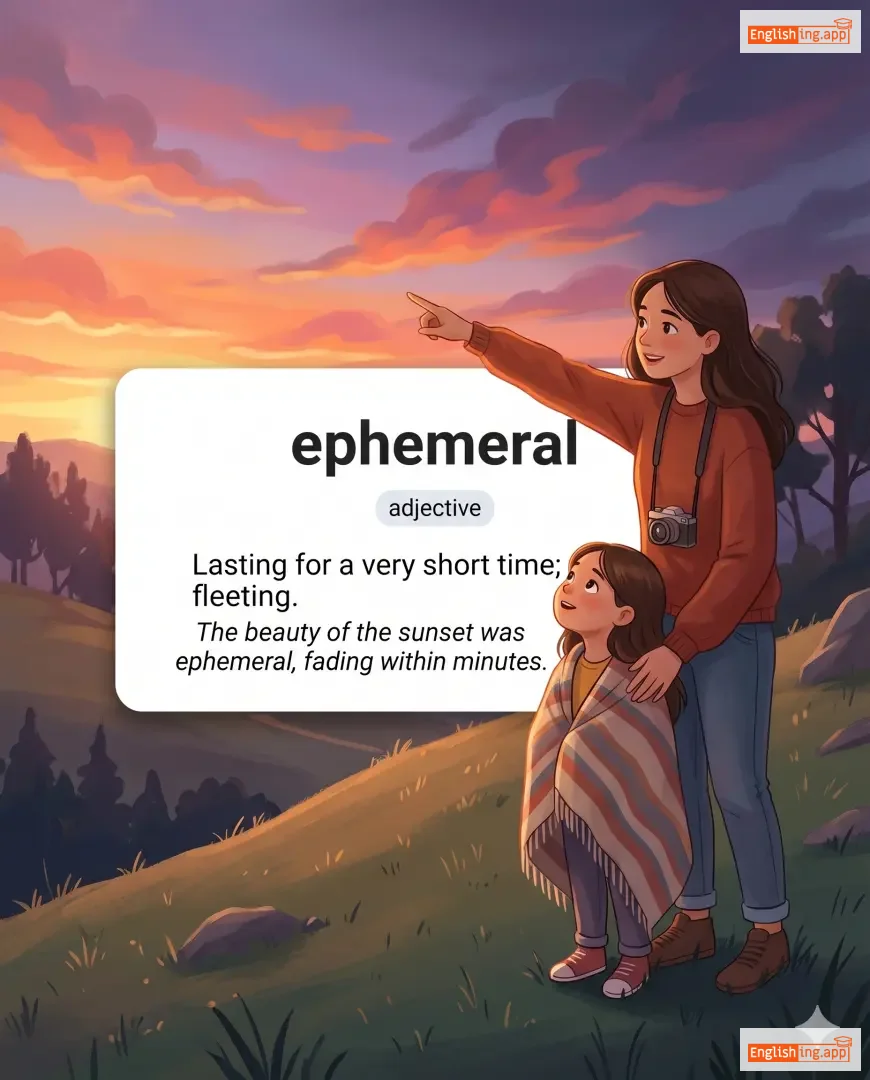
Lasting for a very short time; fleeting.
••••••
|
The beauty of the sunset was ephemeral, fading within minutes. |
日落的美丽是短暂的,几分钟内就消失了。
Rìluò de měilì shì duǎnzàn de, jǐ fēnzhōng nèi jiù xiāoshīle.
••••••
|
ephemeral beauty |
A beauty that is short-lived and does not last long.
••••••
|
短暂的美丽
duǎnzàn de měilì
••••••
|
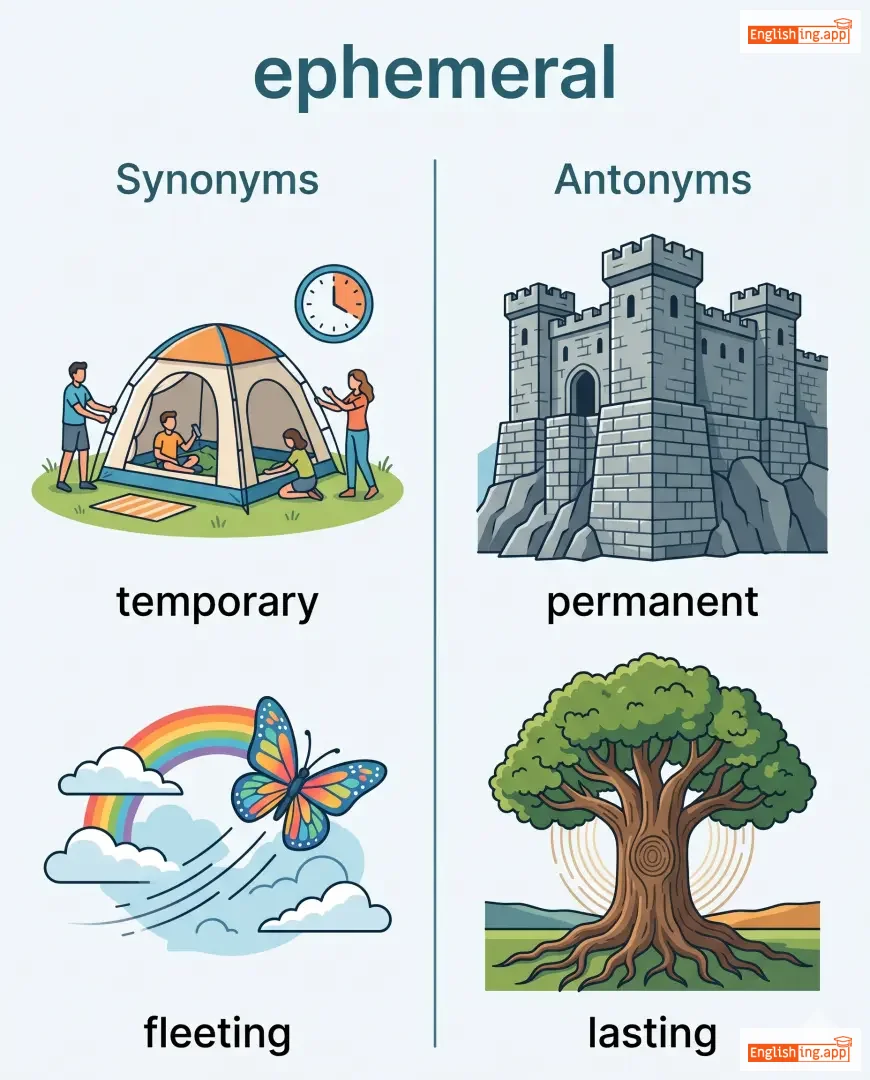
temporary, fleeting, short-lived, brief, transitory
••••••
|
permanent, lasting, eternal
••••••
|
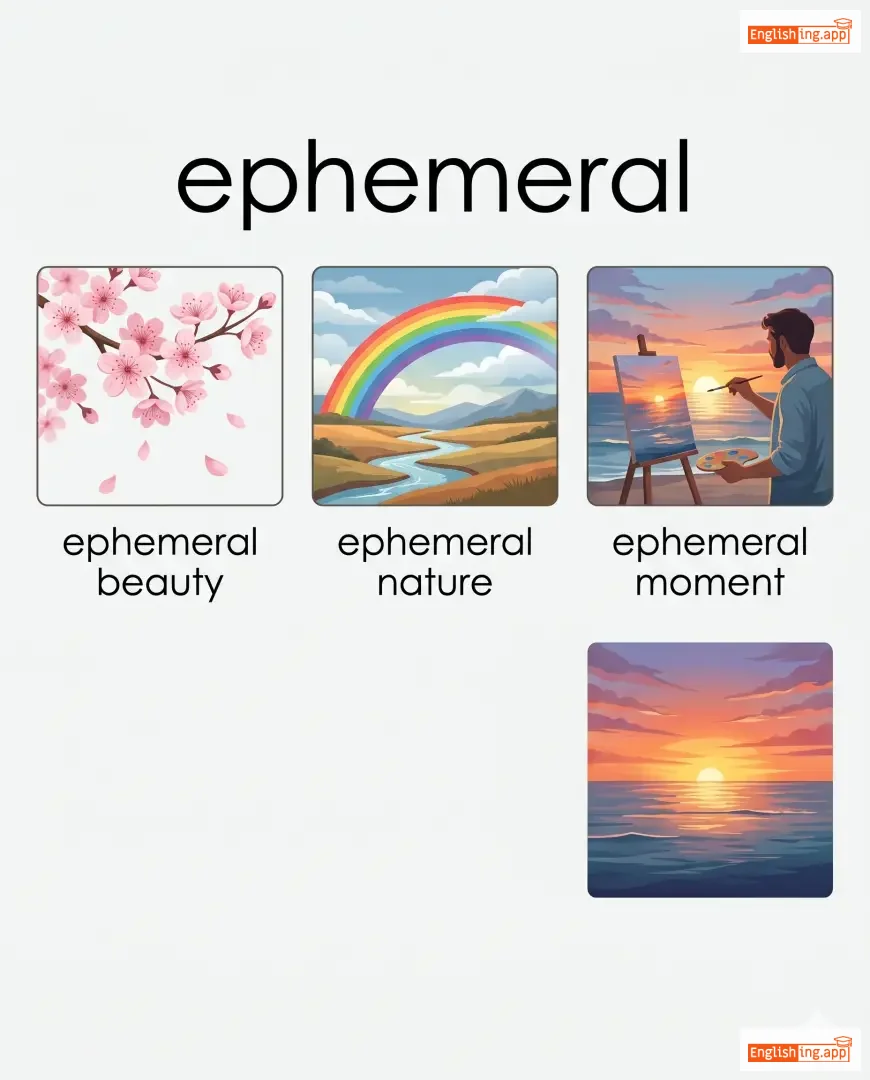
ephemeral beauty, ephemeral nature, ephemeral moment, ephemeral life
••••••
|
短暂就像'瞬间',美丽短暂如日落的美景。
••••••
|
|
📘
••••••
|
/ɪˌpɪstəˈmɒlədʒi/
noun
(认识论)
••••••
|
|
认识论
rènshílùn
••••••
|
- •••••• | - •••••• | - •••••• | - •••••• |
The branch of philosophy that studies the nature, origin, and scope of knowledge.
••••••
|
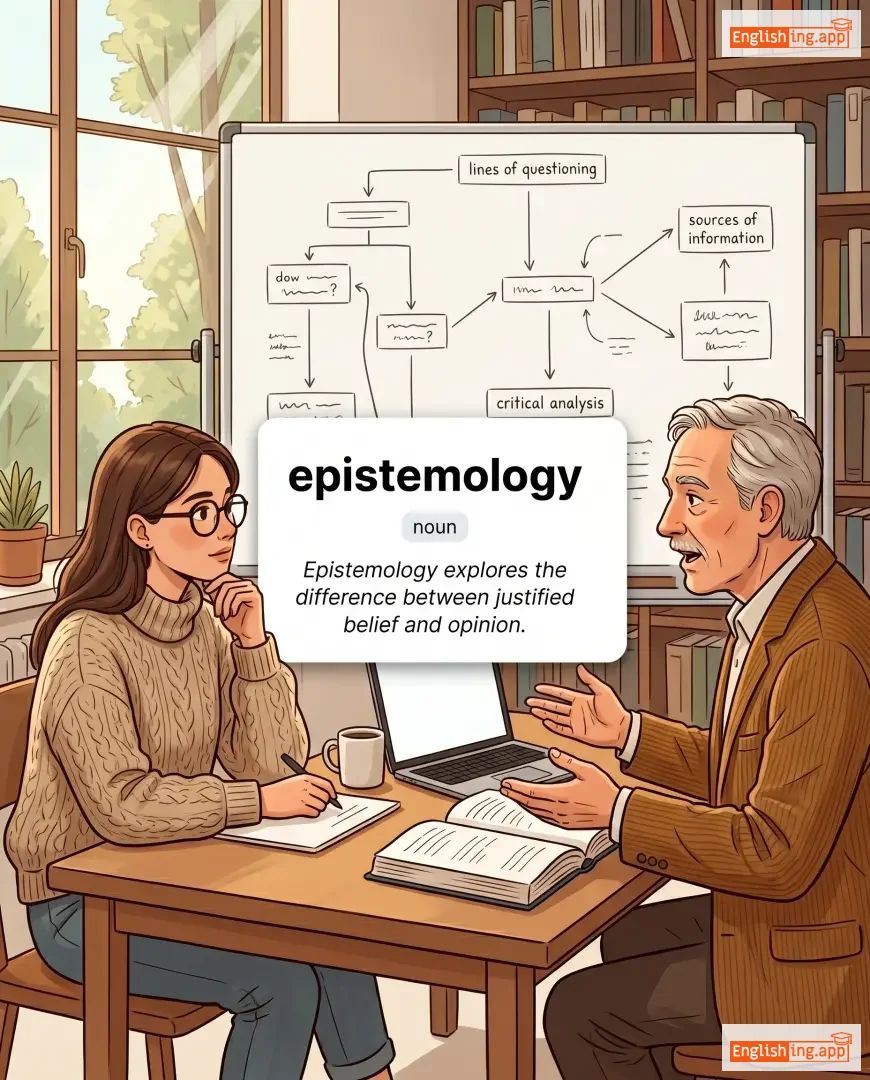
Epistemology explores the difference between justified belief and opinion. |
认识论探索公正的信仰和意见之间的区别。
Rènshílùn tànsuǒ gōngzhèng de xìnyǎng hé yìjiàn zhī jiān de qūbié.
••••••
|
- •••••• | - •••••• | - •••••• |
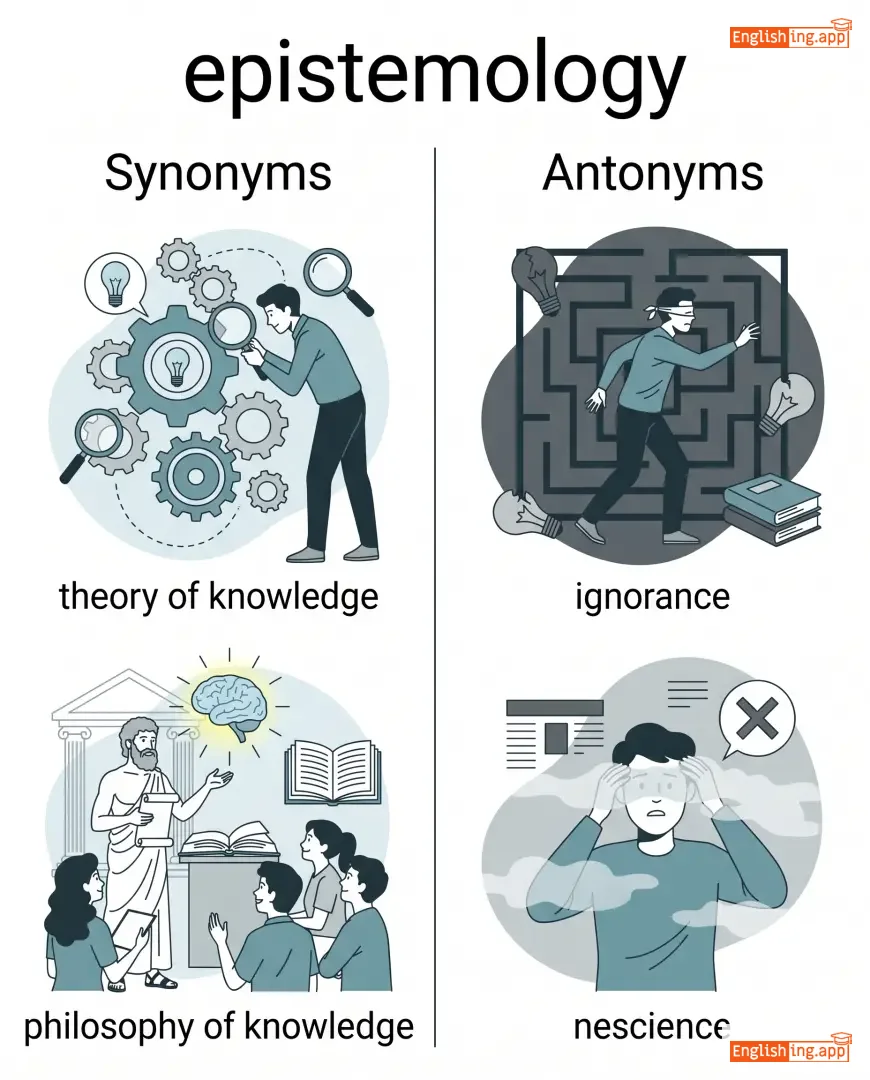
theory of knowledge, philosophy of knowledge, gnoseology
••••••
|
ignorance, nescience
••••••
|
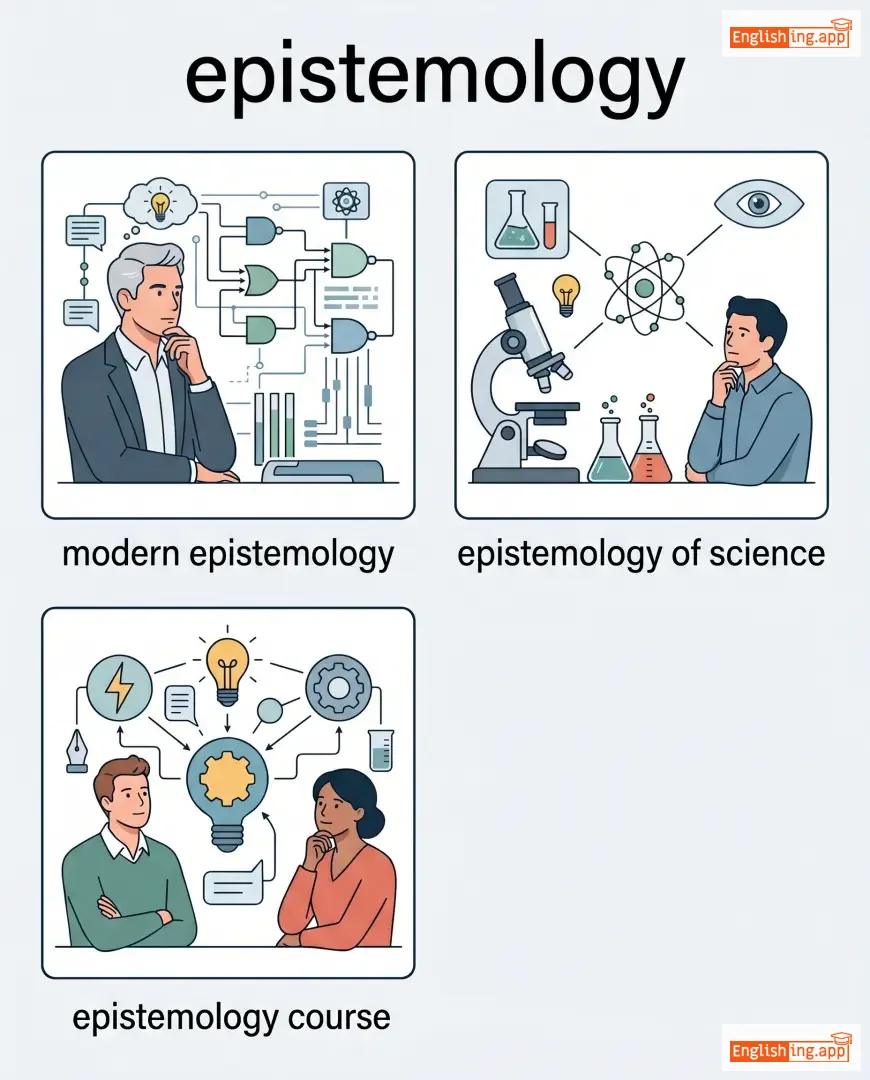
modern epistemology, epistemology of science, epistemology course
••••••
|
认识论 = 认识 (知识) + 论 (学说) → 知识的学说
••••••
|
|
⚖️
••••••
|
/ˈek.wə.bəl/
adjective
(伊奎布尔)
••••••
|
|
平和
pinghe
••••••
|
- •••••• | - •••••• | - •••••• | - •••••• |
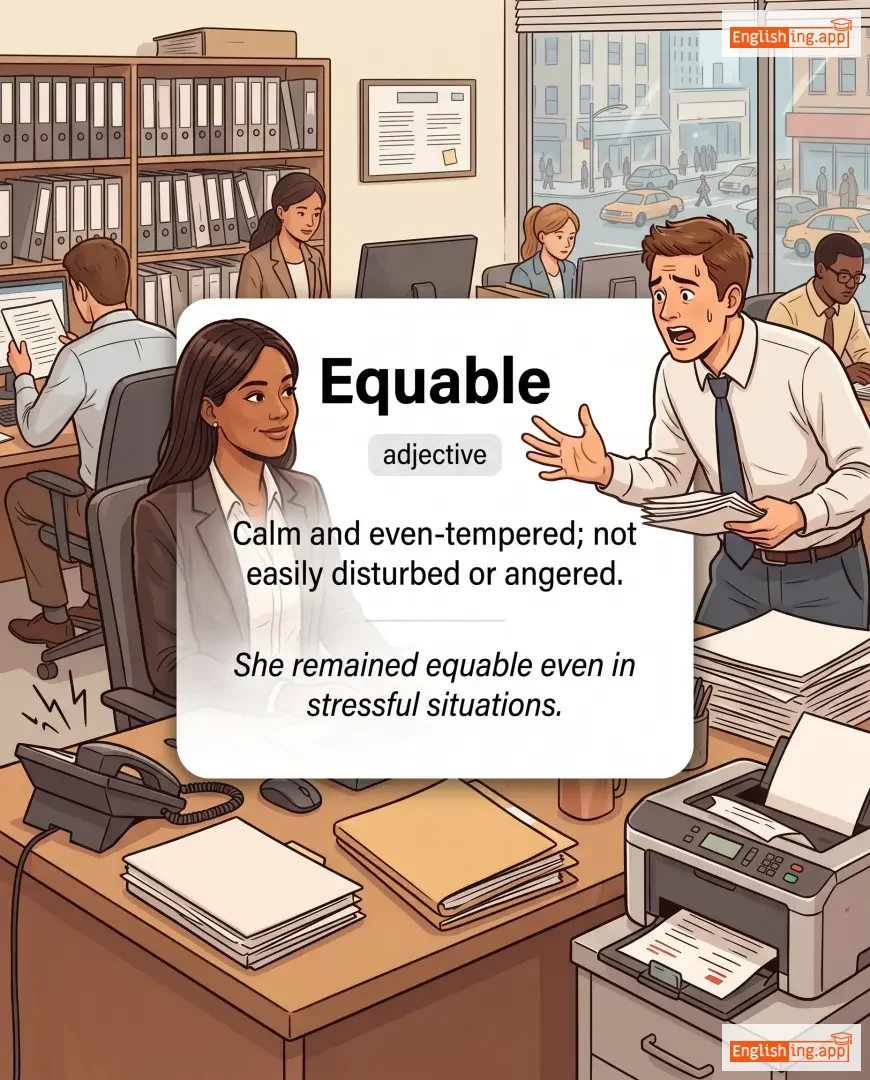
calm and even-tempered; not easily disturbed
••••••
|
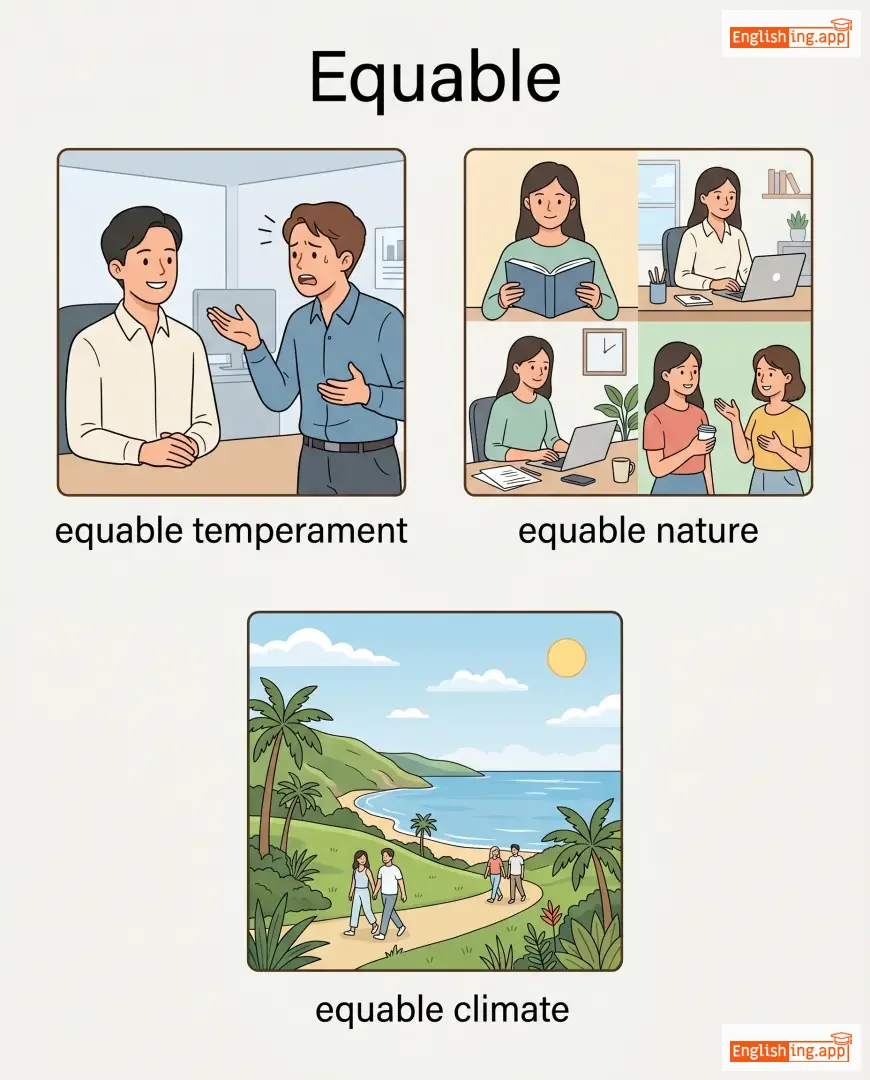
He maintained an equable temperament throughout the crisis.
他在整个危机期间保持了平和的性格。
••••••
|
他在整个危机期间保持了平和的性格。
Ta zai zhengge weiji qi jian baochi le pinghe de xingge.
••••••
|
- •••••• | - •••••• | - •••••• |
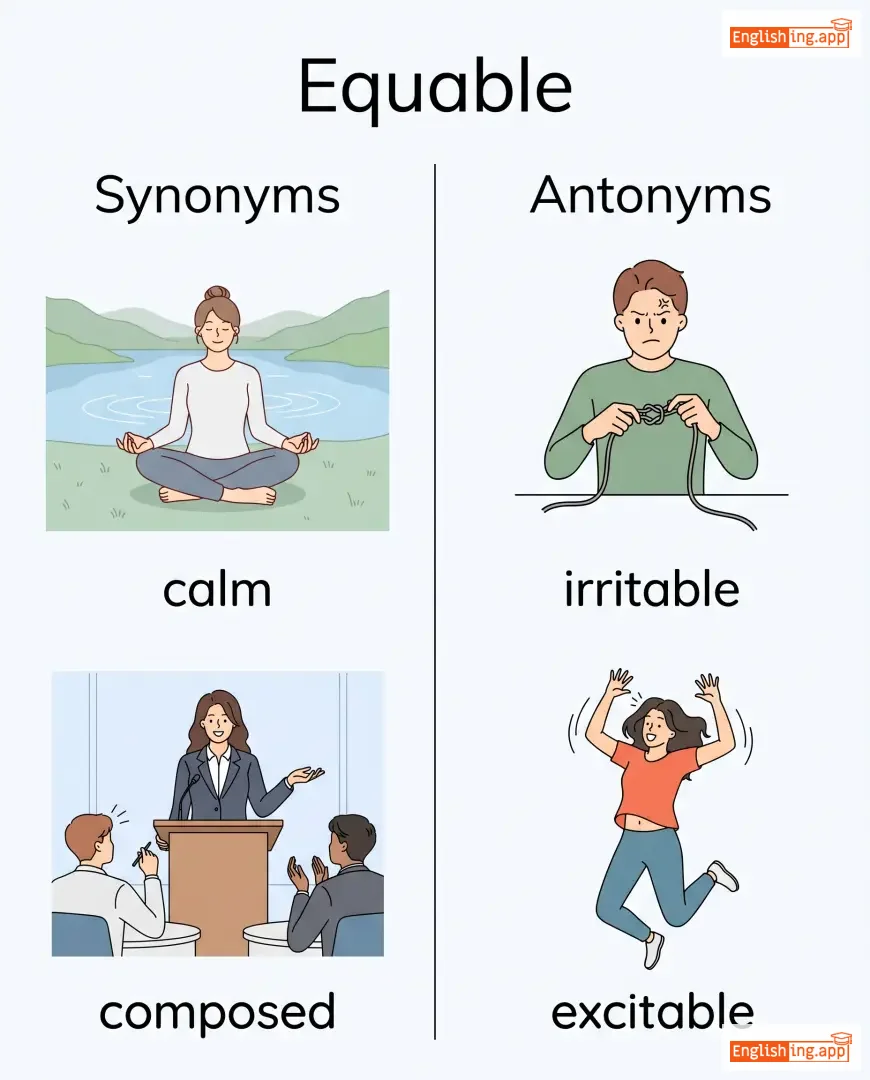
steady, even, uniform, consistent
••••••
|
changeable, variable, inconsistent
••••••
|
equable climate, equable temperament, equable disposition
••••••
|
平和的意思是像 'equable' 一样,保持冷静与沉稳。
••••••
|
|
🧘
••••••
|
/ˌekwəˈnɪmɪti/
noun
(équanímìtí)
••••••
|
|
平静
píngjìng
••••••
|
- •••••• | - •••••• | - •••••• | - •••••• |
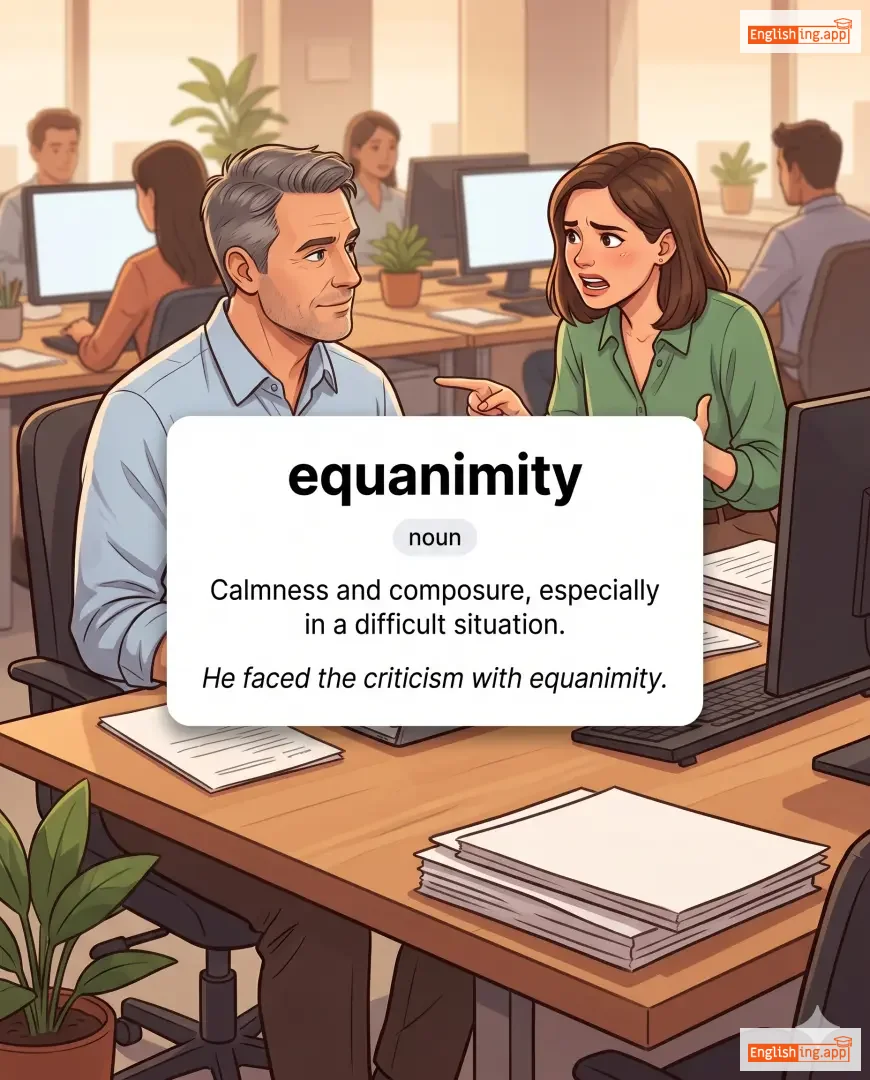
Calmness and composure, especially in a difficult situation.
••••••
|
He faced the criticism with equanimity. |
他以平静的心态面对批评。
Tā yǐ píngjìng de xīntài miànduì pīpíng.
••••••
|
- •••••• | - •••••• | - •••••• |
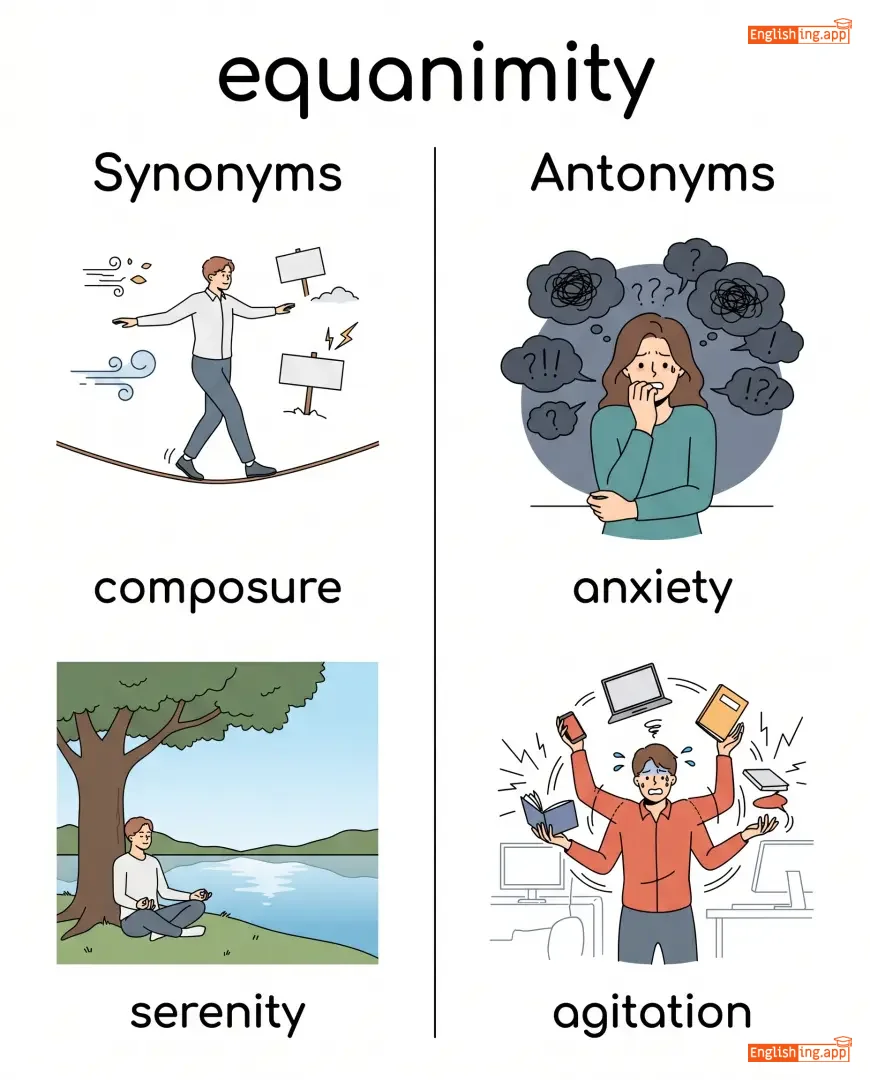
composure, serenity, calmness, tranquility, balance
••••••
|
anxiety, agitation, nervousness
••••••
|
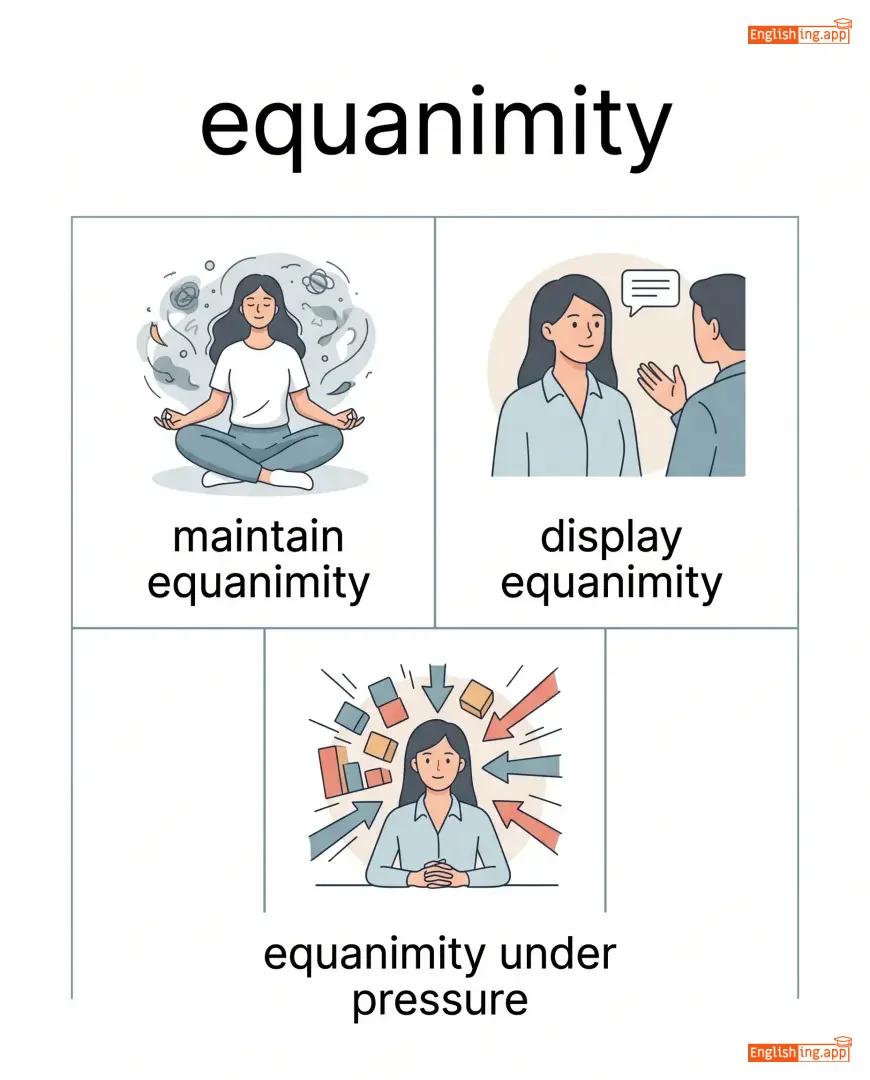
maintain equanimity, display equanimity, equanimity under pressure
••••••
|
Equanimity = 平 (平和) + 静 (安静) → 心如止水
••••••
|
|
🌀
••••••
|
/ɪˈkwɪvəˌkeɪt/
verb
(模棱两可)
••••••
|

|
含糊其辞
hán hú qí cí
••••••
|
equivocated
模棱两可的
••••••
|
equivocated
模棱两可的
••••••
|
equivocates
模棱两可
••••••
|
equivocating
模棱两可
••••••
|
To speak ambiguously or avoid giving a clear answer.
••••••
|
The politician equivocated when asked about the scandal.
那位政治家在被问及丑闻时含糊其辞。
••••••
|
那位政治家在被问及丑闻时含糊其辞。
Nà wèi zhèngzhìjiā zài bèi wènjí chǒuwén shí hán hú qí cí.
••••••
|
- •••••• | - •••••• | - •••••• |
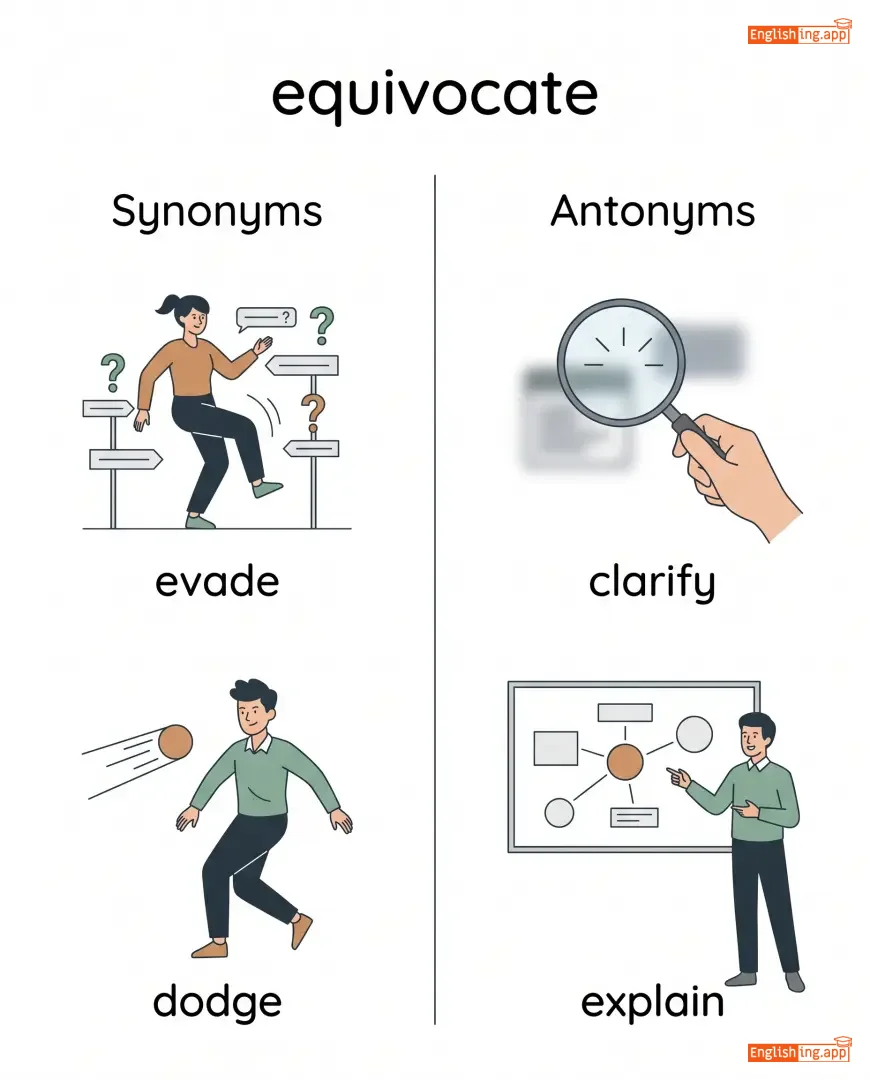
evade, dodge, prevaricate, hedge, mislead
••••••
|
clarify, explain, affirm
••••••
|
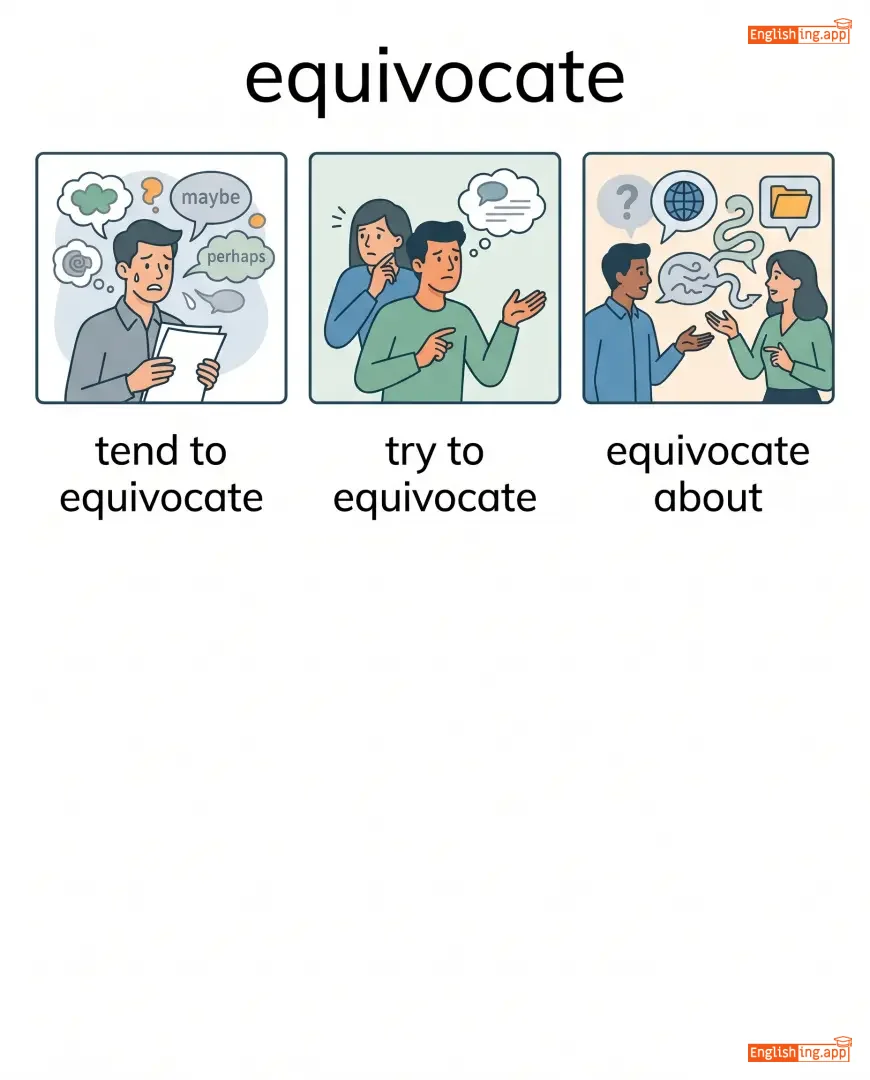
tend to equivocate, try to equivocate, equivocate about
••••••
|
Equivocate 意味着 🌀 通过模棱两可的回答来避免给出明确答案。
••••••
|
|
🚫
••••••
|
/ˈɛrənt/
adjective
(艾兰特)
••••••
|
|
迷途的
mítú de
••••••
|
- •••••• | - •••••• | - •••••• | - •••••• |
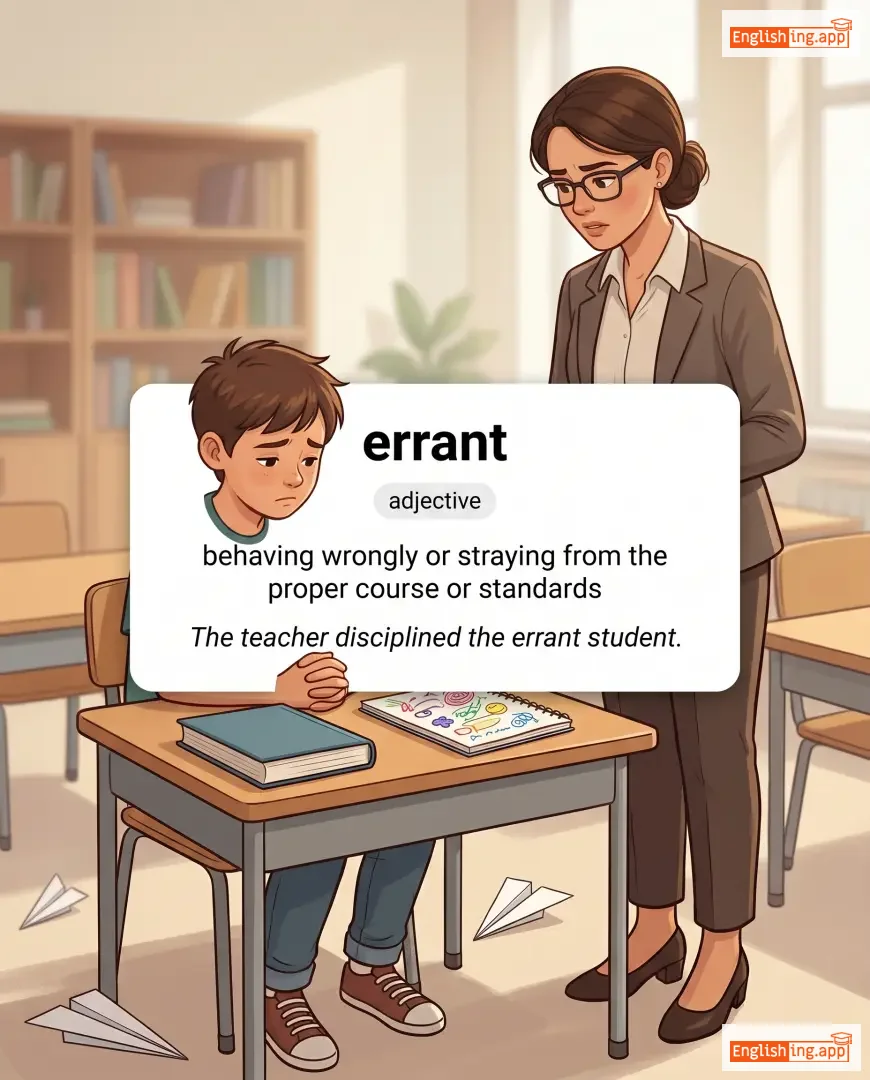
behaving wrongly or straying from the proper course or standards
••••••
|
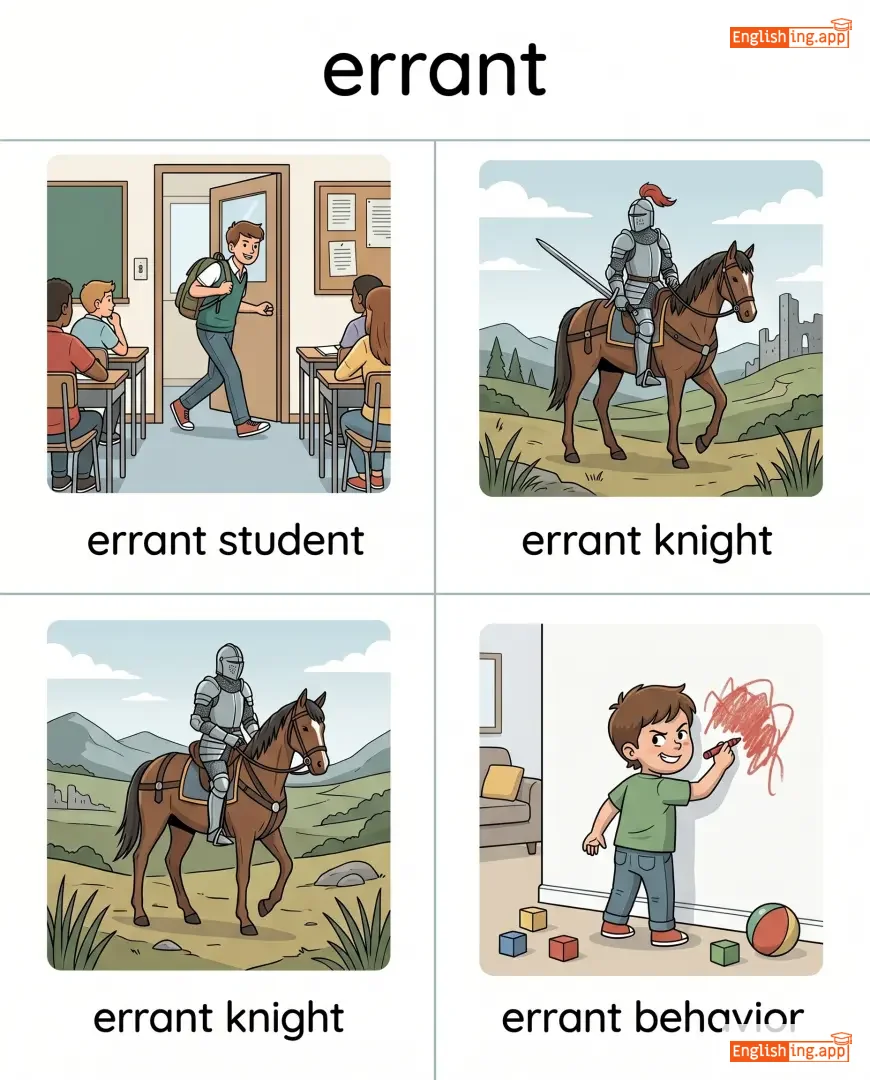
The teacher disciplined the errant student. |
老师惩罚了那个迷途的学生。
Lǎoshī chéngfále nàgè mítú de xuéshēng.
••••••
|
- •••••• | - •••••• | - •••••• |
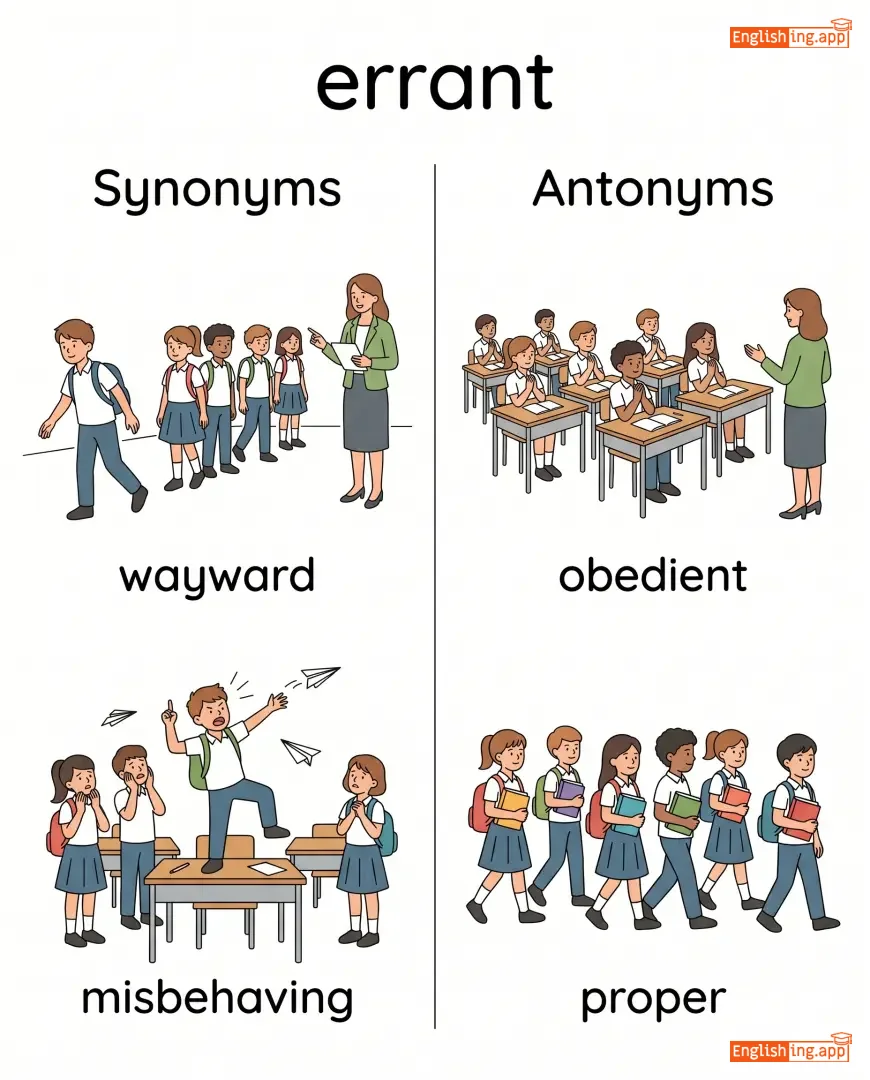
wayward, misbehaving, delinquent, unruly
••••••
|
obedient, proper, disciplined
••••••
|
errant student, errant knight, errant behavior
••••••
|
Errant意味着迷失方向 – Err = 迷失 + ant = 违反规则
••••••
|

