|
絵文字
|
単語 | Images | 翻訳 | 過去 | 過去分詞 | 三人称単数 | 動名詞 | 意味 | 例文 | 例文の翻訳 | 表現例 | 表現例の意味 | 表現例の翻訳 | 同義語 | 対義語 | コロケーション | ニーモニック |
|---|---|---|---|---|---|---|---|---|---|---|---|---|---|---|---|---|---|
|
😏
••••••
|
/ɪˈfrʌntəri/
noun
(エフロンテリー)
••••••
|
|
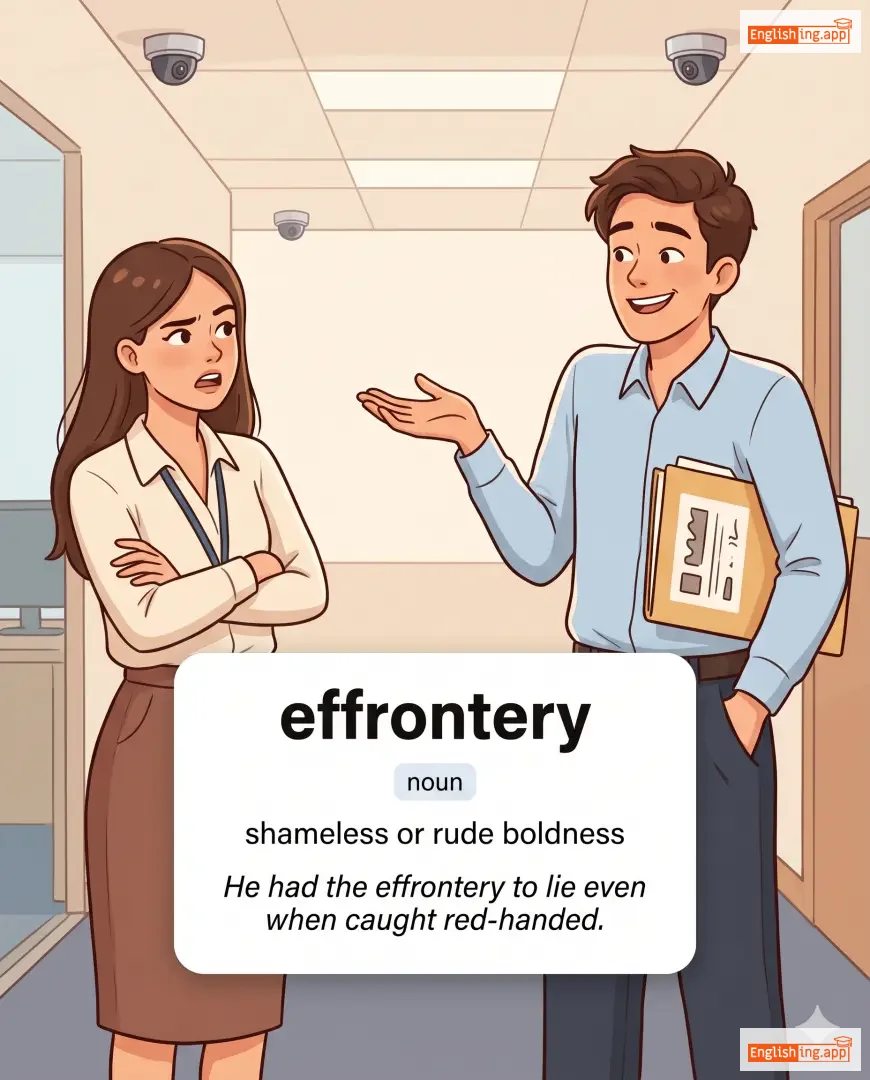
厚顔無恥または大胆な態度
kōgan muchi matawa daitan na taido
••••••
|
- •••••• | - •••••• | - •••••• | - •••••• |
shameless or rude boldness
••••••
|
He had the effrontery to lie even when caught red-handed. |
彼は赤手で捕まった後でも嘘をつく厚顔無恥さを持っていた。
Kare wa akate de tsukamatta ato demo uso o tsuku kōgan muchisa o motte ita.
••••••
|
- •••••• | - •••••• | - •••••• |
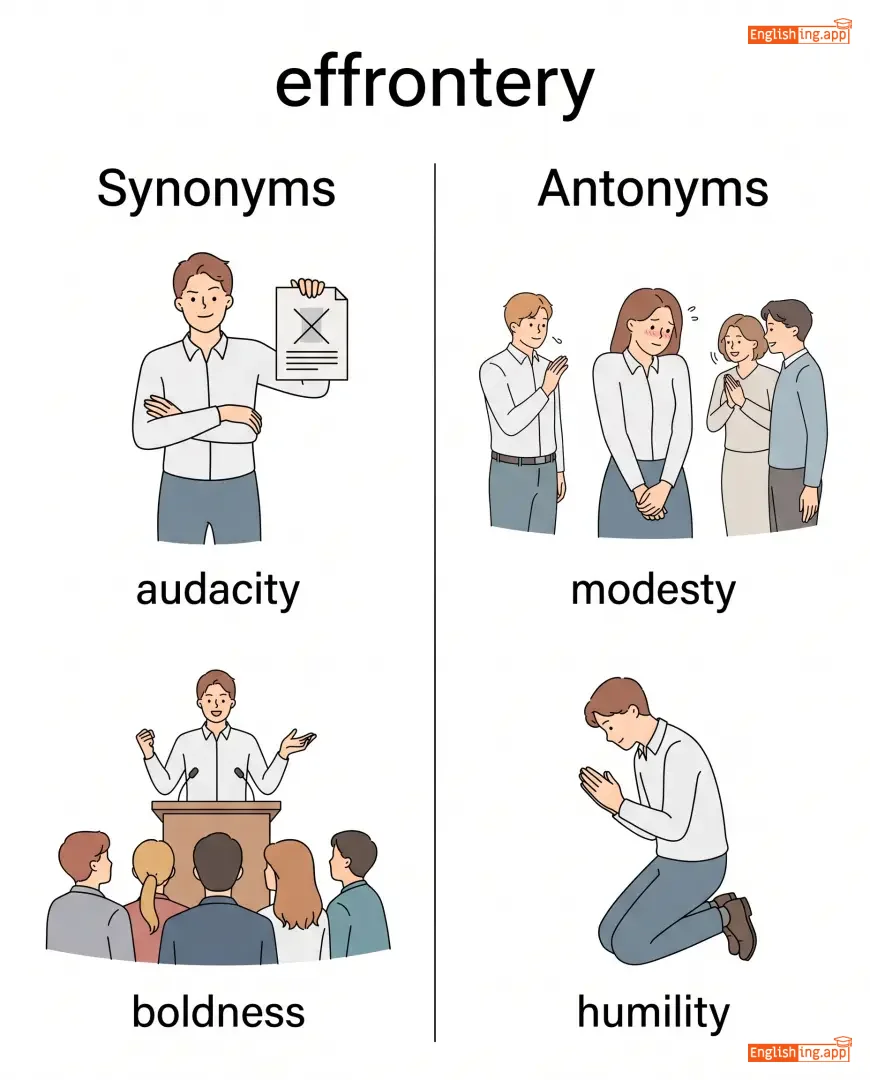
audacity, boldness, impudence, nerve, insolence
••••••
|
modesty, humility, shyness
••••••
|
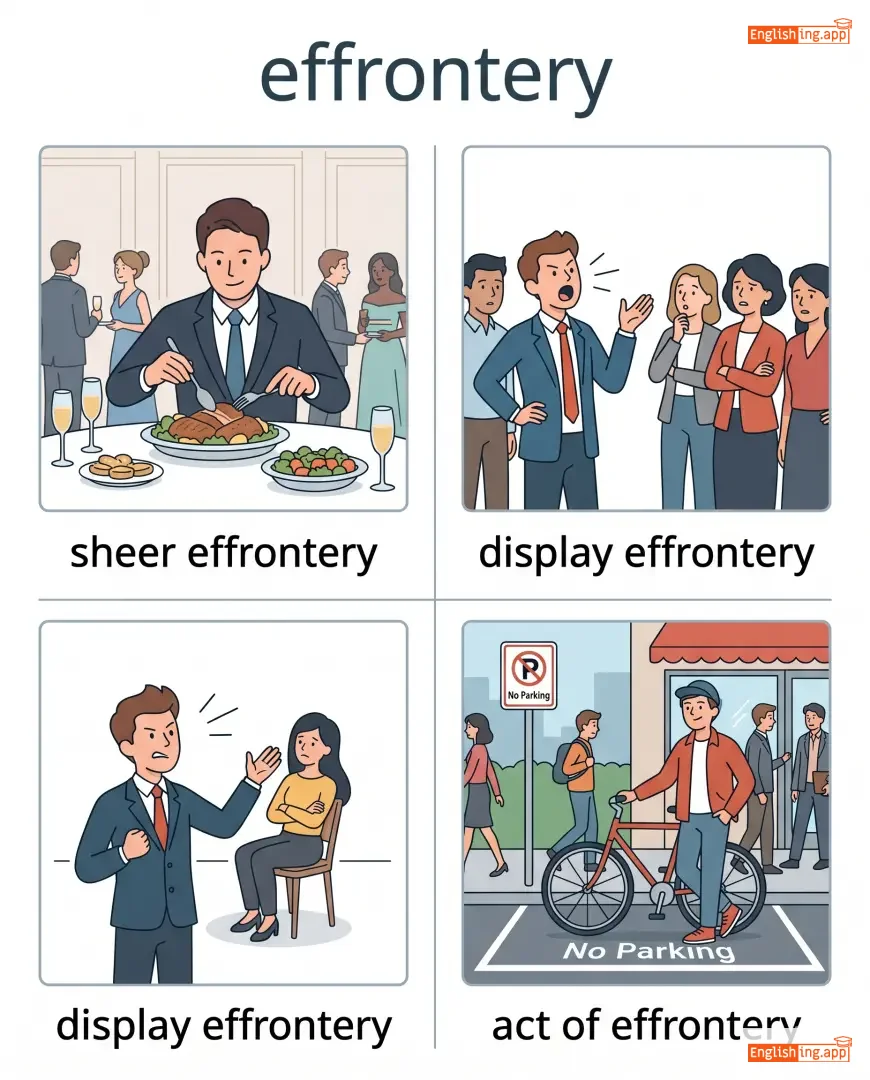
sheer effrontery, display effrontery, act of effrontery
••••••
|
Effronteryは厚顔無恥さを意味する — 前面 (front) に粗野な態度がある。
••••••
|
|
🙇♂️
••••••
|
/ˈiːɡoʊˌɪzəm/
noun
(エゴイズム)
••••••
|
|
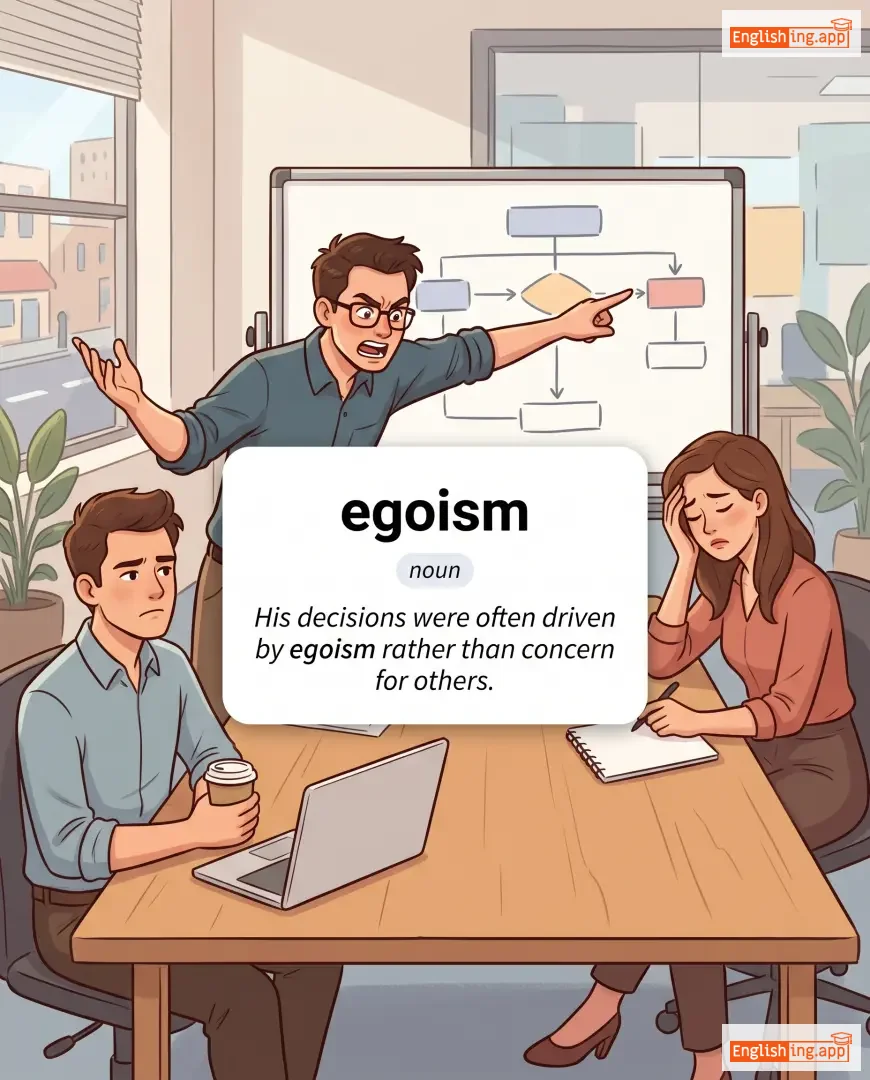
利己主義
rikoshugi
••••••
|
- •••••• | - •••••• | - •••••• | - •••••• |
An ethical theory that treats self-interest as the foundation of morality; also, excessive preoccupation with oneself.
••••••
|
His decisions were often driven by egoism rather than concern for others. |
彼の決断はしばしば他人への配慮よりも利己主義に駆り立てられていた。
Kare no ketsudan wa shibashiba tanin e no hairyo yori mo rikoshugi ni karitate rarete ita.
••••••
|
- •••••• | - •••••• | - •••••• |
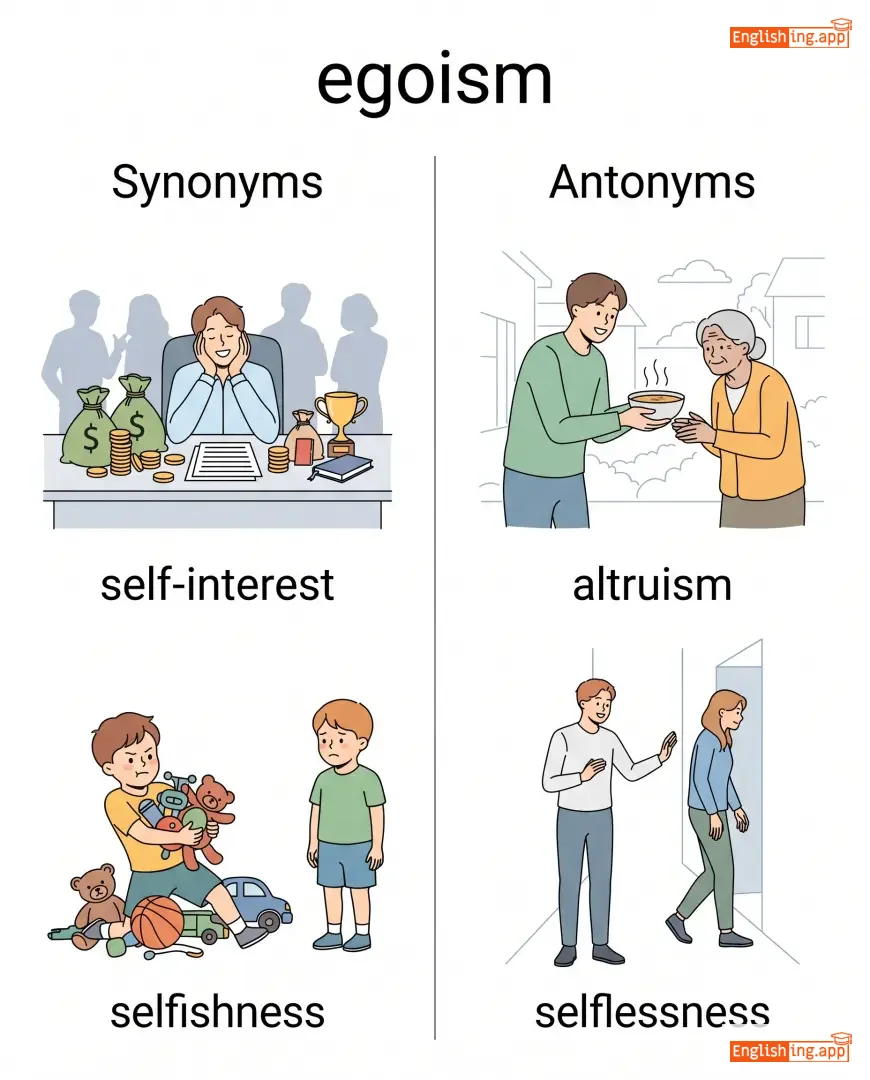
self-interest, selfishness, egocentrism, self-centeredness
••••••
|
altruism, selflessness
••••••
|
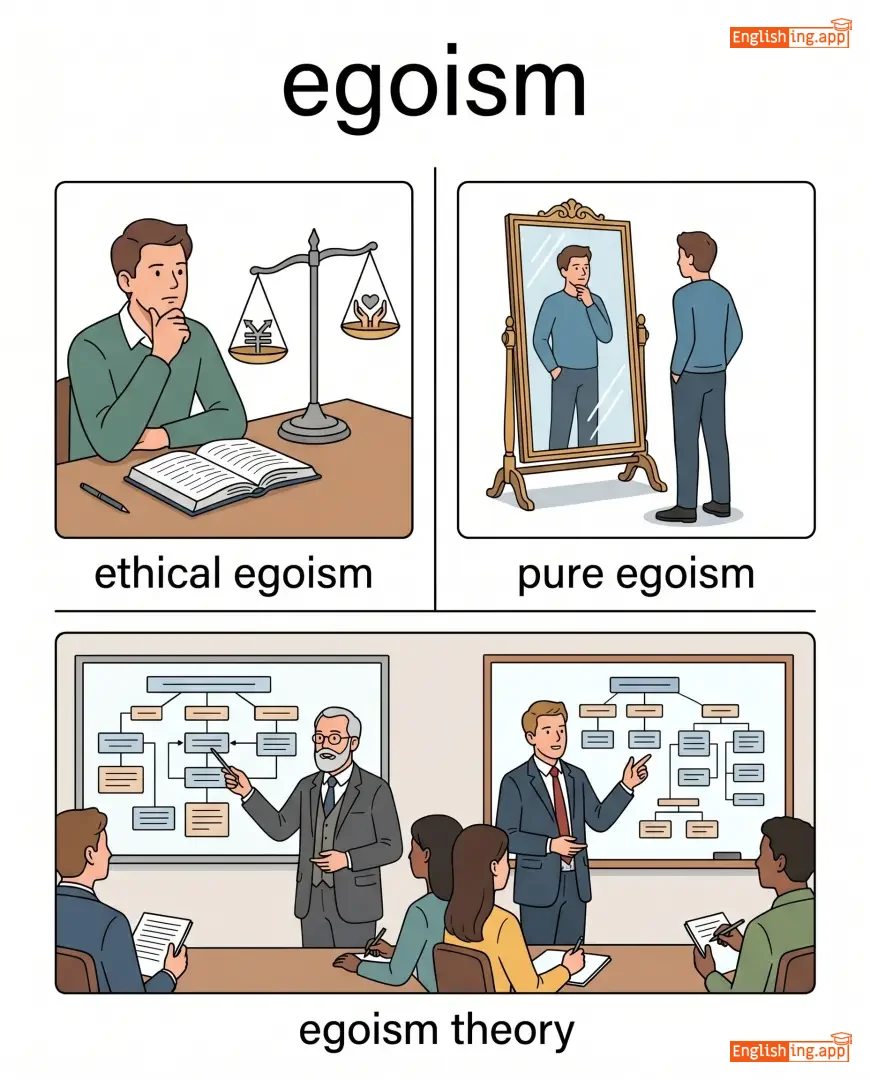
ethical egoism, pure egoism, egoism theory, act of egoism
••••••
|
利己主義 = 自分中心 + 主義、自己を最優先に考える哲学。
••••••
|
|
🙄
••••••
|
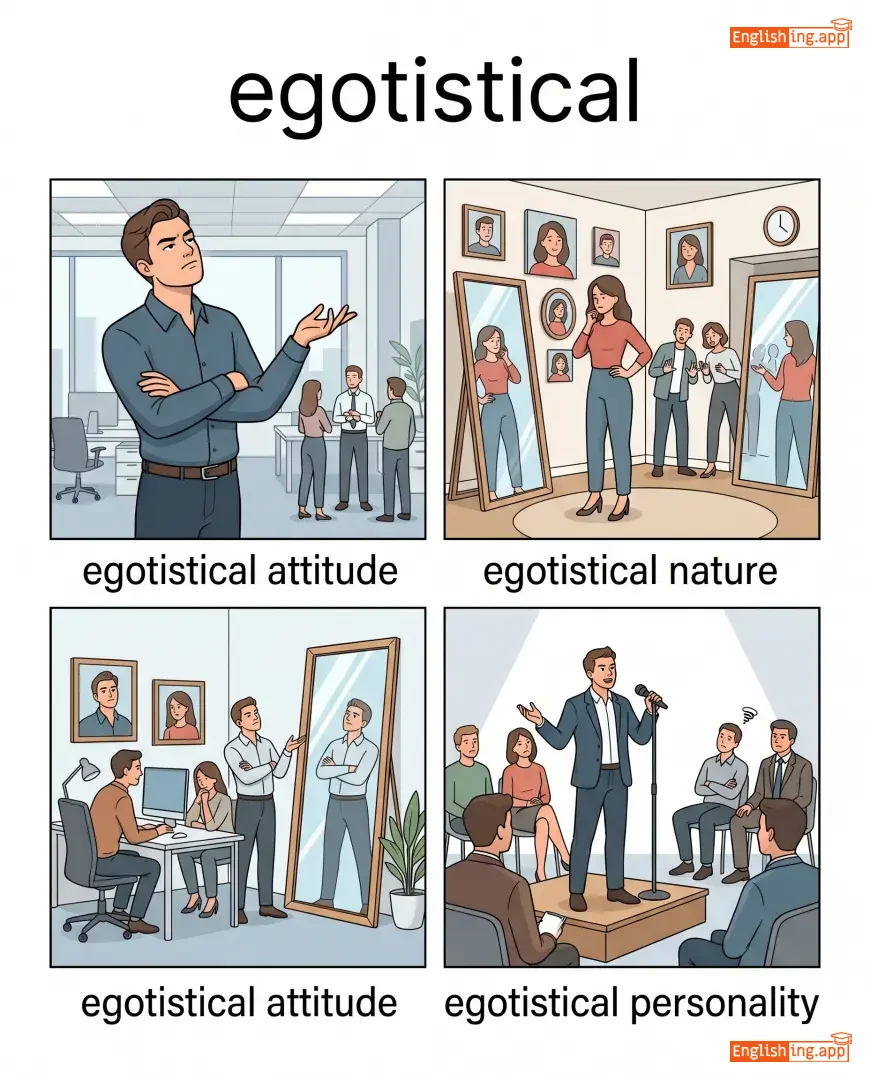
/ˌiːɡəˈtɪstɪkəl/
adjective
(イゴティスティカル)
••••••
|
|
自己中心的
jiko chūshinteki
••••••
|
- •••••• | - •••••• | - •••••• | - •••••• |
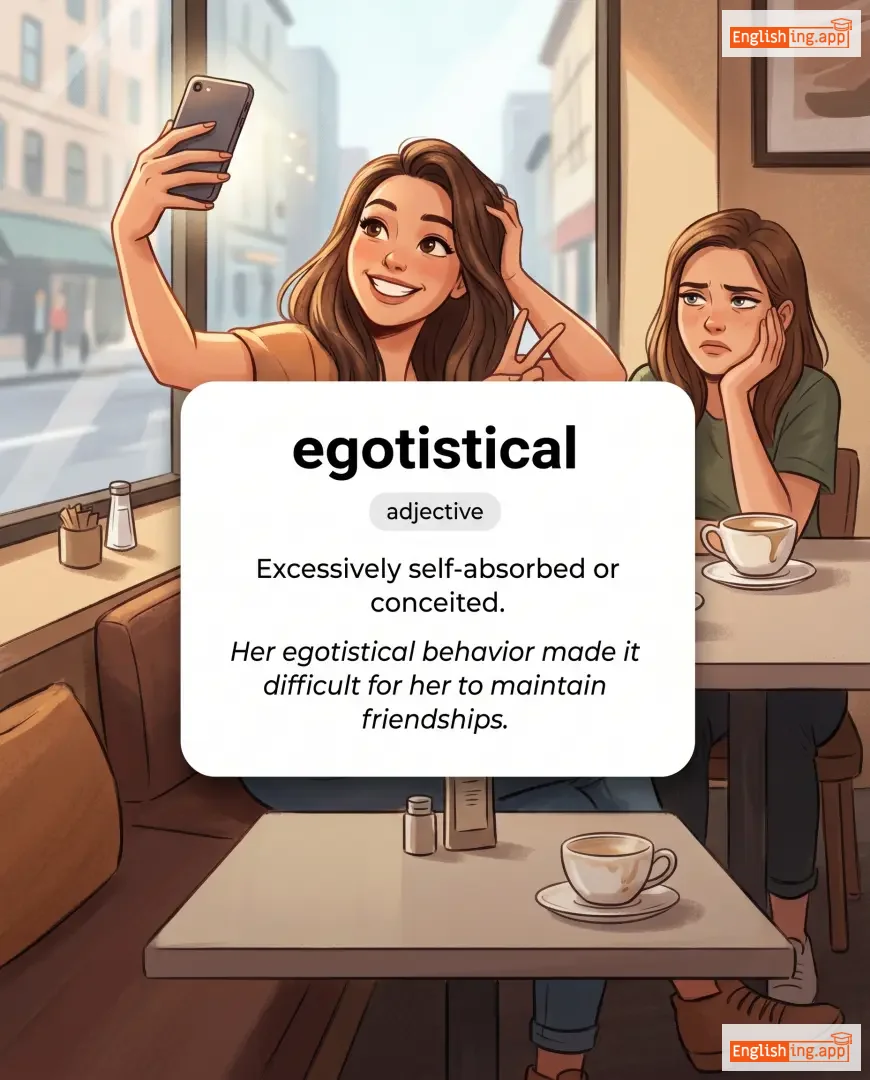
Excessively self-absorbed or conceited.
••••••
|
Her egotistical behavior made it difficult for her to maintain friendships. |
彼女の自己中心的な行動は、友達関係を維持するのを難しくしました。
Kanojo no jiko chūshinteki na kōdō wa, tomodachi kankei o iji suru no o muzukashiku shimashita.
••••••
|
- •••••• | - •••••• | - •••••• |
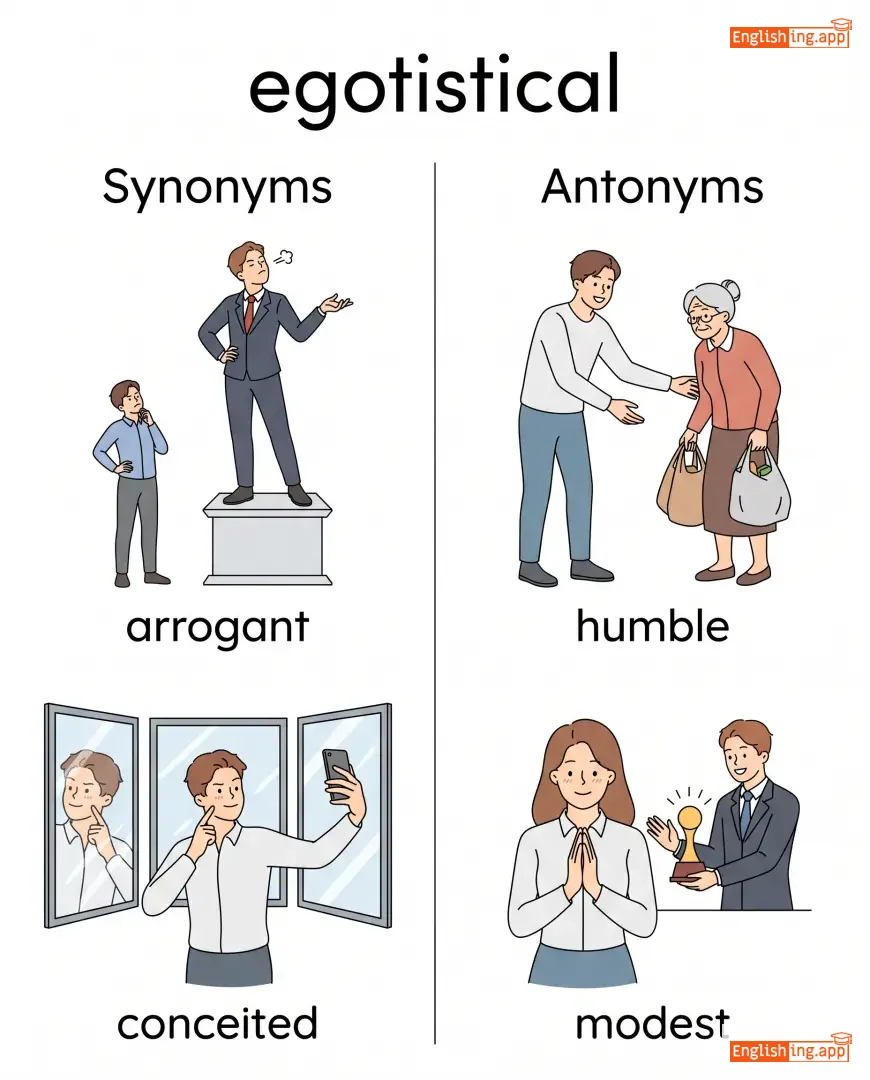
arrogant, conceited, narcissistic, vain, self-centered
••••••
|
humble, modest, selfless
••••••
|
egotistical attitude, egotistical nature, egotistical personality
••••••
|
Ego+tistical → あまりにも自己中心的な人は自己中心的だ。
••••••
|
|
🪦
••••••
|
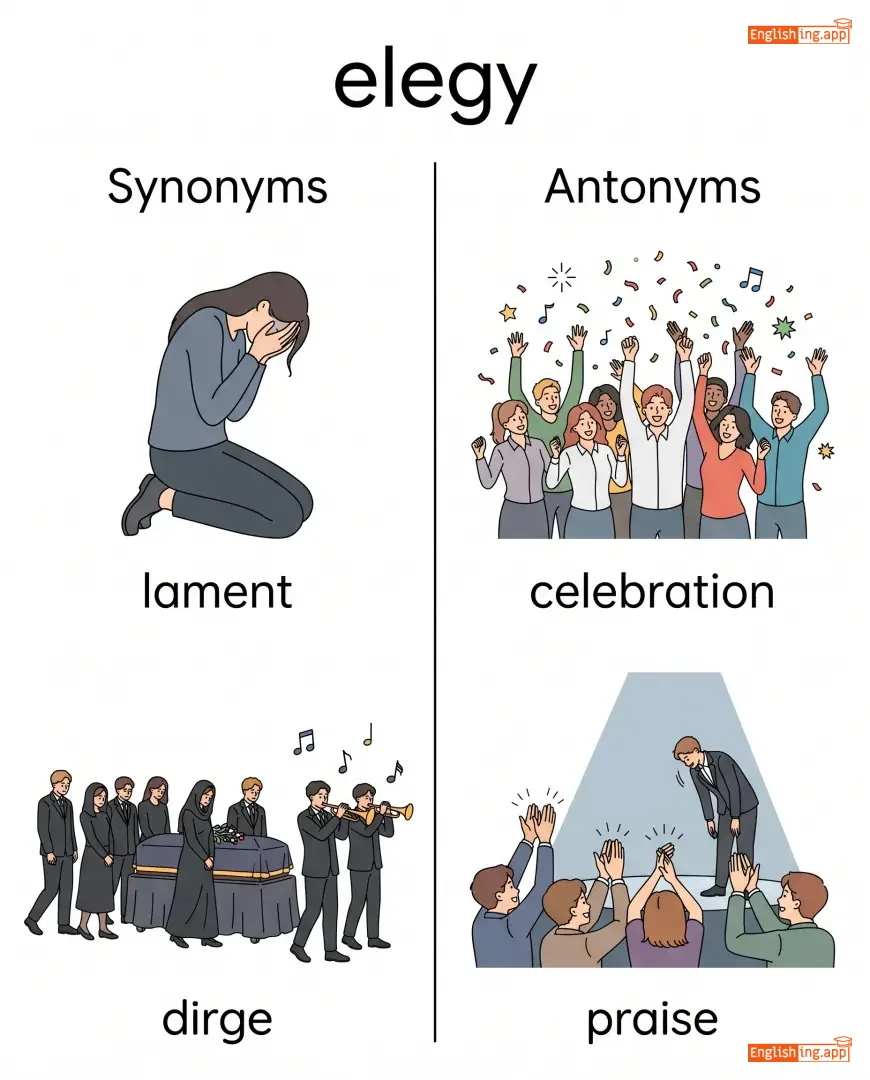
/ˈɛlɪdʒi/
noun
(エレジー)
••••••
|

|
エレジー
erejī
••••••
|
- •••••• | - •••••• | - •••••• | - •••••• |
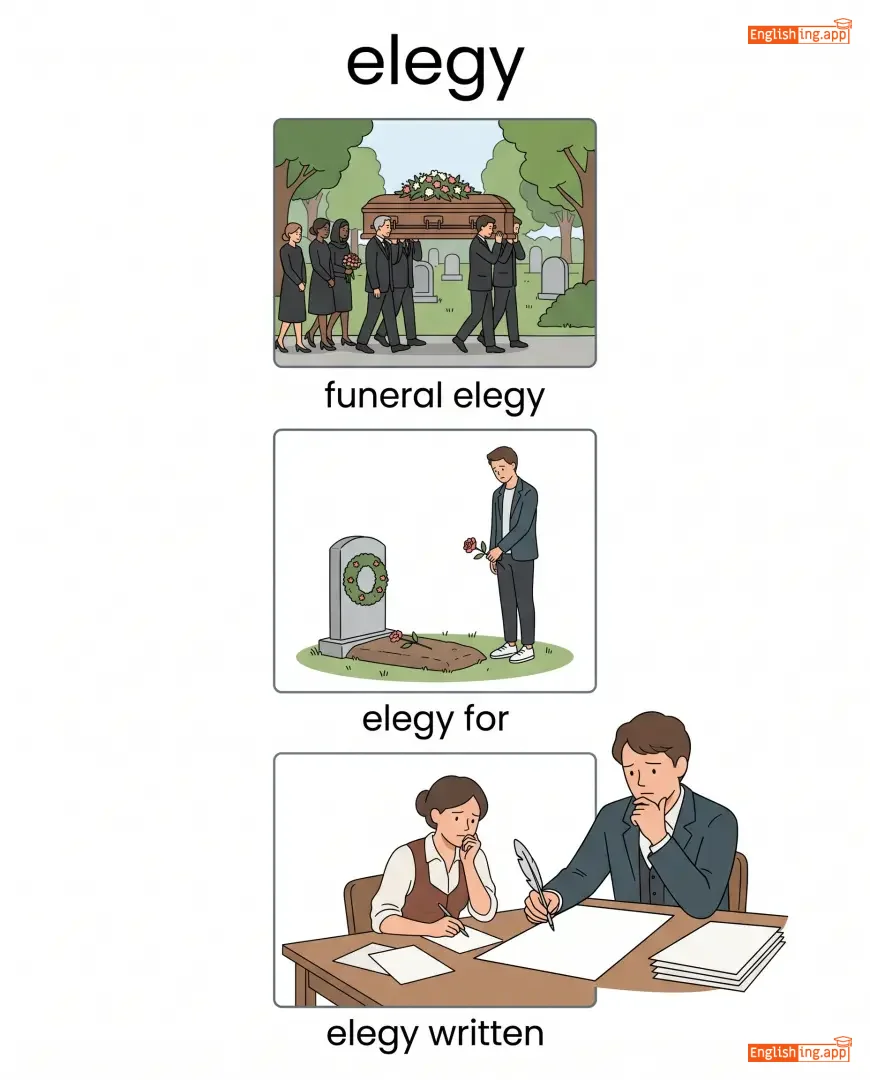
A poem or song expressing sorrow, especially for someone who has died.
••••••
|
The poet wrote an elegy for his late friend. |
詩人は亡き友人のためにエレジーを書きました。
Shijin wa naki yūjin no tame ni erejī o kakimashita.
••••••
|
- •••••• | - •••••• | - •••••• |
lament, dirge, requiem, threnody, ode
••••••
|
celebration, praise
••••••
|
funeral elegy, elegy for, elegy written, mournful elegy
••••••
|
エレジーは失った友への悲しい歌のようなもの。
••••••
|
|
💬
••••••
|
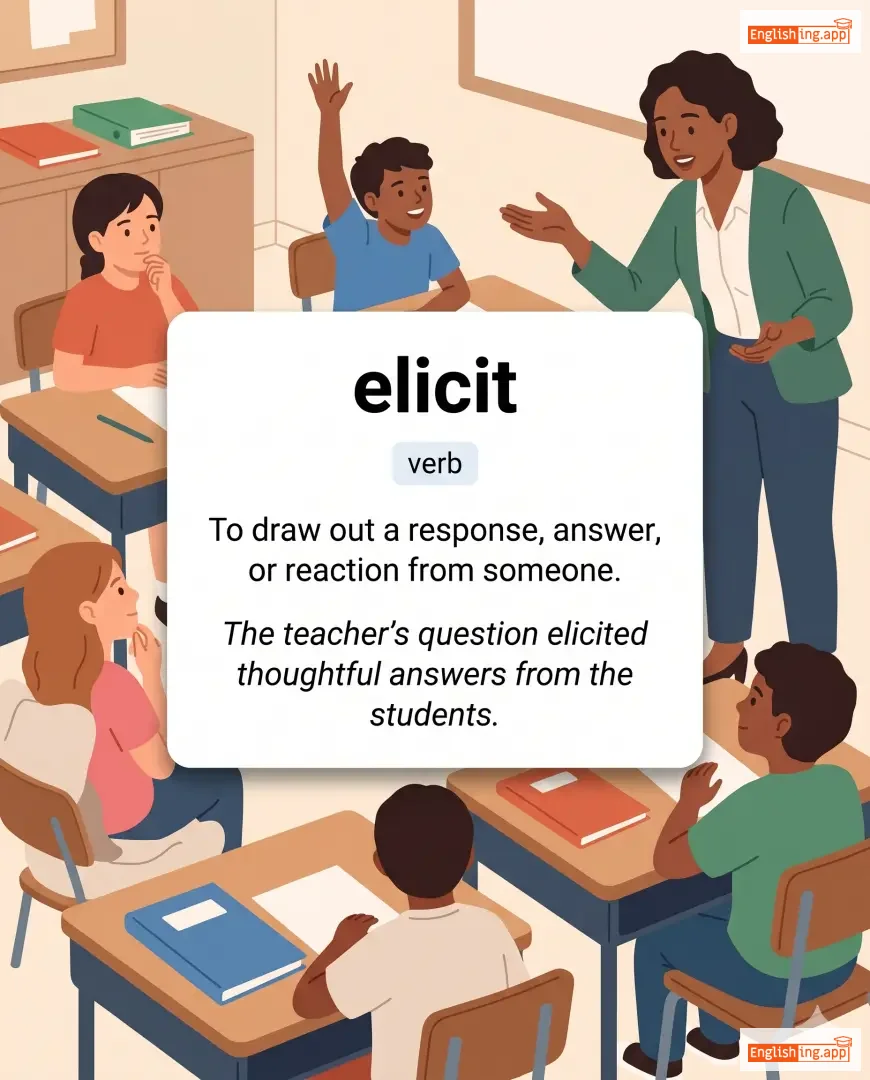
/ɪˈlɪsɪt/
verb
(エリシット)
••••••
|
|
引き出す
hikidasu
••••••
|
elicited
エリシテッド
••••••
|
elicited
エリシテッド
••••••
|
elicits
エリシッツ
••••••
|
eliciting
エリシティング
••••••
|
To draw out a response, answer, or reaction from someone.
••••••
|
The teacher’s question elicited thoughtful answers from the students.
先生の質問は生徒たちから思慮深い回答を引き出しました。
••••••
|
先生の質問は生徒たちから思慮深い回答を引き出しました。
Sensei no shitsumon wa seito-tachi kara shinri-bukai kaitō o hikidashimashita.
••••••
|
elicit a response
反応を引き出す
••••••
|
to cause someone to reply or react
••••••
|
反応を引き出す
hannou o hikidasu
••••••
|
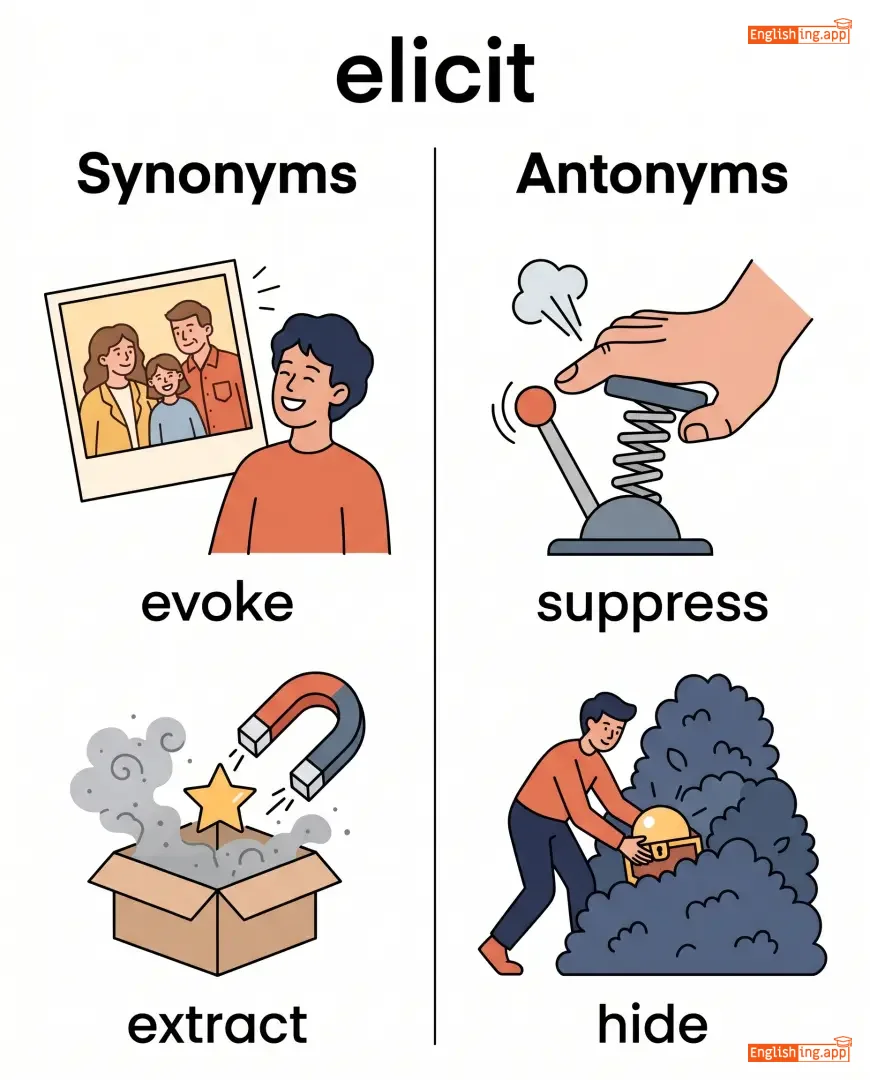
evoke, extract, provoke, obtain, bring out
••••••
|
suppress, hide, silence
••••••
|
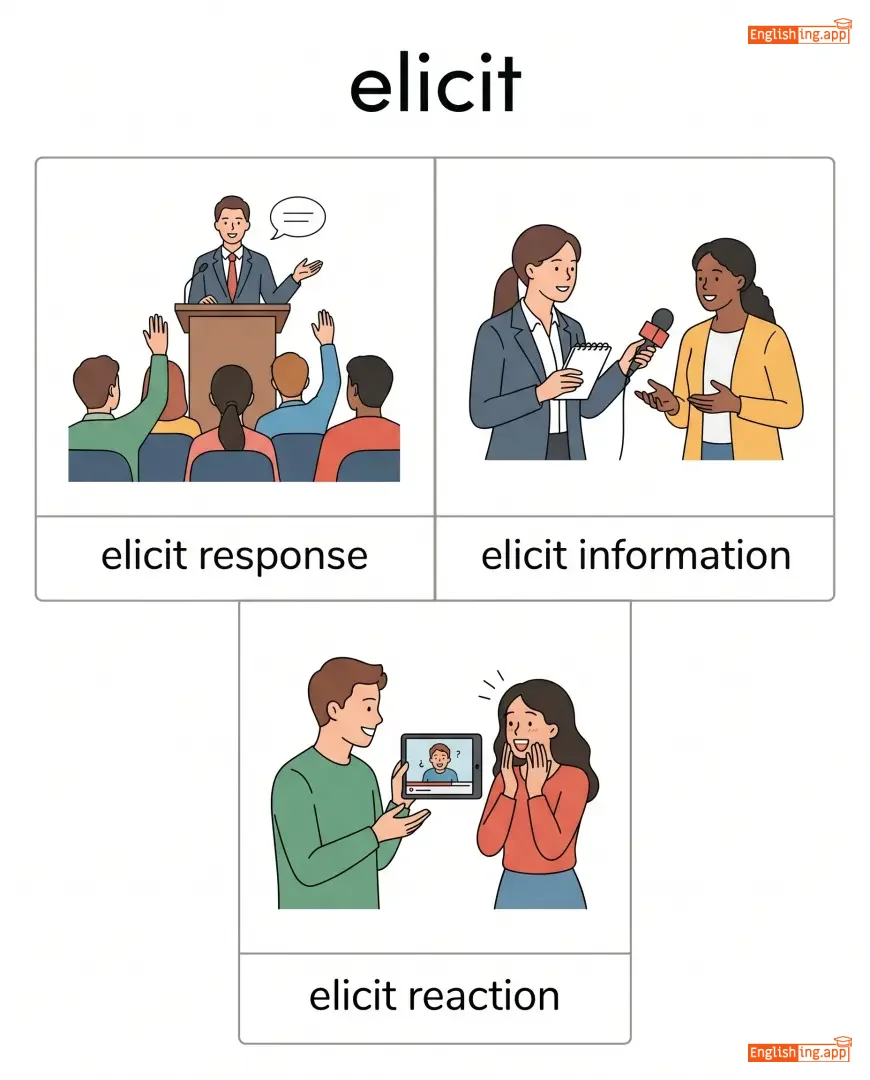
elicit response, elicit information, elicit reaction, elicit support
••••••
|
エリシット = 英語で反応を引き出す方法
••••••
|
|
🧪
••••••
|
/ɪˈlɪksər/
noun
(エリクシール)
••••••
|
|
エリクシール
erikushīru
••••••
|
- •••••• | - •••••• | - •••••• | - •••••• |
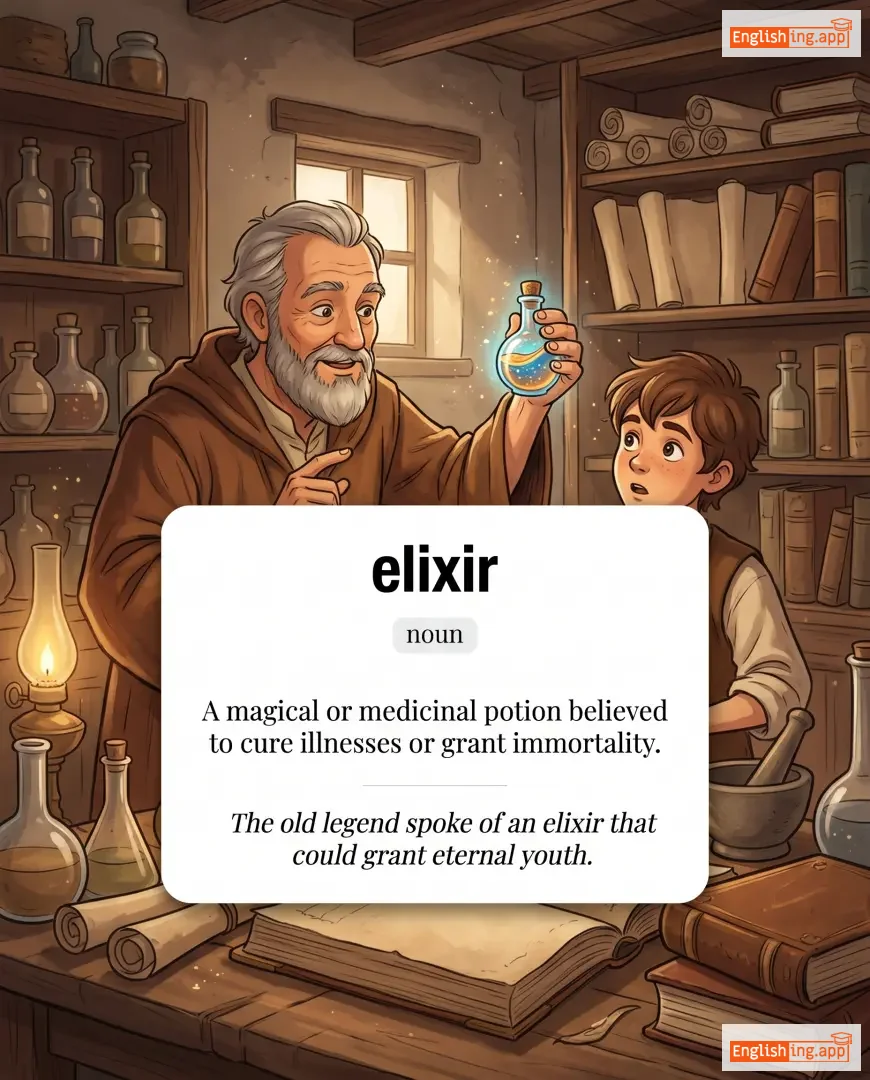
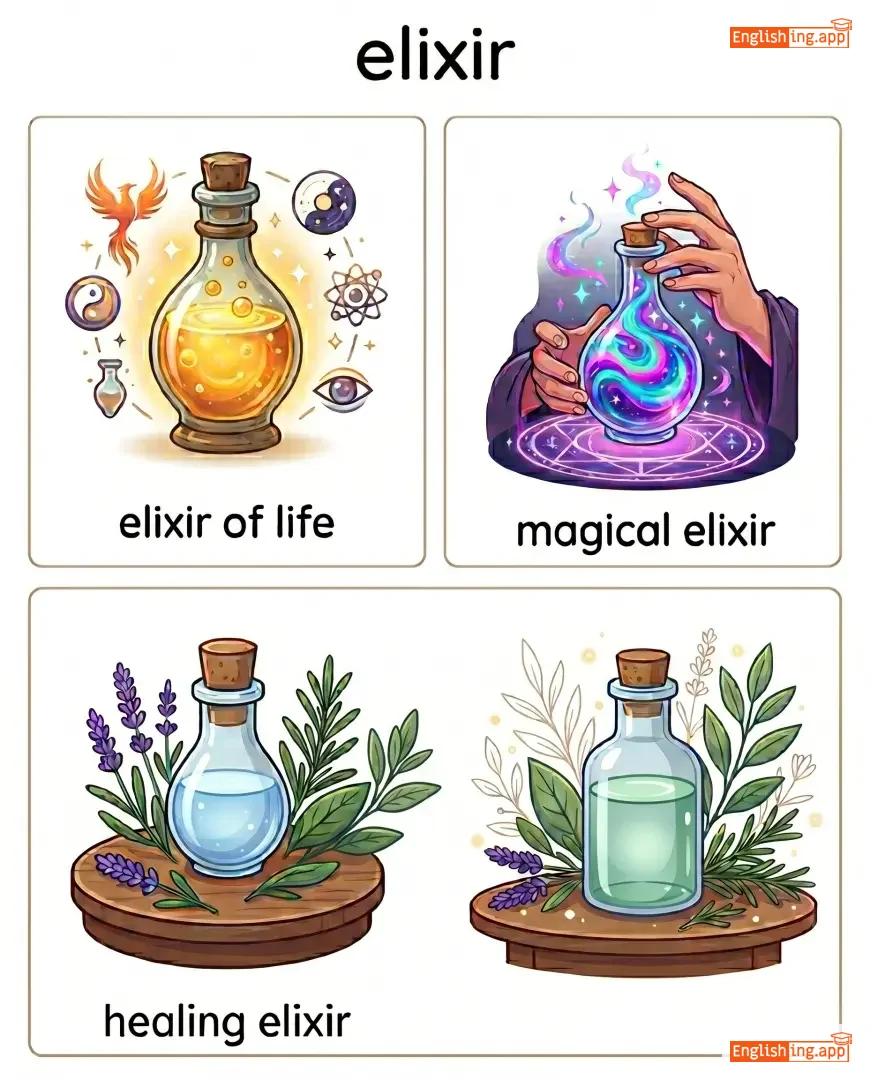
A magical or medicinal potion believed to cure illnesses or grant immortality.
••••••
|
The old legend spoke of an elixir that could grant eternal youth. |
古代の伝説は、永遠の若さを与えることができるエリクシールについて語っていました。
Kodai no densetsu wa, eien no wakasa o ataeru koto ga dekiru erikushīru ni tsuite katatte imashita.
••••••
|
elixir of life |
A mythical potion that grants immortality or eternal youth.
••••••
|
命のエリクシール
Inochi no erikushīru
••••••
|
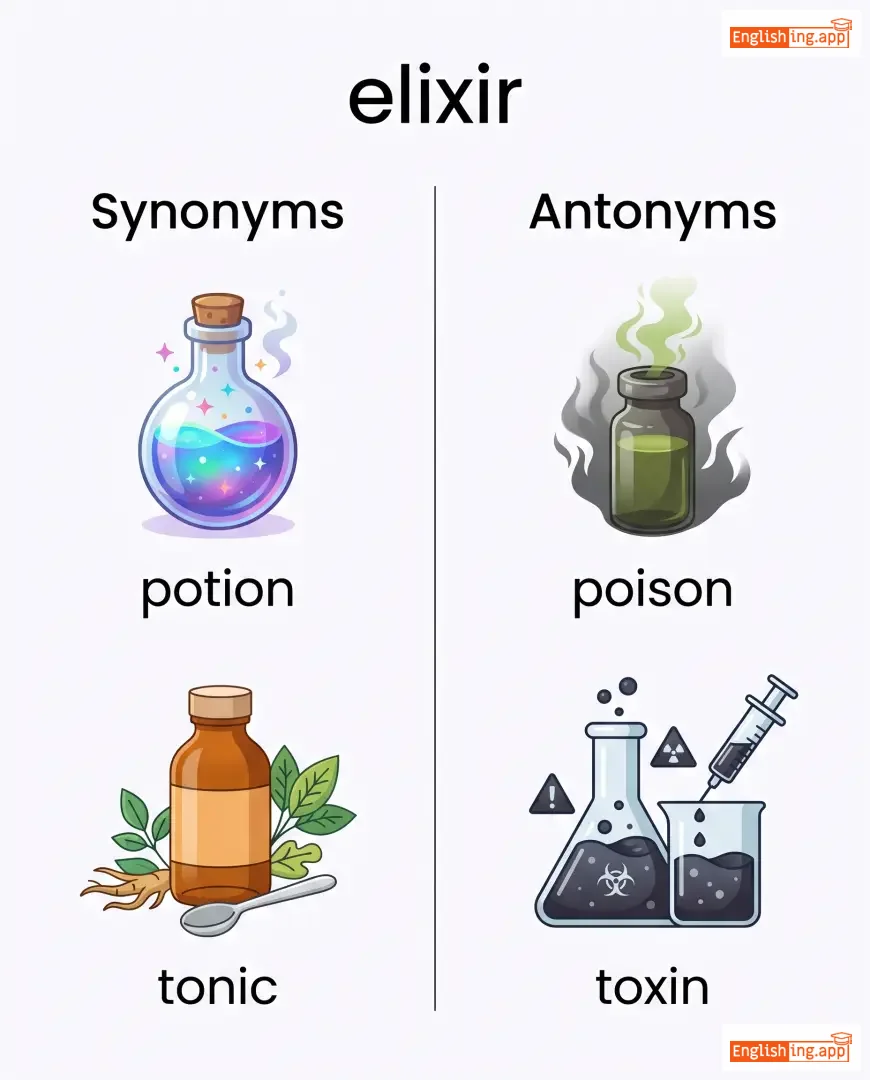
potion, tonic, remedy, cure, panacea
••••••
|
poison, toxin, disease
••••••
|
elixir of life, magical elixir, healing elixir, secret elixir
••••••
|
Elixir はまるで魔法の薬、水で何でも治す!
••••••
|
|
🌸
••••••
|
/ɪˈlɪʒən/
adjective
(エリシアン)
••••••
|
|
天国の
tengoku no
••••••
|
- •••••• | - •••••• | - •••••• | - •••••• |
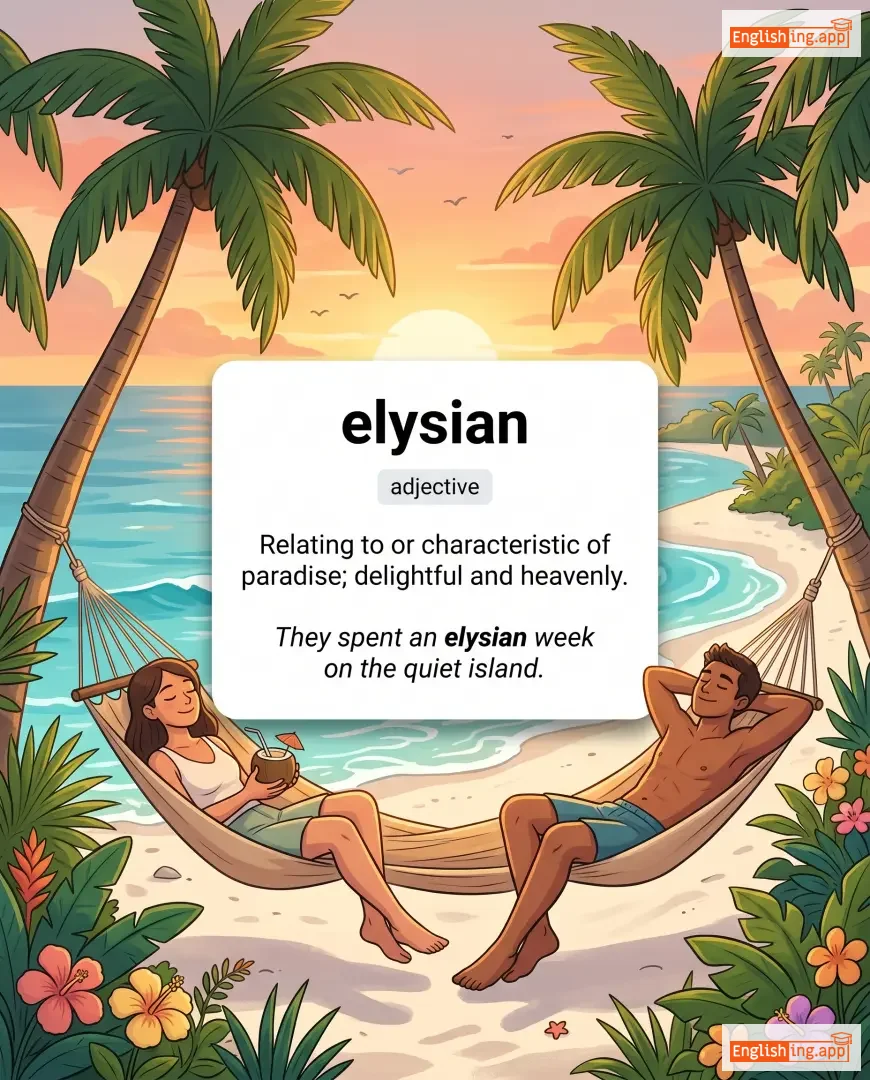
Relating to or characteristic of paradise; delightful and heavenly.
••••••
|
They spent an elysian week on the quiet island. |
彼らは静かな島で天国のような一週間を過ごしました。
Karera wa shizukana shima de tengoku no yōna isshūkan o sugoshimashita.
••••••
|
- •••••• | - •••••• | - •••••• |
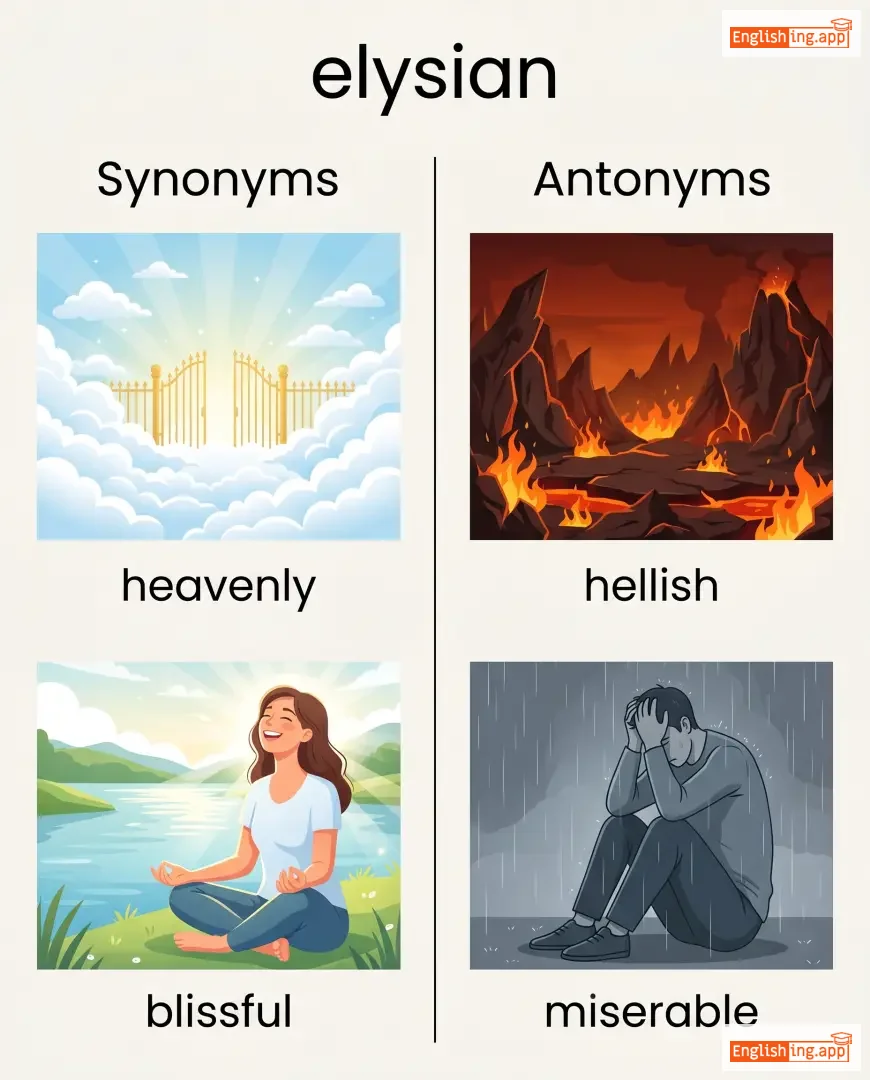
heavenly, blissful, idyllic, divine, paradisiacal
••••••
|
hellish, miserable, unpleasant
••••••
|
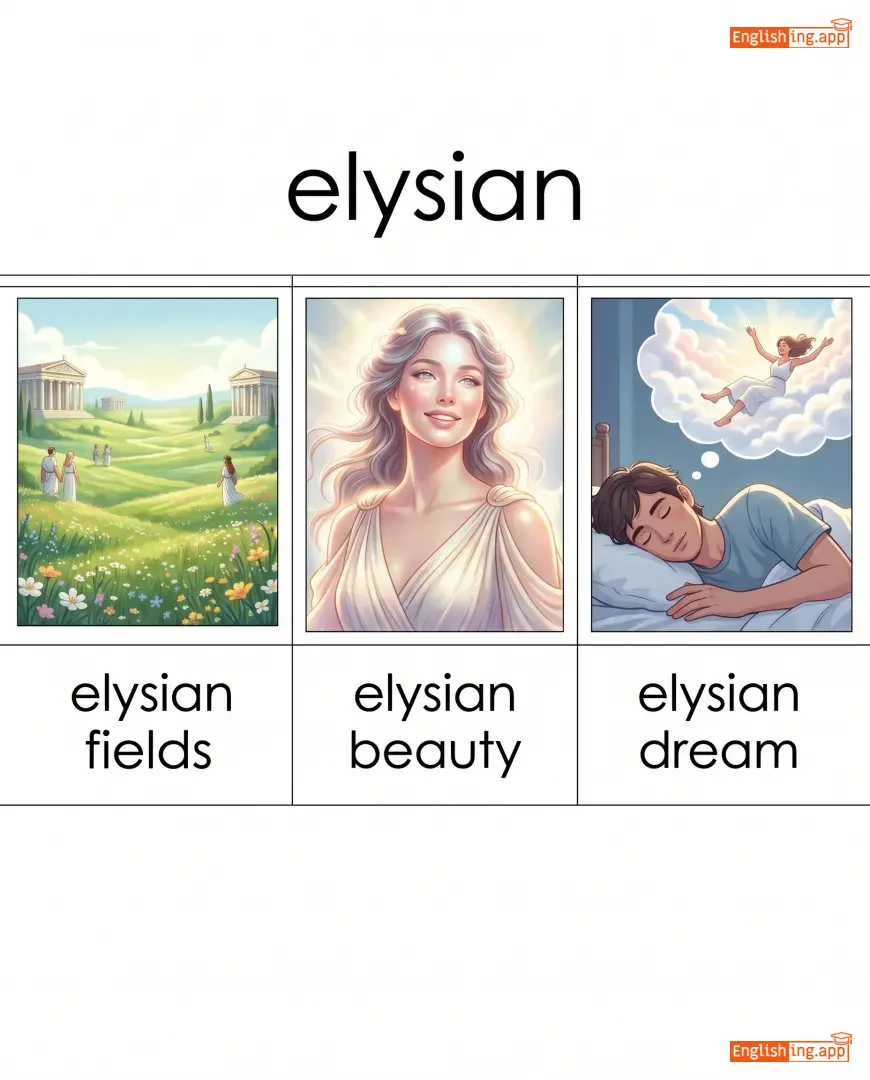
elysian fields, elysian beauty, elysian dream, elysian experience
••••••
|
Elysian はまるで天国のような素晴らしい場所です。
••••••
|
|
🦴
••••••
|
/ɪˈmeɪʃieɪtɪd/
adjective
(イメイシエイティッド)
••••••
|
|
やせ衰えた
yaseo reota
••••••
|
- •••••• | - •••••• | - •••••• | - •••••• |
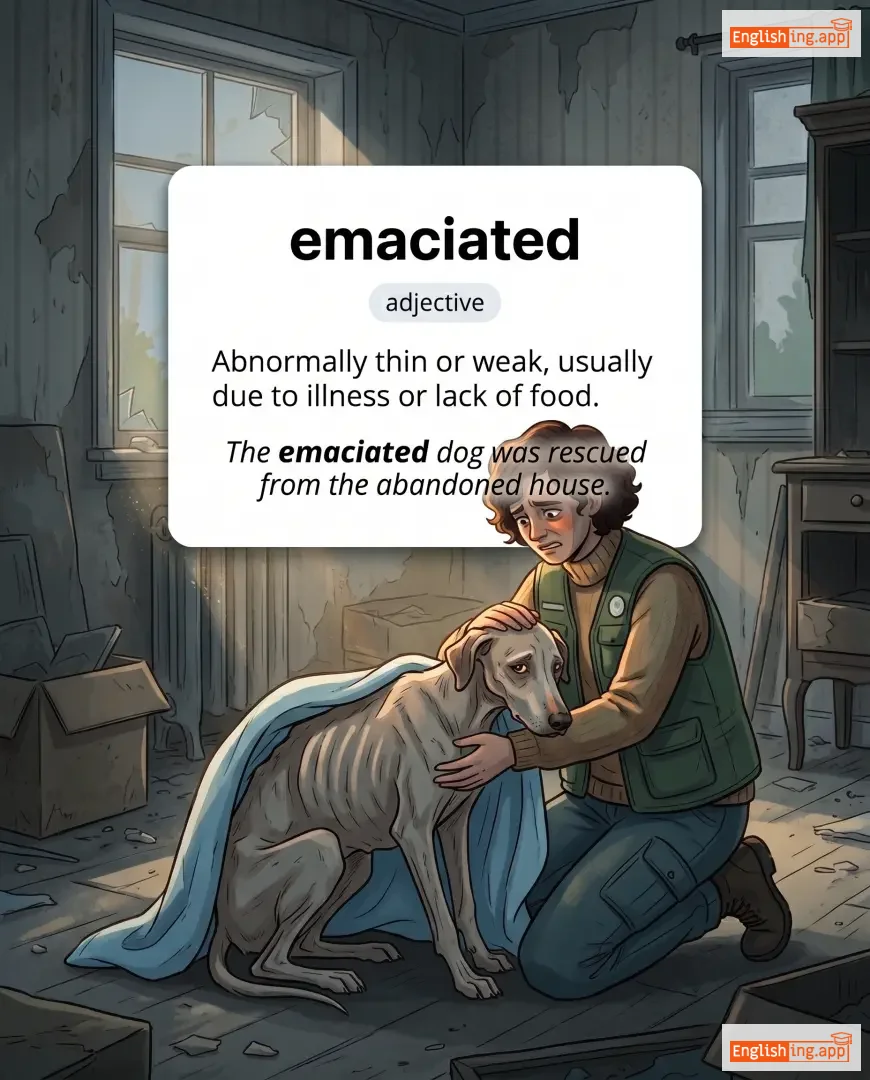
Abnormally thin or weak, usually due to illness or lack of food.
••••••
|
The emaciated dog was rescued from the abandoned house.
そのやせ細った犬は放置された家から救出されました。
••••••
|
そのやせ衰えた犬は放置された家から救出されました。
Sono yaseo reota inu wa hōchi sareta ie kara kyūshutsu saremashita.
••••••
|
- •••••• | - •••••• | - •••••• |
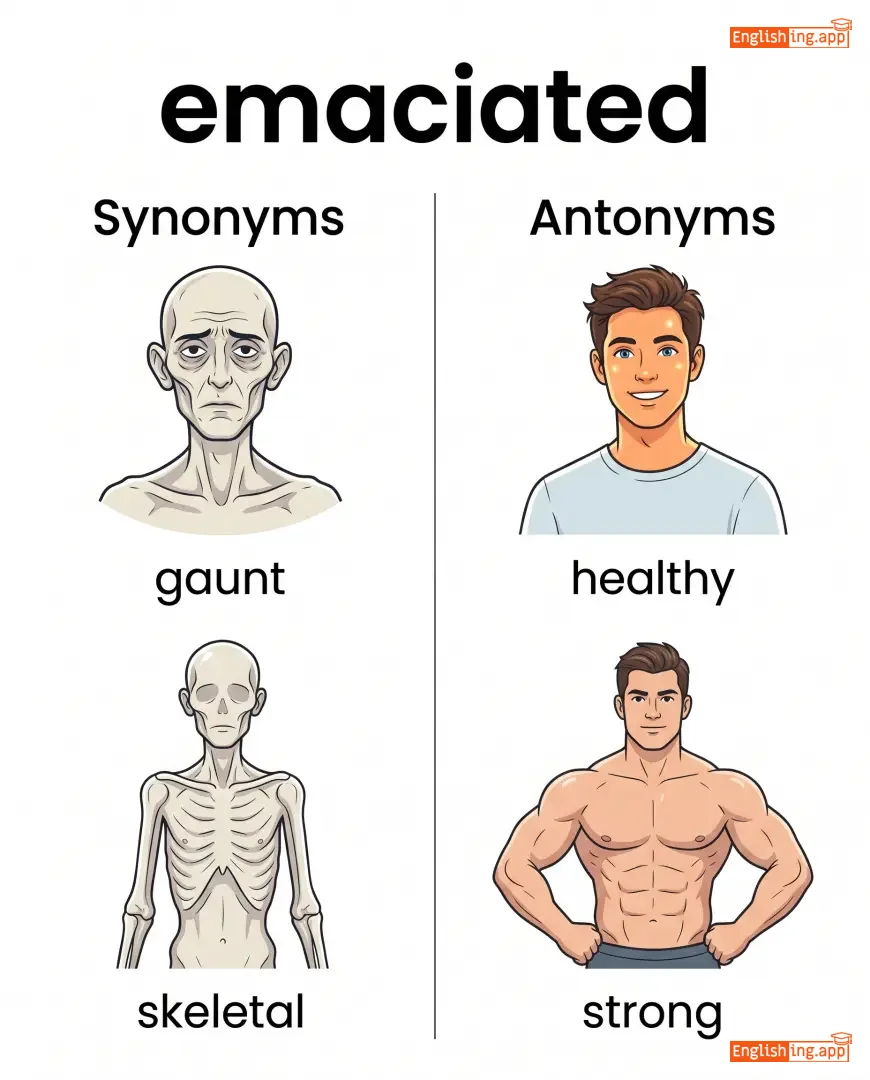
gaunt, skeletal, thin, wasted, haggard
••••••
|
healthy, strong, robust
••••••
|
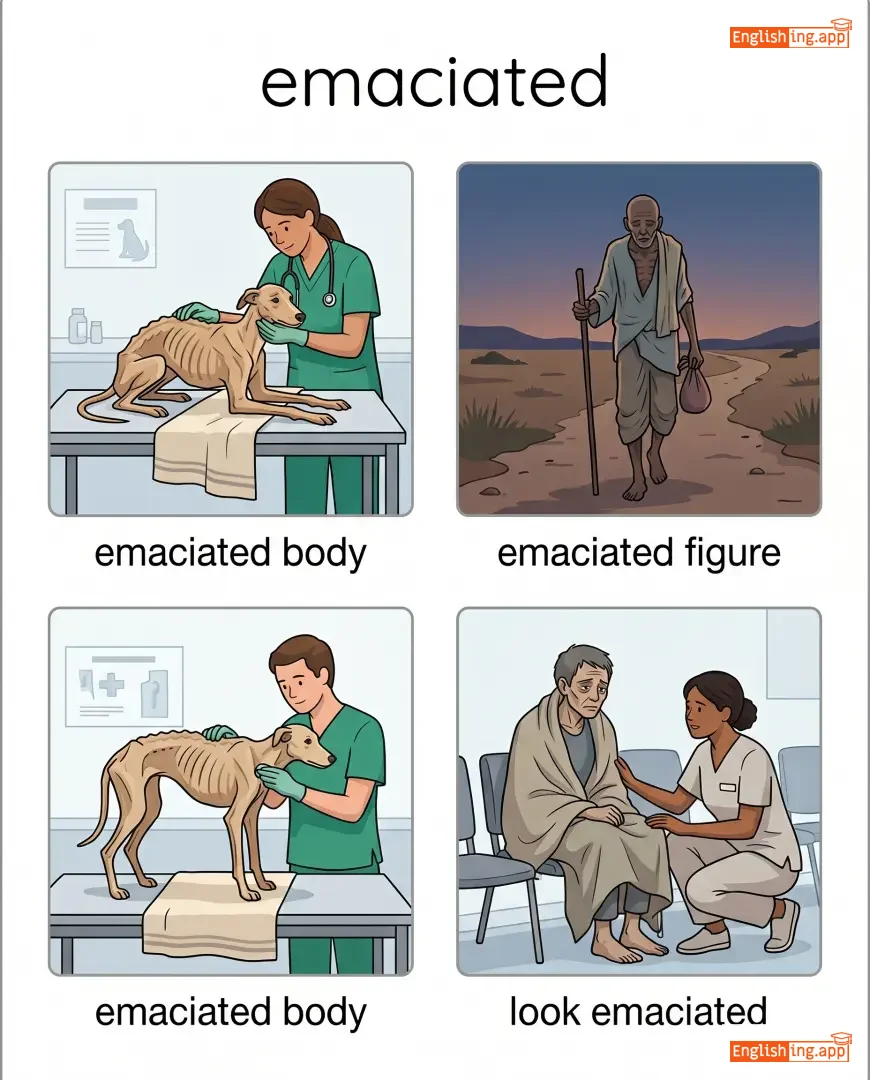
emaciated body, emaciated figure, look emaciated
••••••
|
痩せた犬は放置された家から救い出された。
••••••
|
|
✨
••••••
|
/ɪmˈbɛlɪʃ/
verb
(エンベリッシュ)
••••••
|
|
飾る
kazaru
••••••
|
embellished
エンベリッシュド
••••••
|
embellished
エンベリッシュド
••••••
|
embellishes
エンベリッシュズ
••••••
|
embellishing
エンベリッシング
••••••
|
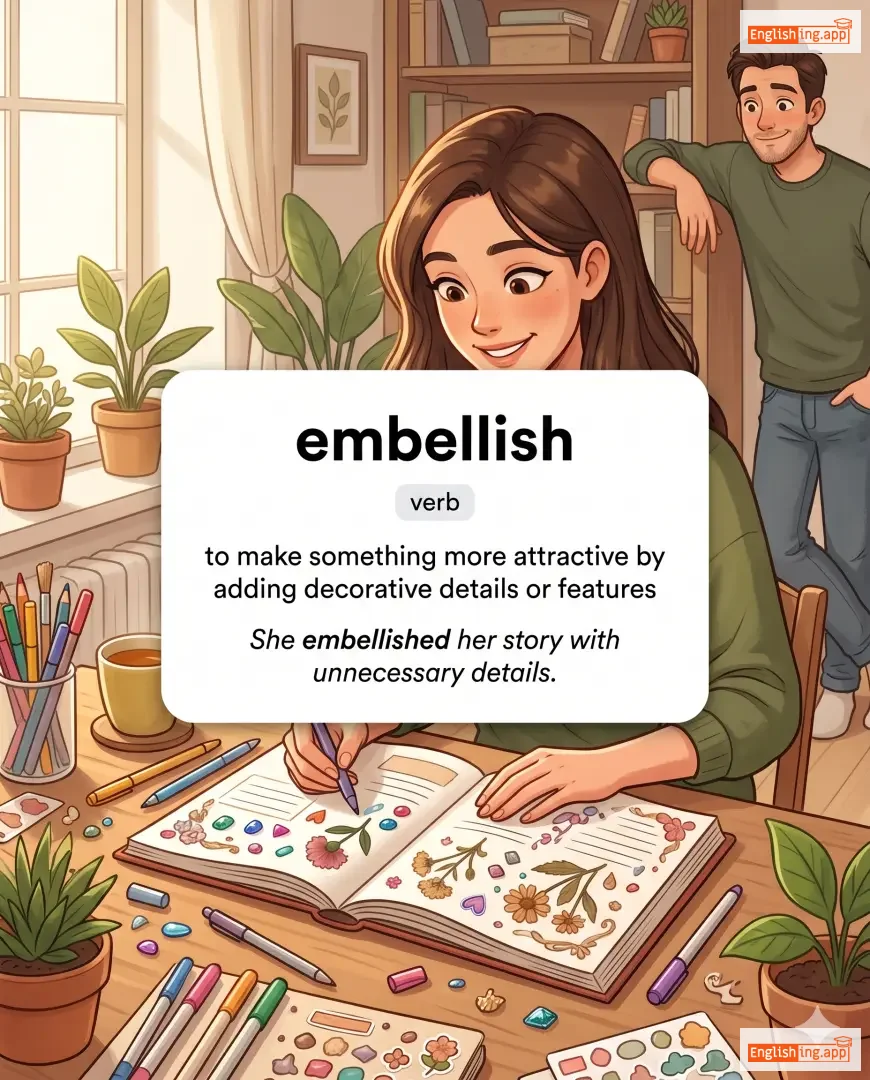
to make something more attractive by adding decorative details or features
••••••
|
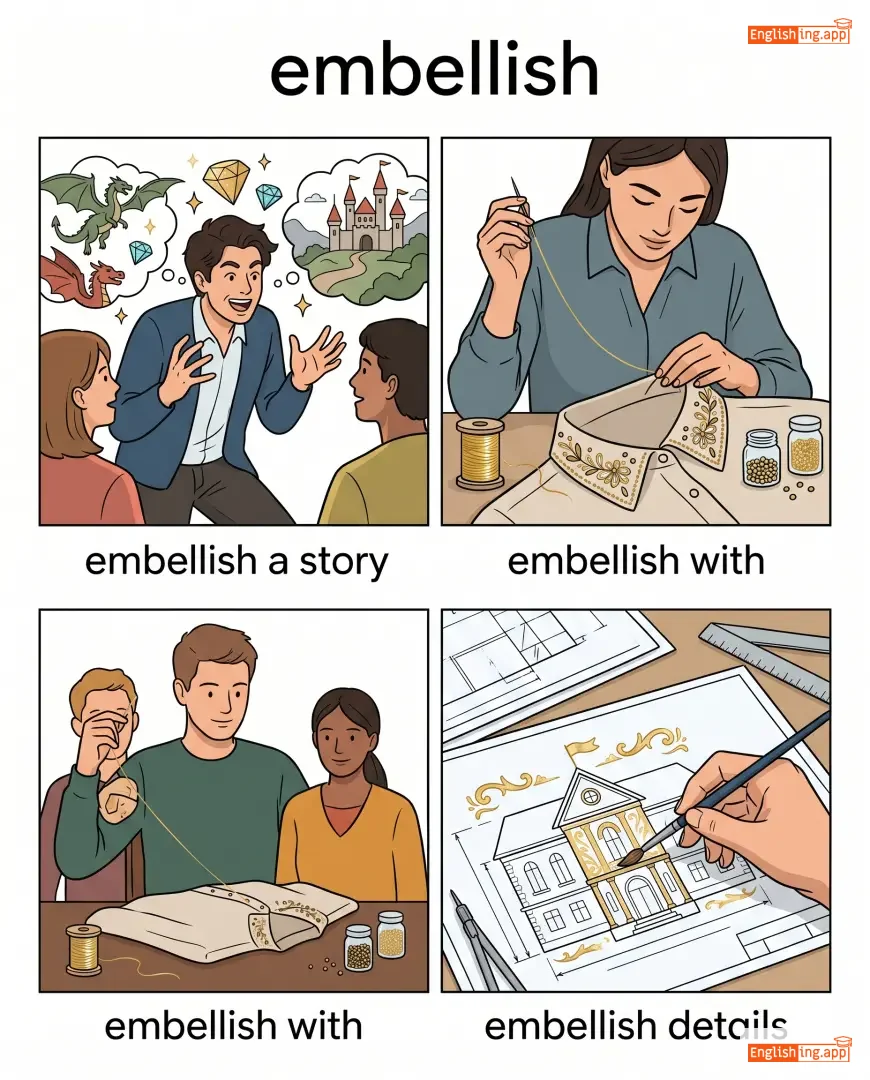
She embellished her story with unnecessary details.
彼女は不必要な詳細で彼女の話を飾った。
••••••
|
彼女は不必要な詳細で彼女の話を飾った。
Kanojo wa fuyōna shōsai de kanojo no hanashi o kazatta.
••••••
|
embellish the truth
真実を飾る
••••••
|
to exaggerate or add extra details to something
••••••
|
真実を飾る
Shinjitsu o kazaru
••••••
|
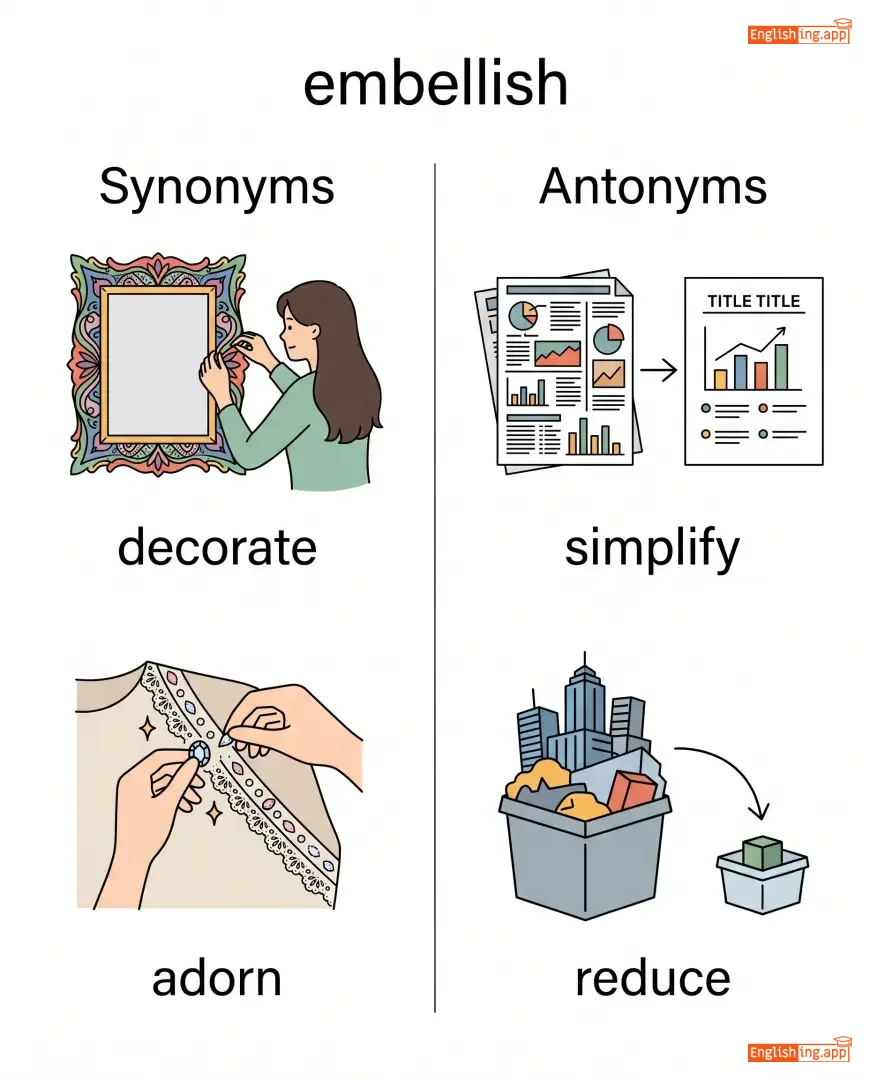
decorate, adorn, beautify, enhance, exaggerate
••••••
|
simplify, reduce, deface
••••••
|
embellish a story, embellish with, embellish details
••••••
|
Kazaru wa kagi o tsukete sōshoku (kazaru)
••••••
|
|
🧴
••••••
|
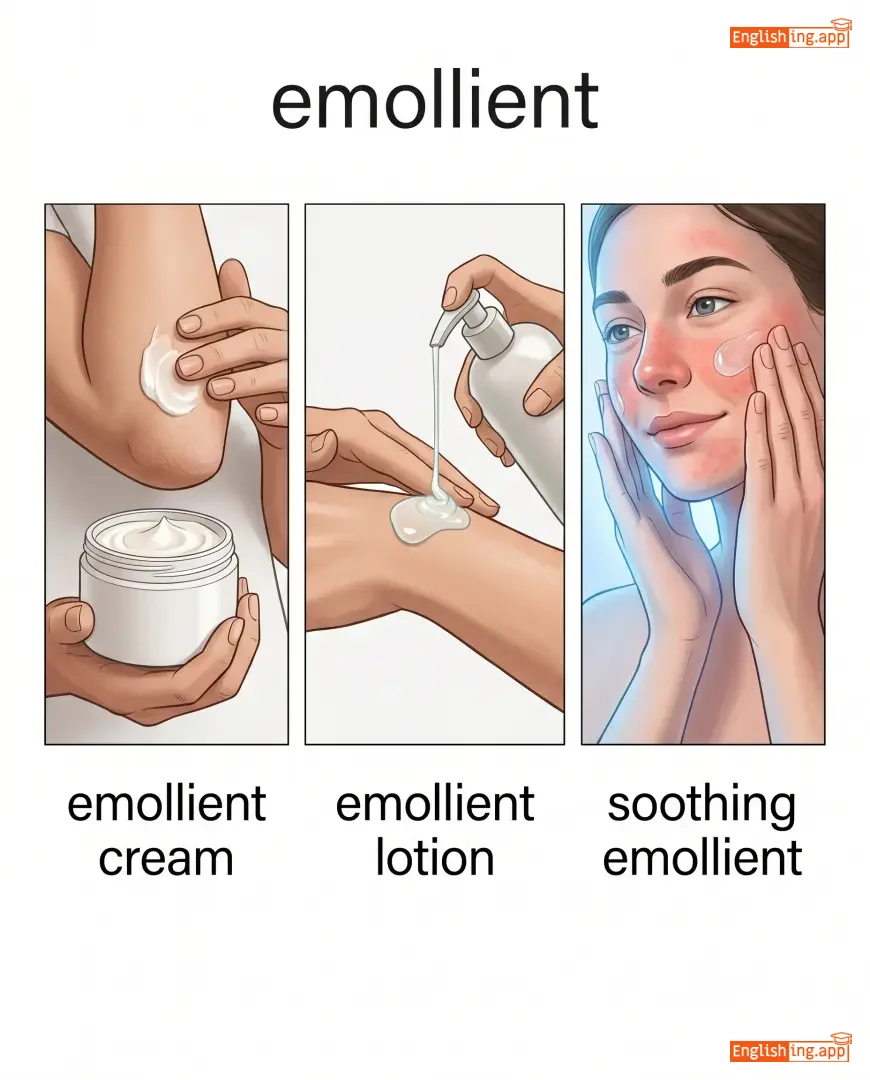
/ɪˈmɒliənt/
noun/adjective
(エモリエント)
••••••
|
|
肌を柔らかくする物質
hada o yawarakaku suru busshitsu
••••••
|
- •••••• | - •••••• | - •••••• | - •••••• |
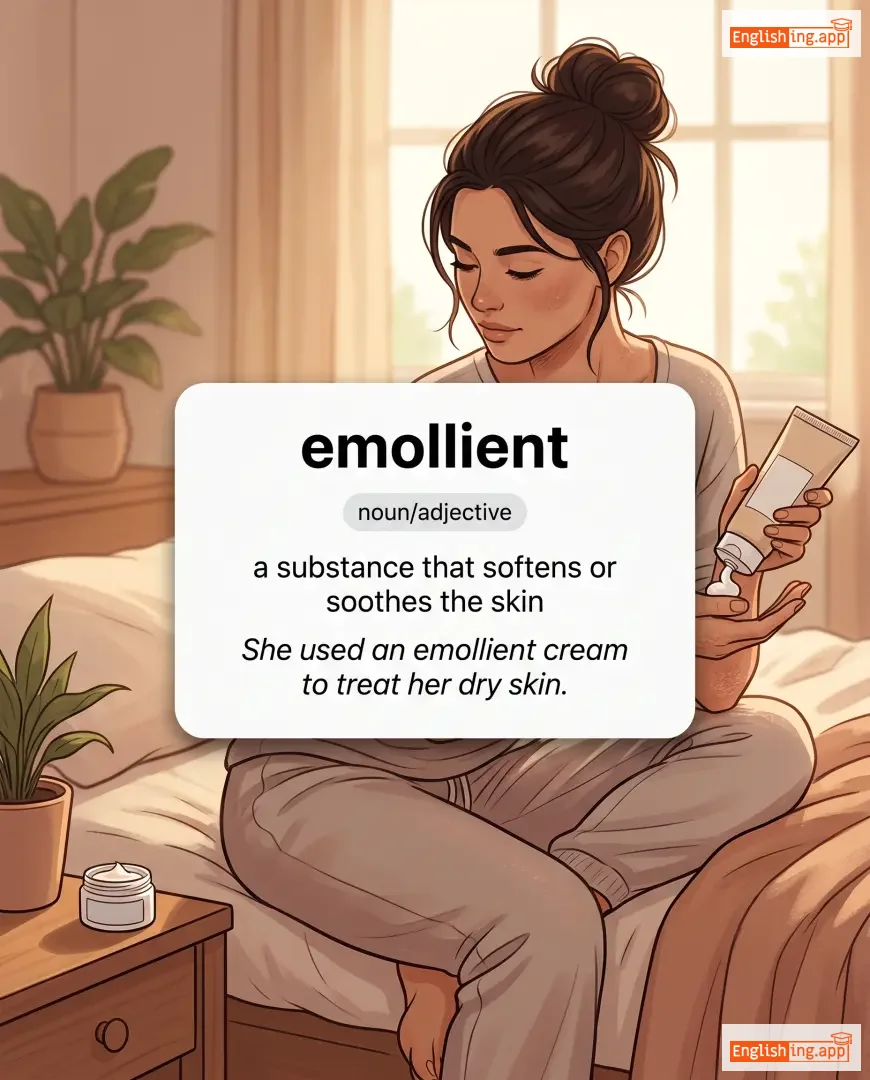
a substance that softens or soothes the skin
••••••
|
She used an emollient cream to treat her dry skin.
彼女は乾燥肌を治すためにエモリエントクリームを使いました。
••••••
|
彼女は乾燥肌を治すためにエモリエントクリームを使いました。
Kanojo wa kansouhada o naosu tame ni emorianto kuriimu o tsukaimashita.
••••••
|
- •••••• | - •••••• | - •••••• |
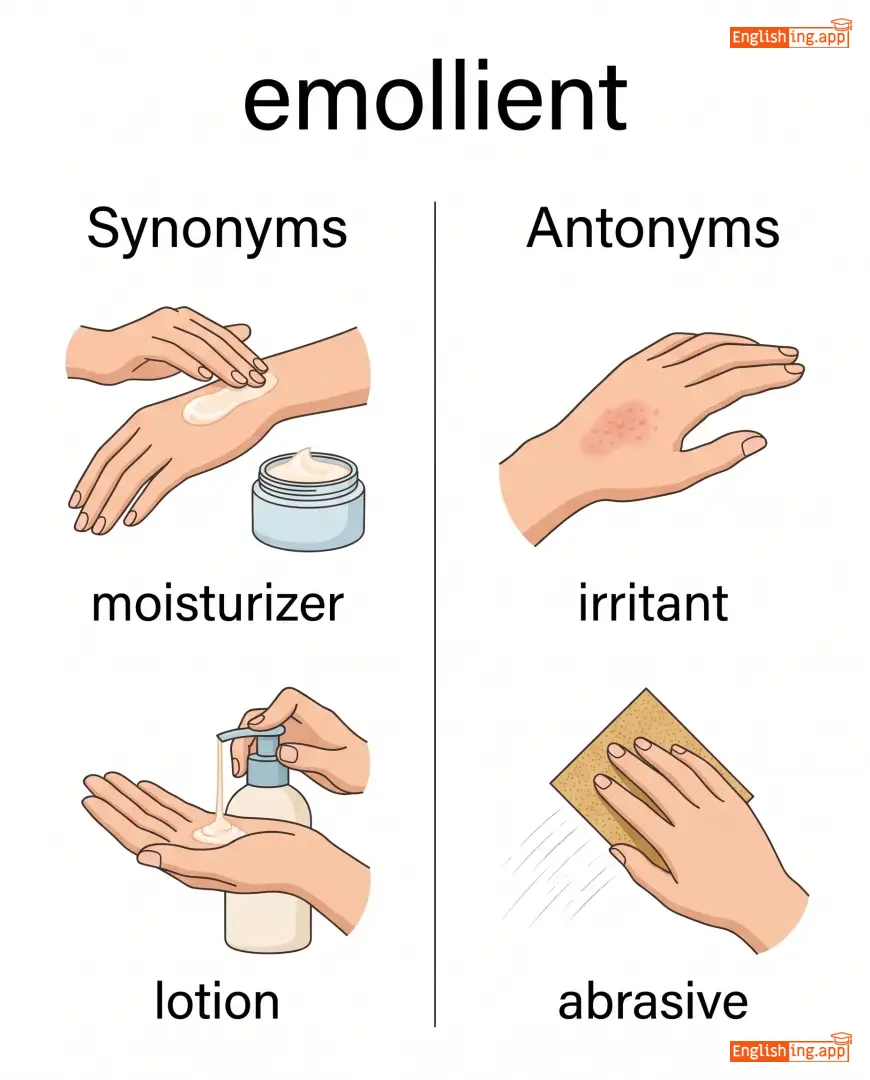
moisturizer, lotion, balm, ointment
••••••
|
irritant, abrasive
••••••
|
emollient cream, emollient lotion, soothing emollient
••••••
|
エモリエント: 皮膚をやわらかくするクリーム
••••••
|
|
🔬
••••••
|
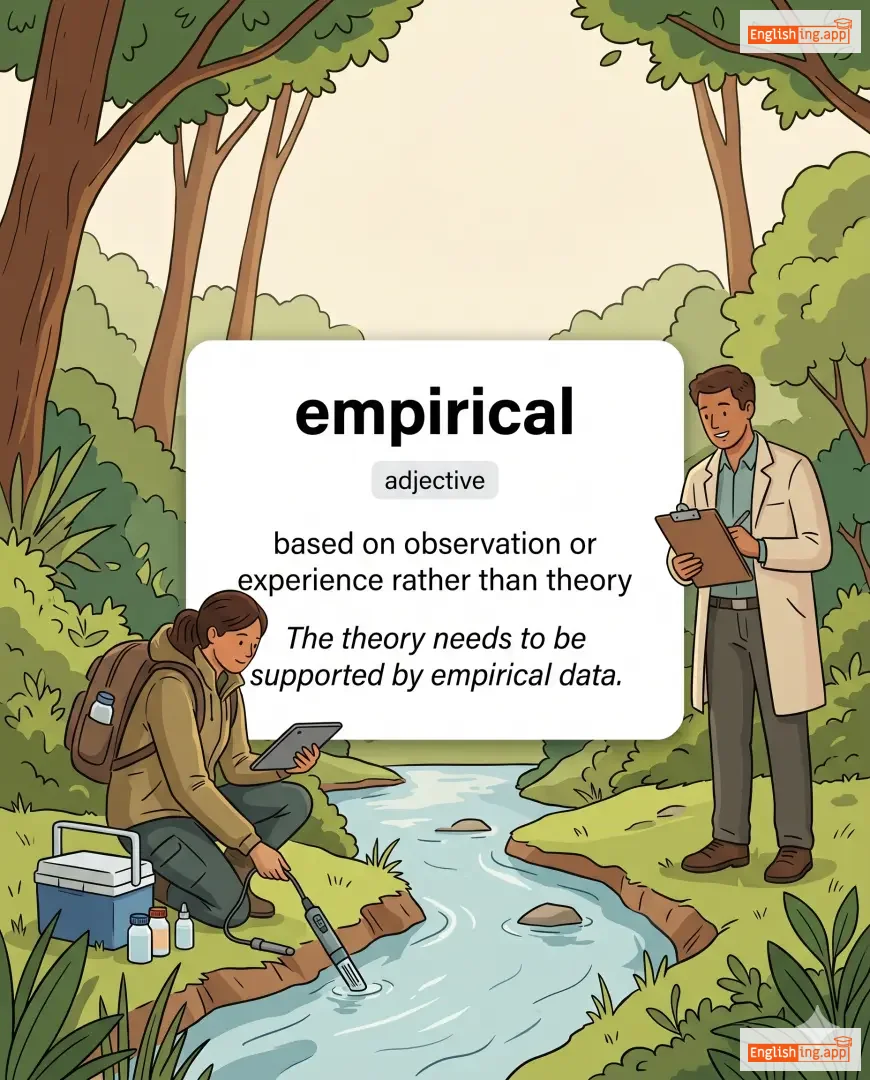
/ɛmˈpɪrɪkəl/
adjective
(エンピリカル)
••••••
|
|
経験的
keiken-teki
••••••
|
- •••••• | - •••••• | - •••••• | - •••••• |
based on observation or experience rather than theory
••••••
|
The theory needs to be supported by empirical data. |
理論は経験的なデータで裏付けられるべきです。
Riron wa keiken-teki na deeta de urazukerarebe ki desu.
••••••
|
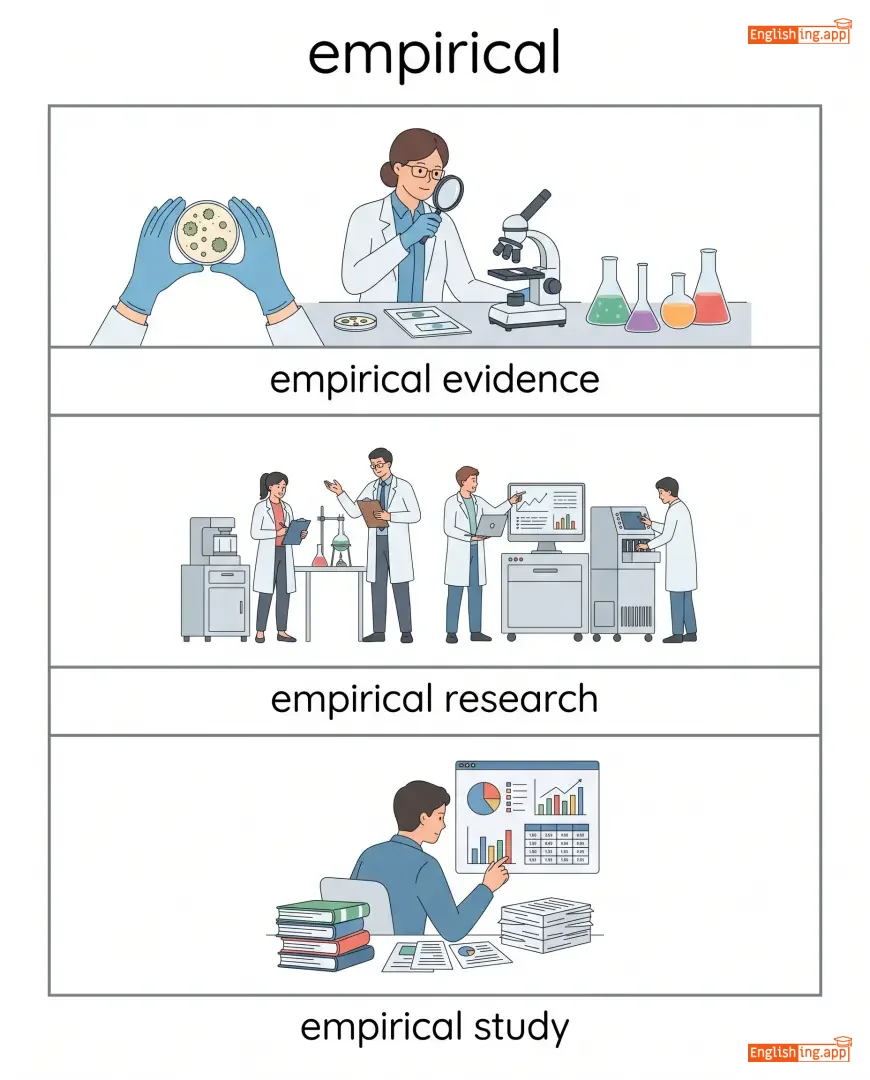
empirical evidence |
information gained through observation or experiment
••••••
|
経験的証拠
keiken-teki shouko
••••••
|
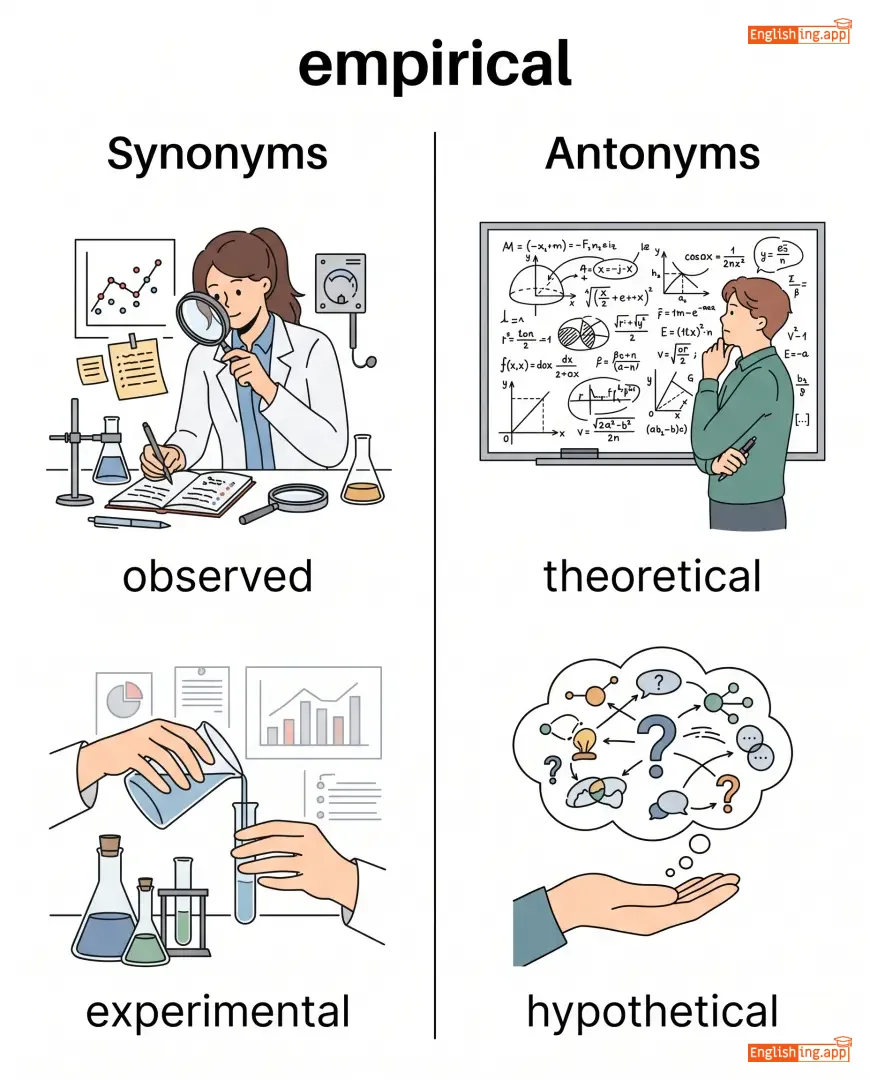
observed, experimental, factual, practical, real
••••••
|
theoretical, hypothetical
••••••
|
empirical evidence, empirical research, empirical study, empirical data
••••••
|
Empiricalは経験から来る、だから経験的(keiken-teki)!
••••••
|
|
📋
••••••
|
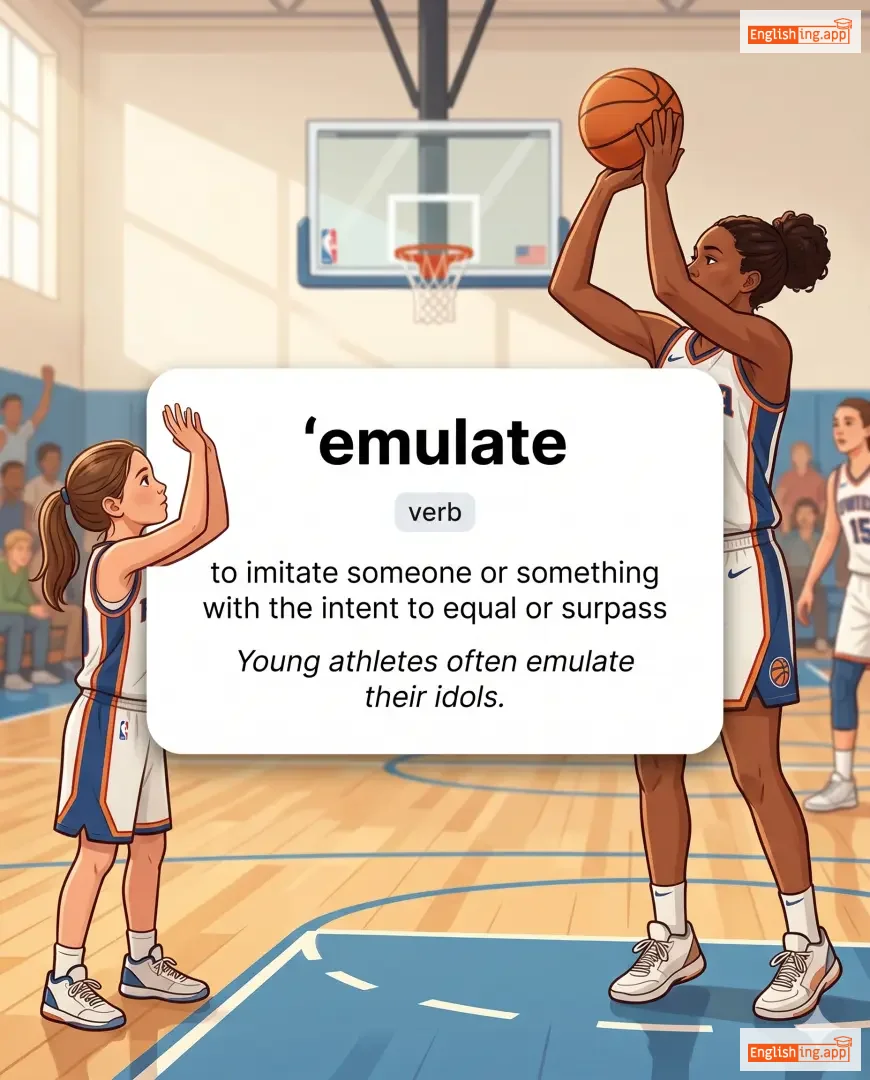
/ˈɛm.jʊˌleɪt/
verb
(エミュレート)
••••••
|
|
模倣する
mohō suru
••••••
|
emulated
エミュレートした
••••••
|
emulated
エミュレートした
••••••
|
emulates
エミュレートする
••••••
|
emulating
エミュレートしている
••••••
|
to imitate someone or something with the intent to equal or surpass
••••••
|
Young athletes often emulate their idols.
若いアスリートはよく自分のアイドルを模倣します。
••••••
|
若いアスリートはよく自分のアイドルを模倣します。
Wakai asurīto wa yoku jibun no aidoru o mohō shimasu.
••••••
|
emulate success
成功を模倣する
••••••
|
to imitate the actions or qualities that lead to success
••••••
|
成功を模倣する
seikō o mohō suru
••••••
|
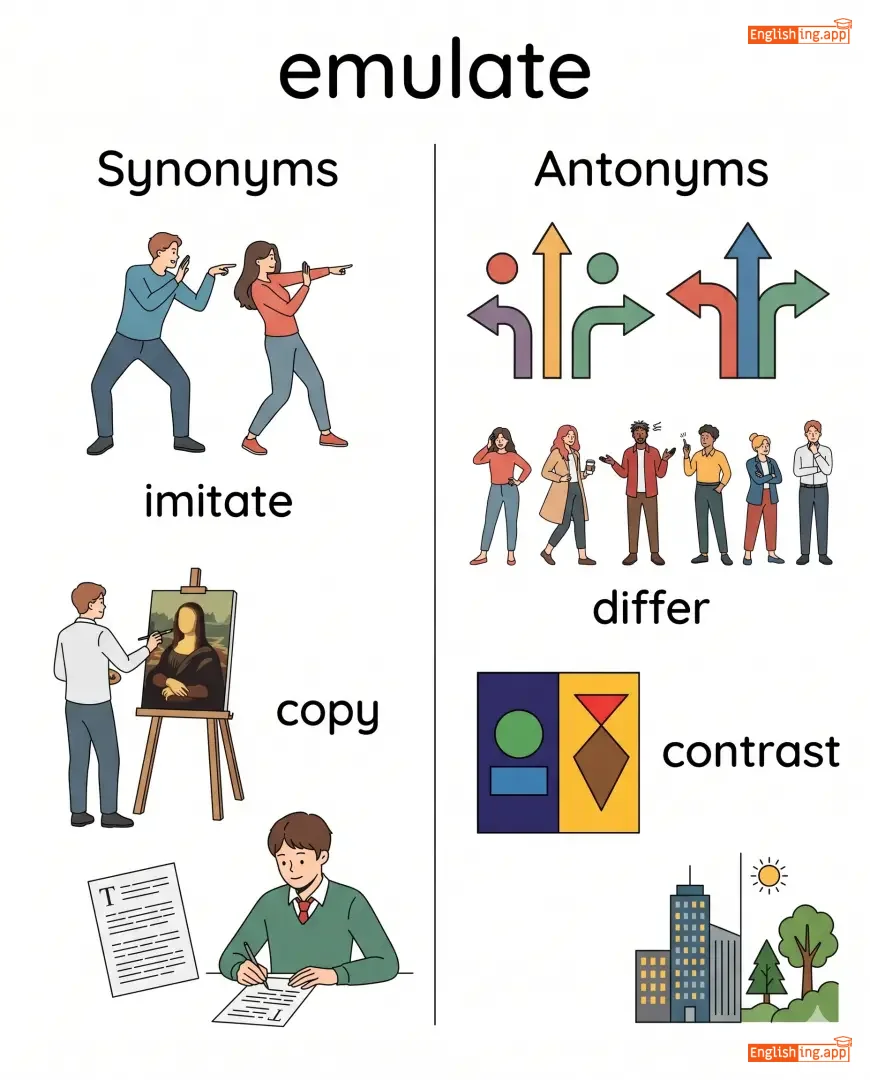
imitate, copy, mirror, follow, mimic
••••••
|
differ, contrast, oppose
••••••
|
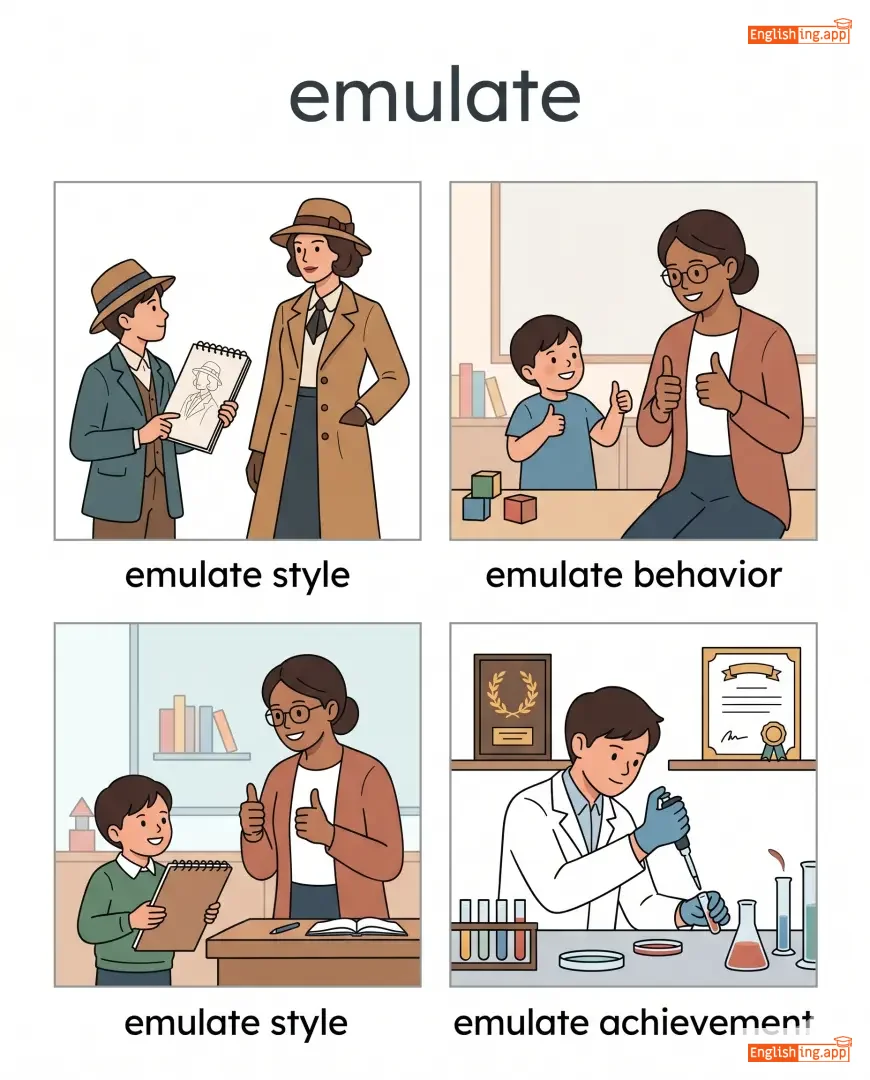
emulate style, emulate behavior, emulate achievement, emulate model
••••••
|
Emulateは模倣するという意味です - 'エミュレート'は 'エミュレート'として、他の人を模倣して成功を目指すことです。
••••••
|
|
🌟
••••••
|
/ɛnˈkoʊmiəm/
noun
(エンコミウム)
••••••
|

|
賛辞
sanjī
••••••
|
- •••••• | - •••••• | - •••••• | - •••••• |
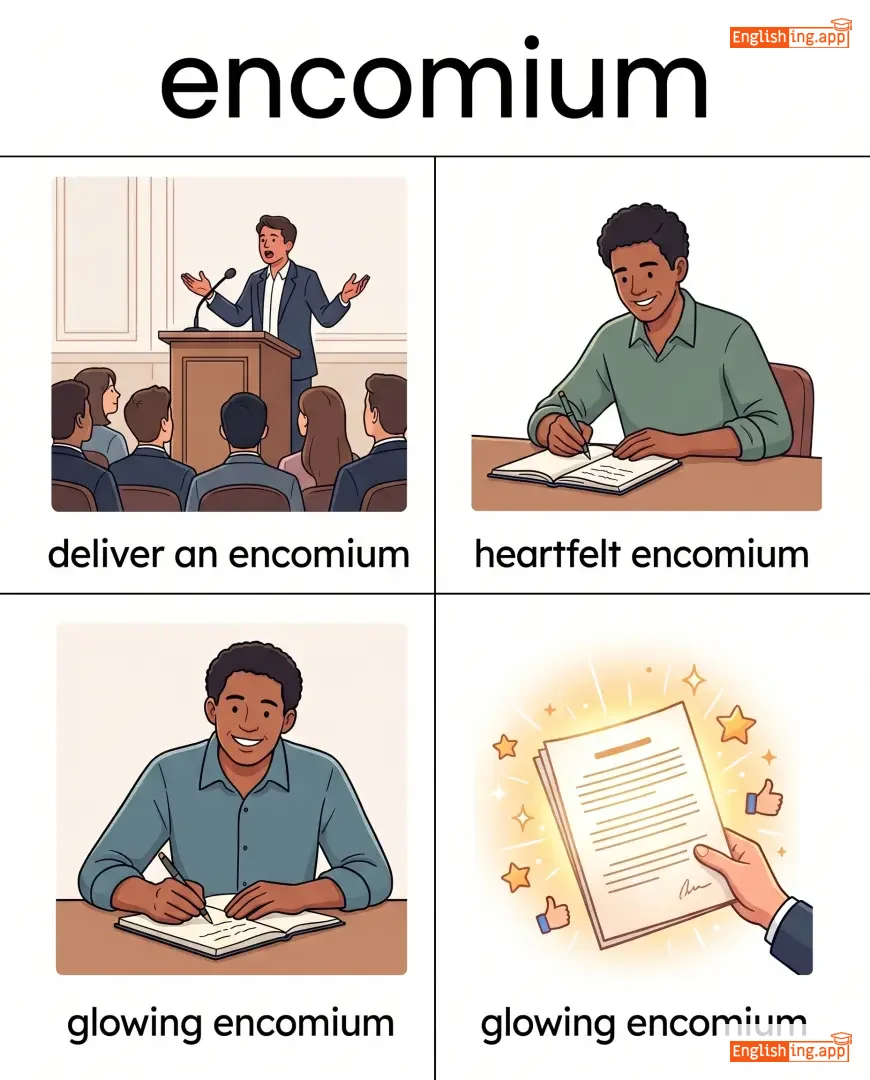
A speech or piece of writing that praises someone or something highly.
••••••
|
He delivered an encomium to his retiring teacher.
彼は退職する教師に対して賛辞の演説をしました。
••••••
|
彼は退職する教師に対して賛辞の演説をしました。
Kare wa taishoku suru kyōshi ni taishite sanjī no enzetsu o shimashita.
••••••
|
- •••••• | - •••••• | - •••••• |
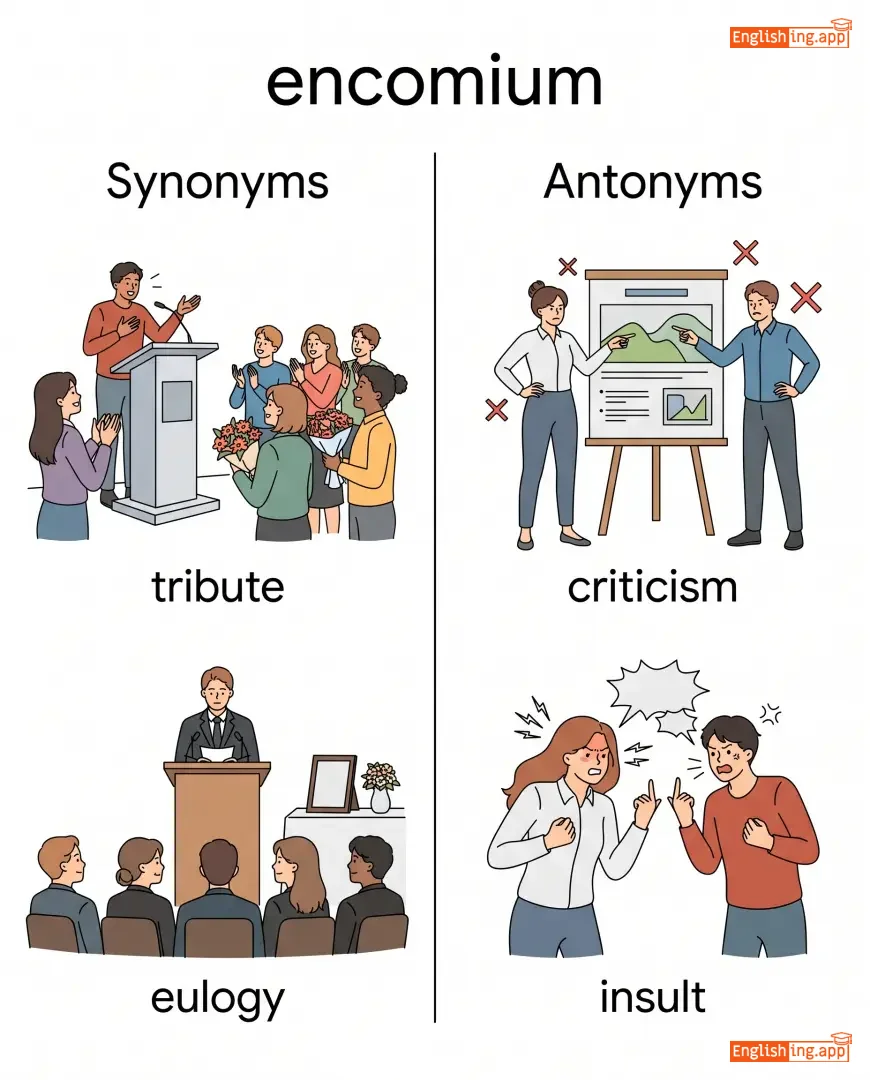
tribute, eulogy, praise, panegyric, commendation
••••••
|
criticism, insult, blame
••••••
|
deliver an encomium, heartfelt encomium, glowing encomium
••••••
|
Encomium = ENter COMpliment speech - 賛辞
••••••
|
|
🌍
••••••
|
/ɛnˈdɛmɪk/
adjective
(エンデミック)
••••••
|
|
地方性
chihō-sei
••••••
|
- •••••• | - •••••• | - •••••• | - •••••• |
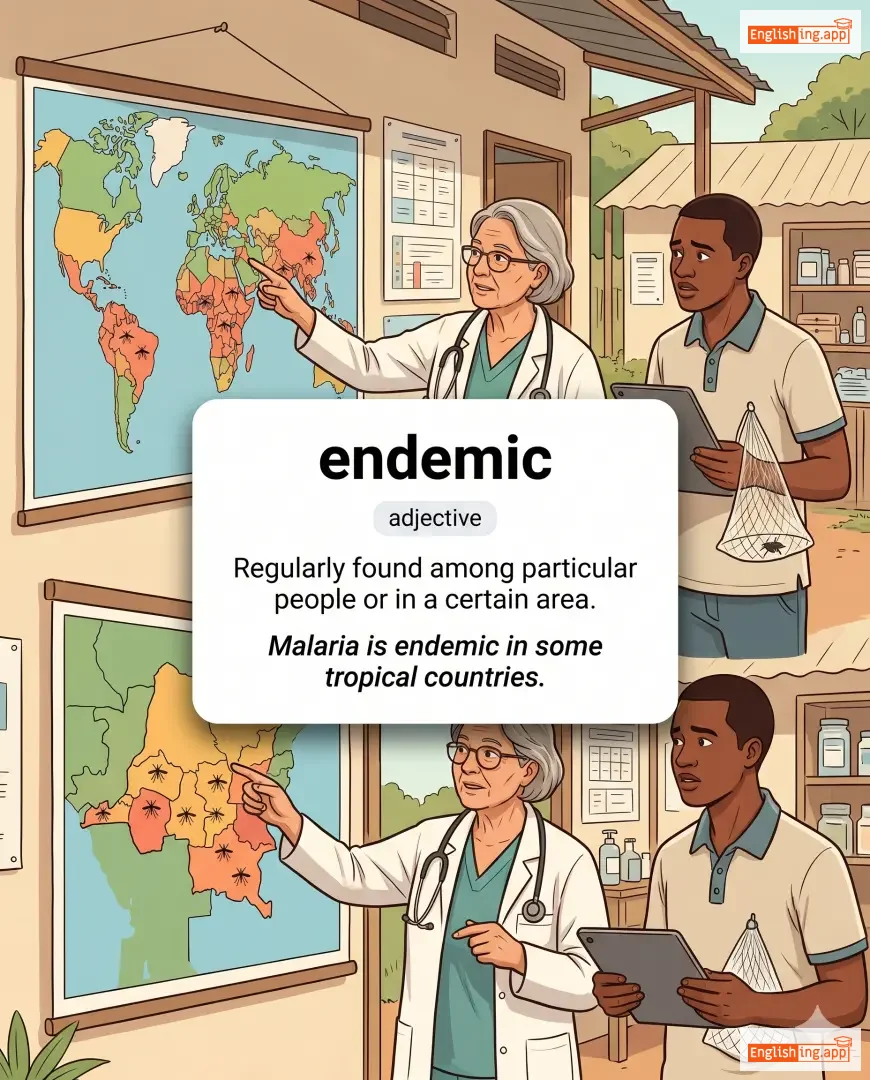
Regularly found among particular people or in a certain area.
••••••
|
Malaria is endemic in some tropical countries. |
マラリアは一部の熱帯諸国で地方性です。
Mararia wa ichibu no nettai shokoku de chihō-sei desu.
••••••
|
- •••••• | - •••••• | - •••••• |
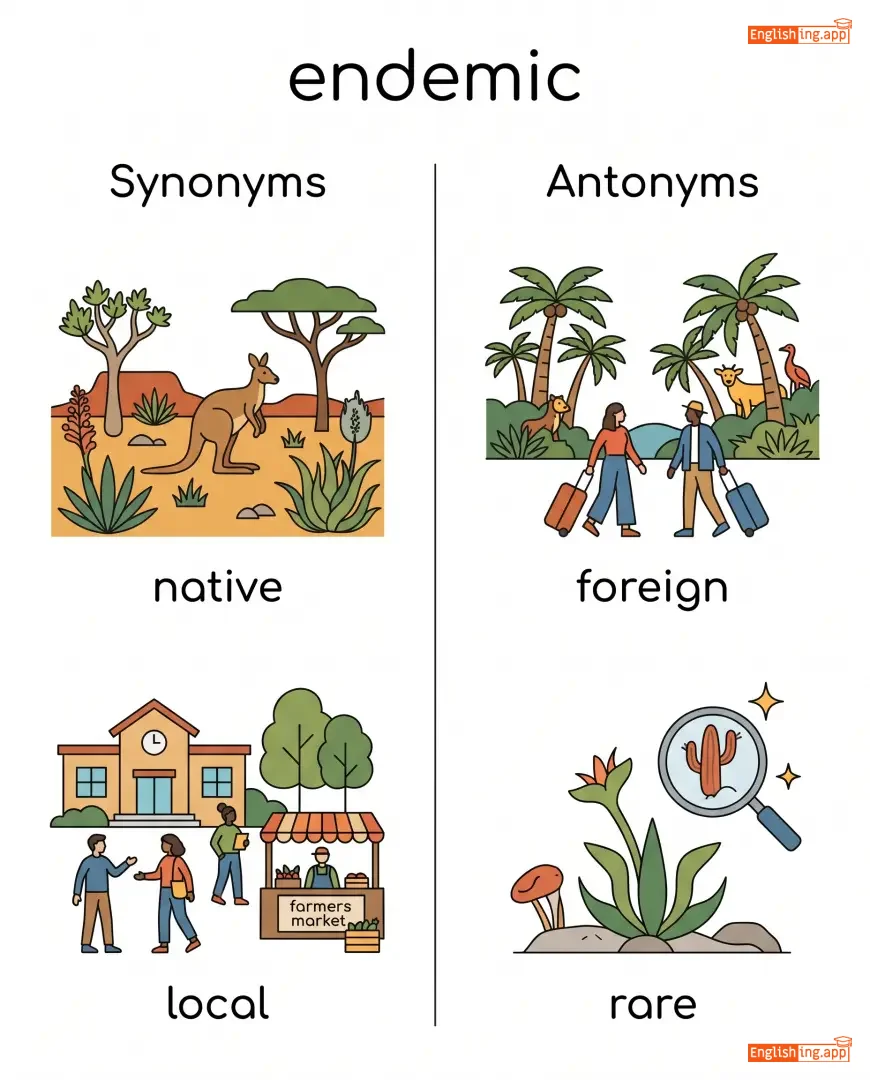
native, local, regional, widespread
••••••
|
foreign, rare
••••••
|
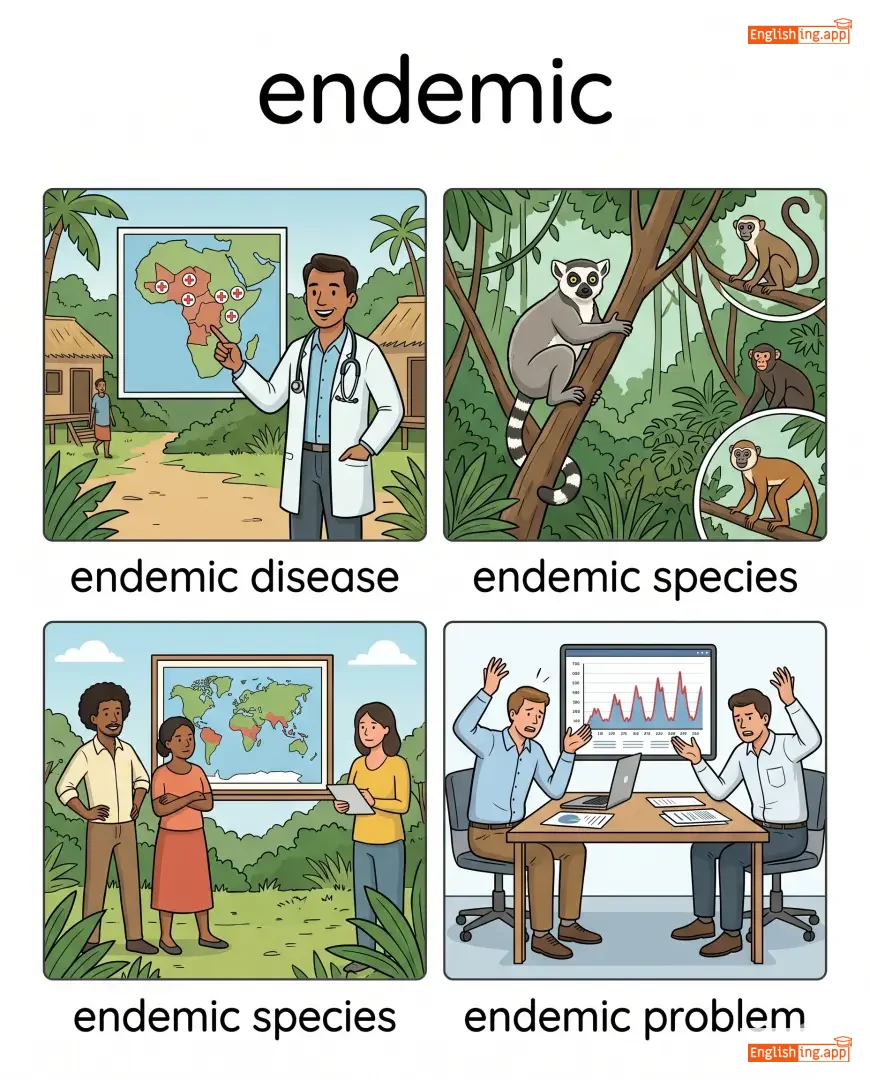
endemic disease, endemic species, endemic problem
••••••
|
エンデミックの‘地方性’は特定の場所に常に存在することを意味します。
••••••
|
|
😩
••••••
|
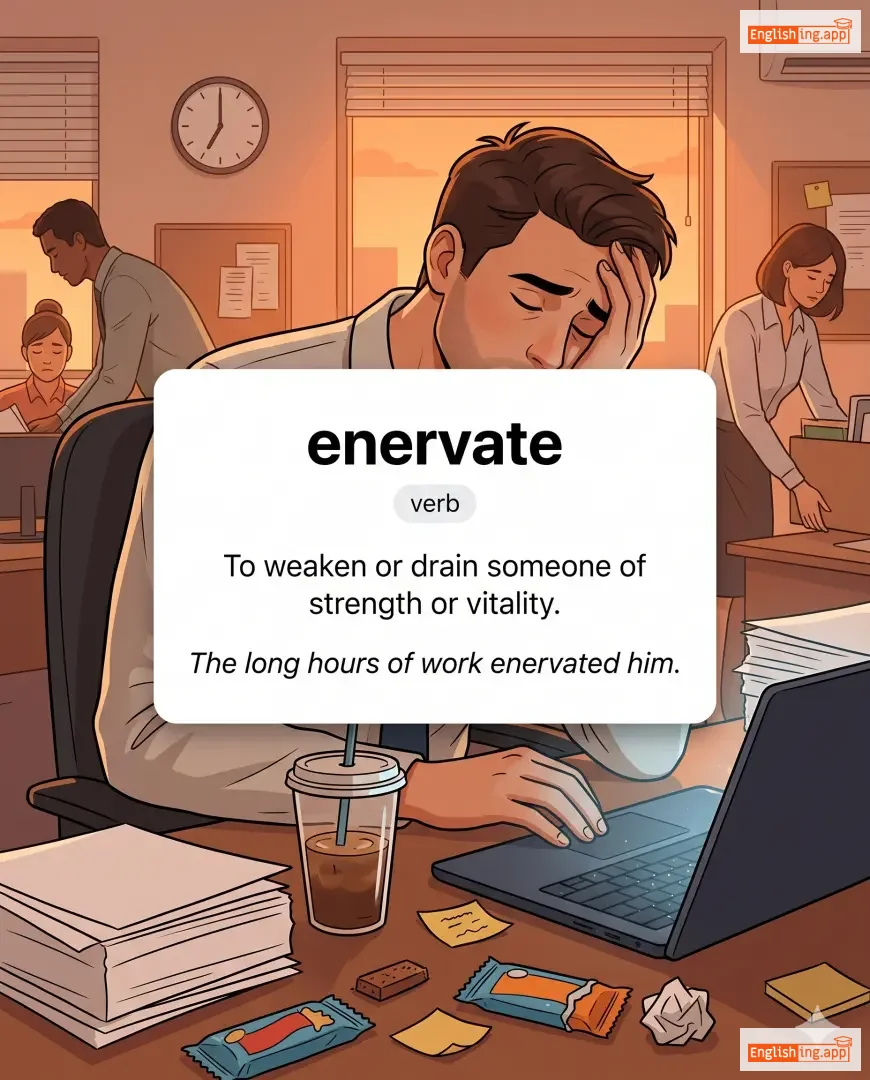
/ˈɛnərˌveɪt/
verb
(エネルヴェイト)
••••••
|
|
弱体化する
jakutaika suru
••••••
|
enervated
エネルヴェイテッド
••••••
|
enervated
エネルヴェイテッド
••••••
|
enervates
エネルヴェイツ
••••••
|
enervating
エネルヴェイティング
••••••
|
To weaken or drain someone of strength or vitality.
••••••
|
The long hours of work enervated him.
長時間の労働が彼をエネルヴェイテッドさせた。
••••••
|
長時間の労働が彼を弱体化させた。
Chōjikan no rōdō ga kare o jakutaika saseta.
••••••
|
mentally enervated
精神的にエネルヴェイテッド
••••••
|
exhausted or weakened in mental capacity
••••••
|
精神的に弱体化した
Seishin-teki ni jakutaika shita
••••••
|
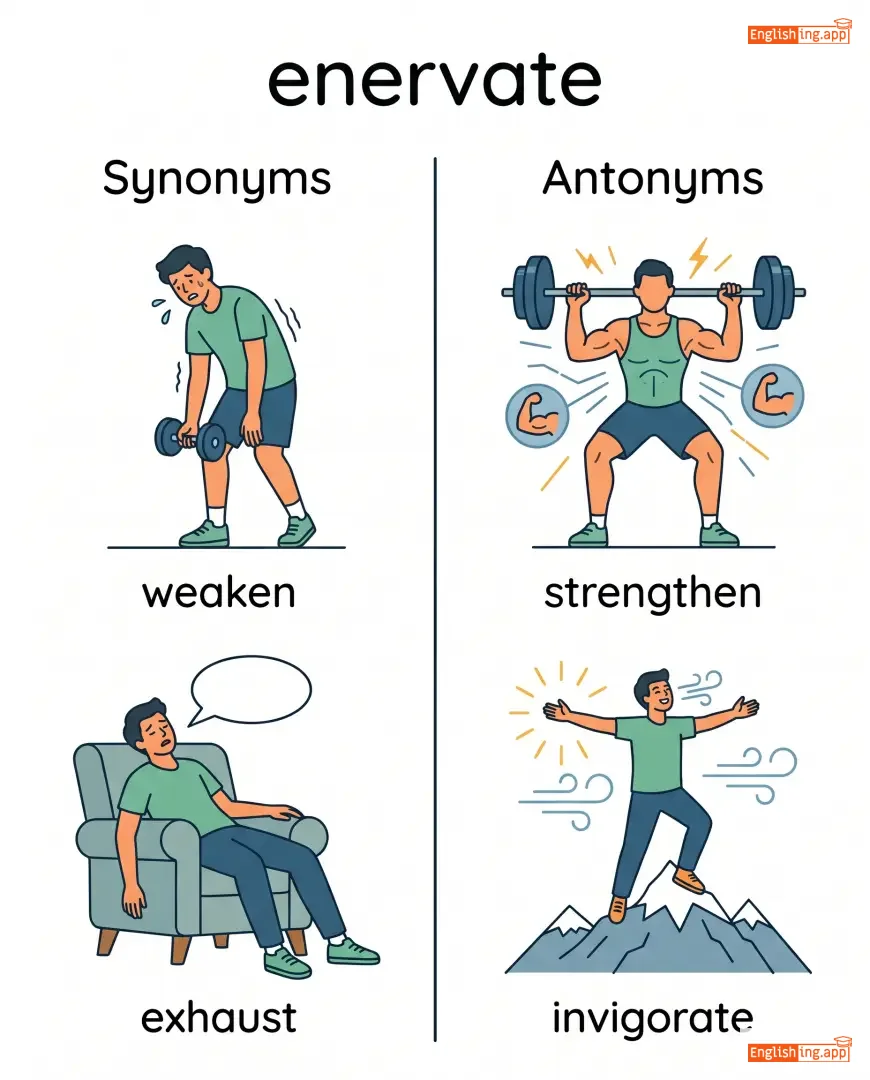
weaken, exhaust, debilitate, drain
••••••
|
strengthen, invigorate
••••••
|
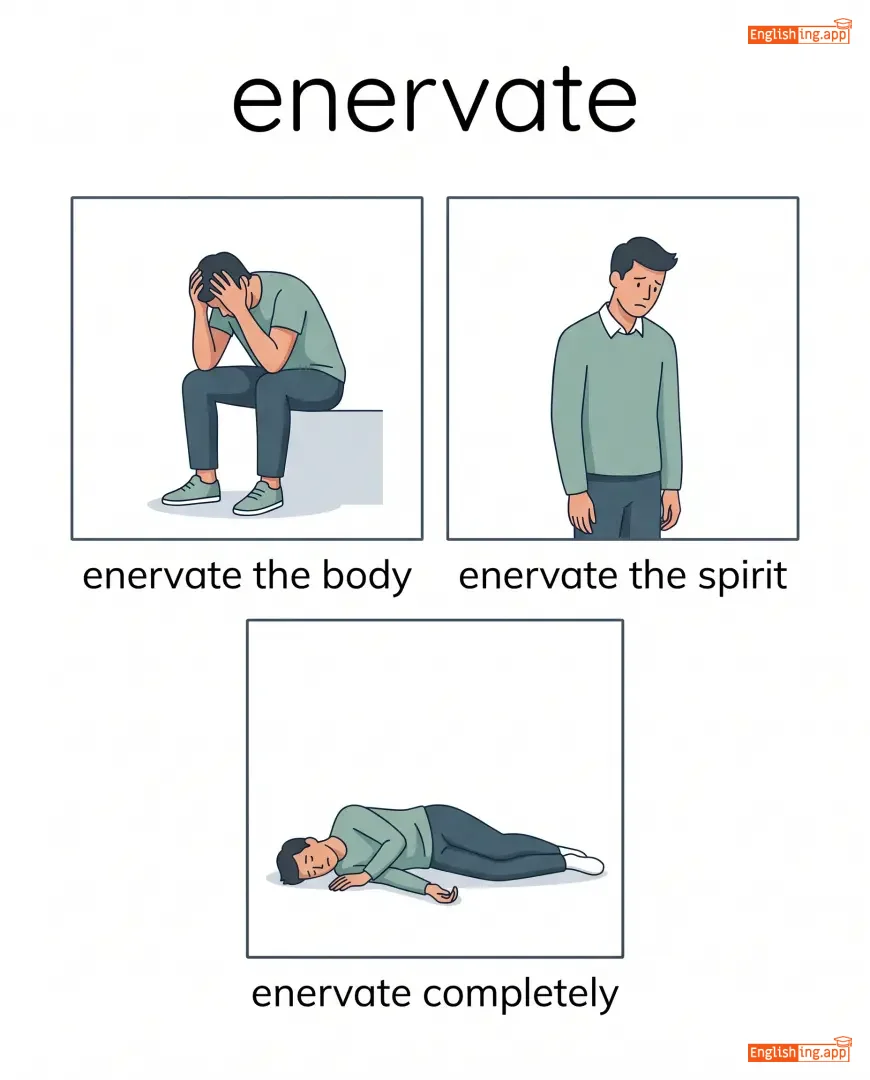
enervate the body, enervate the spirit, enervate completely
••••••
|
Enervateはエネルギーを使って弱体化させること → 力を減らす
••••••
|
|
🌱
••••••
|
/ɪnˈdʒɛndər/
verb
(エンジェンダー)
••••••
|
|
生み出す
umidasu
••••••
|
engendered
エンジェンダード
••••••
|
engendered
エンジェンダード
••••••
|
engenders
エンジェンダーズ
••••••
|
engendering
エンジェンダリング
••••••
|
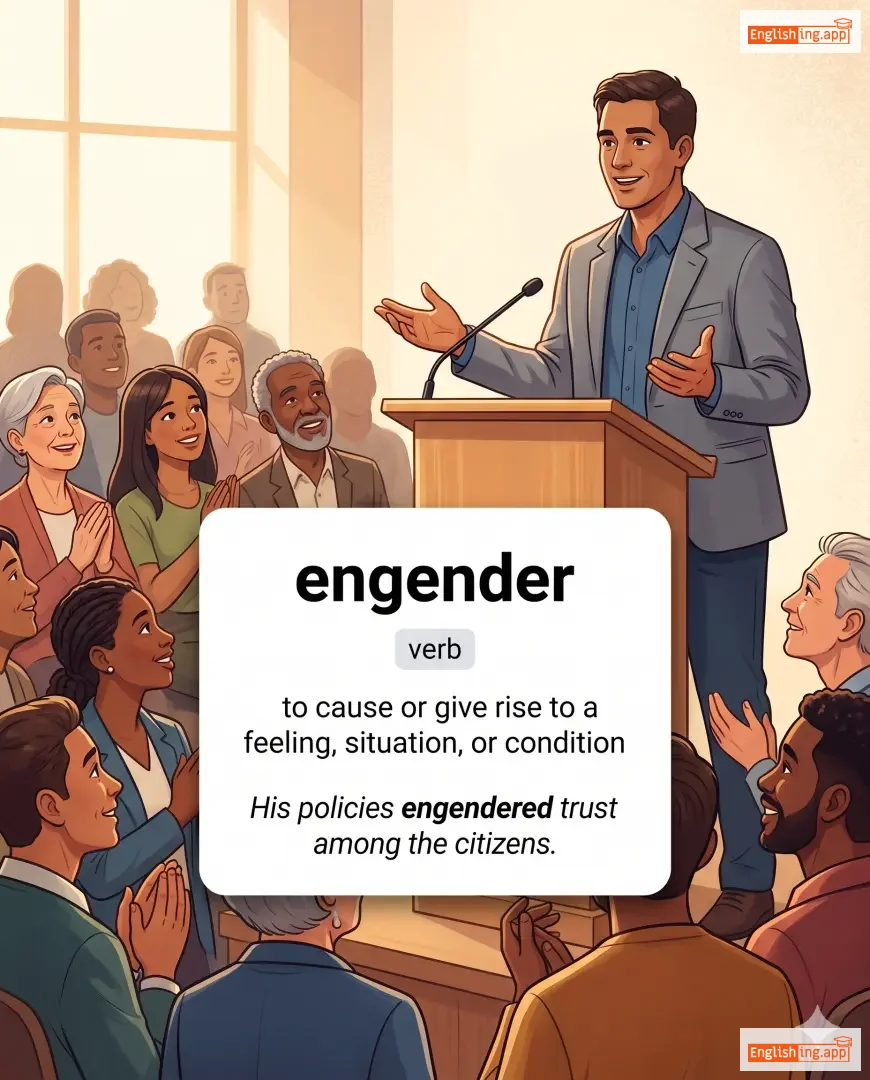
to cause or give rise to a feeling, situation, or condition
••••••
|
His policies engendered trust among the citizens.
ヒズ ポリシーズ エンジェンダード トラスト アモング ザ シティズンズ。
••••••
|
彼の政策は市民の間で信頼を生み出しました。
kare no seisaku wa shimin no aida de shinrai wo umidashimashita.
••••••
|
- •••••• | - •••••• | - •••••• |
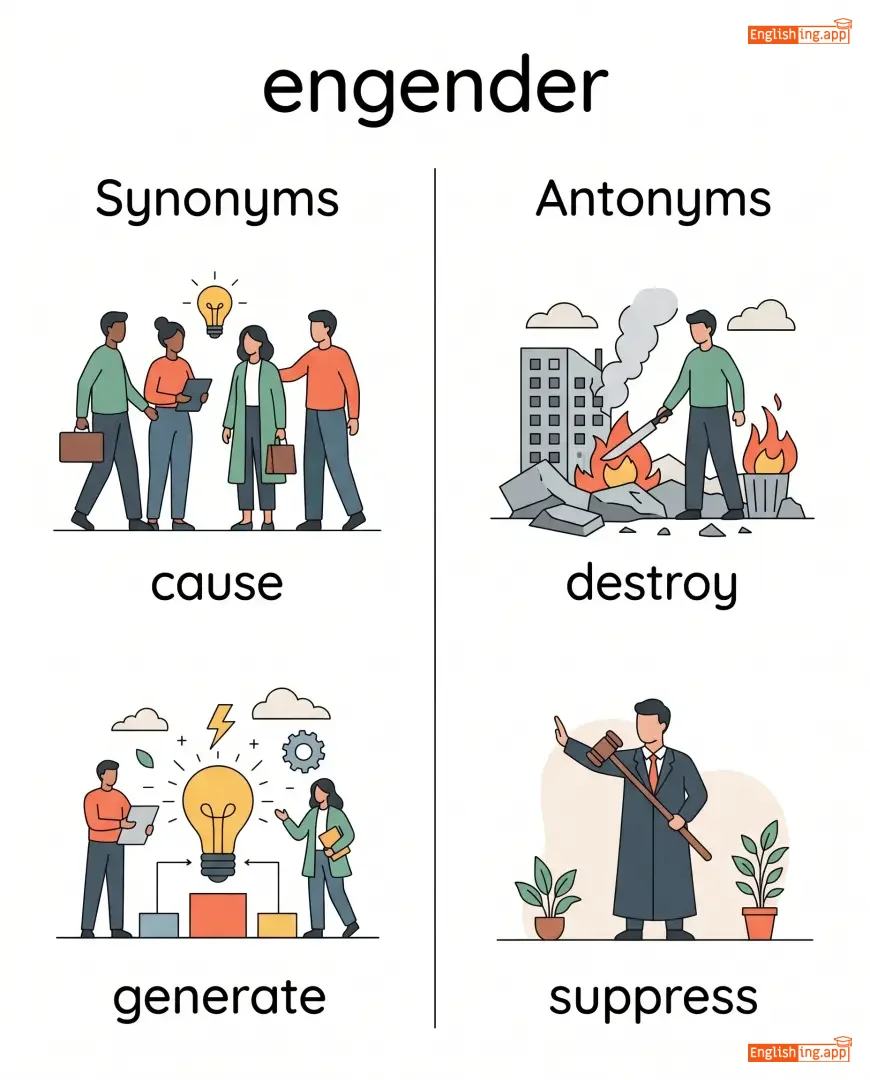
cause, generate, produce, provoke, trigger
••••••
|
destroy, suppress, extinguish
••••••
|
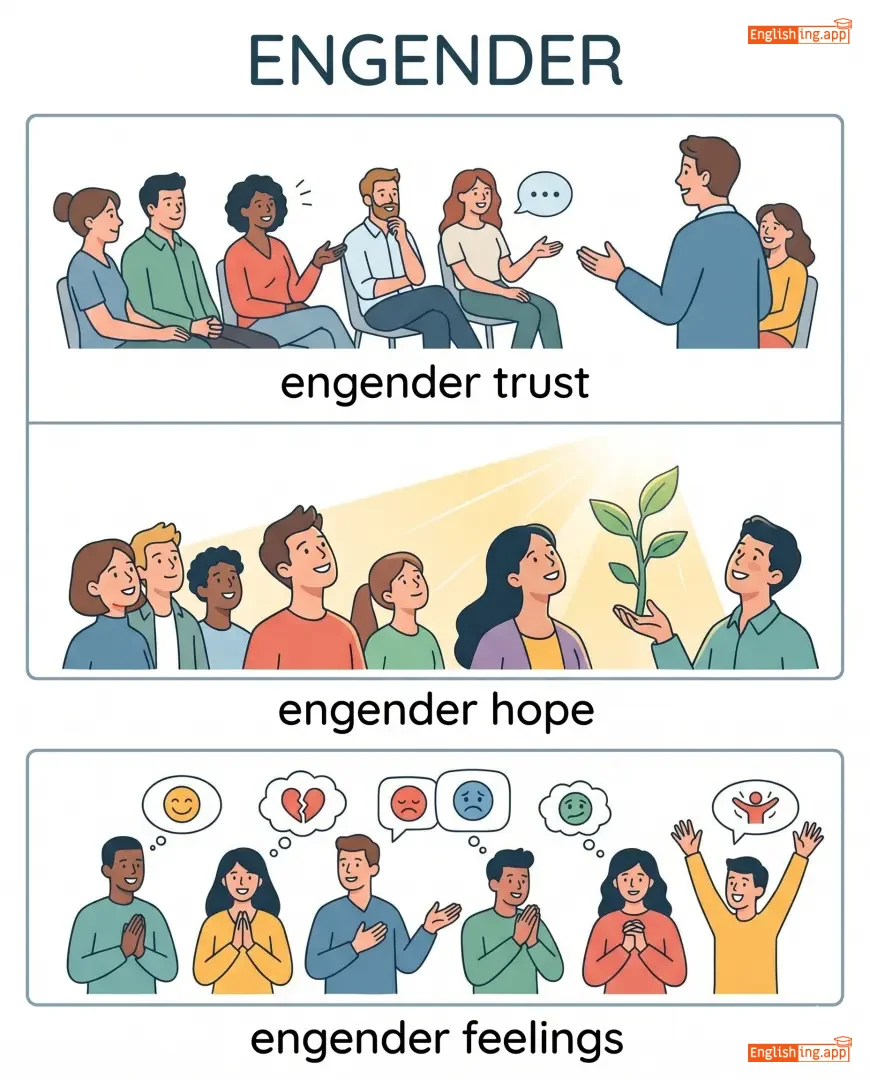
engender trust, engender hope, engender feelings, engender debate
••••••
|
Engender: エネルギーを生み出して何かを作る。
••••••
|
|
✨
••••••
|
/ɪnˈhæns/
verb
(enhans)
••••••
|

|
向上させる
koujou saseru
••••••
|
enhanced
enhansudo
••••••
|
enhanced
enhansudo
••••••
|
enhances
enhansesu
••••••
|
enhancing
enhanshingu
••••••
|
to improve the quality, value, or extent of something
••••••
|
The new features will enhance the user experience.
新しい機能はユーザー体験を向上させます。
••••••
|
新しい機能はユーザー体験を向上させます。
Atarashii kinou wa yuzaa taiken wo koujou saseru.
••••••
|
enhance beauty
美しさを向上させる
••••••
|
to make someone or something look more beautiful
••••••
|
美しさを向上させる
utsukushisa wo koujou saseru
••••••
|
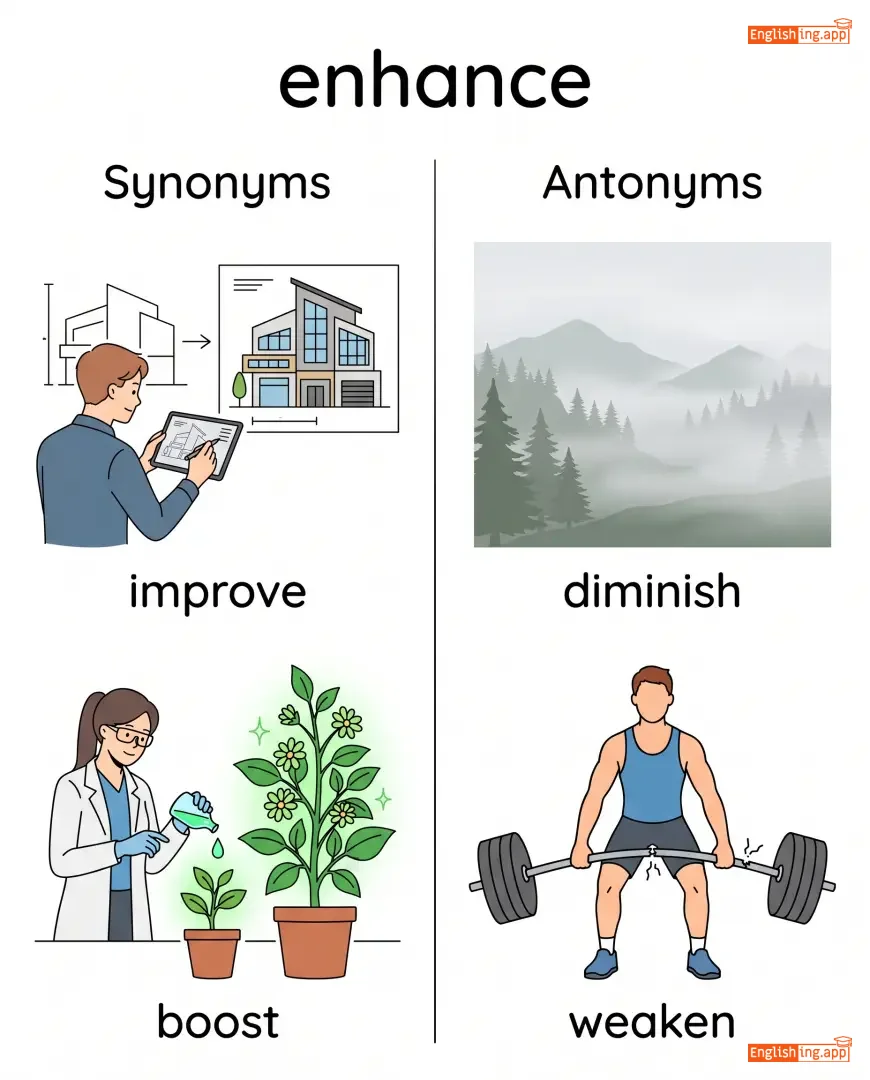
improve, boost, enrich, heighten, strengthen
••••••
|
diminish, weaken, reduce
••••••
|
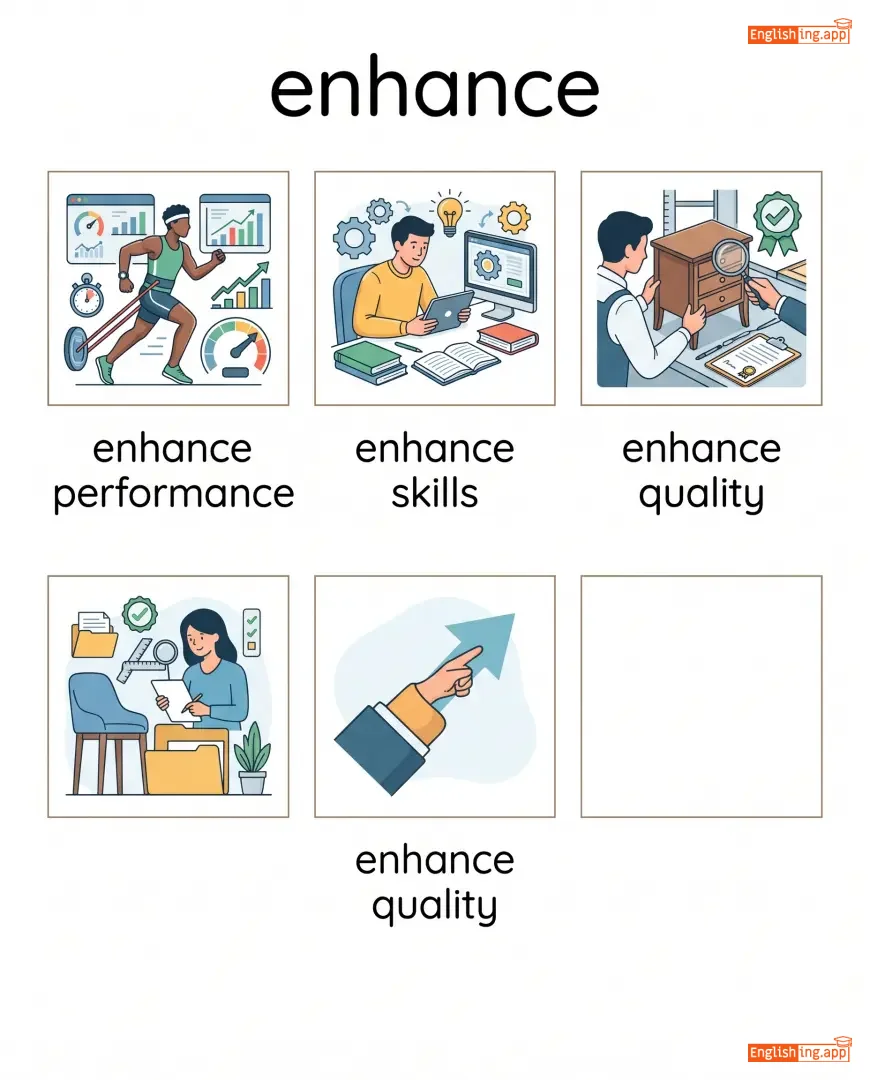
enhance performance, enhance skills, enhance quality, enhance experience
••••••
|
Enhanceは向上させる、例えば、写真にフィルターを使って向上させるようなものです。
••••••
|
|
🐜
••••••
|
/ˌɛntəˈmɒlədʒi/
noun
(エントモロジー)
••••••
|
|
昆虫学
konchugaku
••••••
|
- •••••• | - •••••• | - •••••• | - •••••• |
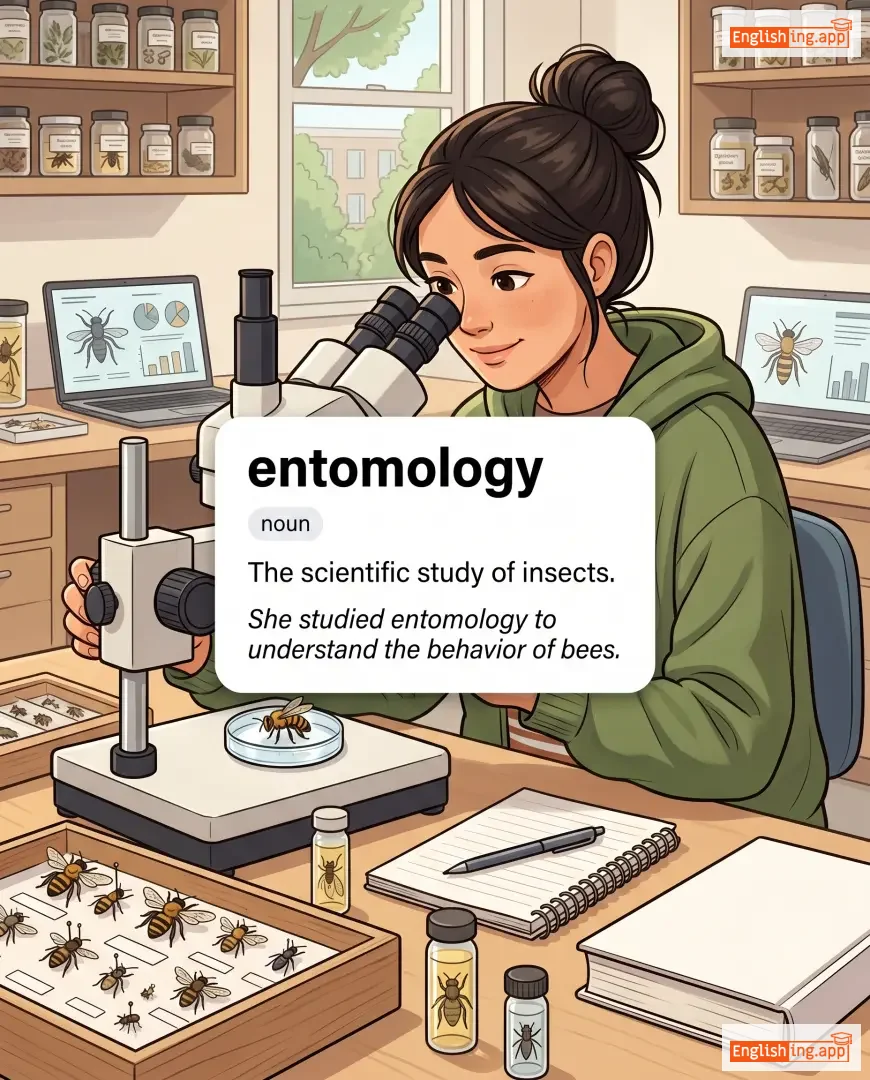
The scientific study of insects.
••••••
|
She studied entomology to understand the behavior of bees. |
彼女は蜂の行動を理解するために昆虫学を学びました。
Kanojo wa hachi no koudou wo rikai suru tame ni konchugaku wo manabimashita.
••••••
|
- •••••• | - •••••• | - •••••• |
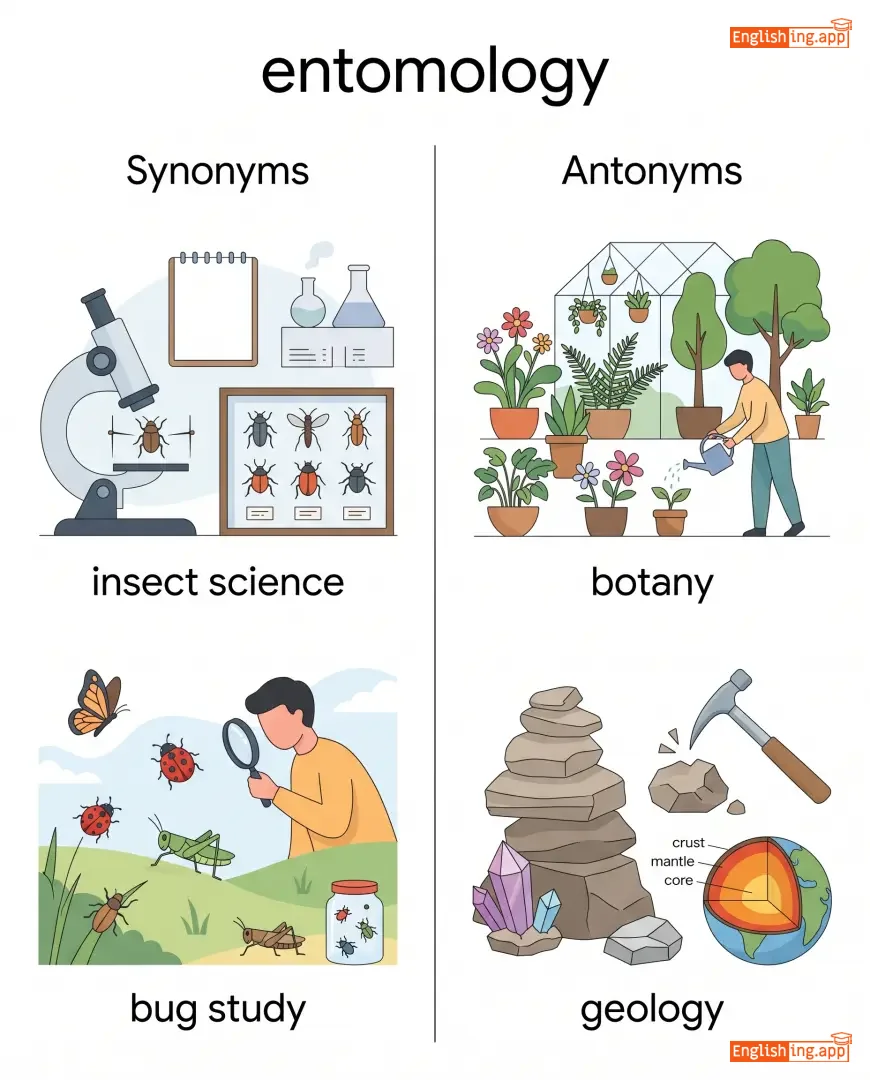
insect science, bug study, zoology, biology, taxonomy
••••••
|
botany, geology, astronomy
••••••
|
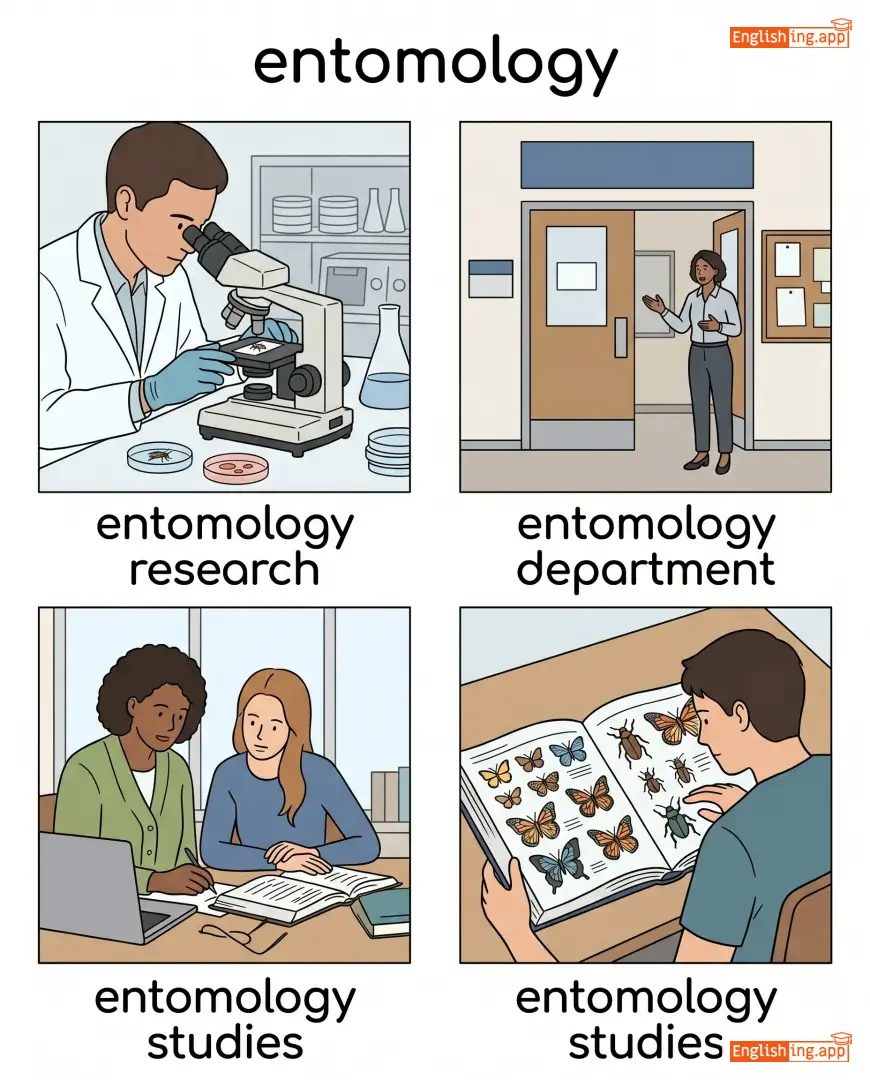
entomology research, entomology department, entomology studies, professor of entomology
••••••
|
Ant (アリ) と Moleg (モグラ) = 昆虫学、昆虫を研究
••••••
|
|
🗣️
••••••
|
/ɪˈnʌnsieɪt/
verb
(エヌンシエイト)
••••••
|
|
明確に発音する
meikaku ni hatsuon suru
••••••
|
enunciated
エヌンシエイテッド
••••••
|
enunciated
エヌンシエイテッド
••••••
|
enunciates
エヌンシエイツ
••••••
|
enunciating
エヌンシエイティング
••••••
|
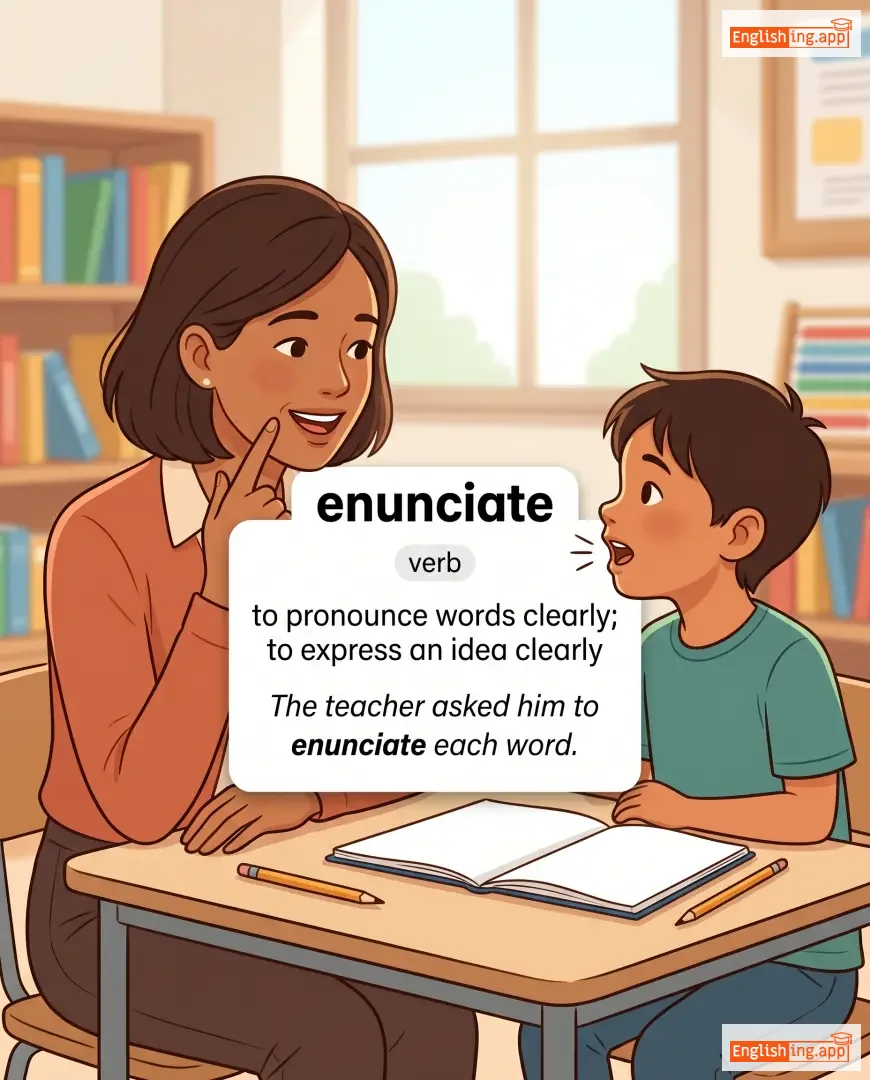
to pronounce words clearly; to express an idea clearly
••••••
|
The teacher asked him to enunciate each word.
先生は彼に各単語を明確に発音するように頼んだ。
••••••
|
先生は彼に各単語を明確に発音するように頼んだ。
Sensei wa kare ni kaku tango o meikaku ni hatsuon suru yō ni tanonda.
••••••
|
- •••••• | - •••••• | - •••••• |
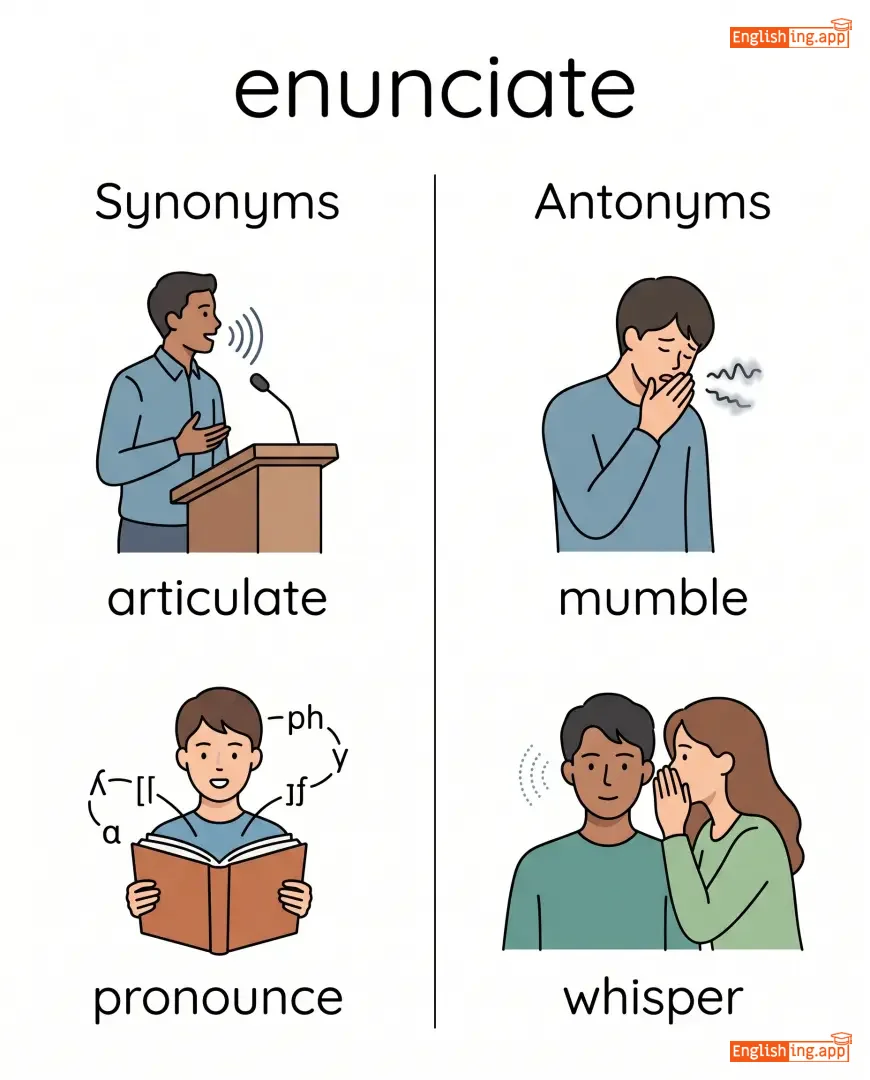
articulate, pronounce, express, vocalize, state
••••••
|
mumble, whisper, slur
••••••
|
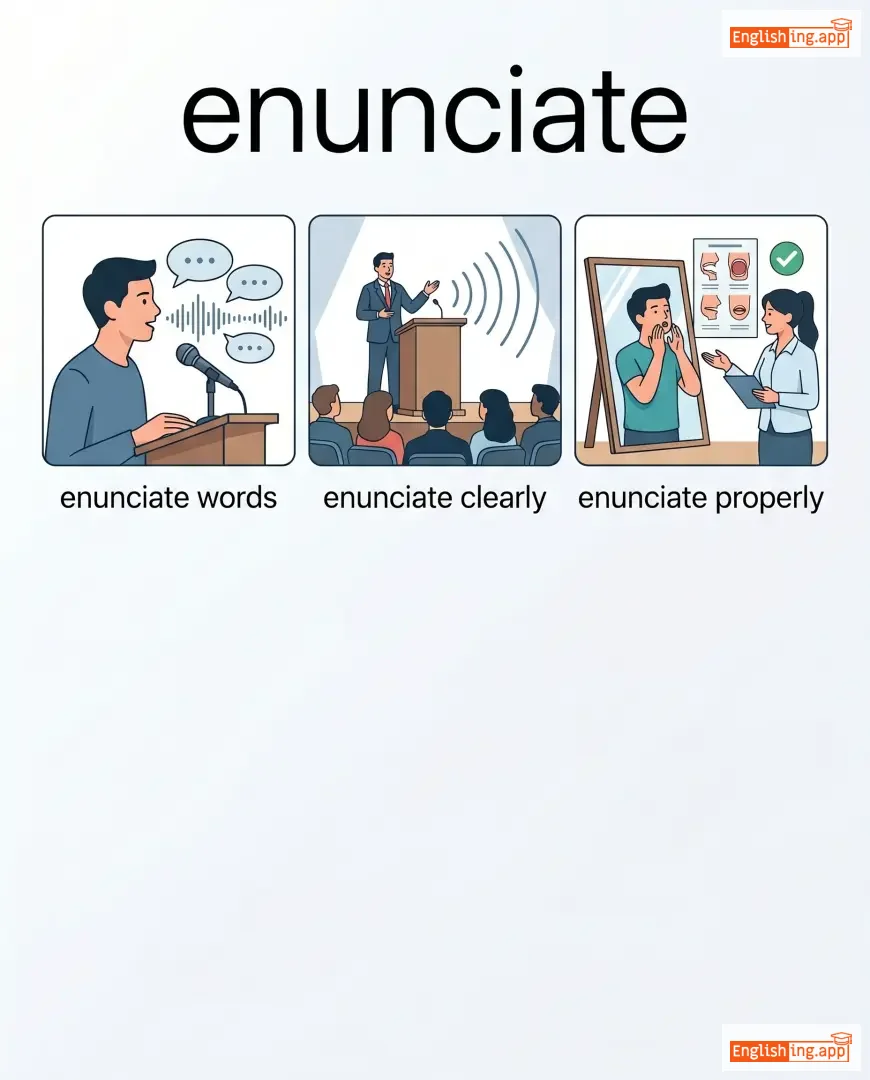
enunciate words, enunciate clearly, enunciate properly, enunciate idea
••••••
|
Enunciate sounds like 明確に発音する in Japanese.
••••••
|
|
🌅
••••••
|
/ɪˈfɛmərəl/
adjective
(エフェメラル)
••••••
|
|
儚い
hakanai
••••••
|
- •••••• | - •••••• | - •••••• | - •••••• |
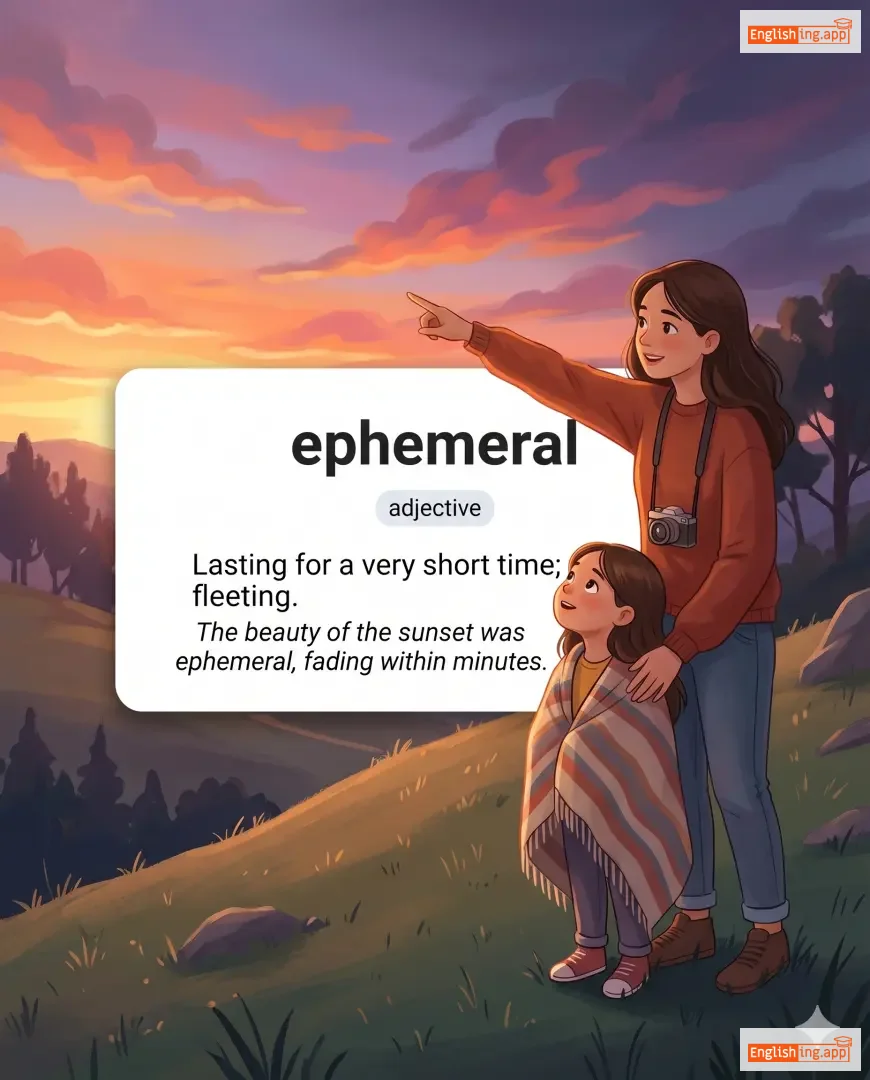
Lasting for a very short time; fleeting.
••••••
|
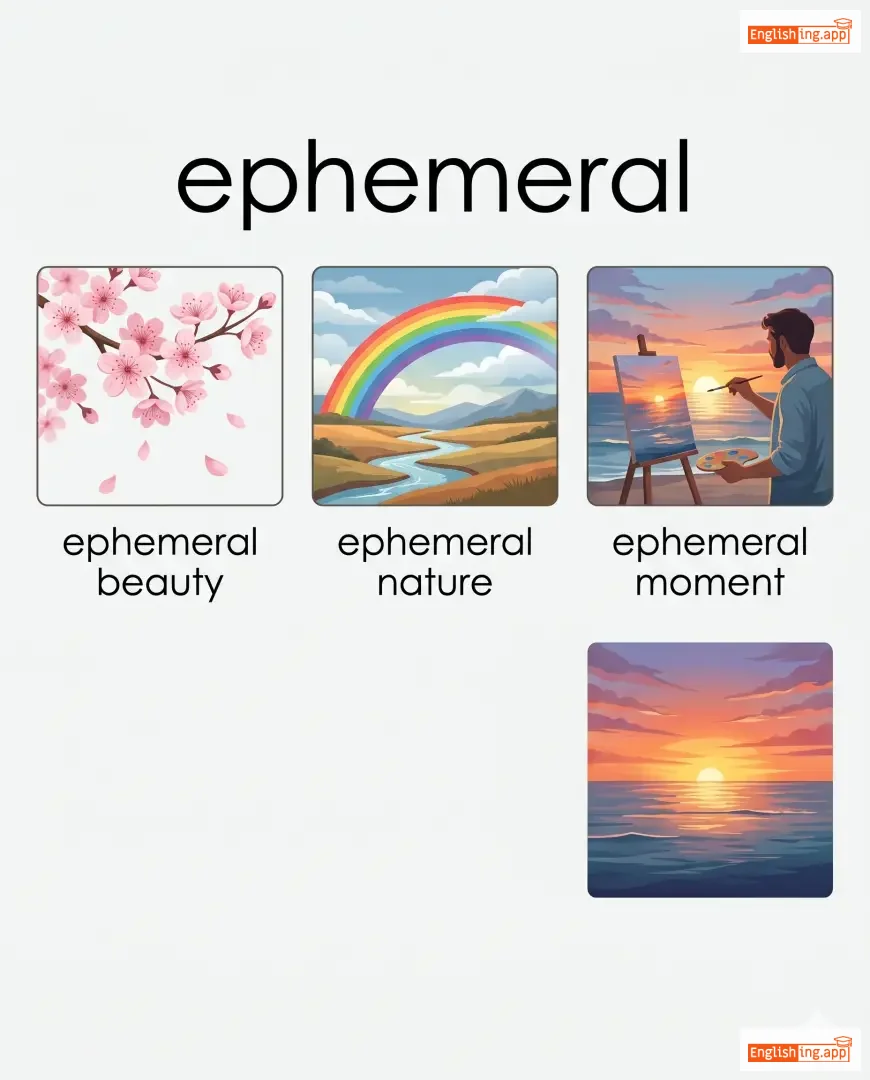
The beauty of the sunset was ephemeral, fading within minutes. |
夕日の美しさは儚く、数分で消えていった。
Yūhi no utsukushisa wa hakanaku, su-fun de kiete itta.
••••••
|
ephemeral beauty |
A beauty that is short-lived and does not last long.
••••••
|
儚い美
hakanai bi
••••••
|
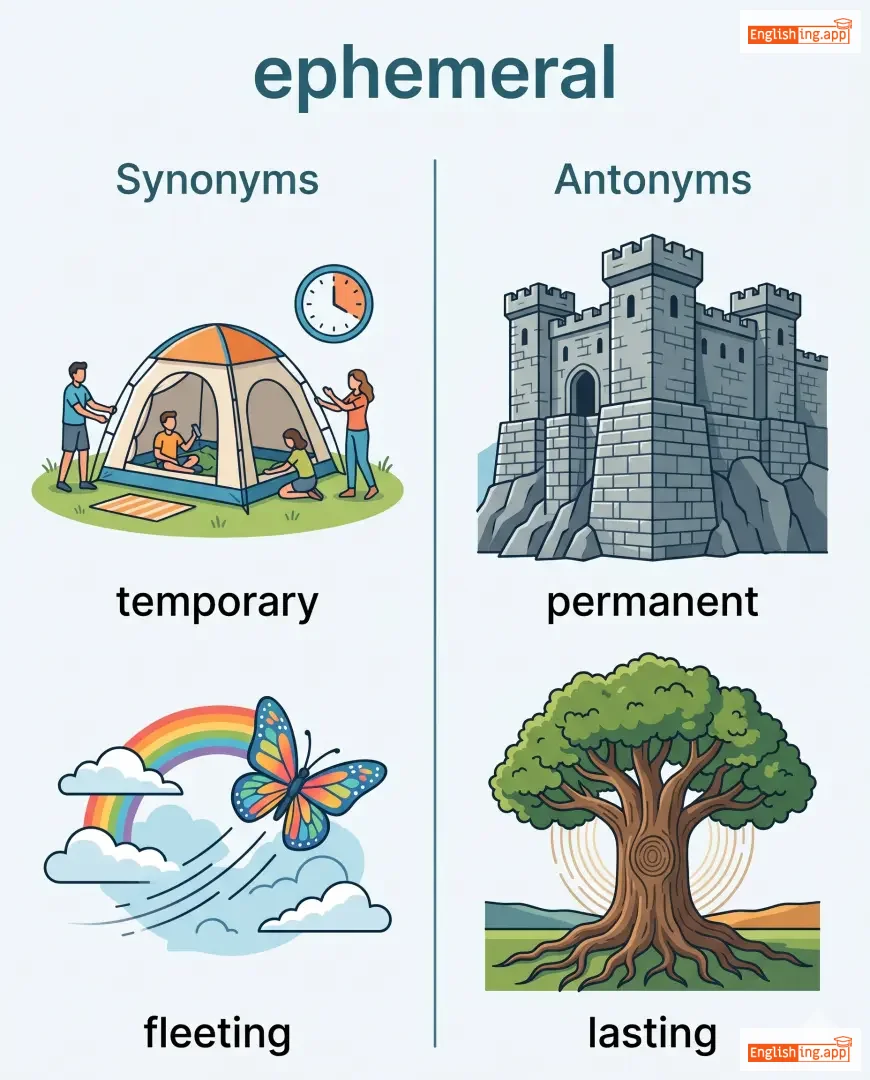
temporary, fleeting, short-lived, brief, transitory
••••••
|
permanent, lasting, eternal
••••••
|
ephemeral beauty, ephemeral nature, ephemeral moment, ephemeral life
••••••
|
儚いは'はかな'、儚く消えていくものとして覚える。
••••••
|
|
📘
••••••
|
/ɪˌpɪstəˈmɒlədʒi/
noun
(エピステモロジー)
••••••
|
|
認識論
ninshikiron
••••••
|
- •••••• | - •••••• | - •••••• | - •••••• |
The branch of philosophy that studies the nature, origin, and scope of knowledge.
••••••
|
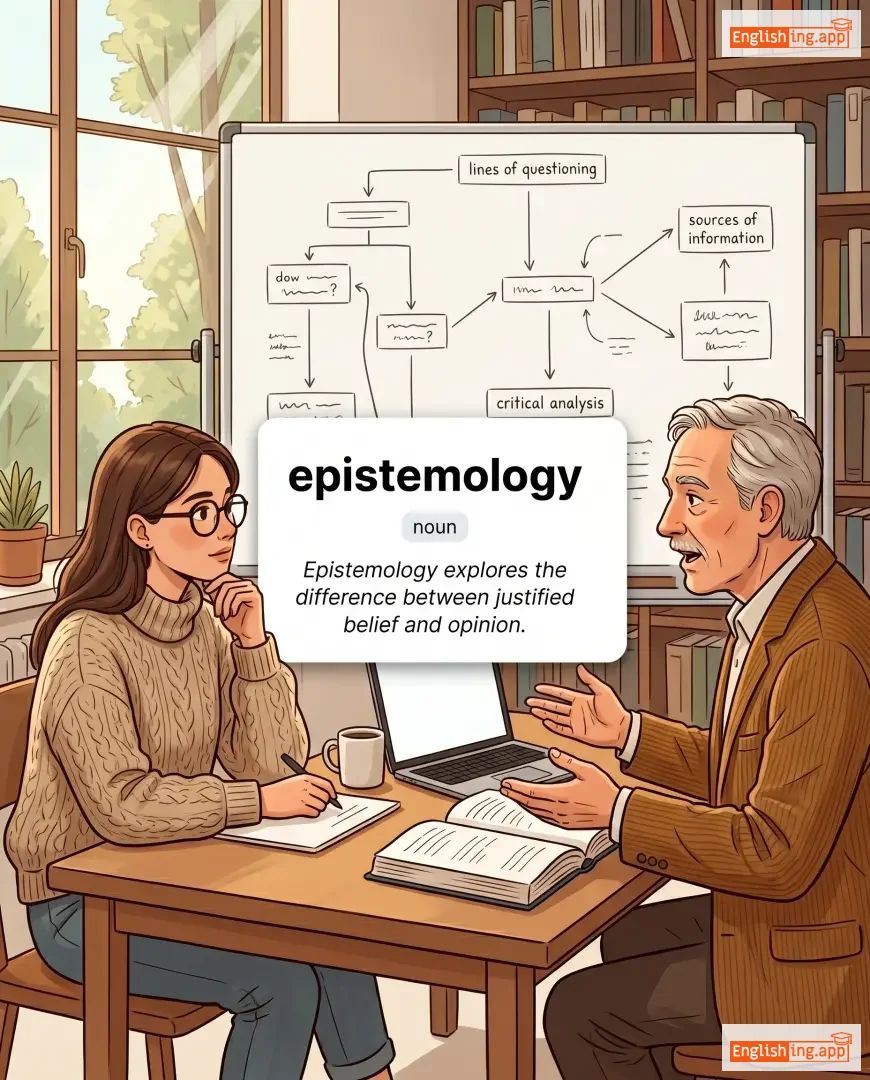
Epistemology explores the difference between justified belief and opinion. |
認識論は正当な信念と意見との違いを探求します。
Ninshikiron wa seitōna shinnen to iken to no chigai o tankyū shimasu.
••••••
|
- •••••• | - •••••• | - •••••• |
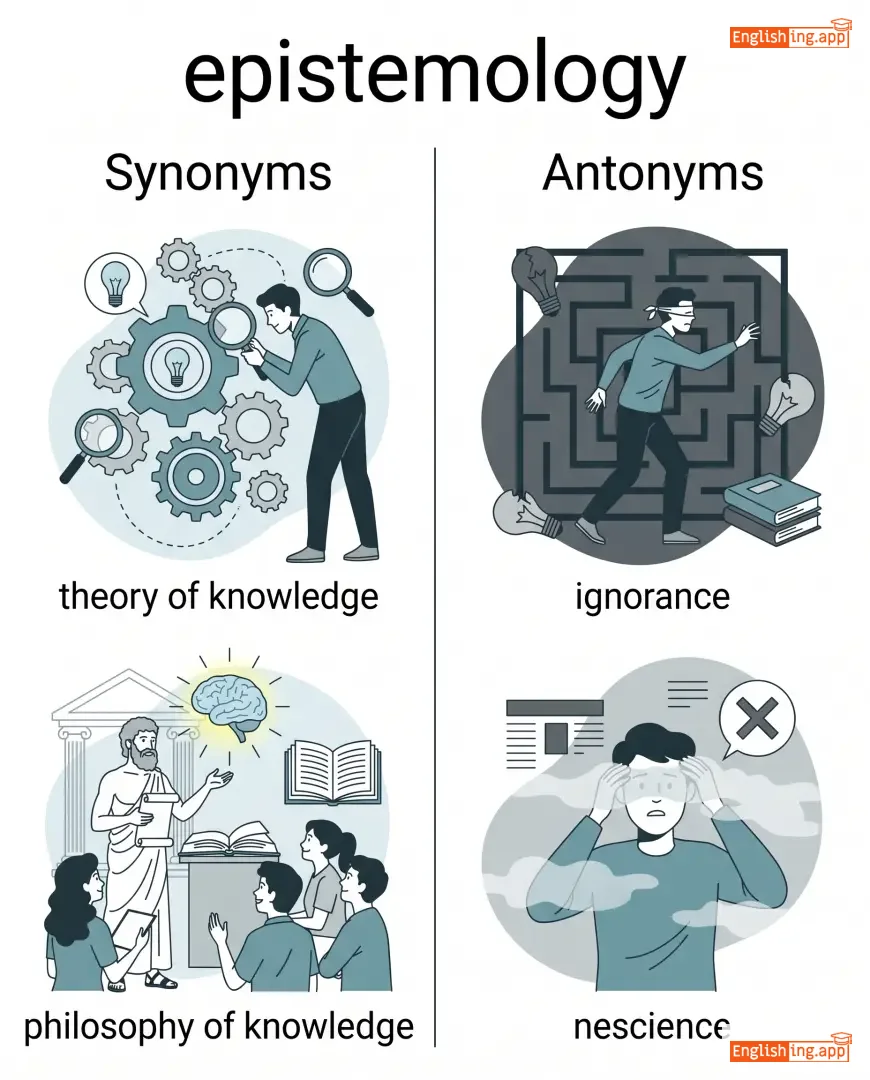
theory of knowledge, philosophy of knowledge, gnoseology
••••••
|
ignorance, nescience
••••••
|
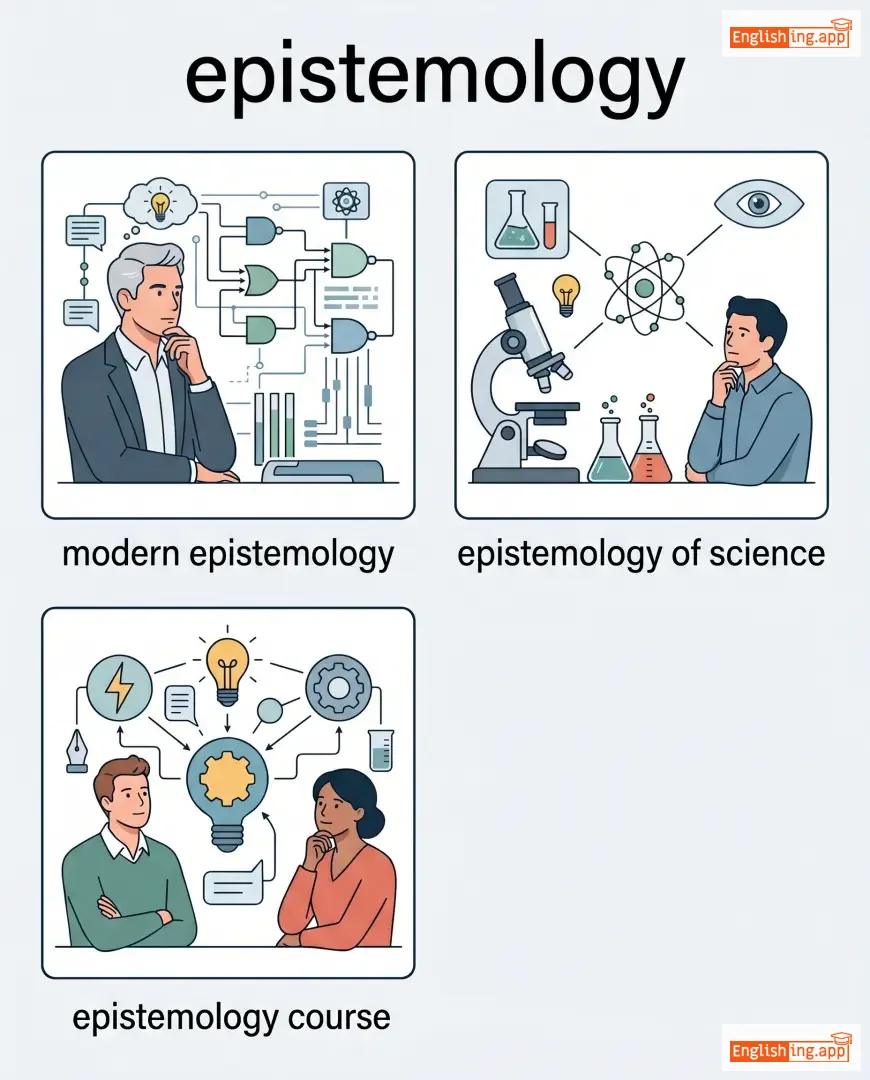
modern epistemology, epistemology of science, epistemology course
••••••
|
エピステモロジー = エピステマ (知識) + ロジー (学問) → 知識の学問
••••••
|
|
⚖️
••••••
|
/ˈek.wə.bəl/
adjective
(エクウェイブル)
••••••
|
|
冷静
reisei
••••••
|
- •••••• | - •••••• | - •••••• | - •••••• |
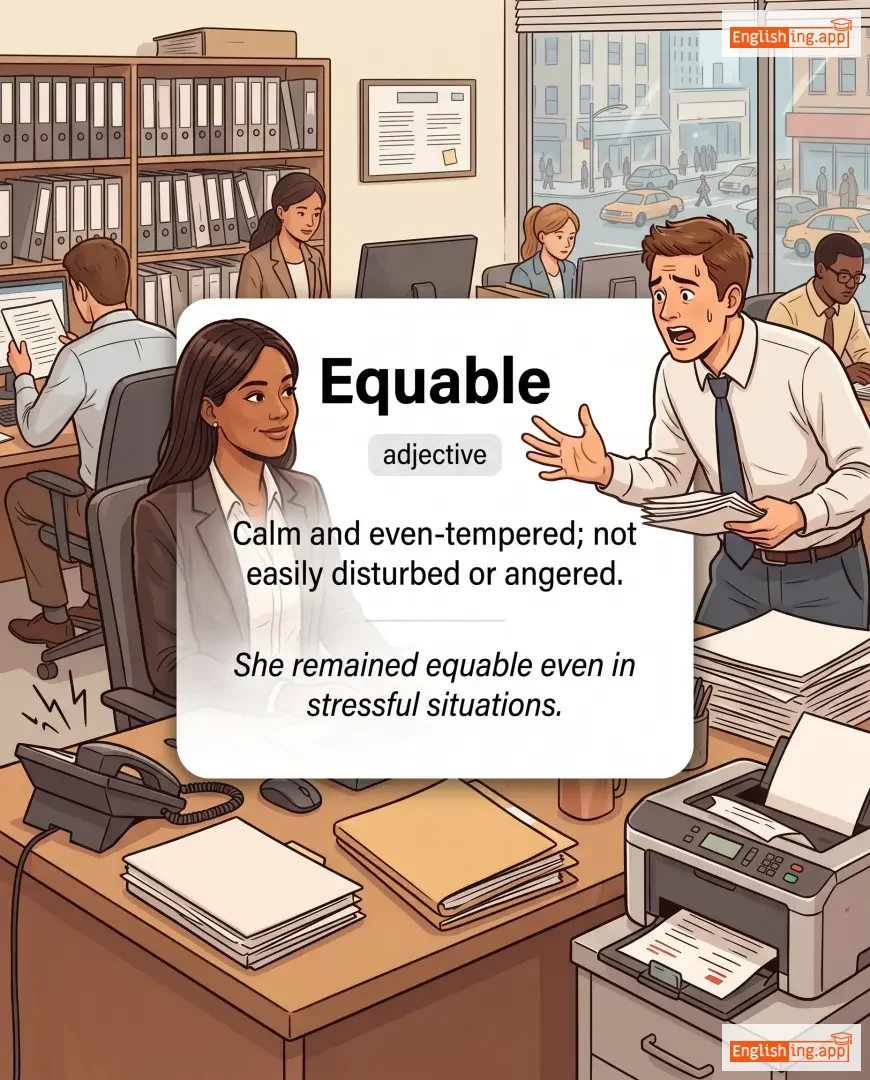
calm and even-tempered; not easily disturbed
••••••
|
He maintained an equable temperament throughout the crisis.
彼は危機の間、冷静な気質を保ち続けた。
••••••
|
彼は危機の間、冷静な気質を保ち続けた。
Kare wa kiki no aida, reisei na kishitsu wo tamochitsuzuketa.
••••••
|
- •••••• | - •••••• | - •••••• |
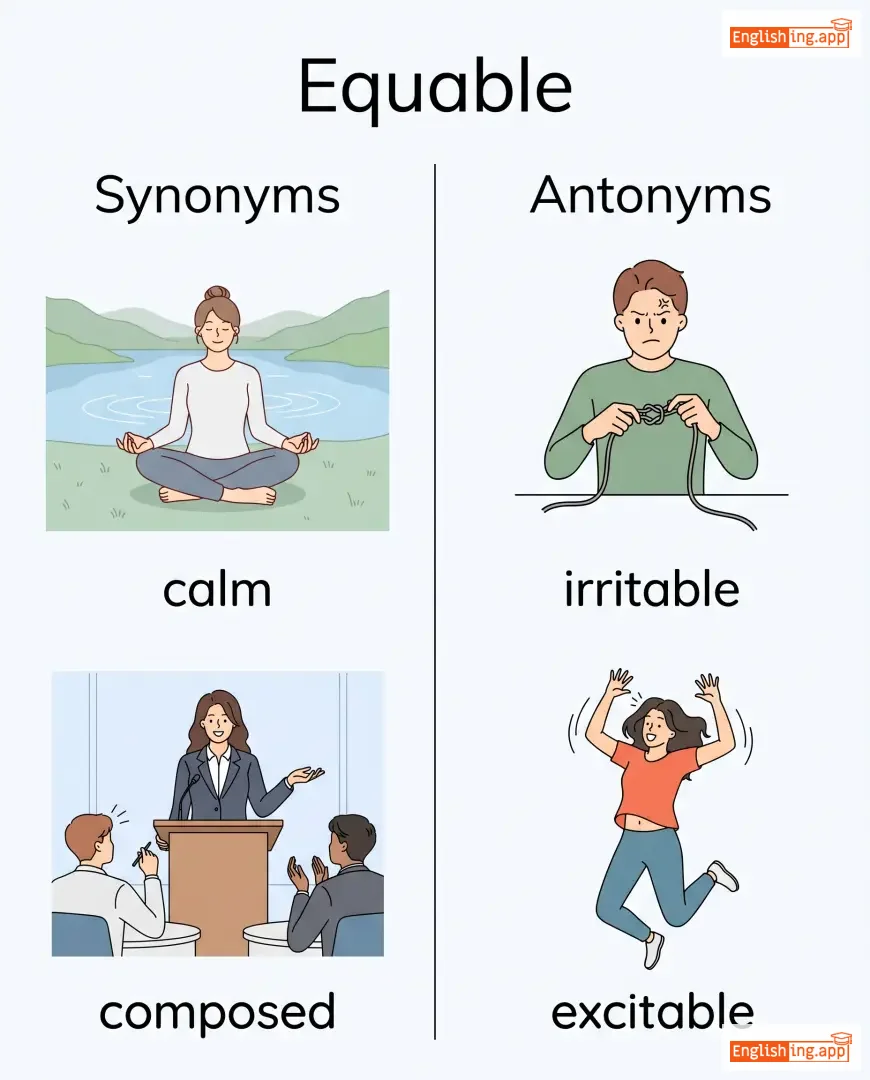
steady, even, uniform, consistent
••••••
|
changeable, variable, inconsistent
••••••
|
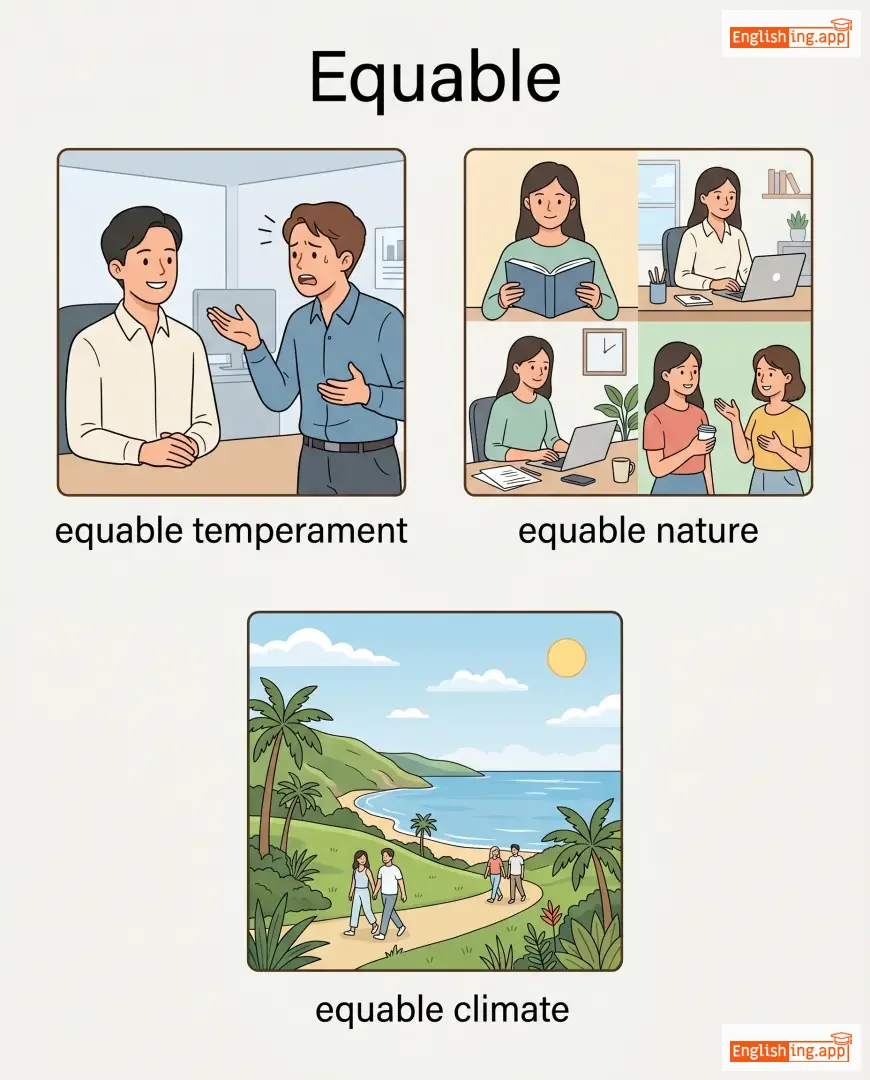
equable climate, equable temperament, equable disposition
••••••
|
冷静は 'equable' のように、穏やかで均等な状態を意味します。
••••••
|
|
🧘
••••••
|
/ˌekwəˈnɪmɪti/
noun
(エクアニミティ)
••••••
|
|
平静
heisei
••••••
|
- •••••• | - •••••• | - •••••• | - •••••• |
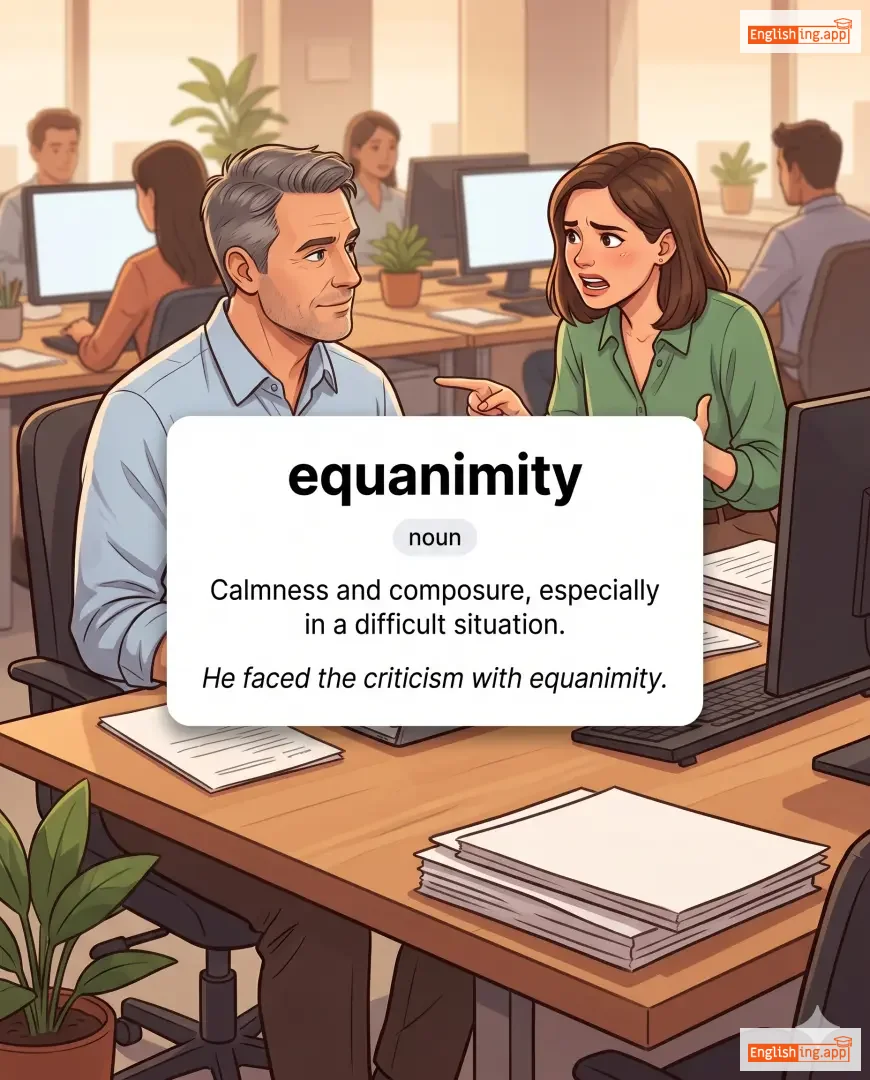
Calmness and composure, especially in a difficult situation.
••••••
|
He faced the criticism with equanimity. |
彼は批判に対して平静で接した。
Kare wa hihan ni taishite heisei de sesshita.
••••••
|
- •••••• | - •••••• | - •••••• |
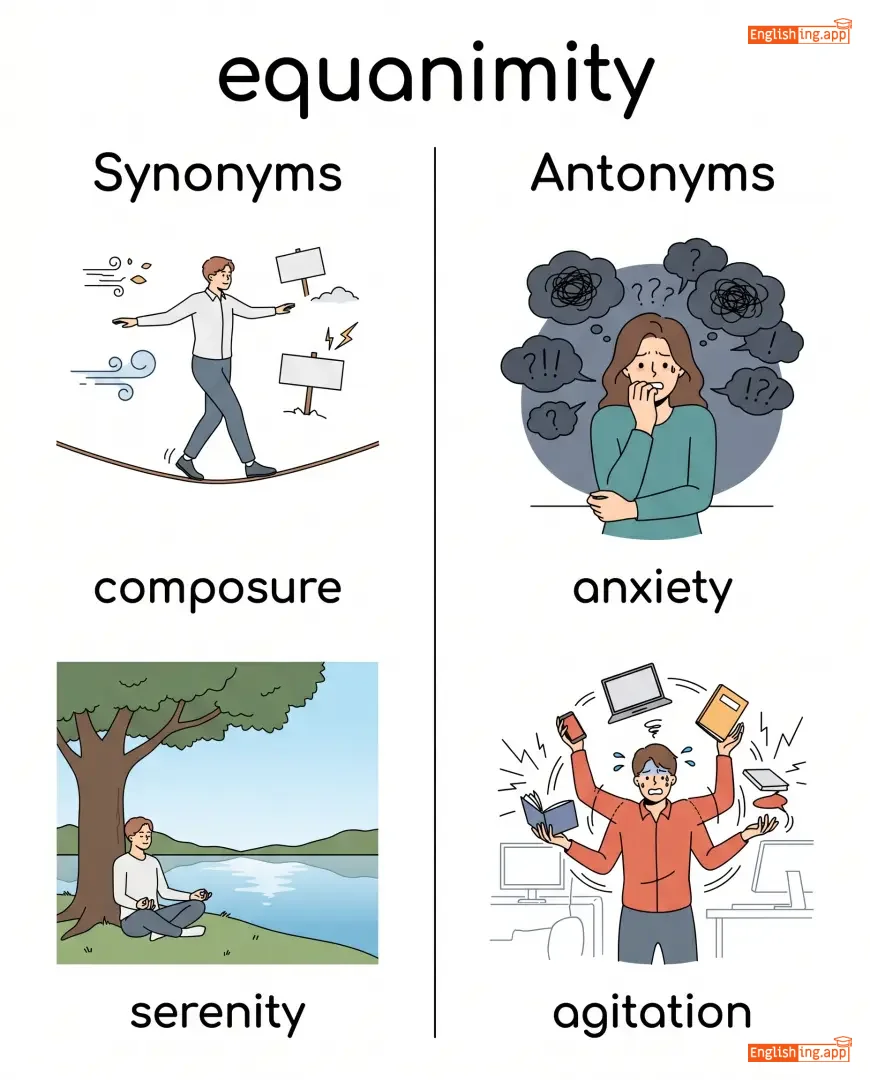
composure, serenity, calmness, tranquility, balance
••••••
|
anxiety, agitation, nervousness
••••••
|
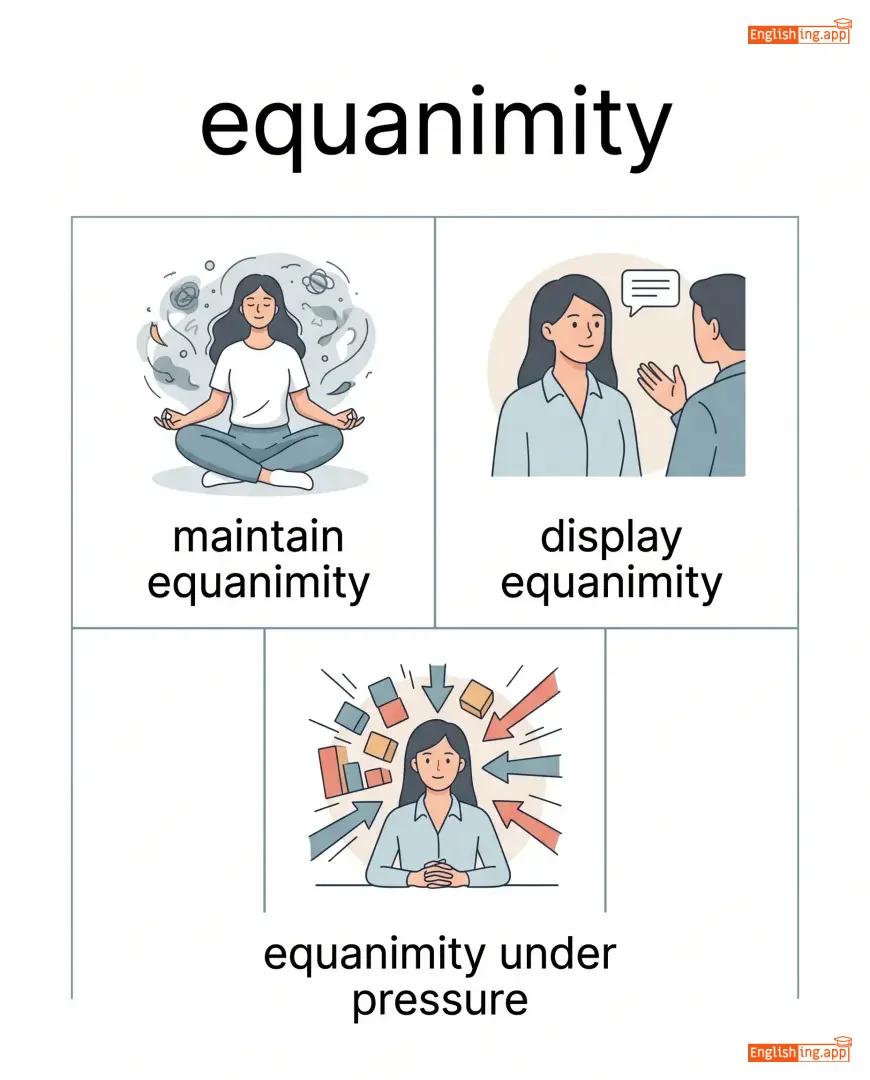
maintain equanimity, display equanimity, equanimity under pressure
••••••
|
Equanimity = 平 (平和) + 静 (静かな心) → 困難に直面しても冷静さを保つ
••••••
|
|
🌀
••••••
|
/ɪˈkwɪvəˌkeɪt/
verb
(エクイヴォケート)
••••••
|

|
曖昧に話す
aimai ni hanasu
••••••
|
equivocated
エクイヴォケイテッド
••••••
|
equivocated
エクイヴォケイテッド
••••••
|
equivocates
エクイヴォケイツ
••••••
|
equivocating
エクイヴォケイティング
••••••
|
To speak ambiguously or avoid giving a clear answer.
••••••
|
The politician equivocated when asked about the scandal.
その政治家はスキャンダルについて尋ねられたとき、エクイヴォケイテッド。
••••••
|
その政治家はスキャンダルについて尋ねられたとき、曖昧に話した。
Sono seijika wa sukyandaru ni tsuite tazunerareta toki, aimai ni hanashita.
••••••
|
- •••••• | - •••••• | - •••••• |
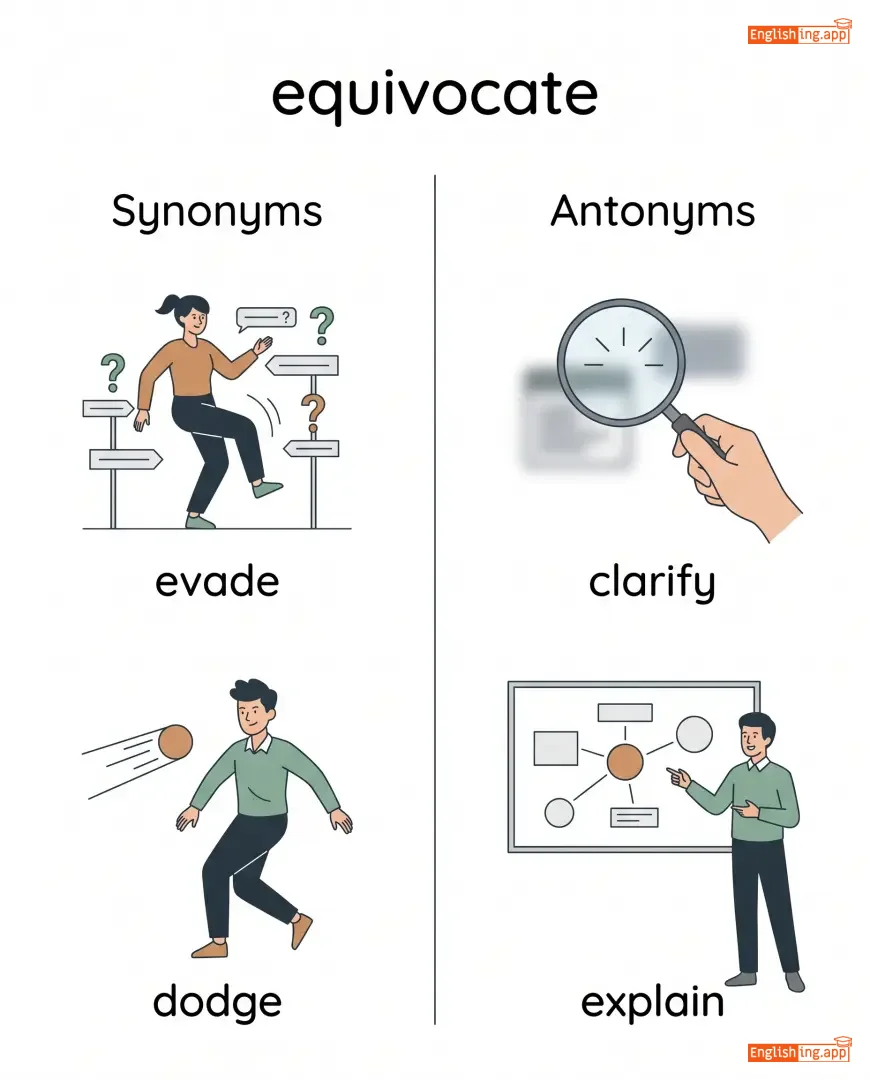
evade, dodge, prevaricate, hedge, mislead
••••••
|
clarify, explain, affirm
••••••
|
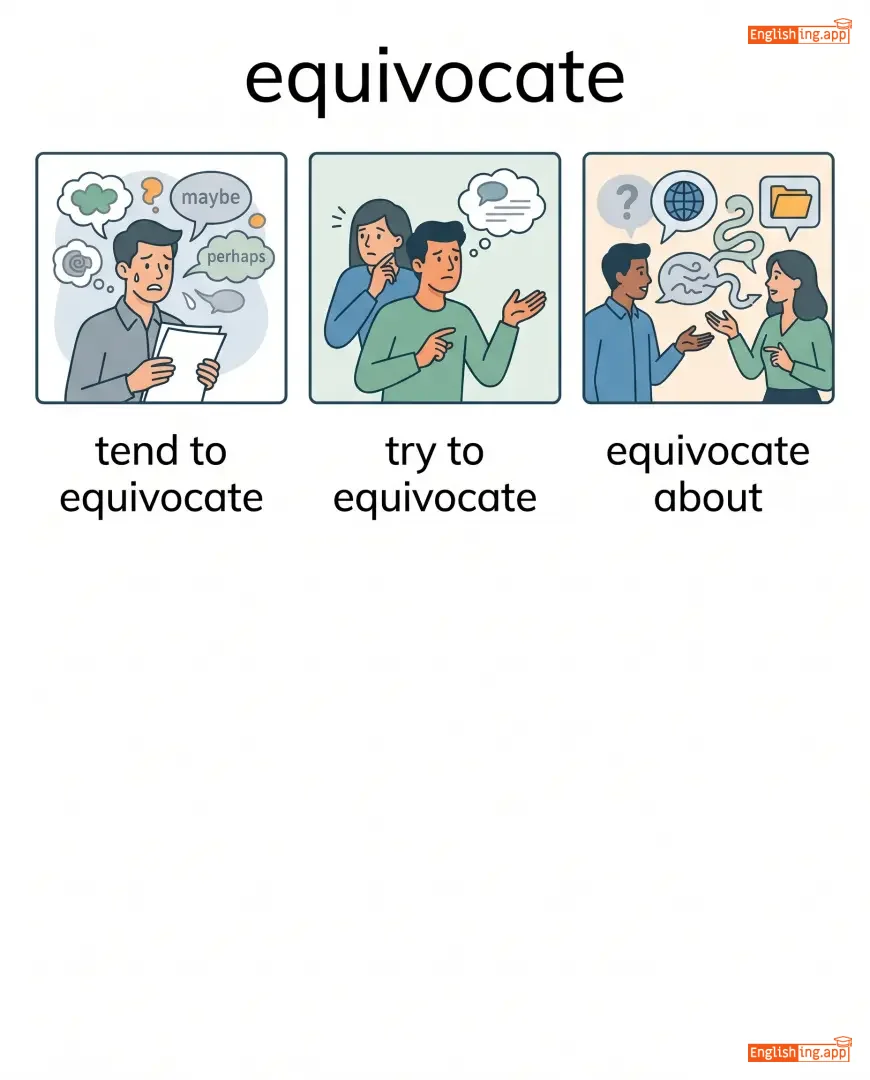
tend to equivocate, try to equivocate, equivocate about
••••••
|
Equivocate は🌀 曖昧に話すこと - 政治家がよくやること。
••••••
|
|
🚫
••••••
|
/ˈɛrənt/
adjective
(エラント)
••••••
|
|
逸脱した
ittsudatsu shita
••••••
|
- •••••• | - •••••• | - •••••• | - •••••• |
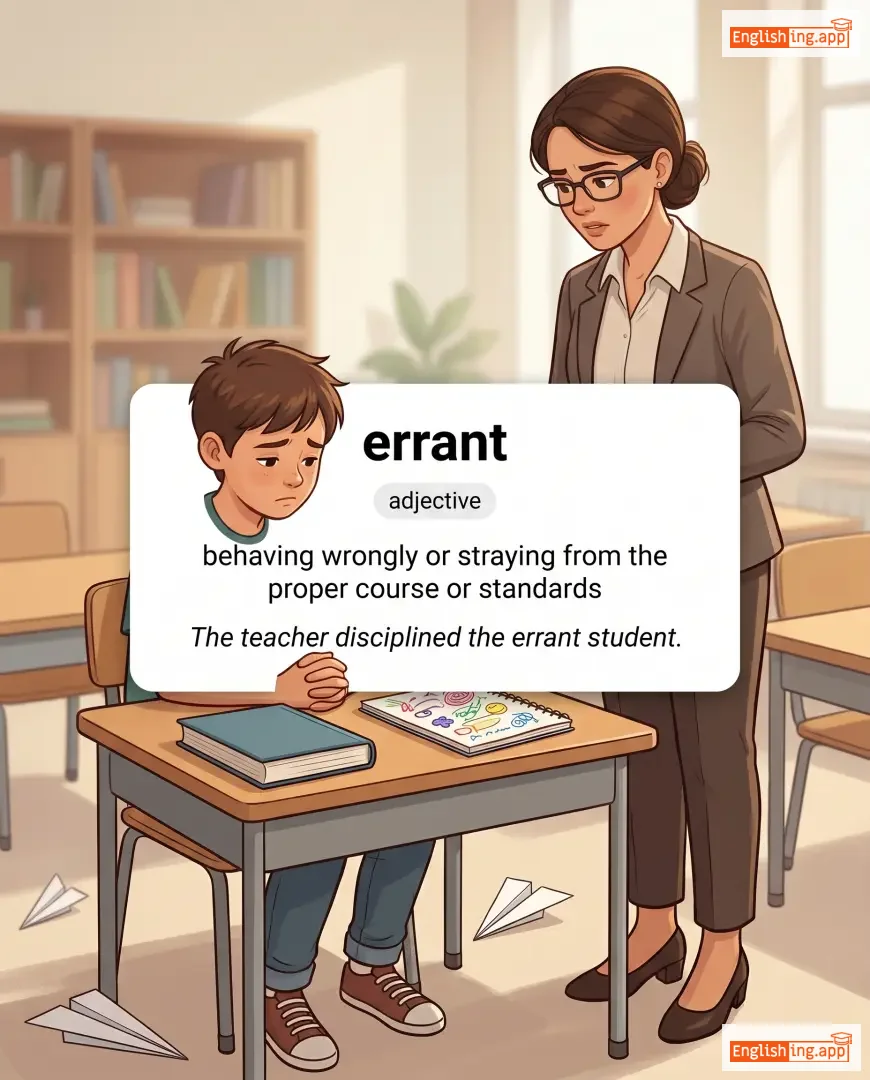
behaving wrongly or straying from the proper course or standards
••••••
|
The teacher disciplined the errant student. |
教師は逸脱した生徒を罰しました。
Kyōshi wa ittsudatsu shita seito o basshimashita.
••••••
|
- •••••• | - •••••• | - •••••• |
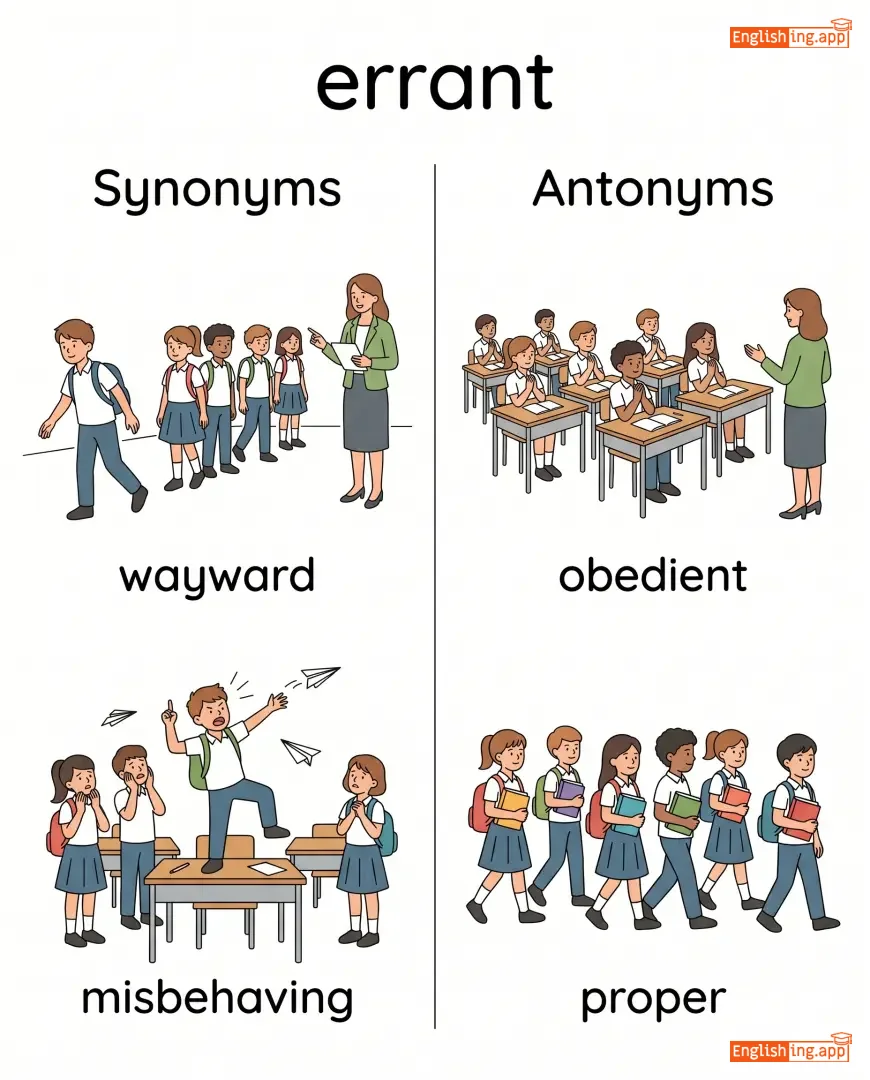
wayward, misbehaving, delinquent, unruly
••••••
|
obedient, proper, disciplined
••••••
|
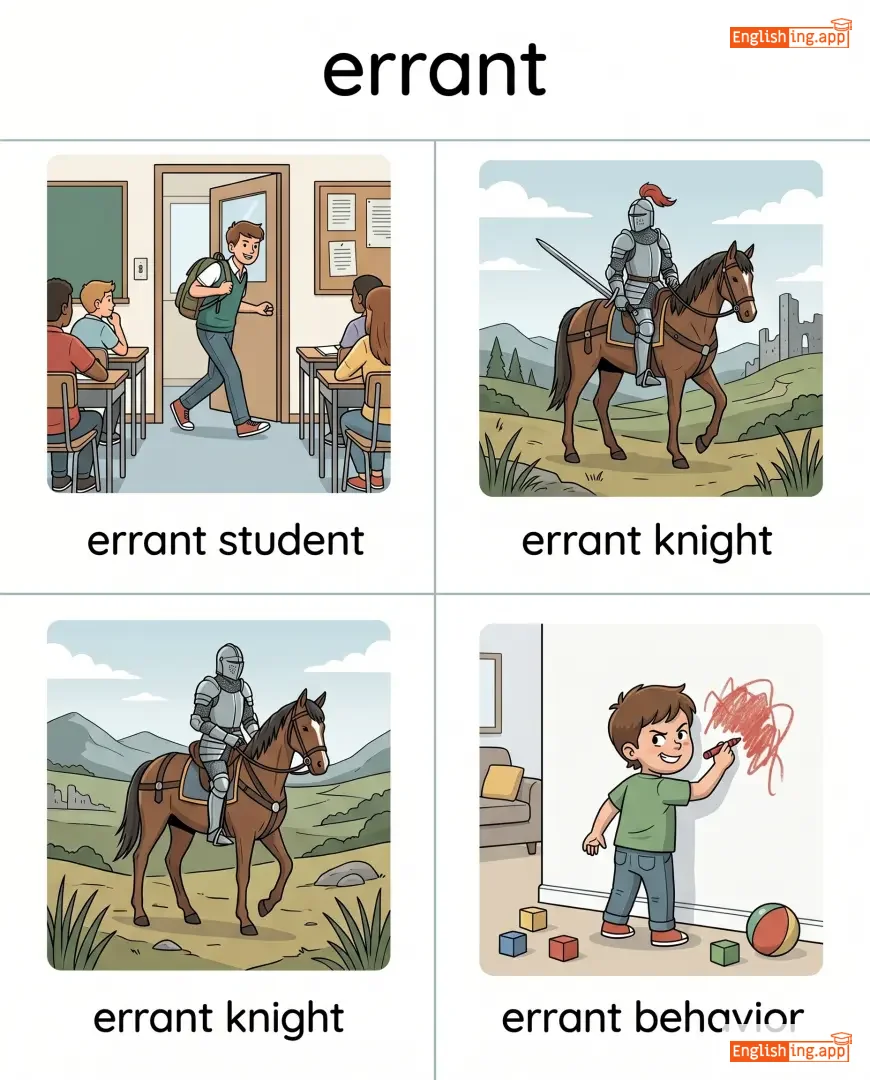
errant student, errant knight, errant behavior
••••••
|
Errant は道を外れた意味 – Err = 道を外れた + ant = 規則に反する
••••••
|

