|
表情符号
|
单词 | Images | 翻译 | 过去时 | 过去分词 | 第三人称单数 | 动名词 | 含义 | 例句 | 例句翻译 | 示例表达 | 示例表达含义 | 示例表达翻译 | 同义词 | 反义词 | 搭配词 | 助记符 |
|---|---|---|---|---|---|---|---|---|---|---|---|---|---|---|---|---|---|
|
🌧️
••••••
|
/əˈbeɪt/
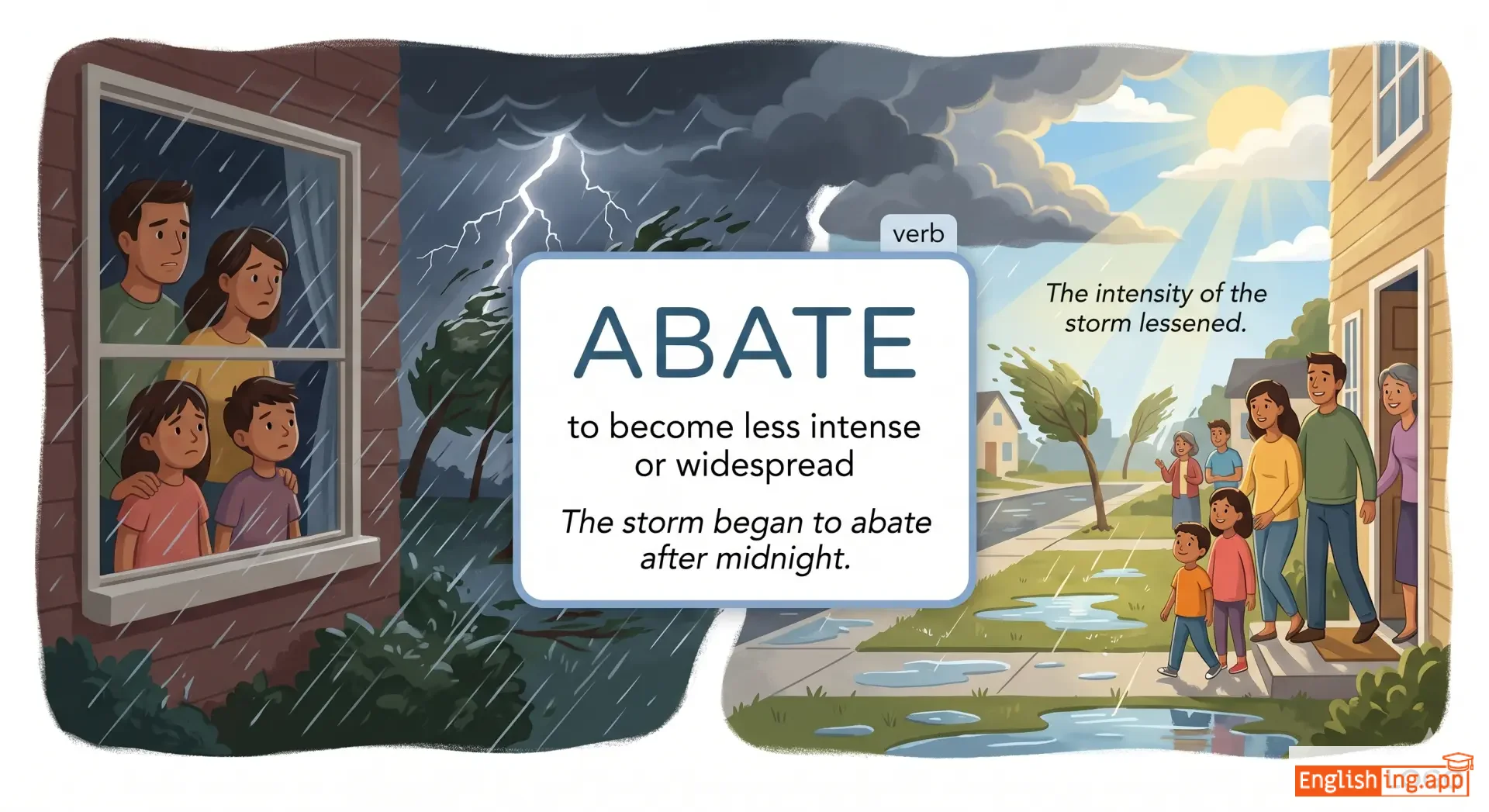
verb
(阿贝特)
••••••
|
|
减少
jiǎnshǎo
••••••
|
abated
阿贝特德
••••••
|
abated
阿贝特德
••••••
|
abates
阿贝特斯
••••••
|
abating
阿贝特英
••••••
|
to become less intense or widespread
••••••
|
The storm began to abate after midnight.
暴风雨在午夜后开始减弱。
••••••
|
暴风雨在午夜后开始减弱。
Bàofēngyǔ zài wǔyè hòu kāishǐ jiǎnruò.
••••••
|
- •••••• | - •••••• | - •••••• |
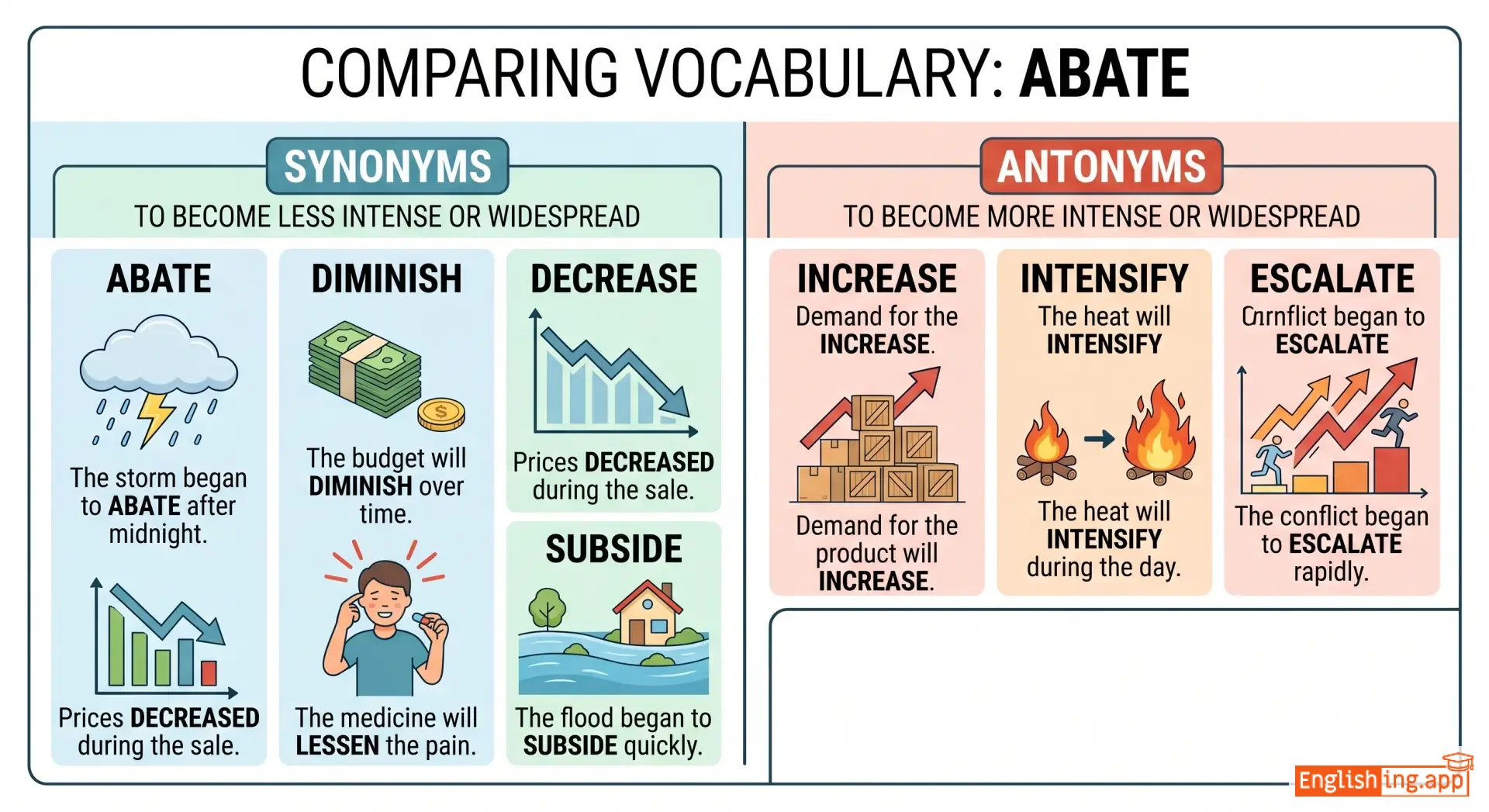
diminish, decrease, lessen, subside
••••••
|
increase, intensify, escalate
••••••
|
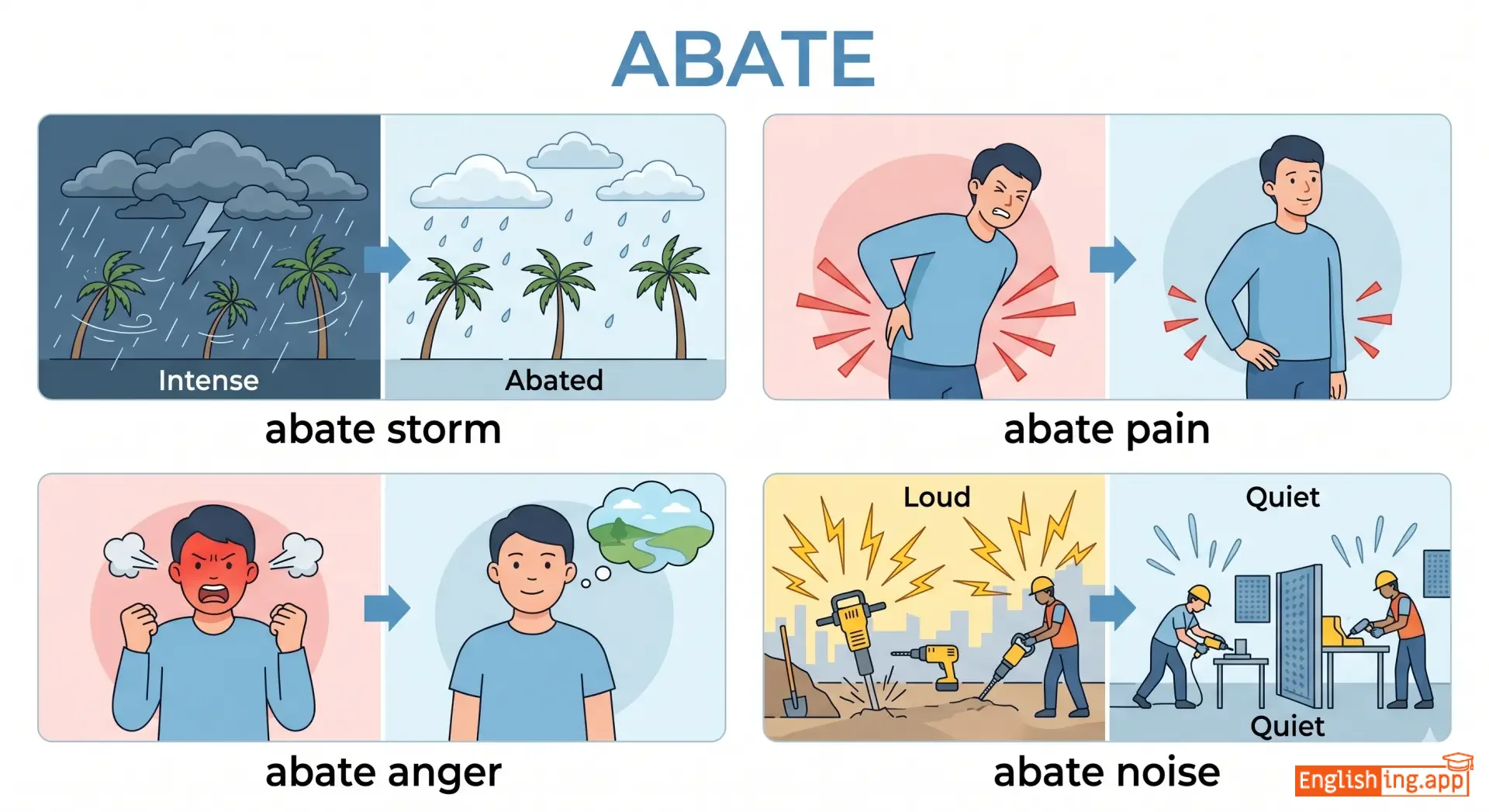
abate storm, abate pain, abate anger, abate noise
••••••
|
No •••••• |
|
👑
••••••
|
/ˈæbdɪkeɪt/
verb
(ābídìkèit)
••••••
|
|
放弃王位
fàngqì wángwèi
••••••
|
abdicated
ābídìkèitid
••••••
|
abdicated
ābídìkèitid
••••••
|
abdicates
ābídìkèits
••••••
|
abdicating
ābídìkèiting
••••••
|
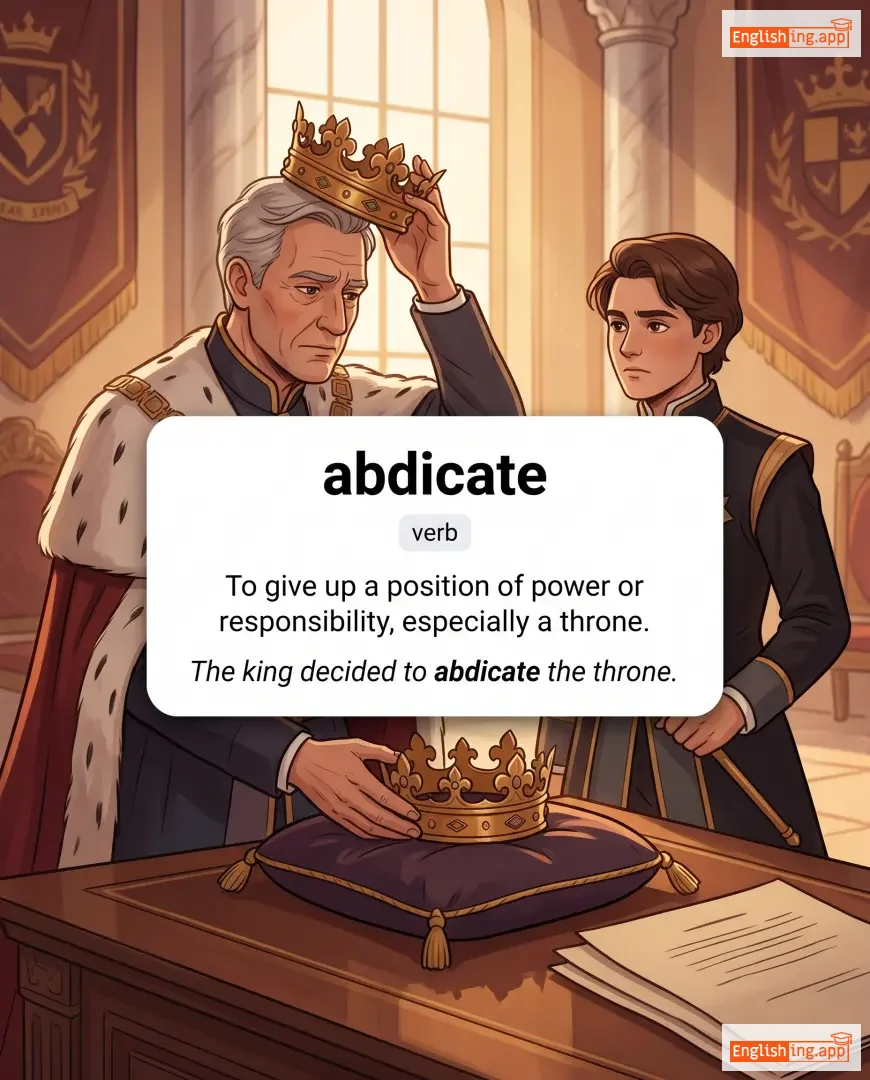
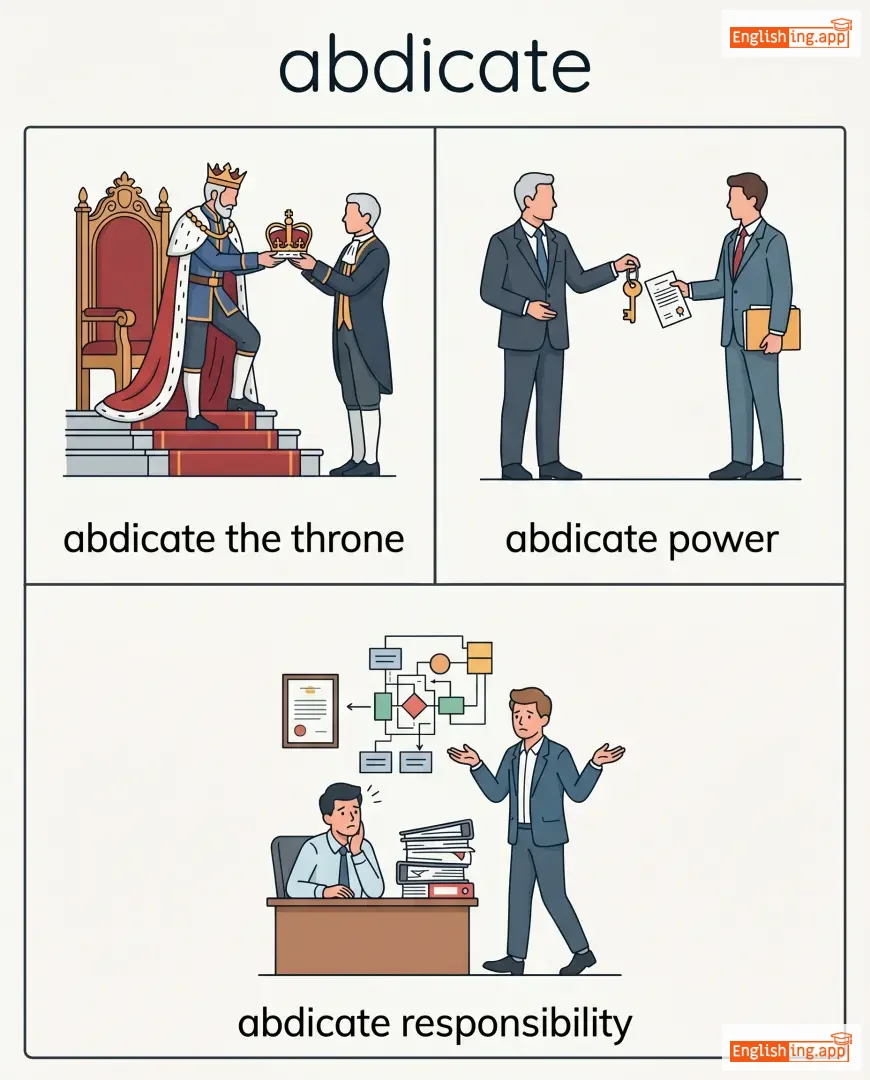
To give up a position of power or responsibility, especially a throne.
••••••
|
The king decided to abdicate the throne.
国王决定放弃王位。
••••••
|
国王决定放弃王位。
Guówáng juédìng fàngqì wángwèi.
••••••
|
abdicate responsibility
放弃责任
••••••
|
To avoid or refuse to take responsibility.
••••••
|
放弃责任
fàngqì zérèn
••••••
|
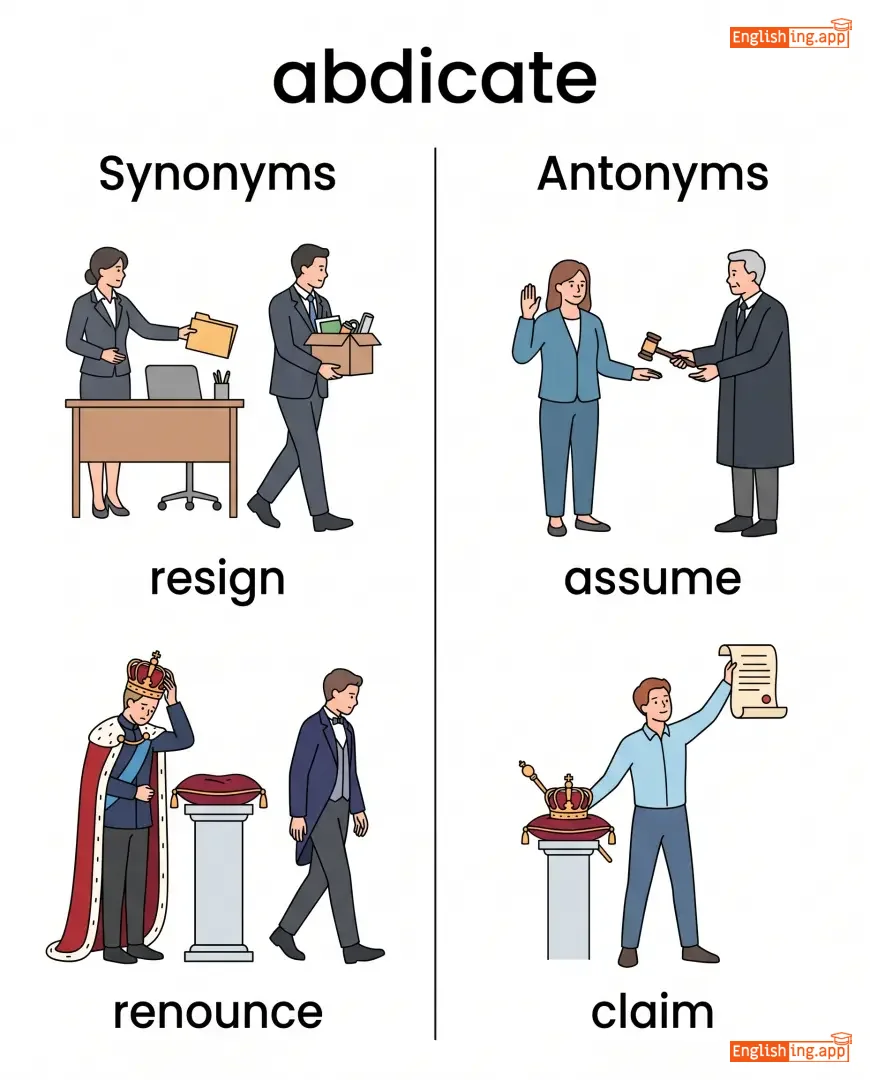
resign, renounce, relinquish, quit, surrender
••••••
|
assume, claim, retain
••••••
|
abdicate the throne, abdicate power, abdicate responsibility, forced to abdicate
••••••
|
Abdicate 意味着放弃王位 — 想象 '阿布' 离开王位。
••••••
|
|
⚠️
••••••
|
/ˈæb.ə.rənt/
adjective
(阿贝兰特)
••••••
|
|
异常
yichang
••••••
|
- •••••• | - •••••• | - •••••• | - •••••• |
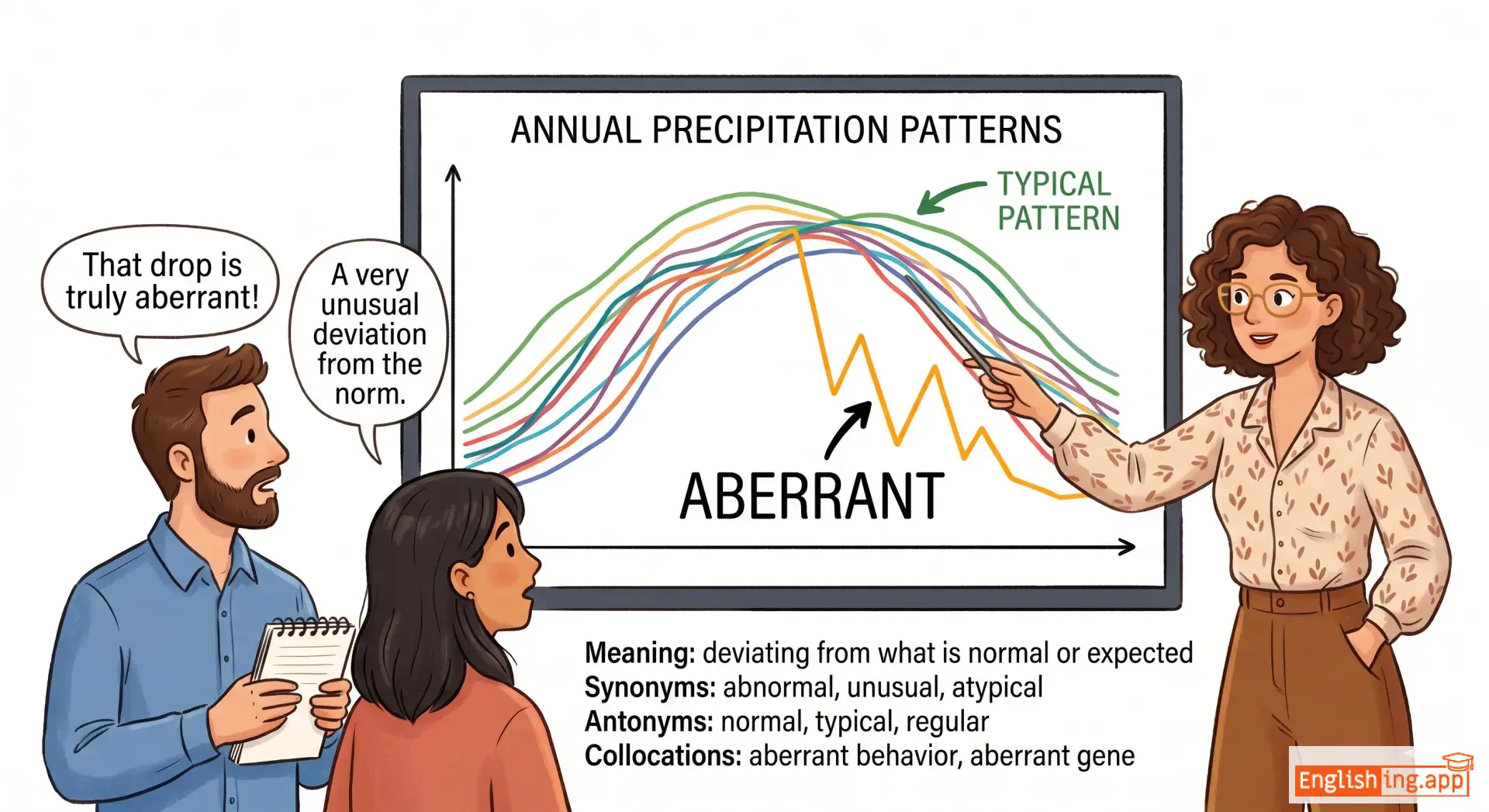
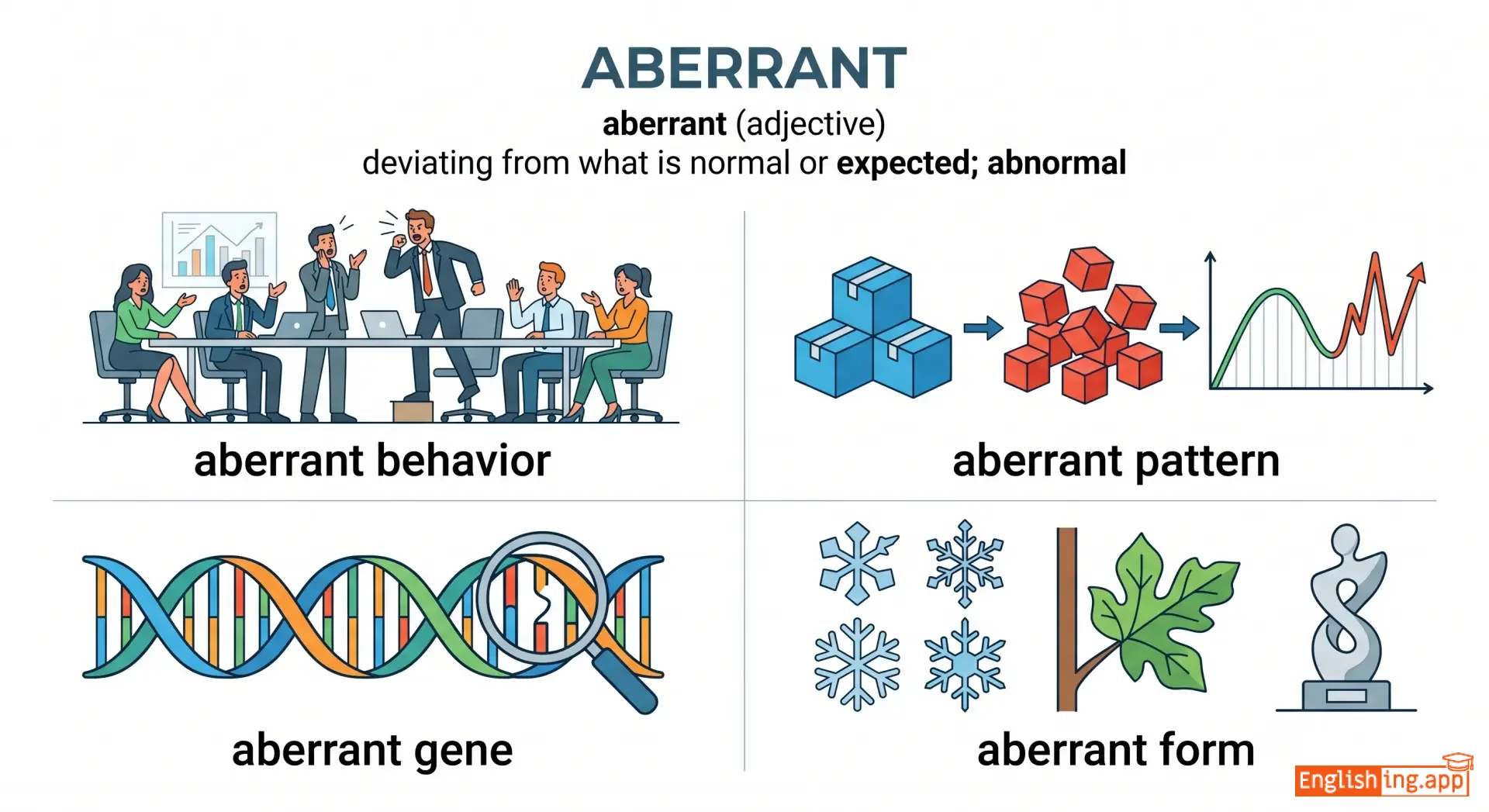
deviating from what is normal or expected; abnormal
••••••
|
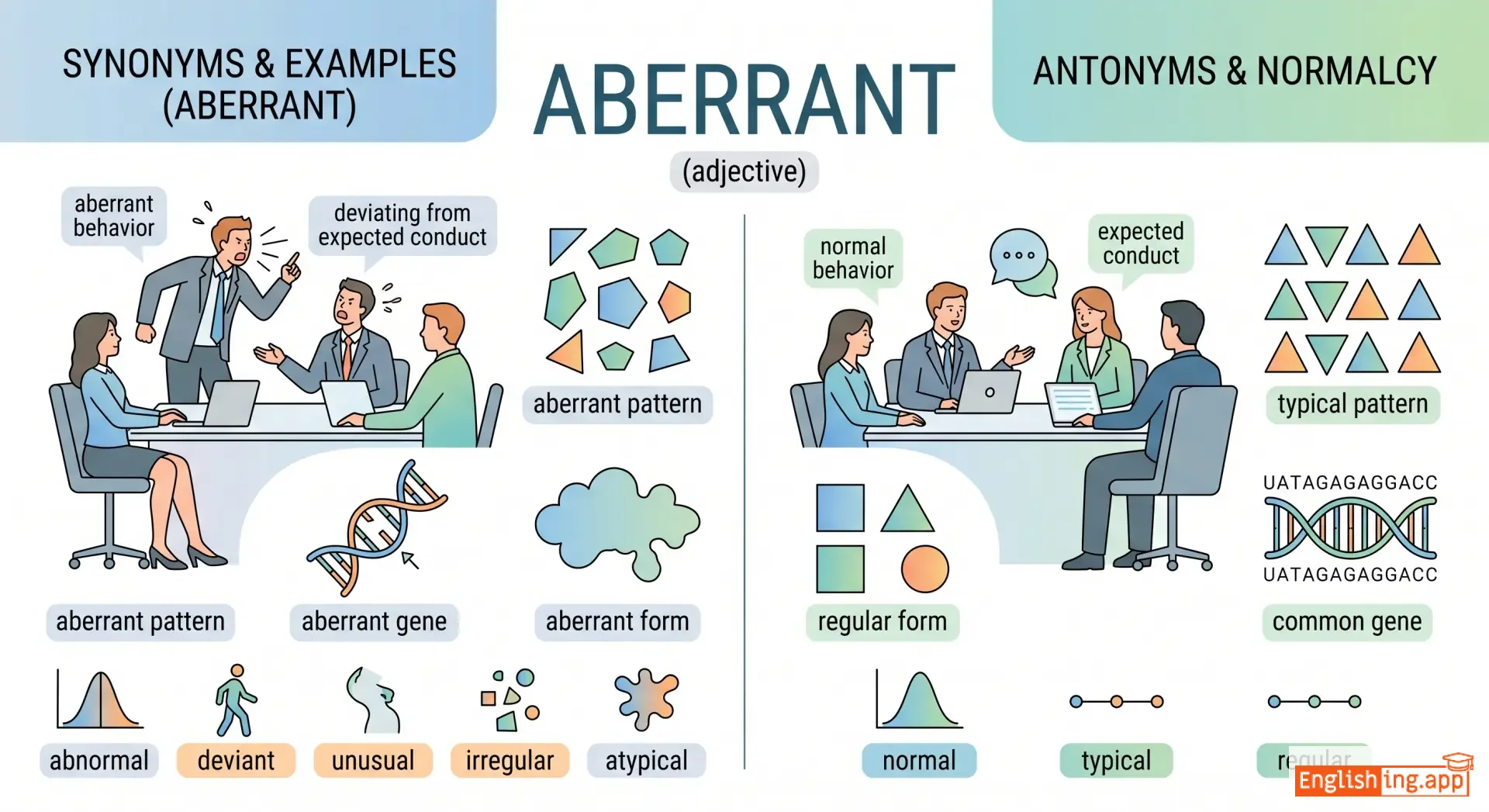
His aberrant behavior shocked everyone at the meeting.
他的偏离行为让会议上的每个人都感到震惊。
••••••
|
他的异常行为让会议上的每个人都感到震惊。
Tā de yìcháng xíngwéi ràng huìyì shàng de měi gèrén dōu gǎndào zhènjīng.
••••••
|
- •••••• | - •••••• | - •••••• |
abnormal, deviant, unusual, irregular, atypical
••••••
|
normal, typical, regular
••••••
|
aberrant behavior, aberrant pattern, aberrant gene, aberrant form
••••••
|
Aberrant 意味着异常,记住 - 异常 + 错误 = 不正常的道路
••••••
|
|
⏸️
••••••
|
/əˈbeɪəns/
noun
(abeians)
••••••
|
|
暂时中止
zan shi zhong zhi
••••••
|
- •••••• | - •••••• | - •••••• | - •••••• |
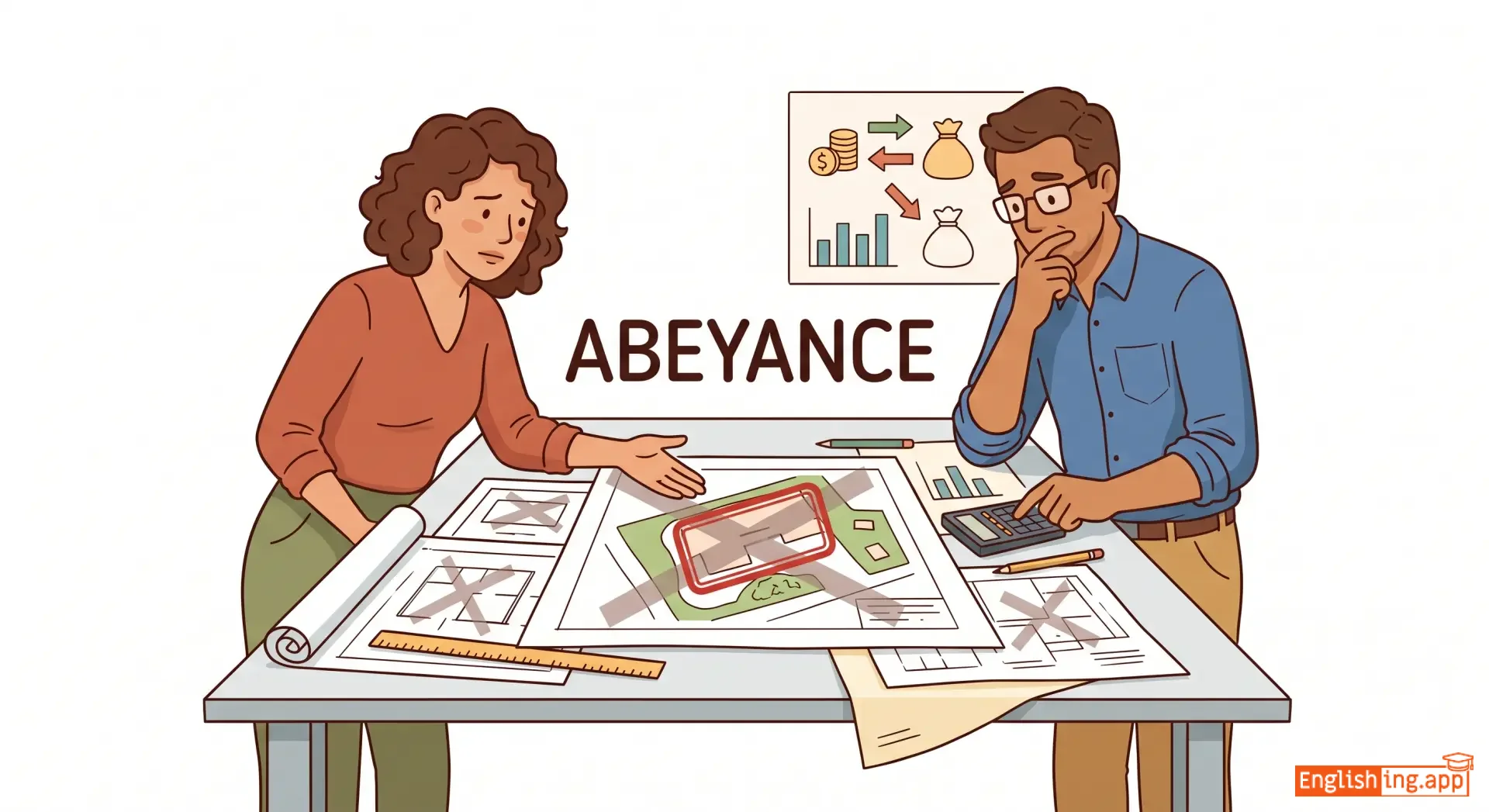
a state of temporary suspension or inactivity
••••••
|
The project was held in abeyance until funds became available.
该项目已暂停,直到资金可用。
••••••
|
该项目已暂停,直到资金可用。
Gai xiangmu yi zanting, zhidao zijin keyong.
••••••
|
- •••••• | - •••••• | - •••••• |
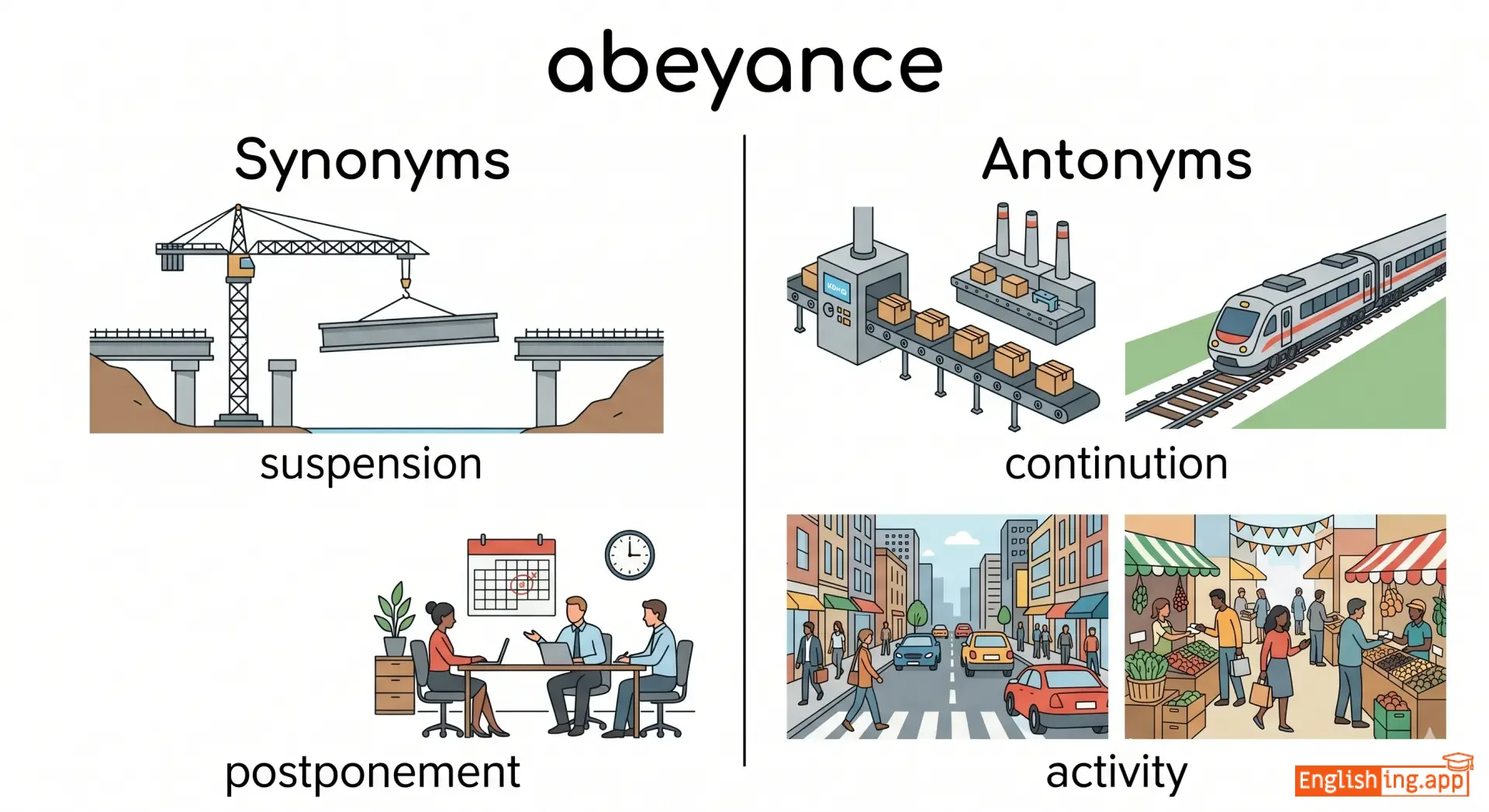
suspension, postponement, delay, dormancy
••••••
|
continuation, activity
••••••
|
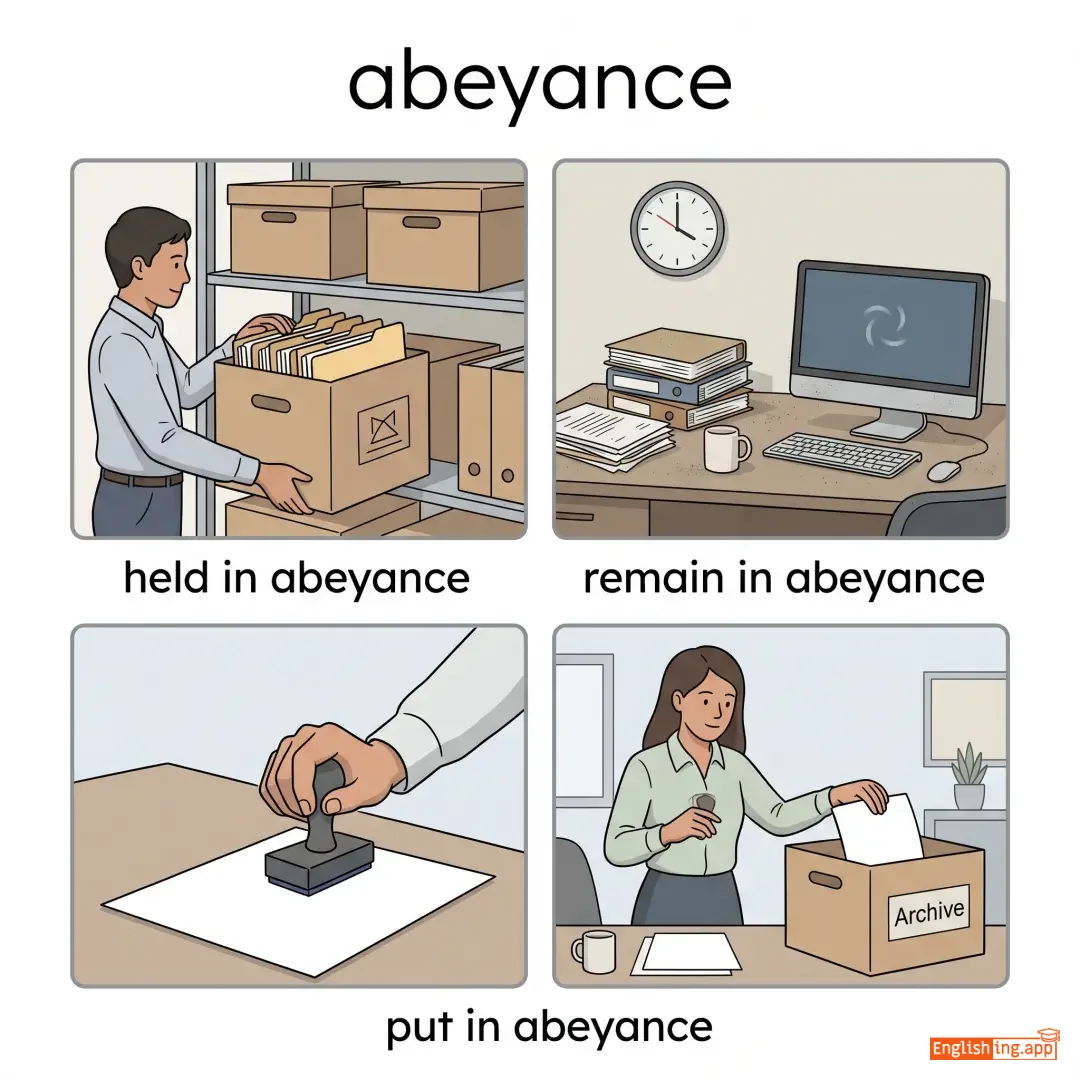
held in abeyance, remain in abeyance, put in abeyance
••••••
|
A BAY 暂停了 - abeyance 意味着中止
••••••
|
|
😞
••••••
|
/ˈæbdʒɛkt/
adjective
(æbdʒɛkt)
••••••
|
|
可鄙
kě bǐ
••••••
|
- •••••• | - •••••• | - •••••• | - •••••• |
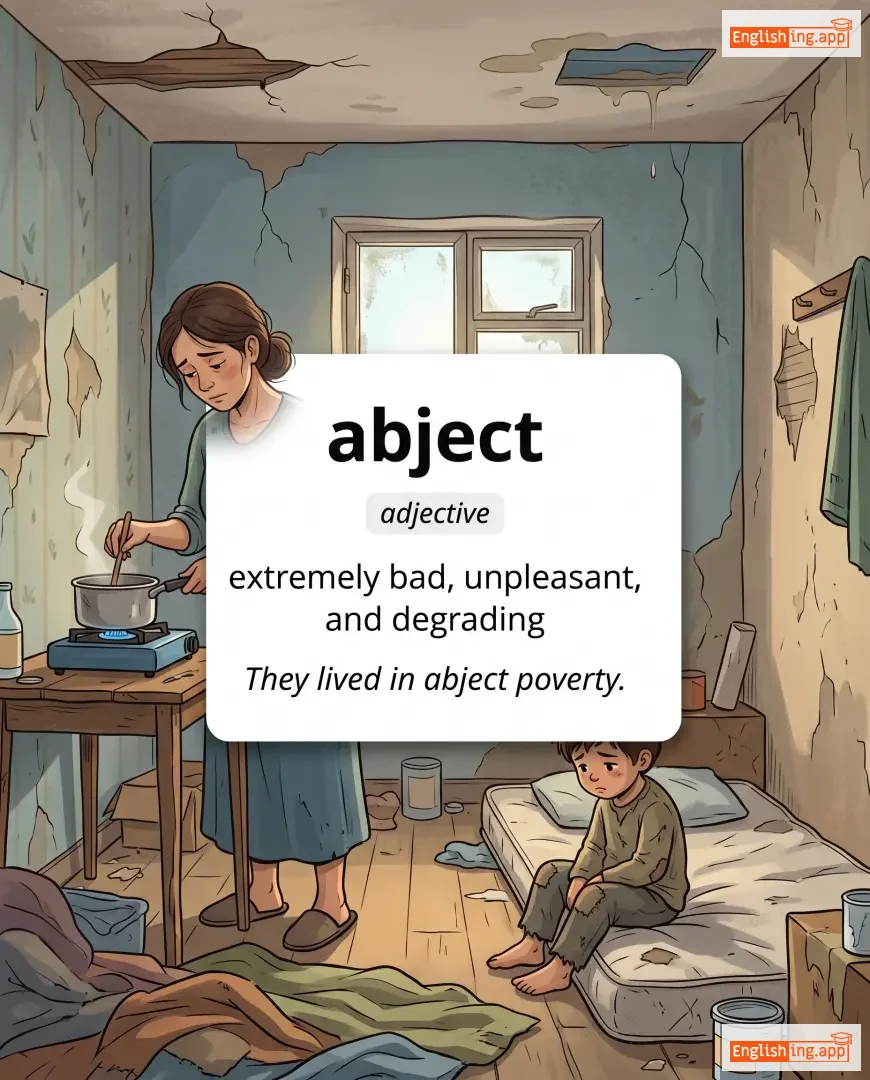
extremely bad, unpleasant, and degrading
••••••
|
They lived in abject poverty. |
他们生活在可鄙的贫困中。
tāmen shēnghuó zài kě bǐ de pínkùn zhōng.
••••••
|
abject poverty |
a condition of extreme poverty
••••••
|
可鄙的贫困
kě bǐ de pínkùn
••••••
|
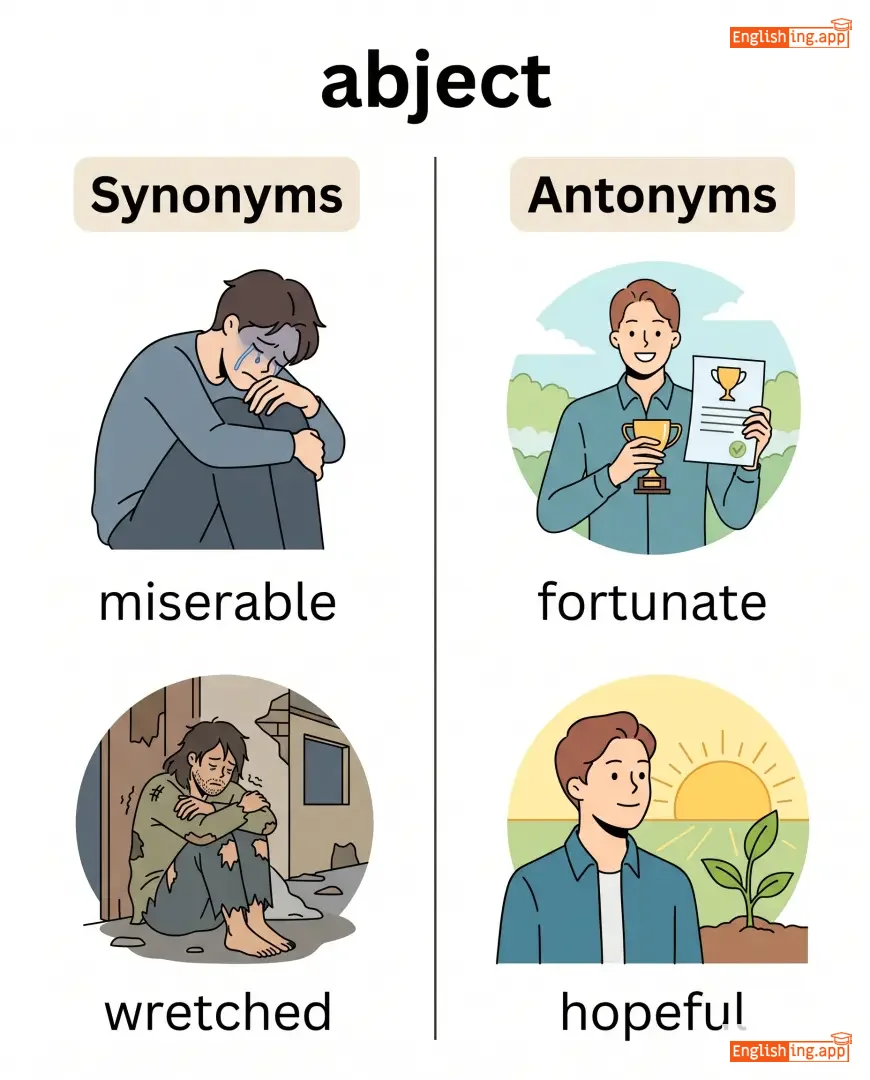
miserable, wretched, hopeless, pitiful
••••••
|
fortunate, hopeful
••••••
|
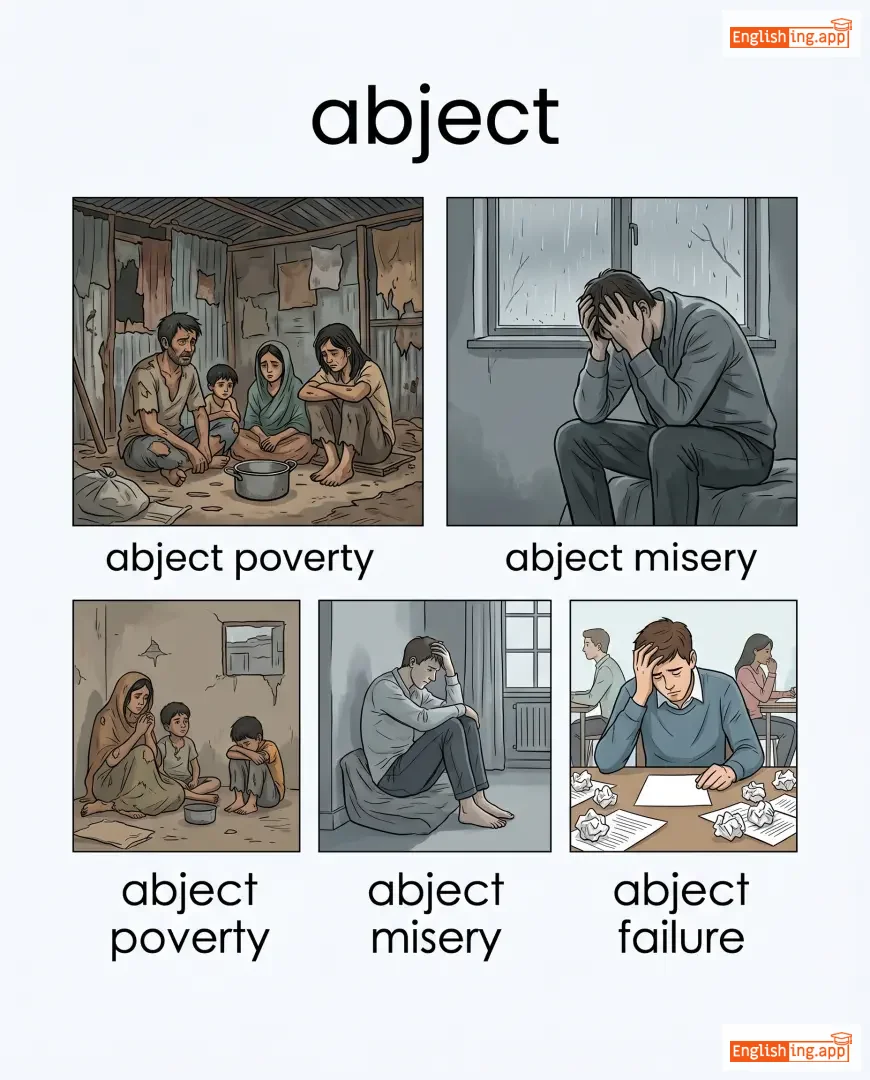
abject poverty, abject misery, abject failure
••••••
|
Abject = 可鄙, 极其糟糕的贫困。
••••••
|
|
🙅
••••••
|
/æbˈdʒʊər/
verb
(阿布久尔)
••••••
|

|
放弃
fàngqì
••••••
|
abjured
阿布久尔德
••••••
|
abjured
阿布久尔德
••••••
|
abjures
阿布久尔斯
••••••
|
abjuring
阿布久林
••••••
|
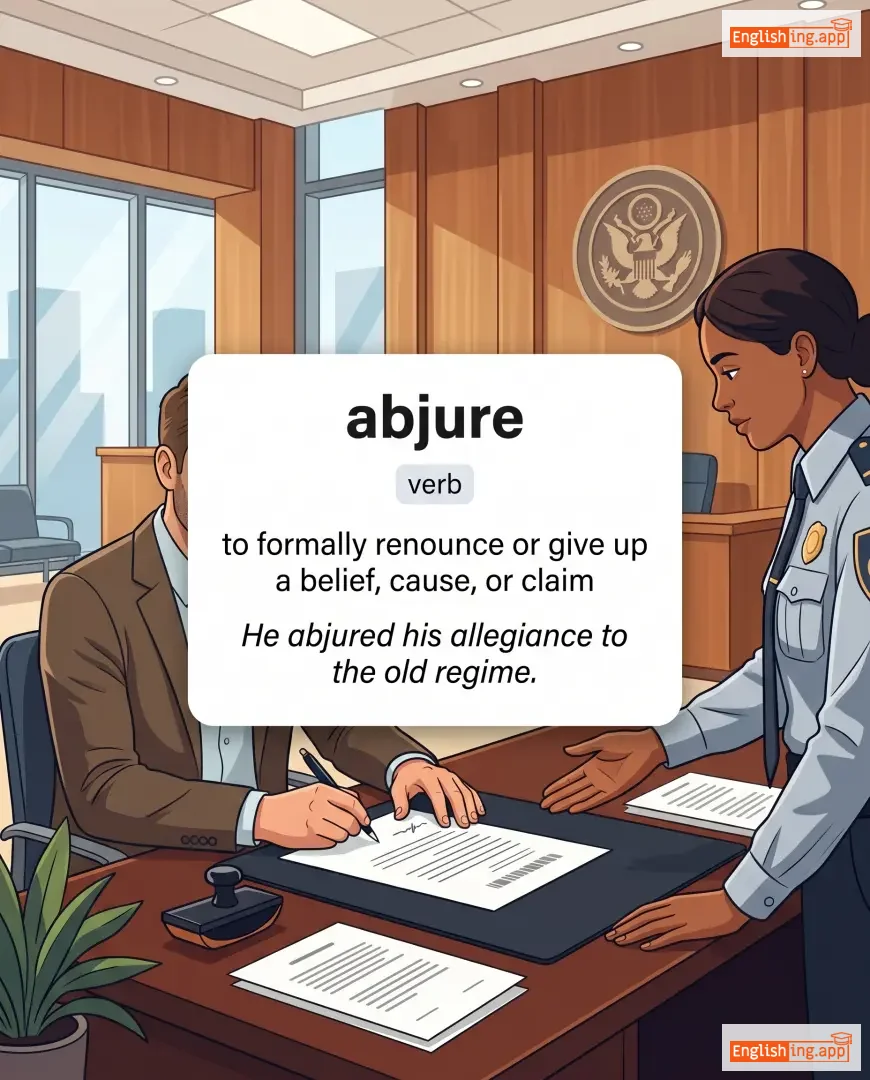
to formally renounce or give up a belief, cause, or claim
••••••
|
He abjured his allegiance to the old regime.
他放弃了对旧政权的忠诚。
••••••
|
他放弃了对旧政权的忠诚。
Tā fàngqì le duì jiù zhèngquán de zhōngchéng.
••••••
|
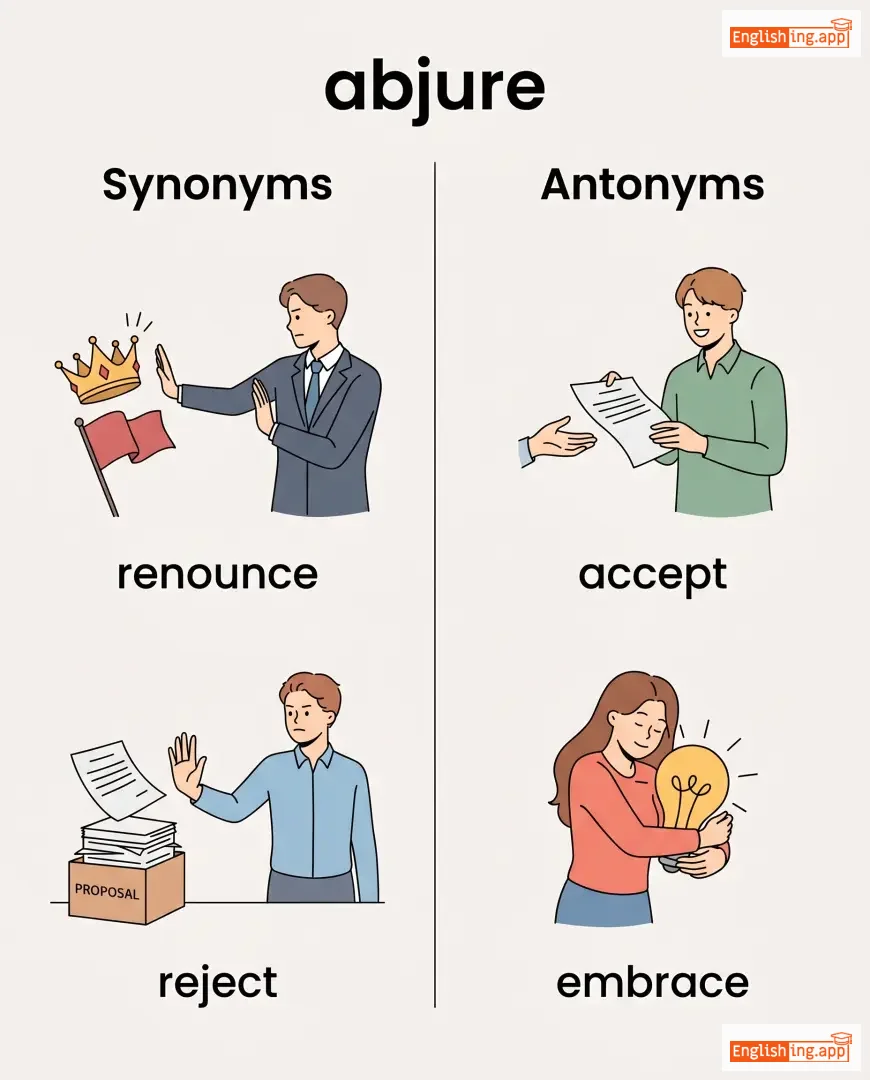
- •••••• | - •••••• | - •••••• |
renounce, reject, repudiate, forswear
••••••
|
accept, embrace
••••••
|
abjure violence, abjure faith, abjure allegiance
••••••
|
Abjure意味着ABandon + JURy = 放弃某事或某个信念。
••••••
|
|
🍂
••••••
|
/æbˈsɪʒən/
noun
(ab-si-xion)
••••••
|
|
叶片脱落
ye pian tuo luo
••••••
|
- •••••• | - •••••• | - •••••• | - •••••• |
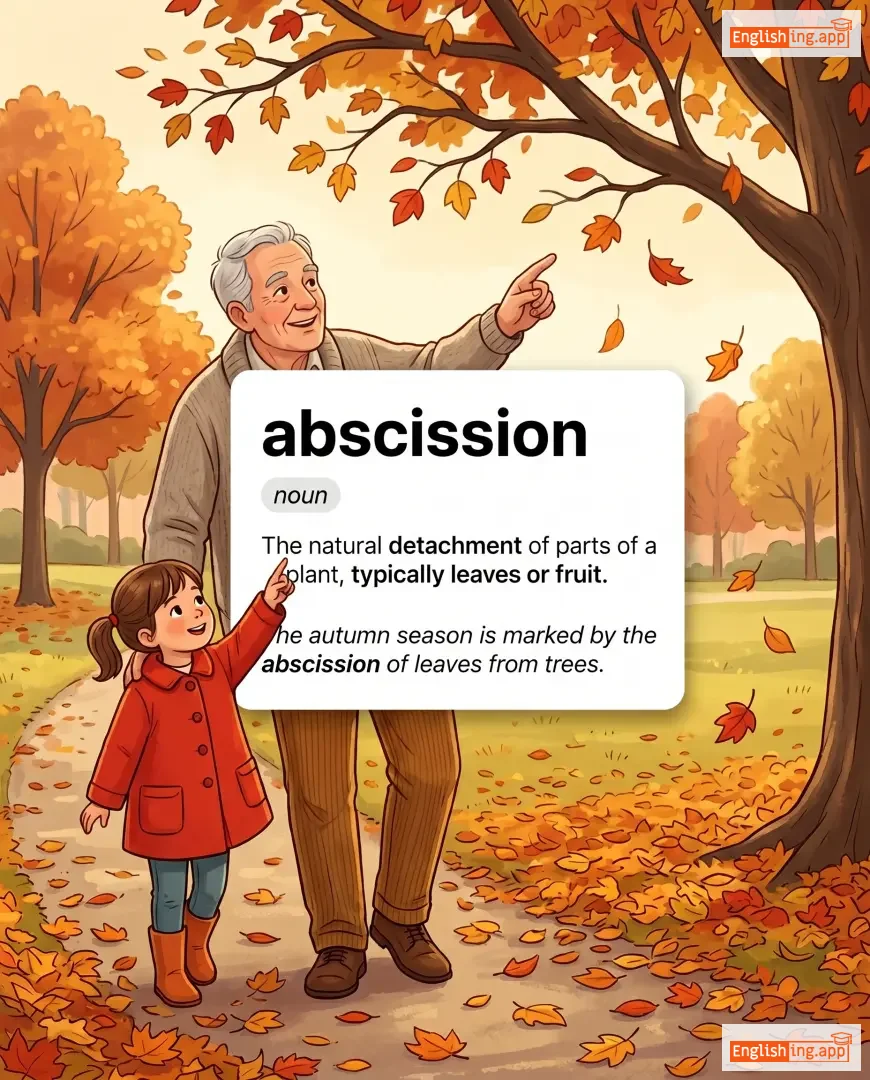
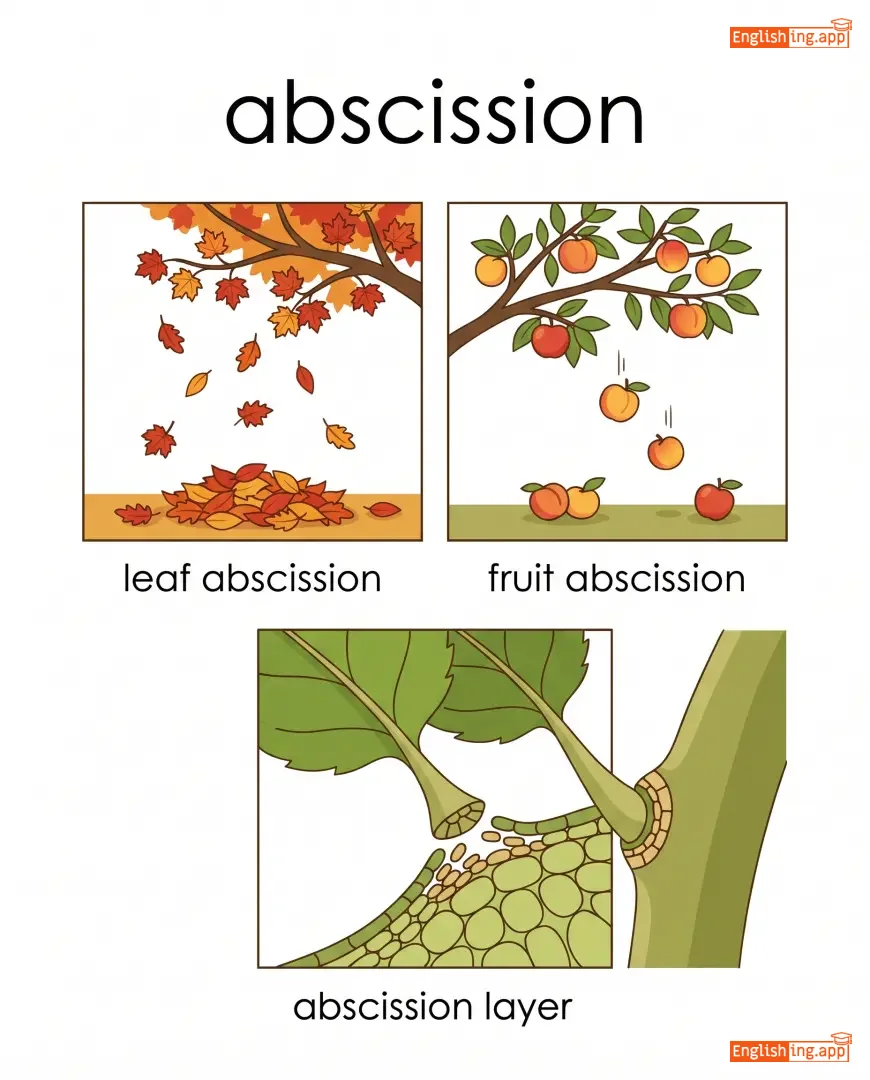
The natural detachment of parts of a plant, typically leaves or fruit.
••••••
|
The autumn season is marked by the abscission of leaves from trees. |
秋季的标志是树叶从树木上脱落。
Qiuji de biaozhi shi shuye cong shumu shang tuoluo.
••••••
|
- •••••• | - •••••• | - •••••• |
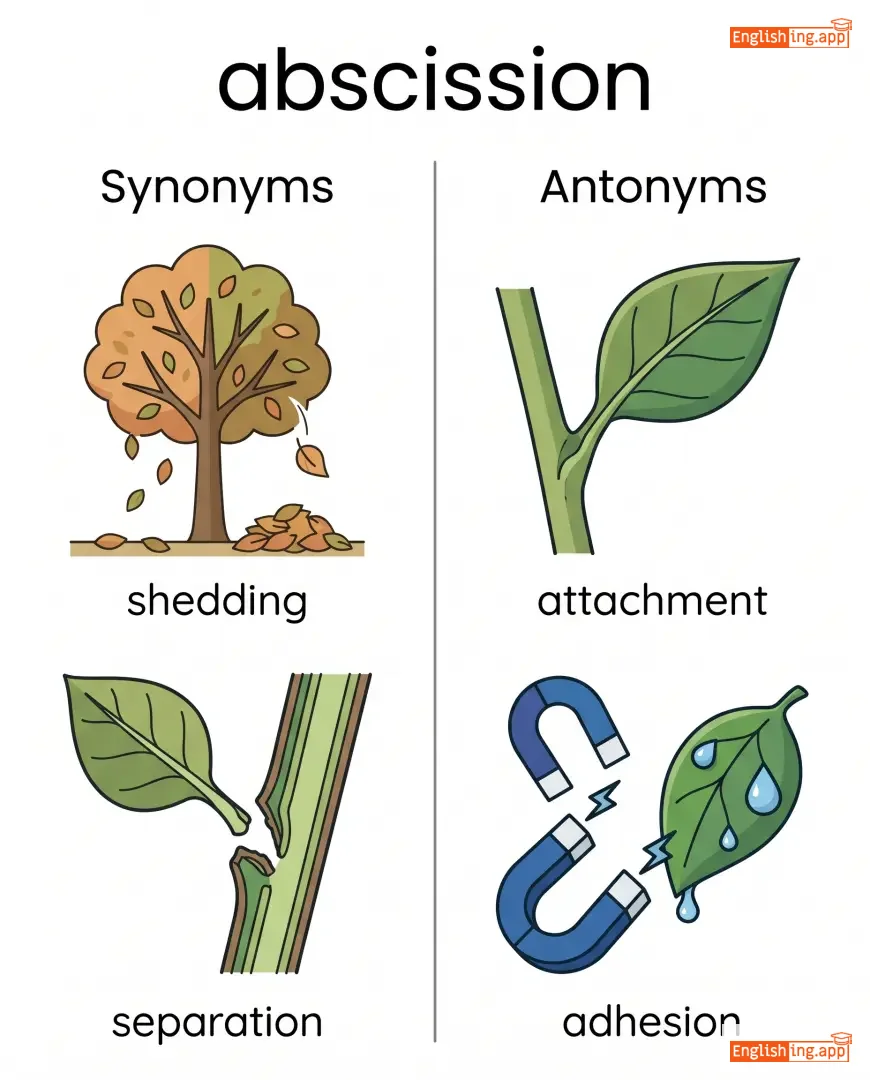
shedding, separation, detachment, removal, dropping
••••••
|
attachment, adhesion, union
••••••
|
leaf abscission, fruit abscission, abscission layer
••••••
|
Abscission 就是 ‘叶子掉落’,就像秋天叶子落下。
••••••
|
|
🏃♂️
••••••
|
/əbˈskɒnd/
verb
(阿布斯康德)
••••••
|
|
逃跑
tao pao
••••••
|
absconded
阿布斯康德德
••••••
|
absconded
阿布斯康德德
••••••
|
absconds
阿布斯康德斯
••••••
|
absconding
阿布斯康丁
••••••
|
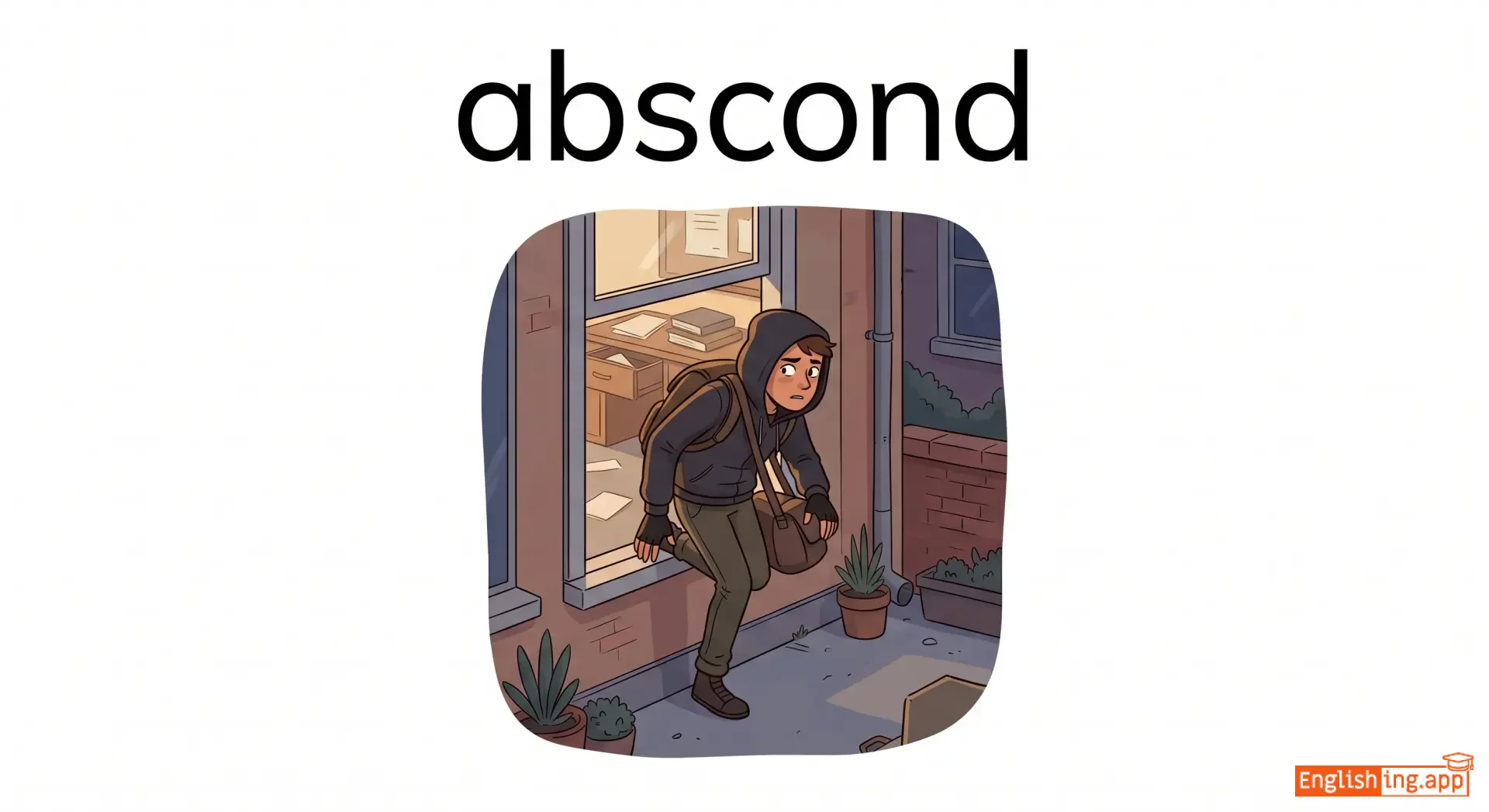
to leave secretly and quickly, often to avoid arrest or punishment
••••••
|
The thief tried to abscond with the stolen jewelry.
小偷试图带着被盗的珠宝逃跑。
••••••
|
小偷试图带着被盗的珠宝逃跑。
Xiao tou shi tu dai zhe bei dao de zhu bao tao pao.
••••••
|
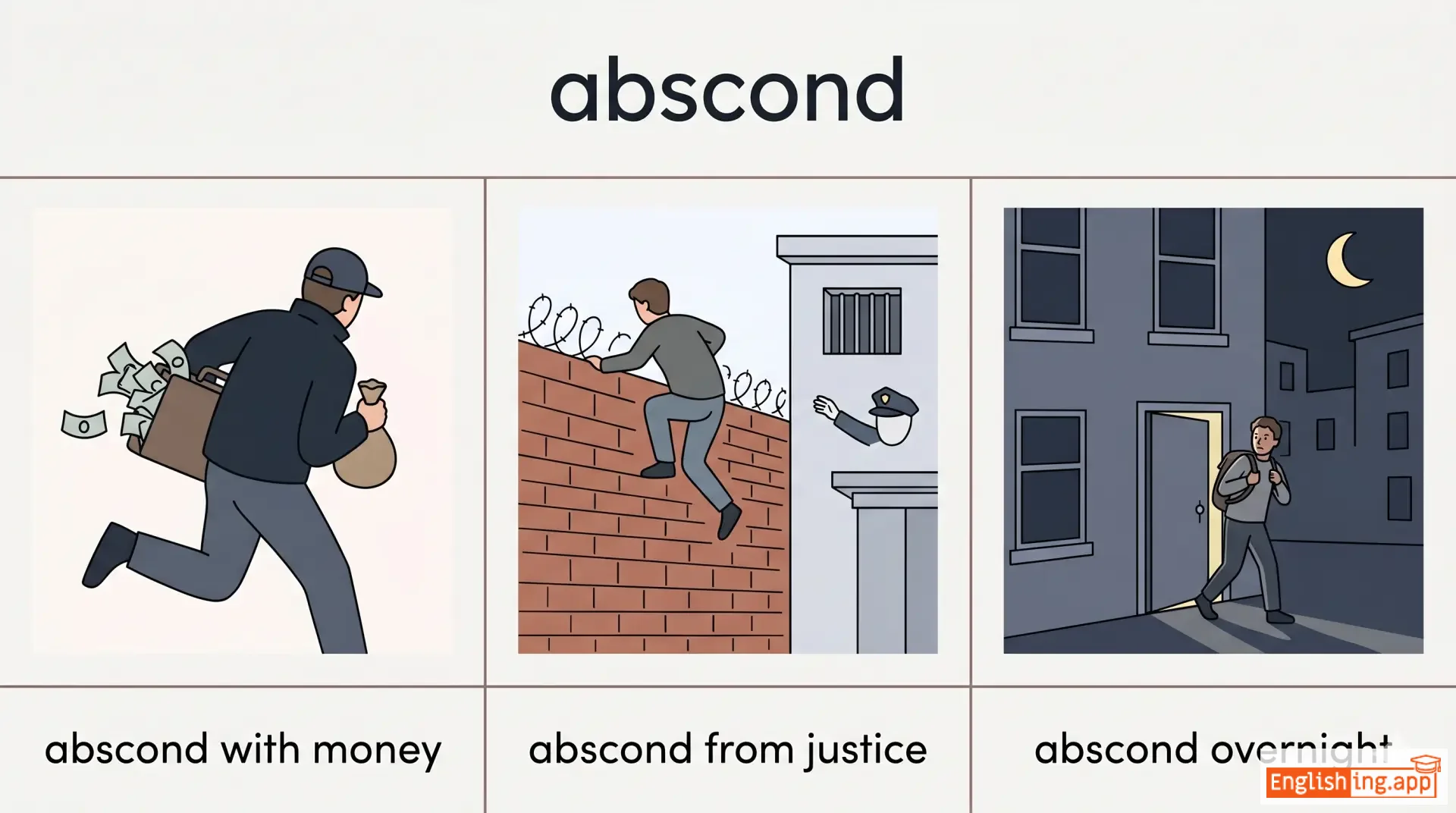
abscond with
阿布斯康德与
••••••
|
to take something secretly and escape
••••••
|
带着偷来的东西逃跑
dai zhe tou lai de dong xi tao pao
••••••
|
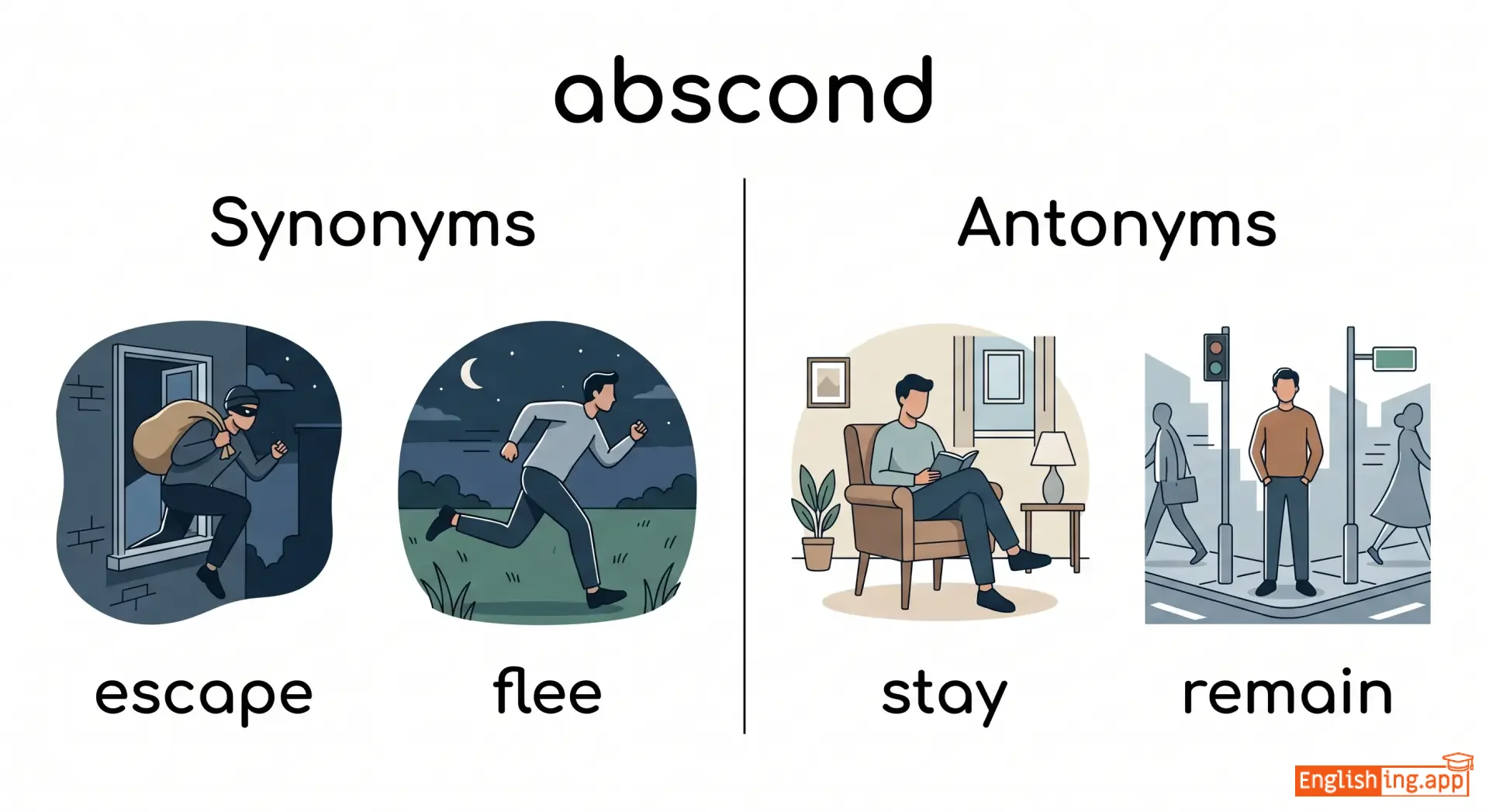
escape, flee, run away, vanish, bolt
••••••
|
stay, remain, appear
••••••
|
abscond with money, abscond from justice, abscond overnight
••••••
|
Abscond = ABsent + sCOND = 迅速逃离
••••••
|
|
🍵
••••••
|
/æbˈstiːmiəs/
adjective
••••••
|
|
- •••••• | - •••••• | - •••••• | - •••••• | - •••••• |
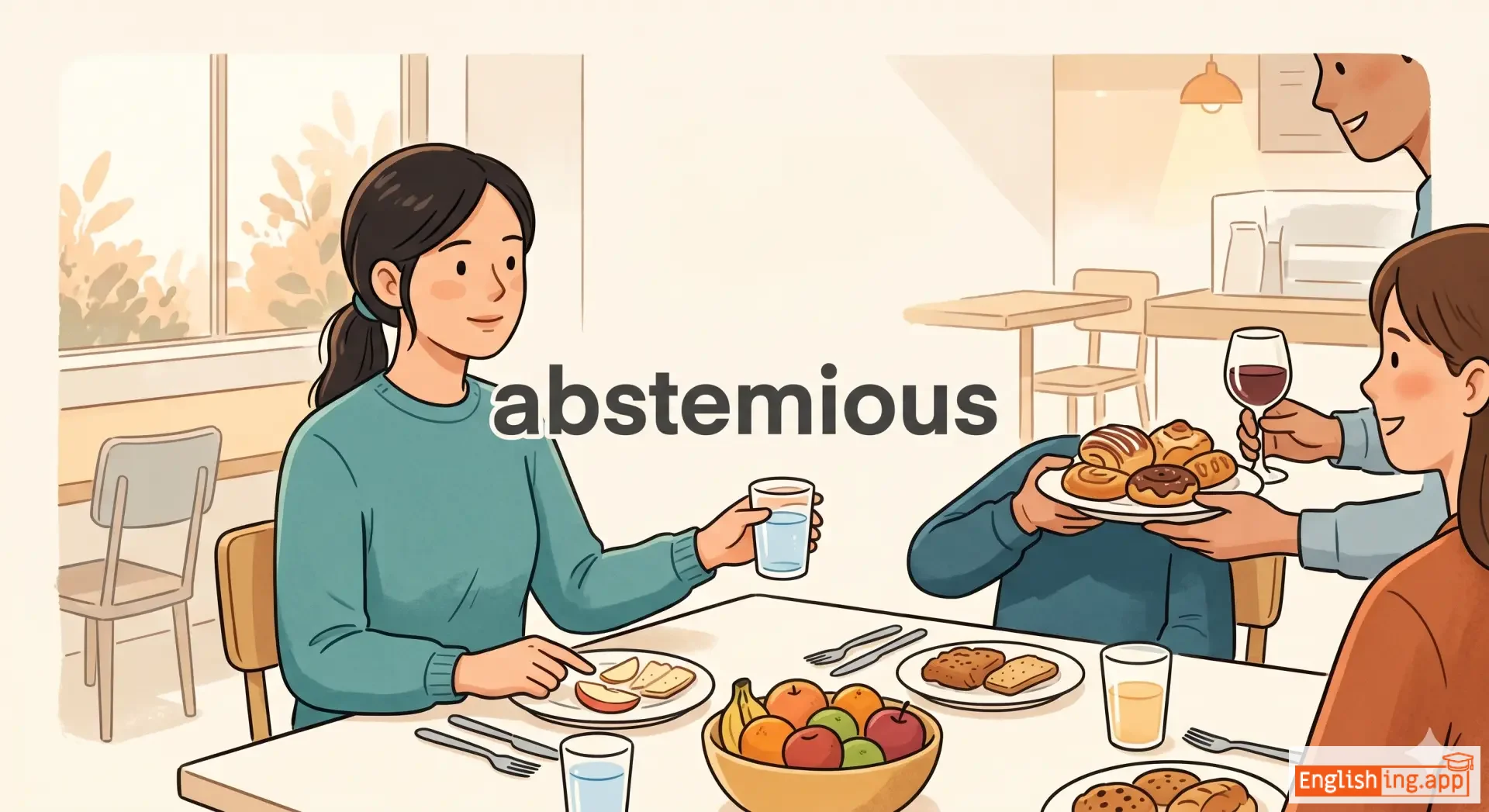
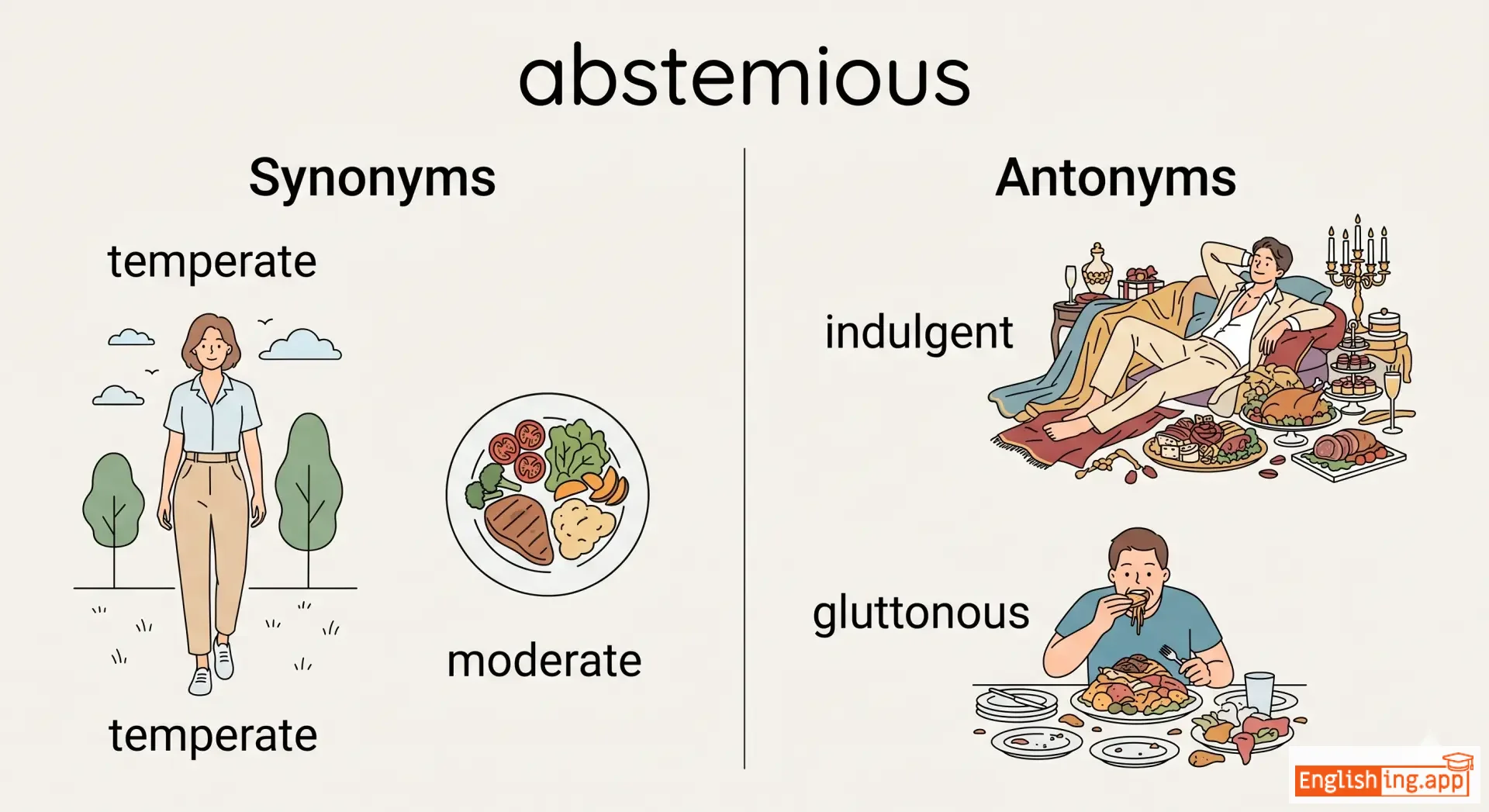
not self-indulgent, especially when eating and drinking; moderate or sparing in consumption
••••••
|
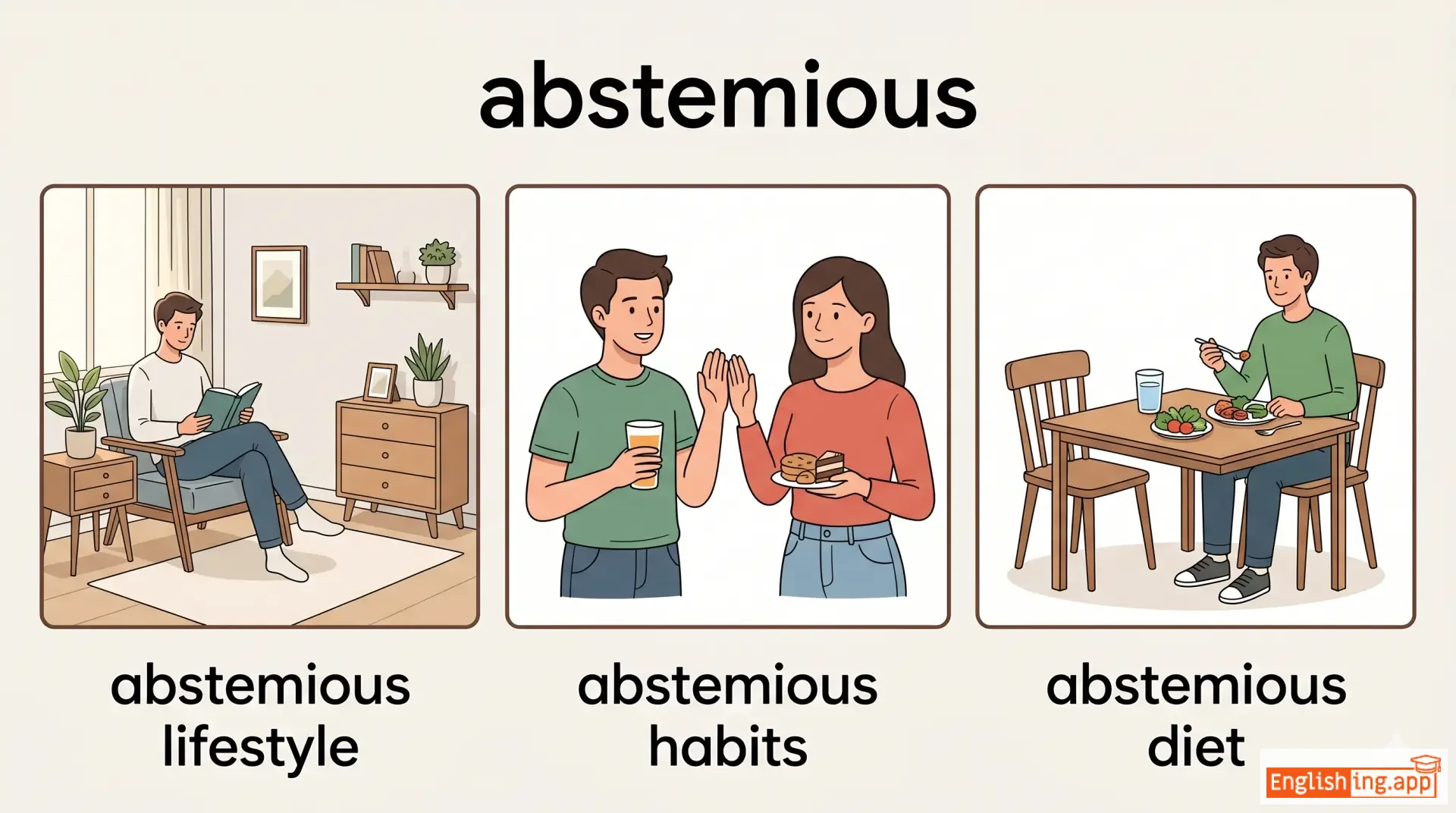
She lived an abstemious lifestyle, avoiding excesses of all kinds. |
- •••••• |
abstemious habits |
the practice of moderate and restrained consumption
••••••
|
- •••••• |
temperate, moderate, restrained, austere, ascetic
••••••
|
indulgent, gluttonous, excessive
••••••
|
abstemious lifestyle, abstemious habits, abstemious diet, abstemious person
••••••
|
No •••••• |
|
🚫
••••••
|
/ˈæb.stɪ.nəns/
noun
(阿布斯提嫩斯)
••••••
|
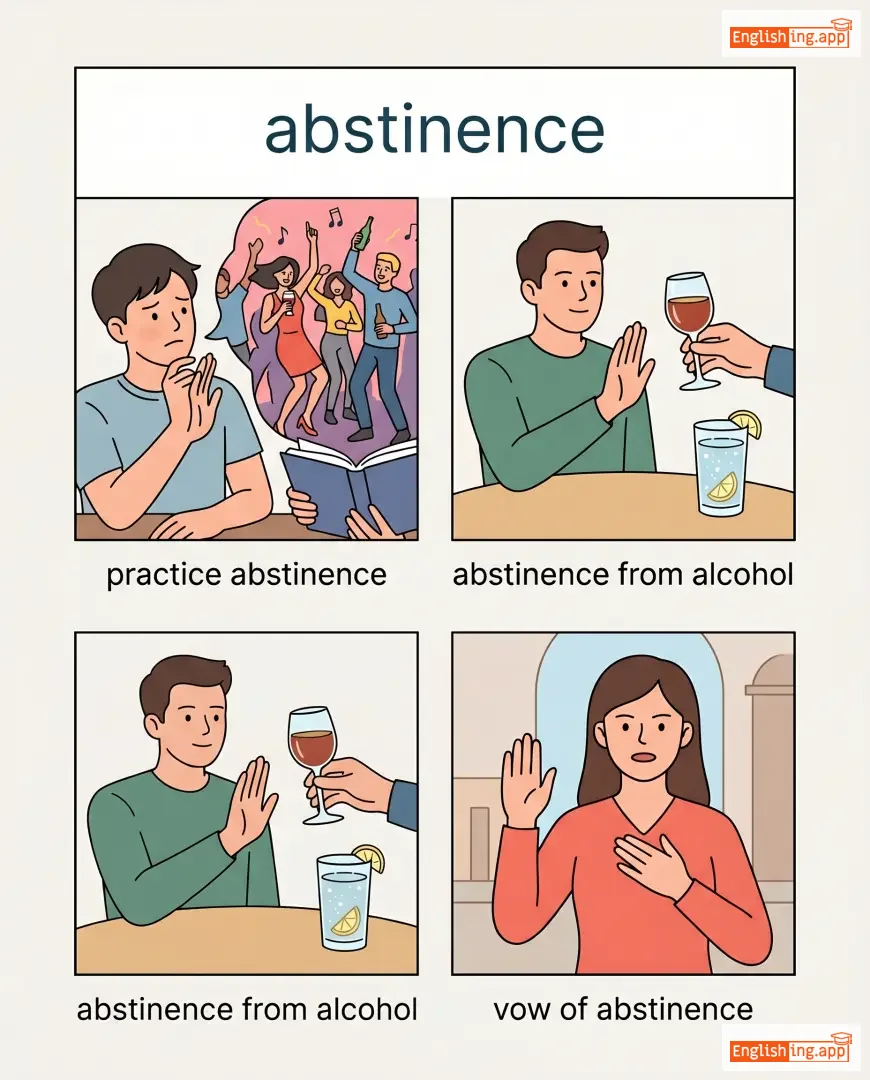
|
禁欲,节制
jìnyù, jiézhì
••••••
|
- •••••• | - •••••• | - •••••• | - •••••• |
the practice of restraining oneself from indulging in something, typically alcohol or sex
••••••
|
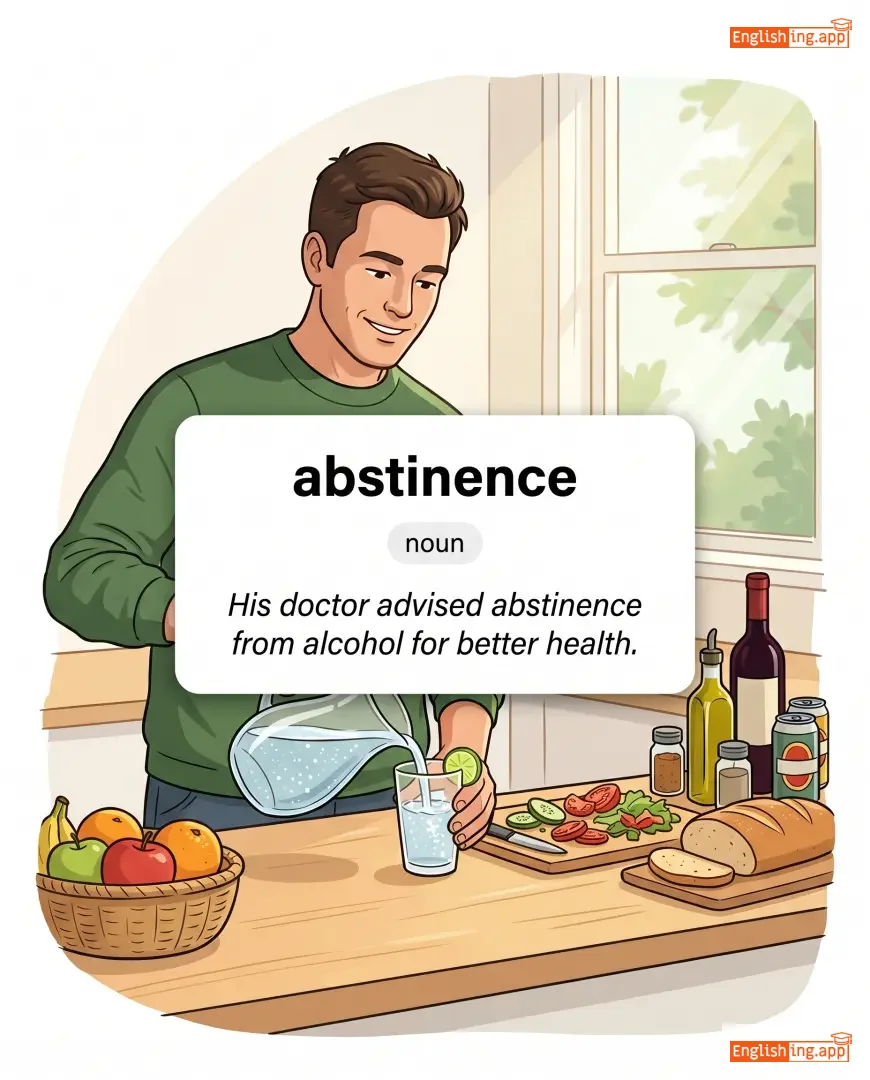
His doctor advised abstinence from alcohol for better health. |
他的医生建议他戒酒以改善健康。
Tā de yīshēng jiànyì tā jiè jiǔ yǐ gǎishàn jiànkāng.
••••••
|
- •••••• | - •••••• | - •••••• |
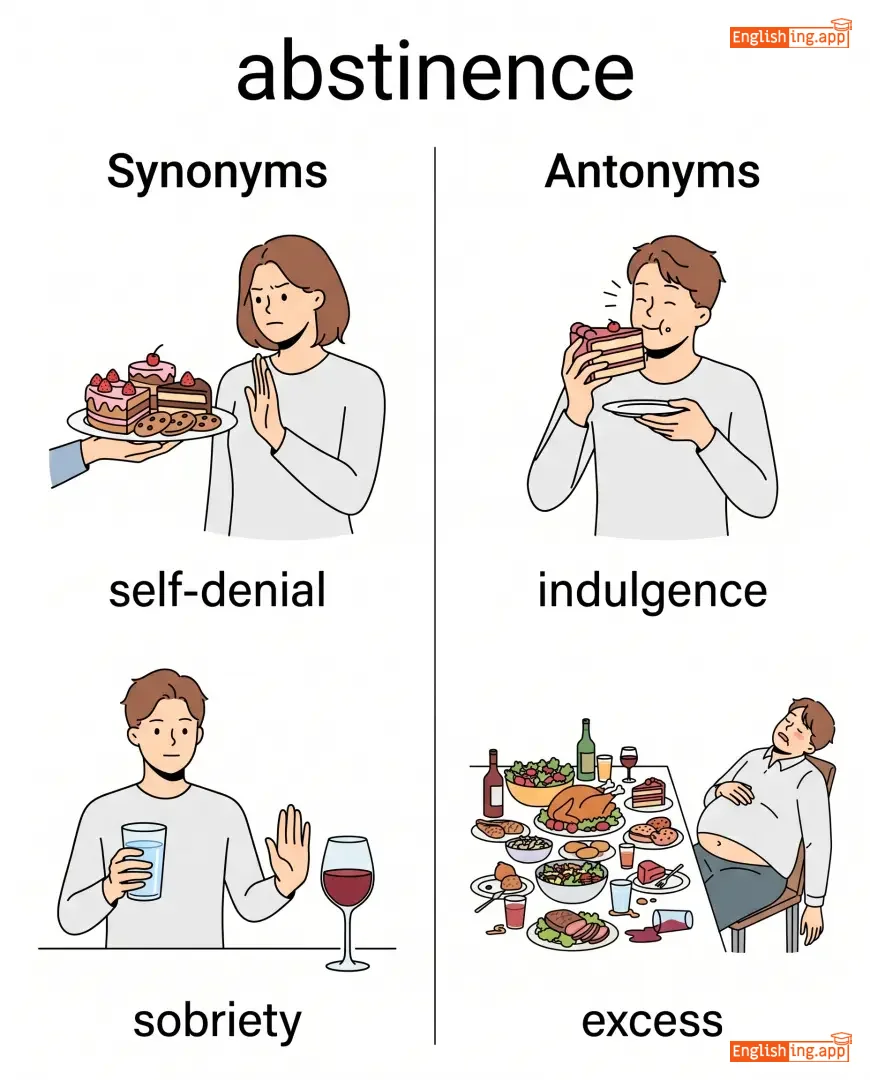
self-denial, sobriety, temperance, restraint
••••••
|
indulgence, excess, intemperance
••••••
|
practice abstinence, abstinence from alcohol, vow of abstinence
••••••
|
Abs (腹肌) 强大需要禁欲。
••••••
|
|
💔
••••••
|
/əˈbɪzməl/
adjective
(阿比斯马尔)
••••••
|
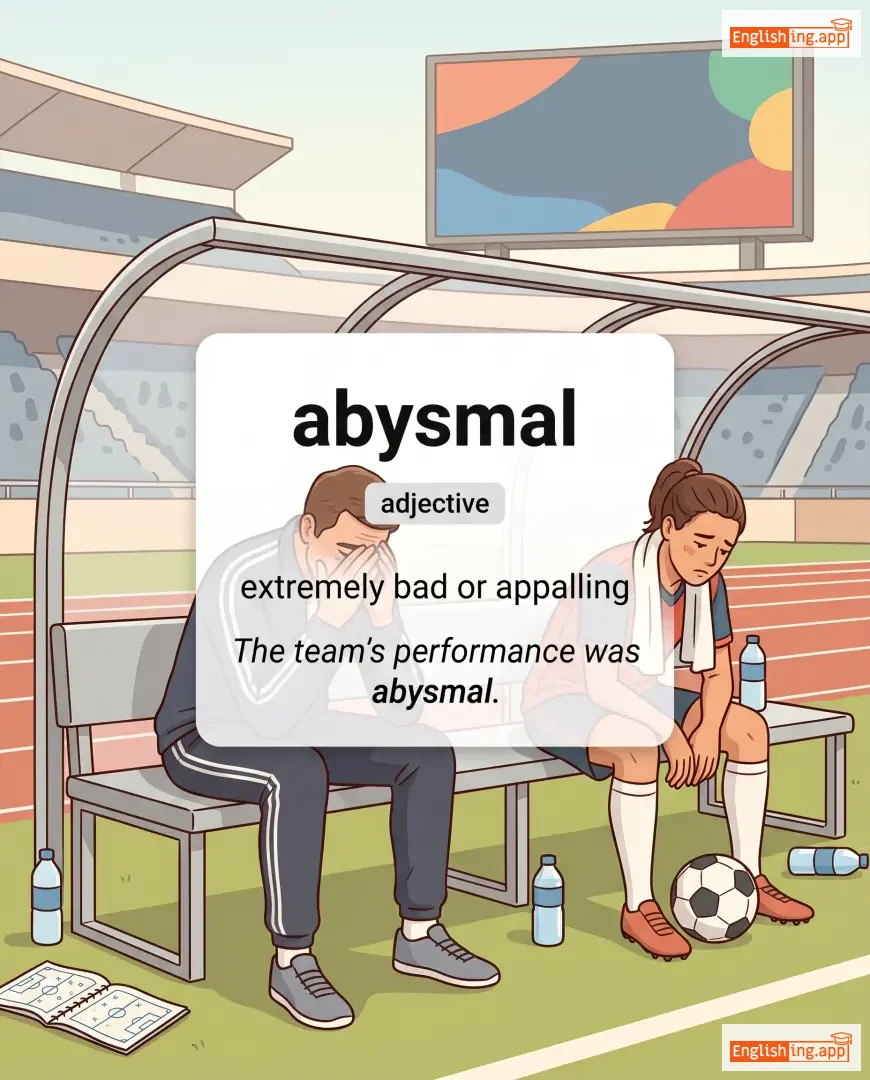
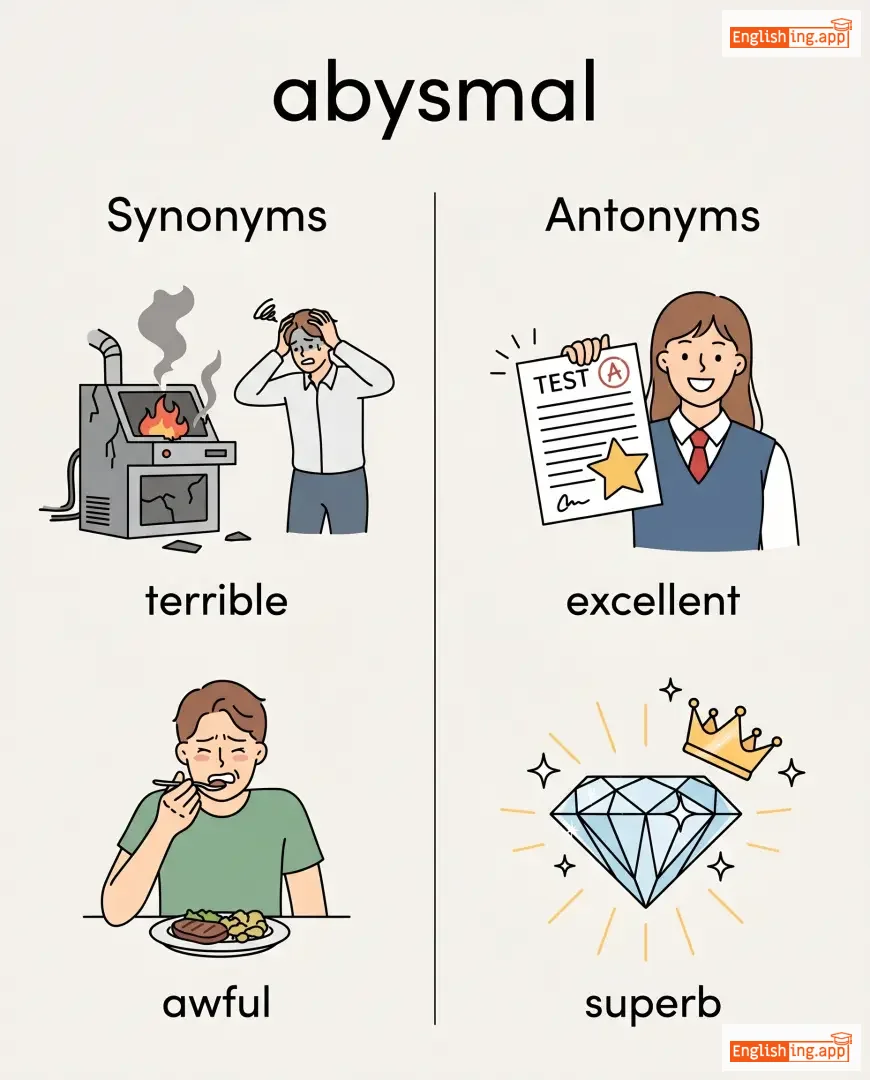
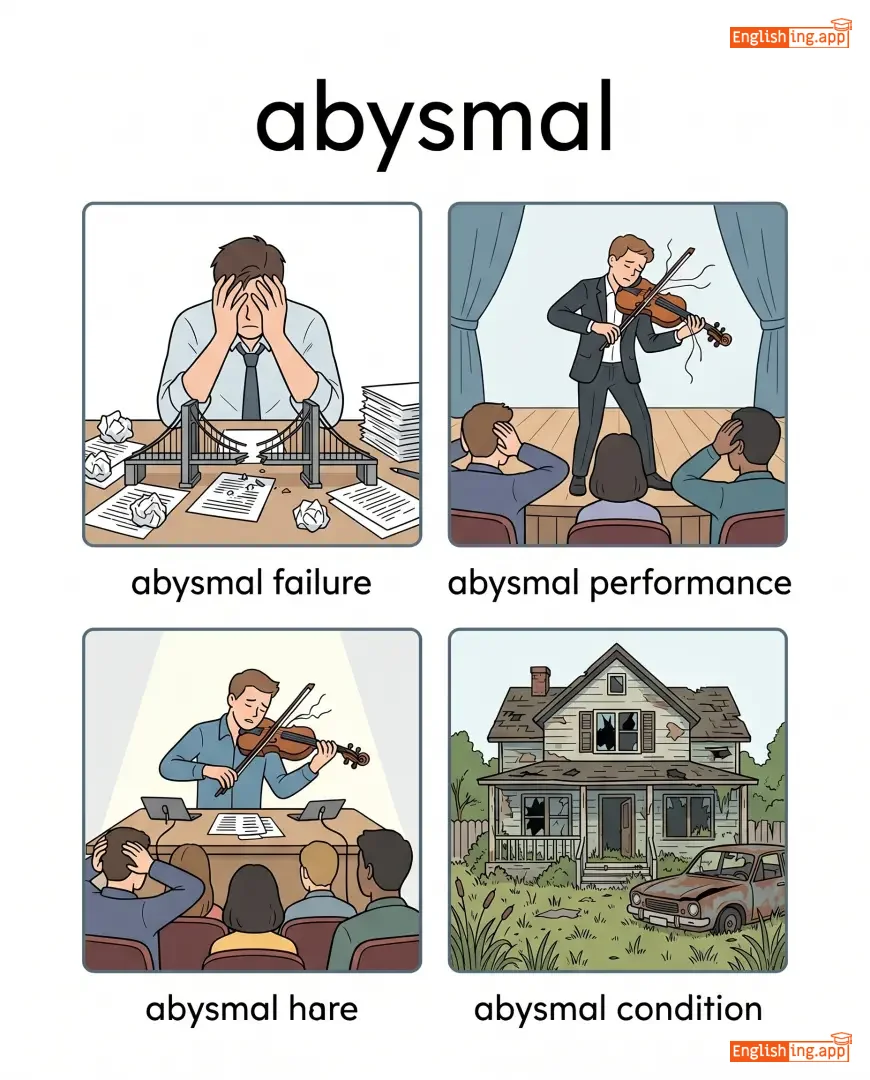
|
极其糟糕 / 可怕
jíqí zāogāo / kěpà
••••••
|
- •••••• | - •••••• | - •••••• | - •••••• |
extremely bad or appalling
••••••
|
The team's performance was abysmal. |
团队的表现非常糟糕。
Tuánduì de biǎoxiàn fēicháng zāogāo.
••••••
|
- •••••• | - •••••• | - •••••• |
terrible, awful, dreadful, appalling, horrible
••••••
|
excellent, superb, outstanding
••••••
|
abysmal failure, abysmal performance, abysmal condition, abysmal ignorance
••••••
|
Abysmal意味着糟糕 — 想象掉进一个黑暗的深渊 💔
••••••
|
|
📈
••••••
|
/əˈkriːʃən/
noun
(积累)
••••••
|
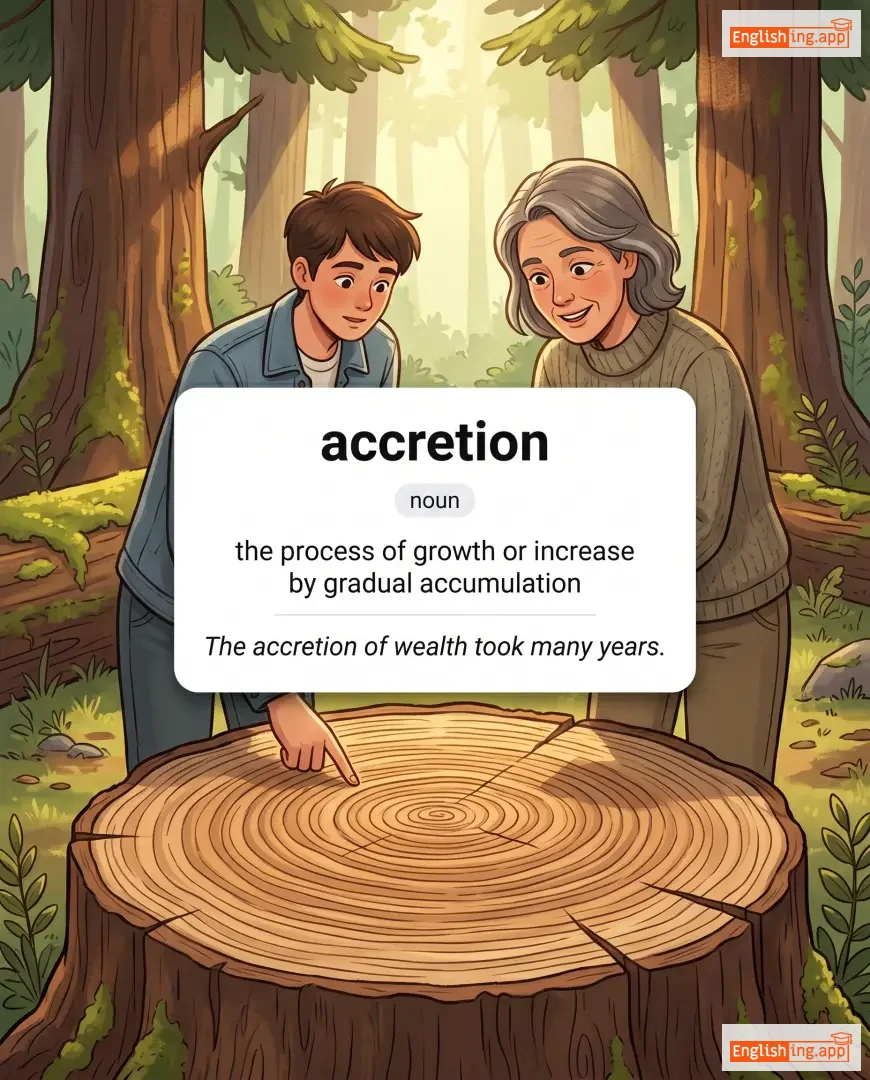
|
逐步积累
zhubo jilei
••••••
|
- •••••• | - •••••• | - •••••• | - •••••• |
the process of growth or increase by gradual accumulation
••••••
|
The accretion of wealth took many years.
财富的积累需要很多年。
••••••
|
财富的积累需要很多年。
Cai fu de ji lei xu yao hen duo nian.
••••••
|
- •••••• | - •••••• | - •••••• |
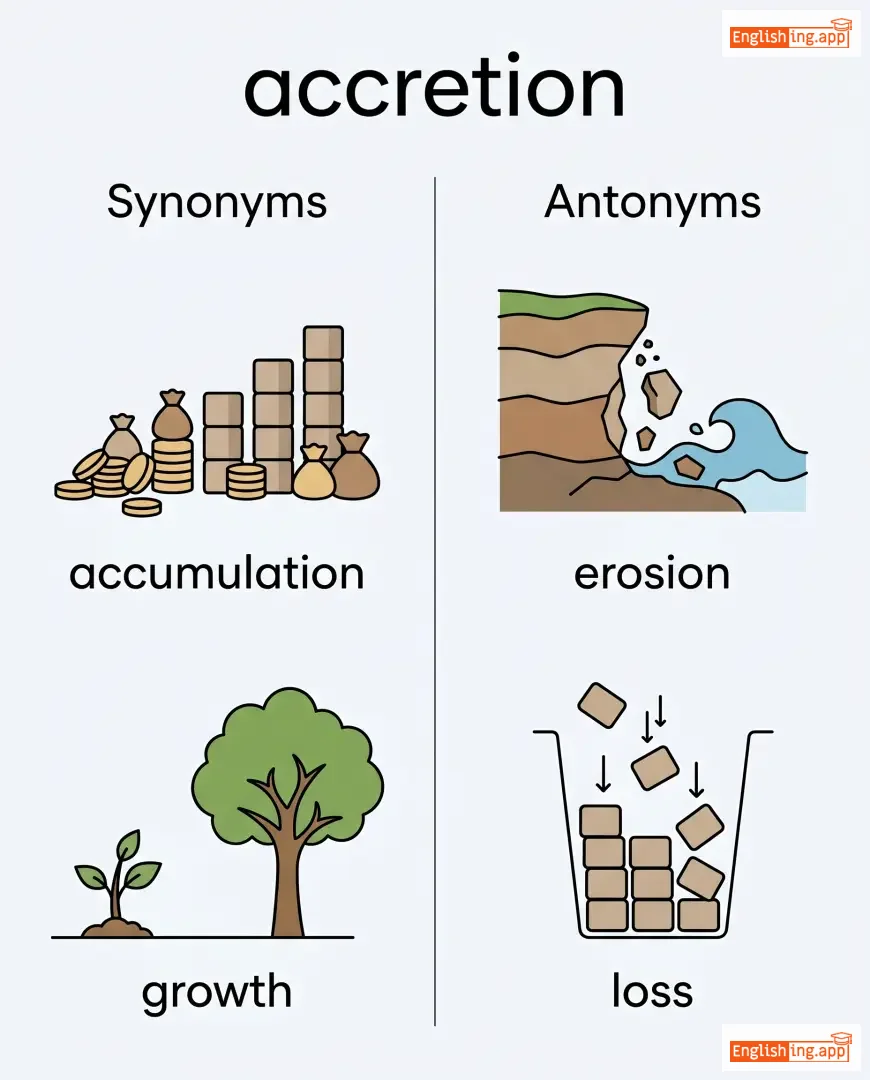
accumulation, growth, buildup, addition, amassing
••••••
|
erosion, loss, decrease
••••••
|
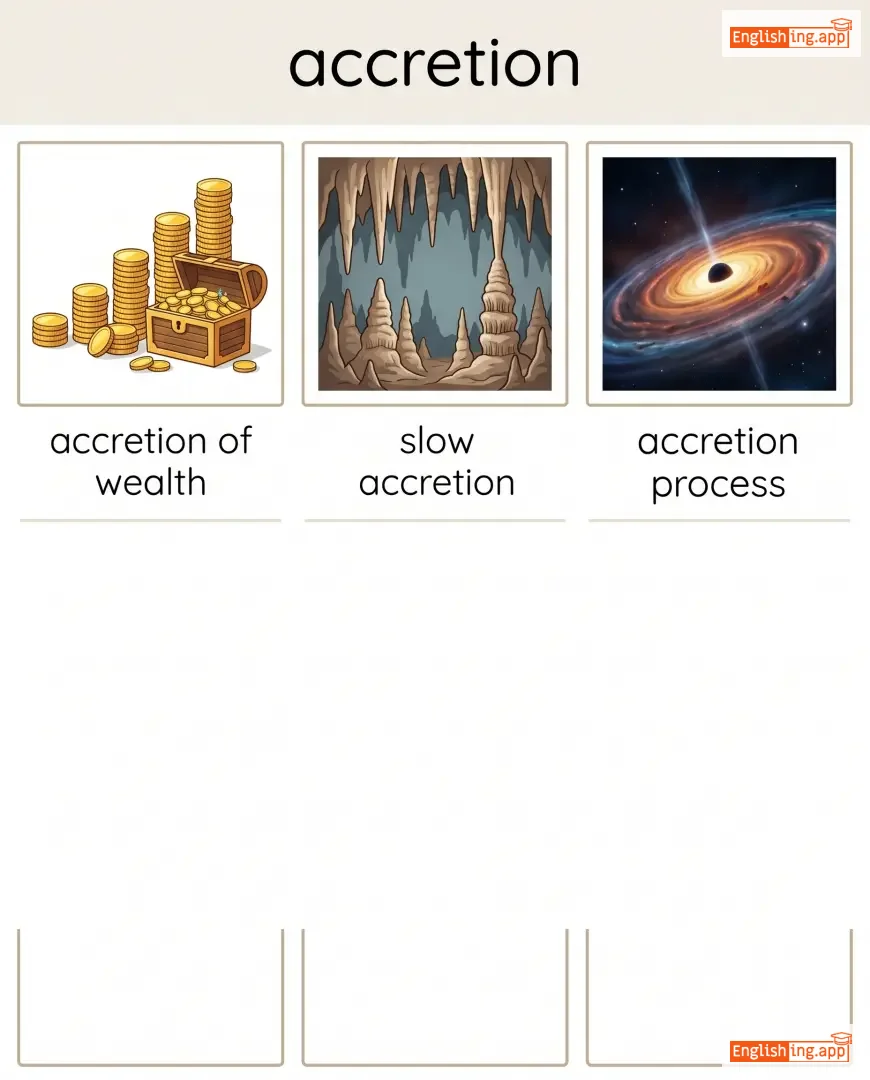
accretion of wealth, slow accretion, accretion process, accretion disk
••••••
|
Accretion → A Collection → 逐步积累
••••••
|
|
💰
••••••
|
/əˈkruː/
verb
(ā kè lú)
••••••
|

|
积累
jī lěi
••••••
|
accrued
ā kè lú dé
••••••
|
accrued
ā kè lú dé
••••••
|
accrues
ā kè lú zī
••••••
|
accruing
ā kè lú yīng
••••••
|
to accumulate or receive over time, especially payments or benefits
••••••
|
Interest will accrue on the savings account monthly.
利息将每月在储蓄账户上累计。
••••••
|
利息将每月在储蓄账户上累计。
Lìxī jiāng měi yuè zài chǔxù zhànghù shàng jīlěi.
••••••
|
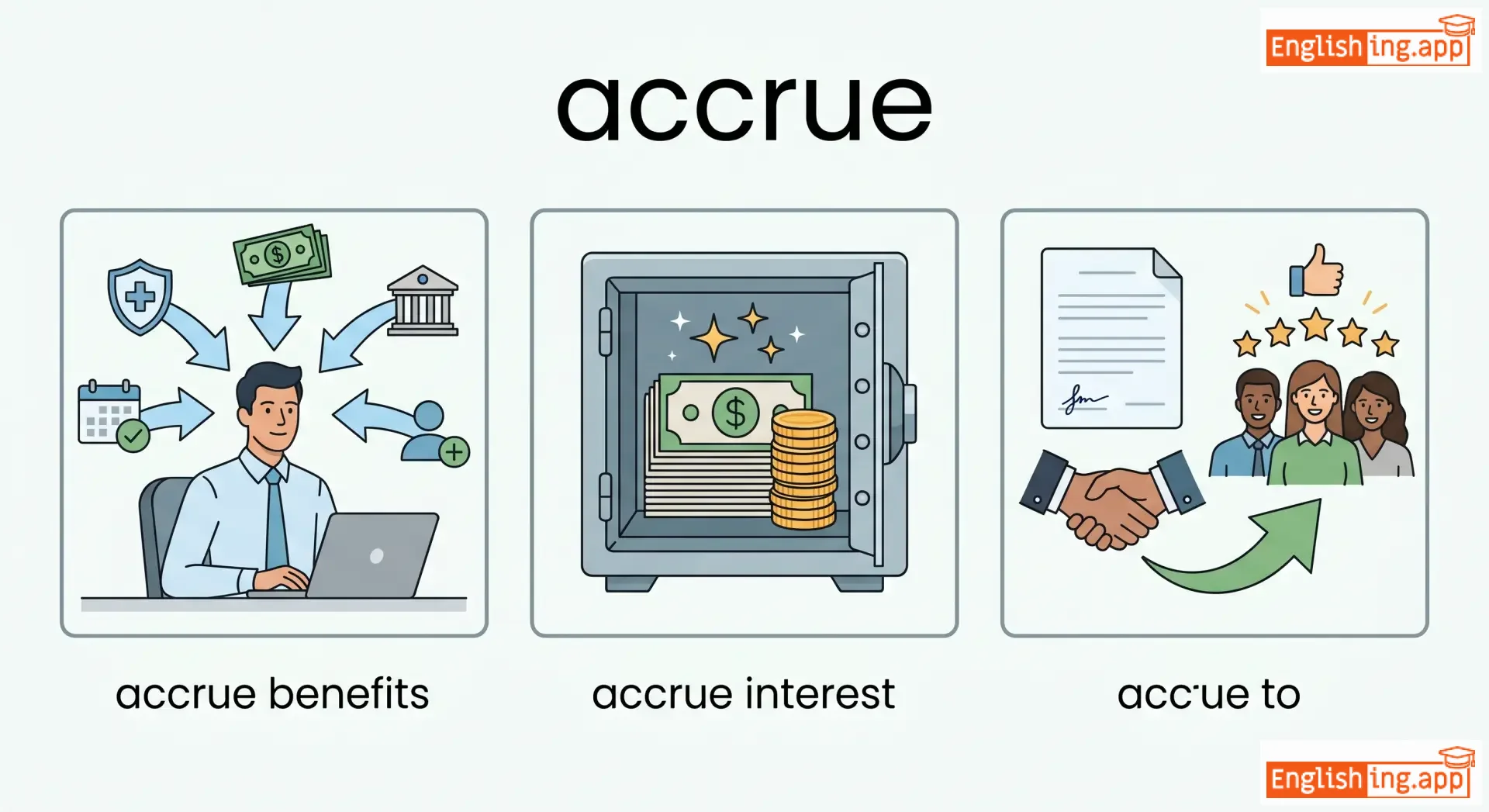
accrue interest
累计利息
••••••
|
to accumulate interest over time
••••••
|
累计利息
jīlěi lìxī
••••••
|
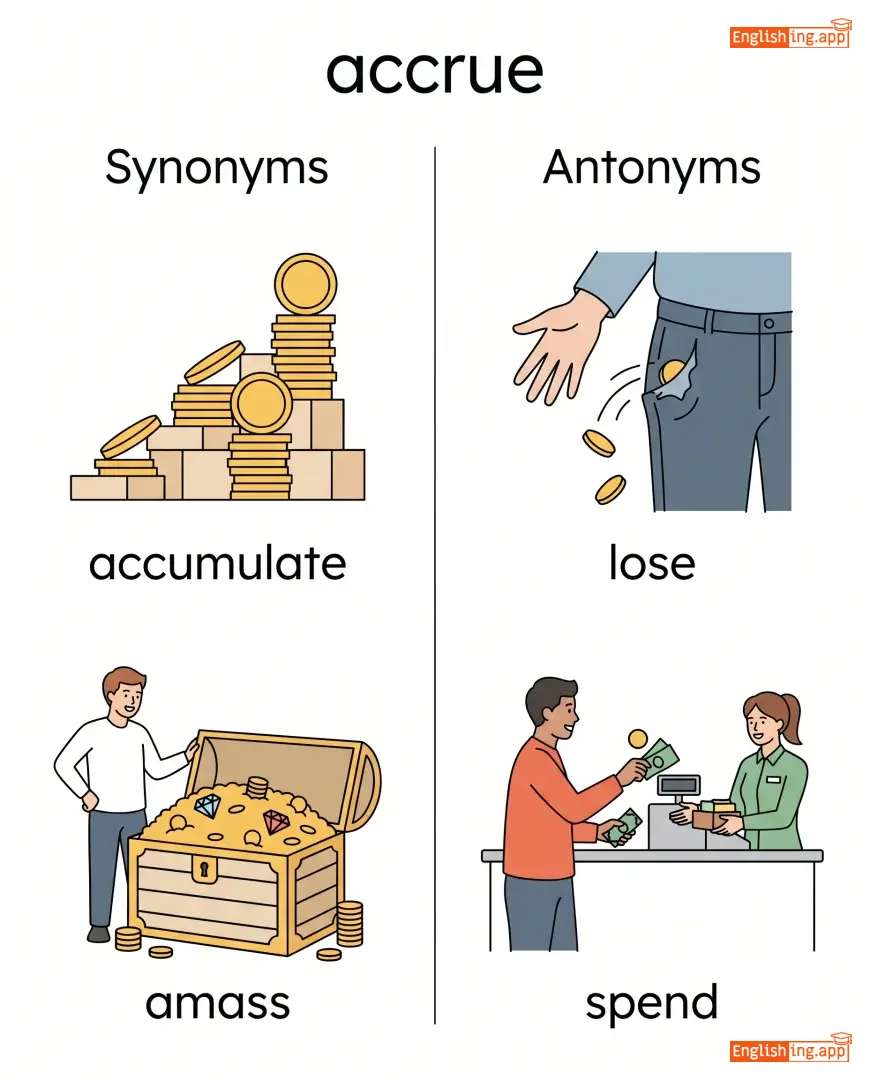
accumulate, amass, build up, collect, gather
••••••
|
lose, spend, diminish
••••••
|
accrue benefits, accrue interest, accrue to, accrue over time
••••••
|
Accrue意味着随着时间积累的钱
••••••
|
|
💪
••••••
|
/ˈædəmənt/
adjective
(亚达曼特)
••••••
|

|
固执的; 坚定的; 不屈不挠的
gùzhí de; jiāndìng de; bùqū bùnáo de
••••••
|
- •••••• | - •••••• | - •••••• | - •••••• |
একগুঁয়ে; জেদী; দৃঢ়সংকল্প; অনমনীয়;
••••••
|
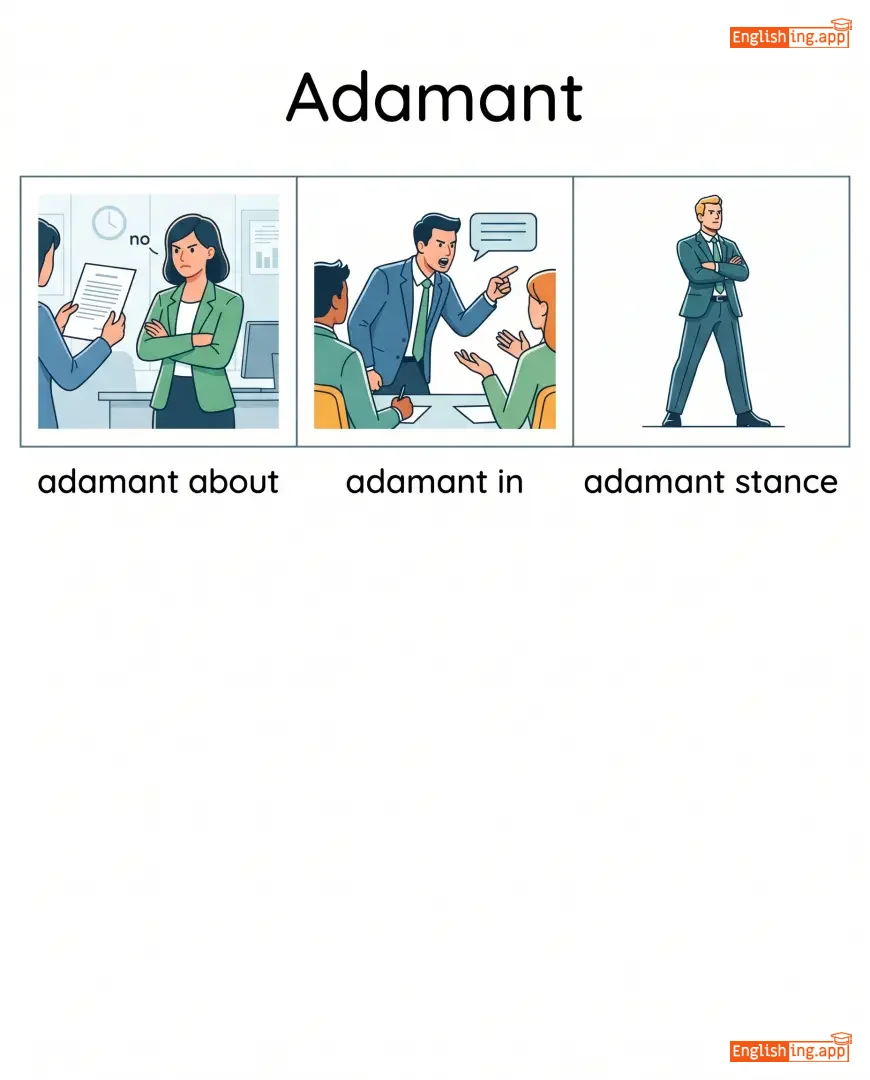
She was adamant about her decision to leave the company. |
她在决定离开公司时非常坚持。
tā zài juédìng líkāi gōngsī shí fēicháng jiānchí.
••••••
|
- •••••• | - •••••• | - •••••• |
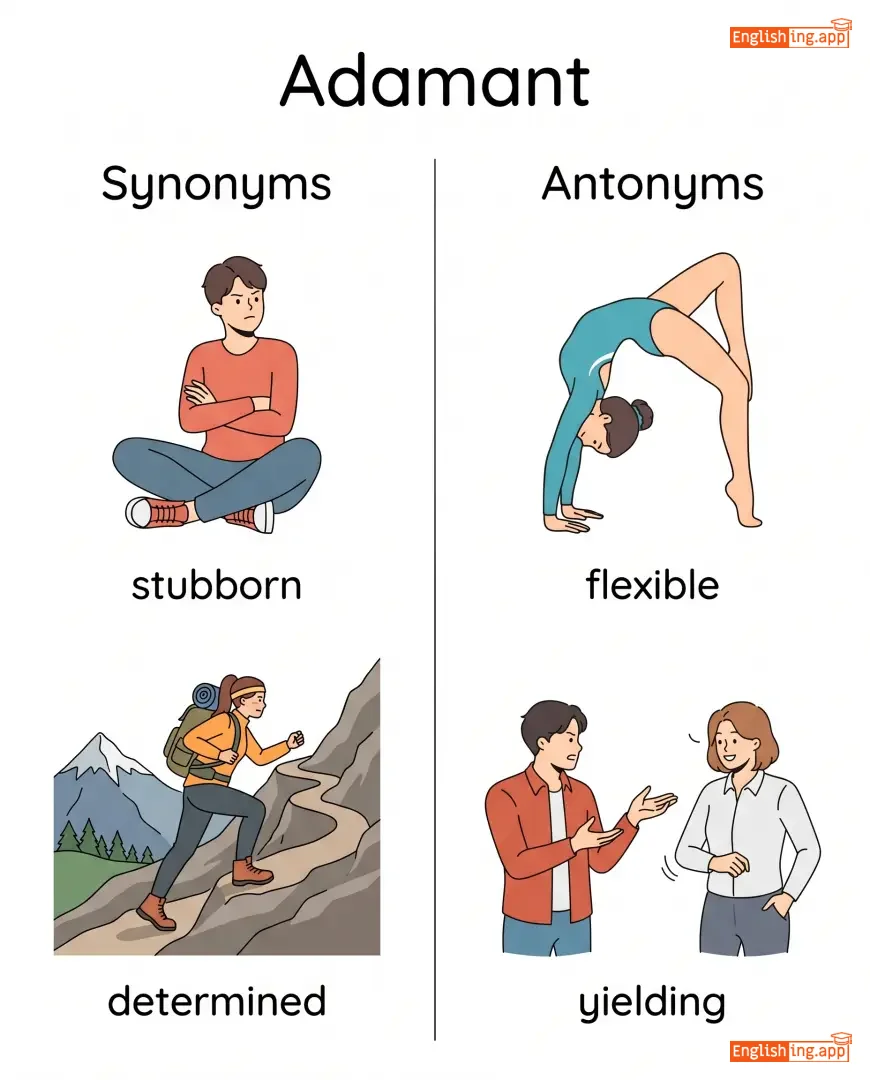
stubborn, inflexible, unyielding, resolute
••••••
|
flexible, yielding, compromising, compliant
••••••
|
adamant refusal, adamant opposition, remain adamant
••••••
|
要想坚定,就要有不屈不挠的态度!
••••••
|
|
➕
••••••
|
/ˈædʒʌŋkt/
noun
(ædʒʌŋkt)
••••••
|
|
附加物
fùjiā wù
••••••
|
- •••••• | - •••••• | - •••••• | - •••••• |
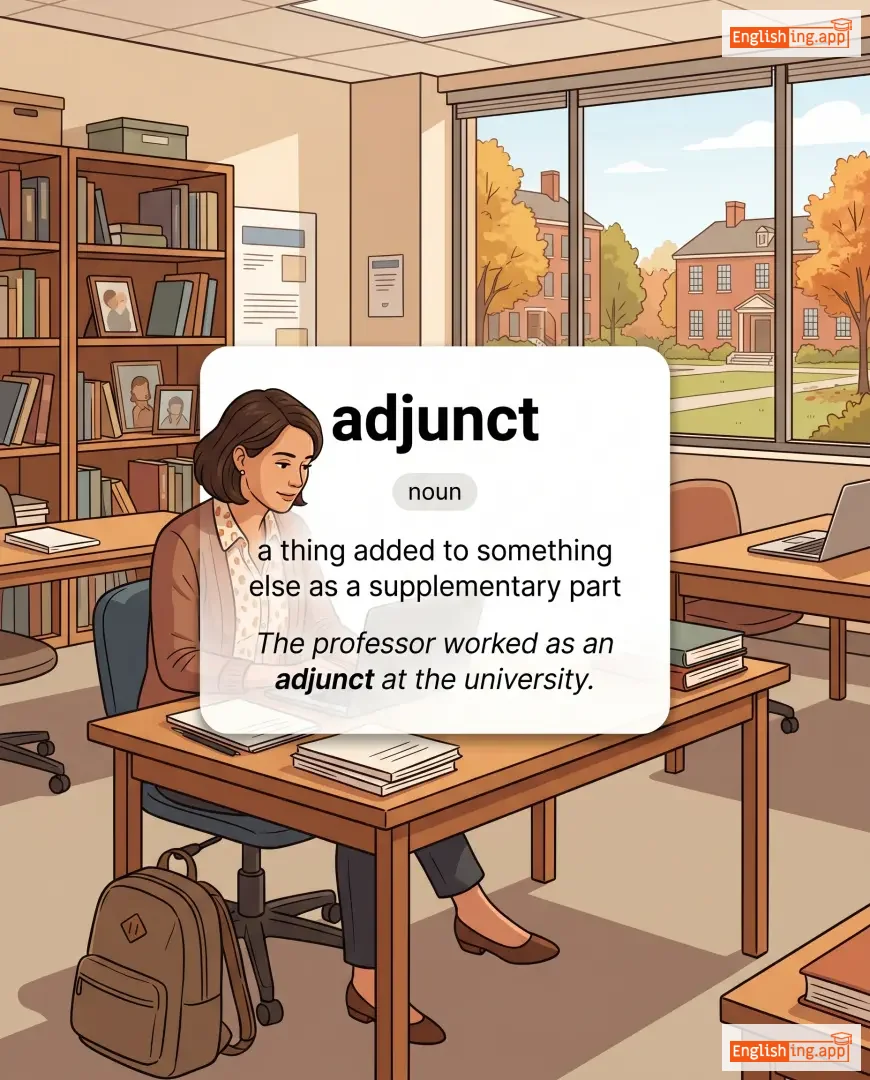
a thing added to something else as a supplementary part
••••••
|
The professor worked as an adjunct at the university. |
教授在大学担任附加职位工作。
Jiàoshòu zài dàxué dānrèn fùjiā zhíwèi gōngzuò.
••••••
|
- •••••• | - •••••• | - •••••• |
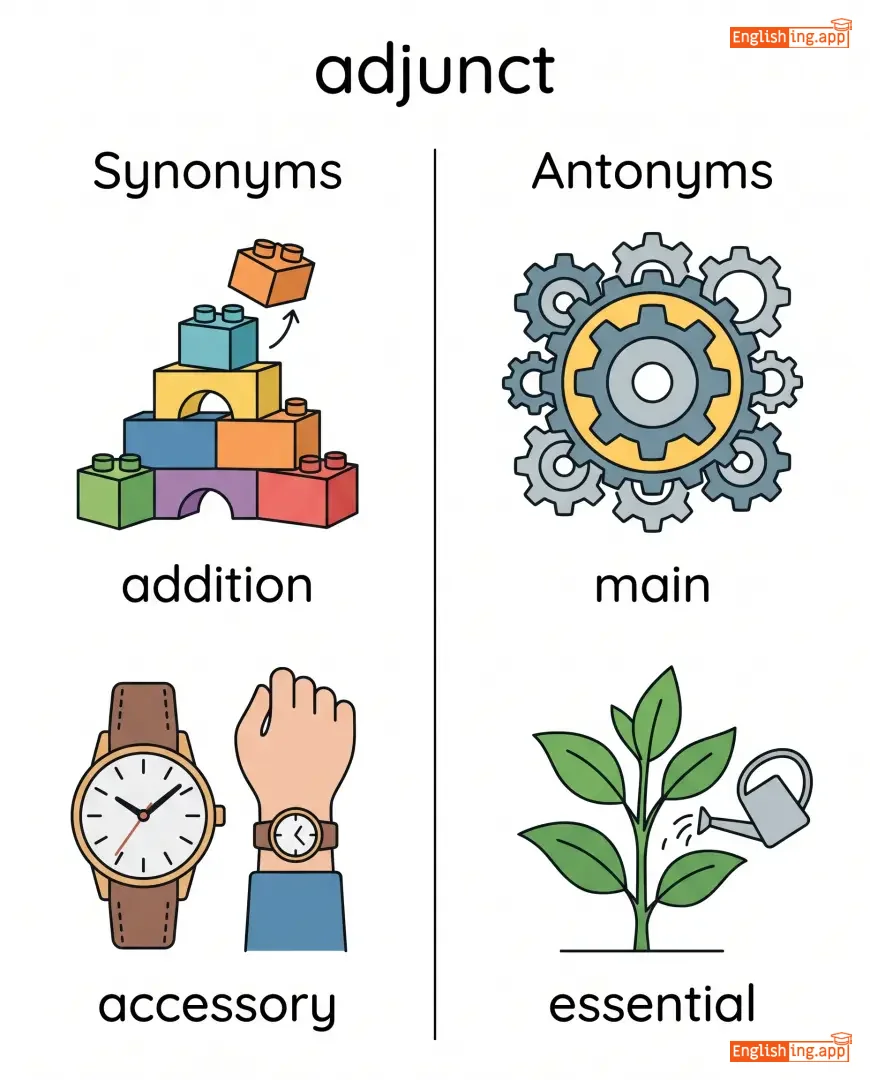
addition, accessory, supplement, appendage, auxiliary
••••••
|
main, essential, principal
••••••
|
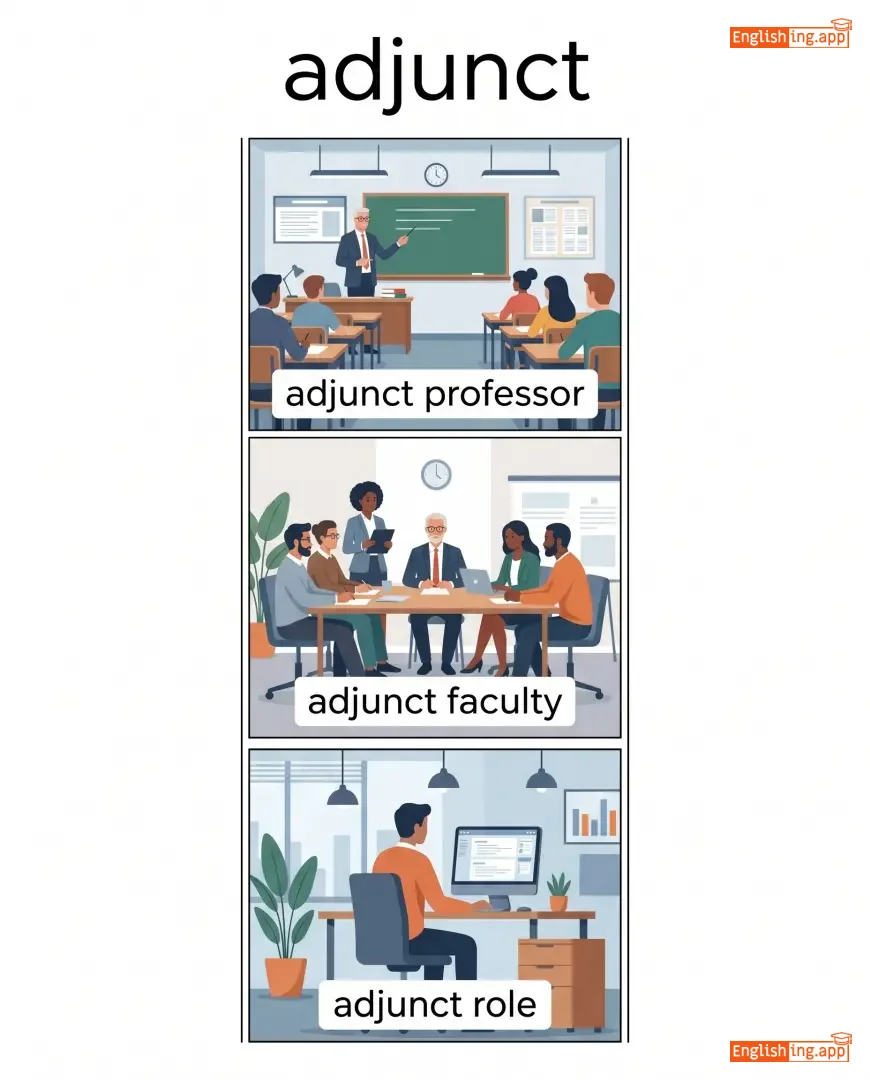
adjunct professor, adjunct faculty, adjunct role, adjunct therapy
••••••
|
Adjunct = 添加 + 连接,意味着附加的部分。
••••••
|
|
⚠️
••••••
|
/ədˈmɒnɪʃ/
verb
(admonish)
••••••
|

|
警告
jinggao
••••••
|
admonished
admonished
••••••
|
admonished
admonished
••••••
|
admonishes
admonishes
••••••
|
admonishing
admonishing
••••••
|
to warn or reprimand someone firmly; to advise or urge earnestly
••••••
|
The teacher admonished the students for being late.
The teacher admonished the students for being late.
••••••
|
老师因为学生迟到而警告他们。
Lao shi yinwei xuesheng chidao er jinggao tamen.
••••••
|
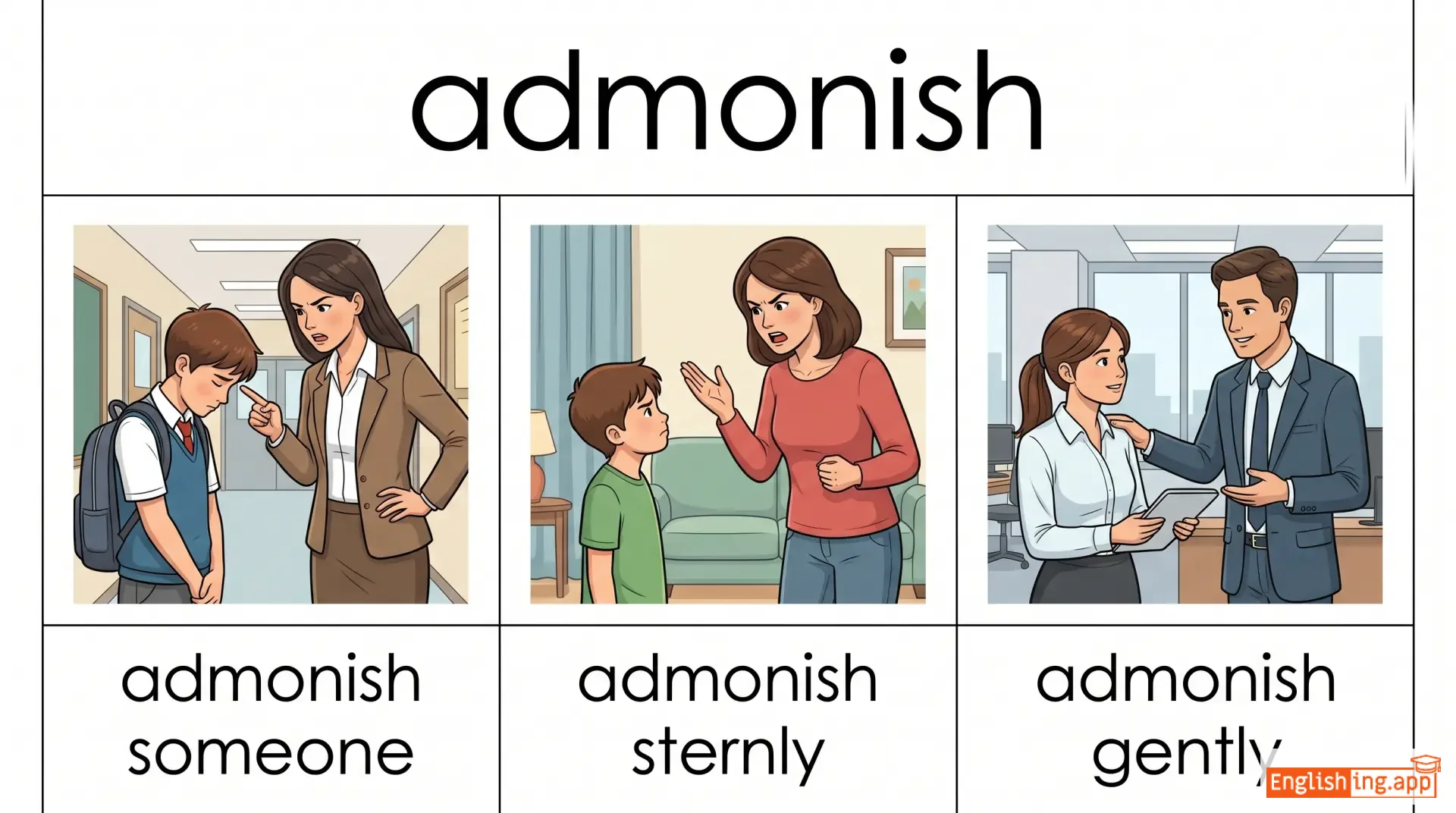
admonish someone gently
admonish someone gently
••••••
|
to caution someone in a mild or kind manner
••••••
|
温和地警告某人
wenhe di jinggao mou ren
••••••
|
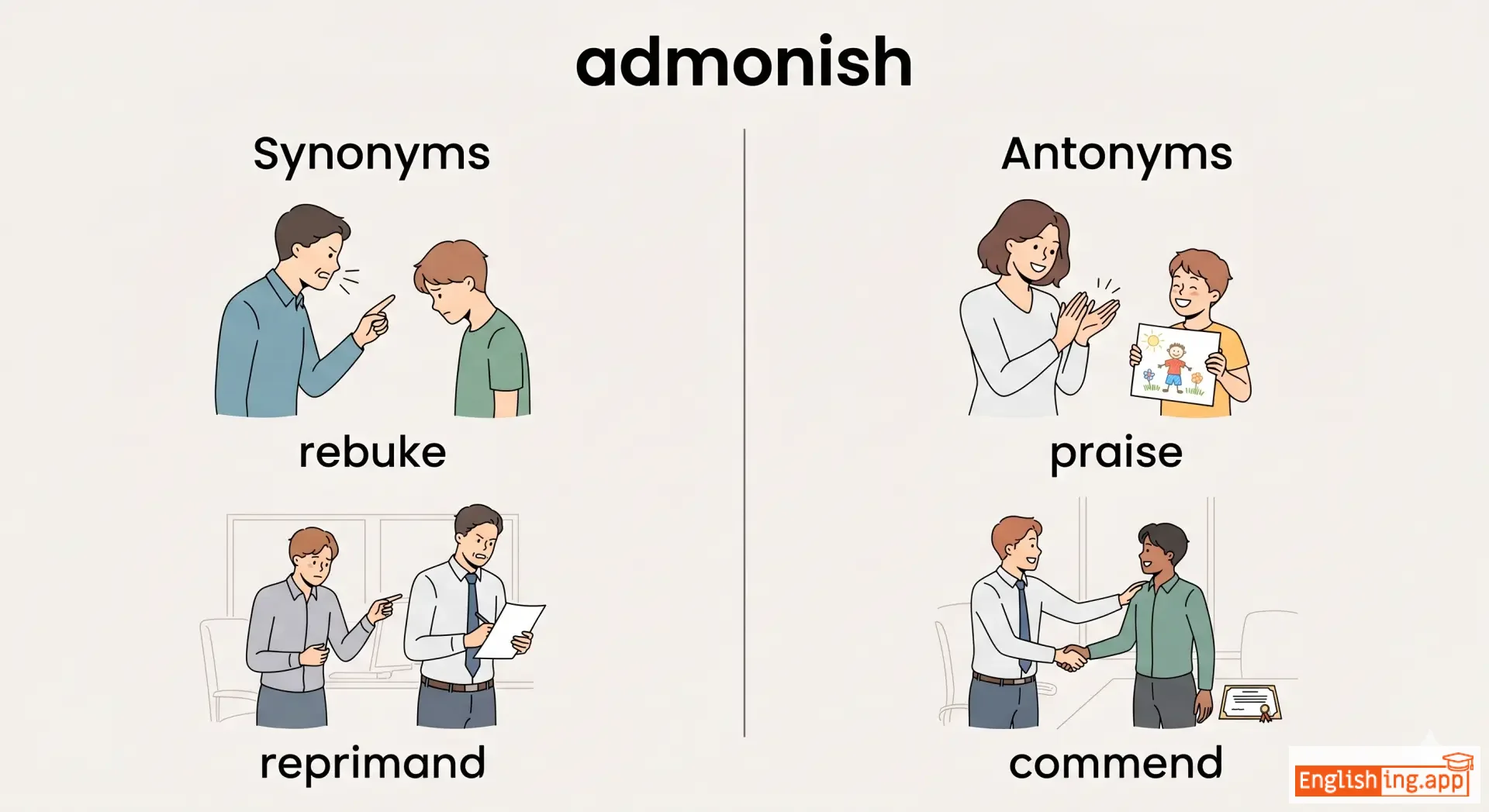
rebuke, reprimand, scold, caution, warn
••••••
|
praise, commend, approve
••••••
|
admonish someone, admonish sternly, admonish gently, admonish for behavior
••••••
|
警告就像‘警’(警觉)和‘告’(告诫),为严厉的告诫提示。
••••••
|
|
🥛
••••••
|
/əˈdʌltəreɪt/
verb
(篡改)
••••••
|
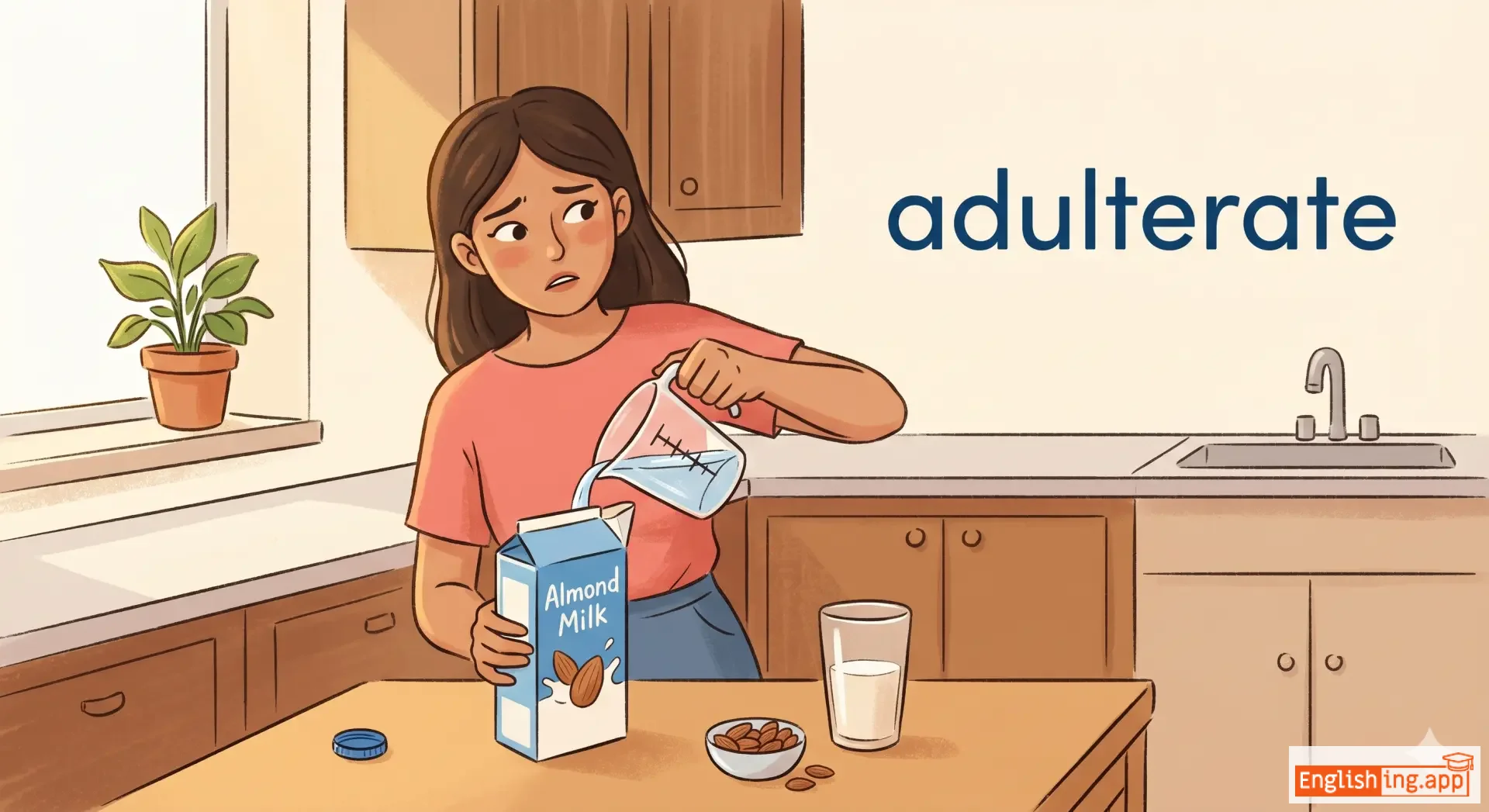
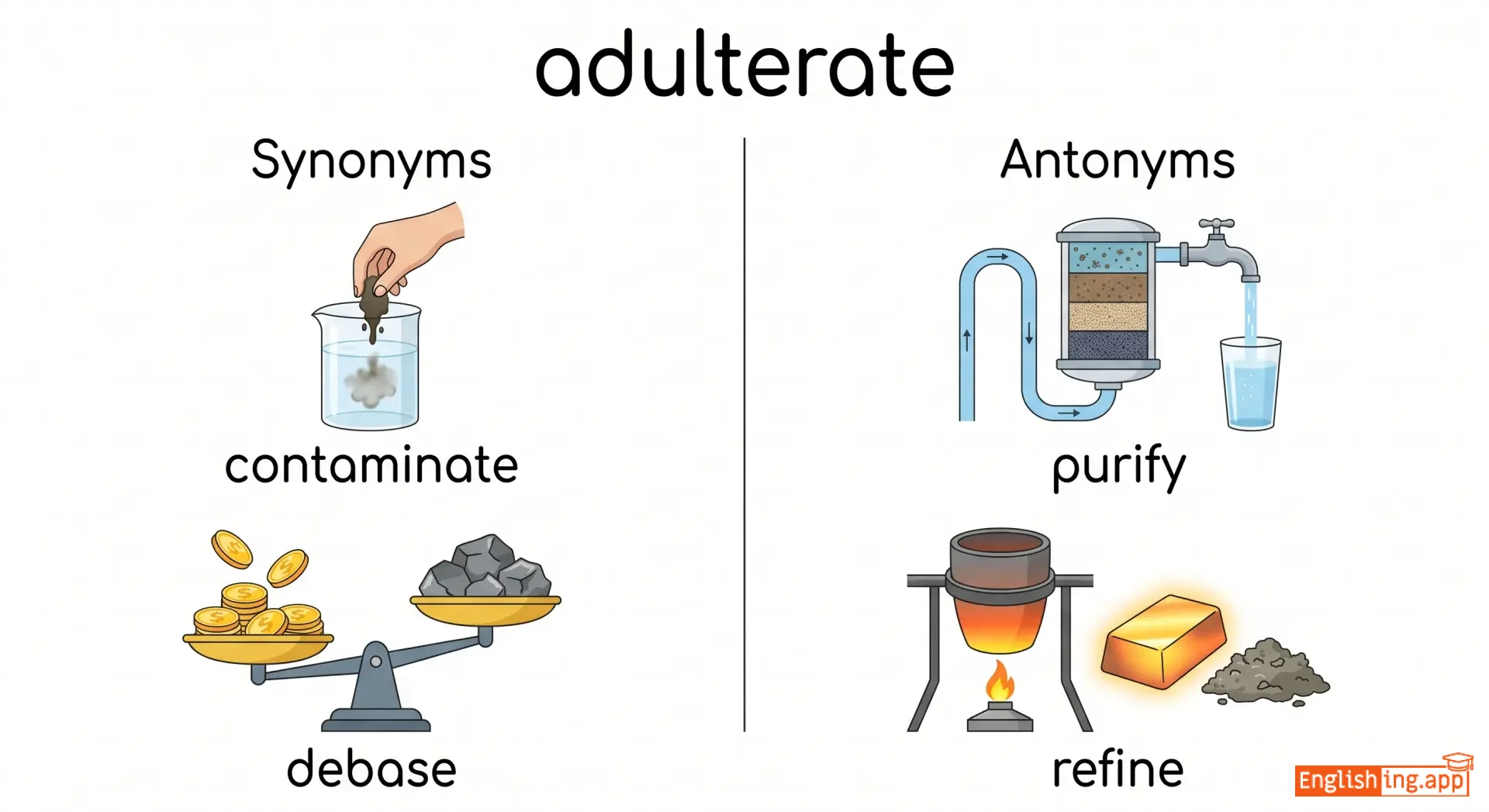
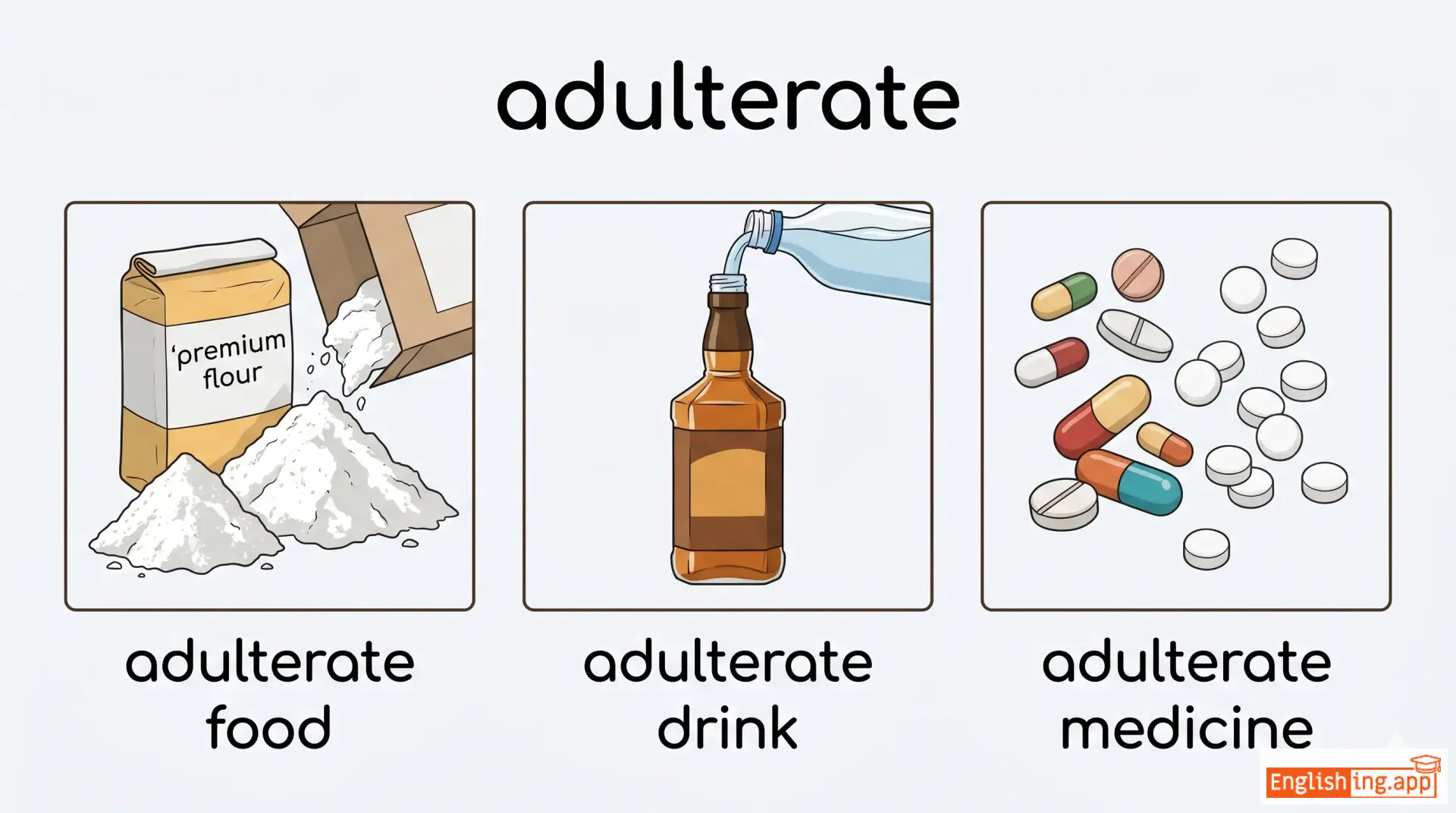
|
掺假
chānjiǎ
••••••
|
adulterated
篡改过
••••••
|
adulterated
篡改过
••••••
|
adulterates
篡改
••••••
|
adulterating
篡改中
••••••
|
to make something poorer in quality by adding another substance, usually of lower quality
••••••
|
The company was fined for adulterating its products with cheap chemicals.
该公司因将其产品篡改成便宜的化学品而被罚款。
••••••
|
该公司因将其产品篡改成便宜的化学品而被罚款。
Gāi gōngsī yīn jiāng qí chǎnpǐn cuàngǎi chéng piányí de huàxué pǐn ér bèi fákuǎn.
••••••
|
- •••••• | - •••••• | - •••••• |
contaminate, debase, dilute, taint, spoil
••••••
|
purify, refine, cleanse
••••••
|
adulterate food, adulterate drink, adulterate medicine
••••••
|
篡改加上便宜的化学品 - adulterate就是掺假
••••••
|
|
🎨
••••••
|
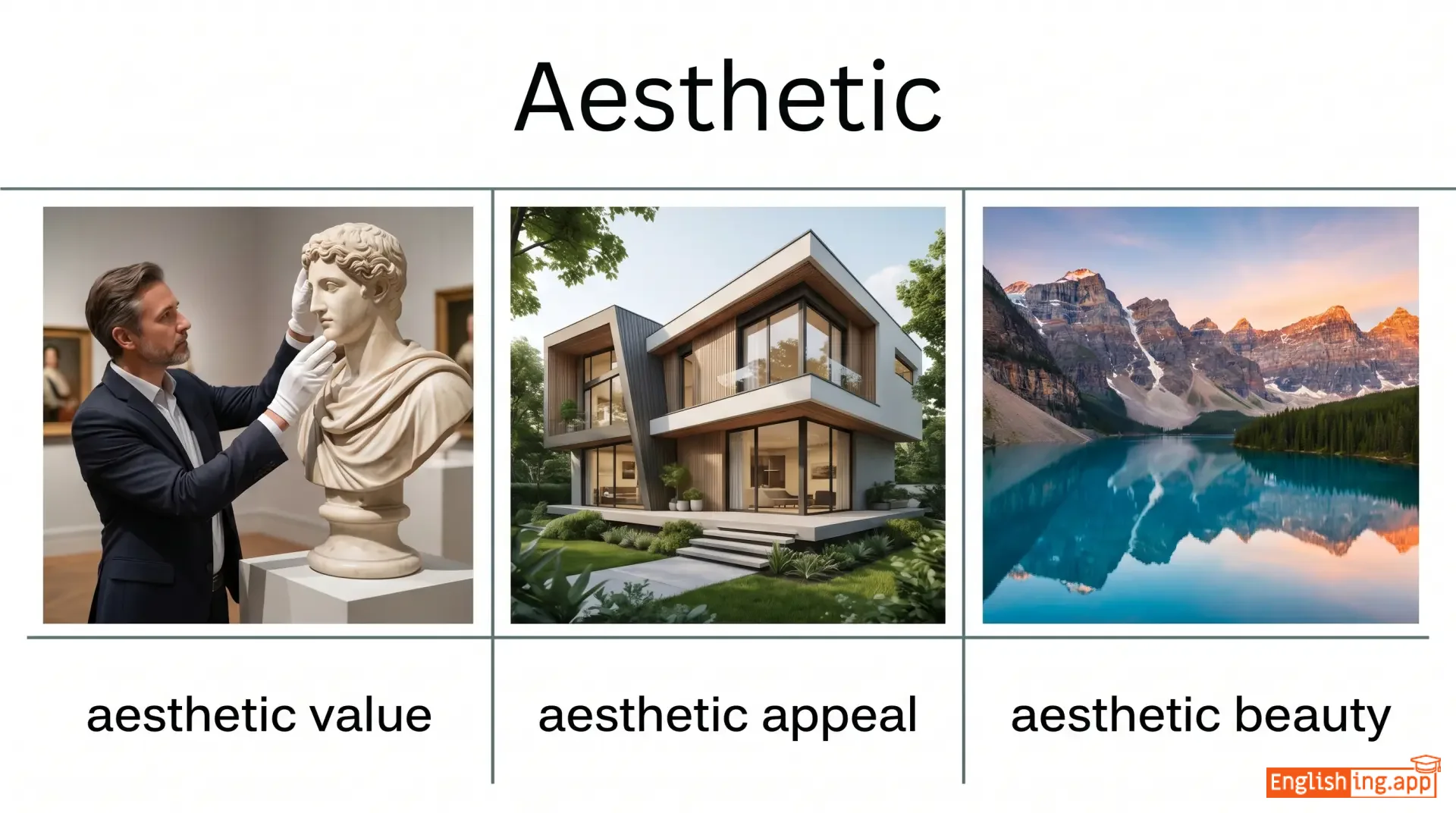
/ɛsˈθɛtɪk/
adjective
(审美的)
••••••
|

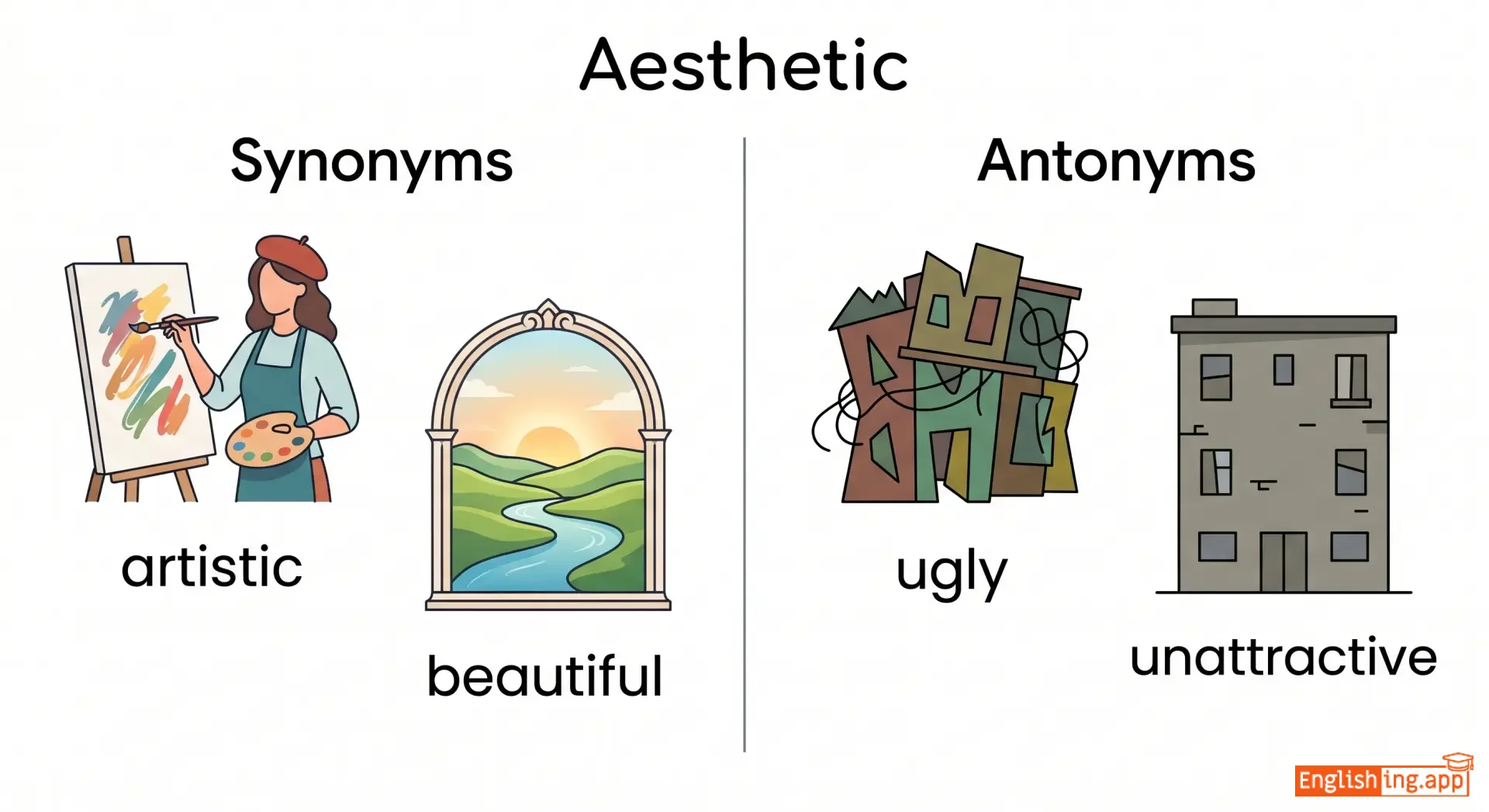
|
审美的
shenmei de
••••••
|
- •••••• | - •••••• | - •••••• | - •••••• |
concerned with beauty or the appreciation of beauty
••••••
|
The room was decorated in an aesthetic style that pleased everyone.
房间以审美风格装饰,让每个人都感到愉悦。
••••••
|
房间以审美风格装饰,让每个人都感到愉悦。
Fángjiān yǐ shěnměi fēnggé zhuāngshì, ràng měi gèrén dōu gǎndào yúyuè.
••••••
|
aesthetic appeal
审美吸引力
••••••
|
the quality of being visually attractive
••••••
|
审美吸引力
shenmei xīyǐn lì
••••••
|
artistic, beautiful, elegant, tasteful
••••••
|
ugly, unattractive, plain
••••••
|
aesthetic value, aesthetic appeal, aesthetic beauty, aesthetic design
••••••
|
Aesthetic意味着美,所以审美的也与美有关。
••••••
|
|
😔
••••••
|
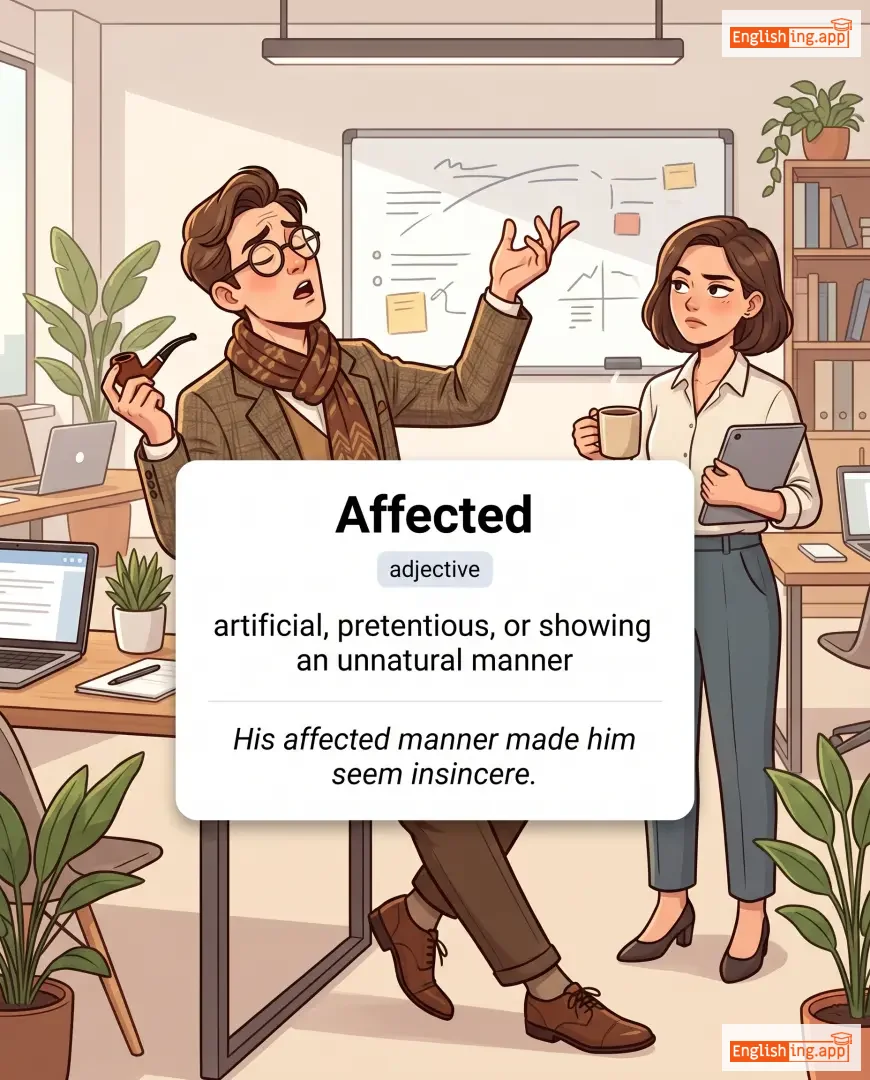
/əˈfektɪd/
adjective
(阿菲克特德)
••••••
|
|
受影响的;被触动的
shòu yǐngxiǎng de; bèi chùdòng de
••••••
|
- •••••• | - •••••• | - •••••• | - •••••• |
influenced; impacted; touched by something
••••••
|
The flood-affected areas need immediate assistance. |
受洪水影响的地区需要立即的援助。
Shòu hóngshuǐ yǐngxiǎng de dìqū xūyào lìjí de yuánzhù.
••••••
|
- •••••• | - •••••• | - •••••• |
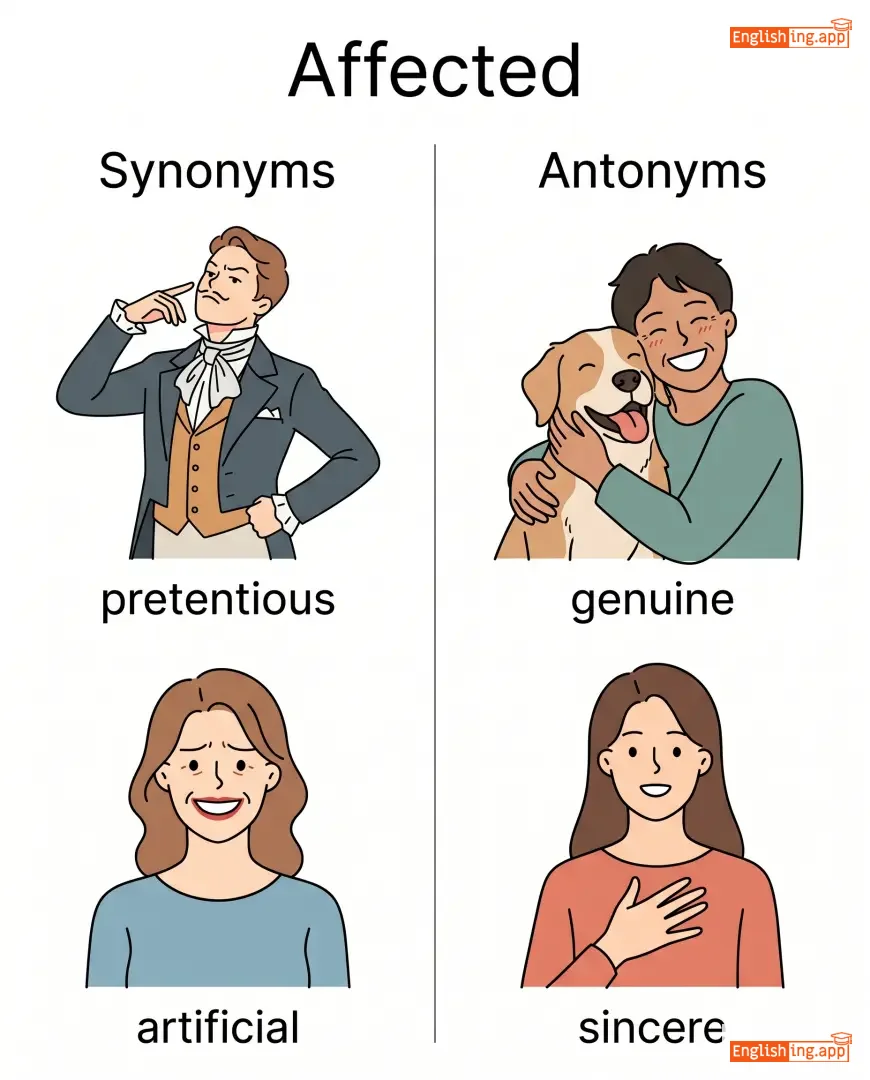
influenced, impacted, touched
••••••
|
unaffected, untouched, immune
••••••
|
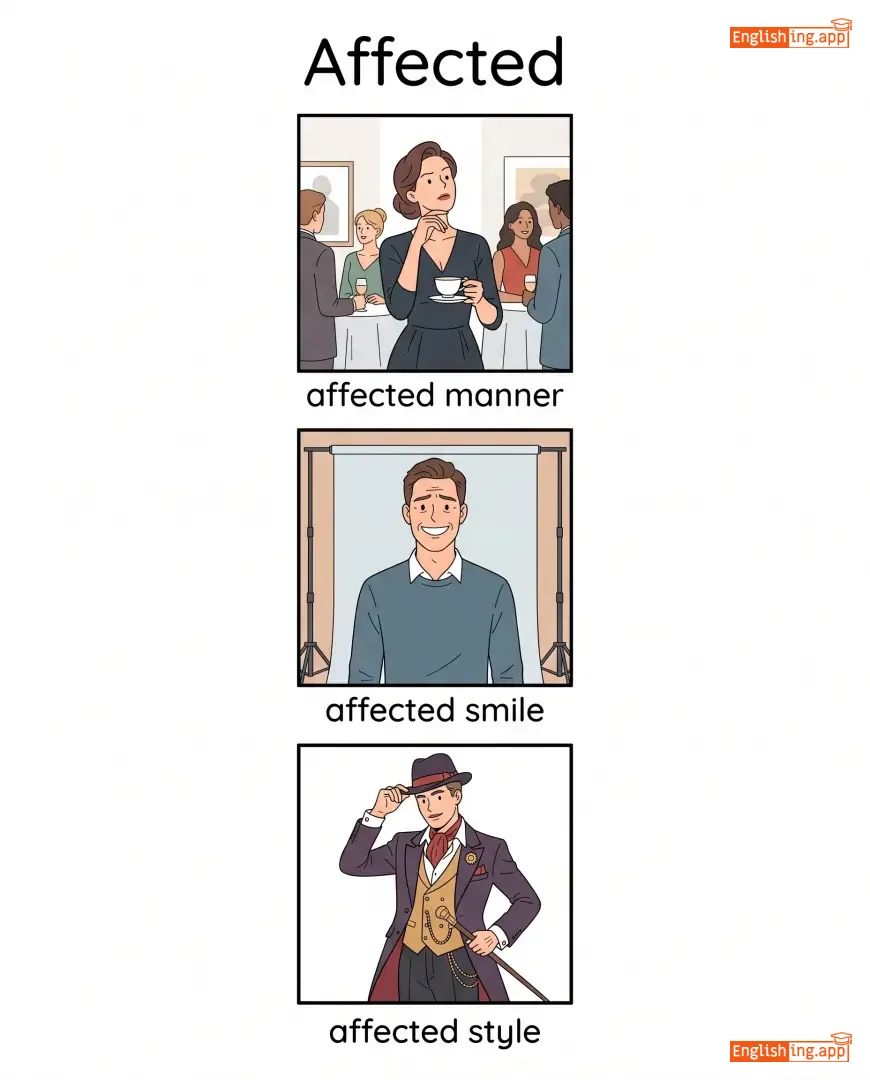
badly affected, seriously affected, directly affected
••••••
|
受影响的:洪水的影响
••••••
|
|
🤝
••••••
|
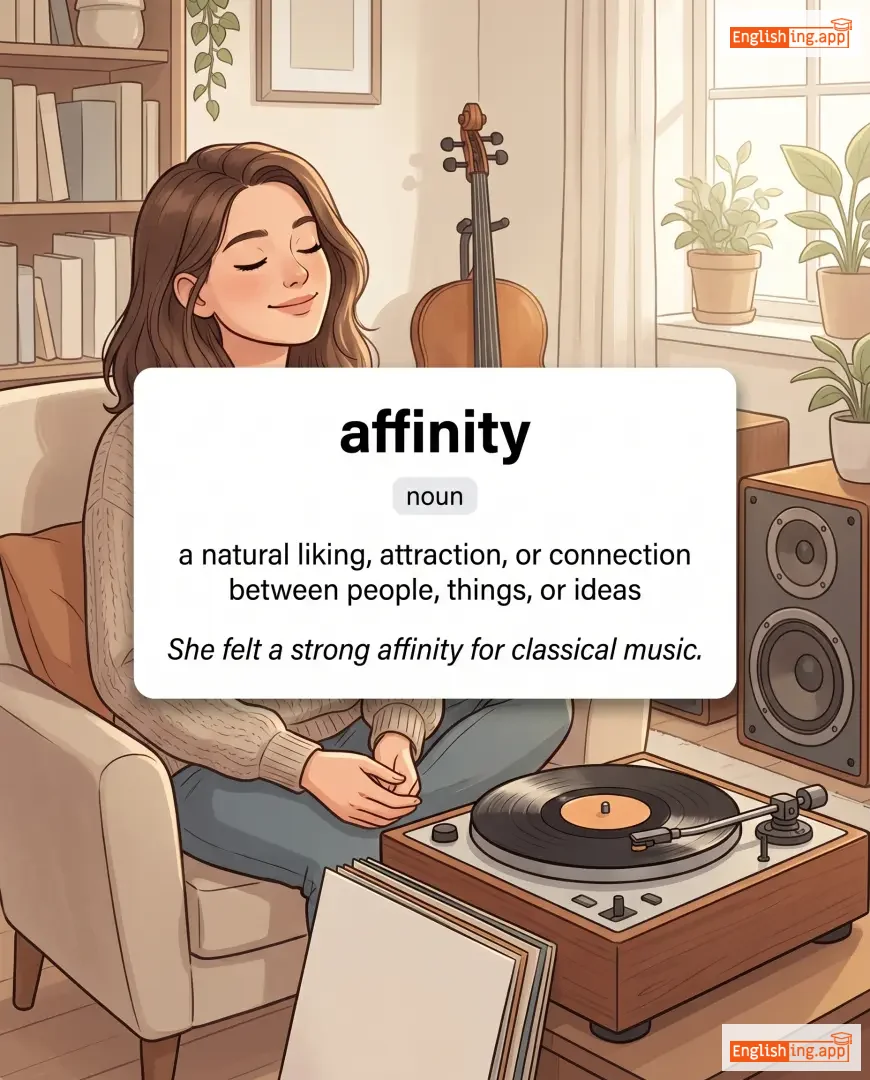
/əˈfɪnɪti/
noun
(阿芬尼提)
••••••
|
|
亲和力
qīnhélì
••••••
|
- •••••• | - •••••• | - •••••• | - •••••• |
a natural liking, attraction, or connection between people, things, or ideas
••••••
|
She felt a strong affinity for classical music. |
她对古典音乐有着强烈的亲和力。
Tā duì gǔdiǎn yīnyuè yǒuzhe qiángliè de qīnhélì.
••••••
|
have an affinity with |
to have a natural connection or attraction to something or someone
••••••
|
与...有亲和力
yǔ... yǒu qīnhélì
••••••
|
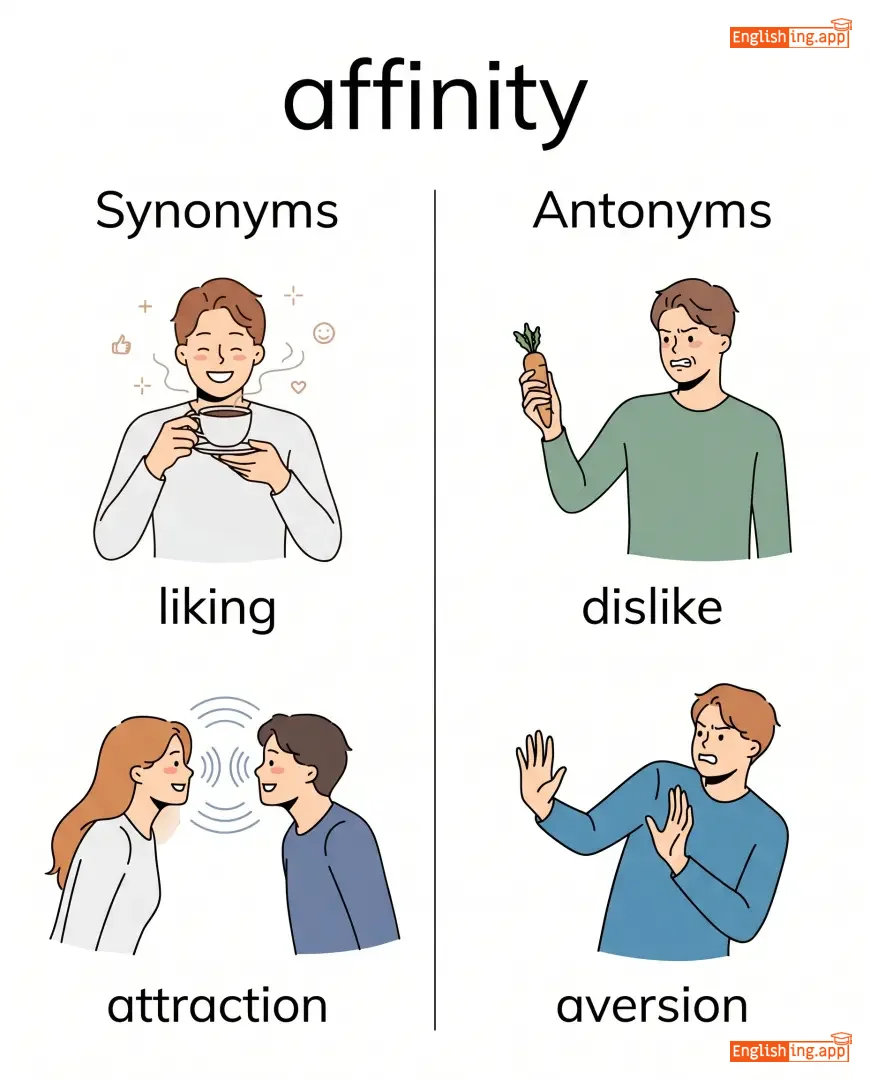
liking, attraction, connection, bond, sympathy
••••••
|
dislike, aversion, repulsion
••••••
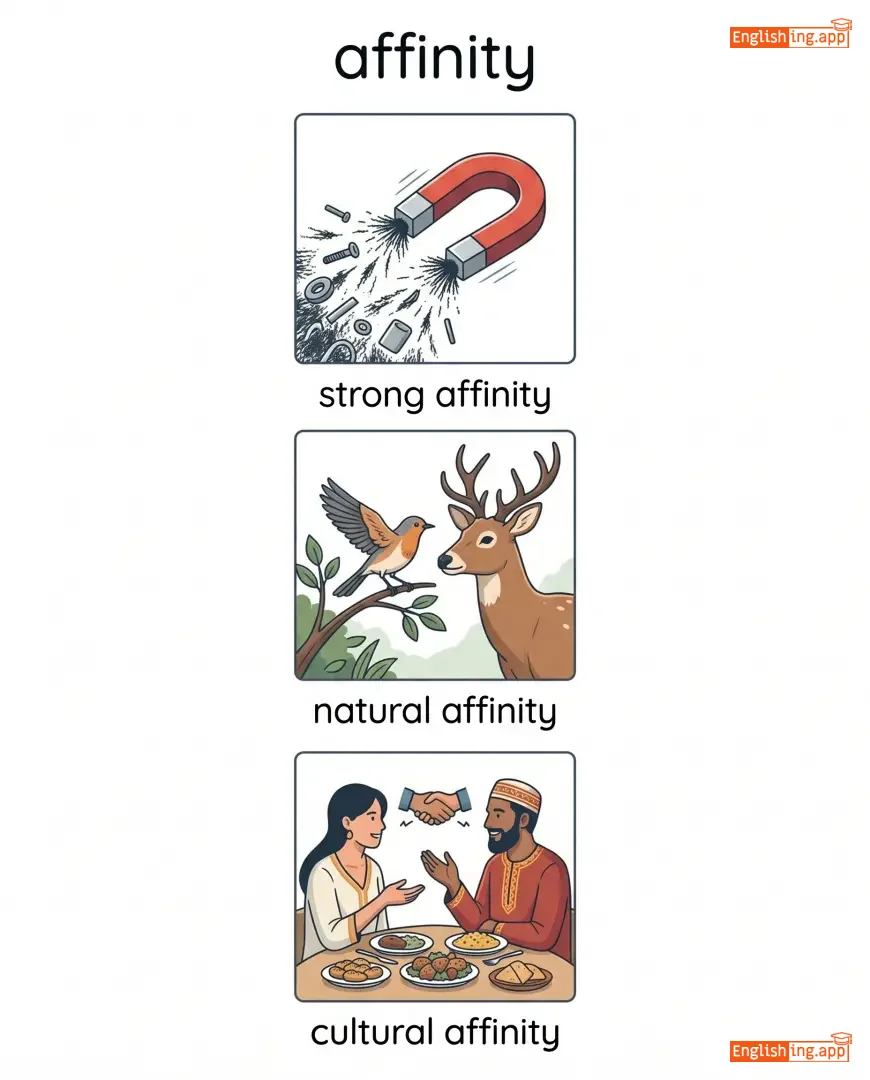
|
strong affinity, natural affinity, cultural affinity, affinity with
••••••
|
Affinity就像对音乐的自然吸引力一样强烈。
••••••
|
|
📈
••••••
|
/əˈɡræn.daɪz/
verb
(扩张)
••••••
|
|
扩大
kuò dà
••••••
|
aggrandized
扩张
••••••
|
aggrandized
扩张
••••••
|
aggrandizes
扩张
••••••
|
aggrandizing
扩张
••••••
|
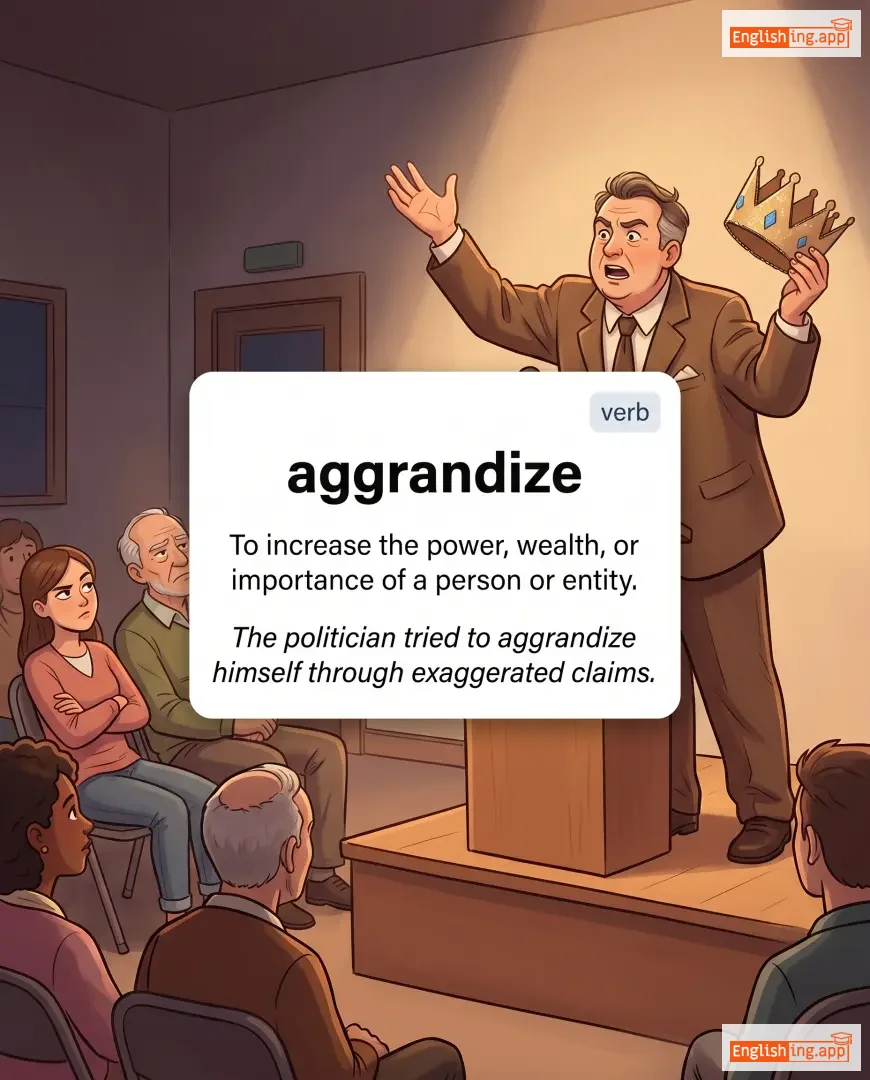
To increase the power, wealth, or importance of a person or entity.
••••••
|
The politician tried to aggrandize himself through exaggerated claims.
政治家试图通过夸张的说法来扩大自己的权力。
••••••
|
政治家试图通过夸张的说法来扩大自己的权力。
Zhèngzhìjiā shìtú tōngguò kuāzhāng de shuōfǎ lái kuò dà zìjǐ de quánlì.
••••••
|
- •••••• | - •••••• | - •••••• |
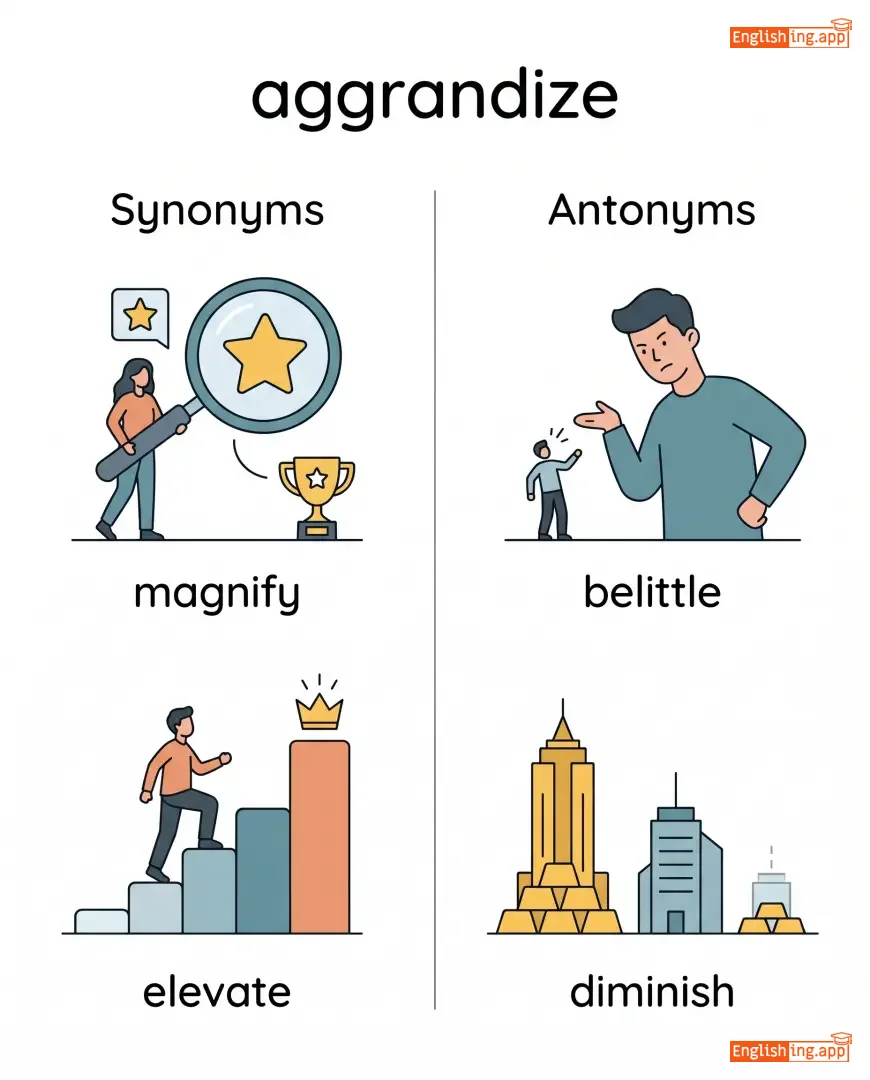
magnify, elevate, exalt, glorify
••••••
|
belittle, diminish, humiliate
••••••
|
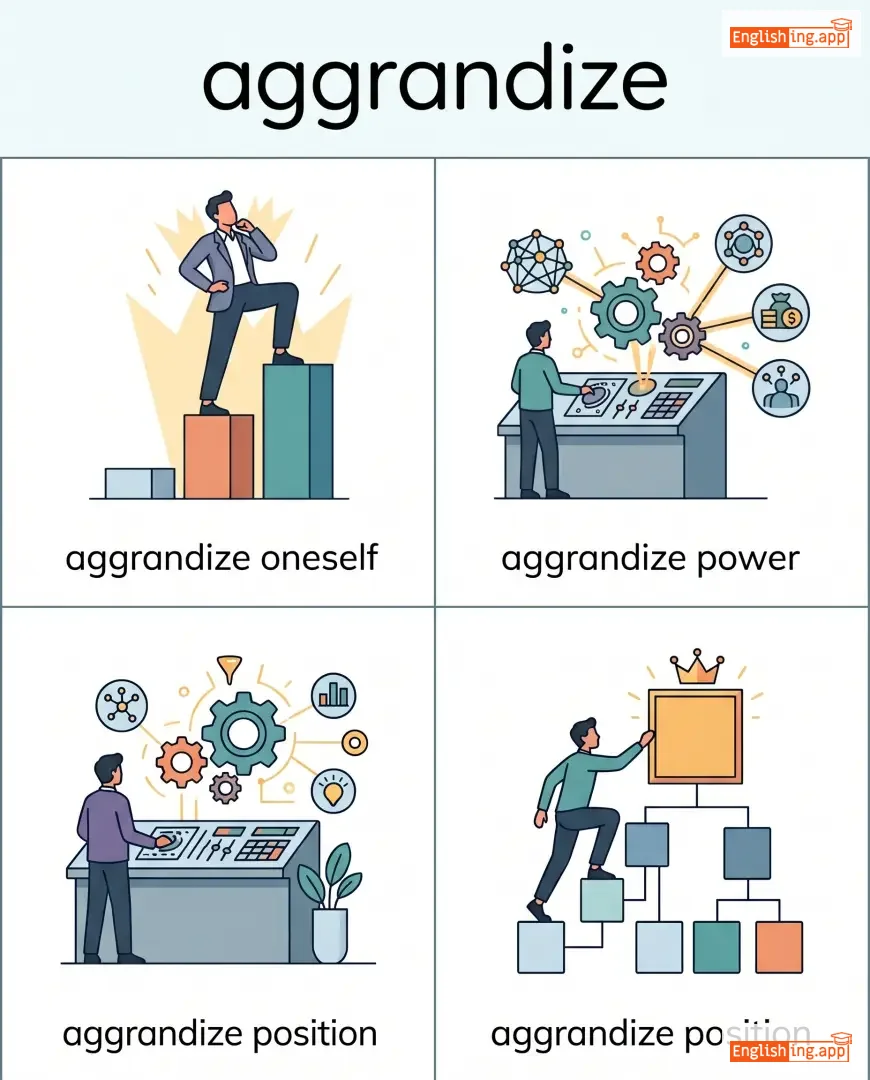
aggrandize oneself, aggrandize power, aggrandize position
••••••
|
Aggrandize 意思是使某人更大
••••••
|
|
➕
••••••
|
/ˈæɡ.rɪ.ɡət/ (noun/adjective), /ˈæɡ.rɪ.ɡeɪt/ (verb)
noun, verb, adjective
(聚合)
••••••
|
|
聚合, 总体
jùhé, zǒngtǐ
••••••
|
aggregated
聚合的
••••••
|
aggregated
聚合的
••••••
|
aggregates
聚合
••••••
|
aggregating
聚合
••••••
|
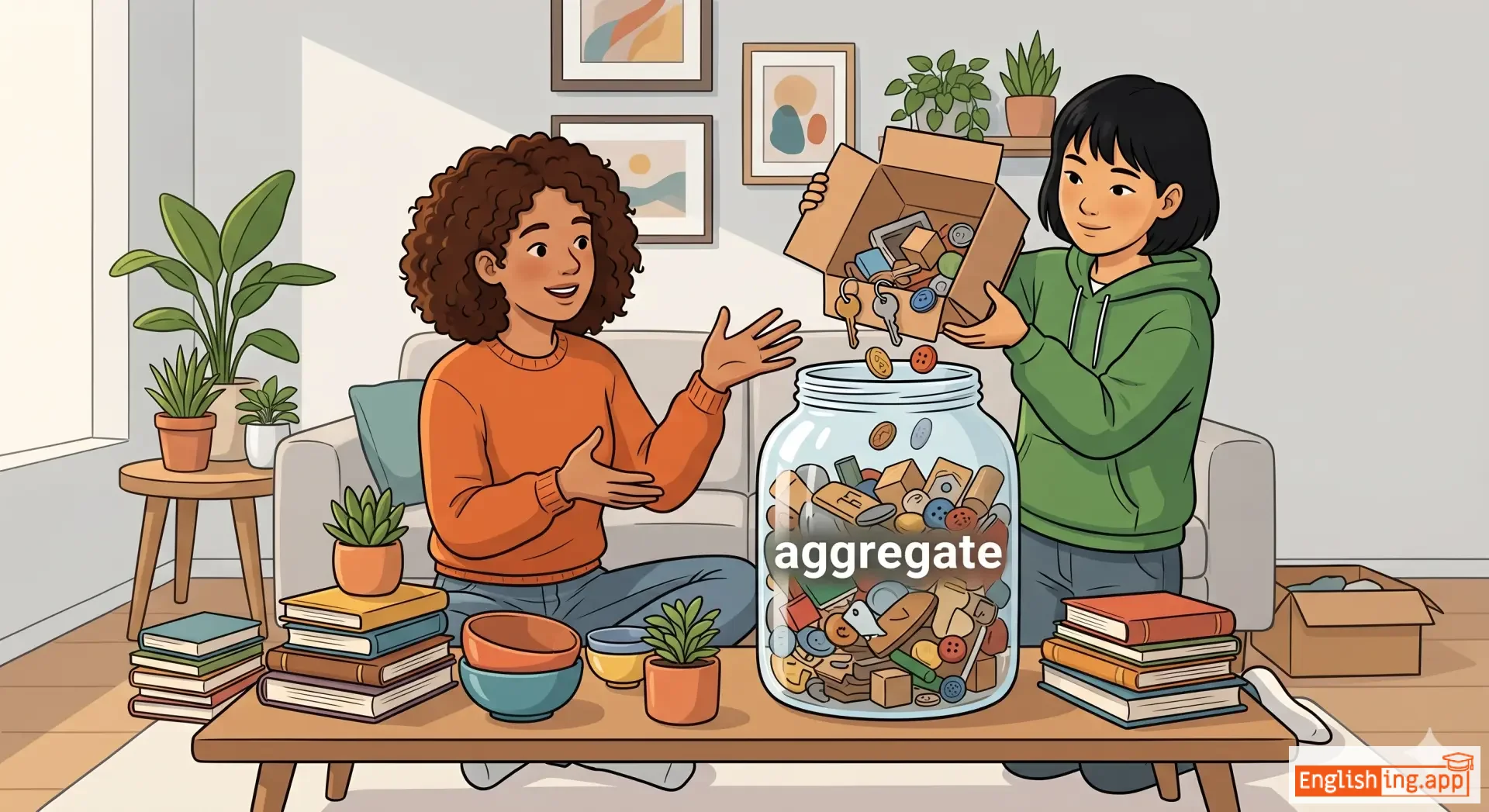
A whole formed by combining several elements; to combine into a total.
••••••
|
The data was aggregated to provide a clearer picture of the market.
数据已被聚合,以提供市场的更清晰图像。
••••••
|
数据已被聚合,以提供市场的更清晰图像。
Shùjù yǐ bèi jùhé, yǐ tígōng shìchǎng de gèng qīngxī túxiàng.
••••••
|
- •••••• | - •••••• | - •••••• |
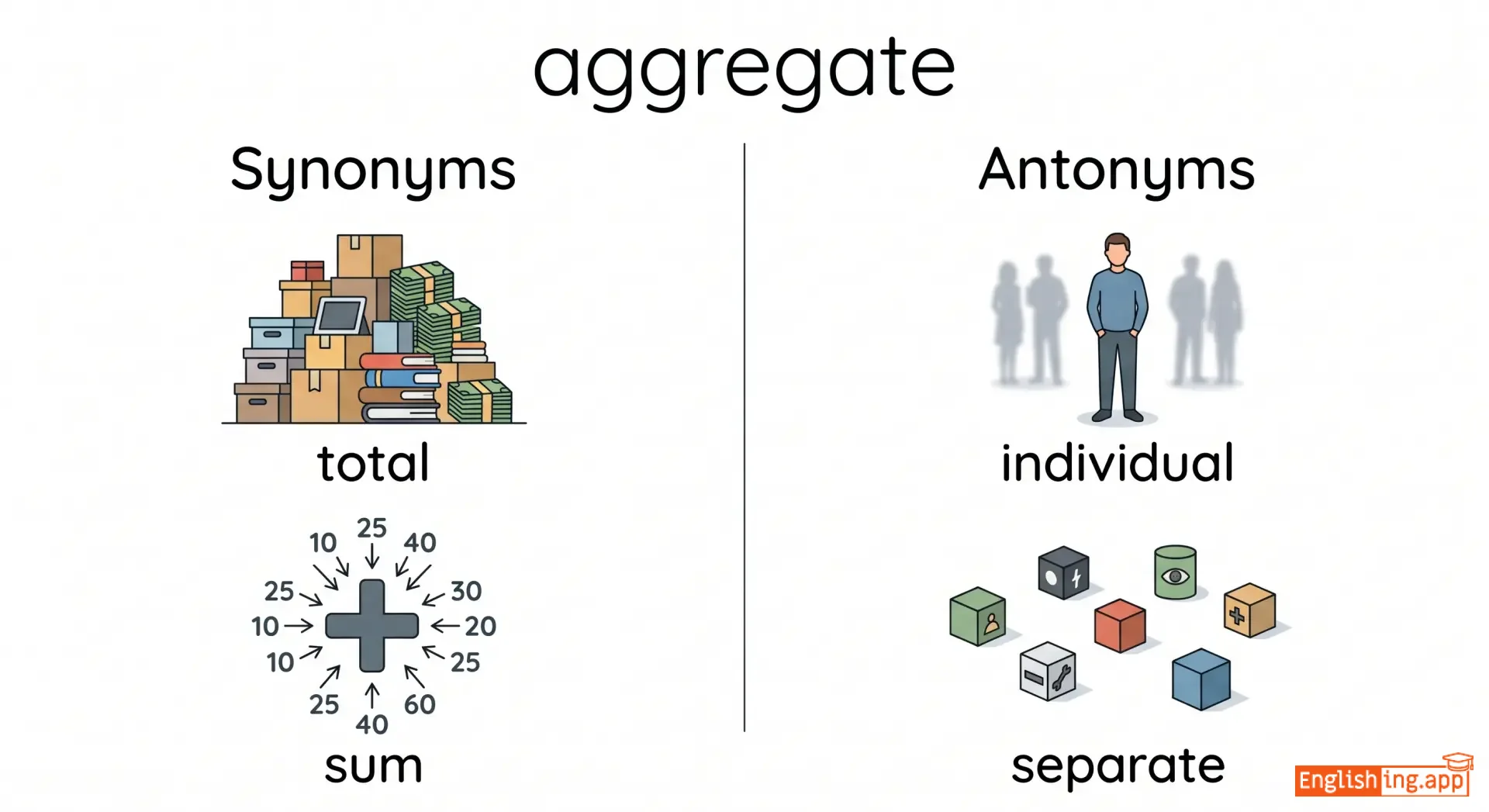
total, sum, collection, accumulate
••••••
|
individual, separate, divide
••••••
|
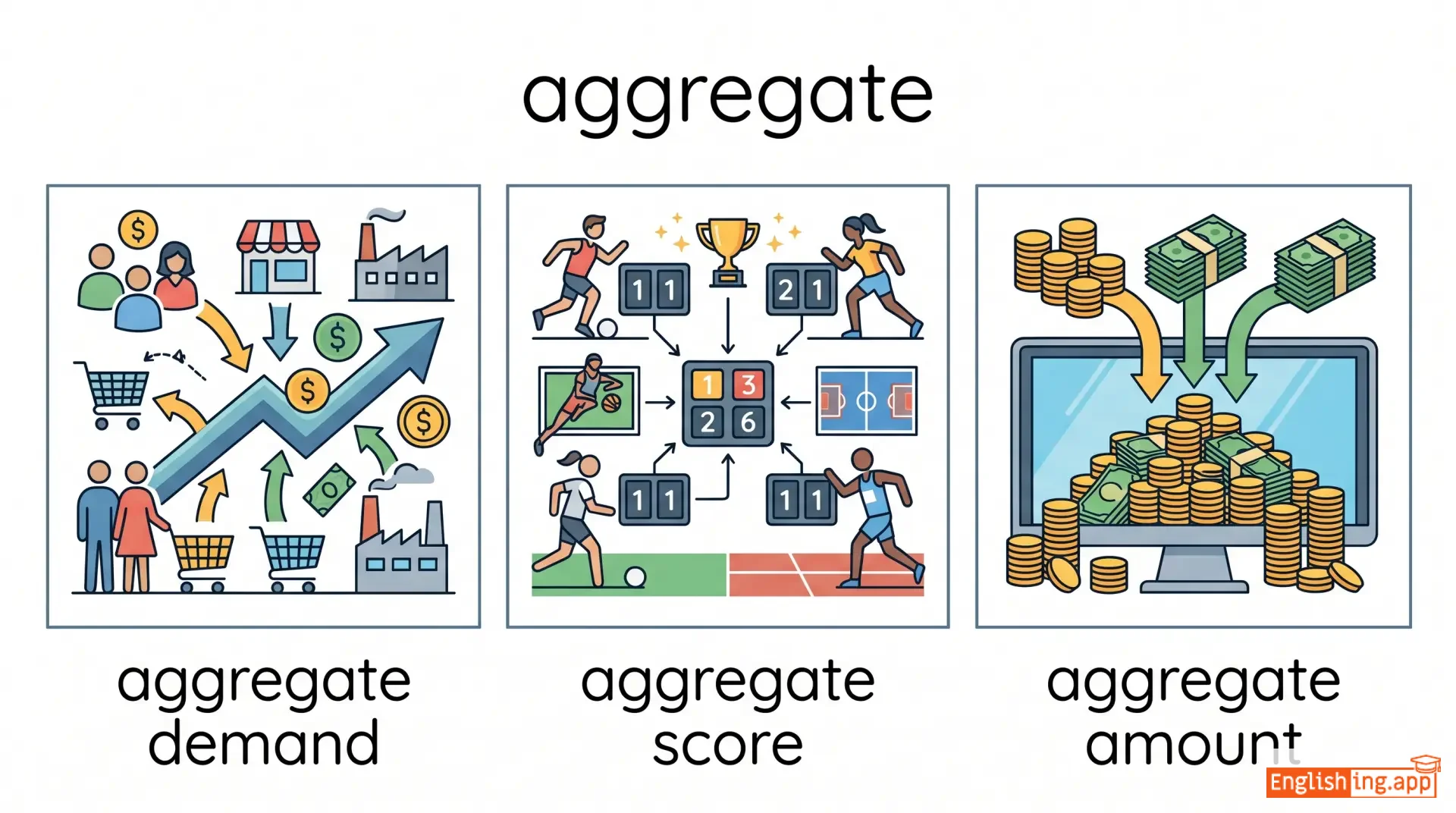
aggregate demand, aggregate score, aggregate amount, aggregate data
••••••
|
聚合是把所有东西放在一起形成一个大总和。
••••••
|
|
⚡
••••••
|
/əˈlæk.rə.ti/
noun
(艾拉克里蒂)
••••••
|

|
敏捷
alacrity
••••••
|
- •••••• | - •••••• | - •••••• | - •••••• |
Cheerful willingness, eagerness, or readiness to do something.
••••••
|
She accepted the invitation with alacrity. |
她愉快地接受了邀请。
Tā yúkuài de jiēshòu le yāoqǐng.
••••••
|
- •••••• | - •••••• | - •••••• |
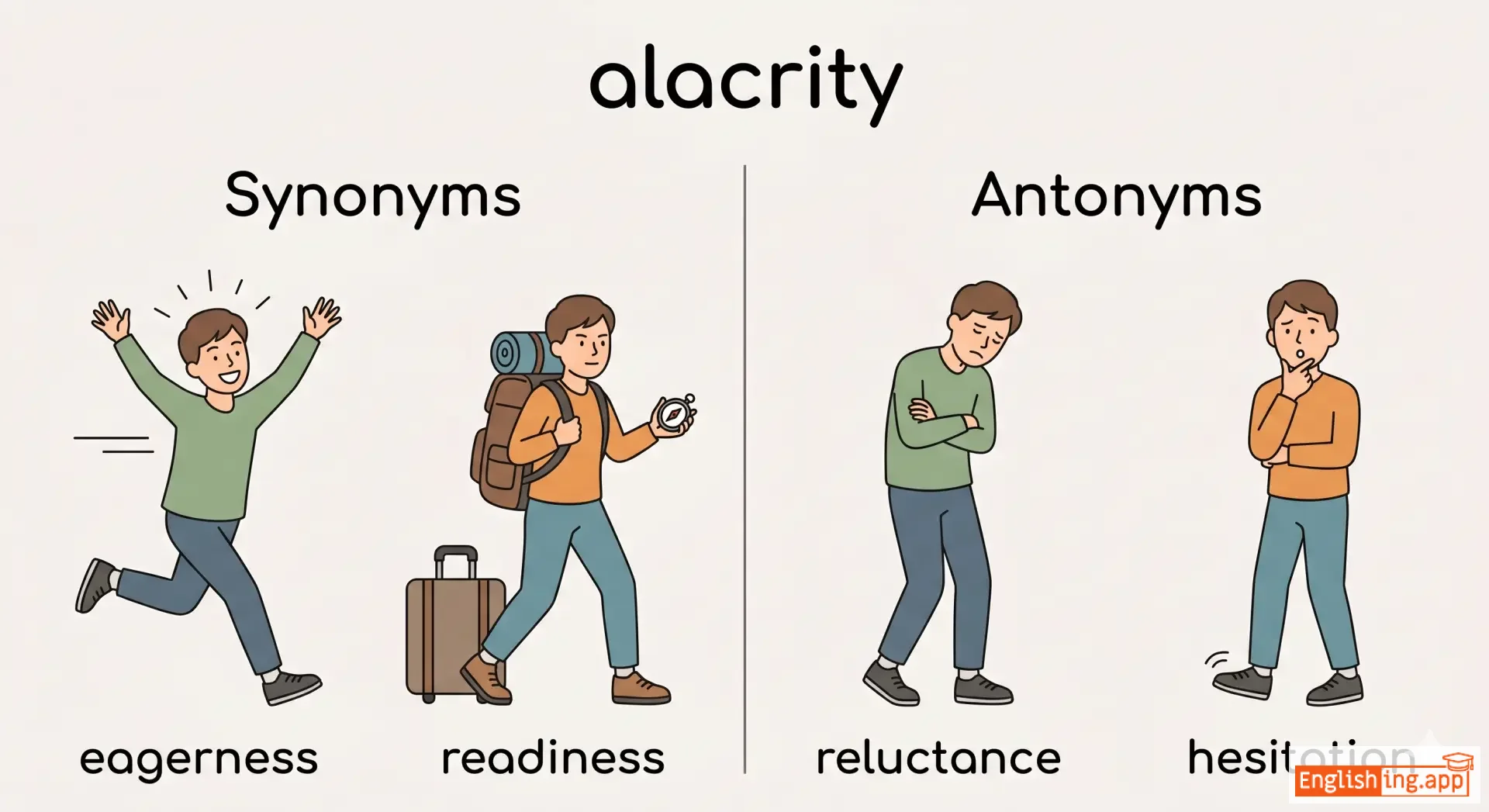
eagerness, readiness, enthusiasm, willingness, promptness
••••••
|
reluctance, hesitation, unwillingness
••••••
|
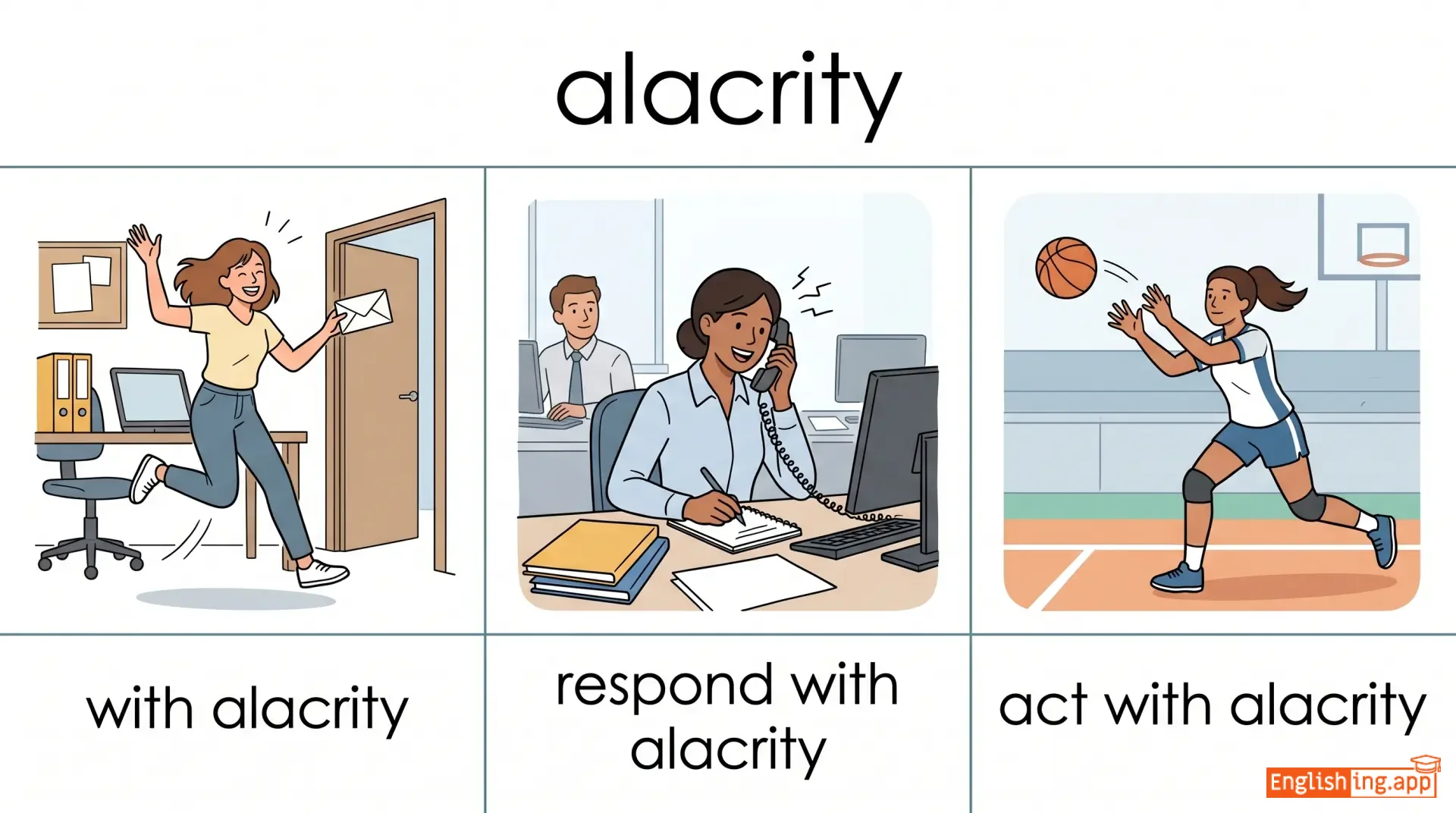
with alacrity, respond with alacrity, act with alacrity
••••••
|
Alacrity像‘闪电’一样快速地行动。
••••••
|
|
⚗️
••••••
|
/ˈælkəmi/
noun
(炼金术)
••••••
|

|
炼金术
liànjīnshù
••••••
|
- •••••• | - •••••• | - •••••• | - •••••• |
A medieval practice combining elements of chemistry and philosophy, aimed at transforming matter, especially turning base metals into gold.
••••••
|
Medieval scientists devoted their lives to alchemy. |
中世纪的科学家们将他们的生命献给了炼金术。
Zhongshiji de kexuejiamen jiang tamen de shengming xiang gei le liànjīnshù.
••••••
|
turn lead into gold |
Attempt to achieve something impossible or miraculous.
••••••
|
将铅变成黄金
Jiāng qiān biànchéng huángjīn
••••••
|
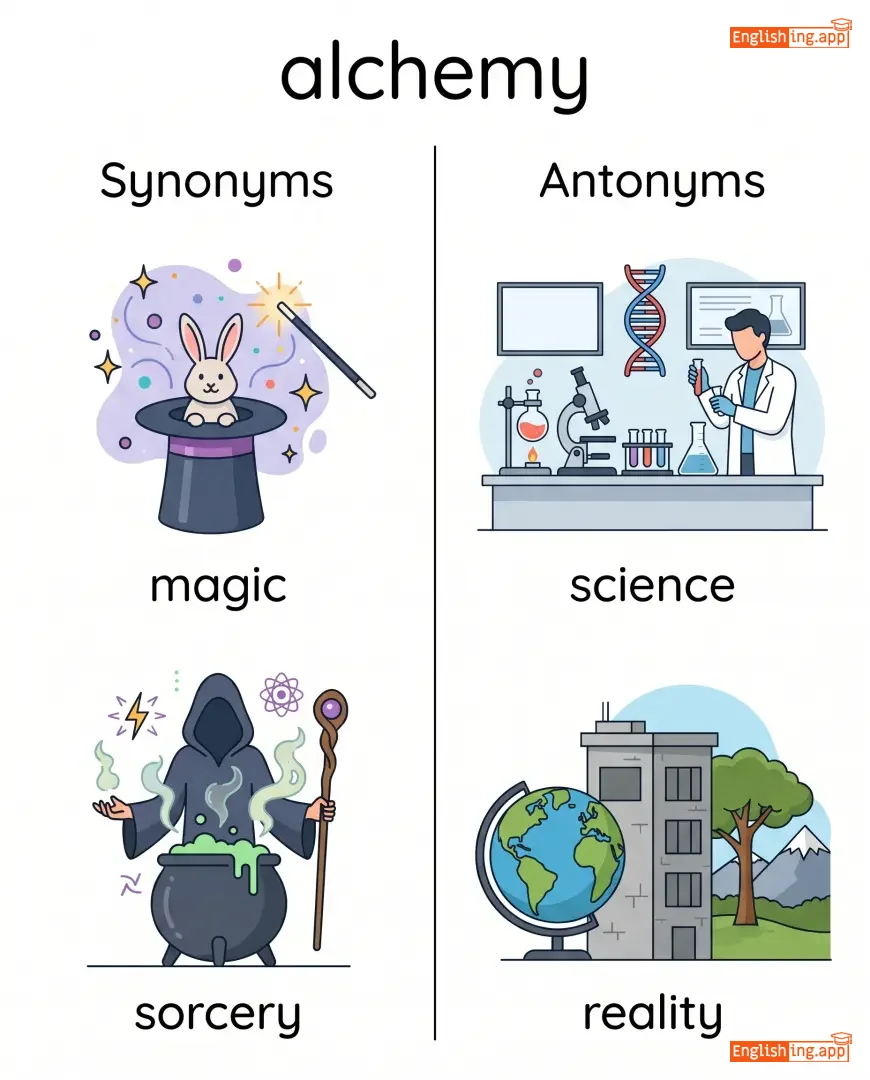
magic, sorcery, transmutation, wizardry, chemistry
••••••
|
science, reality
••••••
|
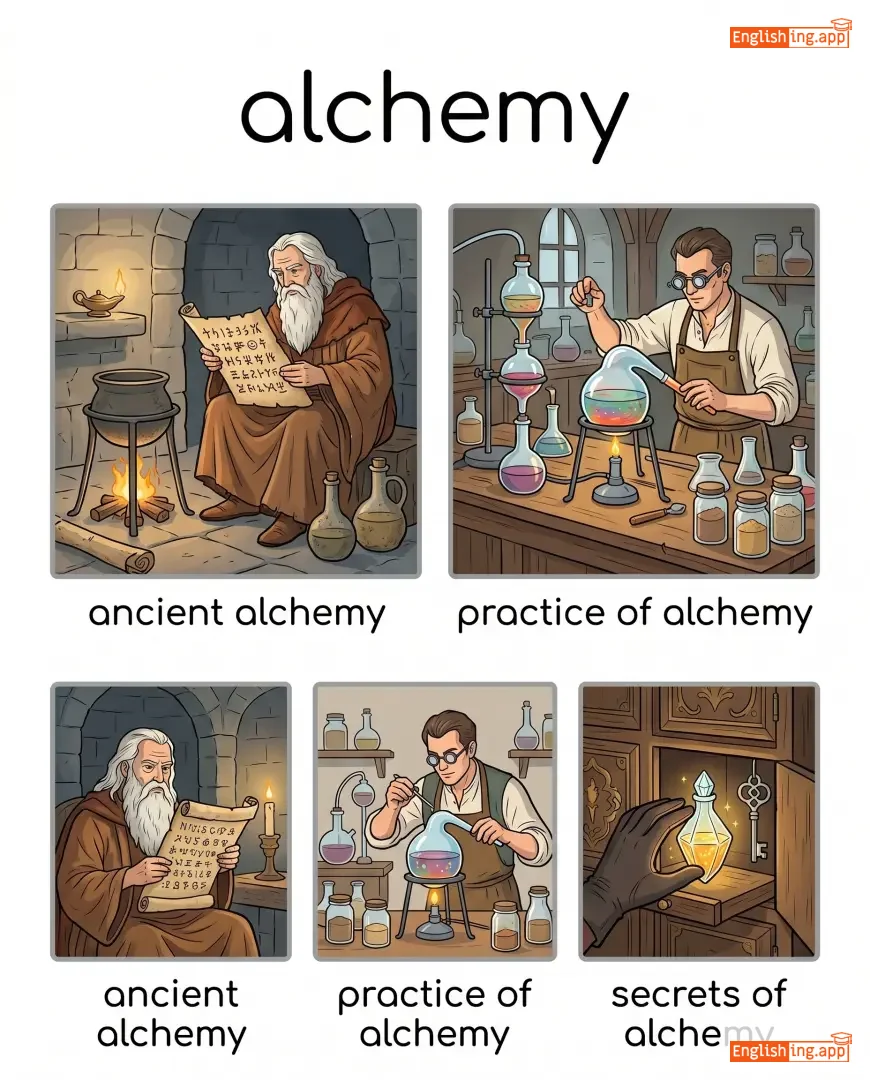
ancient alchemy, practice of alchemy, secrets of alchemy
••••••
|
炼金术 = 用魔法把所有东西都变成黄金。
••••••
|
|
😌
••••••
|
/əˈleɪ/
verb
(ā lái)
••••••
|
|
缓解
huǎn jiě
••••••
|
allayed
ā lái dé
••••••
|
allayed
ā lái dé
••••••
|
allays
ā lái sī
••••••
|
allaying
ā lái yíng
••••••
|
to reduce the intensity of fear, worry, or pain; to calm
••••••
|
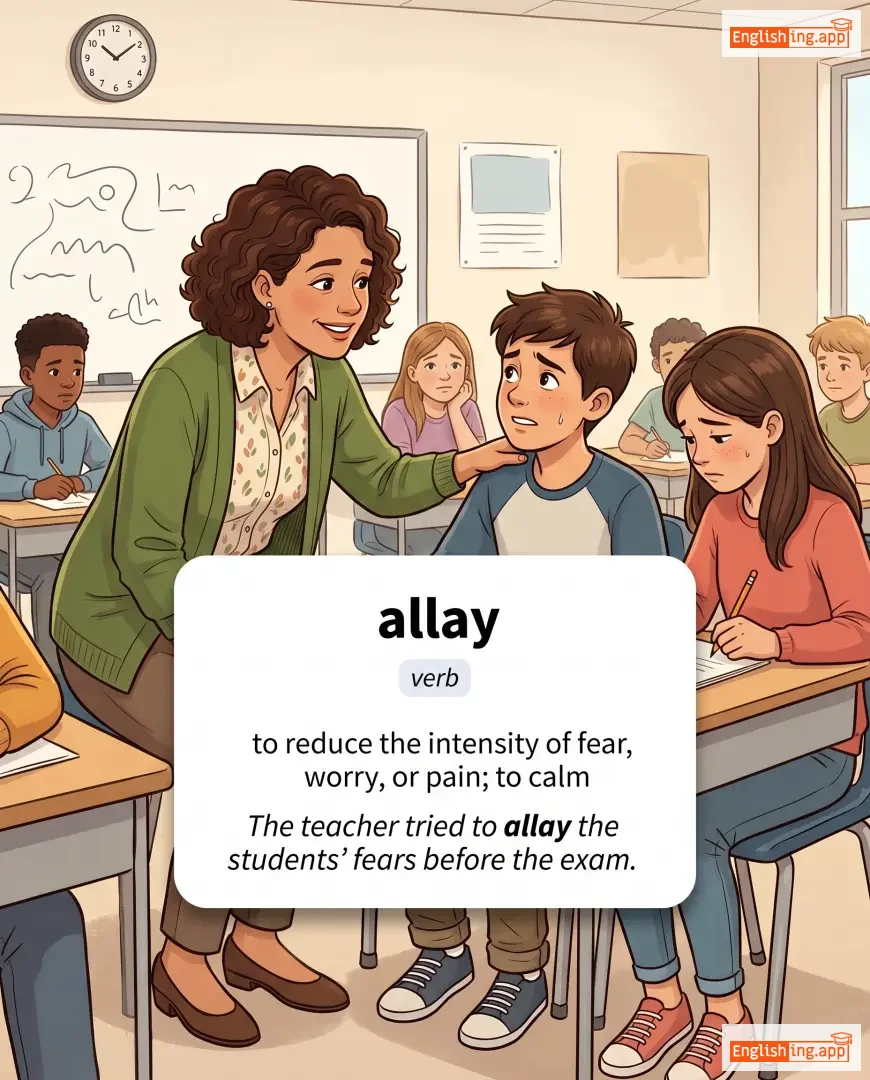
The teacher tried to allay the students’ fears before the exam.
老师在考试前试图缓解学生们的恐惧。
••••••
|
老师在考试前试图缓解学生们的恐惧。
Lǎoshī zài kǎoshì qián shìtú huǎn jiě xuéshēngmen de kǒngjù.
••••••
|
- •••••• | - •••••• | - •••••• |
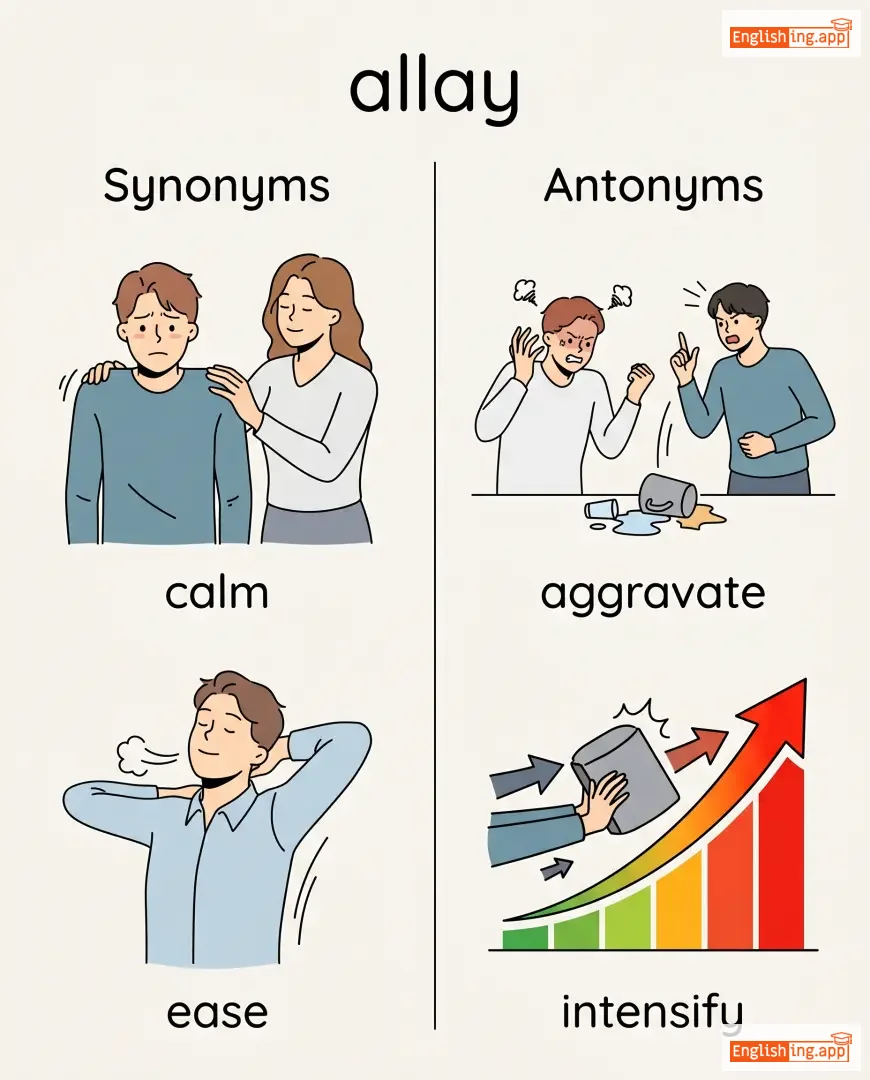
calm, ease, reduce, alleviate, pacify
••••••
|
aggravate, intensify, worsen
••••••
|
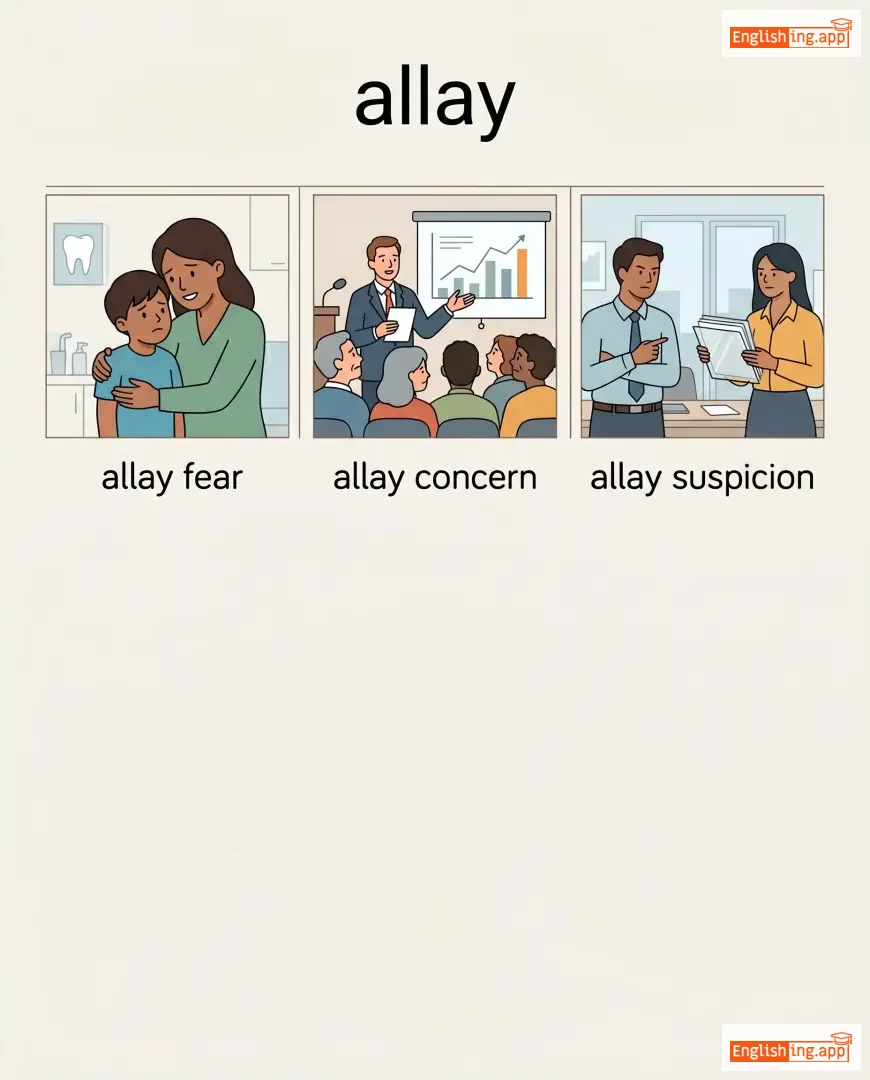
allay fear, allay concern, allay suspicion, allay anxiety
••••••
|
缓解即All Away - 驱散所有恐惧
••••••
|

