|
表情符号
|
单词 | Images | 翻译 | 过去时 | 过去分词 | 第三人称单数 | 动名词 | 含义 | 例句 | 例句翻译 | 示例表达 | 示例表达含义 | 示例表达翻译 | 同义词 | 反义词 | 搭配词 | 助记符 |
|---|---|---|---|---|---|---|---|---|---|---|---|---|---|---|---|---|---|
|
⏳
••••••
|
/stɪnt/
noun
(中文)
••••••
|
|
短期工作
duǎnqī gōngzuò
••••••
|
- •••••• | - •••••• | - •••••• | - •••••• |
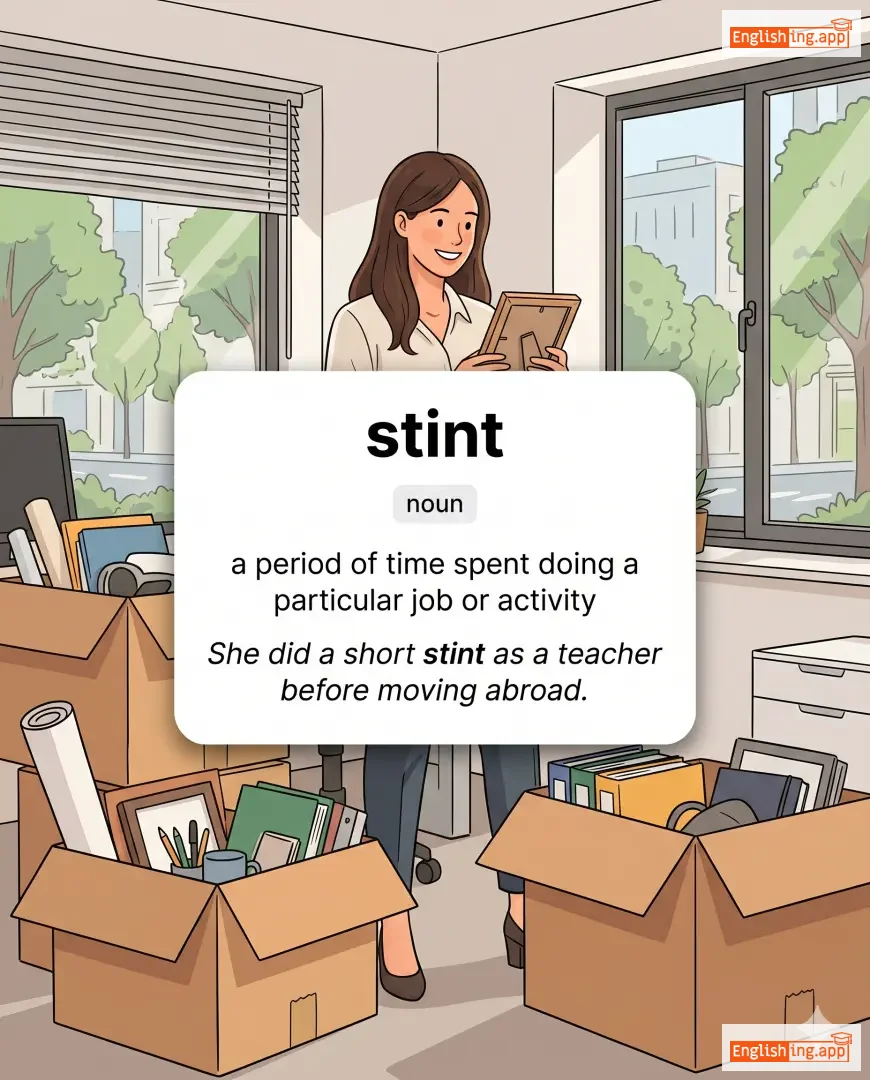
a period of time spent doing a particular job or activity
••••••
|
She did a short stint as a teacher before moving abroad.
她在搬到国外之前做了一段短时间的教师工作。
••••••
|
她在搬到国外之前做了一段短时间的教师工作。
Tā zài bān dào guówài zhīqián zuòle yī duàn duǎn shíjiān de jiàoshī gōngzuò.
••••••
|
- •••••• | - •••••• | - •••••• |
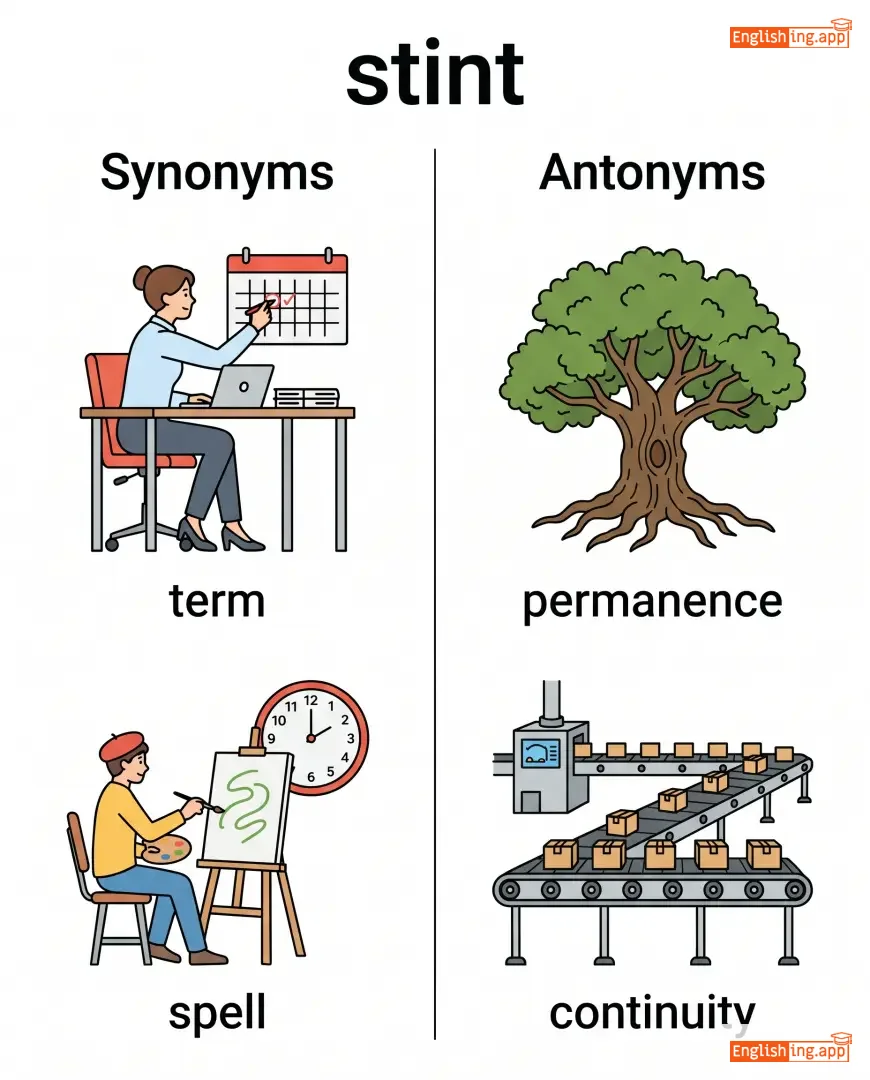
term, spell, period, stretch, service
••••••
|
permanence, continuity
••••••
|
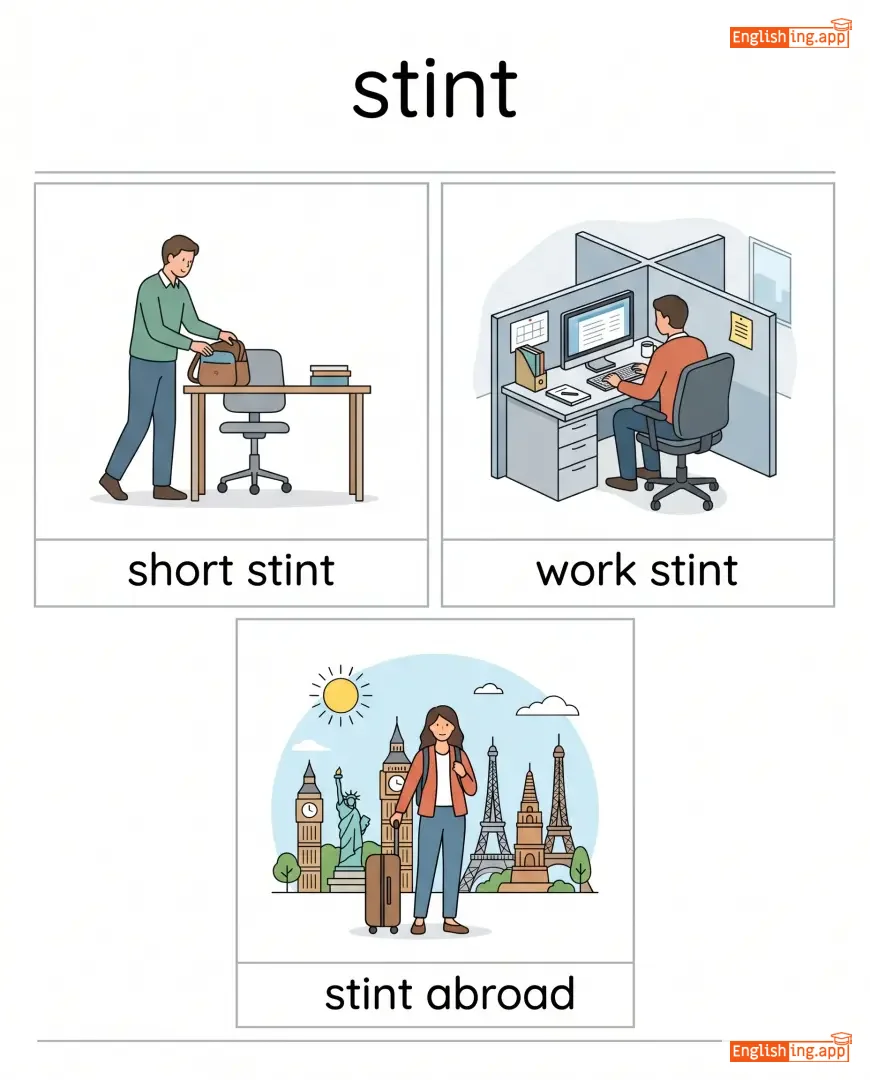
short stint, work stint, stint abroad, stint in service
••••••
|
Stint - 短期工作,类似兼职工作
••••••
|
|
📜
••••••
|
/ˈstɪp.jʊ.leɪt/
verb
(斯蒂普莱特)
••••••
|
|
规定
guīdìng
••••••
|
stipulated
斯蒂普莱特德
••••••
|
stipulated
斯蒂普莱特德
••••••
|
stipulates
斯蒂普莱特斯
••••••
|
stipulating
斯蒂普莱廷
••••••
|
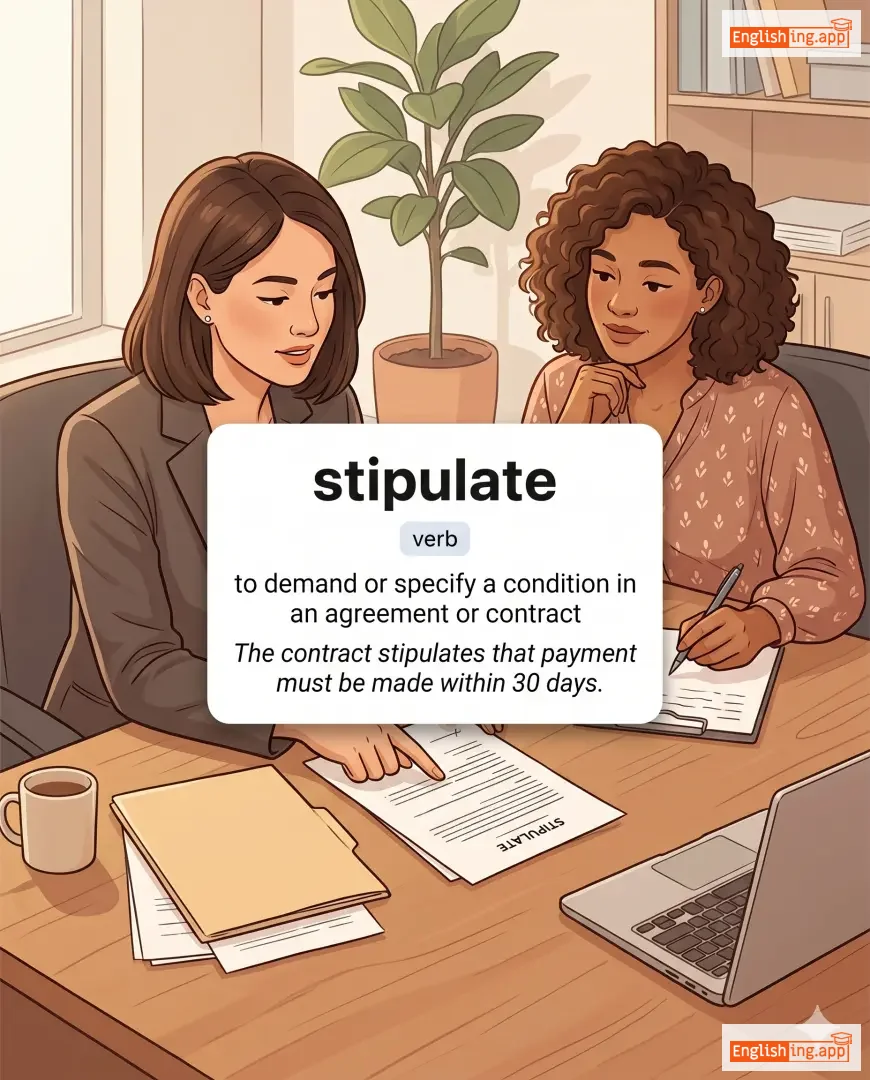
to demand or specify a condition in an agreement or contract
••••••
|
The contract stipulates that payment must be made within 30 days.
合同规定付款必须在30天内完成。
••••••
|
合同规定付款必须在30天内完成。
Hetong guīdìng fùkuǎn bìxū zài 30 tiān nèi wánchéng.
••••••
|
stipulate terms
规定条款
••••••
|
to formally specify conditions in an agreement
••••••
|
规定条款
guīdìng tiáokuǎn
••••••
|
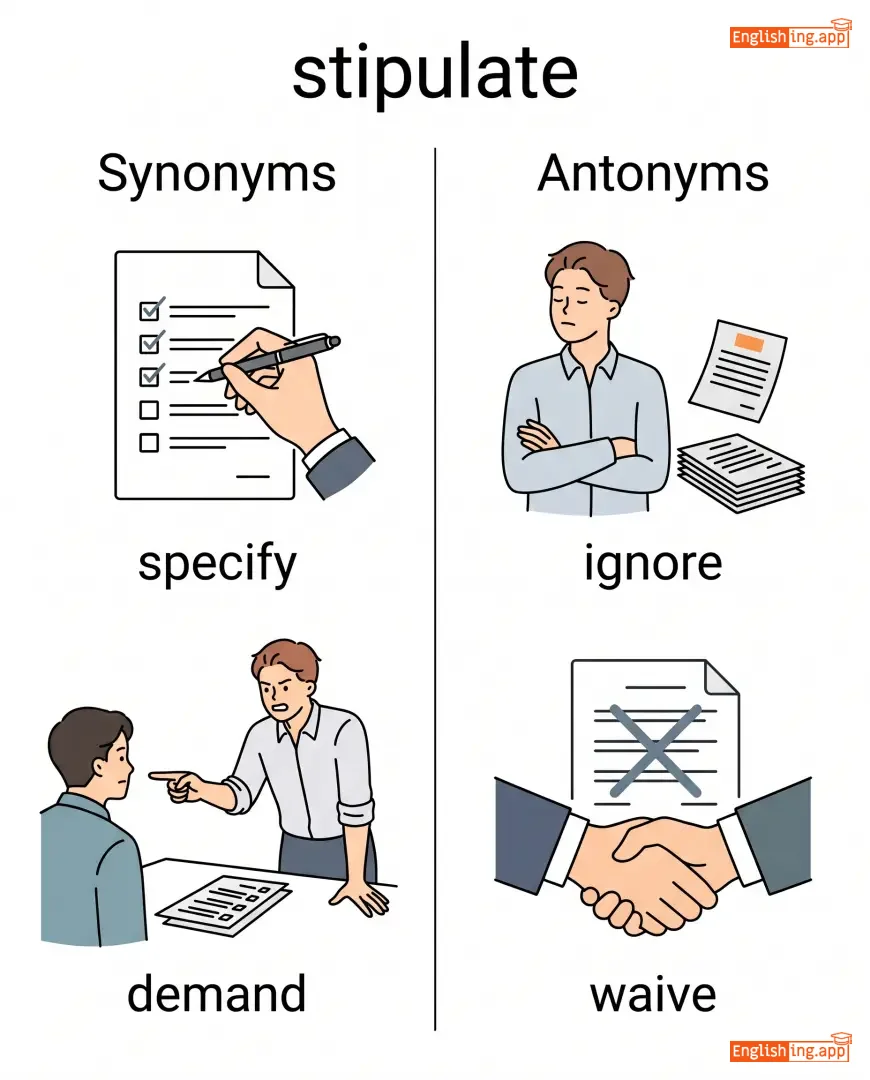
specify, demand, require, prescribe, condition
••••••
|
ignore, waive, overlook
••••••
|
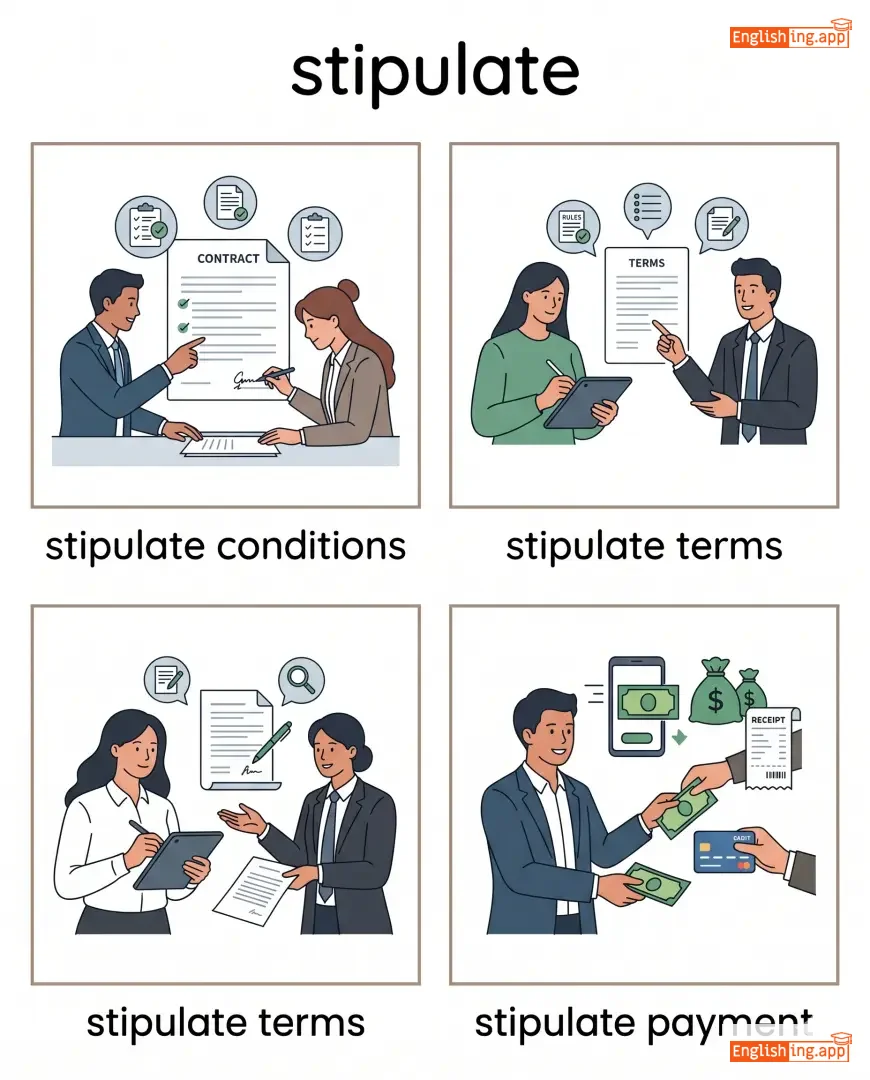
stipulate conditions, stipulate terms, stipulate payment, stipulate requirement
••••••
|
stipulate = 规定条款
••••••
|
|
🪵
••••••
|
/ˈstɒlɪd/
adjective
(斯托利德)
••••••
|
|
冷静的,沉默的
lěngjìng de, chénmò de
••••••
|
- •••••• | - •••••• | - •••••• | - •••••• |
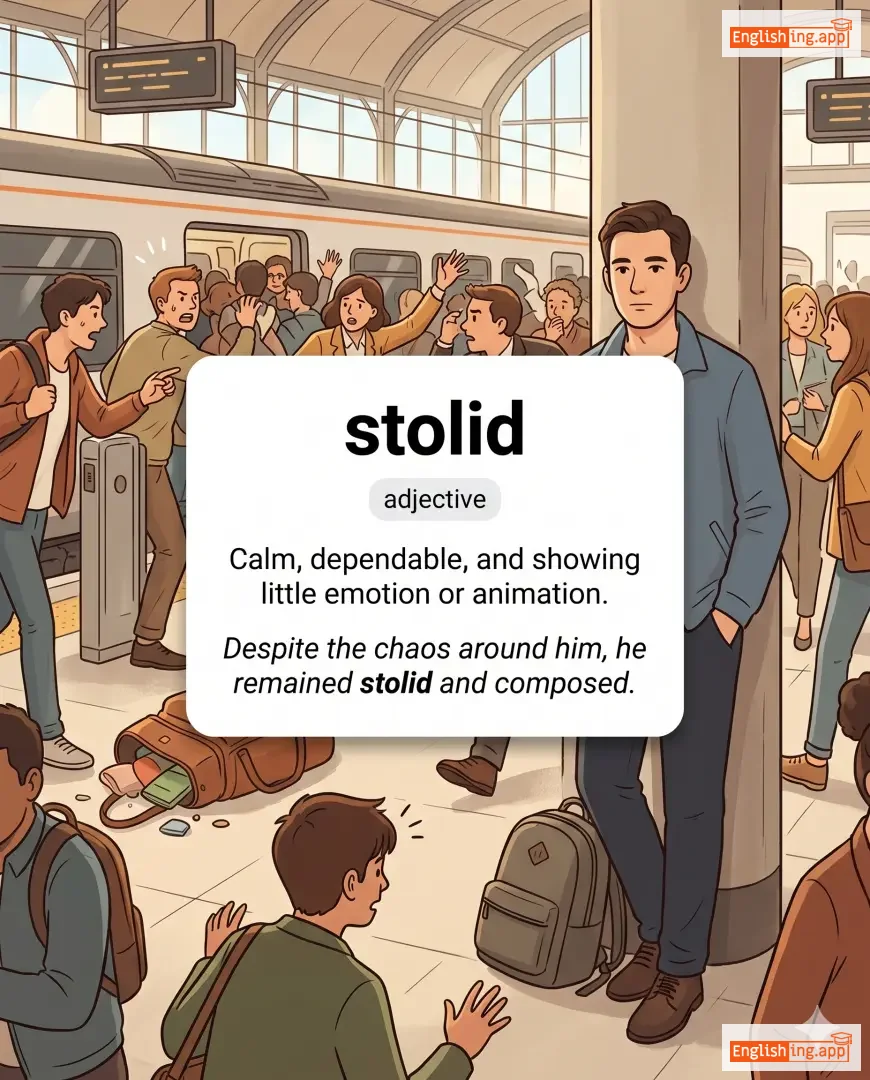
Calm, dependable, and showing little emotion or animation.
••••••
|
Despite the chaos around him, he remained stolid and composed.
迪斯派特 德 凯欧斯 阿劳恩德 希姆, 希 里门德 斯托利德 安德 坎坡兹德。
••••••
|
尽管周围混乱,他依然冷静沉着。
Jǐnguǎn zhōuwéi hùnluàn, tā yīrán lěngjìng chénzhuó.
••••••
|
- •••••• | - •••••• | - •••••• |
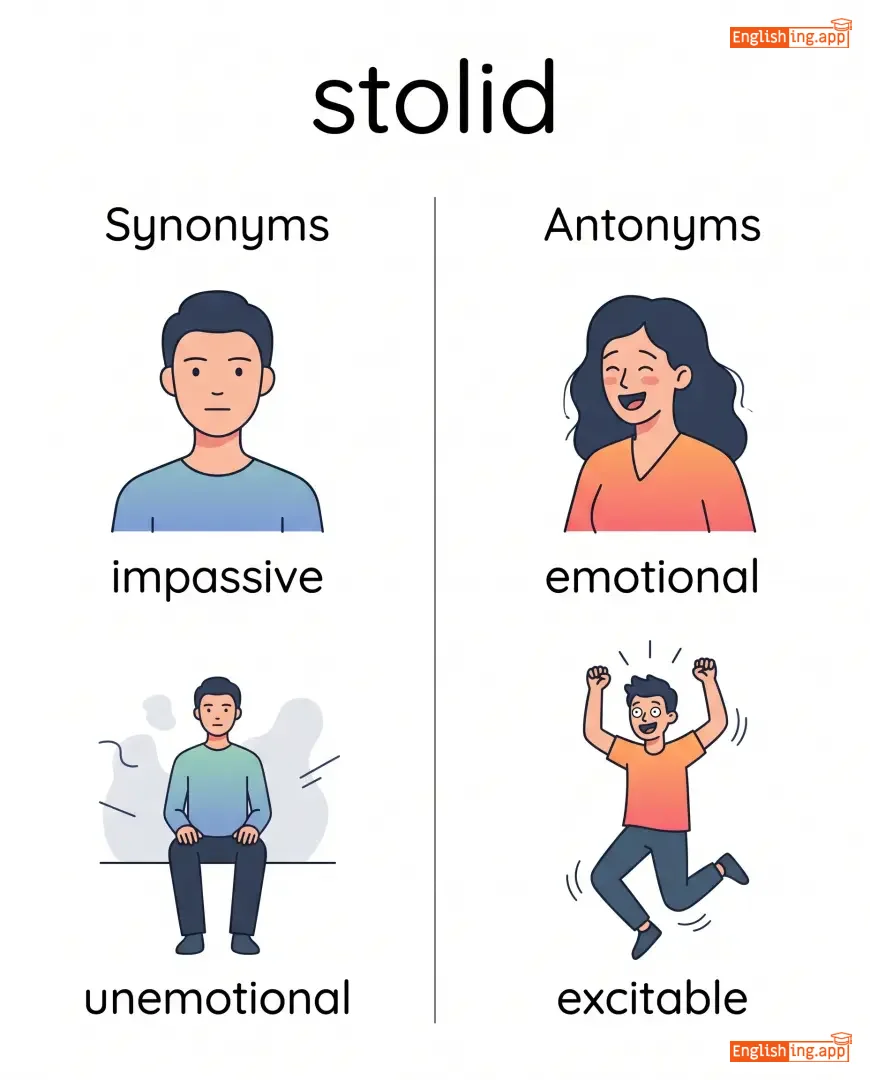
impassive, unemotional, phlegmatic, placid, steady
••••••
|
emotional, excitable, expressive
••••••
|
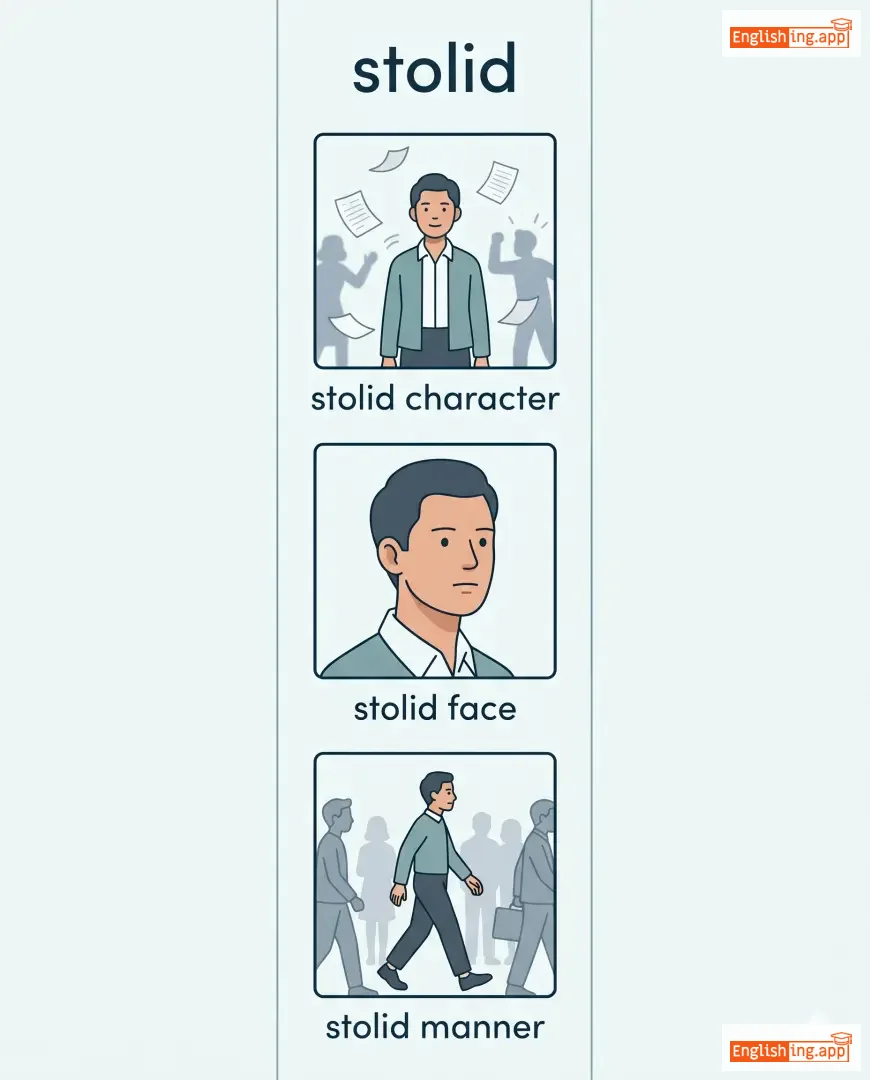
stolid character, stolid face, stolid manner, stolid calm
••••••
|
Stolid – 像石头一样冷静。
••••••
|
|
📏
••••••
|
/ˈstraɪ.eɪ.tɪd/
adjective
(esutaietede)
••••••
|
|
条纹的
tiaowende
••••••
|
- •••••• | - •••••• | - •••••• | - •••••• |
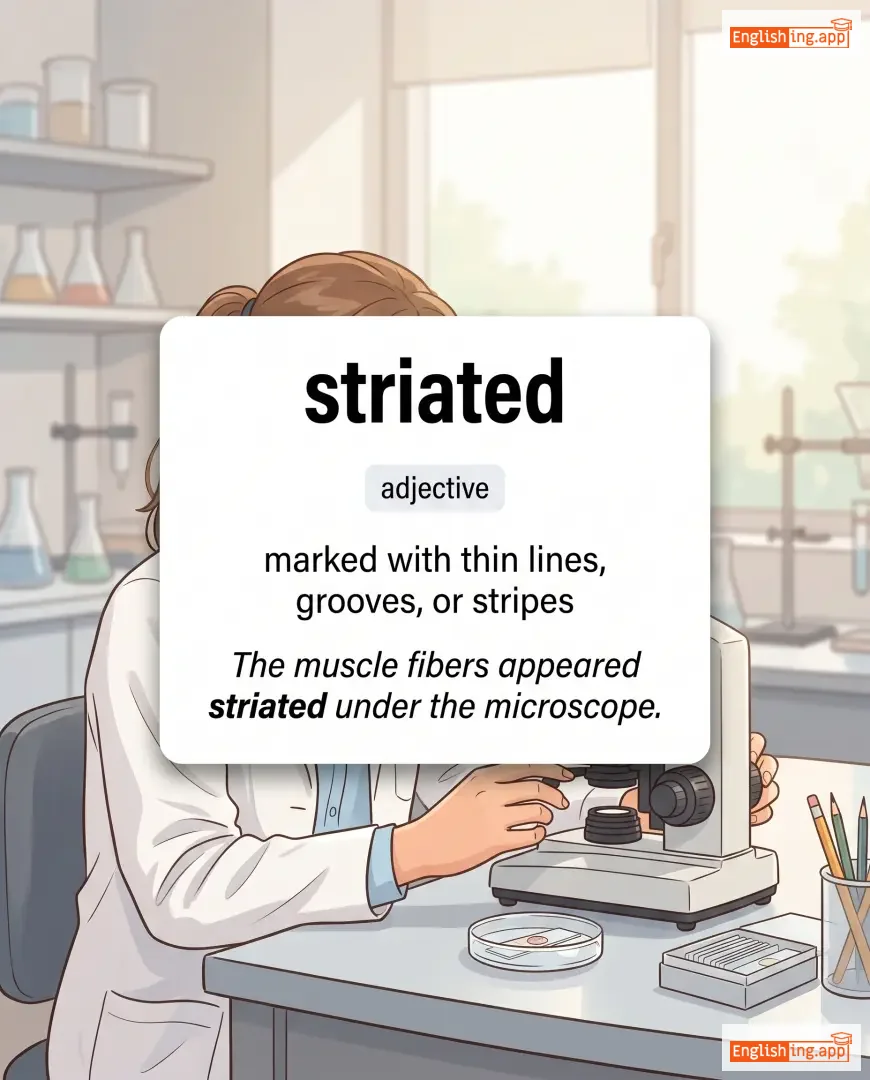
marked with thin lines, grooves, or stripes
••••••
|
The muscle fibers appeared striated under the microscope. |
在显微镜下,肌肉纤维看起来是条纹的。
Zai xianweijing xia, jirou xianwei kan qilai shi tiaowende.
••••••
|
- •••••• | - •••••• | - •••••• |
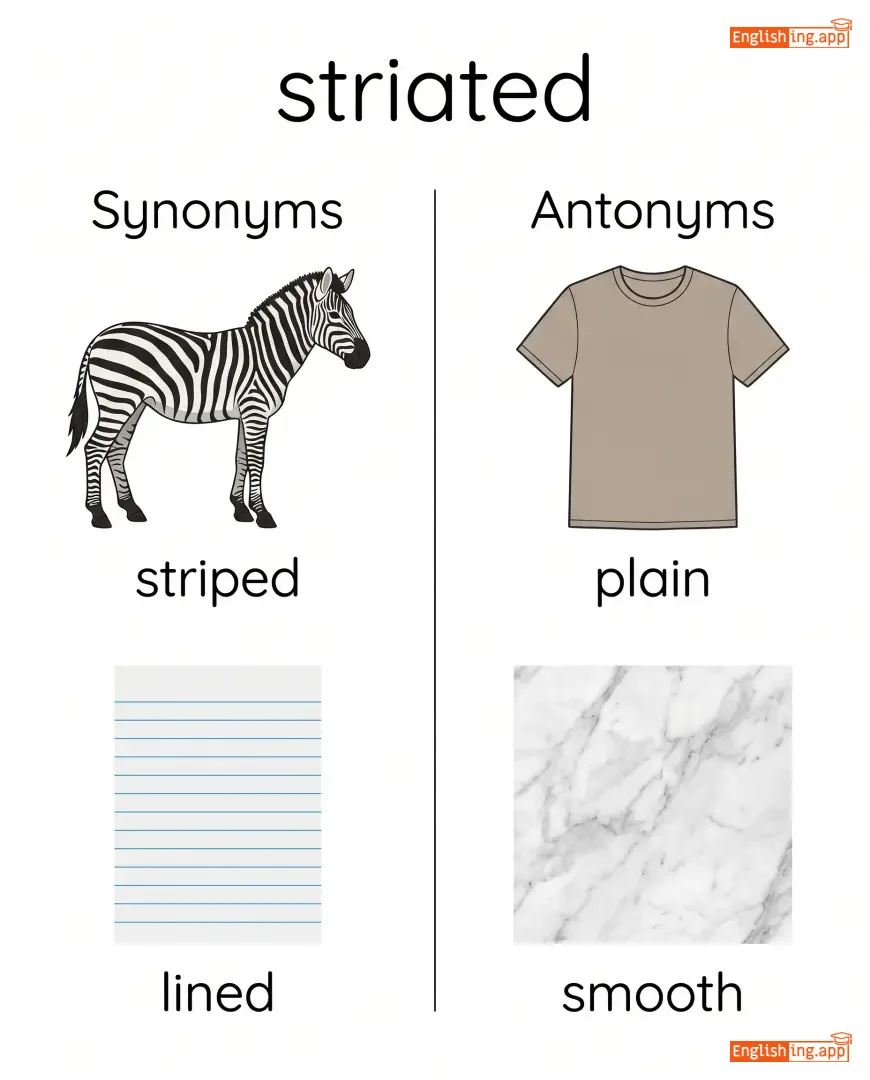
striped, lined, grooved, banded
••••••
|
plain, smooth
••••••
|
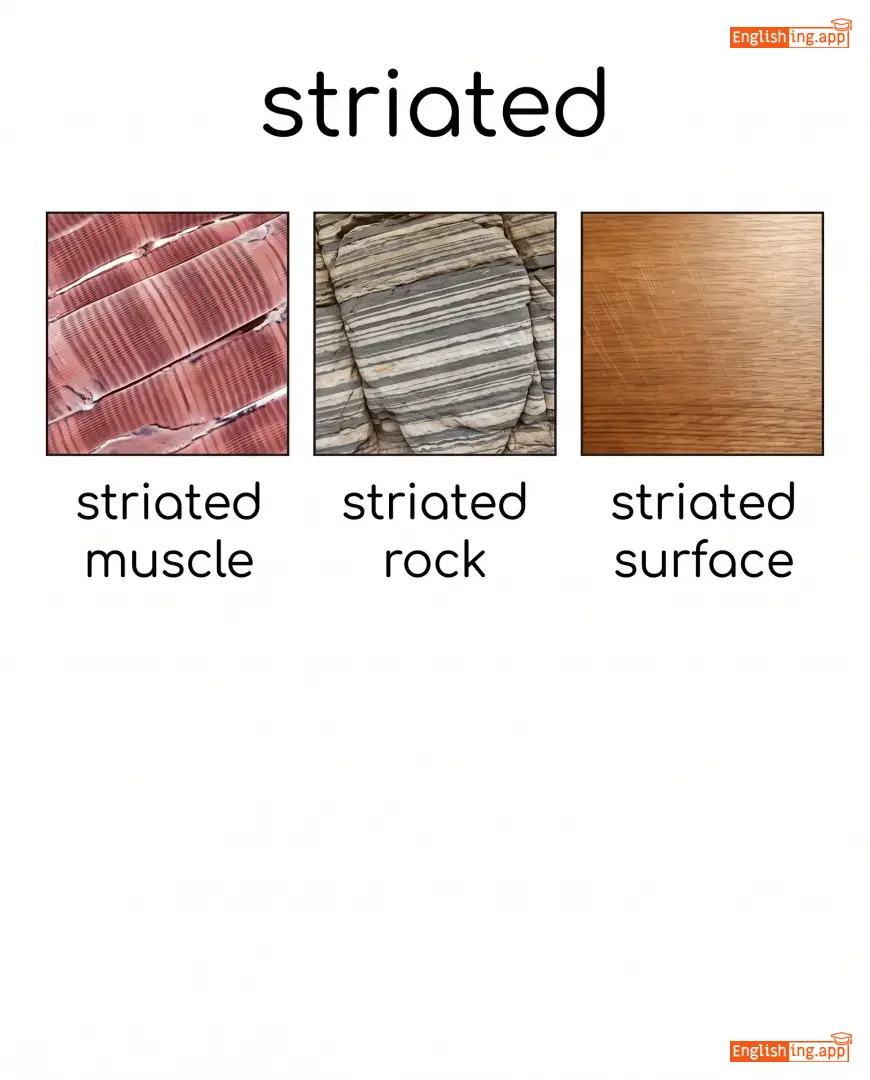
striated muscle, striated rock, striated surface, striated pattern
••••••
|
Striated意味着有条纹,就像马路上的斑马线。
••••••
|
|
🚶♂️
••••••
|
/strʌt/
verb
(斯特拉特)
••••••
|

|
昂首阔步
áng shǒu kuò bù
••••••
|
strutted
斯特拉特德
••••••
|
strutted
斯特拉特德
••••••
|
struts
斯特拉特斯
••••••
|
strutting
斯特拉特英
••••••
|
to walk with a stiff, proud, and confident gait, often to show off
••••••
|
He strutted across the stage after winning the award.
他赢得奖项后自信地走上了舞台。
••••••
|
他赢得奖项后自信地走上了舞台。
Tā yíng dé jiǎng xiàng hòu zì xìn de zǒu shàng le wǔ tái.
••••••
|
strut one's stuff
展示自己的能力
••••••
|
to show one's abilities, skills, or confidence proudly
••••••
|
展示你的技能
zhǎn shì nǐ de jì néng
••••••
|
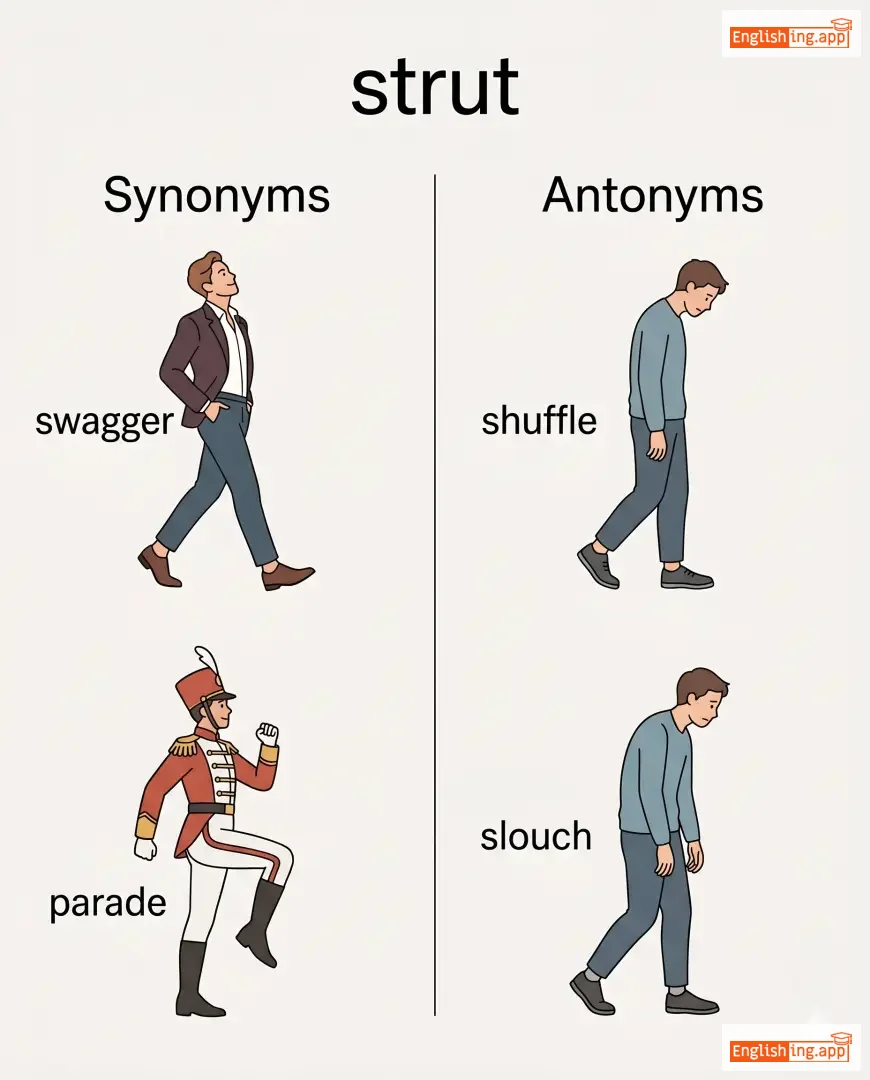
swagger, parade, flaunt, prance, show off
••••••
|
shuffle, slouch
••••••
|
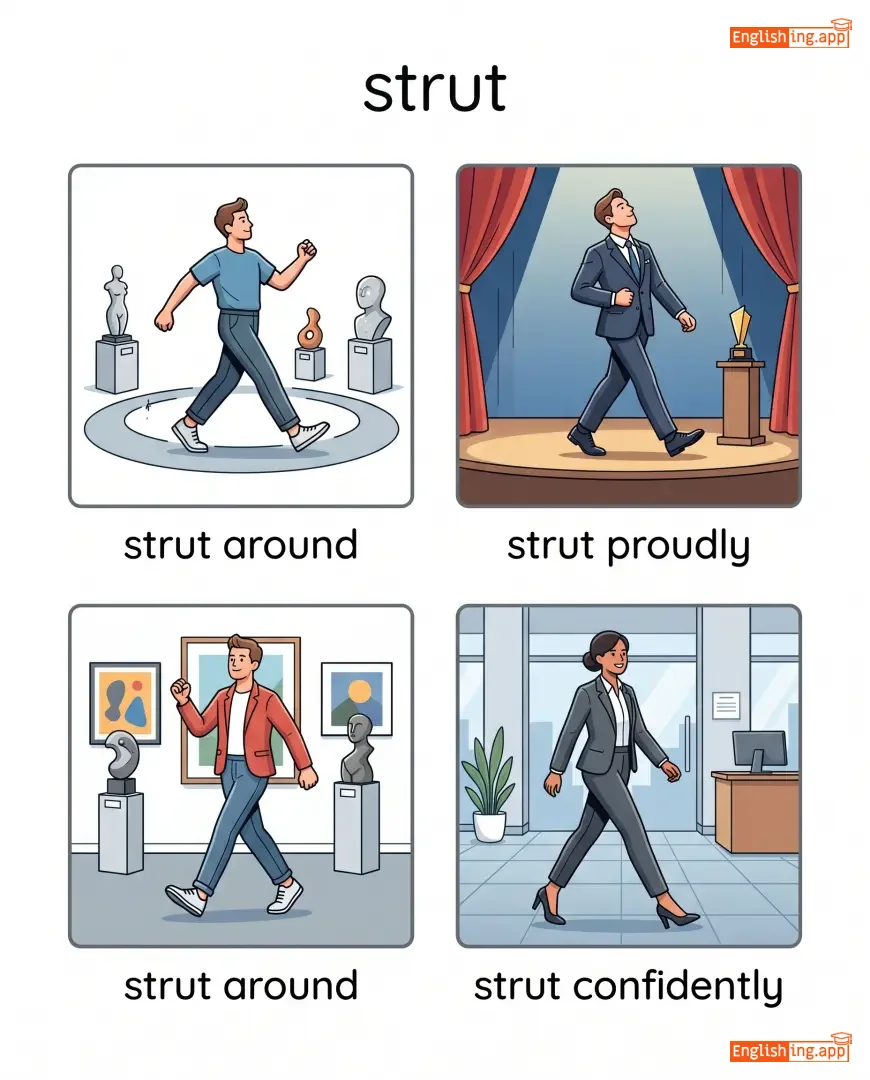
strut around, strut proudly, strut confidently, strut across
••••••
|
Strut 是走得像雄鹰一样,自信地昂首阔步
••••••
|
|
📜
••••••
|
/səˈpiːnə/
noun, verb
(萨布皮纳)
••••••
|
|
传票
chuanpiao
••••••
|
subpoenaed
萨布皮纳德
••••••
|
subpoenaed
萨布皮纳德
••••••
|
subpoenas
萨布皮纳斯
••••••
|
subpoenaing
萨布皮内英
••••••
|
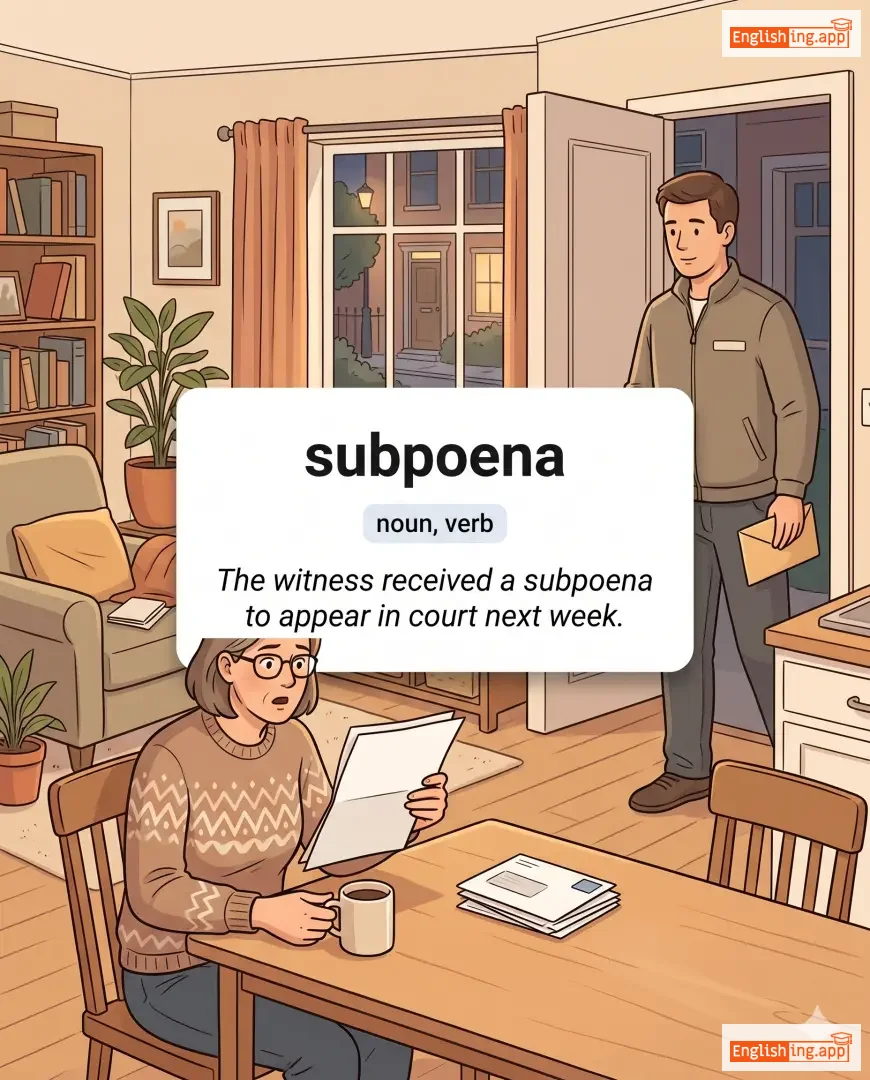
a legal document ordering someone to attend court; to summon someone with such a document
••••••
|
The witness received a subpoena to appear in court next week.
证人收到了传票,要求下周出庭。
••••••
|
证人收到了传票,要求下周出庭。
Zhengren shoudao le chuanpiao, yaoqiu xia zhou chuting.
••••••
|
issue a subpoena
发出传票
••••••
|
to formally send a legal order for someone to appear in court
••••••
|
发出传票
fachu chuanpiao
••••••
|
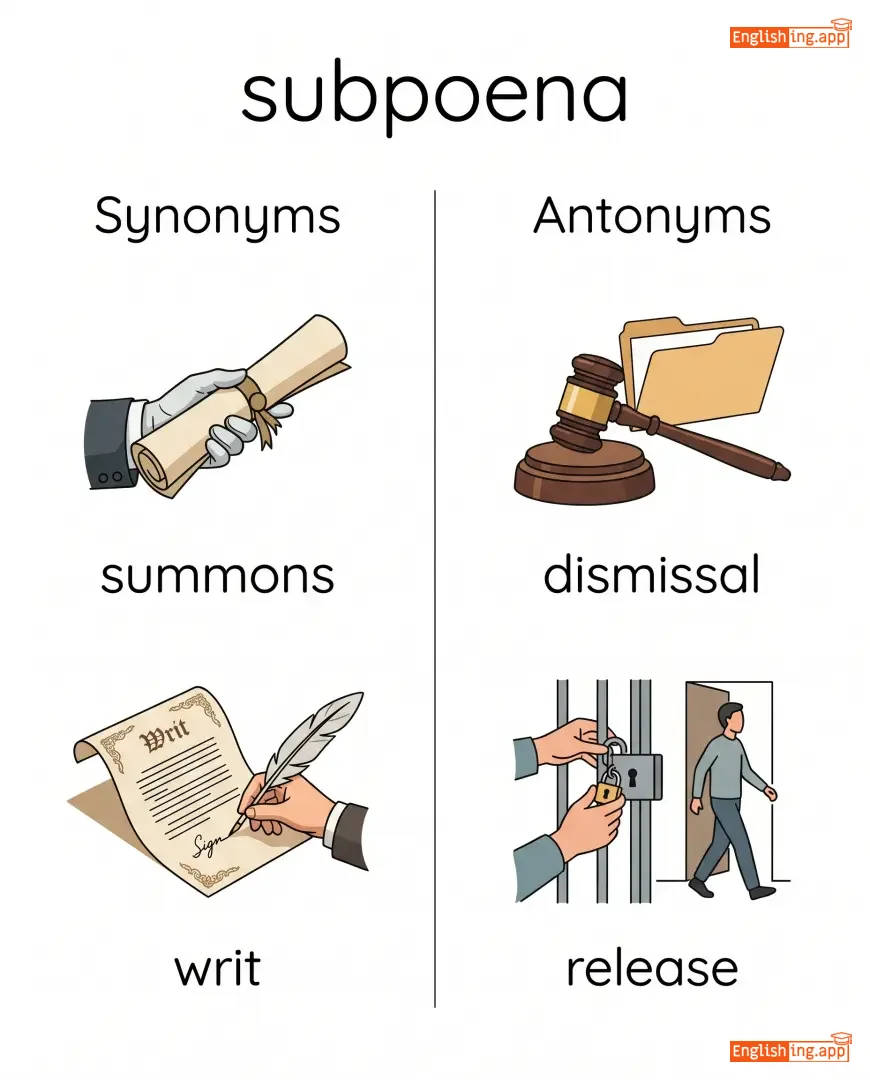
summons, writ, court order, mandate
••••••
|
dismissal, release
••••••
|
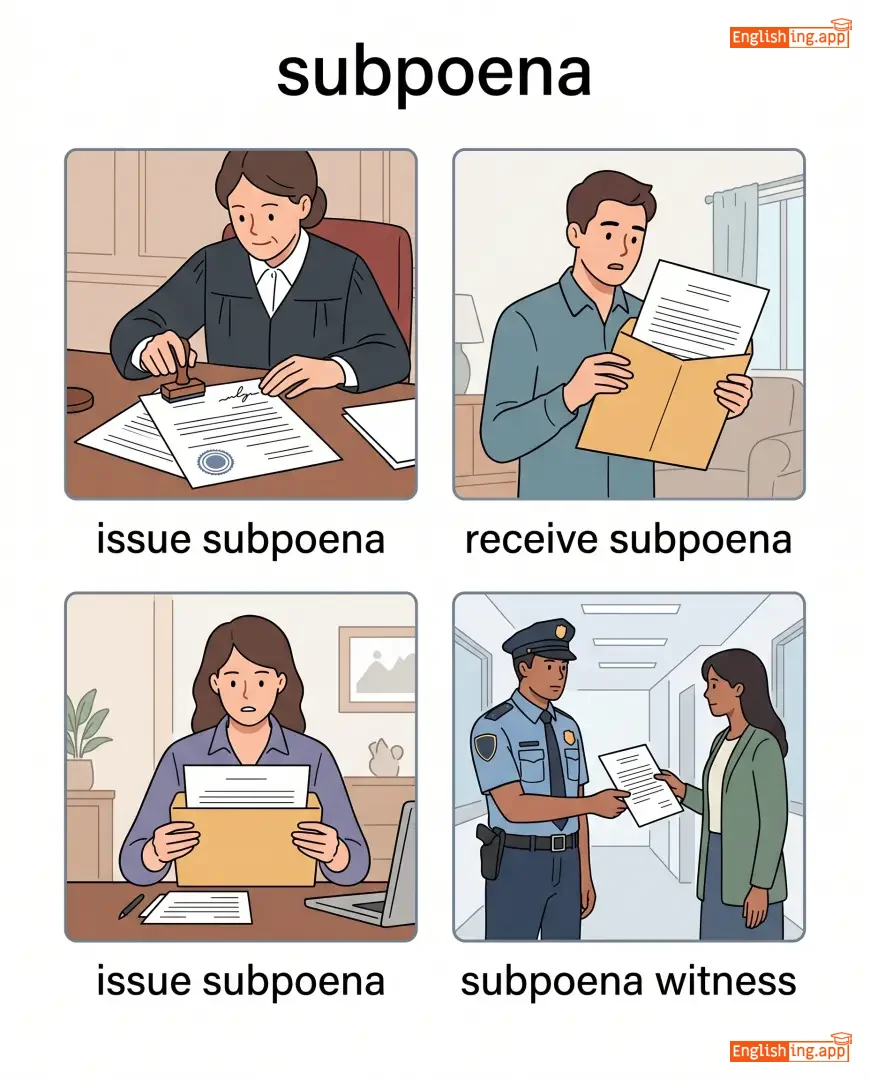
issue subpoena, receive subpoena, subpoena witness, subpoena records
••••••
|
Subpoena的意思是'sub'下面和'poena'惩罚 - 如果你不去法庭,就会有惩罚,所以是传票。
••••••
|
|
🌊
••••••
|
/səbˈsaɪd/
verb
(萨布赛德)
••••••
|
|
减少
jiǎnshǎo
••••••
|
subsided
萨布赛德德
••••••
|
subsided
萨布赛德德
••••••
|
subsides
萨布赛德斯
••••••
|
subsiding
萨布赛丁
••••••
|
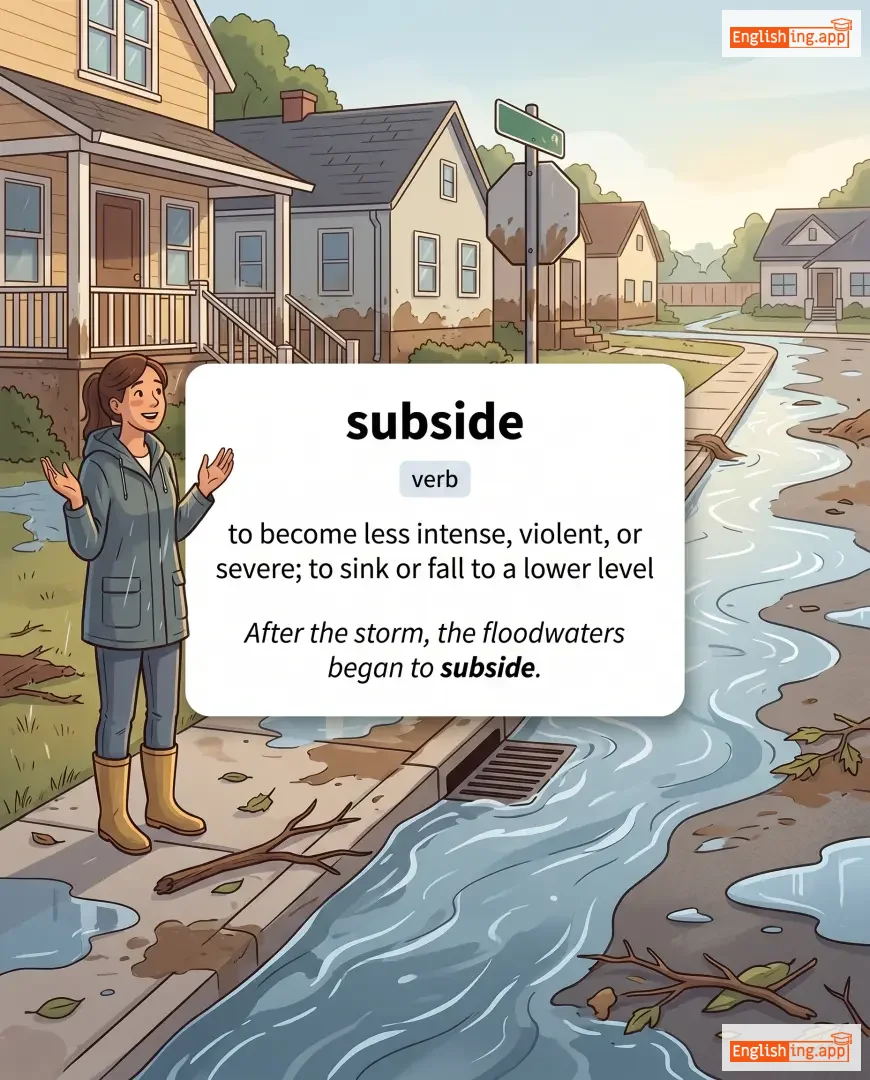
to become less intense, violent, or severe; to sink or fall to a lower level
••••••
|
After the storm, the floodwaters began to subside.
风暴过后,洪水开始退去。
••••••
|
风暴过后,洪水开始退去。
fēngbào guòhòu, hóngshuǐ kāishǐ tuìqù.
••••••
|
- •••••• | - •••••• | - •••••• |
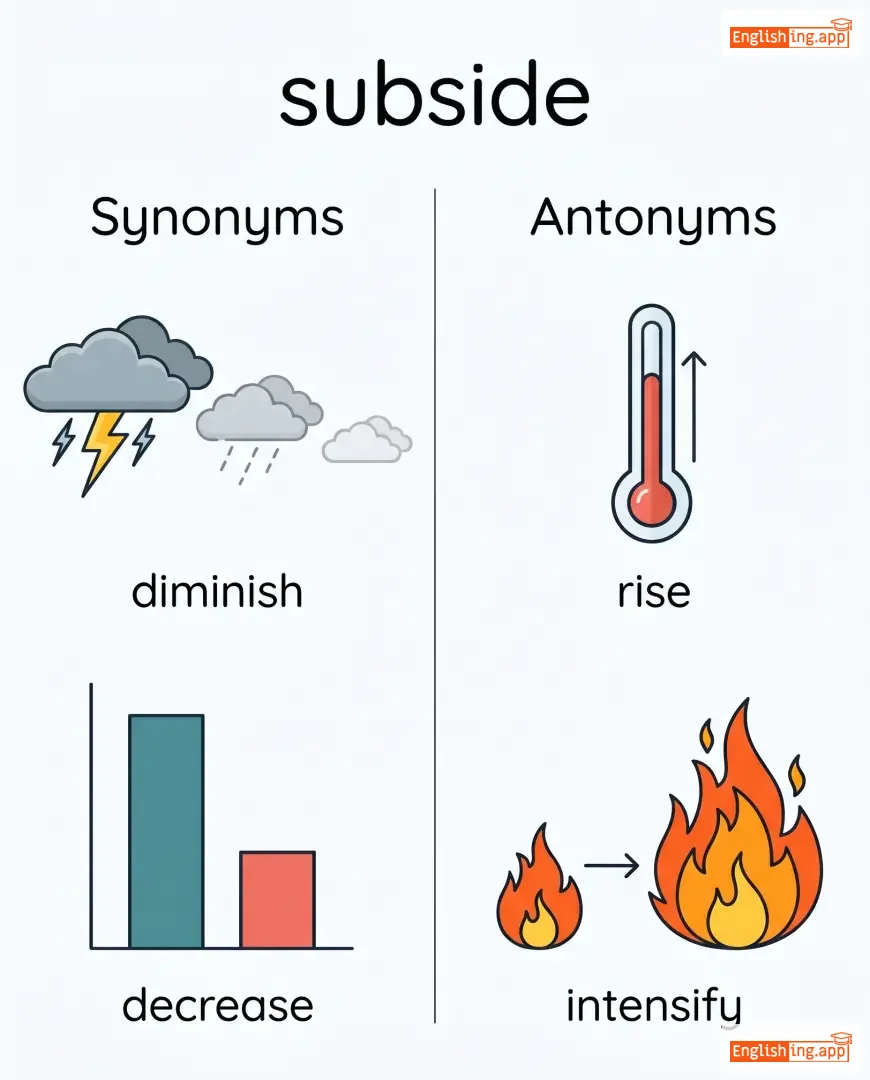
diminish, decrease, abate, recede, lessen
••••••
|
rise, intensify, increase
••••••
|
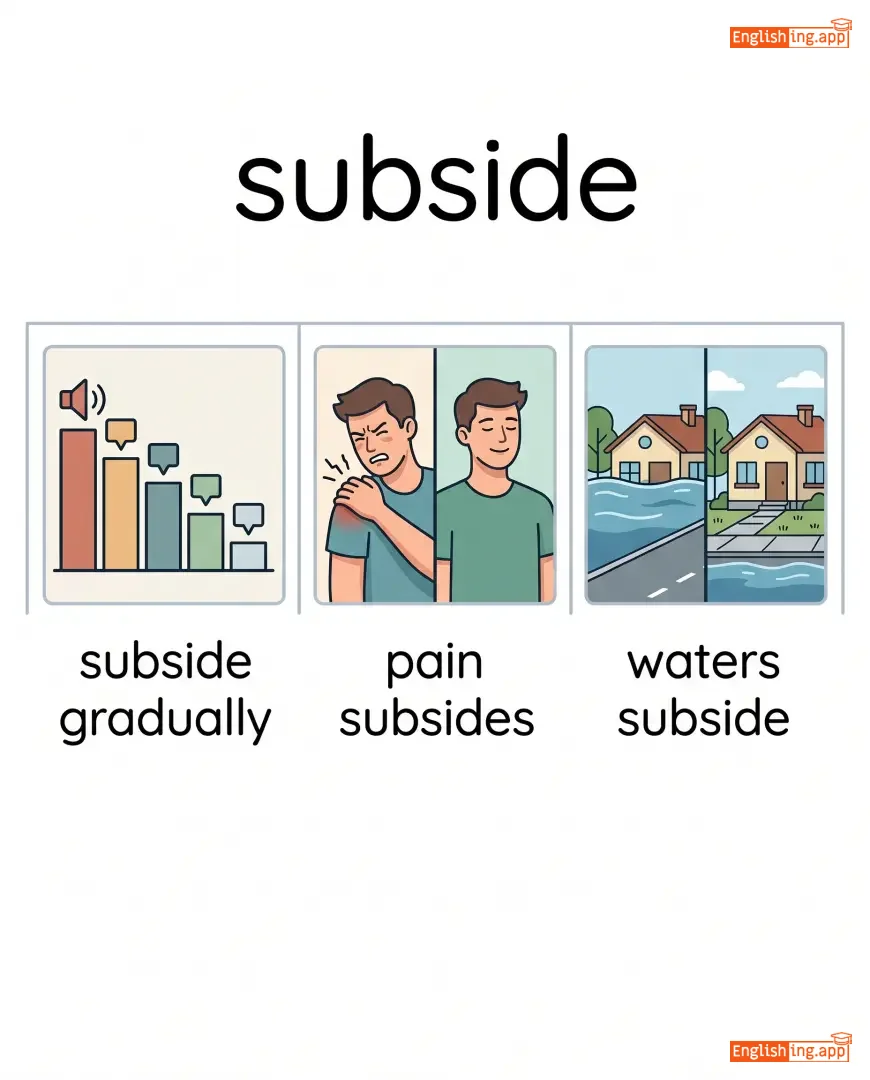
subside gradually, pain subsides, waters subside, anger subsides
••••••
|
Subside意指水位下降,就像暴风雨过后水位退去。
••••••
|
|
⚖️
••••••
|
/səbˈstænʃieɪt/
verb
(səbˈstænʃieɪt)
••••••
|
|
证实
zhèngshí
••••••
|
substantiated
substantiated
••••••
|
substantiated
substantiated
••••••
|
substantiates
substantiates
••••••
|
substantiating
substantiating
••••••
|
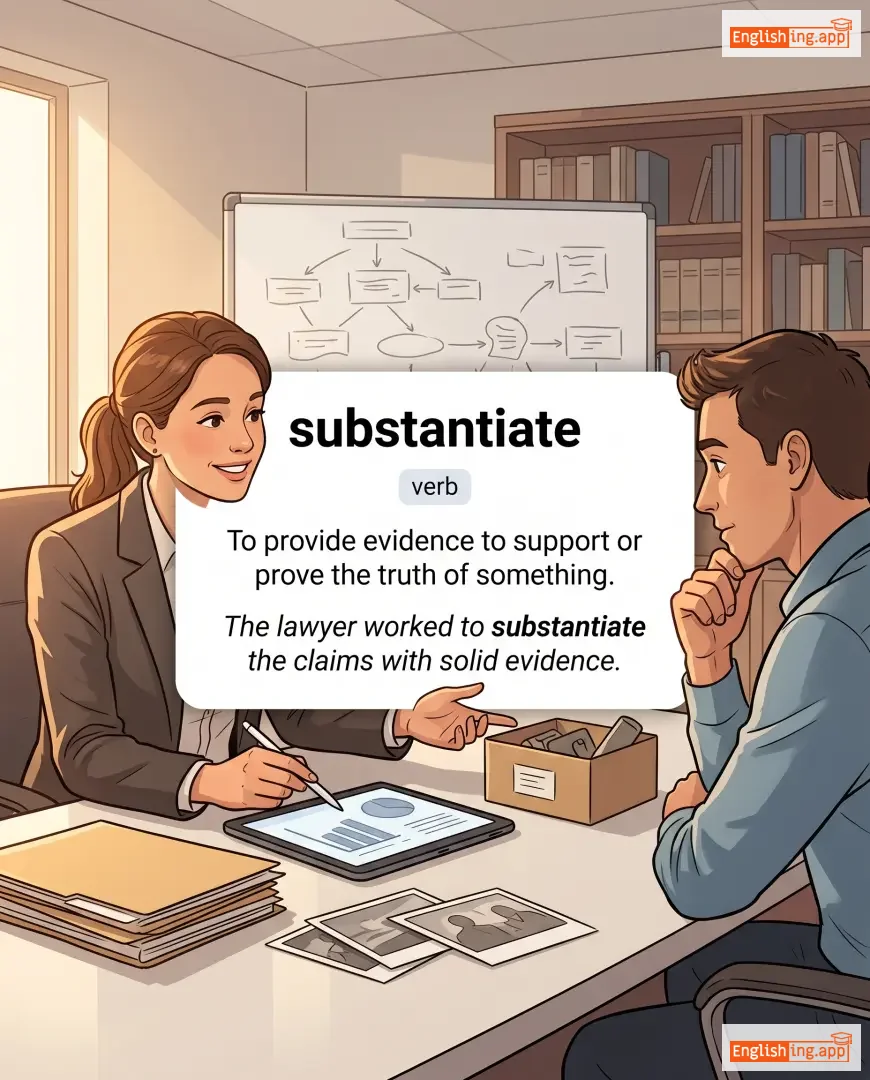
To provide evidence to support or prove the truth of something.
••••••
|
The lawyer worked to substantiate the claims with solid evidence.
律师努力通过确凿证据来证实这些主张。
••••••
|
律师努力通过确凿证据来证实这些主张。
Lǚshī nǔlì tōngguò quèzuò zhèngjù lái zhèngshí zhèxiē zhǔzhāng.
••••••
|
- •••••• | - •••••• | - •••••• |
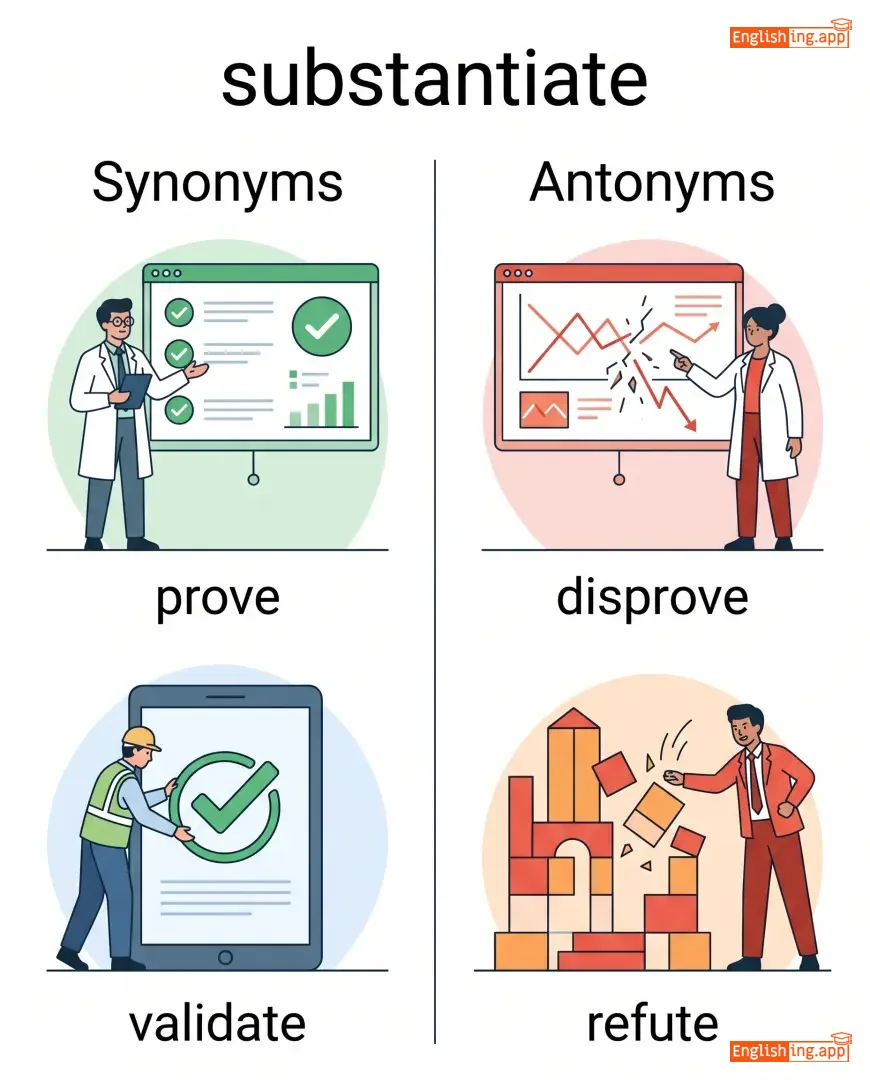
prove, validate, confirm, support, demonstrate
••••••
|
disprove, refute, contradict
••••••
|
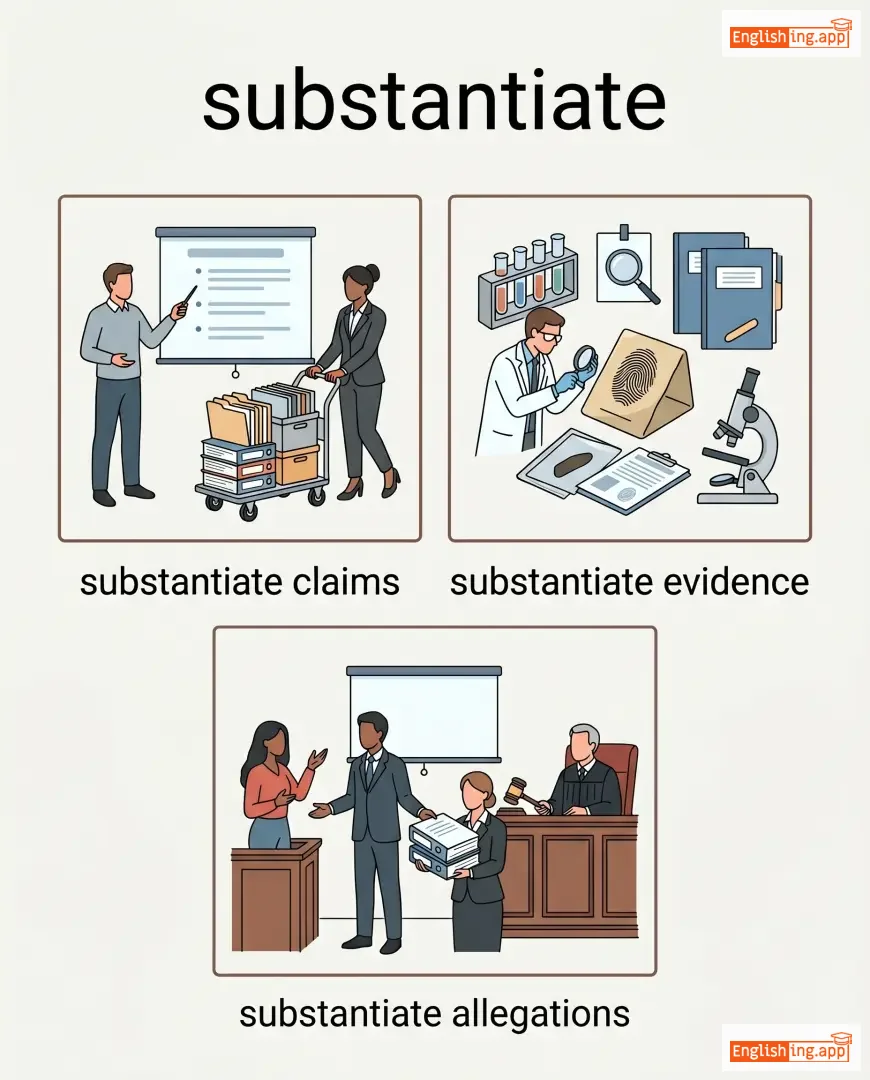
substantiate claims, substantiate evidence, substantiate allegations, substantiate argument
••••••
|
Substance (substance) 帮助证实某事。
••••••
|
|
🔄
••••••
|
/ˌsuːpərˈsiːd/
verb
(sūpèrsìd)
••••••
|

|
取代
qǔdài
••••••
|
superseded
sūpèrsìdèd
••••••
|
superseded
sūpèrsìdèd
••••••
|
supersedes
sūpèrsìds
••••••
|
superseding
sūpèrsìdīng
••••••
|
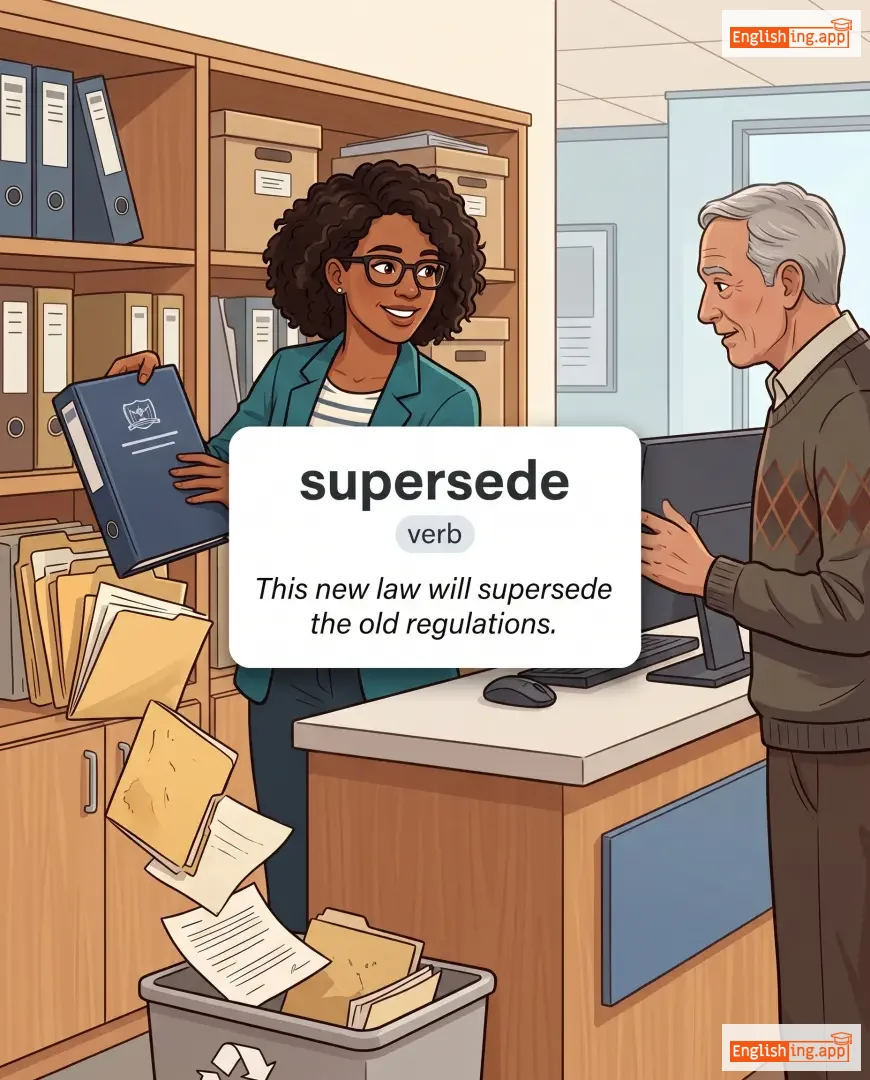
To replace or take the place of something because it is more modern or effective.
••••••
|
This new law will supersede the old regulations.
这部新法律将取代旧的规定。
••••••
|
这部新法律将取代旧的规定。
Zhè bù xīn fǎlǜ jiāng qǔdài jiù de guīdìng.
••••••
|
- •••••• | - •••••• | - •••••• |
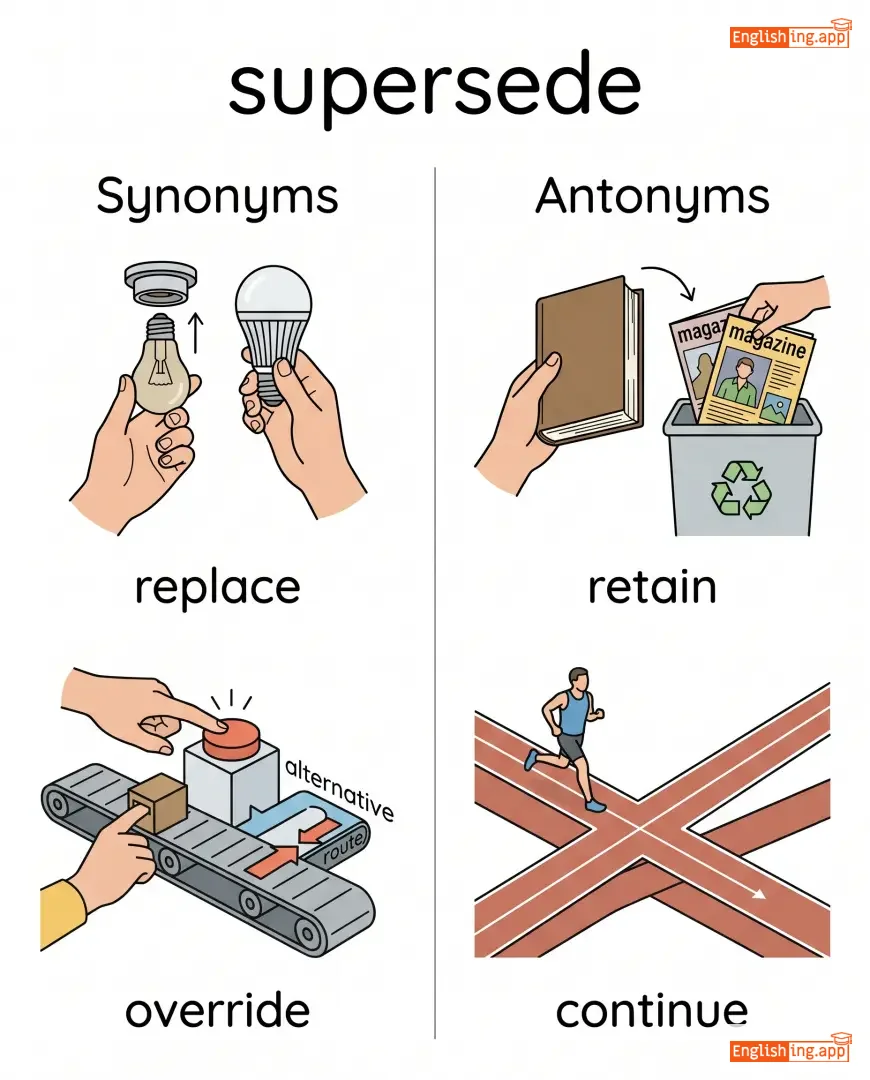
replace, override, overrule, succeed, displace
••••••
|
retain, continue, maintain
••••••
|
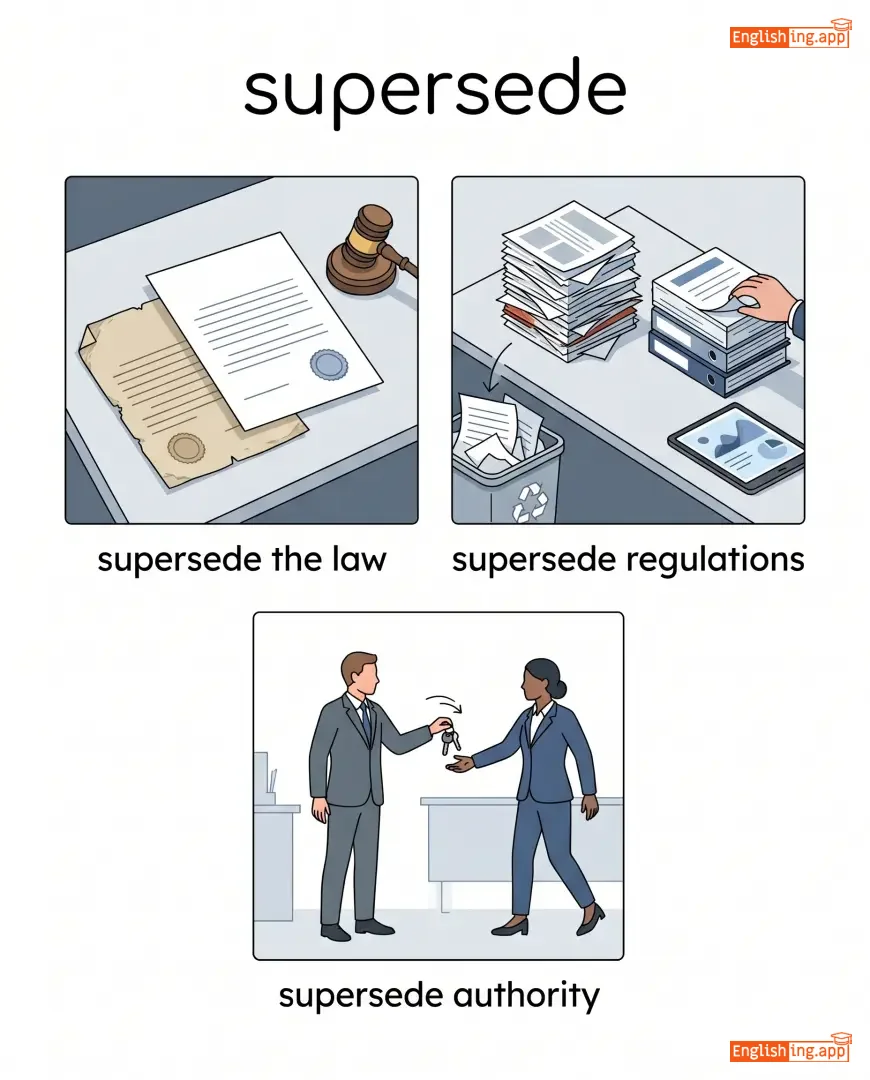
supersede the law, supersede regulations, supersede authority, supersede role
••••••
|
Super + seat 替代旧规则就是 supersede。
••••••
|
|
🤔
••••••
|
/ˌsʌpəˈzɪʃən/
noun
(假设)
••••••
|
|
假设
jiǎshè
••••••
|
- •••••• | - •••••• | - •••••• | - •••••• |
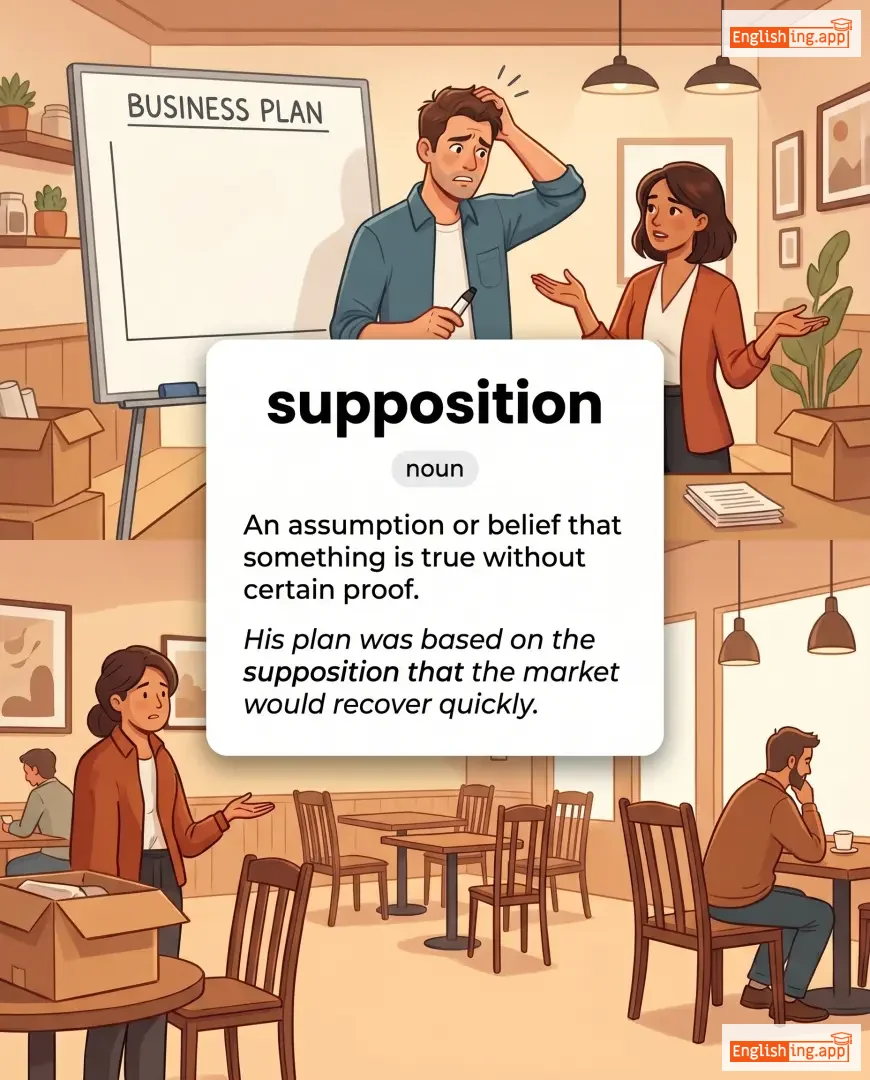
An assumption or belief that something is true without certain proof.
••••••
|
His plan was based on the supposition that the market would recover quickly. |
他的计划是基于市场将迅速恢复的假设。
tā de jìhuà shì jīyú shìchǎng jiāng xùnsù huīfù de jiǎshè.
••••••
|
on the supposition that |
Based on the assumption that something is true
••••••
|
基于假设
jīyú jiǎshè
••••••
|
assumption, presumption, hypothesis, belief, conjecture
••••••
|
fact, certainty, truth
••••••
|
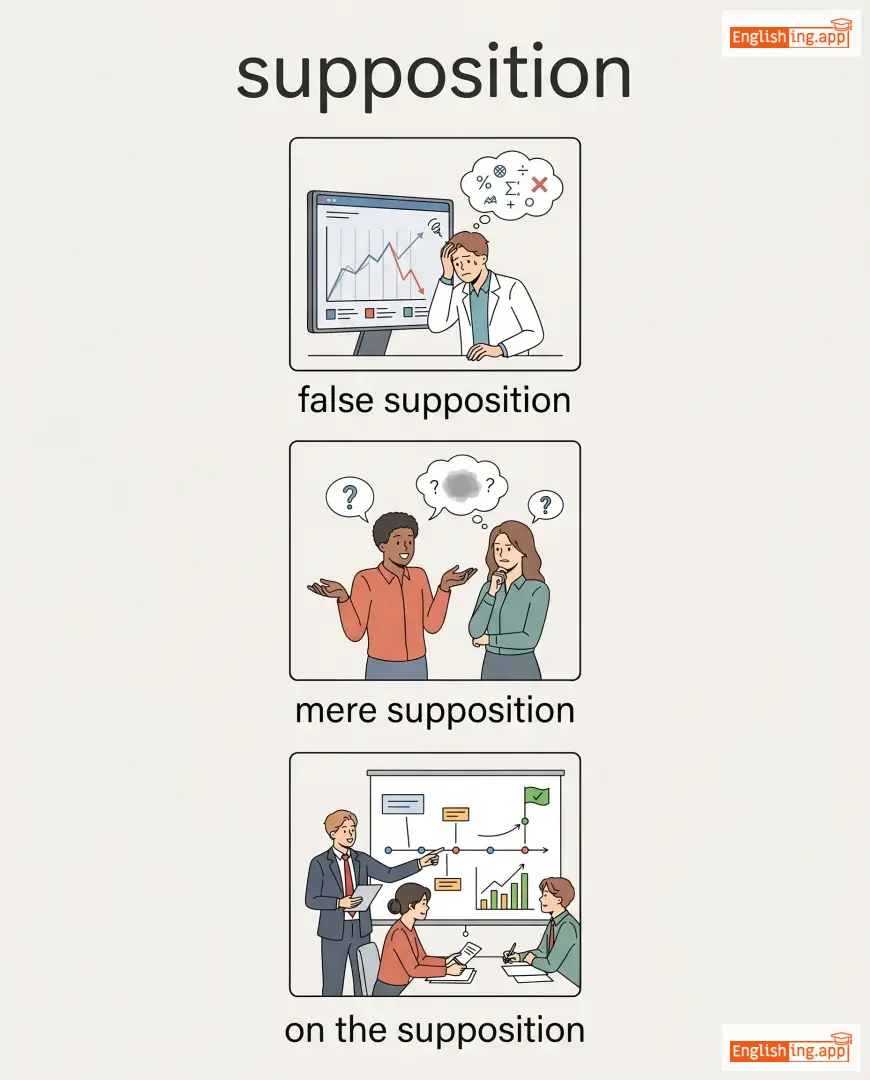
false supposition, mere supposition, on the supposition, mistaken supposition
••••••
|
Supposition = Suppose + tion = 假设, 记住 'suppose' 意味着假设。
••••••
|
|
🤫
••••••
|
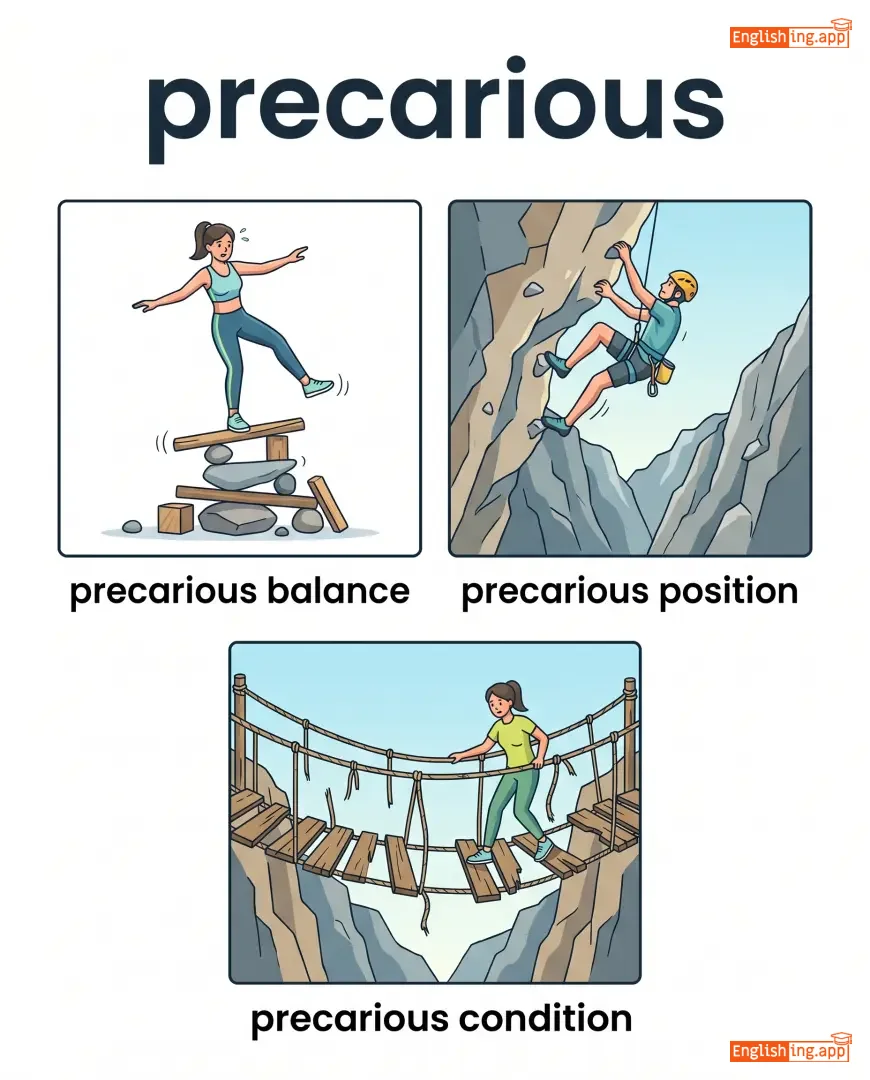
/ˈtæsɪt/
adjective
(tǎsìt)
••••••
|

|
默契
moqi
••••••
|
- •••••• | - •••••• | - •••••• | - •••••• |
understood or implied without being stated
••••••
|
There was a tacit agreement to avoid the subject. |
有一个默契的协议,避免讨论这个话题。
You yi ge moqi de xieyi, bianmi taolun zhege huati.
••••••
|
tacit agreement |
an unspoken understanding between people
••••••
|
默契协议
moqi xieyi
••••••
|
implicit, unspoken, understood, silent
••••••
|
explicit, stated, expressed
••••••
|
tacit consent, tacit approval, tacit understanding
••••••
|
Tacit 意味着默契,就像人们之间不说话却互相理解的协议。
••••••
|
|
↔️
••••••
|
/tænˈdʒɛnʃəl/
adjective
(tænˈdʒɛnʃəl)
••••••
|
|
切线的
qiēxiàn de
••••••
|
- •••••• | - •••••• | - •••••• | - •••••• |
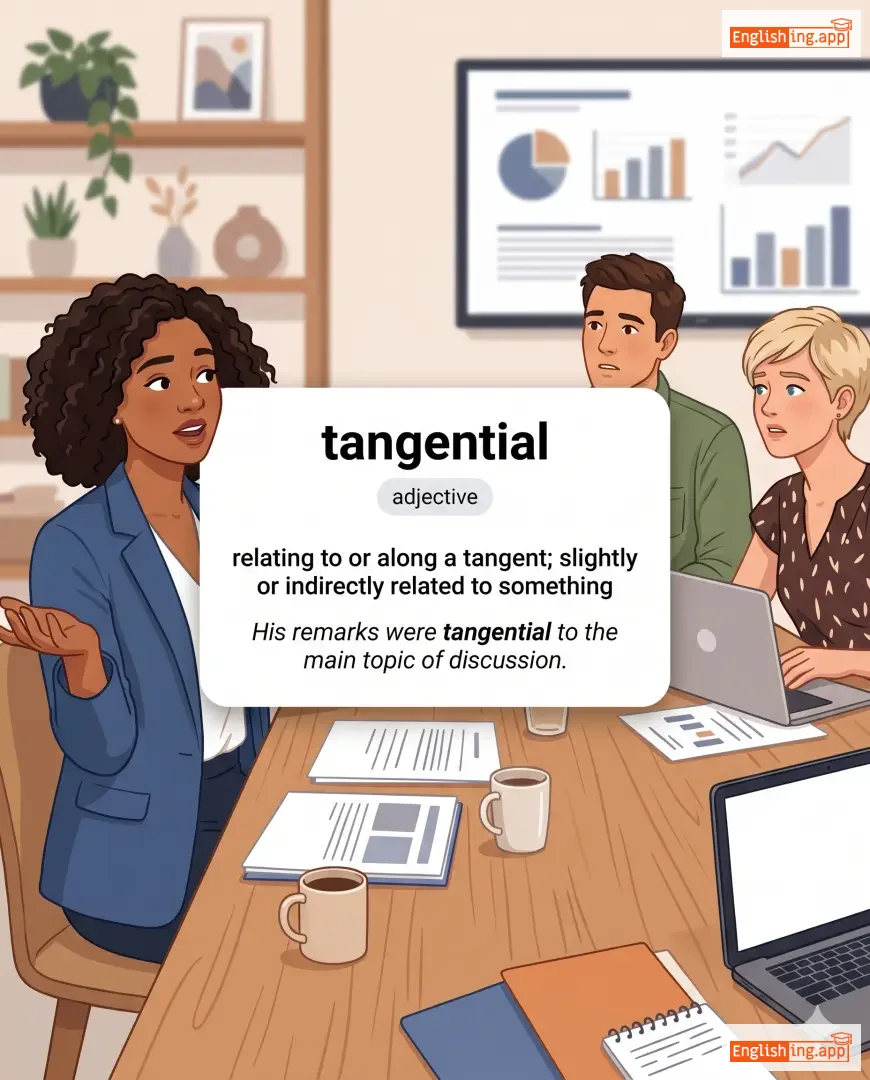
relating to or along a tangent; slightly or indirectly related to something
••••••
|
His remarks were tangential to the main topic of discussion.
他的评论与讨论的主题有点关系。
••••••
|
他的评论与讨论的主题有点关系。
Tā de pínglùn yǔ tǎolùn de zhǔtí yǒudiǎn guānxì.
••••••
|
- •••••• | - •••••• | - •••••• |
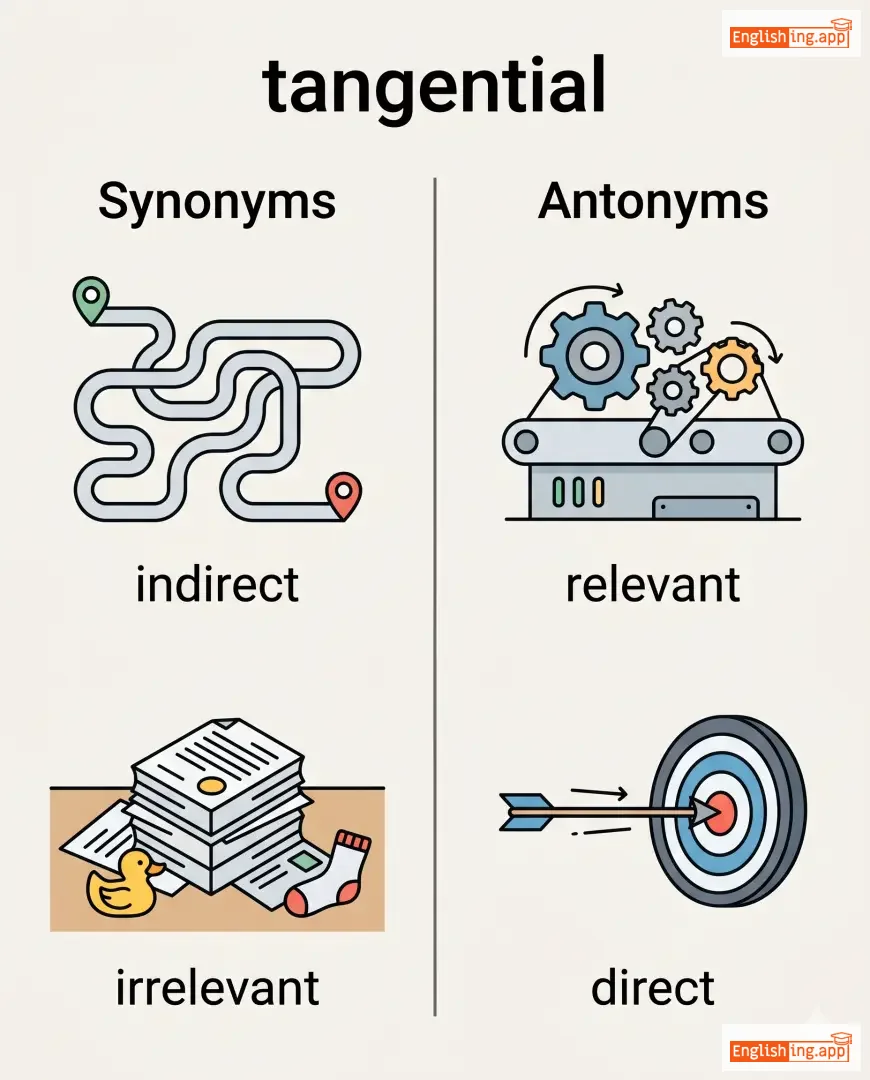
indirect, irrelevant, peripheral, secondary
••••••
|
relevant, direct
••••••
|
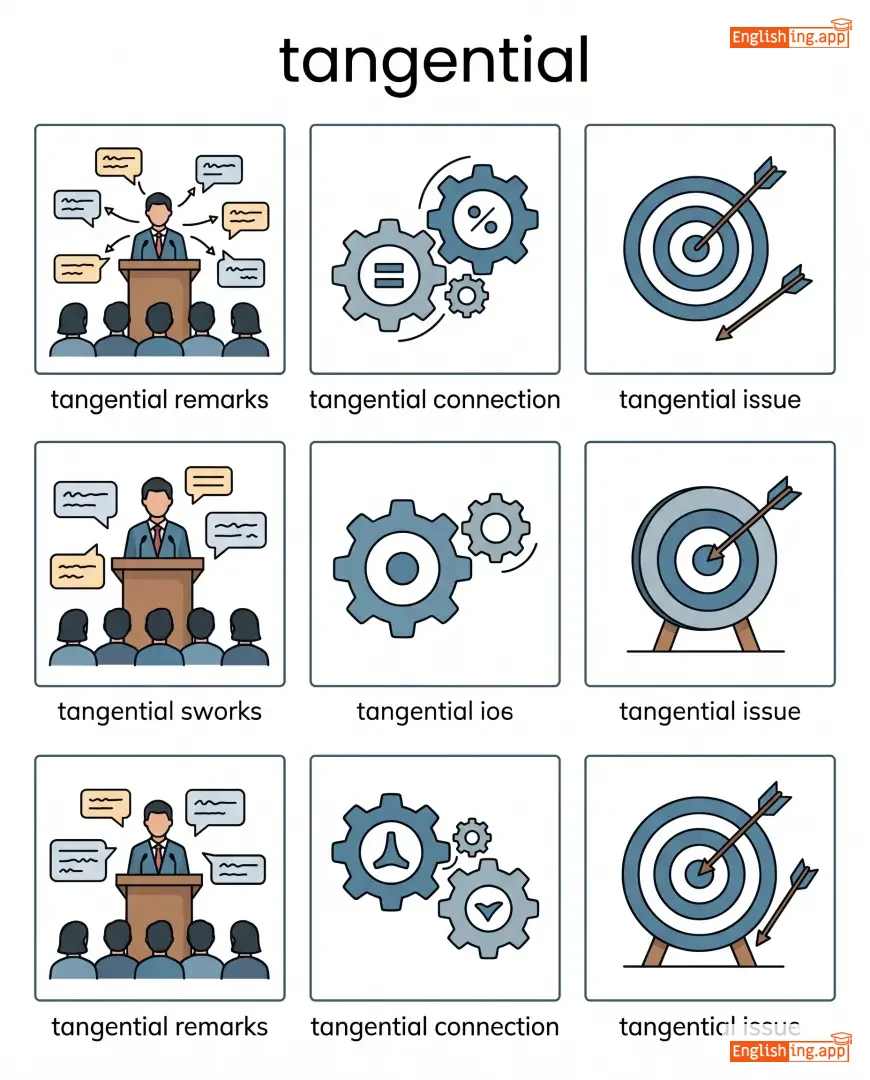
tangential remarks, tangential connection, tangential issue
••••••
|
切线的 = 话题有点关联,但不是主要的。
••••••
|
|
🕸️
••••••
|
/ˈtɛn.ju.əs/
adjective
(tè niu āsī)
••••••
|
|
薄弱 / 稀薄
bó ruò / xī bó
••••••
|
- •••••• | - •••••• | - •••••• | - •••••• |
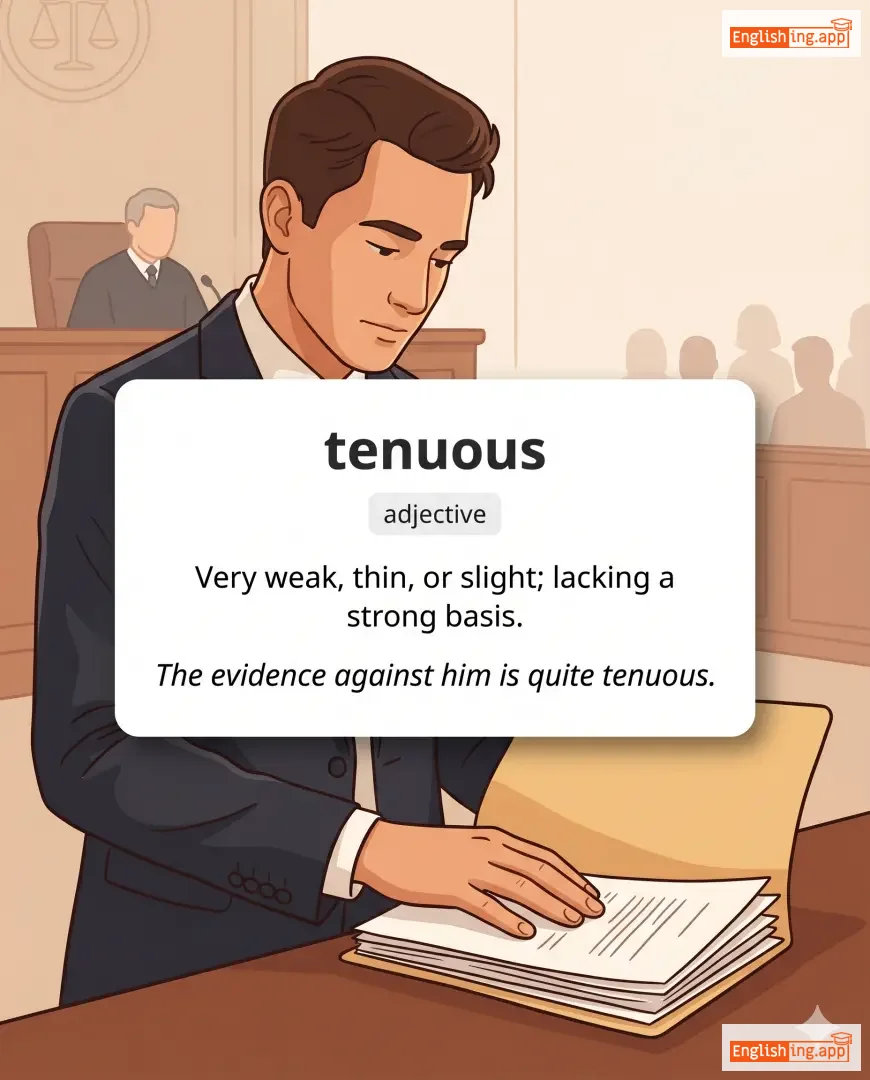
Very weak, thin, or slight; lacking a strong basis.
••••••
|
The evidence against him is quite tenuous.
对他不利的证据相当薄弱。
••••••
|
对他不利的证据相当薄弱。
Duì tā bù lì de zhèngjù xiāngdāng bó ruò.
••••••
|
- •••••• | - •••••• | - •••••• |
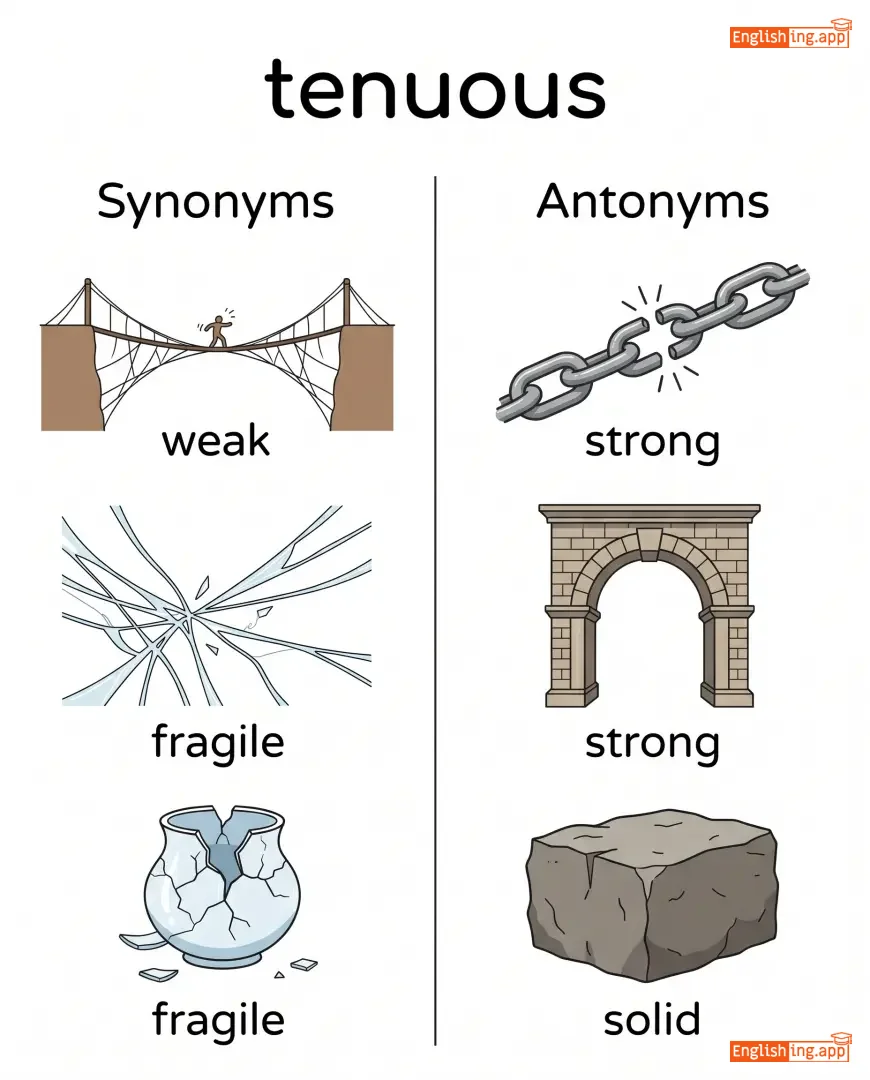
weak, fragile, thin, slight, insubstantial
••••••
|
strong, solid, firm
••••••
|
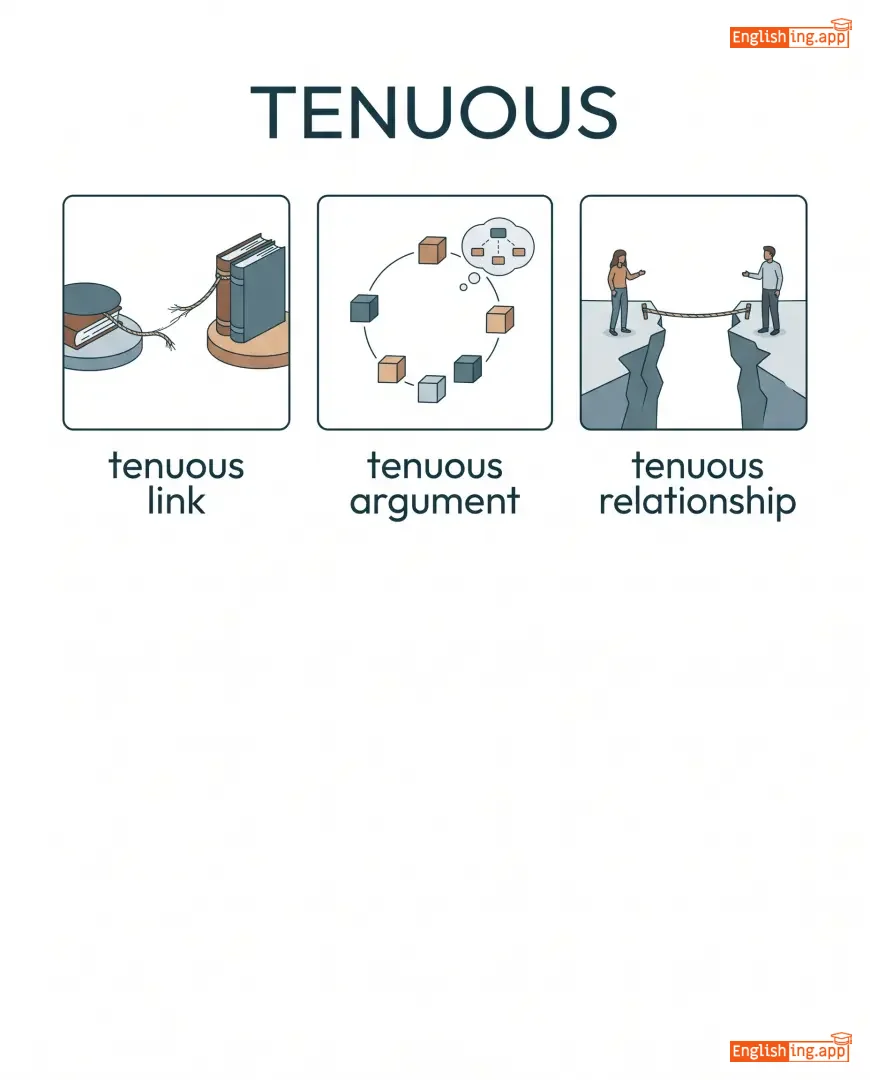
tenuous link, tenuous argument, tenuous relationship, tenuous connection
••••••
|
Tenuous 就像一根细细的丝线一样脆弱。
••••••
|
|
🗯️
••••••
|
/taɪˈreɪd/
noun
(taɪˈreɪd)
••••••
|
|
长篇怒斥
chángpiān nùchì
••••••
|
- •••••• | - •••••• | - •••••• | - •••••• |
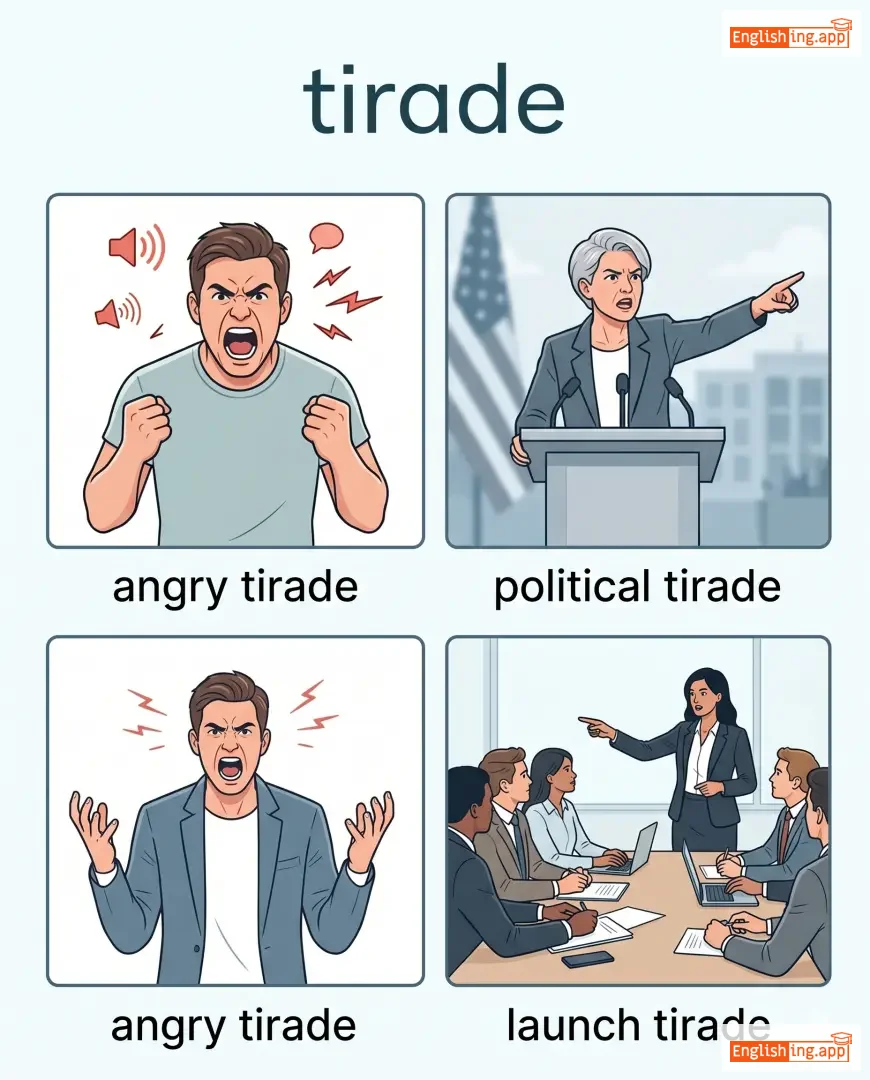
a long, angry, or critical speech
••••••
|
The manager launched into a tirade about poor performance.
经理对糟糕的表现进行了长篇的愤怒演讲。
••••••
|
经理对糟糕的表现进行了长篇的愤怒演讲。
Jīnglǐ duì zāogāo de biǎoxiàn jìnxíngle chángpiān de fènnù yǎnjiǎng.
••••••
|
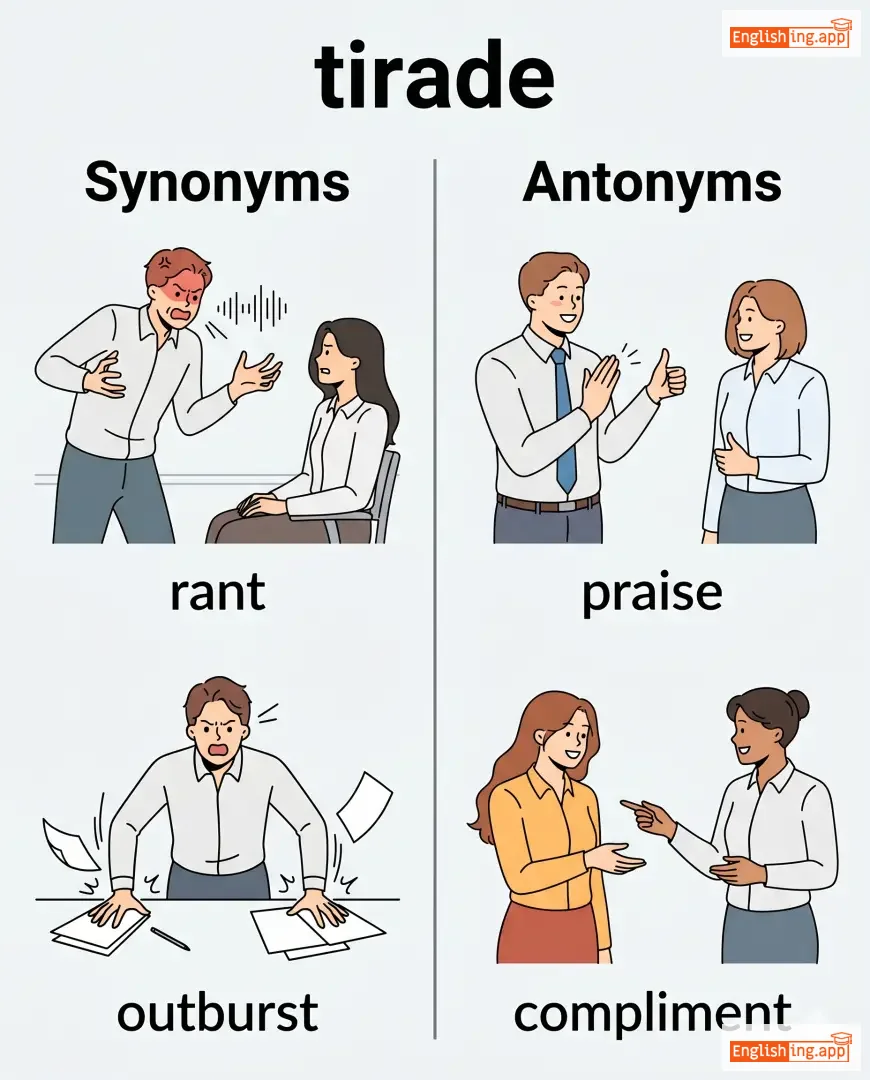
- •••••• | - •••••• | - •••••• |
rant, outburst, diatribe, harangue, lecture
••••••
|
praise, compliment
••••••
|
angry tirade, political tirade, launch tirade, endless tirade
••••••
|
Tirade 就像一场充满愤怒的长篇演讲。
••••••
|
|
🛌
••••••
|
/ˈtɔːrpər/
noun
(托尔波尔)
••••••
|
|
昏睡
torpor
••••••
|
- •••••• | - •••••• | - •••••• | - •••••• |
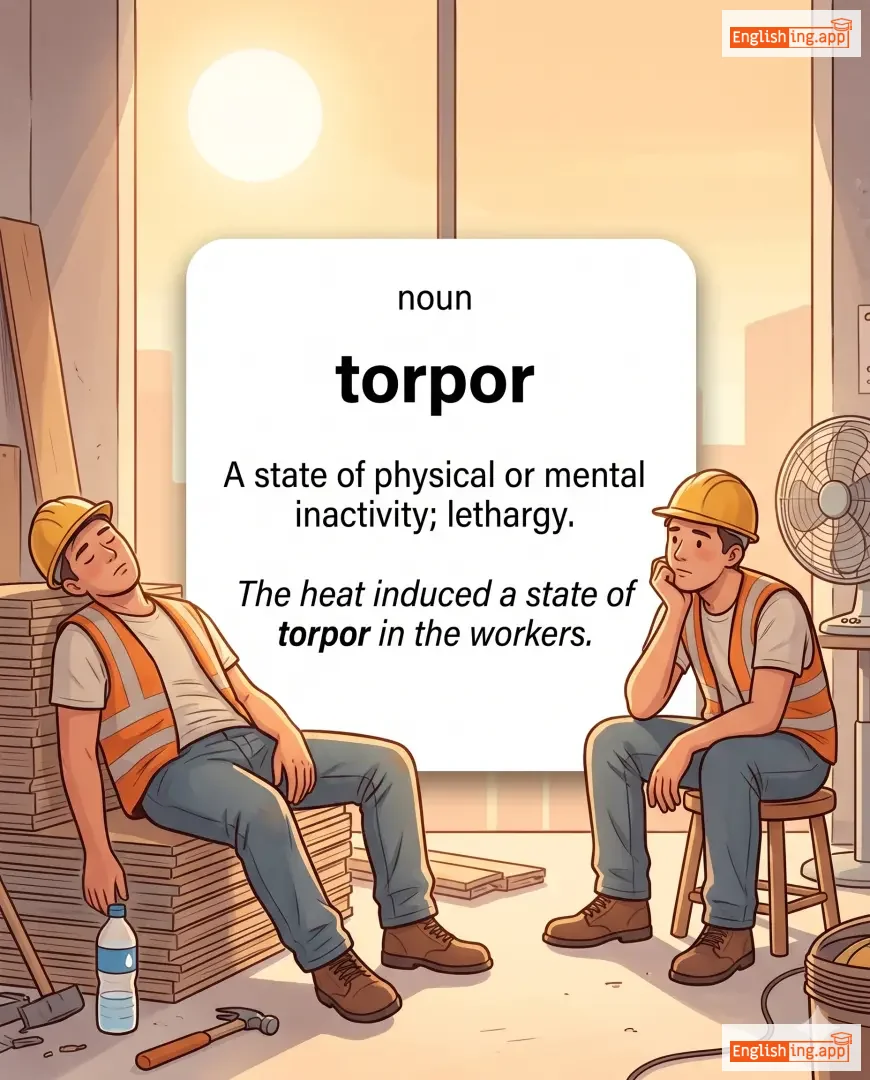
A state of physical or mental inactivity; lethargy.
••••••
|
The heat induced a state of torpor in the workers. |
高温使工人们陷入了昏睡状态。
Gaowen shi gongrenmen xianru le hunshui zhuangtai.
••••••
|
sink into torpor |
to gradually become inactive or sluggish
••••••
|
陷入昏睡
xianru hunshui
••••••
|
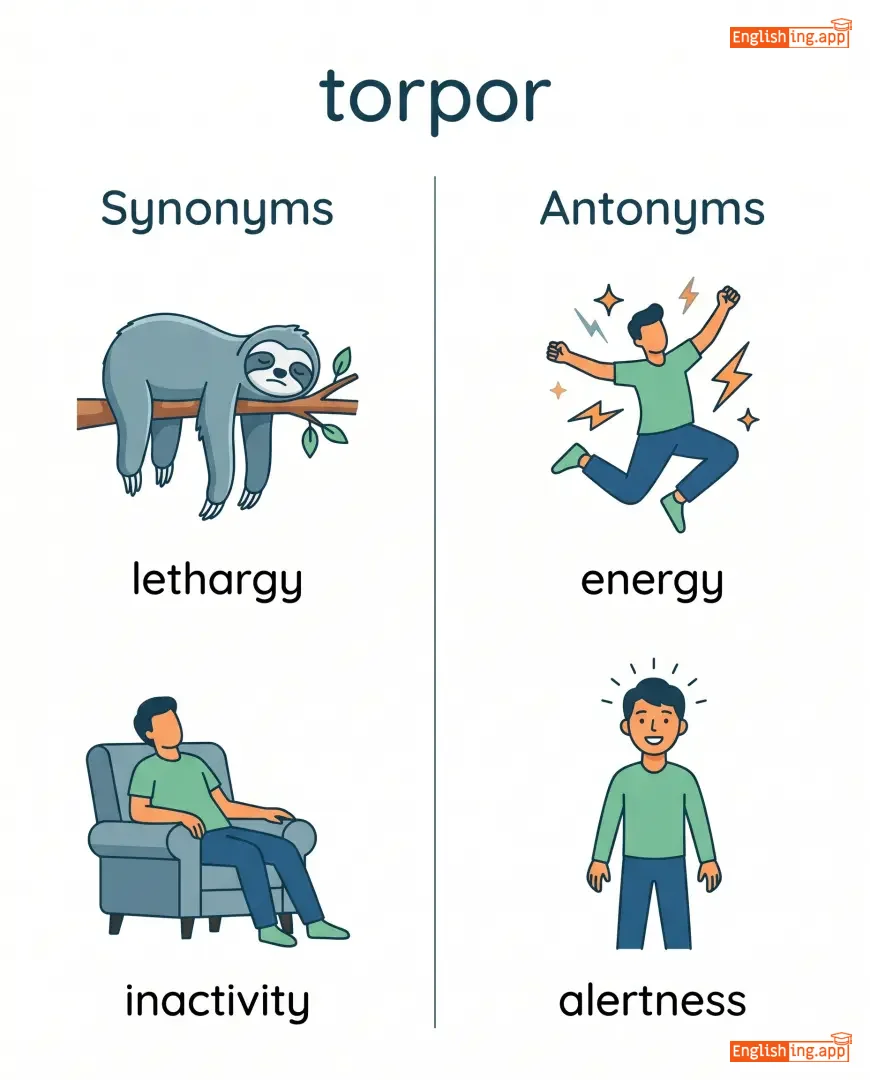
lethargy, inactivity, apathy, sluggishness
••••••
|
energy, alertness, activity
••••••
|
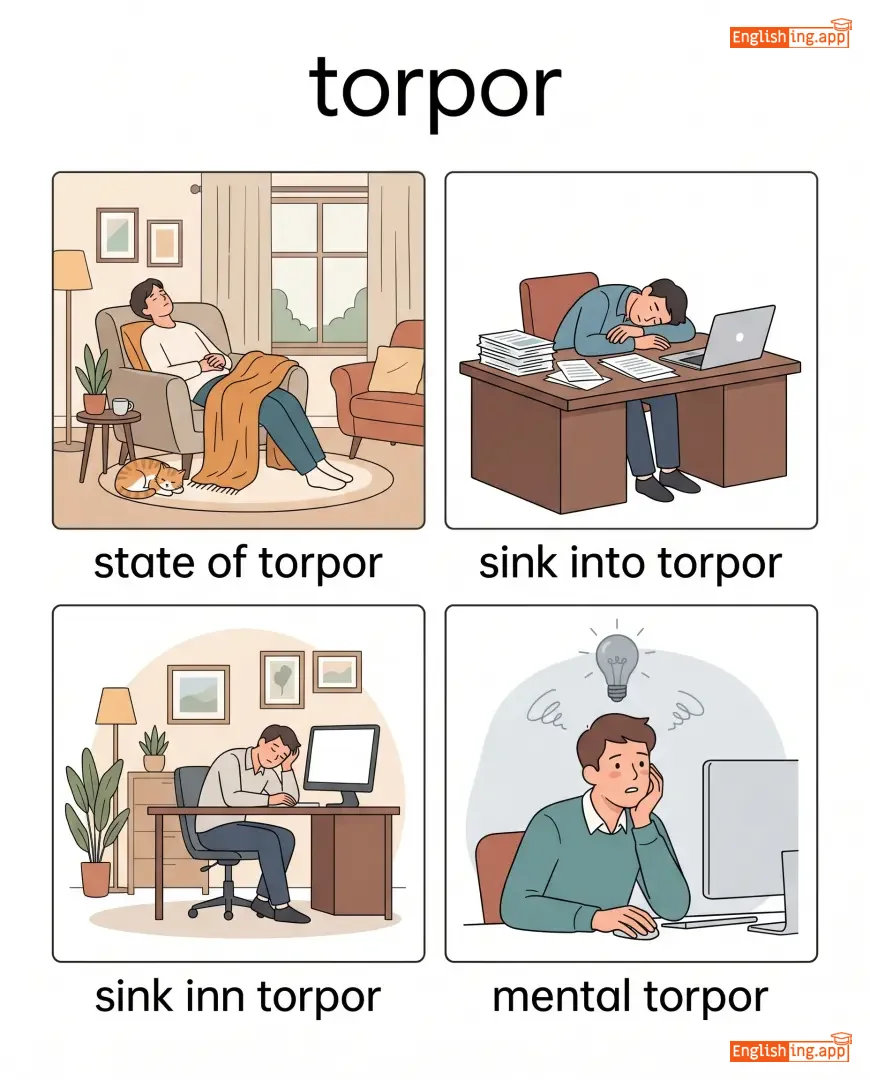
state of torpor, sink into torpor, mental torpor, torpor induced
••••••
|
Torpor - 托尔波尔 - 好像缺乏活力的状态,像昏睡一样。
••••••
|
|
🌀
••••••
|
/ˈtɔːrtʃuəs/
adjective
(tòruòuèisī)
••••••
|
- •••••• |
曲折,复杂
quzhe, fuzā
••••••
|
- •••••• | - •••••• | - •••••• | - •••••• |
Full of twists and turns; excessively complex or complicated.
••••••
|
The tortuous mountain road made driving very difficult. |
曲折的山路让驾驶变得非常困难。
Qūzhé de shānlù ràng jiàshǐ biàn dé fēicháng kùnnán.
••••••
|
- •••••• | - •••••• | - •••••• |
winding, twisting, convoluted, complex, meandering
••••••
|
straight, direct, simple
••••••
|
tortuous path, tortuous route, tortuous reasoning, tortuous journey
••••••
|
Tortuous就像一条弯曲的路,复杂难懂
••••••
|
|
🙂
••••••
|
/ˈtræktəbəl/
adjective
(特拉克塔布尔)
••••••
|

|
容易控制或影响
rongyi kongzhi huo yingxiang
••••••
|
- •••••• | - •••••• | - •••••• | - •••••• |
easy to control or influence
••••••
|
The child was surprisingly tractable during the long journey.
那个孩子在漫长的旅程中出奇的容易控制。
••••••
|
那个孩子在漫长的旅程中出奇的容易控制。
Nàgè háizi zài màncháng de lǚchéng zhōng chūqí de róngyì kòngzhì.
••••••
|
- •••••• | - •••••• | - •••••• |
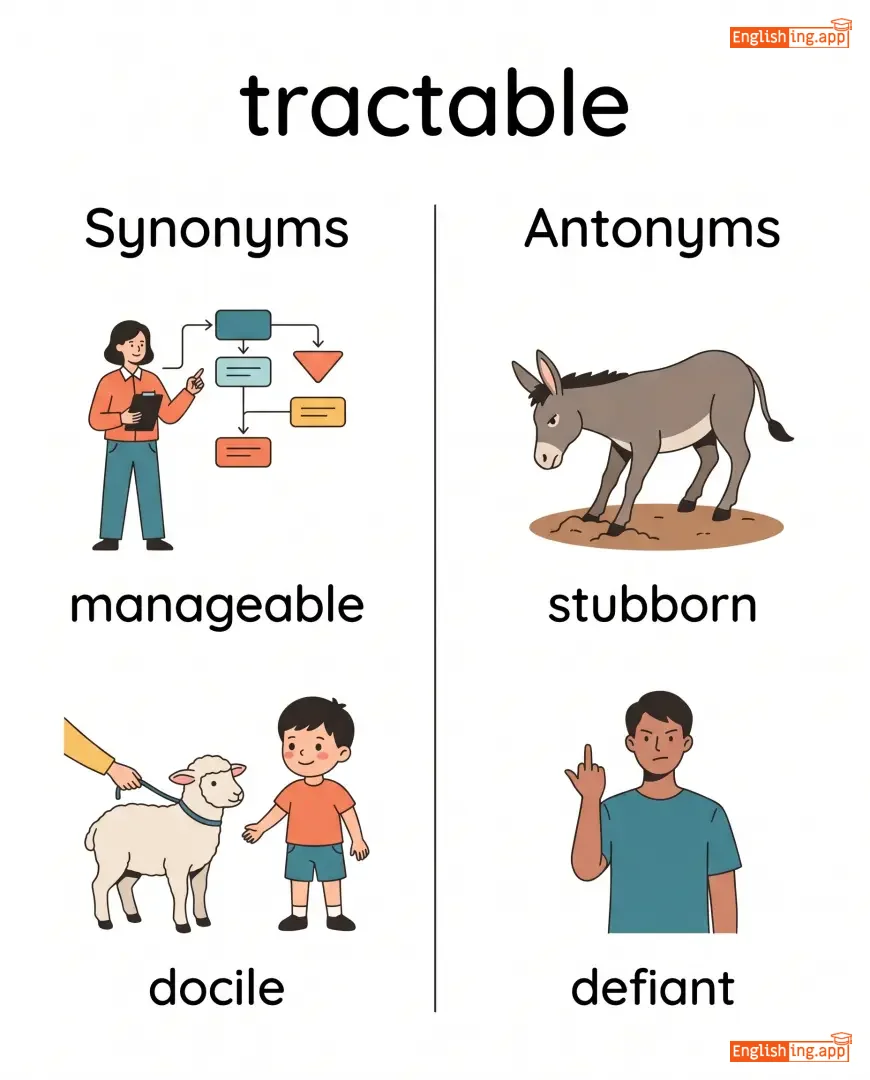
manageable, docile, obedient, compliant
••••••
|
stubborn, defiant, unmanageable
••••••
|
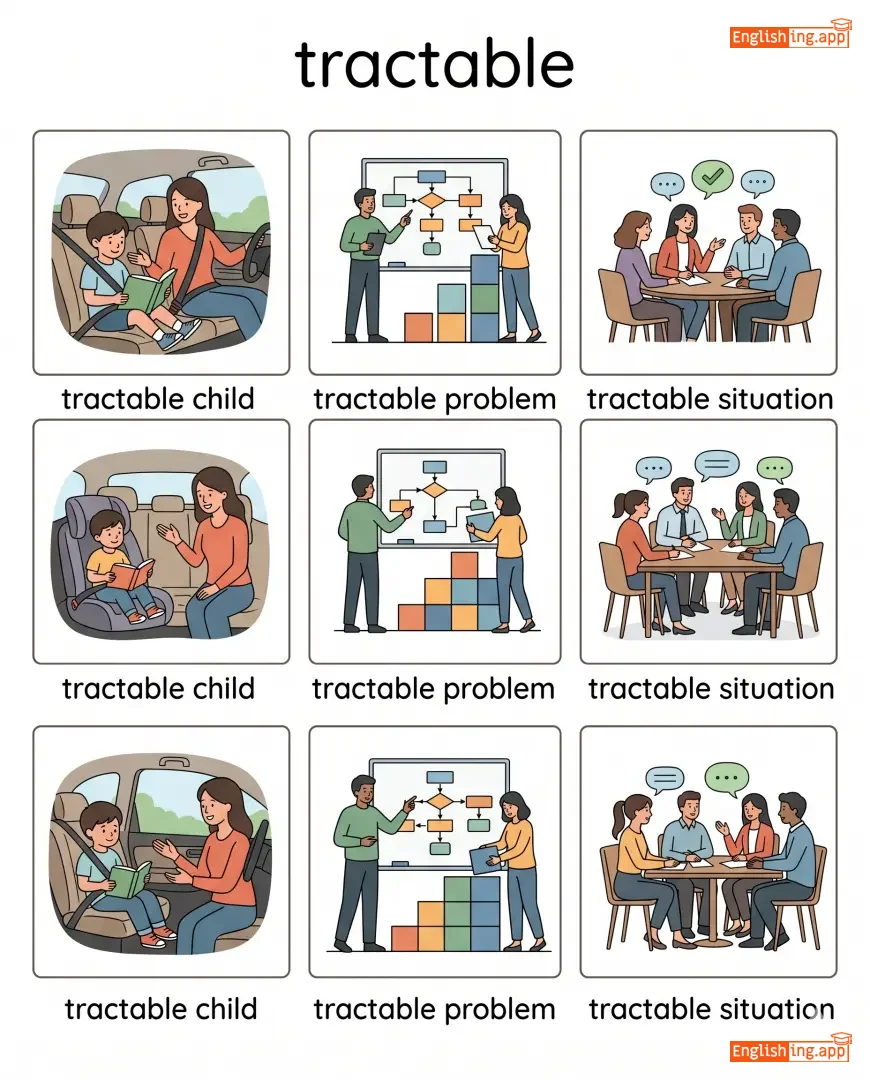
tractable child, tractable problem, tractable situation
••••••
|
Tractable 就像是一个容易被管理的孩子。
••••••
|
|
⚖️
••••••
|
/trænsˈɡrɛʃən/
noun
(transgrēshēn)
••••••
|
|
违反, 罪行
wei fan, zui xing
••••••
|
- •••••• | - •••••• | - •••••• | - •••••• |
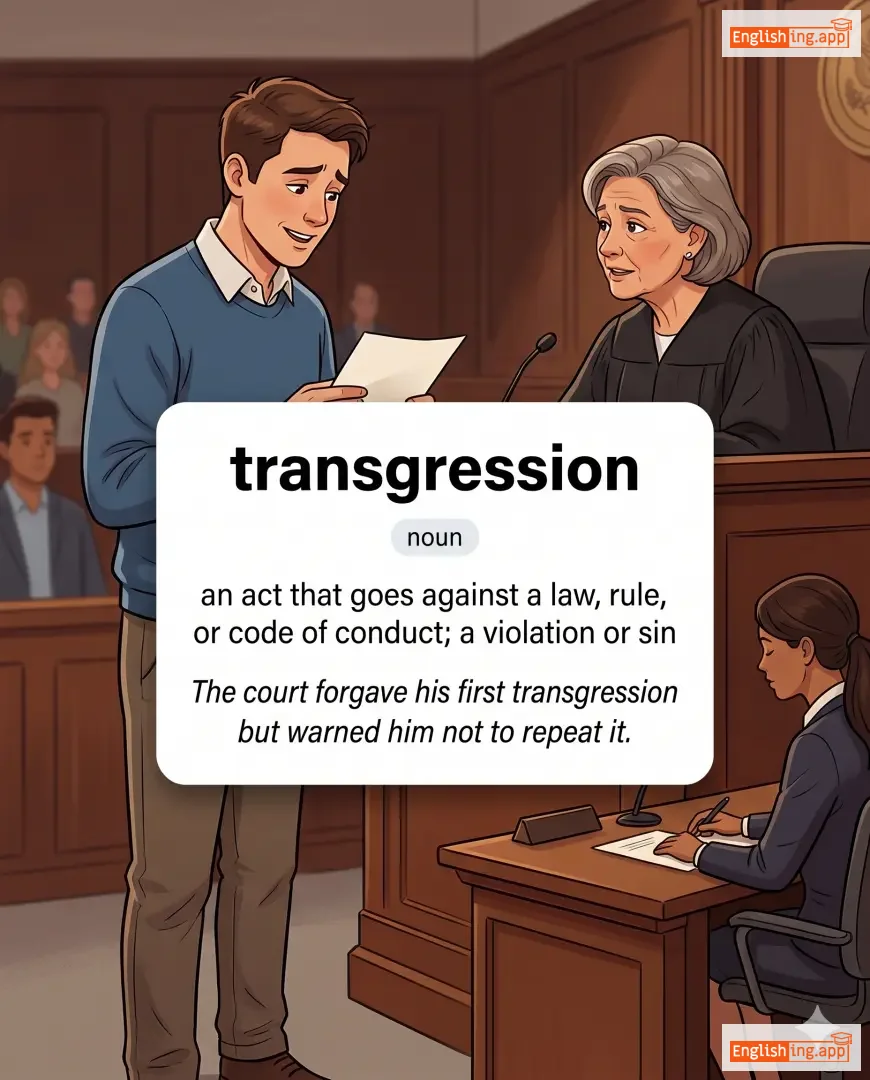
an act that goes against a law, rule, or code of conduct; a violation or sin
••••••
|
The court forgave his first transgression but warned him not to repeat it. |
法院原谅了他的第一次违反行为,但警告他不要重复。
Fa yuan yuan liang le ta de di yi ci wei fan xing wei, dan jing gao ta bu yao chong fu.
••••••
|
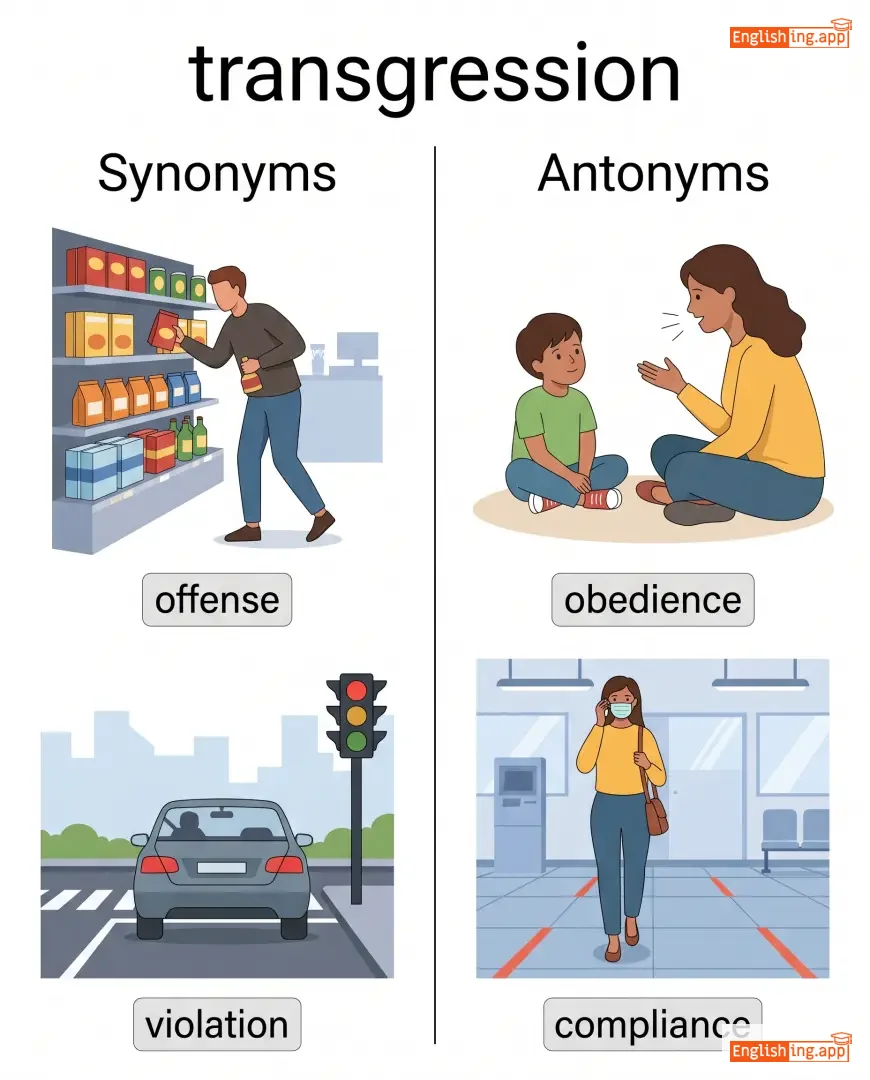
- •••••• | - •••••• | - •••••• |
offense, violation, sin, crime, wrongdoing
••••••
|
obedience, compliance
••••••
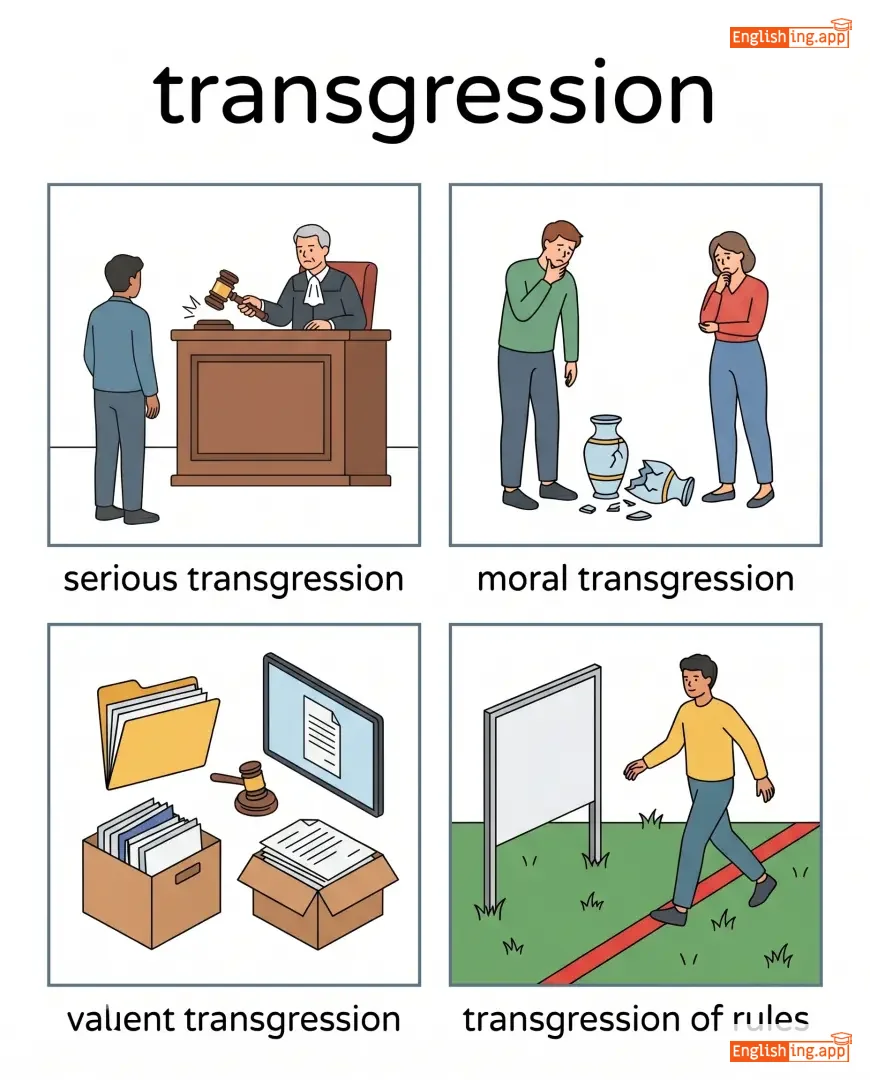
|
serious transgression, moral transgression, transgression of rules, forgive transgression
••••••
|
Transgression意味着违背规则,就像失去恩典(grace)一样。
••••••
|
|
😡
••••••
|
/ˈtrʌk.jʊ.ləns/
noun
(trùkjiùlénsī)
••••••
|

|
好斗性
haodouxing
••••••
|
- •••••• | - •••••• | - •••••• | - •••••• |
Aggressiveness or eagerness to fight.
••••••
|
His speech was full of truculence and threats. |
他的演讲充满了好斗性和威胁。
Tā de yǎnjiǎng chōngmǎn le hǎodòuxìng hé wēixié.
••••••
|
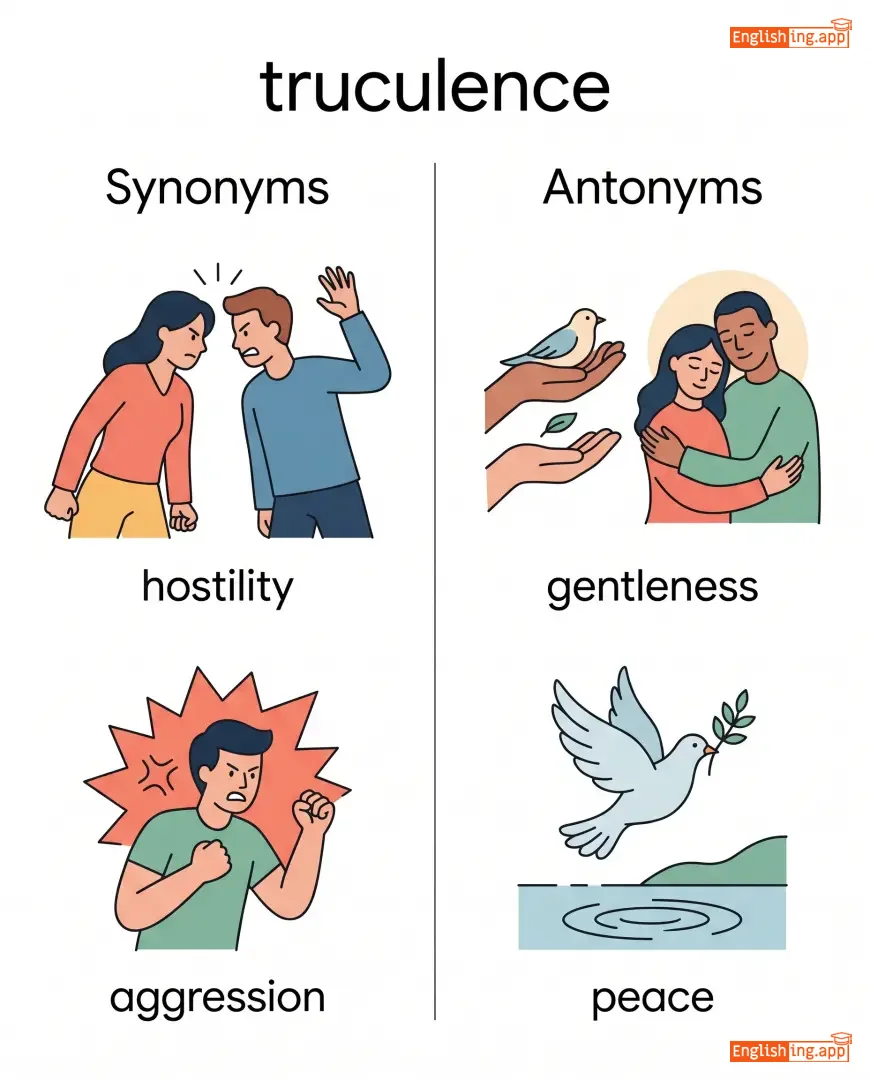
- •••••• | - •••••• | - •••••• |
hostility, aggression, belligerence, combativeness
••••••
|
gentleness, peace, friendliness
••••••
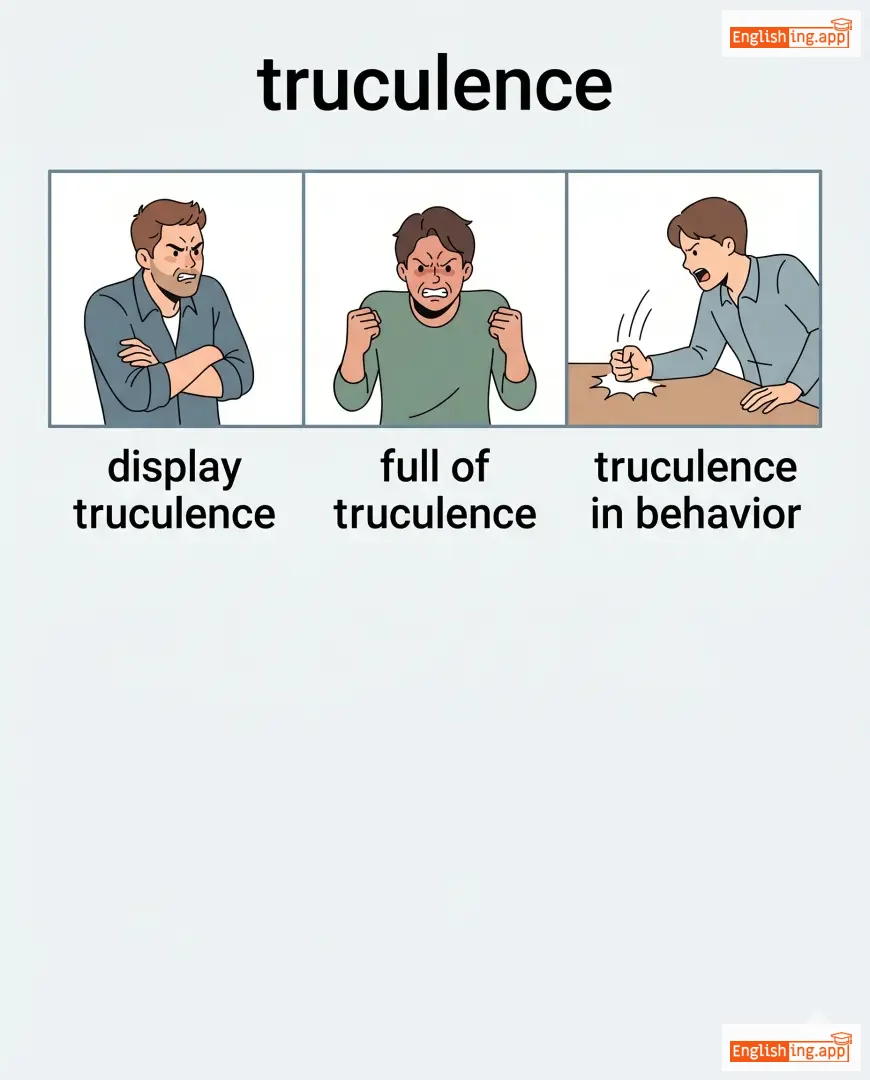
|
display truculence, full of truculence, truculence in behavior
••••••
|
Truculence意味着好斗性—记住,当卡车喇叭响时,大家都会生气。
••••••
|
|
⚖️
••••••
|
/ˈvæsɪleɪt/
verb
(happiness)
••••••
|
|
幸福
xìngfú
••••••
|
vacillated
••••••
|
vacillated
••••••
|
vacillates
••••••
|
vacillating
••••••
|
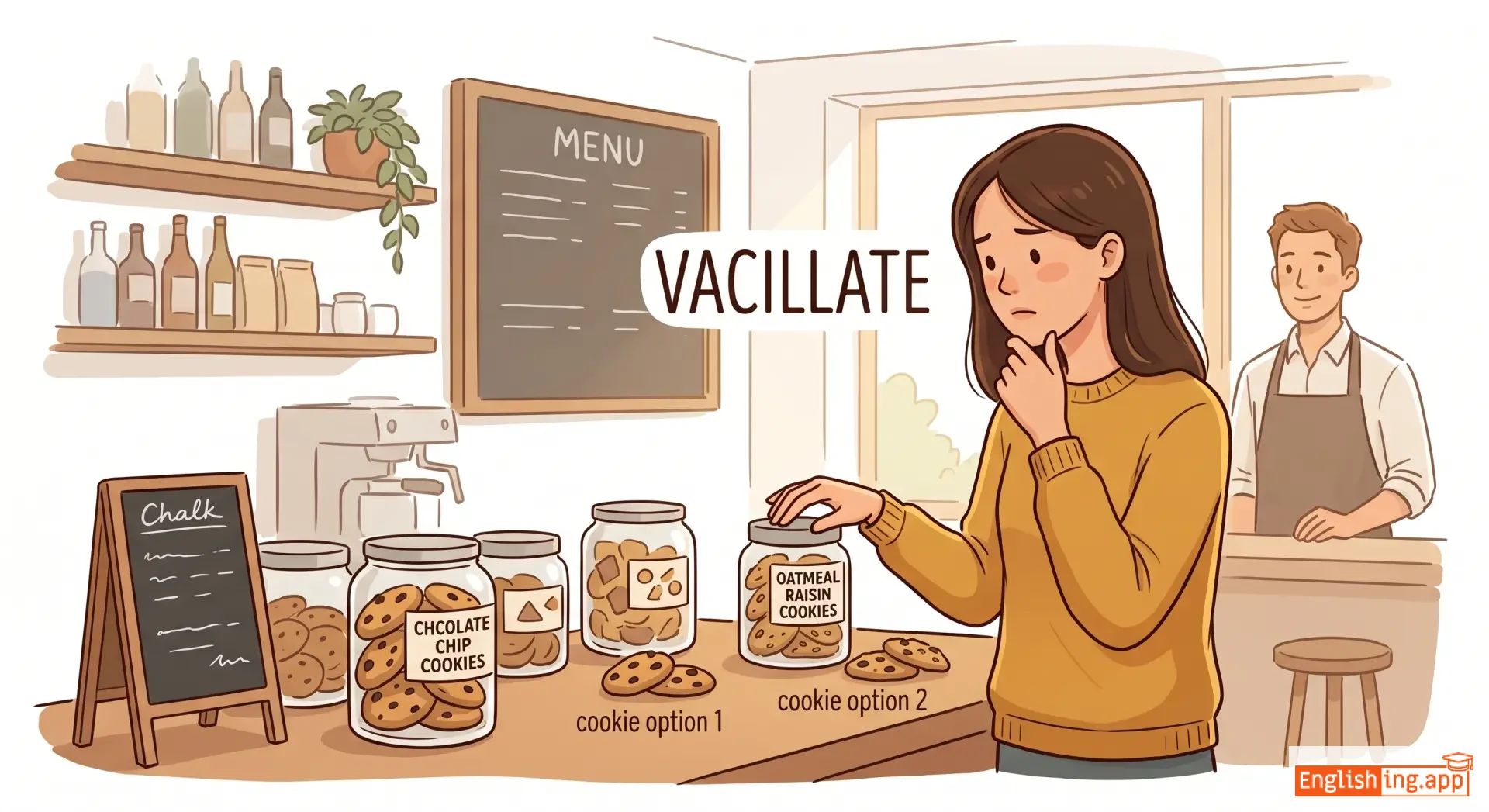
to waver between different opinions or actions; be indecisive
••••••
|
He vacillated between studying law and becoming a writer.
她在获得奖项时无法掩饰自己的幸福。
••••••
|
她在获得奖项时无法掩饰自己的幸福。
Tā zài huòdé jiǎngxiàng shí wúfǎ yǎnshì zìjǐ de xìngfú.
••••••
|
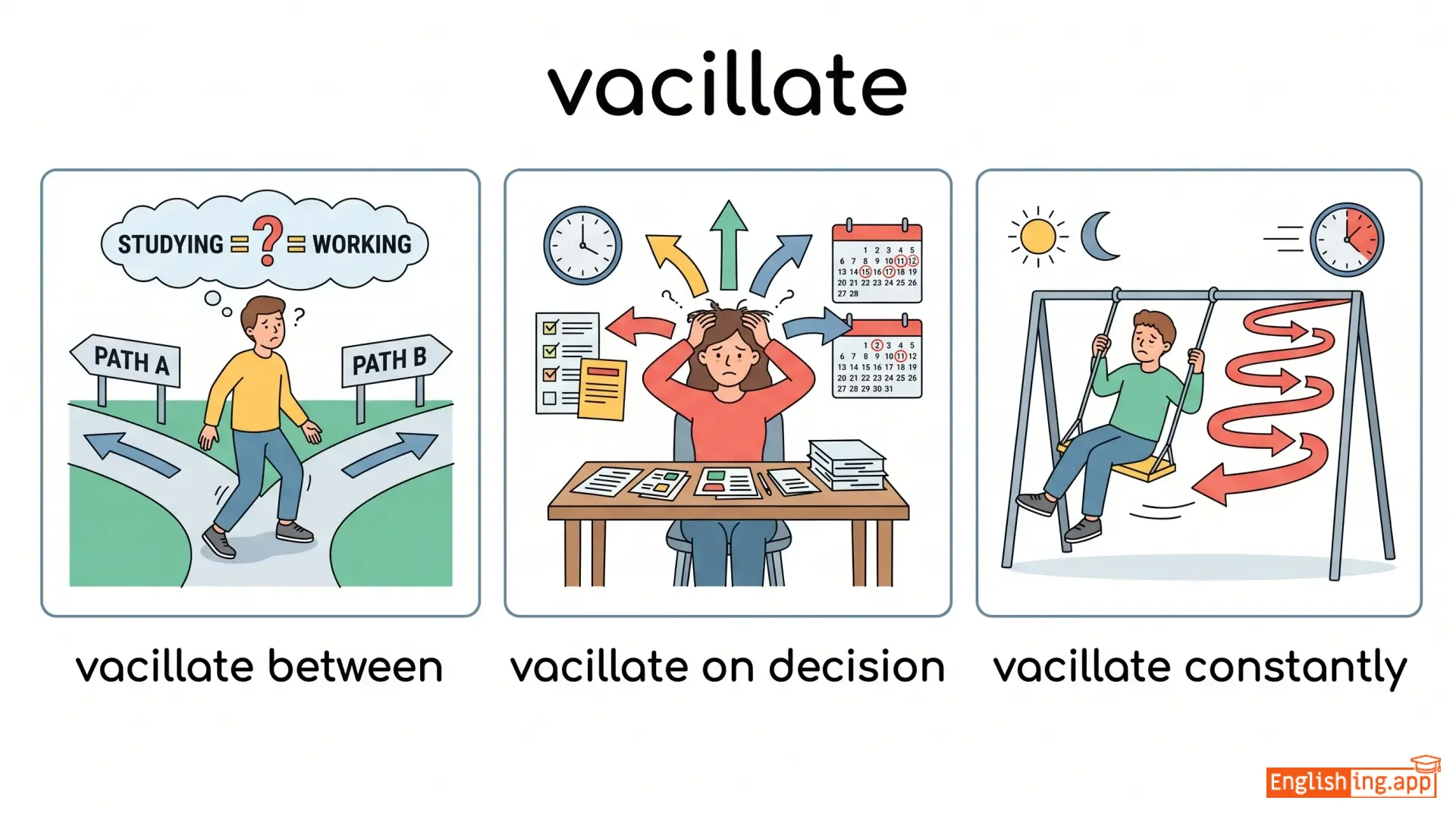
vacillate between
追求幸福
••••••
|
to keep changing your mind between two choices
••••••
|
追求幸福
zhuīqiú xìngfú
••••••
|
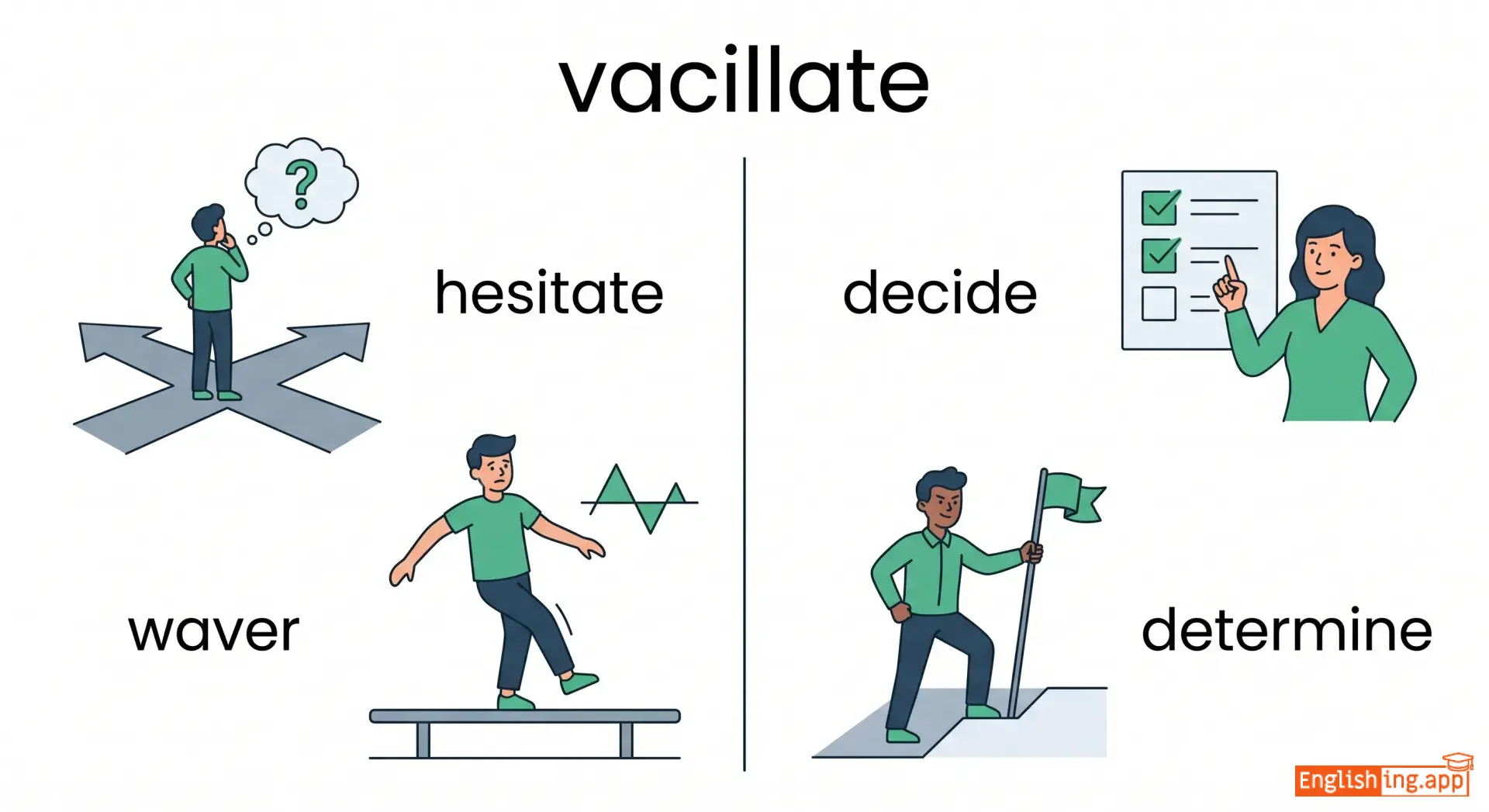
hesitate, waver, dither, fluctuate
••••••
|
decide, determine, resolve
••••••
|
vacillate between, vacillate on decision, vacillate constantly
••••••
|
幸福是一种追求,不要忘记它!
••••••
|
|
🙏
••••••
|
/ˈvɛnəˌreɪt/
verb
(敬仰)
••••••
|

|
敬仰
jingyang
••••••
|
venerated
敬仰了
••••••
|
venerated
敬仰了
••••••
|
venerates
敬仰
••••••
|
venerating
敬仰着
••••••
|
to regard with great respect; revere
••••••
|
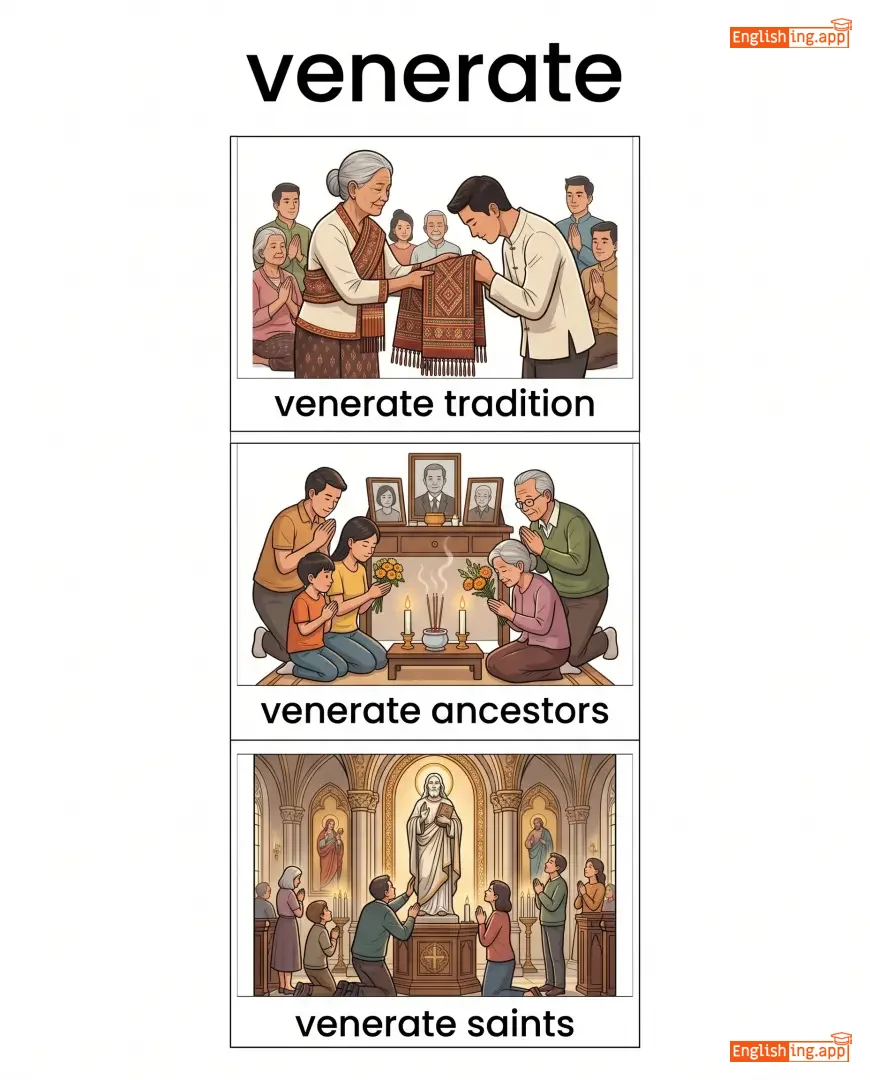
People venerate saints for their holiness.
人们敬仰圣人,因为他们的圣洁。
••••••
|
人们敬仰圣人,因为他们的圣洁。
Renmen jingyang shengren, yinwei tamen de shengjie.
••••••
|
to venerate the ground someone walks on
敬仰某人走过的土地
••••••
|
to admire or respect someone deeply
••••••
|
敬仰某人走过的土地
Jingyang mou ren zouguo de tudi
••••••
|
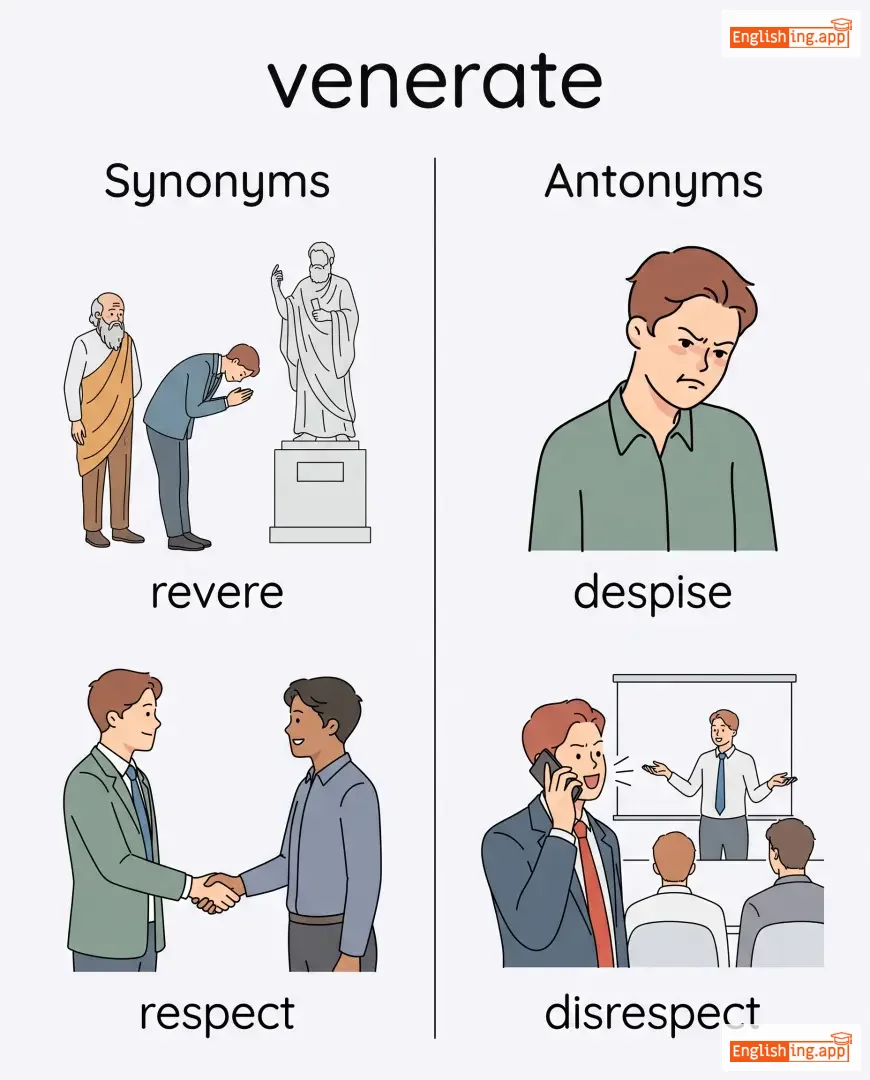
revere, respect, honor, admire, esteem
••••••
|
despise, disrespect, dishonor
••••••
|
venerate tradition, venerate ancestors, venerate saints, venerate the memory
••••••
|
敬仰:就像尊敬一个人走过的土地。
••••••
|
|
🗣️
••••••
|
/vəˈreɪʃəs/
adjective
(wéiˈreɪʃəs)
••••••
|
|
真实的
zhēnshí de
••••••
|
- •••••• | - •••••• | - •••••• | - •••••• |
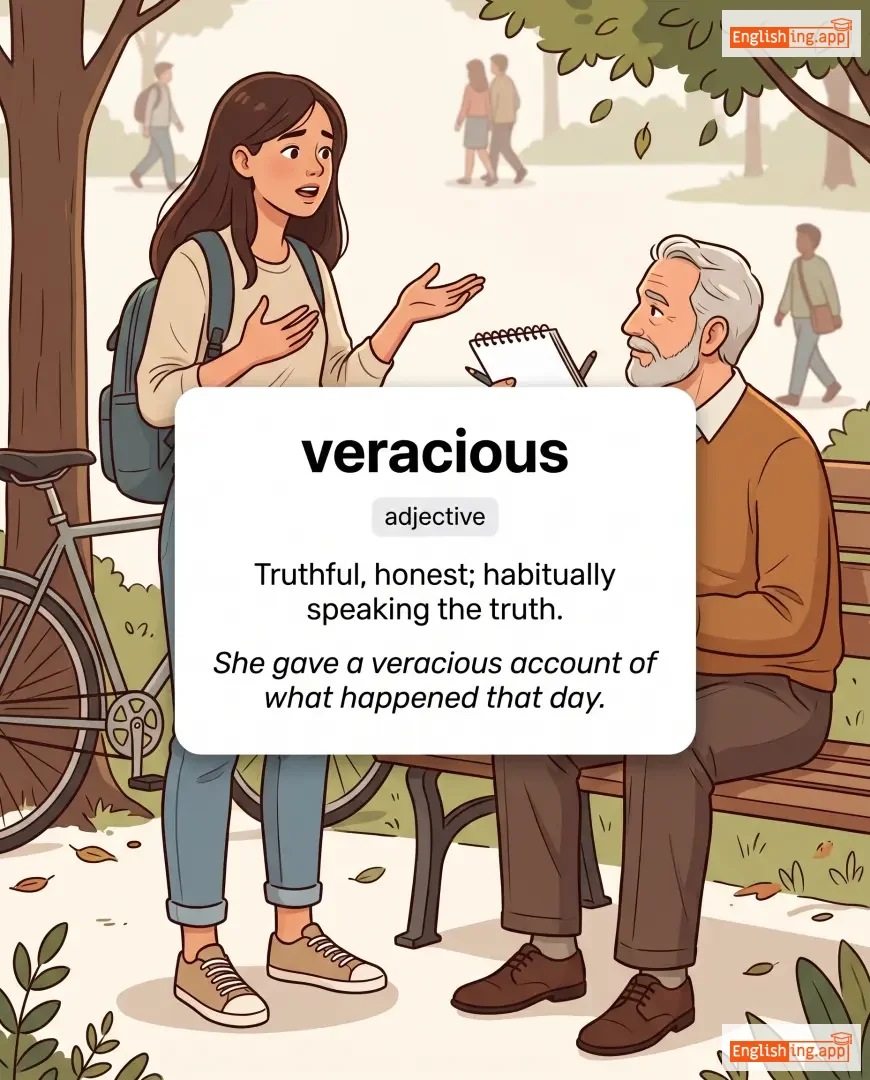
Truthful, honest; habitually speaking the truth.
••••••
|
She gave a veracious account of what happened that day. |
她给出了那天发生的事情的真实描述。
tā gěi chūle nà tiān fāshēng de shìqíng de zhēnshí miáoshù.
••••••
|
- •••••• | - •••••• | - •••••• |
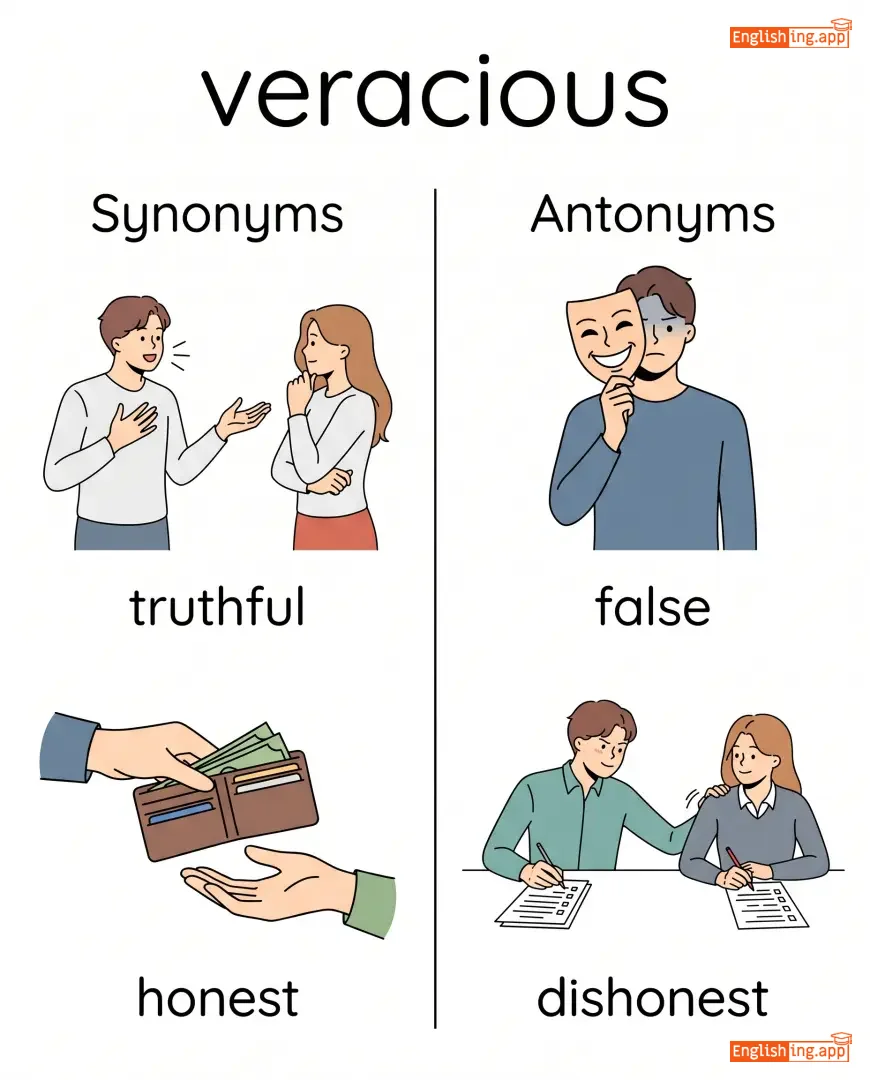
truthful, honest, accurate, genuine, sincere
••••••
|
false, dishonest, lying
••••••
|
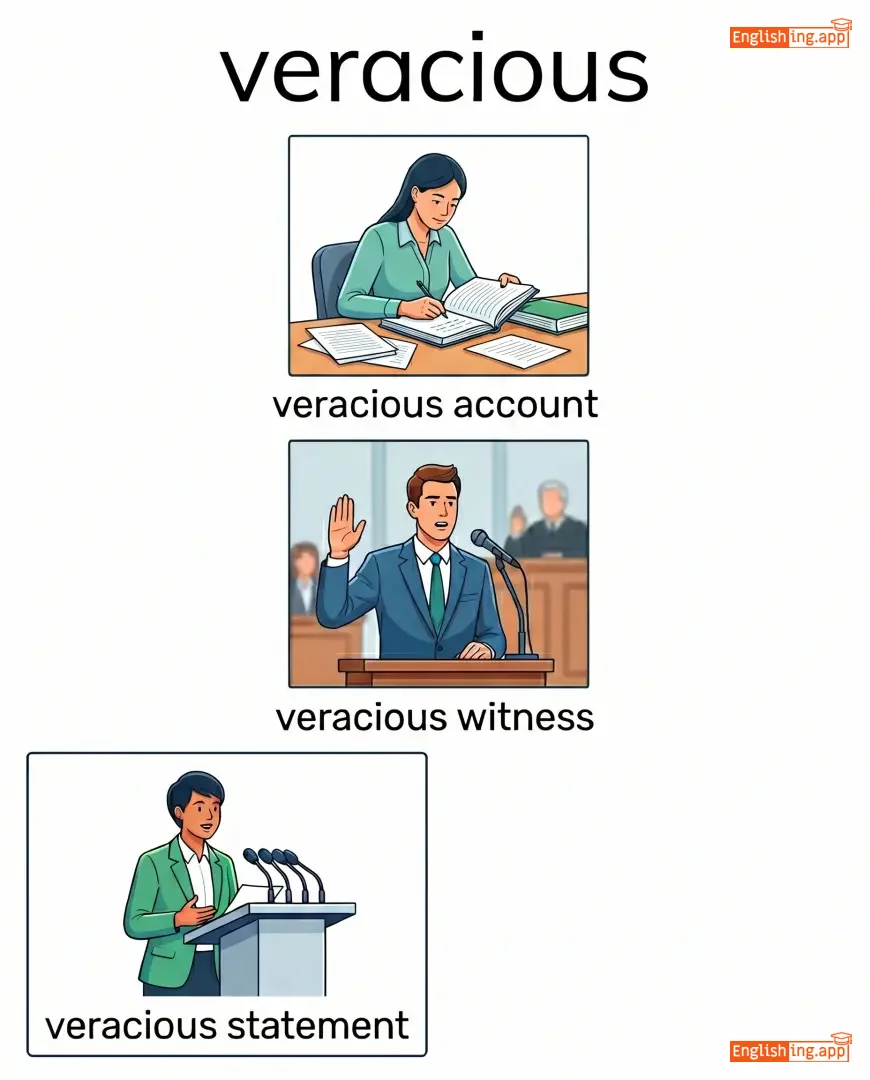
veracious account, veracious witness, veracious statement
••••••
|
真实的像是'真实',意味着总是讲真话的人。
••••••
|
|
🗣️
••••••
|
/vɜːrˈboʊs/
adjective
(沃尔博斯)
••••••
|
|
冗长
rǒngcháng
••••••
|
- •••••• | - •••••• | - •••••• | - •••••• |
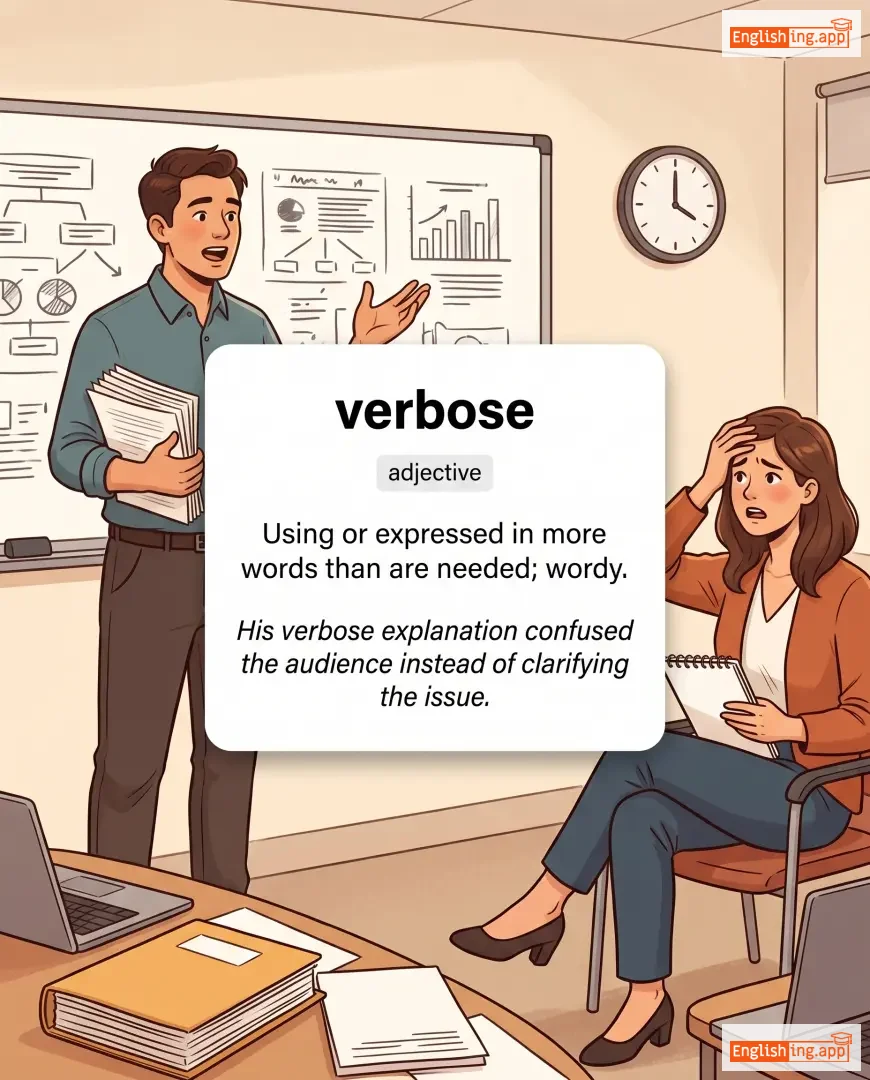
Using or expressed in more words than are needed; wordy.
••••••
|
His verbose explanation confused the audience instead of clarifying the issue. |
他冗长的解释使观众感到困惑,而不是澄清问题。
Tā rǒngcháng de jiěshì shǐ guānzhòng gǎndào kùnhuò, ér bùshì chéngqīng wèntí.
••••••
|
- •••••• | - •••••• | - •••••• |
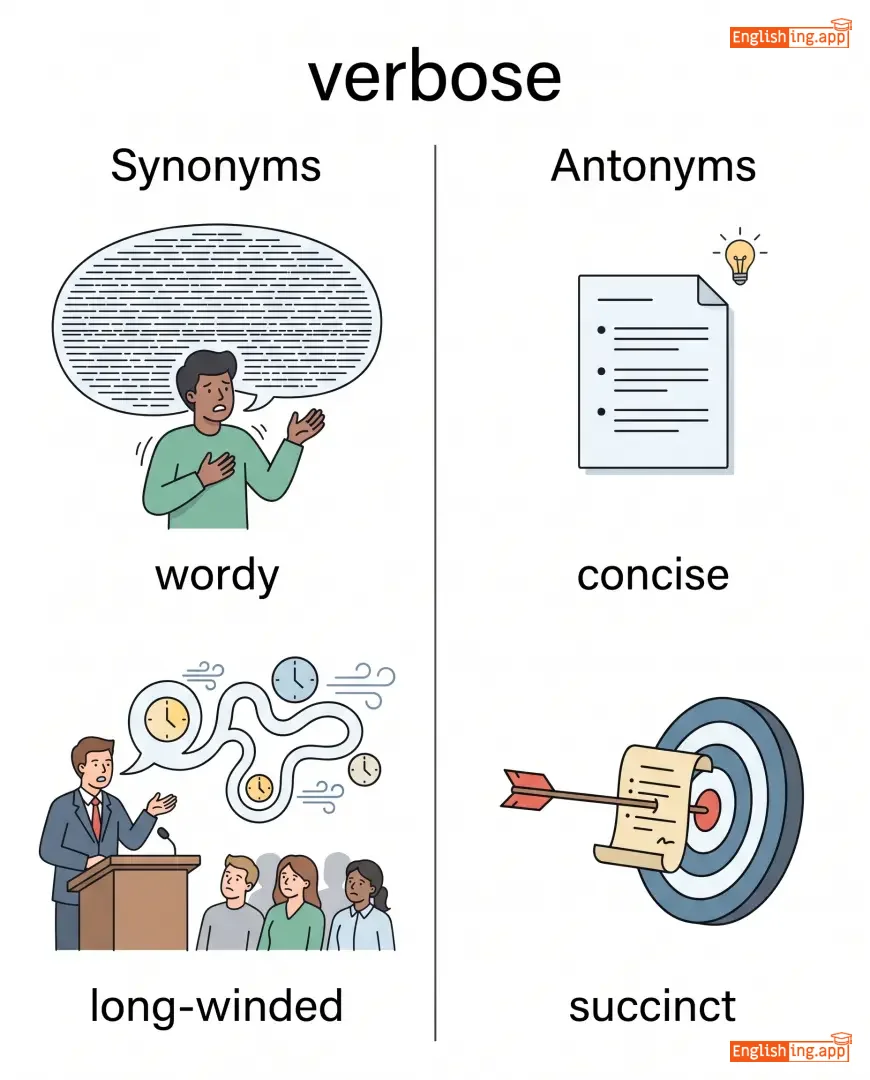
wordy, long-winded, prolix, talkative, rambling
••••••
|
concise, succinct, brief
••••••
|
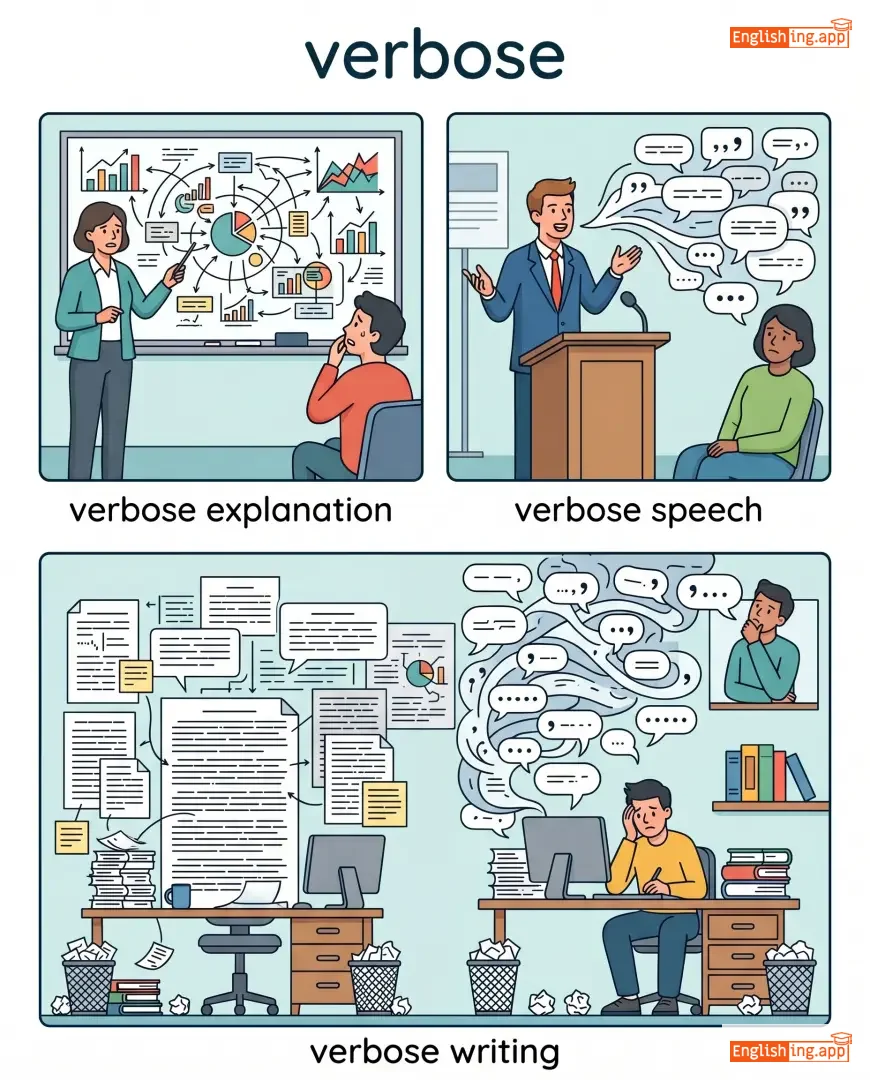
verbose explanation, verbose speech, verbose writing, verbose description
••••••
|
冗长 (rǒngcháng) + 话多 (huà duō) = 话多
••••••
|
|
🌱
••••••
|
/ˈvaɪəbl̩/
adjective
(wàiyàobù)
••••••
|

|
可行的
kexing de
••••••
|
- •••••• | - •••••• | - •••••• | - •••••• |
capable of working successfully or able to survive
••••••
|
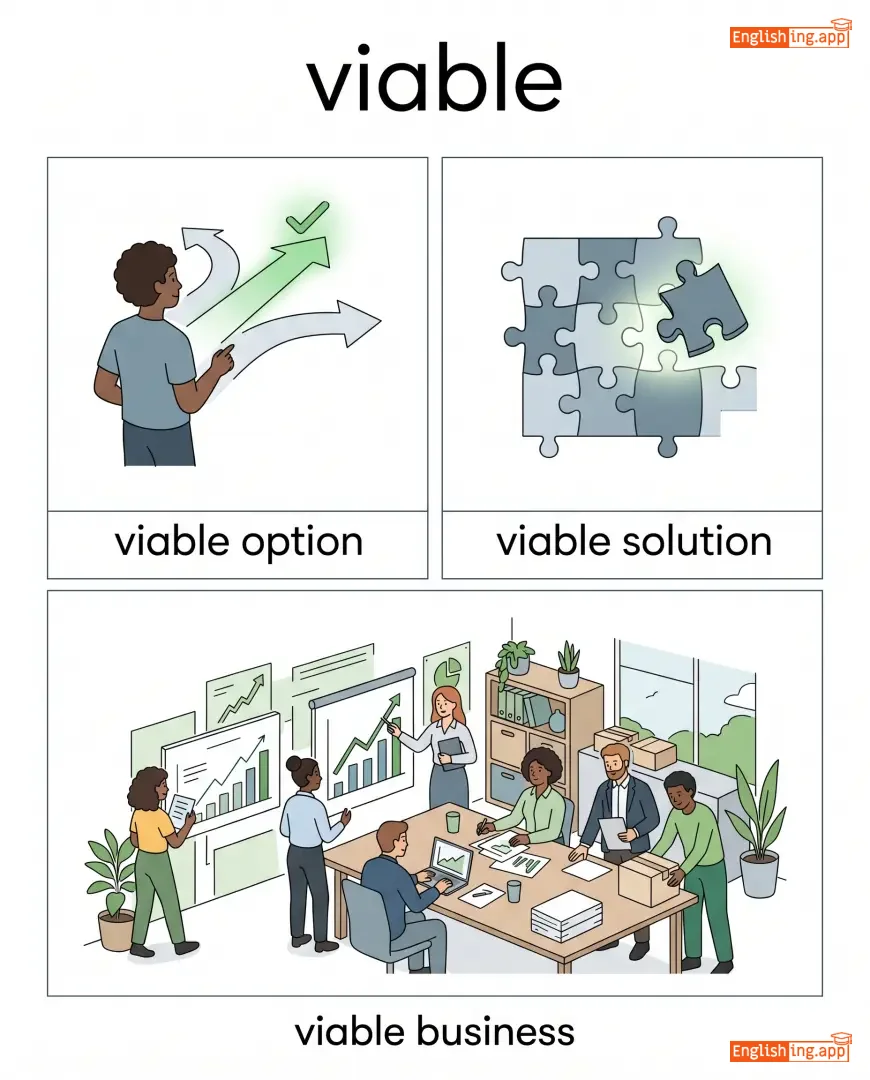
They need a viable business plan to attract investors.
他们需要一个可行的商业计划来吸引投资者。
••••••
|
他们需要一个可行的商业计划来吸引投资者。
Tāmen xūyào yīgè kěxíng de shāngyè jìhuà lái xīyǐn tóuzī zhě.
••••••
|
viable option
可行的选择
••••••
|
a choice that is practical and can work successfully
••••••
|
可行的选择
kěxíng de xuǎnzé
••••••
|
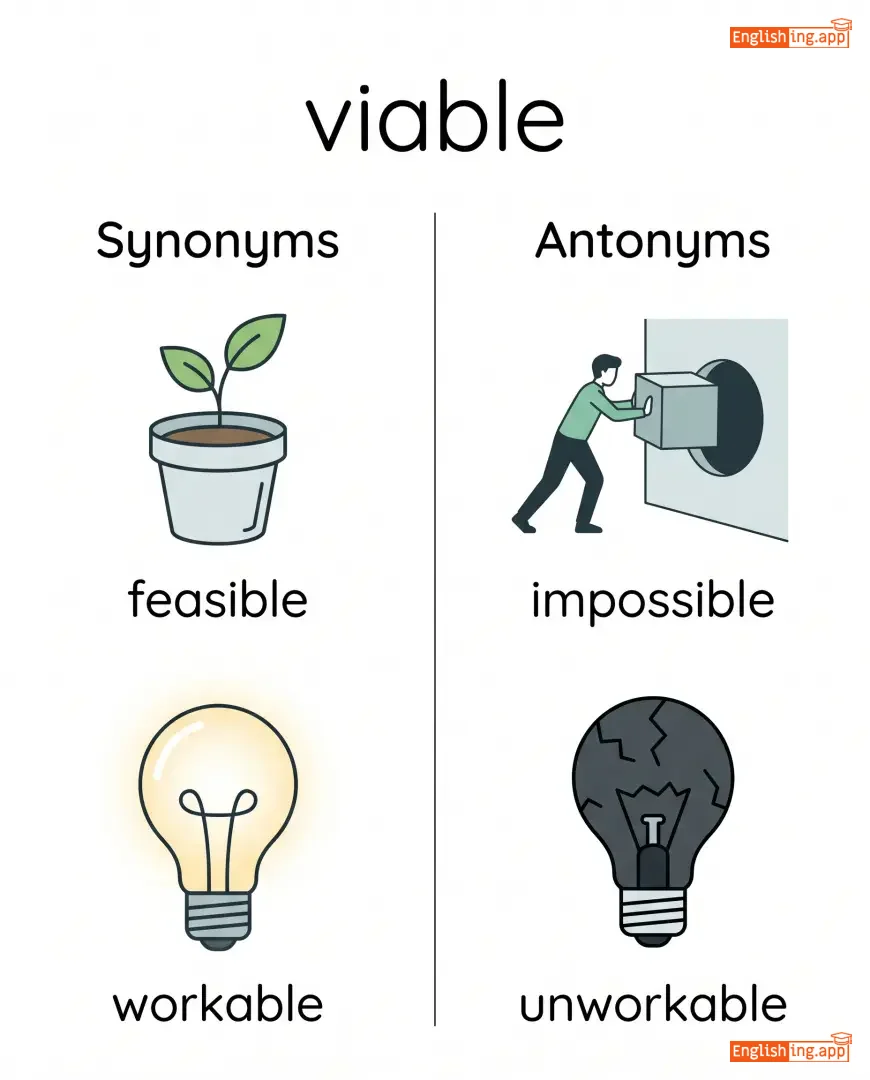
feasible, workable, practical, possible, sustainable
••••••
|
impossible, unworkable, impractical
••••••
|
viable option, viable solution, viable business, economically viable
••••••
|
就像一个能生长的植物,适合生存 🌱
••••••
|
|
🍯
••••••
|
/ˈvɪskəs/
adjective
(vɪskəs)
••••••
|

|
粘性
niánxìng
••••••
|
- •••••• | - •••••• | - •••••• | - •••••• |
Having a thick, sticky consistency between solid and liquid.
••••••
|
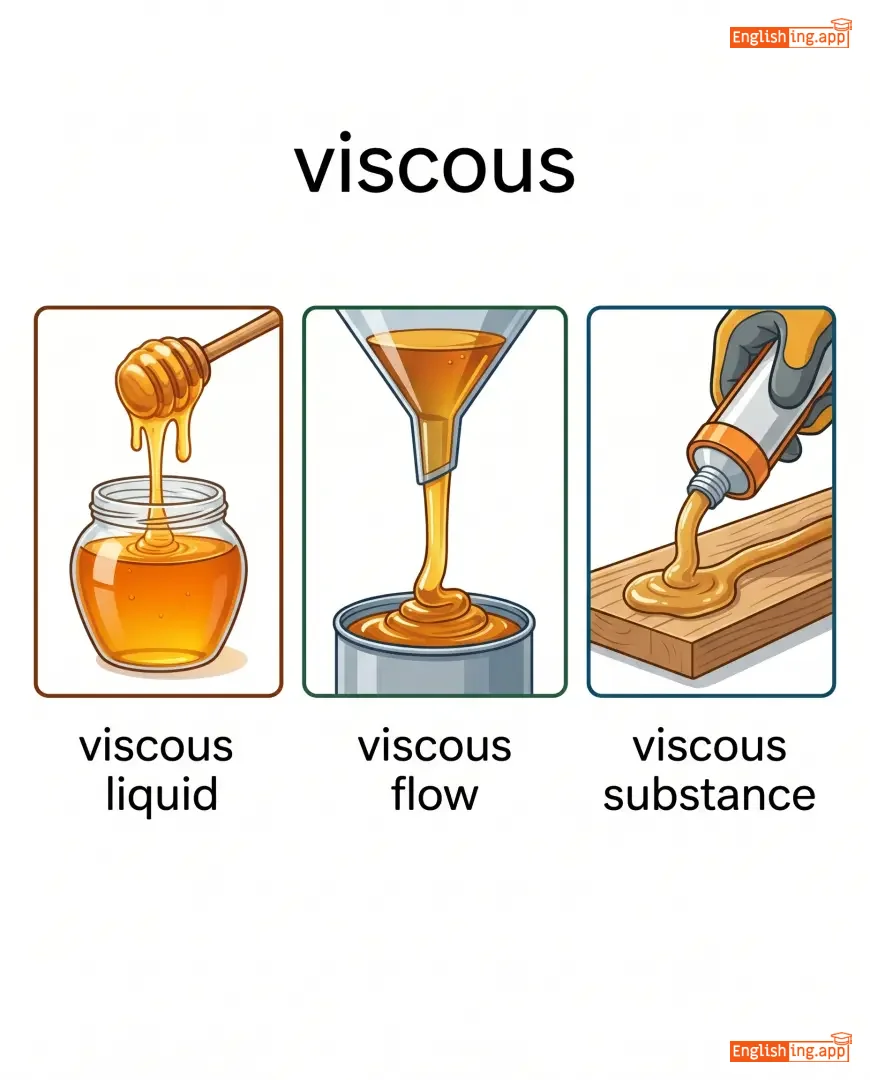
Honey is a viscous liquid that flows slowly. |
蜂蜜是一种粘性液体,流动缓慢。
Fēngmì shì yī zhǒng niánxìng yètǐ, liúdòng huǎnmàn.
••••••
|
- •••••• | - •••••• | - •••••• |
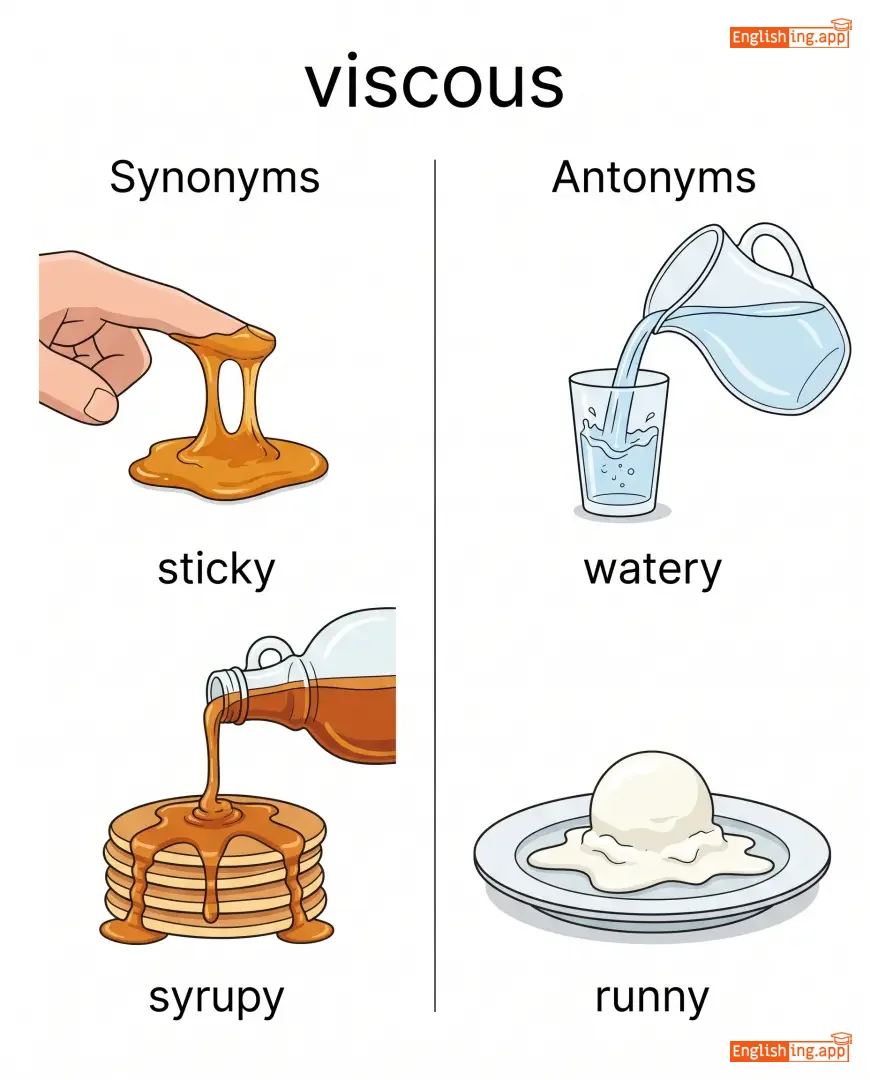
sticky, syrupy, thick, gooey
••••••
|
watery, runny, thin
••••••
|
viscous liquid, viscous flow, viscous substance
••••••
|
粘性像蜂蜜一样粘,记住'粘性蜂蜜慢慢流。'
••••••
|
|
😡
••••••
|
/vɪˈtjuːpərətɪv/
adjective
(维图帕瑞蒂夫)
••••••
|
|
辱骂的
rǔmà de
••••••
|
- •••••• | - •••••• | - •••••• | - •••••• |
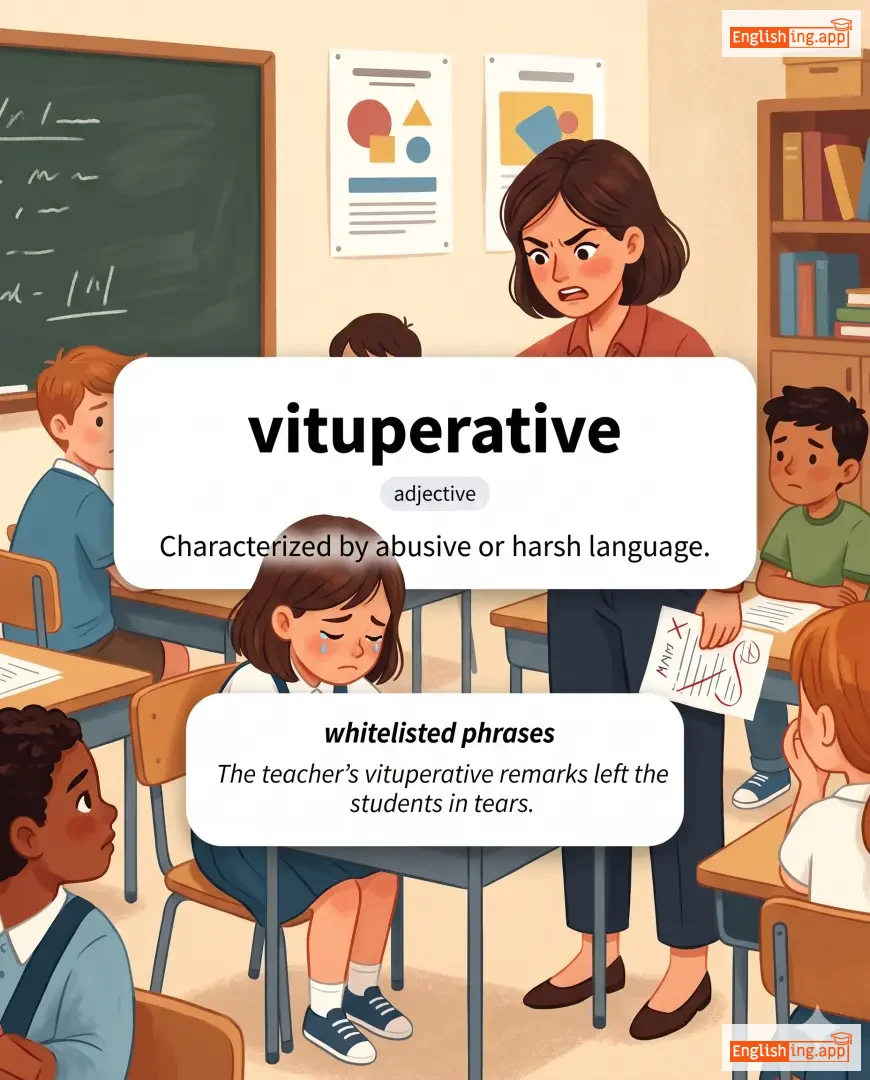
Characterized by abusive or harsh language.
••••••
|
The teacher’s vituperative remarks left the students in tears. |
老师的辱骂言辞让学生们泪流满面。
Lǎoshī de rǔmà yáncí ràng xuéshēngmen lèi liú mǎn miàn.
••••••
|
- •••••• | - •••••• | - •••••• |
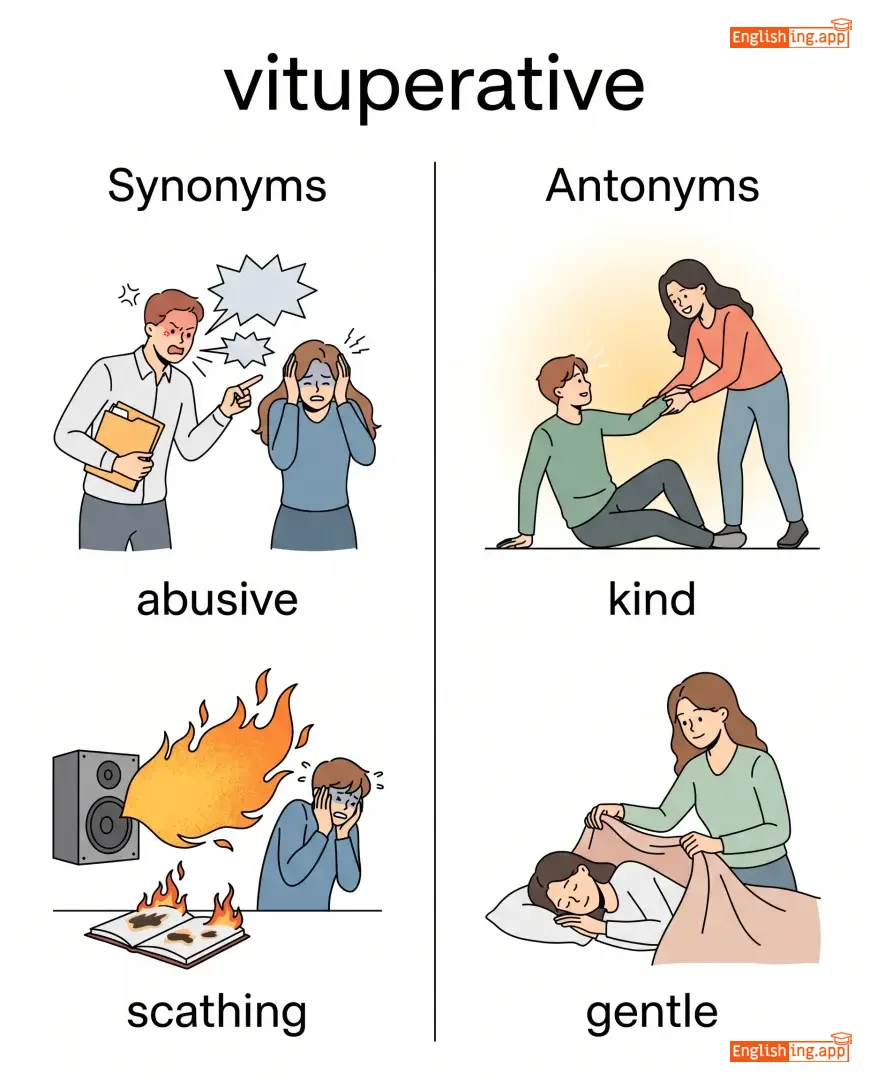
abusive, scathing, insulting, harsh
••••••
|
kind, gentle, respectful
••••••
|
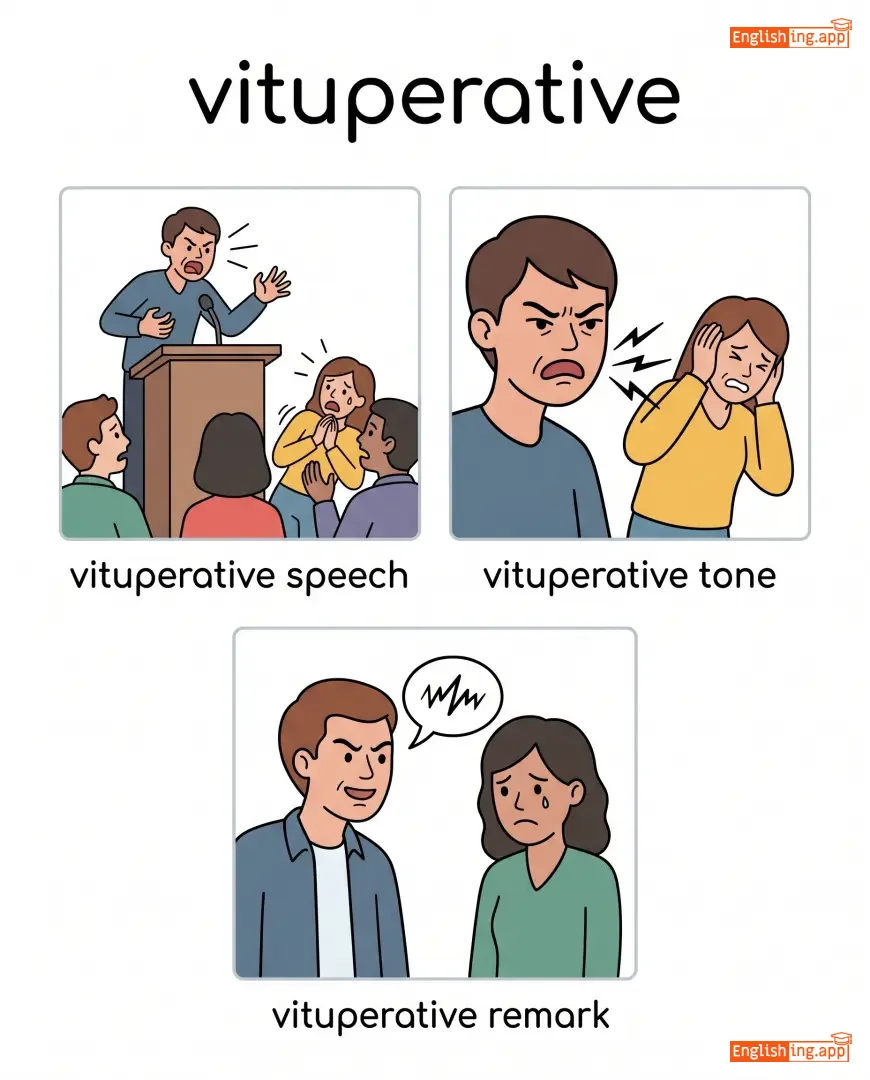
vituperative speech, vituperative tone, vituperative remark
••••••
|
Vituperative 就像是一个愤怒的 VIP 在骂人。
••••••
|
|
⚡
••••••
|
/ˈvɑːlətl/
adjective
(波动的)
••••••
|
|
波动的
bōdòng de
••••••
|
- •••••• | - •••••• | - •••••• | - •••••• |
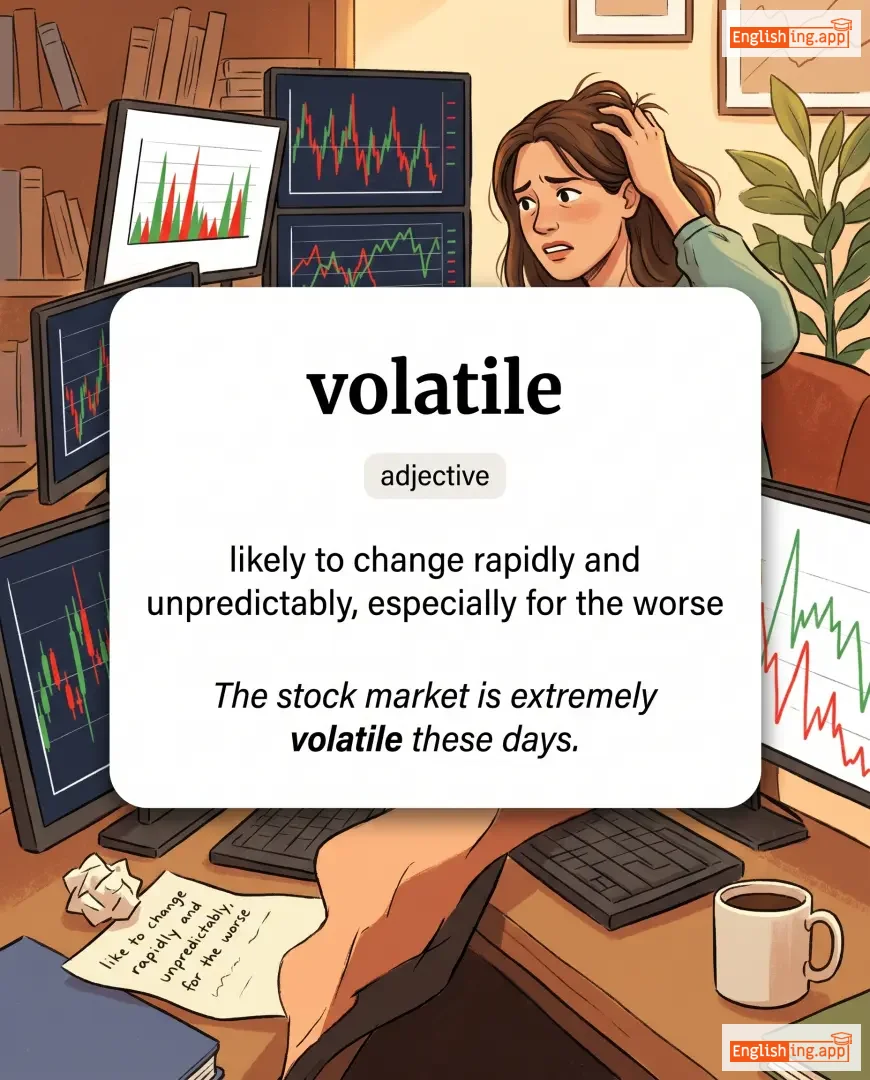
likely to change rapidly and unpredictably, especially for the worse
••••••
|
The stock market is extremely volatile these days. |
股市这些天极其波动。
Gǔshì zhèxiē tiān jíqí bōdòng.
••••••
|
volatile situation |
a situation that is unstable and likely to change suddenly
••••••
|
波动的局势
bōdòng de júshì
••••••
|
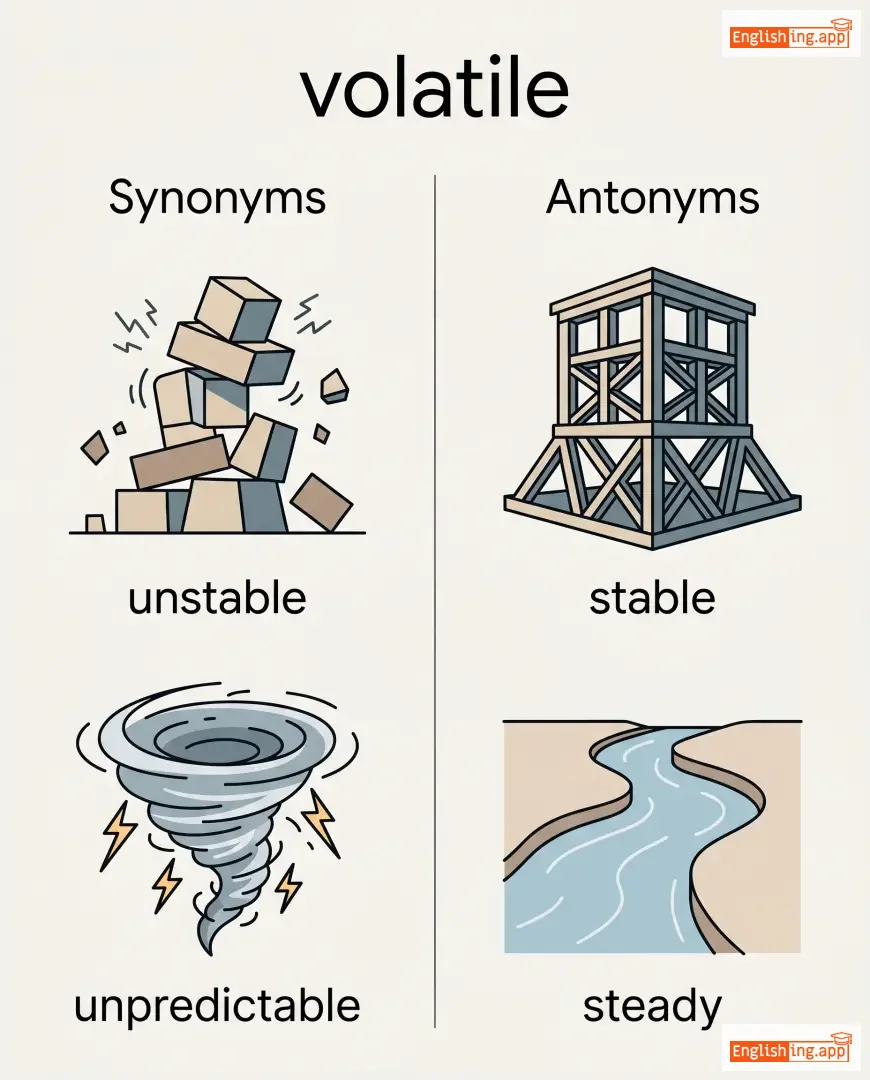
unstable, unpredictable, explosive, fickle
••••••
|
stable, steady, consistent
••••••
|
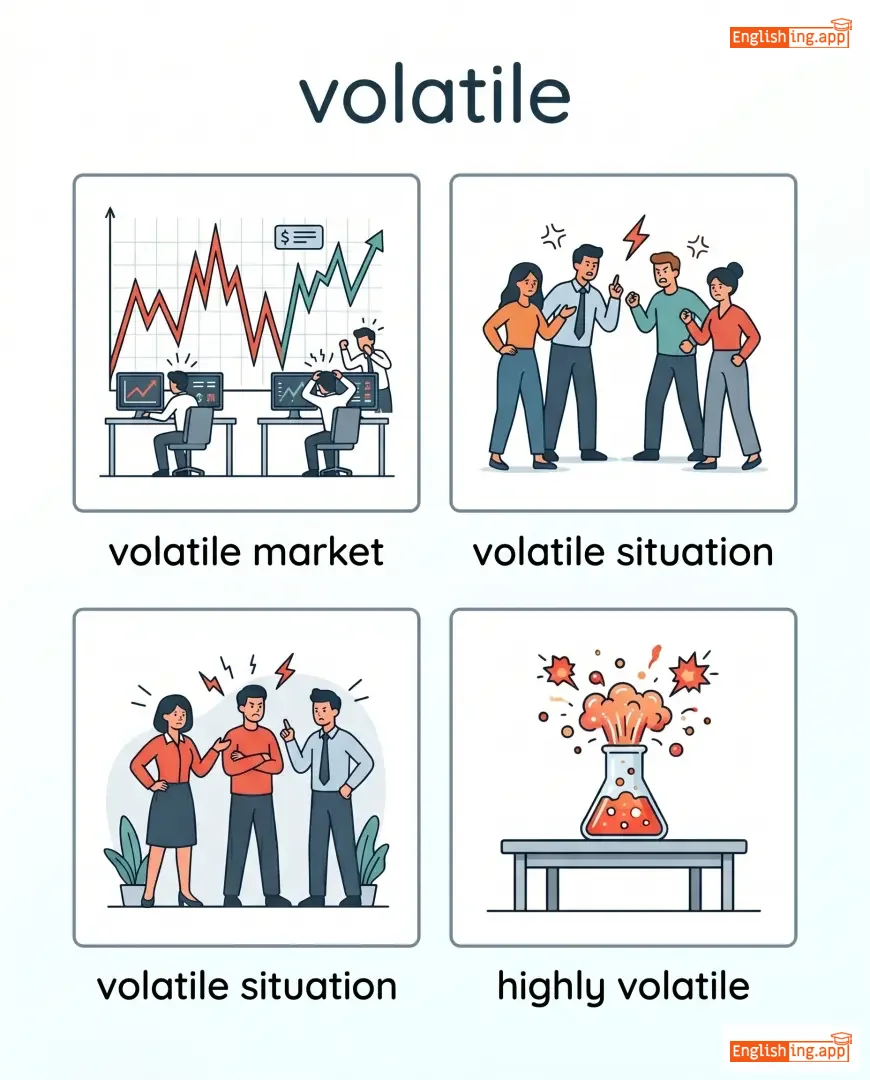
volatile market, volatile situation, highly volatile
••••••
|
波动的市场快速变化,像股市一样。
••••••
|
|
✅
••••••
|
/ˈwɒrəntɪd/
adjective/verb
(warranted)
••••••
|

|
有理由的
you liyi de
••••••
|
warranted
warranted
••••••
|
warranted
warranted
••••••
|
- •••••• | - •••••• |
Justified or authorized under the circumstances.
••••••
|
Her anger was warranted after the unfair treatment.
她的愤怒在不公平的待遇之后是有理由的。
••••••
|
她的愤怒在不公平的待遇之后是有理由的。
Ta de fen nu zai bu gongping de daiyu zhi hou shi you liyi de.
••••••
|
- •••••• | - •••••• | - •••••• |
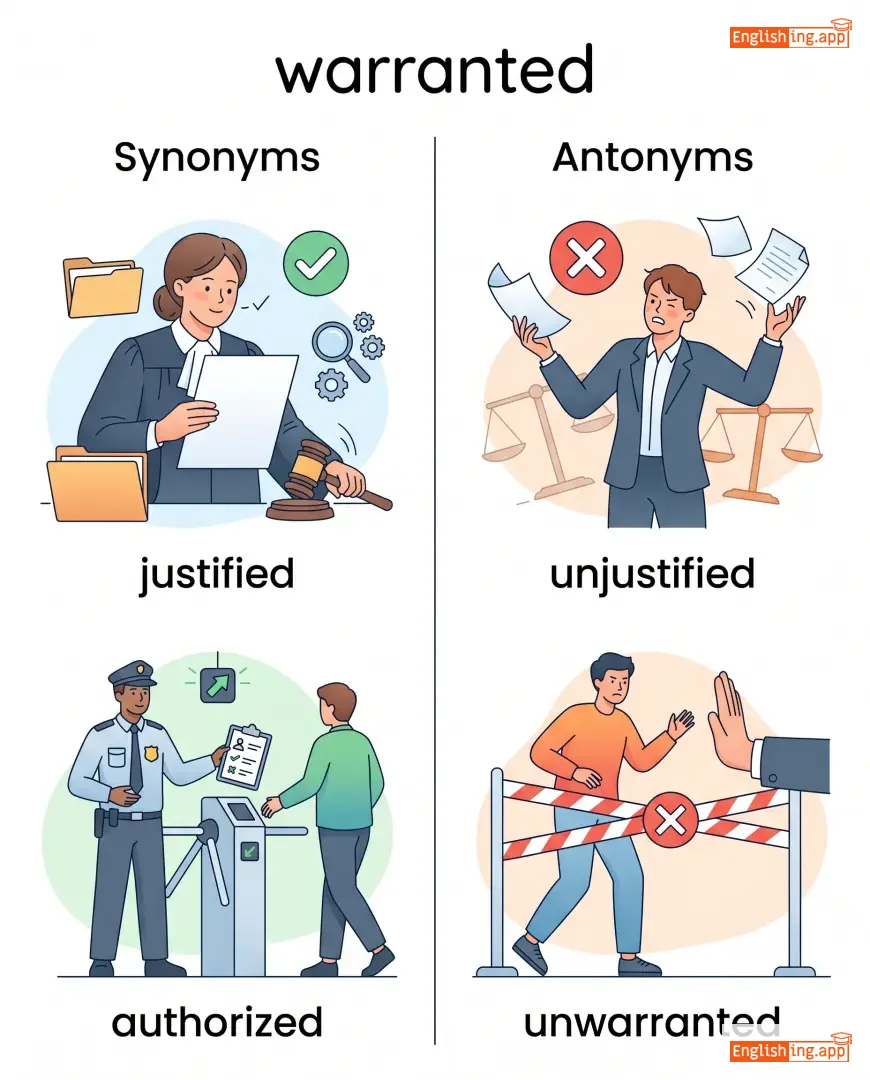
justified, authorized, reasonable, valid
••••••
|
unjustified, unwarranted, invalid
••••••
|
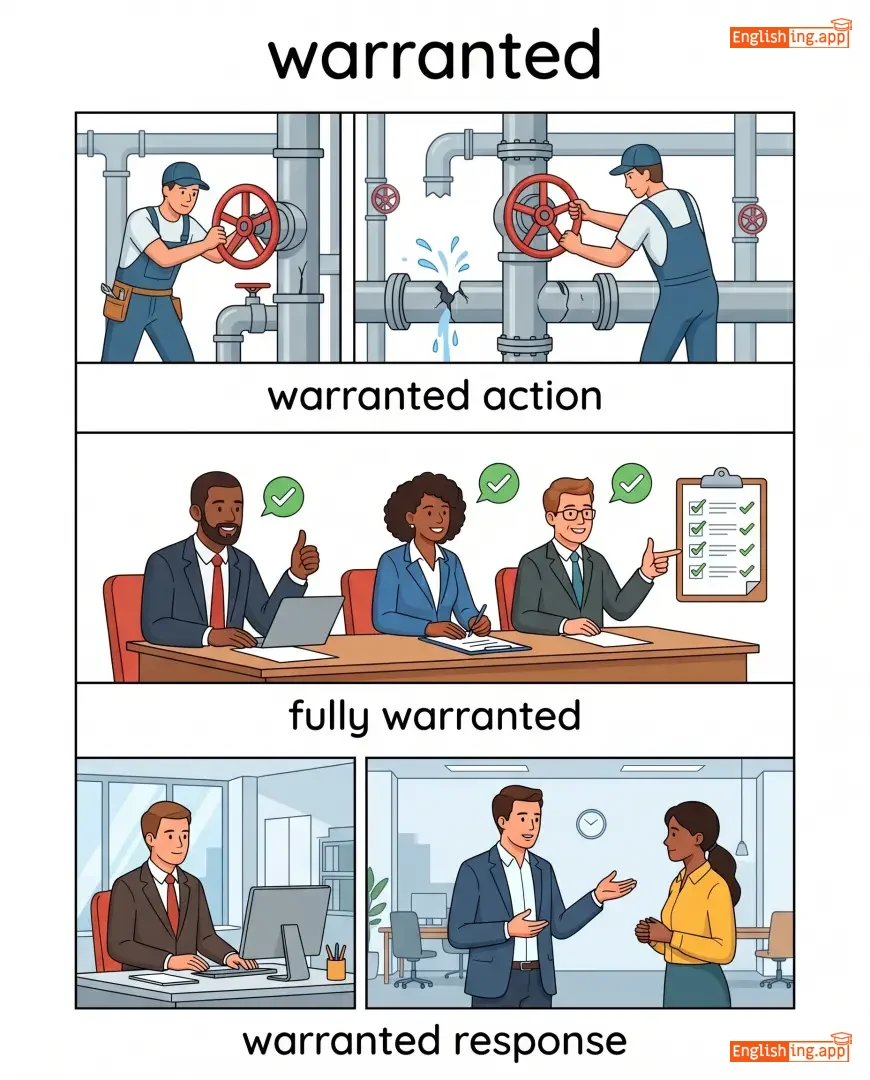
warranted action, fully warranted, warranted response, legally warranted
••••••
|
如果某事是正当的,它就是 WARRANTED ✅
••••••
|
|
👀
••••••
|
/ˈweəri/
adjective
(wēi rì)
••••••
|
|
小心的
wary
••••••
|
- •••••• | - •••••• | - •••••• | - •••••• |
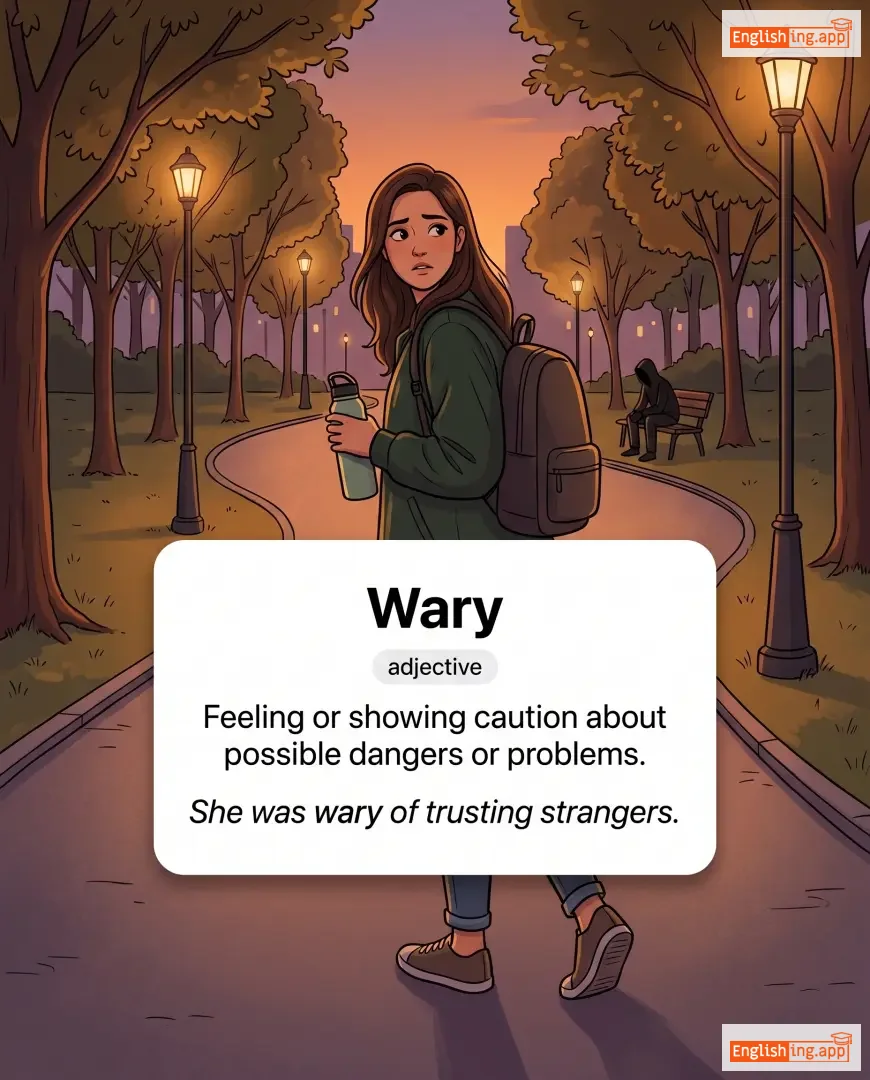
Feeling or showing caution about possible dangers or problems.
••••••
|
She was wary of trusting strangers. |
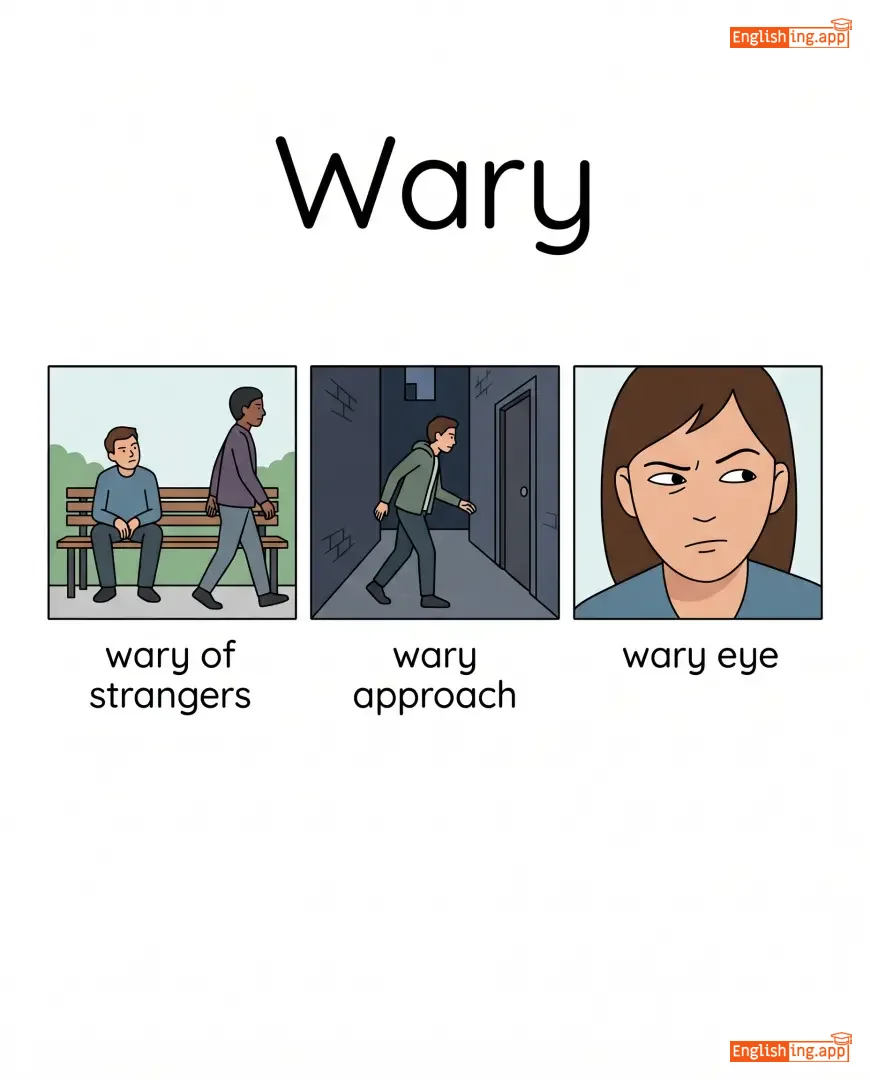
她对相信陌生人保持警惕。
Tā duì xiāngxìn mòshēngrén bǎochí jǐngtì.
••••••
|
wary eye |
A cautious and watchful look
••••••
|
警惕的目光
Jǐngtì de mùguāng
••••••
|
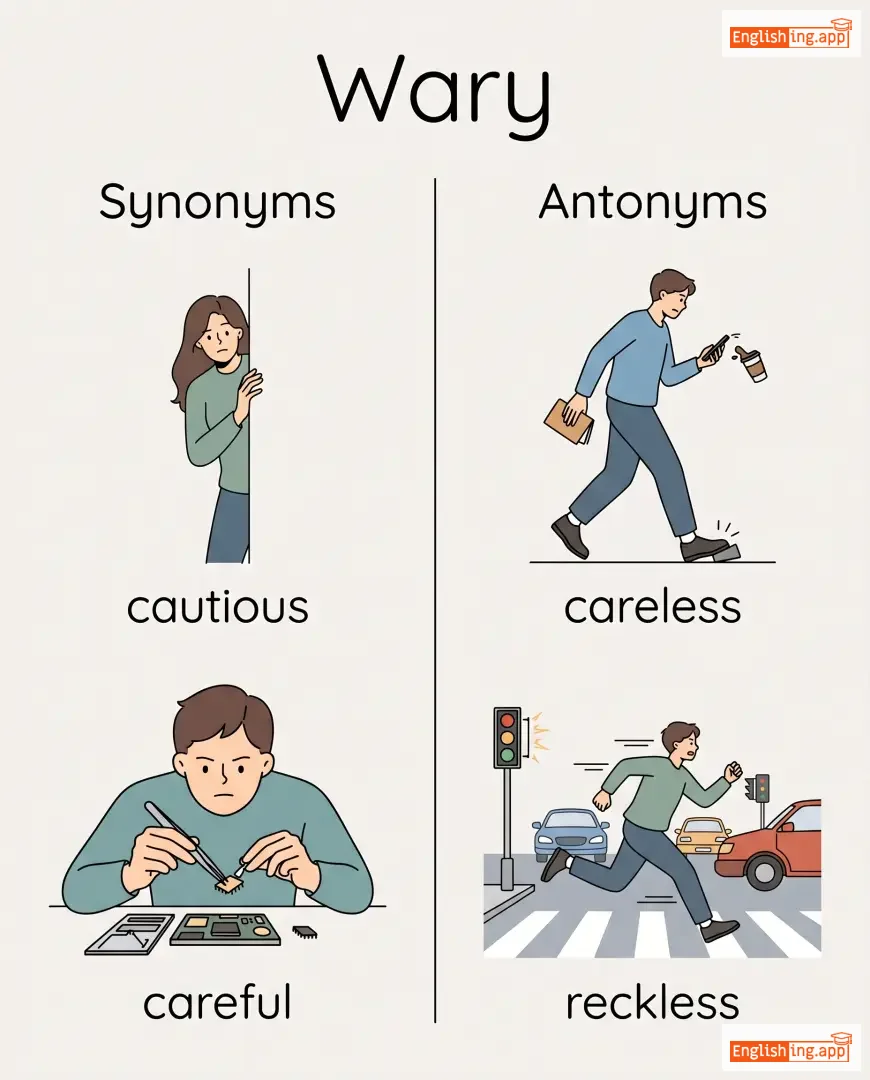
cautious, careful, alert, suspicious, vigilant
••••••
|
careless, reckless, unwary
••••••
|
wary of strangers, wary approach, wary eye, be wary
••••••
|
Wary = Very 小心的 – 'wary'意味着总是小心!
••••••
|
|
🌊
••••••
|
/ˈwɛltər/
verb
(韦尔特)
••••••
|
|
在混乱中翻滚
zai hunluan zhong fengun
••••••
|
weltered
韦尔特德
••••••
|
weltered
韦尔特德
••••••
|
welters
韦尔特斯
••••••
|
weltering
韦尔特灵
••••••
|
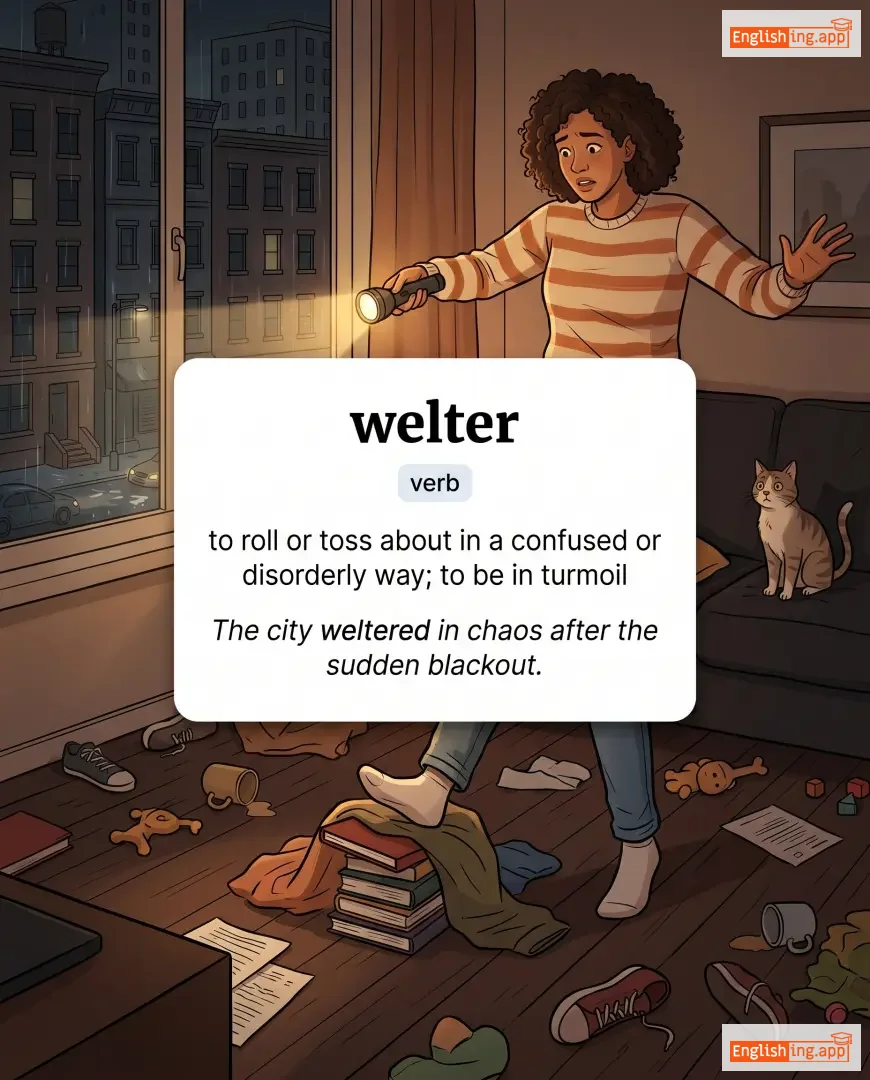
to roll or toss about in a confused or disorderly way; to be in turmoil
••••••
|
The city weltered in chaos after the sudden blackout.
城市在突然的停电后陷入混乱。
••••••
|
城市在突然的停电后陷入混乱。
Chéngshì zài túrán de tíngdiàn hòu xiànrù hùnluàn.
••••••
|
- •••••• | - •••••• | - •••••• |
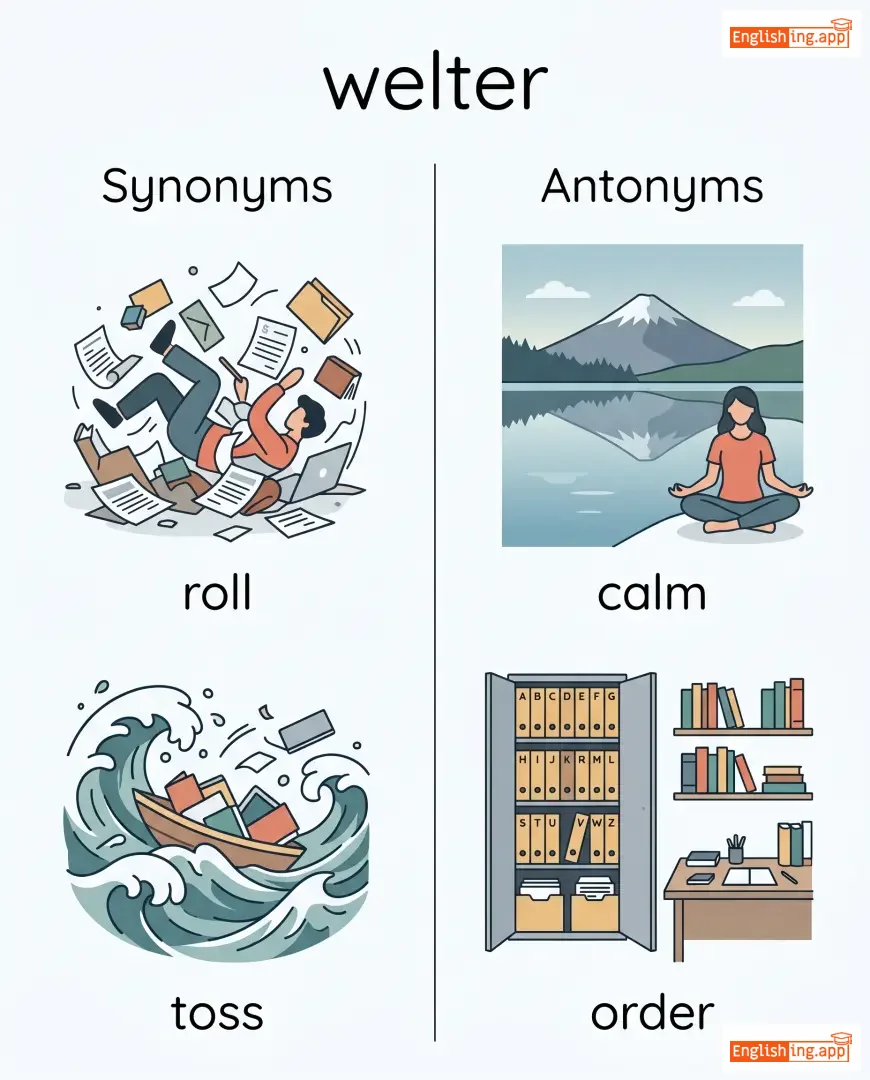
roll, toss, wallow, flounder, writhe
••••••
|
calm, order, stability
••••••
|
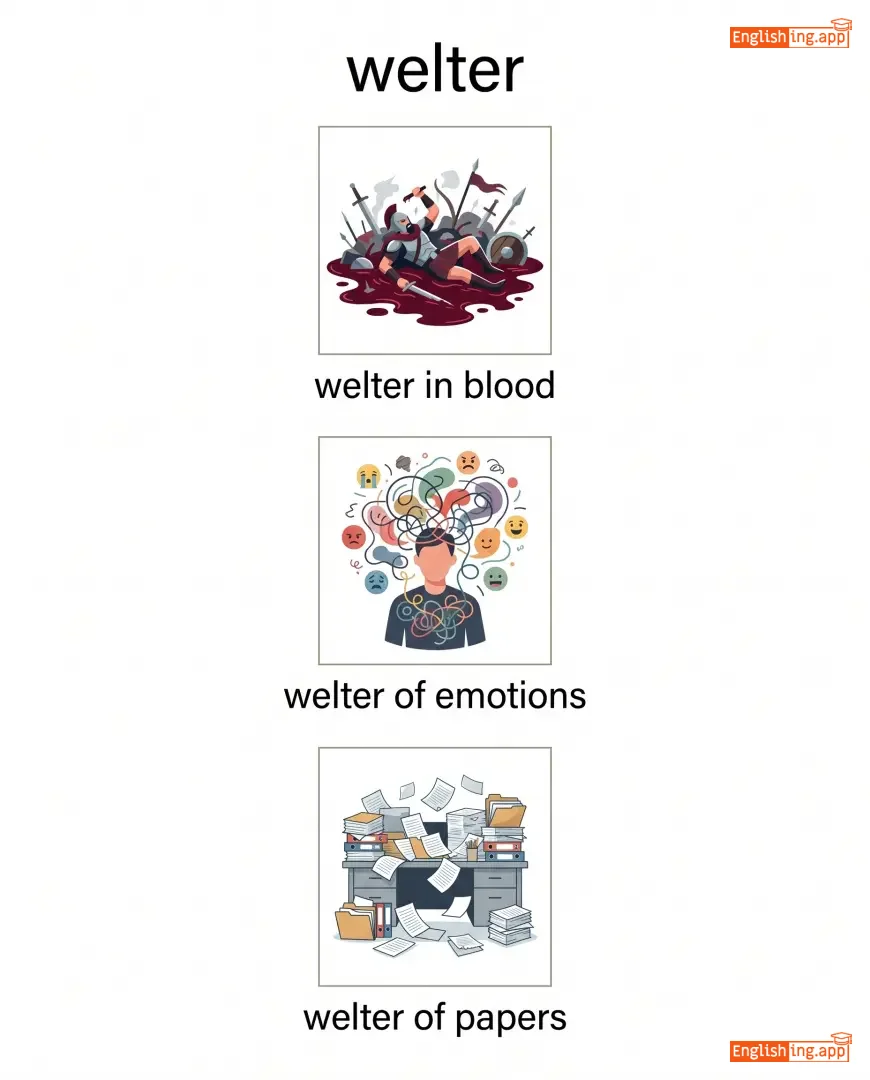
welter in blood, welter of emotions, welter of papers
••••••
|
Well ter (welter) 让一切陷入混乱。
••••••
|
|
🎭
••••••
|
/ˈwɪm.zɪ.kəl/
adjective
(wēimìsī kǎo)
••••••
|
|
异想天开; 古怪
yìxiǎngtiānkāi; gǔguài
••••••
|
- •••••• | - •••••• | - •••••• | - •••••• |
playfully quaint or fanciful, especially in an appealing and amusing way
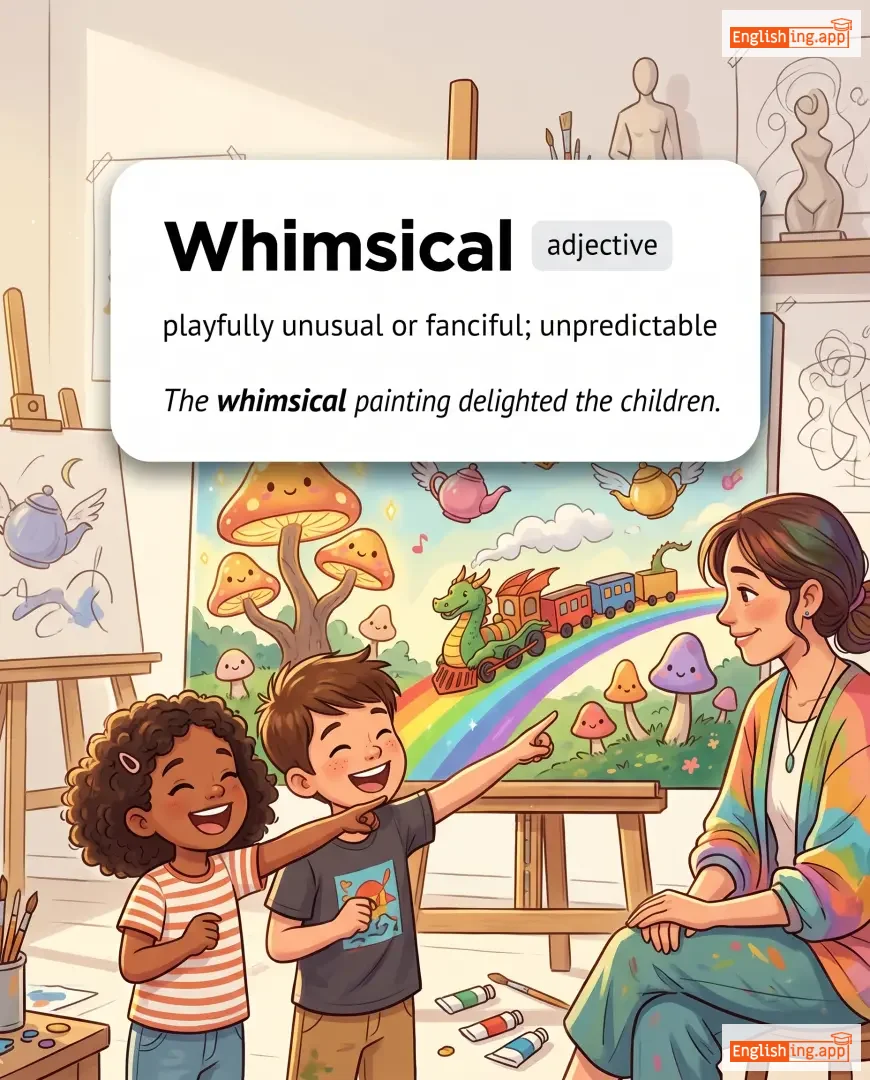
••••••
|
The artist created whimsical sculptures that delighted children.
艺术家创作了富有奇思妙想的雕塑,令孩子们开心。
••••••
|
艺术家创作了富有奇思妙想的雕塑,令孩子们开心。
Yìshùjiā chuàngzuòle fùyǒu qí sī miào xiǎng de diāosù, lìng háizimen kāixīn.
••••••
|
- •••••• | - •••••• | - •••••• |
fanciful, playful, quirky, imaginative
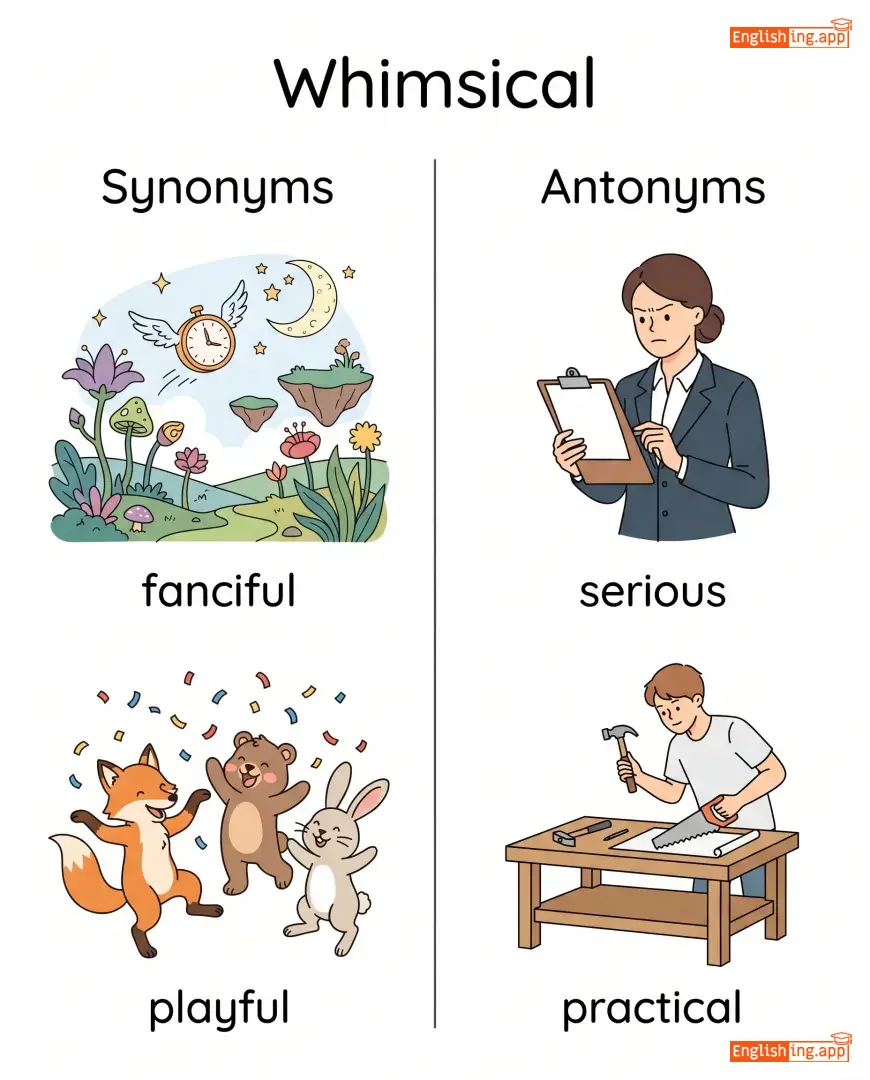
••••••
|
serious, solemn, practical, realistic
••••••
|
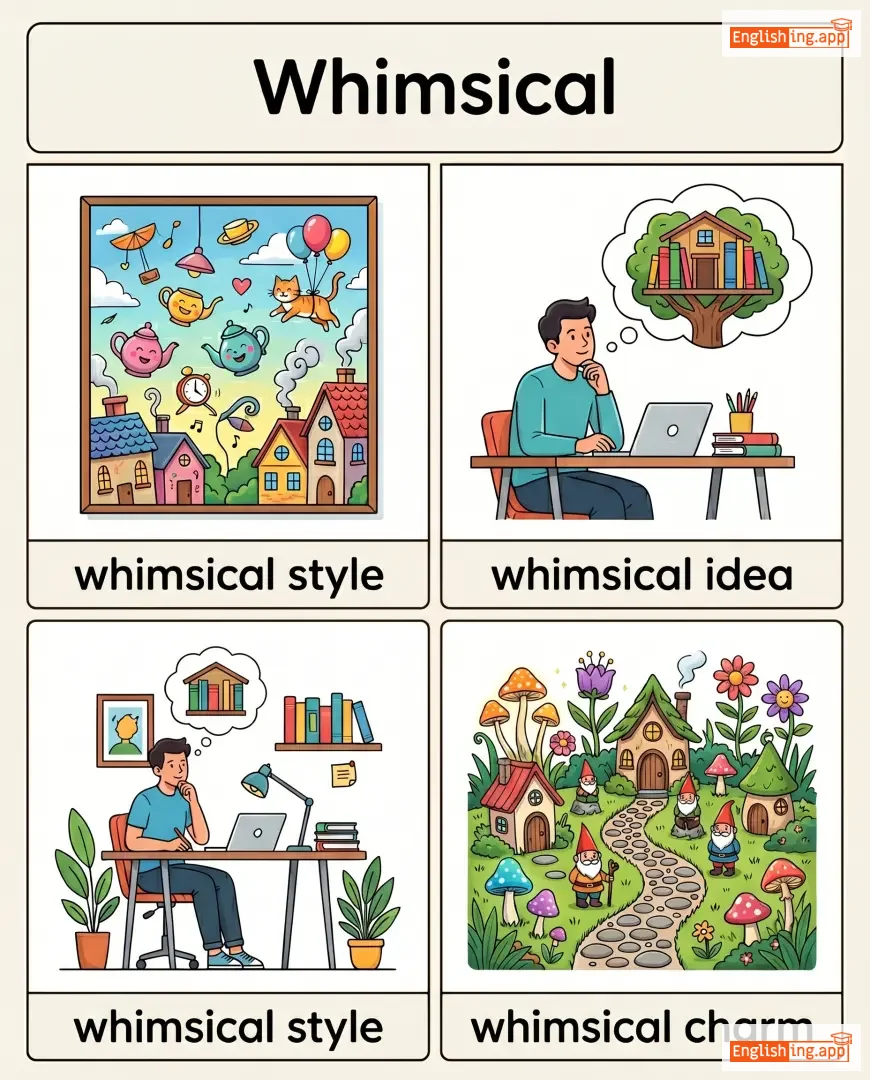
whimsical character, whimsical design, whimsical story
••••••
|
A whimsical artist creates quirky and playful sculptures for kids!
••••••
|
|
⚔️
••••••
|
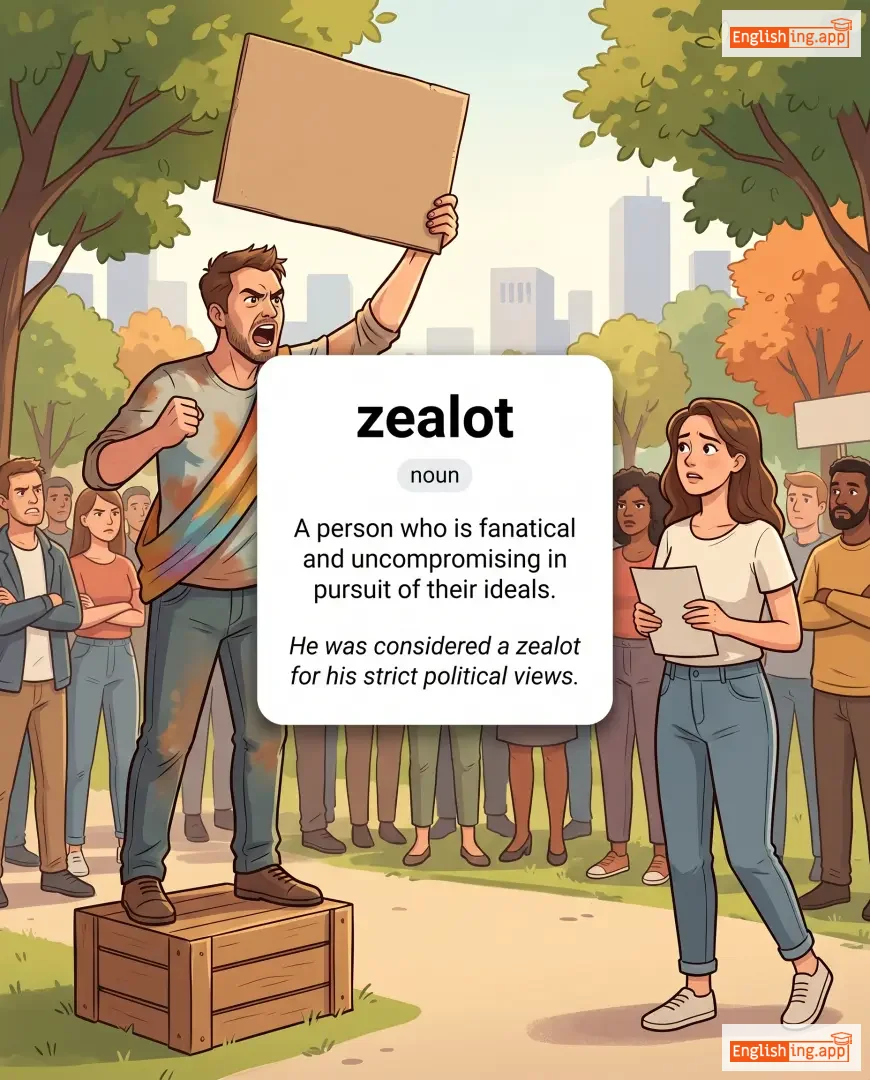
/ˈzel.ət/
noun
(泽洛特)
••••••
|

|
狂热分子
kuángrè fènzǐ
••••••
|
- •••••• | - •••••• | - •••••• | - •••••• |
A person who is fanatical and uncompromising in pursuit of their ideals.
••••••
|
He was considered a zealot for his strict political views. |
由于他严格的政治观点,他被视为狂热分子。
Yóuyú tā yángé de zhèngzhì guāndiǎn, tā bèi shì wéi kuángrè fènzǐ.
••••••
|
- •••••• | - •••••• | - •••••• |
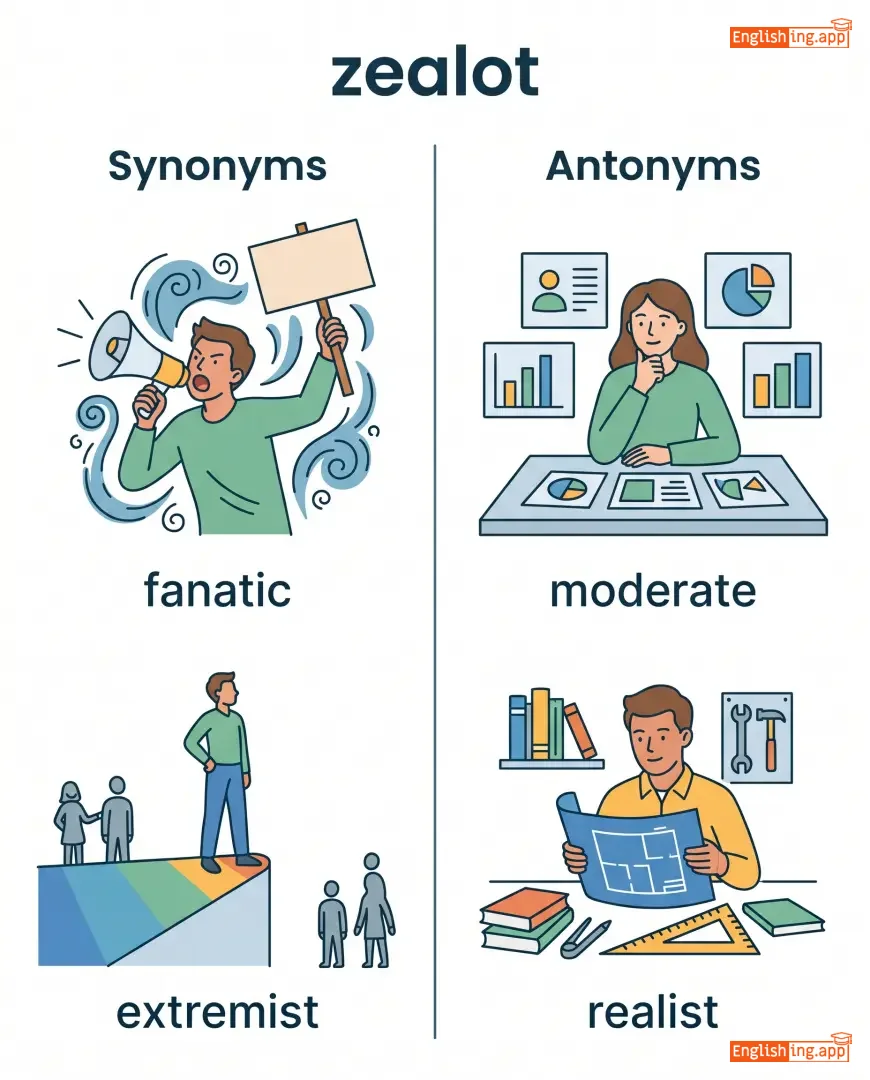
fanatic, extremist, radical, enthusiast
••••••
|
moderate, realist
••••••
|
religious zealot, political zealot, zealot group
••••••
|
ZeaLOT意味着更多的热情,因此zealot意味着狂热分子。
••••••
|

