|
表情符号
|
单词 | Images | 翻译 | 过去时 | 过去分词 | 第三人称单数 | 动名词 | 含义 | 例句 | 例句翻译 | 示例表达 | 示例表达含义 | 示例表达翻译 | 同义词 | 反义词 | 搭配词 | 助记符 |
|---|---|---|---|---|---|---|---|---|---|---|---|---|---|---|---|---|---|
|
🌲
••••••
|
/lɒɡ/
noun, verb
(log)
••••••
|
|
原木, 记录
yuánmù, jìlù
••••••
|
logged
登录
••••••
|
logged
登录
••••••
|
logs
日志
••••••
|
logging
登录
••••••
|
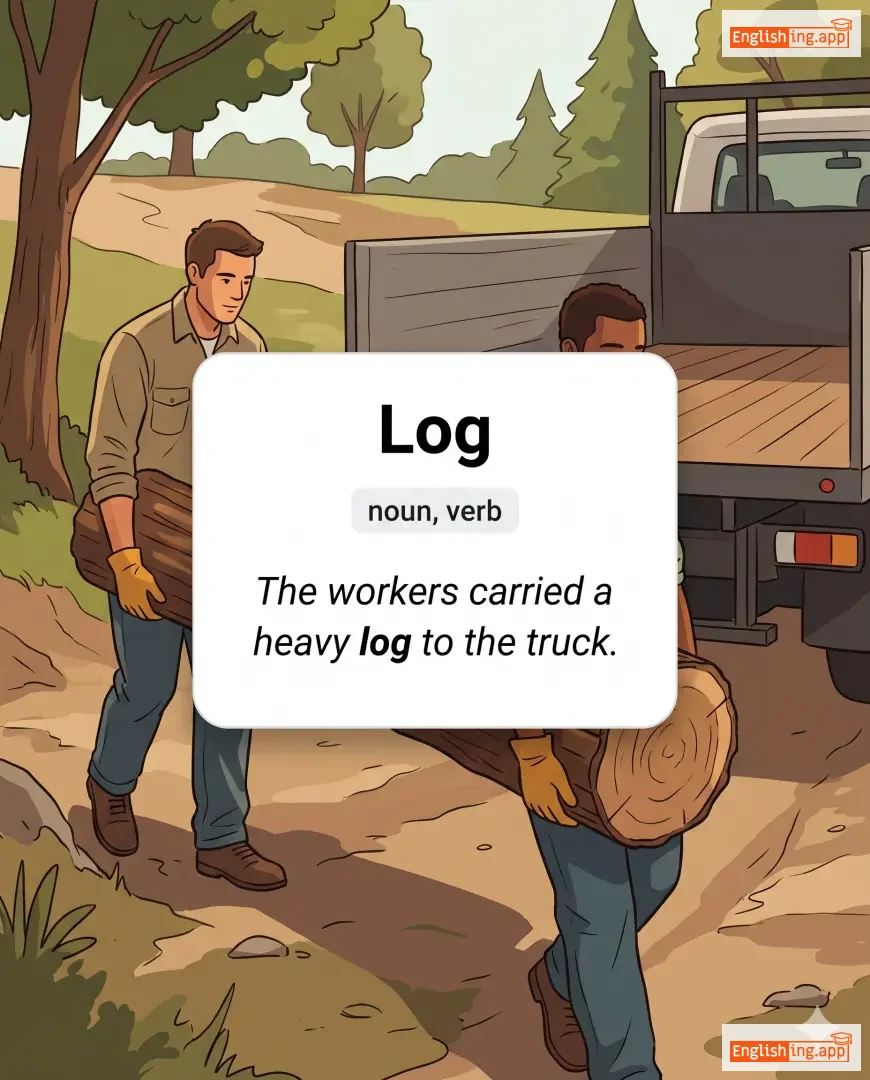
A part of the trunk or a large branch of a tree that has fallen or been cut off; also to record information systematically.
••••••
|
The workers carried a heavy log to the truck.
工人们将一根重木头搬到卡车上。
••••••
|
工人们将一根重木头搬到卡车上。
Gōngrénmen jiāng yī gēn zhòng mùtou bān dào kǎchē shàng.
••••••
|
sleep like a log
像木头一样睡觉
••••••
|
to sleep very deeply and soundly
••••••
|
像木头一样睡觉
xiàng mùtou yīyàng shuìjiào
••••••
|
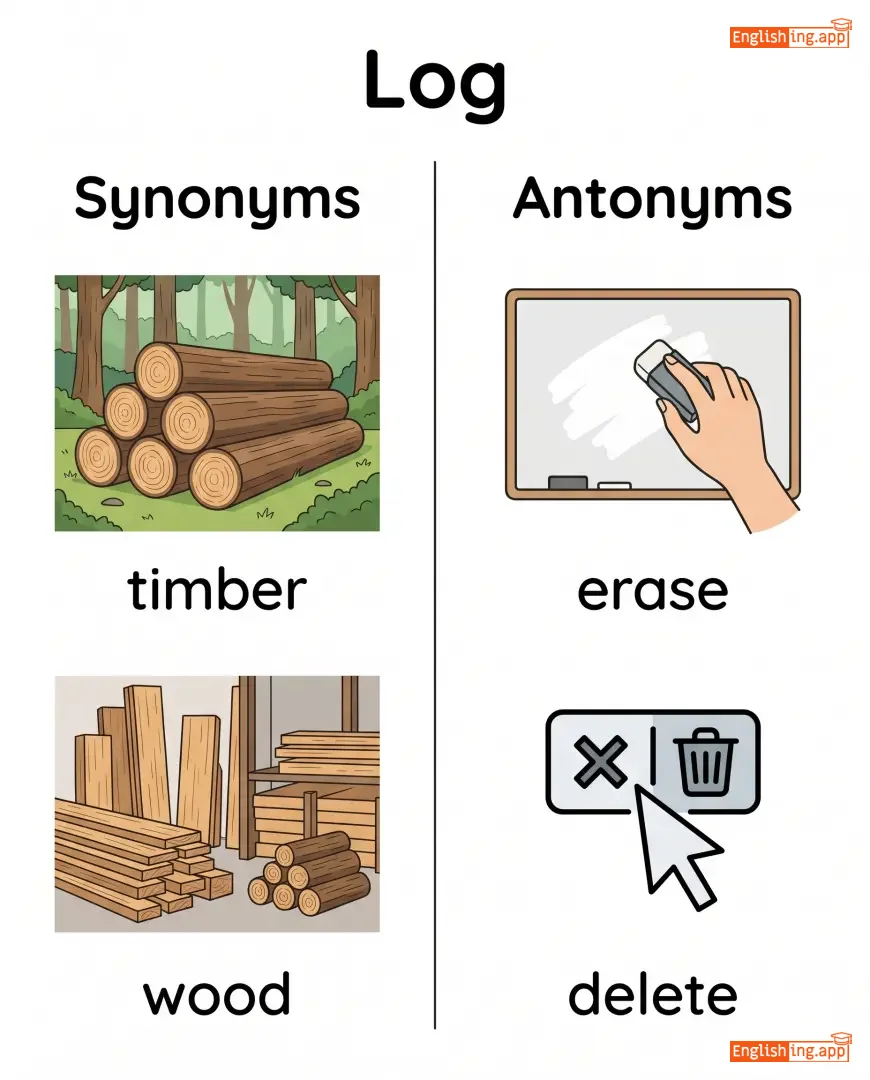
timber, wood, record, register, journal
••••••
|
erase, delete
••••••
|
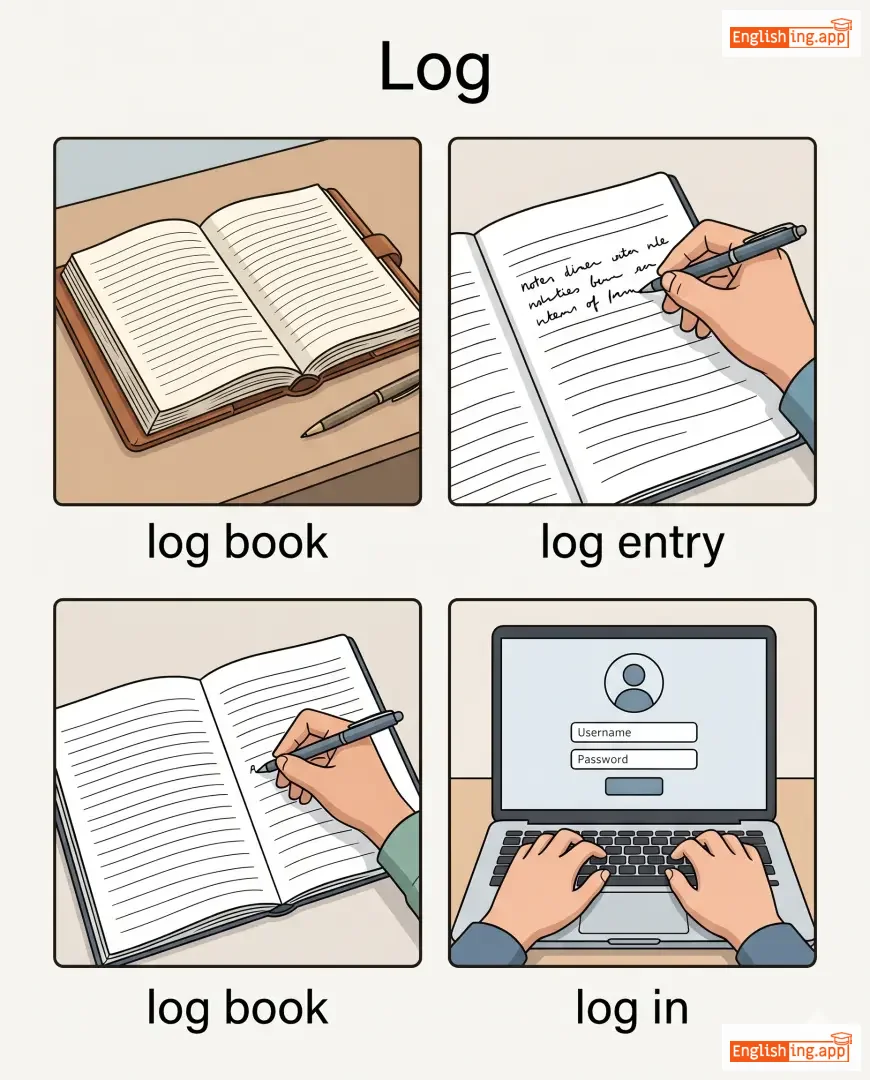
log book, log entry, log in, log data
••••••
|
Log (log) 是原木,登录 (login) 时会记录信息。
••••••
|
|
🗣️
••••••
|
/loʊˈkweɪʃəs/
adjective
(loʊˈkweɪʃəs)
••••••
|

|
话多的
hua duo de
••••••
|
- •••••• | - •••••• | - •••••• | - •••••• |
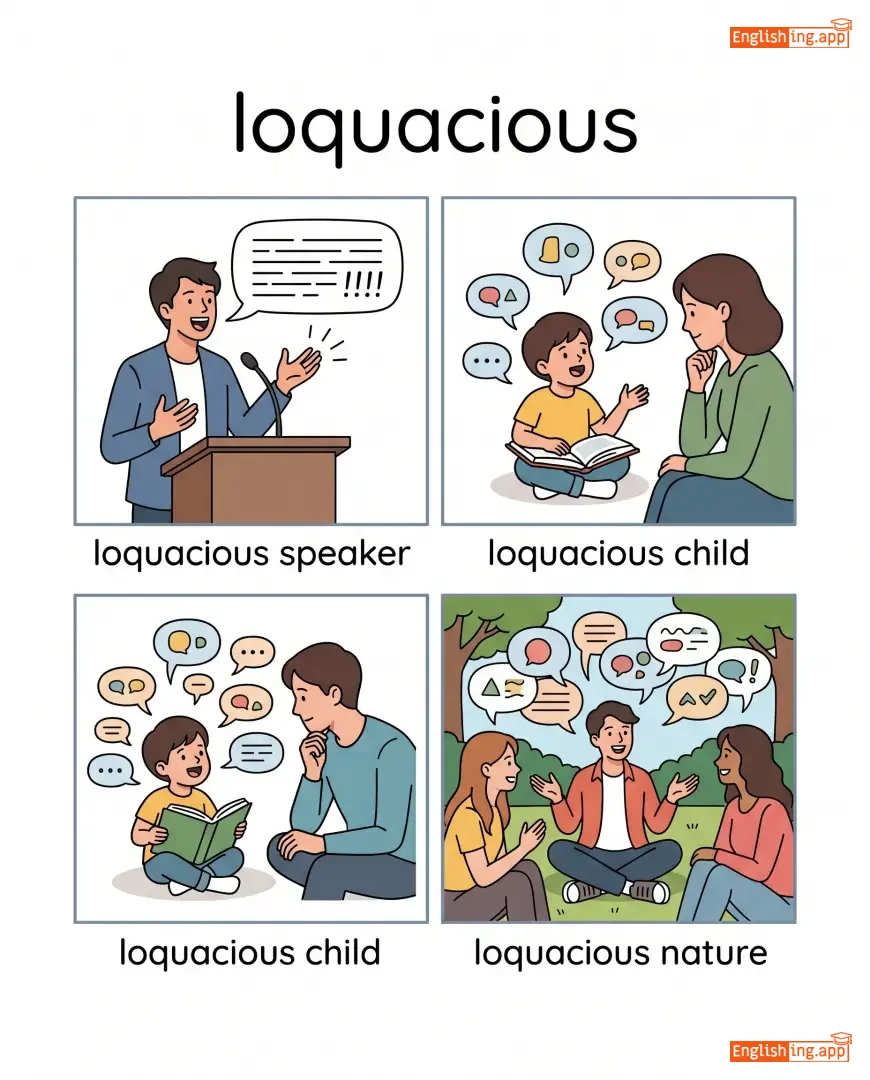
tending to talk a great deal; very talkative
••••••
|
The loquacious child entertained everyone with endless stories.
那个话多的孩子用无尽的故事娱乐了每个人。
••••••
|
话多的孩子用无尽的故事娱乐了每个人。
Hua duo de haizi yong wu jin de gushi yule le meige ren.
••••••
|
- •••••• | - •••••• | - •••••• |
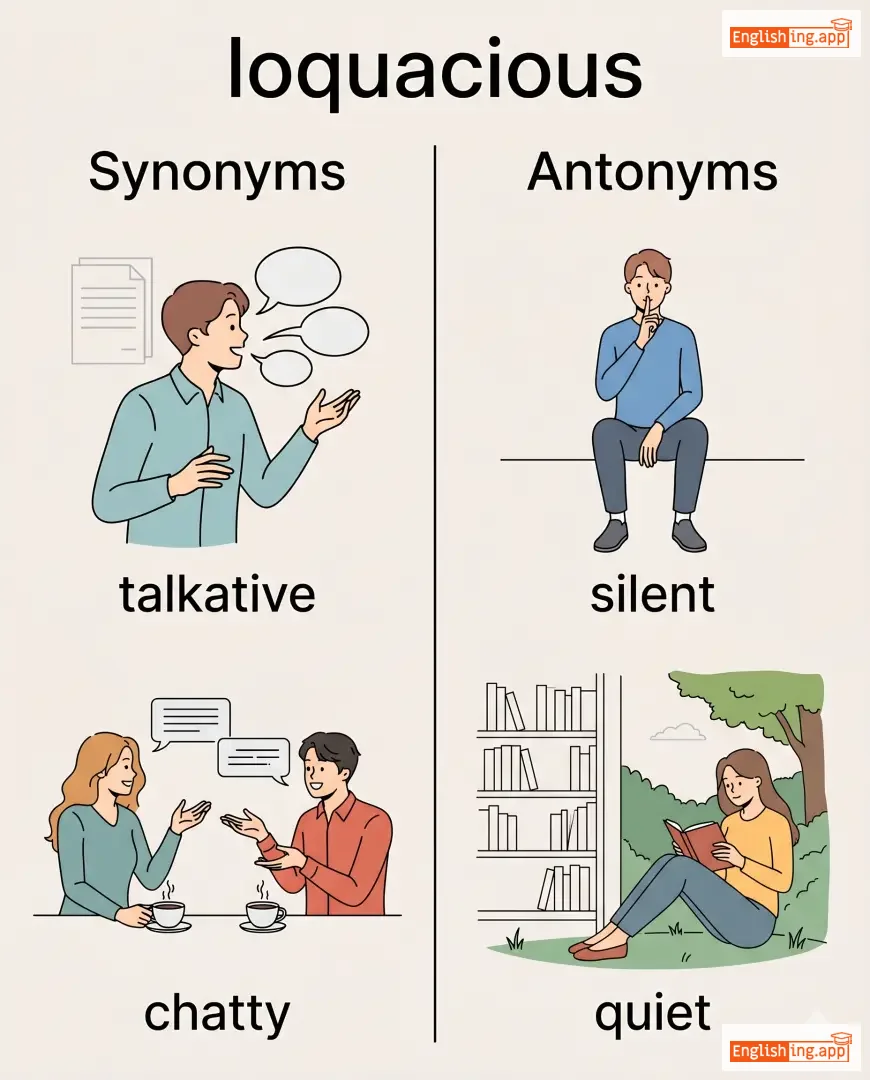
talkative, chatty, verbose, garrulous, communicative
••••••
|
silent, quiet, reserved
••••••
|
loquacious speaker, loquacious child, loquacious nature, loquacious host
••••••
|
Loquacious意味着多说话,像个'话痨'。
••••••
|
|
💡
••••••
|
/ˈluːsɪd/
adjective
(路西德)
••••••
|
|
清晰
qingxi
••••••
|
- •••••• | - •••••• | - •••••• | - •••••• |
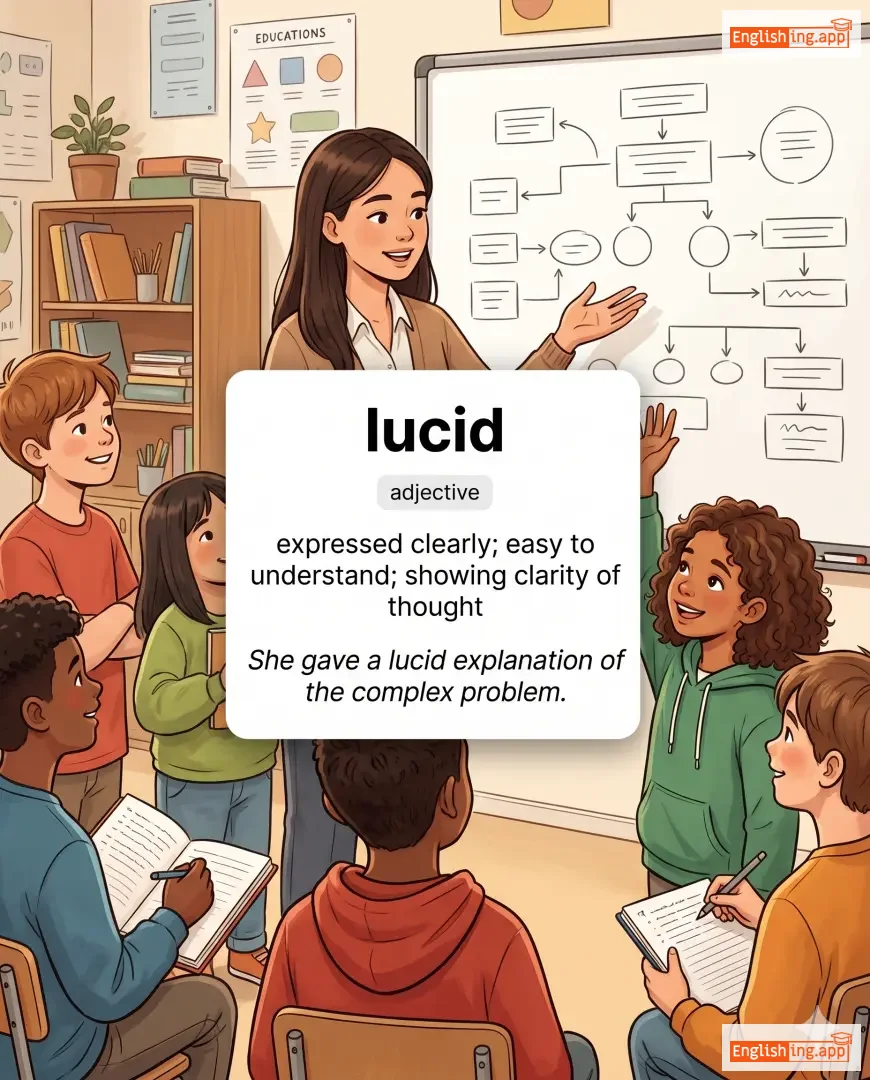
expressed clearly; easy to understand; showing clarity of thought
••••••
|
She gave a lucid explanation of the complex problem. |
她对复杂问题做了清晰的解释。
Tā duì fùzá wèntí zuòle qīngxī de jiěshì.
••••••
|
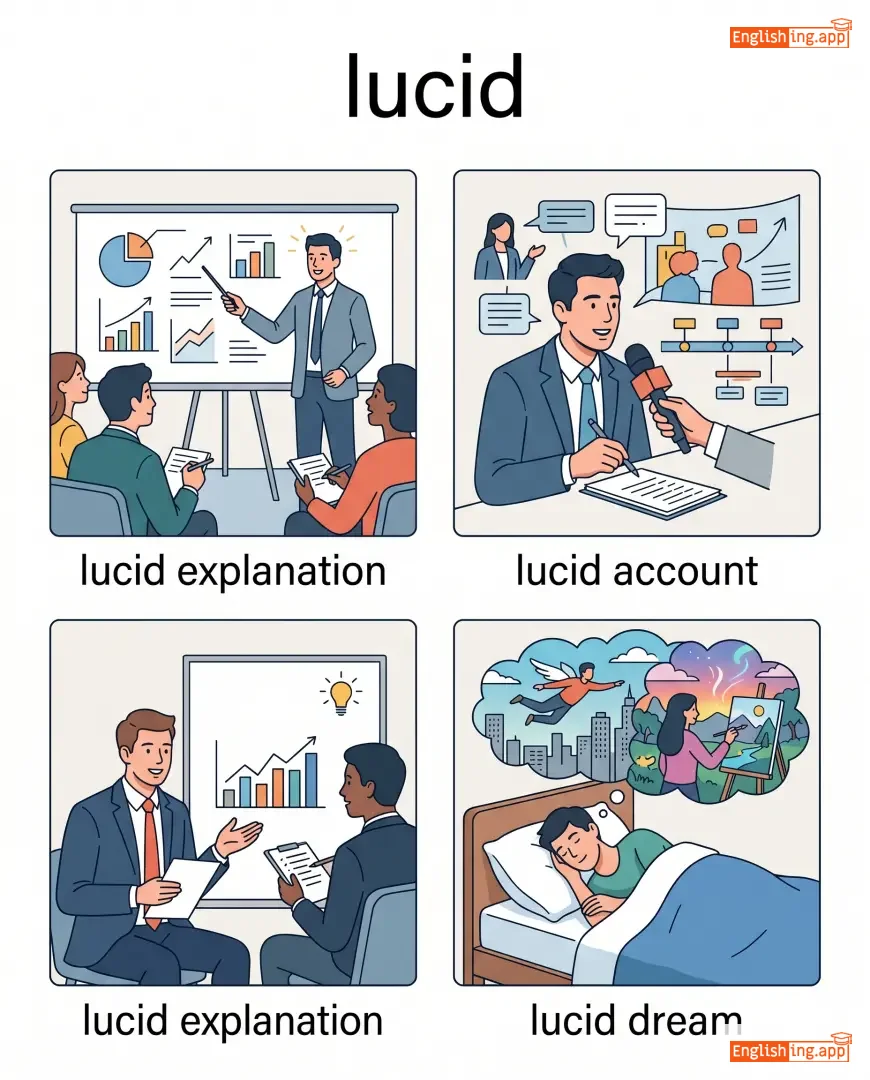
lucid dream |
a dream in which the dreamer is aware that they are dreaming
••••••
|
清晰梦境
qīngxī mèngjìng
••••••
|
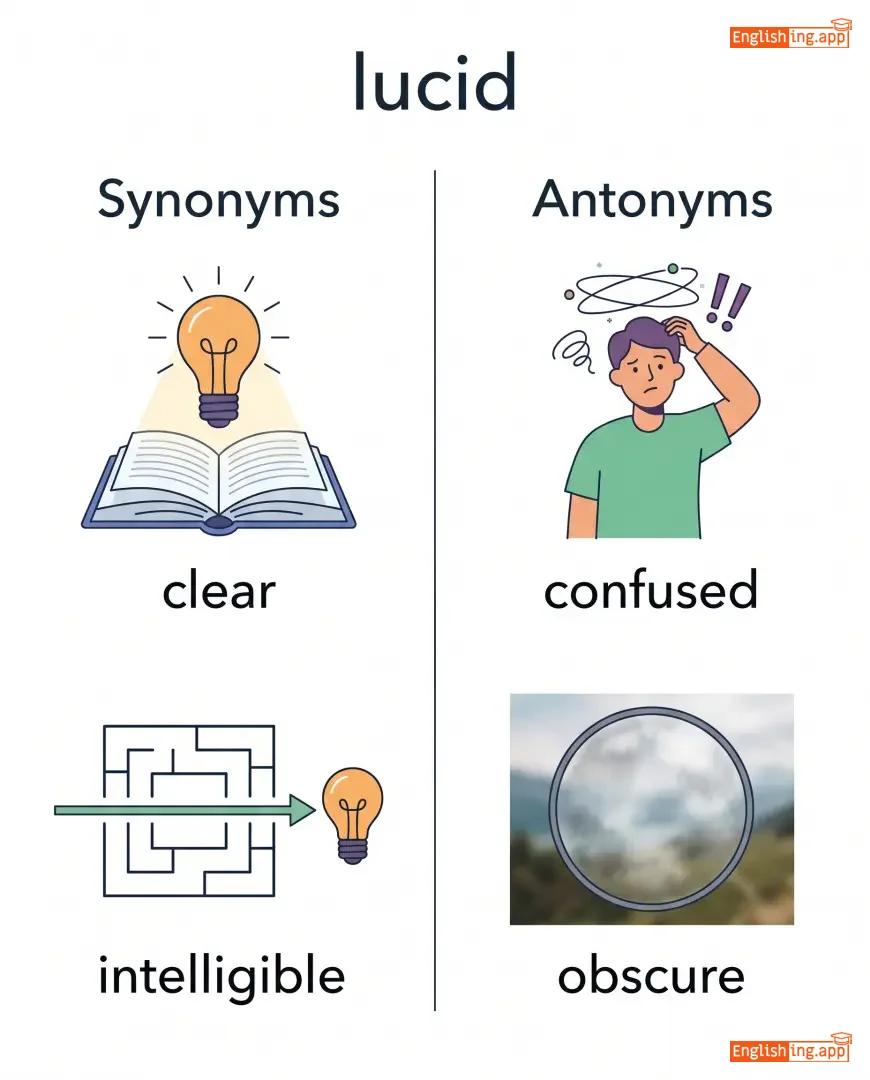
clear, intelligible, coherent, transparent, rational
••••••
|
confused, obscure, unclear
••••••
|
lucid explanation, lucid account, lucid dream, lucid style
••••••
|
清晰表示,像水面一样清澈 (qingxi)
••••••
|
|
✨
••••••
|
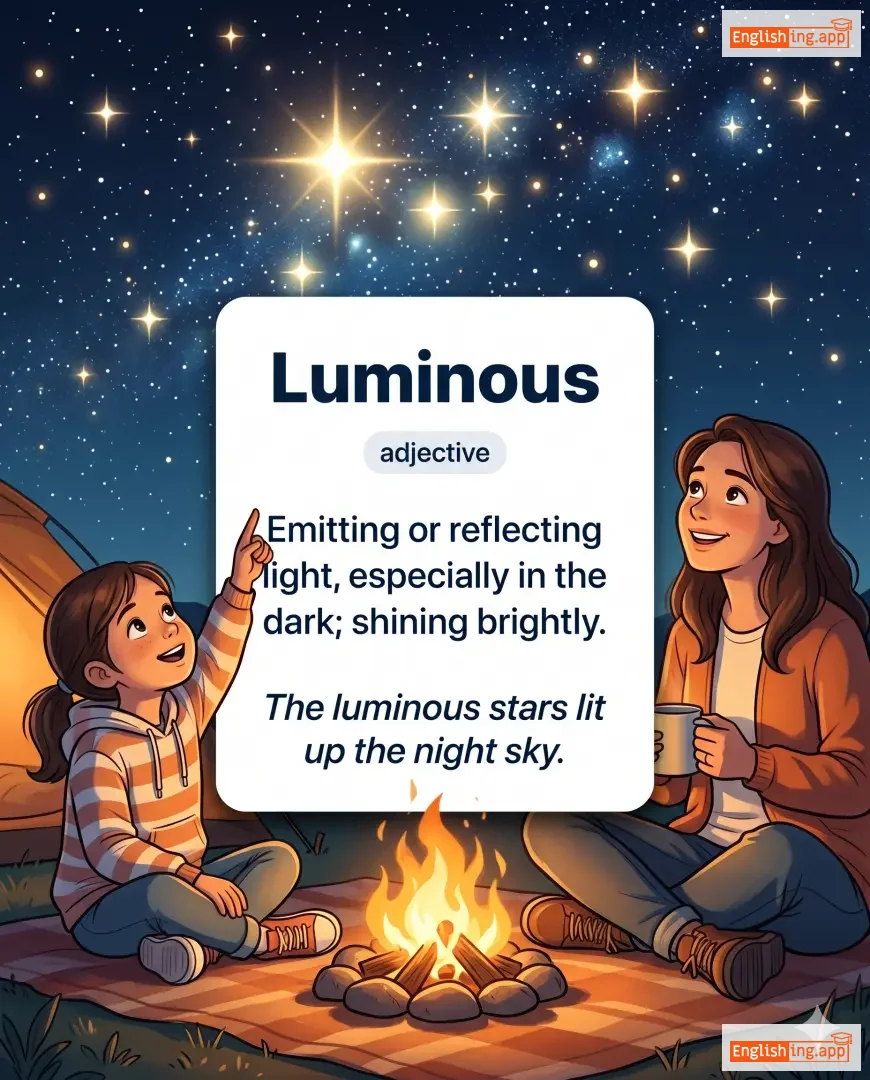
/ˈluː.mɪ.nəs/
adjective
(luminasi)
••••••
|
|
光辉的
guāng huī de
••••••
|
- •••••• | - •••••• | - •••••• | - •••••• |
Emitting or reflecting light, especially in the dark; shining brightly.
••••••
|
The luminous stars lit up the night sky. |
光辉的星星照亮了夜空。
Guāng huī de xīng xīng zhàoliàng le yè kōng.
••••••
|
luminous beauty |
A striking and radiant kind of beauty.
••••••
|
光辉的美丽
guāng huī de měilì
••••••
|
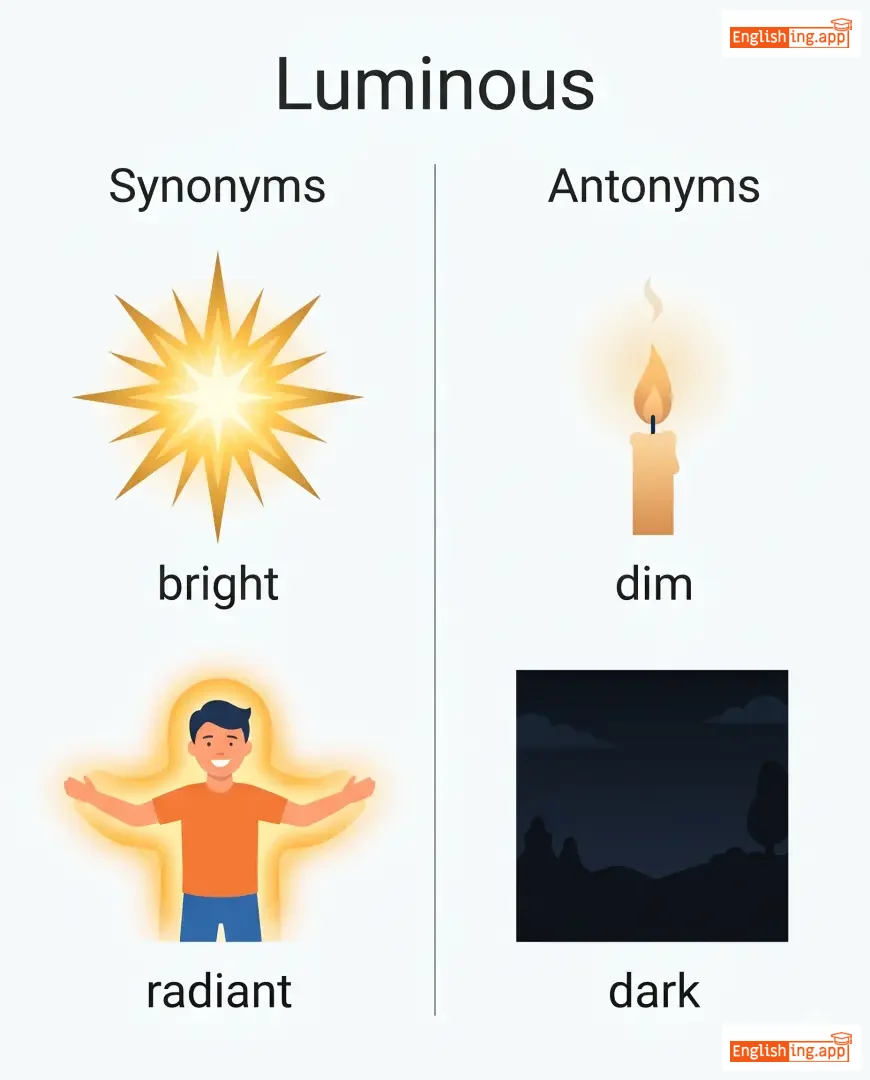
bright, radiant, glowing, shining, brilliant
••••••
|
dim, dark, dull
••••••
|
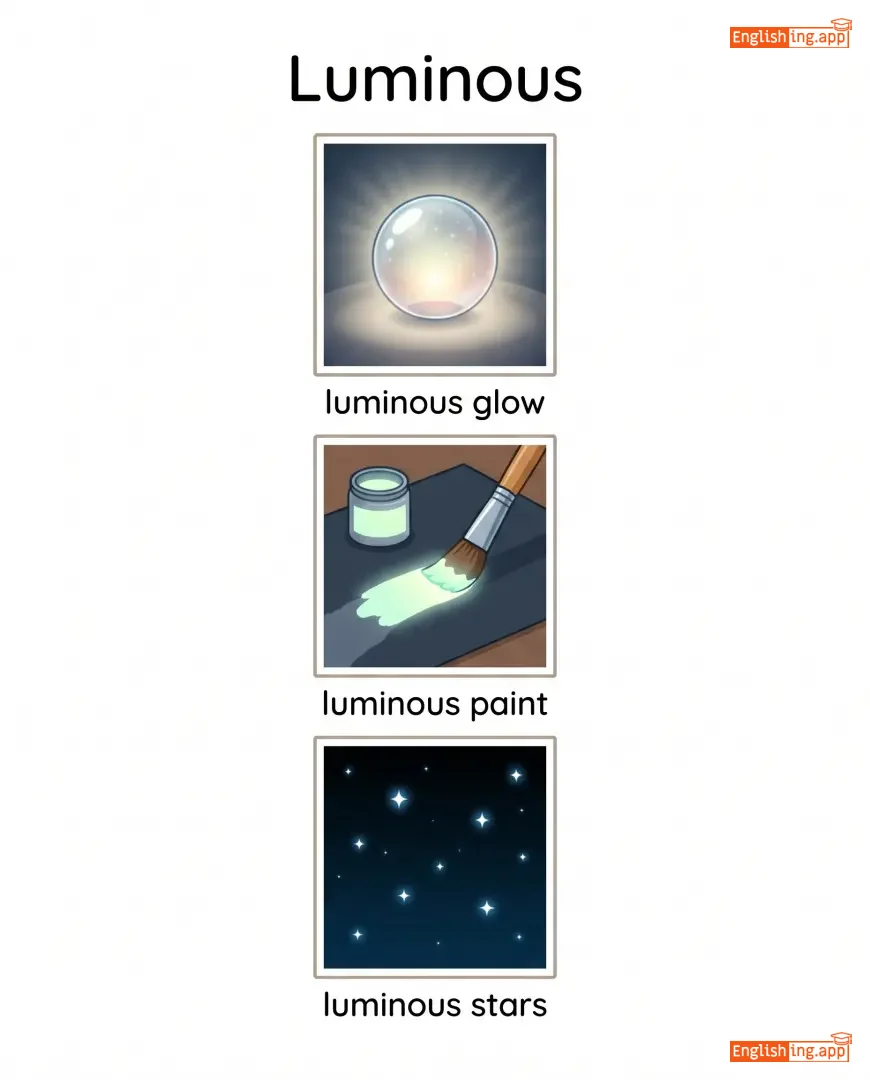
luminous glow, luminous paint, luminous stars, luminous eyes
••••••
|
Luminous 就像星星发出的光,代表着耀眼的光辉。
••••••
|
|
👑
••••••
|
/ˌmæɡ.nəˈnɪ.mɪ.ti/
noun
(magnanimity)
••••••
|
|
宽宏大量; 慷慨
kuan hong da liang
••••••
|
- •••••• | - •••••• | - •••••• | - •••••• |
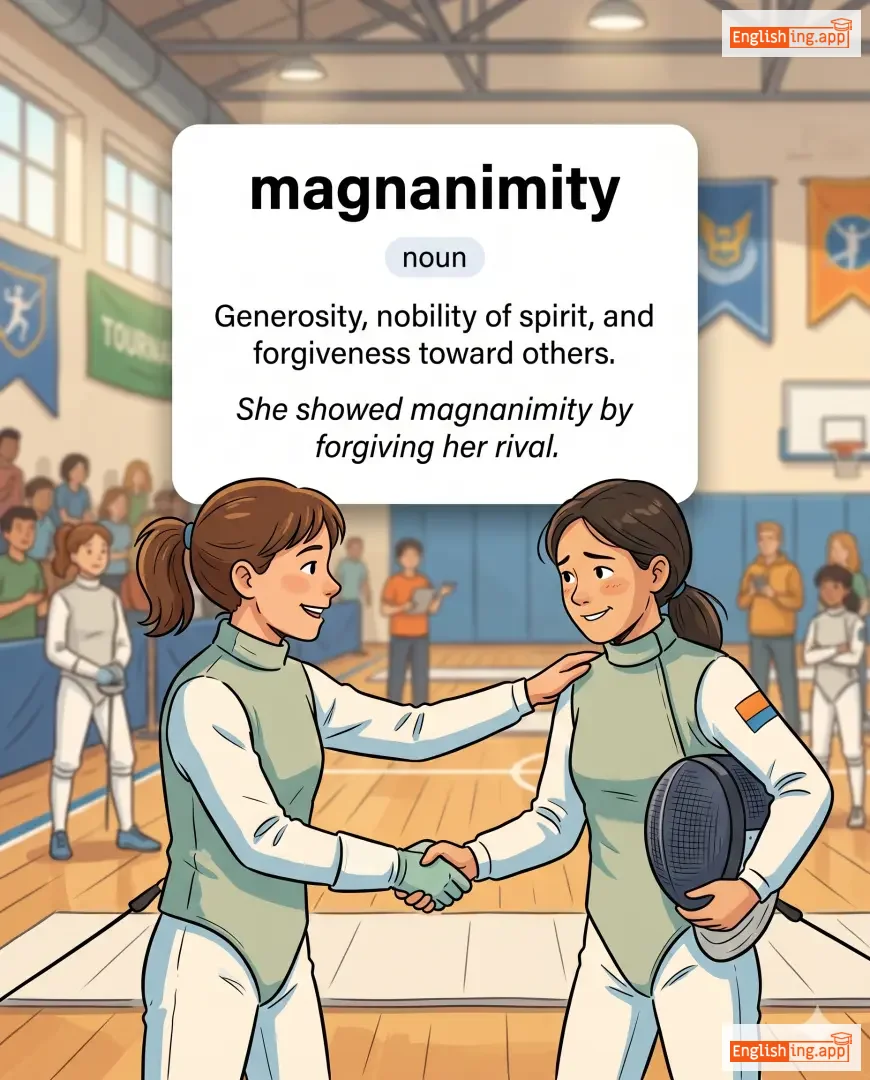
generosity in forgiving an insult or injury; nobility of spirit or action; generosity
••••••
|
He showed great magnanimity in victory. |
他在胜利中展现了伟大的宽宏大量。
Ta zai shengli zhong zhanshianle wei da de kuan hong da liang.
••••••
|
- •••••• | - •••••• | - •••••• |
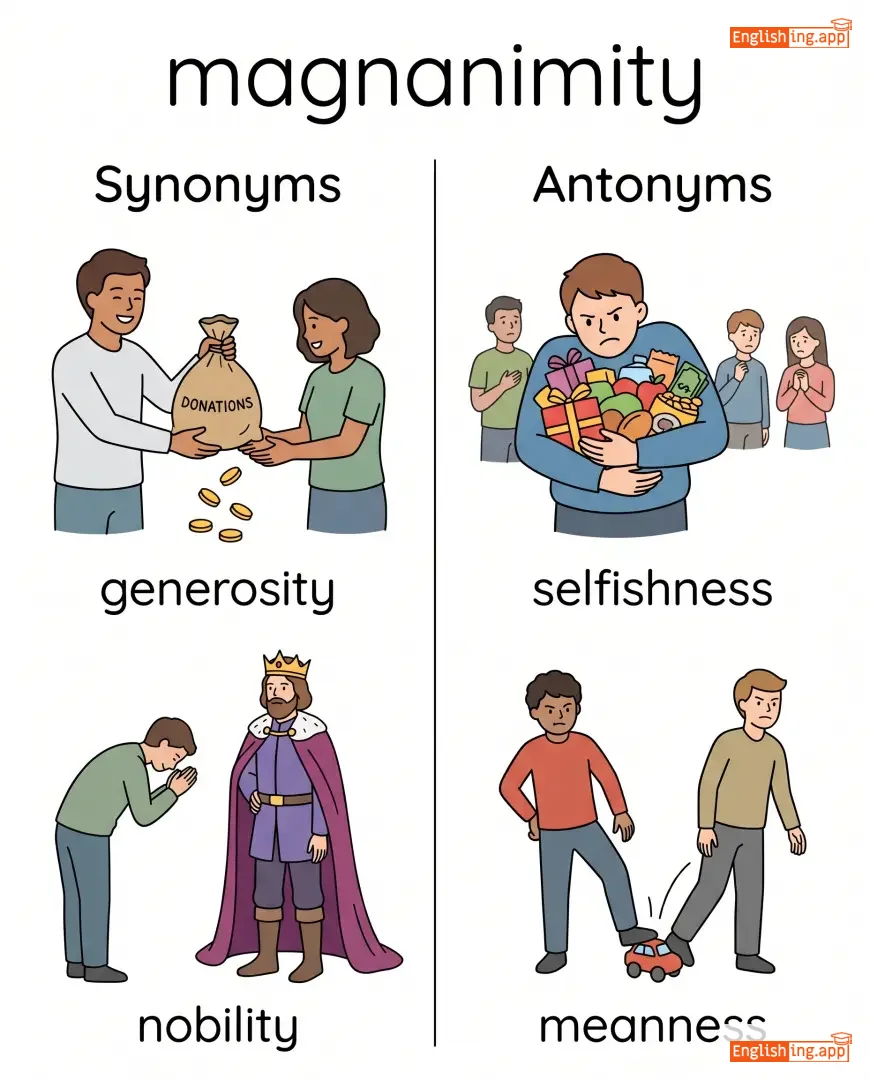
generosity, nobility, forgiveness, kindness
••••••
|
pettiness, meanness, vindictiveness
••••••
|
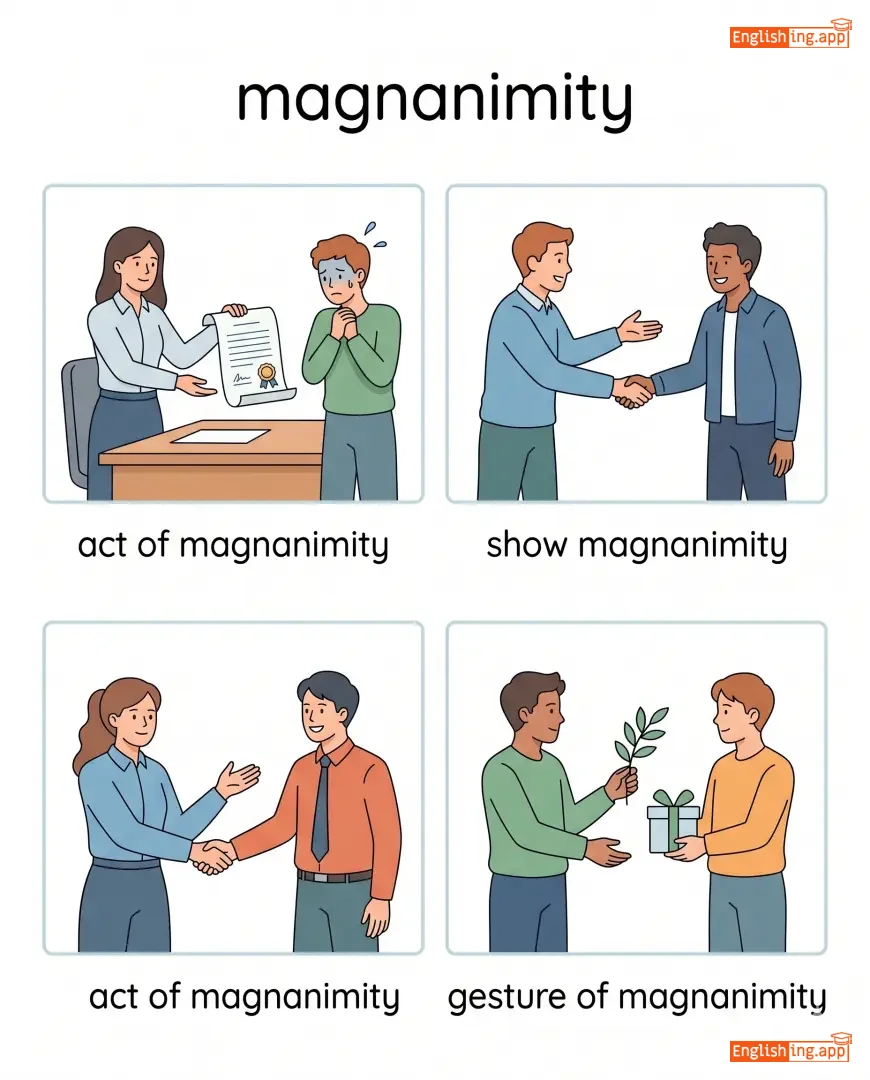
show magnanimity, act of magnanimity, great magnanimity
••••••
|
宽宏大量是一种高尚的心灵品质。
••••••
|
|
😴
••••••
|
/məˈlɪŋɡərər/
noun
(马林格尔)
••••••
|
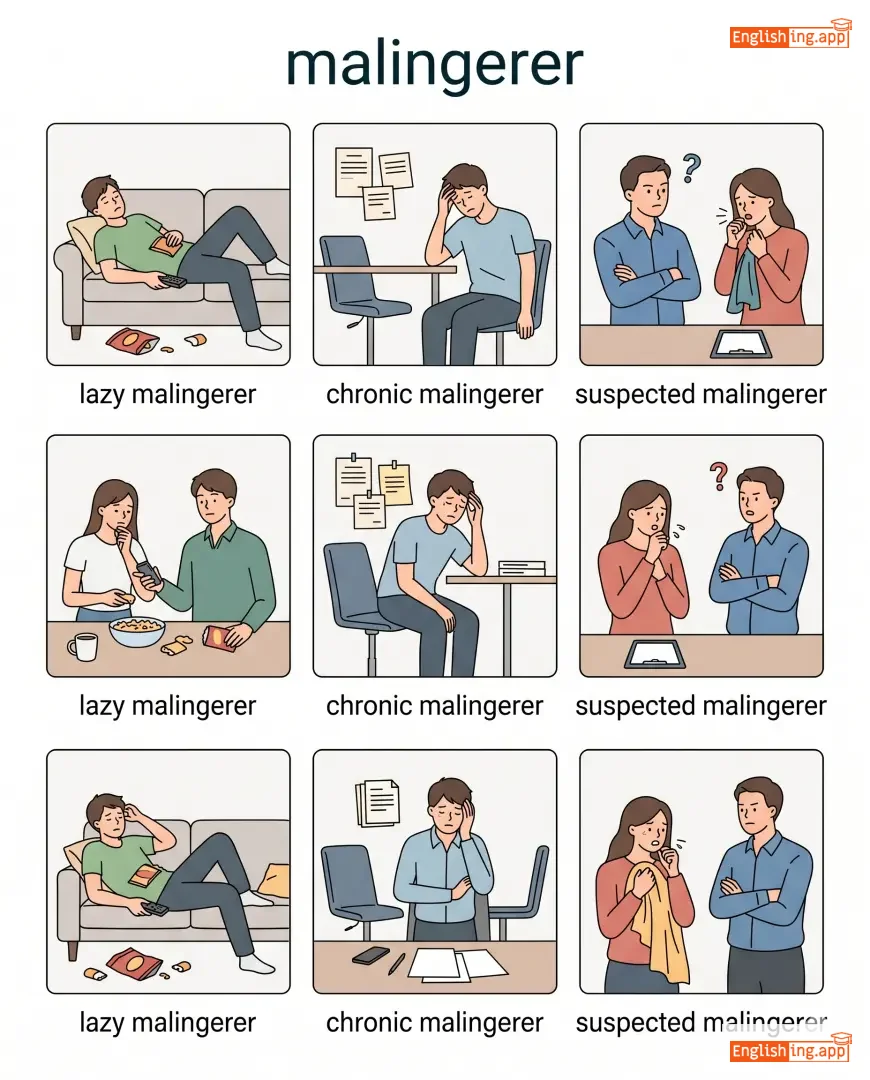
|
装病的人
zhuang bing de ren
••••••
|
- •••••• | - •••••• | - •••••• | - •••••• |
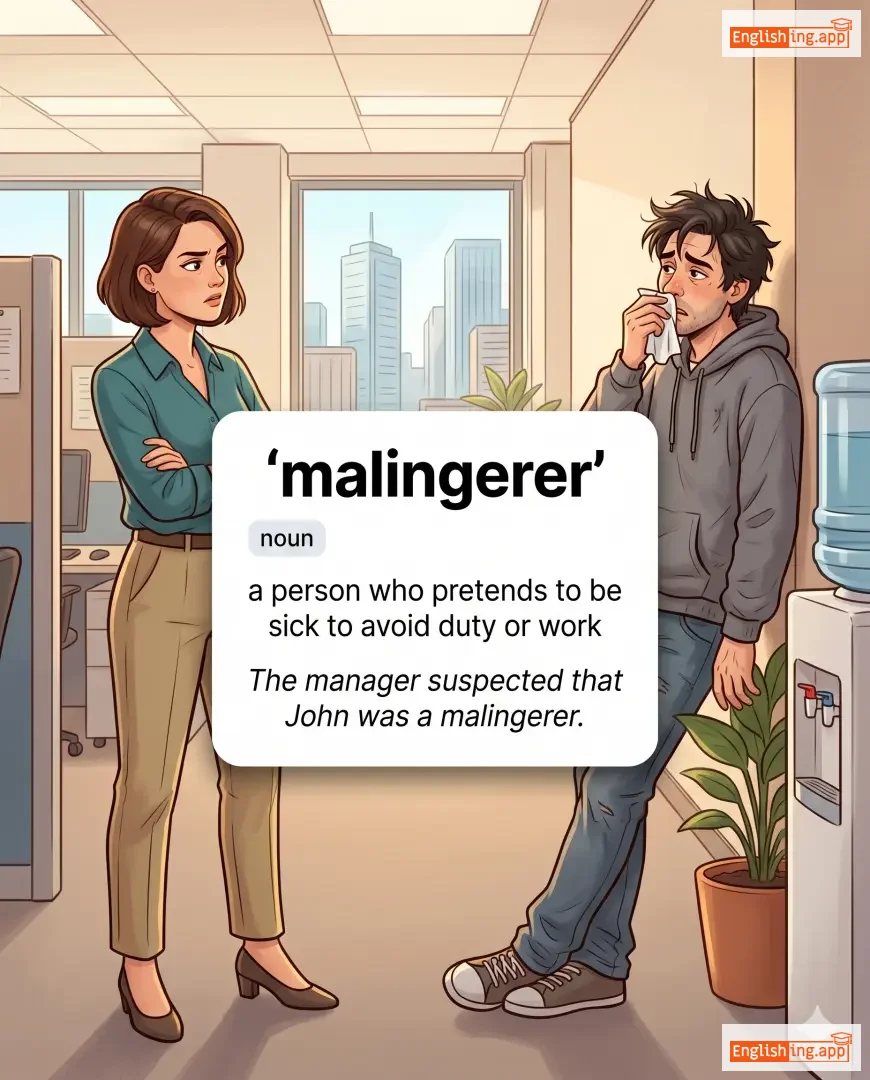
a person who pretends to be sick to avoid duty or work
••••••
|
The manager suspected that John was a malingerer. |
经理怀疑约翰是一个装病的人。
Jing li huai yi Yue han shi yi ge zhuang bing de ren.
••••••
|
- •••••• | - •••••• | - •••••• |
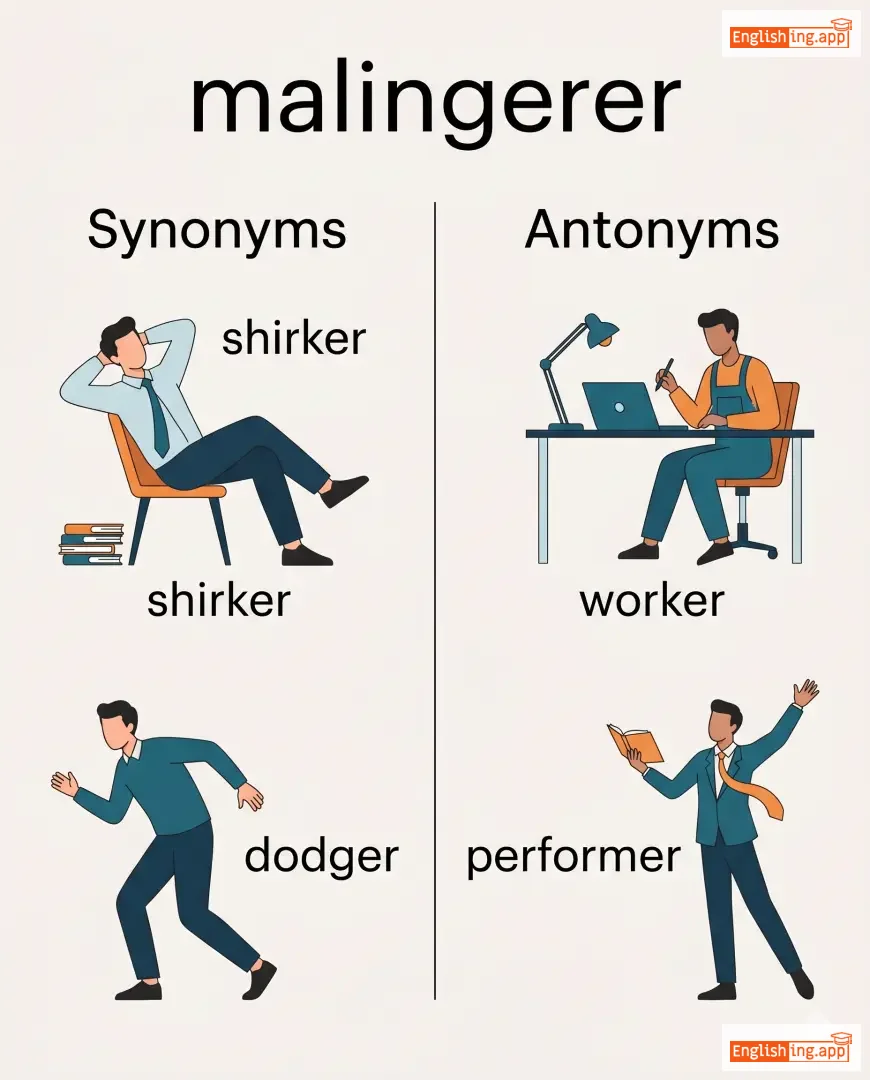
shirker, dodger, pretender, faker
••••••
|
worker, performer
••••••
|
lazy malingerer, chronic malingerer, suspected malingerer
••••••
|
Malingerer: 假装生病,想避开工作,记住'Mal'就是病的意思,'ger'就是避免。
••••••
|
|
🔧
••••••
|
/ˈmæliəbl̩/
adjective
(马利亚布尔)
••••••
|
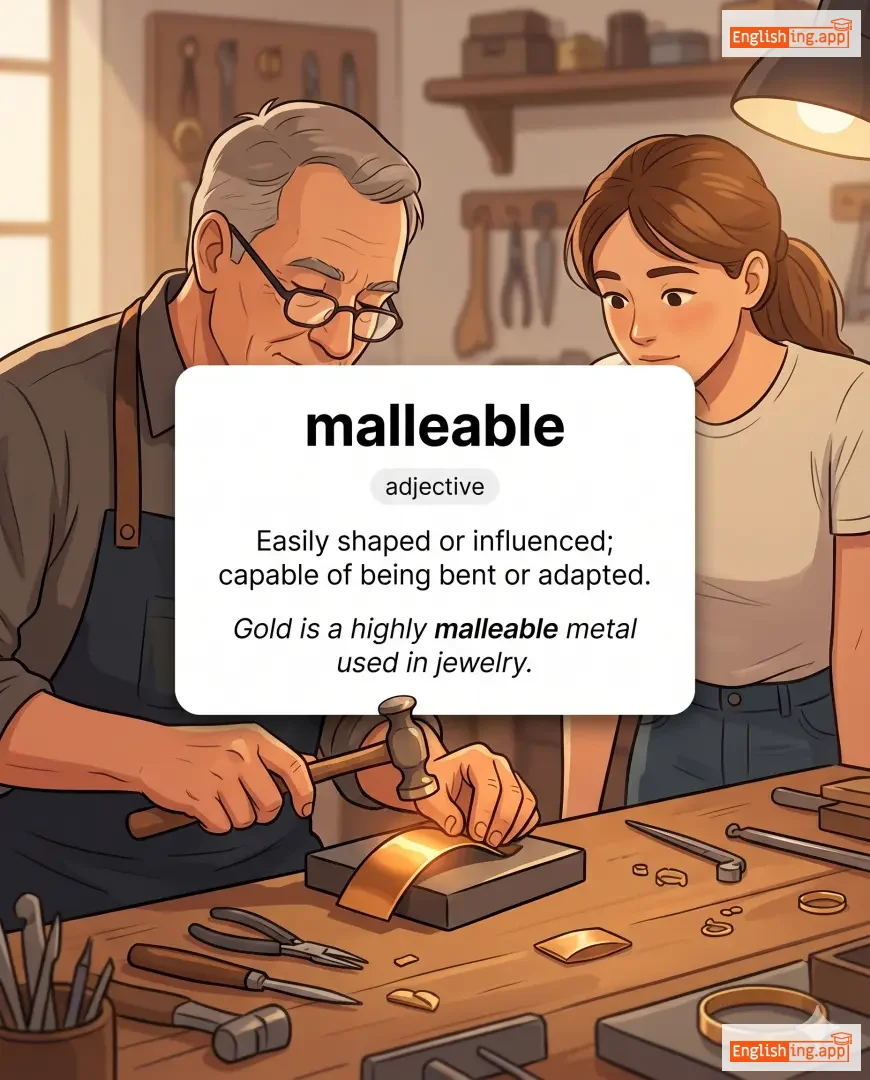
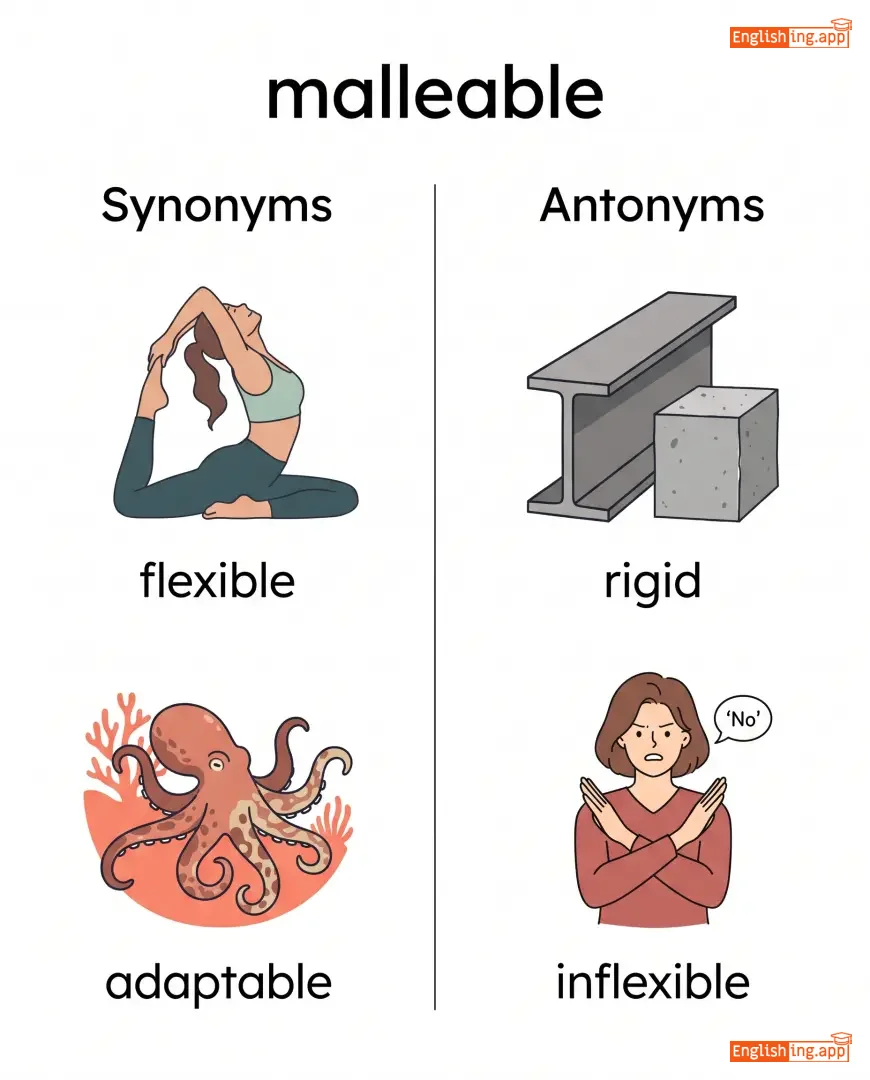
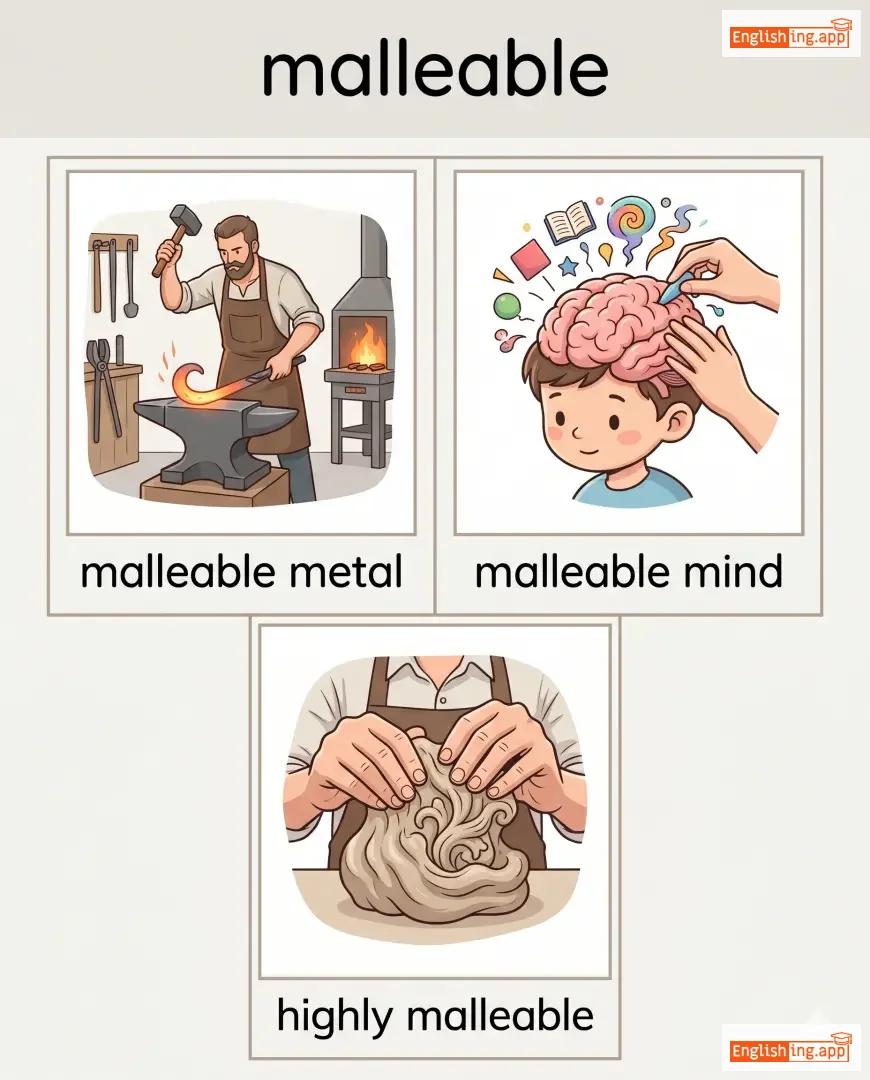
|
易于塑形
yi yu su xing
••••••
|
- •••••• | - •••••• | - •••••• | - •••••• |
Easily shaped or influenced; capable of being bent or adapted.
••••••
|
Gold is a highly malleable metal used in jewelry. |
黄金是一种非常易于塑形的金属,用于珠宝制作。
Huangjin shi yizhong feichang yi yu su xing de jinshu, yong yu zhubao zhizuo.
••••••
|
- •••••• | - •••••• | - •••••• |
flexible, adaptable, pliable, ductile, impressionable
••••••
|
rigid, inflexible, stiff
••••••
|
malleable metal, malleable mind, highly malleable, malleable material
••••••
|
黄金可以轻松塑形,是易于塑形的金属。
••••••
|
|
🤠
••••••
|
/ˈmævərɪk/
noun
(máwérik)
••••••
|
|
特立独行者
tè lì dú xíng zhě
••••••
|
- •••••• | - •••••• | - •••••• | - •••••• |
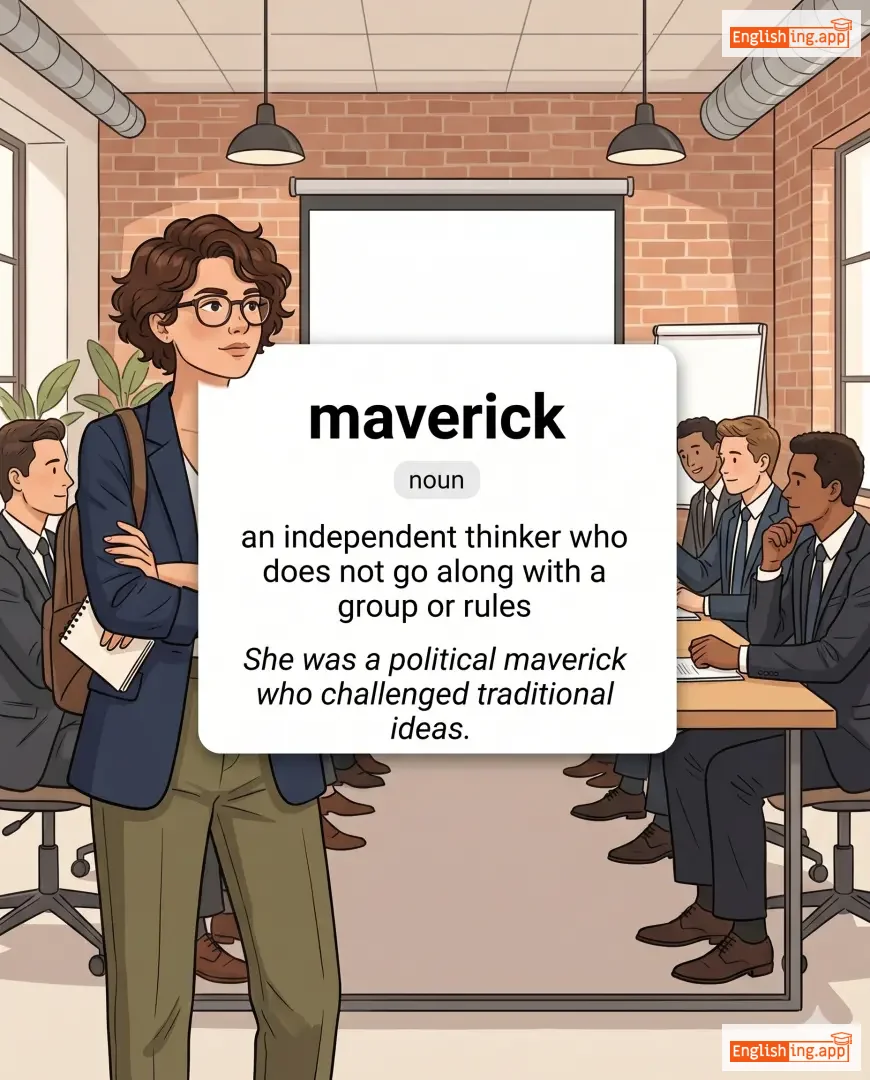
an independent thinker who does not go along with a group or rules
••••••
|
She was a political maverick who challenged traditional ideas.
她是一个政治上的maverick,挑战传统的思想。
••••••
|
她是一个政治上的特立独行者,挑战传统的思想。
Tā shì yī gè zhèng zhì shàng de tè lì dú xíng zhě, tiǎo zhàn chuán tǒng de sī xiǎng.
••••••
|
- •••••• | - •••••• | - •••••• |
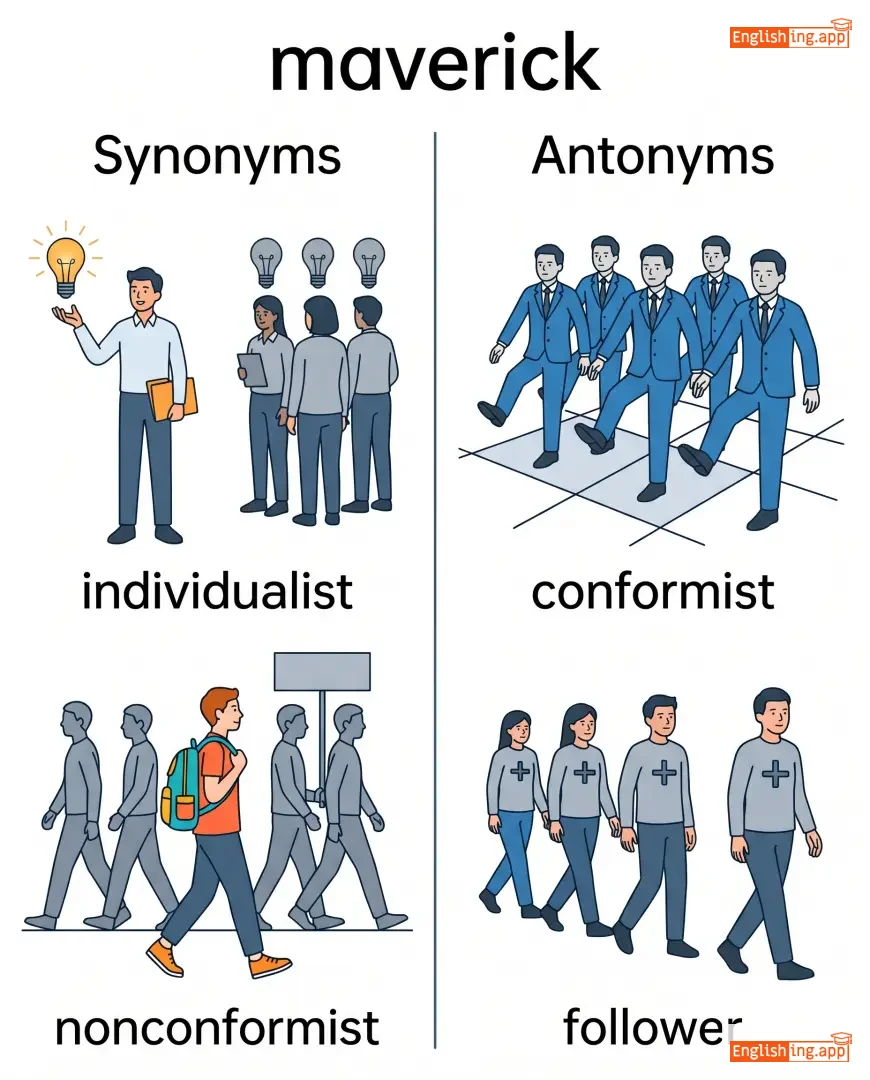
individualist, nonconformist, rebel, innovator, radical
••••••
|
conformist, follower, traditionalist
••••••
|
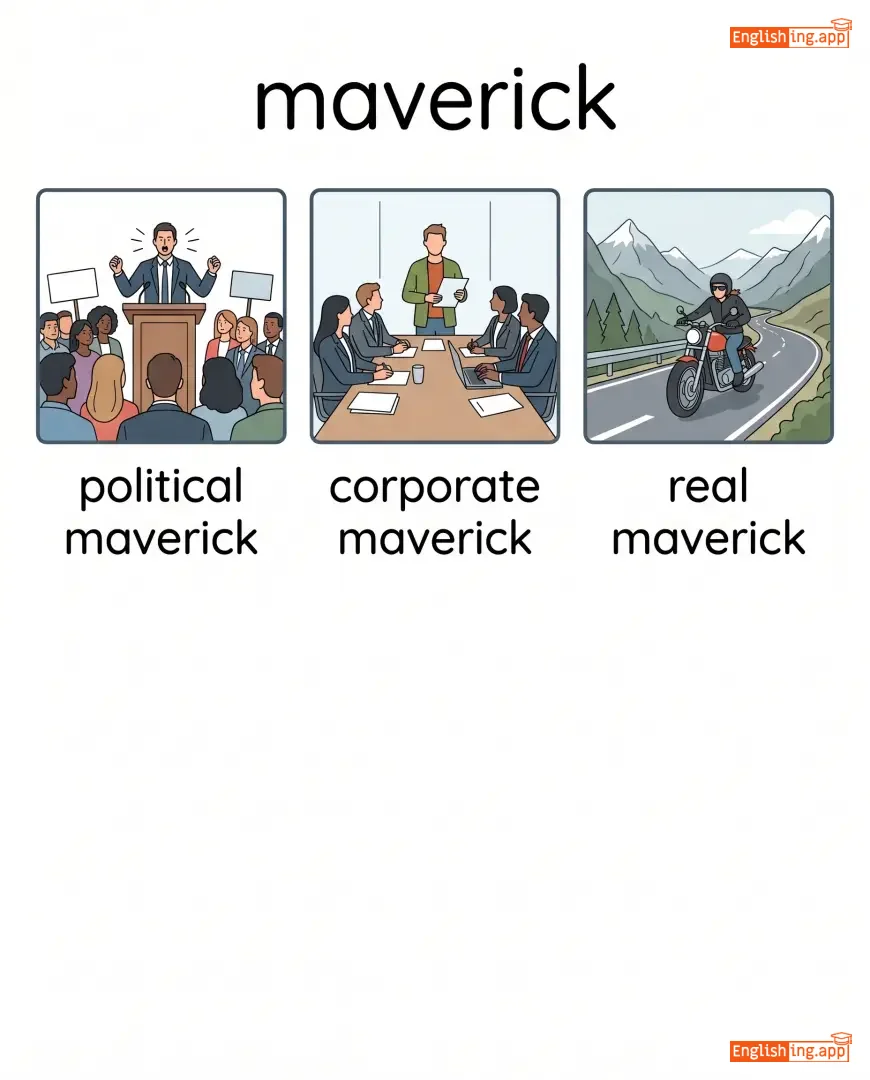
political maverick, corporate maverick, real maverick, maverick thinker
••••••
|
Maverick 就像一只不随大流的鱼,特立独行者。
••••••
|
|
🤥
••••••
|
/mɛnˈdeɪʃəs/
adjective
(门代修斯)
••••••
|
|
虚伪的
xūwěi de
••••••
|
- •••••• | - •••••• | - •••••• | - •••••• |
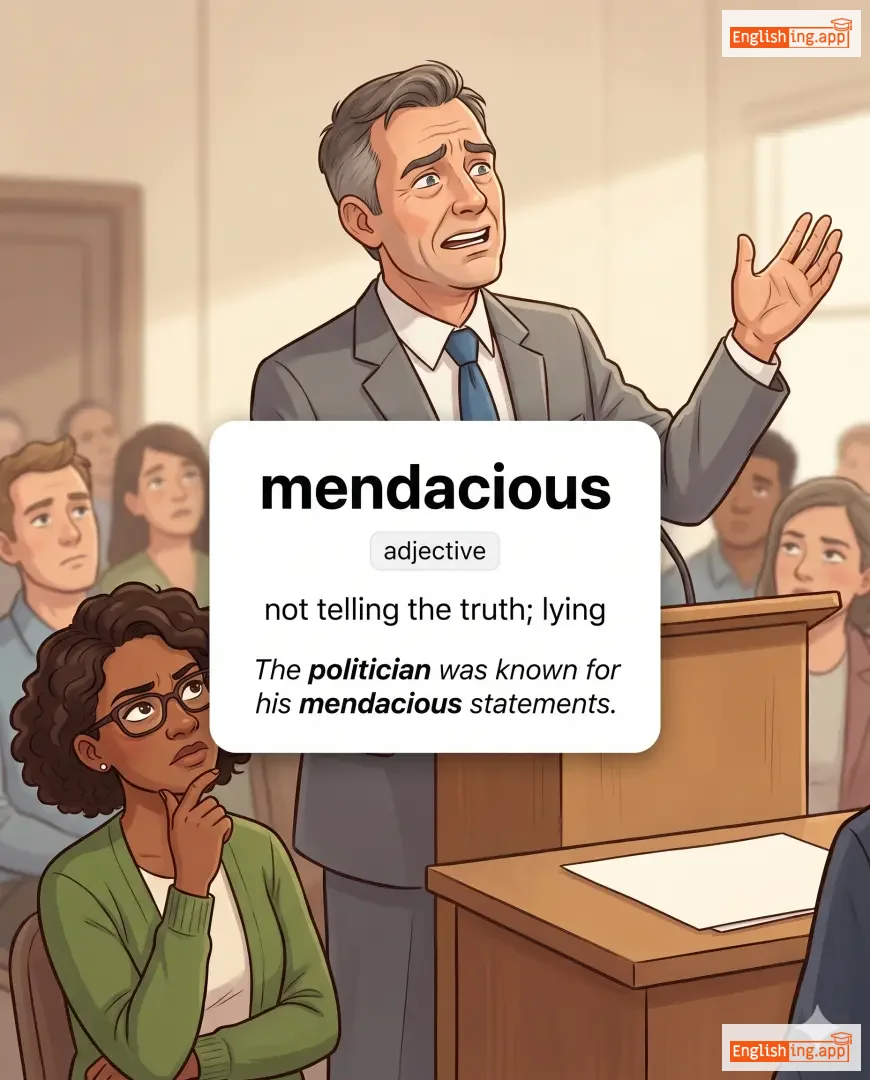
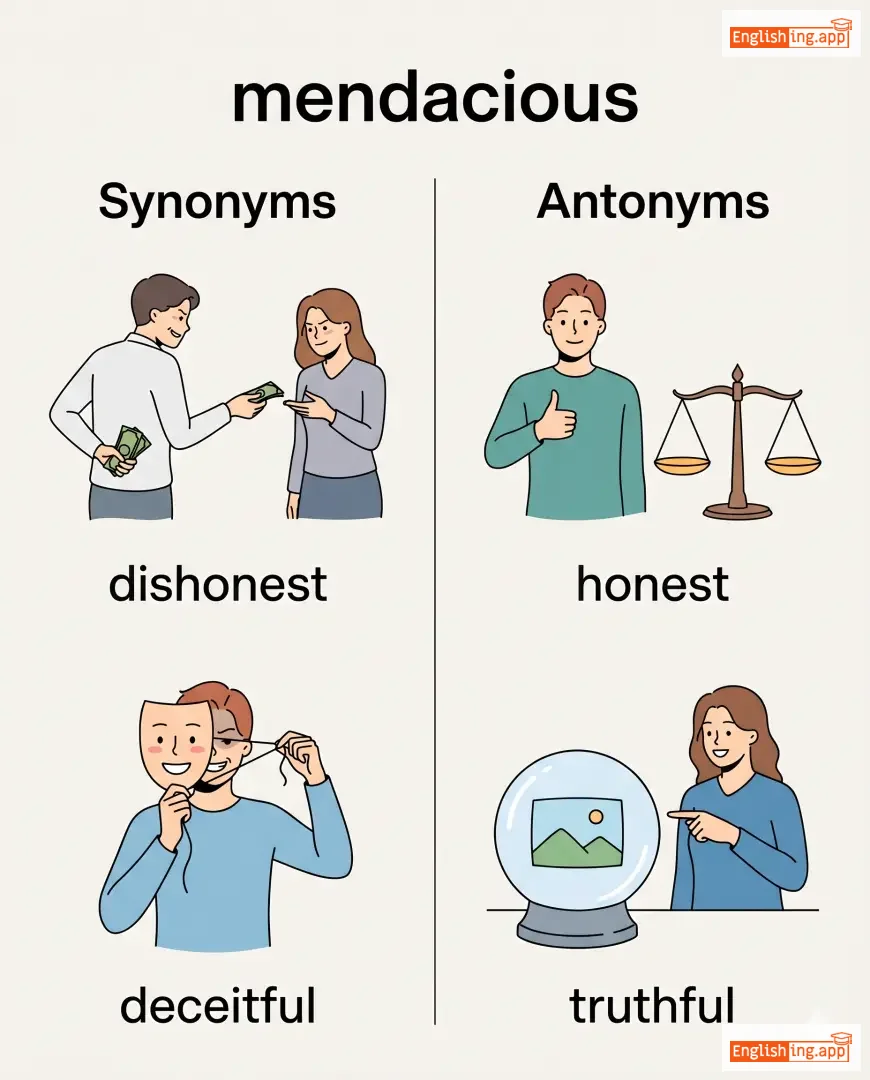
not telling the truth; lying
••••••
|
The politician was known for his mendacious statements. |
那位政治家以他的虚伪言论而闻名。
Nà wèi zhèngzhìjiā yǐ tā de xūwěi yánlùn ér wénmíng.
••••••
|
- •••••• | - •••••• | - •••••• |
dishonest, deceitful, lying, untruthful
••••••
|
honest, truthful, sincere
••••••
|
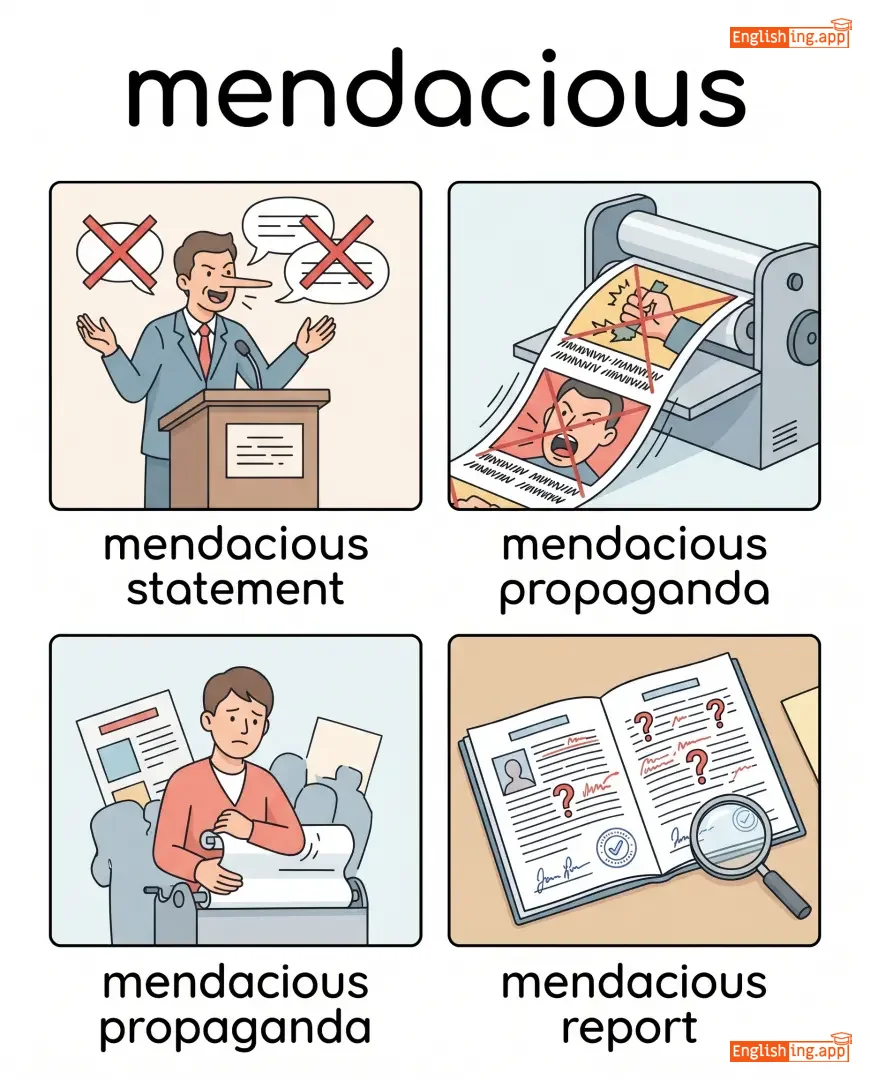
mendacious statement, mendacious propaganda, mendacious report
••••••
|
Mendacious 的意思是虚伪的,记住 mend 是修理,而 mendacious 是撒谎。
••••••
|
|
🐛➡️🦋
••••••
|
/ˌmɛtəˈmɔrfəsɪs/
noun
(变形)
••••••
|

|
变形
bianxing
••••••
|
- •••••• | - •••••• | - •••••• | - •••••• |
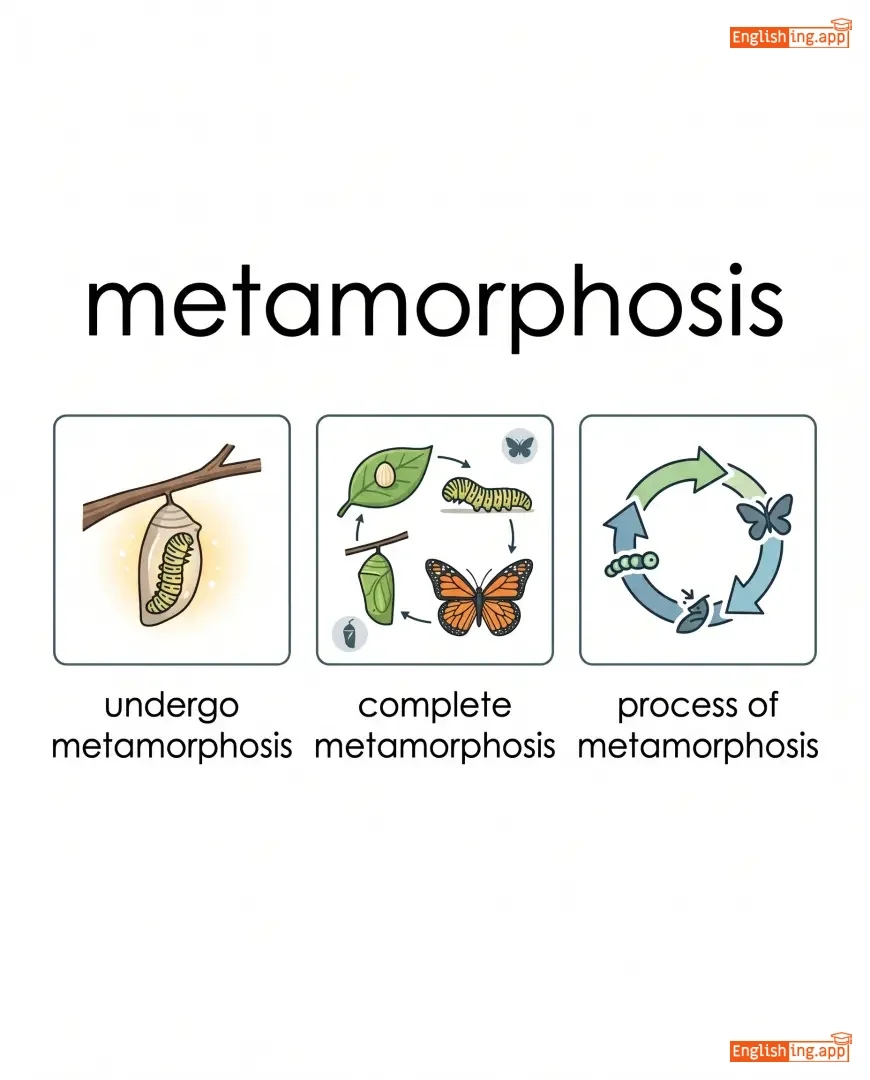
A process of transformation from one form to another, especially in biology, such as the change from a caterpillar to a butterfly.
••••••
|
The metamorphosis of the tadpole into a frog is fascinating. |
蝌蚪变成青蛙的变形过程很有趣。
Kedou biancheng qingwa de bianxing guocheng hen youqu.
••••••
|
- •••••• | - •••••• | - •••••• |
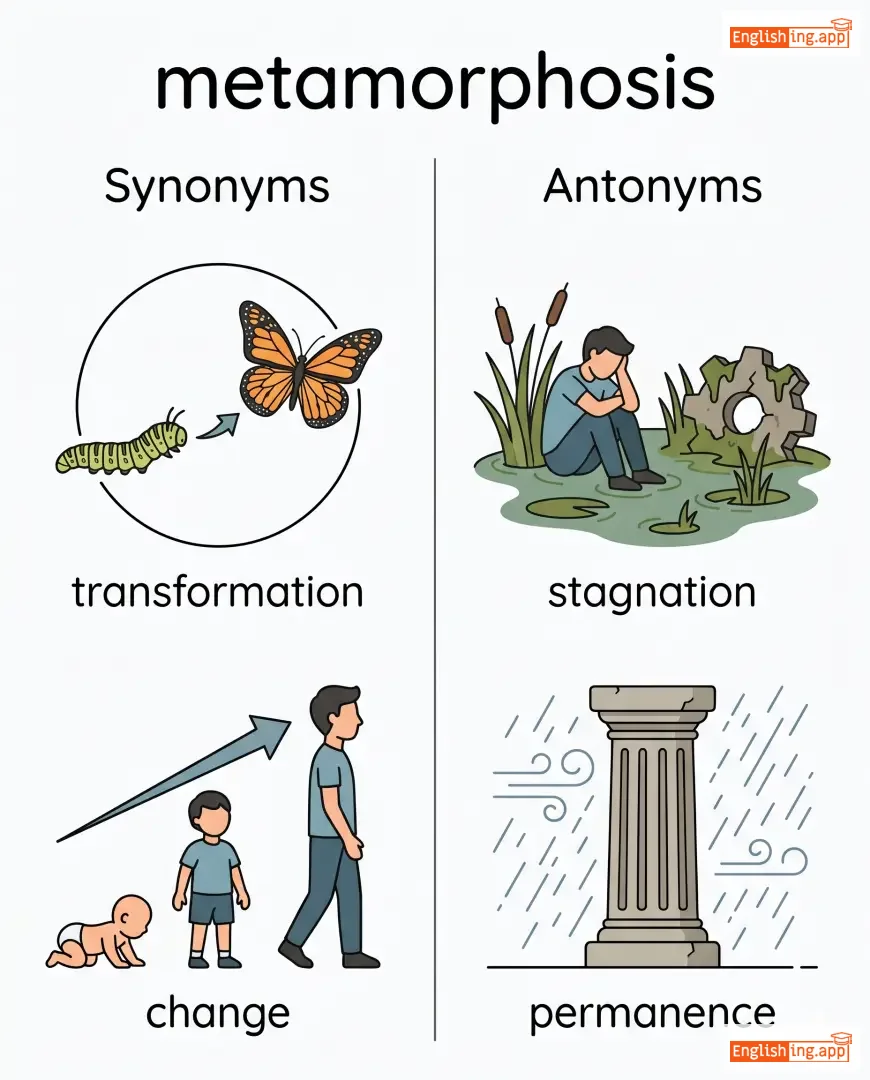
transformation, change, evolution, alteration, mutation
••••••
|
stagnation, permanence, constancy
••••••
|
undergo metamorphosis, complete metamorphosis, process of metamorphosis
••••••
|
Metamorphosis = Meta (变化) + Morph (形态) + sis (过程) → 变形过程。
••••••
|
|
🧐
••••••
|
/məˈtɪkjʊləs/
adjective
(缅提库勒斯)
••••••
|
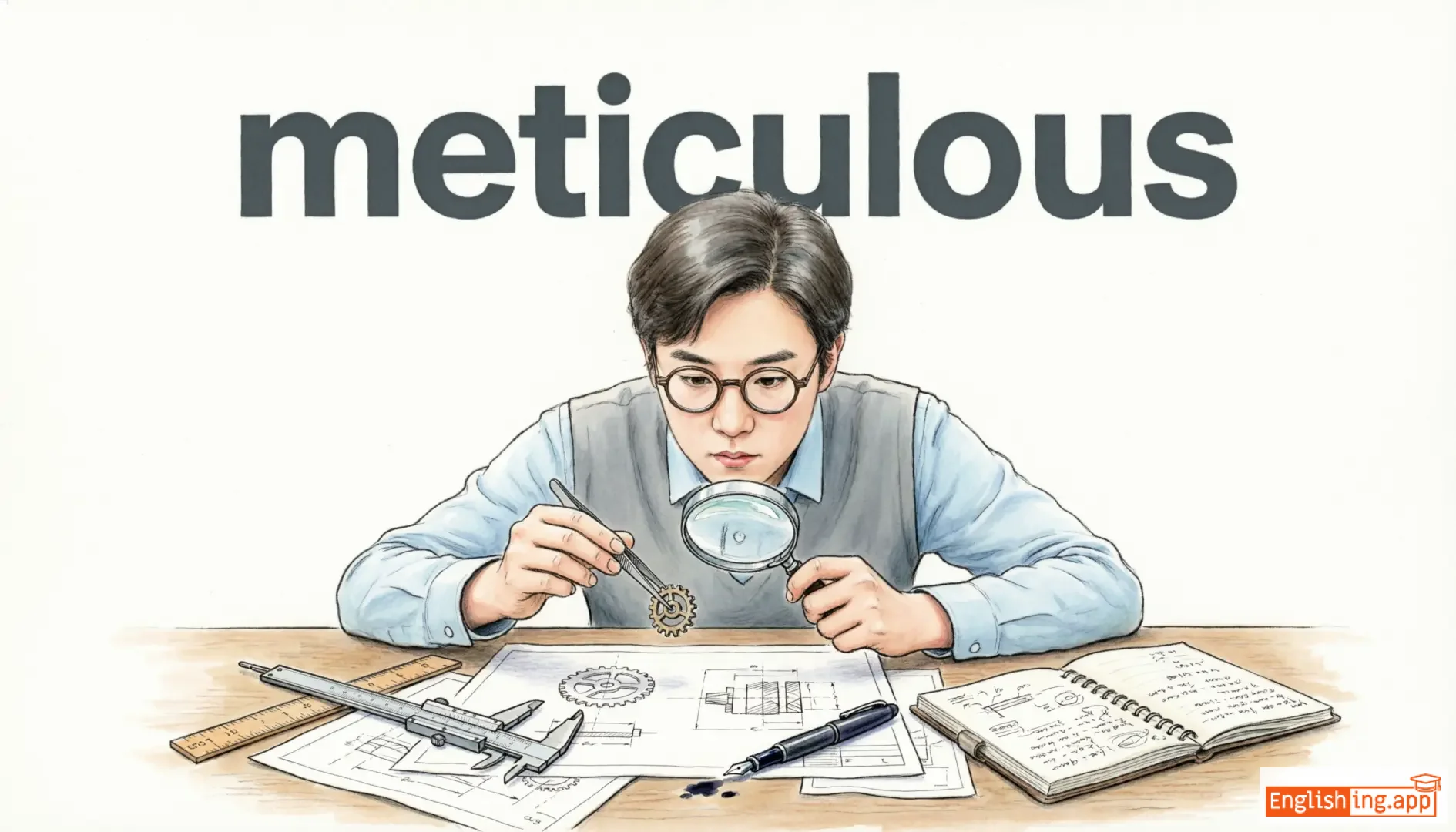
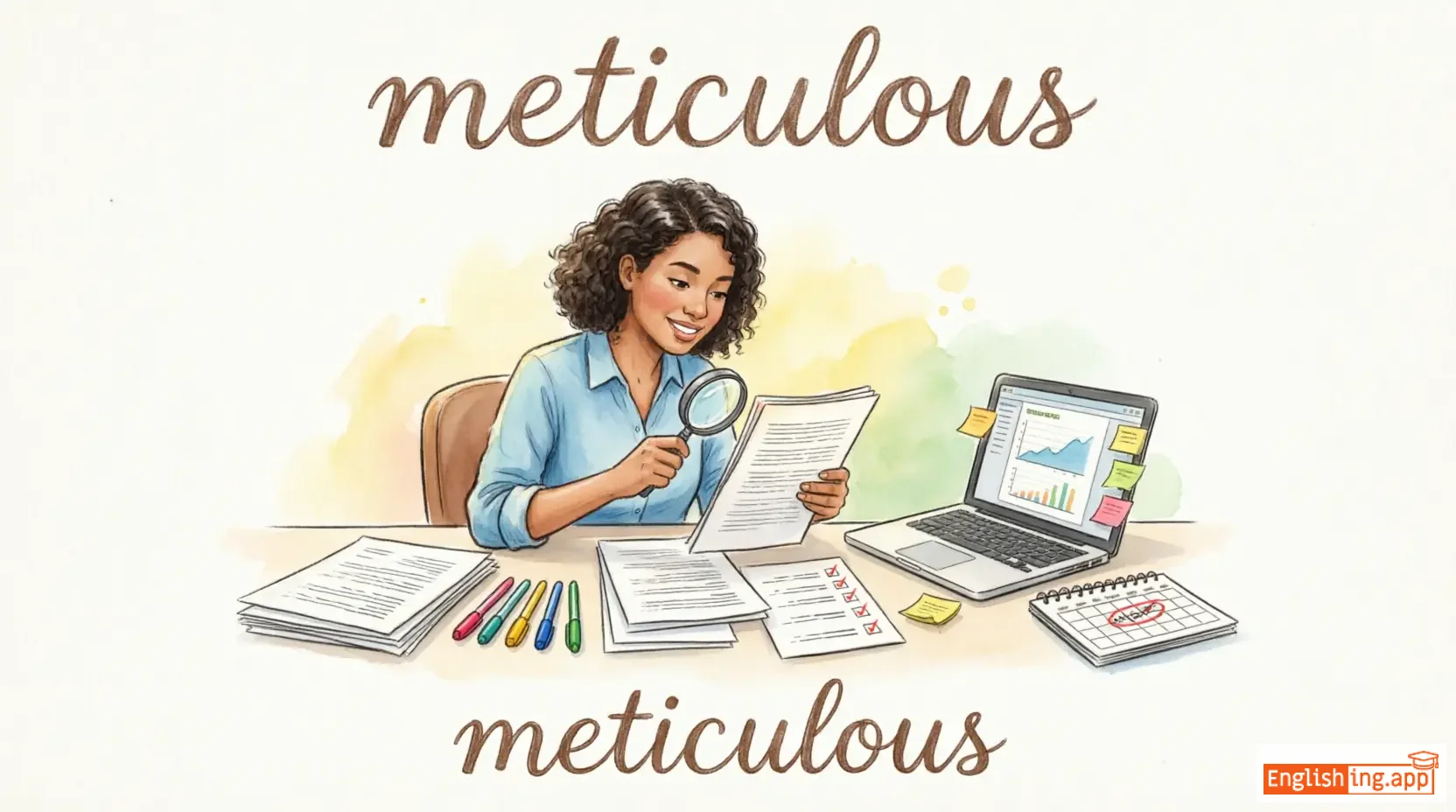
|
一丝不苟
yīsī bùgǒu
••••••
|
- •••••• | - •••••• | - •••••• | - •••••• |
Showing great attention to detail; very careful and precise.
••••••
|
The artist was meticulous in painting every tiny detail. |
艺术家在绘制每个小细节时都非常一丝不苟。
Yìshùjiā zài huìzhì měi gè xiǎo xìjié shí dōu fēicháng yīsī bùgǒu.
••••••
|
- •••••• | - •••••• | - •••••• |
precise, careful, thorough, detailed, diligent
••••••
|
careless, sloppy, negligent
••••••
|
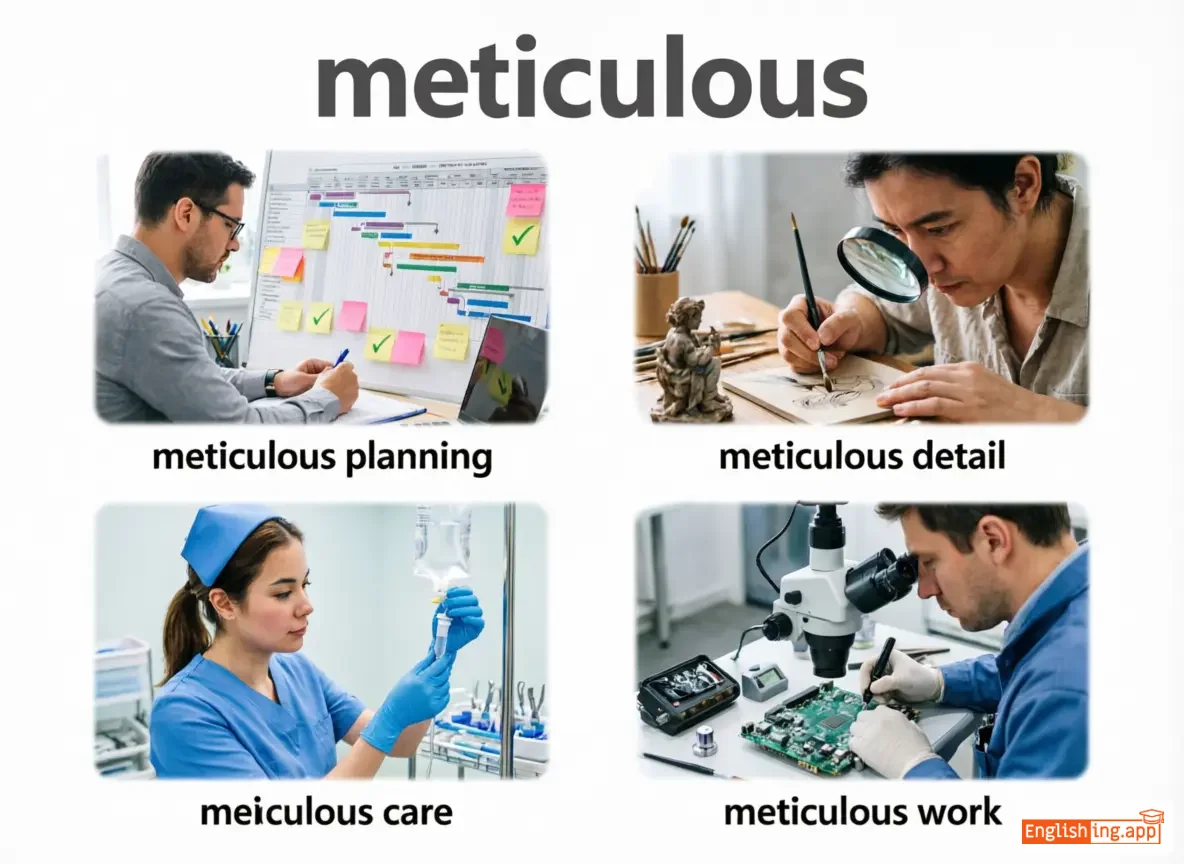
meticulous planning, meticulous detail, meticulous care, meticulous work
••••••
|
Meti意味着仔细挖掘细节 - 一丝不苟表示非常关注细节并且小心精确。
••••••
|
|
😒
••••••
|
/ˈmɪsənˌθroʊp/
noun
(米桑索普)
••••••
|
|
厌人者
yànrénzhě
••••••
|
- •••••• | - •••••• | - •••••• | - •••••• |
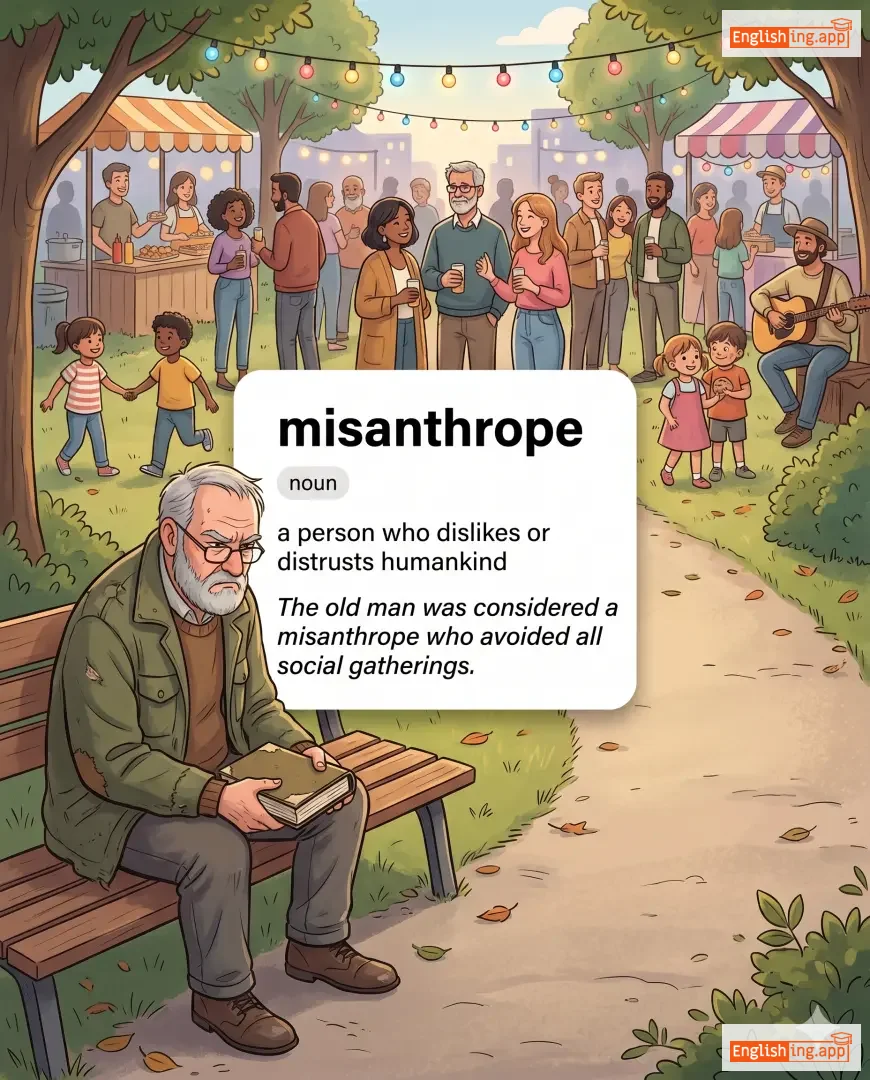
a person who dislikes or distrusts humankind
••••••
|
The old man was considered a misanthrope who avoided all social gatherings.
这个老人被认为是一个回避所有社交活动的厌人者。
••••••
|
这个老人被认为是一个回避所有社交活动的厌人者。
Zhège lǎorén bèi rènwéi shì yī gè huíbì suǒyǒu shèjiāo huódòng de yànrénzhě.
••••••
|
- •••••• | - •••••• | - •••••• |
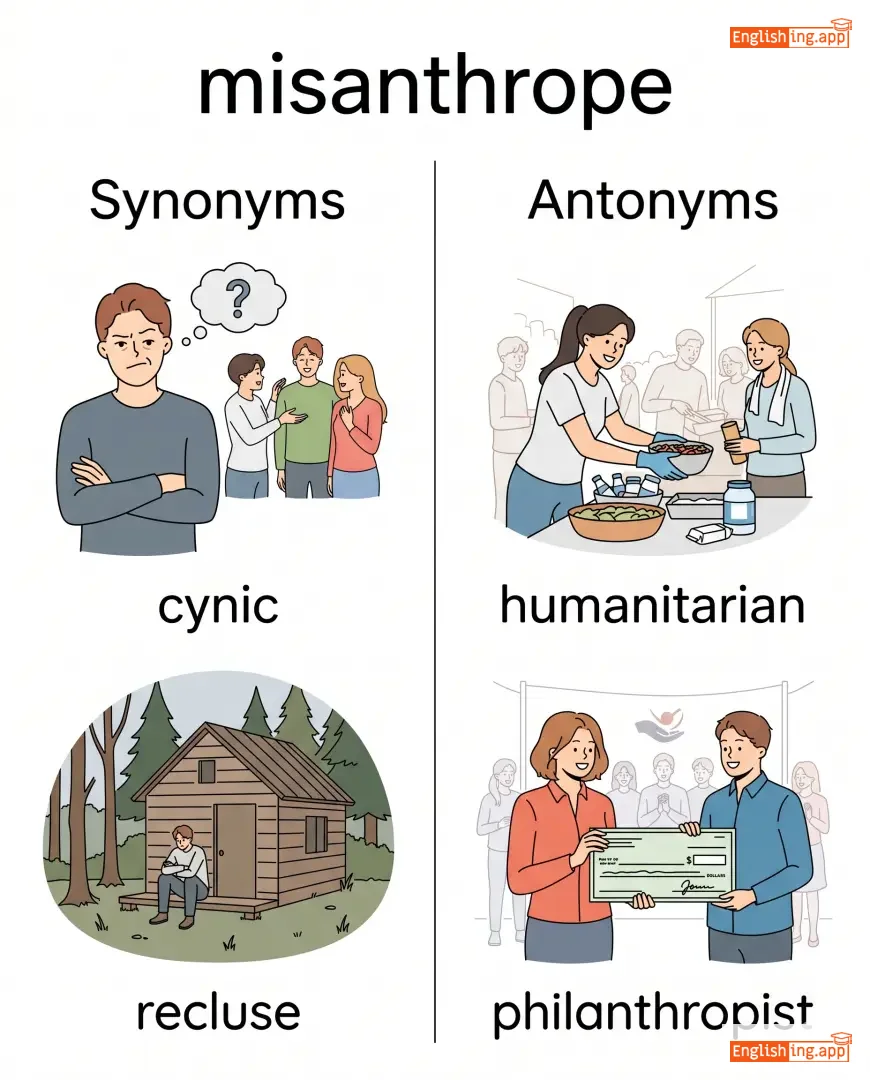
cynic, recluse, hermit, pessimist, loner
••••••
|
humanitarian, philanthropist, optimist
••••••
|
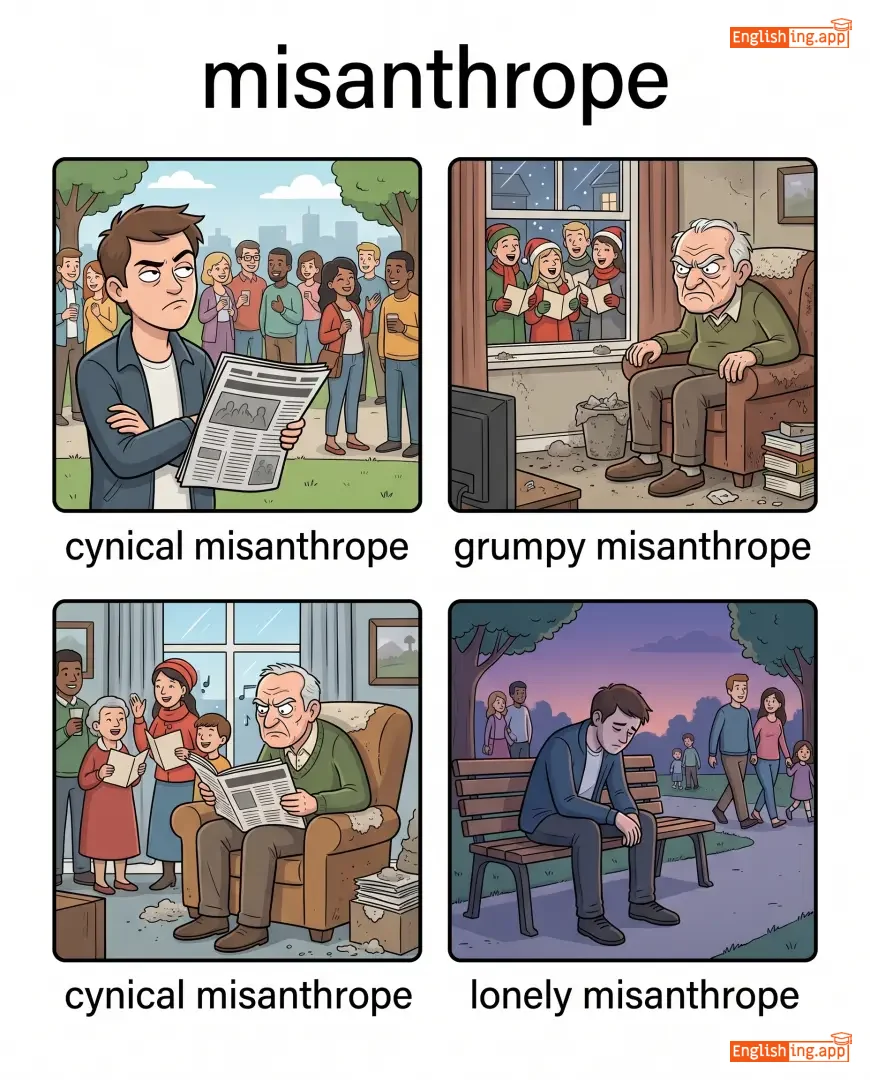
cynical misanthrope, grumpy misanthrope, lonely misanthrope
••••••
|
MISA (米) 不喜欢人类 - 厌人者表示不信任人类。
••••••
|
|
⚖️
••••••
|
/ˈmɪtɪˌɡeɪt/
verb
(米提盖特)
••••••
|
|
减轻
jianqīng
••••••
|
mitigated
米提盖特德
••••••
|
mitigated
米提盖特德
••••••
|
mitigates
米提盖特斯
••••••
|
mitigating
米提盖廷
••••••
|
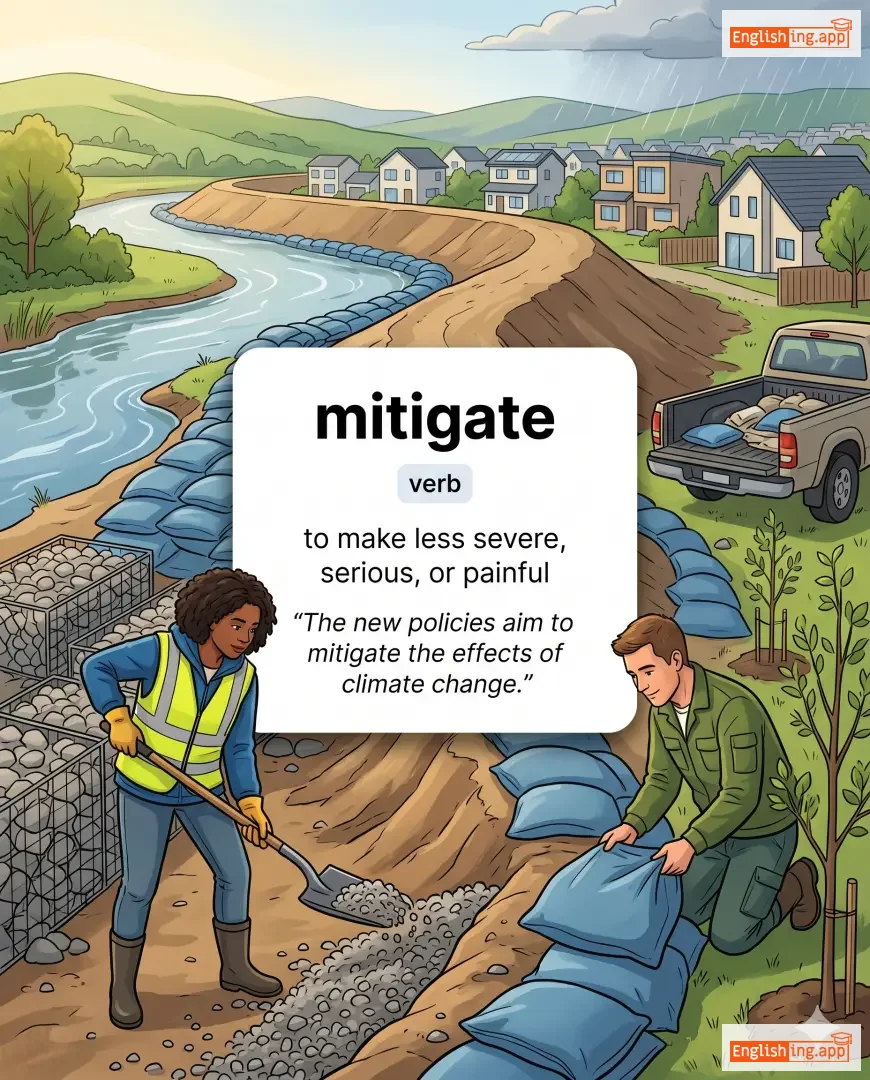
to make less severe, serious, or painful
••••••
|
The new policies aim to mitigate the effects of climate change.
新的政策旨在减缓气候变化的影响。
••••••
|
新政策旨在减缓气候变化的影响。
Xin zhengce zhi zai jianhuan qihou bianhua de yingxiang.
••••••
|
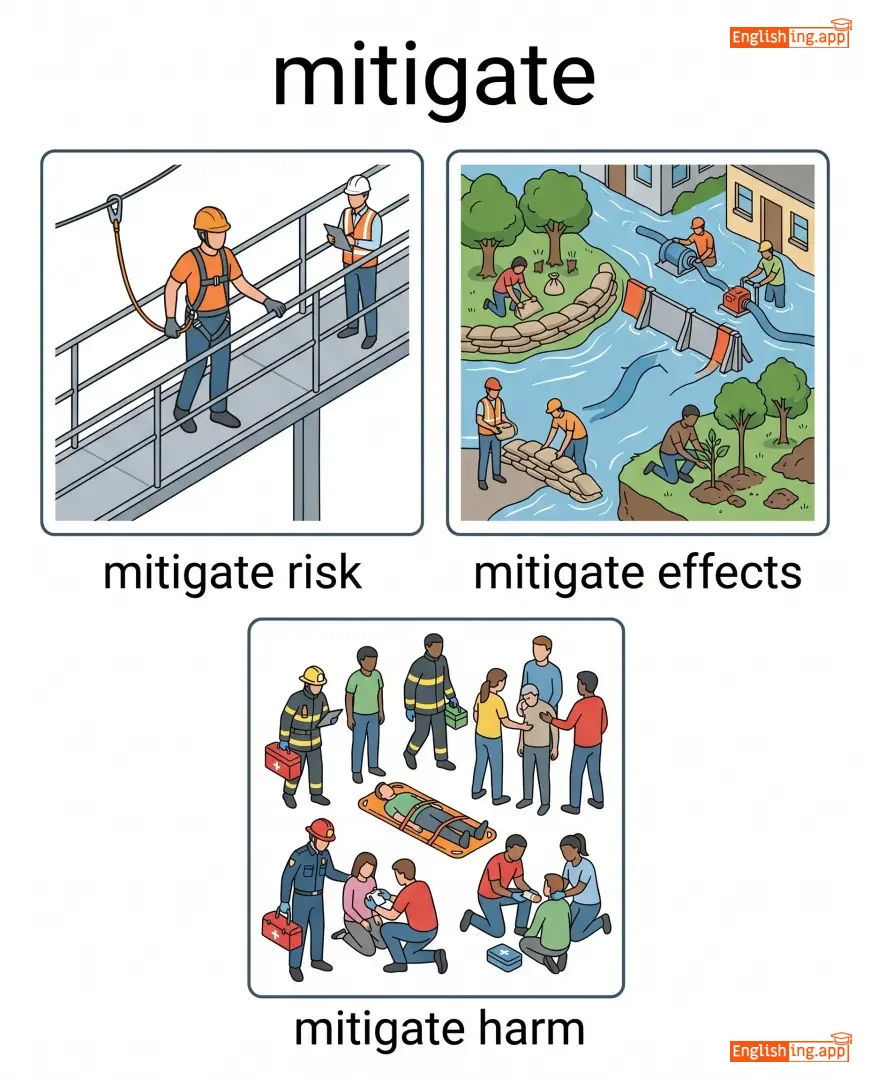
mitigate risk
减轻风险
••••••
|
to reduce the potential danger or harm
••••••
|
减轻风险
jianqīng fēngxiǎn
••••••
|
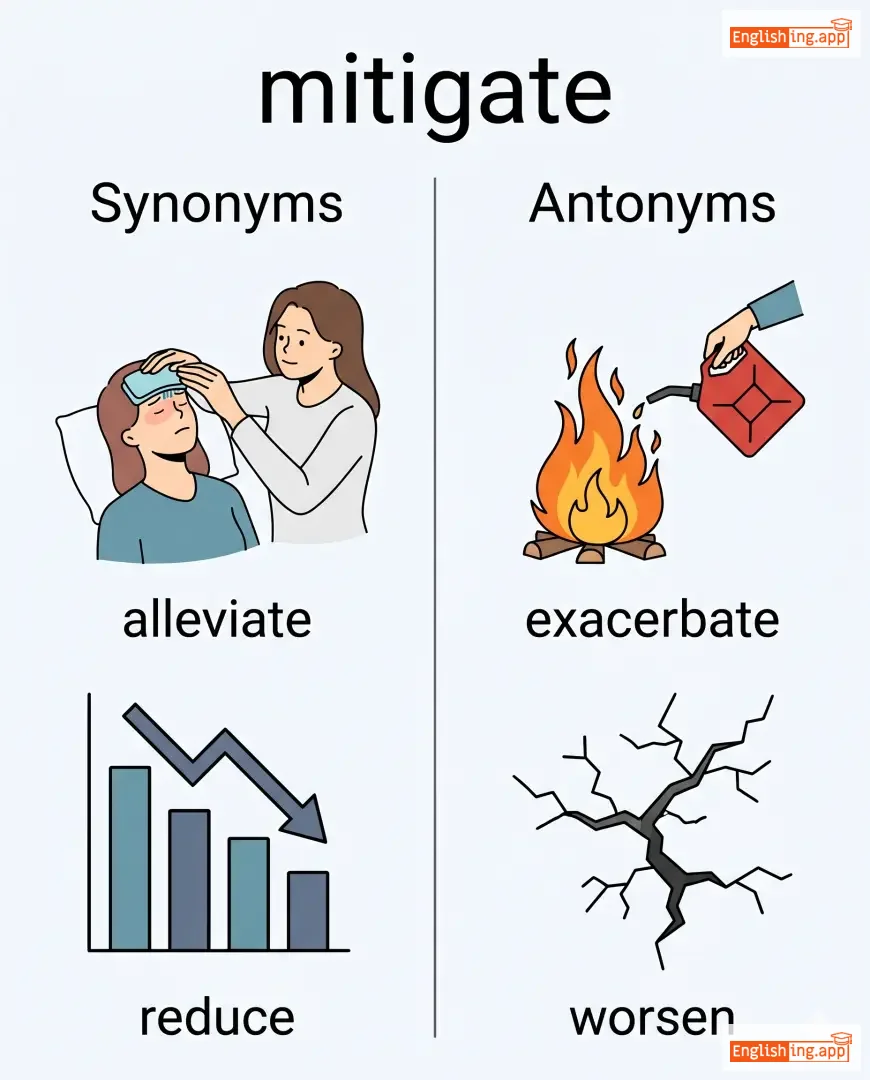
alleviate, reduce, ease, lessen, soften
••••••
|
exacerbate, worsen, intensify
••••••
|
mitigate risk, mitigate effects, mitigate harm, mitigate damage
••••••
|
减轻 = 简化(复杂的问题)。
••••••
|
|
🤲
••••••
|
/ˈmɒlɪfaɪ/
verb
(莫利法)
••••••
|

|
安抚
ānfǔ
••••••
|
mollified
莫利法德
••••••
|
mollified
莫利法德
••••••
|
mollifies
莫利法兹
••••••
|
mollifying
莫利法英
••••••
|
To calm or soothe someone's anger or anxiety.
••••••
|
The manager tried to mollify the angry customers with discounts.
经理试图通过折扣安抚生气的顾客。
••••••
|
经理试图通过折扣安抚生气的顾客。
Jīnglǐ shìtú tōngguò zhékòu ānfǔ shēngqì de gùkè.
••••••
|
- •••••• | - •••••• | - •••••• |
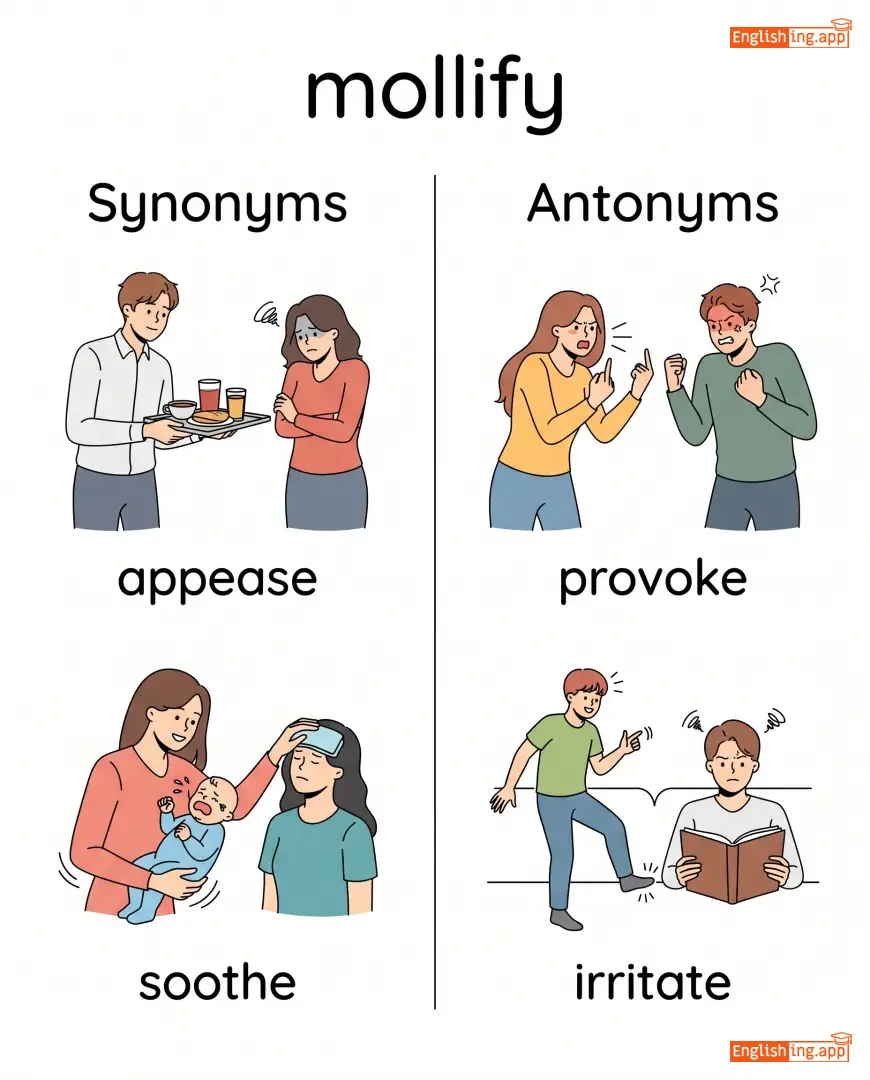
appease, soothe, pacify, calm
••••••
|
provoke, irritate, anger
••••••
|
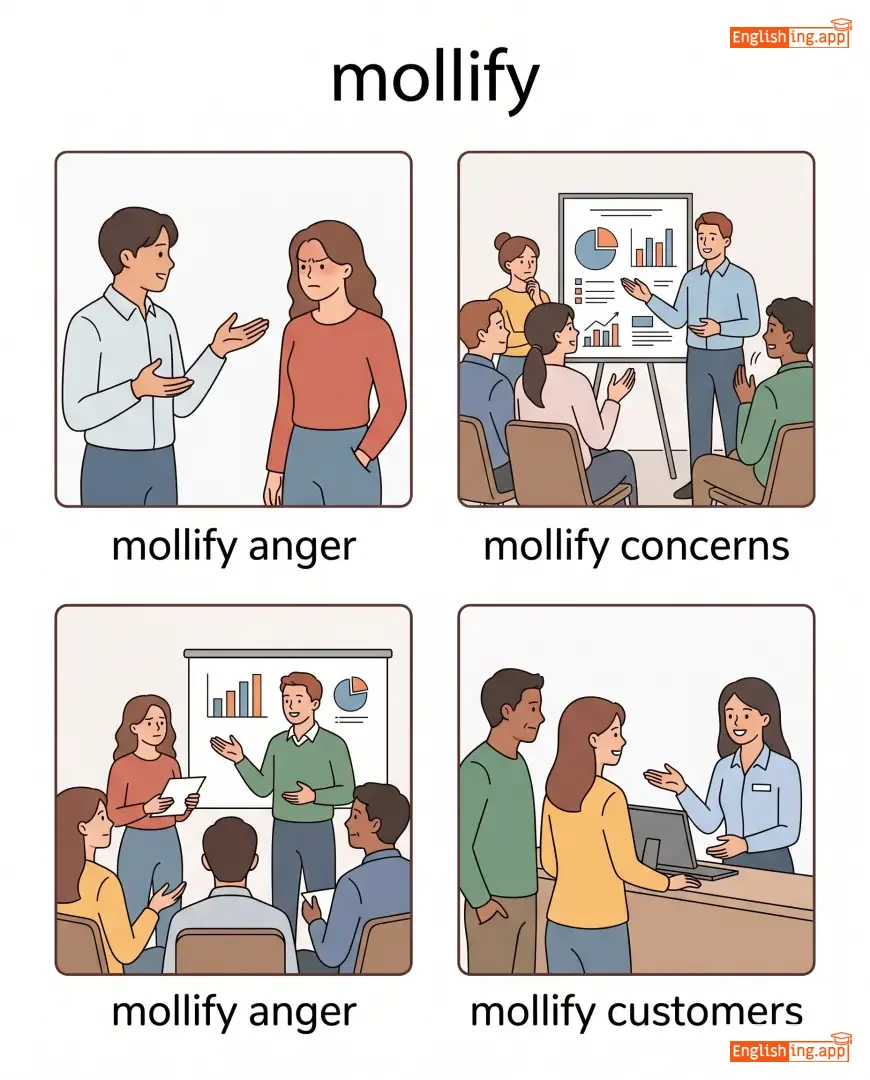
mollify anger, mollify concerns, mollify customers, mollify critics
••••••
|
Mollify 类似于“抚慰” → 安抚生气的情绪
••••••
|
|
😔
••••••
|
/məˈroʊs/
adjective
(莫罗斯)
••••••
|
|
忧郁
yōuyù
••••••
|
- •••••• | - •••••• | - •••••• | - •••••• |
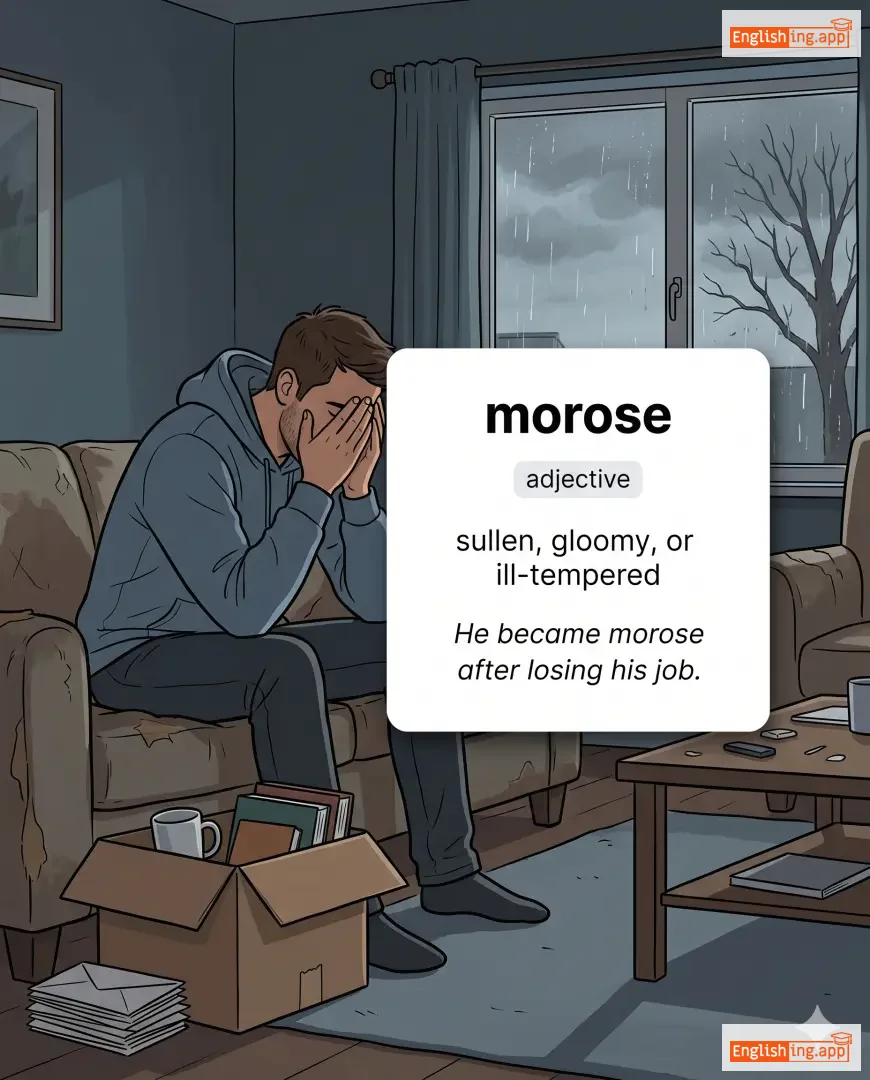
sullen, gloomy, or ill-tempered
••••••
|
He became morose after losing his job.
他在失业后变得沉闷。
••••••
|
他在失业后变得沉闷。
Tā zài shīyè hòu biàn dé chénmèn.
••••••
|
- •••••• | - •••••• | - •••••• |
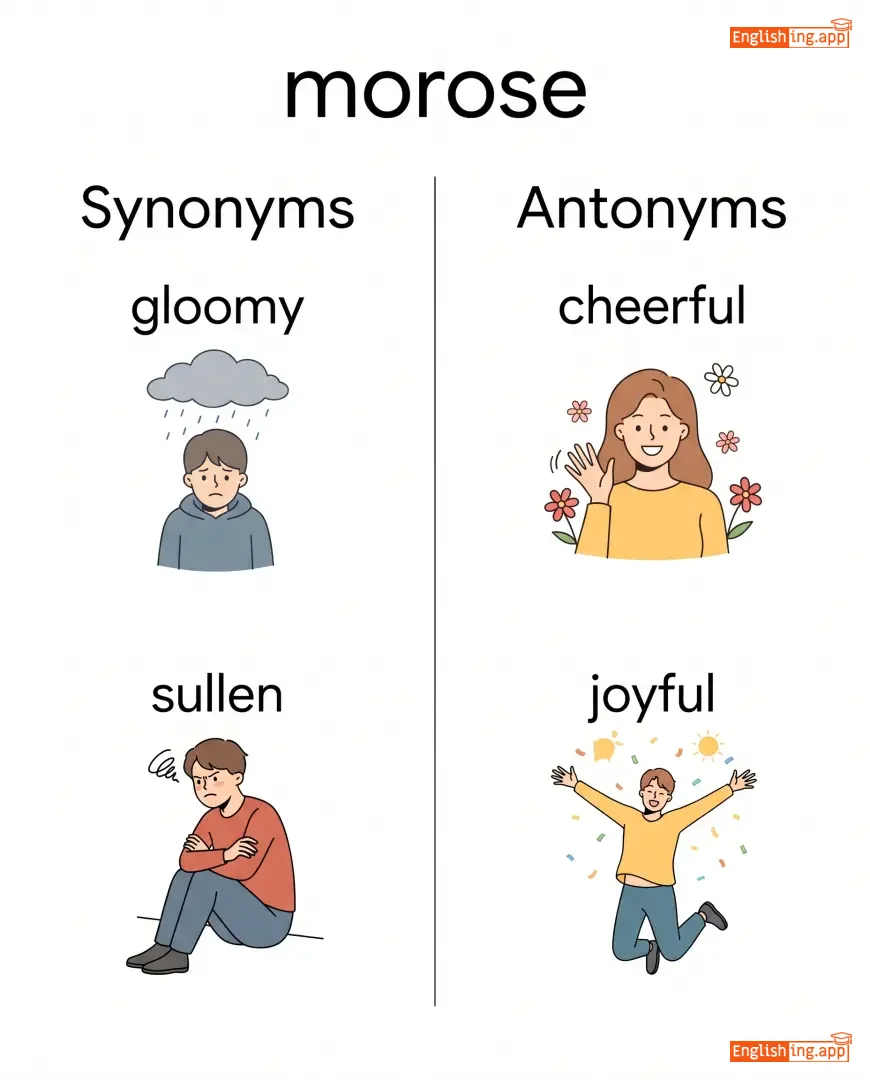
gloomy, sullen, melancholic, depressed
••••••
|
cheerful, joyful, optimistic
••••••
|
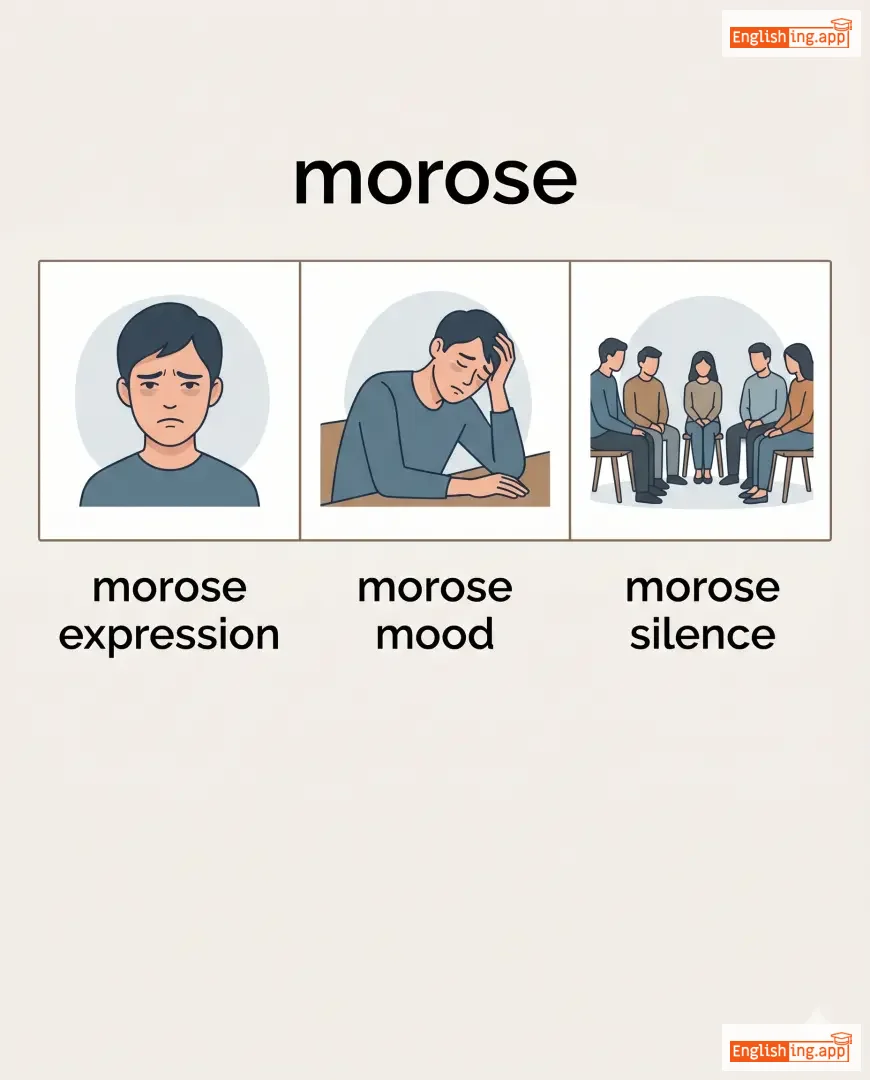
morose expression, morose mood, morose silence
••••••
|
Morose = 郁闷 → morose = 忧郁
••••••
|
|
😐
••••••
|
/mʌnˈdeɪn/
adjective
(manden)
••••••
|
|
平凡
pingfan
••••••
|
- •••••• | - •••••• | - •••••• | - •••••• |
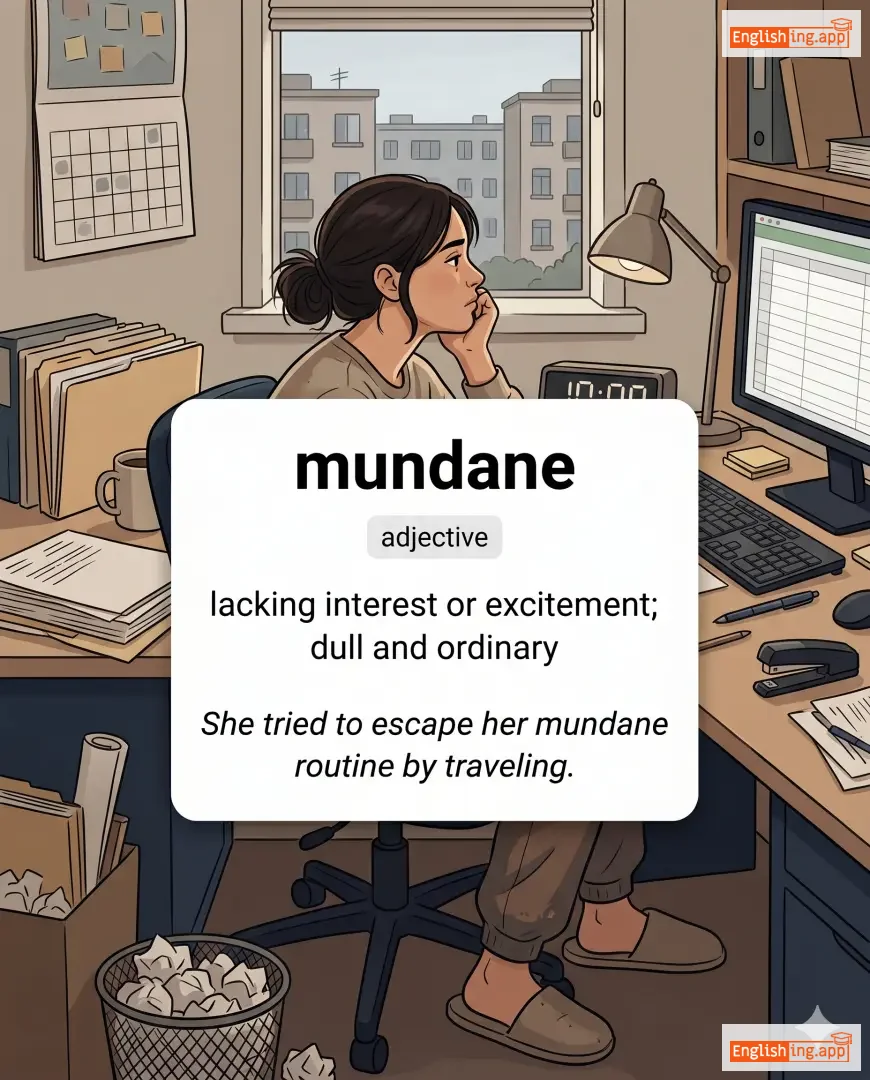
lacking interest or excitement; dull and ordinary
••••••
|
She tried to escape her mundane routine by traveling. |
她试图通过旅行逃避她平凡的日常。
Ta shitu tongguo lvxing taobi ta pingfan de ritchang.
••••••
|
mundane task |
a dull or repetitive job
••••••
|
平凡的工作
pingfan de gongzuo
••••••
|
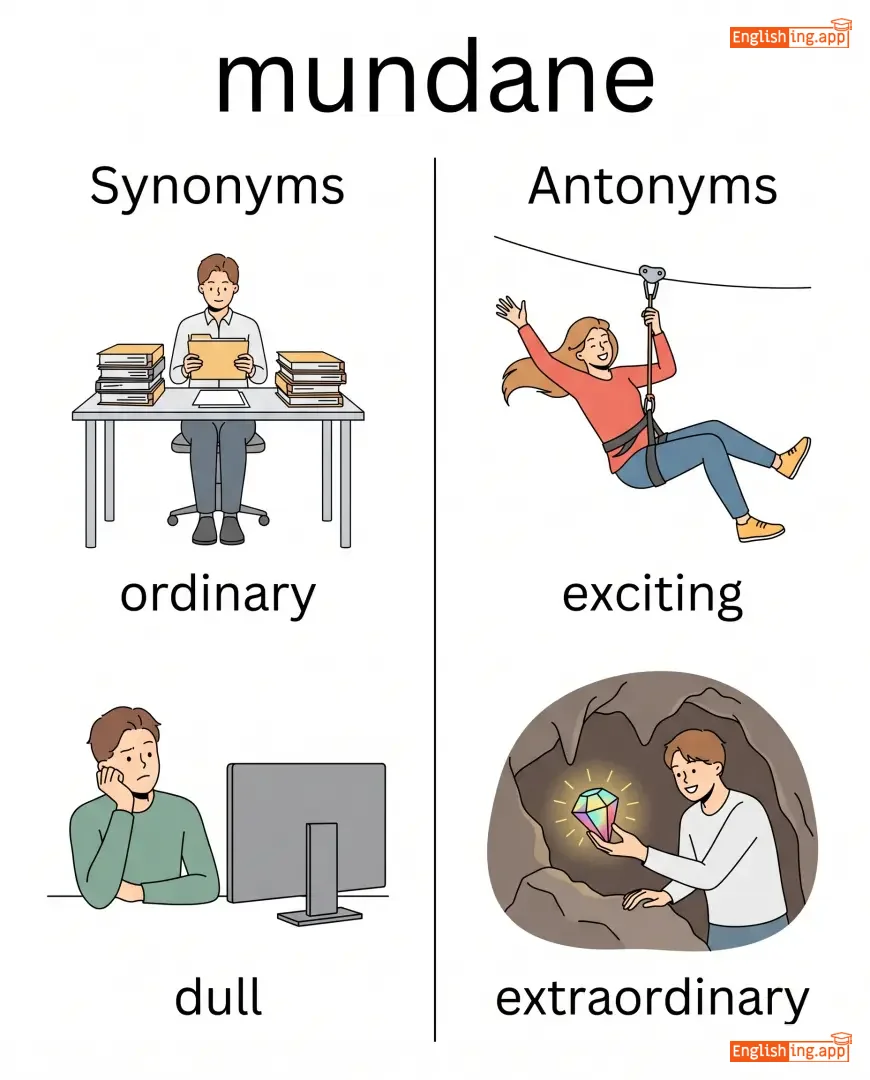
ordinary, dull, boring, routine, monotonous
••••••
|
exciting, extraordinary, unusual
••••••
|
mundane details, mundane routine, mundane life, mundane task
••••••
|
MUN (民) - den 代表着平凡和无聊
••••••
|
|
🚫
••••••
|
/nɪˈɡeɪt/
verb
••••••
|

|
- •••••• |
negated
••••••
|
negated
••••••
|
negates
••••••
|
negating
••••••
|
To cancel out or make ineffective; to deny the truth of something.
••••••
|
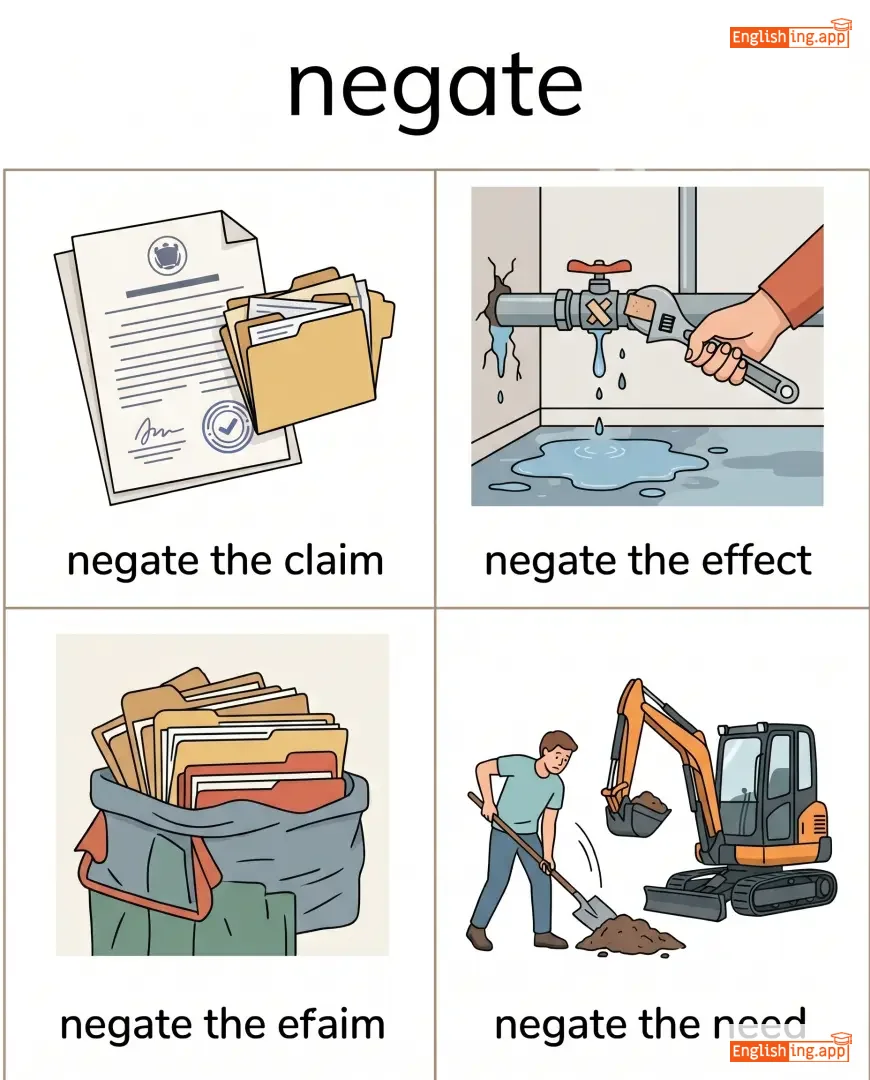
The new evidence will negate the claims made earlier. |
- •••••• |
negate the effect |
To cancel or reduce the impact of something.
••••••
|
- •••••• |
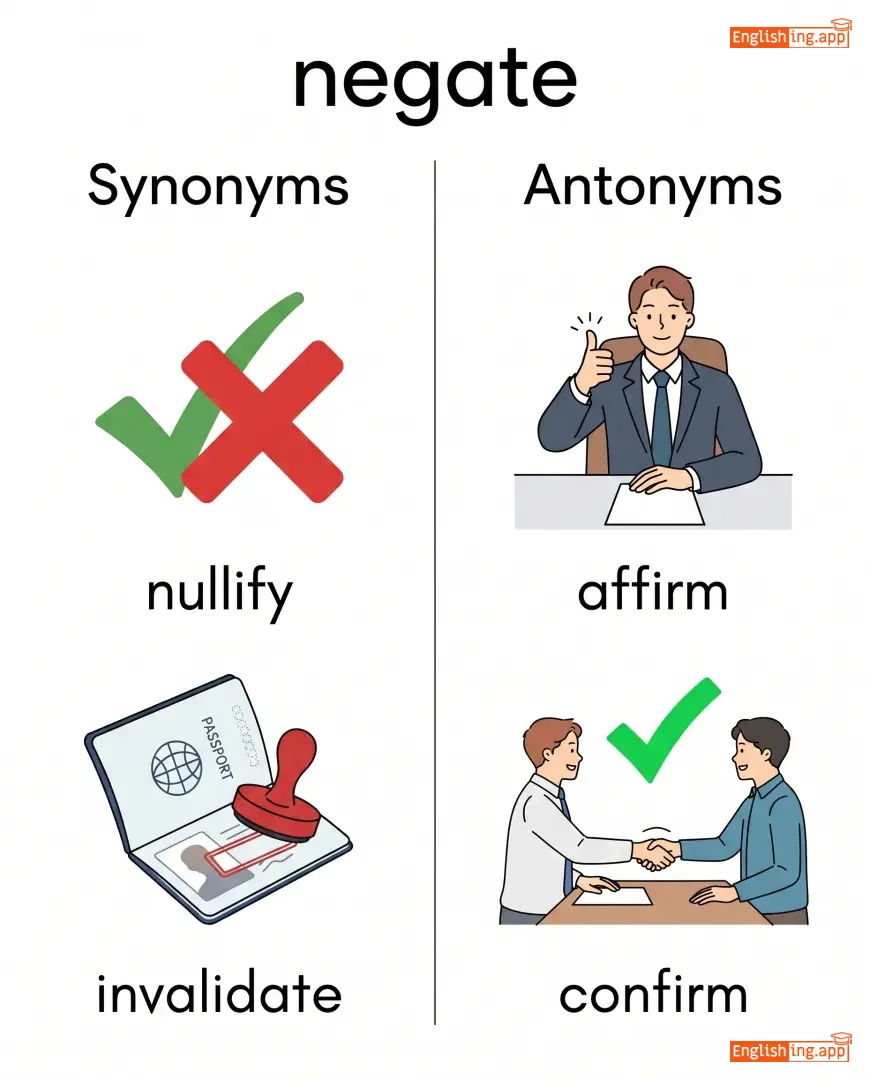
nullify, invalidate, deny, cancel, counteract
••••••
|
affirm, confirm, validate
••••••
|
negate the claim, negate the effect, negate the need, negate responsibility
••••••
|
No •••••• |
|
🌱
••••••
|
/ˈniːəˌfaɪt/
noun
(新手)
••••••
|
|
新手
xin shou
••••••
|
- •••••• | - •••••• | - •••••• | - •••••• |
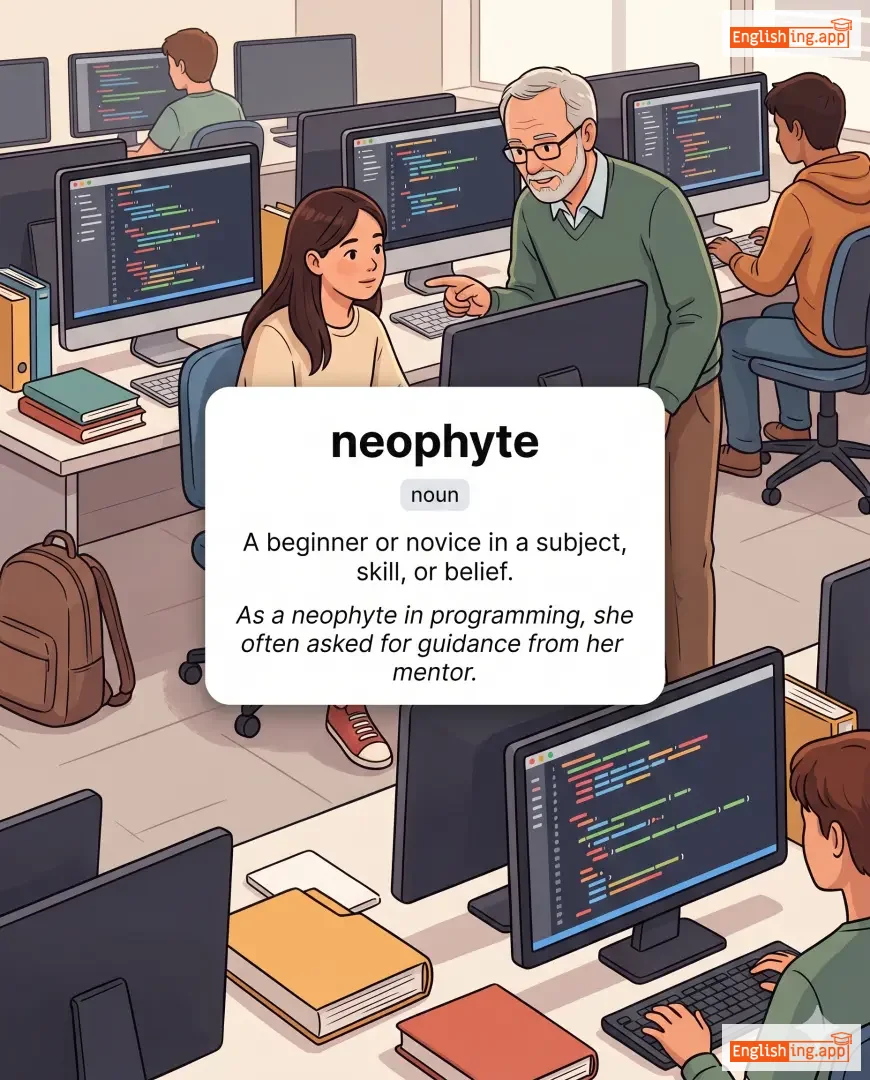
A beginner or novice in a subject, skill, or belief.
••••••
|
As a neophyte in programming, she often asked for guidance from her mentor. |
作为编程的新手,她经常向她的导师请教。
Zuo wei bian cheng de xin shou, ta jing chang xiang ta de dao shi qing jiao.
••••••
|
- •••••• | - •••••• | - •••••• |
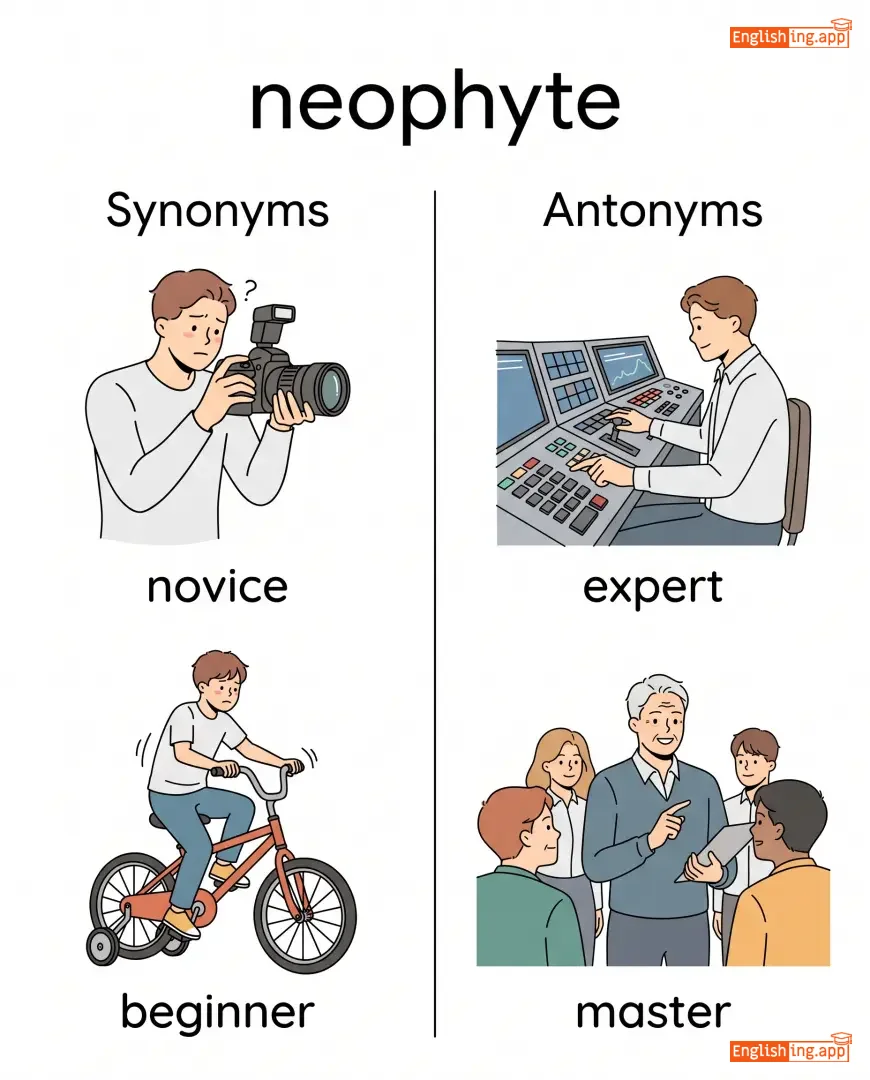
novice, beginner, newcomer, rookie, trainee
••••••
|
expert, master, veteran
••••••
|
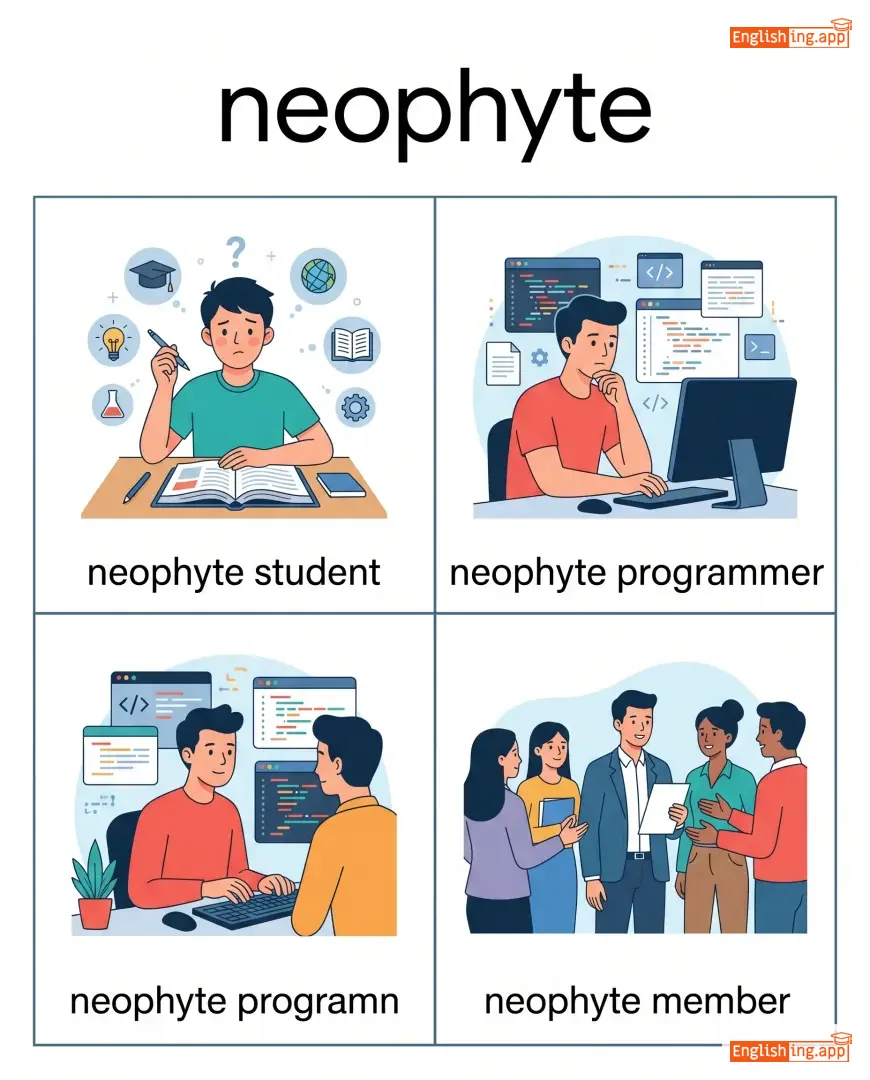
neophyte student, neophyte programmer, neophyte member
••••••
|
Neo 意味着新的 + phyte 意味着植物 → 新手就像一棵新生的植物开始成长。
••••••
|
|
🪨
••••••
|
/ˈɑːbdjʊrət/
adjective
(ob-dyu-ret)
••••••
|
|
固执
guzhi
••••••
|
- •••••• | - •••••• | - •••••• | - •••••• |
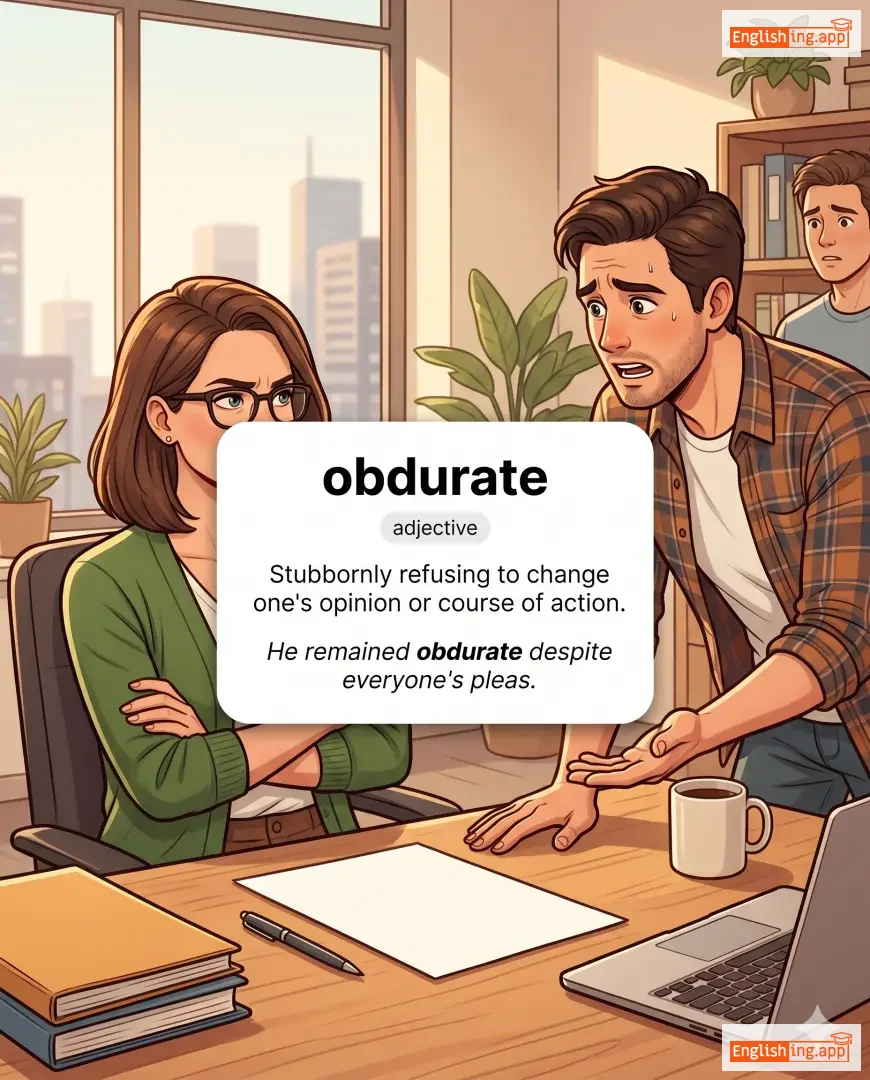
Stubbornly refusing to change one's opinion or course of action.
••••••
|
He remained obdurate despite everyone's pleas.
尽管大家的恳求,他依然固执。
••••••
|
尽管大家的恳求,他依然固执。
Jinguang dajia de kenqiu, ta yiran guzhi.
••••••
|
- •••••• | - •••••• | - •••••• |
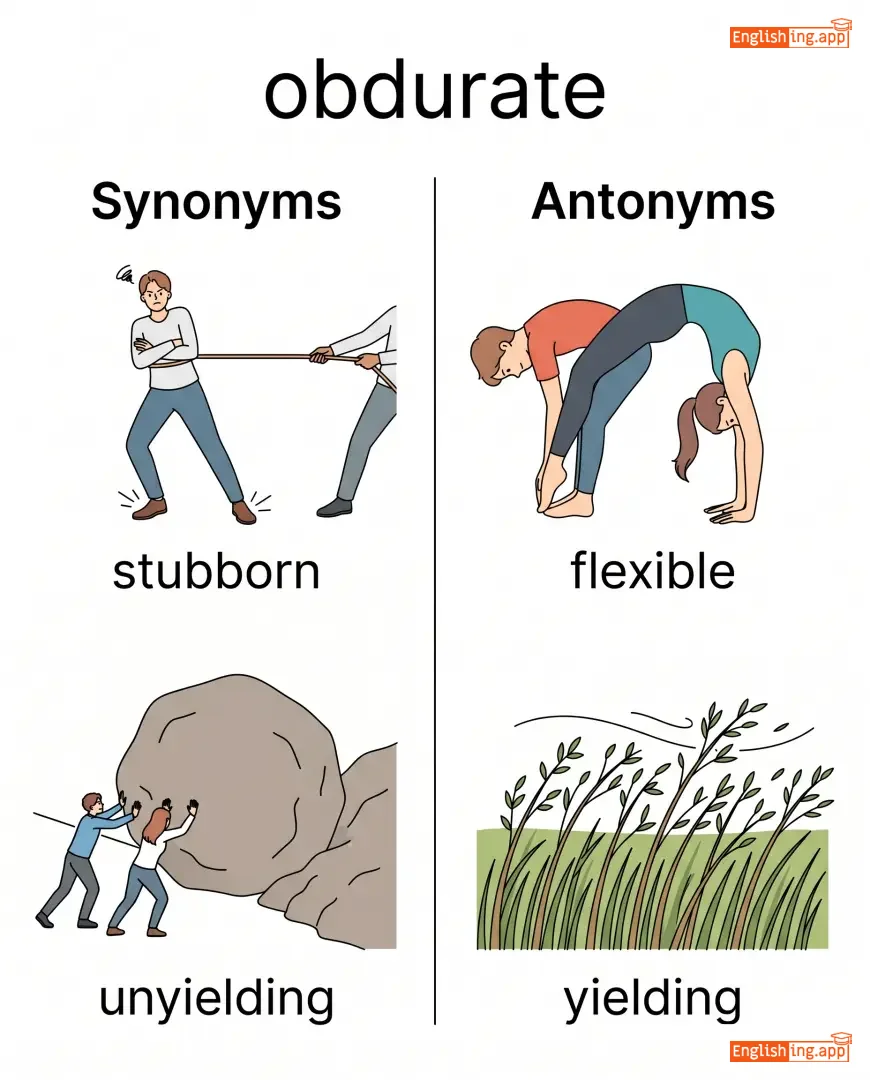
stubborn, unyielding, inflexible, rigid, adamant
••••••
|
flexible, yielding, compliant
••••••
|
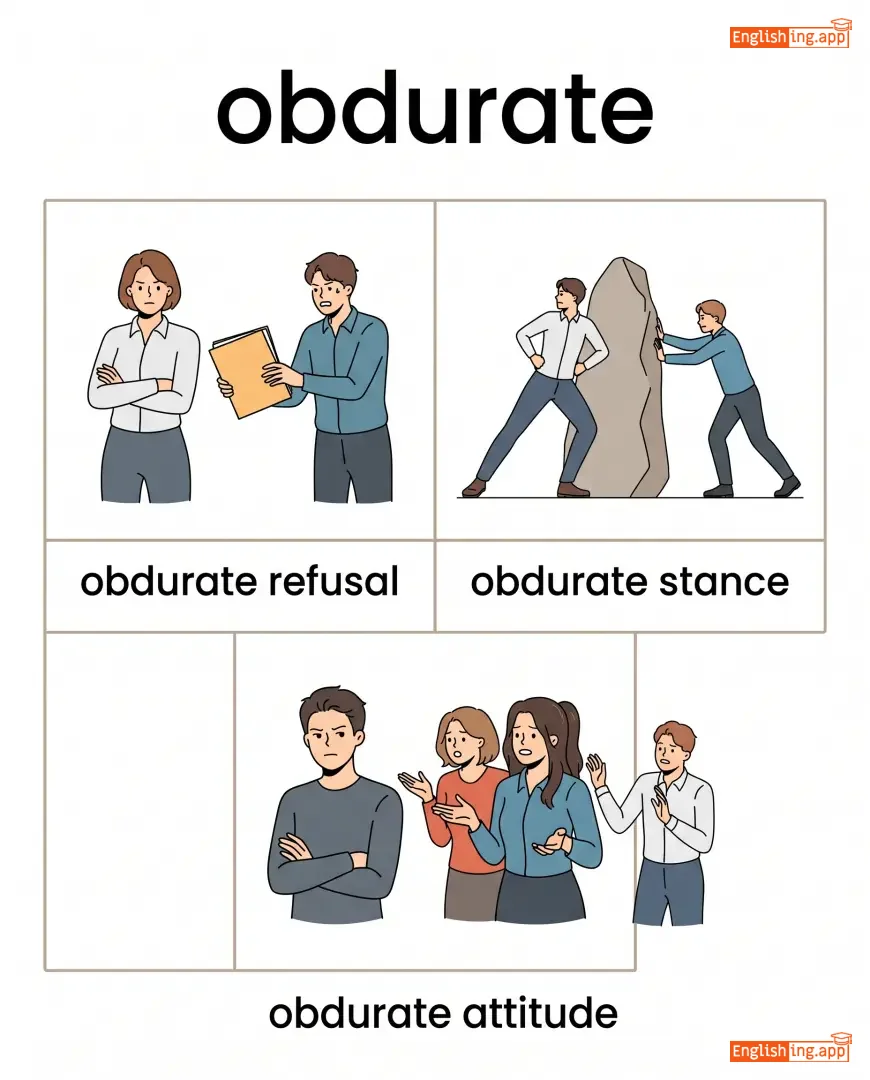
obdurate refusal, obdurate stance, obdurate attitude
••••••
|
Obdurate 就是固执,像你不想改变自己选择的事情,哪怕别人请求你改变。
••••••
|
|
🙇
••••••
|
/əbˈsiːkwɪəs/
adjective
(obsequious)
••••••
|

|
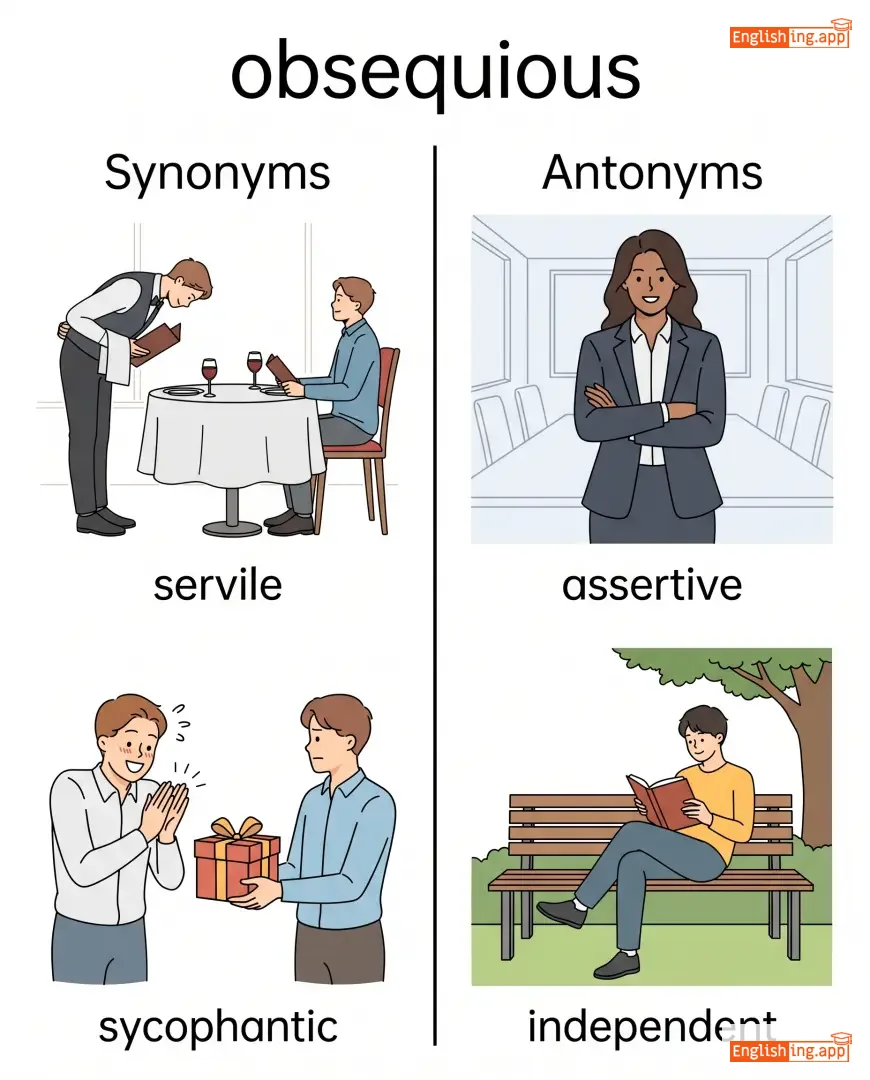
奉承
fèngchēng
••••••
|
- •••••• | - •••••• | - •••••• | - •••••• |
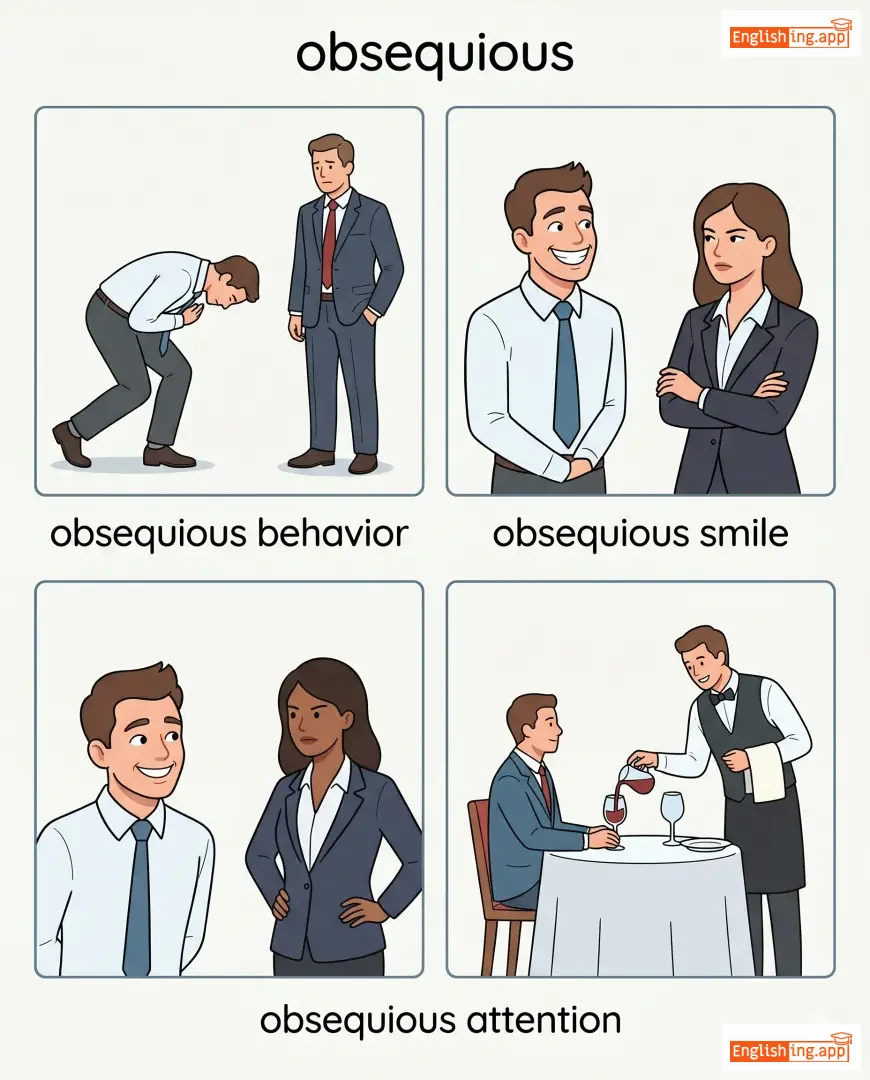
Excessively obedient or attentive in a servile way.
••••••
|
The waiter gave an obsequious bow to every customer.
服务员对每个顾客鞠了一躬。
••••••
|
服务员对每个顾客鞠了一躬。
Fúwùyuán duì měi gè gùkè jū le yī gōng.
••••••
|
- •••••• | - •••••• | - •••••• |
servile, sycophantic, fawning, submissive
••••••
|
assertive, independent
••••••
|
obsequious behavior, obsequious smile, obsequious attention
••••••
|
Obsequious 的意思是奉承,记住 'Obey' + 'quick' = 奉承的行为。
••••••
|
|
🚫
••••••
|
/ˈɑːbvieɪt/
verb
(奥布维特)
••••••
|
|
消除
xiaochu
••••••
|
obviated
奥布维特德
••••••
|
obviated
奥布维特德
••••••
|
obviates
奥布维特斯
••••••
|
obviating
奥布维廷
••••••
|
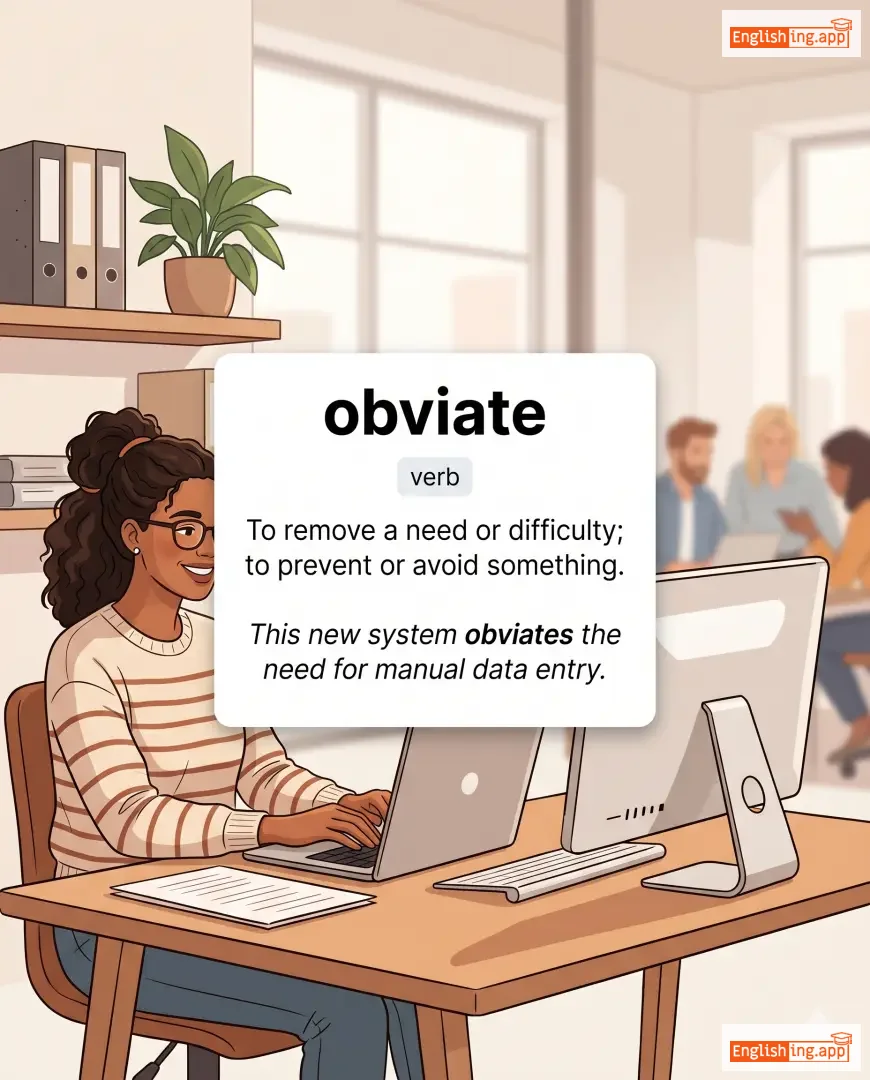
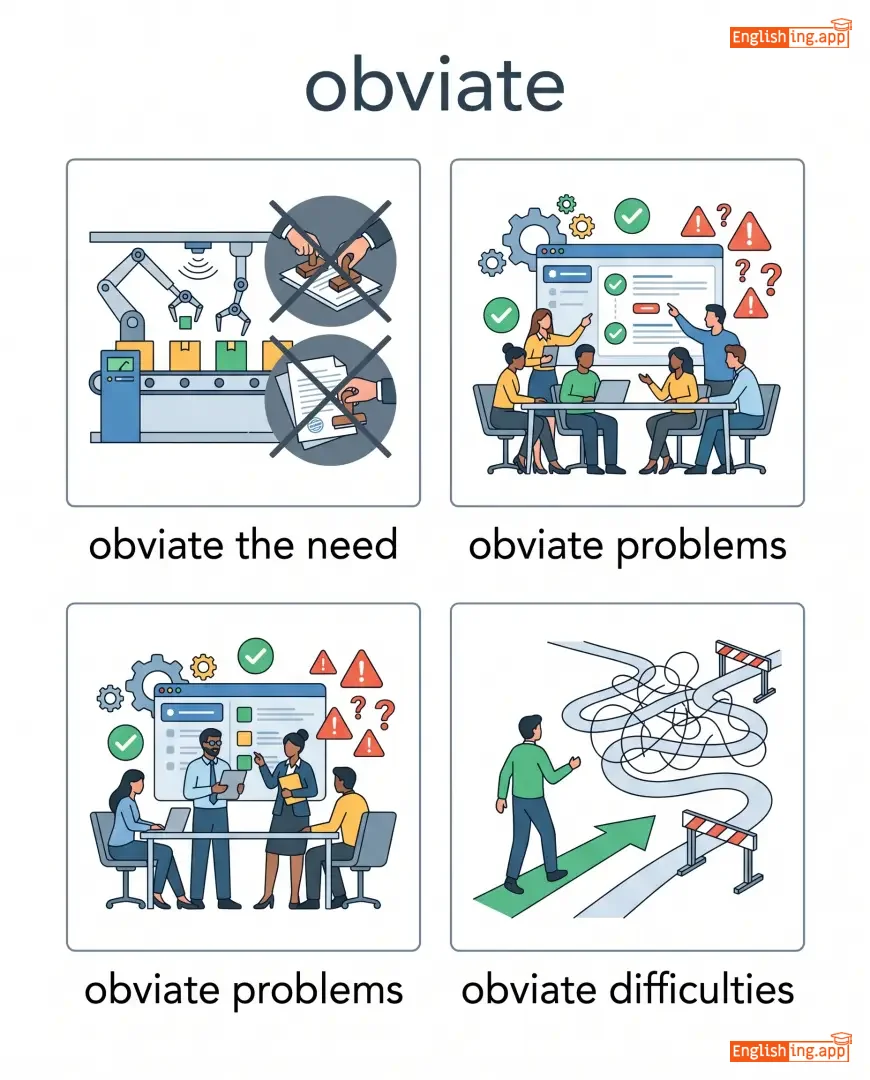
To remove a need or difficulty; to prevent or avoid something.
••••••
|
This new system obviates the need for manual data entry.
这个新系统消除了手动输入数据的需要。
••••••
|
这个新系统消除了手动输入数据的需要。
Zhege xin xitong xiaochule shoudong shuru shuju de xuyao.
••••••
|
- •••••• | - •••••• | - •••••• |
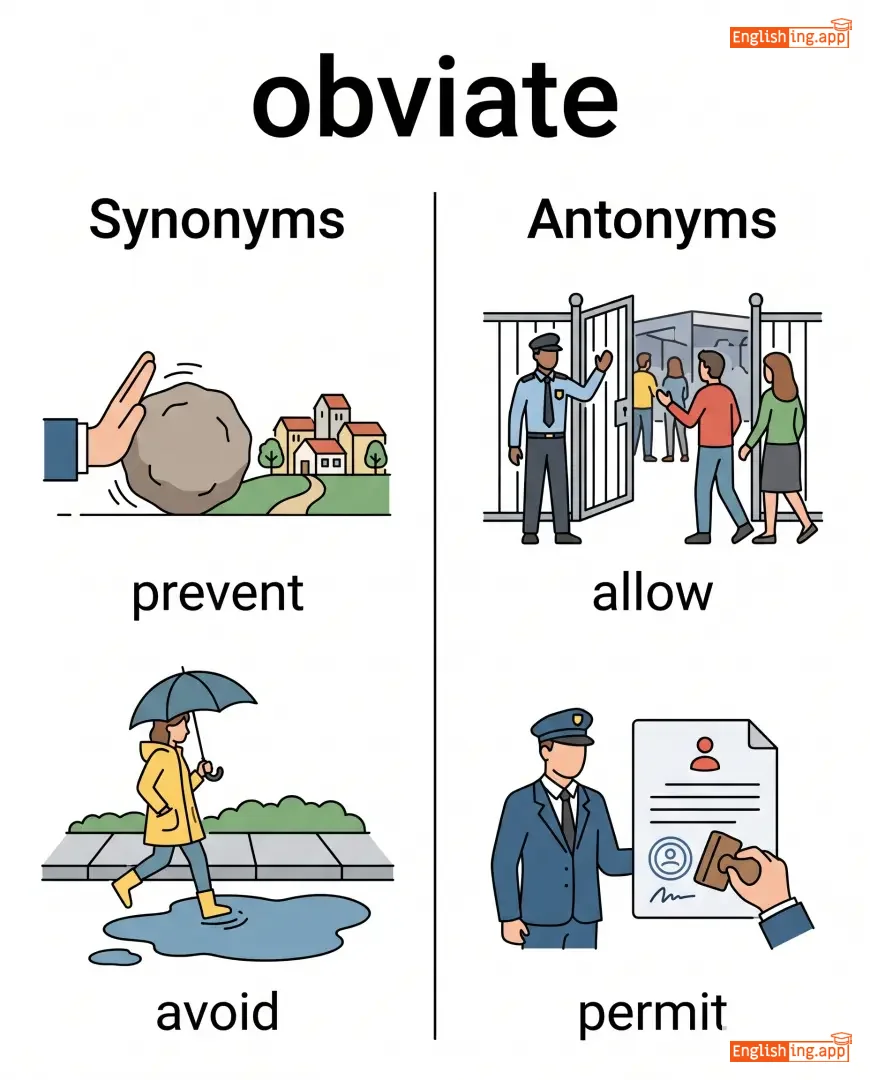
prevent, avoid, eliminate, preclude, remove
••••••
|
allow, permit, require
••••••
|
obviate the need, obviate problems, obviate difficulties
••••••
|
Obviate意味着在问题发生前先解决它。
••••••
|
|
🚧
••••••
|
/əˈkluːd/
verb
(òkè lǔ dé)
••••••
|

|
堵塞
dǔsè
••••••
|
occluded
òkè lǔ dì dé
••••••
|
occluded
òkè lǔ dì dé
••••••
|
occludes
òkè lǔ dé sī
••••••
|
occluding
òkè lǔ dìng
••••••
|
To block or close up an opening or passage.
••••••
|
The pipe was occluded by mineral deposits.
管道因矿物沉积物而被堵塞。
••••••
|
管道因矿物沉积物而被堵塞。
Guǎndào yīn kuàngwù chénjī wù ér bèi dǔsè.
••••••
|
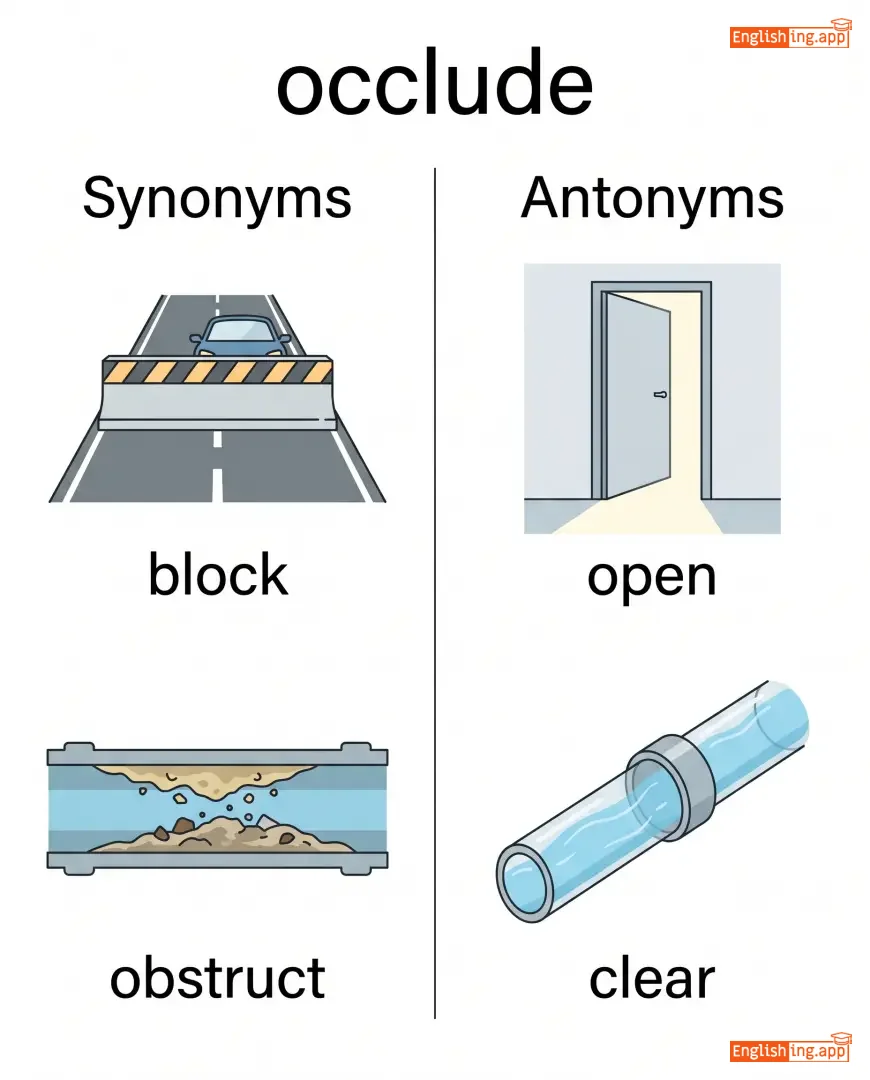
- •••••• | - •••••• | - •••••• |
block, obstruct, close, seal, clog
••••••
|
open, clear, unblock
••••••
|
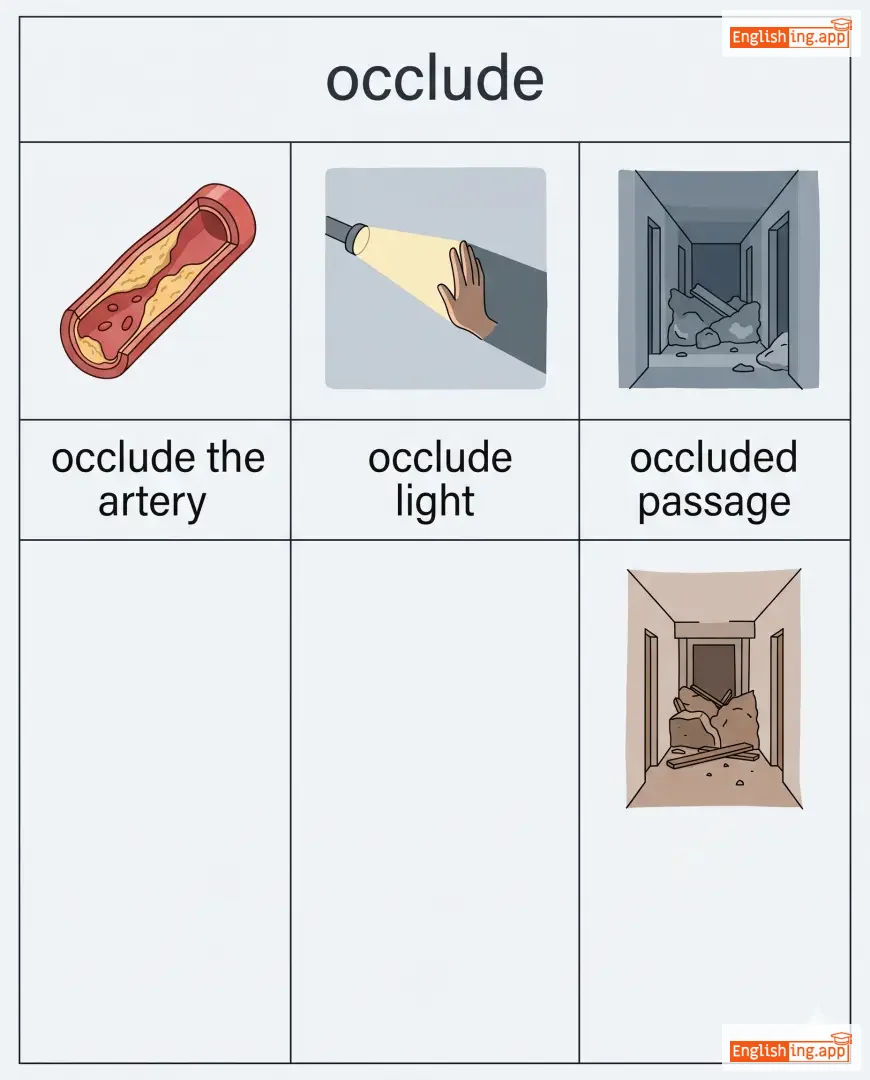
occlude the artery, occlude light, occluded passage
••••••
|
Occlude意味着封闭,遮掩线索,封住路径。
••••••
|
|
🙄
••••••
|
/əˈfɪʃəs/
adjective
(欧非许斯)
••••••
|

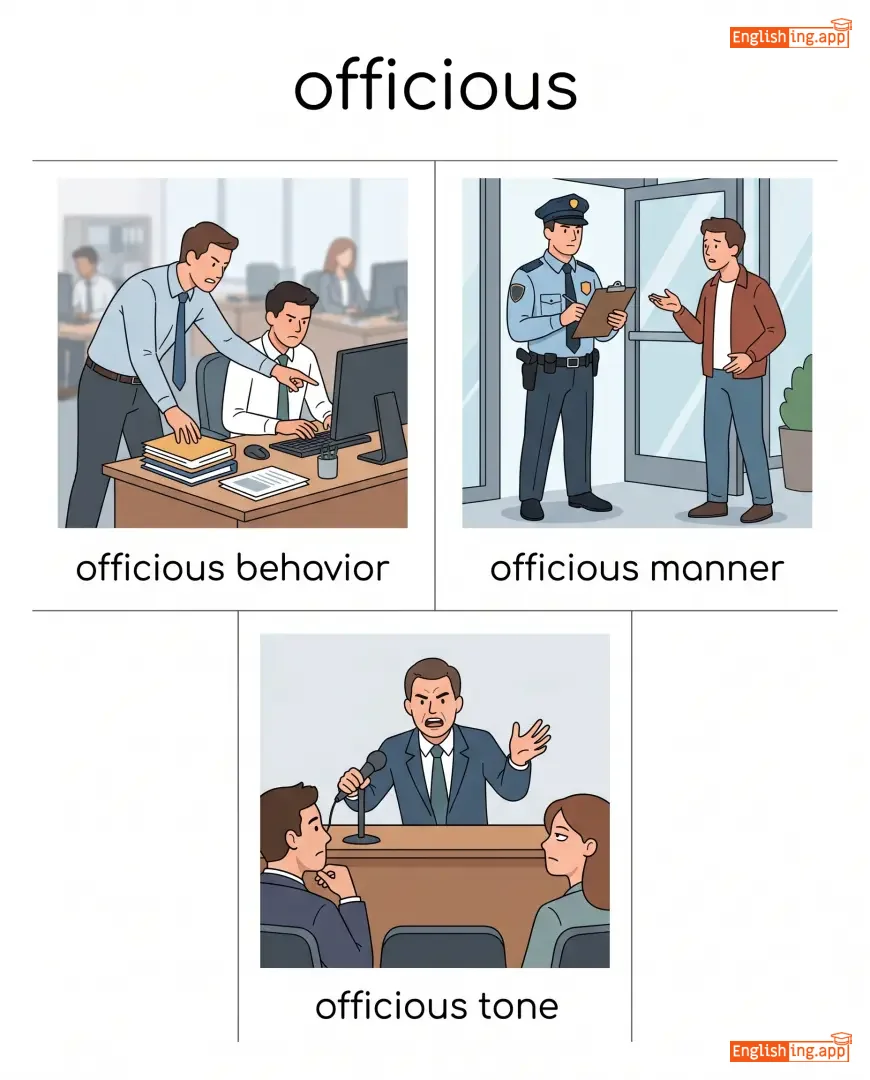
|
多管闲事
duo guan xian shi
••••••
|
- •••••• | - •••••• | - •••••• | - •••••• |
Excessively eager to offer unwanted help or advice; meddlesome.
••••••
|
The officious guard kept interrupting the visitors with unnecessary instructions. |
那位多管闲事的警卫不断用不必要的指令打扰游客。
Na wei duo guan xian shi de jing wei buduan yong bu bi yao de zhi ling da rao you ke.
••••••
|
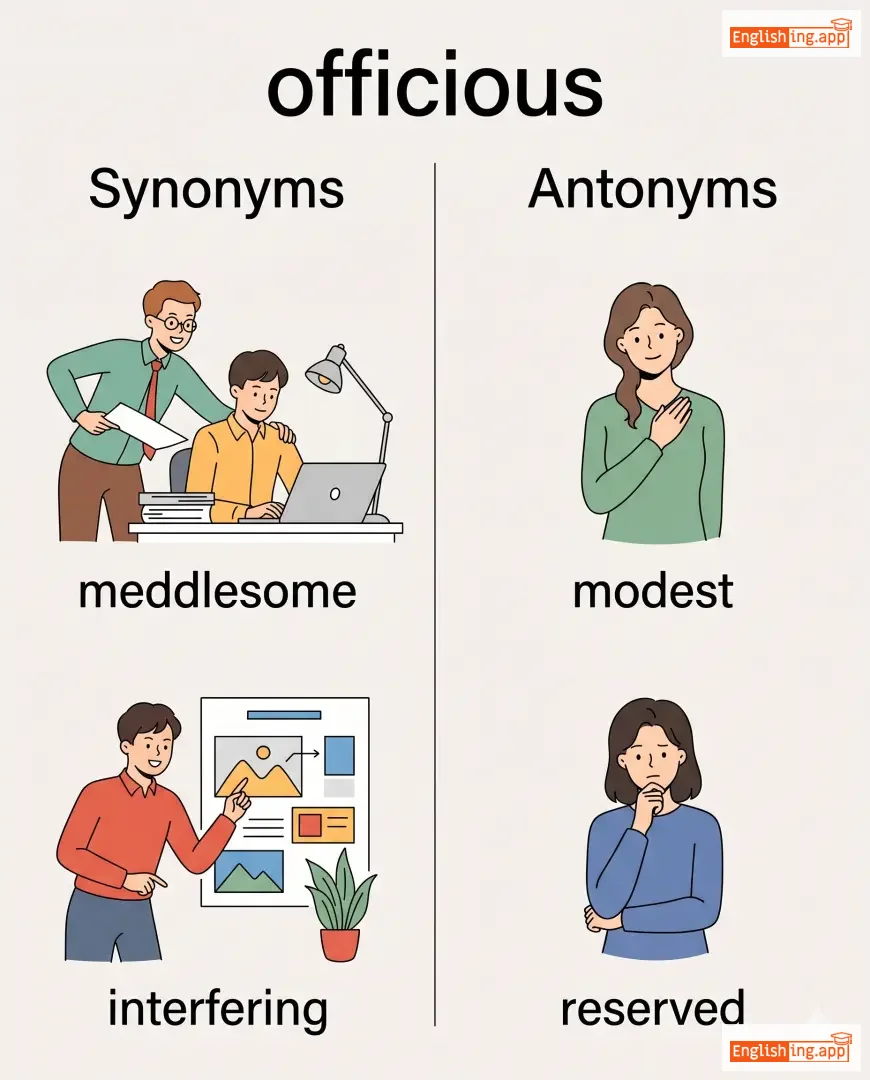
- •••••• | - •••••• | - •••••• |
meddlesome, interfering, intrusive, bossy, overbearing
••••••
|
modest, reserved, unobtrusive
••••••
|
officious behavior, officious manner, officious tone, officious interference
••••••
|
Offi-CIOUS! 那些喜欢插手的总是在所有地方,提供无用的建议。
••••••
|
|
⚖️
••••••
|
/ˈəʊnərəs/
adjective
(欧内罗斯)
••••••
|
|
繁重
fánzhòng
••••••
|
- •••••• | - •••••• | - •••••• | - •••••• |
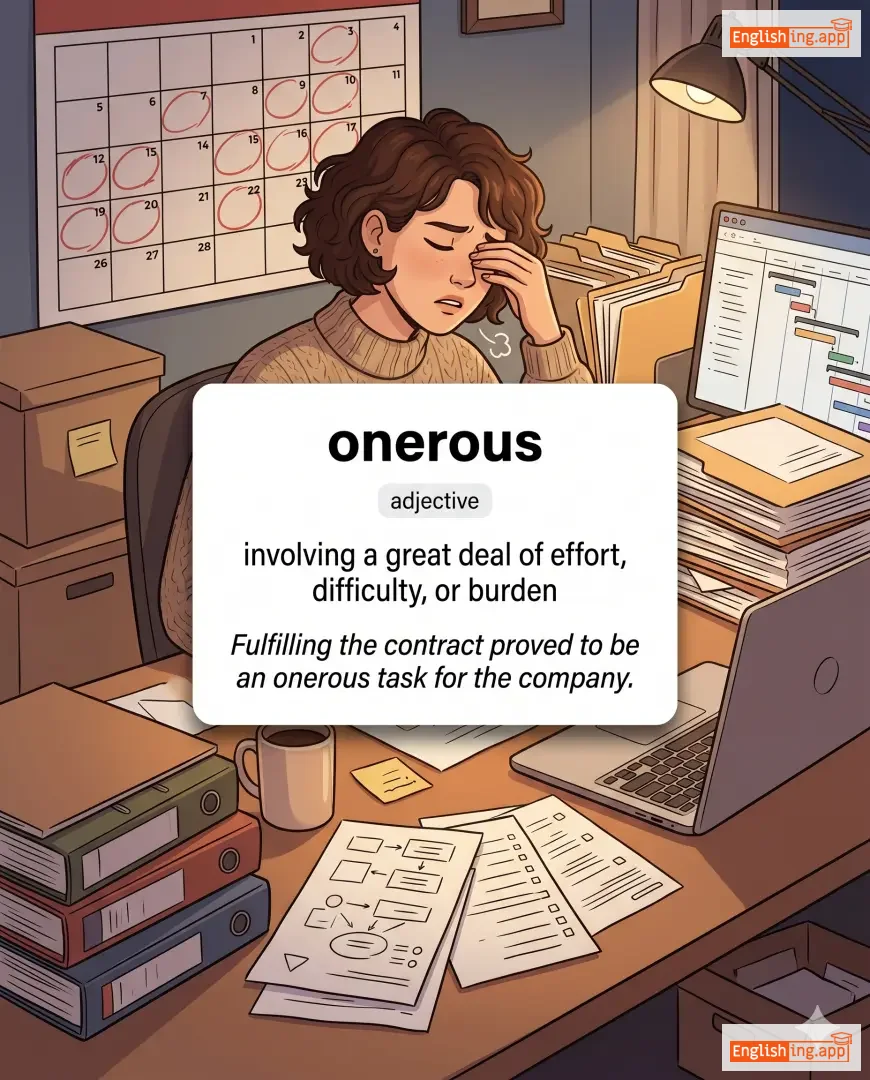
involving a great deal of effort, difficulty, or burden
••••••
|
Fulfilling the contract proved to be an onerous task for the company.
履行合同对公司来说是一项繁重的任务。
••••••
|
履行合同对公司来说是一项繁重的任务。
Lǚxíng hétóng duì gōngsī lái shuō shì yī xiàng fánzhòng de rènwù.
••••••
|
- •••••• | - •••••• | - •••••• |
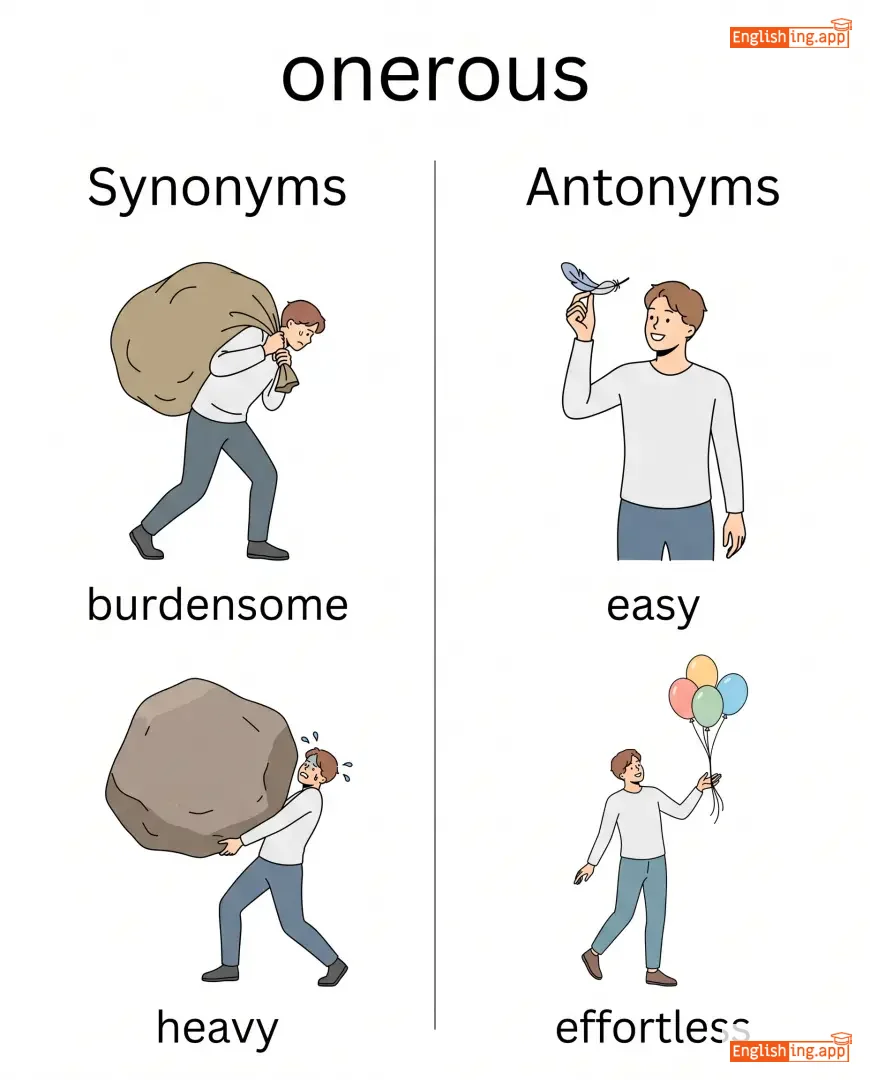
burdensome, heavy, demanding, exhausting, troublesome
••••••
|
easy, effortless, light
••••••
|
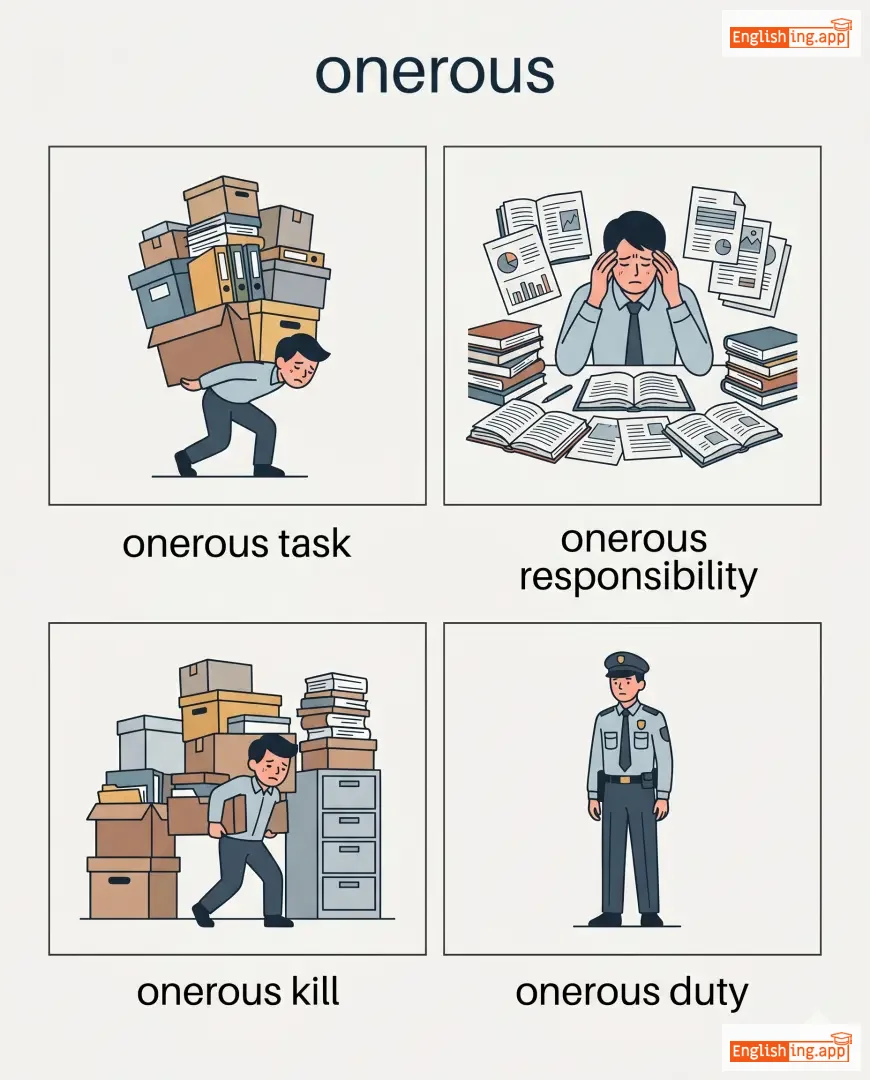
onerous task, onerous responsibility, onerous duty
••••••
|
Onerous听起来像‘繁重’—工作或任务可能很难完成,负担重。
••••••
|
|
🚫
••••••
|
/əˈprəʊ.bri.əm/
noun
(oppróbiāo)
••••••
|
|
耻辱, 侮辱
chiru, wuru
••••••
|
- •••••• | - •••••• | - •••••• | - •••••• |
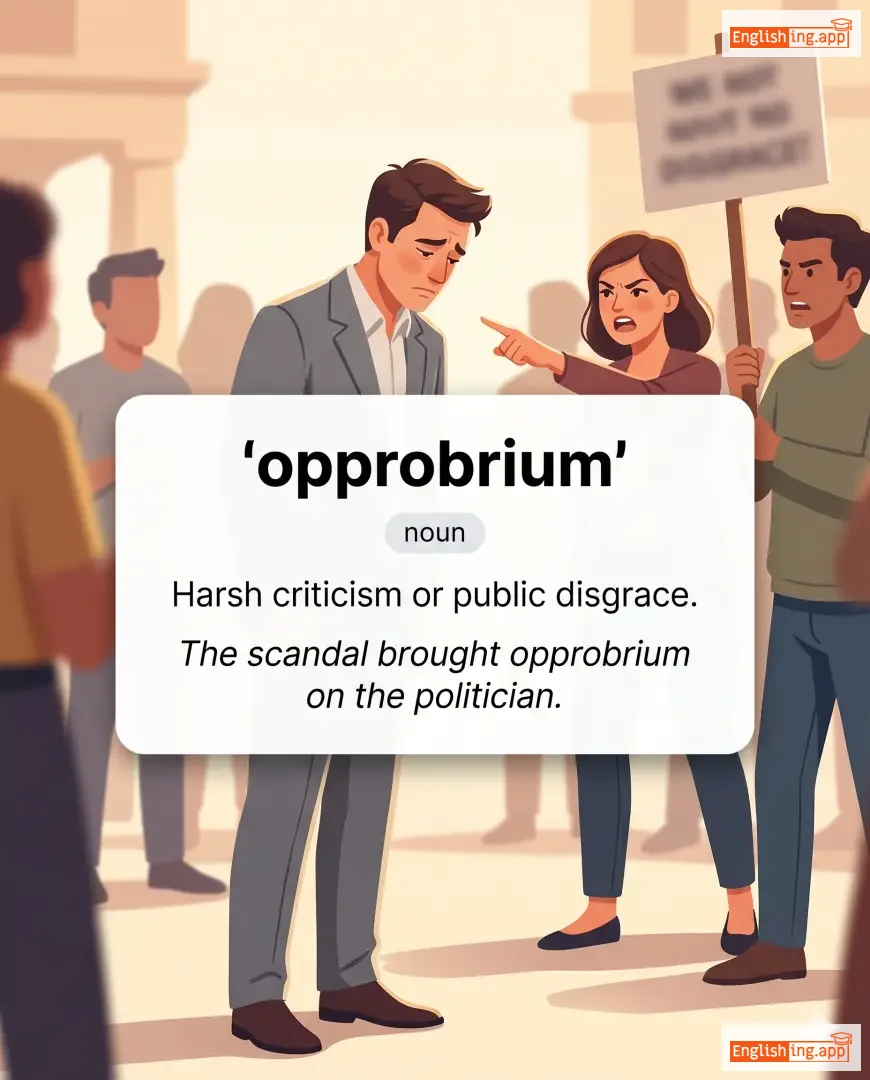
Harsh criticism or public disgrace.
••••••
|
The scandal brought opprobrium on the politician. |
丑闻给政治家带来了耻辱。
Chouwen gei zhengzhijia dai lai le chiru.
••••••
|
- •••••• | - •••••• | - •••••• |
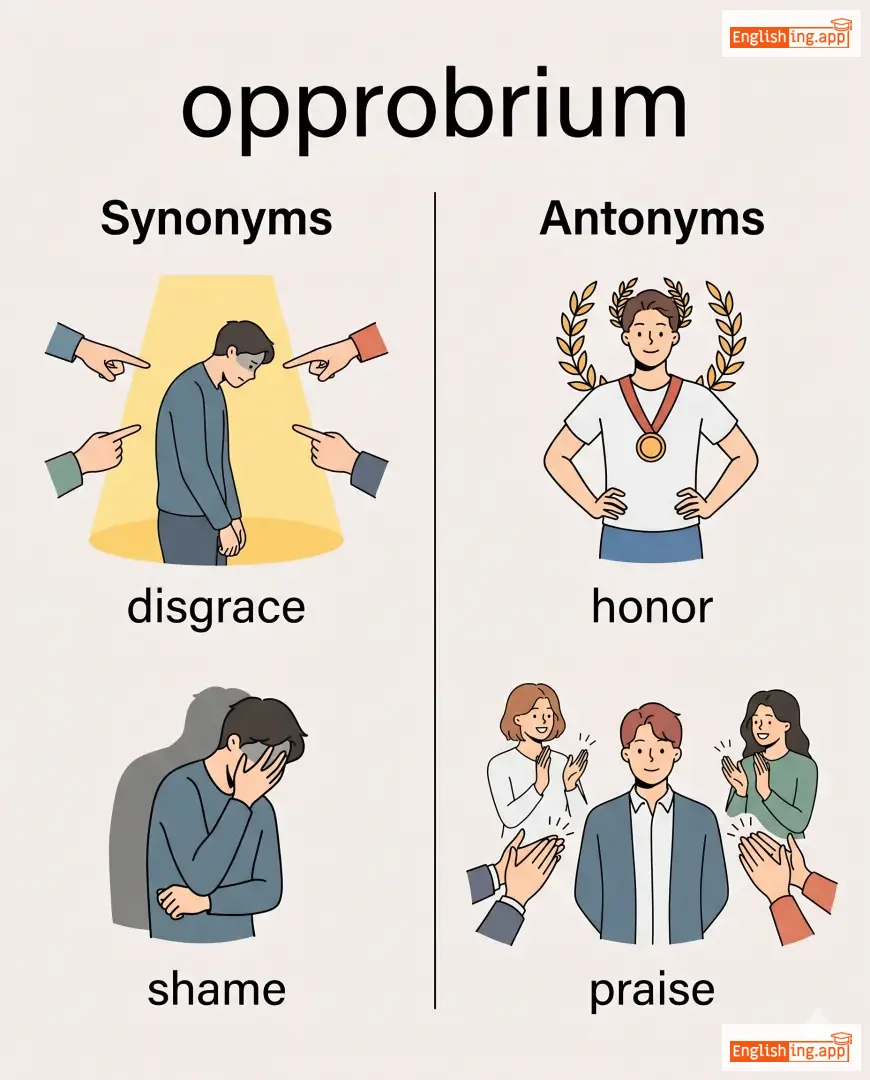
disgrace, shame, dishonor, condemnation
••••••
|
honor, praise, respect
••••••
|
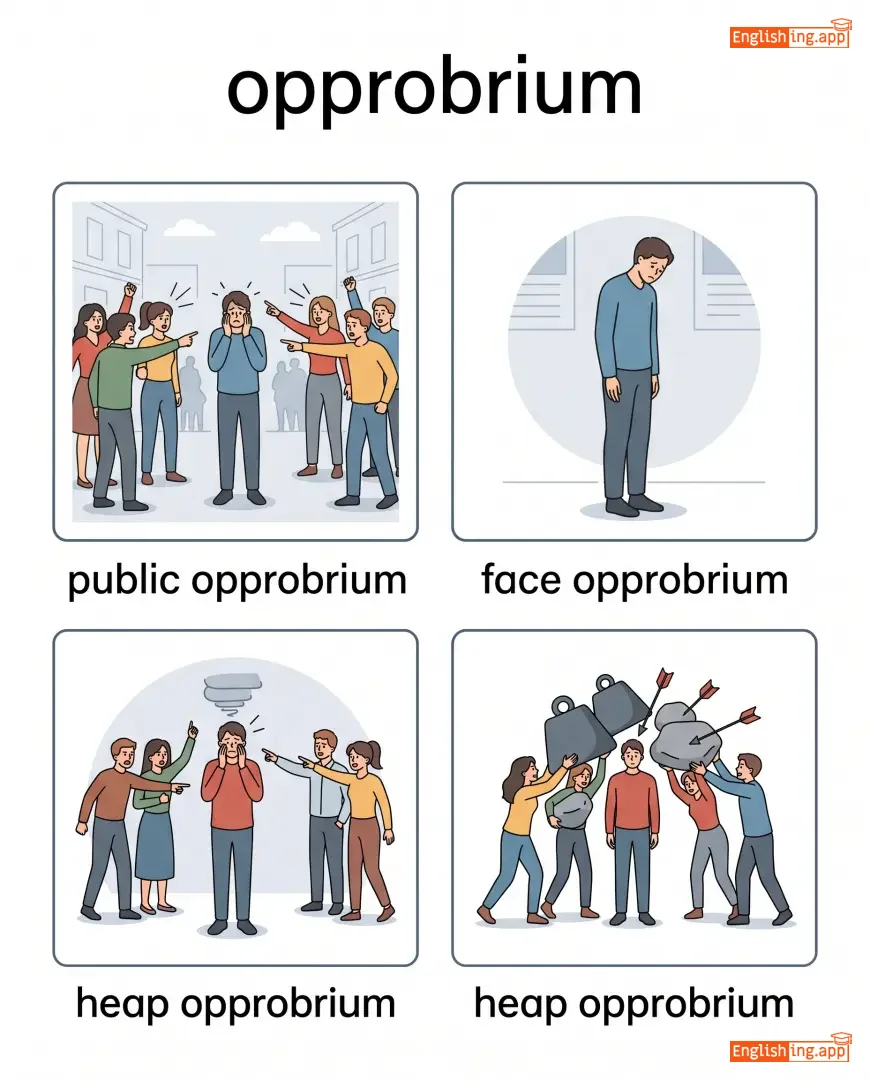
public opprobrium, face opprobrium, heap opprobrium
••••••
|
Opprobrium 意味着公开的耻辱 (侮辱) 和羞耻感。
••••••
|

