|
表情符号
|
单词 | Images | 翻译 | 过去时 | 过去分词 | 第三人称单数 | 动名词 | 含义 | 例句 | 例句翻译 | 示例表达 | 示例表达含义 | 示例表达翻译 | 同义词 | 反义词 | 搭配词 | 助记符 |
|---|---|---|---|---|---|---|---|---|---|---|---|---|---|---|---|---|---|
|
🏆
••••••
|
/ˈwɪnər/
noun
(wɪnɚ)
••••••
|
- •••••• |
赢家
yíngjiā
••••••
|
- •••••• | - •••••• | - •••••• | - •••••• |
a person who wins a competition or contest
••••••
|
She was the winner of the race. |
她是比赛的赢家。
Tā shì bǐsài de yíngjiā.
••••••
|
- •••••• | - •••••• | - •••••• |
champion, victor, first-place
••••••
|
loser, defeated
••••••
|
race winner, competition winner, winner takes all
••••••
|
Winners wear trophies—imagine yourself holding a shiny trophy as a winner!
••••••
|
|
🏆
••••••
|
/ˈwɪnɪŋ/
adjective; noun; gerund
(温宁)
••••••
|
- •••••• |
获胜的
huosheng de
••••••
|
won
翁
••••••
|
won
翁
••••••
|
wins
温兹
••••••
|
winning
温宁
••••••
|
achieving victory or success; attractive or pleasing in a way that brings success
••••••
|
She has a winning attitude that inspires the whole team.
希 哈兹 阿 温宁 阿提丘 德特 因斯派尔兹 德 霍尔 提姆
••••••
|
她有一种获胜的态度,激励着整个团队。
Ta you yizhong huosheng de taidu jili zhe zhengge tuandui
••••••
|
winning streak
温宁 斯特里克
••••••
|
a series of consecutive victories
••••••
|
连胜
liansheng
••••••
|
successful, victorious, triumphant, favorable, appealing
••••••
|
losing, unsuccessful, defeated
••••••
|
winning team, winning strategy, winning attitude, winning margin, winning streak
••••••
|
Winning 听起来像胜利 → 获胜的
••••••
|
|
❄️
••••••
|
/ˈwɪntər/
noun
(wìntè)
••••••
|
- •••••• |
冬天
dongtian
••••••
|
- •••••• | - •••••• | - •••••• | - •••••• |
the coldest season of the year, typically from December to February in the Northern Hemisphere
••••••
|
Winter in the north can be very harsh with heavy snowfall. |
北方的冬天可能非常严酷,伴随着大量降雪。
Beifang de dongtian keneng feichang yanku, bansuizhe daliang jiangxue.
••••••
|
- •••••• | - •••••• | - •••••• |
cold season, frosty period, chill, snowfall
••••••
|
summer, spring
••••••
|
harsh winter, cold winter, winter season, winter break
••••••
|
冬天冰雪覆盖 - Winter means snow and ice.
••••••
|
|
🧽
••••••
|
/waɪp/
verb
(wāipǔ)
••••••
|
|
擦拭
cāshì
••••••
|
wiped
wāipǔd
••••••
|
wiped
wāipǔd
••••••
|
wipes
wāipǔs
••••••
|
wiping
wāipɪng
••••••
|
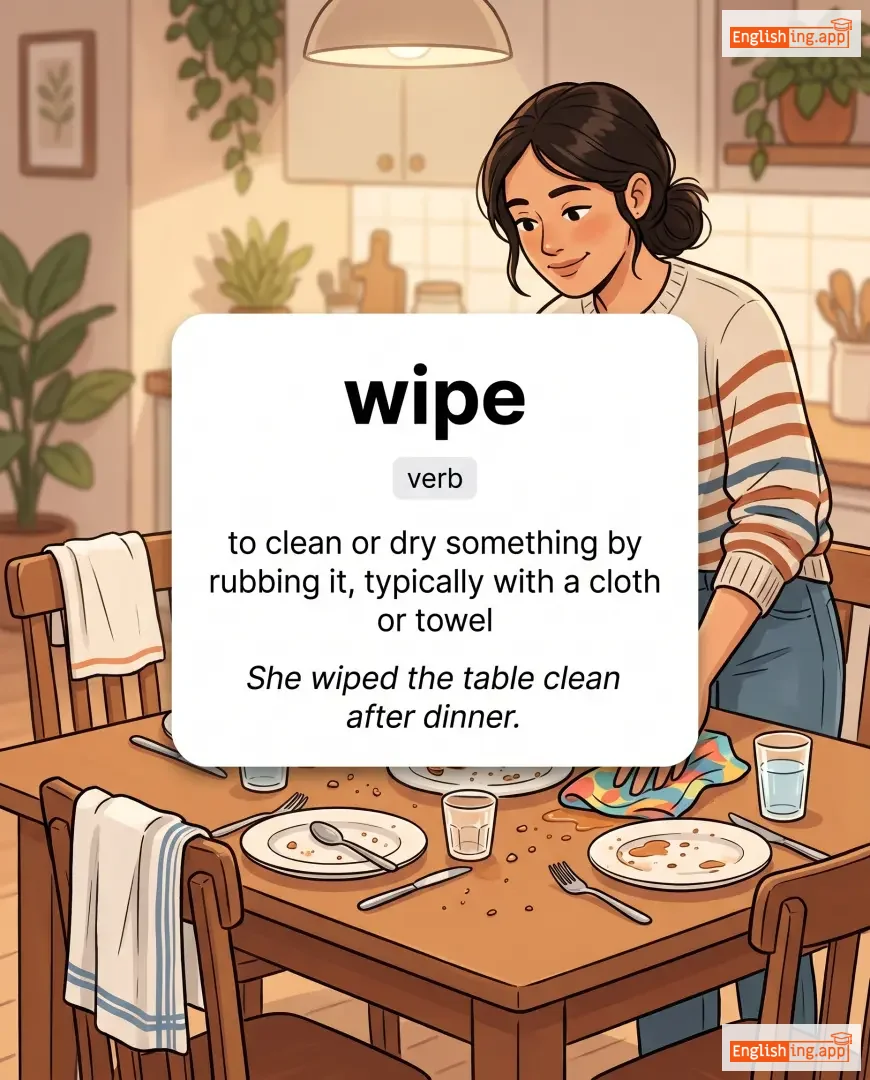
to clean or dry something by rubbing with a cloth or tissue
••••••
|
Please wipe the table clean.
请擦干净桌子。
••••••
|
请擦干净桌子。
Qǐng cā gānjìng zhuōzi.
••••••
|
- •••••• | - •••••• | - •••••• |
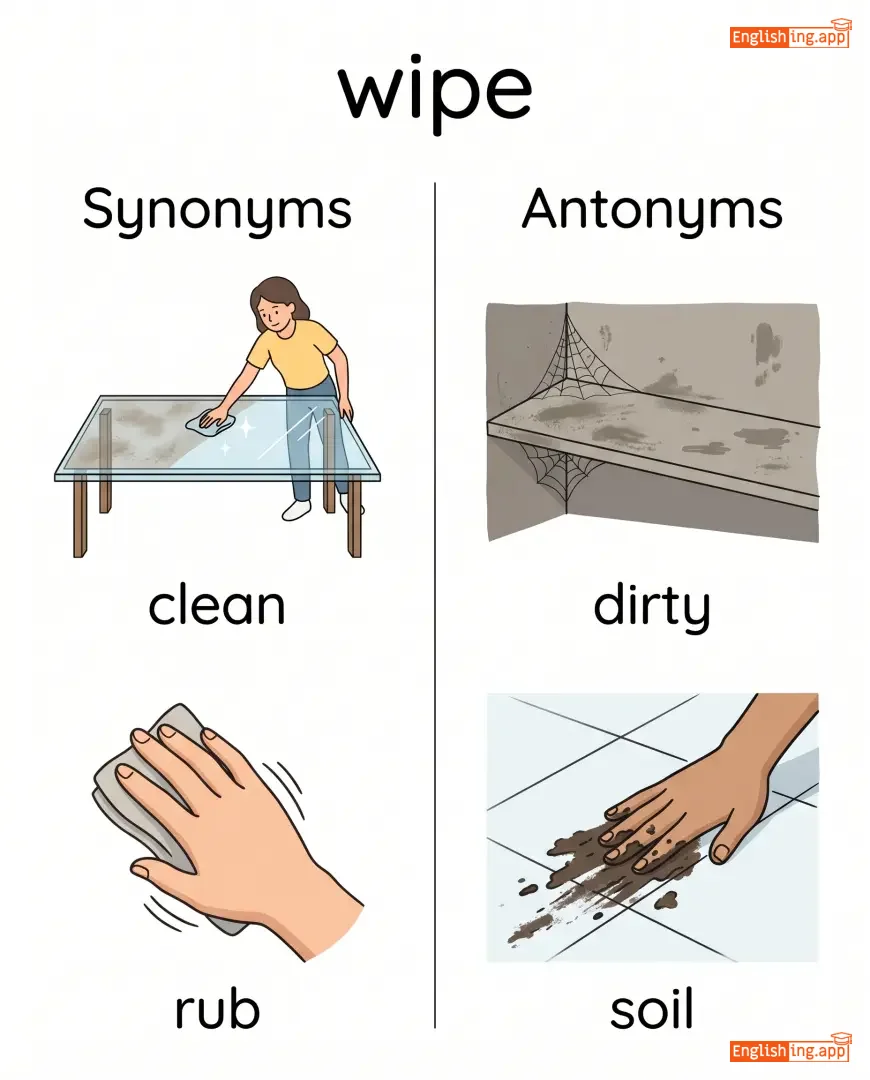
clean, rub, dry, polish
••••••
|
dirty, soil, stain, mess
••••••
|
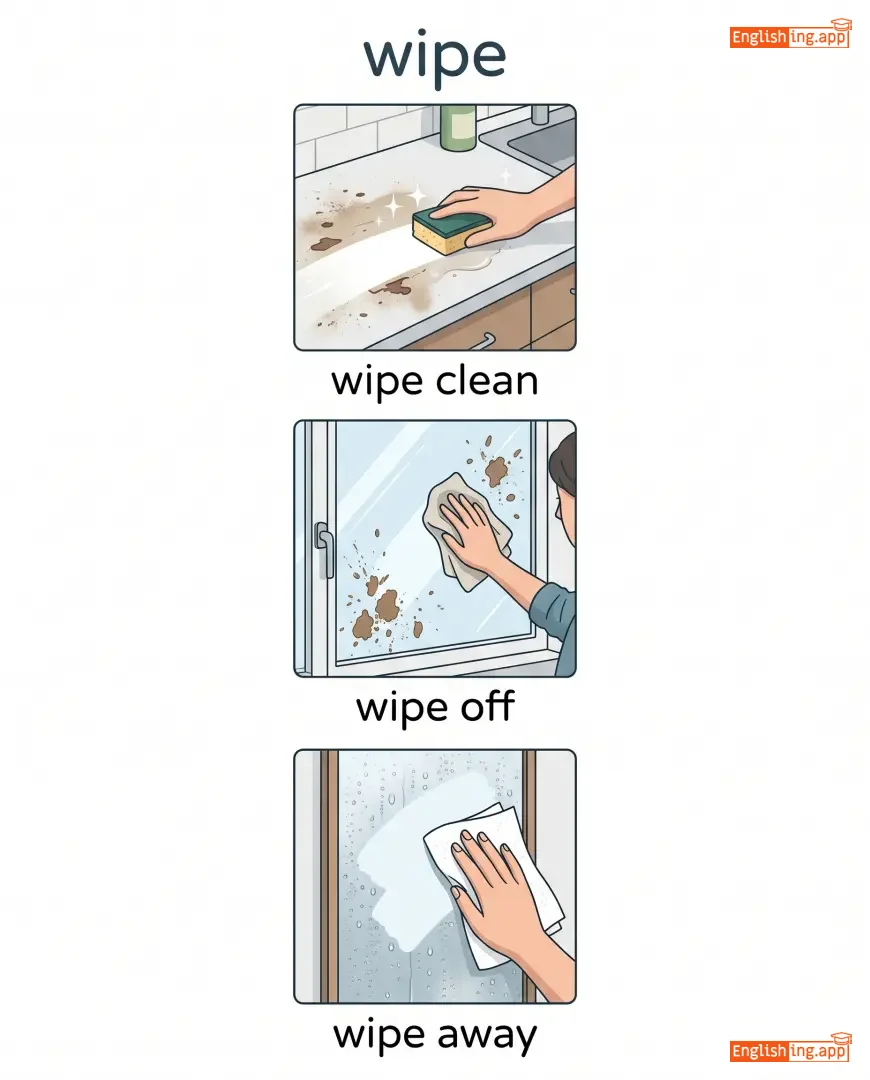
wipe clean, wipe away, wipe off, wipe down, wipe out
••••••
|
擦拭桌子让它保持干净。
••••••
|
|
⚡
••••••
|
/ˈwaɪər/
noun
(wǎi'ěr)
••••••
|
- •••••• |
电线
dianxian
••••••
|
- •••••• | - •••••• | - •••••• | - •••••• |
a thin, flexible thread of metal used to conduct electricity or connect things
••••••
|
The electrician fixed the wire to restore the power. |
电工修理了电线以恢复电力。
Diàngōng xiūlǐle diànxiàn yǐ huīfù diànlì.
••••••
|
- •••••• | - •••••• | - •••••• |
cable, cord, filament, strand
••••••
|
none
••••••
|
electric wire, copper wire, wire fence, wire mesh
••••••
|
电线带电 - The wire conducts electricity.
••••••
|
|
🦉
••••••
|
/ˈwɪzdəm/
noun
(wɪz.dəm)
••••••
|
- •••••• |
智慧
zhihui
••••••
|
- •••••• | - •••••• | - •••••• | - •••••• |
the ability to make sound judgments and decisions based on knowledge and experience
••••••
|
His wisdom in solving complex problems was admired by everyone. |
他在解决复杂问题上的智慧受到了所有人的赞赏。
Ta zai jiejue fuza wenti shang de zhihui shoudaole suoyouren de zan chang.
••••••
|
a word of wisdom |
a piece of valuable advice or insight
••••••
|
智慧之言
zhihui zhi yan
••••••
|
insight, knowledge, understanding, prudence
••••••
|
ignorance, foolishness
••••••
|
great wisdom, words of wisdom, gain wisdom, wisdom teeth
••••••
|
智慧帮助解决复杂问题。
••••••
|
|
🦉
••••••
|
/waɪz/
adjective
(wái zī)
••••••
|
- •••••• |
聪明
congming
••••••
|
- •••••• | - •••••• | - •••••• | - •••••• |
having or showing experience, knowledge, and good judgment
••••••
|
It was wise of him to save money for the future. |
他为未来存钱是明智的。
Tā wèi wèilái cún qián shì míngzhì de.
••••••
|
wise up |
to become more knowledgeable or aware
••••••
|
变得更聪明
biàn dé gèng cōngmíng
••••••
|
prudent, sensible, intelligent, judicious
••••••
|
foolish, ignorant, unwise
••••••
|
wise decision, wise man, wise choice, appear wise
••••••
|
Wise 意味着聪明,就像聪明的猫头鹰,总是做出明智的决定
••••••
|
|
🌟
••••••
|
/wɪʃ/
verb
(wɪʃ)
••••••
|

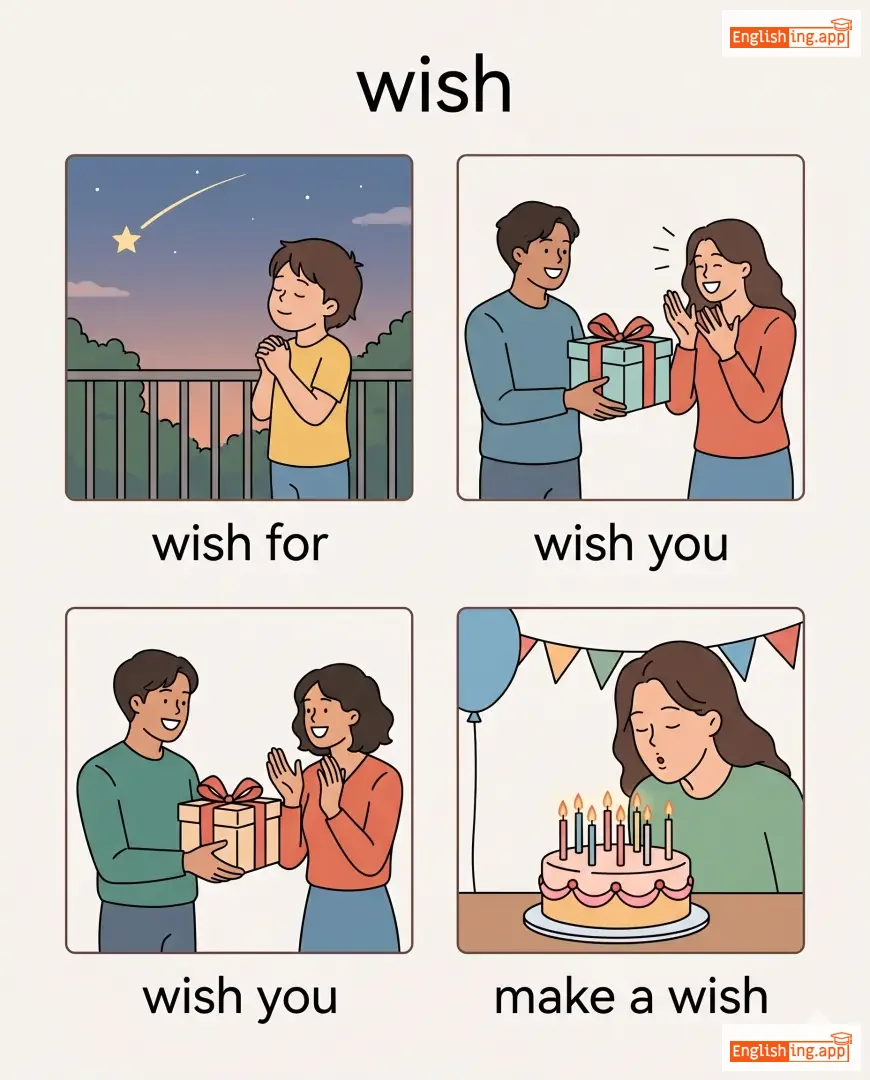
|
许愿
xǔ yuàn
••••••
|
wished
wɪʃt
••••••
|
wished
wɪʃt
••••••
|
wishes
wɪʃɪz
••••••
|
wishing
wɪʃɪŋ
••••••
|
to desire something or hope for something to happen
••••••
|
I wish you all the best in your new job.
我祝你在新工作中一切顺利。
••••••
|
我祝你在新工作中一切顺利。
Wǒ zhù nǐ zài xīn gōngzuò zhōng yīqiè shùnlì.
••••••
|
wish upon a star
向星星许愿
••••••
|
to hope or wish for something magical or unattainable
••••••
|
向星星许愿
xiàng xīngxīng xǔyuàn
••••••
|
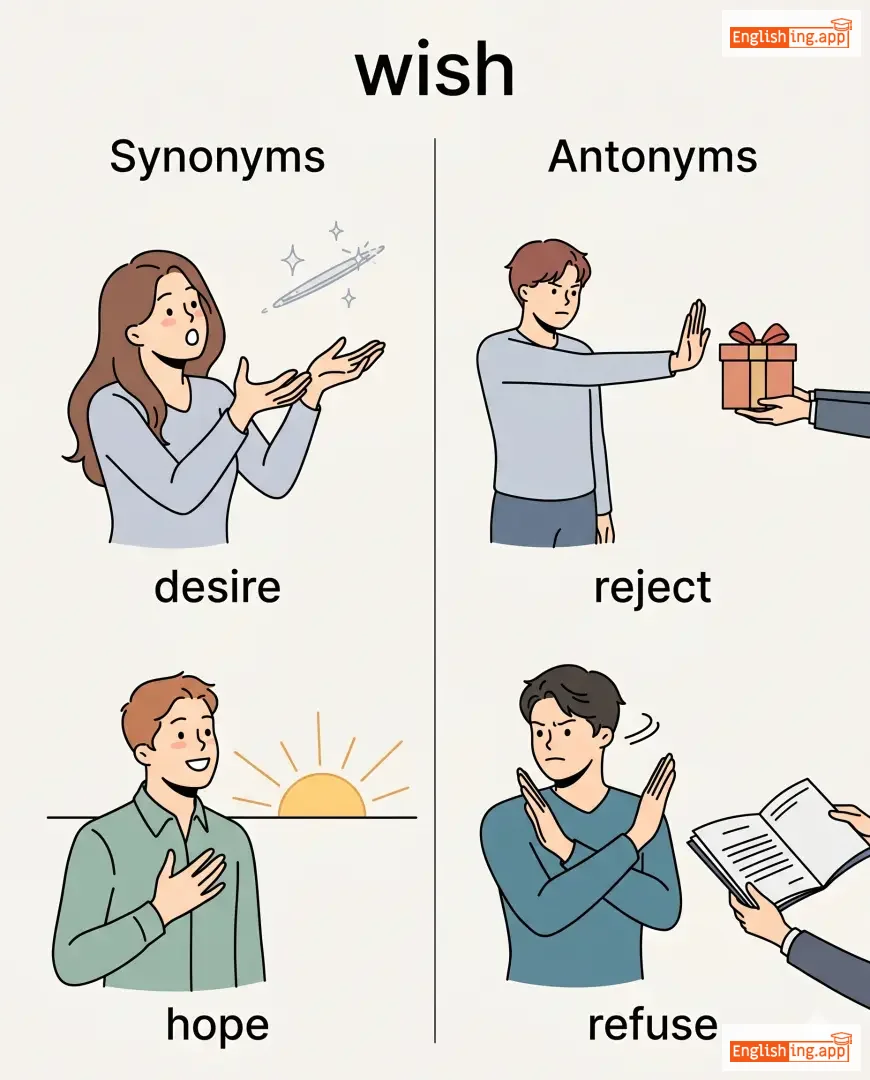
desire, hope, yearn, long for
••••••
|
reject, refuse
••••••
|
wish for, wish you, make a wish, wish come true
••••••
|
愿望能带来好运。
••••••
|
|
🧠
••••••
|
/wɪt/
noun
(wɪt)
••••••
|
- •••••• |
机智
jizhi
••••••
|
- •••••• | - •••••• | - •••••• | - •••••• |
the ability to use words and ideas in a quick and inventive way to create humor
••••••
|
Her sharp wit made everyone laugh at the party. |
她的机智让每个人在聚会上都笑了。
ta de jizhi rang meige ren zai juhui shang dou xiao le.
••••••
|
at one's wit's end |
to be so worried, confused, or annoyed that you do not know what to do next
••••••
|
到达极限
daoda jixian
••••••
|
humor, cleverness, intelligence, sharpness, quickness
••••••
|
dullness, stupidity, seriousness
••••••
|
sharp wit, quick wit, dry wit, display wit
••••••
|
Wit 就是机智,巧妙的语言幽默,就像通过机智说笑话一样。
••••••
|
|
🤝
••••••
|
/wɪð/
preposition
(wɪð)
••••••
|
- •••••• |
与
yu
••••••
|
- •••••• | - •••••• | - •••••• | - •••••• |
indicating the person or thing that is accompanying or involved with someone or something else
••••••
|
She went to the market with her friend. |
她和朋友一起去了市场。
Tā hé péngyǒu yīqǐ qùle shìchǎng.
••••••
|
- •••••• | - •••••• | - •••••• |
alongside, together, accompanied by, in company with
••••••
|
without, apart from
••••••
|
with me, with you, with them, with someone
••••••
|
和知识一起,你总是与智慧同行 - With knowledge, you always walk with wisdom.
••••••
|
|
🏧
••••••
|
/wɪðˈdrɔː/
verb
••••••
|

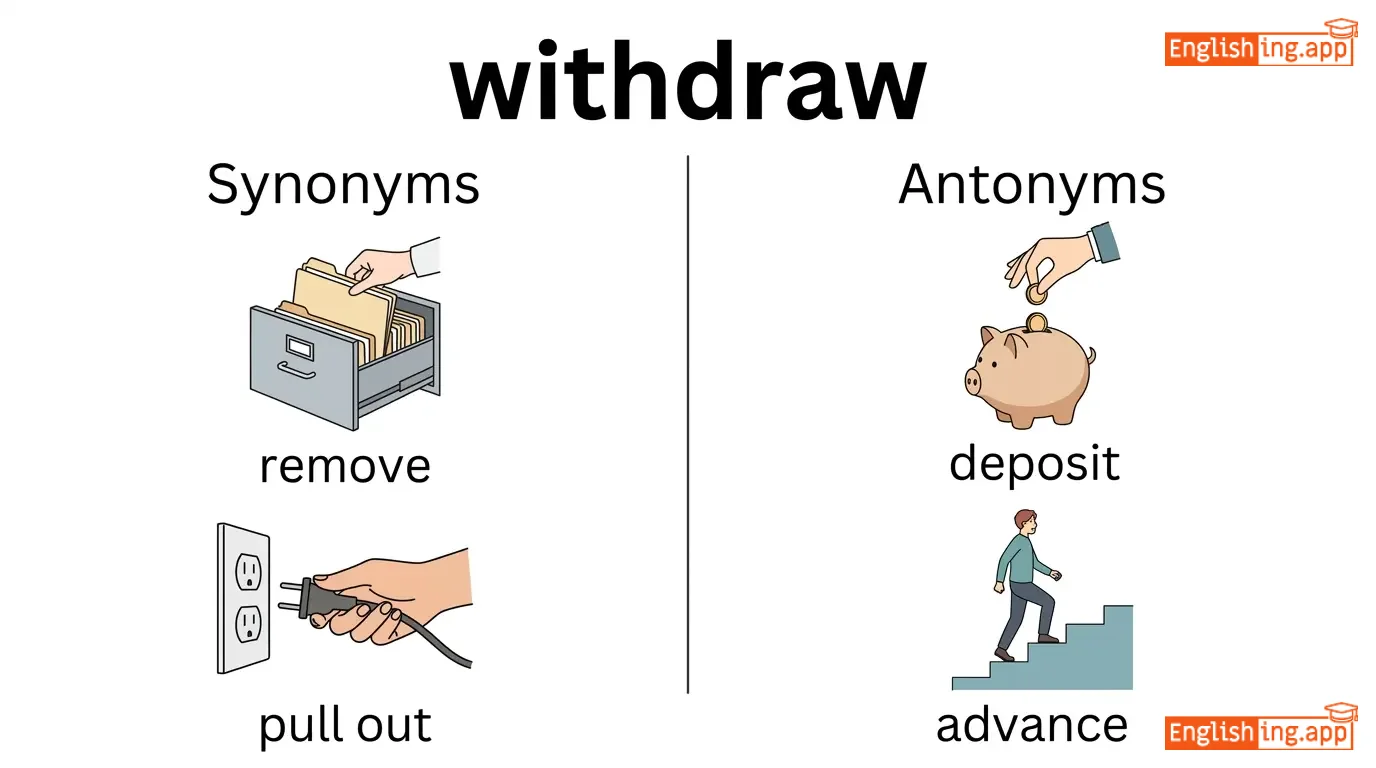
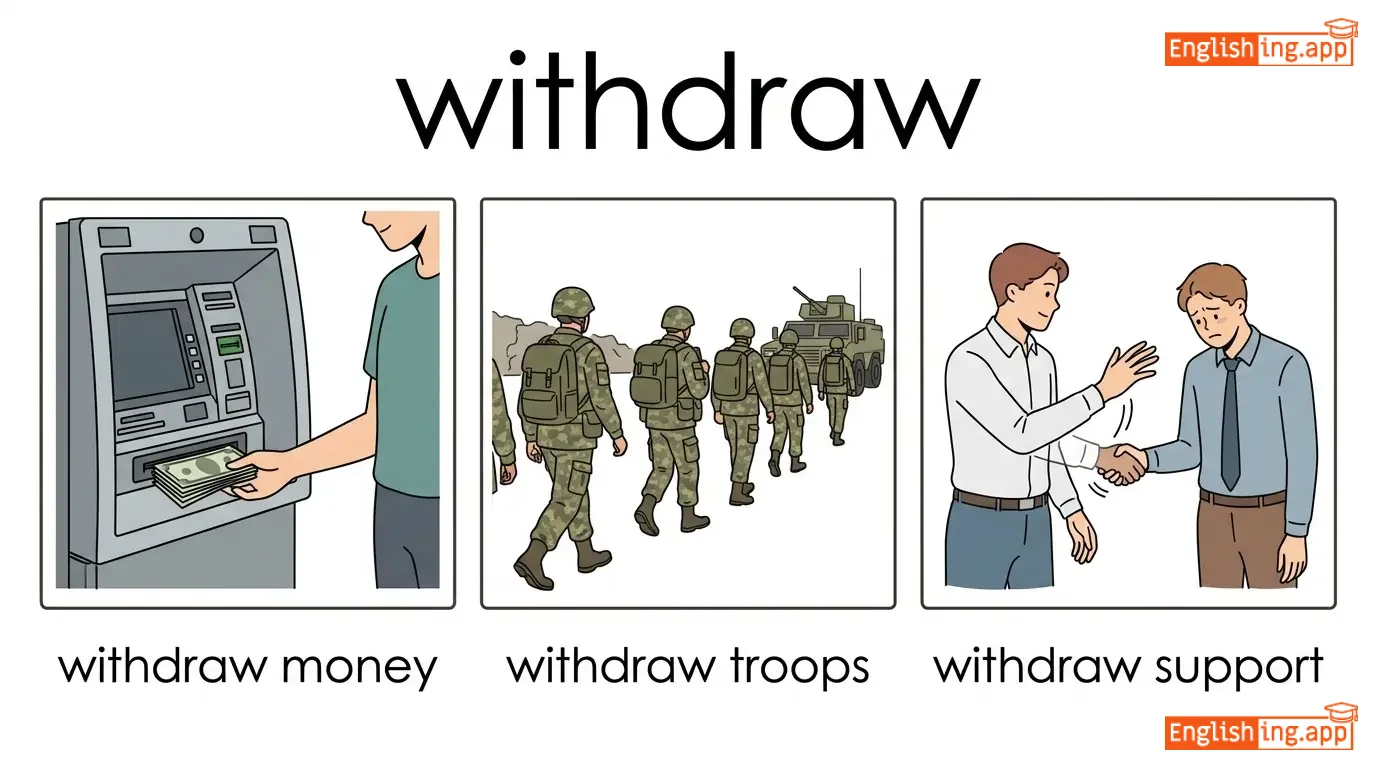
|
- •••••• |
withdrew
••••••
|
withdrawn
••••••
|
withdraws
••••••
|
withdrawing
••••••
|
to remove or take back something; to move away from a place or situation
••••••
|
She decided to withdraw money from her bank account. |
- •••••• |
withdraw from |
to remove oneself or something from an activity or situation
••••••
|
- •••••• |
remove, pull out, retreat, take back, extract
••••••
|
deposit, advance, remain
••••••
|
withdraw money, withdraw troops, withdraw support, withdraw application
••••••
|
No •••••• |
|
🏦
••••••
|
/wɪðˈdrɔːəl/
noun
(wɪðˈdrɔːəl)
••••••
|
- •••••• |
提款
tí kuǎn
••••••
|
- •••••• | - •••••• | - •••••• | - •••••• |
the act of taking something back or removing oneself from a situation
••••••
|
He made a withdrawal of $500 from his bank account. |
他从银行账户提取了500美元。
Tā cóng yínháng zhànghù tíqǔle 500 měiyuán.
••••••
|
withdrawal symptoms |
physical or mental effects after stopping a habit, like smoking or drugs
••••••
|
戒断症状
jièduàn zhèngzhuàng
••••••
|
removal, retreat, retraction, extraction, pullback
••••••
|
deposit, participation
••••••
|
bank withdrawal, cash withdrawal, troop withdrawal, withdrawal symptoms
••••••
|
提款机取款,就像 'withdrawal' 一样!
••••••
|
|
🔒
••••••
|
/wɪðˈɪn/
preposition
(wɪðˈɪn)
••••••
|
- •••••• |
内部
neibu
••••••
|
- •••••• | - •••••• | - •••••• | - •••••• |
inside the limits of something, or as part of a particular space or time
••••••
|
The keys are within the drawer. |
钥匙在抽屉里。
Yàoshi zài chōutì lǐ.
••••••
|
- •••••• | - •••••• | - •••••• |
inside, enclosed by, within the boundaries of
••••••
|
outside, beyond
••••••
|
within reach, within time, within the limits, within a short distance
••••••
|
内部 (within) 指的是任何东西都在范围内,内部包含了限制。
••••••
|
|
🚫
••••••
|
/wɪðˈaʊt/
preposition
(wɪðˈaʊt)
••••••
|
- •••••• |
没有
méiyǒu
••••••
|
- •••••• | - •••••• | - •••••• | - •••••• |
in the absence of, or not having something
••••••
|
He left without saying goodbye.
他离开时没有说再见。
••••••
|
他离开时没有说再见。
Tā líkāi shí méiyǒu shuō zàijiàn.
••••••
|
- •••••• | - •••••• | - •••••• |
lacking, absent, minus, excluding
••••••
|
with, having
••••••
|
without a doubt, without hesitation, without warning
••••••
|
没有 (without) 一切都不可能,什么也不会发生
••••••
|
|
👁️
••••••
|
/ˈwɪtnəs/
verb
(witness)
••••••
|
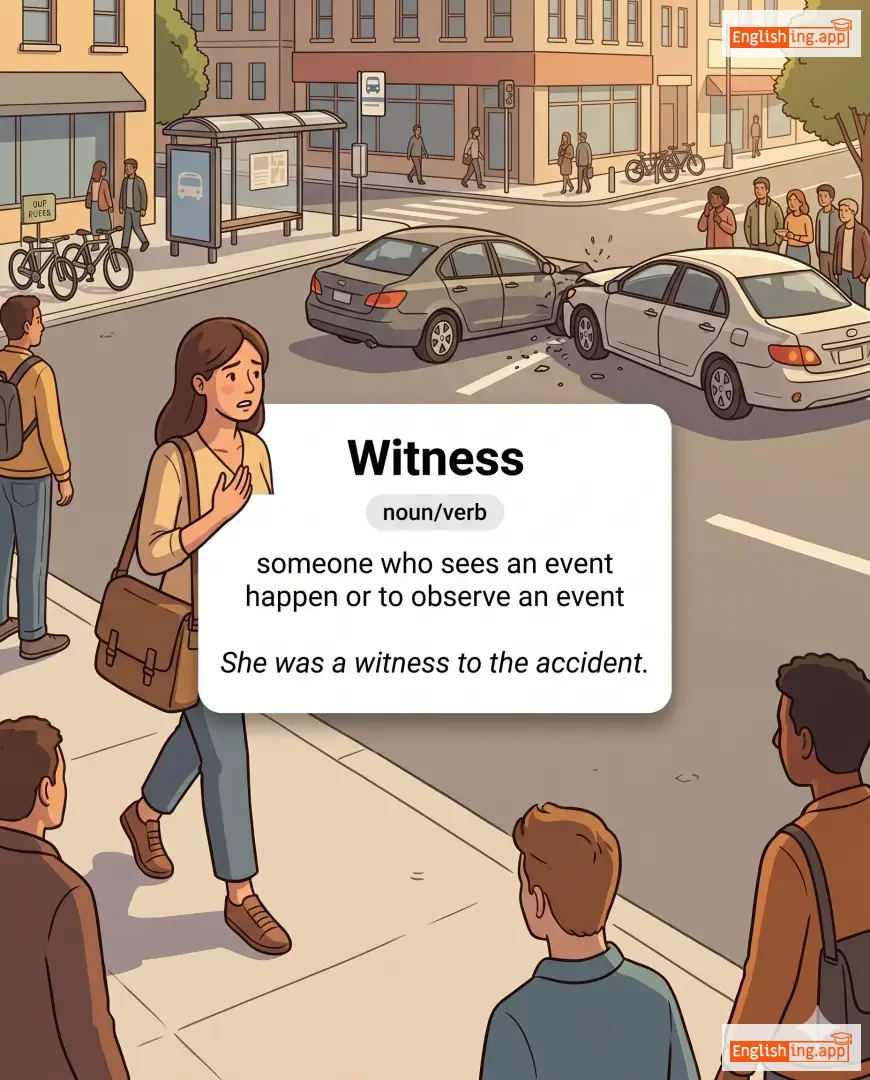
|
目击
mùjī
••••••
|
witnessed
witnessed
••••••
|
witnessed
witnessed
••••••
|
witnesses
witnesses
••••••
|
witnessing
witnessing
••••••
|
to see an event happen; to give evidence in court
••••••
|
I witnessed the accident yesterday.
我昨天目击了事故。
••••••
|
我昨天目击了事故。
Wǒ zuótiān mùjī le shìgù.
••••••
|
- •••••• | - •••••• | - •••••• |
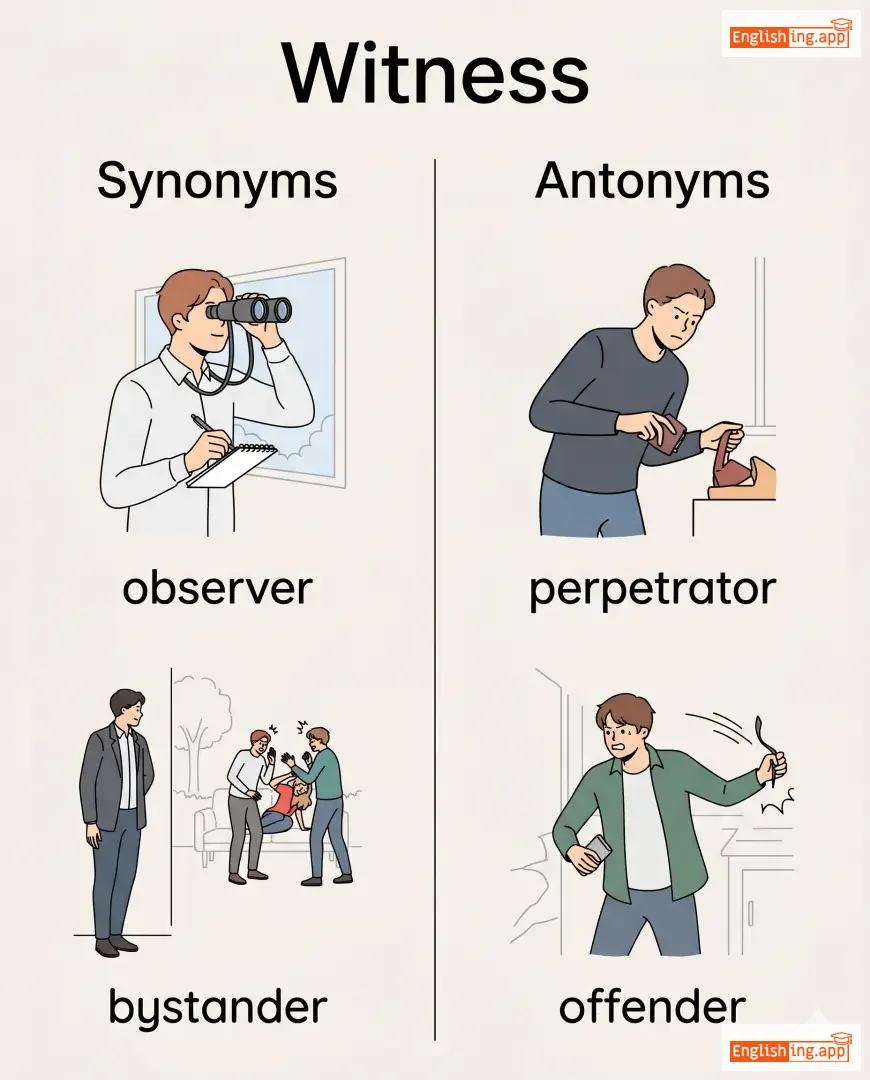
observe, see, watch, testify
••••••
|
ignore, miss, overlook
••••••
|
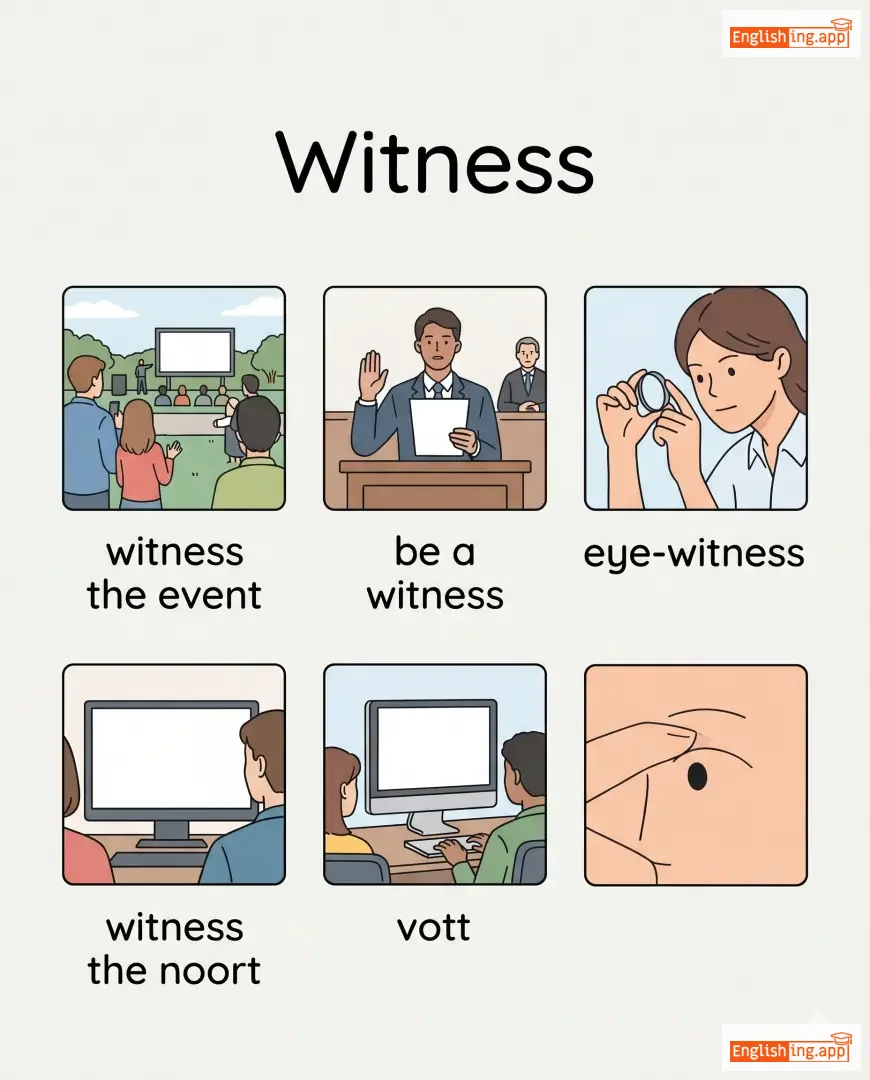
witness event, witness accident, witness ceremony, witness testimony
••••••
|
目击者,就像在法庭上作证的人
••••••
|
|
🐺
••••••
|
/wʊlf/
noun
(wʊlf)
••••••
|
- •••••• |
狼
lang
••••••
|
- •••••• | - •••••• | - •••••• | - •••••• |
a wild carnivorous animal related to the dog, living and hunting in packs
••••••
|
The wolf howled loudly under the full moon. |
狼在满月下大声嚎叫。
Lang zài mǎnyuè xià dàshēng háo jiào.
••••••
|
cry wolf |
to raise a false alarm or exaggerate danger
••••••
|
喊狼来了
hǎn láng lái le
••••••
|
canine, predator, beast, dog, gray wolf
••••••
|
sheep, prey
••••••
|
gray wolf, lone wolf, wolf pack, cry wolf
••••••
|
狼在中文里就是 '狼'。记住,狼在满月下嚎叫 🐺
••••••
|
|
👩
••••••
|
/ˈwɪmən/
noun
(wɪmən)
••••••
|
- •••••• |
女人
nǚrén
••••••
|
- •••••• | - •••••• | - •••••• | - •••••• |
an adult human female
••••••
|
The woman at the counter helped me. |
柜台上的女人帮了我。
Guìtái shàng de nǚrén bāngle wǒ.
••••••
|
- •••••• | - •••••• | - •••••• |
lady, female, girl, grown-up
••••••
|
man, male
••••••
|
strong woman, independent woman, woman leader
••••••
|
女人 (woman) 是强大的 (qiángdà) - Woman is powerful.
••••••
|
|
😮
••••••
|
/ˈwʌndər/
noun
(wān-dé)
••••••
|
- •••••• |
奇迹
qiji
••••••
|
- •••••• | - •••••• | - •••••• | - •••••• |
a feeling of amazement and admiration, caused by something beautiful, remarkable, or unfamiliar
••••••
|
The view from the mountain was a true wonder. |
从山顶看到的景色真是一个奇迹。
Cóng shāndǐng kàn dào de jǐngsè zhēnshi yīgè qíjì.
••••••
|
- •••••• | - •••••• | - •••••• |
amazement, awe, admiration, astonishment
••••••
|
indifference, boredom, apathy
••••••
|
a sense of wonder, a feeling of wonder, in wonder, full of wonder
••••••
|
奇迹是令人惊讶的瞬间,像山顶的美丽景色。
••••••
|
|
✨
••••••
|
/ˈwʌndərfəl/
adjective
(wāndéfūl)
••••••
|
- •••••• |
美妙
měimiào
••••••
|
- •••••• | - •••••• | - •••••• | - •••••• |
extremely good or impressive
••••••
|
She had a wonderful time at the party.
她在派对上度过了一个美妙的时光。
••••••
|
她在派对上度过了一个美妙的时光。
Tā zài pàiduì shàng dùguòle yīgè měimiào de shíguāng.
••••••
|
wonderful world
美妙的世界
••••••
|
a phrase celebrating the beauty and positivity of life
••••••
|
美妙的世界
měimiào de shìjiè
••••••
|
amazing, excellent, superb, marvelous, fantastic
••••••
|
awful, terrible, dreadful
••••••
|
wonderful experience, wonderful time, wonderful news, wonderful feeling
••••••
|
Wonderful意味着一个充满美妙的世界
••••••
|
|
🌳
••••••
|
/wʊd/
noun
(wud)
••••••
|
|
木材
mucai
••••••
|
- •••••• | - •••••• | - •••••• | - •••••• |
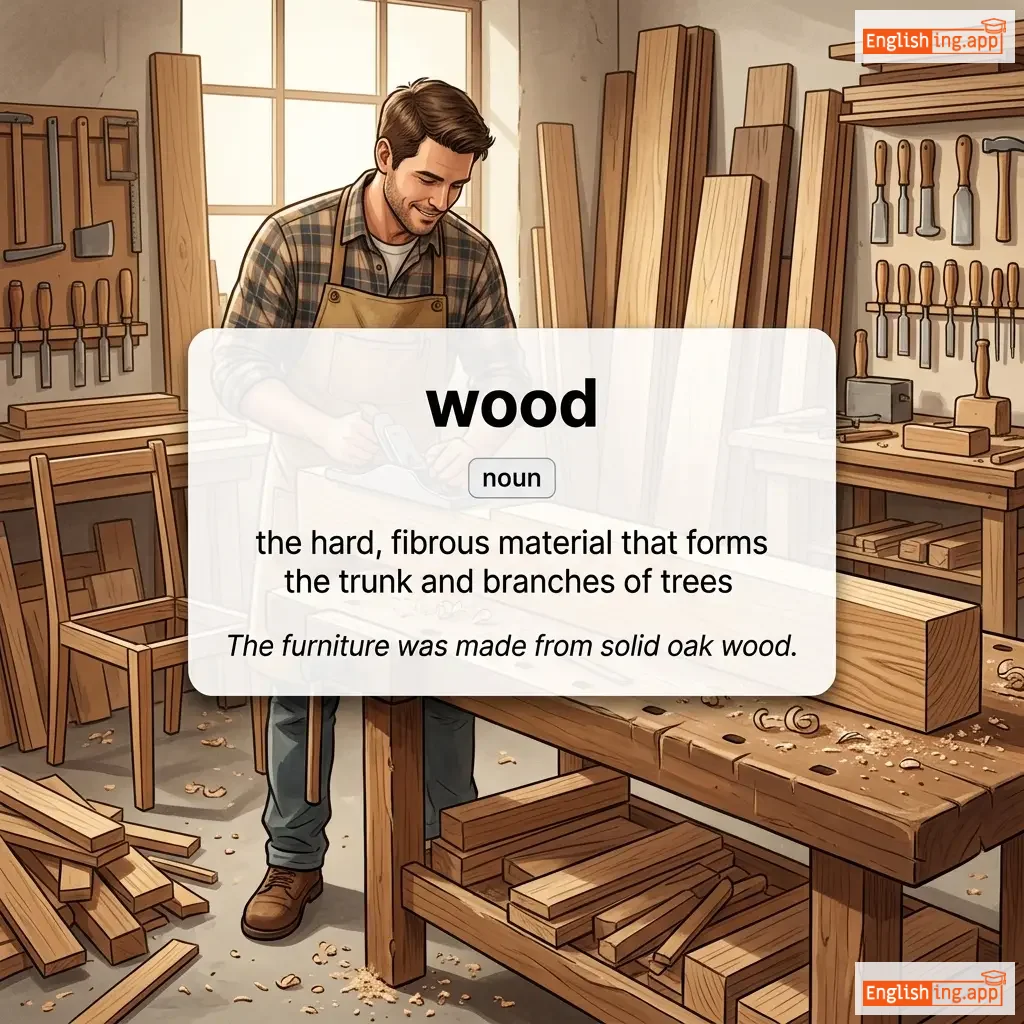
the hard, fibrous material that forms the trunk and branches of trees
••••••
|
The furniture was made from solid oak wood. |
家具是由坚固的橡木制成的。
Jiajù shì yóu jiāngù de xiàngmù zhìchéng de.
••••••
|
- •••••• | - •••••• | - •••••• |
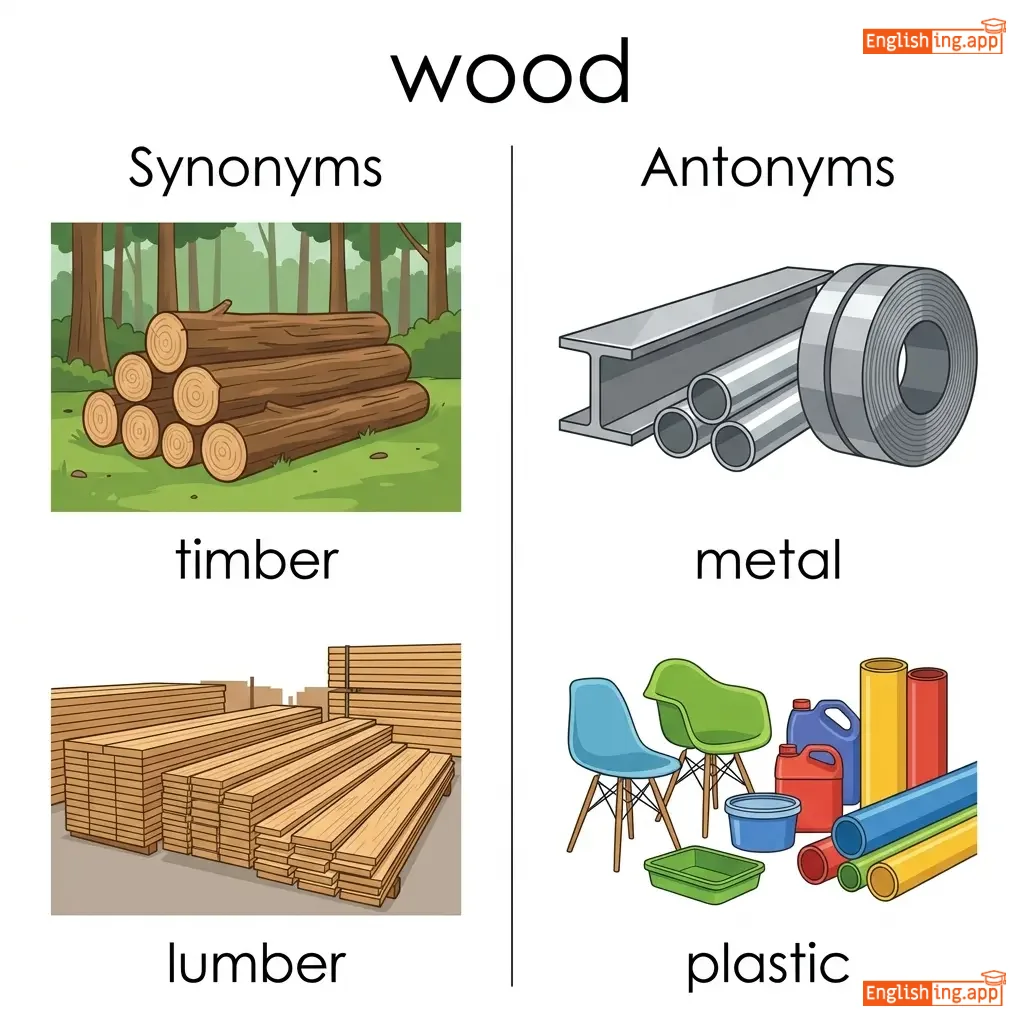
timber, lumber, forest product
••••••
|
metal, plastic, stone
••••••
|
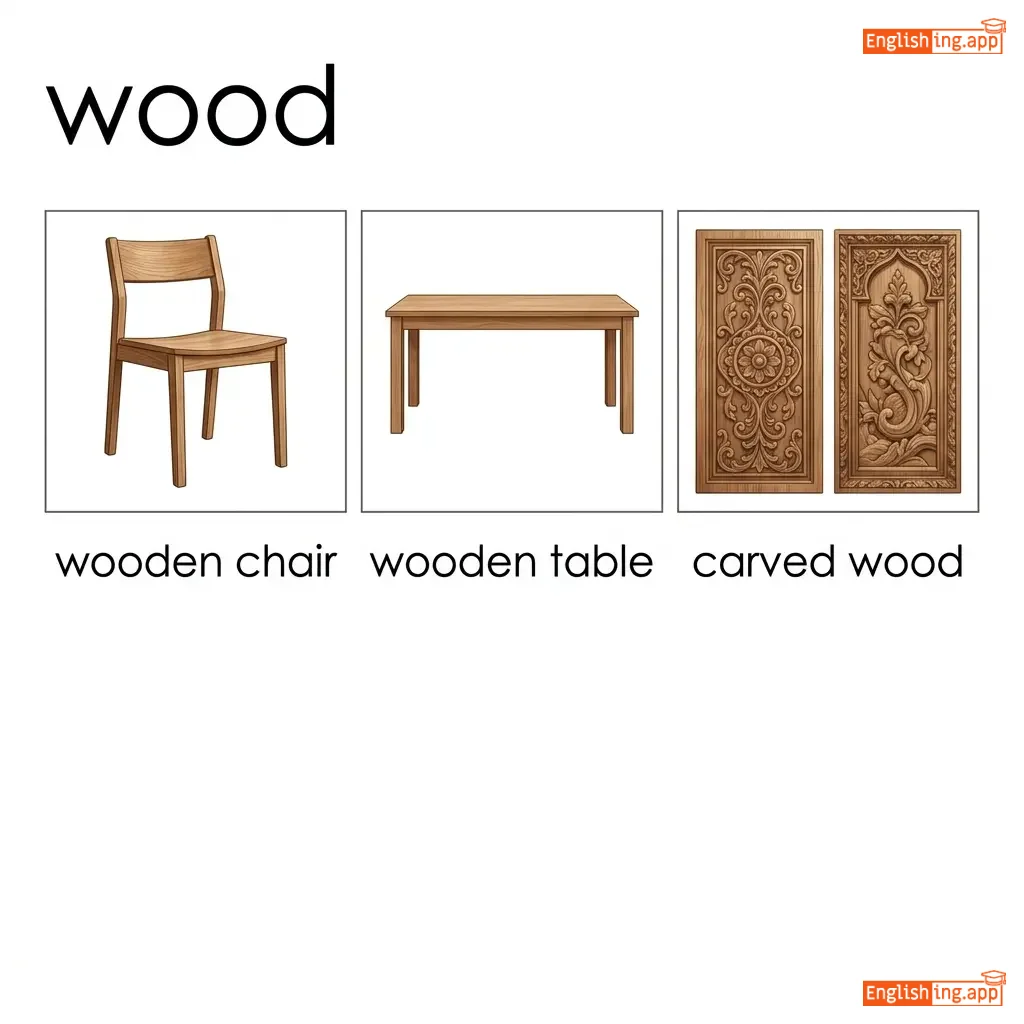
wooden chair, wooden table, carved wood, wood grain
••••••
|
木材 (wood) 来自树木。
••••••
|
|
🪵
••••••
|
/ˈwʊdən/
adjective
(wùdén)
••••••
|
- •••••• |
木制的
mùzhì de
••••••
|
- •••••• | - •••••• | - •••••• | - •••••• |
made of wood
••••••
|
The house had beautiful wooden floors.
这座房子有美丽的木地板。
••••••
|
这座房子有美丽的木地板。
Zhè zuò fángzi yǒu měilì de mù dìbǎn.
••••••
|
- •••••• | - •••••• | - •••••• |
timber, wooden-made, natural
••••••
|
metal, plastic, synthetic
••••••
|
wooden table, wooden chair, wooden door, wooden structure
••••••
|
wùdén mùzhì de (wooden)
••••••
|
|
📝
••••••
|
/wɜːrd/
noun
(wɜːrd)
••••••
|
- •••••• |
词
ci
••••••
|
- •••••• | - •••••• | - •••••• | - •••••• |
a single distinct meaningful element of speech or writing
••••••
|
He looked up the word in the dictionary.
他在字典中查找了这个词。
••••••
|
他在字典中查找了这个词。
Ta zai zidian zhong chazhao le zhe ge ci.
••••••
|
word of mouth
口口相传
••••••
|
information passed verbally from one person to another
••••••
|
口口相传
koukou xiangchuan
••••••
|
term, expression, phrase, utterance
••••••
|
silence, quiet
••••••
|
word meaning, word choice, spoken word, word of mouth
••••••
|
词是组成语言的基本单位,我们用它来表达思想。
••••••
|
|
🧩
••••••
|
/wɜːrd fɔːrˈmeɪʃən/
noun
(沃德 福美申)
••••••
|
- •••••• |
构词法
gouci fa
••••••
|
- •••••• | - •••••• | - •••••• | - •••••• |
the process by which new words are created or existing words are modified in a language
••••••
|
Word formation helps learners understand how new vocabulary develops in English.
词构法有助于理解英语词汇。
••••••
|
构词法有助于理解英语词汇。
gouci fa youzhu yu lijie yingyu cihui
••••••
|
- •••••• | - •••••• | - •••••• |
morphology, lexical formation, word building, derivation
••••••
|
word loss, lexical reduction
••••••
|
word formation rules, word formation process, study of word formation, English word formation
••••••
|
构词法 = 构造 new words
••••••
|
|
💼
••••••
|
/wɜːrk/
verb, noun
(wɜːrk)
••••••
|


|
工作
gongzuo
••••••
|
worked
wɜːrkt
••••••
|
worked
wɜːrkt
••••••
|
works
wɜːrks
••••••
|
working
wɜːrkɪнг
••••••
|
to perform a task or job; physical or mental effort
••••••
|
She works at a software company.
她在一家软件公司工作。
••••••
|
她在一家软件公司工作。
Ta zai yi jia ruanjian gongsi gongzuo.
••••••
|
work hard
努力工作
••••••
|
to put in great effort in doing something
••••••
|
努力工作
nuli gongzuo
••••••
|
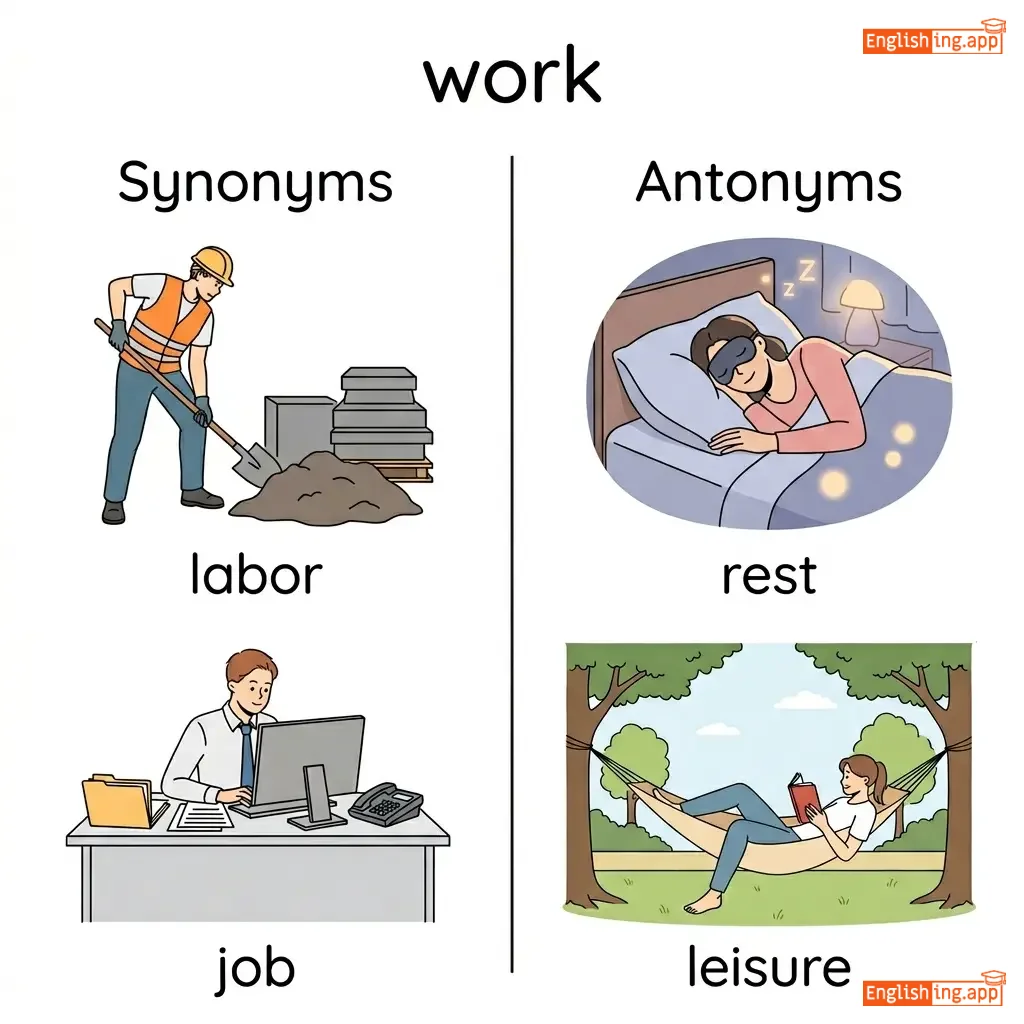
labor, job, employment, effort, task
••••••
|
rest, leisure, idleness
••••••
|
work experience, work hard, work schedule, work environment
••••••
|
工作带来世界的worth!
••••••
|
|
👷
••••••
|
/ˈwɜːrkər/
noun
(wɜːrkər)
••••••
|
- •••••• |
工人
gongren
••••••
|
- •••••• | - •••••• | - •••••• | - •••••• |
a person who is employed to perform tasks or duties
••••••
|
The workers were busy building the bridge. |
工人们忙着建造桥梁。
Gōngrén men mángzhe jiànzào qiáoliáng.
••••••
|
- •••••• | - •••••• | - •••••• |
employee, laborer, operative, staff
••••••
|
employer, boss, manager
••••••
|
construction worker, factory worker, hard worker
••••••
|
工人 (gongren) 正在工作。
••••••
|
|
👩💻
••••••
|
/ˈwɜːrkˌfɔːrs/
noun
(wɜːrkˌfɔːrs)
••••••
|
- •••••• |
劳动力
laodongli
••••••
|
- •••••• | - •••••• | - •••••• | - •••••• |
the people engaged in or available for work
••••••
|
The company is looking to expand its workforce by 20%. |
公司计划将其劳动力扩大20%。
Gongsi jihua jiang qi laodongli kuoda 20%.
••••••
|
- •••••• | - •••••• | - •••••• |
employees, labor force, staff, personnel
••••••
|
unemployment, layoffs
••••••
|
increase workforce, skilled workforce, diverse workforce
••••••
|
劳动力让公司成长 – Workforce makes the company grow
••••••
|
|
💻
••••••
|
/ˈwɜːrkɪŋ/
adjective
(wɜːrkɪŋ)
••••••
|
- •••••• |
工作
gongzuo
••••••
|
- •••••• | - •••••• | - •••••• | - •••••• |
engaged in physical or mental effort to achieve a goal or task
••••••
|
She is working on her project right now. |
她正在进行她的项目工作。
Ta zhengzai jinxing ta de xiangmu gongzuo.
••••••
|
- •••••• | - •••••• | - •••••• |
active, employed, engaged, industrious
••••••
|
idle, lazy, unproductive
••••••
|
working hard, working overtime, working on a project
••••••
|
工作意味着努力工作以完成任务。
••••••
|
|
🏋️♀️
••••••
|
/ˈwɜːrkaʊt/
noun
(wɜːrkaʊt)
••••••
|
- •••••• |
锻炼
duànliàn
••••••
|
- •••••• | - •••••• | - •••••• | - •••••• |
a session of physical exercise or training to improve fitness or health
••••••
|
She does a full-body workout every morning before work. |
她每天早上在上班前做全身锻炼。
Tā měitiān zǎoshang zài shàngbān qián zuò quánshēn duànliàn.
••••••
|
intense workout |
a very demanding or vigorous exercise session
••••••
|
强烈的锻炼
qiángliè de duànliàn
••••••
|
exercise, training, session, fitness routine, practice
••••••
|
rest, inactivity, relaxation
••••••
|
daily workout, intense workout, gym workout, home workout
••••••
|
在健身房里,‘workout’意味着通过锻炼使身体变得更加健康——工作前做锻炼!
••••••
|
|
🏢
••••••
|
/ˈwɜːrkpleɪs/
noun
(wɜːrkpleɪs)
••••••
|
- •••••• |
工作场所
gongzuo changsuo
••••••
|
- •••••• | - •••••• | - •••••• | - •••••• |
a place where people work, such as an office, factory, or shop
••••••
|
Maintaining good communication is vital in the workplace.
在工作场所保持良好的沟通至关重要。
••••••
|
在工作场所保持良好的沟通至关重要。
Zai gongzuo changsuo baochi lianghao de goutong zhiguang zhongyao.
••••••
|
workplace culture
职场文化
••••••
|
the shared values, beliefs, and behaviors in a work environment
••••••
|
职场文化
zhichang wenhua
••••••
|
office, job site, work environment, establishment, premises
••••••
|
home, residence
••••••
|
safe workplace, workplace environment, workplace policy, workplace training
••••••
|
工作 + 场所 = 工作场所,意味着工作的地方!
••••••
|
|
🏢
••••••
|
/ˈwɜːrkʃɒp/
noun
(wɜːrkʃɒp)
••••••
|
- •••••• |
车间
chejian
••••••
|
- •••••• | - •••••• | - •••••• | - •••••• |
a room or building where people engage in work or creative activities
••••••
|
The workshop focused on improving technical skills for young professionals. |
这个车间专注于提高年轻专业人士的技术技能。
Zhege chejian zhuanzhu yu tigao nianqing zhuanye renshi de jishu jineng.
••••••
|
- •••••• | - •••••• | - •••••• |
seminar, class, training, session
••••••
|
lecture, talk
••••••
|
training workshop, creative workshop, technical workshop, workshop participant
••••••
|
A workshop is a place where you work and shop your ideas.
••••••
|
|
🌍
••••••
|
/wɜːrld/
noun
(wɜːrld)
••••••
|
- •••••• |
世界
shijie
••••••
|
- •••••• | - •••••• | - •••••• | - •••••• |
the earth, together with all of its countries and people
••••••
|
The world is becoming more interconnected every day.
这个世界每天都变得更加互联互通。
••••••
|
这个世界每天都变得更加互联互通。
Zhege shijie meitian dou biande gengjia hulian hutong.
••••••
|
- •••••• | - •••••• | - •••••• |
earth, globe, planet, universe
••••••
|
universe, outer space
••••••
|
world leader, world economy, world peace, around the world
••••••
|
World is where we all live together as one big family.
••••••
|
|
🐛
••••••
|
/wɜːrm/
noun
(wɜːrm)
••••••
|
- •••••• |
虫子
chóngzi
••••••
|
- •••••• | - •••••• | - •••••• | - •••••• |
a small, long, soft-bodied invertebrate animal
••••••
|
The gardener found a worm in the soil. |
园丁在土壤中发现了一只虫子。
Yuándīng zài tǔrǎng zhōng fāxiànle yī zhī chóngzi.
••••••
|
- •••••• | - •••••• | - •••••• |
earthworm, grub, maggot, larva
••••••
|
none
••••••
|
fishing worm, earthworm, worm farm
••••••
|
虫子帮助花园生长!– Worms help the garden grow!
••••••
|
|
😟
••••••
|
/ˈwɜːrid/
adjective
(wó-ríd)
••••••
|
- •••••• |
担忧
dānyōu
••••••
|
- •••••• | - •••••• | - •••••• | - •••••• |
feeling anxious or concerned about something
••••••
|
She was worried about the upcoming exam. |
她对即将到来的考试感到担忧。
Tā duì jíjiāng dàolái de kǎoshì gǎndào dānyōu.
••••••
|
- •••••• | - •••••• | - •••••• |
anxious, concerned, uneasy, troubled
••••••
|
calm, relaxed
••••••
|
worried about, feel worried, get worried, look worried
••••••
|
Worried sounds like 'worry' – Think of someone biting their nails in stress before a big event.
••••••
|
|
😟
••••••
|
/ˈwʌri/
verb
••••••
|
- •••••• | - •••••• |
worried
••••••
|
worried
••••••
|
worries
••••••
|
worrying
••••••
|
to feel anxious or concerned about something
••••••
|
Don’t worry, everything will be okay. |
- •••••• |
Worrying about something is like paying interest on a debt you may never owe. |
Worrying about things that may never happen is not helpful.
••••••
|
- •••••• |
anxiety, concern, stress, fret
••••••
|
calm, ease, peace
••••••
|
worry about, cause worry, don’t worry, make worry
••••••
|
No •••••• |
|
🙏
••••••
|
/ˈwɜːʃɪp/
verb
(沃尔希普)
••••••
|
- •••••• |
崇拜
chóngbài
••••••
|
worshipped
沃尔希普德
••••••
|
worshipped
沃尔希普德
••••••
|
worships
沃尔希普斯
••••••
|
worshipping
沃尔希平
••••••
|
To show reverence and adoration for a deity or sacred being.
••••••
|
They gathered at the temple to worship together.
他们聚集在寺庙里一起崇拜。
••••••
|
他们聚集在寺庙里一起崇拜。
Tāmen jùjí zài sìmiào lǐ yīqǐ chóngbài.
••••••
|
worship the ground someone walks on
崇拜某人走过的土地
••••••
|
To admire or adore someone greatly.
••••••
|
极度崇拜某人
jídù chóngbài mǒu rén
••••••
|
adore, revere, venerate, honor, praise
••••••
|
despise, dishonor, disrespect
••••••
|
worship God, worship in church, idol worship, worship service
••••••
|
Worship 就是崇拜,比如在寺庙里崇拜。
••••••
|
|
💎
••••••
|
/wɜːrθ/
noun
(wɜːrθ)
••••••
|
- •••••• |
价值; 价格;
jiàzhí; jiàgé
••••••
|
- •••••• | - •••••• | - •••••• | - •••••• |
the value equivalent to that of someone or something; the level at which someone or something deserves to be valued
••••••
|
The painting is worth thousands of dollars. |
这幅画值数千美元。
zhè fú huà zhí shù qiān měiyuán.
••••••
|
- •••••• | - •••••• | - •••••• |
value, price, merit, importance
••••••
|
worthlessness, insignificance, cheapness, valuelessness
••••••
|
net worth, true worth, self-worth
••••••
|
‘价值’代表为重要事物给予的东西。
••••••
|
|
💡
••••••
|
/ˈwɜːrθˌwaɪl/
adjective
(wɜːrθˌwaɪl)
••••••
|
- •••••• |
值得
zhíde
••••••
|
- •••••• | - •••••• | - •••••• | - •••••• |
worth the time, effort, or money spent; valuable
••••••
|
Volunteering at the shelter was a worthwhile experience. |
在收容所做志愿者是一段值得的经历。
Zài shōuróngsuǒ zuò zhìyuànzhě shì yíduàn zhídé de jīnglì.
••••••
|
- •••••• | - •••••• | - •••••• |
valuable, rewarding, beneficial, meaningful
••••••
|
pointless, useless
••••••
|
worthwhile experience, worthwhile cause, worthwhile effort
••••••
|
Worthwhile 就是值得的工作 – Worthwhile means valuable work!
••••••
|
|
🏆
••••••
|
/ˈwɜːrði/
adjective
(wɜːrði)
••••••
|
- •••••• |
值得; 配得上; 尊重的;
zhíde; pèi dé shàng; zūnzhòng de;
••••••
|
- •••••• | - •••••• | - •••••• | - •••••• |
deserving respect or attention; having merit
••••••
|
Her charitable work made her worthy of the humanitarian award.
她的慈善工作使她配得上人道主义奖。
••••••
|
她的慈善工作使她配得上人道主义奖。
Tā de císhàn gōngzuò shǐ tā pèi dé shàng réndàozhǔyì jiǎng.
••••••
|
- •••••• | - •••••• | - •••••• |
deserving, meritorious, commendable, admirable
••••••
|
unworthy, undeserving, contemptible, disgraceful
••••••
|
worthy cause, worthy opponent, worthy effort
••••••
|
worthy = 值得, 他配得上奖励
••••••
|
|
🤔
••••••
|
/wʊd/
verb
(wʊd)
••••••
|
- •••••• |
会
hui
••••••
|
would
wʊd
••••••
|
- •••••• | - •••••• | - •••••• |
used to indicate a future possibility or action in the past
••••••
|
He said he would help me tomorrow.
他说他明天会帮助我。
••••••
|
他说他明天会帮助我。
Tā shuō tā míngtiān huì bāngzhù wǒ.
••••••
|
- •••••• | - •••••• | - •••••• |
might, could, will, shall
••••••
|
won't, can't
••••••
|
would like, would prefer, would rather
••••••
|
使用 '会' 来表示 'would' —— 过去或未来的可能性。
••••••
|
|
🩹
••••••
|
/wuːnd/
noun/verb
(幸福)
••••••
|
- •••••• |
幸福
xìng fú
••••••
|
- •••••• |
wounded
••••••
|
- •••••• | - •••••• |
an injury to the body or to harm someone
••••••
|
He received a deep wound on his arm.
她无法掩饰她得到奖项时的幸福。
••••••
|
她无法掩饰她得到奖项时的幸福。
Tā wúfǎ yǎnshì tā dédào jiǎngxiàng shí de xìngfú.
••••••
|
a wound in the side
追求幸福
••••••
|
a serious or painful issue
••••••
|
追求幸福
zhuī qiú xìng fú
••••••
|
injury, cut, lesion, bruise
••••••
|
healing, recovery
••••••
|
wound up, deep wound, open wound, self-inflicted wound
••••••
|
幸福是生活中每一天的小幸运!
••••••
|
|
🎁
••••••
|
/ræp/
verb
(瑞普)
••••••
|

|
包裹
baoguo
••••••
|
wrapped
瑞普德
••••••
|
wrapped
瑞普德
••••••
|
wraps
瑞普斯
••••••
|
wrapping
瑞普英
••••••
|
to cover something completely with paper or cloth; to enclose
••••••
|
Please wrap the gift in colorful paper.
请将礼物用彩色纸包起来。
••••••
|
请将礼物用彩色纸包起来。
Qing jiang liwu yong caise zhi bao qilai.
••••••
|
- •••••• | - •••••• | - •••••• |
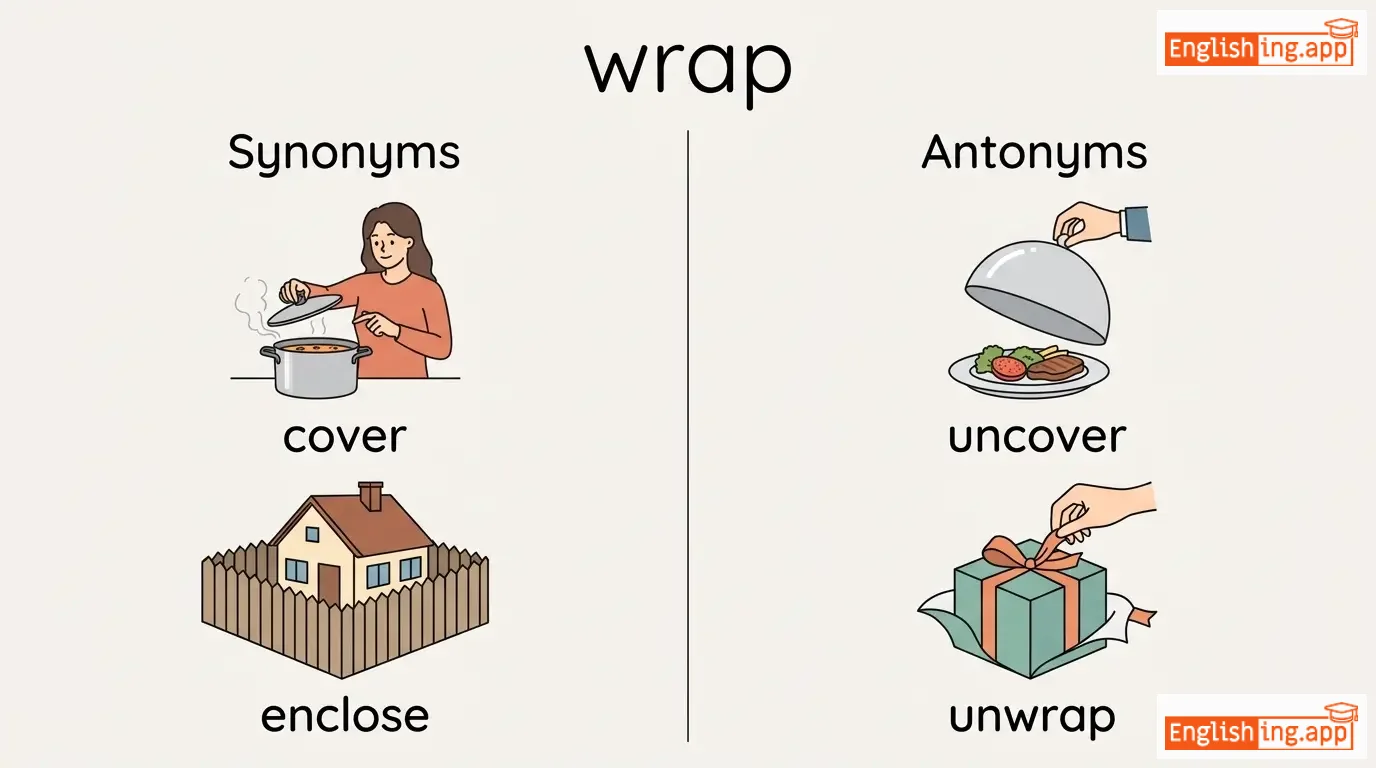
cover, enclose, package, bundle
••••••
|
unwrap, uncover, expose, open
••••••
|
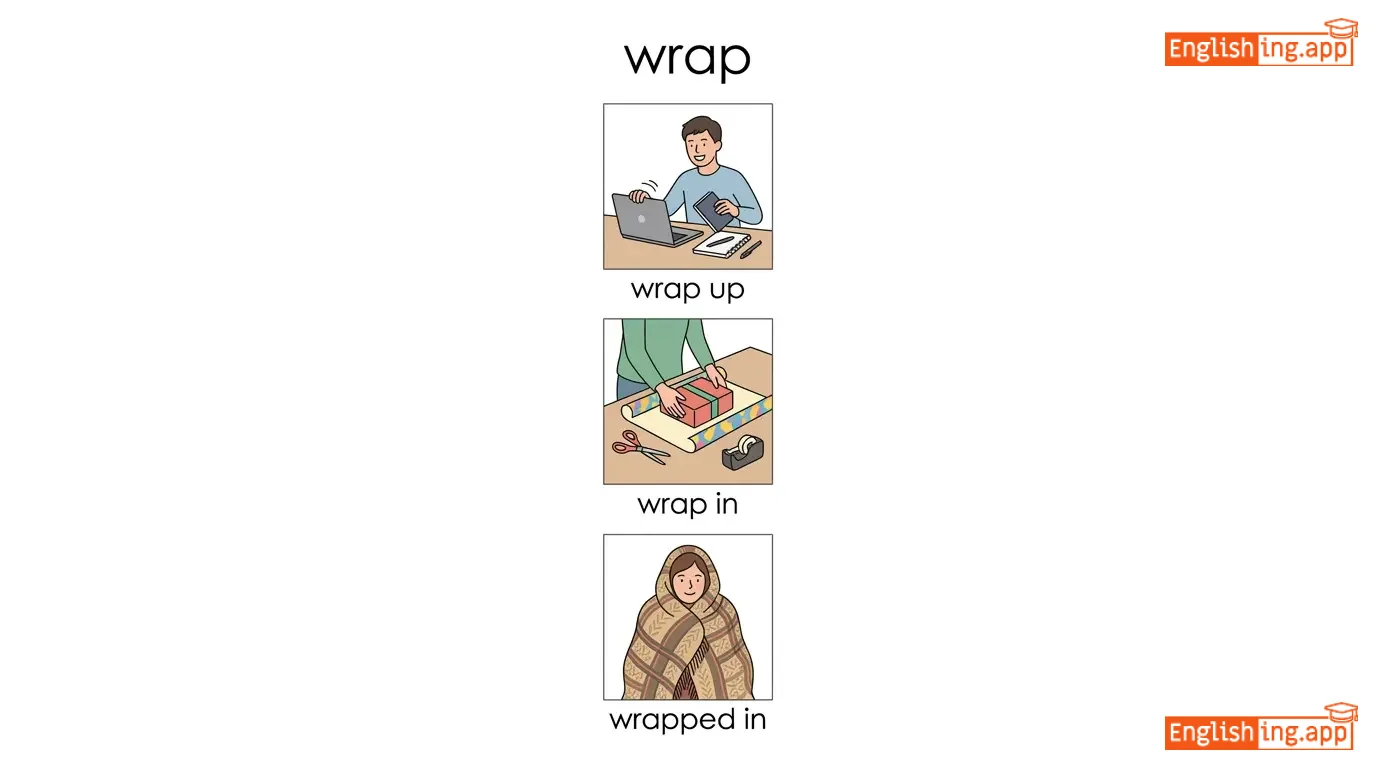
wrap up, gift wrap, plastic wrap, wrap around, wrap tightly
••••••
|
Wrap means 包裹, like wrapping something in a beautiful package
••••••
|
|
✋
••••••
|
/rɪst/
noun
••••••
|
- •••••• | - •••••• | - •••••• | - •••••• | - •••••• | - •••••• |
the joint connecting the hand with the forearm
••••••
|
He wore a smartwatch on his left wrist. |
- •••••• |
wrist watch |
a watch worn around the wrist
••••••
|
- •••••• |
joint, carpus, arm joint, wrist joint
••••••
|
ankle, elbow
••••••
|
sprained wrist, wrist pain, wrist movement, wrist injury
••••••
|
No •••••• |
|
✍️
••••••
|
/raɪt/
verb
(happiness)
••••••
|
|
幸福
xingfu
••••••
|
wrote
••••••
|
written
••••••
|
writes
••••••
|
writing
••••••
|
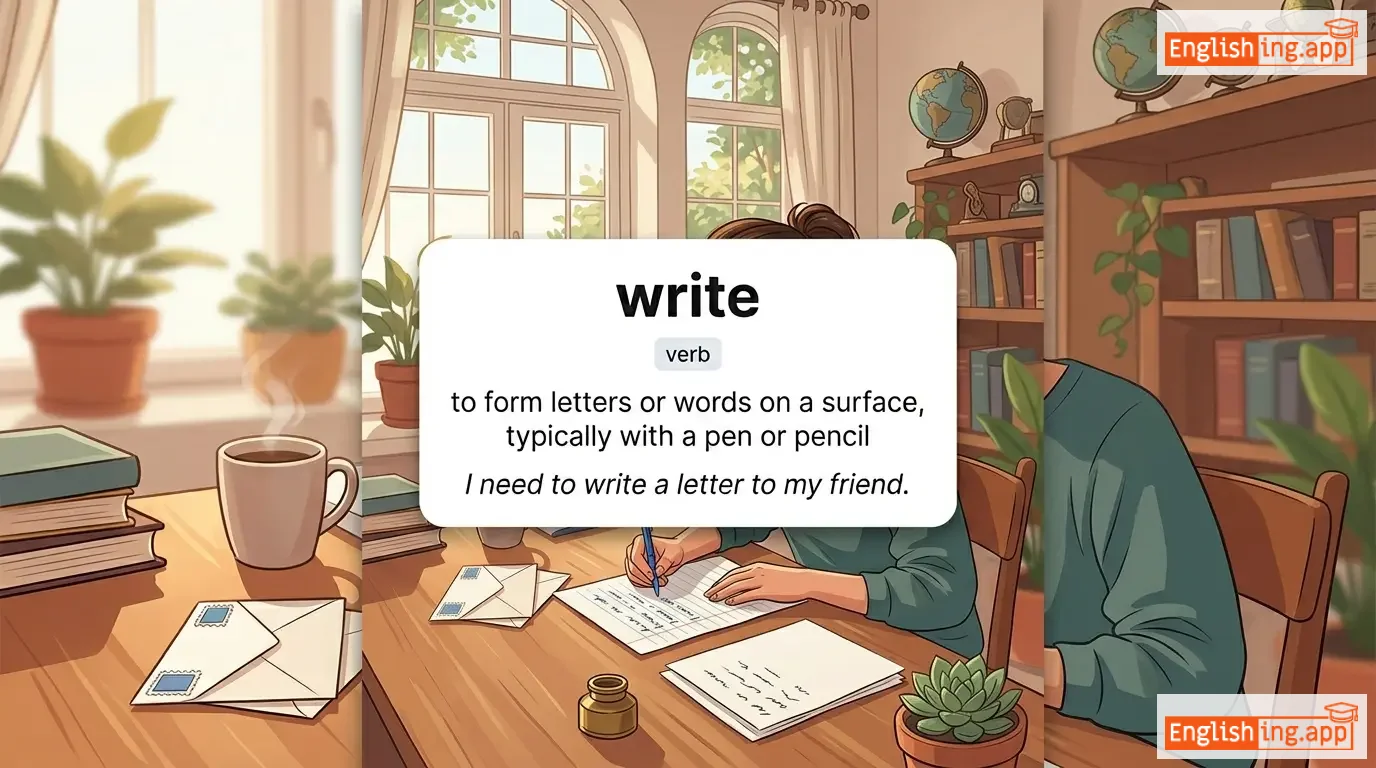
to form letters or words on a surface, typically with a pen or pencil
••••••
|
I need to write a letter to my friend.
她收到奖项时,无法掩饰她的快乐。
••••••
|
她收到奖项时,无法掩饰她的快乐。
Tā shōudào jiǎngxiàng shí, wúfǎ yǎnshì tā de kuàilè.
••••••
|
write down
追求幸福
••••••
|
to make a note of something
••••••
|
追求幸福
zhuīqiú xìngfú
••••••
|
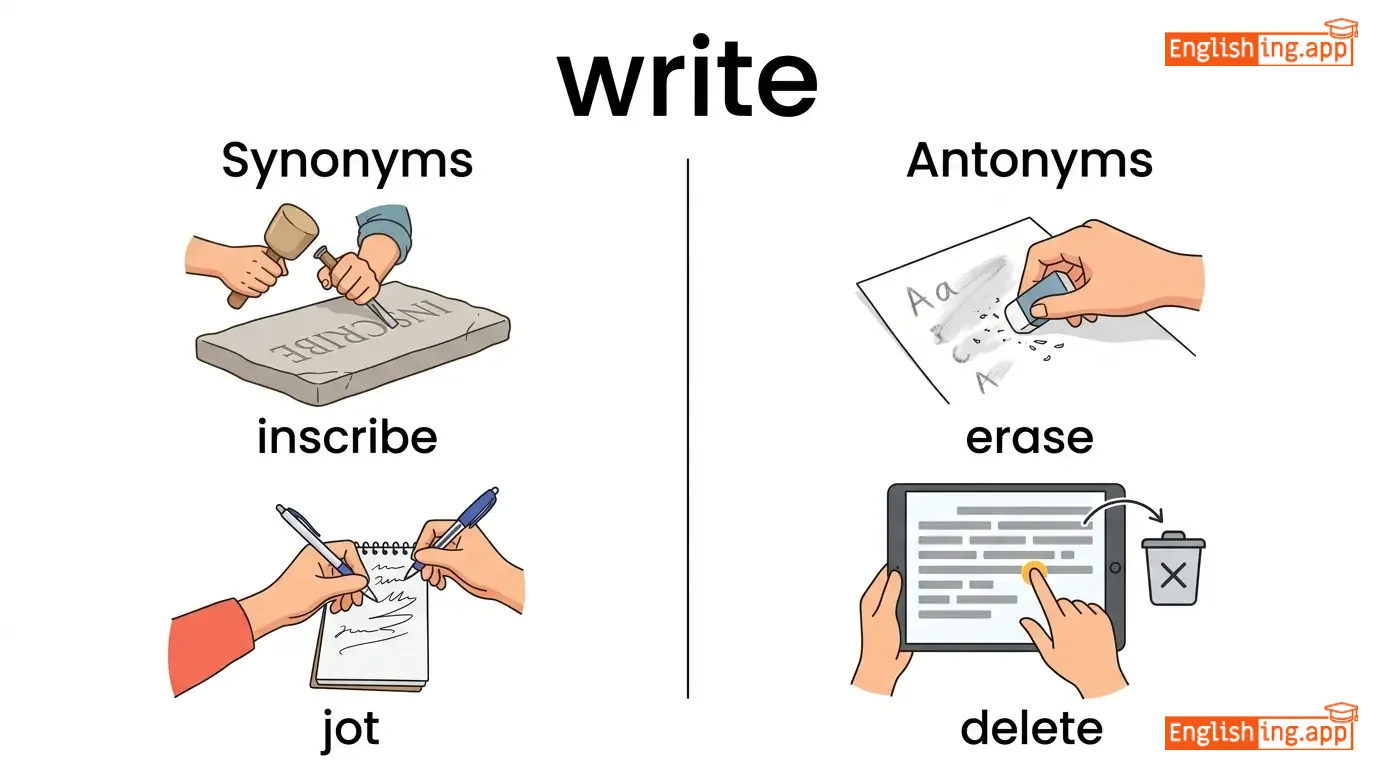
inscribe, jot, record, compose
••••••
|
erase, delete
••••••
|
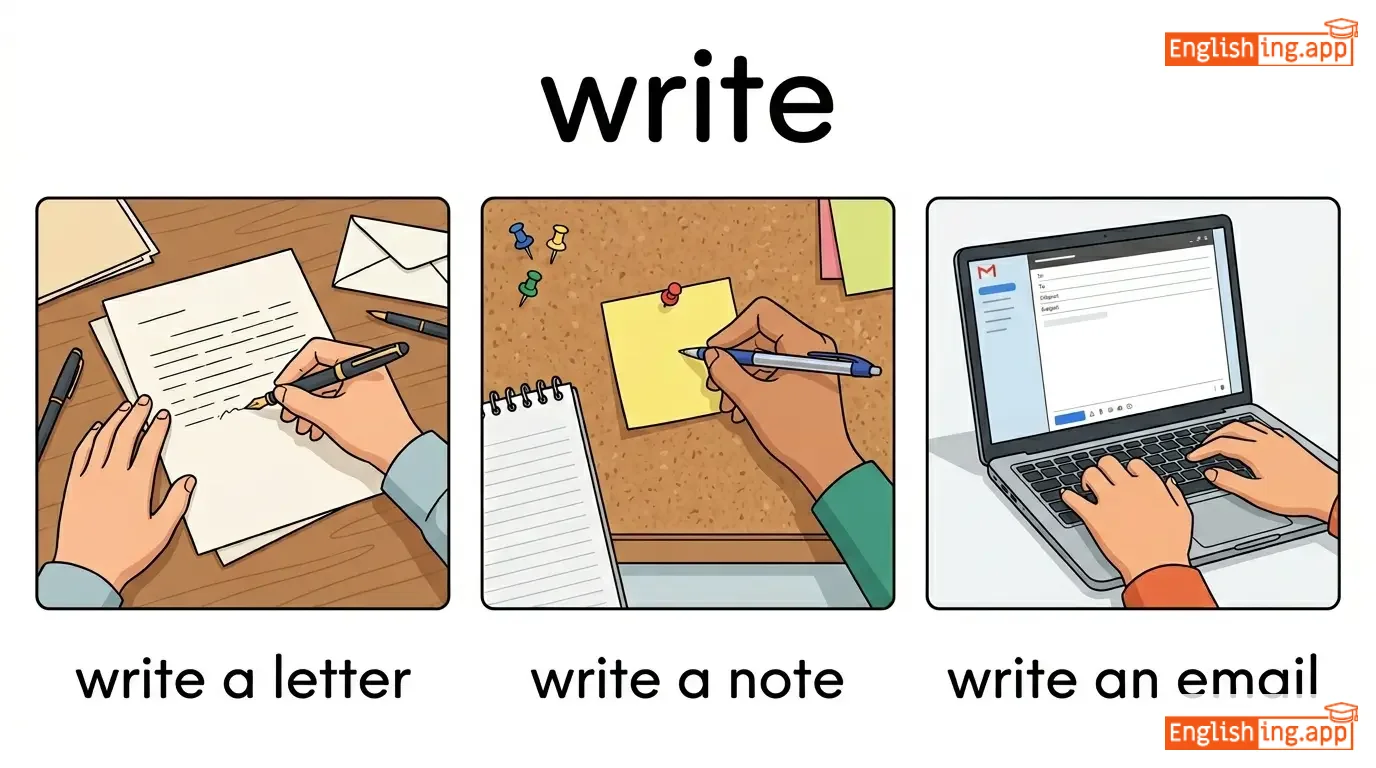
write a letter, write a note, write an email, write a report
••••••
|
记住幸福就是一直追寻快乐的感觉!
••••••
|
|
✍️
••••••
|
/ˈraɪ.tər/
noun
(raɪtə)
••••••
|
- •••••• |
作家
zuòjiā
••••••
|
- •••••• | - •••••• | - •••••• | - •••••• |
a person who writes books, articles, or other written works
••••••
|
The writer spent hours crafting the perfect sentence.
ðə raɪtə spent aʊərz kræftɪŋ ðə pərfɪkt sɪntəns
••••••
|
作家花了几个小时来创作完美的句子。
zuòjiā huāle jǐ gè xiǎoshí lái chuàngzuò wánměi de jùzi.
••••••
|
- •••••• | - •••••• | - •••••• |
author, novelist, journalist, scribe
••••••
|
reader, illiterate
••••••
|
creative writer, professional writer, freelance writer, script writer
••••••
|
A '作家' in Chinese is a writer who spends time crafting each sentence carefully.
••••••
|
|
✍️
••••••
|
/ˈraɪ.tɪŋ/
noun/verb
(幸福)
••••••
|
- •••••• |
幸福
xìngfú
••••••
|
- •••••• | - •••••• | - •••••• |
writing
••••••
|
The activity of putting words on paper or composing text; the written form of communication.
••••••
|
She spends hours every day on her creative writing. |
当她收到奖项时,她无法掩饰自己的幸福感。
Dāng tā shōudào jiǎngxiàng shí, tā wúfǎ yǎnshì zìjǐ de xìngfú gǎn.
••••••
|
the writing on the wall |
a clear sign of future trouble or failure
••••••
|
追寻幸福
Zhuīxún xìngfú
••••••
|
composition, text, script, inscription
••••••
|
speech, silence
••••••
|
writing style, writing skills, writing desk, writing assignment
••••••
|
幸福 = Happiness. 一生追求,终得幸福。
••••••
|
|
❌
••••••
|
/rɒŋ/
adjective
(rong)
••••••
|
- •••••• |
错误
cuo wu
••••••
|
- •••••• | - •••••• | - •••••• | - •••••• |
not correct or true; mistaken
••••••
|
It is wrong to cheat on a test. |
在考试中作弊是错误的。
Zai kaoshi zhong zuobi shi cuo wu de.
••••••
|
rub someone the wrong way |
to irritate or annoy someone
••••••
|
惹某人生气
re mou ren shengqi
••••••
|
incorrect, mistaken, false, erroneous, inaccurate
••••••
|
correct, true, right
••••••
|
completely wrong, prove wrong, wrong decision, wrong time
••••••
|
当事情是错误的,我们会说 'wrong'。
••••••
|
|
❌
••••••
|
/ˈrɒŋli/
adverb
(朗利)
••••••
|
- •••••• |
错误地
cuowu di
••••••
|
- •••••• | - •••••• | - •••••• | - •••••• |
in an incorrect or mistaken way; unfairly or unjustly
••••••
|
He was wrongly accused of the crime.
他 被 朗利 阿库兹德 奥夫 罪行。
••••••
|
他被错误地指控犯了罪。
ta bei cuowu di zhikong fan le zui
••••••
|
wrongly accused
朗利 阿库兹德
••••••
|
to be blamed or charged for something one did not do
••••••
|
错误地指控
cuowu di zhikong
••••••
|
incorrectly, mistakenly, erroneously, unfairly
••••••
|
correctly, rightly
••••••
|
wrongly accused, wrongly assumed, wrongly convicted, wrongly judged
••••••
|
Wrongly = 错误地 (wrong = 错误)
••••••
|
|
🩻
••••••
|
/ˈɛksˌreɪ/
noun, verb
(艾克斯瑞)
••••••
|
- •••••• |
X光; X射线
X guang; X shexian
••••••
|
x-rayed
艾克斯瑞德
••••••
|
x-rayed
艾克斯瑞德
••••••
|
x-rays
艾克斯瑞兹
••••••
|
x-raying
艾克斯瑞应
••••••
|
a form of electromagnetic radiation used to see inside objects or the human body; to examine or scan using X-rays
••••••
|
The doctor ordered an X-ray to check for a broken bone.
医生让他拍一张X光片。
••••••
|
医生让他拍一张X光片。
yisheng rang ta pai yi zhang X guang pian
••••••
|
take an X-ray
拍X光
••••••
|
to examine something using X-ray imaging
••••••
|
拍X光
pai X guang
••••••
|
radiograph, scan, imaging, radiology, fluoroscopy
••••••
|
hide, conceal, obscure
••••••
|
X-ray machine, chest X-ray, dental X-ray, X-ray image, X-ray scan
••••••
|
X光 = 看不见的光,看见里面
••••••
|
|
🏡
••••••
|
/jɑːrd/
noun
(院子)
••••••
|
- •••••• |
院子; 附近的空地
yuànzi; fùjìn de kòngdì
••••••
|
- •••••• | - •••••• | - •••••• | - •••••• |
a unit of linear measure equal to 3 feet; an area of land immediately adjacent to a building
••••••
|
The children played in the back yard. |
孩子们在后院玩耍。
Háizimen zài hòuyuàn wánshuǎ
••••••
|
- •••••• | - •••••• | - •••••• |
courtyard, garden, measure, enclosure
••••••
|
indoor, interior, inside, building
••••••
|
back yard, front yard, school yard
••••••
|
Yard = 院子,孩子们在院子里玩
••••••
|
|
😪
••••••
|
/jɔːn/
noun
(yawn)
••••••
|
- •••••• |
哈欠
haqian
••••••
|
- •••••• | - •••••• | - •••••• | - •••••• |
an involuntary opening of the mouth and inhalation of air due to tiredness or boredom
••••••
|
She couldn't suppress a yawn during the boring lecture. |
她在无聊的讲座中无法抑制哈欠。
Ta zai wuliao de jiangzuo zhong wufa yizhi haqian.
••••••
|
- •••••• | - •••••• | - •••••• |
gape, stretch, drowse, tired breath
••••••
|
alertness, attention, wakefulness, energy
••••••
|
big yawn, suppress a yawn, contagious yawn
••••••
|
哈欠(haqian)像是我们在感到疲惫或无聊时常做的动作。
••••••
|
|
👍
••••••
|
/jɛə/
interjection
(是的)
••••••
|
- •••••• |
是的
shi de
••••••
|
- •••••• | - •••••• | - •••••• | - •••••• |
used to express agreement or affirmation
••••••
|
Yeah, I’ll go to the store with you. |
是的,我会和你一起去商店。
Shi de, wo hui he ni yiqi qu shangdian.
••••••
|
- •••••• | - •••••• | - •••••• |
yes, certainly, absolutely, okay
••••••
|
no, never, not at all
••••••
|
yeah sure, yeah okay, yeah right, yeah I agree
••••••
|
Yeah, in Chinese we say 'Shi de!' when agreeing.
••••••
|
|
📅
••••••
|
/jɪə/
noun
(nián)
••••••
|
- •••••• |
年
nian
••••••
|
- •••••• | - •••••• | - •••••• | - •••••• |
a period of 365 or 366 days, divided into 12 months
••••••
|
This year, we are planning a trip to the mountains.
今年,我们计划去山里旅游。
••••••
|
今年,我们计划去山里旅游。
Jin nian, wo men ji hua qu shan li lv you.
••••••
|
- •••••• | - •••••• | - •••••• |
annum, twelve months, calendar year
••••••
|
day, week
••••••
|
next year, this year, every year, year-long
••••••
|
Year = 年 (nian) – 每个'年'带来新的希望!
••••••
|
|
📣
••••••
|
/jɛl/
verb
(yel)
••••••
|
|
大声喊叫
dàshēng hǎnjiào
••••••
|
yelled
yeld
••••••
|
yelled
yeld
••••••
|
yells
yels
••••••
|
yelling
yeling
••••••
|
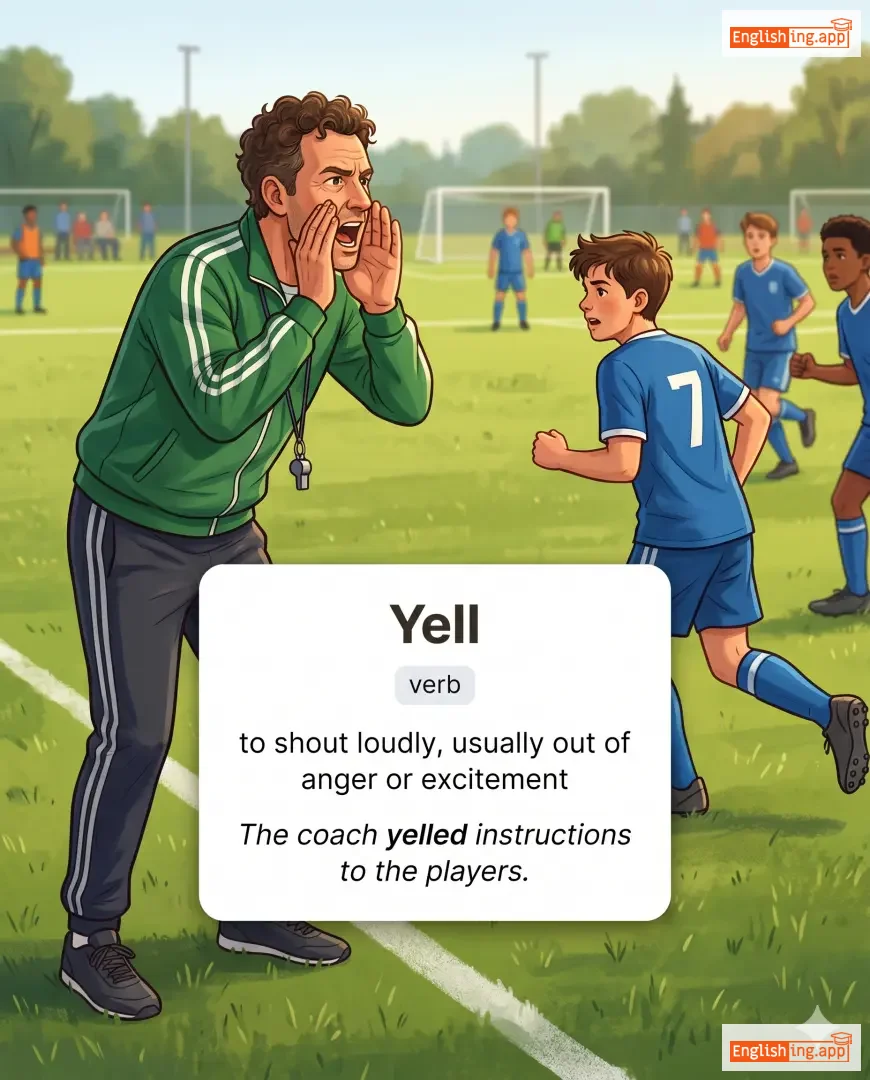
to shout loudly, usually out of anger or excitement
••••••
|
The coach yelled instructions to the players.
the coach yeld instructions to the players
••••••
|
教练对球员大声喊叫着指令。
Jiàoliàn duì qiúyuán dàshēng hǎnjiào zhe zhǐlìng.
••••••
|
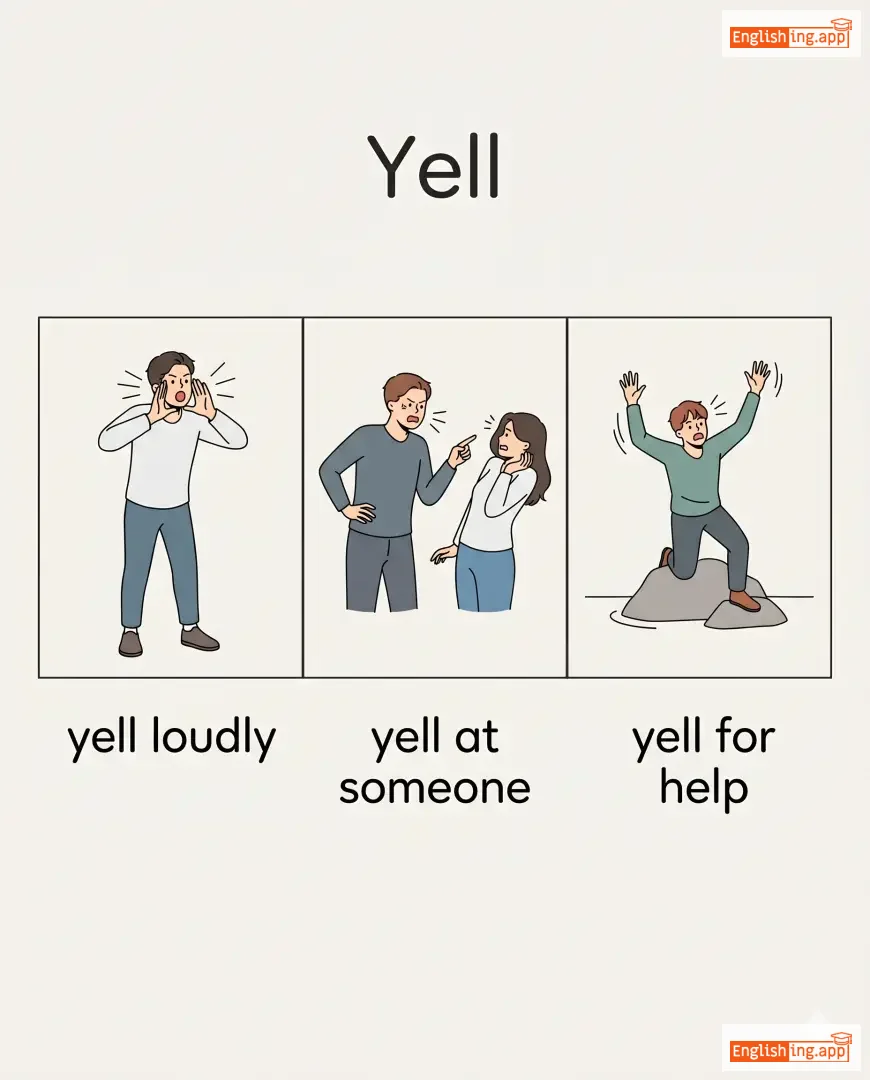
yell at
yel at
••••••
|
to shout at someone angrily
••••••
|
对某人大喊
duì mǒu rén dà hǎn
••••••
|
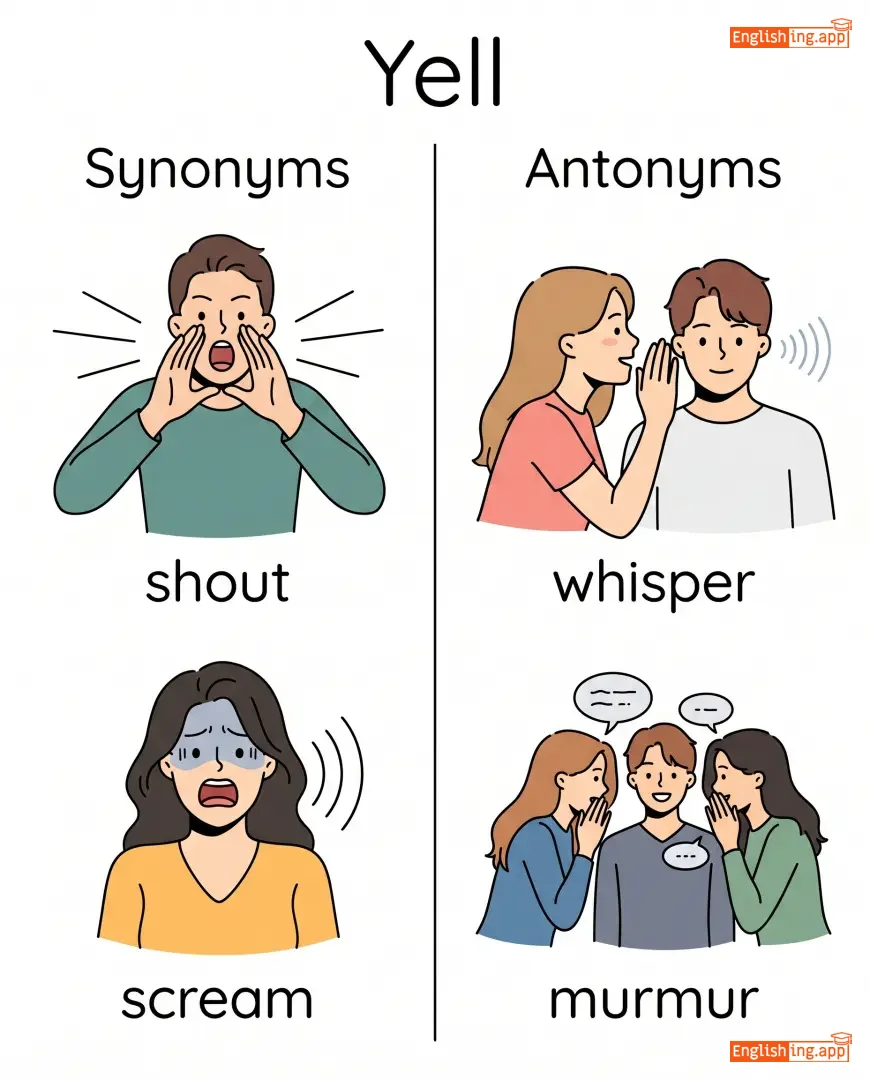
shout, scream, holler, cry, call
••••••
|
whisper, murmur
••••••
|
yell loudly, yell at someone, yell for help
••••••
|
Yell意味着大声喊叫,就像生气时大声喊人的时候。
••••••
|
|
🟡
••••••
|
/ˈjeloʊ/
adjective
(yīlóu)
••••••
|
- •••••• |
黄色的; 胆小的
huángsè de; dǎnxiǎo de
••••••
|
- •••••• | - •••••• | - •••••• | - •••••• |
having the color of the sun or gold; cowardly
••••••
|
The yellow flowers bloomed in spring.
黄色的花在春天盛开。
••••••
|
黄色的花在春天盛开。
huángsè de huā zài chūntiān shèngkāi.
••••••
|
- •••••• | - •••••• | - •••••• |
golden, amber, lemon, canary
••••••
|
blue, purple, green, red
••••••
|
yellow light, yellow pages, yellow card
••••••
|
黄色是太阳的颜色,也用来描述胆小的人 (胆小的).
••••••
|
|
👍
••••••
|
/jɛs/
adverb
(是)
••••••
|
- •••••• |
是
shi
••••••
|
- •••••• | - •••••• | - •••••• | - •••••• |
used to express affirmation, agreement, or consent
••••••
|
Yes, I will be there at 5 o'clock. |
是的,我会在五点到那里。
Shi de, wo hui zai wu dian dao nali.
••••••
|
- •••••• | - •••••• | - •••••• |
certainly, definitely, absolutely, of course
••••••
|
no, not at all
••••••
|
say yes, agree with yes, say yes to, yes or no
••••••
|
Yes, I say Shi when I agree.
••••••
|
|
📅
••••••
|
/ˈjɛstərdeɪ/
noun
(昨天)
••••••
|
- •••••• |
昨天
zuótiān
••••••
|
- •••••• | - •••••• | - •••••• | - •••••• |
the day before today
••••••
|
Yesterday, we went to the park. |
昨天我们去了公园。
Zuótiān wǒmen qùle gōngyuán.
••••••
|
- •••••• | - •••••• | - •••••• |
the previous day, last day
••••••
|
today, tomorrow
••••••
|
yesterday afternoon, yesterday evening, just yesterday, yesterday morning
••••••
|
Yesterday, I remember it as ZUÓTIĀN (Yesterday in Chinese).
••••••
|
|
⏰
••••••
|
/jet/
adverb
(yet)
••••••
|
- •••••• |
直到现在; 还;
zhídào xiànzài; hái
••••••
|
- •••••• | - •••••• | - •••••• | - •••••• |
up to now or a specified time; still; however; nevertheless
••••••
|
He hasn't finished his homework yet. |
他还没有完成作业。
Tā hái méiyǒu wánchéng zuòyè
••••••
|
- •••••• | - •••••• | - •••••• |
still, so far, thus far, up to now, until now
••••••
|
already, previously, before, earlier
••••••
|
not yet, yet again, yet another, yet to come
••••••
|
还没完成,直到现在还可以做到。
••••••
|
|
🌾
••••••
|
/jiːld/
verb
(yild)
••••••
|
|
产生 / 屈服
chǎnshēng / qūfú
••••••
|
yielded
yilded
••••••
|
yielded
yilded
••••••
|
yields
yilds
••••••
|
yielding
yilding
••••••
|
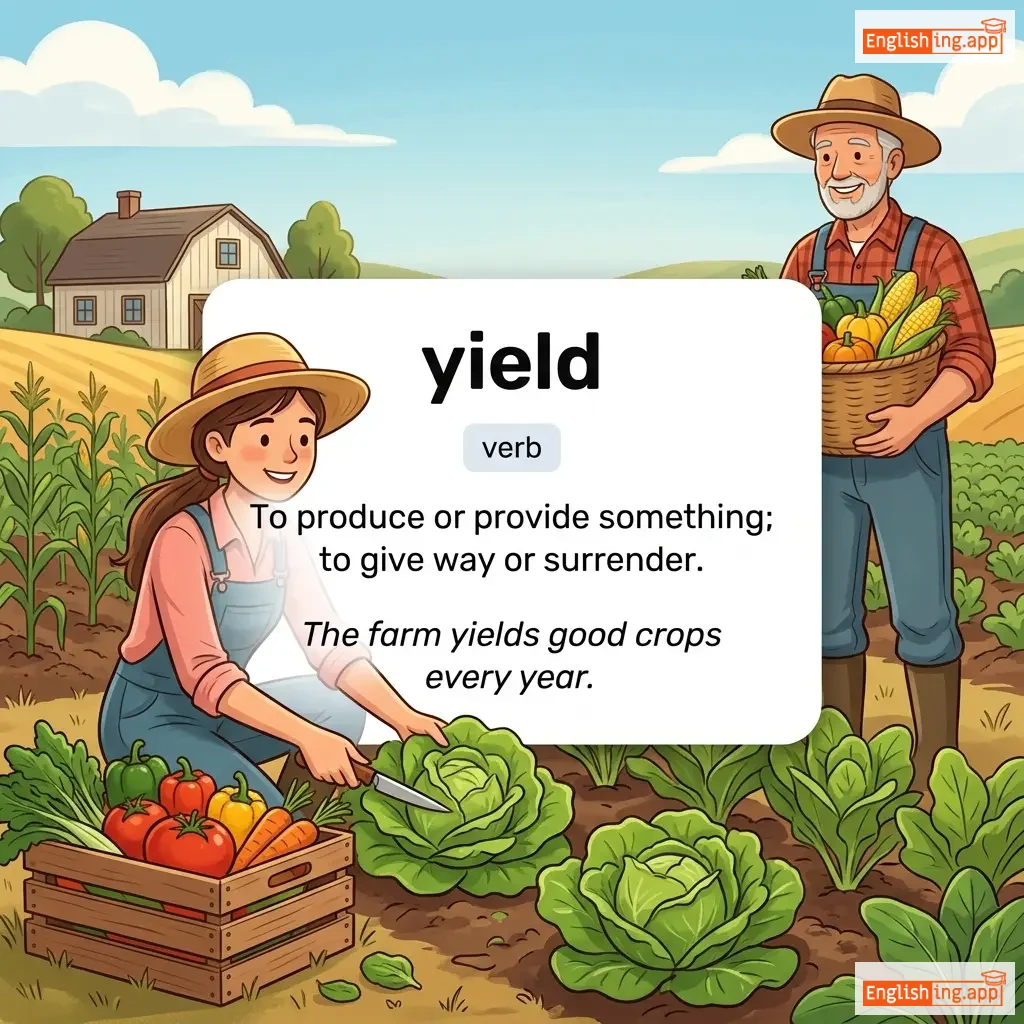
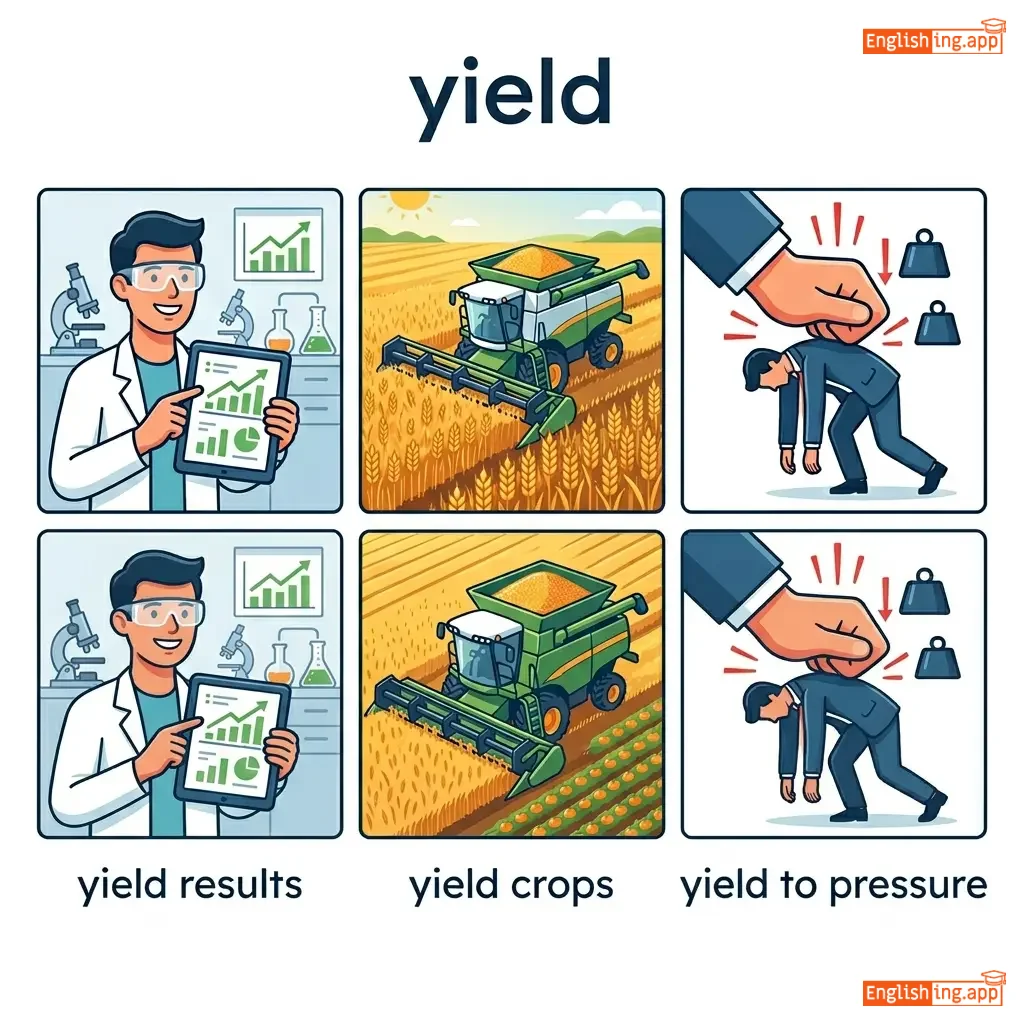
To produce or provide something; to give way or surrender.
••••••
|
The farm yields good crops every year.
农场每年都产出好收成。
••••••
|
农场每年都产出好收成。
Nóngchǎng měi nián dōu chǎnchū hǎo shōuchéng.
••••••
|
yield to pressure
在压力下屈服
••••••
|
To give in or surrender under pressure.
••••••
|
在压力下屈服
Zài yālì xià qūfú
••••••
|
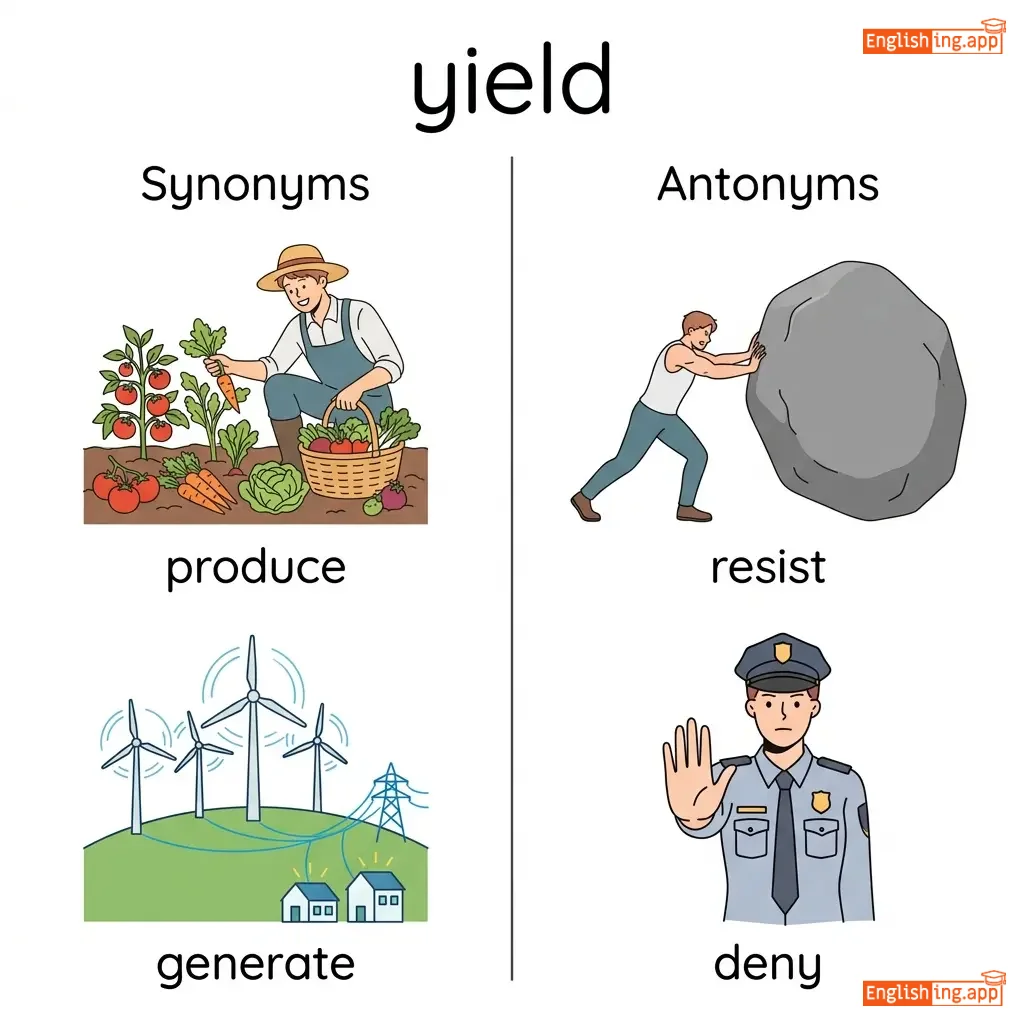
produce, generate, surrender, give, supply
••••••
|
resist, deny, refuse
••••••
|
yield results, yield crops, yield to pressure, yield profit
••••••
|
Yield 意味着产生:农场产出收成,压力下放弃。
••••••
|
|
🙂
••••••
|
/juː/
pronoun
(你)
••••••
|
- •••••• |
你
ni
••••••
|
- •••••• | - •••••• | - •••••• | - •••••• |
used to refer to the person or people being spoken to
••••••
|
You are doing a great job!
你做得很好!
••••••
|
你做得很好!
Nǐ zuò de hěn hǎo!
••••••
|
- •••••• | - •••••• | - •••••• |
yourself, yourself
••••••
|
I, he, she
••••••
|
you are, you can, you will, you need
••••••
|
You, 你, are the person you’re talking about.
••••••
|
|
👶
••••••
|
/jʌŋ/
adjective
(yáng)
••••••
|
- •••••• |
年轻; 最近
niánqīng; zuìjìn
••••••
|
- •••••• | - •••••• | - •••••• | - •••••• |
having lived for a short time; not old; recent
••••••
|
The young tree needs more water to grow. |
年轻的树需要更多水才能生长。
niánqīng de shù xūyào gèng duō shuǐ cáinéng shēngzhǎng.
••••••
|
- •••••• | - •••••• | - •••••• |
youthful, juvenile, adolescent, new
••••••
|
old, elderly, aged, mature
••••••
|
young people, young age, young adult
••••••
|
Young 和 年轻发音相似
••••••
|
|
📚
••••••
|
/jɔːr/
pronoun
(你的)
••••••
|
- •••••• |
你的
nǐ de
••••••
|
- •••••• | - •••••• | - •••••• | - •••••• |
used to indicate possession or association
••••••
|
Your book is on the table. |
你的书在桌子上。
Nǐ de shū zài zhuōzi shàng.
••••••
|
- •••••• | - •••••• | - •••••• |
your own, belonging to you
••••••
|
my, theirs
••••••
|
your opinion, your responsibility, your time
••••••
|
你的书在桌子上 - Your book is on the table
••••••
|
|
✍️
••••••
|
/jɔːrz/
pronoun
(yours)
••••••
|
- •••••• |
你的
nǐ de
••••••
|
- •••••• | - •••••• | - •••••• | - •••••• |
belonging to or associated with the person or people that the speaker is addressing
••••••
|
This pen is yours. |
这支钢笔是你的。
Zhè zhī gāng bǐ shì nǐ de.
••••••
|
- •••••• | - •••••• | - •••••• |
your property, belonging to you
••••••
|
mine, theirs
••••••
|
yours to keep, this is yours
••••••
|
你的钢笔 (Nǐ de gāng bǐ) - This pen is yours.
••••••
|
|
🤳
••••••
|
/jɔːrˈsɛlf/
pronoun
(jɔːrˈsɛlf)
••••••
|
- •••••• |
自己
zìjǐ
••••••
|
- •••••• | - •••••• | - •••••• | - •••••• |
used to refer to the person being addressed, often for emphasis or reflection
••••••
|
You should look after yourself. |
你应该照顾自己。
Nǐ yīnggāi zhàogù zìjǐ.
••••••
|
- •••••• | - •••••• | - •••••• |
your own self, personally
••••••
|
no one, others
••••••
|
look after yourself, enjoy yourself, be yourself
••••••
|
照顾自己 (Zhàogù zìjǐ) - Take care of yourself.
••••••
|
|
👦
••••••
|
/juːθ/
noun
(youth)
••••••
|
- •••••• |
青春; 年轻人
qīngchūn; niánqīng rén
••••••
|
- •••••• | - •••••• | - •••••• | - •••••• |
the period between childhood and adult age; young people collectively; the state of being young
••••••
|
He spent his youth traveling around the world.
他在年轻时环游世界。
••••••
|
他在年轻时环游世界。
Tā zài niánqīng shí huán yóu shìjiè.
••••••
|
- •••••• | - •••••• | - •••••• |
adolescence, teenage years, young people, vigor
••••••
|
old age, maturity, elderhood, adulthood
••••••
|
in one's youth, youth culture, eternal youth
••••••
|
青春在中文中代表年轻和无限的可能性!
••••••
|
|
🌍
••••••
|
/zoʊn/
noun
(区)
••••••
|
|
区域
quyu
••••••
|
- •••••• | - •••••• | - •••••• | - •••••• |
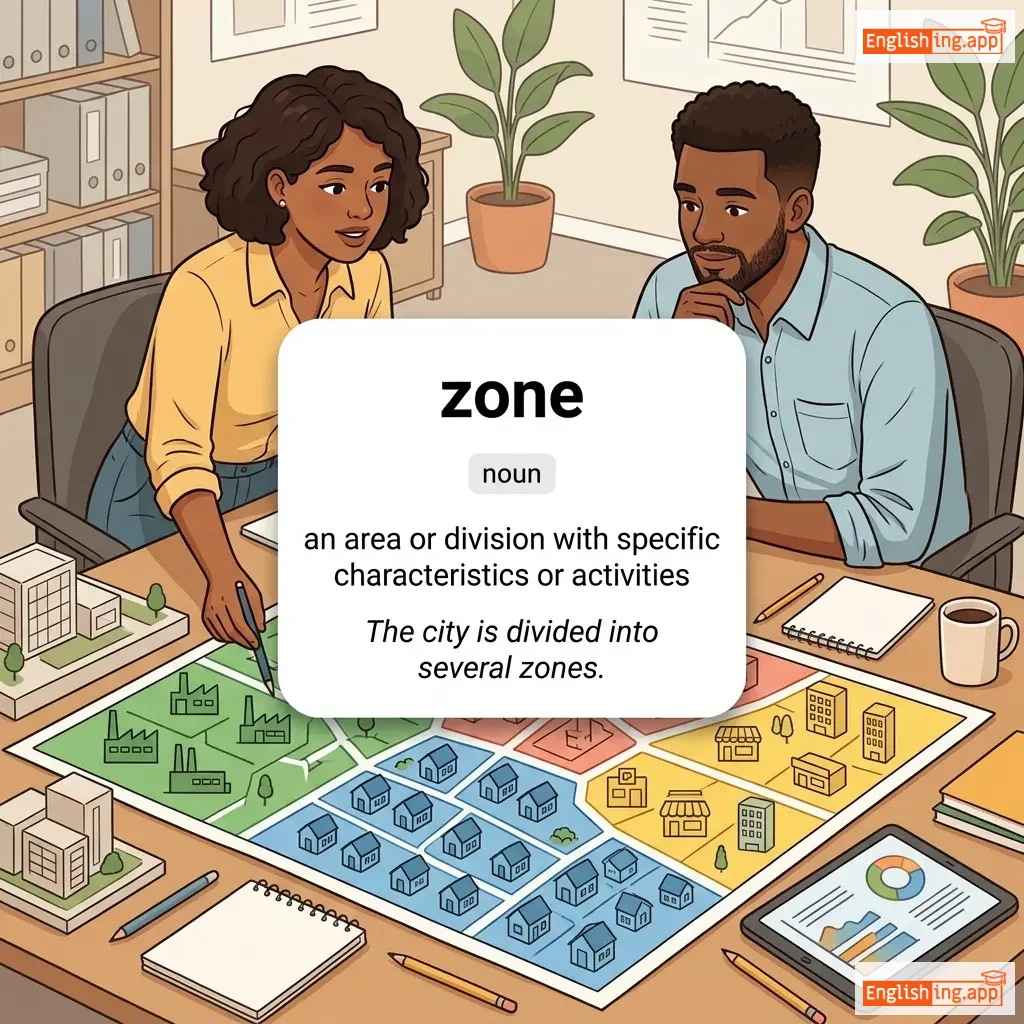
an area or division with specific characteristics or activities
••••••
|
The city is divided into several zones. |
这座城市被划分为多个区域。
Zhe zuo chengshi bei huafen wei duoge quyu.
••••••
|
- •••••• | - •••••• | - •••••• |
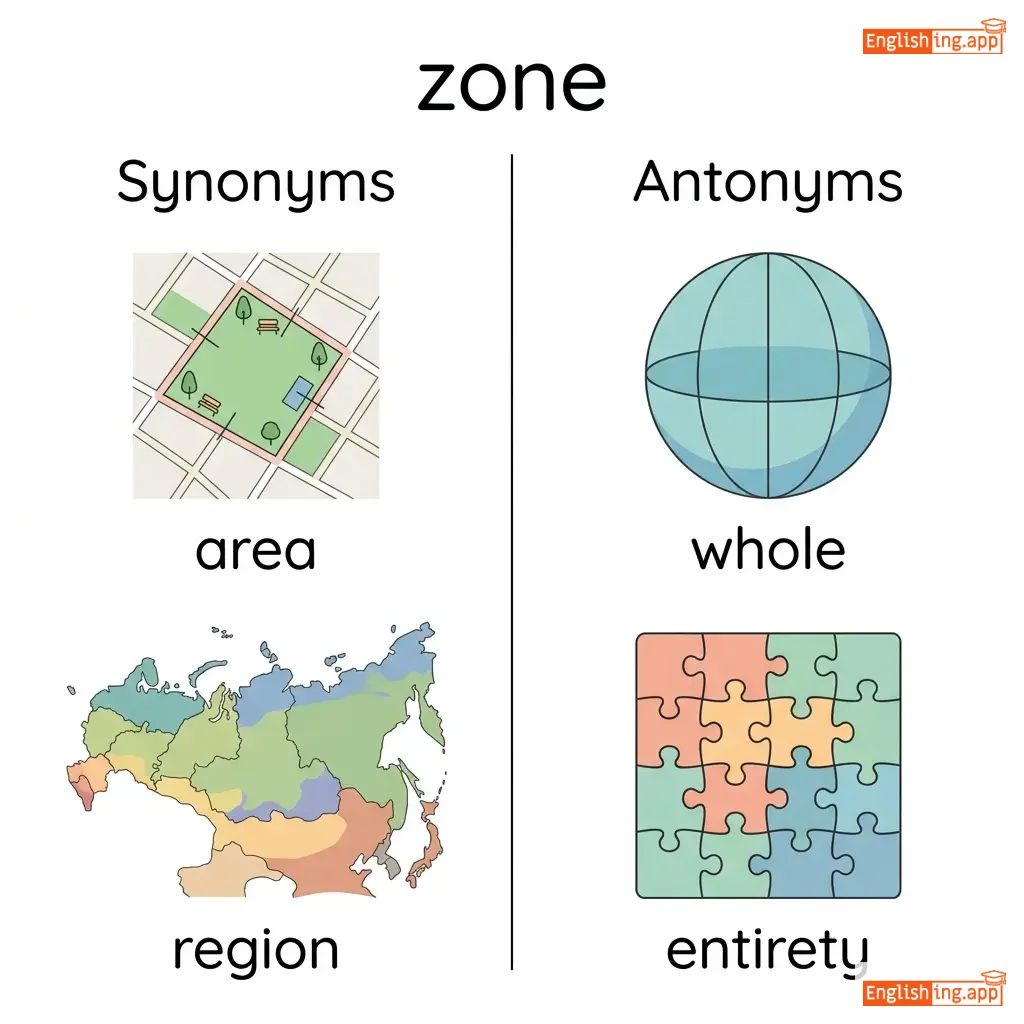
area, region, district
••••••
|
whole, entirety
••••••
|
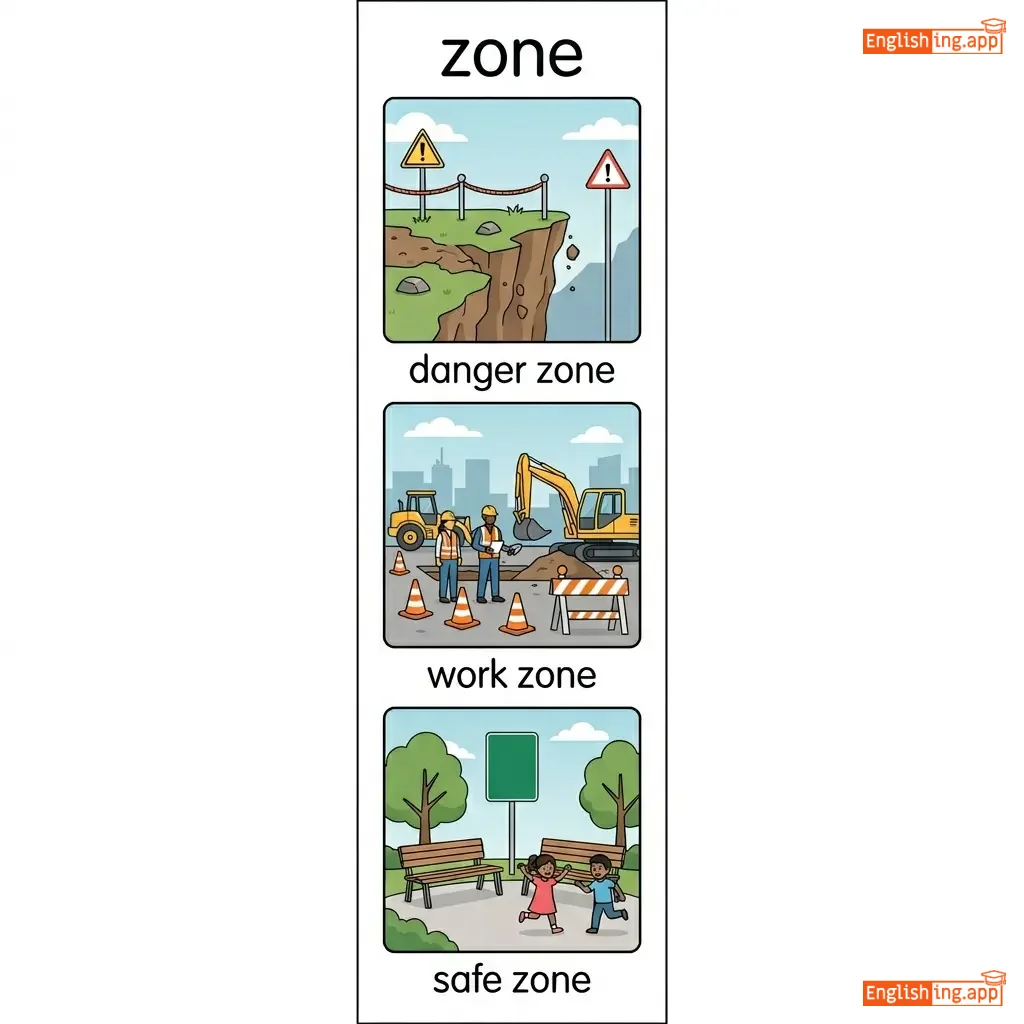
danger zone, work zone, safe zone
••••••
|
划分区域的城市 (Huafen quyu de chengshi) - The city is divided into zones.
••••••
|
|
🦁
••••••
|
/zuː/
noun
(zoo)
••••••
|
- •••••• |
动物园
dongwuyuan
••••••
|
- •••••• | - •••••• | - •••••• | - •••••• |
an establishment that maintains a collection of wild animals for study, conservation, or display to the public
••••••
|
We visited the zoo to see the lions and elephants.
我们参观了动物园,看到了狮子和大象。
••••••
|
我们参观了动物园,看到了狮子和大象。
Wo men canguan le dongwuyuan, kankan le shizi he daxiang.
••••••
|
- •••••• | - •••••• | - •••••• |
menagerie, wildlife park, safari park, animal park
••••••
|
wild habitat, natural environment, wilderness, freedom
••••••
|
visit the zoo, zoo animals, city zoo
••••••
|
动物园,像‘Zoo’,是我们可以看到动物的地方。
••••••
|

