|
表情符号
|
单词 | Images | 翻译 | 过去时 | 过去分词 | 第三人称单数 | 动名词 | 含义 | 例句 | 例句翻译 | 示例表达 | 示例表达含义 | 示例表达翻译 | 同义词 | 反义词 | 搭配词 | 助记符 |
|---|---|---|---|---|---|---|---|---|---|---|---|---|---|---|---|---|---|
|
🎬
••••••
|
/ˈmuːvi/
noun
(海皮尼斯)
••••••
|
- •••••• |
幸福
xìng fú
••••••
|
- •••••• | - •••••• | - •••••• | - •••••• |
A motion picture or film shown in a cinema or on television.
••••••
|
We watched a movie together last night. |
当她获得奖项时,她无法掩饰自己的幸福。
Dāng tā huò dé jiǎng xiàng shí, tā wú fǎ yǎn shì zì jǐ de xìng fú.
••••••
|
movie night |
An informal gathering to watch films together.
••••••
|
追求幸福
zhuī qiú xìng fú
••••••
|
film, picture, motion picture, flick
••••••
|
reality, documentary
••••••
|
watch a movie, movie theater, movie star, movie ticket
••••••
|
幸福就像是幸福感的体现,带来愉快。
••••••
|
|
😭
••••••
|
/ˈmuːvɪŋ/
adjective
(mù bǐng)
••••••
|
- •••••• |
感人
gan ren
••••••
|
- •••••• | - •••••• | - •••••• | - •••••• |
causing strong feelings, especially of sympathy or sadness
••••••
|
Her speech was so moving that everyone cried. |
她的演讲如此感人,以至于每个人都哭了。
Ta de yanjiang ruci ganren, yi zhi yu meige ren dou ku le.
••••••
|
- •••••• | - •••••• | - •••••• |
touching, emotional, poignant, stirring
••••••
|
unemotional, indifferent, cold
••••••
|
moving speech, moving story, moving moment
••••••
|
感人之事,触动心灵,令人流泪。
••••••
|
|
👨
••••••
|
/ˈmɪstər/
title
(米斯特)
••••••
|
- •••••• |
先生
xiānsheng
••••••
|
- •••••• | - •••••• | - •••••• | - •••••• |
a title used before a man's name
••••••
|
Mr. Rahman is our new teacher. |
先生拉赫曼是我们的新老师。
Xiānsheng Rahman shì wǒmen de xīn lǎoshī.
••••••
|
- •••••• | - •••••• | - •••••• |
sir, mister, gentleman
••••••
|
mrs, ms
••••••
|
Mr President, Mr Smith, Mr Chairman
••••••
|
先生表示 Mr,用于男性名字前。
••••••
|
|
👩
••••••
|
/ˈmɪsɪz/
title
(mī sī sī)
••••••
|
- •••••• |
夫人
fūrén
••••••
|
- •••••• | - •••••• | - •••••• | - •••••• |
a title used before a married woman's name
••••••
|
Mrs. Karim is the headmistress of the school. |
夫人卡里姆是学校的校长。
Fūrén Kǎlǐm shì xuéxiào de xiàozhǎng.
••••••
|
- •••••• | - •••••• | - •••••• |
madam, missus, lady
••••••
|
mr, ms
••••••
|
Mrs Smith, Mrs President, Mrs Brown
••••••
|
夫人是已婚女性的头衔,类似于英语中的Mrs.
••••••
|
|
👩💼
••••••
|
/mɪz/
title
(米兹)
••••••
|
- •••••• |
女士
nüshi
••••••
|
- •••••• | - •••••• | - •••••• | - •••••• |
a title used before a woman's name, regardless of marital status
••••••
|
Ms. Akter will give a speech at the seminar.
阿克特女士将在研讨会上发表演讲。
••••••
|
阿克特女士将在研讨会上发表演讲。
Akter nǚshì jiāng zài yántǎo huì shàng fābiǎo yǎnjiǎng.
••••••
|
- •••••• | - •••••• | - •••••• |
madam, miss, lady
••••••
|
mr, mrs
••••••
|
Ms Johnson, Ms Speaker, Ms Director
••••••
|
女士 – 用于所有女性的通用称呼。
••••••
|
|
💯
••••••
|
/mʌtʃ/
adjective, adverb, pronoun
(mʌʧ)
••••••
|
- •••••• |
很多
hen duo
••••••
|
- •••••• | - •••••• | - •••••• | - •••••• |
a large amount or degree of something
••••••
|
She doesn’t have much time to finish the project. |
她没有很多时间来完成这个项目。
Ta meiyou henduo shijian lai wancheng zhege xiangmu.
••••••
|
much ado about nothing |
a lot of fuss about something unimportant
••••••
|
无谓的喧嚣
wuwei de xuanshao
••••••
|
a lot, plenty, abundant, great deal
••••••
|
little, few
••••••
|
too much, much more, much less, so much
••••••
|
很多意味着很多 — 很多工作意味着很多努力!
••••••
|
|
🪱
••••••
|
/mʌd/
noun
(mʌd)
••••••
|
- •••••• |
泥土
nítǔ
••••••
|
- •••••• | - •••••• | - •••••• | - •••••• |
soft, wet earth or soil
••••••
|
The children were playing in the mud after the rain. |
孩子们在雨后玩泥巴。
Háizimen zài yǔhòu wán níba.
••••••
|
drag someone's name through the mud |
to damage someone's reputation by saying bad things about them
••••••
|
把某人的名字拉入泥潭
bǎ mǒu rén de míngzì lārù nítán
••••••
|
dirt, clay, sludge, muck, soil
••••••
|
dust, rock, dry land
••••••
|
mud road, covered in mud, play in the mud, sticky mud
••••••
|
Mud就是泥土 — 想象自己玩泥巴时说'泥泞'。
••••••
|
|
🌧️
••••••
|
/ˈmʌd.i/
adjective
(मडी)
••••••
|
- •••••• |
泥泞的
nínìng de
••••••
|
- •••••• | - •••••• | - •••••• | - •••••• |
covered in or full of mud; unclear or confused
••••••
|
The children came back with muddy shoes after playing outside. |
孩子们玩耍后,穿着泥泞的鞋子回来了。
Háizimen wánshuǎ hòu, chuānzhuó nínìng de xiézi huílái le.
••••••
|
muddy the waters |
to make a situation more confusing or complicated
••••••
|
弄乱局势
nòng luàn júshì
••••••
|
dirty, unclear, messy, murky
••••••
|
clean, clear, pure
••••••
|
muddy shoes, muddy ground, muddy water, muddy situation
••••••
|
Muddy表示泥巴覆盖的 – 泥泞的
••••••
|
|
🔢
••••••
|
/ˈmʌl.tɪ.pl̩/
adjective
(多重)
••••••
|
- •••••• |
多个; 多样的; 不同的
duo ge; duoyang de; butong de
••••••
|
- •••••• | - •••••• | - •••••• | - •••••• |
having many parts, elements, or members; numerous
••••••
|
She suffered multiple injuries in the accident. |
她在事故中受了多次伤。
Tā zài shìgù zhōng shòule duō cì shāng.
••••••
|
- •••••• | - •••••• | - •••••• |
numerous, many, several, various, manifold
••••••
|
single, sole, individual, unique
••••••
|
multiple choice, multiple injuries, multiple times
••••••
|
多样的、多元的,'多重'就是这么来的!
••••••
|
|
✖️
••••••
|
/ˌmʌltɪplɪˈkeɪʃən/
noun
(马尔提普利凯申)
••••••
|
- •••••• |
乘法
chengfa
••••••
|
- •••••• | - •••••• | - •••••• | - •••••• |
the mathematical process of combining numbers to get a product; the act of increasing in number or amount
••••••
|
Multiplication is one of the basic operations taught in elementary mathematics.
马尔提普利凯申 是 小学 数学 中 教 的 基本 运算 之一。
••••••
|
乘法是小学数学中的基本运算之一。
chengfa shi xiaoxue shuxue zhong de jiben yunsuan zhiyi
••••••
|
multiplication table
马尔提普利凯申 表
••••••
|
a table showing the results of multiplying numbers
••••••
|
乘法表
chengfa biao
••••••
|
product, multiplication operation, times operation, arithmetic multiplication
••••••
|
division, subtraction
••••••
|
basic multiplication, multiplication table, multiplication problem, multiplication operation
••••••
|
Multiplication 就是 乘法,numbers 乘起来
••••••
|
|
➗
••••••
|
/ˈmʌltɪplaɪər/
noun
(马尔蒂普莱尔)
••••••
|
- •••••• |
乘数
chengshu
••••••
|
- •••••• | - •••••• | - •••••• | - •••••• |
a number or factor by which another number is multiplied; something that increases the effect or value of something else
••••••
|
In economics, government spending can act as a multiplier for economic growth.
在经济学中,政府支出可以作为一种 multiplier。
••••••
|
在经济学中,政府支出可以成为经济增长的乘数。
zai jingjixue zhong zhengfu zhichu keyi chengwei jingji zengzhang de chengshu
••••••
|
multiplier effect
multiplier effect
••••••
|
the increase in final income arising from any new injection of spending
••••••
|
乘数效应
chengshu xiaoying
••••••
|
factor, coefficient, amplifier, booster, increaser
••••••
|
divisor, reducer, diminisher
••••••
|
economic multiplier, fiscal multiplier, growth multiplier, multiplier effect
••••••
|
Multiplier 就是 乘数,能把效果放大。
••••••
|
|
✖️
••••••
|
/ˈmʌltɪplaɪ/
verb
(mʌltɪplaɪ)
••••••
|

|
乘法
chengfa
••••••
|
multiplied
mʌltɪplaɪd
••••••
|
multiplied
mʌltɪplaɪd
••••••
|
multiplies
mʌltɪplaɪz
••••••
|
multiplying
mʌltɪplaɪɪŋ
••••••
|
to increase in number; to perform mathematical multiplication
••••••
|
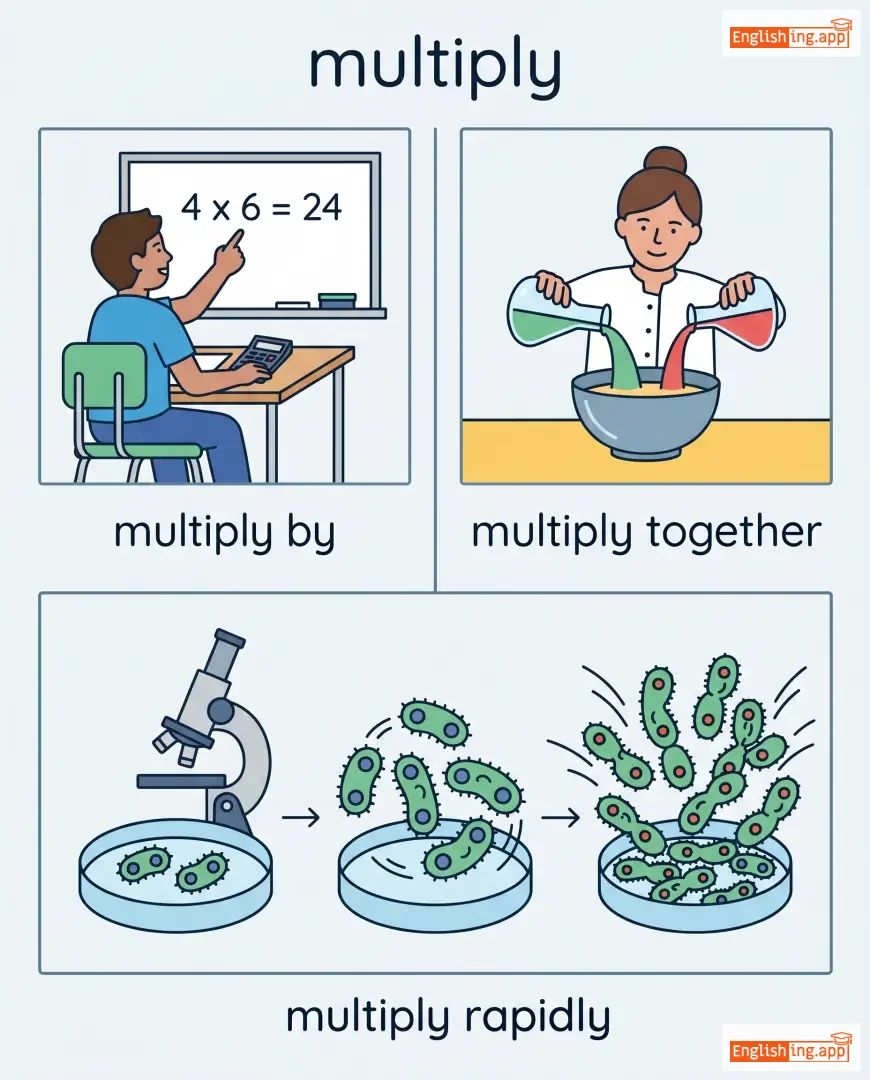
The bacteria multiply rapidly in warm conditions.
细菌在温暖的条件下迅速繁殖。
••••••
|
细菌在温暖的条件下迅速繁殖。
Xijun zai wenruan de tiaojian xia xunsu fanzhi
••••••
|
- •••••• | - •••••• | - •••••• |
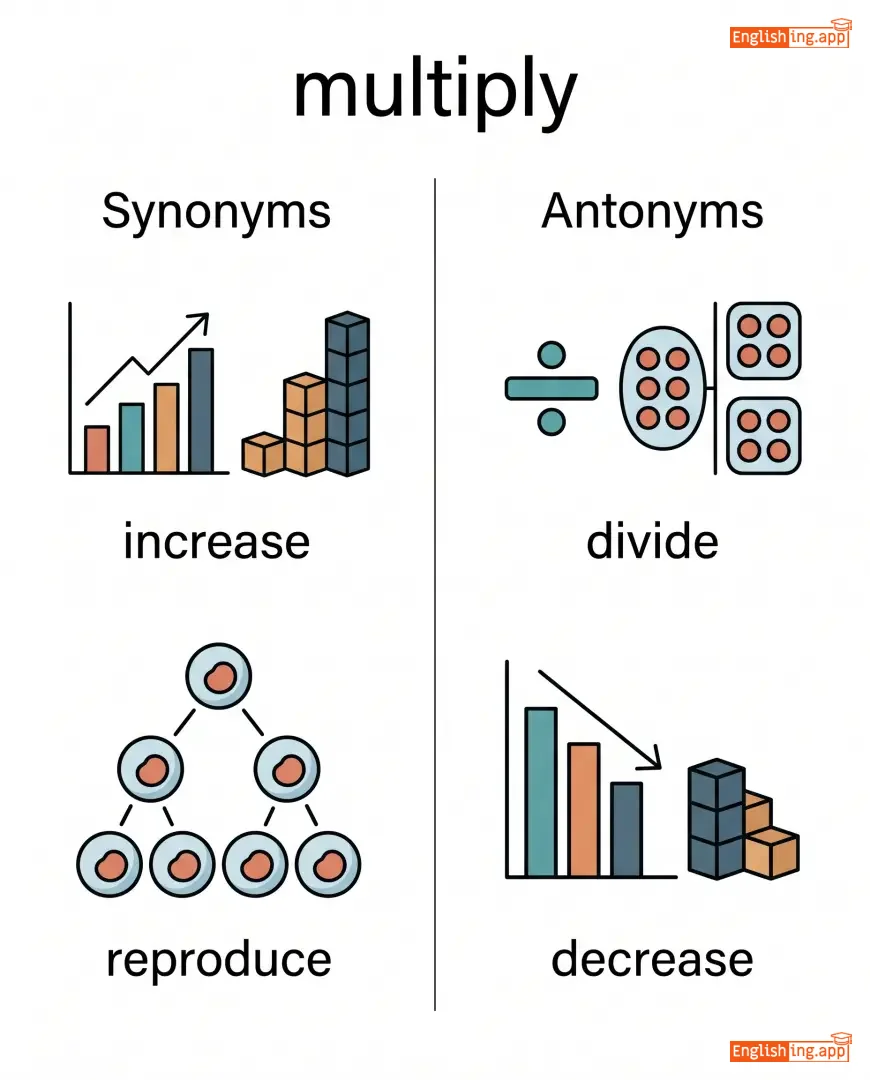
increase, reproduce, grow, expand
••••••
|
divide, decrease, reduce, diminish
••••••
|
multiply by, multiply together, multiply rapidly, multiply numbers
••••••
|
乘法就像细菌在温暖环境中繁殖
••••••
|
|
🏛️
••••••
|
/mjuːˈnɪsɪpəl/
adjective
(miuˈnɪsɪpəl)
••••••
|
- •••••• |
市政的
shì zhèng de
••••••
|
- •••••• | - •••••• | - •••••• | - •••••• |
relating to a city or town or its local government
••••••
|
The municipal authority is responsible for maintaining the park. |
市政当局负责维护公园。
Shì zhèng dāngjú fùzé wéihù gōngyuán.
••••••
|
municipal government |
local government of a city or town
••••••
|
市政政府
shì zhèng zhèngfǔ
••••••
|
civic, local, city, town
••••••
|
federal, national, state
••••••
|
municipal authority, municipal service, municipal law, municipal election
••••••
|
MUNIcipal - 市政的:和市政相关的政府管理职能。
••••••
|
|
🏙️
••••••
|
/ˌmjuːnɪsɪˈpæləti/
noun
••••••
|
- •••••• | - •••••• | - •••••• | - •••••• | - •••••• | - •••••• |
a city or town that has its own local government
••••••
|
The municipality is planning to build a new library. |
- •••••• |
municipality services |
services provided by a city or town authority
••••••
|
- •••••• |
city, town, borough, district
••••••
|
countryside, rural area
••••••
|
municipality council, municipality election, municipality authority
••••••
|
No •••••• |
|
🔪
••••••
|
/ˈmɜːrdər/
noun, verb
(谋杀)
••••••
|
- •••••• |
谋杀
móushā
••••••
|
murdered
谋杀了
••••••
|
murdered
谋杀了
••••••
|
murders
谋杀
••••••
|
murdering
谋杀
••••••
|
the unlawful killing of a person; to kill someone unlawfully and intentionally
••••••
|
The detective investigated the murder that shocked the town.
侦探调查了这起震惊小镇的谋杀案。
••••••
|
侦探调查了这起震惊小镇的谋杀案。
zhēntàn diàochá le zhè qǐ zhènjīng xiǎo zhèn de móushā àn.
••••••
|
murder will out
谋杀真相会大白
••••••
|
the truth about a crime will eventually be revealed
••••••
|
谋杀真相会大白
móushā zhēnxiàng huì dàbái
••••••
|
homicide, killing, assassination, slaughter
••••••
|
rescue, save
••••••
|
commit murder, brutal murder, murder case, murder weapon
••••••
|
Murder 意为谋杀 — Murder 会揭露真相
••••••
|
|
💪
••••••
|
/ˈmʌsl/
noun
(māsīl)
••••••
|
- •••••• |
肌肉
jīròu
••••••
|
- •••••• | - •••••• | - •••••• | - •••••• |
a band of fibrous tissue in the body that produces movement; physical strength
••••••
|
He exercises daily to build strong muscles. |
他每天锻炼以增强肌肉力量。
tā měitiān duànliàn yǐ zēngqiáng jīròu lìliàng.
••••••
|
flex your muscles |
to show strength or power
••••••
|
展示你的肌肉
zhǎnshì nǐ de jīròu
••••••
|
strength, power, force, sinew
••••••
|
weakness, frailty
••••••
|
muscle strength, muscle pain, muscle building, flex muscles
••••••
|
Muscle 意思是肌肉 — 展示你的肌肉,大家都会惊讶!
••••••
|
|
🏛️
••••••
|
/mjuˈziːəm/
noun
(mjuˈziəm)
••••••
|
- •••••• |
博物馆
bówùguǎn
••••••
|
- •••••• | - •••••• | - •••••• | - •••••• |
a building in which objects of historical, scientific, artistic, or cultural interest are stored and exhibited
••••••
|
We visited the art museum to see the new exhibition.
我们参观了艺术博物馆,欣赏了新的展览。
••••••
|
我们参观了艺术博物馆,欣赏了新的展览。
Wǒmen cānguānle yìshù bówùguǎn, xīnshǎngle xīn de zhǎnlǎn.
••••••
|
- •••••• | - •••••• | - •••••• |
gallery, exhibition hall, archive, collection
••••••
|
market, store
••••••
|
art museum, history museum, science museum, visit museum
••••••
|
博物馆是人类历史和艺术的宝库。
••••••
|
|
🎶
••••••
|
/ˈmjuːzɪk/
noun
(音乐)
••••••
|
- •••••• |
音乐
yinyue
••••••
|
- •••••• | - •••••• | - •••••• | - •••••• |
vocal or instrumental sounds combined to produce harmony, melody, or rhythm
••••••
|
She loves listening to classical music. |
她喜欢听古典音乐。
Ta xihuan ting gudian yinyue.
••••••
|
- •••••• | - •••••• | - •••••• |
melody, tune, composition, song
••••••
|
silence, quiet, stillness
••••••
|
classical music, pop music, music industry, music lover
••••••
|
Music is Yin Yue (音乐) - 音乐 is the Chinese word for music
••••••
|
|
🎵
••••••
|
/ˈmɪzɪkəl/
adjective
(音乐的)
••••••
|
- •••••• |
音乐的
yīnyuè de
••••••
|
- •••••• | - •••••• | - •••••• | - •••••• |
related to or consisting of music
••••••
|
She has a very musical voice. |
她有一副非常音乐的嗓音。
Tā yǒu yī fù fēicháng yīnyuè de sǎngyīn.
••••••
|
- •••••• | - •••••• | - •••••• |
melodic, harmonic, tuneful, musical
••••••
|
non-musical, tone-deaf
••••••
|
musical talent, musical instrument, musical performance
••••••
|
Musical is like music + AL - Musical is related to music
••••••
|
|
🎸
••••••
|
/mjuːˈzɪʃən/
noun
(mjuːˈzɪʃən)
••••••
|
- •••••• |
音乐家
yīnyuè jiā
••••••
|
- •••••• | - •••••• | - •••••• | - •••••• |
a person who plays a musical instrument or is musically talented
••••••
|
He is a talented musician. |
他是一个才华横溢的音乐家。
Tā shì yīgè cáihuá héngyì de yīnyuè jiā.
••••••
|
- •••••• | - •••••• | - •••••• |
performer, artist, instrumentalist, composer
••••••
|
non-musician, layman
••••••
|
professional musician, talented musician, aspiring musician
••••••
|
Musician is someone who plays Music + IAN (like an artist)
••••••
|
|
🕌
••••••
|
/ˈmʊzlɪm/
noun
(穆斯林)
••••••
|
- •••••• |
穆斯林
musilin
••••••
|
- •••••• | - •••••• | - •••••• | - •••••• |
a follower of Islam
••••••
|
He is a devout Muslim. |
他是一个虔诚的穆斯林。
Tā shì yīgè qiánchéng de mùsīlín.
••••••
|
- •••••• | - •••••• | - •••••• |
Islamic, believer, follower of Islam
••••••
|
non-Muslim, atheist
••••••
|
devout Muslim, practicing Muslim, Muslim community
••••••
|
Muslim is someone who follows ISLAM
••••••
|
|
✅
••••••
|
/mʌst/
verb
(mǎsī)
••••••
|
- •••••• |
必须
bìxū
••••••
|
musted
mǎsīdé
••••••
|
musted
mǎsīdé
••••••
|
musts
mǎsī
••••••
|
musting
mǎsīng
••••••
|
to be required or obligated to
••••••
|
You must complete your homework before you go out.
你必须完成作业,然后才能出去。
••••••
|
你必须完成作业,然后才能出去。
Nǐ bìxū wánchéng zuòyè, ránhòu cáinéng chūqù.
••••••
|
must do
必须做
••••••
|
something that absolutely needs to be done
••••••
|
必须做
bìxū zuò
••••••
|
have to, should, need to, required
••••••
|
can, may, optional
••••••
|
must do, must see, must have
••••••
|
必须做!这是必要的。
••••••
|
|
🤝
••••••
|
/ˈmjuːtʃuəl/
adjective
(mjuːtʃuəl)
••••••
|
- •••••• |
相互的
xiānghù de
••••••
|
- •••••• | - •••••• | - •••••• | - •••••• |
felt, shared, or done by two or more people equally
••••••
|
They have mutual respect for each other. |
他们彼此有相互的尊重。
Tāmen bǐcǐ yǒu xiānghù de zūnzhòng.
••••••
|
mutual understanding |
shared comprehension between two or more parties
••••••
|
相互理解
xiānghù lǐjiě
••••••
|
reciprocal, shared, common, joint, collective
••••••
|
one-sided, unilateral
••••••
|
mutual respect, mutual benefit, mutual agreement
••••••
|
相互意味着平等 - '相' 和 '互' 代表着对等的关系。
••••••
|
|
👤
••••••
|
/maɪ/
pronoun
(mái)
••••••
|
- •••••• |
我的
wǒ de
••••••
|
- •••••• | - •••••• | - •••••• | - •••••• |
used to indicate possession or ownership
••••••
|
This is my book.
这是我的书。
••••••
|
这是我的书。
Zhè shì wǒ de shū.
••••••
|
- •••••• | - •••••• | - •••••• |
mine, belonging to me
••••••
|
your, theirs
••••••
|
my friend, my house, my idea
••••••
|
我的书,代表着我的所有权!
••••••
|
|
🙋♂️
••••••
|
/maɪˈsɛlf/
pronoun
(máiˈsɛlf)
••••••
|
- •••••• |
我自己
wǒ zìjǐ
••••••
|
- •••••• | - •••••• | - •••••• | - •••••• |
used for emphasis or to refer to oneself
••••••
|
I will do it myself.
我会自己做。
••••••
|
我会自己做。
Wǒ huì zìjǐ zuò.
••••••
|
- •••••• | - •••••• | - •••••• |
me, personally
••••••
|
someone else
••••••
|
do it myself, I taught myself, look after myself
••••••
|
I, MYSELF and I - 我自己做
••••••
|
|
🕵️♂️
••••••
|
/mɪˈstɪəriəs/
adjective
(mǐsītéyùsī)
••••••
|
|
神秘
shenmi
••••••
|
- •••••• | - •••••• | - •••••• | - •••••• |
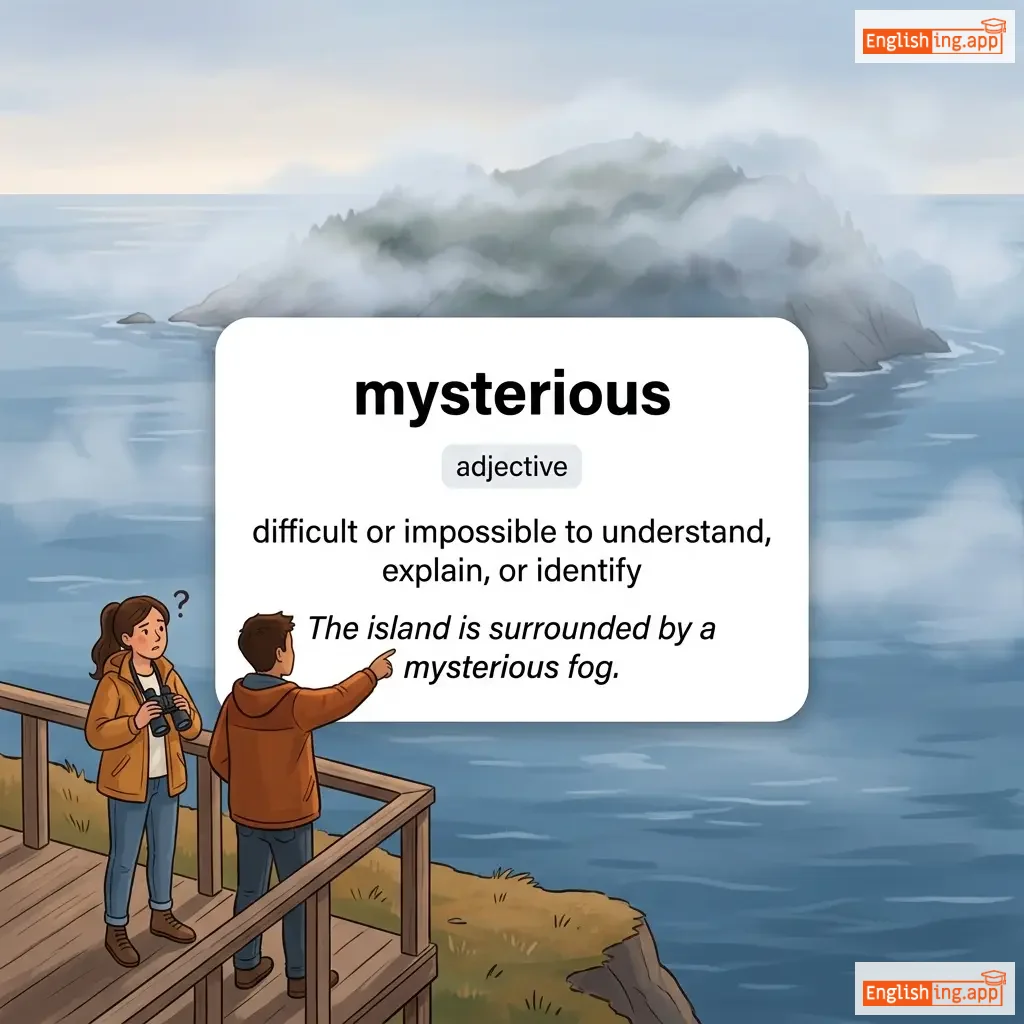
difficult or impossible to understand, explain, or identify
••••••
|
The island is surrounded by a mysterious fog. |
岛屿被神秘的雾气包围。
Dao yu bei shenmi de wuqi baowei.
••••••
|
mysterious ways |
unexpected or unexplainable methods or actions
••••••
|
神秘的方式
shenmi de fangshi
••••••
|
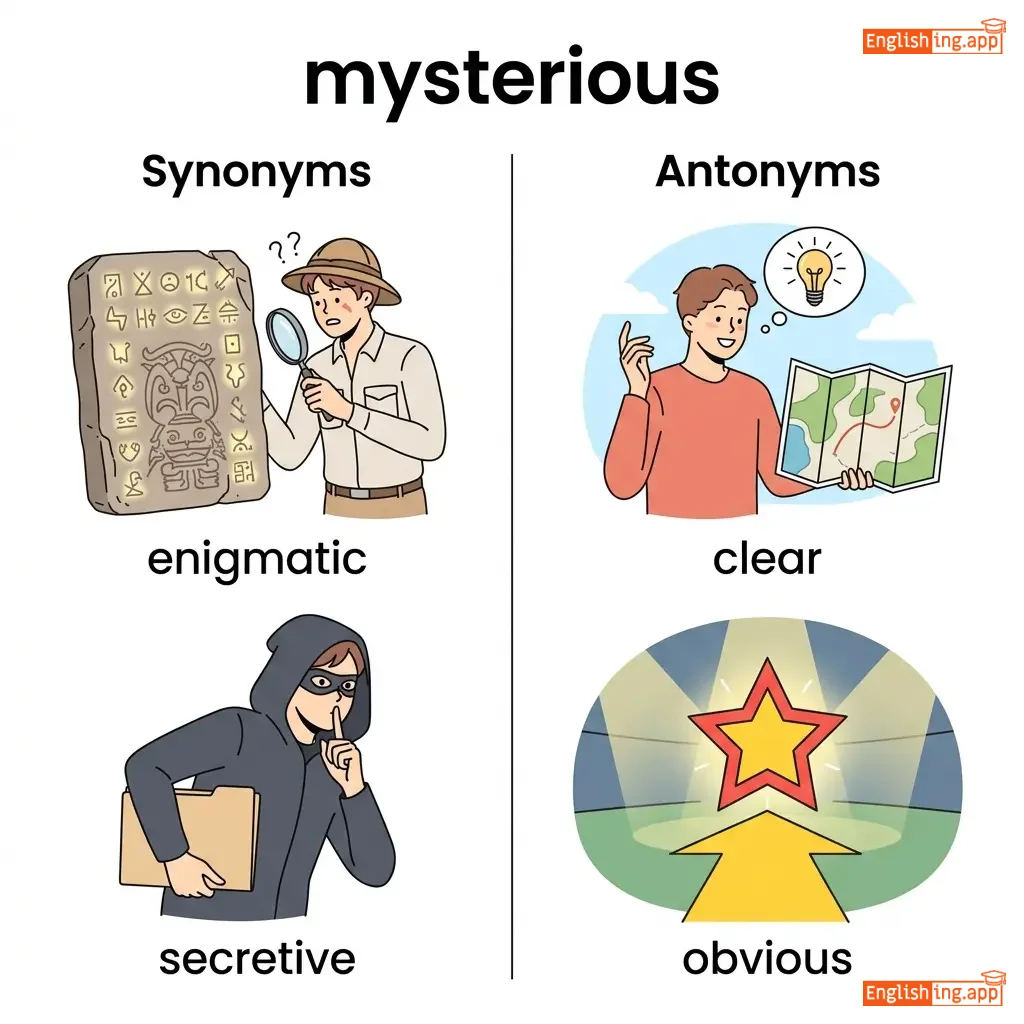
enigmatic, secretive, puzzling, cryptic, obscure
••••••
|
clear, obvious
••••••
|
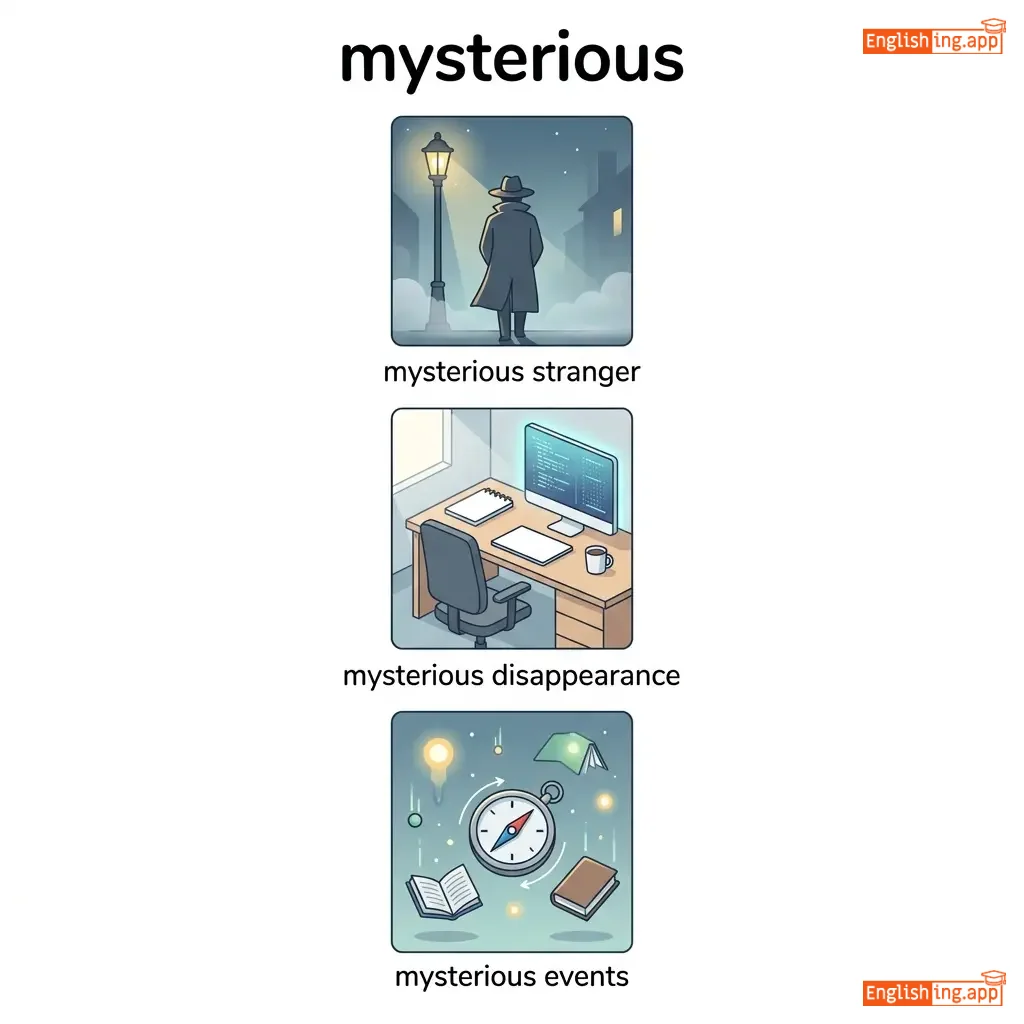
mysterious stranger, mysterious disappearance, mysterious events
••••••
|
神秘的事物就像谜一样,神秘即为‘谜’。
••••••
|
|
🔍
••••••
|
/ˈmɪs.tər.i/
noun
(mì shì lǐ)
••••••
|
- •••••• |
谜; 无法理解的事情
mi
••••••
|
- •••••• | - •••••• | - •••••• | - •••••• |
something that is difficult or impossible to understand or explain
••••••
|
The disappearance of the plane remains a mystery.
飞机失踪仍然是一个谜。
••••••
|
飞机失踪仍然是一个谜。
Feiji shizong rengran shi yige mi.
••••••
|
- •••••• | - •••••• | - •••••• |
puzzle, enigma, riddle, secret
••••••
|
certainty, clarity, solution, answer
••••••
|
solve mystery, unsolved mystery, mystery novel
••••••
|
一个无人能解的谜题。
••••••
|
|
🐉
••••••
|
/mɪθ/
noun
(mɪθ)
••••••
|
- •••••• |
神话
shenhua
••••••
|
- •••••• | - •••••• | - •••••• | - •••••• |
A traditional story explaining natural or social phenomena, often involving supernatural beings; a widely held but false belief.
••••••
|
The myth of the phoenix tells of a bird reborn from its ashes. |
凤凰的神话讲述了一只从灰烬中重生的鸟。
Fenghuang de shenhua jiangshu le yi zhi cong huijin zhong chongsheng de niao.
••••••
|
myth or reality |
Used when questioning whether something is true or just a belief.
••••••
|
神话还是现实
Shenhua haishi xianshi
••••••
|
legend, tale, folklore, fable, fiction
••••••
|
fact, reality, truth
••••••
|
ancient myth, Greek myth, popular myth, myth about
••••••
|
Myth = 一个关于错觉的故事,虽然有些可能是真的!
••••••
|
|
📌
••••••
|
/neɪl/
noun, verb
(内尔)
••••••
|
- •••••• |
钉子
dīngzi
••••••
|
nailed
内尔德
••••••
|
nailed
内尔德
••••••
|
nails
内尔斯
••••••
|
nailing
内尔ing
••••••
|
a small metal spike driven into wood or other material, or to fasten or fix something with nails
••••••
|
He nailed the wooden board to the wall.
他把木板钉在墙上。
••••••
|
他把木板钉在墙上。
tā bǎ mùbǎn dī zài qiáng shàng.
••••••
|
hit the nail on the head
一钉在钉
••••••
|
to describe exactly what is causing a situation or problem
••••••
|
准确描述一个情况或问题的原因
zhǔnquè miáoshù yīgè qíngkuàng huò wèntí de yuányīn
••••••
|
pin, tack, spike, fasten, attach
••••••
|
detach, remove, loosen
••••••
|
hammer a nail, nail polish, nail down, nail it
••••••
|
钉子就是固定目标,牢固不动。
••••••
|
|
🚼
••••••
|
/ˈneɪkɪd/
adjective
(neikid)
••••••
|
- •••••• |
赤裸
chiluo
••••••
|
- •••••• | - •••••• | - •••••• | - •••••• |
not covered by clothing or without protection
••••••
|
The child was running naked in the yard. |
孩子在院子里赤裸地跑来跑去。
Haizi zai yuanzi li chiluo de pao lai pao qu.
••••••
|
the naked truth |
the complete and unembellished truth
••••••
|
赤裸的真相
chiluo de zhenxiang
••••••
|
bare, unclothed, exposed, nude
••••••
|
clothed, covered
••••••
|
naked body, naked eye, naked truth
••••••
|
Naked意味着赤裸 – 如果你没有穿衣服,就是赤裸。
••••••
|
|
🏷️
••••••
|
/neɪm/
verb
(nei-mu)
••••••
|

|
命名
mingming
••••••
|
named
nei-mu-de
••••••
|
named
nei-mu-de
••••••
|
names
nei-mu-s
••••••
|
naming
nei-ming
••••••
|
to give a title or designation to someone or something
••••••
|
They decided to name their baby Sarah.
deh deh-sai-dehd tu neim deir beibi sara.
••••••
|
他们决定把他们的宝宝命名为莎拉。
Tamen jueding ba tamen de baobao mingming wei Shala
••••••
|
- •••••• | - •••••• | - •••••• |
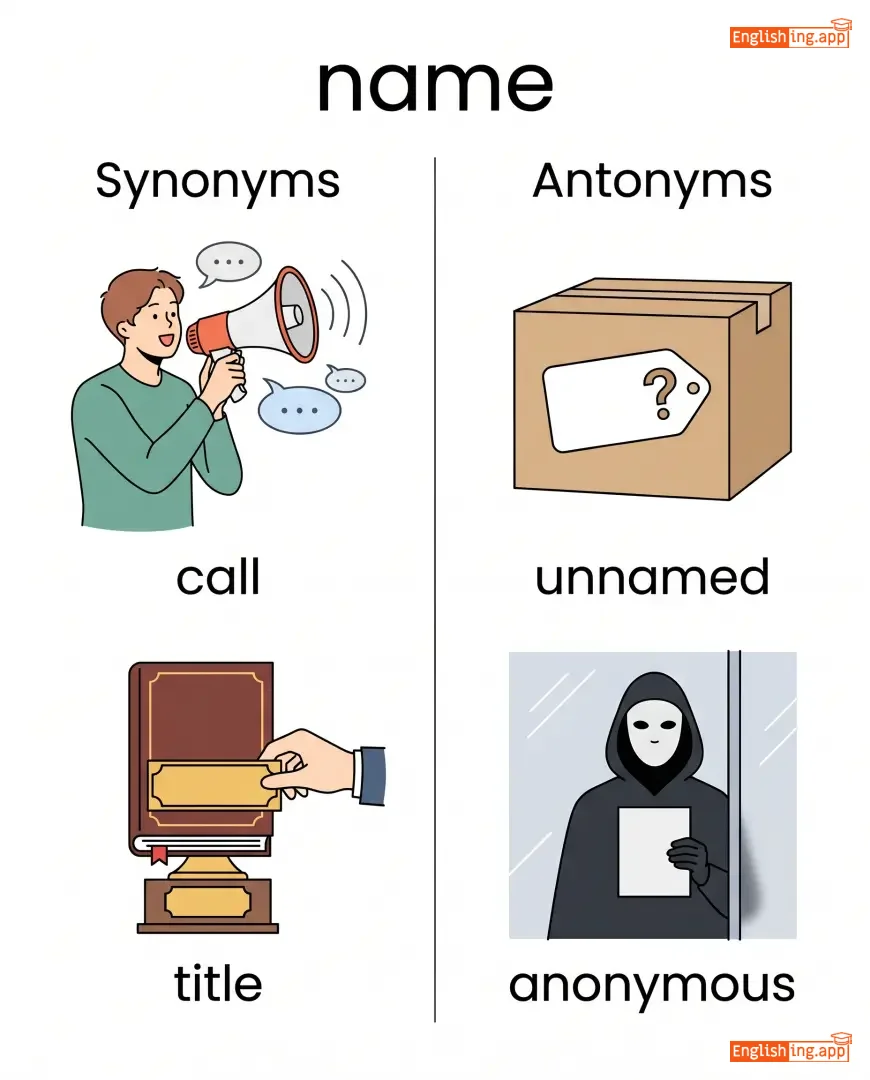
call, title, designate, label
••••••
|
unnamed, anonymous
••••••
|
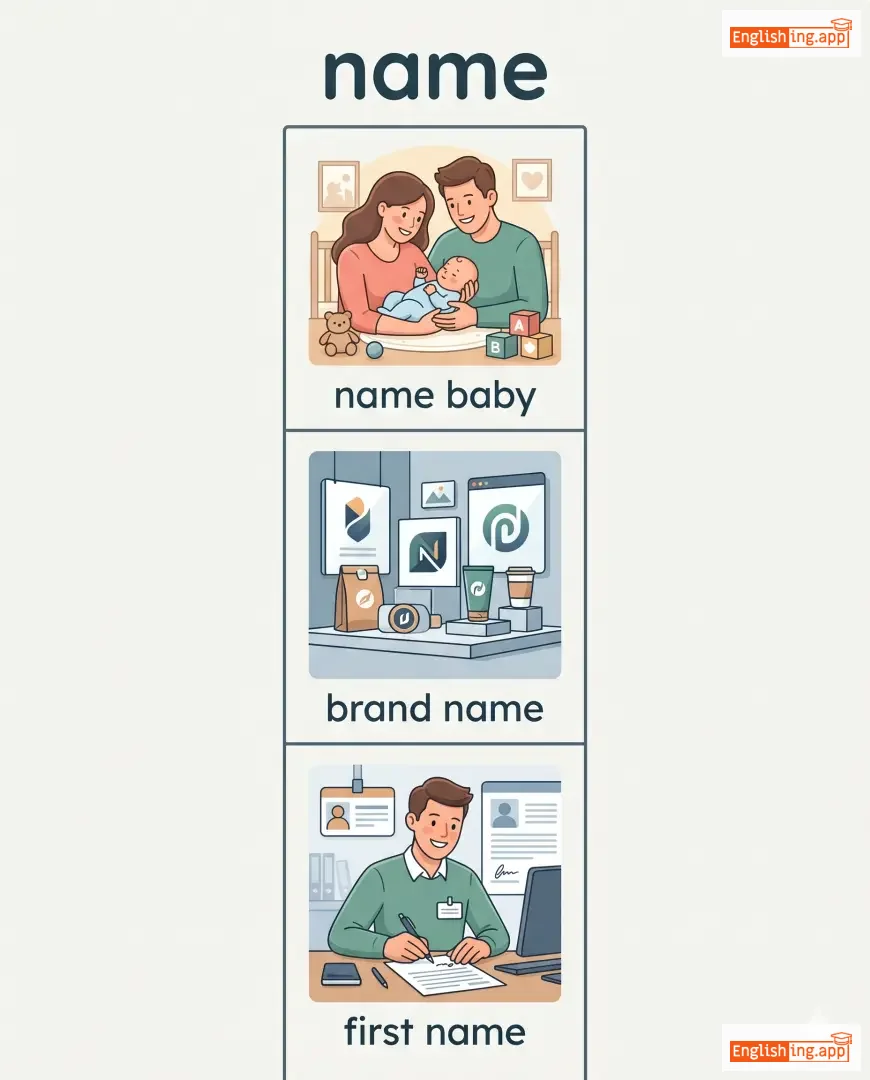
name baby, brand name, first name, last name
••••••
|
命名 = Giving a name with respect!
••••••
|
|
👉
••••••
|
/ˈneɪmli/
adverb
(nèi mǐ lì)
••••••
|
- •••••• |
即; 特别是;
ji; tebie shi
••••••
|
- •••••• | - •••••• | - •••••• | - •••••• |
that is to say; specifically; to be precise
••••••
|
Three cities, namely Paris, London, and Rome, were visited.
三个城市,即巴黎、伦敦和罗马,被参观。
••••••
|
三个城市,即巴黎、伦敦和罗马,被参观。
San ge chengshi, ji Bali, Lundun he Luoma, bei canguan.
••••••
|
- •••••• | - •••••• | - •••••• |
specifically, particularly, that is, to wit, viz
••••••
|
generally, broadly, vaguely
••••••
|
namely that, namely the, namely these, namely those
••••••
|
In Chinese, '即' (ji) is like saying 'namely' to specify details.
••••••
|
|
🎤
••••••
|
/ˈnæreɪt/
verb
(纳雷特)
••••••
|
- •••••• |
叙述
xushù
••••••
|
narrated
纳雷特德
••••••
|
narrated
纳雷特德
••••••
|
narrates
纳雷特斯
••••••
|
narrating
纳雷特英
••••••
|
To tell a story or describe events, often in detail.
••••••
|
She will narrate the events of her journey to the audience.
她将向观众叙述她旅途中的事件。
••••••
|
她将向观众叙述她旅途中的事件。
Ta jiang xiang guanzhong xushu ta lütu zhong de shijian.
••••••
|
narrate a story
讲述故事
••••••
|
To tell or describe a story to others.
••••••
|
讲故事
jiang gushi
••••••
|
tell, recount, describe, relate, detail
••••••
|
conceal, hide
••••••
|
narrate a story, narrate events, narrate experiences, narrate history
••••••
|
Narrate in Chinese means 叙述, meaning to narrate or tell a story.
••••••
|
|
📖
••••••
|
/næˈreɪʃən/
noun
(nareshen)
••••••
|
- •••••• |
叙述
xushu
••••••
|
- •••••• | - •••••• | - •••••• | - •••••• |
The act of telling a story or describing events in detail.
••••••
|
The movie’s narration was done by a famous actor.
电影的叙述由一位著名演员完成。
••••••
|
电影的叙述由一位著名演员完成。
Dianying de xushu you yi wei zhuming yanyuan wancheng.
••••••
|
voice narration
声音叙述
••••••
|
Spoken commentary or storytelling provided through voice.
••••••
|
声音叙述
Shengyin xushu
••••••
|
storytelling, recounting, commentary, description
••••••
|
silence, quiet
••••••
|
narration of events, narration in movies, narration style, narration voice
••••••
|
Narration in Chinese is 叙述, meaning telling or describing a story.
••••••
|
|
📝
••••••
|
/ˈnærətɪv/
noun
••••••
|
- •••••• | - •••••• | - •••••• | - •••••• | - •••••• | - •••••• |
A spoken or written account of connected events; a story.
••••••
|
The novel’s narrative explores themes of identity and freedom. |
- •••••• |
control the narrative |
To influence or shape how a story or situation is understood.
••••••
|
- •••••• |
story, account, tale, chronicle, description
••••••
|
silence, randomness
••••••
|
narrative style, narrative voice, personal narrative, political narrative
••••••
|
No •••••• |
|
↔️
••••••
|
/ˈnær.oʊ/
adjective
(奈罗)
••••••
|
- •••••• |
狭窄的; 限制的; 受限的
xiázhǎi de; xiànzhì de; shòuxiàn de
••••••
|
- •••••• | - •••••• | - •••••• | - •••••• |
having a small width; thin; limited in scope; restricted
••••••
|
The narrow street was barely wide enough for two cars. |
这条狭窄的街道几乎不足以容纳两辆车。
Zhè tiáo xiázhǎi de jiēdào jīhū bùzú yǐ róngnà liǎng liàng chē.
••••••
|
- •••••• | - •••••• | - •••••• |
thin, slim, tight, confined
••••••
|
wide, broad, spacious, expansive
••••••
|
narrow street, narrow margin, narrow escape, narrow minded
••••••
|
狭窄的街道上两辆车的通过空间非常有限。
••••••
|
|
😠
••••••
|
/ˈnæsti/
adjective
(nàisītí)
••••••
|
- •••••• |
令人不快的
lìng rén bù kuài de
••••••
|
- •••••• | - •••••• | - •••••• | - •••••• |
very unpleasant, unkind, or offensive
••••••
|
He made a nasty comment about her dress. |
他对她的裙子发表了令人不快的评论。
Tā duì tā de qúnzi fābiǎo le lìng rén bù kuài de pínglùn.
••••••
|
- •••••• | - •••••• | - •••••• |
unpleasant, mean, vile, horrible, rude
••••••
|
pleasant, kind, nice
••••••
|
nasty smell, nasty habit, nasty surprise, nasty weather
••••••
|
Nasty 听起来像‘nàisītí’—意味着令人不快或冒犯。
••••••
|
|
🌍
••••••
|
/ˈneɪʃən/
noun
(内申)
••••••
|
- •••••• |
国家
guójiā
••••••
|
- •••••• | - •••••• | - •••••• | - •••••• |
a large group of people united by common descent, history, culture, or language
••••••
|
The nation celebrated its independence day with pride. |
国家以自豪的心情庆祝独立日。
Guójiā yǐ zìháo de xīnqíng qìngzhù dúlì rì.
••••••
|
- •••••• | - •••••• | - •••••• |
country, state, land, realm
••••••
|
individual, province, territory
••••••
|
nation state, powerful nation, united nation, proud nation
••••••
|
Nation = Guójiā - Yī ge dà jiātíng, dōu yīqǐ!
••••••
|
|
🇳🇱
••••••
|
/ˈnæʃənəl/
adjective
(nàxiānàl)
••••••
|
- •••••• |
国家的
guójiā de
••••••
|
- •••••• | - •••••• | - •••••• | - •••••• |
relating to a nation, especially its culture, language, or government
••••••
|
The national anthem was played at the ceremony.
国歌在仪式上播放。
••••••
|
国歌在仪式上播放。
Guógē zài yíshì shàng bōfàng.
••••••
|
- •••••• | - •••••• | - •••••• |
state, public, governmental, nationalistic
••••••
|
local, regional, individual
••••••
|
national identity, national pride, national team, national government
••••••
|
National is about Guójiā - Guójiā de gē shēng!
••••••
|
|
🇺🇳
••••••
|
/ˈnæʃənəl ˈænθəm/
noun
(纳申纳尔 安瑟姆)
••••••
|
- •••••• |
国歌
guoge
••••••
|
- •••••• | - •••••• | - •••••• | - •••••• |
an official patriotic song of a country, performed at national events and ceremonies
••••••
|
The national anthem was played before the international match.
泽 纳申纳尔 安瑟姆 沃兹 普雷德 比佛 泽 因特纳申纳尔 马奇。
••••••
|
国际比赛前演奏了国歌。
Guoji bisai qian yanzou le guoge
••••••
|
play the national anthem
普雷 纳申纳尔 安瑟姆
••••••
|
to perform a country’s official patriotic song at a formal or public event
••••••
|
演奏国歌
yanzou guoge
••••••
|
state anthem, national song, patriotic anthem, official anthem
••••••
|
foreign anthem, unofficial song
••••••
|
sing the national anthem, play the national anthem, national anthem ceremony, official national anthem
••••••
|
Guo = nation, ge = song—国歌就是 national anthem
••••••
|
|
🌍
••••••
|
/ˌnæʃəˈnæləti/
noun
(næʃəˈnæləti)
••••••
|
- •••••• |
国籍
guójí
••••••
|
- •••••• | - •••••• | - •••••• | - •••••• |
The status of belonging to a particular nation, either by birth or naturalization.
••••••
|
Her nationality is Canadian, though she was born in France. |
她的国籍是加拿大的,尽管她出生在法国。
Tā de guójí shì jiānádà de, jǐnguǎn tā chūshēng zài fǎguó.
••••••
|
of all nationalities |
Including people from different nations or backgrounds
••••••
|
所有国籍的人
suǒyǒu guójí de rén
••••••
|
citizenship, origin, ethnicity, heritage, identity
••••••
|
statelessness, foreignness
••••••
|
dual nationality, acquire nationality, nationality law, nationality status
••••••
|
国籍 = 国 + 籍,表示你属于哪个国家
••••••
|
|
🇺🇳
••••••
|
/ˈnæʃənəli/
adverb
(纳申纳利)
••••••
|
- •••••• |
在全国范围内
zai quanguo fanwei nei
••••••
|
- •••••• | - •••••• | - •••••• | - •••••• |
at the level of a whole nation; in a way that involves or affects an entire country
••••••
|
The policy was implemented nationally to ensure equal benefits for all citizens.
该政策在全国范围内实施,以确保所有公民享有平等的福利。
••••••
|
该政策在全国范围内实施,以确保所有公民享有平等的福利。
gai zhengce zai quanguo fanwei nei shishi yi qubao suoyou gongmin xiangyou pingdeng de fuli
••••••
|
- •••••• | - •••••• | - •••••• |
nationwide, countrywide, domestically, federally
••••••
|
locally, regionally
••••••
|
nationally recognized, nationally implemented, nationally important, nationally regulated
••••••
|
nation = 全国 → nationally
••••••
|
|
🌍
••••••
|
/ˈneɪʃənˌwaɪd/
adjective, adverb
(neiˈʃənˌwaɪd)
••••••
|
- •••••• |
全国范围
quanguo fanwei
••••••
|
- •••••• | - •••••• | - •••••• | - •••••• |
existing or happening throughout an entire nation
••••••
|
The campaign received nationwide support.
这项运动得到了全国范围的支持。
••••••
|
这项运动得到了全国范围的支持。
Zhe xiang yundong dedaole quanguo fanwei de zhichi.
••••••
|
- •••••• | - •••••• | - •••••• |
countrywide, national, across the country, all over the nation
••••••
|
local, regional
••••••
|
nationwide survey, nationwide network, nationwide strike, nationwide coverage
••••••
|
Nation + wide = 全国范围; 记住‘nationwide’是指全国范围
••••••
|
|
🌍
••••••
|
/ˈneɪtɪv/
adjective
(内地的)
••••••
|
- •••••• |
本地的
běndì de
••••••
|
- •••••• | - •••••• | - •••••• | - •••••• |
Belonging to a person by birth; originating in a particular place.
••••••
|
He is a native speaker of Bengali.
他是孟加拉语的母语者。
••••••
|
他是孟加拉语的母语者。
Tā shì mèngjiālā yǔ de mǔyǔ zhě.
••••••
|
native land
故乡
••••••
|
the country where a person was born
••••••
|
故乡
gùxiāng
••••••
|
indigenous, local, original, natural
••••••
|
foreign, alien
••••••
|
native speaker, native language, native culture, native people
••••••
|
本地的 = 故乡 – 母语者 = 讲自己故乡语言的人
••••••
|
|
🌿
••••••
|
/ˈnætʃərəl/
adjective
(nèi cháo ěr)
••••••
|
- •••••• |
自然的
zìrán de
••••••
|
- •••••• | - •••••• | - •••••• | - •••••• |
existing in or derived from nature; not made or caused by humankind
••••••
|
She prefers to use natural ingredients in her cooking. |
她更喜欢在烹饪中使用天然的食材。
Tā gèng xǐhuān zài pēngrèn zhōng shǐyòng tiānrán de shícái.
••••••
|
- •••••• | - •••••• | - •••••• |
organic, raw, pure, unprocessed
••••••
|
artificial, synthetic, man-made
••••••
|
natural resources, natural beauty, natural selection, natural talent
••••••
|
Natural = Zìrán de, dōu shì cóng zìrán lái de.
••••••
|
|
🌪️
••••••
|
/ˈnætʃərəl dɪˈzæstər/
noun
(纳丘若 灾斯特)
••••••
|
- •••••• |
自然灾害
ziran zaihai
••••••
|
- •••••• | - •••••• | - •••••• | - •••••• |
a catastrophic event caused by natural processes of the Earth that results in significant damage, destruction, or loss of life
••••••
|
The coastal town was devastated by a natural disaster.
德 科斯特尔 汤 沃兹 德瓦斯特迪 德 拜 额 纳丘若 灾斯特。
••••••
|
这座沿海城镇被一场自然灾害摧毁了。
zhe zuo yanhai chengzhen bei yi chang ziran zaihai cuhui le
••••••
|
- •••••• | - •••••• | - •••••• |
catastrophe, calamity, act of God, natural catastrophe, hazard
••••••
|
blessing, boon
••••••
|
natural disaster relief, natural disaster management, natural disaster response, prone to natural disasters
••••••
|
自然的灾难 = 自然灾害
••••••
|
|
🌱
••••••
|
/ˈnætʃrəli/
adverb
(nàchúrèlì)
••••••
|
- •••••• |
自然地
zìrán de
••••••
|
- •••••• | - •••••• | - •••••• | - •••••• |
In a way that is normal, expected, or without effort.
••••••
|
He spoke so naturally that everyone felt comfortable.
他讲得如此自然,以至于每个人都感到舒服。
••••••
|
他讲得如此自然,以至于每个人都感到舒服。
Tā jiǎng dé rúcǐ zìrán, yǐzhì yú měi gèrén dōu gǎndào shūfú.
••••••
|
naturally enough
自然地足够
••••••
|
Not surprisingly; as expected
••••••
|
自然地足够
zìrán de zúgòu
••••••
|
obviously, surely, normally, effortlessly
••••••
|
unnaturally, artificially
••••••
|
behave naturally, speak naturally, occur naturally, naturally gifted
••••••
|
自然地就像大自然一样,无需努力。
••••••
|
|
🌳
••••••
|
/ˈneɪ.tʃər/
noun
(自然)
••••••
|
|
自然界; 自然世界; 某物的特性或基本品质
ziranjie; ziran shijie; mou wu de texing huo jiben pinzhi
••••••
|
- •••••• | - •••••• | - •••••• | - •••••• |
the natural world; the character or basic qualities of something
••••••
|
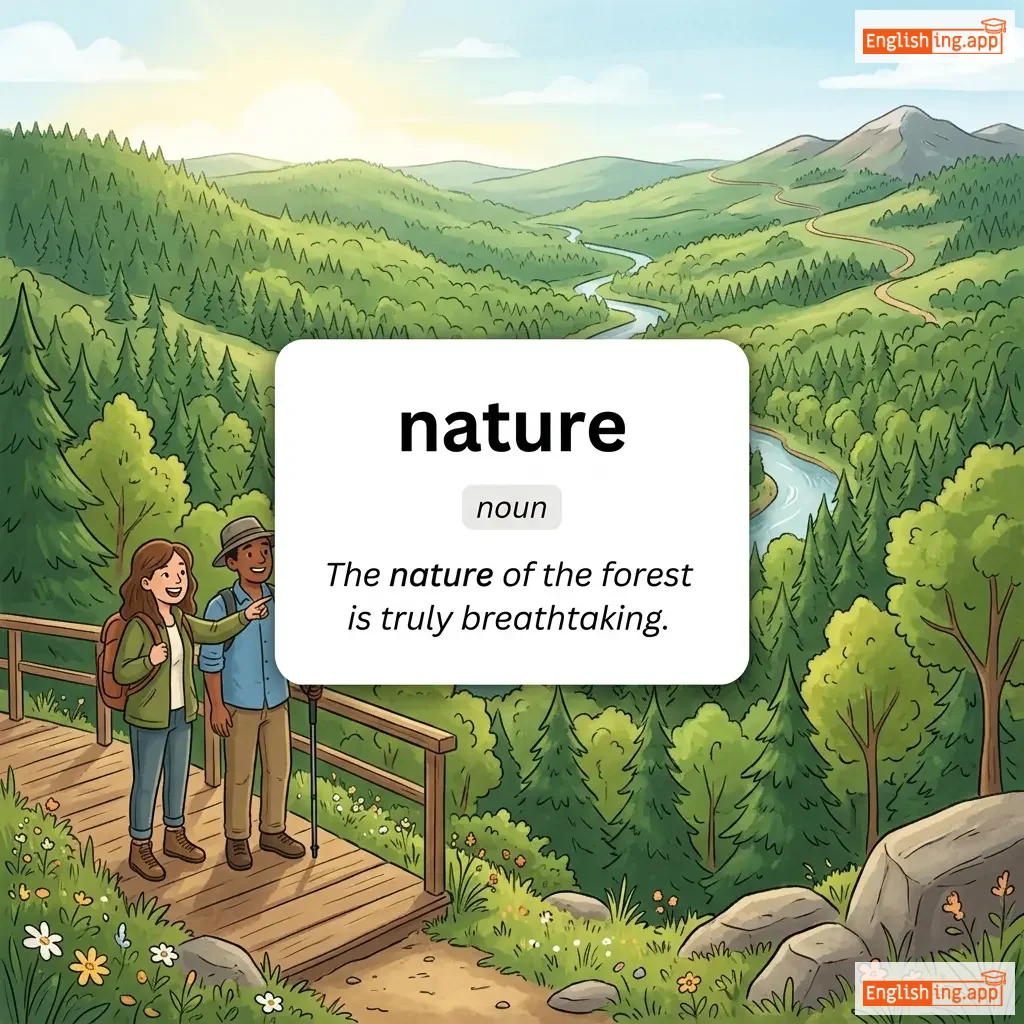
Children should spend more time in nature. |
孩子们应该在大自然中度过更多时间。
Haizimen yinggai zai da ziran zhong duoguo geng duo shijian.
••••••
|
- •••••• | - •••••• | - •••••• |
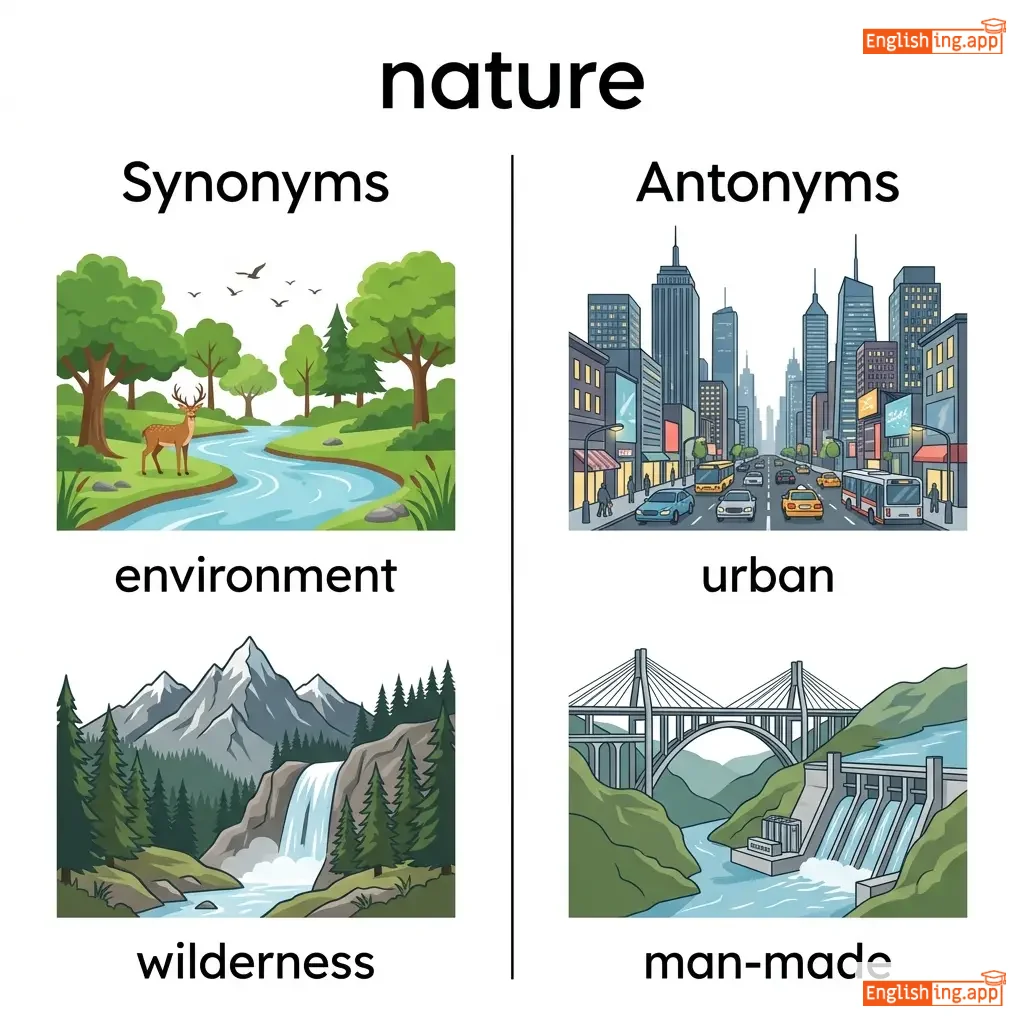
environment, wilderness, outdoors, character
••••••
|
artificiality, civilization, indoors
••••••
|
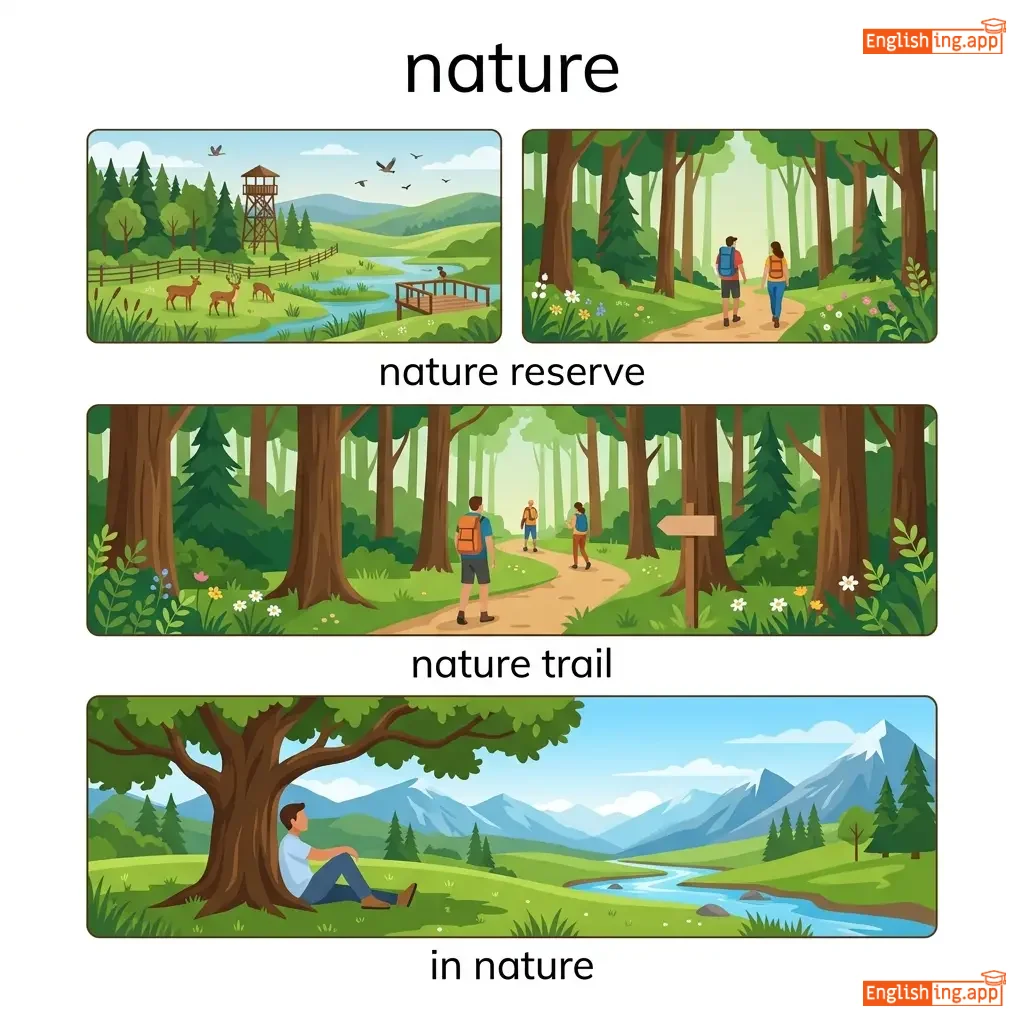
human nature, mother nature, laws of nature
••••••
|
大自然中的宁静能让人感到放松和清新。
••••••
|

