Neighborhood Pledge for the River
所有male亲戚早早到达,询问有关河流的情况。 在这么多many倡议中,他们讨论了先从哪个开始。 有个人说,'我们将组织一次mass清洁活动。' 米拉补充道,'我记得我在这条河上的第一次mate船只失事。' 太阳能团队帮助melt冰块,为农场提供燃料。 河流的路径发生了变化,现在它只是一个mere运河。 每个mill的所有者提交了节能计划。 他们不能再miss时间了。 为每个人分配了一个新的操作mode。 志愿者承诺为河流投入more小时。 主席说,'这个计划对我们来说是most至关重要的。' 希望在每个人的眼中闪烁着much光芒。 誓言宣告,'我们must现在就行动。' 他们仔细检查了每个志愿者的name是否在注册表上。 安装了传感器,看看洪水是否会near。 孩子们在河流的neck附近发现了螃蟹。 口袋公园中的鸟类正在筑造一个新的nest。 早晨的news让每个人都兴奋不已。 下一个next活动的时间表已公布。 开幕曲真的nice。
|
表情符号
|
单词 | Images | 翻译 | 过去时 | 过去分词 | 第三人称单数 | 动名词 | 含义 | 例句 | 例句翻译 | 示例表达 | 示例表达含义 | 示例表达翻译 | 同义词 | 反义词 | 搭配词 | 助记符 |
|---|---|---|---|---|---|---|---|---|---|---|---|---|---|---|---|---|---|
|
👨
••••••
|
/meɪl/
noun/adjective
(梅尔)
••••••
|
- •••••• |
男性
nánxìng
••••••
|
- •••••• | - •••••• | - •••••• | - •••••• |
a man or boy; relating to men or boys
••••••
|
The school has more male teachers than female teachers.
学校有更多的男性教师而非女性教师。
••••••
|
学校有更多的男性教师而非女性教师。
Xuéxiào yǒu gèng duō de nánxìng jiàoshī ér fēi nǚxìng jiàoshī.
••••••
|
male dominance
男性主导
••••••
|
a situation where men hold more power
••••••
|
男性主导
nánxìng zhǔdǎo
••••••
|
man, boy, masculine, gentleman
••••••
|
female, woman
••••••
|
male student, male voice, male member, male worker
••••••
|
男性的'M'就像'男人'。
••••••
|
|
🔢
••••••
|
/ˈmɛni/
adjective
(méini)
••••••
|
- •••••• |
许多
xuduo
••••••
|
- •••••• | - •••••• | - •••••• | - •••••• |
a large number of
••••••
|
Many students attended the lecture. |
许多学生参加了讲座。
Xuduo xuesheng canjia le jiangzuo.
••••••
|
many a time |
very often
••••••
|
许多次
xuduo ci
••••••
|
numerous, countless, several, various, multiple
••••••
|
few, little
••••••
|
many people, many years, many times, many ways
••••••
|
Many就是许多 (xuduo)
••••••
|
|
🌐
••••••
|
/mæs/
noun
(mǎsī)
••••••
|
- •••••• |
质量
zhìliàng
••••••
|
- •••••• | - •••••• | - •••••• | - •••••• |
a large body of matter with no specific shape; a large number of people or things
••••••
|
A huge mass of people gathered in the square.
一大群人聚集在广场上。
••••••
|
一大群人聚集在广场上。
Yī dà qún rén jùjí zài guǎngchǎng shàng.
••••••
|
critical mass
临界质量
••••••
|
the minimum size or amount needed for something to start or be effective
••••••
|
临界质量
línjiè zhìliàng
••••••
|
bulk, crowd, heap, volume, multitude
••••••
|
fragment, part, individual
••••••
|
mass production, mass movement, mass media, mass destruction
••••••
|
Mass意味着许多人聚集在一起,就像一个庞大的'质量'。
••••••
|
|
👫
••••••
|
/meɪt/
noun
(梅特)
••••••
|
- •••••• |
朋友, 伴侣
pengyou, banlv
••••••
|
- •••••• | - •••••• | - •••••• | - •••••• |
a friend or companion; a partner in marriage or reproduction
••••••
|
He went fishing with his old school mate. |
他和他老朋友去钓鱼了。
Ta he ta lao pengyou qu diaoyu le.
••••••
|
best mate |
a very close friend
••••••
|
最好的朋友
zui hao de pengyou
••••••
|
friend, companion, partner, buddy, ally
••••••
|
enemy, foe, rival
••••••
|
close mate, class mate, team mate, life mate
••••••
|
Mate 意味着朋友 — 想象 'mate' 就像朋友一样。
••••••
|
|
🧊
••••••
|
/mɛlt/
verb
(melt)
••••••
|
|
融化
ronghua
••••••
|
melted
melted
••••••
|
melted
melted
••••••
|
melts
melts
••••••
|
melting
melting
••••••
|
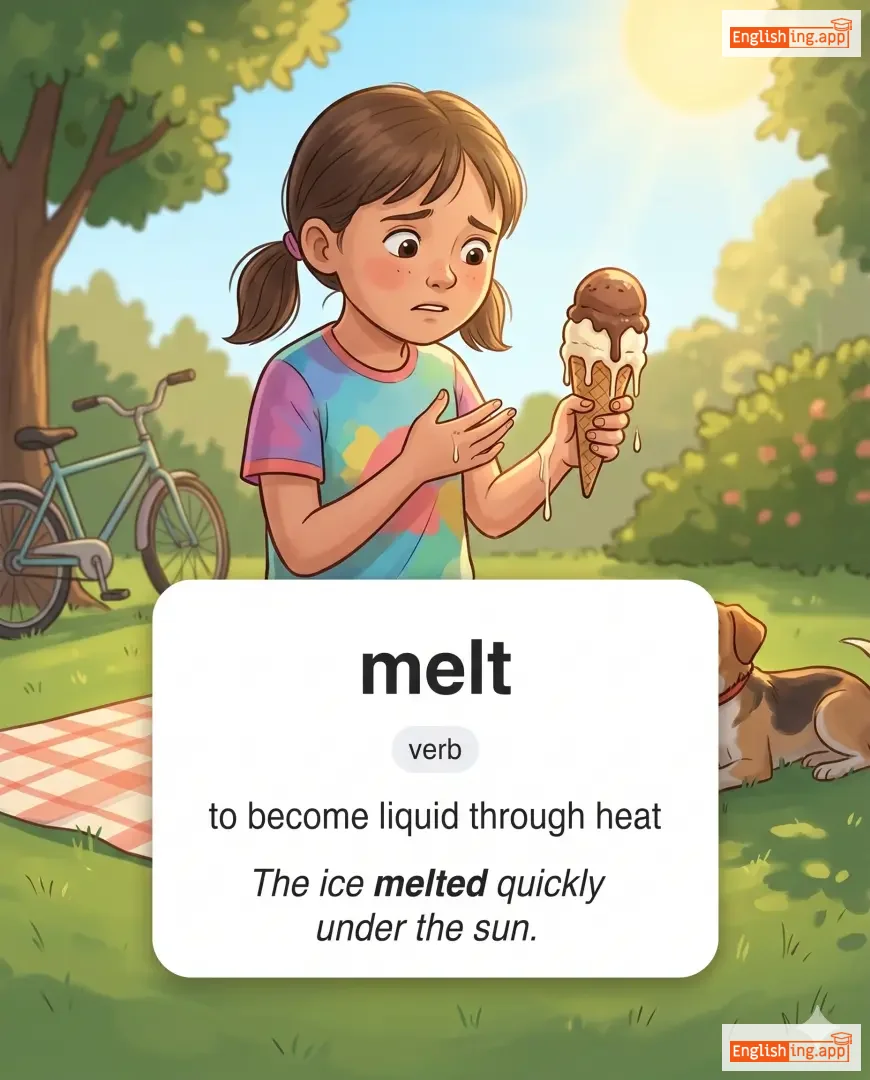
to become liquid through heat
••••••
|
The ice melted quickly under the sun.
The ice melted quickly under the sun.
••••••
|
冰在太阳下迅速融化。
Bing zai taiyang xia xunsu ronghua.
••••••
|
melt someone's heart
melt someone's heart
••••••
|
to make someone feel love or sympathy
••••••
|
融化某人的心
Ronghua mou ren de xin
••••••
|
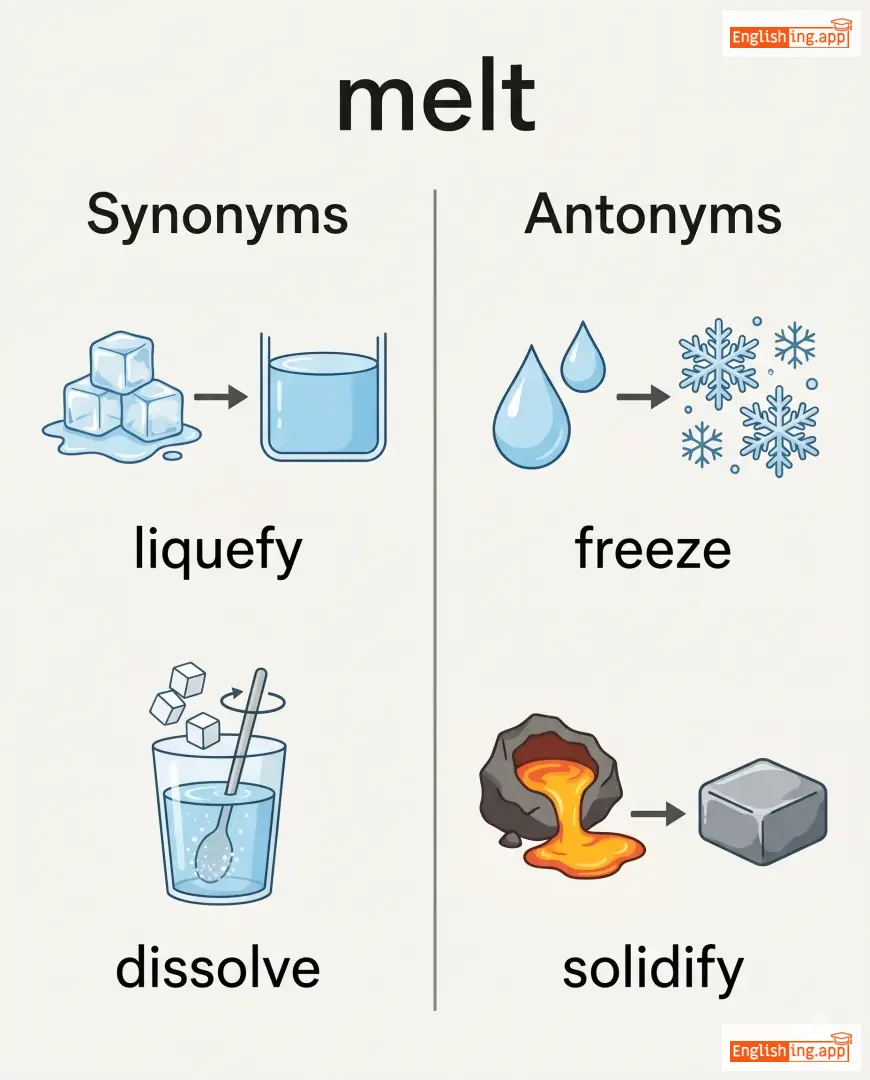
liquefy, dissolve, thaw, soften, fuse
••••••
|
freeze, solidify
••••••
|
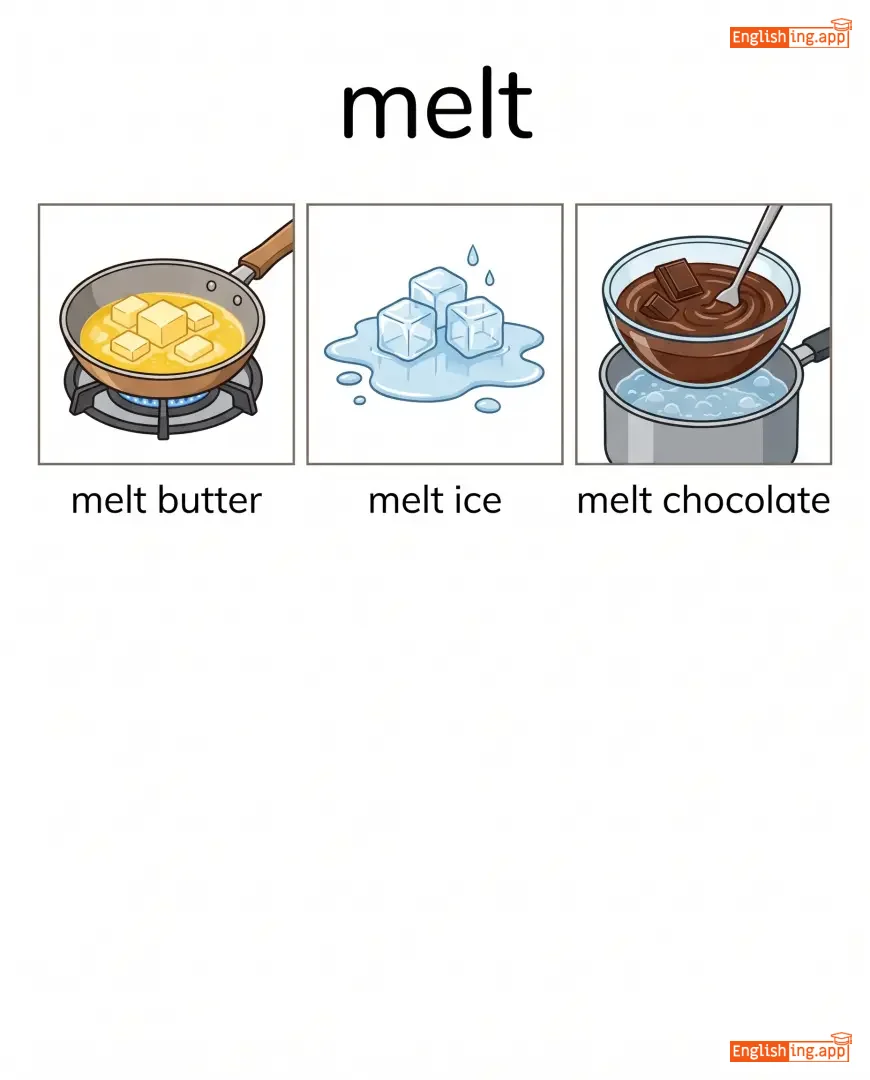
melt butter, melt ice, melt chocolate, melt in the sun
••••••
|
Melt 就是融化,像冰融化一样。
••••••
|
|
✨
••••••
|
/mɪr/
adjective
(míěr)
••••••
|
- •••••• |
仅仅
jinjin
••••••
|
- •••••• | - •••••• | - •••••• | - •••••• |
Used to emphasize how small or insignificant something is.
••••••
|
It was a mere suggestion, not a command. |
这只是一个建议,而不是命令。
Zhè zhǐ shì yīgè jiànyì, ér bùshì mìnglìng.
••••••
|
a mere formality |
Something done because it is expected, but without real importance
••••••
|
仅仅是一个形式
Jǐnjǐn shì yīgè xíngshì
••••••
|
simple, trivial, insignificant, minor, slight
••••••
|
important, significant, major
••••••
|
mere coincidence, mere child, mere formality, mere mention
••••••
|
Mere 在中文中意味着 '仅仅' — 想想简单!
••••••
|
|
🏭
••••••
|
/mɪl/
noun
(míl)
••••••
|
- •••••• |
磨坊
mófāng
••••••
|
- •••••• | - •••••• | - •••••• | - •••••• |
a building equipped with machinery for grinding grain or manufacturing goods
••••••
|
The old flour mill has been converted into a museum.
那座老面粉厂已被改建为博物馆。
••••••
|
那座老面粉厂已被改建为博物馆。
Nà zuò lǎo miànfěn chǎng yǐ bèi gǎi jiàn wéi bówùguǎn.
••••••
|
grind to a halt
磨到停止
••••••
|
to slowly stop functioning or progressing
••••••
|
逐渐停止
zhújiàn tíngzhǐ
••••••
|
factory, plant, workshop, foundry
••••••
|
field, farm
••••••
|
flour mill, textile mill, paper mill, steel mill
••••••
|
Mill是磨坊 — 在磨坊里面粉被磨碎。
••••••
|
|
😢
••••••
|
/mɪs/
verb, noun
(米斯)
••••••
|
- •••••• |
错过 / 想念
cuo guo / xiang nian
••••••
|
missed
米斯德
••••••
|
missed
米斯德
••••••
|
misses
米塞斯
••••••
|
missing
米星
••••••
|
to fail to hit, reach, or meet; to feel the absence of someone or something
••••••
|
I really miss my family when I travel abroad.
当我出国旅行时,我真的很想念我的家人。
••••••
|
当我出国旅行时,我真的很想念我的家人。
Dang wo chuguo lüxing shi, wo zhen de hen xiangnian wo de jiaren.
••••••
|
miss the boat
错失良机
••••••
|
to miss an opportunity
••••••
|
错过机会
cuo guo ji hui
••••••
|
long for, yearn, fail, omit
••••••
|
catch, attend, achieve
••••••
|
miss a chance, miss the bus, miss someone, miss an opportunity
••••••
|
想念就像错过了什么,就像错过了良机
••••••
|
|
📱
••••••
|
/moʊd/
noun
(模式)
••••••
|
- •••••• |
模式
moshi
••••••
|
- •••••• | - •••••• | - •••••• | - •••••• |
A particular way or style in which something is done, experienced, or expressed.
••••••
|
The phone has a silent mode for meetings. |
手机有一个用于会议的静音模式。
Shǒujī yǒu yīgè yòng yú huìyì de jìngyīn móshì.
••••••
|
in mode |
To be in a particular state or style of action.
••••••
|
- •••••• |
manner, style, method, form, fashion
••••••
|
disorder, chaos
••••••
|
silent mode, airplane mode, survival mode, operating mode
••••••
|
飞行模式下不能使用手机,所以模式意味着状态。
••••••
|
|
➕
••••••
|
/mɔːr/
adjective, adverb, pronoun
(mó ěr)
••••••
|
- •••••• |
更多
gèng duō
••••••
|
- •••••• | - •••••• | - •••••• | - •••••• |
A greater or additional amount or degree.
••••••
|
She wanted more time to finish the project. |
她想要更多的时间来完成这个项目。
Tā xiǎng yào gèng duō de shí jiān lái wán chéng zhè ge xiàng mù.
••••••
|
more or less |
Approximately, almost.
••••••
|
多或少
duō huò shǎo
••••••
|
additional, extra, further, greater
••••••
|
less, fewer
••••••
|
more than, much more, more time, more money
••••••
|
More 意味着 '更多'—总是想要更多的时间或资源。
••••••
|
|
📊
••••••
|
/moʊst/
adjective, adverb, pronoun
(most)
••••••
|
- •••••• |
大多数
dàduōshù
••••••
|
- •••••• | - •••••• | - •••••• | - •••••• |
the greatest in amount, degree, or number
••••••
|
Most people like to relax on weekends. |
大多数人喜欢在周末休息。
Dàduōshù rén xǐhuān zài zhōumò xiūxí.
••••••
|
for the most part |
generally; in most cases
••••••
|
大多数情况下
dàduōshù qíngkuàng xià
••••••
|
majority, maximum, greatest, bulk, largest
••••••
|
least, fewest, minor
••••••
|
most people, most important, most of the time, most cases
••••••
|
Most = 大多数人
••••••
|
|
💯
••••••
|
/mʌtʃ/
adjective, adverb, pronoun
(mʌʧ)
••••••
|
- •••••• |
很多
hen duo
••••••
|
- •••••• | - •••••• | - •••••• | - •••••• |
a large amount or degree of something
••••••
|
She doesn’t have much time to finish the project. |
她没有很多时间来完成这个项目。
Ta meiyou henduo shijian lai wancheng zhege xiangmu.
••••••
|
much ado about nothing |
a lot of fuss about something unimportant
••••••
|
无谓的喧嚣
wuwei de xuanshao
••••••
|
a lot, plenty, abundant, great deal
••••••
|
little, few
••••••
|
too much, much more, much less, so much
••••••
|
很多意味着很多 — 很多工作意味着很多努力!
••••••
|
|
✅
••••••
|
/mʌst/
verb
(mǎsī)
••••••
|
- •••••• |
必须
bìxū
••••••
|
musted
mǎsīdé
••••••
|
musted
mǎsīdé
••••••
|
musts
mǎsī
••••••
|
musting
mǎsīng
••••••
|
to be required or obligated to
••••••
|
You must complete your homework before you go out.
你必须完成作业,然后才能出去。
••••••
|
你必须完成作业,然后才能出去。
Nǐ bìxū wánchéng zuòyè, ránhòu cáinéng chūqù.
••••••
|
must do
必须做
••••••
|
something that absolutely needs to be done
••••••
|
必须做
bìxū zuò
••••••
|
have to, should, need to, required
••••••
|
can, may, optional
••••••
|
must do, must see, must have
••••••
|
必须做!这是必要的。
••••••
|
|
🏷️
••••••
|
/neɪm/
verb
(nei-mu)
••••••
|


|
命名
mingming
••••••
|
named
nei-mu-de
••••••
|
named
nei-mu-de
••••••
|
names
nei-mu-s
••••••
|
naming
nei-ming
••••••
|
to give a title or designation to someone or something
••••••
|
They decided to name their baby Sarah.
deh deh-sai-dehd tu neim deir beibi sara.
••••••
|
他们决定把他们的宝宝命名为莎拉。
Tamen jueding ba tamen de baobao mingming wei Shala
••••••
|
- •••••• | - •••••• | - •••••• |
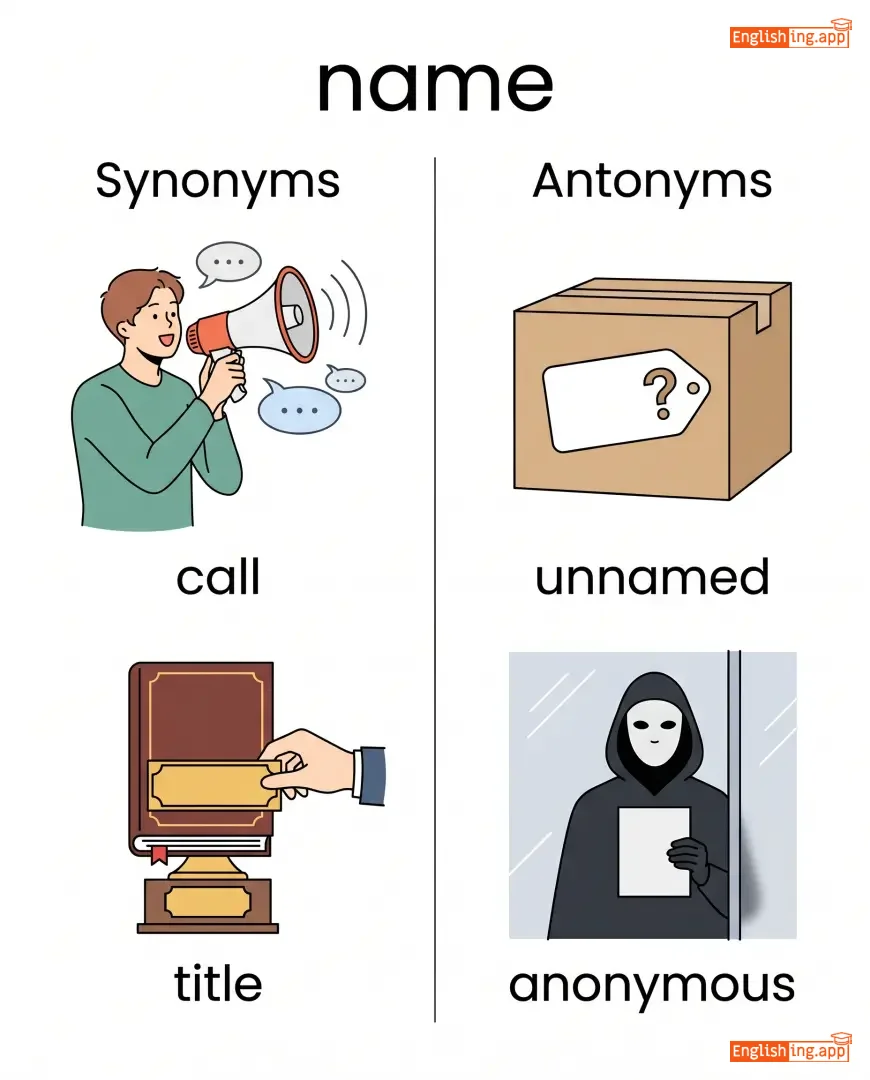
call, title, designate, label
••••••
|
unnamed, anonymous
••••••
|
name baby, brand name, first name, last name
••••••
|
命名 = Giving a name with respect!
••••••
|
|
📍
••••••
|
/nɪə(r)/
preposition
(nier)
••••••
|
- •••••• |
近
jin
••••••
|
- •••••• | - •••••• | - •••••• | - •••••• |
At or to a short distance away; close in space, time, or relationship.
••••••
|
There is a park near my house. |
我家附近有一个公园。
Wo jia fujin you yige gongyuan.
••••••
|
near and dear |
very close and important to someone
••••••
|
非常亲密和重要
feichang qinmi he zhongyao
••••••
|
close, adjacent, next to, nearby
••••••
|
far, distant
••••••
|
near future, near death, near place, near completion
••••••
|
Near就是接近——就像有些人非常亲密和重要。
••••••
|
|
🦒
••••••
|
/nɛk/
noun
(nèkè)
••••••
|
- •••••• |
脖子
bozi
••••••
|
- •••••• | - •••••• | - •••••• | - •••••• |
the part of the body connecting the head and the shoulders
••••••
|
She wore a necklace around her neck. |
她脖子上戴着一条项链。
Tā bózi shàng dàizhe yītiáo xiàngliàn.
••••••
|
- •••••• | - •••••• | - •••••• |
throat, collar, nape
••••••
|
head, chest
••••••
|
neck pain, neck injury, neck of the bottle
••••••
|
脖子 (bozi) 和 'neck' 很像,想象你脖子上的项链。
••••••
|
|
🪹
••••••
|
/nɛst/
noun
(nèst)
••••••
|
- •••••• |
鸟巢
niao chao
••••••
|
- •••••• | - •••••• | - •••••• | - •••••• |
a structure built by birds or other animals to hold their eggs or young.
••••••
|
The bird built a nest in the tall tree. |
那只鸟在高高的树上建了一个鸟巢。
Na zhi niao zai gao gao de shu shang jian le yi ge niao chao.
••••••
|
empty nest |
a home where children have grown up and left, leaving the parents alone.
••••••
|
空巢
kong chao
••••••
|
home, den, lair, shelter, abode
••••••
|
wilderness, outside
••••••
|
bird's nest, build a nest, cozy nest, empty nest
••••••
|
鸟巢 — 就是鸟儿住的地方,想象它们在鸟巢里筑巢!
••••••
|
|
📰
••••••
|
/nuːz/
noun
(niúzī)
••••••
|
- •••••• |
新闻
xīnwén
••••••
|
- •••••• | - •••••• | - •••••• | - •••••• |
newly received or noteworthy information, especially about recent events
••••••
|
The news about the storm spread quickly. |
关于暴风雨的新闻迅速传播。
Guānyú bàofēngyǔ de xīnwén xùnsù chuánbò.
••••••
|
- •••••• | - •••••• | - •••••• |
information, report, bulletin, update
••••••
|
silence, ignorance
••••••
|
breaking news, latest news, good news, bad news
••••••
|
NEWS = 新的 事件 我们 应该 知道
••••••
|
|
⏭️
••••••
|
/nɛkst/
adjective
(nɛkst)
••••••
|
- •••••• |
下一个
xia yige
••••••
|
- •••••• | - •••••• | - •••••• | - •••••• |
immediately following in time, order, or place
••••••
|
The next train leaves at 9:00 AM. |
下一班火车将在上午9:00出发。
Xia yiban huoche jiang zai shangwu 9:00 chufa.
••••••
|
- •••••• | - •••••• | - •••••• |
following, subsequent, upcoming, nearest
••••••
|
previous, prior
••••••
|
next day, next year, next time, next week
••••••
|
Next is always the NEXT thing to happen
••••••
|
|
😊
••••••
|
/naɪs/
adjective
(nài sī)
••••••
|
- •••••• |
友好
yǒu hǎo
••••••
|
- •••••• | - •••••• | - •••••• | - •••••• |
pleasant, kind, or enjoyable
••••••
|
She is a very nice person to work with. |
她是一个非常友好的人,和她一起工作很愉快。
Tā shì yī gè fēicháng yǒu hǎo de rén, hé tā yīqǐ gōngzuò hěn yú kuài.
••••••
|
nice and easy |
something simple and comfortable
••••••
|
友好且简单
yǒu hǎo qiě jiǎn dān
••••••
|
pleasant, kind, friendly, agreeable, charming
••••••
|
mean, rude, unpleasant
••••••
|
nice day, nice person, nice weather, nice job, nice to meet
••••••
|
友好 = 一个友好的人总是愉快的!
••••••
|

