Rainy Village Rally
雨水稍微减缓后,村民们聚集在社区的lawn上。 水开始从池塘中leak流入田地。 他们邀请参与者坐在地上,lean喝茶。 大家看到孩子们从门口leap过,纷纷笑了。 摄影师的lens不断起雾。 他们分享了清晰的数据,以减少less谣言的空间。 急救队支持一个受伤的limb。 侦察员加强了他们的沟通link。 一名学生展示了一张关于河流lion野生动物的海报。 他们在集会上朗读了一份所有帮助者的list。 组织者宣布批准了一项新的loan,用于资助环保任务。 仓库的lock啪地一声打开,露出了太阳能灯。 村里现在有一个带logo的饮用水井。 为了迅速执行计划,他们在暴风雨前开始loom文件。 新的管道连接以loop的方式排列。 他们发誓再也不会lose希望。 他们决定不再在面对旧问题时感到lost。 从野外工具包中取出的lots配件以各种方式使用。 他们开玩笑说,如果能有一点luck与山风配合,活动会更好。 村医提醒他们要关心每个哮喘患者的lung。
|
表情符号
|
单词 | Images | 翻译 | 过去时 | 过去分词 | 第三人称单数 | 动名词 | 含义 | 例句 | 例句翻译 | 示例表达 | 示例表达含义 | 示例表达翻译 | 同义词 | 反义词 | 搭配词 | 助记符 |
|---|---|---|---|---|---|---|---|---|---|---|---|---|---|---|---|---|---|
|
🌱
••••••
|
/lɔːn/
noun
(lawn)
••••••
|
- •••••• |
草坪
caoping
••••••
|
- •••••• | - •••••• | - •••••• | - •••••• |
an area of short, regularly mown grass in the grounds of a house or in a park
••••••
|
She waters the lawn every morning.
她每天早上浇水给草坪。
••••••
|
她每天早上浇水给草坪。
Ta mei tian zao shang jiao shui gei caoping.
••••••
|
- •••••• | - •••••• | - •••••• |
grass, yard, garden, field
••••••
|
pavement, concrete
••••••
|
mow the lawn, green lawn, front lawn
••••••
|
草坪是你可以在家里或者公园看到的绿色区域,整齐修剪的草地。
••••••
|
|
💧
••••••
|
/liːk/
noun/verb
(lìk)
••••••
|
- •••••• |
漏洞
lòudòng
••••••
|
leaked
lìkèd
••••••
|
leaked
lìkèd
••••••
|
leaks
lìks
••••••
|
leaking
lìkīng
••••••
|
to allow liquid or gas to escape; or a hole through which liquid or gas can escape
••••••
|
Water started to leak from the ceiling after the storm.
暴风雨过后,水开始从天花板漏出来。
••••••
|
暴风雨过后,水开始从天花板漏出来。
Bàofēngyǔ guòhòu, shuǐ kāishǐ cóng tiānhuābǎn lòuchūlái.
••••••
|
leak like a sieve
像筛子一样漏
••••••
|
to leak a lot, usually referring to a very porous or defective object
••••••
|
像筛子一样漏
xiàng shāizi yīyàng lòu
••••••
|
spill, escape, ooze
••••••
|
seal, close
••••••
|
leak water, leak information, leak pipe
••••••
|
漏 - 水像筛子一样漏出来
••••••
|
|
↘️
••••••
|
/liːn/
verb
(lin)
••••••
|

|
倾斜
qingxie
••••••
|
leaned
lind
••••••
|
leaned
lind
••••••
|
leans
lins
••••••
|
leaning
lining
••••••
|
To move or bend your body in a particular direction.
••••••
|
He had to lean forward to hear her clearly.
他必须向前倾斜才能清楚地听到她。
••••••
|
他必须向前倾斜才能清楚地听到她。
Ta bixu xiang qian qingxie cai neng qingchu de tingdao ta.
••••••
|
lean on someone
依赖某人
••••••
|
to rely on someone for support
••••••
|
依赖某人
Yilai mou ren
••••••
|
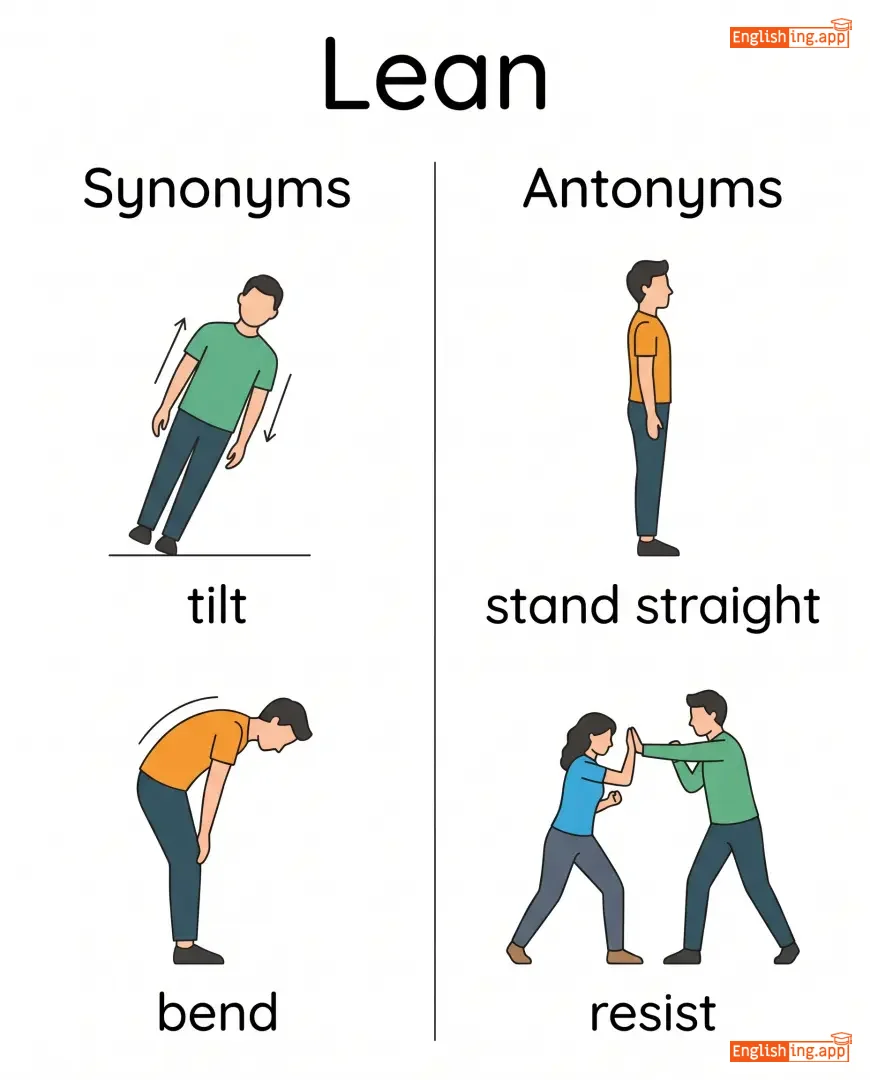
tilt, bend, rest, incline
••••••
|
stand straight, resist
••••••
|
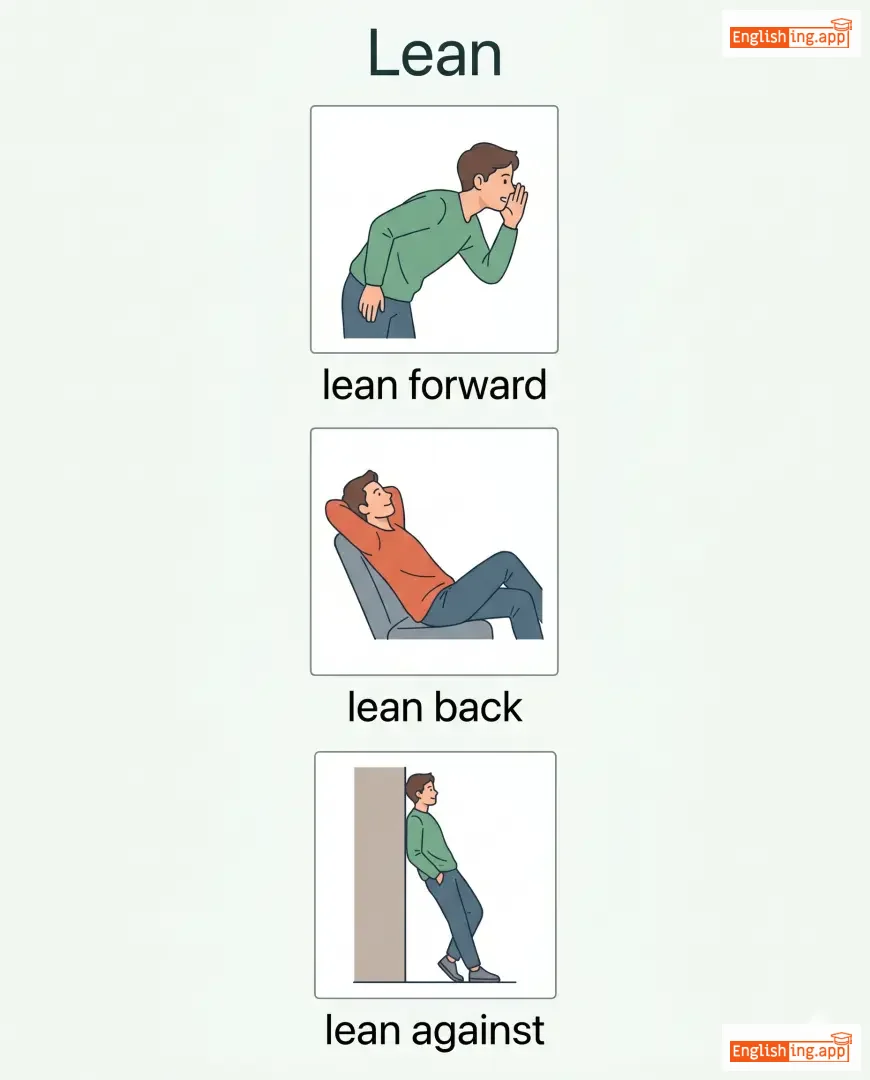
lean forward, lean back, lean against, lean towards
••••••
|
倾斜意味着依赖,在考试中倾斜时你必须依赖别人。
••••••
|
|
🏃♂️
••••••
|
/liːp/
verb
(líp)
••••••
|

|
跳跃
tiaoyue
••••••
|
leapt
lept
••••••
|
leapt
lept
••••••
|
leaps
lips
••••••
|
leaping
lípíng
••••••
|
to jump or spring a long way or to a great height
••••••
|
The cat leapt onto the wall effortlessly.
猫毫不费力地跳到墙上。
••••••
|
猫毫不费力地跳到墙上。
Mao hao bu feili de tiaodao qiang shang.
••••••
|
leap of faith
Leap of faith
••••••
|
an act of believing in something uncertain
••••••
|
信念的跳跃
xinnian de tiaoyue
••••••
|
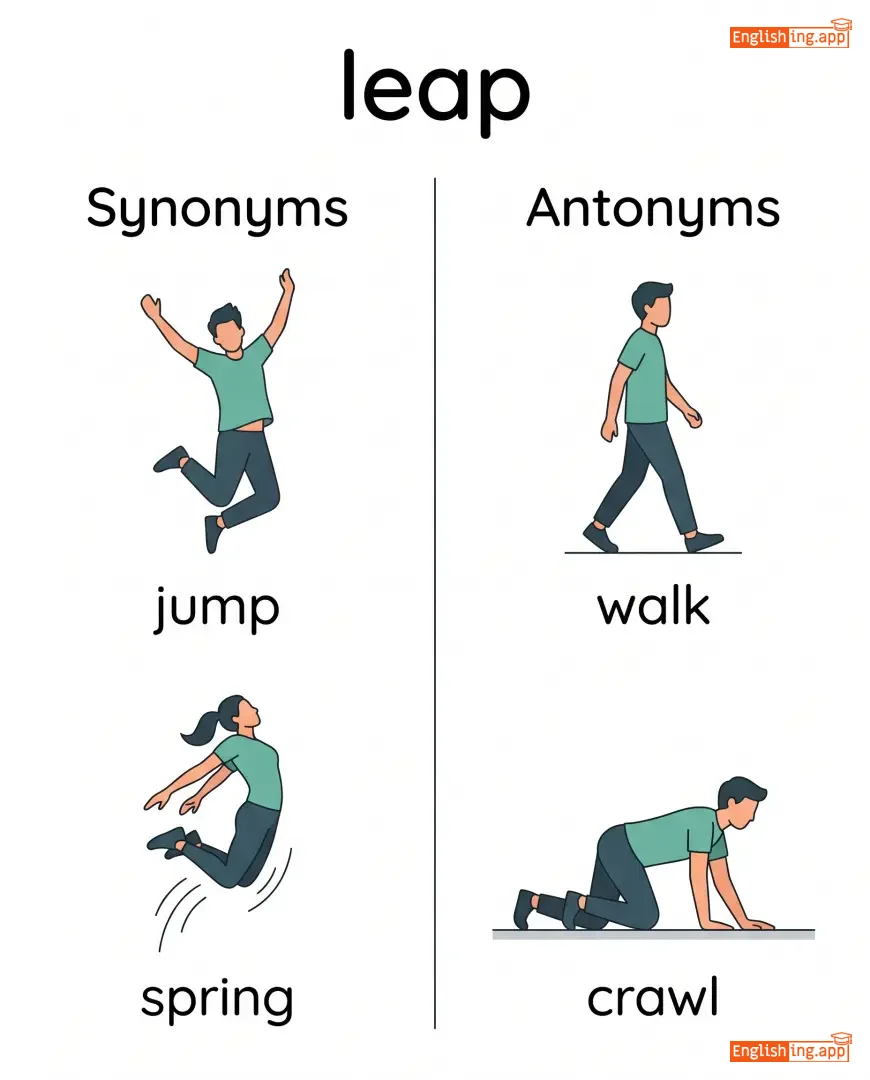
jump, spring, bound, hop, vault
••••••
|
walk, crawl, step
••••••
|
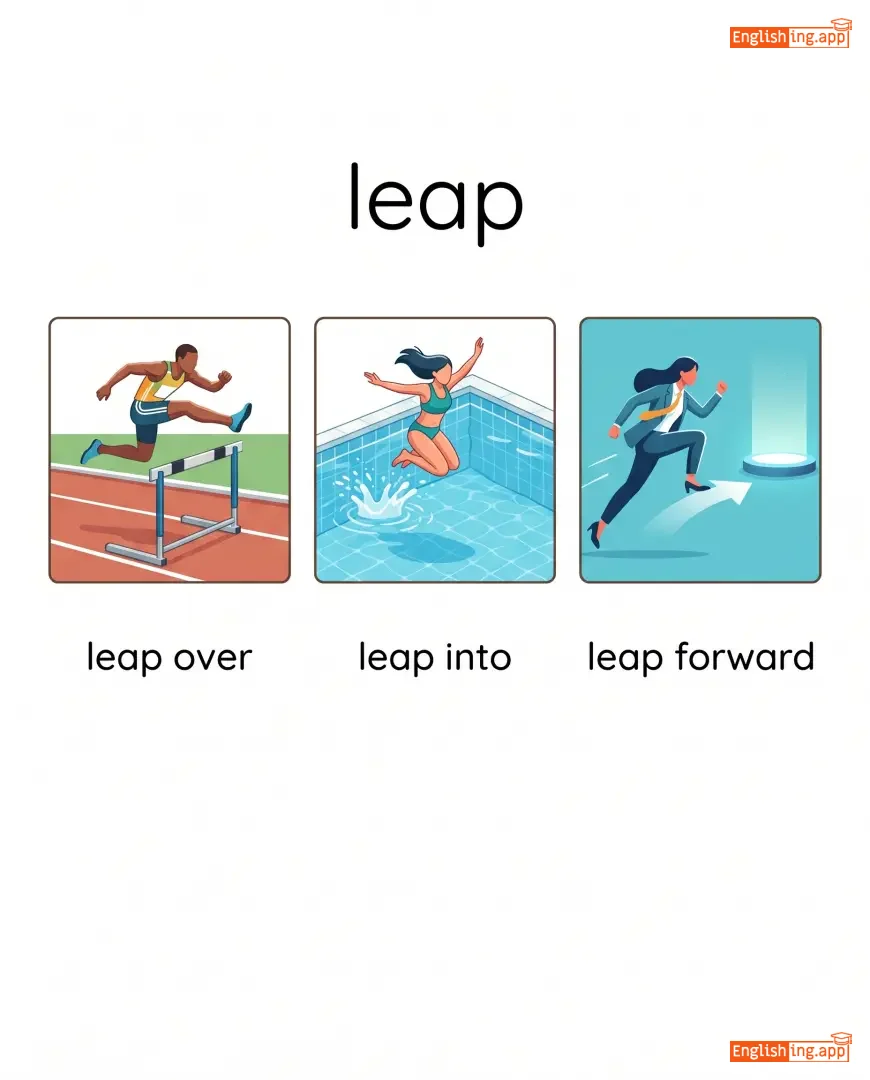
leap over, leap into, leap forward, leap of joy
••••••
|
Leap意味着跳跃 — 跳跃并向前 leap!
••••••
|
|
📷
••••••
|
/lenz/
noun
(lènsī)
••••••
|
- •••••• |
镜头
jingtou
••••••
|
- •••••• | - •••••• | - •••••• | - •••••• |
a curved piece of glass or plastic that makes things look clearer or larger when you look through it
••••••
|
He cleaned the camera lens before taking the picture. |
他在拍照前清洁了相机镜头。
Tā zài pāizhào qián qīngjié le xiàngjī jìngtóu.
••••••
|
through the lens of |
viewed or interpreted from a particular perspective
••••••
|
通过...的镜头
tōngguò ... de jìngtóu
••••••
|
glass, optic, focus, viewpoint, filter
••••••
|
blindspot, obstruction
••••••
|
camera lens, contact lens, wide lens, lens cover
••••••
|
镜头帮助我们清晰地看到世界
••••••
|
|
➖
••••••
|
/lɛs/
adjective/adverb
(les)
••••••
|
- •••••• |
更少
gèng shǎo
••••••
|
- •••••• | - •••••• | - •••••• | - •••••• |
A smaller amount; not as much.
••••••
|
She spends less money than her brother. |
她花的钱比她哥哥少。
Tā huā de qián bǐ tā gēge shǎo.
••••••
|
less is more |
simplicity is more effective than complexity
••••••
|
少即是多
shǎo jí shì duō
••••••
|
fewer, reduced, diminished, lower
••••••
|
more, greater, higher
••••••
|
less time, less money, less important, less than
••••••
|
LESS意味着更少 — 更少的钱,更多的储蓄。
••••••
|
|
🦵
••••••
|
/lɪm/
noun
(limb)
••••••
|
- •••••• |
肢体
zhīti
••••••
|
- •••••• | - •••••• | - •••••• | - •••••• |
an arm or leg of a person or animal; a large branch of a tree
••••••
|
He broke a limb while climbing the tree. |
他在爬树时摔断了一只肢体。
Tā zài pá shù shí shuāi duànle yī zhī zhīti.
••••••
|
out on a limb |
in a risky or vulnerable position
••••••
|
处于危险位置
chǔ yú wēixiǎn wèizhì
••••••
|
arm, leg, branch, extension
••••••
|
trunk, core
••••••
|
upper limb, lower limb, tree limb, limb injury
••••••
|
Limb意思是肢体,记住‘limber’,意味着灵活,就像你的肢体可以轻松地移动。
••••••
|
|
🔗
••••••
|
/lɪŋk/
noun, verb
(链接)
••••••
|
- •••••• |
连接
lianjie
••••••
|
linked
链接
••••••
|
linked
链接
••••••
|
links
链接
••••••
|
linking
链接
••••••
|
a connection between two things; to connect or associate
••••••
|
The article includes a link to the official website.
文章包含指向官方网站的链接。
••••••
|
文章包含指向官方网站的链接。
wenzhang baokuo zhixiang guanfang wangzhan de lianjie.
••••••
|
missing link
缺失的环节
••••••
|
an important connection that is needed to complete something
••••••
|
缺失的环节
queshi de huanjie
••••••
|
connection, tie, relation, bond, association
••••••
|
separation, break, disconnection
••••••
|
strong link, direct link, missing link, link to
••••••
|
🔗 链接意味着连接,和英文中的 'link' 相同。
••••••
|
|
🦁
••••••
|
/ˈlaɪən/
noun
(lái'ēn)
••••••
|
- •••••• |
狮子
shizi
••••••
|
- •••••• | - •••••• | - •••••• | - •••••• |
a large wild animal of the cat family that lives in Africa and Asia, known as the king of the jungle
••••••
|
The lion roared loudly in the distance.
狮子在远处大声咆哮。
••••••
|
狮子在远处大声咆哮。
Shizi zai yuanchu dasheng paoxiao.
••••••
|
lion’s share
狮子分享
••••••
|
the largest portion of something
••••••
|
狮子的份额
Shizide fen'e
••••••
|
big cat, panthera leo, beast, predator
••••••
|
prey, deer
••••••
|
male lion, lion cub, pride of lions, lion roar
••••••
|
狮子是丛林之王 🦁 - 记住,狮子总是占据最大份额!
••••••
|
|
📋
••••••
|
/lɪst/
noun, verb
••••••
|
- •••••• | - •••••• |
listed
••••••
|
listed
••••••
|
lists
••••••
|
listing
••••••
|
A series of names, items, or tasks written or printed together; also, to record or register items in such a way.
••••••
|
She wrote a shopping list before going to the market. |
- •••••• |
hit list |
A list of people or things targeted for attention, often negatively.
••••••
|
- •••••• |
catalog, register, inventory, roll, record
••••••
|
disorder, jumble, mess
••••••
|
shopping list, guest list, to list items, to be listed
••••••
|
No •••••• |
|
💰
••••••
|
/loʊn/
noun
(贷款)
••••••
|
- •••••• |
贷款
daikuan
••••••
|
- •••••• | - •••••• | - •••••• | - •••••• |
money that is borrowed and expected to be paid back with interest
••••••
|
She took a loan from the bank to buy a house. |
她从银行借了贷款买房。
ta cong yinhang jie le daikuan mai fang.
••••••
|
loan shark |
a person who lends money at very high interest rates
••••••
|
高利贷
gaolidai
••••••
|
credit, advance, debt, mortgage
••••••
|
repayment, settlement
••••••
|
take a loan, bank loan, student loan, repay a loan
••••••
|
Loan是贷款,就像'借款买车'。
••••••
|
|
🔒
••••••
|
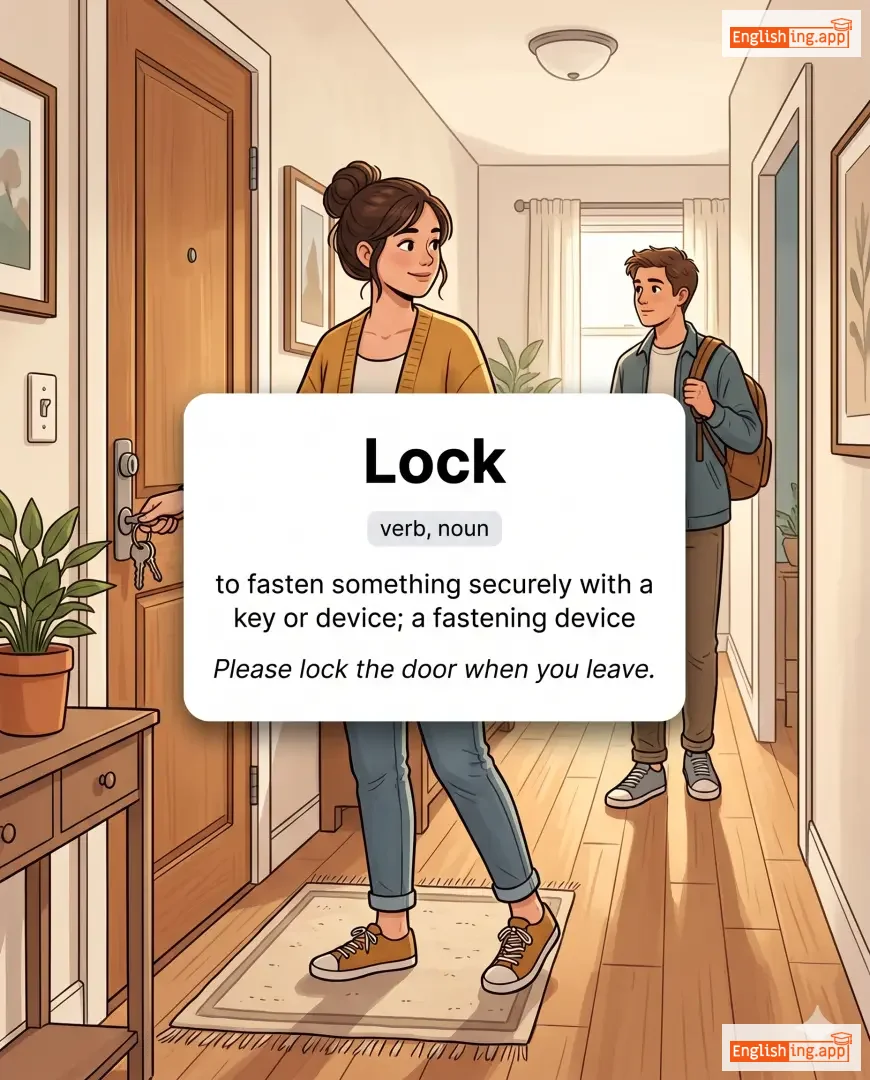
/lɒk/
verb, noun
(lòk)
••••••
|
|
锁,锁定
suǒ, suǒ dìng
••••••
|
locked
lòk dé
••••••
|
locked
lòk dé
••••••
|
locks
lòk sī
••••••
|
locking
lòk ing
••••••
|
to fasten something securely with a key or device; a fastening device
••••••
|
Please lock the door when you leave.
请在离开时锁好门。
••••••
|
请在离开时锁好门。
qǐng zài líkāi shí suǒ hǎo mén.
••••••
|
lock horns
锁 horns
••••••
|
to become involved in conflict or argument
••••••
|
进入冲突
jìnrù chōngtú
••••••
|
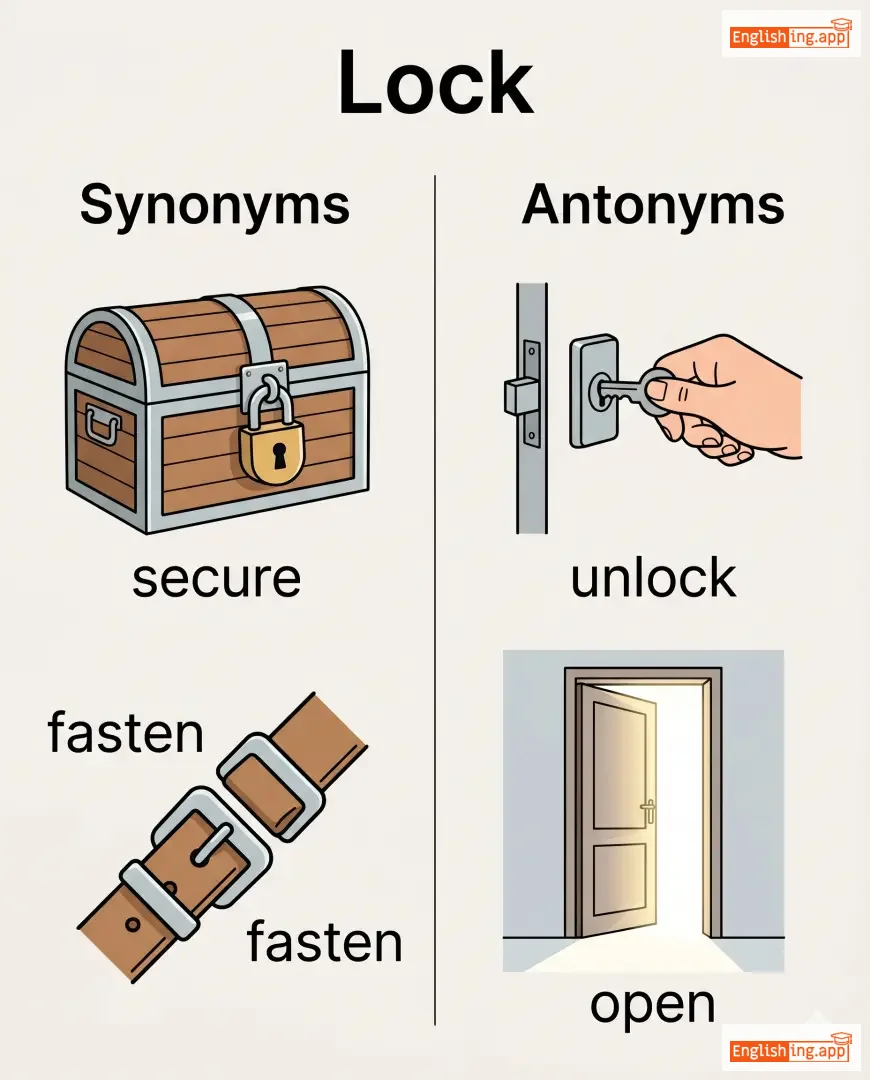
secure, fasten, latch, seal
••••••
|
unlock, open
••••••
|
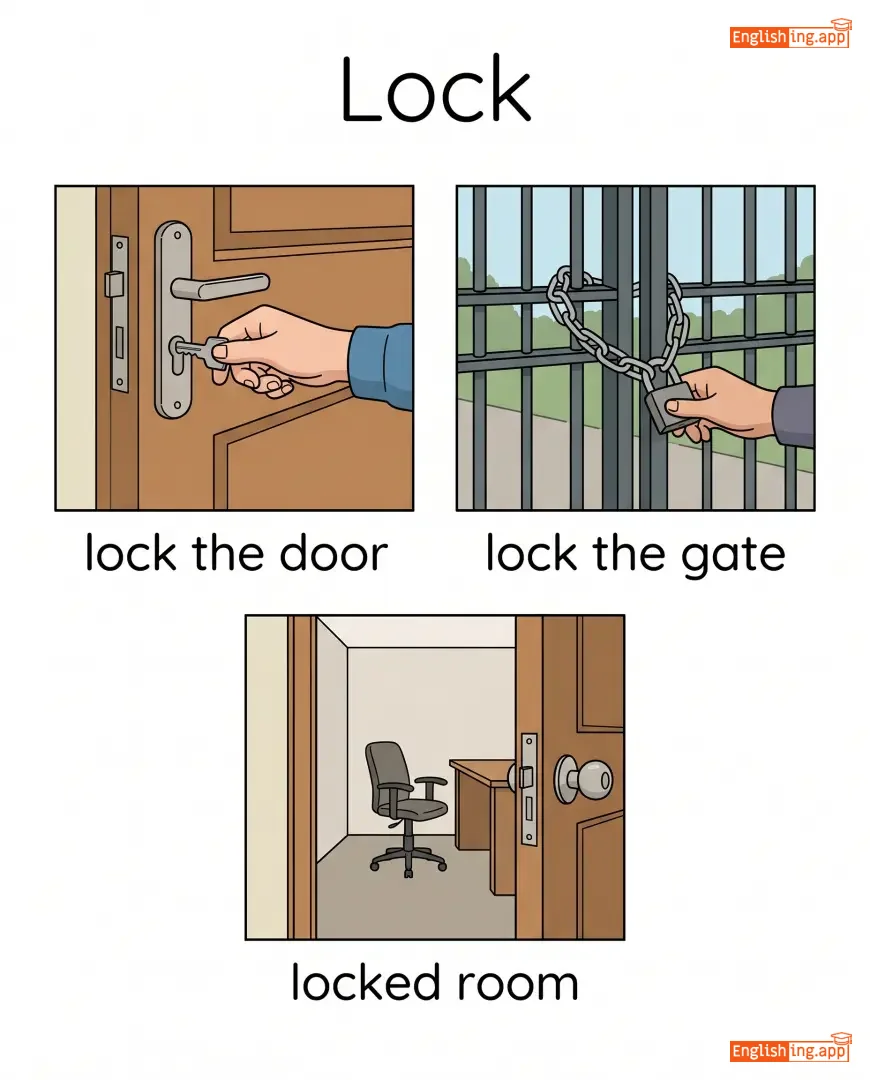
lock the door, lock the gate, locked room, lock securely
••••••
|
Lock意思是锁上门,像是使用锁来保护门
••••••
|
|
🖼️
••••••
|
/ˈləʊɡəʊ/
noun
••••••
|
- •••••• | - •••••• | - •••••• | - •••••• | - •••••• | - •••••• |
a symbol or other small design adopted by an organization to identify its products, uniform, vehicles, etc.
••••••
|
The company's logo was redesigned to reflect its new image. |
- •••••• | - •••••• | - •••••• | - •••••• |
emblem, symbol, trademark, insignia
••••••
|
plain, generic
••••••
|
company logo, brand logo, business logo, new logo
••••••
|
No •••••• |
|
🌩️
••••••
|
/luːm/
verb
••••••
|
- •••••• | - •••••• |
loomed
••••••
|
loomed
••••••
|
looms
••••••
|
looming
••••••
|
to appear as a large, often frightening or unclear shape, usually something threatening or about to happen
••••••
|
Dark clouds loomed over the city, signaling an approaching storm. |
- •••••• |
loom large |
to be of great importance or concern
••••••
|
- •••••• |
emerge, appear, threaten, overshadow, hover
••••••
|
fade, disappear, vanish
••••••
|
loom large, loom ahead, storm looms, crisis looms
••••••
|
No •••••• |
|
🔁
••••••
|
/luːp/
noun
(lùp)
••••••
|
- •••••• |
圈,环
quan, huan
••••••
|
- •••••• | - •••••• | - •••••• | - •••••• |
a shape produced by a curve that bends around and crosses itself
••••••
|
The string formed a neat loop around the package.
绳子在包裹周围形成了一个整齐的环。
••••••
|
绳子在包裹周围形成了一个整齐的环。
Shéngzi zài bāoguǒ zhōuwéi xíngchéngle yīgè zhěngqí de huán.
••••••
|
in the loop
在圈内
••••••
|
to be informed or included in communication
••••••
|
保持在圈内
bǎochí zài quān nèi
••••••
|
circle, ring, coil, curve, twist
••••••
|
line, straight, break
••••••
|
infinite loop, feedback loop, closed loop, data loop
••••••
|
圈就像一个不断重复的循环,像是保持在圈内 🔁
••••••
|
|
😞
••••••
|
/luːz/
verb
(海皮尼斯)
••••••
|
|
幸福
xingfu
••••••
|
lost
••••••
|
lost
••••••
|
loses
••••••
|
losing
••••••
|
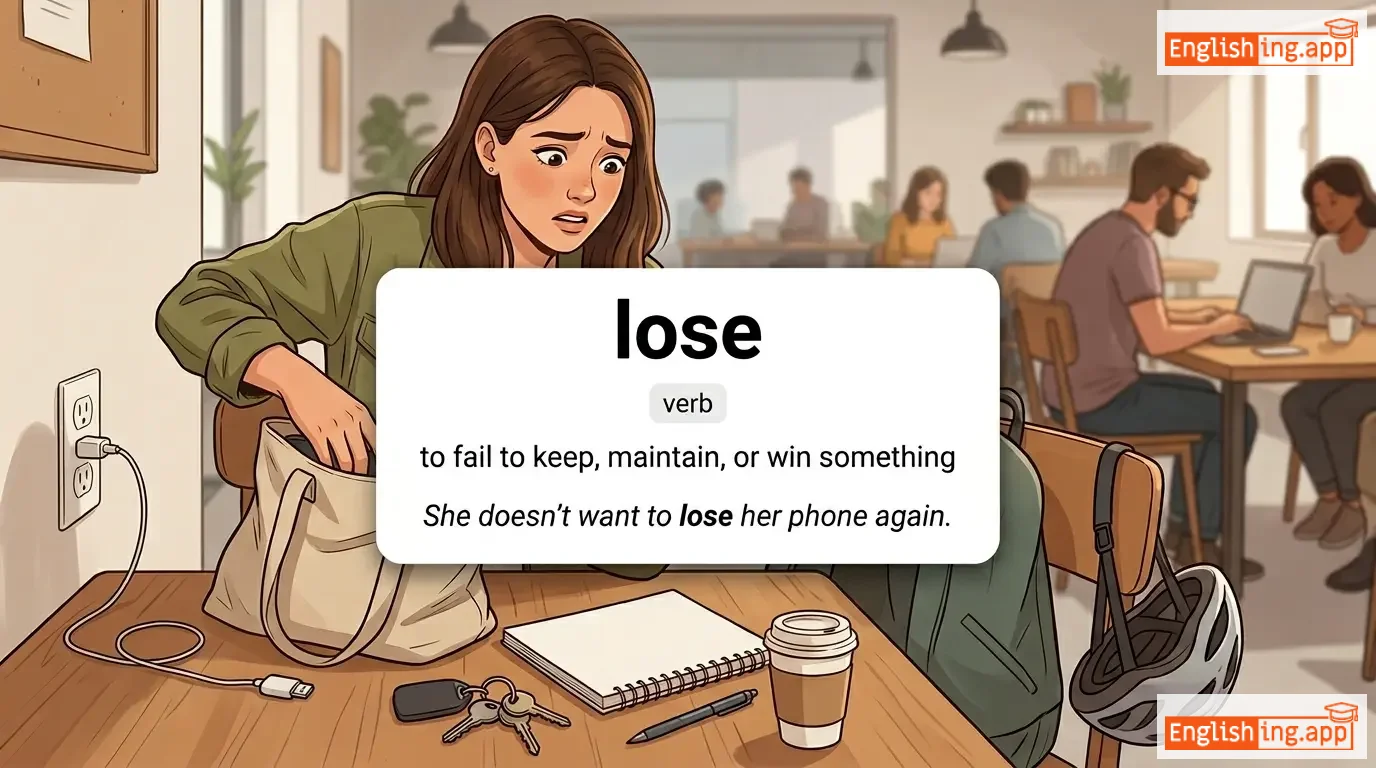
to fail to keep, maintain, or win something
••••••
|
She doesn’t want to lose her phone again.
她在获得奖项时无法掩饰自己的快乐。
••••••
|
她在获得奖项时无法掩饰自己的快乐。
Tā zài huòdé jiǎngxiàng shí wúfǎ yǎnshì zìjǐ de kuàilè.
••••••
|
lose track
追求幸福
••••••
|
to fail to keep informed or aware of something
••••••
|
追求幸福
zhuīqiú xìngfú
••••••
|
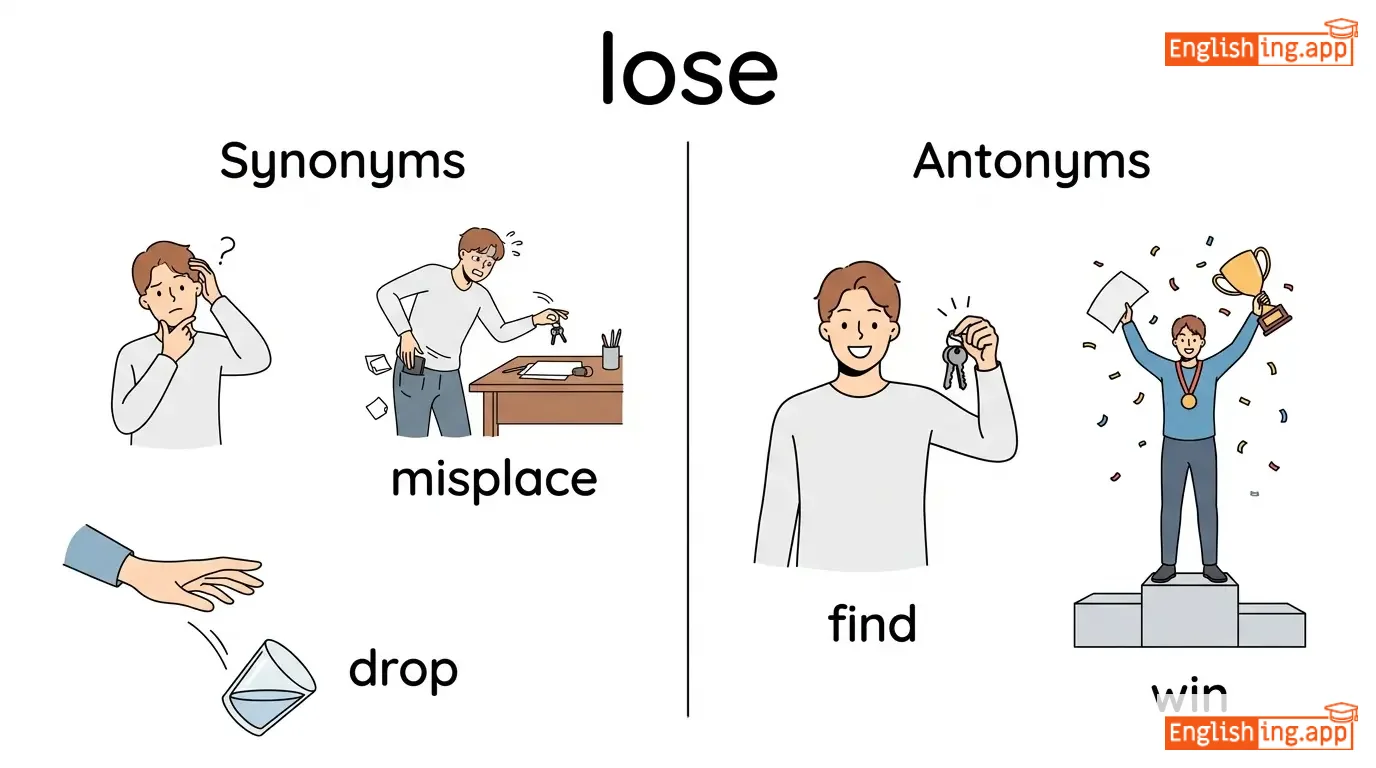
misplace, drop, forfeit, miss
••••••
|
find, win, gain
••••••
|
lose weight, lose a game, lose hope, lose control
••••••
|
幸福就像寻找宝藏,越找越能感到心中的平静。
••••••
|
|
🧭
••••••
|
/lɒst/
verb/adjective
(洛斯特)
••••••
|
- •••••• |
丢失
diū shī
••••••
|
lost
洛斯特
••••••
|
lost
洛斯特
••••••
|
loses
失落
••••••
|
losing
失落
••••••
|
Unable to find the way; no longer in possession of something.
••••••
|
He lost his keys and couldn’t enter the house.
他丢失了钥匙,无法进入房子。
••••••
|
他丢失了钥匙,无法进入房子。
Tā diū shī le yàoshi, wúfǎ jìnrù fángzi.
••••••
|
lost cause
失落的原因
••••••
|
a hopeless situation with no chance of success
••••••
|
失落的原因
shī luò de yuányīn
••••••
|
gone, misplaced, vanished, defeated
••••••
|
found, recovered, won
••••••
|
get lost, lost keys, lost opportunity, feel lost
••••••
|
Lost = 丢失,像 Lost 手机 = 丢失手机。
••••••
|
|
🔢
••••••
|
/lɒts/
pronoun/noun
(lɒts)
••••••
|
- •••••• |
很多
hěn duō
••••••
|
- •••••• | - •••••• | - •••••• | - •••••• |
A large number or amount of something.
••••••
|
She has lots of friends in the city.
她在城市里有很多朋友。
••••••
|
她在城市里有很多朋友。
Tā zài chéngshì lǐ yǒu hěn duō péngyǒu.
••••••
|
lots of luck
祝好运
••••••
|
wishing someone good fortune
••••••
|
祝好运
zhù hǎo yùn
••••••
|
many, plenty, loads, abundance
••••••
|
few, little, scarcity
••••••
|
lots of money, lots of people, lots of time, lots of friends
••••••
|
Lots 很多, 意思是很多很多。
••••••
|
|
🍀
••••••
|
/lʌk/
noun
••••••
|
- •••••• | - •••••• | - •••••• | - •••••• | - •••••• | - •••••• |
success or failure apparently brought by chance rather than through one’s actions
••••••
|
He had the luck to find a good job quickly. |
- •••••• |
good luck |
a wish for success or fortune
••••••
|
- •••••• |
fortune, chance, fate, destiny
••••••
|
misfortune, bad luck
••••••
|
good luck, bad luck, stroke of luck, bring luck
••••••
|
No •••••• |
|
🫁
••••••
|
/lʌŋ/
noun
(lʌŋ)
••••••
|
- •••••• |
肺
fei
••••••
|
- •••••• | - •••••• | - •••••• | - •••••• |
Either of the two organs in the chest that are responsible for breathing and exchanging oxygen and carbon dioxide.
••••••
|
Smoking can seriously damage your lungs. |
吸烟会严重损害你的肺部。
Xiyan hui yanzhong sunhai nide feibu.
••••••
|
burst a lung |
to make a huge effort, usually physically
••••••
|
拼尽全力
pin jin quanli
••••••
|
respiratory organ, pulmonary organ, chest organ, airway, breathing organ
••••••
|
heart, liver
••••••
|
lung cancer, lung disease, lung capacity, lung infection
••••••
|
Lung 意思是 '肺部',当你无法呼吸时,你需要 '肺部'。
••••••
|

