The Scholar Who Bridged Two Worlds
纳斯林教授是著名的知识分子,研究古代文明的建筑。她的全面研究不仅是理论性的,还为当代社会提供了特征性的见解。她开始了一个雄伟的文献项目,得到了机构的支持,项目中将对古代遗迹进行鉴定和分类。她的方法论是独特的——她通过翻译和解释阅读古代文献,理解哲学。她说:“为了重建,我们需要采取一种发展方法。”她的国际合作帮助了历史遗址的修复。许多当代学者认为她的工作是雄伟的,因为她专注于特征性的细节。尽管面临机构障碍,她完成了她的全面****文献工作。她对古代哲学和文明的解释启发了整个国际社区。通过重建和修复,她证明了理论知识对当代社会的发展需求至关重要。她的工作为建筑和文明的特征性理解增添了新的维度。
|
表情符号
|
单词 | Images | 翻译 | 含义 | 例句 | 例句翻译 | 示例表达 | 示例表达含义 | 示例表达翻译 | 同义词 | 反义词 | 搭配词 | 助记符 |
|---|---|---|---|---|---|---|---|---|---|---|---|---|---|
|
🏛️
••••••
|
/ˈɑːkɪˌtɛktʃər/
noun
(建筑学)
••••••
|

|
建筑学
jianzhuxue
••••••
|
the art and practice of designing and constructing buildings
••••••
|
The ancient temples of Greece are famous for their architecture. |
古希腊的古代寺庙以其建筑学闻名。
Gu Xila de gudai simiao yi qi jianzhu xue wenming.
••••••
|
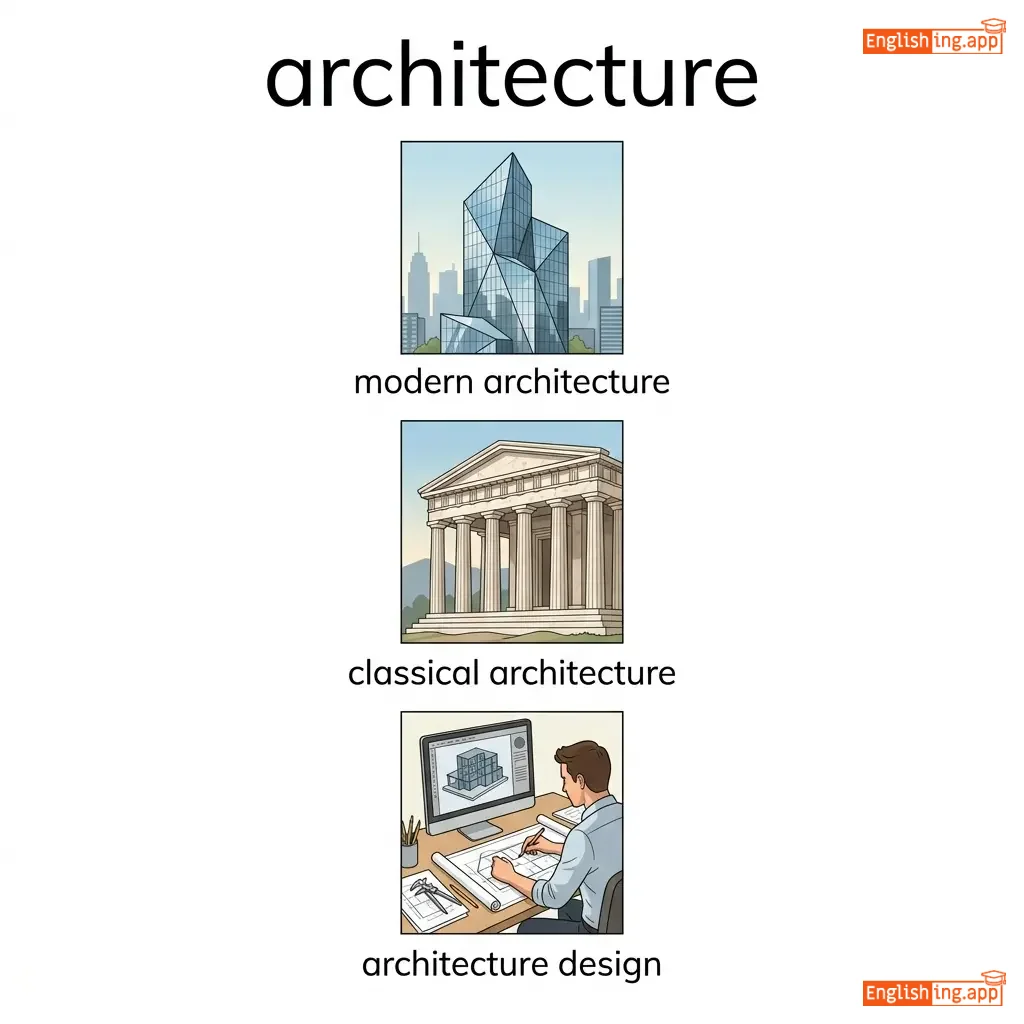
modern architecture |
a style of architecture characterized by simplicity and functional design
••••••
|
现代建筑学
xiandai jianzhu xue
••••••
|
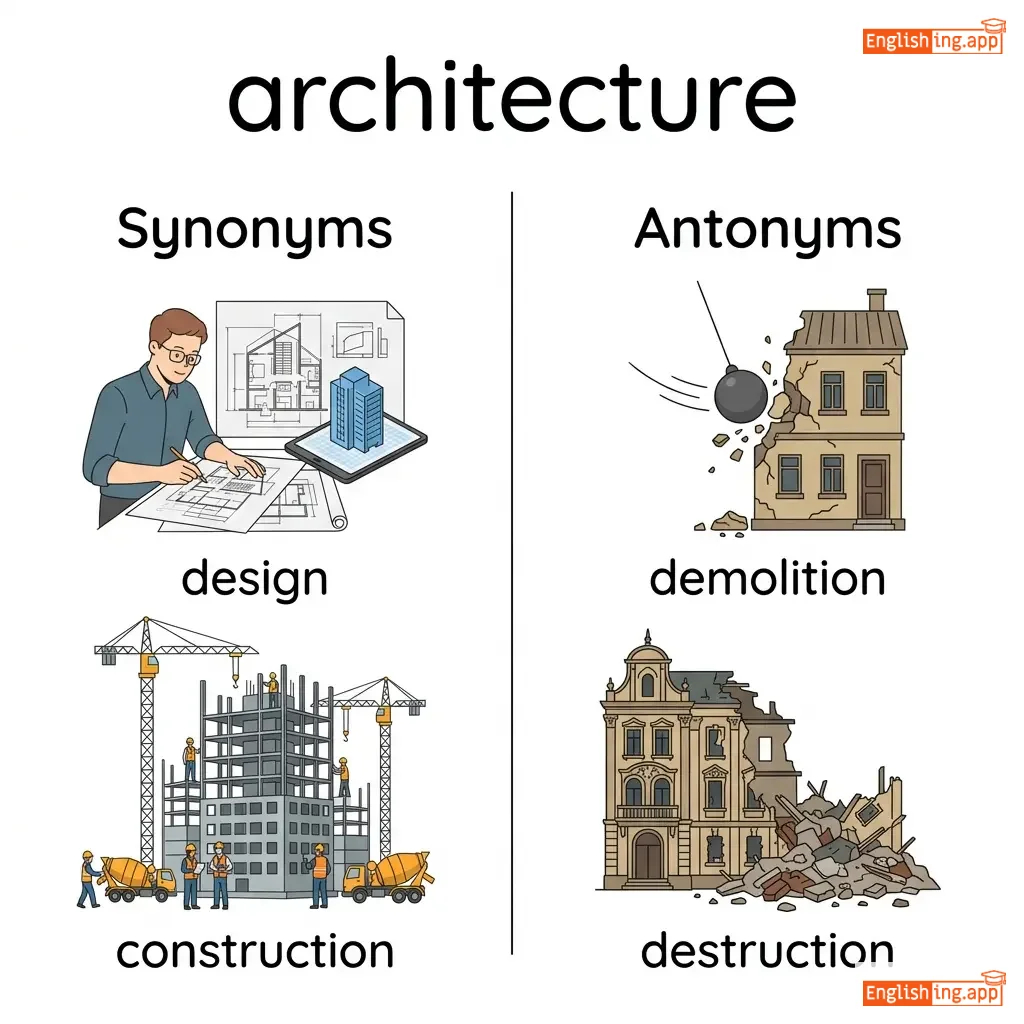
design, construction, structure, framework
••••••
|
demolition, destruction
••••••
|
modern architecture, classical architecture, architecture design, architecture firm
••••••
|
Architecture 是设计建筑物的艺术,因此建筑学就是建造建筑物的艺术 🏛️
••••••
|
|
🔑
••••••
|
/ˌkærəktəˈrɪstɪk/
noun/adjective
(kǎlèktérìstíc)
••••••
|
- •••••• |
特征
tèzhēng
••••••
|
A distinguishing quality or feature of a person, place, or thing.
••••••
|
Kindness is a characteristic of true leadership.
善良是一个真正领导力的特征。
••••••
|
善良是一个真正领导力的特征。
Shànliáng shì yīgè zhēnzhèng lǐngdǎolì de tèzhēng.
••••••
|
Characteristic feature
特征特点
••••••
|
A notable quality that identifies something.
••••••
|
特征特点
tèzhēng tèdiǎn
••••••
|
trait, quality, feature, attribute, hallmark
••••••
|
anomaly, exception
••••••
|
unique characteristic, human characteristic, defining characteristic
••••••
|
Characteristic,想象它就是事物的特征。
••••••
|
|
🏺
••••••
|
/ˌsɪvɪlaɪˈzeɪʃən/
noun
(sivilaiˈzeɪʃən)
••••••
|
- •••••• |
文明
wenming
••••••
|
the stage of human social and cultural development and organization considered most advanced
••••••
|
Ancient Egypt is known for its remarkable civilization.
古埃及因其卓越的文明而闻名。
••••••
|
古埃及因其卓越的文明而闻名。
Gu Aiji yin qi zhuoyue de wenming er wenming.
••••••
|
modern civilization
现代文明
••••••
|
the advanced state of contemporary human society
••••••
|
现代文明
xiandai wenming
••••••
|
culture, society, advancement, progress, refinement
••••••
|
barbarism, savagery
••••••
|
ancient civilization, modern civilization, lost civilization, human civilization
••••••
|
Civil 代表文明, Civilization 代表文明 — 一个简单而聪明的联想。
••••••
|
|
📊
••••••
|
/ˌklæsɪfɪˈkeɪʃən/
noun
(分类)
••••••
|
- •••••• |
分类
fenlei
••••••
|
the action or process of classifying something into groups based on shared characteristics.
••••••
|
The classification of animals helps in understanding their biology. |
动物的分类有助于理解它们的生物学。
Dòngwù de fēnlèi yǒuzhù yú lǐjiě tāmen de shēngwùxué.
••••••
|
- •••••• | - •••••• | - •••••• |
categorization, sorting, organization, classification
••••••
|
disorganization, confusion
••••••
|
classification system, scientific classification, animal classification
••••••
|
Classify for clarity—分类以清晰
••••••
|
|
📚
••••••
|
/ˌkɒm.prɪˈhen.sɪv/
adjective
(kòng-pu-lei-hen-si-fu)
••••••
|
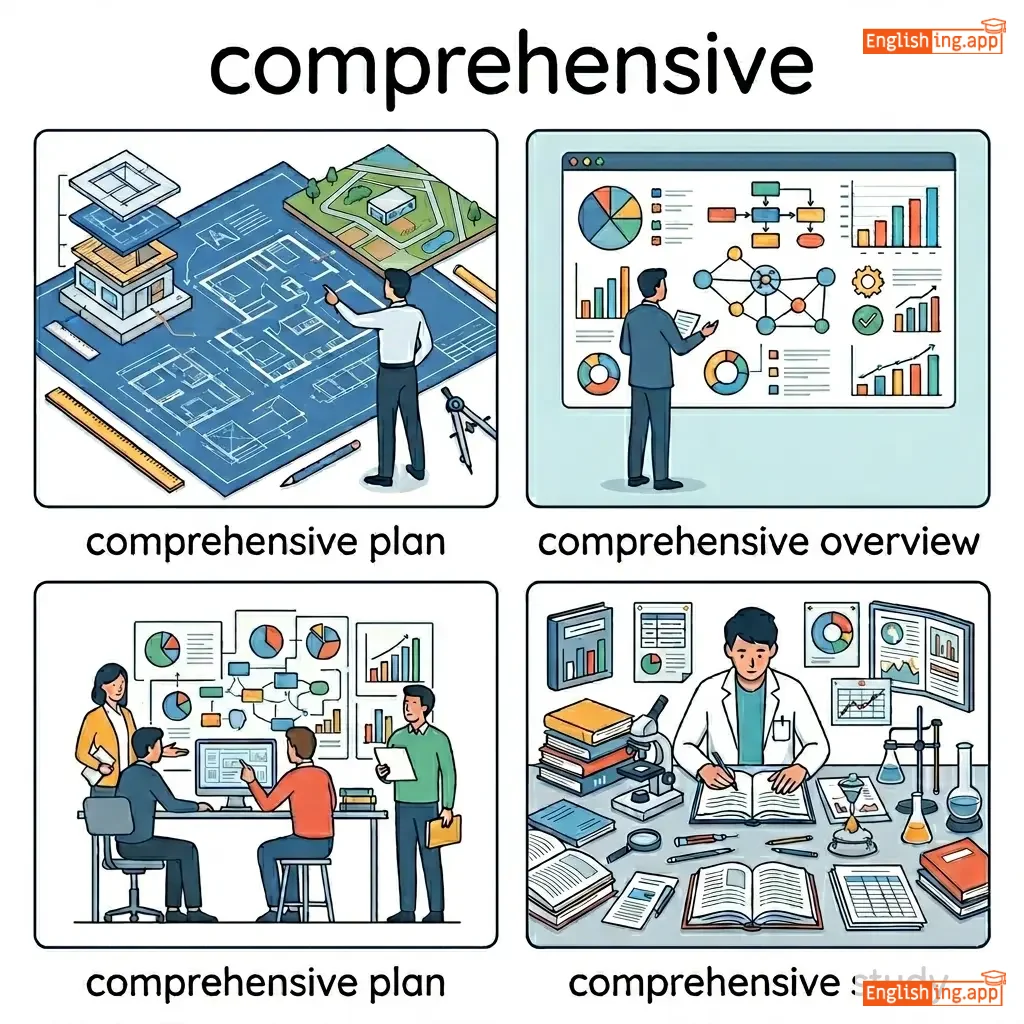
|
全面的; 综合的; 包罗万象的
quánmiàn de; zōnghé de; bāoluó wànxiàng de
••••••
|
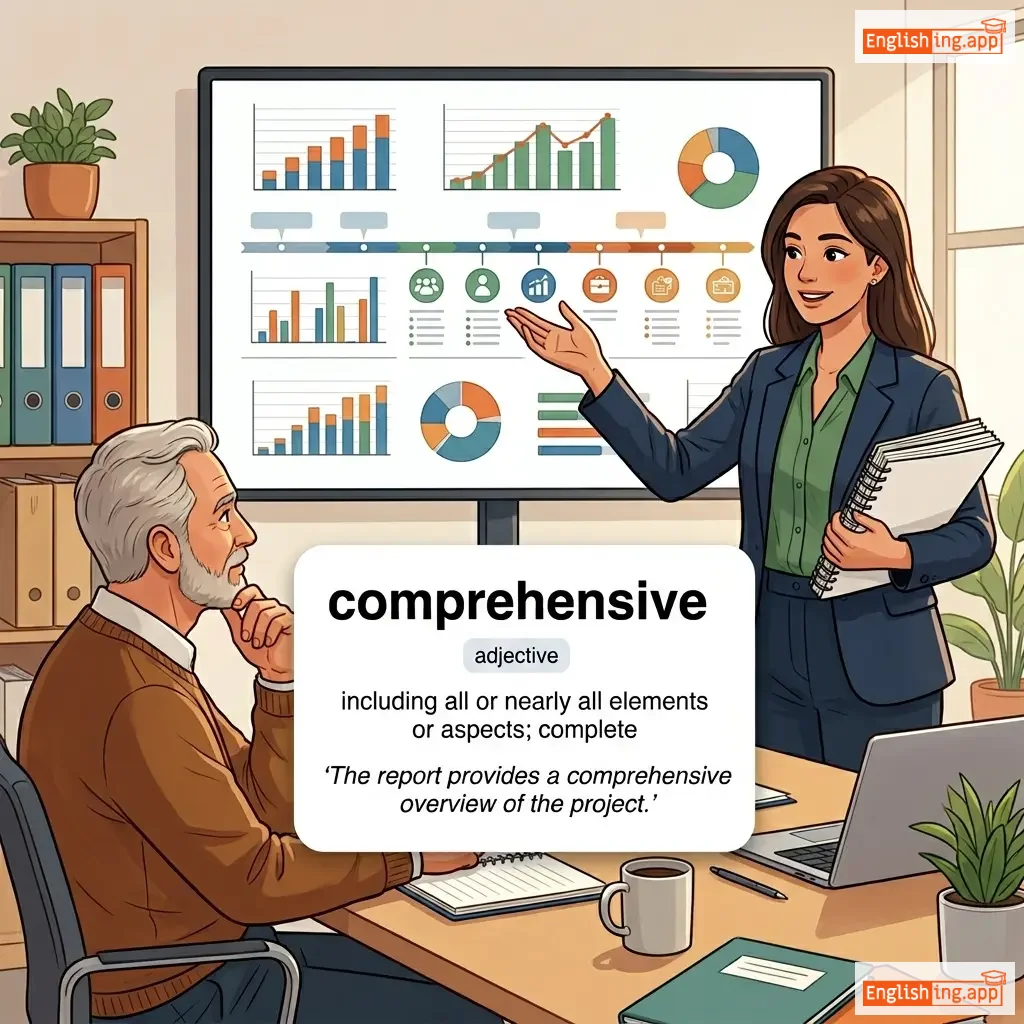
complete and including everything that is necessary; covering a wide range of topics
••••••
|
The report provides a comprehensive analysis of the market trends. |
报告提供了对市场趋势的全面分析。
bàogào tígōngle duì shìchǎng qūshì de quánmiàn fēnxī.
••••••
|
- •••••• | - •••••• | - •••••• |
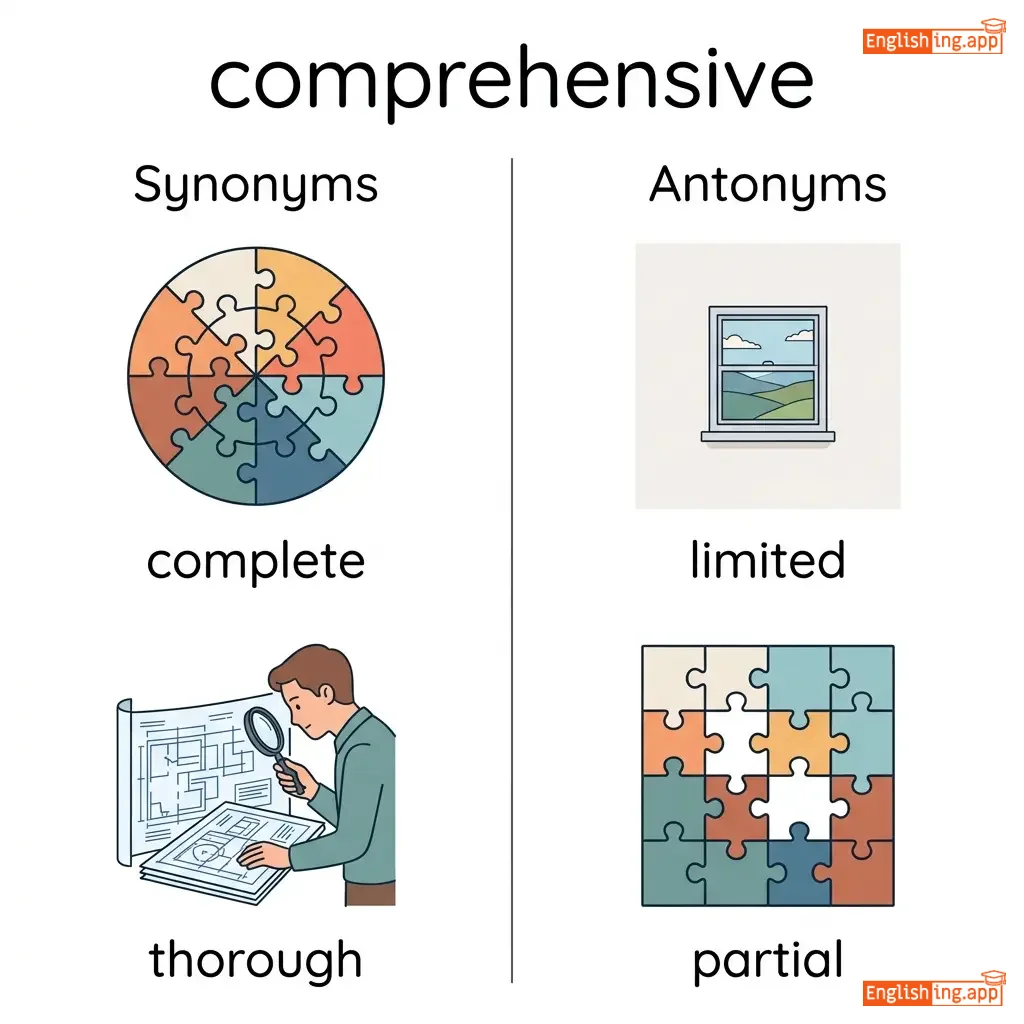
complete, thorough, extensive, all-inclusive
••••••
|
partial, incomplete, limited, narrow
••••••
|
comprehensive study, comprehensive report, comprehensive coverage
••••••
|
理解一个问题,必须看到全局。
••••••
|
|
🎨
••••••
|
/kənˈtɛmpərɛri/
adjective
(kənˈtɛmpərɛri)
••••••
|
- •••••• |
当代的, 现代的
dāngdài de, xiàndài de
••••••
|
belonging to the same time period; modern
••••••
|
She enjoys contemporary art exhibitions.
她喜欢现代艺术展览。
••••••
|
她喜欢现代艺术展览。
Tā xǐhuān xiàndài yìshù zhǎnlǎn.
••••••
|
contemporary issues
当代问题
••••••
|
current problems or topics relevant to the present time
••••••
|
当代问题
dāngdài wèntí
••••••
|
modern, current, present-day, up-to-date
••••••
|
old-fashioned, outdated, ancient
••••••
|
contemporary art, contemporary culture, contemporary society, contemporary issues
••••••
|
Contemporary = con+temporary = 属于相同的时间段,即当代/现代。
••••••
|
|
🌱
••••••
|
/dɪˌveləpˈmentl/
adjective
(开发的)
••••••
|
- •••••• |
发展性的
fāzhǎn xìng de
••••••
|
relating to the process of growth or progress
••••••
|
Early childhood is a crucial developmental stage for learning. |
早期儿童是学习的关键发展性阶段。
Zǎoqí értóng shì xuéxí de guānjiàn fāzhǎn xìng jiēduàn.
••••••
|
- •••••• | - •••••• | - •••••• |
evolutionary, progressive, formative, educational
••••••
|
regressive, stagnant
••••••
|
developmental stage, developmental psychology, developmental delay
••••••
|
Development + al = 与发展有关 — 所以发展性意味着与发展有关
••••••
|
|
📄
••••••
|
/ˌdɒkjʊmɛnˈteɪʃən/
noun
(dɑkjʊmɛnˈteɪʃən)
••••••
|
- •••••• |
文档
wendang
••••••
|
material that provides official information or evidence
••••••
|
The documentation for the project is available for review. |
项目的文档可供审查。
Xiàngmù de wéndàng kě gòng shěnchá.
••••••
|
- •••••• | - •••••• | - •••••• |
records, paperwork, files, archives
••••••
|
neglect, disregard
••••••
|
project documentation, legal documentation, technical documentation, documentation review
••••••
|
Documentation (文档) is your guide to the information, like a map to navigate the project!
••••••
|
|
🪪
••••••
|
/aɪˌdɛntɪfɪˈkeɪʃən/
noun
(ài-diàn-tí-fí-ké-shēn)
••••••
|
- •••••• |
身份识别
shenfen shibie
••••••
|
the process of recognizing or proving who or what someone or something is
••••••
|
You need proper identification to enter the building. |
您需要适当的身份证明才能进入大楼。
Nín xūyào shìdàng de shēnfèn zhèngmíng cáinéng jìnrù dàlóu.
••••••
|
- •••••• | - •••••• | - •••••• |
recognition, verification, authentication, validation
••••••
|
misidentification, confusion
••••••
|
identity card, identification number, personal identification, photo identification
••••••
|
Identification 就是身份的识别 - 出示身份证就能进大楼。
••••••
|
|
🏛️
••••••
|
/ˌɪnstɪˈtjuːʃənl/
adjective
(in-sTi-tyu-sho-nal)
••••••
|
- •••••• |
制度的
zhìdù de
••••••
|
Relating to an organization or established practice.
••••••
|
The government made several institutional reforms in education. |
政府在教育领域进行了一些制度改革。
Zhèngfǔ zài jiàoyù lǐngyù jìnxíngle yīxiē zhìdù gǎigé.
••••••
|
- •••••• | - •••••• | - •••••• |
organizational, structural, official, systemic
••••••
|
individual, personal, informal
••••••
|
institutional reform, institutional framework, institutional support, institutional structure
••••••
|
制度的意味着和制度或组织相关,因此是制度改革。
••••••
|
|
📚
••••••
|
/ˌɪn.təlˈɛk.tʃu.əl/
adjective, noun
(智力的)
••••••
|
- •••••• |
智力的
zhìlì de
••••••
|
Relating to the intellect; a person who engages in critical thinking and study.
••••••
|
She enjoys intellectual discussions about philosophy. |
她喜欢关于哲学的智力讨论。
Tā xǐhuān guānyú zhéxué de zhìlì tǎolùn.
••••••
|
intellectual curiosity |
a strong desire to learn and understand new things
••••••
|
智力好奇心
zhìlì hàoqíxīn
••••••
|
academic, scholarly, thinker, brainy
••••••
|
ignorant, uneducated
••••••
|
intellectual debate, intellectual growth, intellectual pursuit, intellectual class
••••••
|
智力的 = 智能 + 实际,意味着将智力付诸实践。
••••••
|
|
🌍
••••••
|
/ˌɪntərˈnæʃənəl/
adjective
(国际)
••••••
|

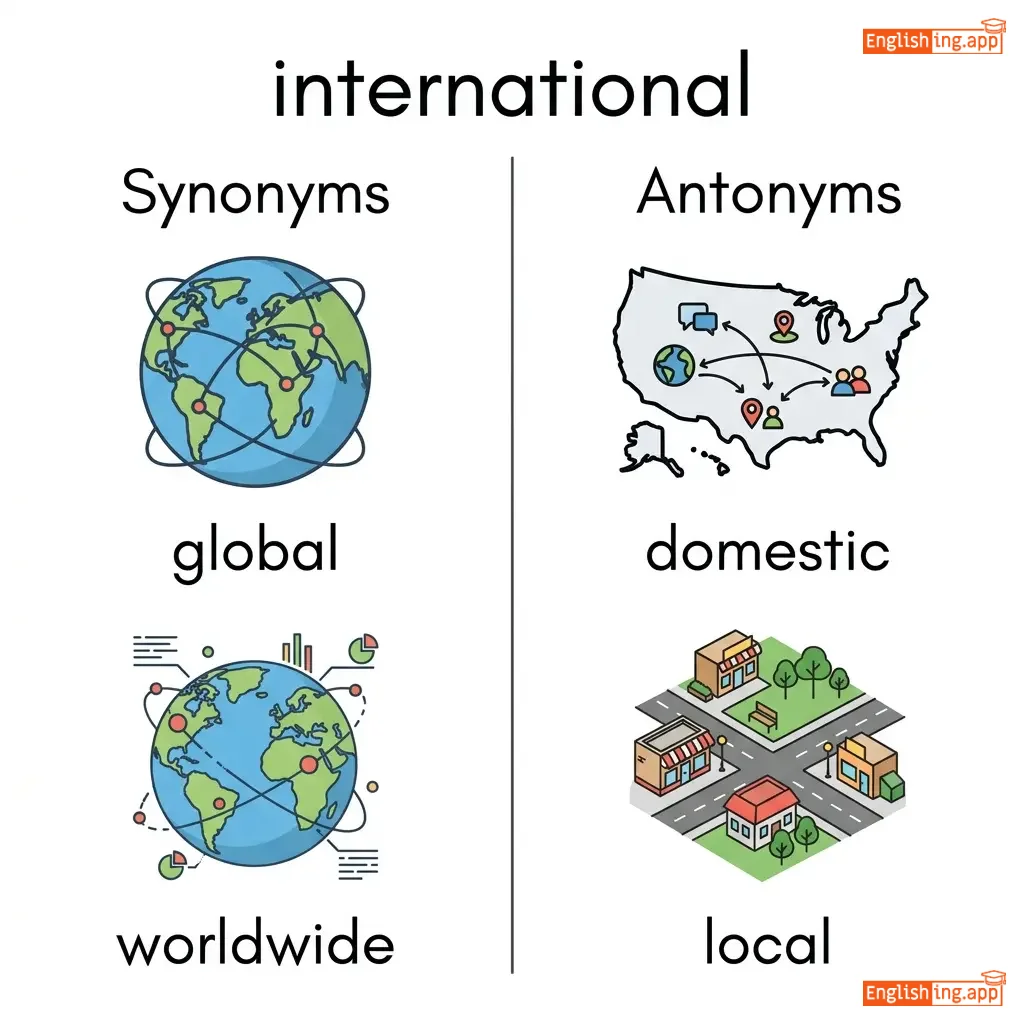

|
国际的
guoji de
••••••
|
Existing, occurring, or carried on between nations.
••••••
|
The company is planning to expand into international markets. |
该公司计划扩展到国际市场。
Gāi gōngsī jìhuà kuòzhǎn dào guójì shìchǎng.
••••••
|
international relations |
relationships between different countries
••••••
|
国际关系
guójì guānxi
••••••
|
global, worldwide, universal, foreign
••••••
|
domestic, local
••••••
|
international trade, international law, international relations, international organization
••••••
|
International意味着 inter (在之间) + national (国家) = 各国之间的关系
••••••
|
|
📖
••••••
|
/ɪnˌtɜːrprəˈteɪʃən/
noun
(yìshì)
••••••
|
- •••••• |
解释
jieshi
••••••
|
the action of explaining the meaning of something
••••••
|
The teacher gave her own interpretation of the poem. |
老师给出了她对这首诗的解释。
Lǎoshī gěi chūle tā duì zhè shǒu shī de jiěshì.
••••••
|
open to interpretation |
something that can be understood in different ways
••••••
|
开放解释
kāifàng jiěshì
••••••
|
explanation, clarification, analysis, understanding, rendering
••••••
|
misinterpretation, confusion, misunderstanding
••••••
|
artistic interpretation, legal interpretation, correct interpretation, interpretation of law
••••••
|
Interpretation 意味着解释 — 就像电影一样,结局总是开放解释的。
••••••
|
|
🌄
••••••
|
/mæɡˈnɪfɪsənt/
adjective
(magnificent)
••••••
|
- •••••• |
壮观
zhuangguan
••••••
|
extremely beautiful, impressive, or splendid
••••••
|
The view from the mountain was truly magnificent.
从山上看到的景色真的很壮观。
••••••
|
从山上看到的景色真的很壮观。
Cong shan shang kandao de jingse zhen de hen zhuangguan.
••••••
|
in magnificent style
以壮观的风格
••••••
|
to do something in an impressive or splendid way
••••••
|
以壮观的风格
yi zhuangguan de fengge
••••••
|
splendid, glorious, majestic, superb, wonderful
••••••
|
awful, ordinary, poor
••••••
|
magnificent view, magnificent palace, magnificent effort
••••••
|
Magnificent = 壮观 = 一幅宏伟的风景。
••••••
|
|
📊
••••••
|
/ˌmɛθəˈdɑlədʒi/
noun
(方法论)
••••••
|
- •••••• |
方法论
fāngfǎlùn
••••••
|
A system of methods used in a particular area of study or activity.
••••••
|
The research was conducted using a new methodology.
这项研究是使用新方法论进行的。
••••••
|
这项研究是使用新方法论进行的。
Zhe xiang yanjiu shi shiyong xin fangfalu jinxing de.
••••••
|
- •••••• | - •••••• | - •••••• |
approach, technique, process, strategy, system
••••••
|
disorganization, randomness
••••••
|
research methodology, scientific methodology, teaching methodology, standard methodology
••••••
|
方法论是方法的系统—它是方法的集合。
••••••
|
|
📚
••••••
|
/fɪˈlɒs.ə.fi/
noun
(哲学)
••••••
|
- •••••• |
哲学
zhexue
••••••
|
the study of the fundamental nature of knowledge, reality, and existence
••••••
|
Her philosophy emphasizes kindness and empathy. |
她的哲学强调善良和同理心。
Ta de zhexue qiangdiao shanliang he tongli xin.
••••••
|
- •••••• | - •••••• | - •••••• |
belief, doctrine, wisdom, thought
••••••
|
ignorance, foolishness
••••••
|
personal philosophy, philosophy of life, moral philosophy, philosophical principles
••••••
|
Philo (爱) + sophy (智慧) = 爱 + 智慧 = 哲学
••••••
|
|
🏗️
••••••
|
/ˌriːkənˈstrʌkʃən/
noun
(ríkènsītruòkèxīn)
••••••
|
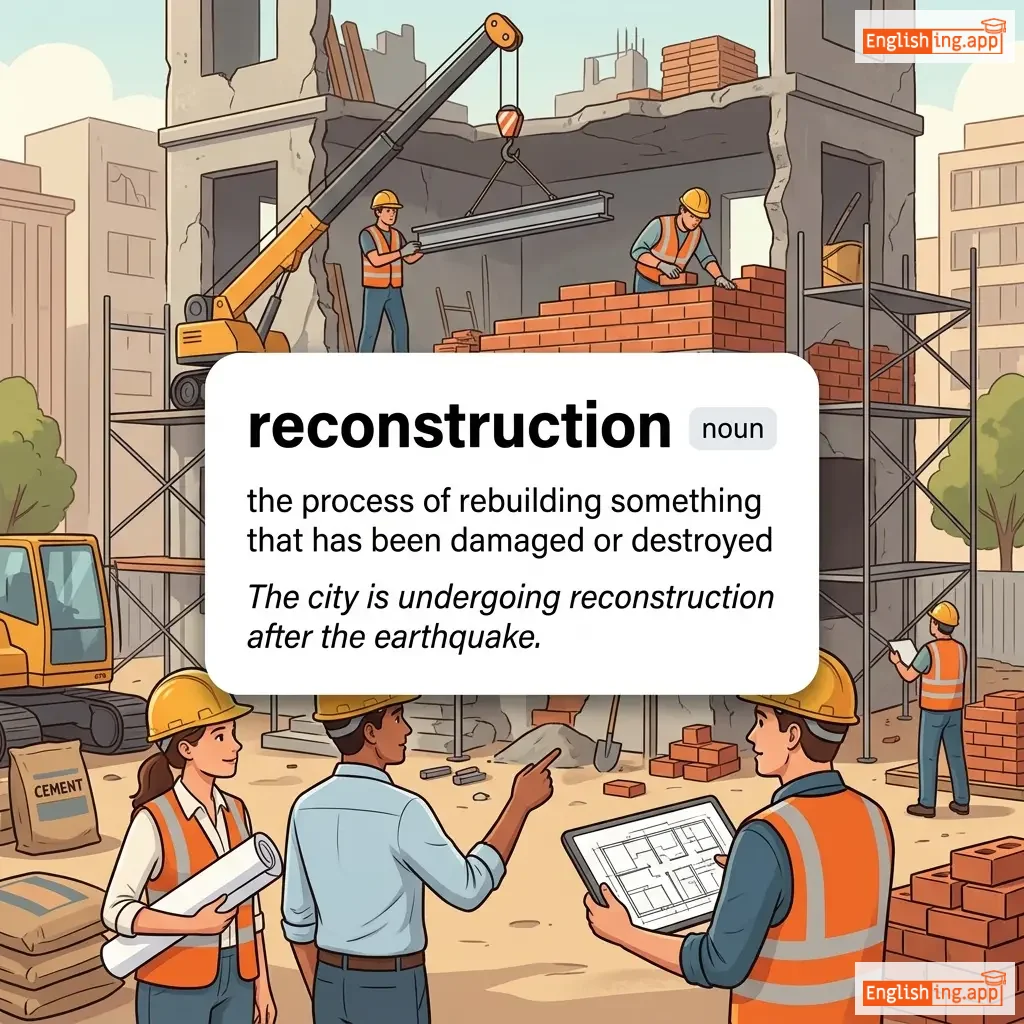
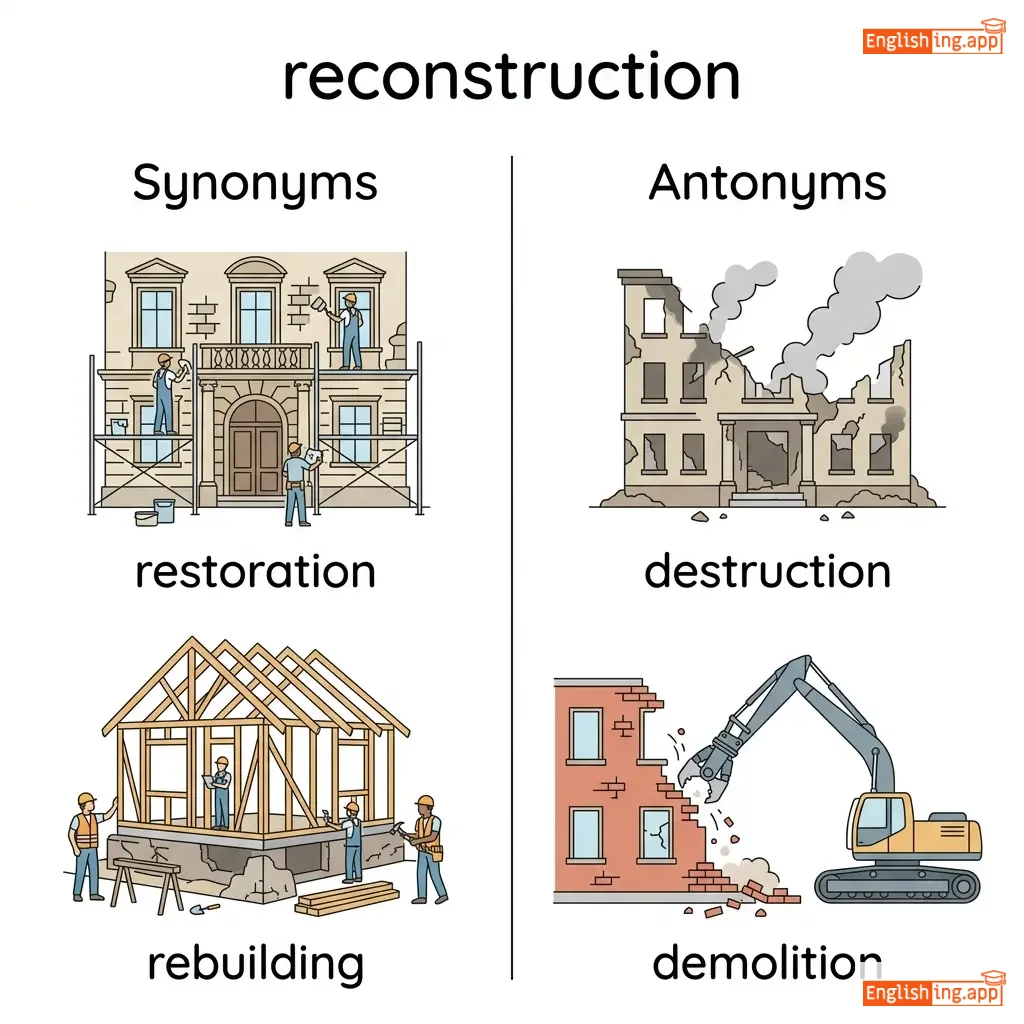
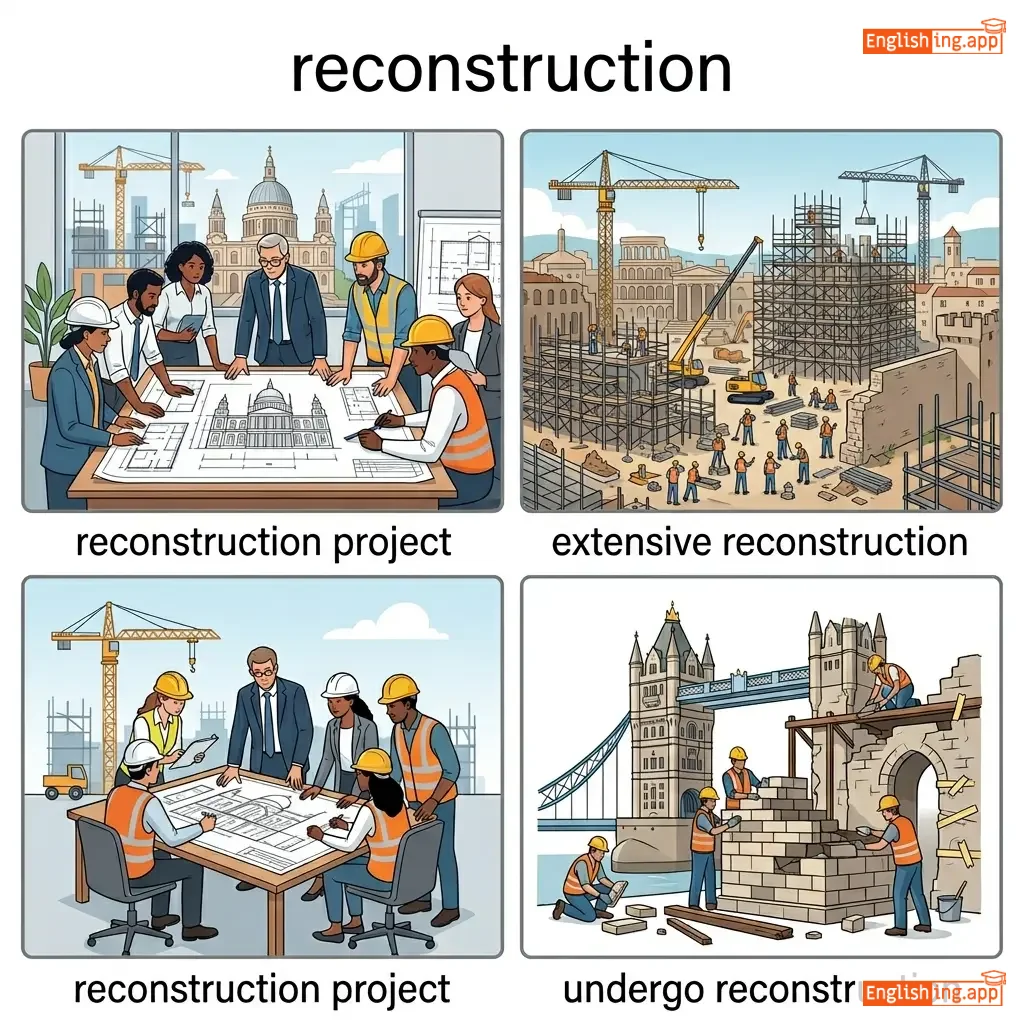
|
重建
chóngjiàn
••••••
|
the process of rebuilding something that has been damaged or destroyed
••••••
|
The city is undergoing reconstruction after the earthquake. |
城市在地震后正在进行重建。
Chéngshì zài dìzhèn hòu zhèngzài jìnxíng chóngjiàn.
••••••
|
- •••••• | - •••••• | - •••••• |
restoration, rebuilding, renewal, refurbishment
••••••
|
destruction, demolition
••••••
|
reconstruction project, extensive reconstruction, undergo reconstruction
••••••
|
重建就是在破坏后再造,'重' 就是重新建立的意思。
••••••
|
|
💪
••••••
|
/ˌriːhəˌbɪlɪˈteɪʃən/
noun
(hǎpīnès)
••••••
|
- •••••• |
幸福
xìngfú
••••••
|
the process of restoring someone or something to health or normal life through training or therapy
••••••
|
After the accident, he went through months of rehabilitation to walk again.
她无法掩饰自己获得奖项时的喜悦。
••••••
|
她无法掩饰自己获得奖项时的喜悦。
Tā wúfǎ yǎnshì zìjǐ huòdé jiǎngxiàng shí de xǐyuè.
••••••
|
rehabilitation center
追寻幸福
••••••
|
a place where people recover physically or mentally
••••••
|
追寻幸福
zhuīxún xìngfú
••••••
|
recovery, therapy, restoration, renewal
••••••
|
damage, decline
••••••
|
physical rehabilitation, rehabilitation program, rehabilitation center, drug rehabilitation
••••••
|
幸福是一条永无止境的追求之路。
••••••
|
|
💡
••••••
|
/ˌθiːəˈrɛtɪkl/
adjective
(θɪəˈrɛtɪkəl)
••••••
|
- •••••• |
理论的
lilun de
••••••
|
Concerned with or based on theory rather than practical application.
••••••
|
The idea remains largely theoretical without real-world evidence. |
这个想法在没有实际证据的情况下,仍然主要是理论性的。
Zhege xiangfa zai meiyou shiji zhengju de qingkuang xia, rengran zhuyao shi lilun xing de.
••••••
|
- •••••• | - •••••• | - •••••• |
abstract, conceptual, hypothetical, speculative
••••••
|
practical, applied
••••••
|
theoretical framework, theoretical knowledge, theoretical approach, purely theoretical
••••••
|
理论的就像脑海中的想法,没有现实证据 — 只是一个灯泡💡。
••••••
|
|
🌐
••••••
|
/trænzˈleɪʃən/
noun
(ˈtrænsleɪʃən)
••••••
|
- •••••• |
翻译
fānyì
••••••
|
the process of converting text or speech from one language into another
••••••
|
She completed the translation of the book within two months.
她在两个月内完成了这本书的翻译。
••••••
|
她在两个月内完成了这本书的翻译。
Tā zài liǎng gè yuè nèi wánchéngle zhè běn shū de fānyì.
••••••
|
lost in translation
在翻译中迷失
••••••
|
when something loses its original meaning in another language
••••••
|
在翻译中迷失
Zài fānyì zhōng míshī
••••••
|
interpretation, version, conversion, rendering, adaptation
••••••
|
original, source, misinterpretation
••••••
|
machine translation, language translation, translation service, translation app
••••••
|
翻译就是让语言互通 🌐
••••••
|

