The Reporter Who Exposed Truth
法里娅是一位调查型的 reporter,她致力于追求真相。她的 previous 任务报道了腐败。政治 prisoners' 的故事必须被讲述出来。随着媒体曝光,正义似乎变得 probable。真相 probably 会通过调查浮出水面。广告 proceeds 为报社提供资金。民主倡导者会 proclaim 新闻自由。新闻业必须 properly 运作。Proposed 的新闻法威胁到了自由。新闻业的未来 prospects 让所有人担忧。道德 protocols 指导着报道。信息由消息来源 provided。互联网服务 providers 让在线新闻成为可能。新闻的 quantity 不如质量重要。Recently,数字媒体改变了行业。真相是相对的 (relative),事实必须与公众利益 relevant。当真相被揭露时,社区感到 relieved。Religion 和政治常常交织。成为一名 reporter 需要勇气。在民主 republic 中,媒体是守望者。面对强权时 required 勇气。诚实的新闻 resembled 侦探工作。政府对批评的 response 各不相同。法律虽然 restricted,却无法让人噤声。本地 retailers 在报纸上刊登广告。档案可以 retrieve 旧报道。编辑 revision 改进了文章。政治 rhetoric 需要事实核查。新闻 rotation 保持内容新鲜。国际 sanctions 成为新闻焦点。法里娅在截止日期前抓了一个 sandwich。团队们会 scramble 处理突发新闻。Secondly,新闻业支持问责制。报道经过精心 selected。每一个 sentence 都在报道中至关重要。编辑和广告保持 separate。腐败 severely 影响社会。新闻从不 sexually 讨论。偏远地区的新闻 shipping 很慢。揭露性的报道令人 shocking。调查工作感觉像真相在 shooting。为可靠来源 shopping 至关重要。Sidewalk 采访捕捉公众意见。不同媒体的事实核查 slightly 不同。媒体在社会上有 socially 贡献。编辑 software 优化了制作流程。Somebody 必须让权力负责。真相在 sometime 是重要的。报道质量 somewhat 不一致。Southern 地区的媒体更少。证据 specimens 必须核实。新闻涵盖广泛的 spectrum 议题。政府的宣传 spending 增加。标题往往 striking 且吸引人。编辑们 strongly 维护新闻自由。记者们应当 supposed 保持中立。权威试图 suppress 不利报道。编辑需要 surgical 精确。真相不能在谎言中 swimming。新闻审查是独裁的 syndrome。Tactical 报道揭露不法行为。报道需要的不止一 teaspoon 的证据。审查制度对民主是 terrible 的。真相在独裁下 terribly 受害。新闻自由的胜利是 terrific 的。媒体 theology 宣扬透明度。Thinking 批判性思维是记者的责任。Thorough 的事实核查防止错误。错误信息 threatened 民主。真相获胜时,法里娅感到 thrilled。社会不能 tolerate 假新闻。知识必须准确 transmit。媒体行业价值 trillions。记者因审查而感到 troubled。团队 turnover 在敬业的群体中似乎 unlikely。Upcoming 的选举需要报道。新闻室从底层到 upstairs 都充满活力。调查新闻具有全球 validity。报道角度 variable 多样。Vertical 整合改变了媒体格局。媒体 violence 危及记者。无论 whatever 真相是什么,它都重要。Whenever 腐败被揭露,改变随之而来。Wherever 新闻自由存在,民主就繁荣。记者不会 withdraw 退缩。每个公民——包括 yourself——都需要被告知。法里娅会 accompany 摄影师到现场。According 消息来源,改革即将到来。媒体揭露了权力的 addiction。错误行为的 admission 很少容易。新闻自由带来了民主的 advantage。公众对诚实新闻怀有 affection。丑闻的 aftermath 带来了改革。每个 afternoon 截止日期临近。Afterward,报道会被分析。编辑 agreement 影响报道方向。政治 alignment 影响部分媒体。Allegedly,腐败广泛存在。新闻预算中的 allowance 很有限。记者 alongside 活动家工作。追逐救护车的报道不道德。宪法 amendment 保护新闻自由。消息来源保持 anonymous 以保安全。政府应为审查 apologize。讲真话是 appealing 的。求职 applicants 希望改变新闻业。编辑决策不是 arbitrary 的。大胆的 assertions 需要证据。来源寻求 assurance 保护。成功可 attributed 于坚持。法里娅证明,勇敢的新闻能揭露真相并捍卫民主。
|
表情符号
|
单词 | Images | 翻译 | 过去时 | 过去分词 | 第三人称单数 | 动名词 | 含义 | 例句 | 例句翻译 | 示例表达 | 示例表达含义 | 示例表达翻译 | 同义词 | 反义词 | 搭配词 | 助记符 |
|---|---|---|---|---|---|---|---|---|---|---|---|---|---|---|---|---|---|
|
⏮️
••••••
|
/ˈpriːviəs/
adjective
(pǔrīfīus)
••••••
|
- •••••• |
以前的
yǐqián de
••••••
|
- •••••• | - •••••• | - •••••• | - •••••• |
Existing or happening before the present time.
••••••
|
He referred to the previous meeting to explain his point.
他引用了上一场会议来解释他的观点。
••••••
|
他引用了上一场会议来解释他的观点。
Tā yǐn yòngle shàng yī chǎng huì yì lái jiěshì tā de guāndiǎn.
••••••
|
previous experience
以前的经验
••••••
|
Past knowledge or skills gained from earlier situations.
••••••
|
以前的经验
yǐqián de jīngyàn
••••••
|
earlier, prior, former, preceding
••••••
|
future, later
••••••
|
previous meeting, previous record, previous work, previous year
••••••
|
Previous 意味着以前,比如 previous exam,就是以前的考试。
••••••
|
|
👨⚖️
••••••
|
/ˈprɪzənər/
noun
(囚犯)
••••••
|
- •••••• |
囚犯
qiúfàn
••••••
|
- •••••• | - •••••• | - •••••• | - •••••• |
a person who is in prison
••••••
|
The prisoner was granted parole after serving 10 years. |
这个囚犯在服刑10年后被释放。
Zhège qiúfàn zài fúxíng 10 nián hòu bèi shìfàng.
••••••
|
- •••••• | - •••••• | - •••••• |
inmate, convict, detainee, captive
••••••
|
free person, citizen, civilian
••••••
|
prisoner of war, political prisoner, life sentence prisoner
••••••
|
A prisoner is a 'qiúfàn' who is in prison in Chinese.
••••••
|
|
🌧️
••••••
|
/ˈprɒbəbl̩/
adjective
(próbábl)
••••••
|
- •••••• |
可能的
keneng de
••••••
|
- •••••• | - •••••• | - •••••• | - •••••• |
likely to happen or be true, but not certain
••••••
|
Rain is probable tomorrow according to the forecast.
根据预测,明天可能会下雨。
••••••
|
根据预测,明天可能会下雨。
genju yuce, mingtian keneng hui xiayu.
••••••
|
highly probable
高度可能
••••••
|
very likely to happen
••••••
|
高度可能
gaodu keneng
••••••
|
likely, possible, expected, potential, feasible
••••••
|
unlikely, impossible, doubtful
••••••
|
probable cause, highly probable, probable outcome, probable reason
••••••
|
Probable 就像 Probability,表示可能发生的事情。
••••••
|
|
🤷
••••••
|
/ˈprɒb.ə.bli/
adverb
(probabili)
••••••
|
- •••••• |
可能
keneng
••••••
|
- •••••• | - •••••• | - •••••• | - •••••• |
almost certainly; very likely; in all likelihood
••••••
|
He will probably arrive late tonight.
他今晚可能会迟到。
••••••
|
他今晚可能会迟到。
ta jinwan keneng hui chidao
••••••
|
- •••••• | - •••••• | - •••••• |
likely, presumably, most likely, in all probability
••••••
|
improbably, unlikely, definitely not
••••••
|
probably true, probably not, most probably
••••••
|
可能 = keneng
••••••
|
|
💰
••••••
|
/ˈprəʊsiːdz/
noun
(proʊsiːdz)
••••••
|
- •••••• |
收入
shouru
••••••
|
- •••••• | - •••••• | - •••••• | - •••••• |
money obtained from an event, activity, or sale
••••••
|
The proceeds from the charity event were donated to the orphanage. |
慈善活动的收入被捐赠给了孤儿院。
Cishan huodong de shouru bei juanzeng gei le gu'er yuan.
••••••
|
net proceeds |
the remaining amount of money after expenses are deducted
••••••
|
净收入
jing shouru
••••••
|
earnings, revenue, profit, income, returns
••••••
|
loss, deficit
••••••
|
sale proceeds, net proceeds, distribute proceeds, donate proceeds
••••••
|
Proceeds意味着收入,就像从播种中获得的利润。
••••••
|
|
📢
••••••
|
/prəˈkleɪm/
verb
(prokleim)
••••••
|
- •••••• |
宣布
xuānbù
••••••
|
proclaimed
prokléimd
••••••
|
proclaimed
prokléimd
••••••
|
proclaims
prokléims
••••••
|
proclaiming
prokléiming
••••••
|
to announce something publicly or officially, especially something important
••••••
|
The president proclaimed a national day of mourning.
总统宣布了一个全国的哀悼日。
••••••
|
总统宣布了一个全国的哀悼日。
Zǒngtǒng xuānbùle yīgè quánguó de āidào rì.
••••••
|
proclaim victory
宣布胜利
••••••
|
to declare oneself the winner of something
••••••
|
宣布胜利
xuānbù shènglì
••••••
|
declare, announce, state, affirm, pronounce
••••••
|
deny, conceal, suppress
••••••
|
proclaim independence, proclaim victory, proclaim truth, proclaim law
••••••
|
Proclaim就是要大声宣布一个重要的消息 📢
••••••
|
|
✔️
••••••
|
/ˈprɒpərli/
adverb
(pròpèlì)
••••••
|
- •••••• |
正确地
zhèngquè de
••••••
|
- •••••• | - •••••• | - •••••• | - •••••• |
in the correct or suitable manner
••••••
|
He performed the task properly to avoid mistakes.
他为了避免错误,正确地完成了任务。
••••••
|
他为了避免错误,正确地完成了任务。
Tā wèile bìmiǎn cuòwù, zhèngquè de wánchéngle rènwù.
••••••
|
- •••••• | - •••••• | - •••••• |
correctly, suitably, appropriately, adequately
••••••
|
improperly, incorrectly
••••••
|
perform properly, behave properly, handle properly
••••••
|
Properly means doing something in the right way, like following a recipe!
••••••
|
|
📑
••••••
|
/prəˈpoʊzd/
adjective
(proʊˈpoʊzd)
••••••
|
- •••••• |
提议的
tíyì de
••••••
|
- •••••• | - •••••• | - •••••• | - •••••• |
suggested or put forward for consideration or discussion
••••••
|
The proposed changes will improve the system. |
提议的变更将改善系统。
Tíyì de biàngē jiāng gǎishàn xìtǒng.
••••••
|
- •••••• | - •••••• | - •••••• |
suggested, recommended, offered, submitted
••••••
|
rejected, opposed, denied
••••••
|
proposed changes, proposed plan, proposed solution
••••••
|
提议的 (tíyì de) 变更将改善系统 - Proposed changes will improve the system.
••••••
|
|
🔮
••••••
|
/ˈprɒspɛkt/
noun
(前景)
••••••
|


|
前景
qianjing
••••••
|
- •••••• | - •••••• | - •••••• | - •••••• |
The possibility or likelihood of some future event occurring.
••••••
|
The prospect of traveling abroad excited her. |
出国旅行的前景让她感到兴奋。
Chūguó lǚxíng de qiánjǐng ràng tā gǎndào xīngfèn.
••••••
|
bright prospects |
Good opportunities or chances for the future.
••••••
|
光明前景
guāngmíng qiánjǐng
••••••
|
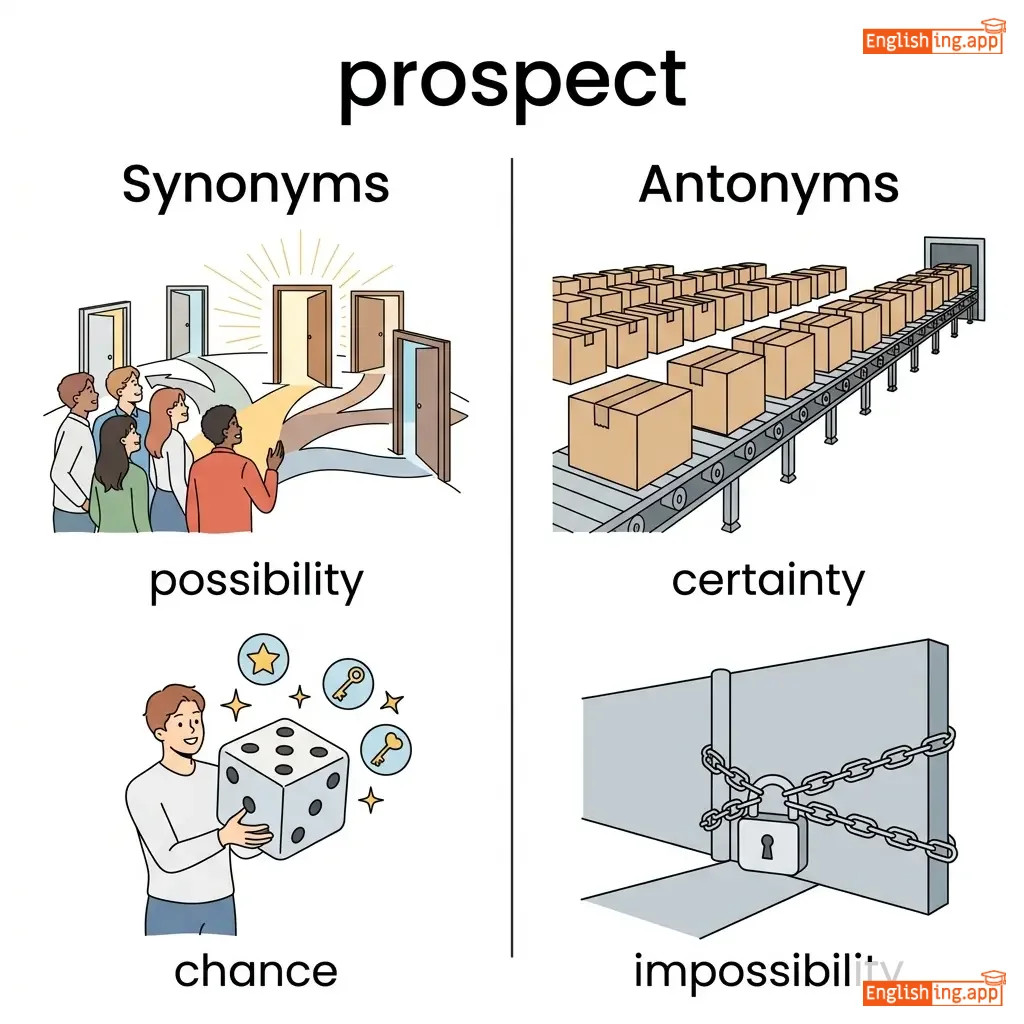
possibility, chance, outlook, opportunity, likelihood
••••••
|
certainty, impossibility
••••••
|
career prospects, good prospect, business prospect, prospect of success
••••••
|
Prospect 的意思是前景,'Pro' 意味着前方,'spect' 意味着看—往前看就是可能性。
••••••
|
|
📜
••••••
|
/ˈproʊtəkɔːl/
noun
(协议)
••••••
|
- •••••• |
协议
xieyi
••••••
|
- •••••• | - •••••• | - •••••• | - •••••• |
an official procedure or system of rules
••••••
|
The security team followed strict protocol during the event.
安全团队在活动期间遵循了严格的协议。
••••••
|
安全团队在活动期间遵循了严格的协议。
Anquan tuandui zai huodong qijian zunxunle yange de xieyi.
••••••
|
protocol breach
违反协议
••••••
|
failure to follow established rules
••••••
|
违反协议
wei fan xie yi
••••••
|
procedure, rules, code, convention, guideline
••••••
|
chaos, disorder, improvisation
••••••
|
follow protocol, security protocol, communication protocol, diplomatic protocol
••••••
|
协议就像是规则手册,考试中不遵循协议就会受到惩罚。
••••••
|
|
🎁
••••••
|
/prəˈvaɪdɪd/
verb
(prəvaɪdəd)
••••••
|
- •••••• |
提供的
tigong de
••••••
|
provided
prəvaɪdəd
••••••
|
provided
prəvaɪdəd
••••••
|
- •••••• | - •••••• |
gave or supplied something that was needed
••••••
|
The hotel provided free breakfast for all guests.
酒店为所有客人提供了免费早餐。
••••••
|
酒店为所有客人提供了免费早餐。
Jiudian wei suoyou ke ren tigong le miantiao zaochan.
••••••
|
- •••••• | - •••••• | - •••••• |
supplied, gave, furnished, delivered
••••••
|
withheld, denied
••••••
|
provided service, provided information, provided support
••••••
|
提供的意味着已经给出 — 已经提供的东西。
••••••
|
|
💼
••••••
|
/prəˈvaɪdər/
noun
(普罗维德)
••••••
|
- •••••• |
供应商
gongying shang
••••••
|
- •••••• | - •••••• | - •••••• | - •••••• |
a person or thing that provides something.
••••••
|
The service provider ensures that all customers receive timely support. |
服务供应商确保所有客户及时获得支持。
Fúwù gōngyìng shāng quèbǎo suǒyǒu kèhù jíshí huò dé zhīchí.
••••••
|
- •••••• | - •••••• | - •••••• |
supplier, distributor, giver, source
••••••
|
receiver, consumer, taker
••••••
|
service provider, internet provider, health provider, financial provider
••••••
|
‘供应商’为你提供服务和支持!
••••••
|
|
🔢
••••••
|
/ˈkwɒn.tə.ti/
noun
(kwán-ti-ti)
••••••
|
- •••••• |
数量
shùliàng
••••••
|
- •••••• | - •••••• | - •••••• | - •••••• |
An amount or number of something.
••••••
|
The shop ordered a large quantity of rice. |
商店订购了大量的米。
Shāngdiàn dìnggòu le dàliàng de mǐ.
••••••
|
quantity over quality |
Focusing on producing more items rather than better ones.
••••••
|
数量超过质量
shùliàng chāoguò zhìliàng
••••••
|
amount, volume, total, number, mass
••••••
|
quality, scarcity, lack
••••••
|
large quantity, small quantity, huge quantity, quantity supplied, quantity demanded
••••••
|
数量就是有多少东西,更多就是数量。
••••••
|
|
🕐
••••••
|
/ˈriː.sənt.li/
adverb
(瑞森特利)
••••••
|
- •••••• |
最近
zuijin
••••••
|
- •••••• | - •••••• | - •••••• | - •••••• |
in the recent past; not long ago
••••••
|
I recently moved to a new apartment.
艾 瑞森特利 穆夫德 图 啊 纽 阿帕特门特
••••••
|
我最近搬到了一个新公寓。
wo zuijin bandao le yi ge xin gongyu
••••••
|
- •••••• | - •••••• | - •••••• |
lately, newly, freshly
••••••
|
formerly, previously, long ago
••••••
|
recently discovered, recently published, recently developed
••••••
|
Recently = 最近 (zuijin) — both show 'recent time'.
••••••
|
|
⚖️
••••••
|
/ˈrel.ə.tɪv/
adjective
(relātīfu)
••••••
|
- •••••• |
相对的
xiāngduì de
••••••
|
- •••••• | - •••••• | - •••••• | - •••••• |
considered in comparison to something else; not absolute; comparative
••••••
|
The cost of living is relative to your income level.
生活成本相对于你的收入水平。
••••••
|
生活成本相对于你的收入水平。
Shēnghuó chéngběn xiāngduì yú nǐ de shōurù shuǐpíng.
••••••
|
- •••••• | - •••••• | - •••••• |
comparative, proportional, corresponding, respective
••••••
|
absolute, fixed, independent, unrelated
••••••
|
relative importance, relative position, relative value
••••••
|
相对的 (xiāngduì de) means comparative, similar to relative.
••••••
|
|
📌
••••••
|
/ˈrɛl.ə.vənt/
adjective
(雷莱万特)
••••••
|
- •••••• |
相关的
xiāngguān de
••••••
|
- •••••• | - •••••• | - •••••• | - •••••• |
closely connected or appropriate to what is being considered or done
••••••
|
Your comments are not relevant to the discussion.
你的评论与讨论无关。
••••••
|
你的评论与讨论无关。
Nǐ de pínglùn yǔ tǎolùn wúguān.
••••••
|
relevant to the point
与要点相关
••••••
|
directly connected to the main issue being discussed
••••••
|
与要点相关
Yǔ yàodiǎn xiāngguān
••••••
|
pertinent, applicable, appropriate, related, connected
••••••
|
irrelevant, unrelated, inappropriate
••••••
|
relevant information, relevant issue, relevant factors, relevant data
••••••
|
Relevant意思是相关的,就像考试中的相关问题,就是与考试相关的问题。
••••••
|
|
😌
••••••
|
/rɪˈliːvd/
adjective
(rɪˈliːvd)
••••••
|
- •••••• |
松了一口气
sōng le yī kǒu qì
••••••
|
- •••••• | - •••••• | - •••••• | - •••••• |
feeling happy and less worried after something stressful has been removed or resolved
••••••
|
She felt relieved after hearing the good news. |
听到好消息后,她感到松了一口气。
Tīng dào hǎo xiāoxī hòu, tā gǎndào sōng le yī kǒu qì.
••••••
|
- •••••• | - •••••• | - •••••• |
comforted, relaxed, reassured, eased
••••••
|
worried, stressed, anxious
••••••
|
feel relieved, relieved to know, felt relieved
••••••
|
Relieved is like a 'relief' (releef) after a stressful day.
••••••
|
|
🙏
••••••
|
/rɪˈlɪdʒ.ən/
noun
(宗教)
••••••
|
- •••••• |
宗教
zongjiao
••••••
|
- •••••• | - •••••• | - •••••• | - •••••• |
a system of faith and worship involving belief in a higher power
••••••
|
Freedom of religion is a fundamental human right.
宗教自由是基本人权。
••••••
|
宗教自由是基本人权。
Zongjiao zìyóu shì jīběn rénquán.
••••••
|
blind faith in religion
盲目信仰宗教
••••••
|
unquestioning belief in a religious system
••••••
|
盲目信仰宗教
mángmù xìnyǎng zōngjiào
••••••
|
faith, belief, spirituality, creed, worship
••••••
|
atheism, disbelief, skepticism
••••••
|
major religion, world religion, religious practice, organized religion
••••••
|
Religion = RE(神) + GION (信仰)
••••••
|
|
👩💻
••••••
|
/rɪˈpɔːrtər/
noun
(ɹɪˈpɔɹtə)
••••••
|
- •••••• |
记者
jizhe
••••••
|
- •••••• | - •••••• | - •••••• | - •••••• |
a person who reports news or information
••••••
|
The reporter interviewed several people at the scene. |
记者在现场采访了几个人。
Jizhe zai xianchang caifang le ji ge ren.
••••••
|
- •••••• | - •••••• | - •••••• |
journalist, correspondent, writer, newscaster
••••••
|
listener
••••••
|
news reporter, television reporter, investigative reporter
••••••
|
记者 (Jizhe) 传递新闻!
••••••
|
|
🏛️
••••••
|
/rɪˈpʌblɪk/
noun
(rì-pù-bù-lì-kè)
••••••
|
|
共和国
gongheguo
••••••
|
- •••••• | - •••••• | - •••••• | - •••••• |
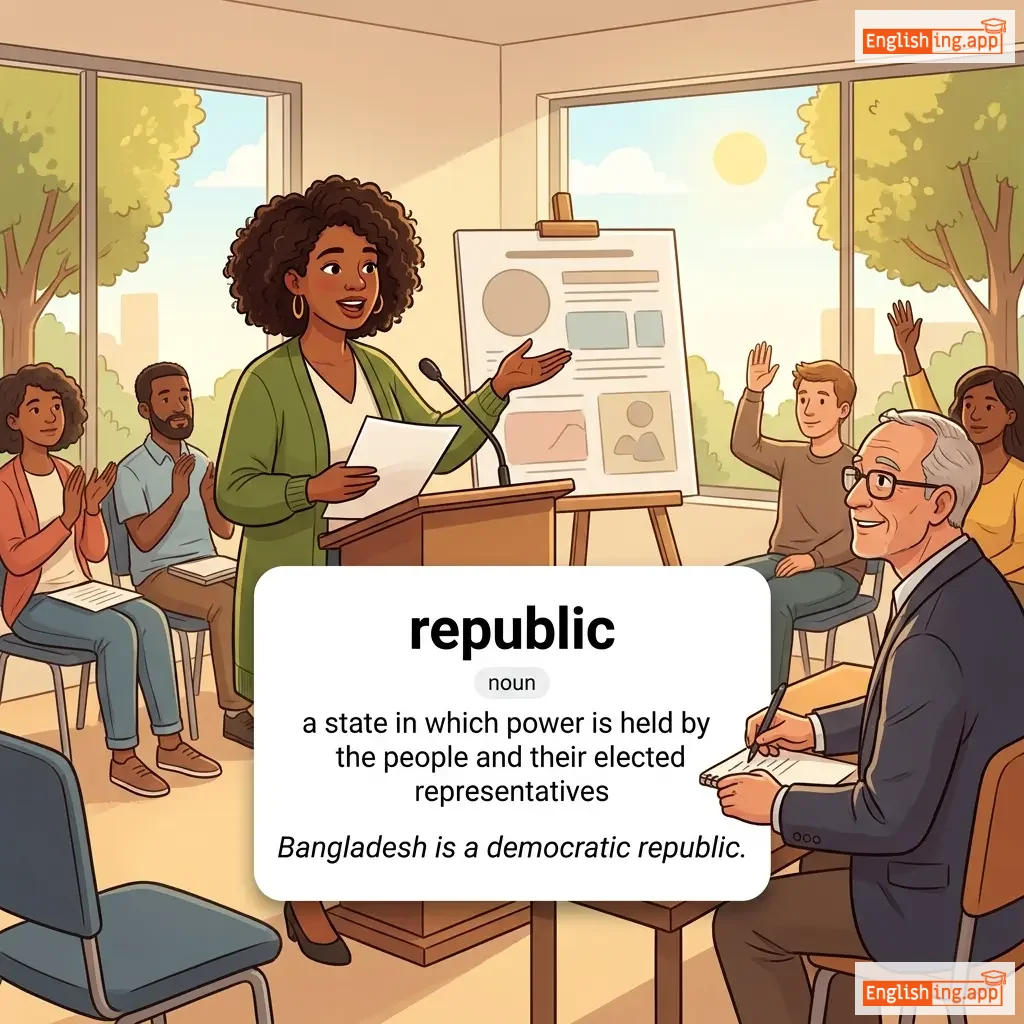
a state in which power is held by the people and their elected representatives
••••••
|
Bangladesh is a democratic republic. |
孟加拉国是一个民主的共和国。
Mèngjiālāguó shì yīgè mínzhǔ de gònghéguó.
••••••
|
- •••••• | - •••••• | - •••••• |
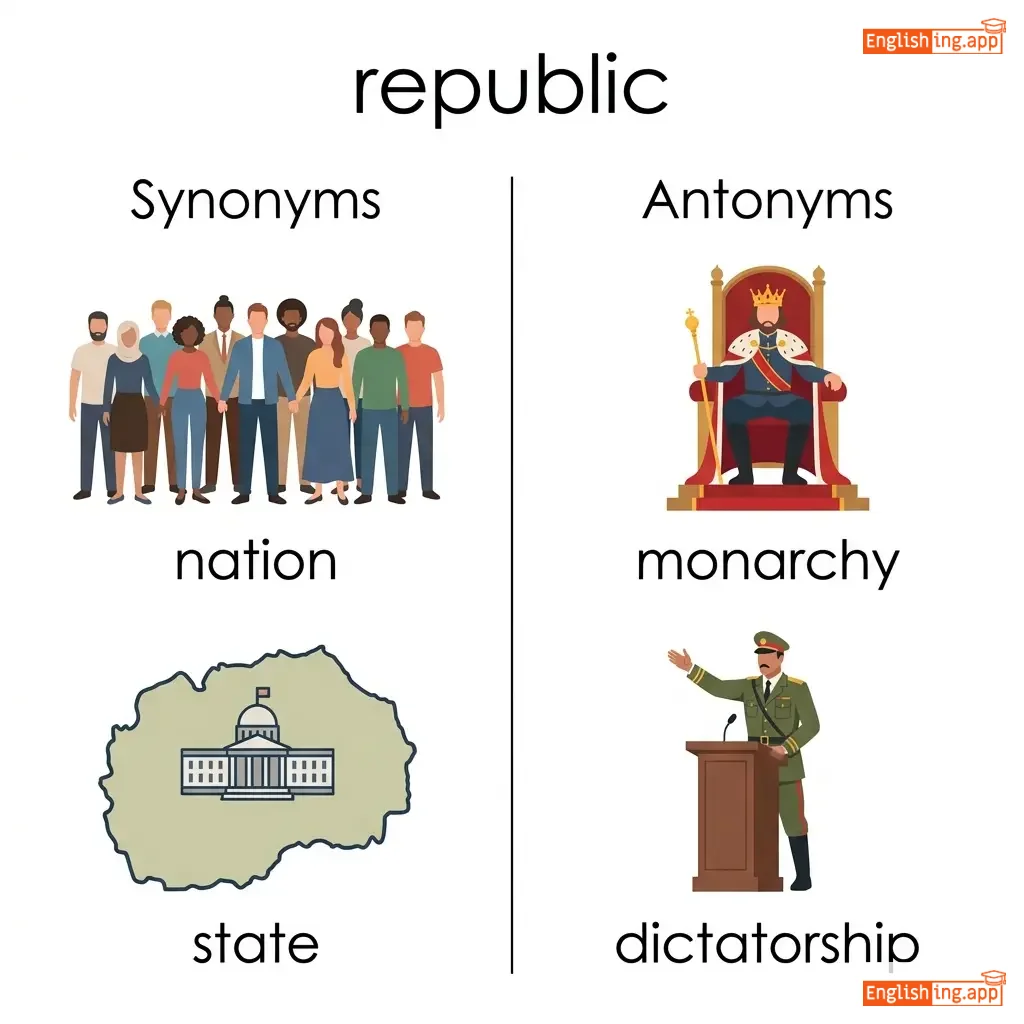
nation, state, democracy, commonwealth
••••••
|
monarchy, dictatorship
••••••
|
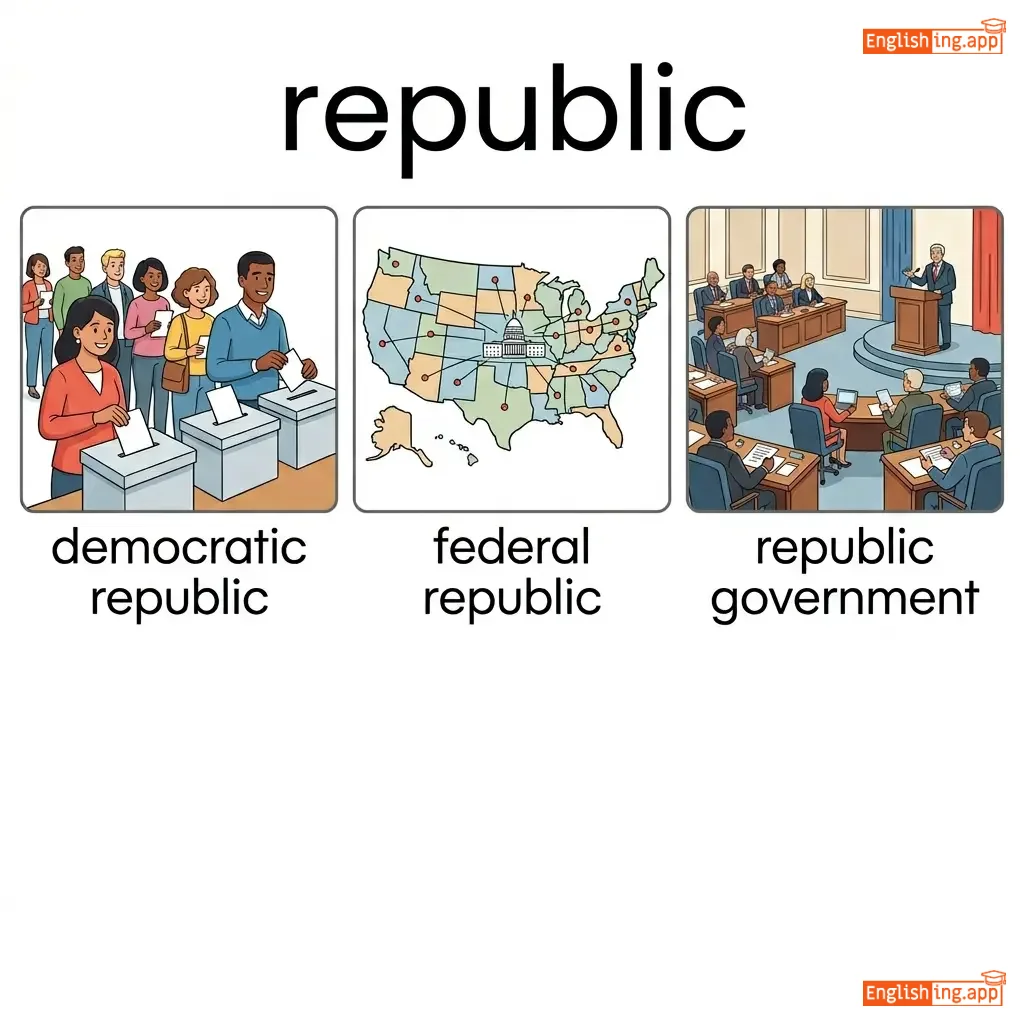
democratic republic, federal republic, republic government, republic constitution
••••••
|
共和国是‘re-public’ — 由人民管理国家 🌐
••••••
|

