Honest Pledges Before the Flood
被困在雨水中的化学物质被dissolved并在进入河流之前被过滤。 一位老村商人说,'河流上的gambling将永远禁止。' 工作坊教授了如何处理gasoline泄漏。 河上的日落看起来完全glorious。 人们写下关于河流goodness的诗歌。 区governor亲自感谢了志愿者。 实时graphics数据让每个人都感到惊讶。 传感器的警报heightened了安全措施。 这条河被誉为国家homeland文化的一部分。 在讨论中,每个人都honestly承认了自己的错误。 一个年轻人说,'失去这条河将是horrible。' 这一运动保护了我们共享的humanity。 专家们提供了基于生态友好ideology的指导方针。 传感器检查了是否有另一次imminent洪水。 一位曾经imprisoned的活动家分享了她的故事。 季风前的一个小incident让大家变得更加小心。 从过去的错误中学习,人们感到inclined采取果断行动。 学生们引入了新技术来increase种树速度。 当地industry业主承诺遵守废物处理规定。 一家infamous工厂道歉并资助了河流清理工作。
|
表情符号
|
单词 | Images | 翻译 | 过去时 | 过去分词 | 第三人称单数 | 动名词 | 含义 | 例句 | 例句翻译 | 示例表达 | 示例表达含义 | 示例表达翻译 | 同义词 | 反义词 | 搭配词 | 助记符 |
|---|---|---|---|---|---|---|---|---|---|---|---|---|---|---|---|---|---|
|
🫗
••••••
|
/dɪˈzɒlv/
verb
••••••
|
- •••••• | - •••••• |
dissolved
••••••
|
dissolved
••••••
|
dissolves
••••••
|
dissolving
••••••
|
to melt or become liquid; to officially end or break up an agreement or organization
••••••
|
The sugar will dissolve quickly in hot tea. |
- •••••• |
dissolve into tears |
to suddenly start crying uncontrollably
••••••
|
- •••••• |
melt, liquefy, disband, terminate, vanish
••••••
|
solidify, unite, establish
••••••
|
dissolve sugar, dissolve parliament, dissolve the marriage
••••••
|
No •••••• |
|
🎲
••••••
|
/ˈɡæmblɪŋ/
noun
(ɡæmbəlɪŋ)
••••••
|
- •••••• |
赌博
dǔbó
••••••
|
- •••••• | - •••••• | - •••••• | - •••••• |
the activity of betting money or valuables on an outcome, often involving risk
••••••
|
He got addicted to gambling at the casino.
他在赌场上成瘾于赌博。
••••••
|
他在赌场上成瘾于赌博。
Ta zai du chang shang cheng yin yu du bo.
••••••
|
- •••••• | - •••••• | - •••••• |
betting, wagering, gaming, speculation
••••••
|
saving, investing
••••••
|
gambling addiction, gambling problem, gambling casino
••••••
|
Gambling (赌博) - 下注来赢钱!
••••••
|
|
⛽
••••••
|
/ˈɡæsəˌliːn/
noun
(汽油)
••••••
|
- •••••• |
汽油
qiyou
••••••
|
- •••••• | - •••••• | - •••••• | - •••••• |
a liquid fuel made from petroleum, used mainly to power engines in vehicles
••••••
|
The price of gasoline has increased significantly this month. |
本月汽油价格显著上涨了。
Ben yue qiyou jiage xianzhu shangzhang le.
••••••
|
run out of gasoline |
to have no fuel left in a vehicle
••••••
|
汽油耗尽
qiyou haojin
••••••
|
petrol, fuel, gas, diesel, energy
••••••
|
electricity, power outage
••••••
|
gasoline price, gasoline engine, gasoline station, gallon of gasoline
••••••
|
汽油是汽车的燃料。想象一下汽油充满了汽车,给汽车提供动力。
••••••
|
|
🌟
••••••
|
/ˈɡlɔː.ri.əs/
adjective
(ɡlɔːɾiəs)
••••••
|
- •••••• |
辉煌
hui huang
••••••
|
- •••••• | - •••••• | - •••••• | - •••••• |
having great beauty, magnificence, or deserving admiration and praise
••••••
|
It was a glorious day filled with sunshine and joy. |
这是一个辉煌的日子,充满了阳光和喜悦。
Zhè shì yīgè huīhuáng de rìzi, chōngmǎnle yángguāng hé xǐyuè.
••••••
|
a glorious victory |
a magnificent or impressive win
••••••
|
辉煌的胜利
huīhuáng de shènglì
••••••
|
magnificent, splendid, superb, majestic, wonderful
••••••
|
ordinary, dull, poor
••••••
|
glorious day, glorious past, glorious victory, glorious view
••••••
|
辉煌的日子就像一个 GLORIOUS 的胜利
••••••
|
|
💖
••••••
|
/ˈɡʊdnəs/
noun
(ɡʊdnəs)
••••••
|
- •••••• |
善良
shanliang
••••••
|
- •••••• | - •••••• | - •••••• | - •••••• |
the quality of being morally good or virtuous
••••••
|
Her goodness was evident in the way she treated others. |
她的善良在她对待他人的方式中表现得淋漓尽致。
Ta de shanliang zai ta duidai taren de fangshi zhong biaoxian de linli jinzhi.
••••••
|
- •••••• | - •••••• | - •••••• |
virtue, morality, kindness, goodness
••••••
|
evil, wickedness, immorality
••••••
|
goodness of heart, goodness of character, pure goodness
••••••
|
Goodness is like being 'Good' - Kindness and virtue shine through
••••••
|
|
👔
••••••
|
/ˈɡʌvərnər/
noun
(ɡʊvɛʁnɚ)
••••••
|
- •••••• |
州长
zhouzhang
••••••
|
- •••••• | - •••••• | - •••••• | - •••••• |
An official appointed or elected to govern a state, territory, or organization.
••••••
|
The governor addressed the citizens about the upcoming election. |
州长向公民们讲述了即将来临的选举。
Zhōuzhǎng xiàng gōngmínmen jiǎngshùle jíjiāng láilín de xuǎnjǔ.
••••••
|
- •••••• | - •••••• | - •••••• |
ruler, administrator, leader, official
••••••
|
citizen, subject
••••••
|
state governor, governor's office, elected governor, colonial governor
••••••
|
州长像是州的领袖,负责决策。
••••••
|
|
🎨
••••••
|
/ˈɡræfɪks/
noun
(ɡræfɪks)
••••••
|
- •••••• |
图形
tuxing
••••••
|
- •••••• | - •••••• | - •••••• | - •••••• |
visual images, designs, or drawings used to convey information or artistic expression
••••••
|
The website uses stunning graphics to attract visitors. |
该网站使用令人惊叹的图形来吸引访客。
Gāi wǎngzhàn shǐyòng lìng rén jīngtàn de túxíng lái xīyǐn fǎngkè.
••••••
|
- •••••• | - •••••• | - •••••• |
images, visuals, illustrations, designs
••••••
|
text, words
••••••
|
computer graphics, graphic design, graphic artist, digital graphics
••••••
|
图形设计的图形让每个人都感到震撼
••••••
|
|
🔺
••••••
|
/ˈhaɪtən/
verb
(hài tèn)
••••••
|
- •••••• |
提高
tígāo
••••••
|
heightened
hài tènd
••••••
|
heightened
hài tènd
••••••
|
heightens
hài tènz
••••••
|
heightening
hài tèníng
••••••
|
to make or become greater in intensity or degree
••••••
|
The announcement served to heighten the excitement in the room.
ðɪ ænˈaʊnsment sɜːrvd tuː hʌɪtn ðɪ ɪksˈaɪtmənt ɪn ðə ruːm.
••••••
|
公告有助于提高房间里的兴奋。
Gōnggào yǒu zhù yú tígāo fángjiān lǐ de xīngfèn.
••••••
|
- •••••• | - •••••• | - •••••• |
increase, intensify, amplify, escalate
••••••
|
diminish, reduce
••••••
|
heighten the tension, heighten awareness, heighten security
••••••
|
Heighten和'提高'在中文中意思相似,都是增加强度的意思。
••••••
|
|
🏠
••••••
|
/ˈhoʊmlænd/
noun
(hóumland)
••••••
|
- •••••• |
故乡
gùxiāng
••••••
|
- •••••• | - •••••• | - •••••• | - •••••• |
a person's native country or region
••••••
|
She returned to her homeland after ten years abroad.
她在国外十年后回到了她的家乡。
••••••
|
她在国外十年后回到了她的故乡。
Tā zài guówài shí nián hòu huídàole tā de gùxiāng.
••••••
|
- •••••• | - •••••• | - •••••• |
native land, motherland, fatherland, birthplace, country
••••••
|
foreign land, abroad, exile
••••••
|
defend the homeland, homeland security, homeland territory, homeland pride
••••••
|
Home 意味着家 + land 意味着国家 — 在你国家的家 = 故乡
••••••
|
|
🤍
••••••
|
/ˈɒnɪstli/
adverb
(honestly)
••••••
|
- •••••• |
诚实地
cheng shi di
••••••
|
- •••••• | - •••••• | - •••••• | - •••••• |
in a truthful, sincere, or fair way
••••••
|
She spoke honestly about her mistakes. |
她诚实地谈论了自己的错误。
Ta cheng shi de tan lun le zi ji de cuo wu.
••••••
|
to be honest |
used to emphasize the truth or sincerity of what one is saying
••••••
|
说实话
shuo shi hua
••••••
|
truthfully, sincerely, genuinely, frankly, openly
••••••
|
dishonestly, falsely, deceitfully
••••••
|
speak honestly, act honestly, honestly believe, honestly admit
••••••
|
Honest + ly = 诚实地: 说出真相
••••••
|
|
😖
••••••
|
/ˈhɔːrɪbəl/
adjective
(hɔːrɪbəl)
••••••
|
- •••••• |
可怕的, 恐怖的
kěpà de, kǒngbù de
••••••
|
- •••••• | - •••••• | - •••••• | - •••••• |
very unpleasant or causing horror; extremely bad or unpleasant
••••••
|
The food at that restaurant was horrible. |
那家餐馆的食物可怕极了。
Nà jiā cānguǎn de shíwù kěpà jíle.
••••••
|
horrible dream |
a very bad or frightening dream
••••••
|
可怕的梦
kěpà de mèng
••••••
|
terrible, awful, dreadful, nasty, unpleasant
••••••
|
pleasant, wonderful, nice
••••••
|
horrible accident, horrible smell, horrible feeling
••••••
|
Horrible 就像 Horror — 很糟糕!😖
••••••
|
|
🌍
••••••
|
/hjuːˈmænɪti/
noun
(hjuːˈmænɪti)
••••••
|
- •••••• |
人性
renxing
••••••
|
- •••••• | - •••••• | - •••••• | - •••••• |
the quality of being human; kindness or compassion towards others; all human beings collectively
••••••
|
Kindness is one of the greatest expressions of humanity. |
善良是人性最伟大的表现之一。
Shànliáng shì rénxìng zuì wěidà de biǎoxiàn zhī yī.
••••••
|
crimes against humanity |
serious offenses that harm large groups of people
••••••
|
反人类罪
fǎn rénlèi zuì
••••••
|
mankind, humankind, compassion, benevolence, kindness
••••••
|
cruelty, inhumanity, brutality
••••••
|
show humanity, act with humanity, crimes against humanity, humanity and compassion
••••••
|
人性就是人类的本质,展现出善良和同情。
••••••
|
|
🧠
••••••
|
/ˌaɪ.diˈɒl.ə.dʒi/
noun
(ai-di-yu-luo-ji)
••••••
|
- •••••• |
意识形态
yishi xingtai
••••••
|
- •••••• | - •••••• | - •••••• | - •••••• |
A system of ideas and ideals, especially one that forms the basis of economic or political theory and policy.
••••••
|
Democracy is based on the ideology of freedom and equality. |
民主基于自由和平等的意识形态。
Minzhu jiyu ziyou he pingdeng de yishi xingtai.
••••••
|
- •••••• | - •••••• | - •••••• |
belief system, philosophy, doctrine, principles
••••••
|
practicality, reality
••••••
|
political ideology, religious ideology, dominant ideology
••••••
|
意识形态 = 思想 + 逻辑 – 一种思想体系
••••••
|
|
⚡
••••••
|
/ˈɪmɪnənt/
adjective
(伊米嫩特)
••••••
|
- •••••• |
即将
jí jiāng
••••••
|
- •••••• | - •••••• | - •••••• | - •••••• |
About to happen; likely to occur very soon.
••••••
|
Dark clouds signaled that a storm was imminent.
乌云预示着暴风雨即将来临。
••••••
|
乌云预示着暴风雨即将来临。
Wū yún yù shì zhe bào fēng yǔ jí jiāng lái lín.
••••••
|
imminent danger
迫在眉睫的危险
••••••
|
A threat or risk that is about to happen very soon.
••••••
|
迫在眉睫的危险
pò zài méi jié de wēi xiǎn
••••••
|
forthcoming, approaching, looming, impending, near
••••••
|
distant, remote, unlikely
••••••
|
imminent threat, imminent arrival, imminent danger, imminent change
••••••
|
Imminent 就是即将发生 - 就像是即将来临的危险。
••••••
|
|
🔒
••••••
|
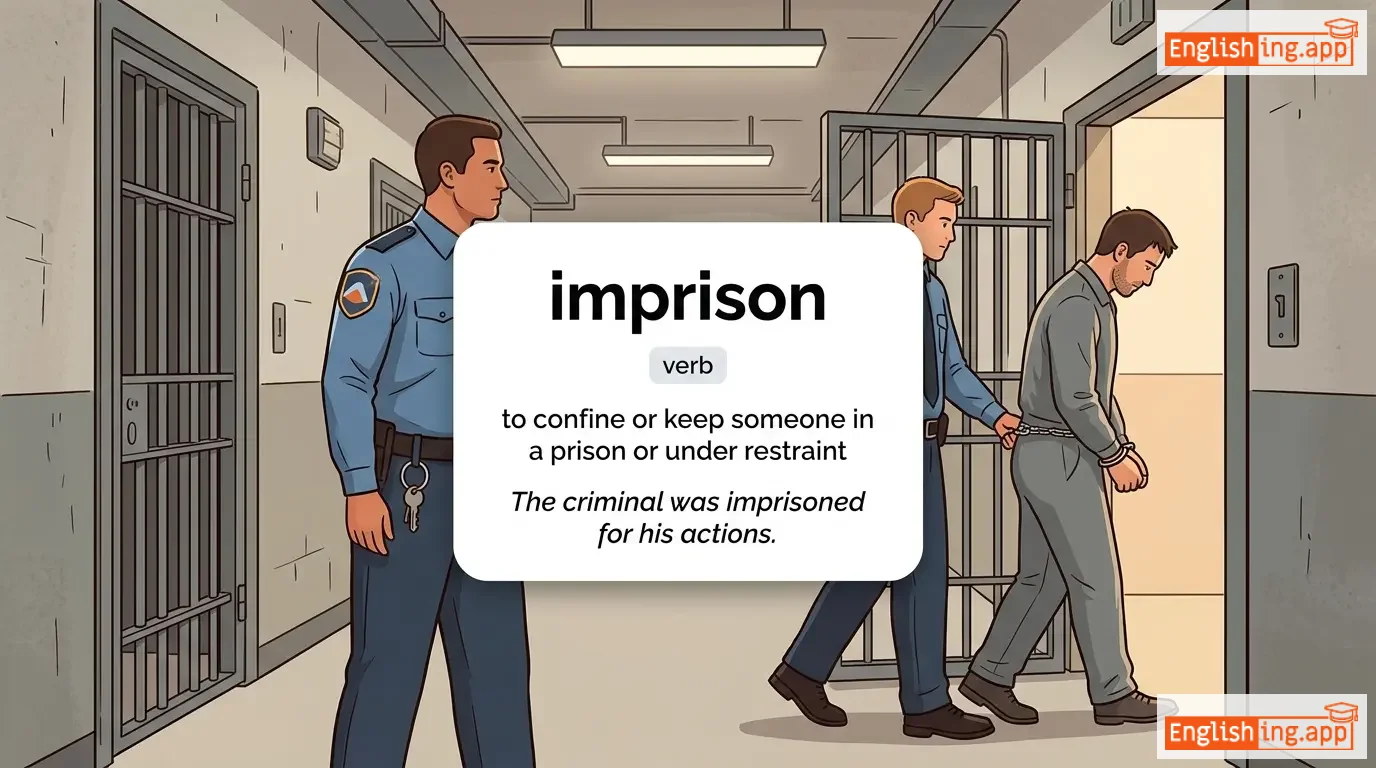
/ɪmˈprɪzən/
verb
(囚禁)
••••••
|
|
囚禁
qiújìn
••••••
|
imprisoned
囚禁了
••••••
|
imprisoned
囚禁了
••••••
|
imprisons
囚禁
••••••
|
imprisoning
囚禁中
••••••
|
to put someone in prison; to confine or restrict someone's freedom
••••••
|
The judge imprisoned the criminal for five years.
法官把罪犯囚禁了五年。
••••••
|
法官把罪犯囚禁了五年。
Fǎguān bǎ zuìfàn qiújìnle wǔ nián.
••••••
|
- •••••• | - •••••• | - •••••• |
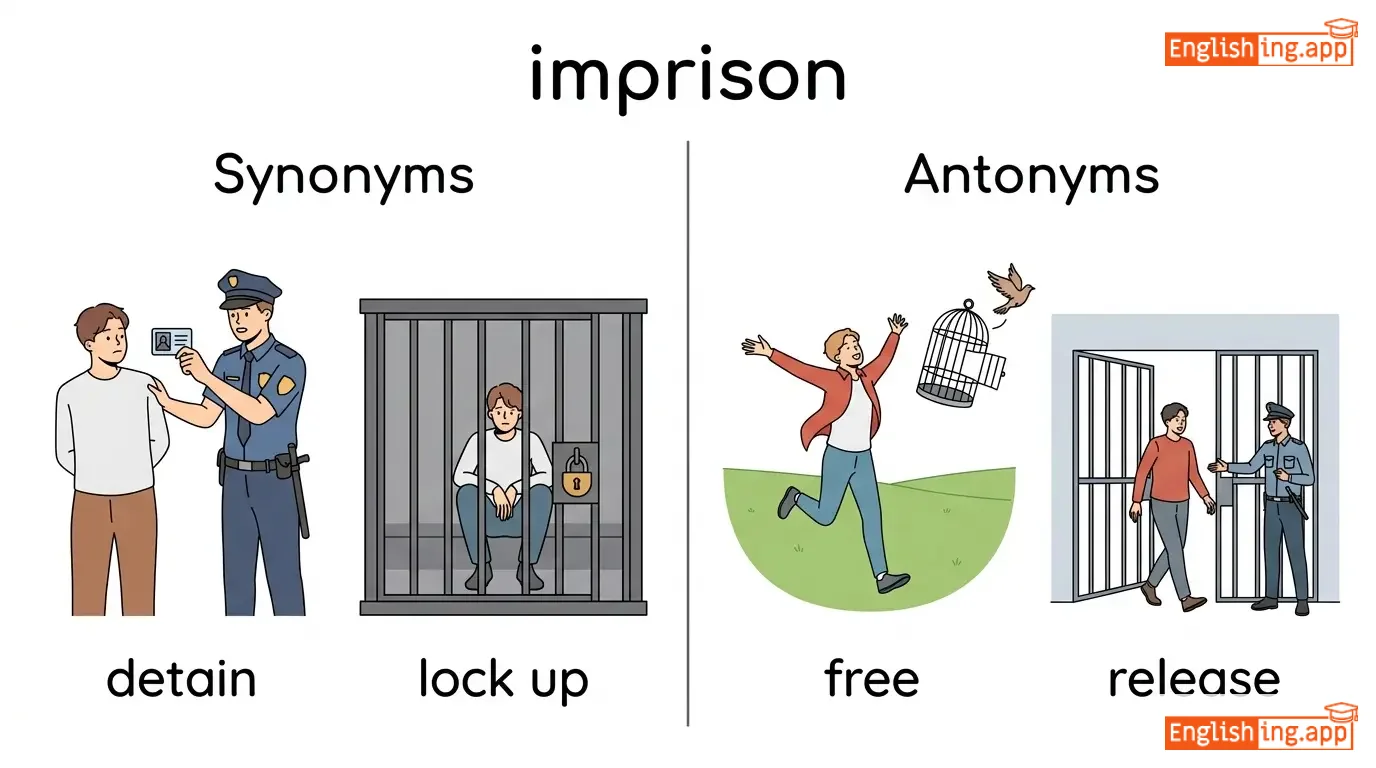
jail, incarcerate, confine, detain
••••••
|
free, release, liberate, discharge
••••••
|
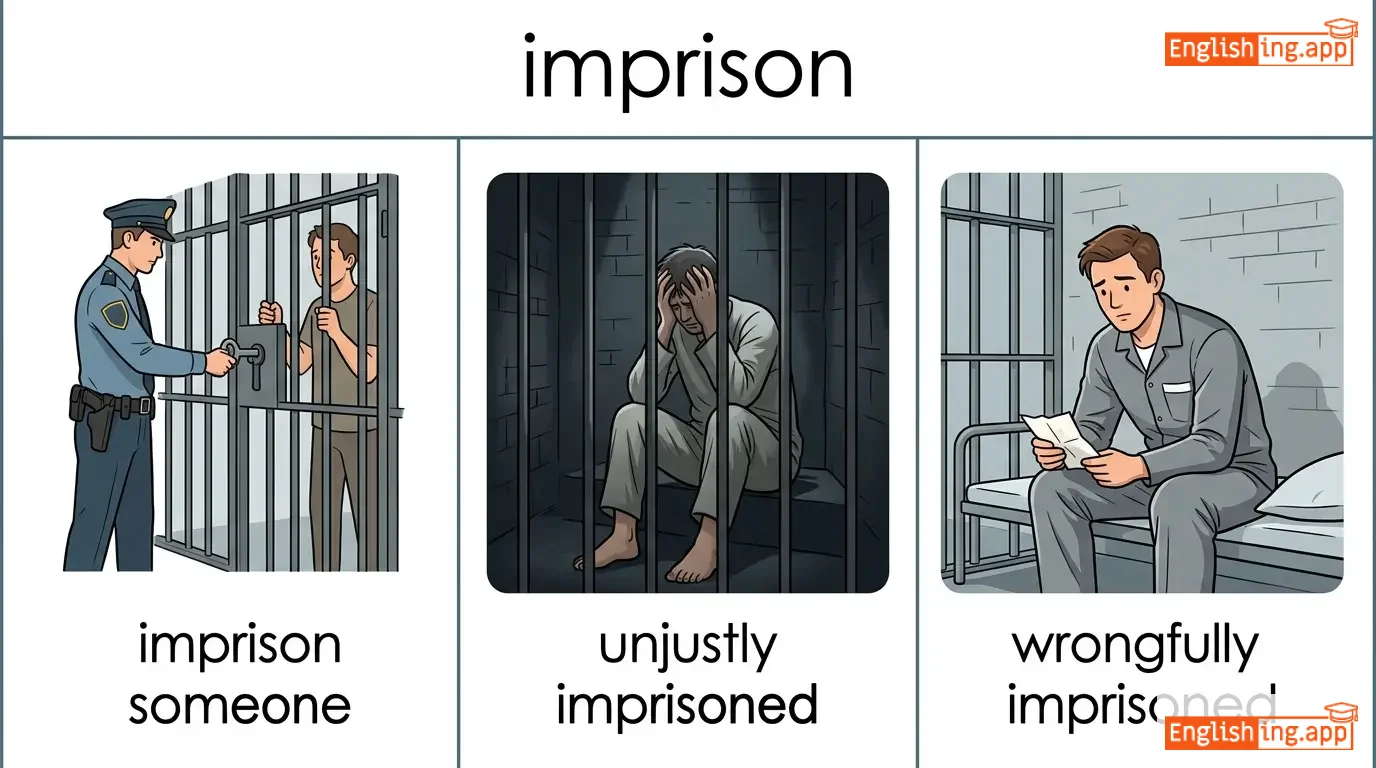
imprison someone, falsely imprison, imprison for life, maximum security prison
••••••
|
No •••••• |
|
🚨
••••••
|
/ˈɪnsɪdənt/
noun
(事件)
••••••
|
- •••••• |
事件
shìjiàn
••••••
|
- •••••• | - •••••• | - •••••• | - •••••• |
an event or occurrence, often unpleasant or unusual
••••••
|
The police quickly responded to the incident in the park. |
警方迅速回应了公园内的事件。
jǐngfāng xùnsù huíyīngle gōngyuán nèi de shìjiàn.
••••••
|
isolated incident |
a single event, not part of a pattern
••••••
|
孤立事件
gūlì shìjiàn
••••••
|
event, occurrence, happening, episode, affair
••••••
|
routine, normality, usual
••••••
|
serious incident, minor incident, security incident, violent incident
••••••
|
事件指的是不寻常的事件或事故。
••••••
|
|
🙂
••••••
|
/ɪnˈklaɪnd/
adjective
(ɪnˈklaɪnd)
••••••
|
- •••••• |
倾向的
qingxiang de
••••••
|
- •••••• | - •••••• | - •••••• | - •••••• |
having a tendency or disposition toward something
••••••
|
He is inclined to help those in need. |
他倾向于帮助有需要的人。
Tā qīngxiàng yú bāngzhù yǒu xūyào de rén.
••••••
|
be inclined to |
to have a tendency to do something
••••••
|
倾向于
qīngxiàng yú
••••••
|
prone, disposed, willing, tending
••••••
|
unwilling, disinclined, resistant
••••••
|
inclined to help, inclined to agree, inclined to believe
••••••
|
倾向意味着倾斜 – 记住,如果你倾向某件事,你就有倾向。
••••••
|
|
📈
••••••
|
/ɪnˈkriːs/
verb
(yīnkùlìsī)
••••••
|

|
增加
zēngjiā
••••••
|
increased
yīnkùlìsīd
••••••
|
increased
yīnkùlìsīd
••••••
|
increases
yīnkùlìsī
••••••
|
increasing
yīnkùlìsīng
••••••
|
to make something larger in size, number, or amount
••••••
|
The company plans to increase its workforce next year.
公司计划明年增加劳动力。
••••••
|
公司计划明年增加劳动力。
Gōngsī jìhuà míngnián zēngjiā láodònglì.
••••••
|
increase by leaps and bounds
激增
••••••
|
to grow or improve very quickly
••••••
|
急剧增加
jíjù zēngjiā
••••••
|
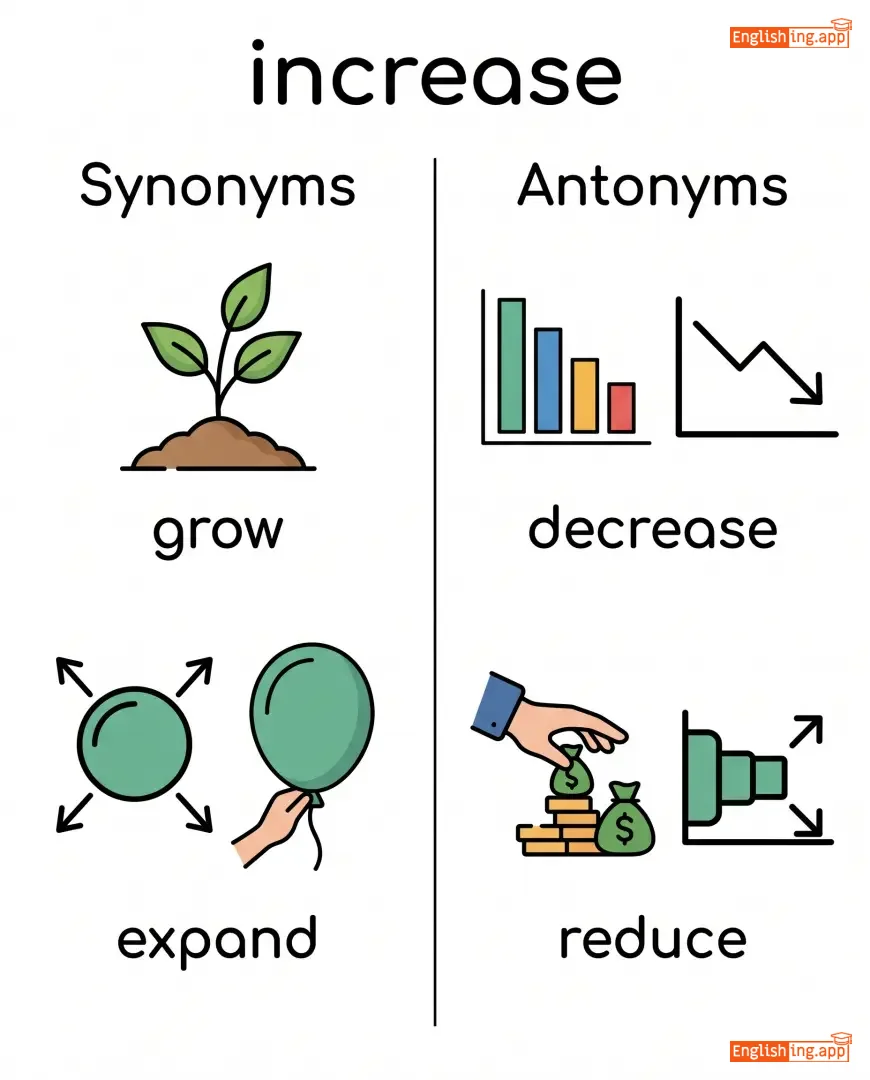
grow, expand, rise, boost, escalate
••••••
|
decrease, reduce, lessen
••••••
|
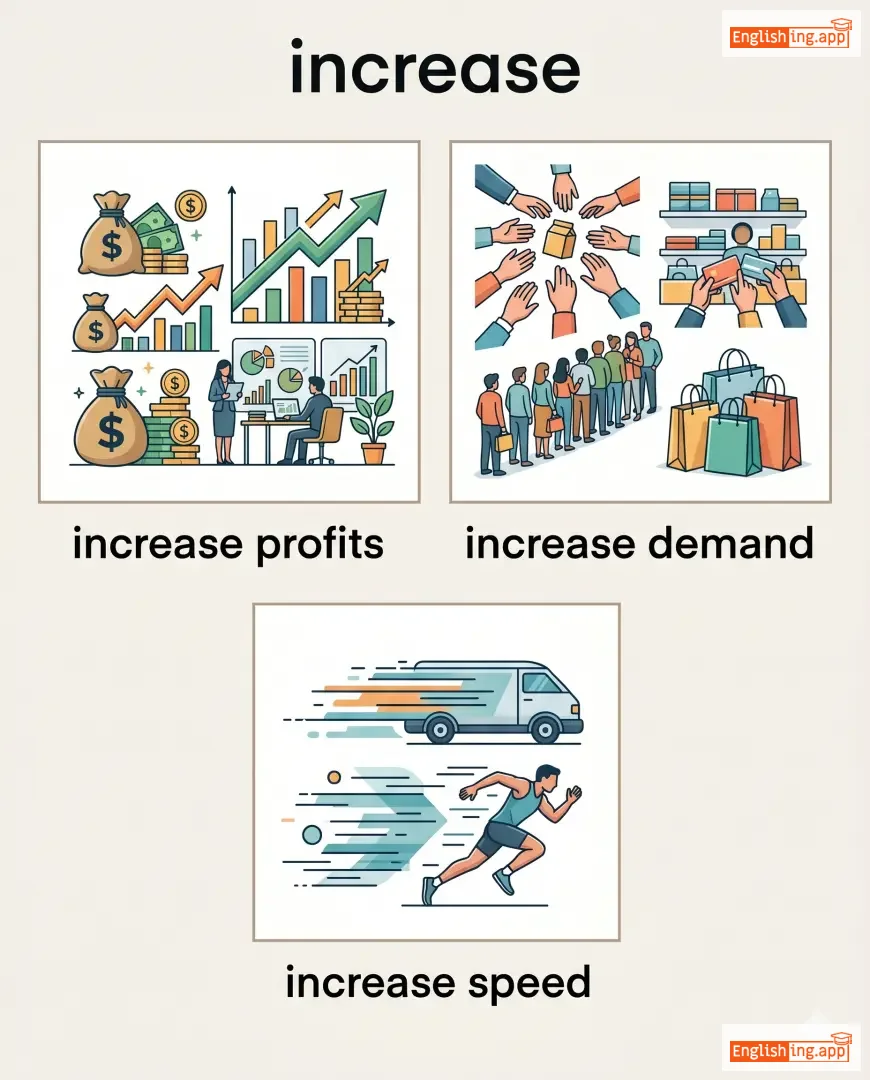
increase profits, increase demand, increase speed
••••••
|
Increase意味着增加,比如价格增加时
••••••
|
|
🏭
••••••
|
/ˈɪndəstri/
noun
(工业)
••••••
|

|
工业
gongye
••••••
|
- •••••• | - •••••• | - •••••• | - •••••• |
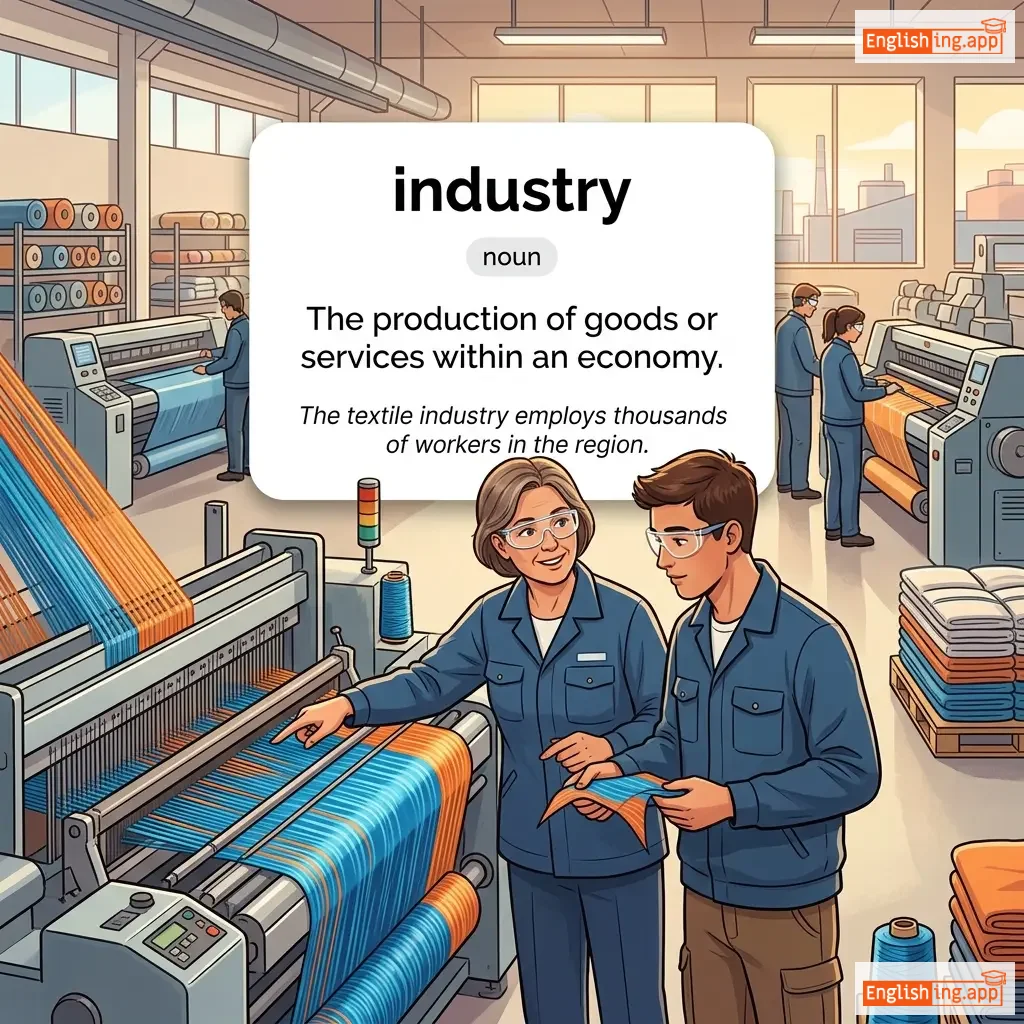
The production of goods or services within an economy.
••••••
|
The textile industry employs thousands of workers in the region. |
纺织工业在该地区雇用了成千上万的工人。
Fangzhi gongye zai gai diqu guyongle chengqian shangwan de gongren.
••••••
|
cottage industry |
A small-scale, often home-based business.
••••••
|
家庭工业
jiating gongye
••••••
|
business, trade, commerce, sector, production
••••••
|
idleness, inactivity, unemployment
••••••
|
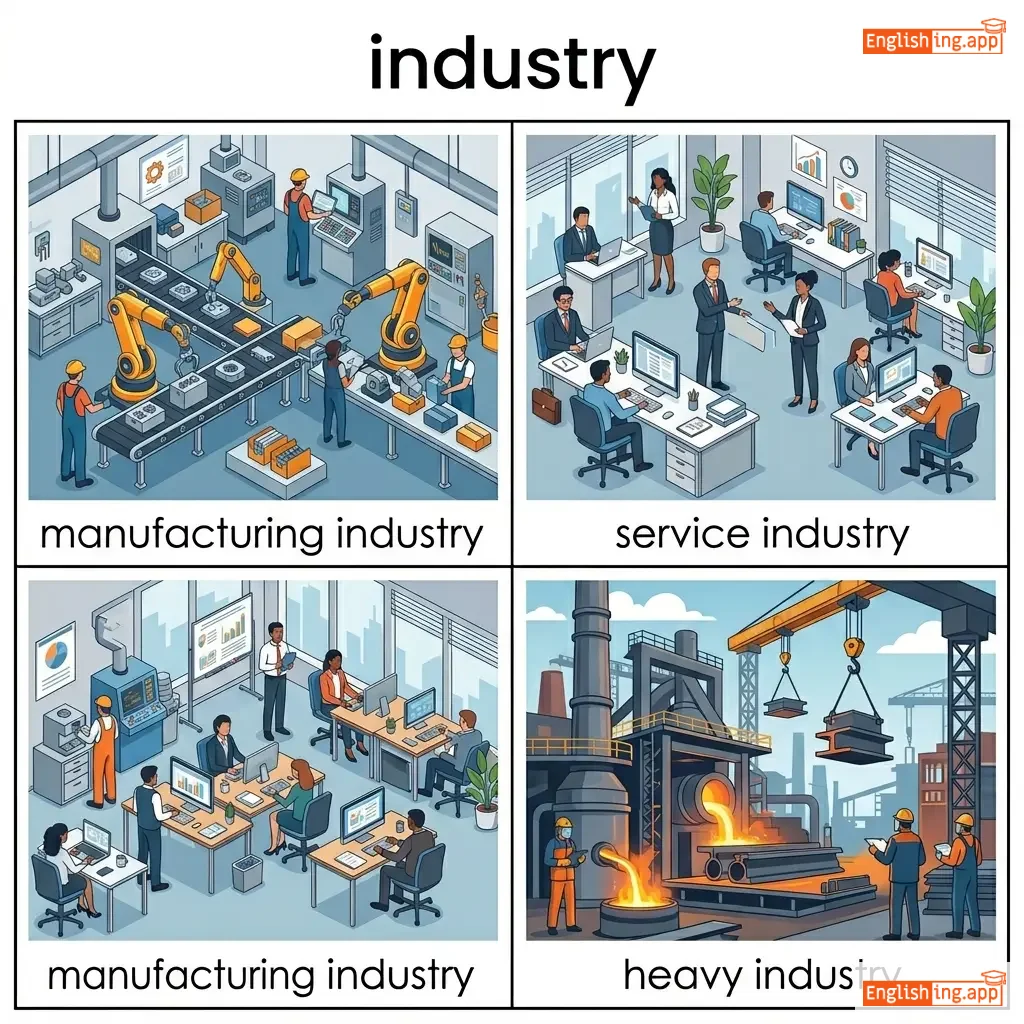
manufacturing industry, service industry, heavy industry, global industry
••••••
|
工业意味着工厂生产,像是一个大规模的生产领域。
••••••
|
|
😈
••••••
|
/ˈɪnfəməs/
adjective
(因法莫斯)
••••••
|
- •••••• |
臭名昭著
chòumíng zhāozhù
••••••
|
- •••••• | - •••••• | - •••••• | - •••••• |
well known for some bad quality or deed
••••••
|
The dictator was infamous for his cruelty. |
这位独裁者因其残忍而臭名昭著。
Zhè wèi dúcáizhě yīn qí cánrěn ér chòumíng zhāozhù.
••••••
|
infamous crime |
a crime that is notorious and shocking
••••••
|
臭名昭著的罪行
chòumíng zhāozhù de zuìxíng
••••••
|
notorious, disreputable, scandalous, dishonorable
••••••
|
famous, reputable, respected
••••••
|
infamous dictator, infamous act, infamous crime, infamous reputation
••••••
|
In-famous = 坏名声 → 臭名昭著
••••••
|

