The Economist Who Evaluated Progress
莉莎是一名专注于发展研究的 economic 分析师。她的职责是 evaluate 政府项目。她研究公民是否 eligible 获得福利。就业市场的 dynamics 非常复杂。许多人难以找到合适的 employer。莉莎的方法完全 entirely 数据驱动。她会将详细报告发送到密封的 envelopes 给相关部门。如果失业率继续上升,情况可能 escalate。莉莎会 estimate 就业创造潜力。在危机期间,政府必须 evacuate 洪水区域的工业。经济压力是影响心理健康的 external 因素。政策结果有时 fabulous,有时令人失望。概念需要让普通人 familiar。政治家有符合其意识形态的 favorite 政策。一位 feminist 经济学家主张机会平等。年轻人对 fighting 争取工作感到疲惫。政策公告如同 fireworks——华丽但短暂。公民为财务担忧触摸自己的 foreheads。Formerly 繁荣的产业已衰落。只有一小部分 fraction 毕业生找到优质工作。经济崩溃留下了社会 fragments。问题 frequent——失业、通胀、贫困。一名 freshman 经济学家提出创新方案。莉莎将经济挑战视为新的 frontier。她的 function 是弥合政策与现实之间的差距。用经济 gambling 是危险的。不断上涨的 gasoline 价格影响所有人。发展应 generate 可持续就业。有些人将就业危机比作机会的 genocide。成功故事虽 glorious,但很少。政策制定者需要展现更多 goodness 和同情心。Governor 宣布了新的经济方案。演示文稿中的 Graphics 显示了明显的不平等。莉莎对此次贡献机会保持 grateful。她的工作帮助制定了更有利于普通人的经济政策。
|
表情符号
|
单词 | Images | 翻译 | 过去时 | 过去分词 | 第三人称单数 | 动名词 | 含义 | 例句 | 例句翻译 | 示例表达 | 示例表达含义 | 示例表达翻译 | 同义词 | 反义词 | 搭配词 | 助记符 |
|---|---|---|---|---|---|---|---|---|---|---|---|---|---|---|---|---|---|
|
💰
••••••
|
/ˌiːkəˈnɒmɪk/
adjective
(经济的)
••••••
|
|
经济的
jingjide
••••••
|
- •••••• | - •••••• | - •••••• | - •••••• |
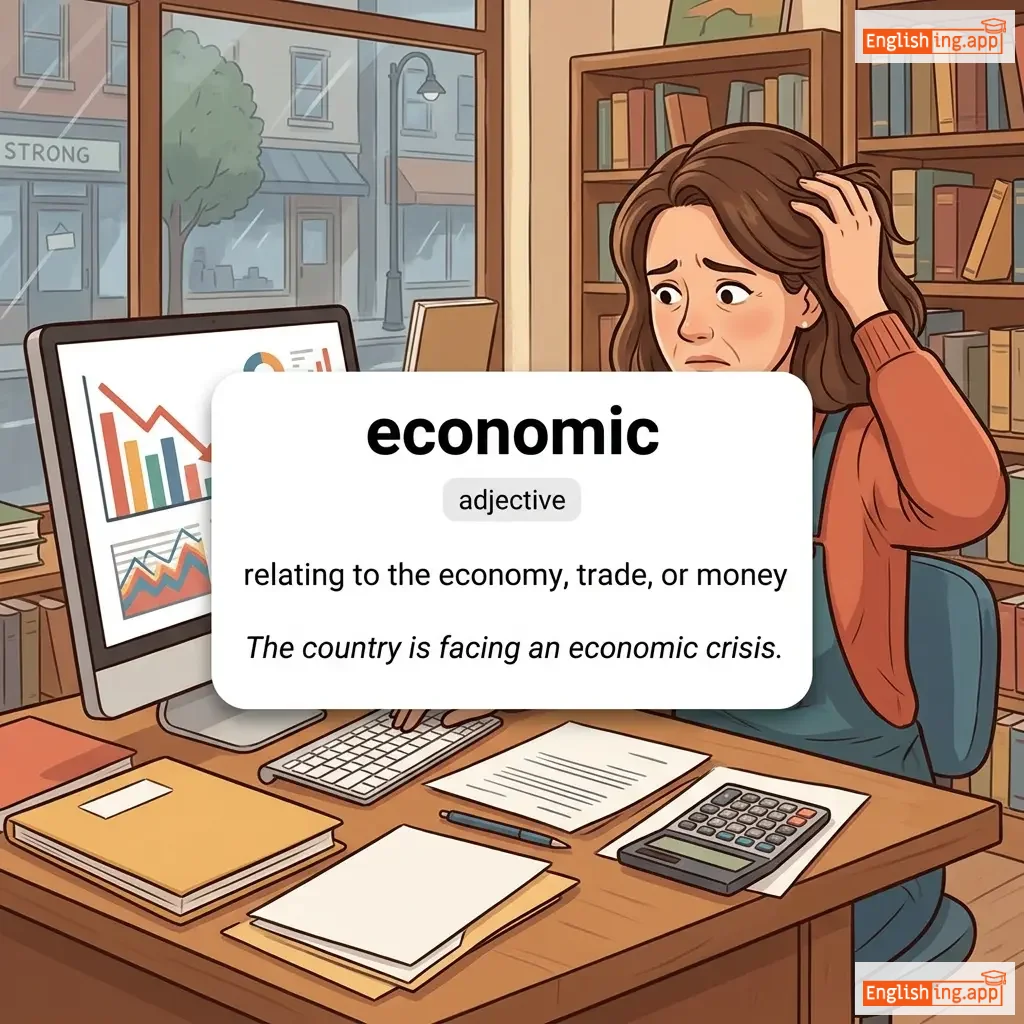
relating to the economy, trade, or money
••••••
|
The country is facing an economic crisis. |
这个国家正面临经济危机。
Zhe ge guo jia zheng mian lin jing ji wei ji.
••••••
|
economic growth |
increase in a country's production and wealth
••••••
|
经济增长
jingji zengzhang
••••••
|
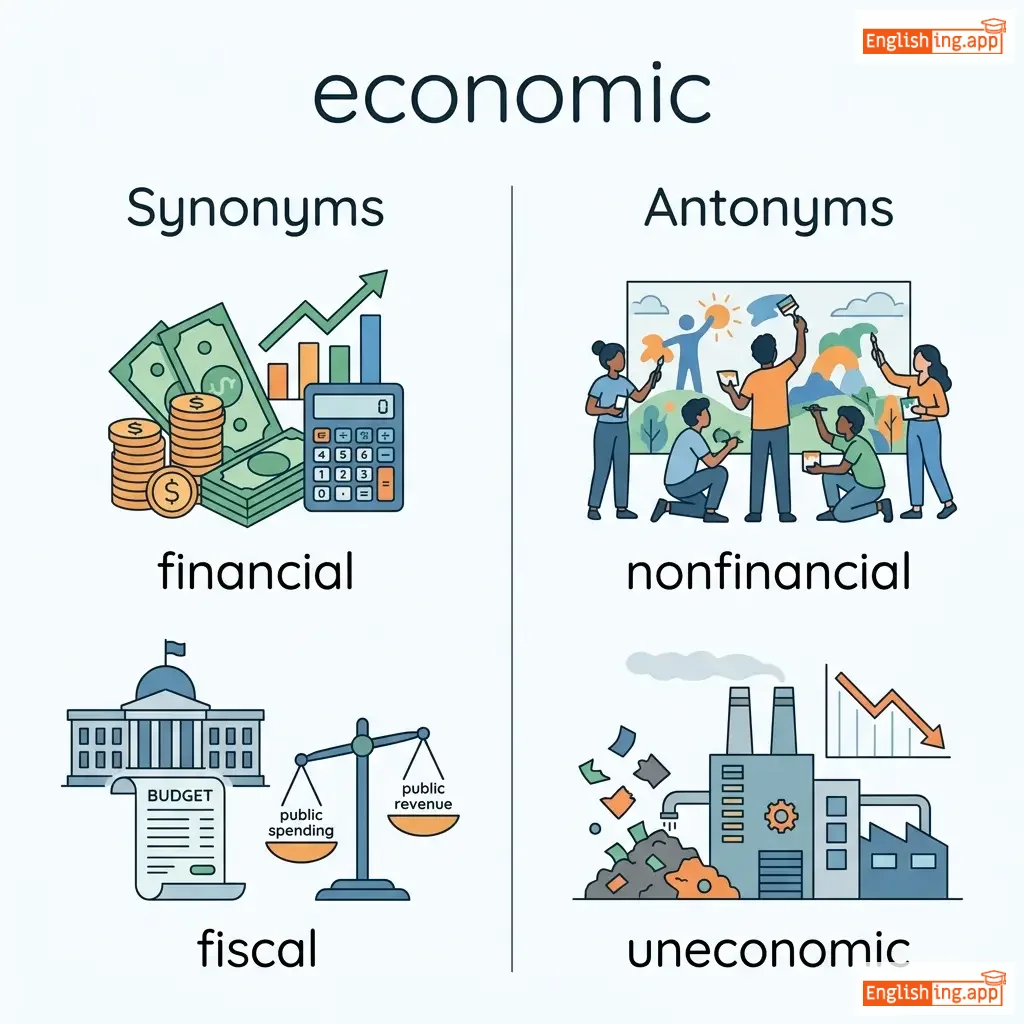
financial, fiscal, commercial, monetary
••••••
|
nonfinancial, uneconomic
••••••
|
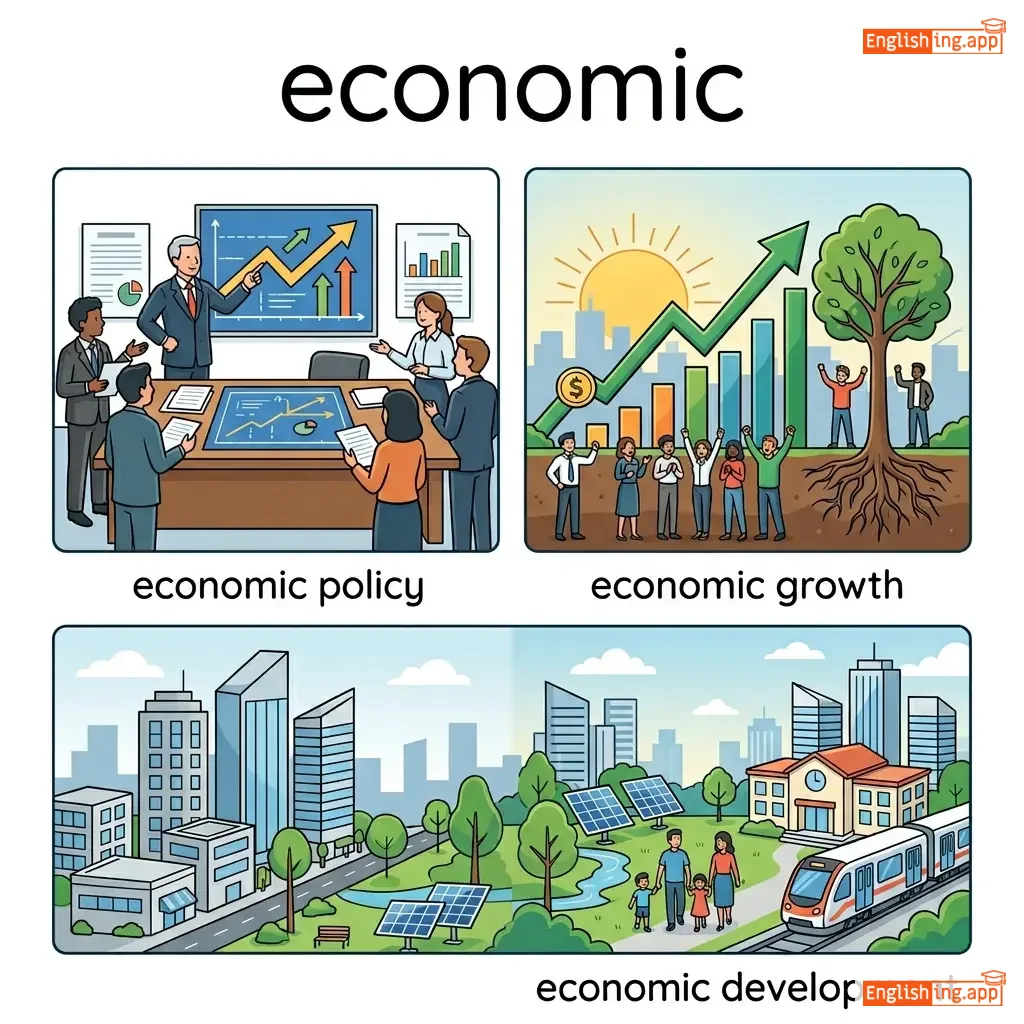
economic policy, economic growth, economic development, economic crisis
••••••
|
Economic = 经济的 💰, '经'是经济,'济'是帮助增长。
••••••
|
|
✅
••••••
|
/ˈɛlɪdʒəbl/
adjective
(é lì jí bǎo)
••••••
|
|
合格的
hege de
••••••
|
- •••••• | - •••••• | - •••••• | - •••••• |
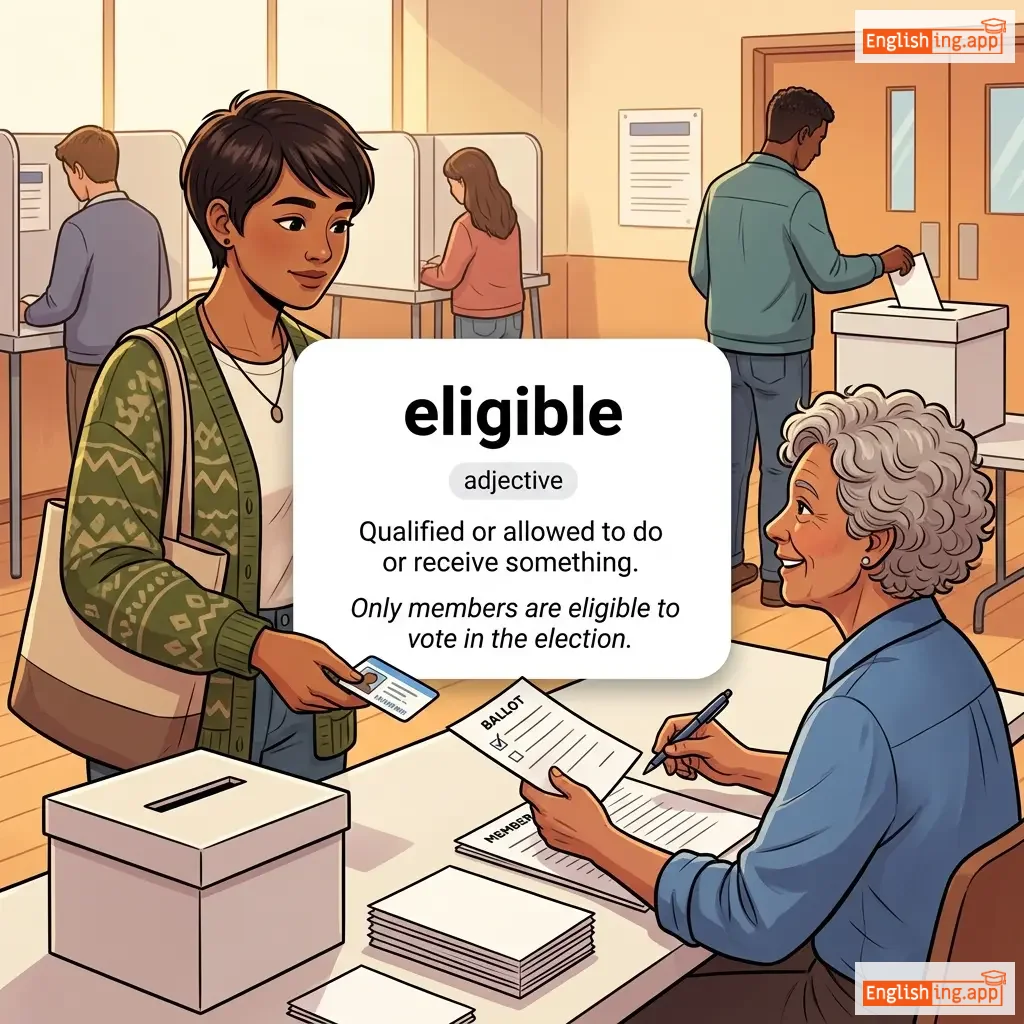
Qualified or allowed to do or receive something.
••••••
|
Only members are eligible to vote in the election. |
只有会员才能在选举中投票。
Zhiyou huiyuan cai neng zai xuanju zhong tou piao.
••••••
|
eligible bachelor |
a man considered suitable for marriage
••••••
|
合格的单身汉
hege de danshenhan
••••••
|
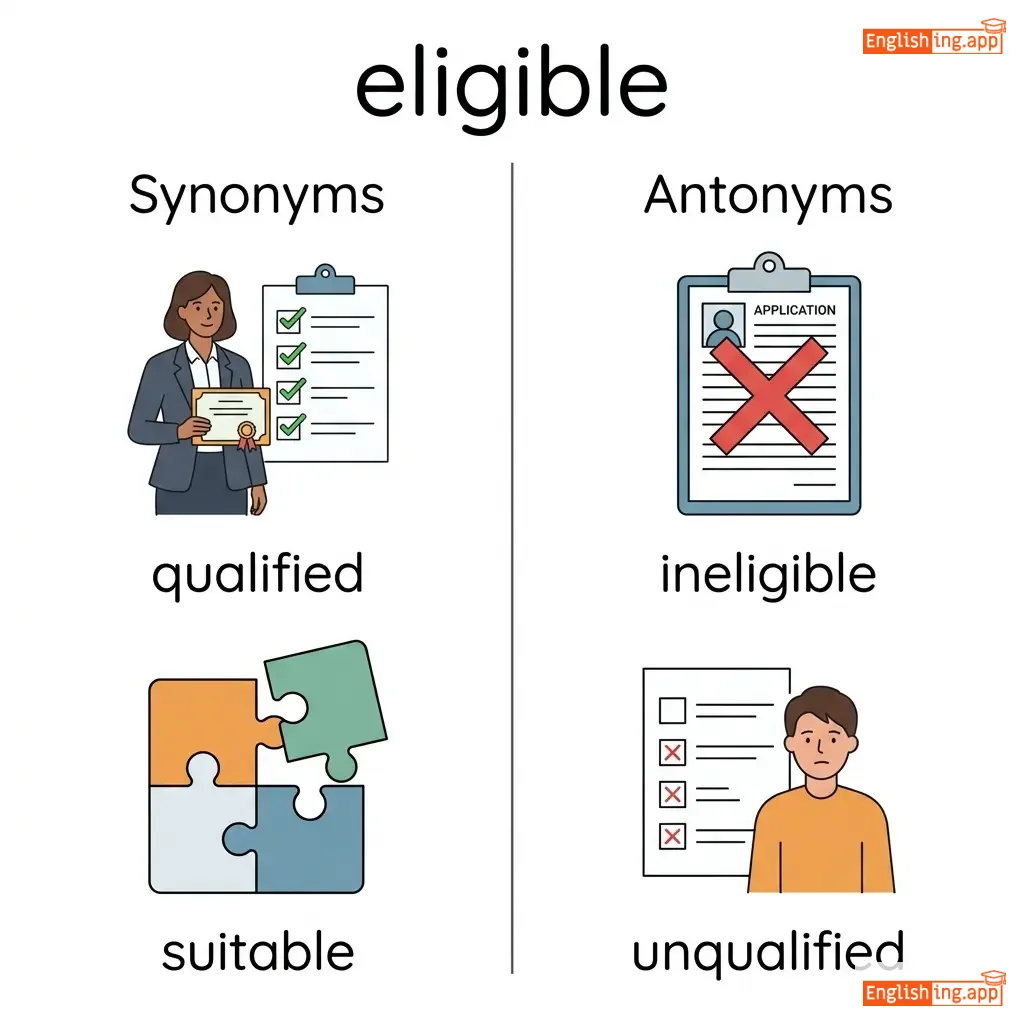
qualified, suitable, entitled, acceptable
••••••
|
ineligible, unqualified, unsuitable
••••••
|
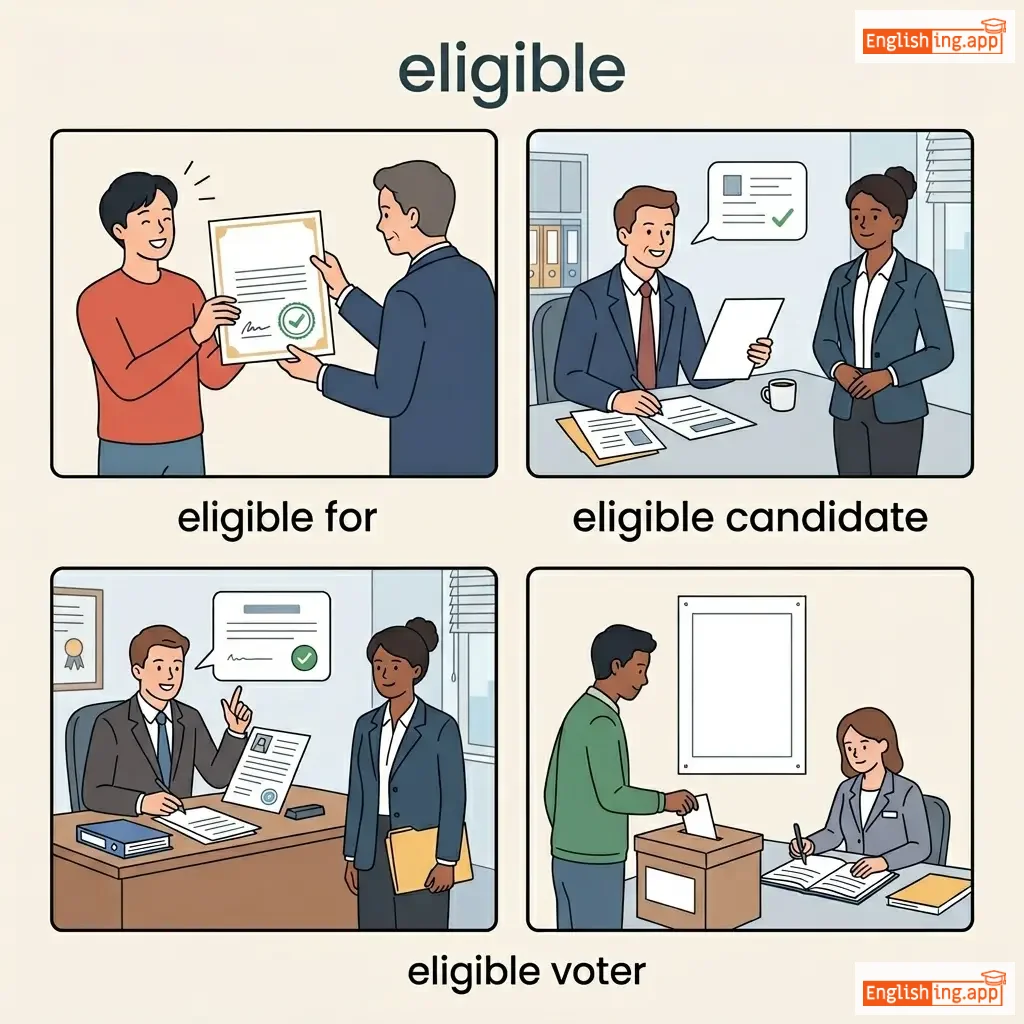
eligible for, eligible candidate, eligible voter, eligible participant
••••••
|
Eligible 就是当你符合条件时,你就有资格。
••••••
|
|
👔
••••••
|
/ɪmˈplɔɪər/
noun
(ěmplɔɪər)
••••••
|
- •••••• |
雇主
gùzhǔ
••••••
|
- •••••• | - •••••• | - •••••• | - •••••• |
A person or organization that hires and pays people to work.
••••••
|
The employer promised better benefits to attract skilled workers. |
雇主承诺提供更好的福利,以吸引技术工人。
Gùzhǔ chéngnuò tígōng gèng hǎo de fúlì, yǐ xīyǐn jìshù gōngrén.
••••••
|
good employer |
An employer who treats employees fairly and provides good conditions.
••••••
|
好雇主
hǎo gùzhǔ
••••••
|
boss, manager, proprietor, recruiter, company
••••••
|
employee, worker
••••••
|
large employer, potential employer, current employer, future employer
••••••
|
Employer 就是雇主,意味着雇佣的人。
••••••
|
|
🔄
••••••
|
/ɪnˈtaɪərli/
adverb
(ēn tài ěr lǐ)
••••••
|
- •••••• |
完全
wanquan
••••••
|
- •••••• | - •••••• | - •••••• | - •••••• |
Completely or wholly.
••••••
|
She is entirely responsible for the project. |
她对这个项目完全负责。
Tā duì zhège xiàngmù wánquán fùzé.
••••••
|
entirely up to |
Completely dependent on someone or something
••••••
|
完全依赖
wanquan yilai
••••••
|
completely, fully, wholly, absolutely
••••••
|
partly, partially, incompletely
••••••
|
entirely responsible, entirely new, entirely different, not entirely
••••••
|
完全意味着彻底 — 记住:'完'在'完全'里!
••••••
|
|
✉️
••••••
|
/ˈɛnvəloʊp/
noun
(ènvèlòp)
••••••
|
- •••••• |
信封
xìnfēng
••••••
|
- •••••• | - •••••• | - •••••• | - •••••• |
a flat paper container used to enclose a letter or document
••••••
|
She sealed the letter in an envelope and posted it. |
她把信封好,并寄出了。
Tā bǎ xìnfēng hǎo, bìng jì chūle.
••••••
|
push the envelope |
to go beyond normal limits; to innovate or take risks
••••••
|
超越界限
chāoyuè jièxiàn
••••••
|
wrapper, cover, packet, casing, container
••••••
|
uncovering, exposure
••••••
|
seal an envelope, open an envelope, address an envelope, brown envelope
••••••
|
Envelope 意味着信封 📬 — 记得把信‘放进信封里’。
••••••
|
|
📈
••••••
|
/ˈɛskəleɪt/
verb
(ɛs.kəˈleɪt)
••••••
|
|
升级
shēngjí
••••••
|
escalated
ɛs.kəˈleɪtəd
••••••
|
escalated
ɛs.kəˈleɪtəd
••••••
|
escalates
ɛs.kəˈleɪts
••••••
|
escalating
ɛs.kəˈleɪtɪŋ
••••••
|
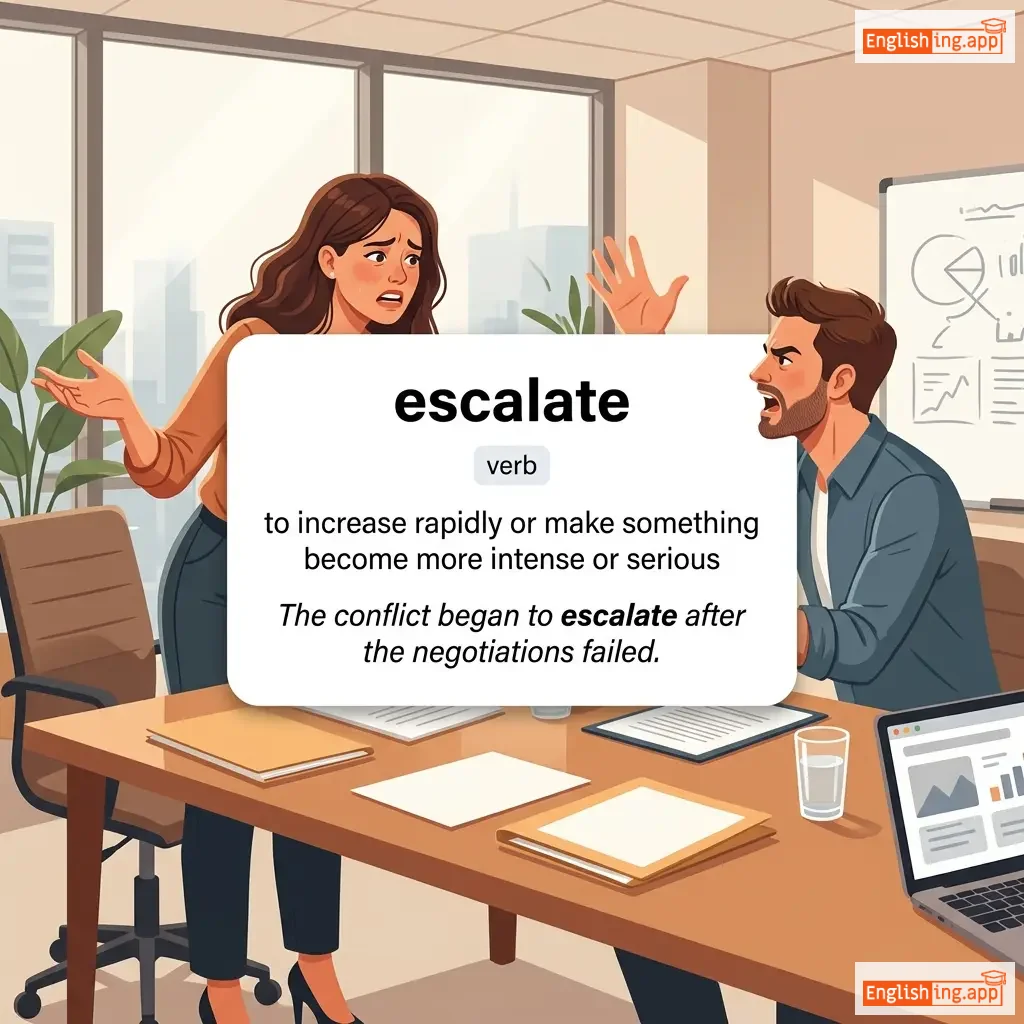
to increase rapidly or make something become more intense or serious
••••••
|
The conflict began to escalate after the negotiations failed.
冲突在谈判失败后开始升级。
••••••
|
冲突在谈判失败后开始升级。
Chōngtú zài tánpàn shībài hòu kāishǐ shēngjí.
••••••
|
escalate the situation
升级局势
••••••
|
to make a problem or conflict more serious
••••••
|
升级局势
shēngjí júshì
••••••
|
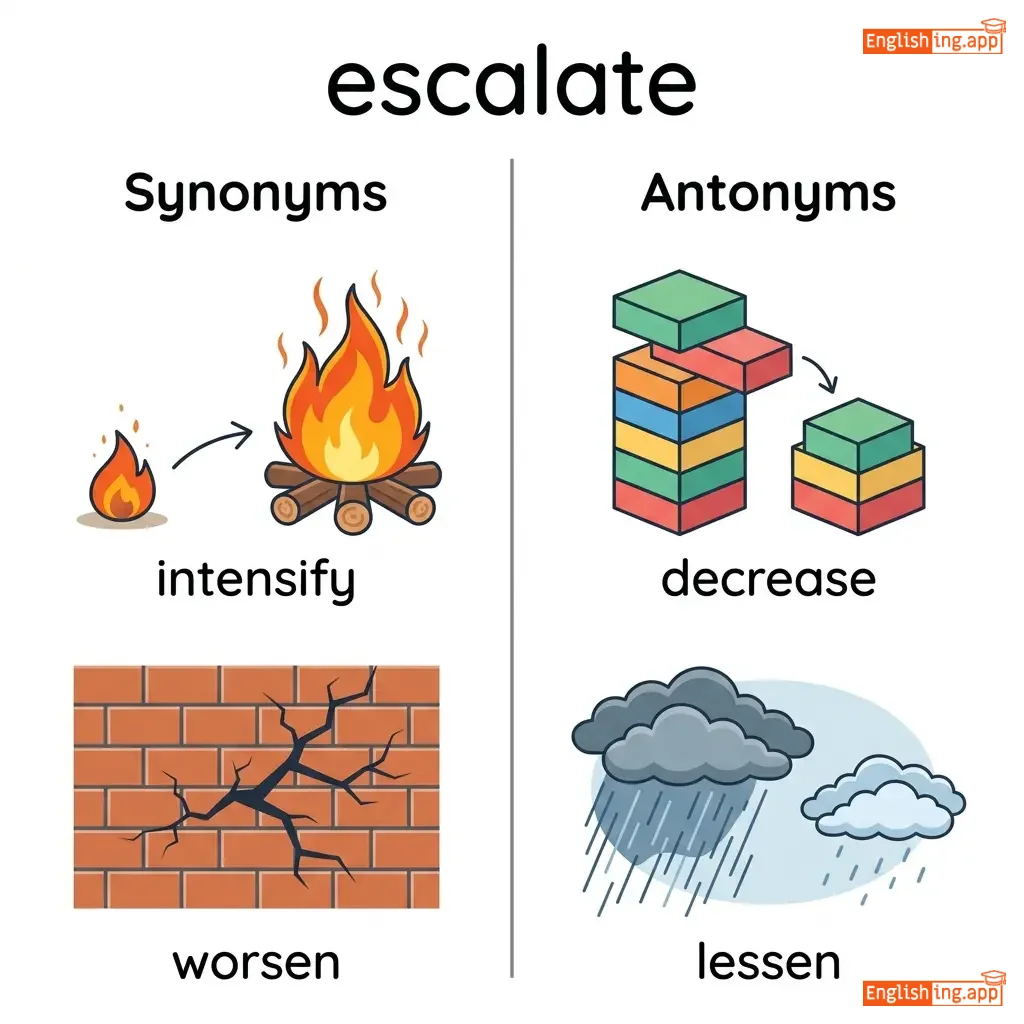
intensify, worsen, amplify, heighten, increase
••••••
|
decrease, lessen, reduce
••••••
|
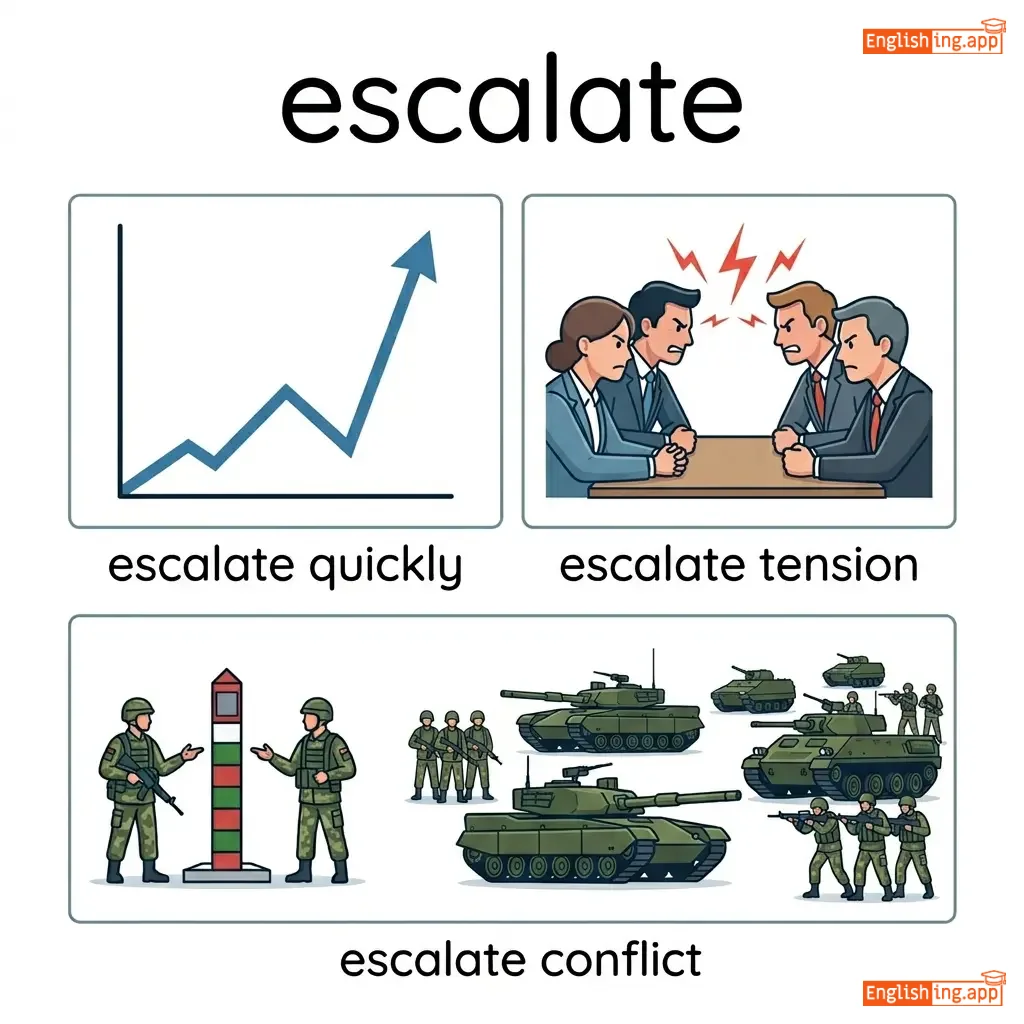
escalate quickly, escalate tension, escalate conflict, escalate costs
••••••
|
电梯会让你上升,升级也意味着增加或变得更强烈。
••••••
|
|
📊
••••••
|
/ˈɛstɪˌmeɪt/
verb
(估算)
••••••
|
- •••••• |
估算
gūsuàn
••••••
|
estimated
估计
••••••
|
estimated
估计
••••••
|
estimates
估算
••••••
|
estimating
估算中
••••••
|
To roughly calculate or judge the value, number, quantity, or extent of something.
••••••
|
The engineer estimated the cost of the project at $5 million.
工程师估算了项目的成本为500万美元。
••••••
|
工程师估算了项目的成本为500万美元。
Gōngchéngshī gūsuànle xiàngmù de chéngběn wèi 500 wàn měiyuán.
••••••
|
rough estimate
粗略估算
••••••
|
An approximate calculation
••••••
|
粗略估算
cūlüè gūsuàn
••••••
|
calculate, assess, evaluate, appraise, guess
••••••
|
measure exactly, determine
••••••
|
make an estimate, accurate estimate, cost estimate, estimate value
••••••
|
估算意味着粗略地计算,就像做一个粗略估算 📊
••••••
|
|
🚨
••••••
|
/ɪˈvækjueɪt/
verb
(撤离)
••••••
|
- •••••• |
撤离
che li
••••••
|
evacuated
撤离了
••••••
|
evacuated
撤离了
••••••
|
evacuates
撤离
••••••
|
evacuating
撤离中
••••••
|
To remove people from a dangerous place to safety.
••••••
|
The residents were ordered to evacuate the building after the fire alarm.
火警响后,居民们被命令撤离大楼。
••••••
|
火警响后,居民们被命令撤离大楼。
Huo jing xiang hou, juminmen bei mingling cheli da lou.
••••••
|
evacuate the premises
撤离场所
••••••
|
To leave a building or area immediately for safety reasons.
••••••
|
撤离场所
che li chang suo
••••••
|
clear, empty, vacate, withdraw
••••••
|
occupy, stay
••••••
|
evacuate building, evacuate area, evacuate residents, emergency evacuate
••••••
|
Eva + Queue 大家都在撤离 - 撤离
••••••
|
|
📊
••••••
|
/ɪˈvæljueɪt/
verb
(ɪˈvæljuˌeɪt)
••••••
|
- •••••• |
评估
pinggu
••••••
|
evaluated
ɪˈvæljuˌeɪtəd
••••••
|
evaluated
ɪˈvæljuˌeɪtəd
••••••
|
evaluates
ɪˈvæljuˌeɪts
••••••
|
evaluating
ɪˈvæljuˌeɪtɪŋ
••••••
|
To assess or judge the value, quality, or significance of something.
••••••
|
The teacher will evaluate the students’ projects tomorrow.
老师明天将评估学生的项目。
••••••
|
老师明天将评估学生的项目。
Laoshi mingtian jiang pinggu xuesheng de xiangmu.
••••••
|
evaluate the situation
评估情况
••••••
|
to carefully consider all aspects before deciding
••••••
|
评估情况
Pinggu qingkuang
••••••
|
assess, judge, appraise, analyze, review
••••••
|
ignore, neglect
••••••
|
evaluate performance, evaluate results, evaluate options
••••••
|
评估表示评估 → 考试评估
••••••
|
|
🌐
••••••
|
/ɪkˈstɜrnəl/
adjective
(èksuērnào)
••••••
|
- •••••• |
外部的
wàibù de
••••••
|
- •••••• | - •••••• | - •••••• | - •••••• |
situated on or relating to the outside of something; coming from outside
••••••
|
The external factors affected the company's growth. |
外部因素影响了公司的增长。
Wàibù yīnsù yǐngxiǎngle gōngsī de zēngzhǎng.
••••••
|
external affairs |
matters concerning foreign relations
••••••
|
外交事务
wàijiāo shìwù
••••••
|
outer, outside, foreign, exterior
••••••
|
internal, inner
••••••
|
external factors, external affairs, external pressure
••••••
|
External 意味着外部,就像外部硬盘。
••••••
|
|
✨
••••••
|
/ˈfæbjələs/
adjective
(法比尤洛斯)
••••••
|
- •••••• |
极好的
jí hǎo de
••••••
|
- •••••• | - •••••• | - •••••• | - •••••• |
Extremely good or wonderful; almost unbelievable
••••••
|
She looked fabulous in her new dress. |
她穿着新裙子看起来极好。
Tā chuānzhuó xīn qúnzi kàn qǐlái jí hǎo.
••••••
|
fabulous fortune |
an extremely large amount of wealth
••••••
|
极大的财富
jí dà de cáifù
••••••
|
marvelous, amazing, incredible, astonishing, wonderful
••••••
|
ordinary, mediocre, dull
••••••
|
fabulous job, fabulous idea, fabulous wealth, look fabulous
••••••
|
极好的意味着令人惊叹,就像极大的财富一样。
••••••
|
|
🙂
••••••
|
/fəˈmɪliər/
adjective
(法米利亚尔)
••••••
|
- •••••• |
熟悉的
shúxī de
••••••
|
- •••••• | - •••••• | - •••••• | - •••••• |
Well known or easily recognized from previous experience.
••••••
|
The town looked familiar to me after so many years. |
经过这么多年后,这个城市对我来说很熟悉。
Jīngguò zhème duōnián hòu, zhège chéngshì duì wǒ lái shuō hěn shúxī.
••••••
|
familiar face |
Someone you recognize but may not know personally.
••••••
|
熟悉的面孔
shúxī de miànkǒng
••••••
|
well-known, recognizable, acquainted, common, usual
••••••
|
unfamiliar, unknown, strange
••••••
|
familiar face, familiar voice, look familiar, become familiar
••••••
|
Familiar 就像 Family – 熟悉的面孔
••••••
|
|
⭐
••••••
|
/ˈfeɪvərɪt/
adjective, noun
(费佛瑞特)
••••••
|
- •••••• |
最喜欢的
zuì xǐ huān de
••••••
|
- •••••• | - •••••• | - •••••• | - •••••• |
Preferred over all others; something or someone especially liked.
••••••
|
Chocolate is my favorite ice cream flavor. |
巧克力是我最喜欢的冰淇淋口味。
Qiǎokèlì shì wǒ zuì xǐ huān de bīngqílín kǒuwèi.
••••••
|
play favorites |
To give unfair advantage to one person over others.
••••••
|
偏爱
piān'ài
••••••
|
preferred, beloved, liked, best, choice
••••••
|
hated, disliked
••••••
|
favorite song, favorite color, all-time favorite, crowd favorite
••••••
|
最喜欢的就像你最喜欢的东西,像你最喜欢的食物。
••••••
|
|
♀️
••••••
|
/ˈfɛmənɪst/
noun
(女性主义者)
••••••
|
- •••••• |
女性主义者
nǚxìng zhǔyì zhě
••••••
|
- •••••• | - •••••• | - •••••• | - •••••• |
a person who supports equal rights and opportunities for women and men
••••••
|
She proudly calls herself a feminist and fights for gender equality. |
她自豪地称自己为女性主义者,并为性别平等而奋斗。
Tā zìháo de chēng zìjǐ wèi nǚxìng zhǔyì zhě, bìng wèi xìngbié píngděng ér fèndòu.
••••••
|
feminist movement |
a social campaign for women's rights and equality
••••••
|
女性主义运动
nǚxìng zhǔyì yùndòng
••••••
|
activist, advocate, campaigner, reformer
••••••
|
sexist, chauvinist
••••••
|
feminist movement, feminist theory, feminist perspective, feminist writer
••••••
|
女性主义者 = 支持女性权利的活动家 — 女性 + ‘主义者’ 就是女性主义者!
••••••
|
|
⚔️
••••••
|
/ˈfaɪtɪŋ/
noun/verb
(fighting)
••••••
|
- •••••• |
战斗
zhàn dòu
••••••
|
- •••••• | - •••••• | - •••••• |
fighting
fighting
••••••
|
the act of engaging in a physical or verbal conflict
••••••
|
The soldiers were fighting bravely on the battlefield.
士兵们在战场上英勇作战。
••••••
|
士兵们在战场上英勇作战。
Shìbīng men zài zhànchǎng shàng yīngyǒng zuòzhàn.
••••••
|
keep fighting
继续战斗
••••••
|
to continue making effort despite challenges
••••••
|
继续战斗
Jìxù zhàndòu
••••••
|
battle, combat, struggle, conflict, contest
••••••
|
peace, harmony, agreement
••••••
|
stop fighting, fighting spirit, fighting chance, fighting back
••••••
|
考试时间,继续战斗意味着不要放弃 – 继续战斗
••••••
|
|
🎆
••••••
|
/ˈfaɪəˌwɜːk/
noun
(fai'erwǒkè)
••••••
|
- •••••• |
烟花
yanhua
••••••
|
- •••••• | - •••••• | - •••••• | - •••••• |
a device that explodes or creates a display of lights and sounds, often used in celebrations
••••••
|
The fireworks lit up the sky during the New Year's Eve celebration. |
烟花在新年夜庆祝活动中点亮了天空。
Yānhuā zài xīnnián yè qìngzhù huódòng zhōng diǎn liàngle tiānkōng.
••••••
|
- •••••• | - •••••• | - •••••• |
sparkler, roman candle, display, pyrotechnics
••••••
|
whimper, silence
••••••
|
colorful fireworks, fireworks display, fireworks show
••••••
|
烟花点亮了夜空,点亮了我们的心情!
••••••
|
|
👩
••••••
|
/ˈfɔːrˌhɛd/ or /ˈfɔːrɪd/
noun
(fǒu hǎi dé)
••••••
|
- •••••• |
额头
étóu
••••••
|
- •••••• | - •••••• | - •••••• | - •••••• |
The part of the face above the eyebrows.
••••••
|
She wiped the sweat from her forehead. |
她擦去了额头上的汗水。
Tā cā qùle étóu shàng de hànshuǐ.
••••••
|
sweat on one's forehead |
A sign of hard work, nervousness, or exertion.
••••••
|
额头上的汗水
étóu shàng de hànshuǐ
••••••
|
brow, temple, face, skull, cranium
••••••
|
chin, jaw
••••••
|
high forehead, wrinkled forehead, broad forehead, kiss on the forehead
••••••
|
Forehead 在中文是额头。额头上的汗水 = 付出了很多努力!
••••••
|
|
⏮️
••••••
|
/ˈfɔːrmərli/
adverb
(fó mǎ lì)
••••••
|
- •••••• |
以前; 从前
yiqian; congqian
••••••
|
- •••••• | - •••••• | - •••••• | - •••••• |
in the past; previously; at an earlier time
••••••
|
The building was formerly a school but is now a community center. |
这座建筑以前是学校,但现在是一个社区中心。
Zhe zuo jianzhu yiqian shi xuexiao, dan xianzai shi yige shequ zhongxin.
••••••
|
- •••••• | - •••••• | - •••••• |
previously, earlier, before, once, in the past
••••••
|
currently, now, presently, lately, recently
••••••
|
formerly known as, formerly owned by, formerly called
••••••
|
Formerly - 以前的事情,现在变了,社区成为了新的一切.
••••••
|
|
➗
••••••
|
/ˈfrækʃən/
noun
(fúlèishēn)
••••••
|
- •••••• |
分数
fenshu
••••••
|
- •••••• | - •••••• | - •••••• | - •••••• |
A small part of something; in mathematics, a number that represents part of a whole.
••••••
|
Only a small fraction of the population attended the event.
只有一小部分人口参加了这次活动。
••••••
|
只有一小部分人口参加了这次活动。
Zhi you yi xiao bufen renkou canjia le zhe ci huodong.
••••••
|
a fraction of
一部分
••••••
|
A very small part of something
••••••
|
一部分
Yi bufen
••••••
|
portion, segment, piece, part
••••••
|
whole, entirety
••••••
|
small fraction, significant fraction, fraction of time, fraction of cost
••••••
|
Fraction 意味着分数 ➗ 如 1/2, 1/4 等等
••••••
|
|
🧩
••••••
|
/ˈfræɡmənt/
noun
(弗拉格门特)
••••••
|
- •••••• |
碎片
suìpiàn
••••••
|
- •••••• | - •••••• | - •••••• | - •••••• |
a small piece broken off something larger
••••••
|
He found a fragment of ancient pottery near the river. |
他在河边找到了一个古老陶器的碎片。
Tā zài hé biān zhǎodào le yīgè gǔlǎo táoqì de suìpiàn.
••••••
|
in fragments |
broken into small pieces
••••••
|
成碎片
chéng suìpiàn
••••••
|
piece, shard, particle, portion, bit
••••••
|
whole, entirety
••••••
|
glass fragment, bone fragment, sentence fragment, broken fragment
••••••
|
碎片 = '碎'代表破碎,'片'是小块。
••••••
|

