The Biologist Who Saved the Forest
拉希姆博士是一位研究 genetic 多样性的生物学家。他的研究实验室位于城市与森林之间的 halfway。他使用 graphic 演示来解释研究结果。野生动物 habitat 的破坏成为一个 growing 的担忧。拉希姆博士深切感受到局势的 gravity。只剩下少数 (handful) 濒危物种。However,他依然保持 hopeful。他 himself 不知疲倦地工作。他的助手娜迪娅 herself 也非常投入。他们研究动物的 hormone 水平。非法伐木者制造了一个 hostile 的环境。有一次,研究人员甚至被偷猎者当作 hostage。Hearing 到危机后,政府反应迟缓。拉希姆博士 heavily 依赖国际支持。当地社区尽管贫困,仍然十分 helpful。新的 housing 项目威胁着森林。拉希姆博士试图 impress 当局,强调保护的重要性。他努力 include 原住民的知识。一些官员会 indulge 于腐败行为,这会对生态系统造成 inflict 伤害。一些动物会 inherit 被污染的领地。严格的政策可以 inhibit 非法活动。记者们 inquire 进展情况。一名 insider 泄露了非法伐木的信息。Instead 放弃,团队更加努力地工作。在新法律出台前的 interim 期间,破坏仍在继续。团队在取得突破时 happily 庆祝。Jewelry 制造商停止使用濒危物种材料。对受保护动物的 killing largely 减少。针对违法者的 lawsuits 获得成功。靠近保护区的飞机 landing 被限制。拉希姆博士证明了科学研究与社区支持相结合可以拯救生态系统。他的森林恢复 imagery 激励了全球的保护行动。
|
表情符号
|
单词 | Images | 翻译 | 动名词 | 含义 | 例句 | 例句翻译 | 示例表达 | 示例表达含义 | 示例表达翻译 | 同义词 | 反义词 | 搭配词 | 助记符 |
|---|---|---|---|---|---|---|---|---|---|---|---|---|---|---|
|
🧬
••••••
|
/dʒəˈnɛtɪk/
adjective
(遗传的)
••••••
|
|
遗传的
yíchuán de
••••••
|
- •••••• |
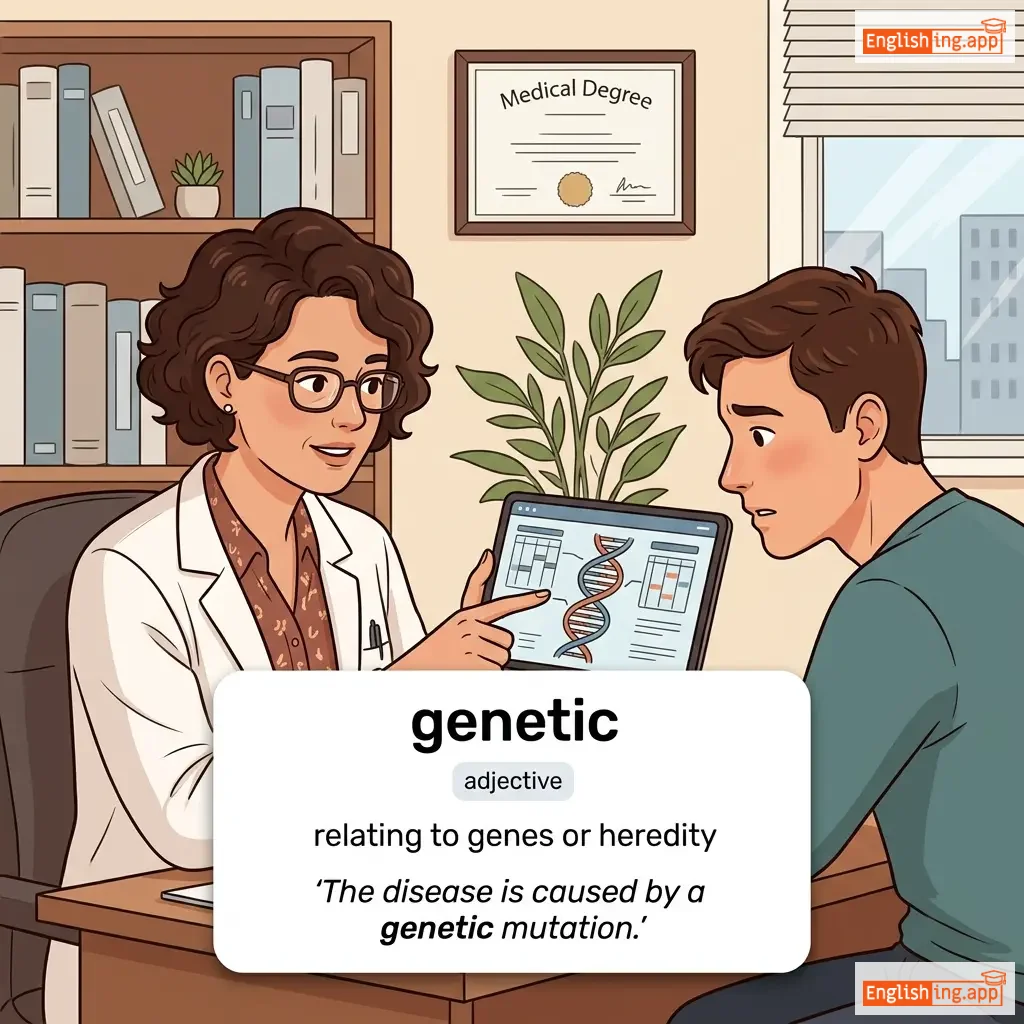
relating to genes or heredity
••••••
|
The disease is caused by a genetic mutation.
这种疾病是由基因突变引起的。
••••••
|
这种疾病是由基因突变引起的。
zhè zhǒng jí bìng shì yóu jī yīn tū biàn yǐn qǐ de.
••••••
|
genetic makeup
遗传构成
••••••
|
the set of genes that make up an individual
••••••
|
遗传结构
yíchuán jiégòu
••••••
|
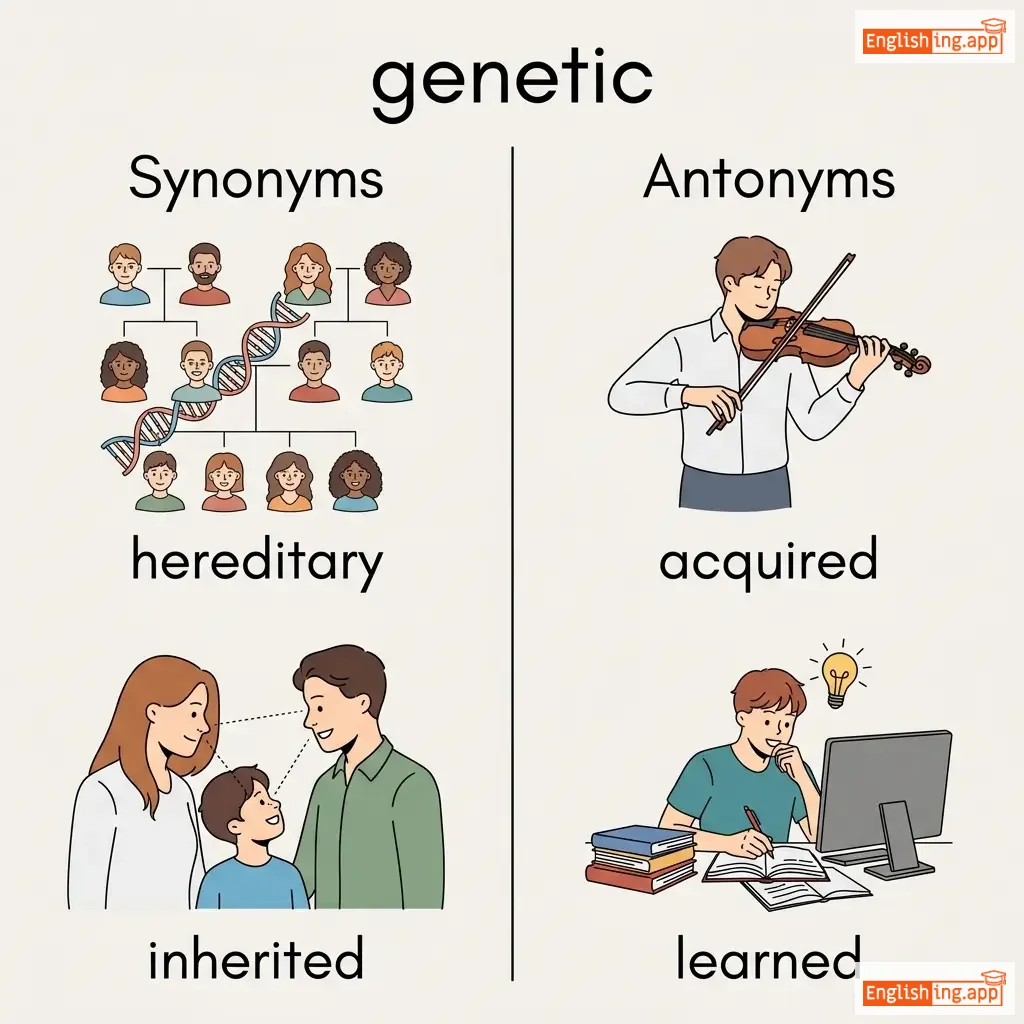
hereditary, inherited, biological, genomic
••••••
|
acquired, learned
••••••
|
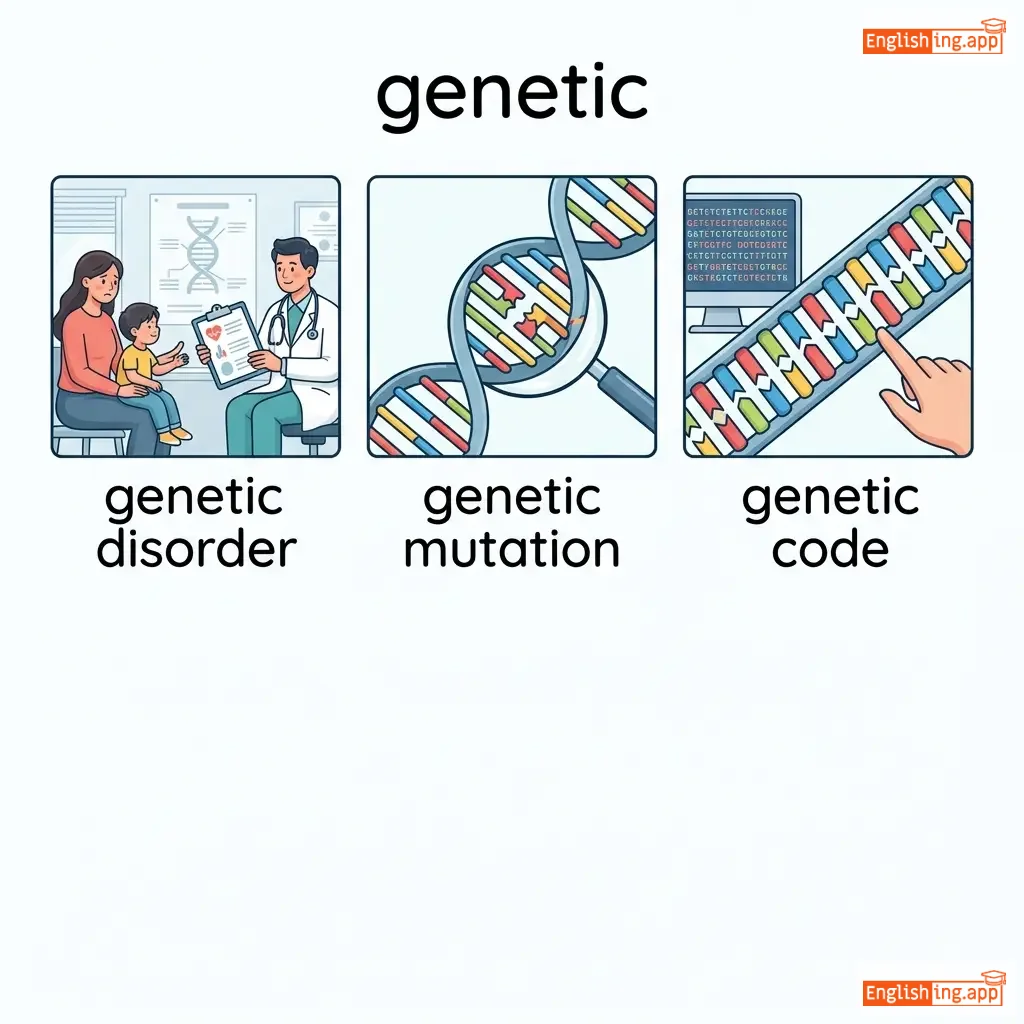
genetic disorder, genetic mutation, genetic code, genetic makeup
••••••
|
基因(遗传)是 Genetic 的来源。
••••••
|
|
🎨
••••••
|
/ˈɡræf.ɪk/
adjective
••••••
|
- •••••• | - •••••• | - •••••• |
Relating to visual art, especially involving drawing, design, or vivid description.
••••••
|
The movie contained graphic scenes of violence. |
- •••••• |
graphic details |
Explicit and vivid description of events or images, often shocking.
••••••
|
- •••••• |
illustrative, vivid, pictorial, descriptive, explicit
••••••
|
vague, dull, unclear
••••••
|
graphic design, graphic novel, graphic content, graphic details
••••••
|
No •••••• |
|
🌍
••••••
|
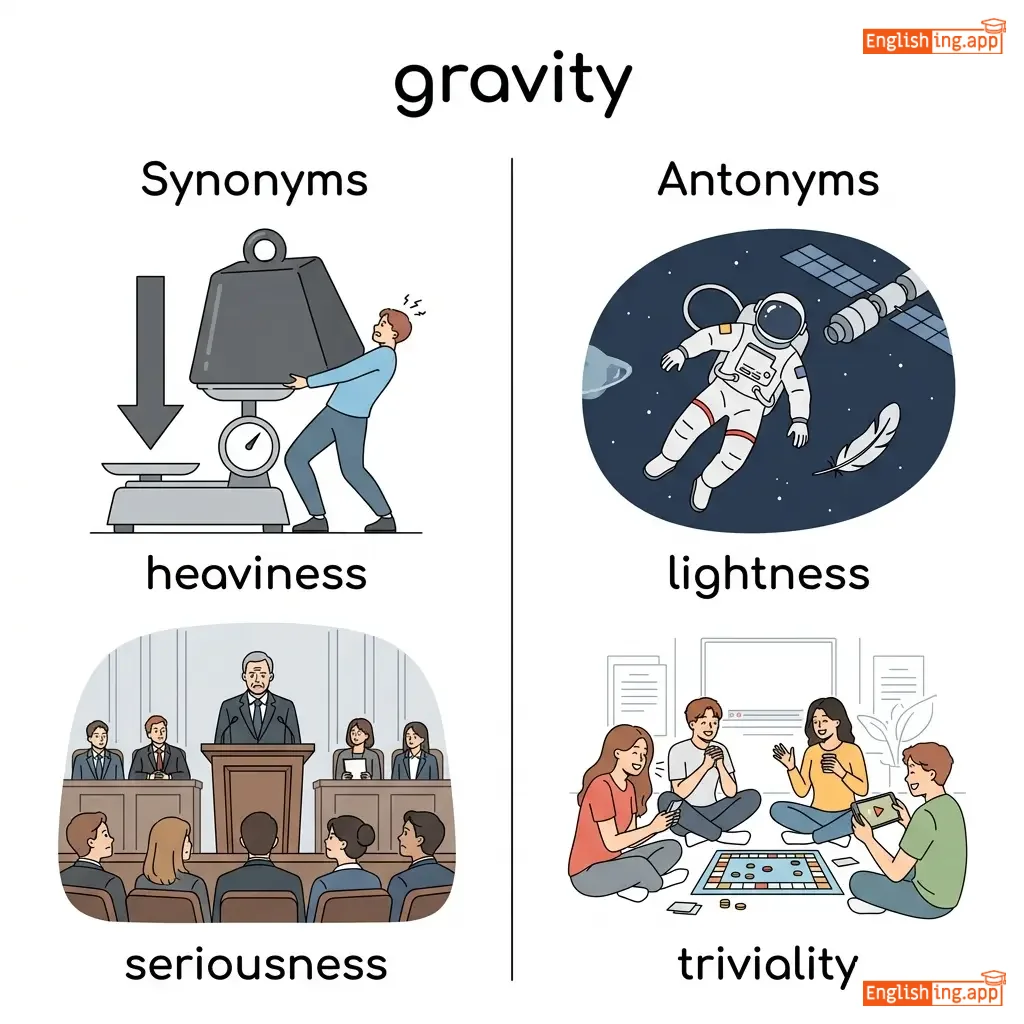
/ˈɡrævəti/
noun
••••••
|
|
- •••••• | - •••••• |
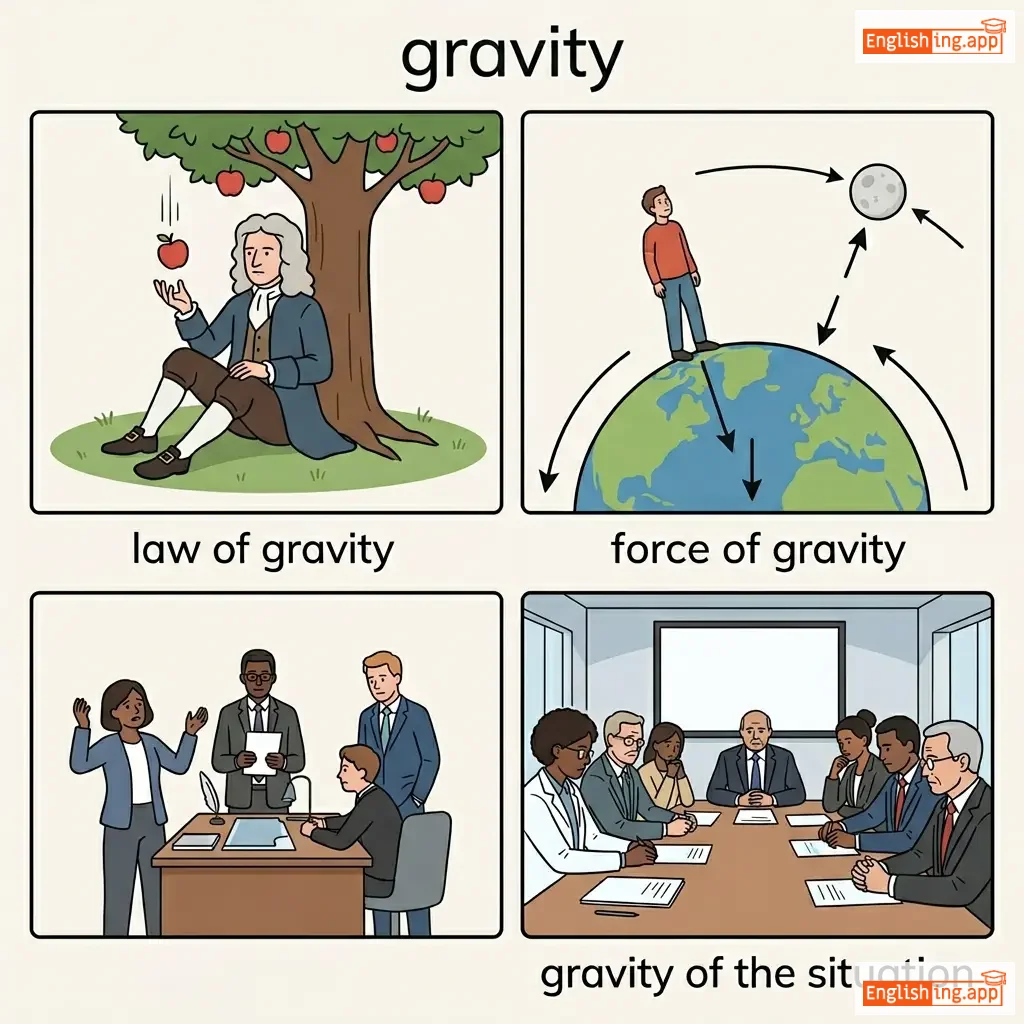
The natural force that attracts objects toward the center of the earth; seriousness or importance.
••••••
|
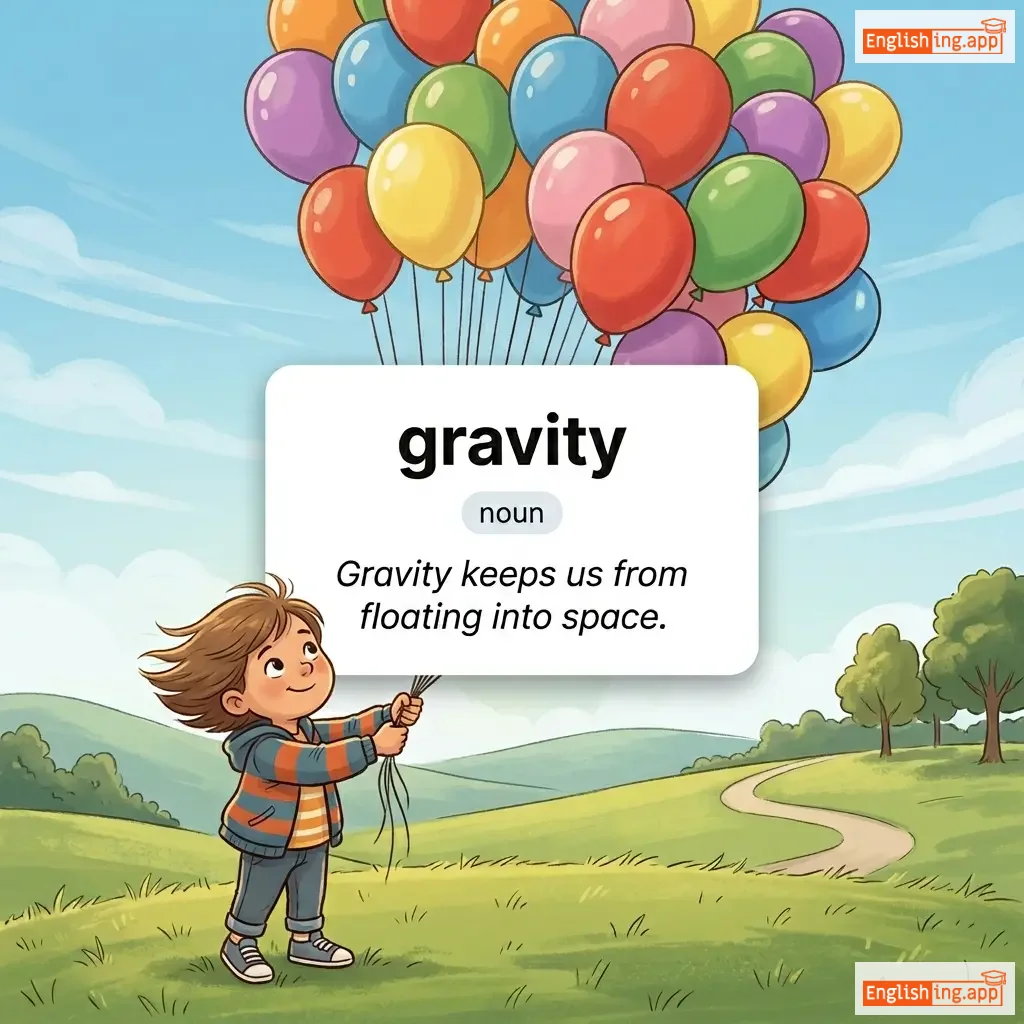
Gravity keeps us from floating into space. |
- •••••• |
gravity of the situation |
The seriousness or importance of a situation.
••••••
|
- •••••• |
heaviness, seriousness, weight, force
••••••
|
lightness, triviality
••••••
|
law of gravity, force of gravity, gravity of the situation
••••••
|
No •••••• |
|
💫
••••••
|
/ˈɡreɪtli/
adverb
(格雷特利)
••••••
|
- •••••• |
非常
feichang
••••••
|
- •••••• |
to a large extent or degree; very much
••••••
|
She was greatly admired by her students.
她深受学生们的喜爱。
••••••
|
她深受学生们的喜爱。
Ta shen shou xueshengmen de xihuan.
••••••
|
- •••••• | - •••••• | - •••••• |
extremely, immensely, highly, deeply, significantly
••••••
|
slightly, barely, hardly
••••••
|
greatly improve, greatly appreciate, greatly benefit, greatly influence
••••••
|
Greatly 表示非常,大程度上!
••••••
|
|
🌿
••••••
|
/ˈɡroʊ.ɪŋ/
verb
(格罗英)
••••••
|
- •••••• |
增长
zēngzhǎng
••••••
|
growing
格罗英
••••••
|
continuously increasing or developing
••••••
|
There is a growing demand for renewable energy.
对可再生能源的需求正在增长。
••••••
|
对可再生能源的需求正在增长。
Duì kě zàishēng néngyuán de xūqiú zhèngzài zēngzhǎng.
••••••
|
- •••••• | - •••••• | - •••••• |
developing, expanding, increasing, rising
••••••
|
shrinking, decreasing, declining
••••••
|
growing demand, growing concern, growing population, growing economy
••••••
|
Growing意味着增长,像需求增长一样。
••••••
|
|
🌿
••••••
|
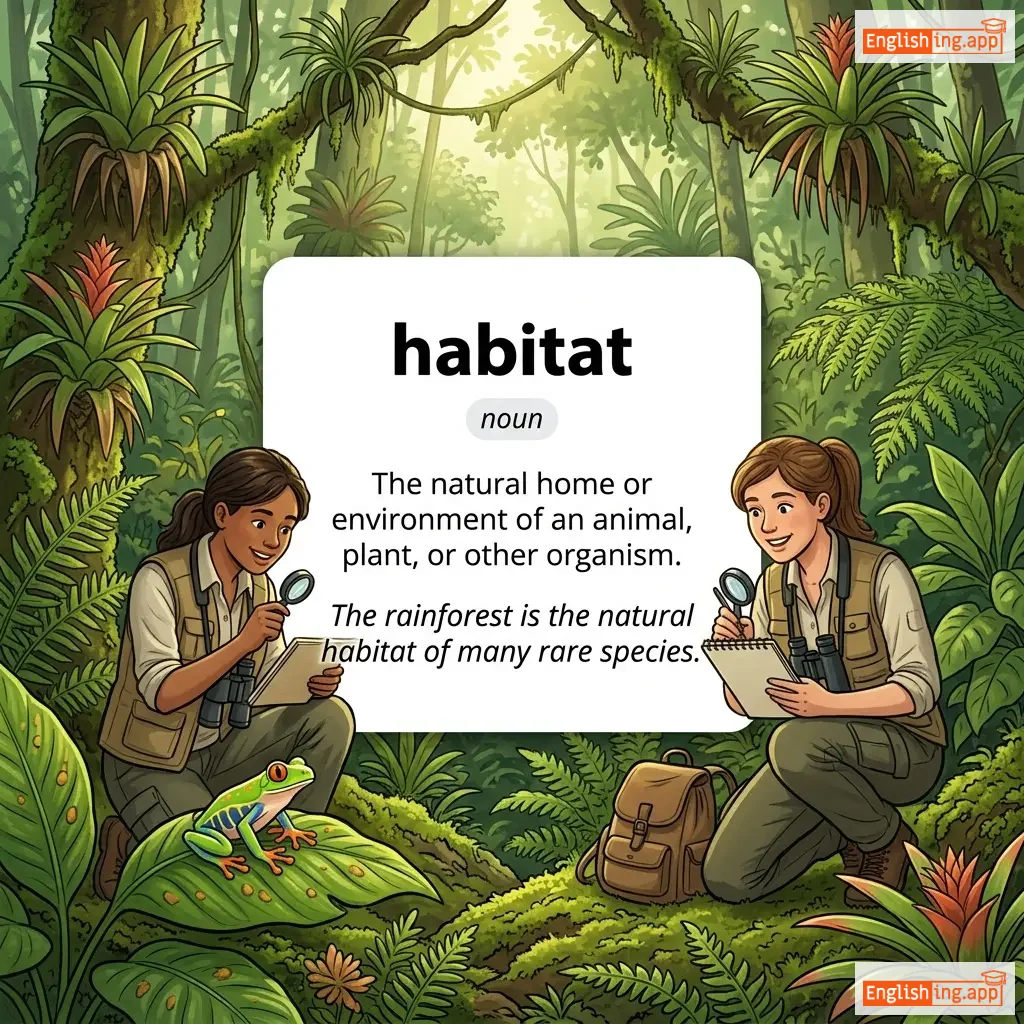
/ˈhæbɪˌtæt/
noun
(栖息地)
••••••
|
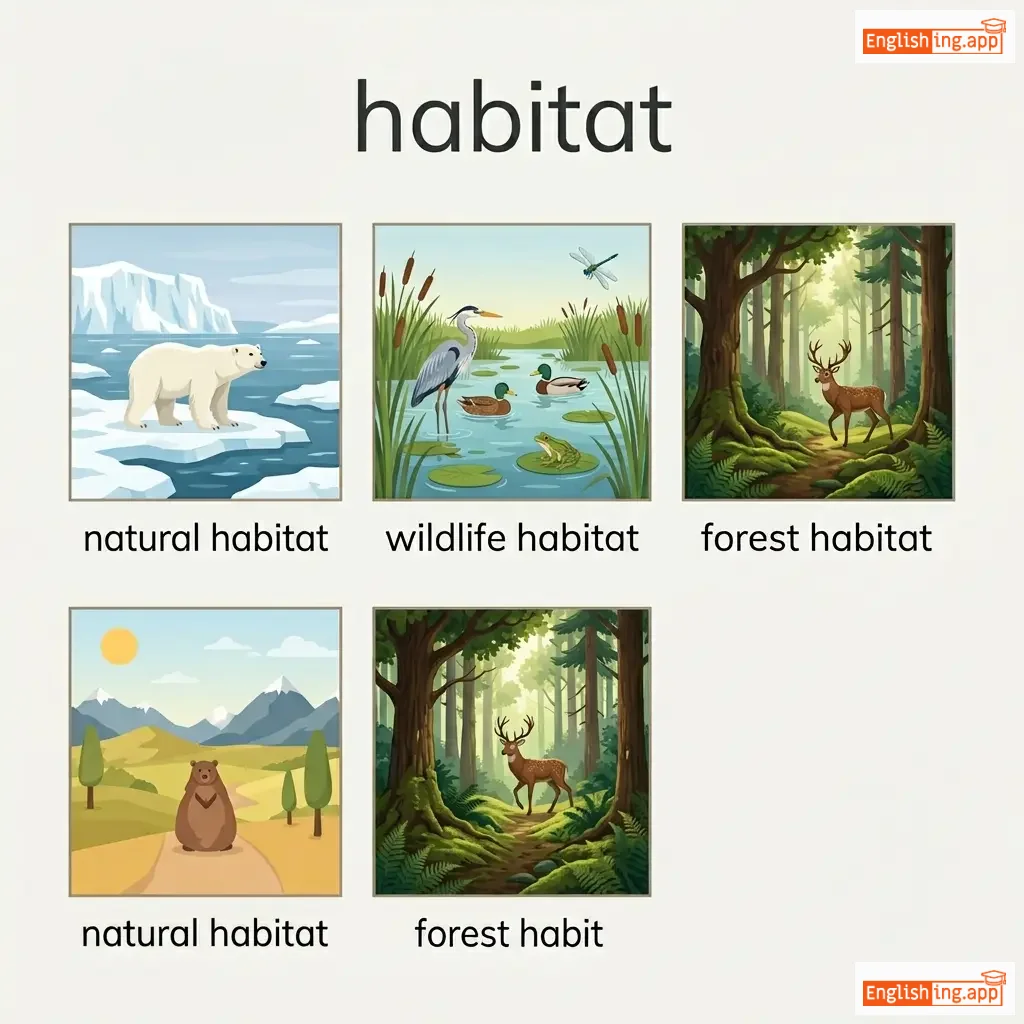
|
栖息地
qixi di
••••••
|
- •••••• |
The natural home or environment of an animal, plant, or other organism.
••••••
|
The rainforest is the natural habitat of many rare species. |
热带雨林是许多稀有物种的自然栖息地。
Redai yulin shi xu duo xiyou wuzhong de ziran qixi di.
••••••
|
- •••••• | - •••••• | - •••••• |
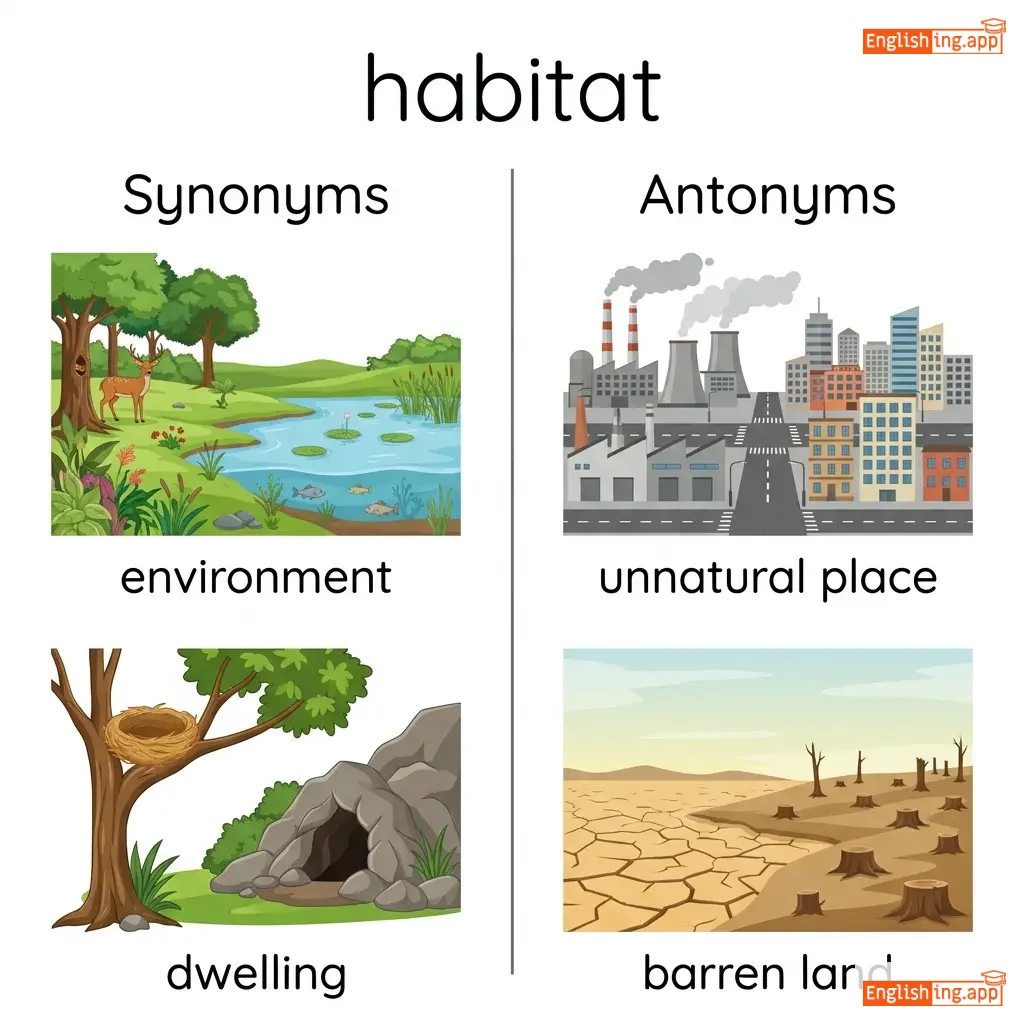
environment, dwelling, territory, ecosystem, surroundings
••••••
|
unnatural place, barren land
••••••
|
natural habitat, wildlife habitat, forest habitat, marine habitat
••••••
|
Habit + at → 动物栖息的地方 = 栖息地。
••••••
|
|
↔️
••••••
|
/ˌhæfˈweɪ/
adverb
(hāf wèi)
••••••
|
- •••••• |
半路上
ban lu shang
••••••
|
- •••••• |
at or to a point equal in distance between two points
••••••
|
We met halfway between the two towns. |
我们在两个城市之间的半路上相遇。
Wo men zai liang ge cheng shi zhi jian de ban lu shang xiang yu.
••••••
|
meet halfway |
to compromise or find a middle ground
••••••
|
找到折衷点
zhao dao zhe chong dian
••••••
|
in the middle, midway, partway, center
••••••
|
completely, fully
••••••
|
halfway point, halfway through, halfway house, meet halfway
••••••
|
半路上 = 妥协,走到中间见面!
••••••
|
|
✋
••••••
|
/ˈhænd.fʊl/
noun
(hændfʊl)
••••••
|
- •••••• |
一把
yī bǎ
••••••
|
- •••••• |
the amount of something that can be held in one hand; a small number
••••••
|
She took a handful of nuts. |
她拿了一把坚果。
tā nále yī bǎ jiānguǒ.
••••••
|
a handful |
a small number of people or things; someone difficult to manage
••••••
|
少量的人或事物;难以应付的人
shǎo liàng de rén huò shìwù; nán yǐ yìngfù de rén
••••••
|
few, small amount, little, portion
••••••
|
many, plenty
••••••
|
a handful of, only a handful, just a handful
••••••
|
一把在手,容易记住
••••••
|
|
😊
••••••
|
/ˈhæpɪli/
adverb
(幸福地)
••••••
|
- •••••• |
幸福地
xìngfú de
••••••
|
- •••••• |
in a happy manner; with pleasure or satisfaction
••••••
|
The children played happily in the garden. |
孩子们在花园里幸福地玩耍。
Háizimen zài huāyuán lǐ xìngfú de wánshuǎ.
••••••
|
- •••••• | - •••••• | - •••••• |
joyfully, cheerfully, gladly, merrily
••••••
|
sadly, unhappily
••••••
|
live happily, happily married, smile happily, happily ever after
••••••
|
Happy + ly意味着以快乐的方式行动 - 就像 😊 孩子们幸福地玩耍。
••••••
|
|
👂
••••••
|
/ˈhɪərɪŋ/
noun
(hī-ríng)
••••••
|
- •••••• |
听力 / 听证会
tīnglì / tīngzhènghuì
••••••
|
- •••••• |
the ability to perceive sounds or an official meeting to listen to arguments or evidence
••••••
|
The judge scheduled a hearing for next week. |
法官安排了下周的听证会。
Fǎguān ānpái le xià zhōu de tīngzhènghuì.
••••••
|
hard of hearing |
having partial hearing loss
••••••
|
部分听力丧失
bùfèn tīnglì sàngshī
••••••
|
listening, audition, perception, trial, meeting
••••••
|
deafness, silence
••••••
|
court hearing, public hearing, hearing aid, hearing loss
••••••
|
Hearing 就是听证会 – 法庭上有听证会,耳朵负责听觉 👂
••••••
|
|
⬇️
••••••
|
/ˈhev.ɪ.li/
adverb
(海维利)
••••••
|
- •••••• |
猛烈地; 强烈地
měng liè de; qiáng liè de
••••••
|
- •••••• |
with great weight; to a great degree; intensely
••••••
|
It rained heavily throughout the night.
it réindd hǎi wéi lì tru ào tè dā nài tè.
••••••
|
整个晚上都在猛烈下雨。
zhěng gè wǎn shàng dōu zài měng liè xià yǔ.
••••••
|
- •••••• | - •••••• | - •••••• |
intensely, severely, greatly, substantially, densely
••••••
|
lightly, gently, slightly, minimally
••••••
|
heavily armed, heavily loaded, heavily populated, heavily dependent
••••••
|
Heavy 是重的,所以 Heavily 是非常重的。
••••••
|
|
🤝
••••••
|
/ˈhelp.fəl/
adjective
(海皮尼斯)
••••••
|
- •••••• |
有帮助的; 有益的
you bangzhu de; youyi de
••••••
|
- •••••• |
giving or providing assistance; useful; beneficial
••••••
|
She was very helpful in organizing the event.
她在组织活动中非常有帮助。
••••••
|
她在组织活动中非常有帮助。
ta zai zuzhi huodong zhong feichang you bangzhu
••••••
|
- •••••• | - •••••• | - •••••• |
useful, beneficial, supportive, accommodating
••••••
|
unhelpful, harmful, obstructive, hindering
••••••
|
helpful advice, helpful person, helpful tip, helpful service
••••••
|
You bangzhu de ru ke pingyuan!
••••••
|
|
👩
••••••
|
/hɜːrˈsɛlf/
pronoun
(赫尔塞尔夫)
••••••
|
- •••••• |
她自己
tā zìjǐ
••••••
|
- •••••• |
used to refer to a female person as the object of a verb or preposition when she is the subject
••••••
|
She prepared the meal all by herself.
她自己做了饭。
••••••
|
她自己做了饭。
Tā zìjǐ zuòle fàn.
••••••
|
by herself
自己
••••••
|
alone, without help
••••••
|
自己
zìjǐ
••••••
|
on her own, alone, independently, solo, unaided
••••••
|
together, with others
••••••
|
by herself, for herself, to herself, herself alone
••••••
|
Her SELF 意思是 '她自己' — 记住,herself 就是自己做事情。
••••••
|
|
🙋♂️
••••••
|
/hɪmˈself/
pronoun
(海姆塞尔夫)
••••••
|
- •••••• |
他自己
tā zìjǐ
••••••
|
- •••••• |
Used to emphasize that a male person does something by his own effort.
••••••
|
He fixed the car himself. |
他自己修好了车。
Tā zìjǐ xiū hǎo le chē.
••••••
|
by himself |
alone, without help
••••••
|
自己
zìjǐ
••••••
|
alone, personally, individually, on his own
••••••
|
together, with others
••••••
|
by himself, for himself, himself alone
••••••
|
Himself 的意思是 'He 他自己 self' – 记住,'self' 表示自己。
••••••
|
|
🌟😊
••••••
|
/ˈhoʊpfəl/
adjective
(houpfūl)
••••••
|
- •••••• |
充满希望
chōngmǎn xīwàng
••••••
|
- •••••• |
feeling or inspiring optimism about a future event; confident; optimistic
••••••
|
He remained hopeful despite the challenges.
尽管面临挑战,他依然充满希望。
••••••
|
尽管面临挑战,他依然充满希望。
Jǐnguǎn miànlín tiǎozhàn, tā yīrán chōngmǎn xīwàng.
••••••
|
- •••••• | - •••••• | - •••••• |
optimistic, positive, confident
••••••
|
hopeless, pessimistic, despairing
••••••
|
hopeful sign, remain hopeful, hopeful outlook
••••••
|
希望让我们面对挑战
••••••
|
|
🧬
••••••
|
/ˈhɔːrmoʊn/
noun
(荷尔蒙)
••••••
|
- •••••• |
荷尔蒙
hormone
••••••
|
- •••••• |
a chemical substance produced in the body that influences how the body grows or functions
••••••
|
Insulin is a hormone that controls blood sugar levels.
胰岛素是一种控制血糖水平的荷尔蒙。
••••••
|
胰岛素是一种控制血糖水平的荷尔蒙。
Yídǎosù shì yī zhǒng kòngzhì xuètáng shuǐpíng de hé'ěrméng.
••••••
|
- •••••• | - •••••• | - •••••• |
chemical, secretion, enzyme, messenger
••••••
|
none, null
••••••
|
growth hormone, sex hormone, hormone levels
••••••
|
荷尔蒙:控制你身体的化学大脑!
••••••
|
|
⛓️
••••••
|
/ˈhɑːstɪdʒ/
noun
(hàosītèjí)
••••••
|
- •••••• |
人质
renzhi
••••••
|
- •••••• |
A person seized or held as security for the fulfillment of a condition.
••••••
|
The rebels took several people as hostages. |
叛军俘获了几个人质。
Pànjūn fúhuò le jǐ gè rénzhì.
••••••
|
held hostage |
Kept under control against one’s will
••••••
|
被扣为人质
Bèi kòu wèi rénzhì
••••••
|
captive, prisoner, detainee, pawn
••••••
|
liberated, free
••••••
|
take hostage, release hostage, held hostage
••••••
|
Hostage = Renzhi, 像‘host’被困在‘人质’的状态里
••••••
|
|
😠
••••••
|
/ˈhɒstaɪl/
adjective
(hòusītǎi)
••••••
|
- •••••• |
敌对
díduì
••••••
|
- •••••• |
showing or feeling opposition, dislike, or hatred
••••••
|
The soldiers entered a hostile territory. |
士兵进入了敌对领土。
Shìbīng jìnrùle díduì lǐngtǔ.
••••••
|
hostile takeover |
an acquisition of a company opposed by the company's management
••••••
|
敌对收购
díduì shōugòu
••••••
|
aggressive, antagonistic, unfriendly, opposed, bitter
••••••
|
friendly, peaceful, supportive
••••••
|
hostile environment, hostile forces, hostile attitude, hostile takeover
••••••
|
敌对 – 敌人般的接待
••••••
|
|
🏠
••••••
|
/ˈhaʊzɪŋ/
noun
(hɑʊzɪŋ)
••••••
|
- •••••• |
住房
zhùfáng
••••••
|
- •••••• |
buildings or structures where people live; accommodation
••••••
|
The government is working to provide affordable housing for everyone. |
政府正在努力为所有人提供负担得起的住房。
zhèngfǔ zhèngzài nǔlì wèi suǒyǒu rén tígōng fùdān dé qǐ de zhùfáng.
••••••
|
public housing |
housing provided by the government for low-income families
••••••
|
公共住房
gōnggòng zhùfáng
••••••
|
accommodation, residence, dwelling, shelter, lodging
••••••
|
homelessness, eviction
••••••
|
affordable housing, housing project, housing policy, housing shortage
••••••
|
Housing 就是住房,一个为大家提供住所的地方。
••••••
|
|
⚖️
••••••
|
/haʊˈɛvər/
adverb, conjunction
(hāo'ēwò)
••••••
|
- •••••• |
然而
rán'ér
••••••
|
- •••••• |
used to introduce a statement that contrasts with or seems to contradict something previously said
••••••
|
The journey was long; however, it was enjoyable. |
旅程很长;然而,它是愉快的。
Lǚchéng hěn cháng; rán'ér, tā shì yúkuài de.
••••••
|
- •••••• | - •••••• | - •••••• |
nevertheless, but, still, yet
••••••
|
therefore, thus
••••••
|
however hard, however much, however difficult
••••••
|
However 在中文是然而,想象一次长途旅行,但仍然愉快。
••••••
|

