River Recipes and Brick Dreams
村里的厨师们在河边讨论如何让那道历史悠久的 pork 食谱更具可持续性。 他们说:“为了河流的 sake,我们将使用香料和替代蛋白。” 当舞台台阶在雨中变得有些 slip 滑时,志愿者们在木板上撒了沙子。 学生们排队领取最后一个报名 slot。 即使漂浮的平台似乎在 suck 走他们的梦想,他们仍然微笑着。 孩子们把旧海报 tuck 好,挂上新的横幅。 看到一个 ugly 的塑料桶,他们立刻清理干净。 留着胡子的艺术家擦了擦他的 beard,说:“今年会不一样。” 一个有圆圆 belly 的叔叔笑着为大家端上丰盛的食物。 科学家们从河面 below 采起植物进行检测。 村里的主持人朗读了祖父那本旧 bible 里的句子。 工匠们用竹 blade 雕刻了新的装饰品。 聚会结束后,落叶铺满的田野像一张 blank 画布。 在夜色的最后一抹光中,天空中的无人机灯光 blink 闪烁。 一位慷慨的 blond 游客捐赠了银饰。 协调 board 起草了第二天的任务清单。 市长笑着说:“今天我们可以稍微 boast 一下。” 然后大家都休息片刻,进行短暂的 break。 鱼类 breed 的研讨会激励了年轻人。 最后他们用朴素的 brick 铺满了河边的小路。
|
表情符号
|
单词 | Images | 翻译 | 过去时 | 过去分词 | 第三人称单数 | 动名词 | 含义 | 例句 | 例句翻译 | 示例表达 | 示例表达含义 | 示例表达翻译 | 同义词 | 反义词 | 搭配词 | 助记符 |
|---|---|---|---|---|---|---|---|---|---|---|---|---|---|---|---|---|---|
|
🧔
••••••
|
/bɪəd/
noun
••••••
|
- •••••• | - •••••• | - •••••• | - •••••• | - •••••• | - •••••• |
the hair growing on the lower part of a man's face
••••••
|
He decided to grow a beard during his vacation. |
- •••••• |
beard the lion in his den |
to confront someone powerful or dangerous in their own territory
••••••
|
- •••••• |
facial hair, whiskers, goatee, stubble
••••••
|
clean-shaven, bare face
••••••
|
long beard, thick beard, grow a beard, trim beard
••••••
|
No •••••• |
|
🤰
••••••
|
/ˈbɛli/
noun
(贝利)
••••••
|
- •••••• |
肚子
dùzi
••••••
|
- •••••• | - •••••• | - •••••• | - •••••• |
The front part of the human body below the chest; stomach or abdomen.
••••••
|
He rubbed his belly after the big meal. |
他在吃完大餐后抚摸着肚子。
Tā zài chī wán dà cān hòu fǔmō zhe dùzi.
••••••
|
belly laugh |
A loud, hearty laugh.
••••••
|
大笑
dà xiào
••••••
|
stomach, abdomen, tummy, gut
••••••
|
back, spine
••••••
|
big belly, belly fat, belly button
••••••
|
Belly 意味着肚子 – 吃得多了肚子 (belly) 会变大。
••••••
|
|
⬇️
••••••
|
/bɪˈloʊ/
preposition
(bīluóu)
••••••
|
- •••••• |
下面
xiàmiàn
••••••
|
- •••••• | - •••••• | - •••••• | - •••••• |
At a lower level or position than something else.
••••••
|
The basement is below the ground floor. |
地下室在一楼下面。
Dìxiàshì zài yī lóu xiàmiàn.
••••••
|
below the belt |
Unfair or cruel remark or action.
••••••
|
低于腰带
Dī yú yāodài
••••••
|
under, beneath, underneath, lower
••••••
|
above, over, higher
••••••
|
below average, below the surface, below zero
••••••
|
Below意味着下面,想象它在你之下。
••••••
|
|
📖
••••••
|
/ˈbaɪbəl/
noun
(bǎibó)
••••••
|
- •••••• |
圣经
shengjing
••••••
|
- •••••• | - •••••• | - •••••• | - •••••• |
the Christian scriptures consisting of the Old and New Testaments; also used for any authoritative book
••••••
|
She reads the Bible every morning. |
她每天早晨读圣经。
Tā měitiān zǎochén dú shèngjīng.
••••••
|
- •••••• | - •••••• | - •••••• |
scripture, holy book, testament, gospel
••••••
|
none
••••••
|
Bible study, Bible verse, Bible story
••••••
|
Bible = 圣经, 记住圣经是神圣的书籍。
••••••
|
|
🔪
••••••
|
/bleɪd/
noun
(buleide)
••••••
|
- •••••• |
刀片
daopian
••••••
|
- •••••• | - •••••• | - •••••• | - •••••• |
the flat cutting edge of a tool, knife, or weapon
••••••
|
The blade of the knife was very sharp.
刀片非常锋利。
••••••
|
刀片非常锋利。
Daopian feichang fengli.
••••••
|
on the blade's edge
刀片的边缘
••••••
|
in a very risky or dangerous position
••••••
|
处于非常危险的位置
chuyu feichang weixian de weizhi
••••••
|
edge, sword, cutter, razor
••••••
|
handle, blunt side
••••••
|
knife blade, razor blade, sharp blade, blade of grass
••••••
|
刀片是blade的意思—'刀片切割'记住。
••••••
|
|
📄
••••••
|
/blæŋk/
adjective
(blæŋk)
••••••
|
- •••••• |
空白
kongbai
••••••
|
- •••••• | - •••••• | - •••••• | - •••••• |
showing no expression or containing nothing written, printed, or recorded.
••••••
|
Her face went blank when she heard the bad news. |
当她听到坏消息时,她的脸变得空白。
dang ta tingdao huai xiaoxi shi, ta de lian biande kongbai.
••••••
|
a blank slate |
a fresh start with no previous record or experience.
••••••
|
一张空白的白板
yi zhang kongbai de baiban
••••••
|
empty, vacant, expressionless, plain, void
••••••
|
filled, expressive, occupied
••••••
|
blank page, blank look, blank screen, blank form
••••••
|
Blank 意味着空白 — 如果考试中交空白纸,你就挂了!
••••••
|
|
😉
••••••
|
/blɪŋk/
verb
(blīn kè)
••••••
|
- •••••• |
眨眼
zhǎ yǎn
••••••
|
blinked
blinked
••••••
|
blinked
blinked
••••••
|
blinks
blinks
••••••
|
blinking
blinking
••••••
|
to close and open the eyes quickly.
••••••
|
She blinked rapidly to clear the dust from her eyes.
她迅速眨眼清除眼中的灰尘。
••••••
|
她迅速眨眼清除眼中的灰尘。
Tā xùn sù zhǎ yǎn qīng chú yǎn zhōng de huī chén.
••••••
|
in the blink of an eye
眨眼之间
••••••
|
very quickly; almost instantly.
••••••
|
眨眼之间
zhǎ yǎn zhī jiān
••••••
|
wink, flicker, flutter, flash, twinkle
••••••
|
stare, gaze
••••••
|
blink rapidly, blink lights, blink away tears, blink twice
••••••
|
Blink 是眨眼 — 就像眨眼之间,灰尘就消失了!
••••••
|
|
👱♀️
••••••
|
/blɒnd/
adjective
••••••
|
- •••••• | - •••••• | - •••••• | - •••••• | - •••••• | - •••••• |
having light-colored hair, typically pale yellow or golden.
••••••
|
She has long blond hair that shines in the sunlight. |
- •••••• |
blond moment |
a temporary lapse in concentration or judgment.
••••••
|
- •••••• |
fair-haired, light-haired, golden, pale-haired
••••••
|
dark-haired, brunette
••••••
|
blond hair, blond boy, blond woman, natural blond
••••••
|
No •••••• |
|
📋
••••••
|
/bɔːrd/
noun
••••••
|
- •••••• | - •••••• | - •••••• | - •••••• | - •••••• | - •••••• |
a flat, thin, rectangular piece of material such as wood; also a group of people managing an organization
••••••
|
The board decided to increase the budget. |
- •••••• |
on board |
to be part of a team or involved in a project
••••••
|
- •••••• |
plank, panel, committee, council
••••••
|
individual, disorganization
••••••
|
board meeting, board of directors, wooden board, on board
••••••
|
No •••••• |
|
🏆
••••••
|
/boʊst/
verb
(bóusīt)
••••••
|

|
炫耀
xuànyào
••••••
|
boasted
bóusītèd
••••••
|
boasted
bóusītèd
••••••
|
boasts
bóusītè
••••••
|
boasting
bóusīng
••••••
|
to talk with pride about something you have or achieved
••••••
|
He boasted about his new car.
他炫耀他的新车。
••••••
|
他炫耀他的新车。
Tā xuànyào tā de xīn chē.
••••••
|
boast about
炫耀
••••••
|
to talk proudly about something
••••••
|
炫耀
xuànyào
••••••
|
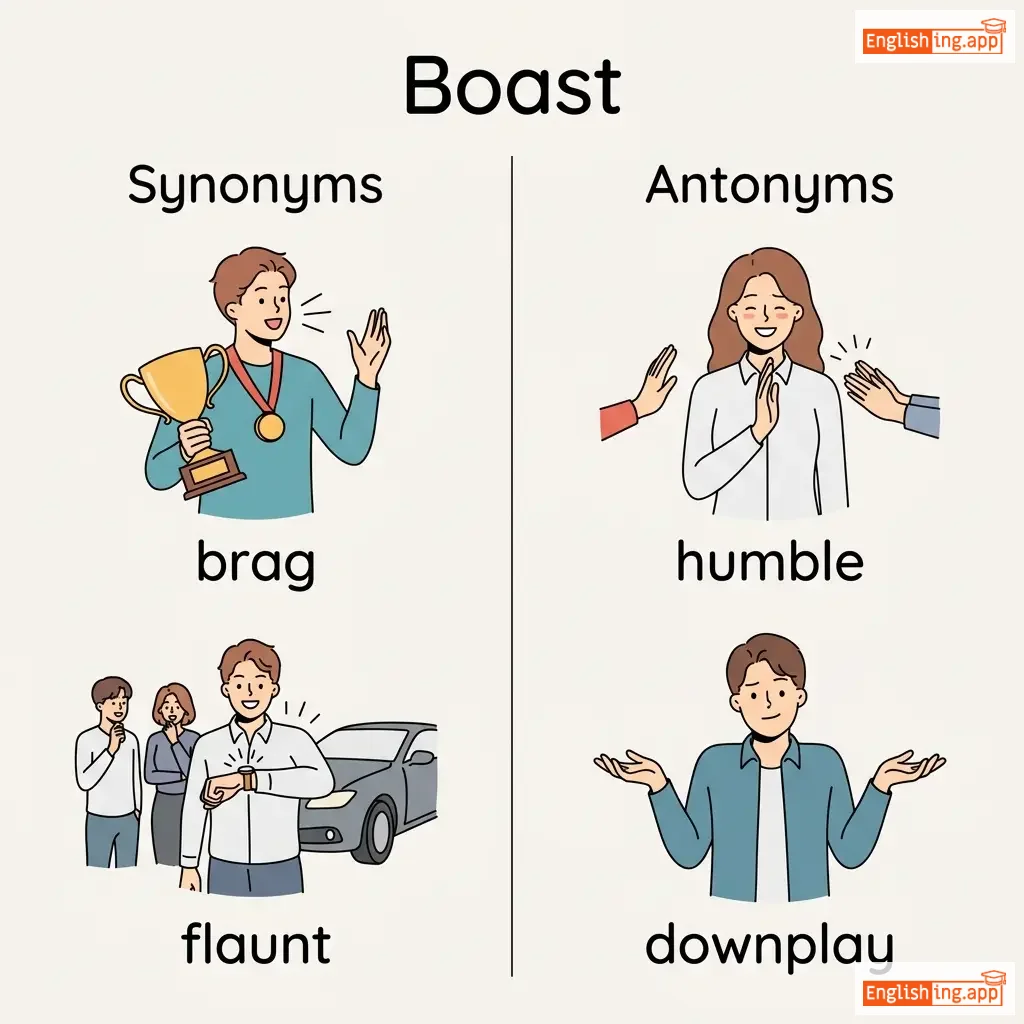
brag, flaunt, praise, show off
••••••
|
humble, downplay
••••••
|
boast about, boast of, boast great, boast success
••••••
|
Boast 就像是炫耀自己的成就,像一个老板一样。
••••••
|
|
💔
••••••
|
/breɪk/
verb, noun
(bɾeɪk)
••••••
|
|
打破 / 休息
dǎpò / xiūxí
••••••
|
broke
broʊk
••••••
|
broken
broʊkən
••••••
|
breaks
bɾeɪks
••••••
|
breaking
bɾeɪkɪŋ
••••••
|
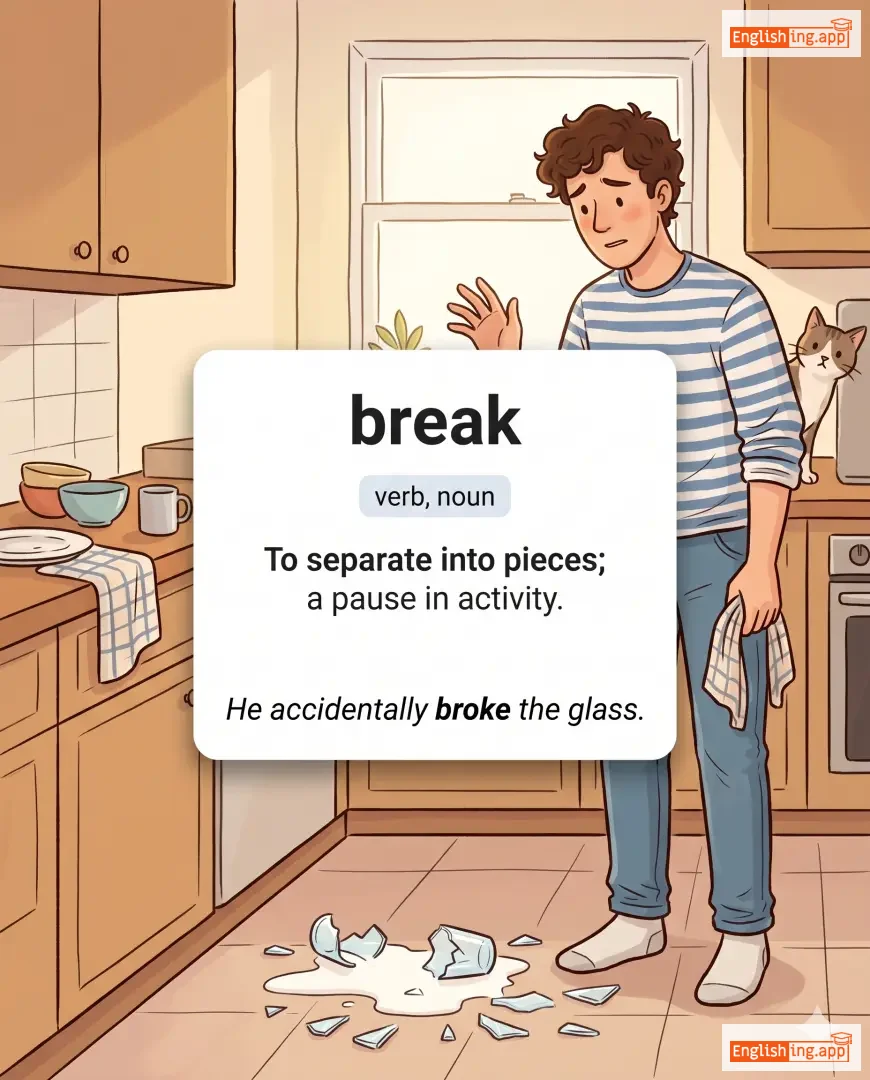
To separate into pieces; a pause in activity.
••••••
|
He accidentally broke the glass.
hī æksɪˈdɛntəli broʊk ðə ɡlæs
••••••
|
他不小心打破了玻璃。
Tā bù xiǎoxīn dǎpòle bōlí.
••••••
|
take a break
teɪk ə breɪk
••••••
|
to rest for a short time
••••••
|
休息一下
xiūxí yīxià
••••••
|
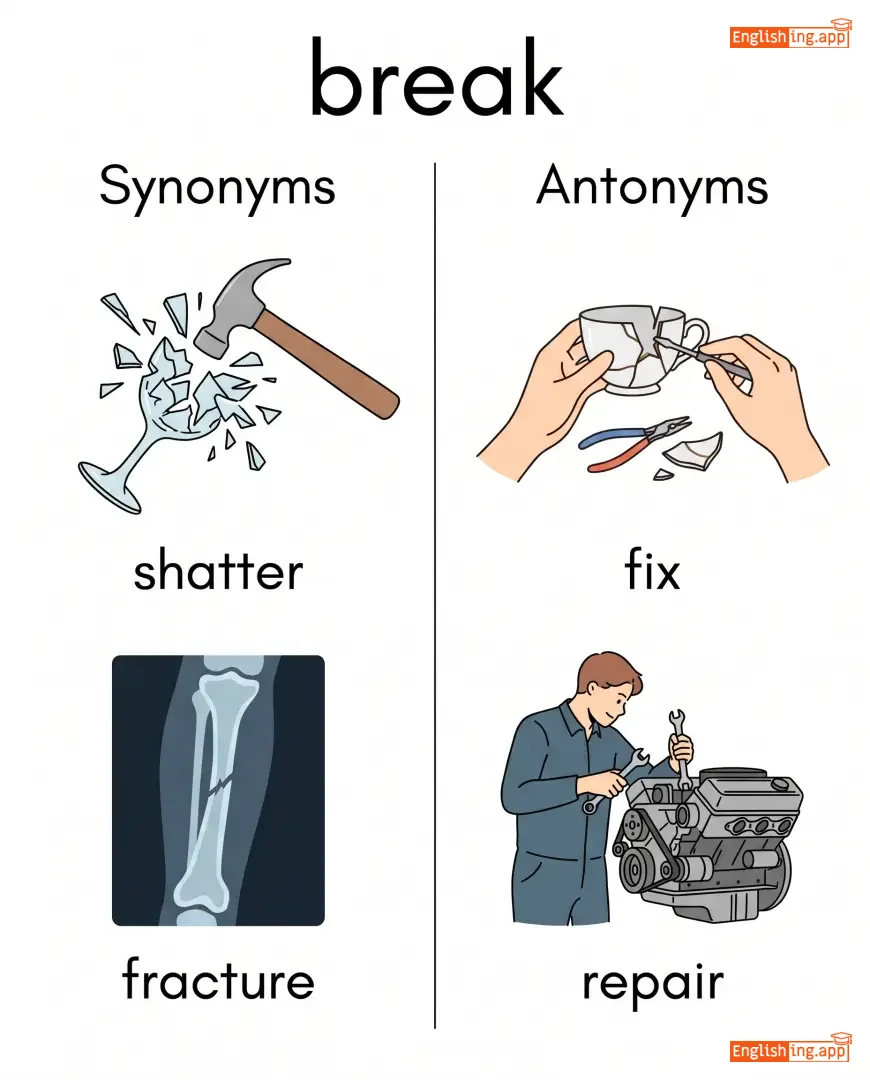
shatter, fracture, smash, pause, recess
••••••
|
fix, repair, continue
••••••
|
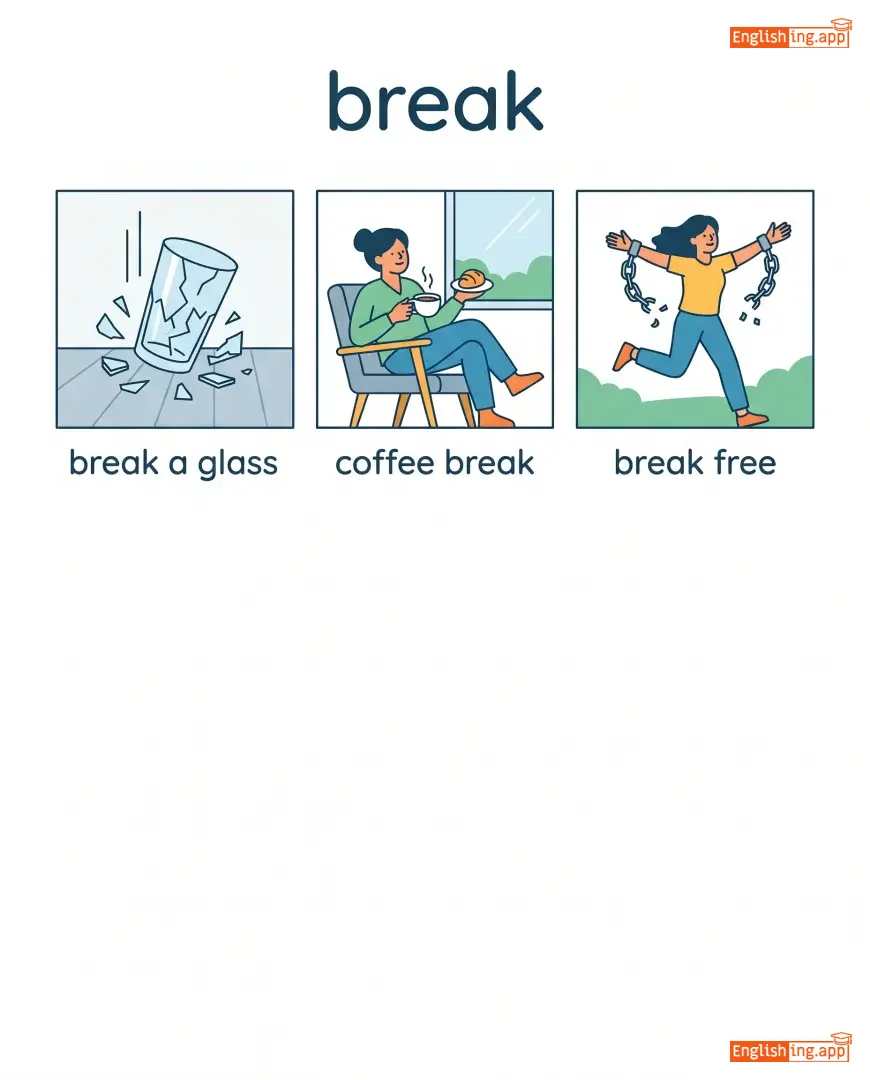
break a glass, coffee break, break free, break the law
••••••
|
Break 意味着打破,Break 也意味着休息。
••••••
|
|
🐎
••••••
|
/briːd/
verb, noun
(bùlìd)
••••••
|
|
繁殖,品种
fánzhí, pǐnzhǒng
••••••
|
bred
bred
••••••
|
bred
bred
••••••
|
breeds
bùlìds
••••••
|
breeding
bùlìdīng
••••••
|
To cause an animal to reproduce; to raise or train; a type or variety of animal or plant.
••••••
|
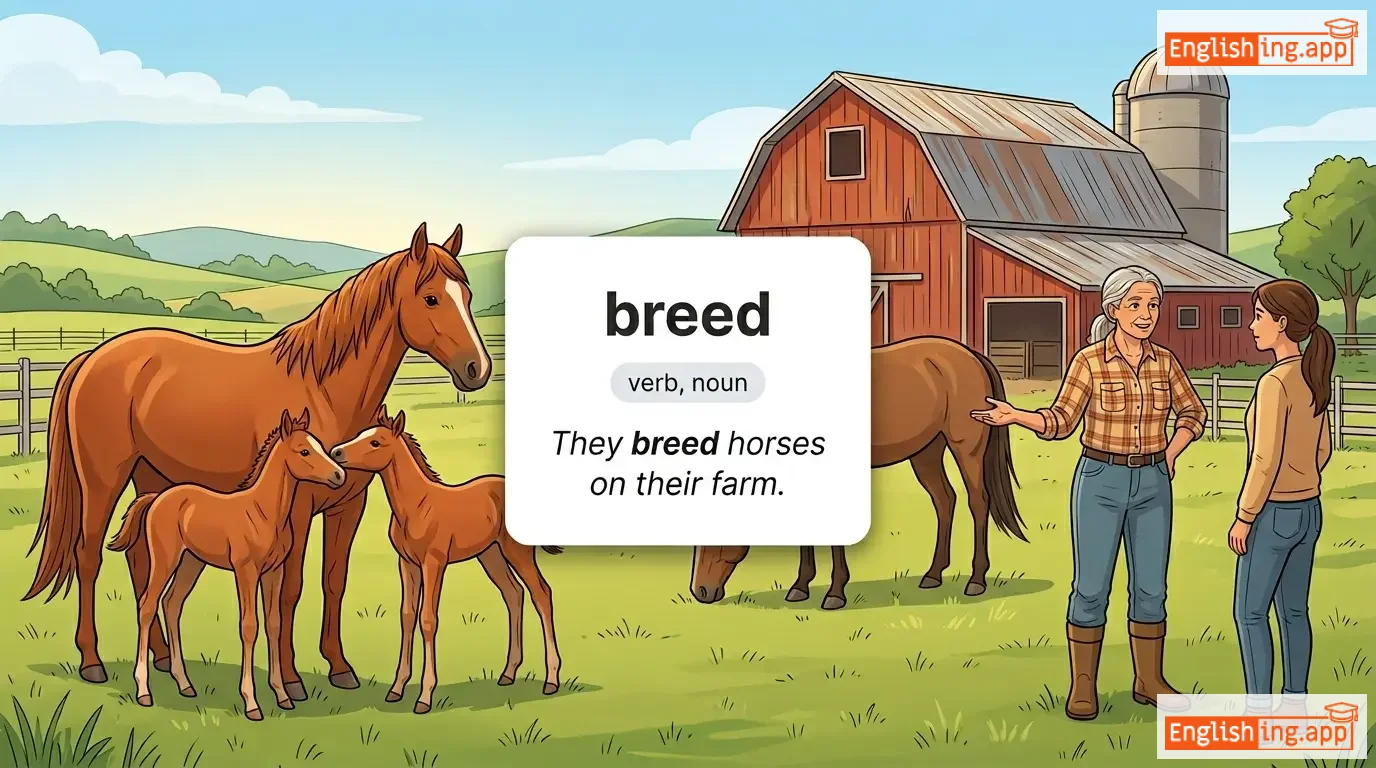
They breed horses on their farm.
他们在农场上养马。
••••••
|
他们在农场上养马。
Tāmen zài nóngchǎng shàng yǎng mǎ.
••••••
|
born and bred
出生和养育
••••••
|
Used to indicate someone's native origin and upbringing.
••••••
|
出生和养育
chūshēng hé yǎngyù
••••••
|
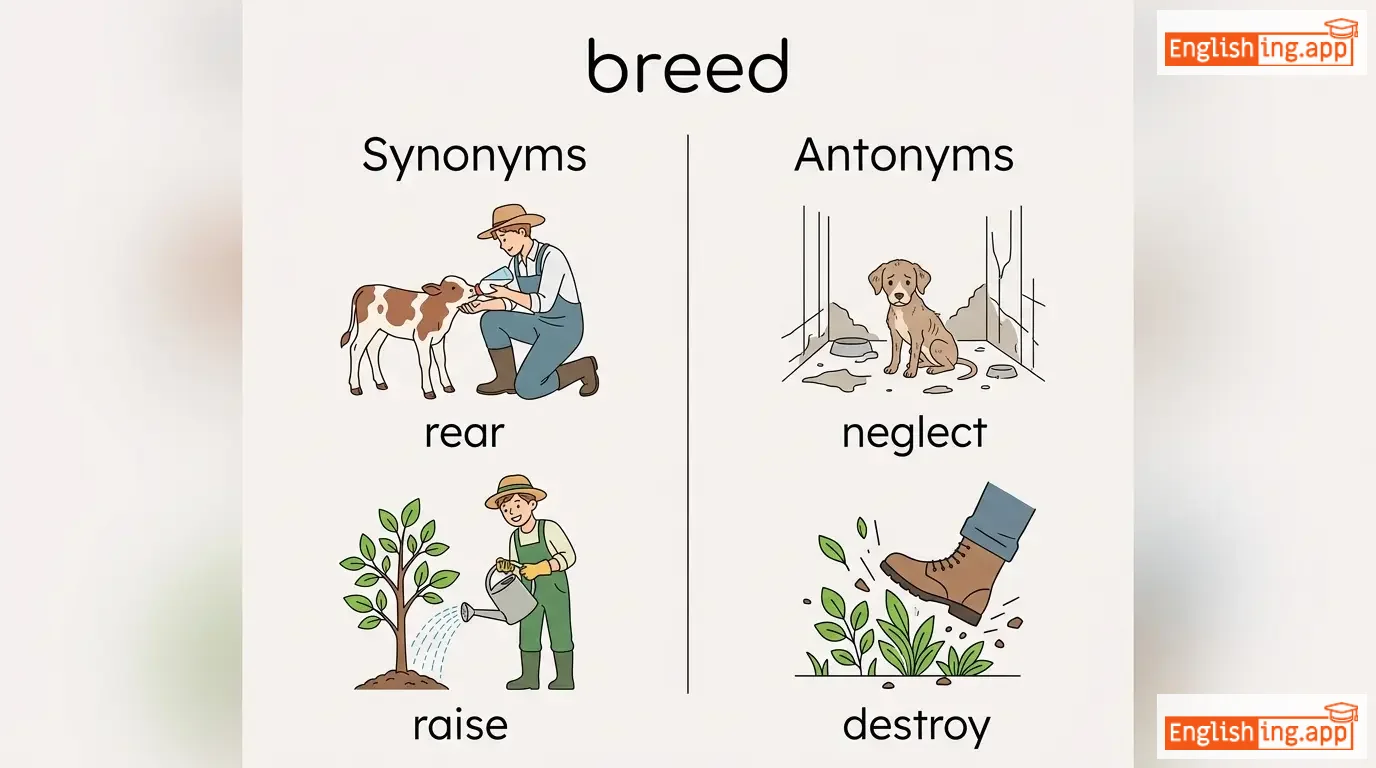
rear, raise, cultivate, reproduce, nurture
••••••
|
neglect, destroy, kill
••••••
|
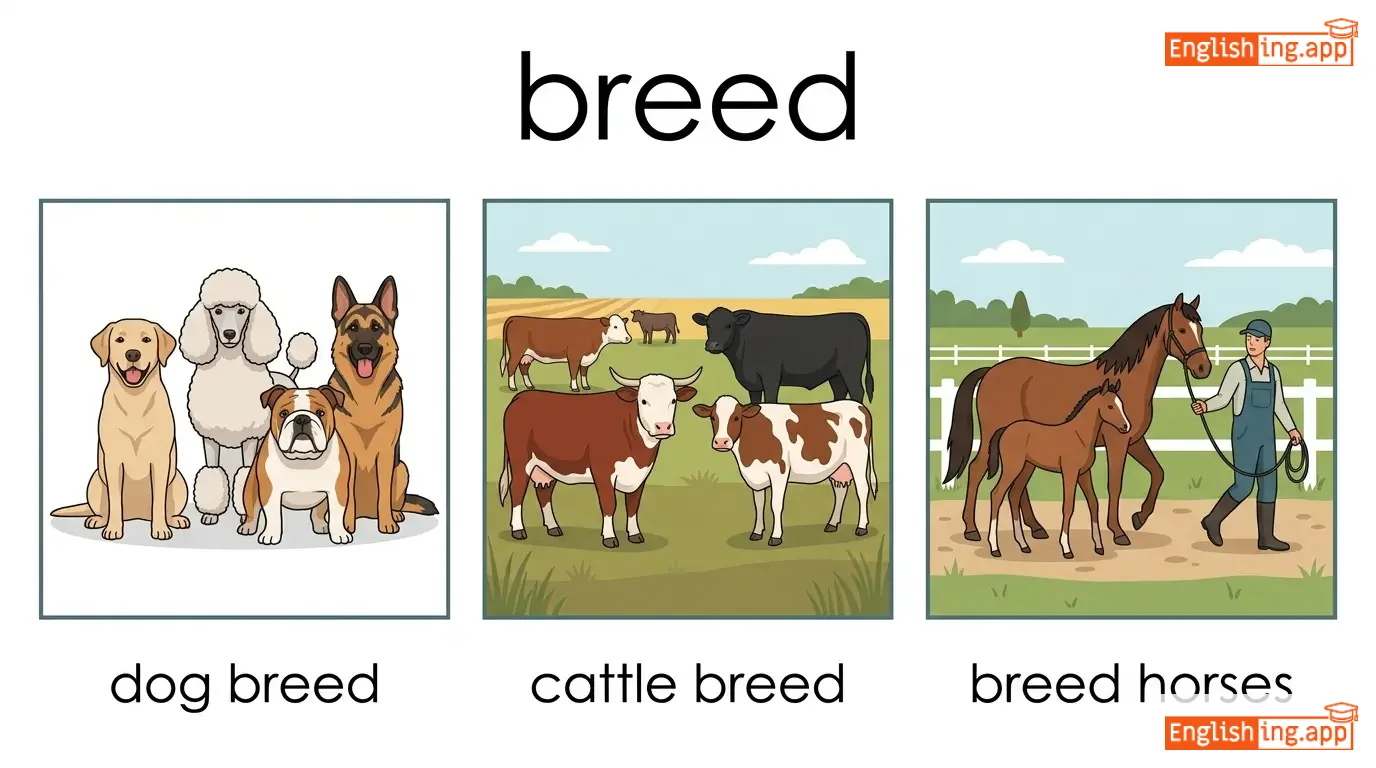
dog breed, cattle breed, breed horses, breed success
••••••
|
Breed 意味着品种—狗的品种;Breed 还意味着出生和养育。
••••••
|
|
🧱
••••••
|
/brɪk/
noun
(bùlíkè)
••••••
|
- •••••• |
砖块
zhuānkuài
••••••
|
- •••••• | - •••••• | - •••••• | - •••••• |
A rectangular block of clay or similar material used in building walls and other structures.
••••••
|
The workers laid brick after brick to build the wall. |
工人们一块接一块地放砖来建造墙壁。
Gōngrénmen yī kuài jiē yī kuài de fàng zhuān lái jiànzào qiángbì.
••••••
|
thick as a brick |
Used to describe someone who is very stupid or slow to understand.
••••••
|
笨得像块砖
bèn dé xiàng kuài zhuān
••••••
|
block, stone, tile, slab, cube
••••••
|
void, gap
••••••
|
brick wall, brick house, brick building, red brick, brick by brick
••••••
|
砖块 = 砖 🧱 - 砖块用来建造墙壁。
••••••
|
|
🥩
••••••
|
/pɔːrk/
noun
(海皮尼斯)
••••••
|
- •••••• |
幸福
xìng fú
••••••
|
- •••••• | - •••••• | - •••••• | - •••••• |
the flesh of a pig used as food
••••••
|
He doesn't eat pork for religious reasons. |
当她收到奖项时,她无法掩饰自己的幸福。
Dāng tā shōudào jiǎngxiàng shí, tā wúfǎ yǎnshì zìjǐ de xìngfú.
••••••
|
- •••••• | - •••••• | - •••••• |
pig meat, swine, bacon, ham, meat
••••••
|
beef, chicken, lamb
••••••
|
pork chop, roast pork, pork sausage, pork ribs
••••••
|
Happiness = 幸福 — 感受每一刻的喜悦!
••••••
|
|
❤️
••••••
|
/seɪk/
noun
(seik)
••••••
|
- •••••• |
利益
lìyì
••••••
|
- •••••• | - •••••• | - •••••• | - •••••• |
for the purpose or reason of something
••••••
|
He did it for the sake of his family.
他是为了家人的利益这么做的。
••••••
|
他是为了家人的利益这么做的。
Tā shì wèile jiārén de lìyì zhème zuò de.
••••••
|
for the sake of
为了
••••••
|
for the purpose of achieving something
••••••
|
为了
wèi le
••••••
|
purpose, reason, benefit, interest
••••••
|
hindrance, obstacle, disadvantage
••••••
|
for the sake of, for the sake of love, for the sake of peace
••••••
|
Sake-为了家人的利益 - 做这件事是为了家人的利益!
••••••
|
|
👟
••••••
|
/slɪp/
verb
(slip)
••••••
|
- •••••• |
滑倒
huá dǎo
••••••
|
slipped
slipped
••••••
|
slipped
slipped
••••••
|
slips
slips
••••••
|
slipping
slipping
••••••
|
to lose balance or fall while moving, or to accidentally slide from a position
••••••
|
She slipped on the wet floor and fell.
她在湿滑的地板上滑倒了。
••••••
|
她在湿滑的地板上滑倒了。
Ta zai shi hua de diban shang hua dao le.
••••••
|
- •••••• | - •••••• | - •••••• |
slide, fall, stumble, trip
••••••
|
stand, stabilize, remain
••••••
|
slip on ice, slip down, slip away, slip through
••••••
|
Slipping on a slippery floor is a 'slip' in the story of your day.
••••••
|
|
🕳️
••••••
|
/slɒt/
noun
(槽)
••••••
|
- •••••• |
插槽
chacuo
••••••
|
- •••••• | - •••••• | - •••••• | - •••••• |
a narrow opening into which something fits or is placed
••••••
|
Insert the card into the slot to open the door. |
将卡片插入插槽以打开门。
Jiang ka pian charu chacuo yi dakaimen.
••••••
|
time slot |
a specific time period allocated for an activity
••••••
|
时间段
shijian duan
••••••
|
groove, opening, hole, niche, position
••••••
|
blockage, closure
••••••
|
time slot, memory slot, parking slot, machine slot
••••••
|
插槽就是放卡片的地方,门就会打开!
••••••
|
|
🍼
••••••
|
/sʌk/
verb
(sā)
••••••
|
- •••••• |
吸
xī
••••••
|
sucked
sākèd
••••••
|
sucked
sākèd
••••••
|
sucks
sākè sī
••••••
|
sucking
sākīng
••••••
|
to draw something into the mouth by using the lips and tongue
••••••
|
The baby began to suck her thumb.
婴儿开始吸吮她的拇指。
••••••
|
婴儿开始吸吮她的拇指。
Yīng'ér kāishǐ xīshuǐ tā de mǔzhǐ.
••••••
|
suck it up
吸掉它
••••••
|
to accept something unpleasant without complaining
••••••
|
忍受它
rěnshòu tā
••••••
|
sip, draw, ingest, slurp
••••••
|
spit, expel
••••••
|
suck up, suck out, suck in, suck on
••••••
|
婴儿吸拇指,‘吸’容易记住。
••••••
|
|
🛏️
••••••
|
/tʌk/
verb
(tak)
••••••
|
- •••••• |
塞进
saijin
••••••
|
tucked
takt
••••••
|
tucked
takt
••••••
|
tucks
taks
••••••
|
tucking
takiñ
••••••
|
to push or fold something neatly into a particular place
••••••
|
She tucked the blanket around the baby to keep him warm.
她把毯子围绕着婴儿,这样他就保持温暖。
••••••
|
她把毯子围绕着婴儿,这样他就保持温暖。
Ta ba tanzi weirao zhe ying'er, zheyang ta jiu baochi wennuan.
••••••
|
tuck in
tuck in
••••••
|
to make someone comfortable in bed by arranging the blankets
••••••
|
塞进床上
saijin chuang shang
••••••
|
insert, fold, stuff, push, adjust
••••••
|
unfold, pull out, open
••••••
|
tuck in bed, tuck away, tuck under, neatly tucked
••••••
|
Tuck 就是塞进,像把被子塞进床上 💺
••••••
|
|
😰
••••••
|
/ˈʌɡ.li/
adjective
(ʌɡli)
••••••
|
- •••••• |
丑陋的; 可憎的; 可怕的
chǒulòu de; kě zēng de; kěpà de
••••••
|
- •••••• | - •••••• | - •••••• | - •••••• |
unpleasant or repulsive in appearance; morally reprehensible
••••••
|
The old building looked ugly after years of neglect. |
这座老建筑在多年疏忽之后看起来很丑。
zhè zuò lǎo jiànzhú zài duō nián shūhū zhīhòu kàn qǐlái hěn chǒu.
••••••
|
- •••••• | - •••••• | - •••••• |
hideous, unsightly, repulsive, unattractive
••••••
|
beautiful, attractive, pretty, lovely
••••••
|
ugly duckling, ugly truth, ugly situation
••••••
|
Ugly in Chinese means exactly how it sounds: unpleasant and repulsive.
••••••
|

