Festival Against the River Ruin
一座发光的pink雕塑点亮了城市的节日。 一根pipe把水从广场输送到河流。 福萨尔说,'我们不需要任何人的pity;我们会为这条河而战。' 主席的plea是让每个人分享信息。 孩子们出于好奇用棍子poke河泥。 志愿者修复了路标pole。 演员们在保护河流的戏剧中摆出了戏剧性的pose。 生物学家计算了在河里捕捉鱼类的prey鸟类数量。 机械师测试并启动了手动pump。 音乐家们演奏复古的punk曲目,激励人群。 食物广场的棚子里,水壶堆叠在rack上。 去年季风,污染物发动了raid;这次它们将被阻止。 传感器安装在渡船码头的rear。 当开幕时,口哨声开始ring。 年轻人发誓:'我们不会允许任何riot。' 孩子们在河岸收集小rock。 记者们开始了现场roll。 他们发誓河流再也不会陷入ruin。 送货卡车按时到达并rush了设备。 每个人把垃圾sack送到回收中心。
|
表情符号
|
单词 | Images | 翻译 | 过去时 | 过去分词 | 第三人称单数 | 动名词 | 含义 | 例句 | 例句翻译 | 示例表达 | 示例表达含义 | 示例表达翻译 | 同义词 | 反义词 | 搭配词 | 助记符 |
|---|---|---|---|---|---|---|---|---|---|---|---|---|---|---|---|---|---|
|
🌸
••••••
|
/pɪŋk/
adjective
(pɪŋk)
••••••
|
- •••••• |
粉红色
fěnhóng sè
••••••
|
- •••••• | - •••••• | - •••••• | - •••••• |
pale red color; slightly red
••••••
|
She wore a beautiful pink dress to the party.
她在聚会上穿了一件漂亮的粉红色裙子。
••••••
|
她在聚会上穿了一件漂亮的粉红色裙子。
Tā zài jùhuì shàng chuānle yī jiàn piàoliang de fěnhóng sè qúnzi.
••••••
|
- •••••• | - •••••• | - •••••• |
rose, rosy, salmon, coral, blush
••••••
|
dark, black, deep
••••••
|
pink flowers, pink cheeks, hot pink, baby pink
••••••
|
粉红色是介于红色和白色之间的颜色。
••••••
|
|
🚰
••••••
|
/paɪp/
noun
(paɪp)
••••••
|
- •••••• |
管道
guǎndào
••••••
|
- •••••• | - •••••• | - •••••• | - •••••• |
a tube used for conveying liquids or gases
••••••
|
The plumber fixed the broken pipe.
水管工修理了坏掉的管道。
••••••
|
水管工修理了坏掉的管道。
Shuǐguǎn gōng xiūlǐle huàidiào de guǎndào.
••••••
|
- •••••• | - •••••• | - •••••• |
tube, conduit, hose
••••••
|
none
••••••
|
water pipe, gas pipe, pipe burst
••••••
|
管道就像水管一样,流动液体和气体。
••••••
|
|
😢
••••••
|
/ˈpɪ.ti/
noun
(怜悯)
••••••
|
- •••••• |
同情; 怜悯;
tóngqíng; liánmǐn
••••••
|
- •••••• | - •••••• | - •••••• | - •••••• |
a feeling of sadness or sympathy for someone's misfortune; something that causes regret or disappointment
••••••
|
I felt pity for the homeless man in the rain. |
我对雨中无家可归的男人感到怜悯。
Wǒ duì yǔ zhōng wú jiā kě guī de nánrén gǎndào liánmǐn.
••••••
|
- •••••• | - •••••• | - •••••• |
compassion, sympathy, mercy, empathy
••••••
|
cruelty, indifference, harshness, callousness
••••••
|
feel pity, take pity, pity party
••••••
|
No •••••• |
|
🙏
••••••
|
/pliː/
noun
(puli)
••••••
|
- •••••• |
请求; 呼吁; 辩解
qingqiu; huoyu; bianjie
••••••
|
- •••••• | - •••••• | - •••••• | - •••••• |
an urgent and emotional request; a defendant's formal response to a criminal charge; an excuse or justification
••••••
|
She made a plea for help during the emergency. |
在紧急情况下,她请求帮助。
Zai jinji qingkuang xia, ta qingqiu bangzhu.
••••••
|
- •••••• | - •••••• | - •••••• |
appeal, request, petition, entreaty
••••••
|
demand, command, order, refusal
••••••
|
guilty plea, emotional plea, plea bargain
••••••
|
Plea 可以记作‘请帮忙’。
••••••
|
|
👉
••••••
|
/poʊk/
verb
(波克)
••••••
|
|
戳
chuo
••••••
|
poked
波克德
••••••
|
poked
波克德
••••••
|
pokes
波克斯
••••••
|
poking
波金
••••••
|
to push something with a finger or a pointed object
••••••
|
He poked the fire with a stick.
他用棍子戳了火。
••••••
|
他用棍子戳了火。
Tā yòng gùnzi chuōle huǒ.
••••••
|
poke fun at
poke fun at
••••••
|
to make fun of someone or something
••••••
|
取笑
qǔxiào
••••••
|
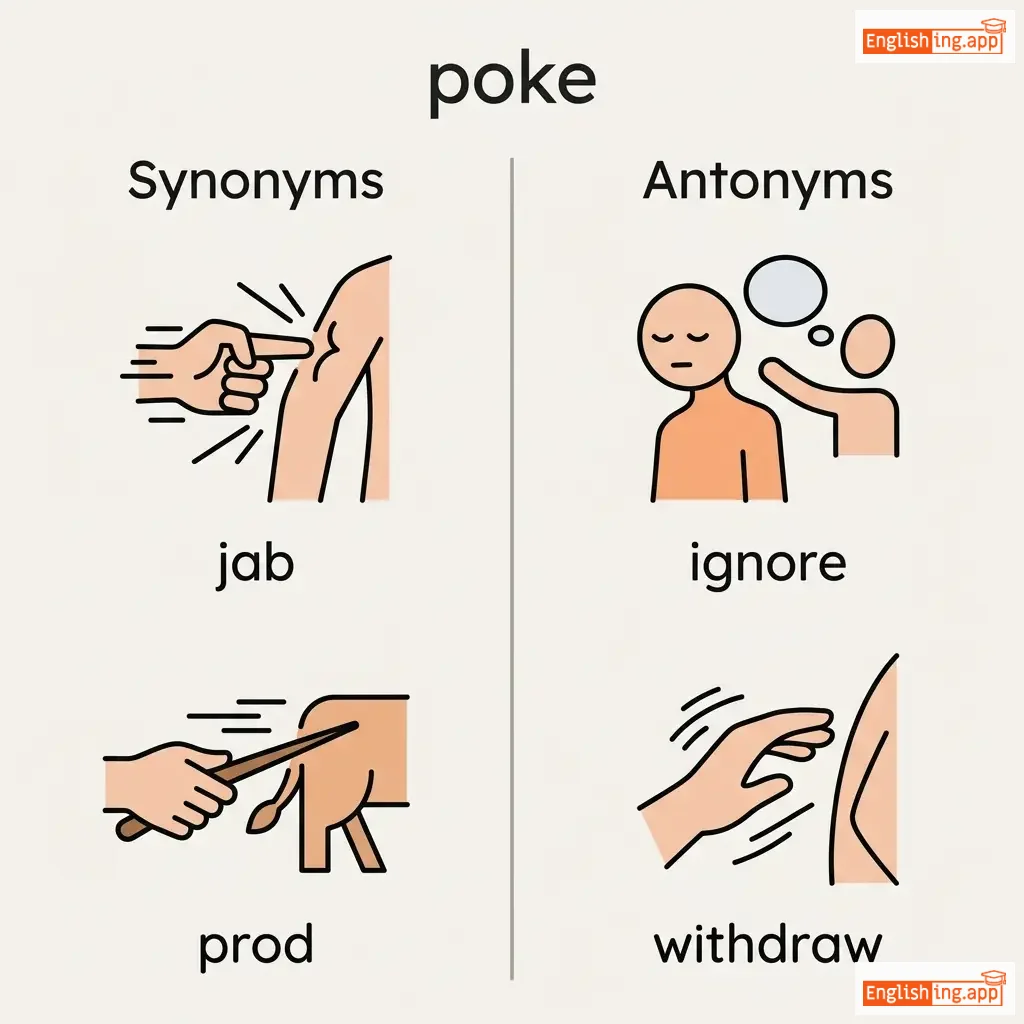
jab, prod, nudge, push
••••••
|
ignore, withdraw
••••••
|
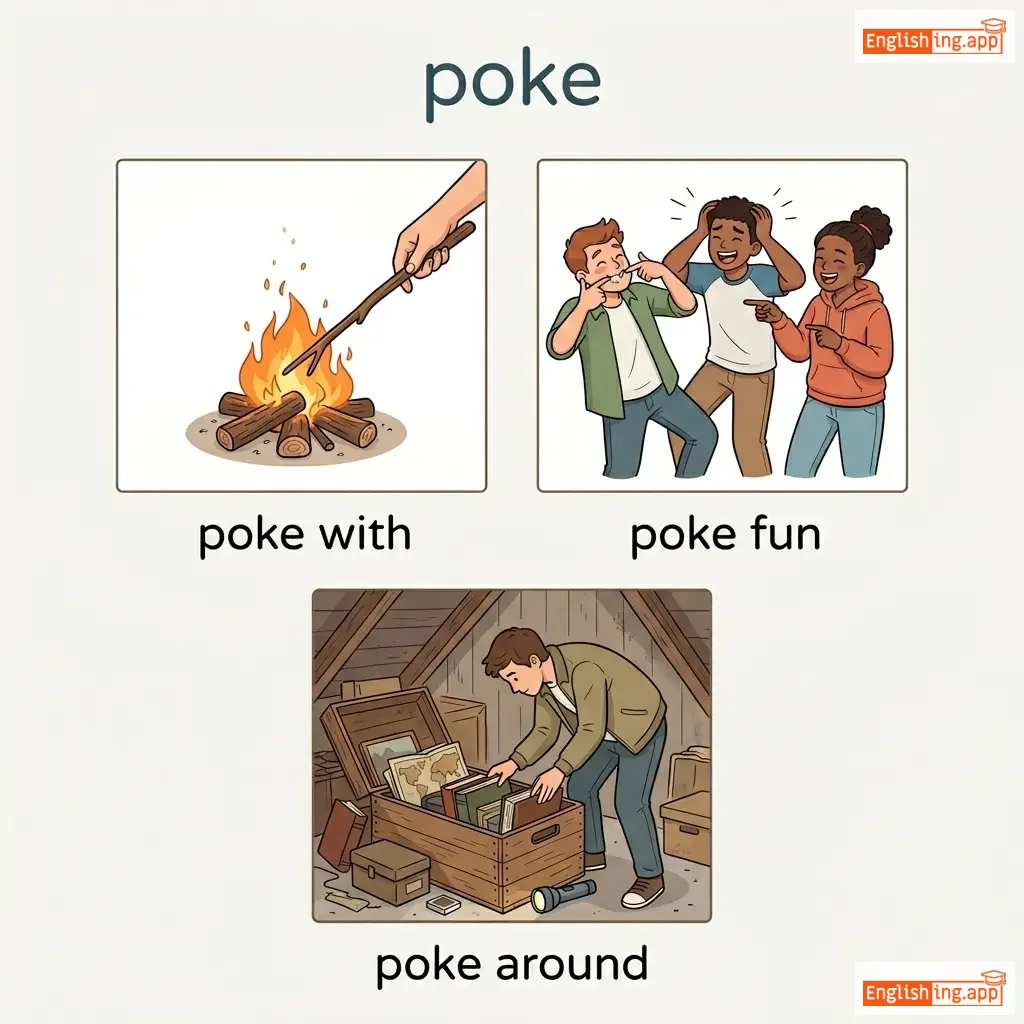
poke with, poke fun, poke around, poke into
••••••
|
波克,像戳,记住!
••••••
|
|
⚪
••••••
|
/poʊl/
noun
(póu'ěr)
••••••
|
- •••••• |
杆
gan
••••••
|
- •••••• | - •••••• | - •••••• | - •••••• |
a long, slender, vertical object or structure, typically made of wood, metal, or another material
••••••
|
They placed the flag on top of the pole. |
他们把旗帜放在杆顶上。
Tāmen bǎ qízhì fàng zài gǎn dǐng shàng.
••••••
|
- •••••• | - •••••• | - •••••• |
post, column, mast, stake
••••••
|
base, ground
••••••
|
flag pole, telephone pole, light pole
••••••
|
记住杆,旗帜在那里飘扬!
••••••
|
|
📸
••••••
|
/poʊz/
verb
(happiness)
••••••
|
- •••••• |
幸福
xìng fú
••••••
|
posed
••••••
|
posed
••••••
|
poses
••••••
|
posing
••••••
|
To assume a particular position, especially for a photograph or display; to present a problem or question.
••••••
|
She posed for a picture in front of the monument. |
她在收到奖项时,无法隐藏她的幸福。
Tā zài shōu dào jiǎngxiàng shí, wúfǎ yǐncáng tā de xìngfú.
••••••
|
pose a threat |
To present a danger or risk.
••••••
|
追求幸福
zhuī qiú xìng fú
••••••
|
position, posture, present, represent, display
••••••
|
ignore, neglect
••••••
|
pose a question, pose a threat, pose for photos
••••••
|
幸福是每个人一生中的追求。
••••••
|
|
🦁
••••••
|
/preɪ/
noun/verb
••••••
|
- •••••• | - •••••• |
preyed
••••••
|
preyed
••••••
|
preys
••••••
|
preying
••••••
|
an animal hunted by another for food; to hunt and feed on
••••••
|
Lions prey on zebras in the wild. |
- •••••• |
fall prey to |
to become a victim of
••••••
|
- •••••• |
victim, quarry, target, hunt
••••••
|
predator, attacker
••••••
|
fall prey, prey upon, easy prey, natural prey
••••••
|
No •••••• |
|
💧
••••••
|
/pʌmp/
verb
(pāngpǔ)
••••••
|
- •••••• |
抽水
chōushuǐ
••••••
|
pumped
pāngpǔd
••••••
|
pumped
pāngpǔd
••••••
|
pumps
pāngpǔs
••••••
|
pumping
pāngpǔing
••••••
|
to force liquid or gas to move in a particular direction using a device
••••••
|
They pumped water from the well into the tank.
他们把水从井里抽到水箱里。
••••••
|
他们把水从井里抽到水箱里。
Tāmen bǎ shuǐ cóng jǐng lǐ chōu dào shuǐxiāng lǐ.
••••••
|
pump up
pump up
••••••
|
to fill with air or excitement
••••••
|
充气
chōngqì
••••••
|
siphon, extract, draw, force, inflate
••••••
|
drain, empty
••••••
|
pump water, pump air, pump fuel, pump up
••••••
|
像抽水一样抽出能量,‘pump up’充满气氛!
••••••
|
|
🎸
••••••
|
/pʌŋk/
noun
(pāng kè)
••••••
|
- •••••• |
朋克
pēngkè
••••••
|
- •••••• | - •••••• | - •••••• | - •••••• |
a type of popular music, or the culture associated with it, characterized by loud, fast rhythms and rebellious attitudes
••••••
|
He’s always been into punk music and fashion.
他一直对朋克音乐和时尚感兴趣。
••••••
|
他一直对朋克音乐和时尚感兴趣。
Tā yīzhí duì pēngkè yīnyuè hé shíshàng gǎn xìngqù.
••••••
|
- •••••• | - •••••• | - •••••• |
rock, alternative, rebellious, anti-establishment
••••••
|
pop, classical, mainstream
••••••
|
punk rock, punk culture, punk music, punk fashion
••••••
|
朋克是反叛的音乐,听它就像是宣告自己也要叛逆!
••••••
|
|
🧺
••••••
|
/ræk/
noun
(rāk)
••••••
|
- •••••• |
架子
jiazi
••••••
|
- •••••• | - •••••• | - •••••• | - •••••• |
a frame or stand used to hold or store things
••••••
|
She placed her wet clothes on the drying rack. |
她把湿衣服放在晾衣架上。
Tā bǎ shī yīfú fàng zài liàng yī jià shàng.
••••••
|
off the rack |
ready-made and not custom tailored
••••••
|
现成衣服
xiàn chéng yī fú
••••••
|
shelf, stand, frame, holder, hanger
••••••
|
pile, heap
••••••
|
clothes rack, shoe rack, luggage rack, magazine rack
••••••
|
架子放置所有物品,rack就是用来挂衣服的架子。
••••••
|
|
⚔️
••••••
|
/reɪd/
verb
(reid)
••••••
|
|
突袭
tuxi
••••••
|
raided
reided
••••••
|
raided
reided
••••••
|
raids
reidz
••••••
|
raiding
reiding
••••••
|
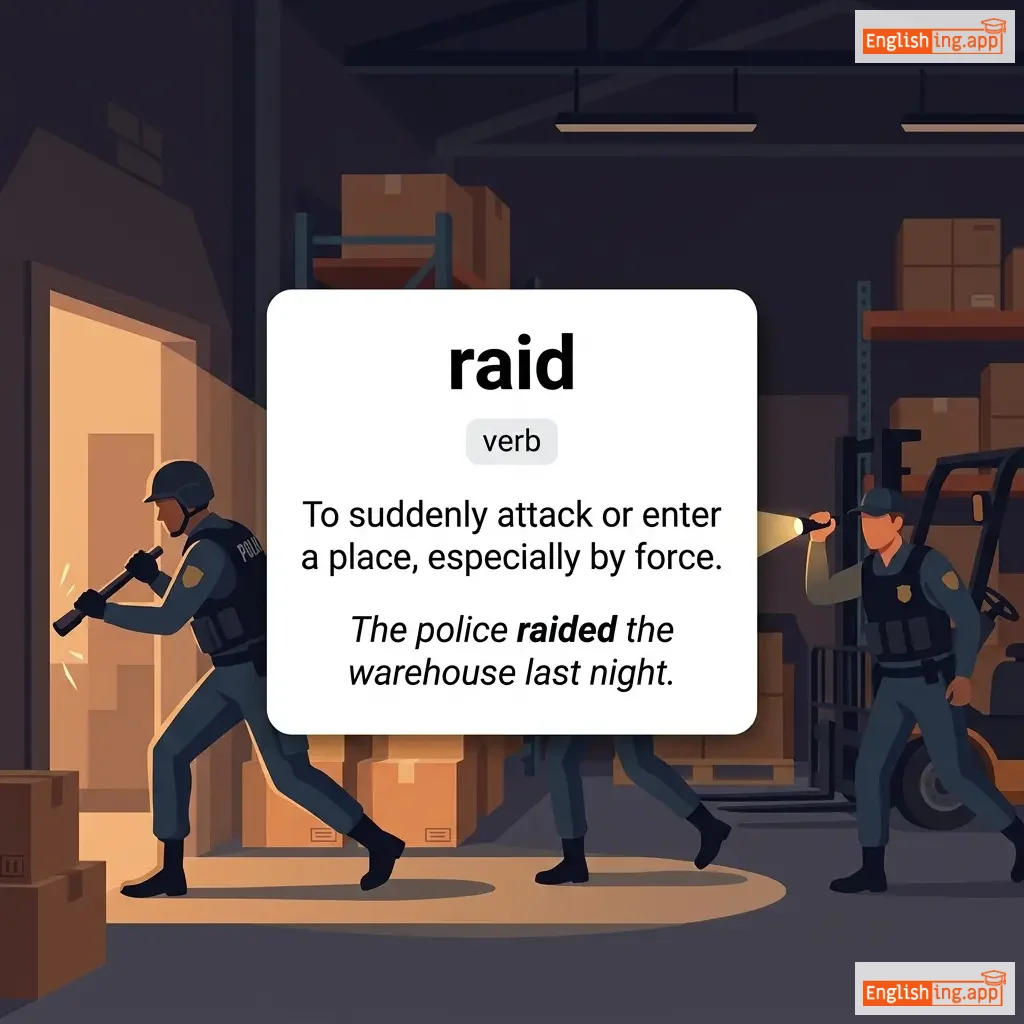
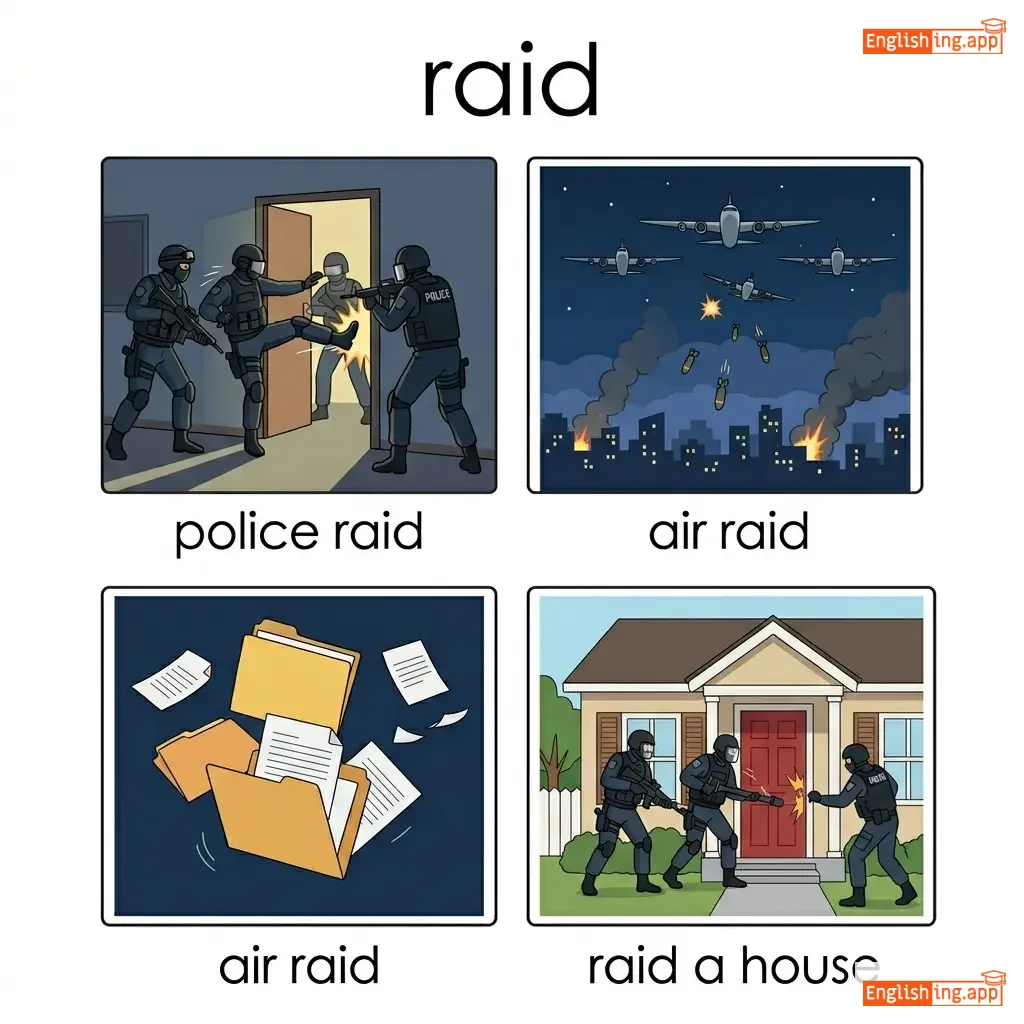
To suddenly attack or enter a place, especially by force.
••••••
|
The police raided the warehouse last night.
警方昨晚突袭了仓库。
••••••
|
警方昨晚突袭了仓库。
Jingfang zuowan tuxi le cangku.
••••••
|
air raid
空袭
••••••
|
A military attack by aircraft.
••••••
|
空袭
kongxi
••••••
|
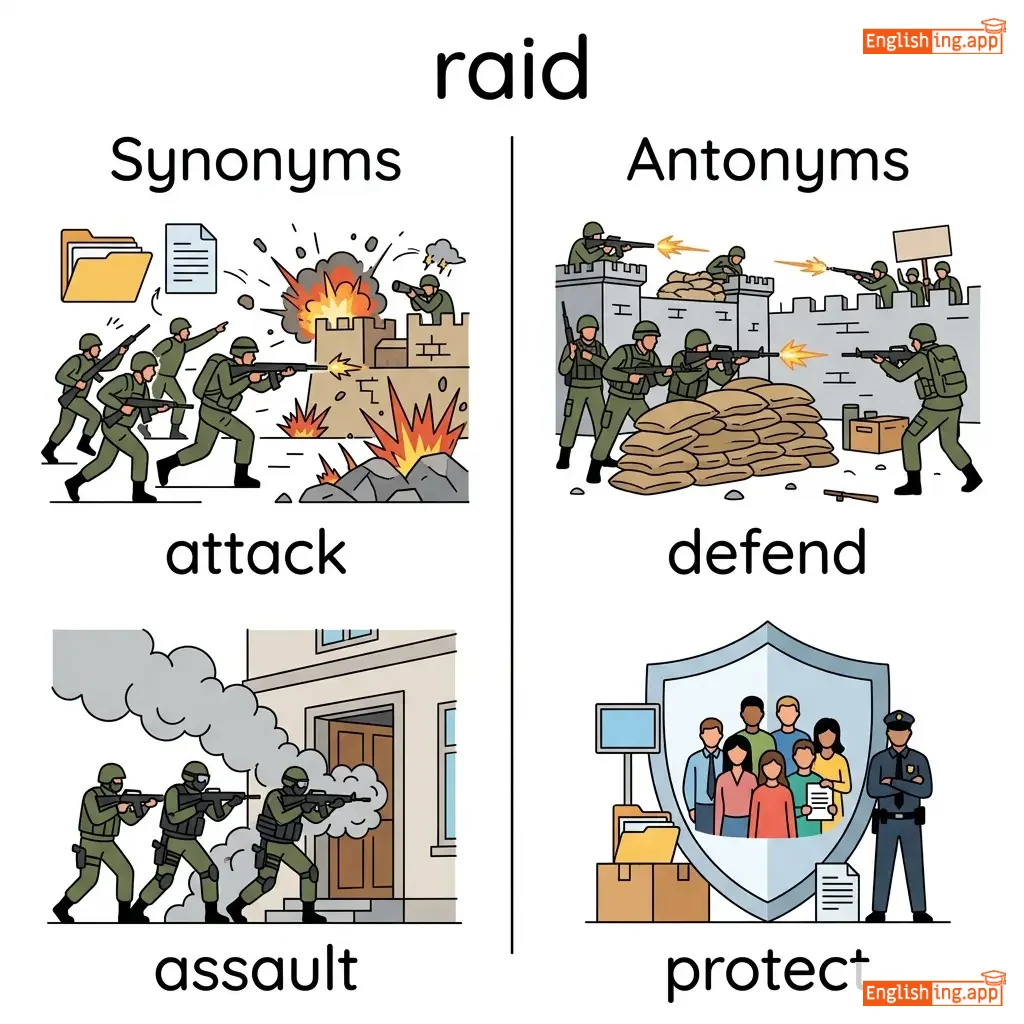
attack, assault, invasion, ambush
••••••
|
defend, protect
••••••
|
police raid, air raid, raid a house
••••••
|
Raid 是指突然袭击,通常是夜间进行的。
••••••
|
|
🐈
••••••
|
/rɪər/
noun, verb
(里尔)
••••••
|
- •••••• |
后面 / 抚养
hòu miàn / fǔ yǎng
••••••
|
reared
里尔德
••••••
|
reared
里尔德
••••••
|
rears
里尔斯
••••••
|
rearing
里尔英
••••••
|
the back part of something; to bring up or raise children or animals
••••••
|
The mother cat reared her kittens in a quiet corner.
母猫在安静的角落里抚养她的猫仔。
••••••
|
母猫在安静的角落里抚养她的猫仔。
Mǔ māo zài ān jìng de jiǎo luò lǐ fǔ yǎng tā de māo zǎi.
••••••
|
bring up the rear
带领后面
••••••
|
to be at the back of a group moving forward
••••••
|
走在最后
zǒu zài zuì hòu
••••••
|
back, behind, raise, nurture, lift
••••••
|
front, lower, neglect
••••••
|
rear view, rear door, rear seat, rear window, rear end
••••••
|
Rear表示在后面,就像猫妈妈rear她的猫仔。
••••••
|
|
🔔
••••••
|
/rɪŋ/
verb
(铃)
••••••
|
|
铃声
língshēng
••••••
|
rang
响
••••••
|
rung
响
••••••
|
rings
铃声
••••••
|
ringing
铃响
••••••
|
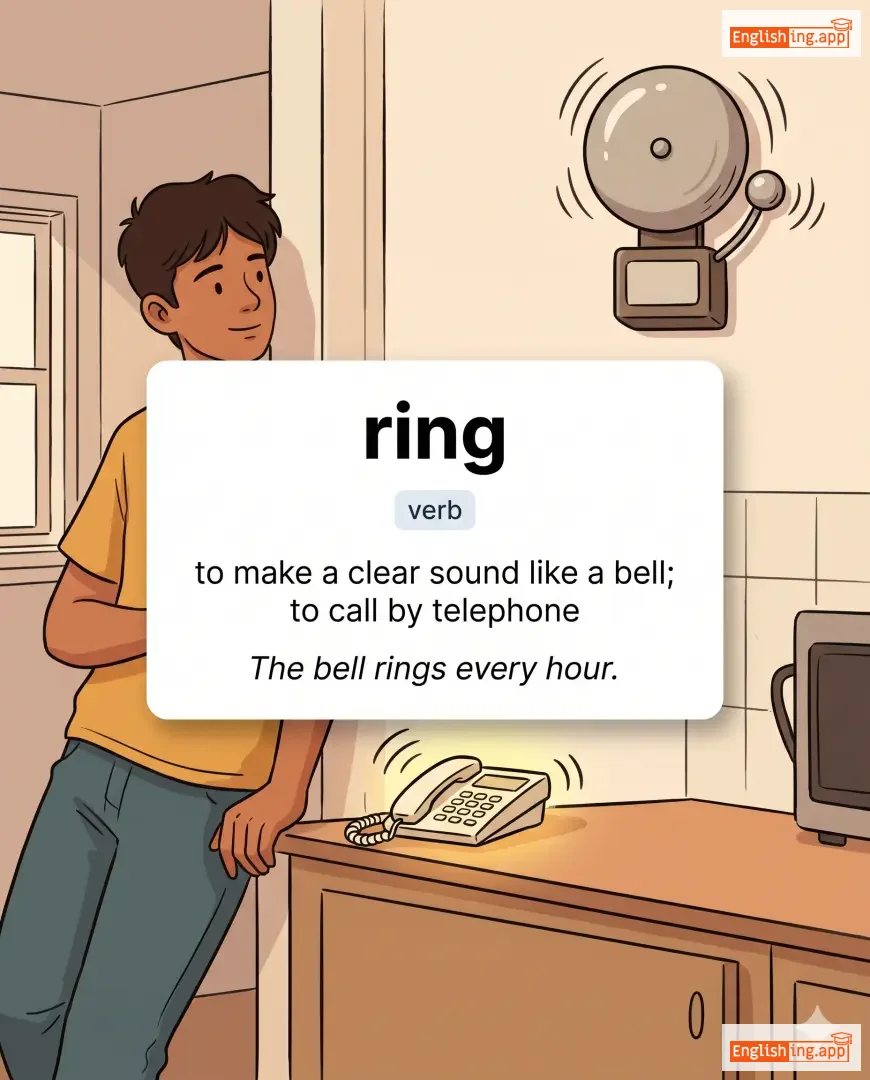
to make a clear sound like a bell; to call by telephone
••••••
|
The bell rings every hour.
钟每小时响。
••••••
|
钟每小时响。
Zhōng měi xiǎoshí xiǎng.
••••••
|
- •••••• | - •••••• | - •••••• |
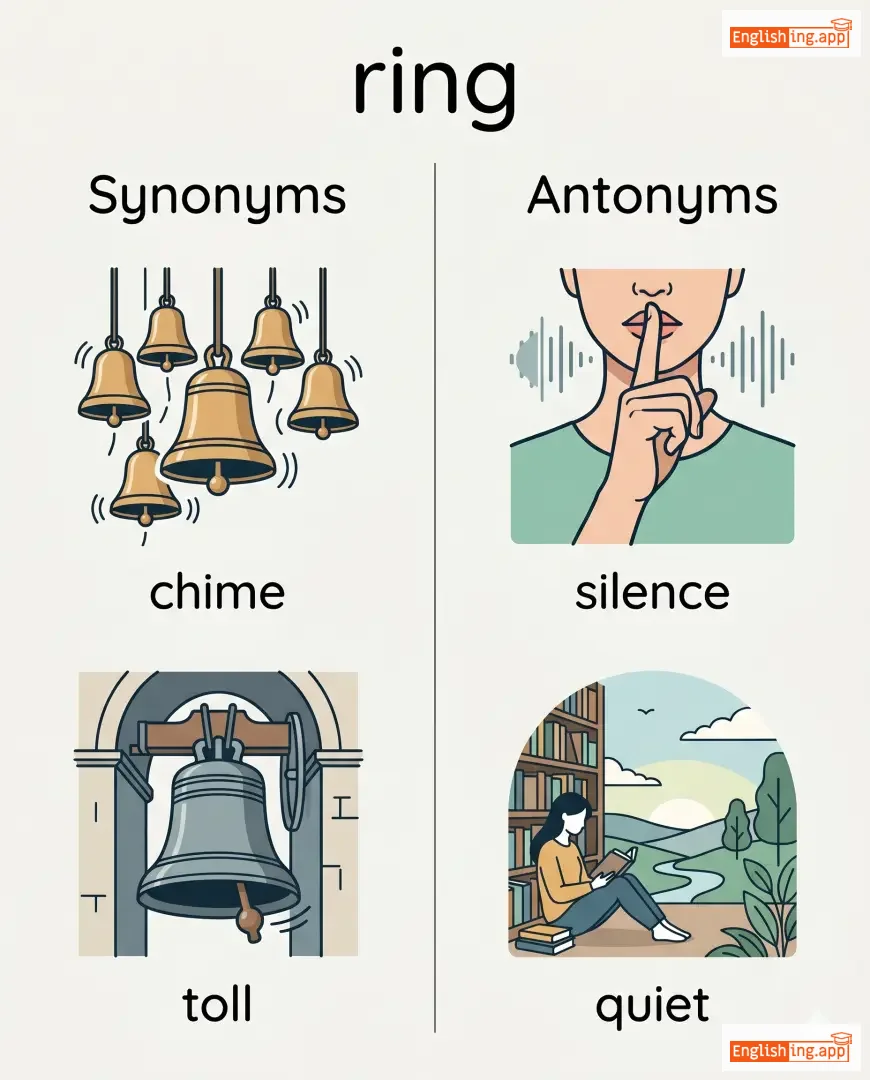
chime, toll, call, sound
••••••
|
silence, quiet, mute
••••••
|
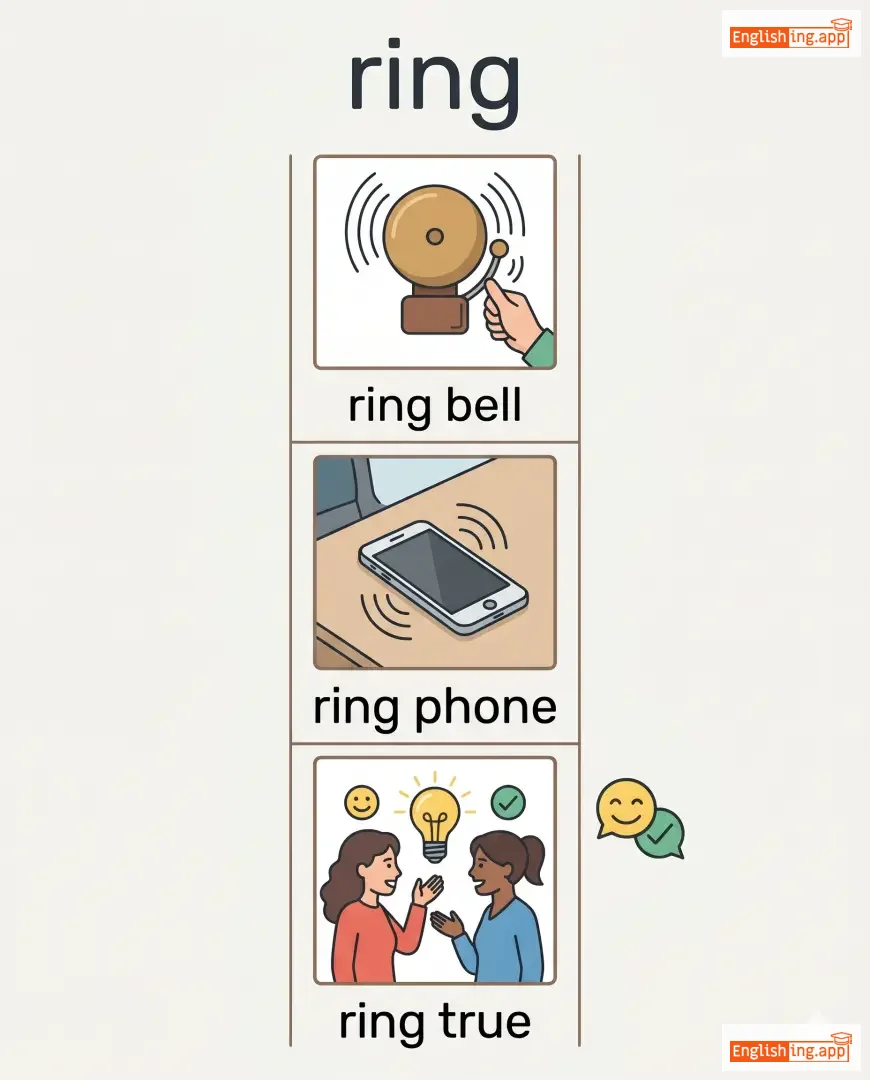
ring bell, ring phone, ring true, engagement ring
••••••
|
Think of a bell '铃声' ringing every hour.
••••••
|
|
🔥
••••••
|
/ˈraɪət/
noun
(rài-è)
••••••
|
- •••••• |
骚乱
saoluan
••••••
|
- •••••• | - •••••• | - •••••• | - •••••• |
a violent disturbance by a crowd
••••••
|
The protest turned into a violent riot. |
抗议变成了暴力骚乱。
Kangyi biàn chéngle bàolì saoluan.
••••••
|
run riot |
to act without control or restraint
••••••
|
失控
shikong
••••••
|
uproar, disturbance, revolt, chaos, uprising
••••••
|
peace, order
••••••
|
violent riot, riot police, start a riot, riot broke out
••••••
|
Riot 是失控的开始 - 当骚乱爆发时,社会陷入混乱。
••••••
|
|
🪨
••••••
|
/rɒk/
noun
(luòkè)
••••••
|
- •••••• |
岩石
yanshi
••••••
|
- •••••• | - •••••• | - •••••• | - •••••• |
a large, solid piece of mineral matter
••••••
|
The mountain was made of solid rock. |
这座山是由坚固的岩石组成的。
Zhe zuo shan shi you jian gu de yan shi zu cheng de.
••••••
|
- •••••• | - •••••• | - •••••• |
stone, boulder, pebble, cliff
••••••
|
sand, soil
••••••
|
rock formation, hard rock, rock face, climb a rock
••••••
|
岩石在山中随处可见 (Yanshi zai shan zhong sui chu ke jian) - Rocks are found everywhere in the mountains.
••••••
|
|
⚽
••••••
|
/roʊl/
verb
(滚)
••••••
|
- •••••• |
滚动
gundong
••••••
|
rolled
滚动
••••••
|
rolled
滚动
••••••
|
rolls
滚动
••••••
|
rolling
滚动
••••••
|
to move by turning over and over on an axis
••••••
|
She rolled the ball down the hill.
她把球滚下了山坡。
••••••
|
她把球滚下了山坡。
Ta ba qiu gun xia le shanpo.
••••••
|
- •••••• | - •••••• | - •••••• |
turn, spin, twist, rotate
••••••
|
stop, stand still
••••••
|
roll over, roll out, roll up
••••••
|
当球从山坡滚下来时,记住'roll'在中文中的意思是'滚动'。
••••••
|
|
💔
••••••
|
/ˈruːɪn/
verb
(ruīn)
••••••
|
- •••••• |
毁坏
huǐ huài
••••••
|
ruined
ruìnd
••••••
|
ruined
ruìnd
••••••
|
ruins
ruīns
••••••
|
ruining
ruīníng
••••••
|
to destroy or severely damage something so that it no longer works or is of no use.
••••••
|
Heavy rain ruined the wedding decorations.
暴雨毁坏了婚礼装饰。
••••••
|
暴雨毁坏了婚礼装饰。
Bàoyǔ huǐhuài le hūnlǐ zhuāngshì.
••••••
|
go to ruin
走向毁灭
••••••
|
to deteriorate or be destroyed over time
••••••
|
走向毁灭
zǒu xiàng huǐ miè
••••••
|
destroy, wreck, spoil, devastate, damage
••••••
|
build, repair, restore
••••••
|
ruin plans, ruin life, ruin relationship, ruin reputation
••••••
|
记住,任何事物没有照顾会被毁坏,变成废墟。
••••••
|
|
🏃
••••••
|
/rʌʃ/
verb
(rash)
••••••
|
- •••••• |
匆忙
cōngmáng
••••••
|
rushed
rasht
••••••
|
rushed
rasht
••••••
|
rushes
rashes
••••••
|
rushing
rushing
••••••
|
to move or act with great speed or urgency
••••••
|
She had to rush to the meeting to make it on time.
她必须赶紧去会议才能准时到达。
••••••
|
她必须赶紧去会议才能准时到达。
Tā bìxū gǎnjǐn qù huìyì cáinéng zhǔnshí dào dá.
••••••
|
rush hour
高峰时段
••••••
|
the time when traffic is heaviest, usually when people are going to or leaving work
••••••
|
高峰时段
gāofēng shíduàn
••••••
|
hurry, race, speed, accelerate
••••••
|
slow down, delay, dawdle
••••••
|
rush to, rush in, rush hour, rush through
••••••
|
不要匆忙,高峰时段来了!- Don’t rush, rush hour is coming!
••••••
|
|
📦
••••••
|
/sæk/
verb
(sākè)
••••••
|
- •••••• |
解雇
jiěgù
••••••
|
sacked
sākèd
••••••
|
sacked
sākèd
••••••
|
sacks
sākè sī
••••••
|
sacking
sākèng
••••••
|
to dismiss from a job; to put something in a sack
••••••
|
The company sacked him for poor performance.
公司因为表现不佳解雇了他。
••••••
|
公司因为表现不佳解雇了他。
Gōngsī yīnwèi biǎoxiàn bù jiā jiěgù le tā.
••••••
|
- •••••• | - •••••• | - •••••• |
fire, dismiss, discharge, terminate
••••••
|
hire, employ, recruit, appoint
••••••
|
sack employee, get the sack, sack someone, sack goods
••••••
|
Sack = 被解雇,或者把东西放进袋子里。
••••••
|

