Reclaiming the Riverside Asylum
这座老河畔建筑曾经是一所精神健康asylum。 乔娅想把它改造成一个为受伤animals提供救援与治疗的中心。 她说:“我们拒绝再关注这种absurd的恐惧。” 村里的孩子们被英国志愿者安娜温柔的accent所吸引。 有些人仍然allege前任管理者存在腐败,但没有任何记录证明。 在会议上,大家举起绿色的banner宣誓。 由于建筑位于城市border附近,安全问题也被提及。 当地的bishop说:“在这里建立新的庇护所是一种信仰的行为。” 乔娅宣布:“这个地方属于社区;我们的梦想belong于此。” 这时一位富有的banker建议把这里改造成豪华casino。 乔娅立刻宣布,将通过ballot投票箱决定未来。 她说:“我代表受伤的动物(behalf)请求大家投票。” 储藏室里,一支生锈的枪barrel仍让人想起战争年代。 工程师拉比布警告说:“结构中有许多breaches,所以必须先进行修复。” 长者们低声说,这里曾经发生过秘密burials。 乔娅说:“我们将用事实来cancel这些谣言。” 进入时,他们在破碎的台阶上铺上红色carpet以确保安全通道。 听到banker的提议后,人群愤怒地bounced回以抗议。 辩论结束后,大家分享点心,讲些casual的故事来缓和气氛。 夜幕降临前,乔娅再次在麦克风中说:“这所重建的asylum将成为充满慈悲的家园。”
|
表情符号
|
单词 | Images | 翻译 | 过去时 | 过去分词 | 第三人称单数 | 动名词 | 含义 | 例句 | 例句翻译 | 示例表达 | 示例表达含义 | 示例表达翻译 | 同义词 | 反义词 | 搭配词 | 助记符 |
|---|---|---|---|---|---|---|---|---|---|---|---|---|---|---|---|---|---|
|
🤡
••••••
|
/əbˈsɜːrd/
adjective
(荒谬)
••••••
|
- •••••• |
荒谬的, 不合理的
huangmiu de, bu heli de
••••••
|
- •••••• | - •••••• | - •••••• | - •••••• |
wildly unreasonable, illogical, or inappropriate
••••••
|
It is absurd to think that the earth is flat. |
认为地球是平的,这太荒谬了。
Renwei diqiu shi ping de, zhe tai huangmiu le.
••••••
|
theater of the absurd |
a style of drama emphasizing the absurdity of human existence
••••••
|
荒谬剧场
huangmiu juchang
••••••
|
ridiculous, foolish, nonsensical, ludicrous
••••••
|
reasonable, rational, logical
••••••
|
absurd idea, utterly absurd, completely absurd
••••••
|
Absurd 听起来像‘荒谬’ - 完全不合理!
••••••
|
|
🗣️
••••••
|
/ˈæksɛnt/
noun
(áksènt)
••••••
|
- •••••• |
口音
kǒuyīn
••••••
|
- •••••• | - •••••• | - •••••• | - •••••• |
a distinctive way of pronouncing a language, especially one associated with a particular country or region
••••••
|
She spoke English with a strong French accent.
她说英语时带着浓重的法语口音。
••••••
|
她说英语时带着浓重的法语口音。
Tā shuō yīngyǔ shí dàizhe nóngzhòng de fǎyǔ kǒuyīn.
••••••
|
foreign accent
外国语音
••••••
|
a way of speaking that shows the influence of another language
••••••
|
外国语音
wàiguó yǔyīn
••••••
|
intonation, pronunciation, tone, inflection
••••••
|
monotone, uniformity
••••••
|
strong accent, foreign accent, regional accent, British accent
••••••
|
Accent 就是‘音’加‘分’,它是特定方式的发音!
••••••
|
|
🗣️
••••••
|
/əˈlɛdʒ/
verb
(alɛdʒ)
••••••
|
- •••••• |
声称
shēngchēng
••••••
|
alleged
alɛdʒd
••••••
|
alleged
alɛdʒd
••••••
|
alleges
alɛdʒəs
••••••
|
alleging
alɛdʒɪŋ
••••••
|
to claim or assert something, typically without proof
••••••
|
The witness alleged that the man was at the crime scene.
证人声称该男子在犯罪现场。
••••••
|
证人声称该男子在犯罪现场。
Zhèngrén shēngchēng gāi nánzǐ zài fànzuì xiànchǎng.
••••••
|
alleged crime
指控的罪行
••••••
|
a crime that is claimed to have happened but not yet proven
••••••
|
指控的罪行
zhǐkòng de zuìxíng
••••••
|
claim, assert, contend, accuse, state
••••••
|
deny, refute, reject
••••••
|
allege wrongdoing, allegedly involved, alleged crime, allege misconduct
••••••
|
Allege 意味着声称(声称在中文中)
••••••
|
|
🐅
••••••
|
/ˈænɪməl/
noun
(动物)
••••••
|
- •••••• |
动物
dongwu
••••••
|
- •••••• | - •••••• | - •••••• | - •••••• |
a living organism that feeds on organic matter and usually has senses and mobility
••••••
|
The tiger is a wild animal. |
老虎是一种野生动物。
lǎohǔ shì yī zhǒng yěshēng dòngwù.
••••••
|
party animal |
someone who enjoys going to parties a lot
••••••
|
派对动物
pàiduì dòngwù
••••••
|
creature, beast, living being, organism
••••••
|
plant, human
••••••
|
wild animal, domestic animal, animal rights, animal kingdom
••••••
|
Animal 意思是动物—动物园里有很多动物 🐅
••••••
|
|
🏥
••••••
|
/əˈsaɪləm/
noun
(庇护所)
••••••
|
|
庇护所
bìhùsuǒ
••••••
|
- •••••• | - •••••• | - •••••• | - •••••• |
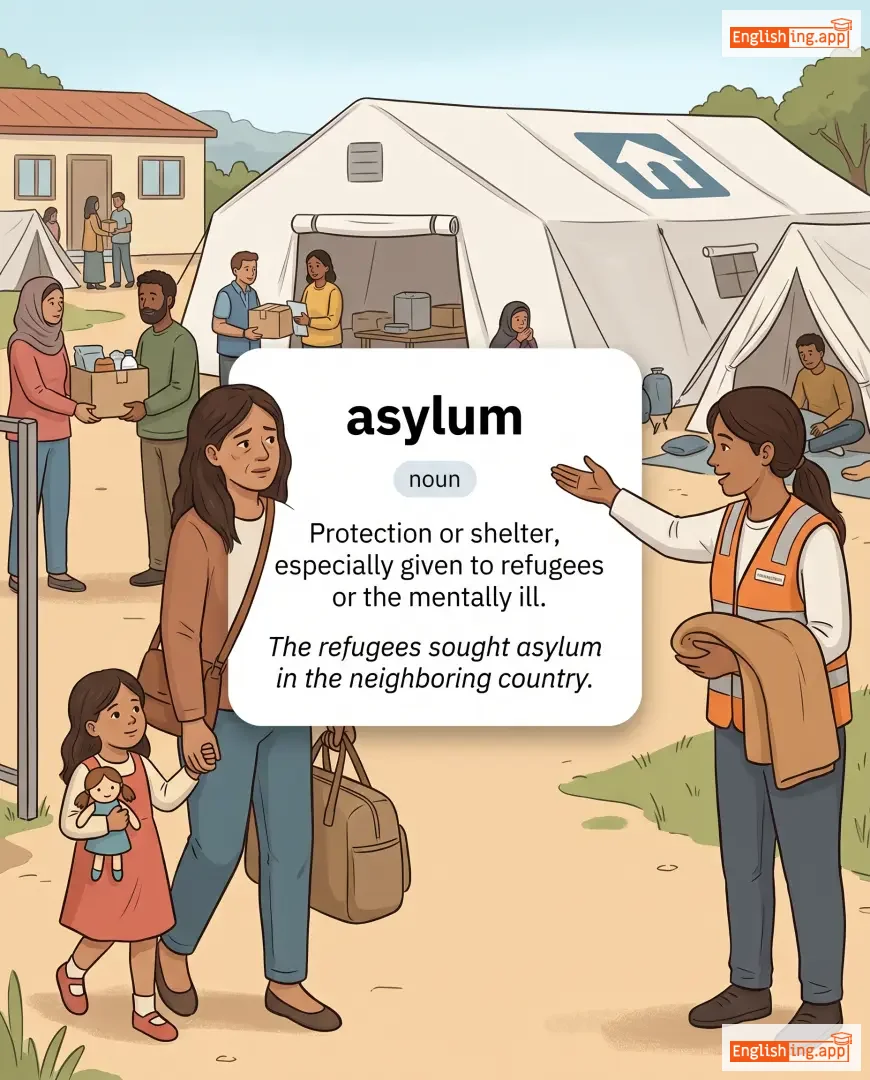
Protection or shelter, especially given to refugees or the mentally ill.
••••••
|
The refugees sought asylum in the neighboring country.
难民在邻国寻求庇护。
••••••
|
难民在邻国寻求庇护。
Nànmín zài lín guó xúnqiú bìhù.
••••••
|
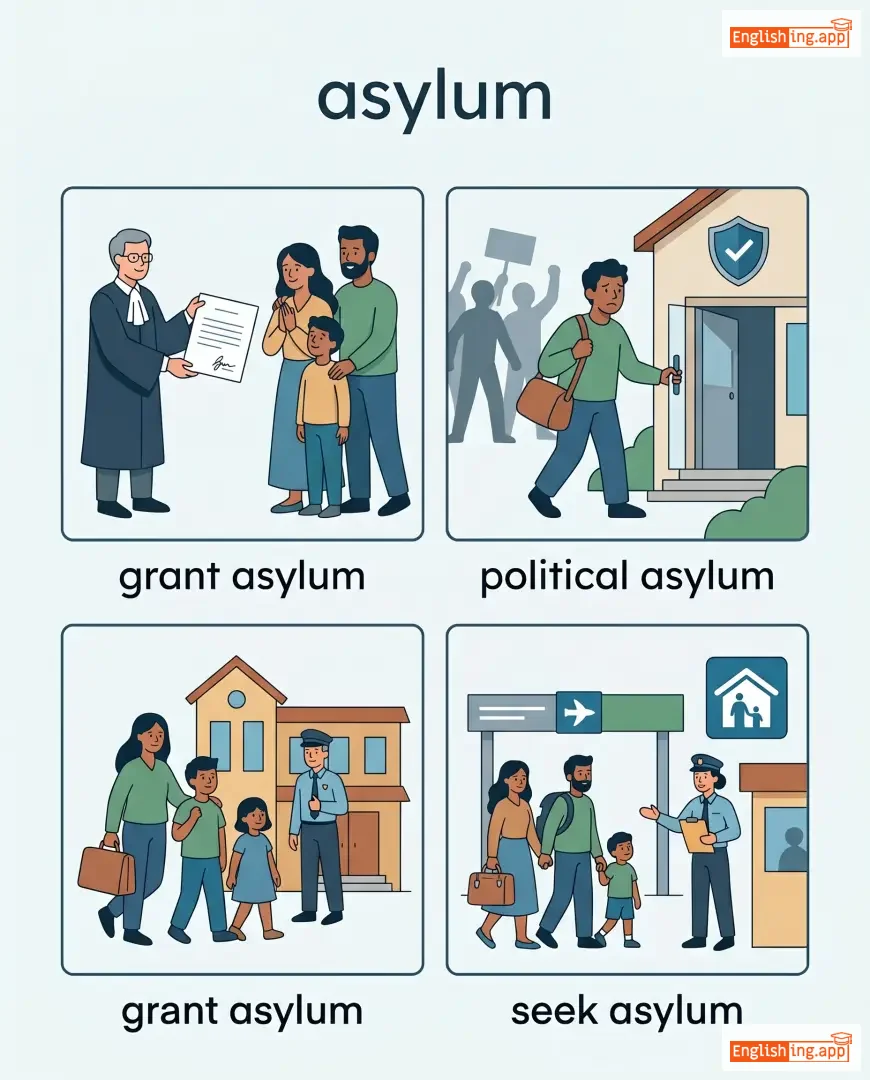
seek asylum
寻求庇护
••••••
|
To formally request protection in another country.
••••••
|
寻求庇护
xúnqiú bìhù
••••••
|
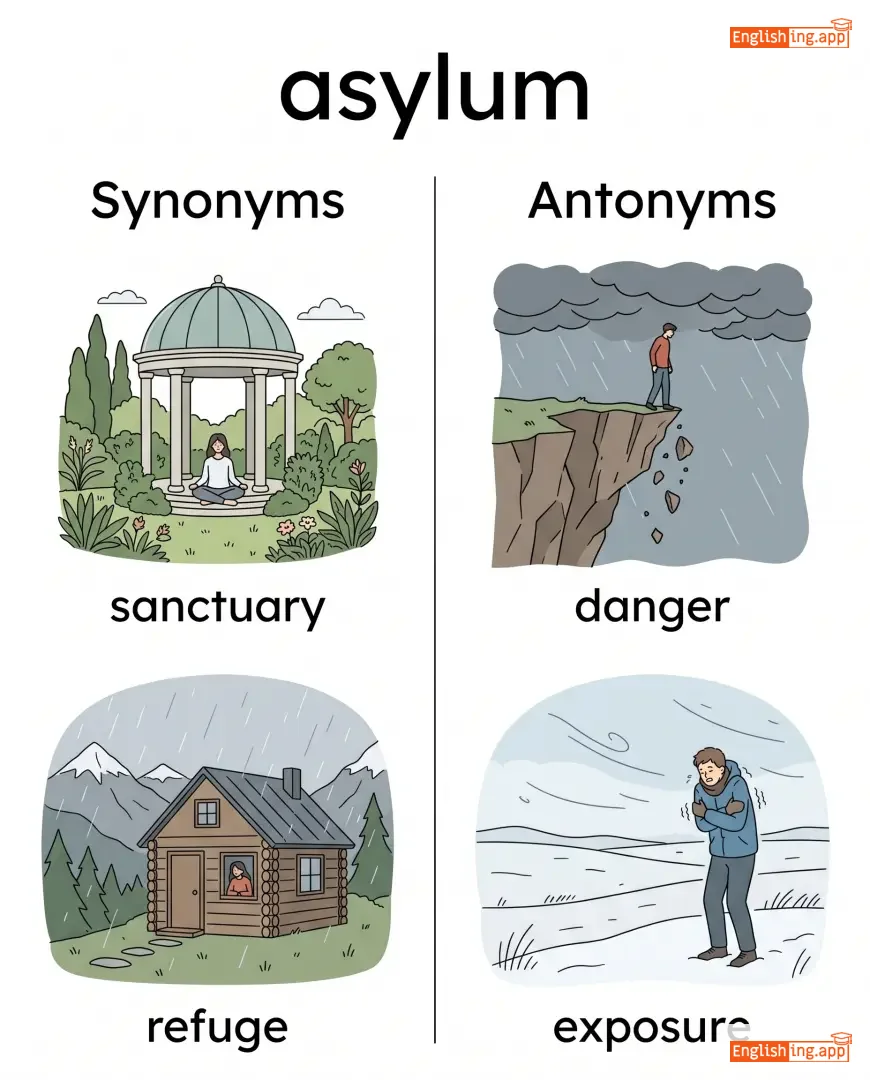
sanctuary, refuge, shelter, haven, protection
••••••
|
danger, exposure, threat
••••••
|
grant asylum, political asylum, seek asylum, asylum seeker
••••••
|
庇护所意味着一个为需要保护的人提供安全的地方。
••••••
|
|
🗳️
••••••
|
/ˈbælət/
noun
(巴洛特)
••••••
|
- •••••• |
选票
xuan piao
••••••
|
- •••••• | - •••••• | - •••••• | - •••••• |
a process of voting, usually in secret; the paper used to record a vote
••••••
|
Voters cast their ballot in the election.
沃特斯 卡斯特 赛尔 巴洛特 英 得 选举。
••••••
|
选民在选举中投下了选票。
xuan min zai xuan ju zhong tou xia le xuan piao.
••••••
|
cast a ballot
卡斯特 啊 巴洛特
••••••
|
to vote in an election
••••••
|
投票
tou piao
••••••
|
vote, poll, referendum, choice
••••••
|
abstention, refusal
••••••
|
secret ballot, ballot box, ballot paper, cast ballot
••••••
|
Ballot像'巴洛特',可是中文里用选票来投票。
••••••
|
|
💼
••••••
|
/ˈbæŋkər/
noun
(bànkè)
••••••
|
- •••••• |
银行家
yínhángjiā
••••••
|
- •••••• | - •••••• | - •••••• | - •••••• |
a person who works in or manages a bank
••••••
|
The banker approved the loan after reviewing the documents. |
银行家在审查文件后批准了贷款。
Yínhángjiā zài shěnchá wénjiàn hòu pīzhǔnle dàikuǎn.
••••••
|
- •••••• | - •••••• | - •••••• |
financier, investor, lender, executive, manager
••••••
|
borrower, debtor
••••••
|
senior banker, investment banker, central banker, private banker
••••••
|
银行家意味着管理钱财的人 — 放款并处理账目的人。
••••••
|
|
🖼️
••••••
|
/ˈbænər/
noun
••••••
|
- •••••• | - •••••• | - •••••• | - •••••• | - •••••• | - •••••• |
a large printed sign used for advertisements or announcements
••••••
|
The company displayed a banner to advertise their new product. |
- •••••• | - •••••• | - •••••• | - •••••• |
sign, placard, poster, billboard
••••••
|
hidden, covered, concealed
••••••
|
display a banner, raise a banner, banner ad, large banner
••••••
|
No •••••• |
|
🛢️
••••••
|
/ˈbærəl/
noun
(贝瑞尔)
••••••
|
- •••••• |
大桶
da tong
••••••
|
- •••••• | - •••••• | - •••••• | - •••••• |
a large cylindrical container used to hold liquids
••••••
|
The wine was stored in a wooden barrel. |
酒被储存在一个木制的大桶中。
Jiu bei chu cun zai yi ge mu zhi de da tong zhong.
••••••
|
over a barrel |
in a helpless or difficult situation
••••••
|
在困难的情况下
zai kunnan de qingkuang xia
••••••
|
cask, drum, keg, container
••••••
|
bottle, flask
••••••
|
oil barrel, wooden barrel, barrel of wine, barrel full
••••••
|
Barrel 意思是大桶,想象一个木制的大桶装酒。
••••••
|
|
🤝
••••••
|
/bɪˈhɑːf/
noun
(bihaf)
••••••
|
- •••••• |
代表
dàibiǎo
••••••
|
- •••••• | - •••••• | - •••••• | - •••••• |
as a representative of someone; in the interest of someone
••••••
|
She accepted the award on behalf of her team. |
她代表她的团队接受了奖项。
Tā dàibiǎo tā de tuánduì jiēshòu le jiǎngxiàng.
••••••
|
on someone's behalf |
as a representative of someone else
••••••
|
代表某人
dàibiǎo mǒu rén
••••••
|
interest, support, representation, favor
••••••
|
against, opposition
••••••
|
on behalf of, in behalf of, behalf letter, behalf request
••••••
|
'Be half' 记住 — 你像某人的一半,代表他们的利益。
••••••
|
|
🏠
••••••
|
/bɪˈlɒŋ/
verb
(比朗)
••••••
|
- •••••• |
属于
shǔyú
••••••
|
belonged
比朗德
••••••
|
belonged
比朗德
••••••
|
belongs
比朗斯
••••••
|
belonging
比朗因
••••••
|
to be in the right place or to be a member of a group
••••••
|
She felt she truly belonged to the team.
她觉得她真的属于这个团队。
••••••
|
她觉得她真的属于这个团队。
Tā juédé tā zhēn de shǔyú zhège tuánduì.
••••••
|
belong to
属于
••••••
|
to be the property of someone or something
••••••
|
属于
shǔyú
••••••
|
fit, associate, connect, relate
••••••
|
exclude, detach, separate
••••••
|
belong to, feel belong, belong somewhere
••••••
|
Belong意味着‘属于’,就像你是某个团队的一部分。
••••••
|
|
⛪
••••••
|
/ˈbɪʃəp/
noun
(主教)
••••••
|
- •••••• |
主教
zhǔjiào
••••••
|
- •••••• | - •••••• | - •••••• | - •••••• |
a senior member of the Christian clergy, usually in charge of a diocese and empowered to confer holy orders.
••••••
|
The bishop delivered a powerful sermon during Sunday service. |
主教在星期天的礼拜中做了一个有力的布道。
Zhǔjiào zài xīngqītiān de lǐbài zhōng zuòle yīgè yǒulì de bùdào.
••••••
|
move diagonally like a bishop |
to act or move in a way that avoids direct confrontation, like the bishop piece in chess.
••••••
|
像主教一样对角移动
Xiàng zhǔjiào yīyàng duìjiǎo yídòng
••••••
|
clergyman, priest, pastor, archbishop, prelate
••••••
|
layman, civilian
••••••
|
Catholic bishop, Anglican bishop, bishop's palace, ordained bishop
••••••
|
主教是教会的领导者,记住,‘⛪ 主教带领祈祷’。
••••••
|
|
🛂
••••••
|
/ˈbɔːrdər/
noun, verb
(bó dé)
••••••
|
- •••••• |
边界
bianjie
••••••
|
bordered
bó dé dé
••••••
|
bordered
bó dé dé
••••••
|
borders
bó dé sī
••••••
|
bordering
bó dé líng
••••••
|
A line separating two political or geographical areas.
••••••
|
Bangladesh shares a long border with India.
孟加拉国与印度共享一条长边界。
••••••
|
孟加拉国与印度共享一条长边界。
Meng jiala guo yu Yindu gongxiang yi tiao chang bianjie.
••••••
|
border on
border on
••••••
|
To be very close to something.
••••••
|
接近于
jiejin yu
••••••
|
boundary, edge, frontier, limit, margin
••••••
|
center, core
••••••
|
cross the border, border area, border security, border control
••••••
|
Border 意味着边界 🛂 — 想象孟加拉国与印度的边界。
••••••
|
|
🏀
••••••
|
/baʊns/
verb
(bǎnsī)
••••••
|
- •••••• |
反弹
fǎntán
••••••
|
bounced
bǎnsī de
••••••
|
bounced
bǎnsī de
••••••
|
bounces
bǎnsī
••••••
|
bouncing
bǎnsī zhōng
••••••
|
to spring back after hitting something; to rebound.
••••••
|
The ball bounced off the wall and hit the window.
qiú tóu zài qiáng shàng bǎnsī, ránhòu dǎ dào chuānghù.
••••••
|
球投在墙上反弹,然后打到窗户。
qiú tóu zài qiáng shàng fǎntán, ránhòu dǎ dào chuānghù.
••••••
|
bounce back
huí chōng
••••••
|
to recover quickly from difficulties
••••••
|
迅速恢复
xùnsù huīfù
••••••
|
rebound, spring, ricochet, leap, jump
••••••
|
fall, drop, sink
••••••
|
bounce off, bounce back, bounce a ball, bounce ideas
••••••
|
Bounce就是反弹,像球碰到墙后反弹起来。
••••••
|
|
🚨
••••••
|
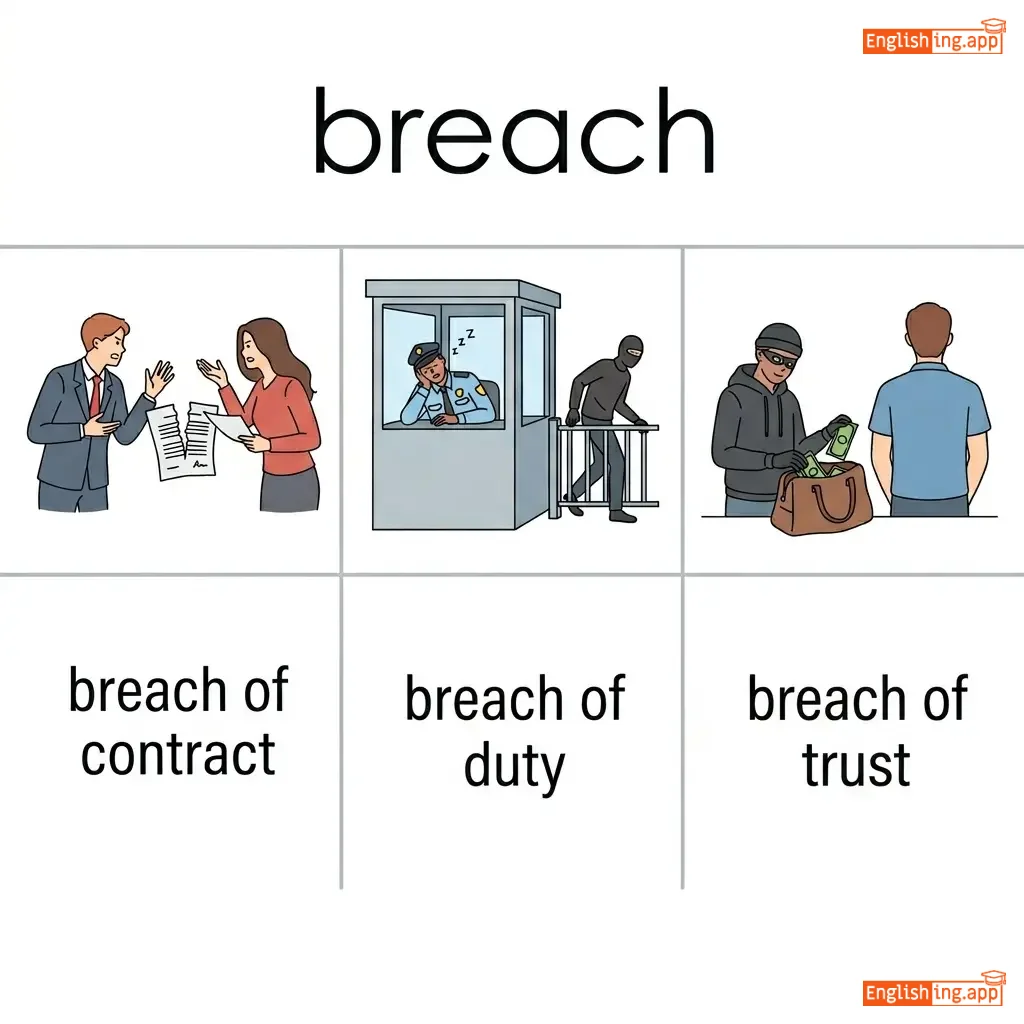
/briːtʃ/
noun, verb
(briːtʃ)
••••••
|

|
违反
wei fan
••••••
|
breached
briːtʃd
••••••
|
breached
briːtʃd
••••••
|
breaches
briːtʃes
••••••
|
breaching
briːtʃing
••••••
|
An act of breaking or failing to observe a law, agreement, or code of conduct; to break through.
••••••
|
The company was fined for a breach of contract.
公司因违反合同而被罚款。
••••••
|
公司因违反合同而被罚款。
Gongsi yin weifan hetong er bei fakuan.
••••••
|
breach of trust
信任破裂
••••••
|
A violation of confidence or duty.
••••••
|
信任破裂
xìn rèn pò liè
••••••
|
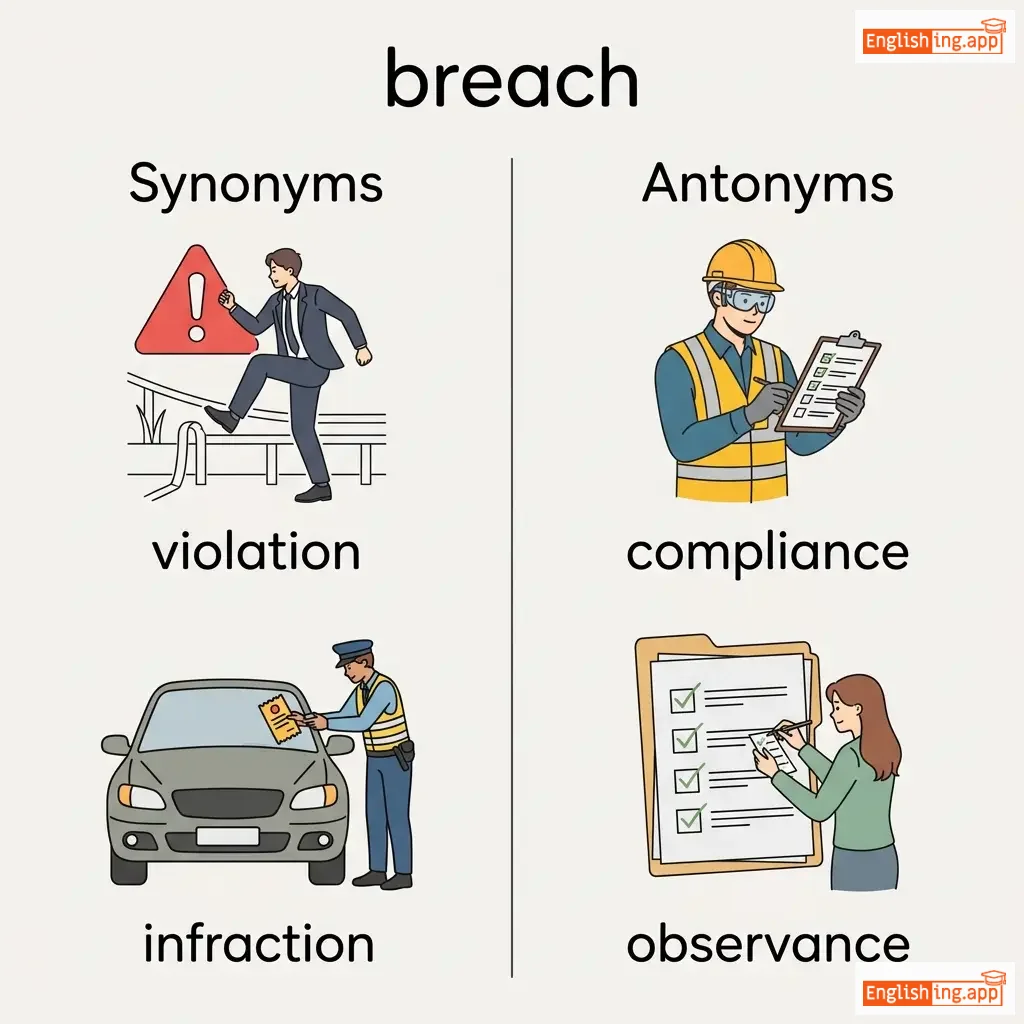
violation, infraction, contravention, infringement, rupture
••••••
|
compliance, observance, respect
••••••
|
breach of contract, breach of duty, breach of trust, security breach
••••••
|
Breach 就是违反 — 破坏合同或信任的行为。
••••••
|
|
⚰️
••••••
|
/ˈbɛriəl/
noun
(贝里尔)
••••••
|
- •••••• |
埋葬
maizang
••••••
|
- •••••• | - •••••• | - •••••• | - •••••• |
the act of placing a dead body into the ground.
••••••
|
The burial ceremony took place in the afternoon. |
埋葬仪式在下午举行。
Maizang yishi zai xiawu juxing.
••••••
|
- •••••• | - •••••• | - •••••• |
interment, entombment, inhumation
••••••
|
exhumation, resurrection
••••••
|
burial site, burial ground, burial ceremony
••••••
|
Think of 'maizang' as 'burying' the body in the ground.
••••••
|
|
❌
••••••
|
/ˈkænsəl/
verb
(kānsè ěr)
••••••
|
- •••••• |
取消
qǔxiāo
••••••
|
canceled
kānsè ěr dé
••••••
|
canceled
kānsè ěr dé
••••••
|
cancels
kānsè ěr sī
••••••
|
canceling
kānsè ěr lìng
••••••
|
to decide that something planned will not take place
••••••
|
The flight was canceled due to heavy rain.
航班因大雨被取消。
••••••
|
航班因大雨被取消。
Hángbān yīn dàyǔ bèi qǔxiāo.
••••••
|
cancel out
取消
••••••
|
to remove the effect of one thing by another
••••••
|
取消
qǔxiāo
••••••
|
call off, revoke, abolish, terminate, nullify
••••••
|
approve, continue, confirm
••••••
|
cancel order, cancel meeting, cancel subscription, cancel flight
••••••
|
取消就像删除 — 电影票不能看了!
••••••
|
|
🧶
••••••
|
/ˈkɑːrpɪt/
noun
(kaːrpɛt)
••••••
|
- •••••• |
地毯
ditan
••••••
|
- •••••• | - •••••• | - •••••• | - •••••• |
a thick woven floor covering
••••••
|
They bought a red carpet for the living room. |
他们为客厅买了一个红地毯。
Tāmen wèi kètīng mǎi le yīgè hóng dìtǎn.
••••••
|
roll out the red carpet |
to give someone very special treatment
••••••
|
给予特殊待遇
jǐyǔ tèshū dàiyù
••••••
|
rug, mat, floorcloth, covering
••••••
|
bare floor, tiles
••••••
|
red carpet, carpet cleaner, carpet shop, wall-to-wall carpet
••••••
|
Carpet 就是 car 的 pet — 车底下有地毯!
••••••
|
|
🎰
••••••
|
/kəˈsiːnoʊ/
noun
(凯瑟诺)
••••••
|
- •••••• |
赌场
duchang
••••••
|
- •••••• | - •••••• | - •••••• | - •••••• |
a place where people gamble and play games of chance
••••••
|
They spent the evening playing cards at the casino. |
他们在赌场度过了晚上,玩扑克牌。
Tamen zai duchang duguo le wanshang, wan pūkèpái.
••••••
|
- •••••• | - •••••• | - •••••• |
gambling house, gaming hall, club, betting place
••••••
|
temple, church
••••••
|
casino game, casino table, casino resort, online casino
••••••
|
赌场 - 一个赌运气的地方,来玩玩看吧!
••••••
|
|
👕
••••••
|
/ˈkæʒuəl/
adjective
(kā zhú'ěr)
••••••
|
- •••••• |
休闲的
xiūxián de
••••••
|
- •••••• | - •••••• | - •••••• | - •••••• |
Relaxed and informal in style, manner, or appearance.
••••••
|
He wore casual clothes to the informal gathering.
他穿着休闲的衣服参加了非正式的聚会。
••••••
|
他穿着休闲的衣服参加了非正式的聚会。
Tā chuānzhuó xiūxián de yīfú cānjiāle fēizhèngshì de jùhuì.
••••••
|
casual acquaintance
偶然相识
••••••
|
A person you know but not very well.
••••••
|
偶然相识
ǒurán xiāngshí
••••••
|
informal, relaxed, easygoing, nonchalant, laid-back
••••••
|
formal, serious, strict
••••••
|
casual clothes, casual meeting, casual conversation, casual approach
••••••
|
休闲装扮代表轻松随意的风格
••••••
|

