Backyard Stage of Everyday Magic
在 Mymensingh,Lili apa,一位当地的 educator,为孩子们想出了不同的计划。查看学校的 calendar 后,她发现每个星期五的下午都是空闲的。于是她在自家的 backyard 搭建了一个小的表演 backdrop。她对孩子们说:“今天我们把我们的 artistic 梦想带到舞台上。”孩子们很快开始分组 assemble。她提醒他们要让每个场景保持 balanced,以免有人被冷落。为了让他们在排练前保持平静,她端上了加了蜂蜜的饮品 beverage。孩子们就新戏属于哪个 category 展开了热烈讨论。Tisha 低声说:“我们要保持 cautious,这样不会出差错。”在一个场景里,Farhan 必须以非常 dramatic 的方式扮演拯救村庄的英雄。 当他走上舞台时,Lili 提醒他要把角色的 behavior 保持温和。灯光非常 delicate,所以她小心地控制着开关。下一场之前,Cynthia 再次 described 整个故事,以免有人忘记。尽管演出的 duration 只有三十分钟,但大家都觉得时间飞逝。结束时,Lili 站在 entrance 旁热情地欢迎每一个孩子。邻居们——everyone——鼓掌并说道:“我们的孩子太棒了。”Lili 希望这份喜悦能扩散到他们的 everyday 生活中。她告诉他们:“通过表演你们可以 exchange 感情。”家长们在门廊上绑了额外的竹子并 extended 遮篷,以免下雨带来麻烦。夜幕结束时,Lili 决定在下个月的 calendar 上标记一个更大的活动。
|
表情符号
|
单词 | Images | 翻译 | 过去时 | 过去分词 | 第三人称单数 | 动名词 | 含义 | 例句 | 例句翻译 | 示例表达 | 示例表达含义 | 示例表达翻译 | 同义词 | 反义词 | 搭配词 | 助记符 |
|---|---|---|---|---|---|---|---|---|---|---|---|---|---|---|---|---|---|
|
🎭
••••••
|
/ɑːrˈtɪstɪk/
adjective
(艺术的)
••••••
|
- •••••• |
艺术的
yishu de
••••••
|
- •••••• | - •••••• | - •••••• | - •••••• |
having or revealing natural creative skill
••••••
|
She has an artistic sense of design.
她有艺术的设计感。
••••••
|
她有艺术的设计感。
Ta you yishu de sheji gan.
••••••
|
- •••••• | - •••••• | - •••••• |
creative, imaginative, aesthetic, inventive, expressive
••••••
|
unimaginative, uncreative
••••••
|
artistic talent, artistic ability, artistic expression, artistic design
••••••
|
艺术的 🎭 意味着艺术的 - 就像艺术中的创造性设计。
••••••
|
|
🧩
••••••
|
/əˈsɛmbəl/
verb
(阿森布尔)
••••••
|
- •••••• |
集合
jíhé
••••••
|
assembled
阿森布尔德
••••••
|
assembled
阿森布尔德
••••••
|
assembles
阿森布尔斯
••••••
|
assembling
阿森布林
••••••
|
to gather or bring together in one place
••••••
|
The students assembled in the hall for the meeting.
学生们为会议而聚集在大厅里。
••••••
|
学生们为了会议在大厅里集合。
Xuéshēng men wèile huìyì zài dàtīng lǐ jíhé.
••••••
|
assemble the pieces
组装这些部件
••••••
|
to put parts together to make a whole
••••••
|
组装这些部件
Zǔzhuāng zhèxiē bùjiàn
••••••
|
gather, collect, convene, accumulate, compile
••••••
|
disperse, scatter, divide
••••••
|
assemble a team, assemble a group, assemble furniture, assemble data
••••••
|
Assemble 意味着集合 — 想记得 ‘所有成员都已经集合’
••••••
|
|
🎭
••••••
|
/ˈbækdrɒp/
noun
(背景)
••••••
|
- •••••• |
背景
beijing
••••••
|
- •••••• | - •••••• | - •••••• | - •••••• |
a painted cloth or other structure used behind a stage
••••••
|
The backdrop for the play was a beautiful mountain scene. |
戏剧的背景是一幅美丽的山景。
Xìjù de bèijǐng shì yī fú měilì de shānjǐng.
••••••
|
- •••••• | - •••••• | - •••••• |
background, scenery, setting
••••••
|
foreground, front
••••••
|
stage backdrop, scenic backdrop, film backdrop
••••••
|
Backdrop - 'Back' 意味着后面,'Drop' 意味着落下,是舞台上的背景。
••••••
|
|
🏡
••••••
|
/ˌbækˈjɑːrd/
noun
(海皮尼斯)
••••••
|
- •••••• |
幸福
xingfu
••••••
|
- •••••• | - •••••• | - •••••• | - •••••• |
an area of land behind a house, typically used for recreation or gardening
••••••
|
The children played football in the backyard. |
当她收到奖项时,她无法掩饰自己的幸福。
Dāng tā shōudào jiǎngxiàng shí, tā wúfǎ yǎnshì zìjǐ de xìngfú.
••••••
|
in your own backyard |
something happening close to your home or in your own area
••••••
|
追求幸福
zhuīqiú xìngfú
••••••
|
garden, yard, lawn, courtyard, patio
••••••
|
front yard, street
••••••
|
large backyard, clean backyard, backyard garden, backyard barbecue
••••••
|
幸福就像微笑,整天都温暖!
••••••
|
|
⚖️
••••••
|
/ˈbælənst/
adjective
(bālénst)
••••••
|
- •••••• |
平衡的
pínghéng de
••••••
|
- •••••• | - •••••• | - •••••• | - •••••• |
keeping or showing a sensible and fair view or position; evenly arranged
••••••
|
A balanced diet is essential for good health. |
均衡的饮食对健康至关重要。
Jūnhéng de yǐnshí duì jiànkāng zhìguān zhòngyào.
••••••
|
keep a balanced view |
to remain fair and objective
••••••
|
保持平衡的观点
bǎochí pínghéng de guāndiǎn
••••••
|
stable, fair, steady, impartial, well-proportioned
••••••
|
biased, uneven, unstable
••••••
|
balanced diet, balanced approach, balanced view, balanced lifestyle
••••••
|
平衡就是balance — 所有方面都应该平衡!
••••••
|
|
🧑🏫
••••••
|
/bɪˈheɪvjər/
noun
(bǐhāwíér)
••••••
|
- •••••• |
行为
xingwei
••••••
|
- •••••• | - •••••• | - •••••• | - •••••• |
The way in which one acts or conducts oneself, especially toward others.
••••••
|
The teacher praised her good behavior in class. |
老师表扬了她在课堂上的良好行为。
Lǎoshī biǎoyáng le tā zài kètáng shàng de liánghǎo xíngwéi.
••••••
|
on best behavior |
Behaving in the most polite or well-mannered way possible.
••••••
|
以最佳行为表现
Yǐ zuìjiā xíngwéi biǎoxiàn
••••••
|
conduct, manners, actions, demeanor, attitude
••••••
|
misconduct, rudeness
••••••
|
good behavior, bad behavior, social behavior, criminal behavior
••••••
|
行为 = 你如何在社会中表现自己。
••••••
|
|
🥤
••••••
|
/ˈbev.ər.ɪdʒ/
noun
(bēvərɪdʒ)
••••••
|
- •••••• |
饮料
yinliao
••••••
|
- •••••• | - •••••• | - •••••• | - •••••• |
a drink, especially one other than water
••••••
|
Would you like a hot or cold beverage with your meal?
你想要和你的餐一起喝热的还是冷的饮料?
••••••
|
你想要和你的餐一起喝热的还是冷的饮料?
ni xiang yao he ni de can yiqi he re de haishi leng de yinliao?
••••••
|
- •••••• | - •••••• | - •••••• |
drink, liquid refreshment
••••••
|
food, solid
••••••
|
hot beverage, cold beverage, alcoholic beverage, beverage service
••••••
|
饮料清新,餐桌愉快
••••••
|
|
📅
••••••
|
/ˈkælɪndər/
noun
(日历)
••••••
|
- •••••• |
日历
rìlì
••••••
|
- •••••• | - •••••• | - •••••• | - •••••• |
a system for organizing days, months, and years; a chart showing days of the year
••••••
|
She marked her birthday on the calendar. |
她在日历上标记了她的生日。
Tā zài rìlì shàng biāojìle tā de shēngrì.
••••••
|
mark your calendar |
to remember or note an important date
••••••
|
在日历上标记日期
zài rìlì shàng biāojì rìqī
••••••
|
schedule, planner, diary, almanac, timetable
••••••
|
chaos, disorder
••••••
|
wall calendar, desk calendar, yearly calendar, digital calendar
••••••
|
Calendar就是日历 — 记住,日历上显示的是一年中的所有日期!
••••••
|
|
📂
••••••
|
/ˈkætəɡɔːri/
noun
(类别)
••••••
|
- •••••• |
类别
leibie
••••••
|
- •••••• | - •••••• | - •••••• | - •••••• |
a class or division of things regarded as having particular shared characteristics
••••••
|
Books are arranged by category in the library. |
书籍在图书馆按类别排列。
Shūjí zài túshūguǎn àn lèibié páiliè.
••••••
|
- •••••• | - •••••• | - •••••• |
class, group, type, division, section
••••••
|
individual, unit
••••••
|
product category, age category, main category, different category
••••••
|
Category = 类别 📂 - 书籍按类别排列
••••••
|
|
🛑
••••••
|
/ˈkɔːʃəs/
adjective
(kóshus)
••••••
|
- •••••• |
谨慎
jinshen
••••••
|
- •••••• | - •••••• | - •••••• | - •••••• |
careful to avoid potential problems or dangers
••••••
|
She was cautious about trusting strangers. |
她在信任陌生人时非常谨慎。
Tā zài xìnrèn mòshēngrén shí fēicháng jǐnshèn.
••••••
|
- •••••• | - •••••• | - •••••• |
careful, prudent, wary, circumspect
••••••
|
reckless, careless
••••••
|
cautious approach, cautious attitude, be cautious
••••••
|
Cautious means 'careful' + 's' – being careful with strangers
••••••
|
|
🌸
••••••
|
/ˈdɛlɪkət/
adjective
(dé lì kèt)
••••••
|
- •••••• |
脆弱
cuìruò
••••••
|
- •••••• | - •••••• | - •••••• | - •••••• |
Easily broken or damaged; requiring careful handling.
••••••
|
The vase is very delicate, so handle it with care. |
这个花瓶非常脆弱,所以请小心拿。
Zhège huāpíng fēicháng cuìruò, suǒyǐ qǐng xiǎoxīn ná.
••••••
|
delicate balance |
A situation where small changes can cause serious consequences.
••••••
|
脆弱的平衡
cuìruò de pínghéng
••••••
|
fragile, fine, sensitive, subtle, tender
••••••
|
strong, tough, durable
••••••
|
delicate issue, delicate flower, delicate situation
••••••
|
Delicate 🌸的意思是脆弱 – 'Delicate 花' 意味着很容易破损的花
••••••
|
|
📝
••••••
|
/dɪˈskraɪb/
verb
(dɪˈskraɪb)
••••••
|
- •••••• |
描述
miáoshù
••••••
|
described
dɪˈskraɪbd
••••••
|
described
dɪˈskraɪbd
••••••
|
describes
dɪˈskraɪbs
••••••
|
describing
dɪˈskraɪbɪŋ
••••••
|
to give an account of something in words, including details
••••••
|
She described the scene vividly.
她生动地描述了场景。
••••••
|
她生动地描述了场景。
Tā shēngdòng de miáoshù le chǎngjǐng.
••••••
|
describe in detail
详细描述
••••••
|
to explain with thorough information
••••••
|
详细描述
xiángxì miáoshù
••••••
|
explain, portray, depict, illustrate, narrate
••••••
|
confuse, obscure, distort
••••••
|
describe briefly, describe fully, describe process, describe situation
••••••
|
描述在中文里就是'miáoshù',类似于详细描述场景。
••••••
|
|
🎭
••••••
|
/drəˈmætɪk/
adjective
(戏剧的)
••••••
|
- •••••• |
戏剧性的
xijuxing de
••••••
|
- •••••• | - •••••• | - •••••• | - •••••• |
sudden and striking; relating to drama or theater
••••••
|
The play ended with a dramatic twist. |
戏剧以一个戏剧性的转折结束。
Xìjù yǐ yīgè xìjùxìng de zhuǎnzhé jiéshù.
••••••
|
dramatic change |
a sudden and significant alteration
••••••
|
戏剧性的变化
xìjùxìng de biànhuà
••••••
|
theatrical, emotional, intense, striking, sensational
••••••
|
ordinary, calm, unremarkable
••••••
|
dramatic effect, dramatic improvement, dramatic increase, dramatic change
••••••
|
戏剧意味着剧场,戏剧性意味着与剧场相关。
••••••
|
|
⏳
••••••
|
/djʊˈreɪʃən/
noun
(djuˈreɪʃən)
••••••
|
- •••••• |
持续时间
chíxù shíjiān
••••••
|
- •••••• | - •••••• | - •••••• | - •••••• |
the length of time that something continues
••••••
|
The meeting lasted for the duration of two hours. |
会议持续了两个小时。
Huìyì chíxùle liǎng gè xiǎoshí.
••••••
|
for the duration |
for the whole time that something lasts
••••••
|
整个持续时间
zhěnggè chíxù shíjiān
••••••
|
length, span, period, term, extent
••••••
|
end, termination, conclusion
••••••
|
short duration, long duration, duration of action
••••••
|
持续时间就是某事运行的时间长度,比如电影的持续时间。
••••••
|
|
👩🏫
••••••
|
/ˈɛdʒuˌkeɪtər/
noun
(教育者)
••••••
|
- •••••• |
教育工作者
jiaoyu gongzuozhe
••••••
|
- •••••• | - •••••• | - •••••• | - •••••• |
a person who provides education; a teacher or instructor
••••••
|
She is a dedicated educator who inspires her students every day. |
她是一位献身的教育工作者,每天都在激励她的学生。
Ta shi yi wei xianshen de jiaoyu gongzuozhe, meitian dou zai jili ta de xuesheng.
••••••
|
- •••••• | - •••••• | - •••••• |
teacher, instructor, mentor, trainer, tutor
••••••
|
student, pupil
••••••
|
professional educator, experienced educator, educator training, role of educator
••••••
|
Educator 意味着教师 👩🏫,需要教育工作者来进行教育。
••••••
|
|
🚪
••••••
|
/ˈɛntrəns/
noun
(en træn s)
••••••
|
- •••••• |
入口
rùkǒu
••••••
|
- •••••• | - •••••• | - •••••• | - •••••• |
A place of entering; an entry point.
••••••
|
They waited at the main entrance of the building. |
他们在大楼的主入口等候。
Tāmen zài dàlóu de zhǔ rùkǒu děnghòu.
••••••
|
make an entrance |
To arrive in a way that attracts attention.
••••••
|
做个入场
zuò gè rù chǎng
••••••
|
entry, doorway, access, gateway, threshold
••••••
|
exit, departure, way out
••••••
|
main entrance, entrance hall, entrance exam, entrance door
••••••
|
入口意味着你要进去,想象一个你注目的时刻。
••••••
|
|
📅
••••••
|
/ˈɛvrideɪ/
adjective
(évéirìdè)
••••••
|
- •••••• |
日常
richang
••••••
|
- •••••• | - •••••• | - •••••• | - •••••• |
common or ordinary; occurring daily
••••••
|
These shoes are perfect for everyday use. |
这些鞋子非常适合日常使用。
Zhèxiē xiézi fēicháng shìhé rìcháng shǐyòng.
••••••
|
- •••••• | - •••••• | - •••••• |
ordinary, daily, routine, common
••••••
|
extraordinary, unusual
••••••
|
everyday life, everyday use, everyday routine
••••••
|
Everyday 意味着日常,就像每天的事情一样。
••••••
|
|
👫
••••••
|
/ˈɛvrɪwʌn/
pronoun
(éwèirén)
••••••
|
- •••••• |
每个人
měi gèrén
••••••
|
- •••••• | - •••••• | - •••••• | - •••••• |
every person; all people
••••••
|
Everyone must bring their own lunch. |
每个人都必须带自己的午餐。
Měi gèrén dōu bìxū dài zìjǐ de wǔcān.
••••••
|
- •••••• | - •••••• | - •••••• |
everybody, all, people, all persons
••••••
|
no one, nobody
••••••
|
everyone knows, everyone agrees, everyone must
••••••
|
Everyone 在中文是每个人 (měi gèrén)。
••••••
|
|
🔄
••••••
|
/ɪksˈtʃeɪndʒ/
verb
(ɛksʧeindʒ)
••••••
|

|
交换
jiaohuan
••••••
|
exchanged
ɛksʧeindʒd
••••••
|
exchanged
ɛksʧeindʒd
••••••
|
exchanges
ɛksʧeindʒes
••••••
|
exchanging
ɛksʧeindʒing
••••••
|
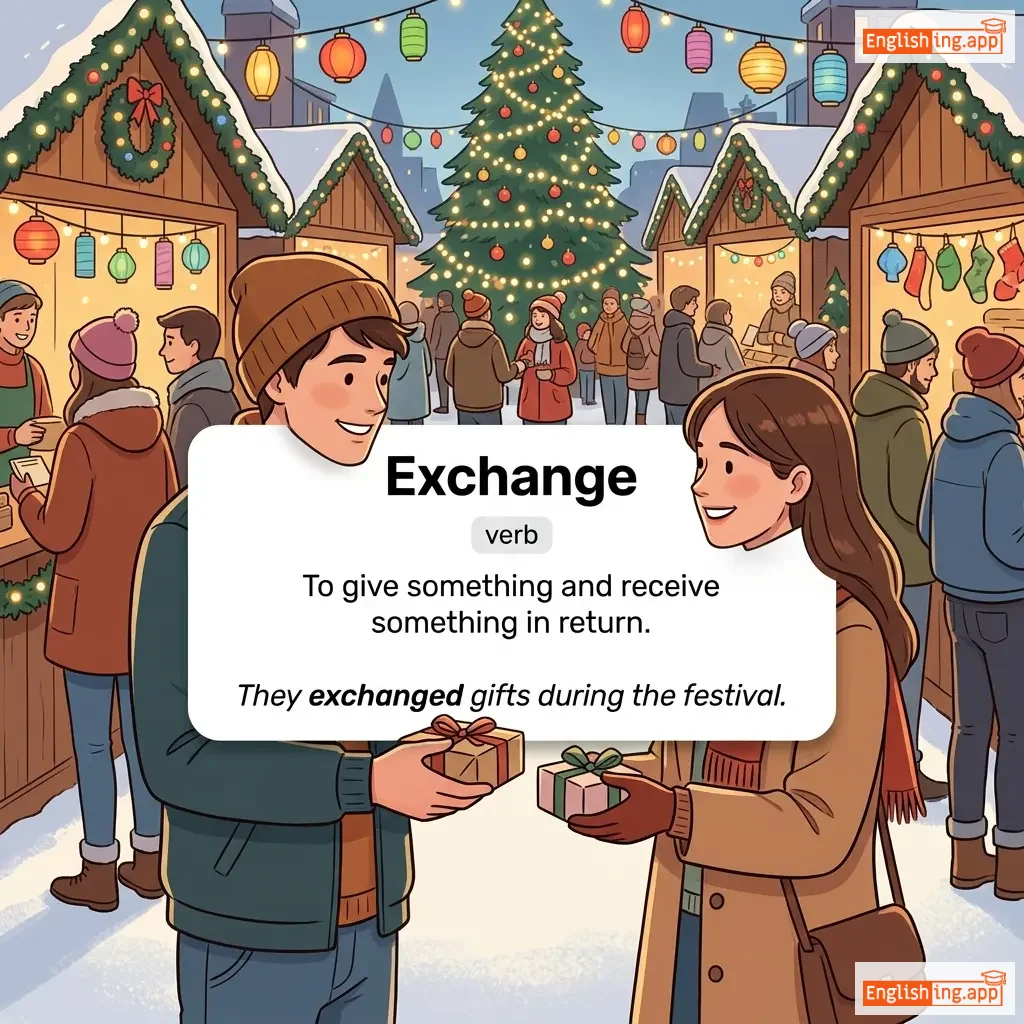
To give something and receive something in return.
••••••
|
They exchanged gifts during the festival.
他们在节日期间交换了礼物。
••••••
|
他们在节日期间交换了礼物。
Tāmen zài jiérì qījiān jiāohuànle lǐwù.
••••••
|
exchange views
交换意见
••••••
|
to share opinions or ideas
••••••
|
交换意见
jiāohuàn yìjiàn
••••••
|
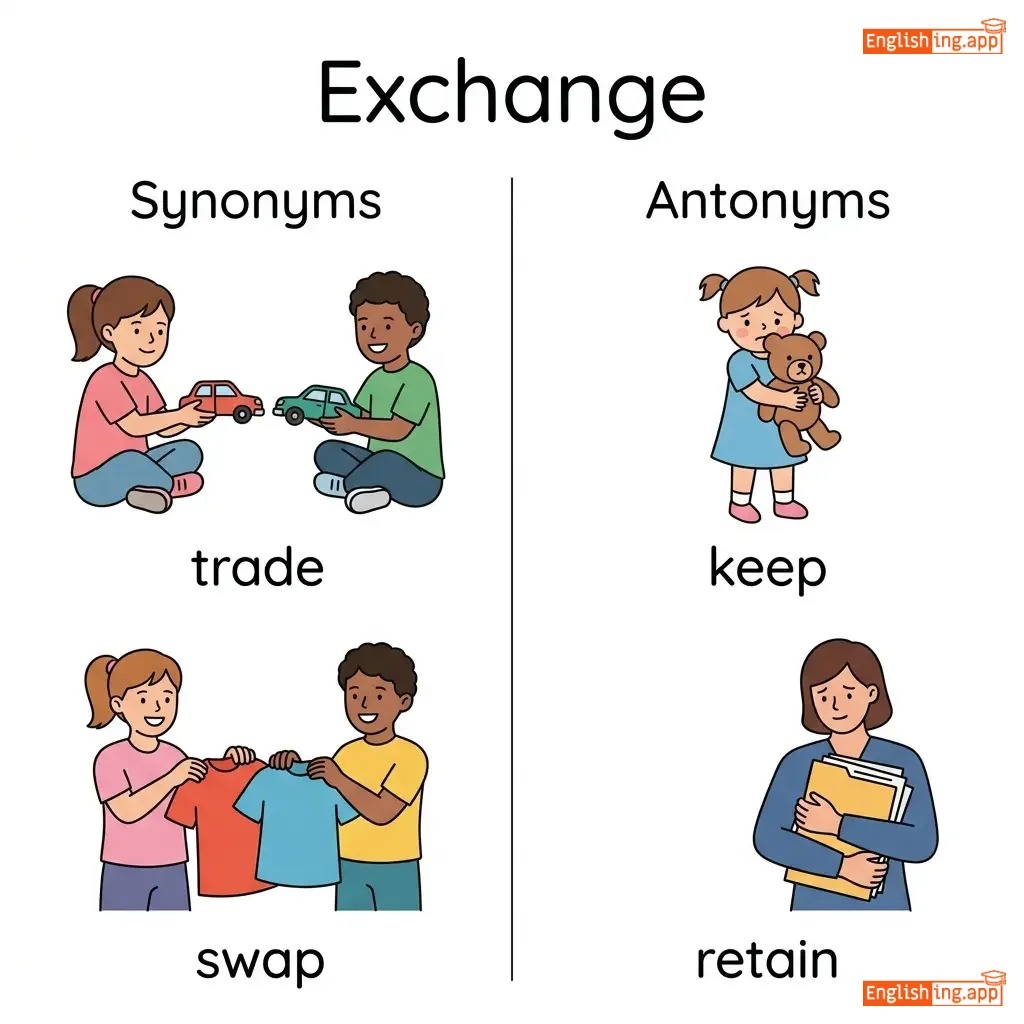
trade, swap, barter, interchange, replace
••••••
|
keep, retain
••••••
|
exchange ideas, exchange gifts, exchange money, exchange information
••••••
|
Exchange 是 '交换' — 改变事物的地方。
••••••
|
|
🕰️
••••••
|
/ɪkˈstendɪd/
adjective
(èks-ténd-dèd)
••••••
|
- •••••• |
扩展的
kuòzhǎn de
••••••
|
- •••••• | - •••••• | - •••••• | - •••••• |
longer or larger than usual; continuing for a longer time
••••••
|
They took an extended vacation in Europe this summer. |
他们这个夏天在欧洲度过了一个扩展的假期。
Tāmen zhège xiàtiān zài Ōuzhōu dùguòle yīgè kuòzhǎn de jiàqī.
••••••
|
extended family |
a family that includes not only parents and children but also relatives like grandparents or cousins
••••••
|
扩展家庭
kuòzhǎn jiātíng
••••••
|
prolonged, lengthy, expanded, stretched, prolonged
••••••
|
short, brief, limited
••••••
|
extended period, extended version, extended family, extended stay
••••••
|
扩展就是变大,所以扩展就是更大或更长!
••••••
|

