The Baker Who Made Magic
拉希姆是一位面包师。每天早晨,当 alarm clock 响起时,他就起床了。这是他的 habit。
他在自己小小的 booth 里制作 bread、candy、cream 蛋糕。他在 dough 里混合特别的 sugar 和 apple 块。人们说他的作品充满 charm——就像 magic 一样。
“拉希姆,buddy,你的 bread 为什么这么好吃?”一个 buyer 问。
“因为我做的时候有 sense,”拉希姆说,“光是照着食谱还不够,要用心去做。”
有一天,一家大 brand 的老板站在他的 booth 前。“我想买下你所有的产品。Dozens 的 breads、candies,全部。”
拉希姆很高兴。“真的吗?”
“是的。我想和你签约。你为我的 brand 工作。你一定会成功。你的才华有 worth。”
但拉希姆想了想。“你的提议很好。但这个小 booth,还有每天来的 buyers——这就是我的生活。我通过这种 habit 去 make sense 我的生命。每天早上 alarm 响起,我做 dough,量 sugar,切 apple。这就是我的 magic。”
“可你可以变得很大!成为著名的 brand!”老板说。
“我知道,”拉希姆笑了笑,“但我的 charm 是——我认识每个 buyer。当汗太太来时,我知道她喜欢 cream 蛋糕;小艾哈迈德来时,他想要 candy。当 a dozen 人排队时,我看到他们的笑容。这就是我的 worth。”
“你疯了,”老板说,“你 bound to stay small。”
“也许吧,”拉希姆说,“但我会幸福。当 bread 的香味从我的 front door 飘出来,当 sugar 和 dough bursts 的气味弥漫时——没有任何 brand 能给我这种感觉。这是我自己的 charm。”
多年后,那家大 brand 倒闭了。而拉希姆的 booth?仍然开着。每天 alarm clock 响起。他的 habit 继续。他的 buyers 来。又有 A dozen 新顾客加入。
有一天,一个年轻的面包师来了,说:“我想向你学习。你的 magic 是什么?”
拉希姆笑了。“不是 magic buddy,而是爱。当你揉 dough 时,想想你是为谁做 bread;当你加 sugar 时,想你在给别人的生活增加甜蜜;当你放 apple 时,想你在带来新的快乐;当你抹 cream 时,想你在创造温柔的回忆。”
“这就是你的秘密吗?”年轻的面包师问。
“就是这样,”拉希姆点头。“记住——大的 brands、大的 booths、大的名声——如果没有 sense of purpose,就没有 worth。我的 alarm 每天响,因为我知道为什么起床。我的 habit 不是仅仅烘焙,而是传递爱。每一打 dozen breads,每一块 candy,每一个 cream 蛋糕——这些不仅仅是食物,它们是连接。这才是真正的 charm。这才是 makes sense。这才是真正的 worth。”
年轻的面包师明白了——有时最好的 worth 不是大的 brands 或 dozens booths,而是那份从心而发的 charm,在一个小 booth 的 front,用同样的 habit,日复一日,bread 接着 bread,candy 接着 candy,被爱 bound,创造出充满 sense 与意义的 magic。
|
表情符号
|
单词 | Images | 翻译 | 过去时 | 过去分词 | 第三人称单数 | 动名词 | 含义 | 例句 | 例句翻译 | 示例表达 | 示例表达含义 | 示例表达翻译 | 同义词 | 反义词 | 搭配词 | 助记符 |
|---|---|---|---|---|---|---|---|---|---|---|---|---|---|---|---|---|---|
|
🚨
••••••
|
/əˈlɑːrm/
verb
(阿拉姆)
••••••
|
|
惊吓
alarm
••••••
|
alarmed
阿拉默德
••••••
|
alarmed
阿拉默德
••••••
|
alarms
阿拉姆斯
••••••
|
alarming
阿拉明
••••••
|
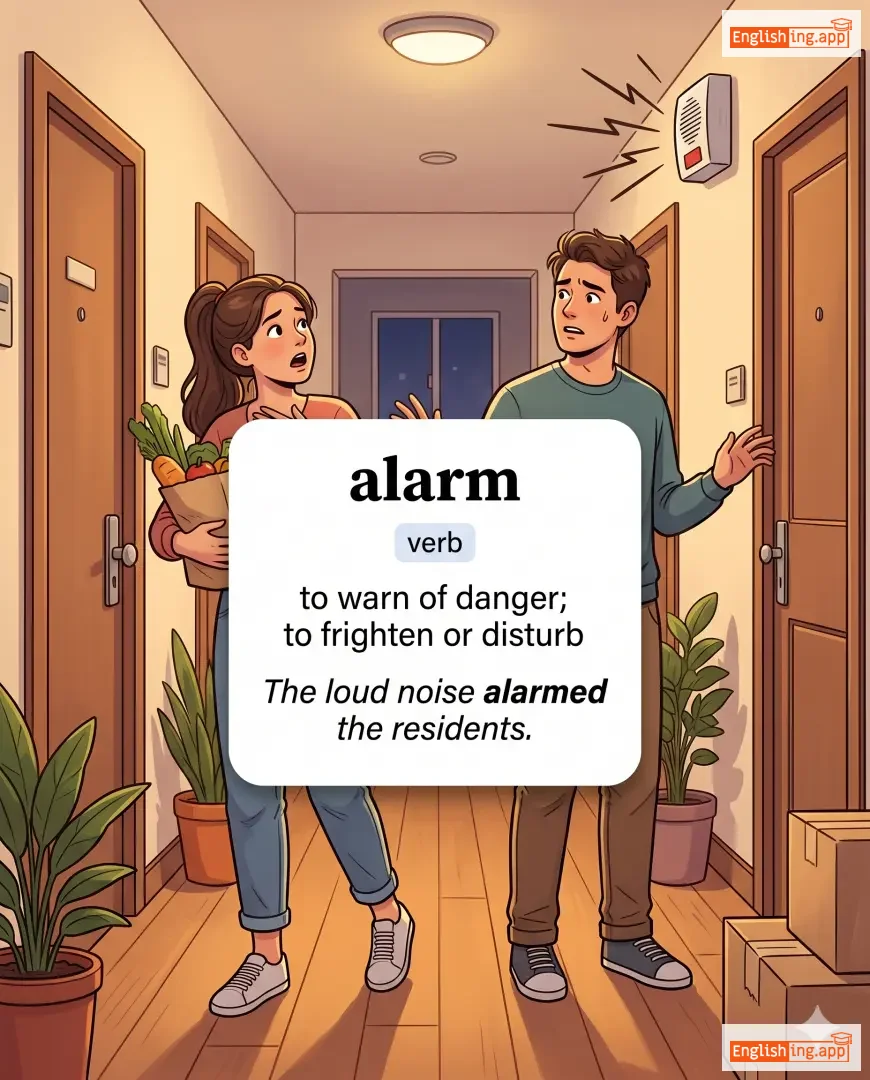
to warn of danger; to frighten or disturb
••••••
|
The loud noise alarmed the residents.
巨响吓到了居民。
••••••
|
巨响吓到了居民。
ju xiang xia dao le ju min
••••••
|
- •••••• | - •••••• | - •••••• |
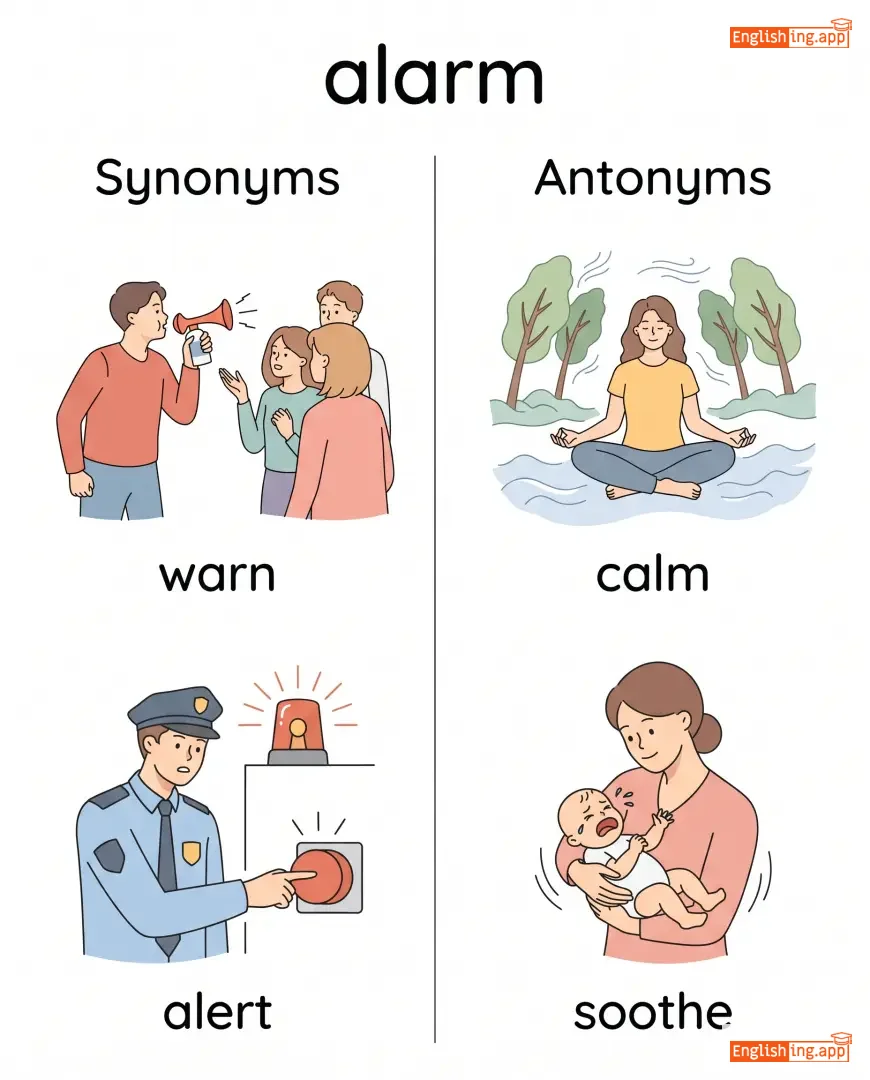
warn, alert, frighten, startle
••••••
|
calm, soothe, reassure, comfort
••••••
|
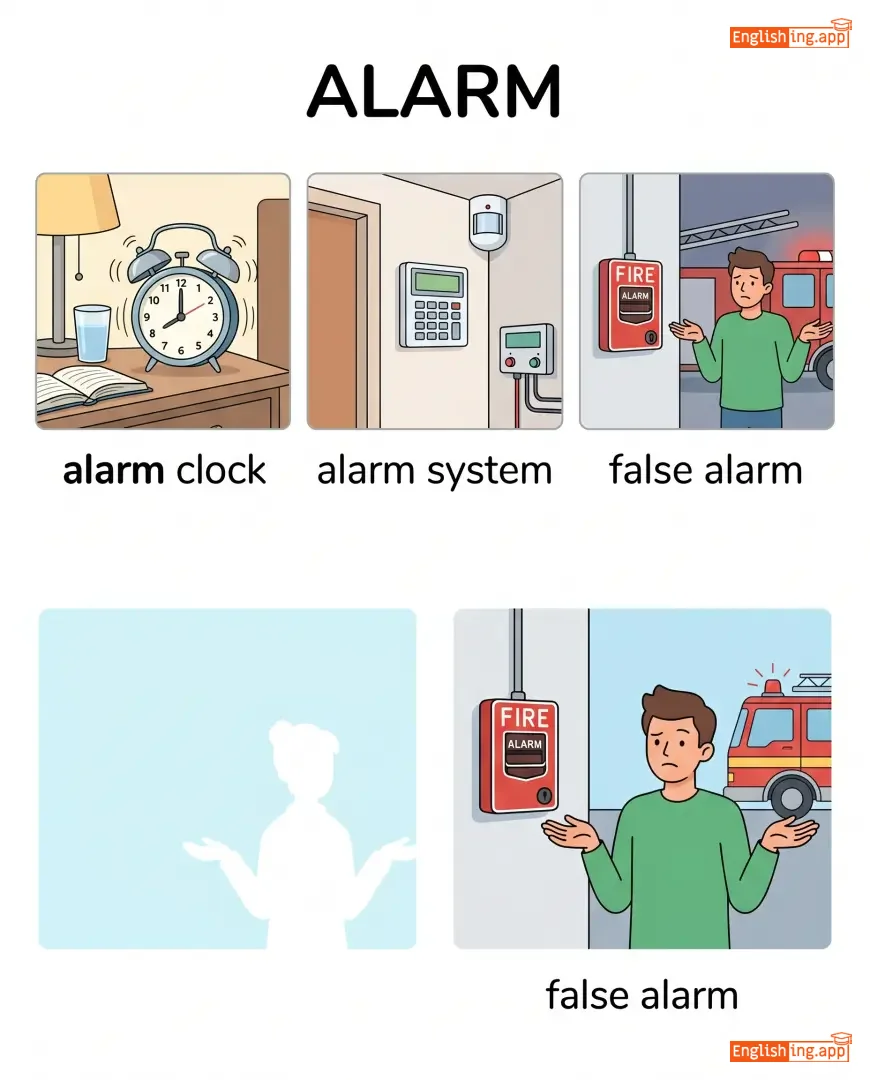
alarm clock, alarm system, false alarm, raise alarm
••••••
|
啊啦 alarm, 警报来了: 惊吓 danger 让 residents 跑起来
••••••
|
|
🍎
••••••
|
/ˈæpəl/
noun
(æpəl)
••••••
|
- •••••• |
苹果
pingguo
••••••
|
- •••••• | - •••••• | - •••••• | - •••••• |
a round fruit with red, green, or yellow skin
••••••
|
She ate a red apple for breakfast. |
她早餐吃了一个红苹果。
Tā zǎocān chīle yīgè hóng píngguǒ.
••••••
|
the apple of one's eye |
a person or thing that is greatly loved or treasured
••••••
|
心肝宝贝
xīngān bǎobèi
••••••
|
fruit, pome, produce
••••••
|
null
••••••
|
apple pie, apple tree, apple juice, eat an apple
••••••
|
苹果(pingguo)是‘日常必备’ - ‘An apple a day keeps doctor away’记住!
••••••
|
|
☎️
••••••
|
/buːθ/
noun
(布斯)
••••••
|
- •••••• |
电话亭
dianhua ting
••••••
|
- •••••• | - •••••• | - •••••• | - •••••• |
a small enclosed space or area used for a specific purpose, such as voting or selling.
••••••
|
He went into the voting booth to cast his ballot. |
他进入了投票亭,准备投票。
Ta jin ru le tou piao ting, zhun bei tou piao.
••••••
|
telephone booth |
a small cubicle containing a public telephone.
••••••
|
电话亭
dianhua ting
••••••
|
stall, kiosk, cubicle, stand
••••••
|
open space, hall
••••••
|
voting booth, ticket booth, photo booth, information booth
••••••
|
Booth 是一个小空间,就像电话亭一样。
••••••
|
|
🔗
••••••
|
/baʊnd/
verb, noun, adjective
(包恩德)
••••••
|
- •••••• |
有界的 / 受限的
youjie de / shouxian de
••••••
|
bounded
包恩德
••••••
|
bounded
包恩德
••••••
|
bounds
包恩兹
••••••
|
bounding
包恩丁
••••••
|
To move with large strides or jumps; also refers to being tied, limited, or certain.
••••••
|
The dog bounded across the field with joy.
狗跳过田野,带着快乐。
••••••
|
狗带着快乐跳过了田野。
Gou daizhe kuaile tiao guo le tianye.
••••••
|
out of bounds
出界
••••••
|
Beyond the permitted limits.
••••••
|
超出界限
chaochu jie xian
••••••
|
leap, jump, restrict, limit, tie
••••••
|
free, release, unlimited
••••••
|
bounded area, out of bounds, bound to happen, legally bound
••••••
|
Bound意味着受限,就像Ball Bound,球出界了。
••••••
|
|
🏷️
••••••
|
/brænd/
noun
(品牌)
••••••
|
- •••••• |
品牌
pinpai
••••••
|
- •••••• | - •••••• | - •••••• | - •••••• |
a type of product manufactured by a company under a particular name
••••••
|
Nike is a popular brand of sportswear. |
Nike 是一个受欢迎的运动服品牌。
Nike shi yige shou huanying de yundongfu pinpai.
••••••
|
brand new |
completely new, unused
••••••
|
崭新
zhanxin
••••••
|
label, trademark, logo, mark
••••••
|
generic, unbranded
••••••
|
brand name, popular brand, brand image, build a brand
••••••
|
品牌就像一个标志,每个品牌都有它独特的名字,比如 Nike。
••••••
|
|
🍞
••••••
|
/brɛd/
noun
••••••
|
- •••••• | - •••••• | - •••••• | - •••••• | - •••••• | - •••••• |
A type of food made from flour, water, and yeast, mixed and baked.
••••••
|
She bought a loaf of bread from the bakery. |
- •••••• |
break bread |
to share a meal with someone, often signifying friendship
••••••
|
- •••••• |
loaf, bun, roll, baguette, toast
••••••
|
meat, rice
••••••
|
slice of bread, loaf of bread, white bread, brown bread
••••••
|
No •••••• |
|
🤝
••••••
|
/ˈbʌdi/
noun
(badi)
••••••
|
- •••••• |
朋友
pengyou
••••••
|
- •••••• | - •••••• | - •••••• | - •••••• |
a close friend or companion, used informally
••••••
|
He went to the movies with his best buddy. |
他和他最好的朋友一起去看电影。
Ta he ta zuihao de pengyou yiqi qu kan dianying.
••••••
|
buddy up |
to become friends or form a pair for a task
••••••
|
成为朋友
chengwei pengyou
••••••
|
friend, pal, mate, chum, companion
••••••
|
enemy, foe, rival
••••••
|
best buddy, travel buddy, gym buddy, buddy system, study buddy
••••••
|
Buddy就是朋友 — 想象你和你的Buddy一起喝咖啡 ☕
••••••
|
|
💥
••••••
|
/bɜːst/
verb
(bɜːrst)
••••••
|
|
爆炸
baozha
••••••
|
burst
bɜːrst
••••••
|
burst
bɜːrst
••••••
|
bursts
bɜːrsts
••••••
|
bursting
bɜːrsting
••••••
|
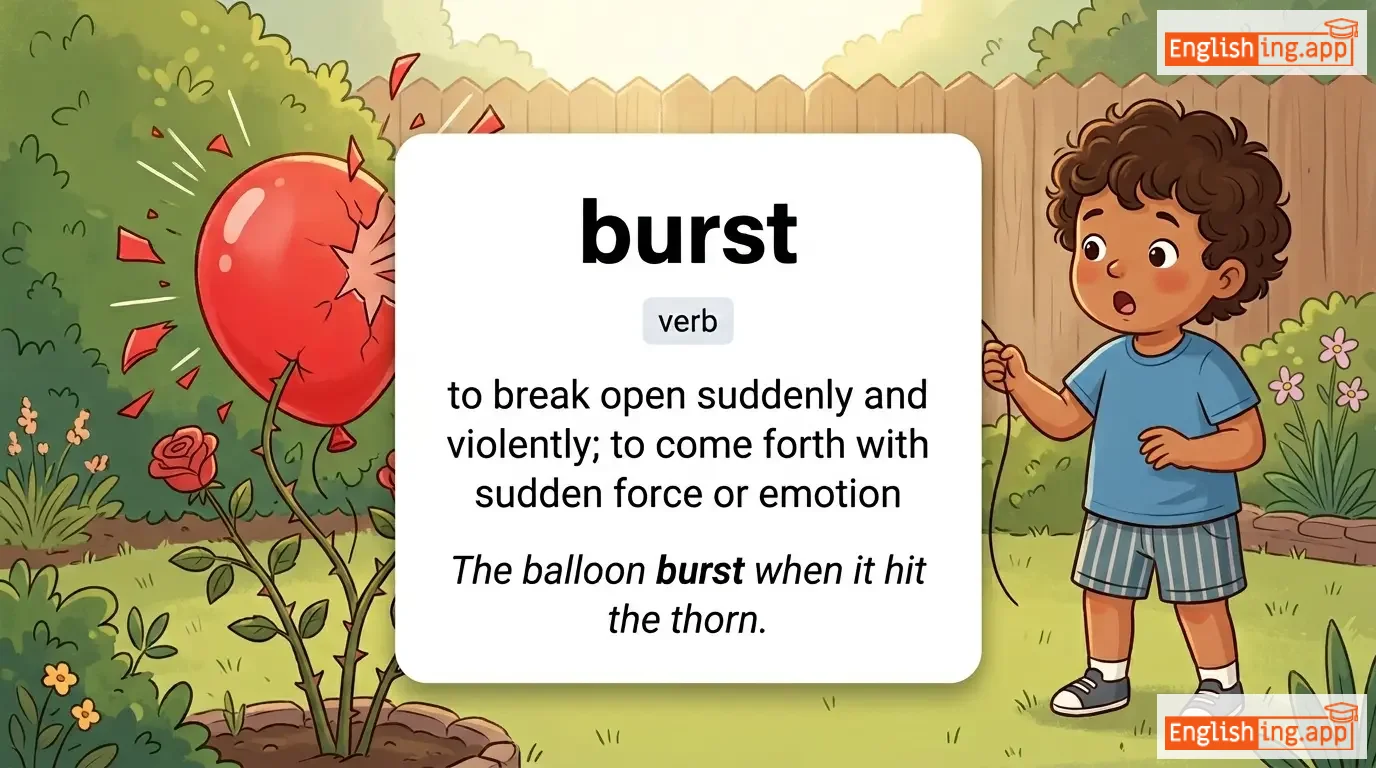
to break open suddenly and violently; to come forth with sudden force or emotion
••••••
|
The balloon burst when it hit the thorn.
气球在撞到刺的时候爆炸了。
••••••
|
气球在撞到刺的时候爆炸了。
Qiqiu zai zhuang dao ci de shihou baozha le.
••••••
|
burst into tears
突然流泪
••••••
|
to start crying suddenly
••••••
|
突然流泪
turan liu lei
••••••
|
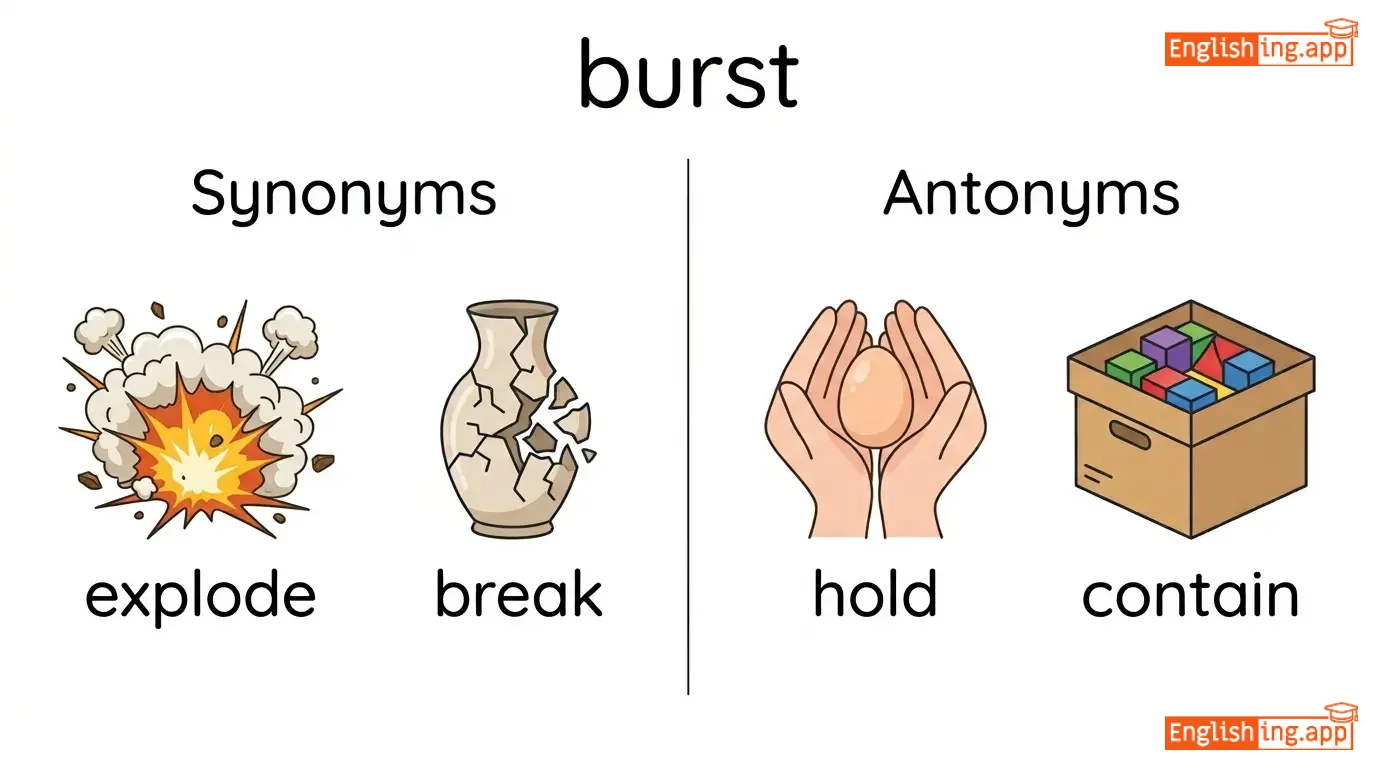
explode, break, crack, erupt, rupture
••••••
|
hold, contain, restrain
••••••
|
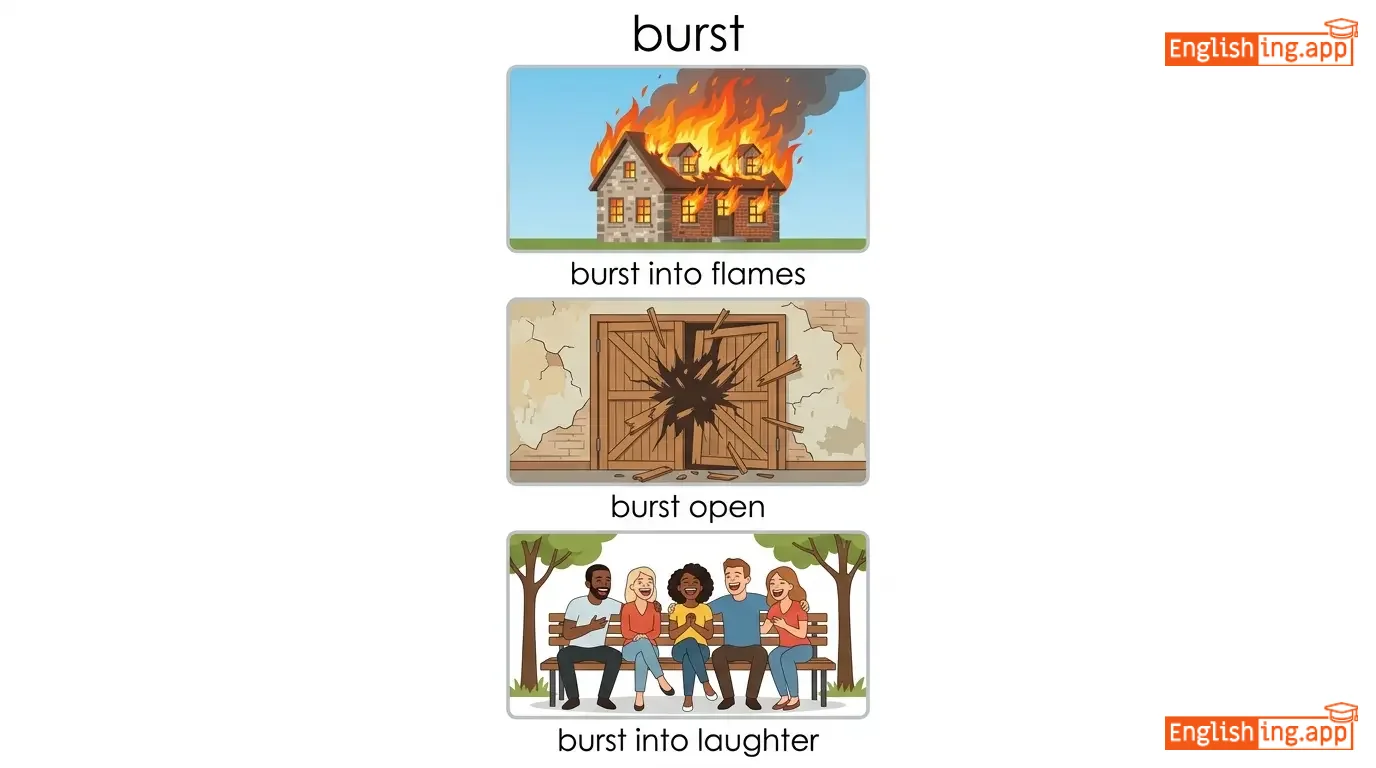
burst into flames, burst open, burst into laughter, burst with joy
••••••
|
想象气球爆炸的声音!
••••••
|
|
🛒
••••••
|
/ˈbaɪər/
noun
(bāyǎ)
••••••
|
- •••••• |
买家
maijia
••••••
|
- •••••• | - •••••• | - •••••• | - •••••• |
a person who makes a purchase
••••••
|
The buyer inspected the car before making payment. |
买家在付款之前检查了这辆车。
Maijia zai fukuan zhīqián jiǎnchále zhè liàng chē.
••••••
|
buyer beware |
the buyer alone is responsible for checking the quality of goods
••••••
|
买家小心
Maijia xiaoxin
••••••
|
customer, purchaser, client, consumer
••••••
|
seller, vendor
••••••
|
buyer demand, buyer behavior, new buyer, property buyer
••••••
|
Buyer 意思是买家 – 想象 'Buy' 就是买家。
••••••
|
|
🍬
••••••
|
/ˈkændi/
noun
(kāndì)
••••••
|
- •••••• |
糖果
tángguǒ
••••••
|
- •••••• | - •••••• | - •••••• | - •••••• |
a sweet food made with sugar or chocolate, often in small pieces
••••••
|
The children were excited to get candy on Halloween. |
孩子们在万圣节兴奋地收到糖果。
Háizimen zài wànshèngjié xīngfèn de shōudào tángguǒ.
••••••
|
eye candy |
something or someone that is attractive but not intellectually stimulating
••••••
|
眼睛糖果
yǎnjīng tángguǒ
••••••
|
sweet, confection, treat, chocolate, bonbon
••••••
|
bitter, sour
••••••
|
candy bar, candy shop, candy wrapper, hard candy, cotton candy
••••••
|
糖果是节日和喜悦的象征,特别是万圣节!
••••••
|
|
💫
••••••
|
/tʃɑːrm/
noun/verb
••••••
|
- •••••• | - •••••• |
charmed
••••••
|
charmed
••••••
|
charms
••••••
|
charming
••••••
|
the power or quality of delighting or attracting others; to attract or please greatly
••••••
|
Her smile never fails to charm everyone around her. |
- •••••• |
lucky charm |
an object believed to bring good luck
••••••
|
- •••••• |
appeal, allure, enchantment, fascination, captivate
••••••
|
repel, displease
••••••
|
personal charm, lucky charm, charm offensive
••••••
|
No •••••• |
|
⏰
••••••
|
/klɒk/
noun
(kè lǒkè)
••••••
|
- •••••• |
钟表
zhōngbiǎo
••••••
|
- •••••• | - •••••• | - •••••• | - •••••• |
An instrument used to measure and show time.
••••••
|
The clock on the wall shows the correct time. |
墙上的钟表显示了正确的时间。
qiáng shàng de zhōngbiǎo xiǎnshìle zhèngquè de shíjiān.
••••••
|
around the clock |
All day and all night without stopping.
••••••
|
全天候
quán tiānhòu
••••••
|
timepiece, watch, timer, chronometer
••••••
|
timelessness
••••••
|
alarm clock, wall clock, digital clock, clock tower, clock face
••••••
|
钟表响,时间永不忘!
••••••
|
|
🍦
••••••
|
/kriːm/
noun
(krim)
••••••
|
- •••••• |
奶油
naiyou
••••••
|
- •••••• | - •••••• | - •••••• | - •••••• |
A thick, fatty part of milk that rises to the top; also a soft substance used in cooking or cosmetics.
••••••
|
She added some cream to her coffee.
她在咖啡里加了些奶油。
••••••
|
她在咖啡里加了些奶油。
Ta zai kafe li jia le xie nai you.
••••••
|
the cream of the crop
精英中的精英
••••••
|
the very best of a group
••••••
|
最顶尖的人
zui dingjian de ren
••••••
|
dairy, lotion, ointment, top, best
••••••
|
worst, inferior
••••••
|
whipped cream, face cream, cream sauce, cream cheese
••••••
|
在咖啡里加奶油就像梦想一样顺滑!
••••••
|
|
🍞
••••••
|
/doʊ/
noun
(dough)
••••••
|
- •••••• |
面团
miàn tuán
••••••
|
- •••••• | - •••••• | - •••••• | - •••••• |
a mixture of flour, water, and other ingredients used to make bread or pastries
••••••
|
She kneaded the dough for ten minutes before baking.
她揉了十分钟面团然后烤了它。
••••••
|
她揉了十分钟面团然后烤了它。
Ta rou le shi fenzhong miantuan ranhou kao le ta.
••••••
|
rolling in dough
在面团中打滚
••••••
|
having a lot of money
••••••
|
在面团中打滚
Zai miantuan zhong dagun
••••••
|
batter, paste, mixture, mass, blend
••••••
|
liquid, powder
••••••
|
bread dough, pizza dough, soft dough, knead dough
••••••
|
面团意味着 dough — 想象面团变成美味的面包!
••••••
|
|
🥚
••••••
|
/ˈdʌzən/
noun
(达兹恩)
••••••
|
- •••••• |
打算
dǎsuàn
••••••
|
- •••••• | - •••••• | - •••••• | - •••••• |
a group of twelve
••••••
|
She bought a dozen eggs from the market. |
她从市场上买了十二个鸡蛋。
Tā cóng shìchǎng shàng mǎile shí'èr gè jīdàn.
••••••
|
cheaper by the dozen |
items bought in bulk are often cheaper
••••••
|
按打算买更便宜
àn dǎsuàn mǎi gèng piányí
••••••
|
twelve, set, group, batch
••••••
|
single, one
••••••
|
a dozen eggs, dozens of people, a dozen times
••••••
|
打算 = 12,一次买12个,便宜!
••••••
|
|
🚪
••••••
|
/frʌnt/
noun
(front)
••••••
|
- •••••• |
前面
qianmian
••••••
|
- •••••• | - •••••• | - •••••• | - •••••• |
the forward-facing part of something
••••••
|
The house has a garden in front. |
房子前面有一个花园。
Fángzi qiánmiàn yǒu yīgè huāyuán.
••••••
|
put on a brave front |
to appear confident while hiding true feelings
••••••
|
摆出勇敢的面容
bǎichū yǒnggǎn de miànróng
••••••
|
fore, facade, frontage, forefront, entrance
••••••
|
back, rear
••••••
|
front door, front line, front page, in front of
••••••
|
Front door 是指前门 – front = 前面.
••••••
|
|
🔄
••••••
|
/ˈhæb.ɪt/
noun
(习惯)
••••••
|
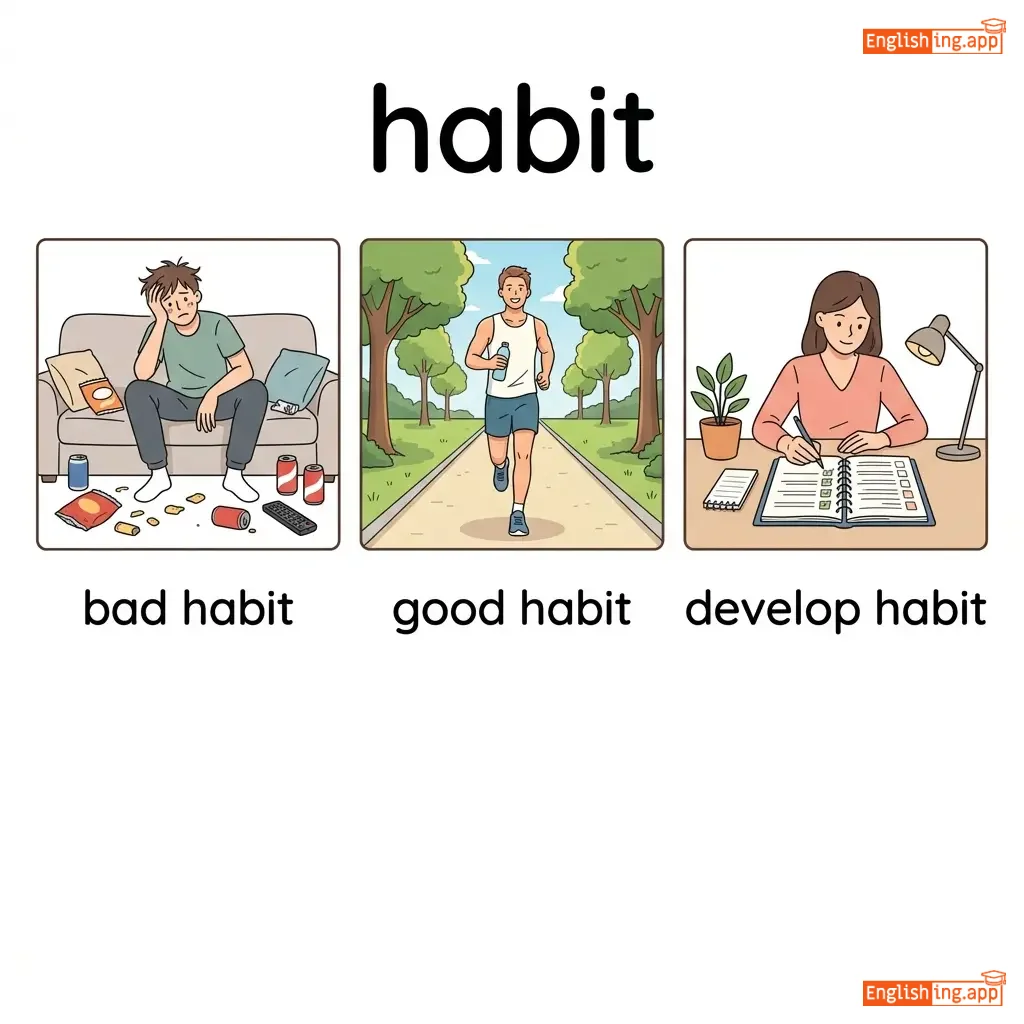
|
习惯
xíguàn
••••••
|
- •••••• | - •••••• | - •••••• | - •••••• |
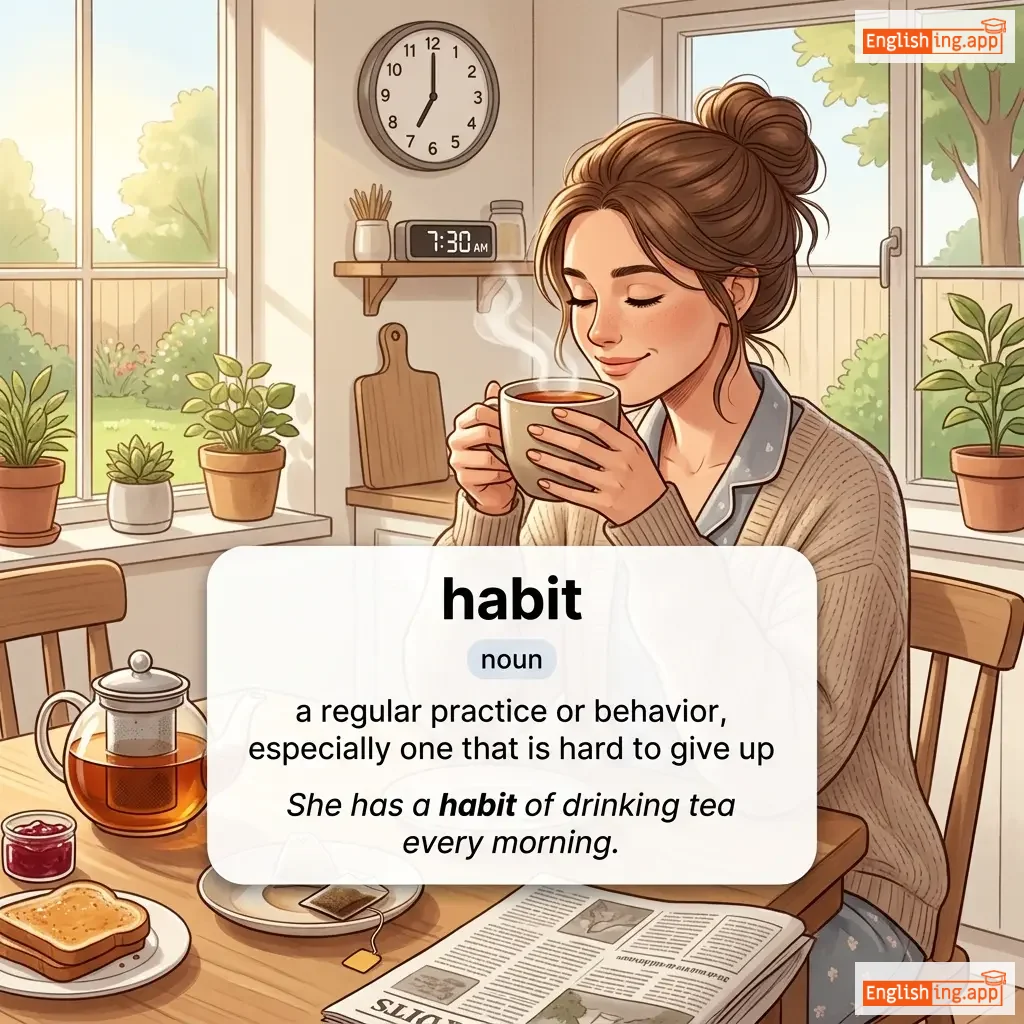
a regular practice or behavior, especially one that is hard to give up
••••••
|
She has a habit of drinking tea every morning. |
她每天早上都有喝茶的习惯。
Tā měitiān zǎoshàng dōu yǒu hē chá de xíguàn.
••••••
|
old habits die hard |
it is difficult to stop doing things that one has been doing for a long time
••••••
|
陈年旧习难改
chénnián jiùxí nán gǎi
••••••
|
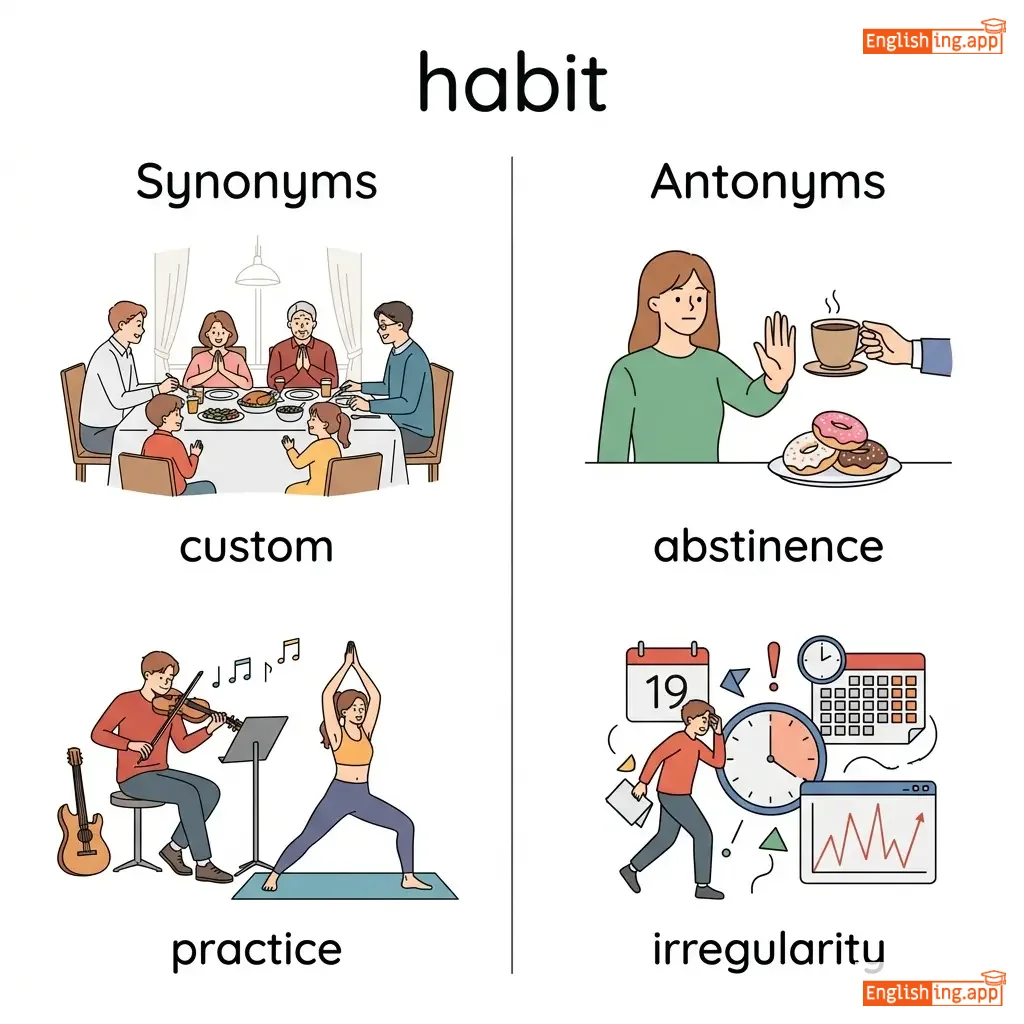
custom, practice, routine, tendency, pattern
••••••
|
abstinence, irregularity, avoidance
••••••
|
bad habit, good habit, develop habit, break habit
••••••
|
习惯是一个重复的过程,越做越习惯。
••••••
|
|
🧠
••••••
|
/sɛns/
noun/verb
(sēnsī)
••••••
|
- •••••• |
感觉
gǎnjué
••••••
|
sensed
sēnsī zhī
••••••
|
sensed
sēnsī zhī
••••••
|
senses
sēnsī
••••••
|
sensing
sēnsīng
••••••
|
A faculty by which the body perceives external stimuli; or to perceive something without being told.
••••••
|
She had a strong sense of responsibility.
她有很强的责任感。
••••••
|
她有很强的责任感。
Tā yǒu hěn qiáng de zérèngǎn.
••••••
|
common sense
常识
••••••
|
sound practical judgment that is independent of specialized knowledge
••••••
|
常识
chángshí
••••••
|
feeling, perception, awareness, intuition, judgment
••••••
|
nonsense, folly, ignorance
••••••
|
sense of humor, sense of duty, sense danger, make sense
••••••
|
Sense = 常识, 用中文来理解本能的感觉
••••••
|
|
🍬
••••••
|
/ˈʃʊɡər/
noun
(糖)
••••••
|
- •••••• |
糖
tang
••••••
|
- •••••• | - •••••• | - •••••• | - •••••• |
sweet crystalline substance used as a sweetener
••••••
|
Please add two teaspoons of sugar to my coffee. |
请在我的咖啡里加两茶匙糖。
qǐng zài wǒ de kāfēi lǐ jiā liǎng chá chí táng
••••••
|
- •••••• | - •••••• | - •••••• |
sweetener, sucrose
••••••
|
salt, bitter
••••••
|
brown sugar, sugar cube, sugar level, blood sugar
••••••
|
糖让一切变得更甜,就像加到咖啡里一样。
••••••
|
|
💎
••••••
|
/wɜːrθ/
noun
(wɜːrθ)
••••••
|
- •••••• |
价值; 价格;
jiàzhí; jiàgé
••••••
|
- •••••• | - •••••• | - •••••• | - •••••• |
the value equivalent to that of someone or something; the level at which someone or something deserves to be valued
••••••
|
The painting is worth thousands of dollars. |
这幅画值数千美元。
zhè fú huà zhí shù qiān měiyuán.
••••••
|
- •••••• | - •••••• | - •••••• |
value, price, merit, importance
••••••
|
worthlessness, insignificance, cheapness, valuelessness
••••••
|
net worth, true worth, self-worth
••••••
|
‘价值’代表为重要事物给予的东西。
••••••
|

