Parliament Pledge for Fighters
一场包容性的 martial 艺术表演点亮了孟加拉文学大楼的庭院。来自 parliament 的青年委员会 secretary 亲自到场,承认这次 situation 让所有人都开了眼界。阿比尔,这位三年前因事故获得 disability 的 individual,以挺拔的 standing 姿势开始了表演。从 starting 动作起,他就以优雅的姿态保持身体的 figure。附近的 inspector 继续 investigate 规程。记者问议会是否会 collaborate。秘书回答说:“我们将承担这项工作的 charge。” 他指出,旧规则中充满了 irrelevant 的障碍,使 unable 的人无法参与。图琳微笑着说:“全国没有任何 comparative 的例子能与我们的成功相比。” 表演中段,阿比尔的队友们上演了象征性 trap 的救援。那些原本 worried 的母亲们爆发出热烈掌声。秘书承诺下周将在 parliament 提出新动议。团队举起一座旧 trophy,宣布:“这只是开始。” 最后观众听到,全国范围内为残障运动员设立的训练中心即将启动。
|
表情符号
|
单词 | Images | 翻译 | 过去时 | 过去分词 | 第三人称单数 | 动名词 | 含义 | 例句 | 例句翻译 | 示例表达 | 示例表达含义 | 示例表达翻译 | 同义词 | 反义词 | 搭配词 | 助记符 |
|---|---|---|---|---|---|---|---|---|---|---|---|---|---|---|---|---|---|
|
⚡
••••••
|
/tʃɑːrdʒ/
verb
(chāojí)
••••••
|
- •••••• |
收费/指控
shōufèi/zhǐkòng
••••••
|
charged
chāojíde
••••••
|
charged
chāojíde
••••••
|
charges
chāojíe
••••••
|
charging
chāojíng
••••••
|
to demand payment; to formally accuse; to rush forward aggressively
••••••
|
The store charges extra for home delivery.
商店收取额外的家居配送费用。
••••••
|
商店收取额外的家居配送费用。
Shāngdiàn shōuqǔ éwài de jiājū pèisòng fèiyòng.
••••••
|
charge someone with
指控某人
••••••
|
to accuse someone of a crime
••••••
|
指控某人
zhǐkòng mǒu rén
••••••
|
bill, accuse, attack, command
••••••
|
free, acquit, retreat
••••••
|
charge money, charge fee, charge battery, charge with crime
••••••
|
当手机没有电时,你必须支付费用。
••••••
|
|
🤝
••••••
|
/kəˈlæbəreɪt/
verb
(合作)
••••••
|

|
合作
hezuo
••••••
|
collaborated
合作过
••••••
|
collaborated
合作过
••••••
|
collaborates
合作
••••••
|
collaborating
合作中
••••••
|
To work jointly with others, especially on an intellectual or creative project.
••••••
|
The two companies decided to collaborate on a new project.
这两家公司决定在一个新项目上合作。
••••••
|
这两家公司决定在一个新项目上合作。
Zhe liang jituan jueding zai yige xin xiangmu shang hezuo.
••••••
|
collaborate with
与...合作
••••••
|
to work together with someone
••••••
|
与...合作
yu...hezuo
••••••
|
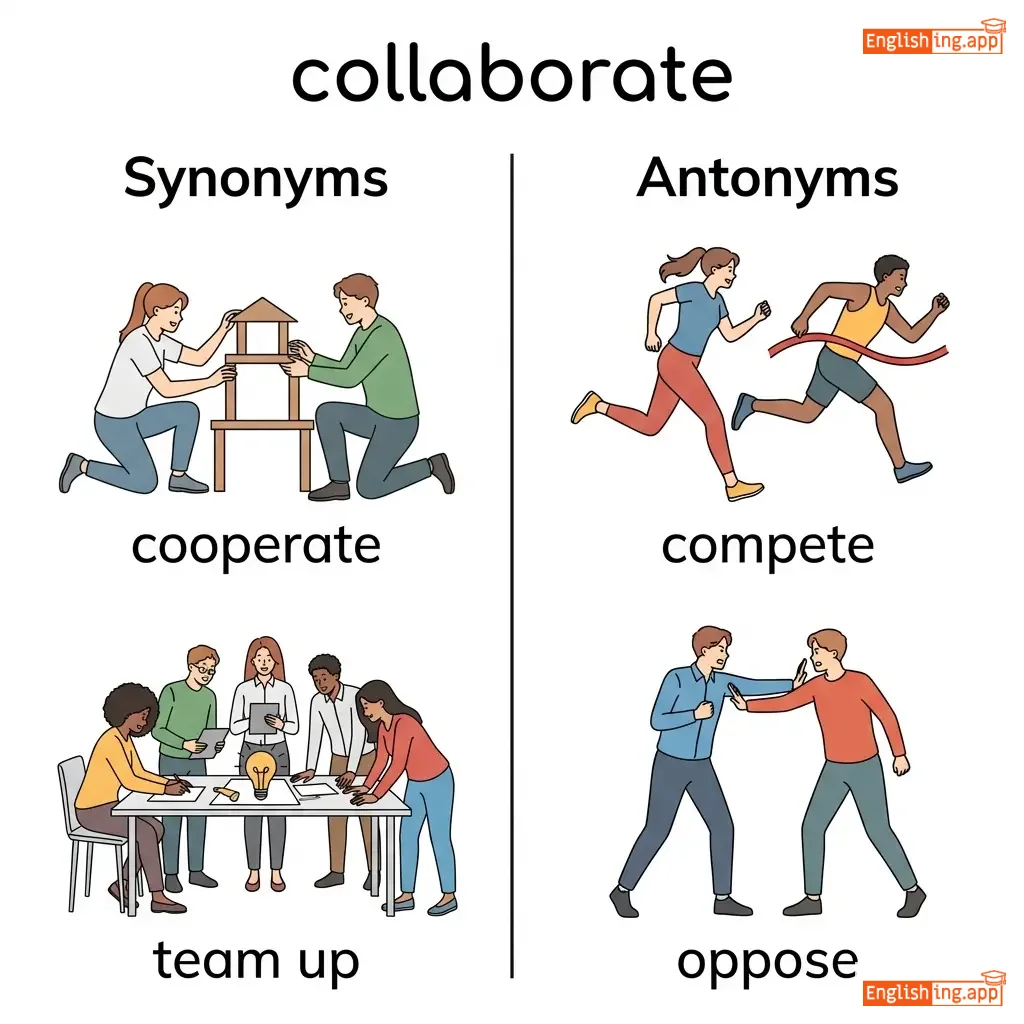
cooperate, team up, work together, join forces, partner
••••••
|
compete, oppose, resist
••••••
|
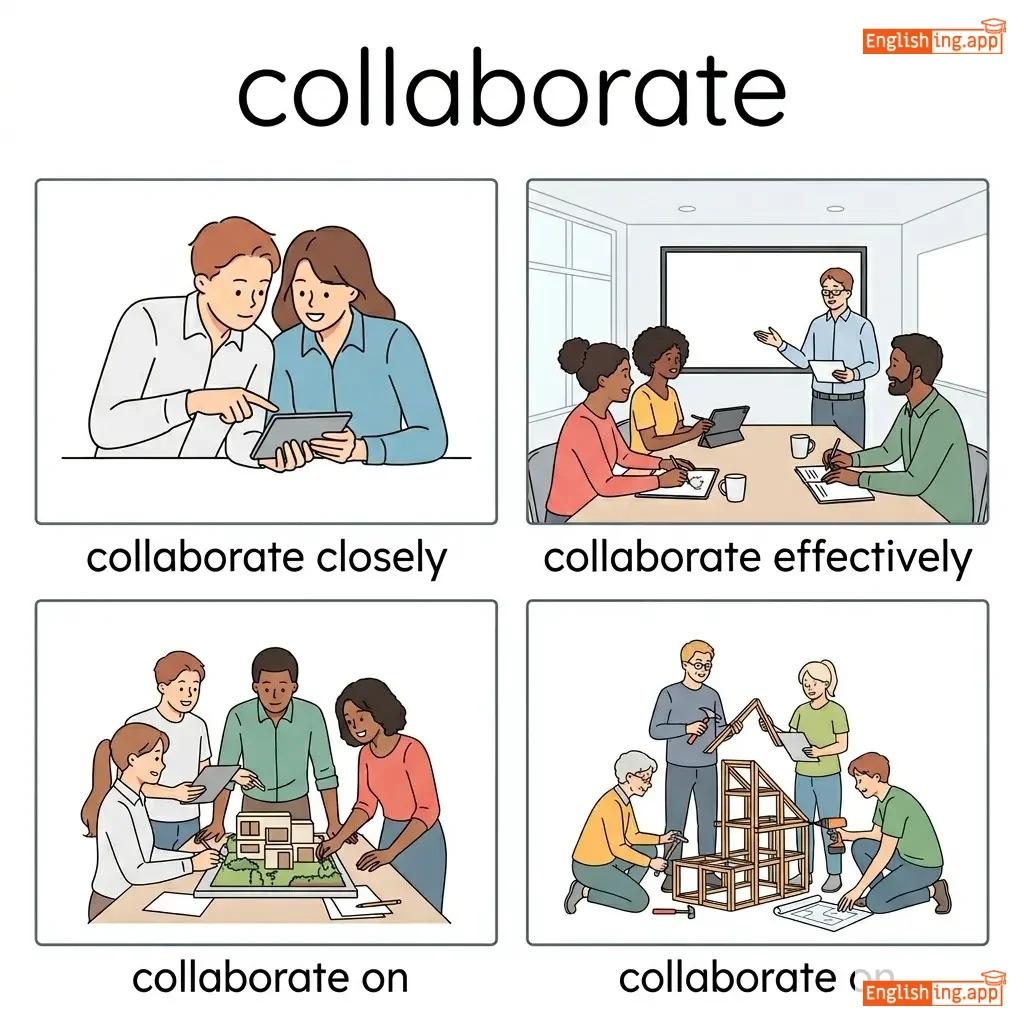
collaborate closely, collaborate effectively, collaborate on, collaborate with
••••••
|
合作就像与他人共同完成一个创意项目。
••••••
|
|
📊
••••••
|
/kəmˈpærətɪv/
adjective
(海皮纳提夫)
••••••
|
- •••••• |
比较的
bijiao de
••••••
|
- •••••• | - •••••• | - •••••• | - •••••• |
Measured or considered by comparison; relative.
••••••
|
She lives in comparative comfort after moving to the city.
她住在城市后,生活相对舒适。
••••••
|
搬到城市后,她生活得相对舒适。
ban dao chengshi hou ta shenghuo de xiangdui shushi
••••••
|
comparative advantage
比较优势
••••••
|
The ability of a country or company to produce goods or services at a lower opportunity cost than others
••••••
|
比较优势
bijiao youshi
••••••
|
relative, proportional, measured, evaluative
••••••
|
absolute, definite, fixed
••••••
|
comparative study, comparative analysis, comparative comfort, comparative advantage
••••••
|
‘比较的’ means comparative—think of 比 (compare) + 较 (contrast).
••••••
|
|
♿
••••••
|
/ˌdɪs.əˈbɪl.ə.ti/
noun
(残疾)
••••••
|
- •••••• |
残疾
canji
••••••
|
- •••••• | - •••••• | - •••••• | - •••••• |
a physical or mental condition that limits a person's movements, senses, or activities
••••••
|
Despite his physical disability, he became a successful athlete in wheelchair racing.
尽管他有身体残疾,他还是成为了轮椅赛车的成功运动员。
••••••
|
尽管他有身体残疾,他还是成为了轮椅赛车的成功运动员。
Jǐnguǎn tā yǒu shēntǐ cánjī, tā háishi chéngwéile lún yǐ sàichē de chénggōng yùndòngyuán.
••••••
|
- •••••• | - •••••• | - •••••• |
impairment, handicap, limitation, incapacity
••••••
|
ability, capability, strength, enablement
••••••
|
learning disability, physical disability, disability rights
••••••
|
残疾并不代表终结
••••••
|
|
🔢
••••••
|
/ˈfɪɡjər/
noun
(figura)
••••••
|
- •••••• |
数字, 形状, 重要人物
shuzi, xingzhuang, zhongyao renwu
••••••
|
- •••••• | - •••••• | - •••••• | - •••••• |
a number, shape, or person of importance; also a representation in drawing or sculpture
••••••
|
The report included several important figures.
报告中包含了几个重要的人物。
••••••
|
报告中包含了几个重要的人物。
Baogao zhong baokuo le jige zhongyao de renwu.
••••••
|
figure out
弄明白
••••••
|
to understand or solve something
••••••
|
弄明白
nong mingbai
••••••
|
number, shape, person, digit, form
••••••
|
text, word
••••••
|
key figure, public figure, important figure, figure prominently
••••••
|
Figure 可以是数字或形状 - Remember, figures are numbers or shapes
••••••
|
|
👤
••••••
|
/ˌɪndɪˈvɪdʒuəl/
noun/adjective
(个人)
••••••
|
- •••••• |
个体
gètǐ
••••••
|
- •••••• | - •••••• | - •••••• | - •••••• |
A single human being as distinct from a group; relating to one person.
••••••
|
Each individual has the right to freedom of speech. |
每个个体都有言论自由的权利。
Měi gè gètǐ dōu yǒu yánlùn zìyóu de quánlì.
••••••
|
individual rights |
Legal or moral entitlements held by each person.
••••••
|
个体权利
gètǐ quánlì
••••••
|
person, human, being, entity, character
••••••
|
group, collective, community
••••••
|
individual rights, individual needs, individual cases, individual effort
••••••
|
Individual 代表个体 - Individual 👤 代表一个人。
••••••
|
|
🕵️
••••••
|
/ɪnˈspɛktər/
noun
(ɪnˈspɛktər)
••••••
|
- •••••• |
检查员
jiǎncháyuán
••••••
|
- •••••• | - •••••• | - •••••• | - •••••• |
An official employed to ensure regulations are obeyed or standards are met.
••••••
|
The inspector carefully checked the restaurant's kitchen for hygiene standards. |
检查员仔细检查了餐厅的厨房是否符合卫生标准。
Jiǎncháyuán zǐxì jiǎnchále cāntīng de chúfáng shìfǒu fúhé wèishēng biāozhǔn.
••••••
|
under the inspector's eye |
Closely monitored or supervised by an authority.
••••••
|
在检查员的监督下
Zài jiǎncháyuán de jiāndū xià
••••••
|
examiner, officer, auditor, overseer, supervisor
••••••
|
worker, employee
••••••
|
police inspector, health inspector, building inspector
••••••
|
检查员会仔细检查一切,确保所有规则都得到遵守。
••••••
|
|
🔍
••••••
|
/ɪnˈvɛs.tɪ.ɡeɪt/
verb
(ɪnˈvɛstɪɡeɪt)
••••••
|
- •••••• |
调查
diàochá
••••••
|
investigated
ɪnˈvɛstɪɡeɪtɪd
••••••
|
investigated
ɪnˈvɛstɪɡeɪtɪd
••••••
|
investigates
ɪnˈvɛstɪɡeɪts
••••••
|
investigating
ɪnˈvɛstɪɡeɪtɪŋ
••••••
|
to carry out a systematic inquiry to discover facts or information
••••••
|
The police will investigate the incident thoroughly.
警方将彻底调查此事件。
••••••
|
警方将彻底调查此事件。
jǐngfāng jiāng chèdǐ diàochá cǐ shìjiàn.
••••••
|
investigate a case
调查案件
••••••
|
to examine or look into a specific case
••••••
|
调查案件
diàochá ànjiàn
••••••
|
examine, probe, inspect, explore, analyze
••••••
|
ignore, overlook
••••••
|
investigate crime, investigate a complaint, investigate thoroughly
••••••
|
调查意味着在案件中寻找事实。
••••••
|
|
🚫
••••••
|
/ɪˈrɛləvənt/
adjective
(irélévante)
••••••
|
- •••••• |
不相关的
bù xiāngguān de
••••••
|
- •••••• | - •••••• | - •••••• | - •••••• |
Not connected with or related to the matter at hand
••••••
|
His comment was completely irrelevant to the discussion.
他的评论与讨论完全无关。
••••••
|
他的评论与讨论完全无关。
Tā de pínglùn yǔ tǎolùn wánquán wúguān.
••••••
|
irrelevant detail
不相关的细节
••••••
|
Information that does not matter in the context
••••••
|
不相关的细节
bù xiāngguān de xìjié
••••••
|
unrelated, immaterial, extraneous, insignificant
••••••
|
relevant, important, significant
••••••
|
irrelevant comment, irrelevant detail, irrelevant information, irrelevant answer
••••••
|
Irrelevant 意味着与话题无关,像是你在考试中给出一个无关的答案。
••••••
|
|
⚔️
••••••
|
/ˈmɑːrʃəl/
adjective
(mǎxià)
••••••
|
- •••••• |
军事的
junshide
••••••
|
- •••••• | - •••••• | - •••••• | - •••••• |
Related to war, soldiers, or military life.
••••••
|
The country imposed martial law during the crisis. |
该国在危机期间实施了戒严法。
Gāi guó zài wēijī qījiān shíshīle jièxián fǎ.
••••••
|
martial law |
Military control of an area, usually during emergencies.
••••••
|
戒严法
jièxián fǎ
••••••
|
military, warlike, soldierly, combative
••••••
|
civil, peaceful
••••••
|
martial law, martial arts, martial spirit, martial training
••••••
|
Martial 意味着 '戒严法'—军队控制紧急状态。
••••••
|
|
🏛️
••••••
|
/ˈpɑːrləmənt/
noun
(议会)
••••••
|
- •••••• |
议会
yihui
••••••
|
- •••••• | - •••••• | - •••••• | - •••••• |
the highest legislative body in a country
••••••
|
The bill was passed in parliament after a long debate. |
该法案在议会经过长时间的辩论后通过。
Gāi fǎ'àn zài yìhuì jīngguò cháng shíjiān de biànlùn hòu tōngguò.
••••••
|
hung parliament |
a parliament where no single party has a majority
••••••
|
悬挂议会
xuánguà yìhuì
••••••
|
assembly, legislature, congress, house, senate
••••••
|
dictatorship, monarchy
••••••
|
parliament session, member of parliament, dissolve parliament, pass through parliament
••••••
|
议会(yìhuì)是立法的最高机关,国家事务的决定中心 🏛️
••••••
|
|
⏱️
••••••
|
/ˈsekənd/
noun
••••••
|
- •••••• | - •••••• | - •••••• | - •••••• | - •••••• | - •••••• |
a unit of time equal to one sixtieth of a minute; also the position after first
••••••
|
He finished the race in second place. |
- •••••• |
in a second |
very quickly; almost immediately
••••••
|
- •••••• |
moment, instant, rank, position
••••••
|
first, last
••••••
|
second chance, second place, second time
••••••
|
No •••••• |
|
📋
••••••
|
/ˈsɛkrəteri/
noun
••••••
|
- •••••• | - •••••• | - •••••• | - •••••• | - •••••• | - •••••• |
a person employed to handle correspondence and manage routine tasks for an individual or organization
••••••
|
The secretary scheduled the meeting for tomorrow. |
- •••••• | - •••••• | - •••••• | - •••••• |
assistant, clerk, administrator, executive
••••••
|
boss, employer
••••••
|
office secretary, personal secretary, company secretary, secretary role
••••••
|
No •••••• |
|
🌍
••••••
|
/ˌsɪtʃʊˈeɪʃən/
noun
(情境)
••••••
|
- •••••• |
情况
qingkuang
••••••
|
- •••••• | - •••••• | - •••••• | - •••••• |
a set of circumstances or state of affairs at a particular time
••••••
|
The situation at work became difficult after the new policies were introduced.
工作中的情况在引入新政策后变得困难。
••••••
|
工作中的情况在引入新政策后变得困难。
Gongzuo zhong de qingkuang zai yinru xin zhengce hou biande kunnan.
••••••
|
in a tight situation
处于困境中
••••••
|
to be in a difficult or challenging circumstance
••••••
|
处于困境中
Chuyú kùnjìng zhōng
••••••
|
condition, circumstance, state, scenario
••••••
|
none
••••••
|
critical situation, emergency situation, business situation
••••••
|
情况 (Qingkuang) - 不论什么情况,保持冷静!
••••••
|
|
🧍
••••••
|
/ˈstændɪŋ/
noun/adjective
(standing)
••••••
|
- •••••• |
地位 / 声誉
diwei / shengyu
••••••
|
- •••••• | - •••••• | - •••••• | - •••••• |
status, reputation, or position; also the act of being upright on the feet
••••••
|
He has high standing in the community for his charity work. |
由于他的慈善工作,他在社区中有很高的声誉。
Yóuyú tā de císhàn gōngzuò, tā zài shèqū zhōng yǒu hěn gāo de shēngyù.
••••••
|
of good standing |
having a good reputation or status
••••••
|
良好的声誉
liánghǎo de shēngyù
••••••
|
status, reputation, position, rank, stature
••••••
|
disrepute, dishonor, disgrace
••••••
|
social standing, legal standing, good standing, standing order
••••••
|
Standing 意味着站立,同时也有声誉和地位的意思。
••••••
|
|
🚀
••••••
|
/ˈstɑːtɪŋ/
verb
(斯塔汀)
••••••
|
- •••••• |
开始
kaishi
••••••
|
- •••••• | - •••••• | - •••••• |
starting
斯塔汀
••••••
|
beginning to do or experience something
••••••
|
She is starting a new job next week.
她下周开始一份新工作。
••••••
|
她下周开始一份新工作。
Ta xia zhou kaishi yi fen xin gongzuo.
••••••
|
starting from scratch
从零开始
••••••
|
to begin from the very beginning without any advantage
••••••
|
从零开始
cong ling kaishi
••••••
|
beginning, commencing, initiating, launching, opening
••••••
|
ending, finishing, concluding
••••••
|
starting point, starting line, starting salary, starting date
••••••
|
开始 — 就像是旅行的第一步,探索新的世界!
••••••
|
|
🪤
••••••
|
/træp/
verb
(træp)
••••••
|
- •••••• |
设陷阱
shè xiànjǐng
••••••
|
trapped
træpt
••••••
|
trapped
træpt
••••••
|
traps
træps
••••••
|
trapping
træpɪŋ
••••••
|
to catch or hold something or someone so they cannot escape
••••••
|
The fox was trapped in a cage.
ðə fɒks wəz træpt ɪn ə keɪdʒ
••••••
|
狐狸被困在笼子里。
húlí bèi kùn zài lóngzi lǐ.
••••••
|
fall into a trap
fɔːl ɪntu ə træp
••••••
|
to be tricked or deceived into a bad situation
••••••
|
掉入陷阱
diào rù xiànjǐng
••••••
|
catch, ensnare, imprison, capture, confine
••••••
|
free, release, liberate
••••••
|
set a trap, mouse trap, fall into a trap, trap animal
••••••
|
设陷阱就像掉进陷阱一样 🪤
••••••
|
|
🏆
••••••
|
/ˈtroʊfi/
noun
(tè lù fēi)
••••••
|
- •••••• |
奖杯
jiangbei
••••••
|
- •••••• | - •••••• | - •••••• | - •••••• |
An object awarded as a prize for a victory or achievement.
••••••
|
She proudly displayed the trophy she won in the competition. |
她骄傲地展示了她在比赛中赢得的奖杯。
Tā jiāo'ào de zhǎnshìle tā zài bǐsài zhōng yíngdé de jiǎngbēi.
••••••
|
trophy wife |
A young attractive wife regarded as a status symbol for her husband.
••••••
|
奖杯妻子
jiǎngbēi qīzi
••••••
|
award, prize, cup, medal, reward
••••••
|
loss, failure
••••••
|
win a trophy, display a trophy, trophy winner, trophy cabinet
••••••
|
奖杯 = 奖杯 🏆, 胜利和成就的象征
••••••
|
|
❌
••••••
|
/ʌnˈeɪ.bəl/
adjective
(ʌnˈeɪbəl)
••••••
|
- •••••• |
无法
wúfǎ
••••••
|
- •••••• | - •••••• | - •••••• | - •••••• |
lacking the power, skill, or means to do something
••••••
|
He was unable to attend the meeting. |
他无法参加会议。
Tā wúfǎ cānjiā huìyì.
••••••
|
- •••••• | - •••••• | - •••••• |
incapable, powerless, helpless
••••••
|
able, capable, competent
••••••
|
unable to help, unable to understand, unable to cope
••••••
|
Unable = 无法 (wúfǎ sounds like 'without ability', directly translates to unable)
••••••
|
|
😟
••••••
|
/ˈwɜːrid/
adjective
(wó-ríd)
••••••
|
- •••••• |
担忧
dānyōu
••••••
|
- •••••• | - •••••• | - •••••• | - •••••• |
feeling anxious or concerned about something
••••••
|
She was worried about the upcoming exam. |
她对即将到来的考试感到担忧。
Tā duì jíjiāng dàolái de kǎoshì gǎndào dānyōu.
••••••
|
- •••••• | - •••••• | - •••••• |
anxious, concerned, uneasy, troubled
••••••
|
calm, relaxed
••••••
|
worried about, feel worried, get worried, look worried
••••••
|
Worried sounds like 'worry' – Think of someone biting their nails in stress before a big event.
••••••
|

