Camp Stories in Code
在科克斯巴扎尔的难民营中,一项新的艺术与科学计划启动了。当地cooperative学校的学生与达卡团队合作。营地的coordinator扎拉说,他们相信科学化的故事讲述。达卡团队作为他们的counterpart一起工作。成功取决于故事的credibility是否足够强。早上,孩子们画出了过去风暴的destruction。他们在画作旁进行了口头description,展示了村庄如何开始deteriorate。中午,他们决定拍摄一部短documentary。它将完全是educational的,用于讲解科学课堂的理念。操作相机的青年向experienced志愿者学习。他们掌握了如何effectively收集研究数据。拉希达虽然眼眶湿润,但仍然保持emotionally坚强。一名engineering学生帮助男孩们固定设备。下午,团队向人群demonstrate了一个原型。他们解释说会将地图的description编入纤维板中。一个新的interactive应用程序将允许每个人提供反馈。傍晚的会议制定了下周的fundraising策略。有支持的话,他们可以immediately启动。这个努力在年轻人中激发了新的inspiration。得益于实验室的flexibility,孩子们得以用机器人进行动手exploration。
|
表情符号
|
单词 | Images | 翻译 | 过去时 | 过去分词 | 第三人称单数 | 动名词 | 含义 | 例句 | 例句翻译 | 示例表达 | 示例表达含义 | 示例表达翻译 | 同义词 | 反义词 | 搭配词 | 助记符 |
|---|---|---|---|---|---|---|---|---|---|---|---|---|---|---|---|---|---|
|
🤗
••••••
|
/kəʊˈɒpərətɪv/
adjective
(合作的)
••••••
|
- •••••• |
合作的
hezuo de
••••••
|
- •••••• | - •••••• | - •••••• | - •••••• |
willing to work or act together with others for a common purpose
••••••
|
She was very cooperative during the interview process. |
她在面试过程中非常合作。
Ta zai mianshi guocheng zhong feichang hezuo.
••••••
|
cooperative attitude |
a helpful and willing approach to working with others
••••••
|
合作态度
hezuo taidu
••••••
|
helpful, collaborative, compliant, supportive
••••••
|
uncooperative, stubborn
••••••
|
cooperative behavior, cooperative society, be cooperative, highly cooperative
••••••
|
Cooperative 就是 co + operate,合作一起工作,成为合作的!
••••••
|
|
🧑💼
••••••
|
/koʊˈɔːrdɪˌneɪtər/
noun
(协调员)
••••••
|
- •••••• |
协调员
xie tiao yuan
••••••
|
- •••••• | - •••••• | - •••••• | - •••••• |
a person who organizes people or activities so that they work well together
••••••
|
The event coordinator managed everything perfectly. |
活动协调员完美地管理了一切。
Huo dong xie tiao yuan wan mei di guan li le yi qie.
••••••
|
- •••••• | - •••••• | - •••••• |
organizer, manager, planner, supervisor
••••••
|
disorganizer, participant
••••••
|
project coordinator, event coordinator, program coordinator, team coordinator
••••••
|
Coordinator 代表 ‘协调’ — 使一切协调运转 🔧
••••••
|
|
🤝
••••••
|
/ˈkaʊntərˌpɑːrt/
noun
(kàu tè pǎ tè)
••••••
|
- •••••• |
对口人
duìkǒurén
••••••
|
- •••••• | - •••••• | - •••••• | - •••••• |
a person or thing that corresponds to or has the same function as another
••••••
|
The CEO met with his counterpart in the partner company. |
首席执行官与合作公司中的对口人会面。
Shǒuxí zhíxíng guān yǔ hézuò gōngsī zhōng de duìkǒurén huìmiàn.
••••••
|
- •••••• | - •••••• | - •••••• |
equivalent, peer, match, complement
••••••
|
opposite, unlike
••••••
|
meet a counterpart, counterpart agreement, political counterpart
••••••
|
Counter = 对口人 - Think of counterpart as the other person who matches in function
••••••
|
|
📰
••••••
|
/ˌkrɛd.ɪˈbɪl.ɪ.ti/
noun
(krɛdɪˈbɪlɪti)
••••••
|

|
可信度
kě xìn dù
••••••
|
- •••••• | - •••••• | - •••••• | - •••••• |
the quality of being trusted and believed in
••••••
|
The journalist's credibility was questioned after the report.
记者的可信度在报告后受到质疑。
••••••
|
记者的可信度在报告后受到质疑。
Jìzhě de kěxìndù zài bàogào hòu shòudào zhìyí.
••••••
|
- •••••• | - •••••• | - •••••• |
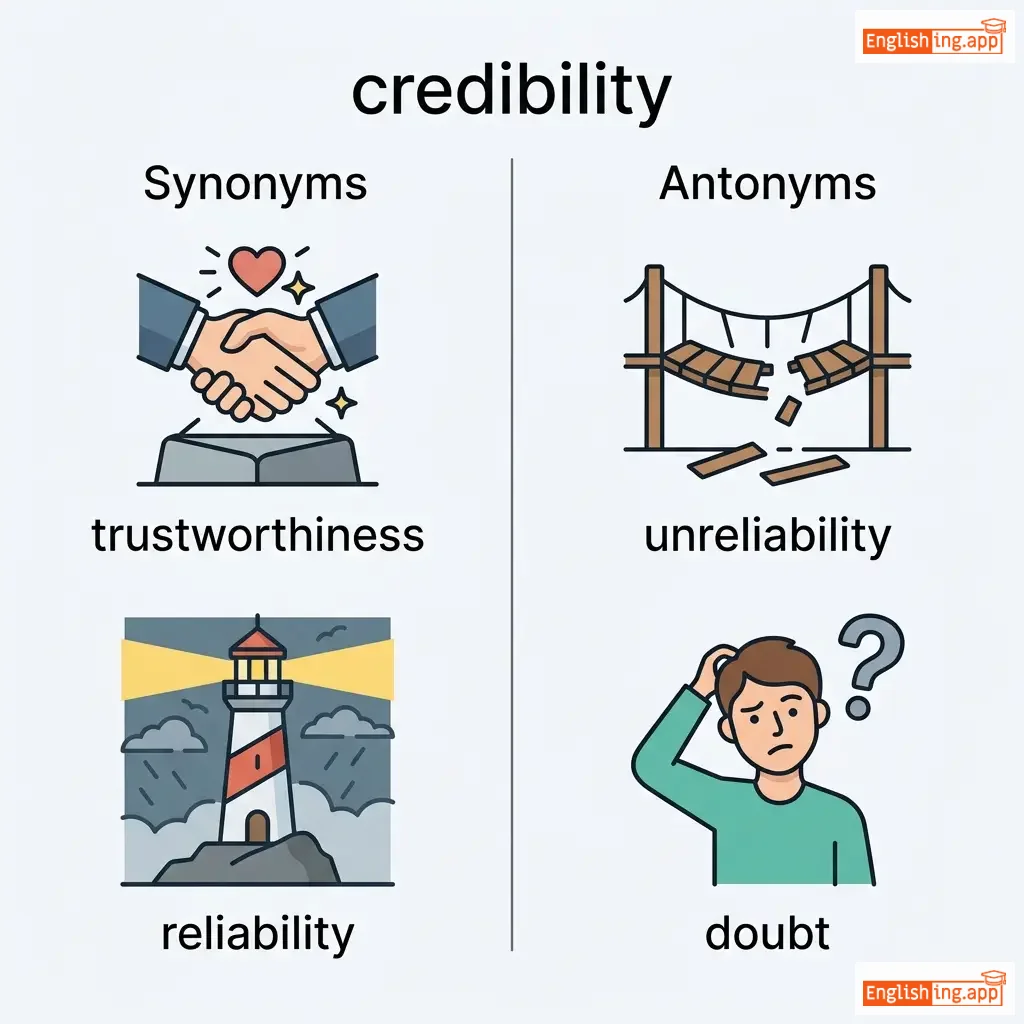
trustworthiness, reliability, believability, integrity
••••••
|
unreliability, doubt
••••••
|
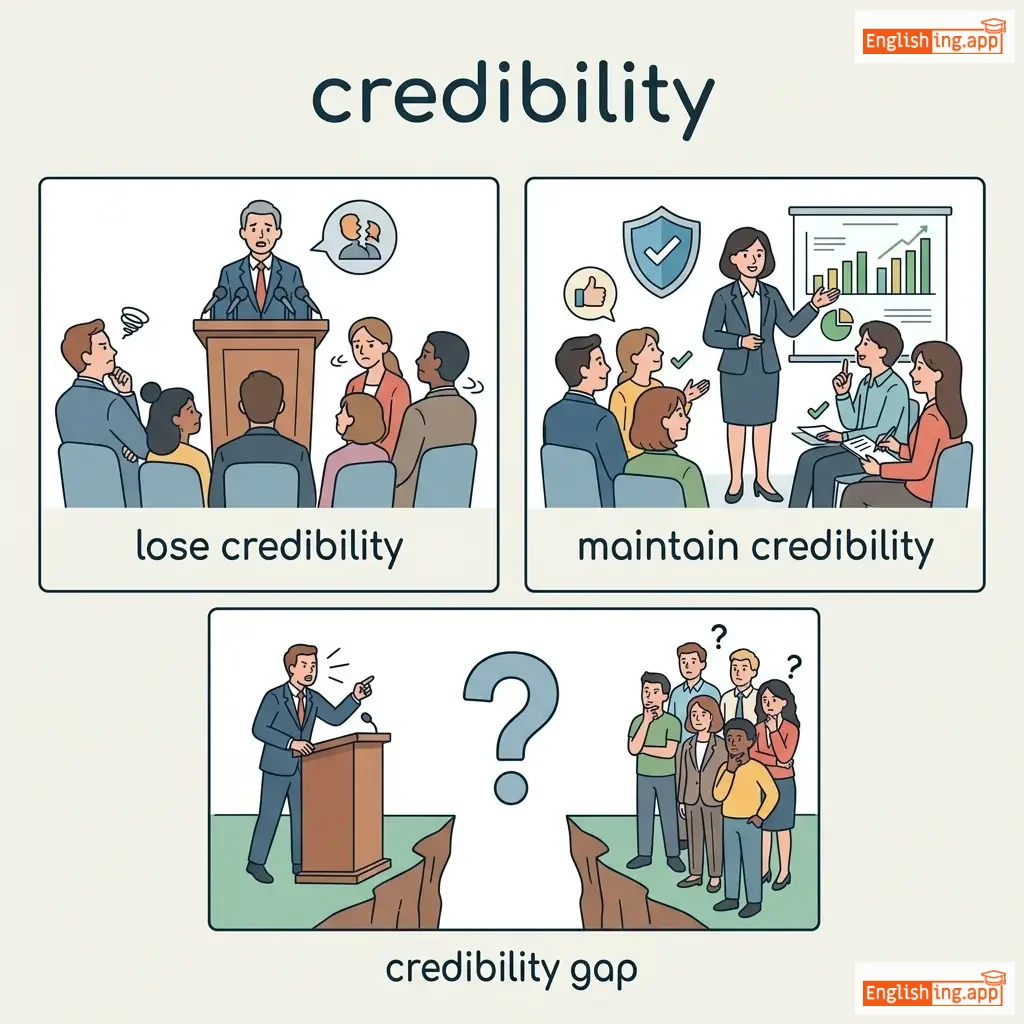
lose credibility, maintain credibility, credibility gap, credibility and trust
••••••
|
获得可信度,需要可靠的工作。
••••••
|
|
🧑🏫
••••••
|
/ˈdɛmənˌstreɪt/
verb
(dēmónstèit)
••••••
|
- •••••• |
展示
zhǎnshì
••••••
|
demonstrated
démónstèitèd
••••••
|
demonstrated
démónstèitèd
••••••
|
demonstrates
démónstèits
••••••
|
demonstrating
démónstrèitīng
••••••
|
to clearly show or prove something through evidence, explanation, or action
••••••
|
The teacher demonstrated the experiment to the class.
老师向班级展示了实验。
••••••
|
老师向班级展示了实验。
Lǎoshī xiàng bānjí zhǎnshìle shíyàn.
••••••
|
demonstrate one's skills
展示自己的技能
••••••
|
to show one's abilities through action or performance
••••••
|
展示自己的技能
zhǎnshì zìjǐ de jìnéng
••••••
|
show, exhibit, display, illustrate, prove
••••••
|
hide, conceal, obscure
••••••
|
demonstrate ability, demonstrate skill, demonstrate interest, demonstrate clearly
••••••
|
展示 + 示范 = 为我展示 (démonstrating)
••••••
|
|
📝
••••••
|
/dɪˈskrɪpʃən/
noun
(dɪsˈkrɪpʃən)
••••••
|

|
描述
miaoshu
••••••
|
- •••••• | - •••••• | - •••••• | - •••••• |
A spoken or written account of a person, object, or event.
••••••
|
The witness gave a detailed description of the suspect. |
目击者详细描述了嫌疑人。
Mùjī zhě xiángxì miáoshùle xiányí rén.
••••••
|
beyond description |
Too great or extreme to be described.
••••••
|
无法描述
wúfǎ miáoshù
••••••
|
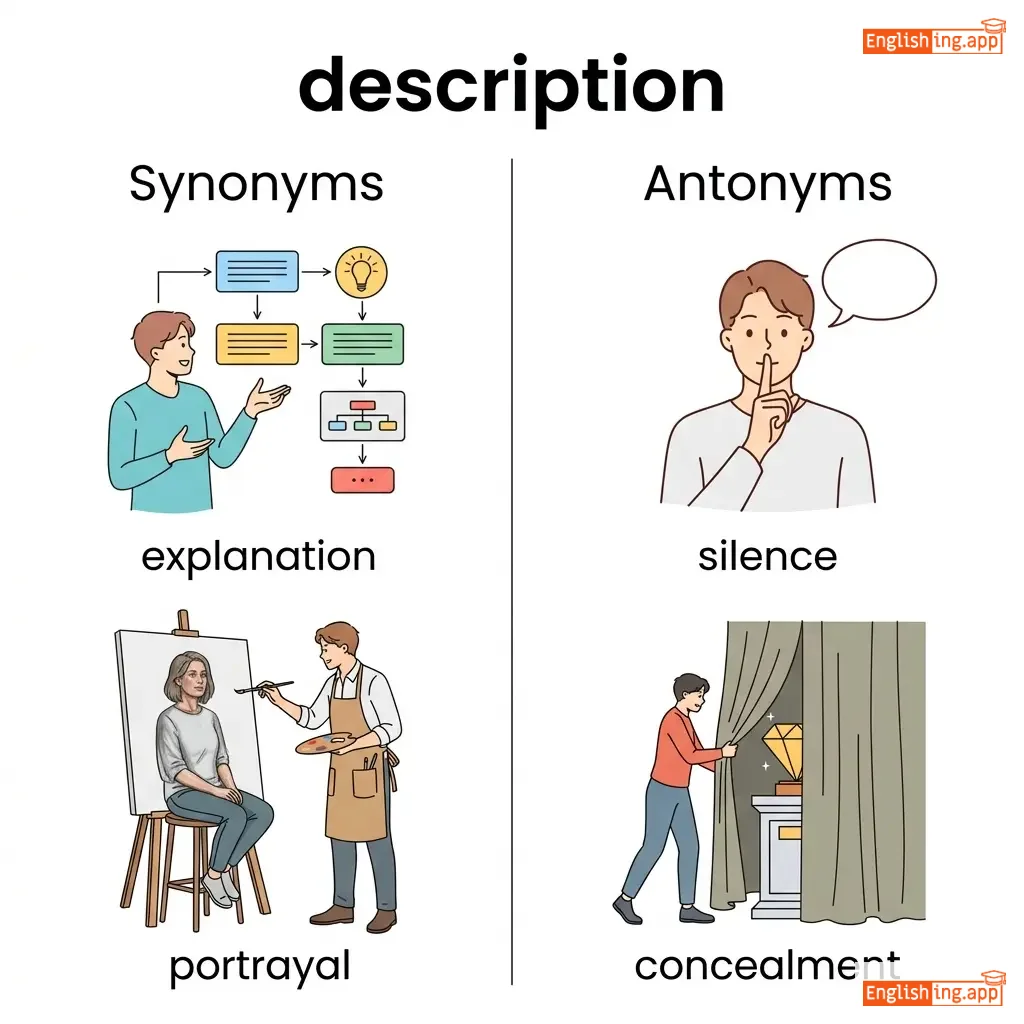
explanation, portrayal, depiction, account, representation
••••••
|
silence, concealment
••••••
|
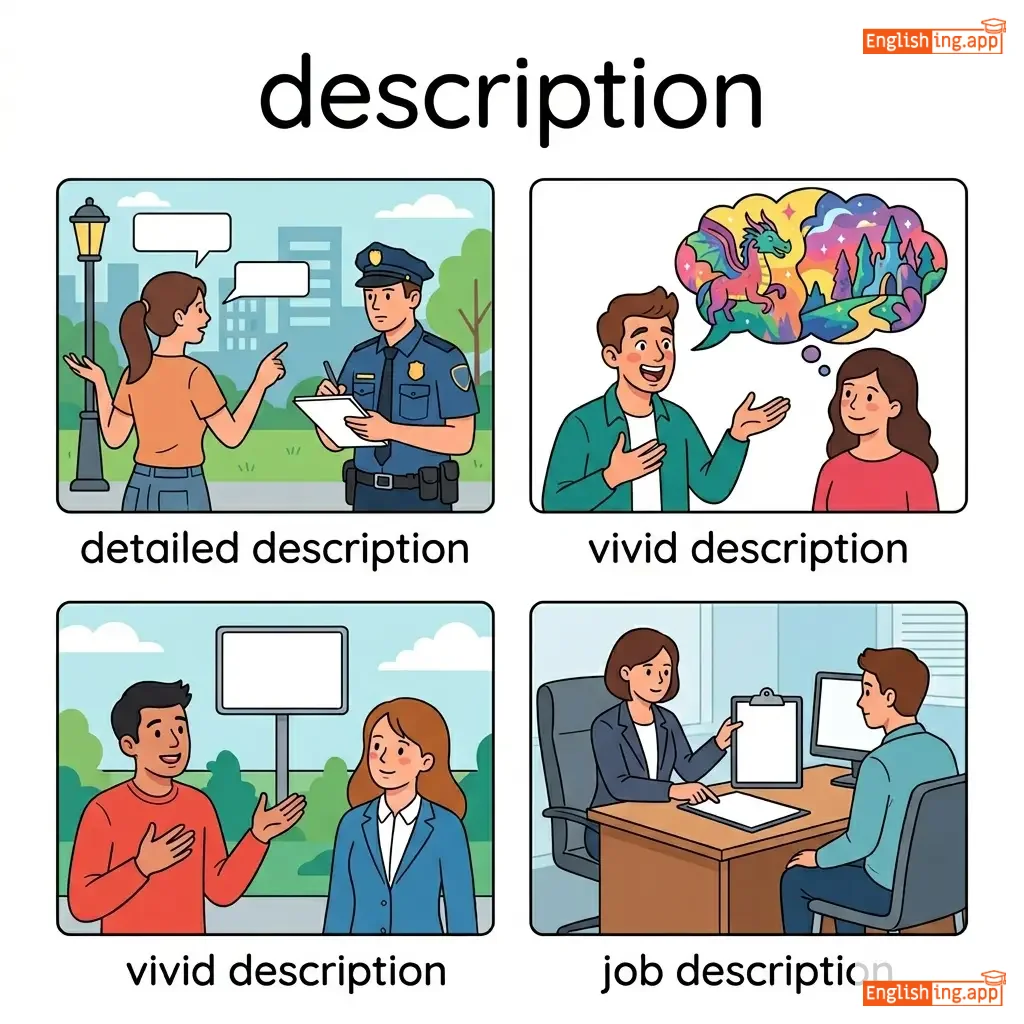
detailed description, vivid description, job description
••••••
|
Description 代表描述 - 描述时,我们给出具体的描述。
••••••
|
|
💥
••••••
|
/dɪˈstrʌkʃən/
noun
(毁灭)
••••••
|
- •••••• |
毁灭
huǐmiè
••••••
|
- •••••• | - •••••• | - •••••• | - •••••• |
the act of causing so much damage to something that it no longer exists or cannot be repaired
••••••
|
The fire caused the destruction of the building. |
火灾造成了建筑物的毁灭。
huǒzāi zàochéngle jiànzhúwù de huǐmiè.
••••••
|
path of destruction |
a series of damaged things left behind
••••••
|
毁灭之路
huǐmiè zhī lù
••••••
|
ruin, devastation, demolition, annihilation
••••••
|
creation, construction, repair
••••••
|
cause destruction, widespread destruction, total destruction, massive destruction
••••••
|
Destruction意味着毁灭 - 一旦某物被摧毁,就是毁灭
••••••
|
|
📉
••••••
|
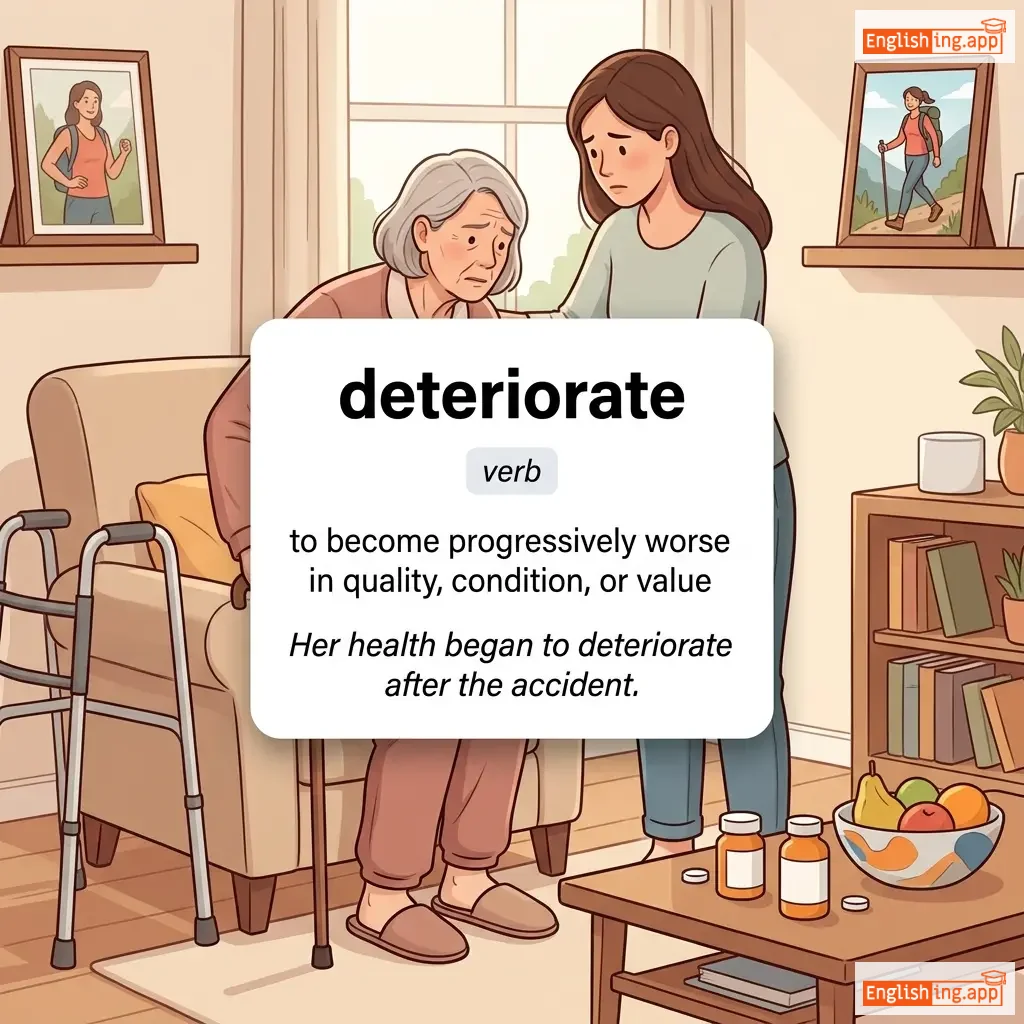
/dɪˈtɪriəreɪt/
verb
(退化)
••••••
|
|
退化
tuìhuà
••••••
|
deteriorated
退化了
••••••
|
deteriorated
退化了
••••••
|
deteriorates
退化
••••••
|
deteriorating
退化中
••••••
|
to become progressively worse in quality, condition, or value
••••••
|
Her health began to deteriorate after the accident.
事故发生后,她的健康开始退化。
••••••
|
事故发生后,她的健康开始退化。
Shìgù fāshēng hòu, tā de jiànkāng kāishǐ tuìhuà.
••••••
|
deteriorate with age
随年龄退化
••••••
|
to get worse as time passes
••••••
|
随年龄退化
Suí niánlíng tuìhuà
••••••
|
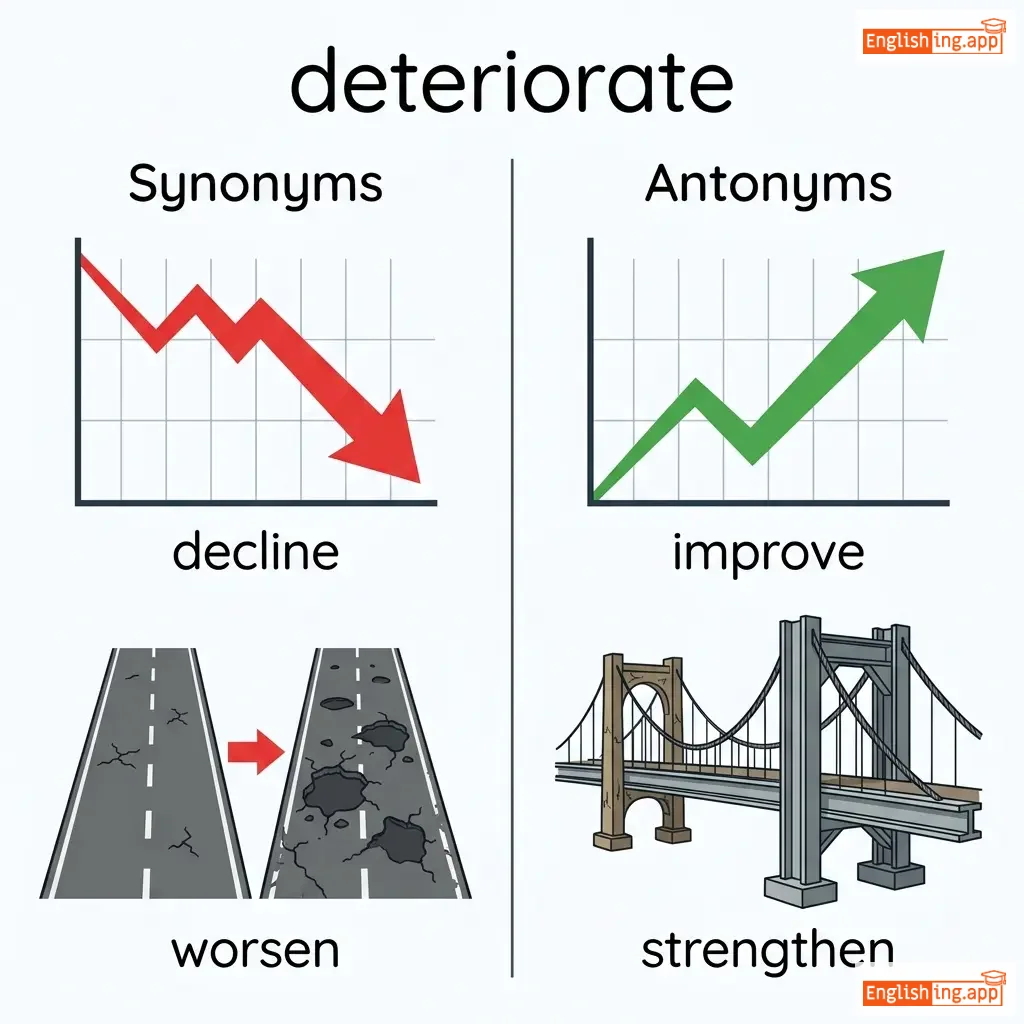
decline, worsen, degenerate, degrade, decay
••••••
|
improve, strengthen, recover
••••••
|
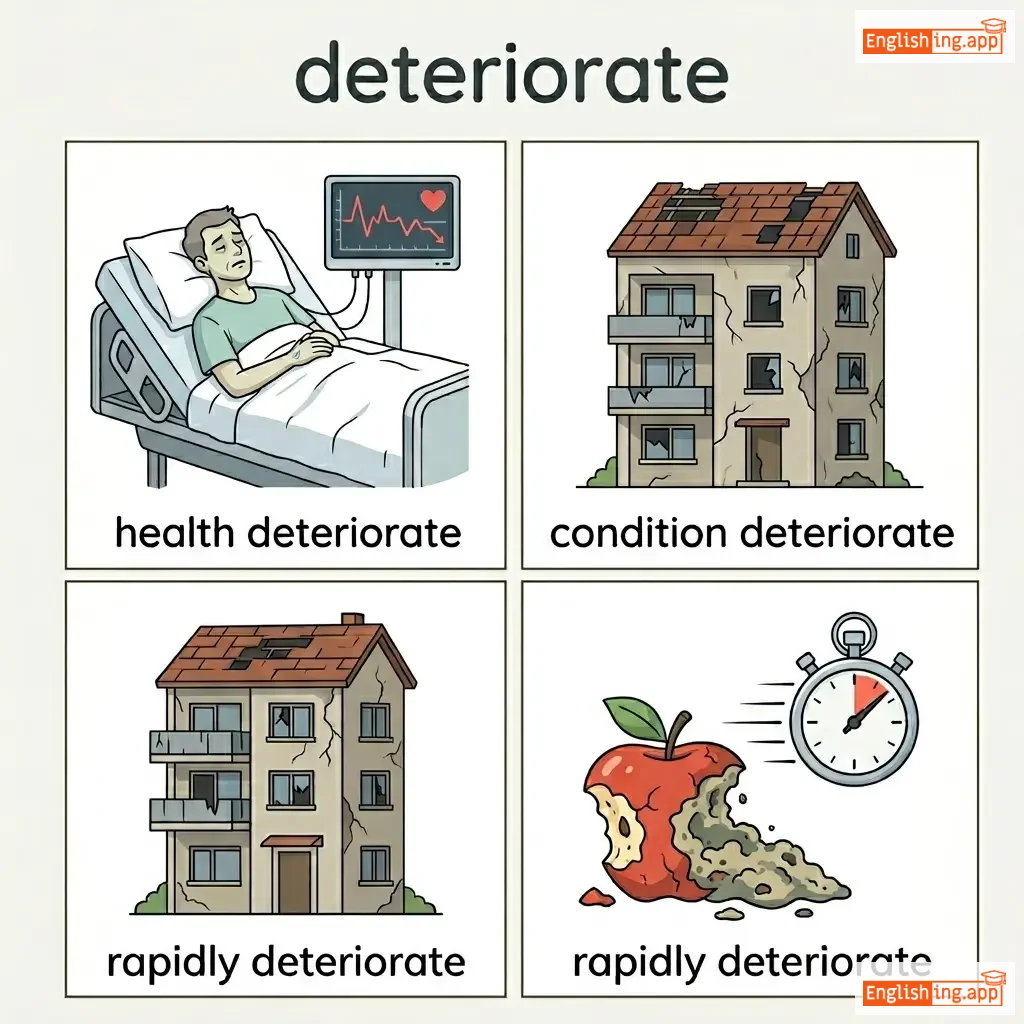
health deteriorate, condition deteriorate, rapidly deteriorate, gradually deteriorate
••••••
|
退化的意思是质量变差,像'腐烂'的感觉。
••••••
|
|
🎥
••••••
|
/ˌdɒkjʊˈmɛntri/
noun/adjective
(纪录片)
••••••
|
- •••••• |
纪录片
jìlùpiàn
••••••
|
- •••••• | - •••••• | - •••••• | - •••••• |
A film or television program that provides a factual record or report.
••••••
|
We watched a documentary about climate change. |
我们观看了关于气候变化的纪录片。
Wǒmen guānkànle guānyú qìhòu biànhuà de jìlùpiàn.
••••••
|
- •••••• | - •••••• | - •••••• |
film, program, report, feature, nonfiction film
••••••
|
fiction, drama
••••••
|
wildlife documentary, historical documentary, documentary film, TV documentary
••••••
|
Document + Story = 纪录片, 讲述真实故事的电影。
••••••
|
|
📚
••••••
|
/ˌɛdʒuˈkeɪʃənəl/
adjective
(édukeishénàl)
••••••
|
|
教育的
jiaoyu de
••••••
|
- •••••• | - •••••• | - •••••• | - •••••• |
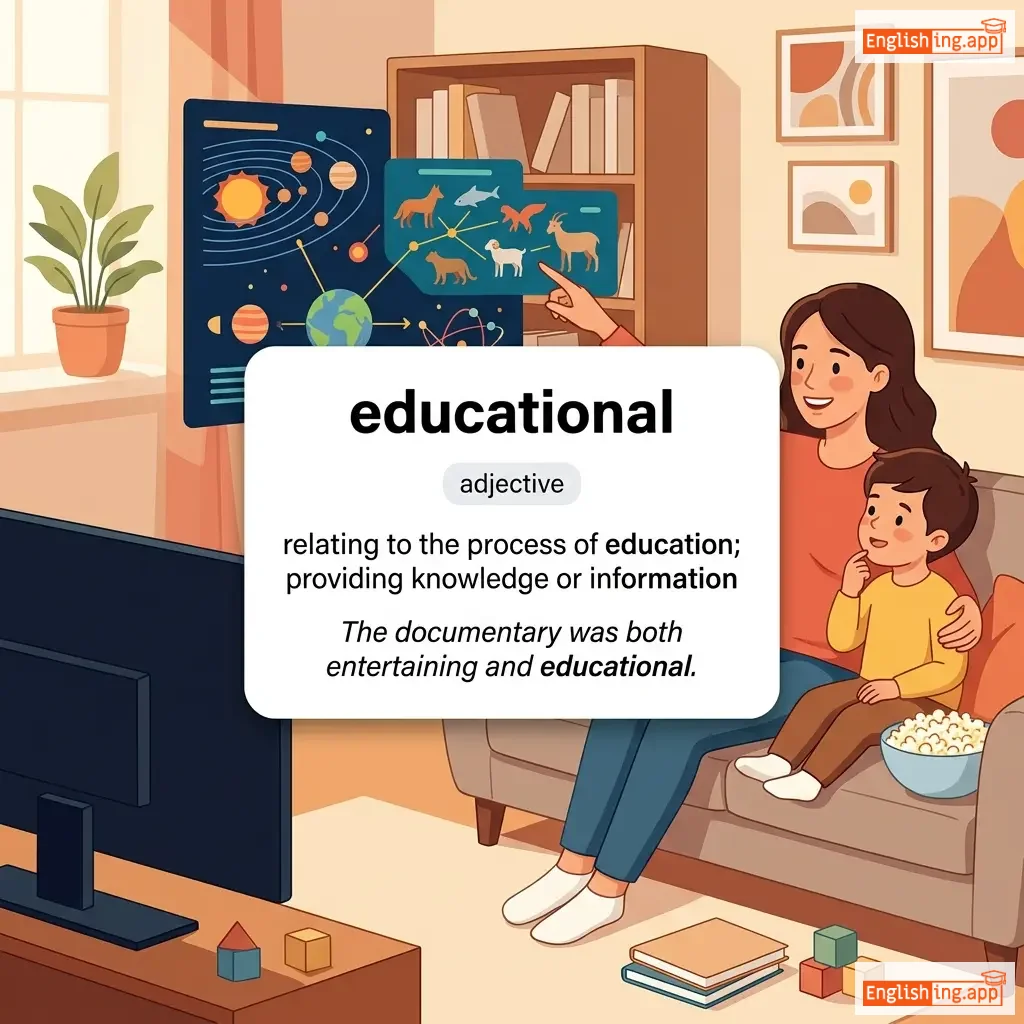
relating to the process of education; providing knowledge or information
••••••
|
The documentary was both entertaining and educational.
这部纪录片既有娱乐性又具有教育意义。
••••••
|
这部纪录片既有娱乐性又具有教育意义。
Zhe bu jilupian ji you yulexing you juyou jiaoyu yiyi.
••••••
|
- •••••• | - •••••• | - •••••• |
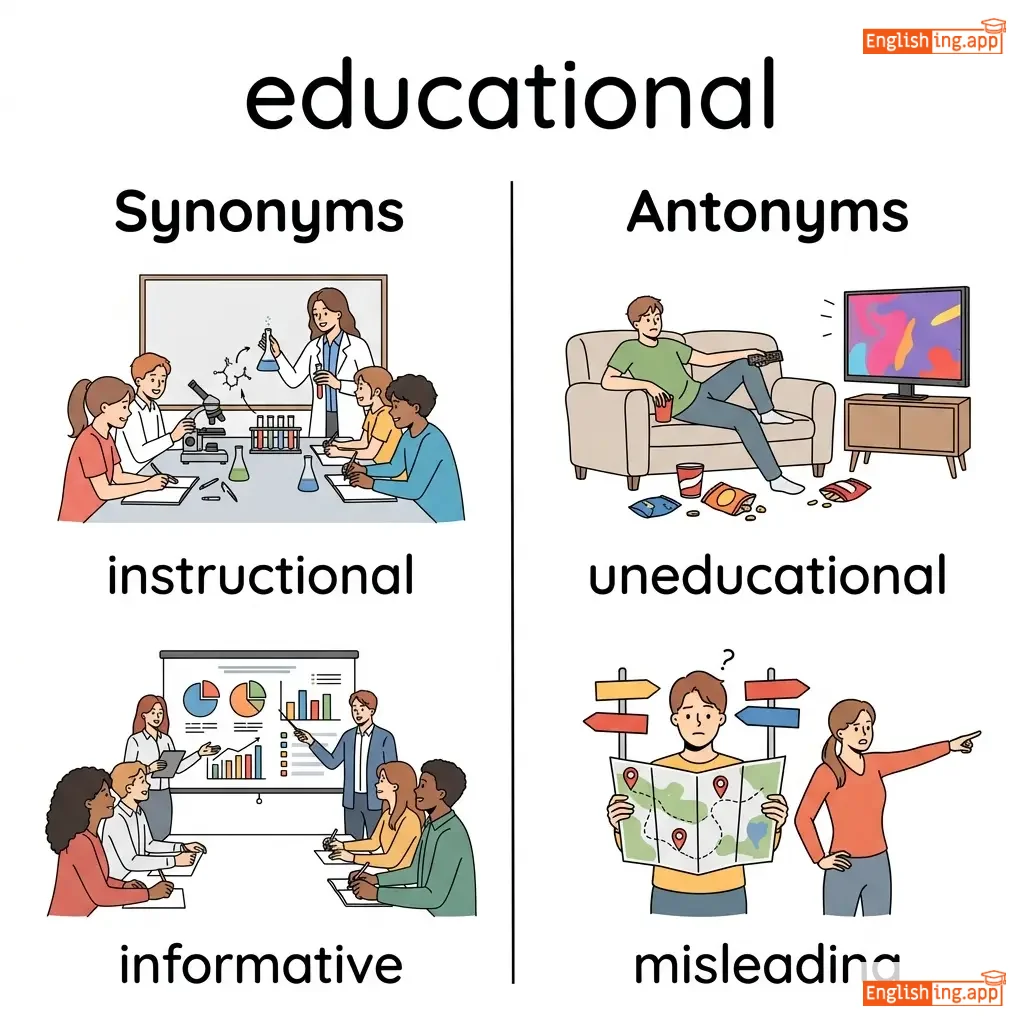
instructional, informative, enlightening, didactic, academic
••••••
|
uneducational, misleading, uninformative
••••••
|
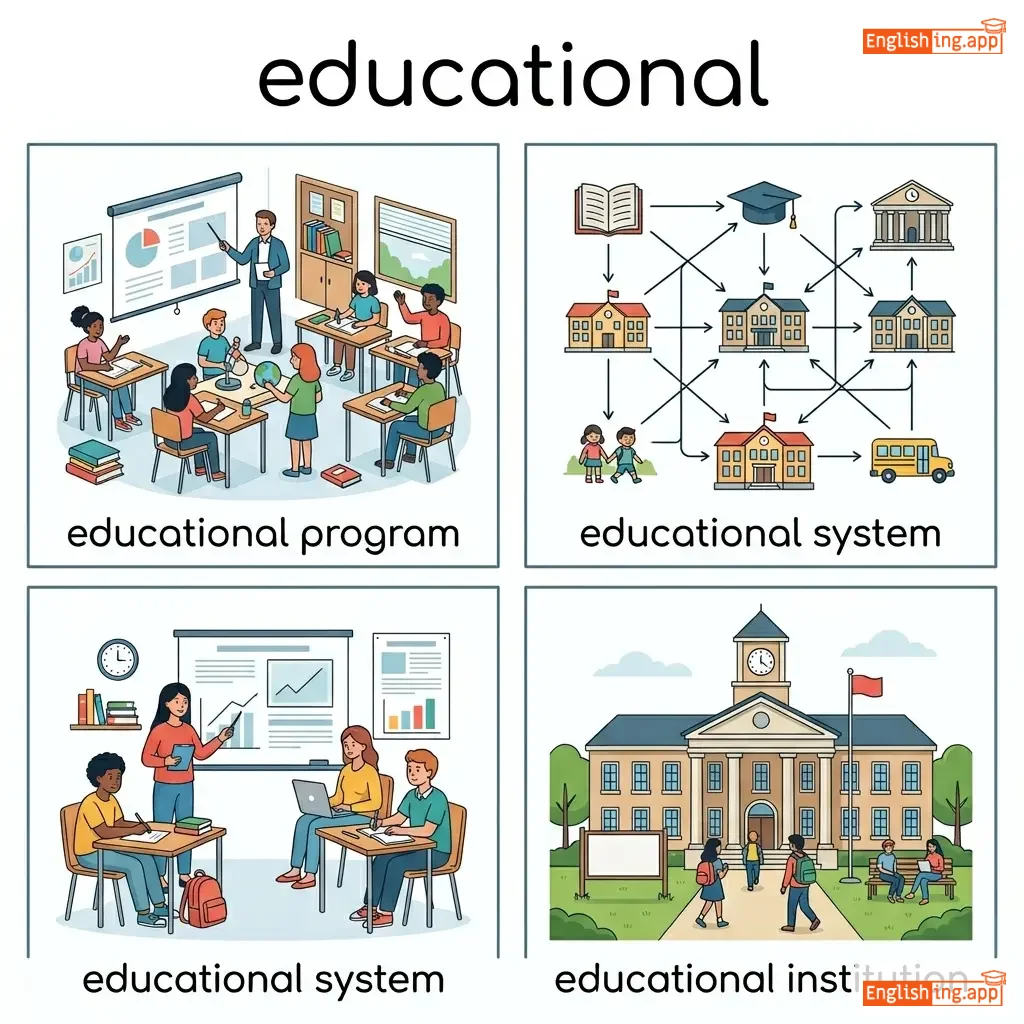
educational program, educational system, educational institution, educational material
••••••
|
Educational意味着与学习相关,就像我们在学校使用的学习资料一样。
••••••
|
|
✅
••••••
|
/ɪˈfɛktɪvli/
adverb
(yǐxiàoli)
••••••
|
- •••••• |
有效地
youxiao de
••••••
|
- •••••• | - •••••• | - •••••• | - •••••• |
in a way that produces the desired result; efficiently and successfully
••••••
|
The team worked together effectively to finish the project on time. |
团队有效地合作,按时完成了项目。
Tuandui youxiao de hezuo, anshi wancheng le xiangmu.
••••••
|
- •••••• | - •••••• | - •••••• |
efficiently, successfully, productively, powerfully
••••••
|
ineffectively, poorly, weakly
••••••
|
work effectively, communicate effectively, manage effectively, use effectively
••••••
|
Effective 代表成功,而 effectively 代表 ✅ 高效地完成任务。
••••••
|
|
💓
••••••
|
/ɪˈməʊʃənəli/
adverb
(情感上)
••••••
|
- •••••• |
情感上
qínggǎn shàng
••••••
|
- •••••• | - •••••• | - •••••• | - •••••• |
in a way that relates to a person's feelings or emotions
••••••
|
She became emotionally attached to her pet. |
她变得情感上依赖她的宠物。
Tā biàn dé qínggǎn shàng yīlài tā de chǒngwù.
••••••
|
emotionally drained |
feeling exhausted due to strong emotional experiences
••••••
|
情感上疲惫
qínggǎn shàng píbèi
••••••
|
feelingly, sensitively, passionately, sentimentally, affectively
••••••
|
coldly, indifferently
••••••
|
emotionally strong, emotionally stable, emotionally attached, emotionally drained
••••••
|
Emotion + ally = 与某人或某事建立情感上的联系。
••••••
|
|
🏗️
••••••
|
/ˌɛndʒɪˈnɪərɪŋ/
noun
(工程学)
••••••
|

|
工程学
gongchengxue
••••••
|
- •••••• | - •••••• | - •••••• | - •••••• |
The branch of science and technology concerned with the design, building, and use of engines, machines, and structures.
••••••
|
She studied civil engineering at university. |
她在大学学习了土木工程。
Tā zài dàxué xuéxíle tǔmù gōngchéng.
••••••
|
social engineering |
manipulating people into giving up information or taking certain actions
••••••
|
社会工程学
shèhuì gōngchéngxué
••••••
|
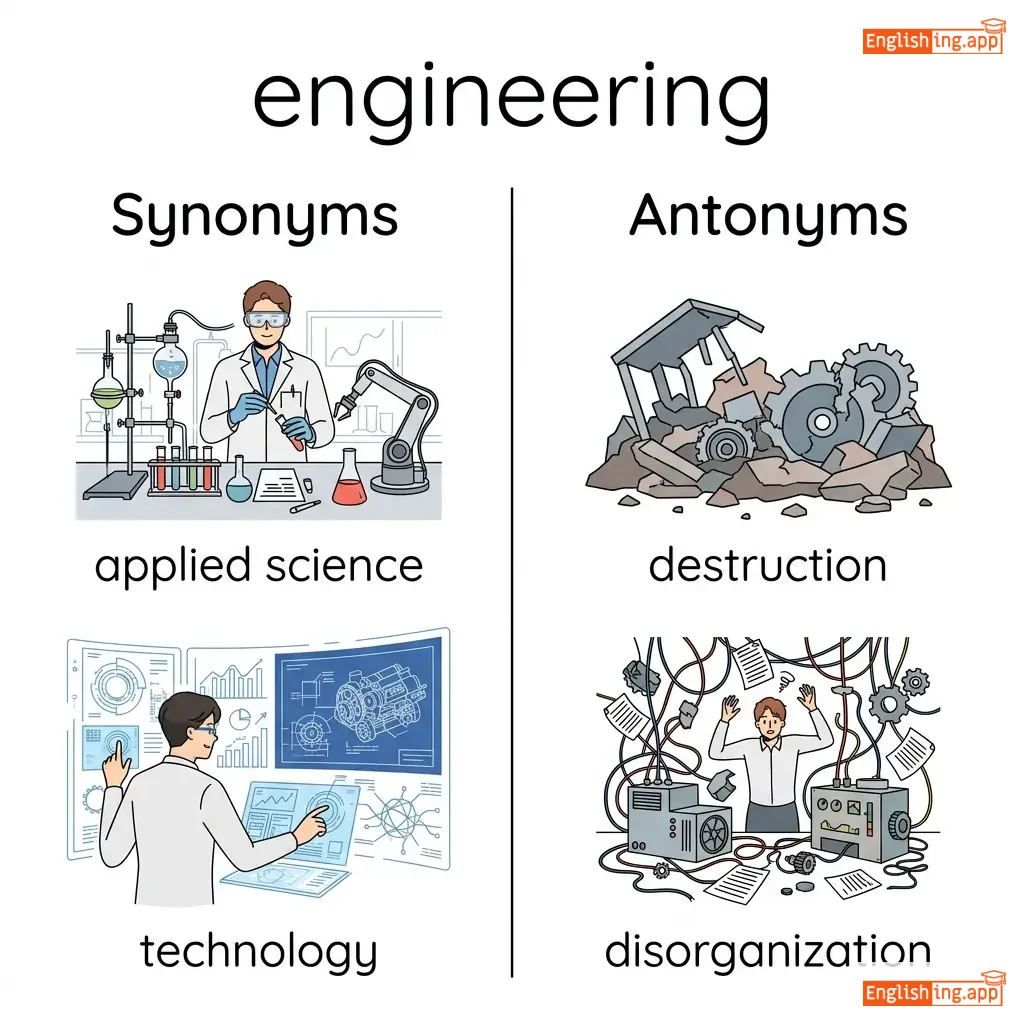
applied science, technology, mechanics, construction
••••••
|
destruction, disorganization
••••••
|
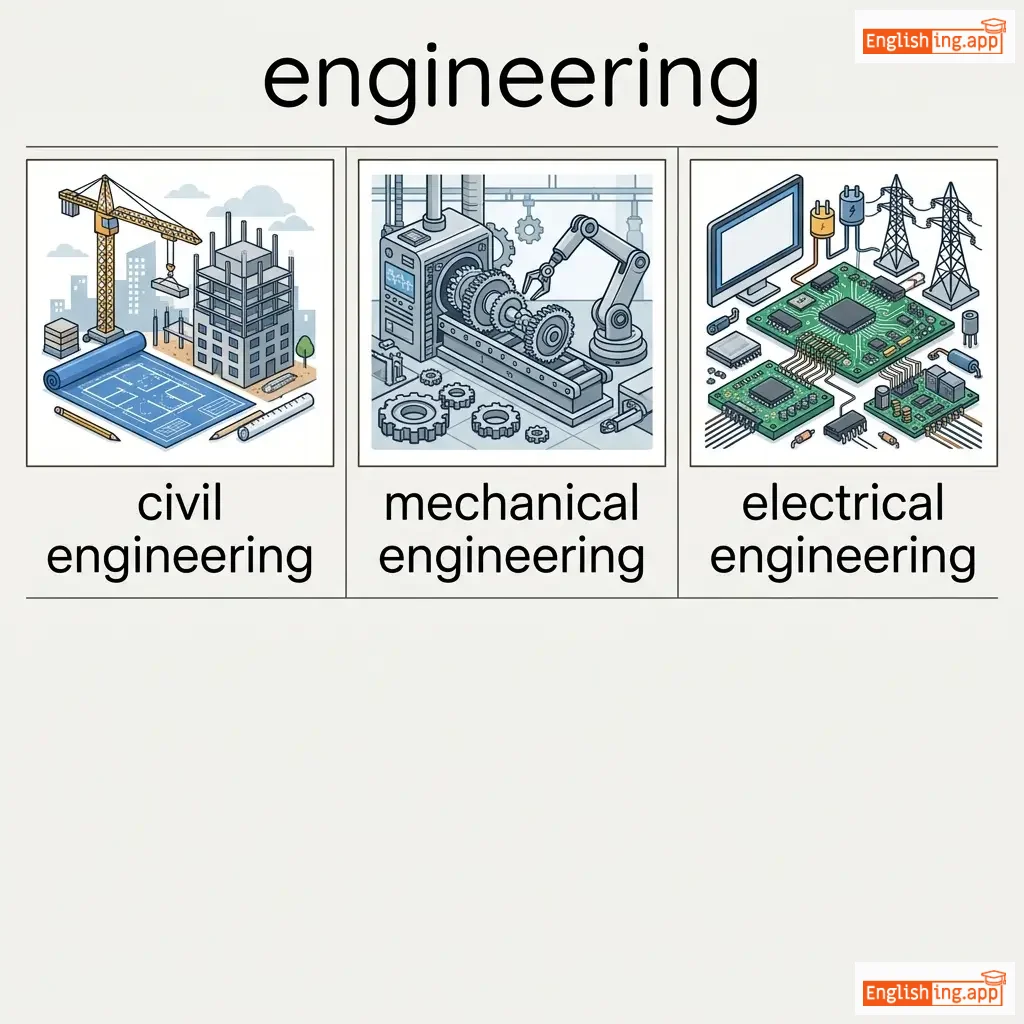
civil engineering, mechanical engineering, electrical engineering, software engineering
••••••
|
工程学通过技术设计和建设创新的解决方案 (jìshù).
••••••
|
|
🎓
••••••
|
/ɪkˈspɪəriənst/
adjective
(ikspīrīenst)
••••••
|
- •••••• |
有经验的
yǒu jīngyàn de
••••••
|
- •••••• | - •••••• | - •••••• | - •••••• |
having knowledge or skill in a particular field gained through experience
••••••
|
She is an experienced teacher who knows how to handle difficult students.
她是一个经验丰富的老师,知道如何处理困难的学生。
••••••
|
她是一个经验丰富的老师,知道如何处理困难的学生。
Tā shì yīgè jīngyàn fēngfù de lǎoshī, zhīdào rúhé chǔlǐ kùnnán de xuéshēng.
••••••
|
experienced hand
经验丰富的人
••••••
|
a person who has a lot of experience in a particular job or activity
••••••
|
经验丰富的人
jīngyàn fēngfù de rén
••••••
|
skilled, seasoned, proficient, knowledgeable, expert
••••••
|
inexperienced, unskilled, novice
••••••
|
experienced professional, experienced worker, experienced in, highly experienced
••••••
|
有经验的意味着有经历 - 有经验的人就是经验丰富
••••••
|
|
🚀
••••••
|
/ˌekspləˈreɪʃən/
noun
(kàipò)
••••••
|
- •••••• |
探索
tàn suǒ
••••••
|
- •••••• | - •••••• | - •••••• | - •••••• |
the action of traveling through or studying an area to learn more about it
••••••
|
Space exploration has expanded our understanding of the universe. |
太空探索扩展了我们对宇宙的理解。
Tàikōng tàn suǒ kuòzhǎnle wǒmen duì yǔzhòu de lǐjiě.
••••••
|
exploration of ideas |
examining different thoughts or concepts in depth
••••••
|
思想的探索
sīxiǎng de tàn suǒ
••••••
|
investigation, discovery, study, research, examination
••••••
|
ignorance, neglect
••••••
|
space exploration, oil exploration, exploration mission, exploration of
••••••
|
探索意味着寻找未知的世界
••••••
|
|
🤸
••••••
|
/ˌflɛksəˈbɪləti/
noun
(弗莱克西比利提)
••••••
|


|
灵活性
línghuóxìng
••••••
|
- •••••• | - •••••• | - •••••• | - •••••• |
the ability to bend easily without breaking or to adapt to new situations
••••••
|
Flexibility is essential for success in a changing work environment. |
在变化的工作环境中,灵活性对成功至关重要。
zài biànhuà de gōngzuò huánjìng zhōng, línghuóxìng duì chénggōng zhìguān zhòngyào.
••••••
|
mental flexibility |
the ability to think about different things at the same time or adapt to new ideas
••••••
|
思维灵活
sīwéi línghuó
••••••
|
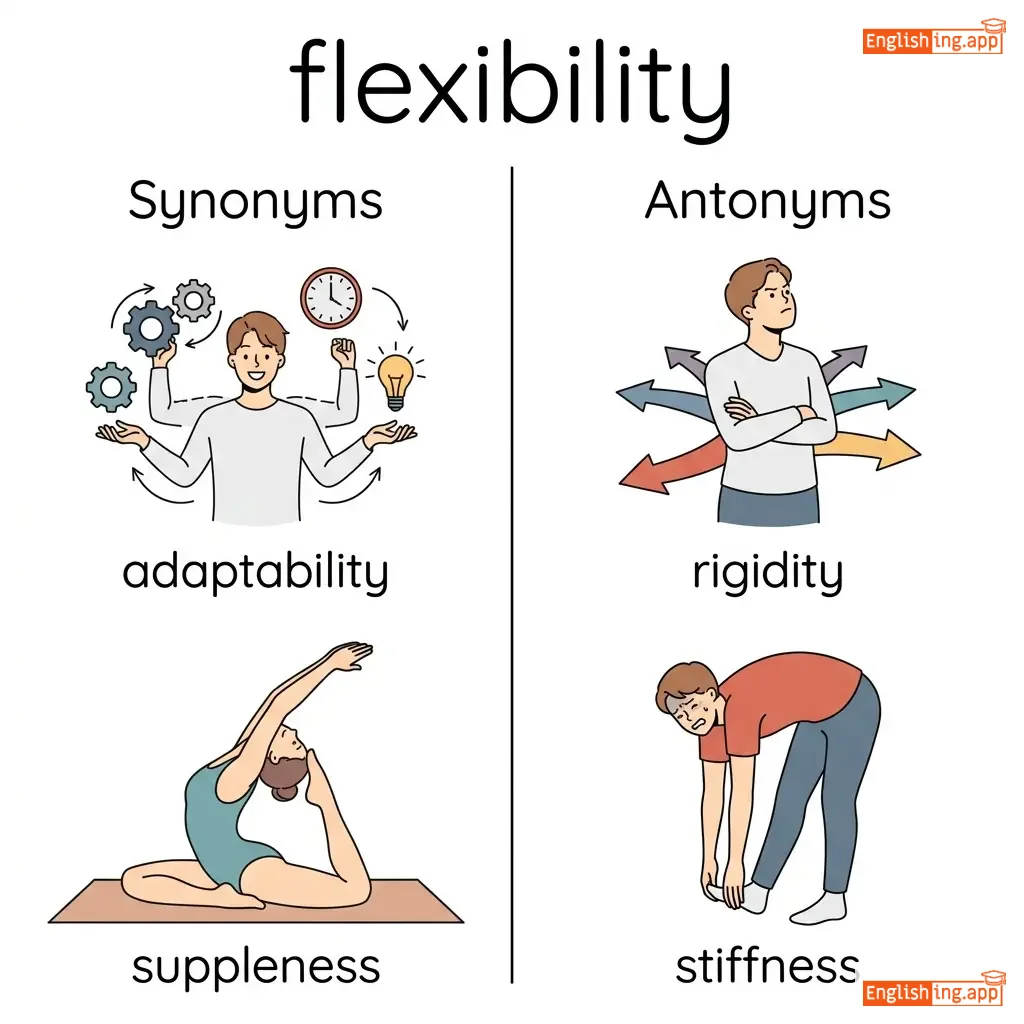
adaptability, suppleness, versatility, resilience, elasticity
••••••
|
rigidity, stiffness, inflexibility
••••••
|
physical flexibility, job flexibility, schedule flexibility, flexibility training
••••••
|
灵活性 = 灵活的,像瑜伽使身体和思想都变得灵活!
••••••
|
|
💰
••••••
|
/ˈfʌndˌreɪzɪŋ/
noun
(fāndùo lěi zīng)
••••••
|
- •••••• |
筹款活动
choukuan huodong
••••••
|
- •••••• | - •••••• | - •••••• | - •••••• |
the process of collecting money for a cause or project
••••••
|
The organization is organizing a fundraising event. |
该组织正在组织一个筹款活动。
Gai zuzhi zhengzai zuzhi yige choukuan huodong.
••••••
|
- •••••• | - •••••• | - •••••• |
charity event, donation drive, campaign, benefit
••••••
|
spending, wasting
••••••
|
fundraising campaign, fundraising event, fundraising dinner
••••••
|
筹款 (fund) 活动 (raise), fundraising!
••••••
|
|
⚡
••••••
|
/ɪˈmiːdiətli/
adverb
(immediately)
••••••
|
- •••••• |
立即
lìjí
••••••
|
- •••••• | - •••••• | - •••••• | - •••••• |
at once; without delay
••••••
|
She responded immediately to the emergency call. |
她立即响应了紧急电话。
Tā lìjí xiǎngyìngle jǐnjí diànhuà.
••••••
|
immediately after |
right after something happens
••••••
|
立即之后
lìjí zhīhòu
••••••
|
instantly, promptly, directly, quickly, right away
••••••
|
later, eventually, afterward
••••••
|
respond immediately, happen immediately, immediately after, immediately before
••••••
|
立即表示立刻做某事,例如立即回应电话。
••••••
|
|
💡
••••••
|
/ˌɪnspəˈreɪʃən/
noun
(灵感)
••••••
|

|
灵感
linggan
••••••
|
- •••••• | - •••••• | - •••••• | - •••••• |
the process of being mentally stimulated to do or feel something creative or positive
••••••
|
Her courage was a great inspiration to others.
她的勇气是其他人的巨大灵感。
••••••
|
她的勇气是其他人的巨大灵感。
Tā de yǒngqì shì qítā rén de jùdà línggǎn.
••••••
|
source of inspiration
灵感的来源
••••••
|
something or someone that motivates or encourages creativity
••••••
|
灵感的来源
línggǎn de láiyuán
••••••
|
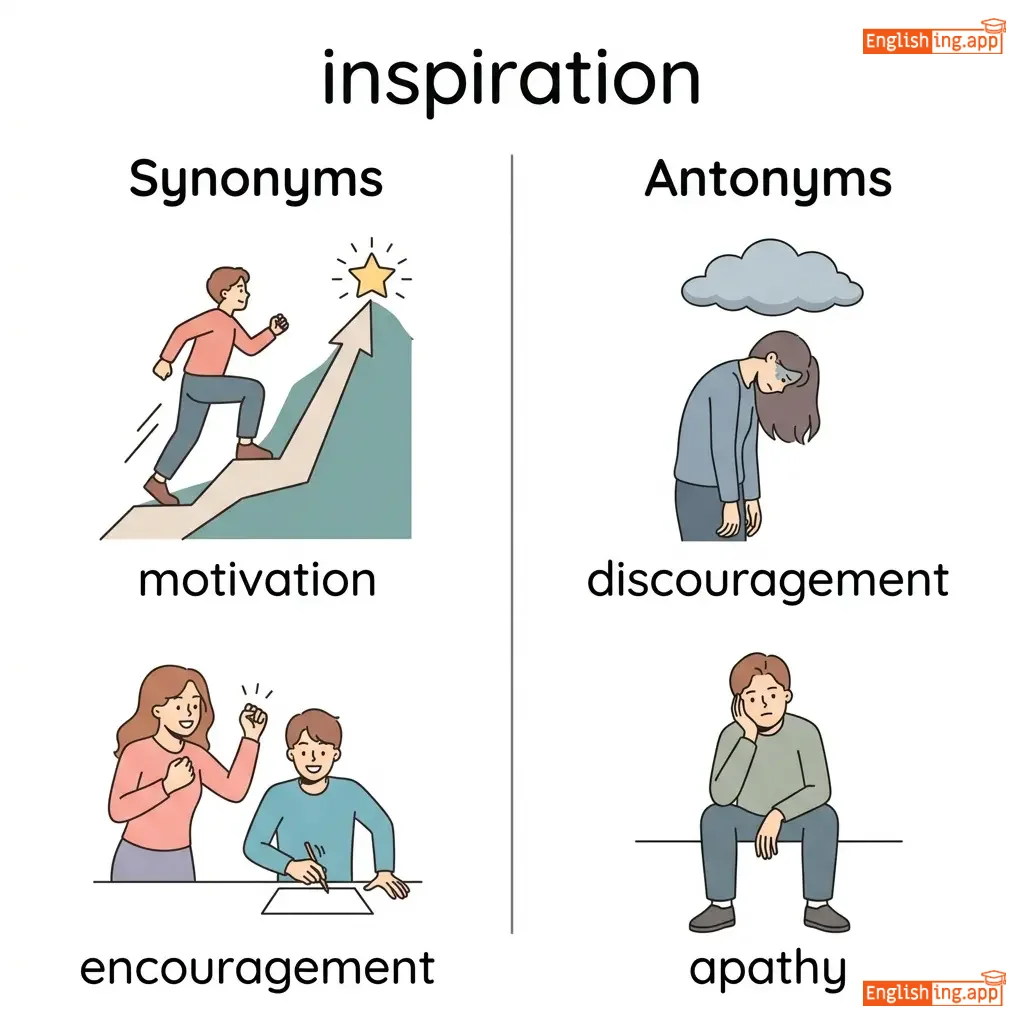
motivation, encouragement, influence, stimulus, drive
••••••
|
discouragement, apathy
••••••
|
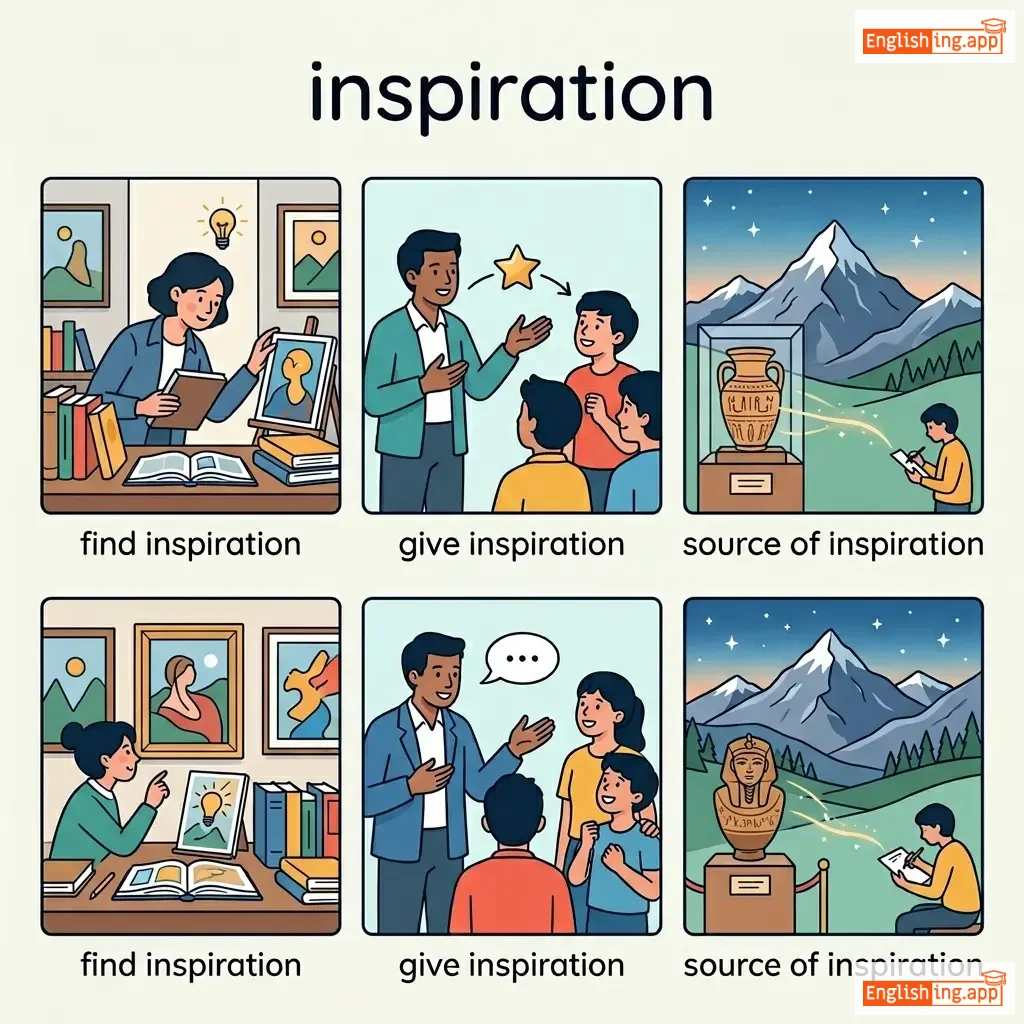
find inspiration, give inspiration, source of inspiration, draw inspiration
••••••
|
灵感像火花,点燃创造力的火焰。
••••••
|
|
🖱️
••••••
|
/ɪnˈtærɪktɪv/
adjective
••••••
|
|
- •••••• | - •••••• | - •••••• | - •••••• | - •••••• |
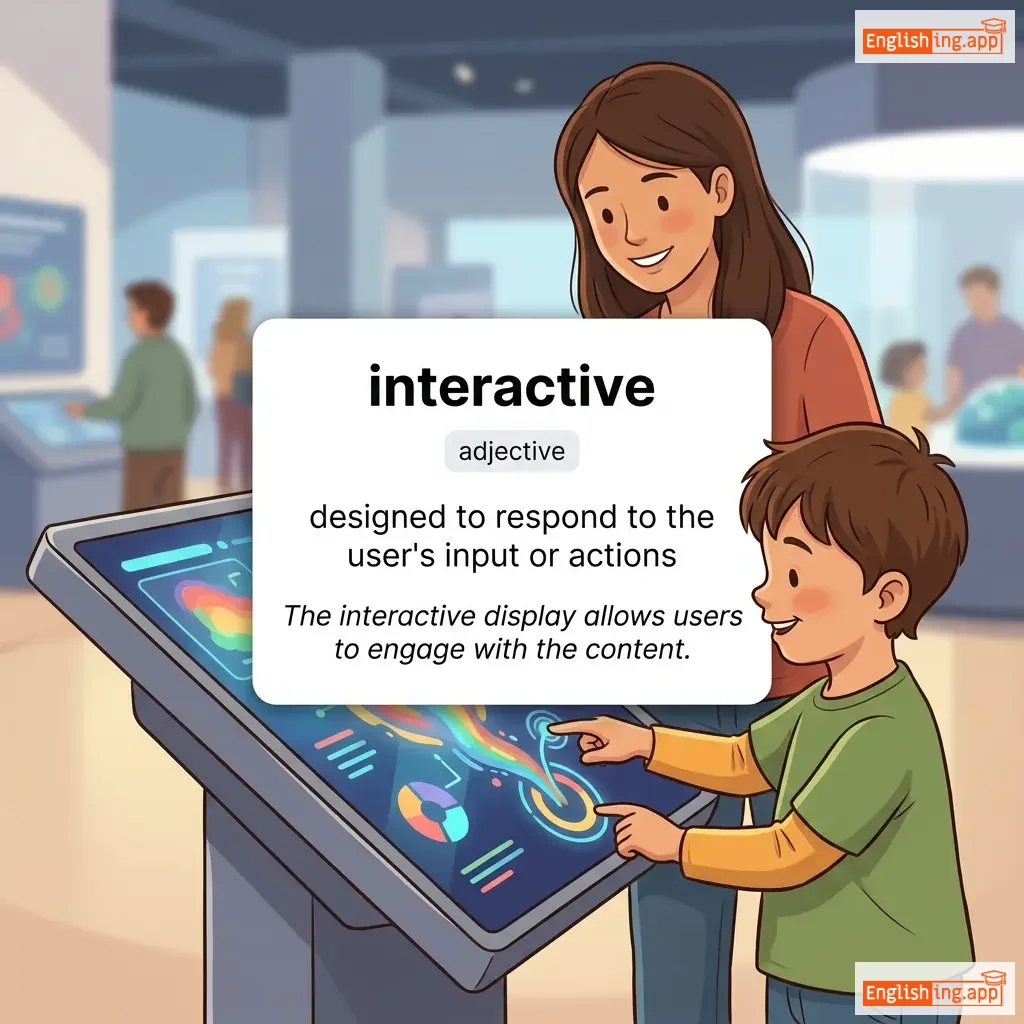
designed to respond to the user's input or actions
••••••
|
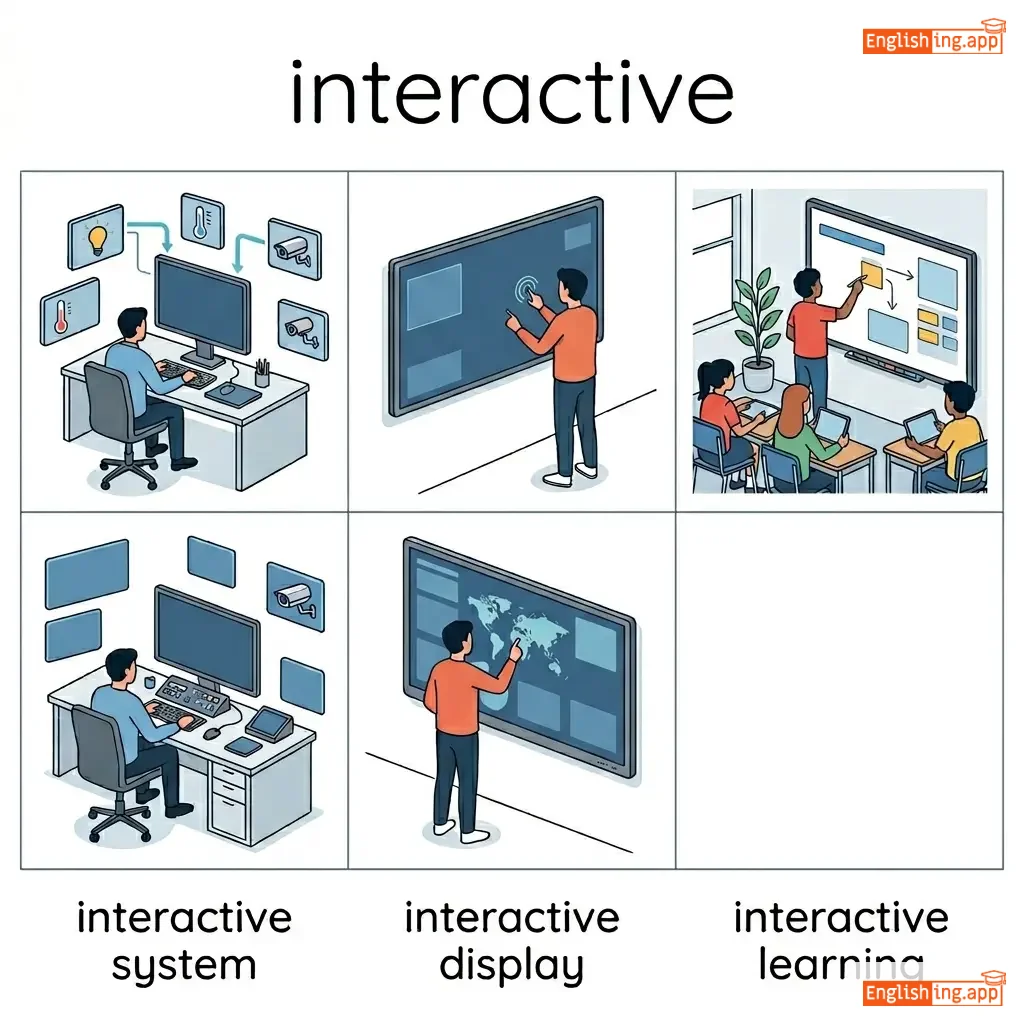
The interactive display allows users to engage with the content. |
- •••••• | - •••••• | - •••••• | - •••••• |
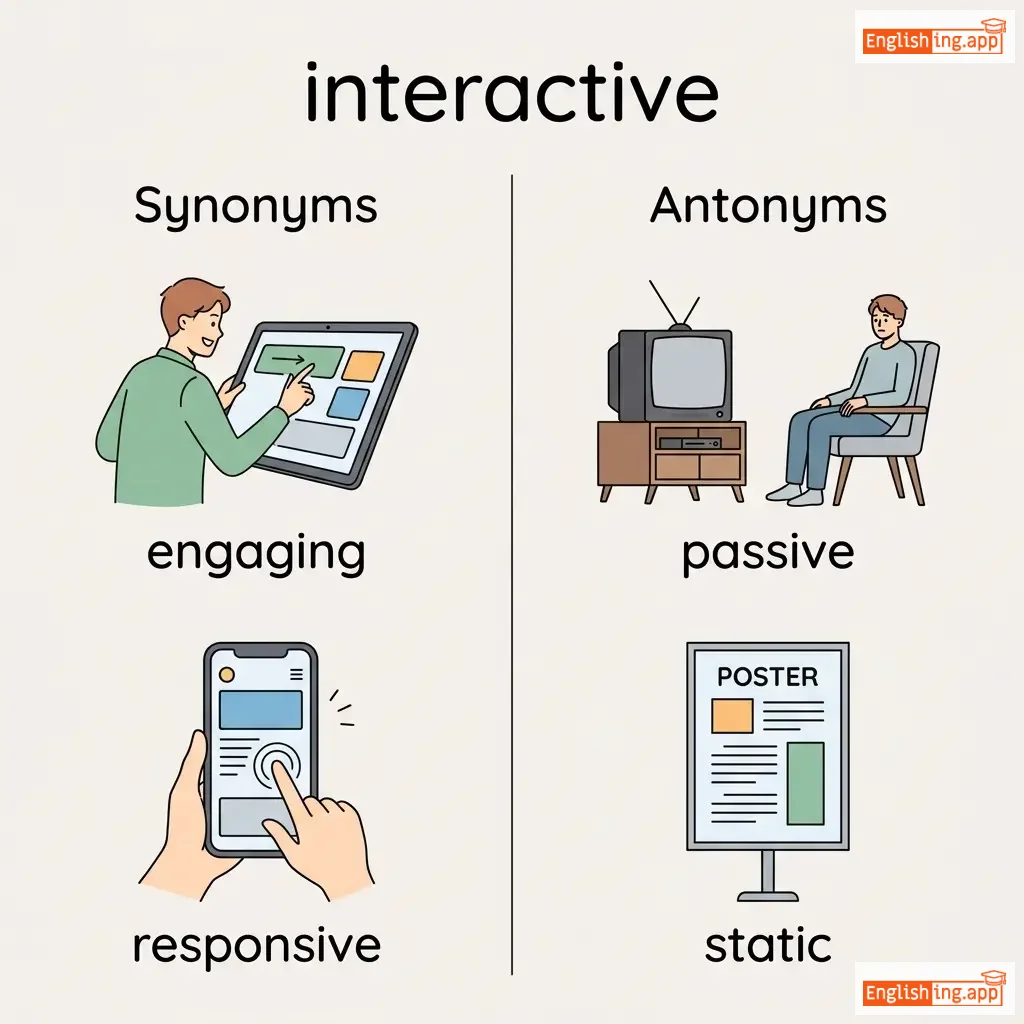
engaging, responsive, participatory, communicative
••••••
|
passive, static, unresponsive
••••••
|
interactive system, interactive display, interactive learning, interactive website
••••••
|
No •••••• |

