Словари

Словарь английского языка | Значения слов, определения и примеры

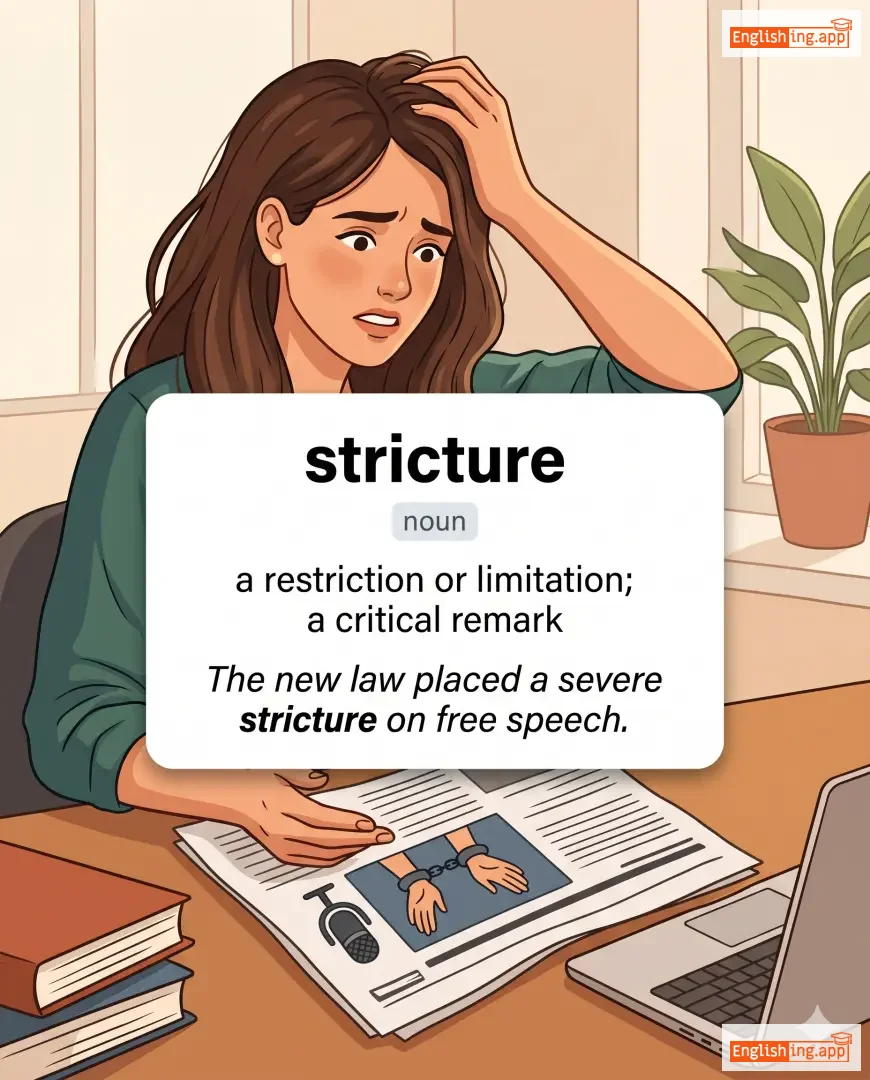
stricture definition card — visual illustration of the meaning
noun C2
/ˈstrɪk.tʃər/
限制,批评 (xianzhi, piping)

a restriction or limitation; a critical remark

"The new law placed a severe stricture on free speech."

"新法律对言论自由施加了严格的限制。" (Xin falu dui yanlun ziyou shijia le yange de xianzhi.)
noun C2
/ˈstrɪndʒənsi/
严格 (yángé)

the quality of being strict, precise, or severe

"The stringency of the new rules surprised everyone."

"新规则的严格性让所有人都感到惊讶。" (Xīn guīzé de yángé xìng ràng suǒyǒu rén dōu gǎndào jīngyà.)
noun C2
/ˈstrɪplɪŋ/
年轻人 (niánqīngrén)

a young man who is not yet fully grown

"The stripling dreamed of becoming a brave knight."

"那个年轻人梦想成为一个勇敢的骑士。" (Nàgè niánqīngrén mèngxiǎng chéngwéi yīgè yǒnggǎn de qíshì.)
verb C2
/ˈstʌltɪfaɪ/
使某人或某物显得愚蠢,或阻碍效率和热情 (shǐ mǒu rén huò mǒu wù xiǎn dé yú chǔn, huò zǔ ài xiào lǜ hé rè qíng)

to make someone or something appear foolish, or to hinder effectiveness and enthusiasm

"The repetitive tasks seemed to stultify the workers' creativity."

"重复的任务似乎使工人的创造力变得迟钝。" (Chóng fù de rèn wu shì hū shǐ gōng rén de chuàng zào lì biàn dé chí dùn.)
verb C2
/ˈstjuːpɪˌfaɪ/
使惊讶 (shi jingya)

to make someone unable to think clearly, usually because of surprise or shock

"The magician's tricks stupefied the audience."
"魔术师的把戏让观众惊呆了。" (Moshushi de baxi rang guanzhong jingdai le.)
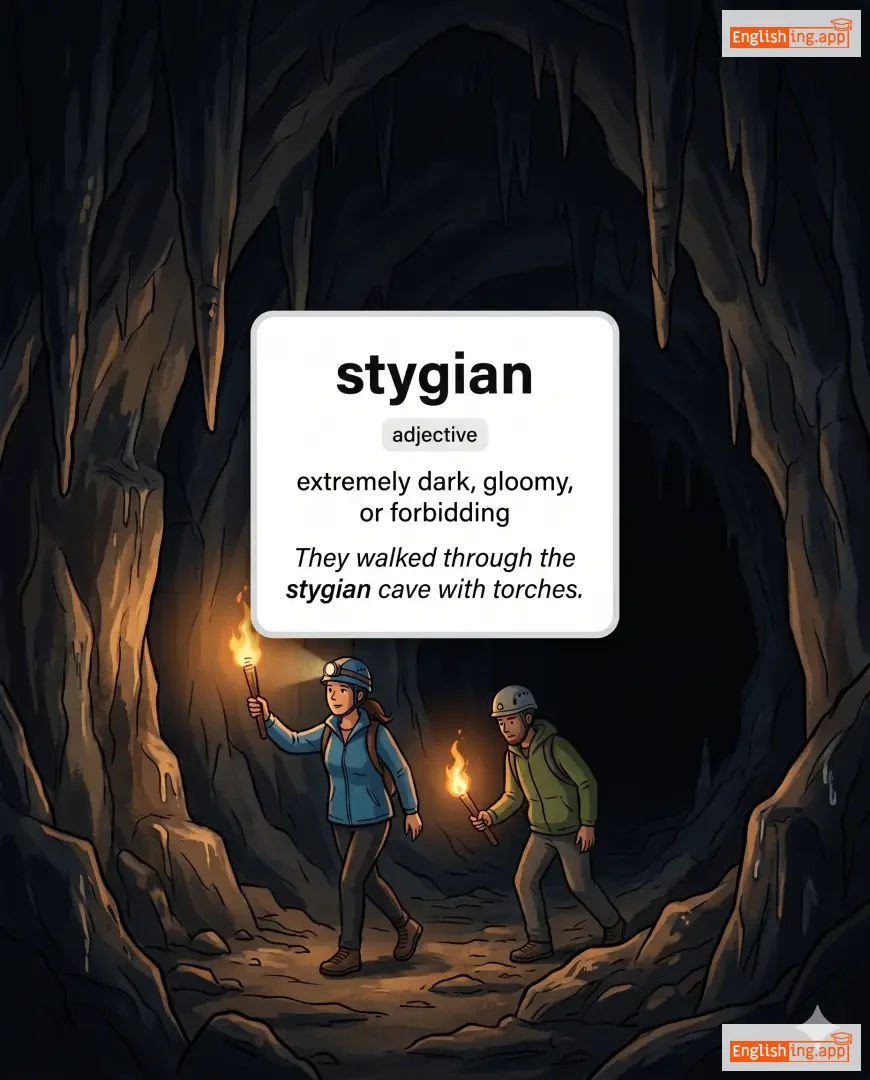
stygian definition card — visual illustration of the meaning
adjective C2
/ˈstɪdʒiən/
阴暗 (yīn'àn)

extremely dark, gloomy, or forbidding

"They walked through the stygian cave with torches."

"他们拿着火把走过了阴暗的洞。" (Tāmen názhe huǒbǎ zǒuguòle yīn'àn de dòng.)
noun C2
/ˈsweɪʒən/
劝说 (quanshuo)

the act of persuading or influencing someone

"The leader used gentle suasion to win support for the plan."

"领导者使用温和的劝说来赢得对计划的支持。" (Lǐngdǎo zhě shǐyòng wēnhé de quànshuō lái yíngdé duì jìhuà de zhīchí.)
noun C2
/ˈswɑːvɪti/
优雅与魅力 (yōuyǎ yǔ mèilì)

smoothness and charm in manner

"His suavity made him popular in social gatherings."

"他的优雅与魅力使他在社交聚会中很受欢迎。" (Tā de yōuyǎ yǔ mèilì shǐ tā zài shèjiāo jùhuì zhōng hěn shòu huānyíng.)
adverb C2
/ˌsʌb ˈroʊzə/
秘密地 (mìmì de)

secretly, in confidence, or in private

"The deal was made sub rosa to avoid public scrutiny."

"交易是在秘密地进行的,以避免公众审查。" (Jiāoyì shì zài mìmì de jìnxíng de, yǐ bìmiǎn gōngzhòng shěnchá.)
adjective C2
/ˈsʌb.æs.ɪd/
轻微酸 (qingwei suan)

Slightly sour or acidic in taste or nature.

"The fruit had a subacid flavor that was refreshing on a hot day."

"这种水果有一种轻微酸的味道,在炎热的日子里非常清爽。" (Zhezhong shuiguo you yizhong qingwei suan de weidao, zai yanre de rizi li feichang qingshuang.)
noun C2
/sʌbˈɔːl.tən/
处于下级职位的人;在军队中,初级军官 (xià jí jūn guān)

A person holding a subordinate position; in the military, a junior officer.

"The subaltern was responsible for leading a small platoon of soldiers."

"下级军官负责指挥一个小型士兵排。" (Xià jí jūn guān fùzé zhǐhuī yīgè xiǎoxíng shìbīng pái.)
adjective C2
/ˌsʌb.əˈkwɒt.ɪk/
水下的 (shuǐ xià de)

Existing, living, or located under water.

"Divers explored the subaquatic cave system filled with rare fish."
"潜水员探索了充满稀有鱼类的水下洞穴系统。" (Qiánshuǐyuán tàn suǒ le chōngmǎn xīyǒu yúlèi de shuǐ xià dòngxué xìtǒng.)
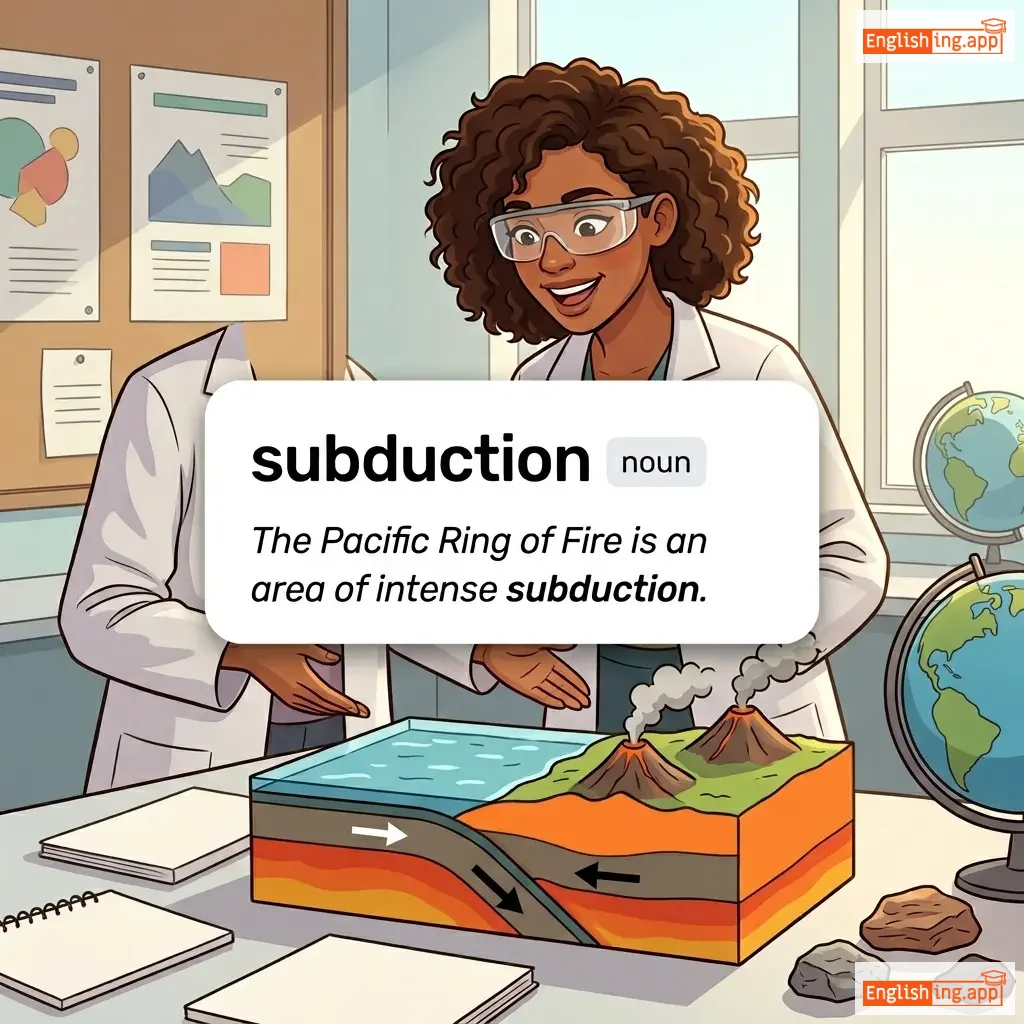
subduction definition card — visual illustration of the meaning
noun C2
/səbˈdʌk.ʃən/
地壳的一个层次向下移动,进入下方的地幔。 (Dìqiào de yīgè céngcì xiàng xià yídòng, jìnrù xiàfāng de dìmàn.)

The lateral and downward movement of the edge of a plate of the earth's crust into the mantle beneath another plate.

"The Pacific Ring of Fire is an area of intense subduction."

"太平洋火环是一个强烈的俯冲区域。" (Tàipíngyáng huǒ huán shì yīgè qiángliè de fǔchōng qūyù.)
adjective C2
/sʌbˈdʒeɪsənt/
下层的 (xià céng de)

lying immediately beneath; underlying

"The geological survey revealed subjacent layers of rock."
"地质调查揭示了下层的岩层。" (Dìzhì diàochá jiēshìle xià céng de yáncéng.)
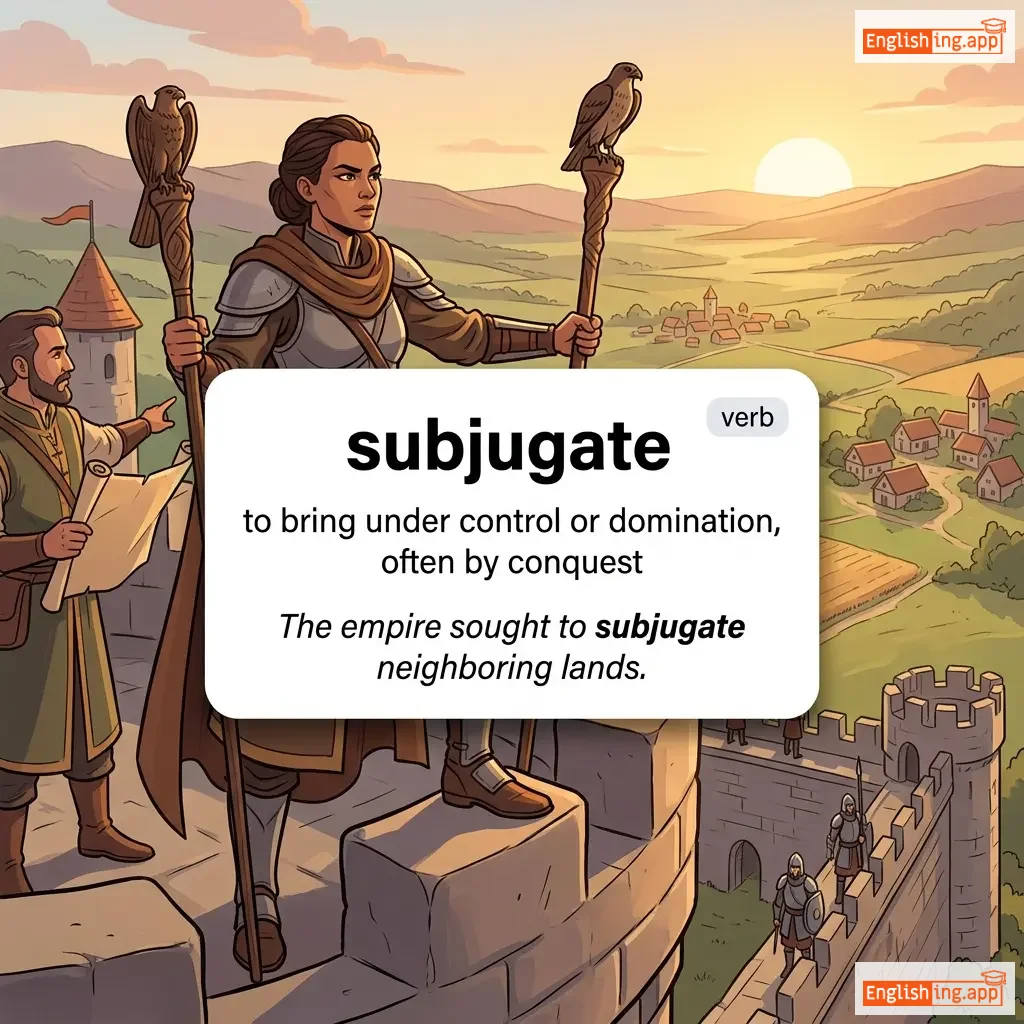
subjugate definition card — visual illustration of the meaning
verb C2
/ˈsʌbdʒʊˌɡeɪt/
征服 (zhēngfú)

to bring under control or domination, often by conquest

"The empire sought to subjugate neighboring lands."
"帝国试图征服邻近的土地。" (Dìguó shìtú zhēngfú línjìn de tǔdì.)
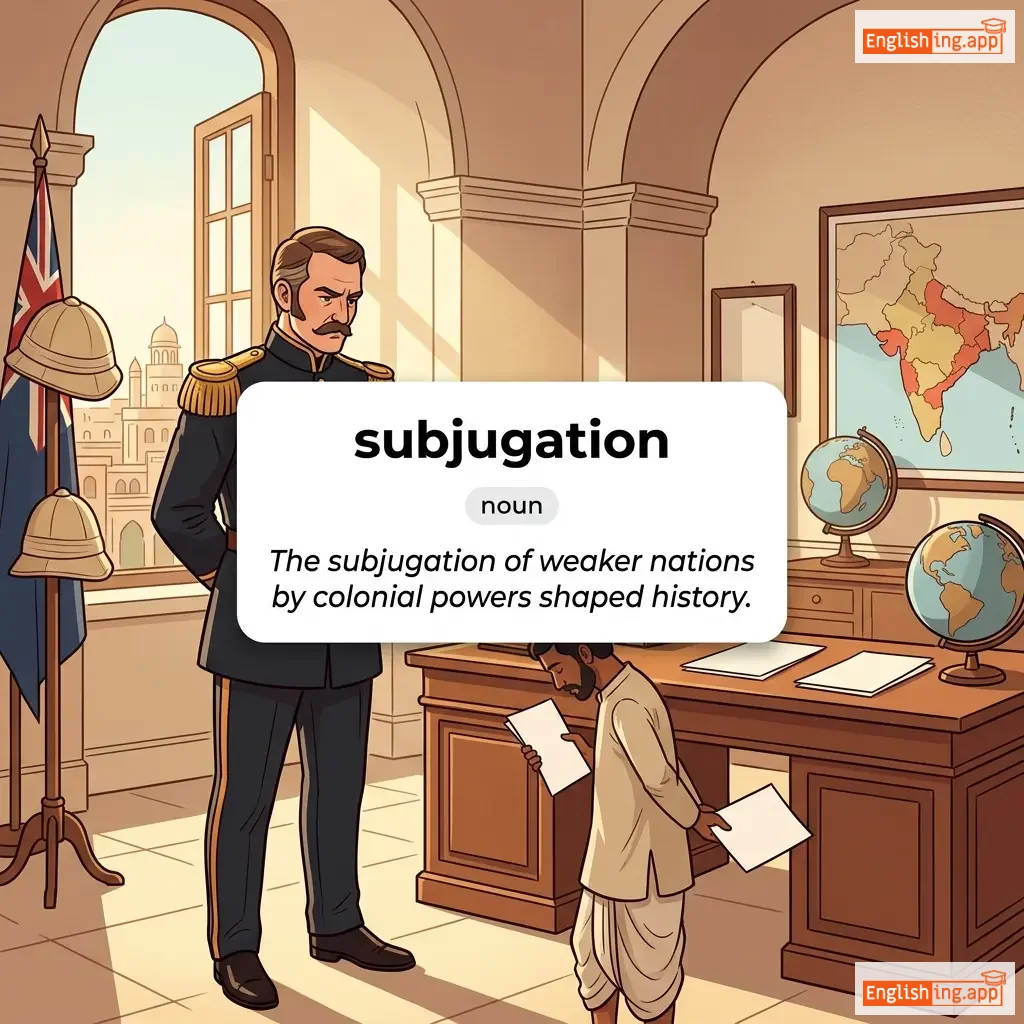
subjugation definition card — visual illustration of the meaning
noun C2
ˌsʌb.dʒʊˈɡeɪ.ʃən
征服或支配 (zhēngfú huò zhīpèi)

The action of bringing someone or something under domination or control, especially by force.

"The subjugation of weaker nations by colonial powers shaped history."

"殖民大国对较弱国家的征服塑造了历史。" (Zhímín dàguó duì jiào ruò guójiā de zhēngfú sùzào le lìshǐ.)
verb C2
/ˈsʌblɪmeɪt/
转化为更高的活动 (zhuǎnhuà wéi gèng gāo de huódòng)

to redirect strong emotions or desires into socially acceptable activities or channels

"She sublimated her anger into painting beautiful landscapes."

"她将愤怒转化为美丽的风景画。" (Tā jiāng fènnù zhuǎnhuà wéi měilì de fēngjǐng huà.)
adjective C2
/sʌbˈlɪŋɡwəl/
舌下 (shéxià)

situated or applied under the tongue

"The doctor prescribed a sublingual tablet for faster absorption."

"医生为更快的吸收开了舌下药片。" (Yīshēng wèi gèng kuài de xīshōu kāile shéxià yàopiàn.)
adjective, noun C2
/səbˈmɜːrsəbl/
潜水器 (qiánshuǐ qì)

capable of being submerged; a small underwater craft

"The scientists explored the deep ocean using a submersible."

"科学家们使用潜水器探索了深海。" (kēxuéjiāmen shǐyòng qiánshuǐ qì tànsuǒle shēnhǎi.)
noun C2
/səbˈmɜːrʒən/
沉没 (chenmo)

the state of being under water

"The submersion of the fields lasted for several days after the heavy rain."

"在大雨之后,田地的沉没持续了几天。" (Zài dàyǔ zhīhòu, tiándì de chénmò chíxùle jǐ tiān.)
verb C2
/səˈbɔːrn/
贿赂 (huìlù)

to bribe or induce someone unlawfully to perform an act, especially to commit perjury

"The lawyer was accused of trying to suborn a witness."

"律师被指控试图贿赂一名证人。" (Lǜshī bèi zhǐkòng shìtú huìlù yī míng zhèngrén.)
noun C2
/səbˈsɜːviəns/
奴性 (nuxing)

the condition of being too willing to obey or serve others

"His subservience to authority annoyed his colleagues."
"他对权威的奴性让同事们感到烦恼。" (Ta dui quánwēi de núxìng ràng tóngshìmen gǎndào fánnǎo.)
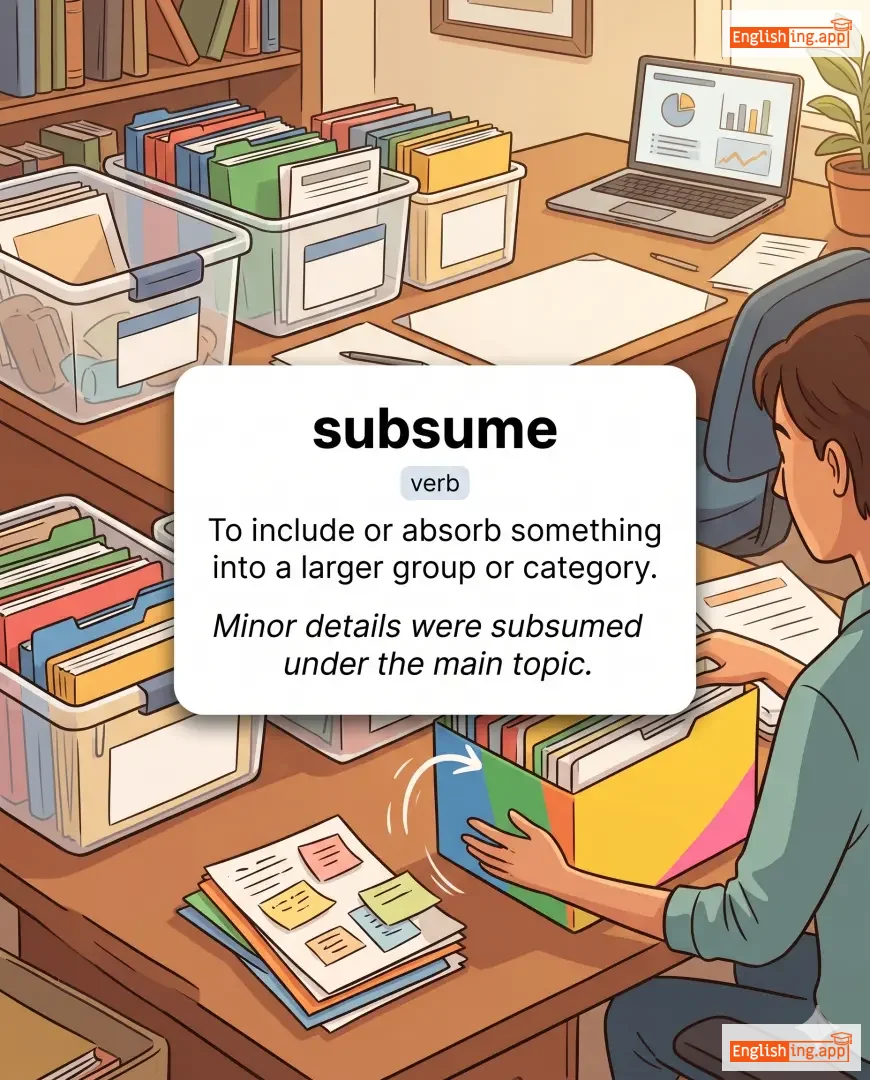
subsume definition card — visual illustration of the meaning
verb C2
/səbˈsjuːm/
包括 (bāokuò)

To include or absorb something into a larger group or category.

"Minor details were subsumed under the main topic."

"次要细节被纳入了主要话题。" (Cìyào xìjié bèi nàrù le zhǔyào huàtí.)
verb C2
/sʌbˈtɛnd/
形成角度 (xíngchéng jiǎodù)

To extend across or form an angle at a particular point, often used in geometry.

"The arc subtends a 60-degree angle at the center of the circle."

"弧线在圆心处形成60度角。" (Húxiàn zài yuánxīn chù xíngchéng 60 dù jiǎo.)
noun C2
/ˈsʌbtərˌfjuːdʒ/
欺诈手段 (qīzhà shǒuduàn)

Deceit used to achieve one's goal; a trick or excuse to evade something.

"They used subterfuge to avoid paying taxes."

"他们使用欺诈手段来避免缴税。" (Tāmen shǐyòng qīzhà shǒuduàn lái bìmiǎn jiǎoshuì.)
noun C2
/ˈsʌbtrəˌhɛnd/
被减数 (bèi jiǎn shù)

a number that is to be subtracted from another number

"In the equation 10 - 4, the number 4 is the subtrahend."
"在等式 10 - 4 中,数字 4 是被减数。" (Zài děngshì 10 - 4 zhōng, shùzì 4 shì bèi jiǎn shù.)
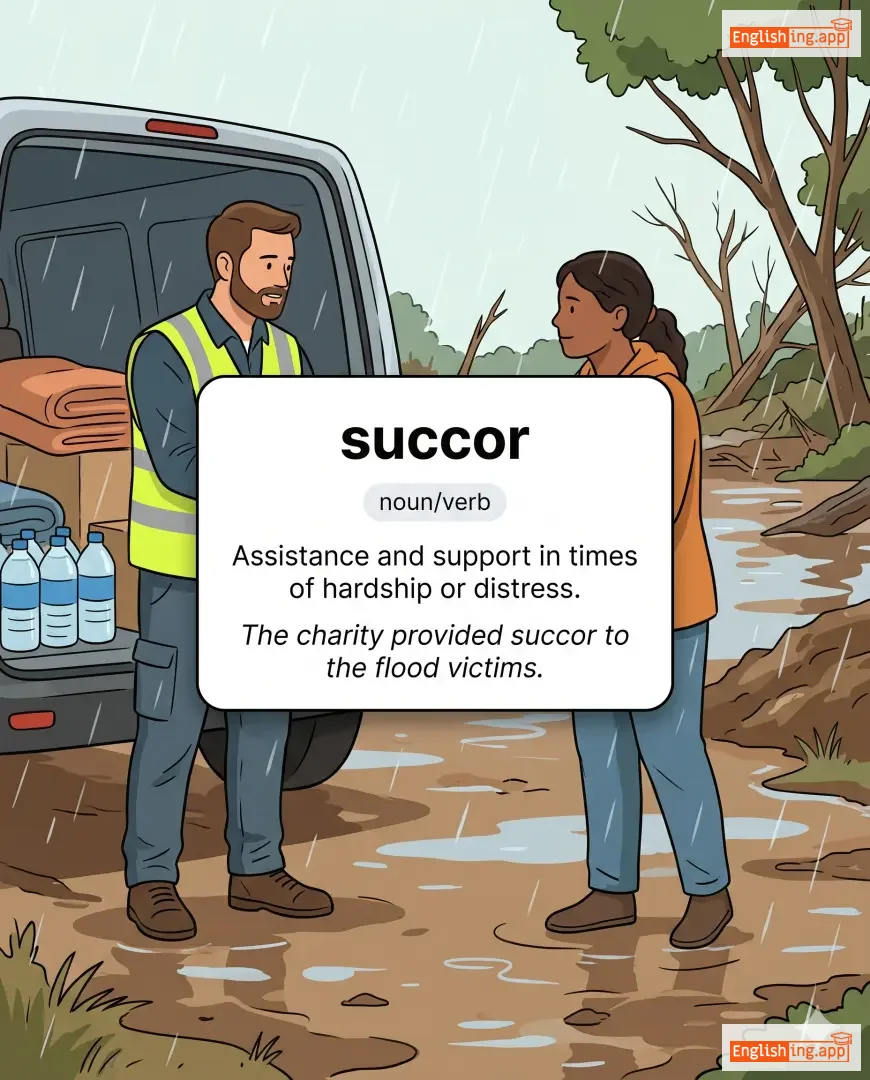
succor definition card — visual illustration of the meaning
noun/verb C2
/ˈsʌkər/
帮助 (bāngzhù)

Assistance and support in times of hardship or distress.

"The charity provided succor to the flood victims."

"慈善机构为洪水受害者提供了帮助。" (Císhàn jīgòu wèi hóngshuǐ shòuhàizhě tígōngle bāngzhù.)
verb C2
/ˈsʌk.əl/
哺乳 (bǔrǔ)

to feed a baby or young animal with milk from the breast or udder

"The mother cat suckled her kittens in the basket."

"母猫在篮子里哺乳她的小猫。" (Mǔ māo zài lánzi lǐ bǔrǔ tā de xiǎo māo.)
adjective C2
/ˌsuːdəˈrɪfɪk/
促汗的 (cù hàn de)

causing or increasing sweating

"The doctor prescribed a sudorific drug to help reduce the fever."

"医生开了一种促进出汗的药物来帮助减少发热。" (Yīshēng kāile yī zhǒng cù hàn de yàowù lái bāngzhù jiǎnshǎo fārè.)
noun C2
/ˈsʌfərəns/
宽容 (kuanrong)

patient endurance of pain, hardship, or delay; passive consent or tolerance

"He lived in poverty with quiet sufferance."

"他在贫困中默默忍受着。" (Ta zai pinkun zhong momo renshouzhe.)
noun C2
/ˈsʌfrədʒɪst/
妇女参政权运动者 (fùnǚ cān zhèngquán yùndòng zhě)

a person advocating the extension of suffrage, especially to women

"The suffragists organized rallies to demand voting rights for women."

"妇女参政权运动者组织了集会,要求为女性争取投票权。" (Fùnǚ cān zhèngquán yùndòng zhě zǔzhīle jíhuì, yāoqiú wèi nǚxìng zhēngqǔ tóupiào quán.)
verb C2
/səˈfjuːz/
弥漫 (mímàn)

to gradually spread through or over something

"A warm glow suffused her face as she smiled."

"当她微笑时,一种温暖的光辉弥漫到她的脸上。" (Dāng tā wēixiào shí, yī zhǒng wēnnuǎn de guānghuī mímàn dào tā de liǎn shàng.)
adjective C2
/səˈdʒɛstəbəl/
易受影响的 (yì shòu yǐngxiǎng de)

easily influenced by the suggestions of others

"Children are highly suggestible and may believe what they are told."

"孩子们很容易受到影响,可能会相信他们被告知的事情。" (Háizimen hěn róngyì shòu dào yǐngxiǎng, kěnéng huì xiāngxìn tāmen bèi gàozhī de shìqíng.)
verb C2
/ˈsʌli/
玷污 (diànwū)

to damage the purity, integrity, or reputation of something

"The scandal sullied the politician’s reputation."

"丑闻玷污了政治家的声誉。" (Chǒuwén diànwūle zhèngzhìjiā de shēngyù.)
adjective C2
/ˈsʌmp.tʃuˌɛr.i/
与限制个人奢侈品支出的法律或规定相关 (yu xianzhi geren shechipin zhichu de falü huo guiding xiangguan)

Relating to laws or regulations intended to limit personal spending on luxury goods.

"In medieval Europe, sumptuary laws restricted the wearing of expensive fabrics to the nobility."

"在中世纪欧洲,奢侈品法限制了只有贵族才能穿戴昂贵的面料。" (Zài zhōng shìjì Ōuzhōu, shēchǐpǐn fǎ xiànzhìle zhǐyǒu guìzú cáinéng chuāndài ángguì de miànliào.)
verb C2
/ˈsʌn.dər/
分裂 (fenlie)

To split apart or separate, especially with force.

"The war sundered families and friends."
"战争使家庭和朋友分裂。" (Zhanzheng shi jiating he pengyou fenlie.)
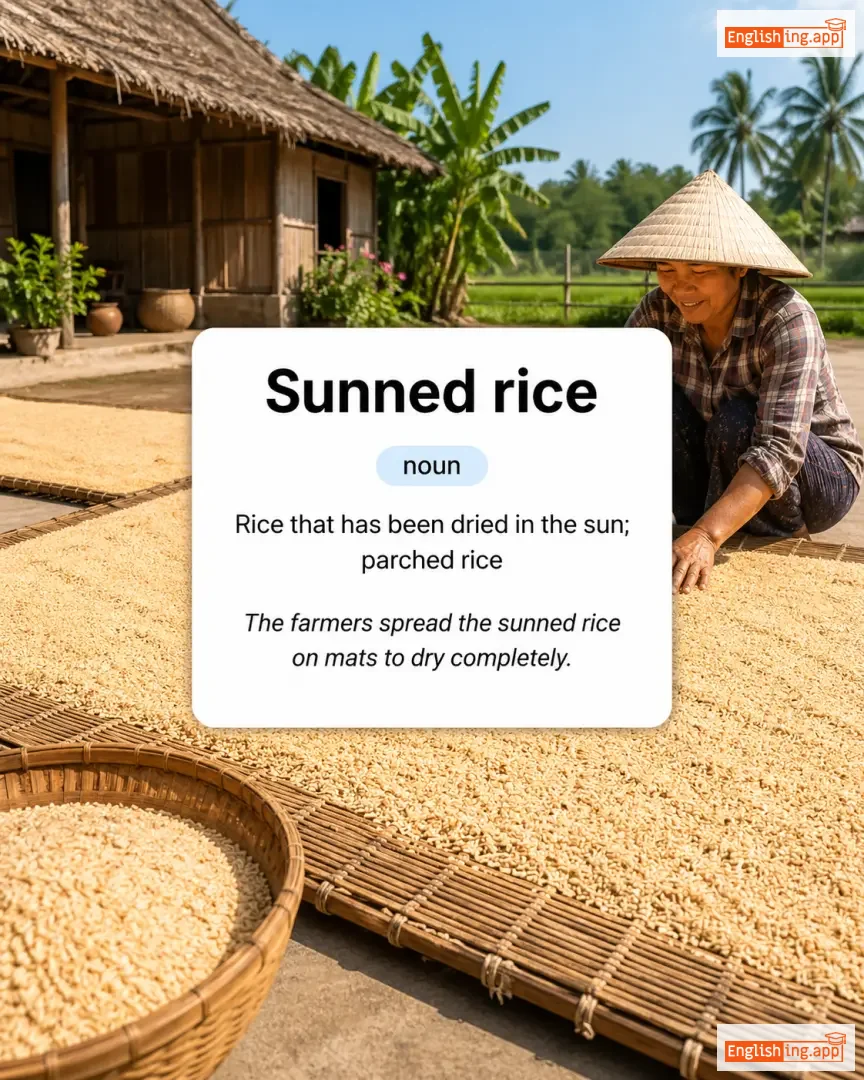
Sunned rice definition card — visual illustration of the meaning
noun C2
/sʌnd raɪs/
晒干的米 (shàigān de mǐ)

Rice that has been dried in the sun; parched rice

"The farmers spread the sunned rice on mats to dry completely."

"农民们将晒干的米铺在垫子上,让它完全干燥。" (Nóngmín men jiāng shàigān de mǐ pù zài diànzi shàng, ràng tā wánquán gānzào.)
noun C2
/ˌsuː.pər.əˈbʌn.dəns/
过剩 (guo sheng)

An excessive or overflowing amount of something.

"The garden was filled with a superabundance of flowers."

"花园里充满了过多的花朵。" (Hua yuan li chong man le guo duo de hua duo.)
verb C2
/ˌsuːpərˈæd/
超级添加 (chaoji tianjia)

to add something to what has already been added

"The author chose to superadd a new chapter to the revised edition."

"作者决定在修订版中超级添加一个新章节。" (zuozhe jueding zai xiudingban zhong chaoji tianjia yige xin zhangjie.)
verb C2
/ˌsuːpərˈæn.ju.eɪt/
带薪退休 (dàixīn tuìxiū)

to retire someone with a pension, usually due to age or long service

"The company decided to superannuate its senior employees after thirty years of service."

"公司决定在三十年的服务后将其高级员工带薪退休。" (Gōngsī juédìng zài sānshí nián de fúwù hòu jiāng qí gāojí yuángōng dàixīn tuìxiū.)
adjective C2
/ˌsuːpərˈæn.ju.eɪ.tɪd/
过时的 (guòshí de)

old and no longer useful or valid; retired due to age

"The factory was filled with superannuated machines that slowed production."

"工厂里充满了过时的机器,这些机器减慢了生产。" (gōngchǎng lǐ chōngmǎnle guòshí de jīqì, zhèxiē jīqì jiǎn mànle shēngchǎn.)
adjective C2
/ˌsuː.pɚˈsɪl.i.əs/
傲慢的 (àomàn de)

Behaving or looking as though one thinks one is superior to others; arrogant and disdainful.

"She gave him a supercilious smile as if he was beneath her."

"她对他露出了一种傲慢的笑容,好像他比她低。" (Tā duì tā lòu chūle yī zhǒng àomàn de xiàoróng, hǎoxiàng tā bǐ tā dī.)
adjective C2
/ˌsuː.pər.ɪˈrɑː.ɡə.tɔːr.i/
超额的 (chao e de)

Going beyond what is required or expected; more than necessary.

"His donation was supererogatory, far beyond what anyone had asked for."

"他的捐赠是超额的,远远超过任何人要求的。" (Tade juanzeng shi chaoe de, yuanyuan chao guo renhe ren yaoqiu de.)
noun C2
/ˌsuː.pɚˈfluː.ə.t̬i/
过剩 (guòshèng)

An excessive amount of something; more than what is needed.

"The room was filled with a superfluity of decorations."

"房间里充满了过多的装饰。" (Fángjiān lǐ chōngmǎnle guòduō de zhuāngshì.)
verb C2
/ˌsuːpərˈhiːt/
过热 (guò rè)

to heat a substance beyond its normal boiling point without it becoming vapor

"Engineers superheat the steam to increase the efficiency of the turbine."

"工程师将蒸汽超热以提高涡轮机的效率。" (Gōngchéngshī jiāng zhēngqì chāo rè yǐ tígāo guōlúnjī de xiàolǜ.)
verb C2
/ˌsuːpərɪnˈtɛnd/
监管 (jiānguǎn)

to oversee and direct the work or operation of something

"She was hired to superintend the construction project."

"她被聘用来监管建筑项目。" (Tā bèi pìn yòng lái jiānguǎn jiànzhú xiàngmù.)
noun C2
/ˌsuːpərɪnˈtɛndəns/
监督 (jiāndū)

the act of overseeing, supervising, or managing

"The superintendence of the school is the principal’s duty."

"学校的监督是校长的责任。" (Xuéxiào de jiāndū shì xiàozhǎng de zérèn.)
adjective C2
/suːˈpɜːrnəl/
天上的 (tiān shàng de)

Relating to the heavens; celestial or divine.

"The painting captured a supernal beauty that felt otherworldly."

"这幅画捕捉到了一个天上的美丽,感觉像是另一个世界的。" (Zhè fú huà bǔzhuō dào le yīgè tiān shàng de měilì, gǎnjué xiàng shì lìng yīgè shìjiè de.)
adjective C2
/ˌsuːpərˈnuːmərɛri/
额外的 (éwài de)

Exceeding the usual number; extra or unnecessary.

"The play included several supernumerary actors to fill the background scenes."
"这出戏包含了几个额外的演员来填充背景场景。" (Zhè chū xì bāohánle jǐ gè éwài de yǎnyuán lái tiánchōng bèijǐng chǎngjǐng.)
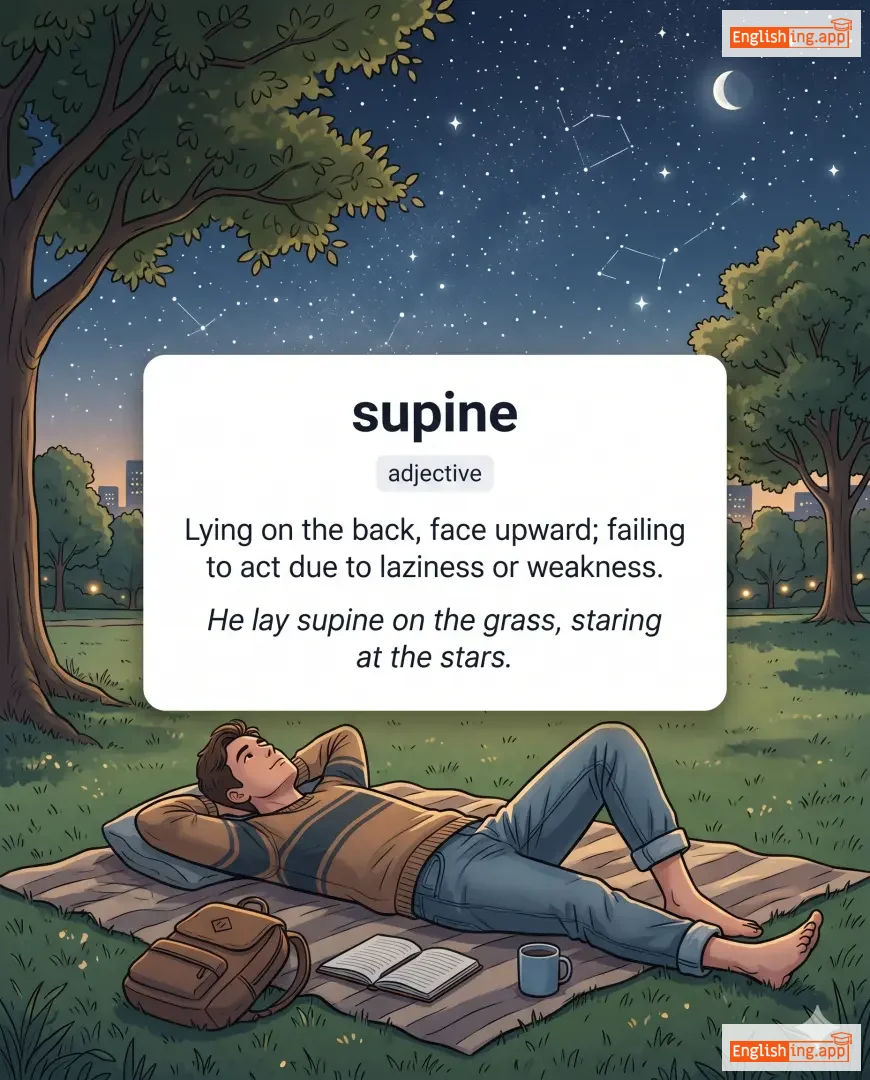
supine definition card — visual illustration of the meaning
adjective C2
/ˈsuːpaɪn/
仰卧 (yangwo)

Lying on the back, face upward; failing to act due to laziness or weakness.

"He lay supine on the grass, staring at the stars."

"他躺在草地上,仰望星星。" (Ta tang zai caodi shang, yangwang xingxing.)