Словари

Словарь английского языка | Значения слов, определения и примеры

noun C2
/ɑːlˈfækʃən/
嗅觉 (xiùjué)

The sense of smell; the process of detecting and perceiving odors.

"Dogs have a highly developed sense of olfaction."

"狗的嗅觉非常发达。" (Gǒu de xiùjué fēicháng fādá.)
olfactory definition card — visual illustration of the meaning
adjective C2
/ɑːlˈfæktəri/

Relating to the sense of smell.

"The perfume activated her olfactory nerves immediately."
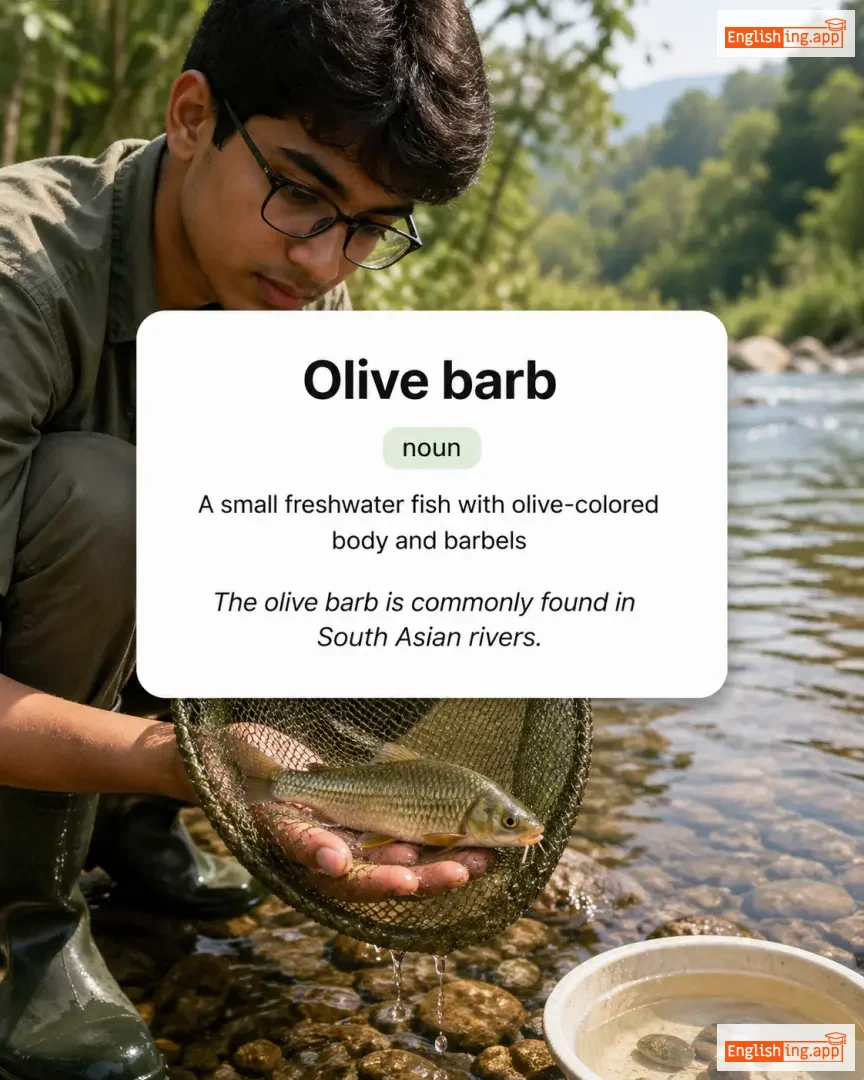
Olive barb definition card — visual illustration of the meaning
noun C2
/ˈɒlɪv bɑːb/
橄榄鲃 (ganlan ba)

A small freshwater fish with olive-colored body and barbels

"The olive barb is commonly found in South Asian rivers."

"橄榄鲃常见于南亚的河流中。" (ganlan ba changjian yu nanya de heliu zhong)
noun C2
/ˈɒlɪv brɑːntʃ/
橄榄枝 (ganlan zhi)

A symbol of peace or reconciliation; an offer to end conflict.

"He extended an olive-branch to his rival after years of hostility."

"他在多年敌对之后向他的对手伸出了橄榄枝。" (Ta zai duonian didui zhihou xiang tade duishou shenchu le ganlan zhi.)
noun C2
/ɒmˈnɪpətəns/
全能 (quánnéng)

The quality of having unlimited power or authority.

"Many religions describe God’s omnipotence as absolute."

"许多宗教将上帝的全能描述为绝对的。" (Xǔduō zōngjiào jiāng shàngdì de quánnéng miáoshù wèi juéduì de.)
omnipotent definition card — visual illustration of the meaning
adjective C2
/ɒmˈnɪpətənt/
全能的 (quánnéng de)

Having unlimited power; able to do anything.

"The CEO acted as if he were omnipotent in the company."

"首席执行官在公司里表现得好像他无所不能。" (Shǒuxí zhíxíngguān zài gōngsī lǐ biǎoxiàn dé hǎoxiàng tā wúsuǒ bùnéng.)
noun C2
/ɒmˈnɪʃəns/
全知 (quanzhi)

the state of knowing everything

"The novel's narrator has an air of omniscience, revealing every character's thoughts."

"小说的叙述者具有全知的气质,揭示每个角色的想法。" (xiaoshuo de xushuzhe juyou quanzhi de qizhi, jieshi meige juese de xiangfa.)
adjective C2
/ɒmˈnɪʃənt/
全知 (quan zhi)

having complete or unlimited knowledge and awareness

"Some religions describe God as omniscient and all-powerful."
"一些宗教将上帝描述为全知且全能的。" (Yixie zongjiao jiang shangdi miaoshu wei quan zhi qie quan neng de.)
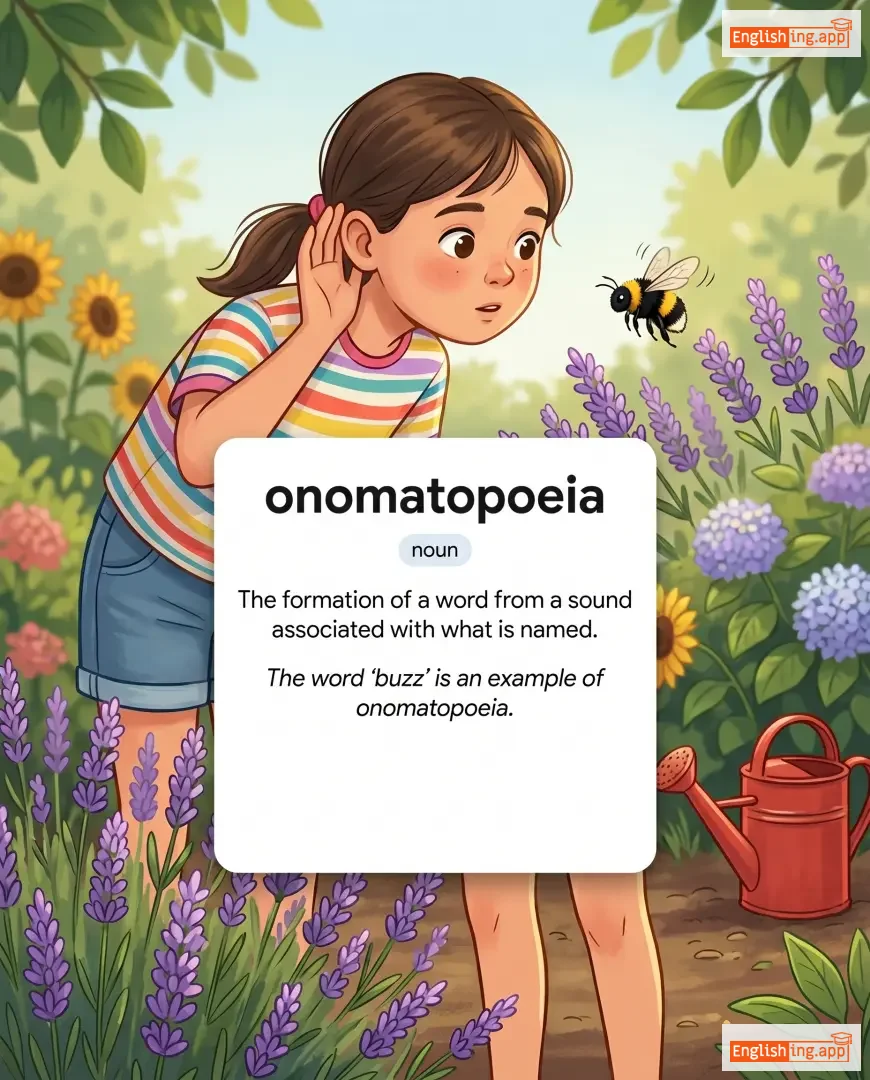
onomatopoeia definition card — visual illustration of the meaning
noun C2
/ˌɒn.əˌmæt.əˈpiː.ə/
拟声词 (nǐ shēng cí)

The formation of a word from a sound associated with what is named.

"The word 'buzz' is an example of onomatopoeia."

"‘buzz’ 这个词是拟声词的一个例子。" ('buzz' zhège cí shì nǐ shēng cí de yīgè lìzi.)
noun C2
/ˈɒn.rʌʃ/
突如其来的冲击 (tu ru qi lai de chong ji)

A sudden powerful forward or downward rush or flow.

"The onrush of water swept away the bridge."

"水流的突如其来冲击冲走了桥梁。" (Shui liu de tu ru qi lai de chong ji chong zou le qiao liang.)
noun C2
/ˌoʊpəˈlɛsəns/
欧泊光泽 (Ōubó guāngzé)

a milky or pearly appearance of a surface like that of an opal

"The pearl had a gentle opalescence under the light."

"珍珠在光下有一种柔和的欧泊光泽。" (Zhēnzhū zài guāng xià yǒu yī zhǒng róuhé de Ōubó guāngzé.)
adjective C2
/ˌoʊpəˈlɛsənt/
欧泊色的 (ōubō sè de)

showing or reflecting a milky, iridescent light like an opal

"The opalescent sky glowed with shades of pink and blue."

"欧泊色的天空闪烁着粉色和蓝色的色调。" (Ōubō sè de tiānkōng shǎnshuò zhe fěnsè hé lán sè de sèdiào.)
adjective C2
/ˈoʊ.pən ˈhæn.dɪd/
慷慨的; 自由的 (kāngkǎi de; zìyóu de)

Generous; liberal; giving freely;

"He is very open-handed with his money and always helps those in need."

"他对自己的钱非常慷慨,总是帮助有需要的人。" (Tā duì zìjǐ de qián fēicháng kāngkǎi, zǒng shì bāngzhù yǒu xūyào de rén.)
adjective C2
/ˈoʊ.pən ˈhɑrt.ɪd/
开放的心; 慷慨和真诚; 热情接纳; (kaifang de xin; kangkai he zhencheng; reqing jiena;)

Kind and generous; sincere and honest; warmly receptive;

"She welcomed the strangers with an open-hearted smile and invited them for dinner."

"她以开放的微笑欢迎陌生人,并邀请他们共进晚餐。" (Ta yi kaifang de weixiao huanying moshengren, bing yaoqing tamen gongjin wancan.)
noun C2
/ˌɒpəˈrɛtə/
轻歌剧 (qīng gē jù)

a short opera with light and humorous themes

"The theater staged a famous operetta by Gilbert and Sullivan."

"剧院上演了吉尔伯特与沙利文的著名轻歌剧。" (Jùyuàn shàngyǎnle Jí'ěrbótè yǔ Shālìwén de zhùmíng qīng gē jù.)
noun C2
/ˈoʊpiət/

a drug containing opium or its derivatives, used to relieve pain or cause sleep

"The doctor prescribed an opiate to relieve the patient's pain."

verb C2
/oʊˈpaɪn/
表达意见 (biaoda yijian)

to express an opinion or belief

"The professor opined that the policy would fail."

"教授认为政策会失败。" (Jiaoshou renwei zhengce hui shibai.)
noun C2
/ˌɑːpərˈtuːnɪzəm/
机会主义 (jihui zhuyi)

The practice of taking advantage of opportunities regardless of principles or ethics.

"His decision was driven by opportunism, not values."

"他的决定是由机会主义驱动的,而不是由价值观驱动的。" (Ta de jue ding shi you jihui zhuyi qudong de, er bu shi you jiazhi guan qudong de.)
adjective C2
/əˈprəʊ.bri.əs/
侮辱性的 (wǔrǔxìng de)

Expressing strong criticism or scorn.

"He made opprobrious remarks about his opponent."

"他对对手做出了侮辱性评论。" (Tā duì duìshǒu zuò chūle wǔrǔxìng pínglùn.)
opprobrium definition card — visual illustration of the meaning
noun C2
/əˈprəʊ.bri.əm/
耻辱, 侮辱 (chiru, wuru)

Harsh criticism or public disgrace.

"The scandal brought opprobrium on the politician."
"丑闻给政治家带来了耻辱。" (Chouwen gei zhengzhijia dai lai le chiru.)
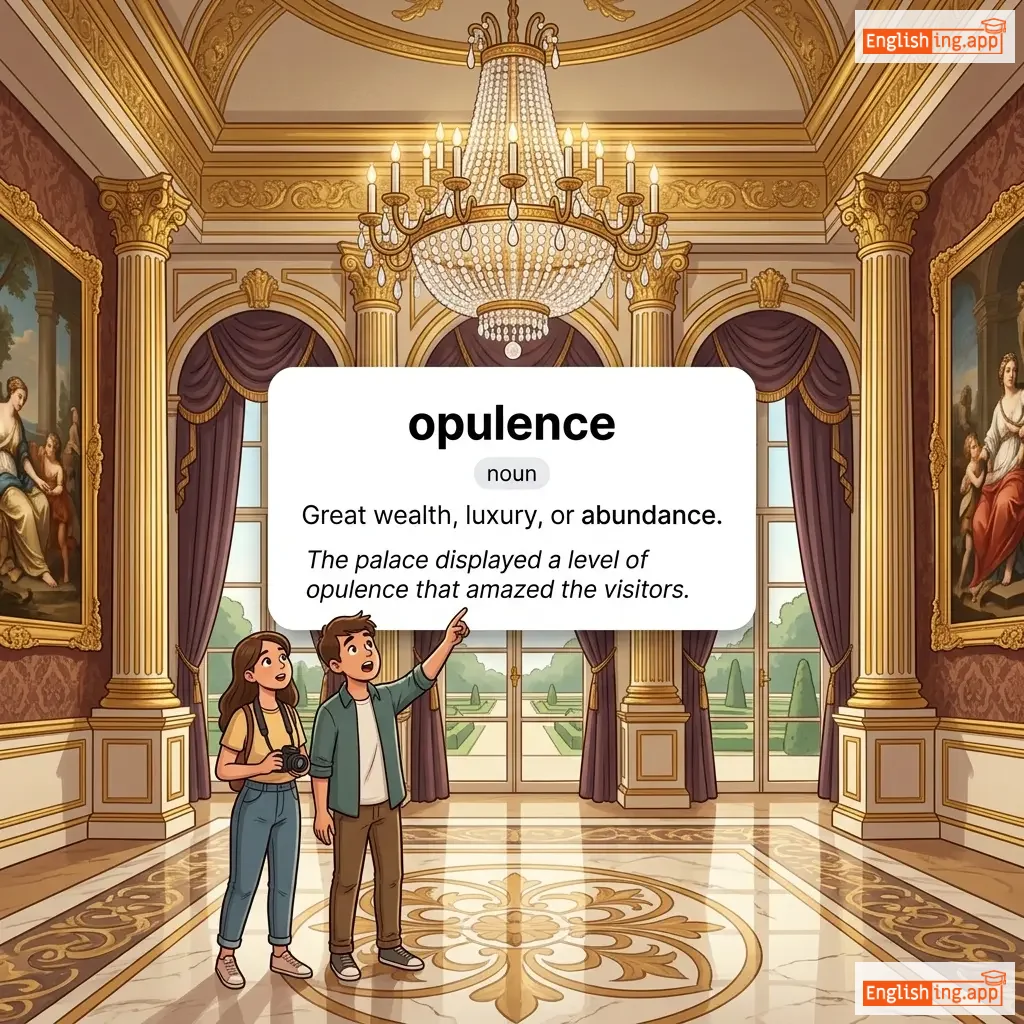
opulence definition card — visual illustration of the meaning
noun C2
/ˈɒpjʊləns/
奢华 (shēhuá)

Great wealth, luxury, or abundance.

"The palace displayed a level of opulence that amazed the visitors."

"宫殿展示了一个令人惊讶的奢华水平。" (Gōngdiàn zhǎnshìle yīgè lìng rén jīngyà de shēhuá shuǐpíng.)
adjective C2
/ˈɒpjʊlənt/
奢华的 (shēhuá de)

Ostentatiously rich, luxurious, or lavish.

"They hosted an opulent wedding with gold decorations."

"他们举办了一场奢华的婚礼,装饰有金色装饰品。" (Tāmen jǔbànle yīchǎng shēhuá de hūnlǐ, zhuāngshì yǒu jīnsè zhuāngshìpǐn.)
noun C2
/ˈəʊpəs/
创作作品 (chuangzuo zuopin)

A creative work, especially a large and important piece of music or art.

"The composer considered the symphony his greatest opus."

"作曲家认为交响曲是他最大的创作作品。" (Zuòqǔjiā rènwéi jiāoxiǎngqǔ shì tā zuìdà de chuàngzuò zuòpǐn.)
adjective C2
/əˈrækjələr/
神谕的 (shényù de)

Resembling an oracle; giving wise, mysterious, or prophetic statements

"Her oracular words left the audience deep in thought."
"她的神谕般的话让观众陷入了深思。" (Tā de shényù bān de huà ràng guānzhòng xiànrùle shēnsī.)
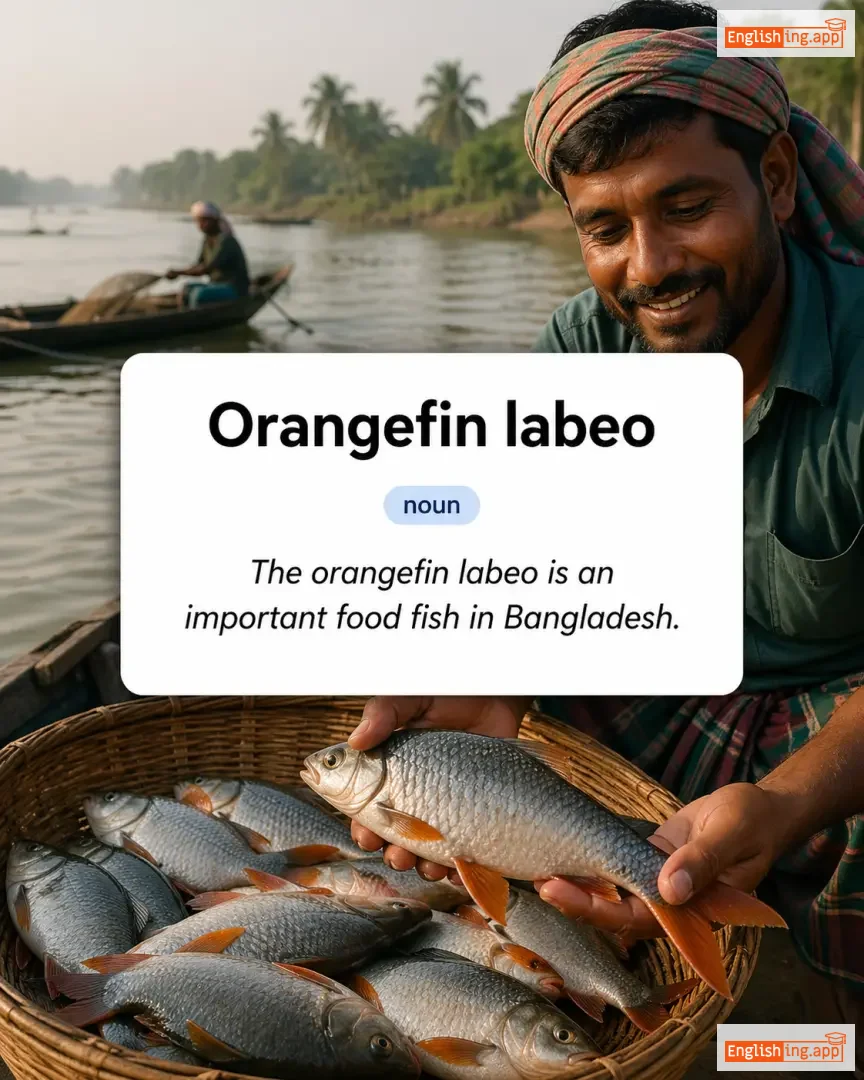
Orangefin labeo definition card — visual illustration of the meaning
noun C2
/ˈɔːrɪndʒfɪn ˈleɪbiːoʊ/
橙鳍鲤 (cheng qi li)

a freshwater fish species native to South Asian rivers, commonly found in Bangladesh and India

"The orangefin labeo is an important food fish in Bangladesh."

"橙鳍鲤是孟加拉国重要的食用鱼。" (cheng qi li shi meng jia la guo zhong yao de shi yong yu)
verb C2
/ˈɔːreɪt/
演讲 (yanjiang)

To speak in a formal, often pompous manner

"He began to orate at the ceremony."

"他在仪式上开始演讲。" (Ta zai yishi shang kaishi yanjiang.)
noun C2
/ɔːˈreɪʃən/
演讲 (yanjiang)

A formal speech, especially one given on a ceremonial occasion

"The president delivered an inspiring oration."

"总统发表了鼓舞人心的演讲。" (Zongtong fabiao le guwurenxin de yanjiang.)
noun C2
/ˌɔːrəˈtɔːri.oʊ/
宗教音乐作品 (zongjiao yinyue zuopin)

A large-scale musical composition for orchestra, choir, and soloists, usually on a sacred theme, performed without costumes or scenery.

"Handel's 'Messiah' is one of the most famous oratorios ever written."

"亨德尔的《弥赛亚》是最著名的宗教音乐作品之一。" (Hengde'er de 'Misaiya' shi zui zhuming de zongjiao yinyue zuopin zhi yi.)
noun C2
/ˌɔːrdɪˈneɪʃən/
任职 (renzhi)

The ceremony of conferring holy orders or official religious authority.

"The church held a special service for the ordination of new priests."

"教堂为新神父举行了一个特别的服务,进行圣职任命。" (Jiàotáng wèi xīn shénfù jǔxíngle yīgè tèbié de fúwù, jìnxíng shèngzhí rènmìng.)
noun C2
/ˈɔːrdnəns/
军火 (jūnhuǒ)

Military supplies including weapons, ammunition, and combat equipment.

"The army stored ordnance in a secure facility outside the city."

"军队在城市外的一个安全设施中存储军火。" (Jūnduì zài chéngshì wài de yīgè ānquán shèshī zhōng cúnchú jūnhuǒ.)
noun (plural) C2
/ˈɔːrdʒiːz/
狂欢 (kuánghuān)

Wild gatherings involving excessive indulgence in food, drink, or sexual activity.

"The ancient Romans were infamous for their lavish feasts and orgies."

"古罗马人以其奢华的宴会和狂欢而闻名。" (Gǔ Luómǎ rén yǐ qí shēhuá de yànhuì hé kuánghuān ér wénmíng.)
noun C2
/ˈɔːrdʒi/
荒淫派对 (huāngyín pàiduì)

A wild party involving excessive indulgence, especially of a sexual nature.

"The novel described a scandalous orgy in a wealthy mansion."

"小说描述了在一座富裕的豪宅里举行的丑闻般的荒淫派对。" (Xiǎoshuō miáoshùle zài yī zuò fùyù de háozhái lǐ jǔxíng de chǒuwén bān de huāngyín pàiduì.)
noun C2
/ˈɔː.rɪ.fɪs/
(kong)

an opening or hole, especially in the body or a device

"The medicine was applied through a small orifice in the device."

"药物通过设备上的一个小孔应用。" (Yao wu tongguo shebei shang de yi ge xiao kong yingyong.)
noun C2
/ˈɒrɪz(ə)n/
祷告 (daogao)

a prayer, especially a devout or formal one

"He whispered a quiet orison before going to sleep."

"他在睡觉前低声祈祷。" (Ta zai shuijiao qian disheng qidao.)
adjective C2
/ˈɔːrnəri/
脾气暴躁的 (píqì bàozào de)

bad-tempered and combative; stubborn

"The ornery old man refused to leave his chair."

"那个脾气暴躁的老头拒绝离开他的椅子。" (Nàgè píqì bàozào de lǎotóu jùjué líkāi tā de yǐzi.)
noun C2
/ˌɔːrnɪˈθɒlədʒɪst/
鸟类学家 (niao lei xue jia)

a scientist who studies birds

"The ornithologist spent years studying migratory birds."

"这位鸟类学家花了多年时间研究迁徙鸟类。" (Zhe wei niaolei xuejia hua le duonian shijian yanjiu qianxi niaolei.)
noun C2
/ˌɔːrnɪˈθɑːlədʒi/
鸟类学 (niao lei xue)

the scientific study of birds

"She pursued ornithology to understand the migration patterns of birds."

"她追求鸟类学以了解鸟类的迁徙模式。" (Ta zhuiqiu niaolei xue yi liaojie niaolei de qianxi moshi.)
adjective C2
/ˈɔːrəˌtʌnd/
深沉而清晰的声音 (shēnchén ér qīngxī de shēngyīn)

full, rich, and clear in sound; pompous in style

"The actor's orotund voice filled the theater."

"演员的深沉声音充满了剧院。" (Yǎnyuán de shēnchén shēngyīn chōngmǎnle jùyuàn.)
adjective C2
/ɔːrˈθɑːɡənl/
正交 (zhèng jiāo)

at right angles; independent or unrelated

"In mathematics, two vectors are orthogonal if their dot product is zero."

"在数学中,如果两个向量的点积为零,它们就是正交的。" (Zài shùxué zhōng, rúguǒ liǎng gè xiàngliàng de diǎn jī wéi líng, tāmen jiùshì zhèngjiāo de.)
noun C2
/ɔːrˈθɑːɡrəfi/
拼写法 (pīnxiě fǎ)

The conventional spelling system of a language.

"English orthography can be confusing for learners."

"英语的拼写法对学习者来说可能是令人困惑的。" (Yīngyǔ de pīnxiě fǎ duì xuéxí zhě lái shuō kěnéng shì lìng rén kùnhuò de.)
verb C2
/ˈɑːskjʊleɪt/
亲吻 (qīn wěn)

To kiss.

"They osculated under the mistletoe during the party."

"他们在派对上在槲寄生下接吻。" (Tāmen zài pàiduì shàng zài hú jì shēng xià jiēwěn.)
adjective C2
/ˈɒsiəs/
骨质的 (gǔ zhì de)

consisting of or turned into bone; bony

"The fossil showed osseous structures of the ancient creature."

"化石展示了古老生物的骨质结构。" (Huà shí zhǎn shì le gǔ lǎo shēng wù de gǔ zhì jié gòu.)
adjective C2
/ˈɑːsɪˌfaɪd/
变成骨头,僵硬 (biàn chéng gǔ tóu, jiāng yìng)

Turned into bone or become rigid; unwilling to change.

"The company had an ossified management structure that resisted innovation."

"该公司有一个僵化的管理结构,抵制创新。" (Gāi gōngsī yǒu yīgè jiānghuà de guǎnlǐ jiégòu, dǐzhì chuàngxīn.)
verb C2
/ˈɒsɪfaɪ/
骨化 (guhua)

to turn into bone or become rigid and inflexible

"With age, some tissues tend to ossify."

"随着年龄的增长,一些组织会变得僵硬。" (Suizhe nianling de zengzhang, yixie zuzhi hui biande jiangying.)
adjective C2
/ɒˈstɛnsɪv/
显性 (xiǎn xìng)

clearly demonstrative or pointing out; explicitly shown

"The teacher gave an ostensive example to clarify the concept."

"老师举了一个显性的例子来阐明概念。" (Lǎoshī jǔle yīgè xiǎn xìng de lìzi lái chǎnmíng gàiniàn.)
noun C2
/ˌɒstɛnˈteɪʃən/
炫耀 (xuànyào)

excessive display of wealth or knowledge intended to attract admiration or envy

"The billionaire’s party was full of ostentation and luxury."

"亿万富翁的派对充满了炫耀和奢华。" (Yìwàn fùwēng de pàiduì chōngmǎnle xuànyào hé shēhuá.)
verb C2
/ˌaʊtməˈnuːvər/
巧妙地战胜 (qiǎo miào de zhàn shèng)

to gain an advantage over an opponent by skillful or clever action

"The smaller company managed to outmaneuver its larger rival."

"小公司成功地战胜了它的大对手。" (Xiǎo gōngsī chénggōng de zhànshèngle tā de dà duìshǒu.)
verb C2
/aʊtˈraɪd/
超越 (chaoyue)

to ride faster, farther, or better than someone else

"The young rider managed to outride his competitors in the race."

"年轻的骑手在比赛中成功超越了他的竞争对手。" (Nianqing de qishe zai bisai zhong chenggong chaoyue le tade jingzheng duishou.)
noun C2
/ˈaʊtˌrɪɡər/
稳定结构 (wěndìng jiégòu)

a projecting structure on a boat, used for stability, or a boat fitted with such support

"The fisherman paddled his outrigger canoe across the lagoon."

"渔民划着带有支撑的独木舟穿过泻湖。" (Yúmín huázhe dàiyǒu zhīchēng de dúmùzhōu chuānguò xiè hú.)
verb C2
/ˌoʊvərˈliːp/
跳过 (tiaoguo)

To jump over something; to omit or disregard something.

"He managed to overleap the fence easily."

"他轻松地越过了栅栏。" (Ta qingsong de yueguo le zhalan.)