Словари

Словарь английского языка | Значения слов, определения и примеры

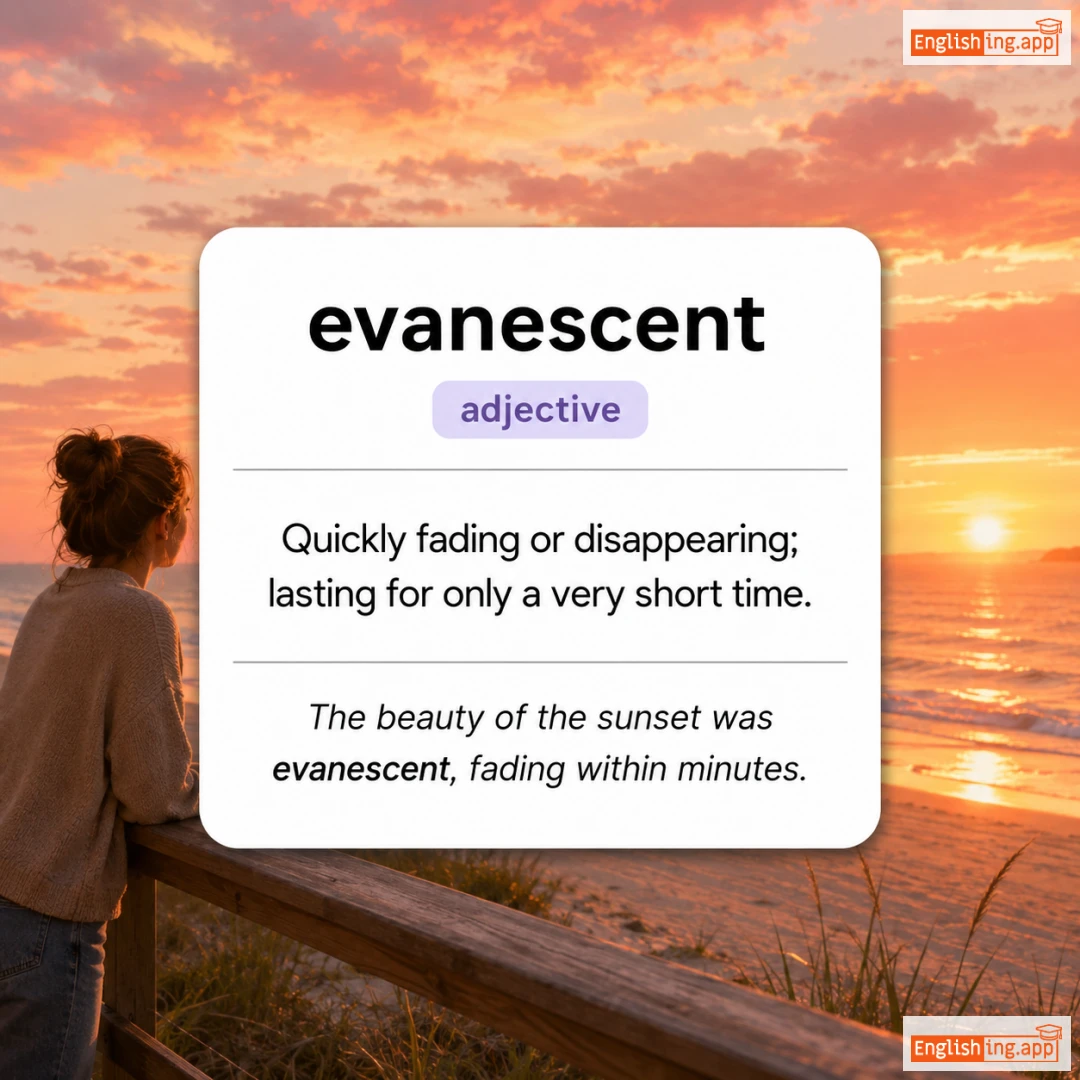
evanescent definition card — visual illustration of the meaning
adjective C2
/ˌɛvəˈnɛsənt/
мимолетный (mimoletnyj)

Quickly fading or disappearing; lasting for only a very short time.

"The beauty of the sunset was evanescent, fading within minutes."
"Красота заката была мимолетной, исчезнувшей через несколько минут." (Krasota zakata byla mimoletnoy, ischeznuvshey cherez neskol'ko minut.)
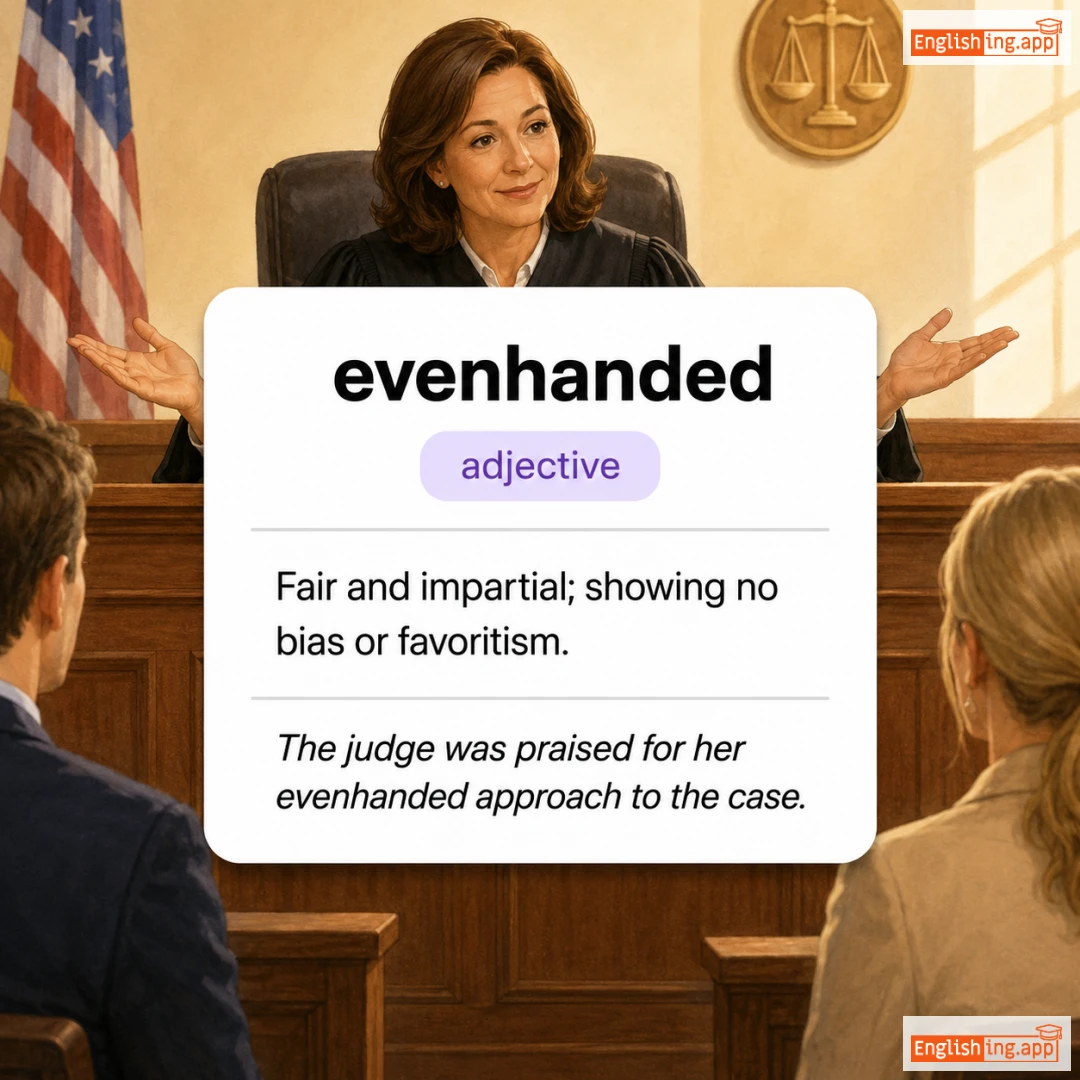
evenhanded definition card — visual illustration of the meaning
adjective C2
/ˌiːvənˈhændɪd/
беспристрастный (bespristrastny)

Fair and impartial; showing no bias or favoritism.

"The judge was praised for her evenhanded approach to the case."

"Судью похвалили за её беспристрастный подход к делу." (Sud'yu pokhvalili za yeye bespristrastnyy podkhod k delu.)
verb C2
/ɪˈvɜːrt/
повернуть наружу (povernut' naruzhu)

To turn inside out or outward.

"The surgeon had to evert the eyelid during the procedure."

"Хирург должен был повернуть веко во время операции." (Khirurg dolzhen byl povernut' veko vo vremya operatsii.)
adjective C2
/ˌɛvɪˈdɛnʃəl/
доказательный (dokazatel'nyi)

relating to or providing evidence

"The lawyer presented evidential support for her claims."
"Адвокат представил доказательную поддержку для её претензий." (Advokat predstavil dokazatel'nuyu podderzhku dlya yeë pretenzii.)
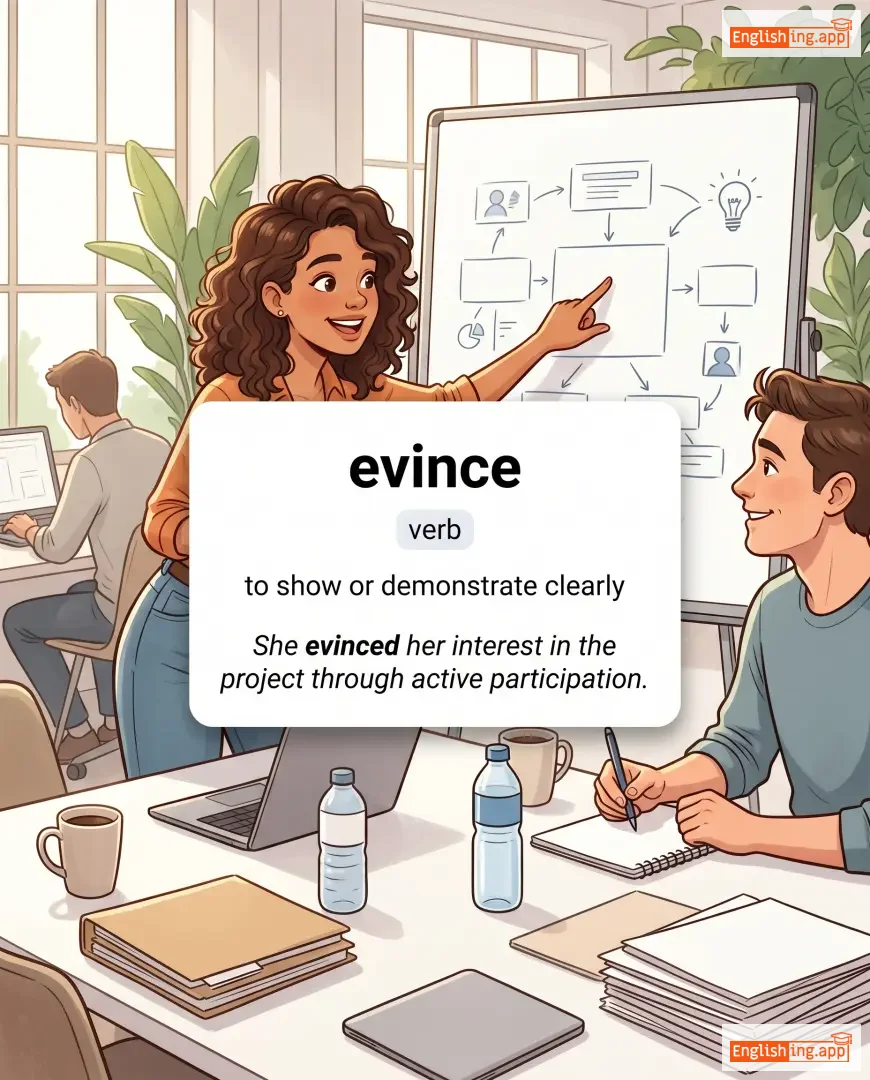
evince definition card — visual illustration of the meaning
verb C2
/ɪˈvɪns/
демонстрировать (demonstrirovat)

to show or demonstrate clearly

"She evinced her interest in the project through active participation."

"Она продемонстрировала свой интерес к проекту через активное участие." (Ona prodemonstrirovala svoi interes k proyektu cherez aktivnoe uchastie.)
verb C2
/ɪˈvɪsəˌreɪt/
эвиссериировать, уничтожать (evissierirovat, unichtozhat)

to remove the internal organs of; to deprive of essential content

"The critics eviscerated the movie for its weak storyline."
"критики уничтожили фильм из-за его слабой сюжетной линии." (kritiki unichtozhili film iz-za ego slabyj syuzhetnyj linii.)
Ewe definition card — visual illustration of the meaning
noun C2
/juː/
овца самка (ovtsa samka)

a female sheep

"The ewe gave birth to two lambs in the spring."

"Овца самка родила двоих ягнят весной." (Ovtsa samka rodila dvoikh yagnyat vesnoy.)
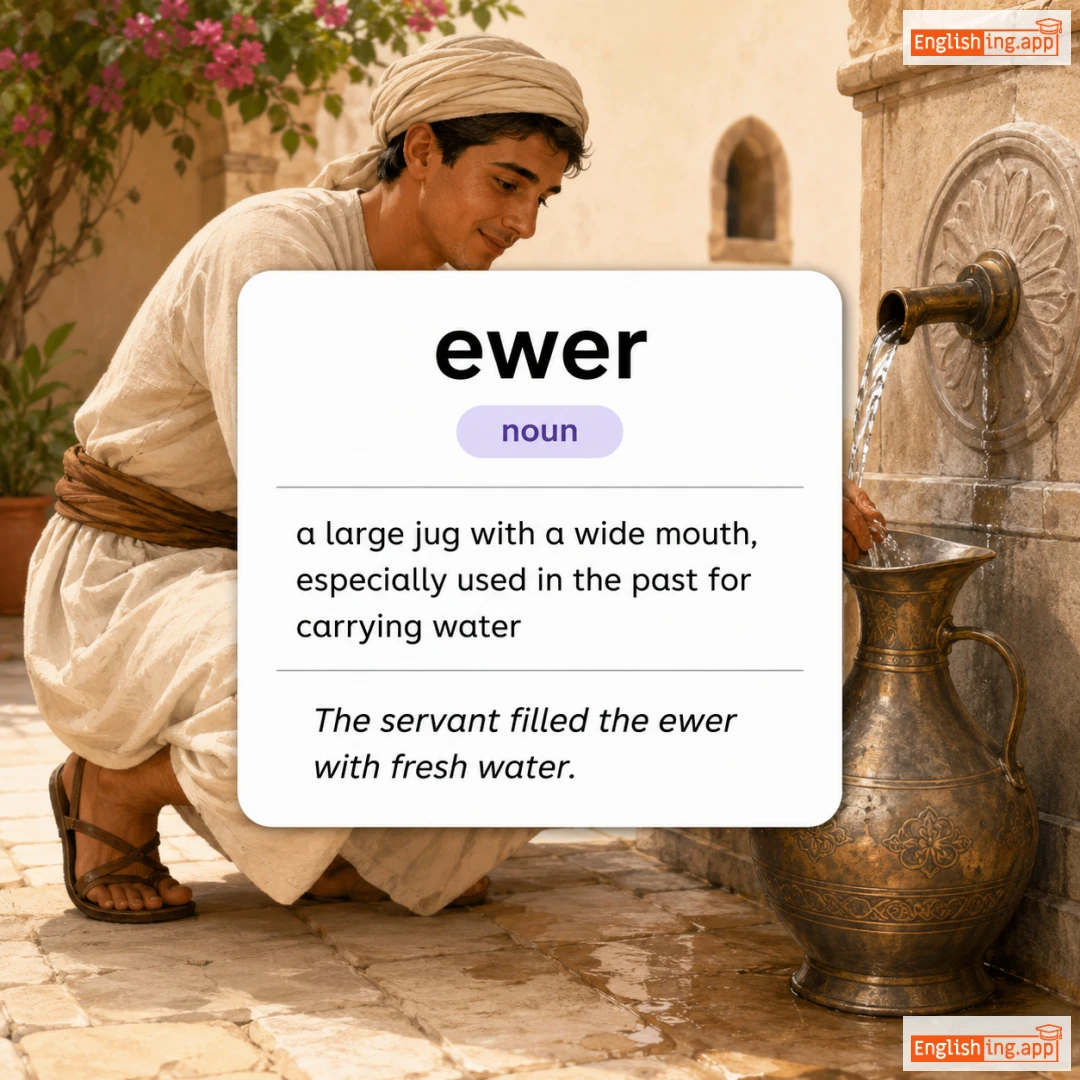
ewer definition card — visual illustration of the meaning
noun C2
/ˈjuːər/
кувшин (kuvshin)

a large jug with a wide mouth, especially used in the past for carrying water

"The servant filled the ewer with fresh water."
"Слуга наполнил кувшин свежей водой." (Sluga napolnil kuvshin svezhey vodoy.)
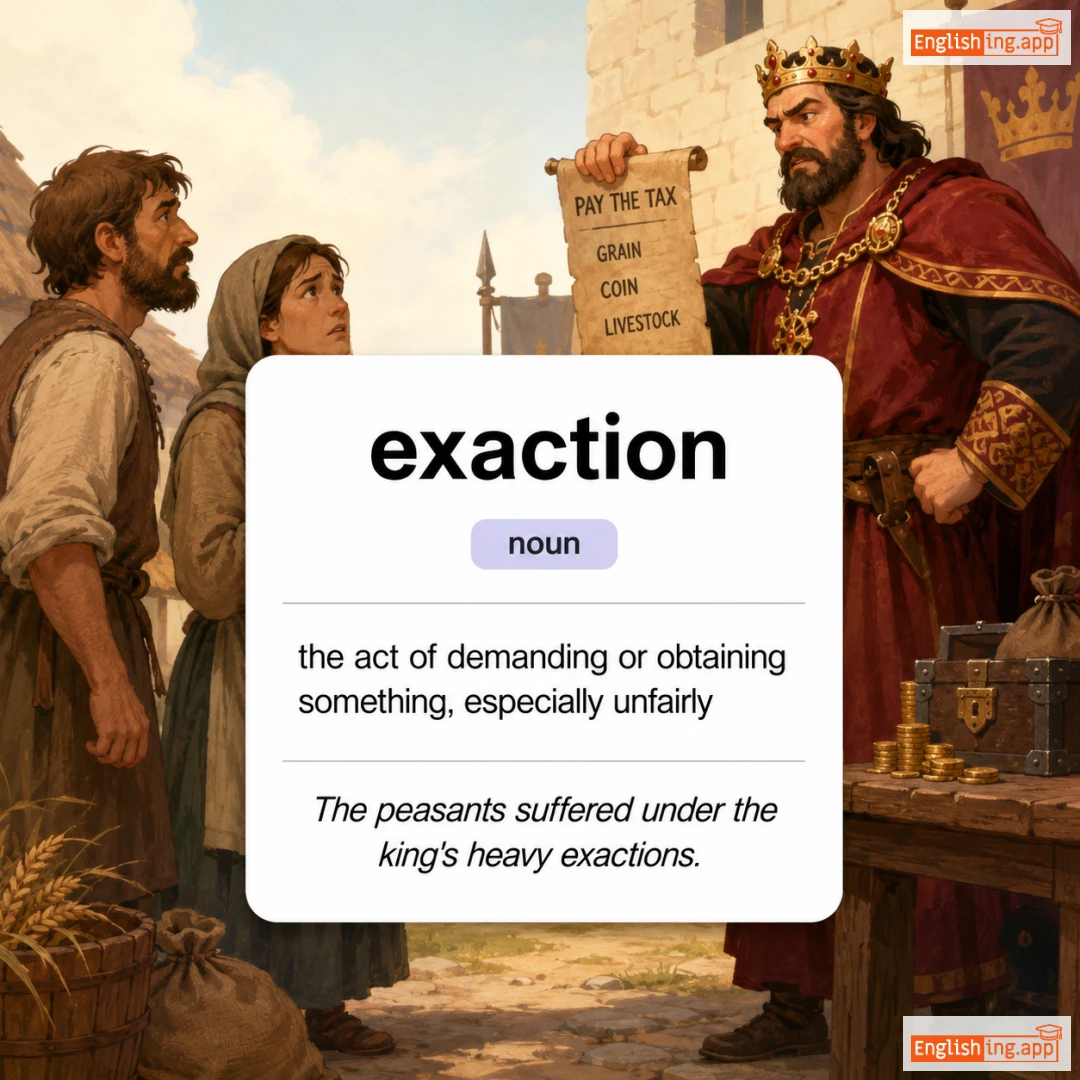
exaction definition card — visual illustration of the meaning
noun C2
/ɪɡˈzækʃən/
экстракция (ekstraktsiya)

the act of demanding or obtaining something, especially unfairly

"The peasants suffered under the king's heavy exactions."

"Крестьяне страдали от тяжёлых экстракций короля." (Krest'yane stradali ot tyazhelykh ekstraktsiy korolya.)
adjective C2
/ɪkˈsɛpʃənəbl/
неприемлемый (nepriyemlemiy)

Open to objection; causing disapproval.

"His rude remarks were considered exceptionable by everyone present."

"Его грубые замечания были признаны неприемлемыми всеми присутствующими." (Ego grubye zamechaniya byli prizhany nepriyemlemimi vsemi prisutstvuyushchimi.)
noun C2
/ɪksˈtʃɛkər/
казначейство (kaznacheystvo)

The treasury of a state or country.

"The government announced new measures to improve the exchequer."

"Правительство объявило о новых мерах для улучшения казначейства." (Pravitel'stvo ob'yavilo o novykh merakh dlya uluchsheniya kaznacheystva.)
noun C2
/ɪkˈsɪʒən/
удаление (udaleniye)

the act of cutting something out, especially by surgical removal

"The excision of the infected tissue prevented further complications."

"Удаление инфицированной ткани предотвратило дальнейшие осложнения." (Udaleniye infektsirovannoy tkani predotvratilo dal'neysheye oslozhneniya.)
noun C2
/ˌɛksaɪˈteɪʃən/
возбуждение (vozbuzhdenie)

a state of great excitement or the process of stimulating activity

"The news created great excitation among the fans."

"Новость вызвала большое возбуждение среди фанатов." (Novost' vyzvala bol'shoye vozbuzhdeniye sredi fanatov.)
verb C2
/ɛkˈskɔːrieɪt/
резко критиковать (rezko kritikovat)

To strongly criticize someone; to denounce severely.

"The critic excoriated the film for its poor script."

"Критик раскритиковал фильм за его плохой сценарий." (Kritik raskritikoval film za ego plokhoi stsenarii.)
noun C2
/ɪkˈskrɛsəns/
аномальный рост (anomal'nyy rost)

An abnormal outgrowth or lump, often considered unattractive.

"The building was considered an excrescence on the landscape."

"Здание было признано эксцерсенцией в ландшафте." (Zdan'ye bylo prizhano eksertsentsiey v landshaftye.)
verb C2
/ɪkˈskruːʃieɪt/
мучить (muchtit)

to cause intense pain or suffering

"The injury excruciated him with unbearable pain."
"Травма мучила его невыносимой болью." (Trava m uchila ego nevinomisoy bol'yu.)
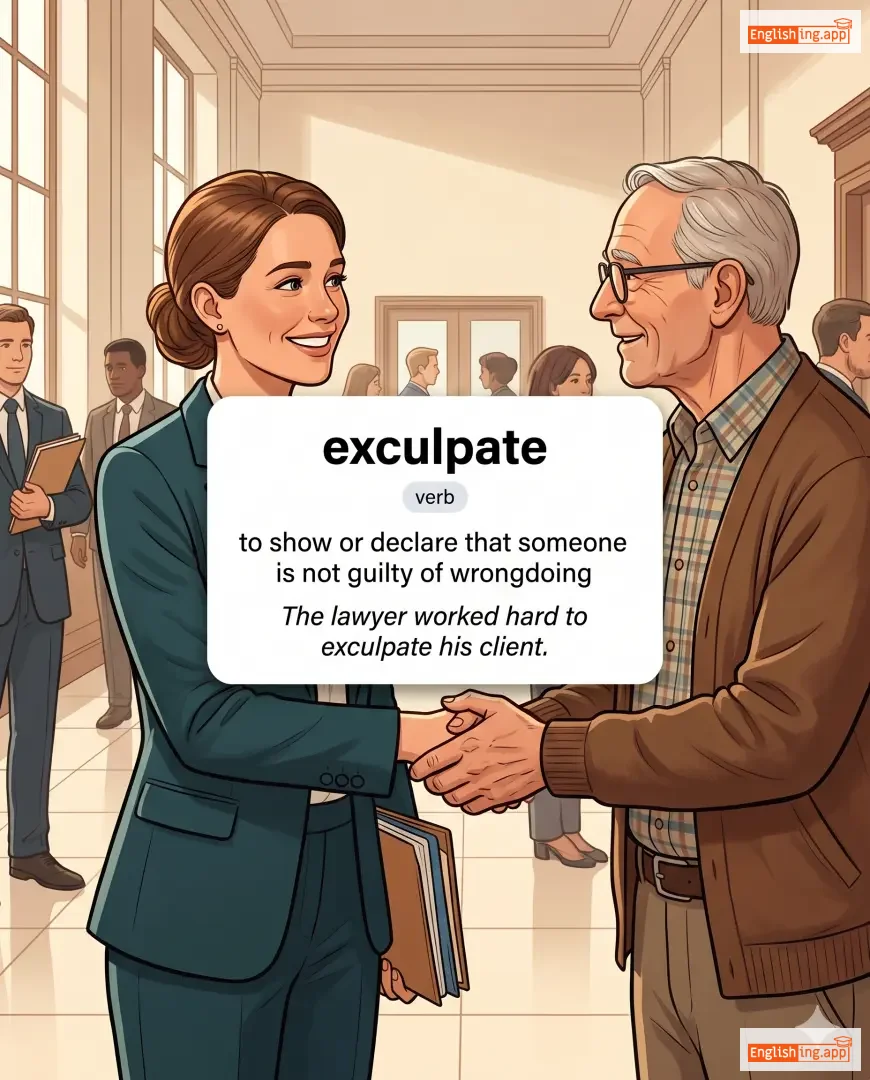
exculpate definition card — visual illustration of the meaning
verb C2
/ˈɛkskʌlpeɪt/
оправдывать (opravyvat')

to show or declare that someone is not guilty of wrongdoing

"The lawyer worked hard to exculpate his client."

"Адвокат усердно работал, чтобы оправдать своего клиента." (Advokat usierdno rabotal, chtoby opravyvat' svoego klienta.)
adjective C2
/ɪkˈskɜːsɪv/
блуждающий (bluzhdajushchij)

Tending to digress or wander; moving away from the main subject.

"His excursive lecture left the students confused about the main topic."

"Его блуждающая лекция оставила студентов в замешательстве по поводу основной темы." (Ego bluzhdajushchaya lektsiya ostavila studentov v zameshatel'stve po povodu osnovnoy temy.)
execrable definition card — visual illustration of the meaning
adjective C2
/ˈeksɪkrəbl/
отвратительный (otvratitel'nyy)

Extremely bad or unpleasant.

"The movie was so execrable that many people left the theater early."

"Фильм был таким отвратительным, что многие люди ушли из кинотеатра раньше." (Film byl takim otvratitel'nym, chto mnogie lyudi ushli iz kinoteatra ranshe.)
verb C2
/ˈeksɪkreɪt/
презирать (prezirat)

To feel or express great loathing or hatred for something.

"The community execrated the corrupt politician."

"Сообщество презирало коррумпированного политика." (Soobshchestvo preziral korruptirovannogo politika.)
noun C2
/ˌɛksɪˈkreɪʃən/
проклятие (proklyatie)

An act of cursing or denouncing someone or something with hatred.

"The dictator’s name was spoken with execration after his fall."

"Имя диктатора было произнесено с проклятием после его падения." (Imya diktatora bylo proizneseno s proklyatiem posle ego padeniya.)
noun C2
/ˌɛksəˈdʒiːsɪs/
экзегеза (ekzhegeza)

A critical explanation or interpretation of a text, especially a religious scripture.

"The professor gave a detailed exegesis of the biblical passage."

"Профессор дал подробное экзегезис библейского отрывка." (Professor dal podrobnoe ekzhegezis bibleyskogo otryvka.)
noun C2
/ɪɡˈzɛmplɑːr/
пример (primer)

A model or pattern to be copied or imitated.

"She is an exemplar of kindness and generosity."

"Она пример доброты и щедрости." (Ona primer dobrotu i shchedrosti.)
adjective C2
/ɪɡˈzɔːstɪbəl/
истощаемый (istochaemyi)

able to be used up completely; not infinite

"Coal and oil are exhaustible resources."

"Уголь и нефть — это истощаемые ресурсы." (Ugól' i neft' — eto istochayemye resursy.)
verb C2
/ɪɡˈzɪləreɪt/
восхищать (voskhishchat)

To make someone feel very happy, animated, or excited.

"The mountain view exhilarated the travelers."
"Вид на горы вдохновил путешественников." (Vid na gory vdokhnovil puteshestvennikov.)
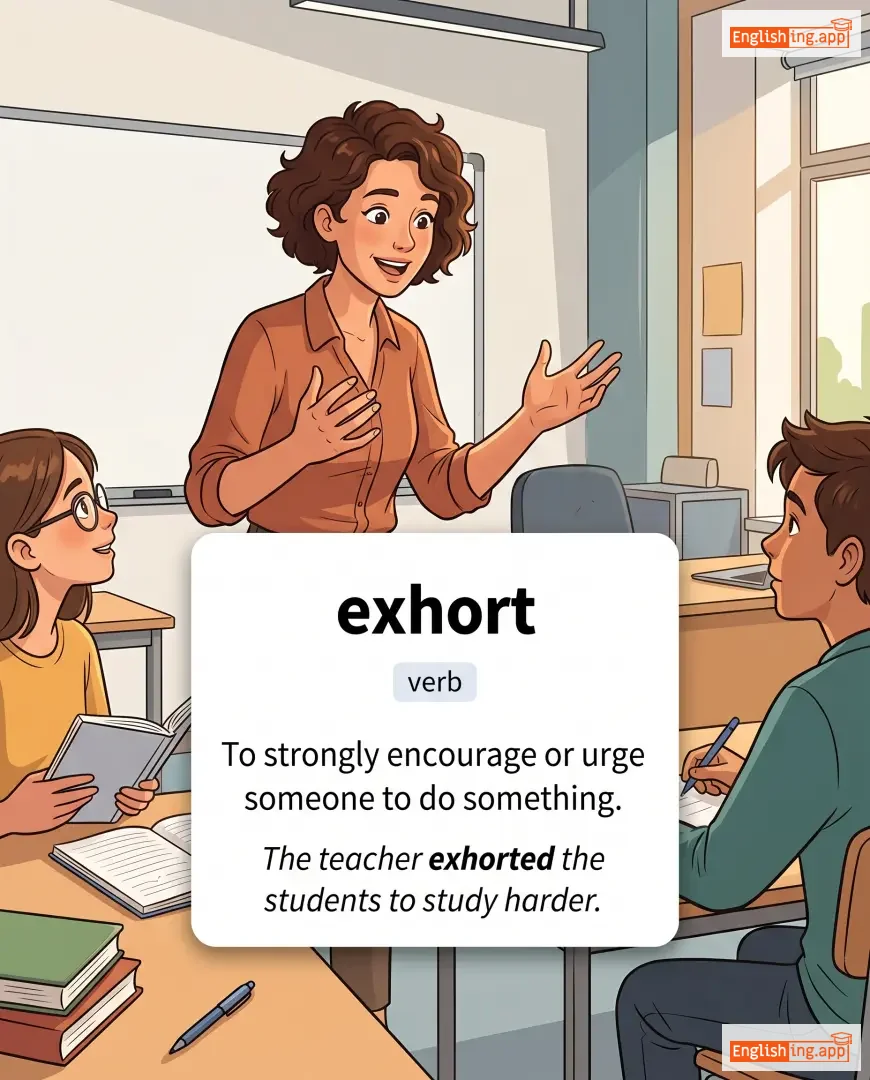
exhort definition card — visual illustration of the meaning
verb C2
/ɪɡˈzɔːrt/
эксхорти́ровать (ekshortirovat)

To strongly encourage or urge someone to do something.

"The teacher exhorted the students to study harder."

"Учитель эксхорти́ровал студентов учиться усерднее." (Uchitel' ekshortiroval studentov uchit'sya usyerdnee.)
verb C2
/ɛksˈhjuːm/
эксгумировать (eks-gumirovat)

to dig out something buried, especially a body from the ground

"The archaeologists decided to exhume the ancient remains."
"Археологи решили эксгумировать древние останки." (Archeologi reshilи eksgumirovat drevnie ostanki.)
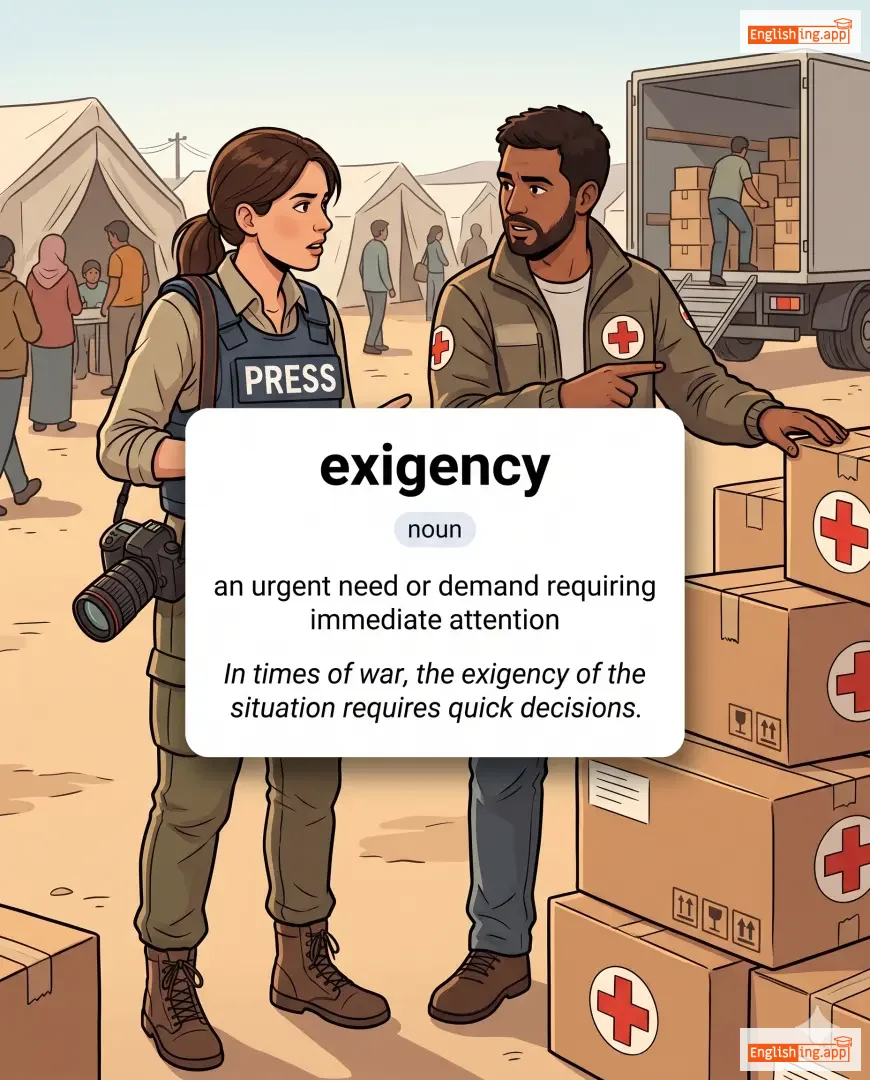
exigency definition card — visual illustration of the meaning
noun C2
/ˈɛksɪdʒənsi/
неотложная потребность (neotlozhnaya potrebbnost)

an urgent need or demand requiring immediate attention

"In times of war, the exigency of the situation requires quick decisions."

"В военное время неотложная потребность ситуации требует быстрых решений." (V voyennoye vremya neotlozhnaya potrebbnost' situatsii trebujet bystrykh resheniy.)
adjective C2
/ˈɛksɪdʒənt/
неотложный (neotlozhnyy)

demanding immediate action or attention; urgent

"The patient’s exigent condition required immediate surgery."

"Неотложное состояние пациента потребовало немедленной операции." (Neotlozhnoe sostoyanie patsiyenta potrebovalo nemedlennoy operatsii.)
noun C2
/ˌɛksɪˈɡjuːɪti/
недостаток (nedostatok)

the quality of being scanty or meager in amount

"The exiguity of resources made the project difficult to complete."

"Недостаток ресурсов сделал проект трудным для завершения." (Nedostatok resursov sdelal proyekt trudnym dlya zaversheniya.)
adjective C2
/ɛɡˈzɪɡjuəs/
меньше (men'she)

small in amount; scanty or inadequate

"They survived on exiguous rations during the journey."

"Они выжили на скудных пайках во время путешествия." (Oni vyzhili na skudnykh paykakh vo vremya puteshestviya.)
noun C2
/ɪɡˈzɔːrbɪtəns/
эксцессы (ekstsessy)

The quality of being excessive, unreasonable, or going beyond proper limits.

"The exorbitance of the hotel's prices shocked the tourists."
"Эксцессивность цен в отеле шокировала туристов." (Ekstsessivnost' tsen v otele shokirovala turistov.)
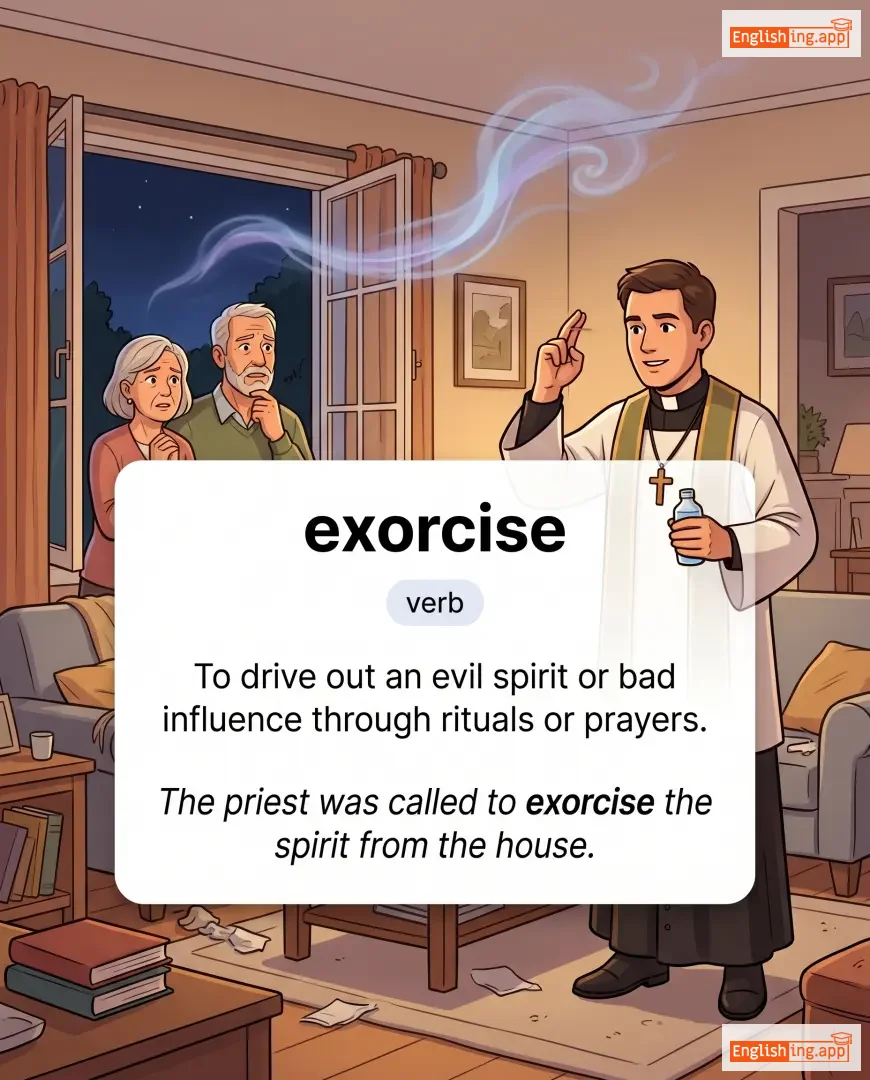
exorcise definition card — visual illustration of the meaning
verb C2
/ˈeksɔːrsaɪz/
изгонять (izgonyat)

To drive out an evil spirit or bad influence through rituals or prayers.

"The priest was called to exorcise the spirit from the house."
"Священник был вызван, чтобы изгнать духа из дома." (Svyashchennik byl vyzvan, chtoby izgnat' dukha iz doma.)
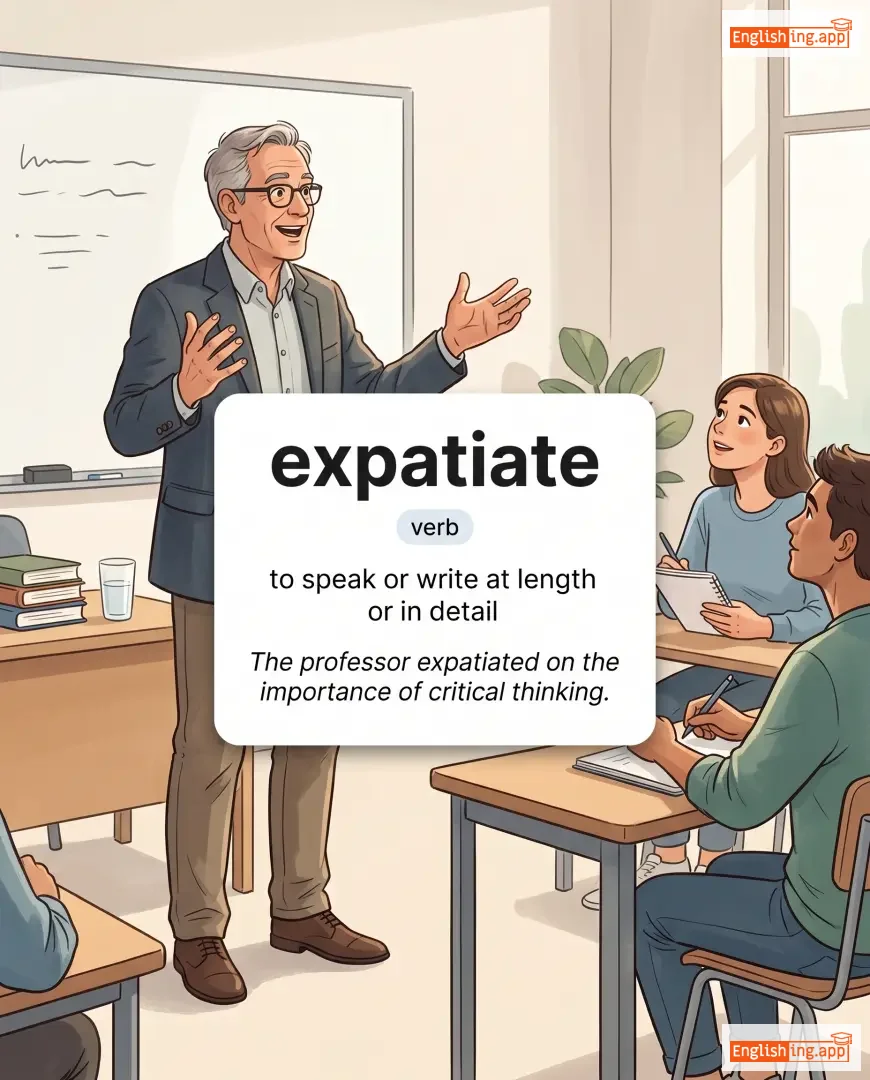
expatiate definition card — visual illustration of the meaning
verb C2
/ɪkˈspeɪʃiˌeɪt/
говорить или писать подробно (govorit' ili pisat' podrobno)

to speak or write at length or in detail

"The professor expatiated on the importance of critical thinking."

"Профессор экспатировал о важности критического мышления." (Professor eksapitiral o vazhnosti kriticheskogo myshleniya.)
verb C2
/ɪkˈspɛktəreɪt/
отхаркивать (otharkivat)

to cough up and spit out mucus from the throat or lungs

"The patient began to expectorate thick mucus."

"Пациент начал отхаркивать густую слизь." (Patsiyent nachal otharkivat' gustuyu sliz'.)
noun C2
/ɪkˈspiːdiənsi/
оппортунизм (opportunizm)

the quality of being convenient and practical despite possibly being improper or immoral

"He acted out of political expediency rather than principle."
"Он действовал из политического оппортунизма, а не из принципа." (On deystvoval iz politicheskogo opportunizma, a ne iz printsipa.)
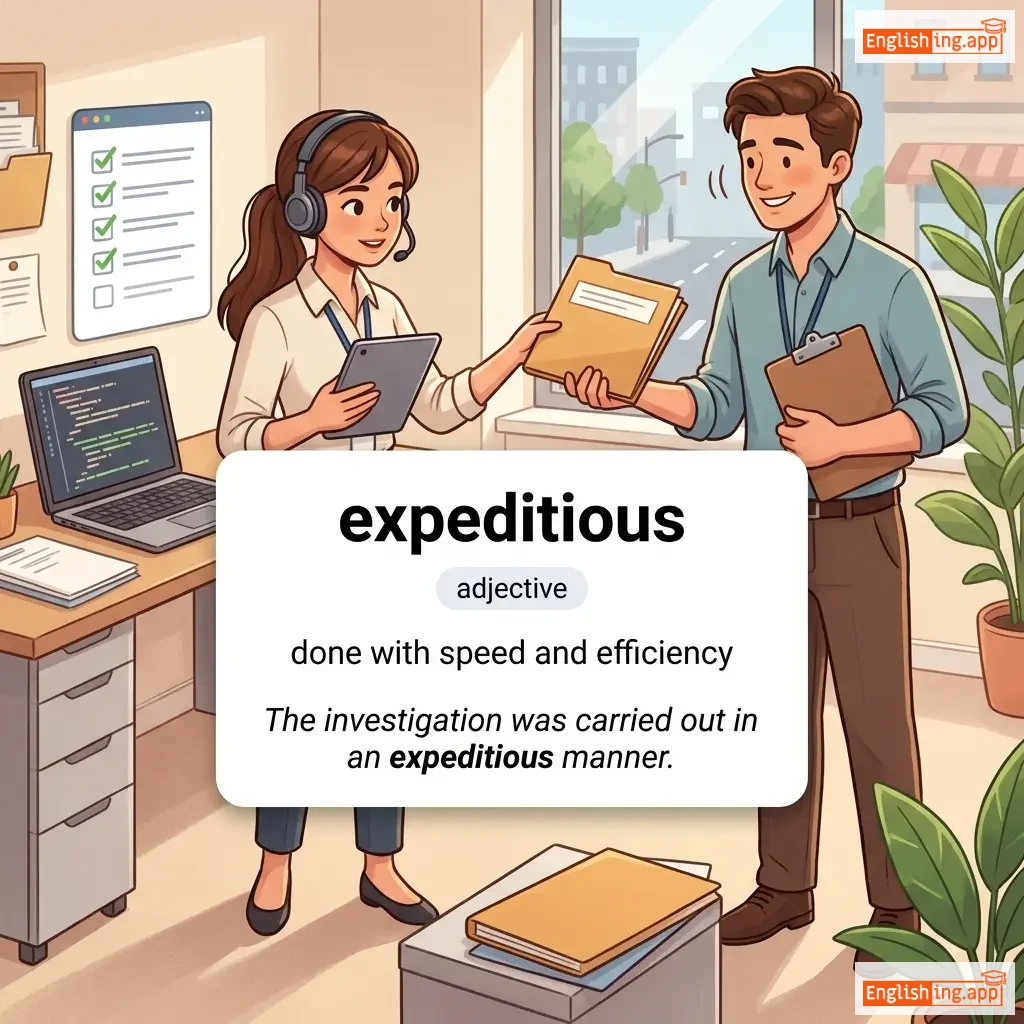
expeditious definition card — visual illustration of the meaning
adjective C2
/ˌɛkspəˈdɪʃəs/
быстрый и эффективный (bystryy i effektivnyy)

done with speed and efficiency

"The investigation was carried out in an expeditious manner."

"Расследование было проведено быстро и эффективно." (Rassledovanie bylo provedeno bystro i effektivno.)
adverb C2
/ˌɛkspəˈdɪʃəsli/
быстро и эффективно (bystro i effektovno)

in a quick and efficient manner

"The application was processed expeditiously."
"Заявка была обработана быстро и эффективно." (Zayavka byla obrabotana bystro i effektovno.)
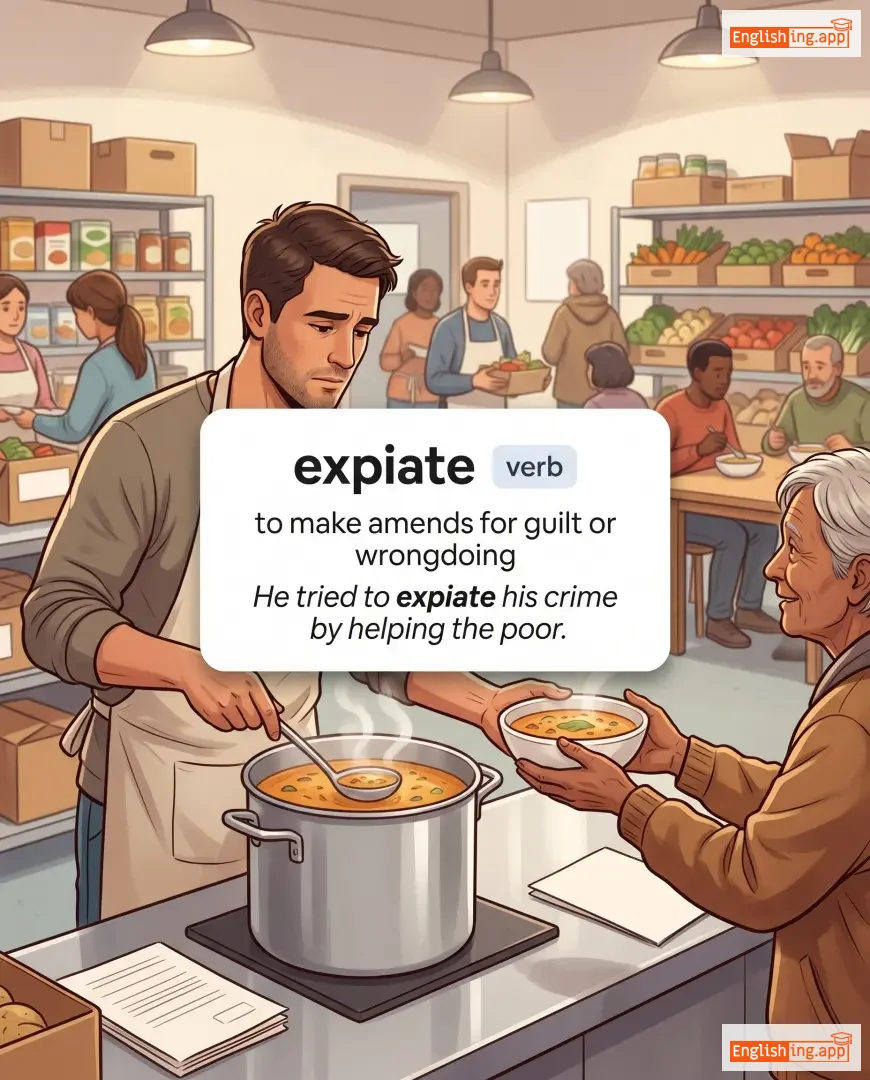
expiate definition card — visual illustration of the meaning
verb C2
/ˈɛkspieɪt/

to make amends for guilt or wrongdoing

"He tried to expiate his crime by helping the poor."

noun C2
/ˈɛksplətɪv/
ругательство (rugatel'stvo)

a word or phrase used as an exclamation, often offensive or profane

"He shouted an expletive when he dropped the hammer on his foot."

"Он выкрикнул ругательство, когда уронил молоток на ногу." (On vykriknul rugatel'stvo, kogda uronil molotok na nogu.)
adjective C2
/ˈɛksplɪkəbəl/
объяснимый (obyasnimyy)

able to be explained or understood

"His sudden anger was explicable given the stressful situation."
"Его внезапный гнев был объясним, учитывая стрессовую ситуацию." (Ego vnezapnyy gnev byl ob'yasnim, uchityvaya stressovuyu situatsiyu.)
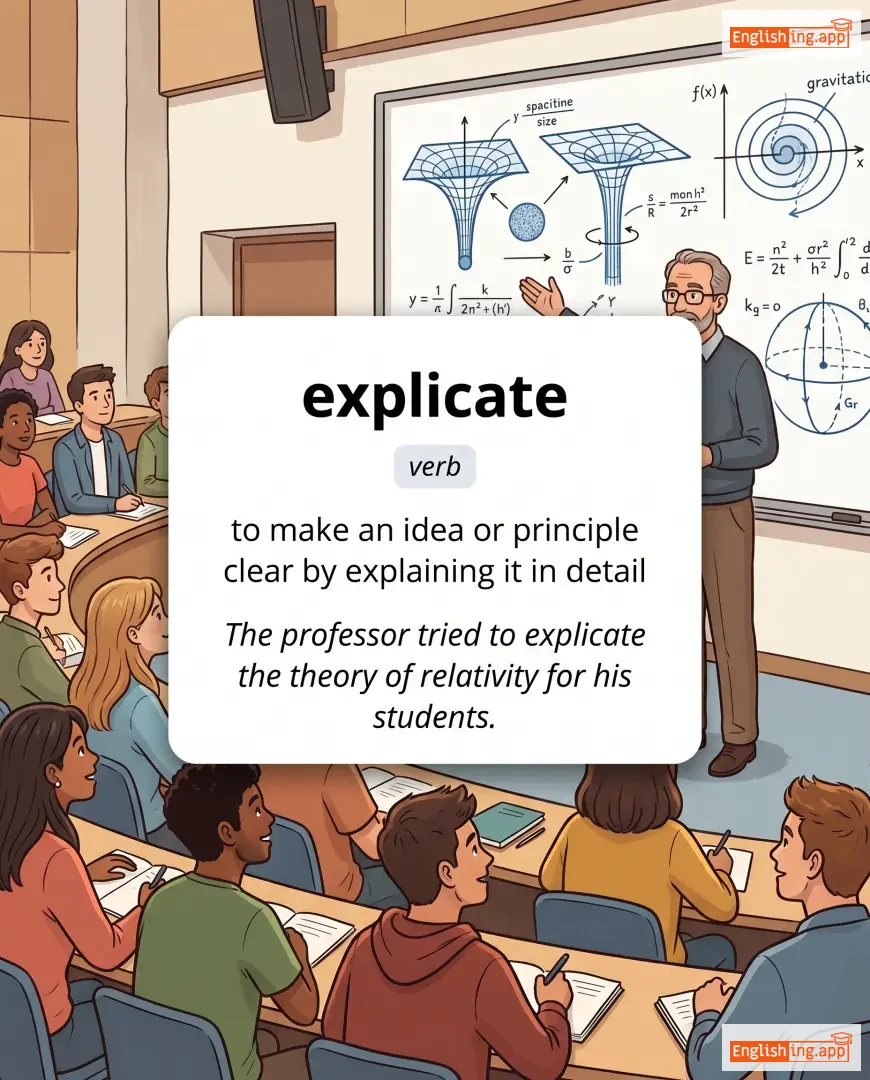
explicate definition card — visual illustration of the meaning
verb C2
/ˈɛksplɪkeɪt/
объяснять (ob'yasnyat')

to make an idea or principle clear by explaining it in detail

"The professor tried to explicate the theory of relativity for his students."

"Профессор попытался объяснить теорию относительности своим студентам." (Professor popytalsya ob'yasnit' teoryu otnositel'nosti svoim studentam.)
noun C2
/ˈɛksplɪkeɪtər/
толкователь (tolkovatel)

a person who explains or interprets something in detail

"The critic served as an explicator of the poet’s complex works."
"Критик выступал в роли объяснителя сложных работ поэта." (Kritik vystupal v roli ob'yasnitelya slozhnykh rabot poet.)
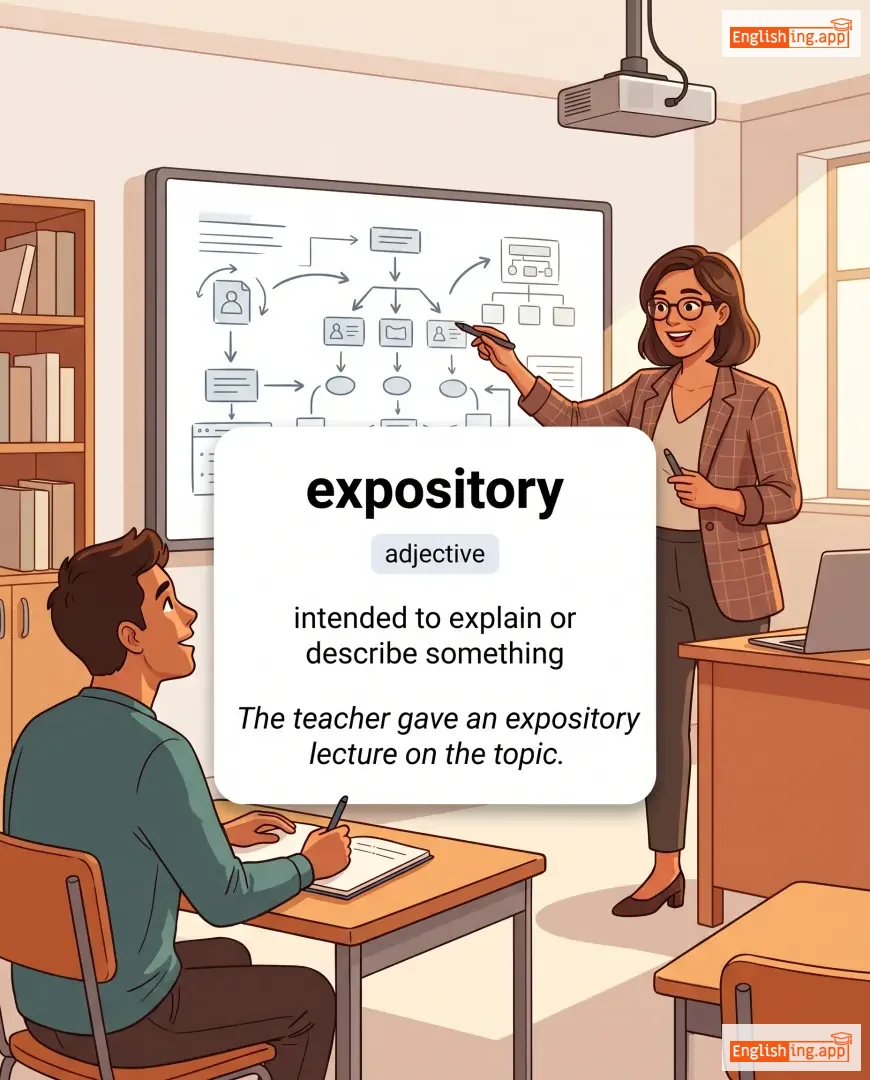
expository definition card — visual illustration of the meaning
adjective C2
/ɪkˈspɒzɪtəri/
пояснительный (poyasnitel'nyy)

intended to explain or describe something

"The teacher gave an expository lecture on the topic."

"Учитель дал пояснительную лекцию по этой теме." (Uchitel' dal poyasnitel'nuyu lektsiyu po etoy teme.)
verb C2
/ɪkˈspɒstjʊleɪt/
выражать несогласие (vyrʐatʲ nesoglasije)

to express strong disapproval or disagreement

"She expostulated with her friend about the risky decision."

"Она выразила недовольство своим другом по поводу рискованного решения." (Ona vyrazil nedovol'stvo svoim drugom po povodu riskovannogo resheniya.)
noun C2
/ɪkˌspɒstjʊˈleɪʃən/
протест (protest)

the act of expressing protest or disagreement

"His expostulation against the unfair rules was ignored."
"Его протест против несправедливых правил был проигнорирован." (Yego protest protiv nespravedlivykh pravil byl proignorirovann.)
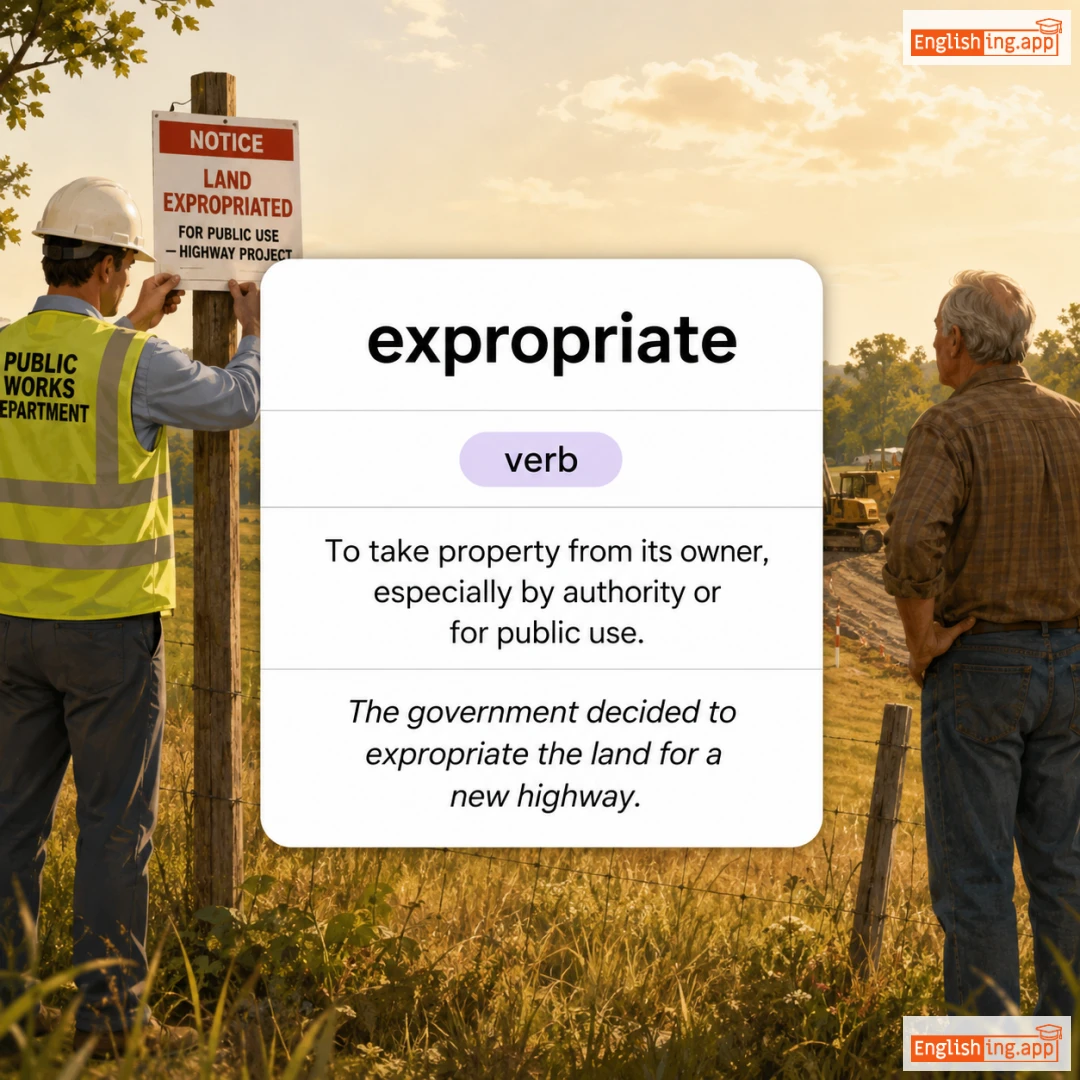
expropriate definition card — visual illustration of the meaning
verb C2
/ɛksˈproʊprieɪt/
экспроприировать (ekspropriiravat)

To take property from its owner, especially by authority or for public use.

"The government decided to expropriate the land for a new highway."
"Правительство решило экспроприировать землю для нового шоссе." (Pravitel'stvo reshilo ekspropriirivat' zemlyu dlya novogo shosse.)
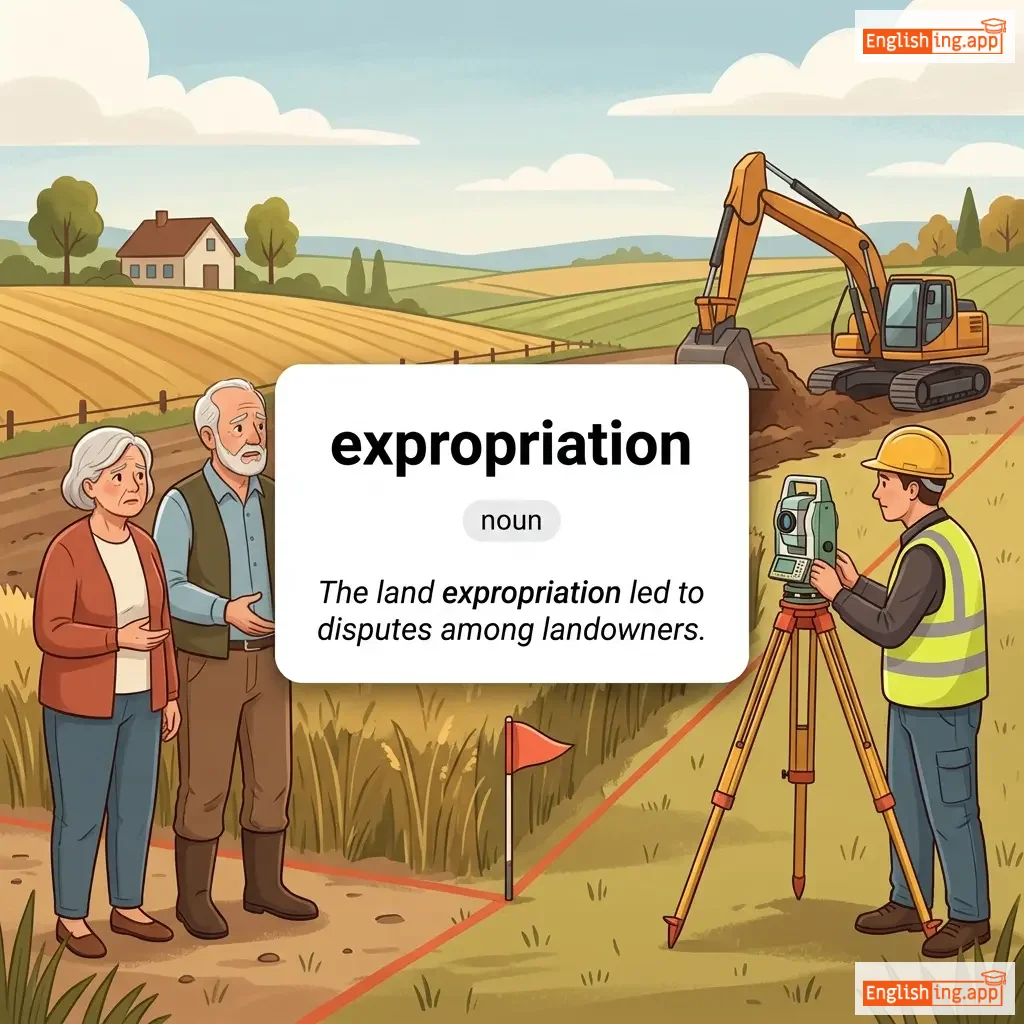
expropriation definition card — visual illustration of the meaning
noun C2
/ɪkˌsprəʊ.priˈeɪ.ʃən/
экспроприация (ekspropriatsiya)

The act of government taking private property, also known as confiscation, nationalization, or seizure.

"The land expropriation led to disputes among landowners."

"Экспроприация земли привела к спорам среди землевладельцев." (Ekspropriatsiya zemli privela k sporam sredi zemlevladel'tsev.)
verb C2
/ɪkˈspʌndʒ/
стереть (stereet)

To erase or remove completely, often something unwanted.

"He managed to expunge the embarrassing memory from his mind."

"Ему удалось стереть позорное воспоминание из его разума." (Emu udalos' steret' pozornoe vospominanie iz ego razuma.)
verb C2
/ˈekspərˌɡeɪt/
цензурировать (tsenzurirovat)

To remove offensive or objectionable parts from a text or speech.

"The publisher decided to expurgate the novel before reprinting it."

"Издатель решил цензурировать роман перед повторным изданием." (izdatel reshil tsenzurirovat roman pered povtornym izdaniem)