Словари

Словарь английского языка | Значения слов, определения и примеры

verb C1
/swɜːrv/
резко изменить направление (rezko izmenit' napravlenie)

to change direction suddenly, especially to avoid hitting something

"The car swerved to avoid the dog."

"Машина резко изменила направление, чтобы избежать собаки." (Mashina rezko izmenila napravlenie, chtoby izbezhat' sobaki.)
verb C1
/ˈswɪndl/
обманывать (obmanyvat)

to cheat someone out of money or possessions by deceit

"The con artist tried to swindle the old man out of his savings."

"Мошенник попытался обмануть старика, чтобы забрать его сбережения." (Moshennik popytalsya obmanut' starika, chtoby zabrat' ego sberezheniya.)
noun C1
/ˈswɪndlɚ/
мошенник (moshennik)

a person who cheats or deceives others for money or gain

"The police finally caught the notorious swindler."
"Полиция наконец поймала известного мошенника." (Politsiya nakonechno poymala izvestnogo moshennika.)
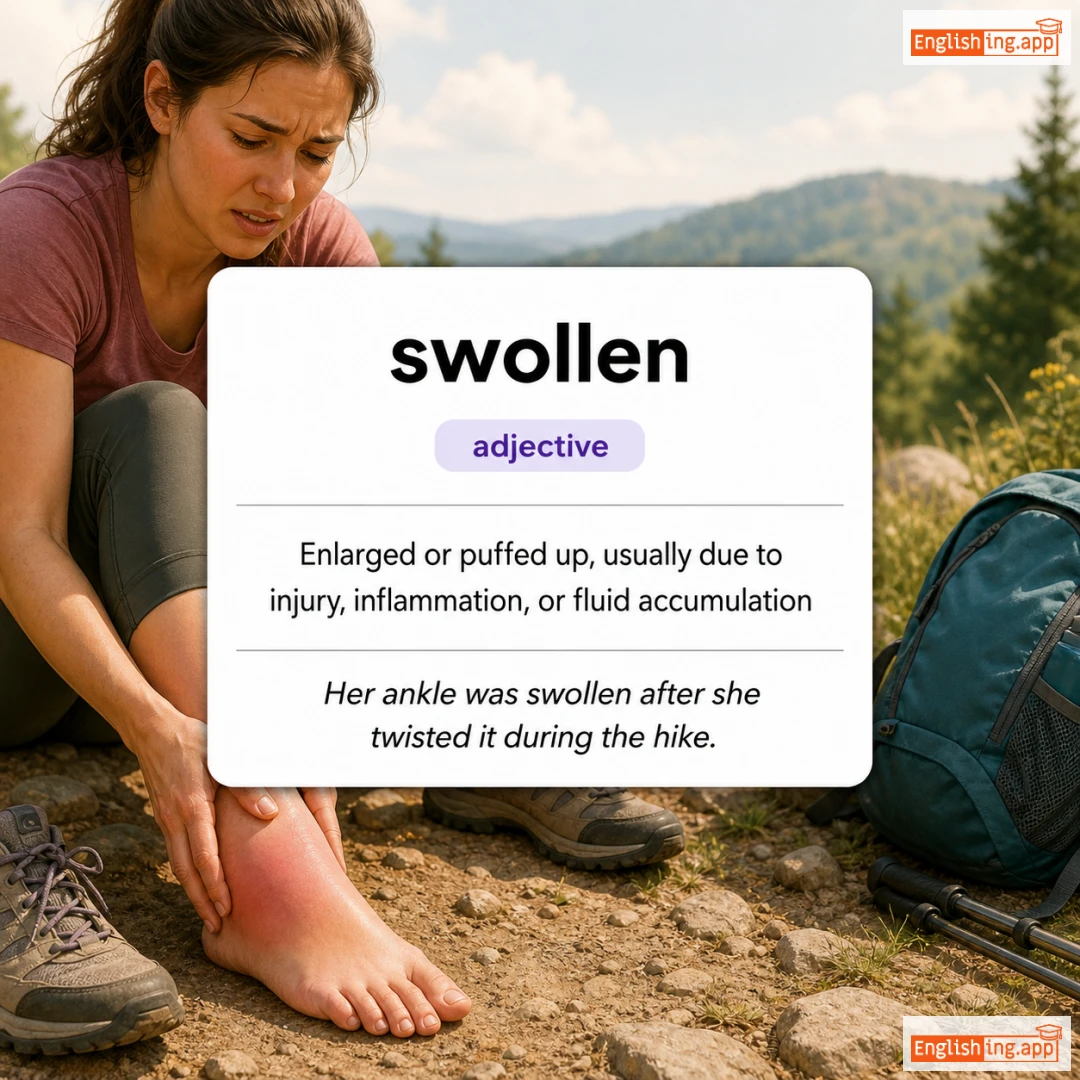
swollen definition card — visual illustration of the meaning
adjective C1
/ˈswoʊlən/
опухший (opuhshiy)

Enlarged or puffed up, usually due to injury, inflammation, or fluid accumulation

"Her ankle was swollen after she twisted it during the hike."
"Ее лодыжка была опухшей после того, как она подвернула ее во время похода." (Eye lodyzhka byla opukhshey posle togo, kak ona podvernula eye vo vremya pokhoda.)
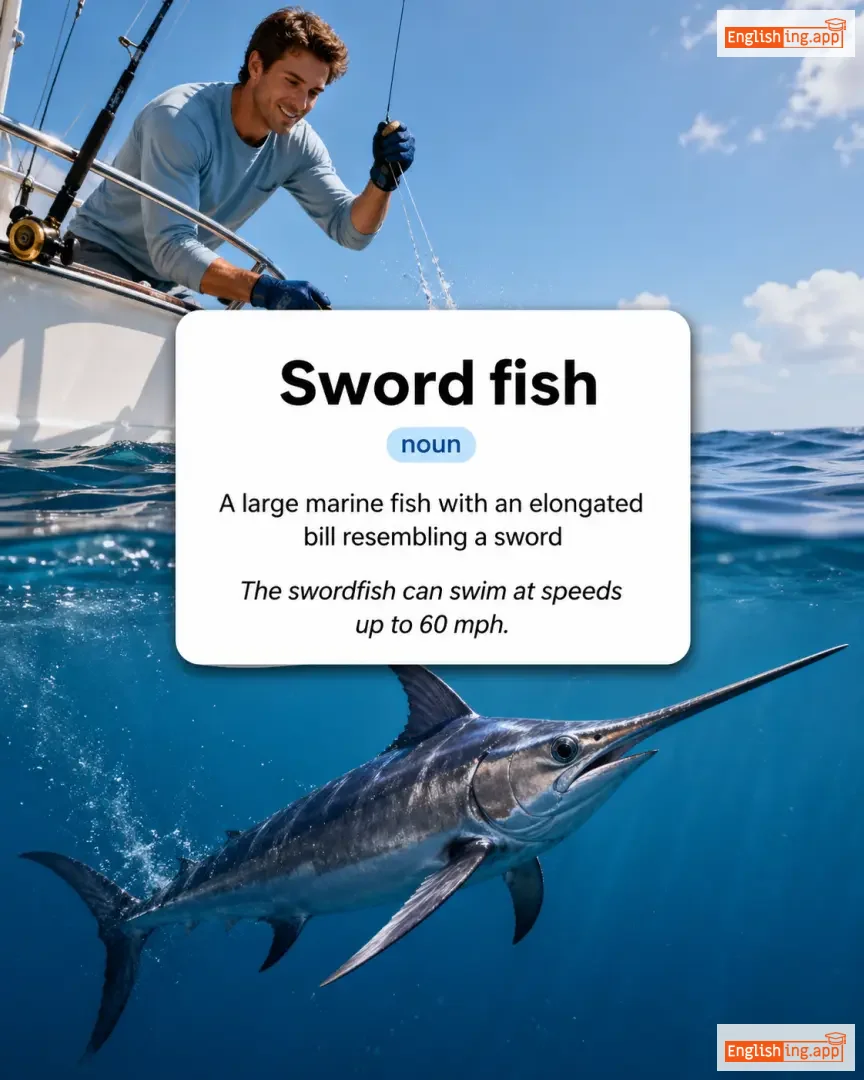
Sword fish definition card — visual illustration of the meaning
noun C1
/sɔːd fɪʃ/
рыба-меч (ryba mech)

A large marine fish with an elongated bill resembling a sword

"The swordfish can swim at speeds up to 60 mph."

"Рыба-меч может плавать со скоростью до 60 миль в час." (ryba mech mozhet plavat so skorostyu do shestdesyati mil v chas)
noun C1
/ˈsɪləbəl/
слог (slog)

A unit of pronunciation having one vowel sound, with or without surrounding consonants, forming the whole or part of a word.

"The word 'computer' has three syllables."
"Слово 'компьютер' состоит из трех слогов." (Slovo 'kompyuter' sostoyit iz tryokh slogov.)
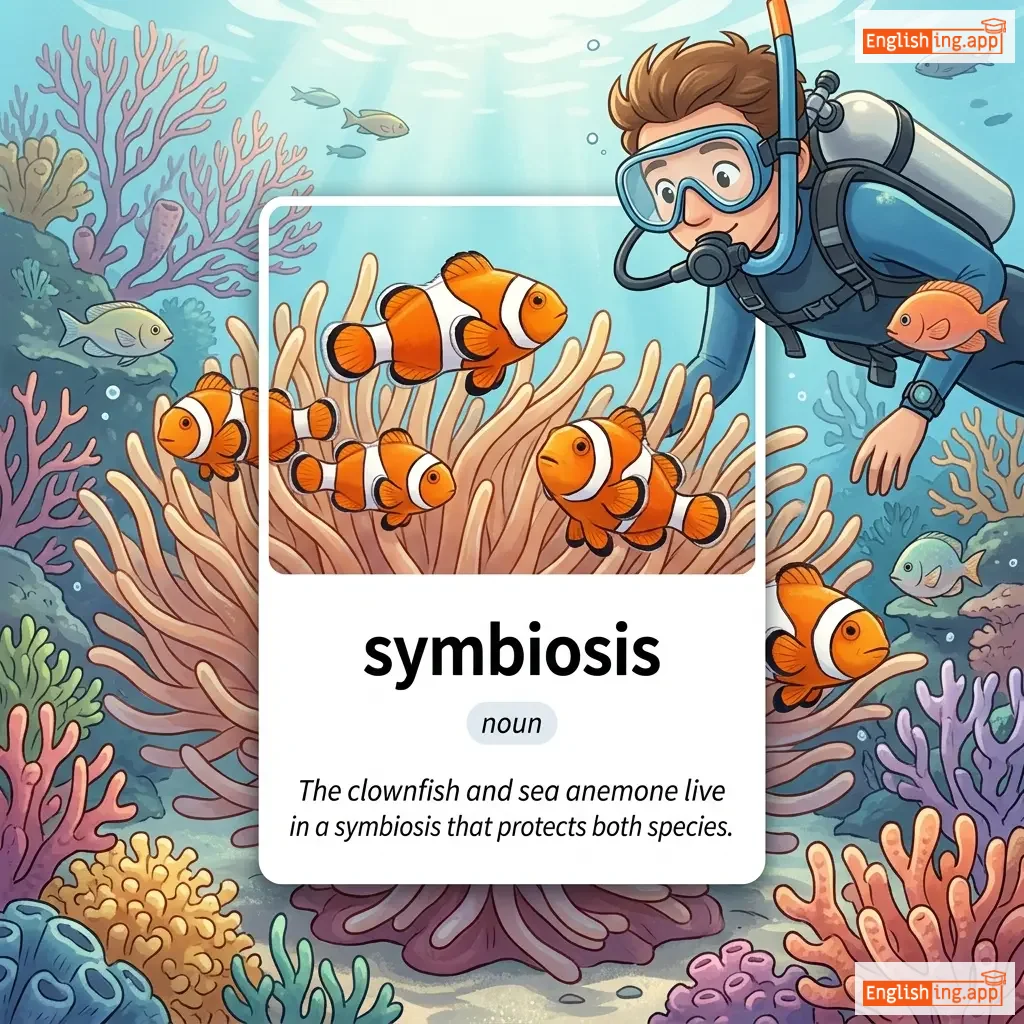
symbiosis definition card — visual illustration of the meaning
noun C1
/ˌsɪmbaɪˈoʊsɪs/
симбиоз (simbioz)

A close and often long-term interaction between two different species that benefits both.

"The clownfish and sea anemone live in a symbiosis that protects both species."
"Клоунфиш и морская анемона живут в симбиозе, который защищает оба вида." (Klounfish i morskaya anemona zhivut v simbioze, kotoryi zashchishchayet oba vida.)
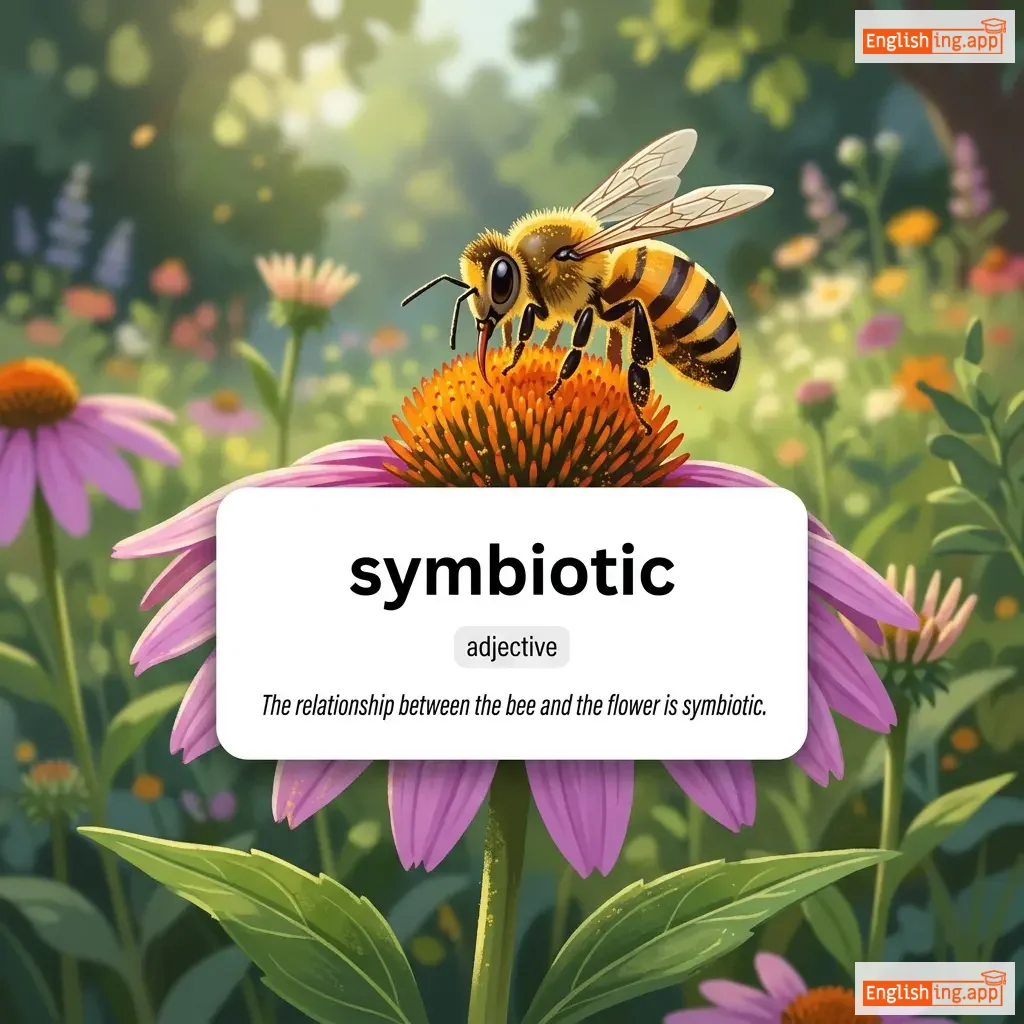
symbiotic definition card — visual illustration of the meaning
adjective C1
ˌsɪmbɪˈɒtɪk
симбиотический (simbioticheskiy)

Involving interaction between two different organisms living in close physical association.

"The relationship between the bee and the flower is symbiotic."
"Отношения между пчелой и цветком симбиотические." (Otnosheniya mezhdu pcheloy i tsvetkom simbioticheskie.)
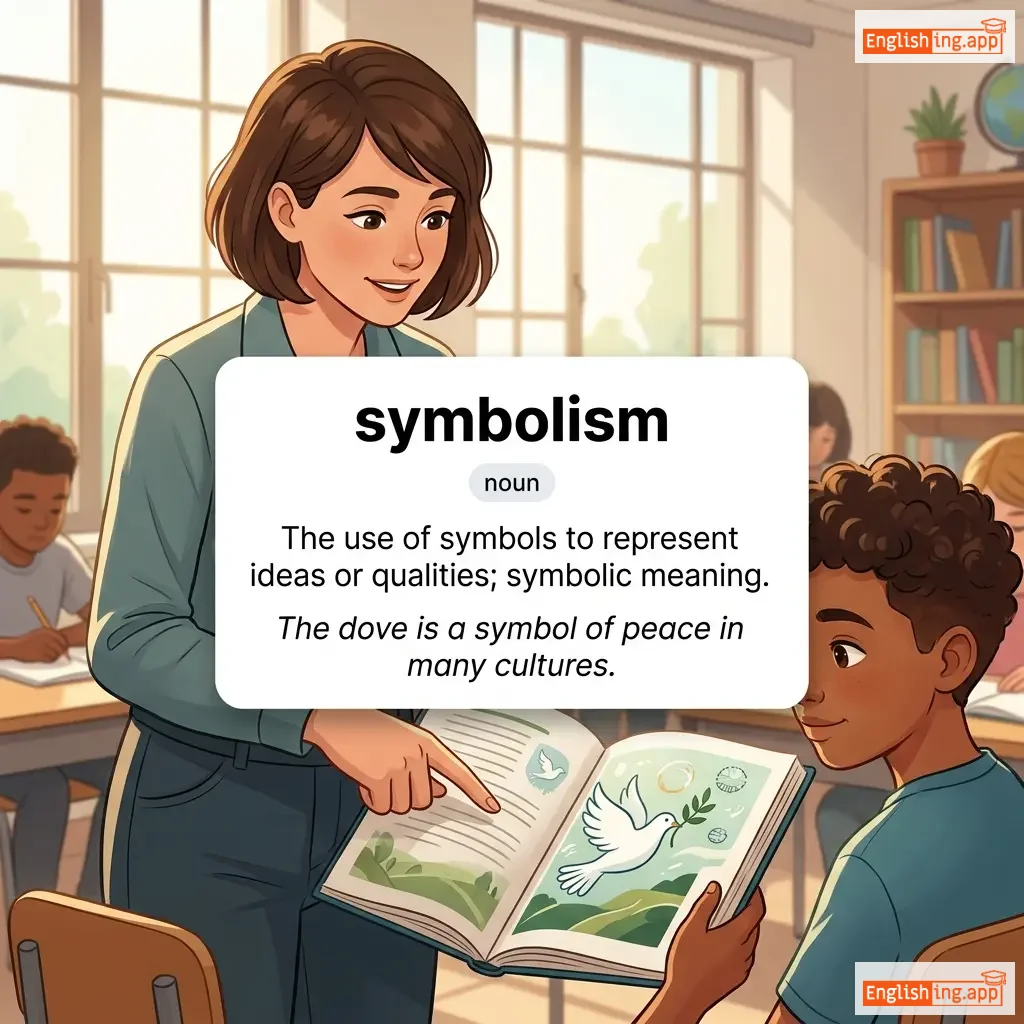
symbolism definition card — visual illustration of the meaning
noun C1
ˈsɪmbəlɪzəm
символизм (simvolizm)

The use of symbols to represent ideas or qualities; symbolic meaning.

"The dove is a symbol of peace in many cultures."

"Голубь — это символ мира в многих культурах." (Golub' — eto simvol mira v mnogikh kulturakh.)
adjective C1
/sɪˈmɛtrɪkəl/
симметричный (simmetrichny)

having parts on either side that match or are the same in shape, size, or arrangement

"The artist designed a symmetrical pattern on the floor."

"Художник разработал симметричный узор на полу." (Khudozhnik razrabotal simmetrichny uzor na polu.)
noun C1
/ˈsɪmətri/
симметрия (simmetriya)

the quality of having balanced proportions or identical parts facing each other

"The building’s symmetry impressed the visitors."

"Симметрия здания произвела впечатление на посетителей." (Simmetriya zdaniya proizvela vpechatlenie na posetiteley.)
adjective C1
/sɪmˈfɒnɪk/
симфонический (simfonicheskiy)

relating to or having the character of a symphony or symphony orchestra

"The concert featured a symphonic masterpiece."
"Концерт представил симфоническое произведение." (Kontsert predstavil simfonicheskoe proyizvedenie.)
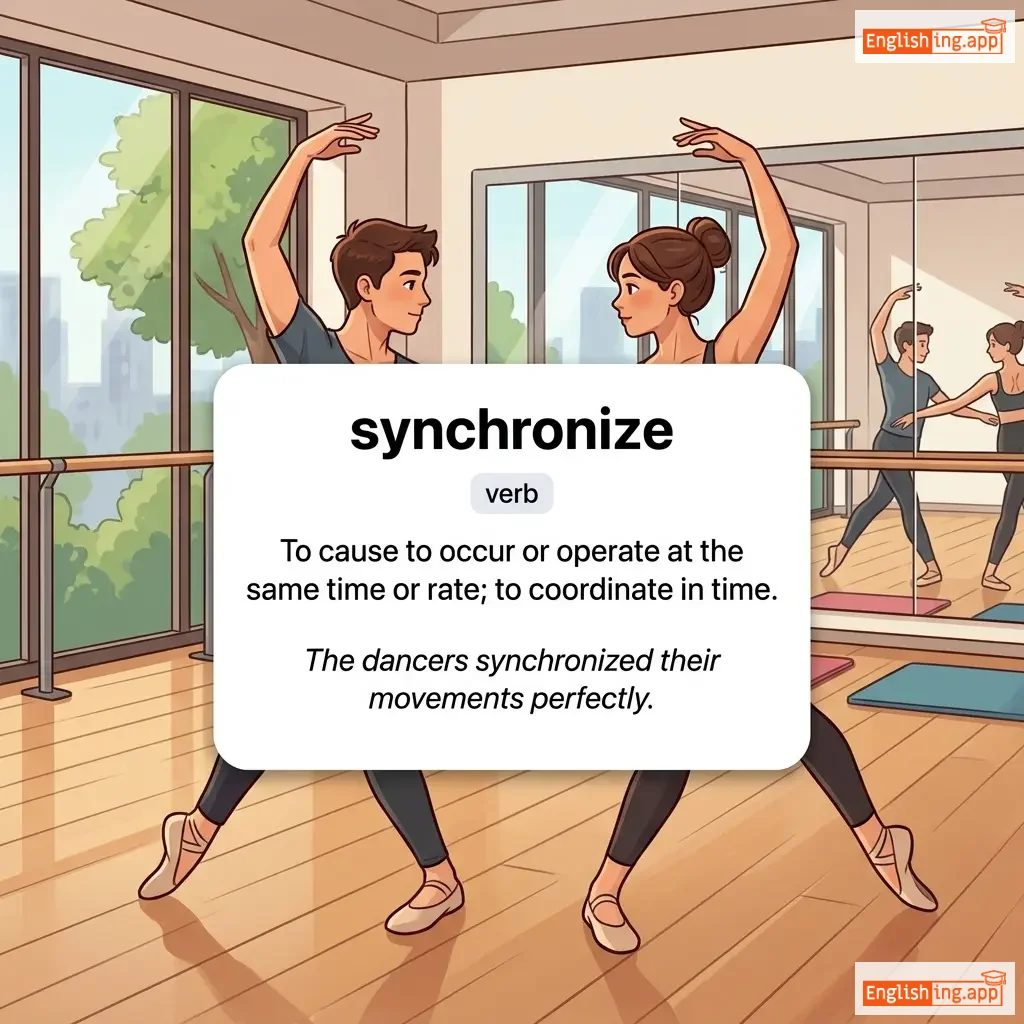
synchronize definition card — visual illustration of the meaning
verb C1
/ˈsɪŋ.krə.naɪz/
синхронизировать (sinkhronizirovat')

To cause to occur or operate at the same time or rate; to coordinate in time.

"The dancers synchronized their movements perfectly."
"Танцоры синхронизировали свои движения идеально." (Tantsory sinkhronizirovali svoi dvizhiniya ideal'no.)
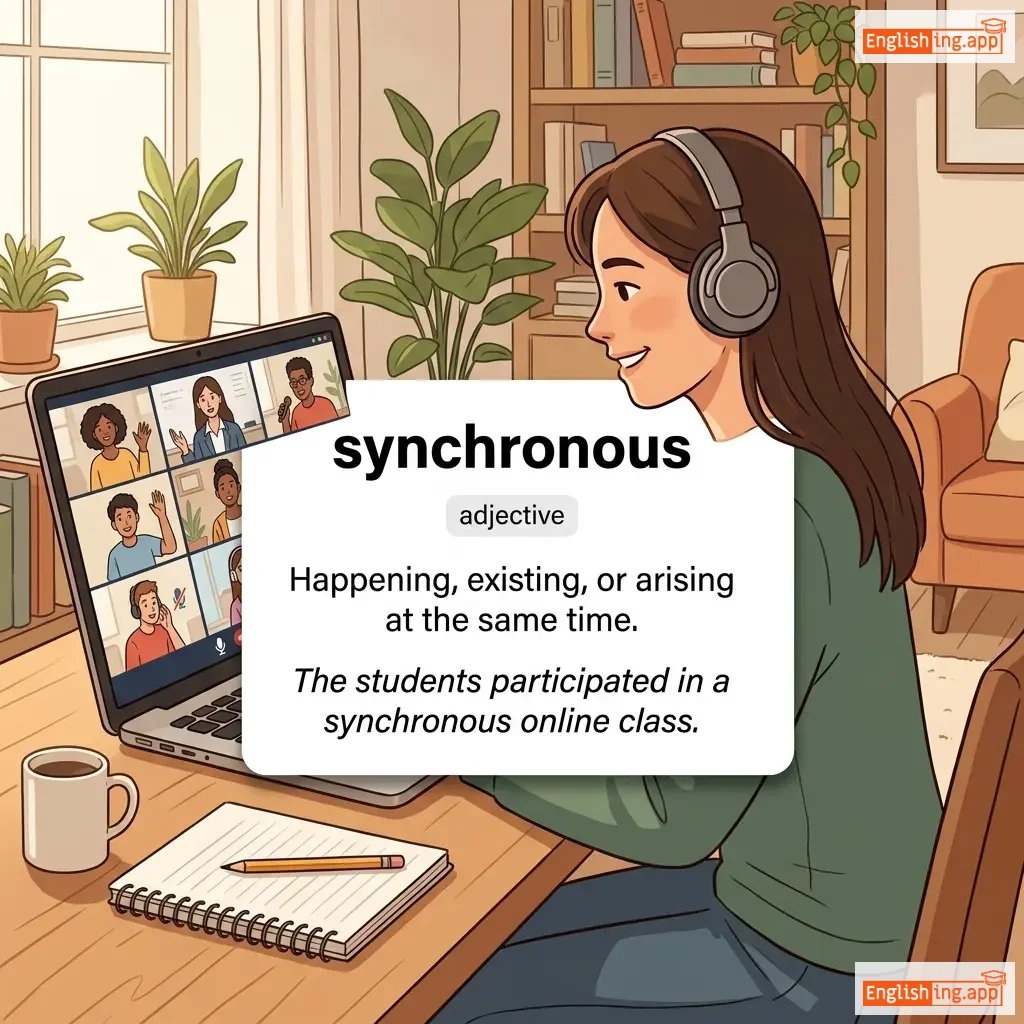
synchronous definition card — visual illustration of the meaning
adjective C1
/ˈsɪŋkrənəs/
синхронный (sinkhronny)

Happening, existing, or arising at the same time.

"The students participated in a synchronous online class."

"Студенты участвовали в синхронном онлайн-курсе." (Studenty uchastvovali v sinkhronnom onlayn-kurse.)
noun C1
/ˈsɪndɪkət/
синдикат (sindikat)

A group of individuals or organizations combined to promote a common interest or carry out a business venture.

"A syndicate of investors bought the struggling company."
"Синдикат инвесторов купил struggling компанию." (Sindikat investirov kupil struggling kompaniyu.)
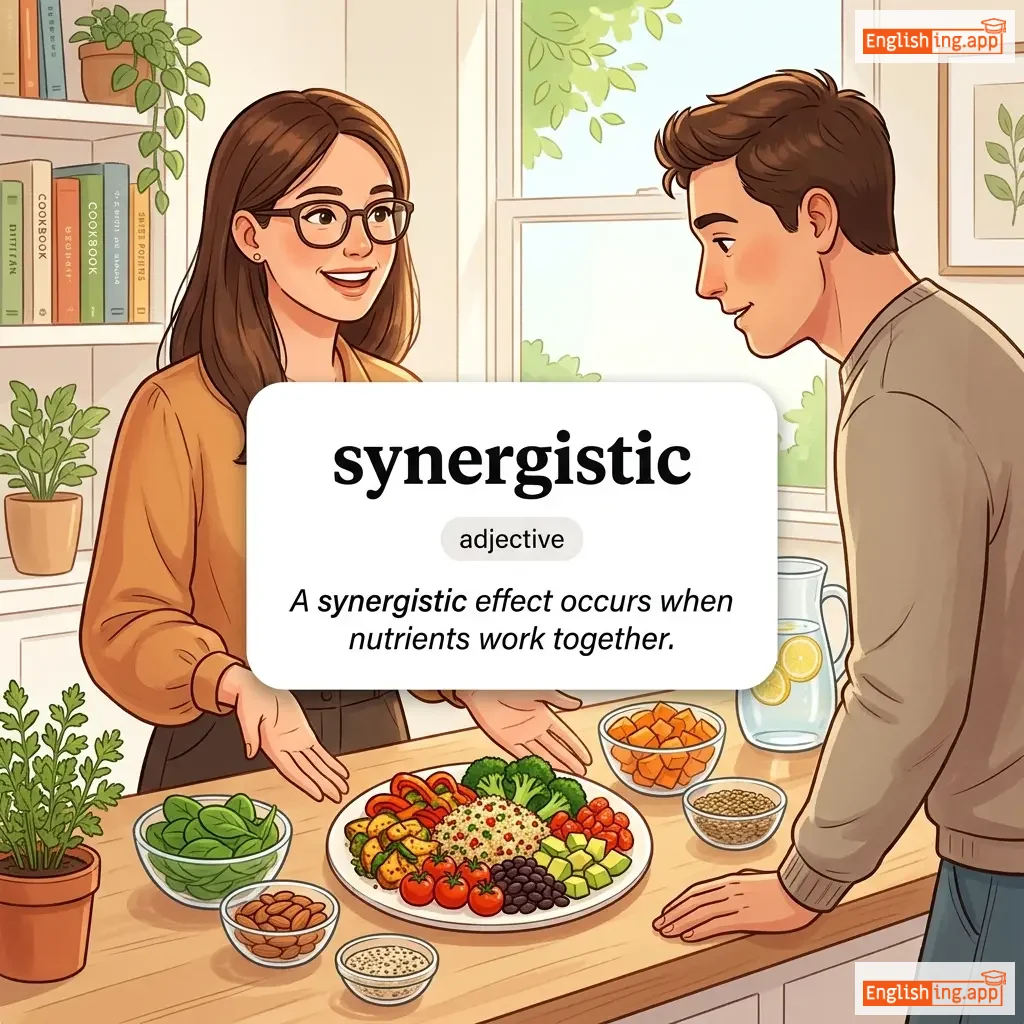
synergistic definition card — visual illustration of the meaning
adjective C1
ˌsɪn.əˈdʒɪs.tɪk
синергетический (sinergeticheskiy)

Relating to the interaction of elements that when combined produce a greater effect than the sum of their individual effects.

"A synergistic effect occurs when nutrients work together."

"Синергетический эффект возникает, когда питательные вещества работают вместе." (Sinergeticheskiy effekt voznikayet, kogda pitatel'nye veschestva rabotayut vmeste.)
synergize definition card — visual illustration of the meaning
verb C1
ˈsɪnərdʒaɪz
синергизировать, работать вместе (sinerghizirovat, rabotat vmeste)

To combine in such a way that the total effect is greater than the sum of the individual effects; to work together cooperatively.

"The two companies plan to synergize their efforts for greater success."
"Две компании планируют синергизировать свои усилия для большего успеха." (Dve kompanii planirovat sinergizirovat svoi usiliya dlya bol'shego uspekha.)
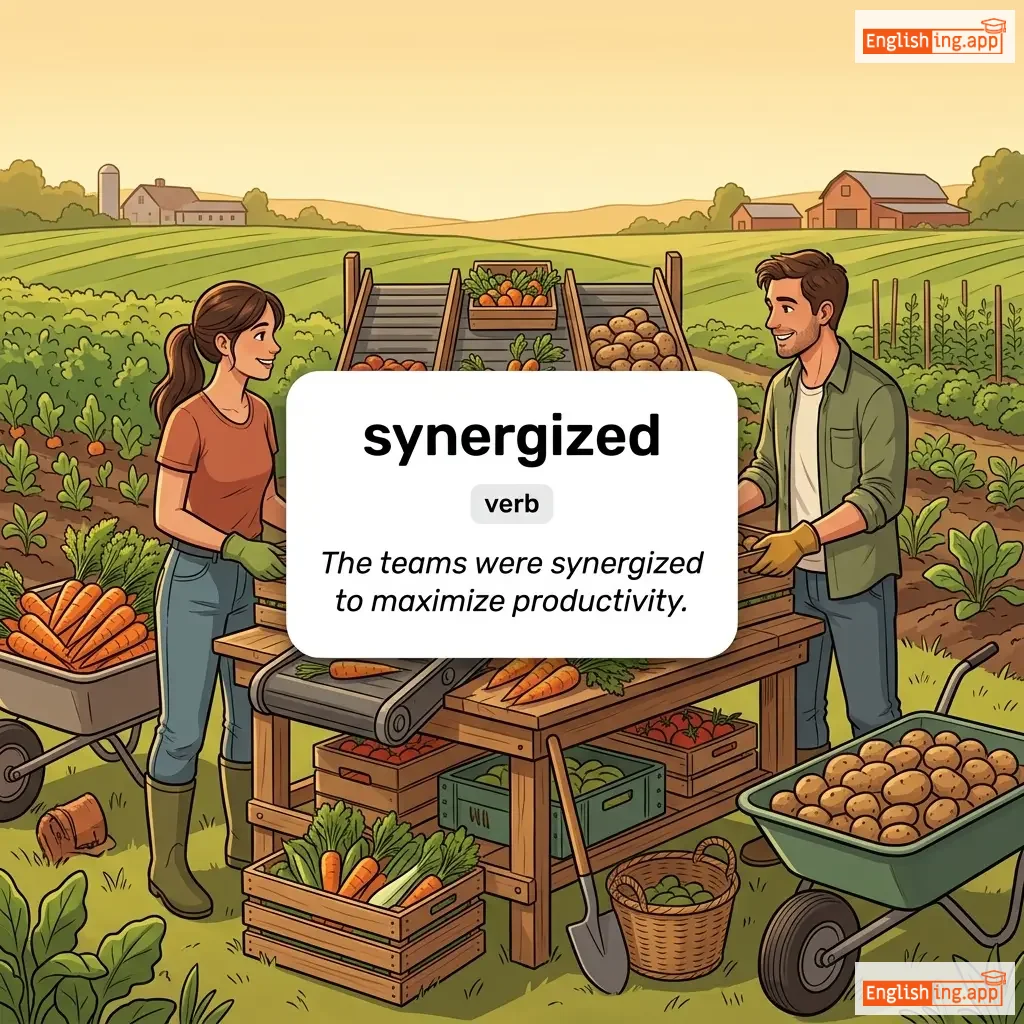
synergized definition card — visual illustration of the meaning
verb C1
/ˈsɪnɚdʒaɪzd/
синергизировано, объединено, скоординировано (sinerzhizirovano, ob'edineno, skoordinirovano)

Combine in such a way that the total effect is greater than the sum of the individual effects.

"The teams were synergized to maximize productivity."
"Команды были синергизированы для максимизации производительности." (Komandy byli sinerzhizirovany dlya maksimalizatsii proizvoditel'nosti.)
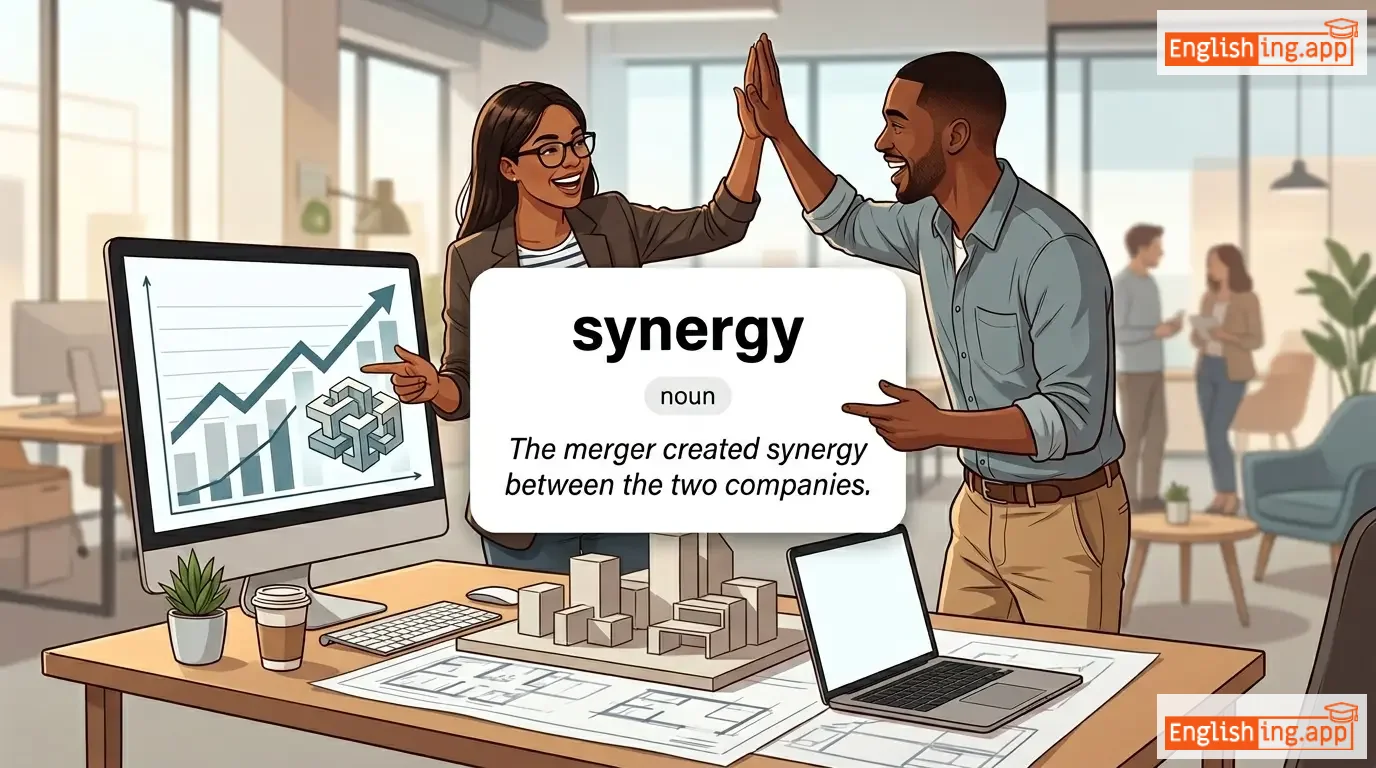
synergy definition card — visual illustration of the meaning
noun C1
/ˈsɪnərdʒi/
синергия (sinergiya)

The increased effectiveness that results when two or more people or organizations work together.

"The merger created synergy between the two companies."

"Слияние создало синергию между двумя компаниями." (Sliyaniye sozdalo sinergiyu mezhdu dvumya kompaniyami.)
adjective C1
/sɪˈnɒnɪməs/
синоним (sinonim)

having the same or nearly the same meaning; closely associated with something

"For many people, her name is synonymous with generosity."

"Для многих людей её имя — синоним щедрости." (Dlya mnogikh lyudey yeye imya — sinonim shchedrosti.)
noun C1
/sɪˈnɒpsɪs/
синопсис (sinopsis)

a brief summary of the main points of a text, film, or research

"The publisher asked the author to submit a one-page synopsis of the novel."
"Издатель попросил автора представить одностраничный синопсис романа." (Izdatel' poprosil avtora predstatvit' odnostorannij sinopsis romana.)
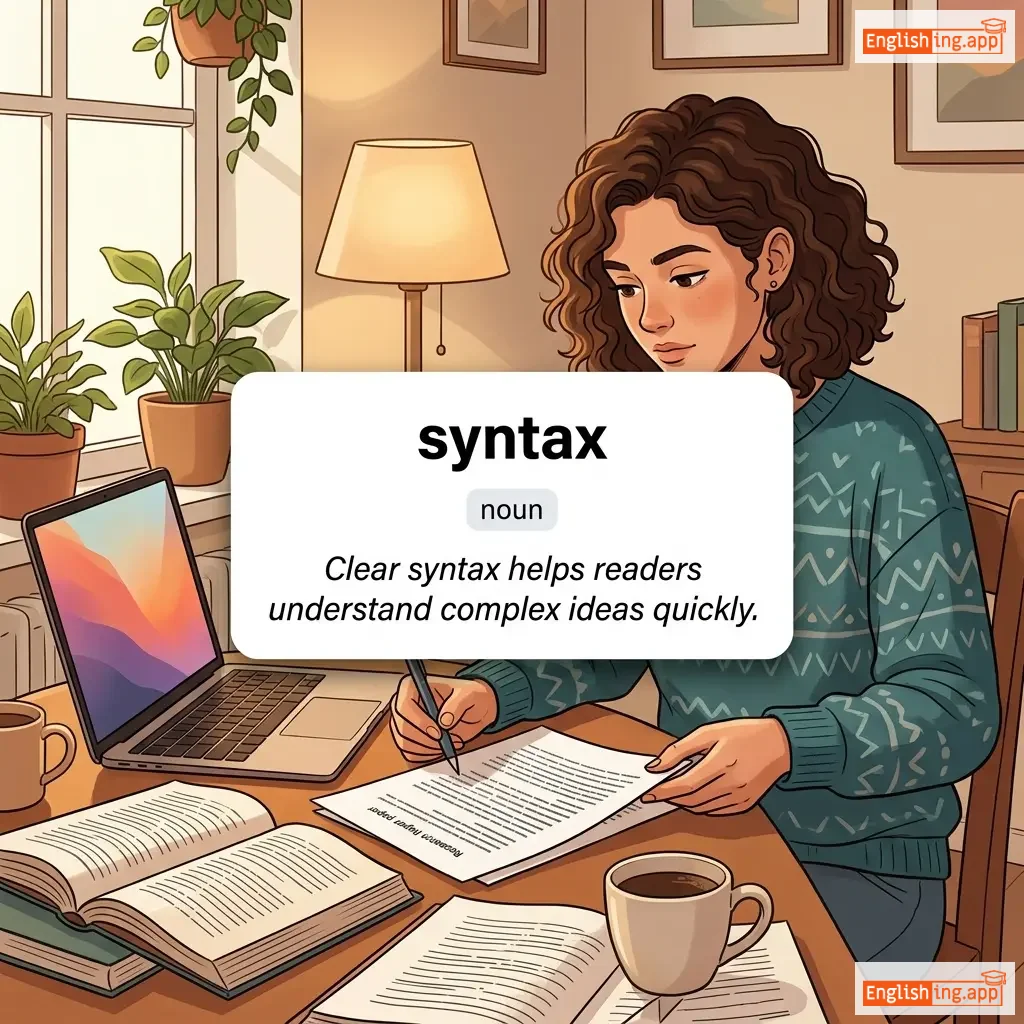
syntax definition card — visual illustration of the meaning
noun C1
/ˈsɪntæks/
синтаксис (sintaksis)

the rules for arranging words and phrases to create well-formed sentences in a language or code

"Clear syntax helps readers understand complex ideas quickly."
"Ясный синтаксис помогает читателям быстро понять сложные идеи." (Yasnyy sintaksis pomogayet chitatelyam bystro ponyat' slozhnye idei.)
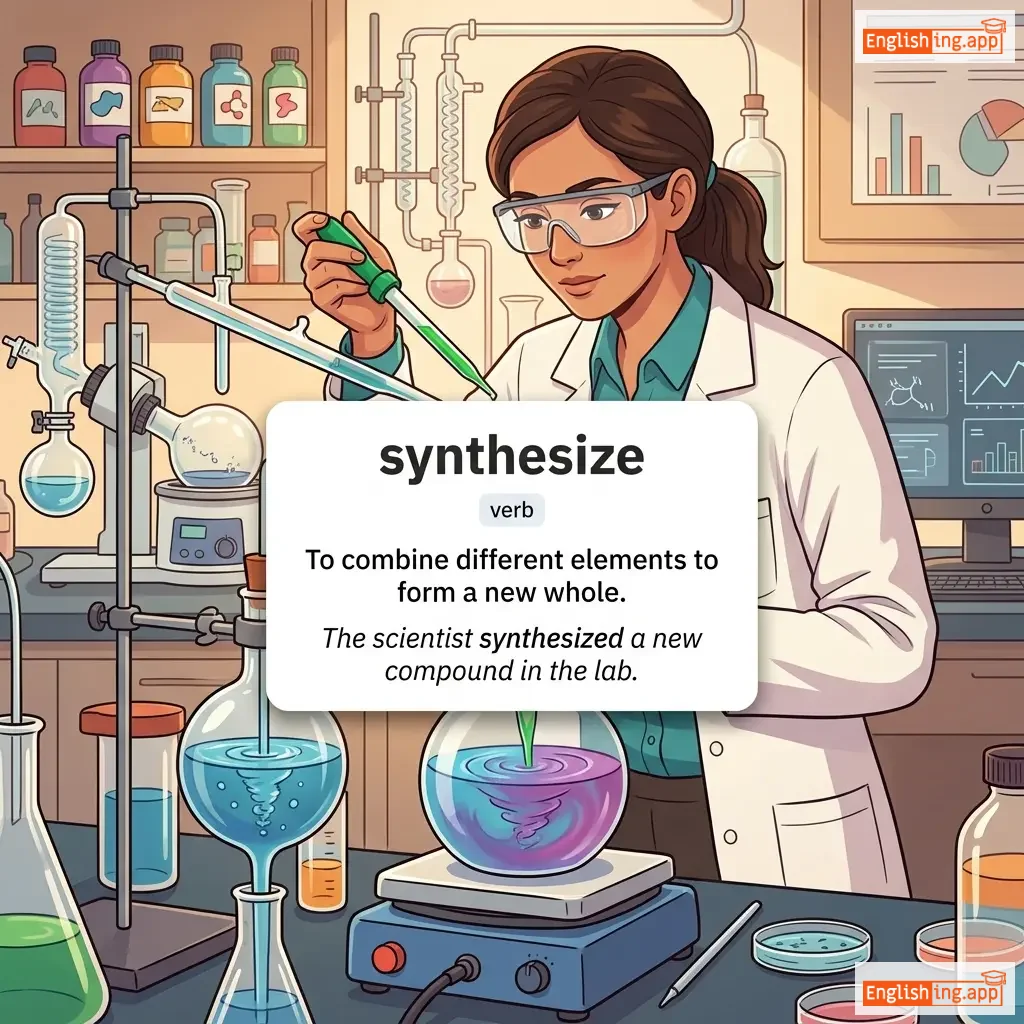
synthesize definition card — visual illustration of the meaning
verb C1
/ˈsɪnθəsaɪz/
синтезировать (sintezirovat)

To combine different elements to form a new whole.

"The scientist synthesized a new compound in the lab."
"Учёный синтезировал новое соединение в лаборатории." (Uchyonnyy sinteziniroval novoe soyedineniye v laboratorii.)
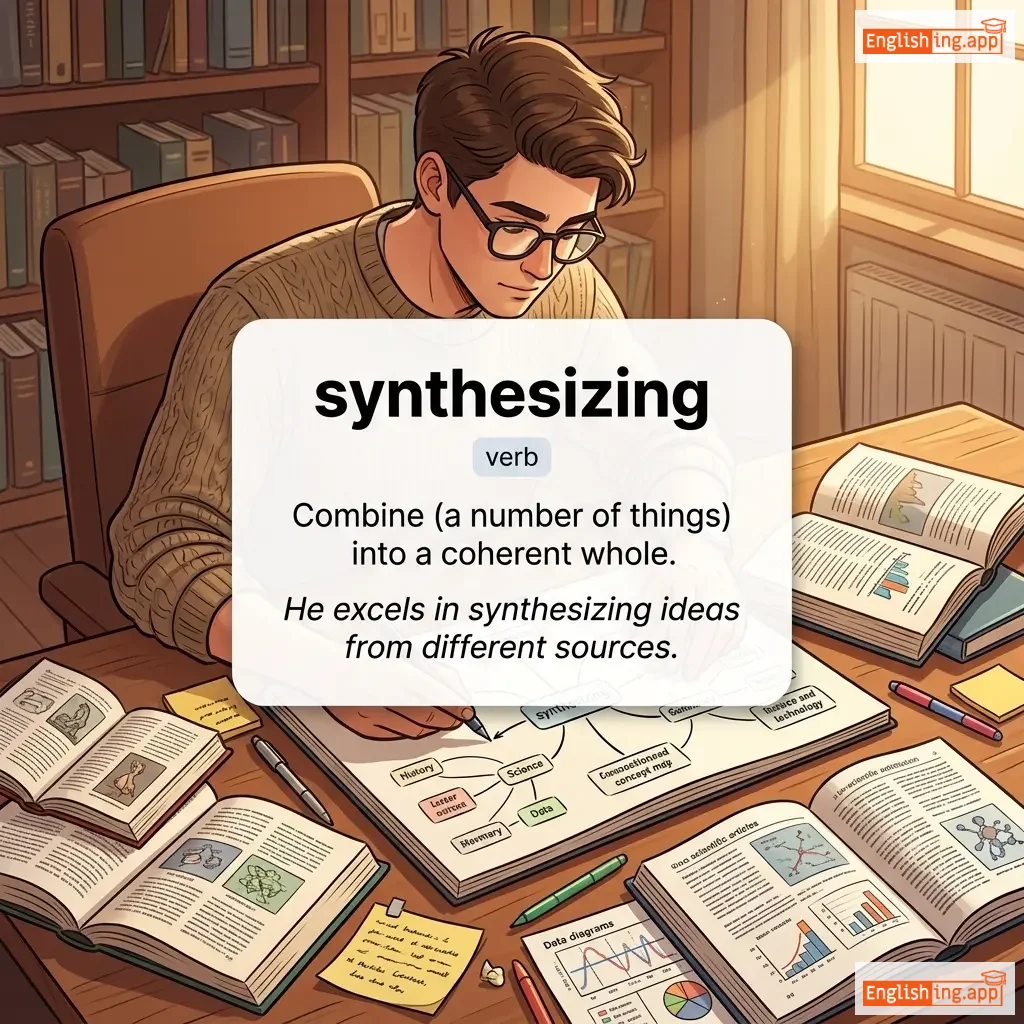
synthesizing definition card — visual illustration of the meaning
verb C1
ˈsɪn.θə.saɪ.zɪŋ
синтезировать, объединять, представлять логично (sintezirovat', ob'yedinyat', predstavlyat' logichno)

Combine (a number of things) into a coherent whole.

"He excels in synthesizing ideas from different sources."

"Он преуспевает в синтезе идей из разных источников." (On preuspevayet v sinteze idey iz raznykh istochnikov.)
systematic savings definition card — visual illustration of the meaning
noun C1
ˌsɪstəˈmætɪk ˈseɪvɪŋz
систематические сбережения (sistematicheskie sberezheniya)

A structured and organized approach to regularly saving money according to a planned schedule

"Systematic savings can mitigate financial crises in old age."
"Систематические сбережения могут смягчить финансовые кризисы на старости лет." (Sistematicheskie sberezheniya mogut smyagchit' finansovye krizisy na starosti let.)
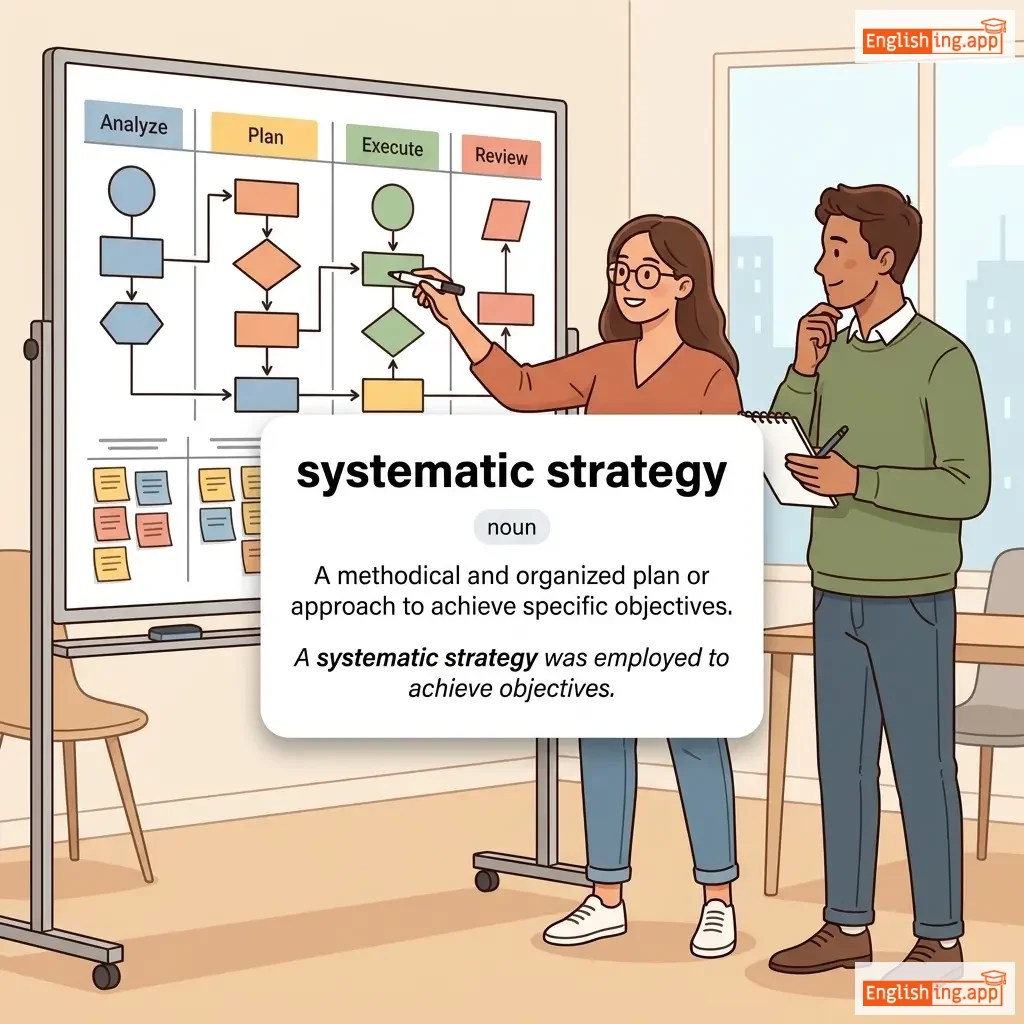
systematic strategy definition card — visual illustration of the meaning
noun C1
ˌsɪs.təˈmæt.ɪk ˈstræt.ə.dʒi
систематическая стратегия (sistematicheskaya strategiya)

A methodical and organized plan or approach to achieve specific objectives.

"A systematic strategy was employed to achieve objectives."

"Была использована систематическая стратегия для достижения целей." (Byla ispol'zovana sistematicheskaya strategiya dlya dostizheniya tseley.)
noun C1
/ˈtæbloʊ/
табло (tablo)

a striking or artistic scene or arrangement of people or objects, often presented on stage or in art

"The actors froze in a tableau that captured the final moment of the play."

"Актеры замерли в табло, которое зафиксировало последний момент пьесы." (Aktery zamerli v tablo, kotoroye zafiksirovalo posledniy moment pyesy.)
noun C1
/təˈbuː/
табу (tabu)

a social or cultural prohibition against certain practices or discussions

"Talking about money is considered a taboo in some cultures."
"Разговоры о деньгах в некоторых культурах считаются табу." (Razgovory o denegakh v nekotorykh kulturakh schitayutsya tabu.)
tacit definition card — visual illustration of the meaning
adjective C1
/ˈtæsɪt/
молчаливое соглашение (molchalivoe soglashenie)

understood or implied without being stated

"There was a tacit agreement to avoid the subject."

"Существовало молчаливое соглашение избегать эту тему." (Sushchestvovalo molchalivoe soglashenie izbegat' etu temu.)
noun/verb C1
/tæk/
гвоздик (takk)

a small sharp nail; or to change direction in sailing or approach something differently

"She used a tack to pin the paper on the wall."

"Она использовала гвоздик, чтобы прикрепить бумагу к стене." (She used a takk to pin the paper on the vall.)
tact definition card — visual illustration of the meaning
noun C1
/tækt/
тактичность, деликатность (taktichnost, delikatnost)

the ability to say or do the right thing without offending others

"She handled the situation with great tact."

"Она справилась с ситуацией с большим тактом." (Ona spravilas' s situatsiey s bol'shim taktom.)
adjective C1
/ˈtækt.fəl/
тактичный (taktochny)

showing skill and sensitivity in dealing with others

"He is always tactful when giving feedback."
"Он всегда тактичен, когда дает обратную связь." (On vsegda taktichen, kogda daet obratnuyu svyaz'.)
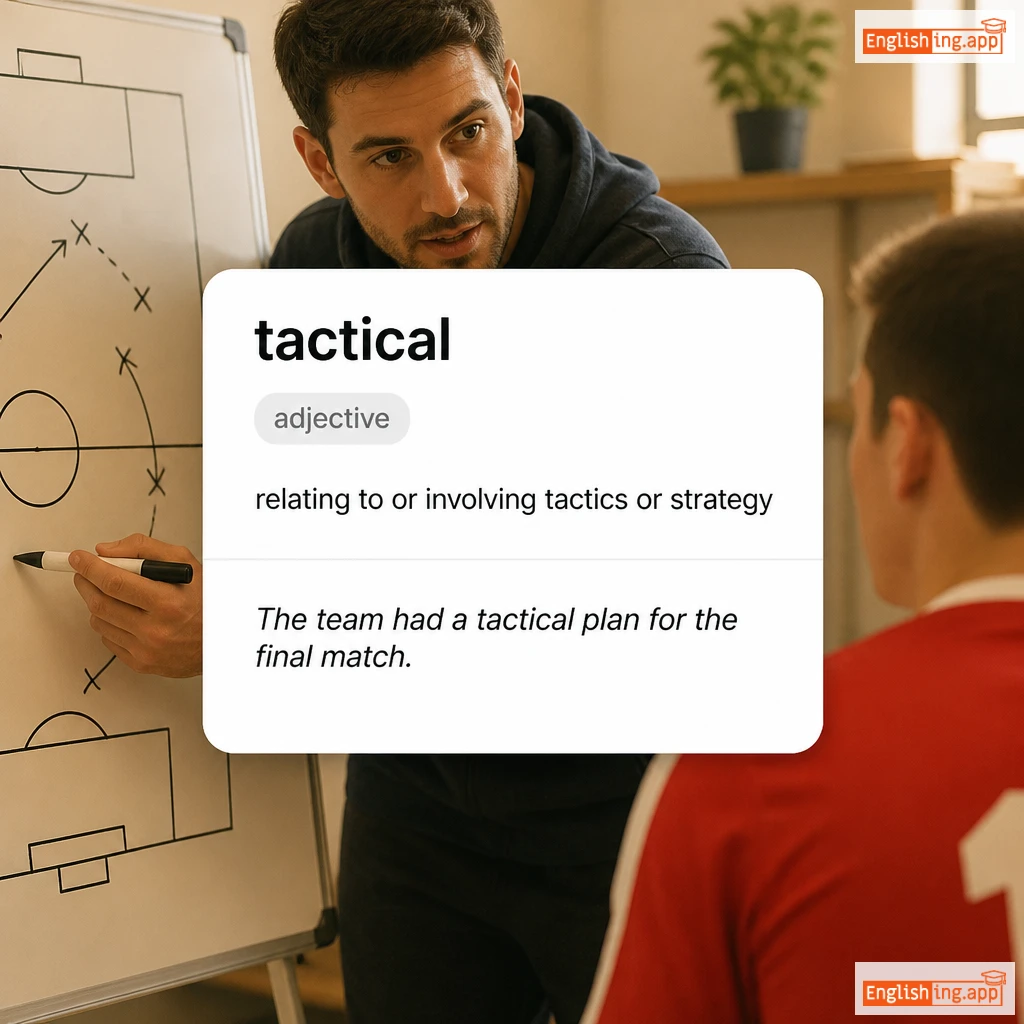
tactical definition card — visual illustration of the meaning
adjective C1
/ˈtæktɪkəl/
связанный с тактикой (svyazannyy s taktika)

relating to or involving tactics or strategy

"The team had a tactical plan for the final match."

"У команды был тактический план на последний матч." (U komandy byl takticheskiy plan na posledniy match.)
noun C1
/tækˈtɪʃ.ən/
тактик (taktik)

a person who is skilled at planning and achieving goals, especially in military or business

"Napoleon was a brilliant tactician."

"Наполеон был выдающимся тактиком." (Napoleon byl vydajushchimsya taktikom.)
tactile definition card — visual illustration of the meaning
adjective C1
/ˈtæk.taɪl/
тактильный (taktlinyj)

related to or involving the sense of touch

"The fabric had a pleasant tactile quality."

"Ткань имела приятное тактильное качество." (Tkan' imela priyatnoe taktil'noe kachestvo.)
adjective C1
/ˈtækt.ləs/
тактичный (taktnyi)

showing a lack of sensitivity in dealing with others

"His tactless remark embarrassed everyone at the meeting."
"его тактклес замечание смутило всех на встрече." (ego taktkles zamechaniye smutilo vsekh na vstreche.)
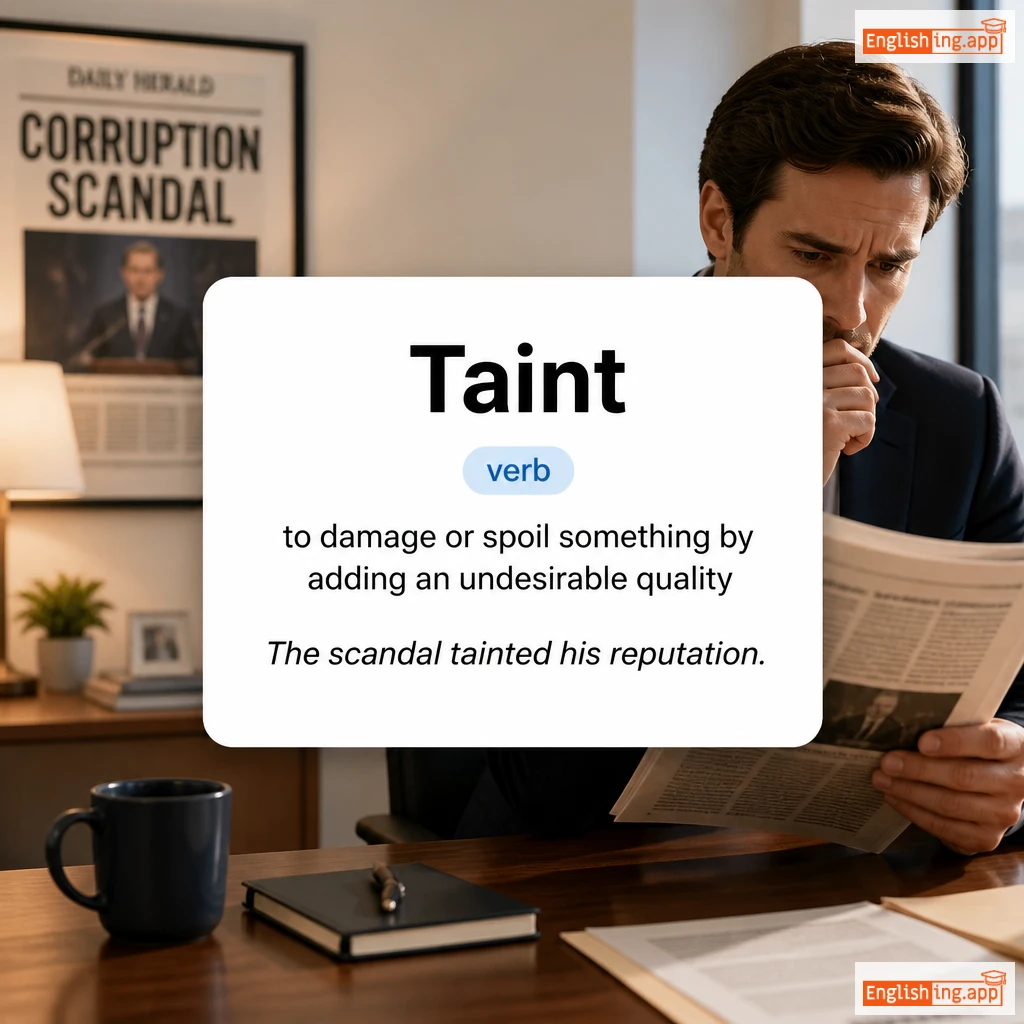
Taint definition card — visual illustration of the meaning
verb C1
/teɪnt/
пятнать (pyatnat')

to damage or spoil something by adding an undesirable quality

"The scandal tainted his reputation."

"Этот скандал испортил его репутацию." (Etot skandal isportil ego reputatsiyu.)
adjective C1
/ˈteɪn.tɪd/
загрязнённый (zagryaznjonnyj)

spoiled, corrupted, or made impure

"The tainted food caused several people to fall ill."
"Загрязнённая еда заставила нескольких людей заболеть." (Zagryaznjonnaja eda zastavila neskol'kikh ljudej zabolety.)
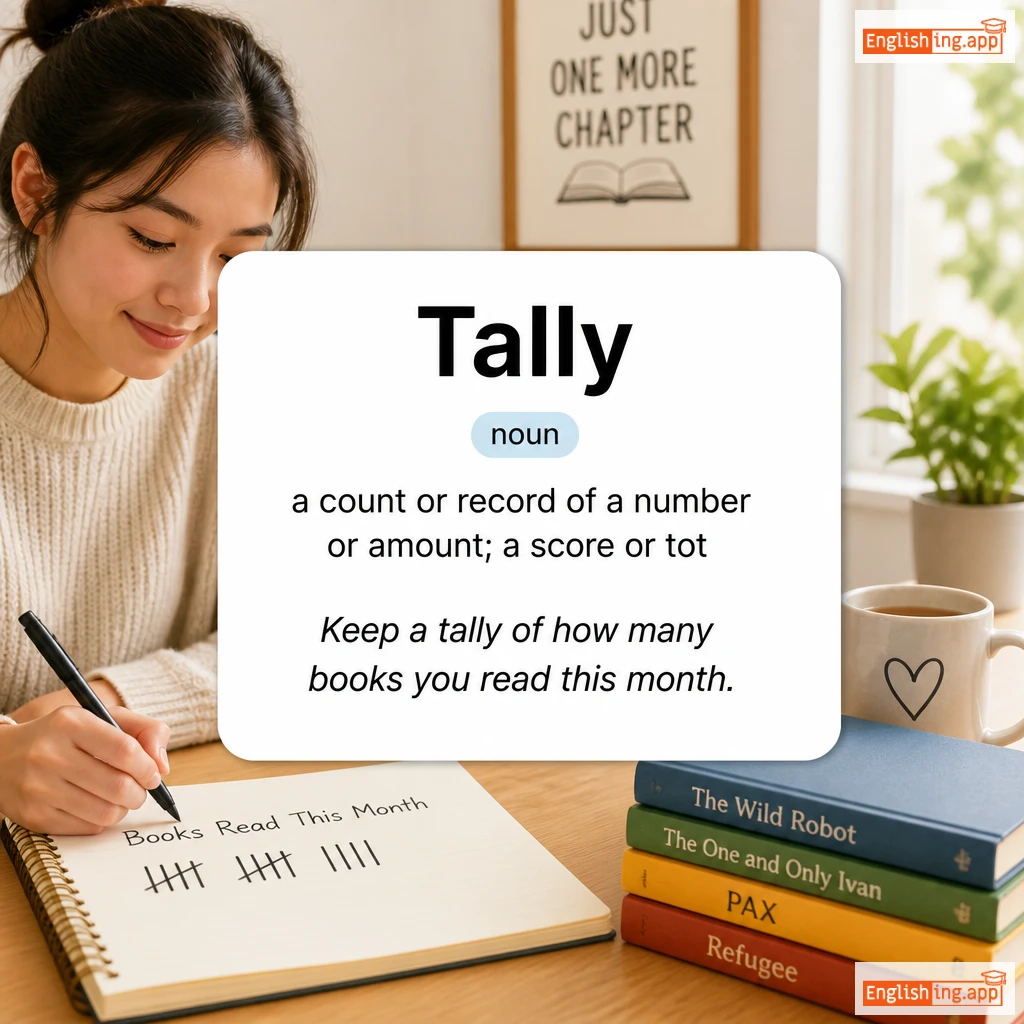
Tally definition card — visual illustration of the meaning
noun C1
/ˈtæl.i/
счёт; запись; баллы (schet; zapic; bally)

a count or record of a number or amount; a score or total

"Keep a tally of how many books you read this month."
"Ведите подсчёт того, сколько книг вы прочитали в этом месяце." (Vedite podschyot togo, skol'ko knig vy prochitali v etom mesyatse.)
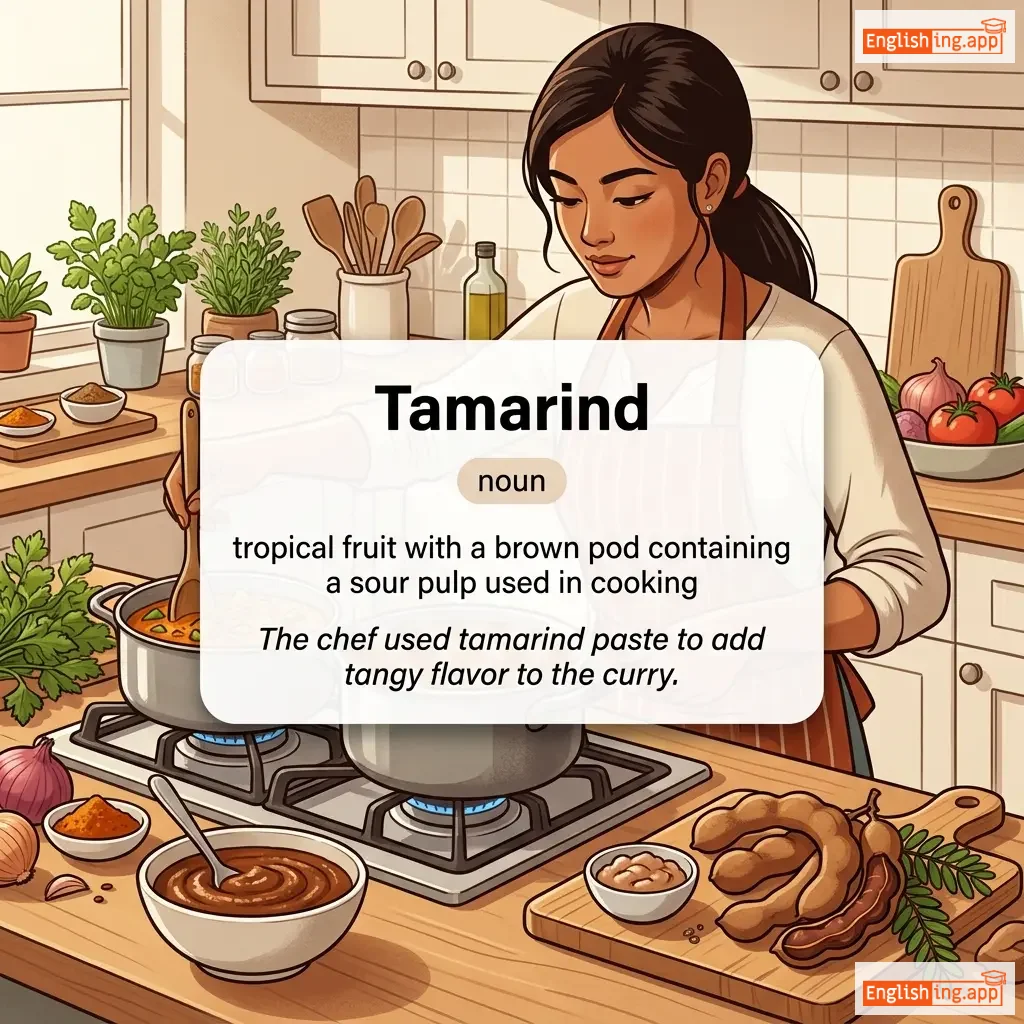
Tamarind definition card — visual illustration of the meaning
noun C1
/ˈtæm.ə.rɪnd/
тамаринд (tamarind)

tropical fruit with a brown pod containing a sour pulp used in cooking

"The chef used tamarind paste to add tangy flavor to the curry."
"Шеф-повар использовал пасту из тамаринда, чтобы добавить кислый вкус в карри." (Shef-povar ispol'zoval pastu iz tamarinda, chtoby dobavit' kislyy vkus v karri.)
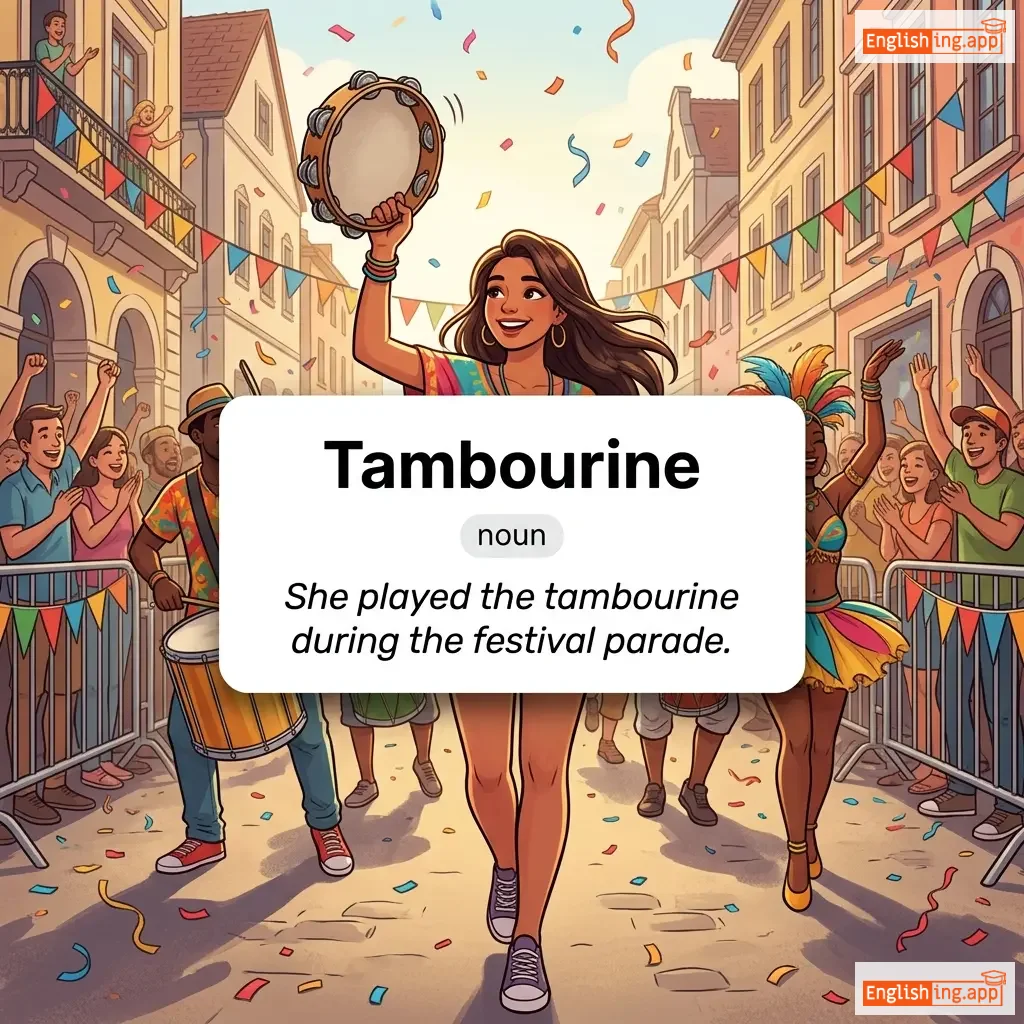
Tambourine definition card — visual illustration of the meaning
noun C1
/ˌtæmbəˈriːn/
бубен (buben)

A musical instrument with a circular frame, metal jingles, and a drumhead, played by shaking or striking.

"She played the tambourine during the festival parade."

"Она играла на бубне во время парада на фестивале." (Ona igrala na bube vo vremya parada na festivale.)
verb C1
/ˈtæmpər/
вмешиваться (vmeshat'sya)

To interfere with something in a harmful, unauthorized, or improper way.

"The evidence was tampered with before the trial."
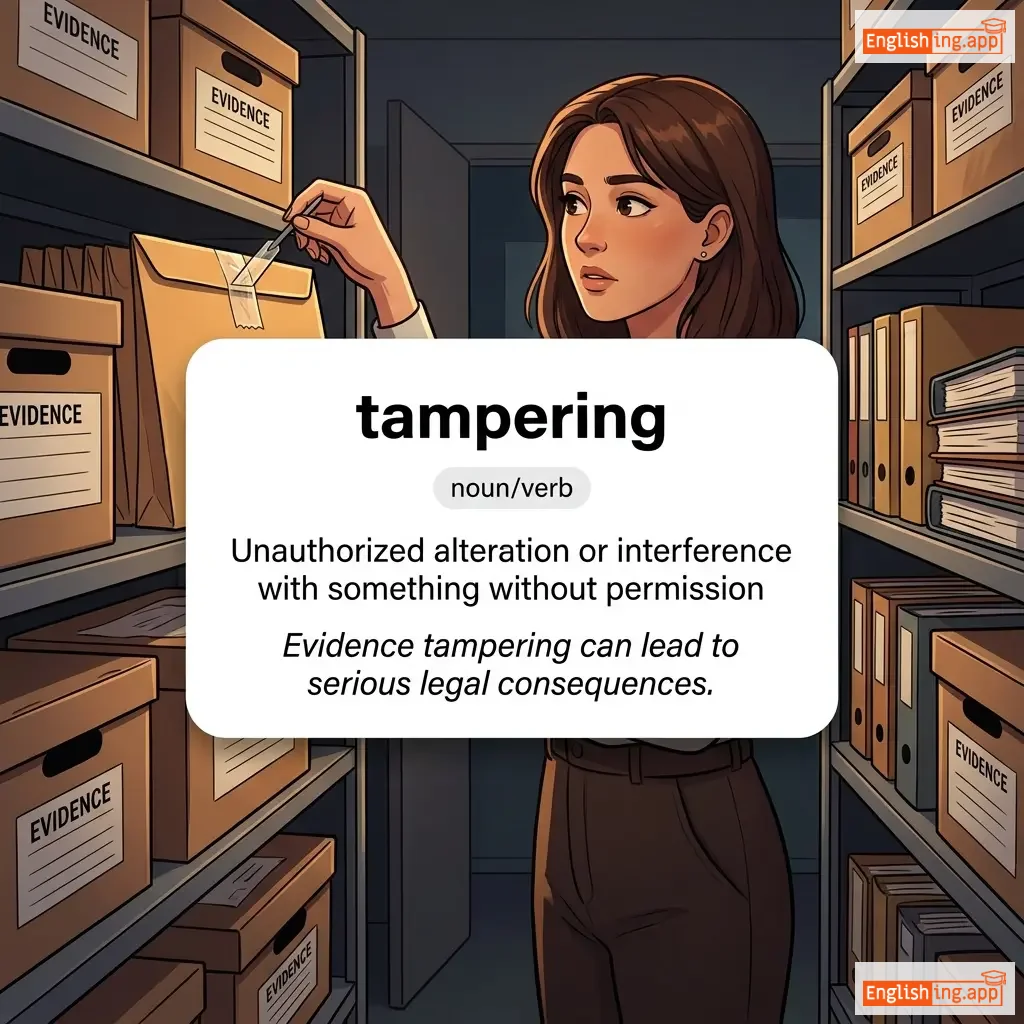
"Доказательства были изменены до суда." (Dokazatel'stva byli izmeneny do suda.)
tampering definition card — visual illustration of the meaning
noun/verb C1
/ˈtæm.pər.ɪŋ/
несанкционированное изменение или вмешательство (nesanktsionirovannoe izmenenie ili vmeshatel'stvo)

Unauthorized alteration or interference with something without permission

"Evidence tampering can lead to serious legal consequences."
"Фальсификация доказательств может привести к серьезным юридическим последствиям." (Falsifikatsiya dokazatel'stv mozhet privesti k seryoznym yuridicheskim posledstviyam.)
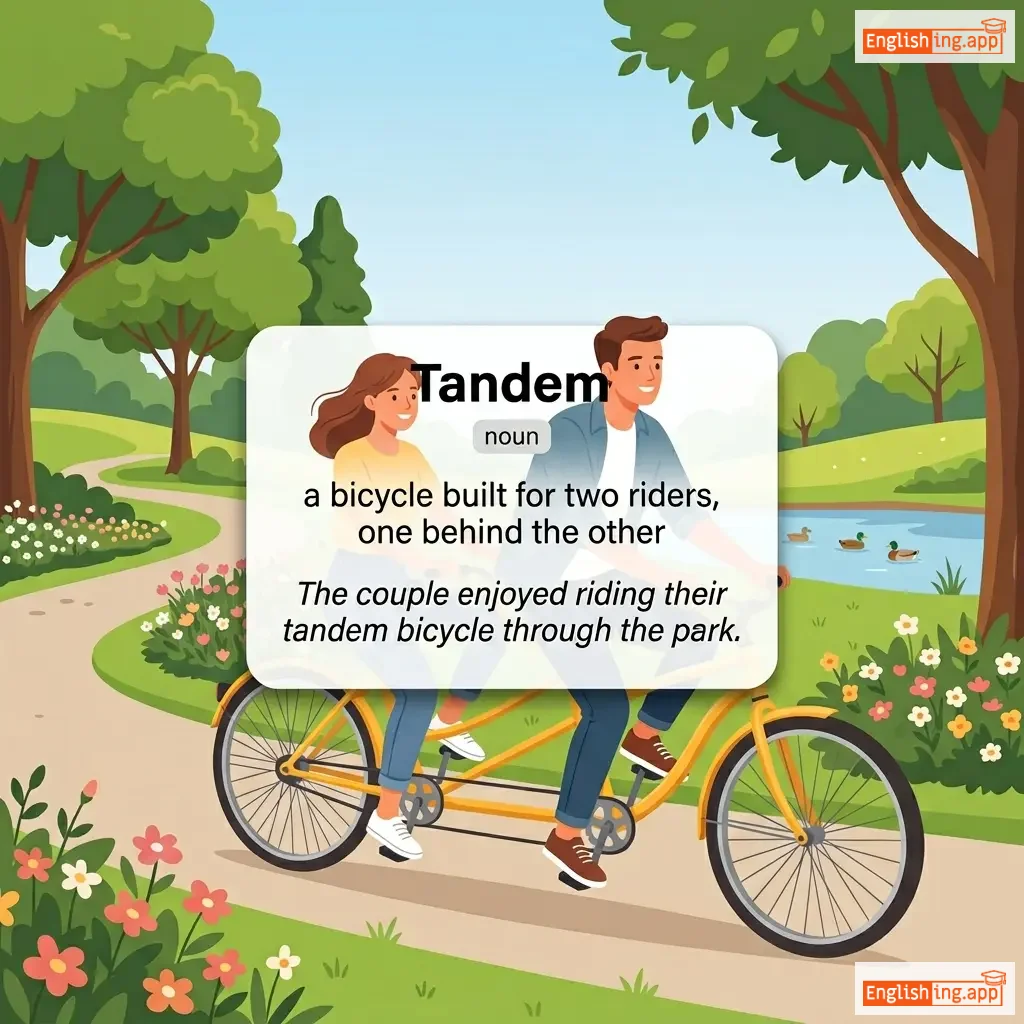
Tandem definition card — visual illustration of the meaning
noun C1
/ˈtæn.dəm/
велосипед тандем (velosiped tandem)

a bicycle built for two riders, one behind the other

"The couple enjoyed riding their tandem bicycle through the park."

"Пара наслаждалась ездой на своем велосипеде тандем по парку." (Para naslazhdalas' yezdoy na svoem velosipede tandem po parku.)
noun C1
/ˈtændʒənt/
касательная (tanjent)

a straight line or plane that touches a curve or curved surface at a point but does not cross it

"The teacher drew a tangent to the circle on the board."
"Учитель нарисовал касательную к окружности на доске." (Uchitel narisoval kasatelnyu k okruzhnosti na doske.)
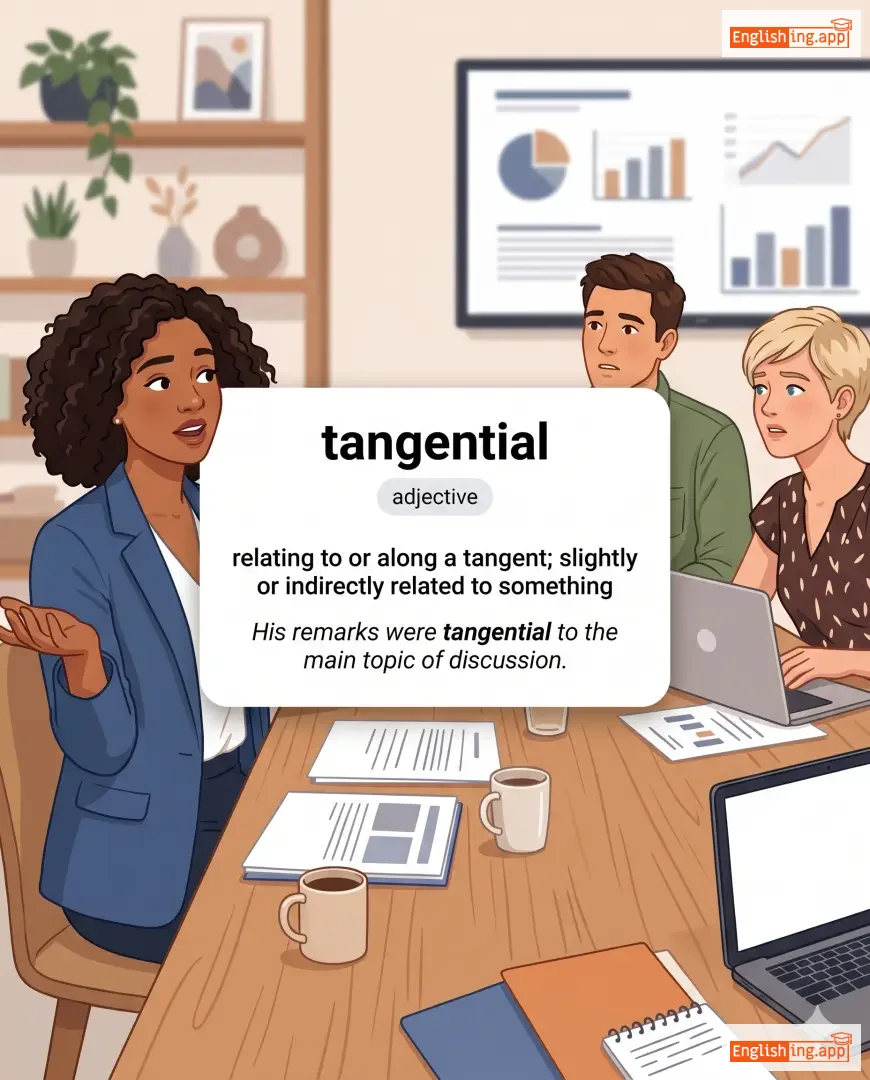
tangential definition card — visual illustration of the meaning
adjective C1
/tænˈdʒɛnʃəl/
касательный (kasatel'nyy)

relating to or along a tangent; slightly or indirectly related to something

"His remarks were tangential to the main topic of discussion."

"Его замечания были касательными к основной теме обсуждения." (Ego zamechaniya byli kasatel'nymi k osnovnoy teme obsuzhdeniya.)
adjective C1
/ˈtæŋ.i/
острый (ostryy)

Having a strong, sharp, and pleasantly biting flavor or taste.

"The sauce had a tangy flavor that brightened the dish."

"Соус имел острый вкус, который сделал блюдо еще более вкусным." (Sous imel ostry vkus, kotoryy sdelal blyudo eshche bolee vkusnym.)
noun C1
/ˈtæn.ər/
кожевник (kozhevnik)

A person whose job is to tan animal hides to make leather.

"The tanner worked long hours to produce fine leather."

"Кожевник работал долгие часы, чтобы произвести качественную кожу." (Kozhevnik rabotal dolgye chasy, chtoby proizvesti kachestvennuyu kozhu.)
noun C1
/ˈtæn.ə.ri/
кожевня (kozhevnya)

A place where animal hides are processed into leather.

"The tannery produced high-quality leather for export."

"Кожевня производила кожу высокого качества для экспорта." (Kozhevnya proizvodila kozhu vysokogo kachestva dlya eksporta.)
verb C1
/ˈtæn.tə.laɪz/
соблазнять (soblazyat)

To tease or torment someone with the promise of something desirable but unattainable.

"The aroma of the bakery tantalized the hungry children."

"Аромат пекарни манил голодных детей." (Aromat pekarni manil golodnykh detey.)