Словари

Словарь английского языка | Значения слов, определения и примеры

noun C1
/ˈsaɪnəs/
seno (seno)

A cavity within a bone or tissue, especially those in the bones of the face connected with the nasal cavities.

"He suffered from a sinus infection that caused headaches."

"Él sufrió de una infección sinusal que le causó dolor de cabeza." (Él sufrió de una infección sinusal que le causó dolor de cabeza.)
noun C1
/ˈsɪstərhʊd/
hermandad (hermandad)

The relationship between sisters, or a community of women united by shared experiences or goals.

"The feminist movement created a strong sense of sisterhood among women."
"El movimiento feminista creó un fuerte sentido de hermandad entre las mujeres." (El movimiento feminista creo un fuerte sentido de hermandad entre las mujeres.)
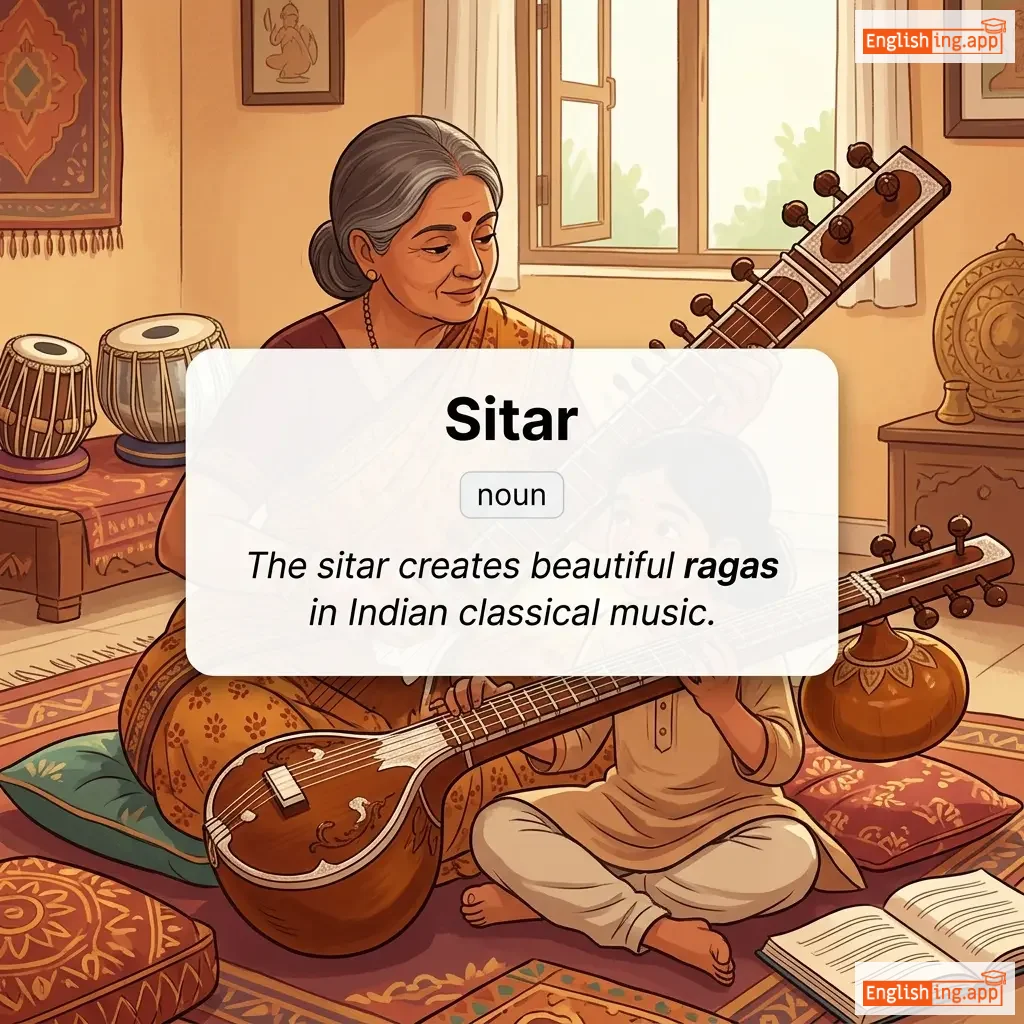
Sitar definition card — visual illustration of the meaning
noun C1
/sɪˈtɑːr/
sitar (sitar)

a traditional Indian stringed musical instrument with a long neck and resonating body

"The sitar creates beautiful ragas in Indian classical music."
"El sitar crea hermosos ragas en la música clásica india." (El sitar crea hermosos ragas en la música clásica india.)
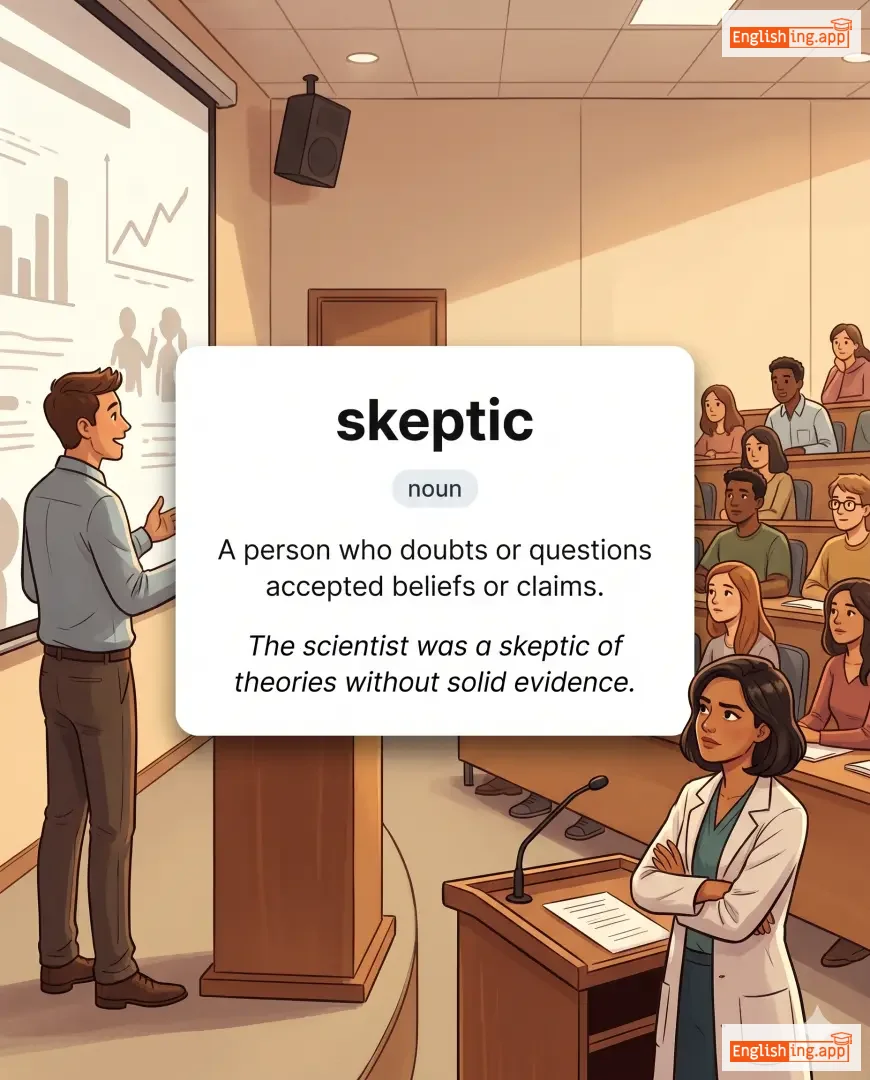
skeptic definition card — visual illustration of the meaning
noun C1
/ˈskɛptɪk/
escéptico (esceptico)

A person who doubts or questions accepted beliefs or claims.

"The scientist was a skeptic of theories without solid evidence."
"El científico era escéptico de las teorías sin evidencia sólida." (El cientifico era esceptico de las teorias sin evidencia solida.)
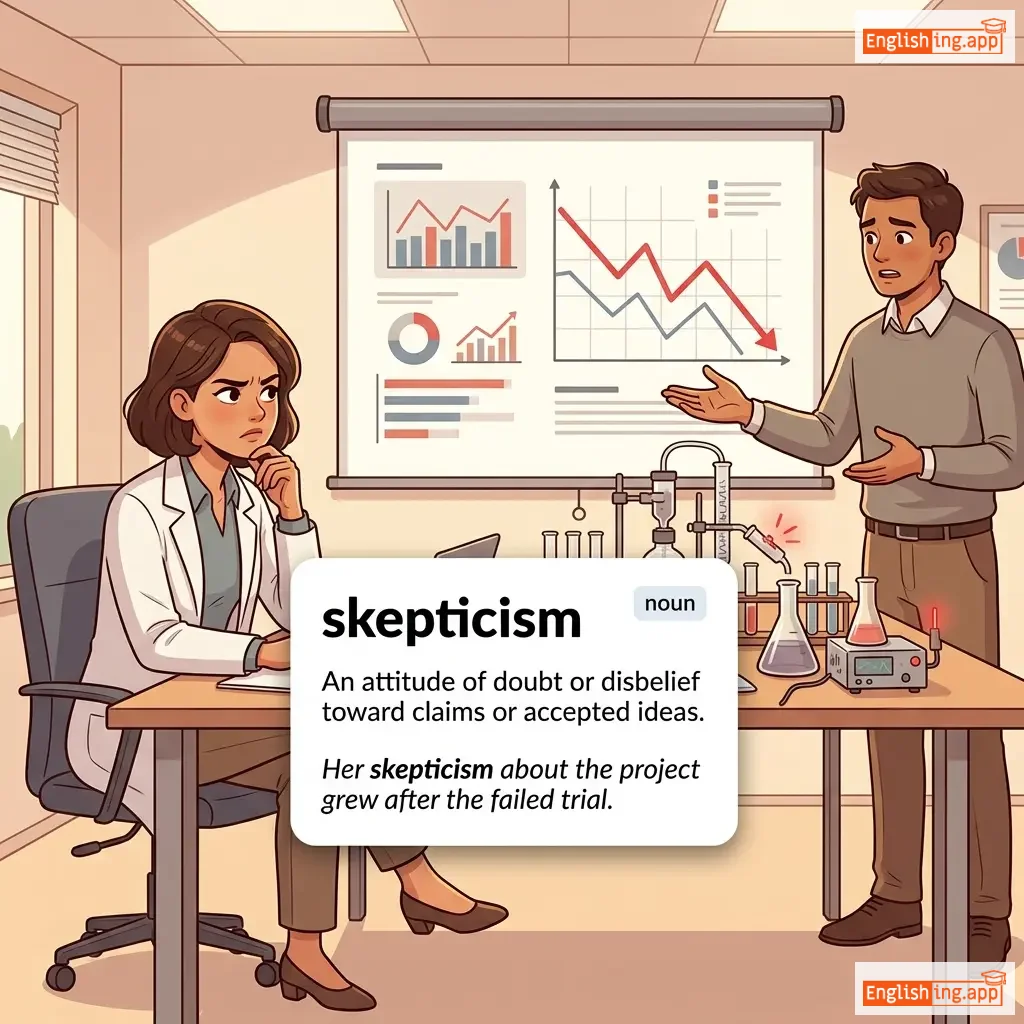
skepticism definition card — visual illustration of the meaning
noun C1
/ˈskɛptɪˌsɪzəm/
escepticismo (escepticismo)

An attitude of doubt or disbelief toward claims or accepted ideas.

"Her skepticism about the project grew after the failed trial."

"Su escepticismo sobre el proyecto creció después del juicio fallido." (Su escepticismo sobre el proyecto creció después del juicio fallido.)
adjective C1
/ˈskɛtʃi/
incompleto (incompleto)

not thorough or detailed; suspicious or unsafe

"The details of the project were still sketchy."

"Los detalles del proyecto aún estaban incompletos." (Los detalles del proyecto aún estaban incompletos.)
verb C1
/skɪmp/
escatimar (escatimar)

to use less of something than is necessary in order to save money or effort

"Don’t skimp on quality when buying a new laptop."

"No escatimes en calidad al comprar una nueva laptop." (No escatimes en calidad al comprar una nueva laptop.)
noun/verb C1
/ˈskɜːrmɪʃ/
escaramuza (escaramuza)

a small or brief fight between groups of soldiers; to engage in such a fight

"The soldiers got into a skirmish near the border."

"Los soldados se metieron en una escaramuza cerca de la frontera." (Los soldados se metieron en una escaramuza cerca de la frontera.)
noun C1
/skɪt/
sketch (sketch)

a short, humorous performance or piece of writing

"The students performed a funny skit at the event."

"Los estudiantes realizaron un divertido sketch en el evento." (Los estudiantes realizaron un divertido sketch en el evento.)
adjective C1
/ˈskɪtɪʃ/
nervioso (nervioso)

easily frightened or nervous; unpredictable

"The horse was too skittish to ride."
"El caballo estaba demasiado nervioso para montar." (El caballo estaba demasiado nervioso para montar.)
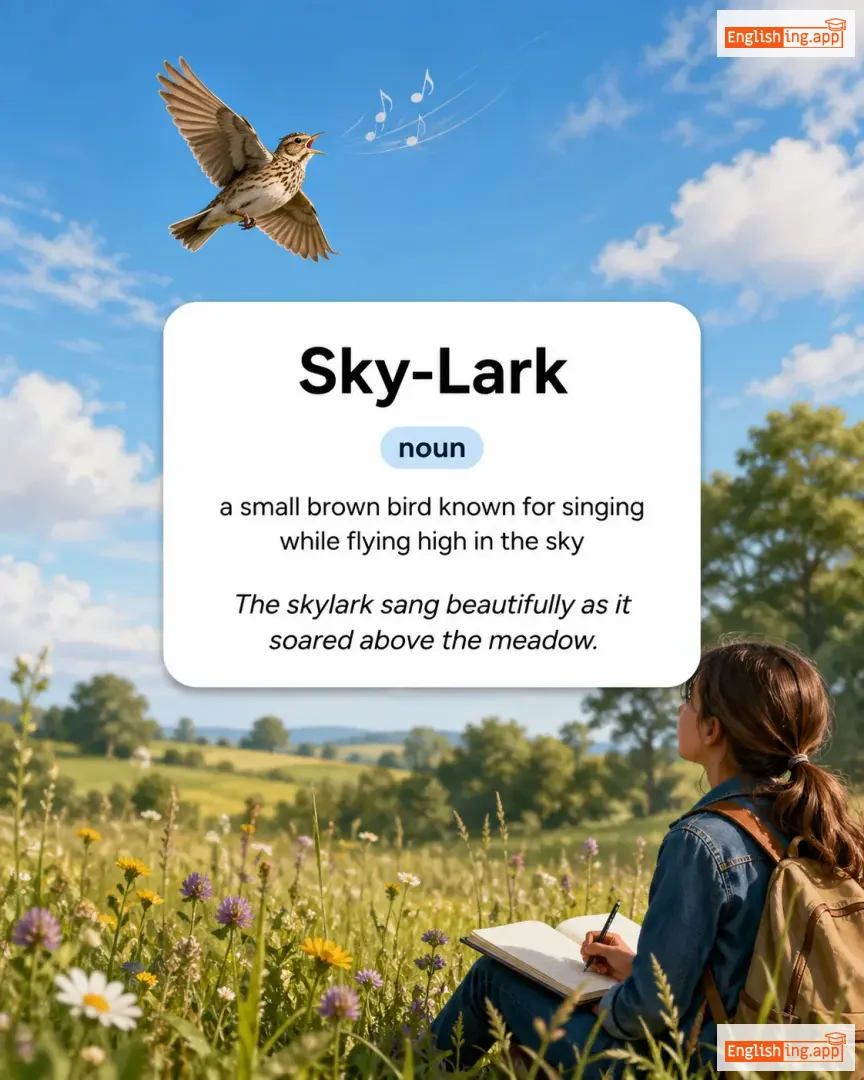
Sky-Lark definition card — visual illustration of the meaning
noun C1
/ˈskaɪ.lɑːrk/
alondra (alondra)

a small brown bird known for singing while flying high in the sky

"The skylark sang beautifully as it soared above the meadow."

"La alondra cantó hermosamente mientras se elevaba sobre el prado." (La alondra cato hermosamente mientras se elevaba sobre el prado)
noun C1
/slæb/
losa (losa)

a large, thick, flat piece of stone, concrete, or other hard material

"The workers laid a concrete slab for the foundation."

"Los trabajadores colocaron una losa de concreto para la fundación." (Los trabajadores colocaron una losa de concreto para la fundación.)
verb C1
/ˈslækən/
aflojar (aflojar)

to make or become less tight, less active, or slower

"The driver slackened his speed as he approached the village."

"El conductor redujo su velocidad al acercarse al pueblo." (El conductor redujo su velocidad al acercarse al pueblo.)
noun C1
/slæɡ/
escoria (escoria)

Stony waste matter separated from metals during the smelting process.

"The factory dumped the slag near the river."
"La fábrica arrojó la escoria cerca del río." (La fábrica arrojó la escoria cerca del río.)
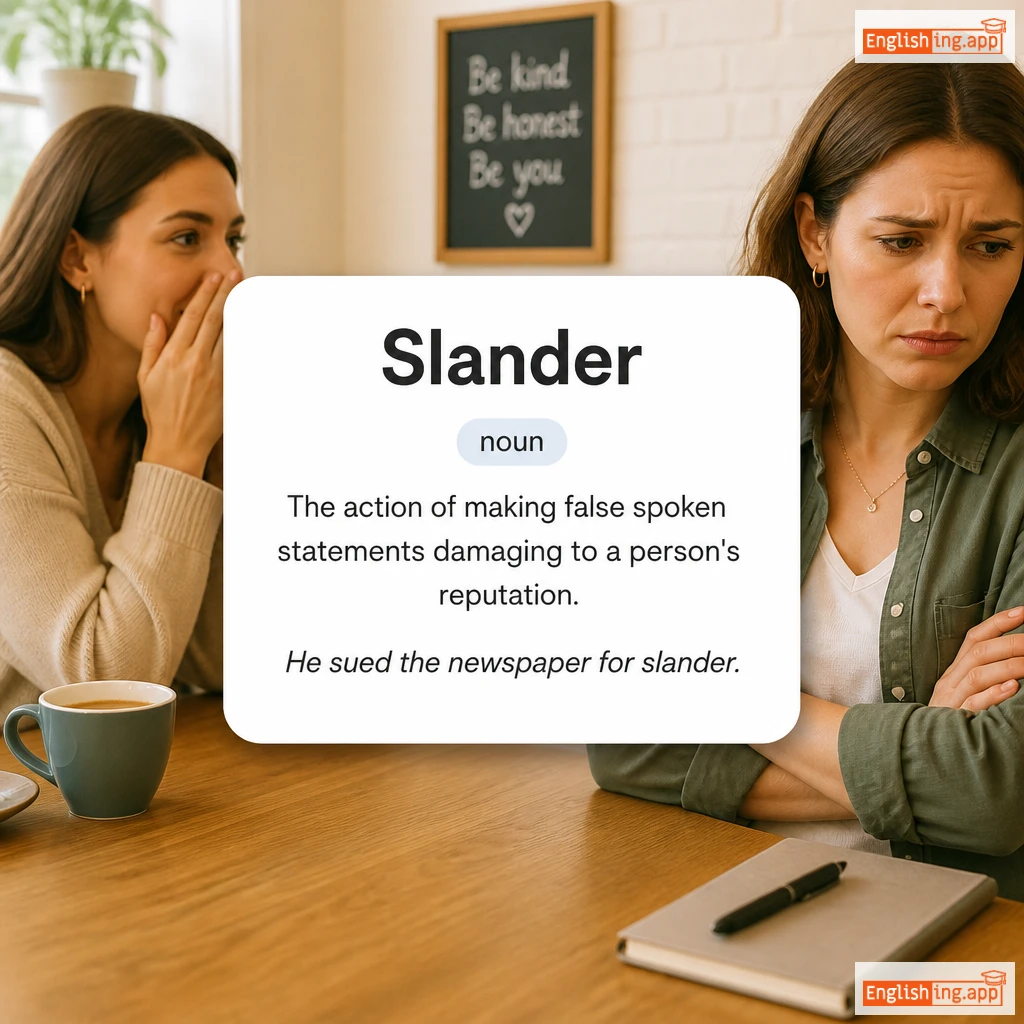
Slander definition card — visual illustration of the meaning
noun C1
/ˈslændər/
calumnia (calumnia)

The action of making false spoken statements damaging to a person's reputation.

"He sued the newspaper for slander."

"Demandó al periódico por calumnia." (Demandó al periódico por calumnia.)
noun/verb C1
/sleɪt/
pizarra / programar (pizarra / programar)

a fine-grained rock used for roofing or writing; to schedule or designate for a task

"The meeting is slated for next Monday."

"La reunión está programada para el próximo lunes." (La reunión está programada para el próximo lunes.)
adjective C1
/ˈsleɪ.vɪʃ/
esclavo (esclavo)

showing no originality; completely imitative or overly submissive

"His slavish devotion to tradition prevented any innovation."

"Su devoción esclava a la tradición impidió cualquier innovación." (Su devoción esclava a la tradición impidió cualquier innovación.)
verb C1
/sleɪ/
matar (matar)

to kill violently; informally, to impress greatly

"The hero vowed to slay the dragon."

"El héroe juró matar al dragón." (El héroe juró matar al dragón.)
adjective C1
/ˈsliːzi/
de mala calidad, inmoral o barato (de mala calidad, inmoral o barato)

morally low, dirty, or cheap in quality

"He avoided the sleazy nightclub downtown."

"Él evitó el club nocturno sórdido en el centro." (Él evitó el club nocturno sórdido en el centro.)
adjective C1
/sliːk/
elegante y brillante (elegante y brillante)

smooth, shiny, and stylish

"She drove a sleek black sports car."

"Ella condujo un coche deportivo brillante y elegante." (Ella condujo un coche deportivo brillante y elegante.)
noun C1
/sleɪ/
trineo (trineo)

A vehicle pulled by horses or reindeer over snow or ice.

"Children were excited to ride in the sleigh through the snowy village."

"Los niños estaban emocionados de montar en el trineo por el pueblo nevado." (Los ninos estaban emocionados de montar en el trineo por el pueblo nevado.)
verb C1
/sluː/
girar bruscamente (girar bruscamente)

To turn or slide violently in a particular direction.

"The car slewed across the icy road."

"El coche se deslizó por la carretera helada." (El coche se deslizó por la carretera helada.)
verb C1
/slɪŋ/
colgar, lanzar (colgar, lanzar)

to throw or hang something roughly or carelessly

"He slung his bag over his shoulder before leaving."

"Él colgó su bolso sobre su hombro antes de salir." (El colgo su bolso sobre su hombro antes de salir.)
verb C1
/slɪŋk/
deslizarse en silencio (deslizarse en silencio)

to move quietly and secretly, often to avoid being noticed

"The cat slunk into the room without making a sound."
"El gato entró en la habitación sin hacer ruido." (El gato entro en la habitacion sin hacer ruido.)
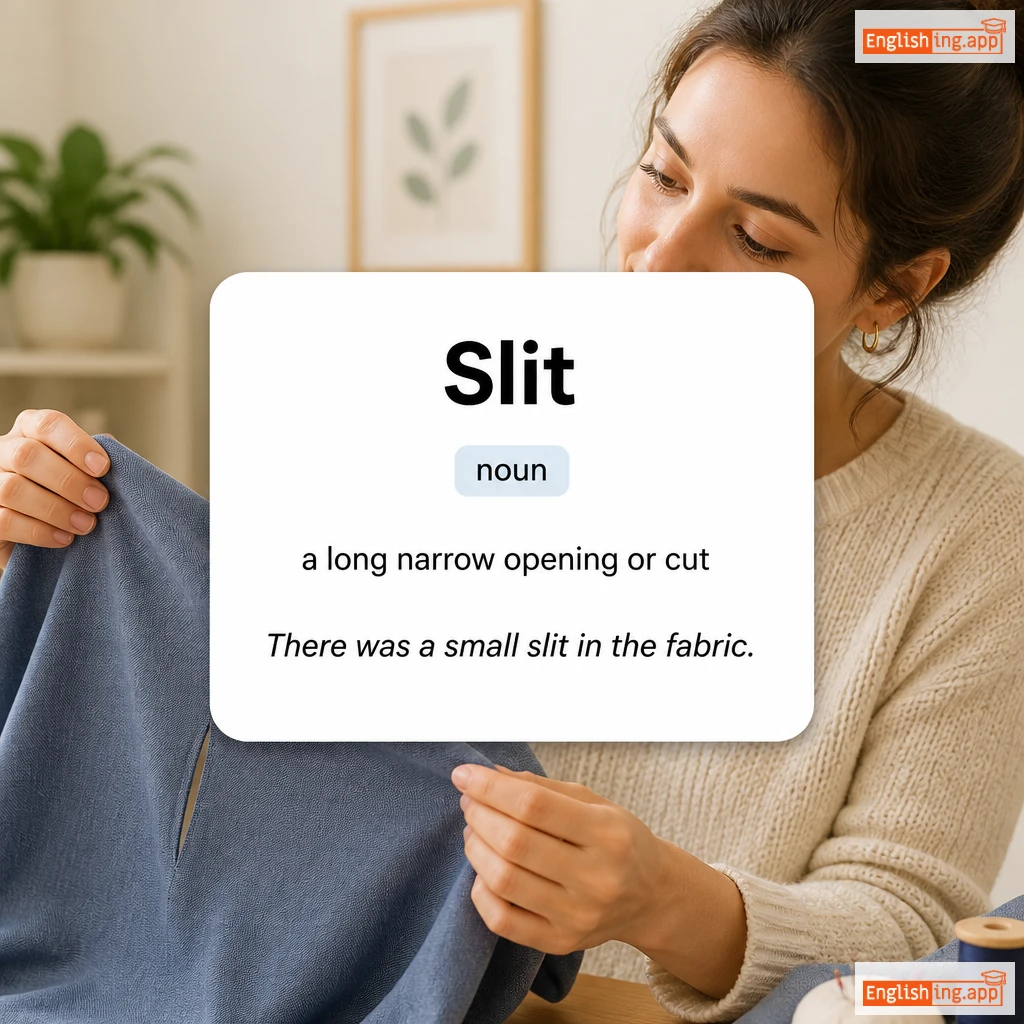
Slit definition card — visual illustration of the meaning
noun C1
/slɪt/
rendija (rendija)

a long narrow opening or cut

"There was a small slit in the fabric."

"Había una pequeña rendija en la tela." (Había una pequeña rendija en la tela.)
verb C1
/ˈslɪðər/
deslizarse (deslizarse)

to move smoothly over a surface with a twisting, sliding motion, like a snake

"The snake slithered through the grass."
"La serpiente se deslizó a través de la hierba." (La serpiente se deslizó a través de la hierba.)
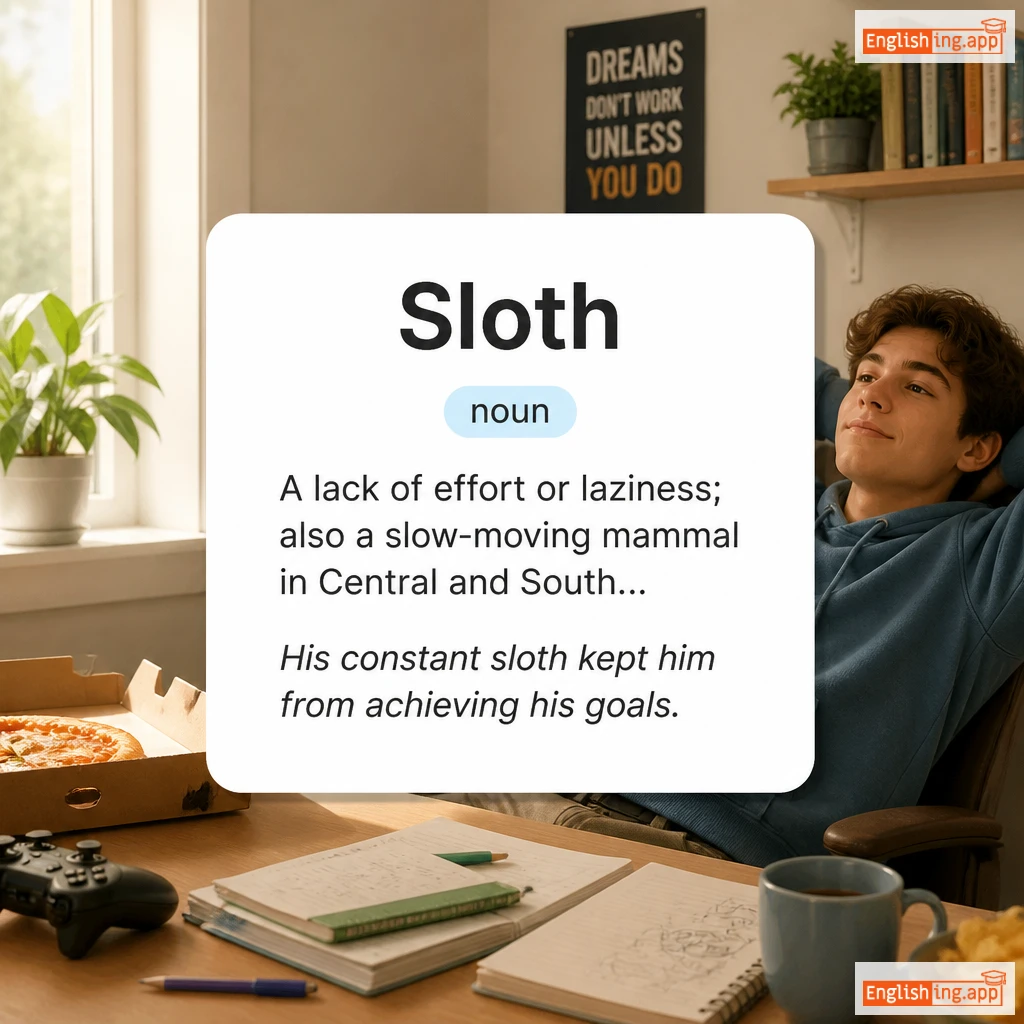
Sloth definition card — visual illustration of the meaning
noun C1
/sloʊθ/ or /slɒθ/
pereza (pereza)

A lack of effort or laziness; also a slow-moving mammal in Central and South America.

"His constant sloth kept him from achieving his goals."

"Su constante pereza lo mantenía alejado de sus objetivos." (Su constante pereza lo mantenía alejado de sus objetivos.)
verb C1
/slaʊtʃ/
encorvarse (encorvarse)

To stand, sit, or move in a lazy or awkward way.

"He slouched in the chair, looking tired."

"Se encorvó en la silla, luciendo cansado." (Se encorvó en la silla, luciendo cansado.)
noun/verb C1
/ˈslʌmbər/
sueño (sueno)

A state of sleep; to sleep lightly or rest.

"The child slumbered peacefully through the night."

"El niño durmió pacíficamente durante la noche." (El nino durmio pacíficamente durante la noche.)
noun, verb C1
/slɜːr/
insulto / palabra despectiva (insulto / palabra despectiva)

An insulting remark or suggestion; or to speak indistinctly.

"He made a slur against her character."

"Hizo un comentario despectivo sobre su carácter." (Hizo un comentario despectivo sobre su carácter.)
noun C1
/ˈsmætərɪŋ/
conocimiento superficial (conocimiento superficial)

A small amount or superficial knowledge of something.

"He has a smattering of Spanish."

"Él tiene un conocimiento superficial de español." (El tiene un conocimiento superficial de espanol.)
verb C1
/smɪr/
untar / difamar (untar / difamar)

to spread or apply a substance messily; to damage someone's reputation with false or unfair words

"The child smeared paint across the wall."

"El niño untó pintura en la pared." (El niño untó pintura en la pared.)
verb C1
/smɛlt/
fundir (fundir)

to extract metal from its ore by heating and melting

"The workers smelt iron from its ore in the factory."

"Los trabajadores funden hierro de su mineral en la fábrica." (Los trabajadores funden hierro de su mineral en la fabrica.)
verb C1
/smɜrk/
sonreír con suficiencia (sonreir con suficiencia)

to smile in a self-satisfied, smug, or silly way

"He smirked when he won the argument."

"Él sonrió cuando ganó la discusión." (Él sonrió cuando ganó la discusión.)
verb C1
/ˈsmoʊldər/
ardecer lentamente (ardecer lentamente)

to burn slowly with smoke but no flame; to show suppressed anger or emotion

"The fire smoldered for hours before it went out."

"El fuego ardió lentamente durante horas antes de apagarse." (El fuego ardió lentamente durante horas antes de apagarse.)
verb C1
/ˈsmʌðər/
sofocar / asfixiar (sofocar / asfixiar)

to kill someone by covering their nose and mouth to prevent breathing; to cover something completely; to overwhelm with excessive attention or affection

"She smothered the fire with a blanket."

"Ella sofocó el fuego con una manta." (Ella sofocó el fuego con una manta.)
noun/verb C1
/smʌdʒ/
mancha, marca sucia (mancha, marka sucia)

a dirty mark or smear; to make something dirty or unclear by rubbing or touching

"She accidentally smudged her lipstick on the napkin."

"Ella accidentalmente manchó su lápiz labial en la servilleta." (Ella accidentalmente manchó su lápiz labial en la servilleta.)
adjective C1
/smʌɡ/
presumido (presumido)

having or showing an excessive pride in oneself or one's achievements

"He wore a smug smile after winning the debate."

"Llevaba una sonrisa presuntuosa después de ganar el debate." (Llevaba una sonrisa presuntuosa después de ganar el debate.)
noun/verb C1
/snɛər/
trampa (trampa)

a trap for catching animals; to catch or trap

"The hunter set a snare to catch rabbits."

"El cazador puso una trampa para atrapar conejos." (El cazador puso una trampa para atrapar conejos.)
verb/noun C1
/snɑːrl/
gruñido, atasco (grunido, atasco)

to growl aggressively with bared teeth; a tangle or mess

"The dog snarled at the stranger near the gate."

"El perro gruñó al extraño cerca de la puerta." (El perro gruno al extrano cerca de la puerta.)
verb C1
/snɪər/
sonreír de forma burlona (sonreir de forma burlona)

to smile or speak in a mocking or contemptuous way

"She sneered at his attempt to sing."

"Ella se burló de su intento de cantar." (Ella se burlo de su intento de cantar.)
verb C1
/ˈsnɪkər/
reírse disimuladamente (reirse disimuladamente)

to laugh quietly in a disrespectful or mocking way

"The students snickered when the teacher made a mistake."

"Los estudiantes se rieron cuando el maestro cometió un error." (Los estudiantes se rieron cuando el maestro cometió un error.)
adjective C1
/snaɪd/
irónico (ironico)

mocking or insulting in an indirect way

"He couldn’t resist making a snide comment about her dress."

"No pudo evitar hacer un comentario irónico sobre su vestido." (No pudo evitar hacer un comentario ironico sobre su vestido.)
verb C1
/snɪp/
cortar (cortar)

to cut something quickly with scissors or a sharp tool

"She snipped the loose thread from her dress."

"Ella cortó el hilo suelto de su vestido." (Ella corto el hilo suelto de su vestido.)
adjective C1
/ˈsnɒbɪʃ/
presuntuoso (presuntuoso)

having or showing the attitude of people who think they are better than others

"She seemed snobbish because she avoided talking to the waiters."

"Ella parecía presuntuosa porque evitó hablar con los camareros." (Ella parecía presuntuosa porque evitó hablar con los camareros.)
verb C1
/snʌb/
despreciar (despreciar)

to insult or ignore someone by treating them rudely

"He felt hurt when his invitation was snubbed."
"Él se sintió herido cuando su invitación fue despreciada." (Él se sintió herido cuando su invitación fue despreciada.)
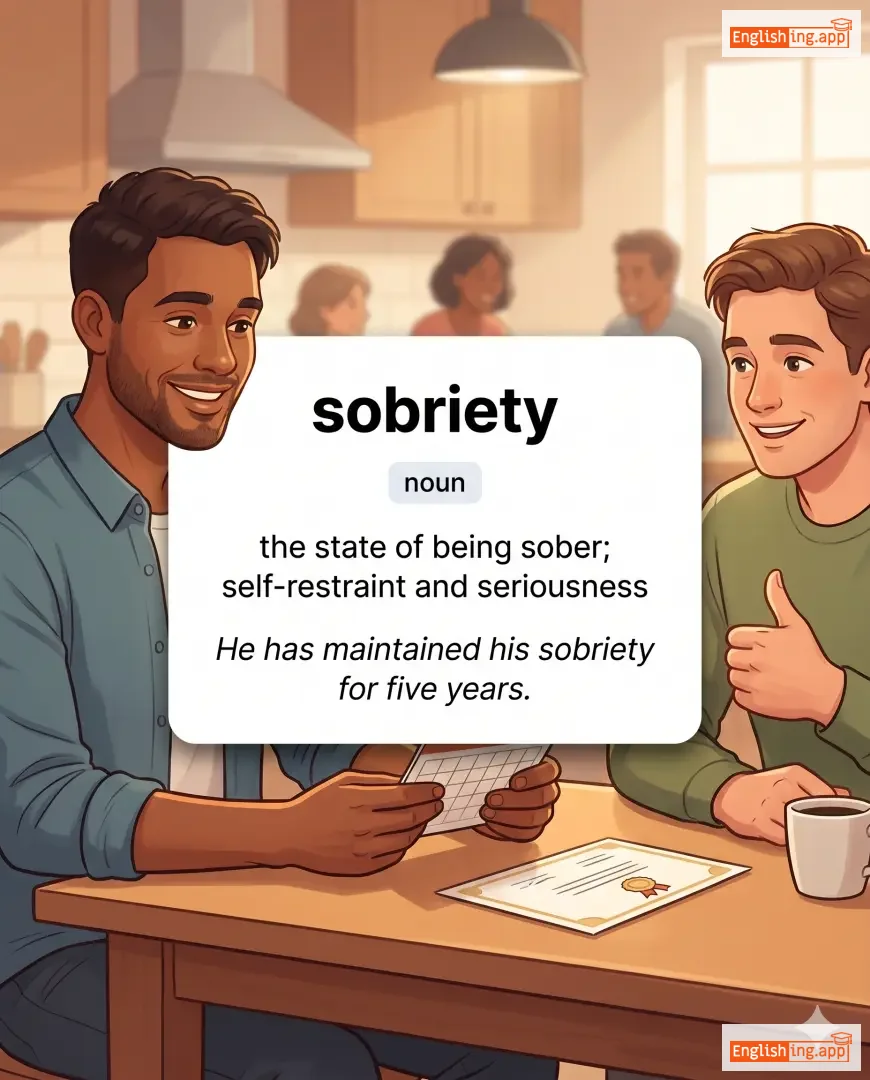
sobriety definition card — visual illustration of the meaning
noun C1
/səˈbraɪəti/
sobriedad (sobriedad)

the state of being sober; self-restraint and seriousness

"He has maintained his sobriety for five years."
"Ha mantenido su sobriedad durante cinco años." (Ha mantenido su sobriedad durante cinco años.)
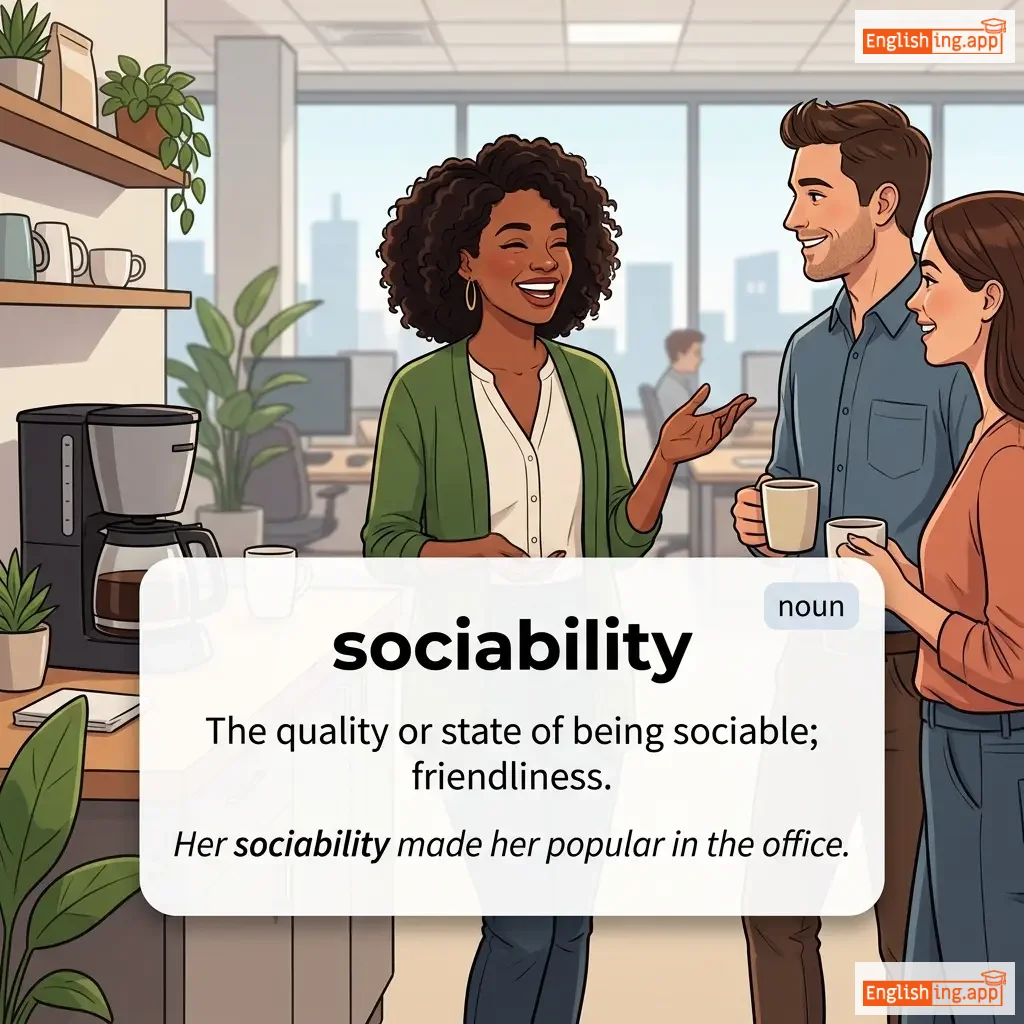
sociability definition card — visual illustration of the meaning
noun C1
/ˌsəʊʃəˈbɪləti/
sociabilidad (sociabilidad)

The quality or state of being sociable; friendliness.

"Her sociability made her popular in the office."
"Su sociabilidad la hizo popular en la oficina." (Su sociabilidad la hizo popular en la oficina.)
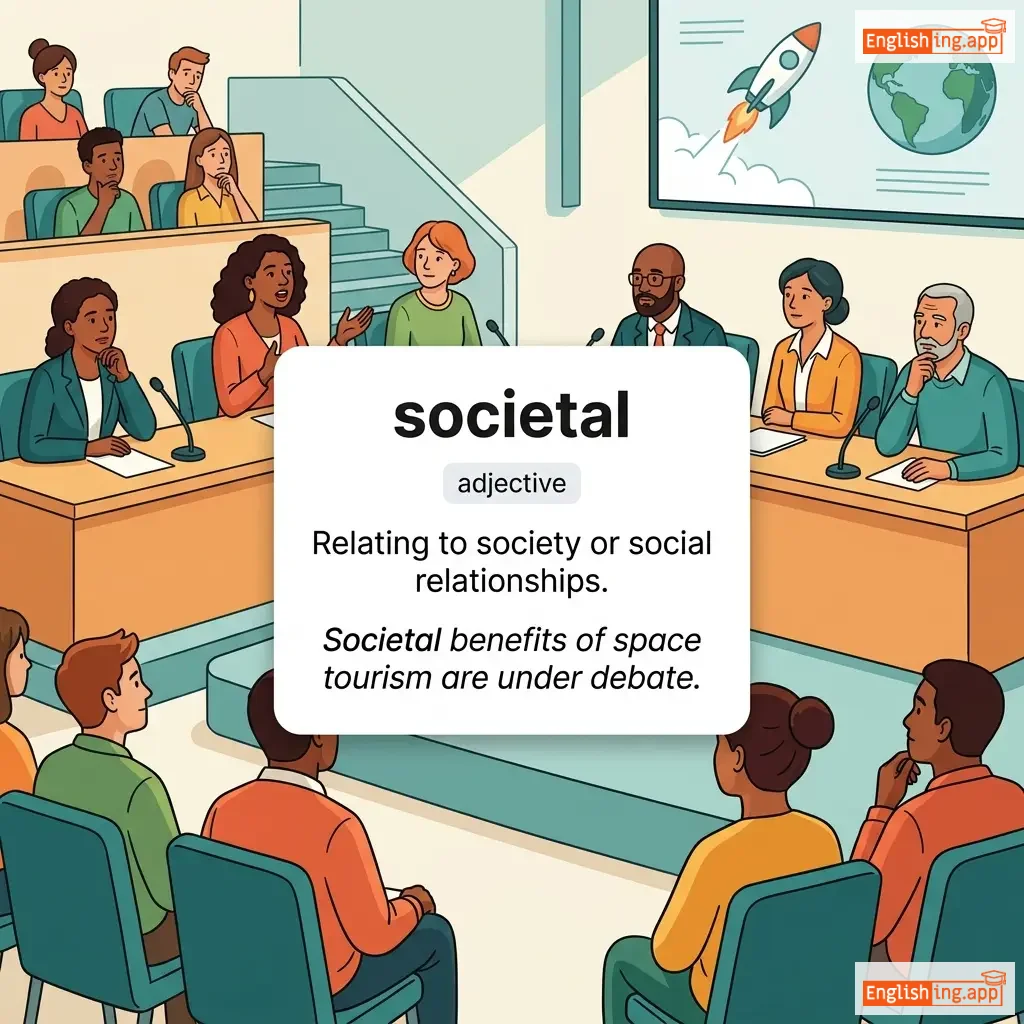
societal definition card — visual illustration of the meaning
adjective C1
səˈsaɪ.ə.təl
social (social)

Relating to society or social relationships.

"Societal benefits of space tourism are under debate."
"Los beneficios sociales del turismo espacial están en debate." (Los beneficios sociales del turismo espacial están en debate.)
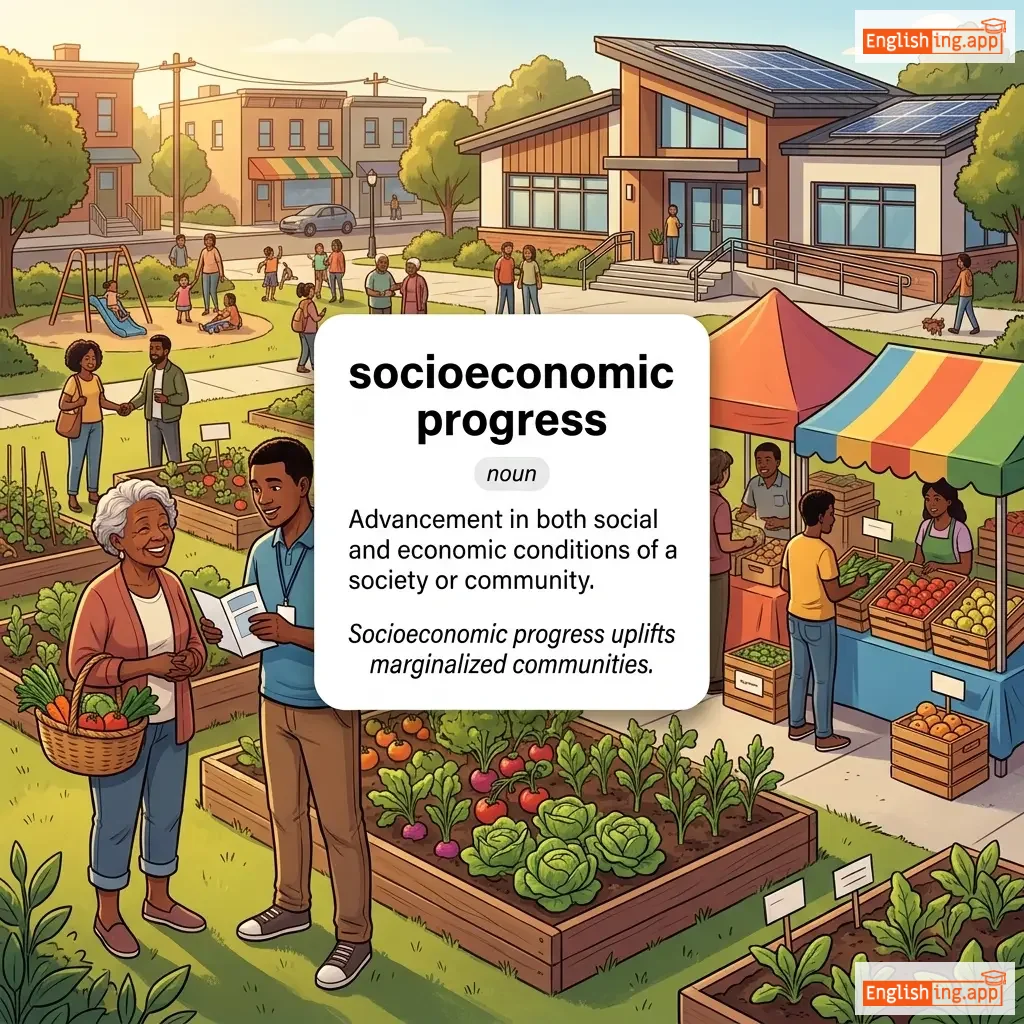
socioeconomic progress definition card — visual illustration of the meaning
noun C1
/ˌsəʊ.ʃi.əʊˈek.ə.nɒm.ɪk ˈprɒɡ.res/
progreso socioeconómico (progreso socioeconomico)

Advancement in both social and economic conditions of a society or community.

"Socioeconomic progress uplifts marginalized communities."

"El progreso socioeconómico eleva a las comunidades marginadas." (El progreso socioeconomico eleva a las comunidades marginadas.)