Словари

Словарь английского языка | Значения слов, определения и примеры

noun C1
/miːlˈjuː/
環境 (kankyō)

A person's social environment or surroundings.

"She grew up in an artistic milieu."
"彼女は芸術的な環境で育ちました。" (Kanojo wa geijutsuteki na kankyō de sodachimashita.)
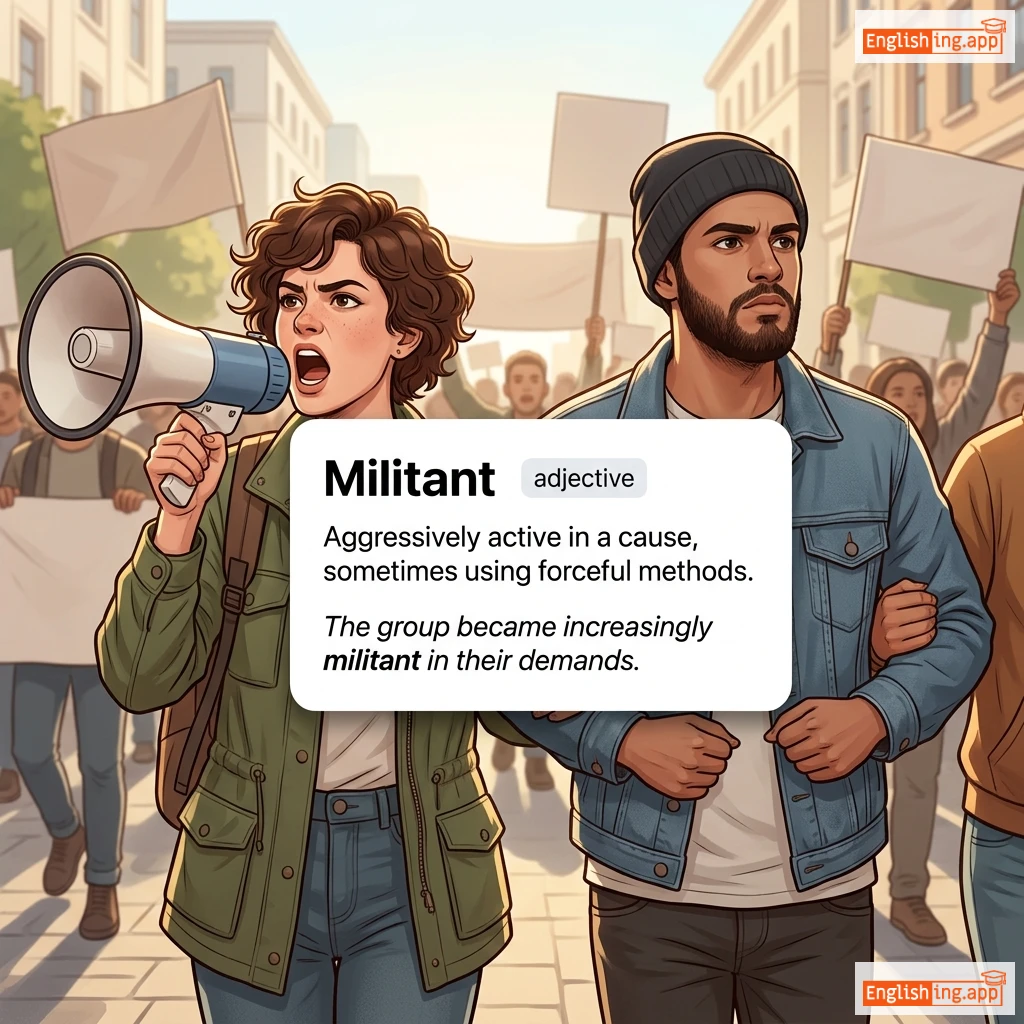
Militant definition card — visual illustration of the meaning
adjective C1
/ˈmɪlɪtənt/
過激 (kageki)

Aggressively active in a cause, sometimes using forceful methods.

"The group became increasingly militant in their demands."

"そのグループは彼らの要求においてますます過激になった。" (Sono gurūpu wa karera no yōkyū ni oite masumasu kageki ni natta.)
noun C1
/ˈmɪlɪtəˌrɪzəm/
軍国主義 (gunkokushugi)

The belief in maintaining a strong military and using it aggressively to defend or promote national interests.

"The rise of militarism in the region caused tension among neighboring countries."
"地域での軍国主義の台頭は、隣国間の緊張を引き起こしました。" (Chiiki de no gunkokushugi no taitō wa, ringokukan no kinchō o hikiokoshimashita.)
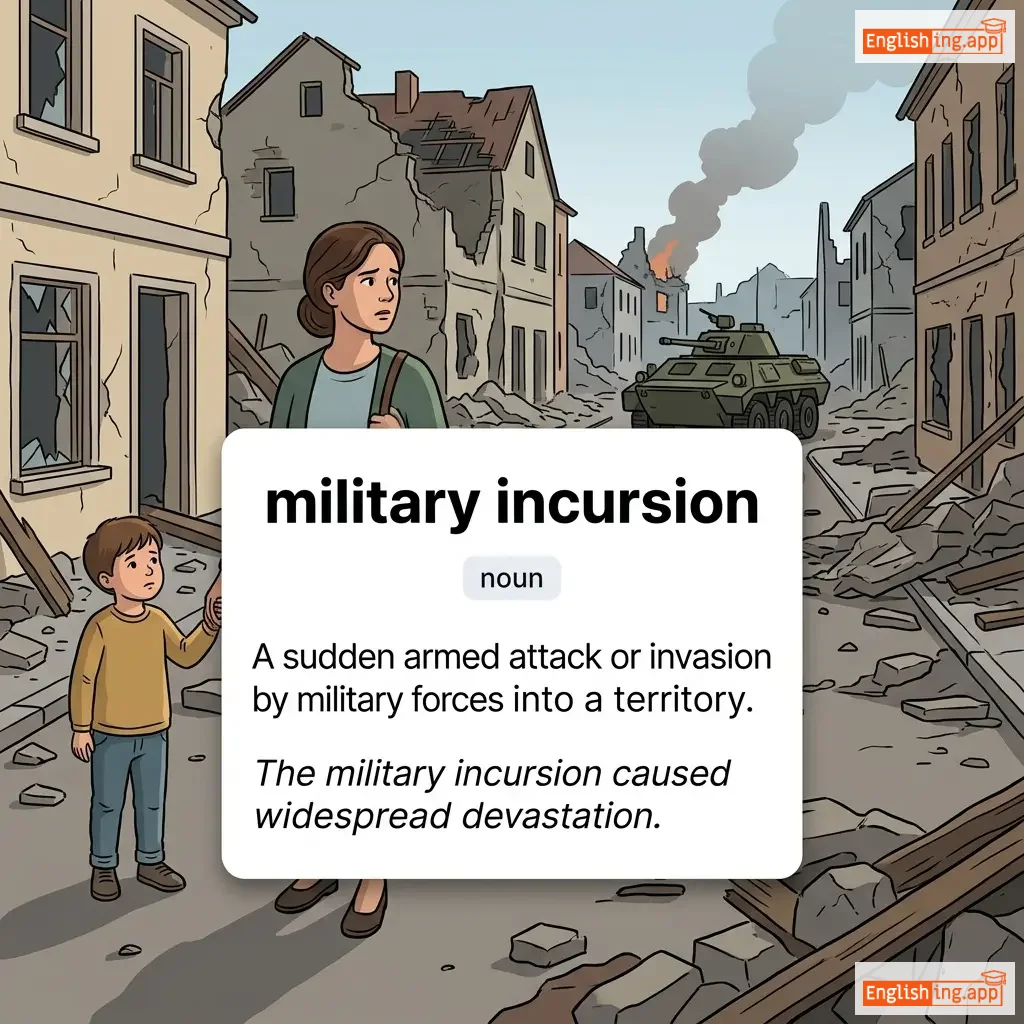
military incursion definition card — visual illustration of the meaning
noun C1
ˈmɪl.ɪ.tər.i ɪnˈkɜː.ʃən
軍事侵入 (gunji shinnyū)

A sudden armed attack or invasion by military forces into a territory.

"The military incursion caused widespread devastation."
"軍事侵入は広範囲にわたる破壊を引き起こしました。" (Gunji shinnyū wa kōhan'i ni wataru hakai o hikiokoshimashita.)
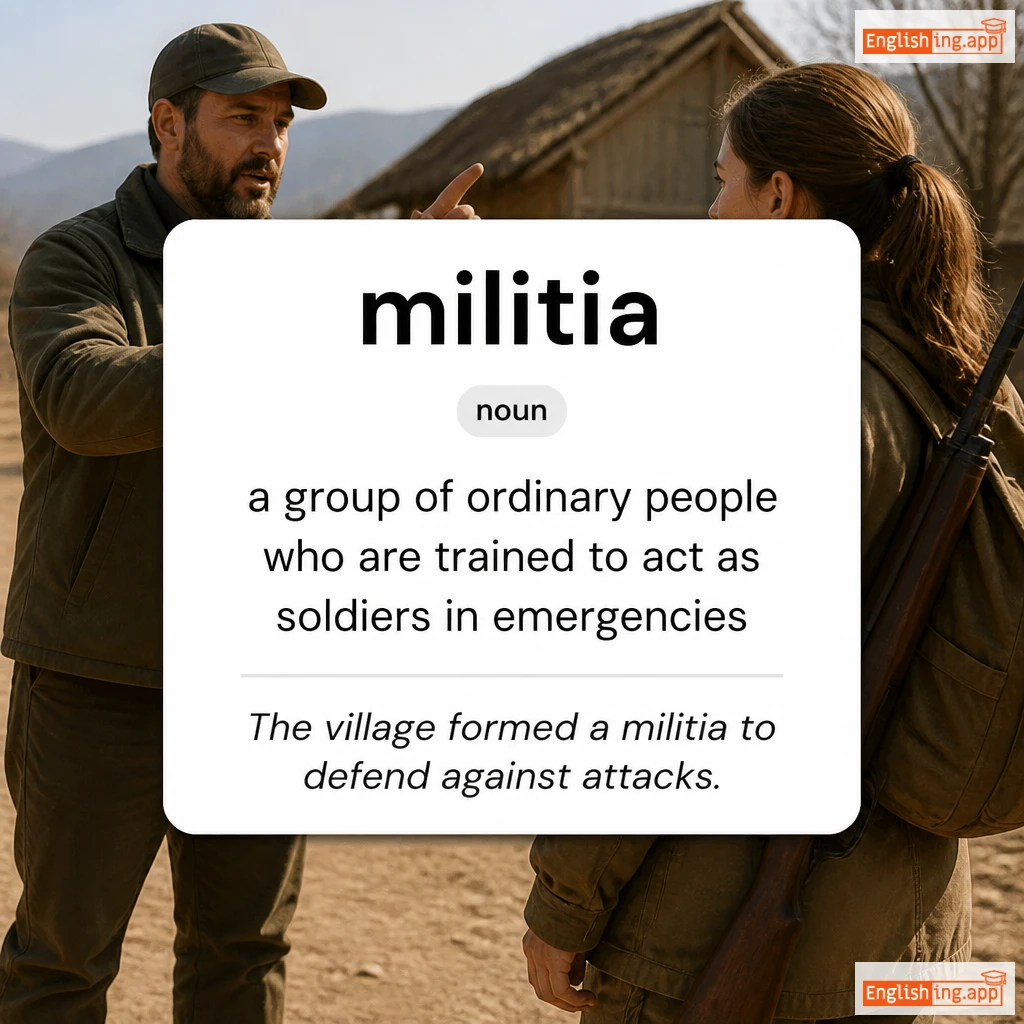
militia definition card — visual illustration of the meaning
noun C1
/mɪˈlɪʃə/
民兵 (minpei)

a group of ordinary people who are trained to act as soldiers in emergencies

"The village formed a militia to defend against attacks."

"村は攻撃から守るために民兵を結成した。" (Mura wa kougeki kara mamoru tame ni minpei wo kessei shita.)
noun C1
/mɪˈlɛniəm/
千年紀 (sennenki)

a period of one thousand years; often used to mark an anniversary

"The year 2000 was celebrated as the beginning of a new millennium."
"2000年は新しい千年紀の始まりとして祝われました。" (2000nen wa atarashī sennenki no hajimari toshite iwawaremashita.)
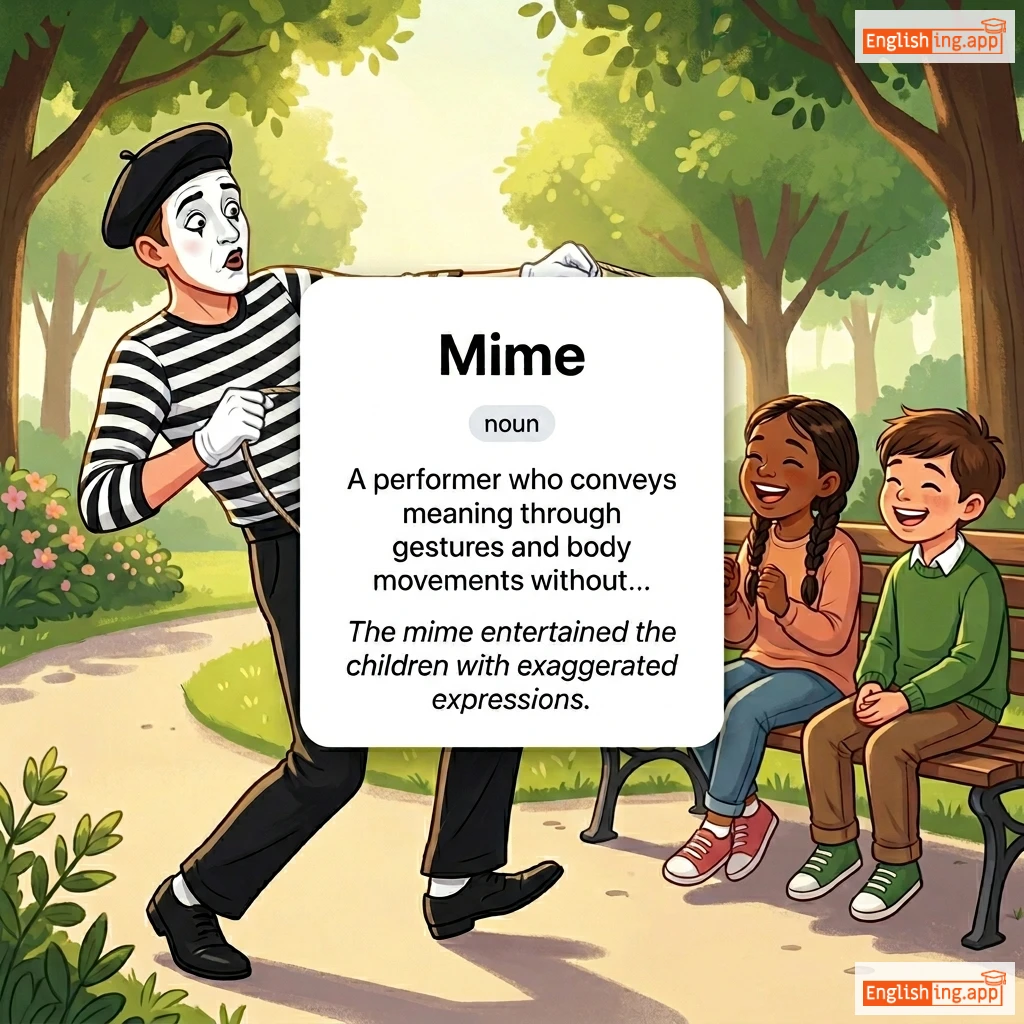
Mime definition card — visual illustration of the meaning
noun C1
/maɪm/
マイムアーティスト (maimu atisuto)

A performer who conveys meaning through gestures and body movements without speech.

"The mime entertained the children with exaggerated expressions."
"マイムは誇張した表情で子供たちを楽しませました。" (Maimu wa kochō shita hyōjō de kodomotachi o tanoshimasemashita.)
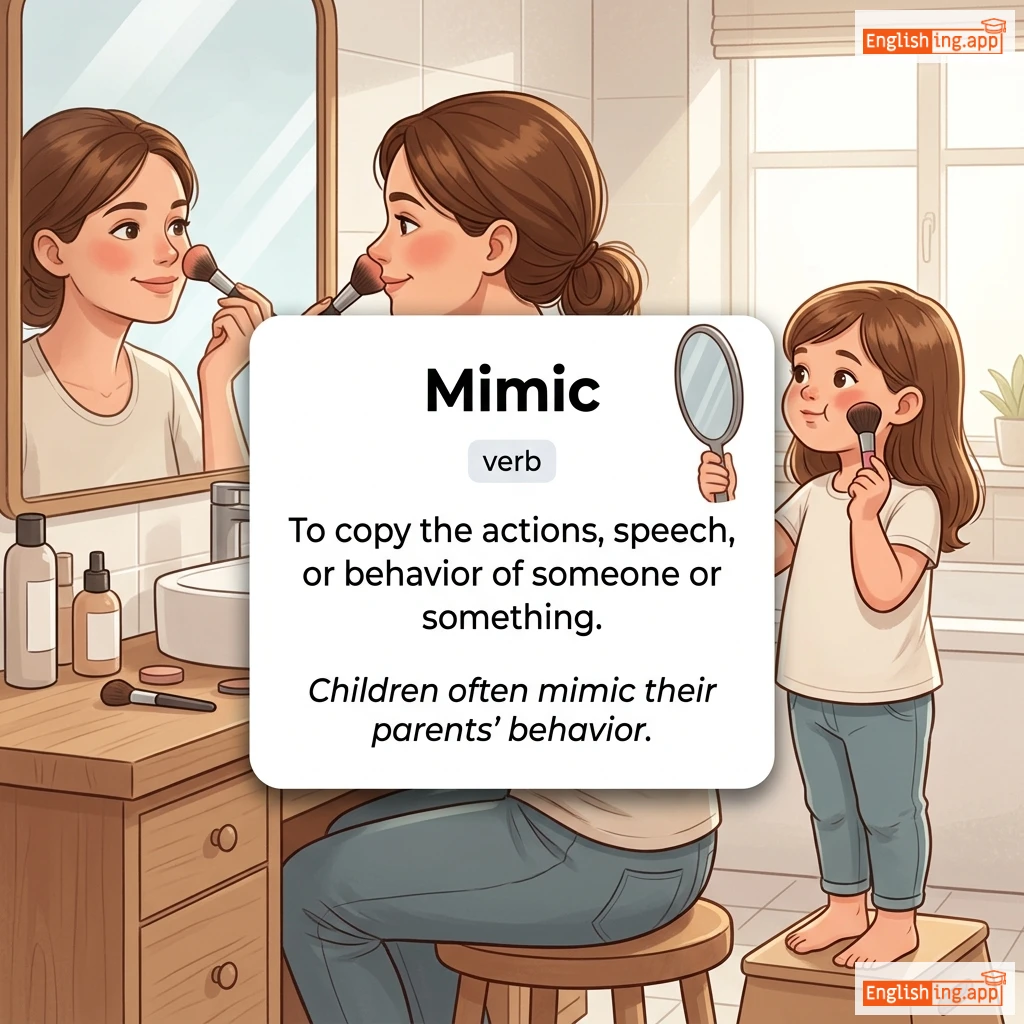
Mimic definition card — visual illustration of the meaning
🦜

Mimic

verb C1
/ˈmɪmɪk/

To copy the actions, speech, or behavior of someone or something.

"Children often mimic their parents' behavior."

noun C1
/ˈmɪmɪkri/
模倣 (mohou)

The act of imitating someone or something, often for humor or learning.

"The comedian’s mimicry of celebrities made the audience laugh."
"コメディアンの有名人の模倣で観客を笑わせました。" (Komedian no yuumeijin no mohou de kankyaku wo warawasemashita.)
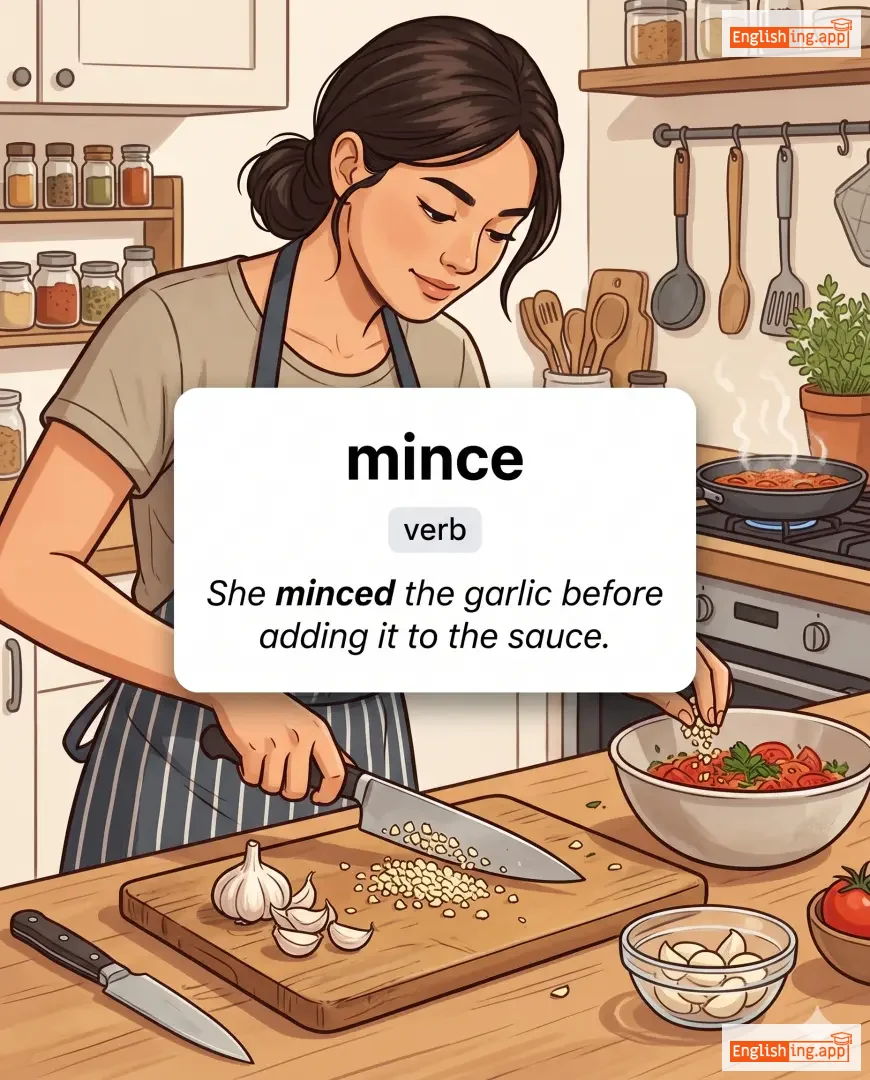
mince definition card — visual illustration of the meaning
verb C1
/mɪns/
刻む (kizamu)

to cut food, especially meat, into very small pieces; to speak in an affectedly delicate or refined way

"She minced the garlic before adding it to the sauce."

"彼女はソースに加える前にニンニクをみじん切りにしました。" (Kanojo wa sōsu ni kuwaeru mae ni nin'niku wo mijingiri ni shimashita.)
adjective C1
/ˈmaɪndləs/
無意味な (muimi na)

without thought or intelligence; done without consideration

"He was bored by the mindless tasks at work."

"彼は仕事の中で無意味な作業に退屈していた。" (Kare wa shigoto no naka de muimi na sagyō ni taikutsu shite ita.)
verb C1
/ˈmɪŋɡl/

to mix or combine; to move among people and engage socially

"Guests mingled at the party, chatting and laughing together."

adjective C1
/ˈmɪnəskjuːl/
微細 (bisai)

extremely small in size or importance

"She made only a minuscule contribution to the project."

"彼女はプロジェクトにほんのわずかな貢献をしました。" (Kanojo wa purojekuto ni honno wazukana kouken o shimashita.)
adverb C1
/maɪˈnjuːtli/
慎重に (shinchou ni)

in very small detail; extremely carefully

"The detective examined the evidence minutely."

"探偵は証拠を慎重に調べました。" (Tantei wa shouko wo shinchou ni shirabemashita.)
adjective C1
/mɪˈrækjələs/
奇跡的な (kiseki-tekina)

Extraordinarily wonderful or unusual, as if by a miracle.

"Her recovery after the accident was truly miraculous."
"事故後の彼女の回復は本当に奇跡的でした。" (Jiko go no kanojo no kaifuku wa hontōni kiseki-tekideshita.)
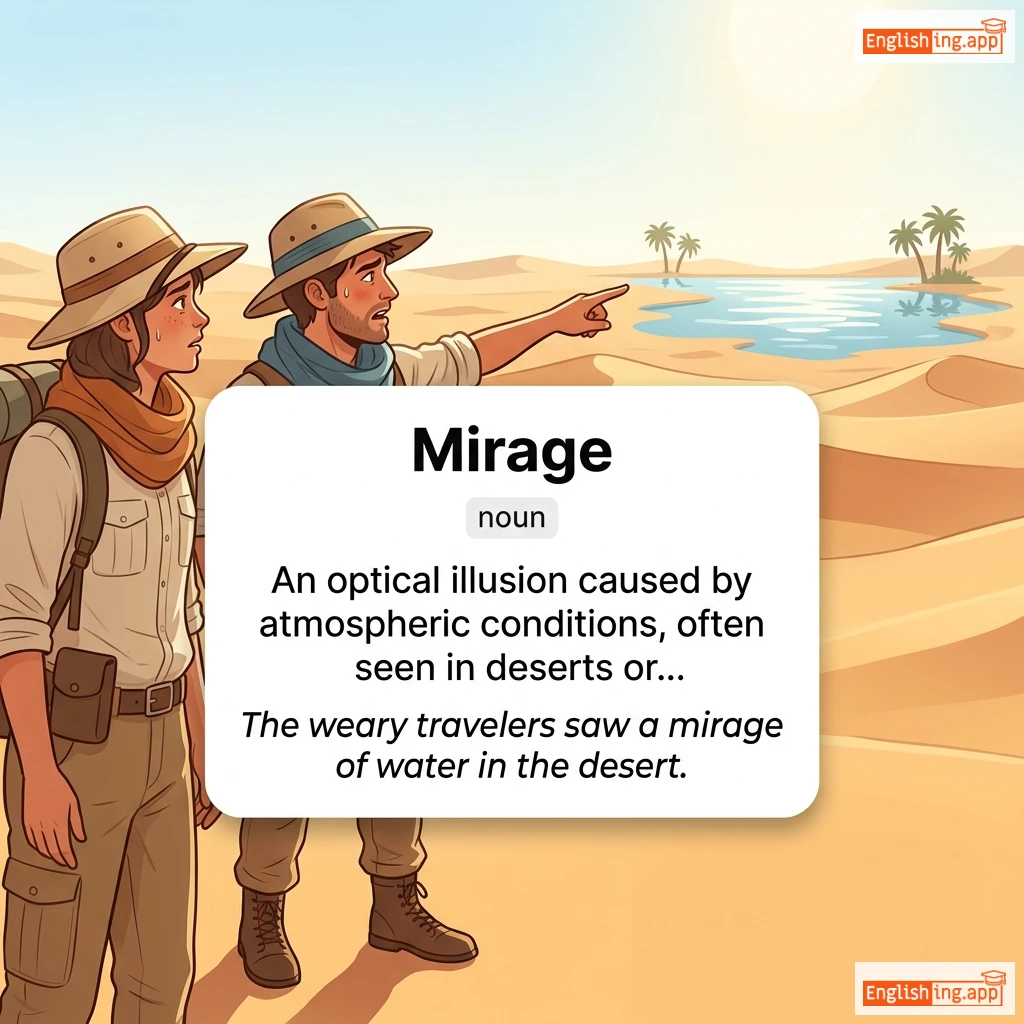
Mirage definition card — visual illustration of the meaning
noun C1
/məˈrɑːʒ/
蜃気楼 (shinkirou)

An optical illusion caused by atmospheric conditions, often seen in deserts or hot roads, where water or objects appear to exist but do not.

"The weary travelers saw a mirage of water in the desert."

"疲れた旅行者たちは砂漠で水の蜃気楼を見ました。" (Tsukareta ryokousha-tachi wa sabaku de mizu no shinkirou wo mimashita.)
adjective, verb (past tense/participle of mire) C1
/ˈmaɪərd/
困難な状況に巻き込まれる (konnan na joukyou ni makikomaru)

Trapped or entangled in something, typically a difficult situation.

"The politician was mired in scandal."

"その政治家はスキャンダルに巻き込まれていた。" (Sono seijika wa sukyandaru ni makikomararete ita.)
noun C1
/mɜːrθ/
喜び (yorokobi)

Great joy, amusement, or laughter.

"The festival was full of mirth and laughter."

"フェスティバルは喜びと笑いでいっぱいでした。" (Fesutibaru wa yorokobi to warai de ippai deshita.)
adjective C1
/ˌmɪsəˈleɪniəs/
雑多な (zattana)

Consisting of a variety of different items or types.

"The drawer was filled with miscellaneous objects."
"引き出しはさまざまな物でいっぱいだった。" (Hikidashi wa samazama na mono de ippai datta.)
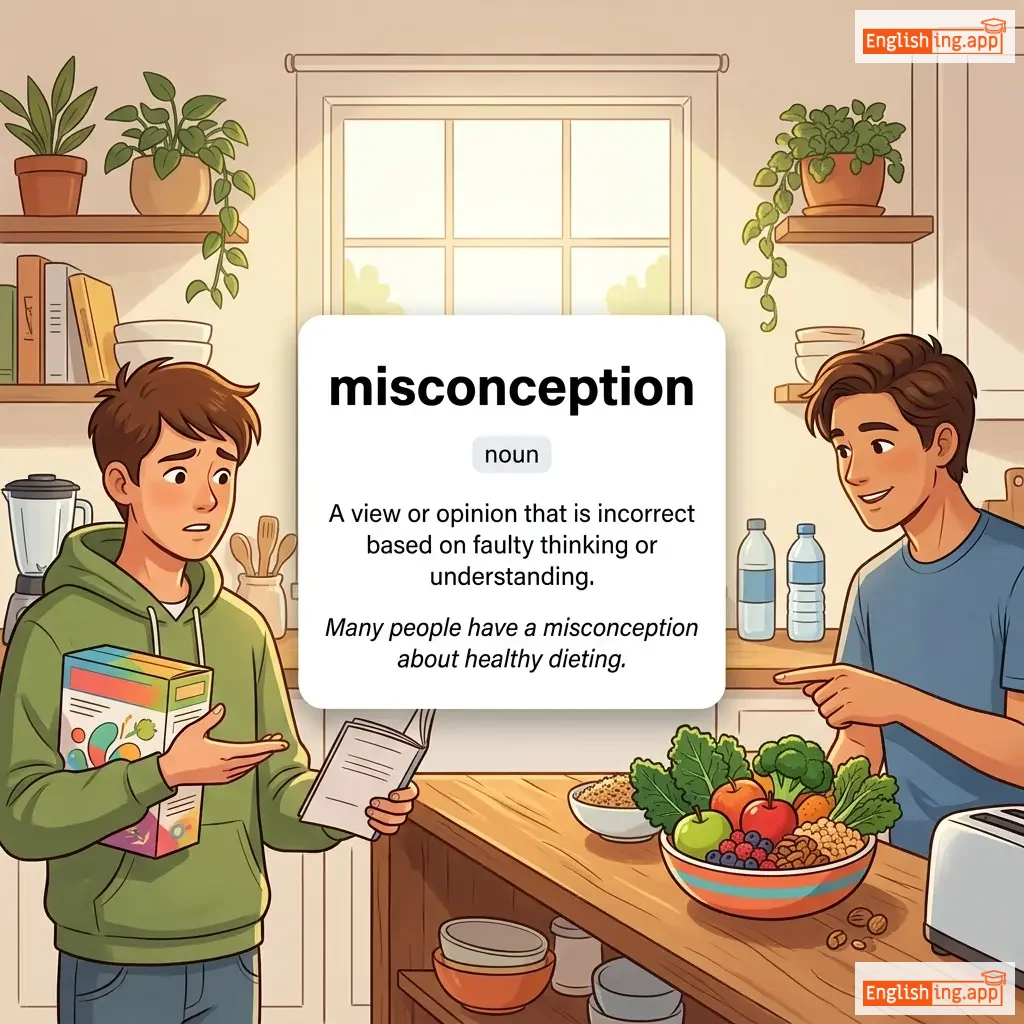
misconception definition card — visual illustration of the meaning
noun C1
/ˌmɪs.kənˈsep.ʃən/
誤解、間違った理解 (gokai, machigatta rikai)

A view or opinion that is incorrect based on faulty thinking or understanding.

"Many people have a misconception about healthy dieting."
"多くの人々は健康的な食事について誤解しています。" (Ōku no hitobito wa kenko-teki na shokuji ni tsuite gokai shiteimasu.)
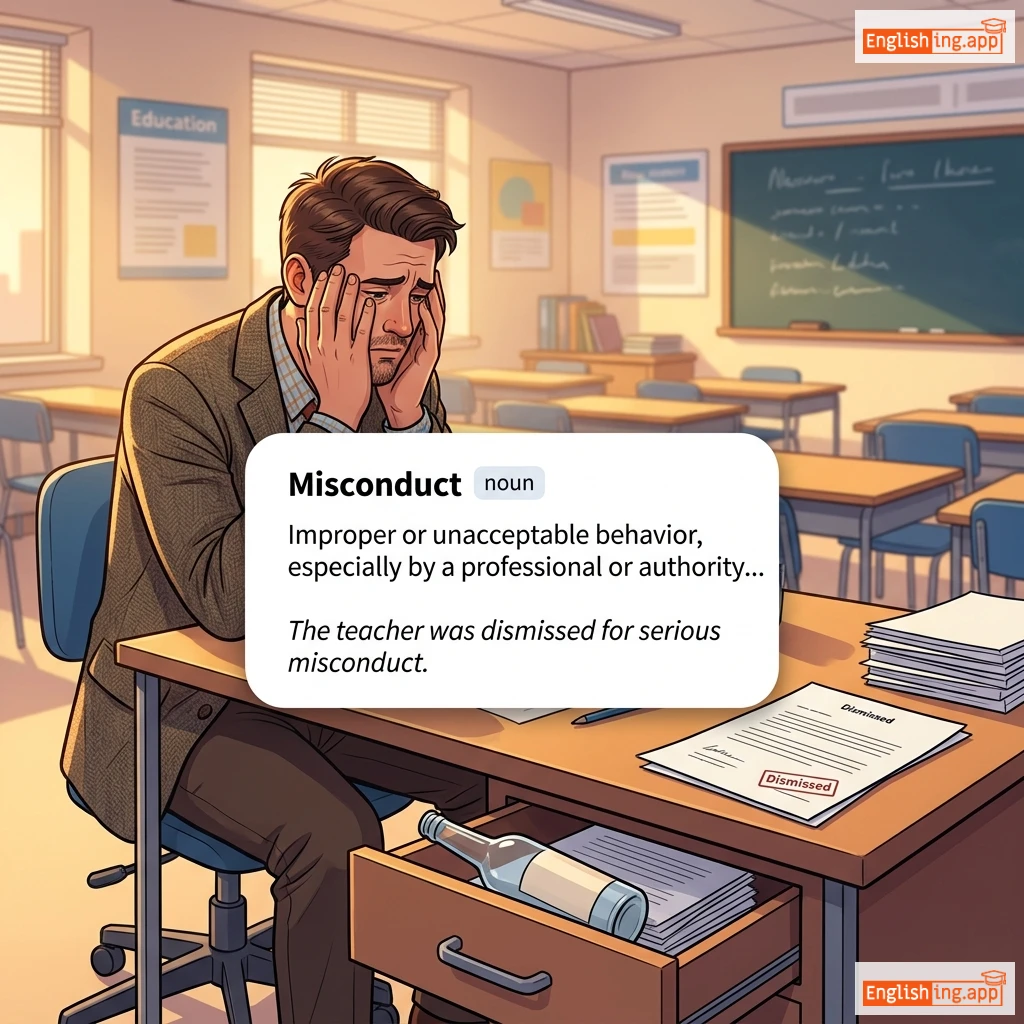
Misconduct definition card — visual illustration of the meaning
noun C1
/ˌmɪsˈkɒndʌkt/
不正行為 (fuseikoui)

Improper or unacceptable behavior, especially by a professional or authority figure.

"The teacher was dismissed for serious misconduct."

"教師は重大な不正行為のため解雇されました。" (Kyoushi wa juudaina fuseikoui no tame kaiko saremashita.)
verb C1
/ˌmɪsˈkaʊnt/
間違えて数える (machigaete kazoeru)

To count wrongly or inaccurately.

"He miscounted the number of chairs in the hall."
"彼はホールの椅子の数を間違えて数えました。" (Kare wa hōru no isu no kazu o machigaete kazoemashita.)
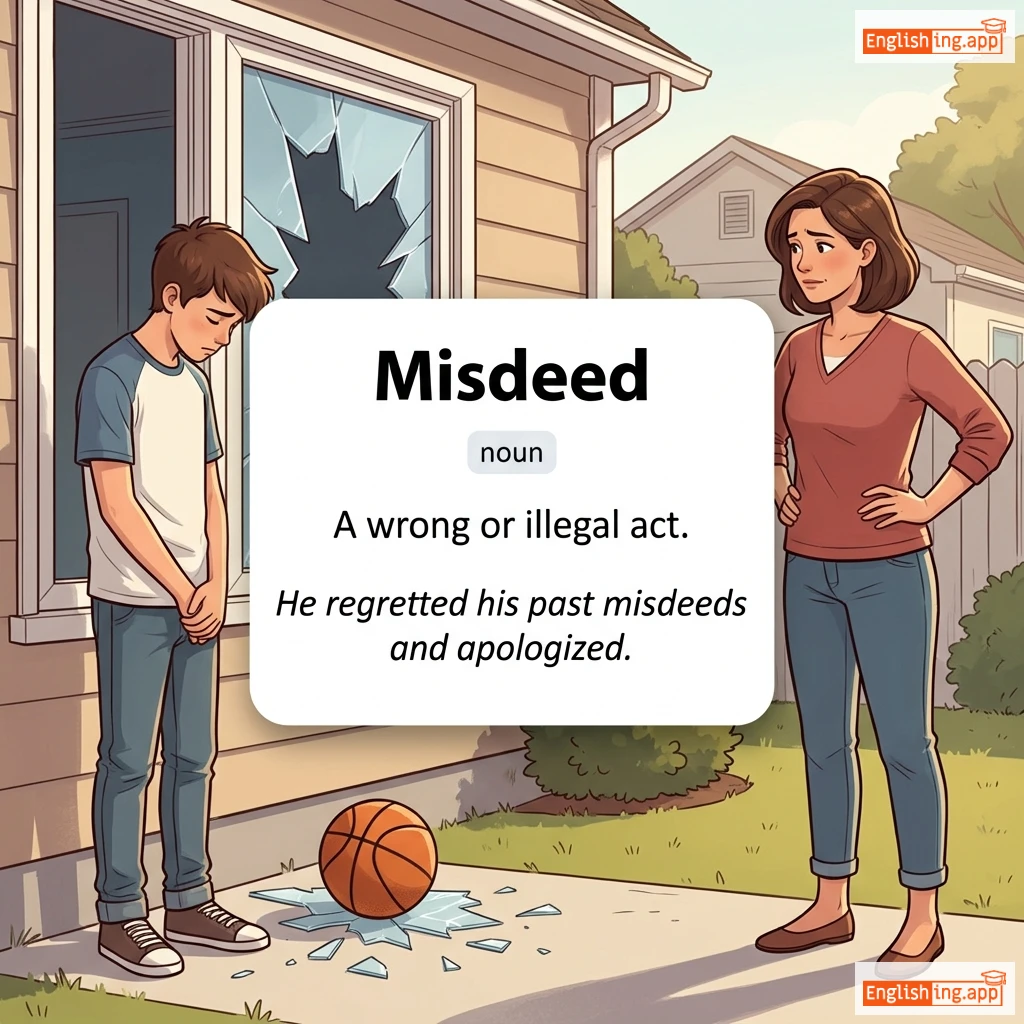
Misdeed definition card — visual illustration of the meaning
noun C1
/ˌmɪsˈdiːd/
不正行為 (fusei koui)

A wrong or illegal act.

"He regretted his past misdeeds and apologized."

"彼は自分の過去の悪行を後悔し、謝罪しました。" (Kare wa jibun no kako no akugyou o koukai shi, shazai shimashita.)
noun C1
/ˌmɪsdɪˈmiːnər/
軽犯罪 (keihanzai)

A minor wrongdoing or criminal offense that is less serious than a felony.

"He was fined for a misdemeanor involving public disturbance."

"公共の秩序に関わる軽犯罪で罰金を科された。" (Kōkyō no chitsujo ni kakawaru keihanzai de bakkin o kasareta.)
noun C1
/ˈmaɪzər/
けちん坊 (kechinbō)

A person who hoards wealth and spends as little money as possible.

"The old miser refused to donate even a penny to charity."

"その古いけちん坊は慈善団体に1ペニーも寄付することを拒否した。" (Sono furui kechinbō wa jizen dantai ni 1 penī mo kifu suru koto o kyohi shita.)
adjective C1
/ˈmaɪzərli/
けちな (kechina)

Unwilling to spend money; stingy.

"She lived a miserly life, refusing to buy anything new."
"彼女はけちな生活を送り、新しいものを買うことを拒んでいた。" (Kanojo wa kechina seikatsu o okuri, atarashī mono o kau koto o kobandeita.)
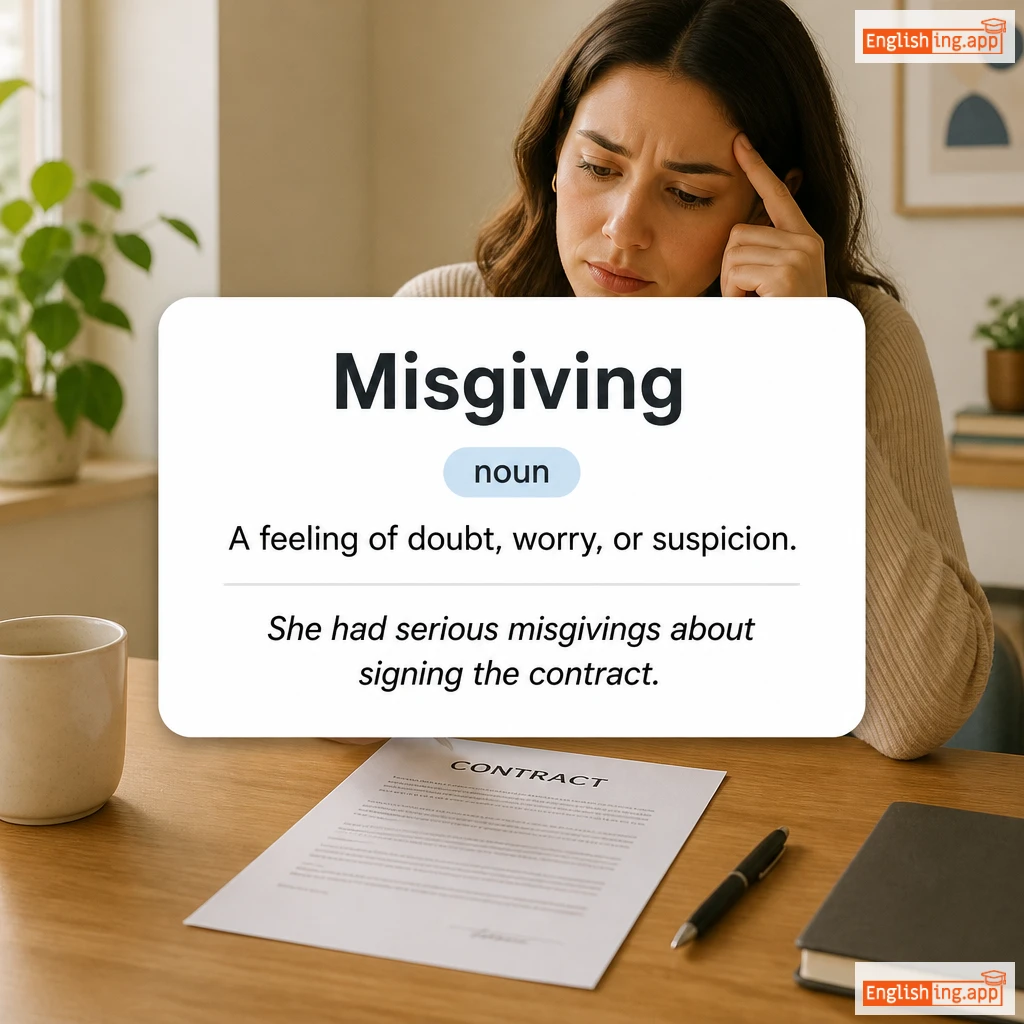
Misgiving definition card — visual illustration of the meaning
noun C1
/ˌmɪsˈɡɪvɪŋ/
疑念 (ginen)

A feeling of doubt, worry, or suspicion.

"She had serious misgivings about signing the contract."

"彼女は契約書にサインすることに対して真剣な疑念を抱いていた。" (Kanojo wa keiyakusho ni sain suru koto ni taishite shinken na ginen o daite ita.)
noun C1
/mɪsˈɡɪvɪŋz/
疑念、不安 (ginen, fuan)

feelings of doubt or concern about the outcome or propriety of something

"She had serious misgivings about signing the contract."
"彼女は契約書にサインすることに対して深刻な疑念を抱いていた。" (Kanojo wa keiyaku-sho ni sain suru koto ni taishite shinkoku na ginen o idaite ita.)
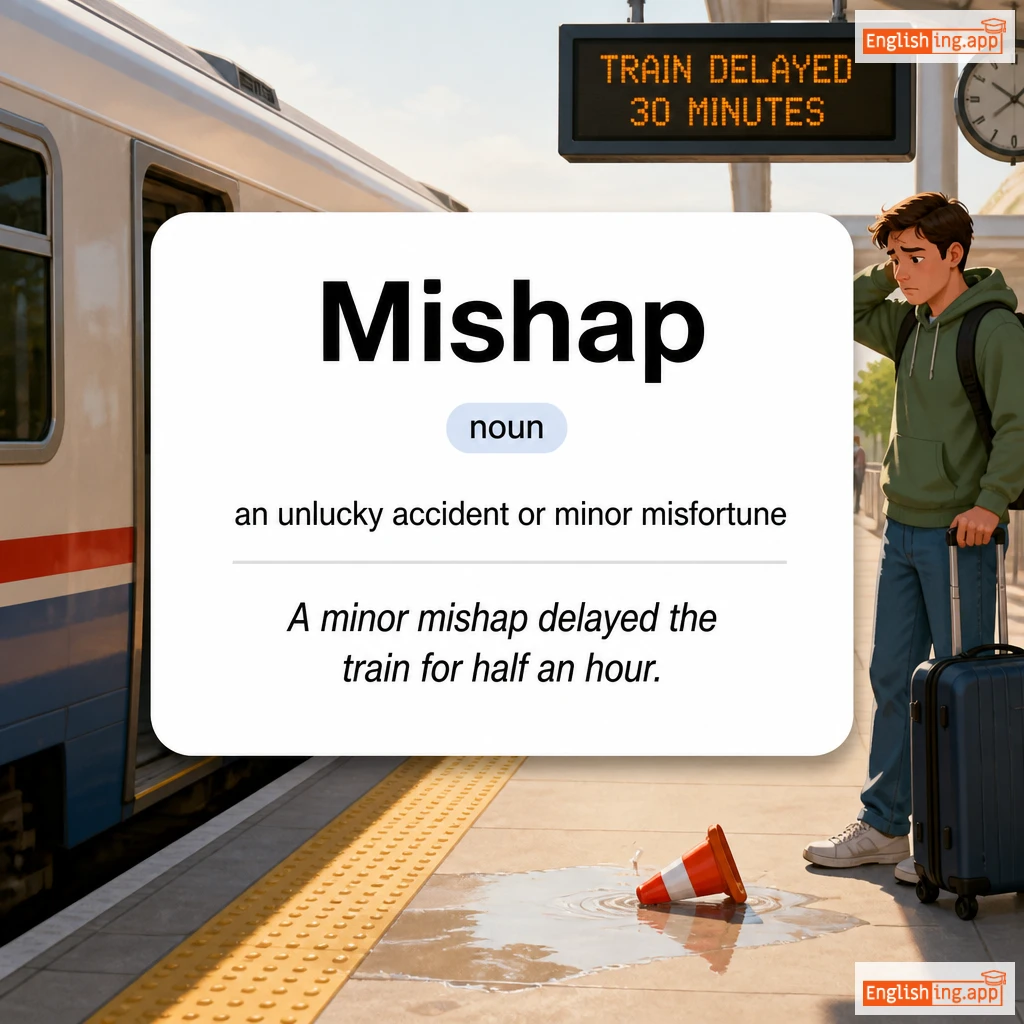
Mishap definition card — visual illustration of the meaning
noun C1
/ˈmɪshæp/
不運, 小さな事故 (fuun, chiisana jiko)

an unlucky accident or minor misfortune

"A minor mishap delayed the train for half an hour."

"小さな事故で電車は30分遅れました。" (Chiisana jiko de densha wa 30-pun okuremashita.)
verb C1
/ˌmɪsɪnˈtɜːrprɪt/
誤解する (gokai suru)

to understand or explain something wrongly

"He misinterpreted her silence as agreement."

"彼は彼女の沈黙を同意と誤解した。" (Kare wa kanojo no chinmoku o dōi to gokai shita.)
verb C1
/ˌmɪsˈmænɪdʒ/

to handle or control something badly or inefficiently

"The company went bankrupt because it was mismanaged for years."
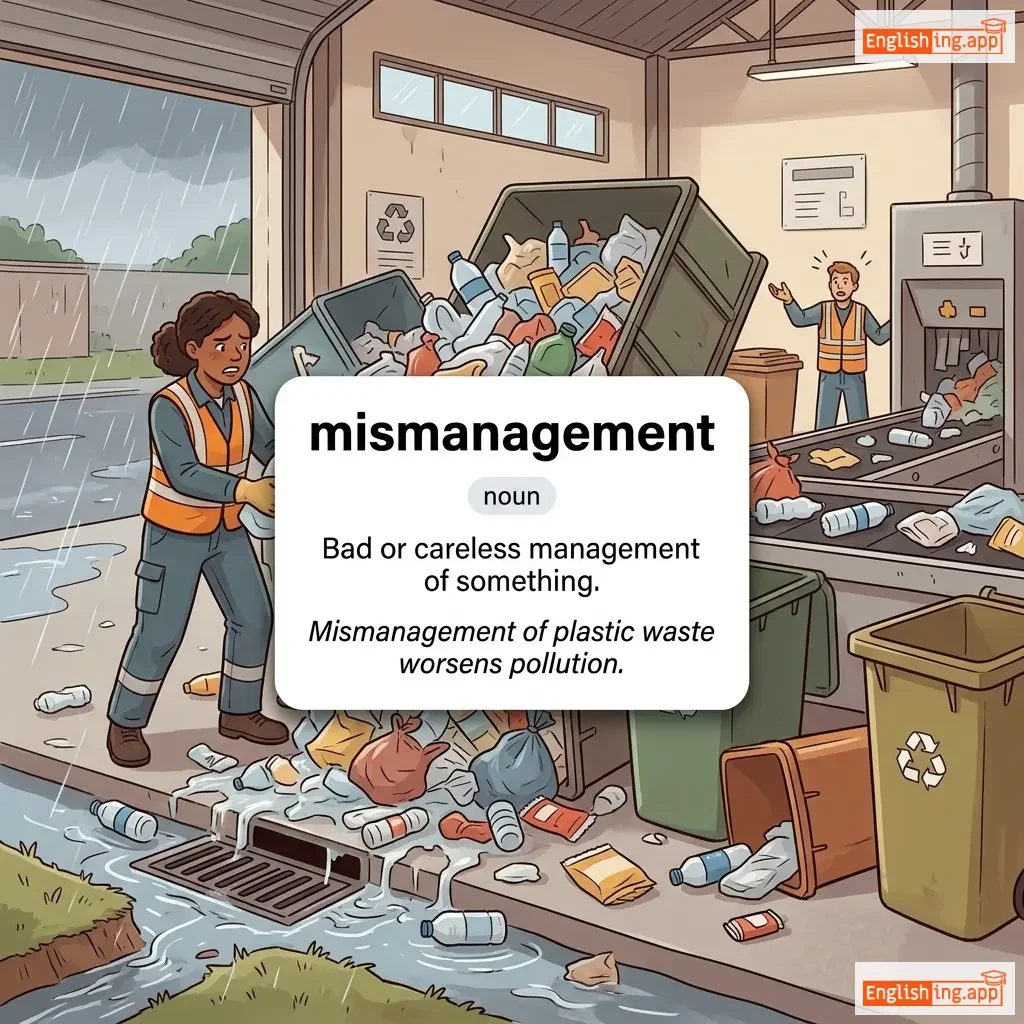
mismanagement definition card — visual illustration of the meaning
noun C1
ˌmɪsˈmænɪdʒmənt
不適切な管理 (futekisetsu na kanri)

Bad or careless management of something.

"Mismanagement of plastic waste worsens pollution."

"プラスチックごみの不適切な管理が汚染を悪化させます。" (Purasutikku gomi no futekisetsu na kanri ga osen o akka sasemasu.)
noun C1
/mɪˈsɑːdʒəni/
女性嫌悪 (josei ken'o)

Hatred of, contempt for, or prejudice against women.

"The novel has been criticized for promoting misogyny."

"その小説は女性嫌悪を助長すると批判された。" (Sono shōsetsu wa josei ken'o o jochō suru to hihan sareta.)
verb C1
/ˌmɪsˈpleɪs/
間違った場所に置く (machigatta basho ni oku)

To put something in the wrong location and temporarily lose it.

"I often misplace my keys when I am in a hurry."

"急いでいるとき、よく鍵を間違った場所に置いてしまいます。" (Isoide iru toki, yoku kagi o machigatta basho ni oite shimaimasu.)
verb C1
/ˌmɪsˈriːd/
誤って読む (ayamatte yomu)

to read something incorrectly or interpret wrongly

"He misread the instructions and built the shelf incorrectly."

"彼は指示を誤読して棚を間違って作った。" (Kare wa shiji o godoku shite tana o machigatte tsukutta.)
verb C1
/ˌmɪsˌrɛprɪˈzɛnt/

to give a false or misleading account of something

"The lawyer accused the witness of trying to misrepresent the facts."
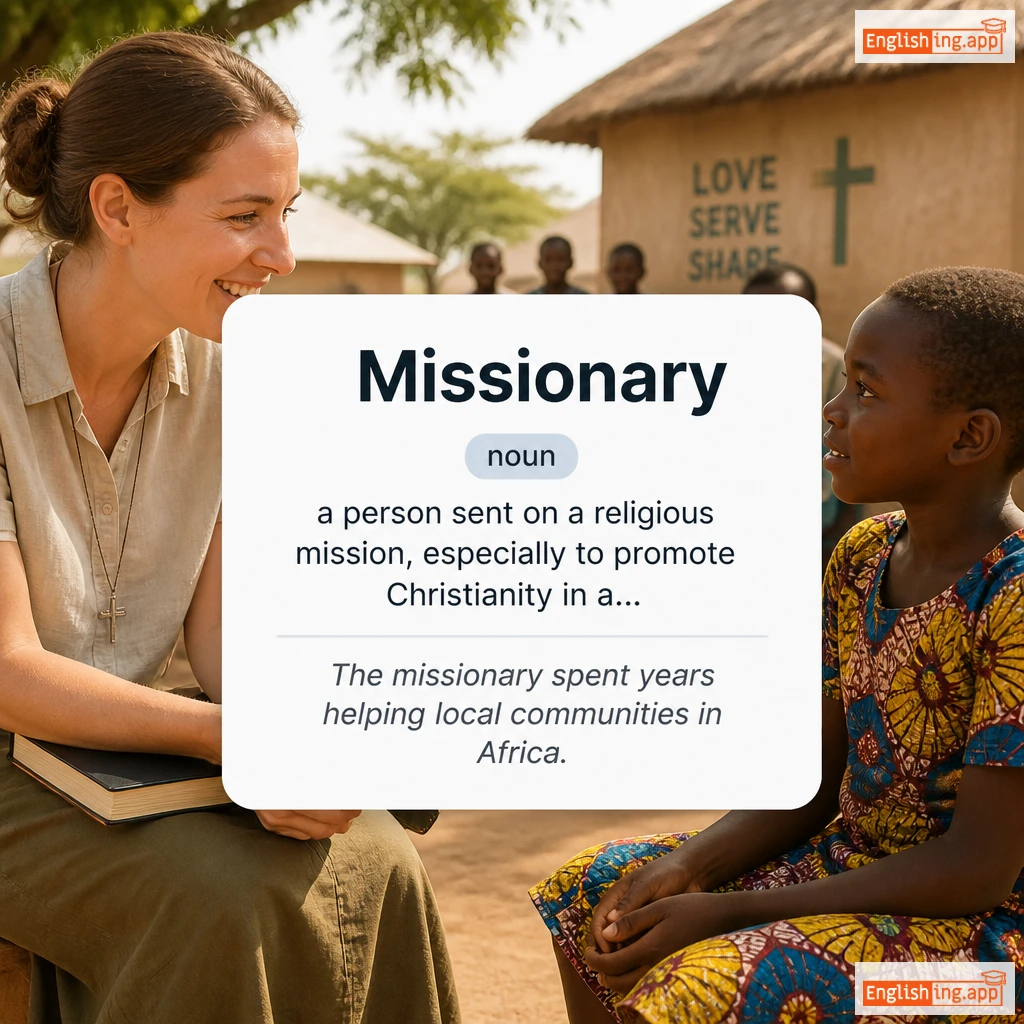
Missionary definition card — visual illustration of the meaning
noun C1
/ˈmɪʃəneri/
宣教師 (senkyōshi)

a person sent on a religious mission, especially to promote Christianity in a foreign country

"The missionary spent years helping local communities in Africa."
"その宣教師はアフリカで地元のコミュニティを支援するために何年も費やしました。" (Sono senkyōshi wa Afurika de jimoto no komyuniti o shien suru tame ni nannen mo tsuiyashimashita.)
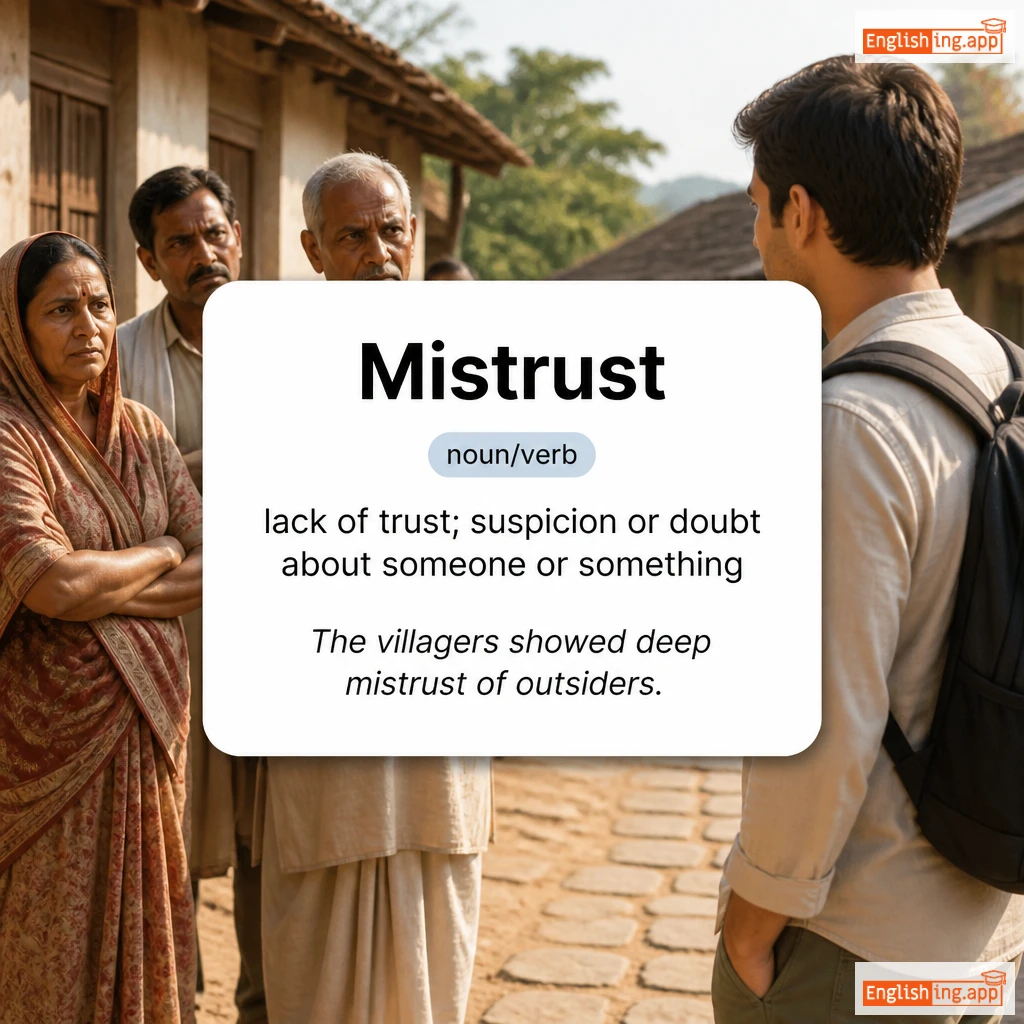
Mistrust definition card — visual illustration of the meaning
noun/verb C1
/ˌmɪsˈtrʌst/
不信 (fushin)

lack of trust; suspicion or doubt about someone or something

"The villagers showed deep mistrust of outsiders."

"村人たちは外部の人々に深い不信を示しました。" (Murabito-tachi wa gaibu no hitobito ni fukai fushin o shimashita.)
noun C1
/maɪt/
ダニ (dani)

a very small creature, often a tiny arachnid; also used to mean a very small amount

"The mattress was infested with dust mites."
"マットレスはホコリのダニに感染していました。" (Mattoresu wa hokori no dani ni kansen shite imashita.)
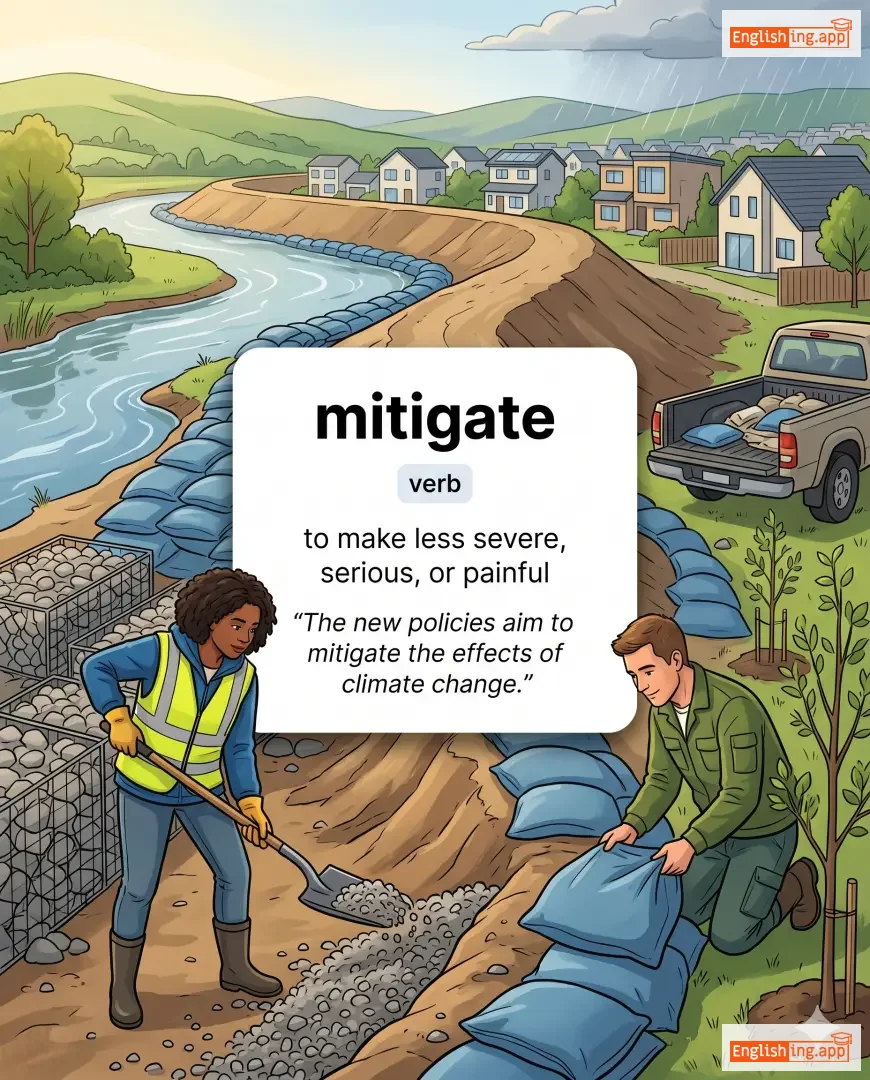
mitigate definition card — visual illustration of the meaning
verb C1
/ˈmɪtɪˌɡeɪt/
軽減する (keigen suru)

to make less severe, serious, or painful

"The new policies aim to mitigate the effects of climate change."
"新しい政策は気候変動の影響を軽減することを目指しています。" (Atarashii seisaku wa kikō hendō no eikyō o keigen suru koto o mezashiteimasu.)
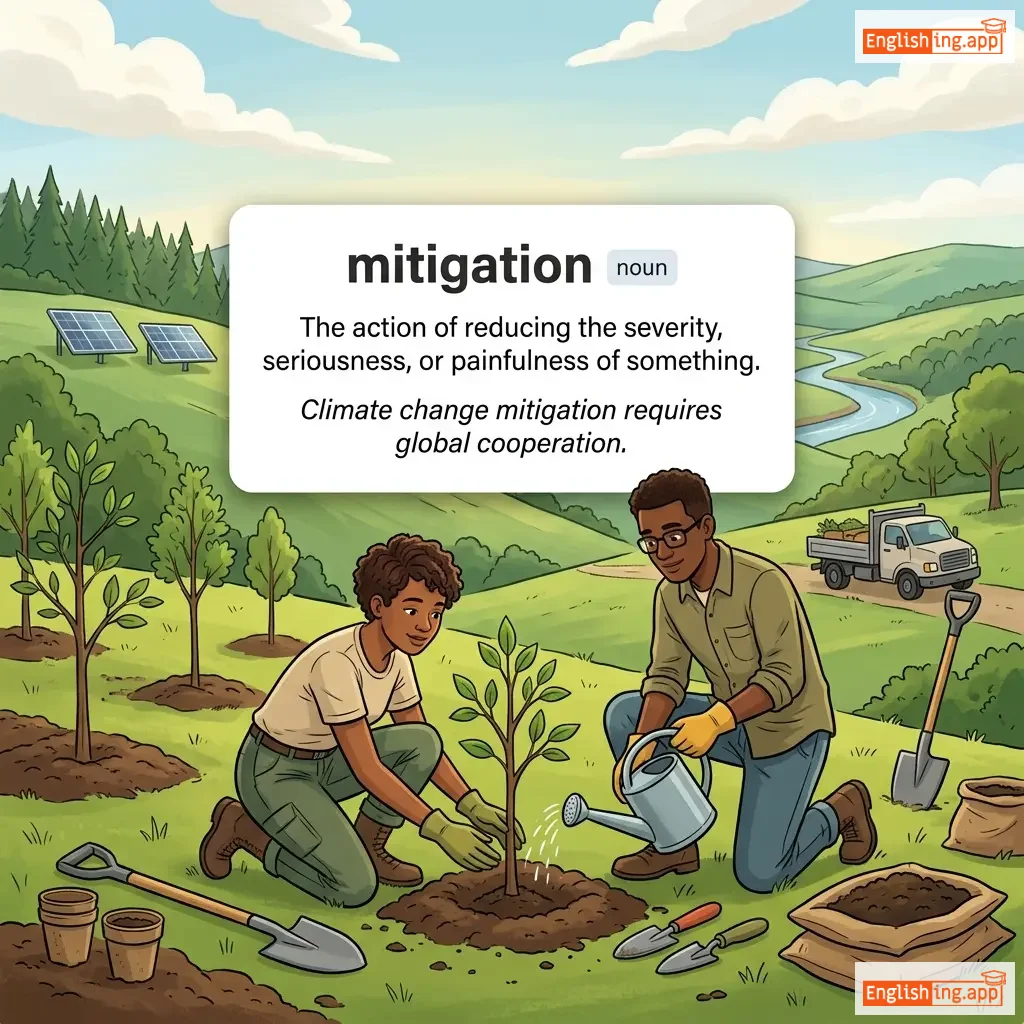
mitigation definition card — visual illustration of the meaning
noun C1
ˌmɪt.ɪˈɡeɪ.ʃən
緩和 (kanwa)

The action of reducing the severity, seriousness, or painfulness of something.

"Climate change mitigation requires global cooperation."
"気候変動の緩和には、世界的な協力が必要です。" (Kikō hendō no kanwa ni wa, sekaiteki na kyōryoku ga hitsuyō desu.)
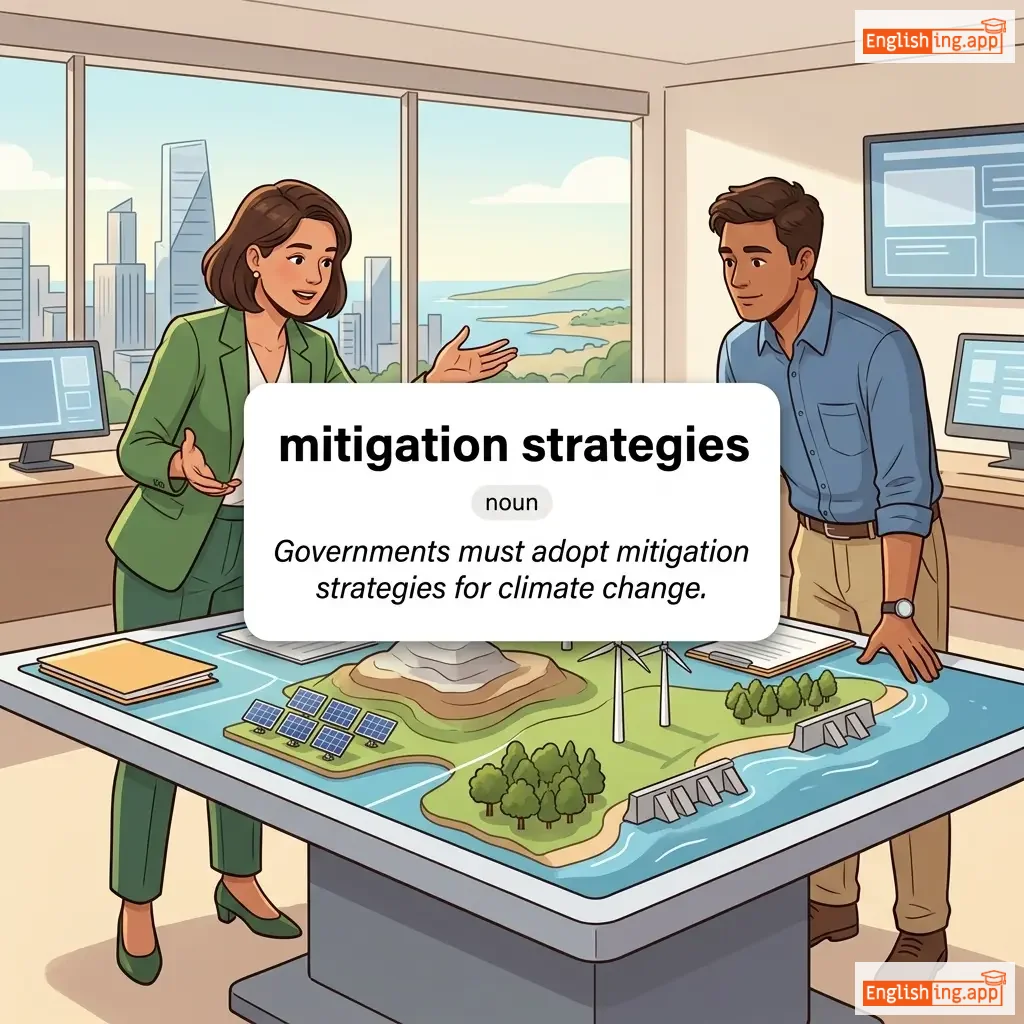
mitigation strategies definition card — visual illustration of the meaning
noun C1
ˌmɪtɪˈɡeɪʃən ˈstrætədʒiz
緩和戦略 (kanwa senryaku)

Plans and actions designed to reduce the severity or impact of problems or risks.

"Governments must adopt mitigation strategies for climate change."
"政府は気候変動に対処するための緩和戦略を採用する必要があります。" (Seifu wa kikō hendō ni taisho suru tame no kanwa senryaku o saiyō suru hitsuyō ga arimasu.)
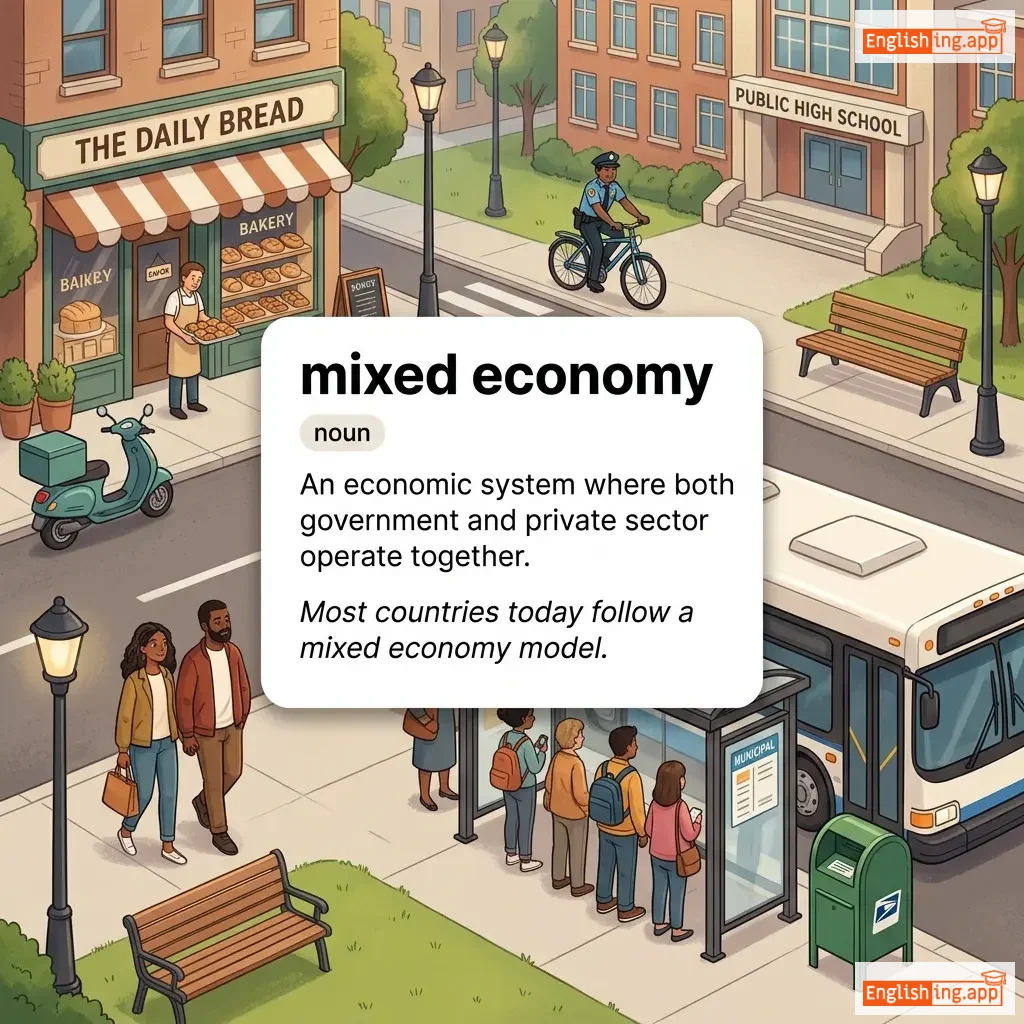
mixed economy definition card — visual illustration of the meaning
noun C1
/mɪkst ɪˈkɒn.ə.mi/
混合経済 (kongō keizai)

An economic system where both government and private sector operate together.

"Most countries today follow a mixed economy model."
"現在、ほとんどの国が混合経済モデルを採用しています。" (Genzai, hotondo no kuni ga kongō keizai moderu o sai-yō shiteimasu.)
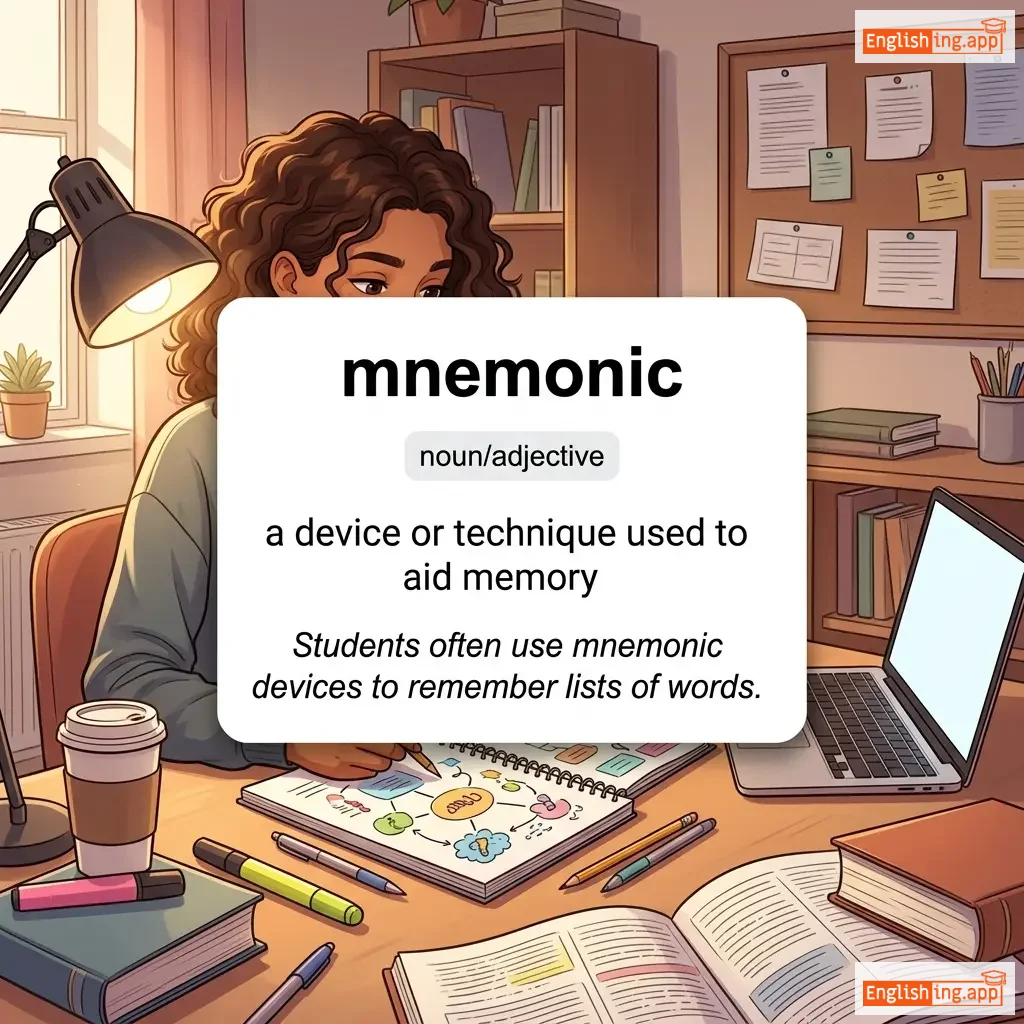
mnemonic definition card — visual illustration of the meaning
noun/adjective C1
/nɪˈmɒnɪk/

a device or technique used to aid memory

"Students often use mnemonic devices to remember lists of words."
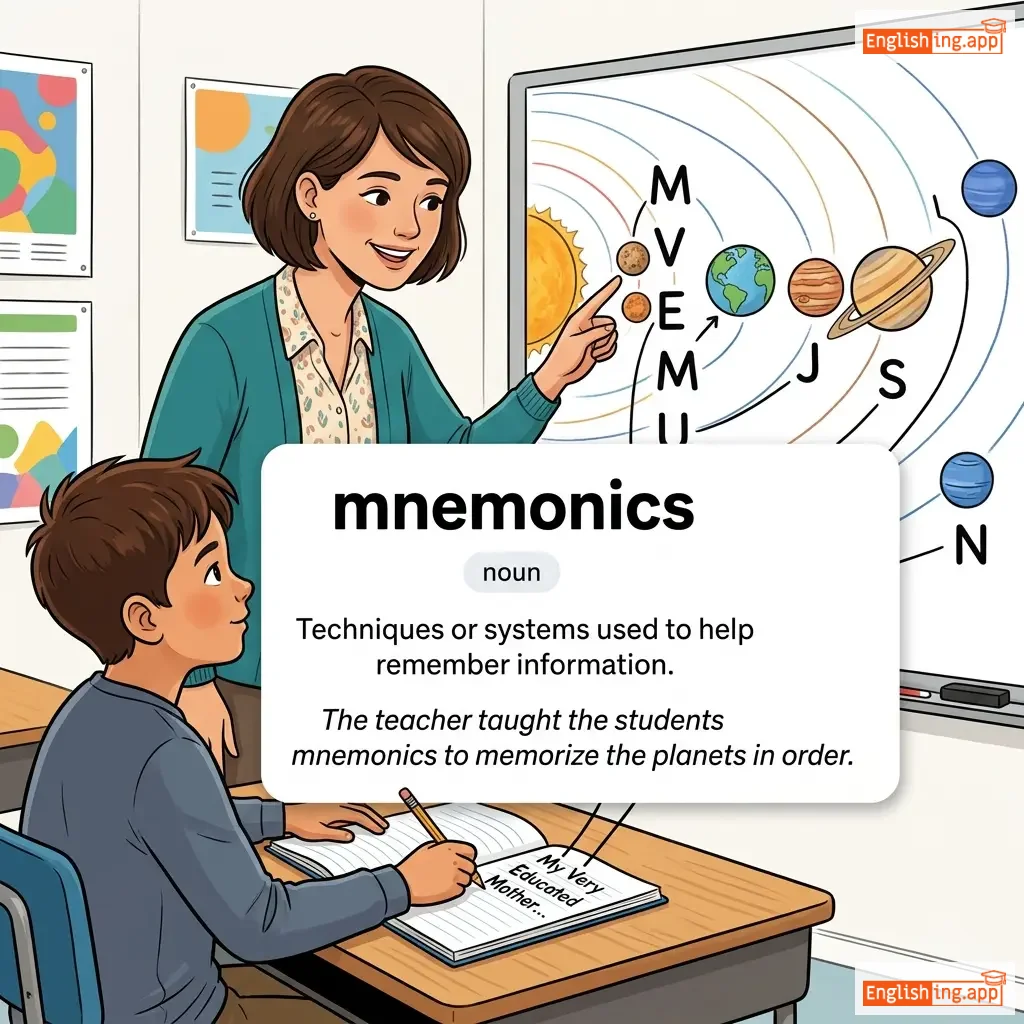
mnemonics definition card — visual illustration of the meaning
noun C1
/nɪˈmɒnɪks/
記憶術 (kiokujutsu)

Techniques or systems used to help remember information.

"The teacher taught the students mnemonics to memorize the planets in order."

"先生は生徒たちに惑星を順番に覚えるための記憶法を教えました。" (Sensei wa seito-tachi ni wakusei o junban ni oboeru tame no kioku-hō o oshiemashita.)
noun C1
/moʊt/
(hori)

A deep, wide ditch surrounding a castle or town, often filled with water, for defense.

"The castle was protected by a wide moat filled with water."
"城は水で満たされた広い堀によって守られていました。" (Shiro wa mizu de mitasareta hiroi hori ni yotte mamorarete imashita.)
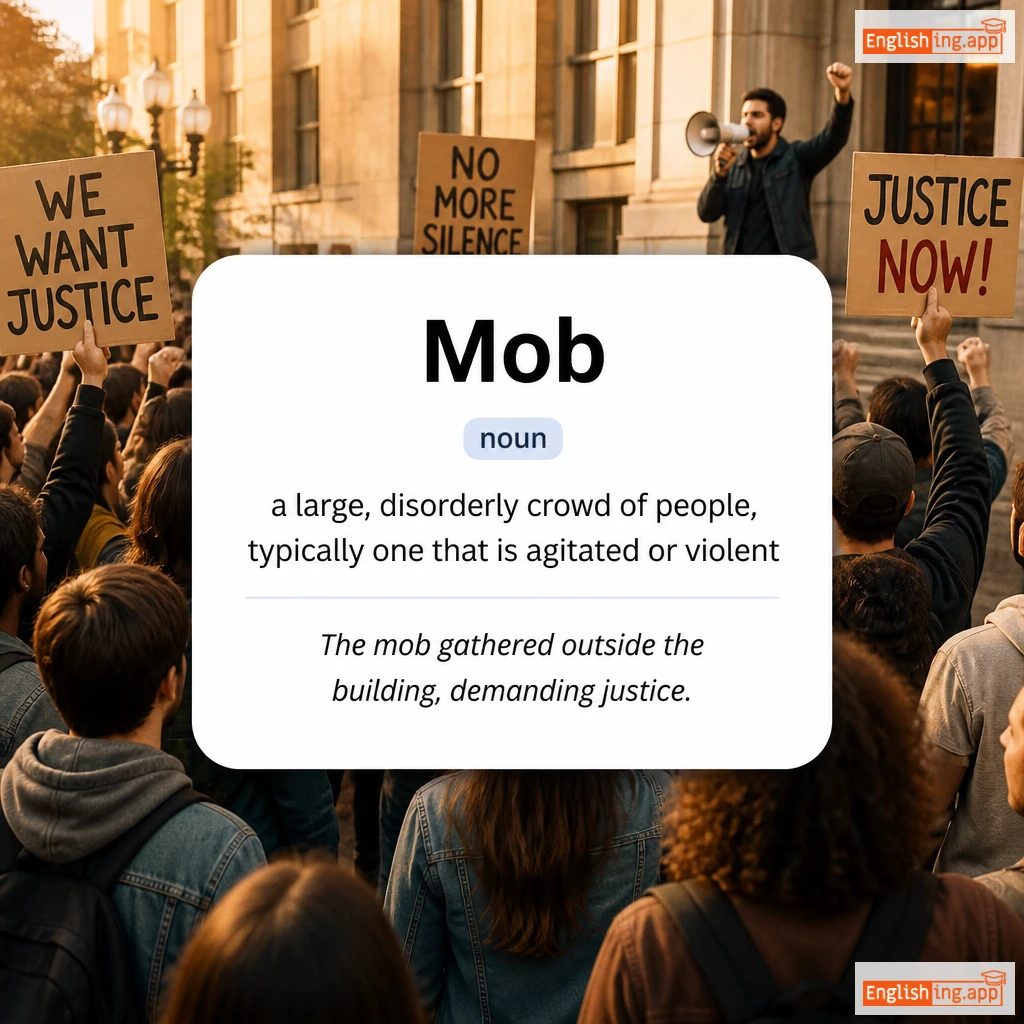
Mob definition card — visual illustration of the meaning
noun C1
/mɒb/
群衆 (gunshuu)

a large, disorderly crowd of people, typically one that is agitated or violent

"The mob gathered outside the building, demanding justice."
"群衆は建物の外に集まり、正義を求めていた。" (Gunshuu wa tatemono no soto ni atsumari, seigi o motomete ita.)
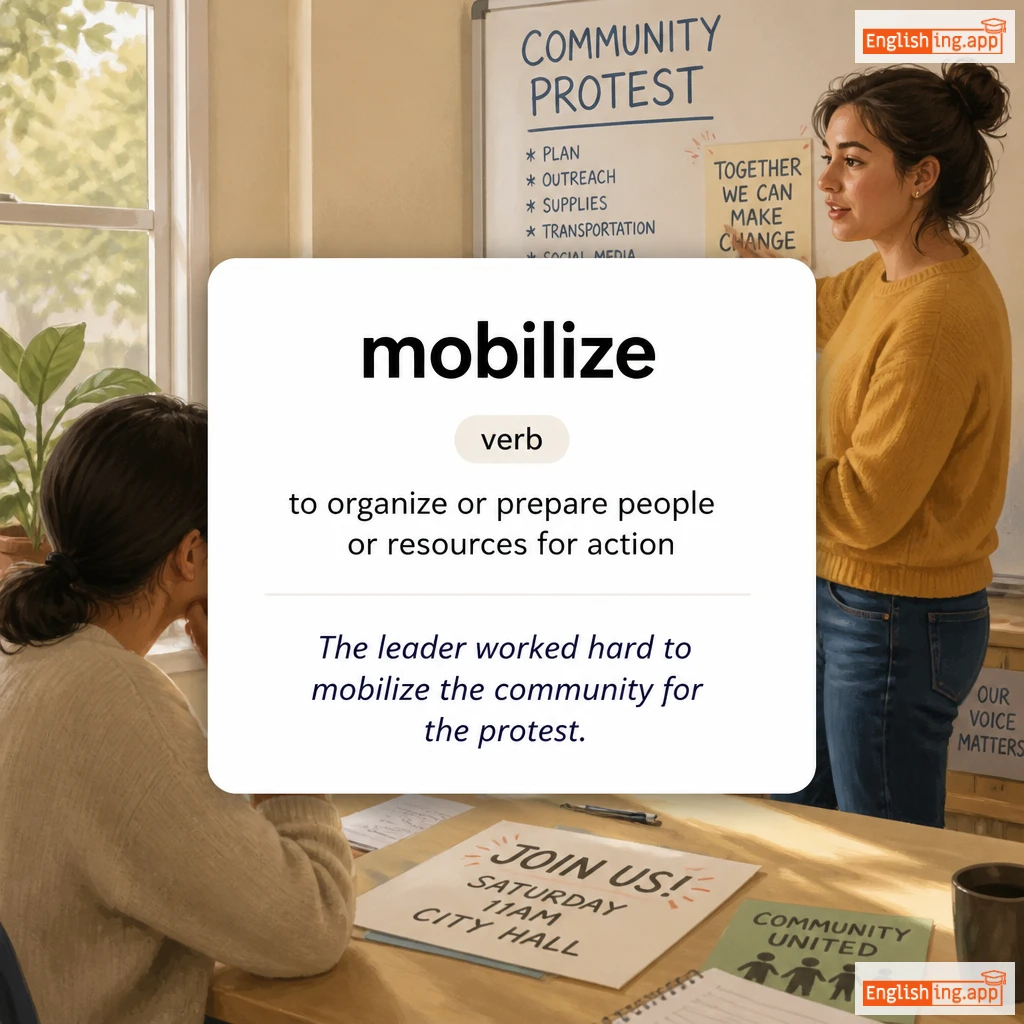
mobilize definition card — visual illustration of the meaning
verb C1
/ˈməʊbɪlaɪz/
動員する (douin suru)

to organize or prepare people or resources for action

"The leader worked hard to mobilize the community for the protest."
"リーダーは抗議のためにコミュニティを動員するために一生懸命働きました。" (Rīdā wa kōgi no tame ni komyuniti o dōin suru tame ni isshōkenmei hatarakimashita.)
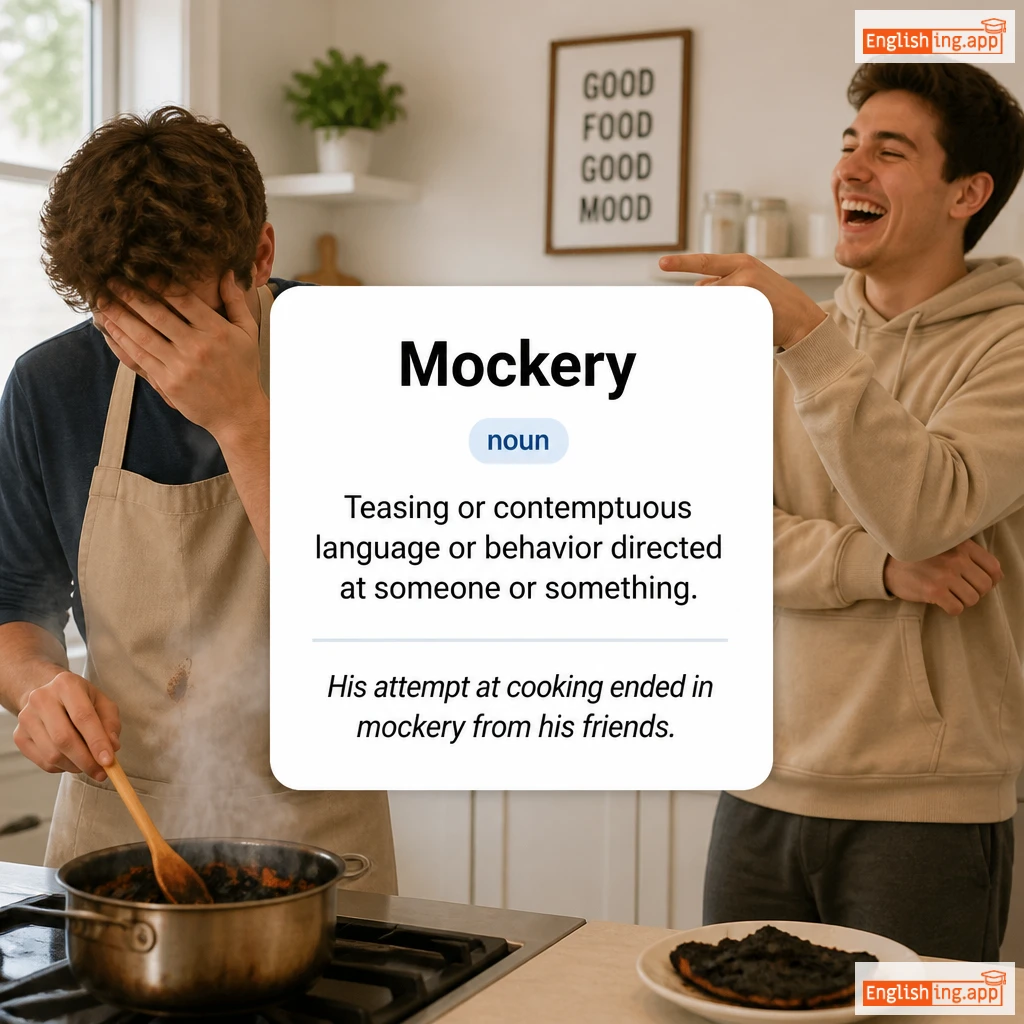
Mockery definition card — visual illustration of the meaning
noun C1
/ˈmɒkəri/
嘲笑、冷笑 (chōshō, reisō)

Teasing or contemptuous language or behavior directed at someone or something.

"His attempt at cooking ended in mockery from his friends."

"彼の料理の試みは友達の嘲笑で終わった。" (Kare no ryōri no kokoromi wa tomodachi no chōshō de owatta.)
noun C1
/məˈdɜːrnəti/
現代性 (gendai-sei)

The quality or condition of being modern; up-to-date ideas, practices, or style.

"The city’s architecture reflects both tradition and modernity."

"その都市の建築は、伝統と現代性の両方を反映しています。" (Sono toshi no kenchiku wa, dentou to gendai-sei no ryōhō o han'ei shiteimasu.)