
Словари

Словарь английского языка | Значения слов, определения и примеры

Helm definition card — visual illustration of the meaning
noun C1
/hɛlm/
领导, 舵 (lingdao, duo)

a position of leadership or the steering apparatus of a ship

"After years of service, she finally took the helm of the company."

"多年服务后,她最终接管了公司的领导权。" (Duonian fuwu hou, ta zuizhong jieguaile gongsi de lingdaozhiquan.)
noun/verb C1
/hɛm/
衣边 (yī biān)

the edge of a piece of cloth that is folded and sewn; to fold and sew the edge of cloth

"She hemmed the dress to make it shorter."

"她把裙子的边缘缝上去,弄短了它。" (Tā bǎ qúnzi de biānyuán fèng shàngqù, nòng duǎnle tā.)
noun/verb C1
/ˈhɛmərɪdʒ/
出血 (chūxuè)

A significant loss of blood from a ruptured blood vessel, or to lose blood heavily.

"The patient suffered a severe brain hemorrhage."

"患者遭受了严重的脑出血。" (Huànzhě zāoshòule yánzhòng de nǎo chūxuè.)
noun/verb C1
/ˈhɛrəld/
先兆 (xian zhao)

A person or thing that announces or signals the approach of something; to announce or signal.

"The blooming flowers herald the arrival of spring."

"盛开的花朵预示着春天的到来。" (Sheng kai de huaduo yushi zhe chuntian de daolai.)
noun C1
/ˈhɜːrbɪsaɪd/
除草剂 (chúcǎo jì)

A chemical substance used to kill unwanted plants, especially weeds.

"Farmers used herbicide to protect their crops from invasive weeds."
"农民们使用除草剂来保护他们的作物免受侵入性杂草的影响。" (Nóngmínmen shǐyòng chúcǎo jì lái bǎohù tāmen de zuòwù miǎn shòu qīnrùxìng zá cǎo de yǐngxiǎng.)
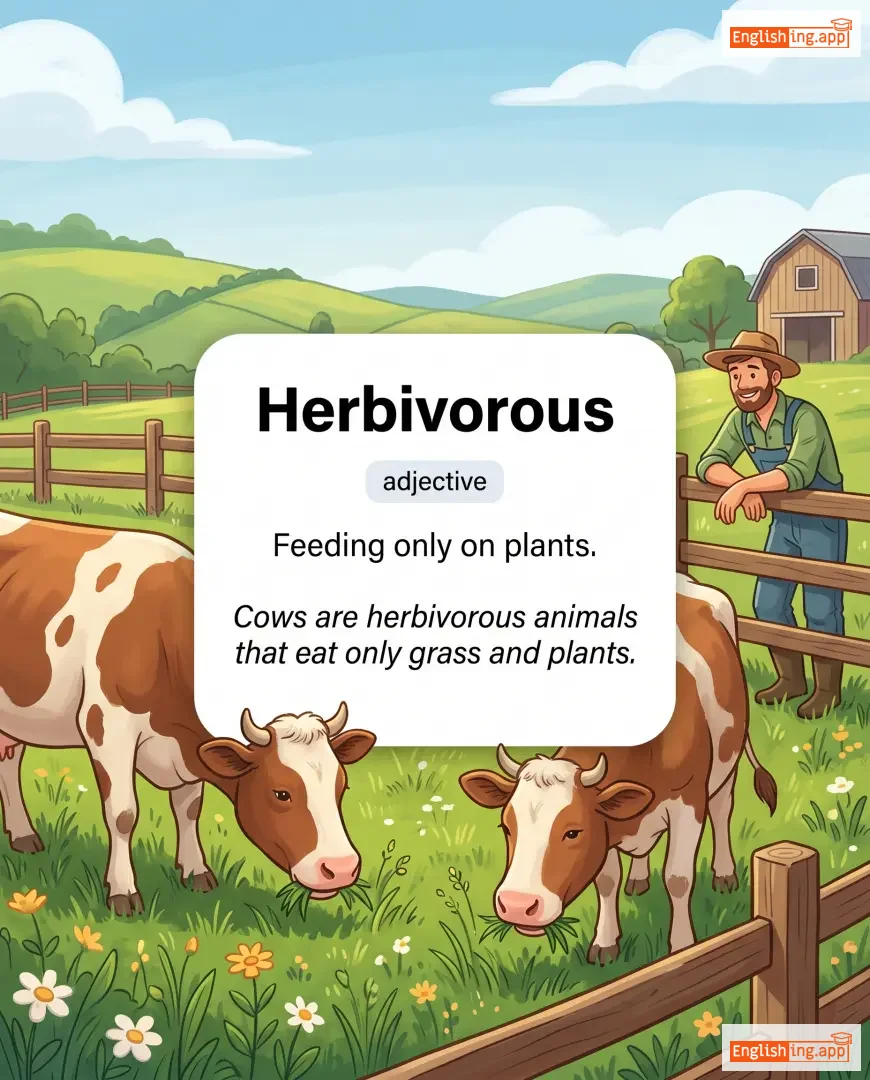
Herbivorous definition card — visual illustration of the meaning
adjective C1
/hɜːrˈbɪvərəs/
食草动物 (shī cǎo dòngwù)

Feeding only on plants.

"Cows are herbivorous animals that eat only grass and plants."

"牛是食草动物,只吃草和植物。" (Niú shì shī cǎo dòngwù, zhǐ chī cǎo hé zhíwù.)
adverb/noun C1
/ˌhɪərˈæftər/
从现在起 / 来世 (cong xianzai qi / laishi)

from now on; in the future; also refers to life after death.

"Hereafter, all reports must be submitted electronically."

"从现在起,所有报告必须通过电子方式提交。" (Cong xianzai qi, suoyou baogao bixu tongguo dianzi fangshi tijiao.)
adjective C1
/həˈrɛdəˌtɛri/
遗传的 (yíchuán de)

passed from parents to their children through genes or by inheritance.

"Diabetes can be a hereditary condition."

"糖尿病可能是一种遗传性疾病。" (Tángniàobìng kěnéng shì yī zhǒng yíchuán xìng jíbìng.)
noun C1
/ˈhɛrəsi/
异端 (yìduān)

belief or opinion that goes against established religious doctrine or accepted beliefs.

"In medieval times, heresy was often punished severely."

"在中世纪,异端常常受到严厉惩罚。" (Zai zhong shi ji, yìduān chángcháng shòudào yánlì chéngfá.)
noun C1
/ˈhɛrətɪk/
异端分子 (yìduān fēnzǐ)

a person who holds beliefs that go against established religious teachings or accepted beliefs.

"The church declared him a heretic for his radical ideas."

"教会因他的激进思想而宣判他为异端分子。" (jiàohuì yīn tā de jījìn sīxiǎng ér xuānpàn tā wéi yìduān fēnzǐ.)
noun C1
/ˈhɜːrmɪt/
隐士 (yinshi)

A person who lives alone and apart from society, often for religious or spiritual reasons.

"The old hermit lived in a cave for decades."

"那位老隐士在一个洞穴里住了几十年。" (na wei lao yinshi zai yige dongxue li zhu le jishi nian.)
noun C1
/ˈhɜːrniə/
疝气 (shanqi)

A medical condition where an organ pushes through the muscle or tissue holding it in place.

"The doctor diagnosed him with an inguinal hernia."
"医生诊断他有腹股沟疝气。" (Yisheng zhenduan ta you fugu gou shanqi.)
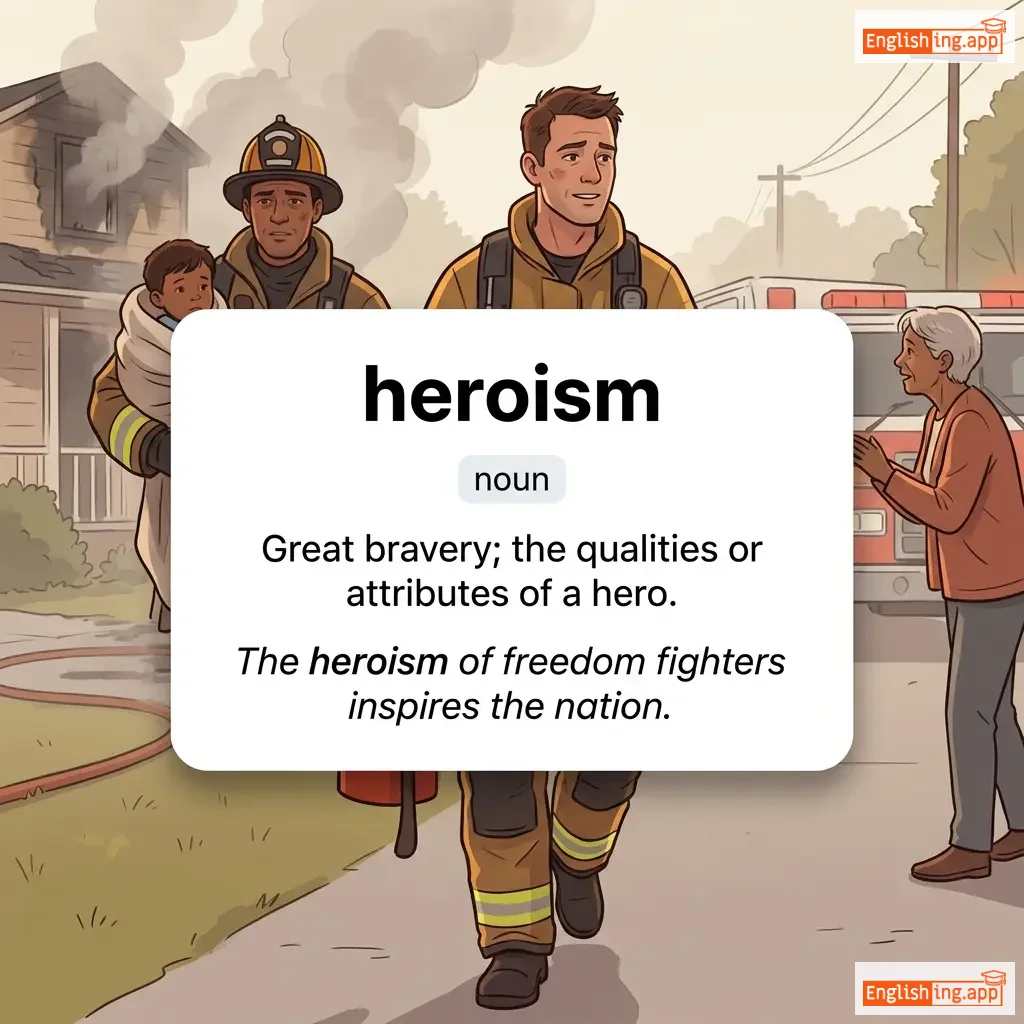
heroism definition card — visual illustration of the meaning
noun C1
ˈhɛroʊˌɪzəm
英雄主义 (yīngxióng zhǔyì)

Great bravery; the qualities or attributes of a hero.

"The heroism of freedom fighters inspires the nation."
"自由斗士的英雄主义激励着国家。" (Zìyóu dòushì de yīngxióng zhǔyì jīlìzhe guójiā.)
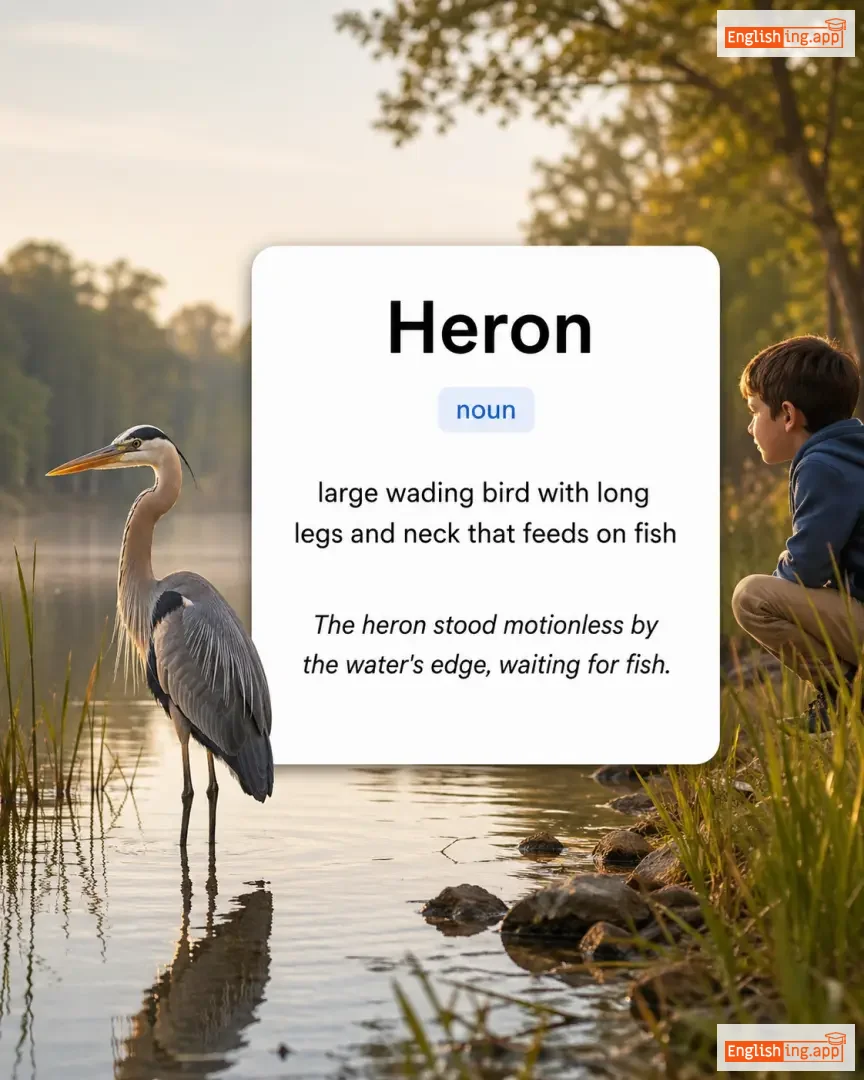
Heron definition card — visual illustration of the meaning
noun C1
/ˈherən/
苍鹭 (cang lu)

large wading bird with long legs and neck that feeds on fish

"The heron stood motionless by the water's edge, waiting for fish."

"苍鹭静静地站在水边,等待着鱼。" (Cang lu jing jing de zhan zai shui bian, deng dai zhe yu.)
noun C1
/ˈhɛzɪtəns/
犹豫 (youyu)

The quality or state of being reluctant or uncertain.

"Her hesitance to speak up delayed the decision."

"她的犹豫延迟了决定。" (Ta de youyu yanchi le jueding.)
noun C1
/ˈhɛzɪtənsi/
犹豫 (yóuyù)

The tendency to pause or delay due to uncertainty or fear.

"His hesitancy in answering made everyone doubt his confidence."

"他在回答时的犹豫让每个人都怀疑他的自信。" (Tā zài huídá shí de yóuyù ràng měi gè rén dōu huáiyí tā de zìxìn.)
adjective C1
/ˌhɛtərəˈʤiːniəs/
异质的 (yì zhì de)

consisting of different kinds or diverse elements

"The classroom was filled with a heterogeneous group of students."

"教室里充满了一个异质的学生群体。" (Jiàoshì lǐ chōngmǎn le yīgè yì zhì de xuéshēng qúntǐ.)
noun C1
/ˈhɛksəˌɡɒn/
六边形 (liùbiānxíng)

A six-sided polygon.

"A honeycomb cell is shaped like a hexagon."

"蜂巢的单元是六边形的。" (fēngcháo de dānyuán shì liùbiānxíng de.)
noun C1
/ˈheɪˌdeɪ/
黄金时期 (huángjīn shíqī)

The period of greatest success, popularity, or power.

"In its heyday, the company dominated the market."

"在黄金时期,公司主导了市场。" (Zai huangjin shiqi, gongsi zhudao le shichang.)
noun C1
/haɪˈeɪtəs/
间歇 (jianxie)

A pause or break in continuity of a process or activity.

"The show returned after a long hiatus."

"节目在长时间的间歇后重新开始。" (Jiémù zài cháng shíjiān de jiànxiē hòu chóngxīn kāishǐ.)
verb C1
/ˈhaɪbərˌneɪt/
冬眠 (dongmian)

To spend the winter in a dormant state, as some animals do.

"Bears hibernate in caves during the winter."

"熊在冬天在洞穴中冬眠。" (Xiong zai dongtian zai dongxue zhong dongmian.)
noun C1
/ˈhaɪdəweɪ/
藏身处 (cángshēnchù)

A place used as a retreat or a place to hide.

"The cabin in the woods was their secret hideaway."

"树林中的小屋是他们的秘密藏身之地。" (Shùlín zhōng de xiǎowū shì tāmen de mìmì cángshēn zhī dì.)
adjective C1
/ˈhɪd.i.əs/
可怕的 (kěpà de)

extremely ugly or unpleasant

"The crime was so hideous that it shocked the whole town."

"罪行如此可怕,以至于震惊了整个城市。" (Zuìxíng rúcǐ kěpà, yǐzhì yú zhènjīng le zhěnggè chéngshì.)
adjective C1
/ˌhaɪəˈrɑː.kɪ.kəl/
等级的 (děngjí de)

arranged in order of rank or authority

"The company has a strict hierarchical structure."
"该公司有一个严格的等级结构。" (Gāi gōngsī yǒu yīgè yángé de děngjí jiégòu.)
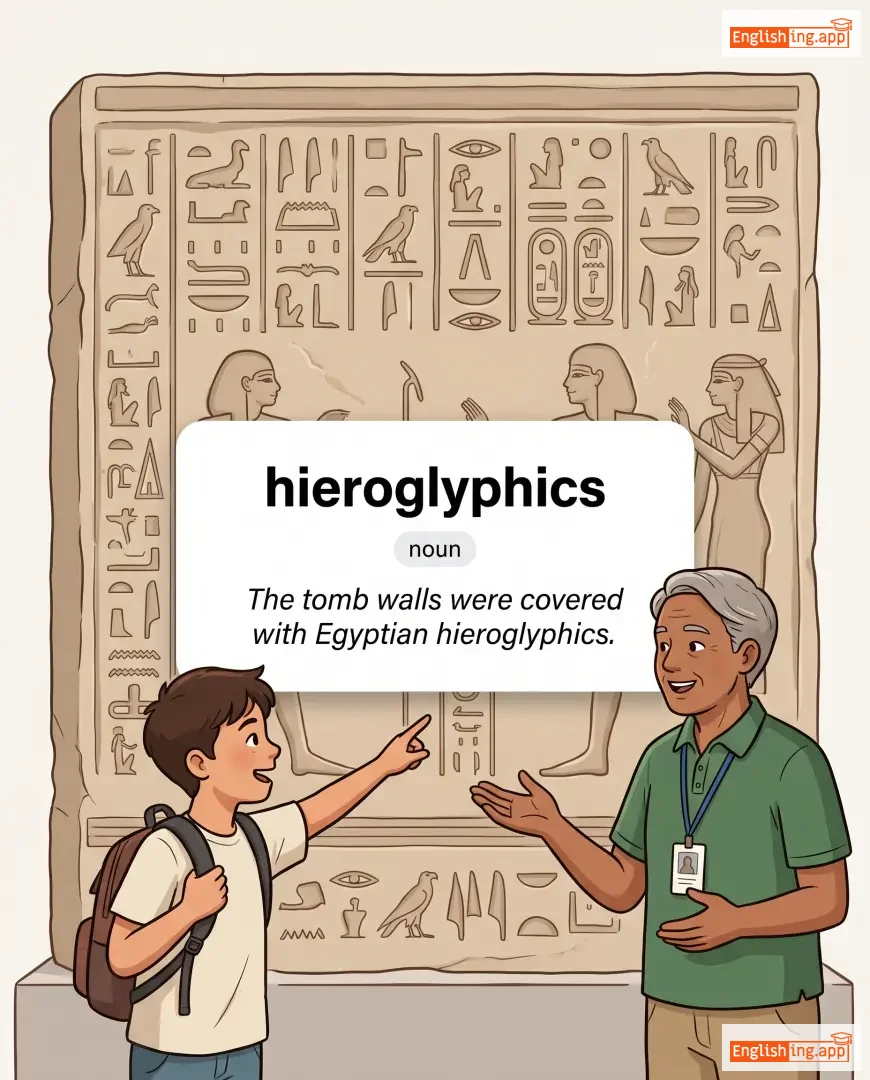
hieroglyphics definition card — visual illustration of the meaning
noun C1
/ˌhaɪ.roʊˈɡlɪf.ɪks/
象形文字 (xiangxing wenzi)

a system of writing using pictures or symbols, used especially by ancient Egyptians

"The tomb walls were covered with Egyptian hieroglyphics."

"坟墓的墙壁上刻有埃及的象形文字。" (Fenmu de qiangbi shang ke you aigedi de xiangxing wenzi.)
noun C1
/ˈhaɪ.nəs/
陛下; 王室头衔 (bì xià, wáng shì tóu xián)

a title given to a person of royal rank; the quality or state of being high or elevated

"Your Highness, the royal carriage is ready to take you to the state banquet this evening."

"陛下,皇家马车已准备好将您带到今晚的国宴。" (Bì xià, huángjiā mǎchē yǐ zhǔnbèi hǎo jiāng nín dàodào jīnwǎn de guó yàn.)
hijack definition card — visual illustration of the meaning
verb C1
/ˈhaɪdʒæk/
劫机 (jie ji)

to take control of a vehicle or situation illegally or by force

"The criminals attempted to hijack the airplane."
"罪犯试图劫持飞机。" (Zuìfàn shìtú jié chì fēijī.)
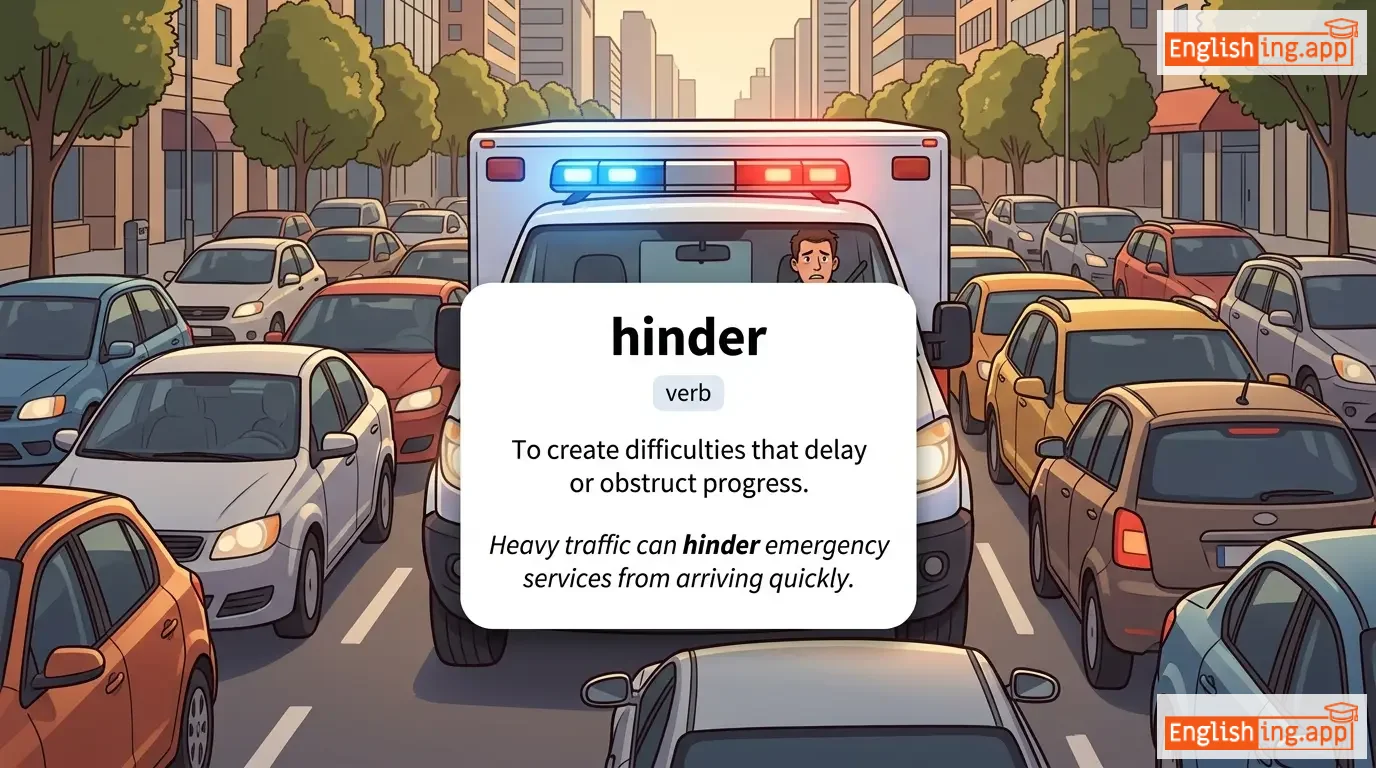
hinder definition card — visual illustration of the meaning
verb C1
/ˈhɪndər/
妨碍 (fang'ai)

To create difficulties that delay or obstruct progress.

"Heavy traffic can hinder emergency services from arriving quickly."
"交通拥堵可能会妨碍紧急服务迅速到达。" (Jiaotong yongdu ke neng hui fang'ai jiji fuwu xunxu daoda.)
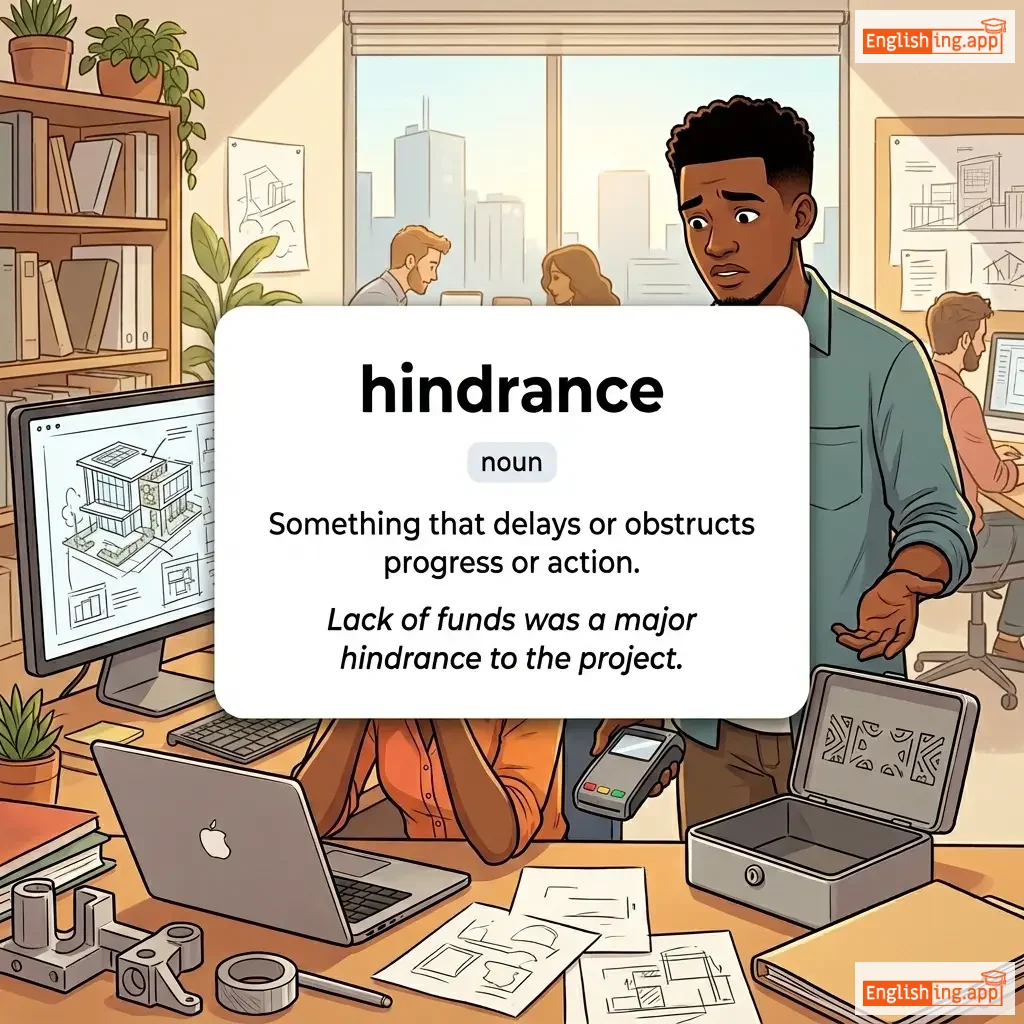
hindrance definition card — visual illustration of the meaning
noun C1
/ˈhɪndrəns/

Something that delays or obstructs progress or action.

"Lack of funds was a major hindrance to the project."

noun C1
/ˈhaɪndsaɪt/
事后诸葛亮 (shì hòu zhū gě liàng)

Understanding of a situation only after it has happened.

"With the benefit of hindsight, we realized the decision was a mistake."

"在事后我们意识到这个决定是个错误。" (zài shìhòu wǒmen yìshí dào zhège juédìng shì ge cuòwù.)
noun C1
/ˈhɪntərlænd/
内陆地区 (neilu diqu)

The remote or less developed areas away from the coast or a city.

"The farmers came from the rural hinterland to sell their produce in the city."

"农民们从乡村的内陆地区来到城市销售他们的产品。" (Nongmin men cong xiangcun de neilu diqu lai dao chengshi xiaoshou tamen de chanpin.)
noun (plural) C1
/ˈhɪntərlændz/
偏远地区 (pianyuan diqu)

Plural of hinterland; remote or less developed regions.

"Explorers traveled deep into the hinterlands of the country."

"探险者深入到该国的偏远地区。" (Tanxianzhe shenru dao gai guo de pianyuan diqu.)
verb C1
/hɔːrd/
囤积 (túnjī)

to accumulate and hide away a large supply of something, often secretly

"During the crisis, many people began to hoard food and water."

"在危机期间,许多人开始囤积食物和水。" (Zài wēijī qījiān, xǔduō rén kāishǐ túnjī shíwù hé shuǐ.)
adjective C1
/hɔːrs/
嘶哑 (sīyǎ)

having a rough, harsh, or weak voice, often due to illness or shouting

"After shouting all day at the rally, his voice was hoarse."

"在集会中大声喊叫了一整天后,他的嗓子变得沙哑。" (Zài jíhuì zhōng dàshēng hǎnjiào le yī zhěng tiān hòu, tā de sǎngzi biàn de sīyǎ.)
noun C1
/hoʊks/
骗局,欺诈 (piànjú, qīzhà)

a trick or false story meant to deceive people

"The news about aliens landing turned out to be a hoax."

"关于外星人降落的新闻被证明是一个骗局。" (Guānyú wàixīngrén jiàngluò de xīnwén bèi zhèngmíng shì yí gè piànjú.)
noun C1
/ˈhɒl.ə.kɔːst/
大屠杀 (dà túshā)

A large-scale destruction, especially by fire; historically, the genocide of Jews during World War II.

"Millions of people perished during the Holocaust."
"在大屠杀期间,数百万人死亡。" (Zài dà túshā qījiān, shù bǎi wàn rén sǐwáng.)
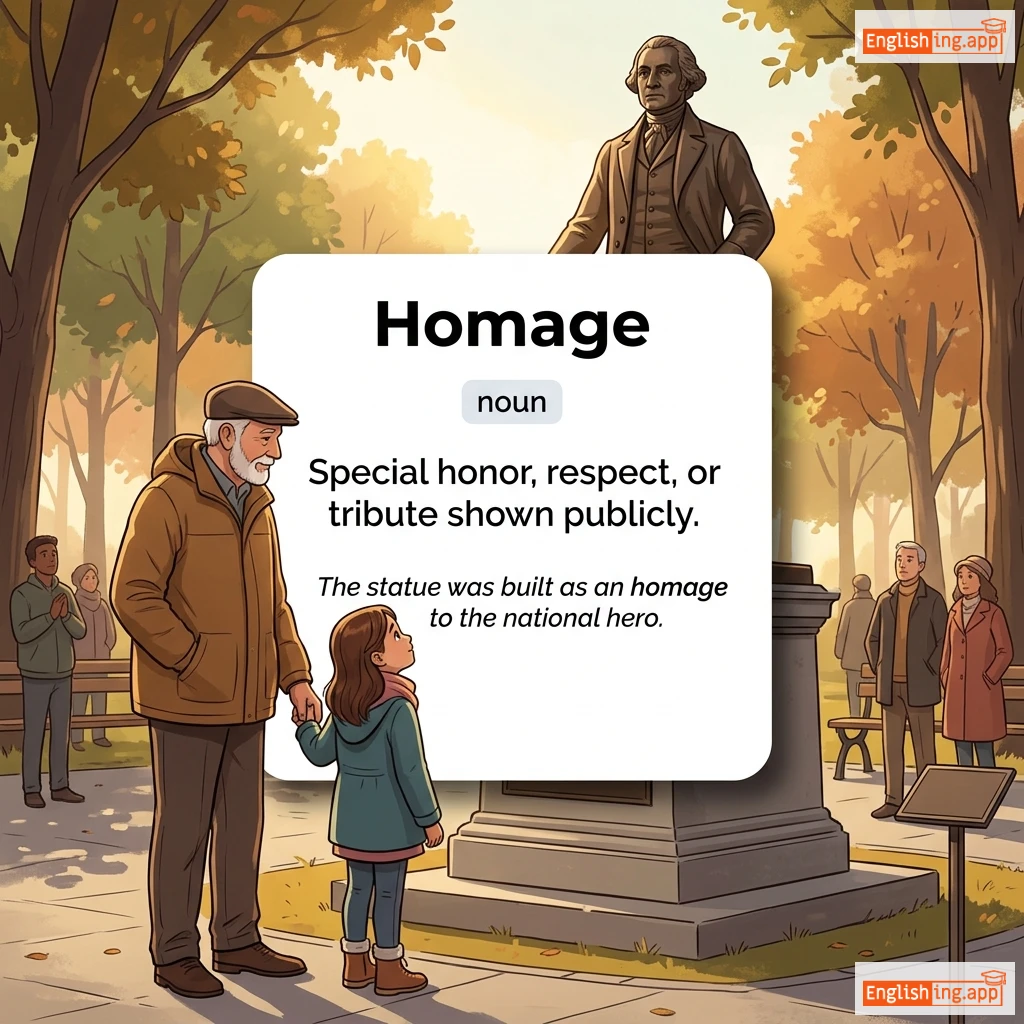
Homage definition card — visual illustration of the meaning
noun C1
/ˈhɒm.ɪdʒ/ or /ˈɑː.mɑːʒ/
致敬 (zhìjìng)

Special honor, respect, or tribute shown publicly.

"The statue was built as an homage to the national hero."

"这座雕像是作为对民族英雄的致敬而建造的。" (Zhe zuo diaoxiang shi zuo wei dui minzu yingxiong de zhijing er jianzao de.)
noun C1
/ˌhoʊmiˈɑːpəθi/
顺势疗法 (shunshi liaofa)

a system of alternative medicine based on treating diseases with highly diluted substances

"He believes in homeopathy for treating common colds."
"他相信顺势疗法来治疗常见感冒。" (Tā xiāngxìn shùnshì liáofǎ lái zhìliáo chángjiàn gǎnmào.)
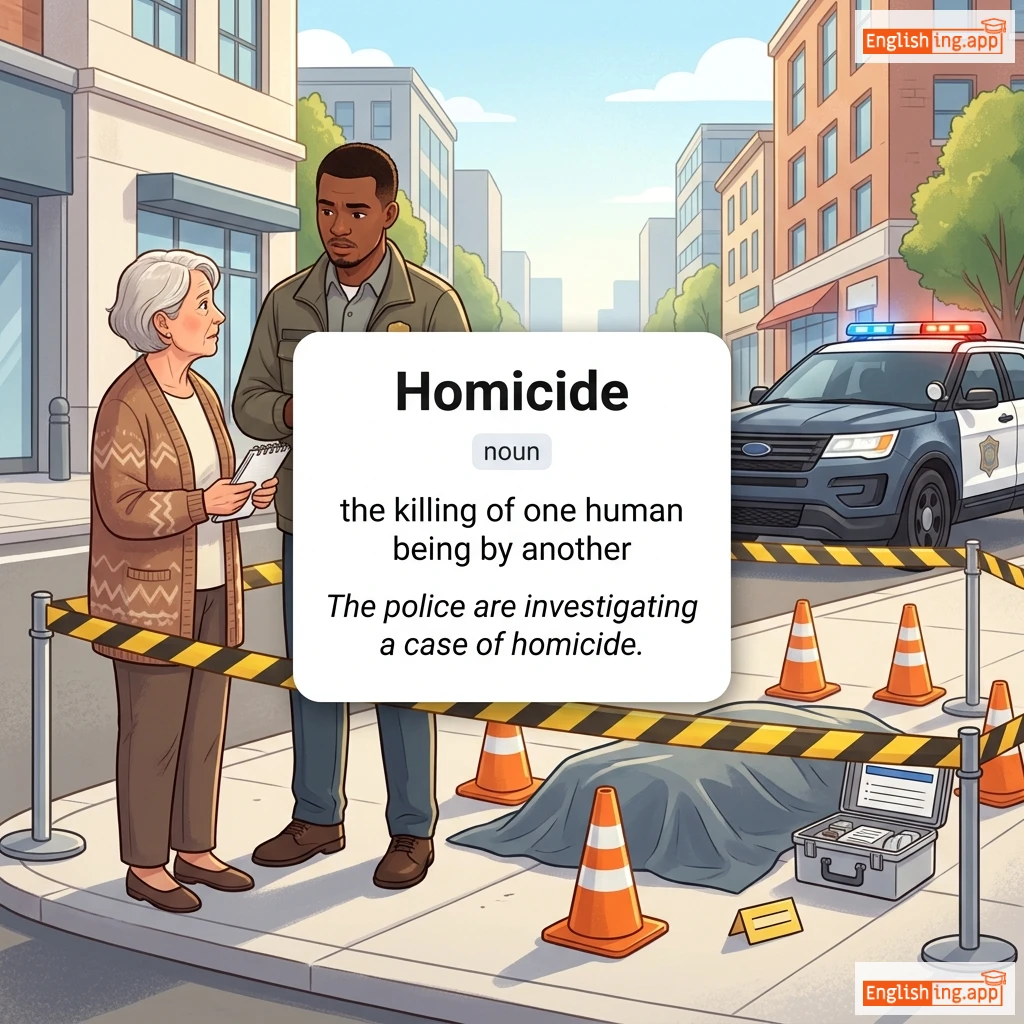
Homicide definition card — visual illustration of the meaning
noun C1
/ˈhɑːmɪsaɪd/
谋杀 (móushā)

the killing of one human being by another

"The police are investigating a case of homicide."
"警方正在调查一起谋杀案件。" (jǐngfāng zhèngzài diàochá yīqǐ móushā ànjiàn.)
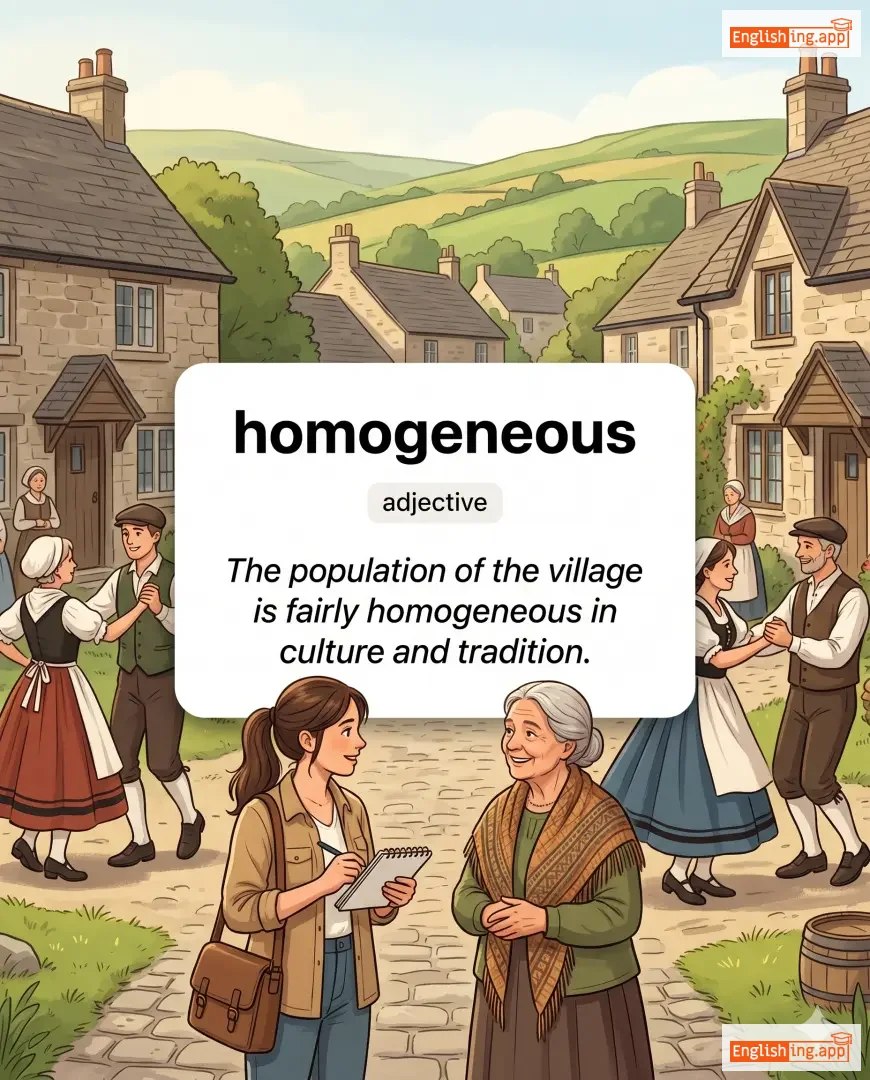
homogeneous definition card — visual illustration of the meaning
adjective C1
/ˌhoʊ.məˈdʒiː.ni.əs/
同质 (tóngzhì)

Consisting of parts or elements that are all the same kind; uniform in composition.

"The population of the village is fairly homogeneous in culture and tradition."

"该村的人口在文化和传统上非常同质化。" (Gāi cūn de rénkǒu zài wénhuà hé chuántǒng shàng fēicháng tóngzhìhuà.)
adjective C1
/həˈmɑː.dʒə.nəs/
同质的 (tong zhi de)

Similar or uniform in nature; often used interchangeably with 'homogeneous'.

"The class was made up of a homogenous group of students."

"这个班级由一个同质的学生组组成。" (Zhe ge banji you yi ge tongzhi de xuesheng zu zucheng.)
noun C1
/ˈhɑː.mə.nɪm/
同音异义词 (tongyin yiyi ci)

A word that is spelled and pronounced like another word but has a different meaning.

"The word 'bat' is a homonym because it can mean an animal or a sports tool."

"'蝙蝠'这个词是一个同音异义词,因为它可以指代动物或运动器材。" ('Bianfu' zhe ge ci shi yi ge tongyin yiyi ci, yinwei ta keyi zhidao dongwu huo yun dong qicai.)
noun C1
/ˈhɒməˌfoʊn/
同音异义词 (tóng yīn yì yì cí)

A word that is pronounced the same as another word but differs in meaning, and often spelling.

"The words 'pair' and 'pear' are homophones."

"单词 'pair' 和 'pear' 是同音异义词。" (Dāncí 'pair' hé 'pear' shì tóng yīn yì yì cí.)
verb C1
/hoʊn/
磨锐,改善技能 (mó ruì, gǎi shàn jì néng)

To sharpen a blade or to improve a skill through practice.

"She honed her presentation skills before the big meeting."
"她在大会议之前磨练了自己的演讲技巧。" (tā zài dà huì yì zhī qián mó liàn le zì jǐ de yǎn jiǎng jì néng.)
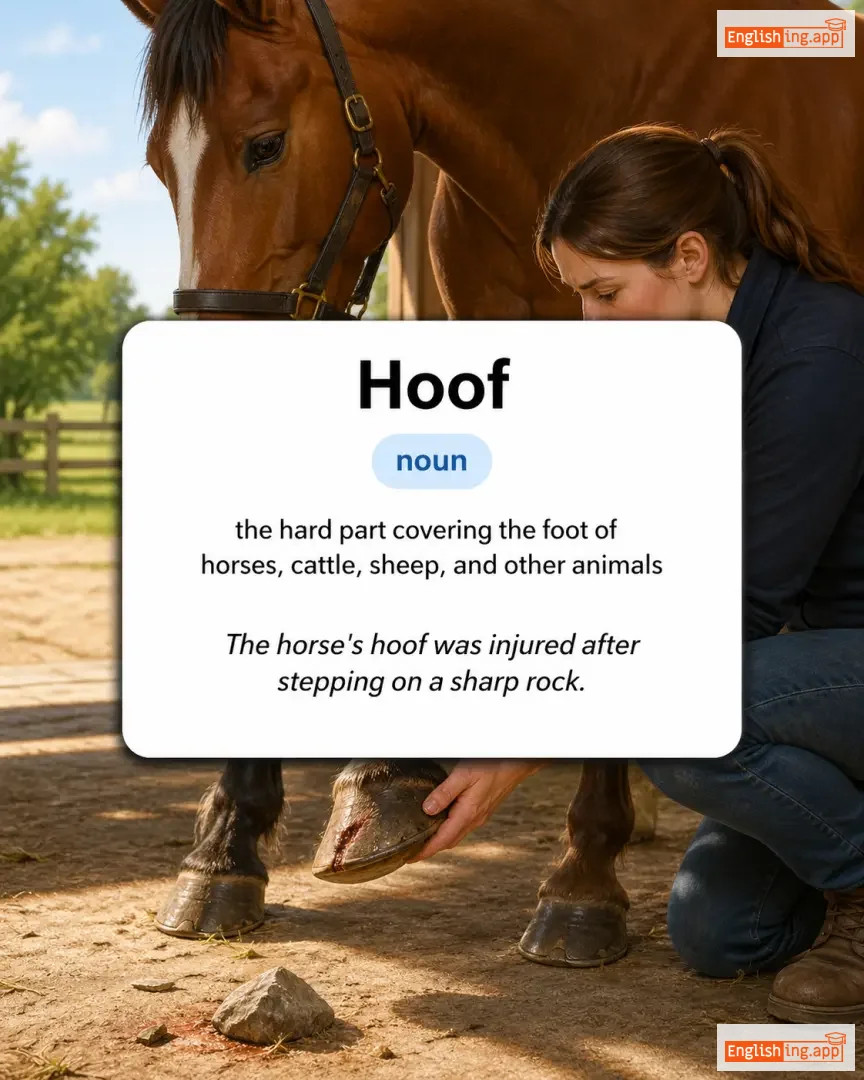
Hoof definition card — visual illustration of the meaning
noun C1
/huːf/
(ti)

the hard part covering the foot of horses, cattle, sheep, and other animals

"The horse's hoof was injured after stepping on a sharp rock."

"马的蹄子在踩到一块锋利的石头后受伤了。" (Mǎ de tízi zài cǎi dào yī kuài fēnglì de shítou hòu shòushāng le.)
noun C1
/hɔːrd/
一群人 (yi qun ren)

A large group or crowd, especially one that is disorderly or difficult to control.

"A horde of fans gathered outside the stadium."
"一群粉丝聚集在体育场外。" (Yi qun fensi juzhi zai tiyuchang wai.)
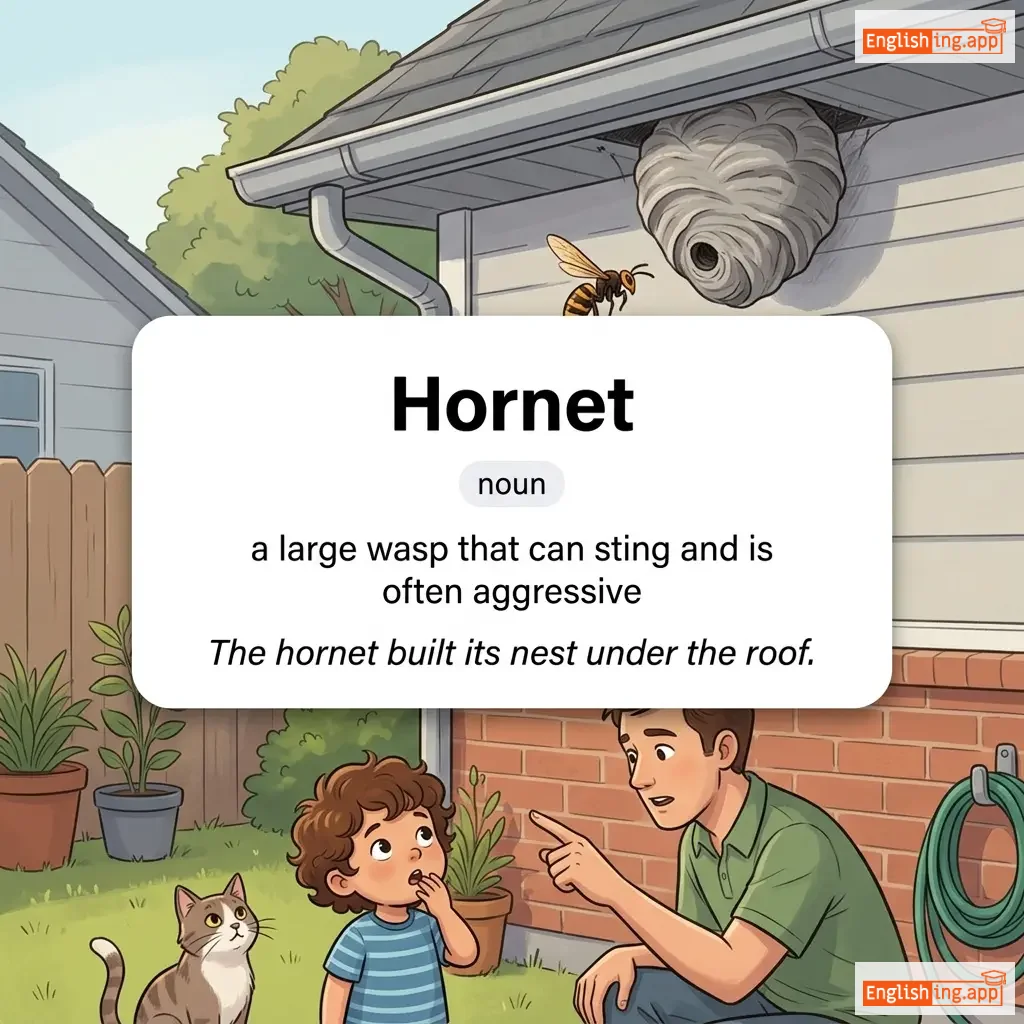
Hornet definition card — visual illustration of the meaning
noun C1
/ˈhɔːr.nət/
黄蜂 (huángfēng)

a large wasp that can sting and is often aggressive

"The hornet built its nest under the roof."

"黄蜂在屋顶下筑巢。" (Huángfēng zài wūdǐng xià zhùcháo.)
noun C1
/ˈhɒrəˌskoʊp/
星座运势 (xingzuo yunshi)

A forecast of a person's future based on the positions of the stars and planets at their birth.

"She read her horoscope every morning to see what the stars predicted."

"她每天早上读星座运势,看星星预测了什么。" (Ta meitian zaoshang du xingzuo yunshi, kan xingxing yuce le shenme.)
horrify definition card — visual illustration of the meaning
verb C1
/ˈhɔːrɪfaɪ/
使恐惧 (shi kong ju)

to fill with horror; to shock or disgust greatly

"The violent scene horrified the audience."

"暴力的场面使观众感到恐惧。" (bao li de chang mian shi guan zhong gan dao kong ju)
adjective C1
/ˌhɔːrtɪˈkʌltʃərəl/
园艺相关 (yuányì xiāngguān)

Relating to the art or practice of garden cultivation and management.

"She studied horticultural science at the university."

"她在大学学习了园艺科学。" (Tā zài dàxué xuéxíle yuányì kēxué.)