語彙集

英単語辞書 | 単語の意味、定義、例文

verb C2
/ɜːrk/
苛立たせる (iradataseru)

to annoy or irritate someone

"It irks me when people are late without calling."

"人々が電話をかけずに遅れると、私はイライラします。" (Hitobito ga denwa wo kakezu ni okureru to, watashi wa iraira shimasu.)
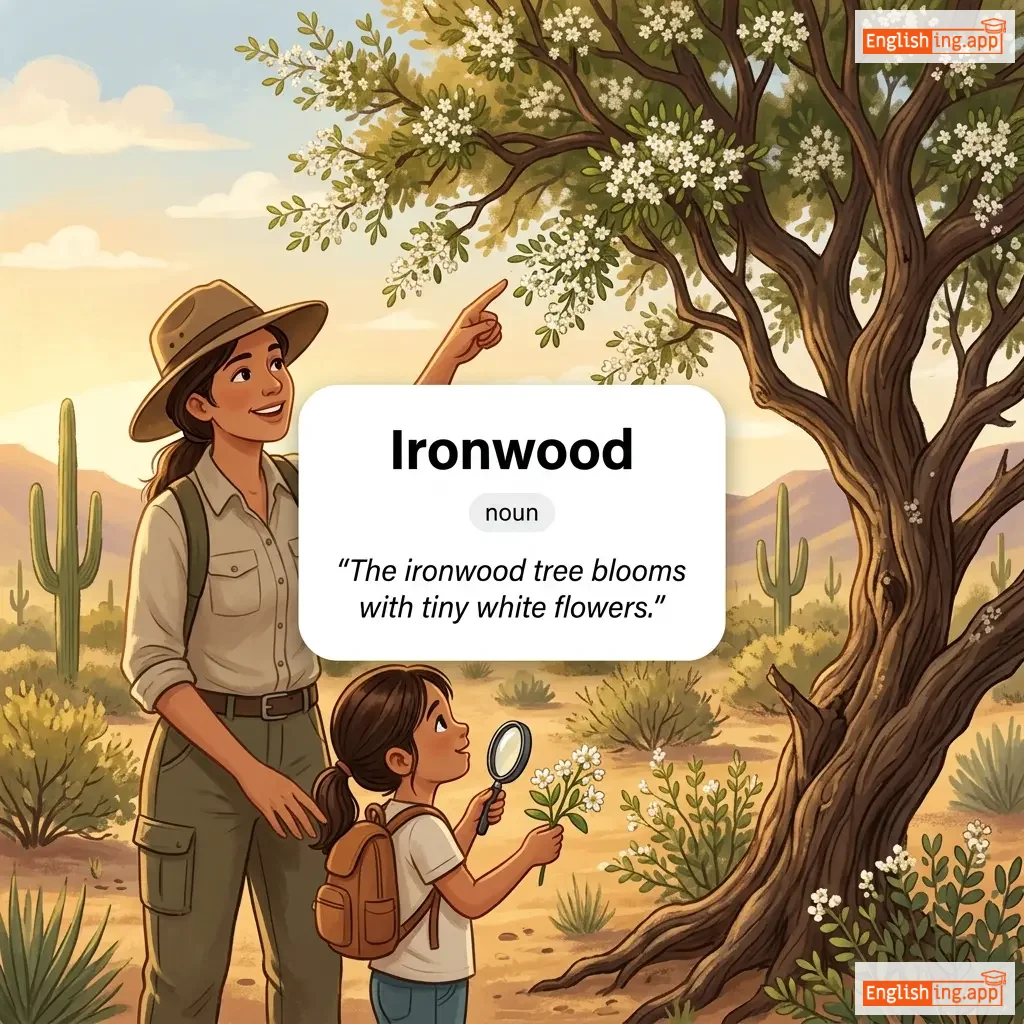
Ironwood definition card — visual illustration of the meaning
noun C2
/ˈaɪ.ərn.wʊd/
アイアンウッド (aianuddo)

a hard, dense wood from various trees; also the tree itself that produces small flowers

"The ironwood tree blooms with tiny white flowers."

"アイアンウッドの木は小さな白い花を咲かせます。" (Aianuddo no ki wa chiisana shiroi hana o sakasemasu.)
noun C2
/ɪˈreɪdiəns/
放射輝度 (iradiansu)

the quality of shining brightly; the intensity of light falling on a surface

"The irradiance of the sun at noon was overwhelming."

"正午の太陽の放射輝度は圧倒的でした。" (Shōgo no taiyō no hōsha kidō wa attō-teki deshita.)
verb C2
/ɪˈreɪdieɪt/
照射する (shōsha suru)

to shine light on something; to expose to radiation; to illuminate or brighten

"The scientist used a lamp to irradiate the sample."

"科学者はランプを使ってサンプルを照射しました。" (Kagakusha wa ranpu o tsukatte sanpuru o shōsha shimashita.)
adjective C2
/ɪˈrædɪkəbəl/
根絶不可能な (konzetsu fukanō na)

not able to be eradicated; impossible to destroy or remove completely

"The love of a mother for her child is irradicable."

"母親の子供への愛は根絶不可能です。" (Hahaoya no kodomo e no ai wa konzetsu fukanō desu.)
adjective C2
/ˌɪrɪˈkɒnsɪləbl/
和解できない (wakai dekinai)

impossible to make compatible or bring into harmony; unable to resolve differences

"The couple separated due to irreconcilable differences."

"そのカップルは和解できない違いのために別れました。" (Sono kappuru wa wakai dekinai chigai no tame ni wakaremashita.)
adjective C2
/ˌɪrɪˈdjuːsəbl/
不可約 (fukayaku)

impossible to reduce or simplify further

"The fraction 3/7 is irreducible."

"分数 3/7 は不可約です。" (Bunsū 3/7 wa fukayaku desu.)
adjective C2
/ɪˈrɛfrəɡəbəl/
反論できない (hanron dekinai)

Impossible to refute, deny, or break

"The lawyer presented irrefragable evidence that proved his client’s innocence."

"弁護士は彼のクライアントの無実を証明する反論できない証拠を提示しました。" (Bengoshi wa kare no kuraianto no mujitsu o shōmei suru hanron dekinai shōko o teiji shimashita.)
adjective C2
/ˌɪrɪˈfrændʒɪbəl/
侵害できない (shingai dekinai)

Not to be broken, violated, or infringed

"The constitution guarantees certain irrefrangible rights to every citizen."

"憲法はすべての市民にいくつかの侵害できない権利を保証します。" (Kenpō wa subete no shimin ni ikutsuka no shingai dekinai kenri o hoshō shimasu.)
adjective C2
/ˌɪrɪˈlɪdʒəs/
無宗教 (musūkyō)

Indifferent or hostile to religion

"Some people in the community consider him irreligious because he never attends religious services."

"コミュニティの中で、彼は宗教的なサービスに一度も参加しないため、無宗教だと考えられています。" (Komyuniti no naka de, kare wa shūkyō-teki na sābisu ni ichido mo sanka shinai tame, musūkyō da to kangaerareteimasu.)
adjective C2
/ˌɪrɪˈmiːdiəbl̩/
修復不可能 (shūfuku fukanō)

Impossible to cure, repair, or remedy.

"The damage to the ancient manuscript was irremediable."

"古代の写本への損傷は修復不可能でした。" (Kodai no shahon e no sonshō wa shūfuku fukanō deshita.)
adjective C2
/ˌɪrɪˈprəʊtʃəbl̩/
非の打ち所がない (hi no uchi tokoro ga nai)

Beyond criticism; faultless.

"The judge was known for his irreproachable integrity."
"その裁判官は非の打ち所がない誠実さで知られていた。" (sono saiban-kan wa hi no uchi tokoro ga nai seijitsu-sa de shirarete ita.)
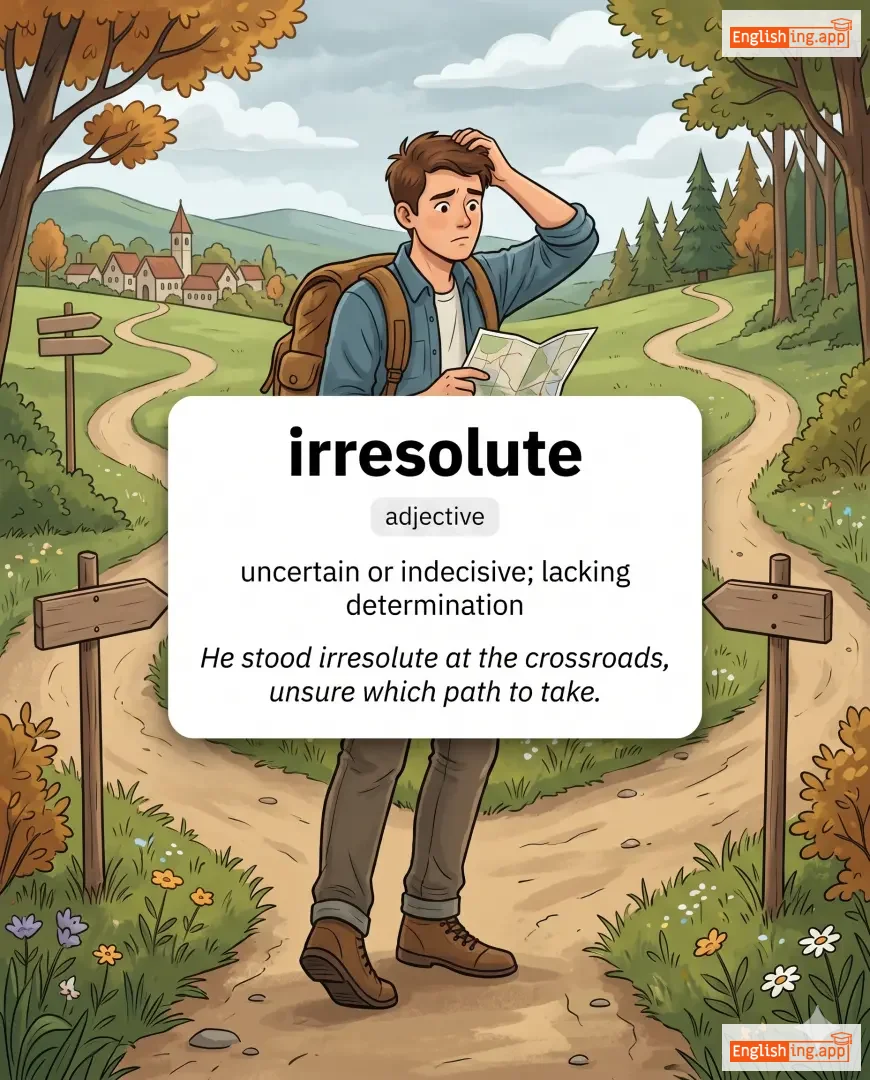
irresolute definition card — visual illustration of the meaning
adjective C2
/ɪˈrɛzəluːt/
優柔不断 (yūyūfudan)

uncertain or indecisive; lacking determination

"He stood irresolute at the crossroads, unsure which path to take."

"彼は交差点で優柔不断に立ち、どの道を取るべきか決められなかった。" (Kare wa kōsaten de yūyūfudan ni tachi, dono michi o torubeki ka kimerarenakatta.)
adjective C2
/ˌɪrɪˈtriːvəbl/
回復不可能 (kaifuku fukanou)

impossible to recover or regain

"The documents were lost in an irretrievable way after the fire."

"火事の後、文書は回復不可能な方法で失われました。" (Kaji no ato, bunsho wa kaifuku fukanou na houhou de ushinaware mashita.)
noun C2
/ɪˈrɛvərəns/
不敬 (fukei)

a lack of respect for people or things that are generally taken seriously

"His jokes about religion showed irreverence to the sacred traditions."

"宗教についての彼の冗談は、神聖な伝統に対する不敬を示していました。" (Shūkyō ni tsuite no kare no jōdan wa, shinsei na dentō ni taisuru fukei o shimeshite imashita.)
adjective C2
/ˌɪrɛvəˈrɛnʃəl/
無礼な (burei na)

Showing a lack of respect for things that are generally taken seriously.

"His irreverential humor often shocked traditional audiences."

"彼の無礼なユーモアはしばしば伝統的な観客を驚かせました。" (Kare no burei na yūmoa wa shibashiba dentō-teki na kankyaku o odorokasemashita.)
noun C2
/ˈɪrɪɡənt/
灌漑液 (kangai eki)

A liquid used for irrigation, especially in medical or agricultural contexts.

"The doctor used a sterile irrigant during the procedure."

"医師は手術中に無菌の灌漑液を使用しました。" (Ishi wa shujutsuchuu ni mukin no kangai eki o shiyou shimashita.)
noun C2
/ˈɪrɪtənsi/
苛立ち (iradachi)

the quality or state of causing irritation; legal or formal invalidation

"The constant noise became an irritancy to the neighbors."
"絶え間ない騒音は隣人にとって苛立ちの原因となりました。" (Taemanai souon wa rinjin ni totte iradachi no gen'in to narimashita.)
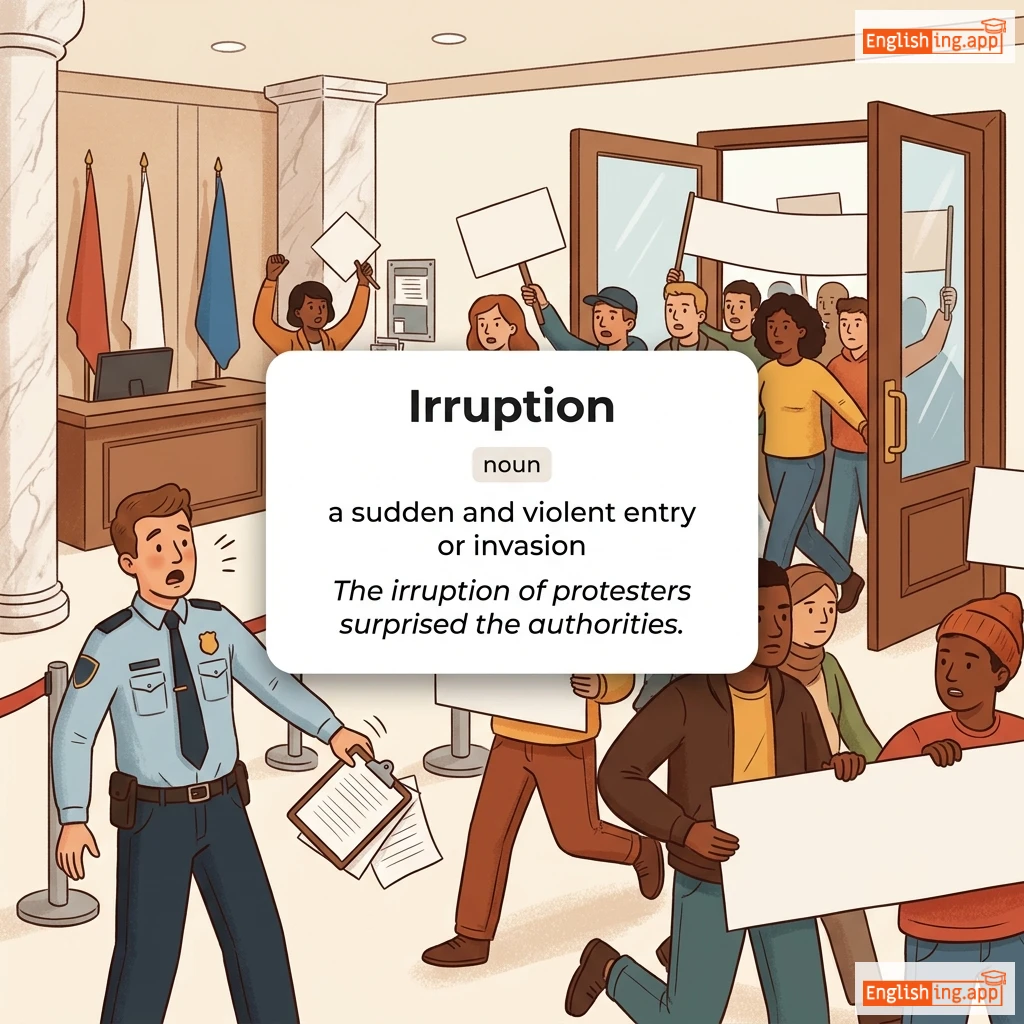
Irruption definition card — visual illustration of the meaning
noun C2
/ɪˈrʌpʃən/
突発的侵入 (toppatsuteki shinnyū)

a sudden and violent entry or invasion

"The irruption of protesters surprised the authorities."

"抗議者たちの突発的侵入は当局を驚かせた。" (Kōgisha-tachi no toppatsuteki shinnyū wa tōkyoku o odorokaseta.)
noun C2
/ˈaɪ.lət/
小島 (kojima)

A very small island.

"The fishermen rested on a tiny islet before continuing their journey."

"漁師たちは旅を続ける前に小さな島で休憩しました。" (Gyoshi-tachi wa tabi o tsudzukeru mae ni chiisana shima de kyūkei shimashita.)
noun C2
/ˈaɪ.səˌbɑːr/
等圧線 (とうあつせん)

A line on a weather map connecting points of equal atmospheric pressure.

"The meteorologist explained how isobars indicate wind speed and direction."

"気象学者は、等圧線が風速と風向きを示す方法を説明しました。" (Kishougakusha wa, tōatsusen ga fūsoku to fūmuki o shimesu hōhō o setsumei shimashita.)
adjective C2
/aɪˈsɒ.krə.nəs/
等時間間隔で発生する (dō jikan kankaku de hassei suru)

Occurring at equal time intervals; in unison or synchrony.

"The pendulum swings are isochronous, repeating at equal intervals."

"振り子の動きは等時性があり、等しい間隔で繰り返されます。" (Furiko no ugoki wa tōjisei ga ari, hitoshī kankaku de kurikaesarimasu.)
adjective C2
/ˌaɪsəʊˈθɜːrməl/
等温 (touon)

Having or maintaining equal or constant temperature.

"The experiment was conducted under isothermal conditions."

"実験は等温条件で行われました。" (Jikken wa touon jouken de okonawaremashita.)
noun C2
/ˈɪsməs/ or /ˈɪsθməs/
地峡 (chikyō)

A narrow strip of land connecting two larger land areas, often with water on either side.

"The Panama Canal cuts through the Isthmus of Panama."
"パナマ運河はパナマの地峡を通ります。" (Panama unka wa Panama no chikyō o tōrimasu.)
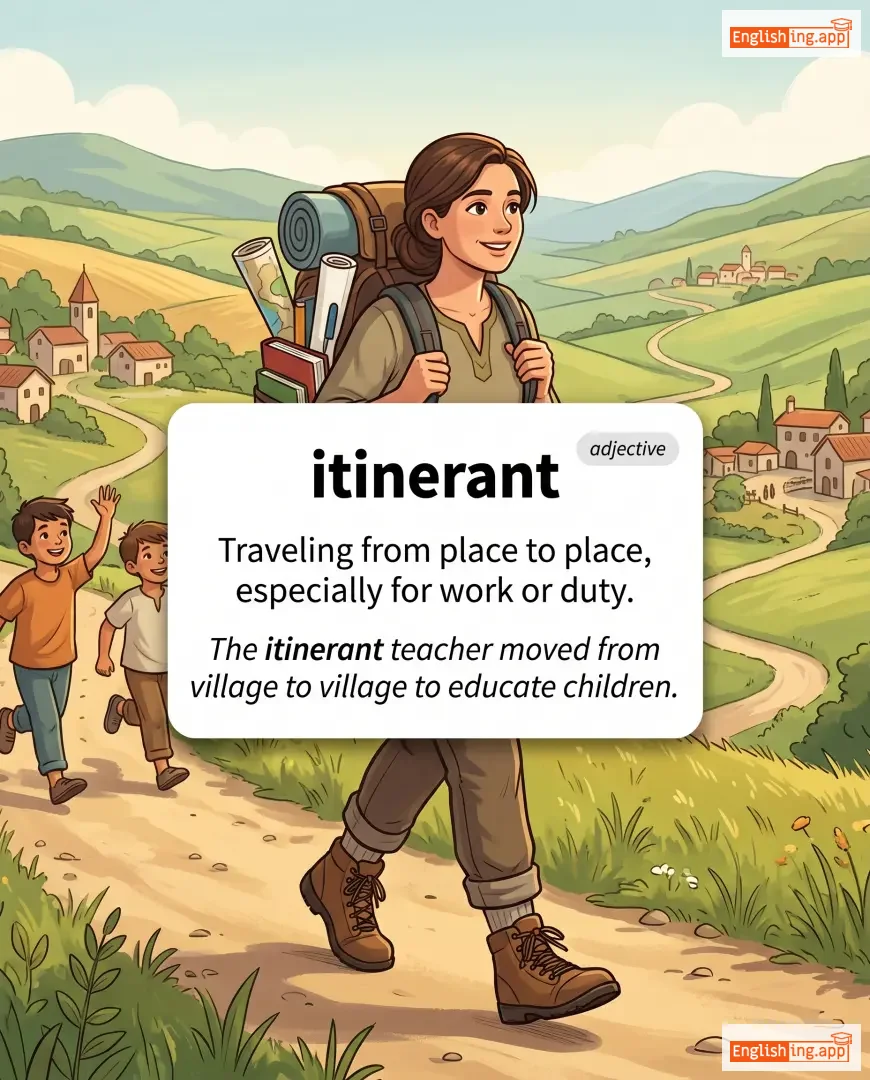
itinerant definition card — visual illustration of the meaning
adjective C2
/aɪˈtɪnərənt/
旅する (tabisuru)

Traveling from place to place, especially for work or duty.

"The itinerant teacher moved from village to village to educate children."

"その旅する教師は村から村へと移動して子供たちに教育をしていました。" (Sono tabisuru kyōshi wa mura kara mura e to idō shite kodomotachi ni kyōiku o shite imashita.)
verb C2
/aɪˈtɪnəˌreɪt/
旅行する (ryokou suru)

To travel from place to place, usually for the purpose of work or preaching.

"The missionary itinerated throughout the region to spread the message."
"伝道師は地域を巡り、メッセージを広めました。" (Dendoushi wa chiiki o meguri, messeeji o hiromemashita.)
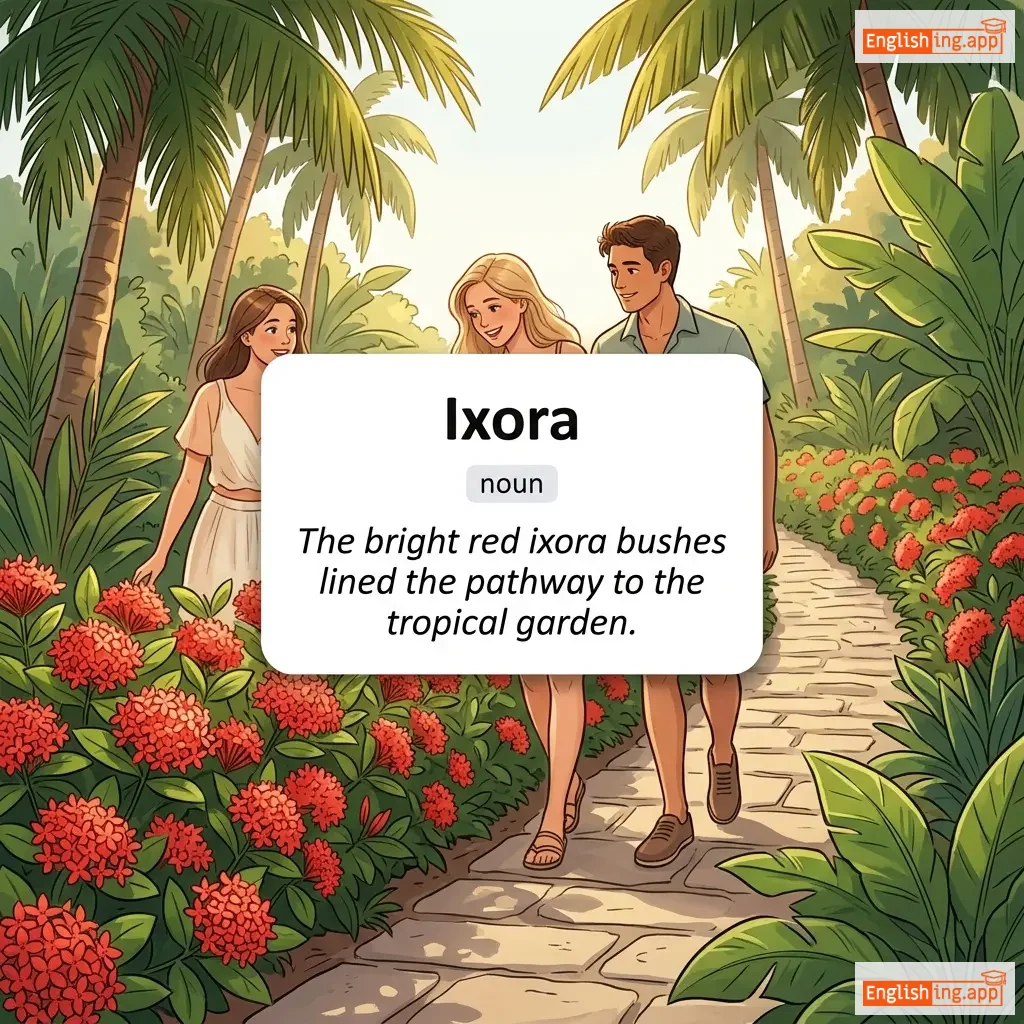
Ixora definition card — visual illustration of the meaning
noun C2
/ɪkˈsɔːr.ə/
イクソラ (ikusora)

a tropical flowering shrub with clusters of small bright red, orange, or yellow flowers

"The bright red ixora bushes lined the pathway to the tropical garden."

"明るい赤いイクソラの低木が熱帯庭園への小道を囲んでいました。" (Akarui akai ikusora no teimoku ga nettai teien e no komichi wo kakondeimashita.)
verb C2
/ˈdʒæbər/
おしゃべりする (oshaberi suru)

To talk quickly and excitedly but with little sense.

"The children jabbered happily after the show."
"子供たちはショーの後に楽しそうにおしゃべりしました。" (Kodomotachi wa shō no ato ni tanoshisō ni oshaberi shimashita.)
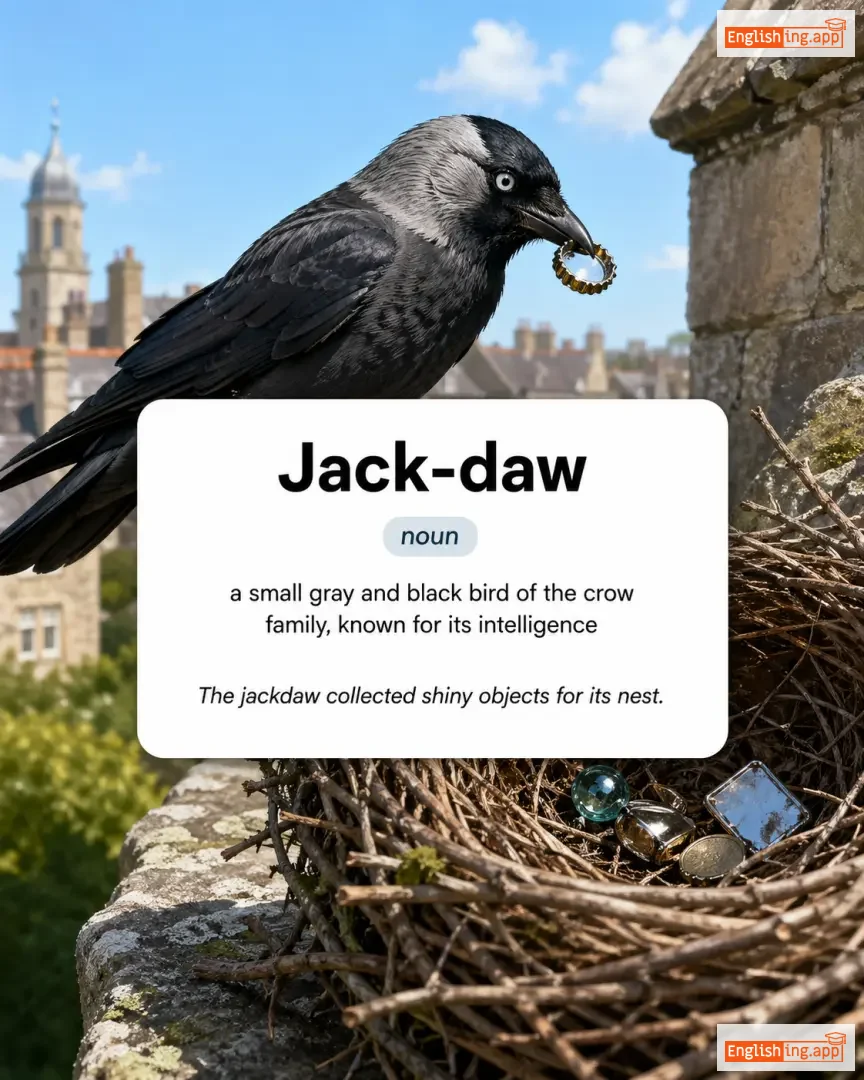
Jack-daw definition card — visual illustration of the meaning
noun C2
/ˈdʒæk.dɔː/
小さなカラス (chiisana karasu)

a small gray and black bird of the crow family, known for its intelligence

"The jackdaw collected shiny objects for its nest."
"ジャックドーはその巣のために輝く物を集めました。" (Jack-dou wa sono su no tame ni kagayaku mono wo atsumemashita.)
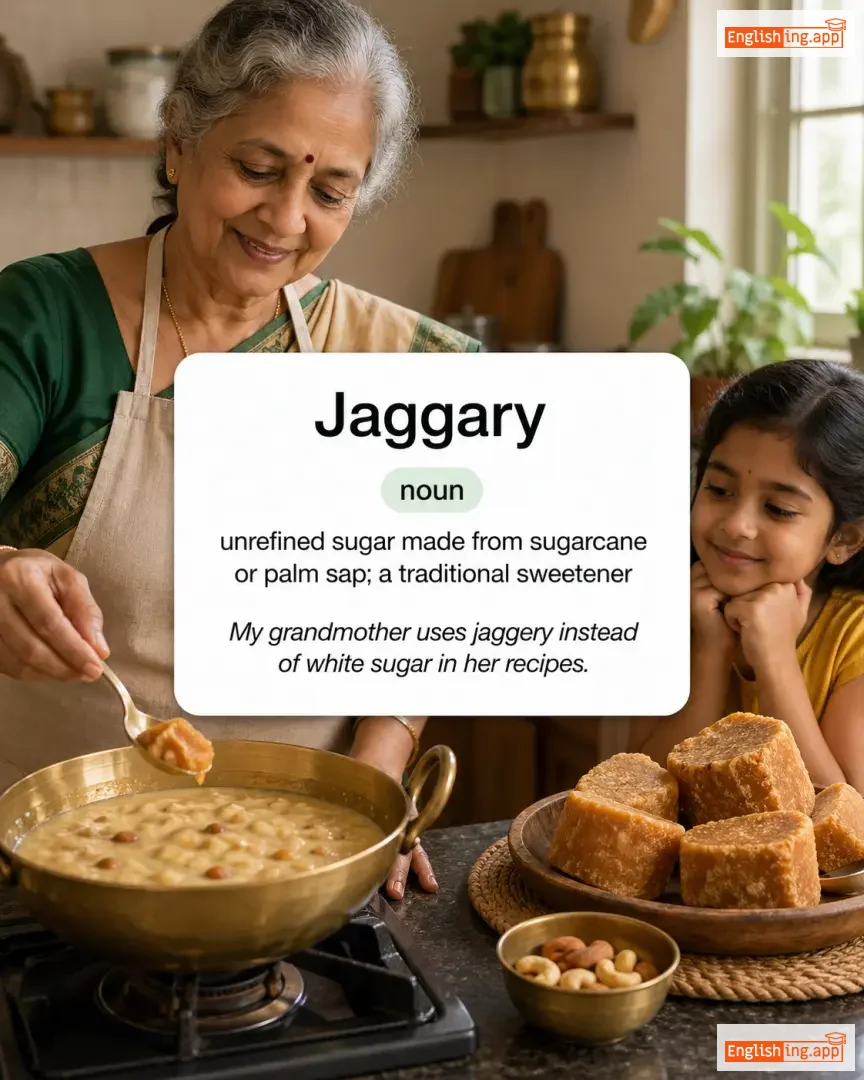
Jaggary definition card — visual illustration of the meaning
noun C2
/ˈdʒæɡ.ər.i/
ジャガリー (jagari)

unrefined sugar made from sugarcane or palm sap; a traditional sweetener

"My grandmother uses jaggery instead of white sugar in her recipes."

"私の祖母はレシピで白い砂糖の代わりにジャガリーを使います。" (watashi no sobo wa reshipi de shiroi satō no kawari ni jagari o tsukaimasu)
noun C2
/dʒæm/
ドア枠 (doawaku)

The side post or surface of a doorway, window, or fireplace.

"The carpenter carefully measured the width of the door jamb."

"大工はドア枠の幅を慎重に測定した。" (Daiku wa doa-waku no haba o shinchō ni sokutei shita.)
noun C2
/dʒeɪp/
冗談, いたずら (jōdan, itazura)

A practical joke or humorous remark.

"He enjoyed a harmless jape with his friends."
"彼は友達と無害な冗談を楽しんだ。" (Kare wa tomodachi to mugai na jōdan o tanoshinda.)
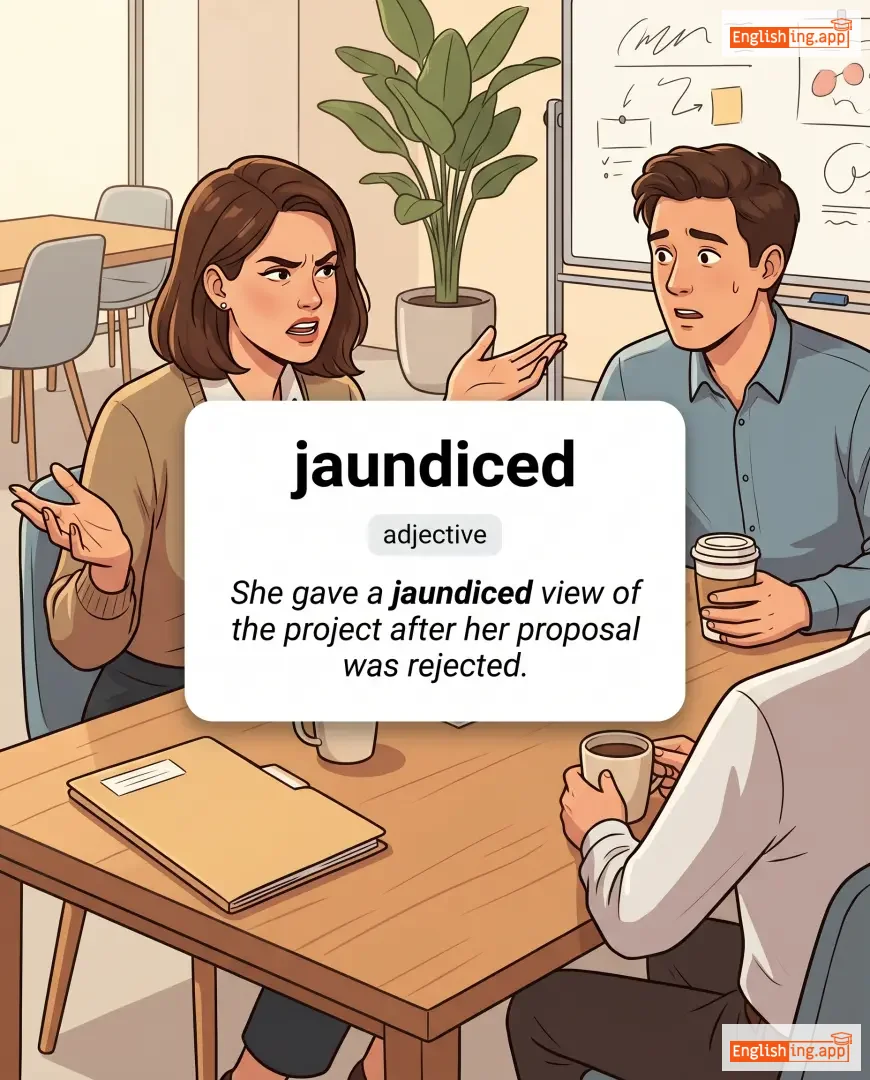
jaundiced definition card — visual illustration of the meaning
adjective C2
/ˈdʒɔːndɪst/
偏見のある / 嫉妬深い / 黄疸による (henken no aru / shitto-bukai / ōdan ni yoru)

Affected by or displaying prejudice, envy, or bitterness; also refers to having a yellowish discoloration of the skin due to jaundice.

"She gave a jaundiced view of the project after her proposal was rejected."

"彼女は提案が却下された後、プロジェクトに偏見を持った見方を示した。" (Kanojo wa teian ga kyakka sareta ato, purojekuto ni henken o motta mikata o shimeshita.)
noun C2
/dʒɔːnt/
短い旅行 (mijikai ryokou)

A short journey or excursion, usually taken for pleasure.

"They went on a weekend jaunt to the countryside."

"彼らは週末に田舎へ短い旅行に行きました。" (Karera wa shūmatsu ni inaka e mijikai ryokou ni ikimashita.)
adjective C2
/ˈdʒɔːnti/
陽気な (yōkina)

Having a lively, cheerful, and self-confident manner or appearance.

"He walked into the room with a jaunty step."
"彼は陽気な足取りで部屋に入った。" (kare wa yōkina ashidori de heya ni haitta.)
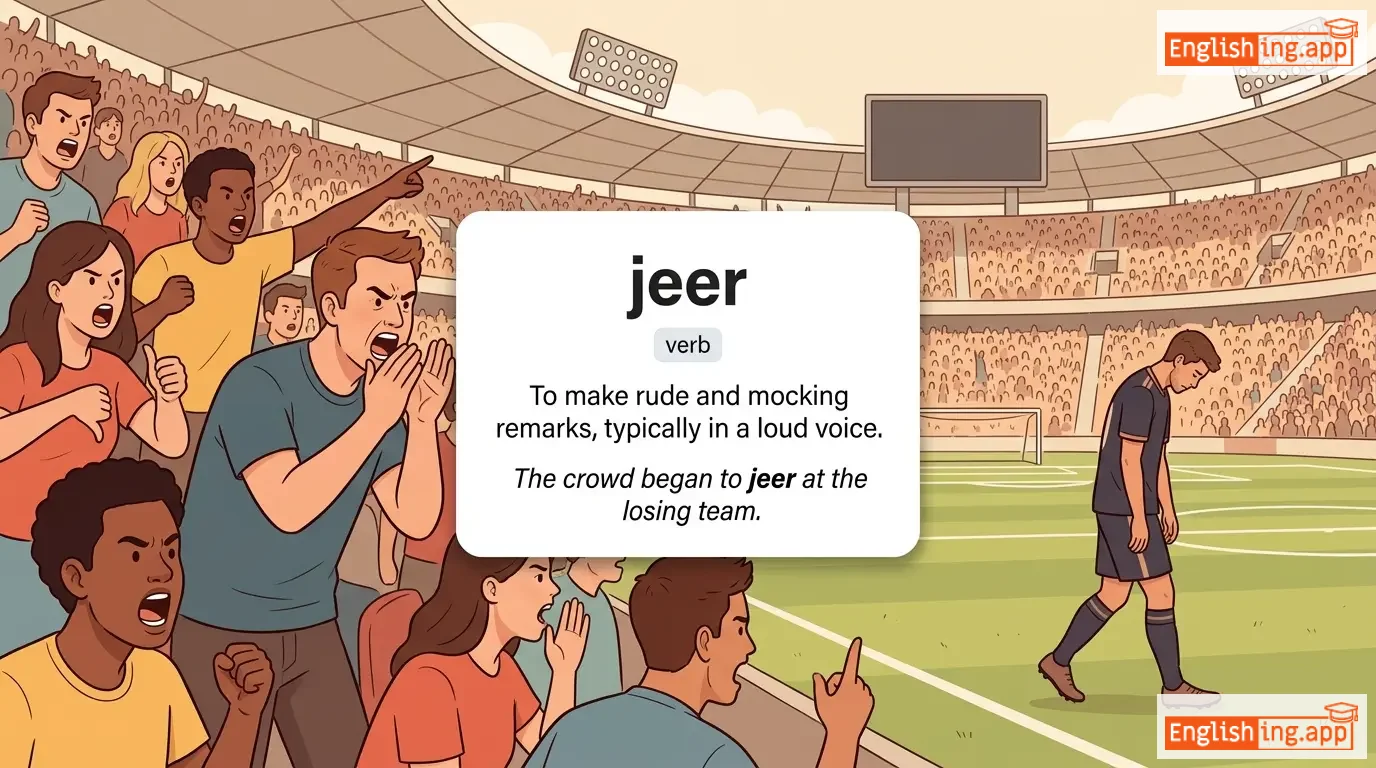
jeer definition card — visual illustration of the meaning
verb C2
/dʒɪər/
嘲笑する (choushou suru)

To make rude and mocking remarks, typically in a loud voice.

"The crowd began to jeer at the losing team."

"群衆は負けているチームを嘲笑し始めた。" (Gunshuu wa maketeiru chiimu o choushou shi hajimeta.)
adjective C2
/dʒɪˈdʒuːn/
未熟 / 表面的 / 退屈 (mijuku / hyōmen-teki / taikutsu)

Naive, simplistic, and superficial; also dull or uninteresting.

"The professor dismissed the essay as jejune and lacking depth."
"教授はそのエッセイを未熟で深みがないとして却下した。" (Kyōju wa sono essei o mijuku de fukami ga nai to shite kyakka shita.)
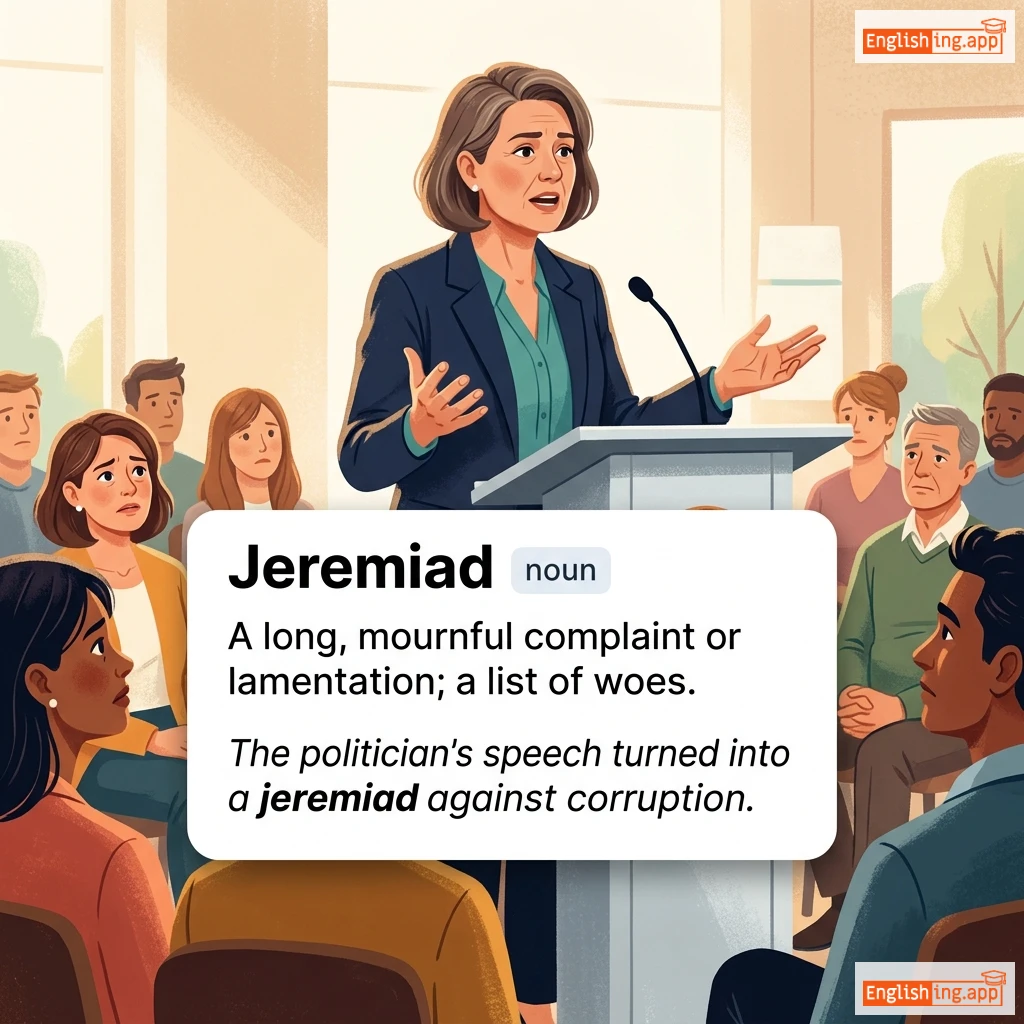
Jeremiad definition card — visual illustration of the meaning
noun C2
/ˈdʒɛrəˌmaɪæd/
嘆き (nageki)

A long, mournful complaint or lamentation; a list of woes.

"The politician's speech turned into a jeremiad against corruption."
"政治家のスピーチは腐敗に対する嘆きに変わった。" (Seijika no supīchi wa fuhai ni taisuru nageki ni kawatta.)
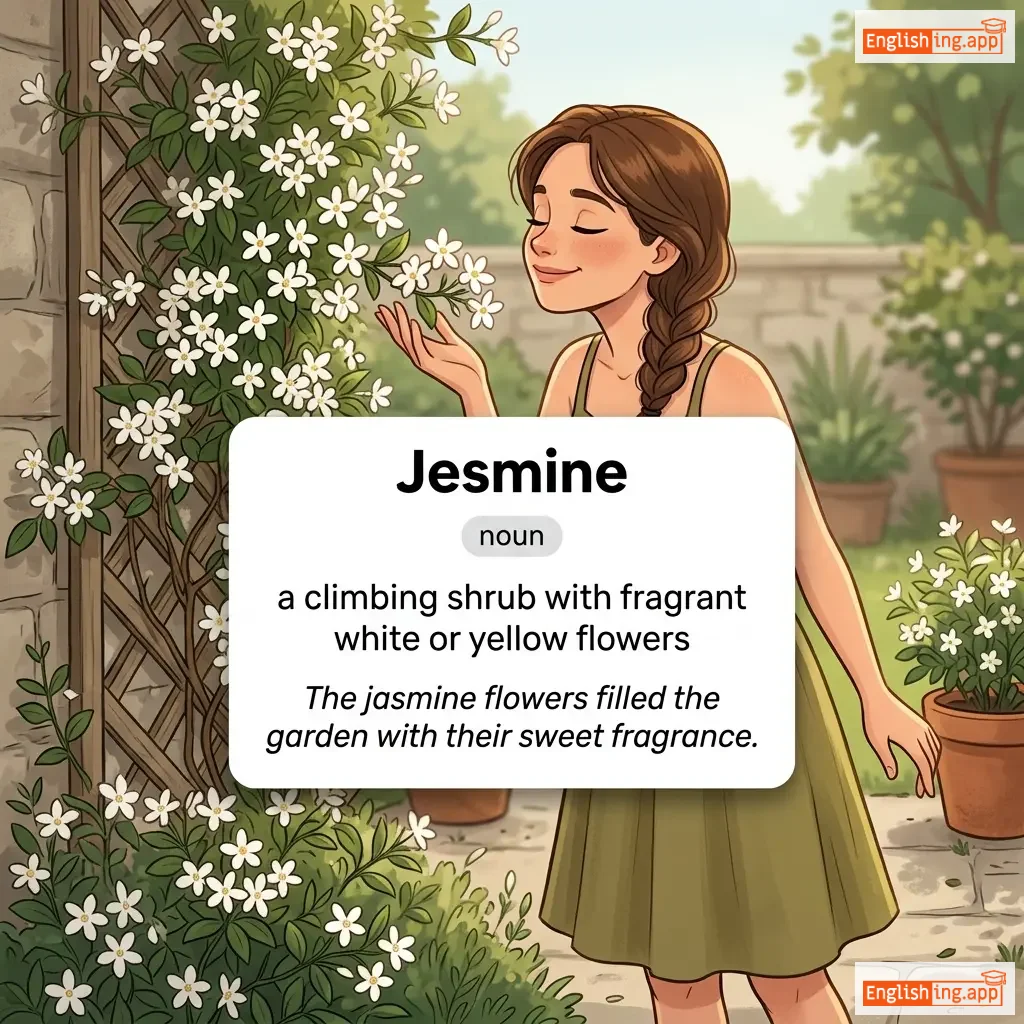
Jesmine definition card — visual illustration of the meaning
noun C2
/ˈdʒæz.mɪn/
ジャスミン (jasumin)

a climbing shrub with fragrant white or yellow flowers

"The jasmine flowers filled the garden with their sweet fragrance."
"ジャスミンの花が庭を甘い香りで満たした。" (jasumin no hana ga niwa o amai kaori de mitashita)
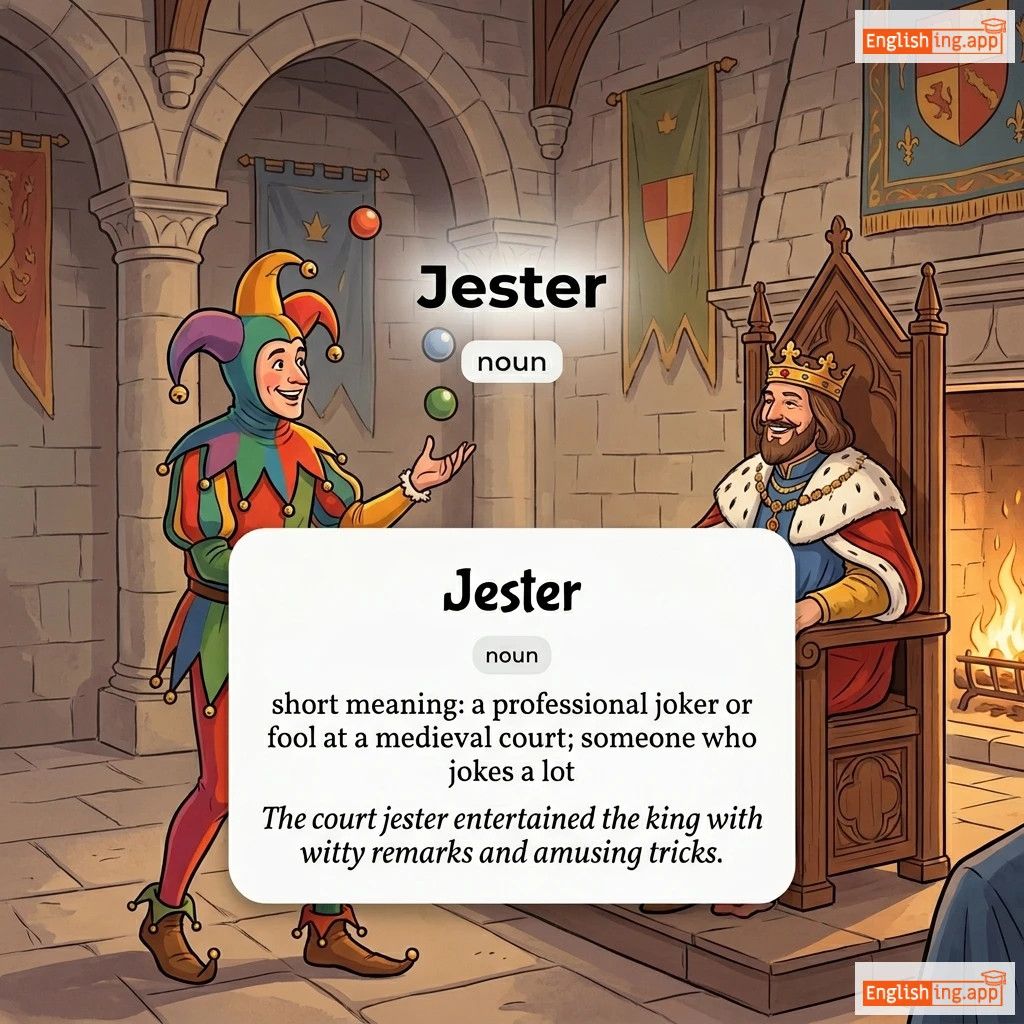
Jester definition card — visual illustration of the meaning
noun C2
/ˈdʒes.tər/
道化師; ピエロ (dōkashi, piero)

a professional joker or fool at a medieval court; someone who jokes a lot

"The court jester entertained the king with witty remarks and amusing tricks."

"宮廷の道化師は、鋭いコメントや面白いトリックで王様を楽しませた。" (Kyūtei no dōkashi wa, surudoi komento ya omoshiroi torikku de ōsama o tanoshimaseta.)
adjective C2
/ˈdʒes.tɪŋ/
冗談めいた (jesuting)

joking or teasing in a playful manner

"He was only jesting when he said he would quit his job."

"彼が仕事を辞めると言ったとき、彼はただ冗談を言っていただけだった。" (hii wazu onrii jesuting wen hii seddo hi uddo kuitto hizu jobu)
noun C2
/ˈdʒɛtsəm/
船から投げ捨てられ、岸に打ち寄せられた不要な物や品物 (fune kara nage suterare, kishi ni uchi yoserareta fuyōna mono ya shinmotsu)

Unwanted material or goods thrown overboard from a ship and washed ashore.

"The beach was littered with jetsam after the storm."
"嵐の後、ビーチにはジェットサムが散乱していました。" (Arashi no ato, bīchi ni wa jettsamu ga sanran shiteimashita.)
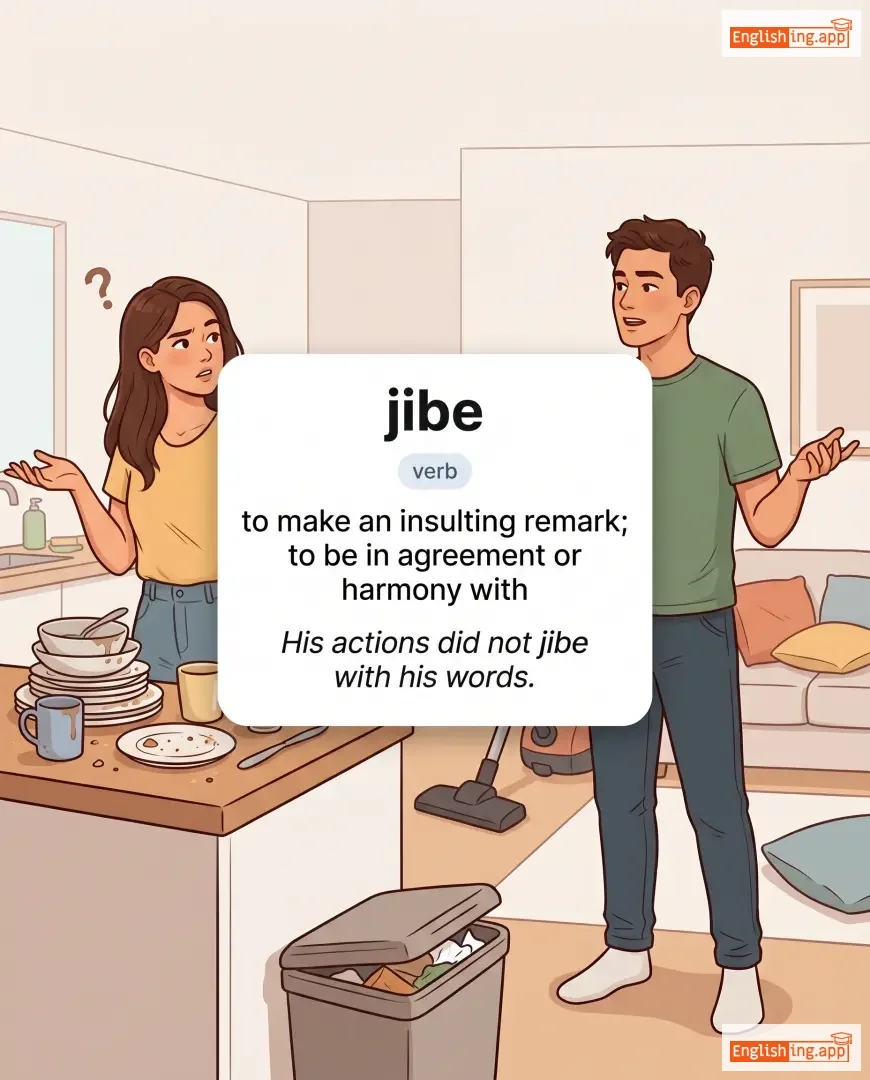
jibe definition card — visual illustration of the meaning
verb C2
/dʒaɪb/
皮肉を言う / 一致する (hiniku wo iu / itchi suru)

to make an insulting remark; to be in agreement or harmony with

"His actions did not jibe with his words."

"彼の行動は彼の言葉と一致していなかった。" (Kare no kōdō wa kare no kotoba to itchi shite inakatta.)
adjective C2
/ˈdʒɪg.ərd/
驚いた; びっくりした; (jigaado)

surprised or astonished; confused or puzzled

"I'll be jiggered if I know what happened here."

"ここで何が起こったのか知っていたら驚くでしょう。" (Koko de nani ga okotta no ka shittetara odoroku deshou.)
noun C2
/ˈdʒɪŋɡoʊ/
戦争支持の国家主義者 (sensō shiji no kokka shugi-sha)

a person who strongly supports warlike or aggressive foreign policy; an extreme nationalist

"The leader was criticized as a reckless jingo."

"その指導者は無謀なジンゴとして批判された。" (Sono shidōsha wa mubōna jingo toshite hihan sareta.)
noun C2
/ˈdʒɪŋɡoʊˌɪzəm/
過激な愛国主義 (kageki na aikokushugi)

extreme patriotism expressed in aggressive foreign policy

"The politician's speech was filled with jingoism."

"その政治家の演説はジンゴイズムに満ちていました。" (Sono seijika no enzetsu wa jingoizumu ni michiteimashita.)
noun C2
/ˈdʒɪŋɡoʊɪst/
ジンゴイスト (jingoisuto)

a person who supports jingoism; an extreme nationalist with aggressive foreign policies

"He was labeled a jingoist for his extreme views."
"彼は自分の極端な意見のためにジンゴイストとレッテルを貼られた。" (Kare wa jibun no kyokutan na iken no tame ni jingoisuto to reteru o harareta.)
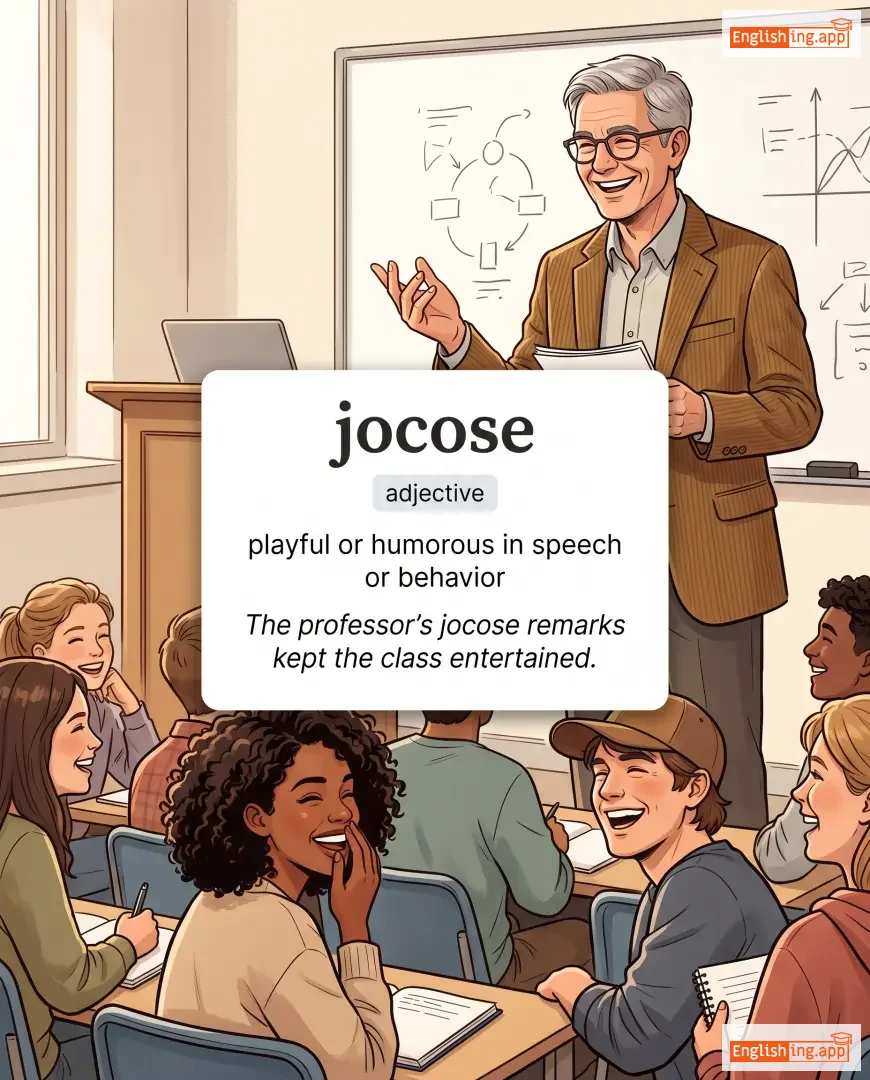
jocose definition card — visual illustration of the meaning
adjective C2
/dʒoʊˈkoʊs/
冗談めかした (joudanmekashita)

playful or humorous in speech or behavior

"The professor’s jocose remarks kept the class entertained."

"教授の冗談めかした発言がクラスを楽しませました。" (Kyouju no joudanmekashita hatsugen ga kurasu o tanoshimase mashita.)
adjective C2
/ˈdʒɒkjələr/
冗談好きな (joudan sukina)

fond of or characterized by joking; humorous

"His jocular nature made him popular among colleagues."

"彼の冗談好きな性格は同僚の中で人気があった。" (Kare no joudan sukina seikaku wa dōryō no naka de ninki ga atta.)
adjective C2
/ˈdʒɒkənd/
陽気な (yōkina)

cheerful and lighthearted

"They walked together in a jocund mood after the celebration."

"彼らは祝賀会の後、陽気な気分で一緒に歩いていた。" (Karera wa shukugakai no ato, yōkina kibun de issho ni aruite ita.)