語彙集

英単語辞書 | 単語の意味、定義、例文

noun C2
/ɪnˈfrækʃən/
違反 (ihan)

A violation or breach of a rule, law, or agreement.

"The student was punished for a minor infraction of the school rules."

"学生は学校の規則の軽微な違反で罰せられました。" (Gakusei wa gakkō no kisoku no keibi na ihan de batsu seraremashita.)
noun C2
/ɪnˈfriːkwəns/
稀少性 (shishousei)

The state of occurring rarely or at long intervals.

"The infrequence of their meetings made it hard to maintain close ties."

"彼らの会議の稀少性は、親密な関係を維持するのを難しくしていました。" (Karera no kaigi no shishousei wa, shinmitsu na kankei wo iji suru no wo muzukashiku shiteimashita.)
noun C2
/ˈænʒənuː/
無邪気な若い女性 (mujakina wakai josei)

an innocent, naïve young woman, especially as represented in literature or theater

"She played the role of the ingénue in the play with great charm."
"彼女は劇で無邪気な若い女性の役を演じ、大きな魅力を発揮しました。" (Kanojo wa geki de mujakina wakai josei no yaku o enji, ookina miryoku o hakki shimashita.)
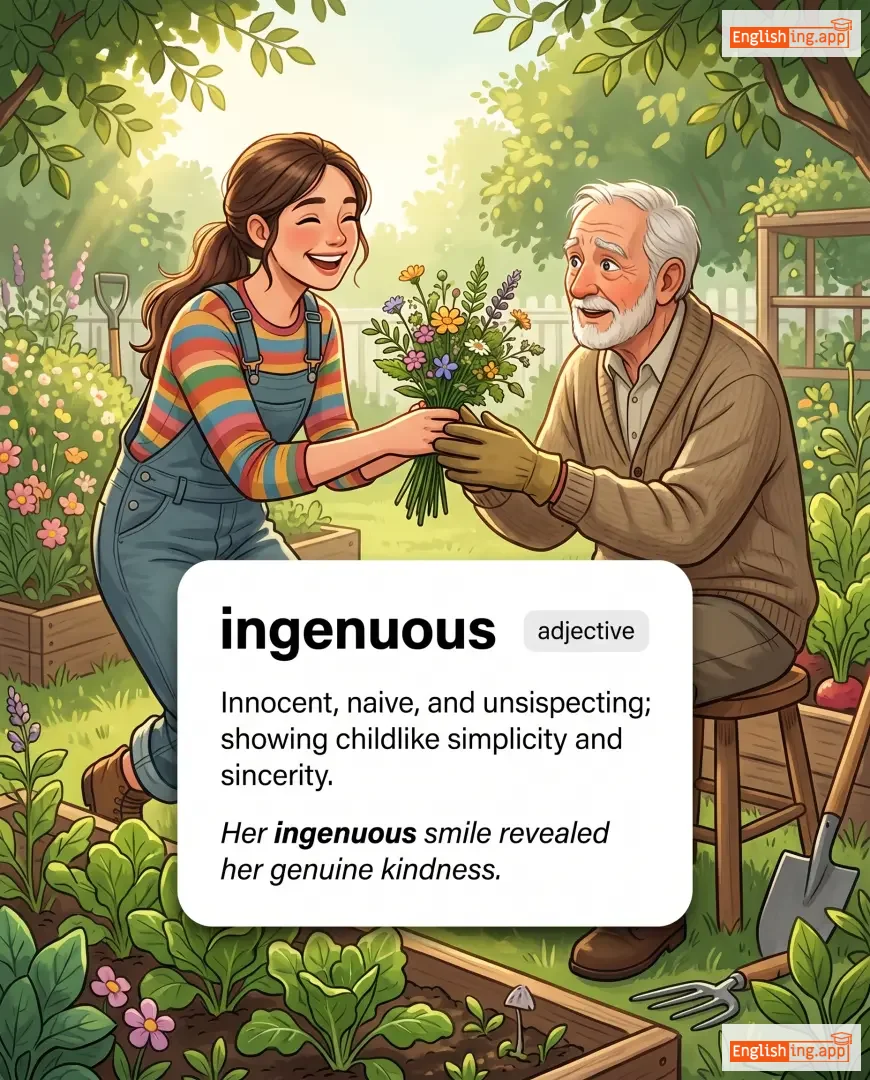
ingenuous definition card — visual illustration of the meaning
adjective C2
/ɪnˈdʒɛnjuəs/
無邪気 (mujaki)

Innocent, naive, and unsuspecting; showing childlike simplicity and sincerity.

"Her ingenuous smile revealed her genuine kindness."

"彼女の無邪気な笑顔は彼女の本当の優しさを明らかにしました。" (Kanojo no mujaki na egao wa kanojo no hontou no yasashisa wo akirakani shimashita.)
verb C2
/ɪnˈdʒɛst/
摂取する (sesshu suru)

To take food, drink, or another substance into the body, usually by swallowing.

"The patient must ingest the medicine with water."

"患者は水と一緒に薬を摂取する必要があります。" (Kanja wa mizu to issho ni kusuri wo sesshu suru hitsuyō ga arimasu.)
adjective C2
/ɪnˈɡlɔːriəs/
不名誉な (fumeiyona)

Causing shame or disgrace; not bringing honor or glory.

"The army suffered an inglorious defeat."

"軍隊は不名誉な敗北を喫した。" (Guntai wa fumeiyona haiboku o kicchi shita.)
verb C2
/ɪnˈɡrɑːft/
根付ける (nedukeru)

To implant or fix deeply, often used in the sense of grafting an idea or quality.

"The teacher tried to ingraft good manners in the students."

"先生は生徒たちに良いマナーを根付かせようとした。" (Sensei wa seito-tachi ni yoi manā o nedukaseru yō to shita.)
noun C2
/ˈɪnˌɡreɪt/

An ungrateful person; someone who shows no appreciation.

"He worked hard for his friend, but the ingrate never thanked him."

verb C2
/ɪnˈɡreɪʃiˌeɪt/

To gain favor or approval by deliberate effort, often in a flattering way.

"She tried to ingratiate herself with her boss by complimenting him often."

adjective C2
/ɪnˈɡreɪʃiˌeɪtɪŋ/
お世辞を言う (oseji wo iu)

Charming or flattering in a way intended to gain favor.

"His ingratiating smile made everyone trust him quickly."

"彼のお世辞を言う笑顔は、すべての人々に彼を素早く信頼させた。" (Kare no oseji wo iu egao wa, subete no hitobito ni kare o subayaku shinrai saseta.)
noun C2
/ɪnˈɡrætɪˌtjuːd/
恩知らず (on shirazu)

Lack of gratitude; failure to show thanks or appreciation.

"His ingratitude hurt her feelings after all she had done for him."

"彼の恩知らずは、彼女が彼のために多くのことをした後、彼女の気持ちを傷つけた。" (Kare no on shirazu wa, kanojo ga kare no tame ni ooku no koto wo shita ato, kanojo no kimochi wo kizutsuketa.)
adjective C2
/ɪnhɑːrˈmoʊniəs/
不協和音 (fukyōwaon)

lacking harmony; discordant in sound; not in tune

"The inharmonious sounds from the broken piano made everyone cover their ears."

"壊れたピアノからの不協和音がみんなを耳をふさがせました。" (Kowareta piano kara no fukyōwaon ga minna o mimi o fusagasemashita.)
noun C2
/ɪnˈhɪərəns/
内在性 (naizaisē)

The state of being an essential or permanent part of something.

"The inherence of risk is part of every business venture."

"リスクの内在性はすべてのビジネス冒険の一部です。" (Risuku no naizaisē wa subete no bijinesu bōken no ichibu desu.)
verb C2
/ɪnˈhjuːm/
埋葬する (maison suru)

to bury a dead body in the ground

"They inhumed the warrior with full honors."

"彼らは戦士を完全な名誉を持って埋葬しました。" (Karera wa senshi o kanzen'na meiyo o motte maison shimashita.)
adjective C2
/ɪˈnɪmɪkəl/
敵対的 / 不利な (tekitai-teki / furi na)

tending to obstruct or harm; unfriendly or hostile

"The policy was inimical to the country's economic growth."

"その政策は国の経済成長に不利だった。" (Sono seisaku wa kuni no keizai seichō ni furi datta.)
inimitable definition card — visual illustration of the meaning
adjective C2
/ɪˈnɪmɪtəbəl/
唯一無二 (yuiitsu muni)

so good or unusual as to be impossible to copy; unique

"Her inimitable style made her stand out in the fashion industry."

"彼女の唯一無二のスタイルは、ファッション業界で彼女を際立たせました。" (Kanojo no yuiitsu muni no sutairu wa, fasshon gyōkai de kanojo o kiwadata semashita.)
adjective C2
/ɪˈnɪkwɪtəs/
不正義 (fuseigi)

grossly unfair and morally wrong

"Slavery was one of the most iniquitous practices in history."

"奴隷制は歴史上最も不正義な行為の一つでした。" (Doreisei wa rekishijou mottomo fuseigi na koui no hitotsu deshita.)
noun C2
/ɪˈnɪkwɪti/
不正 (fusei)

Immoral or grossly unfair behavior.

"The dictator's regime was marked by corruption and iniquity."

"独裁者の政権は腐敗と不正で特徴づけられていました。" (Dokusai-sha no seiken wa fuhai to fusei de tokuchōdzukerarete imashita.)
adjective C2
/ˈɪnmoʊst/
最も内面の (mottomo naimen no)

Situated at the very heart or deepest part; most private or secret.

"She revealed her inmost thoughts to her closest friend."
"彼女は最も内面的な考えを最も親しい友達に明かした。" (Kanojo wa mottomo naimen-tekina kangae wo mottomo shitashii tomodachi ni akashita.)
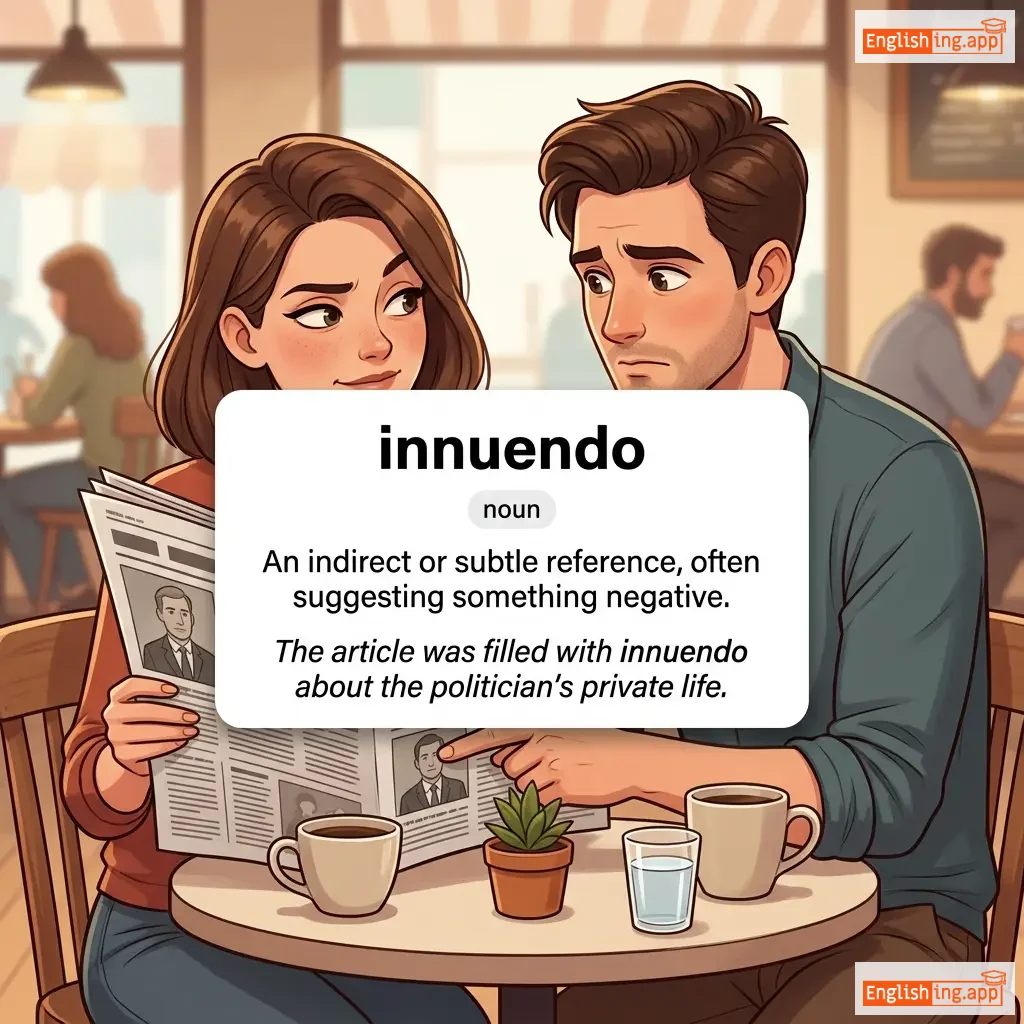
innuendo definition card — visual illustration of the meaning
noun C2
/ˌɪnjuˈɛndoʊ/
ほのめかし (honomekashi)

An indirect or subtle reference, often suggesting something negative.

"The article was filled with innuendo about the politician's private life."

"その記事は政治家の私生活に関するほのめかしでいっぱいだった。" (Sono kiji wa seijika no shiseikatsu ni kansuru honomekashi de ippai datta.)
adjective C2
/ˌɪnˌɑːpərˈtuːn/
タイミングが悪い瞬間 (taimingu ga warui shunkan)

Happening at a bad or inconvenient time.

"His call came at the most inopportune moment."

"彼の電話は最もタイミングが悪い瞬間にかかってきた。" (kare no denwa wa mottomo taimingu ga warui shunkan ni kakatte kita.)
noun C2
/ɪnˈkwɪzɪtər/
尋問者 (jinmonsha)

A person who asks many questions, often in an official or harsh manner.

"The inquisitor demanded detailed answers from the witness."

"尋問者は証人から詳細な回答を要求しました。" (Jinmonsha wa shōnin kara shōsai na kaitō o yōkyū shimashita.)
noun C2
/ˈɪnroʊd/
進展 (shinten)

An advance or significant progress, often at the expense of something else.

"The company made significant inroads into the mobile market."

"その会社はモバイル市場で重要な進展を遂げました。" (Sono kaisha wa mobairu shijou de juuyou na shinten wo togemashita.)
adjective C2
/ˌɪnsəˈluːbriəs/
不健康 (fukenko)

Unhealthy or not conducive to well-being.

"They moved out of the insalubrious neighborhood for the sake of their health."

"彼らは健康のために不健康な地域から引っ越しました" (Karera wa kenkō no tame ni fukenka na chiiki kara hikkoshimashita)
adjective C2
/ɪnˈseɪʃiət/
飽くなき (akunaki)

impossible to satisfy; always wanting more

"He had an insatiate desire for power."

"彼は権力への飽くなき欲望を持っていた。" (Kare wa kenryoku e no akunaki yokubou wo motte ita.)
adjective C2
/ɪnˈskruːtəbl̩/
幸福 (kōfuku)

impossible to understand or interpret

"His inscrutable expression made it hard to know what he was thinking."

"彼女は賞を受け取ったとき、幸せを隠すことができませんでした。" (Kanojo wa shō o uketotta toki, kōfuku o kakusu koto ga dekimasen deshita.)
adjective C2
/ɪnˈsɛnseɪt/
無感情な (mukanjō na)

lacking physical sensation or empathy; without feeling or sensitivity

"The dictator's insensate cruelty shocked the world."

"独裁者の無感情な残虐さは世界を驚かせた。" (Dokusai-sha no mukanjō na zangyaku-sa wa sekai o odorokaseta.)
adjective C2
/ɪnˈsɛnʃənt/
無感覚の (mukankaku no)

Lacking perception, consciousness, or sensation.

"The rock is an insentient object with no awareness."

"岩は意識のない無感覚の物体です。" (Iwa wa ishiki no nai mukankaku no buttai desu.)
noun C2
/ɪnˈsɪɡniə/
徽章 (kizō)

A badge or symbol that shows rank, position, or membership.

"The soldier proudly wore the insignia of his regiment."
"兵士は誇らしげに自分の連隊の徽章を身に着けていました。" (Heishi wa hokorashige ni jibun no rentai no kizō o mi ni tsukete imashita.)
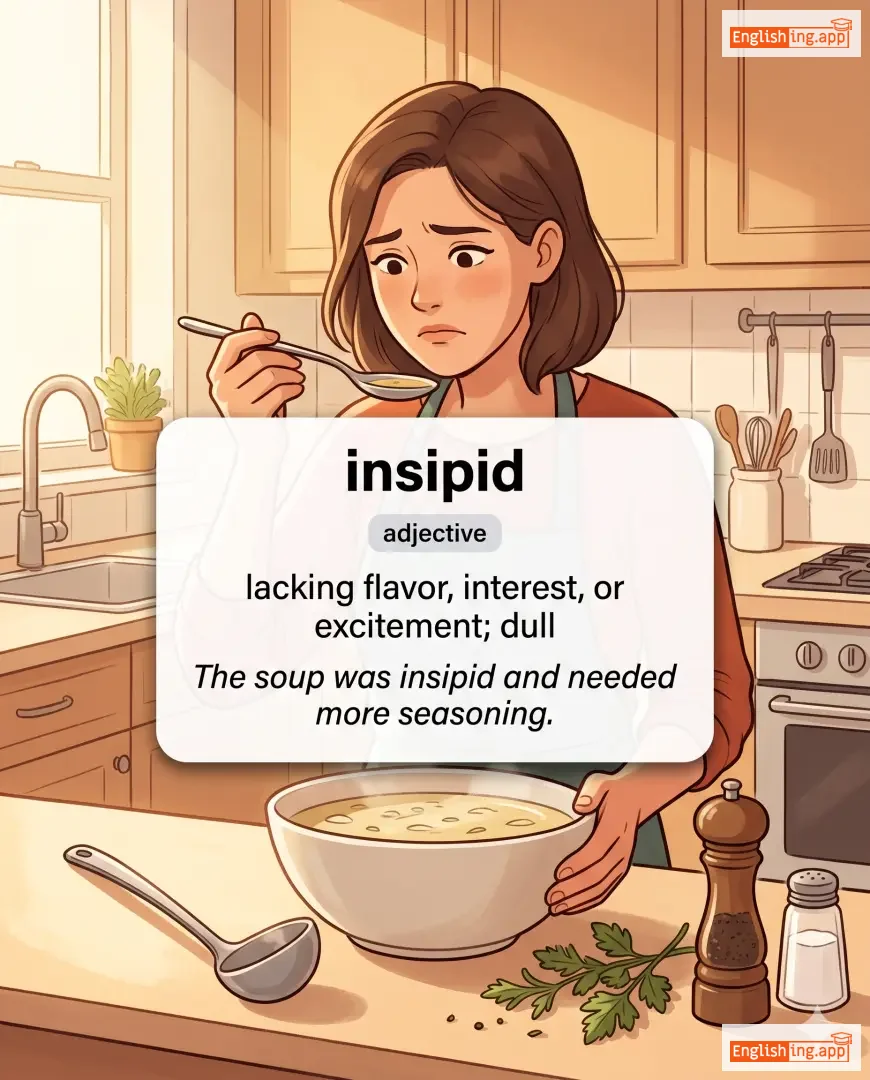
insipid definition card — visual illustration of the meaning
adjective C2
/ɪnˈsɪpɪd/
味気ない (ajikenai)

lacking flavor, interest, or excitement; dull

"The soup was insipid and needed more seasoning."

"スープは味気なく、もっと調味料が必要でした。" (Sūpu wa ajikenaku, motto chōmiryō ga hitsuyō deshita.)
noun C2
/ˈɪnsələns/
無礼 (burei)

rude or disrespectful behavior

"The teacher was shocked by the student's insolence."

"教師は学生の無礼に驚きました。" (Kyoushi wa gakusei no burei ni odorokimashita.)
adverb C2
/ˌɪnsəʊˈmʌtʃ/
これほど (korehodo)

to such an extent

"He was insomuch tired that he could hardly stand."

"彼はあまりにも疲れていて、ほとんど立つことができませんでした。" (Kare wa amari ni mo tsukarete ite, hotondo tatsu koto ga dekimasen deshita.)
noun C2
/ɪnˈsuːsiəns/
無関心 (mukanshin)

Casual lack of concern; indifference.

"She carried herself with an air of insouciance, unbothered by the challenges ahead."

"彼女は無関心な態度で歩いていた、前にある挑戦を気にせずに。" (Kanojo wa mukanshin na taido de aruite ita, mae ni aru chōsen o ki no sezu ni.)
insouciant definition card — visual illustration of the meaning
adjective C2
/ɪnˈsuːsiənt/
無頓着 (mutonchaku)

Showing a casual lack of concern; carefree.

"He gave an insouciant shrug and walked away."

"彼は無頓着に肩をすくめて、歩き去った。" (Kare wa mutonchaku ni kata o sukumete, arukisatta.)
verb C2
/ɪnˈsteɪt/
任命する (ninmei suru)

To set up in position, office, or authority.

"The board decided to instate her as the new director."

"取締役会は彼女を新しいディレクターにインステイトすることを決定しました。" (Torishimariyaku kai wa kanojo o atarashī direkutā ni insuteito suru koto o kettei shimashita.)
noun C2
/ˌɪn.strəˈmɛn.təl.ɪst/
楽器奏者 (gakki sōsha)

A person who plays a musical instrument.

"The instrumentalist played a beautiful solo on the violin."
"楽器奏者はバイオリンで美しいソロを演奏しました。" (Gakki sōsha wa baiorin de utsukushī soro o ensō shimashita.)
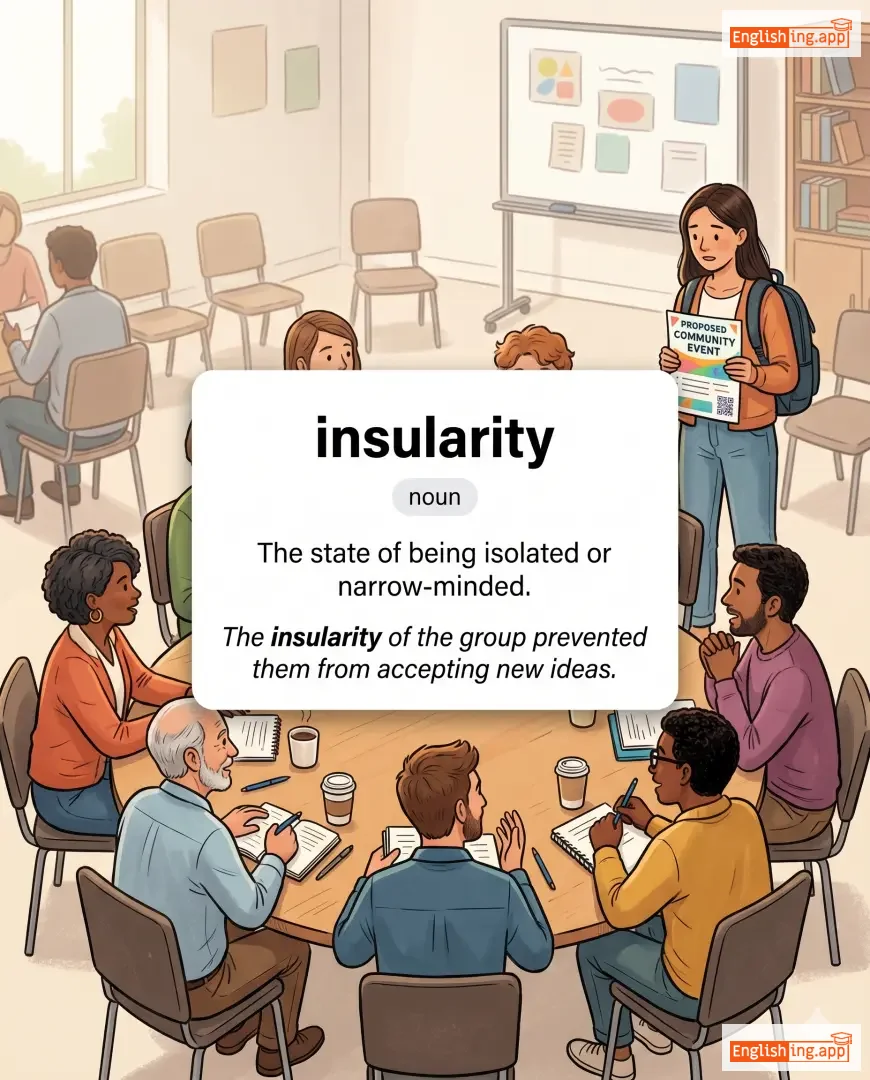
insularity definition card — visual illustration of the meaning
noun C2
/ˌɪnsjəˈlærəti/
島国性 (shimagunisei)

The state of being isolated or narrow-minded.

"The insularity of the group prevented them from accepting new ideas."

"グループの島国性は新しいアイデアを受け入れることを妨げた。" (Gurūpu no shimakunisei wa atarashī aidea o ukeireru koto o samataketa.)
insuperable definition card — visual illustration of the meaning
adjective C2
/ɪnˈsuːpərəbl/
克服できない (kokufuku dekinai)

Impossible to overcome or surpass.

"The team faced insuperable challenges during the expedition."

"チームは遠征中に克服できない課題に直面しました。" (Chiimu wa ensei chuu ni kokufuku dekinai kadai ni chokumen shimashita.)
adjective C2
/ˌɪnsəˈpɔːrtəbl̩/
耐えられない (taerarenai)

Too extreme or difficult to be endured.

"The heat was insupportable during the long journey."

"長い旅の間、暑さは耐えられなかった。" (Nagai tabi no aida, atsusa wa taerarenakatta.)
adjective C2
/ˌɪnsəˈprɛsəbl/
抑制できない (yokusei dekinai)

That cannot be suppressed or restrained.

"She had an insuppressible urge to laugh during the ceremony."

"式の間、彼女は抑制できない笑いをこらえていた。" (Shiki no aida, kanojo wa yokusei dekinai warai wo koraete ita.)
noun C2
/ˌɪnsəˈrɛkʃən/
反乱 (hanran)

A violent uprising against an authority or government.

"The army was called in to suppress the insurrection."

"軍隊は反乱を鎮圧するために呼ばれました。" (Guntai wa hanran o chin'atsu suru tame ni yoba remashita.)
integrative diplomacy definition card — visual illustration of the meaning
noun C2
/ˈɪn.tɪ.ɡreɪ.tɪv dɪˈpləʊ.mə.si/
統合的外交 (tougouteki gaikou)

A diplomatic approach that seeks to combine or coordinate different elements, interests, or parties into a unified whole.

"Integrative diplomacy strengthens alliances."

"統合的外交は同盟を強化する。" (Tougouteki gaikou wa doumei o kyouka suru.)
noun C2
/ɪnˈtɛɡ.jʊ.mənt/
外皮 (gaihi)

A natural outer covering, such as skin, shell, or rind.

"The snake sheds its integument as it grows."

"ヘビは成長するにつれて外皮を脱ぎます。" (Hebi wa seichou suru ni tsurete gaihi o nugimasu.)
noun C2
/ɪnˌtɛl.ɪˈdʒɛntsi.ə/
インテリゲンチャ (interigensha)

The group of people engaged in intellectual and cultural pursuits in a society.

"The intelligentsia played a key role in shaping public opinion."

"インテリゲンチャは、世論形成において重要な役割を果たした。" (Interigensha wa, yoron keisei ni oite jūyōna yakuwari o hatashita.)
noun C2
/ɪnˈtɛmpərəns/
節度を欠くこと (setsudo o kaku koto)

Lack of moderation or self-control, especially with drinking or eating.

"His intemperance in drinking ruined his health."

"彼の飲酒の節度を欠くことが健康を害した。" (Kare no inshū no setsudo o kaku koto ga kenkō o gaishita.)
adjective C2
/ɪnˈtɛmpərət/
不節制な (fusesetsuna)

Lacking self-control; immoderate, especially in indulgence.

"The politician's intemperate remarks caused controversy."

"政治家の不節制な発言は論争を引き起こした。" (Seijika no fusesetsu na hatsugen wa ronsō o hikiokoshita.)
noun C2
/ɪnˈtɛnʃən/
内的意味 (naiteki imi)

The internal content of a concept; the set of attributes implied by a word or phrase.

"The intension of the word 'dog' includes being a mammal and domesticated."

"'犬'という言葉のインテンションには哺乳類であり、飼いならされたことが含まれます。" ('Inu' to iu kotoba no intenshon ni wa honyūrui de ari, kainarasa reta koto ga fukuma remasu.)
verb C2
/ɪnˈtɜːr/
埋葬する (maisou suru)

To bury a dead body in the ground.

"They decided to inter the soldier with full honors."

"彼らは兵士を全ての名誉を持って埋葬することに決めた。" (Karera wa heishi o subete no meiyo o motte maisou suru koto ni kimeta.)
🕊️

intercede

verb C2
/ˌɪntərˈsiːd/

to act or plead on behalf of someone in difficulty or trouble; to intervene between parties to help resolve a dispute

"She interceded with the teacher to give her brother another chance."

noun C2
/ˌɪntərˈsɛʃən/
仲介 (chūkai)

the act of intervening or pleading on behalf of another person

"The prisoner was released due to the intercession of influential leaders."

"囚人は影響力のあるリーダーたちの仲介で釈放されました。" (Shūjin wa eikyōryoku no aru rīdā-tachi no chūkai de shakuho saremashita.)