語彙集

英単語辞書 | 単語の意味、定義、例文

noun C2
/ˈmaʊntɪˌbæŋk/
ペテン師 (petenshi)

A charlatan or trickster who deceives others, often for personal gain.

"The crowd was fooled by the mountebank’s false promises."

"群衆はそのペテン師の虚偽の約束に騙されました。" (Gunshū wa sono petenshi no kyogi no yakusoku ni damasaremashita.)
verb C2
/ˈmʌfəl/
抑える (osaeru)

to make a sound quieter or less distinct; to cover or wrap something to reduce noise or warmth

"She tried to muffle her laughter with a scarf."

"彼女はスカーフで笑い声を抑えようとした。" (Kanojo wa sukāfu de warai goe o osaeyou to shita.)
adjective C2
/ˈmʌɡi/
蒸し暑くて湿気のある (mushi atsukute shikke no aru)

uncomfortably warm and humid

"It was a muggy afternoon in July."

"7月の午後は蒸し暑かった。" (Shichigatsu no gogo wa mushi atsukatta.)
noun C2
/ˈmʌɡwʌmp/
政党に属さない人 (seitō ni zokusanai hito)

a person who remains independent from party politics or remains aloof from disputes

"He was called a mugwump for refusing to join either political side."

"彼は政治的な立場に参加しないことを拒否したため、マグワンプと呼ばれました。" (Kare wa seijiteki na tachiba ni sanka shinai koto o kyohi shita tame, maguwampu to yobaremashita.)
noun C2
/mjuːˈlætoʊ/
混血の人(古くて攻撃的な言葉) (konketsu no hito (furukute kougeki-tekina kotoba))

an outdated and now offensive term historically used to describe a person of mixed white and Black ancestry

"The word 'mulatto' is now considered outdated and offensive."

"'ムラット'という言葉は、現在では時代遅れで攻撃的だと見なされています。" ('Muratto' to iu kotoba wa, genzai dewa jidaiokure de kougeki-teki da to minasa reteimasu.)
verb C2
/mʌlkt/
罰金を科す / 詐欺を働く (bakin wo kasu / sagi wo hataraku)

to punish by a fine or to defraud someone of money

"The corrupt official was mulcted for his misconduct."

"腐敗した公務員は不正行為に対して罰金を科された。" (Fuhai shita kōmuin wa fusei kōi ni taishite bakkin wo kasareta.)
noun C2
/ˌmjuːlˈtɪər/
荷馬使い (kebamatsukai)

a person who drives or takes care of mules

"The muleteer guided the animals safely across the mountain path."
"荷馬使いは動物を安全に山道を案内しました。" (Kebamatsukai wa dōbutsu o anzen ni yamamichi o annai shimashita.)
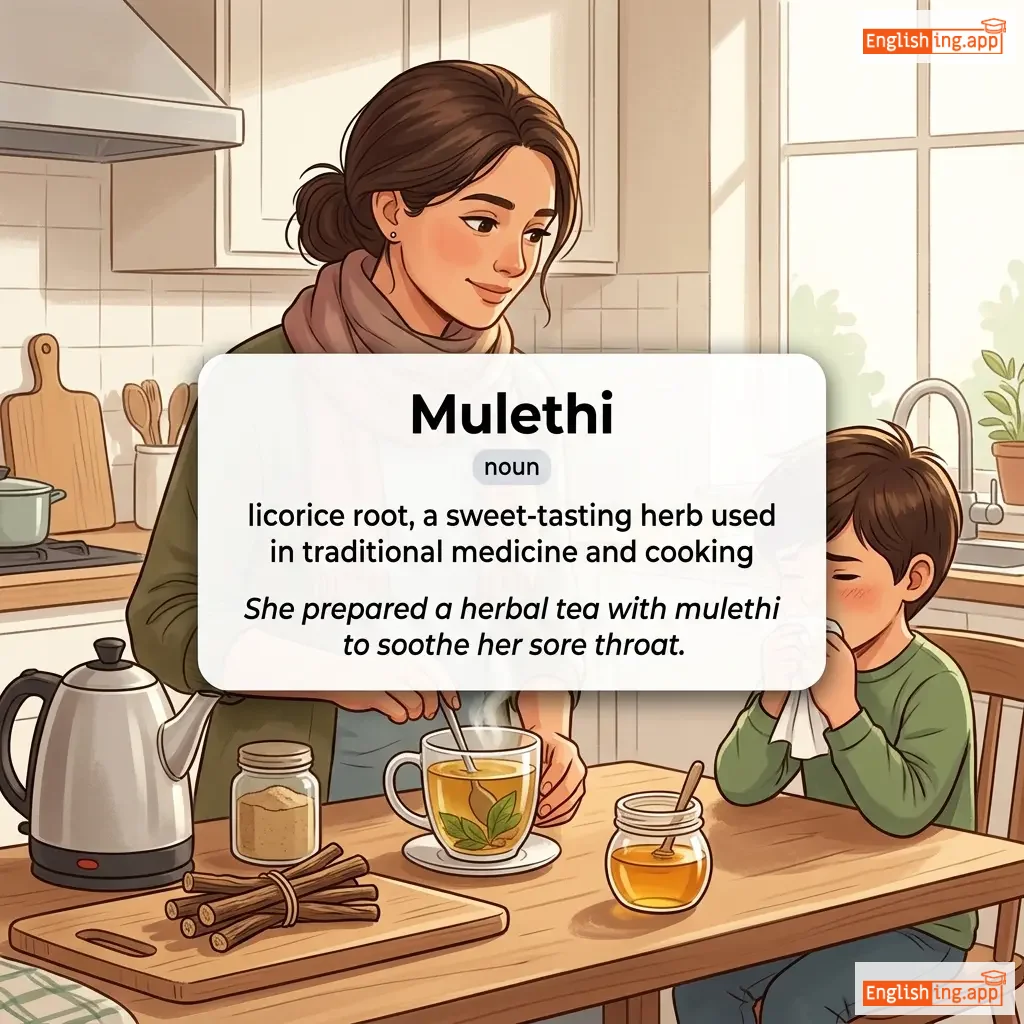
Mulethi definition card — visual illustration of the meaning
noun C2
/muˈleθi/
甘草の根 (kansou no ne)

licorice root, a sweet-tasting herb used in traditional medicine and cooking

"She prepared a herbal tea with mulethi to soothe her sore throat."

"彼女はムレティでハーブティーを作り、喉の痛みを和らげました。" (Kanojo wa mureti de haabu tee o tsukuri, nodo no itami o yawaragemashita.)
adjective C2
/ˈmjuːlɪʃ/

extremely stubborn or unwilling to change

"She remained mulish despite all the convincing arguments."

multifaceted information frameworks definition card — visual illustration of the meaning
noun C2
ˌmʌltɪˈfæsɪtɪd ˌɪnfərˈmeɪʃən ˈfreɪmwɜːrks
多面的情報フレームワーク (tōmen no jōhō furēmuwāku)

Complex, comprehensive structures for organizing and managing information that have multiple aspects or dimensions.

"Digital literacy involves building multifaceted information frameworks."

"デジタルリテラシーは多面的な情報フレームワークの構築を含んでいます。" (Dejitaru riterashī wa tōmen-teki na jōhō furēmuwāku no kōchiku o fukundeimasu.)
adjective C2
/ˌmʌltɪˈfɛərɪəs/
多様な (tayōna)

having many different parts, elements, or kinds

"The museum displayed a multifarious collection of artifacts."

"博物館は様々な種類の遺物を展示しました。" (Hakubutsukan wa samazama na shurui no ibutsu o tenji shimashita.)
adjective C2
/ˈmʌltɪfɔːrm/
多様な (tayou na)

Having many different forms or appearances.

"The festival was a multiform celebration of art, music, and culture."

"その祭りは、芸術、音楽、文化の多様な祝典でした。" (Sono matsuri wa, geijutsu, ongaku, bunka no tayou na shukuten deshita.)
mundanity definition card — visual illustration of the meaning
noun C2
mʌnˈdeɪ.nɪ.ti
平凡 (heibon)

The quality of being ordinary, routine, or lacking excitement.

"The mundanity of office life can be exhausting."

"オフィスの生活の平凡さは疲れることがあります。" (Ofisu no seikatsu no heibon-sa wa tsukareru koto ga arimasu.)
noun C2
/mjuːˈnɪfəsəns/
寛大さ (kandaisa)

great generosity or lavish giving

"The hospital was built thanks to the munificence of a wealthy donor."

"病院は裕福な寄付者の寛大さのおかげで建てられました。" (Byouin wa yuufukuna kifu-sha no kandaisa no okage de tateraremashita.)
adjective C2
/mjuːˈnɪfɪsənt/
寛大な (kandai na)

extremely generous; giving freely and abundantly

"She made a munificent donation to the orphanage."

"彼女は孤児院に寛大な寄付をしました。" (Kanojo wa kojiin ni kandai na kifu o shimashita.)
noun C2
/ˈmɜːkinəs/
濁り (nigori)

The quality of being dark, gloomy, or unclear.

"The murkiness of the water made it hard to see the fish."

"水の濁りが魚を見るのを難しくしました。" (Mizu no nigori ga sakana o miru no o muzukashiku shimashita.)
noun C2
/ˈmʌrɪn/
家畜の伝染病 (kachiku no densenbyou)

An infectious disease that affects cattle and other animals, often fatal.

"The farmer lost many cows during the outbreak of murrain."

"農家はムレインの流行中に多くの牛を失いました。" (Nōka wa Muren no ryūkō-chū ni ōku no ushi o ushinai mashita.)
musculoskeletal condition definition card — visual illustration of the meaning
noun C2
মাসকুলোস্কেলেটাল কন্ডিশন
筋骨格障害 (kinkokkaku shougai)

A disorder that affects the muscles, bones, joints, tendons, ligaments, or other structures that support the limbs, neck, and back.

"De Quervain's Syndrome is a common musculoskeletal condition."

"デ・クヴェルヴァン症候群は一般的な筋骨格障害です。" (De Quervain shoukougun wa ippanteki na kinkokkaku shougai desu.)
Musk definition card — visual illustration of the meaning
noun C2
/mʌsk/
ムスク (musuku)

a strong-smelling substance secreted by certain animals, used in perfumes and traditional medicine

"The perfume contained natural musk that gave it an exotic fragrance."

"その香水には天然のムスクが含まれており、エキゾチックな香りを与えました。" (Sono kōsui ni wa ten'nen no musuku ga fukumarete ori, ekizochikku na kaori o ataemashita.)
noun C2
/ˈmʌskɪt/
古いタイプの銃 (furui taipu no jū)

a type of long gun used in the past, especially by infantry soldiers

"The soldiers carried muskets into the battlefield."

"兵士たちは戦場にマスケットを持ち込んだ。" (Heishitachi wa senjō ni masuketto o mochikonda.)
adjective C2
/ˈmʌski/
ムスクのような (musuku no yōna)

having a strong, sweet, earthy smell like musk

"The perfume had a musky fragrance."
"その香水はムスクのような香りがしました。" (Sono kōsui wa musuku no yōna kaori ga shimashita.)
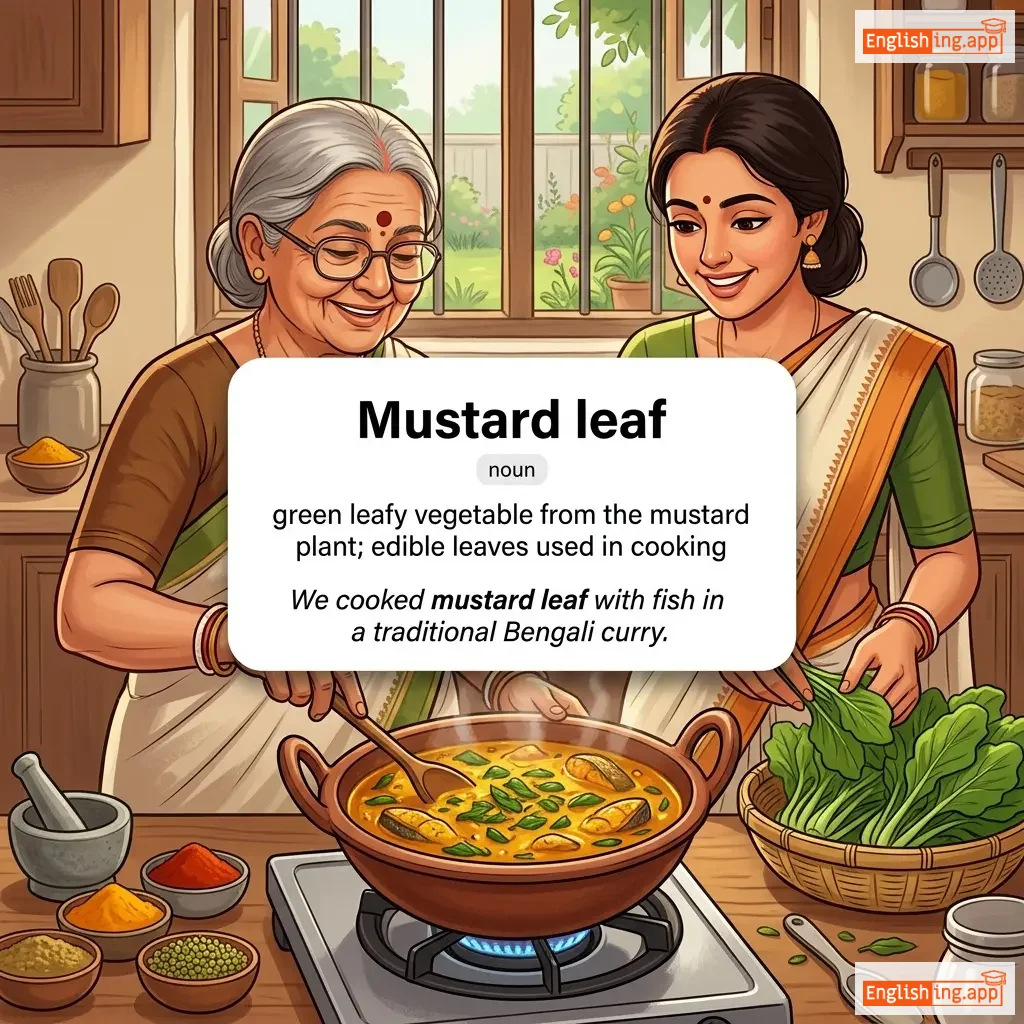
Mustard leaf definition card — visual illustration of the meaning
noun C2
/ˈmʌs.tərd liːf/
マスタードの葉 (masutādo no ha)

green leafy vegetable from the mustard plant; edible leaves used in cooking

"We cooked mustard leaf with fish in a traditional Bengali curry."
"私たちは伝統的なベンガルカレーで魚と一緒にマスタードリーフを料理しました。" (Watashitachi wa dentō-teki na bengaru karē de sakana to issho ni masutādo rīfu o ryōri shimashita.)
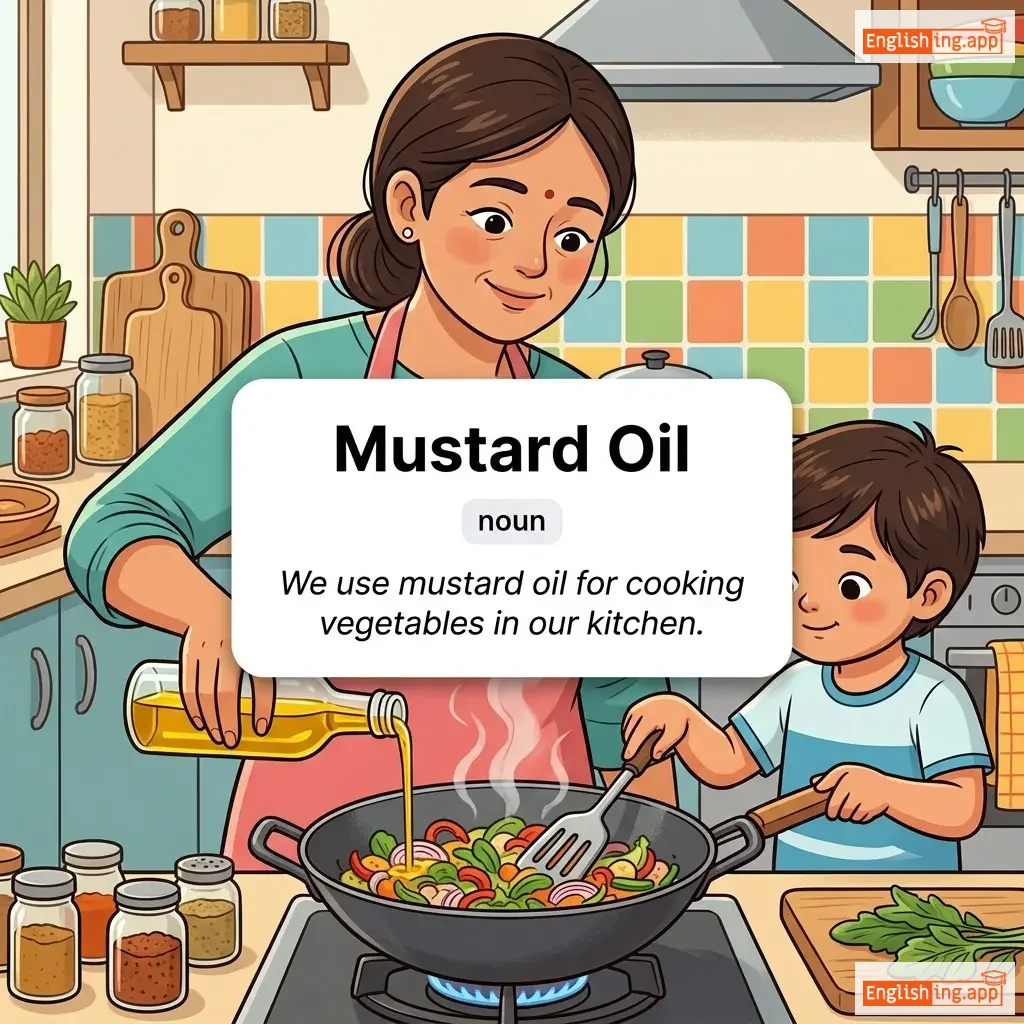
Mustard Oil definition card — visual illustration of the meaning
noun C2
/ˈmʌstərd ɔɪl/
マスタードオイル (masutādo oiru)

oil extracted from mustard seeds, commonly used for cooking and medicinal purposes

"We use mustard oil for cooking vegetables in our kitchen."

"私たちはキッチンで野菜を調理するためにマスタードオイルを使います。" (Watashitachi wa kicchin de yasai o chōri suru tame ni masutādo oiru o tsukaimasu.)
adjective C2
/ˈmʌsti/
湿っぽい、カビ臭いまたは湿気のある匂い (shimeppoi, kabikusai mata wa shikke no aru nioi)

having a stale, moldy, or damp smell

"The old books had a musty odor."

"古い本にはカビ臭い匂いがあった。" (Furui hon ni wa kabikusai nioi ga atta.)
noun C2
/ˌmjuːtəˈbɪləti/
変動性 (hendousei)

The quality of being changeable or capable of change.

"The mutability of fashion trends makes it hard to keep up."

"ファッションのトレンドの可変性は、それについていくのを難しくします。" (Fasshon no torendo no kahensei wa, sore ni tsuiteiku no o muzukashiku shimasu.)
adjective C2
/ˈmjuːtəbl/
可変の (kaken no)

Capable of change or alteration.

"Human emotions are mutable and can shift rapidly."

"人間の感情は可変的で、迅速に変わることがあります。" (Ningen no kanjō wa kahen-teki de, jinsoku ni kawaru koto ga arimasu.)
noun C2
/ˌmjuːtəˈbɪləti/
変化性(綴り間違い) (henkasei (tsudzuri machigai))

A misspelled form of 'mutability', meaning the quality of being changeable.

"The document contained the misspelled word 'mutablility' instead of 'mutability'."

"その文書には 'mutability' の代わりに 'mutablility' の綴り間違いがありました。" (Sono bunsho ni wa 'mutability' no kawari ni 'mutablility' no tsudzuri machigai ga arimashita.)
verb C2
/ˈmjuːtɪleɪt/
損傷する (sonshou suru)

to inflict serious damage on something, often by cutting or tearing

"The ancient manuscript was mutilated by careless handling."

"古代の写本は不注意な取り扱いで損傷しました。" (Kodai no shahon wa fuchuui na toriatsukai de sonshou shimashita.)
adjective C2
/ˈmjuːtɪnəs/
反乱者 (hanransha)

refusing to obey authority; rebellious

"The soldiers grew mutinous after months without pay."
"兵士たちは数ヶ月間給料がなくて反乱者になった。" (Heishitachi wa suukagetsu kan kyūryō ga nakute hanransha ni natta.)
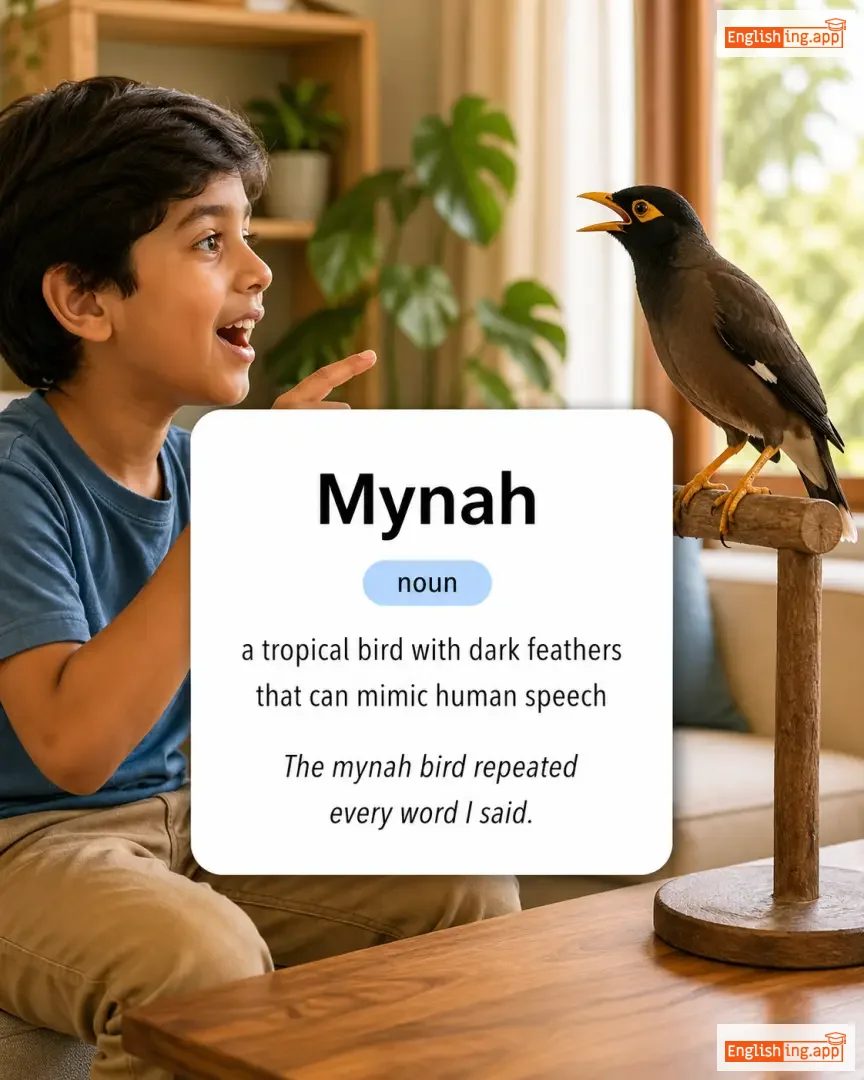
Mynah definition card — visual illustration of the meaning
noun C2
/ˈmaɪ.nə/
マイナ (maina)

a tropical bird with dark feathers that can mimic human speech

"The mynah bird repeated every word I said."

"マイナの鳥は私が言ったすべての言葉を繰り返しました。" (Maina no tori wa watashi ga itta subete no kotoba o kurikaeshimashita.)
noun C2
/ˌmɪstɪfɪˈkeɪʃən/
困惑, 神秘化 (konwaku, shinpi-ka)

the act of making something unclear or confusing; a state of being puzzled or bewildered

"The audience watched in mystification as the magician performed his tricks."

"観客はマジシャンが手品を披露する間、困惑して見ていた。" (Kankyaku wa majishan ga tejin o hirou suru aida, konwaku shite mite ita.)