語彙集

英単語辞書 | 単語の意味、定義、例文

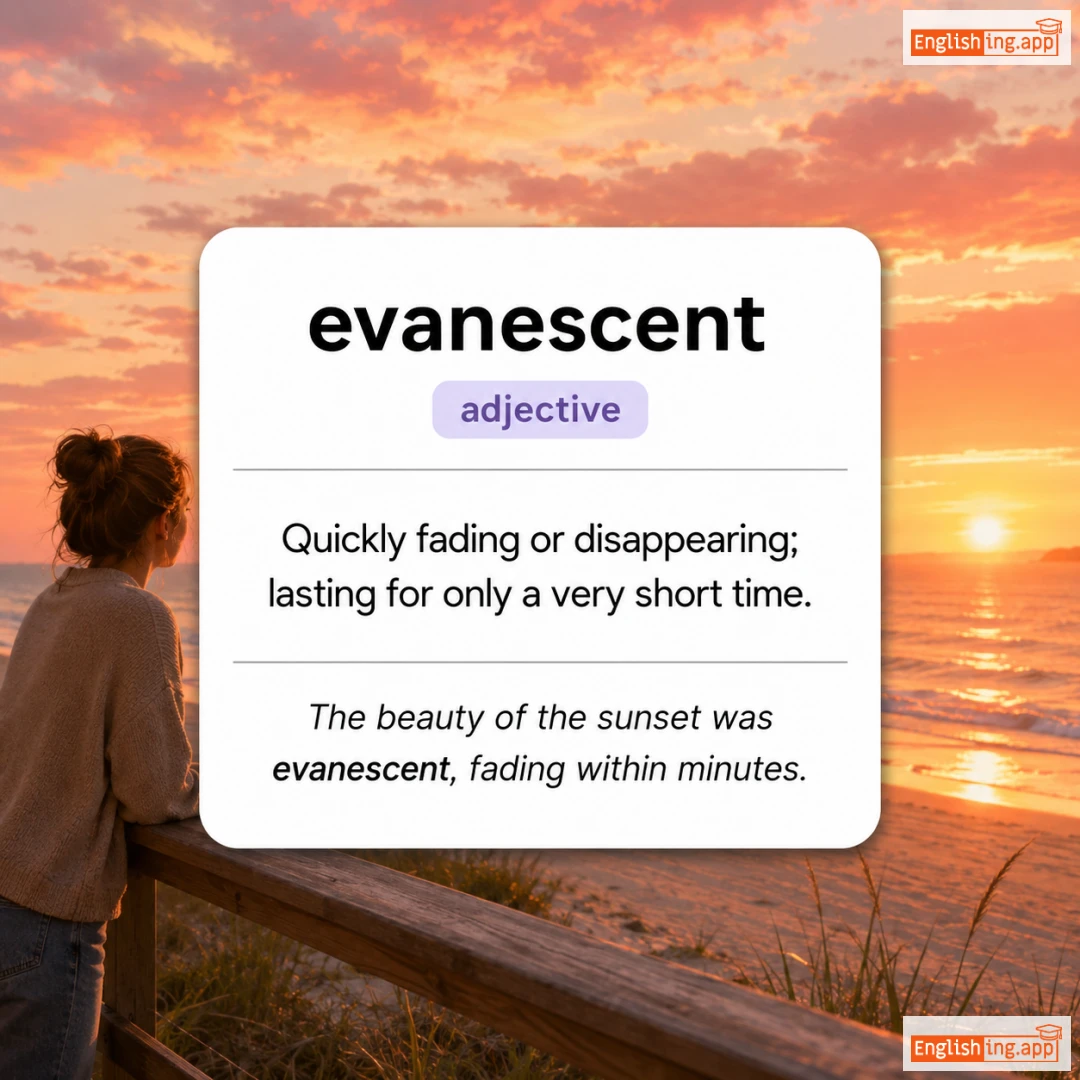
evanescent definition card — visual illustration of the meaning
adjective C2
/ˌɛvəˈnɛsənt/
क्षणिक (kshanik)

Quickly fading or disappearing; lasting for only a very short time.

"The beauty of the sunset was evanescent, fading within minutes."
"सूर्यास्त की सुंदरता क्षणिक थी, कुछ ही मिनटों में गायब हो गई।" (Suryast ki sundarta kshanik thi, kuch hi minaton mein gayab ho gayi.)
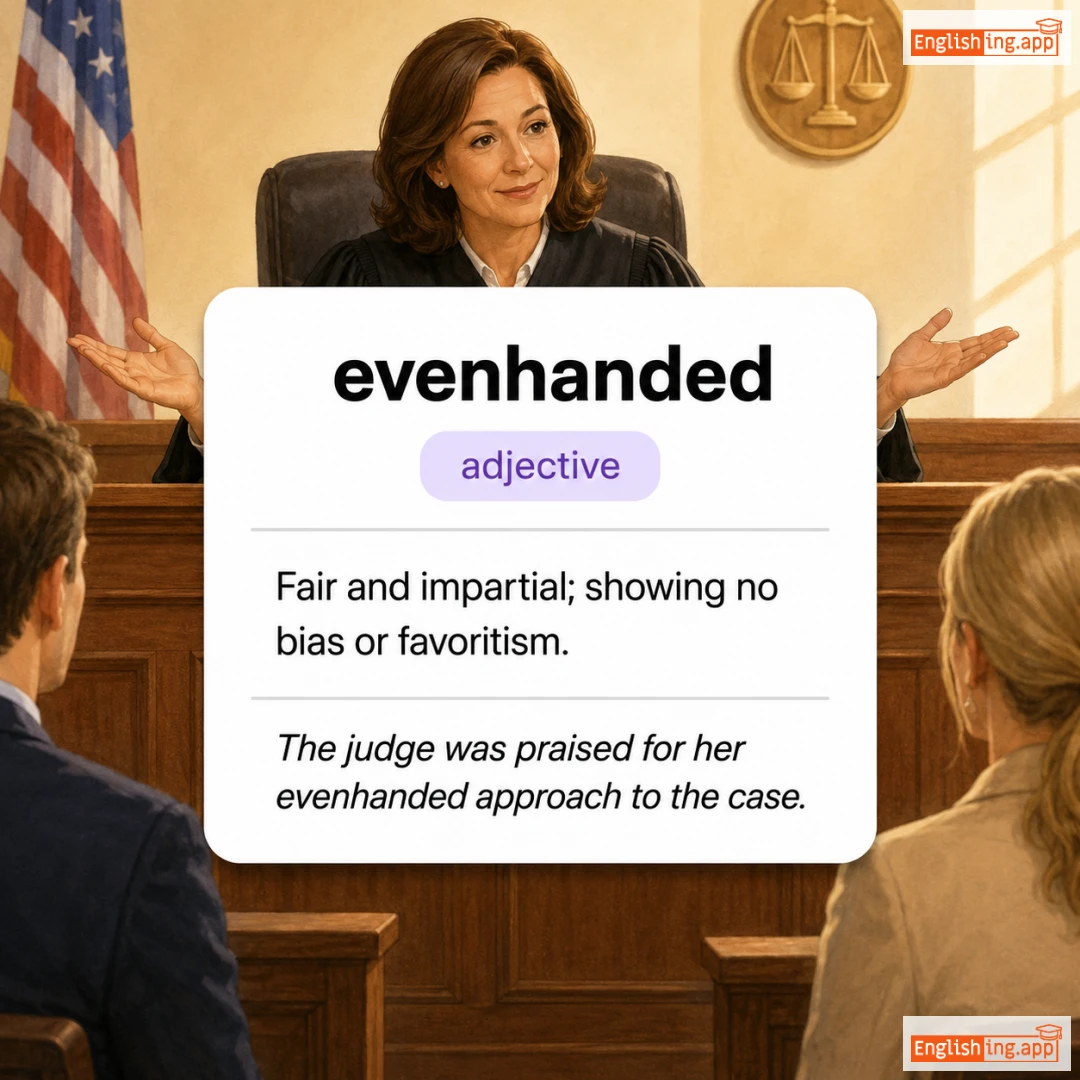
evenhanded definition card — visual illustration of the meaning
adjective C2
/ˌiːvənˈhændɪd/
निष्पक्ष (nishpaksh)

Fair and impartial; showing no bias or favoritism.

"The judge was praised for her evenhanded approach to the case."

"न्यायाधीश को मामले में निष्पक्ष दृष्टिकोण के लिए सराहा गया।" (Nyayadhish ko mamle mein nishpaksh drishtikon ke liye saraha gaya.)
verb C2
/ɪˈvɜːrt/
बाहर की ओर घुमाना (bahar ki or ghoomana)

To turn inside out or outward.

"The surgeon had to evert the eyelid during the procedure."

"सर्जन को ऑपरेशन के दौरान पलक को पलटना पड़ा था।" (Sarjan ko operation ke dauran palk ko palatna pada tha.)
adjective C2
/ˌɛvɪˈdɛnʃəl/
प्रमाणात्मक (pramaatmak)

relating to or providing evidence

"The lawyer presented evidential support for her claims."
"वकील ने अपने दावों के लिए प्रमाणात्मक समर्थन प्रस्तुत किया।" (Vakeel ne apne daavon ke liye pramaatmak samarthan prastut kiya.)
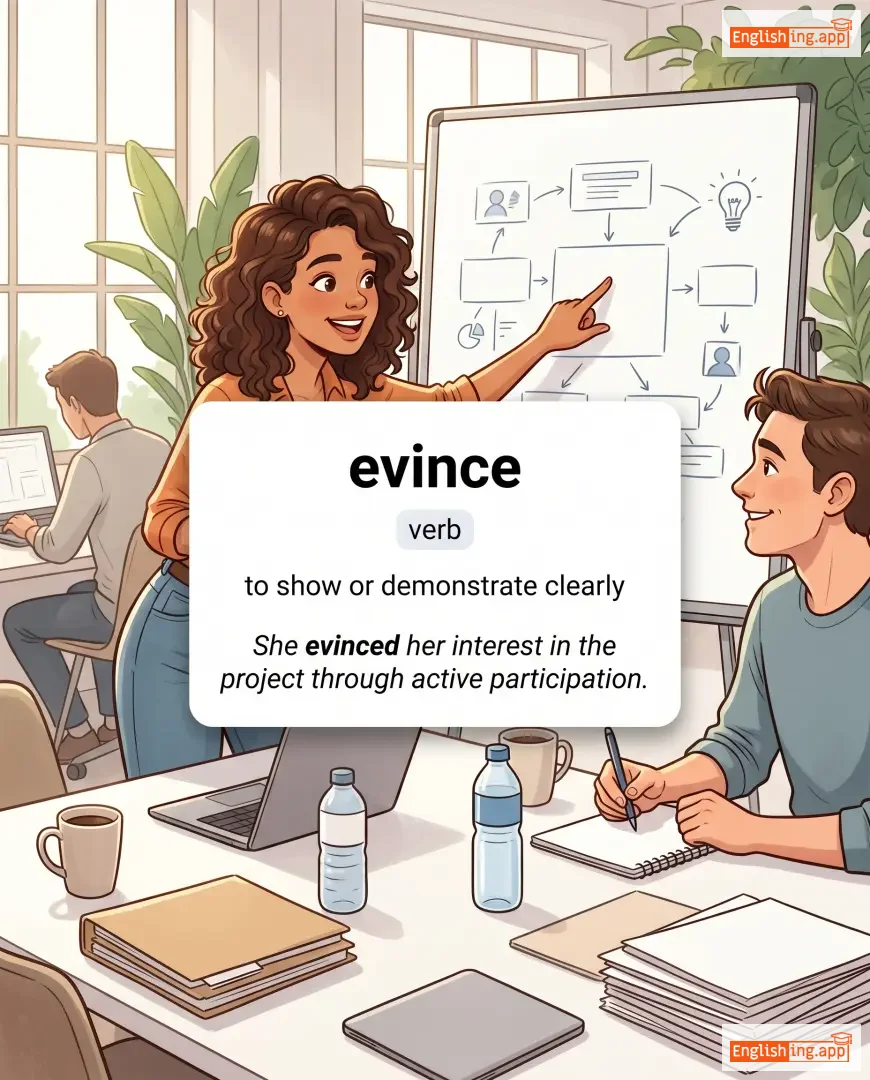
evince definition card — visual illustration of the meaning
verb C2
/ɪˈvɪns/
प्रकट करना (prakat karna)

to show or demonstrate clearly

"She evinced her interest in the project through active participation."

"वह सक्रिय भागीदारी के माध्यम से परियोजना में अपनी रुचि प्रदर्शित कर रही थी।" (Wah sakriya bhagidari ke madhyam se pariyojna mein apni ruchi pradarshit kar rahi thi.)
verb C2
/ɪˈvɪsəˌreɪt/
आंत निकालना, नष्ट करना (aant nikaalna, nasht karna)

to remove the internal organs of; to deprive of essential content

"The critics eviscerated the movie for its weak storyline."
"आलोचकों ने कमजोर कहानी के लिए फिल्म को नष्ट कर दिया।" (Aalochakon ne kamzor kahani ke liye film ko nasht kar diya.)
Ewe definition card — visual illustration of the meaning
noun C2
/juː/
मादा भेड़ (maada bhed)

a female sheep

"The ewe gave birth to two lambs in the spring."

"वसंत में मादा भेड़ ने दो मेमनों को जन्म दिया।" (Vasant mein maada bhed ne do memnon ko janm diya.)
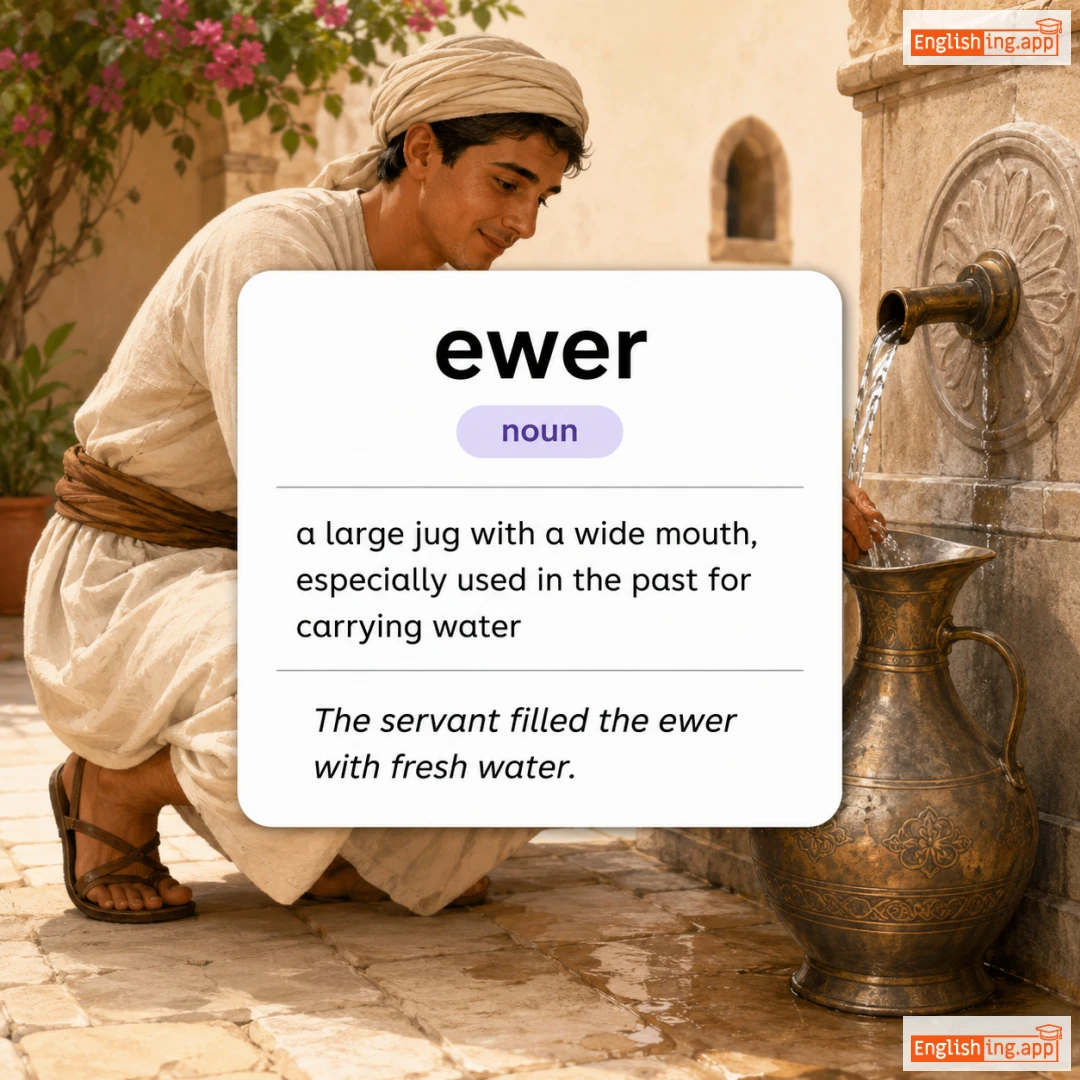
ewer definition card — visual illustration of the meaning
noun C2
/ˈjuːər/
पानी का बर्तन (pani ka bartann)

a large jug with a wide mouth, especially used in the past for carrying water

"The servant filled the ewer with fresh water."
"नौकर ने यूर में ताजा पानी भरा।" (Naukar ne yoor mein taza pani bhara.)
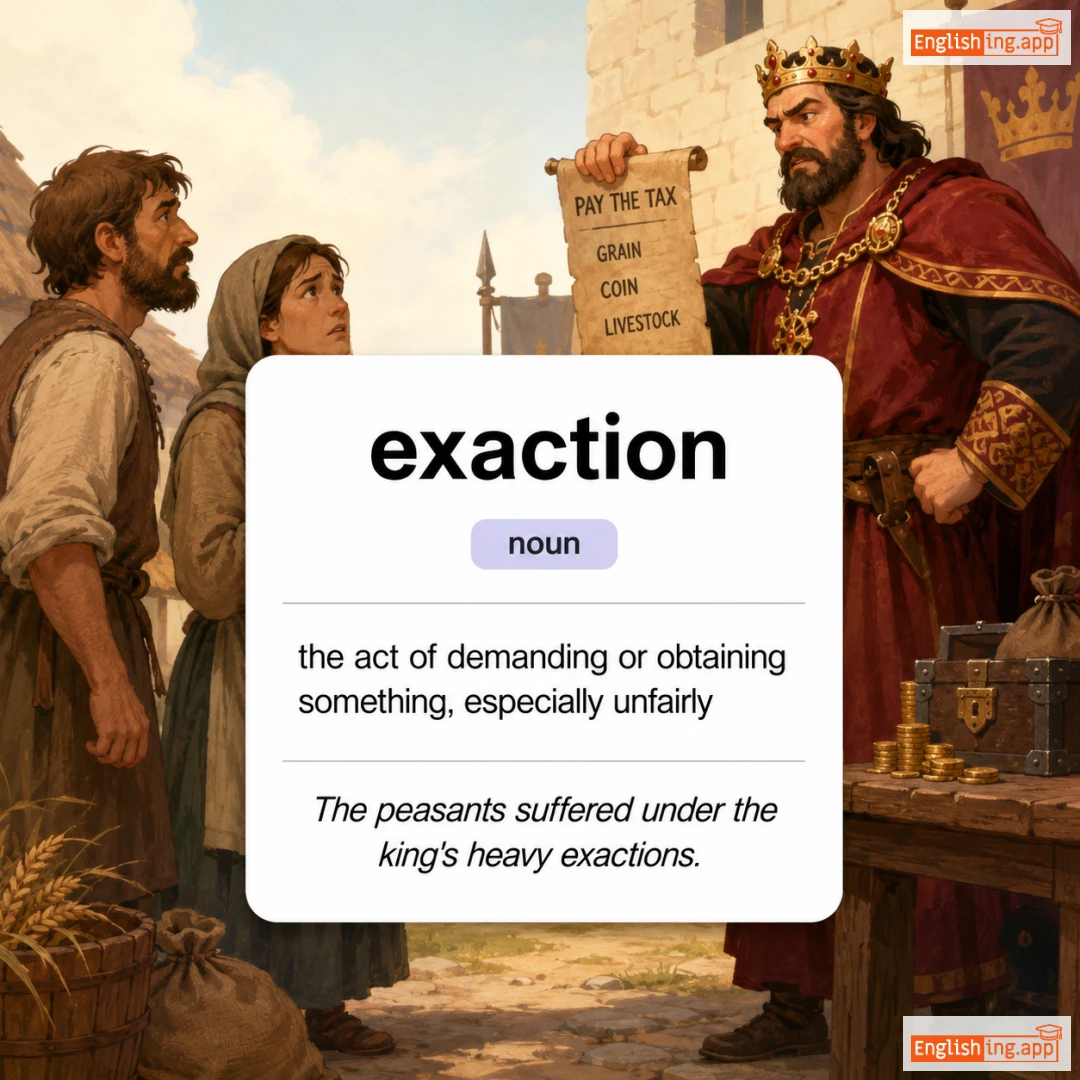
exaction definition card — visual illustration of the meaning
noun C2
/ɪɡˈzækʃən/
जबरदस्ती वसूली (zabardasti vasooli)

the act of demanding or obtaining something, especially unfairly

"The peasants suffered under the king's heavy exactions."

"किसानों ने राजा की भारी जबरदस्ती वसूली के तहत कष्ट उठाया।" (Kisano ne raja ki bhaari zabardasti vasooli ke tahat kasht uthaya.)
adjective C2
/ɪkˈsɛpʃənəbl/
आपत्तिजनक (apattijanak)

Open to objection; causing disapproval.

"His rude remarks were considered exceptionable by everyone present."

"उसके अपशब्दों को सभी ने आपत्तिजनक माना।" (uske apashabdon ko sabhi ne apattijanak mana.)
noun C2
/ɪksˈtʃɛkər/
कोष (kosh)

The treasury of a state or country.

"The government announced new measures to improve the exchequer."

"सरकार ने कोष में सुधार के लिए नए उपायों की घोषणा की।" (sarkar ne kosh mein sudhaar ke liye naye upayon ki ghoshna ki.)
noun C2
/ɪkˈsɪʒən/
उत्क्षेदन (utkshedan)

the act of cutting something out, especially by surgical removal

"The excision of the infected tissue prevented further complications."

"संक्रमित ऊतक की उत्क्षेदन से आगे की जटिलताएँ रोकी गईं।" (Sankramit utak ki utkshedan se aage ki jatiltaayein roki gayi.)
noun C2
/ˌɛksaɪˈteɪʃən/
उत्तेजना (uttejna)

a state of great excitement or the process of stimulating activity

"The news created great excitation among the fans."

"समाचार ने प्रशंसकों के बीच बड़ी उत्तेजना पैदा की।" (Samachar ne prashansako ke beech badi uttejna paida ki.)
verb C2
/ɛkˈskɔːrieɪt/
कड़ी आलोचना करना (kadi alochana karna)

To strongly criticize someone; to denounce severely.

"The critic excoriated the film for its poor script."

"समीक्षक ने फिल्म को उसके खराब पटकथा के लिए कड़ी आलोचना की।" (Sameekshak ne film ko uske kharab pataktha ke liye kadi alochana ki.)
noun C2
/ɪkˈskrɛsəns/
असामान्य वृद्धि (asaamany vruddhi)

An abnormal outgrowth or lump, often considered unattractive.

"The building was considered an excrescence on the landscape."

"इमारत को परिदृश्य पर एक असामान्य वृद्धि माना गया था।" (Imaarat ko paridrishya par ek asaamany vruddhi maana gaya tha.)
verb C2
/ɪkˈskruːʃieɪt/
तीव्र पीड़ा देना (teevra peeda dena)

to cause intense pain or suffering

"The injury excruciated him with unbearable pain."

"चोट ने उसे असहनीय दर्द दिया।" (Chot ne use asahniya dard diya.)
exculpate definition card — visual illustration of the meaning
verb C2
/ˈɛkskʌlpeɪt/
दोषमुक्त करना (doshmukto karna)

to show or declare that someone is not guilty of wrongdoing

"The lawyer worked hard to exculpate his client."

"वकील ने अपने मुवक्किल को दोषमुक्त करने के लिए कड़ी मेहनत की।" (Vakeel ne apne muvakil ko doshmukto karne ke liye kadi mehnat ki.)
adjective C2
/ɪkˈskɜːsɪv/
विचलित (vichalit)

Tending to digress or wander; moving away from the main subject.

"His excursive lecture left the students confused about the main topic."

"उसका विचलित व्याख्यान छात्रों को मुख्य विषय से भ्रमित कर दिया।" (Uska vichalit vyakhyan chhatron ko mukhya vishay se bhramit kar diya.)
execrable definition card — visual illustration of the meaning
adjective C2
/ˈeksɪkrəbl/
अत्यंत घृणित (atyant ghrinit)

Extremely bad or unpleasant.

"The movie was so execrable that many people left the theater early."

"यह फिल्म इतनी घृणित थी कि कई लोग जल्दी ही सिनेमा हॉल से बाहर चले गए।" (Yeh film itni ghrinit thi ki kai log jaldi hi cinema hall se bahar chale gaye.)
verb C2
/ˈeksɪkreɪt/
नफ़रत करना (nafrat karna)

To feel or express great loathing or hatred for something.

"The community execrated the corrupt politician."

"समुदाय ने भ्रष्ट राजनेता की निंदा की।" (Samuday ne bhrasht rajneta ki ninda ki.)
noun C2
/ˌɛksɪˈkreɪʃən/
निंदा (ninda)

An act of cursing or denouncing someone or something with hatred.

"The dictator’s name was spoken with execration after his fall."

"स्वतंत्रता के बाद डिक्टेटर का नाम निंदा के साथ उच्चारित किया गया।" (Svatantrata ke baad dictator ka naam ninda ke saath uccharit kiya gaya.)
noun C2
/ˌɛksəˈdʒiːsɪs/
व्याख्या (vyakhya)

A critical explanation or interpretation of a text, especially a religious scripture.

"The professor gave a detailed exegesis of the biblical passage."

"प्रोफेसर ने बाइबिलिक पाठ का एक विस्तृत व्याख्यान दिया।" (Professor ne baibilik path ka ek vistaarit vyakhyaan diya.)
noun C2
/ɪɡˈzɛmplɑːr/
आदर्श (aadarsh)

A model or pattern to be copied or imitated.

"She is an exemplar of kindness and generosity."

"वह दया और उदारता की एक आदर्श है।" (Woh daya aur udarta ki ek aadarsh hai.)
adjective C2
/ɪɡˈzɔːstɪbəl/
नष्ट होने योग्य (nasht hone yogya)

able to be used up completely; not infinite

"Coal and oil are exhaustible resources."

"कोयला और तेल नष्ट होने योग्य संसाधन हैं।" (Koyla aur tel nasht hone yogya sansadhan hain.)
verb C2
/ɪɡˈzɪləreɪt/
उत्साहित करना (utsahit karna)

To make someone feel very happy, animated, or excited.

"The mountain view exhilarated the travelers."
"पहाड़ का दृश्य यात्रियों को उत्साहित कर रहा था।" (Pahaad ka drishya yatrion ko utsahit kar raha tha.)
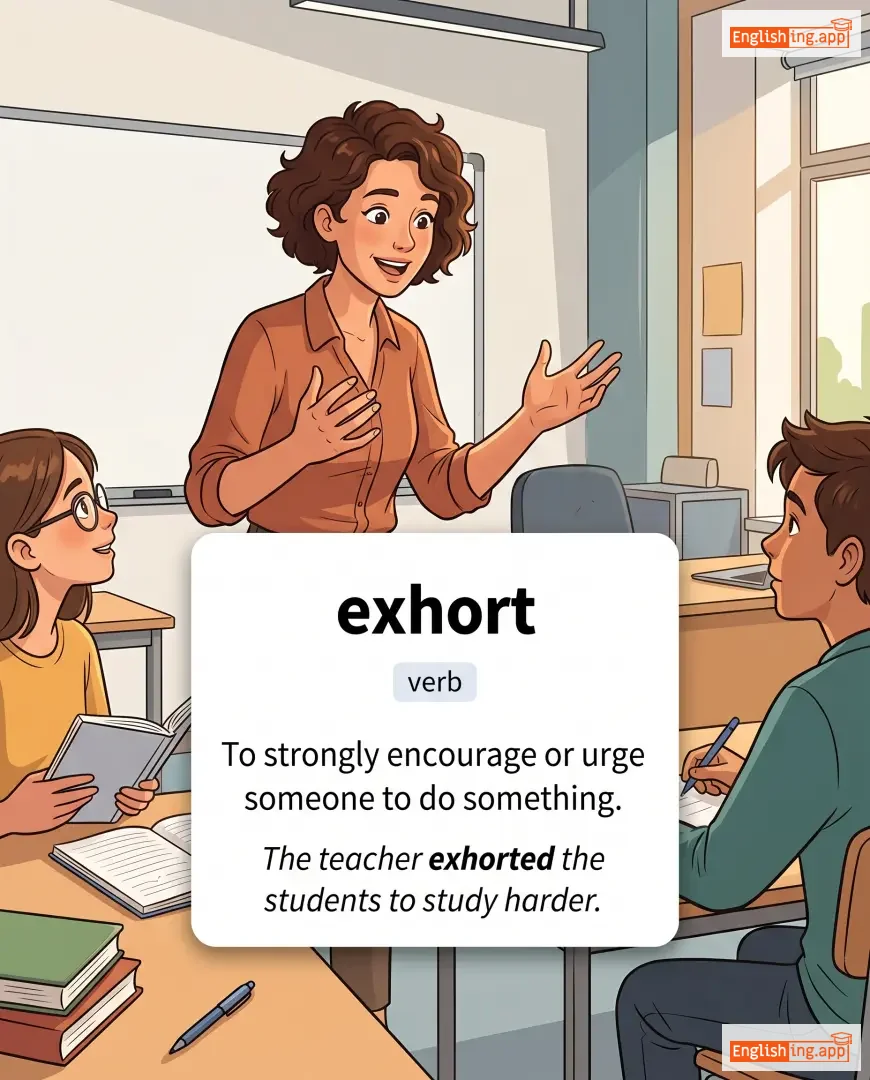
exhort definition card — visual illustration of the meaning
verb C2
/ɪɡˈzɔːrt/
उत्साहित करना (utshaahit karna)

To strongly encourage or urge someone to do something.

"The teacher exhorted the students to study harder."

"शिक्षक ने छात्रों को कठिनाई से अध्ययन करने के लिए उत्साहित किया।" (Shikshak ne chhatron ko kathinai se adhyayan karne ke liye utshaahit kiya.)
verb C2
/ɛksˈhjuːm/
किसी चीज़ को खोदकर निकालना (kisi cheez ko khodkar nikaalna)

to dig out something buried, especially a body from the ground

"The archaeologists decided to exhume the ancient remains."
"पुरातत्वविदों ने प्राचीन अवशेषों को खोदने का निर्णय लिया।" (Puratatvavido ne prachin avasheshon ko khodne ka nirnay liya.)
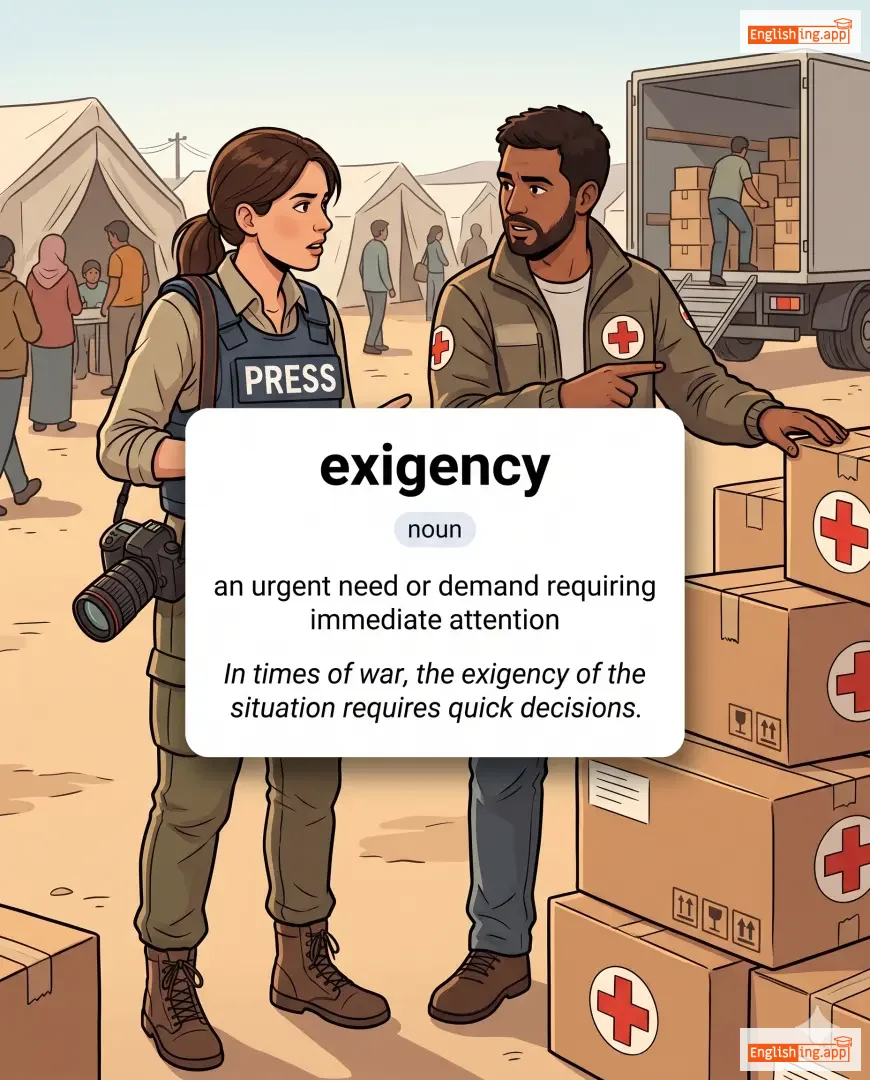
exigency definition card — visual illustration of the meaning
noun C2
/ˈɛksɪdʒənsi/
आपातकालीन आवश्यकता (aapatkaaleen avashyakta)

an urgent need or demand requiring immediate attention

"In times of war, the exigency of the situation requires quick decisions."

"युद्ध के समय, स्थिति की आपातकालीन आवश्यकता त्वरित निर्णय की मांग करती है।" (Yudh ke samay, sthiti ki aapatkaaleen avashyakta tvarit nirnay ki maang karti hai.)
adjective C2
/ˈɛksɪdʒənt/
तत्काल (tatkaal)

demanding immediate action or attention; urgent

"The patient’s exigent condition required immediate surgery."

"मरीज की तत्काल स्थिति ने तत्काल सर्जरी की मांग की।" (Mareez ki tatkaal sthiti ne tatkaal sargari ki maang ki.)
noun C2
/ˌɛksɪˈɡjuːɪti/
अभाव (abhav)

the quality of being scanty or meager in amount

"The exiguity of resources made the project difficult to complete."

"संसाधनों की कमी ने परियोजना को पूरा करना कठिन बना दिया।" (Sansadhanon ki kami ne pariyojna ko poora karna kathin bana diya.)
adjective C2
/ɛɡˈzɪɡjuəs/
अल्प (alp)

small in amount; scanty or inadequate

"They survived on exiguous rations during the journey."

"वे यात्रा के दौरान अल्प राशन पर जीवित रहे।" (Ve yatra ke dauran alp rashion par jeevit rahe.)
noun C2
/ɪɡˈzɔːrbɪtəns/
अत्यधिकता (atyadhikta)

The quality of being excessive, unreasonable, or going beyond proper limits.

"The exorbitance of the hotel's prices shocked the tourists."
"होटल की कीमतों की अत्यधिकता ने पर्यटकों को चौंका दिया।" (Hotel ki keematon ki atyadhikta ne paryatakon ko chonka diya.)
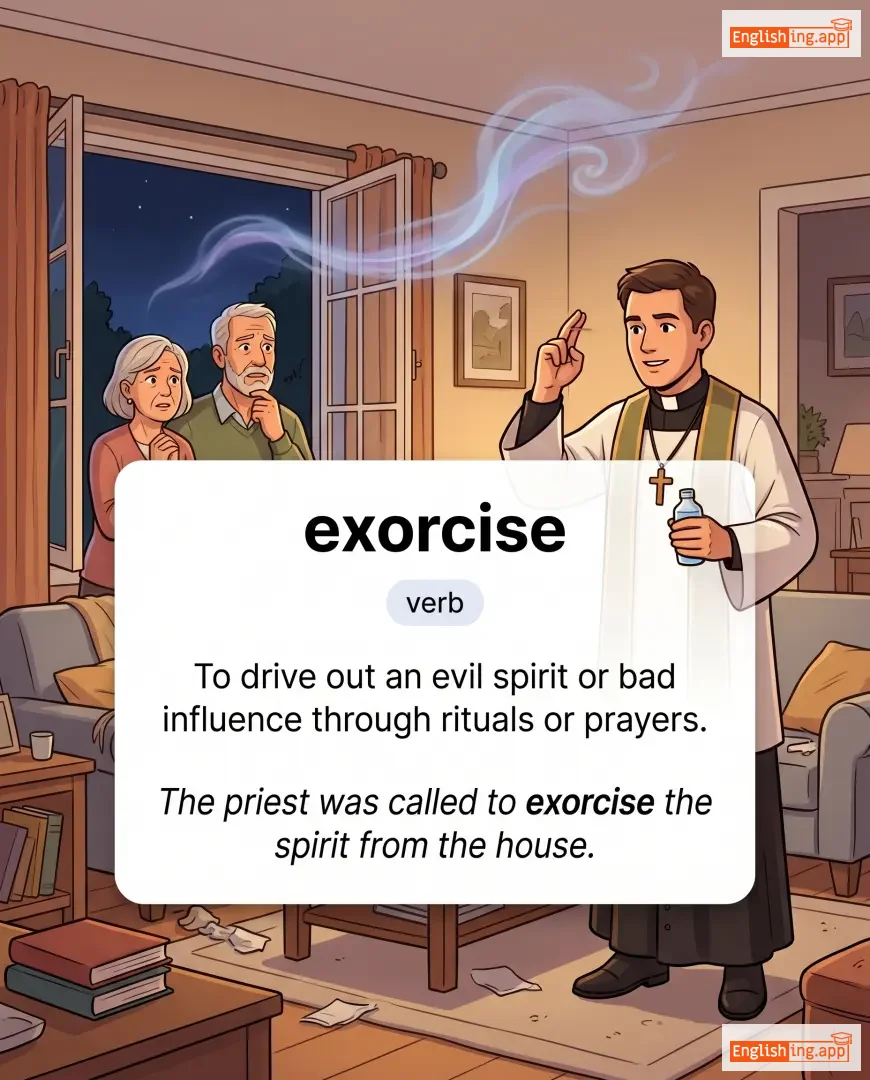
exorcise definition card — visual illustration of the meaning
verb C2
/ˈeksɔːrsaɪz/
दुष्ट आत्मा निकालना (dusht atma nikaalna)

To drive out an evil spirit or bad influence through rituals or prayers.

"The priest was called to exorcise the spirit from the house."
"पादरी को घर से आत्मा निकालने के लिए बुलाया गया था।" (Paadri ko ghar se atma nikaalne ke liye bulaya gaya tha.)
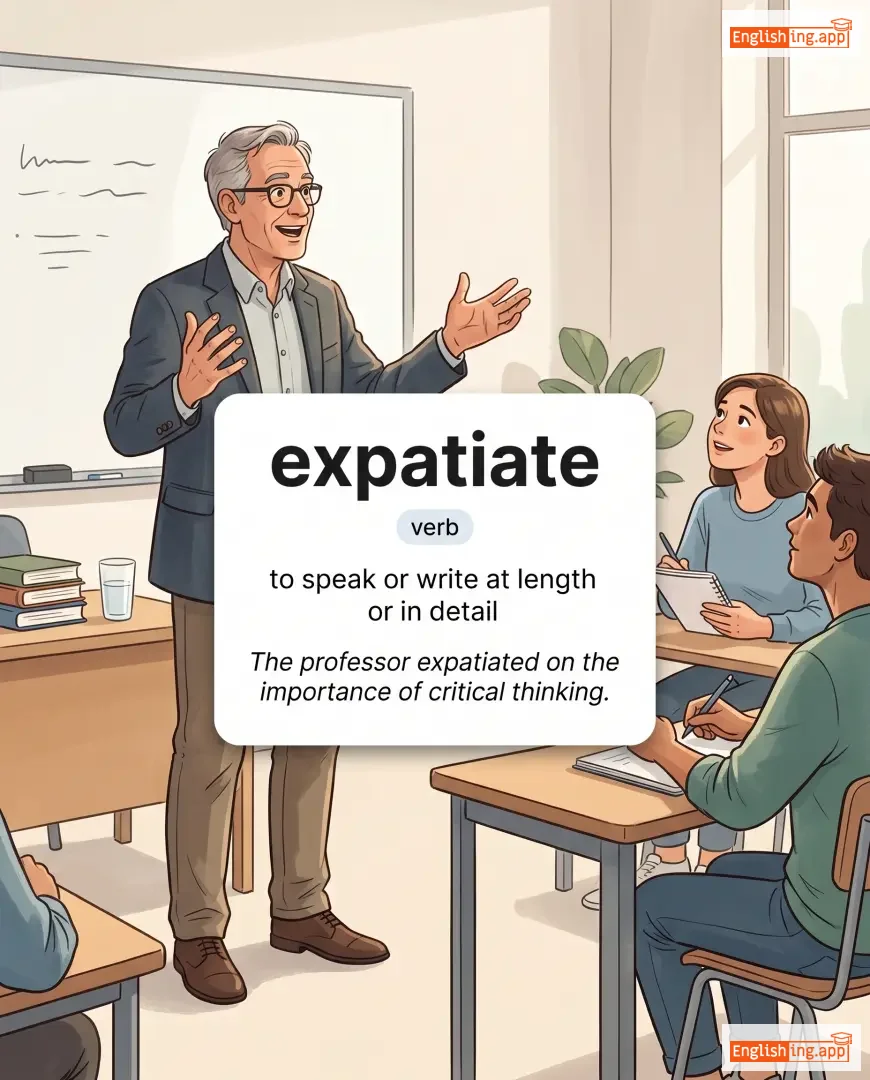
expatiate definition card — visual illustration of the meaning
verb C2
/ɪkˈspeɪʃiˌeɪt/
विस्तृत रूप से बोलना या लिखना (vistrit roop se bolna ya likhna)

to speak or write at length or in detail

"The professor expatiated on the importance of critical thinking."

"प्रोफेसर ने आलोचनात्मक सोच के महत्व पर विस्तृत रूप से चर्चा की।" (Professor ne alochanatmak soch ke mahatva par vistrit roop se charcha ki.)
verb C2
/ɪkˈspɛktəreɪt/
कफ उगलना (kaf uglaana)

to cough up and spit out mucus from the throat or lungs

"The patient began to expectorate thick mucus."

"रोगी ने गाढ़ा कफ उगलना शुरू किया।" (Rogi ne gadha kaf uglaana shuru kiya.)
noun C2
/ɪkˈspiːdiənsi/
सुविधावाद (suvidhavad)

the quality of being convenient and practical despite possibly being improper or immoral

"He acted out of political expediency rather than principle."
"उसने सिद्धांत से ज्यादा राजनीतिक सुविधावाद के कारण काम किया।" (Usne siddhant se zyada rajneetik suvidhavad ke karan kaam kiya.)
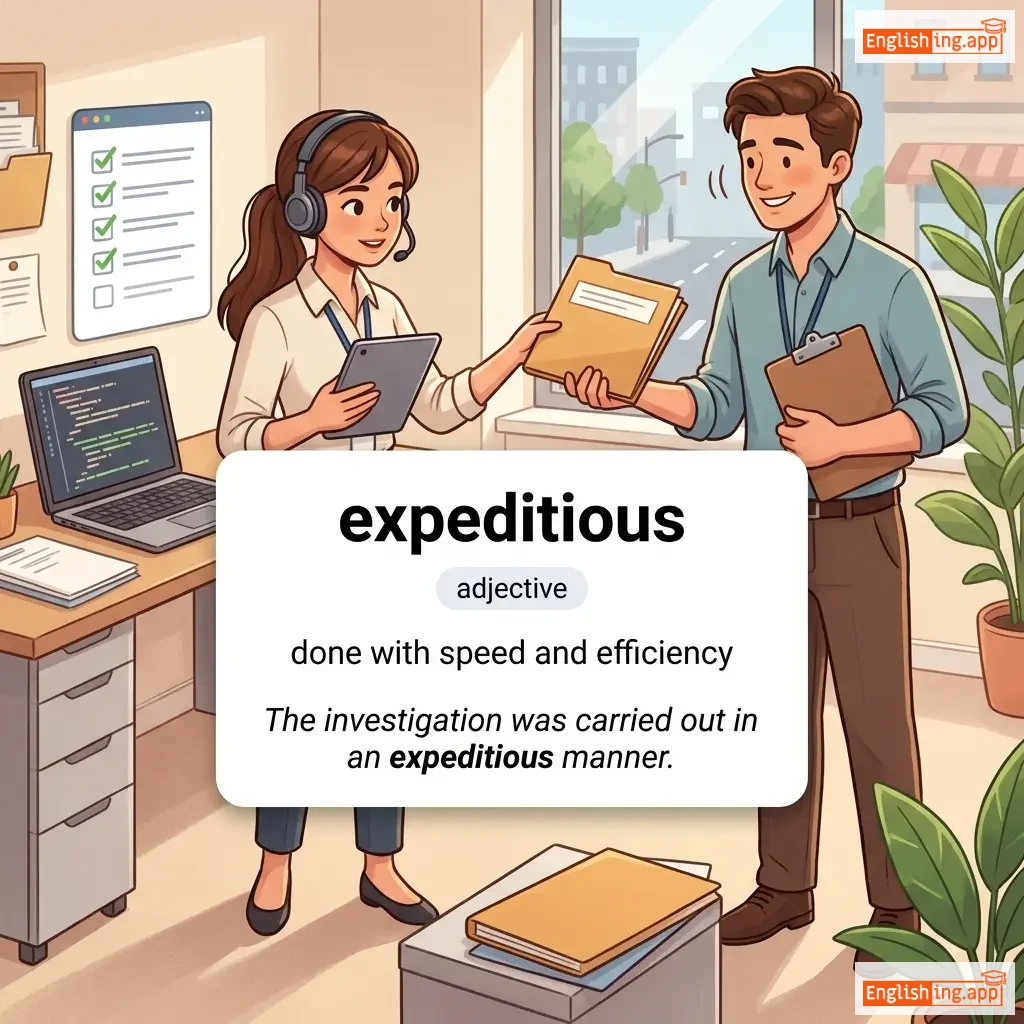
expeditious definition card — visual illustration of the meaning
adjective C2
/ˌɛkspəˈdɪʃəs/
त्वरित और प्रभावी (tvarit aur prabhavi)

done with speed and efficiency

"The investigation was carried out in an expeditious manner."

"जांच एक त्वरित और प्रभावी तरीके से की गई थी।" (Jaanch ek tvarit aur prabhavi tareeke se ki gayi thi.)
adverb C2
/ˌɛkspəˈdɪʃəsli/
त्वरित और प्रभावी ढंग से (tvarit aur prabhavi dhang se)

in a quick and efficient manner

"The application was processed expeditiously."
"आवेदन को त्वरित और प्रभावी ढंग से संसाधित किया गया था।" (Aavedan ko tvarit aur prabhavi dhang se sansadhit kiya gaya tha.)
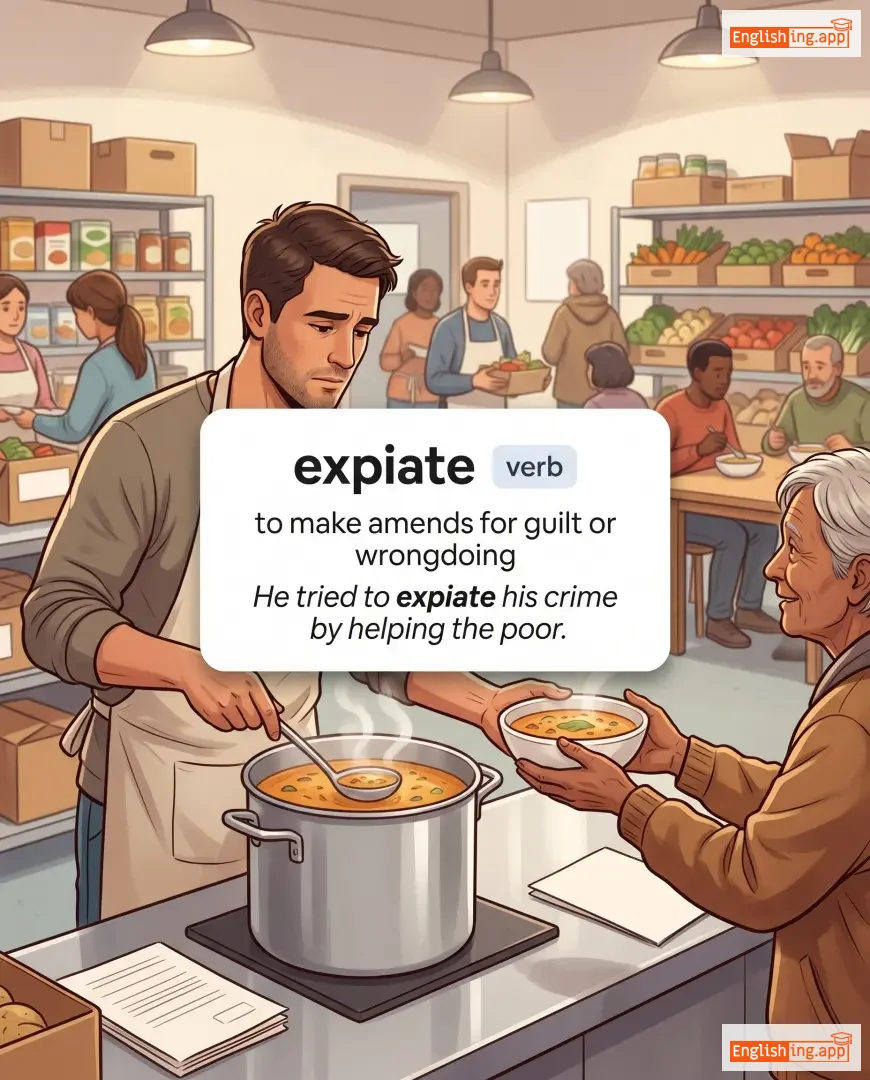
expiate definition card — visual illustration of the meaning
verb C2
/ˈɛkspieɪt/
प्रायश्चित करना (prayashchit karna)

to make amends for guilt or wrongdoing

"He tried to expiate his crime by helping the poor."

"उसने गरीबों की मदद करके अपने अपराध का प्रायश्चित करने की कोशिश की।" (Usne gareebon ki madad karke apne apraadh ka prayashchit karne ki koshish ki.)
noun C2
/ˈɛksplətɪv/
अपशब्द (apashabd)

a word or phrase used as an exclamation, often offensive or profane

"He shouted an expletive when he dropped the hammer on his foot."

"उसने अपना हथौड़ा पैर पर गिरने पर एक अपशब्द कहा।" (Usne apna hathoda pair par girne par ek apashabd kaha.)
adjective C2
/ˈɛksplɪkəbəl/
व्याख्यायोग्य (vyakhyayogya)

able to be explained or understood

"His sudden anger was explicable given the stressful situation."
"उसकी अचानक गुस्सा होना व्याख्यायोग्य था, given the तनावपूर्ण स्थिति।" (Uski achanak gussa hona vyakhyayogya tha, given the tanavpoorn sthiti.)
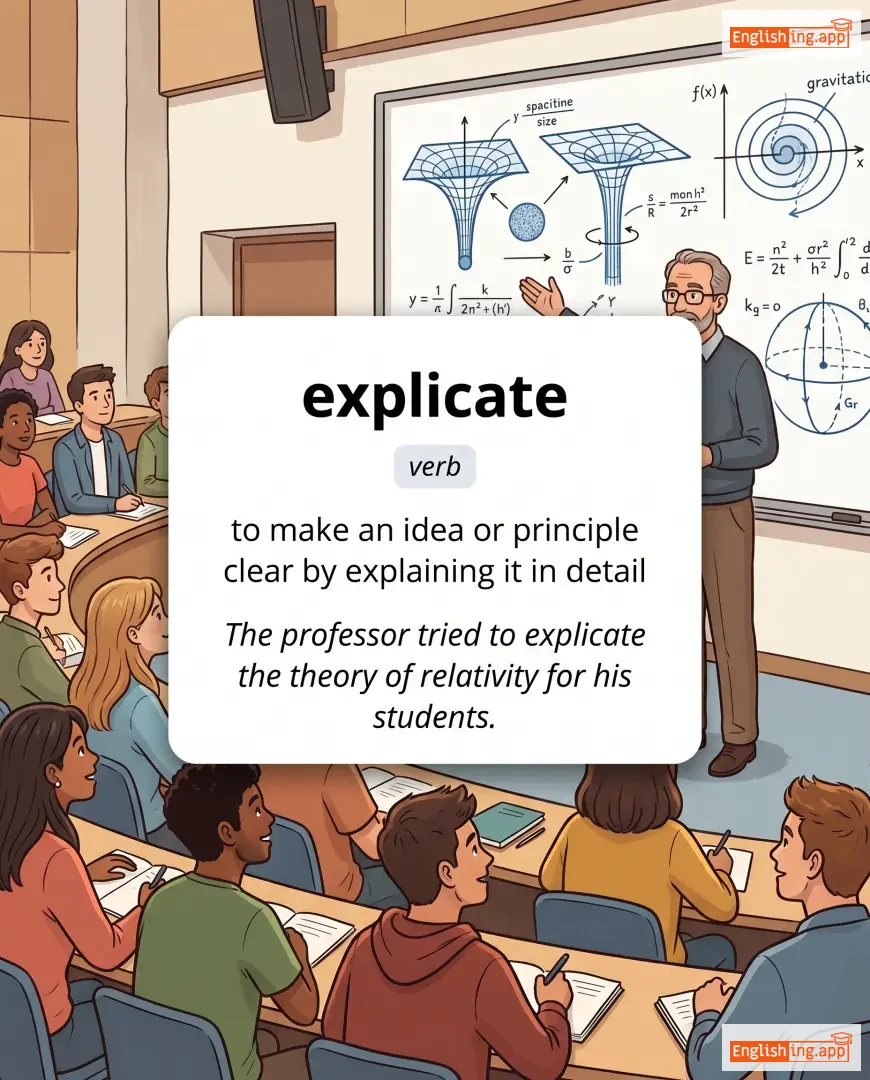
explicate definition card — visual illustration of the meaning
verb C2
/ˈɛksplɪkeɪt/
व्याख्या करना (vyakhya karna)

to make an idea or principle clear by explaining it in detail

"The professor tried to explicate the theory of relativity for his students."

"प्रोफेसर ने अपने छात्रों के लिए सापेक्षता के सिद्धांत को स्पष्ट करने की कोशिश की।" (Professor ne apne chhatron ke liye saapekshata ke siddhant ko spashth karne ki koshish ki.)
noun C2
/ˈɛksplɪkeɪtər/
व्याख्याता (vyakhyata)

a person who explains or interprets something in detail

"The critic served as an explicator of the poet’s complex works."
"समीक्षक कवि के जटिल कार्यों की व्याख्या करने वाले के रूप में सेवा करते थे।" (Sameekshak kavi ke jatil karyon ki vyakhya karne wale ke roop mein seva karte the.)
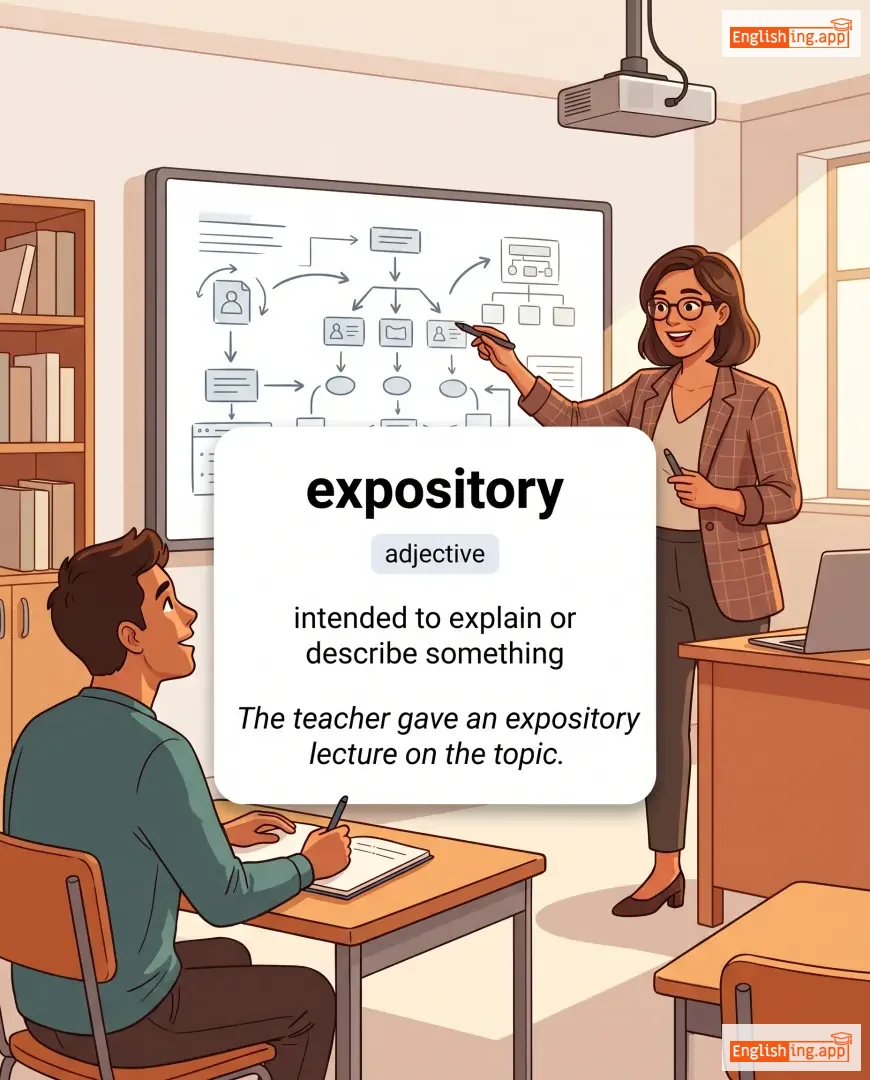
expository definition card — visual illustration of the meaning
adjective C2
/ɪkˈspɒzɪtəri/
व्याख्यात्मक (vyakhyatmak)

intended to explain or describe something

"The teacher gave an expository lecture on the topic."

"शिक्षक ने इस विषय पर एक व्याख्यात्मक व्याख्यान दिया।" (Shikshak ne is vishay par ek vyakhyatmak vyakhyan diya.)
verb C2
/ɪkˈspɒstjʊleɪt/
असहमति व्यक्त करना (asahmati vyakt karna)

to express strong disapproval or disagreement

"She expostulated with her friend about the risky decision."

"वह अपने दोस्त से जोखिमपूर्ण निर्णय पर असहमति व्यक्त कर रही थी।" (Vah apne dost se jokhimpurn nirnay par asahmati vyakt kar rahi thi.)
noun C2
/ɪkˌspɒstjʊˈleɪʃən/
विरोध (virodh)

the act of expressing protest or disagreement

"His expostulation against the unfair rules was ignored."
"उसका विरोध अनौचित्यपूर्ण नियमों के खिलाफ अनदेखा किया गया था।" (Uska virodh anauchityapurn niyamon ke khilaf andekha kiya gaya tha.)
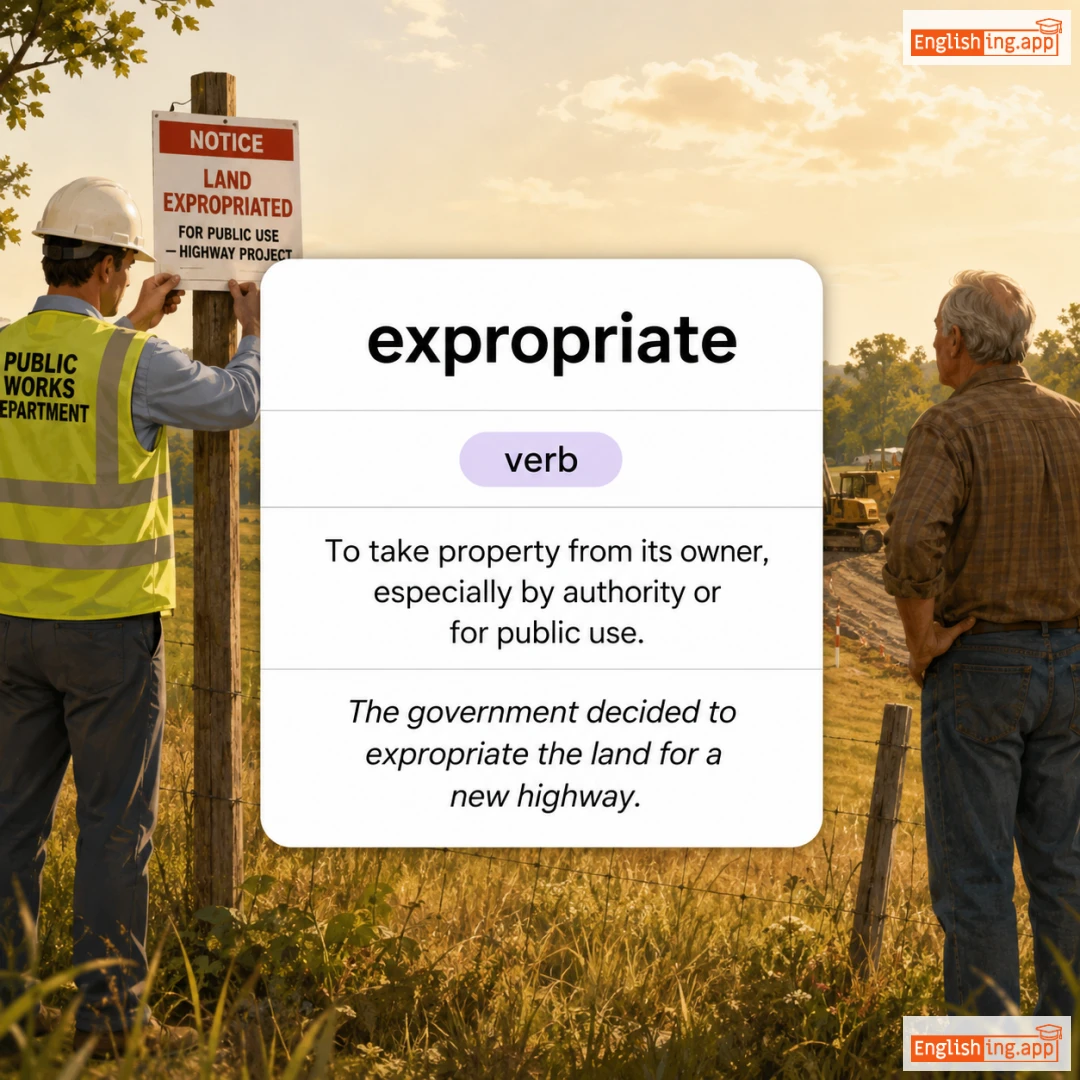
expropriate definition card — visual illustration of the meaning
verb C2
/ɛksˈproʊprieɪt/
अधिग्रहण करना (adhigrahan karna)

To take property from its owner, especially by authority or for public use.

"The government decided to expropriate the land for a new highway."
"सरकार ने एक नई राजमार्ग के लिए ज़मीन अधिग्रहण करने का फ़ैसला किया।" (Sarkar ne ek nai rajmarg ke liye zameen adhigrahan karne ka faisla kiya.)
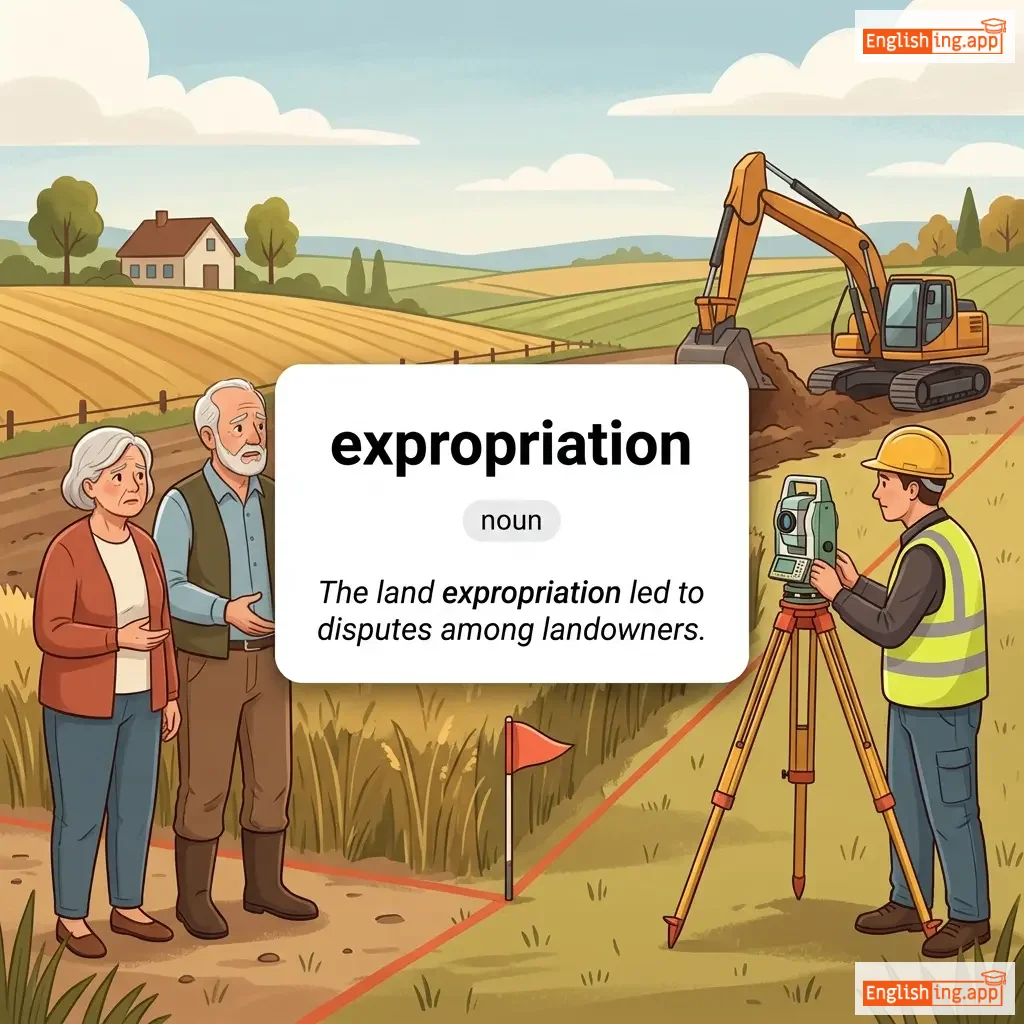
expropriation definition card — visual illustration of the meaning
noun C2
/ɪkˌsprəʊ.priˈeɪ.ʃən/
संपत्ति अधिग्रहण (sampatti adhigrahan)

The act of government taking private property, also known as confiscation, nationalization, or seizure.

"The land expropriation led to disputes among landowners."

"जमीन अधिग्रहण के कारण भूमि मालिकों के बीच विवाद उत्पन्न हुआ।" (Jameen adhigrahan ke karan bhoomi malikoon ke beech vivaad utpann hua.)
verb C2
/ɪkˈspʌndʒ/
मिटाना (mitana)

To erase or remove completely, often something unwanted.

"He managed to expunge the embarrassing memory from his mind."

"उसने अपनी शर्मनाक याद को अपने मन से हटा दिया।" (Usne apni sharmnak yaad ko apne mann se hata diya.)
verb C2
/ˈekspərˌɡeɪt/
अश्लील अंश हटाना (ashleel ansh hatana)

To remove offensive or objectionable parts from a text or speech.

"The publisher decided to expurgate the novel before reprinting it."

"प्रकाशक ने पुनर्मुद्रण से पहले उपन्यास को संशोधित करने का निर्णय लिया।" (prakashak ne punarmudran se pahle upanyas ko sanshodhit karne ka nirnay liya)