
語彙集

英単語辞書 | 単語の意味、定義、例文

renege definition card — visual illustration of the meaning
verb C1
/rɪˈnɛɡ/
нарушить обещание (narushit' obeshchanie)

to go back on a promise, agreement, or commitment

"The company reneged on its promise to increase wages."

"Компания нарушила обещание повысить зарплаты." (Kompaniya narushila obeshchanie povysit' zarplaty.)
verb C1
/rɪˈnaʊns/
отказаться (otkazat'sya)

to formally declare rejection of something, such as a claim, belief, or way of life

"She renounced her citizenship to move abroad permanently."

"Она отказалась от своего гражданства, чтобы переехать за границу на постоянное место жительства." (Ona otkazalas' ot svoego grazhdanstva, chtoby pereyekhat' za granitsu na postoyannoye mesto zhitel'stva.)
Renown definition card — visual illustration of the meaning
noun C1
/rɪˈnaʊn/
известность (izvestnost)

the condition of being widely known and highly respected

"The scientist gained international renown for his groundbreaking research."

"Учёный приобрёл международную известность благодаря своим революционным исследованиям." (Uchonyy priobrelyo mezhdunarodnuyu izvestnost' blagodarya svoim revolyutsionnym issledovaniyam.)
adjective C1
/rɪˈper.ə.bəl/
ремонтируемый (remontiruemyy)

able to be fixed or mended; capable of being repaired

"The broken phone is repairable with the right parts."
"Сломанный телефон можно починить с правильными деталями." (Slomannyy telefon mozhno pochinit' s pravil'nymi detal'yami.)
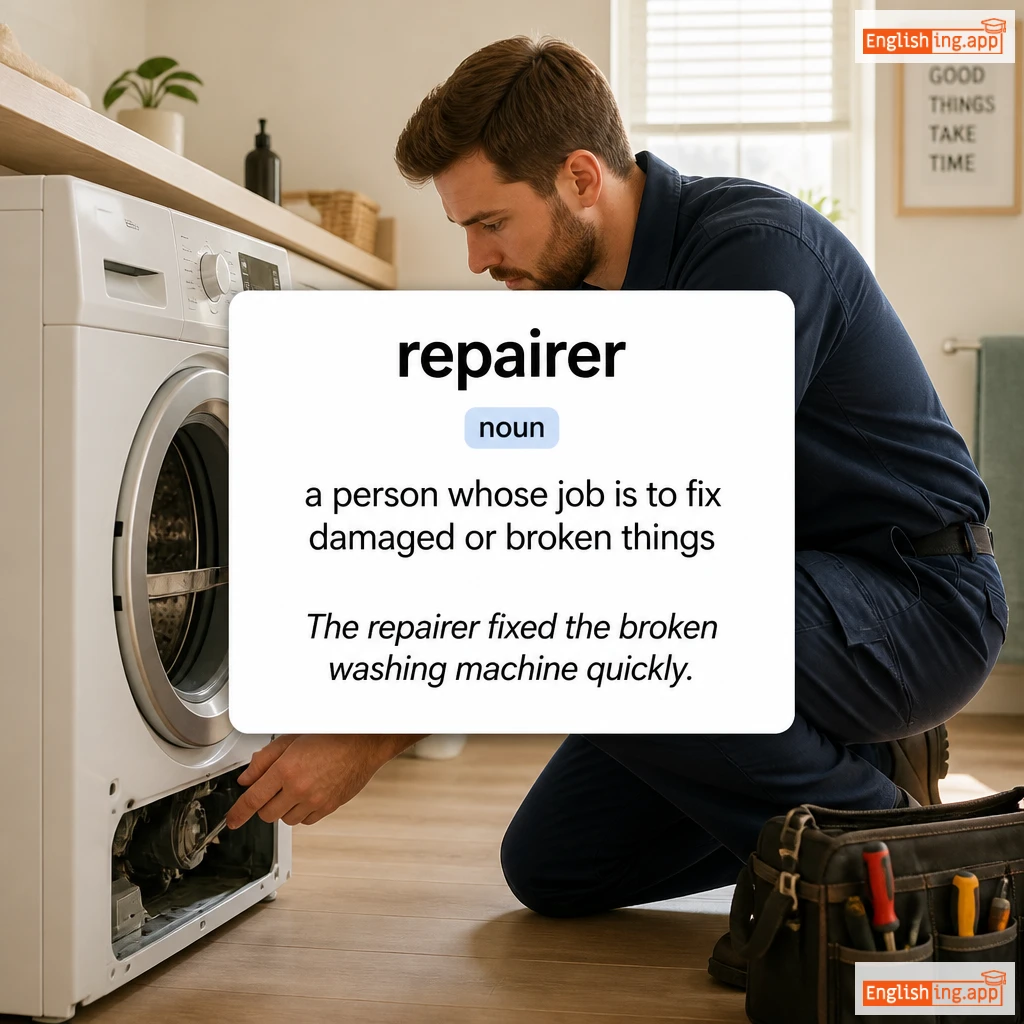
repairer definition card — visual illustration of the meaning
noun C1
/rɪˈpɛərə/
ремонтник (remontnik)

a person whose job is to fix damaged or broken things

"The repairer fixed the broken washing machine quickly."
"Ремонтник быстро починил сломанную стиральную машину." (remontnik bystro pochinil slomannuyu stiralnuyu mashinu)
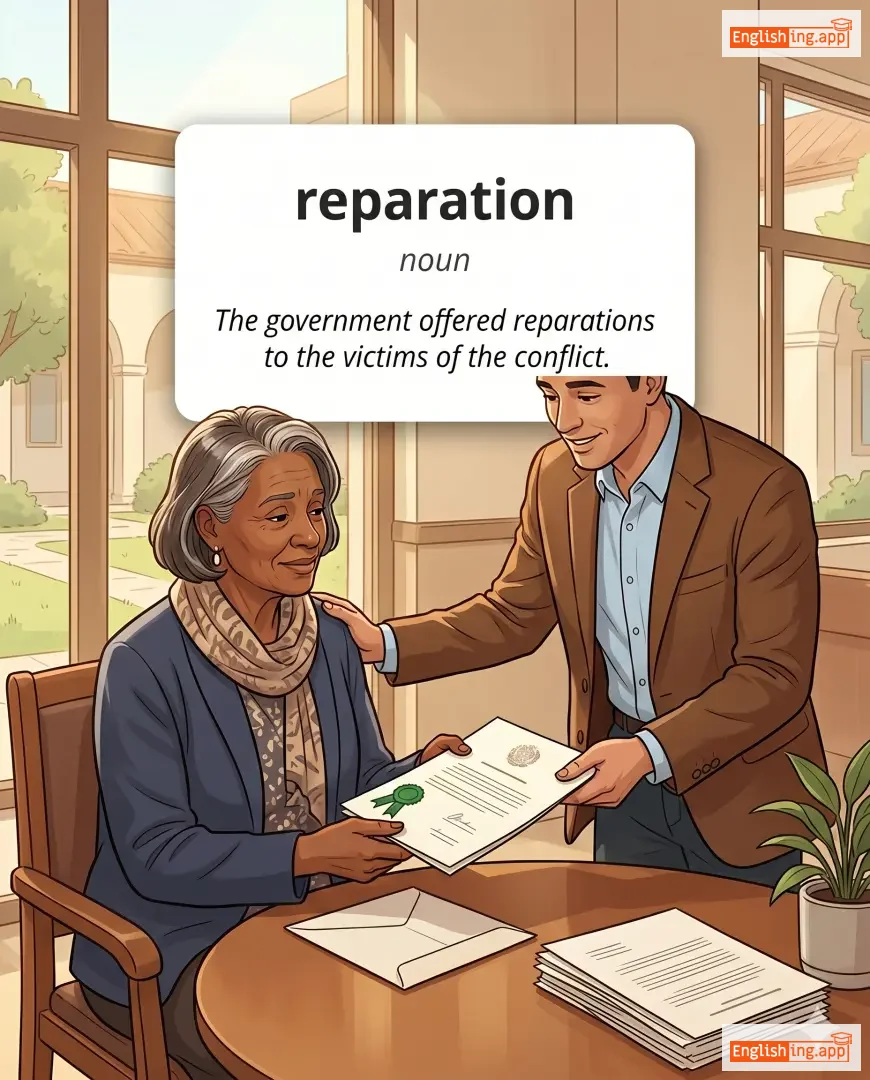
reparation definition card — visual illustration of the meaning
noun C1
/ˌrɛpəˈreɪʃən/
репарации (reparatsii)

the making of amends for a wrong done by paying money or helping those who were wronged

"The government offered reparations to the victims of the conflict."

"Правительство предложило репарации жертвам конфликта." (Pravitel'stvo predlozhilo reparatsii zhertvam konflikta.)
verb C1
/riːˈpeɪ.tri.eɪt/
репатриировать (repatriirovat)

To return someone to their own country, often after war or imprisonment.

"The government worked to repatriate the refugees safely."

"Правительство работало над тем, чтобы безопасно репатриировать беженцев." (Pravitel'stvo rabotalo nad tem, chtoby bezopasno repatriirovat' bezhentsev.)
verb C1
/rɪˈpiːl/
отменить (otmenit)

To officially cancel or revoke a law or decision.

"The government decided to repeal the outdated law."
"Правительство решило отменить устаревший закон." (Pravitel'stvo reshilo otmenit' ustarevshij zakon.)
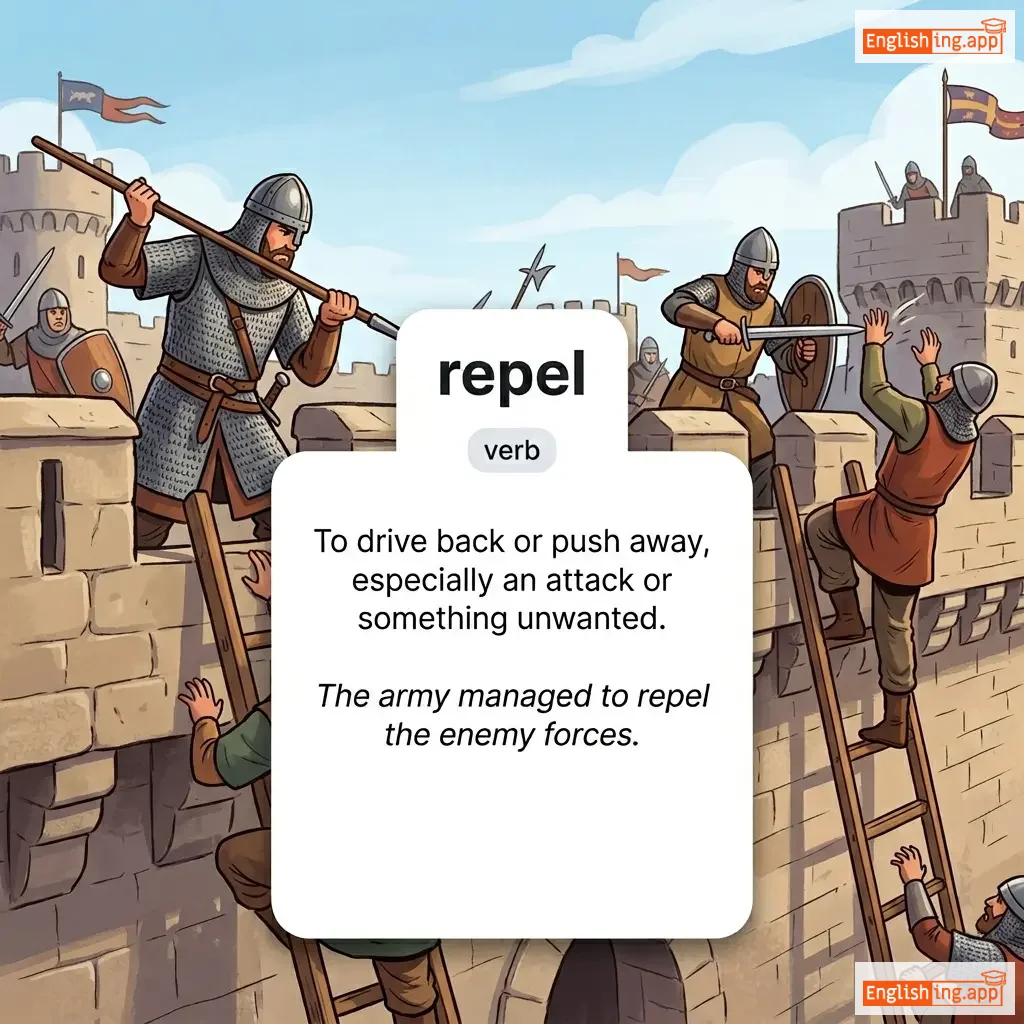
repel definition card — visual illustration of the meaning
verb C1
/rɪˈpɛl/
отражать (otrazhat)

To drive back or push away, especially an attack or something unwanted.

"The army managed to repel the enemy forces."

"Армия смогла отразить вражеские силы." (Armiya smogla otrazit' vragekiye sily.)
adjective C1
/rɪˈpɛlənt/
отпугивающий (otpugivayushchiy)

Able to drive away something, especially insects or unpleasant things; causing disgust or distaste.

"This cream is highly effective as a mosquito repellent."
"Этот крем очень эффективен как средство от комаров." (Etot krem ochen' effektiven kak sredstva ot komarov.)
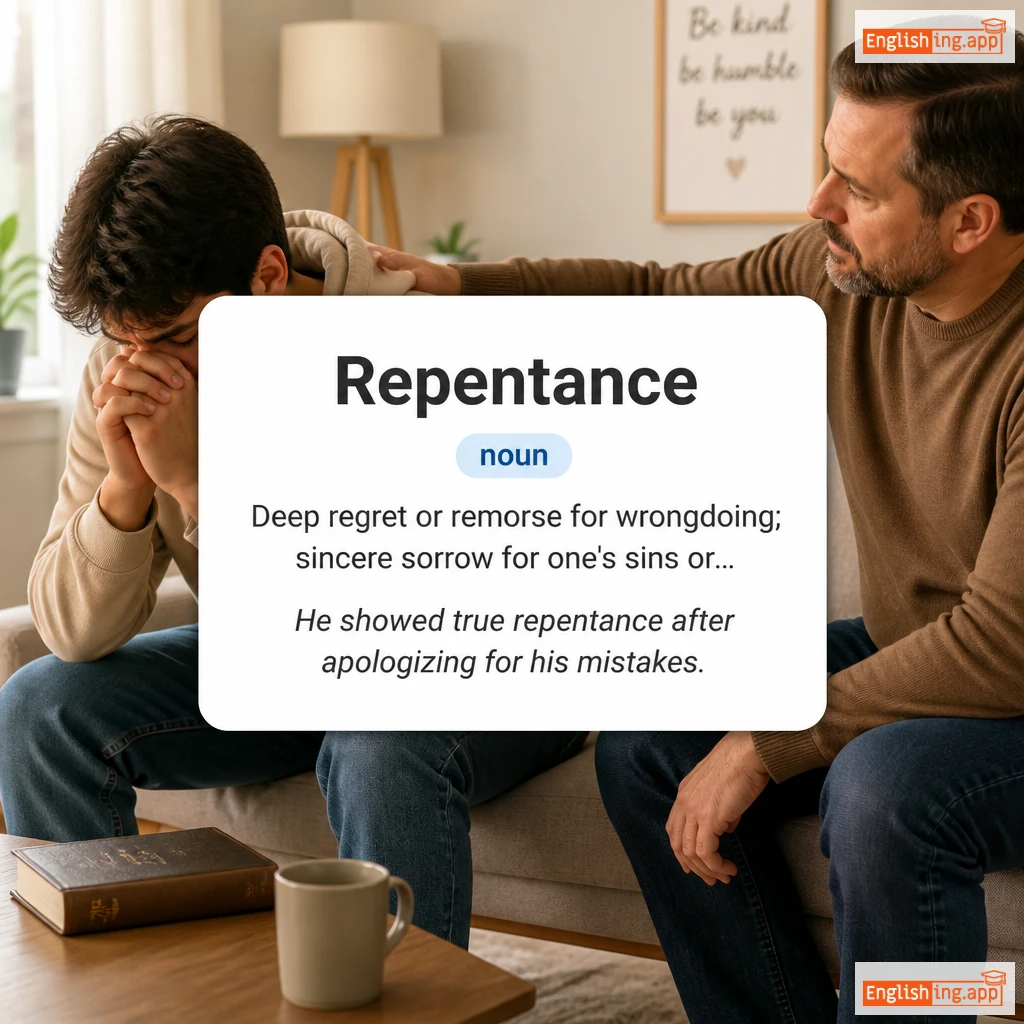
Repentance definition card — visual illustration of the meaning
noun C1
/rɪˈpɛntəns/
раскаяние (raskayanie)

Deep regret or remorse for wrongdoing; sincere sorrow for one's sins or mistakes.

"He showed true repentance after apologizing for his mistakes."

"Он продемонстрировал настоящее раскаяние после того, как извинился за свои ошибки." (On prodemonstriroval nastoyashchee raskayanie posle togo, kak izviniilsya za svoi oshibki.)
adjective C1
/rɪˈpen.tənt/
раскаявшийся; сожалеющий; виновный (raskayavshiysya; sozhaleyushchiy; vinovnyy)

feeling or expressing sincere regret and remorse; sorry for one's actions

"The repentant thief returned the stolen money."
"Раскаявшийся вор вернул украденные деньги." (Raskayavshiysya vor vernul ukradennyye den'gi.)
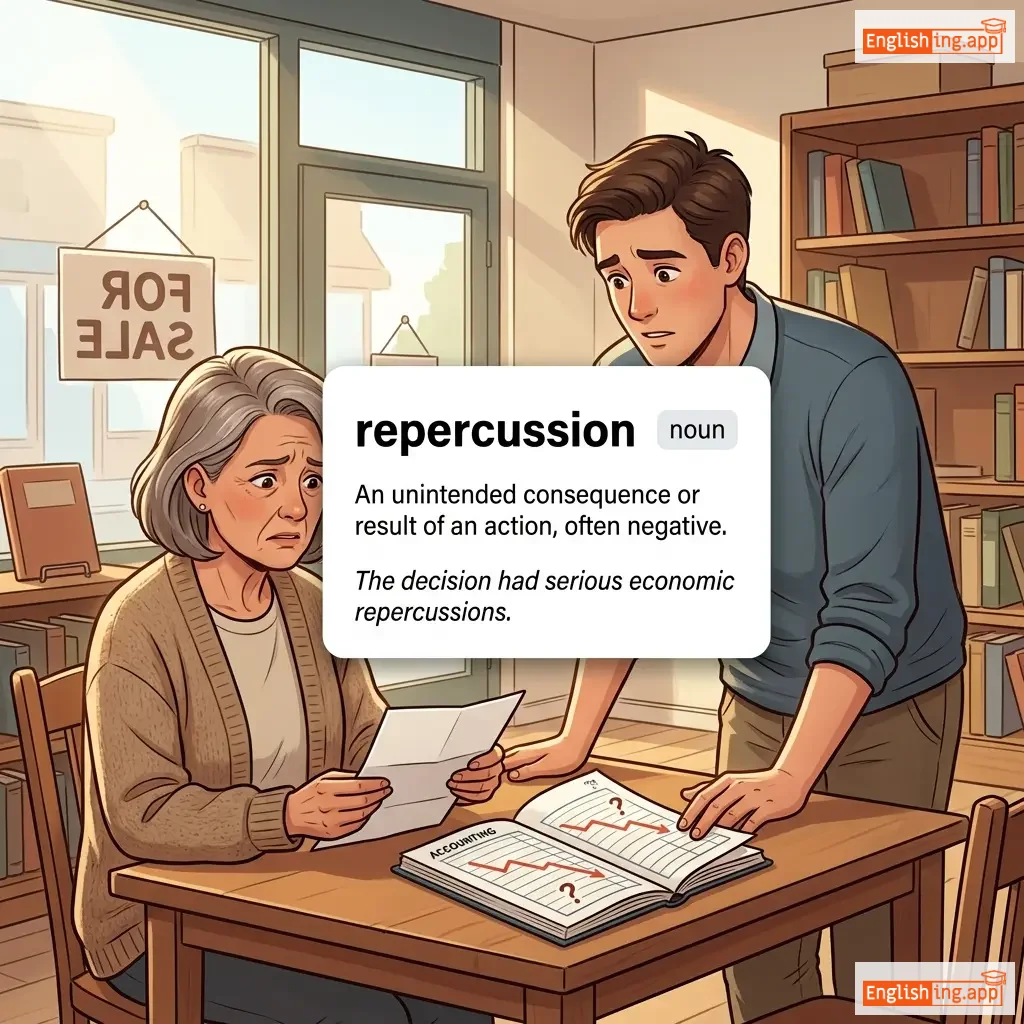
repercussion definition card — visual illustration of the meaning
noun C1
/ˌriːpərˈkʌʃən/
последствие (riperkushn)

An unintended consequence or result of an action, often negative.

"The decision had serious economic repercussions."
"Решение имело серьёзные экономические последствия." (Reshenie imelo seryoznyye ekonomicheskie posledstviya)
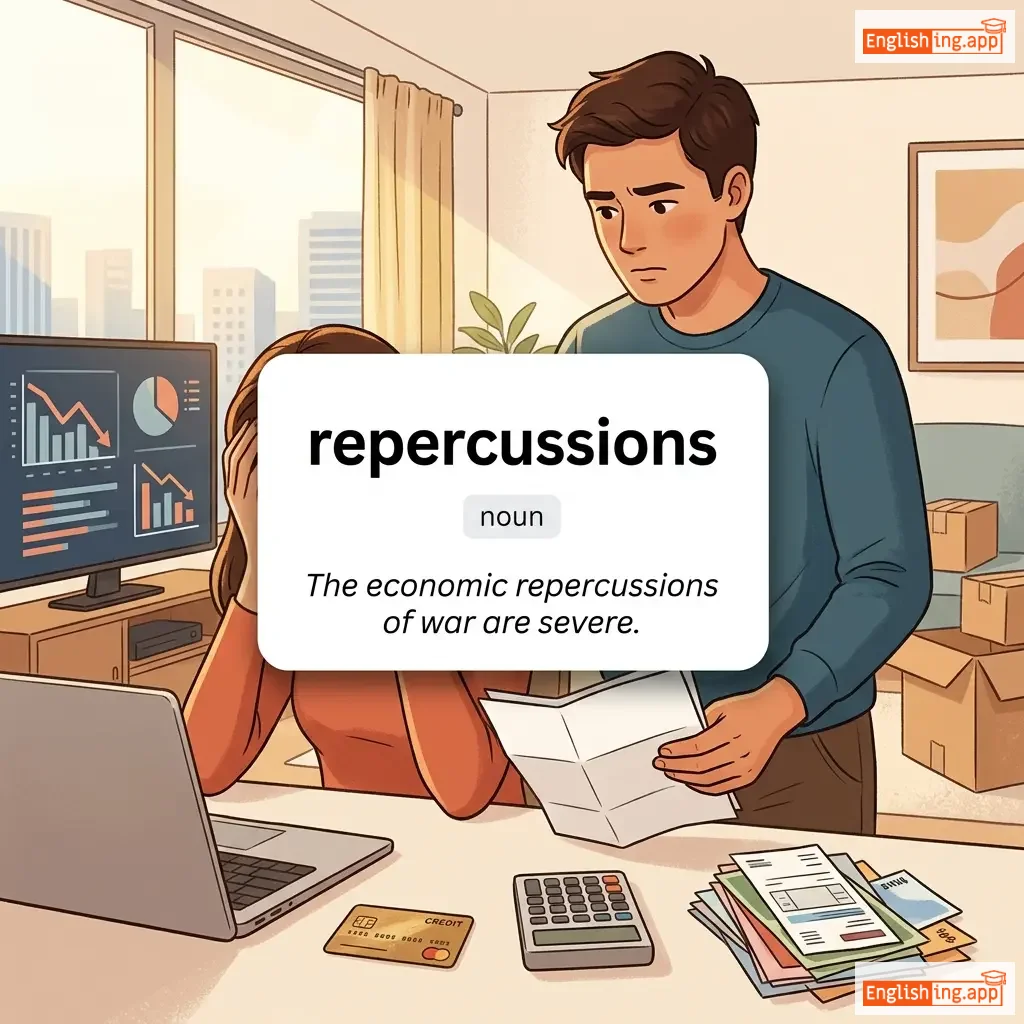
repercussions definition card — visual illustration of the meaning
noun C1
/ˌriː.pəˈkʌʃ.ənz/
последствия (posledstviya)

An unintended consequence occurring some time after an event or action; the effects or results of something.

"The economic repercussions of war are severe."
"Экономические последствия войны тяжелы." (Ekonomicheskie posledstviya voyny tyazhely.)
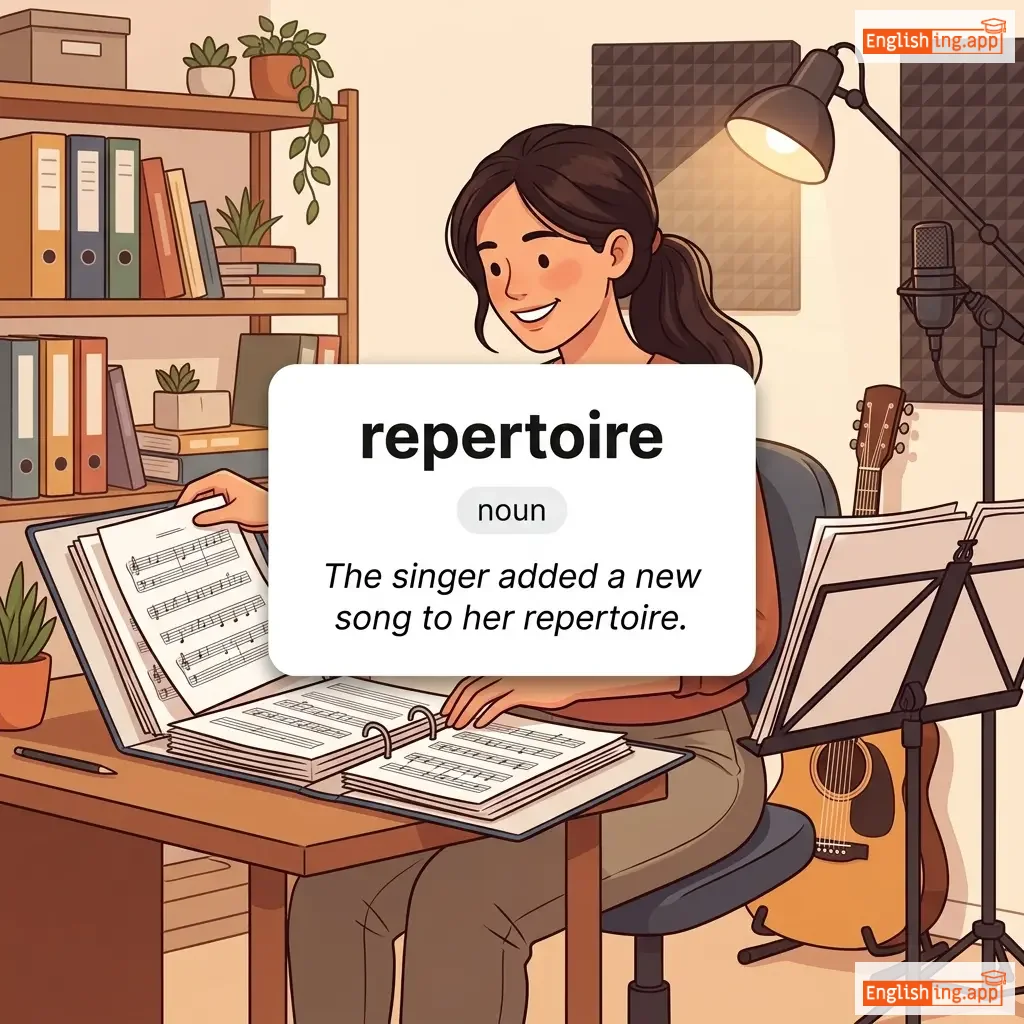
repertoire definition card — visual illustration of the meaning
noun C1
/ˈrɛpərˌtwɑːr/
репертуар (repertuar)

The entire range of skills, works, or pieces that a person or group is prepared to perform or use.

"The singer added a new song to her repertoire."

"Певица добавила новую песню в свой репертуар." (Pevitsa dobavila novuyu pesnyu v svoy repertuar.)
noun C1
/ˈrɛpərˌtɔːri/
репертуар (repertuar)

A collection of works that a company, performer, or institution regularly performs; also a storehouse of information or skills.

"The theater has a repertory of classic plays."
"В театре есть репертуар классических пьес." (V teatre yest' repertuar klassicheskikh p'yes.)
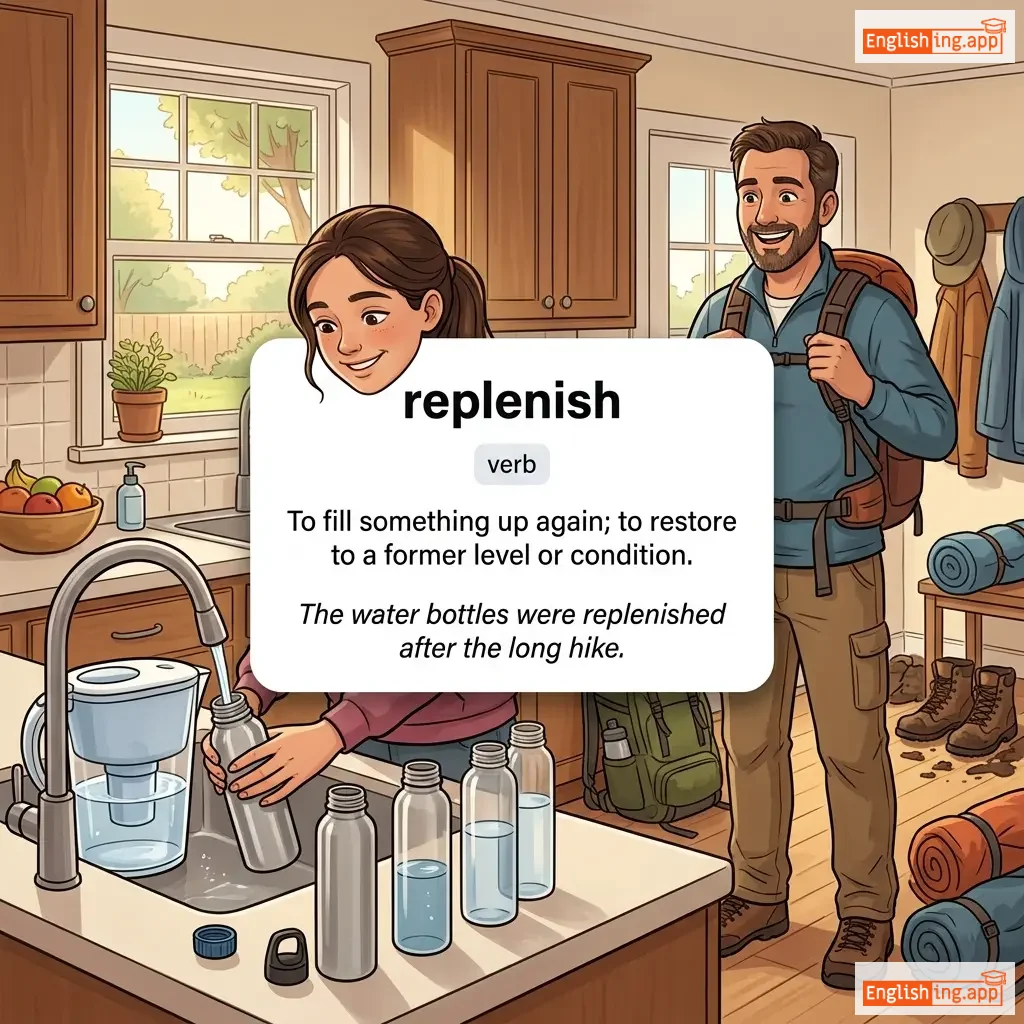
replenish definition card — visual illustration of the meaning
verb C1
/rɪˈplɛnɪʃ/
пополнять (popolnyat)

To fill something up again; to restore to a former level or condition.

"The water bottles were replenished after the long hike."

"Бутылки с водой были пополнены после долгого похода." (Butylki s vodoy byli popolneny posle dolgogo pokhoda.)
adjective C1
/rɪˈpliːt/
наполненный (napolnennyy)

Filled or well-supplied with something; abundantly full.

"The book is replete with fascinating historical details."
"Книга наполнена увлекательными историческими деталями." (Kniga napolnena uvekayushchimi istoricheskimi detal'yami.)
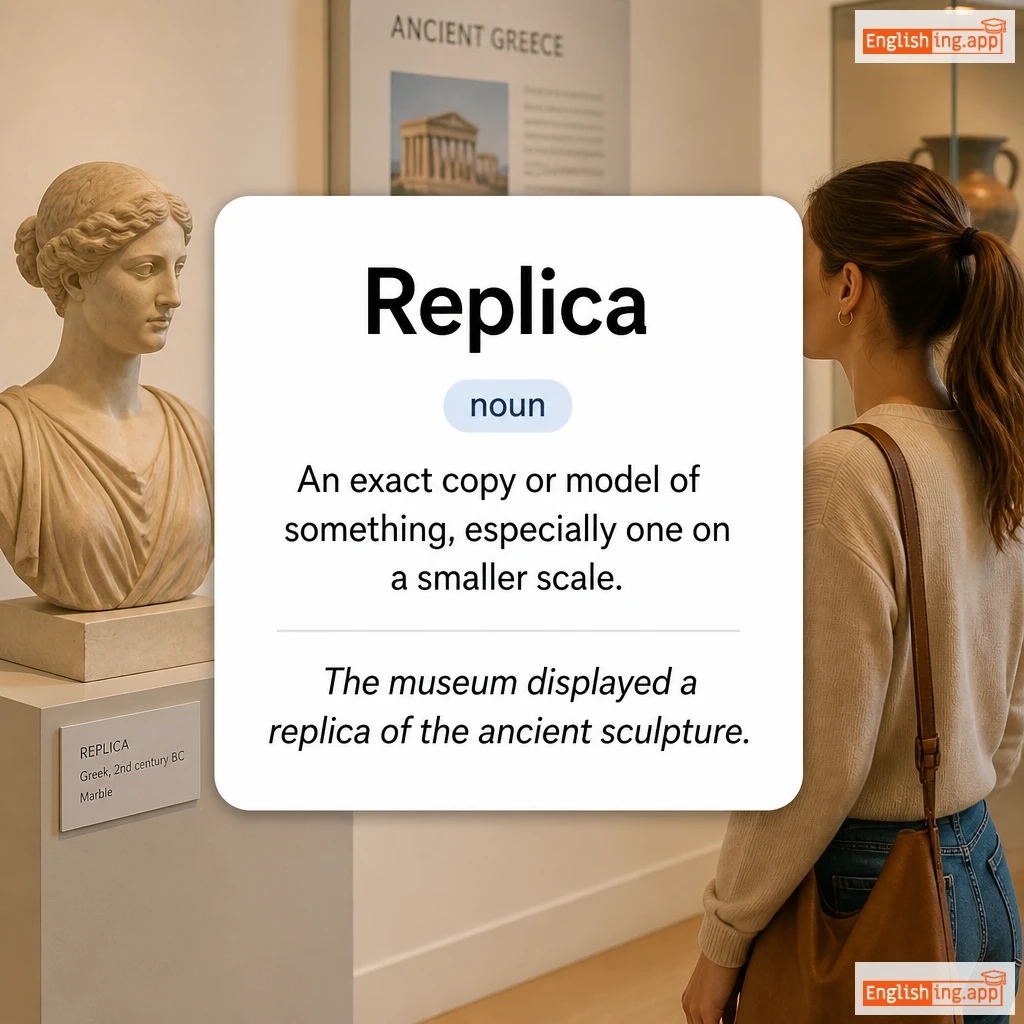
Replica definition card — visual illustration of the meaning
noun C1
/ˈrɛplɪkə/
реплика (replika)

An exact copy or model of something, especially one on a smaller scale.

"The museum displayed a replica of the ancient sculpture."

"Музей выставил реплику древней скульптуры." (Muzey vystavil repliky drevney skul'ptury.)
verb C1
/ˈrɛplɪkeɪt/
реплицировать (replitsirovat')

to copy, reproduce, or duplicate something exactly

"The scientist tried to replicate the experiment for accuracy."

"Учёный пытался реплицировать эксперимент для точности." (Uchyonyy pytalsya replitsirovat' eksperiment dlya tochnosti.)
noun C1
/rɪˈpɔːrtɪʒ/
репортаж (reportazh)

the act of reporting news or describing events in the media

"The magazine is known for its detailed reportage of political issues."

"Журнал известен своим подробным репортажем о политических вопросах." (Zhurnal izvesten svoim podrobnym reportazhem o politicheskikh voprosakh.)
noun/verb C1
/rɪˈpoʊz/
покой (pokoy)

a state of rest, sleep, or tranquility; to rest or lie in a peaceful position

"After the long journey, she sought repose in the quiet garden."

"После долгого путешествия она искала покой в тихом саду." (Posle dolgogo puteshestviya ona iskala pokoy v tikhom sadu.)
noun C1
/rɪˈpɑːzɪtɔːri/
хранилище (khranyilishche)

a place where things are stored or kept for safekeeping

"The library serves as a repository of knowledge."

"Библиотека служит хранилищем знаний." (Biblioteka sluzhit khranyilishchem znanij.)
adjective C1
/ˌrɛprɪˈhɛnsəbl̩/
позорный (pozornyy)

Deserving strong criticism or blame.

"His dishonest actions were truly reprehensible."

"Его нечестные поступки были по-настоящему позорными." (Ego nechesnye postupki byli po-nastoyashchemu pozornymi.)
adjective C1
/ˌrɛprɪzɛnˈteɪʃənl̩/
представительный (predstavitel'nyy)

Relating to or depicting something in a realistic or symbolic way.

"The artist preferred a representational style of painting."

"Художник предпочитал репрезентативный стиль живописи." (Khudozhnik predpochital reprezentativnyy stil' zhivopisi.)
verb C1
/rɪˈprɛs/
подавлять (podavlyat')

To restrain, suppress, or keep under control, especially emotions or desires.

"He tried to repress his anger during the meeting."
"Он попытался подавить свой гнев на встрече." (On popytalsya podavit' svoy gnev na vstreche.)
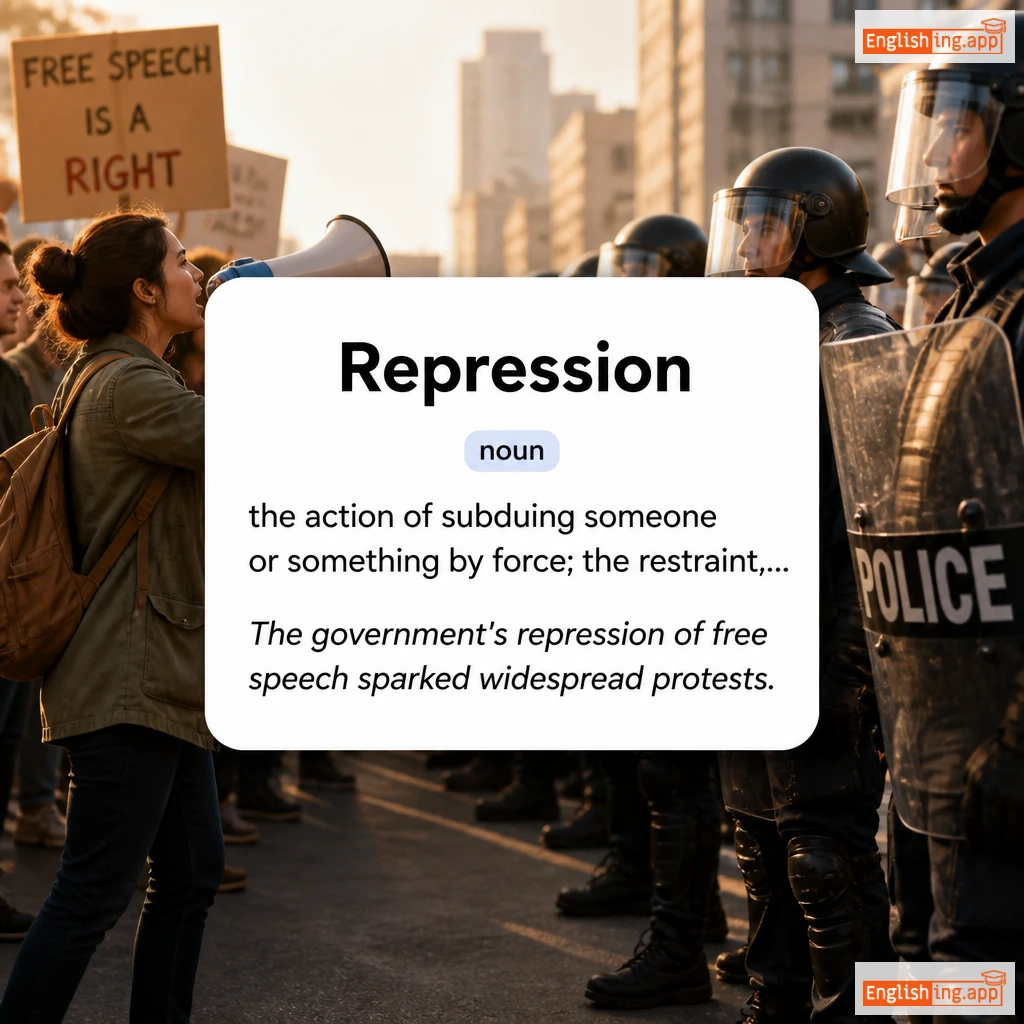
Repression definition card — visual illustration of the meaning
noun C1
/rɪˈpreʃən/
репрессия (repressiya)

the action of subduing someone or something by force; the restraint, prevention, or inhibition of a feeling, impulse, etc.

"The government's repression of free speech sparked widespread protests."

"Подавление свободы слова правительством вызвало широкие протесты." (Podavlenie svobody slova pravitelstvom vyzvalo shirokie protesty)
adjective C1
/rɪˈpres.ɪv/
репрессивный (repressivnyy)

restraining freedom or preventing self-expression; oppressive

"The repressive government banned all forms of protest."

"Репрессивное правительство запретило все формы протеста." (Repressivnoye pravitel'stvo zapretilo vse formy protesta.)
noun/verb C1
/rɪˈpriːv/
временное облегчение / отсрочка наказания (vremennoe oblegchenie / otsrochka nakazaniya)

A temporary relief or delay from something unpleasant; to postpone or cancel punishment.

"The prisoner was granted a last-minute reprieve from execution."

"Заключенному в последний момент предоставили отсрочку от казни." (Zaklyuchennomu v posledniy moment predostavili otsrochku ot kazni.)
noun/verb C1
/ˈrɛprɪˌmænd/
выговор (vygovor)

A formal expression of disapproval; to scold or criticize someone officially.

"The teacher reprimanded the student for being late."
"Учитель сделал выговор ученику за опоздание." (Uchitel' sdelal vygovor ucheniku za opozdanie.)
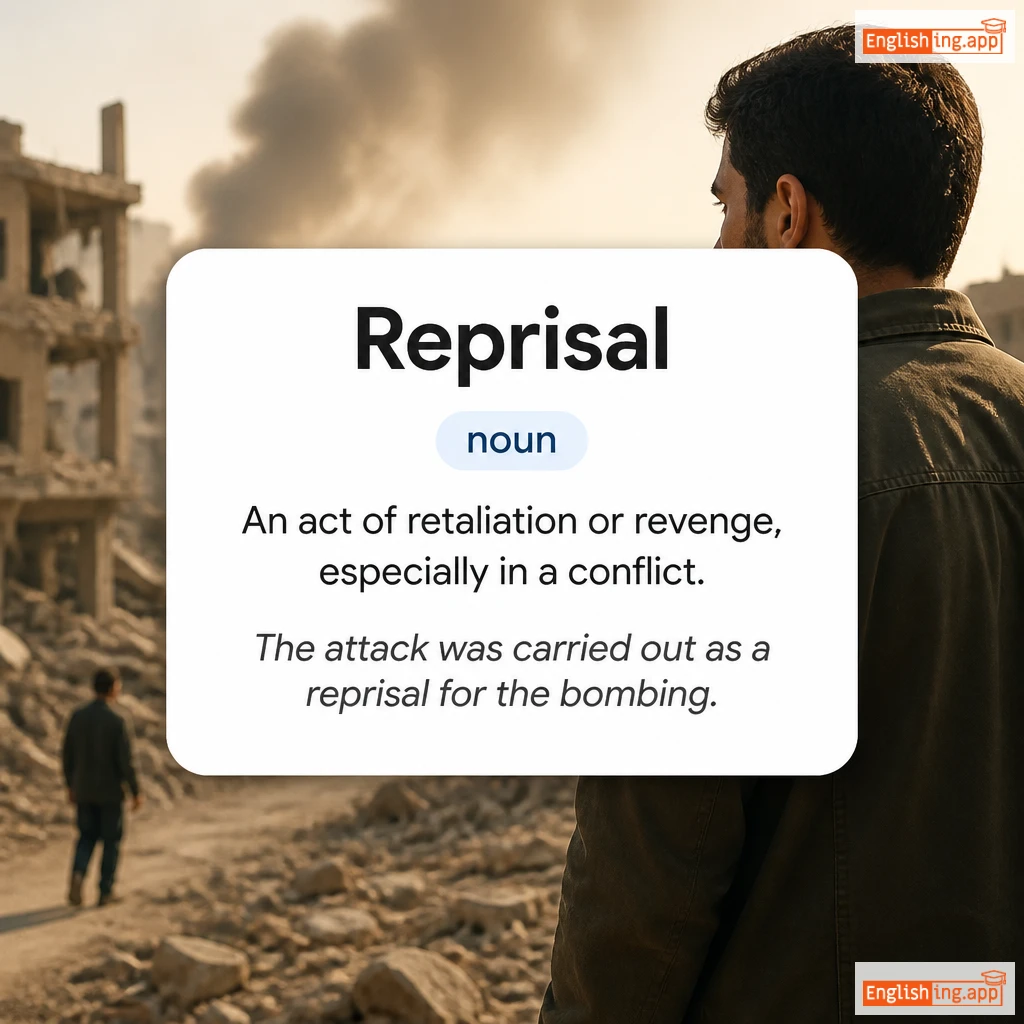
Reprisal definition card — visual illustration of the meaning
noun C1
/rɪˈpraɪzəl/
репрессалия (repressaliya)

An act of retaliation or revenge, especially in a conflict.

"The attack was carried out as a reprisal for the bombing."
"Атака была проведена в ответ на бомбардировку." (Ataka byla provedena v otvet na bombirovku.)
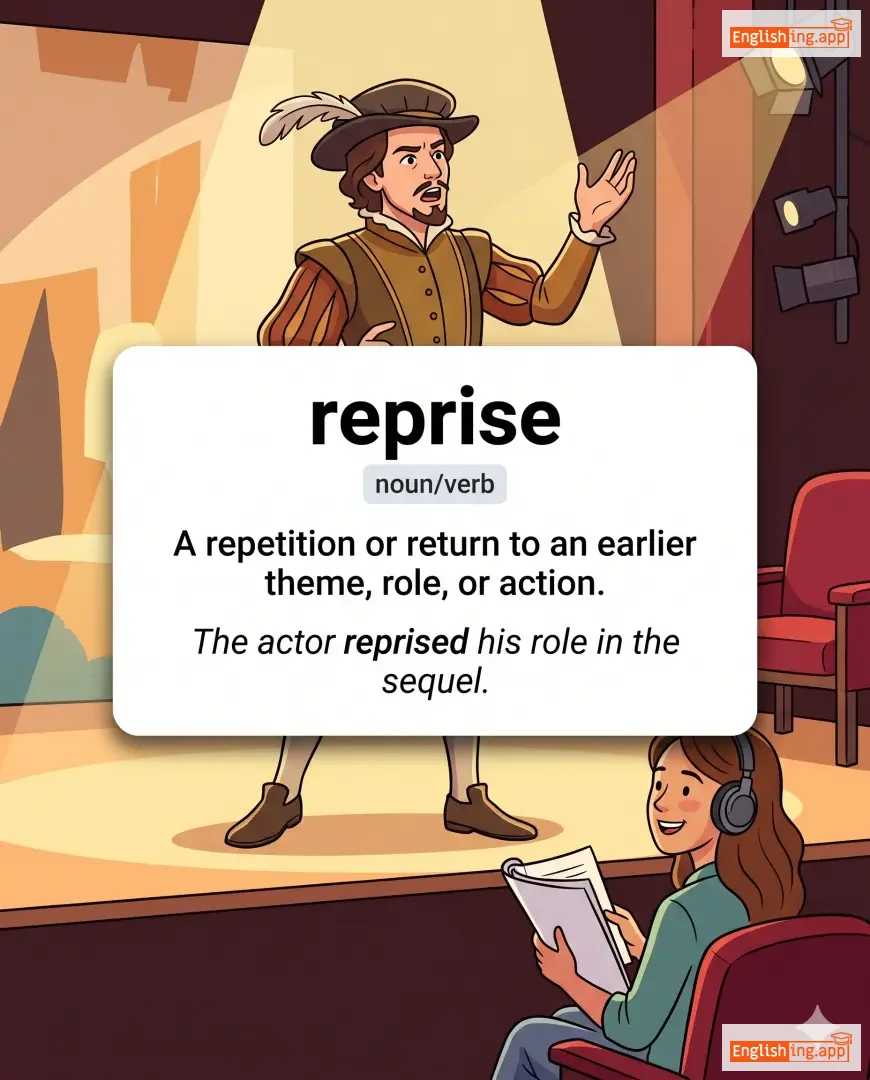
reprise definition card — visual illustration of the meaning
noun/verb C1
/rɪˈpriːz/
повторение (povtorenie)

A repetition or return to an earlier theme, role, or action.

"The actor reprised his role in the sequel."

"Актер исполнил свою роль в продолжении." (Aktor ispolnil svoyu rol' v prodolzhenii.)
reproach definition card — visual illustration of the meaning
noun/verb C1
/rɪˈproʊtʃ/
упрек / критика (uprek / kritika)

An expression of disapproval or disappointment; to criticize someone for doing wrong.

"She reproached him for arriving late to the meeting."
"Она упрекнула его за опоздание на встречу." (Ona upreknula ego za opozdanie na vstrechu.)
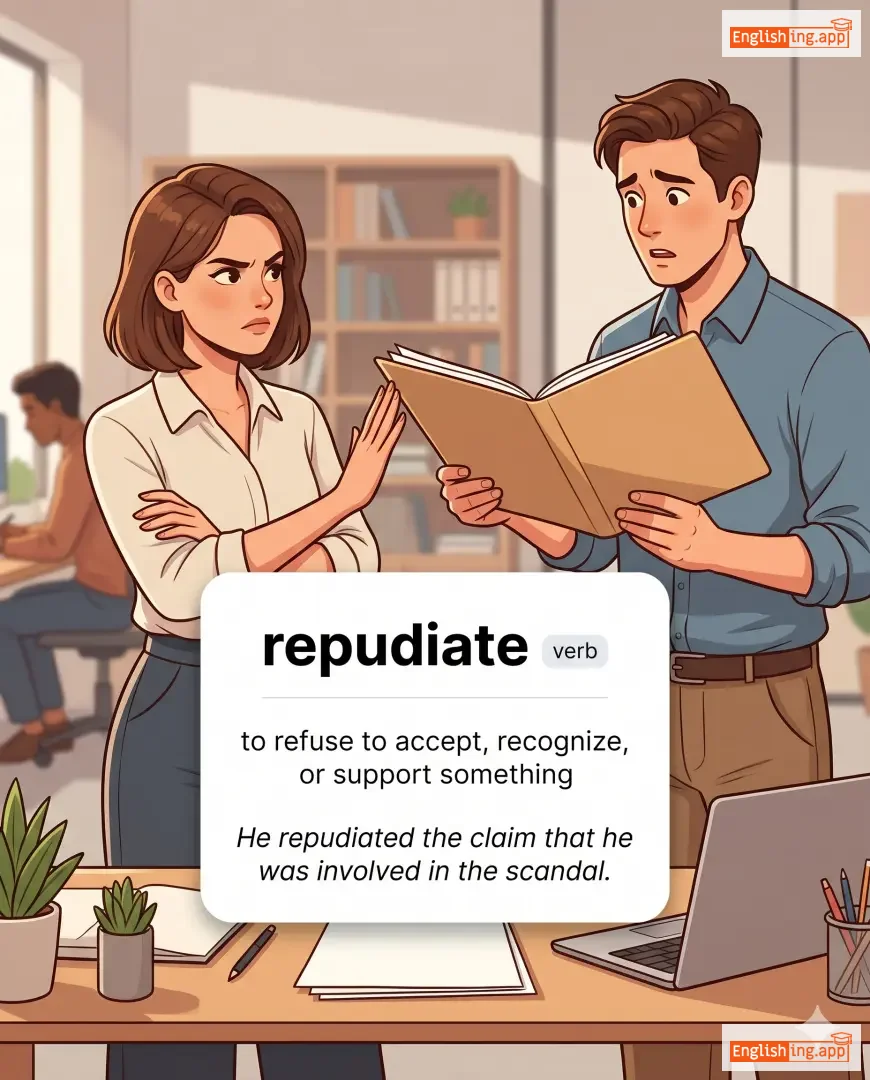
repudiate definition card — visual illustration of the meaning
verb C1
/rɪˈpjuː.di.eɪt/
отвергать (otvergat)

to refuse to accept, recognize, or support something

"He repudiated the claim that he was involved in the scandal."

"Он отверг утверждение, что он был вовлечен в скандал." (On otverg utverzhdenie, chto on byl vovlechen v skandal.)
adjective C1
/rɪˈpʌɡ.nənt/
отвратительный (otvratitel'nyy)

causing strong dislike, disgust, or opposition

"The idea of cheating was repugnant to him."

"Идея обмана казалась ему отвратительной." (Ideya obmana kazalas' yemu otvratitel'noy.)
verb C1
/rɪˈpʌls/
отразить / вызывать отвращение (otrazit' / vyzyvat' otvrashchenie)

to drive back an attack or attacker by force; to cause intense dislike or disgust

"The army managed to repulse the enemy attack."
"Армия смогла отразить атаку врага." (Armiya smogla otrazit' ataku vraga.)
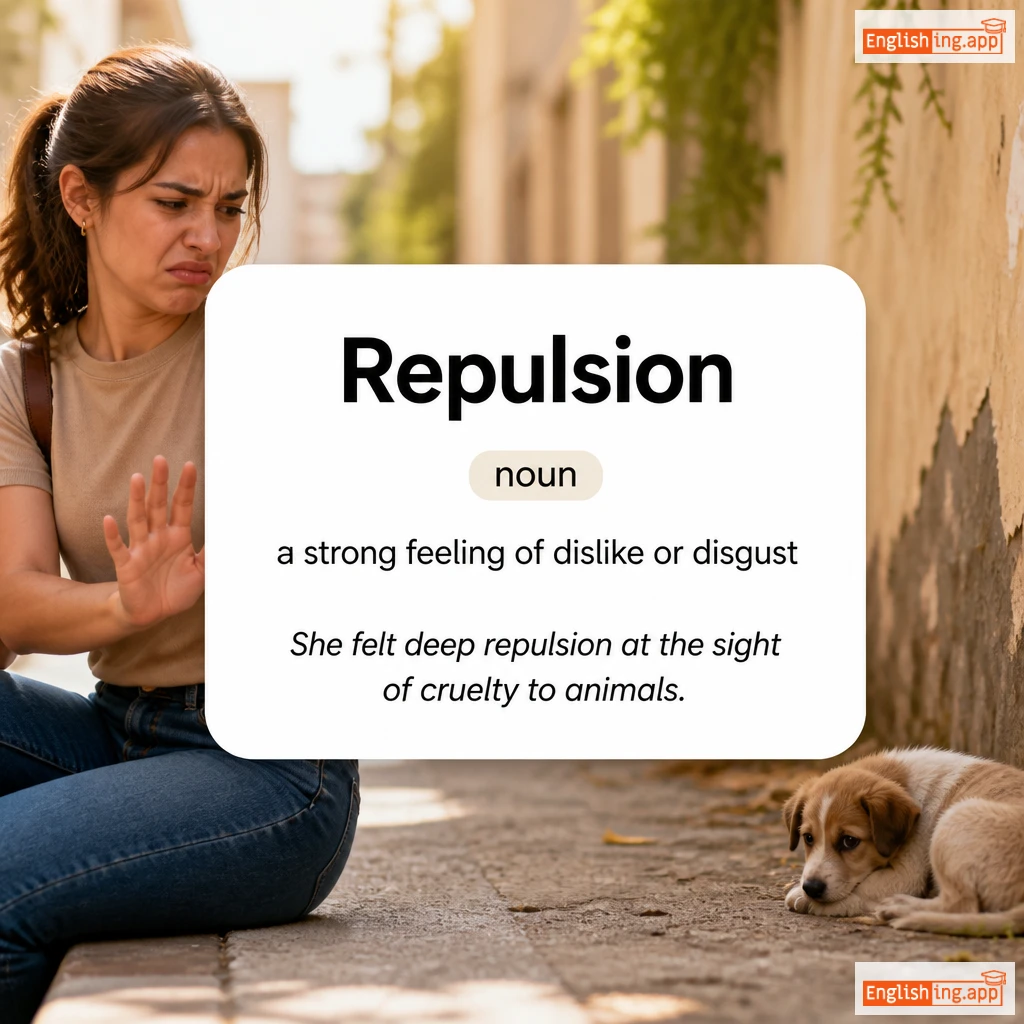
Repulsion definition card — visual illustration of the meaning
noun C1
/rɪˈpʌlʃən/
отвращение (ripulshun)

a strong feeling of dislike or disgust

"She felt deep repulsion at the sight of cruelty to animals."

"Она почувствовала глубокое отвращение при виде жестокости к животным." (She felt deep repulsion at the sight of cruelty to animals.)
adjective C1
/rɪˈpʌlsɪv/
отталкивающий (ottalkivayushchiy)

arousing intense distaste or disgust

"The garbage gave off a repulsive smell."

"Мусор издавал отталкивающий запах." (Musor izdaval ottalkivayushchiy zapakh.)
adjective C1
/ˈrɛpjətəbəl/
респектабельный (respektabel'nyy)

having a good reputation; respected

"They chose a reputable company to handle their finances."

"Они выбрали респектабельную компанию для управления своими финансами." (Oni vybrali respektabel'nuyu kompaniyu dlya upravleniya svoimi finansami.)
noun C1
/rɪˈpjuːt/
репутация (reputatsiya)

the opinion generally held of someone or something; reputation

"He is a scholar of great repute in his field."

"Он учёный с большой репутацией в своей области." (On uchyonyy s bol'shoy reputatsiyey v svoey oblasti.)
adjective C1
/rɪˈpjuːtɪd/
признанный (priznannyy)

Generally considered or believed to be something, often based on reputation rather than certainty.

"He is a reputed expert in financial management."

"Он признанный эксперт в области финансового управления." (On priznannyy eksperty v oblasti finansovogo upravleniya.)
adjective C1
/ˈrɛkwɪzɪt/
необходимый (neobkhodimy)

Made necessary by particular circumstances or regulations; required.

"A passport is a requisite document for international travel."

"Паспорт является необходимым документом для международных поездок." (Pasport yavyayetsya neobkhodimym dokumentom dlya mezhdunarodnykh poyezdok.)
noun C1
/ˌrɛkwɪˈzɪʃən/
требование (trebovanie)

An official order laying claim to the use of property or materials; a formal demand or request.

"The manager submitted a requisition for new office supplies."

"Менеджер подал заявку на новые канцелярские принадлежности." (Menedzher podal zayavku na novye kantselyarskiye prinadlezhnosti.)
verb C1
/ˌriːˈsiːt/
пересаживать (peresazhivat)

to seat someone again or to fit something back into its place

"The usher had to reseat the guests after the interruption."
"Услужливый работник должен был пересадить гостей после прерывания." (Usluzhivyy rabotnik dolzhen byl peresadit' gostey posle preryvaniya.)
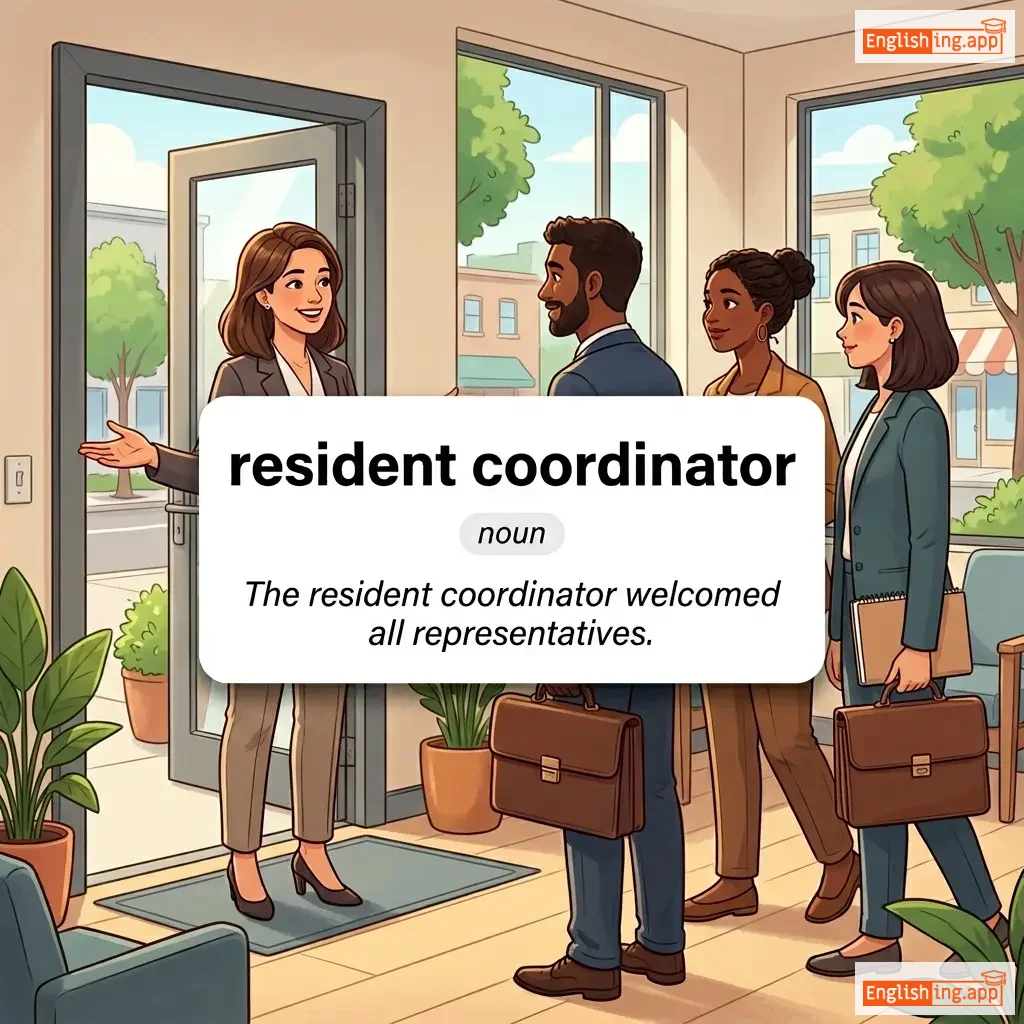
resident coordinator definition card — visual illustration of the meaning
noun C1
/ˈrez.ɪ.dənt ˈkəʊ.ɔː.dɪ.neɪ.tər/
резиденциальный координатор (rezidentsial'nyy koordinator)

A local administrator or official who coordinates activities in a specific region.

"The resident coordinator welcomed all representatives."

"Резиденциальный координатор приветствовал всех представителей." (Rezidentsial'nyy koordinator privetstvoval vsekh predstaviteley.)
adjective C1
/rɪˈzɪdjuəl/
резидуальный (rezidual'nyy)

Remaining after the greater part has gone.

"The patient experienced residual pain after the surgery."
"Пациент испытал резидуальную боль после операции." (Patsiyent ispyltal rezidual'nuyu bol' posle operatsii.)
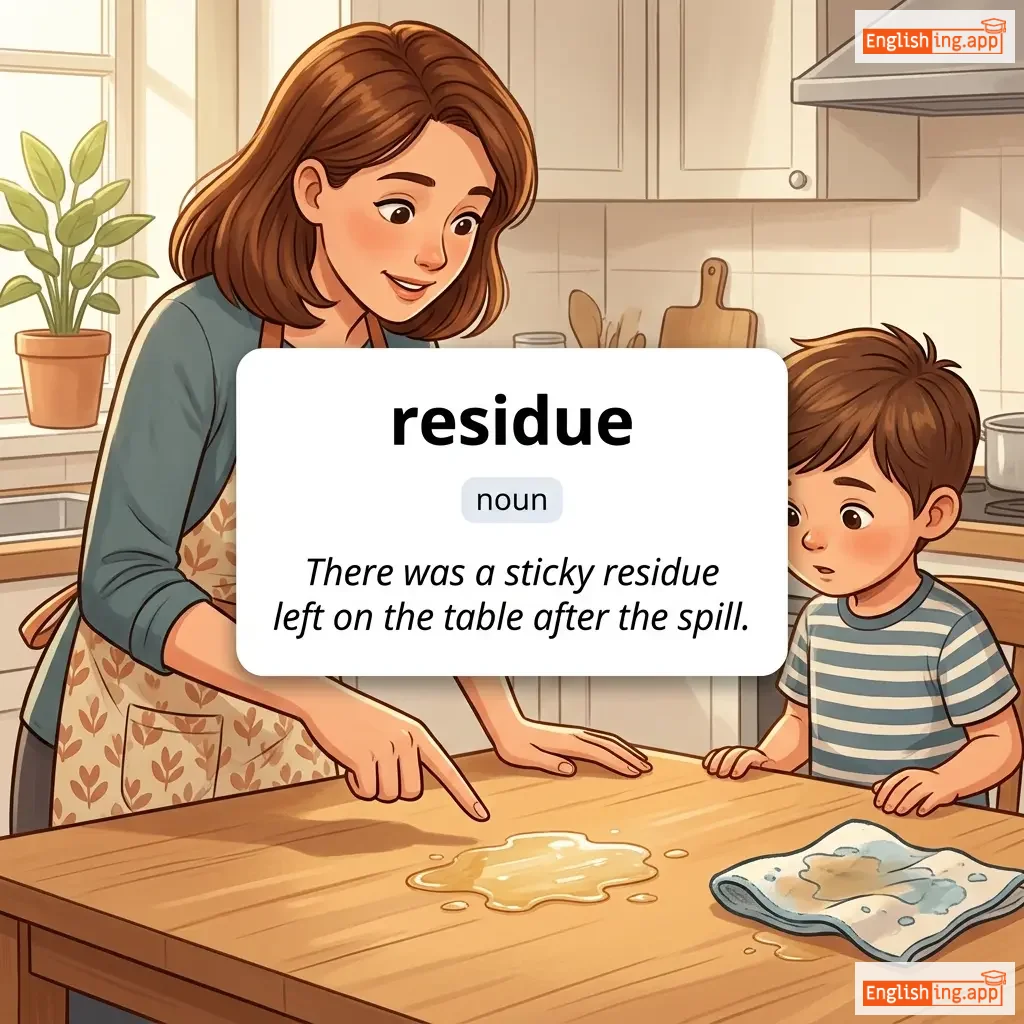
residue definition card — visual illustration of the meaning
noun C1
/ˈrɛzɪdjuː/
остаток (ostatok)

A small amount of something that remains after the main part has been removed or used.

"There was a sticky residue left on the table after the spill."
"После разлива на столе остался липкий остаток." (Posle razliva na stole ostalsya lipkiy ostatok.)
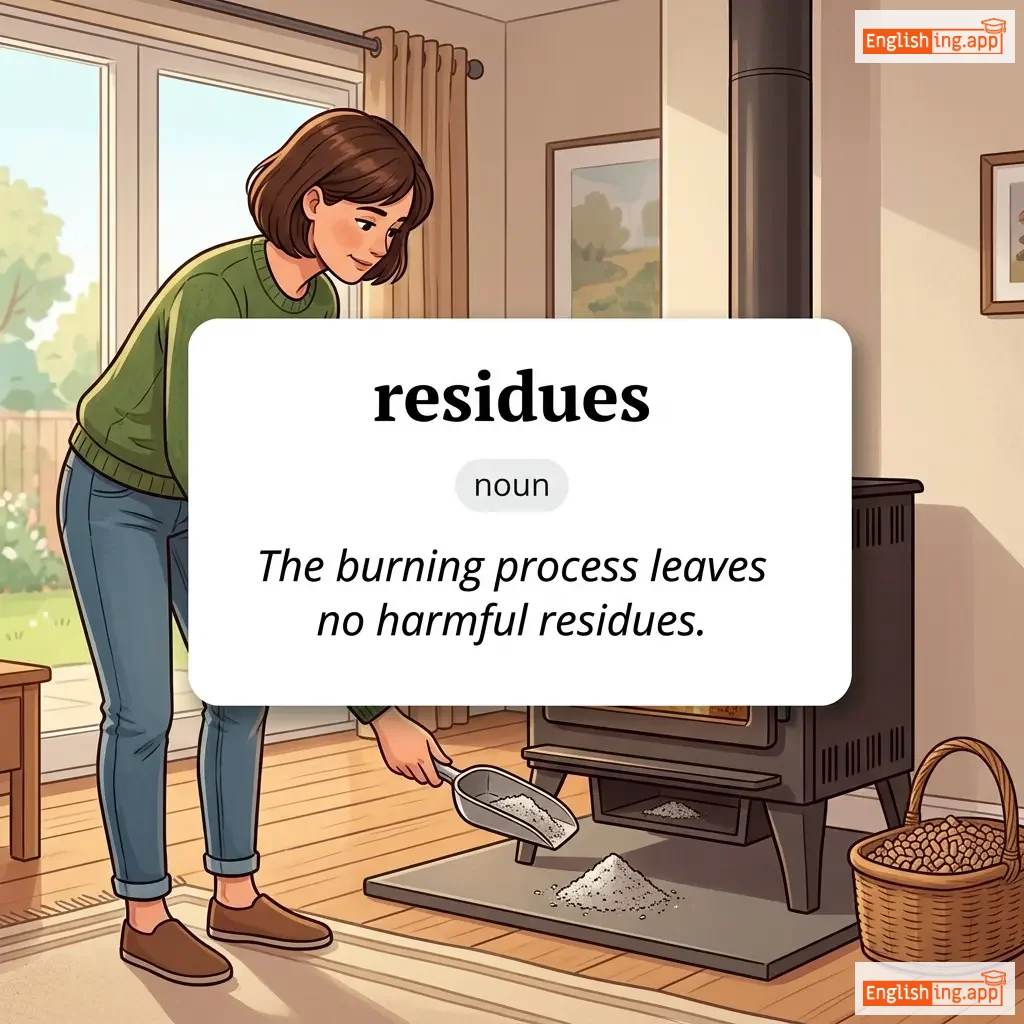
residues definition card — visual illustration of the meaning
noun C1
ˈrez.ɪ.djuːz
остатки (ostatki)

A small amount of something that remains after the main part has gone or been taken or used.

"The burning process leaves no harmful residues."

"Процесс горения не оставляет вредных остатков." (Process gorenija ne ostavlyaet vrednykh ostatočkov.)
noun C1
/ˈrɛzɪn/
смола (smola)

a sticky organic substance, usually secreted by plants, often used in varnishes or plastics

"The craftsman used natural resin to make the sculpture shine."

"Ремесленник использовал натуральную смолу, чтобы придать скульптуре блеск." (Remeslennik ispol'zoval natural'nuyu smolu, chtoby pridat' skul'pture blesk.)
adjective C1
/rɪˈzɪstɪv/
резистивный (rezistivny)

tending to resist or oppose; in physics, relating to electrical resistance

"The material has resistive properties that slow down current flow."

"Материал имеет резистивные свойства, которые замедляют ток." (Material imeet rezistivnye svoystva, kotorye zamedlyayut tok.)