語彙集

英単語辞書 | 単語の意味、定義、例文

noun C1
/ˈəʊ.nəs/
responsabilidad (responsabilidad)

A duty or responsibility, especially a heavy one.

"The onus is on the government to provide relief to the victims."
"El ónus está en el gobierno para proporcionar alivio a las víctimas." (El onus esta en el gobierno para proporcionar alivio a las victimas.)
verb C1
/uːz/
filtrarse (filtrarse)

to slowly flow or leak out through small openings or pores

"Blood began to ooze from the small cut."

"La sangre comenzó a filtrarse de la pequeña herida." (La sangre comenzó a filtrarse de la pequeña herida.)
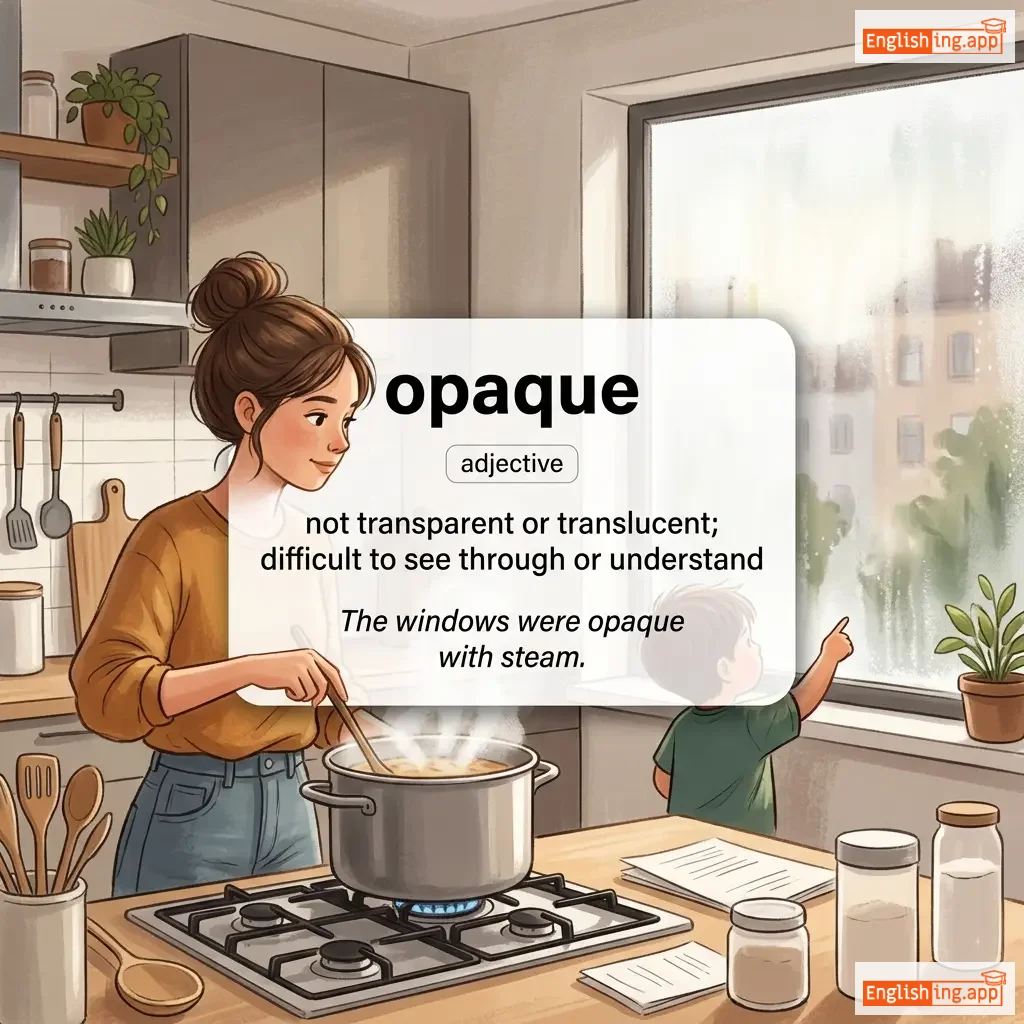
opaque definition card — visual illustration of the meaning
adjective C1
/oʊˈpeɪk/
opaco (opako)

not transparent or translucent; difficult to see through or understand

"The windows were opaque with steam."

"Las ventanas estaban opacas por el vapor." (Las ventanas estaban opacas por el vapor.)
adjective C1
/ˈɒpərətɪv/
operativo (operativo)

functioning, having effect, or relating to a secret agent or worker

"The new law is now operative across the country."

"La nueva ley ya está operativa en todo el país." (La nueva ley ya está operativa en todo el país.)
adjective C1
/ˌɑːpərˈtuːn/
momento oportuno (momento oportuno)

Happening at a suitable or convenient time.

"She arrived at an opportune moment to help."

"Llegó en un momento oportuno para ayudar." (Llegó en un momento oportuno para ayudar.)
noun C1
/ˌɑːpərˈtuːnɪst/
oportunista (oportunista)

A person who takes advantage of situations for personal gain, often disregarding principles.

"He is seen as an opportunist who always puts his interests first."
"Se le ve como un oportunista que siempre pone sus intereses primero." (Se le ve como un oportunista que siempre pone sus intereses primero.)
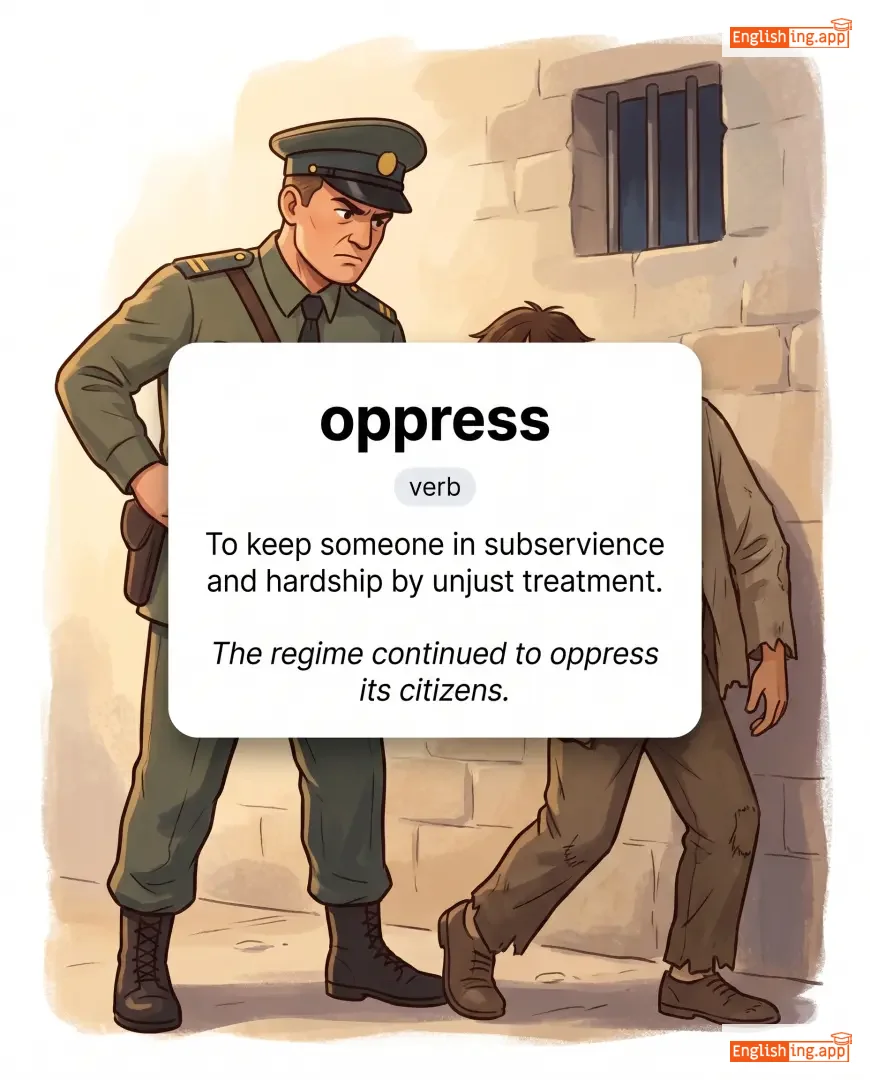
oppress definition card — visual illustration of the meaning
verb C1
/əˈprɛs/
oprimir (oprimir)

To keep someone in subservience and hardship by unjust treatment.

"The regime continued to oppress its citizens."
"El régimen continuó oprimiendo a sus ciudadanos." (El régimen continuó oprimiendo a sus ciudadanos.)
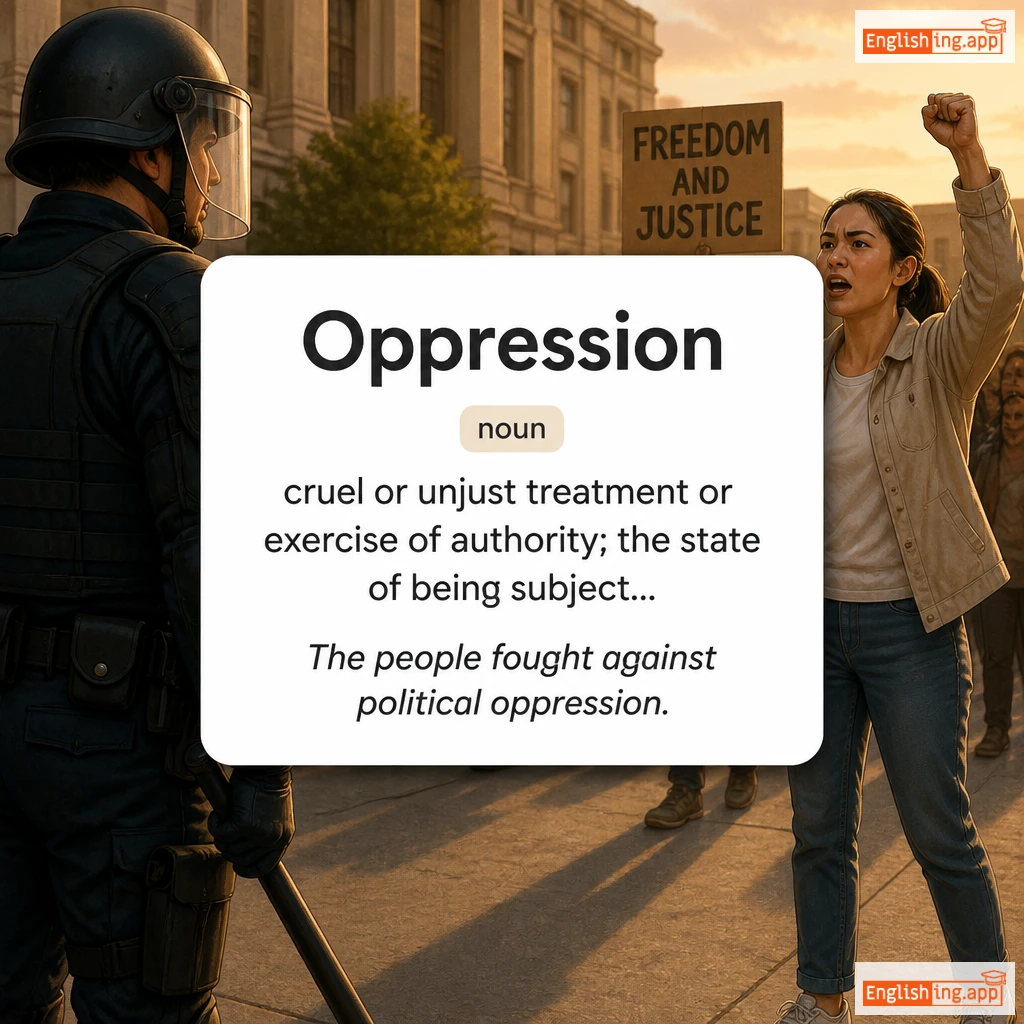
Oppression definition card — visual illustration of the meaning
noun C1
/əˈpreʃ.ən/
opresión; abuso; tiranía; (opresion; abuso; tirania;)

cruel or unjust treatment or exercise of authority; the state of being subject to harsh treatment

"The people fought against political oppression."

"La gente luchó contra la opresión política." (La gente luchó contra la opresión política.)
adjective C1
/əˈprɛs.ɪv/
opresivo (opresivo)

Harsh and authoritarian; overwhelming; causing distress; tyrannical;

"The oppressive heat made it difficult to work outside during the summer."

"El calor opresivo dificultaba trabajar afuera durante el verano." (El calor opresivo dificultaba trabajar afuera durante el verano.)
adjective C1
/ˈɒptɪk/
óptico (optico)

Relating to the eye or vision.

"The optic nerve carries signals from the eye to the brain."
"El nervio óptico lleva señales desde el ojo al cerebro." (El nervio optico lleva señales desde el ojo al cerebro.)
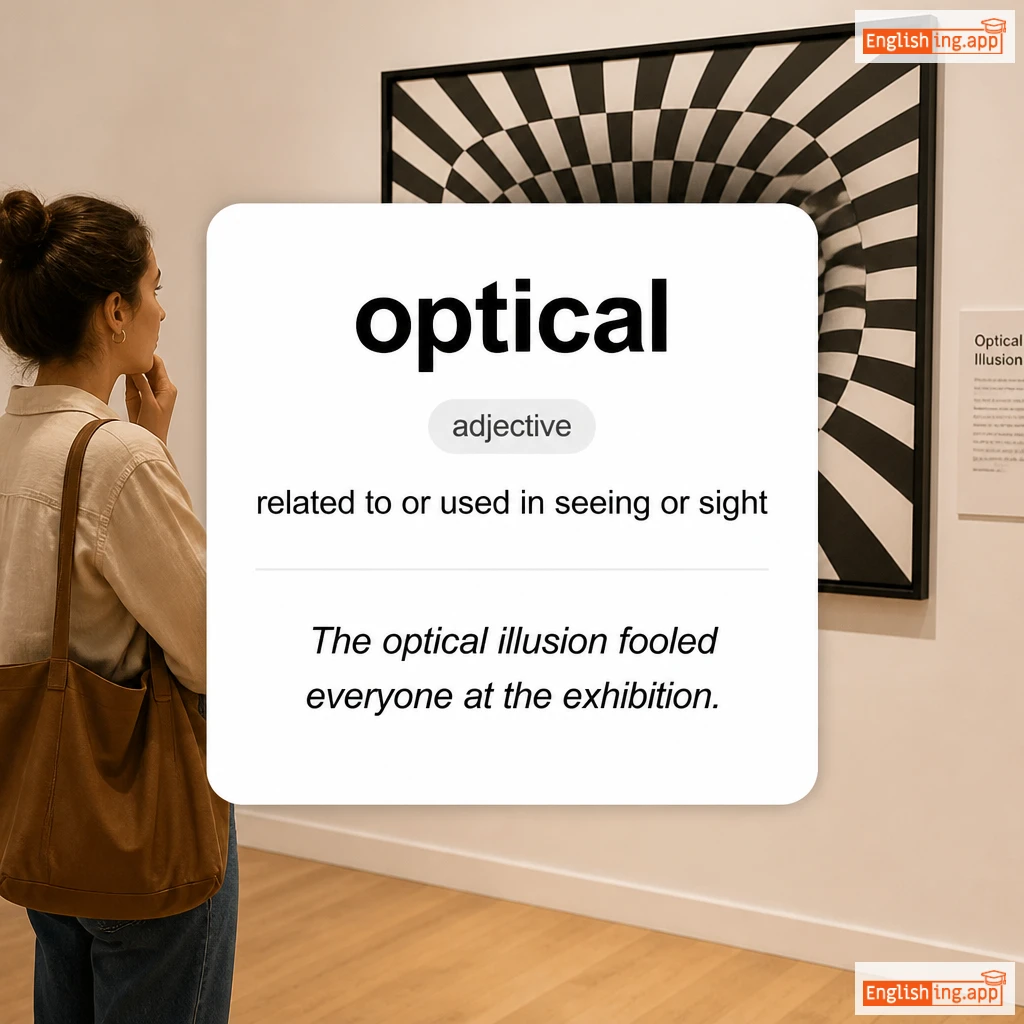
optical definition card — visual illustration of the meaning
adjective C1
/ˈɒptɪkəl/
óptico (optico)

related to or used in seeing or sight

"The optical illusion fooled everyone at the exhibition."

"La ilusión óptica engañó a todos en la exposición." (La ilusion optica engano a todos en la exposicion.)
noun C1
/ˈɒptɪks/
óptica (optica)

The branch of physics dealing with light and vision.

"She studied optics to understand how lenses work."

"Ella estudió óptica para entender cómo funcionan las lentes." (Ella estudio optica para entender como funcionan las lentes.)
optimally definition card — visual illustration of the meaning
adverb C1
/ˈɒp.tɪ.məl.i/
de manera óptima (de manera optima)

In the most effective or efficient way possible.

"Tasks should be allocated optimally for maximum output."
"Las tareas deben asignarse de manera óptima para obtener el máximo rendimiento." (Las tareas deben asignarse de manera optima para obtener el maximo rendimiento.)
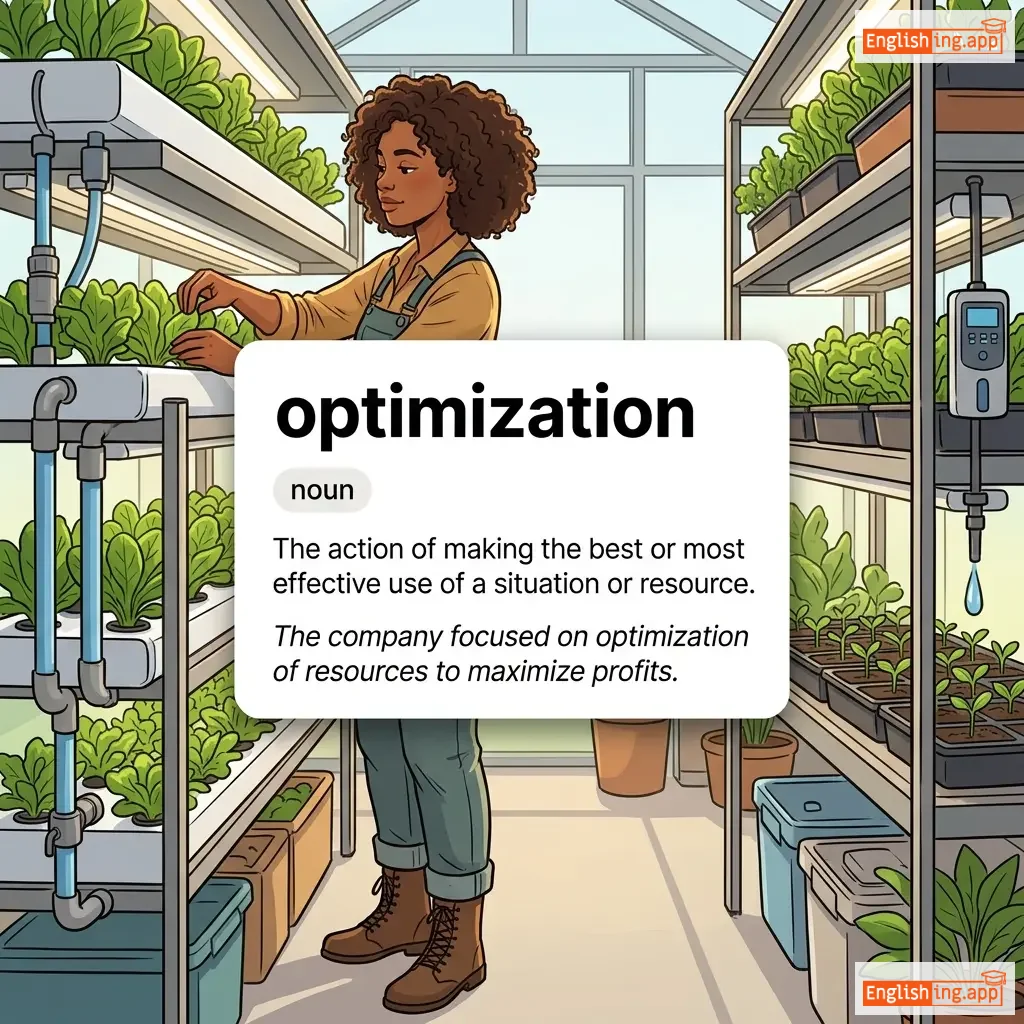
optimization definition card — visual illustration of the meaning
noun C1
ˌɒp.tɪ.mɪˈzeɪ.ʃən
optimización (optimizacion)

The action of making the best or most effective use of a situation or resource.

"The company focused on optimization of resources to maximize profits."
"La empresa se centró en la optimización de los recursos para maximizar los beneficios." (La empresa se centro en la optimizacion de los recursos para maximizar los beneficios.)
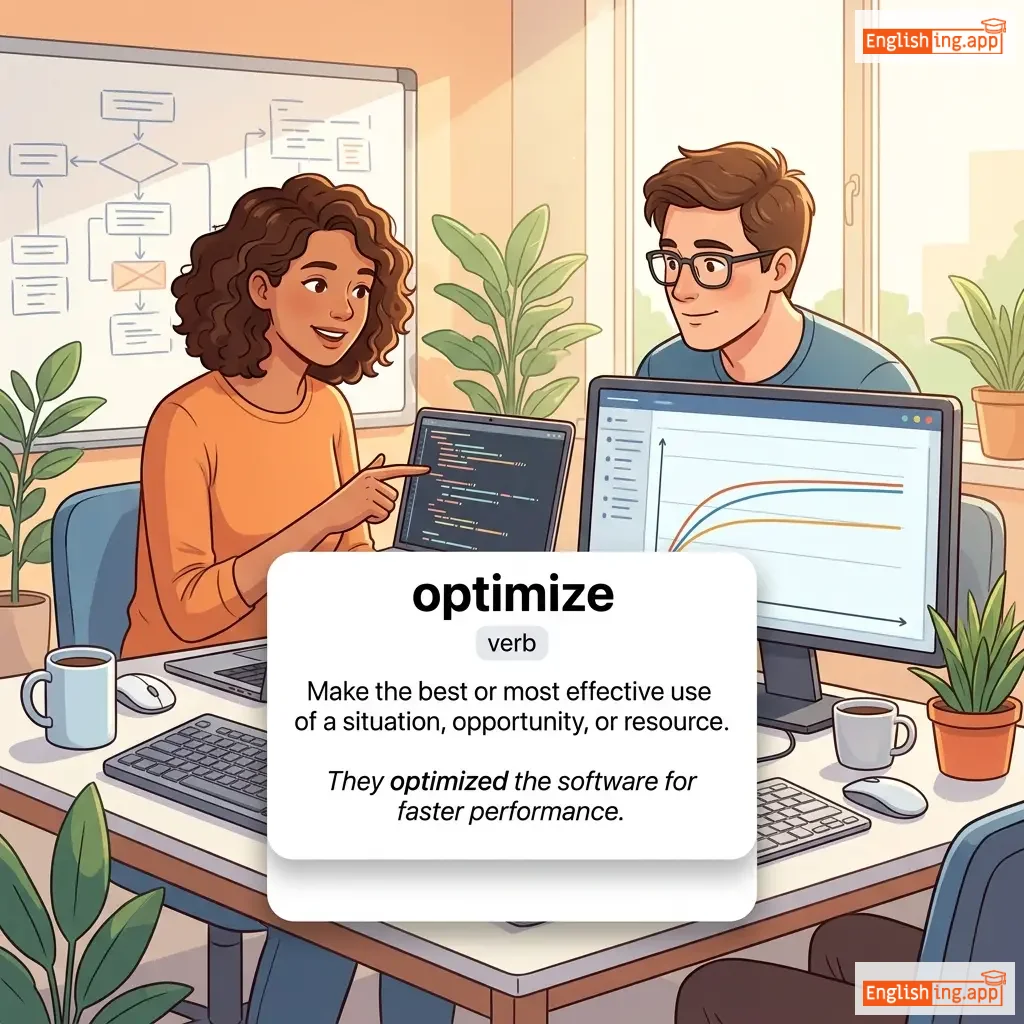
optimize definition card — visual illustration of the meaning
verb C1
ˈɒptɪmaɪz
optimizar, mejorar (optimizar, mejorar)

Make the best or most effective use of a situation, opportunity, or resource.

"They optimized the software for faster performance."
"Optimizaban el software para un mejor rendimiento." (Optimizaban el software para un mejor rendimiento.)
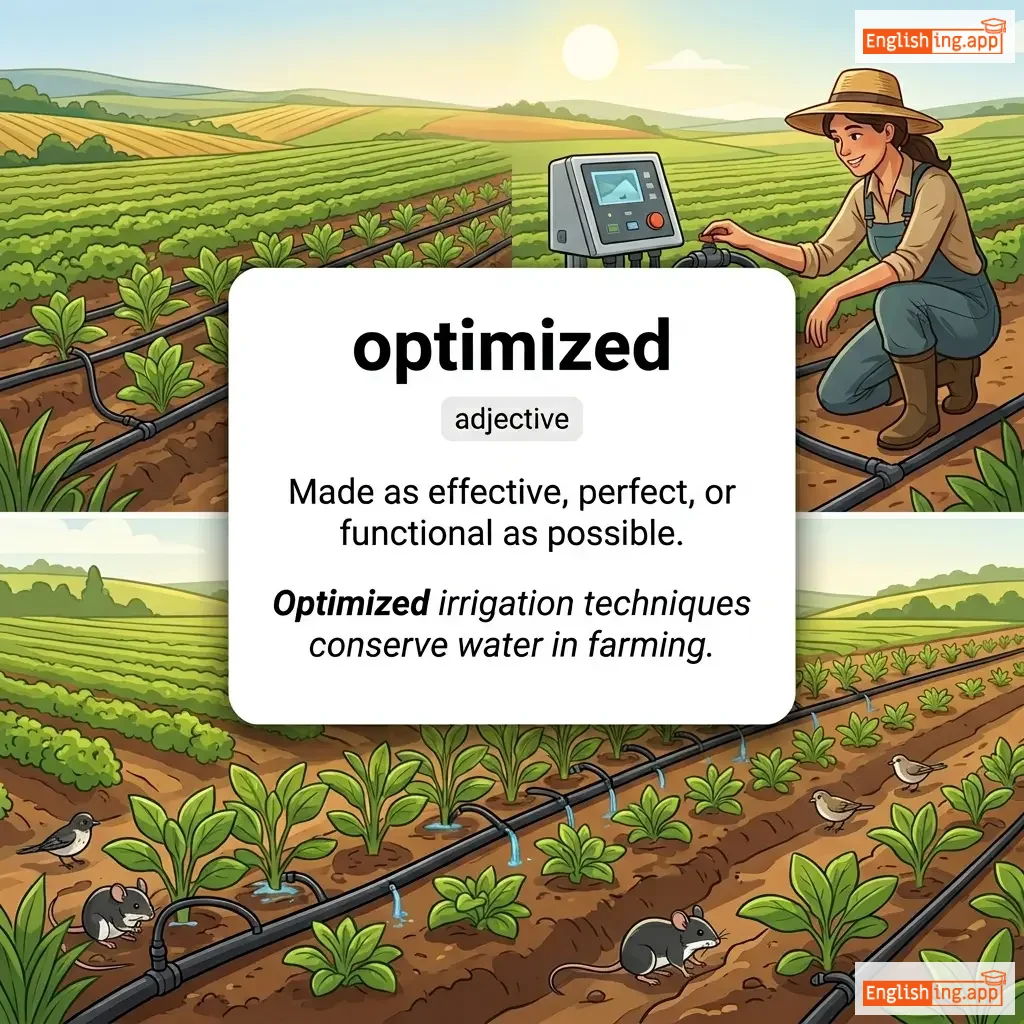
optimized definition card — visual illustration of the meaning
adjective C1
/ˈɒp.tɪ.maɪzd/
optimizado (optimizado)

Made as effective, perfect, or functional as possible.

"Optimized irrigation techniques conserve water in farming."
"Las técnicas de riego optimizadas conservan agua en la agricultura." (Las tecnicas de riego optimizadas conservan agua en la agricultura.)
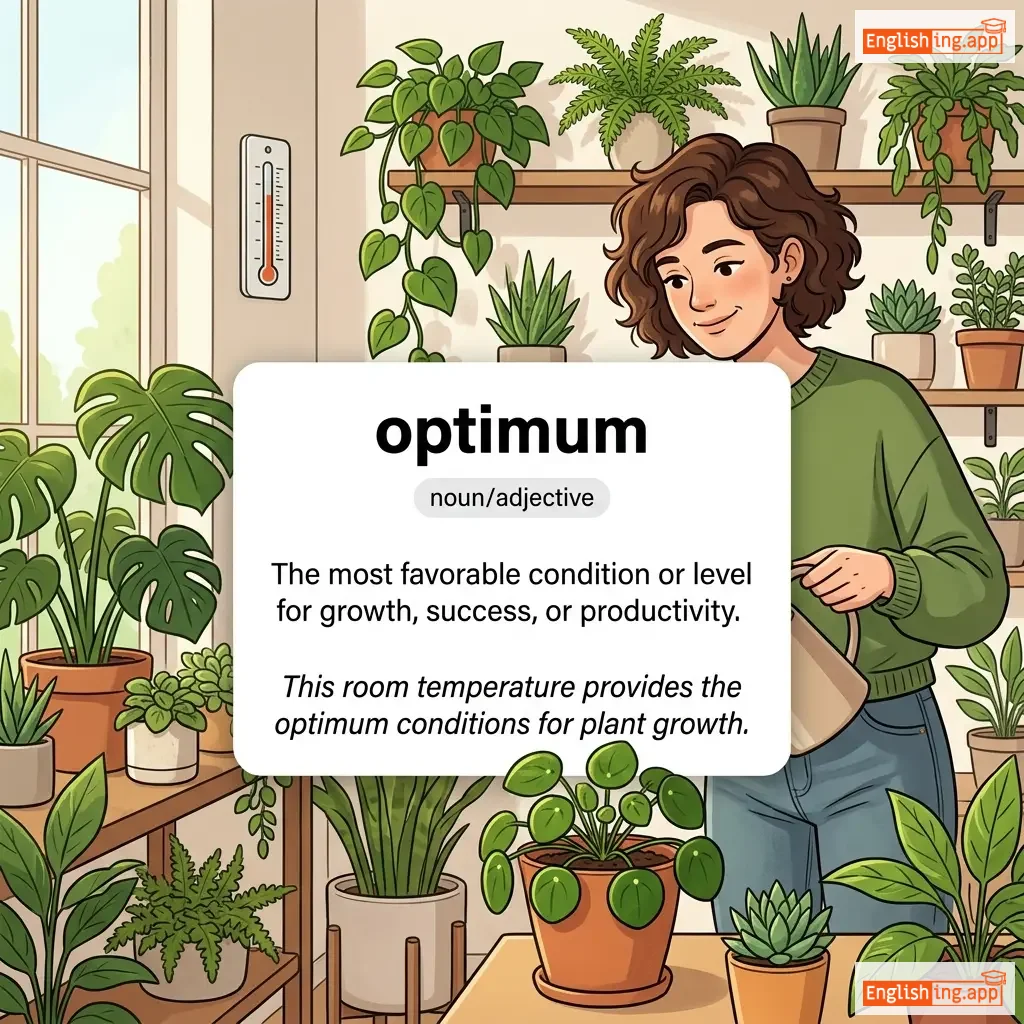
optimum definition card — visual illustration of the meaning
noun/adjective C1
/ˈɒptɪməm/
óptimo (optimo)

The most favorable condition or level for growth, success, or productivity.

"This room temperature provides the optimum conditions for plant growth."

"Esta temperatura ambiente proporciona las condiciones óptimas para el crecimiento de las plantas." (Esta temperatura ambiente proporciona las condiciones optimas para el crecimiento de las plantas.)
noun C1
/ɒpˈtɒmɪtrɪst/
optometrista (optometrista)

A healthcare professional who examines eyes and prescribes corrective lenses.

"The optometrist prescribed new glasses for her."

"El optometrista le recetó nuevos anteojos." (El optometrista le recetó nuevos anteojos.)
noun C1
/ɒpˈtɒmətri/
optometría (optometria)

The practice or profession of examining the eyes and prescribing corrective lenses.

"She studied optometry at the university to become an eye specialist."
"Estudió optometría en la universidad para convertirse en especialista en ojos." (Estudio optometria en la universidad para convertirse en especialista en ojos.)
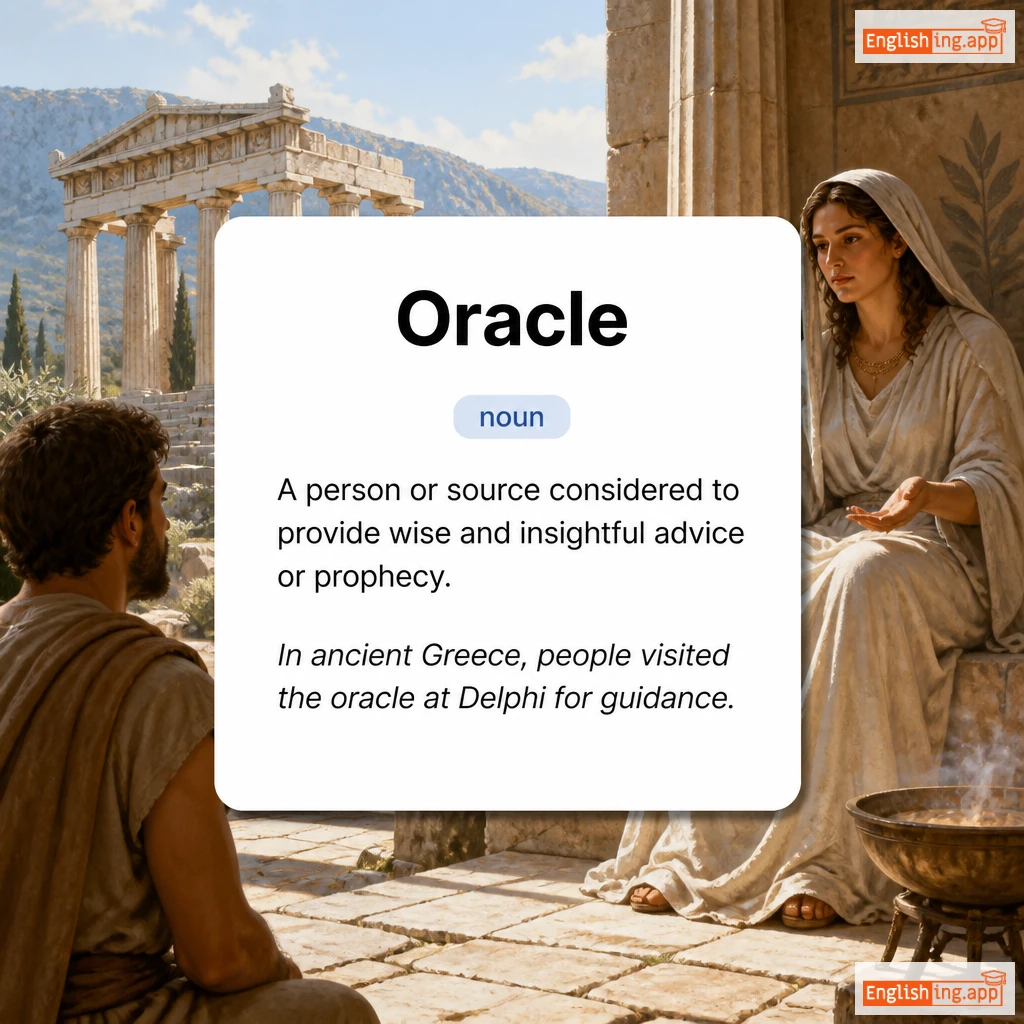
Oracle definition card — visual illustration of the meaning
noun C1
/ˈɒrəkəl/
felicidad (felicidad)

A person or source considered to provide wise and insightful advice or prophecy.

"In ancient Greece, people visited the oracle at Delphi for guidance."
"Ella no pudo esconder su felicidad cuando recibió el premio." (Ella no pudo esconder su felicidad cuando recibio el premio.)
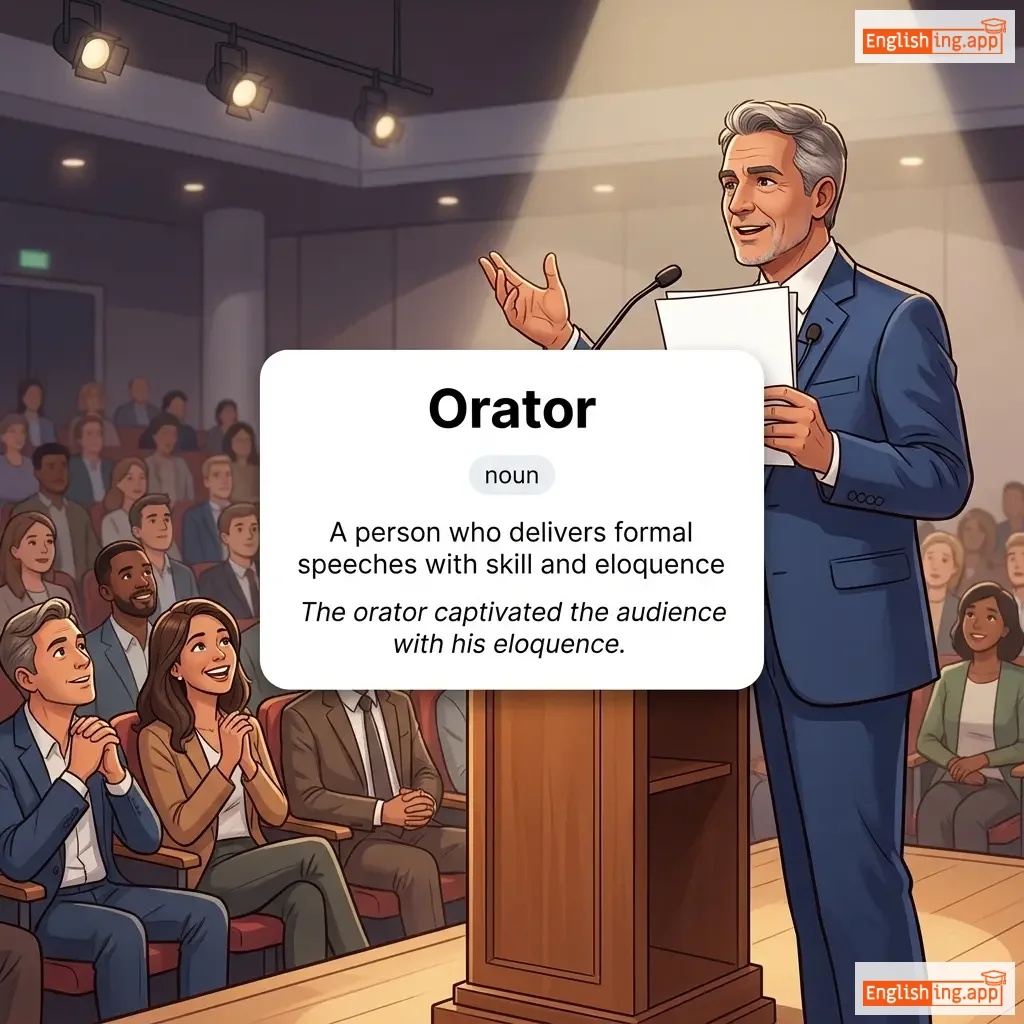
Orator definition card — visual illustration of the meaning
👨‍🏫

Orator (orátor)

noun C1
/ˈɔːrətər/
orador (orador)

A person who delivers formal speeches with skill and eloquence

"The orator captivated the audience with his eloquence."
"El orador cautivó a la audiencia con su elocuencia." (El orador cautivó a la audiencia con su elocuencia.)
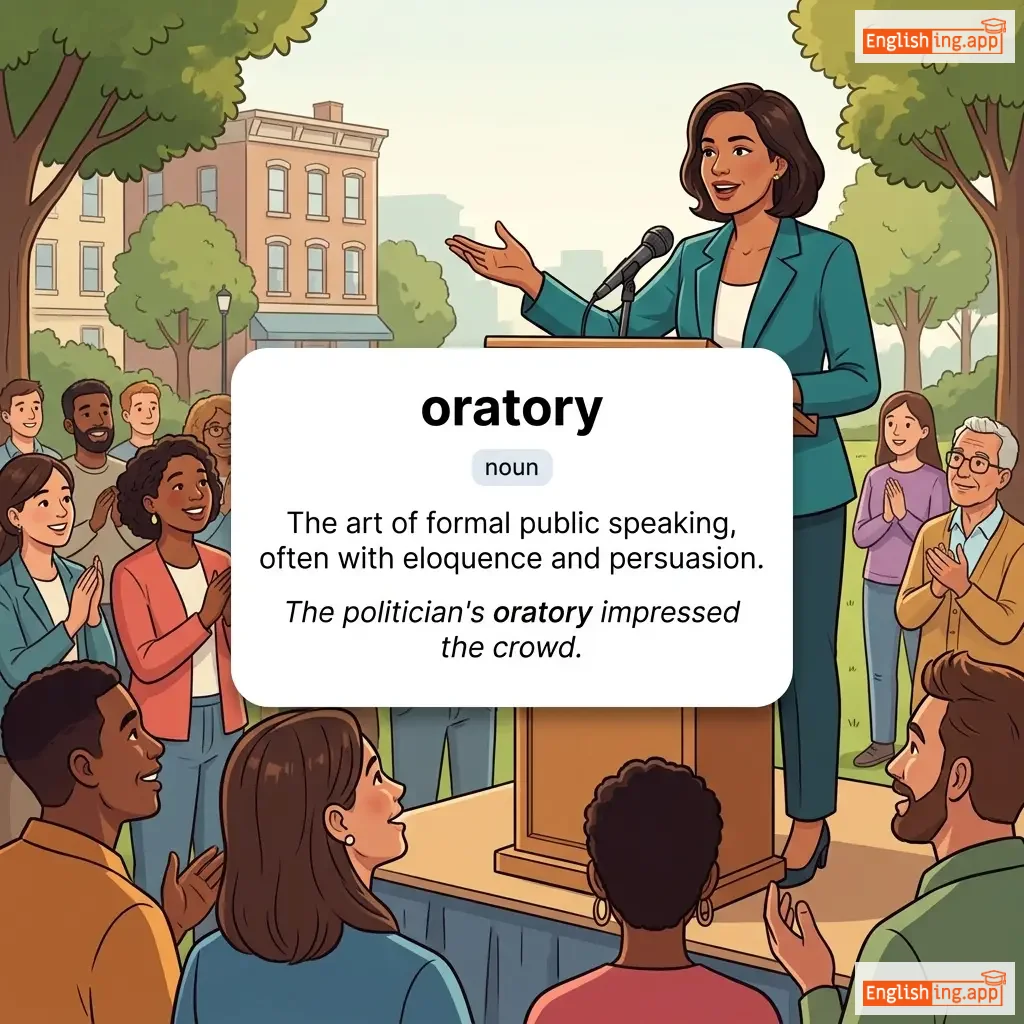
oratory definition card — visual illustration of the meaning
noun C1
/ˈɔːrəˌtɔːri/
arte de la oratoria (arte de la oratoria)

The art of formal public speaking, often with eloquence and persuasion.

"The politician's oratory impressed the crowd."
"La oratoria del político impresionó a la multitud." (La oratoria del político impresionó a la multitud.)
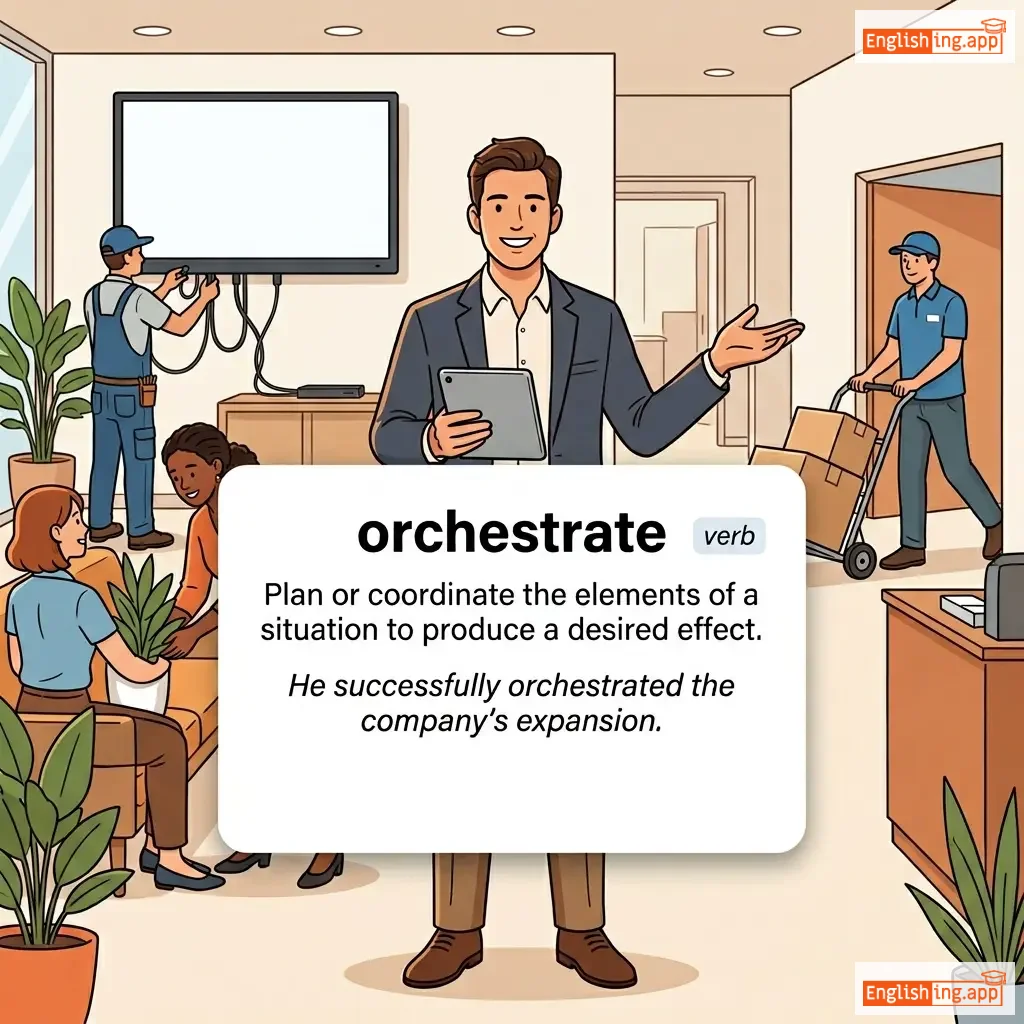
orchestrate definition card — visual illustration of the meaning
verb C1
/ˈɔːr.kɪ.streɪt/
orquestar (orquestar)

Plan or coordinate the elements of a situation to produce a desired effect.

"He successfully orchestrated the company's expansion."

"Él organizó con éxito la expansión de la empresa." (Él organizó con éxito la expansión de la empresa.)
orchestrated definition card — visual illustration of the meaning
verb C1
ˈɔː.kɪ.streɪ.tɪd
orquestado (orquestado)

Planned or coordinated carefully and deliberately.

"The attacks were orchestrated with precision."
"Los ataques fueron orquestados con precisión." (Los ataques fueron orquestados con precisión.)
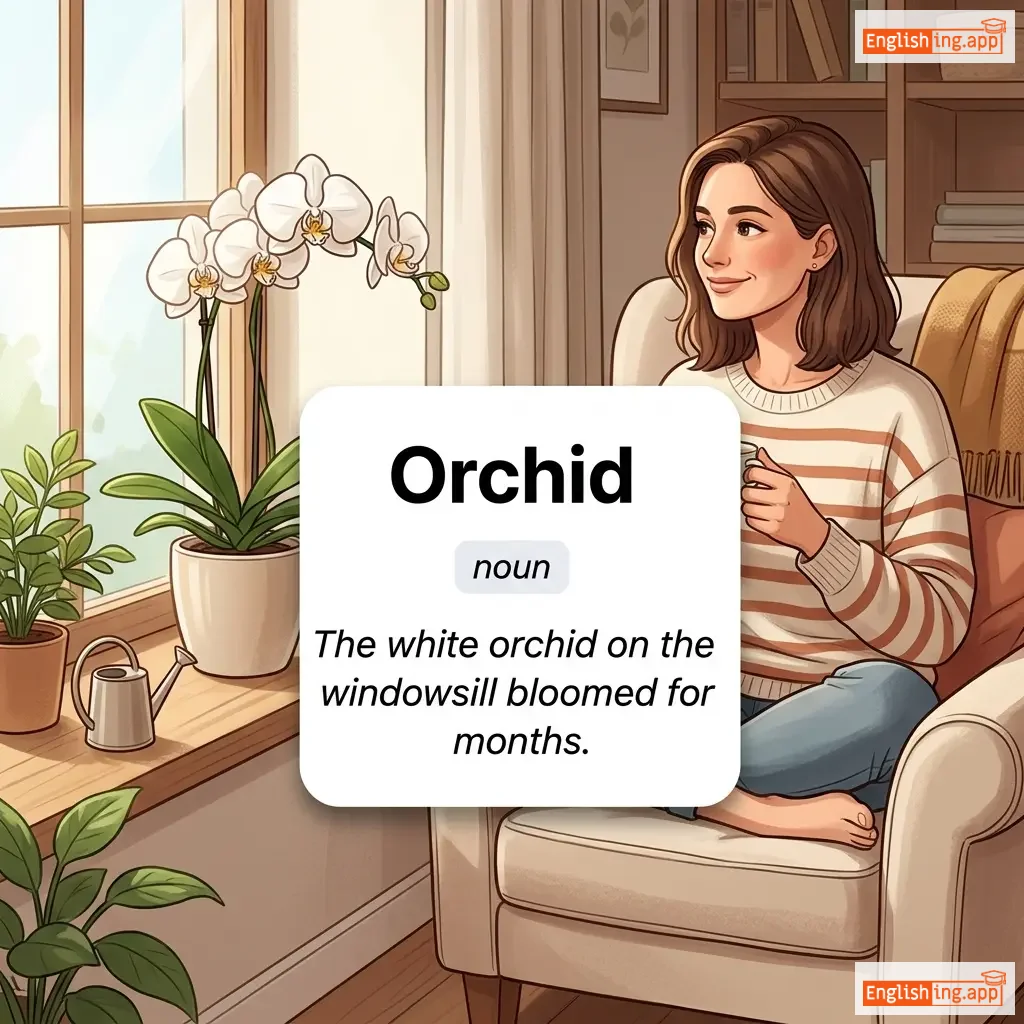
Orchid definition card — visual illustration of the meaning
noun C1
/ˈɔːrkɪd/
órquidea (orquidea)

a diverse family of flowering plants known for their exotic and often fragrant flowers

"The white orchid on the windowsill bloomed for months."

"La orquídea blanca en el alféizar de la ventana floreció durante meses." (La orquidea blanca en el alfeizar de la ventana florecio durante meses.)
verb C1
/ɔːrˈdeɪn/
ordenar (ordenar)

To officially make someone a priest or minister; to decree or order something officially.

"The bishop will ordain three new priests this Sunday."
"El obispo ordenará tres nuevos sacerdotes este domingo." (El obispo ordenará tres nuevos sacerdotes este domingo.)
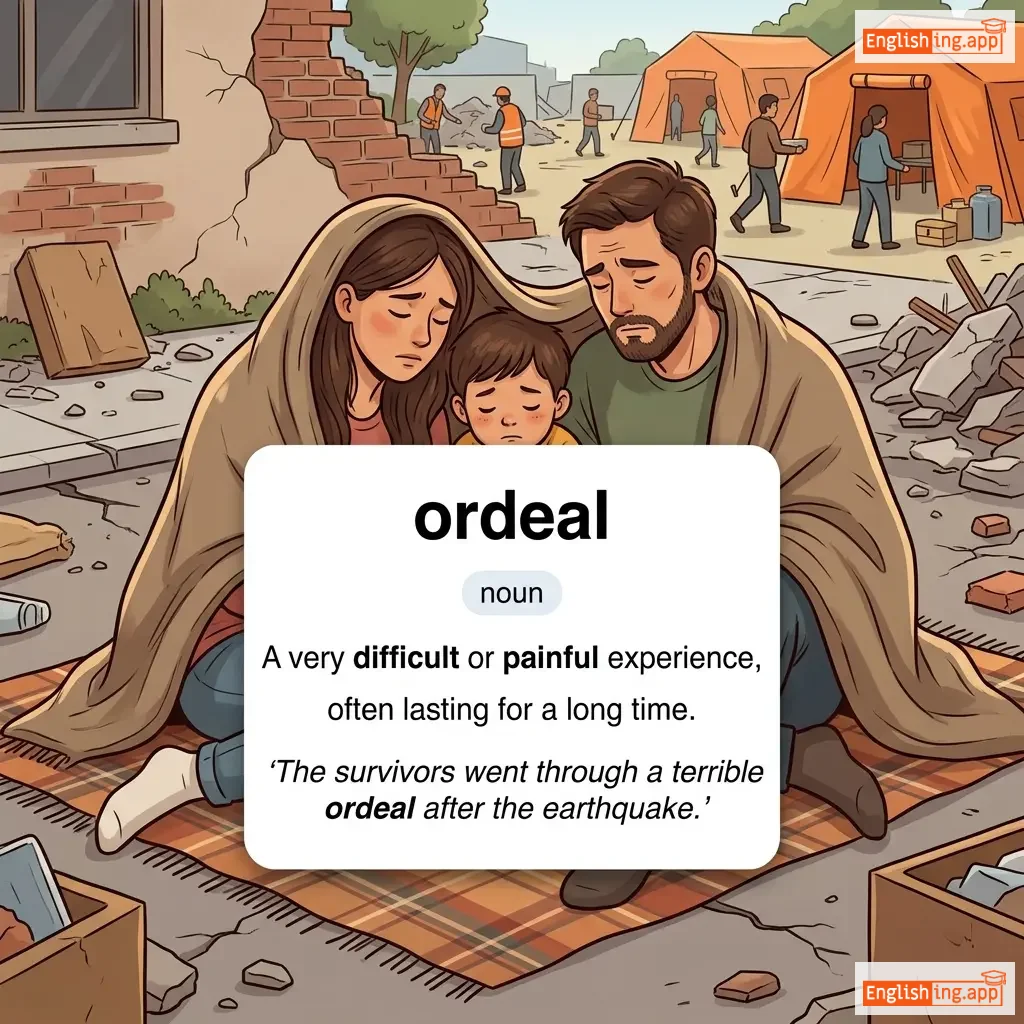
ordeal definition card — visual illustration of the meaning
noun C1
/ɔːrˈdiːl/
experiencia difícil (experiencia dificil)

A very difficult or painful experience, often lasting for a long time.

"The survivors went through a terrible ordeal after the earthquake."

"Los sobrevivientes pasaron por una experiencia terrible después del terremoto." (Los sobrevivientes pasaron por una experiencia terrible despues del terremoto.)
adjective C1
/ˈɔːrdɪnəl/
ordinal (ordinal)

Relating to the order or position of something in a sequence (first, second, third, etc.).

"The ordinal number 'third' indicates position in a sequence."

"El número ordinal 'tercero' indica la posición en una secuencia." (El numero ordinal 'tercero' indica la posicion en una secuencia.)
noun C1
/ˈɔːrdɪnəns/
ordenanza (ordenanza)

An authoritative rule, law, or decree issued by a city, town, or authority.

"The city council passed an ordinance banning smoking in public parks."
"El consejo municipal aprobó una ordenanza que prohíbe fumar en los parques públicos." (El consejo municipal aprobó una ordenanza que prohíbe fumar en los parques públicos.)
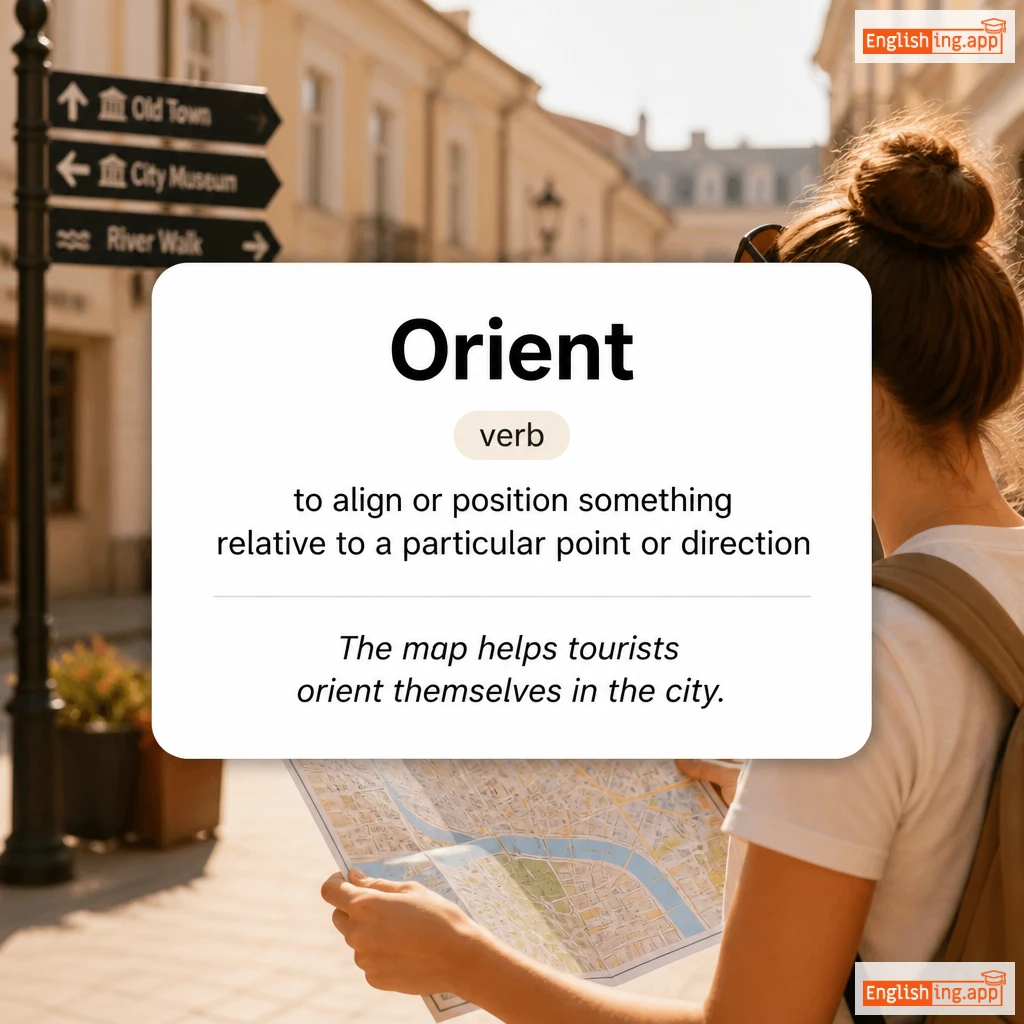
Orient definition card — visual illustration of the meaning
verb C1
/ˈɔː.ri.ənt/
orientar (orientar)

to align or position something relative to a particular point or direction

"The map helps tourists orient themselves in the city."

"El mapa ayuda a los turistas a orientarse en la ciudad." (El mapa ayuda a los turistas a orientarse en la ciudad.)
adjective C1
/ˌɔː.riˈen.təl/
relativo a los países del Este de Asia; oriental (oriental)

relating to the countries of East Asia; eastern

"The museum has a beautiful collection of oriental art."

"El museo tiene una hermosa colección de arte oriental." (El museo tiene una hermosa coleccion de arte oriental)
adjective C1
/ˌɔːrnəˈmɛntl/
ornamental (ornamental)

Serving as decoration; decorative rather than functional.

"The garden was filled with ornamental plants."

"El jardín estaba lleno de plantas ornamentales." (El jardin estaba lleno de plantas ornamentales.)
adjective C1
/ɔːˈneɪt/
ornamentado (ornamentado)

elaborately or highly decorated

"The palace hall was filled with ornate furniture and paintings."

"El salón del palacio estaba lleno de muebles ornamentados y pinturas." (El salon del palacio estaba lleno de muebles ornamentados y pinturas.)
adjective C1
/ˈɔːrθədɑːks/
ortodoxo (ortodoxo)

conforming to traditional beliefs or practices

"He comes from a very orthodox family."

"Él proviene de una familia muy ortodoxa." (El proviene de una familia muy ortodoxa.)
noun C1
/ˈɔːrθədɑːksi/
ortodoxia (ortodoxia)

traditional or generally accepted beliefs and practices

"The religious leader defended the orthodoxy of the faith."

"El líder religioso defendió la ortodoxia de la fe." (El lider religioso defendio la ortodoxia de la fe.)
adjective C1
/ˌɔːrθəˈpiːdɪk/
relacionado con la corrección de deformidades óseas o musculares (relacionado con la corrección de deformidades óseas o musculares)

Relating to the correction of deformities of bones or muscles.

"She visited an orthopedic surgeon for her back pain."
"Ella visitó a un cirujano ortopédico por el dolor en la espalda." (Ella visitó a un cirujano ortopédico por el dolor en la espalda.)
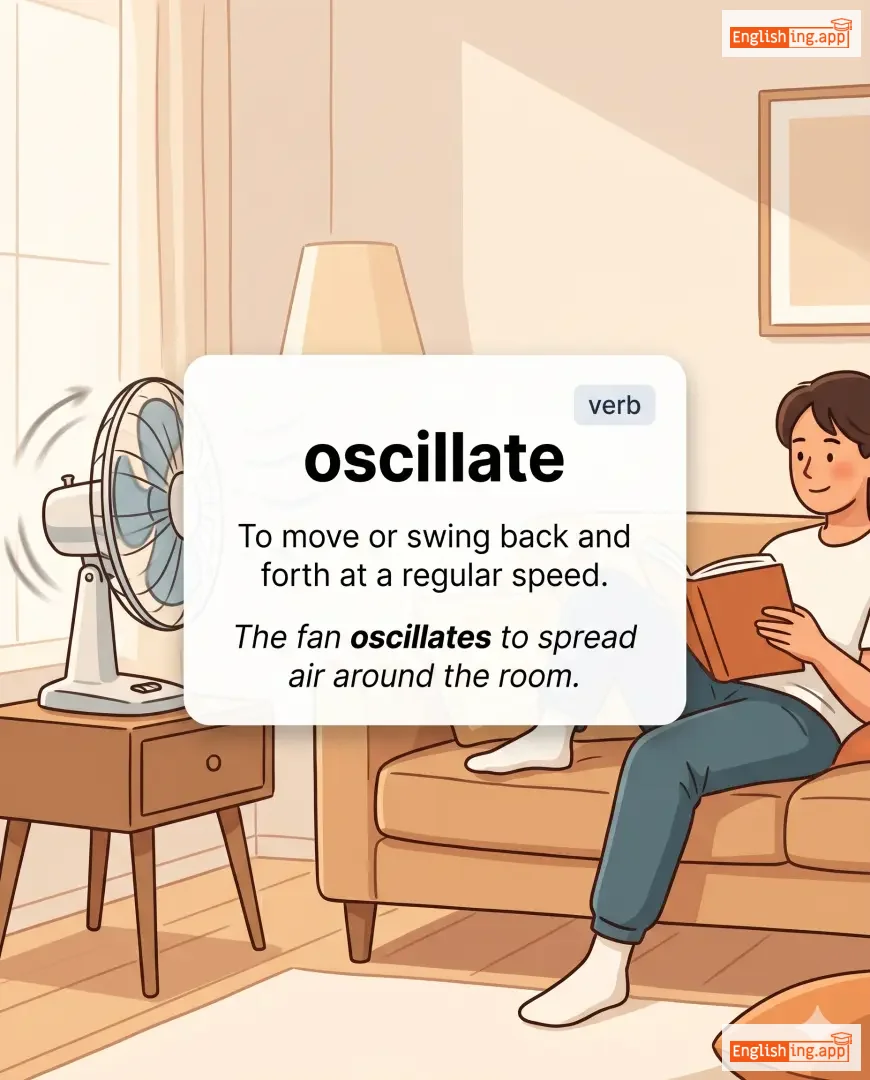
oscillate definition card — visual illustration of the meaning
verb C1
/ˈɑːsɪleɪt/
felicidad (felicidad)

To move or swing back and forth at a regular speed.

"The fan oscillates to spread air around the room."

"Ella no pudo ocultar su felicidad cuando recibió el premio." (Ella no pudo ocultar su felicidad cuando recibió el premio.)
noun C1
/ˌɑːsɪˈleɪʃən/
oscilación (oscilacion)

The movement back and forth at a regular speed.

"The oscillation of the pendulum controls the clock."

"La oscilación del péndulo controla el reloj." (La oscilacion del pendulo controla el reloj.)
adjective C1
/ɒˈstɛnsəbl/
aparente (aparente)

stated or appearing to be true, but not necessarily so

"His ostensible reason for leaving was illness, but many doubted it."
"Su aparente razón para irse era la enfermedad, pero muchos lo dudaron." (Su aparente razón para irse era la enfermedad, pero muchos lo dudaron.)
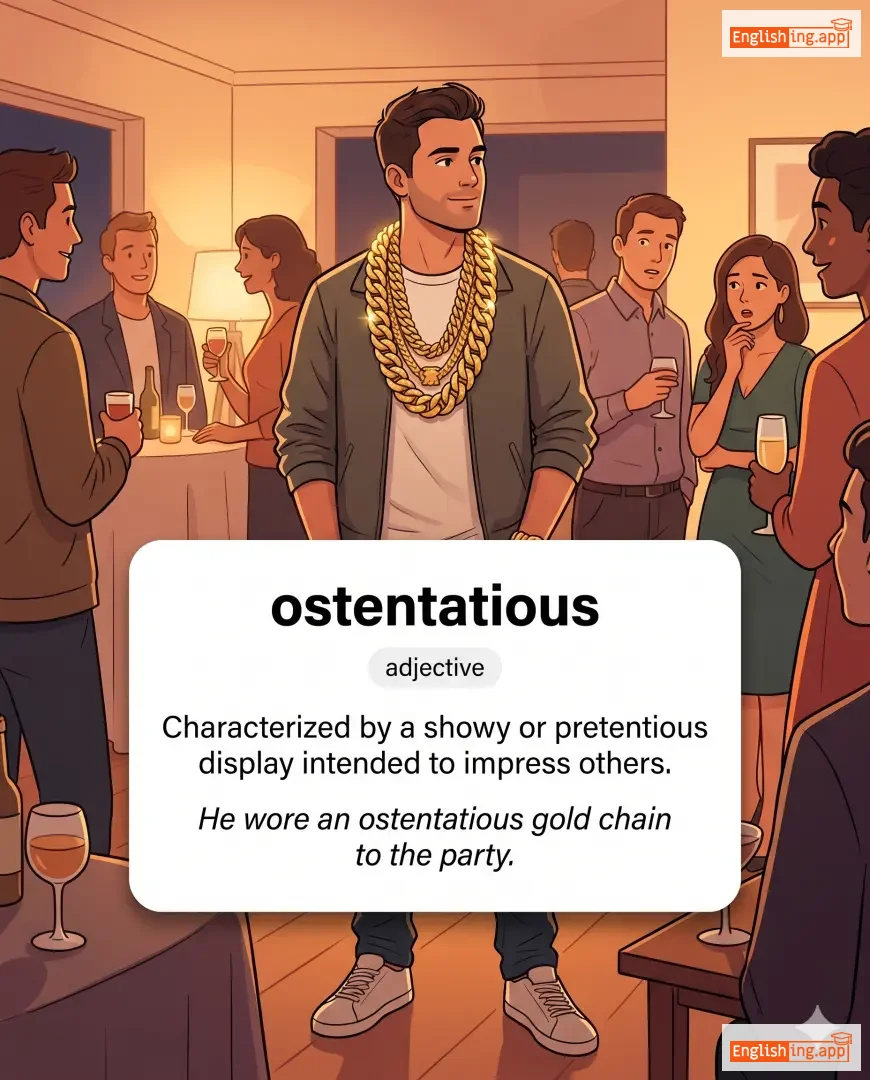
ostentatious definition card — visual illustration of the meaning
adjective C1
/ˌɒstɛnˈteɪʃəs/
ostentoso (ostentoso)

Characterized by a showy or pretentious display intended to impress others.

"He wore an ostentatious gold chain to the party."

"Llevaba una cadena de oro ostentosa en la fiesta." (Llevaba una cadena de oro ostentosa en la fiesta.)
noun C1
/ˈɒstrəsɪzəm/
ostracismo (ostracismo)

The act of excluding someone from a group or society.

"The student faced ostracism after breaking the rules."
"El estudiante enfrentó el ostracismo después de romper las reglas." (El estudiante enfrentó el ostracismo después de romper las reglas.)
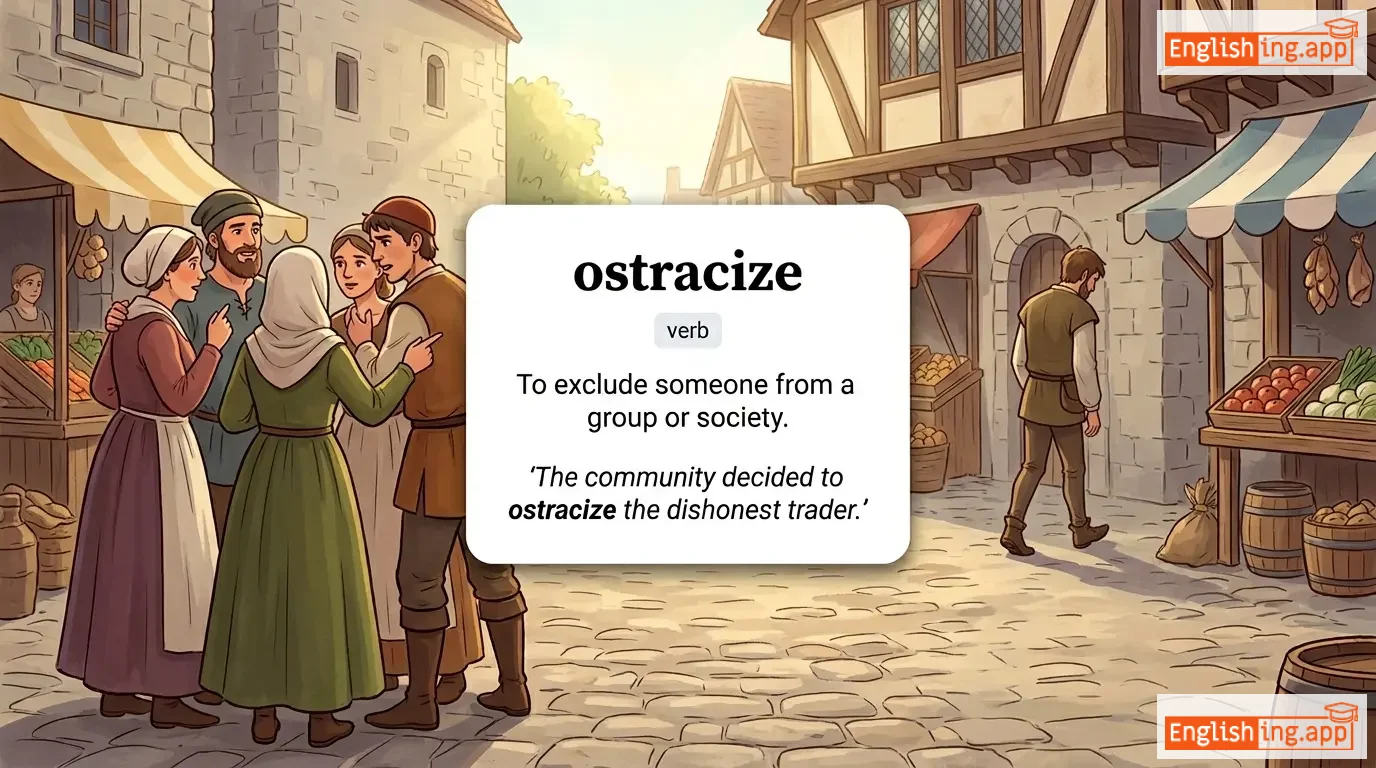
ostracize definition card — visual illustration of the meaning
verb C1
/ˈɒstrəsaɪz/
ostracizar (ostracizar)

To exclude someone from a group or society.

"The community decided to ostracize the dishonest trader."

"La comunidad decidió ostracizar al comerciante deshonesto." (La comunidad decidió ostracizar al comerciante deshonesto.)
verb C1
/aʊst/
destituir (destituir)

To remove someone from a position or place of power or authority.

"The rebels ousted the dictator from power."

"Los rebeldes destituyeron al dictador del poder." (Los rebeldes destituyeron al dictador del poder.)
adjective C1
/ˌaʊt ən ˈaʊt/
completo (completo)

complete; absolute; used to emphasize something extreme

"The speech was an out-and-out lie."

"El discurso fue una mentira completa." (El discurso fue una mentira completa.)
adjective C1
/ˌaʊt əv ðə ˈweɪ/
apartado o remoto (apartado o remoto)

remote or unusual; not in a convenient or usual location

"They stayed in an out-of-the-way village."

"Se quedaron en una aldea apartada." (Se quedaron en una aldea apartada.)
noun C1
/ˈaʊtkæst/
paria (paria)

a person who is rejected or excluded from society or a group

"He felt like an outcast at school."

"Se sintió como un paria en la escuela." (Se sintió como un paria en la escuela.)
noun C1
/ˈaʊtˌkraɪ/
protesta (protesta)

A strong expression of public anger or disapproval.

"The decision sparked an outcry among the citizens."

"La decisión provocó una protesta entre los ciudadanos." (La decision provoco una protesta entre los ciudadanos.)
verb C1
/ˌaʊtˈduː/
superar (superar)

To do better than someone else; to surpass.

"She always tries to outdo her classmates in exams."

"Ella siempre trata de superar a sus compañeros de clase en los exámenes." (Ella siempre trata de superar a sus compañeros de clase en los exámenes.)
noun C1
/ˈaʊtˌɡroʊθ/
desarrollo (desarollo)

something that grows out of something else; a natural development or result

"The new policy was an outgrowth of years of debate."

"La nueva política fue un desarrollo de años de debate." (La nueva política fue un desarrollo de años de debate.)
adjective C1
/ˌaʊtˈlændɪʃ/
extraño (extrano)

Looking or sounding bizarre or unfamiliar; strange.

"He wore an outlandish costume to the festival."

"Él llevaba un traje extraño al festival." (Él llevaba un traje extraño al festival.)