語彙集

英単語辞書 | 単語の意味、定義、例文

verb C1
/flɑp/
失敗 (shippai)

to fall or move heavily and clumsily; to fail completely

"The new movie flopped at the box office."
"新しい映画は興行成績が振るわなかった。" (Atarashii eiga wa kougyou seiseki ga furuwanakatta.)
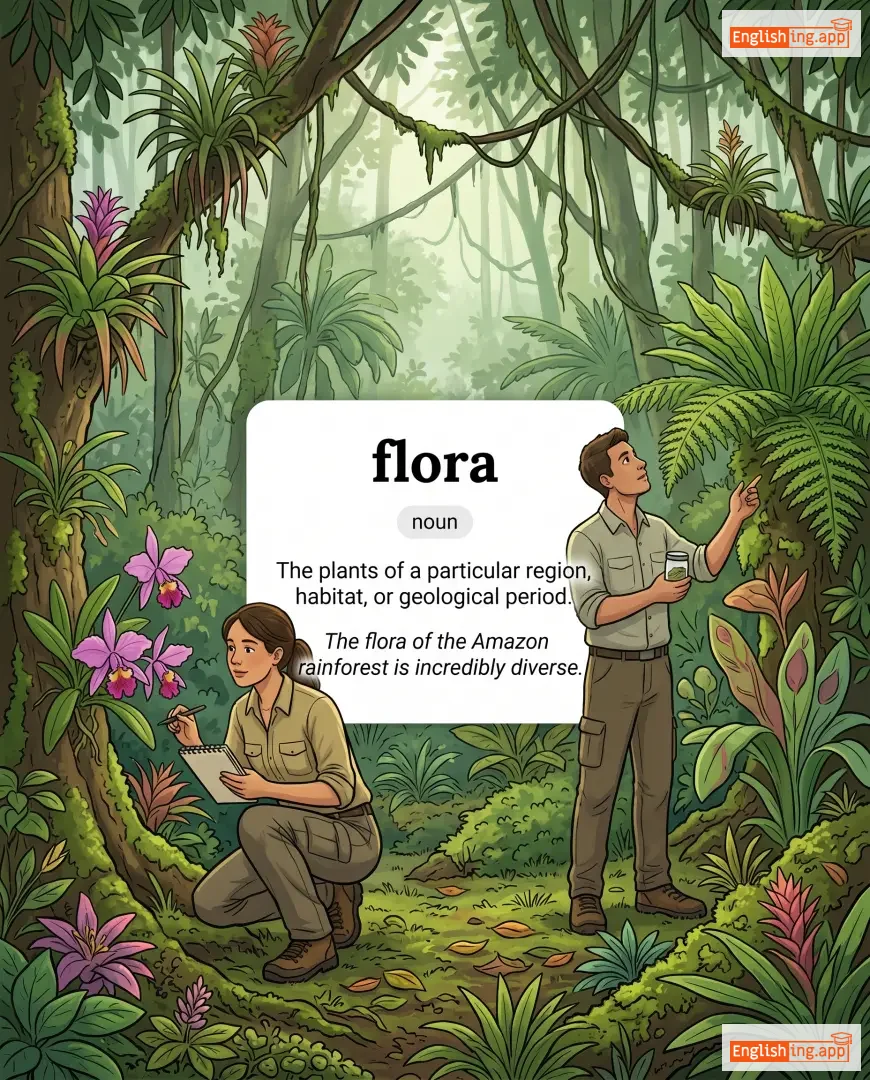
flora definition card — visual illustration of the meaning
noun C1
/ˈflɔːrə/
植物相 (shokubutsusou)

The plants of a particular region, habitat, or geological period.

"The flora of the Amazon rainforest is incredibly diverse."
"アマゾン熱帯雨林の植物相は非常に多様です。" (Amazon nettai urin no shokubutsusou wa hijou ni tayou desu.)
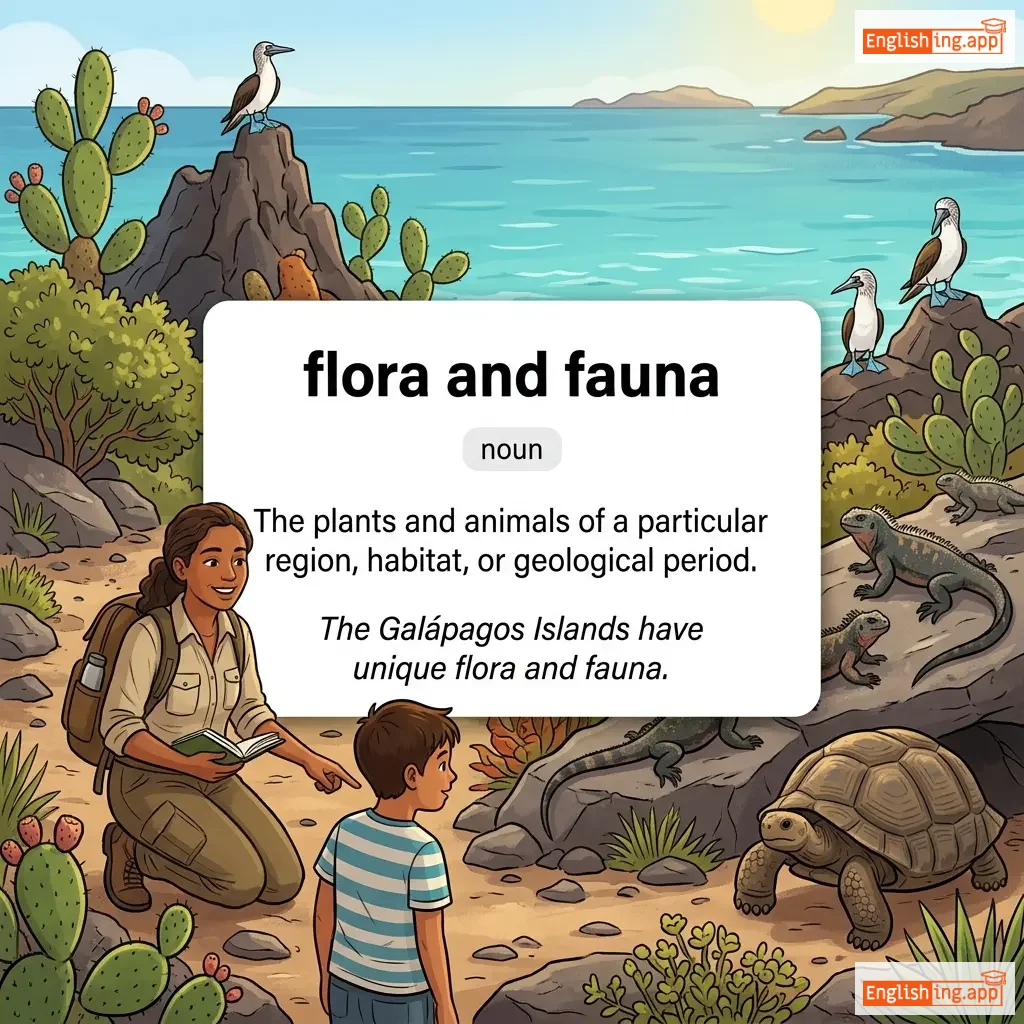
flora and fauna definition card — visual illustration of the meaning
noun C1
ˈflɔː.rə ænd ˈfɔː.nə
フローラとファウナ (furōra to fauna)

The plants and animals of a particular region, habitat, or geological period.

"The Galápagos Islands have unique flora and fauna."
"ガラパゴス諸島には独特のフローラとファウナがあります。" (Garapagos shotō ni wa dokutoku no furōra to fauna ga arimasu.)
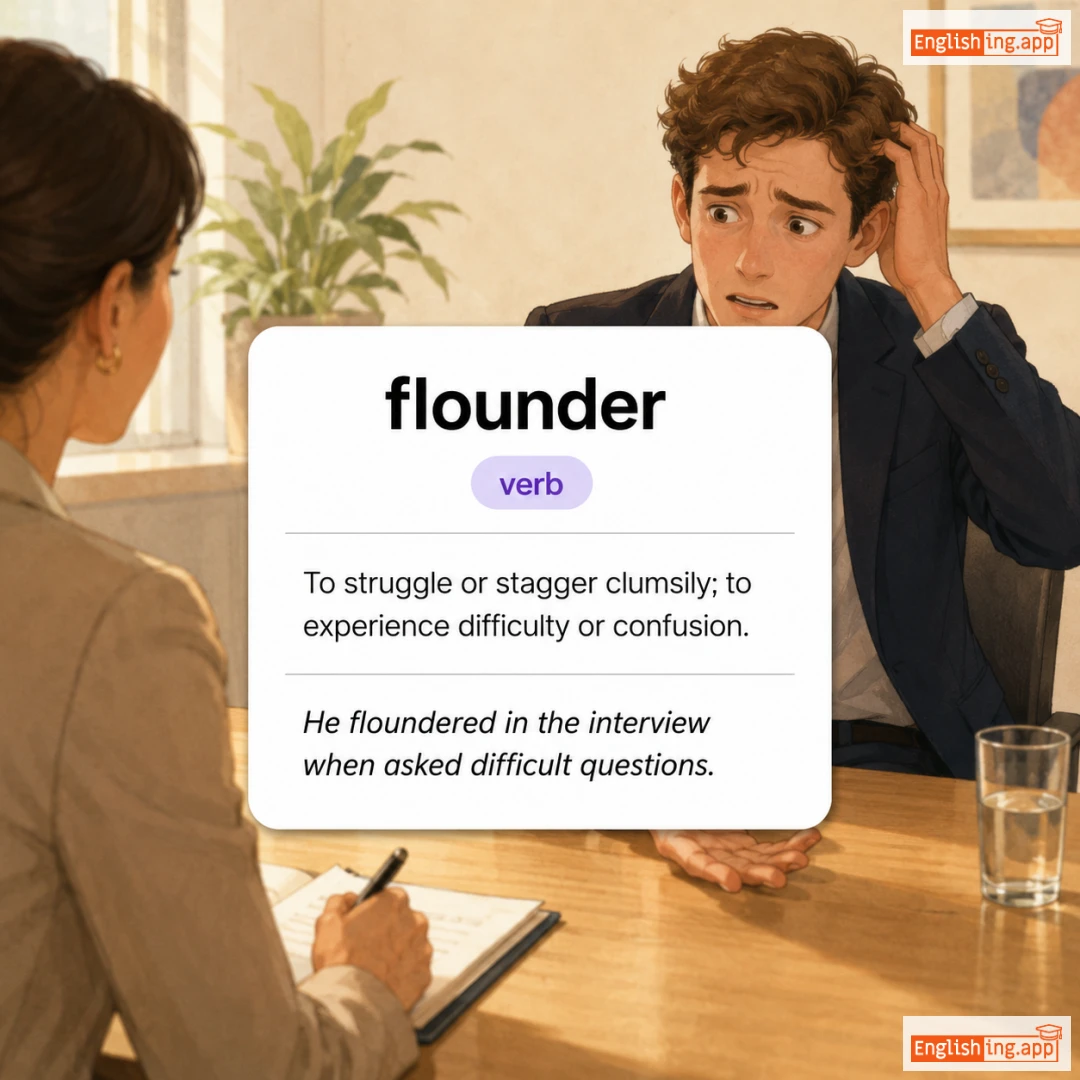
flounder definition card — visual illustration of the meaning
verb C1
/ˈflaʊndər/
もがく (mogaku)

To struggle or stagger clumsily; to experience difficulty or confusion.

"He floundered in the interview when asked difficult questions."
"彼は面接で難しい質問をされて、うろたえました。" (Kare wa mensetsu de muzukashii shitsumon o sarete, urotaemashita.)
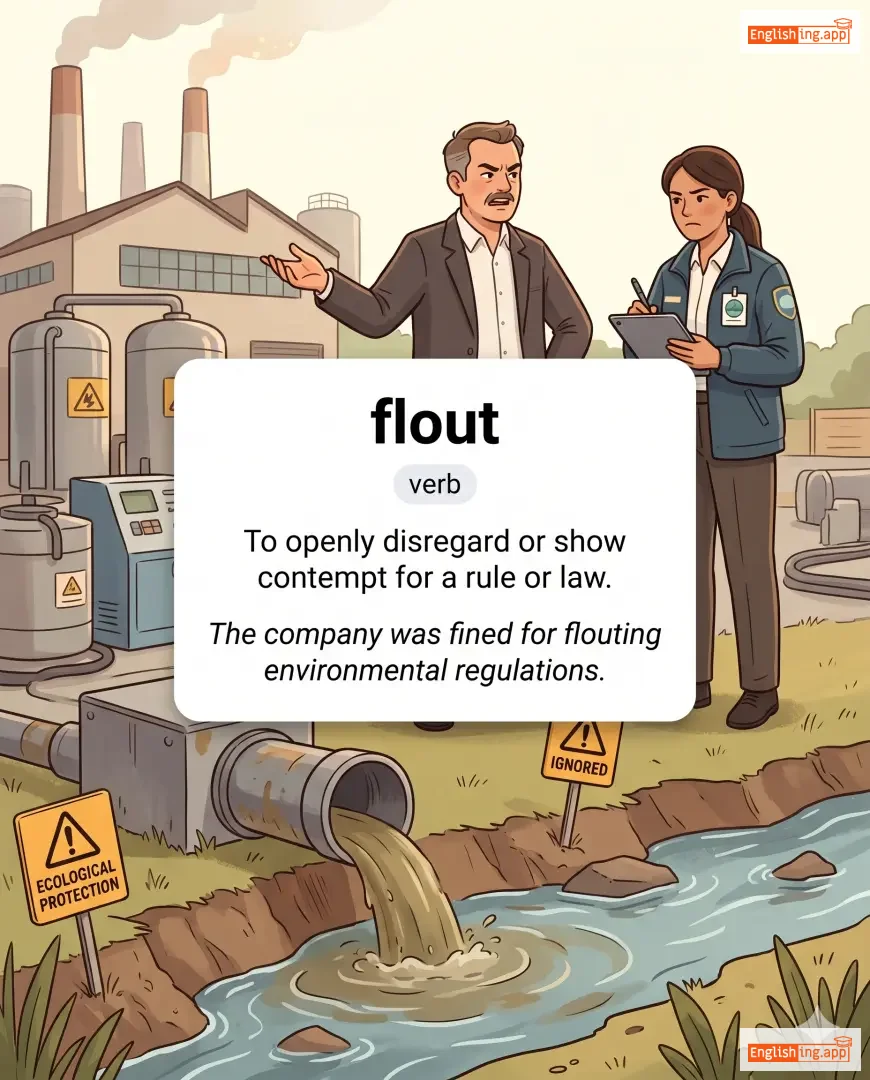
flout definition card — visual illustration of the meaning
verb C1
/flaʊt/
無視する (mushi suru)

To openly disregard or show contempt for a rule or law.

"The company was fined for flouting environmental regulations."
"その会社は環境規制を無視したため罰金を科せられました。" (Sono kaisha wa kankyō kisei o mushi shita tame bakkin o kase raremashita.)
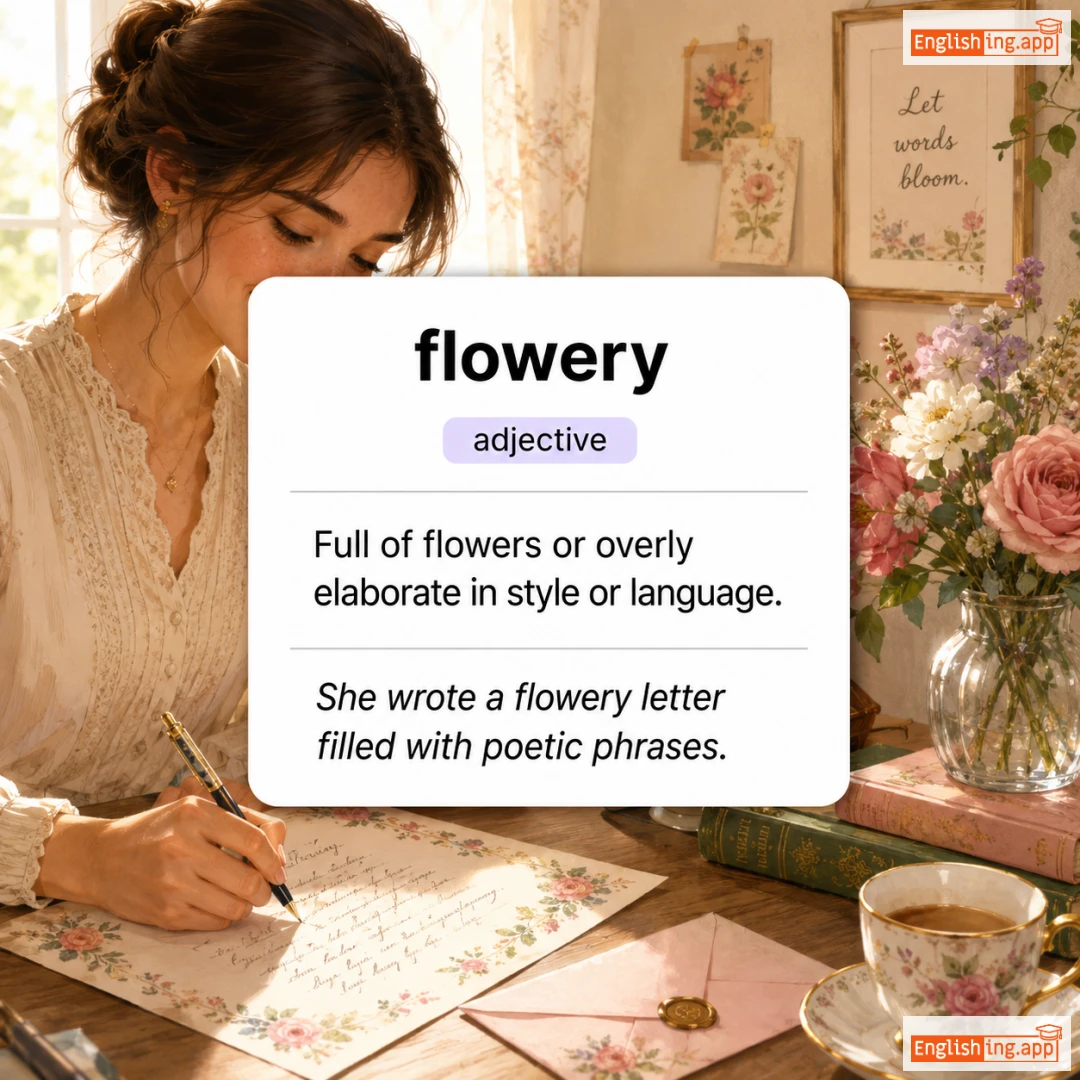
flowery definition card — visual illustration of the meaning
adjective C1
/ˈflaʊəri/
花のような / 飾られた (hana no yō na / kazatta)

Full of flowers or overly elaborate in style or language.

"She wrote a flowery letter filled with poetic phrases."
"彼女は詩的なフレーズで満たされた花のような手紙を書いた。" (Kanojo wa shiteki na fureezu de mitasareta hana no yō na tegami o kaita.)
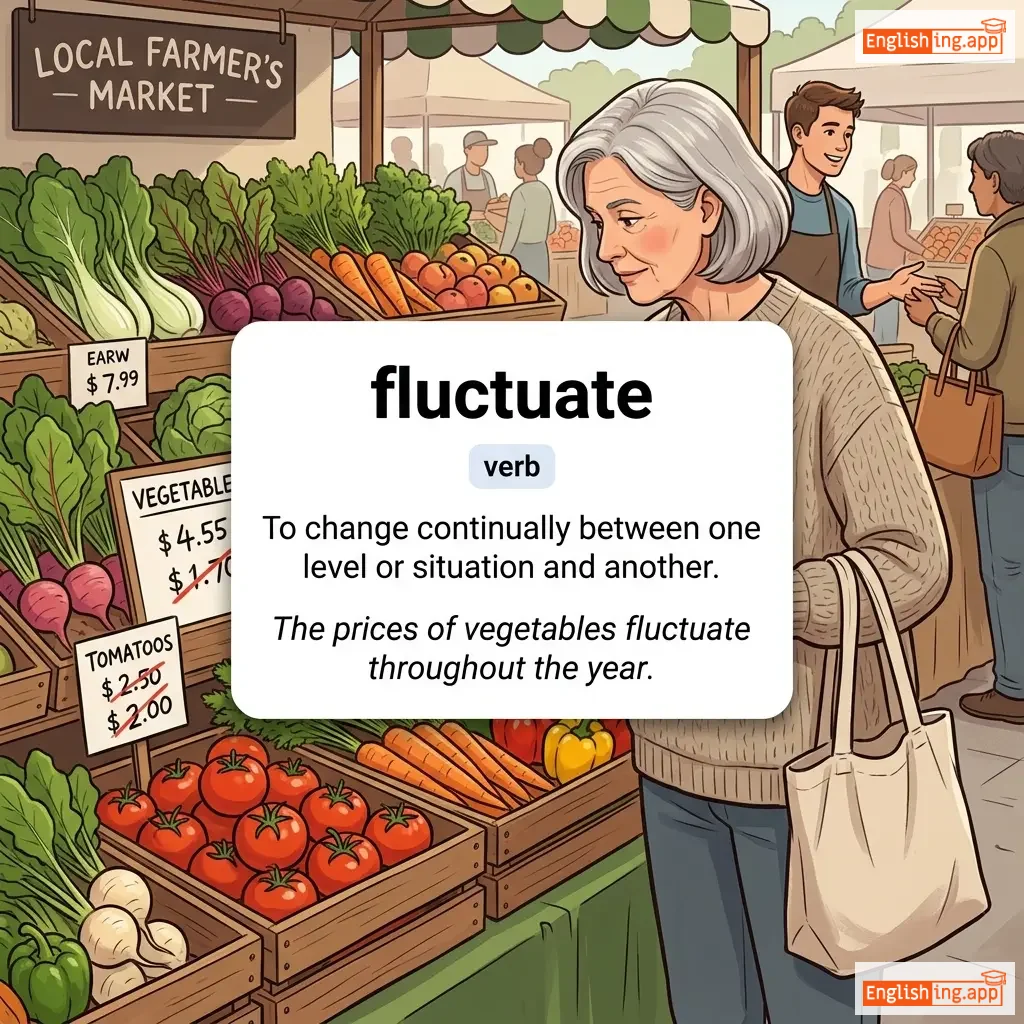
fluctuate definition card — visual illustration of the meaning
verb C1
/ˈflʌktʃueɪt/
変動する (hendou suru)

To change continually between one level or situation and another.

"The prices of vegetables fluctuate throughout the year."
"野菜の価格は一年を通して変動します。" (Yasai no kakaku wa ichinen o tooshite hendou shimasu.)
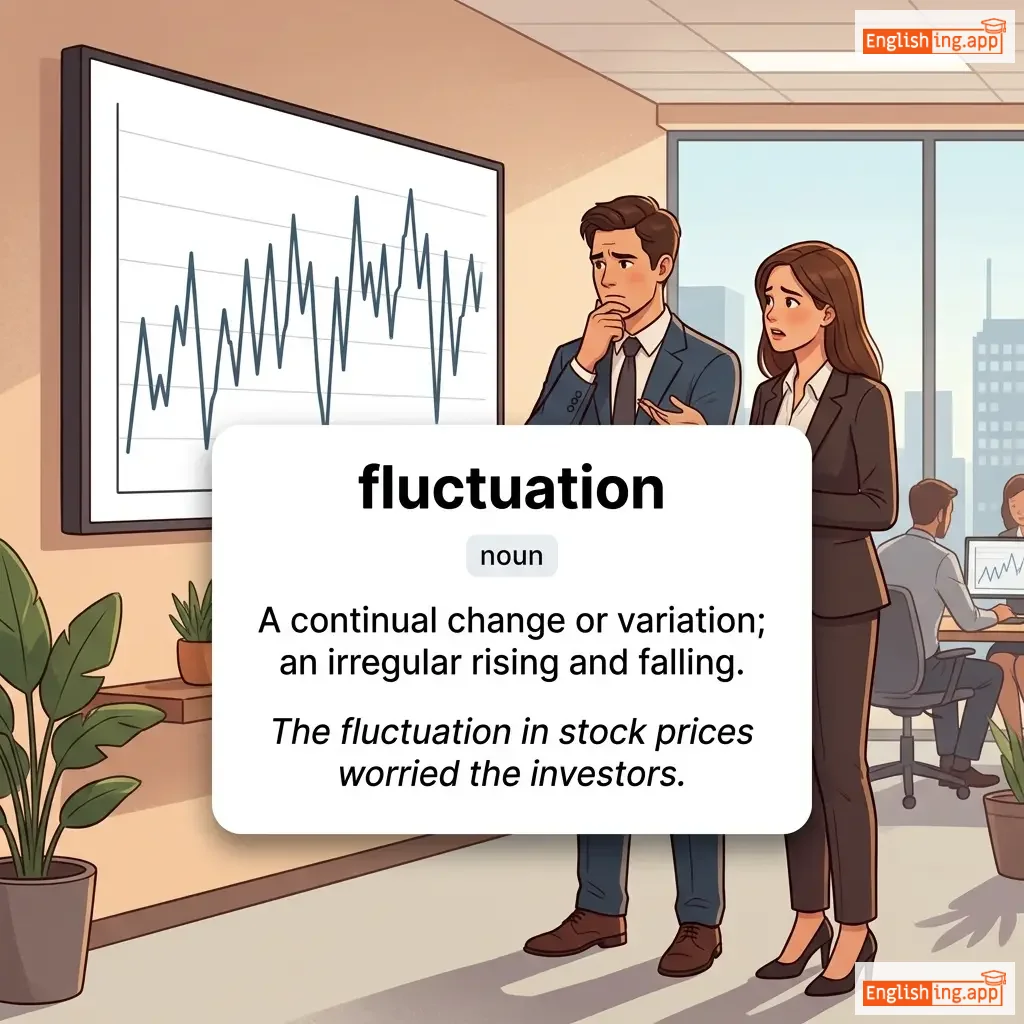
fluctuation definition card — visual illustration of the meaning
noun C1
/ˌflʌktʃuˈeɪʃən/
変動 (hendou)

A continual change or variation; an irregular rising and falling.

"The fluctuation in stock prices worried the investors."
"株価の変動は投資家を心配させました。" (Kabuka no hendou wa toushika o shinpai sasemashita.)
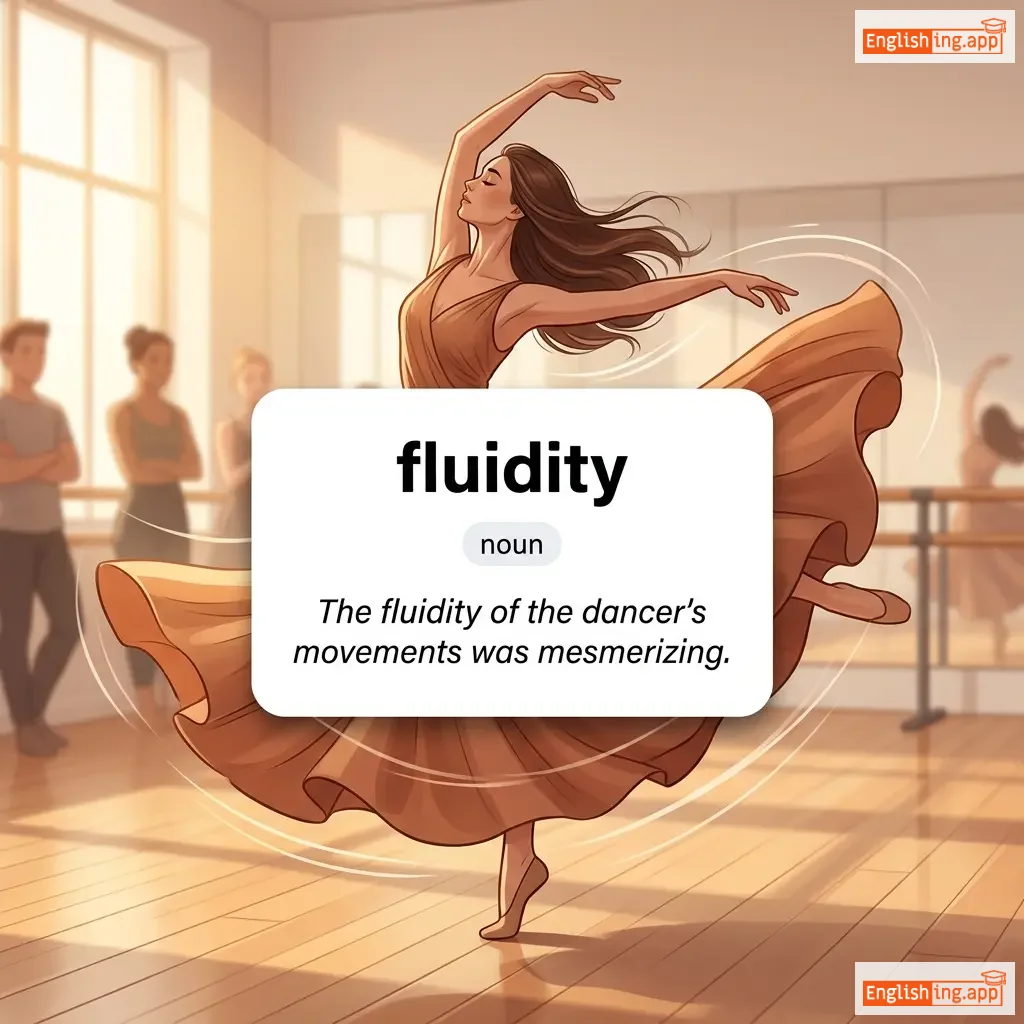
fluidity definition card — visual illustration of the meaning
noun C1
fluˈɪd.ɪ.ti
流動性 (ryūdōsei)

The ability of a substance to flow easily; smooth and graceful movement or style.

"The fluidity of the dancer's movements was mesmerizing."

"ダンサーの動きの流動性は魅惑的でした。" (Dansā no ugoki no ryūdōsei wa miwaku-teki deshita.)
verb, noun C1
/ˈflʌstər/
困惑させる (konwaku saseru)

to make someone agitated or confused

"The unexpected question flustered him."

"予期しない質問が彼を困惑させた。" (Yoki shinai shitsumon ga kare o konwaku saseta.)
adjective C1
/ˈflʌstərd/
動揺した (dōyō shita)

in a state of confusion or agitation

"She appeared flustered after being asked so many questions."

"彼女はたくさんの質問をされた後、動揺しているように見えました。" (Kanojo wa takusan no shitsumon o sareta ato, dōyō shite iru yō ni miemashita.)
verb C1
/ˈflʌtər/
羽ばたく / 震える (habataku / furueru)

to move or flap quickly and lightly; to beat or wave with small rapid motions

"The butterfly began to flutter its wings in the sunlight."

"蝶が日光の中で羽ばたき始めた。" (Chou ga nikkou no naka de habataki hajimeta.)
flux definition card — visual illustration of the meaning
noun C1
/flʌks/
フロー (furō)

continuous change or movement; the rate of flow of something

"The company was in a state of constant flux during the reorganization."
"会社は再編成の間、絶え間ない変化の中にありました。" (Kaisha wa sai hensei no aida, tae manai henka no naka ni arimashita.)
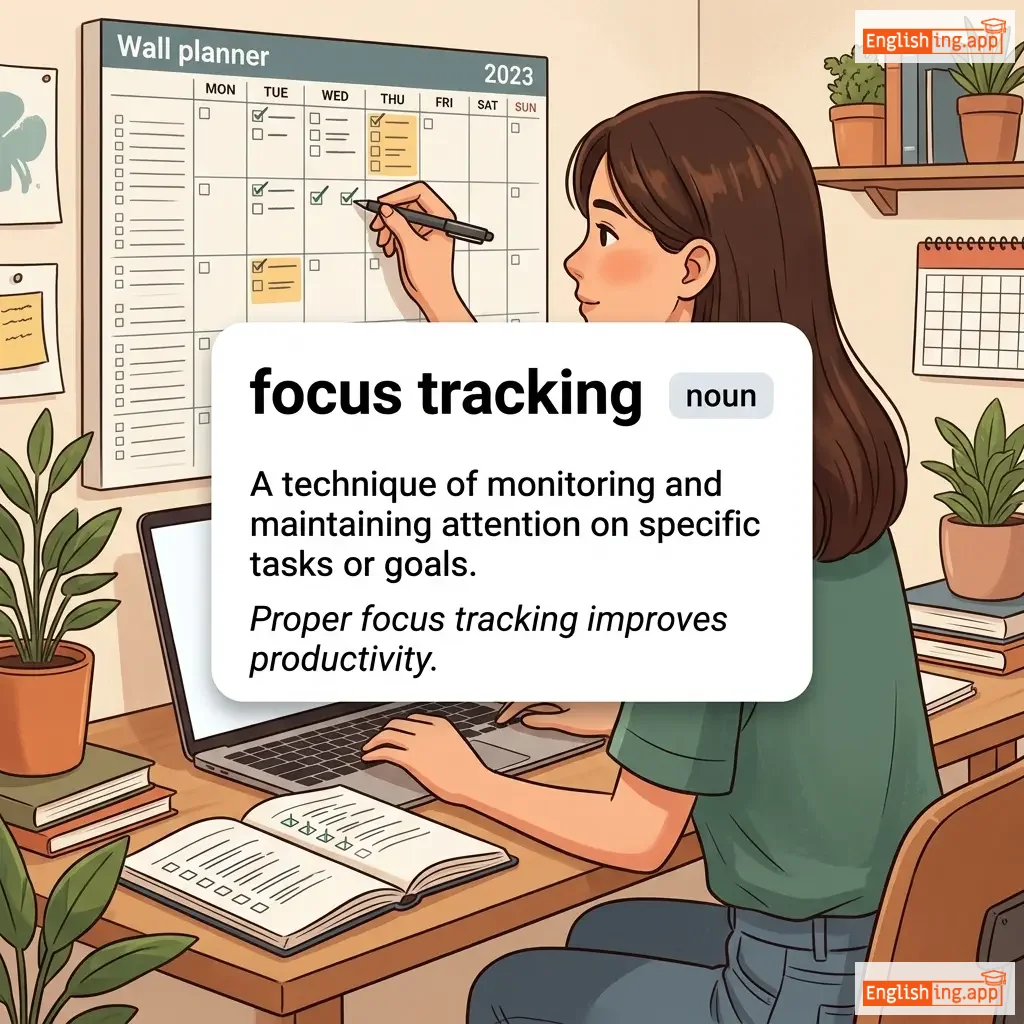
focus tracking definition card — visual illustration of the meaning
noun C1
/ˈfoʊ.kəs ˈtræk.ɪŋ/
フォーカス追跡 (fōkasu tsuiseki)

A technique of monitoring and maintaining attention on specific tasks or goals.

"Proper focus tracking improves productivity."
"適切なフォーカス追跡は生産性を向上させます。" (Tekisetsu na fōkasu tsuiseki wa seisansei o kōjō sasemasu.)
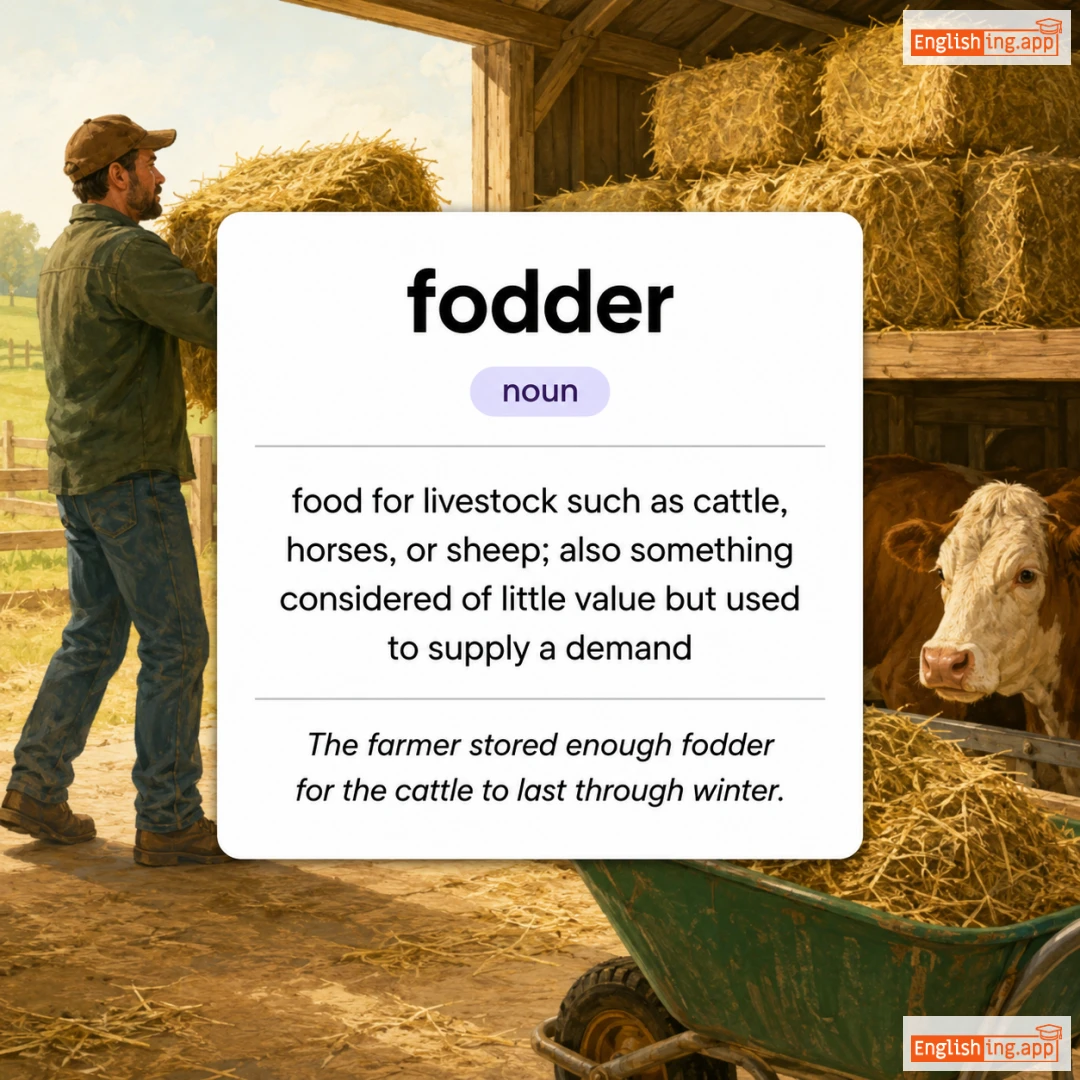
fodder definition card — visual illustration of the meaning
noun C1
/ˈfɒdər/
飼料 (shiryō)

food for livestock such as cattle, horses, or sheep; also something considered of little value but used to supply a demand

"The farmer stored enough fodder for the cattle to last through winter."

"農家は家畜が冬を越せるように十分な飼料を貯めておいた。" (Nōka wa kachiku ga fuyu o koseru yō ni jūbun'na shiryō o tamete oita.)
⚔️

foe (fo)

noun C1
/foʊ/
(teki)

an enemy or opponent

"The knight fought bravely against his foe."

"騎士は勇敢に自分の敵と戦った。" (Kishi wa yūkan ni jibun no teki to tatakatta.)
noun C1
/ˈfoʊliɪdʒ/
(ha)

The leaves of a plant, collectively.

"The autumn foliage looked stunning in the park."
"秋の葉は公園で素晴らしく見えました。" (Aki no ha wa kōen de subarashiku miemashita.)
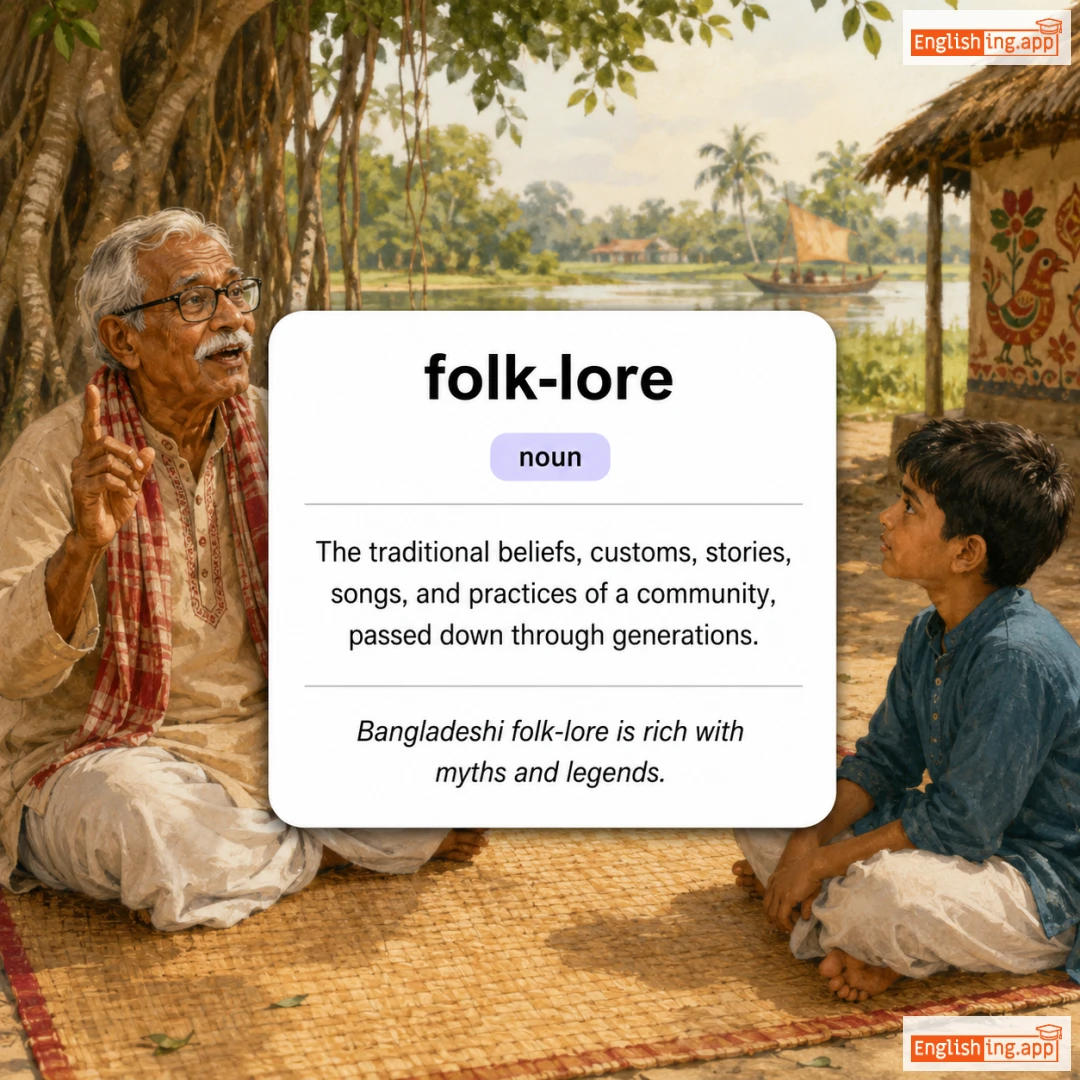
folk-lore definition card — visual illustration of the meaning
noun C1
/ˈfoʊk.lɔːr/
民間伝承 (minkan denshō)

The traditional beliefs, customs, stories, songs, and practices of a community, passed down through generations.

"Bangladeshi folk-lore is rich with myths and legends."

"日本の民間伝承は神話や伝説で豊かです。" (Nihon no minkan denshō wa shinwa ya densetsu de yutaka desu.)
adjective C1
/ˈfuːlpruːf/
失敗しない (shippai shinai)

Designed to be very easy to use or understand, leaving no possibility of failure or error.

"The new software has a foolproof installation process."

"新しいソフトウェアには失敗しないインストールプロセスがあります。" (Atarashii sofutowea ni wa shippai shinai insutooru purosesu ga arimasu.)
noun C1
/ˈfʊtˌnoʊt/
脚注 (kyakuchu)

A note of reference, explanation, or comment placed at the bottom of a page.

"The author included a foot-note to explain the historical context."
"著者は歴史的な文脈を説明するために脚注を追加しました。" (chosha wa rekishiteki na bunmyaku o setsumei suru tame ni kyakuchu o tsuika shimashita.)
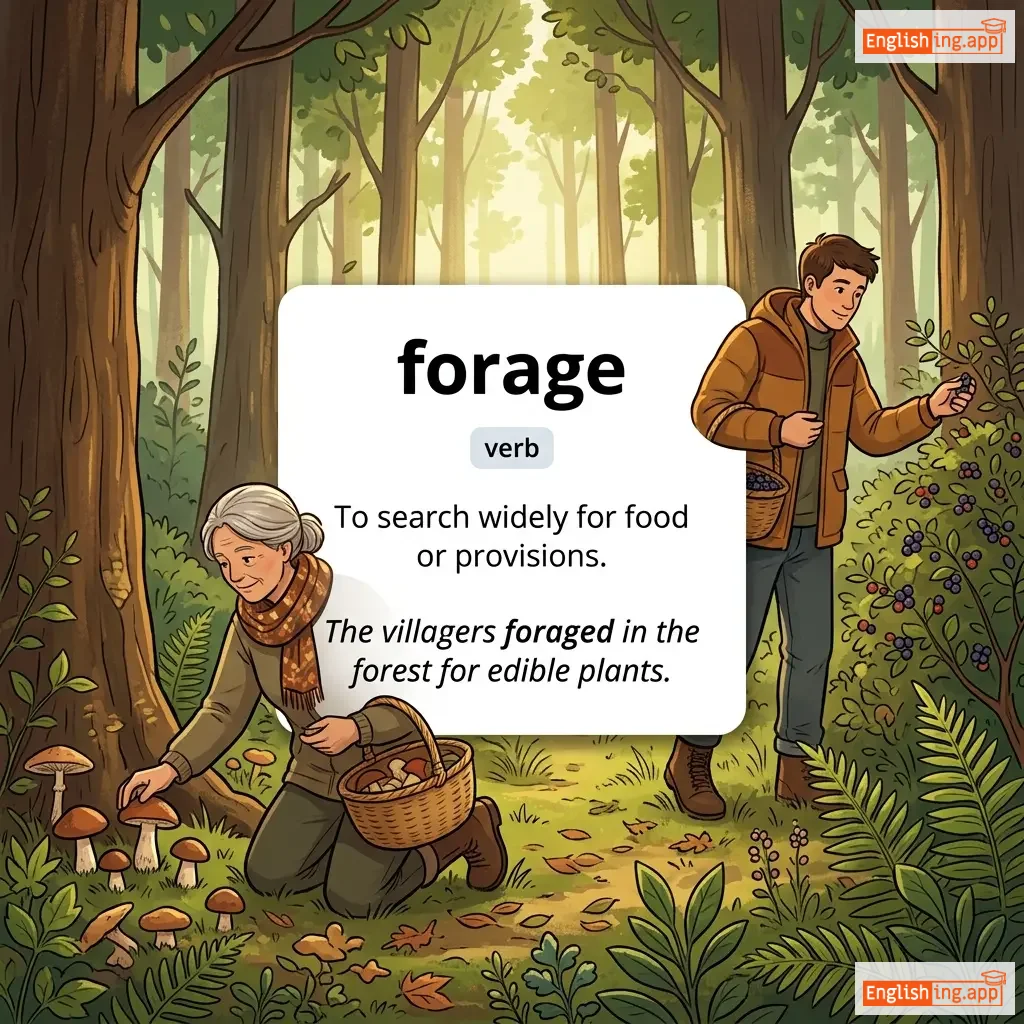
forage definition card — visual illustration of the meaning
verb C1
/ˈfɒrɪdʒ/
食べ物を探す (tabemono wo sagasu)

To search widely for food or provisions.

"The villagers foraged in the forest for edible plants."

"村人たちは食べられる植物を探して森の中でフォレージングした。" (Murabito-tachi wa taberareru shokubutsu wo sagashite mori no naka de forējingu shita.)
noun C1
/ˈfɔːreɪ/
突撃 / 初めての試み (totsugeki / hajimete no kokoromi)

A sudden short attack or attempt, especially into new activity or territory.

"The company made its first foray into the international market."

"その会社は国際市場への初めての進出を果たした。" (sono kaisha wa kokusai shijou e no hajimete no shinshutsu o hatashita.)
verb C1
/fɔːˈbɛər/
控える (hikaeru)

To refrain from doing something; to show patience or self-control.

"She forbore from commenting on his mistake."

"彼女は彼の間違いについてコメントするのを控えました。" (Kanojo wa kare no machigai ni tsuite komento suru no wo hikaemashita.)
adjective C1
/ˈfɔːrsəbl/
強制的 (kyōseiteki)

Done by force; using physical strength or power.

"The police made a forcible entry into the house."

"警察は強制的に家に入った。" (Keisatsu wa kyōseiteki ni ie ni haitta.)
noun, verb C1
/fɔːrd/
浅瀬 (asase)

A shallow place in a river where one can cross; to cross a river at such a place.

"The travelers decided to ford the river at dawn."
"旅行者たちは夜明けに川を渡ることに決めました。" (Ryokō-sha-tachi wa yoake ni kawa o wataru koto ni kimemashita.)
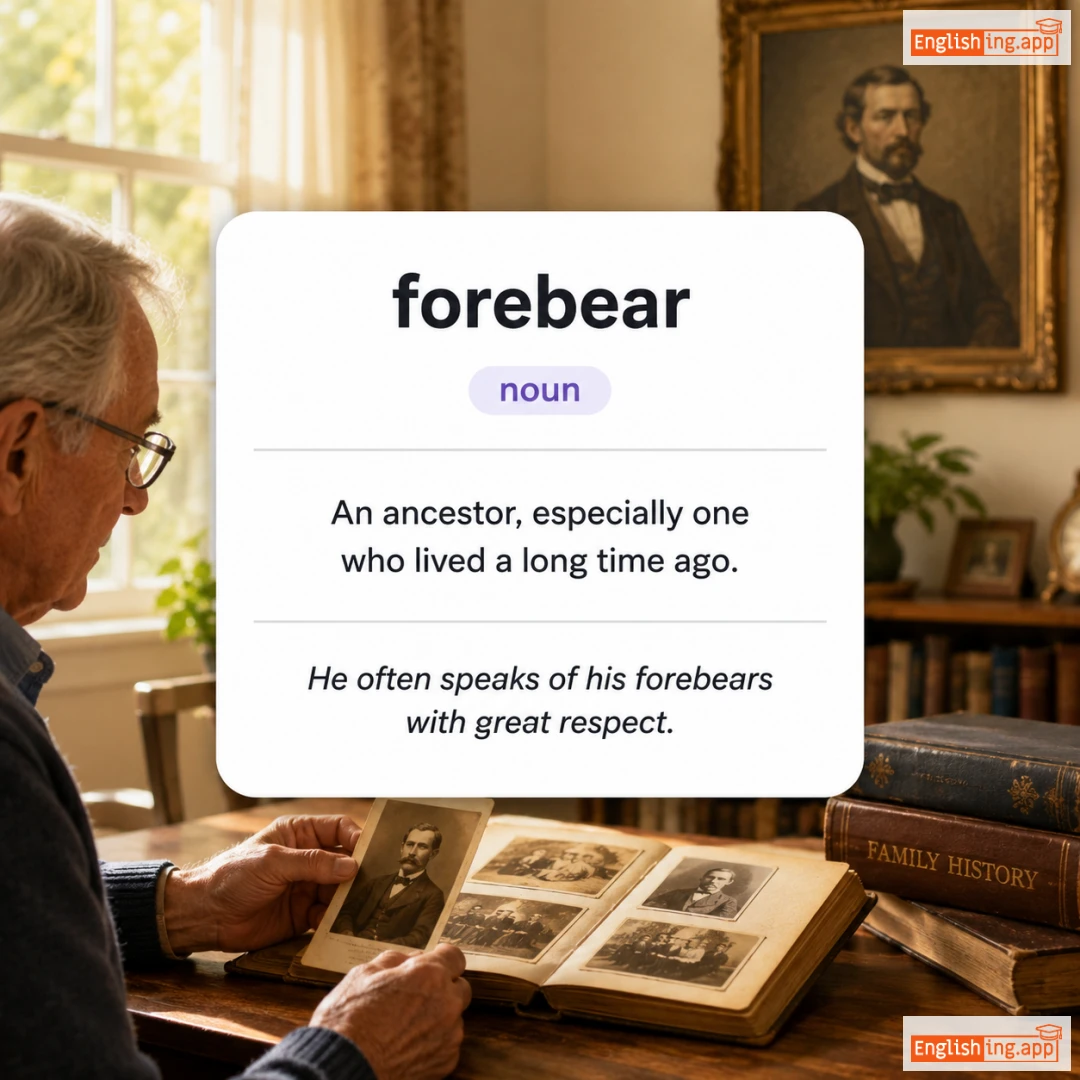
forebear definition card — visual illustration of the meaning
noun C1
/ˈfɔːrˌbɛər/
先祖 (senzo)

An ancestor, especially one who lived a long time ago.

"He often speaks of his forebears with great respect."
"彼はしばしば自分の先祖について尊敬を込めて話します。" (Kare wa shibashiba jibun no senzo ni tsuite sonkei o komete hanashimasu.)
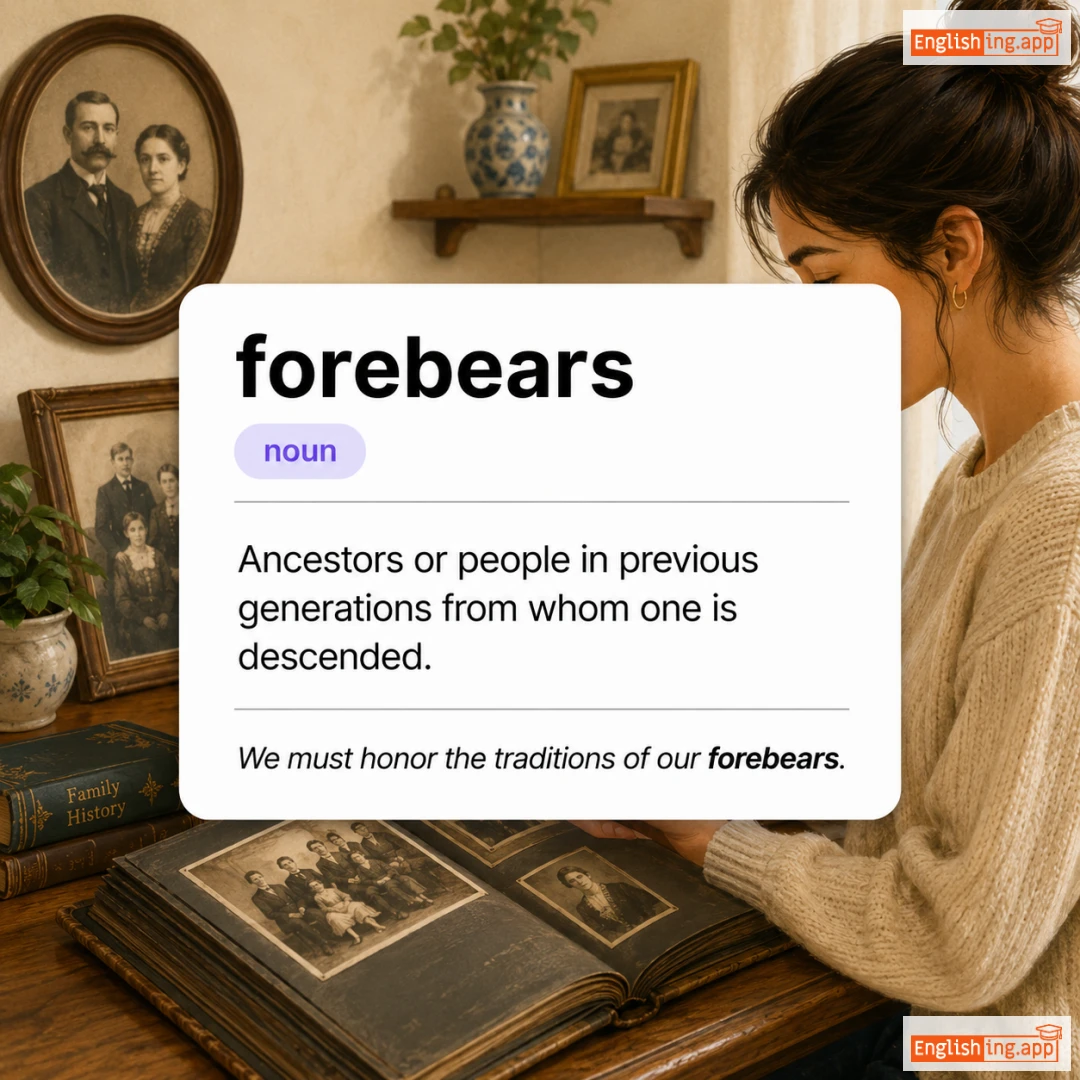
forebears definition card — visual illustration of the meaning
noun C1
/ˈfɔːrˌbɛərz/
先祖 (senzo)

Ancestors or people in previous generations from whom one is descended.

"We must honor the traditions of our forebears."
"私たちは先祖の伝統を尊重しなければなりません。" (Watashitachi wa senzo no dentou wo sonchou shinakereba narimasen.)
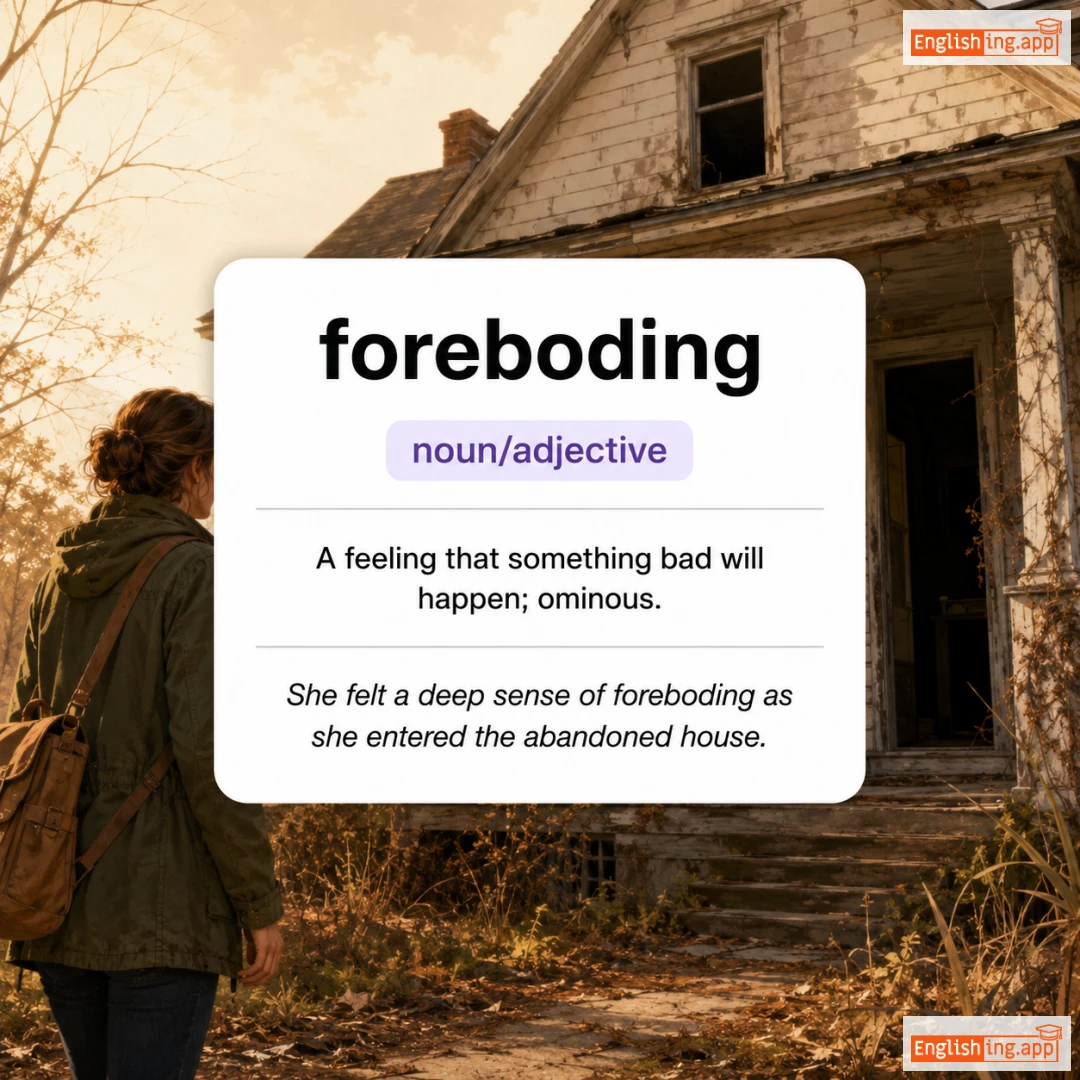
foreboding definition card — visual illustration of the meaning
noun/adjective C1
/fɔːrˈboʊdɪŋ/
不吉な予感 (fukitsuna yokan)

A feeling that something bad will happen; ominous.

"She felt a deep sense of foreboding as she entered the abandoned house."
"彼女は廃屋に入るとき、深い不吉な予感を感じた。" (Kanojo wa haieki ni hairu toki, fukai fukitsuna yokan o kanjita.)
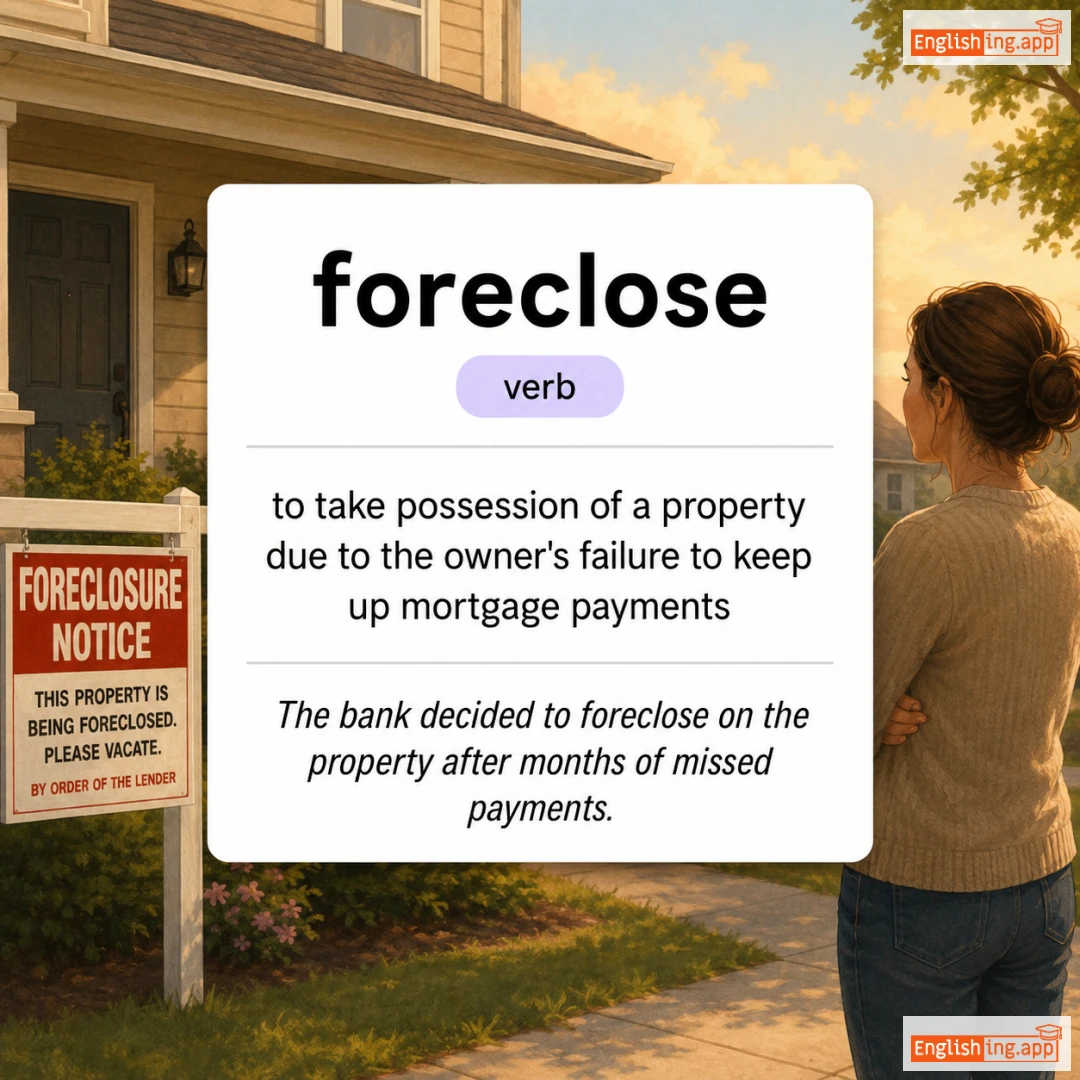
foreclose definition card — visual illustration of the meaning
verb C1
/fɔːrˈkloʊz/
差し押さえる (sashiosaeru)

to take possession of a property due to the owner's failure to keep up mortgage payments

"The bank decided to foreclose on the property after months of missed payments."

"銀行は何ヶ月も支払いを欠かした後、物件の差し押さえを決定しました。" (Ginkō wa nan kagetsu mo shiharai o kakashita ato, bukken no sashiosae o kettei shimashita.)
noun C1
/fɔːrˈkloʊʒər/
差し押さえ (sashiosae)

The legal process by which a lender takes control of a property from a borrower who has failed to make payments.

"The family lost their home due to foreclosure after missing several mortgage payments."
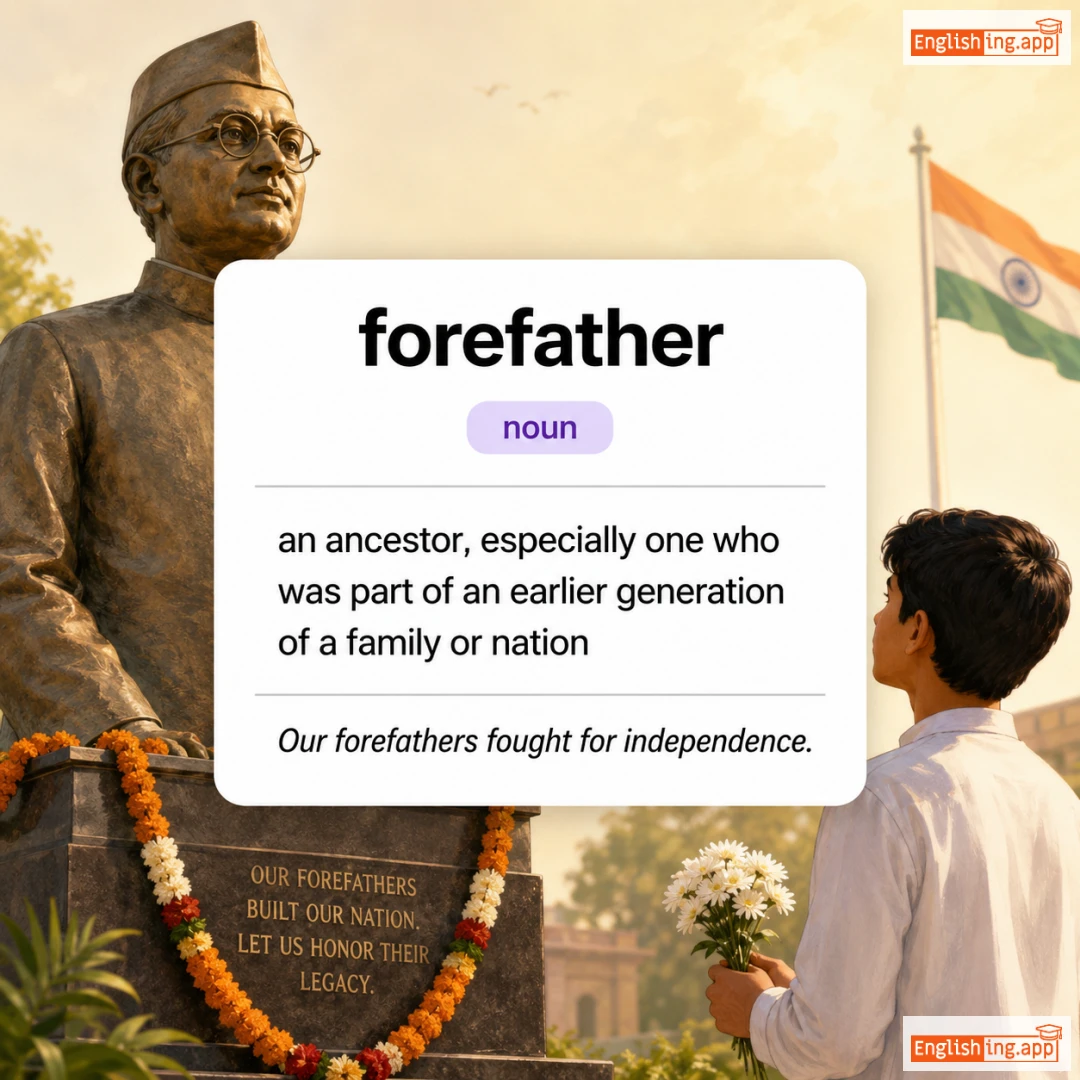
"その家族は複数回のモーゲージ支払いを逃したため、差し押さえで家を失いました。" (Sono kazoku wa fukusū kai no mōgēji shiharai o nogashita tame, sashiosae de ie o ushī mashita.)
forefather definition card — visual illustration of the meaning
noun C1
/ˈfɔːrˌfɑːðər/
先祖 (senzo)

an ancestor, especially one who was part of an earlier generation of a family or nation

"Our forefathers fought for independence."
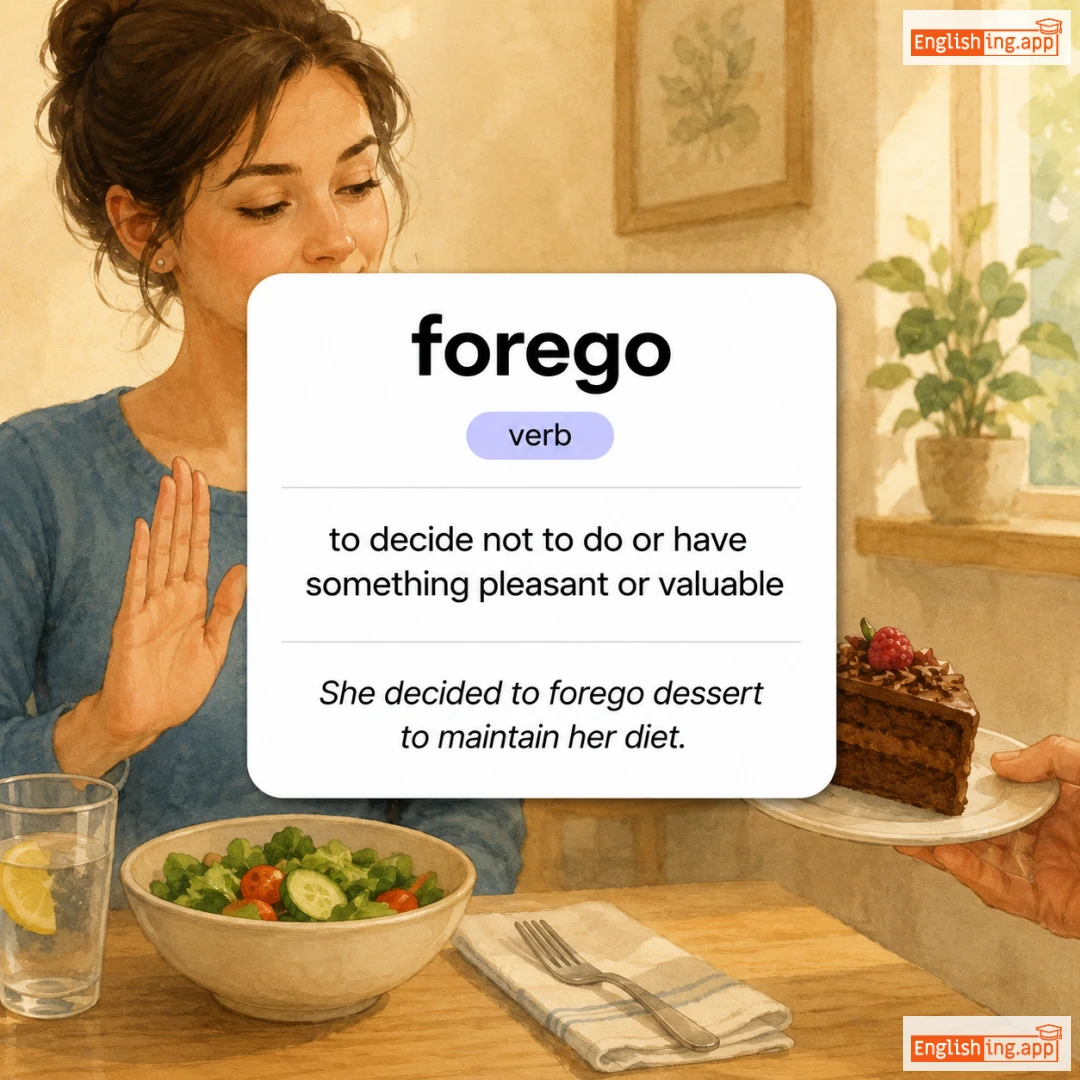
"私たちの先祖は独立のために戦いました。" (Watashitachi no senzo wa dokuritsu no tame ni tatakaimashita.)
forego definition card — visual illustration of the meaning
verb C1
/fɔːrˈɡoʊ/
断る (kotowaru)

to decide not to do or have something pleasant or valuable

"She decided to forego dessert to maintain her diet."
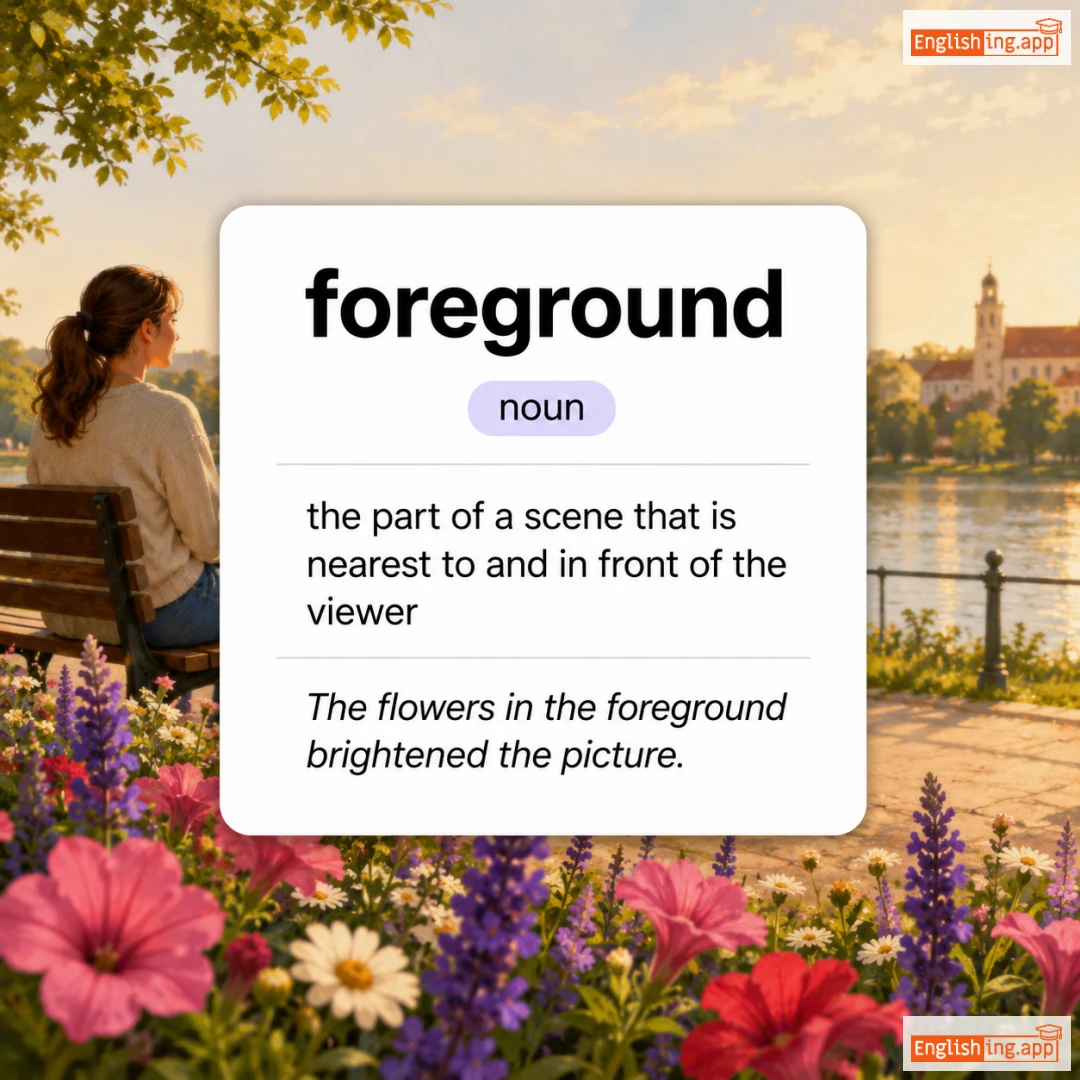
"彼女はダイエットを維持するためにデザートを断ることに決めました。" (Kanojo wa daietto o iji suru tame ni dezāto o kotowaru koto ni kimemashita.)
foreground definition card — visual illustration of the meaning
noun C1
/ˈfɔːrɡraʊnd/
前景 (zenkei)

the part of a scene that is nearest to and in front of the viewer

"The flowers in the foreground brightened the picture."
"前景にある花が絵を明るくしました。" (Zenkei ni aru hana ga e o akaruku shimashita.)
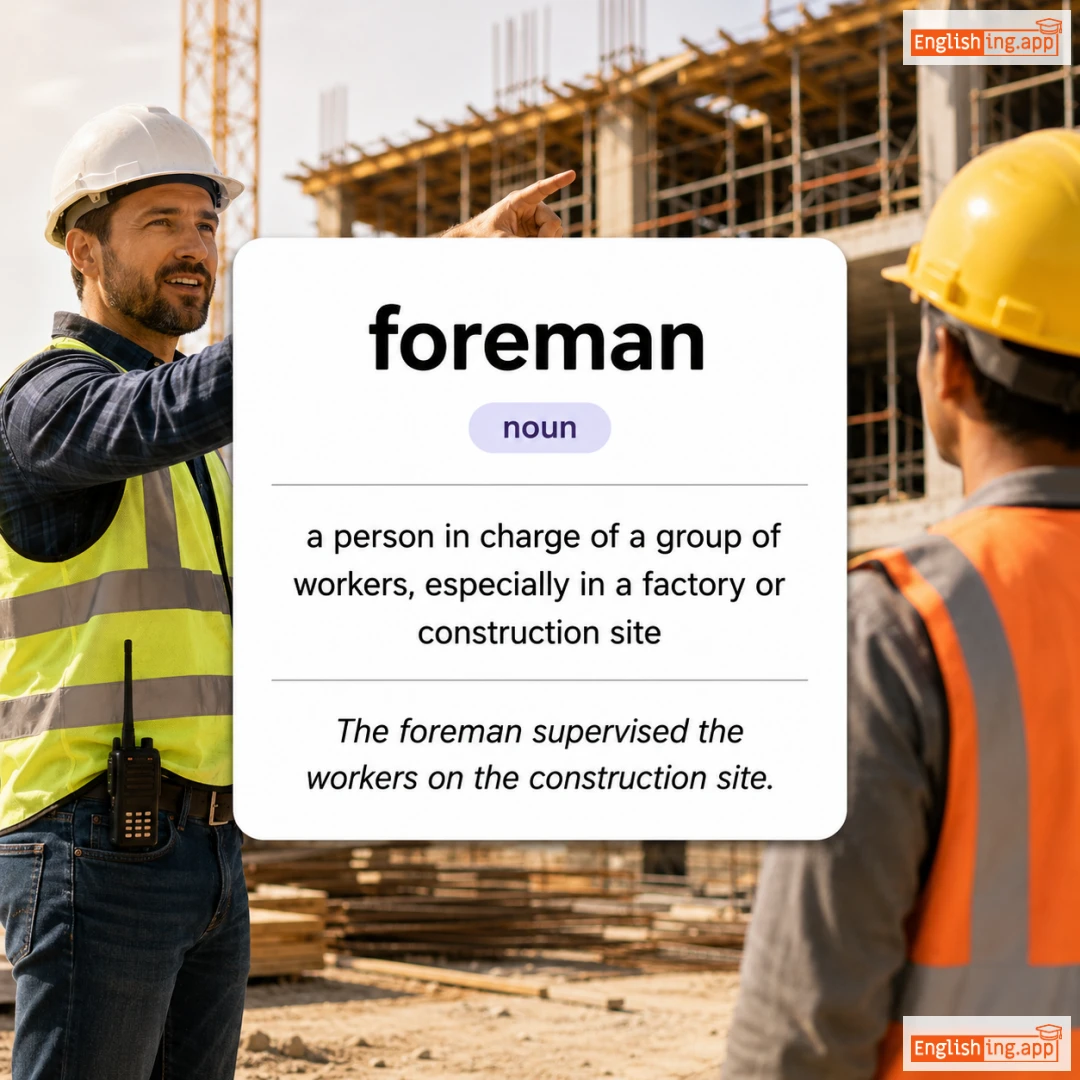
foreman definition card — visual illustration of the meaning
noun C1
/ˈfɔːrmən/
労働者のグループを担当する人、特に工場や建設現場で (rōdōsha no gurūpu o tantō suru hito, tokuni kōjō ya kensetsu genba de)

a person in charge of a group of workers, especially in a factory or construction site

"The foreman supervised the workers on the construction site."
"フォアマンは建設現場で作業員を監督しました。" (Fōman wa kensetsu genba de sagyōin o kantoku shimashita.)
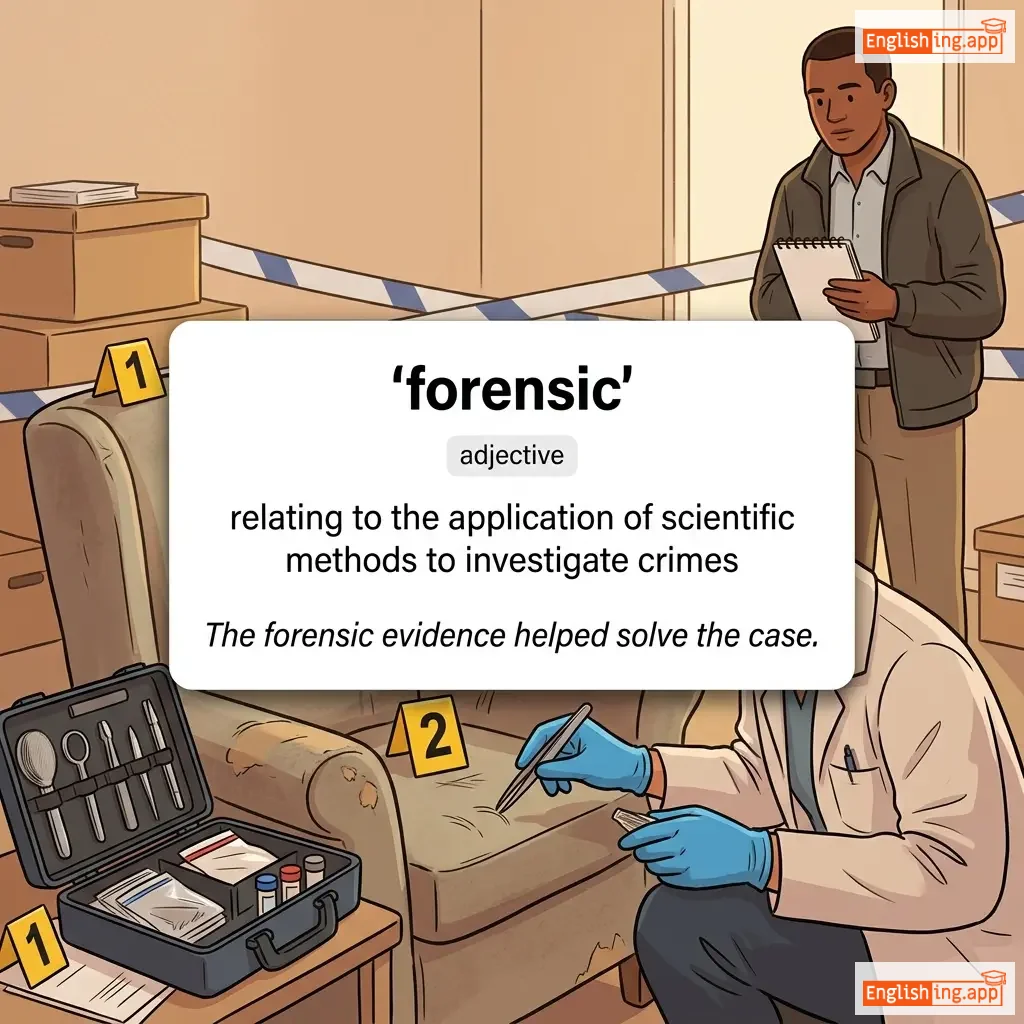
forensic definition card — visual illustration of the meaning
adjective C1
/fəˈrɛnsɪk/
法医学 (hōigaku)

relating to the application of scientific methods to investigate crimes

"The forensic evidence helped solve the case."

"法医学の証拠が事件解決に役立ちました。" (Hōigaku no shōko ga jiken kaiketsu ni yakudachimashita.)
noun C1
/ˈfɔːrˌrʌnər/
先駆者 (senkusha)

A person or thing that comes before another; a predecessor or harbinger.

"The Wright brothers were the forerunners of modern aviation."

"ライト兄弟は現代の航空の先駆者でした。" (Raito kyōdai wa gendai no kōkū no senkusha deshita.)
verb C1
/fɔːrˈʃædoʊ/
予兆する (yochou suru)

To indicate or suggest something that will happen in the future

"Dark clouds foreshadowed an approaching storm."

"暗い雲が近づく嵐を予兆していた。" (Kurai kumo ga chikazuku arashi wo yochou shite ita.)
foresight definition card — visual illustration of the meaning
noun C1
/ˈfɔːrsaɪt/
先見の明 (senken no mei)

The ability to predict or plan for the future

"Her foresight helped the company avoid financial trouble."
"彼女の先見の明が会社を財務問題から救った。" (Kanojo no senken no mei ga kaisha o zaimu mondai kara sukutta.)
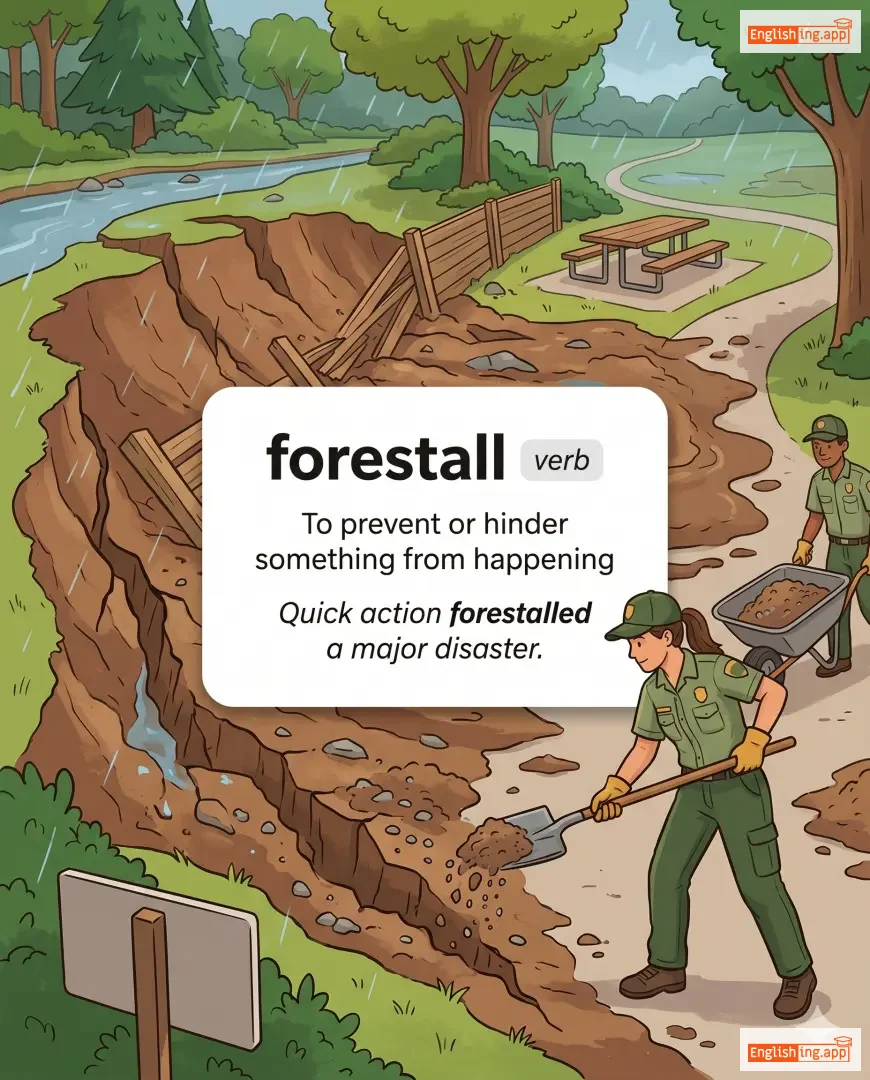
forestall definition card — visual illustration of the meaning
verb C1
/fɔːrˈstɔːl/
防ぐ (fusugu)

To prevent or hinder something from happening

"Quick action forestalled a major disaster."
"迅速な行動が大きな災害を防ぎました。" (Jinsoku na kōdō ga ōkina saigai o fusegimashita.)
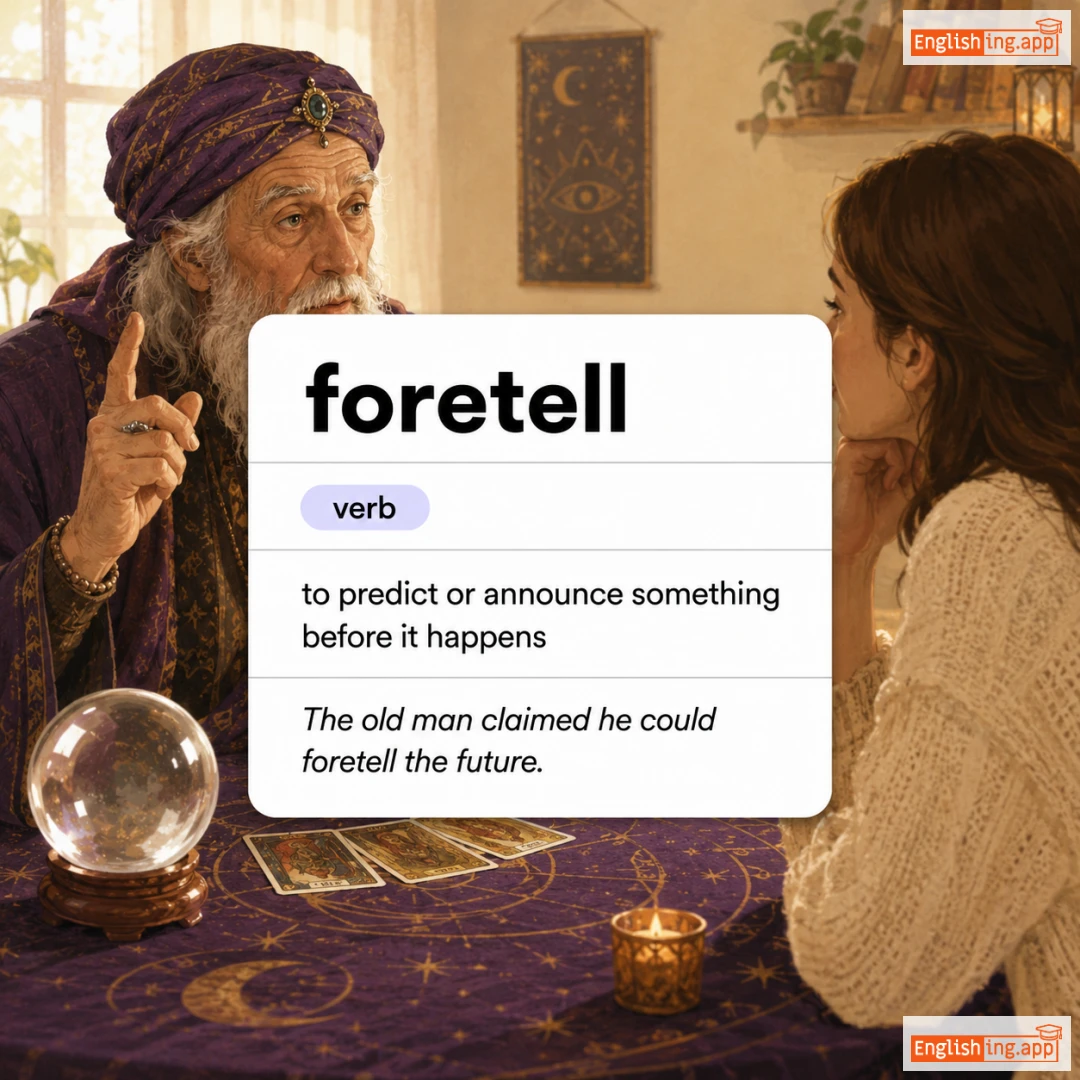
foretell definition card — visual illustration of the meaning
verb C1
/fɔːrˈtɛl/
予知する (yochi suru)

to predict or announce something before it happens

"The old man claimed he could foretell the future."
"その老人は未来を予知できると主張した。" (Sono rōjin wa mirai wo yochi dekiru to shuchō shita.)
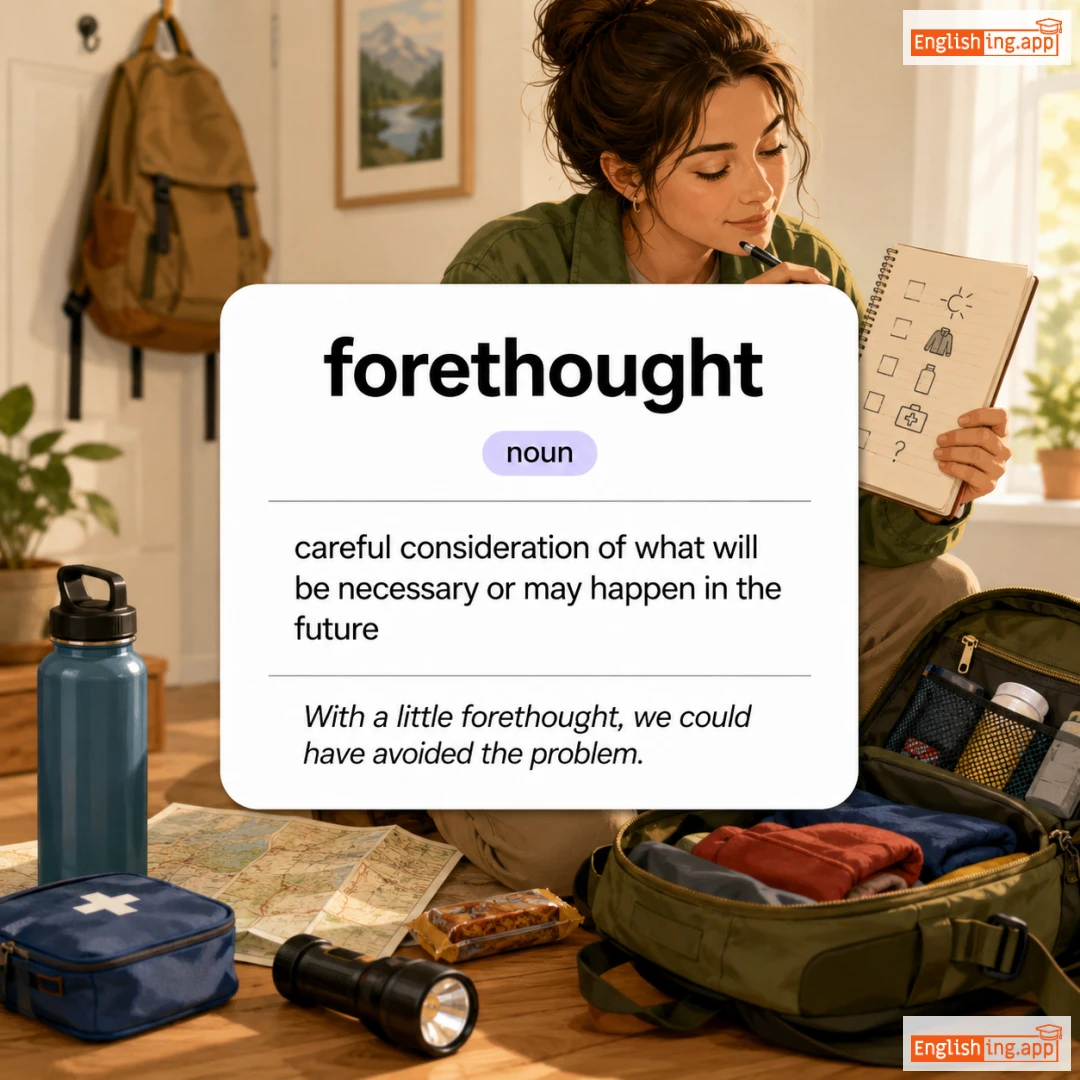
forethought definition card — visual illustration of the meaning
noun C1
/ˈfɔːrˌθɔːt/
先見の明 (senkenno mei)

careful consideration of what will be necessary or may happen in the future

"With a little forethought, we could have avoided the problem."
"少しの先見の明で、この問題を避けることができたかもしれません。" (Sukoshi no senkenno mei de, kono mondai o sakeru koto ga dekita kamoshiremasen.)
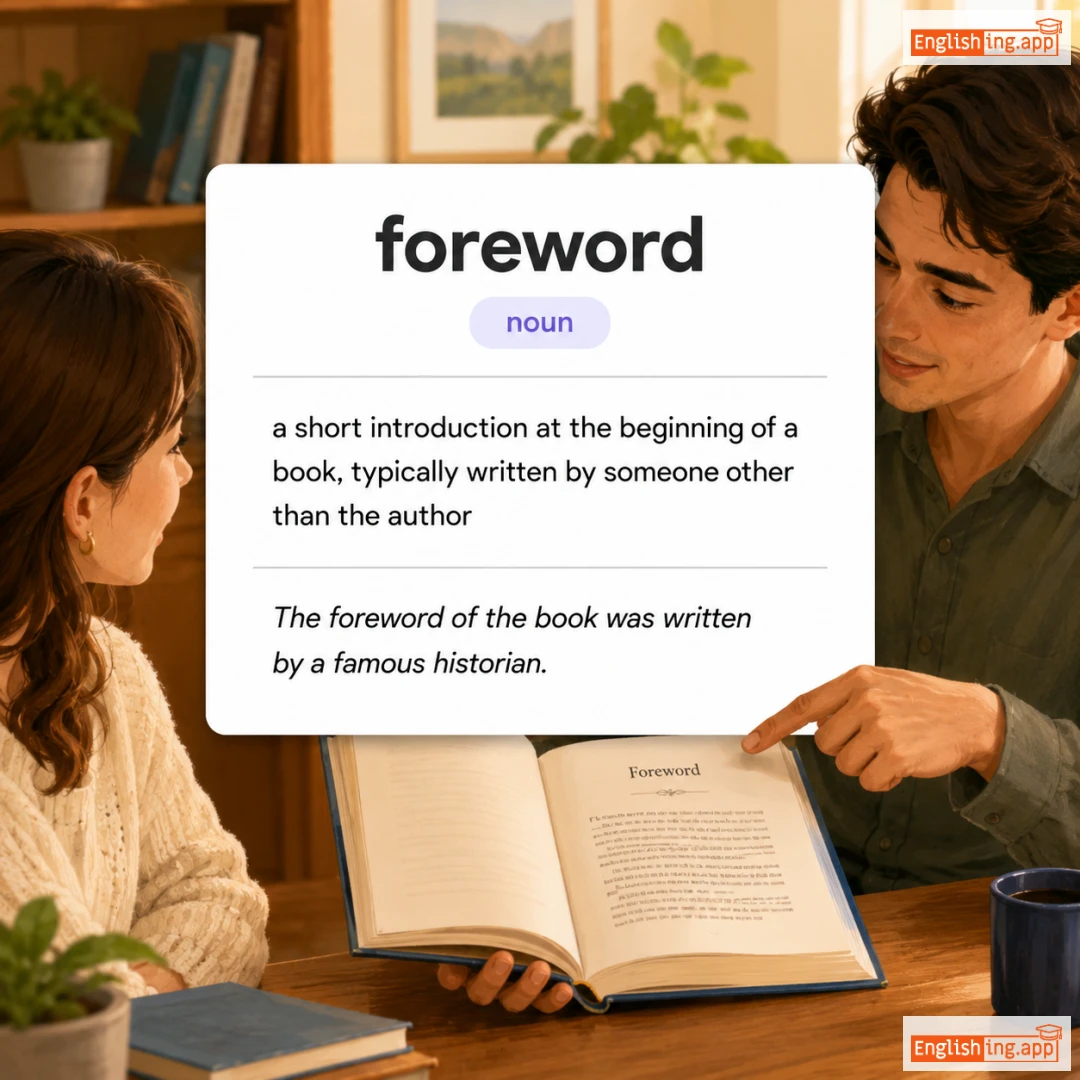
foreword definition card — visual illustration of the meaning
noun C1
/ˈfɔːrwɜːrd/
序文 (jomun)

a short introduction at the beginning of a book, typically written by someone other than the author

"The foreword of the book was written by a famous historian."

"その本の序文は、有名な歴史家によって書かれました。" (Sono hon no jomun wa, yūmei na rekishika ni yotte kakaremashita.)
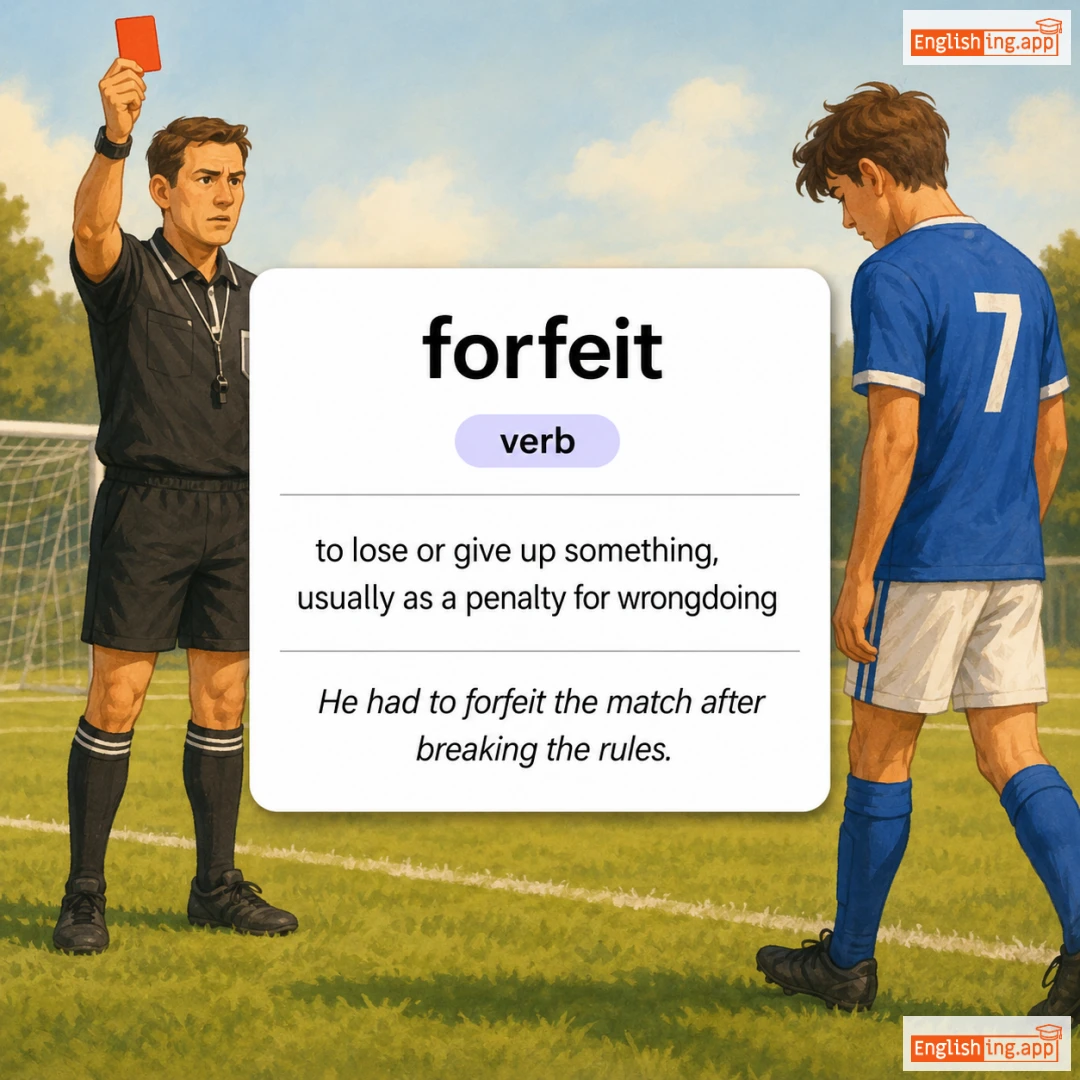
forfeit definition card — visual illustration of the meaning
⚖️

forfeit

verb C1
/ˈfɔːrfɪt/

to lose or give up something, usually as a penalty for wrongdoing

"He had to forfeit the match after breaking the rules."

noun C1
/ˈfɔːrdʒər/
偽造者 (gizōsha)

a person who makes fake documents, artworks, or signatures

"The police arrested a forger who had been selling counterfeit paintings."

"警察は偽造者を逮捕しました。彼は偽の絵画を販売していました。" (Keisatsu wa gizōsha o taiho shimashita. Kare wa nise no kaiga o hanbai shite imashita.)
noun C1
/ˈfɔːrdʒəri/
偽造 (gizou)

the crime of making fake documents, money, or artworks

"The bank detected a forgery in the signature on the cheque."
"銀行は小切手の署名に偽造を発見しました。" (Ginkou wa kogitte no shomei ni gizou o hakken shimashita.)
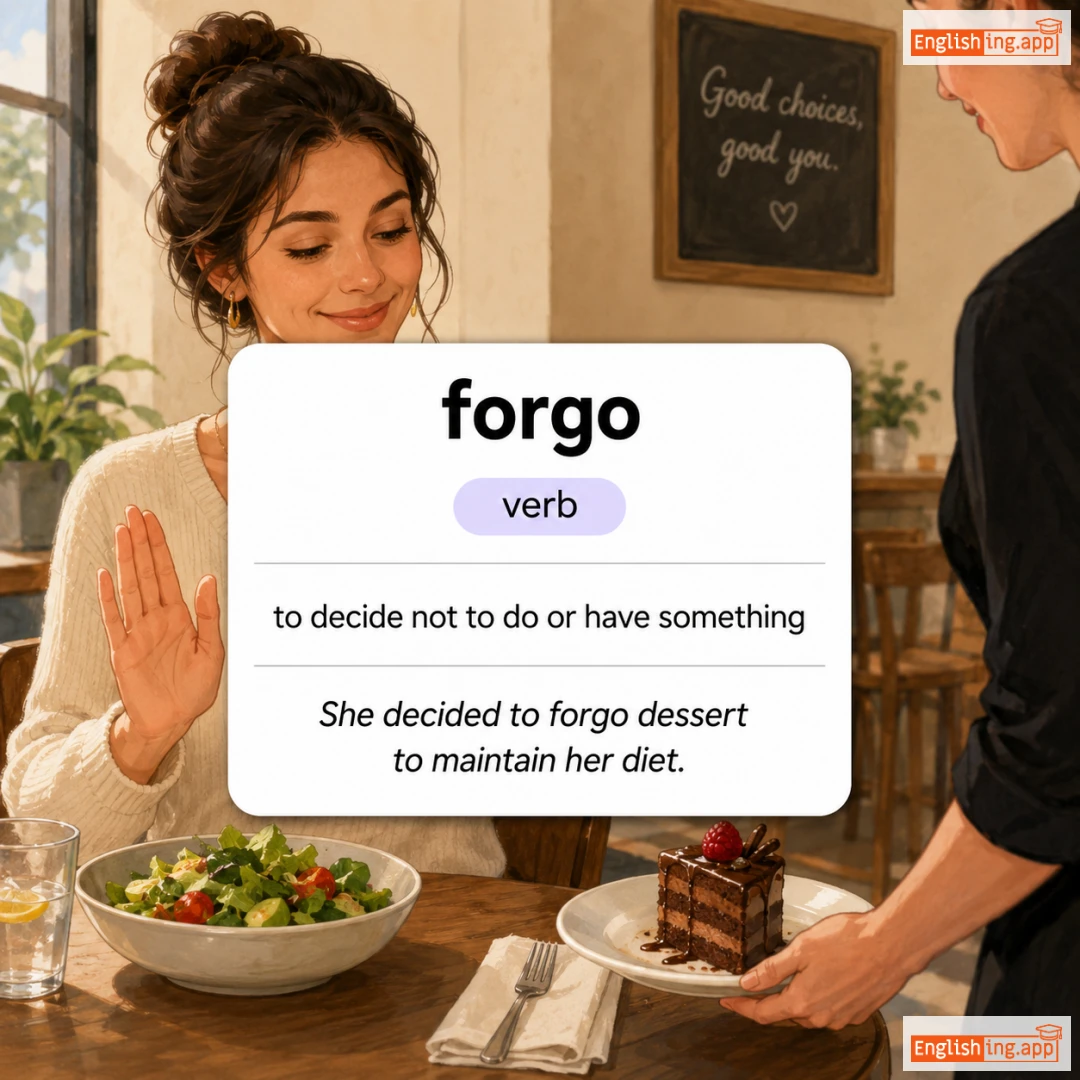
forgo definition card — visual illustration of the meaning
verb C1
/fɔːrˈɡoʊ/
控える (hikaeru)

to decide not to do or have something

"She decided to forgo dessert to maintain her diet."
"彼女はダイエットを維持するためにデザートを控えることを決めました。" (Kanojo wa daietto wo iji suru tame ni dezaato wo hikaeru koto wo kimemashita.)
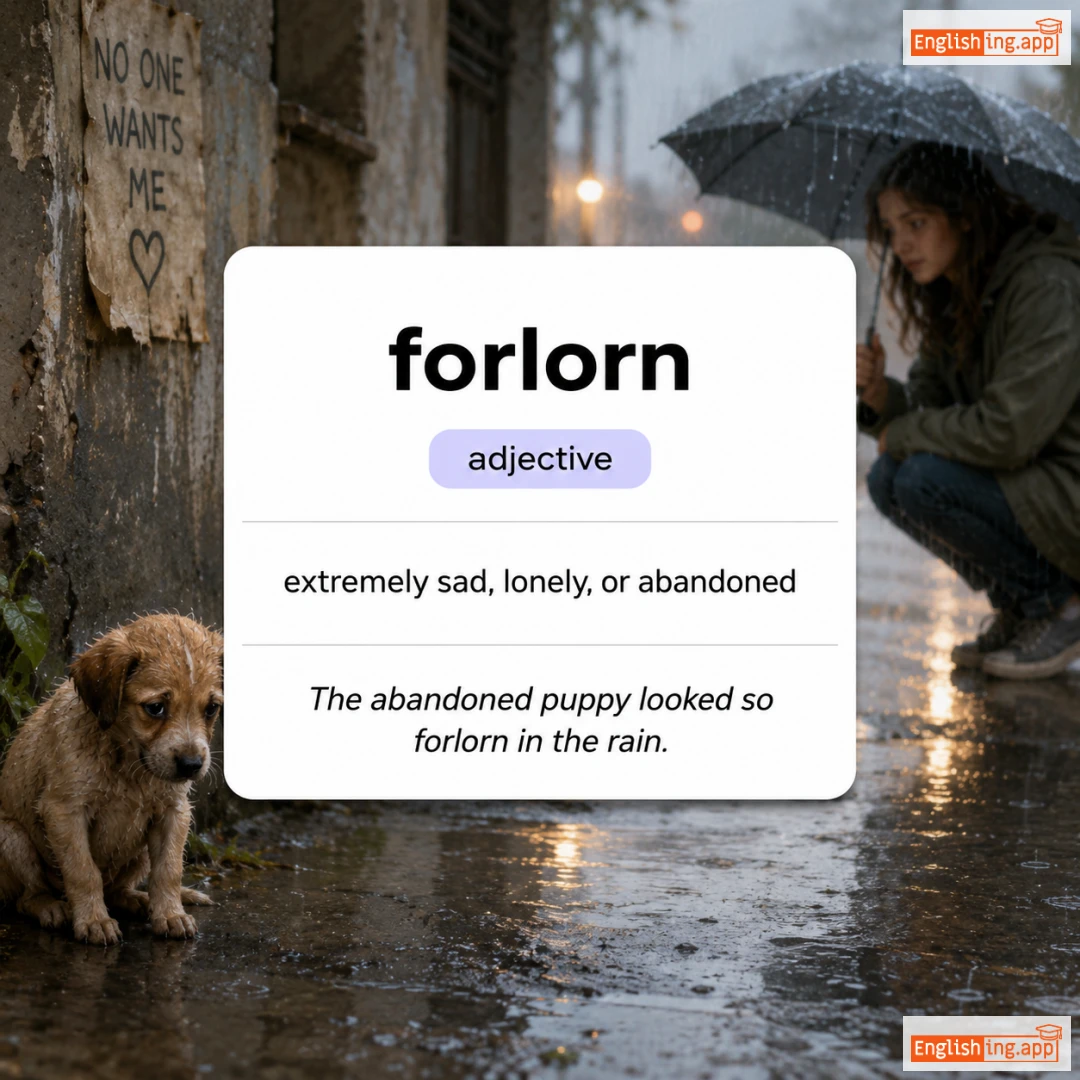
forlorn definition card — visual illustration of the meaning
adjective C1
/fərˈlɔːrn/
孤独な, 絶望的な (kodokuna, zetsubōteki na)

extremely sad, lonely, or abandoned

"The abandoned puppy looked so forlorn in the rain."

"放置された子犬は雨の中でとても悲しそうに見えました。" (Hōchi sareta koinu wa ame no naka de totemo kanashisō ni miemashita.)
Formality definition card — visual illustration of the meaning
noun C1
/fɔːrˈmælɪti/
形式 (keishiki)

the rigid observance of rules or customs, especially in social or official situations

"The interview was just a formality since he was already selected."

"面接は形式的なもので、彼はすでに選ばれていた。" (Mensetsu wa keishikiteki na mono de, kare wa sude ni erabarete ita.)
adjective C1
/ˈfɔːrmətɪv/
形成的 (keiseiteki)

Having a lasting influence on a person's development or character.

"Childhood is often described as a formative stage in life."
"子供時代は人生の中で形成的な段階としてよく説明されます。" (Kodomo jidai wa jinsei no naka de keiseiteki na dankai to shite yoku setsumei saremasu.)
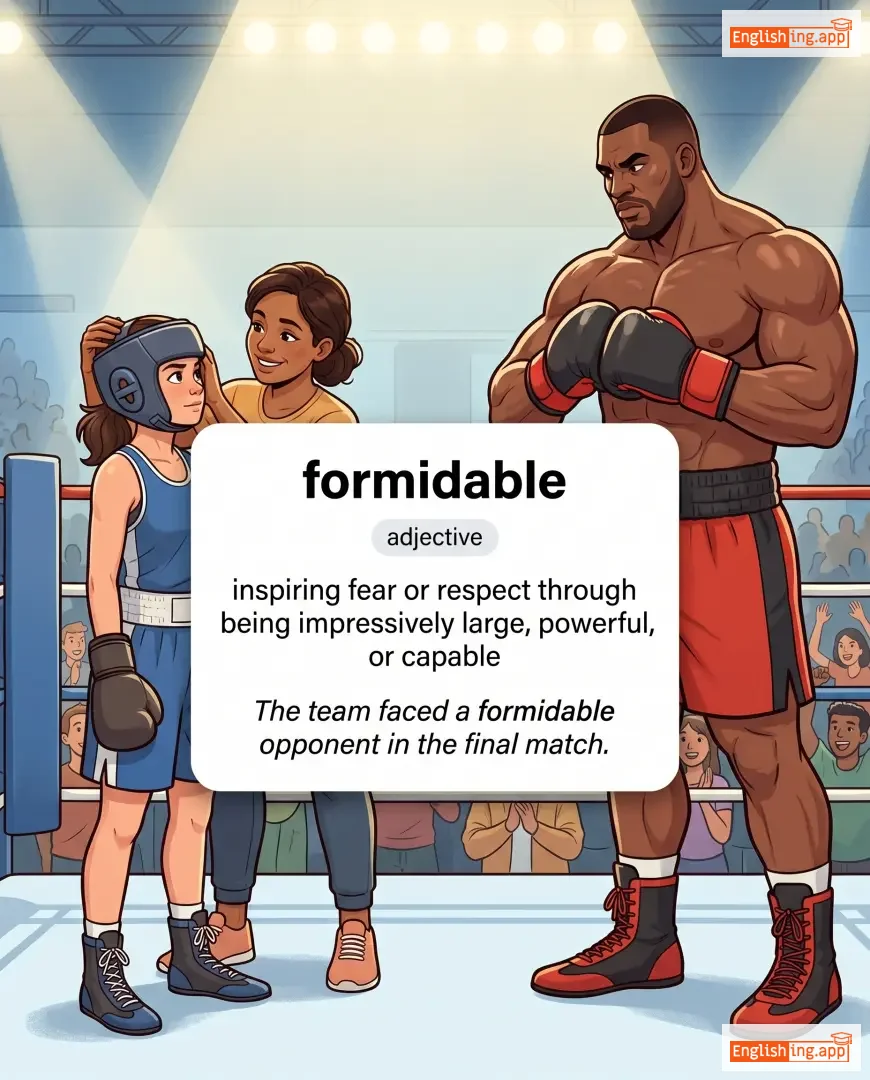
formidable definition card — visual illustration of the meaning
adjective C1
/ˈfɔːrmɪdəbl/

inspiring fear or respect through being impressively large, powerful, or capable

"The team faced a formidable opponent in the final match."