語彙集

英単語辞書 | 単語の意味、定義、例文

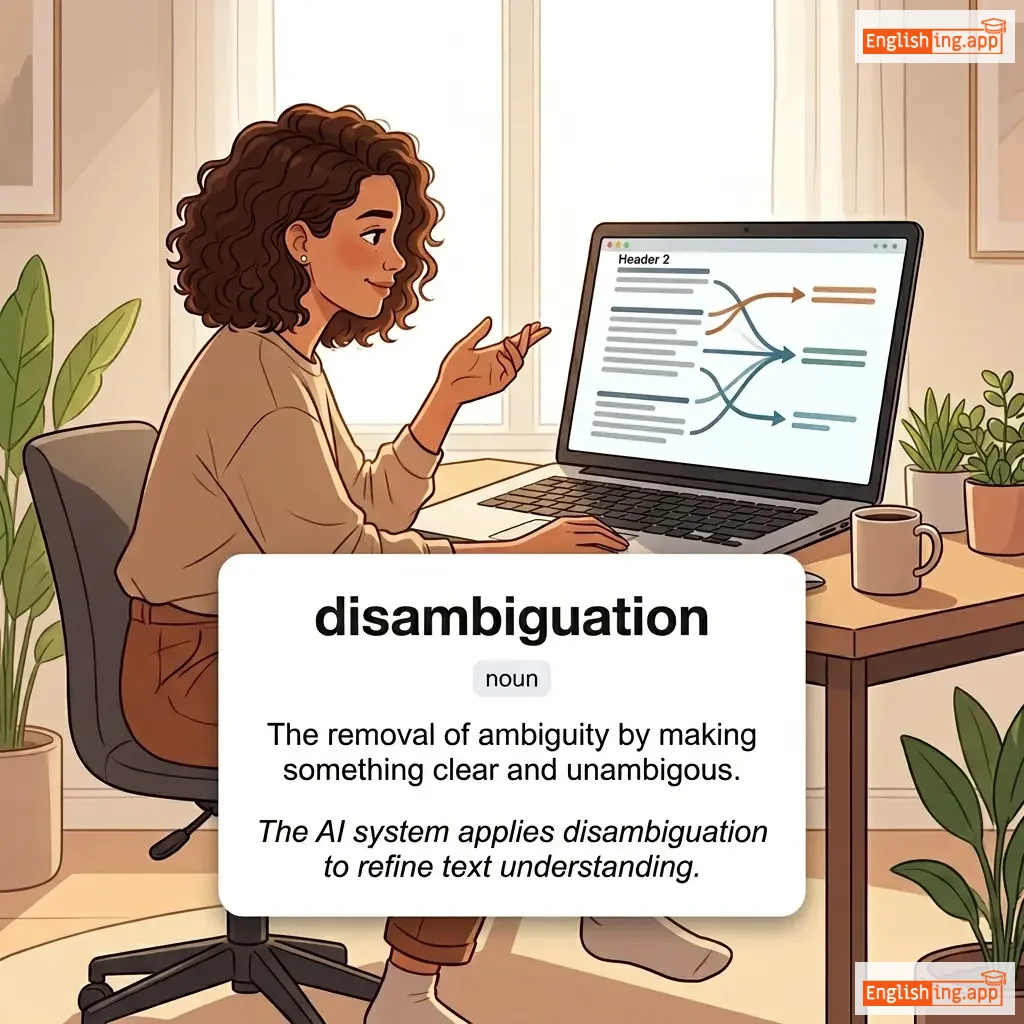
disambiguation definition card — visual illustration of the meaning
noun C1
ˌdɪs.æmˌbɪɡ.juˈeɪ.ʃən
曖昧さの解消 (disambiguation)

The removal of ambiguity by making something clear and unambiguous.

"The AI system applies disambiguation to refine text understanding."

"AIシステムはテキスト理解を精緻化するためにディスアンビギュエーションを適用します。" (AI shisutemu wa tekisuto rikai wo seichikasu tame ni disambiguation wo tekiyou shimasu.)
verb C1
/dɪsˈɑːrm/
武装解除する (busou kaijo suru)

to take weapons away from someone; to make someone feel less hostile

"The soldiers were ordered to disarm the rebels."
"兵士たちは反乱者の武装を解除するよう命じられた。" (Heishitachi wa hanransha no busou wo kaijo suru you meijirareta.)
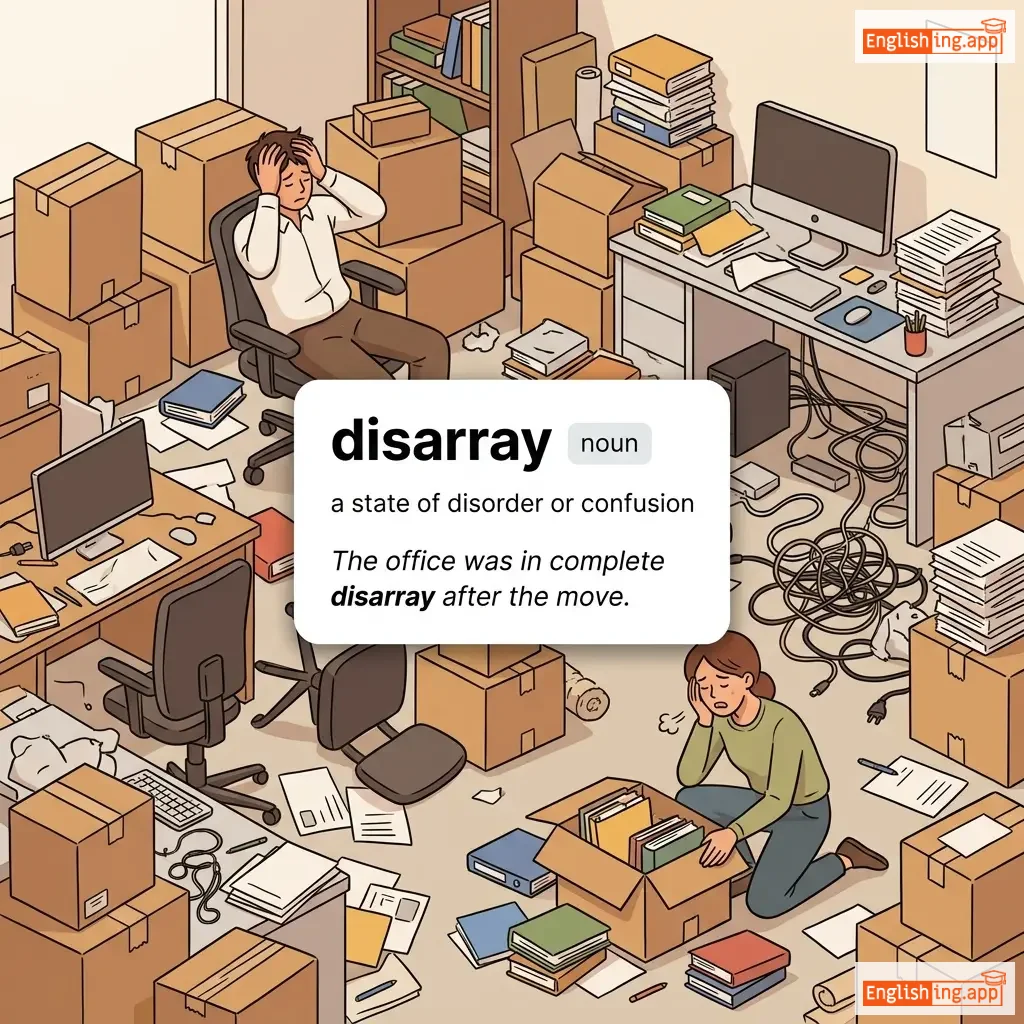
disarray definition card — visual illustration of the meaning
noun C1
/ˌdɪsəˈreɪ/
混乱 (konran)

a state of disorder or confusion

"The office was in complete disarray after the move."

"引っ越し後、オフィスは完全に混乱していました。" (Hikkoshi go, ofisu wa kanzen ni konran shite imashita.)
verb C1
/ˌdɪsəˈsɛmbəl/
分解する (bunkai suru)

To take apart something into its separate pieces.

"He had to disassemble the computer to repair it."

"彼は修理のためにコンピュータを分解しなければならなかった。" (Kare wa shūri no tame ni konpyūta o bunkai shinakereba naranakatta.)
verb C1
/dɪsˈbænd/
解散する (kaisansuru)

to break up and stop functioning as a group or organization

"The club decided to disband after twenty years of activity."

"クラブは20年の活動後に解散することを決定した。" (Kurabu wa 20-nen no katsudō go ni kaisan suru koto o kettei shita.)
noun C1
/ˌdɪsbɪˈliːvər/
不信者 (fushinja)

a person who does not believe in something, especially a religion or idea

"He was called a disbeliever for rejecting the traditional faith."
"彼は伝統的な信仰を拒否したため、不信者と呼ばれました。" (Kare wa dentō-teki na shinkō o kyohi shita tame, fushinja to yobaremashita.)
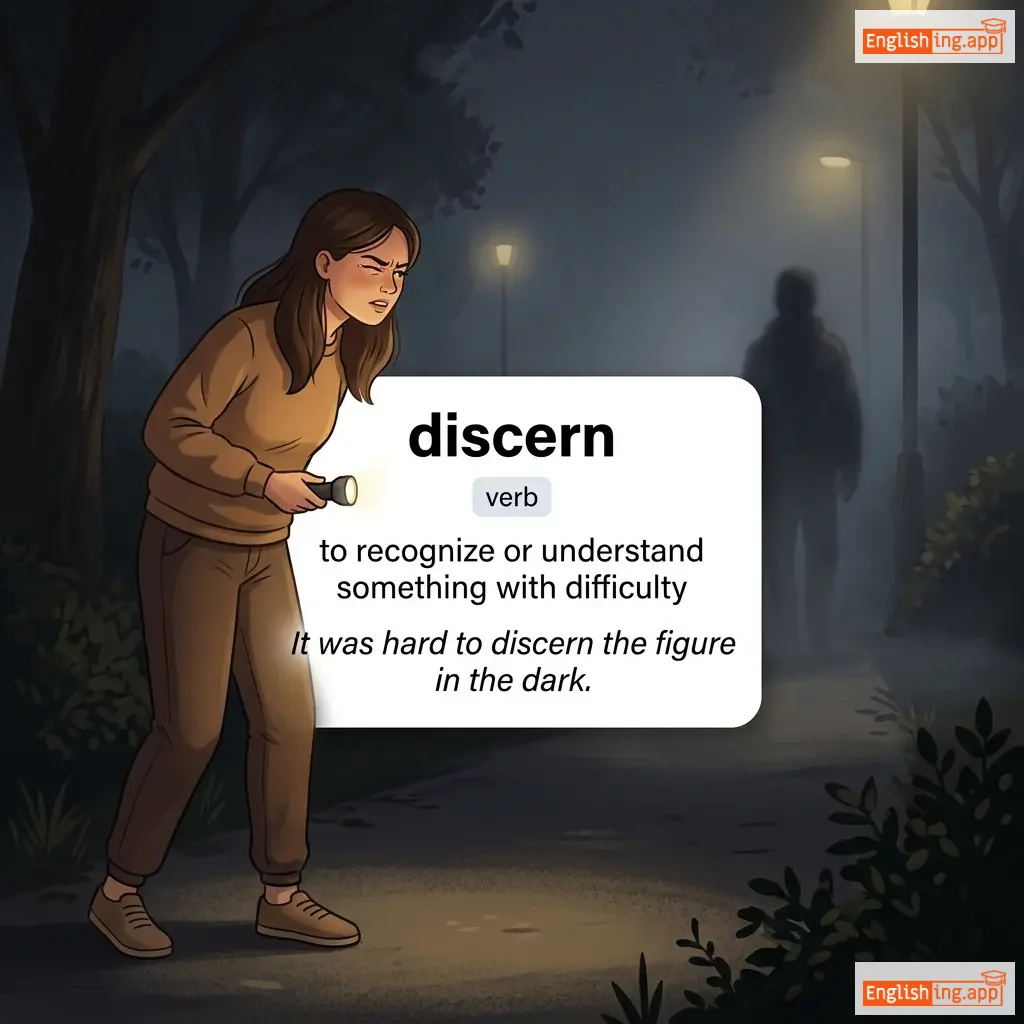
discern definition card — visual illustration of the meaning
verb C1
/dɪˈsɜːrn/
識別する (shikibetsu suru)

to recognize or understand something with difficulty

"It was hard to discern the figure in the dark."

"暗闇の中でその姿を識別するのは難しかった。" (Kurayami no naka de sono sugata o shikibetsu suru no wa muzukashikatta.)
adjective C1
/dɪˈsɜːrnəbl/
明白な (meihaku na)

able to be seen, recognized, or understood

"There was a discernible change in his behavior."
"彼の行動には明らかな変化があった。" (Kare no kōdō ni wa akirakana henka ga atta.)
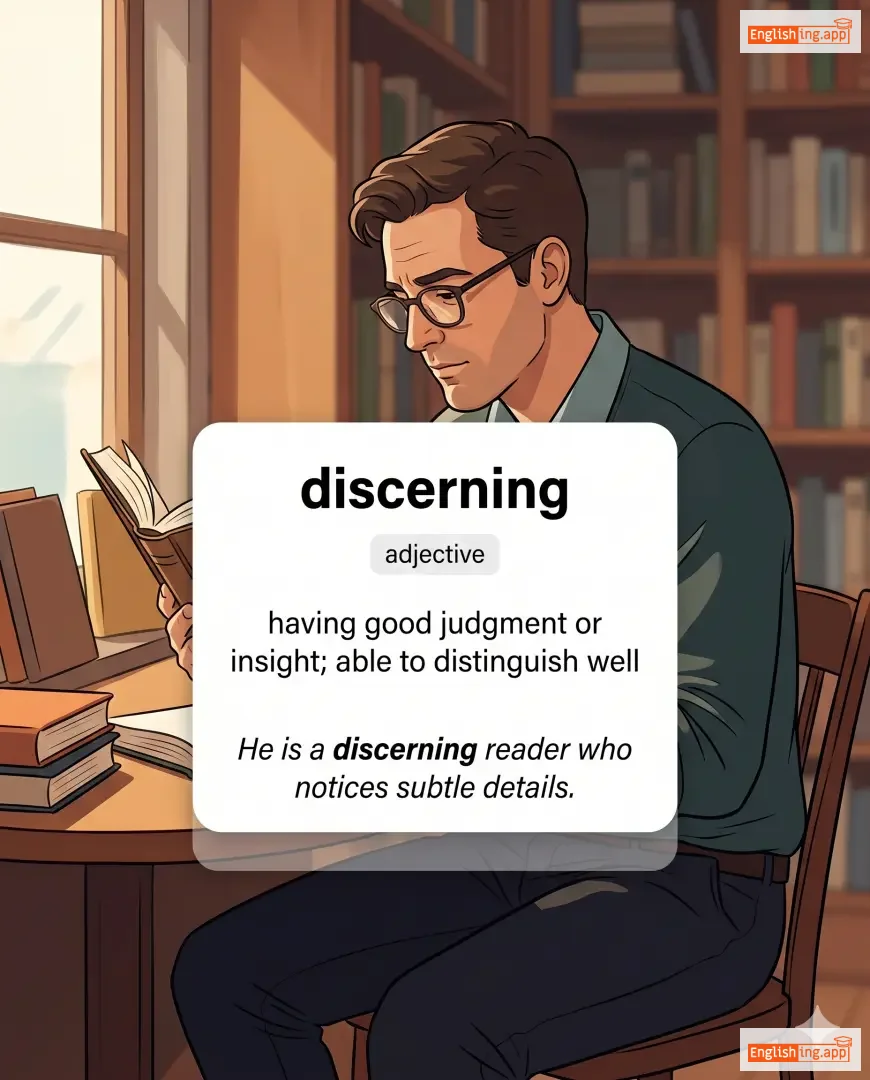
discerning definition card — visual illustration of the meaning
adjective C1
/dɪˈsɜːrnɪŋ/
鋭い (surudoi)

having good judgment or insight; able to distinguish well

"He is a discerning reader who notices subtle details."
"彼は鋭い読者で、微細な詳細に気づきます。" (kare wa surudoi dokusha de, bisai na shousai ni kizukimasu.)
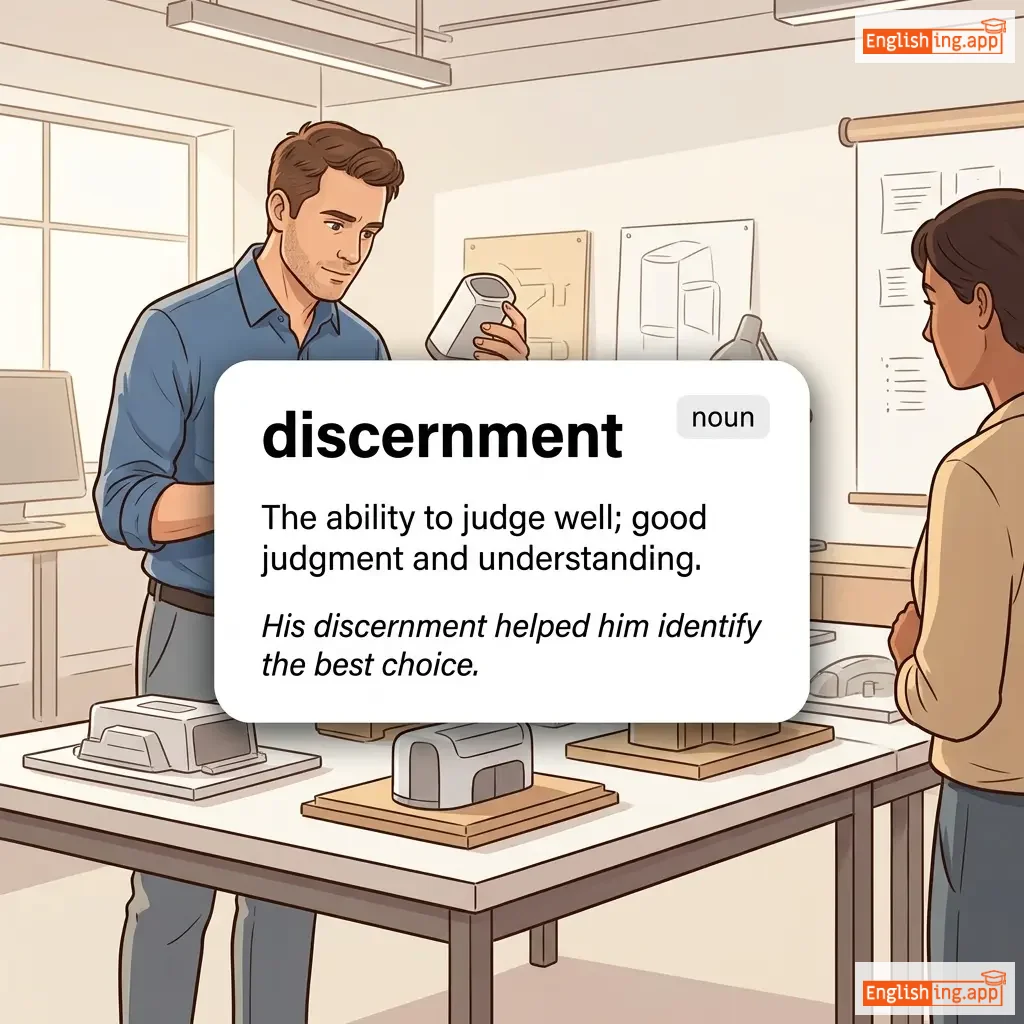
discernment definition card — visual illustration of the meaning
noun C1
dɪˈsɜːn.mənt
洞察力 (dōsatsuryoku)

The ability to judge well; good judgment and understanding.

"His discernment helped him identify the best choice."
"彼の洞察力は、最良の選択肢を見極めるのに役立ちました。" (Kare no dōsatsuryoku wa, sairyō no sentakushi wo mikiwameru no ni yakudachimashita.)
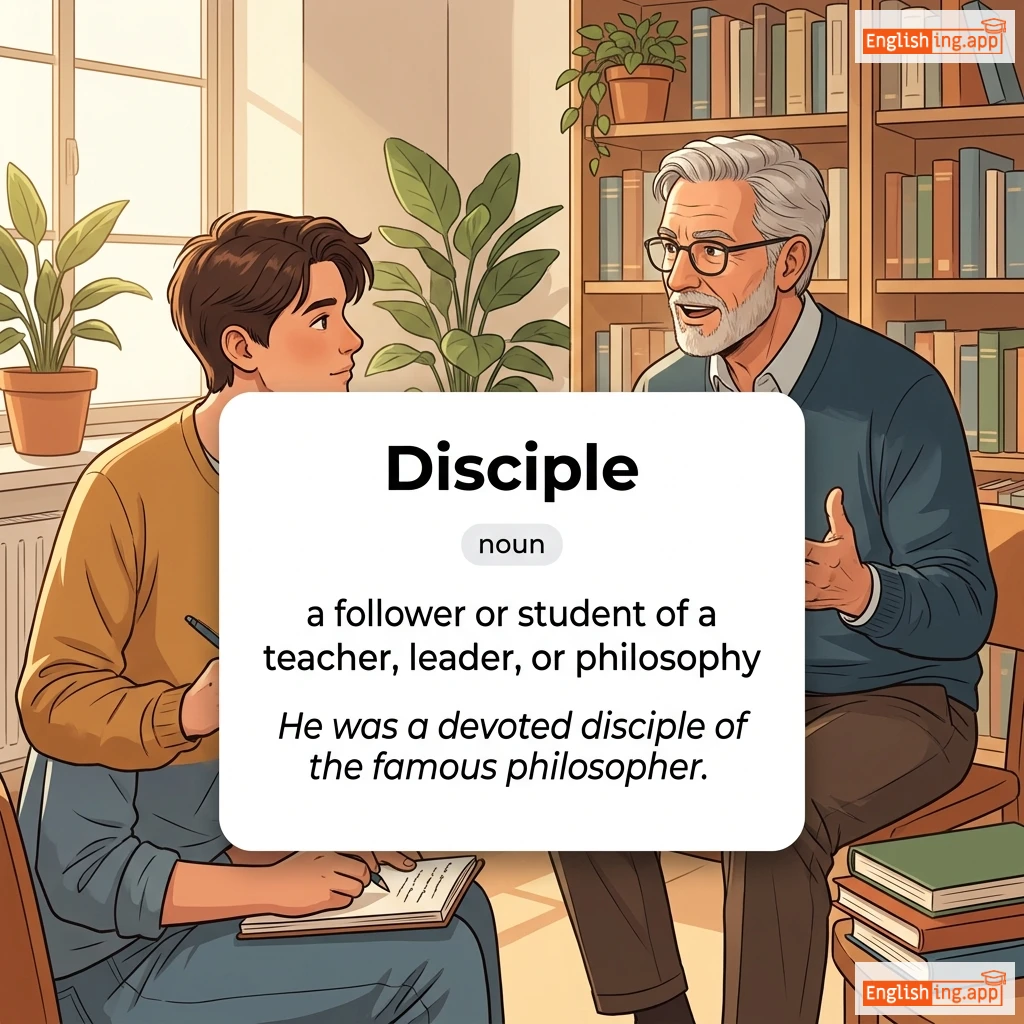
Disciple definition card — visual illustration of the meaning
noun C1
/dɪˈsaɪpəl/
弟子 (deshi)

a follower or student of a teacher, leader, or philosophy

"He was a devoted disciple of the famous philosopher."

"彼は有名な哲学者の忠実な弟子でした。" (Kare wa yūmei na tetsugakusha no chūjitsu na deshi deshita.)
adjective C1
/ˈdɪsəplɪˌnɛri/
懲戒的 (choukaiteki)

relating to the enforcement of rules and correction of behavior

"The employee was warned after a disciplinary hearing."

"その従業員は、懲戒聴聞会の後に警告を受けました。" (Sono juugyouin wa, choukai choumonkai no ato ni keikoku wo ukemashita.)
verb C1
/dɪsˈkleɪm/
否定する (hitei suru)

to deny responsibility or connection with something

"The company disclaimed responsibility for the accident."

"その会社は事故に対する責任を否定しました。" (Sono kaisha wa jiko ni taisuru sekinin o hitei shimashita.)
verb C1
/dɪsˈkʌlər/
色あせる (iro aseru)

to change color, especially in a way that spoils the original appearance

"The fabric began to discolor after being left in the sun."
"生地は太陽の下に置かれてから色が変わり始めました。" (Kiji wa taiyō no shita ni okarete kara iro ga kawari hajimemashita.)
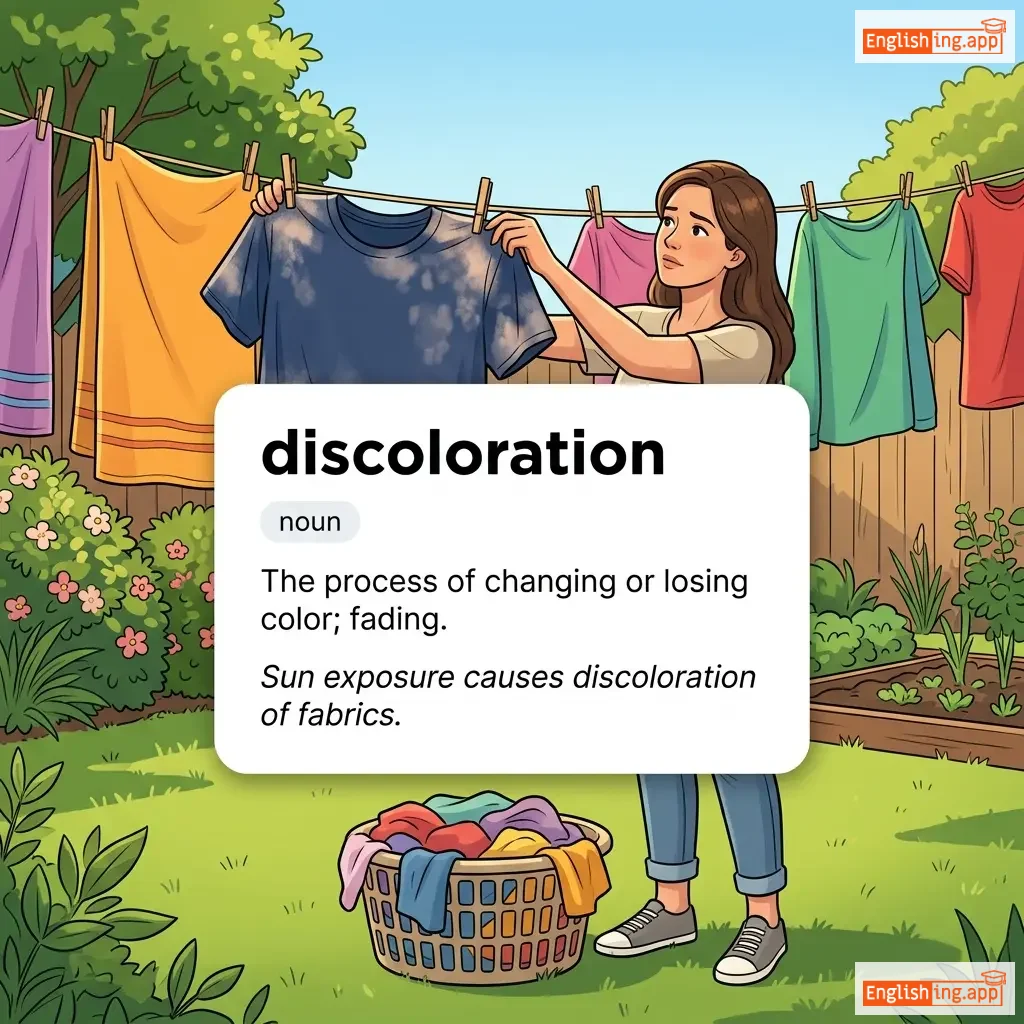
discoloration definition card — visual illustration of the meaning
noun C1
/ˌdɪs.kʌl.əˈreɪ.ʃən/
変色 (henshoku)

The process of changing or losing color; fading.

"Sun exposure causes discoloration of fabrics."

"太陽光線は布地の変色を引き起こします。" (Taiyō kōsen wa nunoji no henshoku o hikiokoshimasu.)
verb C1
/ˌdɪskənˈsɜːrt/
動揺させる (doyou saseru)

To unsettle, confuse, or disturb the composure of someone.

"The sudden change of plans disconcerted the team."
"突然の計画変更がチームを混乱させた。" (Totsuzen no keikaku henkou ga chiimu o konran saseta.)
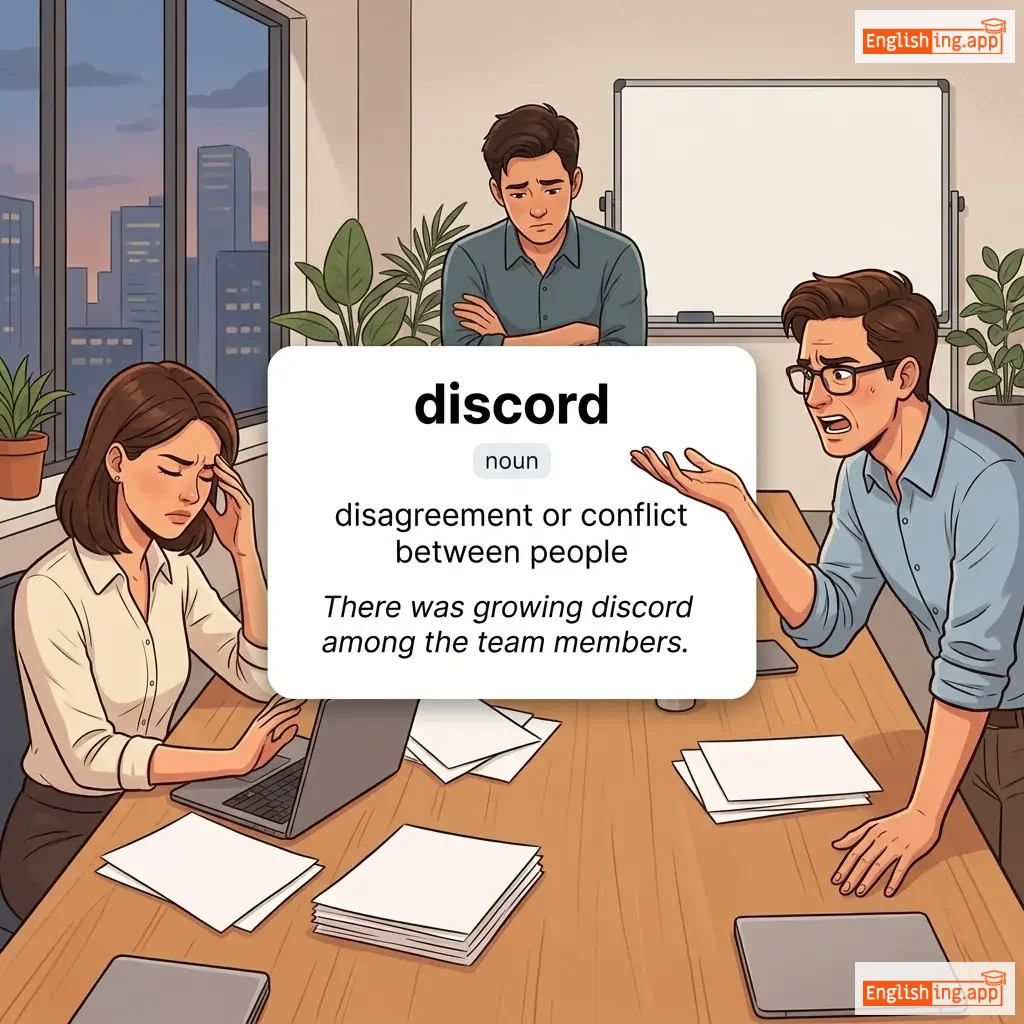
discord definition card — visual illustration of the meaning
noun C1
/ˈdɪskɔːrd/
不和 (fuwa)

disagreement or conflict between people

"There was growing discord among the team members."
"チームメンバー間で不和が広がっていた。" (Chīmu menbā-kan de fuwa ga hirogatte ita.)
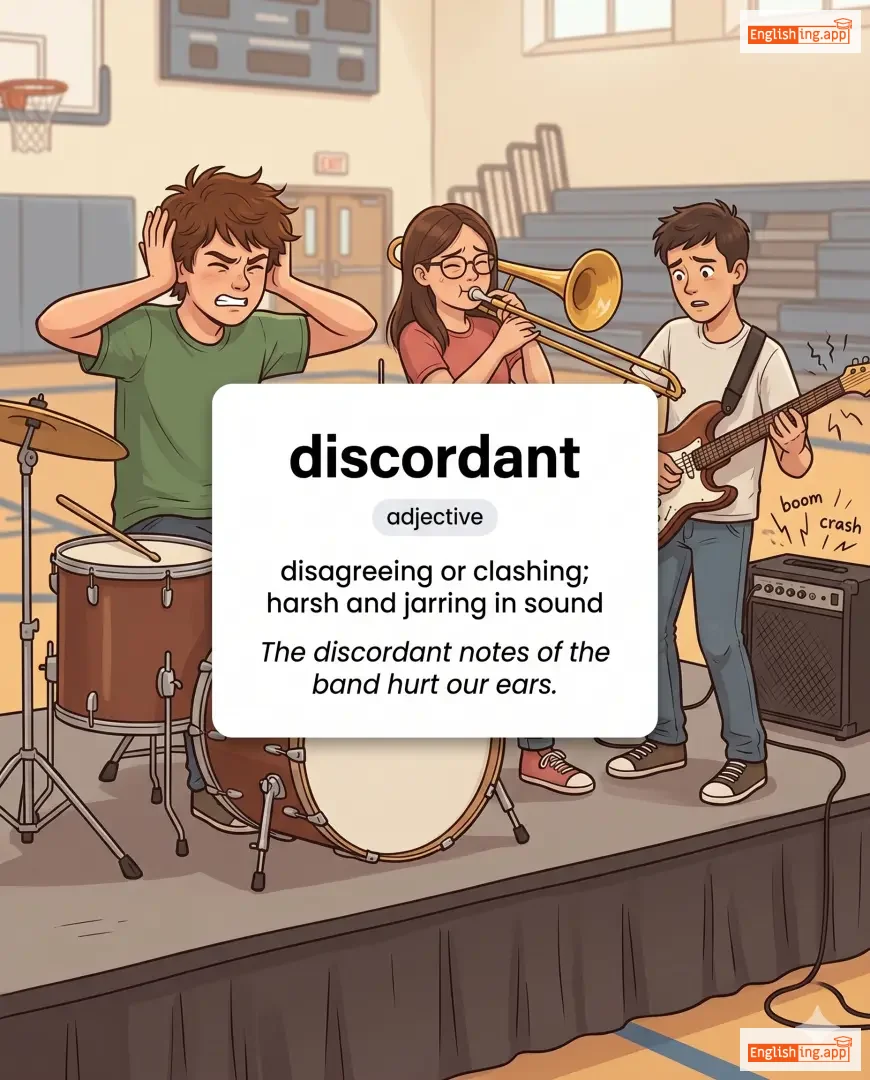
discordant definition card — visual illustration of the meaning
adjective C1
/dɪsˈkɔːrdənt/
不協和音 (fukyouwaon)

disagreeing or clashing; harsh and jarring in sound

"The discordant notes of the band hurt our ears."
"バンドの不協和音の音が私たちの耳を痛めました。" (Bando no fukyouwaon no oto ga watashitachi no mimi o itamemashita.)
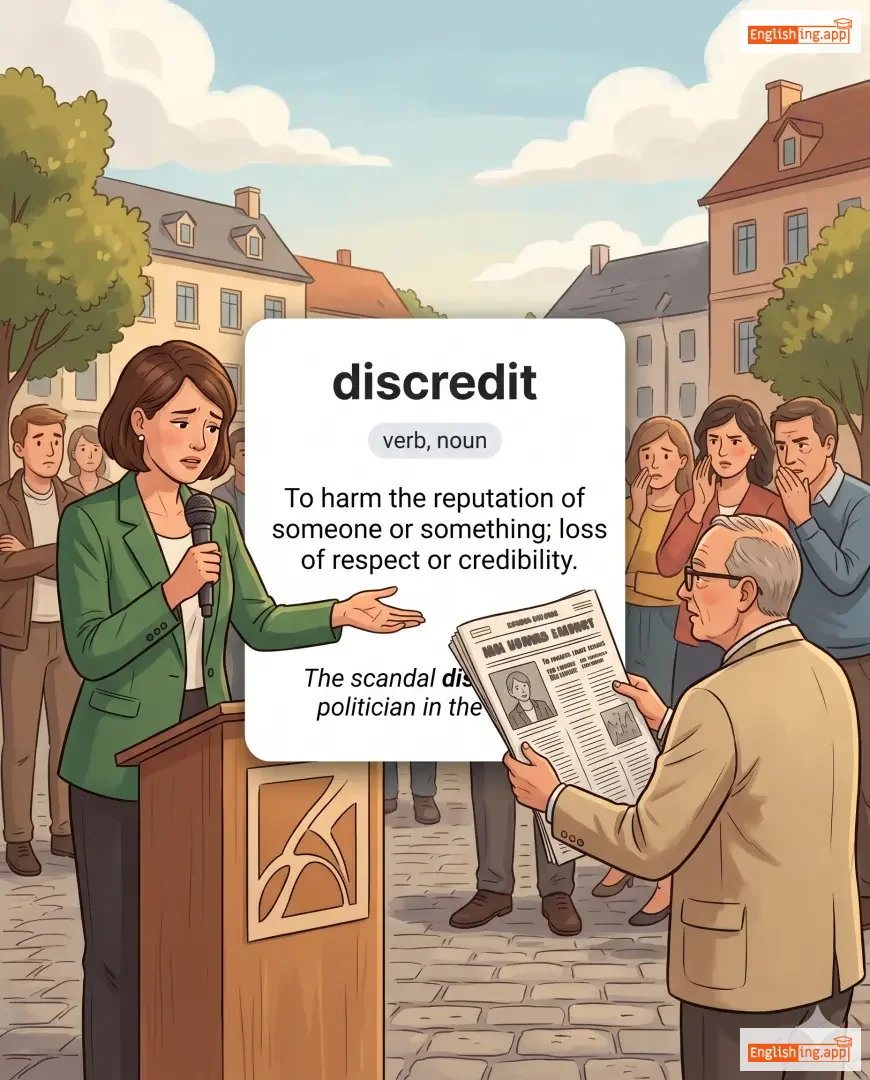
discredit definition card — visual illustration of the meaning
verb, noun C1
/dɪsˈkrɛdɪt/
信用を失わせる (shin'yō o ushinawaseru)

To harm the reputation of someone or something; loss of respect or credibility.

"The scandal discredited the politician in the eyes of the public."
"スキャンダルは公衆の目で政治家を信用を失わせました。" (Sukyandaru wa kōshū no me de seijika o shin'yō o ushinawasemashita.)
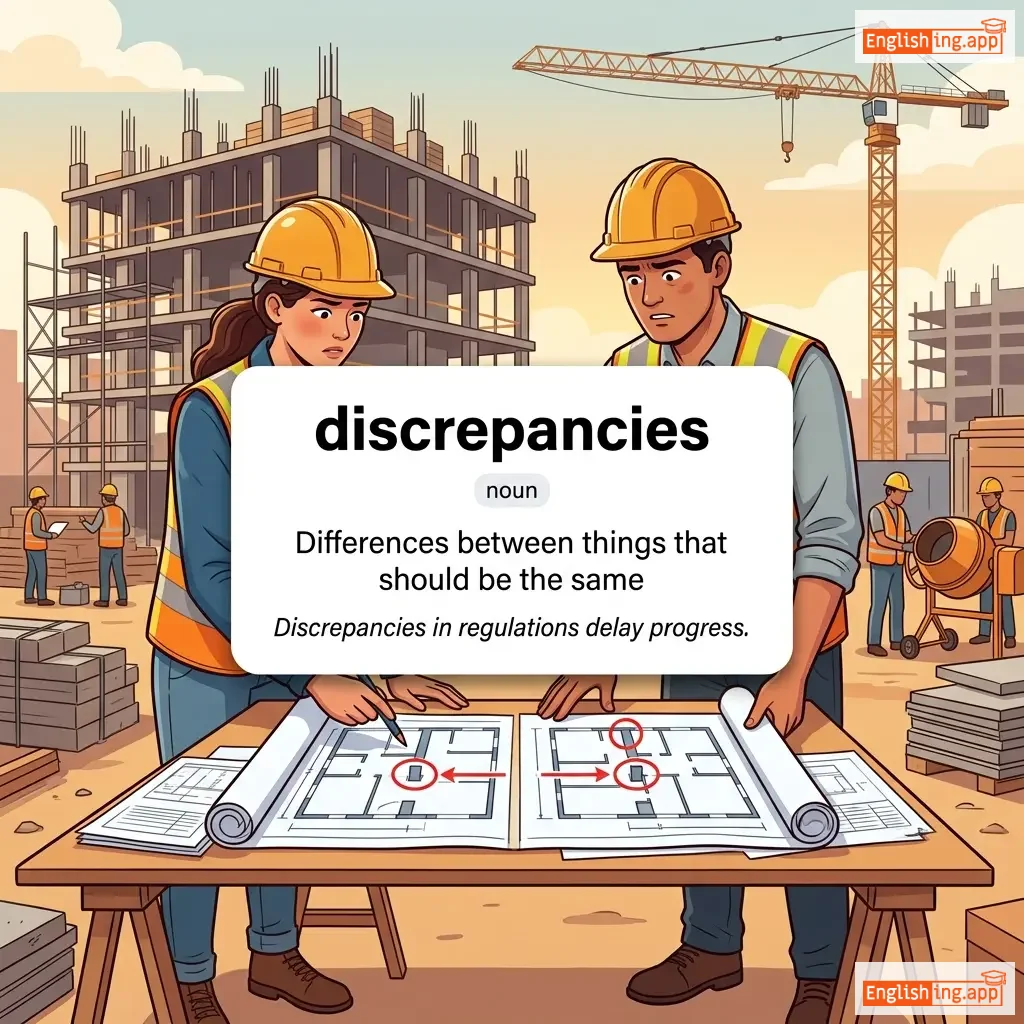
discrepancies definition card — visual illustration of the meaning
noun C1
dɪˈskrep.ən.siz
不一致 (fuicchi)

Differences between things that should be the same

"Discrepancies in regulations delay progress."
"規則の不一致が進行を遅らせている。" (Kisoku no fuicchi ga shinkō o okurasete iru.)
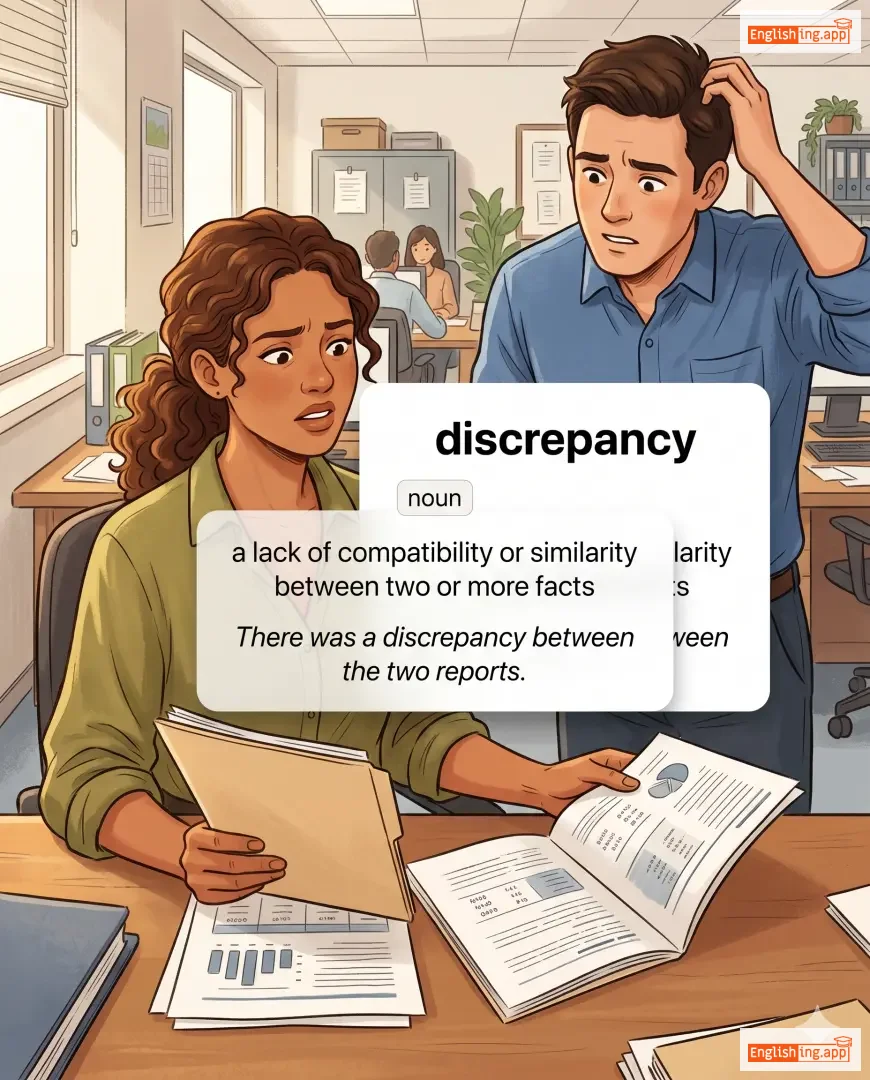
discrepancy definition card — visual illustration of the meaning
noun C1
/dɪˈskrɛpənsi/

a lack of compatibility or similarity between two or more facts

"There was a discrepancy between the two reports."
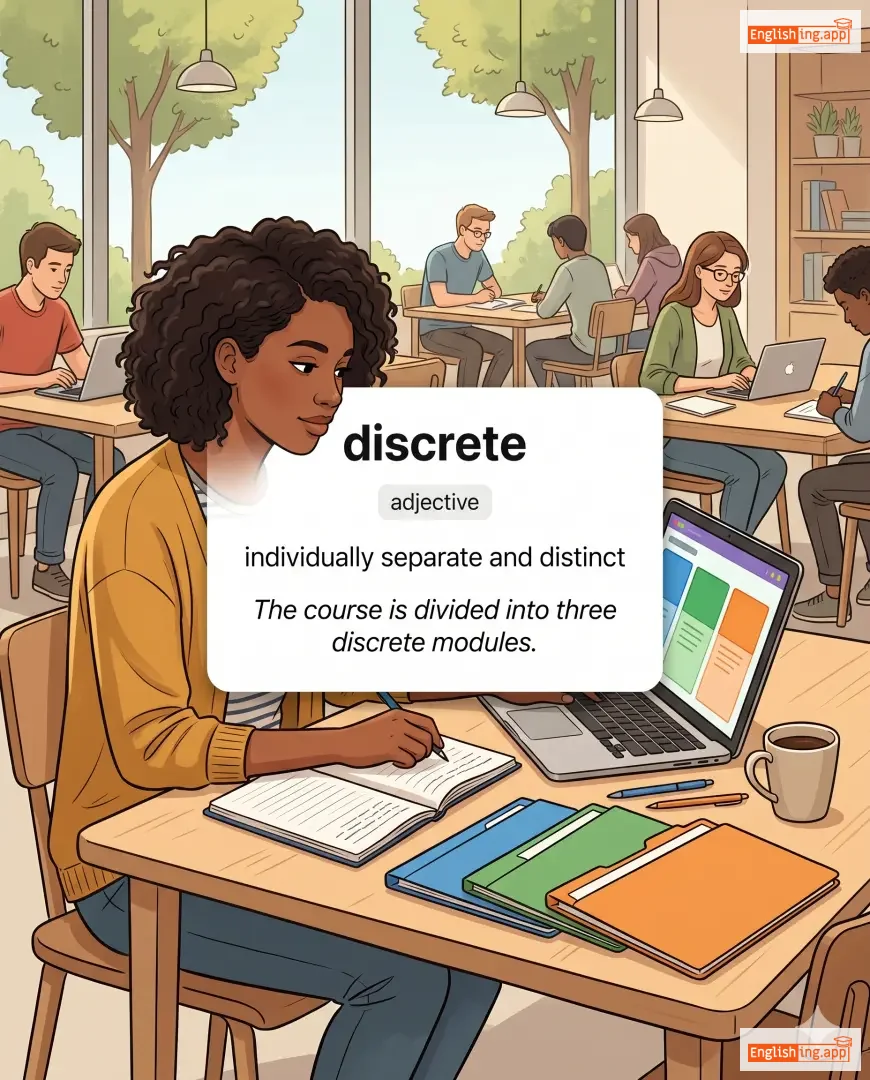
discrete definition card — visual illustration of the meaning
adjective C1
/dɪˈskriːt/
離散的 (risanteki)

individually separate and distinct

"The course is divided into three discrete modules."
"コースは3つの離散的なモジュールに分けられています。" (Kōsu wa mittsu no risanteki na mojūru ni wakerareteimasu.)
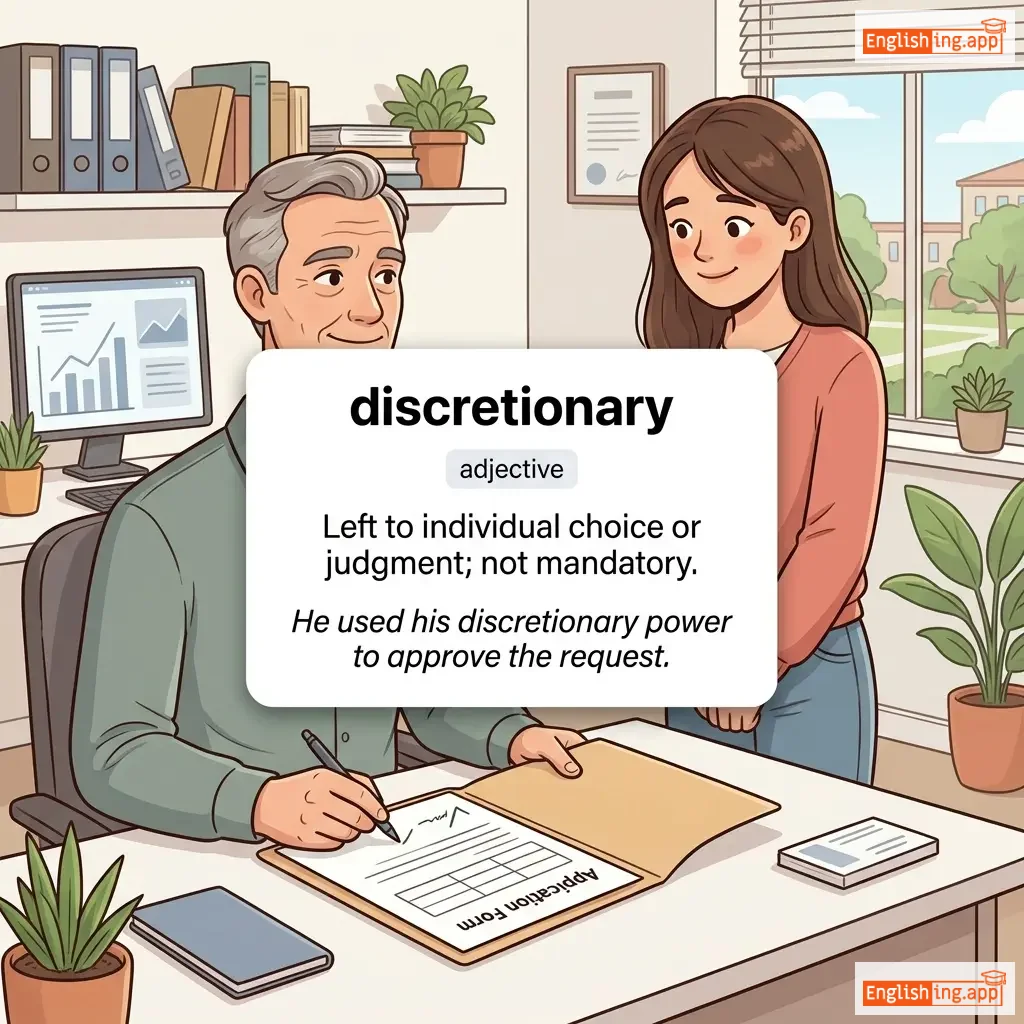
discretionary definition card — visual illustration of the meaning
adjective C1
/dɪˈskrɛʃəˌnɛri/
任意の (nin'i no)

Left to individual choice or judgment; not mandatory.

"He used his discretionary power to approve the request."
"彼は要求を承認するために任意の権限を使用しました。" (Kare wa yōkyū o shōnin suru tame ni nin'i no kenri o shiyō shimashita.)
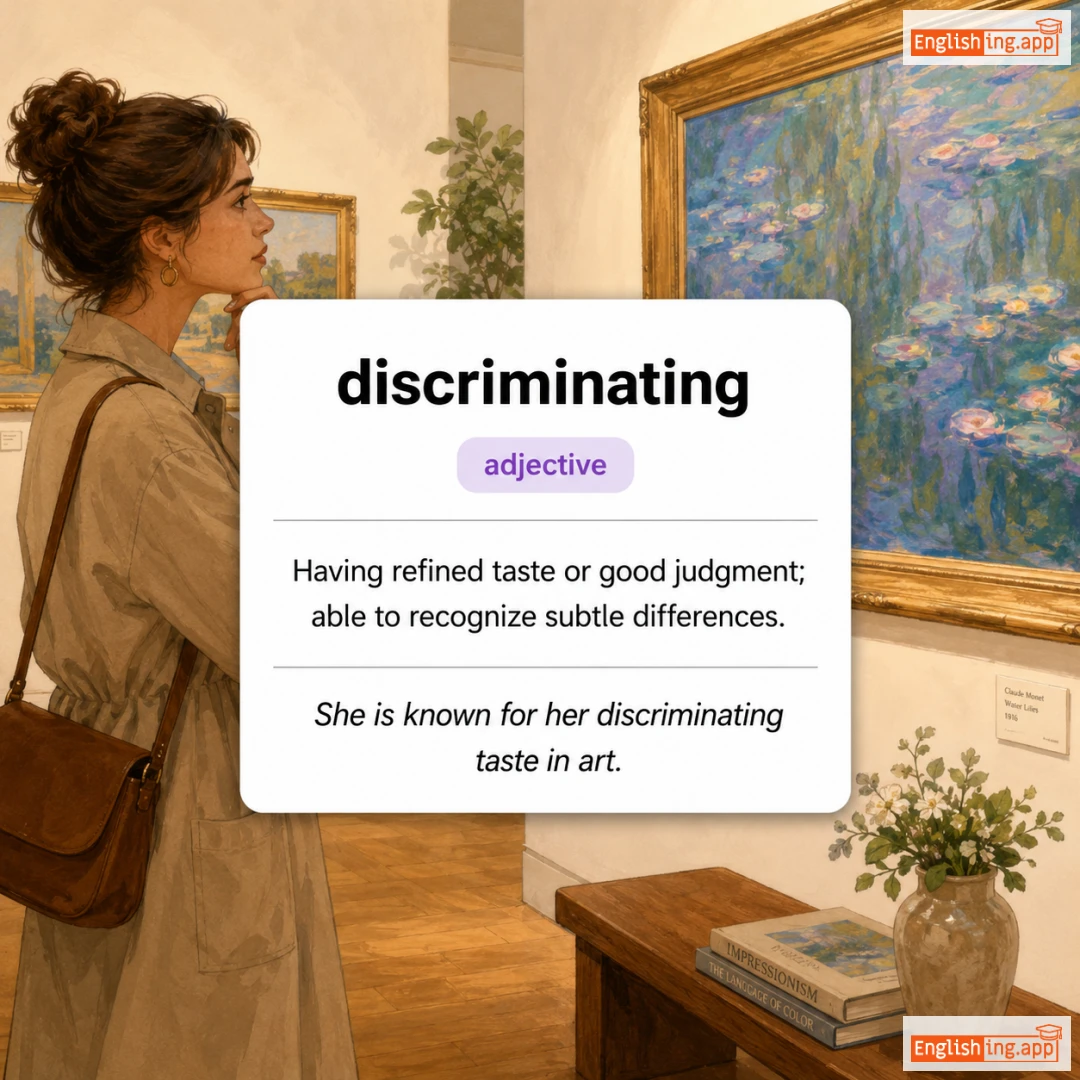
discriminating definition card — visual illustration of the meaning
adjective C1
/dɪˈskrɪmɪˌneɪtɪŋ/
選り好みする (erikonosuru)

Having refined taste or good judgment; able to recognize subtle differences.

"She is known for her discriminating taste in art."
"彼女は芸術における選り好みの味で知られています。" (Kanojo wa geijutsu ni okeru erikonosuru aji de shirareteimasu.)
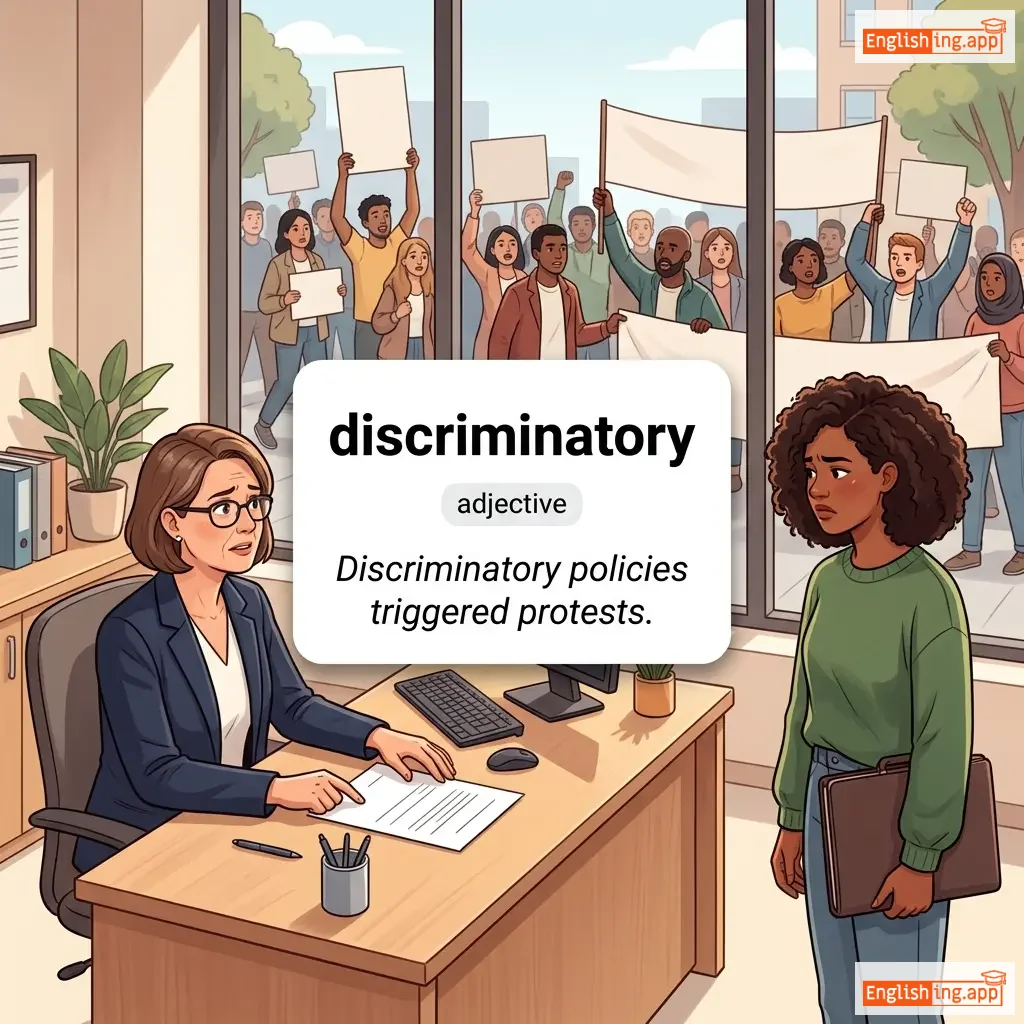
discriminatory definition card — visual illustration of the meaning
adjective C1
dɪˈskrɪmɪnətɔːri
差別的 (sabetsuteki)

Making or showing an unfair or prejudicial distinction between different categories of people or things.

"Discriminatory policies triggered protests."

"差別的な政策は抗議を引き起こしました。" (Sabetsuteki na seisaku wa kōgi o hikiokoshimashita.)
noun/verb C1
/dɪsˈdeɪn/

The feeling that someone or something is unworthy of respect; to regard with contempt.

"She looked at the messy room with open disdain."

verb C1
/ˌdɪsɪmˈbɑːrk/
降りる (oriru)

To leave a ship, aircraft, or other vehicle.

"The passengers disembarked from the plane after landing."
"乗客は着陸後、飛行機から降りました。" (Joukyaku wa chakuriku go, hikouki kara orimashita.)
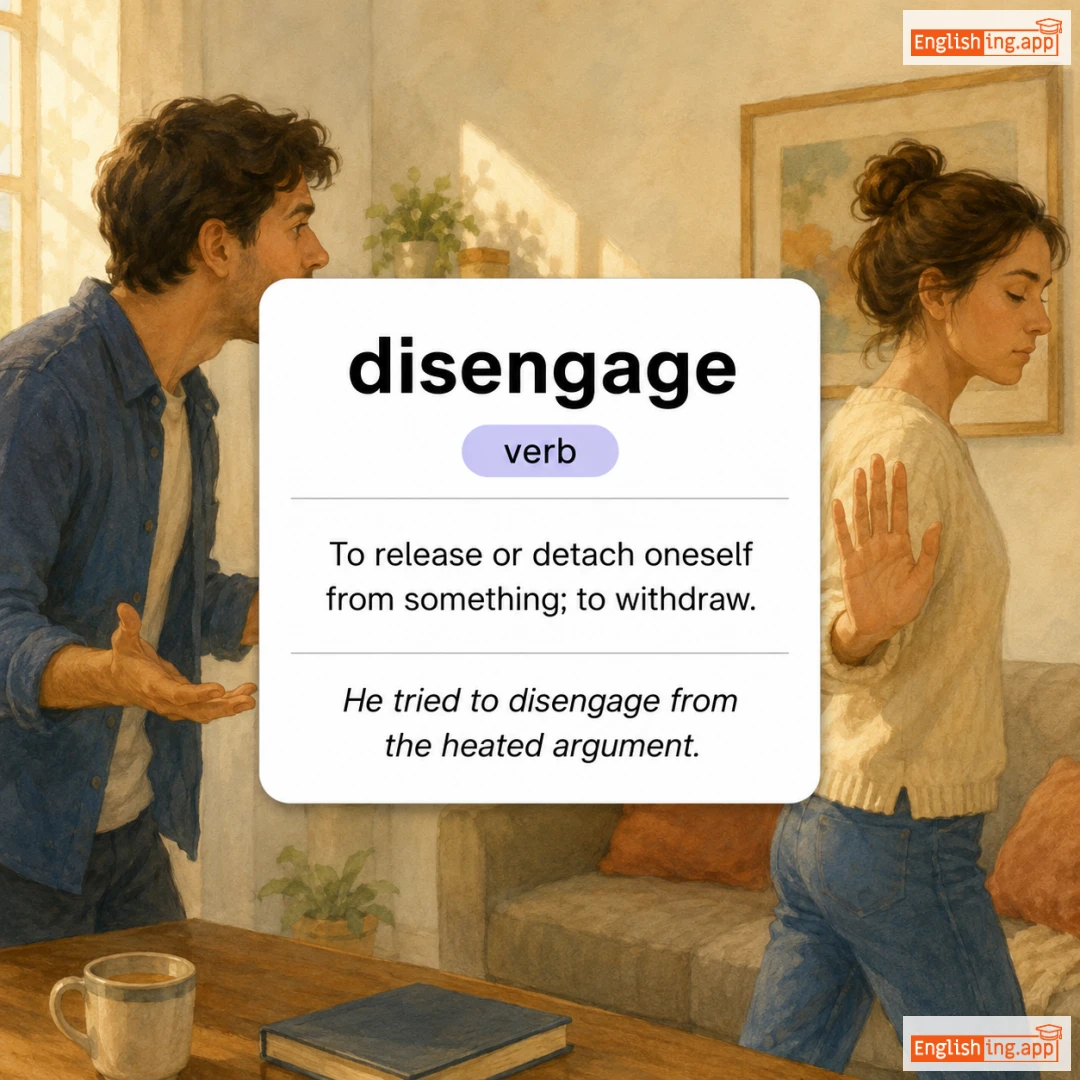
disengage definition card — visual illustration of the meaning
verb C1
/ˌdɪsɪnˈɡeɪdʒ/
解放する (kaihō suru)

To release or detach oneself from something; to withdraw.

"He tried to disengage from the heated argument."
"彼は熱い議論から解放しようとした。" (Kare wa atsui giron kara kaihō shiyō to shita.)
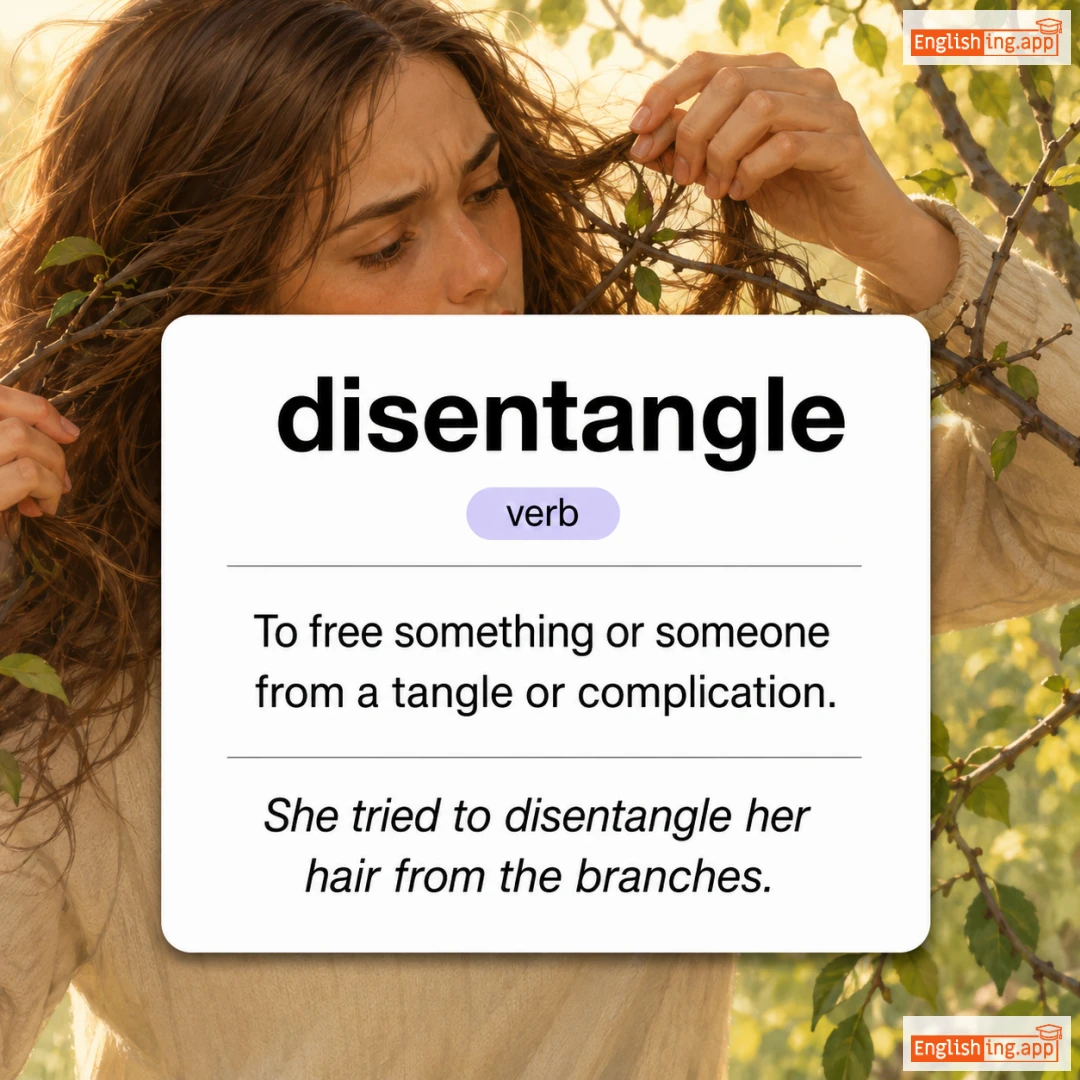
disentangle definition card — visual illustration of the meaning
verb C1
/ˌdɪsɪnˈtæŋɡl/
ほどく (hodoku)

To free something or someone from a tangle or complication.

"She tried to disentangle her hair from the branches."
"彼女は枝から髪の毛をほどこうとしました。" (Kanojo wa eda kara kami no ke o hodoku to shimashita.)
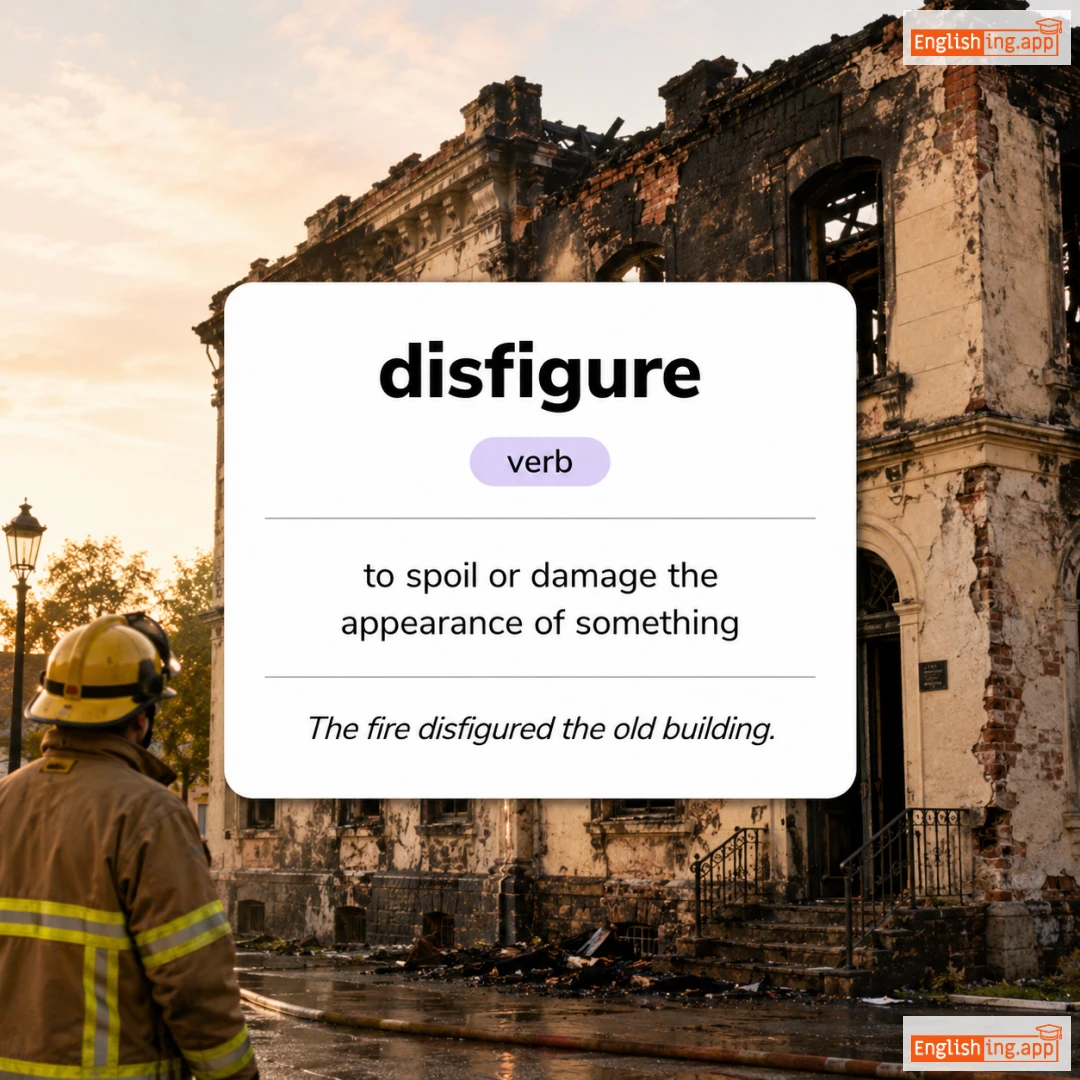
disfigure definition card — visual illustration of the meaning
verb C1
/dɪsˈfɪɡjər/
変形させる (henkei saseru)

to spoil or damage the appearance of something

"The fire disfigured the old building."
"火事は古い建物を変形させた。" (Kaji wa furui tatemono o henkei saseta.)
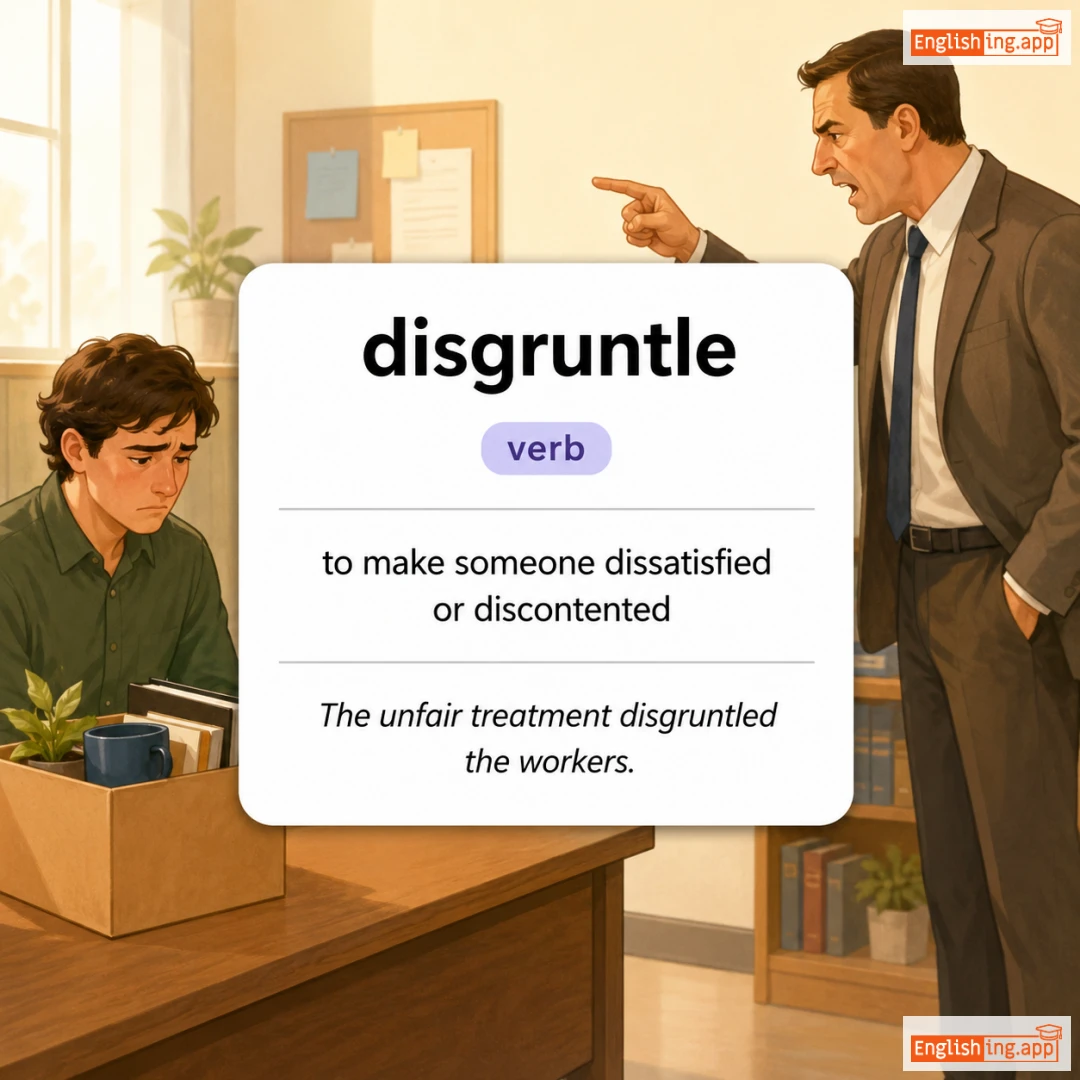
disgruntle definition card — visual illustration of the meaning
verb C1
/dɪsˈɡrʌntl/
不満にさせる (fuman ni saseru)

to make someone dissatisfied or discontented

"The unfair treatment disgruntled the workers."
"不公平な扱いが労働者を不満にさせた。" (Fukōhei na atsukai ga rōdōsha o fuman ni saseta.)
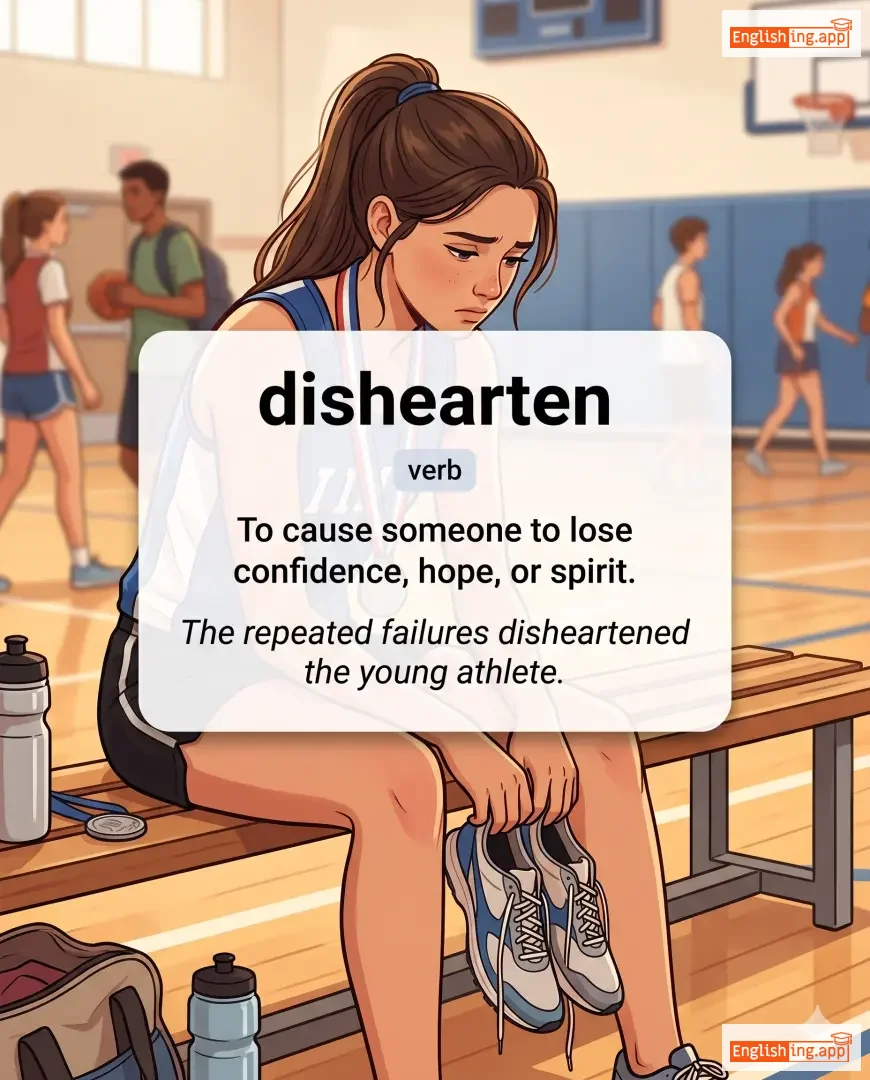
dishearten definition card — visual illustration of the meaning
verb C1
/dɪsˈhɑːrtən/
落胆させる (rakkansaseru)

To cause someone to lose confidence, hope, or spirit.

"The repeated failures disheartened the young athlete."

"繰り返される失敗が若いアスリートを落胆させた。" (Kurikaesaru shippai ga wakai asurīto o rakkan saseta.)
adjective C1
/dɪsˈhɑːrtənd/
落胆した (rakutanshita)

Having lost confidence, hope, or spirit; discouraged.

"She looked disheartened after receiving the bad news."

"彼女は悪い知らせを受け取った後、落ち込んで見えました。" (Kanojo wa warui shirase o uketotta ato, ochikonde mie mashita.)
adjective C1
/dɪˈʃɛvəld/
乱れた (midareta)

Untidy, messy, or in disorder, especially of hair or clothing.

"He arrived with disheveled hair and wrinkled clothes."
"彼は乱れた髪とシワの寄った服で到着しました。" (Kare wa midareta kami to shiwa no yotta fuku de tōchaku shimashita.)
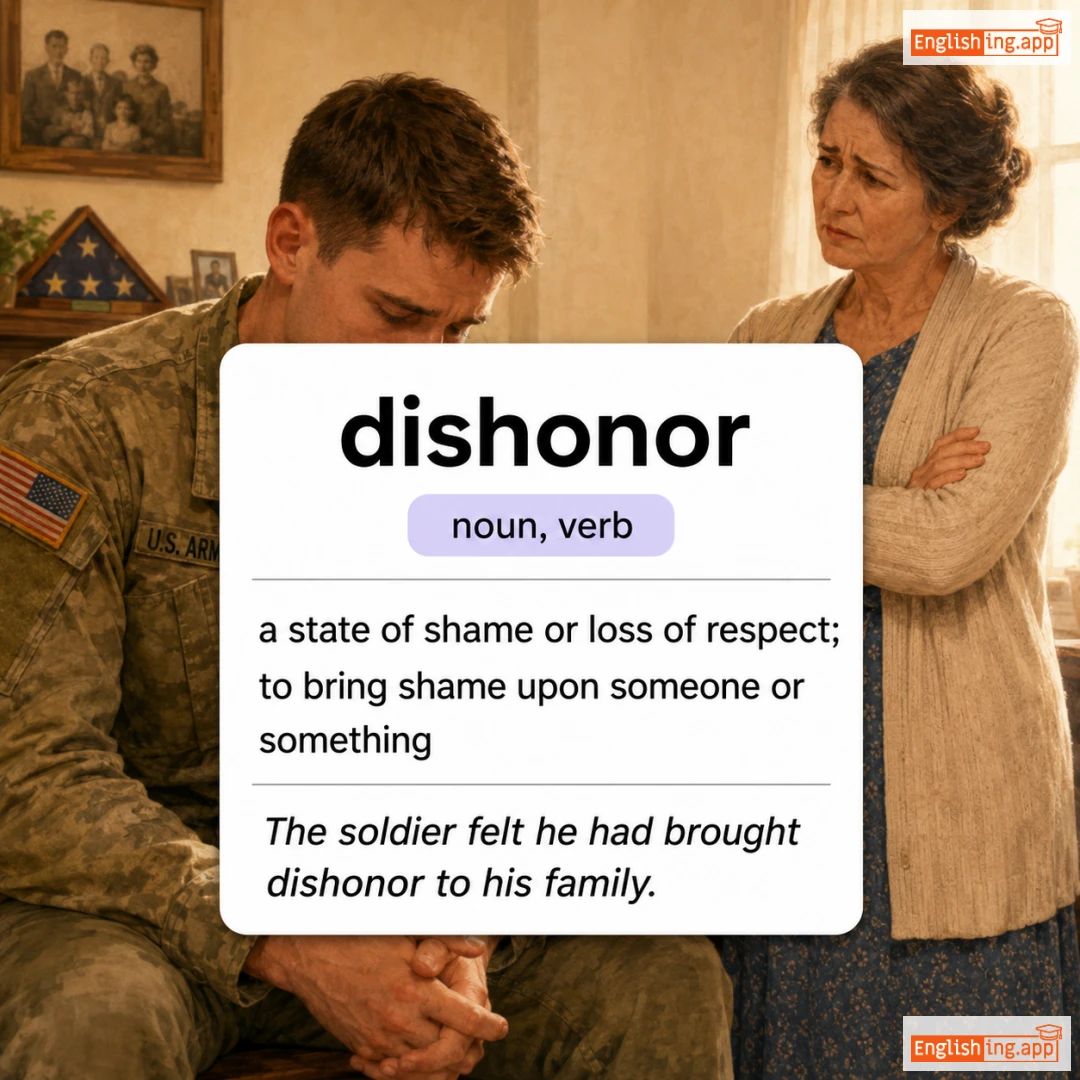
dishonor definition card — visual illustration of the meaning
noun, verb C1
/dɪsˈɑːnər/

a state of shame or loss of respect; to bring shame upon someone or something

"The soldier felt he had brought dishonor to his family."

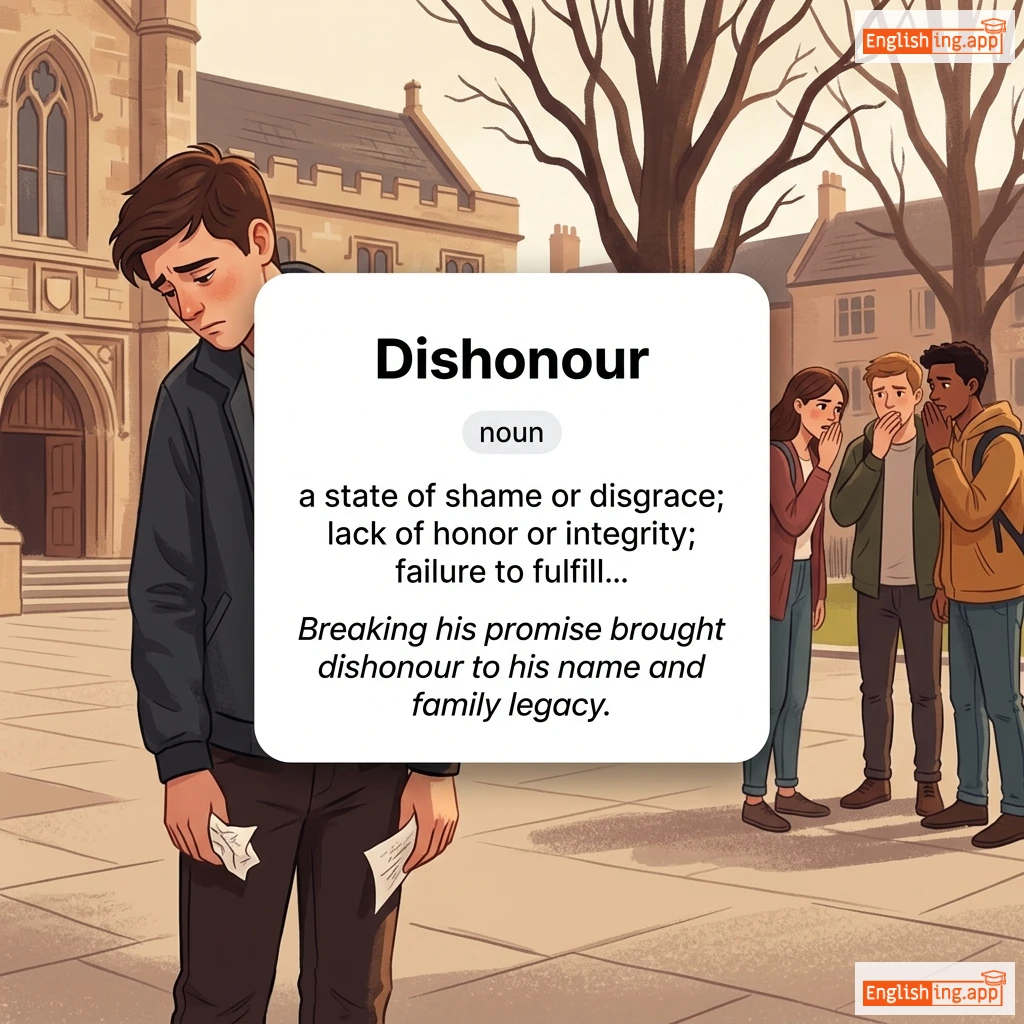
Dishonour definition card — visual illustration of the meaning
noun C1
/dɪsˈɒn.ər/
不名誉 (fumeiyo)

a state of shame or disgrace; lack of honor or integrity; failure to fulfill obligations

"Breaking his promise brought dishonour to his name and family legacy."
"約束を破ったことが彼の名前と家族の遺産に不名誉をもたらした。" (Yakusoku wo yabutta koto ga kare no namae to kazoku no isan ni fumeiyo wo motarashita.)
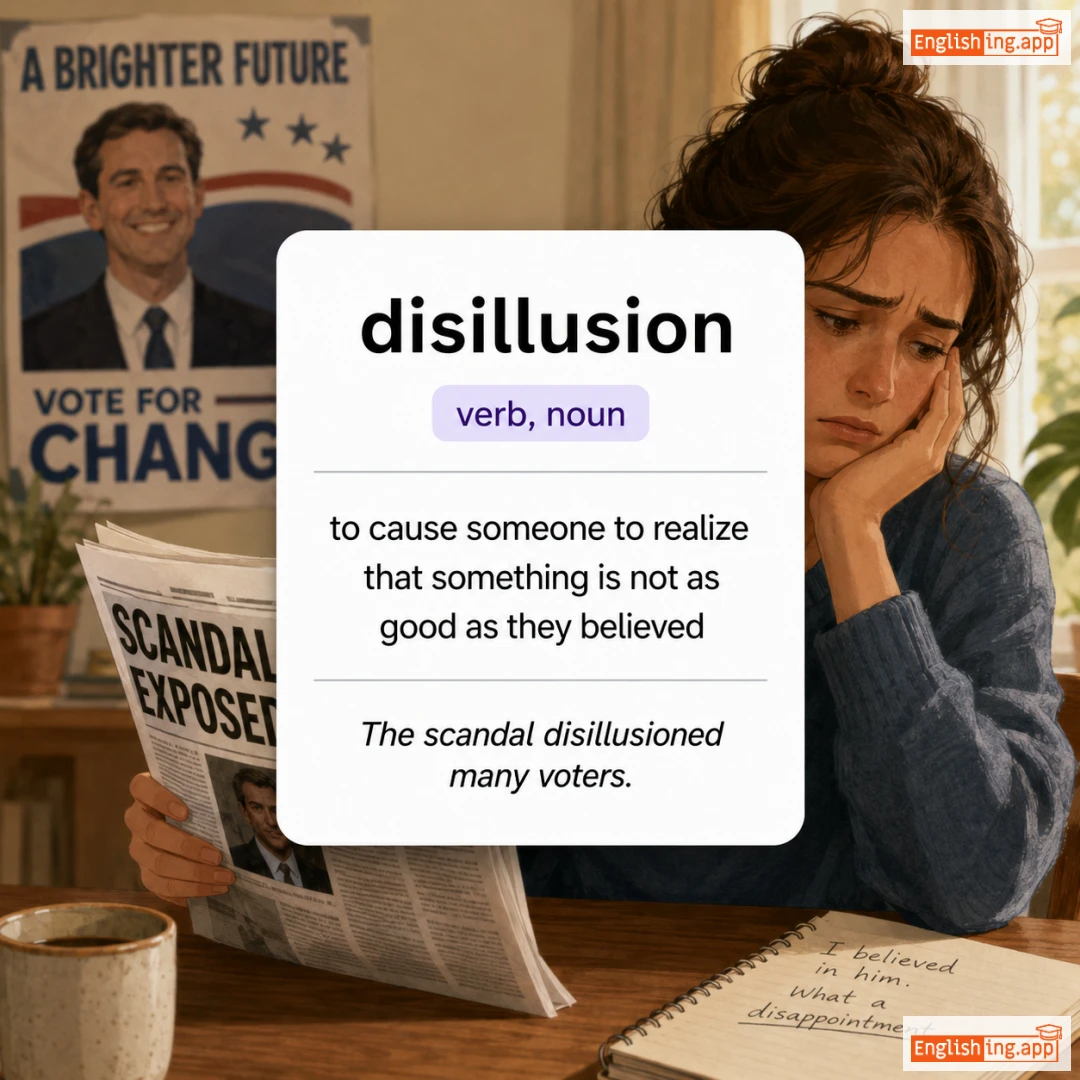
disillusion definition card — visual illustration of the meaning
verb, noun C1
/ˌdɪsɪˈluːʒən/
幻滅 (genmetsu)

to cause someone to realize that something is not as good as they believed

"The scandal disillusioned many voters."
"そのスキャンダルは多くの有権者を幻滅させた。" (Sono sukyandaru wa ooku no yuukensha wo genmetsu saseta.)
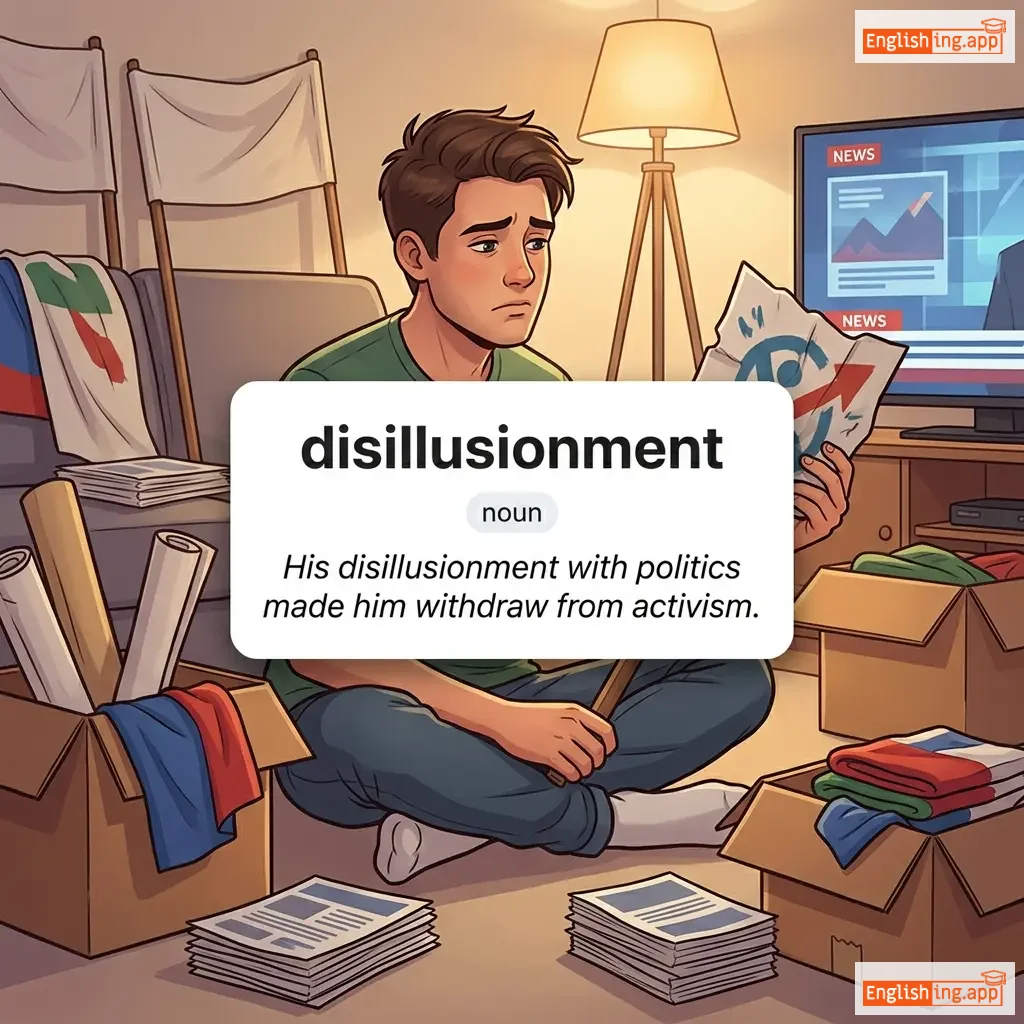
disillusionment definition card — visual illustration of the meaning
noun C1
/ˌdɪs.ɪˈluː.ʒən.mənt/
幻滅 (genmetsu)

A feeling of disappointment resulting from the discovery that something is not as good as one believed it to be.

"His disillusionment with politics made him withdraw from activism."
"彼の政治への幻滅は、彼が活動から撤退する原因となった。" (Kare no seiji e no genmetsu wa, kare ga katsudou kara tettai suru gen'in to natta.)
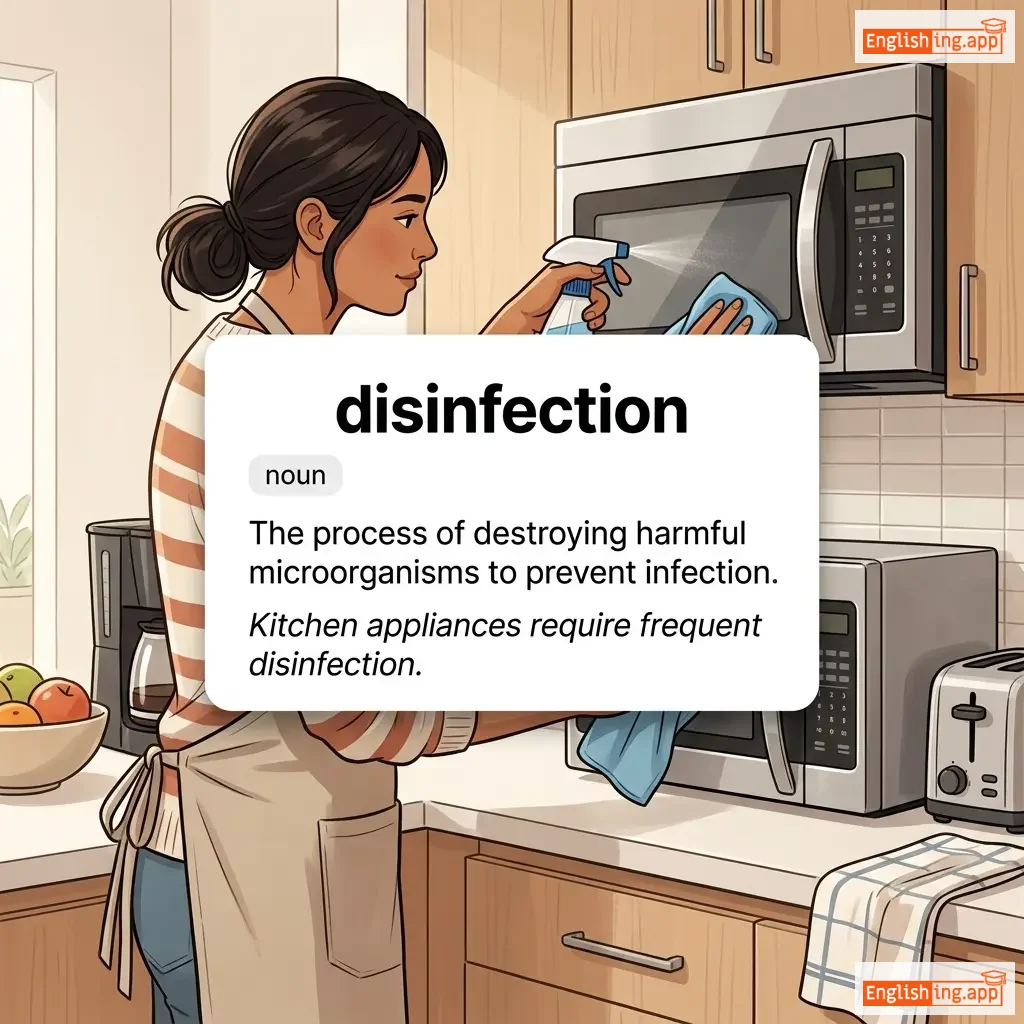
disinfection definition card — visual illustration of the meaning
noun C1
ˌdɪs.ɪnˈfek.ʃən
消毒 (shoudoku)

The process of destroying harmful microorganisms to prevent infection.

"Kitchen appliances require frequent disinfection."
"キッチン用具は頻繁に消毒する必要があります。" (Kicchin yōgu wa hinpan ni shōdoku suru hitsuyō ga arimasu.)
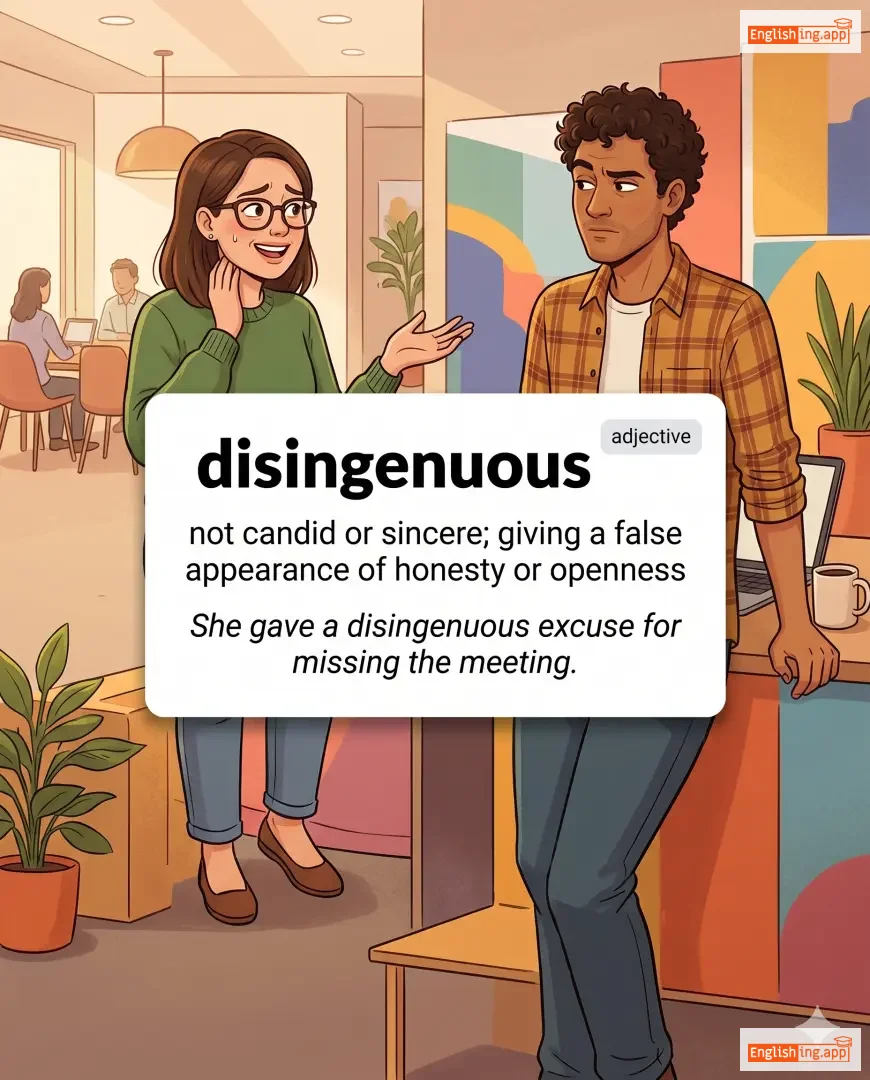
disingenuous definition card — visual illustration of the meaning
adjective C1
/ˌdɪsɪnˈdʒɛnjʊəs/
不誠実な (fuseijitsuna)

not candid or sincere; giving a false appearance of honesty or openness

"She gave a disingenuous excuse for missing the meeting."
"彼女は会議に出席しないために不誠実な言い訳をしました。" (Kanojo wa kaigi ni shusseki shinai tame ni fuseijitsuna iiwake o shimashita.)
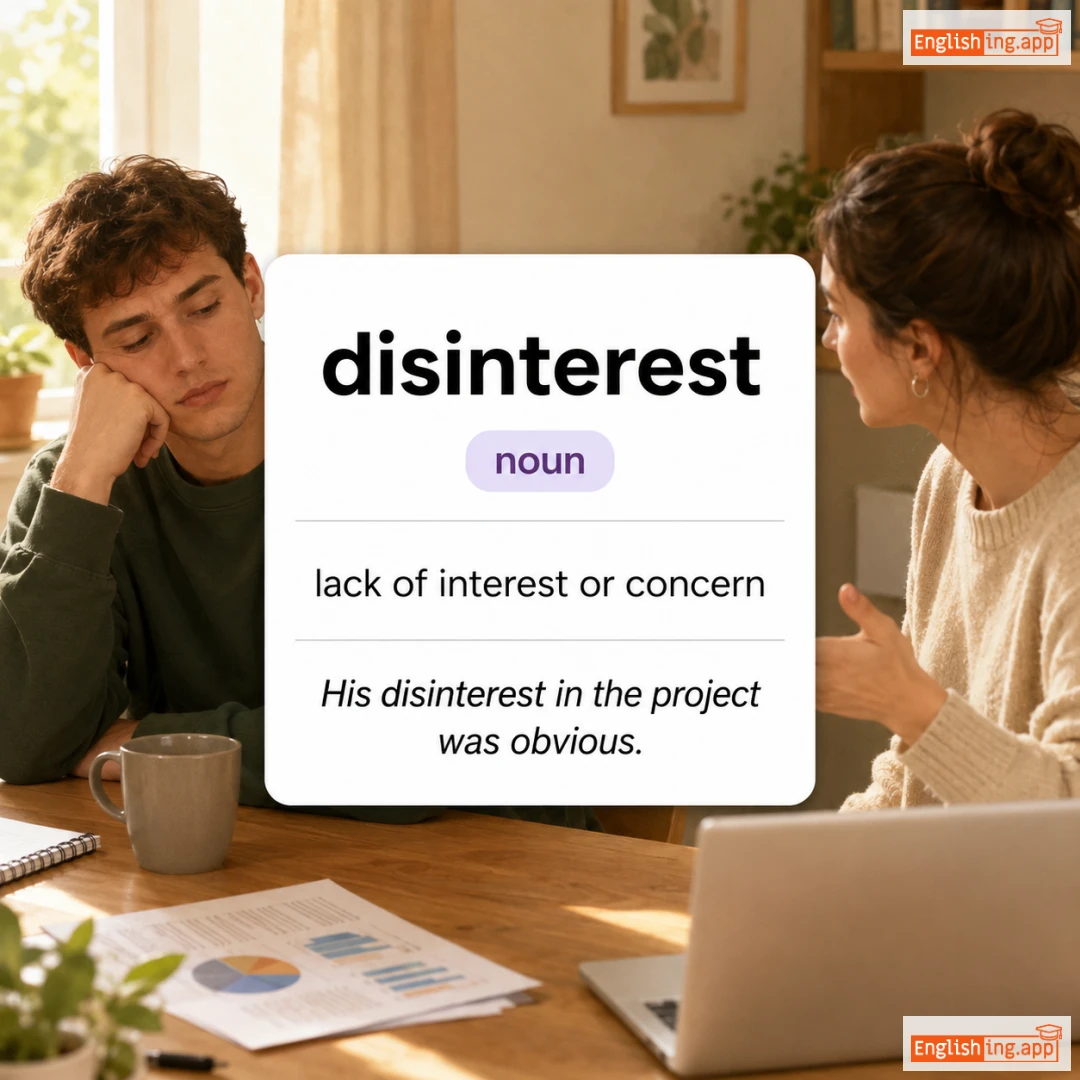
disinterest definition card — visual illustration of the meaning
noun C1
/dɪsˈɪntrəst/
無関心 (mukanshin)

lack of interest or concern

"His disinterest in the project was obvious."
"そのプロジェクトへの無関心は明らかだった。" (Sono purojekuto e no mukanshin wa akiraka datta.)
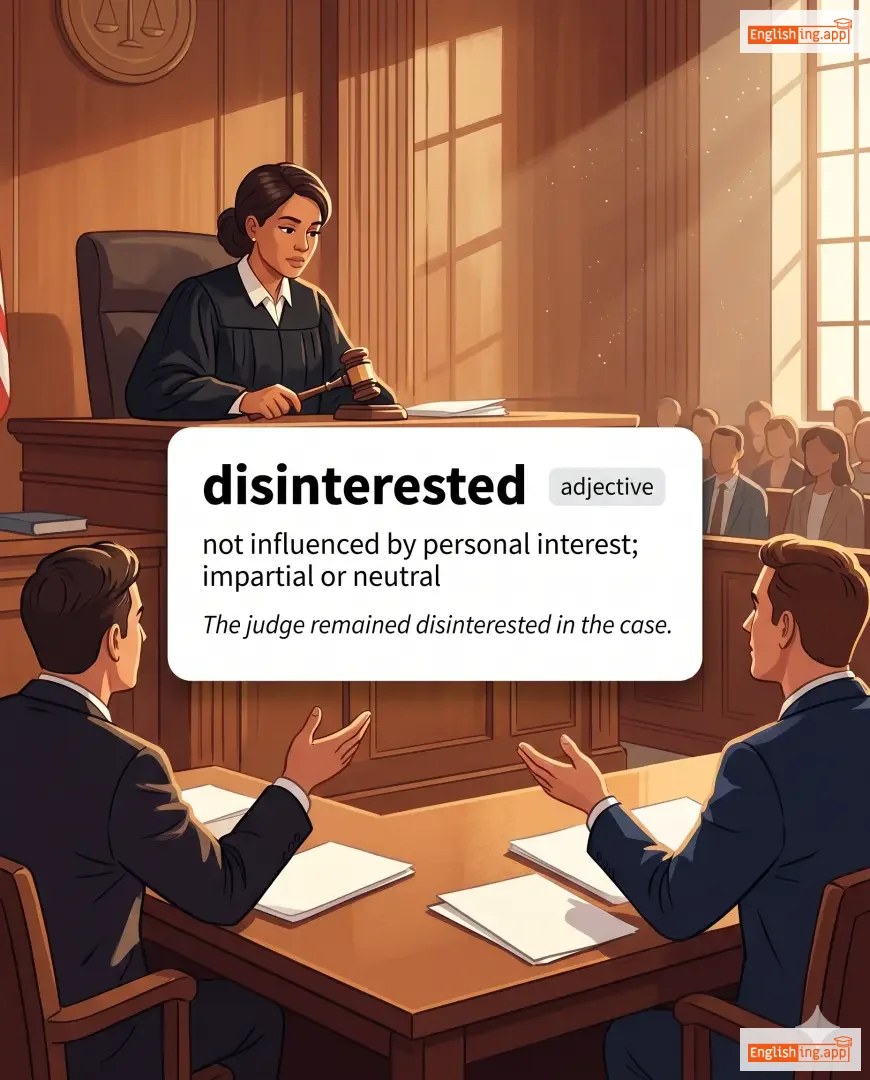
disinterested definition card — visual illustration of the meaning
adjective C1
/dɪsˈɪntrəstɪd/
無関心 (mukanshin)

not influenced by personal interest; impartial or neutral

"The judge remained disinterested in the case."
"裁判官はその事件に無関心のままでした。" (Saibankan wa sono jiken ni mukanshin no mamadeshita.)
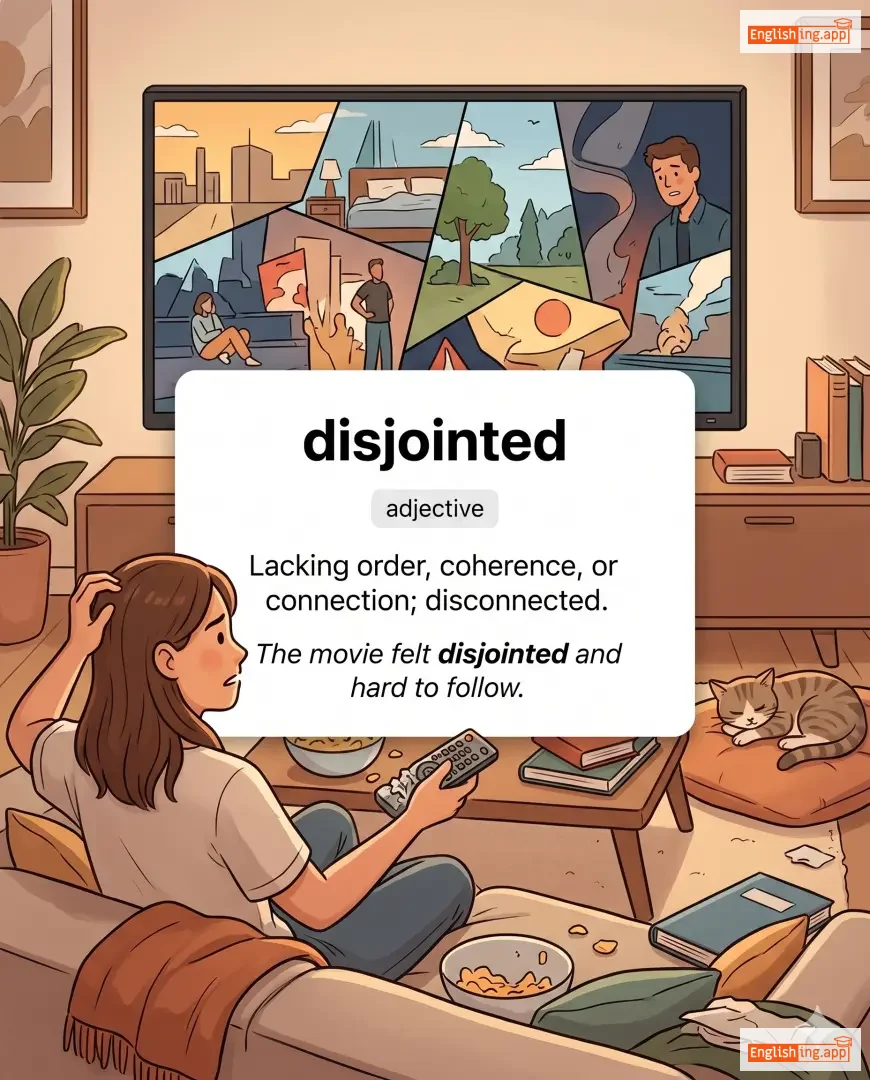
disjointed definition card — visual illustration of the meaning
adjective C1
/dɪsˈdʒɔɪntɪd/
ばらばら (barabara)

Lacking order, coherence, or connection; disconnected.

"The movie felt disjointed and hard to follow."

"映画はばらばらに感じ、追いかけるのが難しかった。" (Eiga wa barabara ni kanji, oikakeru no ga muzukashikatta.)
dislocate definition card — visual illustration of the meaning
verb C1
/ˈdɪsləkeɪt/
脱臼する (datsukyū suru)

To disturb the normal position of something, especially a joint in the body.

"He dislocated his shoulder while playing football."
"彼はサッカーをしているときに肩を脱臼しました。" (Kare wa sakkā o shiteiru toki ni kata o datsukyū shimashita.)
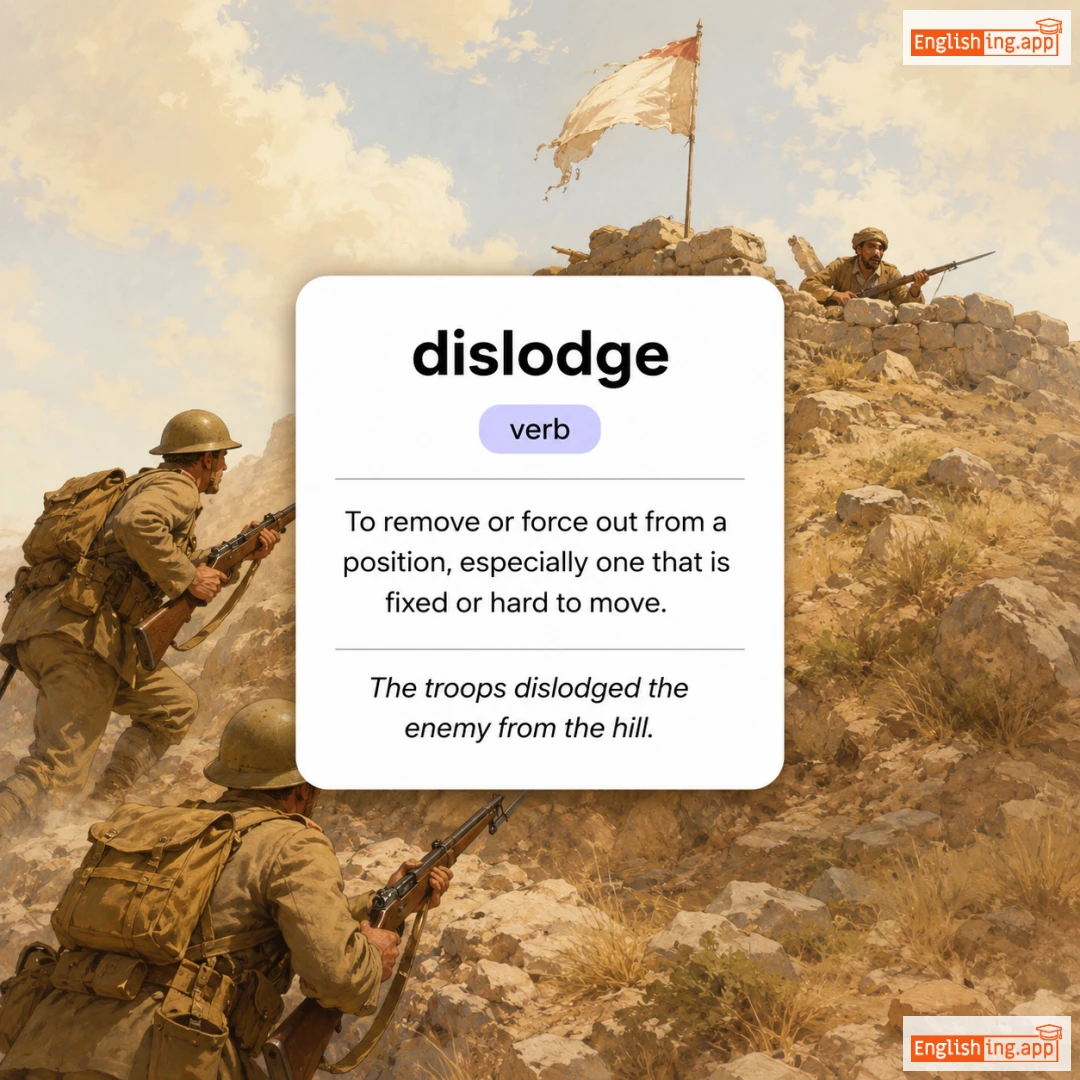
dislodge definition card — visual illustration of the meaning
verb C1
/dɪsˈlɒdʒ/
追い出す (oidasu)

To remove or force out from a position, especially one that is fixed or hard to move.

"The troops dislodged the enemy from the hill."

"部隊は敵を丘から追い出した。" (Butai wa teki wo oka kara oidasita.)
adjective C1
/ˈdɪzməl/
陰気な; 落ち込んだ; 悲しい (inki na; ochikonda; kanashii)

gloomy; depressing; causing sadness or despair

"The weather was dismal with heavy rain and dark clouds."
"天気は雨と暗い雲で陰気でした。" (Tenki wa ame to kurai kumo de inki deshita.)
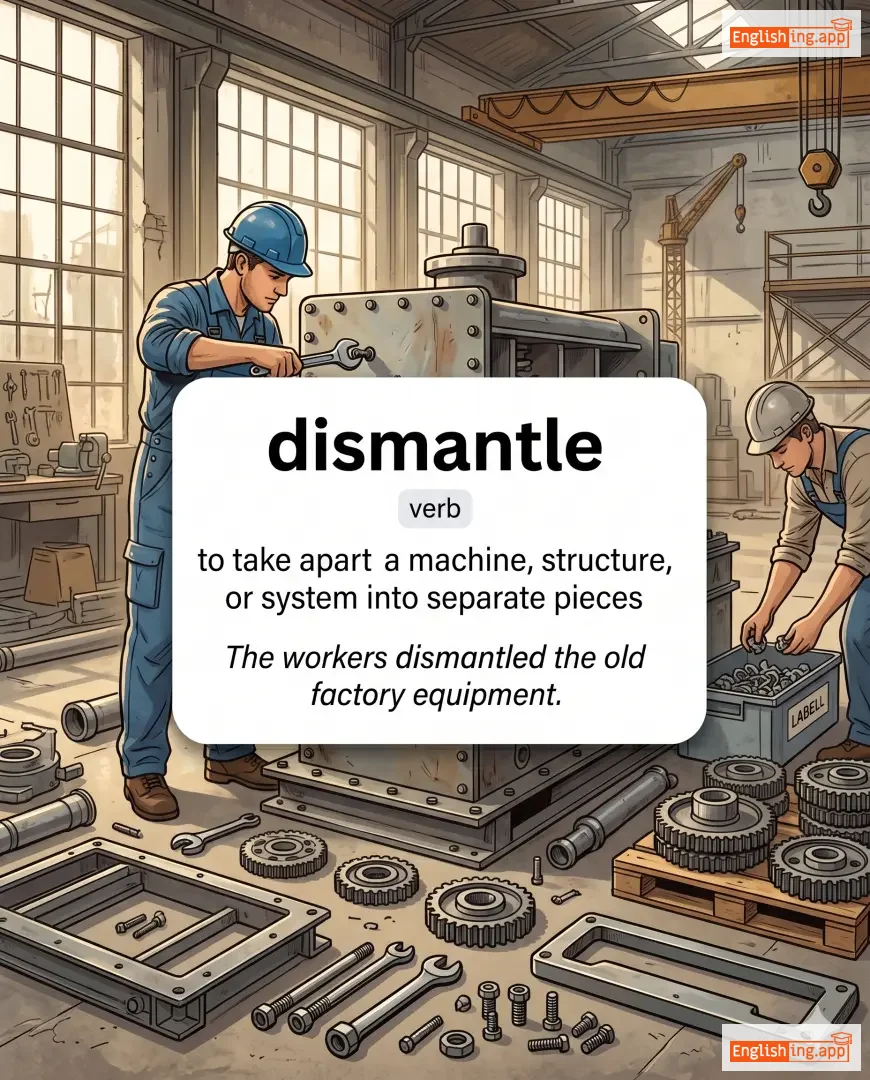
dismantle definition card — visual illustration of the meaning
verb C1
/dɪsˈmæntl̩/
解体する (kaitai suru)

to take apart a machine, structure, or system into separate pieces

"The workers dismantled the old factory equipment."

"作業員たちは古い工場の設備を解体しました。" (Sagyouintachi wa furui koujou no setsubi wo kaitai shimashita.)
verb C1
/ˌdɪsˈmaʊnt/
降りる (oriru)

to get off or down from something, especially a horse, bicycle, or motorcycle

"The rider dismounted from the horse after a long journey."

"長い旅の後、ライダーは馬から降りた。" (Nagai tabi no ato, raidā wa uma kara orita.)
noun C1
/ˌdɪsəˈbiːdiəns/
不従順 (fujūjun)

failure or refusal to obey rules, laws, or authority

"The child's disobedience worried his parents."
"子供の不従順は両親を心配させました。" (Kodomo no fujūjun wa ryōshin o shinpai sasemashita.)
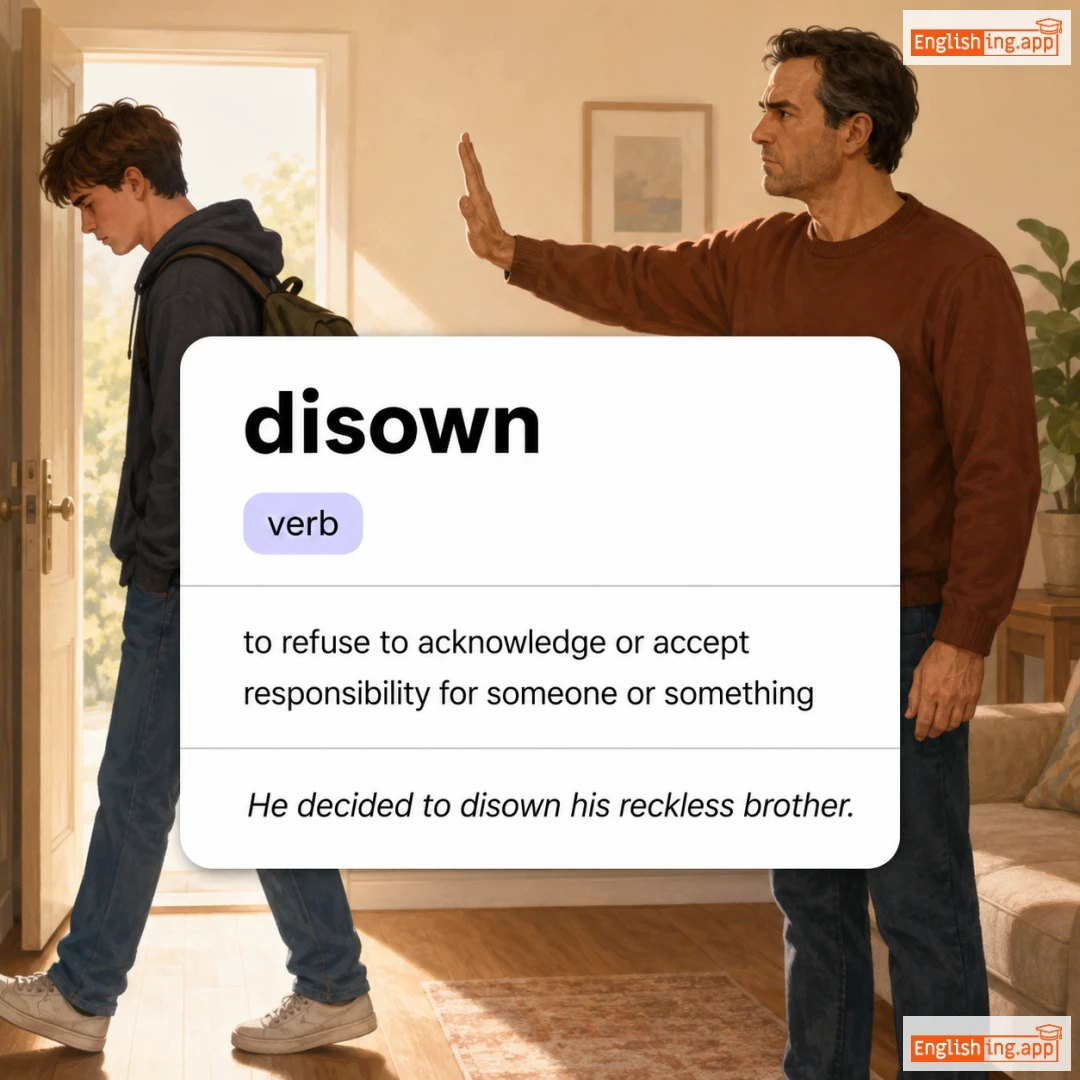
disown definition card — visual illustration of the meaning
verb C1
/dɪsˈoʊn/
拒絶する (kyozetsu suru)

to refuse to acknowledge or accept responsibility for someone or something

"He decided to disown his reckless brother."

"彼は無謀な兄を拒絶する決断をしました。" (Kare wa mubou na ani wo kyozetsu suru ketsudan wo shimashita.)