Best Practices for Digital Safety Online
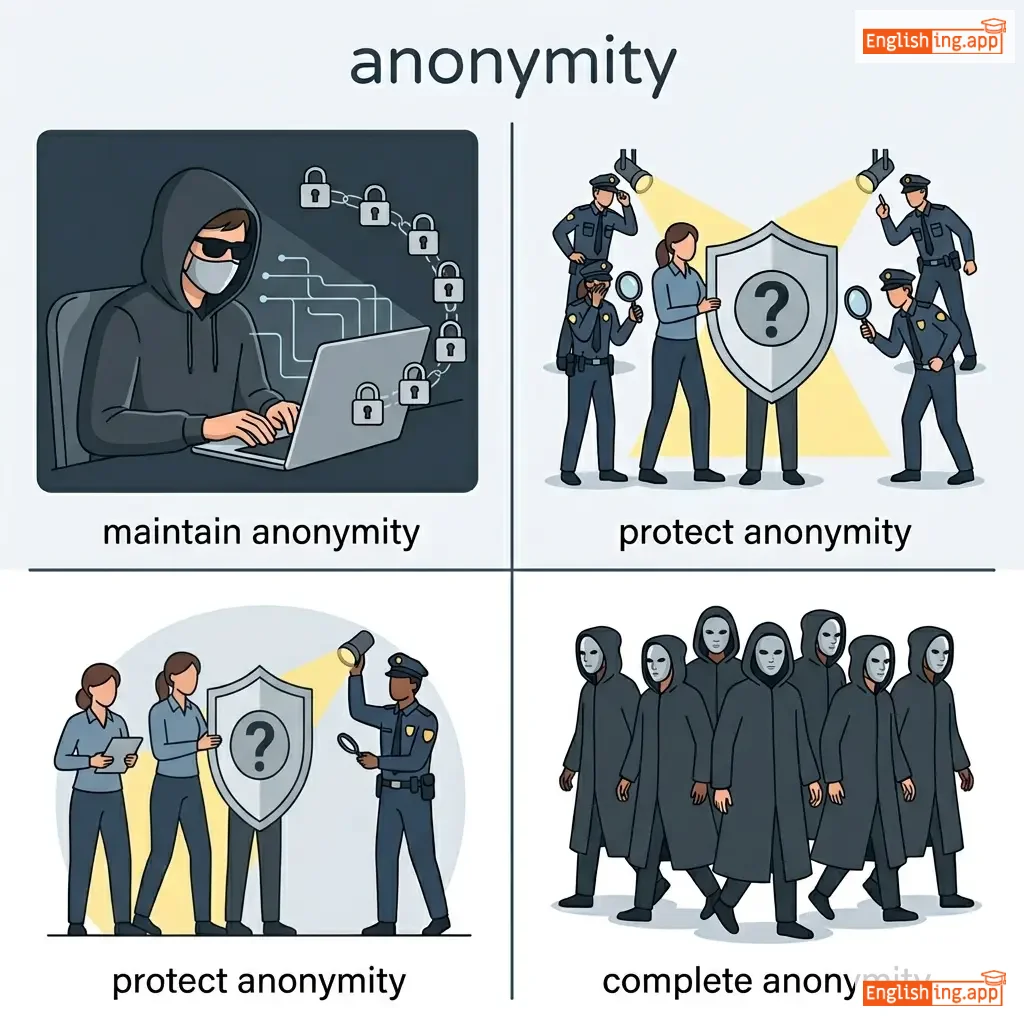
現代のデジタル時代では、anonymityを維持することは難しい場合があります。オンラインでbreachesが発生し、データの盗難やexploitationが起こることがあります。したがって、firewallとcryptographicのセキュリティを確保することが重要です。個人情報はphishing攻撃によって盗まれることがよくあります。Mitigation戦略はそのような攻撃を防ぐことができます。Impersonationやtamperingにも注意が必要です。オンライン上でのなりすまし詐欺は一般的になっています。オンラインで安全を保つためには、cipher技術を使用してデータをdecryptionから保護する必要があります。Surveillanceを避けるために、強力なパスワードを使用し、vulnerabilityを減らす対策を取る必要があります。データのdisseminationは正確に行う必要があり、manipulationや虚偽情報のproliferationを防ぐことが重要です。デジタルプラットフォームでは注意が必要で、あらゆる行動がcoercionやデータの悪用につながる可能性があります。
|
絵文字
|
単語 | Images | 意味 | 例文 | 同義語 | 対義語 |
|---|---|---|---|---|---|---|
|
#1139
🕶️
|
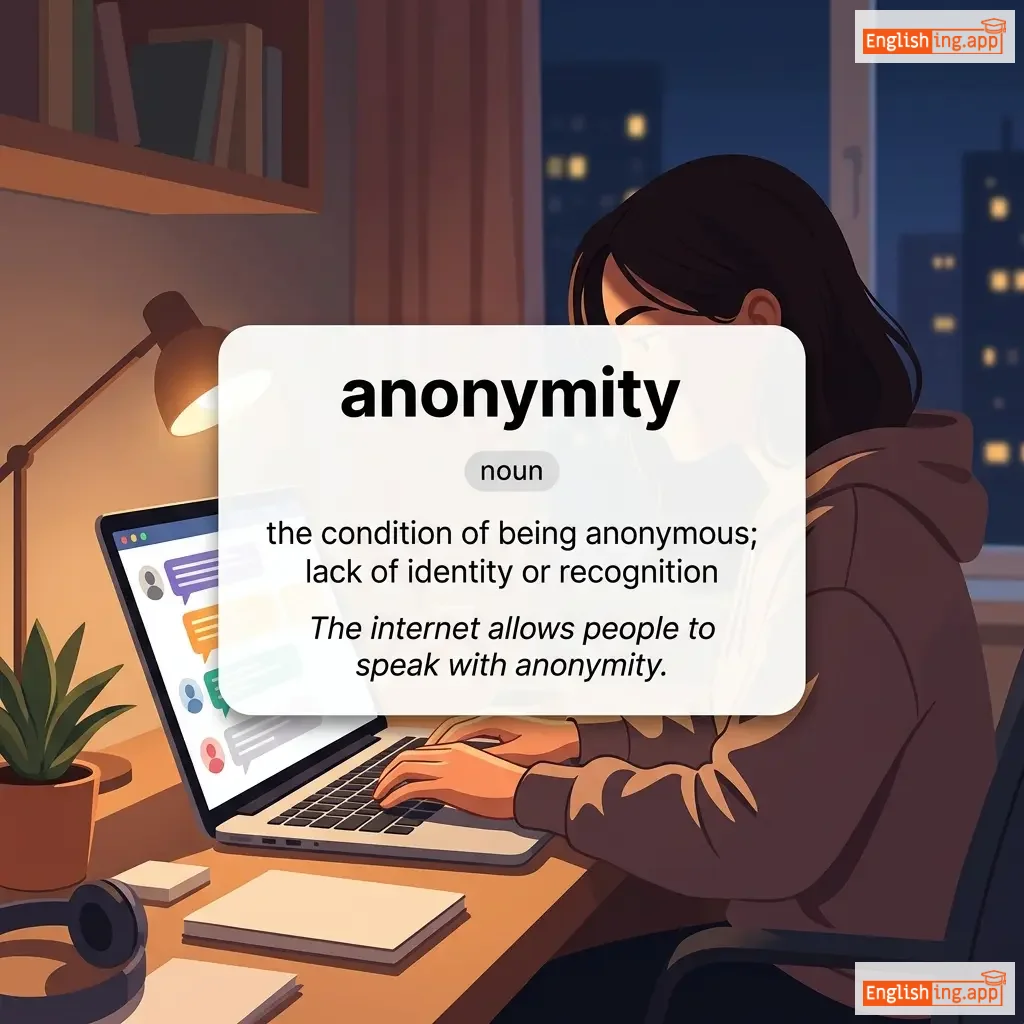
/ˌæn.əˈnɪm.ə.ti/
noun
••••••
|
|
The state of being anonymous; having one's identity kept secret or unknown.
••••••
|
Online anonymity protects users from cyber threats. |
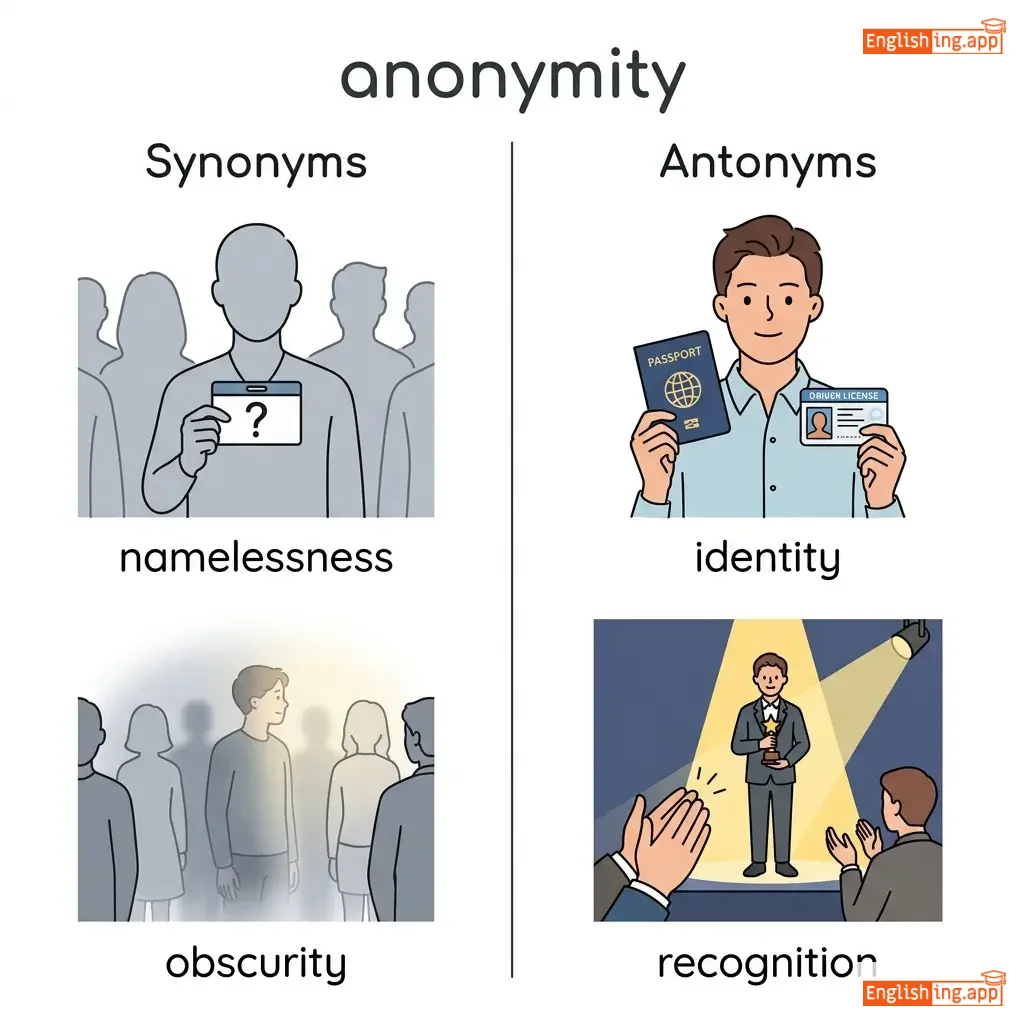
confidentiality, secrecy, namelessness
••••••
|
identity, recognition, publicity
••••••
|
|
#1140
🚨
|
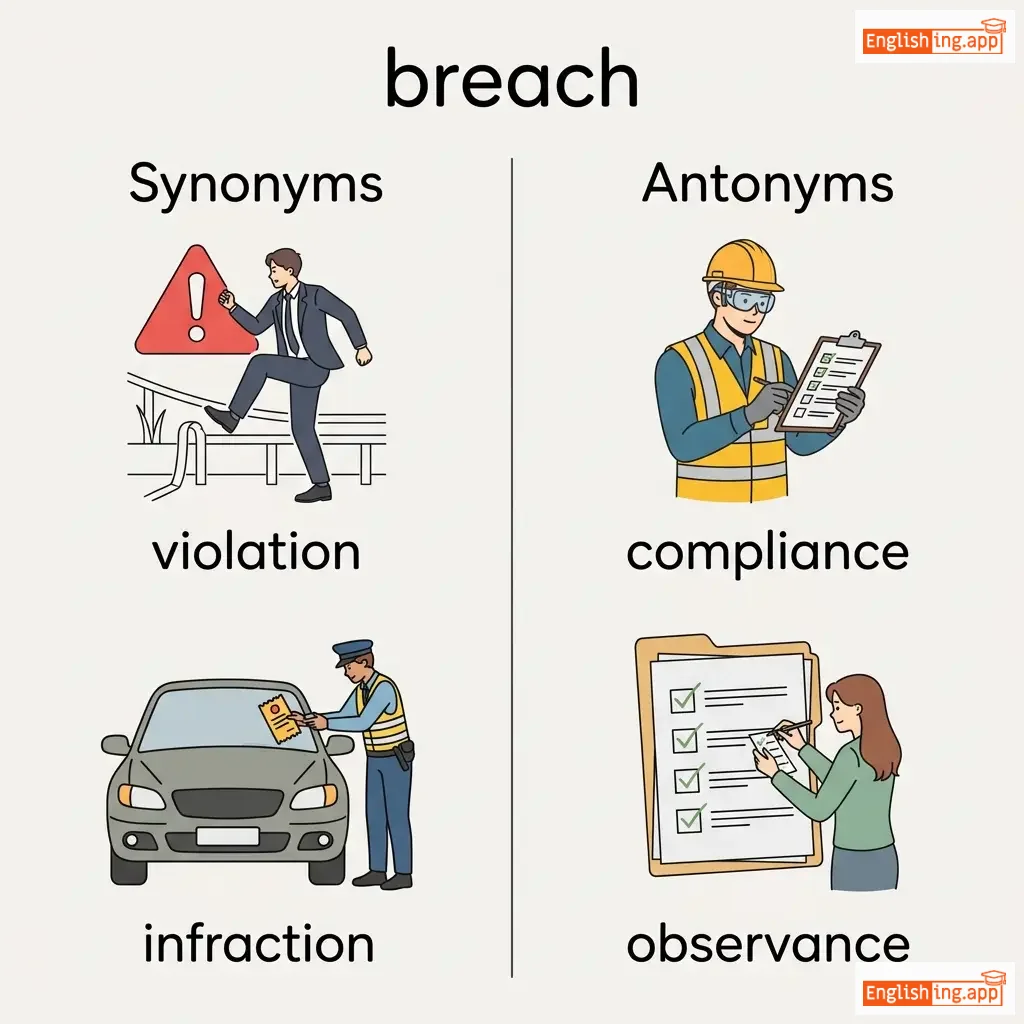
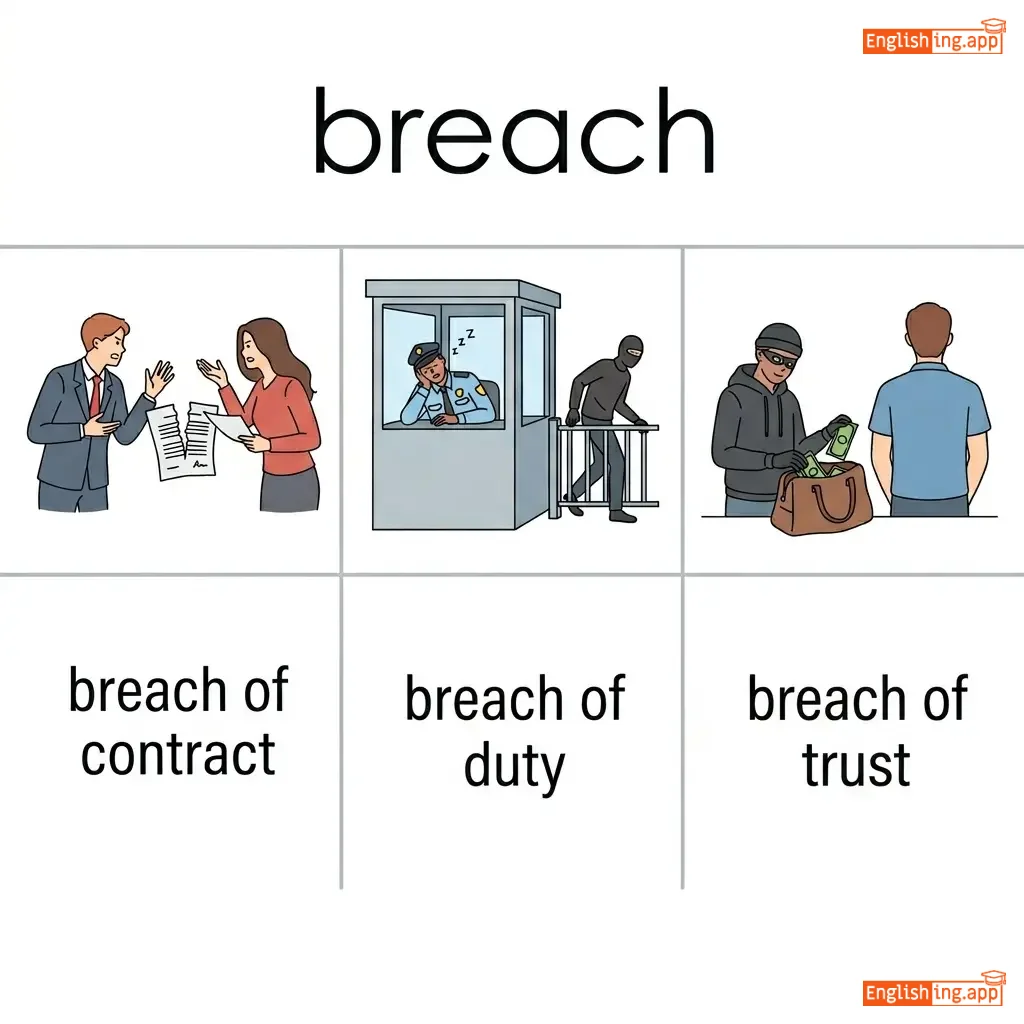
/briːtʃ/
noun/verb
••••••
|

|
A violation or breaking of a law, agreement, or code of conduct; an act of breaking or failing to observe a law, agreement, or code of conduct.
••••••
|
The company faced a breach of data security. |
violation, intrusion, infringement
••••••
|
compliance, adherence, security
••••••
|
|
#1141
⚠️
|
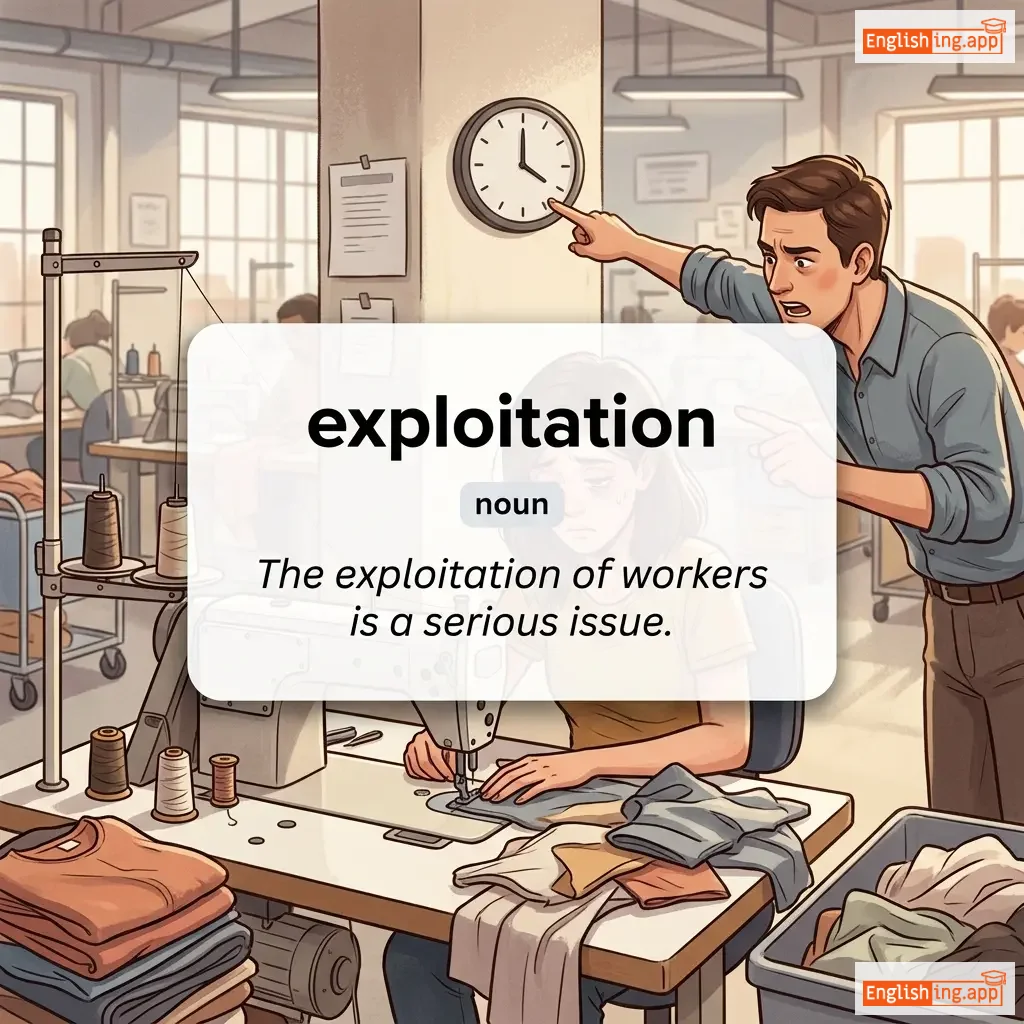
/ˌek.splɔɪˈteɪ.ʃən/
noun
••••••
|
|
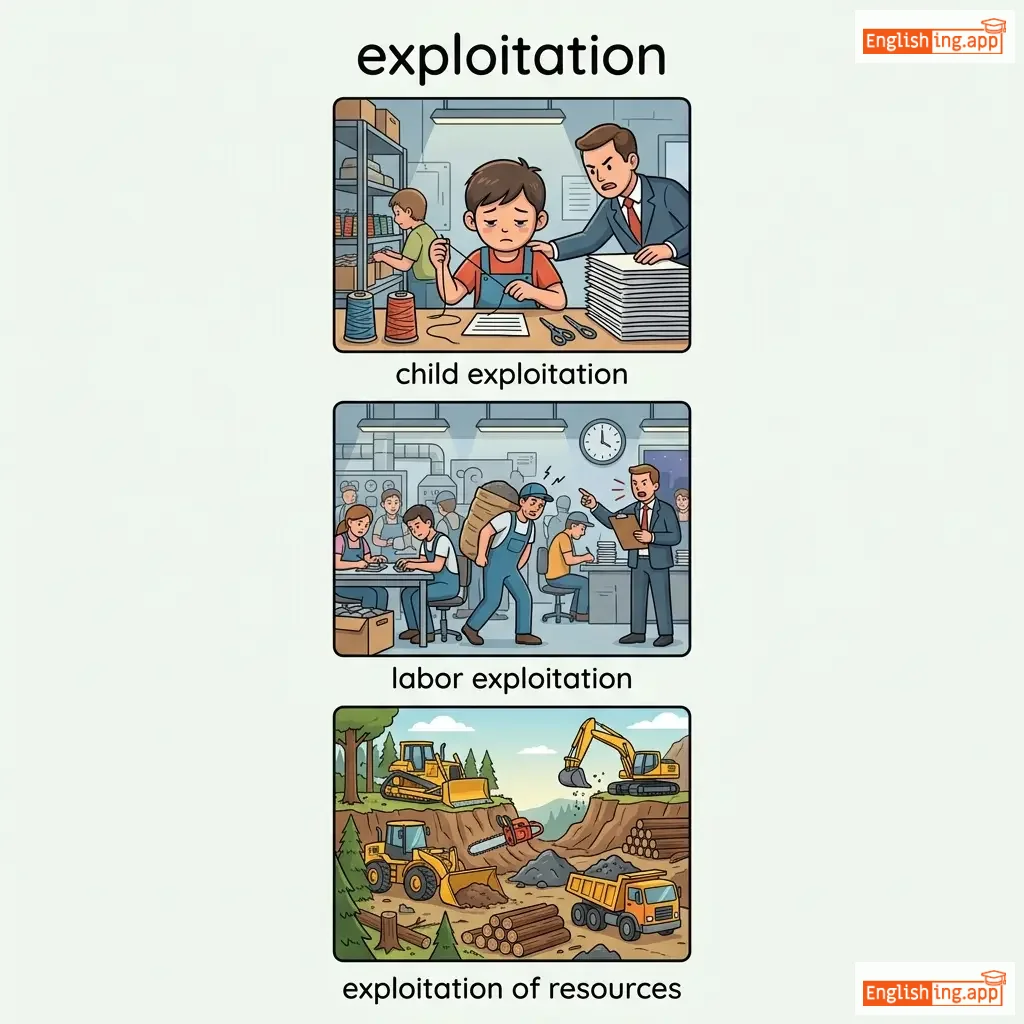
The action or fact of treating someone unfairly in order to benefit from their work; the action of making use of and benefiting from resources.
••••••
|
Labor exploitation is a global concern. |
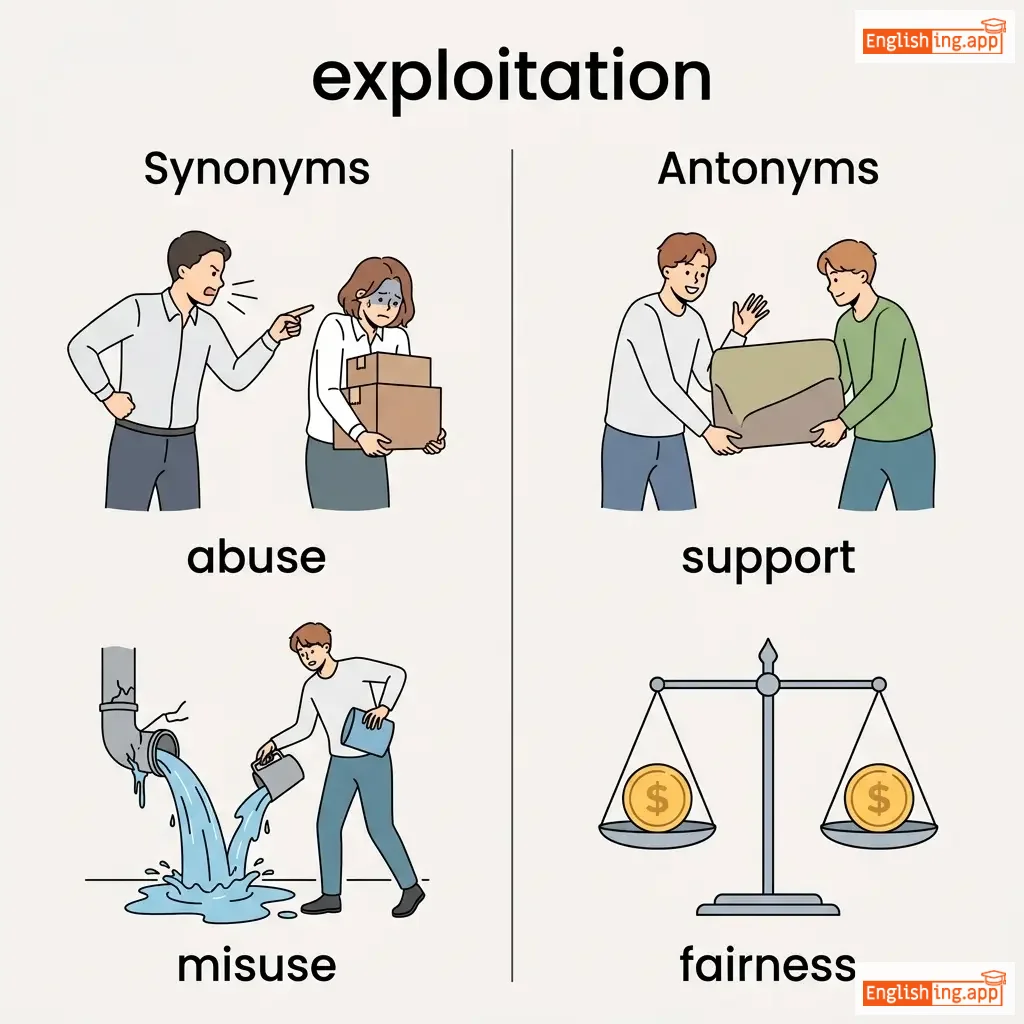
abuse, manipulation, misuse
••••••
|
protection, fairness, ethical treatment
••••••
|
|
#1142
🛡️
|
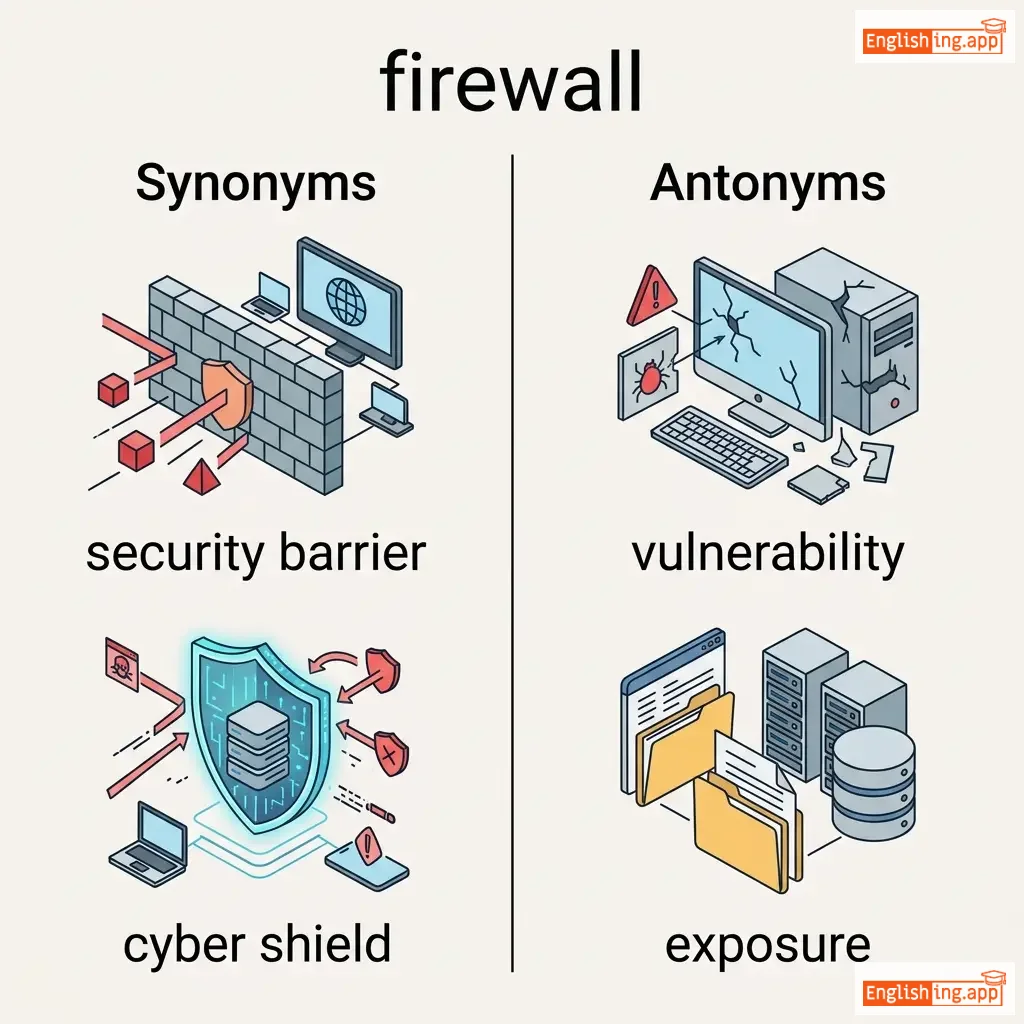
/ˈfaɪər.wɔːl/
noun
••••••
|

|
A network security system that monitors and controls incoming and outgoing network traffic based on predetermined security rules.
••••••
|
A firewall protects networks from cyber-attacks. |
security barrier, cyber shield, network defense
••••••
|
vulnerability, exposure, weakness
••••••
|
|
#1143
🔐
|
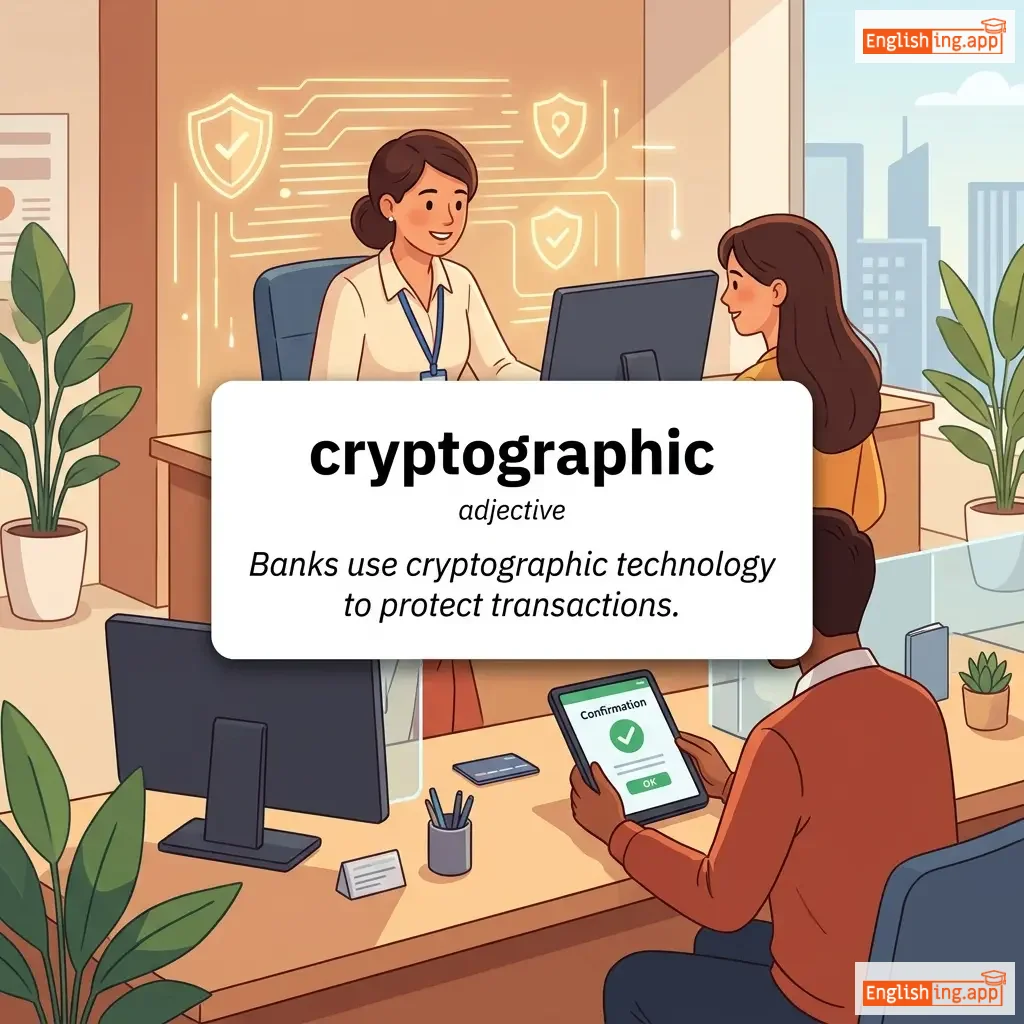
/ˌkrɪp.təˈɡræf.ɪk/
adjective
••••••
|
|
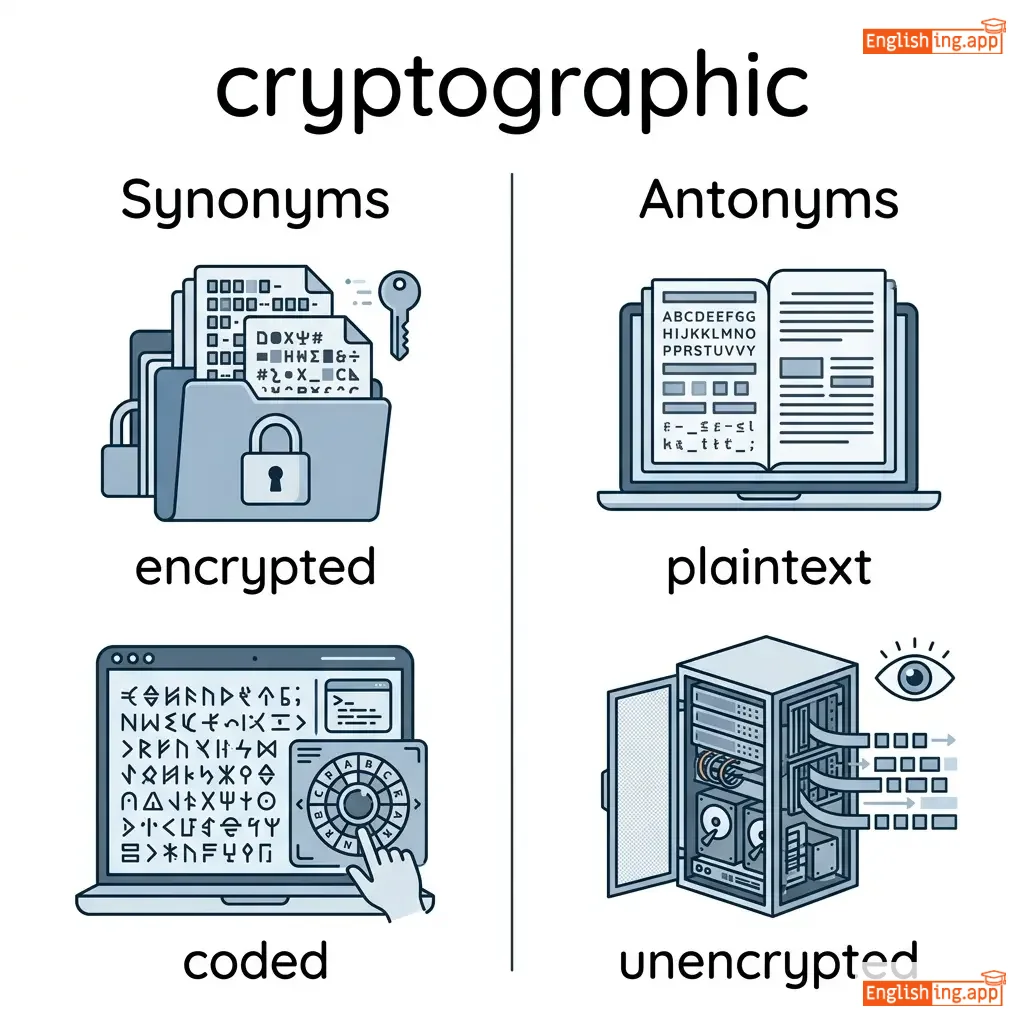
Relating to cryptography; involving or using secret codes or ciphers for security.
••••••
|
Banks use cryptographic technology to protect transactions. |
encrypted, coded, secure
••••••
|
plaintext, unencrypted, readable
••••••
|
|
#1144
🎣
|
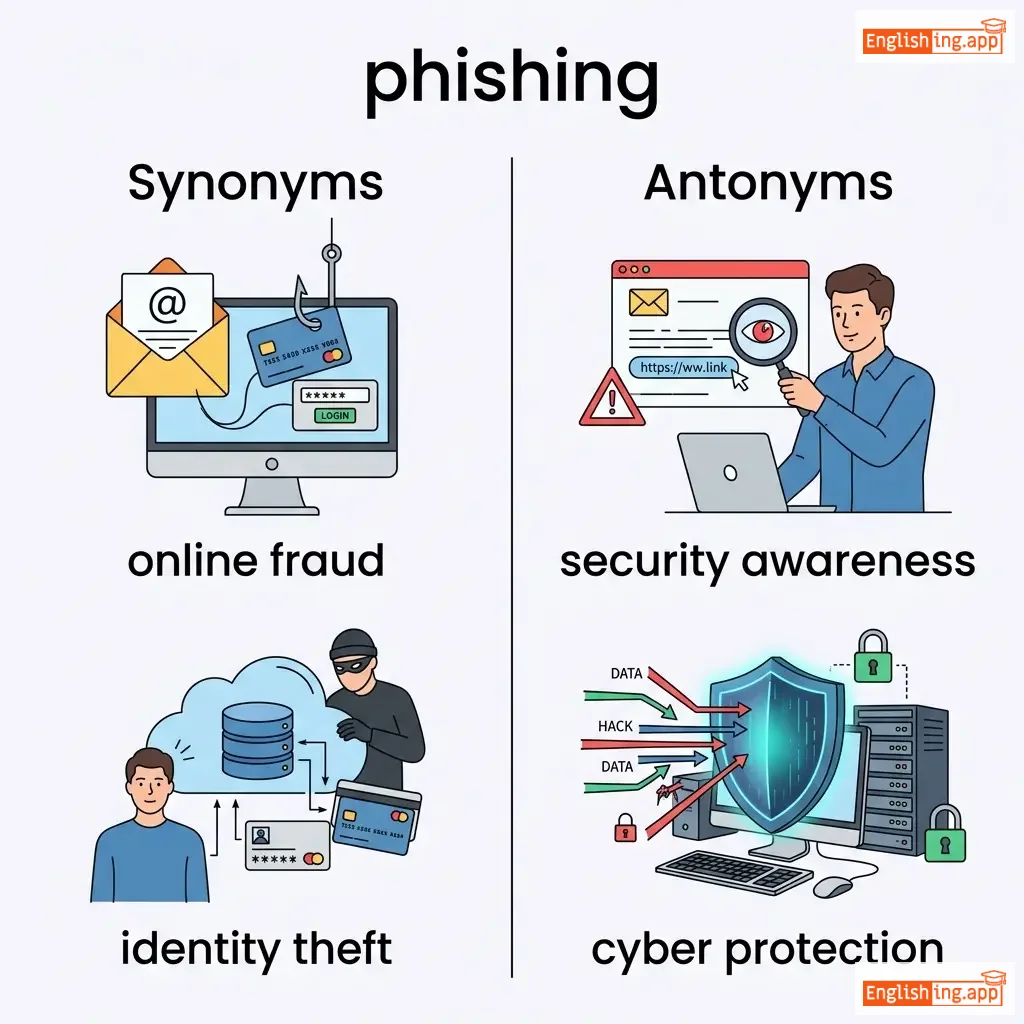
/ˈfɪʃ.ɪŋ/
noun
••••••
|
|
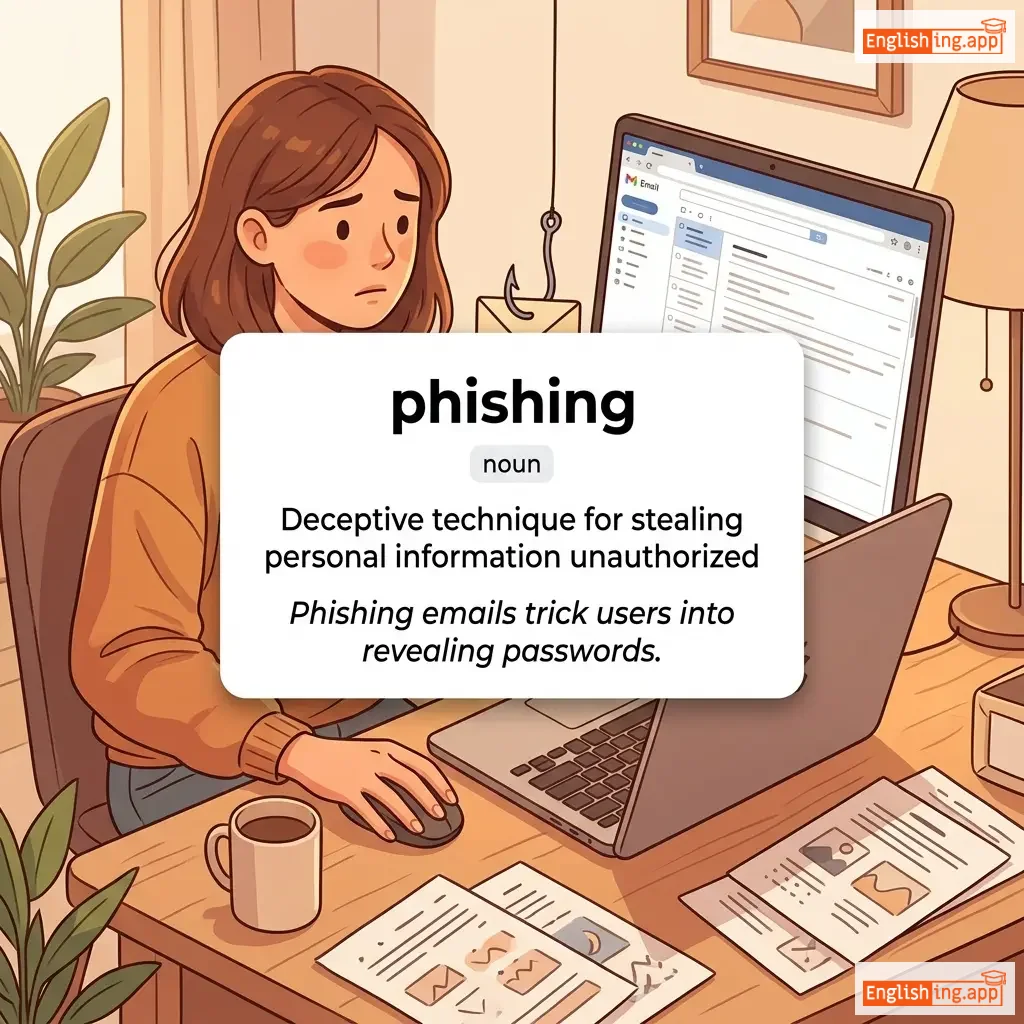
The fraudulent practice of sending emails purporting to be from reputable companies in order to induce individuals to reveal personal information.
••••••
|
Phishing emails often trick people into revealing passwords. |
online fraud, identity theft, deception
••••••
|
security awareness, protection, legitimate transactions
••••••
|
|
#1145
🛠️
|
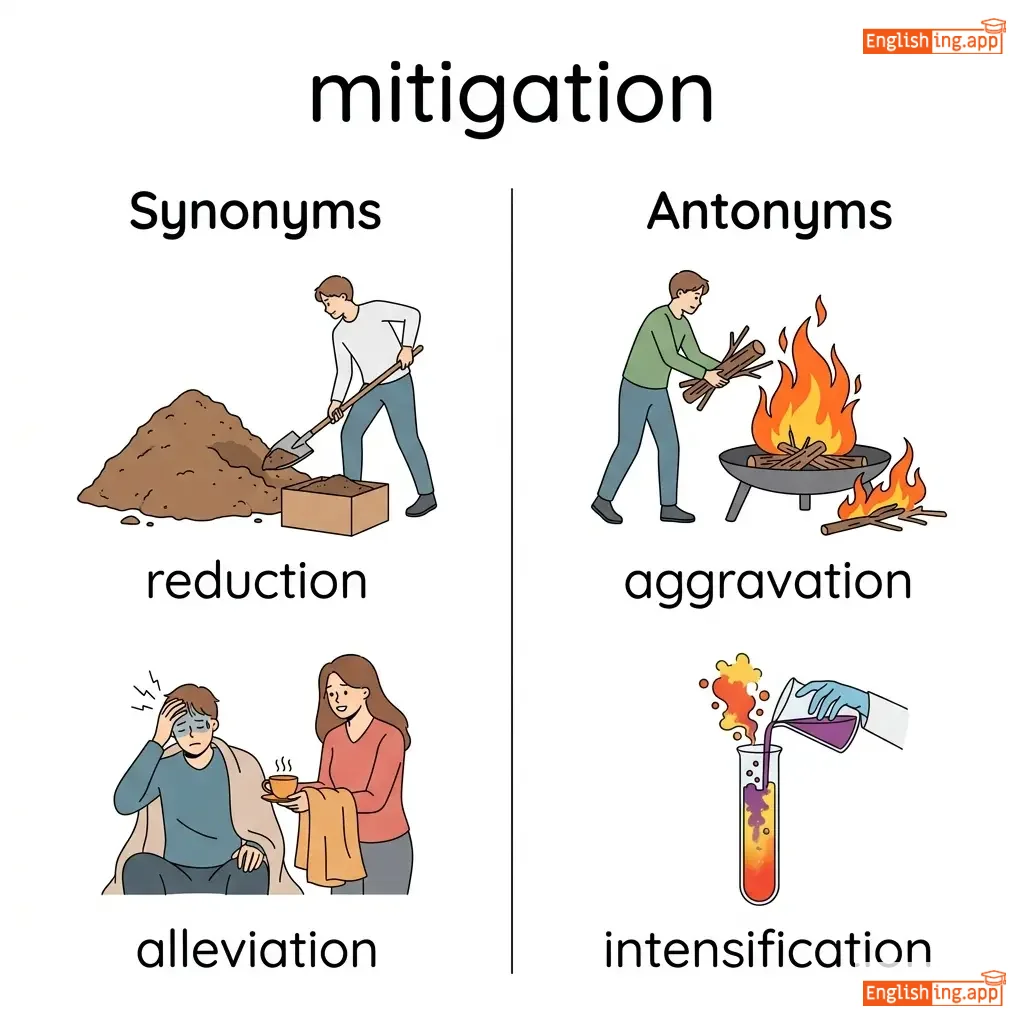
/ˌmɪt.ɪˈɡeɪ.ʃən/
noun
••••••
|

|
The action of reducing the severity, seriousness, or painfulness of something.
••••••
|
Disaster mitigation strategies save lives. |
reduction, alleviation, prevention
••••••
|
aggravation, worsening, escalation
••••••
|
|
#1146
🎭
|
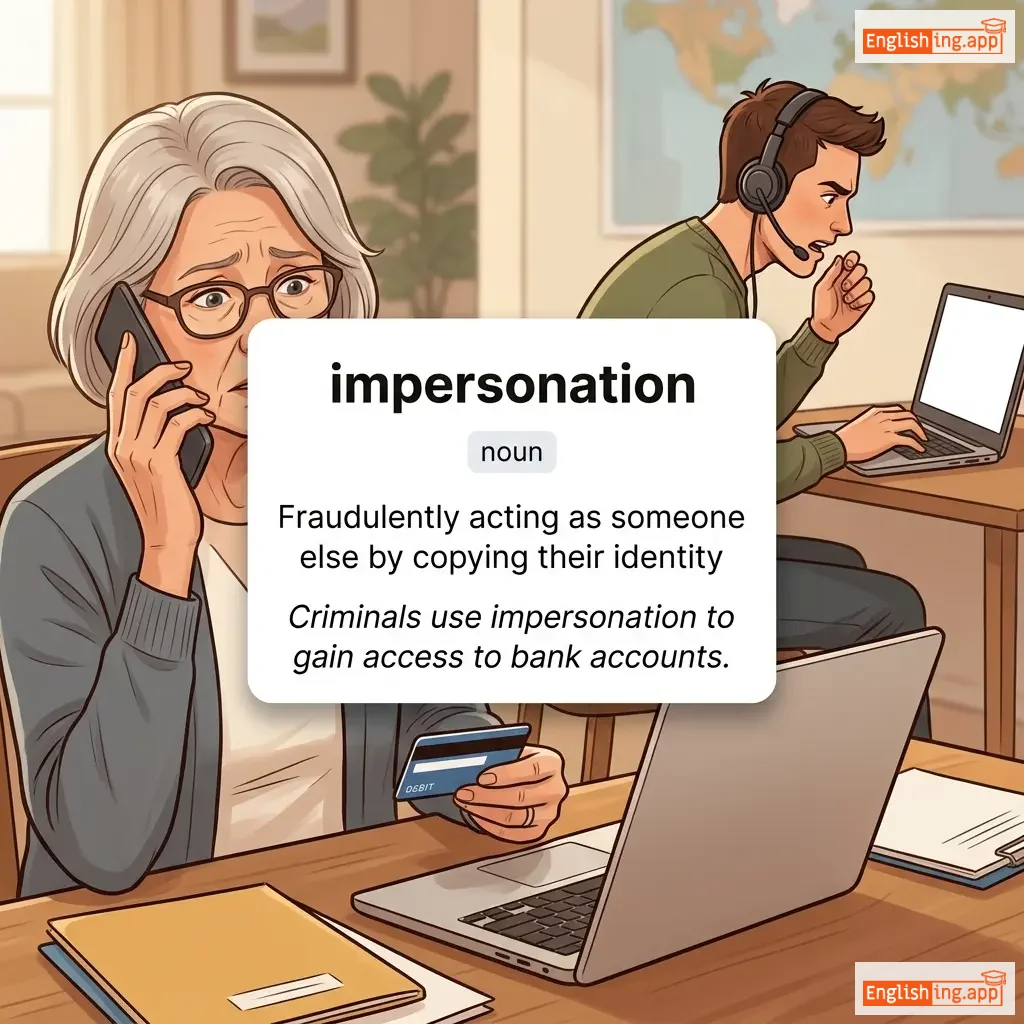
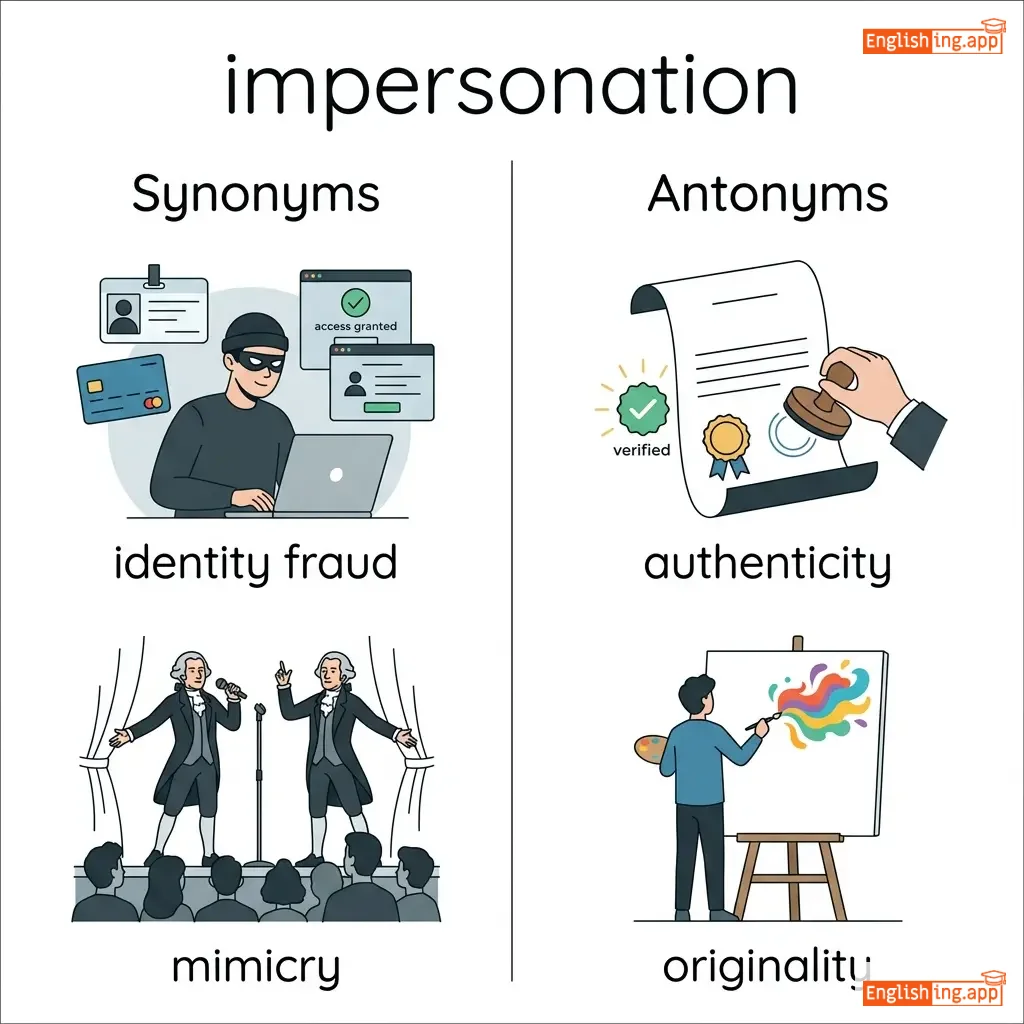
/ɪmˌpɜː.sənˈeɪ.ʃən/
noun
••••••
|
|
The action of pretending to be another person for the purpose of entertainment or fraud.
••••••
|
Online impersonation is a serious cybercrime. |
identity fraud, deception, masquerade
••••••
|
authenticity, originality, honesty
••••••
|
|
#1147
🔧
|
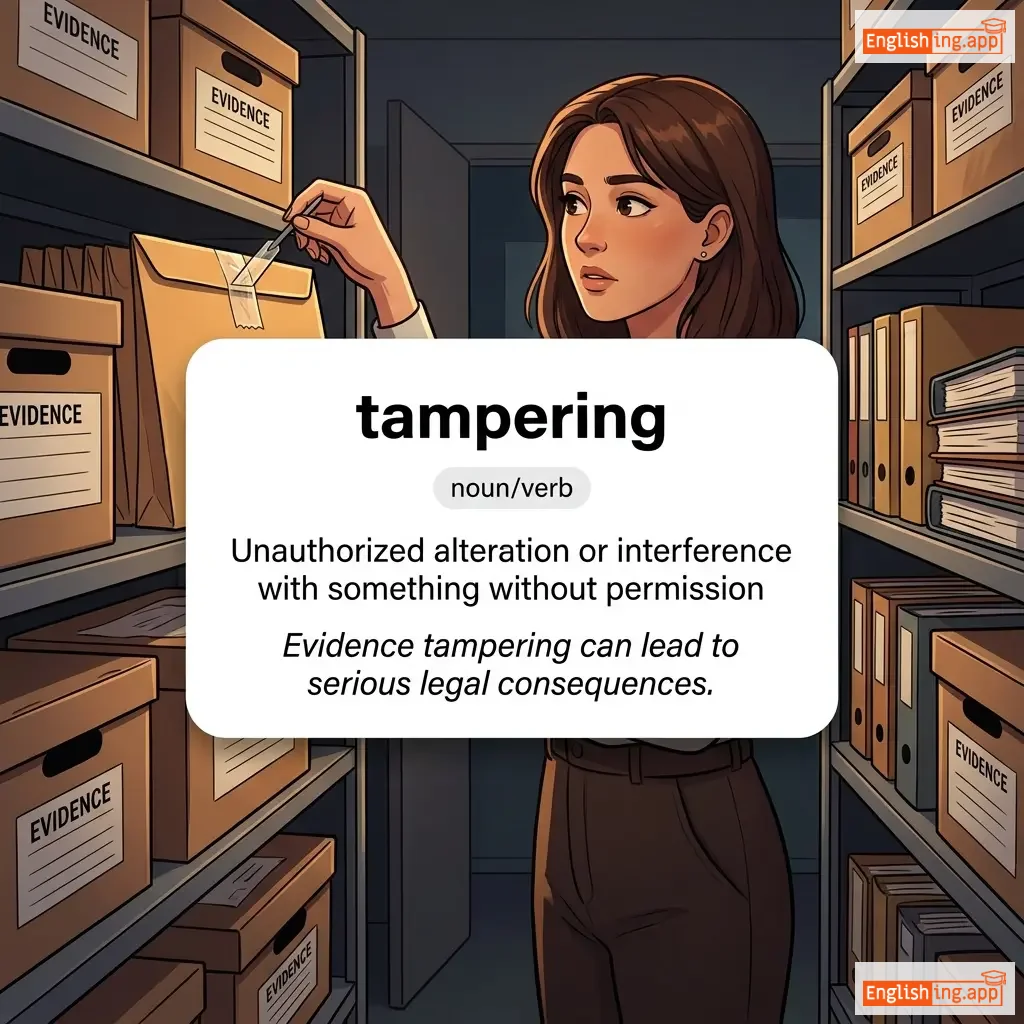
/ˈtæm.pər.ɪŋ/
noun/verb
••••••
|
|
The action of interfering with something in order to cause damage or make unauthorized alterations.
••••••
|
Tampering with evidence is a criminal offense. |
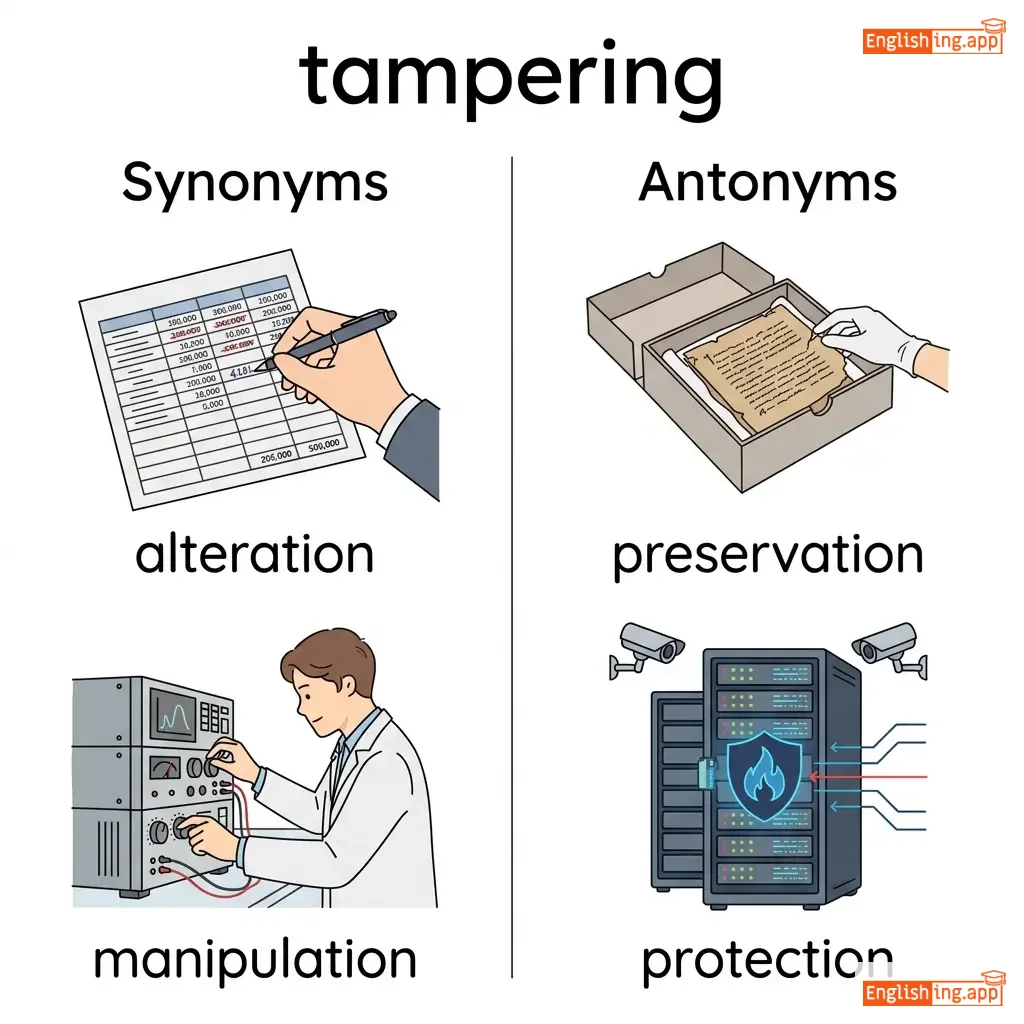
manipulation, alteration, sabotage
••••••
|
integrity, preservation, security
••••••
|
|
#1148
🔢
|
/ˈsaɪ.fər/
noun/verb
••••••
|

|
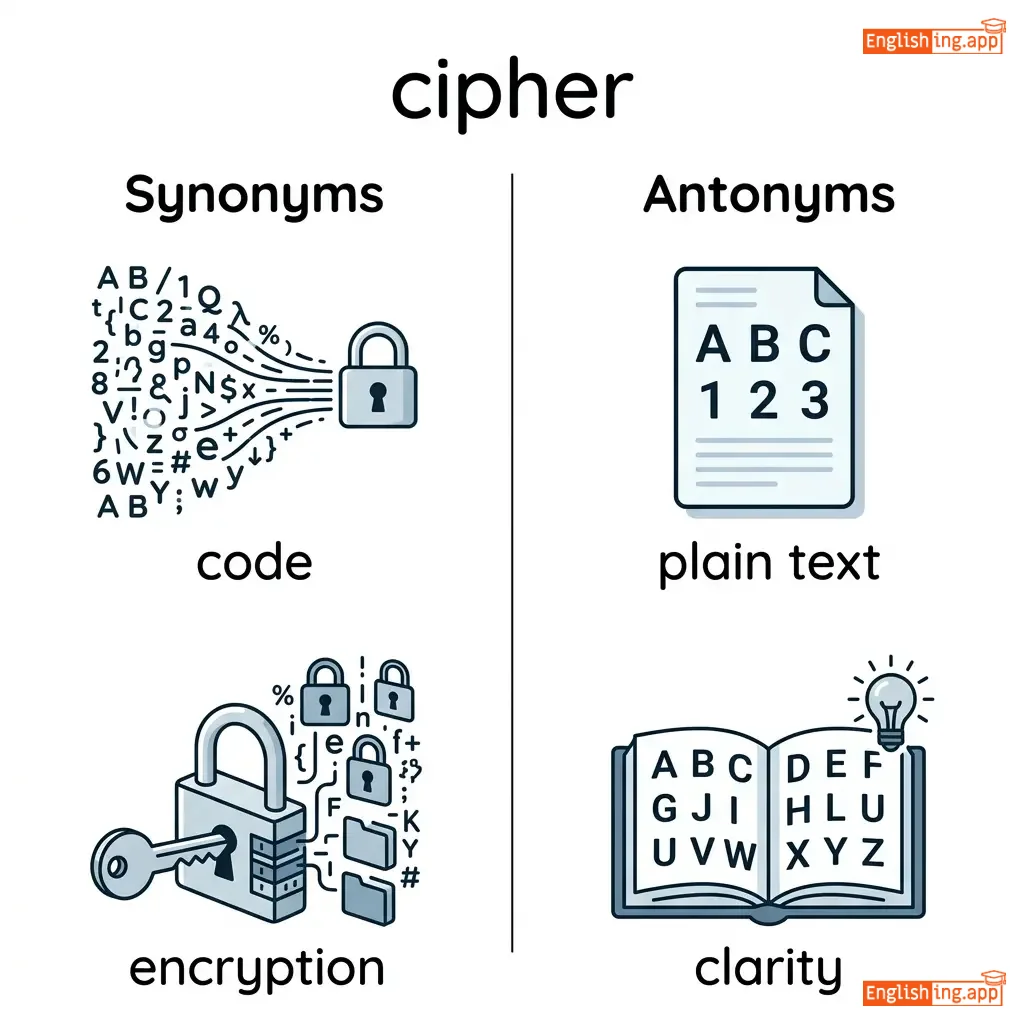
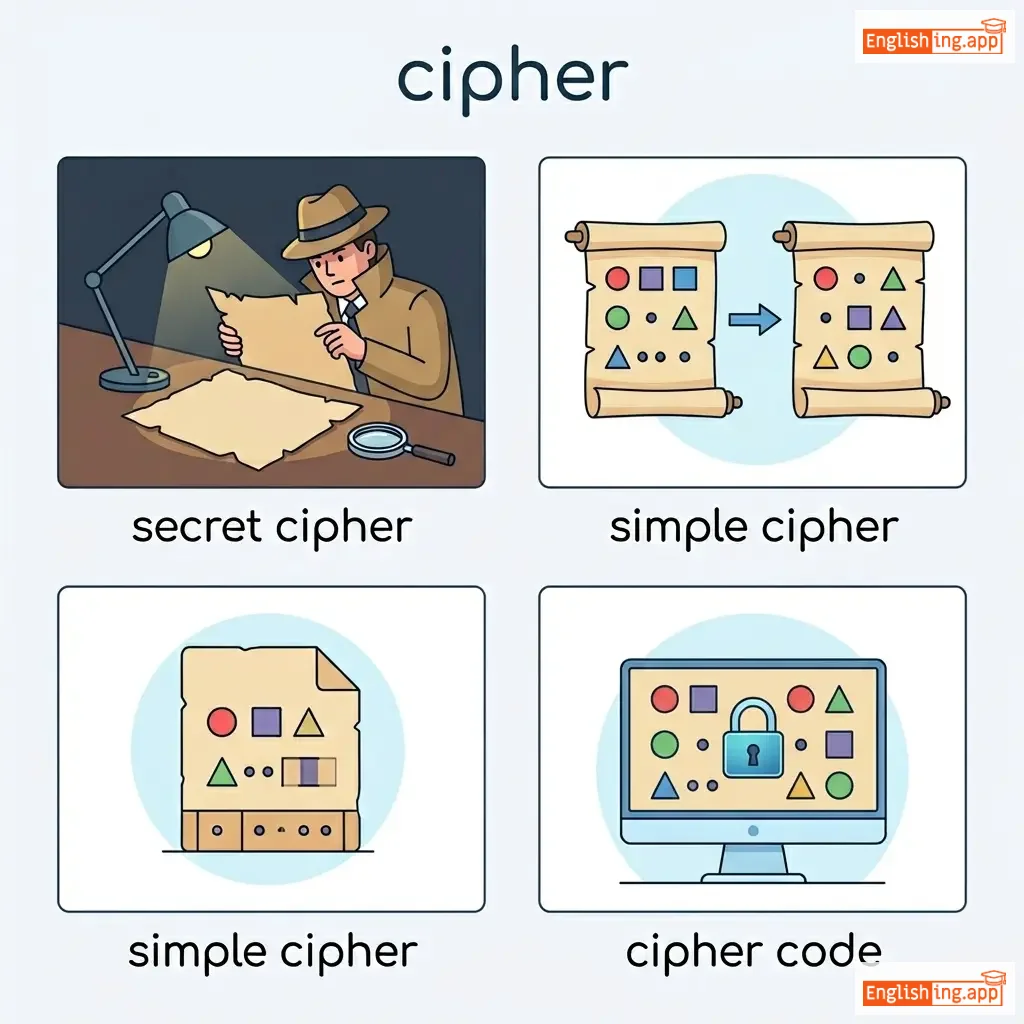
A secret or disguised way of writing; a code; to put a message into secret writing.
••••••
|
Military messages are protected using a cipher. |
code, encryption, algorithm
••••••
|
plaintext, deciphered, readable
••••••
|
|
#1149
🔓
|
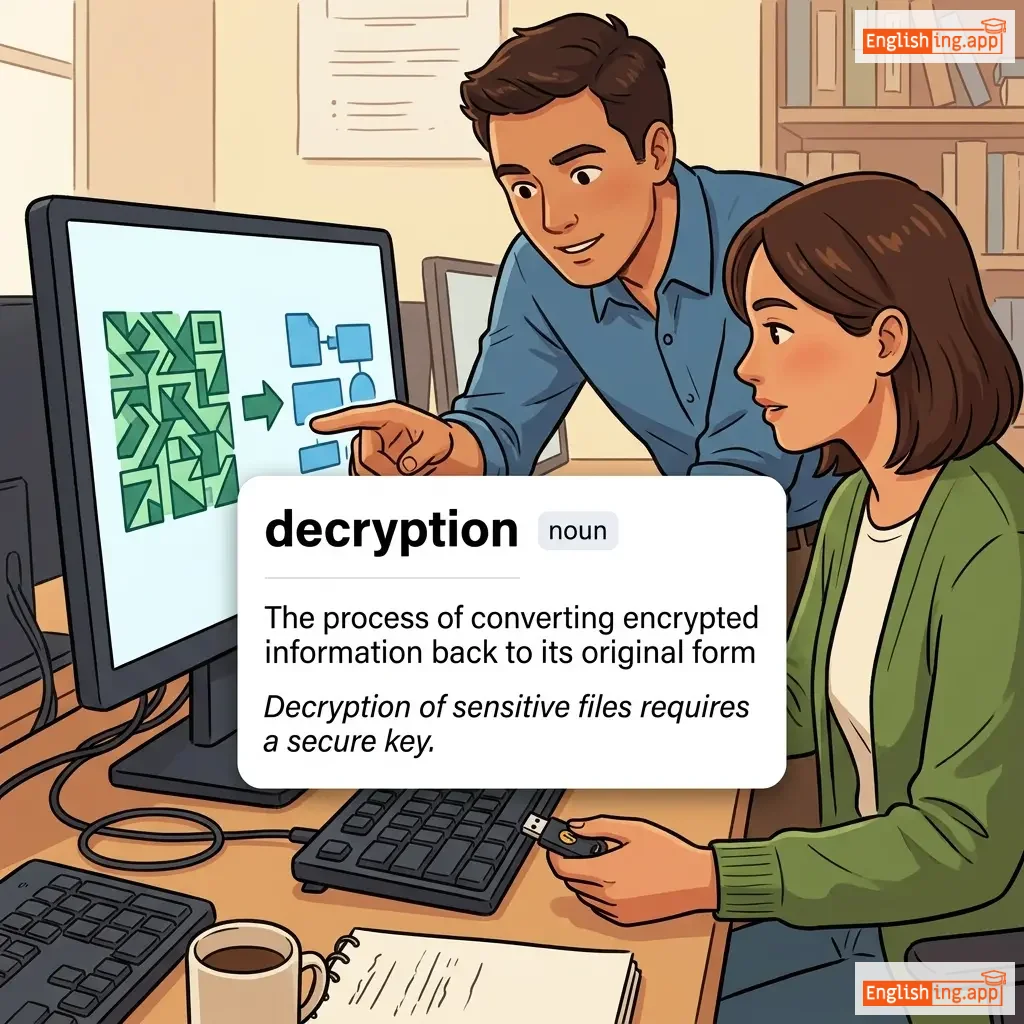
/diːˈkrɪp.ʃən/
noun
••••••
|
|
The process of converting encrypted data back into its original form so it can be understood.
••••••
|
Hackers attempted decryption of classified data. |
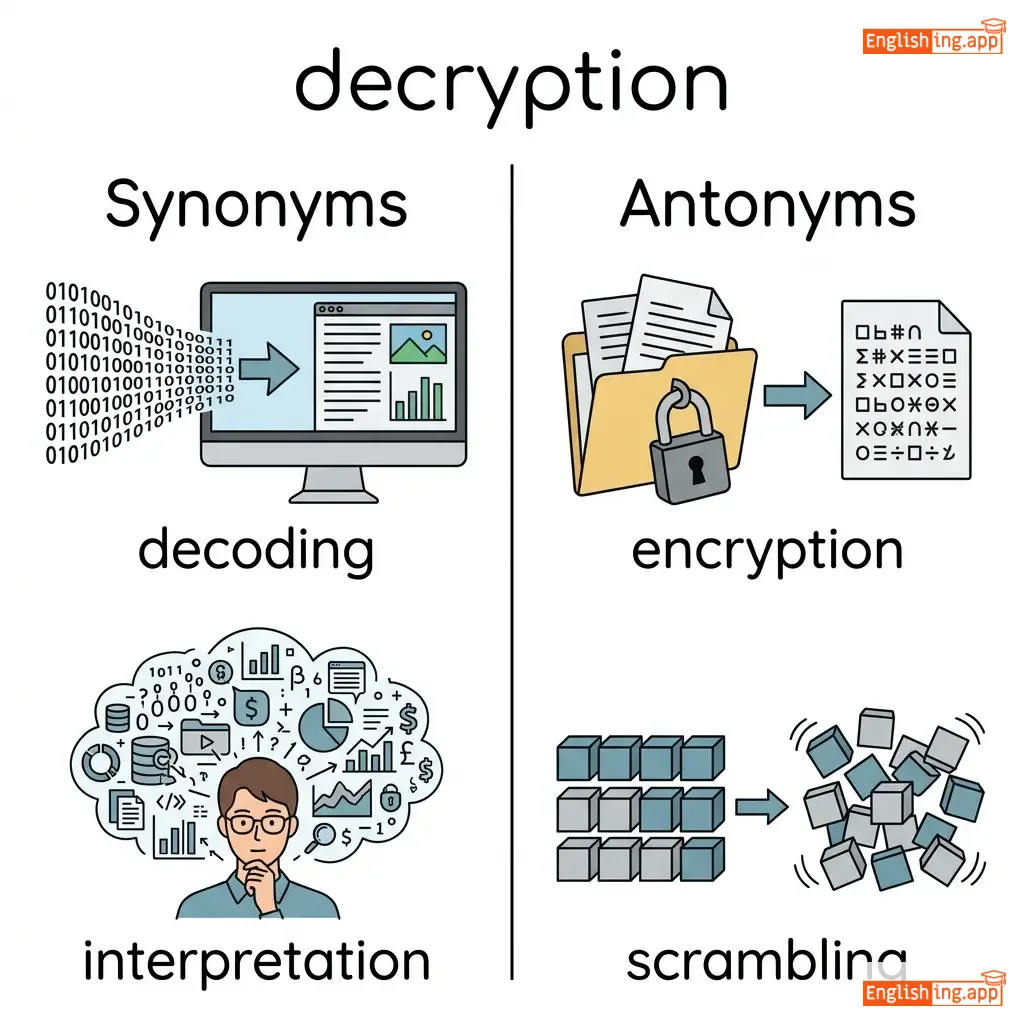
decoding, interpretation, deobfuscation
••••••
|
encryption, concealment, encoding
••••••
|
|
#1150
👁️
|
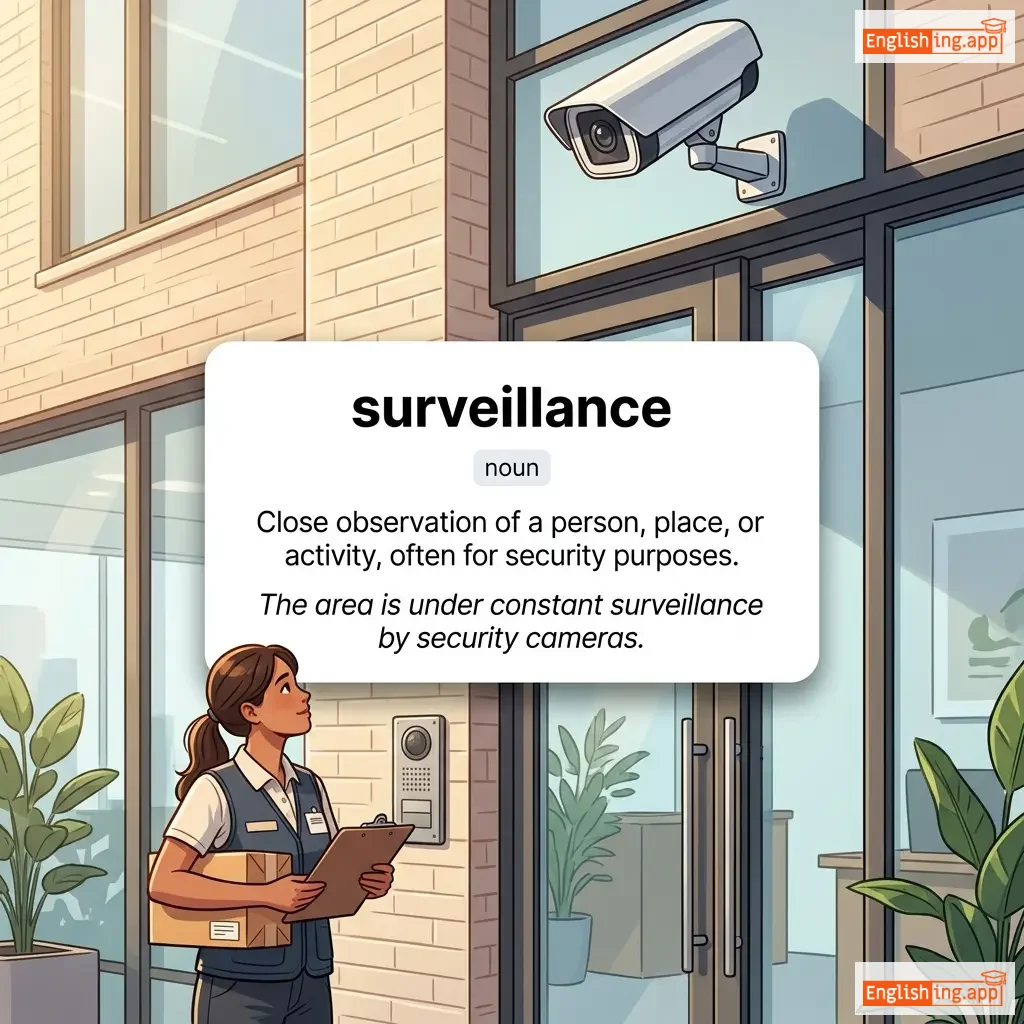
/sɜːˈveɪ.ləns/
noun
••••••
|
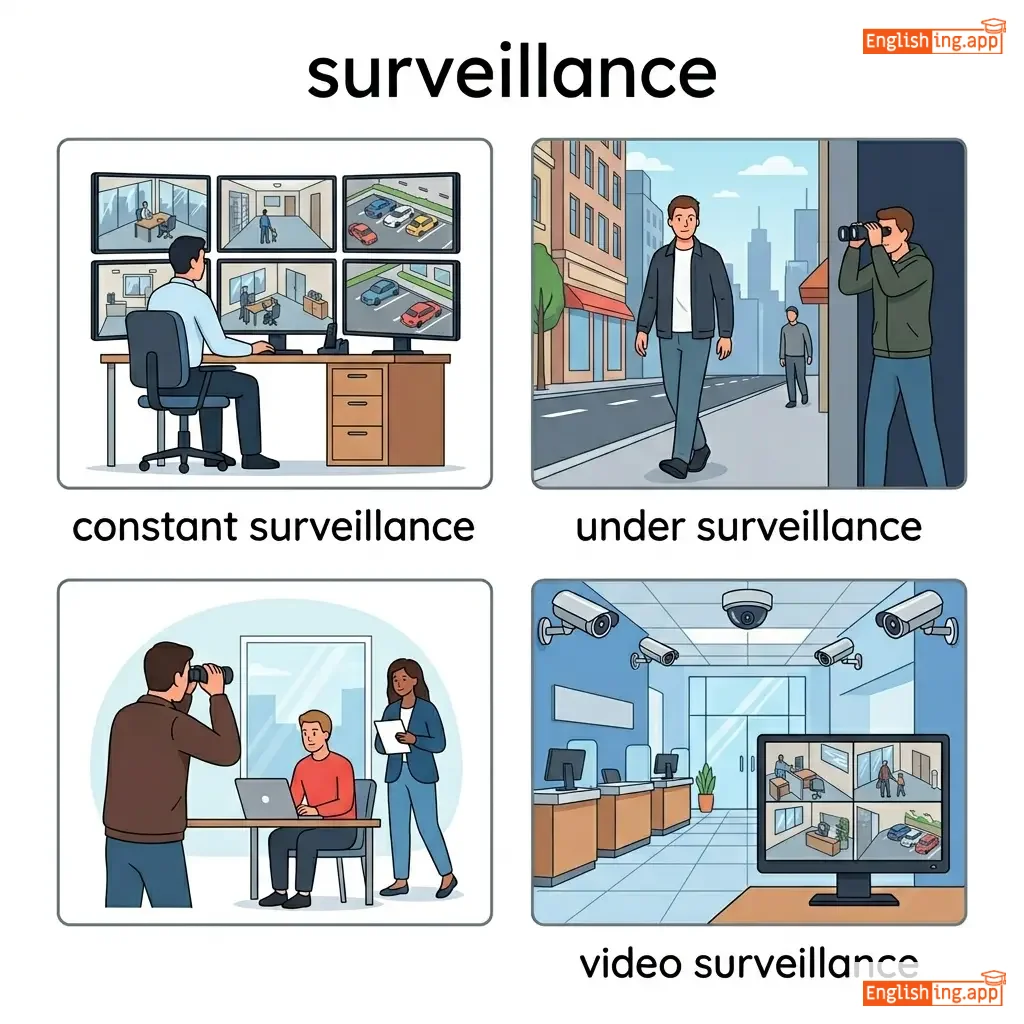
|
Close observation, especially of a suspected spy or criminal; continuous watching of a place, person, or situation.
••••••
|
Government agencies conduct surveillance on cyber threats. |
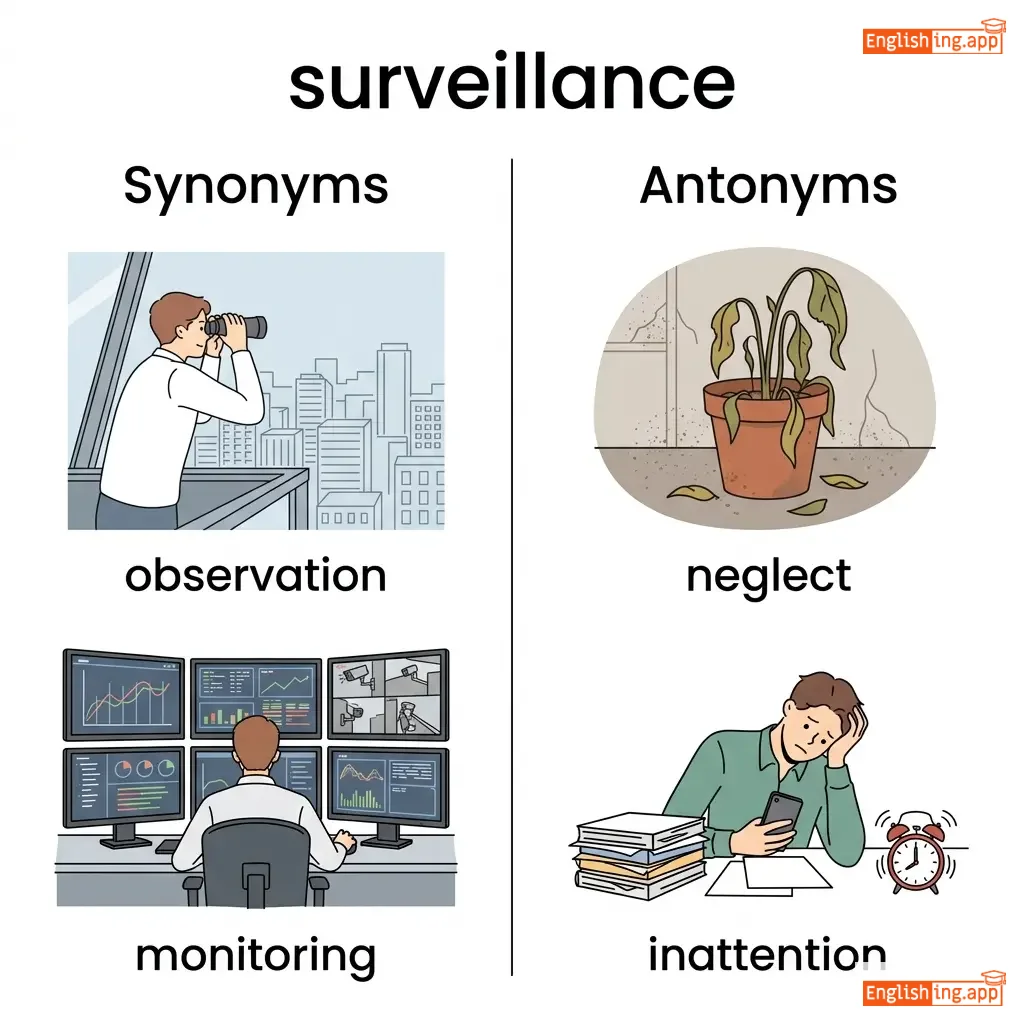
monitoring, observation, supervision
••••••
|
neglect, inattention, disregard
••••••
|
|
#1151
🎯
|
/ˌvʌl.nɚ.əˈbɪl.ə.ti/
noun
••••••
|
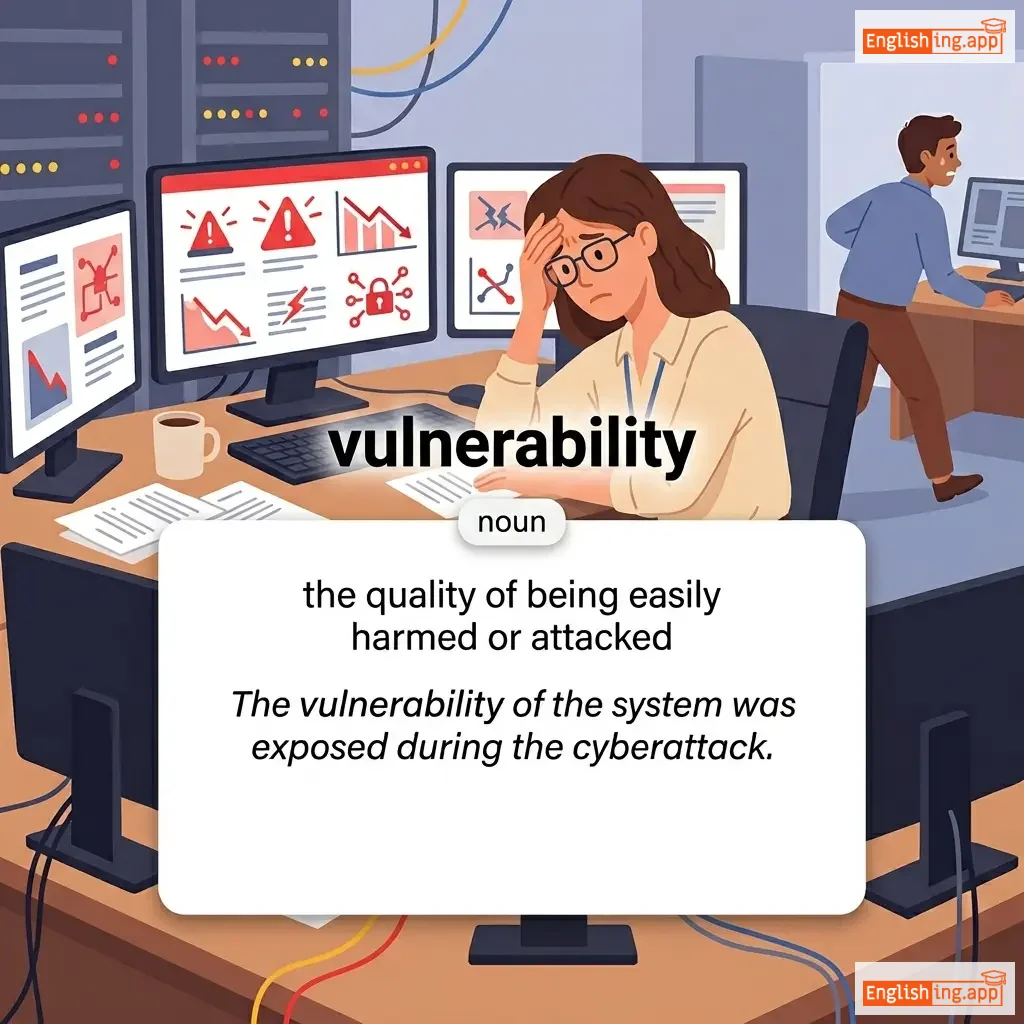
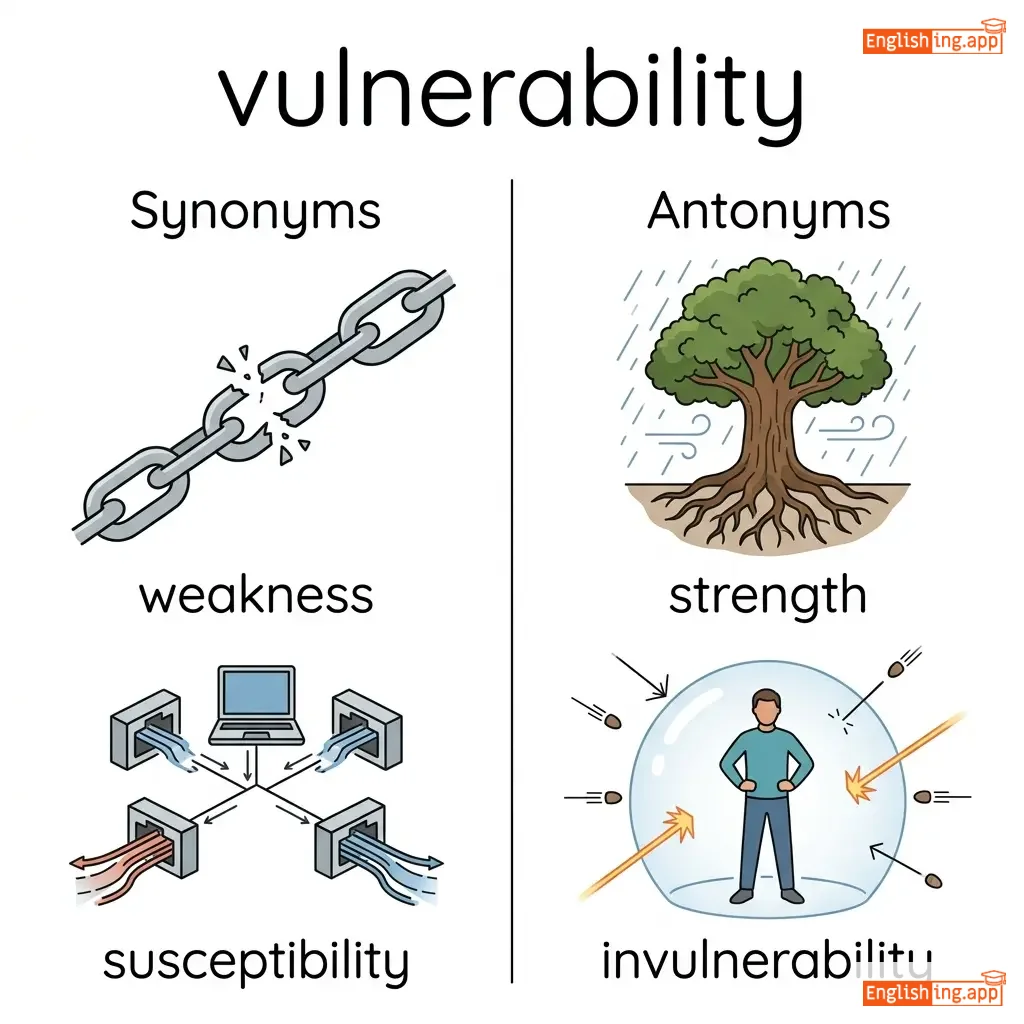
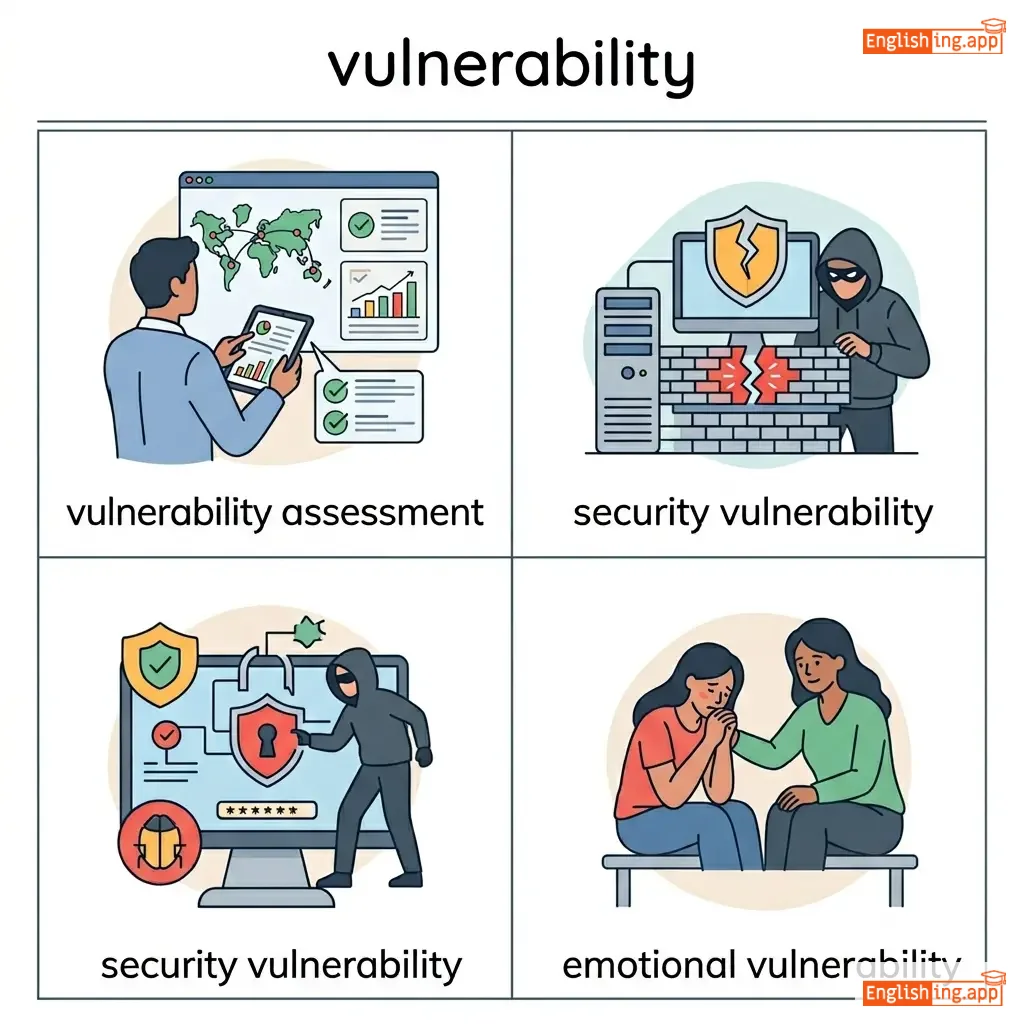
|
The quality or state of being exposed to the possibility of being attacked or harmed, either physically or emotionally.
••••••
|
Software vulnerability can expose user data. |
weakness, susceptibility, exposure
••••••
|
security, protection, fortification
••••••
|
|
#1152
📡
|
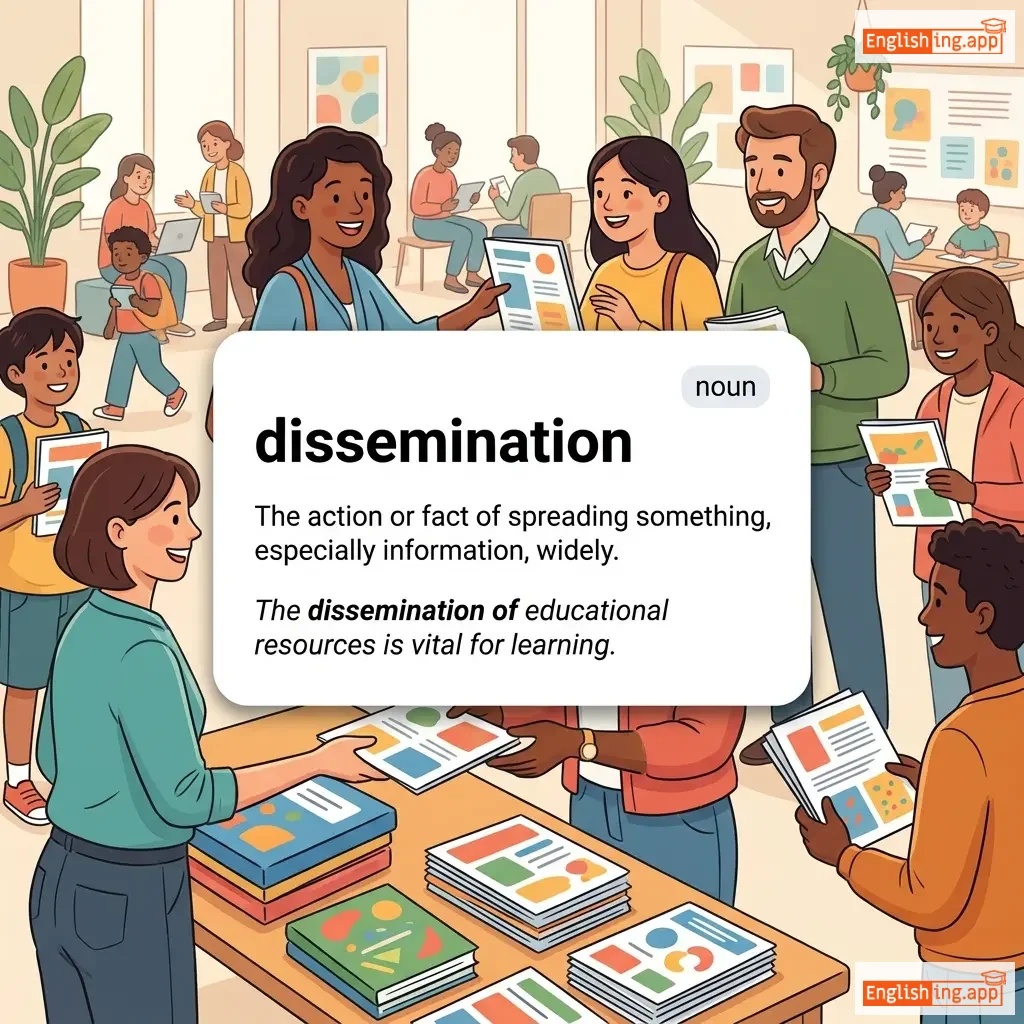
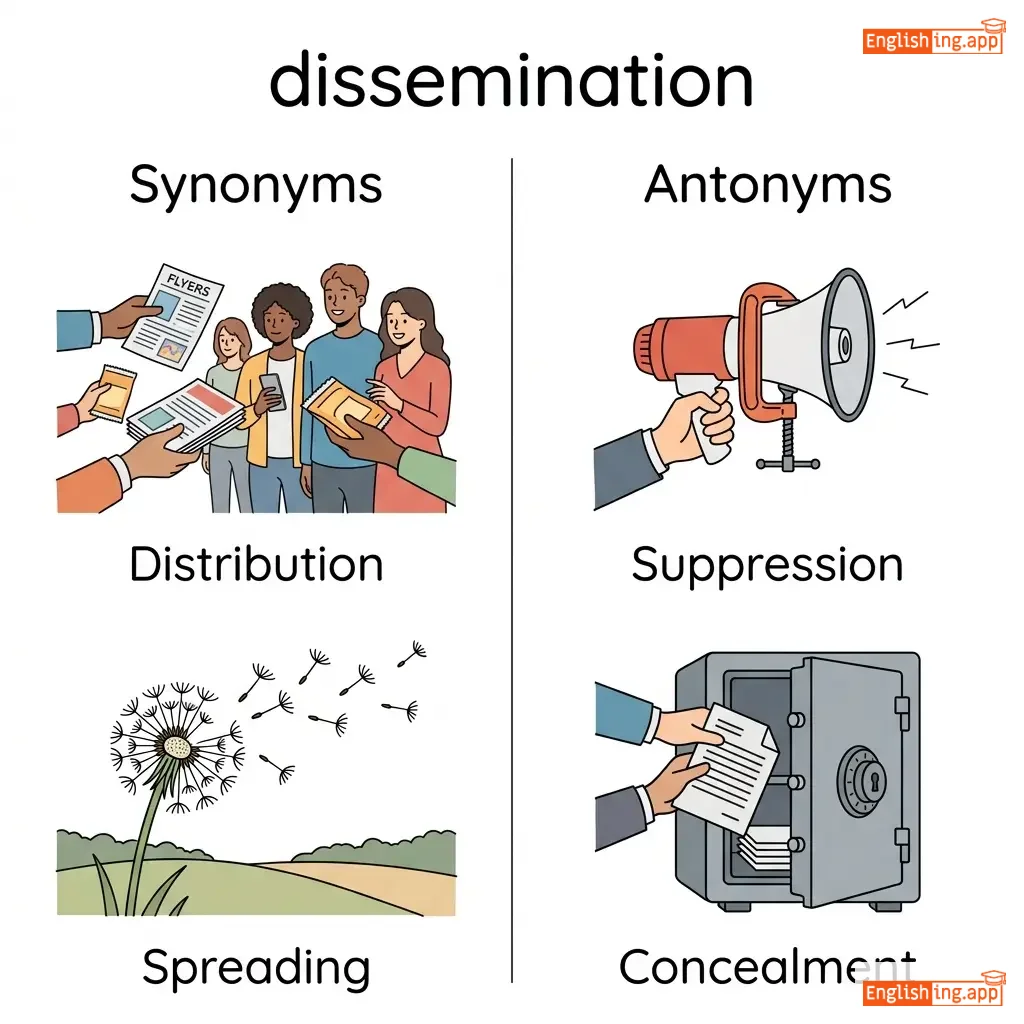
/dɪˌsem.ɪˈneɪ.ʃən/
noun
••••••
|
|
The action or fact of spreading something, especially information, widely.
••••••
|
The dissemination of false information is a major issue. |
circulation, propagation, diffusion
••••••
|
suppression, concealment, withholding
••••••
|
|
#1153
🎯
|
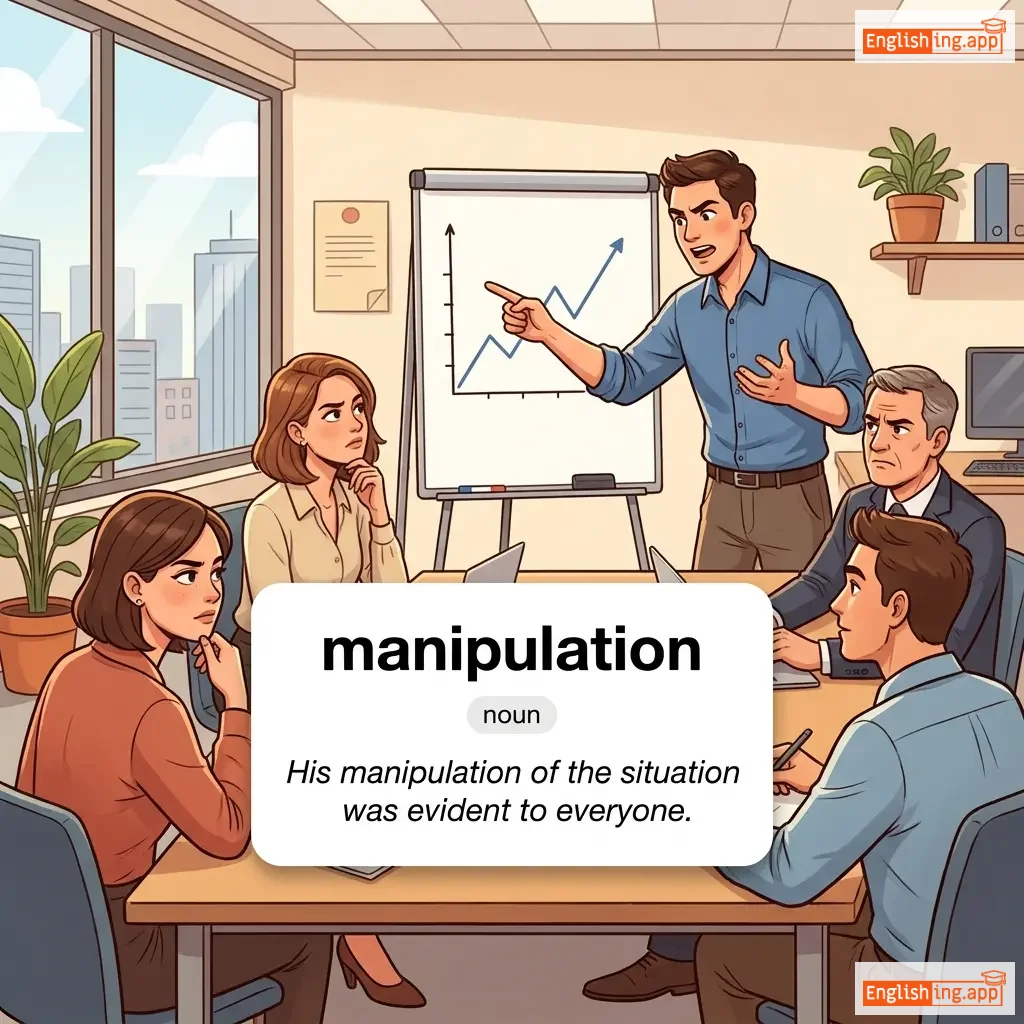
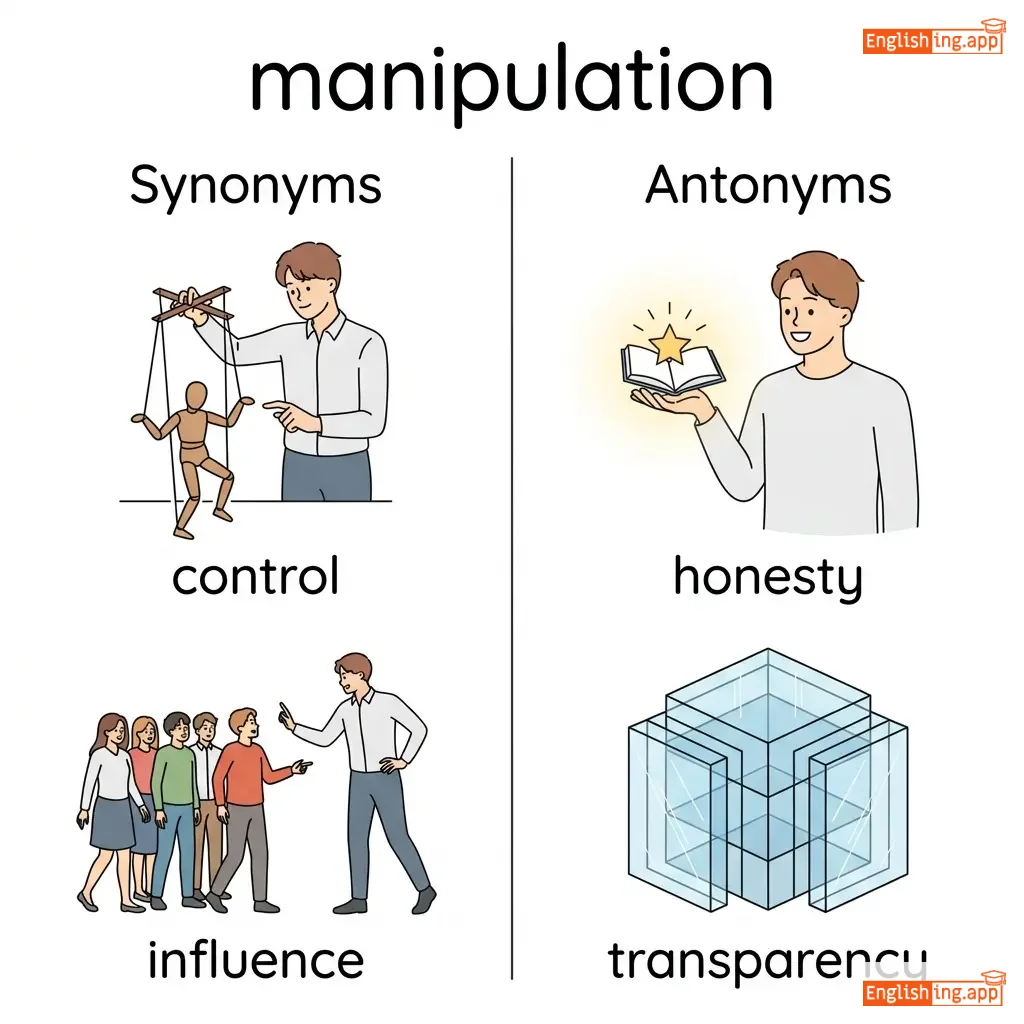
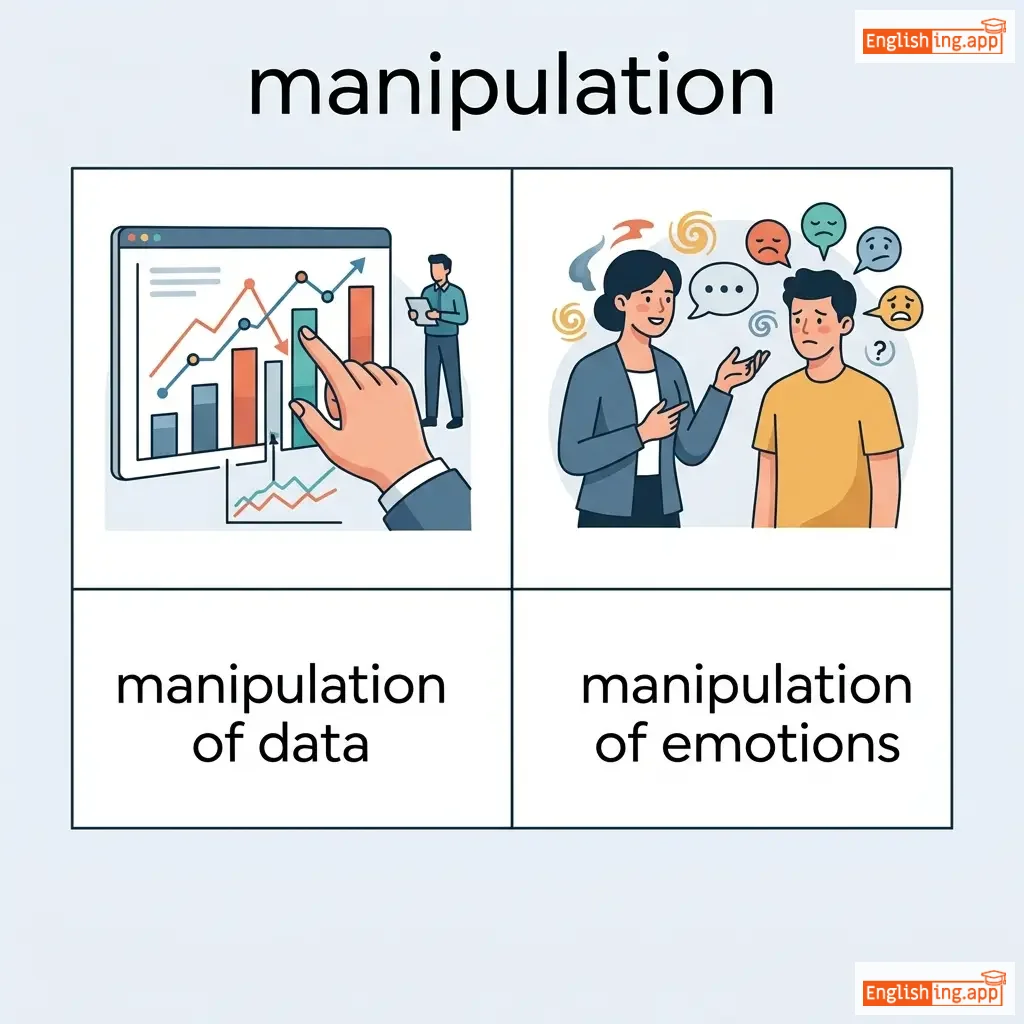
/məˌnɪp.jəˈleɪ.ʃən/
noun
••••••
|
|
The action of manipulating someone or something in a skillful manner; handling or controlling in a subtle, unfair, or unscrupulous way.
••••••
|
Media manipulation influences public opinion. |
deception, exploitation, distortion
••••••
|
transparency, honesty, fairness
••••••
|
|
#1154
📈
|
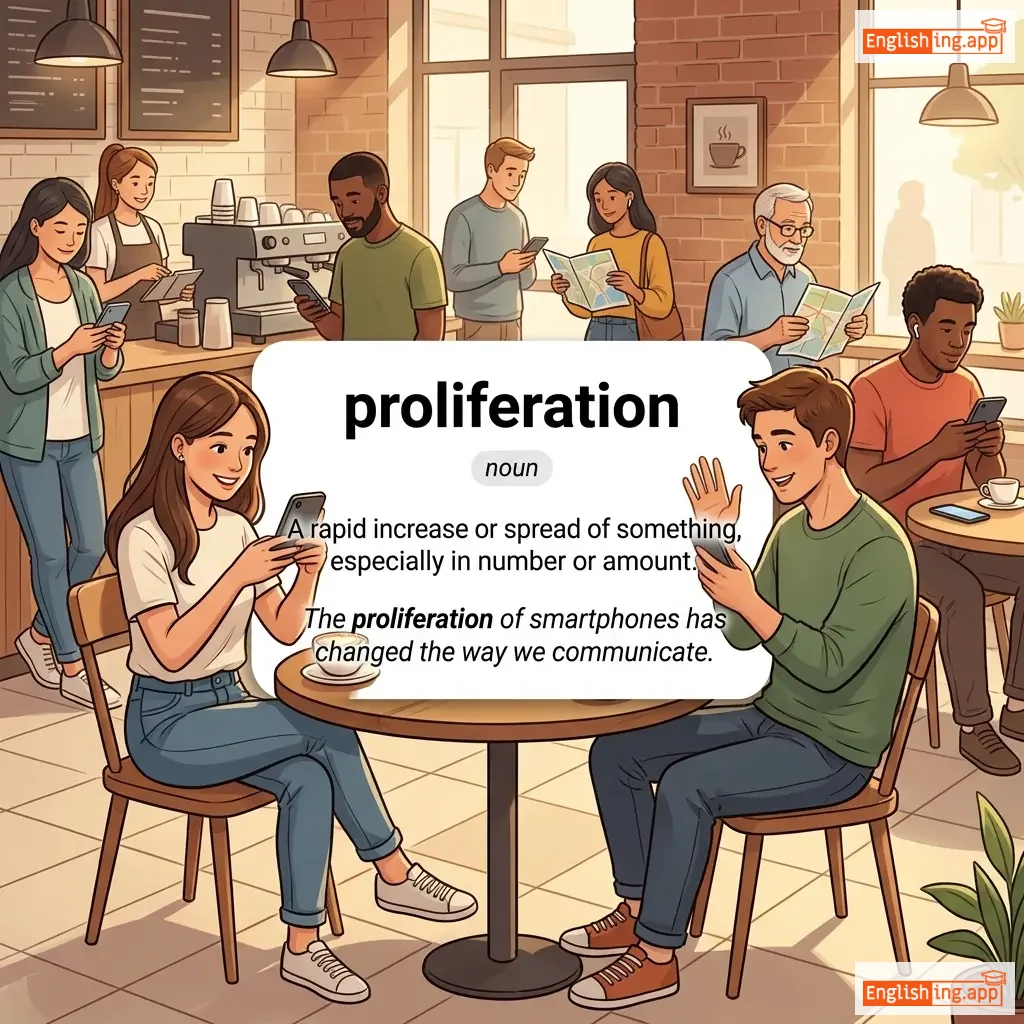
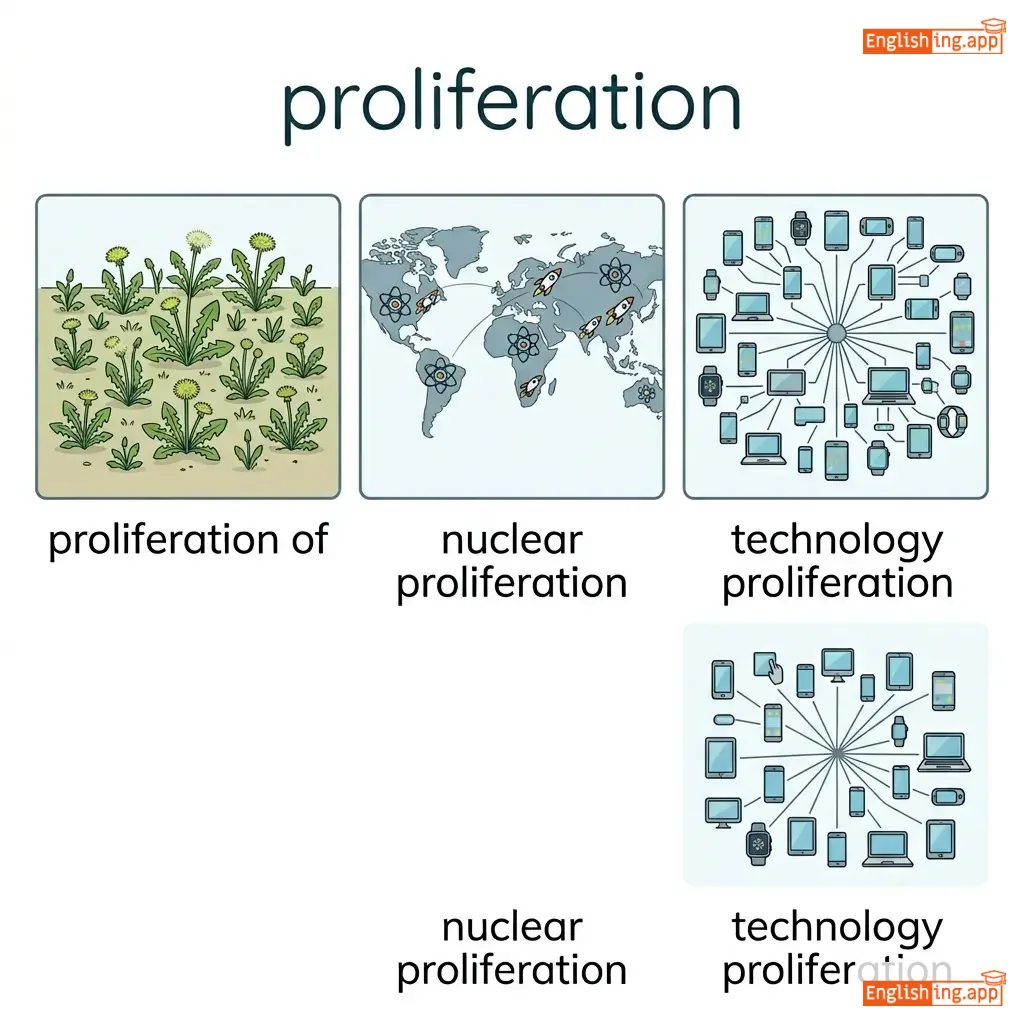
/prəˌlɪf.əˈreɪ.ʃən/
noun
••••••
|
|
Rapid increase in the number or amount of something; rapid multiplication or growth.
••••••
|
The proliferation of malware is a growing concern. |
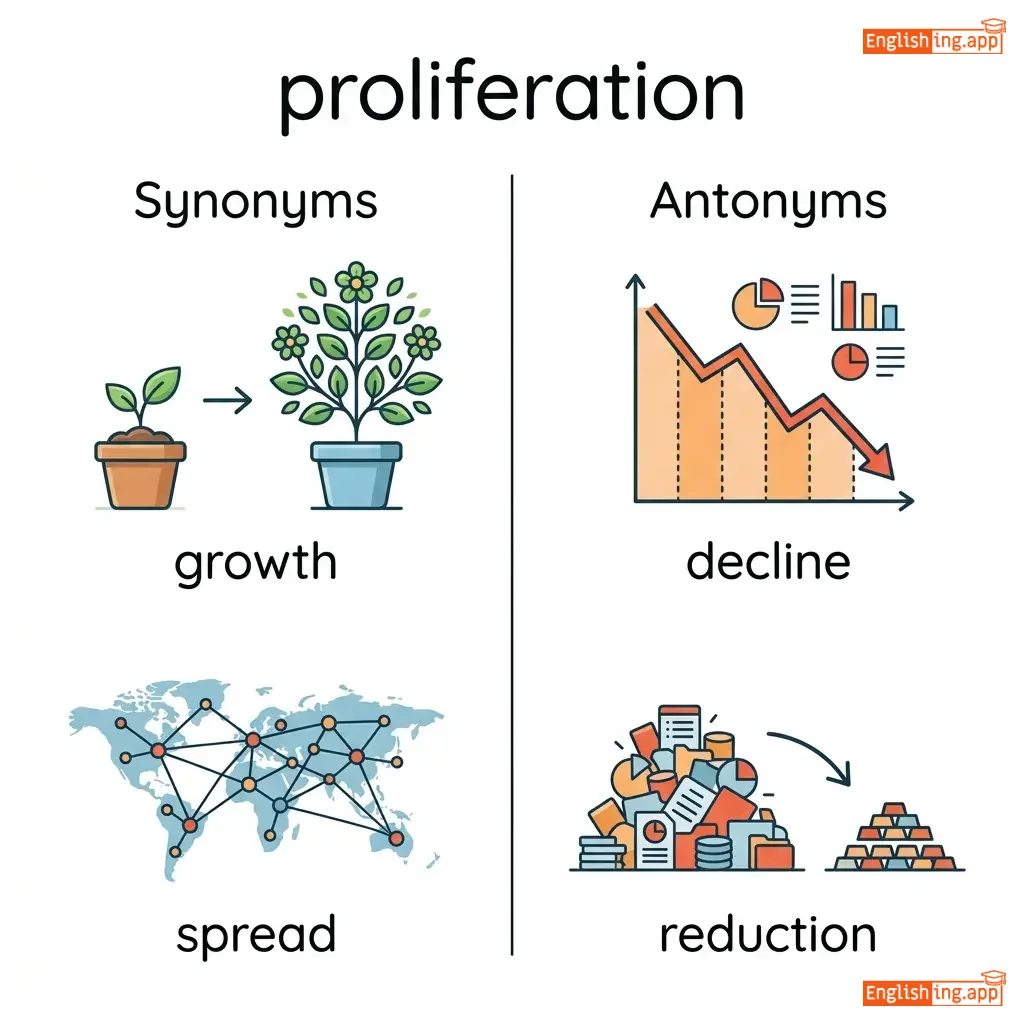
expansion, multiplication, escalation
••••••
|
decline, reduction, diminishment
••••••
|
|
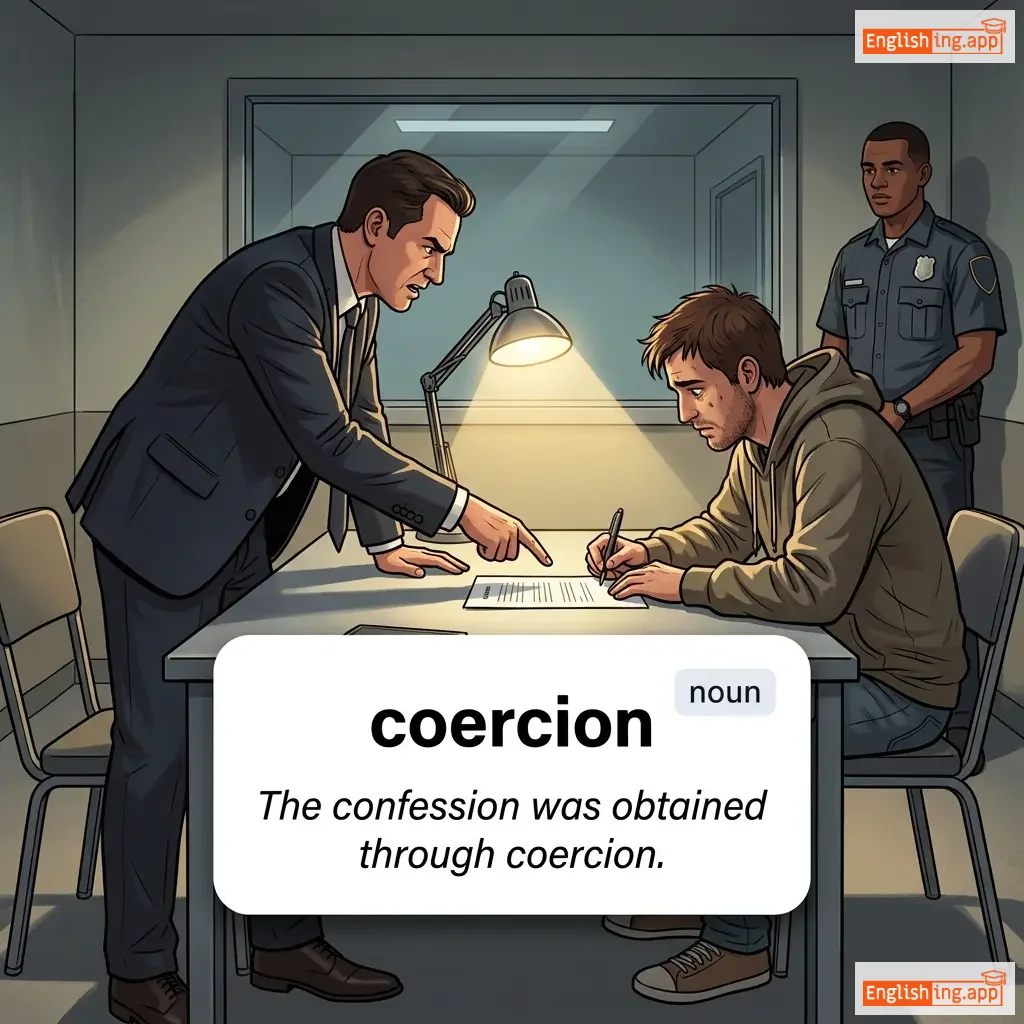
#1155
💪
|
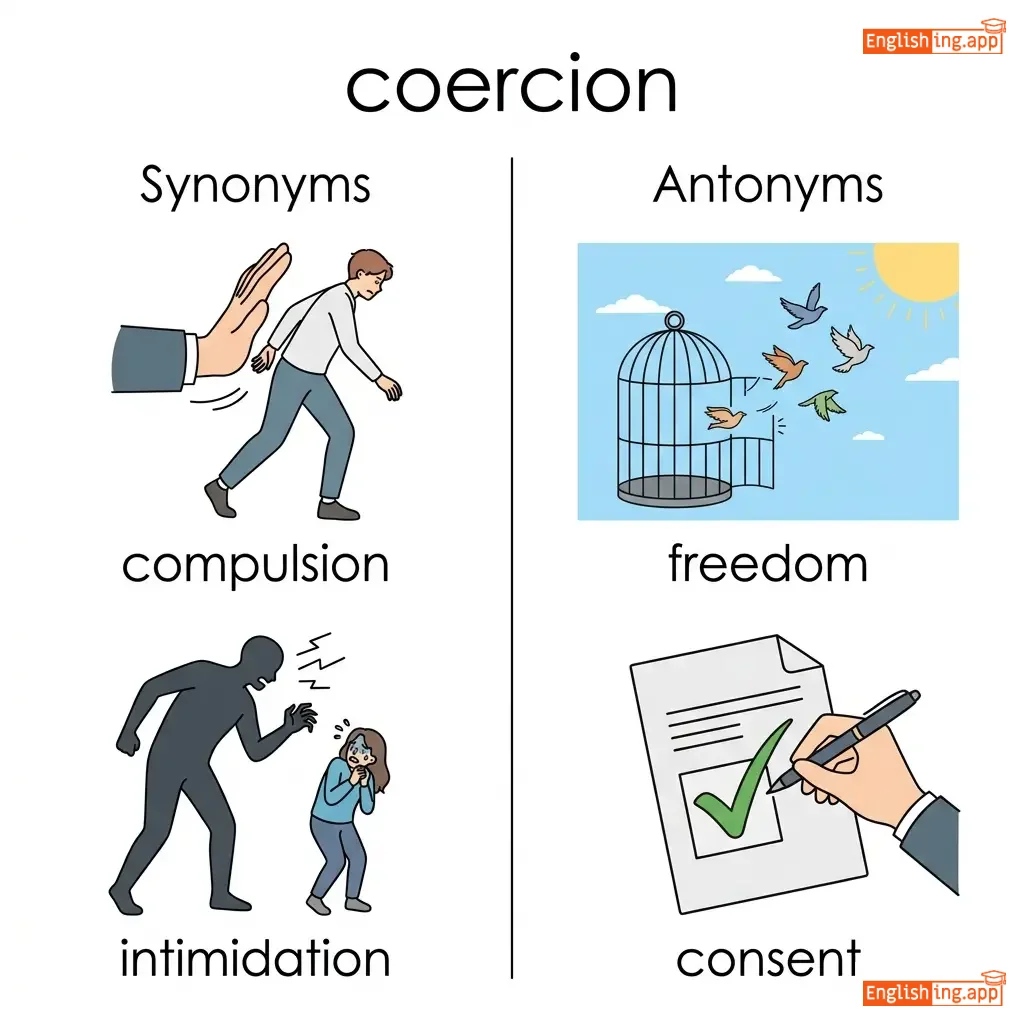
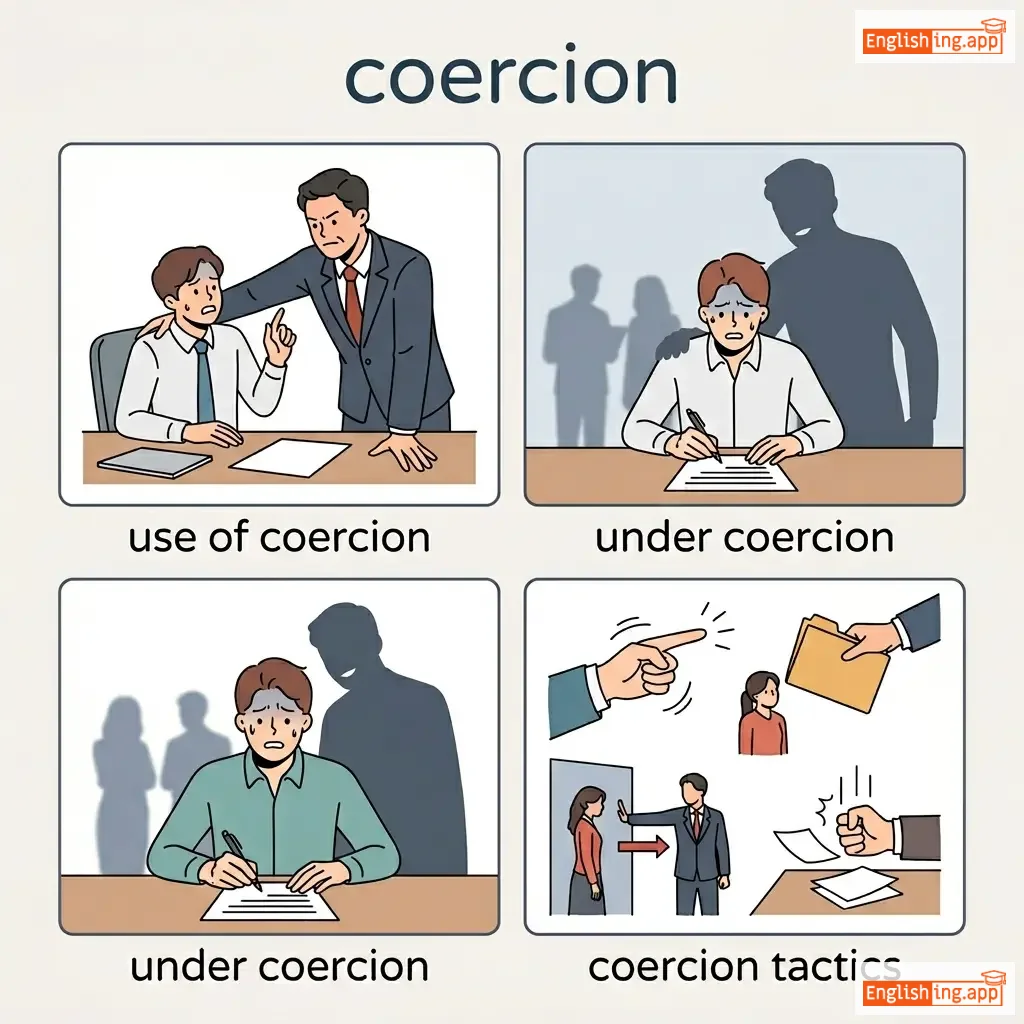
/koʊˈɜː.ʃən/
noun
••••••
|
|
The practice of persuading someone to do something by using force or threats.
••••••
|
Cybercriminals use coercion to extract information. |
force, compulsion, intimidation
••••••
|
voluntary action, consent, free will
••••••
|

