The Voice of the Silent Majority
カリムは influential spokesman であり、democracy と universal 権利のために戦っています。彼の国では、widespread inequality と discrimination があり、それは constitutional 権利に完全に反していました。Government の conservative politician は自分たちの regulation だけを押し付け、人民の声には耳を貸しませんでした。ある日、カリムは congressional 公聴会に証言に行き、そこで injustice に反対して話しました。彼は言いました:「私たちの electoral システムを改革する必要があります。」彼は言いました:「これらの legislation は富裕層を守り、普通の人々は守りません。」彼の言葉を聞いて、多くの protester が街に出て、抑圧的なシステムからの liberation を求めました。ある人々はこれを rebellion と呼んでいましたが、カリムは実際には平和的な revolution であることを知っていました。政府は最初抵抗しましたが、公開の圧力により、最終的に新しい legislation を通さざるを得なくなりました。カリムの勇気ある行動は、彼の国に新しい時代をもたらしました。この時代には、democracy と universal 権利がすべての人々に保障されました。
|
絵文字
|
単語 | Images | 翻訳 | 意味 | 例文 | 例文の翻訳 | 表現例 | 表現例の意味 | 表現例の翻訳 | 同義語 | 対義語 | コロケーション | ニーモニック |
|---|---|---|---|---|---|---|---|---|---|---|---|---|---|
|
📜
••••••
|
/kənˈɡrɛʃənl/
adjective
(コングレッショナル)
••••••
|
- •••••• |
議会の
gikai no
••••••
|
relating to a congress, especially the US Congress
••••••
|
The bill received strong congressional support. |
その法案は強力な議会の支持を得た。
Sono hōan wa kyōryokuna gikai no shiji o eta.
••••••
|
- •••••• | - •••••• | - •••••• |
legislative, parliamentary, governmental, political
••••••
|
individual, unofficial
••••••
|
congressional hearing, congressional approval, congressional committee, congressional election
••••••
|
Congressional は議会に関連しています。
••••••
|
|
🛡️
••••••
|
/kənˈsɜːvətɪv/
adjective
(コンセルヴァティブ)
••••••
|
- •••••• |
保守的な
hoshuteki na
••••••
|
Favoring traditional views and values; resistant to change.
••••••
|
He has conservative views on family and society. |
彼は家族と社会について保守的な見解を持っている。
Kare wa kazoku to shakai ni tsuite hoshuteki na kenkai o motte iru.
••••••
|
conservative estimate |
An estimate deliberately kept lower or more cautious.
••••••
|
保守的な見積もり
hoshuteki na mitsumori
••••••
|
traditional, cautious, orthodox, conventional
••••••
|
progressive, liberal, radical
••••••
|
conservative values, conservative politics, conservative approach, conservative estimate
••••••
|
Conserve + active = 積極的に保存することが保守的な意味です。
••••••
|
|
⚖️
••••••
|
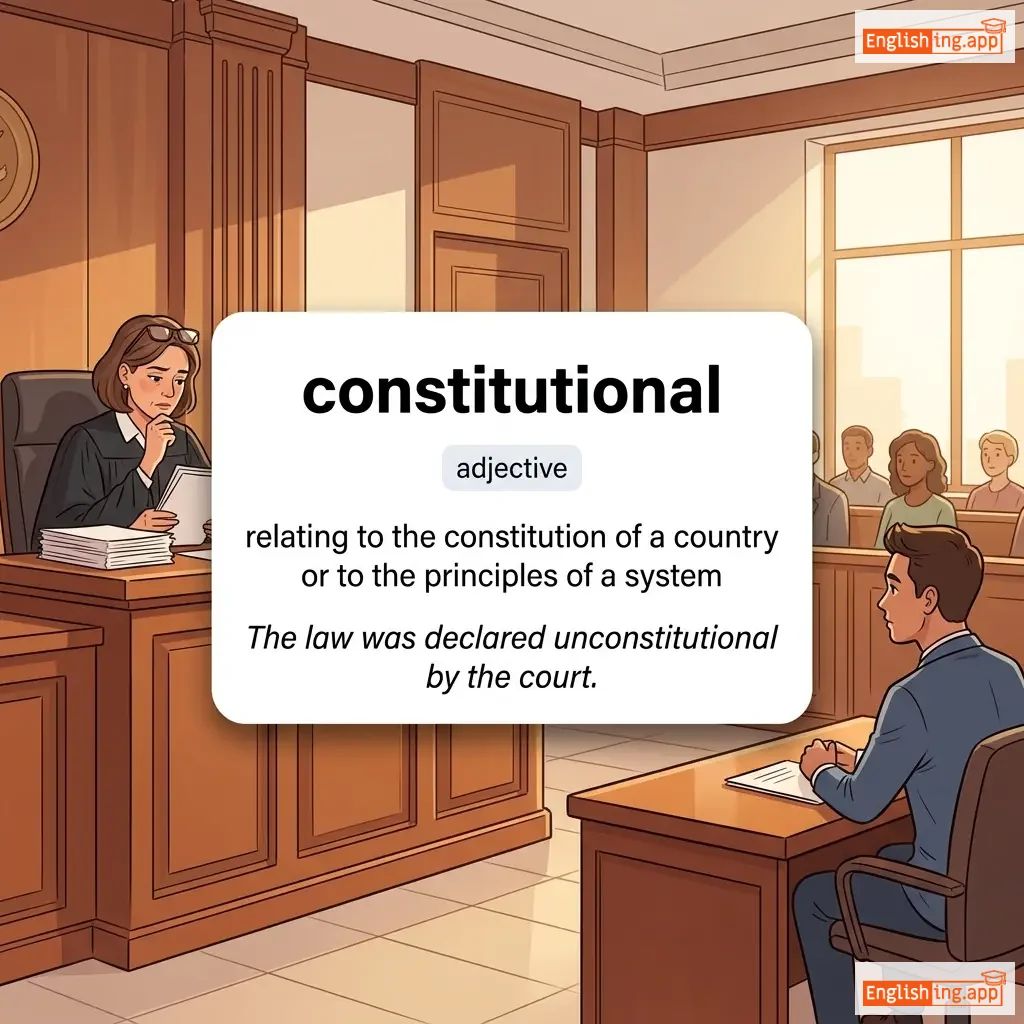
/ˌkɒnstɪˈtjuːʃənəl/
adjective
••••••
|
|
- •••••• |
relating to the constitution of a country or to the principles of a system
••••••
|
The law was declared unconstitutional by the court. |
- •••••• |
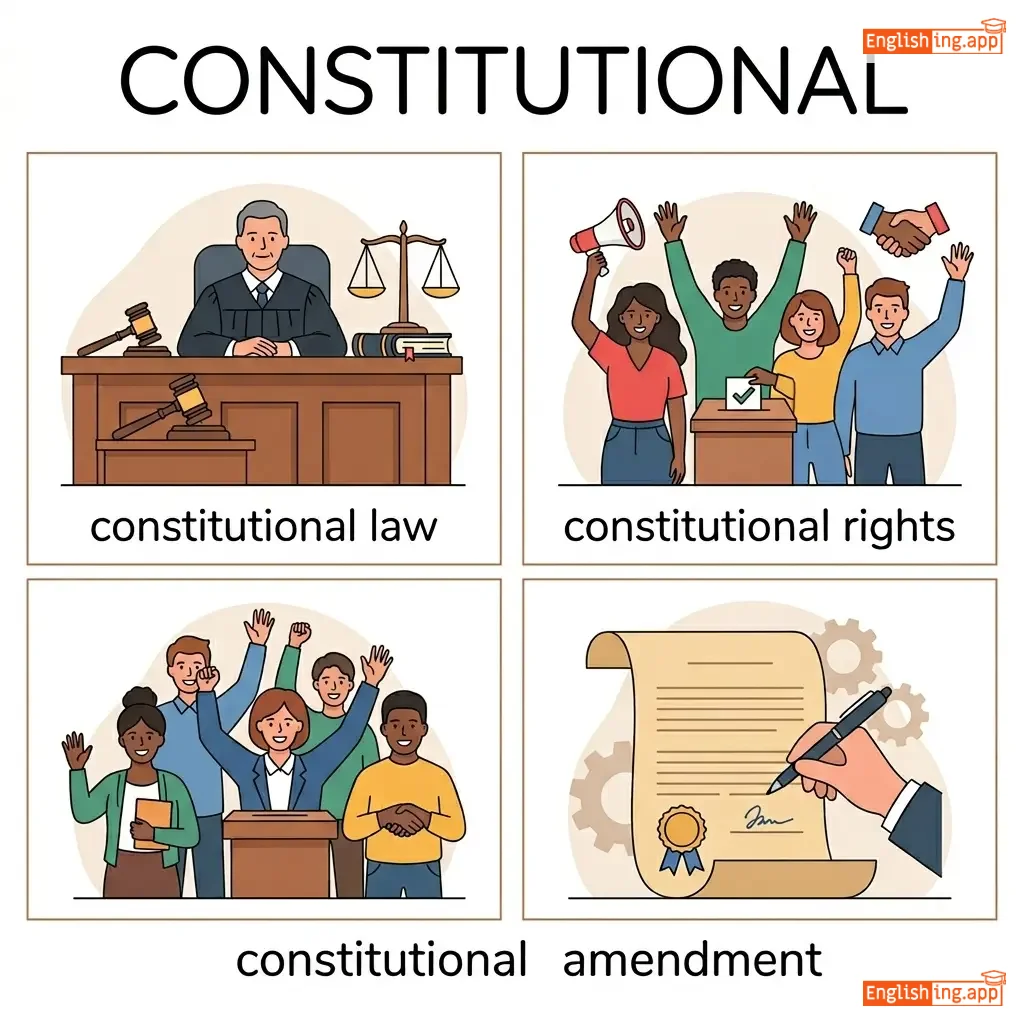
constitutional rights |
basic legal rights guaranteed by a constitution
••••••
|
- •••••• |
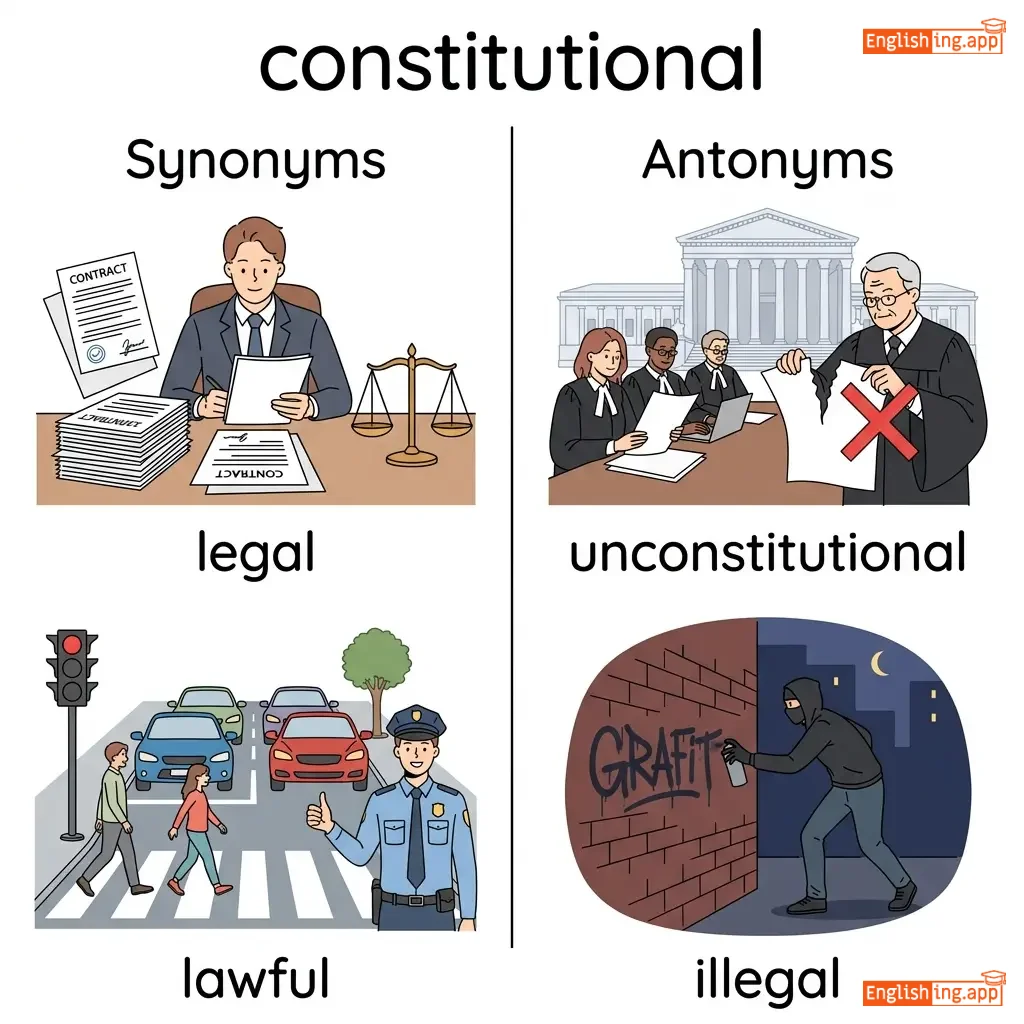
legal, lawful, legitimate, chartered
••••••
|
unconstitutional, illegal, unlawful
••••••
|
constitutional law, constitutional rights, constitutional amendment, constitutional crisis
••••••
|
No •••••• |
|
🗳️
••••••
|
/dɪˈmɑːkrəsi/
noun
(デモクラシー)
••••••
|
|
民主主義
minshu shugi
••••••
|
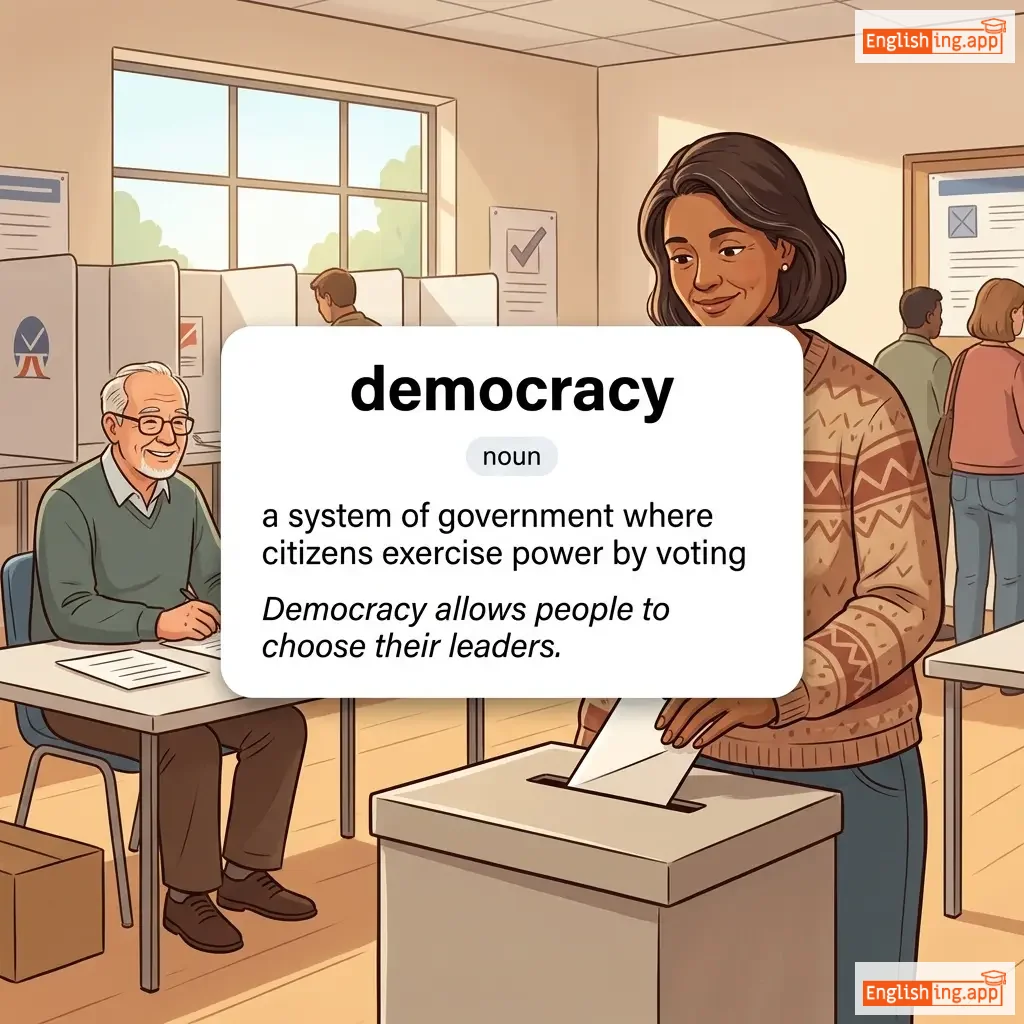
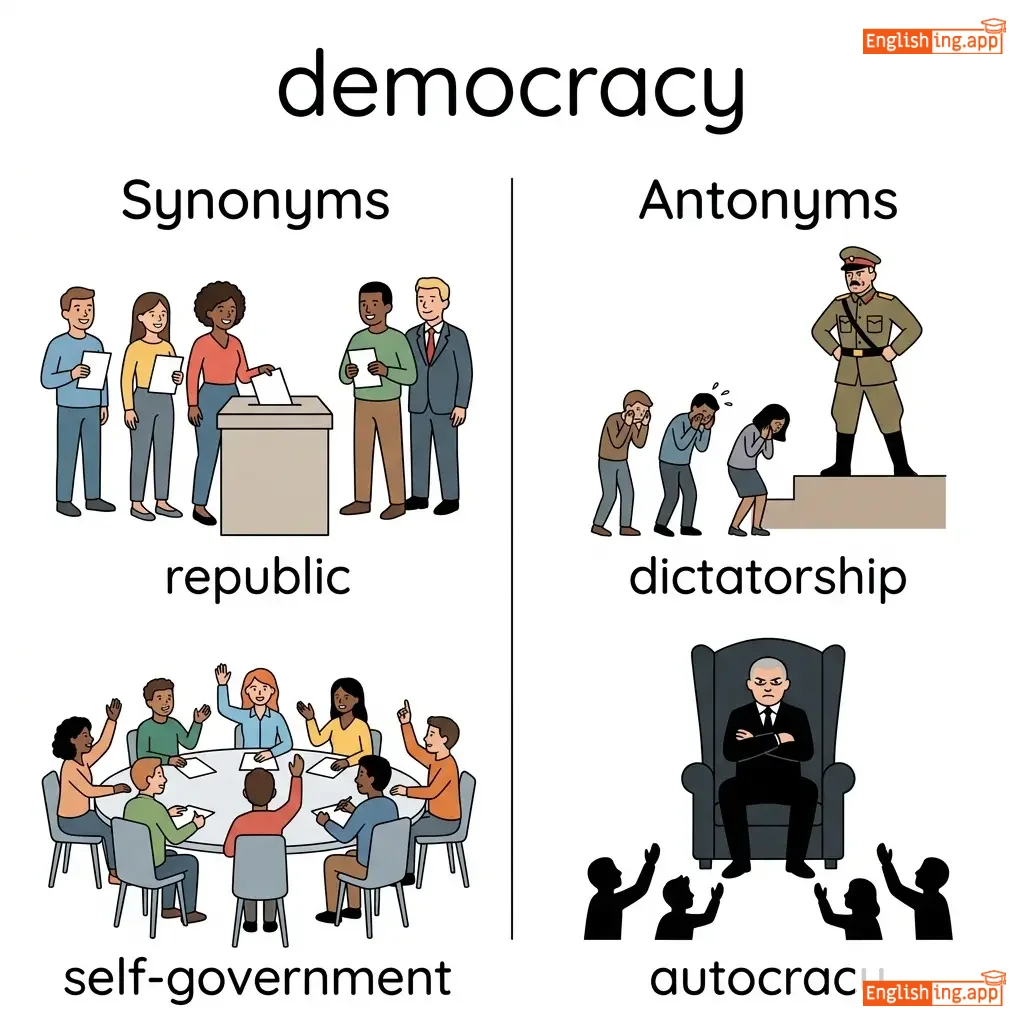
a system of government where citizens exercise power by voting
••••••
|
Democracy allows people to choose their leaders. |
民主主義は人々にリーダーを選ぶ権利を与えます。
Minshu shugi wa hitobito ni rīdā o erabu kenri o ataemasu.
••••••
|
true democracy |
a genuine practice of democratic values
••••••
|
真の民主主義
shin no minshu shugi
••••••
|
republic, self-government, representative government, popular government
••••••
|
dictatorship, autocracy, monarchy
••••••
|
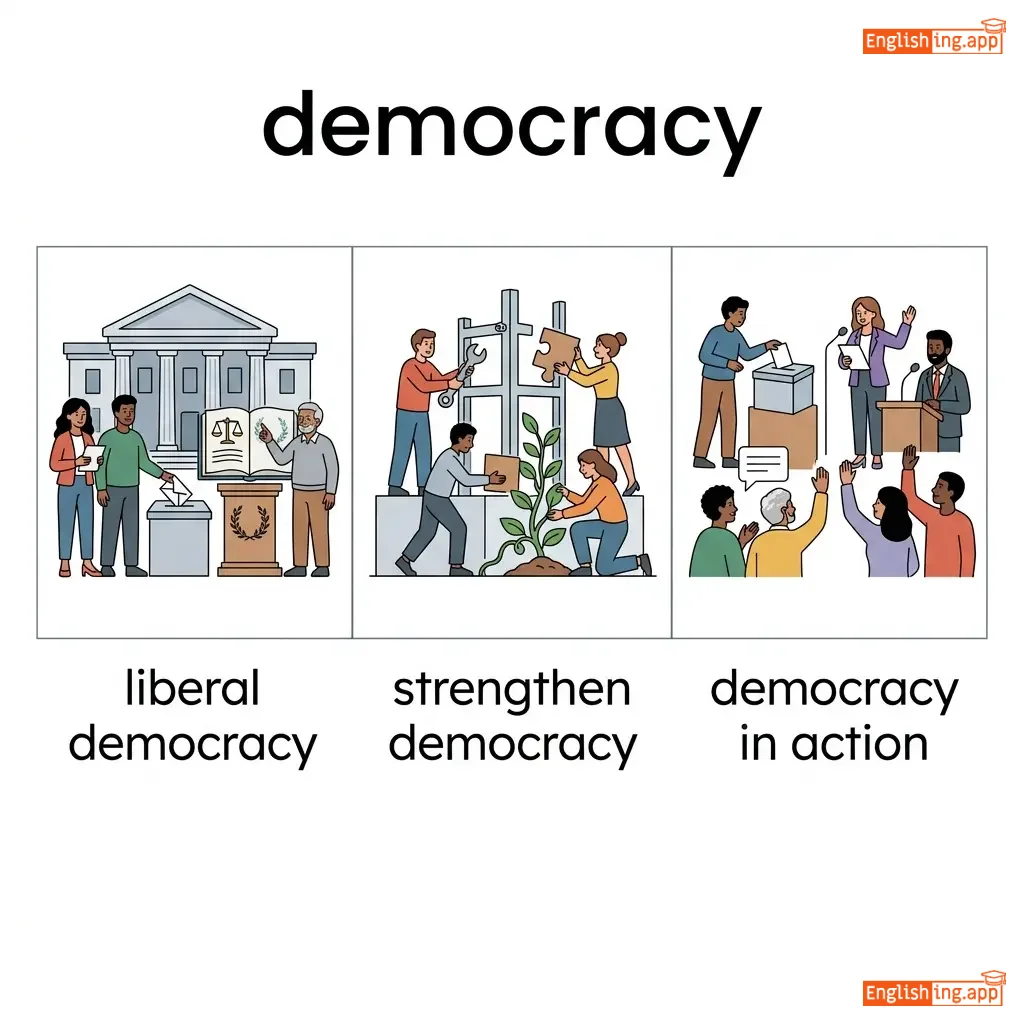
liberal democracy, strengthen democracy, democracy in action, democracy movement
••••••
|
Demoは人々、cracyは支配 - 民主主義 = 人々の支配
••••••
|
|
⚖️
••••••
|
/dɪˌskrɪmɪˈneɪʃən/
noun
(ディスクリミネーション)
••••••
|
- •••••• |
差別
sabetsu
••••••
|
Unfair treatment of people based on race, gender, age, or other differences.
••••••
|
The law prohibits discrimination in the workplace. |
法律は職場での差別を禁じています。
Hōritsu wa shokuba de no sabetsu o kinjiteimasu.
••••••
|
racial discrimination |
unfair treatment based on race
••••••
|
人種差別
jinshu sabetsu
••••••
|
prejudice, bias, unfairness, inequality
••••••
|
equality, fairness, justice
••••••
|
racial discrimination, gender discrimination, fight discrimination, workplace discrimination
••••••
|
差別 = dis + 犯罪、だから差別は犯罪です。
••••••
|
|
🗳️
••••••
|
/ɪˈlɛktərəl/
adjective
(エレクターラル)
••••••
|
- •••••• |
選挙の
senkyo no
••••••
|
related to elections or voting
••••••
|
The electoral process in the country has been reformed in recent years. |
その国の選挙プロセスは近年改革されました。
Sono kuni no senkyo purosesu wa kin'nen kaikaku saremashita.
••••••
|
- •••••• | - •••••• | - •••••• |
voting, electoral system, election-related
••••••
|
non-electoral, non-voting
••••••
|
electoral process, electoral system, electoral reform
••••••
|
Electoral relates to elections—imagine voting at the booth!
••••••
|
|
🏛️
••••••
|
/ˈɡʌvərnmənt/
noun
(ガバメント)
••••••
|
|
政府
seifu
••••••
|
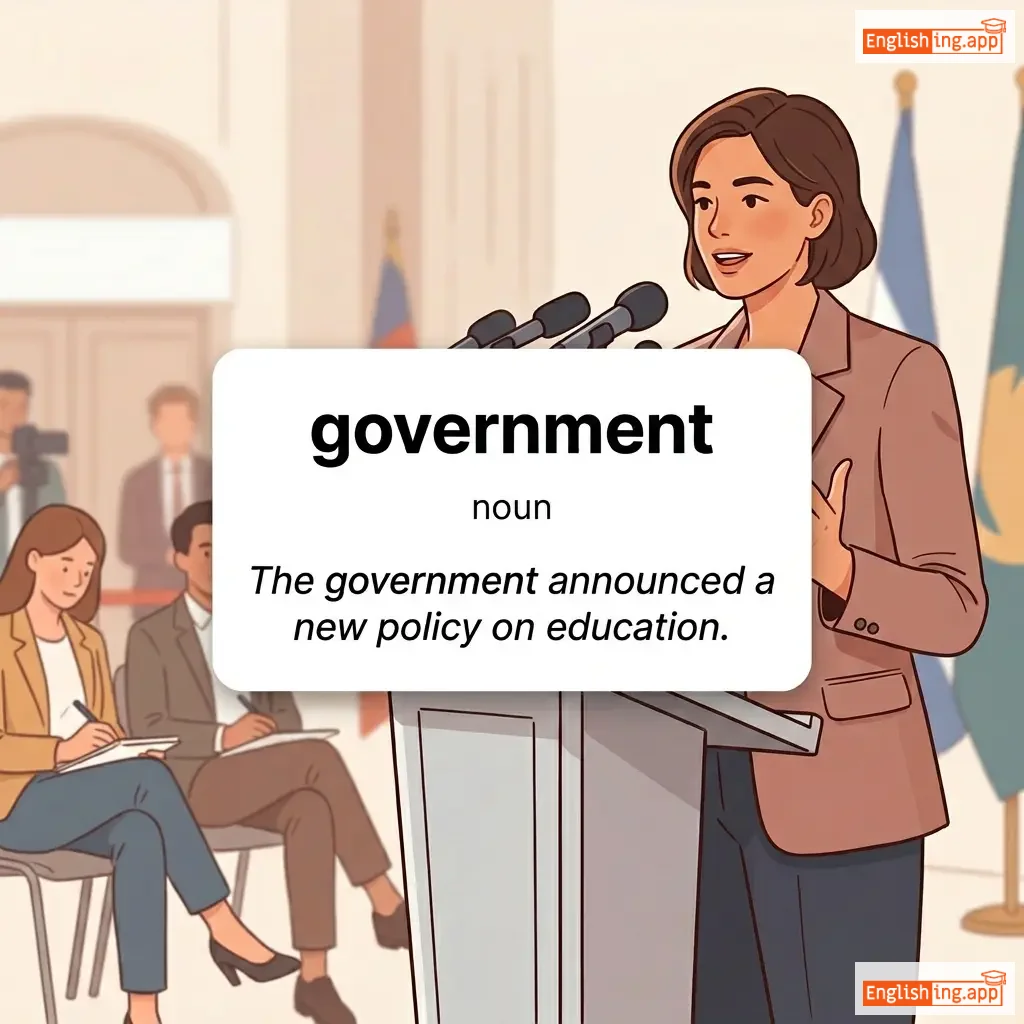
The governing body of a nation, state, or community responsible for making and enforcing laws.
••••••
|
The government announced a new policy on education. |
政府は新しい教育政策を発表しました。
Seifu wa atarashī kyōiku seisaku o happyō shimashita.
••••••
|
big government |
A political concept referring to a government that is large and heavily involved in society.
••••••
|
大きな政府
Ōkina seifu
••••••
|
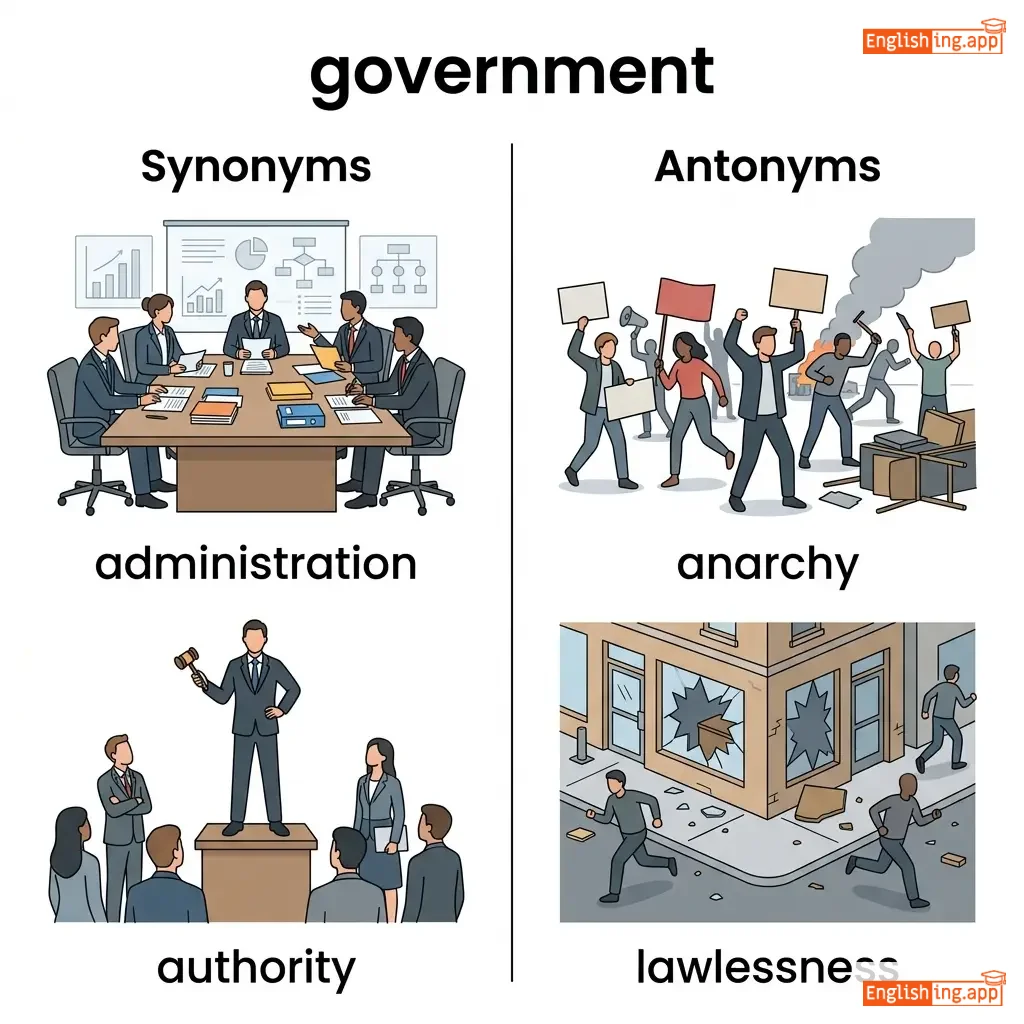
administration, authority, regime, state, leadership
••••••
|
anarchy, lawlessness
••••••
|
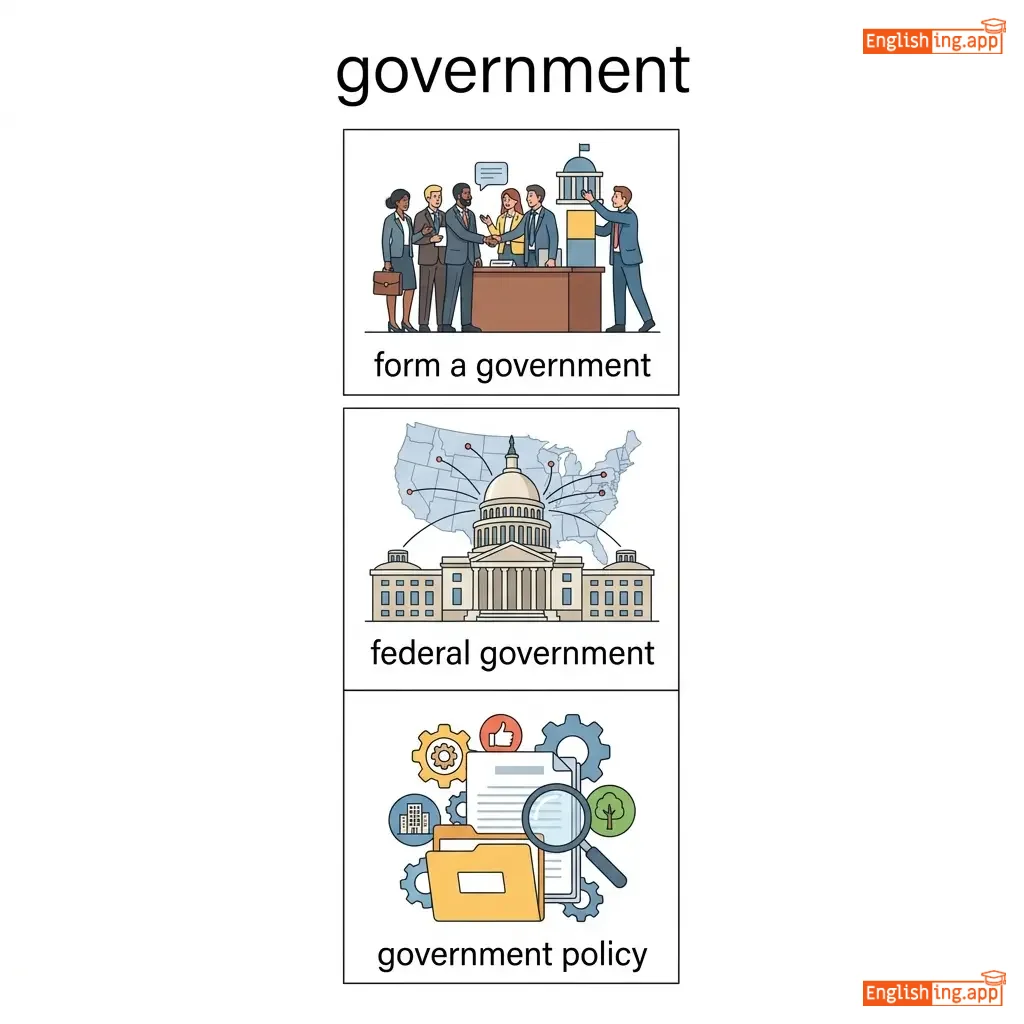
form a government, federal government, government policy, government official
••••••
|
政府は国を統治し、法律を実行する組織です。
••••••
|
|
⚖️
••••••
|
/ˌɪnɪˈkwɒləti/
noun
(不平等)
••••••
|
|
不平等
fuheito
••••••
|
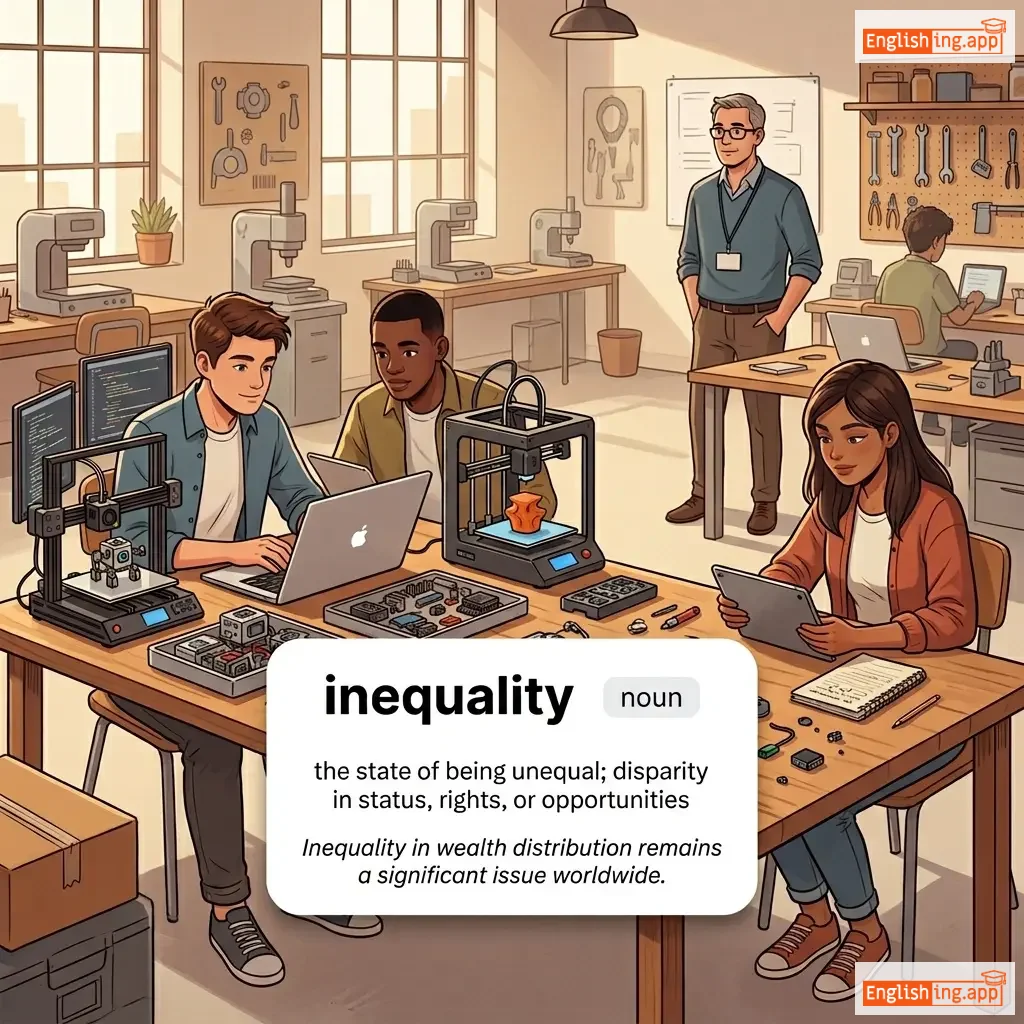
the state of being unequal; disparity in status, rights, or opportunities
••••••
|
Inequality in wealth distribution remains a significant issue worldwide. |
富の分配における不平等は、依然として世界的な重要な問題です。
Tomi no bunpai ni okeru fuheito wa, izen toshite sekaiteki na juuyou na mondai desu.
••••••
|
- •••••• | - •••••• | - •••••• |
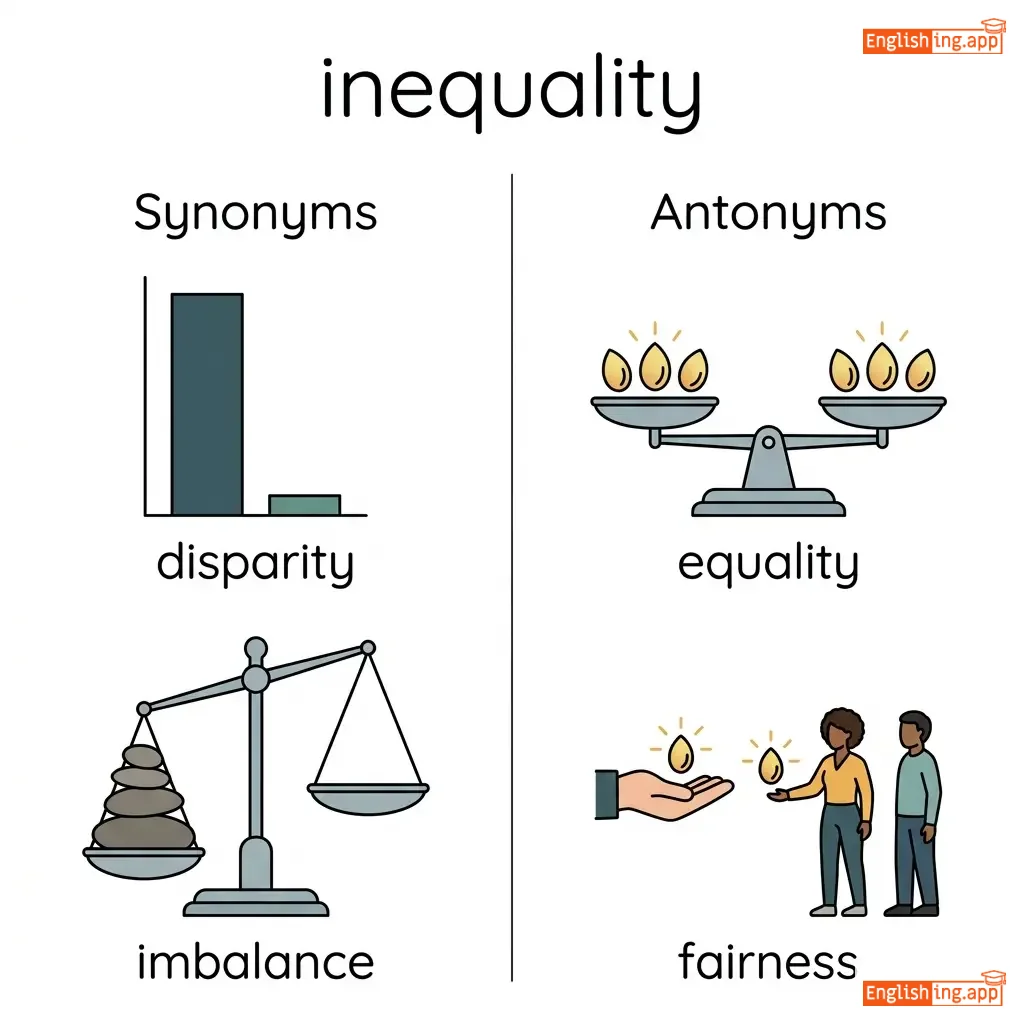
disparity, imbalance, discrimination, inequity
••••••
|
equality, fairness
••••••
|
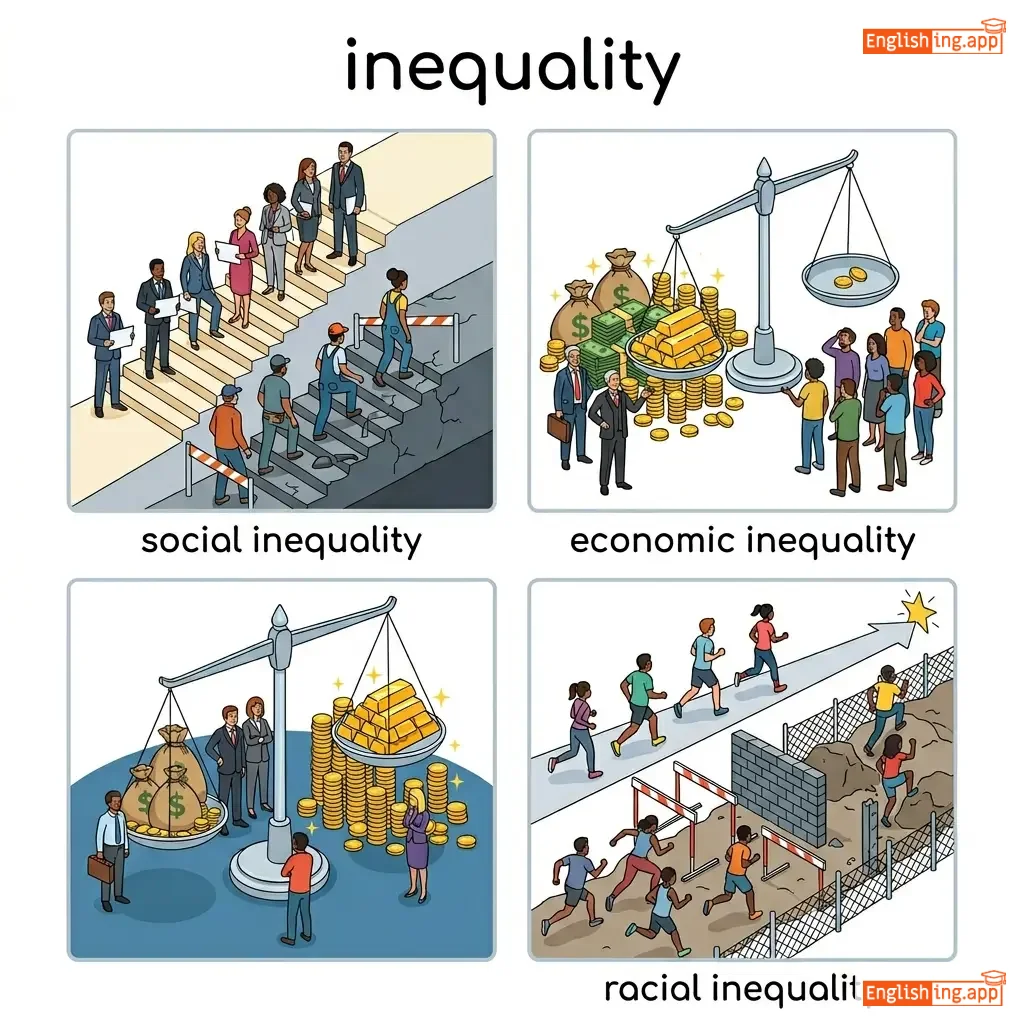
social inequality, economic inequality, racial inequality
••••••
|
Inequality sounds like 'In equal' – imagine people not being equal in opportunities!
••••••
|
|
👑
••••••
|
/ˌɪnfluˈɛnʃl/
adjective
(infurenshial)
••••••
|
- •••••• |
影響力のある
eikyōryoku no aru
••••••
|
Having great power to change or affect people or things.
••••••
|
She is one of the most influential leaders of our time. |
彼女は私たちの時代で最も影響力のあるリーダーの一人です。
Kanojo wa watashitachi no jidai de mottomo eikyōryoku no aru rīdā no hitori desu.
••••••
|
influential figure |
a person who has a significant effect on others
••••••
|
影響力のある人物
eikyōryoku no aru jinbutsu
••••••
|
powerful, significant, prominent, impactful, persuasive
••••••
|
insignificant, powerless
••••••
|
influential leader, influential role, highly influential
••••••
|
影響力のある – 完全な影響力を持つ人。
••••••
|
|
⚖️
••••••
|
/ɪnˈdʒʌstɪs/
noun
(インジャスティス)
••••••
|
|
不正義
fuseigi
••••••
|
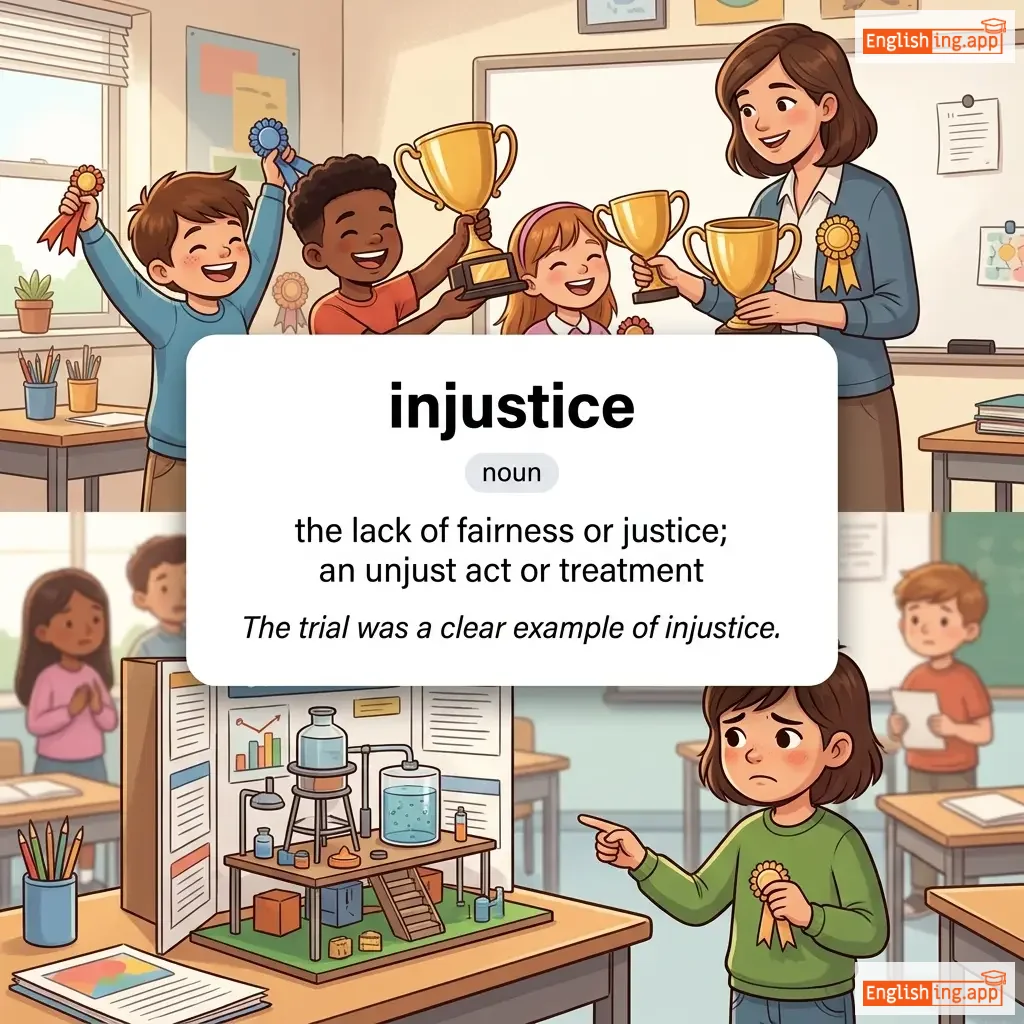
the lack of fairness or justice; an unjust act or treatment
••••••
|
The trial was a clear example of injustice. |
その裁判は不正義の明確な例でした。
Sono saiban wa fuseigi no meikaku na rei deshita.
••••••
|
A great injustice has been done. |
A situation where something unfair or wrong has happened.
••••••
|
大きな不正義が行われました。
Ōkina fuseigi ga okonawaremashita.
••••••
|
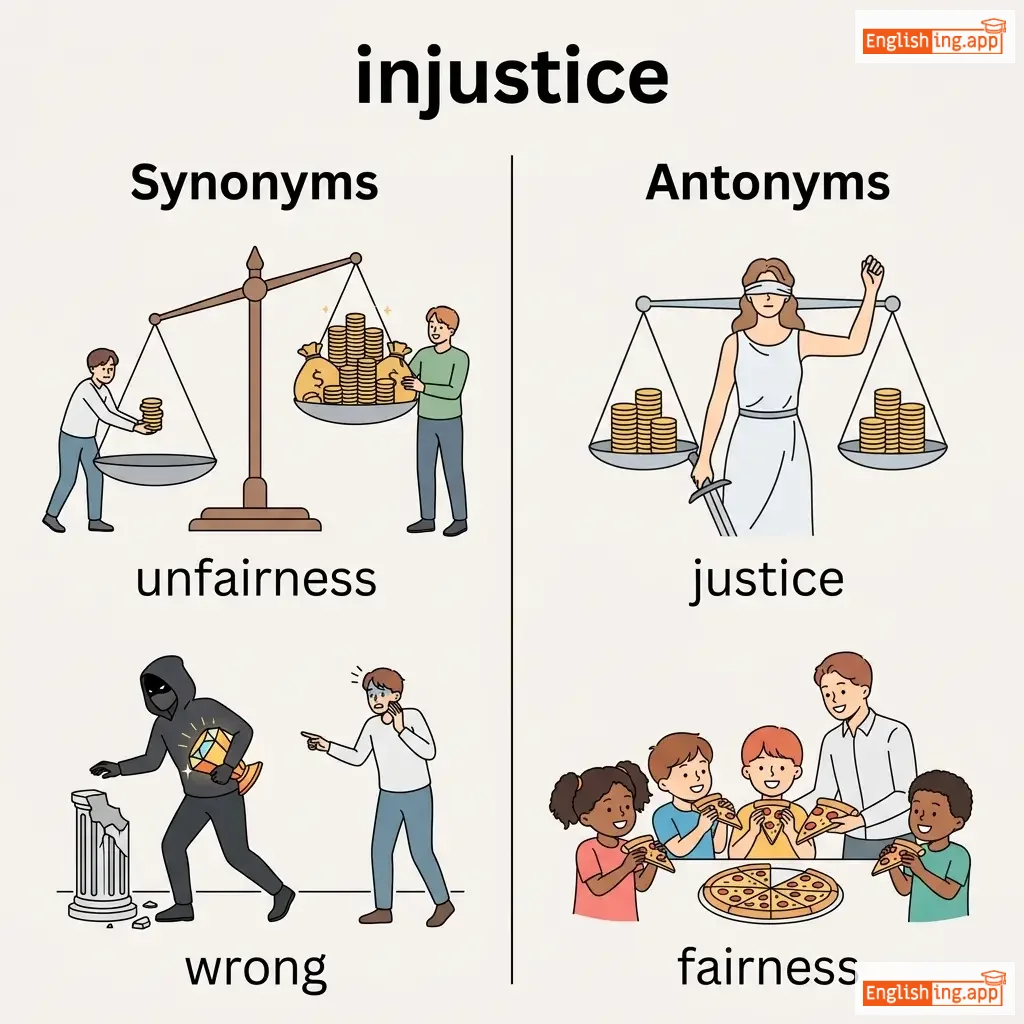
unfairness, wrong, discrimination, bias
••••••
|
justice, fairness
••••••
|
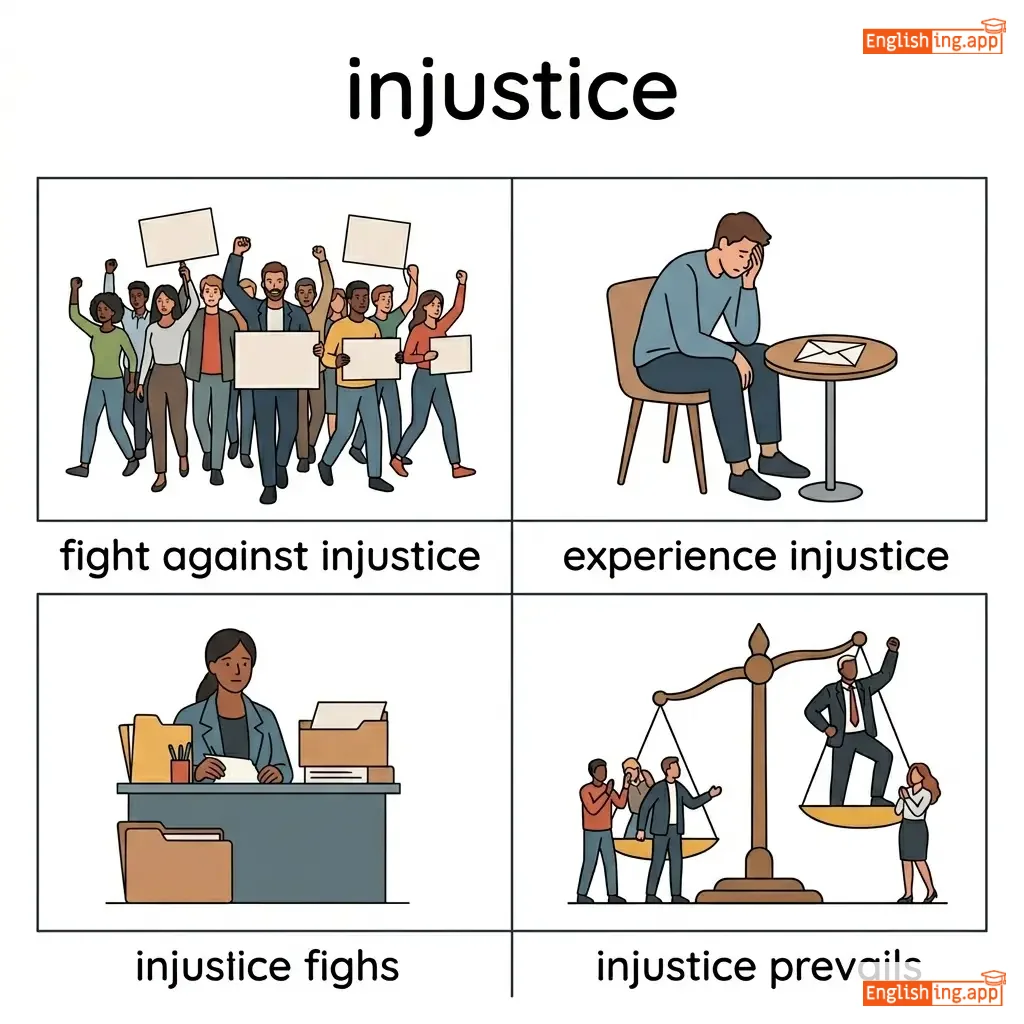
fight against injustice, experience injustice, injustice prevails
••••••
|
インジャスティスという言葉は、悪いことをする理由の一つとして覚えましょう!
••••••
|
|
⚖️
••••••
|
/ˌledʒɪsˈleɪʃən/
noun
(立法)
••••••
|
- •••••• |
立法
rippō
••••••
|
laws considered collectively, or the act of making laws
••••••
|
The government passed new legislation to protect the environment. |
政府は環境保護のために新しい立法を制定しました。
Seifu wa kankyō hogo no tame ni atarashī rippō o seitei shimashita.
••••••
|
piece of legislation |
a single law or act passed by a legislature
••••••
|
立法の一部
rippō no ichibu
••••••
|
law, regulation, statute, decree, ordinance
••••••
|
anarchy, lawlessness
••••••
|
pass legislation, new legislation, environmental legislation, draft legislation
••••••
|
立法の‘立’ = 法律を作る!
••••••
|
|
🕓
••••••
|
/ˌlɪb.əˈreɪ.ʃən/
noun
(リベレーション)
••••••
|
|
解放; 自由;
ribereshon
••••••
|
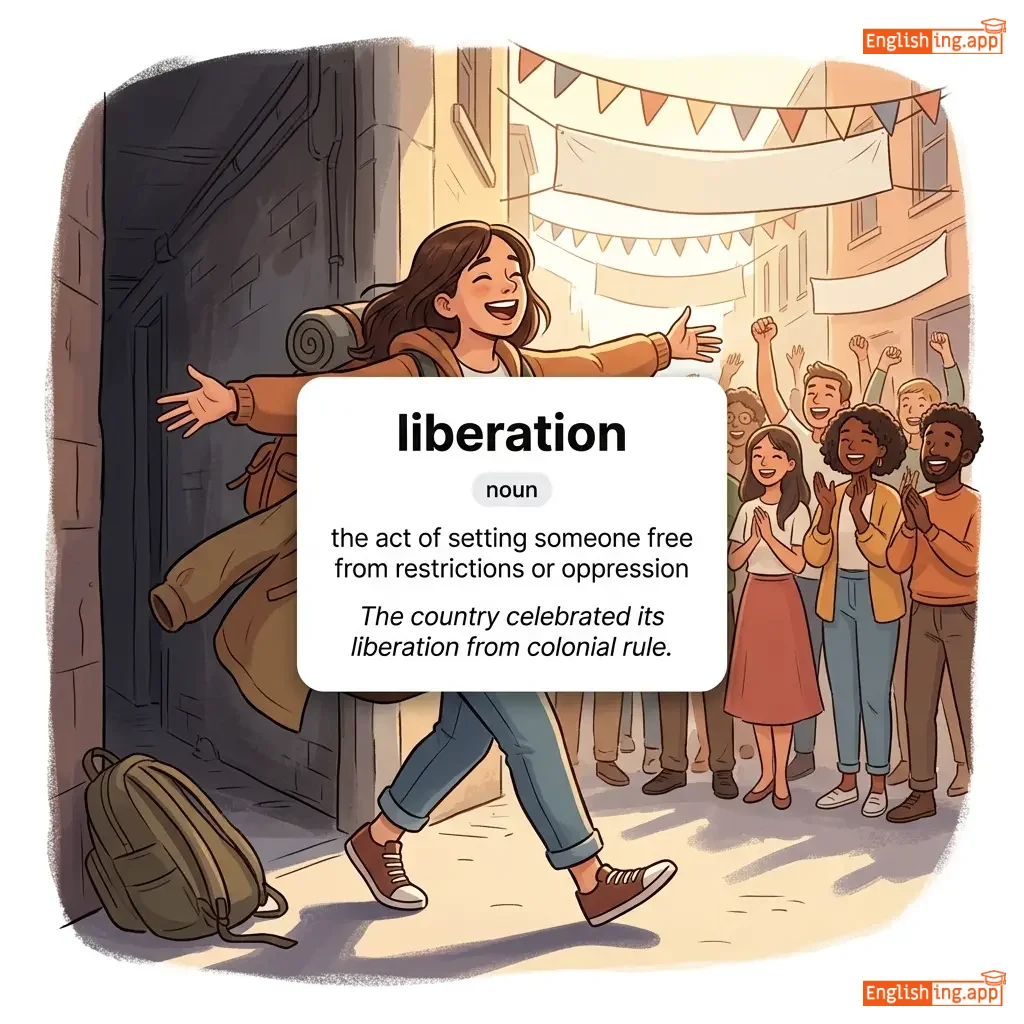
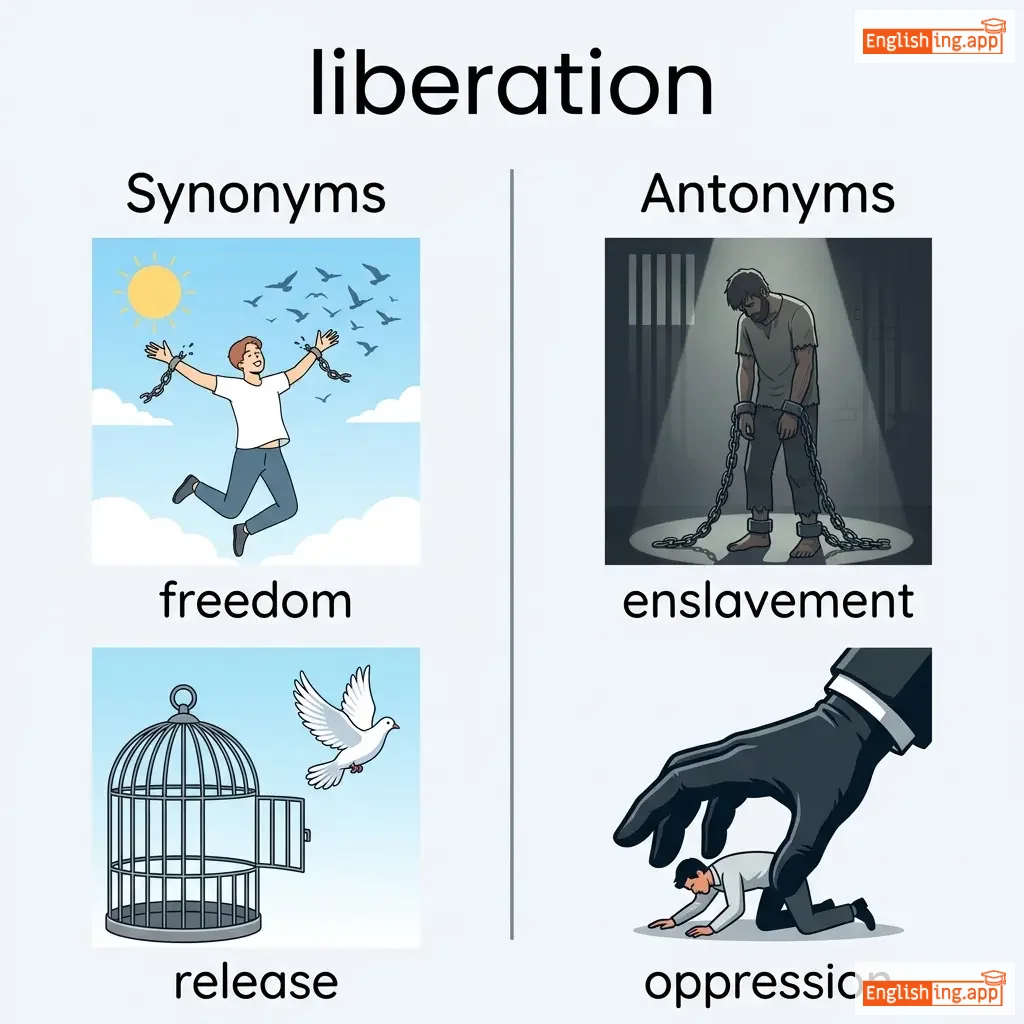
the action of setting someone free from imprisonment, slavery, or oppression; release
••••••
|
The liberation of the country took many years. |
その国の解放には多くの年がかかりました。
sono kuni no kaihō ni wa ōku no toshi ga kakarimashita.
••••••
|
- •••••• | - •••••• | - •••••• |
freedom, emancipation, release, independence
••••••
|
oppression, captivity, enslavement
••••••
|
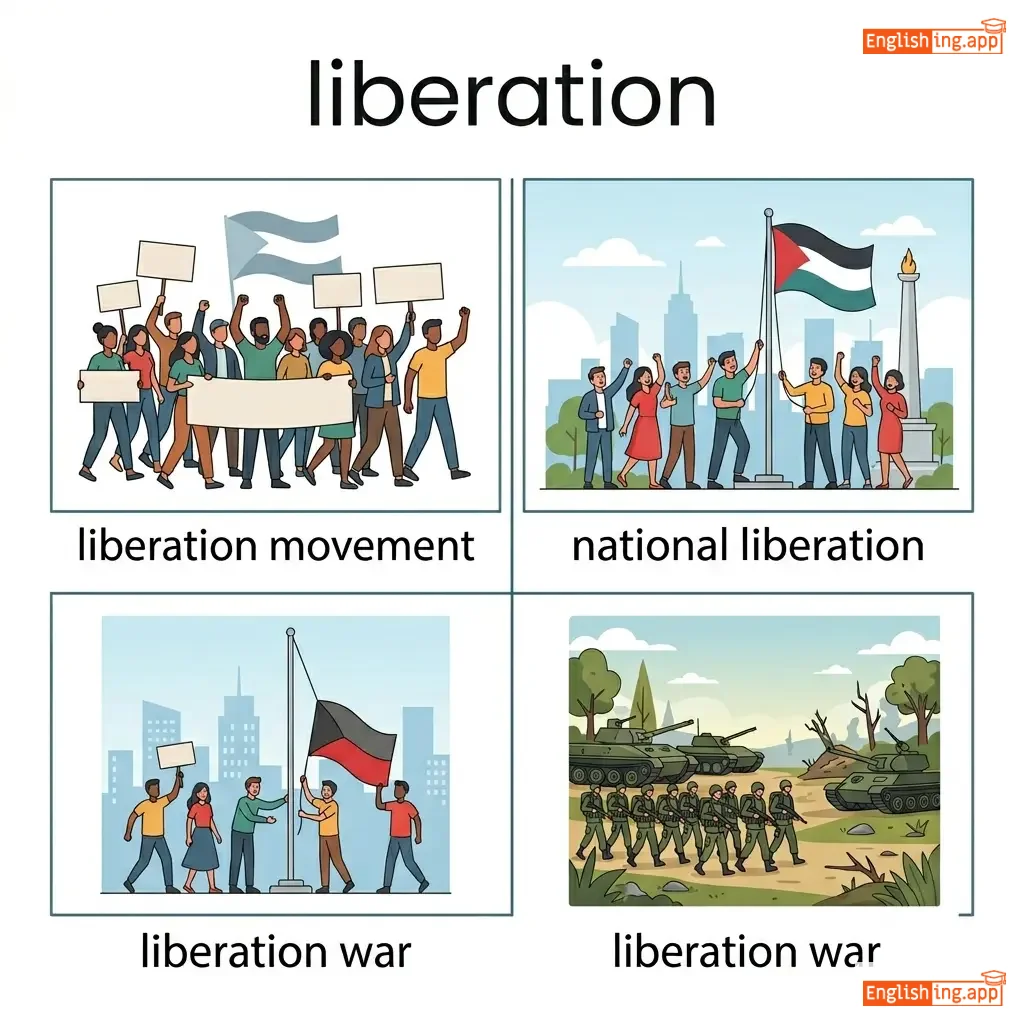
national liberation, women's liberation, liberation movement
••••••
|
In Japanese, '解放' is the act of liberating someone, leading to '自由' (freedom).
••••••
|
|
👨💼
••••••
|
/pəˈlɪtɪʃən/
noun
(ポリティシャン)
••••••
|
- •••••• |
政治家
seijika
••••••
|
a person who is involved in politics, especially as a profession
••••••
|
The politician promised to improve the economy. |
政治家は経済改善を約束しました。
Seijika wa keizai kaizen o yakusoku shimashita.
••••••
|
- •••••• | - •••••• | - •••••• |
statesman, lawmaker, representative, public servant
••••••
|
citizen, layman
••••••
|
politician career, influential politician, corrupt politician
••••••
|
Politicians create policies to improve the economy.
••••••
|
|
🧑🎤
••••••
|
/prəˈtɛstər/
noun
(プロテスター)
••••••
|
- •••••• |
抗議者
kōgisha
••••••
|
a person who takes part in a protest or demonstration
••••••
|
The protester spoke passionately about the cause. |
抗議者はその原因について情熱的に話しました。
Kōgisha wa sono gen'in ni tsuite jōnetsuteki ni hanashimashita.
••••••
|
- •••••• | - •••••• | - •••••• |
demonstrator, activist, campaigner, challenger
••••••
|
supporter, follower, bystander
••••••
|
peaceful protester, passionate protester, angry protester, student protester
••••••
|
抗議者 (kōgisha) はいつも情熱的に話します。
••••••
|
|
⚔️
••••••
|
/rɪˈbel.jən/
noun
(反乱)
••••••
|
- •••••• |
反乱
hanran
••••••
|
an act of armed resistance to an established government or leader
••••••
|
The rebellion against the king lasted for three years.
王に対する反乱は3年間続いた。
••••••
|
王に対する反乱は3年間続いた。
Ō ni taisuru hanran wa 3-nenkan tsuzuita.
••••••
|
- •••••• | - •••••• | - •••••• |
revolt, uprising, insurrection
••••••
|
obedience, submission, compliance
••••••
|
armed rebellion, suppress rebellion, lead rebellion
••••••
|
反乱 = 反抗 + 戦う (戦いの象徴)
••••••
|
|
⚖️
••••••
|
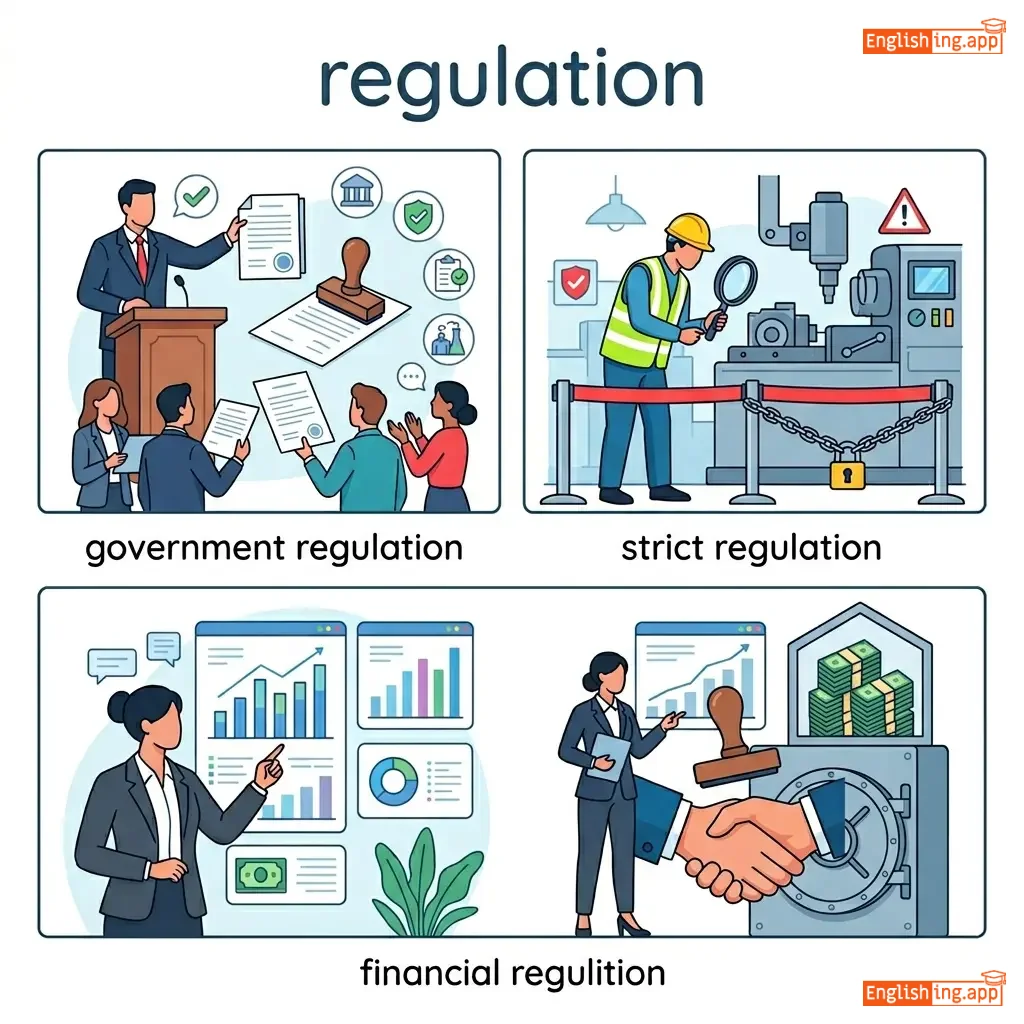
/ˌrɛɡjuˈleɪʃən/
noun
(レギュレーション)
••••••
|
|
規制
kisei
••••••
|
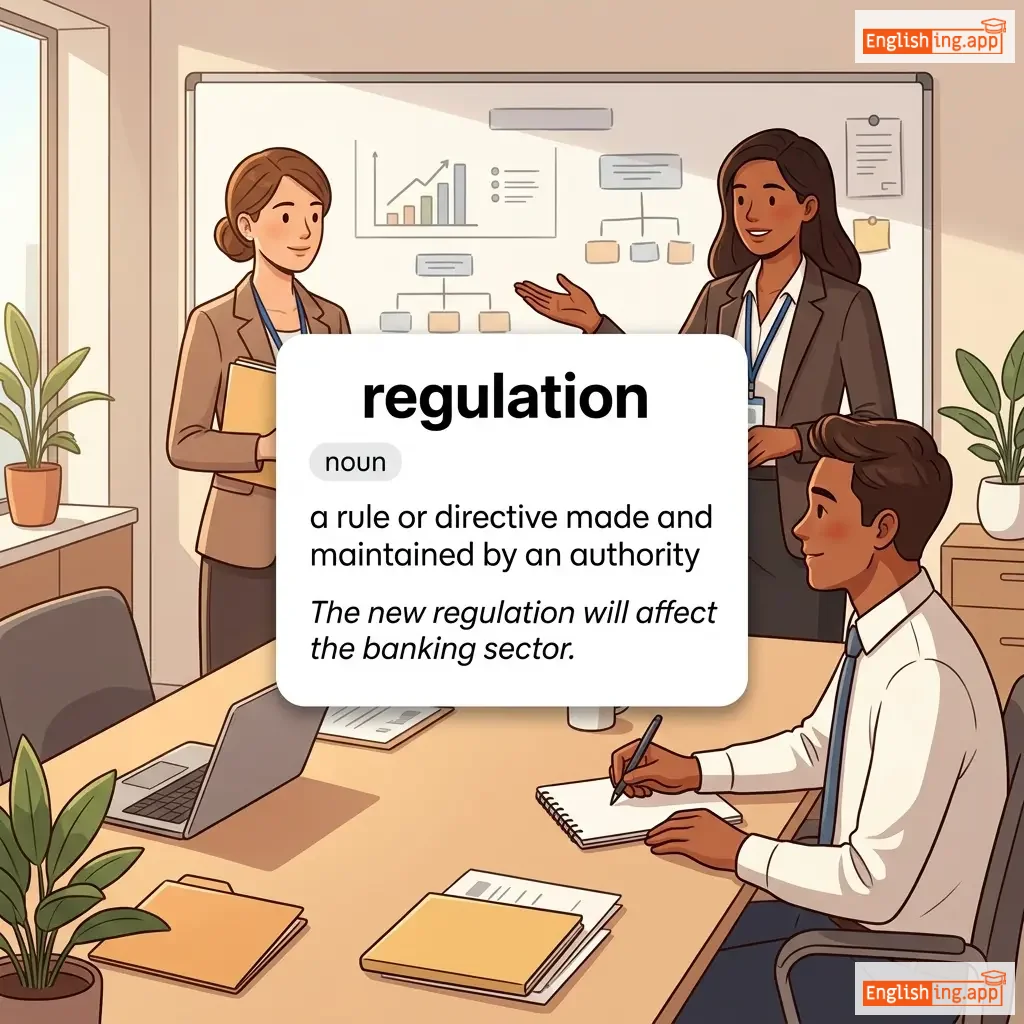
a rule or directive made and maintained by an authority
••••••
|
The new regulation will affect the banking sector. |
新しい規制は銀行業界に影響を与えるでしょう。
Atarashii kisei wa ginkou gyoukai ni eikyou wo ataerudeshou.
••••••
|
- •••••• | - •••••• | - •••••• |
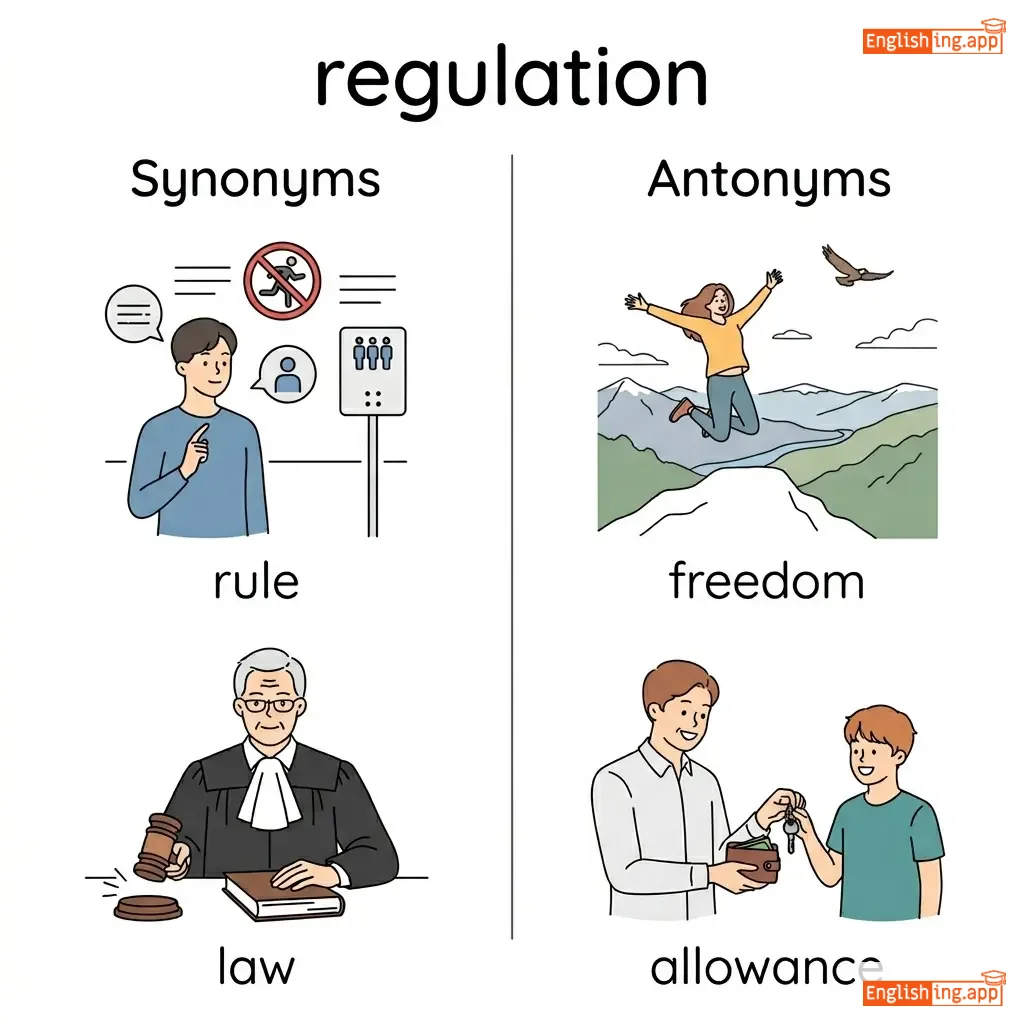
rule, law, guideline, directive
••••••
|
freedom, allowance
••••••
|
government regulation, strict regulation, financial regulation, safety regulation
••••••
|
Regulation = Re-gulate the system with rules!
••••••
|
|
🔄
••••••
|
/ˌrevəˈluːʃən/
noun
(レボリューション)
••••••
|
|
革命; 変革; 転覆
kakumei; henka; tenpuku
••••••
|
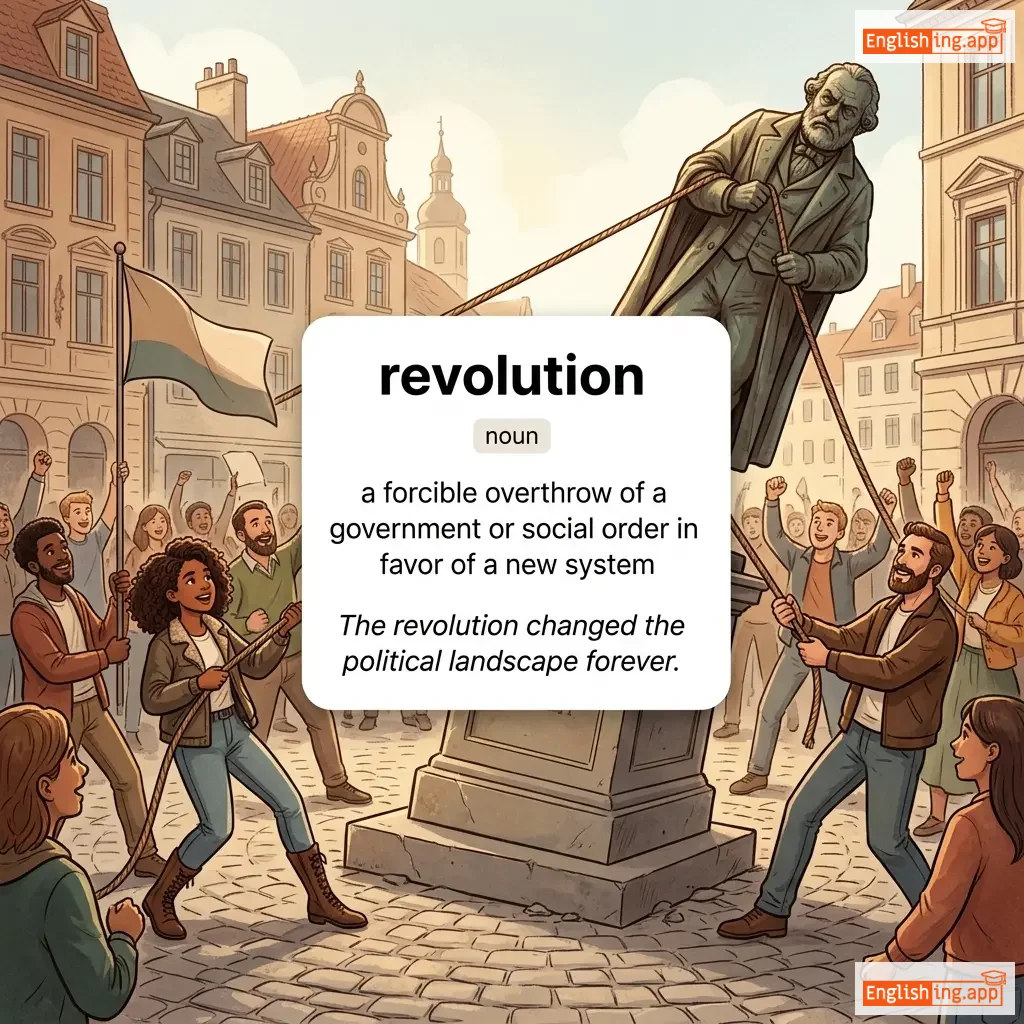
a dramatic and wide-reaching change in conditions, attitudes, or operation; a forcible overthrow of a government or social order
••••••
|
The industrial revolution changed the way people lived and worked.
産業革命は人々の生活と仕事の仕方を変えました。
••••••
|
産業革命は人々の生活と仕事の仕方を変えました。
sangyou kakumei wa hitobito no seikatsu to shigoto no shikata o kaemashita.
••••••
|
- •••••• | - •••••• | - •••••• |
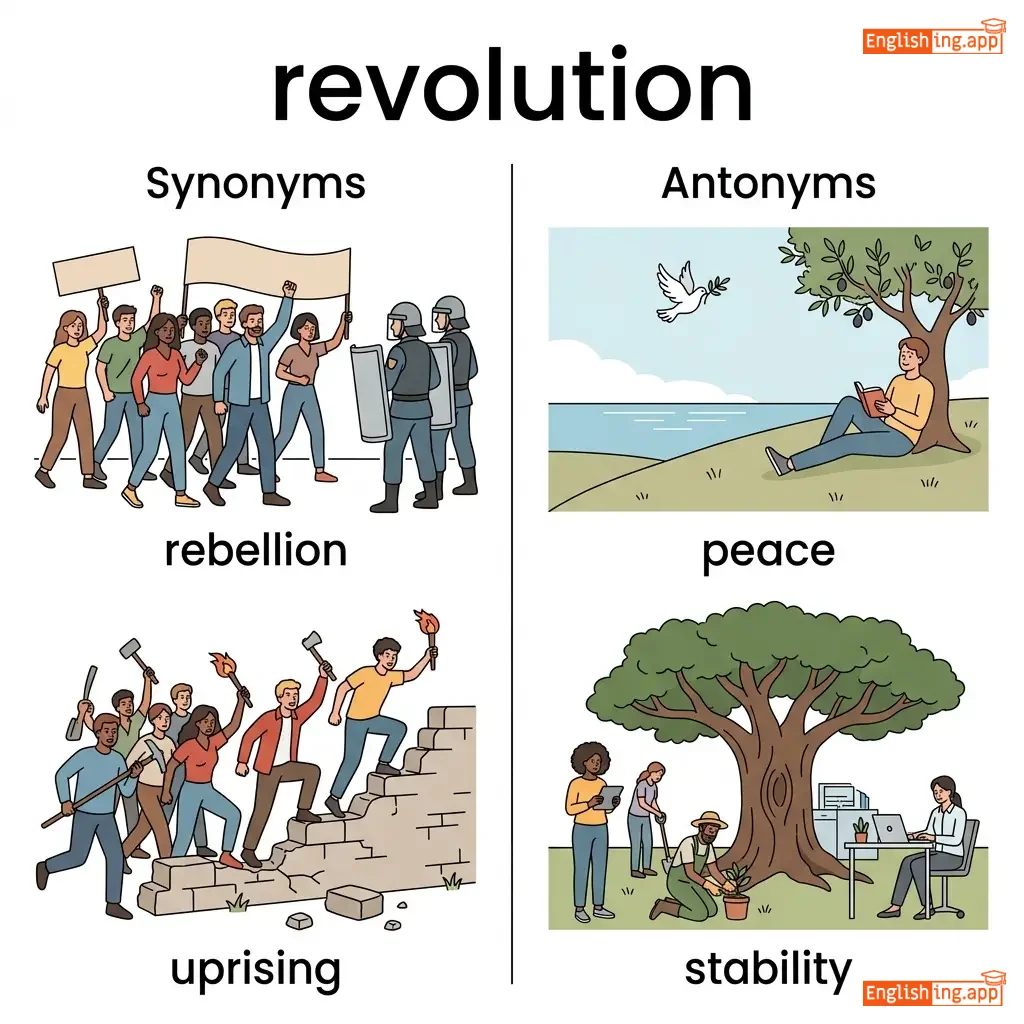
upheaval, transformation, rebellion, revolt
••••••
|
stability, conservation, tradition
••••••
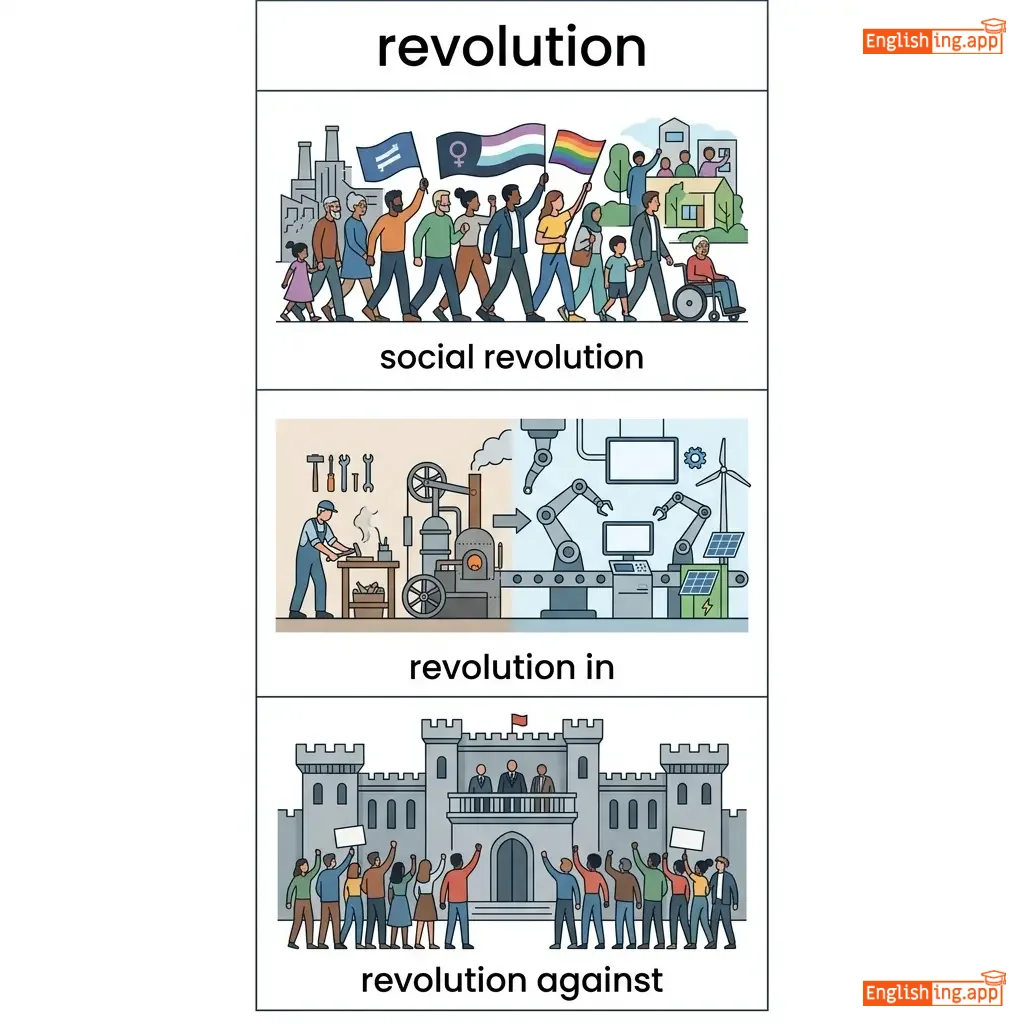
|
industrial revolution, political revolution, scientific revolution
••••••
|
革命はすべてを変える、まるで社会秩序の転覆のように。
••••••
|
|
🗣️
••••••
|
/ˈspəʊksmən/
noun
(スポークスマン)
••••••
|
- •••••• |
スポークスマン
supōkusu man
••••••
|
a person who speaks on behalf of others, especially for a group or organization
••••••
|
The spokesman addressed the crowd during the rally. |
スポークスマンは集会中に群衆に向かって話した。
Supōkusuman wa shūkai-chū ni gunshū ni mukatte hanashita.
••••••
|
- •••••• | - •••••• | - •••••• |
representative, delegate, spokesman, ambassador
••••••
|
opponent, adversary
••••••
|
chief spokesman, official spokesman, media spokesman
••••••
|
A spokesman is 'スポークスマン', a voice that speaks for the crowd!
••••••
|
|
🌍
••••••
|
/ˌjuːnɪˈvɜːsəl/
adjective
(ユニバーサル)
••••••
|
- •••••• |
普遍的
fuhenteki
••••••
|
Relating to or done by all people or things in the world; applicable everywhere or in all cases.
••••••
|
There is a universal need for love and acceptance. |
愛と受容には普遍的な必要があります。
Ai to juyō ni wa fuhenteki na hitsuyō ga arimasu.
••••••
|
universal truth |
A truth accepted by everyone and valid everywhere
••••••
|
普遍的な真実
fuhenteki na shinjitsu
••••••
|
global, worldwide, common, general, all-encompassing
••••••
|
particular, local
••••••
|
universal truth, universal law, universal rights, universal principle
••••••
|
普遍的は宇宙のようなものです: どこでも適用できる
••••••
|
|
🌍
••••••
|
/ˈwaɪd.sprɛd/
adjective
(ワイドスプレッド)
••••••
|
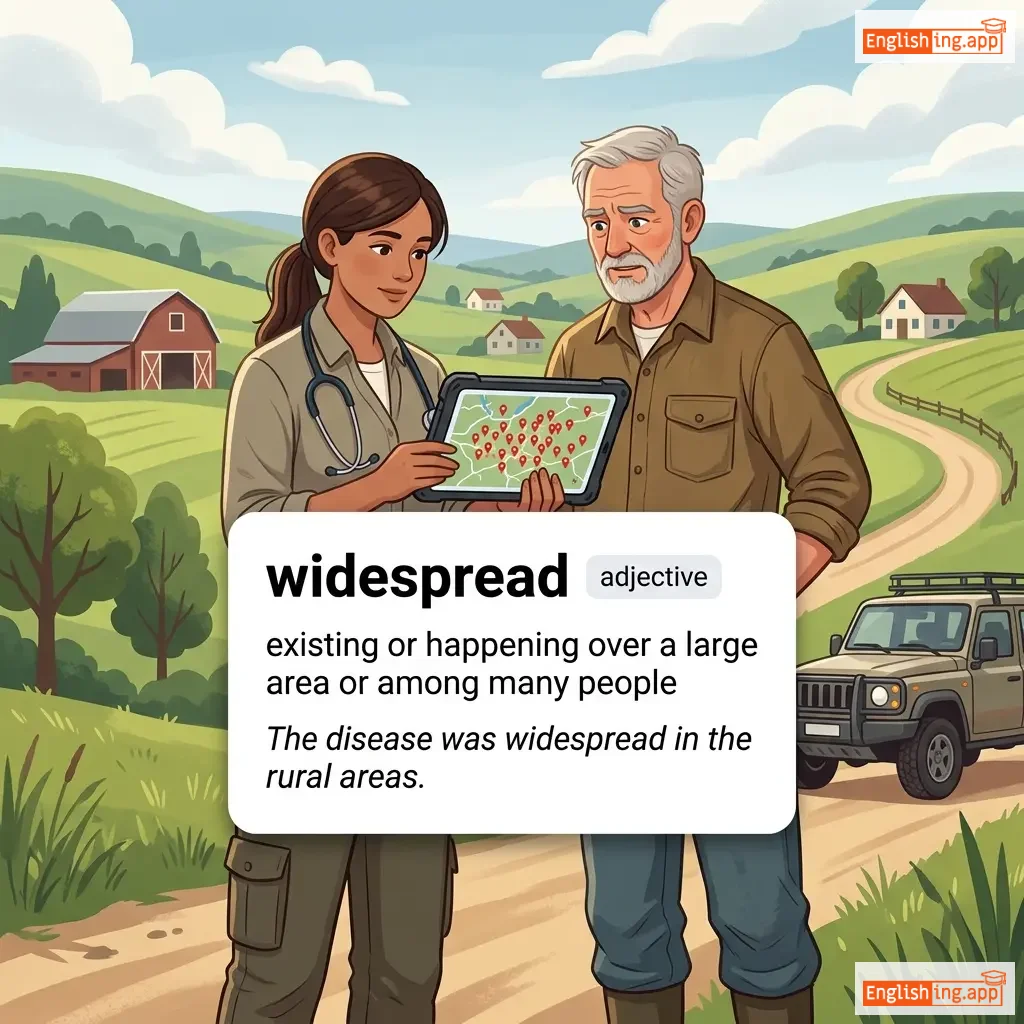
|
広範囲の
kōhan'i no
••••••
|
existing or happening in many places or among many people
••••••
|
There is widespread support for the new policy. |
新しい政策には広範囲な支持があります。
atarashī seisaku ni wa kōhan'i na shiji ga arimasu.
••••••
|
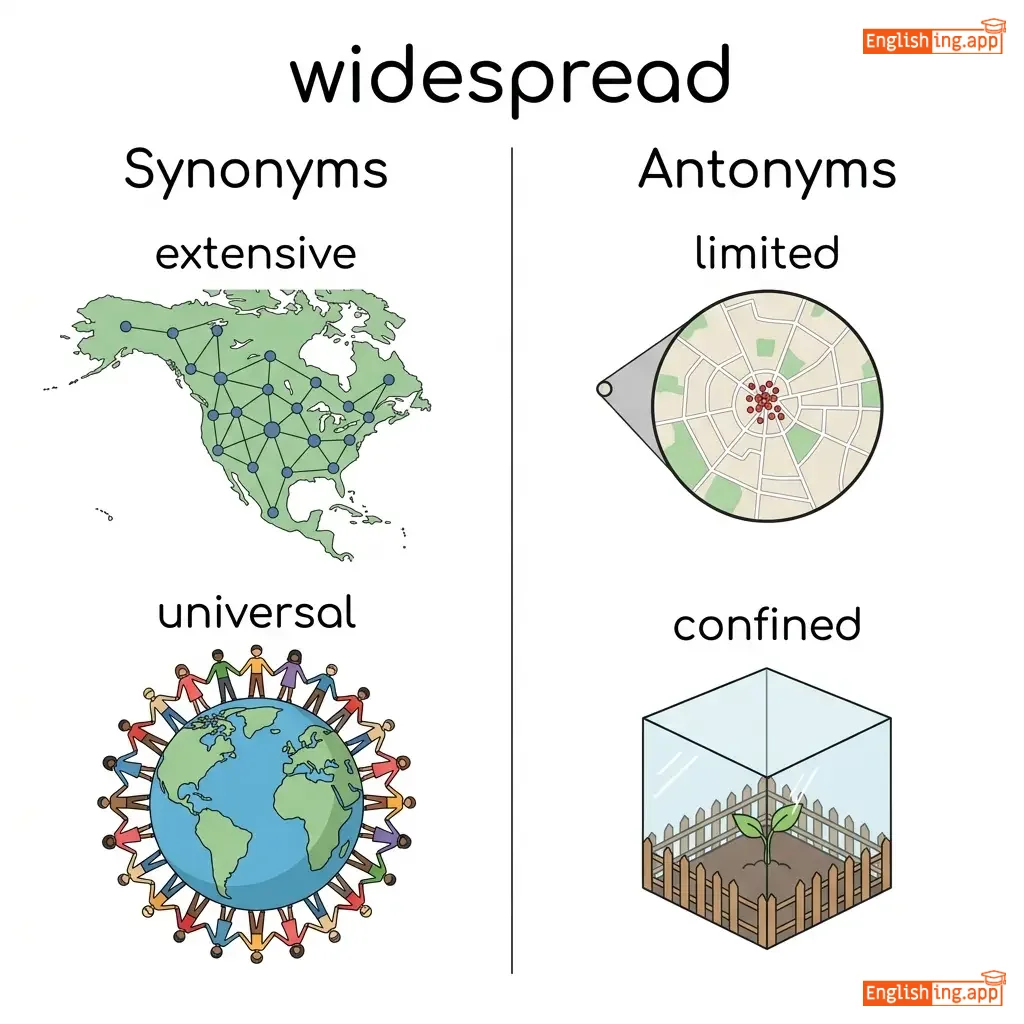
- •••••• | - •••••• | - •••••• |
extensive, prevalent, universal, common
••••••
|
limited, localized, restricted, rare
••••••
|
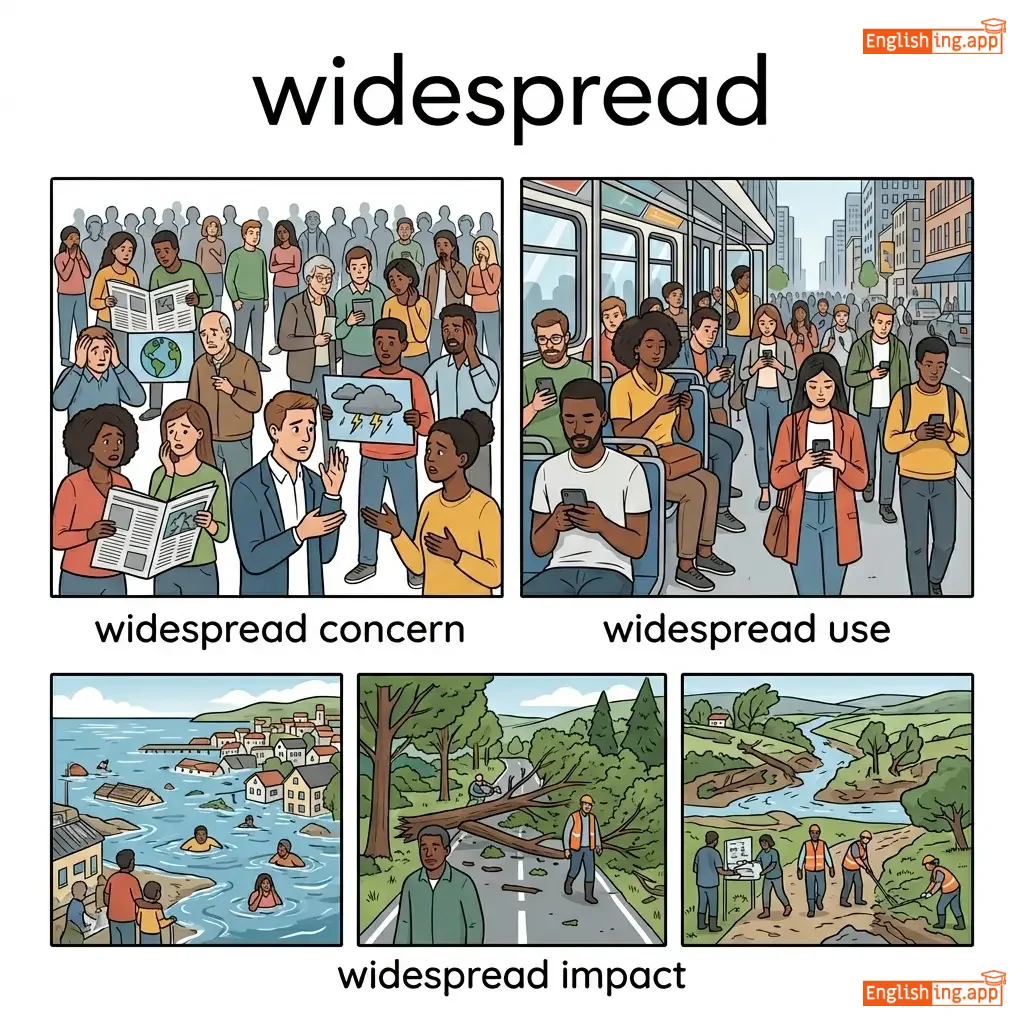
widespread support, widespread use, widespread damage, widespread belief
••••••
|
Japanese '広範囲の' corresponds to 'widespread'.
••••••
|

