The Captain Who Sailed Through Storms
Captain Ahmed は経験豊富な水夫で、carrier 船を操縦していました。彼の closest 夢は、coastal 地域にある century 年の古い航路を探検することでした。彼は自分の過去の航海の catalog を作成し、すべての詳細が compiled されていました。彼の乗組員は彼の決断が clearly 考え抜かれているので、彼を closely 追っていました。ある日、嵐が来て、みんなが緊張していました、いつも cartoons を見て笑っている者さえも。Ahmed は、生き残るためには certain 手順を踏む必要があることを知っていました。彼には chronic 背中の痛みがありましたが、それを乗組員には concealed していました。彼のリーダーシップには他の人々を鼓舞する clarity がありました。彼は伝統的なナビゲーション技術と現代的なナビゲーション技術を combine することに決めました。乗組員の中には近くの港に charter したい者もいましたが、Ahmed はそれは危険だと言いました。彼の計画は、この航海を尊厳を持って closure で終わらせることでした。嵐の中で、皆が怖がっていました、chicken カレーを作っていた料理人さえも。Ahmed は、これが自分の最も難しい挑戦であると conceded しましたが、諦めることはありませんでした。彼の勇気と経験が彼らを coastal 地域から安全に連れ出しました。最後に、彼は乗組員に confessed しました、彼も怖かったと、しかしリーダーシップとは強くいることだと言いました。彼の物語は伝説となり、若い水夫たちは彼をアイドルとして見ていました。
|
絵文字
|
単語 | Images | 翻訳 | 過去 | 過去分詞 | 三人称単数 | 動名詞 | 意味 | 例文 | 例文の翻訳 | 表現例 | 表現例の意味 | 表現例の翻訳 | 同義語 | 対義語 | コロケーション | ニーモニック |
|---|---|---|---|---|---|---|---|---|---|---|---|---|---|---|---|---|---|
|
🧑✈️
••••••
|
/ˈkæptɪn/
noun
(キャプテン)
••••••
|
- •••••• |
キャプテン
kyaputen
••••••
|
- •••••• | - •••••• | - •••••• | - •••••• |
the leader of a team, ship, or group
••••••
|
The captain led his team to victory. |
キャプテンはチームを勝利に導いた。
Kyaputen wa chiimu o shouri ni michibiita.
••••••
|
captain of industry |
a wealthy and powerful business leader
••••••
|
業界のキャプテン
gyoukai no kyaputen
••••••
|
commander, leader, chief, skipper
••••••
|
follower, subordinate
••••••
|
team captain, ship captain, army captain, captain of industry
••••••
|
キャプテンはチームを勝利に導く者、ビジネスでも同じだ!
••••••
|
|
🚚
••••••
|
/ˈkæriər/
noun
(キャリア)
••••••
|
- •••••• |
運送業者
unsou gyousha
••••••
|
- •••••• | - •••••• | - •••••• | - •••••• |
A person or thing that carries, transports, or conveys something; also an organization that provides transport services.
••••••
|
The airline is the largest carrier in the country. |
その航空会社は国で最も大きな運送業者です。
Sono koukō gaisha wa kuni de mottomo ōkina unsou gyousha desu.
••••••
|
- •••••• | - •••••• | - •••••• |
transporter, courier, hauler, deliverer
••••••
|
receiver, consumer
••••••
|
airline carrier, mail carrier, disease carrier, telecom carrier
••••••
|
Carrierは何かを運ぶ人や物。
••••••
|
|
🎨
••••••
|
/kɑːrˈtuːn/
noun
(カートゥーン)
••••••
|
- •••••• |
アニメーション
animēshon
••••••
|
- •••••• | - •••••• | - •••••• | - •••••• |
a humorous or animated drawing, especially one in newspapers or television
••••••
|
Children love watching cartoons on TV. |
子供たちはテレビでアニメを見るのが大好きです。
Kodomotachi wa terebi de animē o miru no ga daisuki desu.
••••••
|
- •••••• | - •••••• | - •••••• |
animation, comic, drawing, sketch, caricature
••••••
|
reality, live-action
••••••
|
cartoon show, cartoon character, cartoon series, funny cartoon
••••••
|
アニメーションはみんなをテレビで笑わせる絵だ!
••••••
|
|
📚
••••••
|
/ˈkætəlɔːɡ/
noun
(カタログ)
••••••
|
- •••••• |
カタログ
katarogu
••••••
|
cataloged
カタログされた
••••••
|
cataloged
カタログされた
••••••
|
catalogs
カタログします
••••••
|
cataloging
カタログする
••••••
|
a complete list of items, typically arranged systematically
••••••
|
The library provides an online catalog of all available books.
図書館はすべての利用可能な本のオンラインカタログを提供しています。
••••••
|
図書館はすべての利用可能な本のオンラインカタログを提供しています。
Toshokan wa subete no riyō kanōna hon no onrain katarogu o teikyō shiteimasu.
••••••
|
- •••••• | - •••••• | - •••••• |
list, register, directory, index, inventory
••••••
|
chaos, confusion
••••••
|
product catalog, library catalog, online catalog, sales catalog
••••••
|
カタログはリストです — 猫がすべてのアイテムをカタログに入れることを想像してください。
••••••
|
|
📆
••••••
|
/ˈsɛnʧəri/
noun
(senchuri)
••••••
|
- •••••• |
世紀
seiki
••••••
|
- •••••• | - •••••• | - •••••• | - •••••• |
A period of one hundred years.
••••••
|
The 20th century saw significant technological progress. |
20世紀は技術的な進歩が顕著であった。
20seiki wa gijutsuteki na shinpo ga kencho de atta.
••••••
|
turn of the century |
the beginning of a new century
••••••
|
世紀の変わり目
seiki no kawarime
••••••
|
hundred years, era, age, period
••••••
|
moment, instant, second
••••••
|
century old, 21st century, century mark, past century
••••••
|
世紀はCentury。日本の100年の歴史が一つの世紀。
••••••
|
|
✅
••••••
|
/ˈsɜːr.tən/
adjective
(サートゥン)
••••••
|
- •••••• |
確実な
kakujitsu na
••••••
|
- •••••• | - •••••• | - •••••• | - •••••• |
Known for sure; having no doubt.
••••••
|
I am certain that she will succeed.
アイ アム サートゥン ザット シー ウィル サクシード。
••••••
|
私は彼女が成功すると確信しています。
watashi wa kanojo ga seikou suru to kakushin shiteimasu.
••••••
|
for certain
フォー サートゥン
••••••
|
Without any doubt.
••••••
|
確かに
tashika ni
••••••
|
sure, confident, definite, assured, convinced
••••••
|
uncertain, doubtful, unsure
••••••
|
certain circumstances, certain degree, certain way, certain level
••••••
|
Certain sounds like 'サーティファイ', as in certified or assured.
••••••
|
|
📜
••••••
|
/ˈtʃɑːrtər/
noun/verb
(チャーター)
••••••
|
- •••••• |
チャーター / レンタル
chaataa / rentaru
••••••
|
chartered
チャータード
••••••
|
chartered
チャータード
••••••
|
charters
チャーターズ
••••••
|
chartering
チャータリング
••••••
|
a written document granting rights or privileges; to hire a vehicle or vessel for temporary use
••••••
|
The company decided to charter a bus for the trip.
その会社は旅行のためにバスをチャーターすることに決めました。
••••••
|
その会社は旅行のためにバスをチャーターすることに決めました。
Sono kaisha wa ryokou no tame ni basu o chaataa suru koto ni kimemashita.
••••••
|
charter flight
チャーターフライト
••••••
|
a flight hired for exclusive use rather than a scheduled service
••••••
|
チャーターフライト
chaataa furaito
••••••
|
license, permit, hire, lease, commission
••••••
|
prohibit, deny
••••••
|
charter flight, charter bus, charter school, royal charter
••••••
|
Charter は手紙📜 + レンタル、例: charter bus = バスをレンタルする
••••••
|
|
🐔
••••••
|
/ˈtʃɪkɪn/
noun
(チキン)
••••••
|
- •••••• |
鶏肉
toriniku
••••••
|
- •••••• | - •••••• | - •••••• | - •••••• |
a domestic bird kept for its eggs or meat
••••••
|
We had fried chicken for dinner.
夕食にフライドチキンを食べました。
••••••
|
夕食にフライドチキンを食べました。
Yushoku ni furaido chikin o tabemashita.
••••••
|
chicken out
怖がって何かをやめる
••••••
|
to decide not to do something because of fear
••••••
|
怖がって何かをやめる
kowagatte nanika o yameru
••••••
|
hen, fowl, poultry, rooster, chick
••••••
|
bravery, courage
••••••
|
fried chicken, roast chicken, chicken soup, chicken farm
••••••
|
Chickenは鶏肉を意味し、'chicken out'は怖がって何かをやめることを意味します。
••••••
|
|
⏳
••••••
|
/ˈkrɒnɪk/
adjective
(クロニック)
••••••
|
- •••••• |
慢性的
manseiteki
••••••
|
- •••••• | - •••••• | - •••••• | - •••••• |
Lasting for a long time or constantly recurring, often describing illness.
••••••
|
She suffers from chronic back pain.
彼女は慢性的な背中の痛みに悩まされています。
••••••
|
彼女は慢性的な背中の痛みに悩まされています。
Kanojo wa manseiteki na senaka no itami ni nayama sareteimasu.
••••••
|
chronic condition
慢性の状態
••••••
|
A long-lasting medical issue that persists over time.
••••••
|
慢性の状態
mansei no joutai
••••••
|
persistent, long-term, continual, constant, habitual
••••••
|
acute, temporary, short-term
••••••
|
chronic disease, chronic pain, chronic illness, chronic stress
••••••
|
Chronicは永続的、例えば消えない痛みのようなものです。
••••••
|
|
🔍
••••••
|
/ˈklærəti/
noun
(クレアリティ)
••••••
|
|
明確さ
meikakusa
••••••
|
- •••••• | - •••••• | - •••••• | - •••••• |
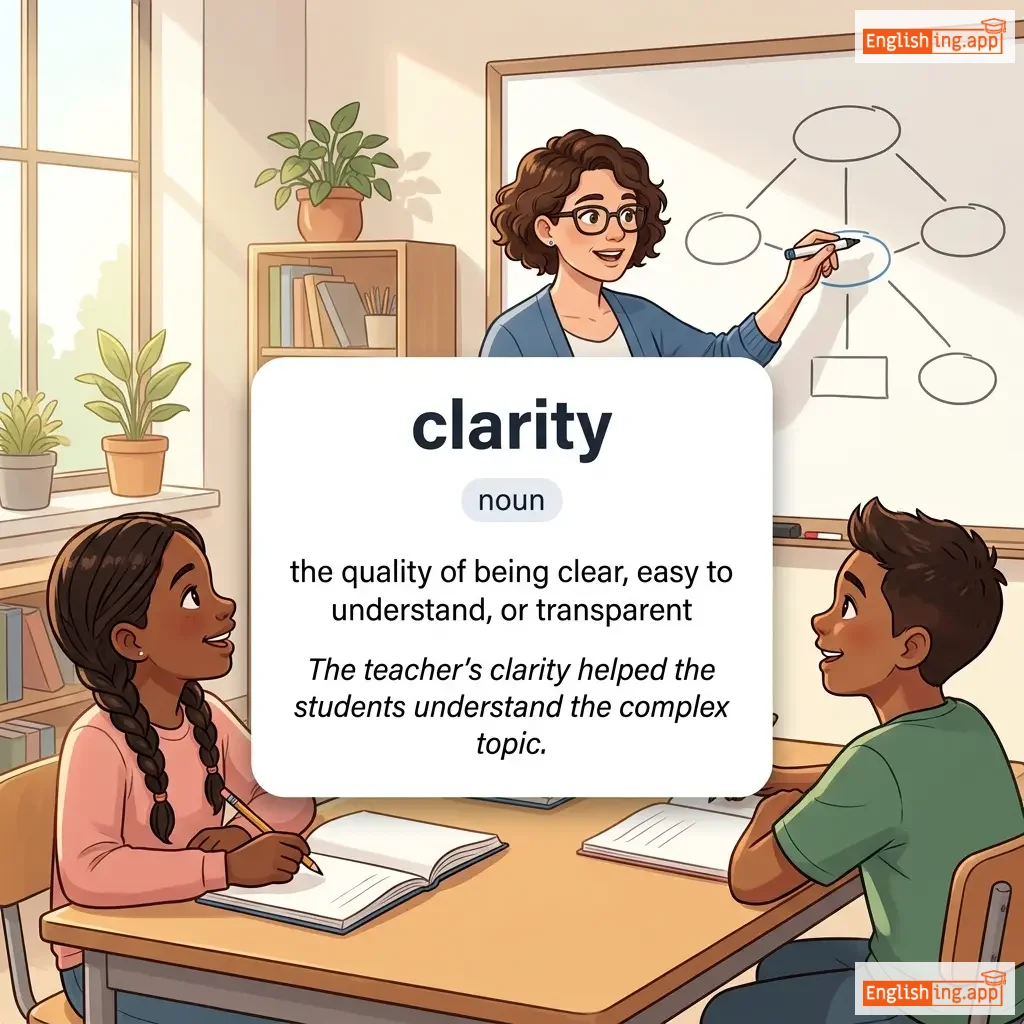
the quality of being clear, easy to understand, or transparent
••••••
|
The teacher's clarity helped the students understand the complex topic. |
先生の明確さは、生徒たちが複雑なテーマを理解するのを助けました。
Sensei no meikakusa wa, seito-tachi ga fukuzatsu na tēma o rikai suru no o tasukemashita.
••••••
|
crystal clarity |
complete and perfect clearness
••••••
|
クリスタルの明確さ
kurisutaru no meikakusa
••••••
|
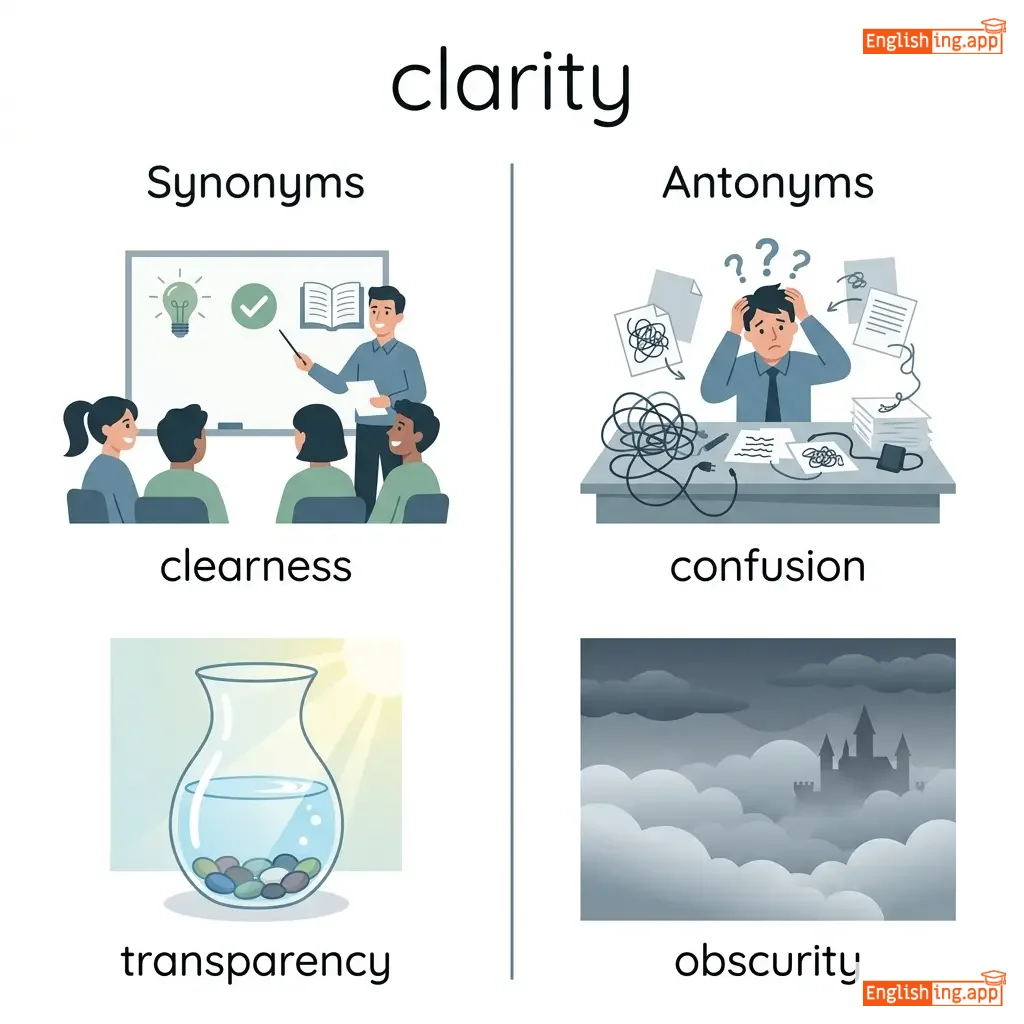
clearness, transparency, precision, lucidity, simplicity
••••••
|
confusion, obscurity, vagueness
••••••
|
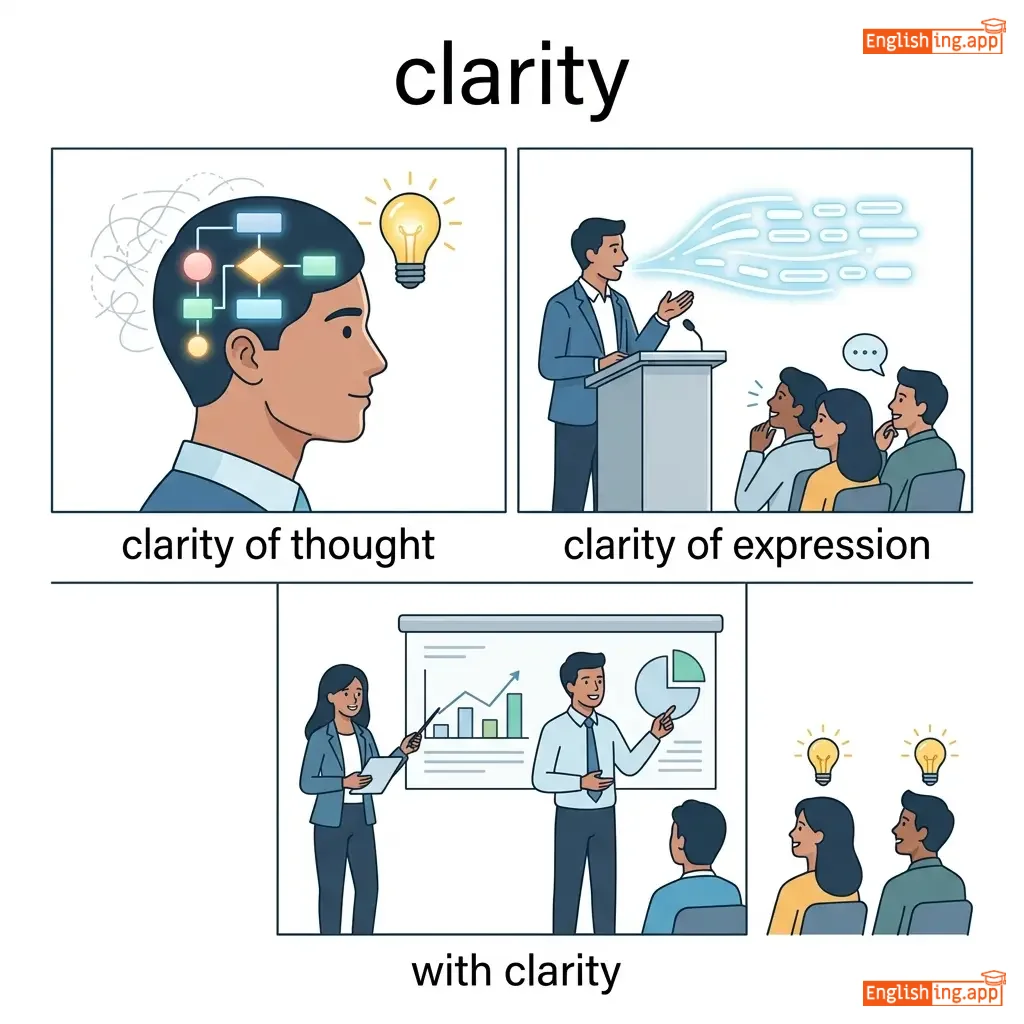
clarity of thought, clarity of expression, with clarity, lack of clarity
••••••
|
Clarity = clear + ity → 明確または透明
••••••
|
|
🔍
••••••
|
/ˈklɪrli/
adverb
(kurirī)
••••••
|
- •••••• |
はっきりと
hakkiri to
••••••
|
- •••••• | - •••••• | - •••••• | - •••••• |
In a way that is easy to perceive, understand, or see.
••••••
|
She spoke clearly so that everyone could understand. |
彼女はみんなが理解できるように、はっきりと話した。
Kanojo wa minna ga rikai dekiru yō ni, hakkiri to hanashita.
••••••
|
- •••••• | - •••••• | - •••••• |
plainly, distinctly, obviously, transparently
••••••
|
vaguely, unclearly
••••••
|
speak clearly, see clearly, think clearly, explain clearly
••••••
|
Clearly はっきりと 🔍 — 'はっきりと話すと、皆がはっきりと理解します。'
••••••
|
|
🔍
••••••
|
/ˈkloʊsli/
adverb
(ˈhæpinəs)
••••••
|
- •••••• |
幸せ
shiawase
••••••
|
- •••••• | - •••••• | - •••••• | - •••••• |
in a way that is very near in space, time, or relationship; carefully and attentively
••••••
|
The detective examined the evidence closely. |
彼女は賞を受け取ったとき、自分の幸せを隠すことができなかった。
Kanojo wa shō o uketotta toki, jibun no shiawase o kakusu koto ga dekinakatta.
••••••
|
watch closely |
to observe with great attention
••••••
|
幸せの追求
shiawase no tsuikyū
••••••
|
carefully, attentively, nearly, intently, minutely
••••••
|
carelessly, distantly
••••••
|
closely related, watch closely, follow closely, work closely
••••••
|
幸せは‘しあわせ’のように、すべてを喜ばせるものです!
••••••
|
|
❤️
••••••
|
/ˈkloʊ.sɪst/
adjective
(クローセスト)
••••••
|
- •••••• |
最も近い
mottomo chikai
••••••
|
- •••••• | - •••••• | - •••••• | - •••••• |
nearest in distance or relationship
••••••
|
He is my closest friend. |
彼は私の最も親しい友人です。
Kare wa watashi no mottomo shitashī yūjin desu.
••••••
|
close call |
a narrow escape from danger or disaster
••••••
|
ぎりぎりの脱出
girigiri no dasshutsu
••••••
|
nearest, dearest, intimate, best, adjoining
••••••
|
farthest, distant
••••••
|
closest friend, closest relative, closest match, closest point
••••••
|
Closestは最も近い – あなたのclosest friendはいつもあなたのそばにいます!
••••••
|
|
❌
••••••
|
/ˈkloʊʒər/
noun
(kurouzhaa)
••••••
|
- •••••• |
閉鎖
heisa
••••••
|
- •••••• | - •••••• | - •••••• | - •••••• |
the action or process of closing something, or the sense of finality or resolution.
••••••
|
The closure of the company left many employees without jobs.
会社の閉鎖により、多くの従業員が職を失いました。
••••••
|
会社の閉鎖により、多くの従業員が職を失いました。
Kaisha no heisa ni yori, ooku no juugyoin ga shoku o ushinai mashita.
••••••
|
- •••••• | - •••••• | - •••••• |
closure, termination, end, conclusion
••••••
|
opening, start, beginning
••••••
|
business closure, closure of a chapter, closure of an event
••••••
|
In Japanese, 'heisa' means closure, like sealing things off.
••••••
|
|
🌊
••••••
|
/ˈkəʊstəl/
adjective
(コースタル)
••••••
|
- •••••• |
海岸の
kaigan no
••••••
|
- •••••• | - •••••• | - •••••• | - •••••• |
relating to or near a coast or shoreline
••••••
|
They built a resort in a coastal area. |
彼らは海岸の地域にリゾートを建てました。
Karera wa kaigan no chiiki ni rizōto o tatemashita.
••••••
|
- •••••• | - •••••• | - •••••• |
marine, seaside, shore, littoral, oceanfront
••••••
|
inland, interior
••••••
|
coastal area, coastal city, coastal erosion, coastal region
••••••
|
Coastalは海に関連している意味 — 海岸の 🏖️
••••••
|
|
⚙️
••••••
|
/kəmˈbaɪn/
verb
(コンバイン)
••••••
|
- •••••• |
結合する
ketsugou suru
••••••
|
combined
コンバインド
••••••
|
combined
コンバインド
••••••
|
combines
コンバインズ
••••••
|
combining
コンバイニング
••••••
|
To bring two or more things together to form a single unit.
••••••
|
They decided to combine their resources for the project.
彼らはプロジェクトのためにリソースを結合することに決めました。
••••••
|
彼らはプロジェクトのためにリソースを結合することに決めました。
Karera wa purojekuto no tame ni risōsu o ketsugou suru koto ni kimemashita.
••••••
|
combine forces
力を合わせる
••••••
|
To work together with others towards a common goal.
••••••
|
力を合わせる
Chikara o awaseru
••••••
|
merge, join, unite, blend, fuse
••••••
|
separate, split, divide
••••••
|
combine efforts, combine forces, combine ingredients, combine ideas
••••••
|
Come + Bine = 結合する
••••••
|
|
📝
••••••
|
/kəmˈpaɪl/
verb
(コンパイル)
••••••
|
- •••••• |
コンパイルする
konpairu suru
••••••
|
compiled
コンパイルド
••••••
|
compiled
コンパイルド
••••••
|
compiles
コンパイルズ
••••••
|
compiling
コンパイリング
••••••
|
to collect information or material and put it together in a list, report, or book
••••••
|
She compiled the research data into a detailed report.
彼女は調査データを詳細なレポートにコンパイルしました。
••••••
|
彼女は調査データを詳細なレポートにコンパイルしました。
Kanojo wa chōsa dēta o shōsai na repōto ni konpairu shimashita.
••••••
|
compile a list
リストをコンパイルする
••••••
|
to gather and arrange items in a list format
••••••
|
リストをコンパイルする
risuto o konpairu suru
••••••
|
collect, assemble, gather, organize, arrange
••••••
|
scatter, disperse
••••••
|
compile data, compile report, compile information, compile list
••••••
|
Compileは情報を集めて整理すること — まるでコンピュータのコンパイラがデータを一つにまとめるように。
••••••
|
|
🤫
••••••
|
/kənˈsiːl/
verb
(コンシール)
••••••
|
- •••••• |
隠す
kakusu
••••••
|
concealed
コンシールド
••••••
|
concealed
コンシールド
••••••
|
conceals
コンシールズ
••••••
|
concealing
コンシーリング
••••••
|
to hide something or keep it secret
••••••
|
He tried to conceal his disappointment behind a smile.
ヒー トライド トゥ コンシール ヒズ ディサポインメント ビハインド ア スマイル。
••••••
|
彼は微笑みの背後に自分の失望を隠そうとした。
Kare wa bishoumi no haigo ni jibun no shitsubou o kakusou to shita.
••••••
|
conceal the truth
コンシール ザ トゥルース
••••••
|
to hide or withhold the truth from others
••••••
|
真実を隠す
shinjitsu o kakusu
••••••
|
hide, cover, disguise, mask, secrete
••••••
|
reveal, expose, uncover
••••••
|
conceal identity, conceal weapon, conceal fact, conceal smile
••••••
|
隠すのは秘密を箱に入れるようなもの
••••••
|
|
🙇
••••••
|
/kənˈsiːd/
verb
••••••
|
- •••••• | - •••••• |
conceded
••••••
|
conceded
••••••
|
concedes
••••••
|
conceding
••••••
|
to admit something is true or valid, often reluctantly
••••••
|
She finally conceded that she was wrong. |
- •••••• |
concede defeat |
to admit that you have lost
••••••
|
- •••••• |
admit, acknowledge, grant, allow, yield
••••••
|
deny, refuse, reject
••••••
|
concede defeat, concede point, concede ground, concede goal
••••••
|
No •••••• |
|
🙏
••••••
|
/kənˈfɛs/
verb
(コンフェス)
••••••
|

|
告白する
kokuhaku suru
••••••
|
confessed
コンフェスド
••••••
|
confessed
コンフェスド
••••••
|
confesses
コンフェスズ
••••••
|
confessing
コンフェッシング
••••••
|
to admit that you have done something wrong or illegal
••••••
|
He confessed that he had stolen the money.
彼はお金を盗んだことを告白した。
••••••
|
彼はお金を盗んだことを告白した。
Kare wa okane o nusunda koto o kokuhaku shita.
••••••
|
confess one's sins
罪を告白する
••••••
|
to admit to having done wrong, often in a religious context
••••••
|
罪を告白する
tsumi o kokuhaku suru
••••••
|
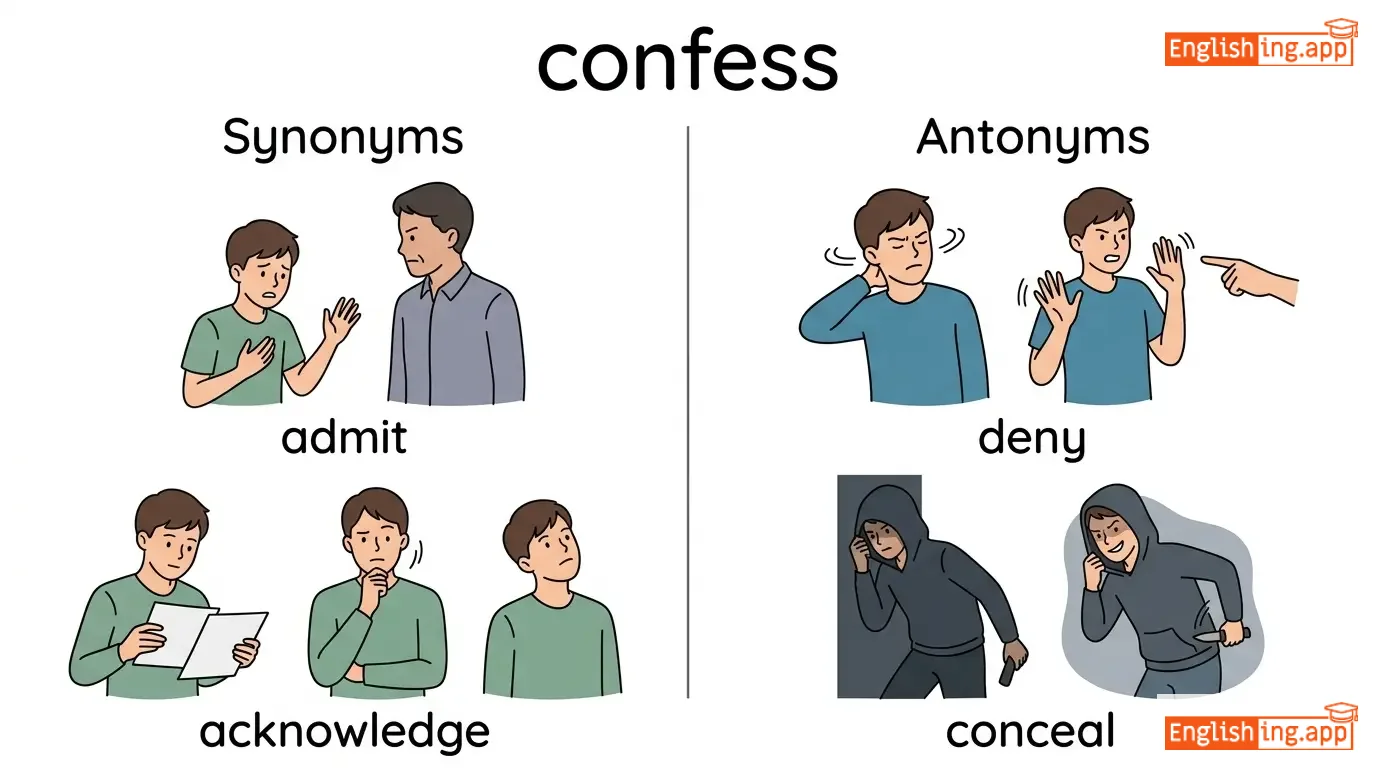
admit, acknowledge, disclose, reveal
••••••
|
deny, conceal
••••••
|
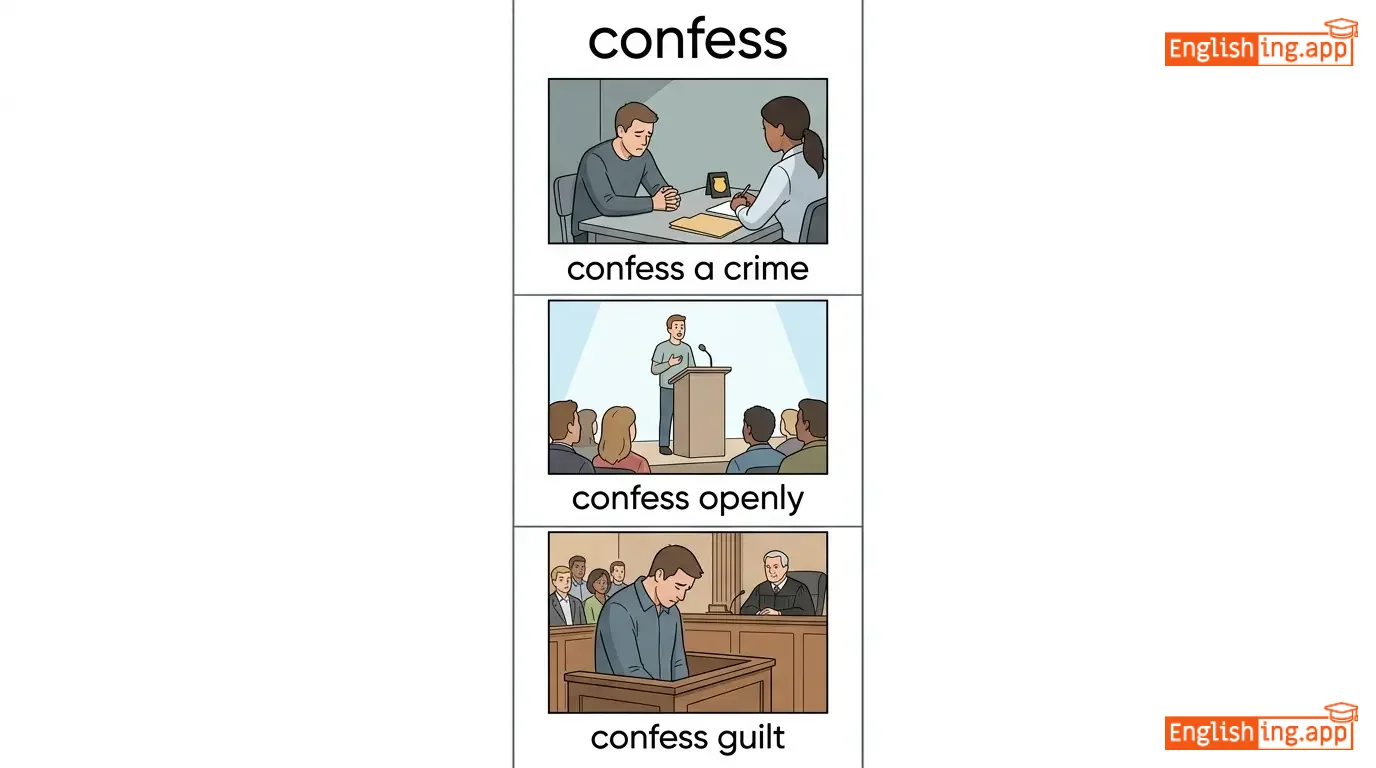
confess a crime, confess openly, confess guilt, confess sins
••••••
|
告白することで心が軽くなる。
••••••
|

