वोकैबुलरीज

इंग्लिश वोकैबुलरी डिस्कवर, लर्न और मास्टर करें

🙅‍♂️💵

tightwad (тайтвэд)

noun C2
/ˈtaɪtwɒd/
скряга (skryaga)

a person who is unwilling to spend money; a miser

"Everyone calls him a tightwad because he never buys gifts."

"Все называют его скрягой, потому что он никогда не покупает подарки." (Vse nazyvayut ego skryagoy, potomu chto on nikogda ne pokupayet podarki.)
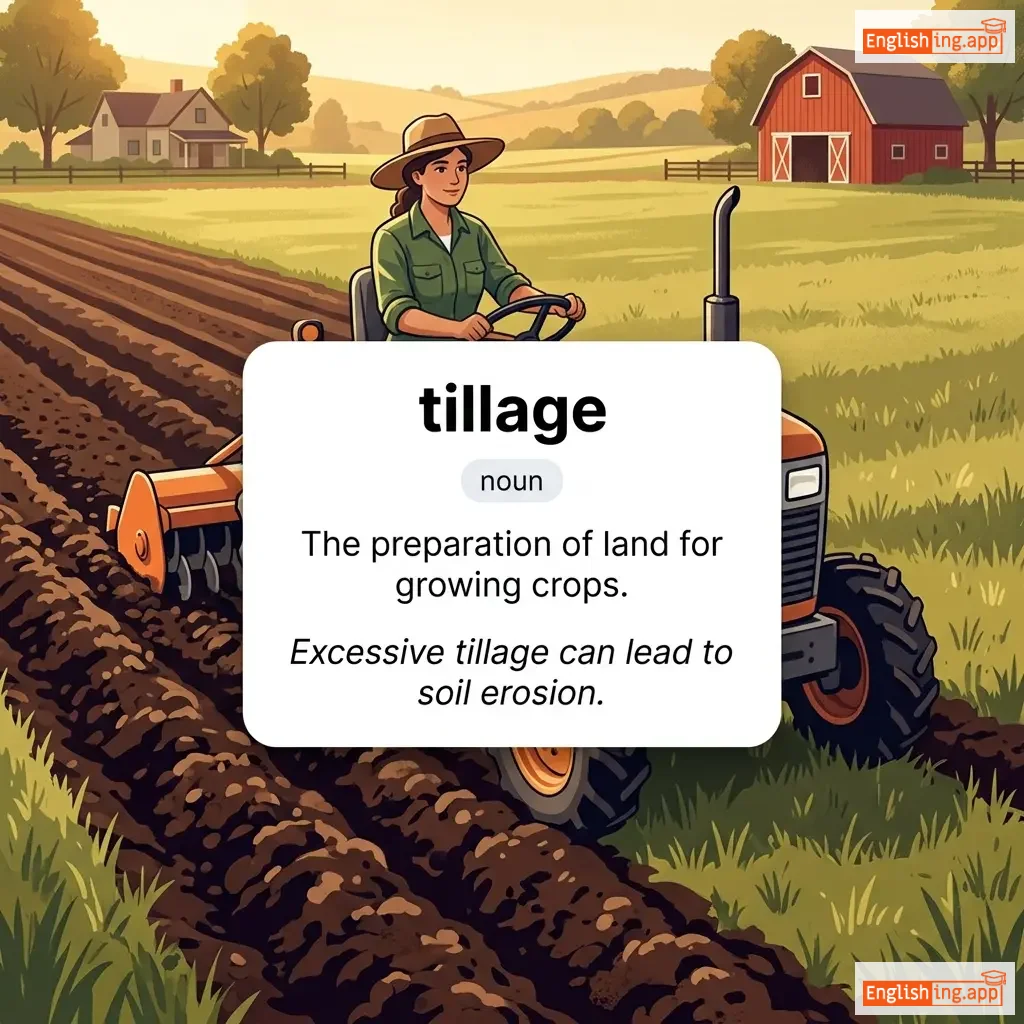
tillage definition card — visual illustration of the meaning
noun C2
ˈtɪl.ɪdʒ
обработка почвы (obrabotka pochvy)

The preparation of land for growing crops.

"Excessive tillage can lead to soil erosion."

"Чрезмерная обработка почвы может привести к эрозии почвы." (Chrezmernyaya obrabotka pochvy mozhet privesti k erozzii pochvy.)
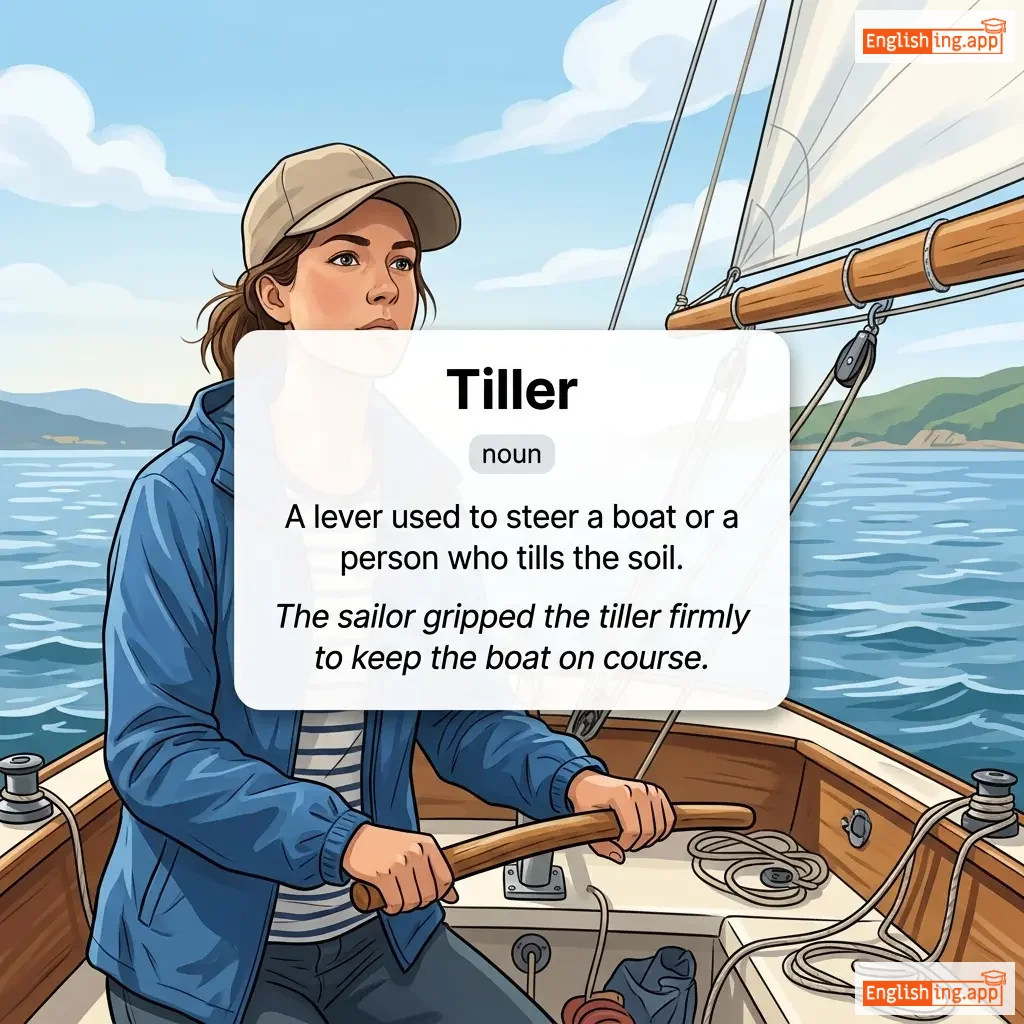
Tiller definition card — visual illustration of the meaning
noun C2
/ˈtɪlər/
руль или человек, который обрабатывает землю (rul' ili chelovek, kotoryy obrabotayet zemlyu)

A lever used to steer a boat or a person who tills the soil.

"The sailor gripped the tiller firmly to keep the boat on course."

"Моряк крепко держал руль, чтобы держать лодку на курсе." (Moryak krepko derzhal rul', chtoby derzhat' lodku na kursye.)
noun C2
/tɪlθ/
состояние почвы (пригодность для посадки растений) (sostoyanie pochvy (prigodnost dlya posadki rasteniy))

The physical condition of soil in relation to its suitability for planting crops.

"The farmer checked the soil's tilth before planting the seeds."

"Фермер проверил состояние почвы перед посадкой семян." (Fermer proveryl sostoyanie pochvy pered posadkoy semyan.)
noun C2
/ˈtæmbər/ or /ˈtɪmbər/
тембр (tembr)

The character or quality of a musical sound or voice as distinct from its pitch and intensity.

"Her voice had a warm timbre that soothed the audience."

"Её голос имел тёплый тембр, который успокаивал аудиторию." (Yeyo golos imel tyoplyy tembr, kotoryy uspokaval auditoriyu.)
adjective C2
/ˈtaɪmwɔːrn/
потёртый временем (potyortyy vremyem)

Worn or impaired by age; old and used many times.

"The timeworn house carried a sense of history and nostalgia."

"Потёртый временем дом несло чувство истории и ностальгии." (Potyortyy vremyem dom neslo chuvstvo istorii i nostalgia.)
adjective C2
/ˈtɪmərəs/
робкий (robkiy)

showing or suffering from nervousness, fear, or lack of confidence

"The timorous student hesitated to ask the teacher a question."

"Робкий студент колебался, чтобы задать вопрос учителю." (Robkiy student kolebalsya, chtoby zadat' vopros uchitelyu.)
noun C2
/ˈtɪŋktʃər/
легкий след, лекарство, приготовленное растворением лекарства в алкоголе (legkiy sled, lekarstvo, prigotovlennoe rastvoreniyem lekarstva v alkogole)

a slight trace of something; a medicine made by dissolving a drug in alcohol

"There was a tincture of sadness in her smile."

"В её улыбке была лёгкая нотка грусти." (V yey ulybke byla lyogkaya notka grusti.)
verb C2
/ˈtɪpəl/
пить (pit)

to drink alcohol, especially regularly or in small amounts

"He likes to tipple at the local pub after work."

"Он любит пить в местном пабе после работы." (On lyubit pit' v mestnom pabe posle raboty.)
noun C2
/taɪð/
десятина (desyatina)

A tenth part of one’s income or produce, often given as a religious offering.

"He gave a tithe of his earnings to the church."

"Он пожертвовал десятую часть своего дохода церкви." (On pozhertvoval desyatuyu chast' svoego dokhoda tserkvi.)
verb C2
/ˈtɪtəleɪt/
возбуждать (vozzbuzhdat)

To excite or amuse, especially in a slightly sexual or playful way.

"The comedian's jokes titillated the audience."

"Шутки комика возбуждали публику." (Shutki komika vozzbuzhdali publiku.)
verb C2
/ˈtɪtər/
тихо хихикать (tikho khikhikat)

to laugh in a quiet, nervous, or restrained way

"The students began to titter when the projector froze."

"Студенты начали тихо хихикать, когда проектор завис." (Studenty nachali tikho khikhikat, kogda proyektor zavis.)
adjective C2
/ˈtɪtjələr/
титуляр (titulyar)

holding a title or position in name only without real power; relating to the title of a work

"She is the titular head of the committee, but decisions are made by the coordinator."

"Она титулярный глава комитета, но решения принимаются координатором." (Ona titularnyy glava komiteta, no resheniya priniimayutsya koordinatorom.)
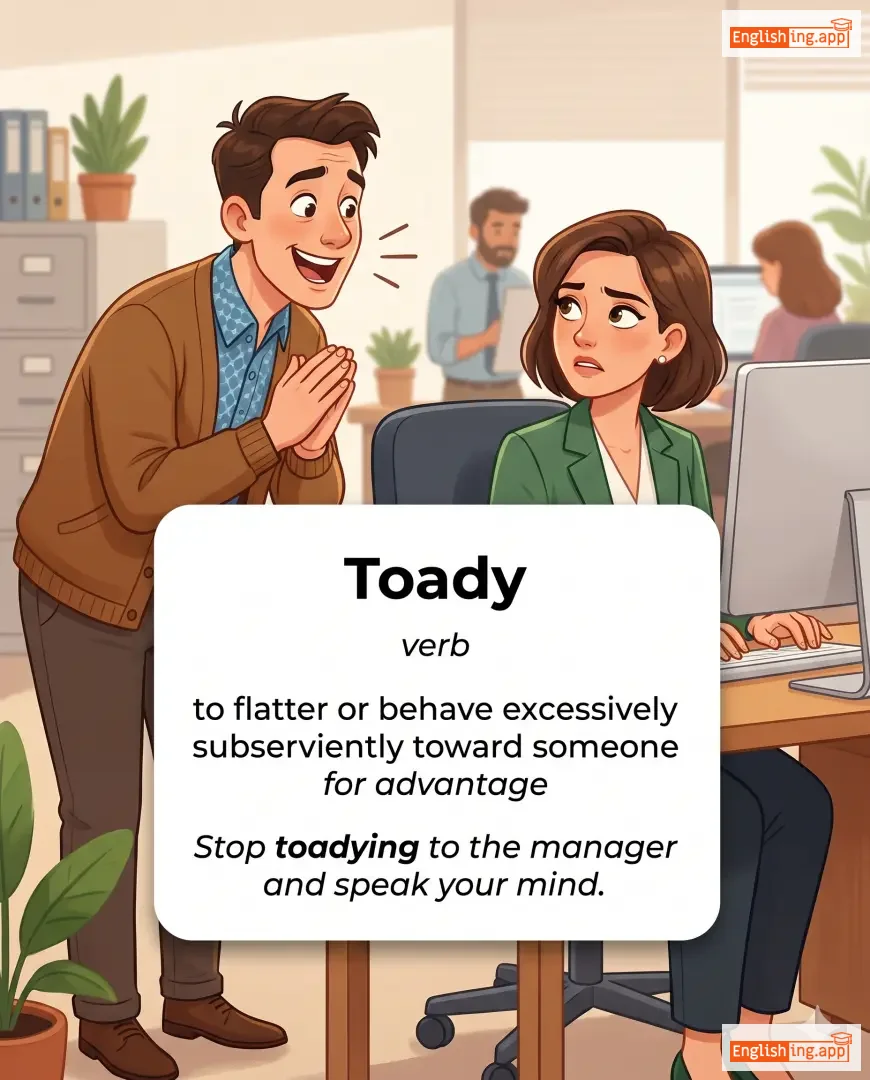
Toady definition card — visual illustration of the meaning
🙇‍♂️

Toady

verb C2
/ˈtoʊdi/

to flatter or behave excessively subserviently toward someone for advantage

"Stop toadying to the manager and speak your mind."

noun C2
/ˈtɒksɪn/
тревожный колокол (trevoznyy kolokol)

an alarm bell or signal; a warning that something bad is about to happen

"The data breach sounded a tocsin for stricter security."

"Утечка данных прозвучала как тревожный колокол для ужесточения безопасности." (Utechka dannykh prozvuchala kak trevoznyy kolokol dlya uzheshcheniya bezopasnosti.)
adjective C2
/ˈtɔɪl.səm/
трудный (trudnyy)

Involving hard or exhausting work; laborious.

"The workers had a toilsome day in the hot sun."

"Рабочие провели трудный день на жарком солнце." (Rabochie proveli trudnyy den' na zharkom solntse.)
adjective C2
/tɒnˈsɔːriəl/
относящийся к парикмахеру (otnosyashchiesya k parikmakheru)

relating to barbers or hairdressing

"The town's new barber offered a wide range of tonsorial services."

"Новый парикмахер города предложил широкий ассортимент парикмахерских услуг." (Novyy parikmakher goroda predlozhil shirokiy assortiment parikmakherskikh uslug.)
noun C2
/ˈtɒnʃər/
тону́зура (tonuzura)

the practice of shaving or cutting the hair on the scalp, especially in a religious context

"The monk received his tonsure as part of his religious initiation."

"Монах получил свою тонзуру как часть своей религиозной инициации." (Monakh poluchil svoju tonuzuru kak chast' svoej religioznoj initsiatsii.)
adjective C2
/ˈtɔːrpɪd/
вялый (torpid)

Mentally or physically inactive; sluggish or lethargic.

"After the long hike, he felt torpid and unmotivated."

"После долгого похода он почувствовал себя вялым и безмотивационным." (Posle dolgogo pokhoda on pochuvstvoval sebya vyalym i bezmotivatsionnym.)
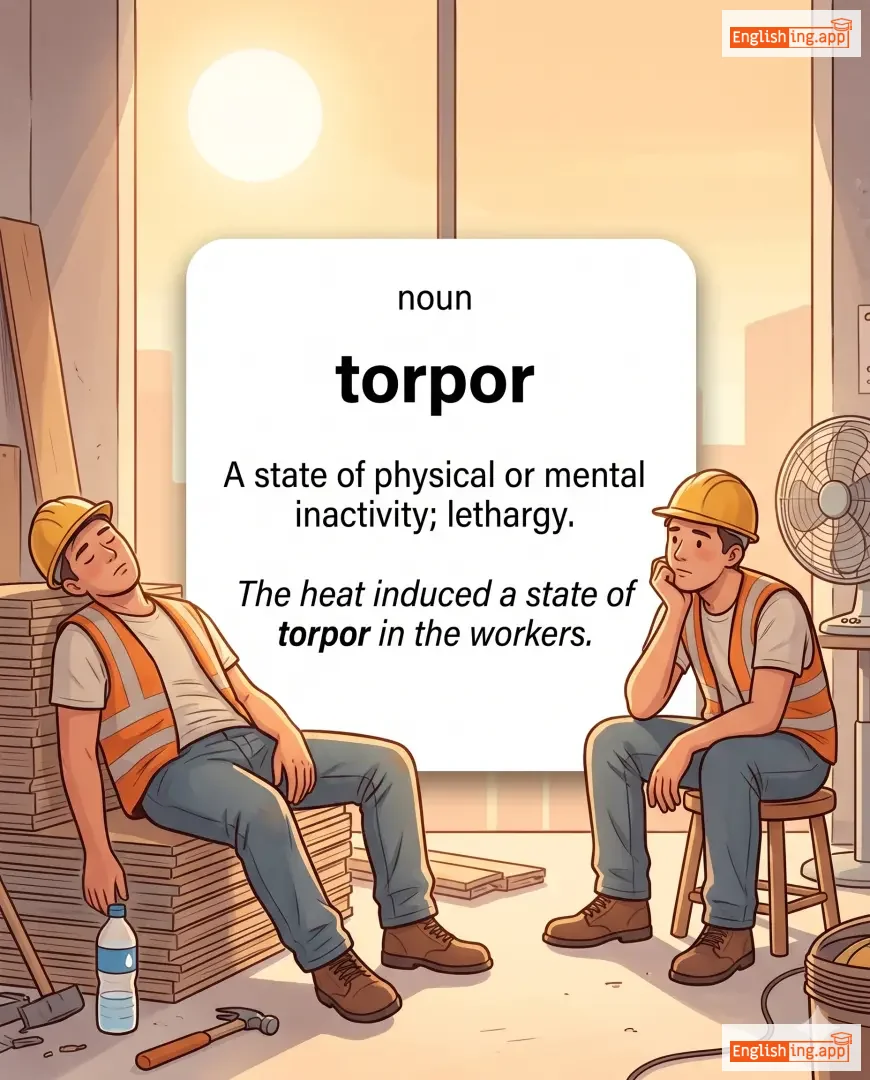
torpor definition card — visual illustration of the meaning
noun C2
/ˈtɔːrpər/
летаргия (torpor)

A state of physical or mental inactivity; lethargy.

"The heat induced a state of torpor in the workers."

"Жара вызвала состояние летаргии у рабочих." (Zhara vyzvala sostoyanie letargii u rabochikh.)
adjective C2
/ˈtɔːrʃəs/
незаконный поступок (nezakonnyy postupok)

Relating to or involving a wrongful act leading to legal liability.

"The company was found guilty of tortious interference with contracts."

"Компания была признана виновной в незаконном вмешательстве в контракты." (Kompaniya byla priznana vinovnoj v nezakonnoe vmeshatel'stve v kontrakty.)
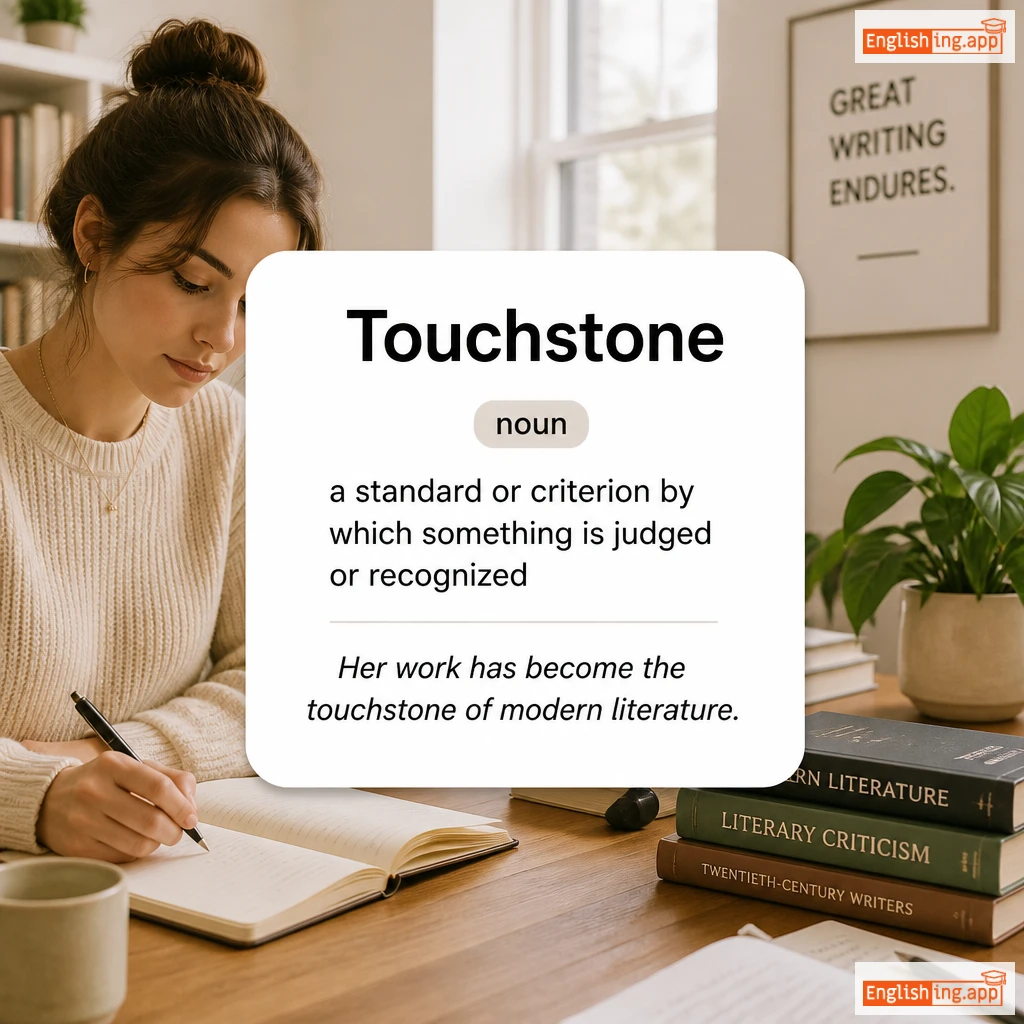
Touchstone definition card — visual illustration of the meaning
noun C2
/ˈtʌtʃstoʊn/
критерий (kriteriy)

a standard or criterion by which something is judged or recognized

"Her work has become the touchstone of modern literature."

"Её работа стала отправной точкой для современной литературы." (Eyo rabota stala otpravnyy tochkoy dlya sovremennoy literatury.)
noun C2
/ˈtʊrnɪkɪt/
жгут (zhgut)

a device used to stop bleeding by compressing blood vessels

"The medic applied a tourniquet to stop the bleeding."

"Медик наложил жгут, чтобы остановить кровотечение." (Medik nalozhil zhgut, chtoby ostanovit' krovotechenie.)
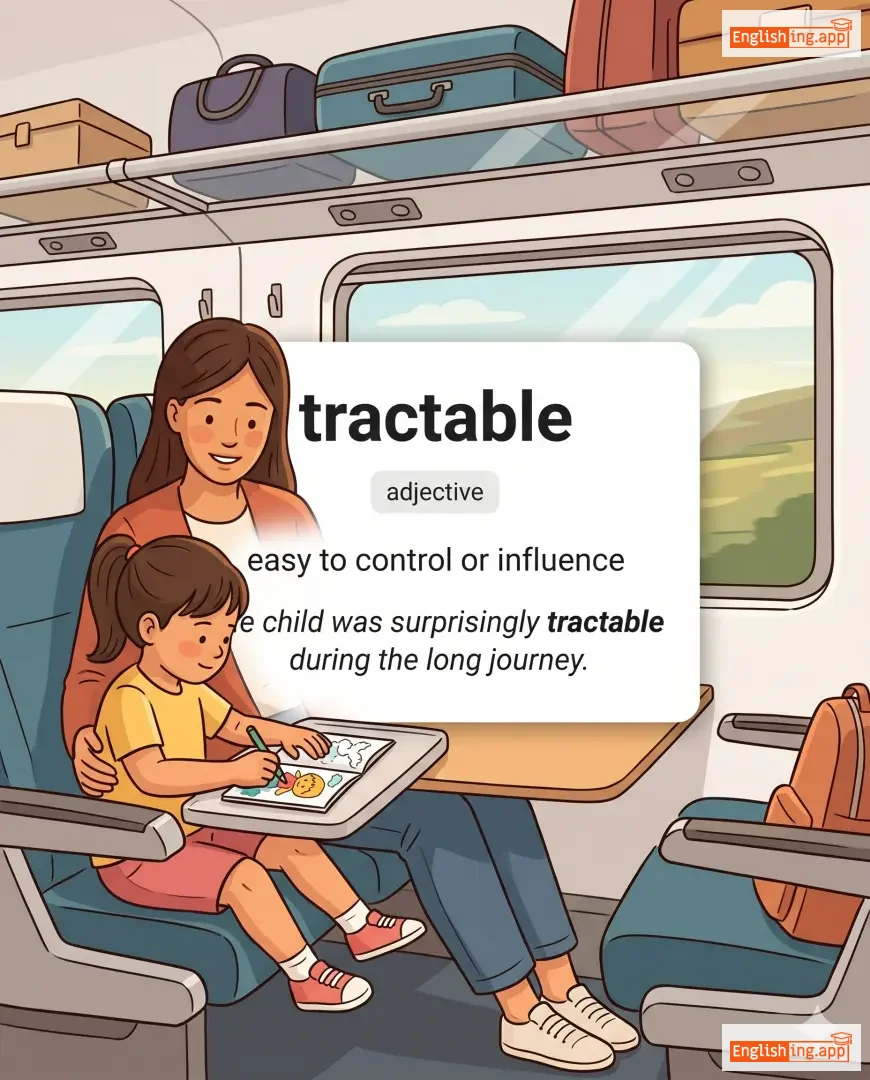
tractable definition card — visual illustration of the meaning
adjective C2
/ˈtræktəbəl/
легко контролируемый или поддающийся влиянию (legko kontroliruemyy ili poddayushchiesya vliyaniyu)

easy to control or influence

"The child was surprisingly tractable during the long journey."

"Ребёнок был удивительно послушным во время долгого путешествия." (Rebyonok byl udivitel'no poslušnoy vo vremya dolgogo puteshestviya.)
verb C2
/trəˈdjuːs/
клеветать (klevetat)

To speak badly of someone or tell lies to damage their reputation.

"He was furious when he found out that his rivals had traduced him."

"Он был в ярости, когда узнал, что его соперники его оклеветали." (On byl v yarosti, kogda uznal, chto ego sooperniki ego oklevetali.)
noun, verb C2
/ˈtræməl/
ограничение (ogranichenie)

A restriction or impediment to freedom of action; to restrict.

"The strict rules trammel the creativity of the students."

"Жесткие правила ограничивают креативность студентов." (Zhestkiye pravila ogranichivayut kreativity studentov.)
adjective C2
/trænzˈæl.paɪn/
за пределами Альп (za predelami Al'p)

situated beyond or across the Alps, especially from the viewpoint of Italy

"The Romans referred to France as Transalpine Gaul."

"Римляне называли Францию Транзальпийской Галией." (Rimlyane nazyvali Frantsiyu Transalpijskoy Galiyej.)
noun C2
/ˌtrænsfəˈriː/
перемещенный (peremeshchennyy)

A person to whom a right, property, or responsibility is transferred.

"The transferee must sign the contract before taking ownership."

"Перемещенный должен подписать контракт перед тем, как получить право собственности." (Peremeshchennyy dolzhen podpisat' kontrakt pered tem, kak poluchit' pravo sobstvennosti.)
verb C2
/trænsˈfɪɡjʊər/
преобразовать (preobrazovat)

To transform the outward appearance or form, often in a way that elevates or glorifies.

"The artist managed to transfigure simple clay into a beautiful sculpture."

"Художник сумел преобразовать простую глину в красивую скульптуру." (Kudozhnik sumel preobrazovat prostuyu glinu v krasivuyu skul'pturu.)
verb C2
/trænsˈfjuːz/

to transfer blood or another fluid into a vein or body part; to instill a quality or idea into someone or something

"The doctor had to transfuse blood into the patient after the surgery."

adjective C2
/trænsˈfjuːzəbl̩/
трансфузируемый (transfuziruemyy)

capable of being transfused, especially referring to blood or fluids

"Only transfusible blood types are used in the hospital."

"Только трансфузируемые группы крови используются в больнице." (Tol'ko transfuziruemye gruppy krovi ispol'zuyutsya v bol'nitse.)
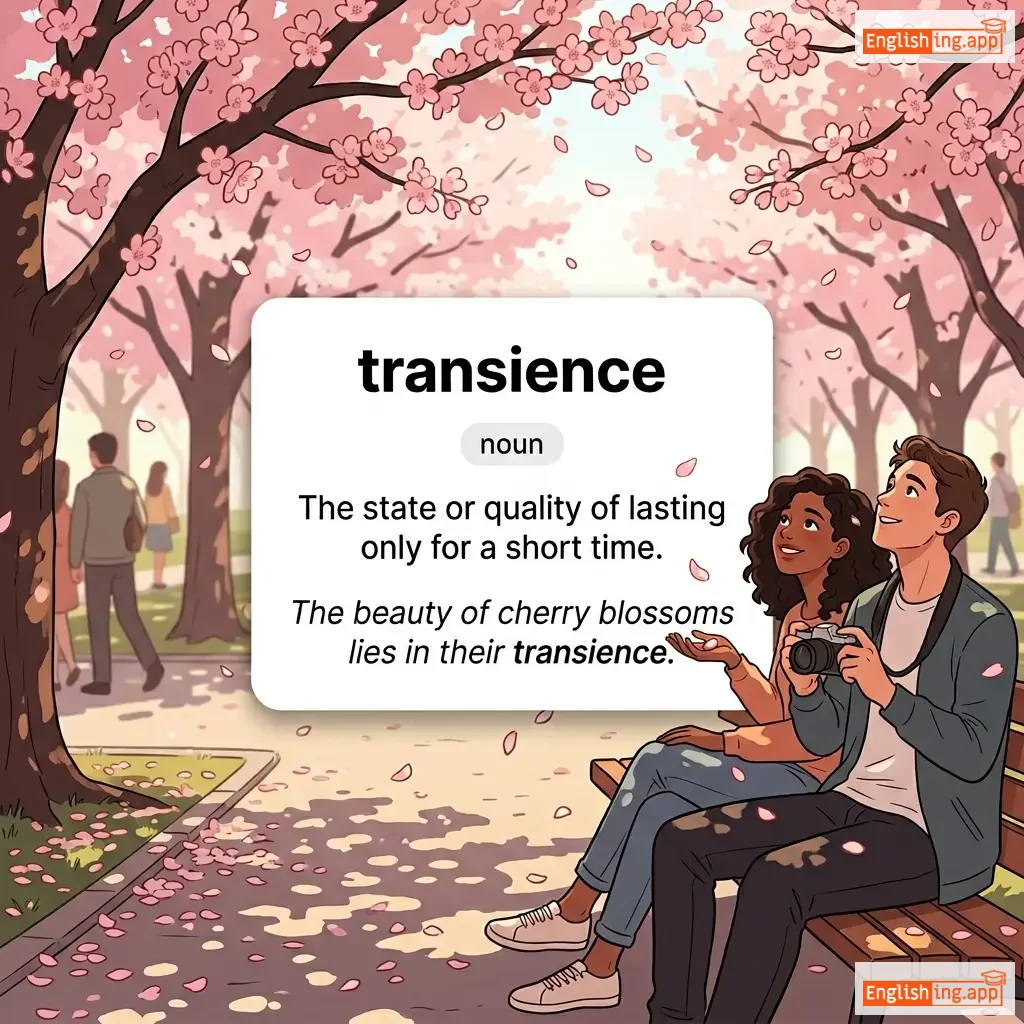
transience definition card — visual illustration of the meaning
noun C2
/ˈtrænziəns/
мимолетность (mimoletnost)

The state or quality of lasting only for a short time.

"The beauty of cherry blossoms lies in their transience."

"Красота цветущих вишен заключается в их мимолетности." (Krasota tsvetyushchikh vishen zaklyuchayetsya v ikh mimoletnosti.)
noun C2
/trænsˈluːsəns/
полупрозрачность (poluproznachnost)

the quality of allowing light to pass through but not detailed shapes

"The translucence of the curtains filled the room with soft light."

"Полупрозрачность занавесок наполнила комнату мягким светом." (Poluproznachnost zanavesok napolnila komnatu myagkim svetom.)
adjective C2
/trænzˈmɪsəbl/
заражённый (zarazhyonyi)

able to be passed or spread from one person or thing to another

"COVID-19 is a highly transmissible disease."

"COVID-19 — это чрезвычайно заразная болезнь." (COVID-19 — eto chrezvychaino zaraznaya bolezn.)
verb C2
/trænzˈmjuːt/
трансмутировать (transmutirovat')

to change in form, nature, or substance

"Alchemy aimed to transmute lead into gold."

"Алхимия пыталась трансмутировать свинец в золото." (Alhimiya pytalas' transmutirovat' svinets v zoloto.)
verb C2
/trænˈspoʊz/
транспонировать (transponirovat)

to change the order or position of something

"The editor transposed two paragraphs in the article."

"Редактор транспонировал два абзаца в статье." (Redaktor transponiroval dva abzatsa v state.)
noun C2
/ˌtrænspəˈzɪʃən/
транспозиция (transpociziya)

the act of changing the order or position of something

"The transposition of digits caused an error in the calculation."

"Транспозиция цифр вызвала ошибку в вычислениях." (Transpozitsiya tsifr vyzvala oshibku v vychisleniyakh.)
travail definition card — visual illustration of the meaning
noun C2
/trəˈveɪl/
трудные усилия (trudnye usiliya)

Painful or laborious effort; suffering or hardship.

"After years of travail, she finally completed her degree."

"После лет трудных усилий она наконец завершила свою степень." (Posle let trudnykh usiliy ona nakonec zavershila svoiu stepen'.)
adjective C2
/ˈtriːkli/
Черезмерно сладкий или сентиментальный, как патока. (Cherezmerno sladkiy ili sentimental'nyy, kak patoka.)

Excessively sweet or sentimental, like treacle.

"The movie was too treacly for my taste."

"Фильм был слишком приторным для моего вкуса." (Film byl slishkom pritornym dlya moyego vkusa.)
adjective C2
/ˈtriːzənəbl/
изменнический (izmennicheskij)

Relating to or involving the crime of treason.

"The general was accused of treasonable conduct."

"Генерал был обвинён в изменническом поведении." (General byl obvinjon v izmennicheskom povedenii.)
adverb C2
/ˈtrɛbli/
трёхкратно (trebli)

in a triple manner or to a threefold degree

"The sound was trebly distorted through the old speakers."

"Звук был трёхкратно искажён через старые колонки." (Zvuk byl tryokhkratno iskazhyon cherez starye kolonki)
tremulous definition card — visual illustration of the meaning
adjective C2
/ˈtrɛmjələs/
дрожащий (drozhashchiy)

shaking or quivering slightly, often from nervousness or weakness

"Her voice was tremulous as she gave her speech."

"Ее голос был дрожащим, когда она произнесла свою речь." (Eyo golos byl drozhashchim, kogda ona proiznesla svoyu rech.)
adjective C2
/ˈtrɛntʃənt/
резкий (rezkiy)

expressed strongly, effectively, and clearly; sharp or cutting in style or expression

"Her trenchant criticism of the policy left no room for misunderstanding."

"Ее резкая критика политики не оставила места для недоразумений." (Eyo rezkaya kritika politiki ne ostavila mesta dlya nedorazumeni.)
noun C2
/ˈtrɛntʃərmən/
обжора (obzhora)

a person who eats in a hearty or robust manner; a big eater

"The trencherman devoured the feast with great enthusiasm."

"Обжора поглотил угощение с большим энтузиазмом." (Obzhora poglotil ugoscheniye s bol'shim entuziazmom.)
noun C2
/ˈtrɛsəl/
подпорка (podporka)

a frame or support consisting of a horizontal beam held up by two pairs of sloping legs, used especially for supporting a bridge or table

"The workers built a wooden trestle to support the temporary bridge."

"Рабочие построили деревянную подпорку, чтобы поддержать временный мост." (Rabochie postroili derevyannuyu podporku, chtoby podderzhat' vremennyy most.)
noun C2
/ˈtrɪbjuːn/
трибун (tribun)

a person or platform representing the people; historically, a Roman official elected to protect citizens' rights

"He was seen as a tribune of the common people."

"Его считали трибуном народа." (Ego schitali tribunom naroda.)
noun/adjective C2
/ˈtraɪkʌlər/
триколор (trikolor)

A flag with three colors; consisting of three colors.

"The French tricolor is one of the most famous national flags in the world."

"Французский триколор — один из самых известных национальных флагов в мире." (Frantsuzskiy trikolor — odin iz samykh izvestnykh natsional'nykh flagov v mire.)
noun C2
/ˈtraɪdənt/
трезубец (trezubets)

A three-pronged spear, often associated with Neptune or Poseidon.

"The statue of Poseidon holds a mighty trident."

"Статуя Посейдона держит могущественный трезубец." (Statuya Poseidona derzhit mogushchestvennyy trezubets.)
adjective C2
/traɪˈɛniəl/
триенальный (trienalny)

Occurring once every three years.

"The art festival is a triennial event in the city."

"Художественный фестиваль — это триенальное событие в городе." (Kudozhestvennyy festival' — eto trienal'noye sobytiye v gorode.)
noun C2
/ˈtrɪmnəs/
порядок (poryadok)

the quality of being neat, orderly, or slender and well-proportioned

"Her room’s trimness reflected a habit of putting everything back in its place."

"Порядок в её комнате отражал привычку всё класть на место." (Poryadok v yeye komnate otrazhal prigizhu klyast' na mesto.)